I had a ton of fun with Jordan Ifueko’s Raybearer duology, but somehow I completely missed that she released a novel last August in the same universe! It was an absolute treat to be back in Ifueko’s world, and The Maid and the Crocodile proved a valuable asset to her fantasy universe.
Small Sade is desperate for any job that she can find. With her crooked foot and vitiligo, the people of her village think she is cursed and touched by spirits. Eventually, she finds work as a maid, but not before an act of desperation sees her bound to a powerful god, known only as the Crocodile. As she moves up in the ranks, she realizes that she is a Curse Eater—her profession as a maid not only cleans the houses of her clients, but changes their fates. Juggling her newfound ability and a world on the brink of revolution with only the Crocodile as her guide, Small Sade must learn to forge her own path before someone else decides it for her.
TW/CW: ableism, self-harm/mentions of suicide, descriptions of injuries, classism, mentions of sexual assault, abuse, loss of loved ones
I can excuse a handful of pop culture references here and there, but after that god-awful Minecraft trailer, if I hear “the children yearn for the mines” ONE MORE TIME, I’m gonna snap…Jordan Ifueko, this was a great book, but that tested me…especially with the climactic scene that it temporarily undercut.
That aside, it was an absolute treat to return to the world of Raybearer with The Maid and the Crocodile! I didn’t think to re-read the duology before going back into it (I never seem to do that unless it’s with a book I’m really invested in), but I was so easily immersed into the world nonetheless! For both casual and eagle-eyed readers, there are Easter eggs aplenty—several characters from the duology make cameo appearances (SANJEET!!! MY GUY!!!!), and the nuances of the world stay the same, for the most part. It was an easy transition, which isn’t always easy to do. I loved how The Maid and the Crocodile expanded on the world as well! Ifueko really has a strength in writing ordinary characters forced into extraordinary, powerful positions, and Small Sade is no exception. However, she’s much more different than Tarisai, which I appreciated—there’s much more of a sense of her having to work towards the top, and her humored yet determined tenacity was what made her so special of a character. Through her, we see Oluwan City from more ordinary eyes, which makes the themes of the story so much more clearer.
I couldn’t have read The Maid and the Crocodile at a better time, and not just because it was a fun read. Its themes about the nature of change and revolution are critical—IT’S ALL ABOUT LOVE! It’s so refreshing to see a character who wants to help society change for the better not out of revenge or a vague “evil government bad [does not elaborate]” motivation, but out of love. Small Sade’s motives stem from wanting to care for the people she loves and wanting to see that love reciprocated in the world around her. Change rooted from love is a perspective that I rarely see in YA, even though its plots have centered around dismantling governments and revolutionary change for decades. I’m so tired of saying “in times like these,” but I mean it—in times like these, narratives about radical change being rooted in love—for your people, for your country, and for your culture—are critical to understanding what change can truly do.
Whenever you have a disabled character in a non-modern setting, even if it’s fantasy, you always run the risk of amping up the internalized ableism. Small Sade, who is shunned and deemed “spirit-touched” because of her crooked foot (she uses a cane for mobility) and her vitiligo, faces a great deal of ableism. It’s not as though plots about overcoming ableism (NOT the disability, mind you) aren’t worth telling, but in non-modern and fantasy settings, it does get slightly tired to have all disabled characters in these settings go through versions of the same arc. I loved how Ifueko handled Small Sade’s character—she resists ableism, but most importantly, she is a person beyond her experiences of ableism. Her experience of discrimination informs her story, but it is not the entirety of her character. Small Sade is defiant, self-reliant, and deeply caring—she’s so fully-fleshed out, which is a rarity for disabled characters. So hats off to Ifueko for an excellently-written disabled character!
However, though it had its moments, I was never fully invested in the romance between Small Sade and Zuri. I got that they had a connection, but I feel like he showed up too few times for the relationship to really work. Small Sade had eons more character development than he ever had the chance to. I get that a curse slowly turning you into a crocodile tends to do this to a guy, but at times Zuri felt rather codependent—up until the last 50 pages or so, Small Sade felt more like a means to an end for him, and his redemption was too underdeveloped for me to be fully invested in it. I appreciated their mutual resolution, but it was too late for it to feel fully satisfying. Given how strongly written the relationship between Sanjeet and Tarisai was in the Raybearer duology, I really expected Ifueko to deliver more with The Maid and the Crocodile. Small Sade and Zuri had moments, but not enough for me to be invested in them romantically.
All in all, a worthy addition to Jordan Ifueko’s Raybearer universe, full of heart, curses, and hope. 3.75 stars, rounded up to 4!
The Maid and the Crocodile is a standalone, but is set in the world of the Raybearer duology (Raybearer and Redemptor). Jordan Ifueko is also the author of the 2022-2023 run of Marvel’s Moon Girl and Devil Dinosaur, and has also contributed to Jim Henson’s Storyteller: Tricksters.
Today’s song:
That’s it for this week’s Book Review Tuesday! Have a wonderful rest of your day, and take care of yourselves!
We now return to some much-needed mary in the junkyard-posting. I suspect it’ll become consistent…at some point. Not to pressure them, but hopefully this year (or the next) holds a full-length album in the future?
In the meantime, we have an excellent collaboration between them and Everything Is Recorded, the stage name of producer Richard Russell (also the founder of XL Records); he’s produced several albums under the name, often amassing a wide variety of musicians and songwriters to bolster them in a Gorillaz-like way, minus the cartoon characters. His forthcoming album, Richard Russell is Temporary, includes the likes of Florence Welch, Kamasi Washington, Noah Cyrus, Roses Gabor (a.k.a. the singing voice of Noodle on “DARE”), Bill Callahan, and mary in the junkyard! Granted, I hadn’t heard of Everything Is Recored until mary in the junkyard announced this single, but if this guy’s the owner of a record label, I could only hope this would introduce this fantastic, burgeoning gem of a band to a wider audience.
If “Swamp Dream #3” becomes the band’s ambassador, I wouldn’t mind either. Even though it’s more electronic than most of their catalogue, it’s got a naturalistic, moss-covered feel to it that you can’t scrape off of their sound no matter how many synths you paste onto it. It has the juddering thrum of rusted machines, all at once simple and a doorway into a hidden world; although I love the music video, “Swamp Dream #3” is begging for some kind of stop-motion treatment. I imagine it as an outside view of a termite’s mound or a rabbit’s warren, with the camera panning over clay worms poking out of the dirt and tiny insects, moles, and other underground rodents traversing the vast network of tunnels. (The real worms and beetles suffice, though.) Clari Freeman-Taylor’s vocals bring a kind of wonder to the song, a curiosity that isn’t quite childlike, but still seeks to shove its hands into the sand and the dirt, searching for hidden pathways and possibilities: “Mystery of my own flesh/I’ll never stop wondering/Never stop/Turning inside out.” Needless to say, the chorus, a repetition of “into the dirt” backed by looped vocals and a stuttering drum machine, could not be a better fit for a song with hands dirtied from looking for earthworms in the ground.
NEW TUNDE ADEBIMPE JUST DROPPED!! THEE BLACK BOLTZ!! OUT THIS APRIL!! I’m not sure if anything will ever cure the decade-long TV on the Radio drought, but man, a new album from such a fantastic talent sure comes close.
I never got around to writing about “Magnetic,” but it felt so much like TV on the Radio to me—it was distinctly Tunde Adebimpe, but it had that same urgent propulsion that made their indie hits feel ageless. It’s one of those tracks that makes you see how far the footprints of one particular member of a band in their music. TV on the Radio bunched several people together with magic touches into a single band, which is startling, but this touch is unmistakably Adebimpe’s. But “Drop” is where his sound begins to branch out and diverge into something wholly new. It has a flavor that’s simultaneously ’80s and 2010’s indie pop. Once the beatboxing intro fades away, rhythmic as bubbles popping in midair, it becomes a much more relaxed yet introspective dive into Adebimpe’s mind. As the guitars—clean enough to almost sound like synths—radiate into the calm ripple of the track, he grapples with a sensation of awakening; “Drop” couldn’t be a more apt title for a song whose lyrics are steps away from launching off a daunting yet hopeful precipice: “I′m gonna try it for myself/I’m gonna need somebody′s help/Cast an extraordinary spell/And rise into the night.”
Together, “Magnetic” and “Drop” couldn’t make me more excited for the range of Thee Black Boltz. “Magnetic” was a perfect access point for the fans who were wanting something close to TV on the Radio 2: Electric Boogaloo (listen, it’s kind of a self-callout), but “Drop” represents the somewhat uncharted territory that we have yet to see Adebimpe cover fully.
…AND A BOOK TO GO WITH IT:
The Sound of Stars – Alechia Dow – “We′re gonna feel it when we drop/Let′s go out where the visions never stop/There is a light/There’s a light just beyond this horizon/See it shine and rise into the night…”
Generally, the British were absolutely cooking with grease as far as rock music goes from about 1964 on, but there’s something so fruitful about the ’90s to me. If it’s from the period from 1992-1999 and it’s British, there’s a solid 75% chance that I’ll enjoy it. No, wait. Not exclusively the Brits, just because ’90s rock was so good, guys, but I just love the ’90s. To me, 1994 seems a particularly ripe crop of the vast harvest of the decade, especially the Britpop boom of the first half of the ’90s. Three out of the four of Britpop’s Big Four released albums: Blur with Parklife, Oasis (🤢) with Definitely Maybe, and Pulp with His ‘n’ Hers. But even if you look past the big players, 1994 is full of gems—”Insomniac” being one of them.
I just love Britpop, man. God. I talked a bit about Echobelly last year (with “Bellyache,” from this same album, Everybody’s Got One) with their propensity to take the genre’s penchant for social commentary a step further, as well as their much more diverse lineup compared to many Britpop bands of the time. (Not one but TWO women of color in a Britpop band was pretty much unheard of at the time) “Insomniac” is much more radio-friendly, but it embodies the “pop” of the Britpop, but never in a mindless way—more in the way that their contemporaries could wrap commentary in the most delicious guitar hooks. As Sonya Madan sings of her concerningly high subject (“I think we’ve lost control, dear/Whatever turned you on/You put it up your nose, dear”), the guitars absolutely knock you upside the head. You couldn’t wring the pure Britishness out of it if you tried (particularly the way that Madan sings “I swim in circles/In puddles/In trouble and then I go” like it’s a nursery rhyme…on a song about substance abuse), but you couldn’t wring the pure rock n’ roll out of it, either—this is what a hit should be.
“Ride A White Horse” is about as clean of a song you could get. It’s more than polished—it came out of the womb shinier than a disco ball, and its blinding sheen is made for dancing. Alison Goldfrapp has insisted that the title wasn’t a nod to T. Rex (but sort of was a reference to this), but the two songs couldn’t be further from each other—the dance-pop glamour of this song is about as far as Marc Bolan and company frolicking through the woods, but both have entirely distinct energies that differentiate themselves far beyond their respective choice of animals. Even for something made in 2006, Goldfrapp and Gregory’s work still sounds straight out of a club in the Blade Runner universe. Part of this is why I think the choice of making the music video for “Ride A White Horse” the epitome of dirty is kind of genius fit—it’s such a sanitized song, and yet Alison Goldfrapp sings it against superimposed backdrops of rotting food waste with scraps of toilet paper stuck to her heels, not to mention the cameo from what appears to be the proto-Trash Man. Even when there’s flies buzzing off of it, the polish of it never fades.
Also, because this popped up when I looked this up on YouTube, here’s a bit of unexpectedly delightful Goldfrapp content:
In retrospect, it was probably a terrible idea to listen to Humanz for the first time mere days before the inauguration just because of the album’s conception. When telling Pusha T, one of the album’s plentiful collaborators, what the atmosphere of the album was, Damon Albarn described it as “a party for the end of the world if Trump wins.” Not only did he say this well before Trump was elected, but…well, y’know. We all know the mess we’re in. Humanz often gets lambasted by the fandom as their worst album. I wouldn’t say it’s bad, but I think it’s the nexus of modern Gorillaz, which is to say that it’s the point where their albums became increasingly devoted to their collaborators as opposed to the creative force of Albarn and Hewlett. Said collaborators are hit or miss, but most of the songs have a verse by Albarn with the exact same filter over his voice once the collaborators have had their place in the sun. Much as I love my guy Damon, it got slightly tiring after about 10 songs. But if it’s a party for the Trump-era hellscape, Humanz fulfills its purpose with flying colors, balancing social commentary with gloriously catchy pop songs. I feel like the thesis is perfectly encapsulated by Vince Staples’ chorus on “Ascension”: “The sky is falling, baby/Drop that ass before it crash.”
In spite of all that, the album ends on an anthemic note—”We Got The Power.” As simple as the lyrics are, simplicity is what this track needs. In times so overwhelmed with shock, horror, and doom, sometimes a more concise message is the best thing to cut through the noise. “We got the power to be loving each other/No matter what happens.” IT’S TRUE! It’s why “All You Need Is Love” has endured for so long. It’s simple, but it’s the kind of uniting message that we needed. If anyone should know that, with their history of cleverly packaged social commentary, it’s Gorillaz. Albarn is joined by Jehnny Beth (if I had a nickel for every time I’ve heard Jehnny Beth sing a French verse on a British band’s song, I’d have two nickels, etc., etc.) and an uncredited Noel Gallagher. I briefly mentioned it before it, but as much of an Oasis hater as I am, it really is beautiful that they were able to set aside the stupidest possible differences, realize how stupid they were, and join forces on a song about loving each other. You can’t not appreciate it. (To say nothing of Liam…) And as the closing track to an album about a party at the end of democracy, it’s a welcome light at the end of the tunnel, and a true light—it’s not the flashing club lights that shroud the fear of most of the album, but a real lodestar.
…AND A BOOK TO GO WITH IT:
The Stardust Grail – Yume Kitasei – “And we dream of home, I dream of life out of here/Their dreams are small/My dreams don’t know fear/I got my heart full of hope/I will change everything/No matter what I’m told…”
Since this post consists entirely of songs, consider all of them to be today’s song.
That’s it for this week’s songs! Have a wonderful rest of your day, and take care of yourselves!
Here in the U.S., February is Black History Month! I normally begin by talking about how critical it is in these times to uplift marginalized voices (in this case, Black voices) with the attacks on so-called “critical race theory” in elementary schools and the attempts in both the classroom and the government to whitewash our fraught, racist past. However, I find these posts becoming more relevant as the Trump administration strikes down D.E.I. initiatives and has started shutting down “identity months” among many federal agencies. As Trump and his cronies push us into an age (certainly not a golden one) that strips away the celebration and acknowledgment of the wonderful difference that makes up this country, it’s more valuable than ever to celebrate those who have historically been downtrodden. Especially since Trump has purported himself as a friend to Black Americans (then turned around and committed unspeakably racists acts during both terms already), we need to emphasize the truth: Black people are and will always be vital to this country, and their history and contributions are an irreplaceable part of American history. No policy, removal, or dismissal can change that.
As with all of the related lists I make each year, this is not an exhaustive list; I encourage you to always look further and discover books and authors of your own during Black History Month (and during the rest of the year).
TELL ME WHAT YOU THINK! Have you read any of the books on this list, and if so, what did you think of them? What are some of your favorite books by Black authors that you’ve read recently? Let me know in the comments!
Today’s song:
That’s it for this year’s Black History Month list! Have a wonderful rest of your day, and take care of yourselves!
I’ve been a longtime fan of Nnedi Okorafor, albeit on and off—I picked up Akata Witch back when I was in middle school, and then discovered her adult books when I was in high school. Since then, I’ve been a fan of her quirky brand of Africanfuturism. You can imagine my surprise when I found out that Death of the Author was not an addendum to her long sci-fi fantasy canon, but instead literary fiction—albeit, with a dash of sci-fi. Either way, the switch from genre to genre is as smooth as I’d expect from Nnedi Okorafor.
Zelu is on the verge of giving up her dream to be a writer. After a pile of rejected manuscripts and a botched job as a professor, she moves back in with her overbearing, judgmental family as she attempts to get back on her feet. But when a spark suddenly comes to her, she has a bestseller on her hands: Rusted Robots. As she grapples with the price of fame and the mobility—and simultaneous lack thereof—Zelu must come to terms with her own identity as she explores the fabrication of it that the public has created for her.
TW/CW: substance abuse, ableism (external & internalized), loss of a parent, near-death situations, kidnapping
Of all people, I didn’t expect Nnedi Okorafor to take the leap into literary fiction, and after I found out the switch in genre, I didn’t expect to enjoy Death of the Author as much as I did. Thankfully, it’s only really literary in the sense that it’s contemporary, realistic fiction…mostly. The woven tapestry of Zelu’s real life and her creation, Rusted Robots, turned out to be a powerful meditation on the nature of art and identity.
Once again, make no mistake: this is fiction, but it’s not entirely just fiction. The assumption is that it’s a handful of years in the future; Zelu has fairly futuristic, adaptive prosthetics that are still in beta testing, and she tests out an automated cab service that’s been newly introduced to the streets of Chicago. Yet Okorafor takes the same skilled hand that she uses to craft intricate, far-future worlds and translates it into the idiosyncrasies of modern life, from the gauntlet of social media fame (and harassment) to being in the confines of a chaotic, judgmental family. For every character that was introduced, Okorafor matched them with an unforgettable personality, even if they only appeared for a few pages. All of the complex, rapidly fluctuated emotions were depicted with sensitivity, from the highest joys to the deepest pits of anguish and the plentiful uncertainty in between. Even without her talent for worldbuilding, Okorafor is a force to be reckoned with, and Death of the Author is proof.
I was hesitantly optimistic that Okorafor was writing a disabled main character again; Noor was a great novel, but from my memory, there was quite a bit of internalized ableism in the main character that went unaddressed. (However, somehow I didn’t know that Okorafor has experience with disability and was herself temporarily paralyzed, so my bad.) The setting couldn’t be more different for Death of the Author, but Okorafor has certainly stepped up her game as far as writing disabled characters—and part of it is that Zelu is unlikable. More often than not, you can at least sympathize with her, but at times, you can see her for the insufferable, argumentative, reckless stoner that her family sometimes sees her as. Of course, not every disabled character has to be likeable, but her relative un-likeability made some of the novel’s most powerful commentary shine even more. As she grapples with her meteoric rise to literary fame, Zelu’s fans place the burden of her being a “role model” for a number of communities: Black, woman, Nigerian-American, disabled. Being a role model can be powerful, but as soon as people saw Zelu as more of a role model than a person, it disregarded her humanity in an entirely different way. She became an example, not an autonomous being—something that is intimately tied to what many disabled people experience. In that way, Zelu represents a leap in how Okorafor writes her disabled protagonists—not just independent, but human.
I don’t have a ton of experience with meta-fiction—it’s not a matter of me not liking it, I just hardly get around to reading much of it—but Death of the Author pulls it off with ease. If you’re still not convinced that Okorafor’s literary fiction isn’t for you, you’ll at least be tided over by her signature brand of Africanfuturism, complete with the landscape of a futuristic Nigeria, robots, and appearances from Udide. It’s somehow a delightful vision of the future, where types of robots have proliferated across the face of the Earth in the face of the extinction of the human race. It’s threaded into Zelu’s life, yet it’s also a clever distillation of the novel’s themes; Ankara’s struggle with coexisting with Ijele inside of his head, as well as the changing world around him, spoke to the themes of embracing collaboration and the blurry relationship between creator and reader.
Which brings me to the whole “death of the author” part. I’ll admit, the Roland Barthes quote from the (original) “Death of the Author”gave me literary theory flashbacks. But as a grounding concept for the book, I love how Okorafor’s Death of the Author playfully pokes fun at the concept. Here, it’s as though the concept has been subsumed by the publishing industry; instead of taking Zelu’s novel as tied to her heritage and her disabled identity, the world swallows it and regurgitates a whitewashed, Americanized movie adaptation that the public eats up. (“Look what they’ve done to my song, Ma…”) Yet at the same time, Zelu is confronted by readers who insistently pester her, insisting that everything in the novel is fully tied to her identity and selfhood. Death of the Author’s strength is the clarity it finds in the balance. Zelu’s work is intimately tied to her identity, but just as intimately tied to her imagination. Her being marginalized meant that people saw her work as surely being solely about her identity, but that wasn’t the whole story either. (The note in the acknowledgements about Okorafor talking to her daughter about worrying that readers would think that Zelu is her makes the point all the more clear.) In this case, fence-sitting is the most reasonable position I can think of—to consider reader interpretation first and foremost can have fruitful results, but to deny the lived experience veers into foolishness, and vice versa; Okorafor’s embrace of the area in the middle is what made the message so clear. Reading and world-creation is a twin act, created both by ourselves and those who receive our work—it’s not a simple question of one or the other.
All in all, a surprising novel that at first seemed like a left turn, but turned out to be another testament to Nnedi Okorafor’s enduring talent. 4 stars!
Death of the Author is a standalone, but Nnedi Okorafor is also the author of several books for adults, teens, and children, including the Binti trilogy (Binti, Home, and The Night Masquerade) the Nsibidi Scripts series (Akata Witch, Akata Warrior, and Akata Woman), Lagoon, Noor, the Desert Magician’s Duology (Shadow Speaker and Like Thunder), and many more.
Today’s song:
ADORE this album
That’s it for this week’s Book Review Tuesday! Have a wonderful rest of your day, and take care of yourselves!
January. Love it or hate it, it’s that magical time of year when all of the singles and album announcements for the first half of the year start rolling in. Oh, the sweet sound of new music…especially when it’s from Lucy Dacus! It’s been known that she’s been cooking something up after previewing a handful of new songs post-the record (as is Julien Baker—new album from her and TORRES too!!), but mid-January, she officially announced her new album, Forever Is a Feeling, which will be out this March! Aside from…well, y’know (I know it’s a painting, which makes it more impressive, but what in the PicsArt is that album cover?? That font?? 😭 No hate to Dacus or to Will St. John, but…there could’ve been so many better choices…), I’m so excited for this new record—I’m loving the aesthetic of gilded museums and flowing dresses, as well as the orchestration that Dacus has brought to the record—or at least to “Limerence.”
The other day, I saw some reel or another about how a lot of modern songwriters see writing down explicit, confessional details (or details that sound authentic enough to be confessional) in their songs as an automatic way to get depth, and I halfway agree. I do think that with the steady stream of Phoebe Bridgers wannabes that have been pouring out of some factory in L.A. since 2021 has influenced that, but I don’t think it’s always lazy songwriting. Let’s just say that you can tell when it’s for soul-baring or clout-getting purposes. The key is knowing which details are important: vignettes or extended scenes that elevate the themes or contribute to evoking the intended emotion, something that Bridgers has always excelled at. I hate to say it, but the first lines of “Limerence” nearly feel like the anti-Bridgers method: “Natalie’s explaining limerence/Between taking hits from a blunt, high as a kite/While Roddy’s playing GTA/I swear, why is he so good at this game?/It should be cause for concern.” Against the delicate, piano-dominated orchestration of “Limerence” and the soaring warmth of her voice, such ordinary details feel shoehorned in, without as much connection to the rest of the song. It’s not as though she hasn’t written similarly observational lyrics, but the wording (and maybe the mention of some guy playing GTA with a harp in the background) doesn’t mesh with the rest of the track.
Key word here is nearly. I’ve been a fan of Dacus long enough to trust in the consistency of her songwriting—that bit really is a blip in the vast glory that is her catalogue. The rest of “Limerence” swiftly picks up the slack of those first handful of lyrics. Orchestral Lucy Dacus is, in my opinion, the best Lucy Dacus; guitar carries her humbly captivating gravitas perfectly, yet there’s something about strings, piano, and harp that carry it to new heights (see: “Body to Flame”). With the gentle tempo that recalls the reflection of silk off of marble floors during a ballroom waltz, Dacus drifts into melancholy rumination…as she often does, but it has yet to get old, especially since she’s at least self-aware of the fact (see: “The Shell”). Against the delicate plucking of harps and strings, she sings of drowning herself in distraction just to distance herself from the inevitable collapse of a relationship: “I want what we have/Our beautiful life/But the stillness, the stillness/Might eat me alive.” Carrying the leaden weight of wanting to break free, “Limerence” nervously toes circles around its subject, subtle enough between the folds of a voluminous dress to avoid the truth. The marriage of Dacus’ unbeatable voice and the almost hesitant restraint of the orchestra carve out that feeling of wanting to squirm free, but feeling the weight of severing the other person even more intensely. It’s no wonder that Dacus seemed to have the trouble she did releasing “Limerence” as a single—it was a last-minute call after releasing the much more lighthearted “Ankles” (also excellent), but I can imagine that it has that effect—too personal to keep close but also to release, yet a song that needed to be launched as one launches a satellite out into the vastness of space.
It’s…yeesh, huh? Couldn’t have expected less from Lucy Dacus…anyways, the music video is much more delightful, I promise (and see? 3:19, there’s your album cover):
…AND A BOOK TO GO WITH IT:
Can’t Take That Away – Steven Salvatore – “Is there a difference between lying to you/If it feels just as bad as telling thе truth?/I know that there is/And I know what I’ll pick…”
I’m about 6 months too late to make a “brat summer? Nah, Brian Eno summer” joke, but humor me, alright? We cling to what we can in these trying times. Let me have my shitty Brian Eno jokes. Brian Eno winter doesn’t have the same ring to it. (Now, Cocteau Twin-ter—okay, okay, fine, that one’s run its course, I know…)
Somehow, when compiling my list of my favorite album closers of all time, I forgot “Here Come the Warm Jets” entirely. At that point, it had been a solid year since I listened to Here Come the Warm Jets, and it had fallen off my radar. Only when I listened to Before and After Science: Ten Pictures did this track return to me. Obviously, the emotional impact of instrumental tracks can’t be understated, but it seems they’re often overlooked when they’re not film scores. Eno, to me, has a true gift of imbuing such clarity of emotion into his instrumentals (see: “The Big Ship”). Technically, “Here Come the Warm Jets” isn’t technically instrumental, but the vocals don’t come in at 2:33, and they’re so shrouded that they sound like vaguely nonsense chanting. (Eno has said that the lyrics are also meaningless and free-associative, as are many of the lyrics on the album.) Especially as a closing track, “Here Come the Warm Jets” is one of those songs that’s able to breathe life into its title without words. With the dense, buzzing hive of distortion, so thick you could stick your hand in it and feel the wings of millions of insects, it has the fuel and squeal of both tires screeching against the tarmac and the heat and urgency of a plane taking off.
Like “The Big Ship,” you can trace the slow, hopeful ascent of the song, a steady trajectory upwards as the music rises and fades into a cloud-streaked sky. And…okay, well, I know the dirtier interpretations of the whole “Here Come the Warm Jets” phrase, and the playing card on the album cover doesn’t help, but I’m choosing to believe that they’re jet planes, and I can feel the warmth of the rising, fiery hope propelling their engines skyward. Besides, Eno took the title from how he felt the guitar sounded—“like a tuned (warm) jet,” which he added into the track sheet. As with most anything he observes, it’s truly right on the money.
…AND A BOOK TO GO WITH IT:
Activation Degradation – Marina J. Lostetter – I can imagine the warm atmosphere of this song amongst the machinery of this novel, humming along with all of the engines and parts.
Man, I admire committing to the bit, but how do you pronounce >>>>? Or >>>, where “Brean Down” is taken from, come to think of it? The only pronunciation I’ve seen is from BBC Radio, which, after some hesitation, called it “four chevrons.” I thought it was some sort of !!! (chk-chk-chk…don’t come for me, that’s all I know about them), but that doesn’t have the pretentious ring I thought it would have. Fascinating…you do you, Beak>. Can’t knock them, especially since one of their (now former, as of last year) members, Geoff Barrow, was from none other than PORTISHEAD back in the day…damn.
When my dad sent “Brean Down” to my brother and I, he described it as “if Radiohead and Shakey Graves had a baby,” and the more I listen to it, I can’t think of a more astute description. There’s a dread-inducing, dead-eyed drone aplenty, but with vocals from someone who’s practically a British Alejandro Rose-Garcia—it’s almost eerie how similar he and Billy Fuller sound. (The Britishness wasn’t even detectable…) Either way, it’s got a kind of creeping, cagey nausea to it that’s perfectly paired with the dusty brick walls and city streets of the music video, all while Fuller sings of alienation and empty absorption: “Tell me what I want and I feel like I do/Stuck in a cage and the people looking at you/Nobody’s perfect and even if you say so/We don’t like the music ’cause it ain’t up on the radio.” There’s your Radiohead for you…but really, Beak> excelled at making the song have the illusion of looseness, with the occasional pulse of the guitar and the drums, but still ultimate feel caged and immobile, as purposefully restrained as the artfully jerky moves of the music video’s danger, Vladislav Platonov. It’s not just the mechanical drone that haunts “Brean Down,” but the sensation as if something is slowly shadowing your figure—conformity, so it seems. Not a whole lot that induces dread as much as that.
…AND A BOOK TO GO WITH IT:
Junker Seven – Olive J. Kelley – “Tell me what I want, and I feel like I do/Stuck in a cage and the people looking at you/Nobody’s perfect and even if you say so/We don’t like the music ’cause it ain’t up on the radio…”
Only took me three singles to use the actual Phonetics On & On cover for one of these graphics…I do it for the color scheme. After months, it finally fit. Sorta.
With every single from Phonetics On & On that comes out, I’m continually blown away by just how much Horsegirl have grown and the incredible talent they’ve managed to accrue with experience and maturity. From the beginning, they’ve known how to throw together a tight groove, but “Switch Over” is one of their most striking ones yet. It shines in the way that only freshly polished wood does, creating a catchy, dynamic tapestry with lyrics that, when put together, only consists of about nine words total, repeated over and over. It’s not unusual for Horsegirl, but god, it’s sure been refined from greatness to something fantastic. In limbo between the ’70s (if that wasn’t evident from the Lou Reed poster at the beginning of the video), the ’90s, and something uniquely current. Even with the rhythm kept on such a tight leash, there’s an undeniably current of ease and whimsy running through it—I think it’s the lack of restraint. They’re throwing everything into making something deceptively simple and cooped up, but the passion that they throw into it makes the edges, rigid upon first glance, wiggle with every strike of Gigi Reece’s cymbals. (Also, gotta love how they just disappear into nothingness the minute they hit the cymbals. Peak comedy.) Maybe it’s too early to say so, but Phonetics On & On is shaping up to be one of the best albums of the year—“2468” and “Julie” were hits from the start, but “Switch Over” is proof that we can’t predict the breadth of talent that Cheng, Lowenstein, and Reece (and Le Bon) have up their sleeves.
Man, I’m glad to live in a world with Horsegirl in it. Their only sin so far is refusing to tour near where I live.
…AND A BOOK TO GO WITH IT:
Time and Time Again – Chatham Greenfield – rapid switching and repetition, but this time, it’s repeating the same day over and over (yes, this is basically lesbian Groundhog Day).
Aside from the crushing constraints of the music industry, especially for someone as influential as Lauryn Hill was at her peak…yeah, if I wrote anything as good as this, I’d be perfectly content to get it out there and then disappear from the face of the earth. Well, sure. The tax evasion and the random controversies aren’t exactly ideal. But again—if you release one album and become this influential, I don’t blame her. “Doo Wop (That Thing)” is an extension of that—it’s almost mythic in its construction, written and produced solely by Hill. Sure, I’m late to the party—it took me a minute to warm up to hip-hop as a whole, really—but better late than never.
In fact, I can’t think of a better time to return to this song. If there’s anything that’s essential in these times, it’s “Doo Wop (That Thing).” (The line “Talking out your neck/Saying you’re a Christian” comes to mind for…multiple reasons, related and unrelated to the song’s message.) You need armor against misogyny, materialism, and being seen only for your body and sexuality—it goes both ways, as Hill astutely points out. Patriarchy harms everybody. “Doo Wop (That Thing)” isn’t so much an anthem as it is instructional, and not even instructional in the “and THAT’S why…” way. It’s less of lines on a chalkboard than it is the calloused hand of a mentor, a mother, on your shoulder telling you not just to not make her past mistakes, but to know your damn worth. It’s critical. Men have always thought that they’re immune to the consequences of their actions (and the systems we have in place have reaffirmed that), but I’ve seen Trump’s reelection embolden them even more. Jesus Christ…if I had a son, I’d never kick him out of the house for being queer (a bit redundant, since I’m queer myself, but stay with me), but I WOULD if I found out that he was commenting “your body, my choice” under women’s posts online. CHRIST. Moments like these do seem like nothing has changed since 1998, but maybe that’s why Hill’s rallying cries resonates now more than ever. I want it on banners all across the country, from now until it’s no longer relevant: “Respect is just the minimum.” It’s a call for men to reconsider (and ENTIRELY reconstruct) how they treat women and for those women to realize the potential they have within themselves, restrained by misogynistic structures and societal expectations. The end of the first verse really does send chills down my spine: “Let it sit inside your head like a million women.” Remember those who came before you. You have your power, and their power.
Graphic novels haven’t been all I’ve been reading this month, but I’ve certainly been on a kick of reviewing them. Unfortunately, this one wasn’t nearly as good as The Infinity Particle, but it’s apples and oranges to compare them. I really need to stop putting everything with “sapphic” and “fantasy” in the description on my TBR, because while I love those two things together, they aren’t automatically the recipe for a good book. Sadly, The Marble Queen is proof of that.
Princess Amelia lives in a kingdom in turmoil. Accosted on all sides by pirates and on the brink of war between its neighboring nations, Marion is on the verge of collapse. Only a miracle can save it—and that miracle may be to marry Amelia off to the prince of the neighboring kingdom of Iliad. But soon, she finds out that there was a mistake—it was not the prince she is being married off to, but the new queen, the stunning Salira. Stuck in a foreign kingdom with no control over her destiny, Amelia searches for answers. But with political forces from all sides conspiring against them, she must ally with Salira in order to save both of their kingdoms from ruin.
art by Gabrielle Kari
TW/CW: blood, violence, loss of loved ones, anxiety, poisoning (attempted)
I went into this graphic novel thinking I’d get a sapphic fantasy. The sapphics? They’re here. The fantasy? Not so much. The writing and artwork? The latter picked up some of the slack left by the rushed writing, but not enough. Given more page time and refinement, The Marble Queen could have been something promising, but it was clearly a case of too many plot ideas in a shell that could not hold all of them.
If you’re looking for fantasy, The Marble Queen will likely disappoint. If you’re looking for something more along the lines of a regency romance with political intrigue thrown in, you might be more satisfied. The Marble Queen has plenty of ballroom dancing, flowy dresses, court intrigue, and pirates, but nothing that would necessarily separate it from something in our history. There was a vague, throwaway sequence about some crystals beneath Iliad that supposedly had magical powers, but it ended up having zero consequence to the plot—it felt like Kopp threw it in just so that she could say “See? See? This is fantasy, we promise!” Also, so many of the place names felt so randomly plucked and too close to real world things—kingdoms called Marion (not necessarily a common name, but similar enough to Marianne/Maryanne that it loses the fantastical feel) and Iliad (I don’t think I have to explain that one) made the worldbuilding feel even lazier. The Marble Queen’s artwork also had a lack of immersion—other than the glimpses we got of the palace and the outside world, many of the characters were shown on flat, monochrome backgrounds, making it difficult to get a full picture of the world. Had this been historical fiction with a loose basis in some of our cultures, it might have been more effective.
Additionally, The Marble Queen was all over the place in terms of plot. I got the impression that Kopp and Kari had a plethora of ideas for what to do with the story, but not nearly enough time to execute them. As a result, every subplot felt smushed together like sardines in a tin can—so many of them were there, and yet almost none of them had room for proper mobility. I was particularly intrigued by Amelia’s anxiety and her feelings of isolation in Iliad. Her fear and alienation, although given a fair amount of space in the first half of the novel, had the potential to be poignant, but since it was shoved in unceremoniously against at least six other subplots, it had to room to grow into a compelling, sensitive story. The same went for the political intrigue—I liked it in concept, but the plot with Stefan had so little room to develop that by the time the reveal came, I’d guessed it about 30 pages earlier. In between all this, we get rapid-fire scenes of training montages, poisoning attempts, emotional backstory with not nearly enough grace given to the grief they should have held, said random bit about magical crystals that doesn’t end up being relevant at all, and a pirate that was clearly supposed to be a “fan favorite” character, but only got about 5 pages of character interactions tops. Given more polishing, The Marble Queen could have been a successful story, but it had no sense of direction, which made me struggle to keep my interest in the characters.
Said plot, more overstuffed than a Thanksgiving turkey, is why I think the romance didn’t work for me either. I did get that the arrangement was meant to be rushed, but when so many extraneous plot events were happening around Amelia and Salira, I never bought the chemistry that Kopp so badly wanted to convince the reader that existed between them. We’re supposed to believe that Amelia and Salira are slowly falling in love, but there’s hardly any indication in the dialogue that a connection is being made, save for a heavy dose of panels of Amelia with sparkly eyes and anime blushing. We’re supposed to sympathize with Salira because of the untimely death of her first girlfriend, but we hardly get an indication that she’s uncomfortable during the wedding, and after the explanation to Amelia, she comforts her, and then they make out in front of a painting of her ex-girlfriend and move on. Again, this was a victim of The Marble Queen‘s full-to-bursting plot—a romance that could have been compelling was ruined by a plot that moved too fast and contained too much of the wrong things.
The art was…alright, I suppose. That gorgeous cover set my expectations too high. I could get on board with the almost-Manga art style, and I did enjoy some of the expressions that the characters made. Although the color palette was warm and pleasant, it was largely flat—there was a significant lack of shading and depth, which can sometimes work, but in a story and world this fantastical, some of it was necessary. Additionally, Kari had a tendency to overexplain some of the gestures of the characters. Instead of having some creative (and sometimes silly) depictions of sound effects, there were direct writings of, say, “rise,” “kneel,” or “stab” when characters stood up, knelt or got stabbed, or repetitions of “beautiful” when Amelia first sees Salira. In moderation, some of this could have worked, but in such large amounts (and in places where these things could have easily been inferred by…well, just looking at the artwork), they grated on me.
That being said, I loved Gabrielle Kari’s character designs! She did an excellent job of making the characters expressive and distinctive in their respective looks. Anime blushing aside (I could let it slide after a while), all of the characters had wonderful stylistic quirks and tells, making them fun to follow around their kingdom, even when the writing itself slacked off. The design language wasn’t just clear, but enjoyable to see between the kingdoms; I loved the contrast of Amelia’s flowing, flouncy dresses in contrast to the tighter, more soldierly attire of the royals of Iliad. It added what some of the writing failed to add with the themes of her alienation and isolation—she was clearly an outsider, in both her foreign mannerisms and personality and the way she stuck out in the crowd.
All in all, a fantasy (?) graphic novel with the potential for epic drama, but got dragged down by an overstuffed plot that squeezed the life out of the characters. 2 stars.
The Marble Queen is a standalone, but Anna Kopp is also the author of Lifeblood, as well as many Minecraft novels for younger readers. Gabrielle Kari is also the illustrator of No Holds Bard, written by Eric Gladstone.
Today’s song:
NEW TUNDE ADEBIMPE IN APRIL, LET’S GOOOOOOOOOO
That’s it for this week’s Book Review Tuesday! Have a wonderful rest of your day, and take care of yourselves!
Happy Monday, bibliophiles…sort of. We’re in for a long four years.
It’s already been said what a slap in the face it is to have Trump sworn in on the day we normally set aside to commemorate Martin Luther King Jr., one of America’s preeminent champions of civil rights. (I’m sure the administration will find some way to spin it in their favor, the same way that Trump spun the Women’s March. Eurgh.) I’m grieving. I will continue to grieve, so long as our country is once again helmed by a tyrant who uplifts the wealthy and bigoted while the marginalized are squashed underfoot. My processing this won’t end until we get him out of office (because I refuse to believe that this is the end), and that’s okay.
But today, as with most of the activity on this blog, I’d like to talk about books.
Anyone who has even had a semblance of a pulse on the news in the last five years or so has seen the increased hateful rhetoric surrounding books—particularly those concerned with promoting diverse voices. Mass book bans have swept the country, with everything from the most innocuous picture books to critical feminist knowledge being stricken down across the board, all in the name of “protecting the children.” The process of objecting to a book is frighteningly simple and straightforward, leading to bans on the basis of misinformation—just look at the time Amanda Gorman’s The Hill We Climb was challenged after a single complaint…and attributed to Oprah Winfrey (ah, yes, because all Black women are the same person, apparently). Apologies for the strong language here, but to quote a great button that I have on one of my jackets, “you know these fuckers banning books don’t read shit.” It’s true. Rarely do those in charge of banning, especially those in the highest offices in the country, consider the actual contents of the books—they simply get a whiff of anything that smells to them of D.E.I. or the “woke groomer agenda” and try to smite it out of the public consciousness.
It was never about the children. The majority of the books that are being banned to “protect children” aren’t even aimed at children. And even if they are, it’s only for superficial reasons—inclusions of, god forbid, diverse perspectives (LGBTQ+, POC, disabled, etc.) or acknowledgments that maybe, just maybe, America is not perfect and has never been perfect. It truly is dangerous. We’ve seen how the Trump campaign was built on twisting and exaggerating lies about this country, feeding its supporters that we must go back to some nonexistent, golden age. Of course it never existed, but the way that they do it is by blocking off access to information on all levels—perpetuating lies and attacking those who spread the truth. Book bans are how this is done at the largest level; it starts with the very youngest, and they claim to “protect the children” as they restrict their access to learning about how this country—and the world—truly is. The regimes that put blinders on its populations—especially the ones banning or burning books—never land on the right side of history.
I believe that the best way that you can combat this deliberate shielding of the truth is to read. In a world where the ruling class relies on you being complacent enough to accept their lies as fact, reading is the ultimate form of rebellion. We read to learn: about other kinds of living, other kinds of people, and possibilities in the imaginations of people you know nothing about. Literature is the site of change because it shows us this possibility—if you can imagine an alternative world, you can put it into action. When you feel powerless, remember that you have boundless knowledge at your fingertips.
So I’ve compiled this reading list for anyone looking to rebel. I’ve gathered books of all age levels and from all kinds of diverse voices that Trump and his cronies would have you believe neither matter nor exist. Whether your stance is to directly fight the power or quietly rebel by imagining a way out, there are books here for you. Fiction and nonfiction, here are the tools you need to combat misinformation, bigotry, and hatred—and have a great read, too.
A READING LIST FOR THE COMING FOUR YEARS | Books for Rising, Resisting, and Keeping the Hope
FOR THE FIGHT:
These are the books about resistance, in the real world and in imagined worlds. If you need the motivation to stand up and fight for your rights and the encouragement to not pull punches when doing so, these are the books for you.
Here is something I want to emphasize going forward: it’s important to fight, but not all of us have the strength to do so—and that’s okay! Plenty of people aren’t ready to get out into the streets, and we need to respect that perspective. (This is coming from someone who isn’t quite ready either.) What we need the most in these times is hope, and though there is injustice in these books, they present stories where, despite hardships, joy prevails. They also present vital alternatives to the now—one of the most powerful ways of resisting, in my opinion, is to have the ability to imagine a better tomorrow, whether it’s alternate history, the distant future, or simply a kinder present.
The best way to combat misinformation is to inform yourself. Here are some of my favorite nonfiction books about resistance and feminism and its many facets—race, sexuality, gender, ability, and more. Ranging from revered feminist scholars to more contemporary perspectives, I hope there is something for everybody here.
A SELECTION OF GREAT BOOKS BANNED FOR RIDICULOUS REASONS:
Here in the U.S., we’ve seen a deeply disheartening uptick in book bans for a number of reasons—none of them valid. Standing up to book bans is essential in these times, and through it, you can discover some excellent literature, whether they’re classics like Maus and The Bluest Eye or newcomers like The Poet X.
PEN America – if you’ve been paying attention to efforts against book banning, you’ve likely seen PEN America come up, and for good reason—they are one of the foremost organizations fighting for the rights of authors and journalists, as well as the freedom to read and write.
Authors Against Book Bans – self-explanatory, but this organization has a variety of resources on how you can fight against book bans around the country.
M.K. England (Substack) – although my list didn’t end up containing any of their books (sorry 😬), England has provided a comprehensive list of ways you can fight back against the potential threat of Project 2025 in terms of queer literature for younger (MG and YA) audiences.
SUPPORT! YOUR! LOCAL! LIBRARY! Wherever you are in this country, use as many of your library’s resources as you can! Whether you’re checking out books physically or digitally, or using their non-book services, libraries need all the support that they can get in these coming years.
That being said, this list is by no means exhaustive! I encourage you to look beyond this list to find even more books you love that live up to these principles. Scour the internet and your local library, and you are sure to find many more examples. Let me know in the comments what your favorite books about making change, resisting, and keeping hope are!
Today’s song:
it’s a relevant song for this post, but also, I did just listen to Humanz for the first time over the weekend. Not their best, but this was one of the highlights; as much as I despise Oasis, I do find it poetic that Albarn and Noel Gallagher sang together on this one after having the most ridiculous, decades-long rivalry. (To say nothing of Liam…)
That’s it for this post! Have a wonderful day, and…I know I put this at the end of every post, but please take care of yourselves. I love you.
Imagine going so hard on an Elvis cover that you have to add not one, not two, but THREE Irish polkas at the end just so that it reaches the three-minute mark…I don’t find myself saying this often, but that pennywhistle kinda goes crazy.
“Can’t Help Falling In Love” has been covered hundreds upon hundreds of times—it’s so simple and iconic that it’s an obvious go-to for anyone to wring some emotion from the audience. (Whether or not they’re always successful is debatable. At worst, it can be the easy way out.) I can’t definitively find just howmany times it’s been covered since Presley’s original release, but it’s got a slew of big names parading behind it: Kacey Musgraves, Beck, Chris Isaak, U2, Erasure, Zayn of One Direction, and Christine McVie isn’t even scratching the surface. (Though this one isn’t technically a cover, Spiritualized’s “Ladies And Gentlemen We Are Floating in Space,” one of my favorite songs of all time, adds the lyrics to J. Spaceman’s melody. It gets me every time…) And…well, as with any song that’s covered as numerously as this one, even the greats blend together sometimes. Rarely do they stray beyond the lazy, slow-danceable tempo. You can’t do much to a classic…
…unless you’re Lick the Tins. Their take on “Can’t Help Falling in Love” is one of the only takes that makes it sound lively. From the minute the drums kick in, you’re propelled by the spirited energy that the Irish band injected straight into the heart of this song. It’s considerably sped up, but beyond that, they make it so naturally celebratory. Alison Marr and the chorus behind her make every verse feel like a victory lap, a joyous sprint fueled by the essence of that feeling of falling in love. Of course, said speed meant that they had to add said three polkas at the end, all performed with the same Celtic inspiration that fueled the rest of the cover (and their very small body of work), but it makes it feel like the most triumphant of endings: the rickety car is driving into the sunset, the bouquet has been caught, the girl has been got. John Hughes clocked that quickly in his decision to put it at the end of Some Kind of Wonderful—this song couldn’t be any more ’80s rom-com if it tried. But long before I saw that movie, there was always a kind of purity to it—nothing could taint the memory of a song that so embodied the unbridled joy of running through a field, bathed in sunlight.
I haven’t sampled any of the Lick the Tins originals, but this song was released on their first and only album, Blind Man on a Flying Horse. Maybe there is some kind of shame to be only known for an Elvis cover and then disappearing from the face of the earth, but if I had a cover as near-perfect as this one…I dunno. I think I’d be happy.
…AND A BOOK TO GO WITH IT:
Flowerheart – Catherine Bakewell – though I didn’t enjoy every aspect of this book, I do feel like this cover would suit the homely, comforting atmosphere that it boasted at its highest points.
It now the dead of Cocteau Twinter. It’s been in the 20-degree range for several days now, and I’ve had several…questionably fruitful sessions of attempting to learn to knit while listening to this album. My expectations were high after how consistently fantastic the albums I’ve listened to before this (Heaven or Las Vegas and Blue Bell Knoll) and how pleasantly “Oomingmak” has lingered with me for six months, but to this day, Elizabeth Fraser and co. have not failed me.
Take out the inspirations from David Attenborough’s The Living Planet: A Portrait of Life on Earth, and it would still be a distinctly winter album. With bass player Simon Raymonde absent for the recording of this album (he was recording for the This Mortal Coil record Filigree & Shadow), the sound is more delicate than a pointed icicle dripping from a rooftop; the album’s lack of a distinct bass gives its the delicacy it needs to feel as atmospherically Antarctic as it does. (A great playlist transition for you: “Lazy Calm,” the opening track, with David Bowie’s “V-2 Schneider”…what, you thought you could escape one of my posts without a mention of David Bowie?) “Little Spacey” in particular has to be one of the iciest songs on the album. Normally, that word has the connotation of being prickly or unfeeling, but in this case, I say icy in the sense of how winter sunlight reflects crystalline colors off of it, or how it begins to melt at the corners once that sunlight comes out, or how snowflakes cling to the toothy tip of an icicle during a snowstorm. Fraser arranges and layers her harmonies in such an otherworldly way that it sounds more like an overhead flock of cooing seabirds than anything human. It has the ice of an Antarctic winter, yet all of the comfort of watching it from a TV screen, in the same way I imagine the band gathering inspiration for the album.
…yeah. It’s not like George Harrison wasn’t also a jerk during the Get Back sessions, but oh my god…being in the studio with the rest of The Beatles for that long would make me write a song about how the world is ruled by ego too. Being around John Lennon does that to a guy…and Paul McCartney bluntly correcting your grammar. Jesus. Without a doubt, it’s a bitter note for The Beatles—”I Me Mine” was the last new material recorded by them, depending on which criteria you’re going off of*—but even through the bitterness, you can of course count on George Harrison to weave something timeless from it. The oscillation from the boat-rocking-on-waves sway of the verses to the urgent clanging of the organ during the chorus seems like an accurate picture of the volatility of these sessions—sometimes, they made progress that would eventually become Let It Be and Abbey Road, but it would whip around into heated arguments (take a wild guess who started most of them) just as easily. Given the more charitable and spiritual person Harrison became as he departed from The Beatles, it’s hard to imagine him throwing any sort of truly mean-spirited shade—but I feel like “I Me Mine” could be argued as a diss track. No names named, but it’s about John and Paul. We know. Or a diss track on the concept of egoism. It’s both.
*there’s a considerable amount of debate over what counts as the last true Beatles song; “I Me Mine” had only 3/4 Beatles present for the recording.
Man…I love comics, but any given comic fandom is just so painfully full of contrarians. You’ve got a bunch of dudebros wasting away in basements whining about how none of the comic book movies coming out are actually comic accurate, but then the Superman trailer comes out, and those same people are whining about Guy Gardner and his glorious bowl cut? It’s pure campy comic perfection. IT’S COMIC ACCURATE. It was never about comic accuracy, was it—
Oh? What’s that you say?
…oh. Wrong guy. Wrong Guy. Garvey, not Gardner, I’ll see myself out…great song though, right?
If I had a nickel for each time in music history that Johnny Cash became known and adored for a cover, I’d have two nickels, which isn’t a lot, but in this instance, it’s really not weird that it happened twice. The man was supremely talented—he didn’t just cover said songs, but undeniably elevated them (the other, in this case, being his gut-wrenching rendition of Nine Inch Nails’ “Hurt”). In this case, a fair amount of people know that “Hurt” is a cover. I can’t speak for the rest of you, but it hit me like a sack of bricks when I found out that “Ring of Fire” was a cover.(The one time I’ve actually learned something from YouTube shorts—specifically this one by Tommy Edison.) I was just so accustomed to hearing his version and nothing else; I assumed with his stature that he’d written it just the same.
Turns out that Anita Carter was responsible for the original version, sister of June Carter (who Cash eventually married), who wrote the song along with Merle Kilgore. Carter’s voice is a noteworthy contrast to Cash’s—the way she croons the iconic line “I believed you like a child/oh, but the fire went wild” tickles my brain in that special sort of way that only a handful of songs do—as does the way her high note fades into a sunset sky at the end of every repetition of the chorus. Yet despite, that, it’s rather subdued for a song comparing love to, y’know, a whole ring of fire; to quote my mom upon hearing it, she sounds “emotionally distanced from the ring of fire.” Yikes…but it is awfully slow for the metaphor at hand. It could be a consequence of being able to see clearly after being chucked through said ring of fire and coming out the other side with more than a few burns, but you don’t exactly get that fervor that’s inherent to the metaphor. Johnny Cash, being Johnny Cash, took that sign, sped up the chorus, tweaked some lyrics, and added some mariachi horns after dreaming about a rendition of the song backed by them, as the story goes. To me, it’s two observers’ perspectives on the same phenomenon, but distance is the key: maybe it’s because Cash sung his view directly from said ring of fire that his version became more enduring. Either way, seeing the first evolution behind an enduring country hit was a surprising journey.
First book review of 2025, and so far, the best book I’ve read this month! Granted, we’re only a week into the month, but it still counts for something, right? loved Mooncakes, which Wendy Xu illustrated, but I had no idea until recently that she had published a solo graphic novel—and a sci-fi one! What resulted was an incredibly emotional read to start the year off with: robot romance and explorations of how relationships make the universe work.
Clementine Chang is headed for Mars. In the distant future, it’s a place of peace and industry, and it’s precisely the place that Clem wants to start her new life. A clever inventor, Clem has a knack for working with AI. She hopes to continue her education under Dr. Marcella Lin, a legendary AI engineer who inspired her work. But Dr. Lin is not what she seems—and she’s hiding a secret from the scientific world: a lifelike, humanoid AI that she refers to as her son. His name is Kye, and he yearns for a life outside of the one that Dr. Lin programmed for him. As Clem gets acquainted with him, she discovers that Dr. Lin’s intentions in making him were not as noble as she once thought—and that she may be falling in love with her former hero’s creation.
art by Wendy Xu(p. 150)
TW/CW: emotional abuse (past/present)
You know me. I’m a sucker for a good Frankenstein story. Oh, so you brought a conscious being into existence, expected it to be completely obedient to you and your whims, and didn’t expect anything to go wrong? Surely this will not have a domino effect of consequences…
That being said, The Infinity Particle isn’t just a Frankenstein story. We’ve been inundated with stories about AI and the ethics of giving robots human-like consciousnesses since day one of sci-fi’s conception (back to Frankenstein), but The Infinity Particle does what many of those stories try and fail to do: make the story human. It weaves both engineering and the complicated legacies of familial trauma into a story that is ultimately about relationships: that of parents and children, but also of young lovers. It’s a story of breaking cycles and of forging something newer and better out of their ashes. All of it is worth your time.
Wendy Xu’s vision of Mars in the distant future is one that I want to live in, which isn’t something I often say about sci-fi novels. The world of The Infinity Particle is a cozy, comforting one. In spite of the more emotional moments of the story, Xu’s setting is one you can get lost in. Rendered in a pastel color palette that’s easy on the eyes, it’s a world full of greenhouses, cafés, and cobblestone paths. Here, Mars is the perfect place for a museum date—except here, the museum features all manner of robots from bygone centuries. Although there are ethical conflicts with some of the AIs (this forms the central conflict of the novel), none of Xu’s AIs are malicious creatures—they’re all in the form of cuddly cats or owls, and in the case of Clem’s custom companion, a cat-moth hybrid. (SENA!! WE LOVE SENA!!) It’s a world I was eager to escape to, and one that I could dwell in forever.
Clem’s motivations were part of what made this story stand out. As she begins to dig deeper into Dr. Lin’s true motives for creating Kye, the way her former hero treats her AI creation begins to mirror how she was treated as a child; the emotional abuse from her mother is very similar to the emotional abuse by Dr. Lin to Kye. The Infinity Particle is a fantastic example of how very far-fetched, sci-fi concept can be used as incredibly emotional metaphors. We have Clem, who is a clone of her mother and was raised to live out the dreams that her mother could not, and Kye, an AI made to replace Dr. Lin’s son and live out her fantasies. Admittedly, the clone part was very on the nose, but the way that Xu delivered with care, giving The Infinity Particle an undeniable heart. In part, The Infinity Particle is a story of how trauma always echoes into the present, and how it can create ripples that both tear apart and rebuild relationships with others.
That shared trauma is part of what made the romance between Clem and Kye one that I was rooting for from page 1. Not only were they the most adorable couple (museum dates! Philosophical conversations in greenhouses!), their shared connection allowed them to help each other in ways that made the relationship blossom. Clem had experience with having to escape from the same kind of emotional abuse that Kye was undergoing, and as they realized that connection, their relationship deepened. However, it wasn’t just that aspect that made their relationship so lovable. Their chemistry was some of the best I’ve read in a YA novel in a long time—they were both such curious and sensitive people, and that combined curiosity not only drove the plot, but the course of their romance. Every shared moment was sweet, but never saccharine—TheInfinity Particle was just a warm hug (and a kiss on the cheek) in so many ways, this being one of the most prominent.
However, even though Dr. Lin was objectively in the wrong, I appreciated the way that The Infinity Particle humanized her; never once were her actions condoned, but in the end, she wasn’t a purely evil person—she was a person who slipped so far into grief that she failed to realize how she was treating those around her. She did horrible things that could not be undone, but she was also capable of healing. It’s an incredibly difficult line to toe between acknowledging a character’s humanity and acknowledging that their actions were inexcusable; most media gets it wrong (I am looking directly at Encanto), but in the short time that was given to this plot, Xu did a graceful job of hitting that balance. Dr. Lin did some unspeakably terrible things, but deep down, she is still human. My one (minor) complaint is that this was squeezed into the end and didn’t have as much time to develop as some other parts of the novel, but it was executed thoughtfully nonetheless.
And the epilogue…hnnnnnnnngh do I love a good “the fabric of the universe is made up of love” story AUUUUUUUUGH
All in all, a heartwarming, sensitive, and thoughtful story of love, robots, and what it means to have—and to want—a mind and a life of your own. 4.5 stars!
The Infinity Particle is a standalone, but Wendy Xu is also the co-creator of Mooncakes and the creator of Tidesong.
Today’s song:
I feel like I remember this song about every 5 years and realize how much I’ve missed it…
That’s it for this week’s Book Review Tuesday! Have a wonderful rest of your day, and take care of yourselves!
First post and the first Sunday Songs of 2025! No pressure. This week: new verses on new songs, new(ish) takes on old(er) songs, and…oh, god, Eric, please put your shirt back on—
Dread it…run from it…TANGK always arrives. One of the best albums of 2024, hands down. I already talked about “POP POP POP” back in March, but at the end of the year, IDLES added one more flourish to an already excellent track—a guest feature by Danny Brown. Of course, I say that knowing next to nothing about Danny Brown up until this point, but the spin he and IDLES put on one of the most prominent highlights of TANGK is an interesting one—and catchy, too. In places, the beat has been treated like an accordion, stretched out in some areas and compressed in others—the final, spoken-word monologue has been sped up, while the first five seconds are jumpstarted, recreating the static of plugging a guitar amp in. Meanwhile, Brown’s guest verse hurtles at breakneck speed; For me, there are some lines that come across rather corny (“On the surface/Looks like a circus/All these clowns around, pull the curtain”). However, at the very end, Brown’s lyrics align with the ethos of “POP POP POP” in the first place: an assertion of purpose, that purpose being staying true to yourself, spreading love, and being a source of protection for others. The final line sums it up nicely: “Took a couple wrong turns/Don’t know right from left/But found my way to the home that I strayed/And now I say everything is okay.” Can “POP POP POP” ever be improved? I highly doubt it, but I also doubt that this was meant to be an improvement—it’s more the kicking around with a preexisting idea with other collaborators, and in that experimentation, it creates an exciting take on one of the 2024’s best songs.
…AND A BOOK TO GO WITH IT:
Forever Is Now – Mariama J. Lockington – “Searching for something you cannot hide/Looked in the wrong place, but should search inside/Relied on things that just let me down But now I see what its really ’bout…”
Personally, I’ve never quite gotten on board with the queer cowboy aesthetic, but I can respect how queer people have been taking it back. In the first place, I think any kind of cowboy mythos attracts the kind of people who want to forge their own trails and make their own way without the constraints of society, a Venn diagram that seems to attract, strangely enough, both conservative people wanting to go back to “traditional values” and queer people who see an out from heteronormative culture. Growing up in the mountains, my association with much of it came from the former, even in our fairly liberal town (I say fairly liberal because there was the odd confederate flag or “if you’re reading this, you’re in range” sign on someone’s house). But I don’t mind seeing a bedazzled cowboy hat or a boygenius photoshoot out in the desert every now and then. Evidently, I’m too much of a city slicker.
The reclamation of country by queer people has gone in much the same way, and I’ve never been one for country in the first place (same association as above), but what I will give a try 8 or 9 times out of 10 is anything that Julien Baker is involved in. Now here’s an example of queer cowboy/country reclamation done right: nothing better than two lesbians making a song with a title referring to slang for an effeminate man and turning it into something positive and sensual. Musically, there’s twang aplenty, but at least for me, Baker’s talent screams at you like a neon sign—she’s whipped out the banjo once more, and it contrasts with the hazy overdrive that TORRES has applied to her excellent guitar work. The boygenius fan is me is more partial to how Baker’s harmonies fit with Phoebe Bridgers and Lucy Dacus, but it’s clear that she’s well-matched with TORRES, musically and vocally. I’m not 100% on board with the more country direction—it’s more on the alt-country side, but very much country-sounding—but I’ll give it a chance for Baker.
I remembered this track after getting into “Bill Murray” a few weeks ago; as wonderful an album as Gorillaz is, I often find myself forgetting about some of the songs sandwiched in the middle; this one has the job of following up “Clint Eastwood,” and with how many tidal waves that classic made in the early 2000’s, any track following that up, like “Bill Murray” and “Feel Good, Inc.,” has an exceedingly hard act to follow. But in much the same way as “Bill Murray” brings down the tempo but keeps the creativity, “Man Research (Clapper)” provides a bridge between some of the more energetic heavy-hitters—“Punk” comes up right after it. Buoyed by a sample from Raymond Scott’s instrumental piece “In The Hall of the Mountain Queen” (delightful, honestly—feels like the title screen music for an ’80s video game and not in a cheesy way), it’s dominated by the rasping repetitions of Damon Albarn pushing his higher vocals to their limits—maybe there’s the excuse for why I forgot about it. A good portion is just him going “yeah yeah yeah yeah yeah yeah,” but that’s the mark of a great musician—sure, he’s just going “yeah yeah yeah” in front of a sample and some record scratches, but I eat it up every time. There’s a smooth cohesion to his craft that makes every separate element seem as though this song is their final form, their ultimate destiny to be brought together.
…AND A BOOK TO GO WITH IT:
Chameleon Moon – RoAnna Sylver – I picked this one more for the atmosphere than the lyrics—a similar kind of hazy and raspy energy, but with an undercurrent of vitality.
Some covers prove that the singer understands some part of the song more than the original creators. Not to front on Chris Knox, incredibly talented and oddball songwriters as he is, but Shayne Carter’s cover gets to the heart of what Knox and co. were going for as far as the tone and the emotion of the lyrics.
Tall Dwarfs aren’t going to be anything but jangly, and their original version of “The Slide” is no exception. It’s got a psychedelic, ’60s sway to it, faintly sunny…and then you get to the lyrics. And then you get the whiplash from hearing those upbeat guitars against the lyrics: “The doctors should kill/She’s terminally ill.” I’m sorry, WHAT? I’m not saying that songs can’t have lyrics that don’t match the mood of their music, but in this case, Shayne Carter’s interpretation does the song more justice. In contrast to Knox’s upbeat instrumentals, Carter employs solemn pianos, muted strums of an acoustic guitar, and an electronic drone that begins to circle around you at the 1:58 mark as you listen like vultures circling carrion. The acoustics sound like they were recorded at 3 a.m. in an abandoned gym with walls covered in mold. That atmosphere captures how disturbing the lyrics are—sparsely told, it recounts the experience of an 80-year-old, terminally ill woman wasting away in an institution. That cold, chilling echo gives the song a much more tangible setting and emotional depth; the spareness of it all makes the setting so much more unforgivable, with its featureless walls and constant chill in the air. That Radiohead-like, droning dread comes about as close as I would imagine to capturing that imprisoned, monotonous feeling of your mind slip away and being powerless to do anything about it, all the while surrounded by nurses who barely want to be there. It’s a tragedy of a song—it was written in the 1990’s, and while I’m sure conditions have somewhat improved for patients, these situations are a reality for so many people, whether or not they have control of their minds. The pen that Chris Knox and co. put to paper was a respectful and sympathetic one, but Shayne Carter deserves so much praise for how much his musical interpretation brought out the original sentiment—and made it even more emotional.
Sadly, it’s a story that partially came true for Chris Knox; he suffered a stroke in 2009, and has had a limited vocabulary ever since. He’s made a handful of public appearances and performances in the last decade or so, but he’s largely off the radar these days. However, “The Slide,” alongside many more of his covers from both his solo work and of Tall Dwarfs, were compiled on Stroke: Songs for Chris Knox in order to initially help his family pay the medical bills. I hoped that he hadn’t accidentally predicted his own fate with “The Slide,” but it seems that his family has been going to great lengths to make sure he’s taken care of. Even amidst the horrors he described, there are bright spots worth celebrating—namely, the love of family and friends during unpredictable situations such as his.
…okay! Going into this, I didn’t expect to be that well-acquainted with Eric Johnson’s chest hair while he stared longingly into my eyes, but here we are? 😀 Don’t think I needed all that…thank you Eric, very cool
Either way, it’s all part of the ’80s-parodying cheese of the music video, complete with mullets, long pearl necklaces, everyone’s hair being artfully blown by an invisible fan, and even a keytar. The best part is that every single band member is fully leaning into the cheese, with every band member hamming it up whenever the camera is on them. If I can erase the strategic view of said chest hair via Johnson’s unbuttoned shirt, “You’re Too Weird” is a great little indie track; Johnson has one of the more distinctive voices in indie music that I can think of, and he takes it to some of its extremes, hitting higher notes than I’d expect even from him. Like the ’80s music and videos that “You’re Too Weird” takes cues from, it’s an endlessly catchy love song, peppered by a tasteful guitar solo and tambourine here and there. I’ll have to bring this back once the weather gets warmer—it’s the perfect song for staring out the car window on a summer evening.
…AND A BOOK TO GO WITH IT:
If You Still Recognize Me – Cynthia So – “They say that I’m not supposed to be in love with you/They say that you’re too weird for me/And you’ll leave eventually/But then I’m the only one who ever believed in you…”
Since this post consists entirely of songs, consider all of them to be today’s song.
That’s it for the first Sunday Songs of the year! Have a wonderful rest of your day, and take care of yourselves!

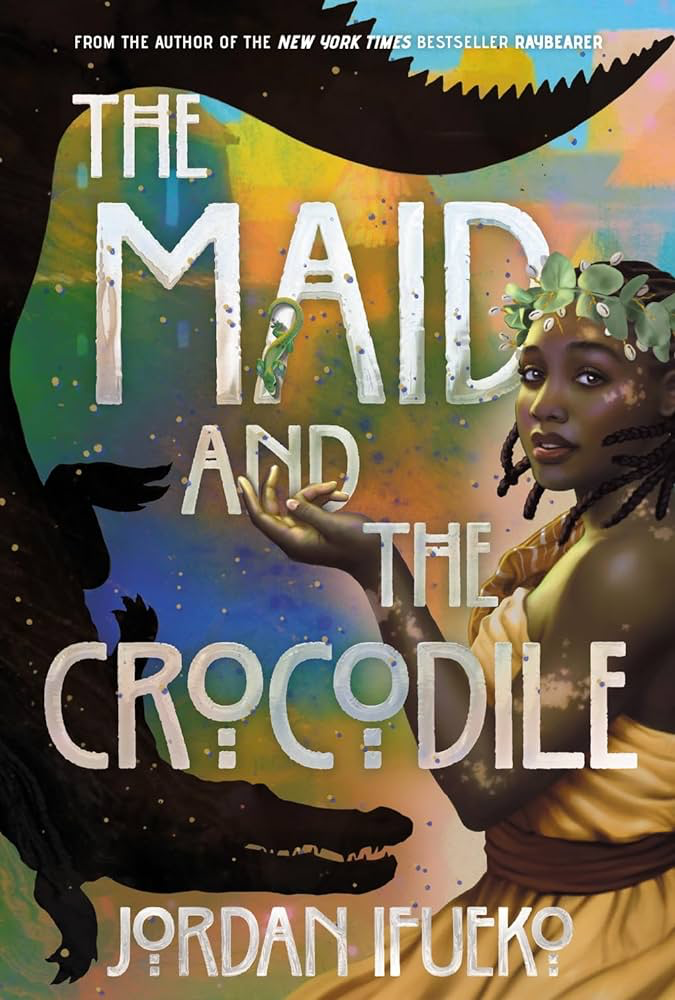


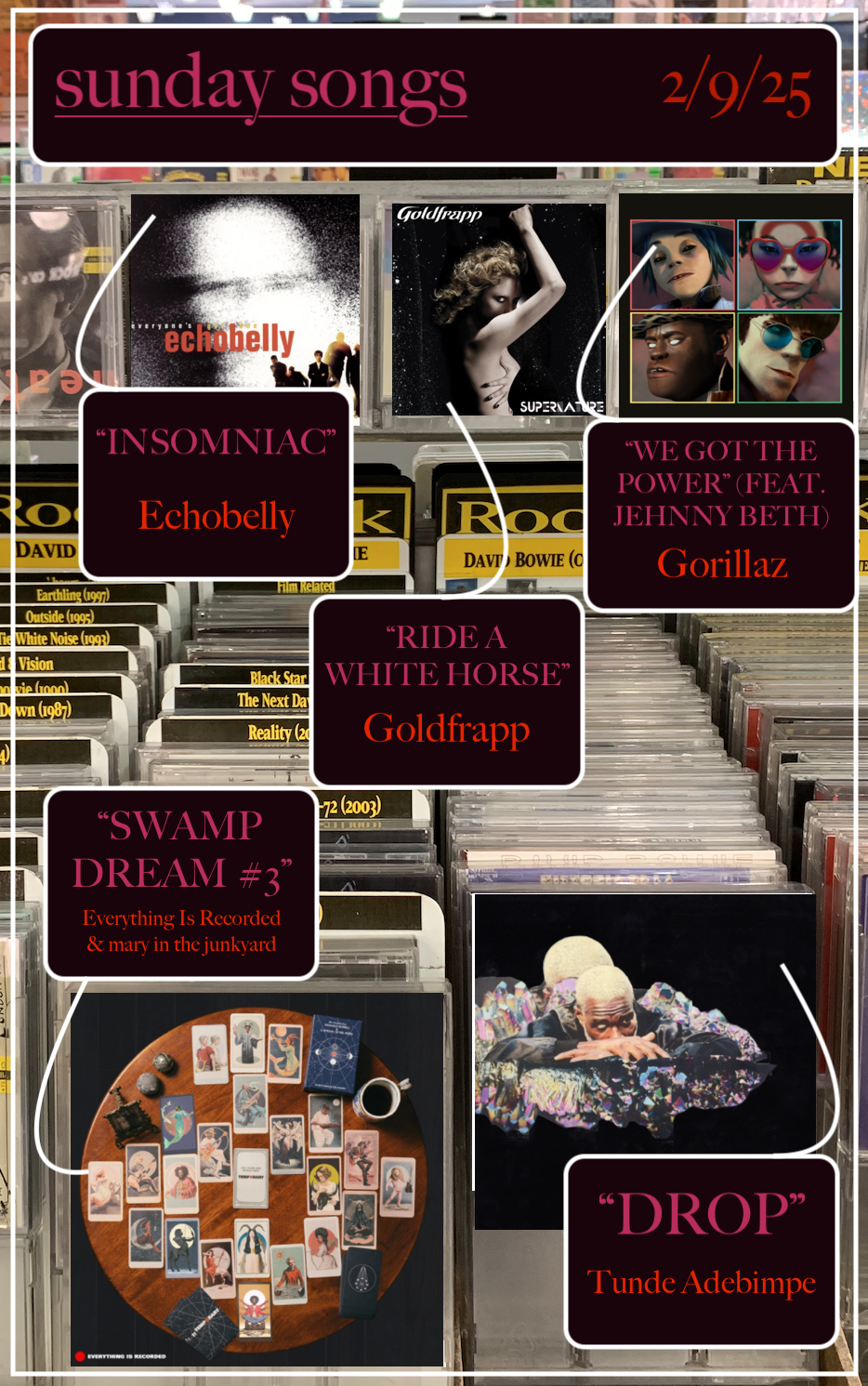
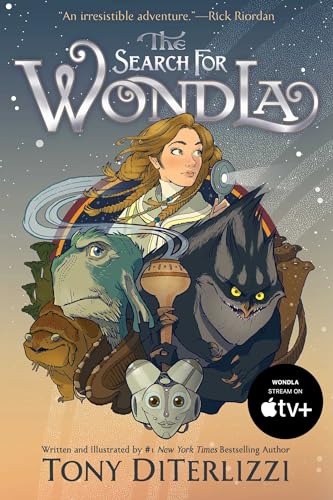
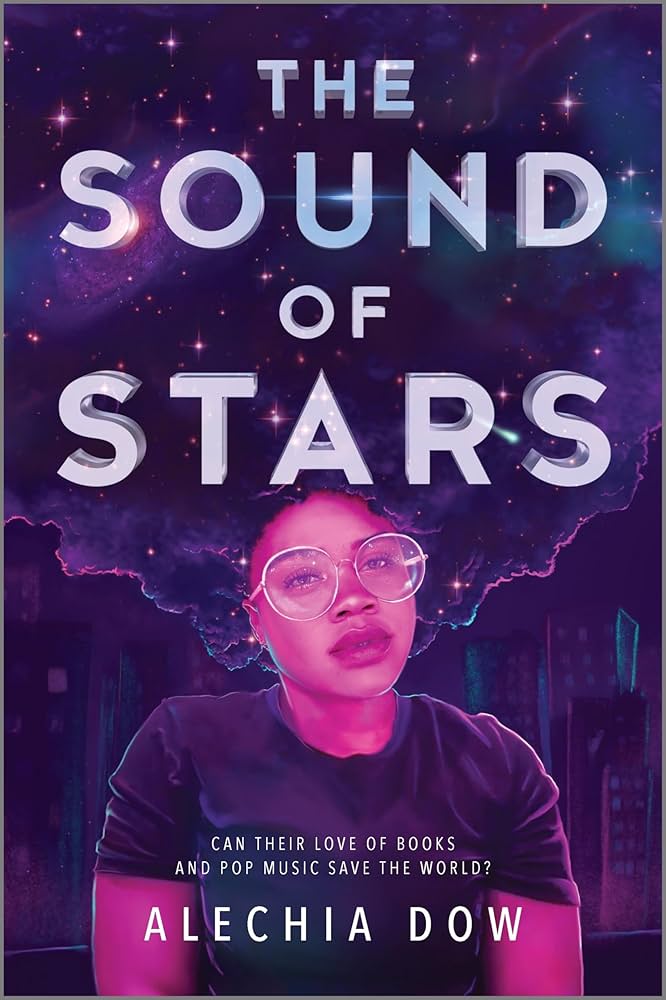
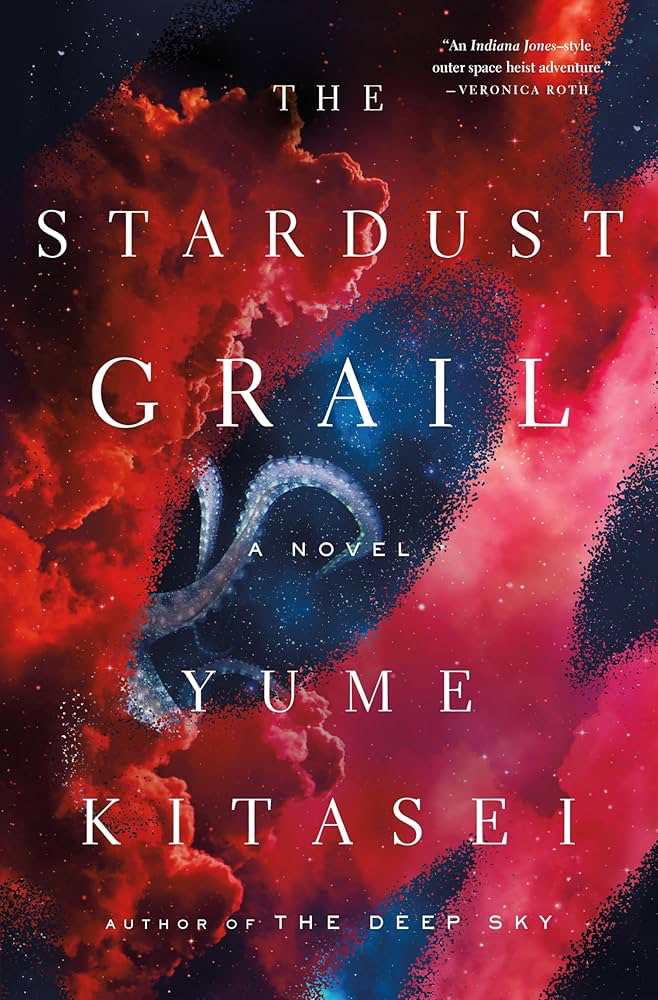
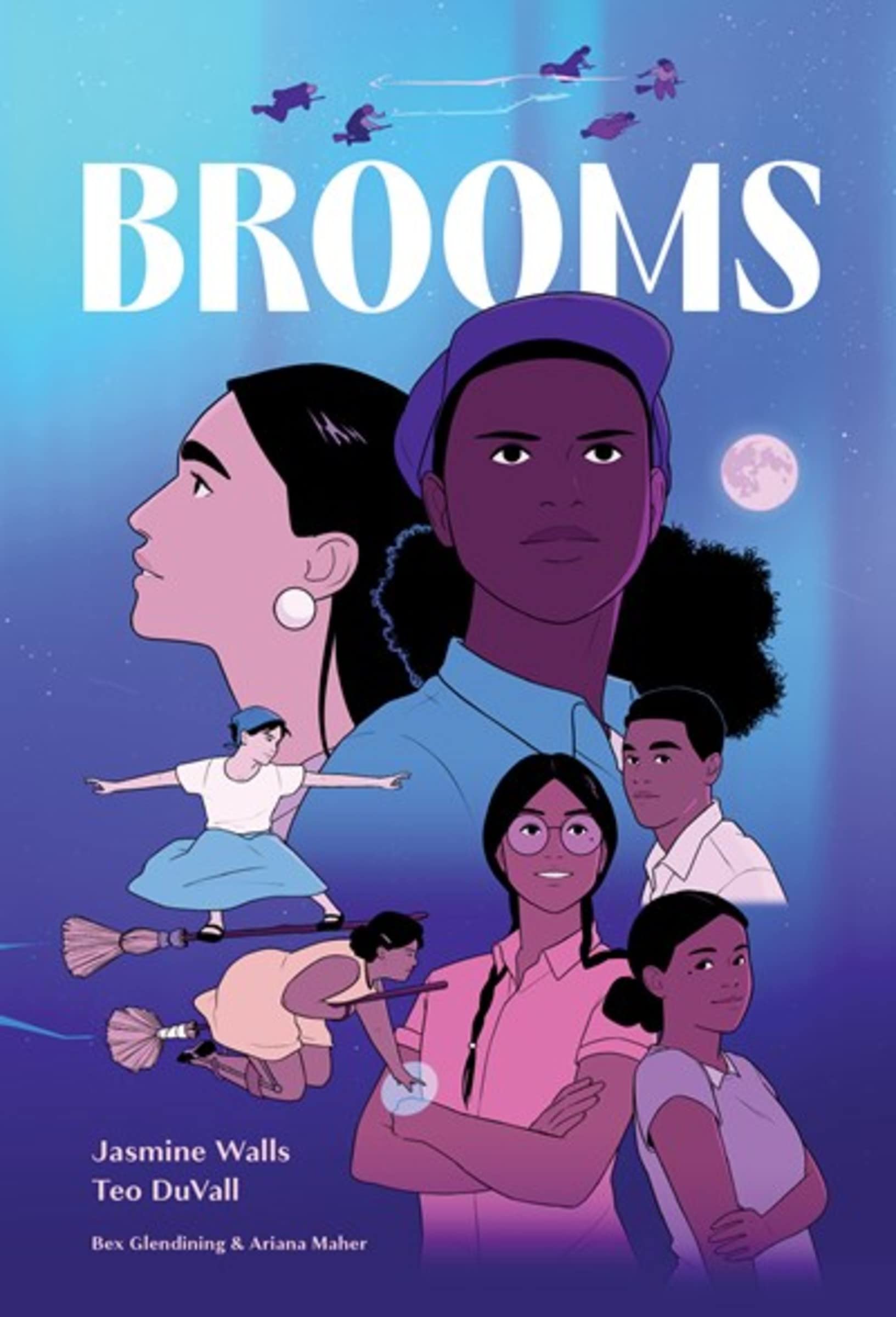
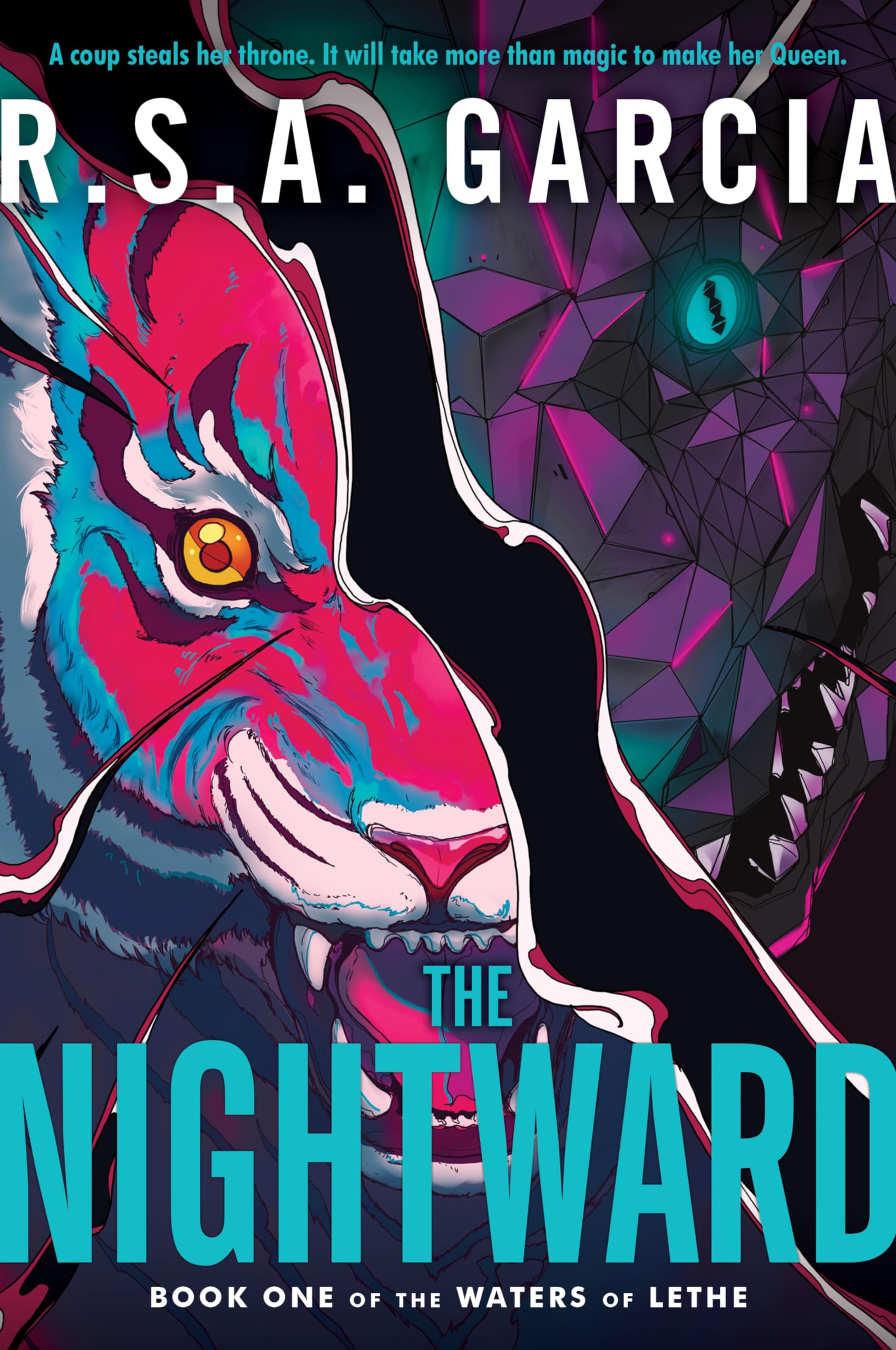
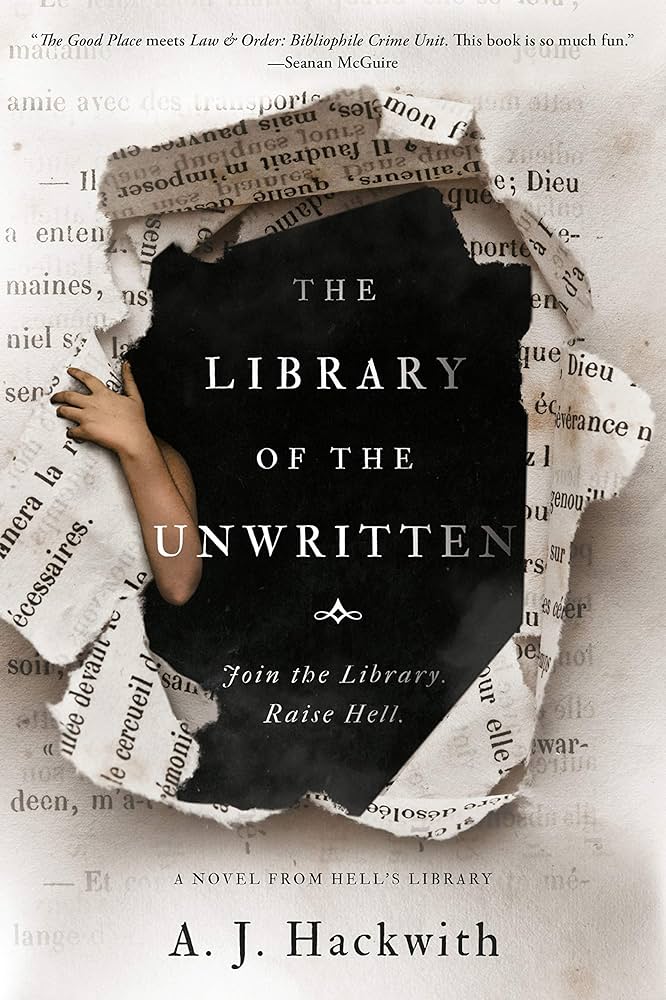
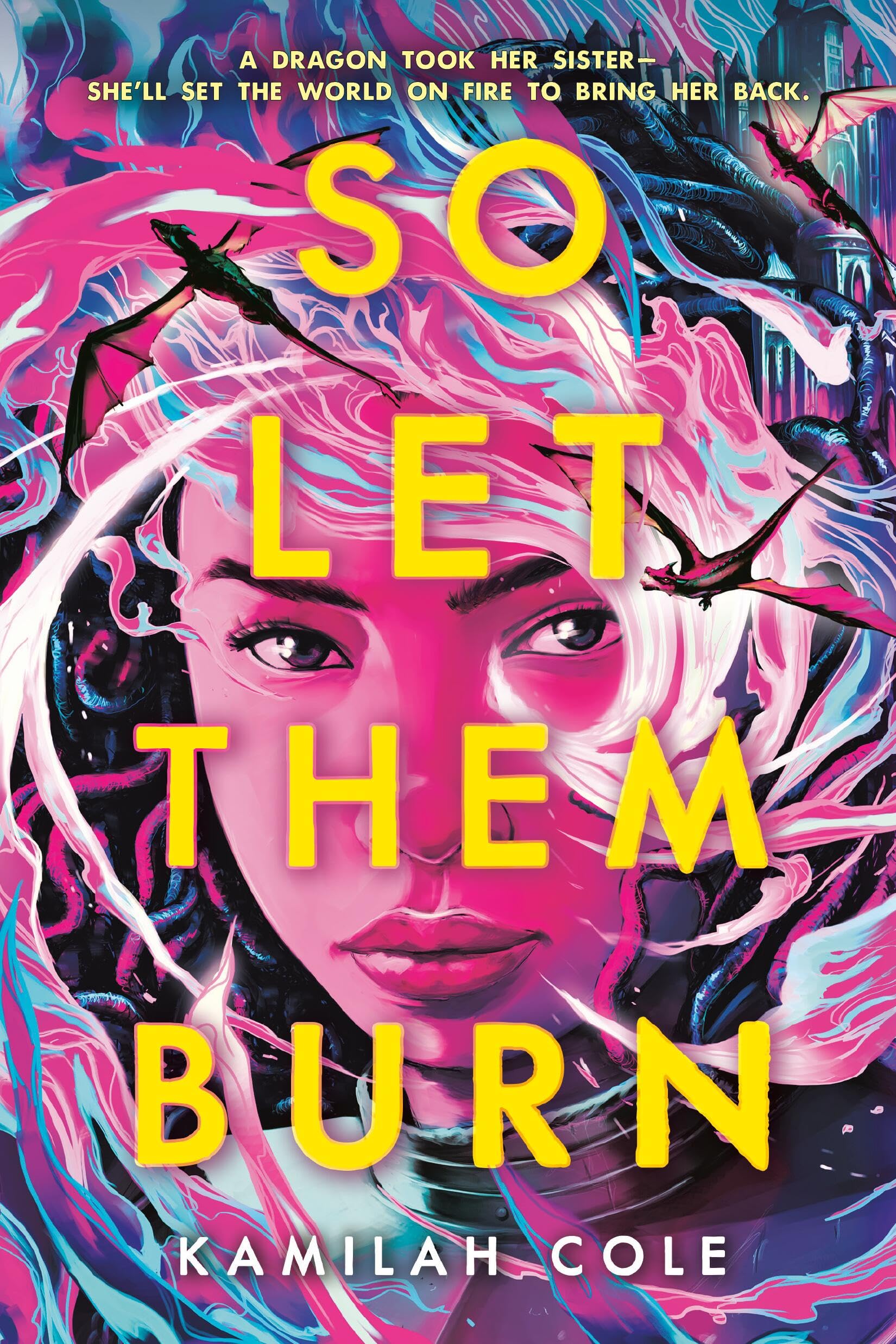
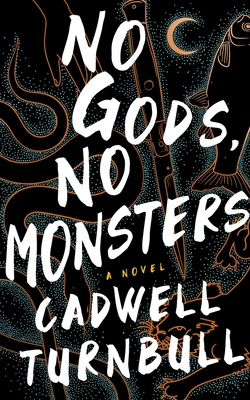
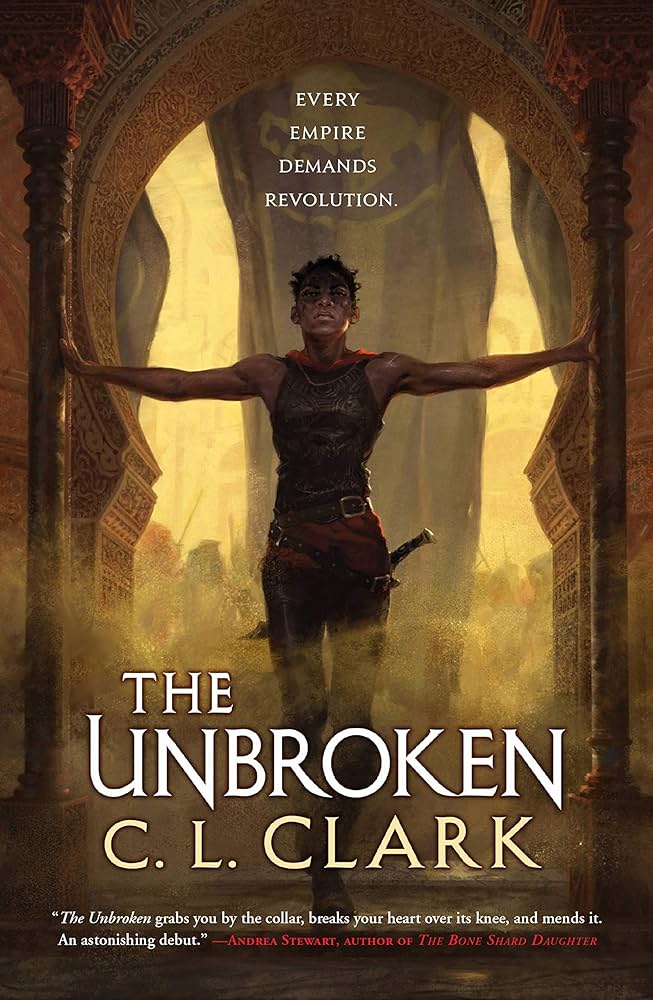
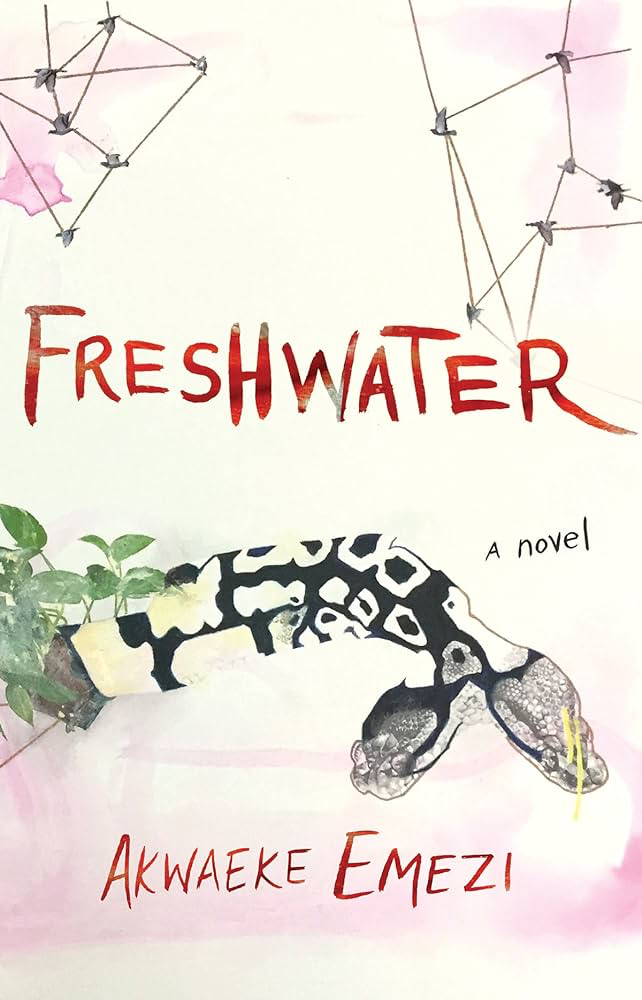
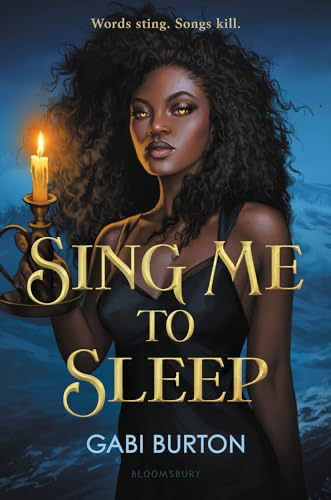
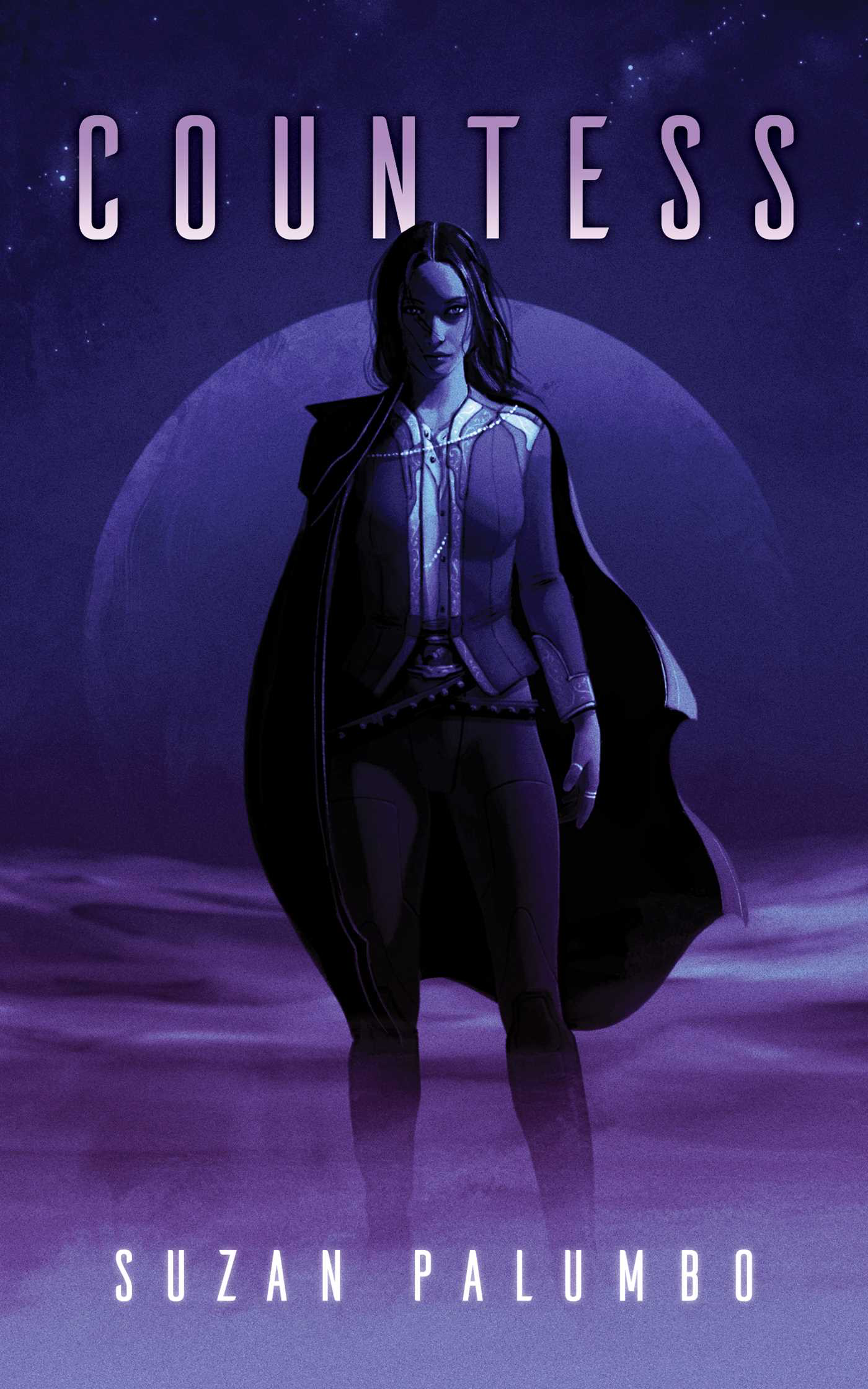
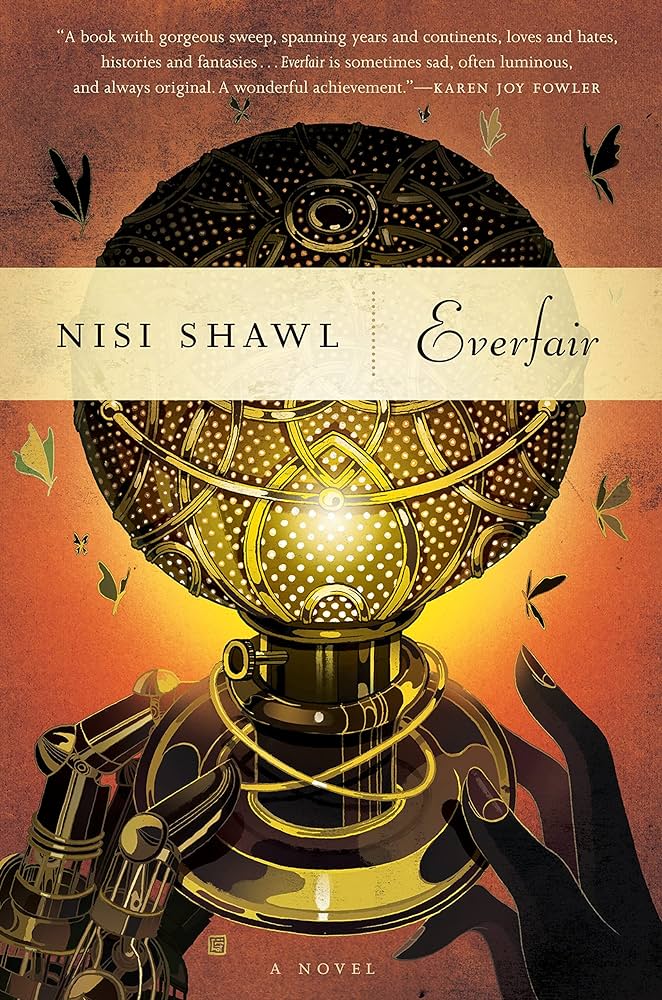

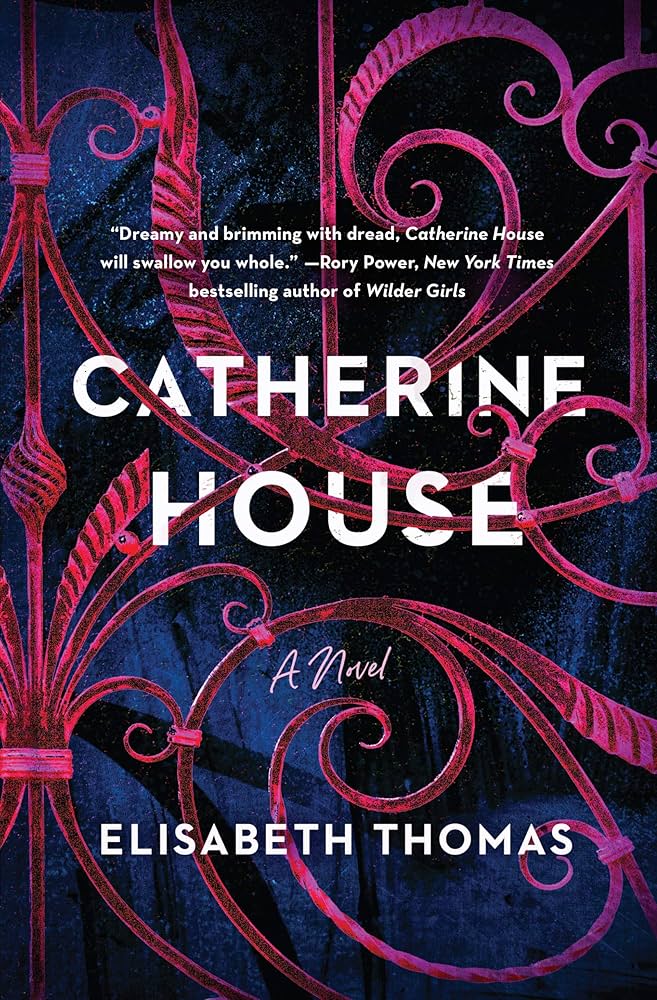
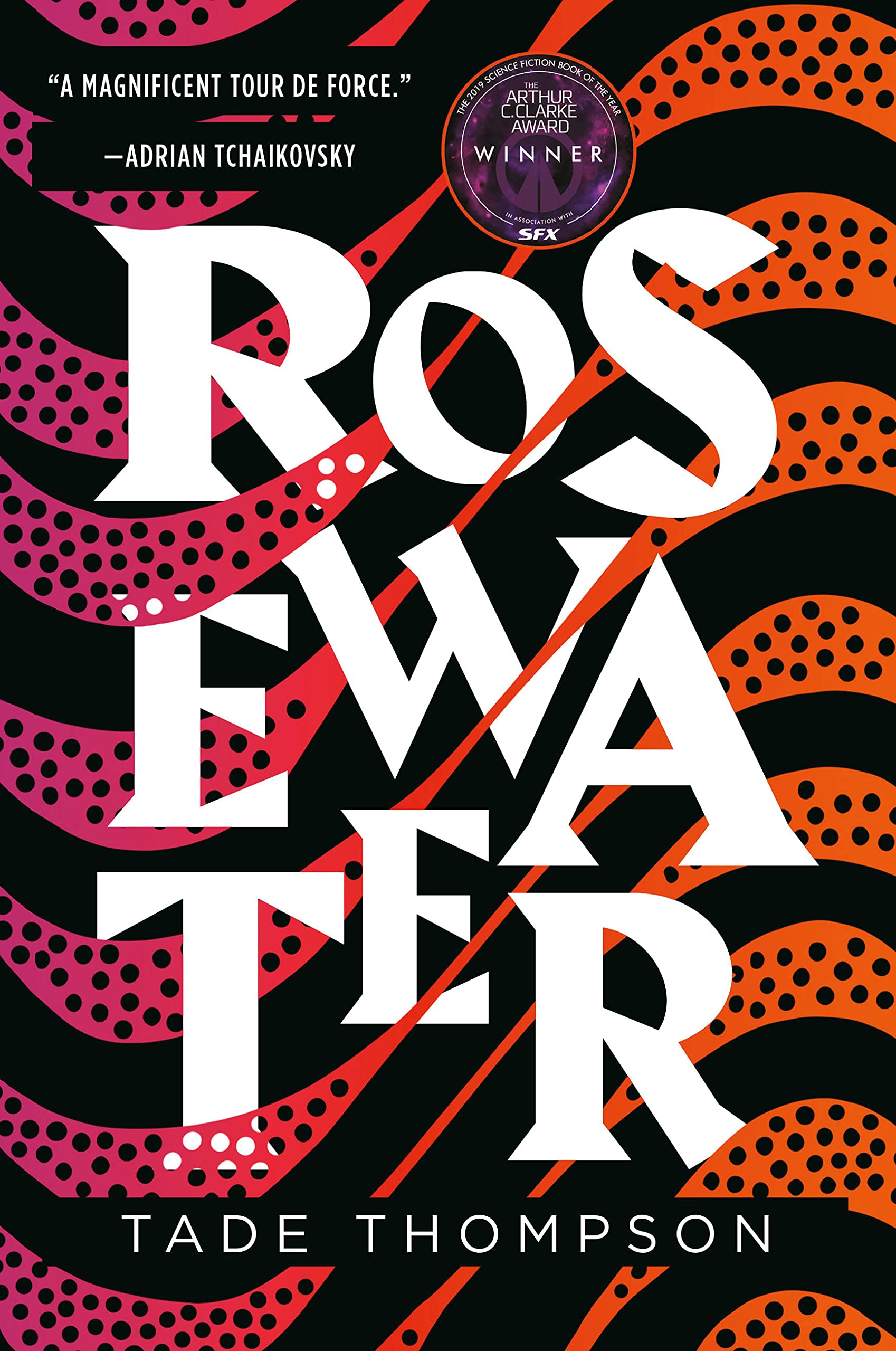
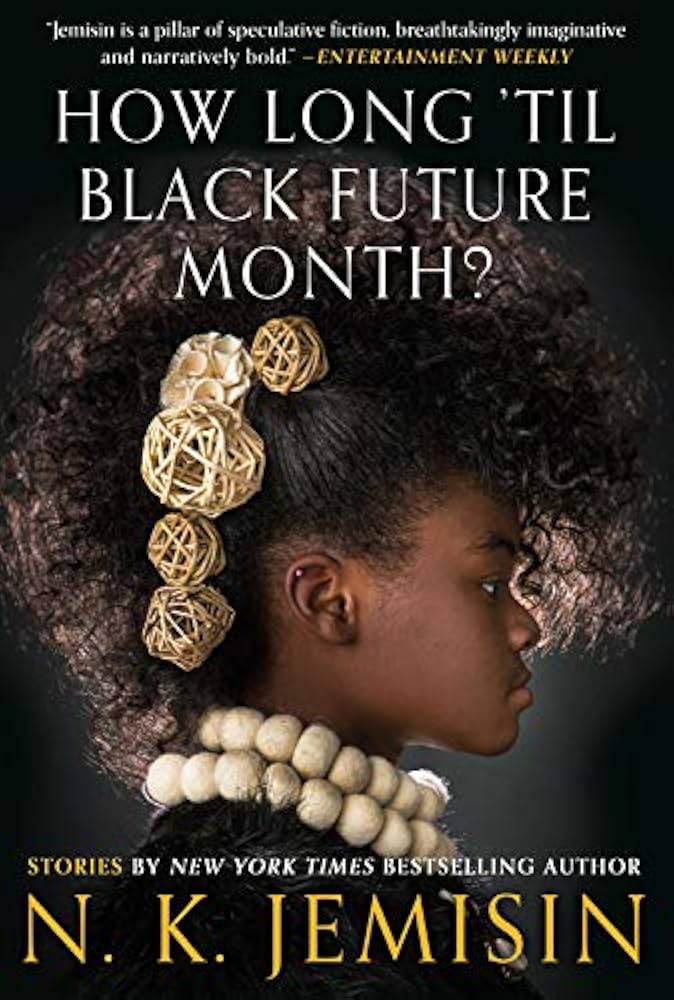


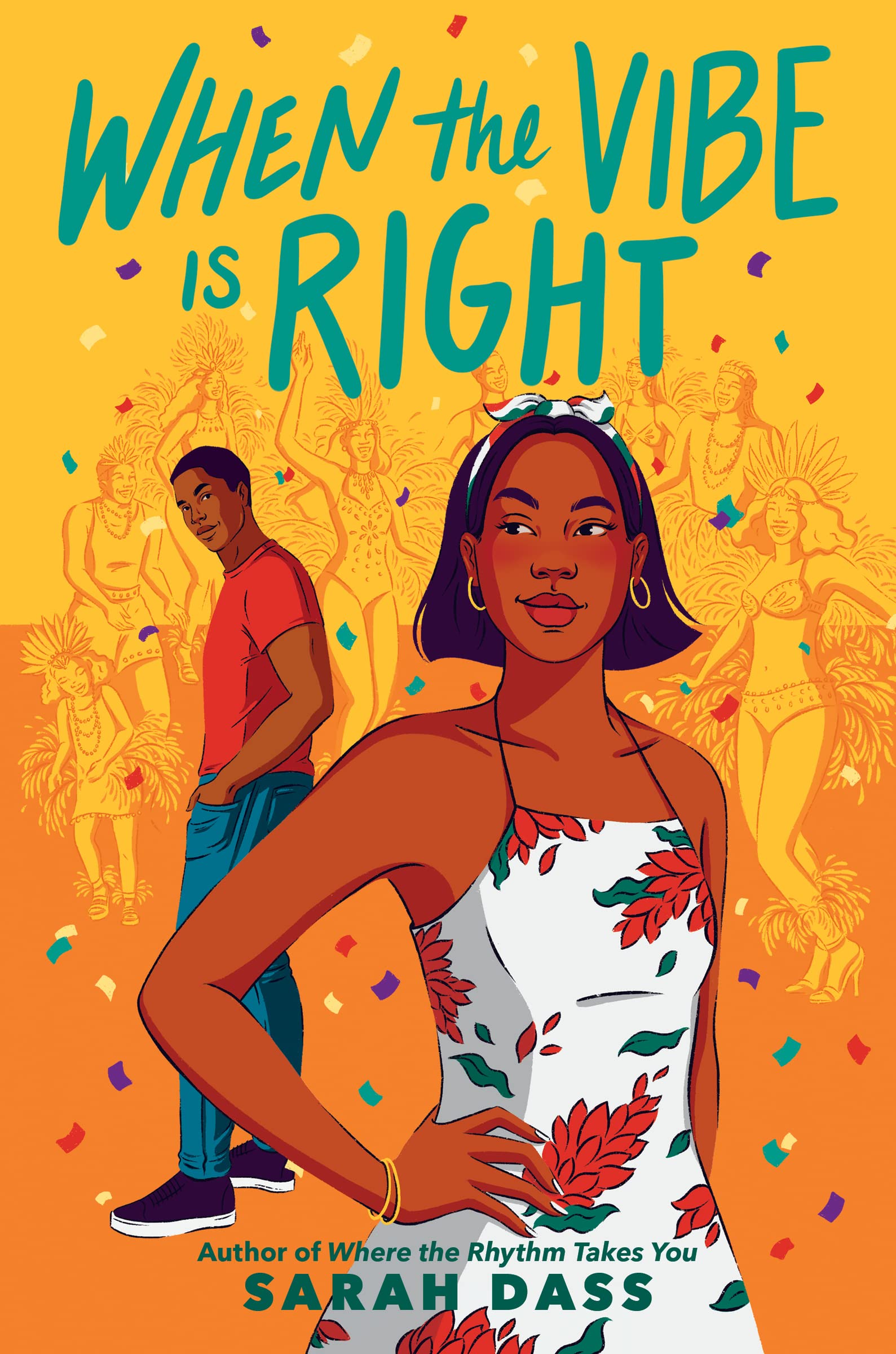
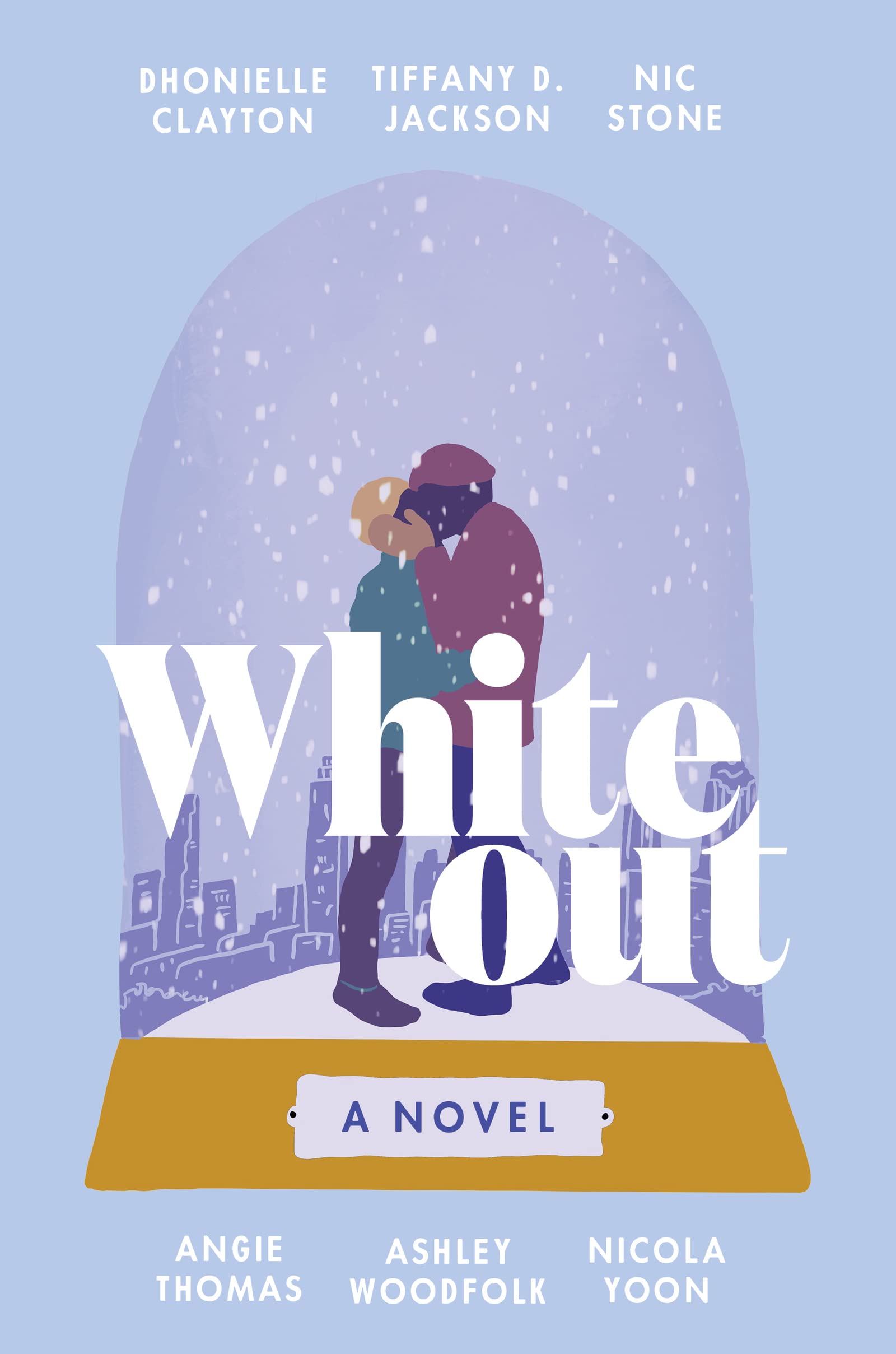
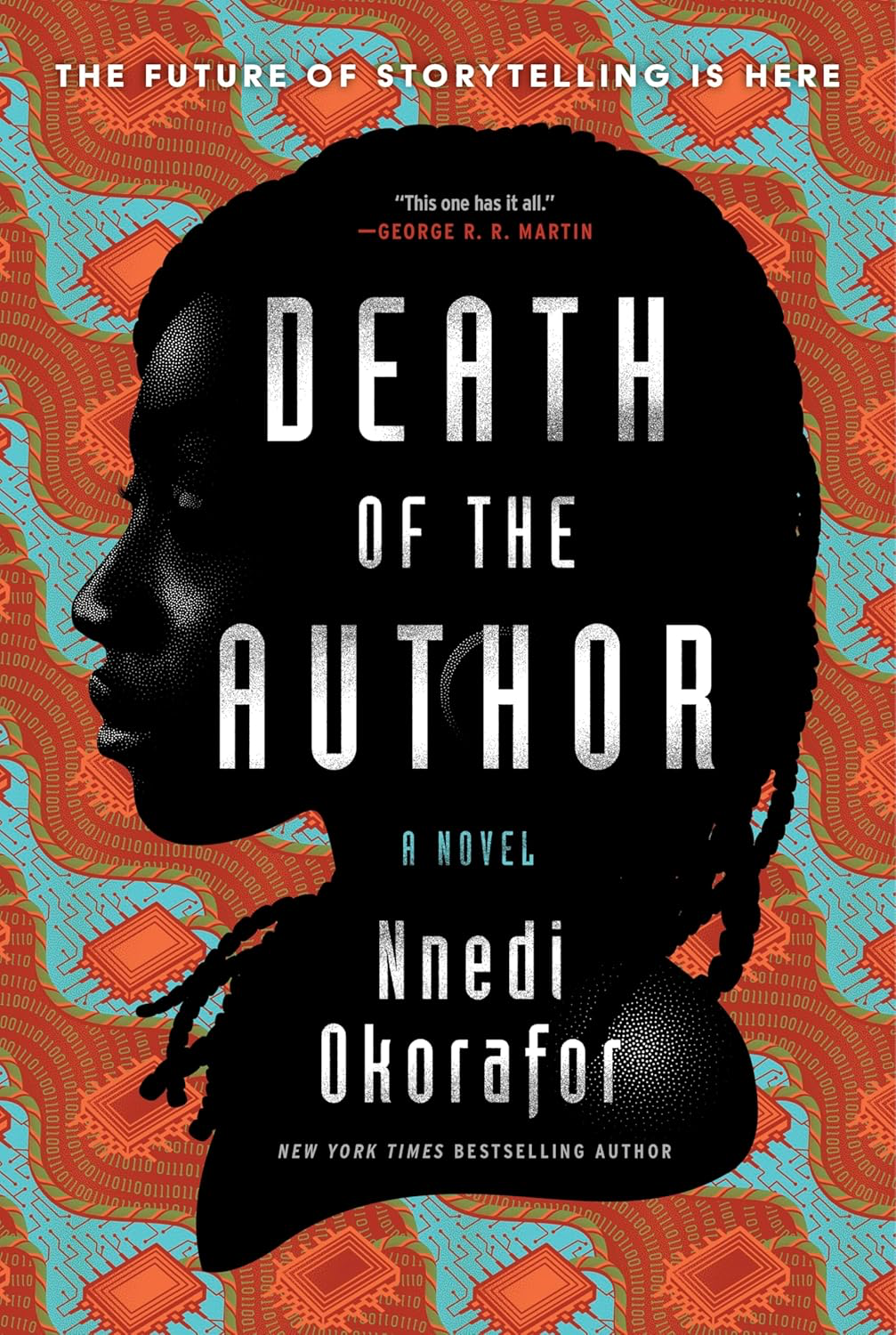
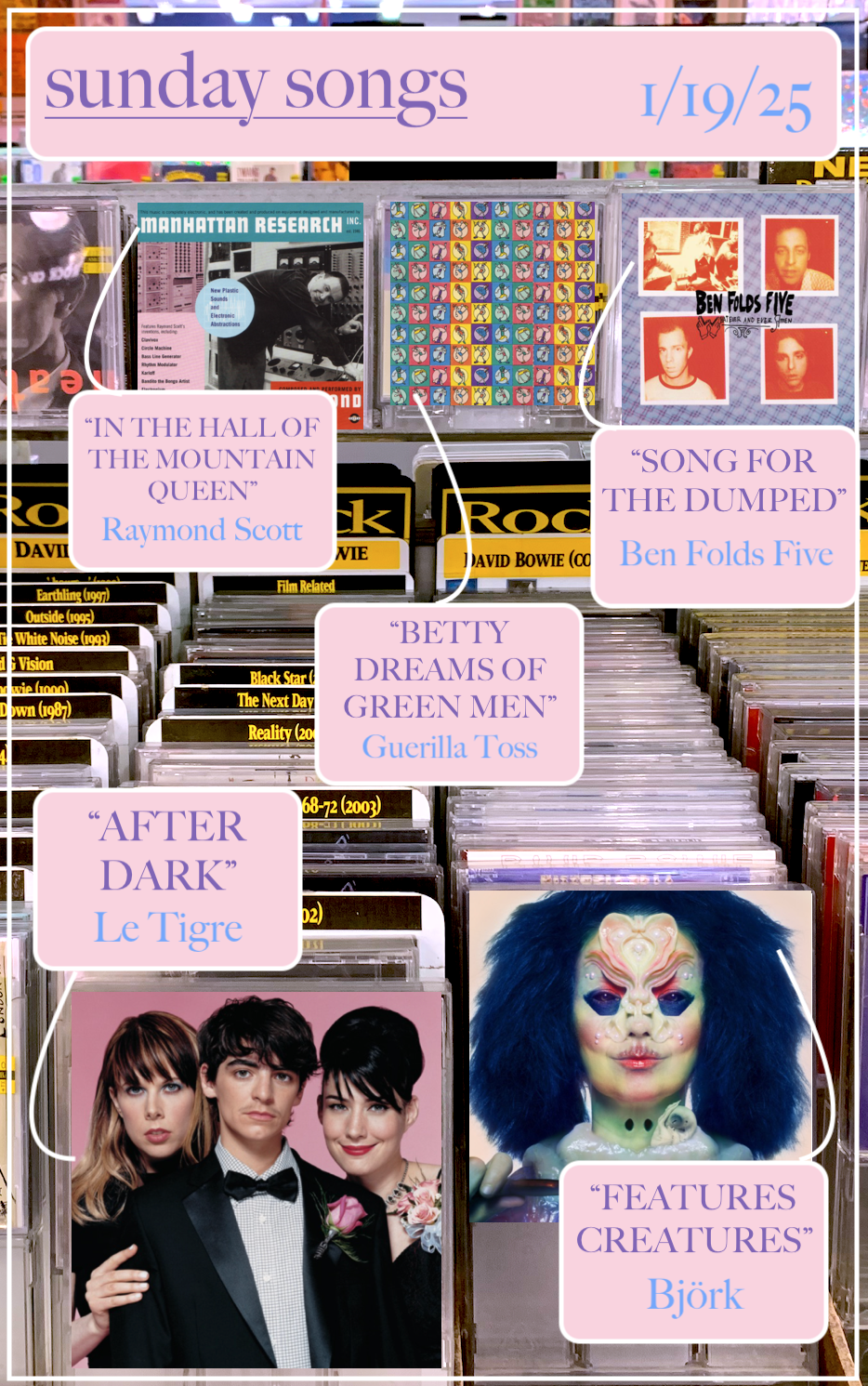
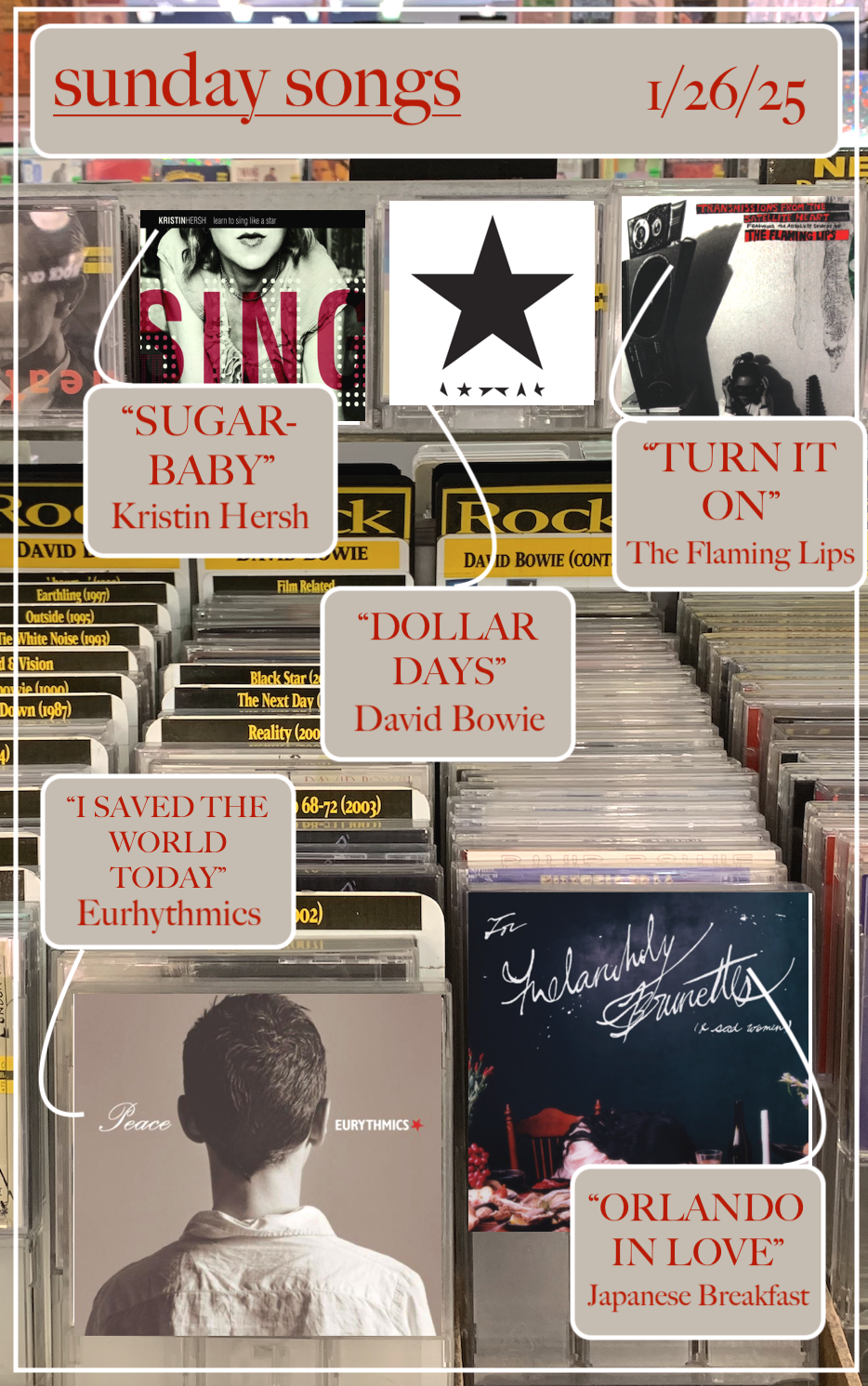
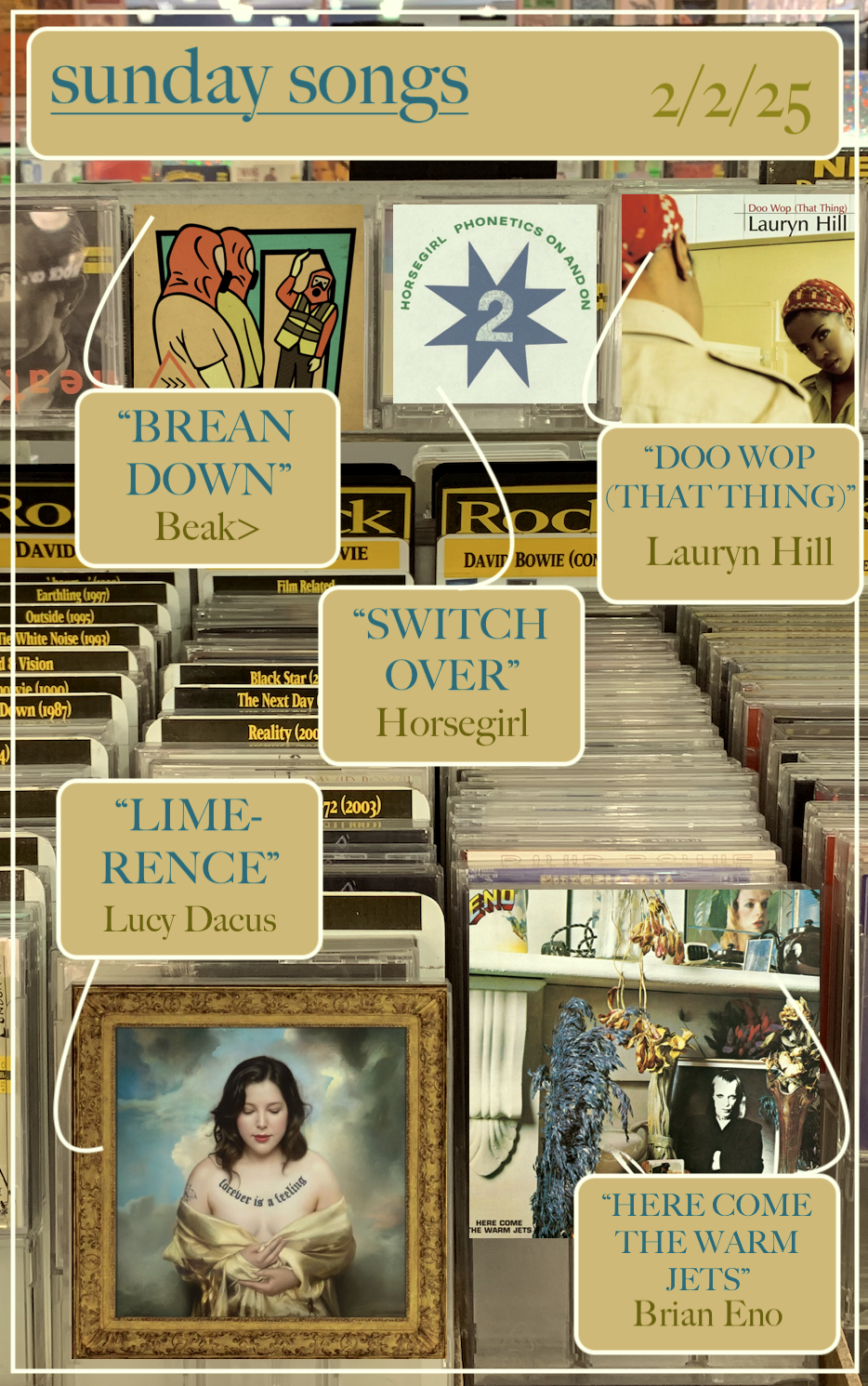
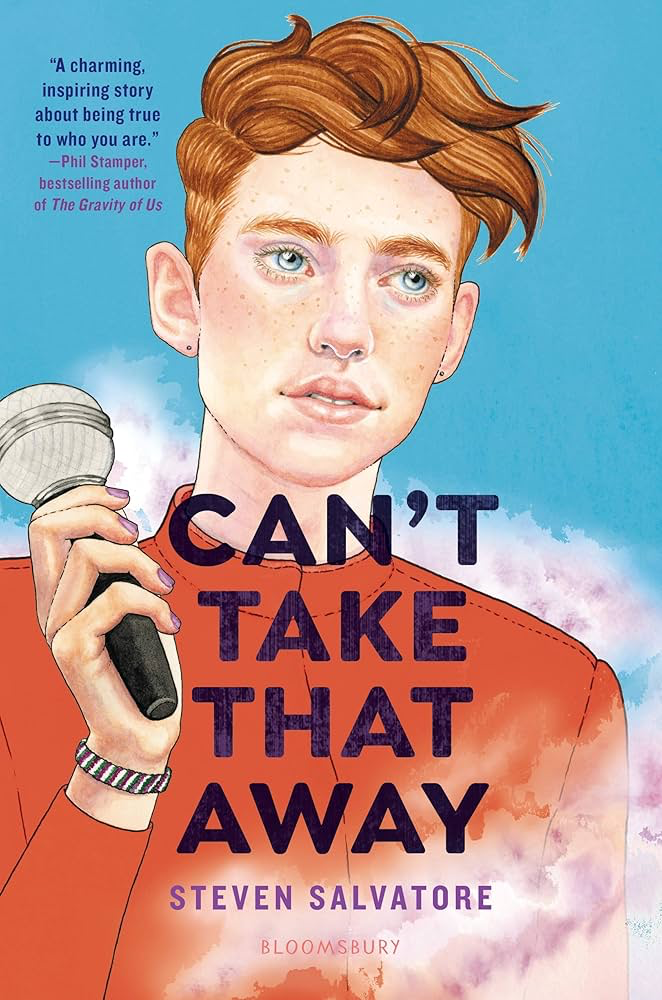


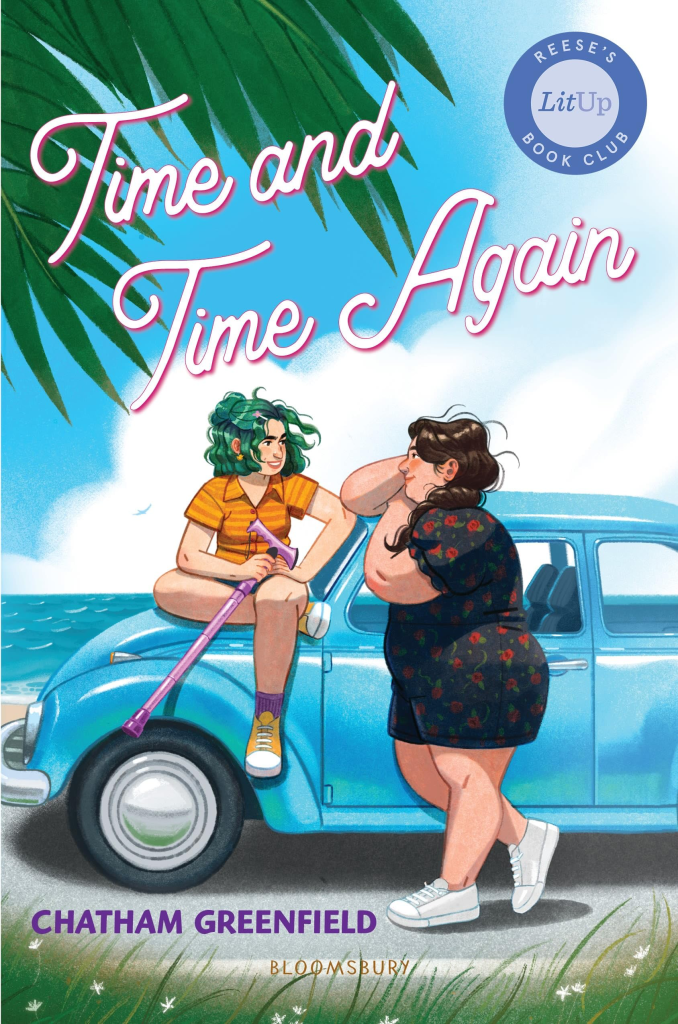
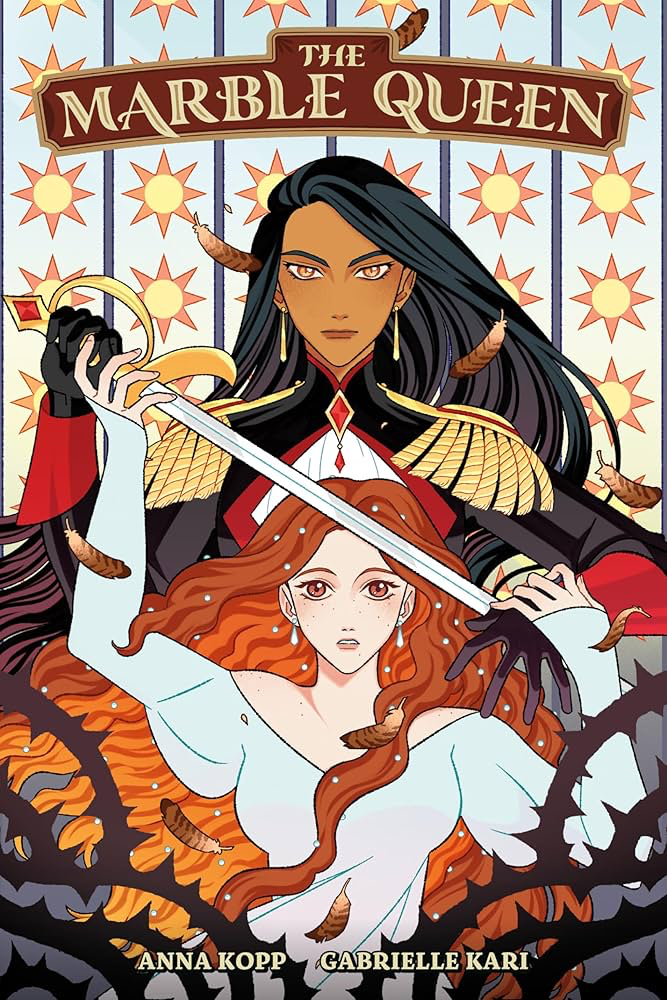
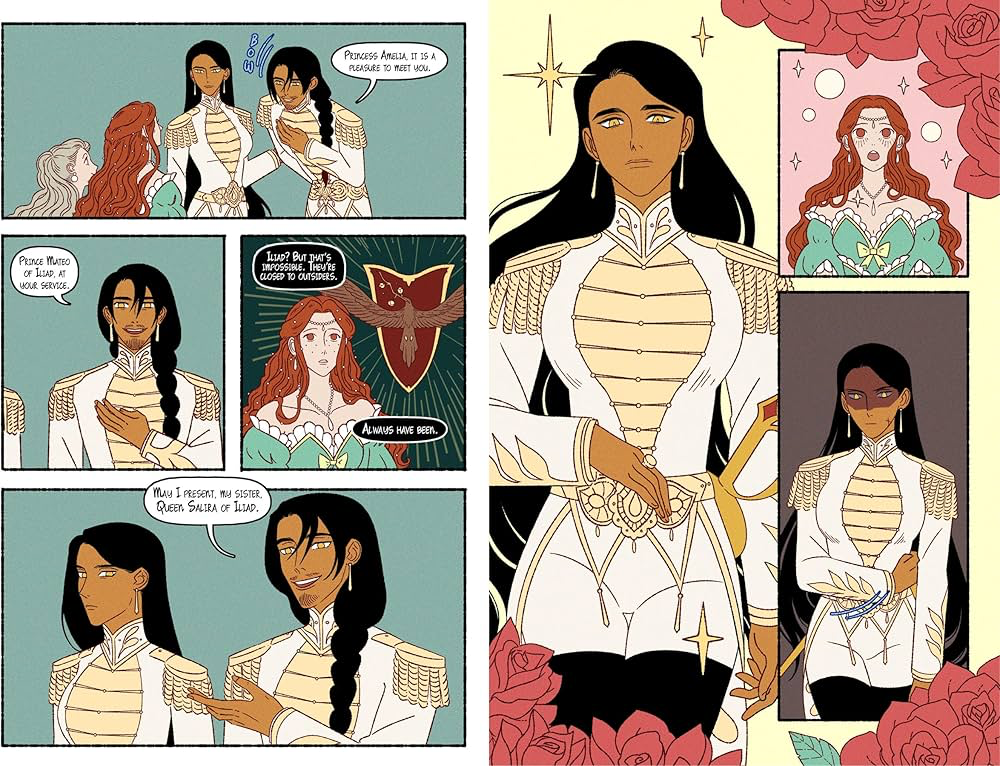
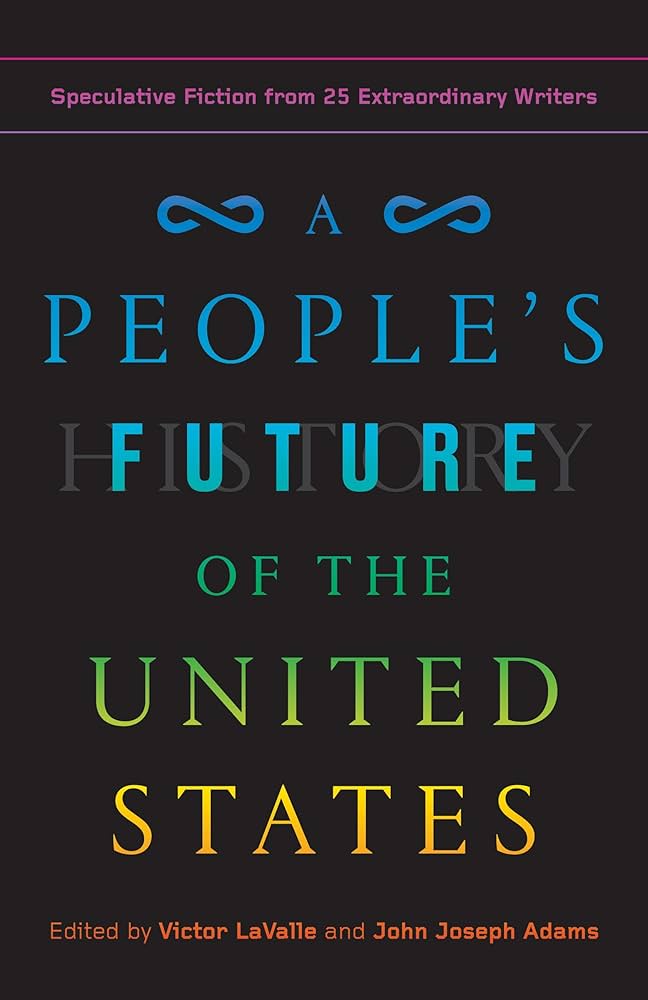

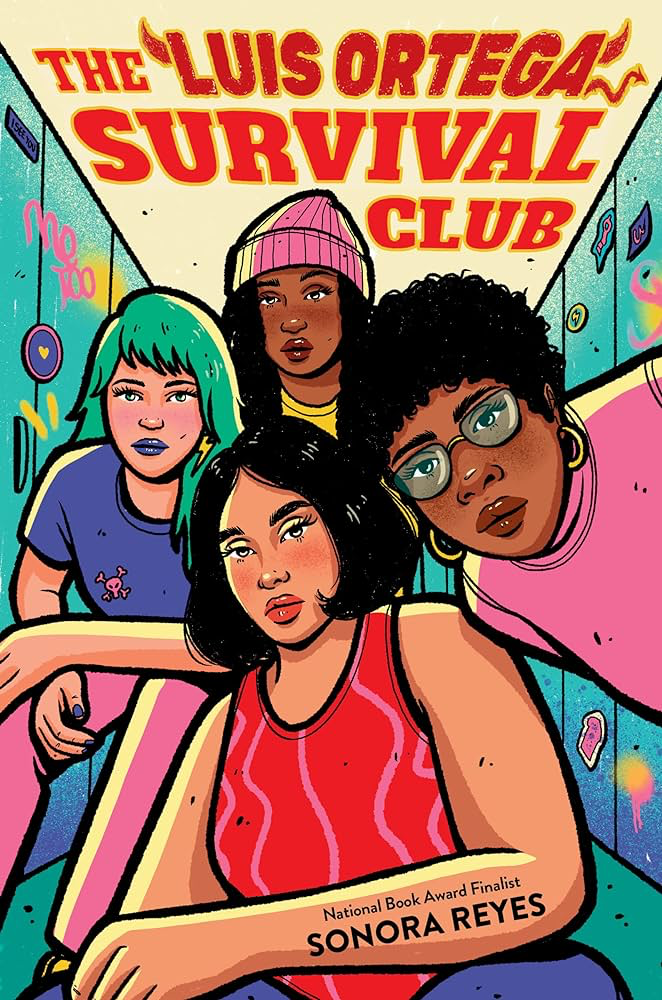
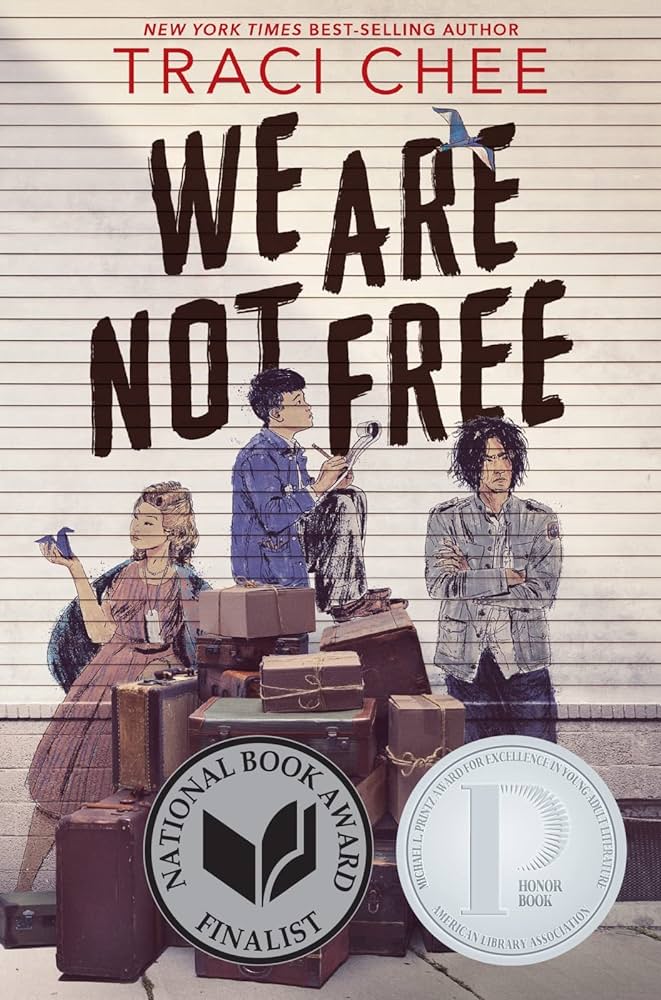
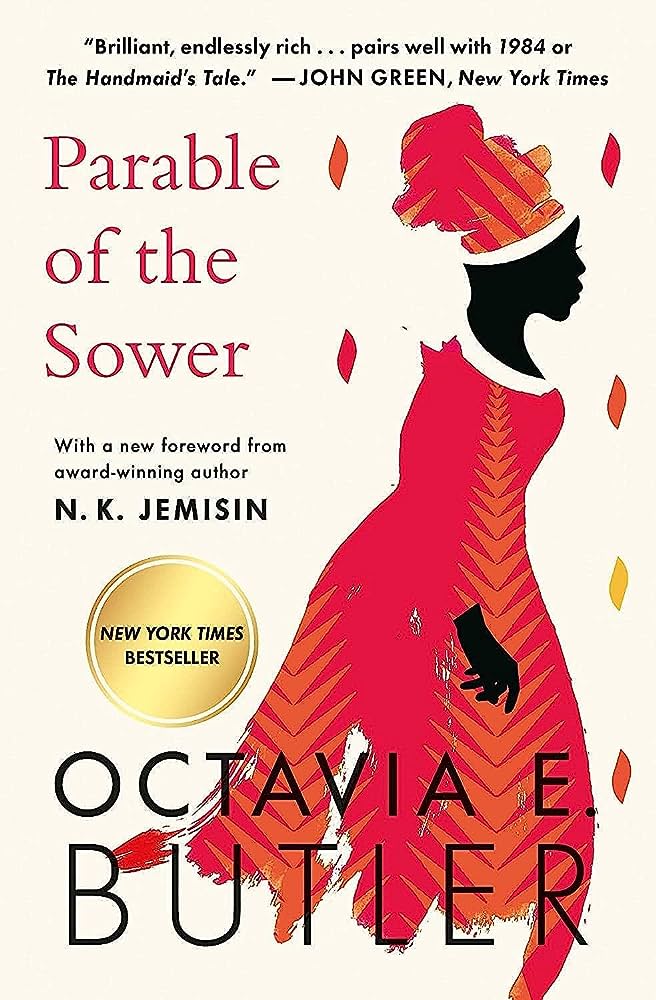
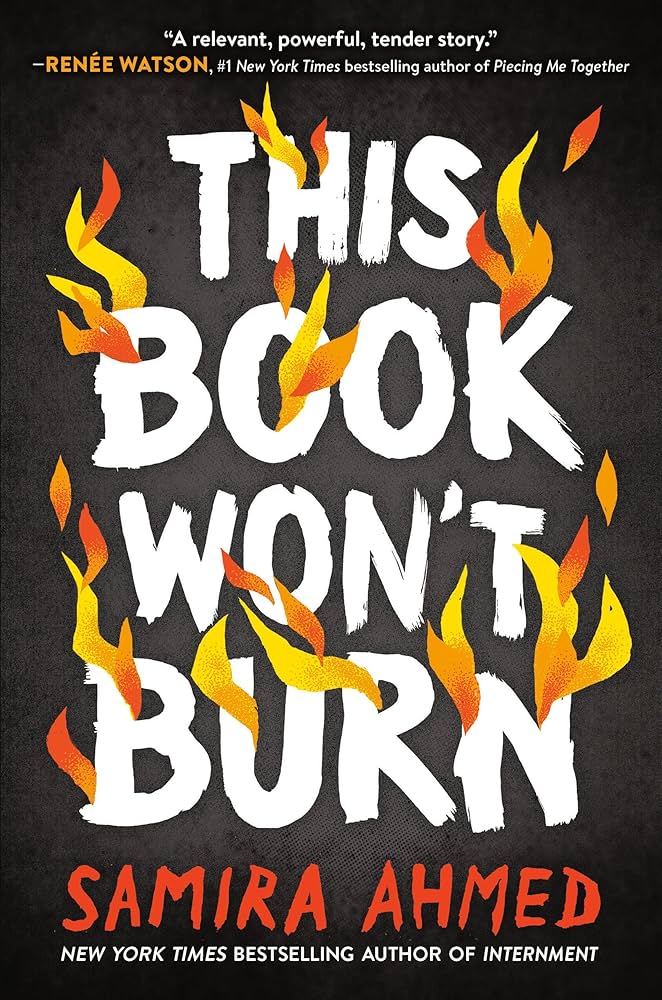
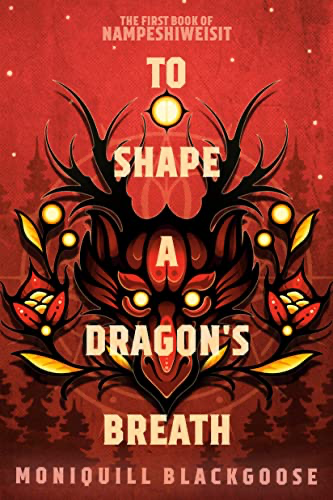


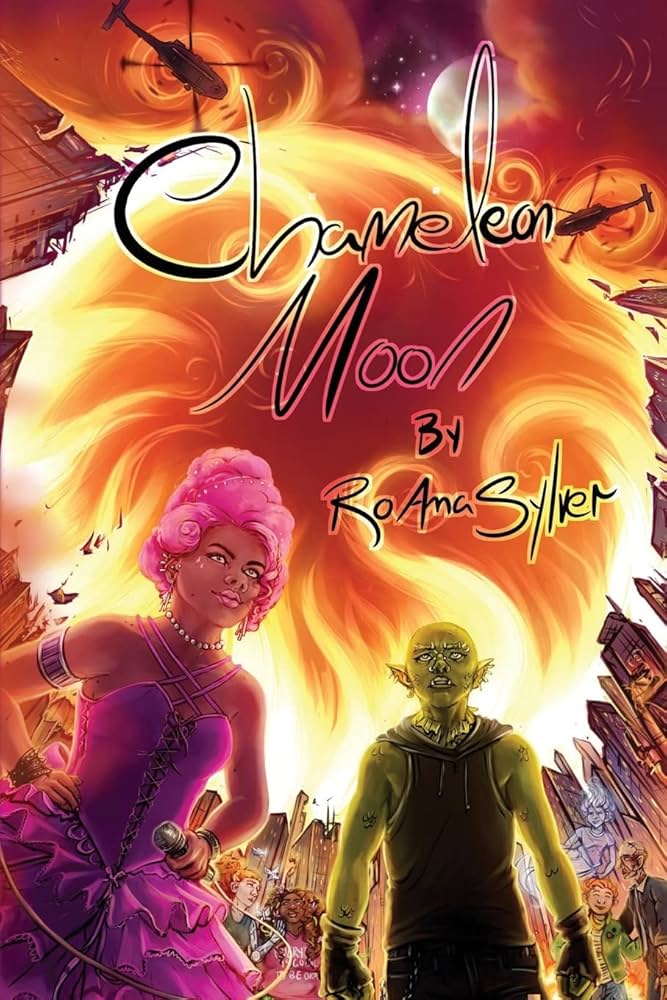
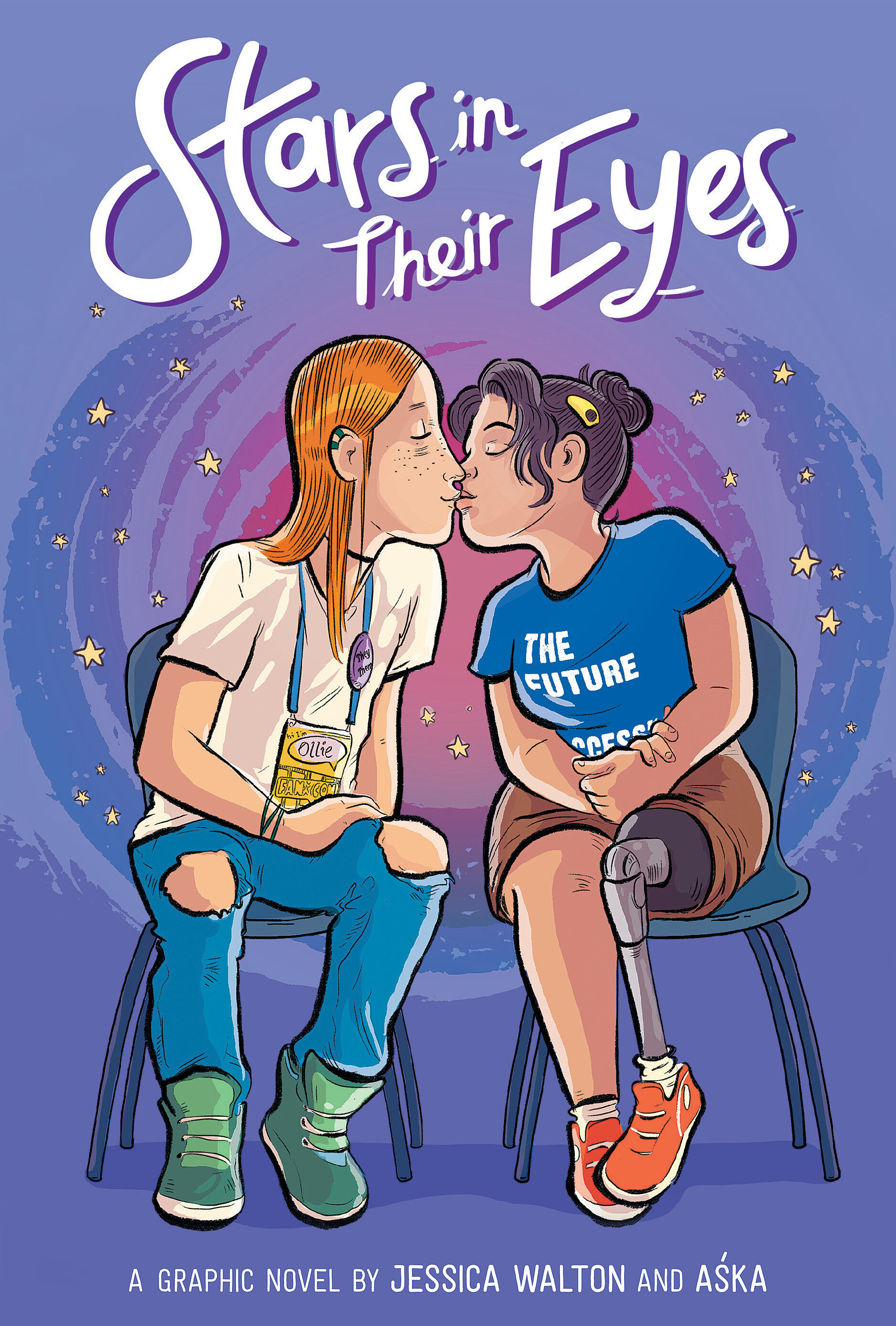

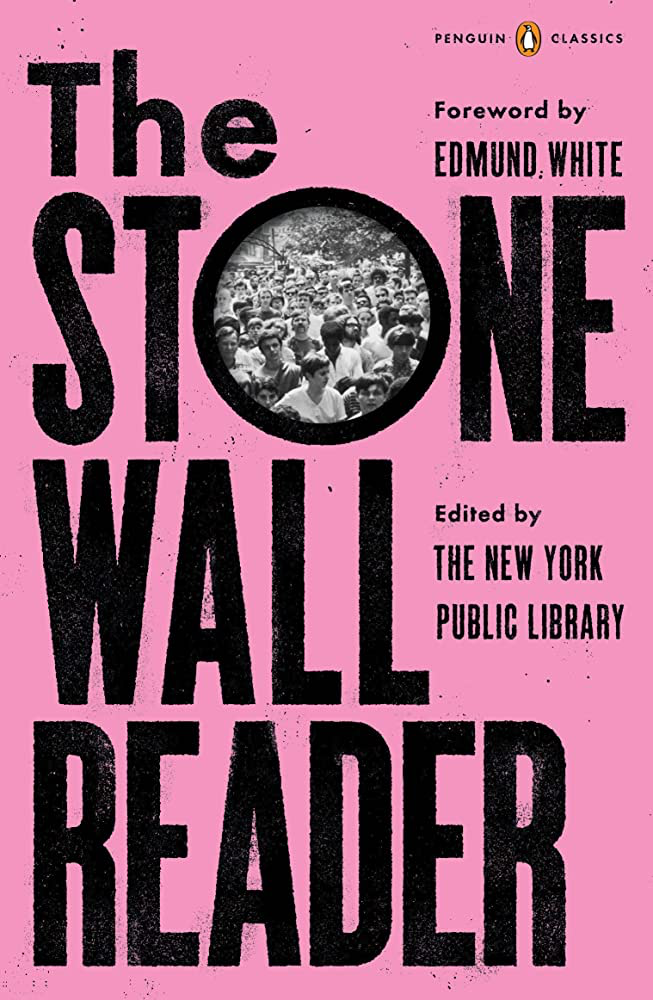
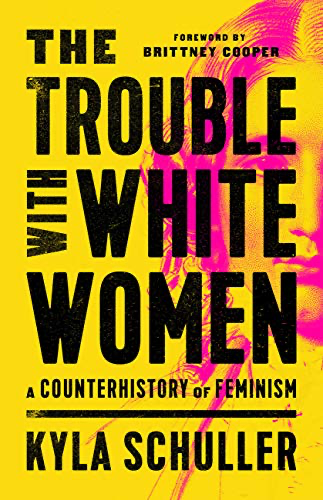
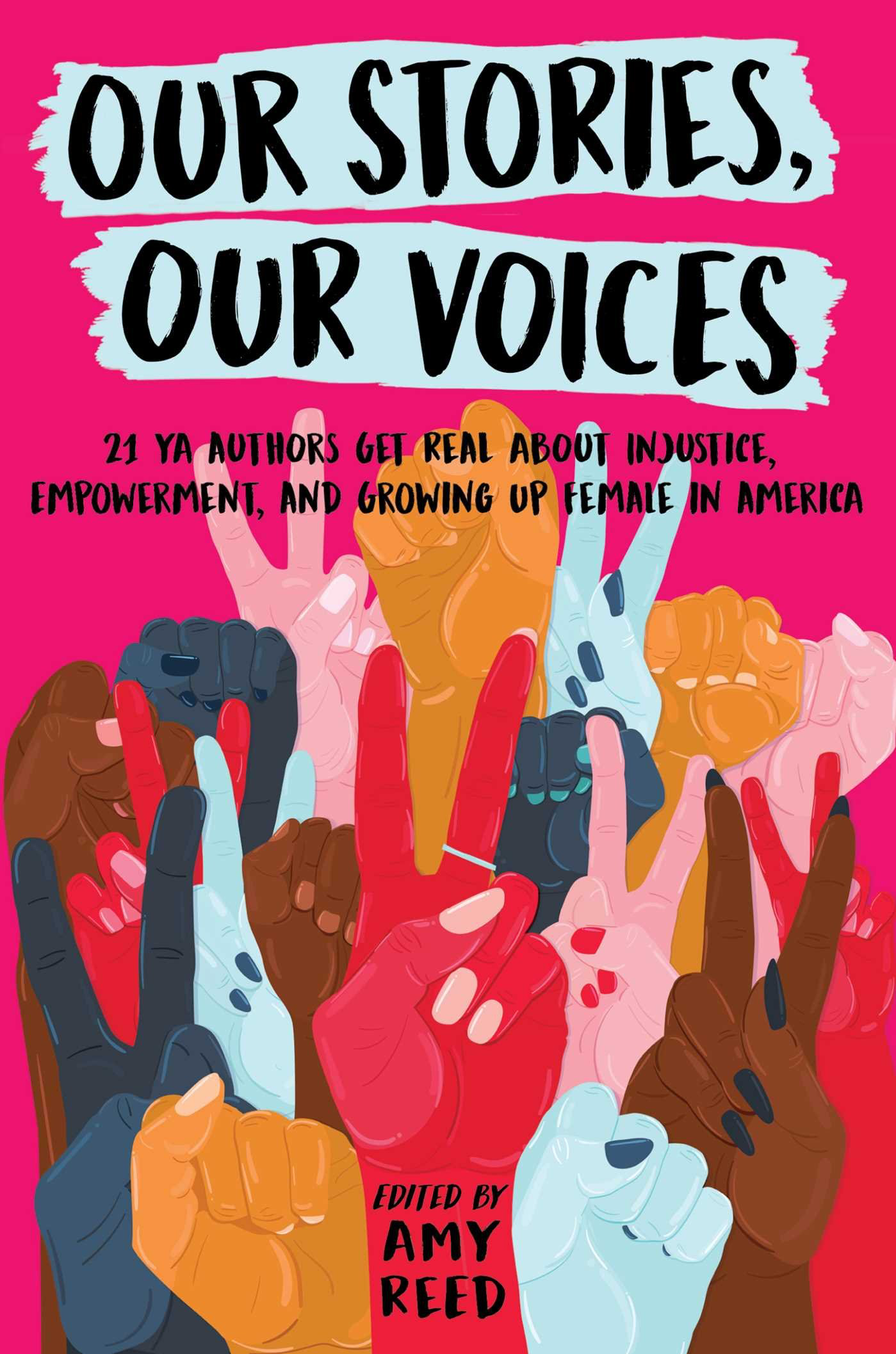
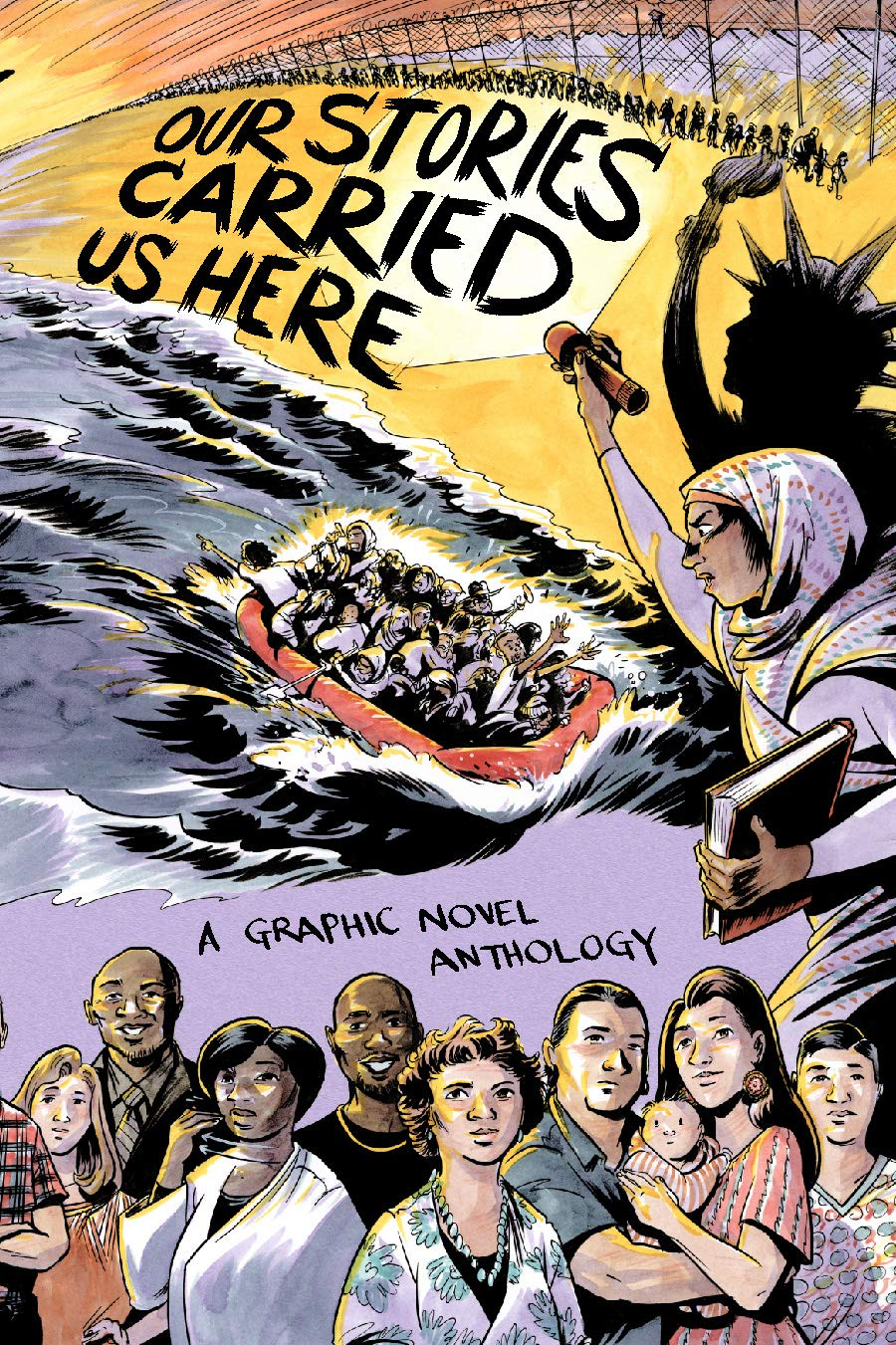
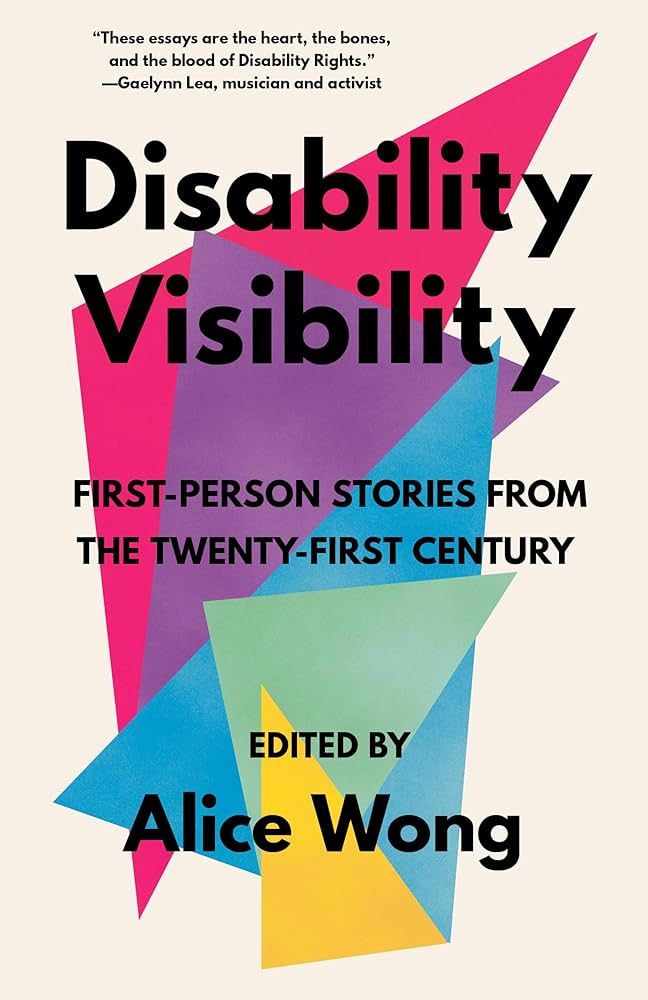
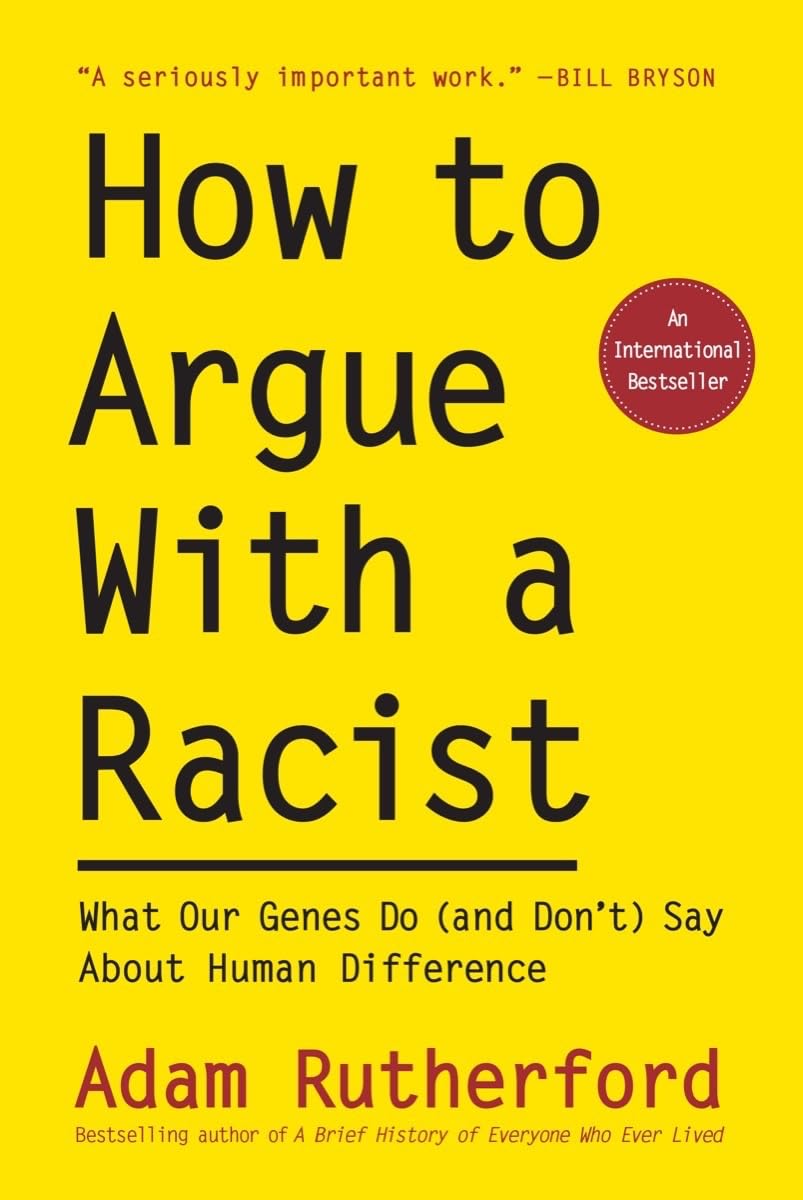
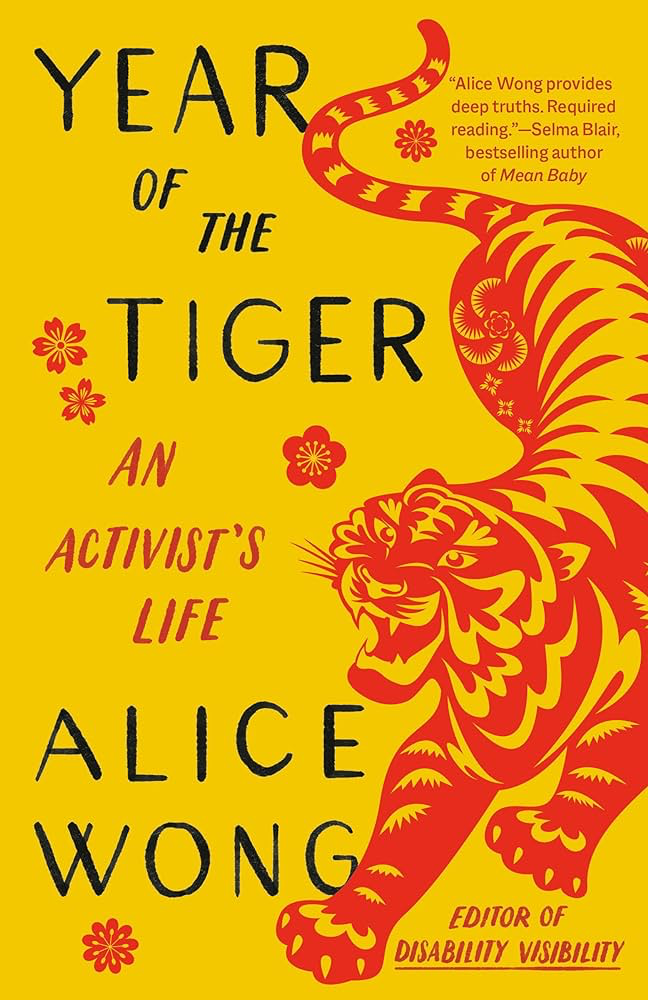
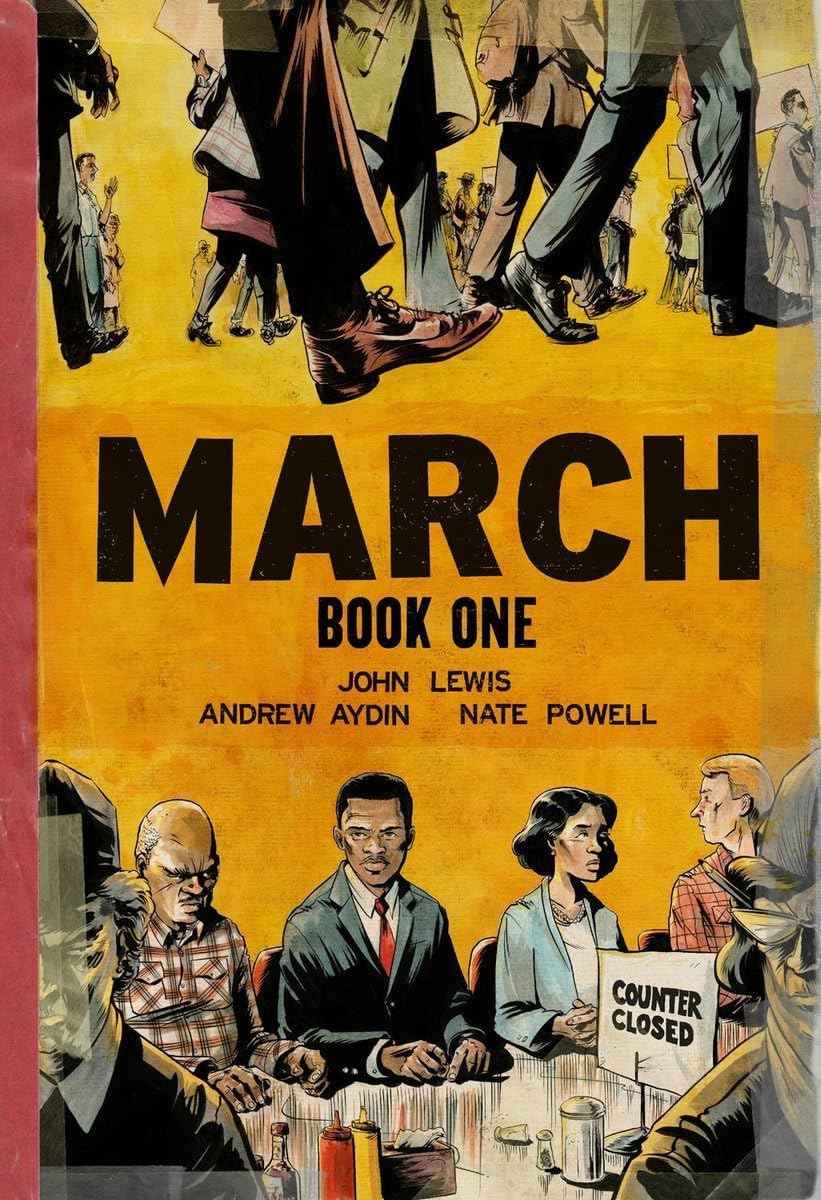
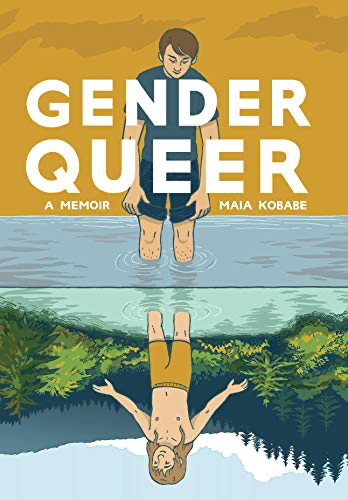
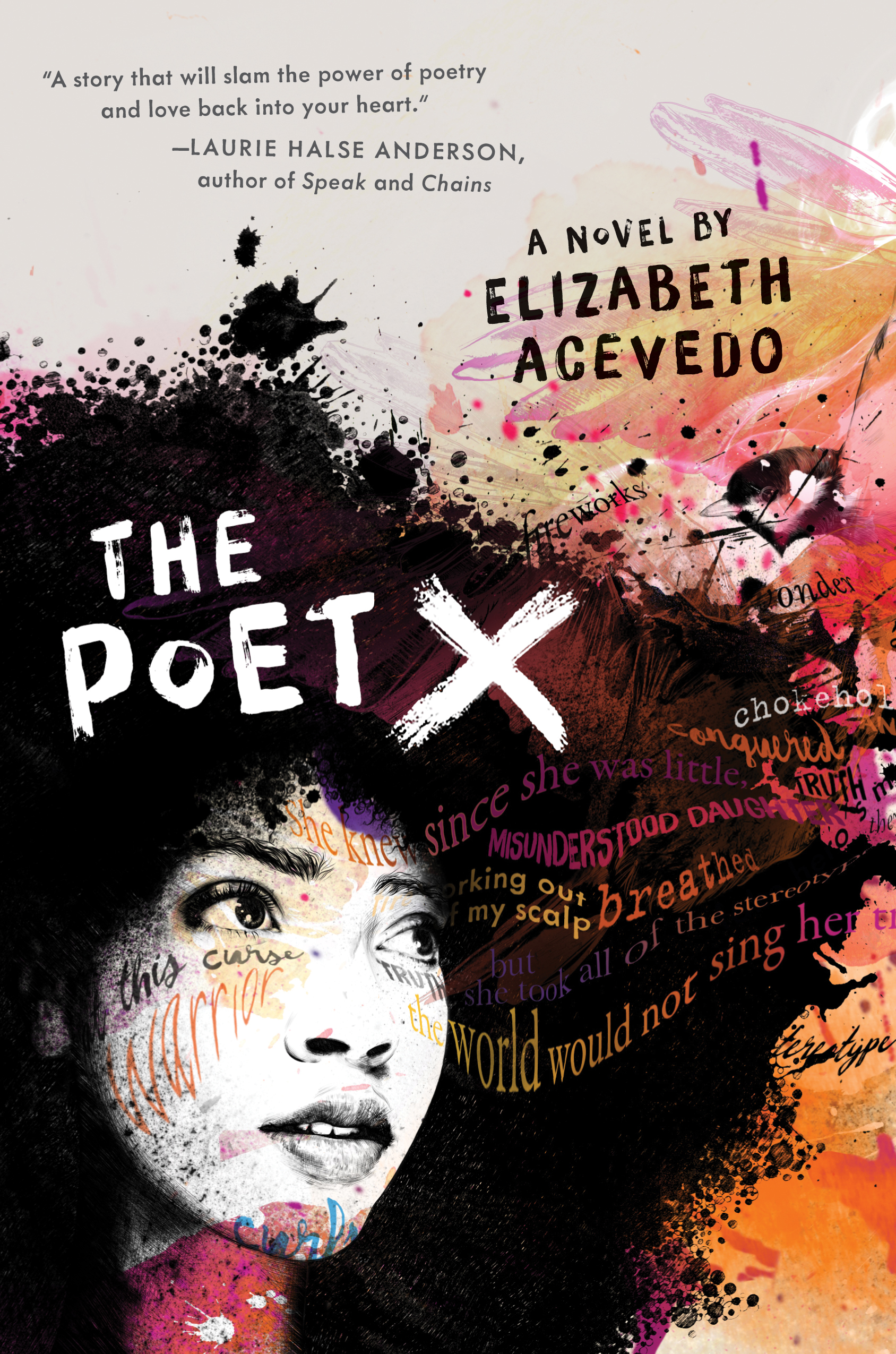
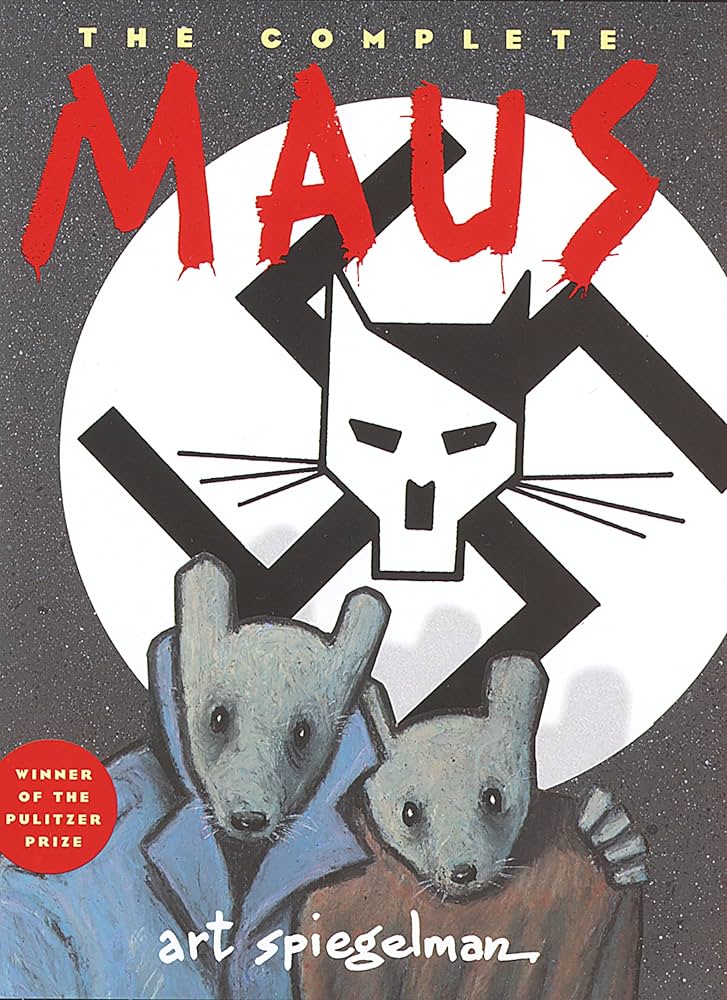
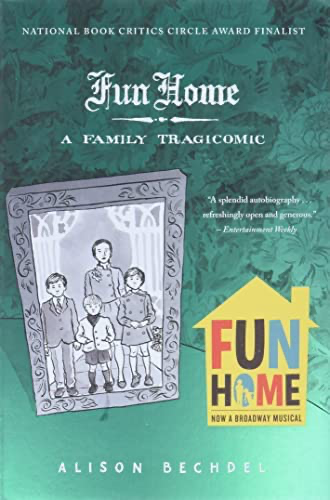
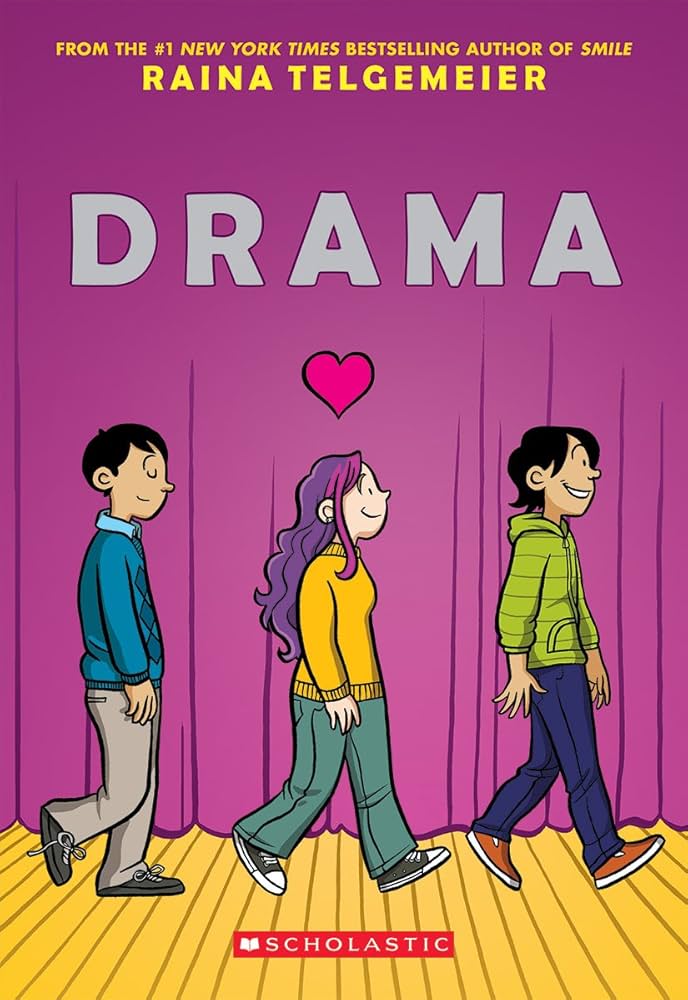
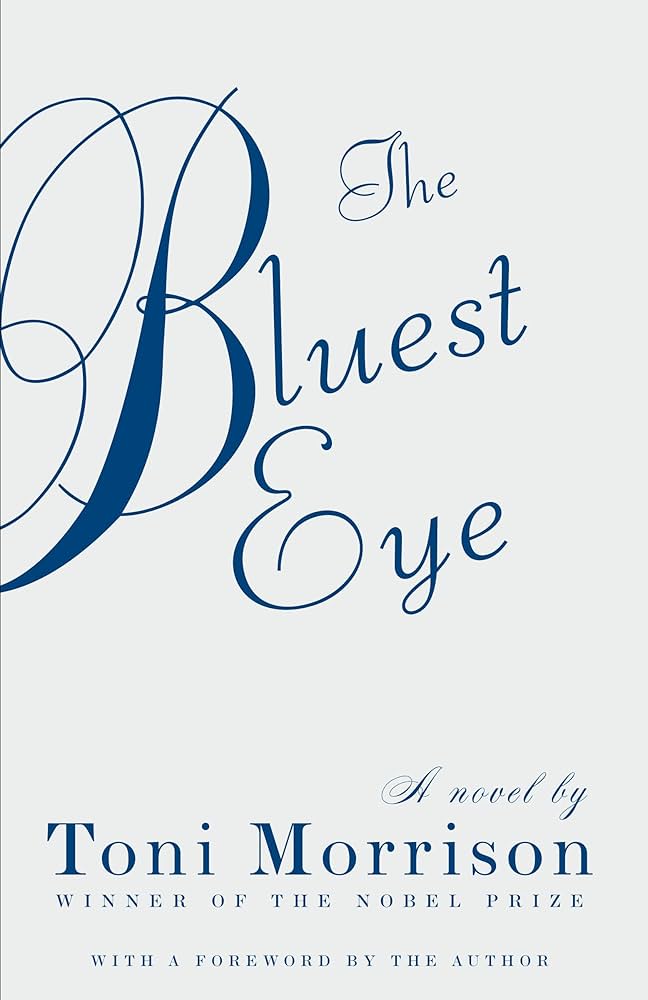
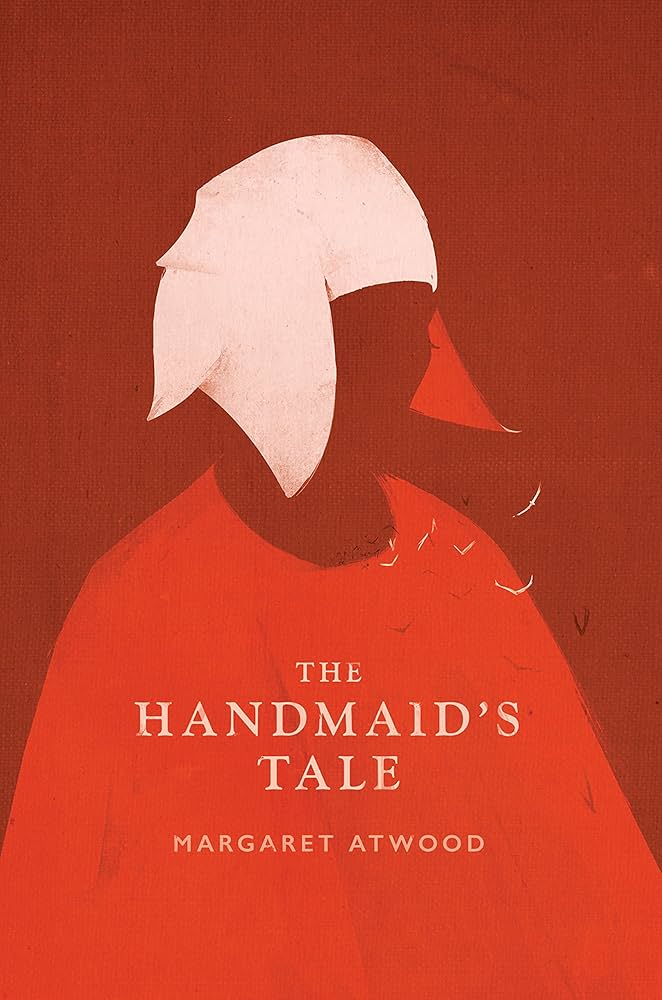
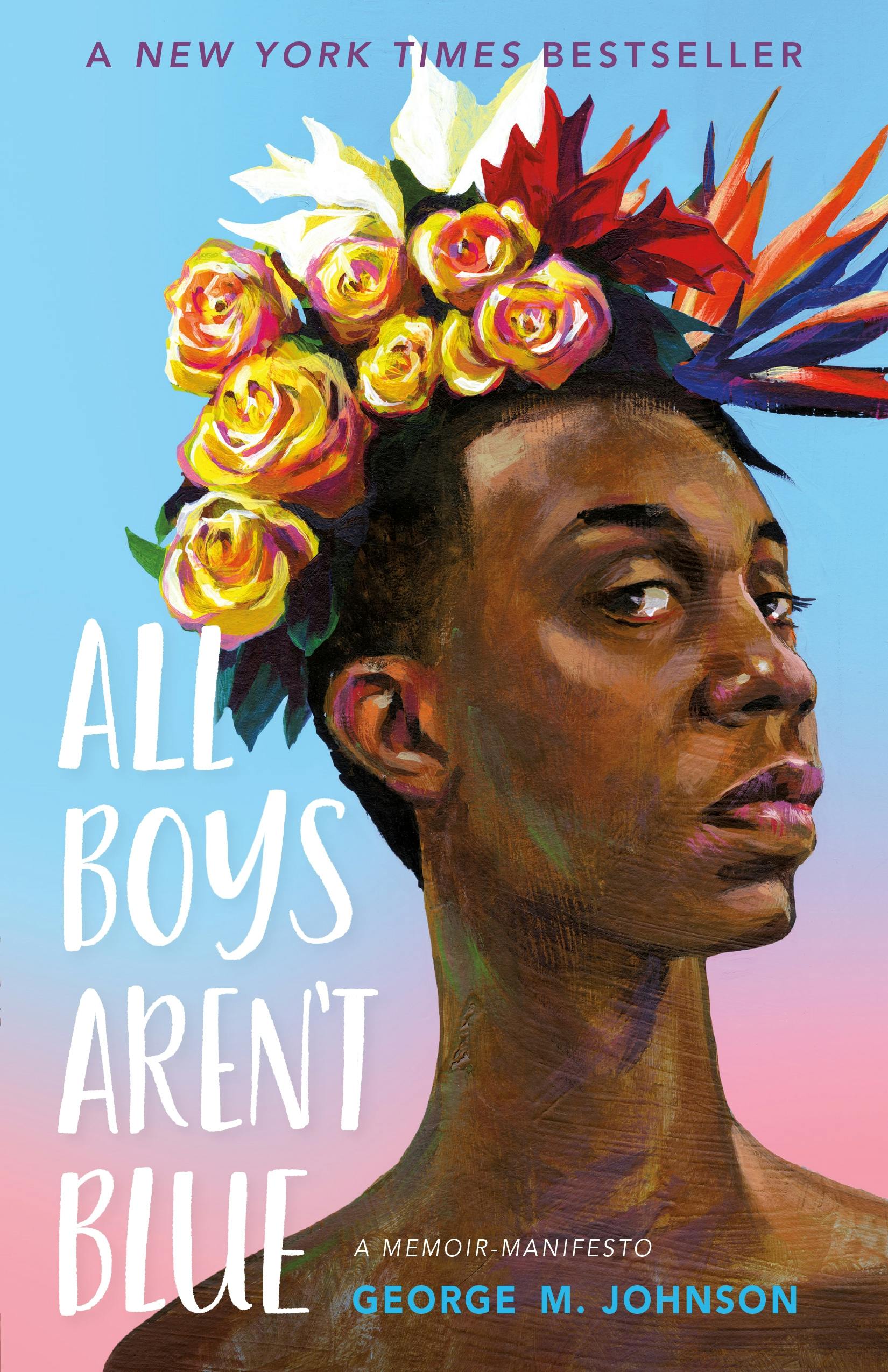

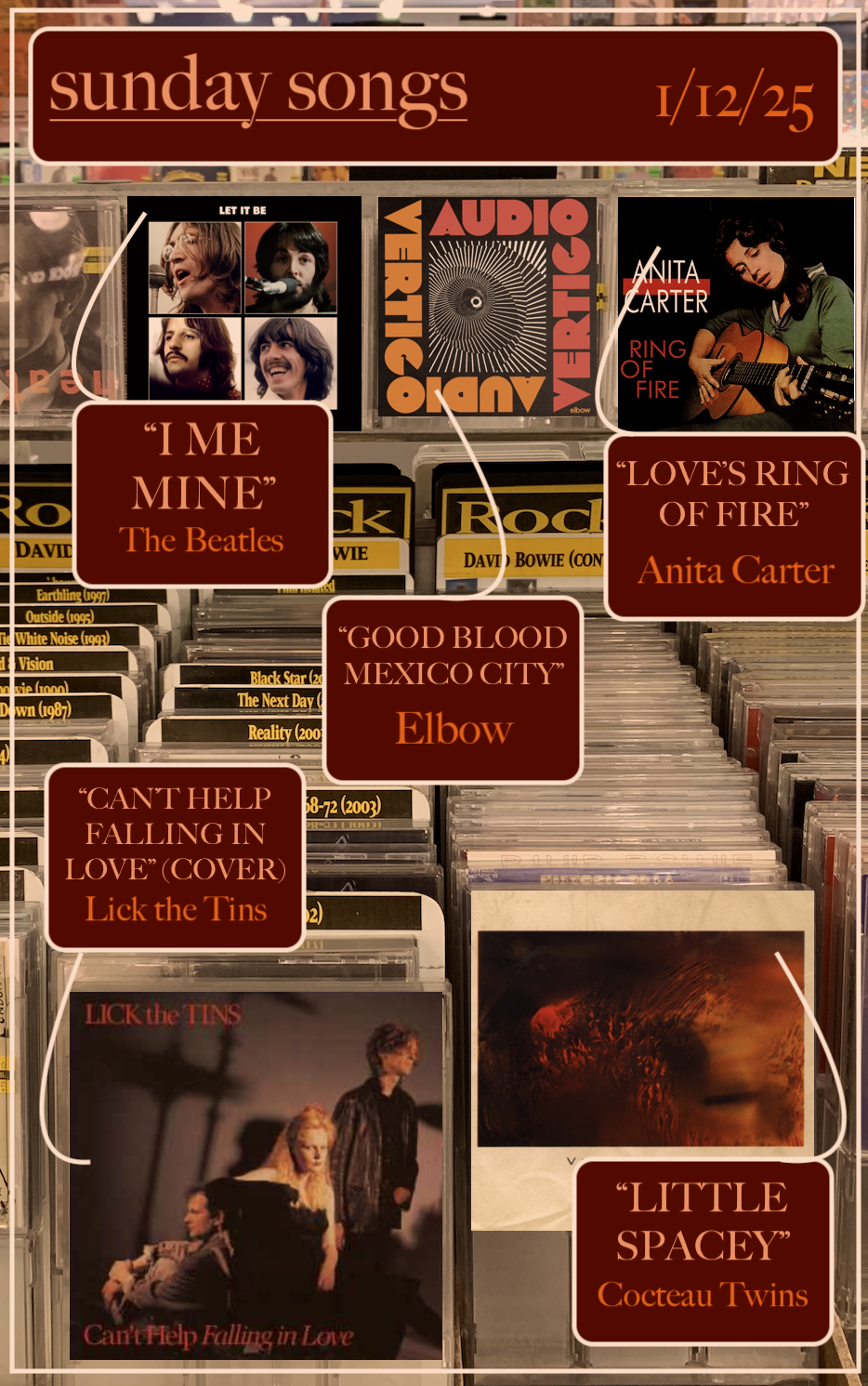
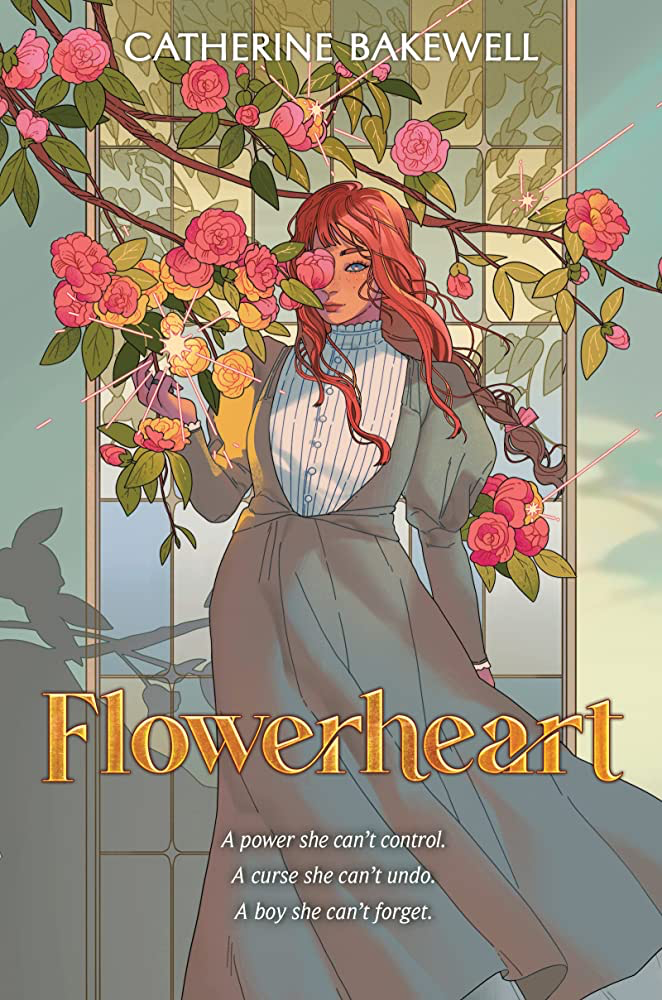

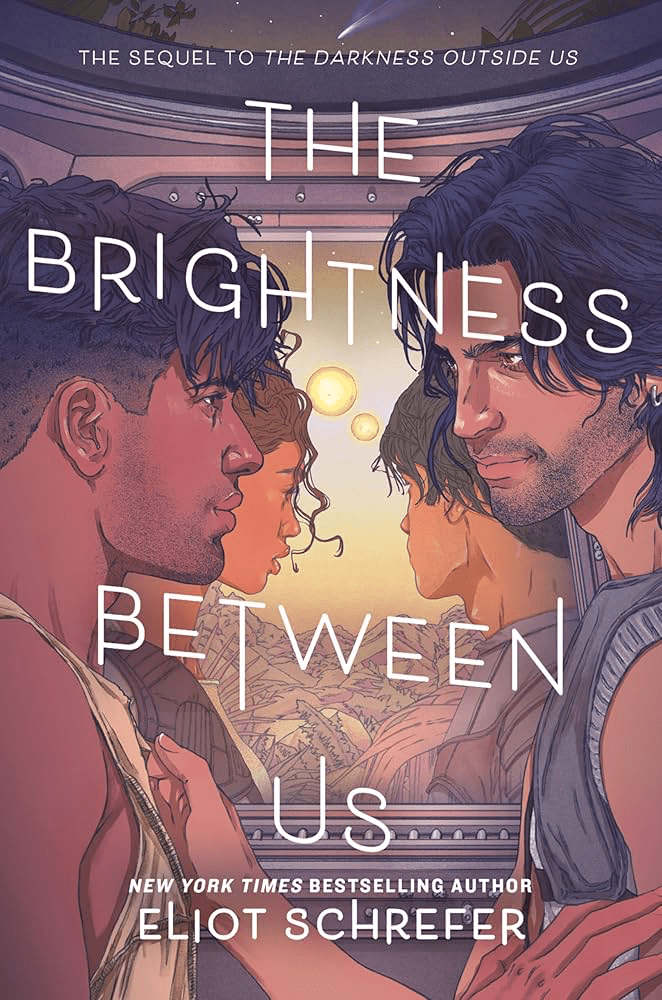

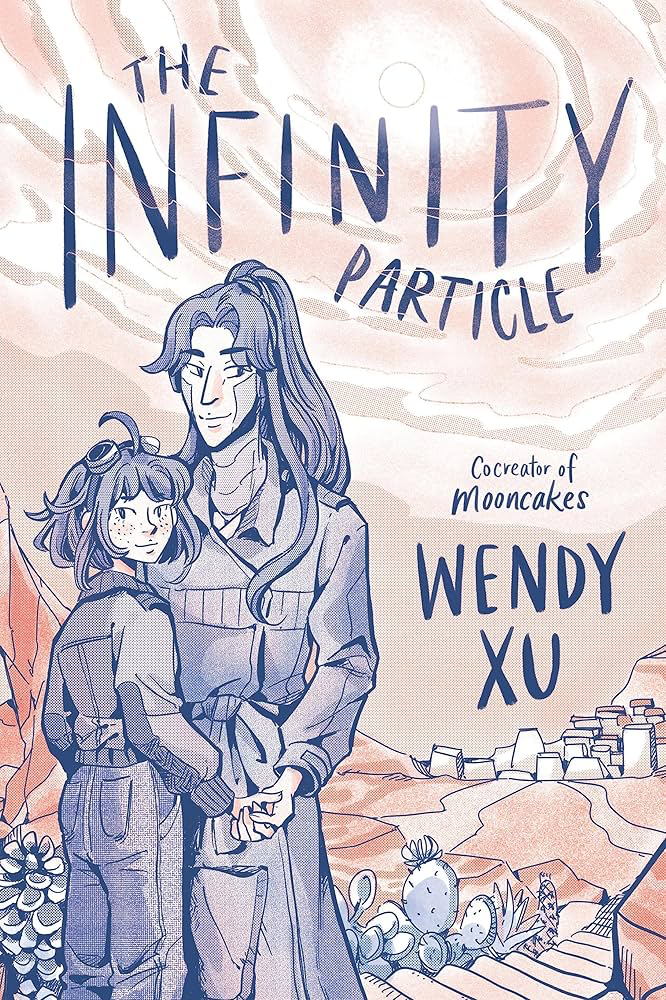
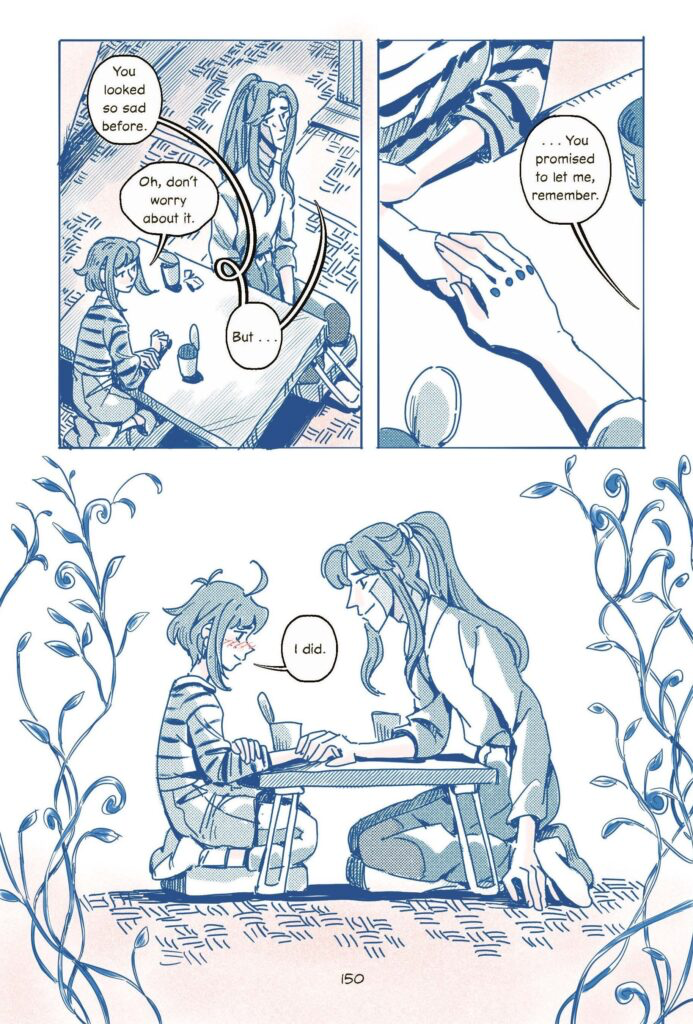
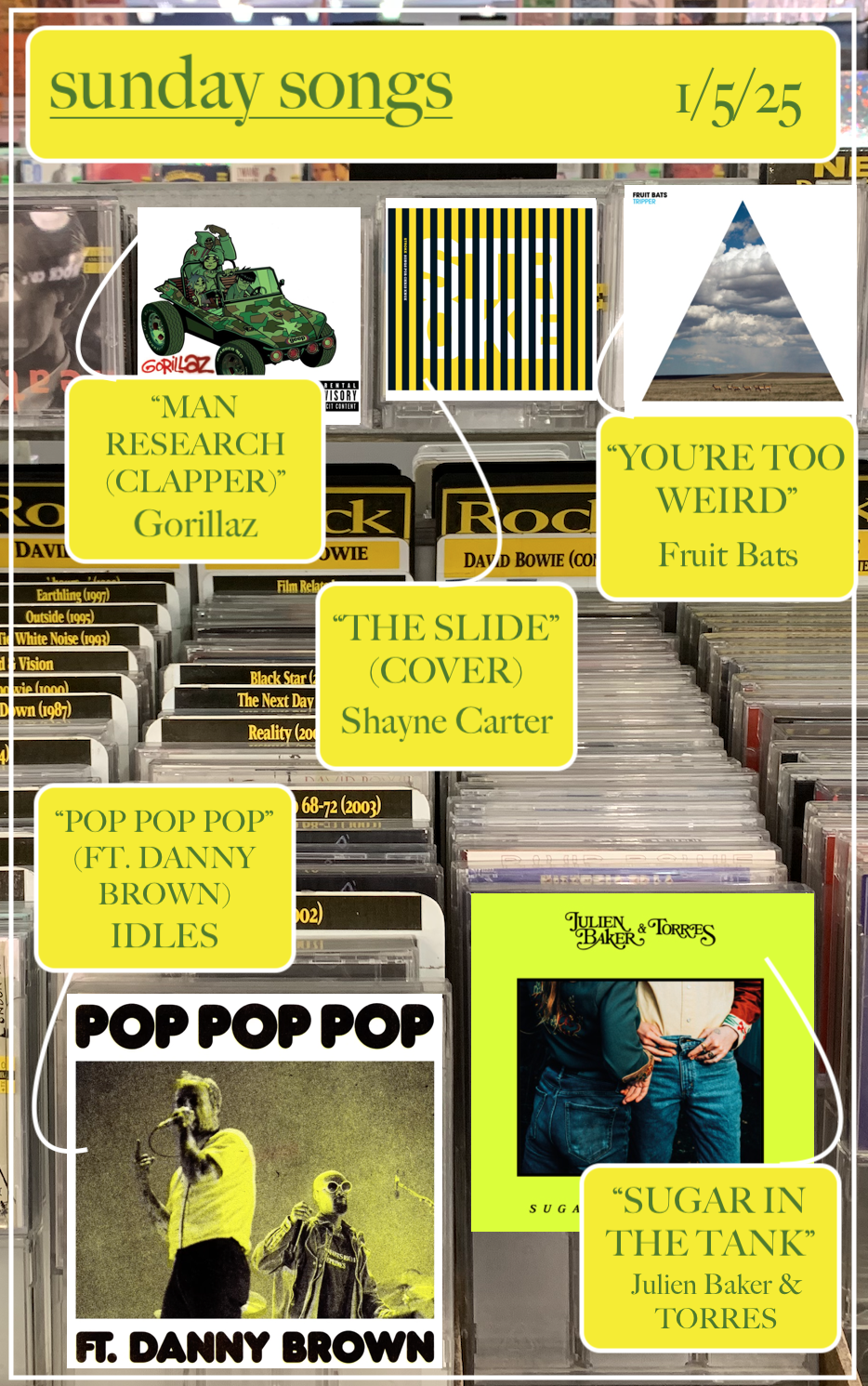
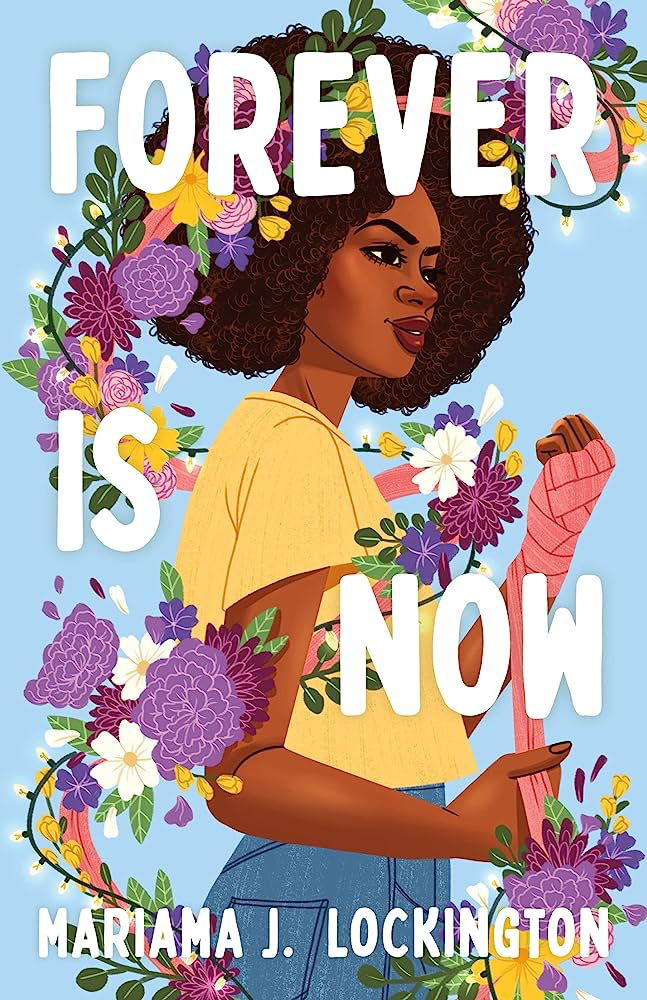

 The Bookish Mutant