Posted in Book Review Tuesday

Book Review Tuesday (4/14/26) – Tune It Out

Happy Tuesday, bibliophiles!

Alright, let’s do this one last time.

My name is Madeline. I was diagnosed with SPD at age three, and I’ve talked about it fairly extensively on this blog, often in relation to what I usually talk about on here: books and music. Current research gives the estimate that around 1 in 20 people has some form of SPD, but it’s rarely talked about—much less depicted in pop culture. The representation of it in literature (and every other kind of media) is almost nonexistent. I’ve had the privilege of meeting more people with SPD in college, and that’s made me much less isolated and more confident. Nonetheless, the conversation around SPD tends to amount to crickets. Thankfully, progress in representation has inched forward. Last year, we got the documentary Sensory Overload, which was an excellent and intersectional window into all kinds of people with sensory issues, including SPD—I highly recommend it.

But until I read this novel, I’d only heard of one other fiction book on the subject (Carolyn Mackler’s Not If I Can Help It, which I also highly recommend), and that book only came out in 2019. So you can see why I grew up feeling more than a little alienated.

I rarely get excited to hear about books from authors I’ve never even heard of. But the minute that I found out that Tune It Out had SPD representation, I was itching to read it. Unfortunately, I couldn’t find it at the library or any bookstores for six years. So I had a little celebration when my library got a copy of it on Libby! I don’t even care that I’ve aged well past the middle grade target audience, because Tune It Out provided something for me that I’ve been searching for all my life.

Enjoy this week’s review!

Tune It Out – Jamie Sumner

As far as Lou Montgomery is concerned, she’s getting along just fine. Sure, she and her mother may be unhoused, but despite Lou’s intense aversion to crowds and loud noises, she’s been able to function, trying to get noticed by a talent scout so that her mother can finally get the big break they’ve always dreamed of. But when an incident leads to Lou being separated from her mom by CPS, she’s forced into an entirely new life—one with school, new people, and all sorts of sounds that she doesn’t like. What’s more, she finally has a name for her feelings—SPD. Lou isn’t sure if she likes it. But as Lou comes to face the facts about herself, her mother, and her new life, she realizes that finding her voice may not be as hard as she thought.

TW/CW: child neglect/abuse, ableism, panic attacks/sensory overload, car accident

Here’s the thing. I’ve gotten emotional over representation of all kinds. Seeing my experiences of being bisexual, mixed-race, and/or the general experience of being a woman have all touched me in ways that most books don’t. For SPD, it’s different. I was full on sobbing in my bed reading Tune It Out, because so few books—and any other kind of media—have addressed this part of me. I am so beyond glad that Tune It Out exists.

First, the obvious: the SPD representation! That was the entire reason I picked up Tune It Out, and I saw so much of myself in Lou. SPD is a varied diagnosis, but a lot of Lou’s symptoms were similar to mine, particularly her heightened sensitivity to sound. Her experience going to the airport for the first time, as well as the fire drill scene, really hammered home how harrowing sensory sensitivity is—every sound feels like an attack on you, and you feel that attack become pain in your body. Her aversion to touch and certain textures hit home too, especially with unwanted physical contact. Sumner’s prose made these sensations so embodied. Also, the scene where she gets an iPod for the first time and is able to use music to self-soothe truly struck me. I’ve still got my beat-up iPod nano from when I was about Lou’s age, and it serves the same purpose to this day. It’s a part of having SPD that’s always been a reliable way to help me calm down from sensory overload, and I loved that Sumner explored this in Tune It Out. I saw so much of my younger self in Lou. Sumner clearly did her homework in that regard, and I can’t thank her enough for that.

Another aspect of SPD representation that Tune It Out touches on is occupational therapy. Lou was diagnosed at an older age than I was, but the questionnaires and coping mechanisms that she learns at school were very accurate to my experience with SPD and therapy. A lot of the new challenges she faces at school, from crowded cafeterias to fire drills, were appropriately shocking to her (with the combined factor of her being formerly unhoused and not used to this particular school environment), and I loved how she learned to cope with these everyday struggles. I also appreciate that Sumner introduced the perspective of Lou having some internalized ableism; a lot of her mom’s beliefs about her “just being skittish” and that she could just “tough it out” without a problem were deeply embedded in her own belief system, which made her very reluctant to get diagnosed. Lou’s arc about realizing that SPD is nothing to be ashamed of and learning to cope with sensory issues in healthy ways resonated with me deeply, and I’m sure it will with so many other readers.

Tune It Out deals with some heavy topics, but I think it does it in a way that makes it perfect for older middle grade readers. One of the main conflicts of the book is that Lou is being controlled by her neglectful, manipulative mother; one of the main realizations that she has is that her mom has been using her singing talents to try and get them money, and she refuses to acknowledge that a) her daughter’s dreams are not her own, and b) her daughter isn’t just “skittish,” but has a disability that is not being properly accommodated. It’s definitely an older middle grade subject to realize that your parent might be emotionally abusive, but the way that Sumner handled it gave it the weight it deserves. Lou idolized her mother for so long, but she reacted exactly how I would imagine a 12-year-old would. It’s a difficult read in those portions, but I think it’s an important subject for younger readers to be exposed to.

In terms of the lighter, more classic middle school parts of the plot, Tune It Out reminded me of some of my favorite middle grade novels that I read in elementary and middle school. I loved the scenes with Lou and her new friends, especially Well, who read delightfully like a Wes Anderson character. The scenes of them bonding over music made me bawl. Lou’s fears about her new friends were relatable, but all of them coming together to support Lou taking control of her own narrative were so heartwarming. Sumner really captured that feeling of being in middle school and being fundamentally different from your classmates in a way that shook me to my core.

Ultimately, I think Lou’s arc in Tune It Out was incredibly powerful. Given that so many narratives about disability lean into “inspiration” plots, I think it’s so potent that Lou’s arc centers around her gaining autonomy over her life. She finally works up the courage to stand up to her neglectful, emotionally abusive mother—that scene was one of the most poignant in the book. But I think that the core of Lou’s arc—her life being controlled, and then her gaining control over her life—is so important for young, neurodivergent girls to hear. Honestly, it works for all kinds of young girls. When you’re neurodivergent and/or a girl, so many people will try to tell you how to live your life, and being told from a young age that you are the only one in charge of your story is something that needs to be heard and reinforced. My hope is that young girls will learn that from Lou, and I have no doubt that they will. I needed a Lou when I was 12, but I’m just glad that the generations of girls to come will have a Lou of their own.

All in all, Tune It Out was easy to love: full of heart, charm, and just the sort of representation that I’ve been searching for ever since I knew about the concept of representation. Thank you, Jamie Sumner. Representation matters. 5 stars!

Tune It Out is a standalone, but Jamie Sumner is the author of several other books for children, including Roll With It, The Summer of June, Glory Be, Please Pay Attention, and more.

Today’s song:

That’s it for this week’s Book Review Tuesday! Have a wonderful rest of your day, and take care of yourselves!

Posted in Book Review Tuesday

Book Review Tuesday (4/7/26) – She and Her Cat

Happy Tuesday, bibliophiles!

I heard about this novel on Bookstagram a few months ago, and I was immediately hooked by the premise. I’ve been trying to read more translated literature when I can, and I’ve found…enough Japanese books about cats that it seems to be a certified Thing. (Nothing compares to The Traveling Cat Chronicles, though. That’s the peak, as far as I’m concerned.) And I’m not complaining. Short and sweet, She and Her Cat was a heartwarming examination of loneliness, womanhood, and the love we have for our cats.

Enjoy this week’s review!

She and Her Cat – Makoto Shinkai & Naruki Nagakawa (translated by Ginny Tapley Takemori)

In four interconnected short stories, four women face hardships as they learn to grapple with adulthood. Dealing with isolation, misogyny, and troubles with love, these women have no one to turn to…save for their feline companions, who are there to help them along the way. But it turns out that the lives of our cats are more complex than we could ever know…

TW/CW: sexual harassment, cheating, death/grief themes, mental illness themes

Strangely, in my ongoing search for novels in translation to read, I always end up coming back to Japanese novels about cats. (To be fair, they’ve had varying premises—and degrees of quality.) However, I think this one is unique in its approach—it focuses on the cats and the humans in equal measure, which was an interesting move. I feel like the voice of the cats (who were anthropomorphized) was properly distinguished from the humans, and their perspective on how the humans lived was wry and cute. I will say, I feel like they were almost too human and understood too much about the human world, but I can give it somewhat of a pass since it was fairly cute. Similarly, I loved the women in the novel, and how refreshingly ordinary they felt. These characters felt like an antidote to every female character that the author describes as “plain” but is actually somehow the height of conventional attractiveness and can do everything; She and Her Cat’s human characters, however, felt like ordinary strangers people with relatable issues that they processed with the help of their feline companions.

She and Her Cat hit an excellent balance of coziness for me. There’s a line that cozy fiction/magical realism of this brand often crosses, where the “coziness” transforms from a more lighthearted, low-stakes story about more positive themes to something that becomes preachy in said themes, without any regard for the reader’s intelligence. (Fluff is fluff, but I maintain that I get irked every time an adult novel still has a “and what did we learn today, kids?” moment.) But although She and Her Cat could’ve walked straight into that trap, it avoided this pitfall with ease. The short stories within this novel were simply quiet tales of isolation, perseverance, womanhood, and the bond that we have with our cats, which is exactly the kind of stakes that a cozy novel should have—all that, and every theme isn’t spelled out for you. (Yes, I know, the bar is low, but you’d be surprised at how many times I’ve run into this…with Japanese cozy books about cats, specifically. If I had a nickel, etc., etc.)

That being said, even though this was magical realism, I didn’t quite feel that magic through the writing. I’m once again returning to the problem of “are my issues with the writing the author’s or the translator’s fault?” that I’ll never solve because…well, I’m not fluent in Japanese. Though I liked the narrative voice, the prose itself was pretty bare-bones, only describing the events as they happened in a way that was rather rote. And this is a story where you get to glimpse the world through the eyes of cats, animals that have an entirely different perception on life than we do! Additionally, I didn’t get as much of a view into the setting and the characters as I wanted to, since the writing went from point A to point B more often than not. Since She and Her Cat is a short novel (under 200 pages), there was definitely room for some more vibrant prose that would’ve made the setting and characters feel more alive. I think part of that might have been a consequence of the fact that She and Her Cat was adapted from a manga, but I feel like filling in the gaps that the art left should’ve been one of the main concerns of the team adapting this novel. If this was the result, it almost feels like they only adapted the script, and not the rest of the manga.

Additionally, although this is a short story, a lot of the events felt quite rushed. I think I would’ve gotten more out of She and Her Cat emotionally if I had more time to spend with each cat and character. Although we have the through lines between the story, they were shoved in so haphazardly that any previous development didn’t mean anything for the next story, even though we had characters that could’ve potentially undergone the slightest bit more development. Like the prose, this novel had the pacing both in-story and between stories go from Point A and Point B very quickly. The appearances of characters from previous stories were so rushed that they felt like MCU post-credits scenes: oh, hey, you know this person, right? Alright, anyway, onto the next thing…

But in the end, She and Her Cat is a somewhat lighthearted and short book, so I get it that fully fleshed-out narratives weren’t exactly the goal.

All in all, a sweet anthology that excelled in creating an emotional atmosphere with its stories, but faltered in places with its prose and pacing. 3.5 stars!

She and Her Cat is a standalone, and was adapted from the Manga by Makoto Shinkai. Makoto Shinkai is also the author of several manga series, including the your name. series, Weathering With You, The Garden of Words, and many more. Naruki Nagawa is also the author of Prince of Stride.

Today’s song:

That’s it for this week’s Book Review Tuesday! Have a wonderful rest of your day, and take care of yourselves!
Posted in Book Review Tuesday

Book Review Tuesday (3/31/26) – The Actual Star

Happy Tuesday, bibliophiles! Apologies for the unexplained absence last week—I defended my honors thesis, so I needed some time to prepare (emotionally, if nothing else). But I’m back now, and man, do I have a review for you…

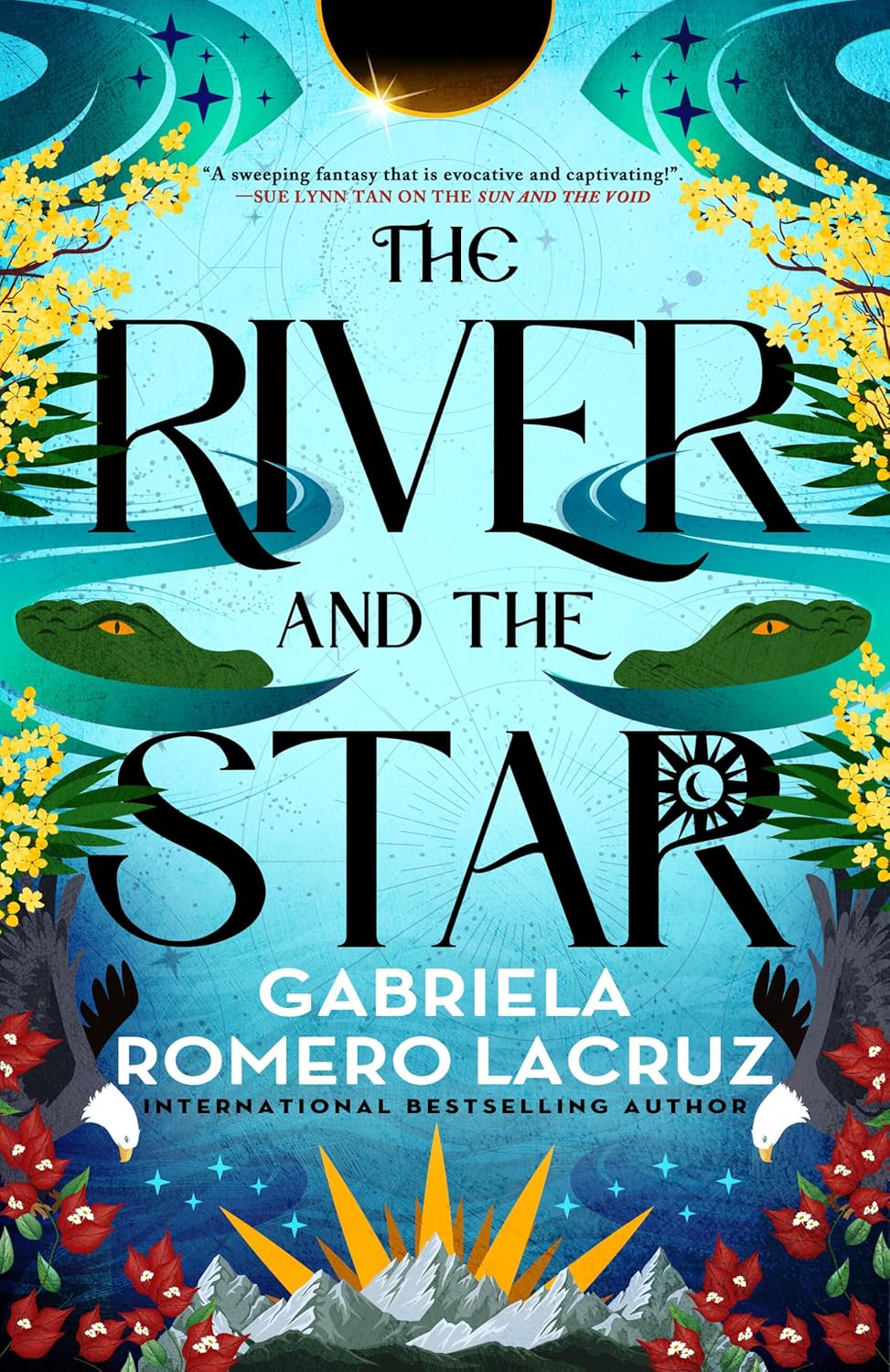
Despite having one of my least favorite animals on the cover (whip scorpions give me the heebie jeebies, sorry), I was intrigued by the millennia-spanning premise of The Actual Star, and it satisfied my eternal hankering for more science fiction. Dizzying in scope, The Actual Star is, without a doubt, an undertaking to read—even though it’s only March, I have no doubt that it’ll be one of the most ambitious books that I’ll read all year.

Enjoy this week’s review!

The Actual Star – Monica Byrne

1012. In the Mayan city of Tzoyna, Ajul and Ixul—a pair of twins descended from the Hero Twins of legend—have ambitions to reclaim a throne that was stolen from them. With their journey foretold by the gods, they will stop at nothing to claim what is rightfully theirs.

2012. Born to a Belizean father and a Mayan mother, Leah has been distanced from her father’s culture all her life. In a snap decision, she decides to venture to Belize to discover her heritage—but the mystical connection she feels to the land may be driving her to extreme decisions.

3012. The last vestiges of humanity cling to a climate-ravaged Earth. Niloux and Tanaaj, rival fanatics, are locked in a power struggle to reclaim their religion, based in ancient Mayan rituals and a mysterious saint named Leah. Their voyages will take them across an unrecognizable globe.

Across thousands of years, the lives of these distant individuals will intertwine in ways that they did not think possible.

TW/CW: self-harm (ritual), terminal illness, sexual content, incest, violence, descriptions of injury, death

To put it bluntly, The Actual Star is a mindfuck. But honestly, few other words could so succinctly put into words how I felt reading this novel. Nothing could’ve prepared me for how dizzyingly layered this novel is. Aside from the three different plots across multiple millennia, you’ve got Mayan mythology, entire sections written in Belizean Kriol, wild visions of Earth in the 31st century, pockets of poetic brilliance interspersed in bloody wrath, and so much more. “Wild ride” doesn’t even begin to describe The Actual Star. But through it all, what kept occurring to me is that Monica Byrne left no stone unturned in terms of weaving these three disparate plots together. There are so many Easter eggs connecting these timelines together, and I’m certain that I missed a ton of them. Each world was rich in narrative and thematic experimentation. It’s one of those novels that sometimes verges on an experience as opposed to a novel, and despite my qualms with it, I can’t fault this novel for being purely, showstoppingly unique.

Even though they were all connected through various through-lines, The Actual Star shone (no pun intended) in terms of the richness of the individual plot lines. While the 1012 Mayan plot was the weakest of the three in my opinion, Byrne clearly researched the time period exhaustively. I loved the 2012 plotline just for the memories of that fleeting moment when so many were convinced that the world would end, but Leah, in all her flaws, was a character I loved following through her development into something close to a (future) saint. But by far, the most entertaining and well-constructed plot was that of the speculative, climate-ravaged 3012. Byrne’s vision of the far future is bizarre, full of idiosyncratic religion, flooded cities, and humanity beyond human, but it was so rich and detailed in its construction that I loved every minute exploring this unrecognizable Earth. Beyond that, I think the power struggle in the 3012 plotline was the most interesting of the three, with the magnetic poles of Niloux and Tanaaj pushing up against each other in strange and unforeseen ways. Bottom line: Byrne did a staggering amount of research for this novel, and it shows.

However, for all of its ambition, I don’t think The Actual Star was able to follow through on all of its promises. Byrne gives us a lot to chew on here. What was most realized for me were the themes about divinity and religion, particularly with the dichotomy of what we see/know (the star) and what truly is (the actual star), a theme that I found quite poignant. For me, it worked with the plot lines of religions and personal beliefs being constructed in real time, as well as what we know the world to be in our deepest heart of hearts. However, I think there were so many thematic threads that were unresolved, even after 620-odd pages. Byrne tries to tackle a lot about the nature of death, sex, and utopia, among other things, but I think this novel was just so overstuffed that the secondary themes were bound to get rotten from sitting too long on the proverbial windowsill. Were Byrne to narrow some of the themes down, it might’ve been a more cohesive effort.

Additionally, what prevented me from enjoying The Actual Star fully was how it depicted some of its more taboo subjects. If you’re going into this novel, what you need to know first and foremost is that all—and I mean all—of the central characters are truly, deeply flawed individuals. To an extent, I really enjoyed this aspect, especially when exploring their different personalities. That being said, there’s a lot of taboo stuff happening in this novel, but I’m not sure Byrne handled it well. To Byrne’s credit, there was at least some grace given to the depictions of self-harm and cutting, but aside from that, the (plentiful) sex was gratuitous and the incest plotline was frankly unnecessary. In the end, it felt more for shock value than anything else, which did not leave the best taste in my mouth.

All in all, a complex web of a novel that boasted an ambitious premise, most of which was paid off—but by a hair, not enough. 3.75 stars!

The Actual Star is a standalone, but Monica Byrne is also the author of The Girl in the Road and Traumphysik.

Today’s song:

it’s finally here…the world finally gets to experience the pure lyrical genius of “I come at a price/like egg fried rice…”

That’s it for this week’s Book Review Tuesday! Have a wonderful rest of your day, and take care of yourselves!
Posted in Book Review Tuesday

Book Review Tuesday (3/17/26) – Greenteeth

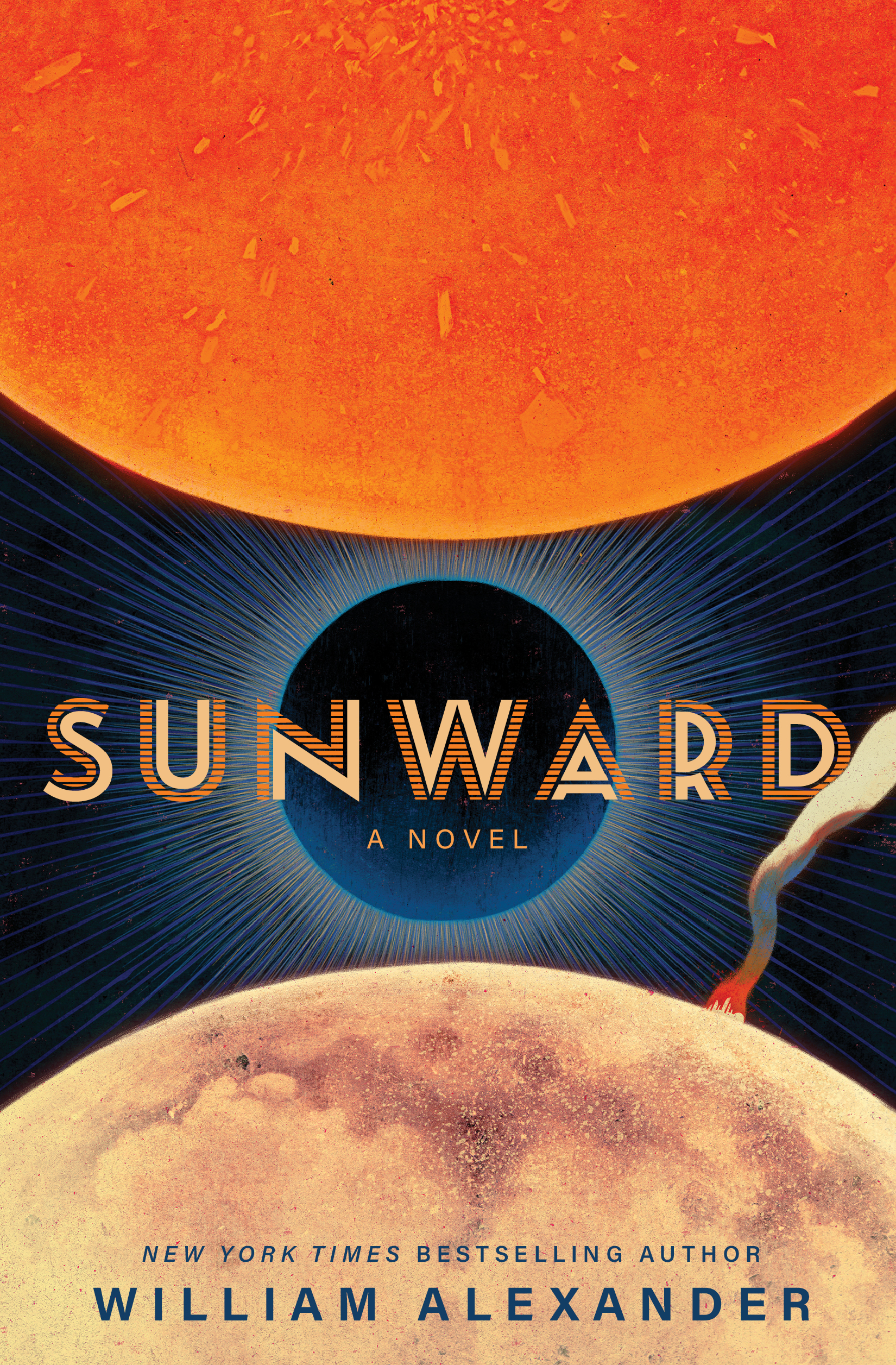
Happy Tuesday, bibliophiles, and Happy St. Patrick’s Day! 🍀 Thankfully none of you can pinch me through the screen, but is a book with a bright green cover and “green” in the title enough for you?

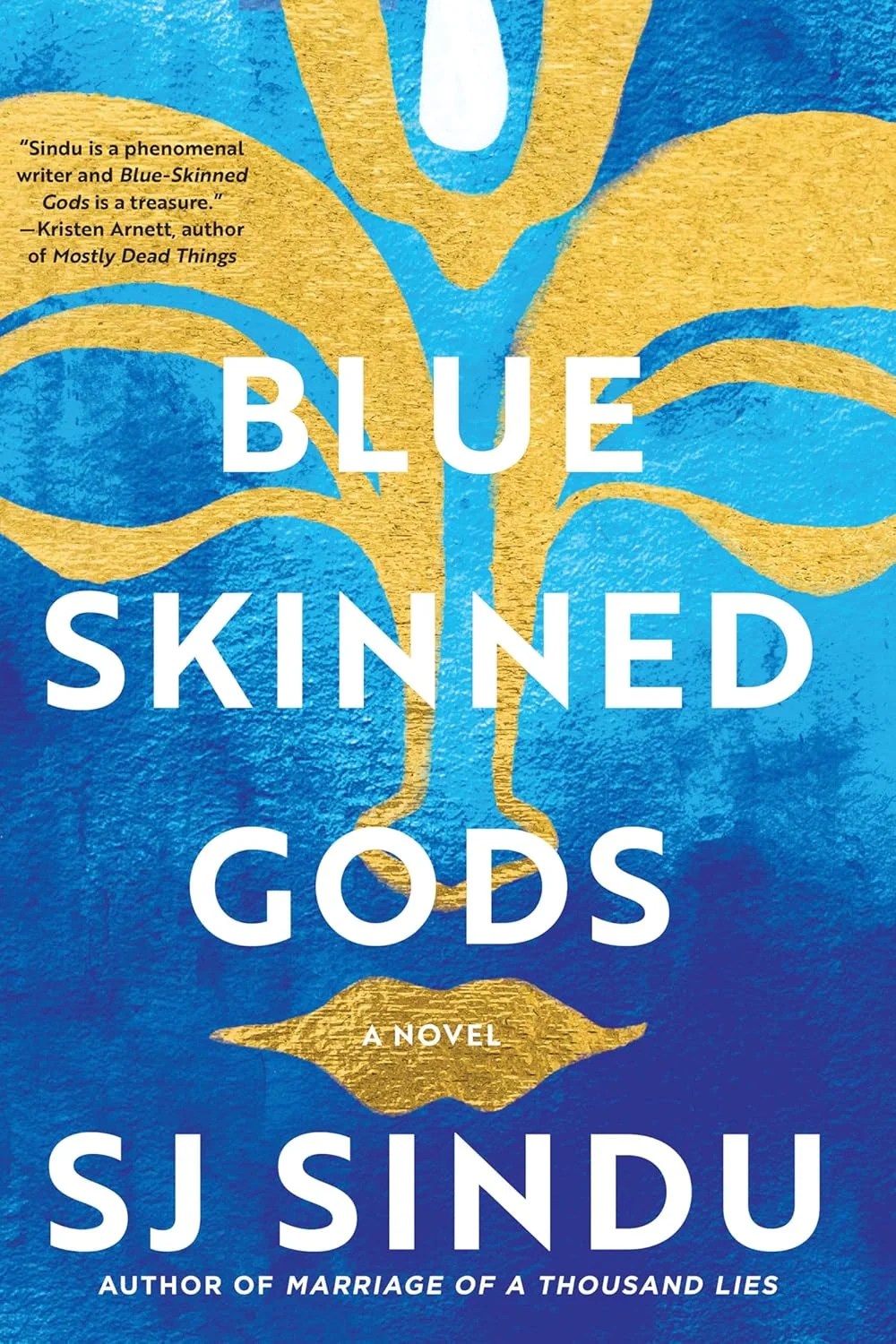
I’ve had my eye on Greenteeth ever since it came out last year—the focus on Jenny Greenteeth and the gorgeous cover (shoutout to Leo Nickolls) caught my eye, but I’ve passed it up in favor of other books…until now. (Shoutout to the Boulder Bookstore, where I got myself a copy!) Though it had its fair share of flaws, Greenteeth was a touching, fantastical story of unlikely friendship.

Enjoy this week’s book review!

Greenteeth – Molly O’Neill

Jenny Greenteeth has lived in her lake for thousands of years. Most humans that she encounters are passing fascinations—or simply a meal. But when Temperance, a human witch sentenced to drown, comes upon her lake, Jenny decides to take her in. Temperance desperately wants to return to her family, and Jenny cannot break a promise. They decide to find a way back to Temperance’s family, but what they discover along the way may hint at a darker rift between the humans and the faerie realm—one that may lead Jenny to discover more about her monstrous lineage than ever before.

TW/CW: animal death, violence, blood, descriptions of injury, grief

For some reason, I thought that Greenteeth was going to have a sapphic element to it, but that’s fully on me constantly having the Gay Goggles on for everything. In retrospect, this might be the one time where having a queer relationship between the main characters would be a bad idea, because a) Temperance is happily married and b) Jenny’s at least 1,000 years older than her. God, that would’ve been a mess.

Greenteeth filled a void that I’ve felt in a lot of fantasy, and that’s the unabashed embrace of all of the weird parts of faerie folklore. I’ve been intrigued by Jenny Greenteeth ever since I read the incarnation of her that appeared in the Hellboy comics, and it’s safe to say that these adaptations of her are very close to the inherent weirdness of the original folklore. Said folklore of Greenteeth draws from classic British, Scottish, and Welsh folklore and Arthurian legend, both of which I indulged in. O’Neill introduces a delightful cast of characters and creatures, and makes the faerie realm feel truly weird, something that a lot of fantasy seems to miss. O’Neill’s atmospheric prose rendered this realm in vibrant color, and I loved every minute of the quest.

Jenny was obviously the heart of the story here, and O’Neill did an excellent job with her! She was just so lovable—like I said above, I love that she didn’t hold any punches with making her truly weird and monstrous. Jenny acts exactly like you’d expect a 1,000+-year-old creature that lives in the bottom of a lake and barely talks to anybody to act, which made Greenteeth a delight from the get-go. With Brackus as her foil and Temperance to teach her about the world, Jenny made for a charming protagonist. However, I’m not sure if O’Neill hinted at the reveals about her past (not the really big one—more on that later) well enough, because by the time they’d been established, it seemed out of character for her to hide something so drastically, lie about it so badly, or even convince herself that these things hadn’t happened at all; with her baby, I get not wanting to reveal that, but they were only revealed when we knew Jenny as a character who wouldn’t necessarily hide these parts of herself in the way that she did. I didn’t buy all of that, but aside from those unfortunate quirks, she was a delightful character. Plus, once we got over the hurdle of said reveals, her character arc became even more poignant.

What made Greenteeth suffer the most, I think, was the tonal shifts. Ultimately, I think it was indecisive about what kind of novel it wanted to be. A lot of reviewers have pegged this as cozy fantasy, and there are a few scenes that would lead me in that direction. However, with the rapid shifts into violence and decidedly more fast-paced and action-packed sequences, I really don’t think this fits the bill. (Also, I feel like most cozy novels wouldn’t pull the move of having a dog get stabbed unceremoniously and then completely brush over this in a few sentences. Not necessarily the dog-stabbing bit, but the fact that they basically go “Oh no! Anyway,” and move on. Justice for Cavall!) It was just so inconsistent in terms of the stakes; we only get to the real meat of the objective of the characters about halfway through. Frankly, I would’ve enjoyed Greenteeth whether or not it decided to be a more cozy, found family quest or an epic, Arthurian quest, but this novel could not decide which of the two it wanted to be. I’m not sure if the half-baked limbo between the two options was the way to go.

That being said…I could not get enough of the ending twist! Personally, it’s too good for me to spoil it, but without revealing anything big, I think it gave Jenny’s arc a deeply emotional conclusion. I’m no expert on Arthurian legend, but internally, I jumped out of my seat like a football fan when said Big Reveal got revealed. However, I think it added some oomph that Jenny’s arc was in need of; the reveals we get about Jenny’s backstory came too late and with too little preamble for the seemingly heartrending emotion that came along with them, but here, I think they reached the potential that they always needed. Jenny’s true origins gave her a real sense of purpose, and even though it was more of a symbolic gesture, it gave her proof of what she needed to hear all along: that she was a powerful, important being, full of love and the potential for greatness…as all of us are.

All in all, a heartwarming fantasy novel that faltered in parts of the plot, but blew it out of the water when it came to atmosphere and the tender relationships between its characters. 3.5 stars!

Greenteeth is a standalone, and Molly O’Neill’s debut novel. O’Neill is also the author of Nightshade and Oak, which came out this February.

Today’s song:

heard this before the Jeff Tweedy show on Friday night…

That’s it for this week’s Book Review Tuesday! Have a wonderful rest of your day, and take care of yourselves!
Posted in Book Review Tuesday

Book Review Tuesday (3/10/26) – To Ride a Rising Storm (Nampeshiweisit, #2)

Happy Tuesday, bibliophiles!

I fully thought I reviewed the first book in this series…whoops. Did I just hallucinate writing a book review? In 10-ish years of writing book reviews, I guess it was bound to happen…

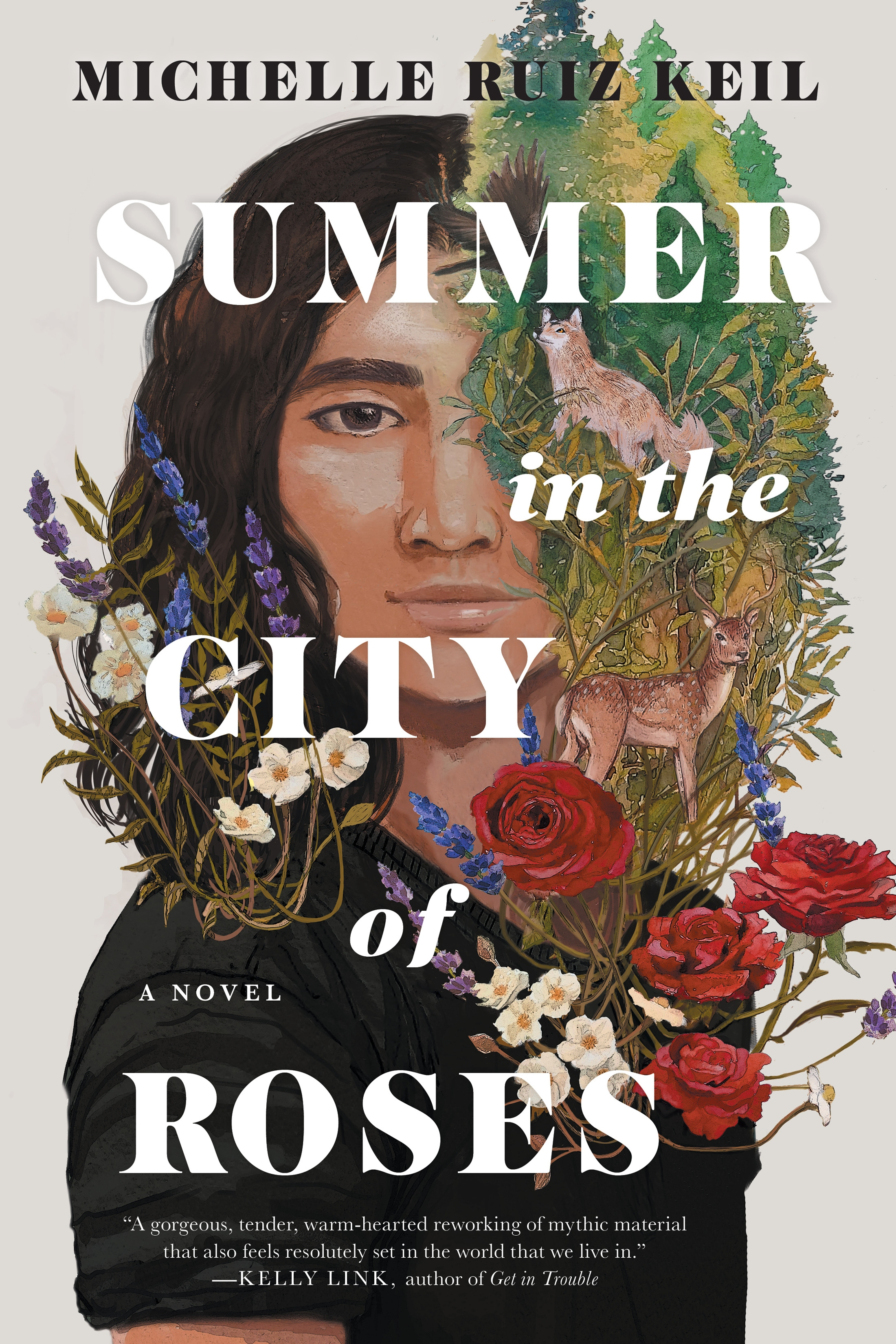
Suffice to say, I really enjoyed To Shape a Dragon’s Breath—it filled the void left by Harry Potter and rekindled my love for good old magic school YA, but without having to remember that J.K Rowling exists. To Shape a Dragon’s Breath is unabashedly Indigenous and queer, with a witty, delightful protagonist, a lovable supporting cast, and potent commentary on racism and colonization. And did I mention the dragons? Naturally, I was excited to see what the sequel had in store. And for the most part, To Ride a Rising Storm was a very rewarding sequel, full of the same heart that endeared me to book one.

Now, tread lightly! This review contains spoilers for book one, To Shape a Dragon’s Breath. If you haven’t read it and plan on doing so, you may want to skip this review.

Let’s begin, shall we?

To Ride a Rising Storm (Nampeshiweisit, #2) – Moniquill Blackgoose

Anequs has survived her first year at Kuiper Academy. Eager to return home with Theod, her only other indigenous classmate…who she may be developing feelings for. She intends to spend her summer break with her family, but what she returns home to is quite the opposite. The Anglish have begun to encroach on her homeland. Anequs is determined to assert her people’s right to govern themselves, but before she can intervene, she’s swept back to Kuiper Academy for another semester. With new friends and enemies, Anequs is determined to not let the idiosyncratic, nonsensical rules of Anglish society beat her down. But with a looming political threat mounting outside of her school, Anequs’s peace might be short-lived.

TW/CW: racism, xenophobia, misogyny, homophobia, colonialism, classism, violence, descriptions of injury

I love the Nampeshiweisit series—both books have been a delight to read. But for both books, I’ve been slightly torn about the worldbuilding. What you have to know right off the bat is that it’s not subtle, but also that it’s not trying to be subtle. Anequs and her people are Native American-coded, and the English stand-in is quite literally Anglish. You can see where we’re going here. But I wouldn’t be reading book two of this series if I wasn’t on board with it; and to be fair, the Anglish are basically a hybrid of England and a lot of Scandinavian countries in terms of their culture and folklore, even though they play the role of the English here.

However, I appreciate it more in the sense that it’s a political statement rather than a worldbuilding one—Blackgoose isn’t here to beat around the bush here when it comes to critiquing colonialism. Once you get past the names, there’s a rich fantasy world to be found here. It’s a world of dragons and secret societies and magic, and Blackgoose does an excellent job of explaining how they’re integrated into this world, and how they’ve affected geopolitics; this book gets even more into the politics of the world, which I greatly enjoyed. Plus, if you’re sick of how said magic schools have handled diversity (you all know who I’m talking about here), there’s so much diversity here, be it queer, POC, or disabled characters. And none of it feels like ticking off boxes—it all feels like how marginalized people would have lived and acted historically in a multicultural space.

One of the parts I most enjoyed about To Shape a Dragon’s Breath was Anequs herself. She’s just such a spirited and downright delightful protagonist, but one that easily holds her own against the obstacles that she faces. The Nampeshiweisit series is one that I’d recommend to readers of all ages, honestly, but especially younger readers who have just reached the age range of YA, and one of the main reasons I’d recommend it to younger readers (especially young girls) is Anequs. She’s such a good role model for young women, especially young, queer women of color: she’s determined, smart, and takes both her peers and the authorities to task for their racism and colonialism. Her personality practically bursts off the page. She isn’t without her flaws, either, and all the better—young girls are better off with role models who aren’t perfect. But so much of the draw for this series is how much I love being in her head and going on adventures with her and Kasaqua. Blackgoose really struck gold with Anequs—she’s a memorable protagonist in every way.

To Ride a Rising Storm was more character-driven than its predecessor, and for the most part, it greatly benefitted from it. For most of the novel, there’s not any hardcore, climactic action, but there are so many parts of the world and other cultures that get fleshed out that I can’t complain…mostly. (More on that later.) Either way, I loved the development of Anequs and her friends, old and new. Blackgoose’s characters are just so charming and compelling, and I loved that we got more page time with them. Jadzia was a great new addition, and I loved what she added to the friendship dynamic with Anequs, Theod, Sander, and the others. The glimpses we get of those on the margins of Anglish society outside of Kuiper Academy made the world feel even realer—there were so many pockets that we hadn’t seen before, and Blackgoose’s prose made me so much more immersed into the setting. Though some of the other parts of the book suffered from this focus, To Ride a Rising Storm felt like it was there to make the world more real.

However, there are drawbacks to having a book just for making the world feel more immersive. I’m torn about To Ride a Rising Storm because although I loved reading every second of it, there was a very clear pacing issue. While I enjoyed the more cozy, somewhat low-stakes approach that this book had, it was paced quite unevenly. We get some very serious action and stakes, but they aren’t introduced until halfway through the book. The final battle is crammed into the last 3% of the novel—I checked on my Kindle when this huge battle went down, and it started at the 97% mark! For a moment this climactic, it was introduced far too late. It just didn’t quite feel like Blackgoose quite knew whether she wanted to make this novel fully cozy or low stakes; either commit to the coziness or give the stakes more weight throughout the rest of the novel. Again, I enjoyed the pace until I didn’t—the last quarter of the novel proved that there was a serious issue with imbalance.

All in all, a worthy sequel with timely political commentary, tender friendships, and one of YA fantasy’s most memorable protagonists today. 4 stars!

To Ride a Rising Storm is the second book in the Nampeshiweisit series, preceded by To Shape a Dragon’s Breath.

Today’s song:

prepping myself to see Jeff Tweedy this friday…thanks to my dad for this one!

That’s it for this week’s Book Review Tuesday! Have a wonderful rest of your day, and take care of yourselves!
Posted in Book Review Tuesday

Book Review Tuesday (3/3/26) – Red Star Rebels

Happy Tuesday, bibliophiles!

BEFORE I BEGIN: as this is a bookish space, I feel that it’s essential to bring this to your attention. Here in the States, H.R. 7661 (misleadingly named the “Stop the Sexualization of Children Act”) presents a grave danger to libraries and our freedom to read as Americans. This legislation, as many similar ones are, is presented under the guise of “protecting children” from sexually explicit material, but we all know what it targets in reality: fiction and nonfiction about queer people, people of color, and other marginalized groups. EveryLibrary has both a petition to oppose H.R. 7661 and instructions to call your representatives. Excluding stories of marginalized people doesn’t protect anybody. Protect our freedom to read!

It’s 2019. I’m about to finish my first year of high school, and I’m excited to buy the new Amie Kaufman book.

It’s 2026. I’m about to finish my last year of college, and I’m excited to buy the new Amie Kaufman book.

Needless to say, longtime followers of this blog (and longtime friends of mine in general) know how pivotal of a role Amie Kaufman has played in my life. Her sci-fi and fantasy novels have been a positive constant for seven years and counting, especially the Aurora Cycle. I was over the moon to find out that she was returning to science fiction after a long stint focusing on fantasy. And though it wasn’t as emotionally potent as some of her other novels, Red Star Rebels was an action-packed and romantic blast all the way through!

Enjoy this week’s review!

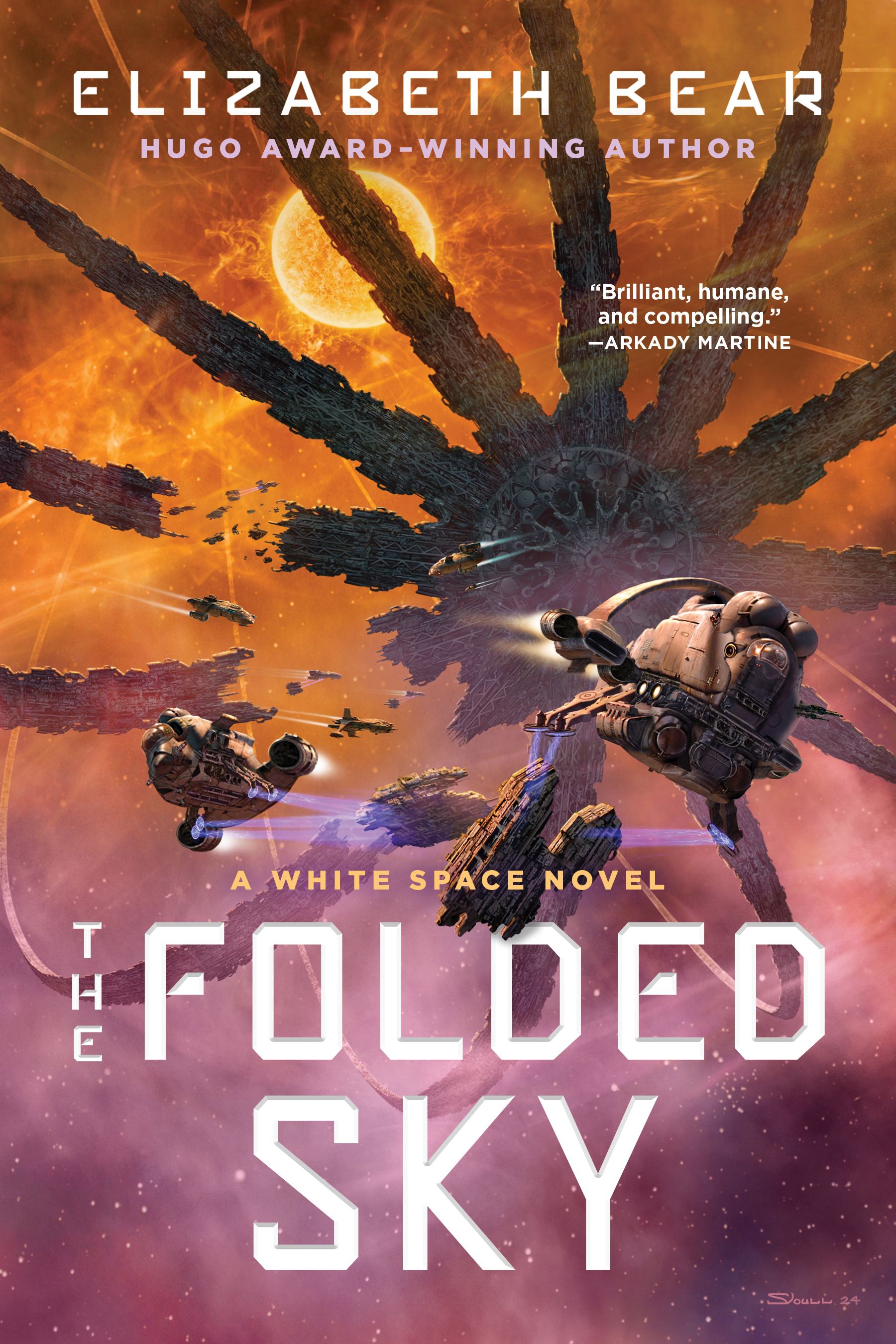
Red Star Rebels – Amie Kaufman

Hunter Graves has Mars in the palm of his hand. As the grandson of the man who settled Mars, he’s got it made. If only the rest of his family would actually pay him any mind. But when he’s trapped on the U.N. base after a mysterious attack, he’ll have to use more than his name to get out alive.

Cleo just wanted to stow away on this U.N. base to get the Earth gangs off her back and make a quick buck. Having to stow away with Hunter Graves when the base goes on lockdown was not part of the plan. But they’ll have to work together for eight hours before a bomb detonates, killing everybody on the base. And neither of them counted on falling for each other…

TW/CW: violence, loss of loved ones (past), fire

I’m a huge fan of Zoë Van Dijk’s artwork and I love her cover art for the U.S. edition of Red Star Rebels, but…I can’t unsee the fact that Cleo is doing the Dreamworks face. It haunts me. The thing is, it’s 100% in character for her, which almost haunts me even more.

The main draw for Red Star Rebels is that it’s a pulse-pounding action thriller in space; Kaufman has compared it to Die Hard and Home Alone in equal measure, in reference to both the atmosphere and the amount of interstellar hijinks. All of the events of Red Star Rebels happen in the span of 8 hours (the time it’ll take for the U.N. base to detonate), and it really does feel like it’s all crammed into such a short amount of time. Be prepared to be gripping the edge of your seat, because this novel moves fast—and this is the exact type of novel that needs to go at breakneck speed. The pacing is impeccable. The only drawback is that Red Star Rebels sacrificed some of the emotional potency that I come to expect with your typical Amie Kaufman novel. There’s a reason that her books are normally so thick—she doesn’t hesitate to get in the weeds with character development and poignant arcs. Though Hunter and Cleo’s relationship was charming as ever, some of the emotional aspects of this novel were quite rushed in comparison to her other novels, and I think that can exactly be chalked up to the uncharacteristically short page count—288 pages, in comparison to her often 400+ page whoppers. While the pacing worked for the plot, it didn’t work all the way for the characters—give it at least 50 more, and I think this would’ve been near perfect. That being said, even a weaker Amie Kaufman book is guaranteed to be a cut above the rest, so I’m not complaining.

Every time there’s a chance for Amie Kaufman to write a relationship dynamic where one’s a scrappy criminal and the other is a spoiled, rich brat (both of whom secretly have a heart of gold), by God, she’ll take it (see also: Selly and Lysander from Isles of the Gods, Lilac and Tarver from These Broken Stars, Nik and Hanna from Gemina, etc.). And do I eat it up every time? Absolutely. At least she switches the genders up. It’s a blatant pattern at this point, but she writes it so compellingly that I’m not even that mad. Would I like for her to mix it up a little? Sure, but this is Amie Kaufman we’re talking about—no matter what kind of relationships she’s writing, they’re always so charming and heartstring-tugging, so I’m not here to complain. The setup for Cleo and Hunter’s relationship was a perfect storm, but Kaufman did such an excellent job of making the development of their relationship realistic—it’s a survival situation spaced over eight hours, but never at any point did their romance feel too rushed. They were trapped together with very little interaction from the outside world (other than the antagonists), and there was plenty of time for their chemistry to develop. All in all, it’s another slam dunk from Kaufman—Cleo and Hunter were so sassy, and yes, made for each other. Plus, I’ve loved Kaufman’s casual queer inclusion, especially in terms of bisexuality. Beyond that, it’s so, so important to show that straight-passing relationships are just as valid and still queer, so I’m very grateful to Red Star Rebels for showcasing this!

Red Star Rebels should be a masterclass in why you shouldn’t underestimate the craft that goes into good YA novels. The best part about Amie Kaufman’s books is that sure, they look like cheesy YA (and in some ways, they are, but tastefully so) on the surface, but 9 times out of 10, they’re Trojan horses for top-notch, exhaustively researched worldbuilding. Aside from the Illuminae Files, Red Star Rebels might honestly be some of the hardest science fiction that she’s ever written. There was a ton of thought put into the physics and logistics of establishing colonies on Mars, and every aspect was pored over in exceptional detail, from the nutrients you’d need to survive on Mars to how the gravity affects the red planet’s permanent residents. Not only that, Kaufman goes headfirst into discussing the geopolitics of international Mars settlements. All of this fed into some great commentary on corporate space exploration and how corporations have unjustly been able to buy their way into influencing world politics. Kaufman’s vision of 2067 is basically what would happen if Elon Musk—[ahem] Graves had his way with things, and the commentary was an excellent way to scaffold the worldbuilding.

Back to Cleo and Hunter—as well as the worldbuilding—what I really appreciate about Kaufman’s class-divided relationship dynamics is that the less privileged person in the couple doesn’t sacrifice their values. There’s some potent class commentary in Red Star Rebels, and I love Hunter’s arc in seeing that their colonialism has consequences, and that the exceptionalism of his family came at a bloody cost. There’s also some sharp commentary on how poor people have to circumvent the law in order to make a living and are punished for it, but rich people use the same methods and get away scot-free—for instance, Cleo and Hunter ending up on the U.N. base in the exact same way, but Cleo being the only one who would be theoretically imprisoned for it. There’s a fine line in these dynamics where the poorer person in the couple ends up excusing the power imbalance and the narrative ignoring any issues of class disparity and the circumstances that made them so, but Kaufman is always right on the money (no pun intended) with imbuing her relationships with a strong sense of justice and class commentary.

All in all, another win for Amie Kaufman, full of outer space hijinks, crafty characters, and romance. 4 stars!

Red Star Rebels is a standalone, but Amie Kaufman is the author of several other books for children and teens, including the Isles of the Gods duology (The Isles of the Gods and The Heart of the World), The Illuminae Files (with Jay Kristoff; Illuminae, Gemina, and Obsidio), The Aurora Cycle (with Jay Kristoff; Aurora Rising, Aurora Burning, and Aurora’s End), The Other Side of the Sky duology (with Meagan Spooner; The Other Side of the Sky and Beyond the End of the World), and many more. Her next book, co-authored with Meagan Spooner, is One Knight Stand, the sequel to Lady’s Knight, which is slated for release on June 4th, 2026.

Today’s song:

gonna be honest…I wasn’t a huge fan of The Mountain, but this song was fantastic, so it’s not a complete loss.

That’s it for this week’s Book Review Tuesday! Have a wonderful rest of your day, and take care of yourselves!
Posted in Book Review Tuesday

Book Review Tuesday (2/24/26) – Every Variable of Us

Happy Tuesday, bibliophiles!

I’ve read a lot of great books this month, but a lot of the ones I’ve read recently are sequels to books that I haven’t reviewed, so it feels weird to review a book 2 or 3 when I haven’t even review book 1. Hence why there have been more negative reviews this month. However, I do feel like I have to get my feelings about Every Variable of Us off my chest, because it promised something so positive, but crashed in burned in so many ways. It was a sore disappointment for sure.

Enjoy this week’s review!

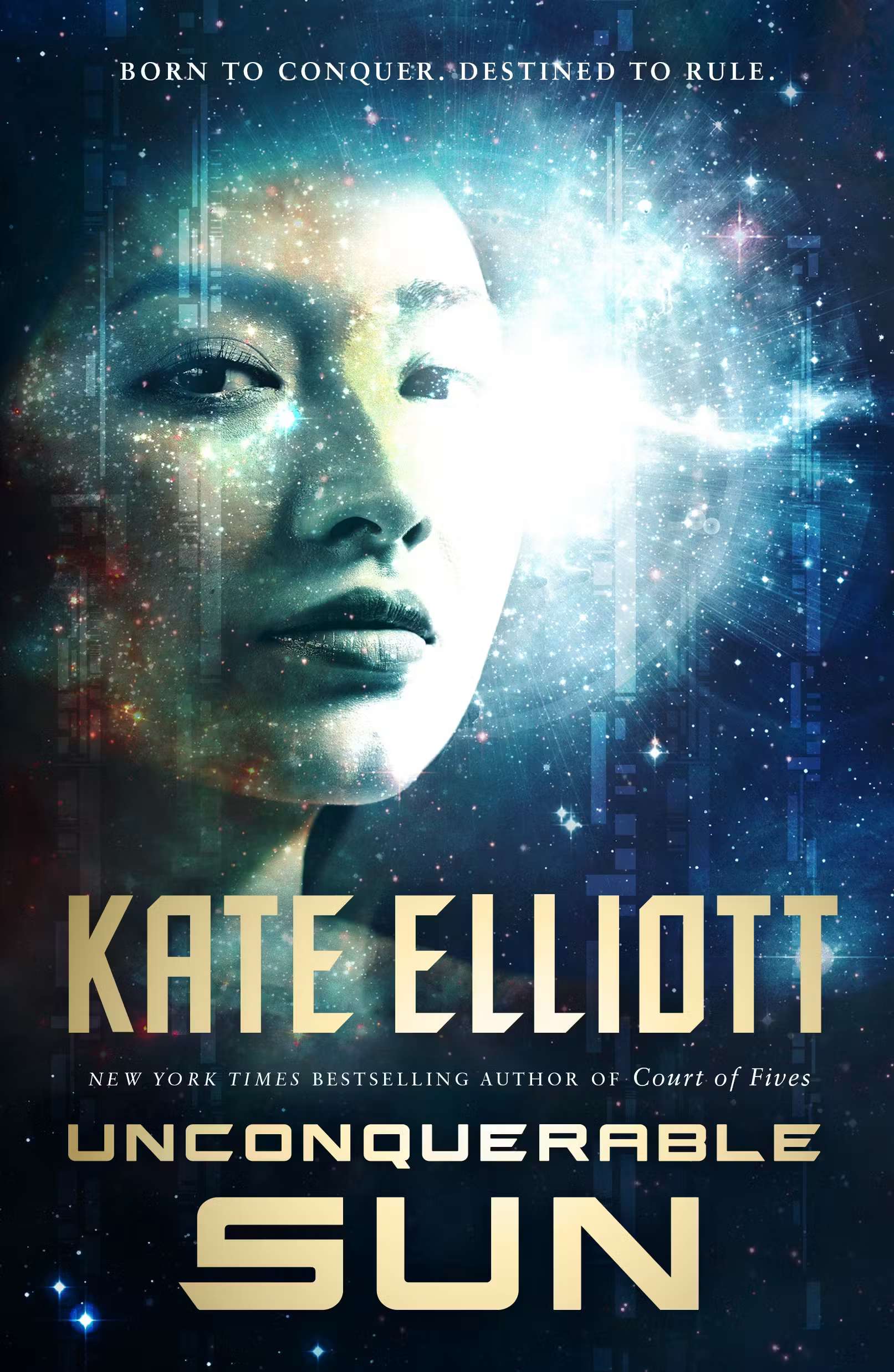
Every Variable of Us – Charles A. Bush

Alexis Duncan loves basketball—and she’s counting on it to get her the scholarship she needs to escape her impoverished neighborhood and turbulent home life. But when she’s injured in a shooting and can no longer play basketball, her dreams are crushed. With no other option, she turns to Aamani, the new student in her school. Aamani encourages Alexis to join their school’s STEM team to get the scholarship she needs. Alexis is skeptical—she knows nothing about the sport, and she’s reluctant to fit in with the nerdier crowd. But as her skills—and her confusing crush on Aamani—develop, Alexis realizes that there may be more to her than meets the eye.

TW/CW: racism, gun violence, homophobia, Islamophobia, xenophobia, ableism (internalized/external), drug abuse/addiction themes, mentions of child abuse

I’m a little ashamed to be giving this novel such a negative review, but I firmly believe that negative reviews have their place. This novel was clearly a labor of love for Bush, being a debut novel about a queer, Black, and disabled girl, a story that’s exceedingly difficult to get out there in this climate. There’s probably some kids out there who think that this is just the book for them. Without a doubt, Every Variable of Us is an important book to have out there. But I think there’s a lot of valid criticism to be had for this novel, and it’s important to note that a book being diverse doesn’t absolve flaws in its writing…of which this novel had many.

In theory, I think Alexis is a great character to have for a YA audience; there’s this expectation in the genre that even your characters can’t be flawed in terms of their worldview, because that might be “problematic.” It’s good for teens to see a character that starts off narrow-minded and comes out the other side more tolerant or understanding. I tried to roll with Alexis’s inner monologue with that in mind. There’s a lot that you have to put up with—in the beginning of the book, Alexis is…practically everything-phobic: Islamophobic, racist towards other minorities, fatphobic, homophobic, and ableist. There’s a clear setup for her to learn from her mistakes and be more understanding of other people’s cultures, and in turn, accept her own status as a disabled, bisexual person. However, there doesn’t end up being much development on her part, when both the novel and the marketing want us to believe that she undergoes this dramatic arc and becomes a whole new person. Alexis becomes more tolerant towards queerness and Aamani’s Indian heritage and traditions, but save for that (and her success in becoming an asset to the STEM team and getting a scholarship), her arc is practically a straight line. Her lack of self-reflection wouldn’t have been a problem if Bush wanted the reader so badly to think that she’d magically changed into a better person, when in reality, she was in a very similar place to where she was at the beginning of the novel. I’m all for flawed characters, but don’t tell me that a character’s had this monumental shift in her worldview when she really hasn’t.

Which brings me to the complicated issue of the diversity of this book. I really appreciate that Bush put a lot of effort into making Every Variable of Us have a diverse cast. However, a lot of the diverse characters ended up feeling like props to reinforce lessons for Alexis about being tolerant about other marginalized people. To be fair, Aamani had more development than the rest, but there were moments when she was clearly only there to teach Alexis about Indian people and Hindu traditions, as well as queerness. It was more blatantly evident in characters like Matthew; I appreciated the note at the beginning where Bush acknowledged that he’s not autistic and wanted to represent autism as respectfully as possible. I can’t speak to the autism rep specifically, but as a neurodivergent person, I found Matthew to be decently represented. That being said, it very much felt like he was there just so that he could challenge Alexis’s ableist worldview. At a certain point, I could see the checklist in Bush’s head: “oh, wait! Maybe we can add an Asian character here, jot that down!” Diversity can only be successful when its intent is to provide representation of minorities, but also minorities as people, not teaching moments for the main character; otherwise, it becomes disingenuous. Every Variable of Us unfortunately fell straight into this trap.

I’ve talked about this with several YA books, but there’s a very vocal camp in the YA world that’s staunchly against pop culture references in the story. I’ve never really understood the argument—why not have your characters engage with media that current teenagers like and/or that you liked as a teenager? Why not have something that a teenager can relate to or be introduced to because of this book? However, there is very much a wrong way to do it, and that’s to cram every possible reference into the narrative for no reason. Dear Wendy is another example where that approach nosedived (too many references, not enough actual story), but it pains me to say that Every Variable of Us is also a masterclass on how not to write pop culture references into the narrative. Every other sentence had a reference. Even when I was Alexis’s age, and deeply, deeply nerdy (especially about some of the same things that Aamani is passionate about, namely Marvel comics), my inner and outer monologue didn’t contain an Avengers reference every 10 seconds. It got to such a ridiculous point—nobody, not even nerdy people, talks like that at all. As a result, almost all of the characters ceased to become real to me. People just do not speak like that. It’s like Bush was trying to relate to every possible teenager by thinking of every possible thing that a teenager could like, and then translating it into dialogue, making it exceedingly hammy.

That issue of trying to relate to every possible teenager felt like the core of my issues with Every Variable of Us. It’s an issue that I often see in a lot of debut novels: authors want to cram every possible thing that they’re passionate about into a single novel; at best, it’s a labor of love, and at worst, it’s quite bloated. This novel suffered from this without a doubt. He just tried to tackle far too many issues, and as a result, the analysis of them was often surface-level. Bush talks about gang violence, abuse, having a parent with an addiction, homelessness, suddenly developing a disability, religious bigotry, and queerness all in one novel. While it’s admirable to write about this much (and there are of course people who live in these circumstances), Bush clearly didn’t have the page time to do justice to all of them without only giving an underdeveloped take on all but maybe…two or three of these issues. I do appreciate the handful of moments where the exploration of these topics actually did land; the moment at the end with Alexis’s mother was one of the only parts of the book that was emotionally impactful to me. But for the most part, this was just way too much for a single debut novel to be doing. In an attempt to try and address every issue that he seems to be outspoken about, Bush ends up hardly addressing them at all.

If there’s a lesson to be learned here, it’s that you can’t please everybody with a single novel, whether it’s the audience you’re appealing to or the groups that you’re trying to represent. Charles A. Bush just seemed too concerned with trying to make every possible reader in every parallel universe happy, which stretched the narrative thin. I get that there’s an insurmountable amount of pressure with a debut novel, but you do not need to please everybody! It’s okay! Breathe!

All in all, a debut novel that tried too hard to do too much, and ended up spiraling into a mess as a result. 1.75 stars.

Every Variable of Us is a standalone, and Charles A. Bush’s debut novel.

Today’s song:

That’s it for this week’s Book Review Tuesday! Have a wonderful rest of your day, and take care of yourselves!
Posted in Book Review Tuesday

Book Review Tuesday (2/17/26) – The King Must Die

Happy Tuesday, bibliophiles!

Confession time: I was not a fan of Kemi Ashing-Giwa’s debut, The Splinter in the Sky. I didn’t think I would read any of her other books. But my hunger for sci-fi knows no bounds, and when I saw this, I was intrigued enough by the premise to give her writing a second shot. Thankfully, the gamble paid off—The King Must Die was an unexpected delight, full of rebellion, blood, and the friendships that somehow spring up from those other two things.

Enjoy this week’s review!

The King Must Die – Kemi Ashing-Giwa

Newearth was once humanity’s last hope, a planet terraformed by incomprehensible, alien overlords. Now, it’s on the verge of destruction, with dwindling resources divided unfairly amongst the struggling poor and the Sovereign that rules over them. What’s more, the Sovereign has the power of the omnipotent, alien Executors on their side, willing to do their divine bidding at a moment’s notice, leaving a path of destruction in their wake. Fen, the daughter of anti-imperialist rebels, is on the run after the assassination of her fathers. With a target on her back, she flees for a neighboring rebel faction. But when Alekhai, the ruthless heir to the Sovereign, stumbles directly into the plans of the rebellion, Fen is faced with a brutal choice: join forces with him, or let the rebellion fall prey to the Sovereign.

TW/CW: murder, loss of loved ones, gore, blood, violence, descriptions of injuries, torture

I almost passed on this novel when I saw that it was by the same author as The Splinter in the Sky. But sometimes, every once in a while, it’s worth it to give an author another chance; if not for second chances, I wouldn’t have loved Grace Curtis’s Floating Hotel, for instance! I’m glad I took the chance with Kemi Ashing-Giwa, because The King Must Die was an action-packed, adrenaline-filled story of rebellion and intrigue.

My issue with The Splinter in the Sky was that the story did not feel original. A recurring thought I had while reading it was that it had poorly copied A Memory Called Empire‘s homework—there wasn’t enough about the story that was original. I can excuse some of it, since this was her debut novel, but debut novels can have a story that doesn’t border on being a rip-off. That being said, I do remember liking some of Ashing-Giwa’s prose. Thankfully, she’s worked on both of those fronts, creating an original story to go with said prose, and the prose itself has been leveled up significantly! Ashing-Giwa had such a vibrant way of describing the imagined world of Newearth and the many people within it, so much so that I could easily see myself walking through its war-torn jungles. Her dialogue is snappy without being corny, and her metaphors added a poetic flair to an often bloody and dreary landscape. The King Must Die is a marked improvement from Ashing-Giwa’s debut, fleshing out what I felt lacked in her writing on the first time around.

Whenever I say that an adult novel is a good transitory novel between YA and Adult age groups, it always seems backhanded. I guess that’s because literary circles still turn their noses up at YA for the most part. Listen—even though I’ve aged out of the target audience, I read a fair amount of YA (although adult novels have eclipsed them), I write YA, and I have a deep respect for it as an age group (it’s not a genre!). There’s a difference between YA (novels that genuinely portray the complex emotions of teenagers and their circumstances) and YA (tropey slop banking on the latest fanfiction/TV trends). And I think there’s something about The King Must Die that felt like it could be an excellent book to introduce older teens to more adult genre fiction. Sure, the kill count and amount of blood in general is very much adult, but Ashing-Giwa hits that balance between the political intrigue that’s more present in Adult novels with the character drama that I associate more with YA. It has the fast pace that I associate with some of my favorite YA sci-fi romps that I ate up in high school, but with a level of maturity that would have been lost on me at that time. It’s difficult to balance this kind of complicated worldbuilding and politics while also having this character drama, but The King Must Die had both in spades.

The main part that felt YA (affectionate) to me was the character dynamics. The dynamic between Fen and Alekhai is a classic YA setup; she’s a runaway rebel, and he’s the heir to the empire she wants to destroy. Will sparks fly? …no, evidently, but they did make for some seriously compelling character dynamics. I appreciated that, although there were multiple opportunities for Fen to be paired off with any number of characters, all of them were platonic, and they still gave me that juicy, delectable drama that’s usually only reserved for romances. Fen had such excellent chemistry with Mettan, Sinjara, and the other rebels, but what stood out the most was her relationship with Alekhai. I love a good redemption story for a villain, but it’s even more impressive given how much that Ashing-Giwa establishes about him that honestly…shouldn’t be that redeemable. But his development over the course of the story culminated in something so emotional, and the slow cracking of his shell from a ruthless, indestructible royal to someone who only wanted love in return was incredibly poignant.

The King Must Die is still sci-fi for sure, but I’d place it somewhere in the nebulous category of space fantasy. There are some elements that solidly ground it in science fiction: the alien Makers and their terraformed planet, for one, but also some of the technology. However, much of the action that we see on the ground was very fantasy, what with battles waged with intricate swords and quarterstaffs. I loved the strange, often horrifying beasts that we encounter throughout, though I would’ve liked explanations about how they fit into the ecosystems; we get a lot of tidbits of creatures that supposedly went extinct centuries ago, but are showing up for…reasons, and are never brought up again. As a whole, there were a handful of holes in the parts of the worldbuilding that didn’t relate to a) the politics or b) the terraformed Newearth, but for the most part, the world of The King Must Die was a compelling one without a doubt.

In general, I liked the ending and the epilogue; on a more technical level, Ashing-Giwa is excellent at writing battle scenes that really pump up your adrenaline. Some of the imagery, as well as Askrynath’s dialogue, reminded me of the final battle in the throne room in Hellboy II: The Golden Army, which, if you know me well, is a compliment of the highest order. Conceptually, I like how the ending and epilogue resolved—through selflessness and collective community work, the empire was dismantled and a more fair system was set up on Newearth. However, it felt wrapped up far too neatly. An empire that size—especially one with the backing of incomprehensibly all-powerful aliens—doesn’t crumble in a day. I wanted to see more of the messiness of rebuilding a new world in the ashes of the old one—the transition just felt too clean to be realistic. To be fair, The King Must Die is already pushing 500 pages, so I get it if that didn’t make the final cut. Nonetheless, it was a satisfying ending—just too satisfying for my liking, and for the tone of the story itself.

All in all, a sci-fi adventure that balanced genuine political critique with fast-paced action and dramatic, snappy dialogue—it’s rare to find a book that succeeds with both. 4 stars!

The King Must Die is a standalone, but Kemi Ashing-Giwa is also the author of The Splinter in the Sky and the novella This World Is Not Yours.

Today’s song:

That’s it for this week’s Book Review Tuesday! Have a wonderful rest of your day, and take care of yourselves!
Posted in Book Review Tuesday

Book Review Tuesday (2/10/26) – This Great Hemisphere

Happy Tuesday, bibliophiles!

This book came up in several searches I found looking for speculative fiction authors that I hadn’t heard of. It seemed more on the literary side of dystopia/sci-fi, but the premise seemed interesting enough, so I took the leap. Unfortunately, This Great Hemisphere falls into the same trap as many other literary sci-fi novels: all literary, hardly any sci-fi—or basic worldbuilding to speak of.

Enjoy this week’s review!

This Great Hemisphere – Mateo Askaripour

In the 26th century, Earth has become unrecognizable, and so have its people. Parts of the population have become Invisible; those who cannot be seen are relegated to manual labor and pushed to the margins of society. Sweetmint, and Invisible woman, has worked her entire life to ensure that she becomes more than another statistic, securing a top apprenticeship with a legendary non-Invisible businessman. But when her missing brother becomes the prime suspect in a politically-motivated murder, Sweetmint sets off to find him—and convince the rest of the world of his innocence.

TW/CW: racism, misogyny, violence, sexual assault, murder

I really just need to steer clear of literary sci-fi, at this point. Once in a blue moon, you’ll get something incredible, but I feel like authors who go from literary fiction straight into sci-fi forgo world/character building and just slap the same faux-deep prose into a vaguely speculative setting. To Mateo Askaripour’s credit, This Great Hemisphere goes slightly further than that, but beyond the basic premise, there’s not much about this novel that holds water.

Overall, This Great Hemisphere left a lot to be desired in terms of the worldbuilding, which I’ll get to later. That being said, the one part I really enjoyed about the novel was how fleshed-out the concepts of the Invisibles were. It’s the only bit of worldbuilding we really get, but at least what we have was somewhat substantial. I loved how Askaripour outlined not just how Invisibles are marginalized in this far-future society, but their own cultural quirks; I love the “scent-prints” that Invisibles recognize each other by without sight, and the fact that some paint themselves in order to be visible in DP society was fascinating to me. Askaripour fleshed out their social world well, and it made that part of the novel feel real. From the get-go, it’s easy to see how this becomes allegorical for racism. I found the allegory a little shallow, personally—it doesn’t go far beyond “racism is bad and it’s systemic,” and I would have liked it to have more nuance—say, the psychological effects of it or how a character like Sweetmint might view herself because she’s been socialized around this racism. But as it was, it was a decent way of showing how racism could manifest in a speculative setting.

However, the Invisibles concept is where my praise for This Great Hemisphere ends. One of my biggest issues with this novel is that all of the characters were flat, and as a result, I had significant trouble connecting to any of the characters. Sweetmint was the protagonist who we were supposed to root for, but she had no personality outside of being an object of marginalization; I know that she gets beaten up and wants to save her brother, but those aren’t character traits. Strip the plot away, and Sweetmint would be nothing. The same applied to most of the other characters in the novel, who were either hollow caricatures of various kinds (ex. Croger was an eccentric billionaire, the Rainbow Girls were gossipy, catty women), or just not given any personality traits at all. This was most detrimental when it came to Sweetmint’s brother; since we spend the whole novel searching for him, surely we’ll get a taste of what his personality is like, as well as his relationship with Sweetmint, right? Apparently not…once again, he’s just there to move the plot along. This Great Hemisphere could have been a solid novel with the bones that it stood on, but without any substantial characters, it was practically skeletal.

Beyond the Invisibles, there’s almost no worldbuilding, and what’s there makes almost no sense. It’s the 26th century, and we’re in…a forest of some sort. Climate change has affected…something, but Askaripour refuses to tell you what. There aren’t any major technological innovations in 500 years, seemingly—and even if this were some kind of society where everybody had become luddites for whatever reason, that’s not explained either! Chief Architect Croger is the one responsible for molding modern society into what it is, but do we know how? Also no. There’s a government, and it’s bad, and they have…elections? That’s about all I know. There’s just absolutely no scaffolding for any of the worldbuilding, nor is there context for it. If Askaripour hadn’t said anything about the time period, I fully would’ve assumed that this was set, at the furthest, at the end of the 21st century. If This Great Hemisphere had been set in a climate-ravaged 2080’s, or something, half of these problems wouldn’t even exist—but it would still take at least some modicum of effort to convince us that this was set past 2024. It was just blatantly clear that Askaripour did very little work to make his speculative fiction truly speculative—it felt so modern, and that continued negligence for the worldbuilding made suspending my disbelief exceedingly difficult.

I’m always wary of male authors writing from the perspective of female characters, and This Great Hemisphere reminded me of why I have those fears in the first place. Don’t worry—we don’t get into “her boobs breasted boobily” territory here, but it’s not great, either. The bar is in the Mariana Trench, but Askaripour is still somewhere in the twilight zone at best. Already, the characters were developed poorly and presented little opportunity to get attached, so Sweetmint, regardless of gender, was not a compelling character. But her gender factored greatly into the discrimination in this novel, which is where it gets messy. There are so many scenes with her being beaten up, groped, and otherwise abused, which bordered on gratuitous. And yes, This Great Hemisphere is about a (somewhat) fictional kind of discrimination, but Askaripour didn’t seem to reflect at all about how gender would intersect with this fictional marginalization. Instead, we got page after page of Sweetmint facing gender-based violence with no nuanced reflection on it. It just rubbed me the wrong way that these things were being done so thoughtlessly to a female character. It wasn’t gratuitous enough to be torture porn, but it came close to it. In addition, when the female characters weren’t underdeveloped entirely, they felt rather shallow; I did appreciate that Askaripour kind of humanized a few of the Rainbow Girls, but they were very much a caricature of gossiping, oversexualized women in the end. Again! He could’ve made some very potent commentary on that, but no, apparently this novel needed the same caricature in every color of the rainbow…for some reason.

All in all, a speculative dystopia that talked the talk in terms of its themes and metaphors, but largely failed to walk the walk and follow through on its own ideas. 2.5 stars.

This Great Hemisphere is a standalone, but Mateo Askaripour is also the author of Black Buck.

Today’s song:

That’s it for this week’s Book Review Tuesday! Have a wonderful rest of your day, and take care of yourselves!
Posted in Book Review Tuesday

Book Review Tuesday (2/3/26) – The Hundred Thousand Kingdoms

Happy Tuesday, bibliophiles, and happy Black History Month!

As I’ve done for the past few years, all of my reviews for the month of February will be for books by Black authors. (Stay tuned for my annual Black History Month recommendations list!) I’ve been a fan of N.K. Jemisin for many years now. I was especially blown away by her Broken Earth trilogy, and I figured I would read this to see where she started out. I liked enough of it, but strangely, the flaws reassured me—in order for you to make something as mind-bending as The Fifth Season, you have to start somewhere. The Hundred Thousand Kingdoms happens to be that somewhere.

Enjoy this week’s review!

The Hundred Thousand Kingdoms (The Inheritance Trilogy, #1) – N.K. Jemisin

Yeine Darr never imagined herself in Sky—the opulent floating city of the Arameri, who rule over countless kingdoms. After the sudden death of her mother, Yeine discovers a royal inheritance that she never knew of. Now, in the world of political machinations, scheming, and dark magic, Yeine must fight her way through kings and gods alike. But Yeine has only scratched the surface of the secrets that have been concealed from her—and their consequences may shatter all of the Hundred Thousand Kingdoms.

TW/CW: rape, pedophilia, violence, slavery, torture, loss of loved ones, sexual content

Though she’s had some misses in her later career, N.K. Jemisin is one of the more inventive speculative fiction writers out there. The Broken Earth trilogy was so nuanced and mind-bending, and it was for sure one of the more creative adult fantasy series that I’ve ever come across. Yet somehow, even though I didn’t enjoy The Hundred Thousand Kingdoms as much as her other novels, it’s oddly comforting. You’ve got to write a weaker book before you get on the level of The Fifth Season.

The Hundred Thousand Kingdoms is a cold book. That’s not necessarily a bad thing. In fact, I think it works in the main character’s favor. This novel is all about isolation, alienation, and othering, and that’s exactly how it manifests in our protagonist, Yeine. Jemisin’s exploration of her being an outsider—in terms of her age, her race, and her unfamiliarity with Sky itself—centered so much about the distance that she felt between herself and the people she’s suddenly meant to cause peers. Yeine is a flawed characters, but you see the exact circumstances that make her this way; groomed to demurely accept microaggressions and be derided and tossed around, she’s shrunk herself so far into a corner that she’s ceased to be herself. Jemisin didn’t shy away from making Yeine a flawed character, but what made her at least partially worth rooting for was seeing how intricately her backstory was constructed. At best, The Hundred Thousand Kingdoms is a no-holds-barred exploration of how being subsumed into an empire does not just to your country, but to your psyche.

Over the years, Jemisin has built a name for herself in socially conscious fantasy, and The Hundred Thousand Kingdoms is, without a doubt, where it all began. Though I don’t think I’ll continue with the trilogy (more on that later), this novel excelled in talking about the politics of its world. Aside from Yeine’s alienation, I loved how Jemisin showed through the worldbuilding just how much the nations of the Hundred Thousand Kingdoms are willing to turn the other cheek to, be it war, racism, abuse, or slavery. It’s a dizzyingly large structure full to the brim with conniving politicians, but with the added bonus of warring gods to complicate things in Jemisin’s world. Even beyond the worldbuilding, what Jemisin does best is depict the staggering scale of an empire, and the intimidation that it causes. When the enemy seems too vast and layered to take down, it can force you into submission, or even absolute hopelessness. That hopelessness feeds into Yeine’s character arc once she’s faced with the Hundred Thousand Kingdoms, and her gradual conquering of it made for a poignant, timely character arc, especially for a novel written almost exactly 16 years ago.

The Broken Earth trilogy had this kind of fairytale-like narrator who stepped into the narrative to occasionally interrupt the main storyline. It was an artful, cryptic part of Jemisin’s storytelling that gave those novels a unique flavor. The Hundred Thousand Kingdoms was clearly the trial run of this tool, because it was…nearly the same. At first, I was excited to get that signature N.K. Jemisin storytelling, but as much as I liked it in the first half, I’m not sure if it really worked for this novel. I won’t spoil The Fifth Season, because even though it’s been out for many years now, that twist is too good to ruin for new readers; but with that narrative framing in mind, it works exactly in tandem in the story. However, for The Hundred Thousand Kingdoms, it didn’t fully make sense. I did like it in the sense of a trickster narrating the story, but for the kind of fantasy this is—much more about politics than prophecy—it seemed less of a narrative device and more just window dressing to spruce up what was already there. I’m all for those kind of elements normally, but I think it works better for a destiny, prophecy-oriented fantasy like The Fifth Season more than it does the more grounded, political machinations of this novel.

One of the main things that kept me from enjoying The Hundred Thousands Kingdoms all the way was the romance. Even calling whatever happened in this novel “romance” is generous. Everything between Yeine and Nahadoth was just…weird on a number of levels. Their first sex scene was written in such a way that I fully thought that Yeine was getting raped, and their dynamic never recovered from that perception. Either way, even with Yeine being the vessel for the most powerful goddess in this universe, there was obviously an uneven power dynamic at play, but I don’t think Jemisin wrote it consciously enough. Their relationship felt the same as the relationships between the domineering, condescending politicians of the Hundred Thousand Kingdoms, and yet somehow, it was automatically romantic for them. These kind of power dynamics are something that Jemisin has explored in her later works and written with much more nuance and aplomb; once again, I guess you have to start somewhere, because this was a mess. There could’ve been some sort of Stockholm syndrome kind of thing going on with Yeine, but once again, no nuance—even though she’s a traumatized character, depicting it through a solely romantic lens was a mistake. Additionally, the final sex scene with Yeine and Nahadoth was painfully overwritten to the point where it was almost funny. Plus, the relationship that Yeine had developed with T’vril felt much more natural and beholden to a fleshed-out romance—where did Nahadoth even come from?

Also, because I can’t let go of this—yeah, I know, Sieh is technically an adult mind in a child’s vessel (there’s a fantasy explanation for this), but in what world did that weird ass kiss between Sieh and Yeine need to happen? Reverse Poor Things, much? Eugh.

All in all, a flawed but ambitious debut from one of the cleverest fantasy authors working today. 3.25 stars.

The Hundred Thousand Kingdoms is the first novel in the Inheritance Trilogy, followed by The Broken Kingdoms and The Kingdom of Gods. N.K. Jemisin is also the author of several other sci-fi and fantasy novels for adults, including the Broken Earth trilogy (The Fifth Season, The Obelisk Gate, and The Stone Sky), the Great Cities duology (The City We Became and The World We Make), the anthology How Long ’til Black Future Month? and DC Comics’ Far Sector.

Today’s song:

saw Robyn Hitchcock on Sunday night—what an absolute treasure!!! this was a standout

That’s it for this week’s Book Review Tuesday! Have a wonderful rest of your day, and take care of yourselves!