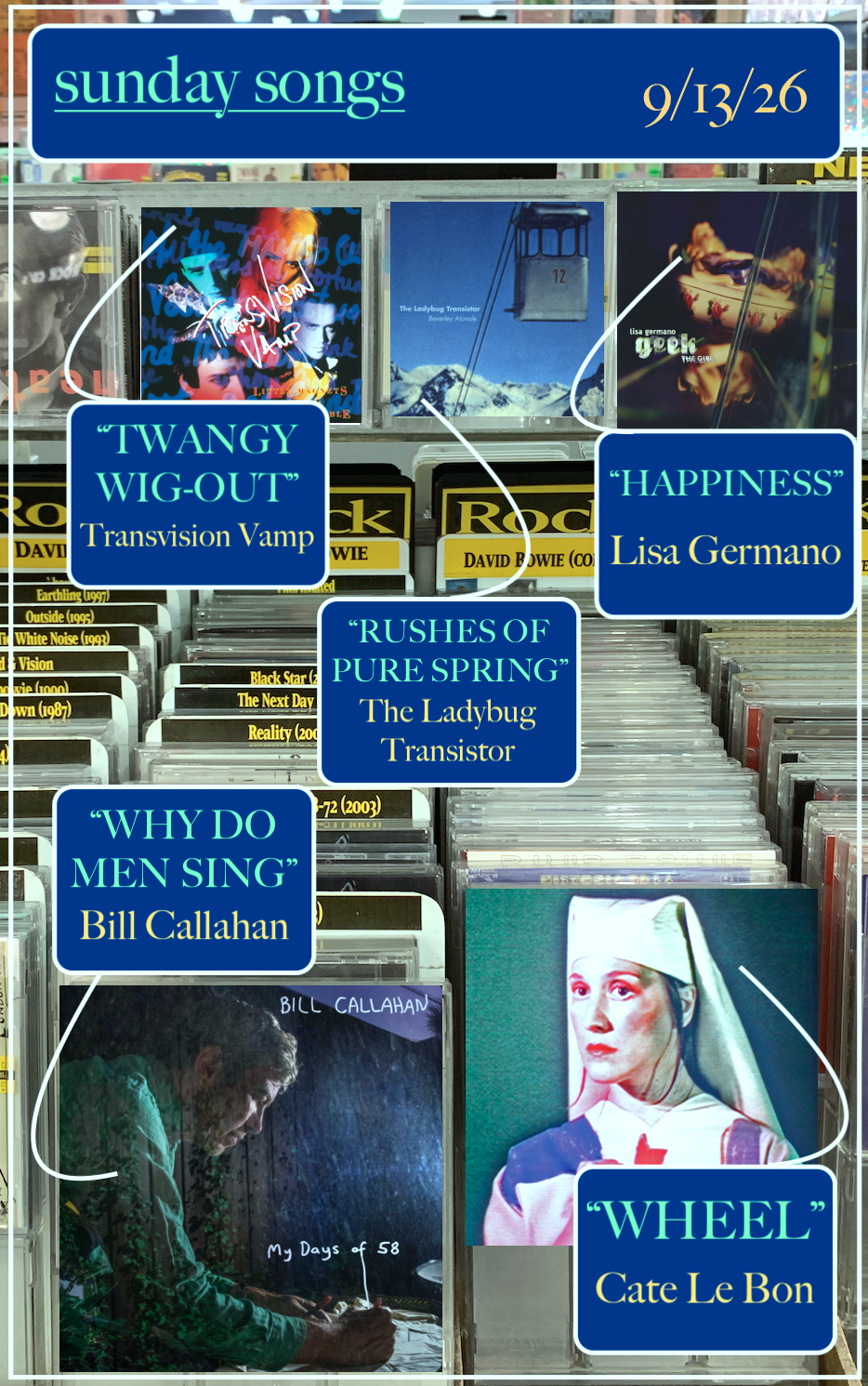
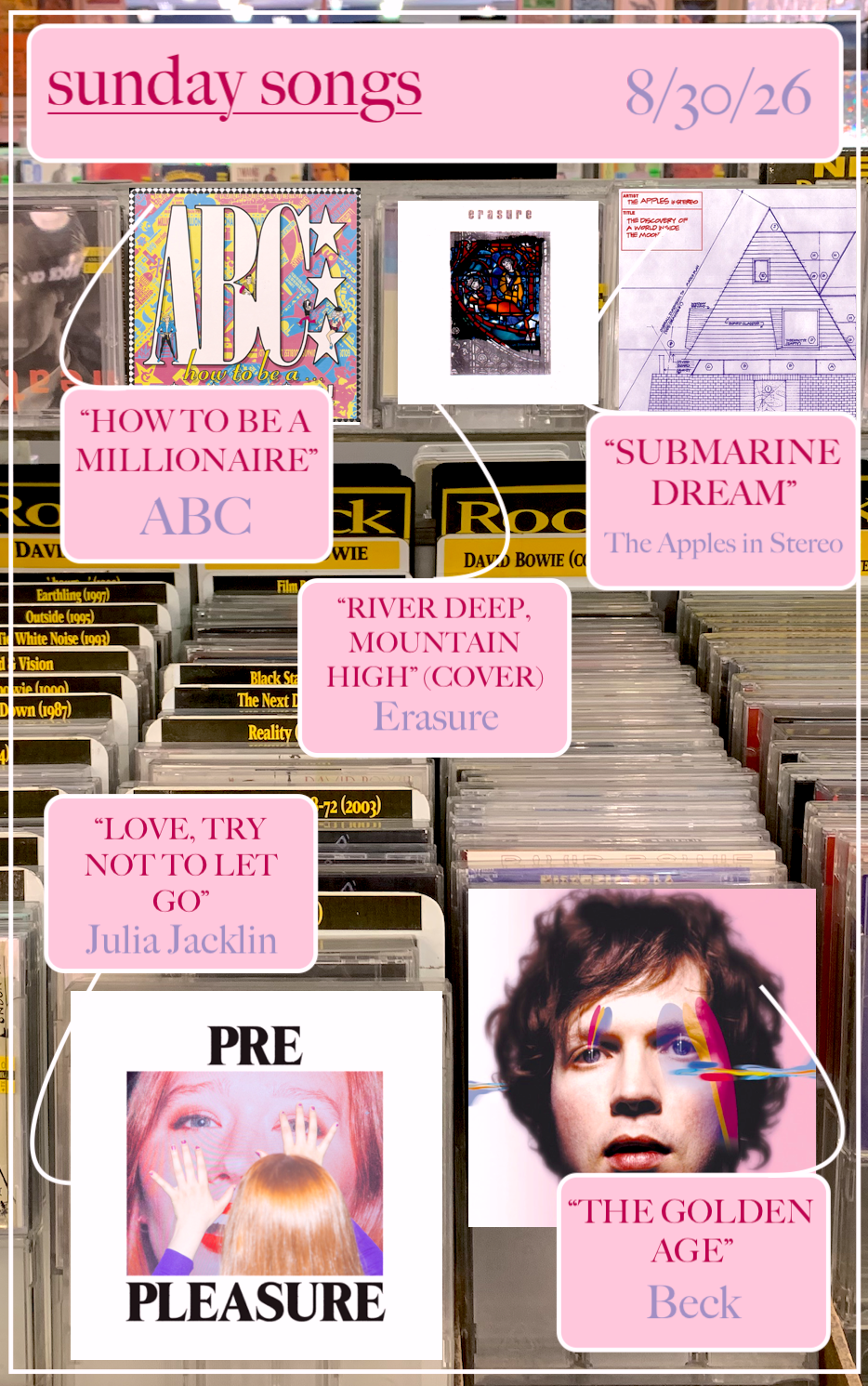
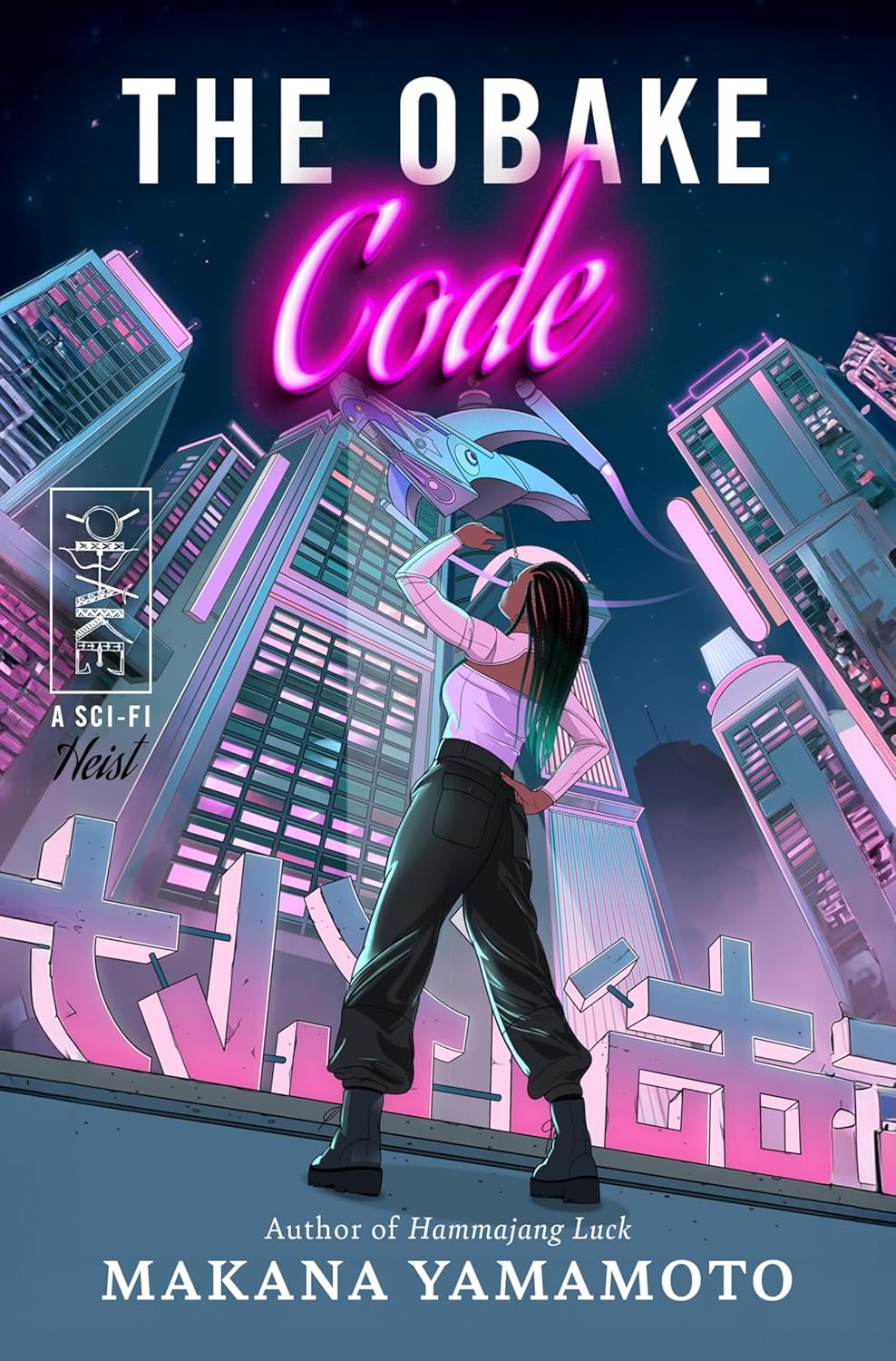
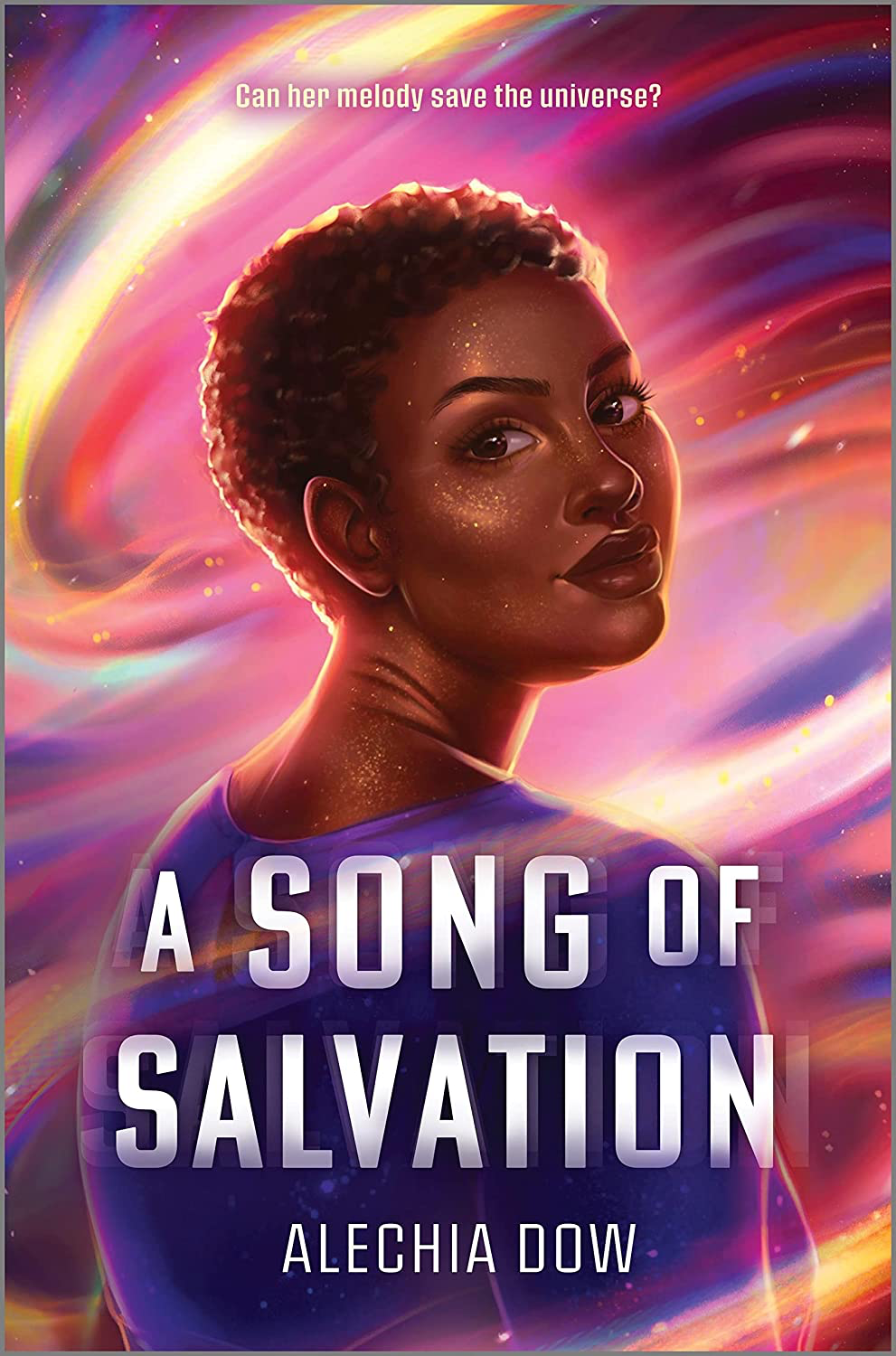
Posted in Sunday Songs

Sunday Songs: 5/24/26

Happy Sunday, bibliophiles! I hope this week has treated you well.

This week: inventive covers, timeless anthems, and some classic quirked-up white boy music.

Enjoy this week’s review!

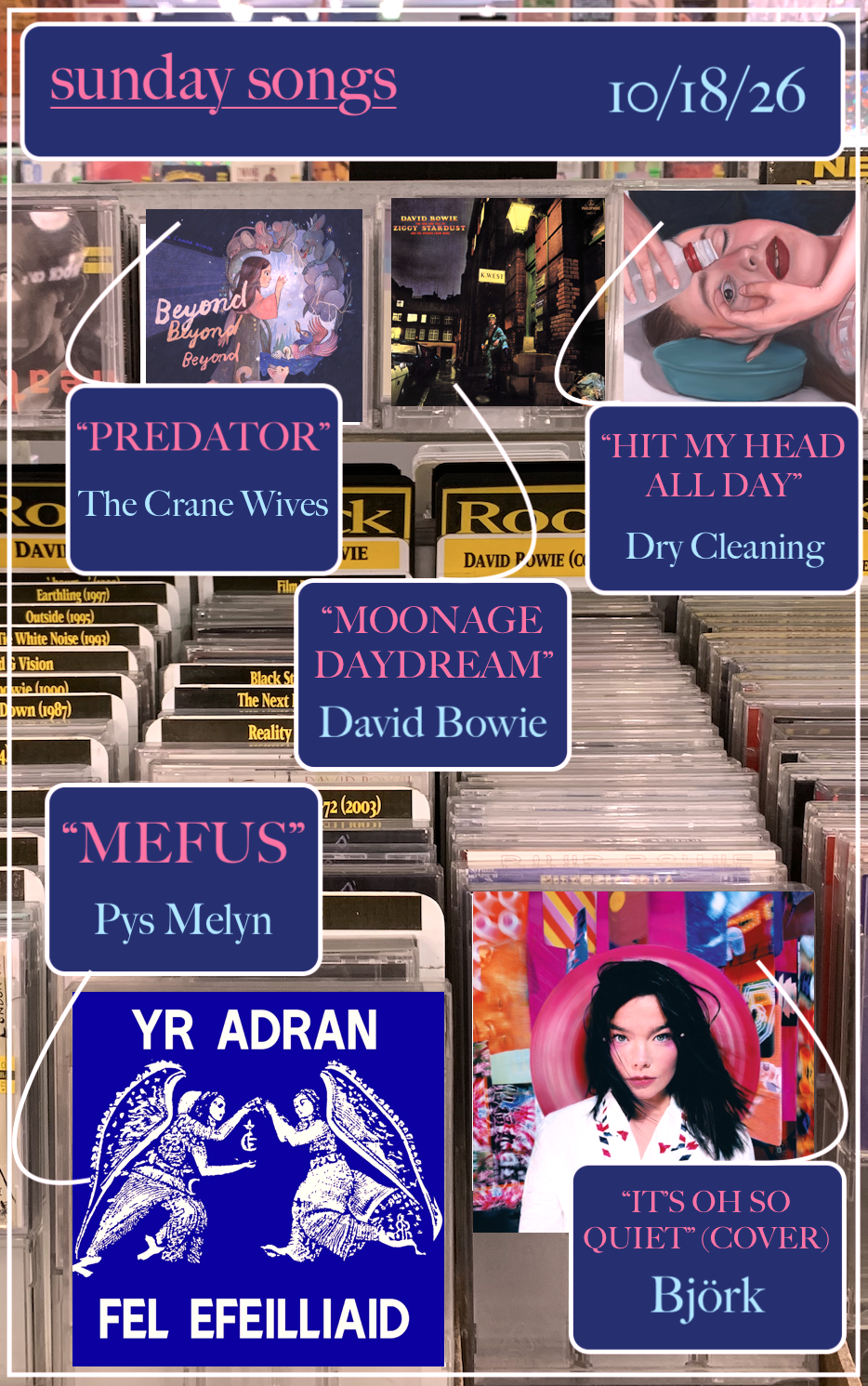
SUNDAY SONGS: 5/24/26

“A Mistake” – Fiona Apple

If we live long enough under the patriarchy, most of us women have the urge to permanently destroy something at least once in their lives. Once is generous, honestly…have you read the news lately? For Fiona Apple, who had been heavily scrutinized under the public eye and lambasted by music critics in the years leading up to When the Pawn…, the urge must’ve been constant. That’s why “A Mistake” feels so genuine. It’s a slinky, trip-hoppy track about breaking free of society’s expectation of a “good girl” and deliberately wrecking things, fully cognizant of the consequences but not caring in the slightest: “And when the day is done and I look back/And the fact is I had fun/Fumbling around/All the advice I shunned, and I ran/Where they told me not to run/But I sure had fun.” No matter if you act on it, Apple taps into that universal urge to raise hell after being boxed in and stymied by expectations of femininity (“I wanna make a mistake/Why can’t I make a mistake?”), societal control, and an urge to just rebel, even if you don’t know what against. And then there’s the element of deliberately going against good advice—Apple’s trail of destruction, by her own admission, isn’t entirely justified, but there’s that constant, biting urge to defy well-meaning advice anyway. After all, “And if you wanna make sense/Whatcha lookin’ at me for?/I’m no good at math.” It’s all wrapped up in a complex package, not always thoughtful, but from a messy, nonsensical place of rage with nowhere to go. Screeching guitars that give the effect of buzzing insects and a luscious synth loop to back it all up, creating a fully-fledged ode to giving into your most reckless urges.

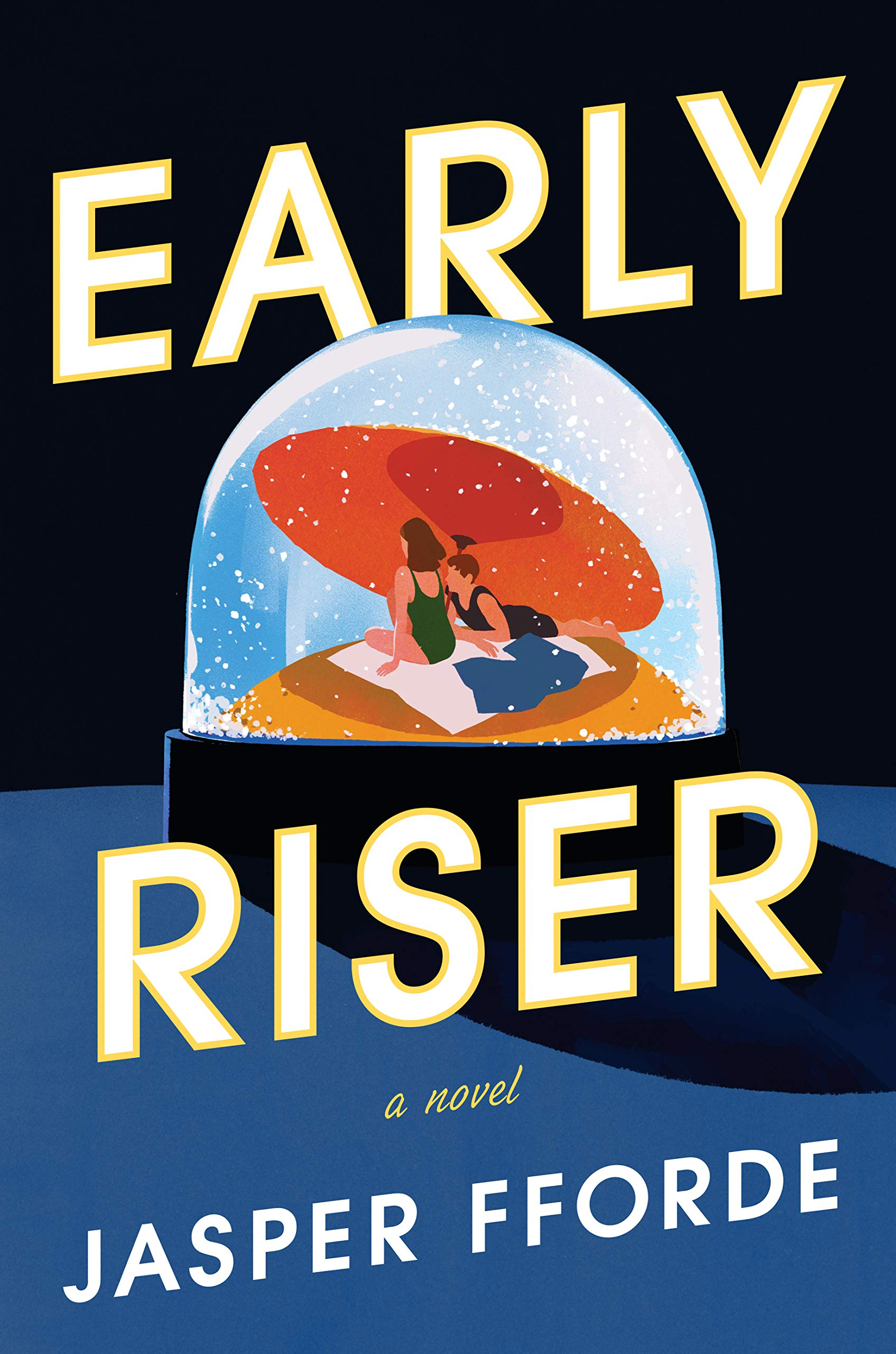
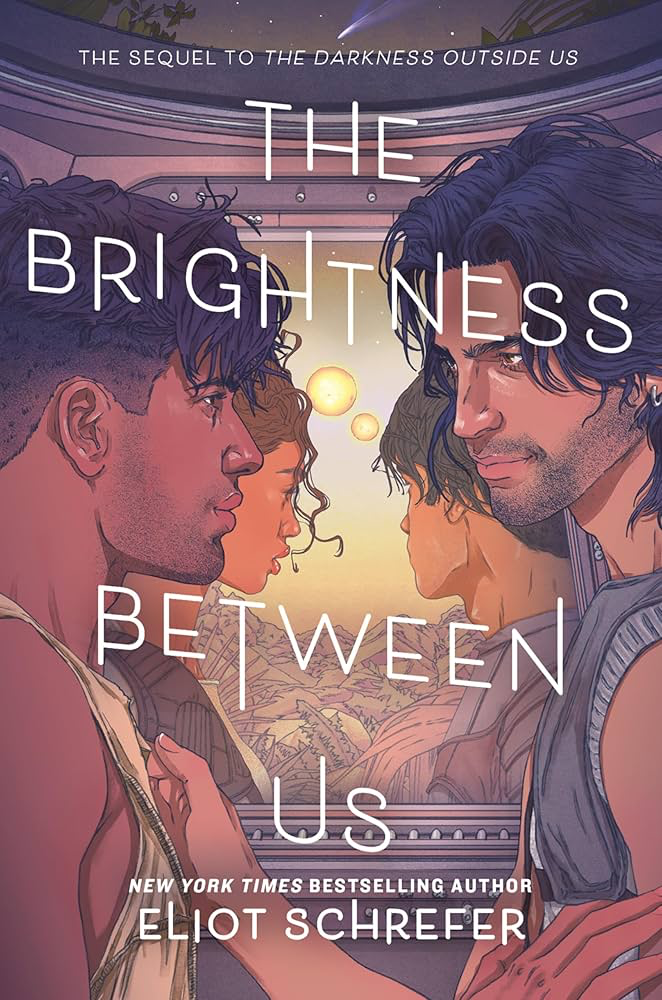
…AND A BOOK TO GO WITH IT:

Gideon the Ninth – Tamsyn Muir“So I’m gonna fuck it up again/I’m gonna do another detour/Unpave my path/And if you wanna make sense/Whatcha lookin’ at me for?/I’m no good at math…”

“Crosseyed and Painless” – Talking Heads

This might be the moment where I finally, finally get into Talking Heads. My brother recently listened to Remain In Light and introduced me to a handful of songs from it; apparently, he’d also fully Mandela-effected the idea that I owned a Remain In Light t-shirt, so maybe I should just listen to it. So much has been said about the album: the fusion of rock, funk, and early hip-hop, the influence of Afrobeats, the early electronic instrumentals. And all of that’s there. But you know what strikes me immediately?

Brian Eno. This just reeks of Eno. I mean, he obviously produced this album, but his rhythmic influence is so clear. “No One Receiving,” one of my favorite songs of his, is very Talking Heads, and he’d worked with the band on several albums at that point. But the frantic, anxious rhythms of “Crosseyed and Painless” and the chirping electronics are so Brian Eno. (He also provides backing vocals on the chorus, and Byrne’s certainly got some “King’s Lead Hat” in the delivery.) Maybe I just love it because of the Eno by proxy. But I feel like that would be a disservice to David Byrne and co., whose unique touch seems to have made Remain In Light so iconic. First off—oh my God, Tina Weymouth’s bass playing is nothing short of phenomenal. Once she finds the groove, she grabs ahold and never lets go. I think Byrne is what separates this from Eno in the end—though they share the same kind of angular energy, Byrne’s seamless shifts between desperate crooning in the chorus to frantic, anxious proto-rapping in the bridge: “Facts all come with points of view/Facts don’t do what I want them to/Facts just twist the truth around/Facts are living with their insides out.” That’s just nothing but David Byrne, as is this song’s spirit, in the end. Eno bolstered it, but the sweaty-palmed sprint through a state of alienation is nothing but Talking Heads.

…AND A BOOK TO GO WITH IT:

Volatile Memory – Seth Haddon“Nothing there/No information left of any kind/Lifting my head/Looking for the danger signs…”

“Modern Girl” – Sleater-Kinney

I hate to say it, but the strongest memory I have of hearing “Modern Girl” was hearing Sleater-Kinney play it live while co-headlining with Wilco about five years back. They did the classic “this is our big song, sing it with us!” thing and tried to get the crowd to sing the chorus…and only a handful of people did. Yeesh. Probably some of the largest-scale secondhand embarrassment I’ve ever felt. But they’re plenty successful, well-known, and presumably happy with their lives, so I can’t imagine that one (1) crowd in Colorado not singing along with them made much of a dent on their egos.

Nonetheless, “Modern Girl” is one of the songs I took away from that setlist all the way back in 2021. Despite the painful mix on the version I have (once it gets loud, it gets crunchier than a bass-boosted meme from 2018…somebody remaster this already, Jesus 😭), it has the same staying power. It’s an anthemic, gradually building story of mounting emptiness; every verse, happily sung until bitterly screamed, scrambles for meaning in a world of artifice. There’s a void (a donut hole, if you will) at the heart of “Modern Girl” that fruitlessly gets filled by consumerism, mass media, and hollow love. It’s a sort of universal story of filling the hole in your life with all the plastic that TV advertises, only to find that “My whole life/Looks like a picture of a sunny day”—beautiful on the surface, but really just a flimsy piece of film in the end. Where you end up is sprawled out, floundering in the drowning tide of distortion that gradually swallows Carrie Brownstein and Corin Tucker’s riffs and harmonicas. Sometimes, all you can do when faced with the emptiness at the heart of your life is shout at it—and shout Sleater-Kinney does.

…AND A BOOK TO GO WITH IT:

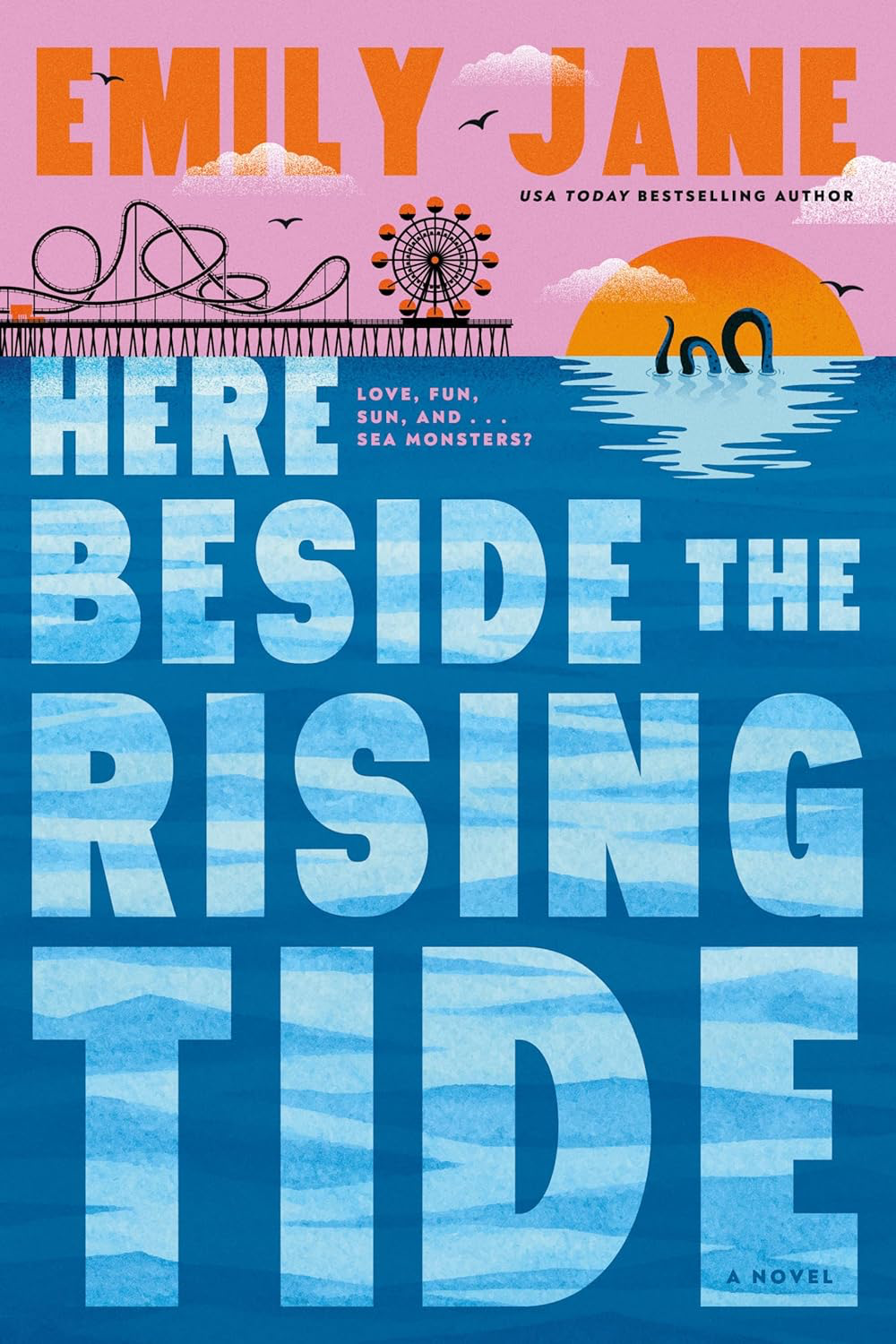
On Earth As It Is on Television – Emily Jane“My baby loves me/I’m so angry/Anger makes me a modern girl/Took my money/I couldn’t buy nothin’/I’m sick of this brave new world…”

“Company In My Back” (Wilco cover) – Cate Le Bon

Somehow, while spreading the gospel of Cate Le Bon to my family, I completely missed this cover, which my brother thankfully found. Wilco Covered, a limited-edition album only available on CD (and another big thank you to my dad for digging it up on eBay), was a real mixed bag, but this cover is a staggeringly good fit for both Le Bon and Wilco. “Company In My Back” comes from A Ghost Is Born, and Jeff Tweedy’s signature lyricism was already at some of its delightfully weirdest; “I attack with love/Pure bug beauty/Curl my lips and crawl up to you” is still one of the more memorable Wilco openings if we’re going by lyrics alone. Add in the wording of the chorus (“Holy shit/There’s a company in my back”) and some dulcimer, and you’ve got one of the more left field early Wilco songs out there. The original’s clattering percussion, like bug’s legs against tile, are equally so. It’s natural that Le Bon covered it, given her weirdo proclivities. Her moody lilt and agitated instrumentals fit in so naturally in her interpretation of this song. (I especially love the way she sings “They are hissing radiator tunes.” Pure magic.) This was recorded in 2019, and Reward has its footprints all over it, with blasts of saxophone to replace the acoustic guitars of the guitar. It’s such an excellent tribute, turning “Company In My Back” almost inside out while lovingly preserving the offbeat-ness of the original without sacrificing her own artistry.

…AND A BOOK TO GO WITH IT:

A Half-Built Garden – Ruthanna Emrys“You learn so slow, old radiant beauty/I’ll curve my flight…”

“I Wanna Be Adored” (Stone Roses cover) – King Woman

What makes a cover good to me is when it captures the song’s spirit; like I just talked about with Cate Le Bon’s take on “Company In My Back,” it messes around with the instrumentals but retains Jeff Tweedy’s soul beneath it. Though King Woman’s take on “I Wanna Be Adored” doesn’t reach those heights (and how could it, with the original basically defining a good portion of the alternative/indie rock sound of the ’90s?), I think it succeeds in the same way. While the Stone Roses’ original dips into a dreamy haze, King Woman’s cover basically sounds like Stone Roses by way of Chelsea Wolfe. It’s longer and more drawn-out, with sludgy guitars and a thick, foggy echo clouding everything. Kristina Esfandiari shouts the iconic chorus as though into the mouth of a canyon, pleading into a cold void, a stark contrast to the speed at which it’s sung in the original. It’s an exciting take on this song—one that clearly melds King Woman’s style into the original’s beating heart.

…AND A BOOK TO GO WITH IT:

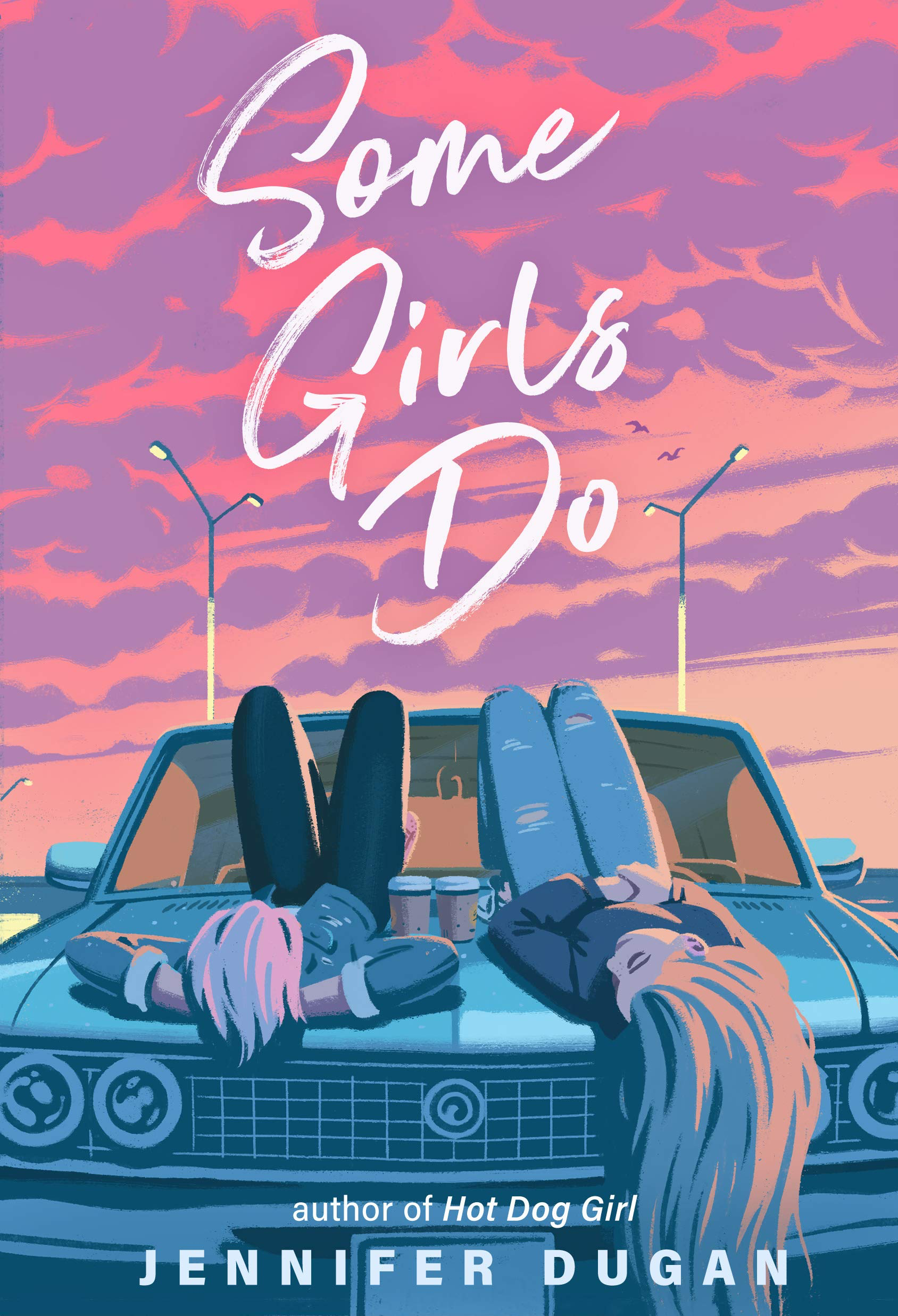
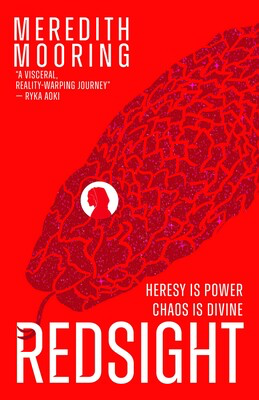
Redsight – Meredith Mooringthe sludgy, doomy atmosphere of this cover absolutely fits with this tale of dark magic in space.

BONUS: In addition to Programmes for Cools, Jim Noir has just released The DLC Tapes exclusively on Patreon—or you can buy it on his KoFi! It’s another album of polished releases from previous EPs and outtakes. Here’s the reworking of “Scene 2”:

Since this post consists entirely of songs, consider all of them to be today’s song.

That’s it for this week’s Sunday Songs! Have a wonderful rest of your day, and take care of yourselves!

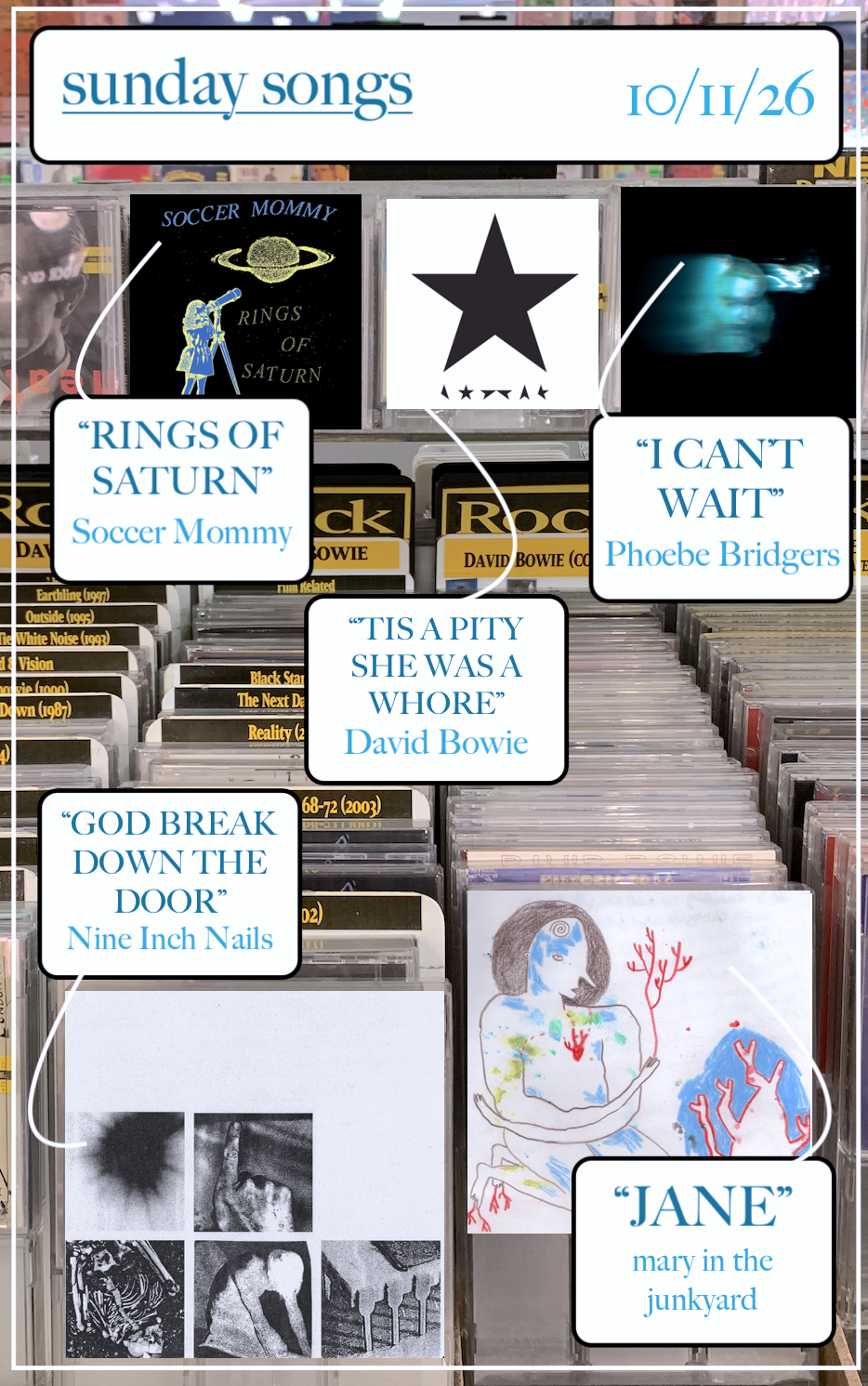
Posted in Sunday Songs

Sunday Songs: 5/17/26

Happy Sunday, bibliophiles! I hope this week has treated you well.

This week: the inescapable march of time? Nah, no need to worry about that, let’s go frolic in a field, whee!

Enjoy this week’s songs!

SUNDAY SONGS: 5/17/26

“Dead Man Walking” – David Bowie

The above meme has been my experience with Earthling. You know what I’ve been doing while listening to Earthling? That’s right…knitting a scarf, otherwise motionless, while my brain is vibrating at a speed that could shatter glass. God, I love Bowie.

Earthling really was a shock to my system. Even as a seasoned Bowie fan, you know in the abstract how easily he was able to adapt to musical genres and eras without necessarily sacrificing his own personal core. But it’s albums like Earthling that make you remember this in earnest; he adapts to the growing electronic and dance subcultures of the ’90s amphibiously, as if it had been the air he’d been breathing all along. It’s all a mishmash of influences, and if you’re looking for a microcosm of it, look no further than the multitudes in “Dead Man Walking”; yes, it’s a meditation on aging on the surface, but to me, it’s a conversation between the past and the present, at heart; originally, it was meant to be a tribute to Susan Sarandon (who he’d worked with on The Hunger) and her film Dead Man Walking, but after watching a performance by Neil Young and Crazy Horse, it inspired Bowie to write about the contrast of these aging rock n’ roll legends and the vitality that the music still contained. The ties to the past increase tenfold with Jimmy Page’s connection—he offered the chord progression of “Dead Man Walking” to Bowie all the way back in the ’60s (he had already recycled it for multiple songs, namely “The Supermen”).

The frenetic, thrumming drum n’ bass of this track encapsulates how nonlinear this experience of time is—the past is constantly communicating with the present and future, creating a constant conversation, a kind of tangled subway map of years and people. Leave it to Bowie to create such a concise meditation in the form of pulsating dance—it feels like this song should soundtrack a high-speed speeder chase in some cyberpunk movie. And as if we hadn’t gotten enough twists, now throw in Mike Garson doing Aladdin Sane-esque jazz piano at the very end. Naturally. Up until the end, his manifesto was to keep everybody on their toes—including himself, it seems.

BONUS: here’s an excellent clip of Bowie performing an acoustic version of “Dead Man Walking” with Reeves Gabrels for Conan O’Brien:

…AND A BOOK TO GO WITH IT:

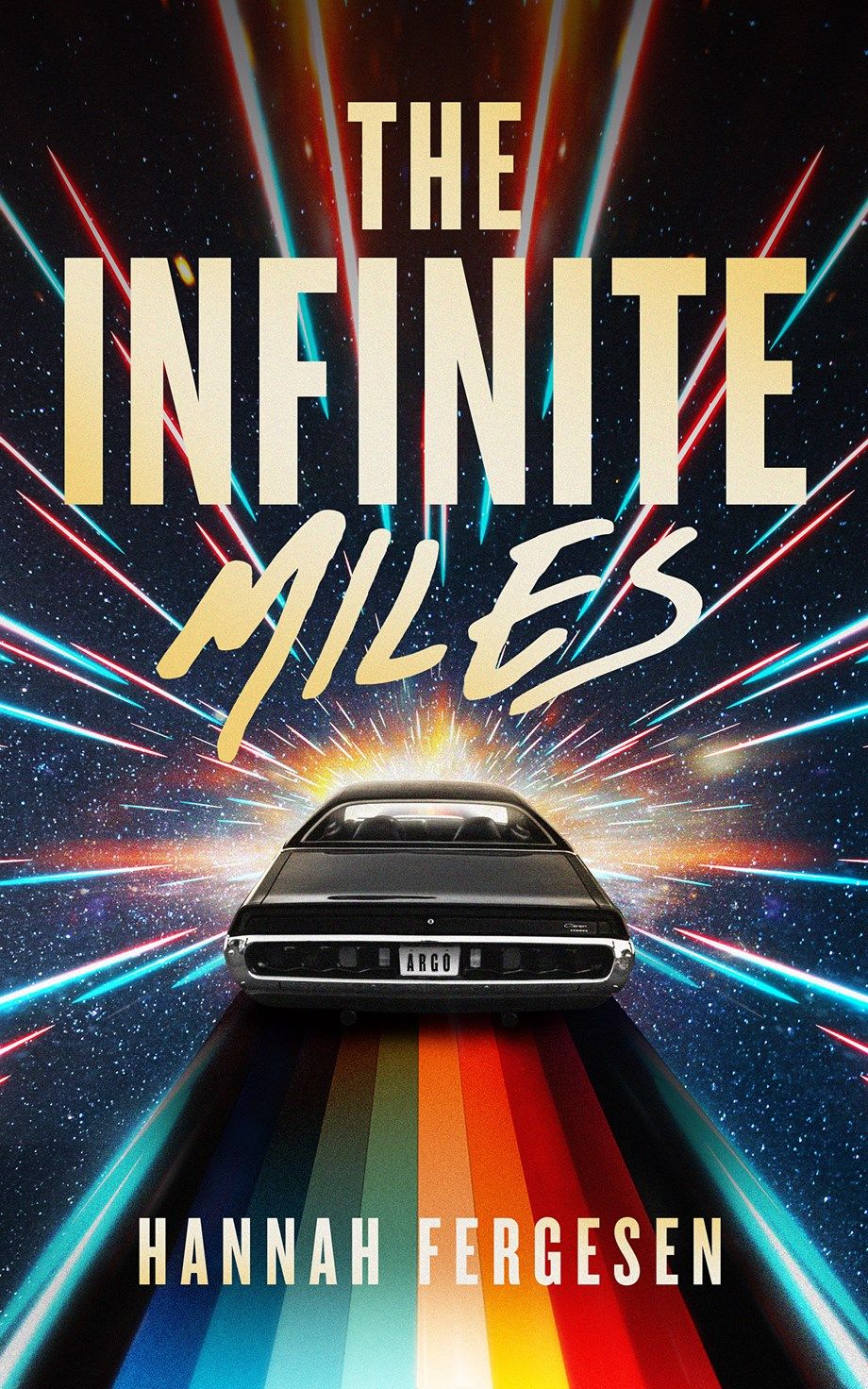
The Infinite Miles – Hannah Fergeson“And I’m gone, gone, gone/(Gone, gone, gone spinning slack through reality)/Now I’m older than movies/(Dance my way, falling up through the years)/Let me dance away…”

“Flesh Number One (Beatle Dennis)” – Robyn Hitchcock & The Egyptians

A Globe of Frogs was, surprisingly, my first experience with listening to a Robyn Hitchcock project all the way through (not counting the Soft Boys); most of the tracks are excellent, but the average Robyn Hitchcock listening experience to me usually circles back around to “how does he manage to make this many good songs?” I swear that this is on the alternative-hit level of something like “Birds in Perspex” or “So You Think You’re In Love”—with how much indie airplay those two songs got, it’s baffling that “Flesh Number One (Beatle Dennis)” didn’t get it…okay, maybe it’s harder to sell a song with a title like that. But that doesn’t matter, right? Though it’s lyrically less weird than some of the other tracks on A Globe of Frogs, it distills Hitchcock’s undying love for the ’60s into a lovestruck, ’80s alternative track. It’s pure ’60s jangle all the way down (hence the Beatle in the title), breathlessly joyful; though that guitar brightness is straight-up Hitchcock, it made complete sense to hear that Peter Buck of R.E.M. also contributed his guitar skills to this album—it certainly has some of the same textures of Green, which came out around a year after A Globe of Frogs. It’s an encapsulation of the stages of love where you’re in so deep that nothing else matters—a plane could be crashing down in the studio, but we’re not there, are we? We’re in love, YIPPEE! God, it’s so delightful.

For the record, it’s an excellent duet. On A Globe of Frogs, he’s duetting with Glenn Tilbrook of Squeeze, but for most of the live shows I’ve seen recently, it’s been with his wife, Emma Swift. It was so sweet when I saw him back in February, and it’s just as sweet here:

…AND A BOOK TO GO WITH IT:

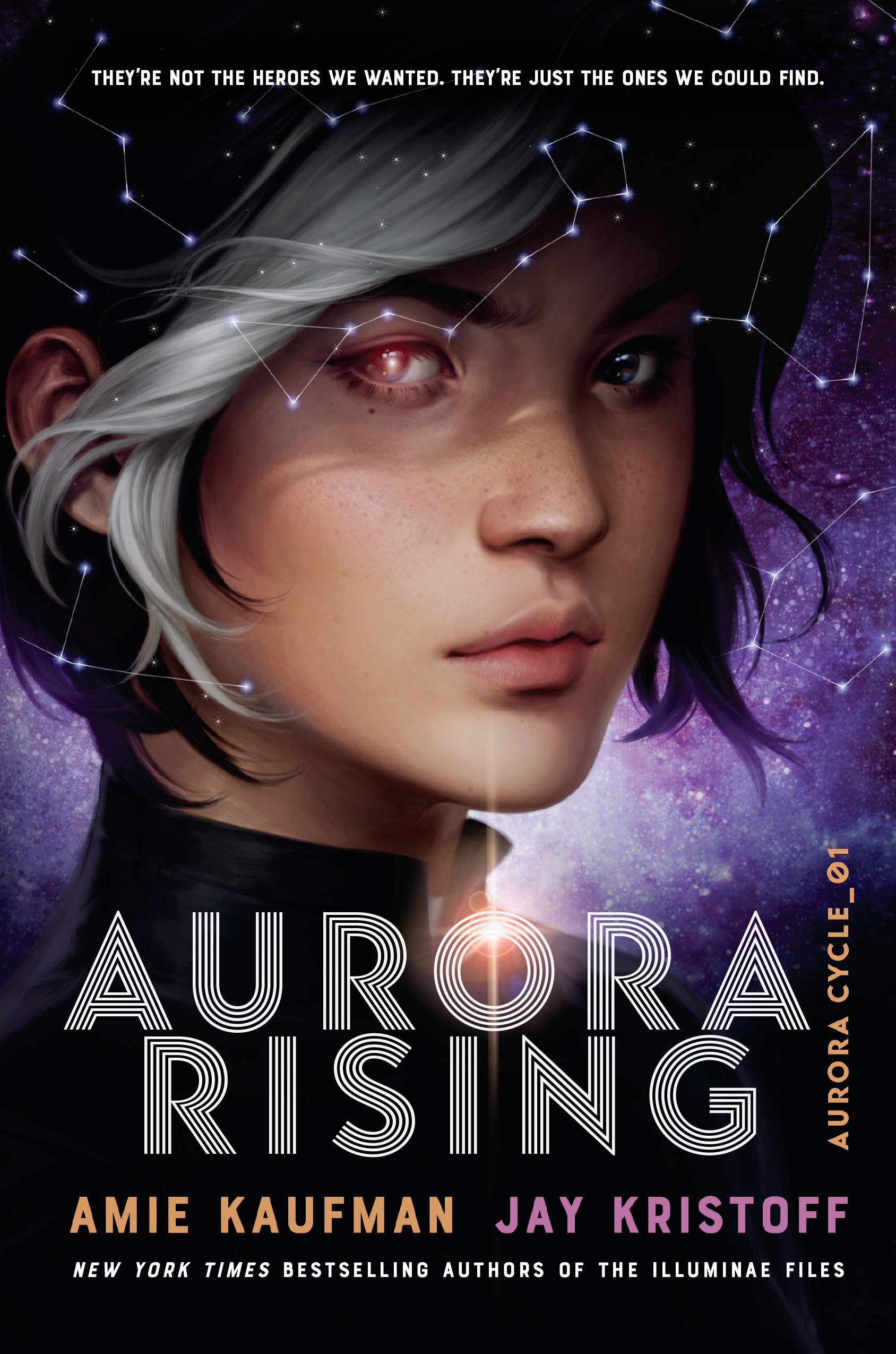
Aurora Burning (The Aurora Cycle, #2) – Amie Kaufman and Jay Kristofftell me this wasn’t Auri and Kal frolicking around in the Echo while the rest of the galaxy was collapsing around them…

“Open Up” – Ratboys

It’s Wilco all the way down. I’ll just hear a song and like it, and bam. It’s just Wilco influence behind the Scooby-Doo villain mask.

For “Open Up” specifically, it didn’t hit me until I read frontwoman Julia Steiner’s interview about this song on Stereogum: “I love Wilco…They have records, Being There and Yankee Hotel Foxtrot, which both have these track ones that are these expansive scene-setters for the whole album and consist of a sequence of verses interspersed with beautiful noise. So that was sort of the template that I was excited to try to work within.” The openers in question are “Misunderstood” and “I Am Trying to Break Your Heart,” which…phew. That’s how you make an album opener, and it’s not exactly an easy act to follow.

Putting this in context makes me see exactly where “Open Up” gestated. Tinged with alt-country and led by Steiner’s vocals (which struck me as very Michelle Zauner, another Wilco fan), this track feels like An Opener. This is my first exposure to Ratboys, but already, I can see exactly where it takes shape; it’s got that slow, burbling build of a good opener that feels anthemic without giving everything about the album away. It never exactly gets to that “beautiful noise” that Steiner describes (no offense, but this isn’t “I Am Trying To Break Your Heart” 2, but nothing could be, to be fair), but it’s got such a hold on that sense of catch-and-release, with teases of percussion and guitar that reel you in before the ending…well, opens up, no pun intended. Fitting, with the song’s thesis and chorus: “what’s it gonna take to open up?”

…AND A BOOK TO GO WITH IT:

Failure to Communicate – Kaia Sønderby“Pick all the locks inside our heads/It takes a while, in your defense/But I got lots of time/So what’s it gonna take to open up tonight?”

“Wash” – Floor Cry

I feel like a part of me will always be nostalgic for that specifically 2010’s flavor of lo-fi dream pop that was everywhere when I was in high school. My friend knew exactly what she was doing sending me this in a café while it was actively raining outside—that’s the proper way to listen to these kinds of songs. It’s whispery and understated, but “Wash” is such a calming track. Propelled by its looped guitar and muted percussion, it really evokes that particular moment in time where the newest tracks weren’t afraid of sounding like yes, this was made with just me, myself and I with GarageBand in my room. Felicia Sekundiak’s vocals nearly drown under the mix, but for a song about feeling like you’re floundering in every way, it fits, whether or not it was intentional.

…AND A BOOK TO GO WITH IT:

Strange Bedfellows – Ariel Slamet Ries“Swimming/’Til the water started spinning/Now I feel it down in my throat/Heart’s too heavy for a lifeboat…”

“Lucidity” – Tame Impala

It’s songs like this that make me forget that Tame Impala is ostensibly…pretty boring now. Or so I’ve heard. I’ve just heard “Dracula” everywhere, and yeah, it’s mediocre, not much else I can say about it. But you know how I knew that Tame Impala had gone downhill? Around the time when Deadbeat came out last year, I heard the hippie baristas at my local coffee shop grousing about how terrible it was. The minute Tame Impala loses the barista demographic, he’s done for.

So it’s kind of a shock to remember Kevin Parker’s beginnings. “Lucidity” popped into my head the other day, and it feels worlds away from where he is now. With its chugging guitars and Parker’s drifting vocals, it’s a fantastic piece of psychedelic rock. Fuzzy and trippy, it manages to toe that ever-thinning line between ’60s worship and modern sensibilities, and while it does kind of stumble over the former line, it never makes it lose its potency. It’s very Beatles, but if a time traveler went and gave John Lennon a ton of new guitar pedals. It’s undeniable what made Tame Impala such a sensation in the first place—he hit just the right chord here.

…AND A BOOK TO GO WITH IT:

Slow Gods – Claire North“Lucidity, come back to me/Put all five senses back to where they’re meant to be/Oh it’s hard to tell, breaks down/There is a will, there is a way…”

Since this song consists entirely of songs, consider all of them to be today’s song.

That’s it for this week’s Sunday Songs! Have a wonderful rest of your day, and take care of yourselves!
Posted in Sunday Songs

Sunday Songs – 5/10/26

Happy Sunday, bibliophiles, and Happy Mother’s Day! 💐 My mom has done an immeasurable amount for me—introducing me to a good portion of the songs you see here is just the tip of the iceberg. I truly don’t know where I’d be without her support. 🩵

Since I’ve been gone for a few weeks, here are the graphics and songs from when I was taking a break:

4/19/26:

4/26/26:

5/3/26:

This week: In honor of Mother’s Day, the mothers are mothering. (Yes, I’m counting J Spaceman, I feel like if you make something as astounding as Ladies and Gentlemen We Are Floating In Space, he gets to be called “mother” this once.)

Enjoy this week’s songs!

SUNDAY SONGS: 5/10/26

“Planting Tomatoes” – Lucy Dacus

Hot take of the day: Forever Is a Feeling would’ve been better if it had this track—and maybe “Losing”—on it. I get that “Losing” doesn’t exactly fit thematically, but sonically, it fits enough with the other tracks that it could’ve broken some of the monotony. Nobody asked, but my move would be to replace “Modigliani” with “Planting Tomatoes.” (But seriously, why was “Modigliani” the song that got the coveted Phoebe Bridgers feature?)

That’s the end of the hot take, but this might be another one: I feel like “Planting Tomatoes” might be one of Dacus’s best songs since Home Video. Forever Is a Feeling had some stunners, but composition and lyric-wise, “Planting Tomatoes” is truly something special. It takes her usual formula of stringing together perfectly-placed vignettes into something emotional. It’s more pop-forward, but in a way that feels natural to Dacus, and not trying to fit into a mold like some of Forever Is a Feeling‘s more forgettable tracks did. With reverb-drenched guitars that call back to her more indie rock days and tastefully echoing of her vocals, “Planting Tomatoes” is a breathless sprint through the realization that you’re living the life you once dreamed of—and everything that comes with it. There’s the starry-eyed ecstasy of being amongst friends and seeing the simple beauty in everything (tomatoes, holding hands with your friends, the view through a window screen).

Of course, it wouldn’t be Lucy Dacus without a trademark knife in the gut; that comes in the sparse bridge, but I think it captures something that comes along with trying to be more present: being present, but being distinctly aware of what you’ve lost while trying to be present. (“Livin’ in the moment/I can feel the moment passing.”) For Dacus, it’s the grief of losing someone that she wished she could experience the moment with; but her conclusion loops back to the chorus—the solution for all of these emotions, positive and negative, is this: “You’ve gotta live the life you’re fighting for/You’ve gotta live a life you would die for/But before then, I’ve got some ideas…” That hopeful ellipses of the chorus is where the joy of “Planting Tomatoes” lies: life is short, and yet, there is so much possibility in it.

…AND A BOOK TO GO WITH IT:

A Bánh Mì for Two – Trinity Nguyen“Hearing my friends laughing in the distance/I can’t help but laugh along without knowing what the joke is/Can’t help thinking that I am gonna miss this/Living in the moment, I can feel the moment passing…”

“Desired Constellation” – Björk

I’ve been toying with the idea that Medúlla might be my favorite Björk album. I’m not 100% sure. With some of my favorite artists (Bowie, St. Vincent, etc.), it’s easy to pick a favorite. The thing about Björk is that her albums, as varying as they are in sound, are almost all at the same level of being consistently excellent. I like some more than others, but other than the two I haven’t listened to (Vulnicura and Utopia), I really can’t say if there’s a bad Björk album. Medúlla has some slight weaknesses, but after two more re-listens, I feel like even the songs that didn’t hook me as much on the first go around (see: “Submarine”) are still excellent in the ecosystem of the album as a whole. I’m firm in the belief that emotional attachment should never be ignored in choosing your favorite albums, and if that was the only criteria, Medúlla would easily slide up there—I’ve spoken about it a fair amount, but knowing the background and goal of this album was to evoke a sense of prehistoric, primal kinship connection of family and feminine lineages and storytelling as a whole makes every listen so powerful. It makes me feel in tune with that sense of being everything that your ancestors—especially the women in your family—dreamed of, but also a sort of nonlinear sense of connection across time and space. Something about it is innately human—the acapella format makes you hear every hiccup and falter in the vocals. You do feel like you’re around the fire, nestling for warmth in the presence of your kin.

But I think the best endorsement of Medúlla now is that, after a while spent dithering at the record store, I bought it on vinyl even though it was $43, but I immediately started crying after hearing “Pleasure Is All Mine,” so it was worth every penny. (Jeez, is that saying obsolete now? Wow. “Worth every dollar” just doesn’t have the same ring to it.)

When I first listened to Medúlla about a year ago, “Desired Constellation” was nearly one of the songs I talked about initially; it’s still one of the standouts from the album for me. At first, it sounds like it has some of the only non-vocal instrumentals, but I was fooled—the electronic backdrop was created by sampling Björk’s vocals from Vespertine, and adding layers of effects, giving it the delicate, sparkling effect that you hear; more relevant to the song’s subject matter, it’s specifically of this line from “Hidden Place”: “I’m not sure what to do with it.” It has some of my favorite Björk lyrics, hands down: “With a palm full of stars/I throw them like dice (Repeatedly)/On the table (Repeat, repeatedly)/I shake them like dice/And throw them on the table/Repeatedly (Repeatedly)/Until the desired constellation appears.” It’s an intimate, hard-hitting exploration of trying to make order out of chaos, of picking up the pieces until they resemble something you can make sense of.

…AND A BOOK TO GO WITH IT:

Saltcrop – Yume Kitasei “It’s slippery when/Your sense of justice/Murmurs underneath/And is asking you: ‘How am I going to make it right?'”

“Candelabra” – mary in the junkyard

We’re now two singles into Role Model Hermit, and I don’t want to jinx it, but it’s shaping up to be promising. “Candelabra” leans more towards their earlier acoustic work, but it fits just as snugly with the sweeping “Crash Landing.” As it turns out, it’s a holdover from frontwoman Clari Freeman-Taylor’s solo career, all the way back in 2021; it’s clear she’s gained so much more confidence since then, and despite “Candelabra” being a soft and wistful song, you can hear the leaps and bounds Freeman-Taylor and co. have made in the 5 years since. Whether acoustic or with a full band, this higher-quality production has done wonders for their sound, making it sound cleaner without sacrificing any of their eerie, vulnerable atmosphere. And vulnerability is something that “Candelabra” is ripe with, a meta, half-whispered confession about the confusion of songwriting and intimacy: “I want you to know me through my songs/They’re so much cleaner than anything I could say” is bookended with “Frantically I wrote you a letter/One I knew I never would send/Write fast, write deep, write better/Nothing I ever write will be enough.” This self-deprecation keeps this understated tune afloat.

…AND A BOOK TO GO WITH IT:

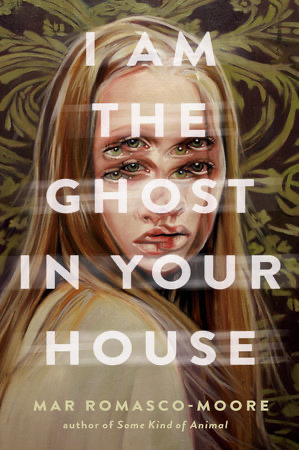
I Am the Ghost In Your House – Mar Romasco-Moore“Don’t let me into your life baby/I hurt you enough as it is/Don’t let me under your skin baby/I’m full of false promises…”

“I Think I’m In Love” – Spiritualized

Musically, I might be reverting to a pandemic-era state. Normally, that’d be a cry for help, but by some miracle, the memories I have of listening to Spiritualized during the pandemic are actually very positive. They said it couldn’t be done…but also, I listened to Ladies and Gentlemen We Are Floating in Space for the first time during the very early days of the pandemic, so that’s why the memories never soured. This was the part of the pandemic where I’d finished my highly modified AP tests and was waiting for my preordered copy of Aurora Burning to arrive in the mail. I hadn’t gotten burnt out and depressed…yet.

But I think Ladies and Gentlemen is one of those albums that no bad situation could sour. It’s just a masterpiece, through and through, a masterclass in creating and maintaining an atmosphere, of slow-burn tales that unfurl like you’re adrift in space, held to your spaceship by the thinnest tether, but never lost completely. The amount of layers in each song, whether 3 or 17 minutes, makes each one feel like an entire expanse of space that J. Spaceman has personally mapped out and condensed into sound waves. And if we’re talking about slow burns, then “I Think I’m In Love” is one of the key studies of it on Ladies and Gentlemen. Of course, the sun-blinded haze of this song comes from the monotony of heroin—something that comes up repeatedly on this album—but the way that it unfolds from this dissociative state back into a colder reality once the high wears off is one of J. Spaceman’s most memorable compositions on this album. For the first two minutes, his airy self-harmonization makes you feel like you’re waking up from a dream, still bleary-eyed, unsure of where you are. Every effect from the guitar pedals makes the song glimmer, but once the song gets curb-stomped back to Earth, the bleating saxophones and steady percussion only add to the atmosphere, as densely-packed with sound as a rainforest is with flora. And cynical as it is, the lyrics in the last 2/3rds of the song are so painfully self-effacing, but sardonically clever:

“I think I can hit the mark/Probably just aimin’/I think my name is on your lips/Probably complainin’/I think I have caught it bad/Probably contagious/I think that I’m a winner, baby/Probably Las Vegas.”

I mean…oof. And he’s got a whole four minutes full of these self-aimed barbs up his sleeve. But it really demonstrates the state he was in, musically and lyrically; the transition to drugged-out, blissful ignorance to astronomical levels of self-deprecation is just where he was at the time of the album, and honestly, with the rock bottom that he hit multiple times, it just makes me all the more grateful that we live in the timeline that he survived both of his near-death experiences, mostly due to complications with the drugs he was abusing throughout his life. And sure, we’ve got those debates about whether you need drugs to make an album as masterful as this, to which I say…dude, have you listened to Everything Was Beautiful lately? Sure, nothing can touch Ladies and Gentlemen, but it’s basically Ladies and Gentlemen with J Spaceman being clean and happy. Either way you look at it, “I Think I’m In Love” is a pitch-perfect study in Spaceman’s ability to make a song feel like an entire dimension in and of itself, a push-pull of dissociation and reality, like a slingshot firing in slow motion.

…AND A BOOK TO GO WITH IT:

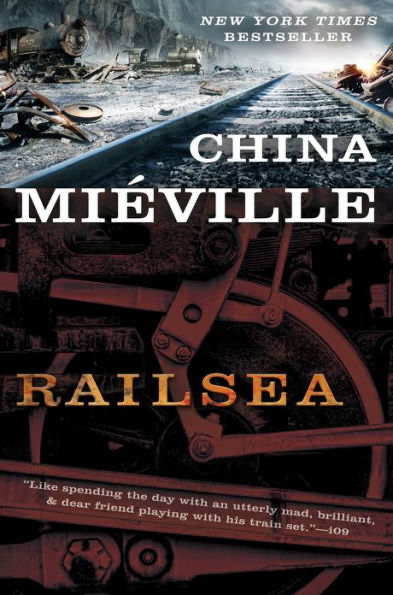
Embassytown – China Miéville“I think I’m in love/Probably just hungry/I think I’m your friend/Probably just lonely…”

“Down” – St. Vincent

Daddy’s Home is approaching its 5 year anniversary, and…I feel so old. I know that’s dramatic. But it has such a specific, comfortingly nostalgic place in my heart; I specifically remembering finishing my AP exams after slogging through the mire of online school, and walking out of the building knowing that I had a new St. Vincent album as a reward. Especially coming off of the heels of the deeply disappointing MASSEDUCTION, it was like being bathed in rays of sunlight. Nearly 5 years later, it holds up as a sonically consistent and pure fun album, despite its subject matter. It’s a sly concentration of “if I don’t laugh, I’ll cry,” especially when looking back at circumstances more messed up than you could’ve predicted. (For Clark, it was her father getting arrested and finishing out his sentence around the time of the album’s release.) It’s difficult to think of an artist who’s channeled an aesthetic so clearly—this is straight up early ’70s, and nothing but; the only pitfall is that, past this era, it almost feels wrong to hear her play tracks from this album live without the intricately crafted aesthetic and campy blonde wig. But I guess that’s what you get for committing to a bit this hard.

Daddy’s Home was anchored on a slew of excellent singles, and “Down” hasn’t lost its sheen nearly 5 years on. It’s got bite. Acerbic but righteous in its condemnation of a good-for-nothing abuser, every lyric is spit with triumphant venom. We’ve been inundated with vaguely feminist revenge stories in the past decade or so; It’s a real shame that a lot of stories about getting the upper hand on your abuser have become cliche, but I feel like it’s more the shallow idea of these revenge fantasies being labeled feminism by default that’s made a lot of mainstream stories ring hollow. Even Clark herself has said that “Down” is a revenge fantasy. However, I think the reason “Down” sets itself apart is the camp of it all—it realizes it’s playing into a cliche and a somewhat universal experience of wanting to get back at someone who’s wronged you, and Clark puts every ounce of performance into this character. Daddy’s Home is honestly a masterclass in tragic camp—it rarely takes itself entirely seriously, and that’s what gives it the edge. Plus, who could deny that guitar solo, delectable ’70s tone and all?

…AND A BOOK TO GO WITH IT:

Camp Zero – Michelle Min Sterling“Tell me who hurt you/No wait, I don’t care to/Hear an excuse why you think you can be cruel…”

Since this post consists entirely of songs, consider all of them to be today’s song.

That’s it for this week’s Sunday Songs! Have a wonderful rest of your day, and take care of yourselves!
Posted in Sunday Songs

Sunday Songs: 4/12/26

Happy Sunday, bibliophiles! I hope this week has treated you well.

This week: the ordering of these songs wasn’t deliberate, but either way, at least I’m easing you in with some bright, relaxing songs for spring before you get walloped upside the head. Apologies in advance. Also, in a twist of fate, the white guys are the DEI hires in this lineup.

Enjoy this week’s songs!

SUNDAY SONGS: 4/12/26

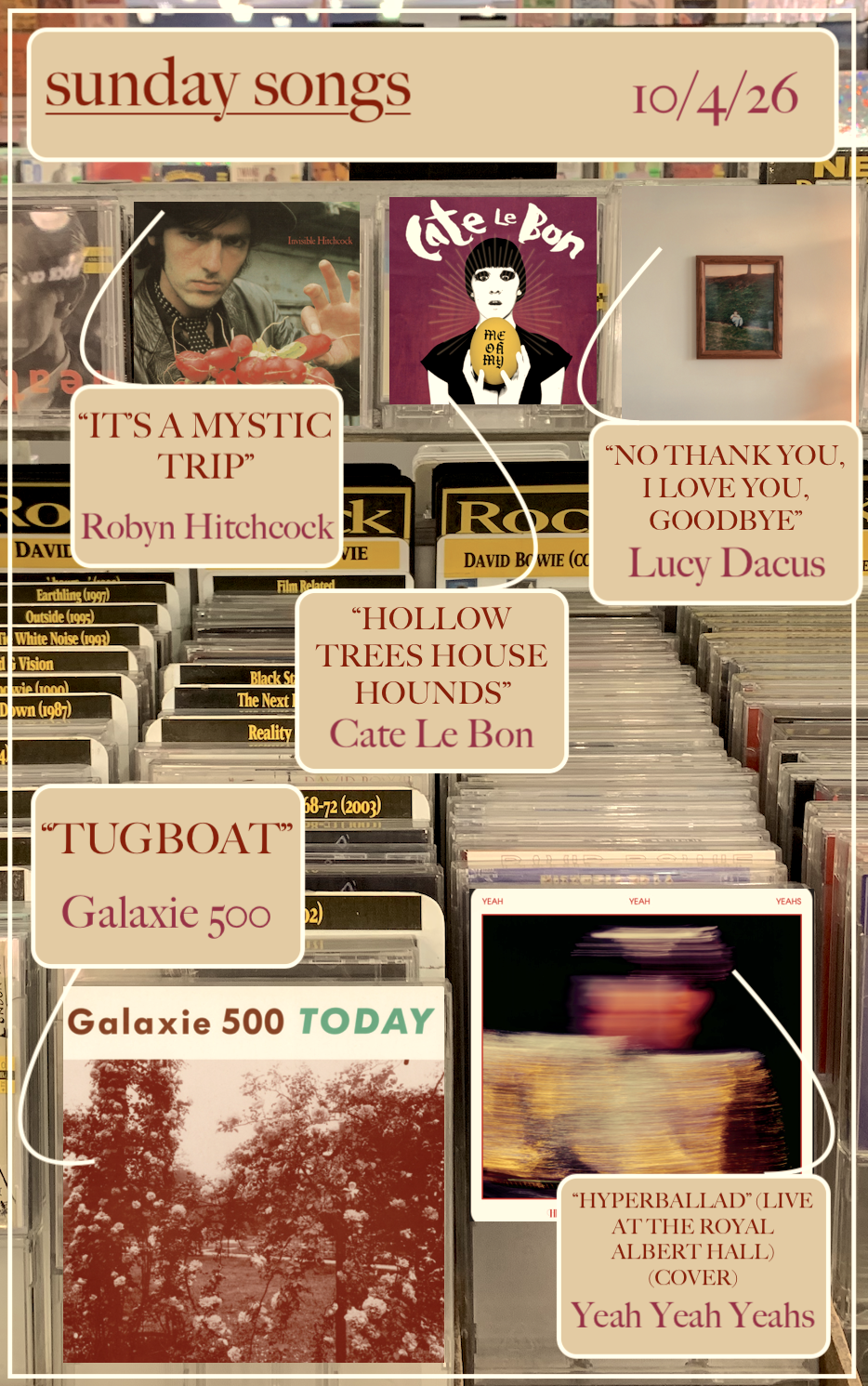
“Puddles” – Not For Radio

Another offshoot of my recent mini-foray into The Marías’s discography, Not For Radio is the solo project of their frontwoman, María Zardoya. I haven’t listened to enough of The Marías to definitively say what the key differences are—or if there are any prominent differences at all. I’m sure there are. But on the surface, the sound of Melt (no, not the Peter Gabriel one) seems ever so slightly tweaked. Setting aside the gothy, densely forested album cover, what stands out to me about “Puddles” is that the watery sound of The Marías has come up for air. “Puddles” is still woozy dream pop through and through, but it has a sharper, drier sound than most of María Zardoya’s other project. I don’t mean drier in terms of content—it’s as compelling as any Marías track as I’ve heard. I mean that more in the fact that it feels more terrestrial and leafy, but in less out-there terms, I think it veers more into more guitar-based dream pop, with sounds that are less drenched in reverb and more grounded. “Puddles” is an apt title for this track in that respect—still watery, but corralled by verdant dirt and sprouts.

Despite that, “Puddles” is as woozy and hypnotic as any of Zardoya’s other projects. Her signature, whispery vocal delivery feels like being sung to sleep, uttering secret, seductive promises as you drift off into dreamland. The Pacific Northwest-looking music video feels just right for this track, with gentle notes that peek out from behind curled ferns and moss-covered logs under cover of shadows. Once it grows louder and the sound intensifies into a barely-controlled chaos, I can almost feel the chord progression become Radiohead-esque (especially with the slightly sinister, electronic moans that appear towards the end), but the sensual, hopeful nature of this track prevents it from fully going into irrevocably depressed Thom Yorke territory. But honestly, as much of a Radiohead-head as I am, it doesn’t need to be Radiohead—it just needs to be María Zardoya.

…AND A BOOK TO GO WITH IT:

Fate’s Bane – C.L. Clark“Puddles and puddles, I picture us there/Walking in circles and talking in stares/I’m seeing double, I’m already scared/Scared of what losing feels after we dare…”

“Sunshine Soul” – The Gerbils

God, I love Elephant 6. They were practically creating whole swarms of nasally-voiced dudes who liked ’60s psychedelic rock in a lab and setting them loose, and we’re all the better for it as a society. I’m sure there are some weak links among the ranks, but I’d be hard-pressed to think of any off the top of my head.

I haven’t explored The Gerbils as much as some of Elephant 6’s more prominent bands (see: The Apples in Stereo, The Olivia Tremor Control, etc.), but just from this one glimpse, I can tell that the spirit of those bands rubbed off on them. “Sunshine Soul” is a fuzzy, crunchy package of sun-bleached jangle pop, indebted to the ’60s but that couldn’t have come out of any other era but the ’90s. The production is grainy and muddled, but like a lot of its Elephant 6 compatriots, it only adds to the scrappy, garage-rock origins of the label. Even with the unexpected references to sewage and brains and arachnids in the second verse, nothing could dim the sparkle of this track. It’s nothing short of a quirky, homegrown jangle pop song, and a perfect song to celebrate the sun finally peeking out.

…AND A BOOK TO GO WITH IT:

Strange Bedfellows – Ariel Slamet Ries“Your life, it’s only a record/Turning ’round inside my brain/My life is only a needle/Scratching grooves into your vein…”

“The Bug” – Crumb

I feel like Crumb could transform any human emotion—positive, negative, or neutral—into a soothing, calm song. They’re not exactly endearing me to cockroaches in that video, that’s for sure. (Here’s hoping that the gecko at the end ate it?) But for a song that seems to be about anxiety—or any kind of notion, memory, or thought that never leaves your head—”The Bug” never ceases to be laidback and gently glimmering. All of their songs are hypnotic to me on some level, but the electronic drumbeat that begins at about 3:08 puts me under a spell every time. Almost two years after AMAMA was released, “The Bug,” as with most of the tracks on the album, remains a perfect, condensed terrarium of Crumb’s newest sound. Their songs are tiny ecosystems to me, with all kinds of delightful critters crawling about the moss…maybe some bugs, even?

…AND A BOOK TO GO WITH IT:

Taproot – Keezy Young“We caught a fly/Reminds me of when I was some tiny child/Runs behind, but I can never see their eyes/Lost track of time…”

“Emily” – Joanna Newsom

Since the last time I talked about Joanna Newsom, my cousin ended up talking me into listening to Ys in full. It’s been at least two weeks since I’ve listened to it; honestly, I’m still chewing on parts of it, but it’s a lot more hard-hitting than I thought it’d be. Sure, there are parts that I probably just won’t fully get on board with (parts of it definitely get a bit too into “Dibbles the Dormouse Has Lost His Favorite Handkerchief [Movements I-IV]” territory for me), but to be fair, Ys is honestly quite a bit different than what I listen to on a daily basis. That could be why “Only Skin” was such a shock to my system. Listening to “Only Skin” kind of ruined it for me, since that’s still the best song on the album by a long shot, but there isn’t a single song that feels like an afterthought here. Even if I don’t mesh with every facet of Ys, I could just tell from the first handful of chords how much of a labor of love this album was. Not a moment on this album suggests that Joanna Newsom was ever messing around. Through all of its bardlike, folksy, and esoteric seasons, I really can’t say that there’s a lot that compares to this album. Kate Bush comes to mind, if in spirit more than instrumentals—I think I just love a weird woman, knowing that it took a ton of glass ceilings to break through the music industry as it is, both for Bush, Newsom, and so many others.

“Emily” immediately clues you into the fact that Newsom isn’t easing you into the record. You kinda know what you’re into the minute she opens the opening track with this: “The meadowlark and the chim-choo-ree and the sparrow/Set to the sky in a flying spree, for the sport of the pharaoh.” If you’re not down with that, you have about 30 seconds to jump ship, because she doesn’t let up after that. At 12 minutes long, this song is the second-longest on the album, and it’s emblematic of a lot of the atmosphere on it: intricate harp (and some jaw-harp), sprawling orchestral composition, and esoteric lyrics that feel like getting punched in the gut with an oven mitt embroidered with flowers and moths. (Another bit to add to my hypothetical list of song pronunciations that I love: the way that she sings “meteoroid” is so full of wide-eyed wonder.) I think what makes “Emily” hit so hard for me is the subject matter, somewhat obscured as it is; the Emily in question is Newsom’s older sister, an astrophysicist who imparted the wonders of the universe onto her more creatively-inclined sister at a young age. Some of the lyrics feel like twisting the knife in the gut, since I have a similar relationship with my brother—sure, it’s not a one-to-one ratio of science and humanities, since he’s obviously a writer and a generally very creative person himself, and I wanted to be a scientist as a kid—but the song’s scenes of following her sister through the woods remind me fondly of my own childhood, turning our backyard into some Darwinian expedition before we’d go home and make up creatures in our notebooks. And thankfully, like the trajectory of “Emily,” my brother and I have managed to maintain that closeness into adulthood. The melody rocks and quakes, similar to “Only Skin”‘s feeling of a boat being tossed across a stormy sea, as Newsom recounts what they have weathered together as sisters. What solidifies their harmony is a repeated chorus, a promise made to her sister, a unity of her love of science and Newsom’s love of music:

“Though all I knew of the rot universe were those Pleaides/Loosed in December/I promise you I’d set them to verse, so I’d always remember/That the meteorite is the source of the light/And the meteor’s just what we see/And the meteoroid is a stone that’s devoid of the fire/That propelled it to thee.”

Ow. Right in the fondly-remembered sibling relationships. Anyways…love you, Max.

…AND A BOOK TO GO WITH IT:

The Lost Story – Meg Shaffer“The whole world stopped to hear you hollering/You looked and saw now what was happening/The lines are fading in my kingdom…”

“I Bet On Losing Dogs” – Mitski

[coughing, covered in sweat, in the fetal position on the ground]

FUUUUUUUUUUUUUUUUUUUUUUU—

…AND A BOOK TO GO WITH IT:

The Seep – Chana Porter“I bet on losing dogs/I know they’re losing and I pay for my place/By the ring/Where I’ll be looking in their eyes when they’re down…”

Since this post consists entirely of songs, consider all of them to be today’s song.

That’s it for this week’s Sunday Songs! Have a wonderful rest of your day, and take care of yourselves!
Posted in Sunday Songs

Sunday Songs: 4/5/26

Happy Sunday, bibliophiles, and Happy Easter to those celebrating! 🐰

Since I took a break last week to finish up my honors thesis, here’s my graphic and the accompanying songs from that week:

SUNDAY SONGS (3/29/26):

This week: living vicariously through a digital album because SOMEBODY won’t tour in my area, making something out of nothing, and the inevitability of mildly cursed Jeff Tweedy music videos.

Enjoy this week’s songs!

SUNDAY SONGS: 4/5/26

“Crash Landing” – mary in the junkyard

THE ALBUM! THE ALBUM IS FINALLY COMING!

After about a year and a half of following their excellent singles and EP, mary in the junkyard is finally putting out their debut album! Role Model Hermit comes out this July, and I couldn’t be more excited. With the last handful of singles, I had some fears that they’d become a one-trick pony, but I’m so glad that a) they’re deviating from the sound that they’d established, and b) that the final product is this stunningly good.

“Crash Landing” gives their sound more polish, but takes away none of their corner-dwelling, cobweb-covered sensibilities. The harmonium gives me goosebumps every time, but after the instrument fades away, that haunting power never fades. When the harmonium chords transition into the soaring guitar, it really makes the choice of the music video make sense—everything in this song sounds like frigid waves crashing against white chalk cliffs. Now that Clari Freeman-Taylor sounds clearer, the subtle power of her voice comes through even more, through lyrics surrounding falling in love with a deeply guarded person: “And I can take your mask off/But only in the dark/And you won’t takе your shoes off/In case you have to run, run, run.” The repetition of “you open up like a coconut” sticks out, mainly from the coconut bit—that word doesn’t fit as neatly with the rest of them—but as with all of their lyrics, mary in the junkyard frame it as just the right kind of flotsam and jetsam to decorate this track.

…AND A BOOK TO GO WITH IT:

Sisters in the Wind – Angeline Boulley“And I can take your mask off/But only in the dark/And you won’t takе your shoes off/In case you have to run…”

“Up The Hill Backwards” – David Bowie

Scary Monsters and Super Creeps has a special place in my heart. All the way back in middle school, at the height of my David Bowie discovery phase, it was one of the first albums that I listened to in full, after the virtually unbeatable Hunky Dory/Ziggy Stardust/Aladdin Sane glam trifecta. But I hold it up with nearly the same nostalgia. I feel like most of it tends to get lost amongst other Bowie albums, save for its most popular singles (“Ashes to Ashes” and “Fashion”). Both of them are icons in their own right, but I’d honestly argue that Scary Monsters, all the way through, is nearly as strong as the Berlin Trilogy, if not equally strong. It’s in a strange limbo in Bowie’s discography between the end of Berlin and the beginning of his plainer, more mainstream pop era of the ’80s, and the space between that juncture is what makes Scary Monsters so exciting to me: all the polish of pop, but with the same unusual, and often dystopian undertones of an album like Low or Lodger. Hell, he’s using what sounds to be the same drum machine from “Breaking Glass” on “Up the Hill Backwards.” It’s basically the fourth and forgotten chipmunk of the Berlin Trilogy that got unfairly swept aside.

“Ashes to Ashes” remains one of my favorite David Bowie tracks of all time, and that, along with the more commercial singles from the album, tends to overshadow the other gems on this album, everything from a Tom Verlaine cover to a dystopian tale more grounded and grittier than the contents of Diamond Dogs. But “Up The Hill Backwards” is an immediate standout to me. It feels like an alien organism wearing the skin of a typical pop song as a coat: everything seems aligned perfectly for radio-friendliness, but then it reveals just how delightfully askew it is. Most of that is due to the unusual 7/4 time signature, giving it that lack of resolution, but it’s full of chimes and squeals and chimney-like puffs that make it into a well-oiled machine like no other. With the ripping guitar riffs of Robert Fripp, you can’t go wrong—every off-kilter cog in “Up The Hill Backwards” is working in precise harmony. And it’s all strangely upbeat for a song about the existential void that comes in realizing the slowness of progress; the first line references a line in Dada: Art and Anti-Art which itself is referencing the fall of Imperial Germany (“The vacuum created by the arrival of freedom/And the possibilities it seems to offer”), but it could represent the death of one system and the slow birth of another. It’s contextualized further knowing that Scary Monsters was written in wake of his divorce with Angie Bowie, so that “vacuum created by freedom” can be systemic or personal. Either way, “Up The Hill Backwards” pledges to trudge onwards in the face of collapse, no matter how uphill the journey is.

…AND A BOOK TO GO WITH IT:

Five Ways to Forgiveness – Ursula K. LeGuin“The vacuum created by the arrival of freedom/And the possibilities it seems to offer/It’s got nothing to do with you, if one can grasp it…”

“Gwendolyn” – Jeff Tweedy

Jeff Tweedy’s always been one for mildly cursed music videos (see: “I Know What It’s Like”), and this video certainly translated it into the COVID-19 age, with the noses and mouths of fellow musicians (and a handful of actors) disturbingly green-screened over his masked face. If you’re hankering to see what Jeff Tweedy’s face would look like if it was mashed up with Robyn Hitchcock, Fred Armisen, Jay Som, Seth Meyers, Jon Hamm, or Nick Offerman (and more)…now’s your chance, I guess?

A lot of Jeff Tweedy’s solo work before Twilight Override tends to be more on the folky and borderline simplistic side (though the two are mutually exclusive, that’s not a dig at the entirety of folk music). It hasn’t hooked me nearly as much as his work with Wilco, but what you have to understand is that even if you’re getting something less than Wilco-quality, it’s still a great song. “Gwendolyn” is a more straightforward rocker, but you still get your money’s worth of most of what I like about Jeff Tweedy; there’s punches of truly inspired lyrics (“The sun coming up/Like a piece of toast”) and squealing, joyous guitar riffs aplenty. The truth is, Tweedy’s a cut above the rest, and even his more traditionally rock songs are as such—”Gwendolyn” is pure joy.

…AND A BOOK TO GO WITH IT:

Lady’s Knight – Amie Kaufman & Meagan Spoonerokay, sue me…yes, I did put this in just because we’ve got two Gwens here.

“The Strangers” (Live) – St. Vincent & Jules Buckley

Even though I’ve been cruelly deprived of an orchestral tour date near me, at least I have LIVE IN LONDON! , St. Vincent’s digital-exclusive live album, where she’s accompanied by Jules Buckley’s 60-piece (!!) orchestra. I’ve loved seeing these new takes on her classic songs, especially since she’s been dredging up some rarely-played deep cuts out of the vault to interpret live (most of the shows have been opened with “We Put A Pearl In the Ground,” an instrumental piece from Marry Me.) “The Strangers” isn’t a deep cut by any capacity, but nonetheless, I think some of the album’s best interpretations have been of tracks from Actor; the whole album leans into drama and theater, so it’s no surprise that it translates well with orchestral backing. “The Strangers” is given the suspenseful, eerie grandeur of the original track, with the backing instrumentation easily taken up by the string and woodwind sections. It’s a grand, cinematic interpretation of an already grand and cinematic track, and with Annie Clark’s elevated shredding, it becomes something truly epic and sweeping, decadently consuming everything in its path.

…AND A BOOK TO GO WITH IT:

Red City – Marie Lu“Lover, I don’t play to win/But for the thrill, until I’m spent…”

“Moroccan Peoples Revolutionary Bowls Club” – Blur

My lukewarm Blur take du jour is that Graham Coxon may be the most talented member of the band, either on par or above Damon Albarn, as much as I love him. So the fact that I love Think Tank so much comes as a surprise even to myself. Blur without Coxon, in concept, isn’t even Blur! Right?

Sort of.

Coxon left the band temporarily due to creative differences, and during Think Tank, he only appears on one track, playing guitar for “Battery In Your Leg.” But what redeems the un-Grahamness of the album is the sheer inventiveness of it. You take away your lead guitarist, responsible for creating the band’s most iconic riffs, and the rest of the band members went “Huh. Let’s make sounds that sound like everything but a guitar and see what happens.” For Blur, this feels like a continuation of the experimental mindset that peaked with13, but in a new, more worldly sort of vein. In a way, it’s a response to loss, musically more than anything, though occasionally lyrically (“Sweet Song” was written about Coxon’s departure): when an important person departs from your life (temporarily, at least), what do you do with what’s left?

“Moroccan Peoples Revolutionary Bowl Club” doesn’t tackle that subject matter, but it is a spectacular showcase of what happened when a chunk was untimely ripped from the fabric of the band. It’s one of the tracks on the album that easily could’ve come from Gorillaz’s first album, with its commentary on greed and the destruction of the environment. Alex James’s bass gets to shine on this track, with his smooth, funky riffs becoming the centerpiece amidst humming autotune and guitars. However you feel about Blur sans Graham, it stands as a quirky album produced by a band at a crossroads—it’s strikingly unusual in their catalogue.

…AND A BOOK TO GO WITH IT:

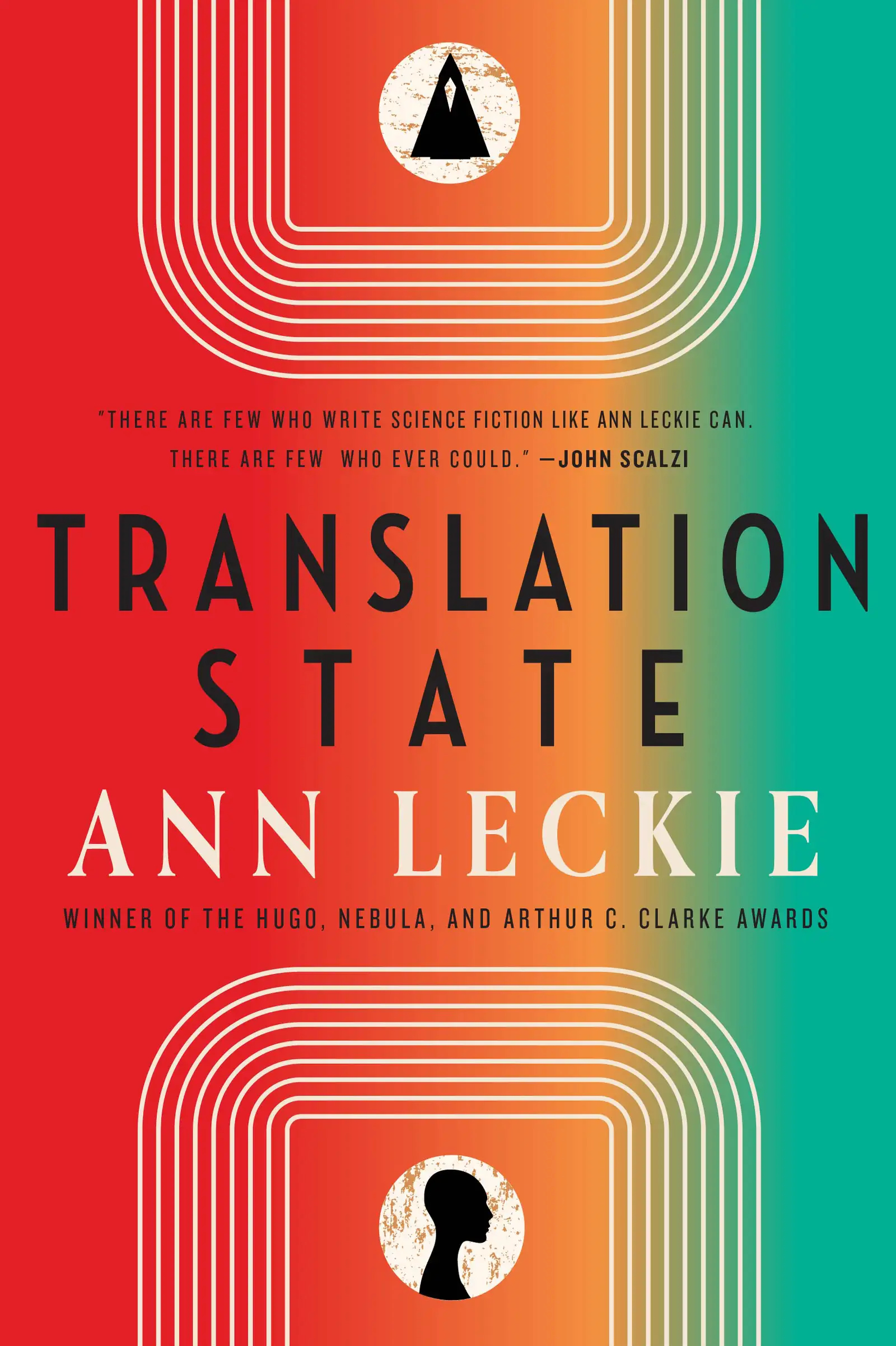
Automatic Noodle – Annalee Newitzsimilar in spirit to the feel of Think Tank: full of strange machinery, and mostly upbeat in spite of being smack dab in the middle of a dystopia.

Since this post consists entirely of songs, consider all of them to be today’s song.

That’s it for this week’s songs! Have a wonderful rest of your day, and take care of yourselves!

Posted in Sunday Songs

Sunday Songs: 3/22/26

Happy Sunday, bibliophiles! I hope this week has treated you well.

This week: I’m going off about a) how it feels to be a woman, and b) late-career Gorillaz, but really, what’s new?

Enjoy this week’s songs!

SUNDAY SONGS: 3/22/26

“I’m a Lady” (feat. Trouble Andrew) – Santigold

“I’m a Lady” begins at 8:55.

God. Santigold, man. I don’t know if there’s ever been a song that accurately distills the experience of being a woman down into less than four minutes (or if there will ever be), but this sure comes close. I’m glad I found it during Women’s History Month, because if there was ever a torch to bear, especially in these beyond-troubling times, it’s this one. I’d be hard-pressed to find a Santigold song that isn’t upbeat—that’s just her style—but the bright backdrop of this song juxtaposed with the repetition of “I know someday they’ll make a martyr out of me” in the first verse gives me goosebumps every time. That line, that knowledge in every woman’s bones that there could always be the possibility of infliction of violence based on our gender. It’s made even more potent by having a Black woman sing it, with the dual oppressions of gender and racial violence. Of course, the martyring might not necessarily be literal, but even without that context, there’s still the undercurrent of being made an example: step out of line from the heteropatriarchal standards of womanhood, and you’ll be kicked to the curb.

And yet, “I’m a Lady” continues to be upbeat. In spite of it all, “I’m a Lady” continues at the pace of a sunlit skip in the park. It continues with the conviction that despite the horrors that come along with womanhood, that being proud of your identity is the best way to be. And it’s true—when the world is bent on degrading you and your ilk, very little is more powerful than declaring that you love the parts of yourself that they despise. Being in women and gender studies, I’ve been exposed to a lot of theory about how womanhood can be boiled down to suffering, and that negativity is what defines womanhood, to which I say…what? There’s no doubt that it’s a part of womanhood, but claiming that it’s the whole would be like slapping a hand over your left eye and claiming that the limited view that your right eye has is all there is. Womanhood is fear and joy, heartache and pride. It’s especially relevant for Santigold; after this album, she’s spent years in the music industry trying to push against people who want to prevent her from being herself…and yet here she stands, undeniably herself, still making unique music and spreading joy. She embodies the last half of the chorus perfectly: “I know I spend magic reel it out/Try to hold a light to me/I’m a lady.” Every limp, hollow girlboss anthem of the past 10 years needs to step aside, because this destroys any corporately packaged notion of womanhood. Nobody balances the pain and joy quite like Santigold, and all in an indie pop package—not to fulfill some kind of quota, but to express what so many women of all walks of life have felt all our lives.

…AND A BOOK TO GO WITH IT:

Shit Cassandra Saw – Gwen E. Kirby“I got some money I was saving/Got some hearts that I’ll be breakin/Know someday they’ll make a martyr out of me/I know someday they’ll make a martyr out of me…”

“Delirium” (feat. Mark E. Smith) – Gorillaz

So…The Mountain. It’s a step up from Cracker Island, but that’s a low bar. At best, it has some of Gorillaz’s most introspective and meditatively poignant grooves of the 2020’s, and at worst, it just becomes another late-career Gorillaz album bloated with so many collaborators that you could easily forget that Damon Albarn is even in the band. Yet given the context behind it—Albarn and Jamie Hewlett’s formative trip to India after the deaths of both their fathers in rapid succession—makes me respect it more. You can tell that they respect the grit in the industry of art in an age where convenience has overtaken the desire to put some blood, sweat and tears into making good art that hasn’t been shit out by ChatGPT. Even if the album itself isn’t my favorite, I have utmost respect for what Gorillaz has become: an international, intergenerational bastion of hope, justice, and worldly party music. I maintain that Gorillaz has and always will be The People’s Band.

Death looms over The Mountain, and that’s due in no small part to Albarn sifting through the archives of unreleased demos for this album; three of the collaborators have previously worked on Gorillaz albums, but passed away before this album’s release—Dennis Hopper (Demon Days), Tony Allen (Song Machine, as well as other Damon Albarn projects), and Mark E. Smith (Plastic Beach). Smith, who died in 2018, features heavily on “Delirium,” one of the most distinctive tracks on this album. Like on his Plastic Beach collaboration (“Glitter Freeze”), he looms as a kind of town crier of the end times, speak-shouting out the song’s chorus amidst some of the most infectious grooves on the entirety of The Mountain. His rattling cackle can’t compete with Maseo’s iconic laugh from “Feel Good Inc.,” but it’s a great entry in the growing collection of Gorillaz Laughs—and it always gets me so amped up to hear the thrumming bass of the chorus. If nothing else, “Delirium” is proof that no matter how their sound changes, Gorillaz will always be the prime purveyors of some of the most existential party songs out there.

BONUS: as a personal crusade against convenience usurping hard work in art (in life and in general), Jamie Hewlett made an accompanying animation for The Mountain, hand-drawn with cel animation. Even if you’re not familiar with the band, I’d highly recommend giving it a watch—it’s a gorgeous work of classic 2D (no pun intended) animation.

…AND A BOOK TO GO WITH IT:

The Genesis of Misery – Neon Yang“There is panic on the mountain/Coz a new God’s come/He doesn’t recognise himself/Or what he’s done/But if you don’t embrace him then it’s time to run…”

“Let My Love Open the Door” – Pete Townshend

I’ve retained a few qualities from being five years old: craving a good cheese pizza, liking aquariums and zoos, appreciating a well-placed pink accessory…and really liking this song. There was a strong phase when I was 5 or 6 where “Let My Love Open the Door” was one of my favorite songs, which really isn’t doing wonders for beating the insufferable hipster allegations, but who can deny how intricately crafted of a pop song this is? It’s not just catchy—it really never lets you go until it’s done with you. That looping ouroboros of a synth intro and that first crack of the drums is a fuse being lit, and the glossy, ’80s firecracker that resulted is timeless. It’s no wonder that if you throw a stone at any given selection of rom com movies, you’ll probably hit one that’s featured this song—it’s not without reason. And listen—is it a bold move to give yourself a whole halo on an album cover? Absolutely. It’s…a choice. But I’d be lying if I said that at least an inch of it wasn’t deserved, at least for this song, because it never fails to fill my chest with tingling, joyous nostalgia every time.

…AND A BOOK TO GO WITH IT:

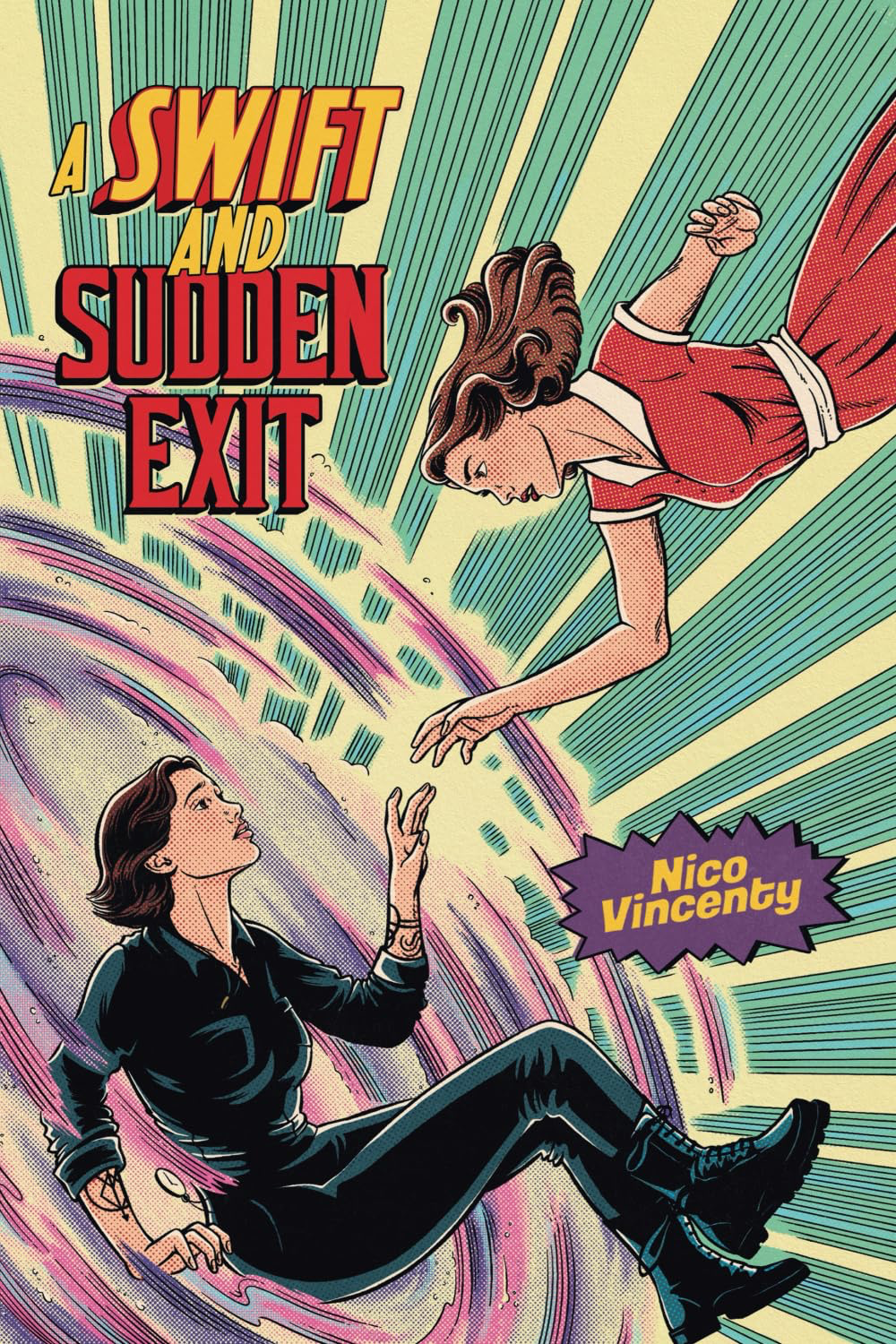
A Swift and Sudden Exit – Nico Vicenty“I have the only key to your heart/I can stop you fallin’ apart/Try today, you’ll find this way/Come on and give me a chance to say
Let my love open the door, it’s all I’m livin’ for…”

“Diamond Light, pt. 1” – Tweedy

It’s been 12 years, Tweedy, the people need to know…where the hell is “Diamond Light, pt. 2”?

I’m saying that because somehow, it took me until my dad sent me this days before we saw Jeff Tweedy for me to recognize this song, and yet it’s easily the best Tweedy song I’ve heard. “Diamond Light, pt. 1” is one of those songs that I can’t imagine cutting any of the runtime, because it takes its time with layering in every possible ounce of creativity, but gingerly, like gently folding dry ingredients into cake batter so as not to overwhelm the integrity of the whole. In my mind, this is a sister or at least a cousin to Death Cab for Cutie’s “I Will Possess Your Heart,” another song that soaks up every note in order to make the buildup pay off. This track spreads every ounce of Jeff Tweedy’s most potently surreal lyricism into so few lines; “Rolling rivers of diamond light/Dash and heave/Each ache to the sky” is an image so nebulous, yet you can only see it in blurry strokes, but feel it, right in the ribs, in the precise rhythm of how the words “dash” and “heave” fit together like bone into muscle.

And when those lyrics haven’t taken center stage, “Diamond Light, pt. 1” boasts a breakdown reminiscent of A Ghost is Born, scarcely reined-in chaos that folds in on itself, expanding and shrinking, all within the bounds of Spencer Tweedy’s hypnotic drumming. The sounds in the background of the last minute or so feel like hearing a spaceship’s engines fizzling out from miles away, dissipating into echoing, radar-like pulses—that, for sure, feels like foreshadowing for “Infinite Surprise” nine years later. Before or after Tweedy, it’s clear that the potential for this song was always incubating.

…AND A BOOK TO GO WITH IT:

The Stars Undying – Emery Robin“Why don’t we pick one script/And read it/Where the milk has dried/On the throne…”

“Storms” – Fleetwood Mac

I’m not even that big of a Fleetwood Mac fan, but I can’t deny how hard this song hits me every time I listen to it. (Shoutout to Jeff Tweedy & co. for playing this before their show last week!) And yes, I’ve listened to and love “Landslide,” I’m not some kind of soulless ghoul, but something about “Storms” strikes a frequency in me that I haven’t felt with any of their other songs. Something about that melody—which, on an unrelated note, reminds me a ton of Harmonia & Eno ’76’s “Welcome”—is so innately captivating. Stevie Nicks has an undeniably magnetic vocal presence, but something about her harmonies with Christine McVie massages the folds of my brain so perfectly, and the wavers in McVie’s voice do so much for the pure devastation this track lays onto you. You know me. I’ll take the bait for any sad girl song, but the way Nicks mines such an innate, visceral sorrow into such a somber song is undeniably unique. For so many, she was clearly the blueprint. “Storms” made me really get it.

…AND A BOOK TO GO WITH IT:

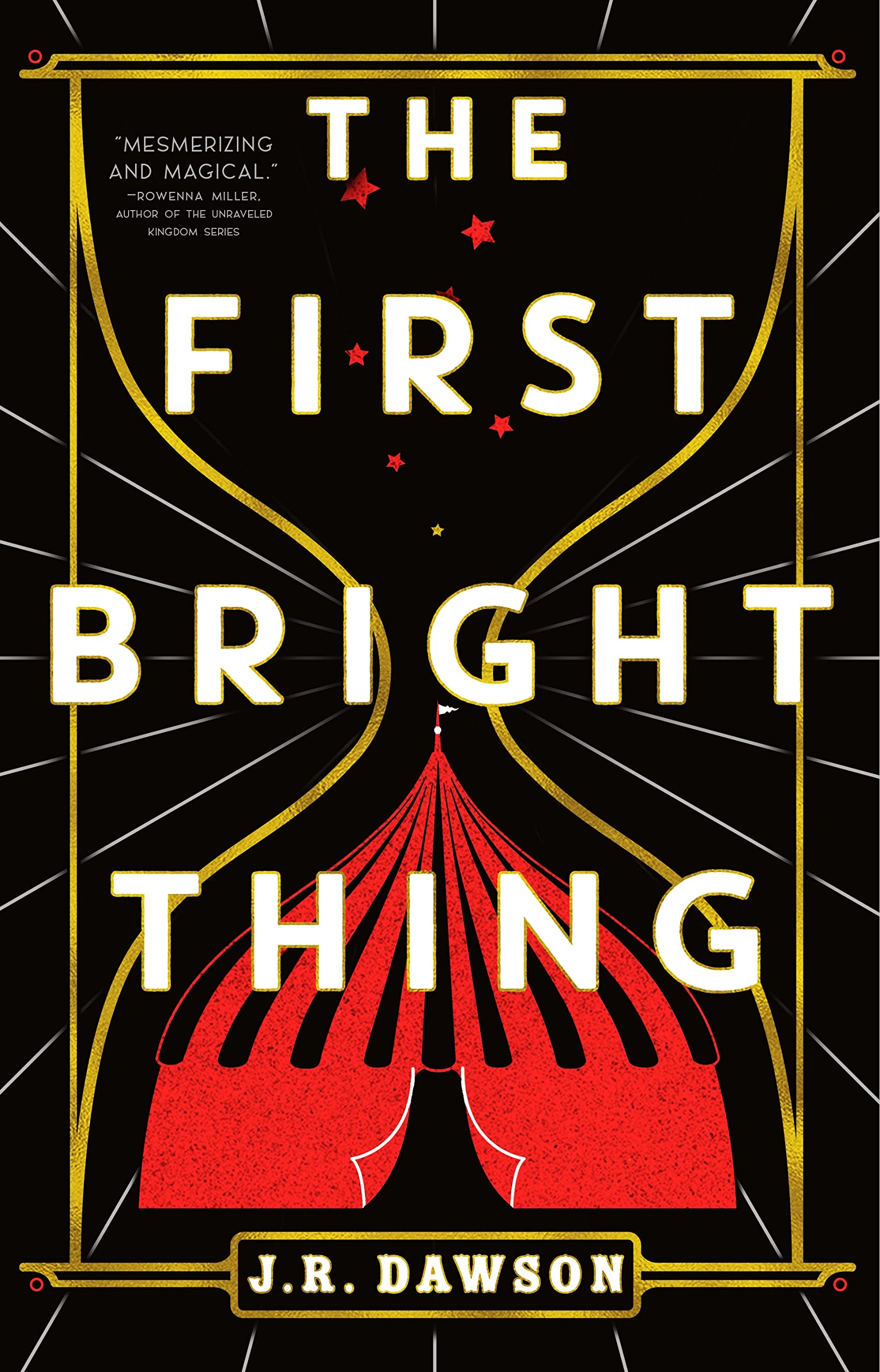
The First Bright Thing – J.R. Dawson“Every hour of fear I spend/My body tries to cry/Living through each empty night/A deadly call inside…”

Since this post consists entirely of songs, consider all of them to be today’s song.

That’s it for this week’s songs! Have a wonderful rest of your day, and take care of yourselves!

Posted in Sunday Songs

Sunday Songs: 3/15/26

Happy Sunday, bibliophiles!

This week: inside you, there are three wolves: one is only skin, one is only in my dreams, and the other is only you…

Enjoy this week’s songs!

SUNDAY SONGS: 3/15/26

“Only Skin” – Joanna Newsom

This song’s a way-homer, but it’s a hell of a long way home. It’s difficult to pitch this song, because yeah, how do you convince somebody to willingly listen to a nearly 17-minute long song whose main instrument is the harp with a decidedly squeaky-voiced vocalist? I doubt it’d convince you further if I said that it took me at least two listens to really get it. But when I did, I got it. I don’t think I’ve ever been captivated by a song this long, or this proggy. I say “prog” because there’s an element of this that its detractors would probably dismiss as self-indulgent, artsy-fartsy bullshit, and that its defenders would call epic. Prog of any subgenre is hit or miss for me, but I think what’s valuable about it is that it emphasizes art for art’s sake—it’s not afraid to get sprawling in service of creating music that defies mainstream traditions. I doubt that there was anything else like the harp-dominated, esoteric folk of Joanna Newsom released in 2005. Most of the imagery surrounding it feels medieval, and there’s a certain bardlike quality to how Newsom presents herself (especially on the album cover of Ys). But to me, it strikes me as strangely Appalachian, more rooted in the pioneer times of the U.S. in the 19th century than anything—particularly in this song, it’s the more folky instrumentation, the mentions of somewhat modern war imagery (even if it’s in an in-song dream sequence), and, somewhat irrelevantly, the way that Newsom says “swimmin’ hole.”

But really, “Only Skin” has genuinely made me go a bit bananas. Admittedly, I was exposed to this song through separate TikTok trends, but frankly, it’s wild that a song as weird as this got any traction. But this song is downright captivating. At best, I feel like I’m picking it apart in the same way that I would some esoteric classic in my English classes; other times, I feel like the voice in my head is about to bust a vein, announcing different elements of the track like a WWE announcer: “AND THERE’S ANOTHER TEMPO CHANGE! FELLAS, WE’VE GOT ANOTHER TEMPO CHANGE—AND HERE COMES BILL CALLAHAN WITH THE STEEL CHAIR!” (And yeah, that was wild to find out too—he has a brief but prominent feature about 13 minutes into the song.) Newsom has this distinct voice that squeaks so much in the first few seconds of the song that I genuinely though it was studio feedback, but I love that nontraditional quality of it—she peeps and howls and mewls, defying all notions of how the feminine voice is supposed to sound. She has this kind of sprite-like quality about her that makes her already stunning lyricism even more like a fable or a fairytale—there’s whole handfuls of lyrics that stop me in my tracks: “Back on the patio/watching the bats bring night in,” “The retreat of their hairless and blind cavalry,” “And I watched as the water was kneading so neatly/Gone treacly” are just a handful of the gems that Newsom has scattered through the rich earth of this track. I could probably go on for at least two paragraphs longer just picking apart all of the poetic devices scattered throughout, but this part of the post is already getting unwieldily long. But the real emotional oomph is the juxtaposition with the more devastatingly bare lines, things like the waver in her voice when she repeats the motif of “That’s an awfully real gun.” It all has a very Kate Bush quality about it, both in the vocal and lyrical styles—as well as her stories of women.

She breathes wonder and fear and devotion and snapped rage into every line—it’s so dense that I can only scrabble for certain meanings. As far as I can tell, Newsom is the kind of enigmatic artist who ostensibly does write true stories, but obfuscates them under at least seven layers of fiction so that they’re all but impenetrable. There’s hints of personal relationship turmoil, something that her ardent fans have been desperately trying to puzzle out in the 20 years since this album was released. In my mind, I can see some kind of 19th-century narrative of a desperate woman married to a man wracked by trauma. She breaks her back trying to provide for him, and he only responds with demanding more and more still of her, without any thought to what she’s going through. I don’t blame said TikTok trends for choosing the part that they did: the part beginning at 13:02 (yeah, sorry) is the most striking part of the song, the climax where the woman reaches her breaking point. You’ve heard me ramble about the watering-down of female rage…but if you want real, desperate, breaking-point female rage? Step right up. Holy shit. This part is the musical equivalent of the straw that broke the camel’s back, the final response of the protagonist as she confronts him about how much she sacrificed just to keep him happy: “All my bones, they are gone, gone, gone/Take my bones, I don’t need none.” I get goosebumps every time I listen to it. This is why it’s worth all 16 minutes and 53 seconds—even if you don’t appreciate the highs and lows of the journey itself, the payoff from that buildup is worth every note. Like Oingo Boingo’s “Change,” it goes through movements, but all in service of a staggeringly intricate musical narrative.

I think those reminders of Oingo Boingo and Kate Bush, at least in terms of their mindset if not in their musical style, is what makes “Only Skin” such a spectacular song to me. Art for art’s sake implies a kind of self-indulgent quality, but there’s nothing much more admirable to me than putting out art that’s nothing but the vision in your brain, removed from all sense of trend-chasing or conventionality. If not for the musical freaks of the world, we wouldn’t have art as singularly unique as this. Art needs not appeal to everybody—just you, in the end. And if it finds an anchor in somebody else, then all the better. But it’s got to be for you.

…AND A BOOK TO GO WITH IT:

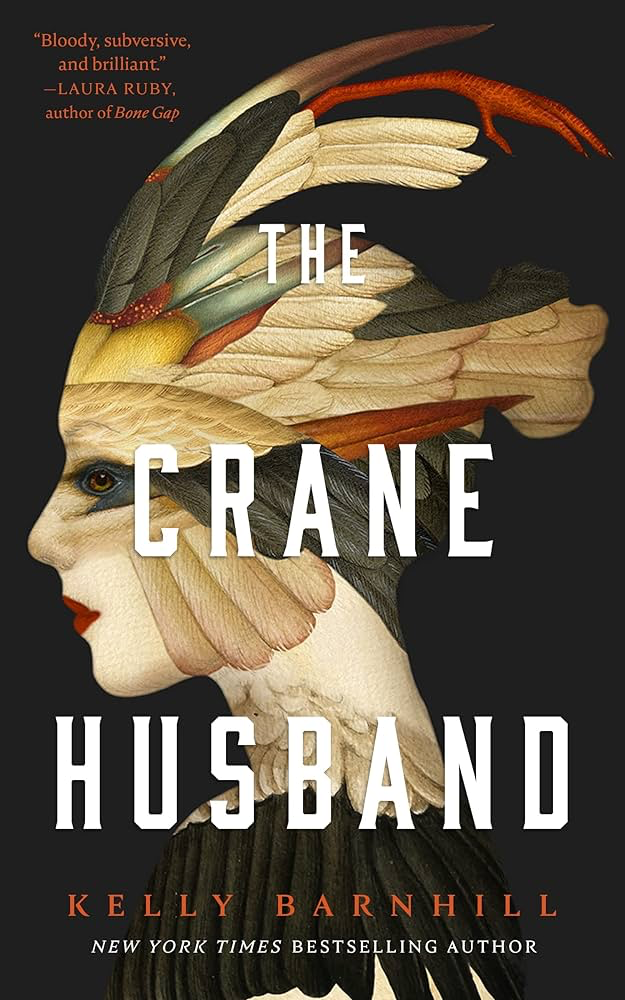
The Crane Husband – Kelly Barnhill“All my bones, they are gone, gone, gone/Take my bones, I don’t need none/Cold, cold, cupboard, lord, nothing to chew on/Suck all day on a cherry stone…”

“Only In My Dreams” – The Marías

What I appreciate about The Marías’s Tiny Desk Concert was that María Zardoya did what I love with a Tiny Desk Concert from an act that’s been around long enough to accumulate a larger discography; she called the setlist a “tasting menu” of their career, with selections spanning from their newest album to their earliest releases. It gave me the perfect jumping-off points for getting into their music. “Only In My Dreams” is off of their very first EP, Superclean, Vol. 1. It’s always so intriguing when you can see the nascent signs of a band’s sound beginning to solidify so early on. Sure, the lyrics aren’t as refined (and the music video veers on being corny), but already, their distinctive flavor of dream pop was right there, waiting to be chiseled away. If this track is proof of anything, it’s that when you have a clear vision of what’s you, it’ll always shine through in the music, and time will only expose it further—it certainly did so for The Marías.

…AND A BOOK TO GO WITH IT:

The Stars and the Blackness Between Them – Junauda Petrus“You’re everything I need/To bare this fear/The demons in my bedThey’re always here/It’s only just a dream…”

“Savior Complex” – Phoebe Bridgers

“Savior Complex” was a favorite of mine when Punisher came out…what do you mean, almost 6 years ago? I remember watching that music video in December of 2020 and, as I did with everything in reach, looked at it with a very Fargo Season 4 lens, but to be fair, they have the commonality of a black and white vignette of a bloodied Irish man in a sketchy hotel with a dog that follows him everywhere. (Rabbi Milligan is everywhere for those with eyes to see him.) Listening back to this song is making me marvel at just how immersive Phoebe Bridgers’ atmospheres are. Her best songs feel like being inside of snow globes, but every snowflake feels just as real as one would in the outside world. There’s an ice-skating rink somewhere in that snow globe, somewhere in the middle of a city, where the flickering lights of the skyscrapers illuminate the ice. “Savior Complex” evokes the palate of the dead of night in December, with starry flourishes from the celeste, Rob Moose’s orchestral arrangements, and the understated murmur of Bridgers’s acoustic guitar. Like the album cover, it evokes the feeling of being absolutely alone, out in the middle of nowhere—lonely and liberating in equal measure. Yet Bridgers’s wintry whisper of a voice is what anchors “Savior Complex” in the end, with her stripped-to-the-bone lyrics: “I’m a bad liar/With a savior complex/All the skeletons you hide/Show me yours, and I’ll show you mine.” As poisonous as the relationship sounds, every utterance of “show me yours, and I’ll show you mine,” feels like a secret you’re being let in on.

…AND A BOOK TO GO WITH IT:

Camp Zero – Michelle Min Sterling“Baby, you’re a vampire/You want blood and I promised/I’m a bad liar/With a savior complex…”

“Fourteen Black Paintings” – Peter Gabriel

Us is full of gems. I almost called them hidden gems, but most of them are pretty easy to identify as gems on the first listen. But amongst gems, some songs get overshadowed in the process. Practically every song on this album hits me like a train, so it’s exceedingly difficult to compete when about half of the album makes me feel like this after I listen to it. But I’ve found that in the three and a half years since I’ve listened to the album, there’s always another layer to peel back. “Fourteen Black Paintings” doesn’t necessarily have the gut punch of “Come Talk to Me” or “Secret World” or even the grooves of “Digging in the Dirt,” but to me, it thrives on simplicity. It’s one of the sparser songs on the album, but all of the lyrics speak for themselves, plain and simple:

“From the pain come the dream/From the dream come the vision/From the vision come the people/From the people come the power/From this power come the change.”

That’s it. That’s the entirety of the lyrics in this four and a half minute-long song, other than Gabriel’s hypnotic murmuring. It has the same, dense arrangements and international instrumentation (that haunting instrument you hear at the beginning is a duduk, an Armenian flute), and yet, it’s all so muted and subtle that it tends to relegate itself to the background. Yet it’s proof that even Gabriel’s most seemingly simple songs are anything but throwaways; though it doesn’t have the same striking emotional highs as some of the other tracks on the album, Gabriel’s soaring vocals make up for any need for them. In fact, it’s quite like the fourteen black paintings that Gabriel is referencing in the first place: fourteen black paintings by Rothko, all housed in the Rothko Chapel in Houston, Texas; though they seem like blocks of solid black to the casual observer, the brushstrokes within prove their deliberate and intricate construction. Quietly throbbing and pulsating, “Fourteen Black Paintings” remains an upfront declaration on the nature of power and resistance.

…AND A BOOK TO GO WITH IT:

The King Must Die – Kemi Ashing-Giwa“From the vision come the people/From the people come the power/From this power come the change.”

“I’m Only You” – Robyn Hitchcock & The Egyptians

Consider this the millionth post where the gist just ends up being “Jesus, can Robyn Hitchcock leave some of that top-tier songwriting for the rest of us?” Predictably, I’m still stuck on the show I saw him at back in February, and I was delighted to learn that pretty much every other member of my family got as knocked off their feet as I was after hearing the line “I’m a house that burns down every night for you.” There’s a line that’ll stick in your head forever. Here’s the real kicker about “I’m Only You,” though: I’d say at least 95% of the lines are like that. “I’m a policeman working in an empty house?” “I’m a snow-covered mountain in an empty room?” “I’m a liquid you’re dissolving in?”

There’s so much in here about empty structures and becoming a vessel just to hold somebody else, but I found an interesting dichotomy with the lyrics: they’re all either about being said vessel (“I’m a liquid you’re dissolving in”) or being built for a purpose, but being abandoned (“I’m a distant steeple on a long-deserted plain”). It’s such a striking contrast between becoming empty or being surrounded by emptiness—and what a stunning metaphor for being devoted to somebody to the point of total self-sacrifice, only to find that you’re only a shell without them there.

…AND A BOOK TO GO WITH IT:

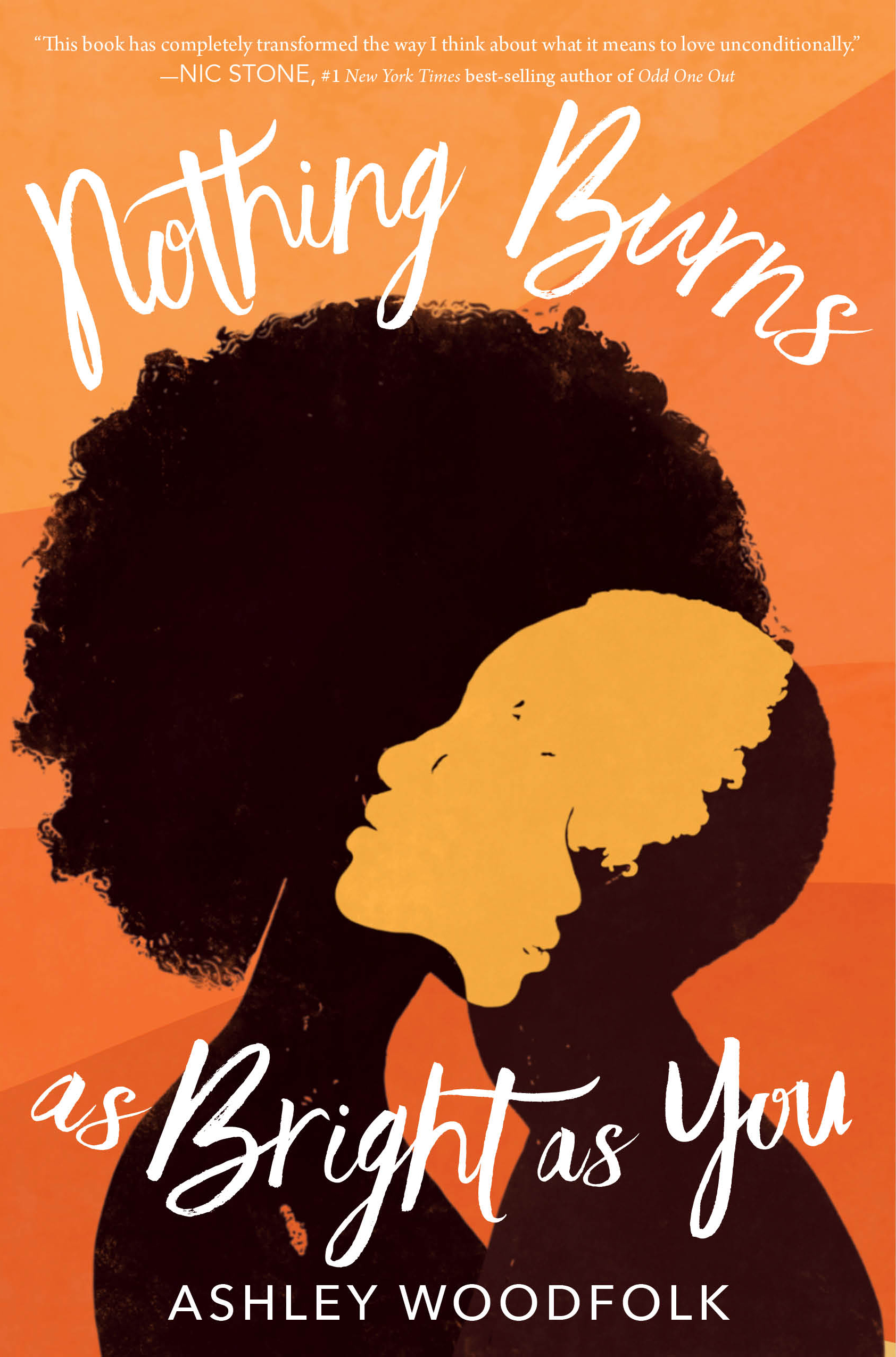
Nothing Burns as Bright as You – Ashley Woodfolk“I’m a mirror cracked from side to side/I’m a snow-covered mountain in an empty room/I’m a house that burns down every night for you…”

Since this post consists entirely of songs, consider all of them to be today’s song.

That’s it for this week’s Sunday Songs! Have a wonderful rest of your day, and take care of yourselves!
Posted in Sunday Songs

Sunday Songs: 3/8/26

Happy Sunday, bibliophiles! I hope this week has treated you well.

This week: in a terrible day for feminism, I only have a single song by a woman this week, on International Women’s Day, no less. Cancel me if you must. Also, saying “Cobra” by Geese makes me sound like a caveman giving somebody directions for exhibits at the zoo.

Enjoy this week’s songs!

SUNDAY SONGS: 3/8/26

“Cobra” – Geese

“Cobra” starts at 6:15.

Shit. Okay. I get it now.

The mountain of hype finally caught up to me. I can’t say that Getting Killed lives up to all of the hype it’s received, but that’s because it’s probably gotten enough hype that, if it were all translated into text in a uniform size, it could probably circle the Earth itself. But Getting Killed really is an excellent album; though it does have some low points, I think it embodies a kind of breaking point in alternative music, and I think that’s what’s resonated with so many people. Getting Killed oscillates between fevered, dystopian breakdowns and moments of contemplative tenderness, but what ties it together is that, for this generation, those emotions often go hand in hand in quick succession. To me, it feels like a response to Gen Z turning to the horrors of the world and poisoning everything with irony; Geese saw this landscape, and the irony we put into it, and slaps us upside the head with this bit from “Islands of Men”: “You can’t keep running away from what is real.” And that monumental amount of hype has to be tapping into something deep within our generation. Honestly, I’m right here raising a glass at the celebration of the death of Gen Z irony poisoning—it’s not fully dead, but hell, Cameron Winter and co. are ready to clobber it with baseball bats. What they’re putting out is chaotic, frenetic, and not always organized or perfect, but it sure as hell feels authentic.

There’s something pure about “Cobra.” By all accounts, the lyrics don’t feel all that wholesome—there’s a strong undercurrent of “that guy isn’t right for you, leave him for me,” which could either be noble or more egoistic. With the whole cobra motif, there’s plenty of back and forth between venom and temptation, and all sorts of spite. So how does it come off so purely? Was it just because I heard the “you can dance away forever” bit and latch onto that? It sure does make you want to dance away forever—it’s a song that commands at least a little shimmy out of you, and the instrumentation—from Emily Green’s high-pitched, intricate guitar work, Winter’s innate ability to make a piano yearn, and the percussion that feels like Tiny Desk without being recorded at Tiny Desk—itself seems to smile. There’s an anthemic quality embedded into a lot of the lyrics, and regardless of whatever romantic foibles it happens to be about, it’s about severing yourself from unwanted temptations and breaking free. And despite the resentment the narrator holds towards this temptor character, I almost feel a kind of respect—he’s still saying that she should leave her boyfriend because he’s keeping her from doing things independently that she was always capable of. So I think that’s what makes this circle back around to feeling wholesome. “Cobra” is like being tugged out of monotony and onto a dance floor bathed in sunlight. It’s so joyous.

…AND A BOOK TO GO WITH IT:

The Stardust Grail – Yume Kitasei“Whatever he’s got in his hand/You can get it on your own, you’ll see/Baby, let me wash your feet forever/Baby, you can stay in my house forever and ever…”

“Wu-Tang” – They Might Be Giants

They Might Be Giants have practically been a part of my life since…well, birth probably. I grew up in the golden age of their children’s music (Here Come the ABC’s, Here Come the 123’s, and Here Comes Science), so they were about as vital to my hipster development as the milk in my baby bottle. Okay, maybe that’s an exaggeration, but I’d be hard-pressed to think of a memory from early childhood that they’re not present in. And yet, other than said children’s albums, I’ve consistently loved them…but never their full albums. Other than Flood, I’ve never been compelled to listen to an entire album of theirs. They’re been prolific since the ’80s (this coming album, The World Is to Dig, will be their 24th), which means that there’s a lot to love…but also a lot to cherry-pick. And unfortunately, as much as I admire them as a band, their newer material has rarely grabbed me. I like them, but I never love them.

Until now. “Wu-Tang” is a burst of energetic, jangly joy, much more lively and enlivened than a lot of their new material. (Speaking of jangly, I swear the guitar part beginning at 0:20 sounds exactly like the guitar on Graham Coxon’s “You & I.”) The World Is to Dig, though the title is an homage to Maurice Sendak’s classic children’s book A Hole is To Dig, means “dig” in the more “beatnik-y” sense, according to John Flansburgh: “A bit beatnik-y for sure…but hey daddy-o. That’s me.” In that context, “Wu-Tang,” which is about, well…how much the Johns like the Wu-Tang Clan, the title makes even more sense; apparently they’re sitting on dozens of songs that are simply about whatever’s grabbed their attention and has given them joy, which is as good a rulebook for songwriting as any. Impervious to any sort of industry molding or trends, They Might Be Giants have continued to be the flagship for musical weirdos everywhere—and heck, I’m glad they’re still going.

…AND A BOOK TO GO WITH IT:

A Letter to the Luminous Deep – Sylvie Cathrall“Something was hid in a secret compartment/Inside my heart/Somebody planted a seed and/They’d have me believe that it/Was all my idea…”

“Fireworks” – Jim Noir

HE’S BACK! MY BOY IS BACK!!

Well, he’s only been gone from streaming, really, but the man himself has returned from his almost seven-year album hiatus (not counting his phenomenal and criminally underrated side project Co-Pilot). However, for those who have been following him on Patreon, we know that this has been a long, long time coming. He initially revived the Jim Noir Club, where he released EPs that gradually became his 2012 album Jimmy’s Show (real ones know that this album was originally going to be Jimmy’s Show 2), with the promise that in 2023, he would have three whole albums to show for it. I can’t fault him—I know I’ve made big declarations about projects and not followed through on them until way later. But as we got even more EPs than originally planned, I knew that the album that eventually became Programmes for Cools was going to be something special.

Three and a half years was an excruciating wait for a new album, and that’s also bookended with the time since his previous album, A.M. Jazz. (Insert the “it’s been 84 years” GIF from Titanic here.) But my recurring thought while listening to Programmes for Cools was that it was worth the wait. There’s nothing more gratifying than seeing an artist that you’ve been intimately watching craft an album finally put it out into the world. The demos and first takes have blossomed into fully-formed and polished incarnations of the offbeat pop that Jim Noir has made a name for himself (in my heart, at least) in; it’s slick, it’s ’60s, it’s synthy and sampley, and nothing but him.

Back when he was releasing EPs through the Jim Noir Club, “Fireworks” was a cut from EP 2 (you can probably guess how far along into the project it was released) all the way back in 2022. EP 2 remains one of my favorites of the bunch (it’s a crime that “Mr. No-One” didn’t make it onto the album, but maybe there’s a chance for Programmes for Cools 2…). It was difficult to imagine “Fireworks” getting much better than it already was, but the final version if it makes me realize how much potential was brewing in it from the start. The mix on the original was much more muddied, and in the light of day (the morning light, if you will), it gleams ten times brighter than before—just like the crackling, incandescent explosions that it takes its name from. Jim Noir has honed his craft here more than ever, creating a whole coral reef’s worth of different species of sound, with all sort of electronic blurts and flourishes that make it feel more like a bustling cityscape than the work of a singular man. But there is just one man behind it, and I’m as happy as ever that he’s populated our world with his music.

Programmes for Cools is only available on Bandcamp as of now, but Jim Noir has said that it will come to streaming eventually. In the meantime, support him on the former!

…AND A BOOK TO GO WITH IT:

Murder by Memory – Olivia WaiteI imagine Jim Noir’s synths being the soundtrack to Olivia Waite’s heavily-populated generation ship.

“That White Cat” – Mitski

So…Nothing’s About To Happen To Me, right?? I stand by my opinion that The Land Is Inhospitable and So Are We is the best Mitski album of this decade, but this one was a success for sure. Though it’s not as cohesive or quite as emotionally potent (though it has plenty of moments that come close), it’s an album with a clear vision. It’s a Shirley Jackson-esque house with peeling, moldy wallpaper and women scratching claw marks down the walls. Mitski’s occasional ventures into Americana weren’t quite as successful as the ones on The Land for me, and at worst, the transitions between those and the more rock-oriented tracks were jarring; but as a whole, the album is nervy and feverish, but wholly certain of its image. After so long working with more deeply personal lyrics, it’s clear that Mitski’s indulging in a more fictional image—and it’s worked a charm so far. And yet, she can’t help but imbue her lyrics with the truth: about fame, about womanhood, and predatory people (see: “Dead Women”).

Some of my favorite moments on the album were when Mitski returned to her scratchy, guitar-oriented roots from albums like Bury Me at Makeout Creek. As much as I love her newer sound, something inside me always longed for the explosive torrent of her guitars from albums past. At least half of the album scratched that itch, and I could not be happier. In a downright neurotic album, “That White Cat” might be one of the most neurotic tracks. With only the accompaniment of bass and drums for most of the track, Mitski howls about losing control of her house thanks to a white cat whose scent-marking has declared her house his: “It’s supposed to be my house/But I guess according to cats/Now it’s his house.” Her ragged vocals lament the takeover of her house by a whole menagerie of invading animals in her signature, frantic lyricism: “Gotta go to work/To pay for that cat’s house/For the red corseted wasp/Who lives in the roof/For the family of possums/For the bugs who drink my blood.” Pushing her vocal range to the limits, making her voice rasp and gurgle and growl, she laments the loss of her autonomy, an invasion of her house—and her mind.

…AND A BOOK TO GO WITH IT:

The Yellow Wallpaper – Charlotte Perkins Gilmanthis might be cheating, since this is a short story and not a full-length book, but I kept thinking about this story for the entirety of the album. Mitski had to have drawn some inspiration from here.

“A Globe of Frogs” – Robyn Hitchcock & The Egyptians

Getting this excited about a remastered, remixed version of a song means one of two things: either I’m officially getting old, or I’ve just surpassed some new benchmark of pretentiousness. But why don’t you go and listen to the original and then the 2026 remix/remaster of “A Globe of Frogs” and then look me in the eye and say that it isn’t a marked difference? The 1986 original was never subpar by any stretch of the imagination, but this remix, 40 years later, brings out what was blooming under the surface in the original. It’s far clearer and brighter. It feels like how the world looks after you wipe all the gunk off of your glasses. Robyn Hitchcock’s lyrics and artistic vision at large never needed any improvement; as it was before, “A Globe of Frogs” feels like taking a walk through the gardens behind a Victorian mansion, but the gardens slowly lead into Wonderland—not the Disney version, but the Lewis Carroll one, for sure. All that was evident from the first demo, I’m sure, but this reworked version feels like forcefully blowing the dust away to find the clean glimmer beneath.

…AND A BOOK TO GO WITH IT:

Mad Sisters of Esi – Tashan Mehtathe strange world of this novel is certainly adjacent to the microcosm in “A Globe of Frogs.”

Since this post consists entirely of songs, consider all of them to be today’s song.

That’s it for this week’s Sunday Songs! Have a wonderful rest of your day, and take care of yourselves!
Posted in Sunday Songs

Sunday Songs: 3/1/26

Happy Sunday, bibliophiles! I hope this week has treated you well.

This week: lots of watery songs this week—you’re either in a swimming pool or standing mysteriously in the pouring rain, so pick your poison.

Enjoy this week’s songs!

SUNDAY SONGS: 3/1/26

“Nobody New” – The Marías

Apparently, 2025 was an exceptionally fruitful year for women who make music that sounds like you’re underwater (see also: Cate Le Bon). There’s a broader spectrum of both vibes and aesthetic here without a doubt, but in separate ways, María Zardoya and Le Bon have made music that sounds like dunking your head into crystal-clear water and watching tiny fish dart past your face. Of course, Cate Le Bon’s completely on another planet, but although The Marías don’t snag me nearly as much as she does (and nobody makes aquarium gravel music like Cate Le Bon), they’ve clearly perfected their own art of making music that sounds like light reflecting off the bottom of a swimming pool.

Here’s another contender for my list of songs with specific lyric pronunciations that scratch a very specific itch in my brain; pretty much everything that comes out of Zardoya’s mouth is downright ethereal, but the way she sings “nadie como tú” in the chorus feels like a massage on the tired folds of my brain. Gently wistful and listless, “Nobody New” has the heavy-eyed feeling of the first thoughts that tumble through your head after you drag yourself out of a dream you can’t quite remember. It’s sleepy, but in a way that instantly draws you in—in my limited experience, the best Marías songs feel like slipping into the sea, but fully embracing the swell of the waves as they crest over your head. It’s simultaneously weightless, like hair billowing underwater, but sagging with the weight of yearning.

…AND A BOOK TO GO WITH IT:

The Seep – Chana Porter“Baby, I promise/There’s nobody new/I’m being honest/There’s no one like you…”

“Raymond Chandler Evening” – Robyn Hitchcock & The Egyptians

I often lament that perfect songs are too short. I’m the last person I’d expect to say that about a Robyn Hitchcock song that barely scrapes past the two minute mark is just the right length. “Raymond Chandler Evening” only repeats its chorus once, and it’s generous to even call it a chorus when there’s only just verses apart from it. But some songs were meant to be a brief but potent punch, and “Raymond Chandler Evening” is one of them. It’s a series of polaroids strung together from the atmosphere of a noir detective novel—fitting, since the song itself is a tribute to detective fiction author Raymond Chandler. Every darkly humorous turn of phrase creates a vivid image that can only seen in black and white, from the abandoned body to the rain-soaked pavements. The only burst comes from Hitchcock’s description of the “yellow leaves [that] are falling/in a spiral from the sky.” It smells like rain. But interspersed within that noir backdrop is some of Hitchcock’s most wry lines: “I’m standing in my pocket/And I’m slowly turning gray” and “There’s a body on the railings/That I can’t identify/And I’d like to reassure you/But I’m not that kind of guy.” Hitchcock knows exactly how to package so much vitality and wit into such a short amount of time—as usual, Hitchcock doesn’t get the flowers that he deserves by and large. But the song was included in the comic The Crow, and a Cyberpunk 2077 side quest also paid homage to it in title, so it’s made more than a few ripples in pop culture—and rightfully so.

…AND A BOOK TO GO WITH IT:

Even Though I Knew the End – C.L. Polk“It’s a Raymond Chandler evening/And the pavements are all wet/And I’m lurking in the shadows/’Cause it hasn’t happened yet…”

“Queen of the Bees” – Jack White

I wish that there was a real, tangible reason for Jack White to get on my nerves. Scratch that—maybe it’s good that it’s just his personality that’s grating. It could be way worse. I’ve just never recovered from how much of a pretentious prick he came off as in It Might Get Loud. But he’s recently created his own publishing house and absolutely shredded with IDLES…the man makes it harder and harder to hate him every day.

After No Name proved to be rather samey (I saw a promotional poster last year that said “the best rock record of 2024 has no name“…lmao), it was official that I was just kind of sick of Jack White. After the adventurous two-for-one deal that was Fear of the Dawn and Entering Heaven Alive, White’s sonic range started becoming the same song over and over. So I let him fade into the background…and somehow forgot about this gem from Entering Heaven Alive. How could I have possibly forgotten about this song? “Queen of the Bees” is one of my favorites of his. He’s putting on every ounce of bluesy airs, but this time, but it doesn’t feel as posturing as some of his other stabs at the genre. So much of his solo work is very bluesy, but there’s a point where he almost becomes a caricature of himself (we once again circle back to It Might Get Loud). But “Queen of the Bees” feels like an honest embodiment of the genre. It’s a slick, charming strut where every strike of the mallet against the xylophone feels like a Cab Calloway-style cartoon feeling a visual chill up its spine. White’s rasping croon, though indebted to past rockers, comes straight from the soul, surpassing mere tribute. Yes, almost everything about the man is a meticulously curated performance, but I’ll give him this: he never half-asses anything. Everything you get from him is a labor he puts every ounce of his passion into.

…AND A BOOK TO GO WITH IT:

Portrait of a Thief – Grace D. Li“I’ll butter your toast/While you’re taking it easy/My tea needs honey/’Cause it’s not so good/And who cares if I’m misunderstood/’Cause I love you…”

“Alien” – Beach House

NOTE: definitely proceed with caution before watching the music video if you have epilepsy or any kind of photosensitivity issues.

Sometimes there’s no use in giving a big preamble about how I found this song. The other day, I just thought to myself, “isn’t there a Beach House song called ‘Alien?’ Wonder what that’s like,” and here we are. I’m just glad that it’s good—but then again, I’ve never met a Beach House song that I didn’t like. Them naming a song “Alien” is almost redundant, because all of their songs that I know have an equal degree of spaciness, and this track is no different. But it’s pure shoegaze indulgence; the distortion roars like the engine of a rocket careering through space, while Victoria Legrand’s vocals are whispers clinging to the soaring jet trail hurtling through the stratosphere. The lyrics verge on being surreal, but the castoff “helpless and glimmering” feels exactly how it is to be carried away on the comet’s tail of this song.

…AND A BOOK TO GO WITH IT:

Ocean’s Godori – Elaine U. Chothis track would fit in with the shining, sci-fi world of this novel: glistening, but with traces of rust and grime around the edges.

“There She Goes” – The La’s

“There She Goes” has to be one of the more ironic stories in rock music history. It’s considered by legions of musicians, music critics, and music directors for every rom-com under the sun to be a perfect song. It heralded a renewed appreciation of the ’60s styles of The Beatles and The Kinks, but is often credited with being one of the songs that jumpstarted Britpop in the early ’90s. Yet by all accounts, its architect, Lee Mavers, hated it. Even when you brush past the inevitable “this song is popular and mentions veins once, it’s gotta be about drugs” (it’s been confirmed by multiple band members that it isn’t about heroin) rumors, there’s so much mythos swirling around this song; most of them are about frontman Lee Mavers, who hates the band’s one and only album. The characterizations span from troubled perfectionist at best to irascible and impossible to work with at worst, cycling through dozens of producers and band members just to achieve the unreachable, perfect sound in his head. It has to be a tragedy to never have that satisfaction be reached, and to have your legacy be the runoff from those fruitless sessions. And yet…how the hell could “There She Goes” be considered a failure? This ought to be the guidebook for a pop song—catchy, charming without being cloying, and guaranteed to make you nostalgic. This song is a must if you want to make your bus ride into a rom-com montage. It’s jangle pop royalty, and rightfully so—nobody jangles like The La’s, and not many have jangled quite so well since.

…AND A BOOK TO GO WITH IT:

The Isles of the Gods – Amie Kaufman“There she goes/There she goes again/She calls my name, pulls my train/No one else could heal my pain…”

Since this post consists entirely of songs, consider all of them to be today’s song.

That’s it for this week’s Sunday Songs! Have a wonderful rest of your day, and take care of yourselves!
Posted in Sunday Songs

Sunday Songs: 2/22/26

Happy Sunday, bibliophiles!
This week: even though I mention both Water Moon and Underwater Moonlight in this post, they’re somehow not paired together…sorry. Plus, songs about grief, love, and illegally keeping wild animals in your apartment.

Enjoy this week’s songs!
SUNDAY SONGS: 2/22/26

“The Man Who Stole a Leopard” – Duran Duran

I didn’t expect to be putting such critical Madeline Todd lore here on the blog, but it was recently dredged up from the annals of my mind after not thinking about it for, at minimum, a decade. So here you are.

I’ve been something of a Durannie from a young age. Second-generation Durannie on my mother’s side, if you will. My mom was at the critical point of fandom for Duran Duran, being a tween (and then a teen) in their heyday, and from an early age, she passed down that love to me. I have lots of fond memories of watching their music videos from a DVD on our old TV, along with listening to their CDs while we played with Barbies, some of which my mom had passed down to me as well. That brings us to All You Need Is Now, which came out when I was in elementary school; a lot of the tracks have heaps of nostalgia attached to them, including “The Man Who Stole a Leopard,” which I loved at the time. Fast forward a few years, and I now had my own iPod nano that I could listen to music with at night. “The Man Who Stole a Leopard” made its way onto the first playlist that my dad lovingly made. But at night, this song transformed into something that scared the shit out of me. Specifically, the violin sample beginning at 5:52. “Scared the shit out of me” is an adequate description, but what might be more accurate is that it gave me the absolute willies. My heebies were jeebied, dude. Something about the mild distortion of the violins, under cover of darkness, sounded so fundamentally wrong to my 10-year-old mind, huddled under blankets. Thankfully, I got my dad to remove the song from the playlist, and the nightmare ended.

Naturally, this was a very pleasant thing to remember when I woke up at 4 am a few weeks back. But when I revisited “The Man Who Stole a Leopard,” I found that my memory had completely distorted my perception of that violin sample that freaked me out all those years ago. Admittedly, I get a kind of knee-jerk sense of dread in the lead up to it, but I was pleasantly surprised that it sound completely innocuous to me—a little distorted and reverby, but just a handful of fuzzy chords to give a flourish to the outro. I’m now hovering where I was in the pre-iPod era, when I was allured by this song. Despite what the fabricated (yes, FABRICATED, I’ve been living a lie since 2011) news broadcast might lead you to believe, this tale of the man who stole a leopard and kept it in his apartment is entirely fictional. (Granted, some of the wording in the broadcast clues me in to the fictionality of it now, but it’s still fairly convincing, especially considering that they got the real newscaster Nina Hossain to record it.) What stands out to me about this track, along with most of the tracks I fondly remember from All You Need Is Now, is that there’s hardly a sense of Duran Duran trying to put their youthful, ’80s glory days in amber and imitate it. Sure, there’s a very “Hungry Like the Wolf” sensibility to the subject matter, but its prolonged runtime (6:15) and more eery atmosphere better fits their earliest albums, before they became perennial pop icons of the ’80s. Like a prowling cat, it’s a drawn-out, seductive crawl through a tale of toxic seduction and love that isolates you from all else. But from all of these memories, there’s one crucial lesson I have to take from this: things tend to sound a lot more sinister when you’re in the dark. Shed some light on it, and this track—like so many other things—will lose the fangs you thought they had. What a relief it is to not be 10 anymore. I love this song.

…AND A BOOK TO GO WITH IT:

Open Throat – Henry HokeI think there’s enough overlap between a big cat being inside human houses and almost being domesticated to bridge the gap between a leopard and a mountain lion. Literary fiction isn’t always my favorite, but this was an excellent read.

“Queen of Eyes” – The Soft Boys

At its worst, a lot of punk music and culture became a caricature of itself; There was such a dogged determination to “sticking it to the man” that, in declaring that they were different from the mainstream, they created a different kind of conformity in sound and style. If you’re not exactly like x, y, or z, you weren’t punk. As insufferable as that is in retrospect (and today, presumably, though I don’t keep up with a lot of modern punk), it did breed a veritable garden of absolute weirdos who weren’t punk enough in a myriad of ways—bands like XTC and The Soft Boys, whose quirky members adhered in some ways to punk’s musical style, but were too sincere—and literary-minded—for punk, because punks don’t write about statues who come alive and wander out to sea. I’ve definitely been influenced by some aspects of punk bands and aesthetics over the years, especially when I started becoming more aware of politics; however, I feel like the bands I identify more with are the ones that were a little too soft, melodic, or just authentic enough for punk. And I think that’s where my expression falls too—I’ve always identified, in terms of my makeup and my clothes and my politics and my music, with “alt,” just because it’s an umbrella term for anyone who falls outside of those strictly-defined, often social media-enforced lines in the sand between one aesthetic from another. My music taste was bound to fall here eventually.

I’d loved about half of Underwater Moonlight ever since I saw Robyn Hitchcock for the first time, but now that I’ve started collecting vinyl, I picked up a copy of the album when I saw him again at the beginning of the month—AND GOT IT SIGNED BY THE MAN HIMSELF!! I’m still in shock, honestly, so on the off chance that you’re reading this, Mr. Hitchcock—thanks again. It’s been in the background of my life consistently for the past month, and I can’t think of any downsides, other than my neighbors hearing the lyrics of “Old Pervert” through the walls. (Look, it’s not my fault that they made a song called “Old Pervert” but also made it an indisputable banger.) I was agonizing over which song to include here, since they’ve all more or less been on a loop in my brain, but “Queen of Eyes” stuck out to me, probably the sunniest inclusion on the record, especially on the heels of the jagged, leering stylings of “Old Pervert.” Even this early on, Hitchcock was nothing but himself: his half-nonsensical, half sweetly sincere and lovesick lyrics are wrapped in a wallpaper collaged from the psychedelic Beatles, Syd Barrett, and something that could have only come from his brain and his alone. Bright, jangly, and infectiously catchy, it embodies this line from the booklet that came from my record booklet, written by David Fricke: “the Soft Boys dared to ask: did punk rock and the end of the 1970s…also have to mean the end of joy, literacy, and bright voices?” That torch remains the same one that Hitchcock has carried for the rest of his prolific career. What struck me while listening to Underwater Moonlight is that this same spirit has always been there—his sprightly musical vitality has only brightened since his early forays into music.
…AND A BOOK TO GO WITH IT:

A Song of Salvation – Alechia Dow“Here I am again, it’s no surprise/Locked in orbit ’round the queen of eyes…”

“Sienna” – The Marías

Expect a lot more about The Marías in the coming weeks—they’ve been a very calm anchor in the chaos of…well, everything in my life. I’ve spent the past week digging more into their music, but this song was one of the first I discovered, in no small part because it was the soundtrack to a recent art trend that went around Instagram and TikTok. (The one I linked is from @zaiciart on Instagram, who has such a wonderful style!) From what I’ve heard of the album, Submarine really was the best possible name—every song feels like it’s been submerged, crafted from trails of bubbles and that special kind of whispery echo that happens to your voice when you’re trying to talk to your friends in the pool. María Zardoya has such a uniquely ethereal voice, so much so that it was genuinely jarring to hear her normal, lower speaking voice on their (excellent) Tiny Desk concert. “Sienna” is a wistful track, but one that only really harpoons you in the gut out of nowhere once you look into the lyrics—the backdrop is the fallout of Zardoya’s previous relationship, but specifically mourning the baby she imagined having with her partner: “she would have done all these things like us. But because we broke up, Sienna will never exist,” Zardoya said about the origin of the track. The track’s ghostly qualities crystallizes once you know that meaning—this entire future that Zardoya imagined is nothing but mist now; it’s fitting that, as this future fades away, so does the song, and Submarine as a whole—”Sienna” is the last breath before the album closes, an exhale of resignation before Zardoya’s wishes become ephemeral.

…AND A BOOK TO GO WITH IT:

Water Moon – Samantha Sotto Yambao“And I smile when I think of all the times we had/On the beach in the winter, when the waves were mad/Down by the water, crystal clear/See her face in the forest, then it disappears…”

“Cuckoo Through the Walls” – Cate Le Bon

Sunday Songs has basically become one of those Scooby-Doo villain reveal scenes. You rip off the “Sunday Songs” mask, and it’s just a weekly excuse for me to blabber on about Cate Le Bon. You fools all fell for my trap!

Did Cate Le Bon just casually come out of the womb with years’ worth of fully-formed talent? I still have two albums of hers that I haven’t listened to, but I swear that she’s incapable of making a bad album. Mug Museum feels a lot more like a standard indie rock album than her more recent works, but even the more (marginally) accessible style couldn’t keep her from her quirky engine firing on all cylinders. Moments of somber contemplation (“Mug Museum”) are hand in hand with ragged rage (“Wild”), and yet all form the weave of Le Bon’s experiences surrounding the album. Most of it deals with the death of her grandmother and how Le Bon processed her sudden absence from the matrilineal line; for her, it was less about what her grandmother meant to her as an individual and more about how her family rearranged and shifted in wake of her absence. The titular Mug Museum is a kind of haunted house of sorts where memories live: she called it “an imaginary place where relationships are looked at and thought upon.” Walking through this album does feel like strolling through a museum built inside of someone’s old house; small objects hold centuries of memories, and every strand on a curtain or crack in a window holds a deep history. “Cuckoo Through The Walls” is one of the tracks that I felt exemplified this feeling the best. Its more restrained, steady pace feels like tentatively peering through all the corners of said aging, dusty house, glancing at the light illuminating unseen gaps in the floorboards. Le Bon describes a state where these memories have anchored her to the house, to the point where she almost becomes the house itself: “And I watched the dinner drown/I drank for hours/Never leave the house/Cuckoo through the walls/Lay still on the ground/Exhale the sound of symphonies.” Like her signature, left-of-center takes on the most universal emotions, her grief doesn’t keen, but sinks into all the hollows of her mind and body—and that might be more of an honest depiction of it than most songwriters are willing to take.

…AND A BOOK TO GO WITH IT:

The Immeasurable Depth of You – Maria Ingrande Mora“I will not sing your name/And tie my heart to Jupiter/And watermelon dreams/I felt the fear of change…”

“Au Pays du Cocaine” – Geese

Alright, you got me. The jury’s still out if Getting Killed is getting lobbed onto the mounting pile of albums I want to listen to, but “Au Pays du Cocaine” makes me understand a modicum of the hype. Sometimes an album invades your Instagram feed for no reason, but half the time, there’s at least something to it, even if that something boils down to only a song or two. This song just makes me feel…safe. Yes, it’s seems more to be about a relationship with someone who’s ruined their life, but it feels so safe to me. It sounds like the friends you give you a ride when it’s too far to walk, and the people who texted me and offered their showers when the hot water shut off in my apartment. It’s a hastily-built up lean-to to give you a fleeting moment of shelter in the rain. The middle ground between my feelings about “Au Pays du Cocaine” and the more literal lyrics is that it’s a promise: believing that people can change, and being ready for them when they do. I’ve learned the hard way that for some people, you just have to let them heal on their own terms, but that you by no means have to forgive them, or even be there for that healing. There’s a hard-won freedom in that realization. But this song is for the ones that are worth sticking around for—the people you love despite their faults. It’s rare to find those people worth sticking around for, but maybe that’s why I feel such solace in this song—those people are few and far between, but this song is for them.

…AND A BOOK TO GO WITH IT:

The Long Way to a Small, Angry Planet – Becky Chambers“You can be free/You can be free and still come home/It’s alright/I’m alright…”

Since this post consists entirely of songs, consider all of them to be today’s song.

That’s it for this week’s Sunday Songs! Have a wonderful rest of your day, and take care of yourselves!