Posted in Book Review Tuesday

Book Review Tuesday (5/7/24) – Off With Their Heads

Happy Tuesday, bibliophiles! I’ve returned from finals hell!

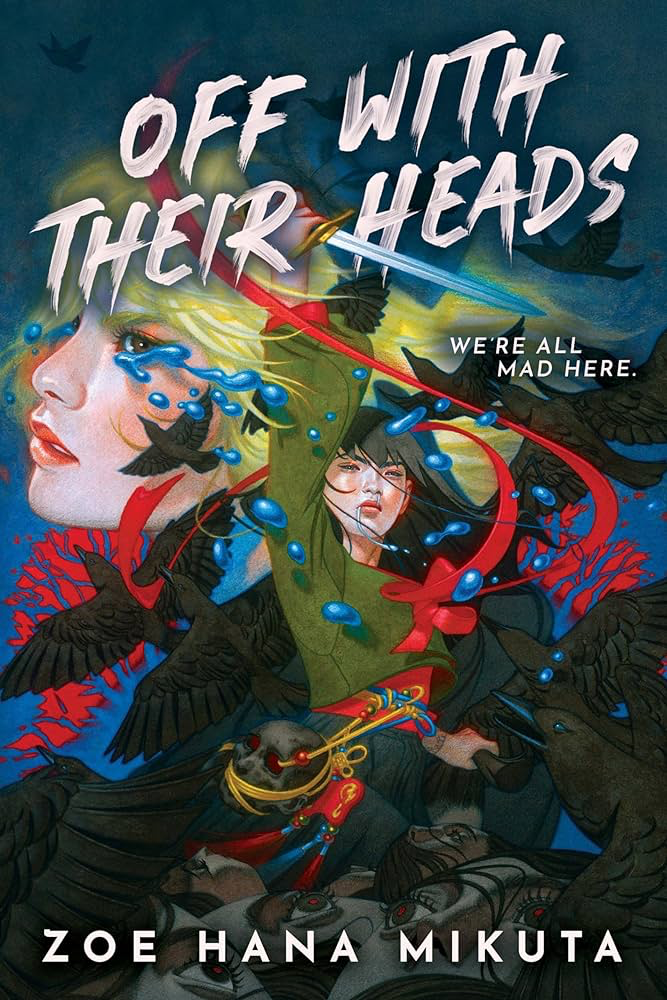
I’ve been a massive fan of Zoe Hana Mikuta ever since I fell in love with her Gearbreakers duology a few years back. Off With Her Heads is her most recent novel, having just come out in late April, and even though I would’ve read it no matter what genre it was in, the idea of her writing a novel loosely based on Alice in Wonderland intrigued me—and it did not disappoint.

Enjoy this week’s review!

Off With Their Heads – Zoe Hana Mikuta

Wonderland is full of monsters.

After a deadly plague ravaged the land, most of the remaining witches and magic-users have transformed into monstrous Saints: bloated, bloodthirsty beasts that scour the land looking for fresh meat. Carousel Rabbit and Iccadora Alice Sickle were brought up in a world of predators and plague, orphaned at a young age and eventually escaping their decrepit orphanage together, madly in love with each other. But their obsession tore them apart, and their paths diverged.

Now, Caro has become the Red Queen’s royal butcher, killing Saints and watching as the Queen stitches together Saints of her own through dark, flesh-binding magic. Alice has been on her own for years, slaughtering Saints to get by. With every Saint that she kills, she treads closer and closer to the Red Queen’s throne—and to Caro, who Alice will stop at nothing to bring down to size. But what she finds in the Red Queen’s palace may be even greater of a threat than the love that once tore her to shreds…

TW/CW: loss of loved ones (past), murder, graphic violence, body horror, disease, blood, gore

Dark fairytale (or fairytale-adjacent) books used to be everywhere on the YA landscape. It’s the kind of stuff I ate up from about ages 12 to 16, to various degrees of quality. What they had in common, however, were universally horrible covers. God. They’ve circled back around to being hilarious now, but you could just snag any book off of the YA fantasy shelf at Barnes & Noble, and it would have a cover with an airbrushed white girl with flowy hair and an equally flowy gown either spinning gracefully or fixing your stare with a photoshopped smolder. And the gown was usually melting into…I don’t know, feathers or blood or some shit. It was all very emo. Since then, this subgenre has slowly begun to die down in popularity (or maybe not? My tastes have probably just shifted). Whether or not Off With Their Heads is the slow beginning of that subgenre’s resurgence in YA remains to be seen, but either way, I’m glad that we’ve got much prettier covers for the next generation of budding YA readers. It’s what they deserve. (Give it up for Tran Nguyen’s gorgeous cover art!)

After the Gearbreakers duology, I figured that I would read just about anything that Zoe Hana Mikuta writes. Even if Godslayers was a bit of a lackluster series concluder, it was still a fun read. Even if it isn’t her best work, you’re going to have a good time reading it regardless. Gearbreakers got a fair bit grim, as dystopias are wont to do, but Off With Their Heads is the darkest that Mikuta has ever gone (so much so that it almost borders on new adult and not YA), and she writes it with a unique talent. Whether or not the urge was pent-up, this novel revels in the “dark” of the “dark fairytale retelling,” drenching Alice in Wonderland in bloodlust, obsession, and backstabbing. However, what a lot of the dark fairytales of yesteryear interpreted darkness as was just being edgy; most everything was for shock value and appealing to the “what if this fairytale was………BAD and EVIL” urge that ropes in all the 13-year-olds and it didn’t go far beyond that. But this genuinely feels like horror, and not being an edgelord for edginess’ sake. It’s gory, it’s grim, and it’s bloody, but more in the interest of horror than shock—these characters are surviving a truly horrific world, and it turns them into horrific people for understandable reasons. There’s a distinction to be made there, and Mikuta certainly recognized it. (Also, it’s worth noting that Off With Their Heads is unflinchingly queer, which, given that most of said older fairytale retellings only added in queerness when it was a side character that would inevitably die, is a vast improvement. The bar is low, but it’s noteworthy that it’s being exceeded nonetheless. Let’s go, lesbians!)

I’ve seen a lot of reviews call Caro and Alice “morally gray,” and…I have some thoughts. I almost see it. Almost. But if they were gray, it would be an incredibly dark gray, if anything. Maybe they were morally gray at the beginning, but by the time we get to the present timeline, they’ve both become such awful people that they’re nearly indistinguishable from the one evil person that they’re respectively allured by (Caro) and disgusted by (Alice)—the Red Queen. To paraphrase Obi-Wan Kenobi (hey, I missed my chance on May 4th), they’ve both become the very thing they swore to destroy. They’re both just despicable people, but their differences are written in such a way that their different breeds of horridness play off of each other fascinatingly; Caro’s become this world’s version of a class traitor and idolizes the pinnacle of evil, while Alice has become so consumed with revenge that she’ll justify just about anything. Add in the fact that the root of their personal vendettas lie in their past romantic relationship, and you’ve got a dynamic that was delicious to pick apart for all 400+ pages of the novel. Again, it all makes sense for the truly cutthroat circumstances they were brought up in—they’re products of their surroundings, in the worst possible way.

Even as someone who doesn’t engage with a ton of horror media in general, I know that the key to executing it is making the suspense feel real, especially if the threats in your world are entirely fictional and alien to the audience. Mikuta had a multitude of ways that kept the suspense palpable, and all of them hooked me over the course of the novel. I’m not sure why it is that the “There are [x] remaining Saints” count excited me so much at the beginning of each chapter, but it was a failsafe way to keep track of both the danger and the kill count of the various characters—the tangible effects of the butchering they’re described as doing. Having those numbers up front also provided a sense of scale; in the present timeline, the Saints numbered in the thousands, giving an idea of just how dangerous being in Wonderland truly is—you can’t go for a walk in the woods without encountering a bloated, bloodthirsty, and quite possibly engineered monstrosity on the prowl for flesh. It’s a constant danger—and Mikuta make it feel much more dangerous just by having a chapter subheading.

However, what brought down some of my suspension of disbelief was the worldbuilding. Clearly, there was attention to detail, but only in the ways that Mikuta saw fit. There were tidbits here and there that I wished were expanded on—I loved the concept of the original Alice dreaming being this world’s creation myth, but we never got anything more out of that past the prologue. Outside of things like the Saints and the royal lineage, the worldbuilding was rather messy. I get that Off Their Heads is a very loose retelling at best—just using Alice and Wonderland and its characters as a jumping-off point for the setting—but there were so many convoluted and contradictory bits that I wasn’t completely invested. It’s mentioned that there’s a Jabberwocky court amongst the gentry of Wonderland who are described as humanoid, and yet the girls find a Jabberwocky in the woods described monstrously that has clear intention to kill them. Either that was a poorly-described Saint, or there’s some inconsistencies that need to be addressed. The reworking of Alice in Wonderland-related names into the characters were also a bit sloppy and corny; I get that there’s got to be some signal to the source material, but they were often so obvious, and barely related to the original character that they just made me cringe. I expected more from Mikuta on this front—slapping on character names just to remind the reader that, yes, this is a retelling, doesn’t seem like her style. I almost think it would have worked better if all of the Alice in Wonderland pretense was stripped away and made into a dystopian fantasy world.

Overall, an unflinchingly horrific retelling that displays Mikuta’s love and talent for suspense and obsessive sapphics—but her pitfalls in worldbuilding. 3.75 stars, rounded up to 4!

Off With Their Heads is a standalone, but Zoe Hana Mikuta is also the author of the Gearbreakers duology (Gearbreakers and Godslayers), and an untitled novel slated for release in 2025.

Today’s song:

That’s it for this week’s Book Review Tuesday! Have a wonderful rest of your day, and take care of yourselves!

Posted in Monthly Wrap-Ups

April 2024 Wrap-Up 🌂

Happy Tuesday, bibliophiles!

Unfortunately, I probably won’t be able to write up a book review or a Sunday Songs post this week, as I’m days away from finals. I started this post in advance, as I do with all of my wrap-ups, so that’s why I managed to put it out today. But from today on, I’ll be (mostly) radio silent for the next week or so. Wish me luck…

Let’s begin, shall we?

GENERAL THOUGHTS:

April’s been its fair share of crazy, what with job interviews, preparing for finals, and wrapping up my sophomore year of college. (How’d that happen??) It’s definitely taken a toll on my reading and blogging, but I’ve still had some free time in between. Said free time has been surprisingly fruitful this month—I finished up the 20,000 word novella that I had to write for one of my classes, and I had a solid weekend where I was able to brainstorm quite a bit for my main sci-fi trilogy. I’d still be doing said brainstorming if not for…y’know, studying for an astronomy final, but once I’m free of that, I’ll be back to making my outline even more excessively long. I’m almost there…

As I said, I had less time to read than I have in the past few months, but strangely, as far as ratings go, it’s been my most positive month. I say “strangely” because I felt like I was in a stint of good, but not great books for at least the first third of April. However, it picked up significantly, partially aided from a particularly lucky haul from Barnes & Noble with a dear friend of mine.

Other than that, I’ve just been watching The Bear, Taskmaster, and Ripley (how and why is Andrew Scott so good at being SO devious), writing when I can, and preparing for the end of the semester.

Oh, and remember how (hesitantly) excited I was about the fact that The Search for WondLa was being adapted into a TV show? We’ve just gotten the first look, and…

…not to be dramatic, but this is my villain origin story. This is my Joker arc. I’m beyond livid. They drained it. They drained it of the artistry and creativity. And the love. They made Muthr into one of those Playmobil people. Why is Otto furry and squishy? Why does Rovender have those front-facing predator eyes? Where are Eva Nine’s signature braids? Where’s the soul?

Yeah! I’m fine. They just turned my childhood into a sad, lifeless husk of a 3D animated TV show…

READING AND BLOGGING:

I read 15 books this month! Somehow, I feel like I was in a slump of good but not remarkable books for at least a third of the month, but somehow, I got through a whole month with no 2 or 1 star reads? That’s a new one for me.

3 – 3.75 stars:

A Tempest of Tea

4 – 4.75 stars:

The Tusks of Extinction

FAVORITE BOOK OF THE MONTH: Activation Degradation4.5 stars

POSTS I’M PROUD OF:

POSTS FROM OTHER WONDERFUL PEOPLE THAT I ENJOYED:

Unfortunately, I haven’t been able to blog-hop much because of finals, but here are some highlights:

SONGS/ALBUMS I’VE BEEN ENJOYING:

top 10 nerdiest club bangers
god, I missed this song…
the bowiemaxxing continues
no thoughts only all born screaming
imagine making Poor Things (2023) and failing to get across in two and a half hours what this song does in just under four minutes………couldn’t be me
xtc my beloved
as much as we praise Björk, I feel like she doesn’t get enough credit for how deeply romantic she can be…good god I feel so sappy and squishy listening to this song, it feels so good
david bowie make a song from the ’90s that isn’t criminally underrated challenge (impossible)

Today’s song:

hey, if we’re talking about keeping my inner middle schooler happy, at least this album was fantastic

That’s it for this month in blogging! Have a wonderful rest of your day, and take care of yourselves!

Posted in Sunday Songs

Sunday Songs: 4/28/24

Happy Sunday, bibliophiles! I hope this week has treated you well.

This week: holding back on my thoughts on my most anticipated album of the year and a movie that makes me angrier than I’d like to admit, but just for the sake of showcasing the songs I meant to showcase, I kept that short.

Enjoy this week’s songs!

SUNDAY SONGS

“Sweetest Fruit” – St. Vincent

Sometime when I’m out of the finals woods, mark my words: there will be a review of All Born Screaming, because, predictably, I have Thoughts. But, in the interest of not making myself sound like a broken record a few weeks in the future, I’ll keep it snappy. All Born Screaming is a great album, but…not in the way that I expected it to be. What it isn’t, however, is the hard rock album that it was advertised as. It’s much less cohesive than I’ve come to expect from St. Vincent, but for the most part, the individual songs that were thrown into this unexpected stew are good—we’ve got the world’s most perfect pairing for “Marrow” (Annie I am BEGGING you to play these two back to back live), “Five Years” 2: Electric Boogaloo, and tons of other elements that hit you from beyond left field. It’s a mess, but I’m starting to feel like that’s almost the point: All Born Screaming is the musical form of a mental breakdown, and it certainly sounds like it. I swear that’s a compliment. Mostly. Some of it’s dissonant in a way that doesn’t seem all the way intentional. But that’s a discussion for when I break down the whole album.

For now, I’m shifting the focus to my favorite of the new tracks. “Sweetest Fruit” is, like the title suggests, genuinely delicious to listen to. The main synth line that anchors it balloons and blossoms like polyps, or a sped-up version of said sweet fruit ripening on the branch. In a quieter, science fiction world, that sound feels like an alarm, a reminder—maybe that the laundry’s done, or that your spaceship is alerting you to the fact that you’re close to docking at the planet of your choice. But unlike MASSEDUCTION, where such synths were the stiff, Barbie pink foundation upon which all the tracks were built, it’s woven through with lightning strikes of her signature shredding, jaggedly slicing into the synth-pop frame just when you start to feel relaxed. Now, for my token mention of St. Vincent’s godly self-titled record: All Born Screaming is far less organized than it, but sonically, this is the closest it’s been in a decade; it’s not fully glossy pop like MASSEDUCTION, but there’s plenty of dystopian franticness undercutting what would otherwise be neat. And the synthy, shiny feel is the perfect medium for, at least, part of what “Sweetest Fruit” was meant to do: for Clark, it partially functioned as a tribute to the late SOPHIE, who Clark has said that she “admired from afar” for quite some time. Most of the mention of her is reserved to the first verse and doesn’t continue, but some took it as capitalizing on her death; if the whole song was about it, I could almost see it, but it’s simply a retelling of a too-soon death; in 2021, SOPHIE fell to her death while watching the moon on the roof. I don’t mean to rush to defend everything that she does (because the album cover hasn’t stopped being tone-deaf, and I’m incredibly disappointed that she didn’t at least acknowledge that), but this seems like a stretch. It isn’t like this is anything new for Clark—what was “The Melting of the Sun” if not an extended tribute to the women who she loved and who inspired her, dead and alive? I remember hearing, back when MASSEDUCTION was released, that she’d scrapped several songs that were tributes to David Bowie; I can see why that would have felt like capitalization as well, since MASSEDUCTION was released a year after his death, but there’s something to be said for connecting artists across music, whether the other hears it or not—we are all indebted to so many people for the styles we create, as much as they are our own. And if there were any track to eulogize SOPHIE, it would have to be “Sweetest Fruit,” coated with the same, shining gloss with which SOPHIE made a name for herself.

…AND A BOOK TO GO WITH IT:

Drunk on All Your Strange New Words – Eddie Robsonin terms of how I visualized both the look of the Logi and the sensation of hearing their language in your head, it aligns neatly with the globular, polyp-y synths throughout this song.

“The Dresses Song” – Lisa Germano

This song does in less than four minutes what Poor Things failed to do in two and a half hours. I’m not saying that I could do better than an award-winning director, but at this point…skill issue. Lisa Germano did all that without the gratuitous shots of Emma Stone’s feet as her character learns how to masturbate…at the mental age of a toddler.

Can you tell I had beef with Poor Things?

Now that I’ve got that off my chest, let’s shift the focus to a tale of feminine identity that’s actually worthy of praise. I haven’t listened to Lisa Germano’s debut, the ironically-titled Happiness, in full, but its clear from the start that she came here to make unsettling music, and that’s exactly what she made a career out of, as criminally underrated as she continues to be. Happiness, though steeped in solemn, eyes-averted confessions (see: the hauntingly beautiful “The Darkest Night Of All,” which I talked about back in October), hasn’t yet gone off the deep end in terms of said unsettling quality just yet—it would be another few years before we got into the “mom, come pick me up, I’m scared” atmosphere that came to dominate her sound. Yet “The Dresses Song” unsettles in its flatness and complacency. Not quite at the shivering, clenched waver that I’ve come to love in her voice, Germano instead sings much of “The Dresses Song” in a flat affect, dull and sucked dry of emotion. Amidst the bounce of tapestry-weaving bass, clinking tambourines, and the kind of folksy violins that would suggest somebody’s about to break out into a jig, Germano seems to sit cross-legged as everything happens around her, but never to her: “You make me think about nothing/It feels so good like that/You look at me so fragile.” Germano sings of the powerlessness of slipping into a loss of autonomy; like the doll’s head on the album cover, she sings as though she’s being dragged through the dirt by a child, dressed up and posed for tea parties at will, outwardly welcoming but inwardly dreading the surveillance of her body. Every repetition of “you make me wanna wear dresses” is uttered as a twist of the knife, convincing herself that oh, it’s not so bad, and yet her hollow, bird-bones voice strips the illusion bare—the illusion that, like in the music video, that’s she’s okay with being paraded around in costume like a child. “The Dresses Song” comes from a place of the darkest kind of complacency—the period where you’re stuck at the bottom of an empty well, but you’ve convinced yourself that the polluted water trickling down goes down just fine—at least it’s something to drink.

Isn’t it so lovely to grow up where every inch of your body is policed just because of your gender? Surely that won’t have mental repercussions further down the line. Surely, one Yorgos Lanthimos would at least somewhat understand that and realize that a) discovering one’s sexuality isn’t the be-all, end-all of what makes a liberated woman, and b) that said depiction of sexual exploitation was so constant and gratuitous that it became exploitative in and of itself. Surely.

…AND A BOOK TO GO WITH IT:

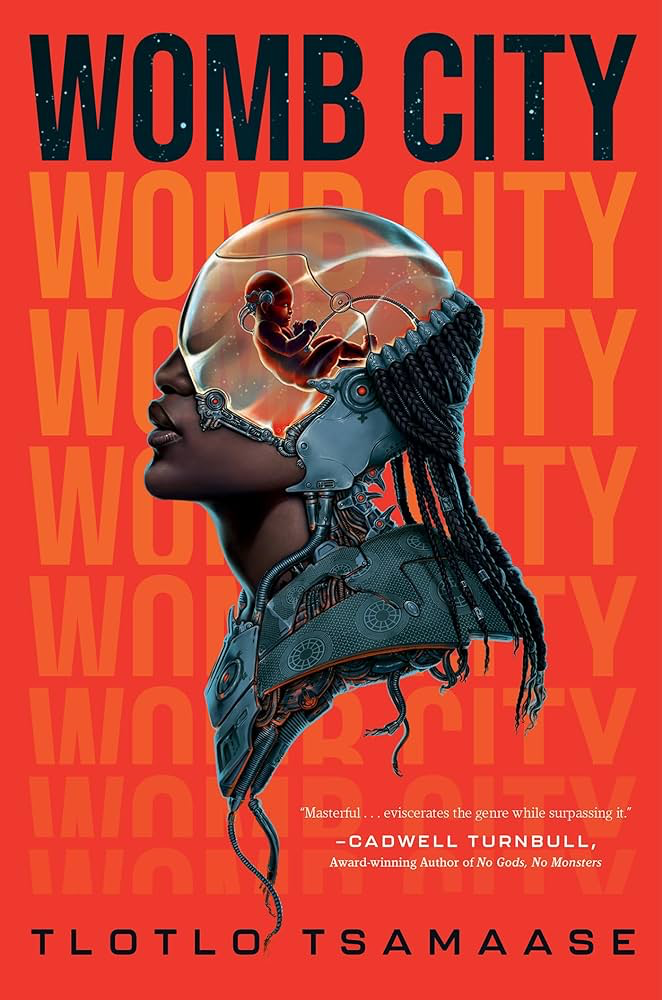
Womb City – Tlotlo Tsamaase“take me to your castle/it feels so good in there…”

“Some Time Alone, Alone” – Melody’s Echo Chamber

I’m honestly surprised that Noah Hawley hasn’t come across Melody’s Echo Chamber (that we know of), because…come on. This was made for Legion. It’s not even psychedelic inspiration anymore—it’s purely psychedelic in a way that’s not just trying to recreate a sound from the sixties.

Like Tame Impala, it just seems like the next generation of psych-rock. So it was not a surprise in the slightest when I found out that Melody’s Echo Chamber’s self titled record (pushes glasses up bridge of nose) was produced by Kevin Parker himself. (Did you know that Tame Impala was just one guy? It’s just one guy. Can you believe it? I bet you didn’t know that. It’s just one—[gets pulled offstage by a comically large cane]) “Some Time Alone, Alone” has distortion so thick that you practically have to wade through it with a hazmat suit—it’s hard to describe the atmosphere that Melody Prochet and Kevin Parker have created with any words other than thick. It’s like sticking your arm into rainforest greenery, endlessly pushing aside massive fronds just to find the pulse of light gleaming at the heart of the glen. Every riff and rhythm circles into each other like a diagram of an atom, forever orbiting the warm nucleus—Prochet’s voice, which has the feel of Nina Persson if she happened to stumble upon the blue drugs from Legion, suspended in the ether. It’s gone beyond sounding like the ’60s into something truly representative of how the genre has evolved: it sounds so modern, but never in a polished way. It’s a child nurtured by the ’60s, for sure, but there was no place it could have gestated other than a 21st-century test tube.

…AND A BOOK TO GO WITH IT:

The Shamshine Blind – Paz Pardolost in a tangled conspiracy—and the confines of your mind, brought on by artificially-induced emotions.

“Here Comes President Kill Again” – XTC

Nothing I could say could complicate this song or shed new light on it, really, and certainly not when we’re living it, and have been living it on and off at least since the ’80s. Probably further. XTC always seemed to be attuned to the needle of the social climate, and save for a handful of outdated political references here and there, they’ve stood steadfast against the battering of the waters of time. “Ain’t democracy wonderful?/Them Russians can’t win!/Ain’t democracy wonderful?/Lets us vote someone like that in.” Certainly feels like King Conscience and Queen Caring have been rolling in their graves for quite some time…ah, no, surely, we don’t need to put our heads together and solve pressing issues like gun violence, climate change, genocide, and a nation bent on killing its queer children, no way! We’ve got to call the national guard on the student protestors using their right to free speech to call attention to the horrific Palestinian genocide that our tax dollars have basically been funding! Ain’t democracy wonderful?

…AND A BOOK TO GO WITH IT:

1984 – George Orwellyou could really slot this one in with any given dystopia, but this novel was the blueprint—and the dirge-like feel of “Here Comes President Kill Again” certainly fits in.

“Strange Phenomena” – Kate Bush

If there’s anybody who’s intimately familiar with strange phenomena, in whichever meaning you take the phrase, it’s Kate Bush. How else does one write the most horrifying song about being turned into a kite against your will and make it so groovy?

Most of my enjoyment of The Kick Inside remains dominated by “Them Heavy People,” “Wuthering Heights,” and the aforementioned “Kite,” but ever so often, another track rises back from the ether, summoned by the erratic will of my shuffle. It’s easy to lump “Strange Phenomena” into that very specific breed of early Kate Bush where it’s all swinging-from-the-curtains theatre, and…yeah, rediscovery didn’t erase that quality (see: the video linked above), but it made me remember why Kate Bush (mostly) gets it right. Centered around the concept of what Bush described as “how coincidences cluster together,” it has the starry eyes of an ingenue as piano notes rise and fall propelled by wind from a fan, made to make her hair billow. (Apparently it’s not centered around getting your period, despite the opening: “Soon it will be the phase of the moon/When people tune in/Every girl knows about the punctual blues.” The only thing convincing me of anything else than the period reading of that line is the “punctual” part. Punctual my ass.) “We can all recall instances,” she said to Music Talk in 1978, “when we have been thinking about a particular person and then have met a mutual friend who—totally unprompted—will begin talking about that person.” It’s an unabashed celebration of whatever it is, that unknowable part of the brain or simply a truth of the unknowable universe, reveling in the love that we can glean from ordinary things. I can’t think of a much happier outlook to life that Bush’s declaration that “we are surrounded by strange phenomena,” whether or not you believe that something is pulling the strings to bring them together. For once, the theatre doesn’t come off as silly or overly self-important—it feels like a calculated response to the joyous puddles that we leap through as we move through this life.

…AND A BOOK TO GO WITH IT:

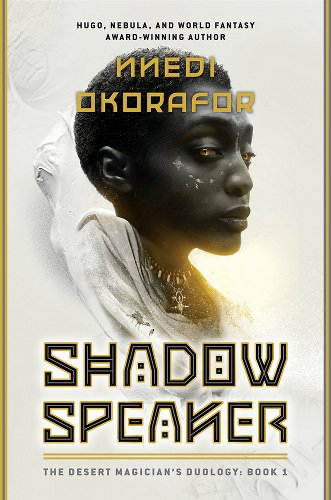
Shadow Speaker – Nnedi Okoraforstrange phenomena aplenty, whether it’s friends in unexpected places or the mutation of the Earth itself.

Since this post consists entirely of songs, consider all of them to be today’s song.

That’s it for this week’s Sunday Songs! Have a wonderful rest of your day, and take care of yourselves!
Posted in Book Review Tuesday

Book Review Tuesday (4/23/24) – Ten Low

Happy Tuesday, bibliophiles!

Ten Low has been on my TBR for ages, but I just haven’t been able to find it anywhere, for some reason—not my library, not any bookstores I’ve been to around where I live…until, somehow, it turns out that the Barnes & Noble in my college town had it! Naturally, I got myself a copy, and it was worth the read—brutal and cinematic all at once.

Enjoy this week’s review!

Ten Low – Stark Holborn

Ten Low is stranded. After defecting from the war effort, she made a desperate escape to a planet where she thought no one could find her. But trouble has found her already, in the form of Gabriella Ortiz—an unseemly thirteen-year-old girl on the outside, but in reality, the next incarnation of the tyrannical General that Ten once served under. Neither of them want to face the realities of their involvement in the war, but they have no choice: outside forces want them both dead, and Ten and Gabi must endure a treacherous desert full of bloodthirsty Seekers and threats on all sides if they want to get out of this alive…

TW/CW: graphic violence, war themes, blood, gore, descriptions of corpses, torture, child soldiers

Like superhero fatigue, I feel like there’s a case to make among sci-fi fans for a very specific fatigue for desert planets. Star Wars and Dune set the blueprints, but ever since, they’ve been…everywhere. (Tatooine was good once, but…can somebody tell Disney that they could’ve just stopped at one or two desert planets?) Ten Low was one of the few books where I feel like there was an original spin on it—and a lot of aspects of this novel can be boiled down to the same things: seemingly plain plot elements that were twisted into something fascinating.

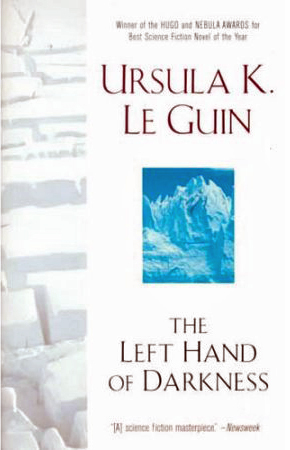
Back to the desert planet aspect…even though there are altogether too many of them and often without original components (or, again, just aspects that were lifted from Dune or Star Wars), but Ten Low really couldn’t have been set anywhere else. Nowhere else could the harshness of the obstacles facing Ten and Gabi could have been harsher, and nowhere else could their struggle have been more palpable. I didn’t go in knowing that Ten Low was something of a space Western, which made the desert feel all the more fitting for the genre. Holborn didn’t just fill the place with sand and leave it at that; the desert, along with its many inhabitants, felt like a real hurdle that the characters had to overcome and work around, and not just a place to signal science fiction. I can’t help it—I’m a sucker for when the setting is just as inhospitable as the hardships that the characters are experiencing. I just re-read The Left Hand of Darkness, you can’t fault me for that.

As with the oft-used desert planet, Ten Low has a common trope in space Westerns in particular—pairing a tough, hardened adult character with a child that they have to drag along. (Anybody heard of a little show called The Mandalorian? Pretty indie, I know.) I already like the trope as is, so I wouldn’t have a problem if there wasn’t necessarily the most original take on it, as long as the characters could each pull their emotional weight and make me feel invested in the story. But what do you do when said child is a thirteen-year-old embedded with the consciousness of a dead, fascist general? And you happen to have been a medic that defected from said general’s army after witnessing the litany of crimes committed under her tyrannical reign? I loved how complicated that relationship got—not just because there’s nothing more unsettling than a thirteen-year-old girl who’s quite literally a warmonger with a list of crimes that could circle the planet twice, but because of how their relationship developed. Through their trek through the desert, there’s no “forgive and forget” resolution—and I’m glad Holborn strayed away from that, given what the General did to Ten and everybody else—but the commonality that neither of them wanted to be in their situations made their relationship so much stronger, and also that both of them were subject to horrors beyond their control.

Ten Low moves fast, and had it not been for Holborn’s cinematic writing style, I would have probably gotten lost somewhere along the way. But Holborn’s writing thoroughly kept me grounded, and it enhanced my reading experience immensely. Like any Western, there’s a rapidly rotating cast of characters and all manner of foes along the treacherous road that Ten, Gabi, and the others had to travel; although I’ll say more about said rotating cast, what Holborn excelled at was the balance between action and character development. It’s a hard balance to hit, but there was enough down time between Ten getting out of horrific scrapes for the two protagonists to actually react, change, and strengthen their relationships. The fight scenes didn’t go on for extensive periods (although they easily could have), but the quieter, more character-driven moments didn’t dominate the narrative either.

However, I can’t say the same for the characters. I get that it’s a staple of Westerns in general to have a cast that constantly shifts and changes, but given that most of the characters that were introduced in Ten Low eventually came back in some way, shape, or form, it was kind of a handful to juggle every single one of their names and significances, especially since their first appearances were a flash in the pan. Not only did that make them difficult to keep track of, it dulled the emotional weight when we were supposed to mourn their deaths—somebody dies, and all I found myself thinking of was “wait, who was that again? Why do we care?” That being said, Holborn at least made them all colorful and at least fun while they had their brief moments in the spotlight—they were fun, but not much else, unfortunately. Ten and Gabi’s relationship was the centerpiece, and that’s exactly how it should have been.

All in all, a gritty, action-packed space Western with tropes turned on their heads in surprising—and incredibly entertaining—ways. 4 stars!

Ten Low is the first book in the Ten Low trilogy, followed by Hel’s Eight and the forthcoming Ninth Life. . Stark Holborn is also the author of the 12-book Nunslinger series, as well as the Triggernometry duology, which is set in the same universe.

Today’s song:

ALL BORN SCREAMING ON FRIDAY HHHHHAAAAAAAAAAAAAAAAAAAGH

That’s it for this week’s Book Review Tuesday! Have a wonderful rest of your day, and take care of yourselves!

Posted in Book Tags

Ten Bookish Questions Tag 🔟

Happy Monday, bibliophiles!

I was honestly so surprised that I hadn’t done this tag before—I found it, like I do most of my tags these days, on The Corner of Laura, and the tag was originally created by A Books Neverland.

Let’s begin, shall we?

🔟TEN BOOKISH QUESTIONS TAG🔟

HOW MANY BOOKS DO YOU CURRENTLY OWN?

…I don’t know the exact number, but certainly more than I have space for…

HOW MANY BOOKS ARE YOU CURRENTLY READING?

Normally, I stick to one book at a time, but since I’m often reading for other classes, it usually ends up being two or three at this time of the school year. Right now, I’m currently reading Ten Low and re-reading The Left Hand of Darkness for one of my classes.

CHOOSE A COUPLE OF BOOKS YOU READ BUT DIDN’T ENJOY.

I just chose a handful here that I’ve read (somewhat) recently and didn’t enjoy:

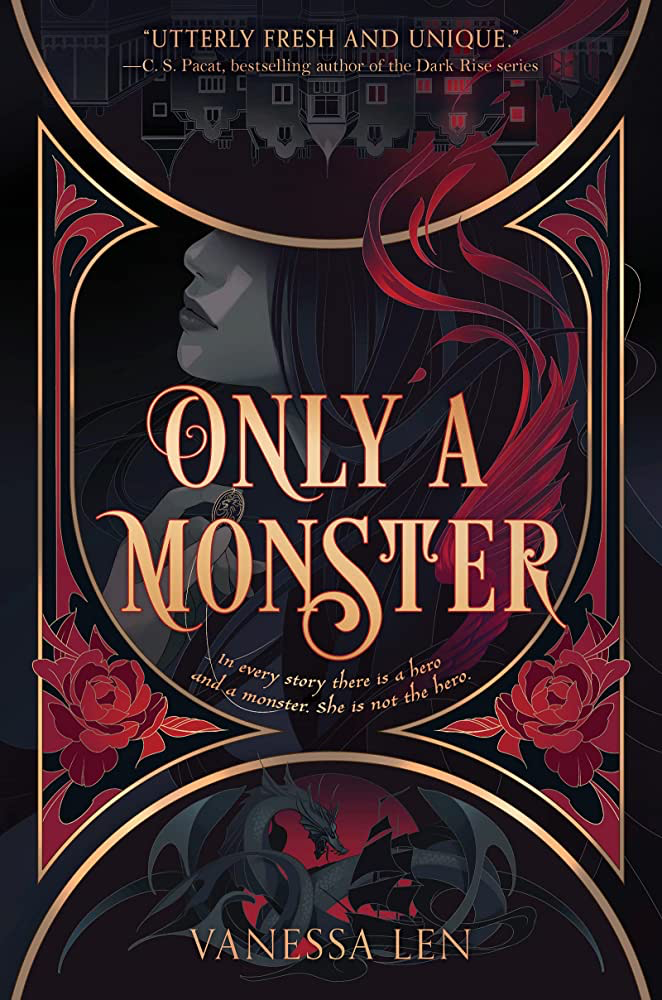
  • Only a Monster – Vanessa Len | I really, really wanted there to be some nuance, but no. Apparently we just had to have the themes beaten into our heads with a crowbar.
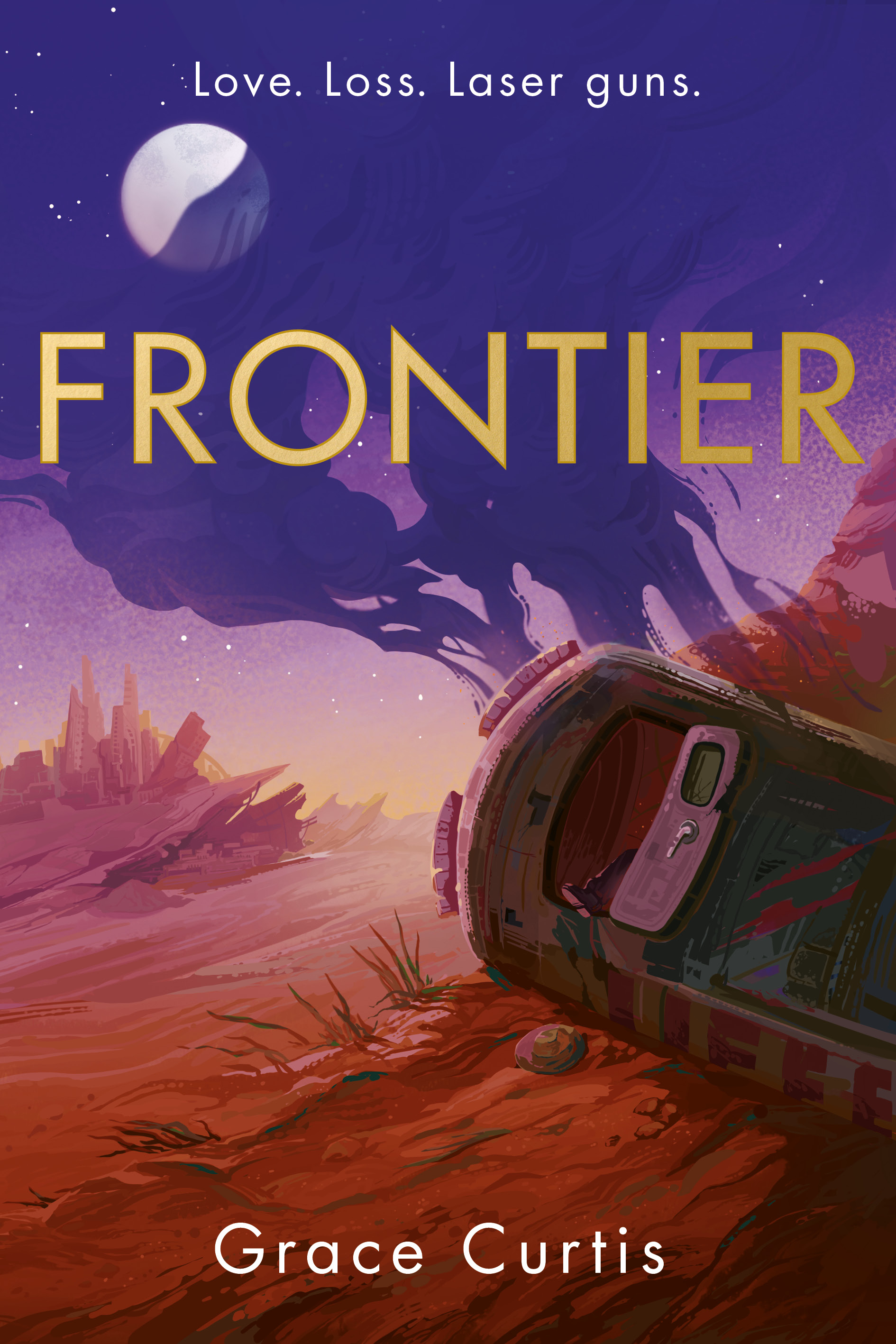
  • Frontier – Grace Curtis | for the fascinating premise it had, this novel just felt so…boring? For a book with the tagline of “love. loss. laser guns,” you’d think there would be more action, but every plot point just blurred into the next.
  • The Sevenfold Hunters – Rose Egal | this was my first DNF of the year, but it was more out of a feeling of “I have neither the time nor the will to read any more of this” than “I hate this book with a passion.” Even still, there were a lot of problems I had with what I read—mainly the implausibility of everything happening to the characters (and them emerging almost unscathed every time) and the sin of listing off every single character’s sexualities instead of organically weaving in their representation in a way that didn’t feel like checking off boxes.

A COVER BUY?

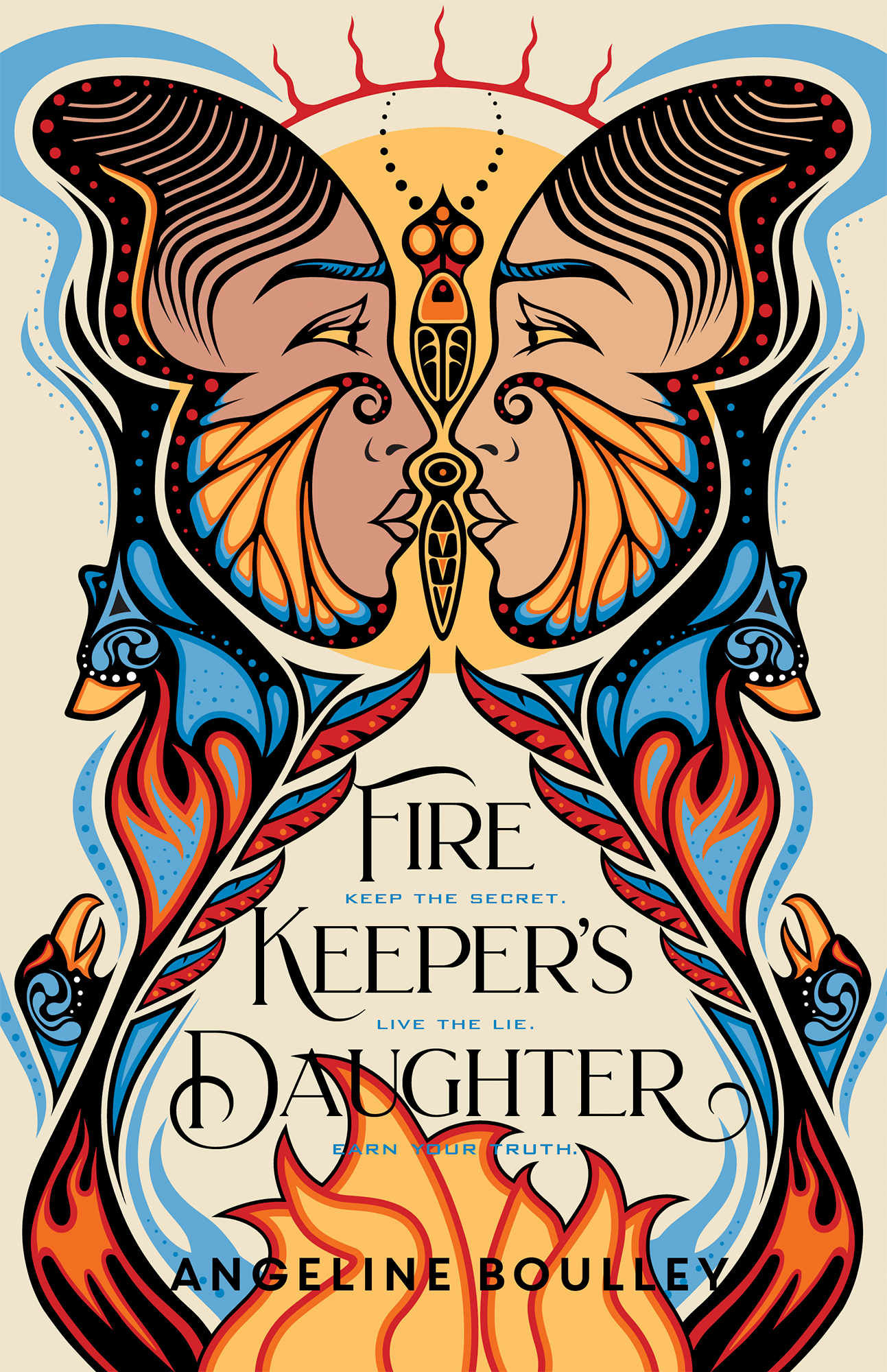
I put off reading Firekeeper’s Daughter for quite some time, but after reading Warrior Girl Unearthed, I was fully convinced to buy this one…but the cover was a significant part of the sell. Absolutely gorgeous design, isn’t it?

A BOOK YOU OWN BUT HATE THE COVER OF?

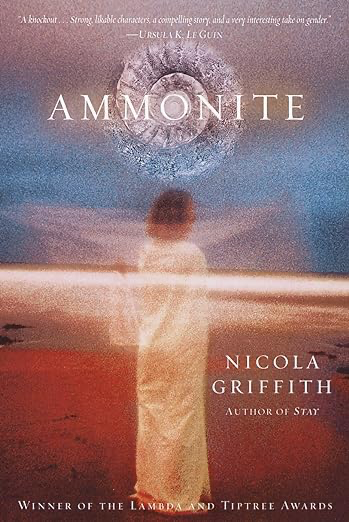
I don’t hate the cover of Ammonite, but it kind of screams “graphic design is my passion,” y’know? Gotta love the ’90s.

A BOOK YOU HAVEN’T READ IN YEARS?

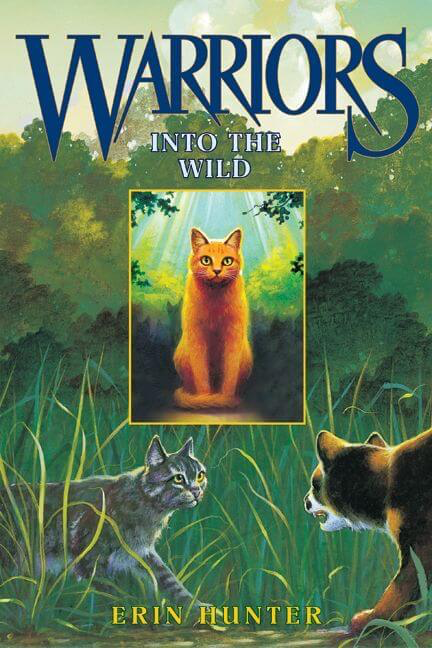
It’s been at least a decade since I’ve picked up any of the Warriors books, but those consumed my life from 3rd to 5th grade like nothing else had before…god, those were the days. Nothing like cats violating every single term of the Geneva Conventions for some after-school reading.

A BOOK YOU WILL ALWAYS RECOMMEND?

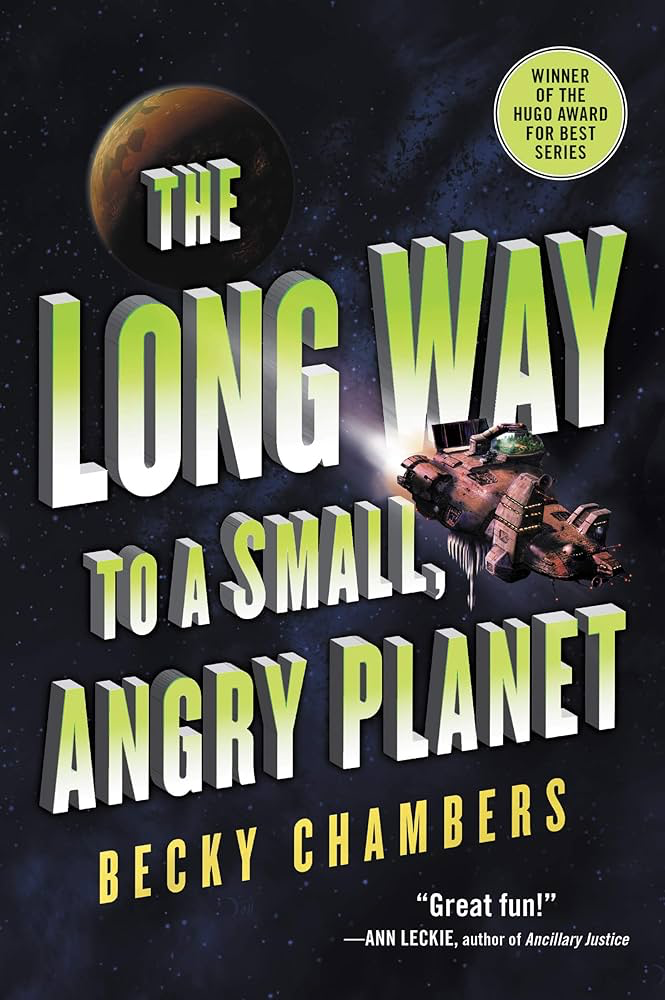
Every time I go to any bookstore with friends, I inevitably try to steer them over to this one. The Long Way to a Small, Angry Planet is truly special. I swear.

ALL TIME FAVORITE BOOK SERIES?

Y’all already know the answer to this one…

WHERE DO YOU READ?

Mostly in bed or on the couch, but when the weather’s warm, I read outside, and when the weather’s cold, I read in the campus coffee shops.

I TAG ANYONE WHO WANTS TO PARTICIPATE!

Today’s song:

That’s it for this book tag! Have a wonderful rest of your day, and take care of yourselves!
Posted in Sunday Songs

Sunday Songs: 4/21/24

Happy Sunday, bibliophiles! I hope this week has treated you well.

This week: bright green to match the verdant buds sprouting on the tre—oh, god, not again, WHY IS IT SNOWING…

Enjoy this week’s songs!

SUNDAY SONGS: 4/21/24

“Questions and Answers” – The Apples in Stereo

Note: this isn’t the official music video (there isn’t one), but it is in my eyes. Somebody just put this song in the background of videos of their cats in 2009. And they’re some friggin’ cute cats. I miss the days when YouTube used to be a simple, wholesome place…

I would have talked about this album…oh, a good three weeks ago, but I stubbornly made several color palettes that didn’t match Her Wallpaper Reverie at all, so I’ve regretfully withheld from it until now. Somehow, it was only the second Apples in Stereo album that I’ve listened to all the way through (the first was Travellers in Space and Time, but that was ages ago, so this felt like the first), and it’s just about the jangliest, summeriest (glad that’s actually a word) album I’ve heard in ages. By then, Robert Schneider and company had carefully chiseled their craft so that everything sounded like either a lost Beach Boys demo, some kind of space-age, robot dance break, or somewhere in between. (You’d be surprised at the commonalities between the two. They make it work.) You’ve got the cut-and-dry indie, almost Pavement-like “Benefits of Lying (With Your Friend)” on one end, and “Drifting Patterns,” a thicket-dense, borderline anxiety-inducing instrumental that sounds like it should be playing in the entry hallway to the space exhibit in the Denver Museum of Nature and Science on the other, but there’s no sense that either are out of place; strung together by a sprinkling of instrumental bites that clock in at less than a minute long, Her Wallpaper Reverie just feels like a showcase of the exact range that The Apples in Stereo are all about.

“Questions and Answers” stood out as a favorite for me—it’s squarely on the “we’re making the jangliest jangle-pop song known to man and we cannot be stopped” side of The Apples in Stereo, but you know me. I’m eating it up. It’s such a shame that Hilarie Sidney, their longtime drummer, left the band in the first place (but it’s understandable, given that she’d just recently divorced Schneider), but I find myself wishing that they’d lent her more opportunities for her to have lead vocals (see also: “Sunndal Song” and “Stay Gold”). She has a command of her voice in such a similar way to Schneider that they both could fit into any song he wrote; they both have a nasally quality that never grates—it just would feel weird for an Apples in Stereo song to not be nasally sung, somehow. But in this case, Sidney was the better choice to lead “Questions and Answers”; as much as I love Schneider, I can’t quite see him getting quite the same vocal sway and tightness that Sidney brings here. Maybe that’s because I’m having trouble envisioning him singing in the same key that Sidney is singing in, but I swear that “Questions and Answers” wouldn’t be the same without the way that she stretches the vowels in “moon” out like taffy in the hot sun or her unrelenting devotion to this song’s impressively airtight rhythm.

…AND A BOOK TO GO WITH IT:

The Long Way to a Small, Angry Planet – Becky Chambers the bounciness of “Questions and Answers,” plus all of the references to moons and star maps, would fit right into Chambers’ cozy galaxy.

“Yesterday’s World” – Circulatory System

Yup. Sorry. Get ready for some more Elephant 6-posting this week. Sometimes the urge just overcomes me.

Elephant 6, in terms of its bands, tended to cross-pollinate quite a bit: chances are, if you take any given band from there, at least three members of said band will have been in or formed other bands on their own, also in Elephant 6. Jeff Mangum of Neutral Milk Hotel fame was, for a time, in The Apples in Stereo, as was Bill Doss (rest easy), who was half of the brains behind The Olivia Tremor Control. It branches inwards infinitely. Circulatory System was an offshoot of The Olivia Tremor Control, fronted by Will Cullen Hart, and…I hesitate to outright call it Olivia Tremor Control 2: Electric Boogaloo (2 Tremor 2 Control), because that really isn’t a complaint on my part. We need more bands like The Olivia Tremor Control, and we need more of their sense of…well, fun. “Yesterday’s World” is glee cleverly disguised as a serious, psychedelic shredder. Yes, you’ve got the churning guitars, but woven in between them is a chorus of young kids (who faintly go off-script in the background), a quivering assembly of woodwinds, and marching band-like drums towards the end. With the lyrics factored in, I can’t help but think that these childlike elements were stirred in to nail in this desire: “Yesterday feels/Feels just so far away/From these days.” At the age that I’m at, I’ve been frequently grappling with the same thing; now, more than ever, I am both physically and chronologically distanced from the freedom of youth, but there’s also the growing “get a job/move out/etc.” pressure of age and capitalism. Such a fun age. Time moved too quickly for me to grasp that those days wouldn’t last forever. I’m glad I tried to train myself at 18 into knowing that age doesn’t mean that the joy gets sledgehammered out of you the minute you become an adult, but it’s an ongoing process, and I’d be lying if I said that I’d mastered it. For now, all I can do is the same of what Circulatory System are doing: integrate those moments of childhood and freedom into my newly adult life. They have their chorus of smiling, jumping kids within their music, and I’ve got the battered copies of my favorite book series from elementary school on my dorm bookshelf. Yesterday’s world isn’t always out of reach, even as we must live in the world of the present. Keep the kiddo alive.

…AND A BOOK TO GO WITH IT:

The Psychology of Time Travel – Kate Mascarenhasyesterday’s world has been reached…

“Jesus Came from Outta Space” – Supergrass

Seems that rock n’ roll, as a collective, has come to the conclusion that this is where Jesus has been chilling out all this time: as Robyn Hitchcock put it, “out on the rim of space.” Seems that Supergrass also came to the appropriate conclusion about how Jesus would feel if he were to see the state of the world as it is now: disappointed. (Remind me again of which part of the Bible told you to harass trans kids? Oh, you can’t find it? How strange…) At least, if anything, we can take this message with us, whether or not it’s delivered from Jesus or Gaz Coombes: “Love is all, love is tall, love is older than you/Love’ll talk, love’ll walk, love’ll speak up for you/Love’ll shake, love’ll wake, love’ll wake up with you.”

…AND A BOOK TO GO WITH IT:

The First Sister Linden A. LewisI raise you: Jesus in outta space? (Sort of?)

“Kill Me” – Indigo de Souza

Through only a handful of songs, it seems to me that Indigo De Souza has mastered the art of being really, truly, messy. It’s not just messy through a few sparing, self-deprecating lyrics about how far you’ve dug yourself into a sinkhole of misery. No—there’s some of that, but if there’s anything that her music does, it’s drag you right along with it, in all of its exhausted, cake-smushing glory. Riddled with aftershocks of a breakup, “Kill Me” crawls along the floor on its hands and knees, snuffling for scraps amongst the rubble, searching for something to hold onto. Oscillating between said “kill me” refrain in its handful of variations and a poisoned urge to crawl straight back to the person who caused all this strife, it’s a song, like “What Are We Gonna Do Now,” that feels like a frozen time capsule: minutes after the phone call that ended things, tear stained, dirty-clothed, and desperate—for answers, for comfort, and for reciprocation. It’s a raw-throated kind of desperation, but one that replicates the feeling of looking down at yourself in your grease-stained shirt and asking yourself what the hell happened to me? There’s a sardonic humor in the way that De Souza declares: “No one asked me/To feel this fucked up/But here I am, fucked up,” an exhausted chorus barking out the final “fucked up” along with her. “Kill Me” moves along like paint spilled on the floor, seeping into the floorboards no matter how much you try to scrape it out, muddying into an ugly mess of what used to be good colors into the woodgrain.

…AND A BOOK TO GO WITH IT:

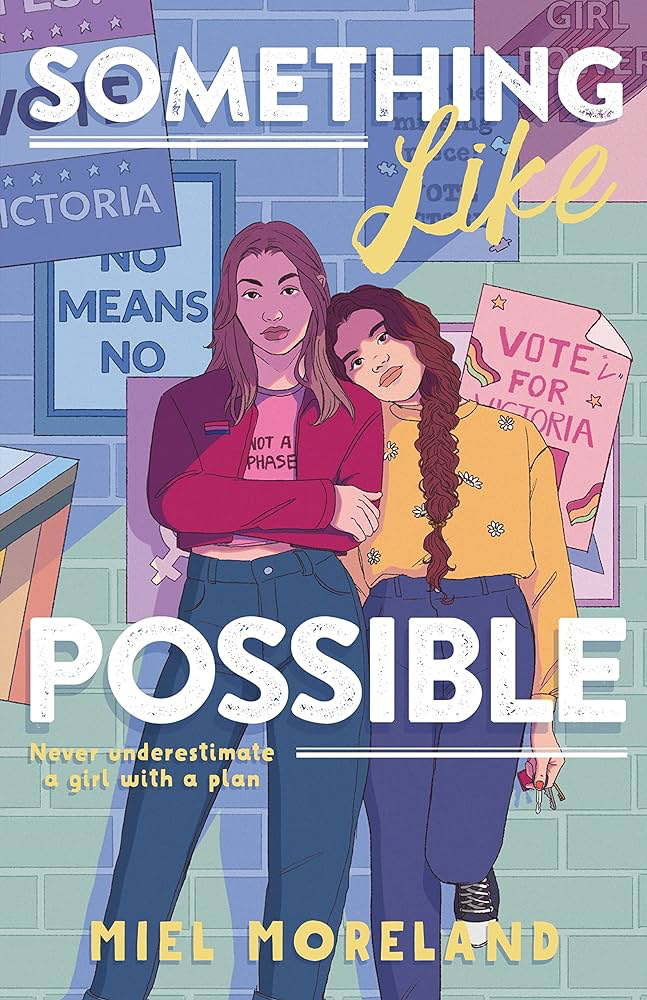
Something Like Possible – Miel Morelandpost-breakup exhaustion and misery that leads to blossoming growth—and new love.

“I Miss You(r Dog)” – Addison Grace

Following on my unintentional train from Lisa Hannigan’s “What’ll I Do” last week, here’s another lighthearted breakup song. Unlike Hannigan, it’s not so much laughing through the pain, but this one laughs more at an aspect of breakups that not enough songs talk about—the pets that get dragged into it. It’s a fact of life: sometimes toxic people have really lovable pets. They’re innocent. They didn’t have to get into this mess, but here we are. Granted, it is slightly weird that Addison Grace basically treats said dog like it’s a child that he’s battling for custody over, but it adds to the humor. It’s just a silly song through and through, from the bait-and-switch parentheses in the title to the purposefully placed sound effects (“I’m sure you told all your friends that you think I’m a [dog bark]”…ba-dum tsssss). And for all of the breakup songs wallowing in self-pity, sometimes all you can do in that situation is laugh and fixate on the silly parts. Or, if you’re Addison Grace, get it through to said ex that their dog deserves a birthday befitting a king.

…AND A BOOK TO GO WITH IT:

Radio Silence – Alice Osemanthis one isn’t specific to this book, but more Oseman’s larger universe—given how much music seems to inform her creative process, this song is just begging to be included somewhere in it. Feels in line with her penchant for cheery but emotional indie pop.

Since this post consists entirely of songs, consider all of them to be today’s song.

That’s it for this week’s Sunday Songs! Have a wonderful rest of your day, and take care of yourselves!
Posted in Book Review Tuesday

Book Review Tuesday (4/16/24) – Happy and You Know It

Happy Tuesday, bibliophiles!

Happy & You Know It was a book that’s outside of my usual reading comfort zone—I’m not usually a realistic fiction person, and it seemed literary, though it didn’t end up being very much so. Either way, the premise was enough to grab me out of my sci-fi/fantasy stint, and though it wasn’t executed the way I wanted it to be, Happy & You Know It was still a biting and entertaining piece of satire.

Enjoy this week’s review!

Happy and You Know It – Laura Hankin

Claire Martin has been unceremoniously thrown into the lowest point in her life. After her band, Vagabond, replaces her and rockets to stardom not long after, she’s left with fewer and fewer options to keep a job—and pay the rent in New York City. But when the opportunity presents itself to become a playgroup musician for a cohort of rich, Manhattan moms, Claire jumps at the chance—she’ll be paid for music again, even if it’s just singing nursery rhymes, and they’ll surely pay her exorbitantly. Claire is thrust into a world of mommy influencers, babies that are too well-dressed for their own good, and a multitude of secrets. This playgroup isn’t what it seems—and Claire may have been sucked into their whirlwind of lies too late…

TW/CW: substance abuse, cheating/affairs

Given the first page, I was expecting for Happy & You Know It to be a wilder ride than it actually was, but that’s not to say that it was a bad novel. Though I feel like the plot didn’t reach its full potential, it was still a fantastic piece of satire—biting, timely, and hilarious at all the right times.

The gauntlet you always have to run when writing satire—or any genre, honestly—that’s somehow involved with social media is making it sound realistic. Too often, authors heavily force a hand of making sure the characters use all of the right slang and terminology, and end up falling headfirst into what looks like a boomer’s distorted vision of the internet and how it operates. I was bracing myself for Happy & You Know It to have some of those trappings, but thankfully, none of that was to be found! Hankin’s depiction of this inner circle of rich, Manhattan mommy influencers felt scarily true to how such figures act, from the curation of every little aspect of their lives down to the tone-deaf, over-the-top names for their babies. It was ridiculous, but that was precisely the point—those kinds of influencers who treat their growing babies like playthings for them to dress up so they can get more likes is ridiculous, and Hankin clearly understood how twisted it gets when these behaviors are pushed to the extreme.

Claire was a perfect protagonist for Happy & You Know It: an outsider who is morbidly enchanted by this world of kale smoothies and sponsorships, but is so desperate that she falls in too deep just when she realizes how right her instincts were about the morbid part. Hankin did a fantastic job of detailing all of her motivations—given the care that was put into crafting her extensive backstory with her former band and the constant, emotional reminders she gets from their stardom, almost all of what she did made sense. She’s just the kind of person who thinks that she’s smart enough to run from a dangerous situation, but cornered enough to convince herself that she can make it out unscathed. I almost with that this novel was entirely from her perspective, and we didn’t get the POV shifts from most of the playgroup mom—I guess we wouldn’t have explicitly seen the details about Whitney and Christopher’s affair, but I’m sure there’s a way that it could have been revealed. The less we knew about the moms, I think, the better.

Perhaps that was part of what made the initial reveal about the true nature of the TrueMommy supplements (no spoilers) fall slightly flat—part of it may have been that it was a bit predictable, but part of it was that we knew too much about the rest of the moms. By the time that this reveal kicks in past the halfway point, my Spider-sense was already tingling—too much for how far into the novel it was. This amount of time should’ve been enough to ramp up the suspense, but I feel like I saw too much into their heads, and therefore, had a good guess of what the first twist was going to be. Especially since we only got some of the moms’ perspectives (Whitney, Gwen, and Amara), I feel like the balance was off. With Claire as an “outsider looking in” protagonist, it would have worked so much better if that secrecy was also confined to her POV—and nailed in that feel of the novel.

On that subject, given how gloriously over-the-top the introduction was, I expected the culmination of said twist to be a lot more dramatic than it was. It looked so messy from the start, and yet the ending felt wrapped up far too neatly—just a moment of confrontation, and then a time skip where everyone is (mostly) living happily ever after in wake of this supposedly drastic revelation. The one red herring we sort of got felt too obvious, and so it was easy to point to the real perpetrator, which dampened the effect. The setup didn’t match the end result—I guess I did want more of a disastrous downfall for almost all parties involved (can you tell I like Fargo?), but if you specifically have an introduction to hint at some spectacle of corruption and ruin, it needs to deliver—and unfortunately, Happy & You Know It missed the mark on that front.

All in all, a slightly disappointing mystery, but a deeply fulfilling and sharp satire. 3.5 stars!

Happy & You Know It is a standalone, but Laura Hankin is also the author of The Daydreams, A Special Place for Women, and the forthcoming One-Star Romance.

Today’s song:

aaaaaaaaaaand that’s another album added straight to my bucket list

That’s it for this week’s Book Review Tuesday! Have a wonderful rest of your day, and take care of yourselves!
Posted in Sunday Songs

Sunday Songs: 4/14/24

Happy Sunday, bibliophiles!

This week: only one question remains…can you dig it?

Enjoy this week’s songs!

SUNDAY SONGS: 4/14/24

“What’ll I Do” – Lisa Hannigan

A small but vibrant joy of life: songs coming back to you when you least expect them to. Not long ago, I just had a fleeting memory of the chorus, and so I went back through Passenger to try and find the exact song (because I was not about to google “Lisa Hannigan song that goes oh oh oh oh eh eh ah ah ah eh eh”). Luckily, it didn’t take much digging, and now I have this parcel of dancing happiness.

One of the top YouTube comments on the music video for “What’ll I Do” calls this song “the happiest sad song ever,” and there’s really no other way to describe it. Lisa Hannigan does have a penchant for belting out her melancholy, but this one somehow feels happy, even though it’s about a breakup; the lyrics are like watching an slapstick comedy where miserable event after comically miserable event starts crashing down on the protagonist (“What’ll I do now that you’re gone?/My boat won’t row, my bus doesn’t come/And I have the fingers, you’ve got the thumb”), but somehow, they’re smiling through the pain, and clicking their heels for the heck of it. “What’ll I Do” sits squarely at the point where so many bad things have happened to you that you just have to laugh—there’s no use in being miserable anymore, so why not just have a laugh at yourself and do a silly little dance? And Hannigan has juiced that emotion out in barrels, making this circus of bad luck into a full-on show, a folksy singalong that’s begging for a line of cheerful dancers. I wouldn’t complain about that for the music video, but the one that we do have is hilariously fitting as well—seemingly filmed from a phone, the whole video is Hannigan singing the song while on a rollercoaster; the camera shakes incessantly, and she has to break the lip sync at least twice just so she can grab her hat before it flies away. (I get it. We’ve all been there. Currently thinking about this Hello Kitty baseball cap that fell off while I went to Legoland that one time. I never forgot about you…) Like the lyrics, it’s a rollercoaster that’s already dragged you around and thrown you up in the air, making you want to puke, but there’s nothing left to do but have a laugh until the ordeal is over.

…AND A BOOK TO GO WITH IT:

Reggie and Delilah’s Year of Falling – Elise Bryantthe story of a distant crush told through holidays, all while reconciling with current relationships gone stale and grappling with changing feelings.

“Dust Bunny” – Crumb

Crumb? Making somewhat uptempo music? It’s more likely than you think.

…I actually mean that seriously, for once. Other than a handful of songs off of their last album, Ice Melt, Crumb has been known for their calm—gentle, electronic dream-pop melodies that drifted along like the bubbles in a can of soda, and tasted of that same sweetness. At least, that’s how I think of their music—in the past few years, they’ve been the band that my mom puts on when she needs to focus on her (incredible!) art, or just do some cleaning—any task that necessitates some calming of the brain. Crumb have recently announced the release of their third album, AMAMA, which is set to release just over a month from now (!!)—May 17. I initially missed “Dust Bunny” when it was released as a single last year, but now that I’ve listened to it alongside “AMAMA” and “Crushxd,” it seems like some sort of shift is on the way for the band…even if it is just the tempo. “Dust Bunny” has picked up the pace, letting the drums take the wheel as the frantic energy blossoms from the (always plentiful) synths. As evidenced by the underwater-sounding effects on both the instrumentation and Lila Ramani’s voice, they’ve never lost that wooziness that coated their earlier songs like syrup (see “Locket”), but the molasses has melted enough to allow for their constant wiggling to speed up. The lyrics, too, feel like a far cry from “I don’t have class/Got a lot of time on my hands/To sit, wait around…”; just as with the music, Ramani recalls a vignette of panic and guilt: “You’re seeing a ghost/Can’t undo what’s been done/Forever no more/Stacks of clothing fill your room, you/Can’t find one thing to return.” Despite the spaciness of the synths, there’s no doubt that it’s morphed from danceable upbeat to the kind of upbeat that’s only so because it soundtracks the search for your sprinting around the house to try and find your keys 5 minutes after you were supposed to leave for work; or, if we’re sticking to the metaphor, trying to get that one dust bunny out of your dorm before your RA comes to do a room inspection so that they don’t think you’ve been living in a pigsty this whole time. But that panic never overwhelms the music—being so cloaked in color-changing mist and melting shapes as it is, it’s still the same ol’ Crumb deep down.

…AND A BOOK TO GO WITH IT:

And Other Mistakes – Erika Turnerreconciling with the weight of your past actions and other people’s perceptions takes center stage in this novel.

“Can U Dig It?” – Pop Will Eat Itself

Yet another infectious earworm that I have my dad to thank for, and also, I can definitively say that I’ve found it: my favorite band name. I mean, come on. Pop Will Eat Itself? How true is that? And doesn’t it just sound so cool as a name?

If you’re expecting their songs to be a meditation on the nature of pop, as their band name is, I’m not entirely sure if you’d be satisfied. Granted, I’ve only heard two of their songs (including this one—check out “X, Y, & Zee” for more), and neither of them concern their lyrics with such things. What they’ve got is something far superior: four and a half minutes of listing off comics, movies, TV shows, and bands that they like—sorry, dig. And it’s a blast. Aside from the fact that I never anticipated Alan Moore ever being directly referenced in a song, it’s just a catchy, synthy, fandom-fest—I’m surprised that this hasn’t been accepted as some kind of comic con anthem. Plus, there’s the enhancement of the music video, in all of its terrible ’80s CGI glory—lots of old TV sets floating around in the ether and the band members superimposed over panels from Watchmen and The Killing Joke. It’s the nerdiest club banger I’ve ever heard. What else is there to say? It slaps. Glad we can formally acknowledge that Alan Moore knows the score.

…AND A BOOK TO GO WITH IT:

…well, pretty much anything that they mention in this song: The song is basically a reading list in and of itself, so…

“Poo Pants” – Cyriak

It’s a metaphor for capitalism.

…AND A BOOK TO GO WITH IT:

The YouTube description: Marx who?

“Somebody Up There Likes Me” – David Bowie

And that’s another Bowie album for the books! As…incapacitated as he was during that period, Young Americans feels like the first album of proof of how easily it came to Bowie to slither in and out of genres as easily as most people stroll through an open door. It oozes with slickness—somewhere in my mental periphery, this album exists solely in a smoky nightclub as midnight ticks by, clammy with warmth and blasting with saxophones. Personally, sometimes the sax went on a little too long for my liking (see “Win”), but for the most part, Bowie knew exactly how much to smear about—and make it sound deliciously raw and sultry.

But sultry isn’t all that the album boasts—Bowie always has something clever and meditative up his sleeve. Fresh off of Diamond Dogs, which was full of the proposed contents for a musical version of George Orwell’s 1984 which he never got to make, Bowie had Big Brother on the brain; the kind of theatricality that what I’ve listened to of Diamond Dogs suits a musical well, but as he turned his genre gaze to soul, it almost feels like he had that sultry quality in mind and turned it into deliberate deception. The subject of “Somebody Up There Likes Me” is the sleaziest of the sleazy—a politician who seems to float amongst his subjects without any fear of retribution: “He’s everybody’s token, on everybody’s wall/Blessing all the papers, thanking one and all/Hugging all the babies, kissing all the ladies/Knowing all that you think about from writing on the wall.” As the saxophone howls, Bowie’s fictional figure struts through the street, stopping once in a while to sweep a woman up into his arms and plant a kiss on her cheek. But every act of generosity is an empty one—this is someone grooming the public along with his own image, putting on a show of authenticity just to get them to cough up the spare change from their pockets. Bowie sums it up in the bridge: “Was a way when we were young, that/Any man was judged by what he’d done, but/Now you’ve pick them on the screen (What they look like).” Fresh off the heels of Nixon, I’m sure this was already closer to the political climate than most people wanted to admit, but I can’t help but think of how this has only been exacerbated—and not just in the 21st century. We got Reagan only a handful of years after Young Americans was released (there’s a “savage son of the TV tube” for you), and the cycle has only repeated itself in the years since. But for me, the genius in this song isn’t necessarily about the message, timely as it continues to be; this song could have been put in any of his albums, but having it on Young Americans makes the sleaze glow like neon. Setting this politician against the backdrop of a distinctly American sound, something that comes off so howling and genuine, encapsulates that political climate disturbingly well—a façade of a clean-cut, American man of the people with charm and sex appeal, but with all manner of evils stowed just out of reach of the cameras. The soundscape of Young Americans begs for some kind of old Hollywood love story, and Bowie knew it—and he took that atmosphere to its most perverse extreme just to make it ring true.

…AND A BOOK TO GO WITH IT:

Some Desperate Glory – Emily Teshskeevy politicians persist into the future…

Since this post consists entirely of songs, consider all of them to be today’s song.

That’s it for this week’s songs! Have a wonderful rest of your day, and take care of yourselves!
Posted in Book Review Tuesday

Book Review Tuesday (4/9/24) – A Tempest of Tea

Happy Tuesday, bibliophiles!

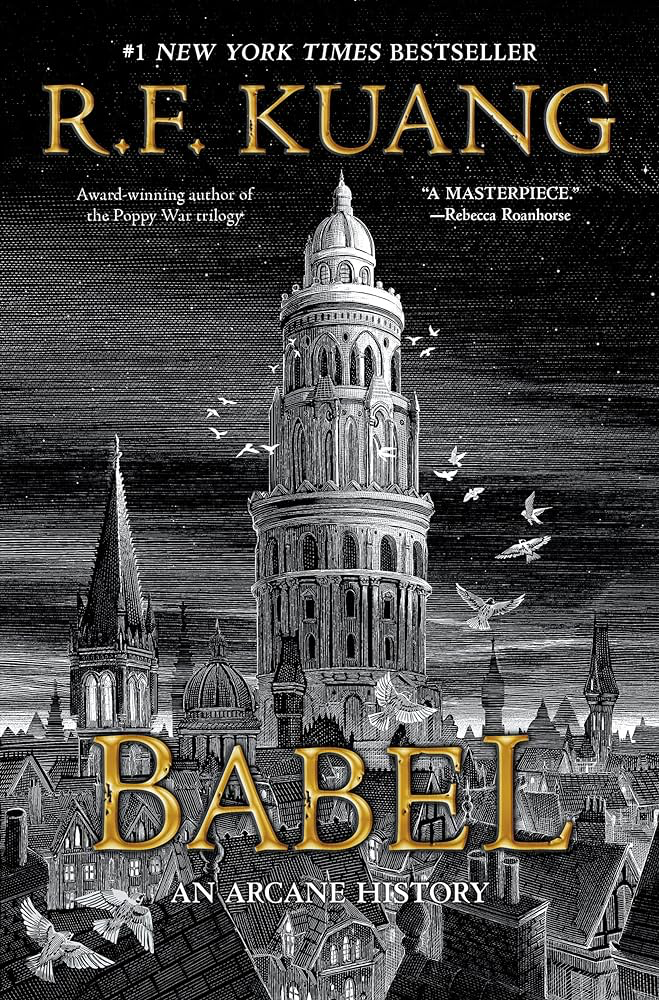
I enjoyed Hafsah Faizal’s Sands of Arawiya duology when it came out, but when I heard that she was doing a fantasy heist novel with vampires and tea involved…yep. I’m in. No questions asked. And like her previous books, A Tempest of Tea was full of heart, humor, and more than a little blood.

Enjoy this week’s review!

A Tempest of Tea (Blood and Tea, #1) – Hafsah Faizal

Arthie Casimir runs a tight ship. By day, she runs a tearoom, but as soon as night falls, it’s a hub for vampires. It’s her only livelihood, and the one thing keeping her off the streets. But her secret is slowly spilling out—and the only way to keep it under wraps—and running in the first place—is to make a deal with some of the most dangerous vampires in the city. And infiltrating their inner circles isn’t a job for just one person. With a ragtag crew at her back, Arthie finally has an in—but will they be able to get out in one piece?

TW/CW: loss of loved ones (past), blood, gore, violence, themes of colonialism, racism, human trafficking/kidnapping (past), fire

Everybody, say it with me: every YA fantasy novel with an ensemble cast and a heist plot isn’t ripping off Six of Crows! Every YA fantasy novel with an ensemble cast and a heist plot isn’t ripping off Six of Crows!

Sure, the inspiration is there (it’s hard not to be inspired by Leigh Bardugo, after all), but like The Gilded Wolves or Into the Crooked Place, the similarities end with a fantasy heist plot with multiple POVs. (The same cannot be said for Among Thieves. BOOOOOO.) I already had high hopes that Hafsah Faizal had the skill to pull off a fantasy heist of her own, and she more than delivered—A Tempest of Tea was nothing short of a delight from start to finish.

Hafsah Faizal has a knack for creating lovable characters, the kind that easily bounce off one another and produce no shortage of genuinely clever banter. I’m glad to say that this quality carried over tenfold into A Tempest of Tea! Arthie was such a compelling protagonist to follow; her wit and determination made her the perfect mastermind for the Athereum heist, and her charm made every line of dialogue a treat. Her relationship with the equally charming Jin made for a pair with instant chemistry—they were similar enough that they meshed with each other excellently, but different enough to make them unique assets to the team that they were building. Flick, though the least developed of the three, was just as compelling—I find myself wanting so much more of her backstory! I imagine we’ll get more of that in book 2, but having that part of her somewhat hidden gave her so much more appeal, especially given that she was instrumental to the heist.

The setting was equally lovable in all of its lush descriptions! Already, it’s just pure fun to begin with—a historical, London-like setting with vampires embedded in the culture—what’s not to like? There’s really not a whole lot of magic, but just by introducing vampires and having them affect Arthie’s world in the ways that they did made A Tempest of Tea so much fun to pick apart. A lot of those shifts were evident in the changes Arthie made to her teahouse (and bloodhouse) when night fell—subtle hints like those made the world feel so much more real—and under a very palpable strain. The vampires themselves weren’t the most original take on vampires I’ve ever seen (not really much to distinguish them from any other vampire), but Faizal’s way of writing them is what made them stand out—they were often alluring, but in a way where the predatory side of them was transparent, but their influence of the characters was as well.

Part of why I was so excited for Faizal to do a heist novel was that her style seems like it was made for that all along. She has such a cinematic, action-packed writing style that made the Sands of Arawiya books such an adventure. It seems like more years of writing experience under her belt have benefitted her greatly—all that time honing her writing made A Tempest of Tea a finely crafted heist novel! All of the beats were there, and though they were familiar, Faizal’s writing practically jumps off the page, making the atmosphere seep through the ink and drag you right along with Arthie and her band of outcasts and criminals. There’s tons of well-choreographed action, but just the right amount that it didn’t overwhelm the narrative. Up until the ending (more on that later), the pacing was similarly excellent—the balance of character development/backstory, worldbuilding, and delicately constructing the plot made for a book that I had to force myself to not read in one sitting.

However, my only major issue—and the only thing keeping me from giving it the full four stars—is how the culmination of the heist was executed. We got all of the tension of sneaking into the Athereum and some of the confrontation, but the execution of it felt incredibly rushed. I could almost stretch my suspense of disbelief enough to side with Faizal and say that it was supposed to feel like a blur, but that’s reaching, even for me. There were far too many twists and turns crammed into a single scene, and for all of the somewhat quiet scenes that went on earlier in the novel, I could have used some more page space to spread all of these events out. It was discombobulating, but not in a way that felt stylistic or intentional in any way. It also dampened the emotional impact of the ending—we’d been going so fast that I barely registered that the book had actually ended when it did.

All in all, an action-packed heist fantasy that faltered in some execution at the end, but flourished in its cinematic writing and characters. 3.75 stars, rounded up to 4!

A Tempest of Tea is the first book in the Blood and Tea duology, with an untitled sequel tentatively slated for release in 2025. Hafsah Faizal is also the author of the Sands of Arawiya duology (We Hunt the Flame and We Free the Stars), and has contributed short stories to the anthologies Eternally Yours and The Grimoire of Grave Fates.

Today’s song:

That’s it for this week’s Book Review Tuesday! Have a wonderful rest of your day, and take care of yourselves!
Posted in Sunday Songs

Sunday Songs: 4/7/24

Happy Sunday, bibliophiles! I hope this week has treated you well.

This week:

Choose the best answer: You can blow with:

a) This

b) That

c) Us

d) All of the above

Enjoy this week’s songs!

SUNDAY SONGS: 4/7/24

“Flea” – St. Vincent

Affirmation of the week: I have listened to this song a healthy amount of times. At least I didn’t pull the “listen but nothing but this song for almost four hours straight” stunt that I did with “Broken Man.” See? I’m better now. I’m savoring this one, and by “savoring,” I mean “listening to it slightly less, but still putting it on repeat for at least half an hour when it comes on shuffle.” What new St. Vincent does to an mf.

“Broken Man” is shining proof that All Born Screaming has a good chance of being my album of the year, but somehow, Annie Clark outdid herself even more with this latest single. I’m glad that “Broken Man” and “Flea” are tracks three and four on the album, respectively; even past the fact that they fit so slickly together, I like the idea that the title and closing tracks are a secret—she’s got something insane up her sleeve. I can just tell. After “Broken Man”‘s torrent of fury, vengeance, and Dave Grohl’s drumming, “Flea” makes the transition into the outright bloody—not bloody in the sense of the trail of destruction that “Broken Man” left, but in the sense of parasitism. Clark described the upcoming All Born Screaming as being bred in “That kind of isolation [that] breeds paranoia and loneliness…loneliness can breed violence.” Now I can see exactly where the whole “post-plague pop” label she stuck on it comes from. “Flea” slinks along on tiny, pointed legs, thrumming with a racing heartbeat and an insatiable thirst for blood; the repetition of “Once I’m in, you can’t get rid of me” is sung lower and raspier, a threat paired with a predatory lick of the lips. The kind of loneliness and violence Clark described seems to be exactly where this kind of sinister lust comes from—being isolated for so long could easily make love turn to lust, and lust consequently to hunger, so drained of human touch that what was once affection has become leeching for nutrients at the other person’s expense. And everything about “Flea” sounds frighteningly hungry, down to the parched-throat rasp with which Clark delivers the verses. When she ends verse two with a dried-out confession of “I look at you, and all I see is meat,” followed by a faint belch in the background, I suddenly got the feeling that I was being watched by something waiting to tear me limb from limb and suck me dry. It’s intense, but it’s the kind of intoxicating thrill ride that I’ve taken with Clark for nearly ten years. And the chorus finds the narrator covered in someone else’s blood, begging for just one more bite; the desperation sloughs off like a second skin, every blood-soaked belt starved and howling. It’s a kind of visceral musicianship that I haven’t seen from St. Vincent in years; although Daddy’s Home was certainly raw, it was the kind of raw you get from getting someone enough wine to spill about their childhood trauma and laugh it off. All Born Screaming is about as raw as flesh itself—it’s all the clearer that Clark has no intention of pulling punches, and that’s exactly what makes a St. Vincent song so iconic. “Rattlesnake” and “Severed Crossed Fingers” don’t illicit waves of emotion in me for nothing—they’re hearts laid bare in the street. In other words: Clark is at her best when she’s herself. Should be a given, but it’s more evident in some albums than others.

God, April 26th can’t come any sooner…

…AND A BOOK TO GO WITH IT:

Hell Followed With Us – Andrew Joseph Whitedepending on how All Born Screaming goes, I might preemptively merge this with “Hell Is Here”…

“Tonight” – TV on the Radio

Aaaaaaaaaand, that’s one more album on the Sisyphean Album Bucket List. Between the “Wolf Like Me” (the best song there is about werewolves after this), the deeply moving “Province” with its David Bowie feature (YOU HEARD ME!!), and this, I now know that Return to Cookie Mountain has to make its way into the rotation. I have Chelsea Wolfe to thank for this one; at her fantastic show at the Gothic Theater in March, she played this before the show—I wouldn’t be surprised if she was a fan before, but I suspect that it’s a kind of thank you to the fantastic Dave Sitek, who produced her truly fantastic new album, She Reaches Out To She Reaches Out To She. Also, with a title like Return to Cookie Mountain, I feel like I just have to listen.

What “Tonight” made me realize about TV on the Radio is how effectively—and quickly—they can craft an atmosphere. Some of the most layered ones I can think of are from their early career, namely the first version of “Staring at the Sun” that appeared on their debut EP, Young Liars. Instead of the shorter version that made the cut for Desperate Youth, Bloodthirsty Babes, this one has a thirty second intro (that feels longer, honestly) that consists of just the a cappella vocals of the band, interspersed with an excerpt from a Spanish-speaking radio station. Even though the chatter on the radio station seems cheerful and singsong, the drawn-out gives it a prolonged air of foreboding and sorrow to come, like the next thing we hear will be the somber announcement of someone’s death. Thankfully, that doesn’t happen, but the first lyrics we hear on the heels of that are “Cross the street from your storefront cemetery,” which, bam. That’s how you start a song. When it comes to both of those aspects, “Tonight” operates in a similar way, creating an atmosphere that’s haunting before the instruments even kick in. With the whine of a distant siren and the ever-so-slightly distorted collision of wind chimes, “Tonight” instantly transports you to a place of brown grass and barren vastness, pockmarked by dead trees strung with glass bottles and the faint sounds of the road in the distance. The music seems to lumber with every step, a beleaguered creature that lurches with every step, as if its limbs are tied down with the wind chimes you hear tinkling throughout the song. Hollow whistles harmonize with a moaning clarinet and Tunde Adebimpe’s clarion call of a voice, all at once ragged and brimming with vitality. A fair amount of the buzz surrounding TV on the Radio when they got their start were vocals comparisons of his to Peter Gabriel, and it’s an apt one—they have a similar quality of being roughly visceral, but booming with emotion. Dave Sitek is also credited with “magic” on this song, which I cannot find a musical definition for the life of me, but if there’s anything that you would credit the man for, it’s that. He has the touch.

I often get so caught up in the atmosphere that I only mine the lyrics later, but the lyrics in “Tonight” pop out so prominently on the first listen; as the wind chimes huddle for warmth, Tunde Adebimpe’s voice cuts through them like a steak knife through fabric—”My mind is like an orchard/Clustered in frozen portraits.” How does this man do it? Every single line in this song is a literary gem in and of itself, and it’s not just because of the repeated references to Edgar Allan Poe’s “The Telltale Heart”—like heartbeats rumbling through flimsy floorboards, the lyrics never fail to send chills up my spine: “Her rusty heart starts to whine/In its tell tale time.” My rusty heart sure does whine whenever those lyrics wash over me. And like the sparse nature of the atmosphere, the lyrics tell of a spare mental space, one so full of sorrow and unpleasant memories that, like the telltale heart, cannot be pushed from the mind. The song still haunts me in a largely melancholy way, but it has an uplifting sentiment at its heart. I can’t help but think of Soundgarden’s “The Day I Tried to Live” and its similar atmosphere of doom, but its lyrical heart being the fact that despite all of the horrible things crashing down around you, there will always be something left to live for, so all you can do is push through. Adebimpe’s sentiment feels like wading through a slurry of unpleasantness that never seems to end (“Blossoms that bloom so fine, just to drop from the vine/I’ve seen them all tonight), but he makes the light at the end of the tunnel shine as bright as it can: “The time that you’ve been afforded/May go unsolved, unrewarded/Some nameless you cannot know, may be coming to show you/Unbridled love and light.” No matter how much you have to push down and wade through, never doubt that good things are coming. It’s something I struggle to hold to heart, but I’ve added this song as an unexpected guiding light. I can never know the future. It scares me. But there is certainty in the love lingering beyond my current time. There is always love.

…AND A BOOK TO GO WITH IT:

The Bad Ones – Melissa Alberta similarly haunting atmosphere woven from swirling memories.

“the rot” – Dean Blunt

Contrary to my graphic, this is not, in fact, that well-intentioned but ultimately regrettable black square everybody posted back in 2020. My text box accidentally cut out the 2 on Black Metal 2, the only thing distinguishing it from the cover of Black Metal, which is…also just a black square. Gotta admire Dean Blunt for committing to the bit.

I stumbled across this song thanks to Arlo Parks, who chose Black Metal 2 as one of her picks on her episode of Amoeba Records’ series What’s In My Bag?, where she also talks about my bloody valentine and happens to be wearing one of the coolest Radiohead shirts I’ve ever seen. The songs she discusses there—“VIGIL” and “the rot”—serve as bookends, the opener and closer of Black Metal 2, respectively. Both of them have the atmosphere of a massive curtain thrown over your eyes—you’re immediately thrown somewhere else in a space that Blunt has created; no time is wasted in transporting you into his world. While “VIGIL” has the tidal-wave mounting tension of strings to prop it up, “the rot” is the last, gentle minutes of a plane ride home. It’s a distinctly sunset song: you’re slumped back in your seat, golden light is spilling through the window, and you have the sense, more than ever, that a chapter is closing, but not necessarily in a negative way. You can tell that there’s a myriad of different instruments, but all of them are toned down to a faint crawl, strings gently winding, acoustic guitars drifting away like insects in the early evening. “the rot” in particular has such a gorgeous vocal contrast between Blunt and guest artist Joanne Robertson; like Phoebe Bridgers and Jeroen Vrijhoef on “Garden Song,” what grounds the song is the stark difference, although that of Blunt and Robertson feels much more natural and less jarring than the latter. Where Blunt has the warmth and thickness of the ocean lapping over a volcanic shore, Robertson’s words float like the breeze stirring the water. Both of them drift like motes of dust into the air, closing out Black Metal 2. Without even having listened to the whole album, I can tell how successful “the rot” is as a gentle closer.

…AND A BOOK TO GO WITH IT:

Echo North – Joanna Ruth Meyer – the frost, like the rot, lures you into the woods and makes you chase after old dreams.

“Weapon of Choice” – Fatboy Slim

Me when I walk without rhythm (I didn’t attract the worm):

…AND A BOOK TO GO WITH IT:

Dune – Frank Herbertas is written.

“Satellite of Love” – Lou Reed

Ugh, I’m so glad this song came back intro my regular rotation recently. The outro did wonders for amping me up for my astronomy midterm.

It’s been about four years since I’ve consciously started listening to this song, but I’m sure my dad played it in the car long before that. But I’ll always love this era of Lou Reed, and you know who I’ll also always love? David Bowie. And Bowie, along with Mick Ronson (Bowie’s guitarist in the Spiders from Mars) co-produced Transformer, which has spent a woefully long time on my album bucket list. It’s smack dab in that early-’70s sound that I just live for, and I’ve already heard a handful of the classics from the album already—“Walk On the Wild Side” and “Perfect Day,” to name a few. But “Satellite of Love” remains my favorite thus far, and it’s not just because I collect space-related songs like a bower bird collects shiny rocks and trinkets. As with…well, almost every Lou Reed song, “Satellite of Love” is tinged with melancholy; it tells of love watched from a distance, the aftermath of a breakup watched from below like a stargazer looking at a meteor shower. The offbeat admission of “I love to watch things on TV” feels like an admission of what Reed thought that the relationship had turned into—just something to pass the time and make the eyes go limp. I can’t help but think of Lisa Hannigan—I can’t be sure if this was her exact inspiration, but I wouldn’t be surprised if the chorus of “Passenger” came from a similar metaphor of distant love adrift in the sky—”Oh, my satellite/Oh, my passenger.” For once, Lou Reed is the one that doesn’t sound abjectly in mourning—wistful, sure, but there’s still some light shining in the corner of his eyes, even if it’s just the reflection of a star. For me, the outro is what pumps just the barest pulse of hope into “Satellite of Love”—the piano begins to gallop, clapping and snapping dominates the percussion, and Reed begins a harmony with a wailing, angel-voiced Bowie. Reed remains anchored to the ground, but Bowie, naturally, ascends skyward with every note. There’s something about it that feels like he’s extending a hand from somewhere in the night sky, inviting us to join in the chorus.

…AND A BOOK TO GO WITH IT:

All Systems Red (The Murderbot Diaries, #1) – Martha Wellsthe detached observation of love (and humanity in general) is much more humorous than wistful in nature here, but we can’t deny that Murderbot likes to watch things on TV.

Since this post consists entirely of songs, consider all of them to be today’s song.

That’s it for this week’s Sunday Songs! Have a wonderful rest of your day, and take care of yourselves!