Posted in Uncategorized

Book Review Tuesday (7/12/25) – Can’t Spell Treason Without Tea

Happy Tuesday, bibliophiles!

Continuing with my reviews for Disability Pride Month, here’s a sweet cozy fantasy with queer, disabled leads! Of course, those three factors are what drew me in, and I was in the mood for something more low-stakes. Though it wasn’t the best cozy fantasy out there, Can’t Spell Treason Without Tea was a sweet diversion.

Enjoy this week’s review!

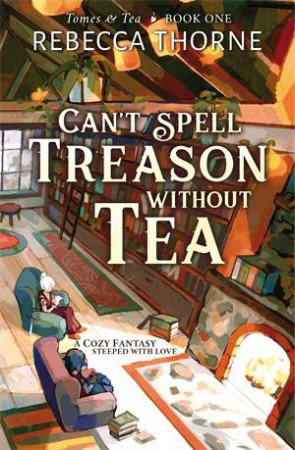
Can’t Spell Treason Without Tea (Tomes & Tea, #1) – Rebecca Thorne

All Reyna and Kianthe want to do is escape. Kianthe is tethered to her job as the most powerful mage in the Queendom, and Reyna works as one of the Queen’s most esteemed bodyguards. But against all odds, they run away together to live out their shared dream: opening a bookshop that serves tea. As their dream falls into place, they discover that it’s not as easy as they thought to abandon their lives and run away, from the guards searching for Reyna and the complications of Kianthe’s magic. But they’re determined to make their dreams come true, and they’ll stop at nothing to have a moment of peace.

TW/CW: fire, injury, loss of loved ones, murder, violence, panic attacks

If you can get past the initially corny title, there’s some comfort to be had here, just like a good cup of relaxing tea. Am I committed to sticking around for the even punnier titles in the rest of the series? Not really, if I’m being honest. That said, if you’re looking for something fluffy, romantic, and sweet, Can’t Spell Treason Without Tea is the perfect diversion for you.

As far as coziness goes, Can’t Spell Treason Without Tea was a solid entry into the genre! Although it’s more action-oriented than a typical cozy fantasy novel, the pacing works in such a way that it takes a backseat to the more quiet, gentle parts of the novel. Thorne’s way of describing the mountainous landscape and the interior of the bookshop was relaxing and cozy; if it hadn’t been July when I read this, it would’ve been the perfect book to read while swaddled in blankets during the winter. It’s hard to get a reader invested in a relationship that’s already been going strong for at least a few years, but those quiet moments were perfect to get acquainted with Reyna and Kianthe. There’s plentiful soft, tender moments between the couple, both when they’re enjoying spending time together and when they’re trying to work out issues—often related to hurdles with getting the bookshop to work, but usually with something more interpersonal at its heart. If you can already get past the corny title, chances are, you’ll get past some of the more corny book and tea-related puns—for the most part, it’s a very silly, fluffy book, and it 100% fulfills its purpose as such. And damn, I needed a fluffy book.

Though this isn’t the best cozy genre fiction I’ve ever read, I think Thorne’s writing style lends itself perfectly to the subgenre. She had a very soothing way of describing the world and the characters—every description felt very bucolic and gentle, making even the world seem comforting alongside the storyline. With this style, she was able to render the quiet, tender moments of relationship development between Reyna and Kianthe beautifully, whether it was working out disagreements in their visions of the bookshop or helping the other work through panic attacks. Her writing just has a calming quality that not many writers do—an essential tool when you’re writing cozy fiction. Thorne’s passion for her characters and world truly shone through in every word, and it was clear that they took great care in making their writing as true to the intended mood as possible.

A rotating cast of characters is going to be a staple if your novel centers around a bookshop that serves tea, but that isn’t even where this novel’s character problem arises: it’s how they’re introduced. The issue with having Can’t Spell Treason Without Tea being placed smack dab in the middle of an established relationship is that many of the other characters are established as being involved with them, but you’re barely offered an explanation as to why. It seems like there’s quite a lot of short stories and one-shots and whatnot surrounding the novel, but without that context, it was rather disorienting juggling all of the characters when the protagonists had established relationships with them and their roles were hardly ever fully explained. Combine that with the fact that there were so many of these characters, and you’ve got a bit of a mess as far as getting the reader to care about anyone besides the protagonists.

Now, about the worldbuilding…or, “go, girl, give us nothing!” The worldbuilding wasn’t the main draw for me when I picked up Can’t Spell Treason Without Tea, but even then, it was rather underwhelming. Generically European and vaguely medieval high fantasy setting strikes again…free me from this prison!! I get that the romance and the characterization was the more central aspect to the book, but I still think that Thorne could’ve done much more with her worldbuilding. Try as I might, there wasn’t anything new offered about the setting. Though the descriptions of said setting were soothingly written, I struggled to find anything that stood out about the world—not even the magic system or the creatures. The monarchy and mythical creatures (griffins, dragons, etc.) were standard fare, but even those didn’t have any small quirks that would distinguish them from any other fantasy novel. If I think of what drew me in to this book, my mind goes to it being cozy and having queer/disabled leads; though I loved these aspects and think they were done wonderfully, they don’t strike me as necessarily unique—I’ve read other books with these exact qualities that had original worldbuilding to back them up. I’m not saying that this book had to have some insanely convoluted worldbuilding or anything, but at least give us something!

All in all, a cozy fantasy that was sweet enough to tide me over, but could’ve done with something more to distinguish it from all the rest. 3.5 stars!

Can’t Spell Treason Without Tea is the first novel in the Tomes & Tea series, which continues with A Pirate’s Life for Tea, Tea You at the Altar, and the final book, Alchemy and a Cup of Tea, which is slated for release in August of 2025. Rebecca Thorne is also the author of This Gilded Abyss and The Day Death Stopped.

Today’s song:

saw car seat headrest on saturday night…you will most DEFINITELY be hearing about that soon!!

That’s it for this week’s Book Review Tuesday! Have a wonderful rest of your day, and take care of yourselves!

Posted in Sunday Songs

Sunday Songs: 7/13/25

Happy Sunday, bibliophiles! I hope this week has treated you well.

This week: it’s always the theme of this blog, but I feel like this roundup is a celebration of weirdos who are unafraid to express themselves in wild, creative ways. (Why yes, I am talking about Björk again, how did you guess?)

Enjoy this week’s review!

SUNDAY SONGS: 7/13/25

“Do Things My Own Way” – Sparks

I aspire to be like Sparks. I’m not even a die-hard fan or anything, but they just seem so aspirational in what they’ve done with their long, creative career. They’ve recently come out with their 26th (!!!) album at ages 79 (Ron) and 76 (Russell), and by all accounts, they’ve continued on their decades-long streak of doing nothing but their own thing. They haven’t achieved super mainstream fame, but the brothers have been producing their own brand of creativity, drawing from what seems to be their own never-ending well and the well of the present. Just look at their episode of What’s In My Bag? I seriously haven’t seen an episode of these with such a wide and diverse range of music, from K-Pop to John Coltrane to Kate Bush. They don’t seem to be stuck in the past—their personal brand of weirdness has just evolved over the decades.

At this point in their career, “Do Things My Own Way” feels like a statement of purpose from them, a propulsive anthem of confidence and being authentically yourself. Standing firm in its defiance, the track strides forward without a care for anyone or anything—nothing will shake the Mael brothers in their creativity. Anyone who’s in the way of them doing their thing is getting pushed out of the way—they’re not answering to anyone anymore. But even in that confidence, they acknowledge the rocky road that staying committed to yourself brings: “My advice, no advice/Gonna do things my own way/Roll the dice, roll the dice/Gonna do things my own way.” It’s always a gamble—there will always be people who look down at art like this as commercially inviable or not worth making. But as Sparks’ career has shown, it’s a risk worth taking. “Anywhere, anytime/Gonna do things my own way/I don’t care, I don’t care/Gonna do things my own way.” Another fantastic weirdo anthem for the books—thank you, Ron and Russell.

…AND A BOOK TO GO WITH IT:

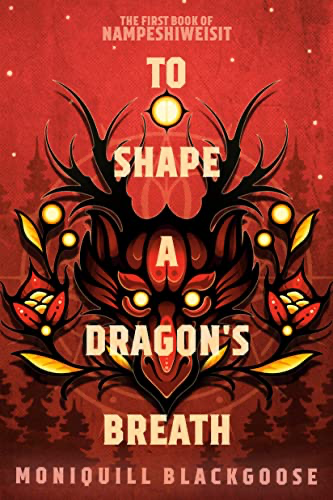
To Shape a Dragon’s Breath – Moniquill Blackgoose“My advice, no advice/Gonna do things my own way/Roll the dice, roll the dice/Gonna do things my own way…”

“Wanderlust” – Björk

The Björk deep dive continues…although this is about two weeks after I actually listened to the album, owing to the color palette rules I’ve imposed on myself. Both Volta and Medulla seem to spar in the Björk fandom for one of her least-liked albums, and every time I remember that, I’m baffled. I guess Timbaland’s more pop-sounding production isn’t for everyone, but if this is pop (yeah yeah), then this is the most bizarre pop I’ve ever listened to. Recorded during Björk’s time spent on a houseboat with her family, there’s a stark juxtaposition of the natural with the mechanical. It works both as a sonic tool and as political statement, given this album’s threads of anti-war (“Earth Intruders”) and anti-imperialism (“Declare Independence”) sentiments. It’s so delicious to me as a musical statement; even though she’s spent her whole career melding electronic music with nature, she’s turned it into a strong statement that war and colonialism are invasive and fundamentally against nature. God, I love Björk. I can’t believe I’m the kind of person who would unironically say “erm, ackshually, the foghorn noises contribute immensely to the album’s narrative,” BUT THEY DO. THEY’RE LIVE RECORDINGS OF WHEN SHE WAS ON THE HOUSEBOAT!! GUYS!!

Björk has called “Wanderlust” the heart of Volta, and it’s easy to see why. In a fairytale kind of way, it streamlines her statement of purpose, both in her personal life and in her musical career. Even though “Earth Intruders” is the first track on the album, “Wanderlust” tells its story: “I am leaving this harbor, giving urban a farewell/Its habitants seem too keen on god, I cannot stomach their rights and wrongs/I have lost my origin and I don’t want to find it again/Whether sailing into nature’s laws and be held by ocean’s paws.” I don’t blame her, especially since the move was prompted by living in New York with her family during the Bush administration. But after she breaks free, she revels in exploration and cliff-diving into the unknown, relishing in the act of discovery and intrepid daring. It’s an unabashed ode to not just stepping, but full-on leaping out of your comfort zone and being unafraid to dive headlong into the new and strange.

I originally saw the music video back in May during the Alamo Drafthouse’s Birth, Movies, Death for The Legend of Ochi (a very underrated fairy-tale/finding a creature film with lots of top tier critters, setpieces, and Willem Dafoe deftly proving that masculinity is a very silly construct). Isaiah Saxon co-directed it, and it might be one of my favorite of Björk’s music videos. Dressed in a Studio Ghibli-looking costume, Björk races down the river on the back of a herd of musk oxen, with fantastical scenery that accompanies her as a fabric-like torrent of water pushes her ever-forward into the unknown. After seeing The Legend of Ochi, I can say that yeah, it’s very Isaiah Saxon, but more than that, it’s so Björk. I can’t think of a better pairing for the spirit of the song.

…AND A BOOK TO GO WITH IT:

A Psalm for the Wild-Built – Becky Chambers“I am leaving this harbor, giving urban a farewell/Its habitants seem too keen on god/I cannot stomach their rights and wrongs/I have lost my origin and I don’t want to find it again/Whether sailing into nature’s laws and be held by ocean’s paws…”

“Questionnaire (Demo)” – Studda Bubba

No, this isn’t Instagram Reels music, although in the most abstract sense…I did find it on the Instagram explore page. But listen, if my Instagram is recommending me quirky little folk songs made by a group of Indigenous, trans clowns, then shit, maybe I am giving off the right vibe to the algorithm after all. Amidst the hellscape that is social media, at least sometimes I can find spots of humor and creativity. For once, I found someone with the whimsy in their soul to center the chorus a folk song around the concept of opening up a hyper-capitalist factory and paying workers with the meager stipend of a single NFT. It’s a tender balance between their soft harmonies and the abject silliness of their lyrics (they managed to slip “you wouldn’t download a car” in), but maybe that whimsy is part of what holds the glue of whatever good is left in the rotting, festering wound that is social media. Anything to get us through all this.

…AND A BOOK TO GO WITH IT:

The Last Gifts of the Universe – Riley Augustsoft and tender, the kind of music I’d imagine playing in the quiet scenes with Scout and Kieran on their ship.

“I Feel Ya’ Strutter” – of Montreal

A late pride month addition, but every month is pride month…especially on this blog. And there’s not a whole lot that’s gayer than a) an of Montreal song, and b) an of Montreal song that absolutely reeks of the ’80s output of both David Bowie and Prince. This is easily one of the grooviest of Montreal tracks that I’ve heard—it doesn’t have the quaint, plinking synth soundscape of something off of Hissing Fauna, Are You the Destroyer?, but instead boasts more of a slinky, guitar-driven sound. However, nothing can keep Kevin Barnes from having the most delightfully convoluted lyrics. During the verses, her rapid-fire delivery of the lyrics is almost dizzying, as though she crammed in as much as she possibly could: “I know there ain’t no one person that/Everybody else in the world hates or wants to die/Sometimes I do think it’s me/Like, I’m in a flight simulator/And I am crushing the birth of any potential memory, hey.” Like whew, take a breather! You deserve it! But it works once he pivots to the smoother tones of the chorus, where his Prince-like howl is on full display—and he works it. It’s an infectiously catchy tune that never feels to get me on my feet. Never in a million years would I think that the lyrics “We spoke of frontal lobe regression/This is not one of those” would make me shiver with antici…pation before such a wonderful breakdown. That’s the power of Kevin Barnes, right there.

…AND A BOOK TO GO WITH IT:

You Sexy Thing – Cat Rambo’70s/’80s music homage, passion, queerness…all in space.

“Metal” – Gary Numan

Happy Disability Pride Month, and remember, kids: you wouldn’t have synth pop as we know it without autism.

It’s often a negative trope to view certain autistic people as like robots; the comparison has long been used to dehumanize those who simply have trouble interacting with neurotypical society, equating a flat affect or a lack of outward emotion to being outright heartless. But if there’s anyone in pop culture who’s turned this on its head and embraced it, it’s Gary Numan. A key figure in new wave music and one of the pioneers of what we now know as synth-pop, Numan often used metaphors of machinery, robots, and androids to relate to his own experience growing up autistic. My sci-fi brain immediately latches onto the lyrics—it’s all a very classic, Do Androids Dream of Electric Sheep? story of a robot being created in a strange factory by ominous “liquid engineers” who tries to assimilate to human life, but is painfully conscious of the fact that “Here inside, I like metal/Don’t you?” It’s a very abjectly dystopian world, complete with the protagonist explaining that “I need my treatment, it’s tomorrow that they send me/Singing ‘I am an American’/Do you?”

But it’s the framing of the lyrics—all questions—that stand out to me in the context of neurodivergence, and of outsiderness in general. Almost all of them end in either a question (“do you?/did you?”) or an assumption of normalcy (“like you”). The protagonist has lived its life thinking that everything that has happened to it (being grown in a factory and having a heart made of batteries) is normal, and once it interacts with the human world, it slowly realizes that its experience is not a normal human experience, fundamentally out of sync with everyone else. And yeah, they’re robots, but if this isn’t a picture-perfect summation of what it feels like to be neurodivergent, I don’t know what is. I haven’t had this experience to the extent that Numan seems to have, but it’s always such an alienating feeling to realize that the way you interact with the world is fundamentally counter to most of the other people around you. It’s taken a long time for me to realize that I’m just operating on a different code, if you will, but there’s always the lingering feeling, enforced by so many people around you, that the way you interact with the world isn’t correct. Numan’s utterance of “I could learn to be a man/Like you” feeds into that desperation that somehow there’s a way to figure out how to operate neurotypically, what the secret is that they’ve all got down and you were never told. But here Numan is today, still touring in his sixties, gaining all kinds of accolades, and embracing his own autism. Here, he’s turned the outside view of him being inhuman into a way of understanding himself and the world around him, and made an iconic brand out of it—a brand no one could replace.

…AND A BOOK TO GO WITH IT:

The Outside – Ada Hoffmanthough I suppose Yasira is less robot and more liquid engineer, this is a similar story of an autistic woman and her quest to put the universe to rights.

Since this posts consists entirely of songs, consider all of them to be today’s song.

That’s it for this week’s Sunday Songs! Have a wonderful rest of your day, and take care of yourselves!

Posted in Book Review Tuesday

Book Review Tuesday (7/8/25) – Something More

Happy Tuesday, bibliophiles!

I’ve been looking around for books to read for Disability Pride Month, and in general, trying to find some books by Palestinian/Palestinian diaspora authors. Something More fit both of those, so I figured I would give it a go! Though it wasn’t a perfect novel, it had all of the qualities of a classic YA romance novel—angsty, romantic, and heartfelt writing.

Enjoy this week’s review!

Something More – Jackie Khalilieh

Jessie is determined to turn over a new leaf. On the precipice of starting high school, she wants to show the world that she isn’t the girl who she was in middle school—lonely, awkward, and more importantly, autistic. Keeping her diagnosis a secret, Jessie quickly makes new friends—and new crushes—at Holy Trinity High. But when her friendships begin to unravel and her relationships start to crumble, Jessie questions whether it’s worth it to keep her authentic truth a secret after all.

TW/CW: ableism (external & internalized), xenophobia, racism, substance abuse, bullying

Dude. Jessie and I would’ve been best friends in high school. I would’ve gladly welcomed another neurodivergent Radiohead girlie to go sneak off to the library with during my lunch period.

Though I can’t speak to the accuracy of the representation, I loved how Something More explored Jessie’s identity! It’s something that I assume has a lot of personal importance to the author, and Khalilieh’s explored all of the facets of Jessie’s identity with such sensitivity and love. I’m not autistic, but I am neurodivergent (I have SPD), and I deeply resonated with a lot of her struggles with fitting in and adjusting to high school while being neurodivergent. I loved the arc of Jessie realizing that there’s no reason to hide her autism from her friends, and I also appreciated that a lot of her friends, despite their flaws, were respectful and accepting of her identity. The same goes with her Palestinian-Canadian identity—again, I can’t speak to the representation, but Something More had such a lovely exploration of Jessie’s experience growing up in an immigrant household and feeling like an outsider because of her Palestinian roots. It’s a deeply refreshing intersection of representation in YA literature that I adored!

I normally don’t advocate for things becoming Netflix movies, but I swear that Something More has the perfect recipe for becoming that kind of YA classic that gets a cute streaming movie. I can already see the Clueless-esque ’90s soundtrack from here, tailored towards Jessie’s special interest and the music integrated in the novel. From Jessie’s diary full of friend and boy-related (and getting her parents to get her a phone-related) goals to Jessie’s unique spark as a protagonist, it’s got the classic tropes down to a science, yet never makes them feel tired. She injects the right amounts of both the sass and the vulnerability that comes with a lovable YA rom-com protagonist. Khalilieh perfectly captures the awkwardness of entering high school and the rocky path to fitting in and finding your place. Jessie has so much great development, from realizing her self-worth in the face of her crush being dismissive of her, to realizing that she needs to stand up to her toxic “friends.” Jackie Khalilieh has clearly done her homework on YA, and with a little refinement, is well on her way to making a classic.

Despite what I loved about it, Something More suffered from a few key flaws. The most glaring of them was that…oh my god, there were so many wild, random subplots and side tangents that didn’t contribute much to the plot. Jessie’s grandma, who was almost never mentioned, randomly dies towards the end of the book, one of her friends gets involved with a creepy older man and gets dumped in a parking lot, and the rest of the friend group continuously gets tossed between several skeevy guys, seemingly with no resolution. Yeah, high school is weird, but by the end of the novel, the relationship/ex statuses between Jessie and her friend group looked like that one panel in Diary of a Wimpy Kid with the massive relationship diagram. And that’s just her friend group of FOUR PEOPLE. It was wild. Other than the gross Mel subplot, which…at the very least, I guess it gave some depth to Jessie and Levi’s relationship, none of them added to the plot, and nor did they have any ripple effects throughout the novel. I guess there was only so much time for Jessie to reflect on her grandmother dying, but if they were as close as we were blatantly told in a handful of sentences, why did it barely have an effect on Jessie? Wouldn’t she be…y’know, experiencing some form of grief? It all just felt rushed and took away page time that could’ve been used to develop the more central relationships in the novel.

Speaking of relationships…thankfully, as the cover might lead you to believe, there really isn’t much of a love triangle. (Cue a sigh of relief.) I guess you could technically make an argument for it, but honestly, up until the 80% mark, I fully thought that things between Jessie and Griffin were going to stay completely platonic. Yet even then, Levi would’ve been the worse choice…LEVI. What a piece of work! I know that Jessie had to learn, BUT GIRL! YOU CAN DO BETTER THAN HIM! Just because he’s vaguely nice and looks like Kurt Cobain doesn’t mean that he’s not a flaky, disrespectful asshole! I get that Jessie had to learn both her lesson and her self-worth when it comes to falling head-over-heels for guys, but I feel like the writing of their relationship needed some work. I feel like the time between them meeting and having their first kiss was way too fast, even if Jessie was infatuated; their dynamic over the rest of the novel felt repetitive, and it didn’t serve much to the novel save for building the case for Levi being insufferable. As for Griffin, I did like their relationship, but I honestly think it could’ve worked romantically or platonically—I did like them getting together at the end, but I also would’ve appreciated him being part of Jessie’s (abandoned) goal of getting a guy friend and having a healthy depiction of friendships of the opposite gender.

Overall, a diverse YA romance that nails all of the factors for a classic formula, but faltered in its overabundance of subplots and awkwardly-paced relationships. 3.5 stars!

Something More is a standalone and Jackie Khalilieh’s debut novel. Khalilieh is also the author of You Started It and the forthcoming Everything Comes Back to You, which is set for release in 2026.

Today’s song:

I love this song, it sounds like being in a goldfish bowl…

That’s it for this week’s Book Review Tuesday! Have a wonderful rest of your day, and take care of yourself!

Posted in Sunday Songs

Sunday Songs: 7/6/25

Happy Sunday, bibliophiles!

This week: (Almost) three years of making Sunday Songs graphics! As for right now, baby’s on fire, better throw her in…la mer?

Enjoy this week’s review!

SUNDAY SONGS: 7/6/25

“Baby’s On Fire” – Brian Eno

I…oh, shit. It took me until I published this post to realize that I’ve talked about this song twice now on this blog. Welp…

Music hot take of the week: this song needs to be, like, 8 minutes long. At least. I love an album that has songs that smoothly transition into one another (as is the transition from “The Paw Paw [Redacted] Blowtorch”* to this track), but oh my god, it needs more time!! The way that the song builds up is so monumental—it’s a whole fizzing, crackling Rube Goldberg machine of compounding suspense. The intro needs to be at least a minute long to stretch it out, just to give the first lyrics the punch they need. It’s a glam rock/art rock masterpiece, but it feels like a study in buildup and release more than anything. The percussion stays steady throughout the entire song, giving way for every other instrument—most of which were apparently woefully out of tune when they recorded it—to spiral outwards into a tidal wave that doesn’t crash until three minutes in—it just looms for so long. Most of me wants that to be extended, but Eno is a master of creating such a layered atmosphere.

What most people rightfully remember “Baby’s On Fire” for, however, is that truly insane Robert Fripp solo. The Genius annotation on the lyrics where it denotes the solo simply says “holy fucking shit,” which I think sums it up better than most music critics have. It’s the moment that the tidal wave that Eno has built up fully crashes, sending a kaleidoscope of chaotic spray down on the listener. As the story goes, Fripp had the flu while recording this marvel of a solo…I can only imagine the kind of tricks he was able to pull off when his health was stable, because GOD. It really is chaos personified—you can never predict which direction it’s striking next, and the stark contrast between it and the consistent, steady build of Eno’s background instrumentals make it feel like modern art. I get the same feeling of listening to “Baby’s On Fire” as I do looking at abstract, geometric paintings. It’s a masterclass in contrast.

Eno’s lyrics, especially in this era, are rarely serious, mostly just surreal word-play. Dehumanization is at the heart of the story, with a figure actively ablaze whose suffering is being exploited for photos. Here’s where I feel like Eno’s genius working with glam rock really comes in. He’s got this disaffected, theatrical tone, but what he’s saying is so deeply sarcastic that I can’t help but read it as critique of how the fictional subject is being exploited while she’s actively suffering; “Photographers snip-snap/Take your time, she’s only burning” reads to me as the photographers seeing her pain as tabloid fodder, a spectacle to make money off of. His nasally, sarcastic tone feels like a cue to laugh at the clowns who would ignore her plight just to make an extra buck. But whether in the fictional realm or in reality, I’ve always admired that Brian Eno has always been committing to condemning dehumanization of all kinds, from the 1970’s right up until today. It’s always comforting when the best musicians have consciences to match.

*It’s more an outdated term than anything, and I really don’t think Eno used it with any disrespectful intent—it was normal for the time. However, it feels uncomfortable for me personally to type it here, so see for yourself.

…AND A BOOK TO GO WITH IT:

Some Desperate Glory – Emily Tesha fantastic sci-fi book that interrogates our casual comfort with dehumanization of others.

“davina mccall” – Wet Leg

BREAKING: Wet Leg actually has another song? I’m doing my best to not sound like a broken record whenever I talk about them, but I swear this feels like the most growth I’ve seen them have as far as songwriting range. It’s not a wild left turn for them, but it feels fresh.

Snuggled in between the ’90s and the 2010’s, somewhere between The Cardigans and early Wolf Alice, “davina mccall” stands out partly because it’s probably their first love song—and maybe their most sincere song. However fun they make their music, a lot of it is mostly the more maddening sides of modern life, whether it’s being bounced between stupid men or being apathetic and numb about the world. It’s never come across as abjectly doomery or irony-poisoned, mostly because they have a sense of humor about it. Yet they have kind of run themselves dry with the subject matter. I know that love songs are pretty much the most common kind of song you’ll hear these days, but for Wet Leg, it feels like a more vulnerable step. When your entire body of work is about being relatable and vulnerable about how silly and artificial modern life is, it feels significant for them to embrace the idea that vulnerability is not all phone addictions and bad sex. I might be getting too deep with it, but strip it all away, and “davina mccall” is just a lovely, summery love song, content to linger in the ordinary, quiet moments of romance.

Also, I can’t not talk about how delightful this music video is! Directed by Chris Hopewell—who I forgot I knew from the glorious stop-motion music video for Radiohead’s “There There,”—it reminds me of Fantastic Mr. Fox in the best possible ways. Luckily, none of them go the way of Thom Yorke in this video—the song’s too happy for that kind of thing. The members of Wet Leg are all rendered in claymation, and they all look an awful lot like Petey and the rest of his gang (at least it’s not weak songwriting this time). Wet Leg’s task force for bird-related crimes is nothing short of hilarious—and surprisingly sweet at the end.

…AND A BOOK TO GO WITH IT:

Love Letters for Joy – Melissa See“You know that I would/Do anything for you/It’s like a dream come true/Every day is spent trying to say something to make you smile…”

“Mer” – Chelsea Wolfe

I don’t talk about Chelsea Wolfe nearly as much as I should, even though, by my count, she’s featured on one of these posts/graphics…four times? Only four? Granted, she fell into that curse where every time I’d put one of her singles on a graphic, I’d be too busy to write about it. Shame, really, given that She Reaches Out to She Reaches Out to She was one of the best albums of 2024. Go listen to it—the album didn’t get nearly enough love as it deserved!!

As penance, let’s take a look back at one of her older tracks, 2011’s “Mer” from her album Apokalypsis, which has to have one of the most wondrously goth album covers ever (though her entire discography puts in a lot of great contenders). “Mer,” named for the French word for the sea, embodies its title, but not in the way you’d expect. The mer that Wolfe is channeling here isn’t the gentleness of waves lapping against the shore in July—it’s more the dread of looking out onto a roiling ocean as storm clouds gather over jagged, rocky cliffs. It’s a landscape that calls something along the lines of “Annabel Lee” for me. Even though I do play music, I’ve never been super keen about deciphering time signatures and the like, but I swear there’s something going on with “Mer”‘s timing—I swear there’s some syncopation going on with the percussion and the other instruments, but it all feels like each instrument is keeling ever so slightly to the side of the others, a sinking ship pulled in all directions. It all feels so off-kilter in Wolfe’s classic, sinister way. Even without the barely decipherable noises in the background, which for all the world sound like wailing Tim Burton-like spirits trapped in glass bottles, “Mer” would remain fundamentally eerie.

…AND A BOOK TO GO WITH IT:

House of Hollow – Krystal Sutherlandthough the sea doesn’t factor as much into this novel, the general eerie, misty atmosphere very much carries over.

“Big Drops” – Avery Tucker

I only found out that Avery Tucker was finally going solo when I was writing about girlpool back in June. Compared to the more pop direction that Harmony Tividad has embraced now, Tucker’s single reminds me more of mid-career, more guitar-driven girlpool—something close to Powerplant or the first half of What Chaos is Imaginary. As far as new directions go, the more electronic turn that girlpool took in their later years was hit or miss—when they hit it (see: “Like I’m Winning It”), they made fantastic, sultry, synthy indie-pop; when they missed (see: …uh, pretty much 75% of Forgiveness), it almost smothered their candid lyrics and how well they worked together as a duo. It felt plastic.

So I can’t help but be relieved that Tucker’s returned to the band’s roots. Even though he’s…well, he’s playing a tele during some of the acoustic parts of the song in the music video, which is admittedly a little silly, seeing Tucker back in his element makes the music feel more natural. Though some of his delivery and lyrics veer on being too earnest, “Big Drops” shines a light on some of the more candid, bare songwriting that made girlpool so memorable. Solely in his hands, he crafts a narrative from intimacy, late-night talking, and musing about unexpected events and the regrets that come from them. With the (mostly) acoustic guitar, it gives the song a tender, warm spaciousness that evokes the exact imagery he conjures—sitting on pool chairs, looking at the sky, and spouting off about your life.

…AND A BOOK TO GO WITH IT:

The Many Half-Lived Lives of Sam Sylvester – Maya MacGregor“Last night we talked about big drops/Big drop on the boardwalk ride/Big drop thinking about her life/Should we visit the two of them?/Or did the town get too violent?”

“My Baby (Got Nothing At All)” – Japanese Breakfast

In keeping with last year’s Sunday Songs anniversary, I am once again reviewing a song from a new movie that I haven’t even seen. (Update: I still haven’t seen I Saw the TV Glow. Someday…) Materialists doesn’t seem like my thing, but Japanese Breakfast certainly is. Ever since the trailer for the movie came out, I was enchanted by the way Michelle Zauner breathily sang “my baby.” I was fooled into thinking that this song was going to be on For Melancholy Brunettes (& sad women), so you can imagine my disappointment, as fantastic as that album was.

Regardless of whether or not you’ve seen Materialists, the swoony, rom-com feel comes away in waves on “My Baby (Got Nothing At All).” The more delicate range of Zauner’s voice shines through in this environment, accompanied by the gentle strum of acoustic guitars and swelling strings. As Zauner (and the protagonist of the movie, presumably?) affectionately admits that her lover is broke (but he gives it all to her anyway), she sings with the relaxed, daydreaming posture of someone leaning over a fire escape, watching the glow of the city lights below and the cool wind tossing her hair. As her voice climbs on the bridge (“You’re in love/There’s no doubt about it/There’s no use in messing up”), it cements the song as one of the more perfect rom-com songs—it’s not cloying or earnest, but it sounds appropriately like a lovelorn hand draped over a sighing forehead.

…AND A BOOK TO GO WITH IT:

Water Moon – Samantha Soto Yambaothe best parts of this novel have the same dreamy, swoony feel of watching the lights of a glittering city and falling in love.

Since this post consists entirely of songs, consider all of them to be today’s song.

That’s it for this week’s Sunday Songs! Have a wonderful rest of your day, and take care of yourselves!

Posted in Books

♿️ The Bookish Mutant’s Books for Disability Pride Month (2025 Edition) ♿️

Happy Wednesday, bibliophiles!

Here in the U.S., July is Disability Pride Month! This July, we find ourselves in a situation that’s far from celebratory. Both the U.S. and the U.K. are on the verge of passing legislation that would make cuts to the healthcare programs and benefits that many disabled people rely on. It’s clearer than ever that the people in power see disabled people as disposable and not deserving of respect. In the years since I’ve started making these posts, visibility for disabled people (and this pride month) has seen a small increase (in my experience) yet continues to be left behind in feminism. And I’m still on the hunt for any kind of media that accurately represents my own disability (sensory processing disorder), and I know many disabled people have had similar experiences. But that’s no reason to give up. It’s no reason to stop writing, to stop reading, and to stop listening to the lived experiences of disabled people. We cannot be erased with legislation—we will always be here, and we’re sticking around no matter what.

So here is another list of some of the best books with disabled representation that I’ve read in the past year! I’ve included books from all age ranges (middle grade to adult) and genres that represent a multitude of disabilities.

NOTE: my memory (and the internet) is imperfect, so if I’ve misrepresented/mislabeled any of the specific rep in these books, don’t hesitate to let me know!

KEY FOR TERMS IN THIS POST:

  • MC: Main character
  • LI: Love interest
  • SC: Side character

For my previous lists, click below: 

Let’s begin, shall we?

♿️THE BOOKISH MUTANT’S BOOKS FOR DISABILITY PRIDE MONTH (2024 EDITION)♿️

FANTASY:

SCIENCE FICTION:

*I’ve arbitrarily included Being Ace in the science fiction section, but it includes several genres, many of which fall under sci-fi/fantasy. It could theoretically go in all three fiction categories in this post.

REALISTIC FICTION:

NONFICTION (or “Oops! All Alice Wong”):

TELL ME WHAT YOU THINK! Have you read any of these books, and if so, did you enjoy them? What are some of your favorite books with disability rep? Let me know in the comments!

Today’s song:

That’s it for this recommendations list! Have a wonderful rest of your day, and take care of yourselves!

Posted in Book Review Tuesday

Book Review Tuesday (7/1/25) – The Library of Broken Worlds

Happy Tuesday, bibliophiles, and happy Disability Pride Month! I’ll have something up for the occasion later this week, but for now, here’s the first book review of the month.

I’ve had this novel on my TBR for a few years. I read Alaya Dawn Johnson’s Trouble the Saints several years ago and remembered it being on the denser side, so I was hesitant going into this novel, especially with the low ratings on both Goodreads and Storygraph. I understand those ratings now—this book is not for the faint of heart, but it was also victim to some serious mismarketing, in my opinion. It’s a sprawling novel that hops between worlds and genres, and despite its flaws, it’s one of the most ambitious novels I’ve read in a while.

Enjoy this week’s review!

The Library of Broken Worlds – Alaya Dawn Johnson

Centuries ago, tesseract technology made travel and connection across the stars. Now, in the Library, where all of the tesseracts are held and all of the political machinations go on, Freida spends her childhood wandering amongst all kinds of strange magic and technology. She was artificially created by the Library, and has access to all of its texts. But as she grows older, she begins to understand the corruption deep within the Library. Her friends face persecution from all sides, both from mortal people and the gods beyond their reach. To save them, she must dig deeper than she’s ever ventured into the Library—and what she finds there could change her life.

TW/CW: genocide, loss of loved ones, sexual assault, colonialism/imperialism, violence

Right off the bat, let me just say: this is truly a weird book. For the most part, I mean that affectionately. It’s weirder than most YA I’ve read, and even weirder than some adult books. It’s also one of the more ambitious books I’ve read in quite some time. Straddling the line between hard sci-fi and full-blown fantasy, The Library of Broken Worlds is an ambitious—if not incredibly messy—novel.

I’ll start off by saying this: The Library of Broken Worlds really shouldn’t have been YA. Even though Freida is about 17 here, all of the concepts jammed in here really don’t feel like they should be for the 12-18 crowd. That might just be another consequence of 12-18 being a ridiculous jump in maturity for a single age range, but I digress. There are a lot of aspects that feel more well-suited for the more adult crowd. You sit in on a lot of court hearings, the politics get both deeply philosophical and intricate, and you’re dunked into the worldbuilding like one might be dunked face-first into a bucket of ice water. I think you can still work with a teenage character in an adult story (see: The Fifth Season), so I feel like it wouldn’t be much of an adjustment. As voracious of a reader as I was when I was in the peak market for YA books, I feel like I would’ve DNF’d this book in my teens. But that’s not to say that I didn’t love The Library of Broken Worlds. Had it been adjusted for an older audience, I think it might have been more successful—if not in marketing than anything else.

The case of the worldbuilding in The Library of Broken Worlds is a complicated one. It’s both the biggest strength and the biggest weakness of the novel. The worldbuilding itself is marvelous—what I could get of it. This novel is such a unique blend of sci-fi and fantasy. You have a Library as the central hub to travel to other parts of the galaxy, and the main characters is an artificially-created being created by the will of the Library itself. There’s lots of intergalactic folktales, extinct alien civilizations, a triad of nature gods that preside over the universe and form the basic divisions between its people, and a ton of worms and grubs. Gotta love the grubs. There’s a lot of ’em. The world is also refreshingly queernormative, with a variety of characters with different neopronouns and a young sapphic couple at the forefront of the story. In the acknowledgements, Johnson said that Studio Ghibli and Hayao Miyazaki were the biggest inspirations for the book. The comparison didn’t fully make sense to me, but in a way, I can see that the blend of sci-fi and fantasy, along with some of the more imagery, could feel like a darker, more convoluted version of Miyazaki. It’s such a lovingly created and multilayered world—I just wish we could’ve explored more of it.

Now, let’s go back to that word, convoluted, because it applies to…well, everything. I often talk about how writers often have the issue of vomiting all of their worldbuilding in chunks that distract from the story. This book has the exact opposite problem. From the start, you’re thrown headfirst into an exceedingly complex and convoluted world, expecting to know all of the terms and political divisions as they’re thrown about every which way. It felt like the scene from The Big Lebowski where The Dude is repeatedly getting his head dunked into the toilet (“WHERE’S THE MONEY, LEBOWSKI?”), but each time, you get a face full of completely wild fantasy terms that only get the most barebones explanations. By the time you’re sort of acclimated to the world and you think you’re getting a break, somebody’s pissing on your rug that really pulled the room together (more unexplained worldbuilding out of nowhere that overcomplicates things further). I still don’t fully know what a “broonie” is, and at this point I’m too afraid to ask. This book was in desperate need of a glossary, Jesus Christ. And a lot more exposition, as well as less convoluted and all-over-the-place explanations for what little was explained beyond the basics.

The characters in The Library of Broken Worlds were also a treat to explore! I wish we got more of some of the side characters, since there were so many, but it was Frieda’s story first and foremost. Though some parts of her were underdeveloped, Frieda was a solid protagonist; although she almost falls into a very typical mold of the YA protagonist whose life is out of her control and is different from the others (and is understandably angsty about it), these things are for reasons that are fully fleshed-out—the weight on her shoulder never feels manufactured, and the way that Johnson writes her trauma, from various sources, was very sensitive. I don’t think we got enough of Joshua (he’s almost forgotten about halfway through and only comes back in the last few bits of the climax), but I did like Nergüi’s coldness and eventual insightfulness as a counter to Frieda’s passion and hunger for knowledge.

There are some fascinating themes, political and otherwise, at play in The Library of Broken Worlds. In an attempt to be more utopian, the main government has built its government and legal system on the basis of freedom from and freedom to, and the discussion surrounding that, especially where those definitions get dangerously misused (justifying planetwide colonialism and genocide). Johnson didn’t shy away from getting into a ton of moral dilemmas. However, aside from that theme, I loved how The Library of Broken Worlds handles cycles. Simply by existing counter to her original purpose, Freida is breaking a cycle of her sisters being created for a specific purpose, and embracing empathy and love. But by doing that, she is also breaking a multitude of other cycles—the personal cycles of being traumatized and taking it out on others, and the vast, historical cycles of injustice and mass cruelty. The tesseracts also felt a bit like the interconnectedness of actions as well as events throughout history, and Freida exists at the confluence of it, making her able to fully see how she is able to reshape both her destiny and the unjust system that she lives under. As rocky and convoluted of a road Johnson takes us to get there, I appreciate that it was taken in the first place, because the payoff was mostly worth it in the end.

For most of what I just detailed, I nearly gave The Library of Broken Worlds the full 4 stars. But given the state of the book, I just…couldn’t. For all of its boundless creativity, timely themes, and observant insights, this novel was just a mess. I think this could’ve been the second-to-last draft before sending it off to the publisher, because as good as it was, the writing was all over the place. You’re unceremoniously thrust into the worldbuilding, and the only reason that I ended up acclimating (and even that’s a stretch) to everything was that this novel is nearly 450 pages long. It desperately needed more exposition, as well as clearer explanations of the key terms that come into play throughout the novel. The pacing was off—though I enjoyed the explorations of politics that Johnson employed throughout, I think we could’ve spent more time getting to know the world and less time sitting in space congressional hearings. There were a multitude of loose ends that didn’t fully get tied up. I guess that’s a consequence of such an expansive world, but The Library of Broken Worlds needed some serious refinement. I don’t normally find myself saying this, but give this book 50 more pages and a glossary, and I think some of these issues could be fixed.

All in all, an expansive piece of sci-fi/fantasy with highly commendable worldbuilding and themes, but which needed more page time and another round of edits to fully achieve its purpose. 3.75 stars!

The Library of Broken Worlds is a standalone novel, but Alaya Dawn Johnson is also the author of several novels for teens and adults, including Trouble the Saints, Love is the Drug, Moonshine, Racing the Dark, and The Summer Prince.

Today’s song:

That’s it for this week’s Book Review Tuesday! Have a wonderful rest of your day, and take care of yourselves!
Posted in Monthly Wrap-Ups

May/June 2025 Wrap-Up 🧶

Happy Monday, bibliophiles!

Insert panicking about how 2025 is already halfway gone, yada yada yada. It’s always jarring to get to that point after you’ve spent the first half of it relatively unaware, but honestly? Given the truly magnificent shitshow 2025 has been…good riddance.

Let’s begin, shall we?

GENERAL THOUGHTS:

My school got out jarringly early, which was nice, but part of me is still reckoning with the fact that “summer” has now expanded to fit all but the first week of May in it. I shouldn’t complain. It’s given me a lot of extra time to read and do all of the things that I lamented not being able to do while I was in school. I picked back up with guitar lessons, started improving my knitting, listened to several amazing albums (while knitting), and honed down my drawing. It’s all I can do to keep the anxiety/boredom-depression that starts threatening to consume everything once I get too into a routine, but I’ve got a part-time job, so I’m throwing as much as I can at my brain to keep it occupied.

And Jesus, it’s hard to keep it occupied. Nothing’s changed since my last wrap-up, and my constant state of teetering over the edge of snapping thanks to the news is ever-present, especially this month (FUCK TRUMP AND GET ICE OFF OUR STREETS). There’s nothing like being on vacation and appreciating the splendor that Colorado’s public lands provide us with and then seeing that a bunch of senators wanted to sell off millions of acres of that “undeveloped land”. At least they’re not quite as on that anymore, though I urge everyone to keep the pressure on them, because there are far too many issues that they’re either exacerbating or ignoring. But especially during Pride Month, I have to remind myself that taking care of myself and giving back to my community is an act of resistance, especially as a queer, neurodivergent person, because a) the government doesn’t want us to exist (because why else would THEY SHUT DOWN THE LGBTQ+ SUICIDE HOTLINE? Inexcusable, comically mustache-twirling, depraved evil right there), and b) they want us to be over-individualistic so that we ignore what connects all of us.

But it hasn’t been all freaking out, I promise. I went on a lovely road trip to Crested Butte with my family, and I spent a week up in the mountains looking at so many wonderful wildflowers. Getting back to both my family and my hobbies has made me more centered—the foundation is still wobbly (because of…everything), but I can always count on them to keep me grounded and keep me in the present. I found solace in my community during Pride Month, though I didn’t end up going to any of the local parades because of either plans or the heat. (Denver, I love you, but I’m not standing out in 90+ degree heat. I’m here and I’m queer, but I’m also really pale and don’t want to get excessively sweaty or sunburned.) My existence is an act of resistance, and as much as I can, I will use it for good.

If anything, it’s at least good to have a summer where I actually have movies to look forward to (definitely Superman, and I’m on the fence about Fantastic Four, but I’ll see it, if only for Cousin Thing). Y’all…The Phoenician Scheme. It’s so beautiful, dude. Wes Anderson is physically incapable of making a bad movie. Go see it. GO SEE IT.

Also, I managed to knit my first functional thing in mid-June…here’s this bag I finished up before my vacation!

My magnum opus. Obviously. I’m now keeping a paused knitting project in it, so I hope it’s not one of those “gingerbread man living in a gingerbread house completely oblivious to the fact that he lives in a house of his own flesh” situation. I try not to think about it.

MAY READING WRAP-UP:

I read 13 books this month! In an absolute whiplash of ratings, I had two DNFs and two 5-star reads this month, but between them, there were some great reads. Surprisingly, the nonfiction books (both of which had red covers, coincidentally) were the stars this month!

1 – 1.75 stars:

Ninefox Gambit

2 – 2.75 stars:

The Death I Gave Him

3 – 3.75 stars:

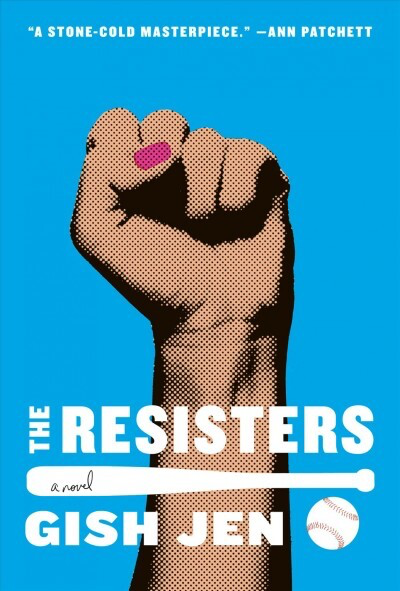
The Resisters

4 – 4.75 stars:

The Ashfire King

5 stars:

Crying in H Mart

FAVORITE BOOK OF THE MONTH: Read Dangerously: The Subversive Power of Literature in Troubled Times5 stars

Read Dangerously: The Subversive Power of Literature in Troubled Times

REVIEWS:

SUNDAY SONGS:

BONUS:

JUNE READING WRAP-UP:

I read 16 books this month! Even with my part-time job, summer has given me more time to read, which is always welcome. Although there were some misses in the mix, I had a great bunch of (mostly) queer reads for pride month, both from familiar and new authors!

1 – 1.75 stars:

And They Lived…

2 – 2.75 stars:

3 – 3.75 stars:

The Library of Broken Worlds

4 – 4.75 stars:

Monk and Robot

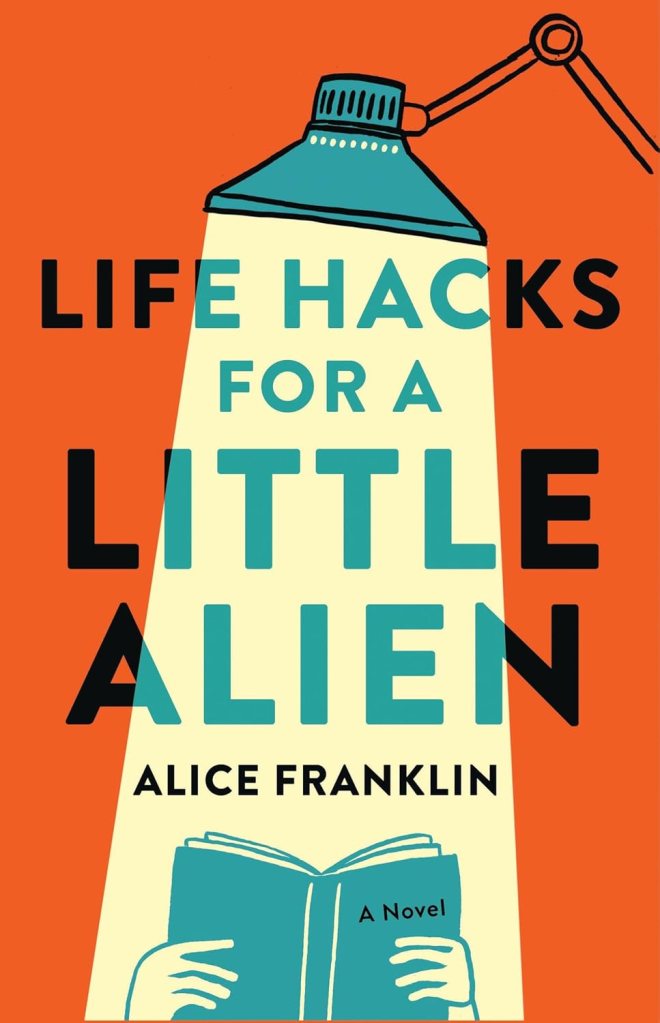
FAVORITE BOOK OF THE MONTH: Life Hacks for a Little Alien4.5 stars

Life Hacks for a Little Alien

REVIEWS:

SUNDAY SONGS:

BONUS:

Today’s song:

That’s it for this month in blogging! Have a wonderful rest of your day, and take care of yourselves!

Posted in Sunday Songs

Sunday Songs: 6/29/25

Happy Sunday, bibliophiles!

This week: Becky Chambers double-dipping, offloading my gripes about the train wreck that was season 4 of Hacks, and…oh, whoops, I think this post was supposed to be about music. My bad.

Enjoy this week’s review!

SUNDAY SONGS: 6/29/25

“Incomprehensible” – Big Thief

“They’re back!” I say, having not even listened to a full Big Thief album. This kind of thing sure does happen a lot, huh?

Regardless of whether or not I’ll listen to Double Infinity when it comes out this September or after I’ve finally gotten around to Dragon New Warm Mountain I Believe In You, “Incomprehensible” is a treasure in the here and now. The production is an absolute treat. It’s a far cry from some of their older, more folkier material, but never once does it feel removed from their emotional core. It glistens like dew, icy and starry yet tender and inviting, encircling, even. Guitars glitter and bubble next to the papery percussion. Adrianne Lenker’s voice drifts gently in their fabricated ether, but never once does it distract from the true star of the show: the lyrics, man, these lyrics! Lenker has truly honed her talent for poetic lyricism, and her beautiful messaging and penchant for lush turns of phrase are on full display here. Here’s a snippet:

“In two days, it’s my birthday/And I’ll be 33/That doesn’t really matter next to eternity/But I like a double number, and I like an odd one too/And everything I see from now on will be something new.”

What’s the music equivalent of that “absolute cinema” meme of Martin Scorsese? This deserves it, I think, if not just for that verse. “Incomprehensible” is a heartfelt ode to being free—not just driving down an endless road, as North American highways are wont to make you feel, but being free from societal pressures. I might be ascribing my love to it because it came to me at a time like this, where I am putting all of my energy in being free of expectations and embracing being as weird as possible, but in any other time, “Incomprehensible” would be a pleasure. Intertwined with imagery of nature—rolling clouds, birds, lupine flowers, and the glittering scales of fish—this freedom to just be is fully realized as a natural state: flowers grow and clouds form without any pressure that we have man-made, save for natural ones necessarily for survival. They don’t have the expectations on women to make them dread aging or conform to a certain look, to mourn every hair as it turns gray. The further we are from nature, the closer we get to these false ideals that we’ve fabricated for ourselves. I could go on about the myriad ways about how we could learn from nature, but the lesson in “Incomprehensible” is one of many: if we pay attention more to nature, we realize that all of these societal pressures are just that, constructs; to be more natural is to live free of expectations of what should be and to simply be.

…AND A BOOK TO GO WITH IT:

Monk and Robot – Becky Chambers“And as silver as the rainbow scales that shimmer purple blue/How can beauty that is living be anything but true?”

“Yamar” – Dry Bread

I’m not like other girls…I didn’t even know the main reason that most people know this song is because Phish frequently covers it. Oof. I did discover it, as I tend to discover random, obscure ’60s and ’70s songs, through Hacks.

Can we talk about Hacks, by the way? Specifically, how gloriously they fucked up what was one of the longest consistent runs of a good comedy show? They had such a wonderful thing going—the sharp humor, the chemistry between Hannah Einbender and Jean Smart, and the excellent bisexual representation. Season 4 really just threw every single one of those things out the window. I’m still so mad. They were so sensitive and respectful about depicting bisexuality and biphobia, then boom…they proceed to throw the laziest possible stereotype about bisexuality at Ava. She goes from having heartfelt conversations about her identity with Deborah to being thrown into a threesome for reasons that neither furthered the plot nor said anything new about her as a character. At least the resolution was that the other two in the threesome were a chill polyamorous couple who didn’t want to be used for sex, which I appreciated (what with there being hardly any respectful depictions of polyamory anywhere), BUT WHY THE HELL WAS THAT NECESSARY? WHY DID THEY HAVE TO THROW IN THE “I’m in a threesome…supa bi!” LINE??? WHAT POSSESSED THE SHOWRUNNERS TO DO A COMPLETE 1-80 FROM THOUGHTFUL, AUTHENTIC DEPICTIONS OF BISEXUALITY TO WHATEVER STEREOTYPES THEY COULD HIT FIRST ON A DARTBOARD????

Sorry. Had to get that off my chest. Moving on…

As much as I love Hacks, they tend to have an issue with their needle-drops. In most cases, it’s a 30 second snippet from the song in question, and it’s usually shown over an aerial shot of whatever city they’re driving into—usually Las Vegas or Los Angeles. A few times is fine, but…yeah, it’s a little old. Given the absolute gold that was both the scene and the needle drop of “I Won’t Tell” in season 3, I knew they were at least capable of something more. In the case of “Yamar,” it’s in between the two; played at the intro of season 4, episode 6, it’s a small snippet that plays over a shot of Ava wrangling a comically large bundle of birthday balloons.

Though the editing was smooth, “Yamar” was all but hacked (no pun intended) to pieces—they only have about three lines from the verse before they get to the chorus. Which is really a disservice, because this is such a relentlessly catchy gem from the ’70s! My music taste is…well, yeah, it’s very much on the Western side. So I’m always glad when I find a piece of non-Western music that absolutely grabs me. I think the common denominator is the ’70s, regardless of the region it’s from. Even though the lyrics belie a somber reminiscence of looking for the unspoken point of leaving childhood behind and getting older, “Yamar” has an unfailing gallop that signals nothing but joy. That grainy, ’70s production strangely does everything in this song a service, giving the pianos a warm sheen and softening the rapid percussion, like the sun-bleaching of an old photo. It’s hard for me to feel anything but joy from this song, and maybe that could somehow be the point: dancing in defiance of having to grow older.

…AND A BOOK TO GO WITH IT:

Ocean’s Godori – Elaine U. ChoReconciling with childhood and a skewed sense of identity, but all with a dose of hope and joy.

“Somebody New” – Tunde Adebimpe

It’s once again Tunde Time here on the Bookish Mutant.

I haven’t necessarily come back to a lot of Thee Black Boltz, even though I retain that it’s a great album. Somewhat regrettably, it’s the singles that I’ve mainly been returning to, but at least they were well-picked singles, I suppose? I’d say that “Ate the Moon” and “The Most” were great surprises, but singles like this, “Magnetic,” and “God Knows” are the reigning highlights. Yet “Somebody New” still surprises me in how much I actually like it—even for Tunde Adebimpe. Autotune and a more directly pop direction aren’t directions that typically work for indie rockers like him, but it works. The autotune doesn’t make his voice shinier or more polished—it just distorts it, adding another layer of synth to the synth-pop that this song is soaked in. There’s plenty of ’80s throwback in the sound, from the video production to the synths, but never does it feel like a song meant to vomit up nostalgia—it’s just another in the long line of foolproof methods that Adebimpe has employed that make a song instantly danceable. Along with the delightful music video, in which Adebimpe has a Lego Batman moment with a Yo Gabba Gabba creature, “Somebody New” is one of the best examples of when somebody outside of the pop sphere takes a stab at a pop song—and knocks it out of the park.

BONUS: Here’s his recent performance on the Tonight Show:

…AND A BOOK TO GO WITH IT:

The Stars Too Fondly – Emily Hamilton“I just wanna be somebody new/Is there nothing in the world that we can say about this/Heavenly vibration coming through?/How can we feed this love?”

“Psycho Speak” – Palehound

It’s been about two and a half years since the Palehound Panic that shook the world this blog (alive and well) and my beat-up headphones (rest in peace). Although El Kempner isn’t dominating my Apple Music replay anymore, they’re always a delight to come back to, no matter the era. “Psycho Speak” returned unexpectedly, a cut from their debut EP, Bent Nail. Scrappy encapsulates so much of this barely three-minute-long song: the more indie production of their early days, the verging on out-of-breath delivery of the lyrics, and the cymbal-dominated percussion. Like the EP’s title and album cover, “Psycho Speak” evokes worn-down houses and dirty sidewalks, baseball bats dragged through the dirt. Kempner wasn’t quite at the level of precision that they have on their later songs, but “Psycho Speak” is a song that begs to be a little rough around the edges, fragmented like the end of the song: the final lyric of “I went downstairs and curled up with the cat” feels like a sentence fragment, leaving something unsaid. In fact, this track is built entirely off of things unsaid, in this tale of dating a rich man who leaves intermittently and for long periods, but who takes comfort in the company of his pets. Or maybe it’s that simple of a tale—the tiniest peephole into a story.

…AND A BOOK TO GO WITH IT:

The Resisters – Gish Jenthe atmosphere of this novel, though much bleaker, has a very similar scrappy attitude and feel to it, especially where the younger characters are concerned.

“You Are A Tourist” – Death Cab for Cutie

The buzz around “You Are A Tourist” probably eclipses the song itself; its music video, a Meow Wolf-esque spectacle of kaleidoscopic lights, dancers outfitted in feathers, and geometric backdrops, was the first scripted music video in history to be shot in a single take. Given the impeccably elaborate choreography of it all, it’s honestly astounding. But even before I knew anything about the video or the fact that this song was one of their more popular ones, “You Are A Tourist” captivated me. The melody and arrangement feel so cyclical for me—from the loop at the beginning to the way that the instruments seem to circle each other, as though they were layered in concentric train tracks. And though it’s adjacent to the “I’m in my ’20s and angsty and need to get out of this town” format, as always, Ben Gibbard’s lyricism are what separates it from the rest. Of course, the “And if you feel just like a tourist/In the city you were born” instantly grabs me, but it feels less like a statement of purpose and more of a guidebook for those looking to start over and strike out on their own, a soothing, steady hand on your shoulder in the face of turbulent emotions, a kind of prayer against stagnation.

…AND A BOOK TO GO WITH IT:

Record of a Spaceborn Few (Wayfarers, #3) – Becky Chambers“And if you feel just like a tourist in the city you were born/Then it’s time to go and define your destination/There’s so many different places to call home…”

Since this post consists entirely of songs, consider all of them to be today’s song.

That’s it for this week’s Sunday Songs! Have a wonderful rest of your day, and take care of yourselves!

Posted in Book Review Tuesday

Book Review Tuesday (6/24/25) – Life Hacks for a Little Alien

Happy Tuesday, bibliophiles! I’m back from my road trip with a fantastic book for you.

I try to stick to mostly queer books for June, but I read extra queerly all year…think of this as pregaming for Disability Pride Month. (Both apply to me, I get a pass, right? Hell, it’s my blog and I’ll do what I like.) Nevertheless, I bought Life Hacks for a Little Alien while on vacation (shoutout to Townie Books in Crested Butte). I’d heard great reviews of it, particularly that it encapsulated neurodivergent childhood beautifully, so of course I had to read it. What I found was a heartstring-pulling and tender depiction of neurodivergent childhood.

Enjoy this week’s review!

Life Hacks for a Little Alien – Alice Franklin

In England, a young girl grows up not knowing that she’s neurodivergent, but certain that she’s different from the other children. She doesn’t talk or think the way they do, and her parents are having trouble keeping up with her. She never shows any interest in much anything, but when insomnia prompts her to watch TV at night, she discovers a documentary on the Voynich Manuscript. Soon, the mysterious manuscript heightens her curiosity and invigorates her life. The only thing that would make it better is to find the Manuscript itself—and she’s determined to get it in her hands and decipher its impossible code.

TW/CW: ableism, vomit, bullying, institutionalization/mental illness themes

I have once again been ensnared by a book with metaphors about aliens relating to neurodivergent. It will happen again.

I’ll absolutely be reading more by Alice Franklin after this, because her writing style captivated me from the start! The first comparison that sprang to mind, strangely, was of Wes Anderson. It feels odd to jump from literature to film, but stay with me. The narrator’s voice is very matter-of-fact and particular, which are qualities than can be ascribed to both very self-assured children and comically self-assured Wes Anderson characters. The linguistic footnotes and reading lists at the end of each chapter were also reminiscent of the wry judgements of Anderson’s omniscient narrators. All of this is to say that Life Hacks for a Little Alien boasted such a charming voice. Second person POV is a notoriously difficult POV to write from; Franklin chose it for the book because she found it personally easier to write and thought that it would help the reader have empathy for the protagonist. I think it would’ve been easy to have empathy for the narrator no matter what, but the use of the second person gave Life Hacks for a Little Alien such a unique flavor. As the narrator tried to pick apart the structures of how a young English girl is supposed to act, she was methodical, but in a way that was always witty, snarky, or charming. Yet that voice, when faced with the harsher realities of neurodivergent life, never faltered in its emotional connection. I was invested in the narrator’s story from the start, and from then on, Franklin kept me hooked!

Although I’m not autistic, I am neurodivergent (I have sensory processing disorder, which has some similarities to autism), and there are so many aspects of Life Hacks for a Little Alien that resonated with me. Even if I weren’t so interested in sci-fi, the latent, never-ending feeling that you’re from another planet never fades, and the latent alienation that exists in everyday life was depicted with such authenticity and heart. Beyond that, what was depicted most accurately to me was the lingering sense of “I’m doing what the other kids are doing, so why am I wrong/why are they laughing at me/what about what I did makes it wrong?” Neurotypical society is so full of idiosyncrasies, and being neurodivergent makes you realize that from an uncomfortably young age. The narrator’s struggles with picking it apart were delivered with such sensitivity and accuracy, and I loved that her special interest in linguistics and the Voynich Manuscript was not just something that made her fall in love with learning again, but also became a survival mechanism for her to navigate a complicated world.

Beyond that, the use of the Voynich Manuscript and linguistics as a metaphor for the narrator’s experience was easily the most poignant part of a very poignant novel. Many neurodivergent people of various diagnoses often express the feeling that they were never given the same “script” as neurotypical people, a feeling I’ve often shared; if anything, we were basically given a kind of indecipherable Voynich Manuscript that the author understands perfectly, but nobody else does. The narrator’s theory by the end of the novel is that it functions as a way to help aliens navigate Earth, but what is unspoken is that she sees it as such too—she feels like the alien that has been given an indecipherable code with strange pictures in order to understand a completely foreign world. You can see how that hit me in the gut instantly…and it goes even further. English linguistics are full of similar idiosyncrasies as the neurotypical world, and you’re expected to go along with them all the same, even though they frequent contradict all manner of rules. The narrator’s interest in linguistics becomes her way of understanding—or failing to understand—the world. It’s such a beautiful, multilayered metaphor, and it struck such a resonant chord within me.

I have almost no criticisms of Life Hacks for a Little Alien, and I might’ve given it 4.75 or 5 stars if not for this one aspect. My only real problem with Life Hacks for a Little Alien is that it just…ended. Although the epilogue wrapped things up in a more satisfactory and clean manner, the real ending just…ended. For such a meticulous book, it was jarring to end in such an abrupt place. Even though we got some sort of resolution, Life Hacks for a Little Alien seemed to just plunk itself down and end unceremoniously. I’m fine with some books having neatly wrapped-up endings, but this novel seemed to need some semblance of one. I fully expected another chapter afterwards. However, I can sort of see how it might function—this isn’t necessarily the end of the narrator’s story, and her life was far from over by this point. Yet it felt like the end of this arc and the beginning of a new chapter in her life, which seems to necessitate some more closure.

All in all, a deeply poignant and beautiful meditation on neurodivergent girlhood and navigating alien worlds. 4.5 stars!

Life Hacks for a Little Alien is a standalone and Alice Franklin’s debut novel.

Today’s song:

there we go, here’s something for pride!

That’s it for this week’s Book Review Tuesday! Have a wonderful rest of your day, and take care of yourselves!
Posted in Sunday Songs

Sunday Songs: 6/15/25

Happy Sunday, bibliophiles, and more importantly, Happy Father’s Day!! I always end up writing one of these posts on Father’s Day, what with it landing on a Sunday and all, but it’s fitting, given that my amazing dad is the one who not only is responsible for a lot of my music taste, but was also the one to encourage me to write these posts and wanted to hear my thoughts. So thank you to him, for all of the gifts he’s given to me, and to my family. I love you. 🩵

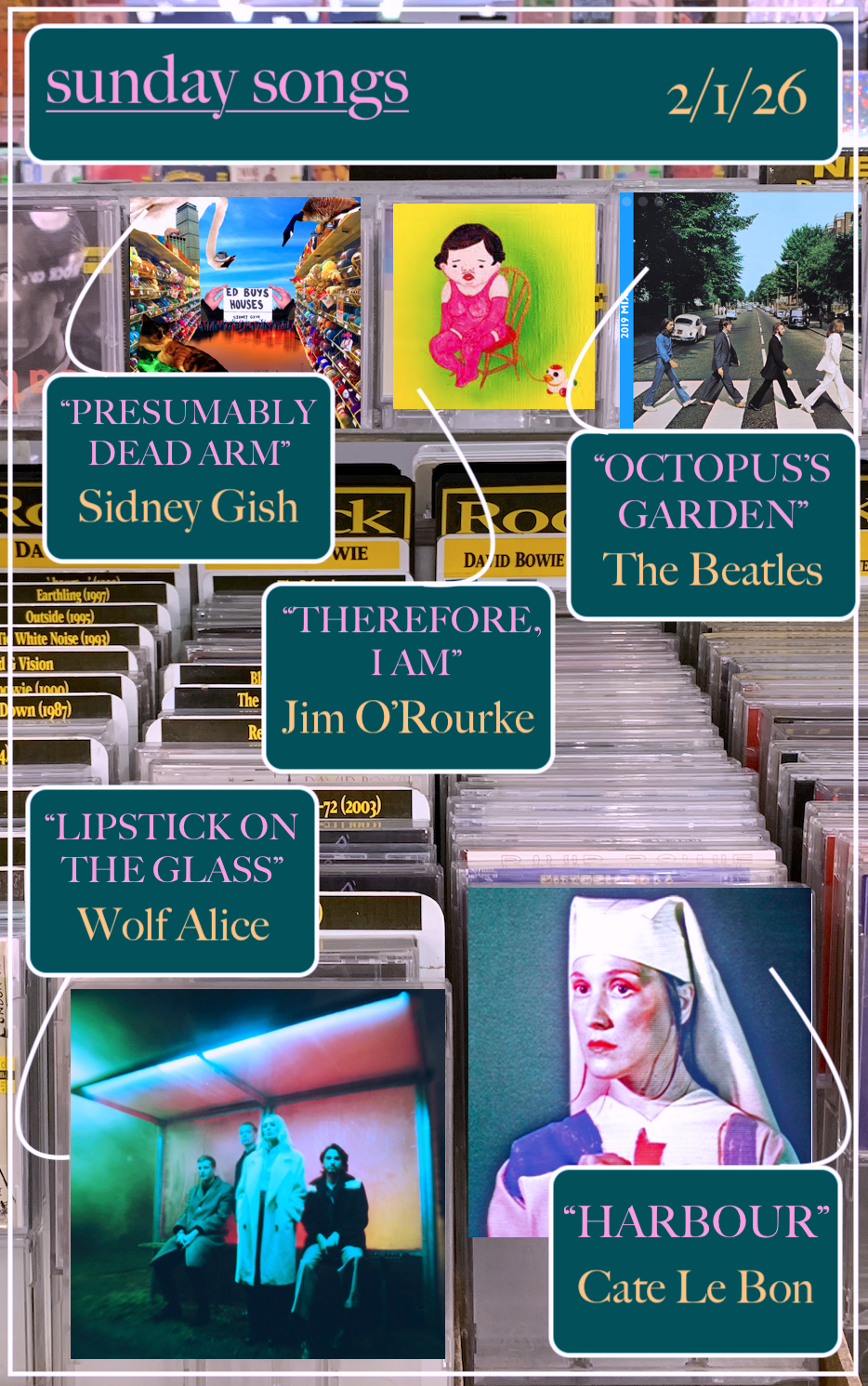
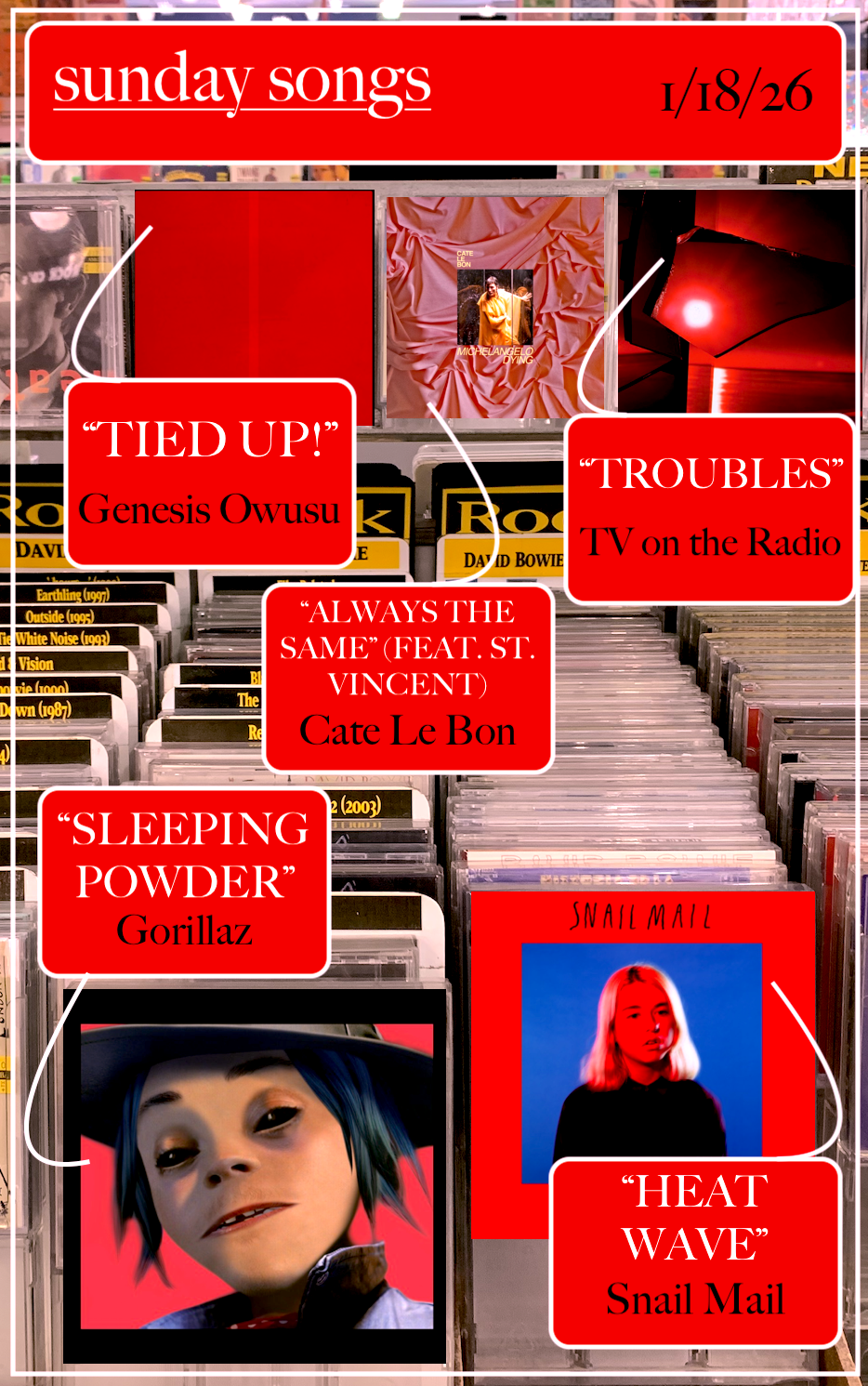
This week: before I go radio silent for a week for a road trip, how about a random kick in the pants from 2019? Plus, new Cate Le Bon, old(ish) Shins, and others.

Enjoy this week’s songs!
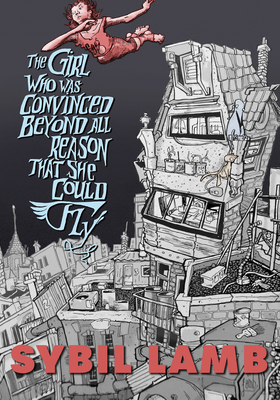
SUNDAY SONGS: 6/15/25

“Jellybones” – The Unicorns

Chances are, given my proclivities for Car Seat Headrest and other like lo-fi, awkward white boys, I probably would’ve stumbled upon The Unicorns eventually. It was an inevitability. Either way, I was introduced to it via Black Country, New Road’s episode of What’s In My Bag?, and I can’t call it much else other than a delight in the many times that I’ve listened to it since. “Jellybones” is a whimsical title as it is, but the rest of the song stays true to that silliness, complete with bone-related puns (“Drove up in my bone-ca-marrow,” ba-dum tsss); the entire song revolves around jellybones (an obscure sort of expression for nervousness) being a genuine malady worthy of going to the hospital and getting limbs amputated for. Everything has a juddering, garagey sound to it, from the engine-like startup to the guitars to the keyboards, which the intro warps into the sounds I feel like I’d hear aboard a clunky, malfunctioning spaceship on the cover of a ’50’s pulp magazine. 2:43 feels simultaneously too short and the perfect length for “Jellybones”—I need more, and yet this song could only ever be a sputtering little firecracker, spurting out sparks and then gently slipping out of existence.

…AND A BOOK TO GO WITH IT:

Madman Comics Yearbook ’95 – Mike AllredJellybones definitely seems like it could be a genuine illness in the Madman universe. (Least wacky Dr. Boiffard subplot, maybe?) Either way, the lyrics definitely fit with the kind of silliness in these comics.

“Heaven Is No Feeling” – Cate Le Bon

Getting the one-two punch (positive) of new Big Thief (to be discussed) and Cate Le Bon on the same day was almost too much…and just when I thought that we were finished with all of my most anticipated albums of the year! Cate Le Bon’s new album, Michelangelo Dying, comes out this September, and suffice to say, if it’s anything like this song, I’m all ears.
Taking cues from the synth-heavy sound of Pompeii, “Heaven Is No Feeling” opens with an intro too good for a track that’s right in the middle of the album: a murmur of “What does she want?” before launching into a flurry of rippling, watery synths and guitars slathered in enough effects to make them camouflage with the synths. In line with her very ’80s sound, there’s plenty of saxophone, but not enough that it overpowers any of the rest of the song. Gently groovy and keenly observational, Le Bon takes the position of a wallflower: there is a kind of emotional distance to it as she watches the subjects as they move like pawns across a chessboard: “I see you watch yourself/Walk the room/Stroking the air/Like this paint won’t dry.” As she observes the distant fallout of a failed love, the song feels like she’s watching someone through security camera footage, pretending to be distanced when she hasn’t fully gotten over the wreckage—much like the music video, where a buzzcutted Le Bon watches herself on an old TV. Every repetition of “I see you watch me” feels like a degree of separation from the body and from her feelings (surely that’ll end well…), and “heaven is no feeling” becomes a kind of blissful removal from one’s own emotions.

…AND A BOOK TO GO WITH IT:

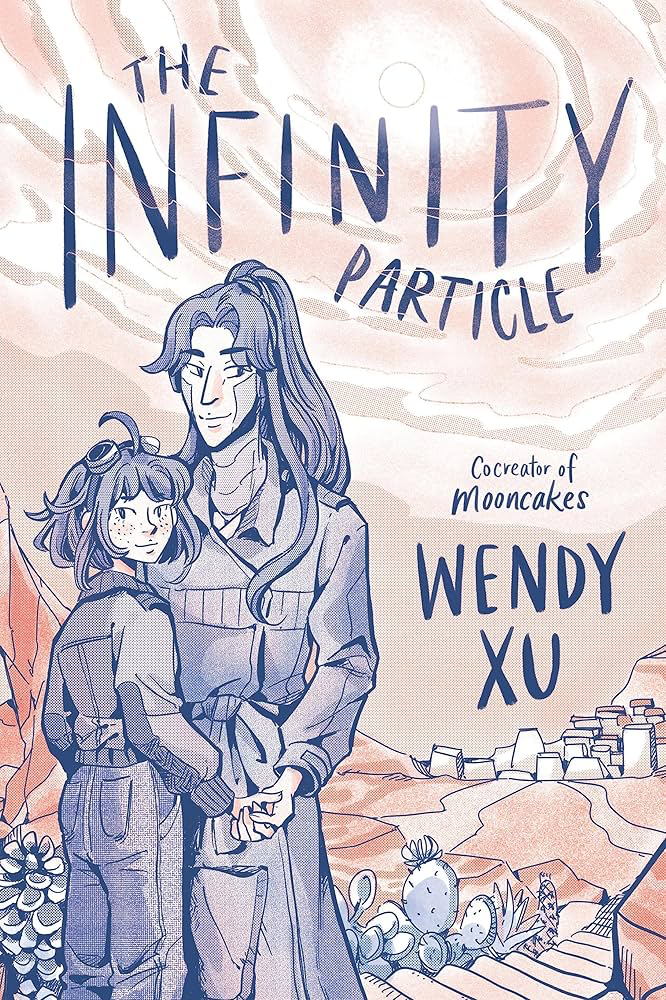
The Infinity Particle – Wendy Xu“I see you watch me watch you/Watch me move away/You occupy the space/Like a ribbon untied…”

“Chasing Shadows” – Santigold

Santigold, man. Nobody’s doing it like her. I often think of 99 Cents as being one of the only happy albums of 2016, but next to Blackstar, A Moon-Shaped Pool, and Teens of Denial, anything looks happy. But what makes me keep coming back to songs from 99 Cents is how she used the veneer of happy, bubblegum pop songs to further her message—they remain peppy pop songs, but they’re all armed with critiques about consumerism and the music industry. Santigold has often talked about her negative experiences in the music industry, whether it’s how unaccommodating the industry is to mothers, especially where touring is concerned, or how her music did not qualify to some critics as “Black music.” Despite how candid she’s been about the physical and mental toll it’s taken on her, Santigold has only used that to become even more herself than ever. Her last album, Spirituals, went fully into Afrofuturism and current politics, and she’s expanded her creativity into a podcast, Noble Champions, where she brings guests to talk about everything from said nebulous category of “Black music” to social media addiction. (From the episodes I’ve intermittently listened to, she’s also had a whole host of amazing guests, including Yasiin Bey, Questlove, Tunde Adebimpe, Mary Annaïse Heglar, and so many more. The only problem is that there’s not more Santigold, frankly.) I saw her perform live last August, and it’s one of the only concerts I can think of where a singer has been truly kind and candid with her audience; decades in the industry didn’t stop her from signing people’s records in between songs.

Like the album cover, where Santigold is shrink-wrapped and slapped with a price tag along with all manner of plastic junk, “Chasing Shadows” reckons with the human toll of commodifying artists. Contrary to Pitchfork’s assessment that the song “basically plods along inoffensively until it ends” (I’m sorry, the fuck?), it’s one of the more steadfast songs on the album, still fast-paced but providing a cooldown between some of the more in-your-face pop songs. Rostam Batmanglij (formerly of Vampire Weekend) produced the track, and knowing that, I can hear him all over the beat—I say this affectionately, but it’s the most 2016 pairing ever. I love it. Through rapidly-uttered lyrics, Santigold reflects on how quickly the industry moves on so quickly from artists once they’re out of fashion, summarized by one of the finals the second verse: “Why they eating they idols up now/Why they eating they idols up, dammit?” Reflecting on seemingly being left behind, her solution, as always, is to defy the standard, continuing to do what she’s doing. The video mirrors this back: she asserts herself in multiple places inside various houses: at the head of a table at a decadent Christmas feast, standing upright and fully clothed in a bathtub, and towering over a child-sized table with a child-sized tea set. No matter the location, she stands firm, defiantly staring the camera, returning the gaze—of the music industry who tried to put her in a box, to racist and misogynist detractors, or to anyone who has ever doubted her. No matter what, she’s looking directly at you, as though to cement her irreplaceable space of individuality that she’s created for herself.

…AND A BOOK TO GO WITH IT:

Victories Greater Than Death – Charlie Jane Anders“One thing about time, it waits for nobody, you told me, isn’t that what they say/Been batting ‘gainst it and getting nowhere, just racin’ got nothing to say to nobody…”

“Cut Your Bangs” (Radiator Hospital cover) – girlpool

What in the 2019 did my shuffle just pull? I hadn’t even thought of this song in years, and boom, suddenly I’m back in high school art class, diligently obeying the “only one earbud in if you want to listen to music” rule while drawing X-Men fanart because I blew through whatever I was actually assigned. God.

High school…and my first introduction to girlpool through Apple Music. Sure, I’m fully on board with the fact that streaming has harmed musicians more than it has helped them, but for a lot of people, myself included, it opened the floodgates for discovering so many musicians back when I was in high school. girlpool was one of the big ones, prominently soundtracking my sophomore year of high school, from their earlier work on Before the World Was Big (which turns 10 this year, Jesus) to their more current (at the time) What Chaos is Imaginary. Almost six years after I discovered them, girlpool since released one final (disappointing) album, Forgiveness, broken up shortly after, and then…Avery Tucker’s come back with a good solo single, but Harmony Tividad seems to have pulled a Gwen Stefani and now makes pop songs with the most chronically online lyrics you’ve ever heard. How the times have changed. But good for her, I guess? You do you…

Even though girlpool had moved past this inception of their music by the time I got into them, they fit too perfectly into the sad, acoustic indie that comprised most of my music taste, and still kinda does today. “Cut Your Bangs” is a cover, but to this day, it remains one of the best parts of this inception of girlpool. In contrast to the faster, more rock sound of the original by Radiator Hospital, girlpool take the chorus’ ending of “the small stuff” literally, slowing it to a crawl in order to wring the most out of the quietly introspective lyrics. I remember not liking the original when I first heard it, and on reflection, I don’t hate it, but I still think it’s a situation where girlpool knew exactly what to do with it. All of the lyrics need a gentler space to breathe, and the twin harmonies of Tividad and Tucker make them stand out. To this day, the way their voices know exactly which lyrics need a plaintive murmur and which ones need a higher-pitched belt feels almost telepathic—at their best, what made girlpool so successful is that they had such an instantaneous communication that allowed them to switch from gentle to jagged in the blink of an eye, but never once lose their synchronicity.

…AND A BOOK TO GO WITH IT:

Some Girls Do – Jennifer Dugan“You say you’ll cut your bangs, I’m calling your bluff/When you lie to me, it’s in the small stuff…”

“Young Pilgrims” – The Shins

James Mercer just has such a unique way with words. As music history (and my personal music library) proves, there’s practically a million ways to say a sentiment along the lines of “I’m dissatisfied with my life and it’s cold and wet outside and I’m also depressed.” Mercer saw that and gave us these iconic lines:

“A cold and wet November dawn/And there are no barking sparrows/Just emptiness to dwell upon/I fell into a winter slide/And ended up the kind of kid who goes down chutes too narrow…” HE SAID THE LINE! GUYS, HE SAID THE LINE! CHUTES TOO NARROW!

Said barking sparrows came back to me completely at random, in the way that especially sharp lyrics or melodies do. Although Mercer’s narrator envies the “eloquent young pilgrims” passing by him, I struggle to find words other than eloquent to describe how he articulates such a near-universal feeling, a mess of regret and stagnation and the emptiness that comes with control slipping through your fingers and wanting to regain it. In a simple duet of acoustic and electric guitars, Mercer wrings some absolute poetry out of such a stagnant state, drawing every possible image from ice melting on a train window and the desire to “grab the yoke from the pilot and just/fly the whole mess into the sea.” I love a good literary-minded songwriter, which I guess it’s no surprise that I latched onto The Shins from such a young age. But with age, I appreciate the lyrics even more—James Mercer is one of those songwriters who prove that, at its best, music is eloquent poetry set to music. It doesn’t need to be (and rarely is), but when it hits that spot, I can’t help but relish it.

…AND A BOOK TO GO WITH IT:

Hammajang Luck – Makana Yamamoto“But I learned fast how to keep my head up, ’cause I/Know there is this side of me that/Wants to grab the yoke from the pilot, and just/Fly the whole mess into the sea…”

Since this post consists entirely of songs, consider all of them to be today’s song.

That’s it for this week’s Sunday Songs! Have a wonderful rest of your day, and take care of yourselves!