Posted in Book Review Tuesday

Book Review Tuesday (10/28/25) – Red City

Happy Tuesday, bibliophiles!

It’s safe to say that I’ve grown up with Marie Lu in my formative years. Sure, her quality has wavered on occasion, but she’s been such a consistently talented writer and a consistent presence in my life since I was about 13 or 14. When I heard she was writing her first adult book, I was over the moon—and I’m glad to say that I devoured Red City just like I devoured her other books as a pre-teen.

Enjoy this week’s review!
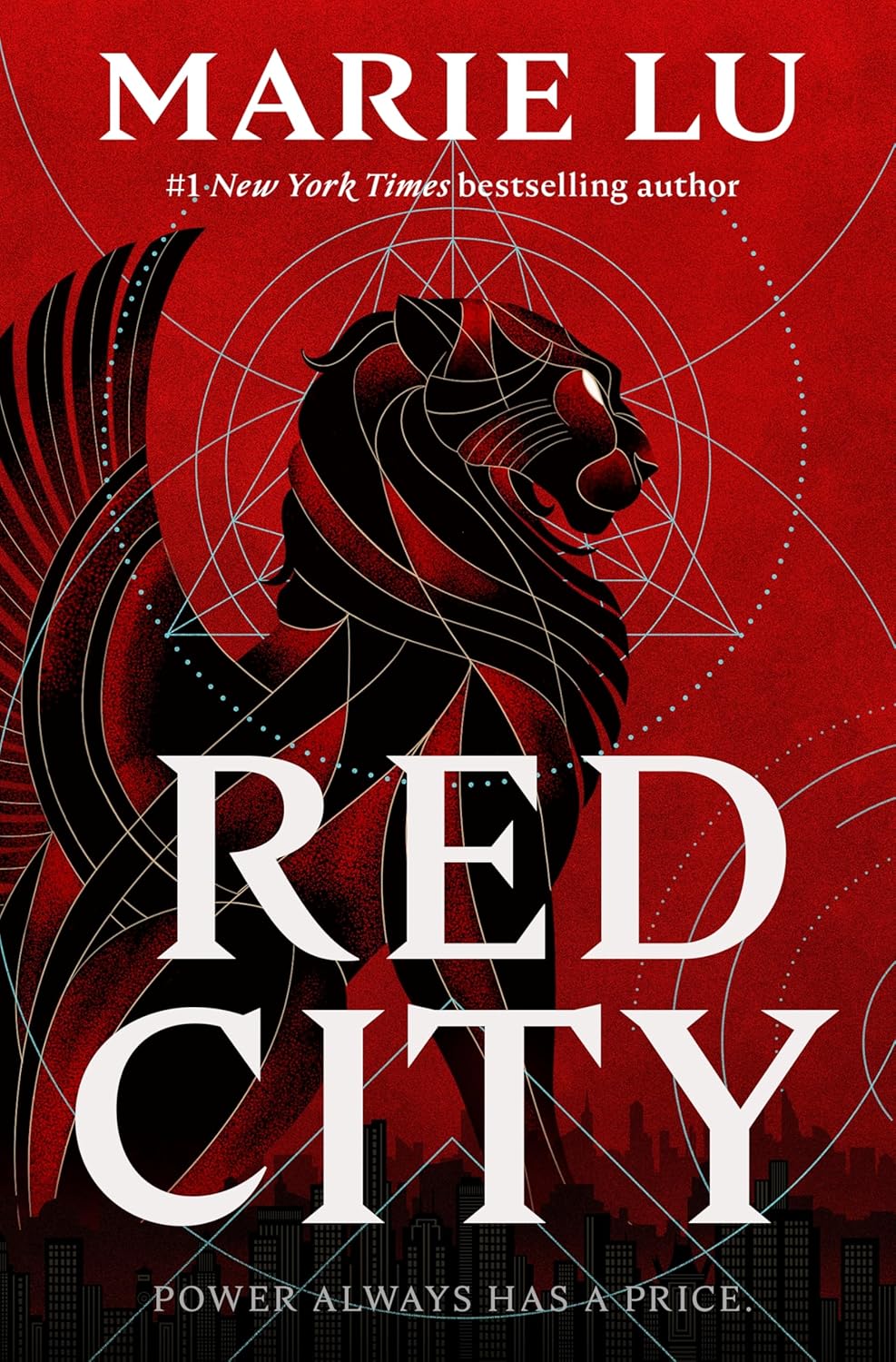
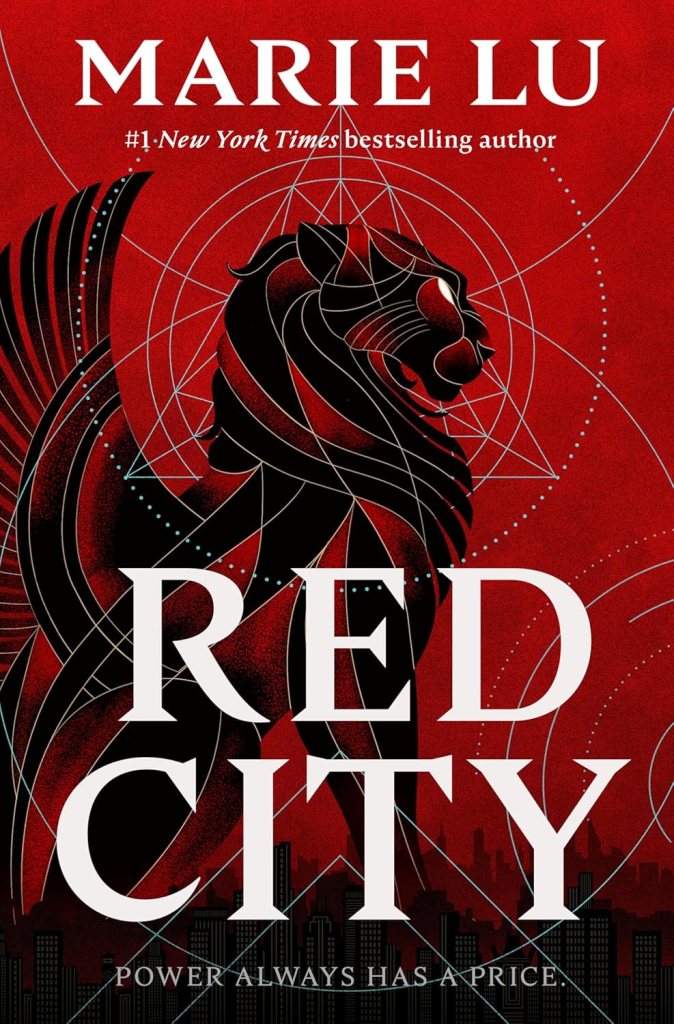
Red City (The New Alchemists, #1) – Marie Lu

In Angel City, Alchemy is the backbone of the wealthy. Those who are knowledgeable in the art of alchemical transformation can perform acts once thought impossible, both through the study of magic and the consumption of sand, a drug that makes the user more perfect—at a deadly price. For Sam and Ari, childhood friends caught on the opposite sides of the criminal syndicates of Angel City, this price is one that will bring them everything that they ever wished for. But will the rift deepening between them ever be breached—and what is the price of the enmity they’ve sown between each other in their quests for power?

TW/CW: substance abuse (fantasy), torture, violence, sexual content, loss of loved ones, child abuse

Marie Lu slipping in a reference to Nannerl Mozart whenever it’s humanly possible:

I’ve been on the Marie Lu train beginning with Warcross all the way back when I was 13 or 14, and I’ve been hooked ever since. Has she had her lower points? Sure, but it’s overshadowed by her consistency overall. Even her weaker books have still been loads of fun. It feels like a wonderful, full circle moment to be reading her adult debut now, here in my twenties and nearly finished with college. Thankfully, it did not disappoint.

First off, I think Lu’s really onto something with this alchemy-based magic system…I’m fully invested in this world! A lot of what I know about alchemy (chiefly from my amazing dad, who’s taught whole classes about this—shoutout to him!) is all about transformation—not just with the kind of alchemy that was done in ancient times with physical objects and elements, but of self-transformation, whether to reach a lofty goal of immortality or of general spiritual betterment or being closer to the divine. In Red City, the premise hinges around this quality of alchemy being perverted; you can physically perform transformation-based magic of several types, but the alchemical transformation is aided by a drug called sand. Of course, in the hands of criminal syndicates around the world, it becomes a tool to become more “perfect.” Leave it to the mafia to ruin alchemy. (New elevator pitch for Red City just dropped?)

On that subject, I really like that use of alchemy as a way to critique our societal concept of perfection. Self-transformation can be an incredibly powerful thing, when you’re putting in the work to become a better, kinder, smarter, etc. person. But when the urge to become perfect consumes you to the point of becoming a shell of your former self, it eats you up from the inside. Sam and Ari both fall prey to this, and it destroys them both. Lu always has a knack for using her fantasy and sci-fi worlds to critique parts of society, whether it was the examination of otherness and marginalization in The Young Elites or the sidelining of women’s stories in The Kingdom of Back. Using the negative potentials of transformational, alchemy-based magic to critique our society’s tendency to glamorize a destructive kind of false perfection.

So of course, by virtue of this story being about wealthy people doing horrible things to stay perfect and powerful, of course it’s set in Los Angeles. (Cue “Los Ageless” by St. Vincent. There ya go, past Madeline.) Well, not really Los Angeles. This is an alternate world that Red City is set in, and the scene is set in Angel City. But Lu took such great pains to make the worldbuilding as airtight as possible, which I thoroughly enjoyed! I expected nothing less from her, honestly, given her track record. Peppered with everything from fictional textbooks to congressional testimonies to FDA announcements, Lu left no stone unturned when it came to finding out how alchemy magic would affect the world. Even with the real-world basis to go off of, it seemed effortless for her to integrate alchemy and have the world still feel so real. I was immersed from page one, and there wasn’t a hole to be found throughout.

Making the jump from YA to Adult is harder than a lot of authors make it seem, but Marie Lu did it with ease with Red City! I feel like a lot of authors make the switch not considering how different the characters’ voices and choices will be, even with an age difference of only 5-10 years from the teenagers were once writing. I’ve read quite a few adult books from normally YA authors where the protagonists still read like teenagers. Lu made it look easy. It’s much more mature for sure, but never strays into edgelord torturefest territory either just to seem more “adult”; the violence, complexity, and sexual content are dialed up, but in a way that felt realistic for the characters, their circumstances, and the stakes. (And for the record, the way she wrote sex scenes was effortless and never got cringy, thank goodness! If I remember correctly, The Midnight Star got pretty steamy in some places, so I’m not surprised, but it’s worth commending.)

As always, Marie Lu’s characters are the star of the show in Red City. Man, she can craft such compelling characters! She just keeps winning!! Sam and Ari were both unlikable in some capacity, but they felt like tragic heroes to me. They were both doomed from the start (and I’m assuming they’ll get even more doomed as the series goes on…yippee!), but Lu wove them both like tapestries, and their stories hooked me from the start. My only nitpick is that Sam seemed to get disproportionately more development than Ari, but I’m assuming that’s what the mysterious book 2 is setting up. What we have now is excellent—Sam and Ari were both such compelling, tragic protagonists, and the way that their quests for power, recognition, and perfection tore them apart was nothing short of breathtaking. MARIE LU HAS DONE IT AGAIN!

All in all, a dark and dazzling addition to Marie Lu’s expansive fantasy canon that you won’t want to miss. 4.25 stars!

Red City is the first novel in the New Alchemists series, though no information has been released about its sequels or how long the series will be. Lu is also the author of many series for young adults, including the Legend series (Legend, Prodigy, Champion, and Rebel), the Warcross duology (Warcross and Wildcard), the Young Elites trilogy (The Young Elites, The Rose Society, and The Midnight Star), the Skyhunter duology (Skyhunter and Steelstriker), the Stars & Smoke duology (Stars & Smoke and Icon & Inferno), the standalone novel The Kingdom of Back, and the DC Comics tie-in Batman: Nightwalker.

Today’s song:

That’s it for this week’s Book Review Tuesday! Have a wonderful rest of your day, and take care of yourselves!

Posted in Sunday Songs

Sunday Songs: 10/26/25

Happy Sunday, bibliophiles! I hope this week has treated you well.

This week: I think you’ve all been getting too comfortable with the lack of Björk in the past month or so…WOE, BJÖRK BE UPON YE

Enjoy this week’s review!

SUNDAY SONGS: 10/26/25

“Anemone” – The Brian Jonestown Massacre

I love a song that just envelops me. “Anemone” is one of those tracks were there’s nothing in the lyrics remotely related to anemones (or even the sea), but it just happens to be the right title, just from the feel of it. The production and instrumentation sound like the lazy swirl of a temperate ocean around you, like footage of Planet Earth with a shot panning over gentle waves making anemones’ tentacles wave in the wind like branches on a tree. “You should be picking me up/Instead you’re dragging me down,” in that frame of mind, feels like being pulled under by a rogue wave and surrendering to the current.

Anton Newcombe’s voice feels like a backup instrument and not the lead vocal, somehow just as ethereal and misty as the faintly distorted rhythm guitar. That’s probably because the lead guitar, also played by Newcombe, is so distinct that it feels more like the voice of the song. From the beginning, it makes intricate loops and twists, like an animation of yarn curling in on itself—or the tendrils of an anemone slowly reaching out to you. It starts off almost uneasy, as if trying not to intrude on the melody, but once it expands, it takes the song from dewy cobwebs to a fully-defined spiderweb of dreamlike sound.

…AND A BOOK TO GO WITH IT:

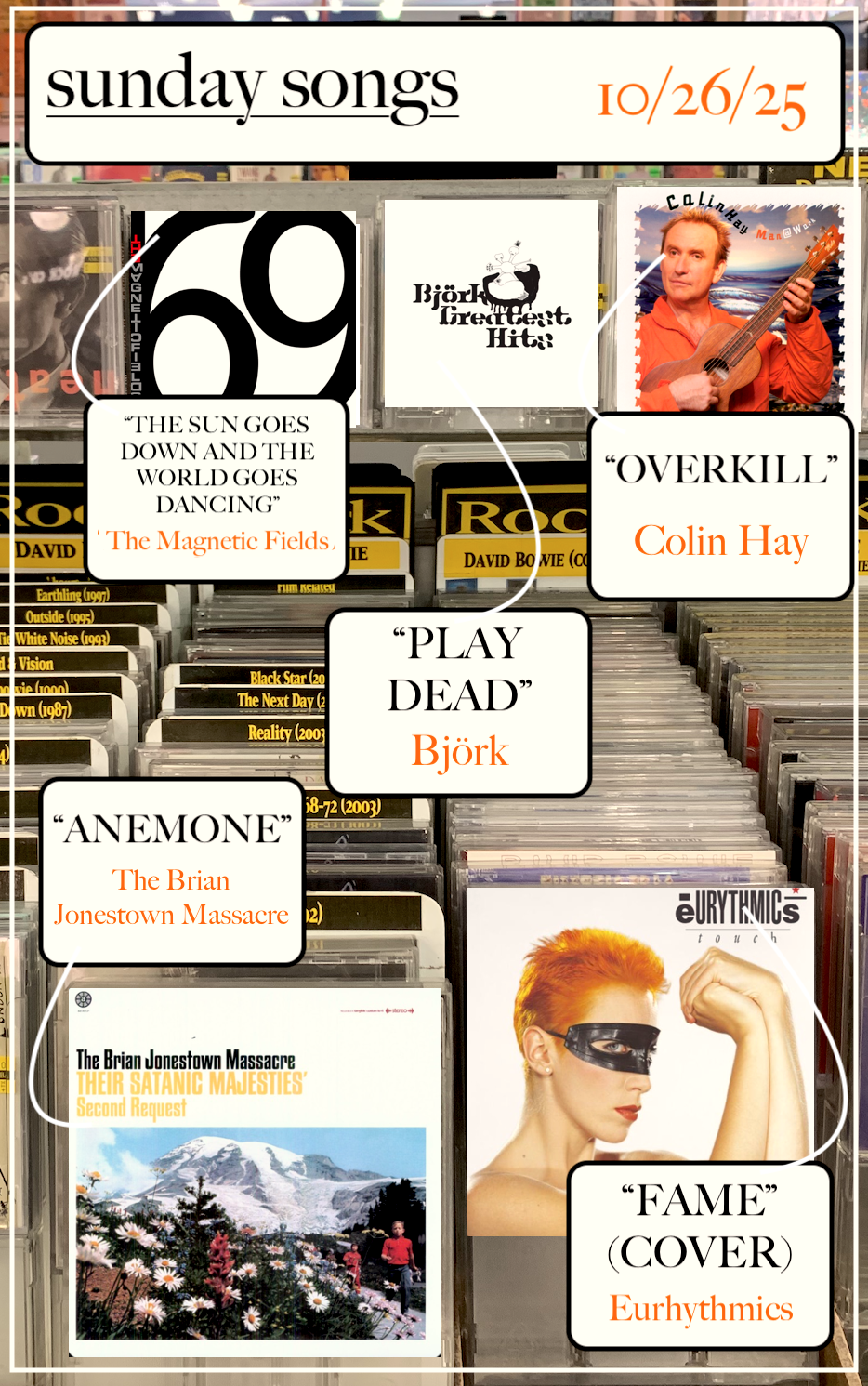
The Two Lies of Faven Sythe – Megan E. O’Keefea twisty, surreal world of crystals and secrets—befitting of a dreamlike song like this.

“Fame” (David Bowie cover) – Eurhythmics

The other day, a good friend of mine (and one of the only people I know who’s just as obsessed with David Bowie as me, which is really saying something) and I were volleying back and forth about David Bowie covers. I wish I were as open-minded like them, but I think I was just burned by the aftermath of Bowie’s death when every single radio station decided that it was the right time to play nothing but the shittiest Bowie covers known to man. You can’t blame me for being a little suspicious at first. If you have that seismic of an impact on music, you’re bound to spawn a ton of bad covers. Plenty of good ones too, though! (For your perusal, and also the ones I sent said friend: Warpaint’s cover of “Ashes to Ashes,” TV on the Radio’s cover of “Heroes,” Lisa Hannigan’s cover of “Oh! You Pretty Things,” and Karen O and Willie Nelson’s cover of “Under Pressure.”)

But when they said that Eurhythmics had done a cover of “Fame” back in the early ’80s, I knew it was going to be good. (So thank you, said friend!) After all, Annie Lennox did take up the mantle of resident British, orange-haired, androgynous pop star from Bowie after Ziggy Stardust had been put to bed. I knew she was going to be cooking something. Bold, daring covers are few and far between, but if anyone can do it, it’s Eurhythmics. Lennox and Stewart transmuted Bowie’s plastic soul into a wholly different sound. It’s slicker than chrome, and so, so ’80s in the best way. Sped up and dominated by synths that sound like liquid mercury, Lennox’s vocal take on “Fame” turns the meditation into a song that feels like it belongs in a movie montage, walking through a crowded ballroom full of shallow, Hollywood types. Her mocking laugh echoes through the repetition of “Fame” in the chorus, hammering down Bowie’s original message of fame and the mercurial music industry wringing creative talents dry.

…AND A BOOK TO GO WITH IT:

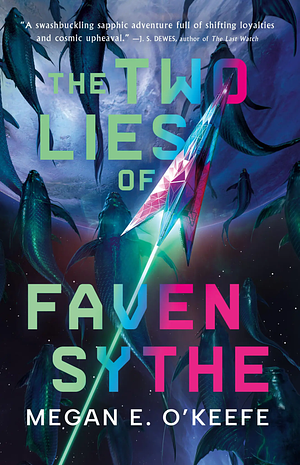
The Monstrous Misses Mai – Van Hoang“Fame (fame)/What you like is in the limo/Fame (fame) what you get is no tomorrow/Fame (fame) what you need, you have to borrow…”

“The Sun Goes Down and the World Goes Dancing” – The Magnetic Fields

Dammit…I almost slipped into my usual “I need to set aside 3 hours to listen to 69 Love Songs in its entirety” intro for yet another song from 69 Love Songs. 3 hours? In this economy? With my Instagram-rotted goldfish attention span? Kidding, kidding…only partly. I need to shut up and just listen to the album.

In the meantime, I seem to have gathered a stash of assorted songs from 69 Love Songs like a squirrel gathering acorns for the winter and hiding them in the most random places. Yet I do not have the uncanny acorn memory of a squirrel, so I’m fully surprised every time the Magnetic Fields Instagram account soundtracks one of their posts from the 69 Love Songs 25th Anniversary Tour with one of these songs. “The Sun Goes Down and the World Goes Dancing” was a recent favorite from the start. I fully mean this as a compliment, but there’s something about the production that makes the song sound like it’s been played on toy instruments. You can’t tell me that those clacks in the background aren’t plastic. Given the absolute laundry list of instruments listed under Stephin Merrit’s name on the Wikipedia page for 69 Love Songs, it wouldn’t be out of the ordinary for him to have thrown some in for fun. Another fun fact: Daniel Handler, a.k.a. Lemony Snicket (yes, that Lemony Snicket) played several instruments on the album and arranged “Asleep and Dreaming.” I feel like it’d take an archaeologist to deconstruct the sheer amount of lore that this album has.

And yet that toylike quality makes the rusty charm of this song, from the thin mandolin strums and the hollow, clinking percussion. It’s uncharacteristically devoid of the usual lovelorn frustrations that Merritt usually displays—it’s nothing but breathless, dizzy joy. “The Sun Goes Down and the World Goes Dancing” is a snapshot in motion of rapidly twirling lovers careening across a dim dancefloor, relishing in the warm glow of the lights. It’s the faint smell of the night air as you squeeze someone’s clammy hand, a leap of faith into someone else’s arms. The beat seems to all but gallop like a trained pony with a collar adorned with jingle bells, brushed to perfection but nothing but happy about it.

…AND A BOOK TO GO WITH IT:

Heartstopper, vol. 1 – Alice Osemandon’t tell me that this song isn’t befitting of some little animated leaves and fireworks.

“Play Dead” – Björk

There’s something so singularly admirable about Björk that makes even her more commercial songs feel so uproariously her. Even a relatively sparse music video, not directed by her and interspersed with clips from the film it was from, The Young Americans, couldn’t tamp down the raw power of her voice. Even when given a formula, Björk played around with it in every way that she could—from all accounts, the opportunity was an experiment for her. On writing “Play Dead,” Björk said that writing the song was “fun because the character in the film was suffering and going through hardcore tough times and at the time I was at my happiest. It was quite liberating to sit down after writing a whole album to write from someone else’s point of view.”

Aided by David Arnold, who composed the film’s score, and Jah Wobble (of Public Image Ltd) contributing the (gloriously slick) bass, “Play Dead” reminds me, at best, of what I like so much about trip-hop. It’s so seductive and slick, and even with the lyrics aching with numbness, it’s so brimming with life. Sure, that’s in no small part due to the cinematic orchestral swells that punctuate the background, but Björk’s voice makes it from a song into a true performance on every listen—even the most melancholy lyrics from her are blood vessels full of life. Nothing could ever suck the energy out of her performances, much less this one.

…AND A BOOK TO GO WITH IT:

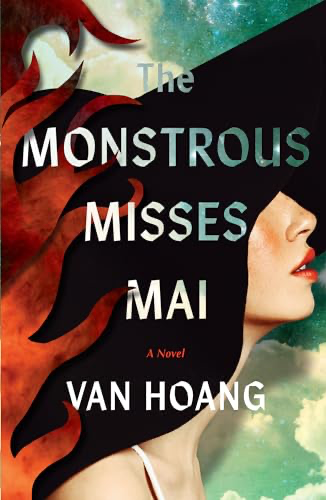
Red City – Marie Lu“I belong to here where/No one cares, and no one loves/No light, no air to live in/A place called hate/The city of fear…”

“Overkill” – Colin Hay

[BANGING FIST ON THE TABLE, IN TEARS]

HE JUST LIKE ME FR

…AND A BOOK TO GO WITH IT:

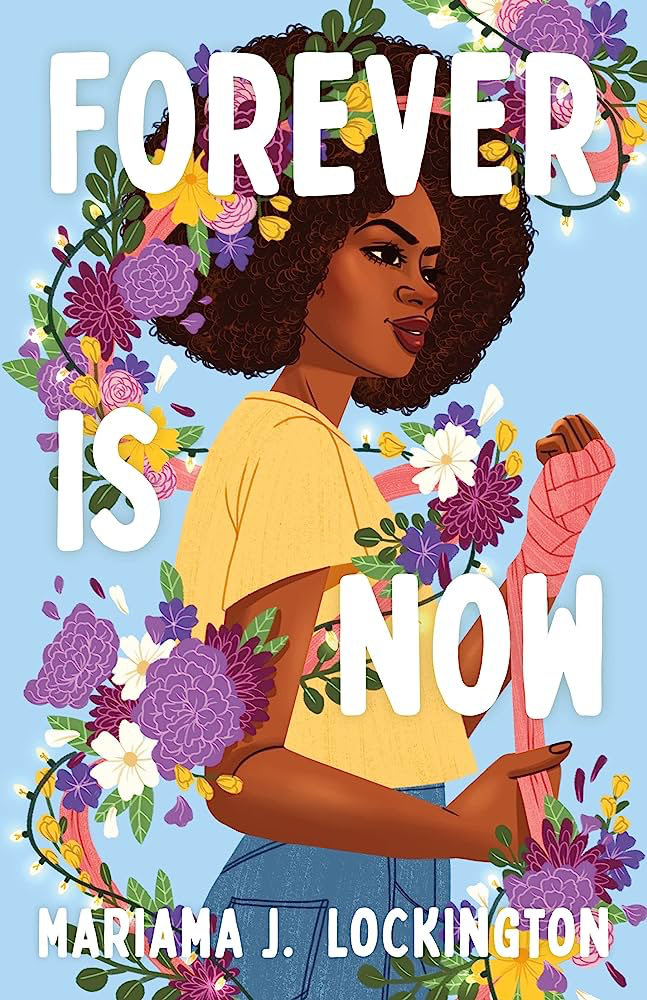
Forever is Now – Mariama J. Lockingtona poignant, honest depiction of a young Black girl dealing with chronic anxiety.

Since this post consists entirely of songs, consider all of them to be today’s song.

That’s it for this week’s Sunday Songs! Have a wonderful rest of your day, and take care of yourselves!

Posted in Book Review Tuesday

Book Review Tuesday (10/21/25) – Failure to Communicate

Happy Tuesday, bibliophiles!

I found out about this book earlier this year while looking for more sci-fi with queer and/or disabled rep (as I always am). This book seemed to have nearly the perfect premise—I just can’t get over how genius it is to have an autistic protagonist who’s had to study human behavior her whole life study alien behavior as well in order to initiate First Contact. I ended up buying it for Bookshop.org’s recent Anti-Prime Sale, and I ate it up in a handful of days. Though not without its flaws, Failure to Communicate delivers almost completely on its remarkable premise, full of political intrigue, aliens, and heart.

Enjoy this week’s review!

Failure to Communicate (Xandri Corelel, #1) – Kaia Sønderby

Xandri Corelel has spent her life studying everyone around her, be they people or aliens. She’s been forced to, after centuries of eugenics has made her one of the few autistic humans left in the universe. She uses these skills as a Xeno-Liaison, negotiating with all sorts of aliens on behalf of the Starsystems Alliance. But when presented with a potentially hostile species possessing one of the most powerful weapons in the universe, Xandri faces the most difficult negotiation of her career—one that may chance the face of interspecies relations forever.

TW/CW: ableism, xenophobia (fictional), violence, blood, genocide themes, slavery, animal death

“Autistic person spends entire life trying to understand human behavior, doesn’t fully understand it, then spends her entire career understanding alien behavior instead” has to win the gold medal for the best sci-fi premise I’ve heard in years. (Also, felt.) And though not all of it delivered on said premise, Failure to Communicate is a hidden gem for sure.

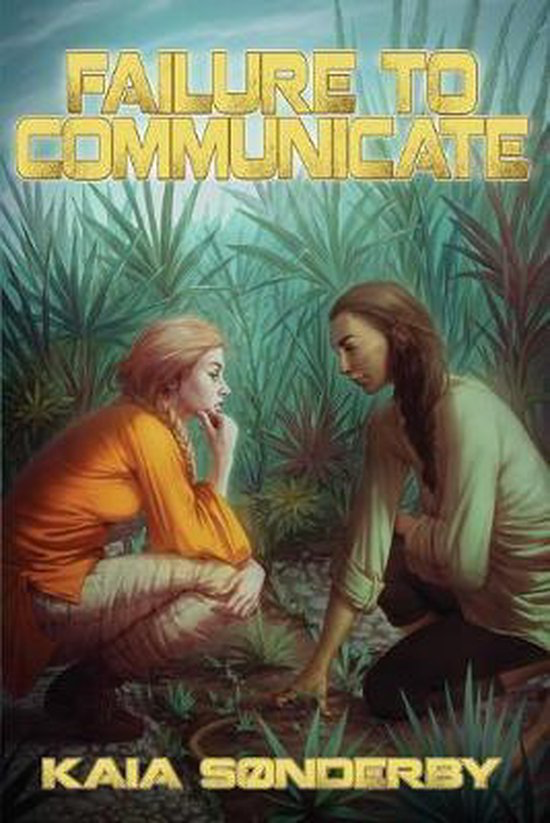
Now, I’m reviewing a space opera book which features a whole host of alien species, which means it’s time for my obligatory creature design rant. The aliens in Failure to Communicate are…a complicated case, for sure. The majority of them are basically larger, intelligent versions of real-world animals (with some brief exceptions), but Sønderby is self-aware of the fact; for instance, the Psittacans (a name that Xandri gave the species and didn’t develop on its own, thankfully) basically look like giant parrots, but Xandri explains that in-universe, all of their parrot-like features aren’t anything like what we would call, say, feathers, but evolved in such a way that they looked exactly like Earth parrots independently of Earth. This same explanation is given to pretty much all of the other species in the book, which is a bit too convenient to apply to 90% of the aliens in the novel. As for the Anmerilli, though I’m not disparaging the cover artist in any way, I feel like the cover didn’t do justice to their more alien features—and man, was I relieved that these aliens weren’t just humans with extra steps. Well…if you boiled it down, they kind of were, but there were enough traits that they at least got to the level of a decently compelling Star Wars humanoid. (Also, Sønderby’s descriptions of the Zechak also made me picture them as genocidal Piglins, which was…uh, interesting, for sure.)

But what almost made up with that for me was the in-depth explanations of their respective cultures. In the end, Failure to Communicate wasn’t necessarily a book about biology—it was a book about politics, anthropology, culture, and communication. That, at least, was incredibly fleshed out and much more thoroughly thought-out—as it should’ve been. Dissecting some of the alien cultures was one of the best parts of the novel. These cultures and the conflicts between them formed the backbone of the novel. Though until the end, Failure to Communicate is somewhat light on action, Xandri’s experiences with navigating the intricacies of dozens of alien cultures was nothing short of compelling—Sønderby has the mind of an anthropologist, and there was truly no stone left unturned. I loved that she didn’t shy away from depicting the discomfort that comes with interacting with other cultures for the first time and having one’s own values brush up against theirs—it’s bound to happen with First Contact, and it’s bound to happen in a lot of novel, multicultural interactions. There were some places where I felt there needed to be more nuance (ex. the whole situation with the Zechak; yes, they’re genocidal, but it verged too close to “this entire species consists of genocidal, cold-blooded killers,” which Xandri tries to self-correct, but isn’t emphasized enough. I’d find that hard to believe), but overall, I loved Sønderby’s cultural explorations.

Sønderby’s commitment to not shying away from discomfort was one of the best parts of the novel, and that was made manifest in her main character, Xandri. There was a ton about her that I loved—her keen eye for cultural quirks, her inner monologues about the idiosyncrasies of the neurodivergent world, and her unflappable sense of justice. However, she was far from a perfect character—even being in a world populated with aliens, she harbored her own unconscious biases and prejudices, which she frequently had to come to terms with throughout her mission. She lashed out, she made rash decisions—she was imperfect. And though she was easy to root for, she had plenty of flaws, a balance that is difficult for any author to strike.

Failure to Communicate isn’t an action-heavy book, which I’m all for—waiter! More cozy sci-fi, please! However, I hesitate to call this novel “cozy,” especially considering the moment when shit hits the fan during the last third of it. Everything that happens then swiftly merits the “cozy” title being unceremoniously ripped off. Nonetheless, Sønderby takes some cues from cozy sci-fi’s best; I loved how she let the plot meander in the more interpersonal conflicts as opposed to the big and showy ones, and let the often messy character dynamics take the lead. The ending was also messy and bittersweet, but not in a way that lacks resolution—it is a resolution, just a very complicated one with quite a lot of uncomfortable implications for Xandri. Another example of Sønderby not shying away from making things complex. I do like that it ended on a very hopeful note, as much of a wreck as some things ended up being.

Being neurodivergent, the subject of disability was part of what drew me into Failure to Communicate. I’ve mentioned on here that I have SPD, which shares some similarities with autism, and I related to Xandri’s lifelong mission to study and understand the neurotypical people around her in order to try and piece together how their world worked. She deals with a hefty dose of ableism (both from well-intentioned and malicious people) throughout the book, which was quite rough, but I loved that she never compromised her pride in being autistic. Sønderby takes the trope of futuristic societies erasing disability as a sign of progress to task, which amplifies Xandri’s struggles as an autistic woman into the struggles of possibly being the only autistic person in the entire galaxy. Which…yeah. The ableism is inevitable at that point. The only disability aspect that I’m not so sure about was having the twist that Marco was also disabled (specifically, he has bipolar disorder); I do appreciate that Sønderby uses it as an opportunity to show that almost identical conditions can produce a hero as well as a villain and that the pressures of ableism drove him to betray the team, but I really don’t think the latter had enough nuance to it. Not that disabled characters can’t be evil, obviously, but it felt too much like making a mentally ill character automatically a villain simply because they’re mentally ill. I’m willing to give Sønderby the benefit of the doubt because she handled all of the other disability-related topics so wonderfully, but it still didn’t sit completely right with me.

Also, I just have to mention that this book is so, so queer. BLESS. First off, I loved that Xandri was bisexual, but I appreciated that she was polyamorous too—there’s hardly any depictions of polyamory out there that don’t make their characters the butt of a joke or a fetish, so this was a breath of fresh air, for sure.

All in all, a wholly unique space opera about communication, culture, and collision. 4 stars!

Failure to Communicate is the first novel in the Xandri Corelel series, followed by Tone of Voice and preceded by Testing Pandora, a prequel novella. Kaia Sønderby is also the author of the YA fantasy novel Damsel to the Rescue.

Today’s song:

That’s it for this week’s Book Review Tuesday! Have a wonderful rest of your day, and take care of yourselves!
Posted in Sunday Songs

Sunday Songs: 10/19/25

Happy Sunday, bibliophiles! I hope this week has treated you well.

This week: the chances of being pursued by Brian Eno wielding chopsticks are low…but never zero.

Enjoy this week’s songs!

SUNDAY SONGS: 10/14/25

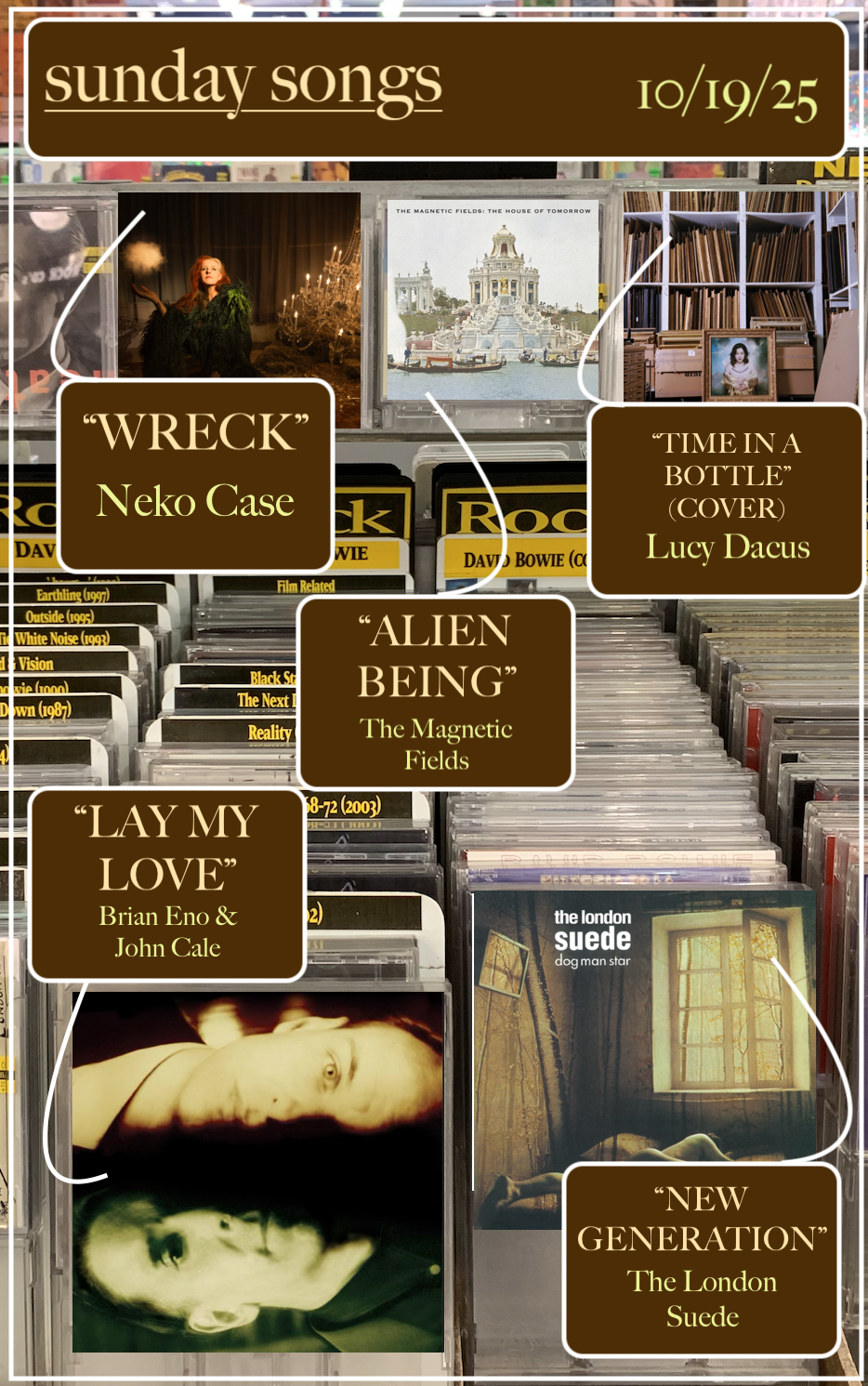
“Lay My Love” – Brian Eno & John Cale

While digging a bit about a song that I’m not even mentioning until next week, I stumbled upon something entirely different. All of those Pitchfork Best Songs of [insert decade] lists (this was from the ’90s one) are very subjective, but sometimes I appreciate looking at them simply by virtue of finding out about something new. Last week, it happened to be a collaboration between Brian Eno and John Cale from 1990, Wrong Way Up, and “Lay My Love” in particular. I was excited by the prospect of Brian Eno already, but man…I have been sucked in. I’ve listened to this one an unhealthy amount of time. It just swallows you whole in the best way possible!

By the ’80s, Brian Eno had built a decade’s worth of entirely ambient music, and there seemed to be no return for him to the more conventional (if you can call it that) rock of his earlier career, abandoning his own vocals almost entirely: in 1989, he told an interviewer that “I’m sure I could, if someone held a gun to my head, crank out a record of songs, but at this point in time I know it wouldn’t be any good.” And given the intensely argument-fraught recording of Wrong Way Up (Cale alleges that Eno once came at him wielding chopsticks, but Eno has insisted that Cale fabricated this), there’s a good chance that in another timeline, this album may not have seen the light of day after all. And yet there they were in 1990: Eno and Cale, frequent collaborators since the 1970’s, making an album consisting of just that.

You’d think that after abandoning singing for so long, Eno would appear rusty. In fact, he’s the exact opposite. “Lay My Love” feels like the distillation of the best qualities of his off-kilter vocals. Even though he’s known for his more removed, uptight vocal quality, this track presents him as warmer than he’s ever come across. It’s a song that makes you believe every word: as he sings “I am the yearning,” you can hear the pleading in his vocals, layered upon themselves ad infinitum. Cale’s rousing violins add an upbeat swing amongst the dizzyingly layered instrumentals. It’s an all-consuming slurry of glimmering sediment and flotsam, all warmed by the sun’s rays, equal parts hymn and experimental electronic music. Eno peppers in some of his most delightfully surreal, offbeat lyrics (“I am the termite of temptation”) with ones that make sense in some unarticulated part of your soul (“I am the wheel/I am the turning”). Above all, you really do feel as though this love is being laid around you like a blanket. It feels like the kind of song to soundtrack a quiet montage in a film of a house being built, or moss growing on a log: gradual, and yet hopeful in its certainty. You know that the love is coming around to you, and when it does, it will be as joyous as every note bursting from this track.

…AND A BOOK TO GO WITH IT:

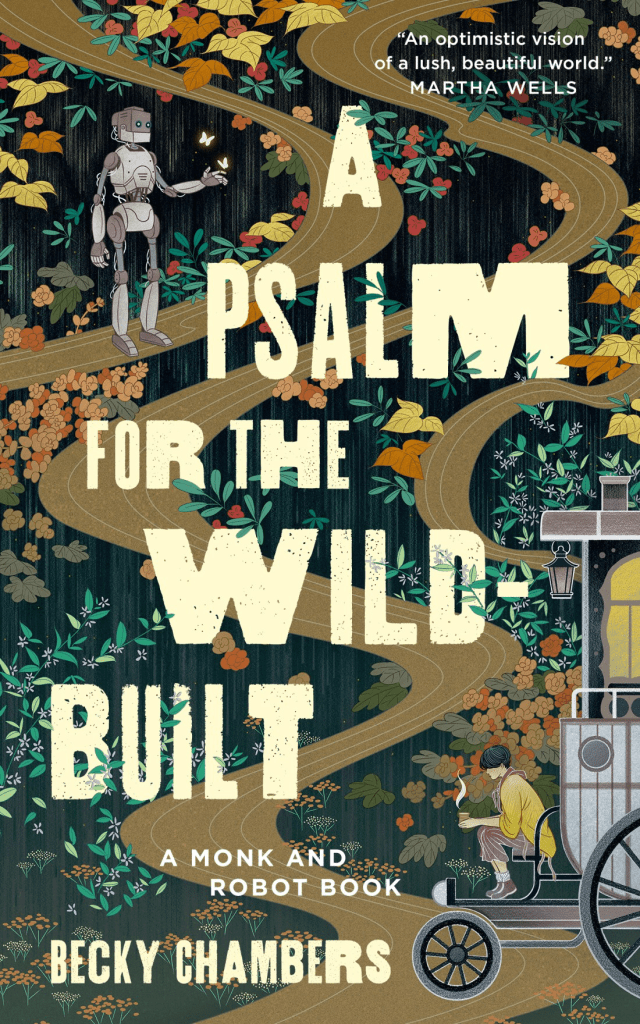
A Psalm for the Wild-Built – Becky Chambersthis seems precisely the kind of song that would soundtrack Sibling Dex and Mosscap’s quiet adventures through the woods.

“New Generation” – The London Suede

As far as the Britpop Big Four goes, The London Suede (known as just Suede in the UK) is the last frontier for me to explore; I’ve heard some of their songs sporadically and loved them (see: “Metal Mickey”), but reading The Last Party: Britpop, Blair, and the Demise of English Rock sparked some more interest in them. Add that to Neko Case’s episode of What’s in My Bag? and I was instantly hooked on “New Generation.” Along with “Lay My Love,” this song’s up there with the songs that I’ve been listening to an unhealthy amount of times. Who am I to deny my Britpop girlie urges?

I really should be a huge fan of The London Suede, given how influenced they were by David Bowie, but then again, not everybody influenced by Bowie is automatically good, of course. Brett Anderson and company seemed to worship the ground he walked on, which resulted in their melodramatic style and soaring vocals. Dog Man Star, which I’ve heard is an excellent album, was said to be inspired by a lot of Bowie’s early ’70s material, which makes perfect sense—”New Generation” feels like fanfiction set in the Hunger City of Diamond Dogs, and I fully mean that as a compliment. If Anderson’s vocals and just-so placed swoop didn’t tip you off, “New Generation” is high on the drama, but that’s part of why it works so well—it’s a strangely dystopian song that’s fit for draping yourself dramatically across the bed, full of distance and yearning. Anderson’s really doing some vocal somersaults here—he said himself that it’s one of the most difficult songs for him to sing—and amidst sepia-toned lyrics of disaffection and substance abuse, his vocals are outstretched arms beckoning for someone to swoop in and extricate him from it all.

…AND A BOOK TO GO WITH IT:

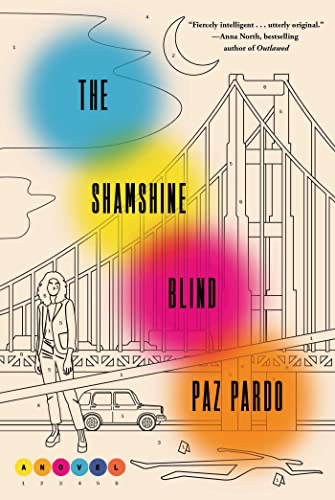
The Shamshine Blind – Paz Pardo“‘Cause like all the boys in all the cities/I take the poison, take the pity/But she and I would soon discover/We take the pills to find each other…”

“Wreck” – Neko Case

Today on incredibly specific comparisons: “Wreck” by Neko Case sounds almost exactly like this meme to me:

Maybe I do need to listen to more Neko Case after all. I’m a fan of the New Pornographers, but I really haven’t dived into any of her solo work, save for the misfire that was her cover of “Madonna of the Wasps.” You win some, you lose some. But this song, off of her new album Neon Grey Midnight Green (that’s got to be one of the better album titles I’ve heard in a while, for sure), easily falls into the win category.

For a beat, the a cappella intro lulls you into a false sense of security before dropping you headfirst into a churning, breathless whirlpool of head-over-heels romance. I can’t deny a love song that feels like you’re gleefully sprinting through a verdant field at full speed—there’s a bit of Hounds of Love Kate Bush in there somewhere in the unabashed drama that Case peddles: “I’m a meteor shattering around you/And I’m sorry/I’ve become a solar system/Since I found you/I’m an eruption/A wreck of possibilities/A volatility of stars/My clothes can’t hold together.” (Another shoutout is due to “Do I look like the sun to you?/Do I blaze freckles onto your face?”) And right after this, she breathlessly cries “And I know I can’t burn this bright forever!”—right about there, I imagine her smile splitting with reckless glee, a princess dress ballooning into endless layers of silk and tulle, a cry of nothing but sheer joy. It’s an easily addictive ode to absolutely drowning in yearning, and desperately wanting the echo to have an answer.

…AND A BOOK TO GO WITH IT:

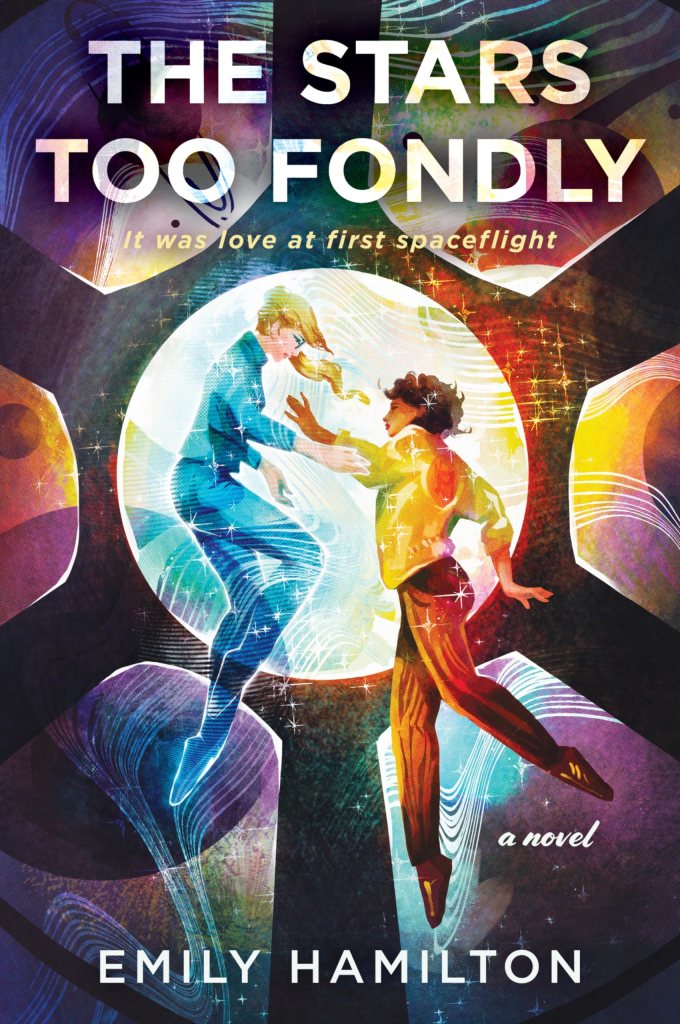
The Stars Too Fondly – Emily Hamilton“Do I look like the sun to you?/Do I blaze freckles onto your face/I bet I, bet I, bet I do/I’m a meteor shattering around you/And I’m sorry…”

“Alien Being” – The Magnetic Fields

There’s something truly beautiful about the fact that this song only has 10 likes on YouTube and a single comment that reads “being gay is awesome and you gotta try it!!!” Amen, brother.

The House of Tomorrow EP was released very early on in The Magnetic Fields’ career, and from 3/5 songs that I’ve listened to from it (this, “Either You Don’t Love Me Or I Don’t Love You” and “Love Goes Home to Paris in the Spring”), it’s clear that they’d all honed their talents very early. I suppose it helped that Stephin Merritt was in several bands before this, but it’s still very indicative of what a masterful songwriter he’s come to be. It’s also clear from the start that he’d started dissecting unhappy relationships very early on. The lyrics of “Alien Being” aren’t quite as laden with metaphor as they usually are, but they’re monotonous and repetitive—which feels like precisely the point. Almost all of them end with “nothing at all” (“You talk a lot about nothing at all/”Watch TV shows about nothing at all”), adding to the layered, grainy drone of the synths in the background. It’s a perfect encapsulation of being around someone who makes you feel like you’re talking to a wall—no feelings, no opinions, no independent thoughts, no nothing. Good thing Merritt has a lot of those things.

…AND A BOOK TO GO WITH IT:

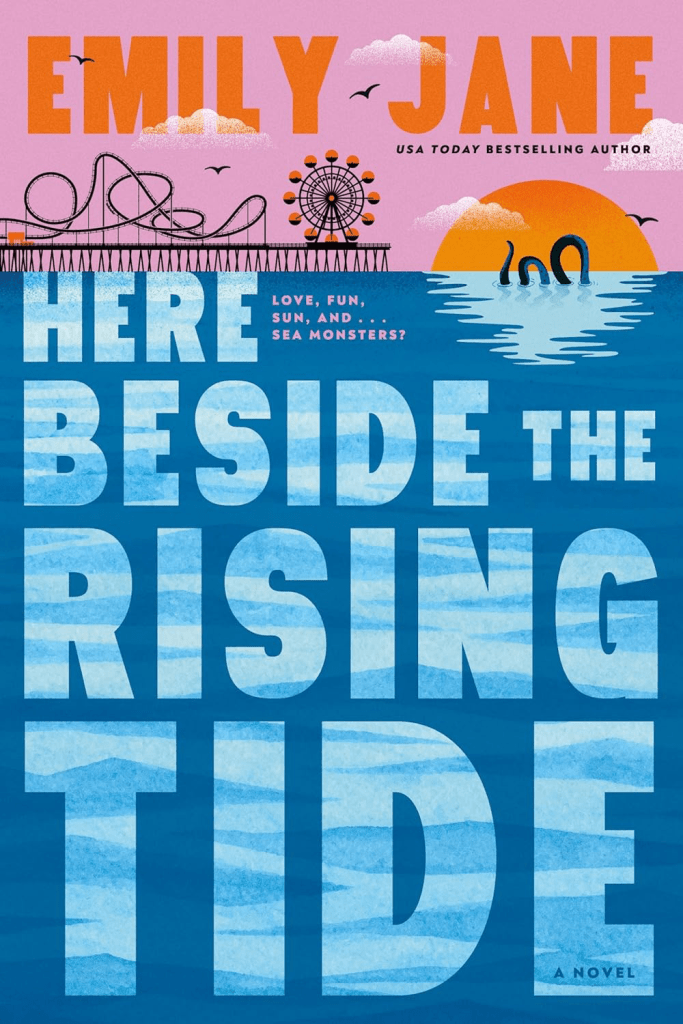
Here Beside the Rising Tide – Emily Jane“You have no feelings/I think you are an alien being/You won’t let me in/I think you are an alien being…”

“Time in a Bottle” (Jim Croce cover) – Lucy Dacus

The X-Men fan in me and the Lucy Dacus fan in me were both screaming when I found out that this was a thing…I don’t even have any sentimental feelings towards the original, but I just saw the title and got activated like a sleeper agent. Say what you want about the later Fox X-Men movies, but there’s one thing that they did best, and that was make immaculate slo-mo Quicksilver sequences with great needle drops.

I maintain that Forever is a Feeling bordered on being a disappointment, but I’m softening to some of it—especially now that we’ve gotten an expanded edition: Forever is a Feeling: The Archives. It’s mainly demos and live versions, but it had the poignant track “Losing” (should’ve been in the album, that’s my two cents) and this Jim Croce cover. Dacus’ tender, delicate fingerpicking style was practically made for this cover, as was the overall aesthetic of the album, combining acoustic guitar with gently swelling strings. I just can’t get enough of how she treats the guitar as an instrument—the way she plays on “Time in a Bottle” makes it feel like it’s not simply an instrument but a waltz partner. Her rich voice is on full display with this cover, making every note ring out with the yearning I’ve come to love her for. It’s tender in its sparing instrumentation, but her voice fills out all the empty spaces, creating a cover steeped in love and longing, just like the best parts of Forever is a Feeling.

…AND A BOOK TO GO WITH IT:

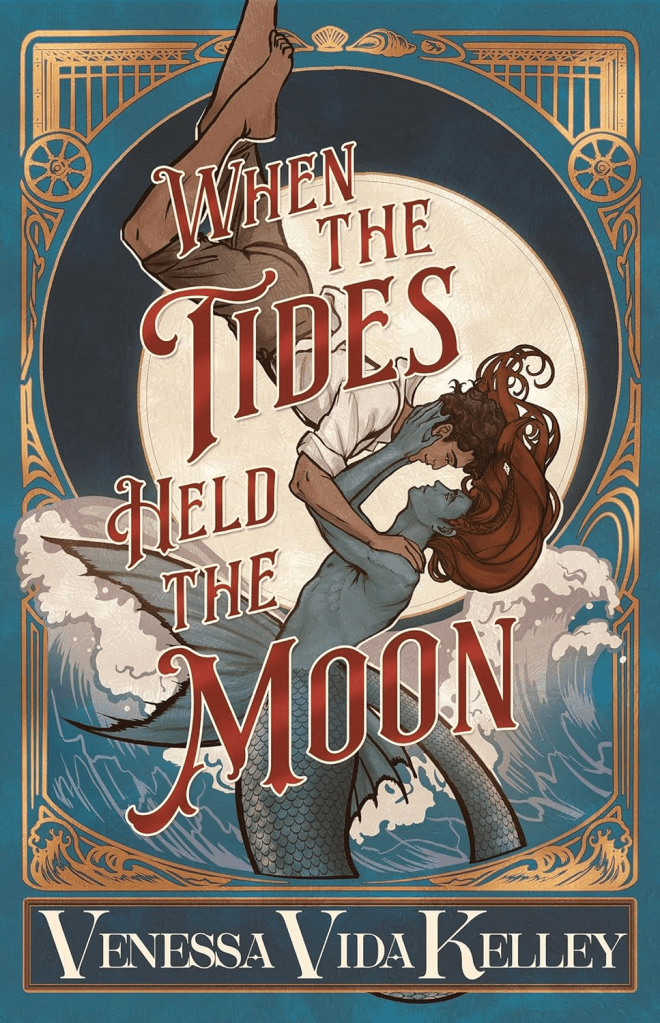
When the Tides Held the Moon – Venessa Vida Kelleythe tender feeling of this cover would fit right in with this heartfelt, moonlit romance.

Since this post consists entirely of songs, consider all of them to be today’s song.

That’s it for this week’s Sunday Songs! Have a wonderful rest of your day, and take care of yourselves!

Posted in Book Review Tuesday

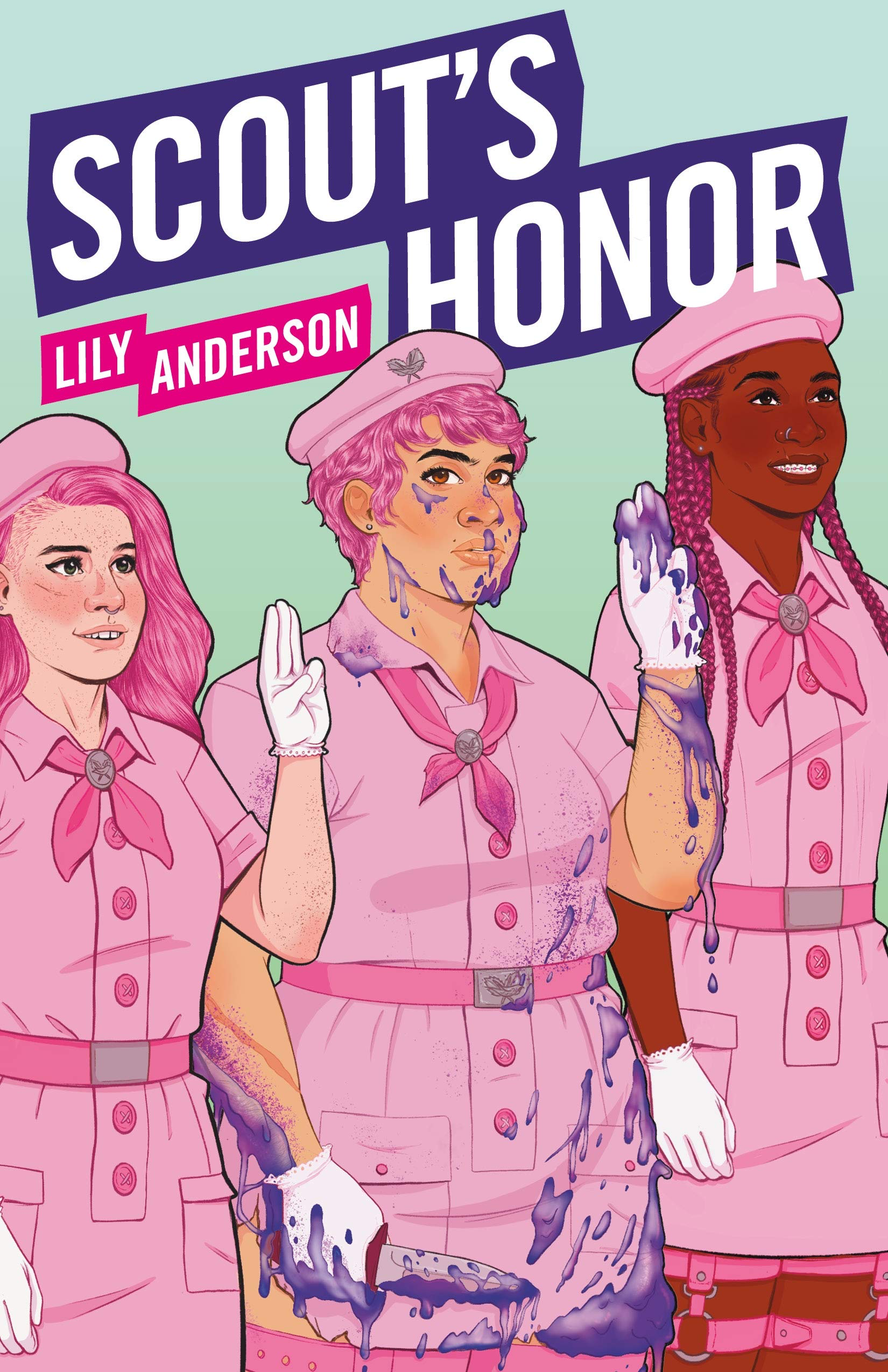
Book Review Tuesday (10/14/25) – Scout’s Honor

Happy Tuesday, bibliophiles!

To close out Latine Heritage Month, here’s a novel from an author I haven’t read in years! I’d totally forgotten about Lily Anderson since high school. I remember liking Undead Girl Gang a lot when I was younger, so I figured I might give her (somewhat) newer novel a chance. Scout’s Honor is a novel that leans into both the adventurous and the sensitive, a tale of sisterhood, coming of age, and carnivorous interdimensional monsters.

Enjoy this week’s review!

Scout’s Honor – Lily Anderson

Prue wants nothing to do with her family legacy. A third-generation Ladybird Scout, she is part of an elite circle of women trained to hunt Mulligrubs, interdimensional beasts who feed off of the emotions of humans—and sometimes their flesh, when they get hungry enough. After her friend was killed in a deadly Mulligrub attack, Prue swore off the Ladybird Scouts for good. But when a new crisis pulls her back into the fray, Prue must decide if her legacy is worth preserving—or if she needs to go her own way.

TW/CW: PTSD themes, panic attacks, violence, gore, loss of a loved one

Maybe the real Root is the friends we made along the way, amirite?

Though I can’t speak to the accuracy of the representation (Prue has PTSD), Scout’s Honor had such a deeply sensitive depiction of trauma. If the acknowledgements are anything to go by, Anderson drew a hefty amount of it from personal experience, and that authenticity shone through emotionally on the page. Narratively, you’re only fed breadcrumbs of Prue’s trauma (until you aren’t), but I feel like it mirrored Prue’s difficulties with confronting her past. There’s a lot of detail afforded to how she experiences panic attacks and how her trauma has manifested in the three years since her trauma began. Beyond that, Prue had such a poignant arc, and so much of it revolved around her trauma; the entire reason she returns to the site of her trauma is to find a way to forget it (to physically remove her ability to See the Mulligrubs via a special tea), and yet it shows her that no matter what, she can never forget the past: the only way to truly heal is not to easily overcome it, but to face it. It was such a poignant take on trauma and healing, so kudos to Anderson for that!

I also loved how Scout’s Honor tackled its themes of sisterhood! In an organization like the Ladybird Scouts, where a value like sisterhood is prized above all else, it’s bound to be perverted; any value put on that high of a pedestal is bound to be used for ill intent, which it often is in this novel—case in point with Faithlynn. But I loved how Anderson talked about what sisterhood really is—uplifting difference yet embracing commonality, and truly helping each other when we’re down. There’s Faithlynn’s sisterhood, which is just a word she can toss around while putting down the other girls around her, and there’s Prue’s sisterhood, who accepts the less conventional Ladybird Scouts like Sasha and Avi into the fold and celebrates their individual strengths in order to solve the problems throughout the novel. It’s a heartwarming exploration of the topic and a lovely depiction of how it can so easily be twisted—and an indictment of any woman whose path to success is only built on putting other women down (and in the path of danger).

For the most part, the world of Scout’s Honor was a treat! Though the worldbuilding wasn’t anything groundbreaking, there was so much surrounding the lore and the structure of the Ladybird Scouts that I loved dissecting and exploring. Anderson really nailed all of the idiosyncrasies and minute rules of this organization, from their front in the real world to the work they did behind closed doors. Anderson truly nailed the feeling of being a part of a tight-knit, insular community sworn to secrecy—there were so many laws and bylaws that had to be dodged, almost as much as the Mulligrubs, throughout the novel. Although I enjoyed the classifications of all the different Mulligrubs, I would have liked some more explanation as to how they came to Earth in the first place, and exactly what kind of dimension we’re talking about when Anderson calls them “interdimensional,” but that’s more of a me thing—the novel doesn’t necessarily need it since the worldbuilding of the primary location is already well-established.

My main issue with Scout’s Honor, however, lay in the pacing. Despite most of the emotional sections of the novel landing appropriately, Anderson didn’t seem to know how much time to allocate to certain scenes, which ended up making the pacing quite lopsided. Until the climax, it also lessened the stakes quite a bit; even though the mulligrubs are a very real threat in this universe, almost all of the battle scenes were over in what felt like the blink of an eye. If not for Prue’s trauma surrounding them, I wouldn’t have felt the tangible threat of them at all—aside from the aftermath, the characters seemed to deal with the Mulligrubs, no matter the size or strength, like that. On the flip side, although I love some character building, there were long stretches when not a ton happened, and hardly any of it serviced the plot or character development—there were just long stretches of banter that didn’t show anything that hadn’t already been established. Anderson is a strong writer for the most part, but the pacing dragged Scout’s Honor down for sure. It was really the only thing keeping me from rating it the full 4 stars.

All in all, a novel brimming with heart and heinous monsters, let down by pacing but lifted up by its depictions of trauma and sisterhood. 3.75 stars, rounded up to 4!

Scout’s Honor is a standalone, but Lily Anderson is also the author of The Only Thing Worse Than Me is You series (The Only Thing Worse Than Me is You and Not Now, Not Ever), Undead Girl Gang, The Throwback List, Killer House Party, and several other novels for teens and adults. She has also contributed to the YA anthologies The (Other) F Word: A Celebration of the Fat and Fierce, That Way Madness Lies: 15 of Shakespeare’s Most Notable Works Reimagined and All Signs Point to Yes.

Today’s song:

been unhealthily obsessed w this for the past few days…

That’s it for this week’s Book Review Tuesday! Have a wonderful rest of your day, and take care of yourselves!
Posted in Sunday Songs

Sunday Songs: 10/12/25

Happy Sunday, bibliophiles! I hope this week has treated you well.

This week: shoutout to the Welsh for carrying alternative music at the moment. Also, I continue to eat up 99% of what Horsegirl does, and Michael Stipe appears in (somewhat) unexpected places.

Enjoy this week’s songs!

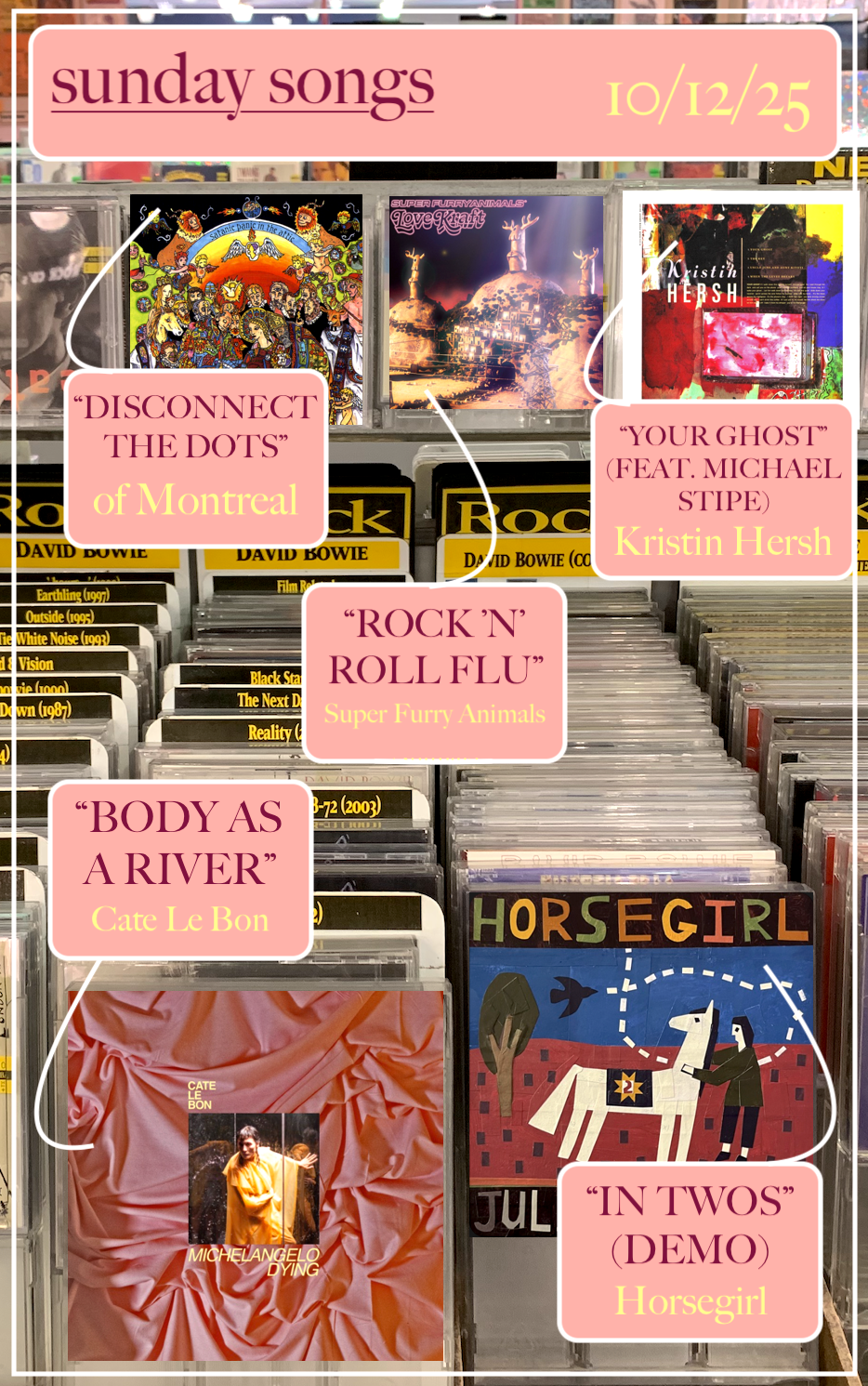
SUNDAY SONGS: 10/12/25

“Body as a River” – Cate Le Bon

Y’all. MICHELANGELO DYING! It’s a strong contender for my favorite album of the year at this point. I’m trying my best not to listen to it to death, but it’s so hard when this album has hidden sonic surprises every time I go back to it.

Since 2019, Cate Le Bon’s music has felt like an ever-expanding, tactile landscape. Listening to her last three albums feels like running your hands over a model village of an alien world, full of all manner of silken, rubbery textures charting out a world that only Le Bon has access to. Thankfully, she’s chosen to share that world with us, and her musical cartography has made me all the better. Michelangelo Dying in particularly made me feel like I was plunging through a sunlit creek, watching the sunlight dapple through the water onto my skin, watching pebbles, plants, and silvery fish dart through the current alongside me. As she maps out the prognosis of a personal heartbreak, she transforms her knotted mess of pain and grief into a vibrant swath of glistening sound; “Mothers of Riches” bobs up and down like birds vying for a mate, and “Ride,” with the help of John Cale (!!!), meanders into a searing climax and shows off Le Bon’s vocal and emotional range.

But it’s “Body as a River” that swept me off my feet and into the frigid creek waters—or the river, I guess I should say. Or maybe not: after all, “My body as a river/A river running dry.” There’s only a riverbed to speak of now, for Le Bon, a once rushing energy force now diminished by pain. It’s one of those songs that you instantly surrender to. Awash in thrumming pianos and guitars and saxophones so warped and bubbly that they cease to become instruments, Le Bon drags you along with the proverbial current. You can’t do much other than release yourself to the thrall of the music—and I’m glad to do it time after time. The entire album feels watery, but this feels like this musical concept pushed to its extreme; it all burbles and rushes like a waterfall, Le Bon’s voice layered, echoed, and pulled apart in all directions to linger in the feeling of exhaustion and transience. Her lyricism dwells in the real and the surreal in equal measure: “Do you see her/Falling on the wishing bone/Dripping like a candle?/In the pages lost/I’m holding on to sorrow and lust.” It’s a song that makes me glad to be alive in a time when, if you look hard enough, artsy people are honing their craft beneath the shadow of the mainstream, free to let their unique sound flow free like water. We don’t deserve Cate Le Bon.

…AND A BOOK TO GO WITH IT:

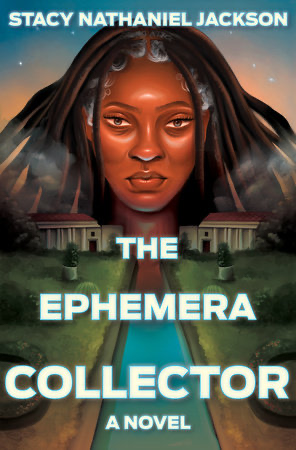
The Ephemera Collector – Stacy Nathaniel Jackson“See what you like/I read what I write/And it’s never without shame/My body as a river/A river running dry/And I’m sick all the time…”

“In Twos” (Demo) – Horsegirl

Phonetics On & On has had me in a chokehold ever since it came out on Valentine’s Day. Like Cate Le Bon’s new music, it just gives me so much joy that there are so many artists out there making music true to their quirky selves, and music that’s so catchy and creative at that. Somehow, even the demos are almost on the same level as the final products of the album—both versions of “Julie” were worthy, scratchy precursors to one of the album’s most introspective moments.

“In Twos” was a faintly melancholy bridge before the album really got up and started doing the dance from the end of Fantastic Mr. Fox, but it was one of the highlights for me in terms of songwriting. It was already a spectacular track, but somehow, this lo-fi, larval stage of it is almost better than the studio version. Practically, I feel like the lower key would’ve probably been more difficult to sing, but it feels more resonant and more fitting with the lyrics, a gentle, wistful ramble through crowded city streets. The spare instrumentals on the studio version made the melancholy more tangible, but on a personal level, I just love the more garagey sound that this demo has, chock-full of a more restrained version of the sounds of Versions of Modern Performance. Despite the wistfulness, they can never take the jangle away from Horsegirl.

…AND A BOOK TO GO WITH IT:

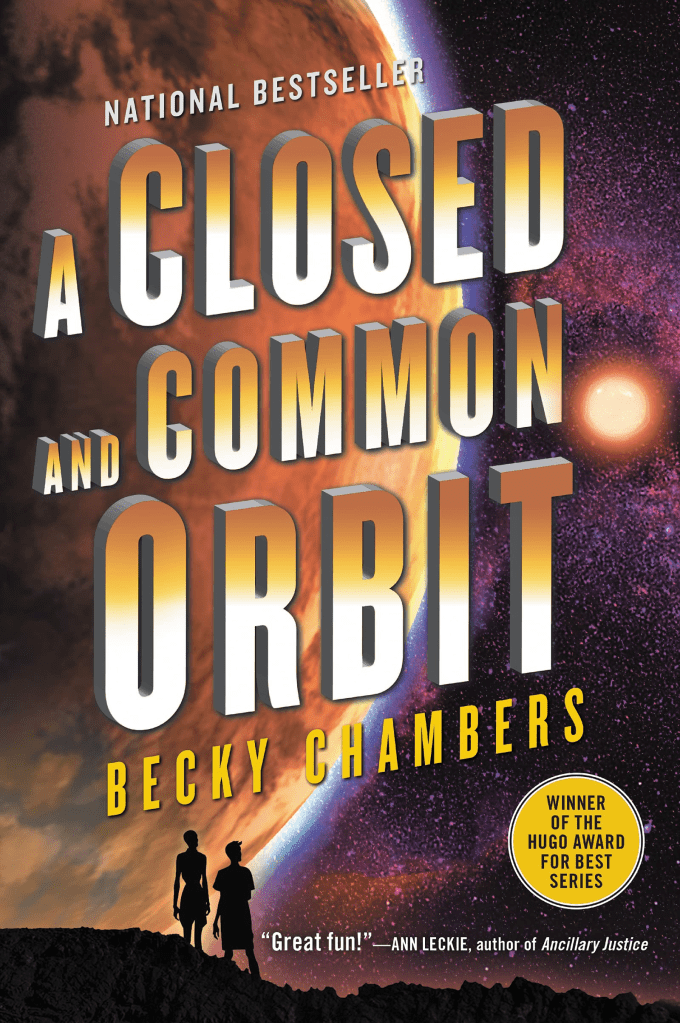
A Closed and Common Orbit (Wayfarers, #2) – Becky Chambers“Every car that passes by drives to you/Overlooked by any face just passing through/Your footprints on the street, they walk in twos/Every good thing that I find, I find I lose…”

“Disconnect the Dots” – of Montreal

Isn’t it so wonderful to look back on a musician’s sound to see exactly where the good stuff gestated? “Disconnect the Dots” is already the good stuff in question, but I swear it’s like peeling back a layer of age to see the future of where of Montreal would go in the next four years. I can practically hear an embryonic version of the anxious thrum of “Heimdalsgate Like a Promethean Curse” in the bouncing bass of this track and the ever-so-slightly off kilter, catchy dance music of The Sunlandic Twins. “Disconnect the Dots” comes right as Kevin Barnes had stepped off of the precipice of their potential; the lyrics haven’t gotten as English major delightful yet, but this feels like one of their dance songs, so it doesn’t really need those lyrics quite yet. What it does have, however, is Barnes saying “Come disconnect the dots with me, poppet”—I really should’ve seen “poppet” coming a mile away, but it’s such a quirky little additive to the song that exhibits a weirdness in Barnes that could never be suppressed.

…AND A BOOK TO GO WITH IT:

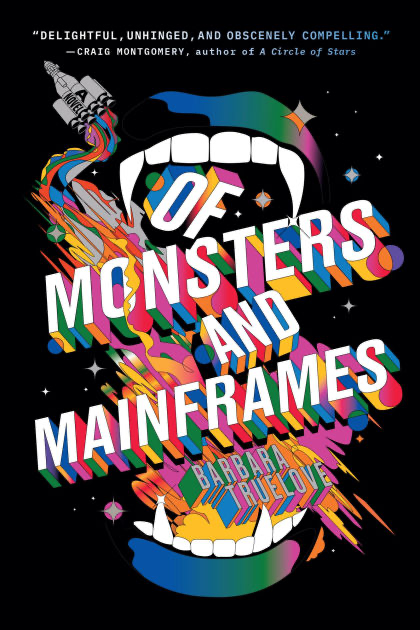
Of Monsters and Mainframes – Barbara Trueloveonly a book as bonkers as this could be befitting of a song like this…

“Rock ‘n’ Roll Flu” – Super Furry Animals

“Rock ‘n’ Roll Flu?” That’s just what happened when I saw Gorillaz and then realized that I’d gotten RSV a few days later…thank you, thank you, I’ll be here all night.

Super Furry Animals have been all but dormant for the better part of a decade, having not released new material since 2016. Separately, most of the band has been active on different projects, but after an agonizing string of teasers that lasted a solid week, Gruff Rhys and co. announced a UK tour and a reissue of their 2005 album Love Kraft. The (extreme) optimist in me is hoping that they’ll do a US tour (and come to Colorado by some miracle), but…listen, I’m glad said super furry animals have emerged from their hibernation, at least for a fleeting moment. Big fan of whatever Super Furry Animal is in this visualizer too.

“Rock ‘n’ Roll Flu,” a joyous, harmony-driven stomper, was a B-Side from the Love Kraft sessions that has just now been released. Though I haven’t listened to any of the album, it’s got some of my favorite qualities of a good Super Furry Animals song. It’s got an absolutely glistening glam sheen to it; it really seems to shimmer like a just-washed car with a handful of water droplets clinging to the surface. With its spacey instrumentals and the seamless harmonies. It’s one of those songs that seems to encapsulate the art that Super Furry Animals surrounds itself with—it’s the exact kind of song to fit in the backdrop of their universe of bold colors and cartoon creatures on rocket ships.

…AND A BOOK TO GO WITH IT:

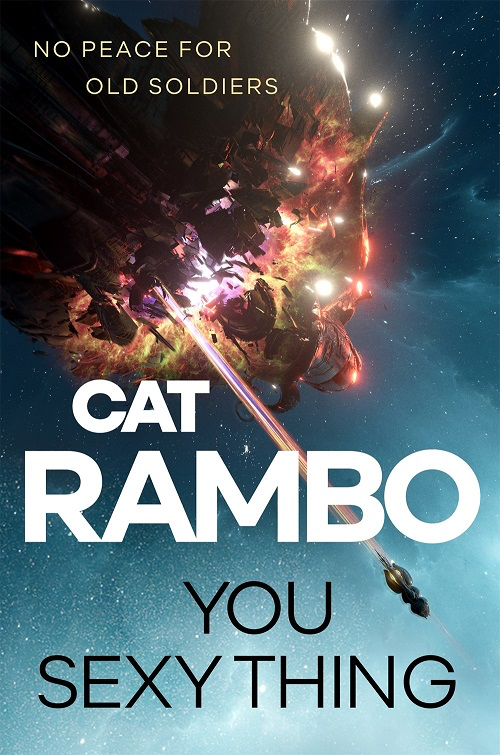
You Sexy Thing – Cat Rambothe perfect soundtrack to a bonkers yet heartfelt romp through the galaxy with a bunch of chefs.

“Your Ghost” (feat. Michael Stipe) – Kristin Hersh

There’s at least five different sayings about what you can do with three chords in a rock song, but some songs make you instantly understand every one of those sayings. It didn’t even occur to me that “Your Ghost” is comprised of only three main chords until I listened to it more closely. That might be a consequence of the cello in the background making it appear more lush and complicated, but it’d be lush without it. That’s that talent of someone like Kristin Hersh; she weaves a narrative so haunting and compelling that you barely even notice how deceptively simple the composition is.

Conflicting sources about this one have said that it’s either about Hersh’s struggles with schizophrenia as a teenager or grappling with the death of a close friend. Either way, the lonely yearning for something just out of reach resonates in every note. The music video, directed by Katherine Dieckmann, captures that feeling of an early 1900’s house with aging decorations that I associate with a solid handful of Hersh’s songs. This time, it’s cast in a more decaying light as Hersh sings of being mocked by memories and visions: “So I pad through the dark and call you on the phone/Push your old numbers/And let your house ring/Till I wake your ghost.” Her lyricism is nothing short of evocative, and the verbs are really doing the heavy lifting—her “pad[ding] through the dark,” and instead of simply waiting on the other line, she “slide[s] down your receiver/sprint[s] across the wire” as she yearns for someone to answer her. Nothing does, but this ghost, whatever it may represent, drives in circles around her in dreams, almost mockingly, as if taunting her with the reminder of mortality. When I first heard “Your Ghost,” I was floored by the fact that Michael Stipe and Hersh had crossed paths, but in retrospect, I really shouldn’t have been. I guess they did run in similar circles, and if you slicked up the production and added some mandolin, this could’ve been a cut from Green. But he proves a fitting duet partner for Hersh, whose voice echoes through the decaying wooden slats of her decaying house and onto a forlorn wind.

…AND A BOOK TO GO WITH IT:

What Happened to Ruthy Ramirez – Claire Jiménez“You were in my dream/You were driving circles around me…”

Since this post consists entirely of songs, consider all of them to be today’s song.

That’s it for this week’s Sunday Songs! Have a wonderful rest of your day, and take care of yourselves!

Posted in Book Review Tuesday

Book Review Tuesday (10/7/25) – The Volcano Daughters

Happy Tuesday, bibliophiles!

Continuing with Latine Heritage Month, here’s a novel that came on my radar last year when it was released. Literary fiction isn’t my go-to, but I do love some magical realism sprinkled in, so I was interested. What resulted was something deeply impacting. The Volcano Daughters pulls no punches, and yet cares so deeply for its protagonists—and for everyone whose voice is silenced.

Enjoy this week’s review!

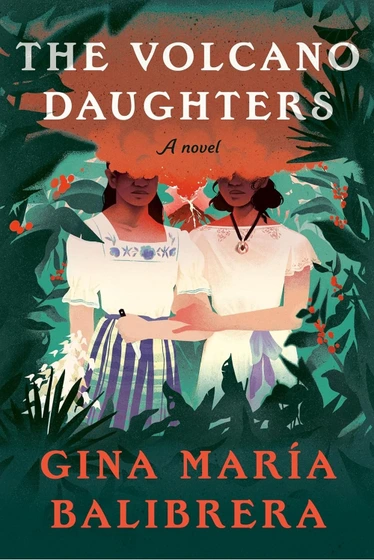
The Volcano Daughters – Gina María Balibrera

Graciela grew up in El Salvador, among their family of Indigenous women. But when the cronies of a rising dictator steal her away to be his oracle, she’s torn away from everything she knows and loves. In the dictator’s palace, she meets Consuelo, her stolen sister who is also indentured in the palace, made to sit by as the government dabbles in faulty magic and formulates a plan to commit genocide on her Indigenous community. Now young women, Consuelo and Graciela free for their lives, both thinking the other dead.

Darting between America and France, Consuelo and Graciela fight to forge new lives for themselves. But can they ever leave the past behind—or each other?

TW/CW: rape, genocide, colonialism/imperialism themes, racism, misogyny, miscarriage, violence, murder, deportation/kidnapping

My main gripe with literary fiction at large is that it’s a breeding ground for novels that are unrealistically miserable in the thought that misery and depression automatically make it “deep.” I’ve read enough of said books and been in fiction workshops long enough that just the thought of sadness being equated to depth makes me want to throw up in my mouth. Is The Volcano Daughters a sad, literary novel? Yes. And yet the sadness is there to tell a powerful story, not just to sell. It’s the story of silenced women, but also a story of resilience and sisterhood and so much more. It’s what literary fiction should be.

After this novel, I’m sure I’ll read more from Gina María Balibrera, but…god, in the right headspace, for sure. The Volcano Daughters is a heavy novel, and for good reason. I didn’t put these trigger warnings there lightly. But Balibrera’s prose is seriously something to behold. Just as Consuelo and Graciela view the world through the lens of artists, so too does Balibrera. Every detail is truly luscious; the many places that The Volcano Daughters travels through are realized in such vivid detail that I swear I could almost smell the air. No stone is unturned, and no metaphor is treated lightly—Balibrera puts even the most minor details under a microscope and crafts them into the most lush language, almost bordering on poetry in the more metaphorical moments.

There’s something so special about the way that Balibrera treats Consuelo and Graciela as characters. I hesitate to call them fully tragic characters, but their lives are largely dictated by one tragedy after another. Yet no matter what happened to them, I always sensed that Balibrera would have something waiting for them at the end. It wasn’t an ending that was tied up with a nice bow, but it was a speckle of hope on the horizon. They were still suffering, but their justice was just out of reach, but still visible. Had she gone too far in one direction, it would’ve felt like needless plot armor, especially in the climate(s) that Consuelo and Graciela lived in; too far in the other, and it would’ve strayed into trauma porn territory. Balibrera treats her characters in the most realistic and yet the most caring way; though they have endured so much and have so much more to endure, she makes you cling to that sliver of hope, gives you glimpses of incremental lives that they might live in a few years’ time, because it is all that is left. As somber of a book as this is, I did appreciate that there was a very tangible inkling of better days to come.

What seems to hook most readers about The Volcano Daughters is the ghosts, which…yeah, that’s what hooked me too. But it’s one of the most original and compelling aspects of this book; in between the present narrative, the story has frequently interjections from four ghosts: Consuelo and Graciela’s other sisters who were murdered during the genocide. Like the other characters in this novel, they’re so vibrant and full of sass and wisdom in equal measure. Their role is often to come in and drag the reader back to the embarrassing reality when somebody’s inner monologue gets too self-absorbed or when someone’s telling the story wrong. (Nobody can quite agree what’s really right, and that’s what makes them so funny.) At times, the humor didn’t quite land (I found it hard to believe that a ghost who got killed in the ’30s would use “Boom!” as an exclamation like it’s the 2010’s), but they all had such distinct voices that I could almost let it slide. Yet they are also there to be incorporeal forces of justice, metaphysical representations of the voiceless, the forgotten of history who have been brushed aside. They are the deliverers of the justice they never got, and they form the emotional backbone of The Volcano Daughters.

The part that the ghosts emphasize for me is how Balibrera examines the theme of storytelling and whose stories are told—and the power structures that ensure that some stories are either untold or told incorrectly. Names are deeply important: every murdered Indigenous woman is given a specific name, whereas the dictator of El Salvador is only referred to as “El Gran Pendejo”; similarly, El Gran Pendejo’s entire regime operates on stories, ones that are told to reinforce a racist narrative. Graciela acts out stories about marginalized people in order to further the United States’ racist stereotypes of various groups. And yet here are the ghosts, who take the story into their own hands to deliver the complicated, messy, yet real narrative. The ghosts are there to be the voice of every marginalized person who has ever been deliberately erased from history, every marginalized person who has had to bear the pain of having their history warped and their country slandered. Both the ghosts and the central sisters are stars of the novel because they are precisely the kind of people that history forgets. The Volcano Daughters tells us that history surrounds us—and that there will always be someone to tell the truth.

Overall, a deeply moving and emotional novel of sisterhood and distance that serves as a righteous megaphone for those who have had their voices stolen. 4 stars!

The Volcano Daughters is a standalone and Gina María Balibrera’s debut novel.

Today’s song:

I loved her episode of What’s In My Bag? and I love this song!!

That’s it for this week’s Book Review Tuesday! Have a wonderful rest of your day, and take care of yourselves!
Posted in Sunday Songs

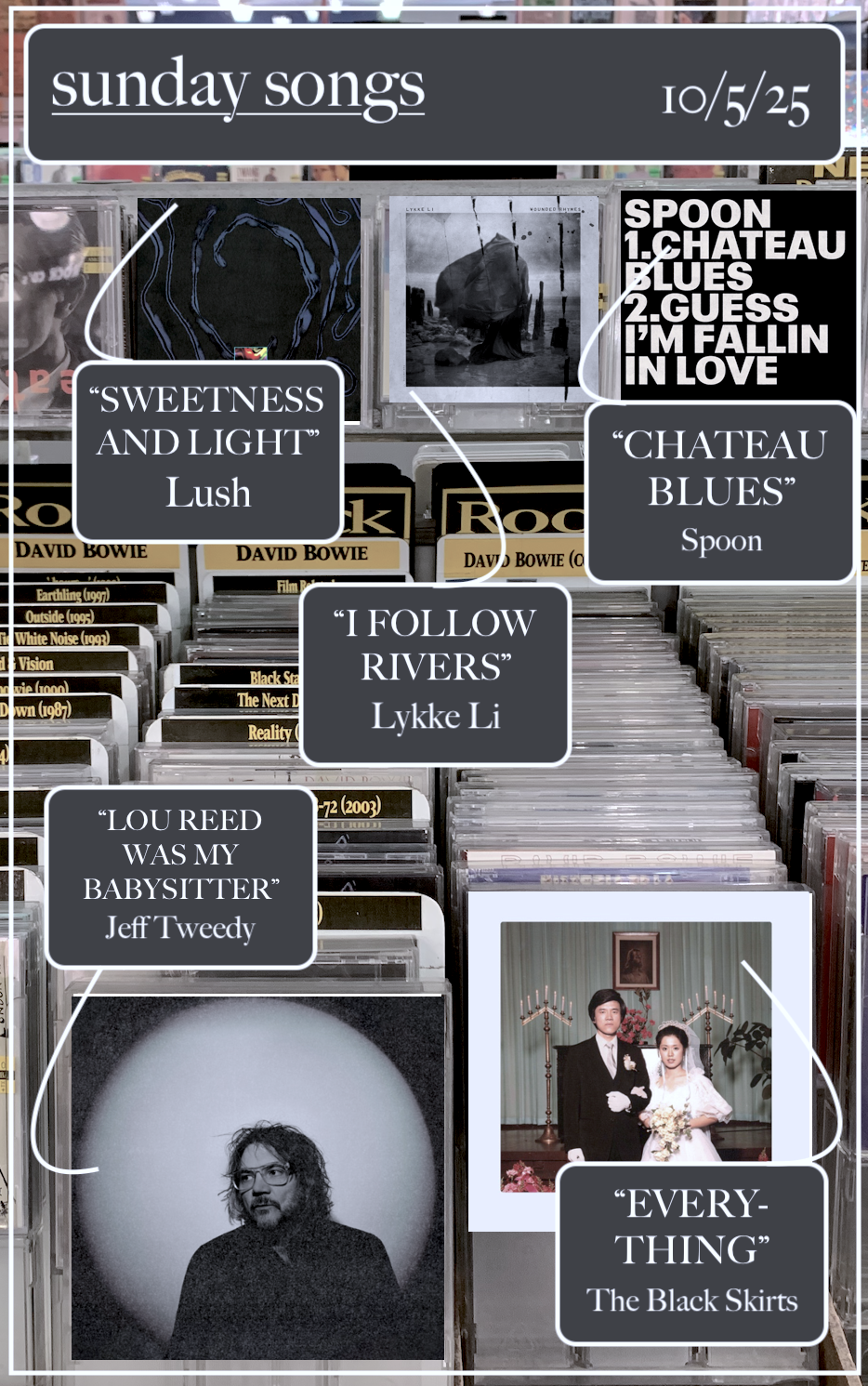
Sunday Songs: 10/5/25

Happy Sunday, bibliophiles! I hope this week has treated you well.

This week: ROCK AND ROLL IS DEAD…

BUT THE DEAD DON’T DIE!!!

THEDEADDON’TDIETHEDEADDON’TDIETHEDEADDON’TDIETHEDEADDON’TDIE

WOOOOOOOOOOOOOOOOOO

Enjoy this week’s songs!

SUNDAY SONGS: 10/5/25

“Lou Reed Was My Babysitter” – Jeff Tweedy

Man, I’m so glad that this dystopian hellscape hasn’t beaten the joy out of Jeff Tweedy. He saw everything crumbling around us and decided to make an expansive, emotional triple album—Twilight Override—as a kind of musical knight against the forces of darkness: “when you align yourself with creation, you inherently take a side against destruction. You’re on the side of creation. And that does a lot to quell the impulse to destroy. Creativity eats darkness.” Honestly, it’s what we all ought to do—you don’t have to make a whole triple album, but keep on making art, dammit! Admittedly, I’ve only been able to go through all nearly 2 hours of the album once through, and it hasn’t quite sunken in yet (“Mirror,” “Caught Up in the Past,” and “New Orleans” are some of my highlights), but “Lou Reed Was My Babysitter” became a favorite as soon as it was released as a single.

It feels, in a warped way, like one of Wilco’s whole albums was: an ode to joy. Sonically, it’s very different from…well, about 75% of that album, but the spirit is so similar and still so necessary. I mean, maybe it’s all just a vehicle for Jeff Tweedy’s commendable Lou Reed impression, but I swear, it just feels like a riotous celebration of joy, of dancing, of togetherness. A triple album gave Tweedy loads of room to pack in even more of his ever-potent lyrics, but something about “‘Cause rock and roll is dead/But the dead don’t die” just makes me so giddy. It’s an ode to jumping around at a concert or in the basement of someone’s house, to getting a little sweaty and dancing next to a bunch of sweaty people, but having a blast together, goofing off, and embracing the mess of it all. From the varied voices that yell out the chorus to Tweedy’s growled “WOOOOO!” at the end of every verse, it’s a song that’s sole purpose was to be played loud and played joyously.

…AND A BOOK TO GO WITH IT:

Gearbreakers – Zoe Hana Mikutathere’s definitely some of the messy, rough-around-the-edges joy in the friendship dynamic throughout this book.

“EVERYTHING” – The Black Skirts

I think I may have miraculously listened to “EVERYTHING” for the first time in the exact circumstances that it was meant to be listened to. My dear friend was driving us home after a concert. The day was fading away, and the only light came from the buildings along the highway and the headlights of the cars on the road. With this song as the soundtrack, it felt like the day was gently closing the curtain, preparing to fold itself into something new, just as this song came on shuffle.

I can never know if any of the translations of the lyrics online can ever really evoke the original intent and feeling of the song (apart from the chorus, “EVERYTHING” is sung entirely in Korean), but the power of real evocative music is that sometimes, you can feel the intent and the heart without understanding the lyrics. It’s such an effortlessly intimate and tender piece. There’s something sleepy-eyed about it, like a voice note to your lover before you go to bed while you look at the stars. Even the gentle reverb of the guitar feels yearning somehow. And though the first half of the music video does admittedly feel a bit like those dead wife montages in movies with the blurry filter, it really does fit the atmosphere of “EVERYTHING”—fading, rose-colored memories drifting through your heart.

…AND A BOOK TO GO WITH IT:

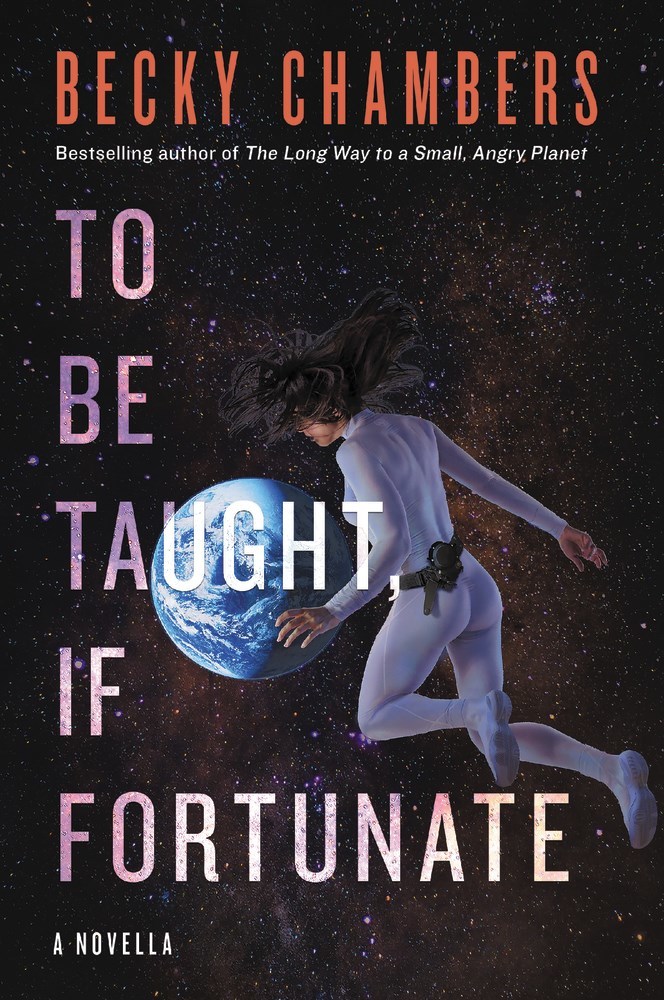
To Be Taught, If Fortunate – Becky Chambersthe dreamlike quality of this song could easily be applied to drifting through space…existentially, of course.

“Sweetness and Light” – Lush

I just can’t get enough of shoegaze. Part of it is, for me, that I love a song that feels tactile. (I can’t make any concrete promises, but I’ll probably be talking more about that quality next week with another album that came out in September 26th alongside Twilight Override.) Sometimes the lyrics hit me, but I can’t get enough of bands that set out to make songs that aren’t just songs, but fabric swatches of color, texture, and atmosphere. Shoegaze was the epicenter of that quality, in my opinion—just take the rich, all-consuming soundscapes of bands like Spiritualized or Slowdive. Either way, I’m just glad there were so many students of the Cocteau Twins School of Atmospheric Music.

If anybody was studying especially hard there, it was Miki Berenyi and Emma Anderson, the driving forces behind Lush. Though their lyrics are…hmm, about 30% more comprehensible than the average Cocteau Twins song, they’re cloaked in a vibrant, pink and purple glow of feedback and layers of reverb that feel like thin sheets of cocooning around you. Miki Berenyi’s vocals are borderline angelic, crystalline against the vivid, tapestried echo swirling around her. It feels like being caught in a bubble trail—almost like a Minecraft one, complete with that whooooosh (you know the one), but if we’re talking video game graphics, it’s always pixellated at the edges, but they’ve rendered in layers of sparkles along the surface of the water, glistening and bluish. It’s enchanting. Chances are, somebody’s eventually going to remaster that music video, but I say it needs to be kept as grainy as it was in the ’90s—Lush, in both music and in visuals, is nothing if it isn’t fuzzy and grainy.

…AND A BOOK TO GO WITH IT:

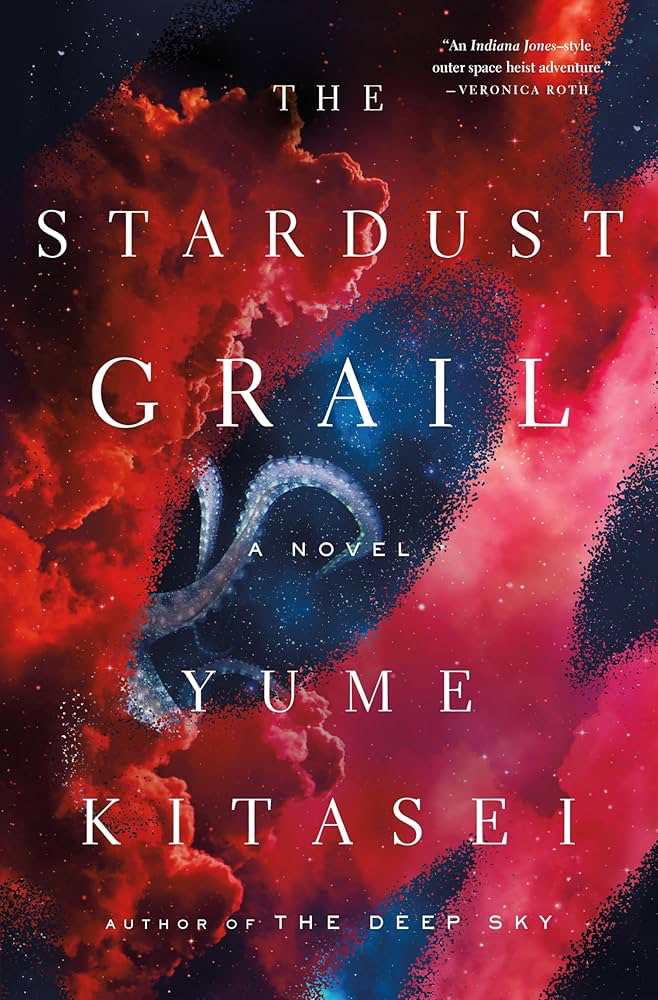
The Stardust Grail – Yume KitaseiI guess this cover does almost have the same color scheme as Gala, but there’s a lot of vibrant, cosmic imagery here that would be befitting of Lush.

“I Follow Rivers” – Lykke Li

You thought I was done talking about Japanese Breakfast? Well…technically, yeah, I am. For now. But this song was a holdover from the songs they played before the show (along with “Telegram Sam” and “Goodbye Yellow Brick Road,” so…automatically based).

Strangely, I had some inkling of who Lykke Li was; she’s there with Waxahatchee in my mind. I always saw her lingering in the recommended portion of my iTunes library in middle school whenever I played St. Vincent or the Yeah Yeah Yeahs over and over, standing next to a legion of women I halfway knew. Her name was always there. Granted, the only other thing I know her music from is…uh, whatever this was, but my point is that I’d end up hearing one of her songs eventually. That eventually came, as I said, at the Japanese Breakfast show, and I’m glad that it snuck up on me like it did. I love how the intro just builds and burbles—it gives me the same antsy anticipation as the intro to Blur’s “Swamp Song,” though what comes after couldn’t be more different. (I guess they both have bodies of water. That could explain where they diverge.) Maybe I got nostalgia-baited by the very early-2010’s indie production, slick and cavernous, but I love that cavernous quality of “I Follow Rivers”—everything, from Li’s voice to the guitars, which sound piped in from the bottom of a cave lined with icicles. Tarik Saleh clearly clicked with the vibe of this song when directing the music video—it’s all very watery, but frosty and icy. The same goes for the breathless protagonists of the videos—”I Follow Rivers” is a sprint down the winding path of a river, leading who knows where.

…AND A BOOK TO GO WITH IT:

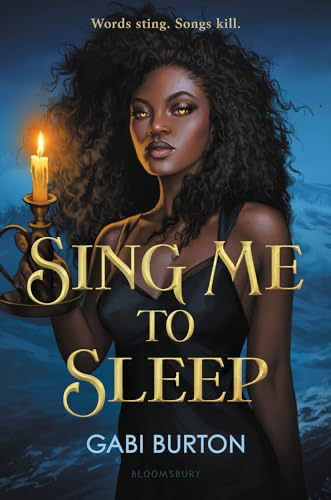
Sing Me to Sleep – Gabi Burton“Oh I beg you, can I follow?/Oh I ask you, why not always?/Be the ocean, where I unravel/Be my only, be the water where I’m wading…”

“Chateau Blues” – Spoon

The Spoon drought since 2022 (or 2023, really…lest we forget how good their cover of “She’s Fine, She’s Mine” was) has certainly been felt, and it looks like we may feel it for a little longer…but not much longer. Britt Daniel has confirmed that they’re working on their first album since Lucifer on the Sofa, but it’s not finished yet. While recording the sessions, Daniel and company decided that two tracks—this one and “Guess I’m Fallin’ In Love”—needed to stand on their own from whatever else they’re currently cooking. And any new Spoon is bound to be good Spoon—and these songs certainly are!

Sometimes, I don’t know how much I miss a band until they release new music. We really did need “Chateau Blues”—we needed Britt Daniel, we needed those crunchy, bluesy guitars, and we needed that relentless indie rock spirit. This track has a sandpapery edge to it, but it’s a timeless piece that could’ve come straight off of Lucifer on the Sofa, squeezed right next to “The Hardest Cut.” But if this is indicative of where they’re going next, I’m intrigued—they’ve seemed to pare their sound down to a grainier texture, calling back to their blues and rock forefathers that they frequently reference. And man, I’m here for it. If anybody else did that spoken-word “Where you wanna go today? I’m down on the drive, c’mon, get in 😏” interlude, I’d be totally annoyed, but Britt Daniel has built up such a genuine, troubadour-like stage presence that I didn’t even bat an eye. That’s just pure Britt Daniel right there—and so is “Chateau Blues.”

…AND A BOOK TO GO WITH IT:

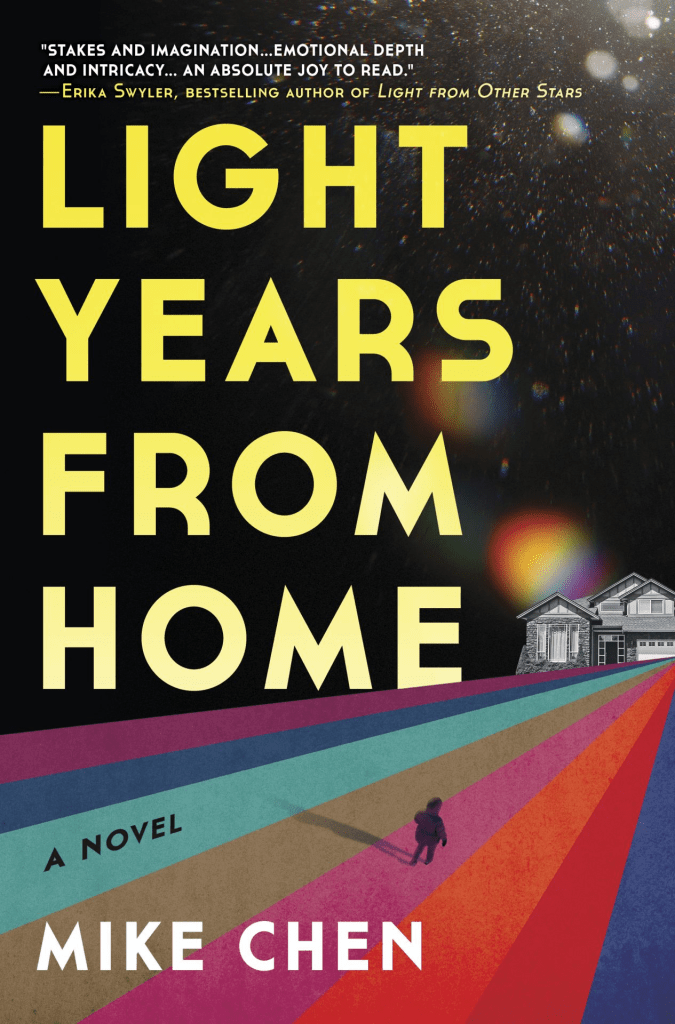
Light Years from Home – Mike Chen“If it’s a moment in time/How come it feels so long?/And it’s a moment in time/You’re paid in full/How could it really be so wrong?”

Since this post consists entirely of songs, consider all of them to be today’s song.

That’s it for this week’s Sunday Songs! Have a wonderful rest of your day, and take care of yourselves!

Posted in Book Review Tuesday

Book Review Tuesday (9/30/25) – Beasts of Carnaval

Happy Tuesday, bibliophiles!

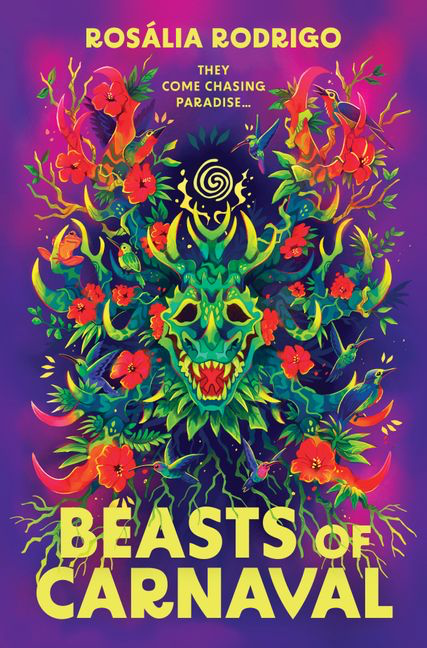
Continuing with Latine Heritage Month, here’s a new release that caught my eye! The cover and premise seemed stunning, and I was intrigued by the inclusion of Taíno mythology. On almost all of those fronts, Beasts of Carnaval delivered instantly—I was hooked from page one!

Enjoy this week’s review!

Beasts of Carnaval – Rosália Rodrigo

Sofía has heard legends of Isla Bestia since she was a child. They say that enchanting performances and mysterious people populate the mysterious island, and those who come there are too entranced to ever return to the real world. Sofía is sensible enough to not believe the rumors. But when her twin brother goes missing, her trail leads to Isla Bestia. There, she’s drawn into a bizarre, luscious world of magic and shifting alliances. Caught up in a tangled web of intrigue, Sofía must keep her wits about her if she wants to find out which of her new allies are men—and which of them are monsters.

TW/CW: colonialism/imperialism themes, loss of loved ones (past), panic attacks, religious bigotry, blood, murder, racism/slavery themes, misogyny

Before I get into gushing about everything I adored about Beasts of Carnaval, I’ll get my one major pet peeve out of the way: fantasy worlds that are named so closely to reality that they basically are reality. Rodrigo’s world is essentially the Caribbean, except that the countries are named slightly differently—their colonizers are Hisperian, for instance. Real-word terms such as mestiza are used, so at that point…I dunno, it’s so close to historical reality, so why not just set it in the Caribbean of the past and just establish that there’s magic and some minor changes? Alternate history, anyone? I guess there’s a ton of fantasy novels that do that for European countries, but honestly, I’ve never liked it no matter the country that inspired the setting.

I dunno, the commentary would come across no matter the setting. Beasts of Carnaval isn’t the first book to have this, but for me, even though it peeved me, it didn’t take away from how lush the worldbuilding was; beyond the real-world hierarchies that were present, I loved the magic in this world, and it was integrated into the real world almost effortlessly. It’s a very fleshed out world rooted in historical themes and cultures, enlivened by vibrant and vivid magic inspired by Indigenous Taíno mythologies.

After reading Beasts of Carnaval, I’m absolutely going to be looking out for anything else that Rosália Rodrigo writes, because the prose of this novel was truly captivating! A Carnaval-inspired setting is bound to have some fun imagery, but Rodrigo wrung every ounce of magic out of it. With her prose, Isla Bestia wasn’t just abstractly a place that nobody wants to leave—she really makes you feel the seductive enchantment of the entire island! From the first description of the hummingbird dancer at the beginning, I was nothing short of captivated—I was hooked from start to finish, and I loved every minute of exploring the world that Rodrigo had crafted!

Compelling prose needs a compelling protagonist, and Sofía was just that! I adored her character, and she just seemed to leap off the page for me. From the start, I loved the many facets of her personality; she was strong-willed, determined, sensible, and sometimes practical to a fault, but I loved watching her adventures. Especially in contrast to the other characters around her, she was so focused on her mission of finding her missing brother that I got sucked in immediately. Hidden beneath her practical exterior, her deep caring for Sol made me root for her instantly, and I loved the way she fought back against the micro (and very much macro)aggressions that she experienced in daily life for being mixed-race. It’s rare that I love a character from the get-go, but Sofía captured my heart immediately!

A part of Sofía’s character that I also appreciated was the discussion of her mixed-race/mestiza identity! As a mixed-race person myself (though I’m very white-passing), I loved the nuanced discussions surrounding her conflicting feelings about her identity and how it positioned her in the highly stratified world around her. Rodrigo also had some excellent discussions about passing privilege and the treatment that Sofía got as this universe’s version of an Afro-Latina woman, especially with her being a former slave; Rodrigo did an excellent job of balancing her pride with the hurt she carries from enduring decades of racism from her peers and having to justify being a part of either of the communities she’s descended from. It was also especially poignant to have her arc revolving around discovering the magic of her Indigenous ancestors, inspired by Taíno mythology! It’s always so fulfilling to connect with one’s culture (speaking from experience), and to have that be physically manifested as healing magic was nothing short of emotional. I couldn’t get enough of it!

Overall, an enchanting and emotional novel that hooked me instantly. 4 stars!

Beasts of Carnaval is Rosália Rodrigo’s debut novel.

Today’s song:

MICHELANGELO DYING MY BELOVED

That’s it for this week’s Book Review Tuesday! Have a wonderful rest of your day, and take care of yourselves!

Posted in Sunday Songs

Sunday Songs: 9/28/25

Happy Sunday, bibliophiles! I hope this week has treated you well.
This week: You know what’s better than Monday? That’s right, Sun—[gets dragged offstage by a comically large cane]

Enjoy this week’s songs!

SUNDAY SONGS: 9/28/25

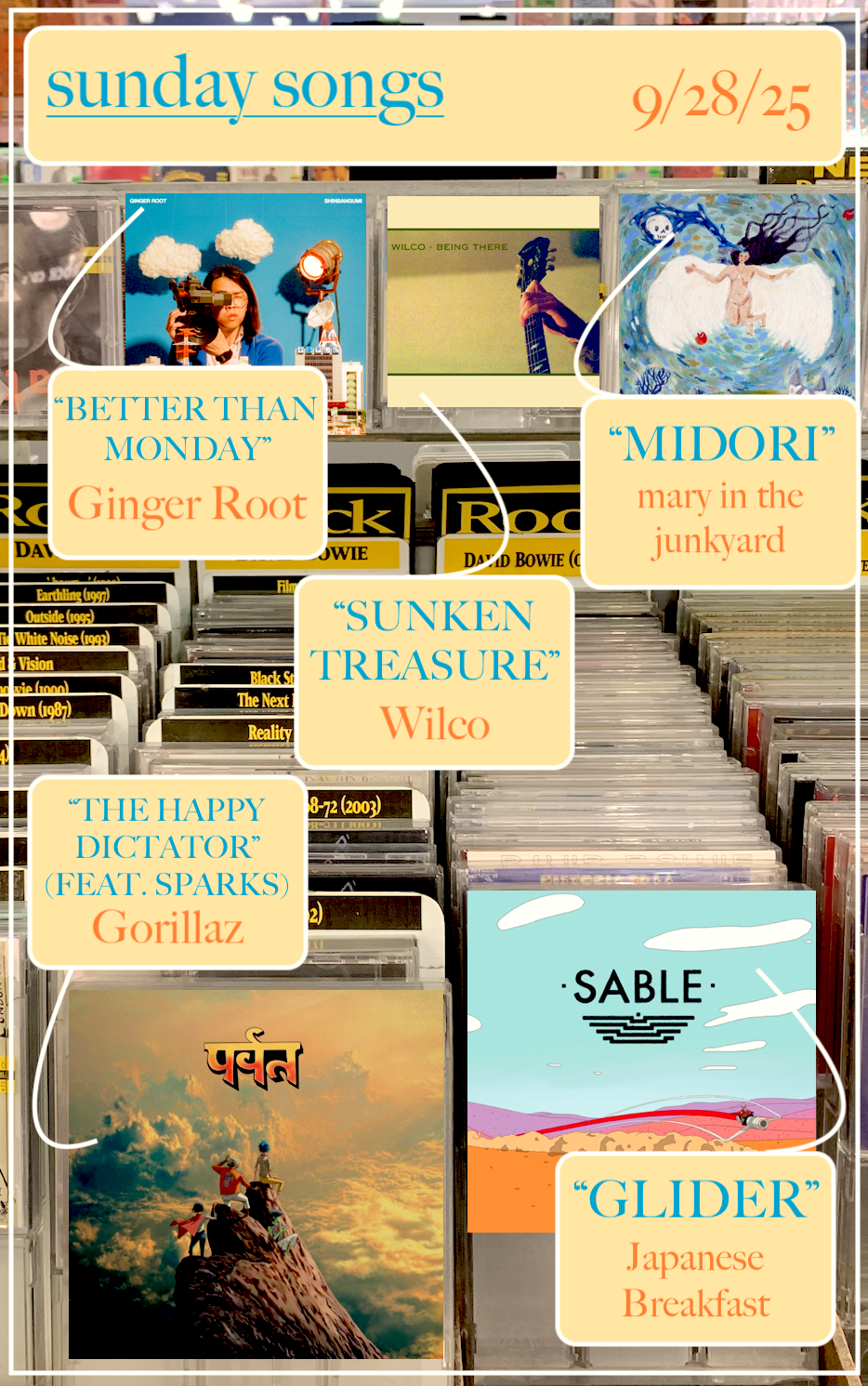
“The Happy Dictator” (feat. Sparks) – Gorillaz

This song came out at the tail end of a terrible day for me…even though I’d experienced some pretty awful events in the past 24 hours, at least there was Gorillaz at the end of it. And a new album with Sparks, IDLES, and Yasiin Bey on it??? EVERYBODY SAY THANK YOU, GORILLAZ! March can’t come soon enough…

From the looks of it, Sparks are having a better 2025 than most of us, what with releasing MAD! and an accompanying EP—collaborating with Gorillaz just seems to be the cherry on top for them. It’s surprising that it’s taken so long for them to collaborate. Either way, they’ve come together to sprinkle some healthy satire and upbeat tunes on this dystopian hellscape, and I am all the better for it. As always, Albarn has an eye trained on…well, the trajectory of most of the world right now, but he weaves a tale of opulent tyranny, of dictators who shroud their dirty deeds in illusions of placidity, peace, and universal happiness; it was specifically inspired by a visit to Turkmenistan with his daughter, where the former dictator, Saparmurat Niyazov, “wanted everyone in Turkmenistan to only think happy thoughts and sleep unaffected by the doom of the world, and just keep everything upbeat, so he kind of banned all bad news.” Even though his rule ended decades ago, echoes of it can be heard the world over, and Gorillaz is once again here to critique them: “In a world of fiction, I am a velvet glove/I am your soul, your resurrection, I am the love.” It’s…well, frankly, if I emptied out all the parallels, this post would be impossibly long and I would be even more dismal about the news than I already am. At least, in these turbulent times, we can count on Gorillaz to weave some excellent art out of the collective suffering. Plus, if Russell Mael is the dictator in this situation, then y’know what? All hail our new overlord.

…AND A BOOK TO GO WITH IT:

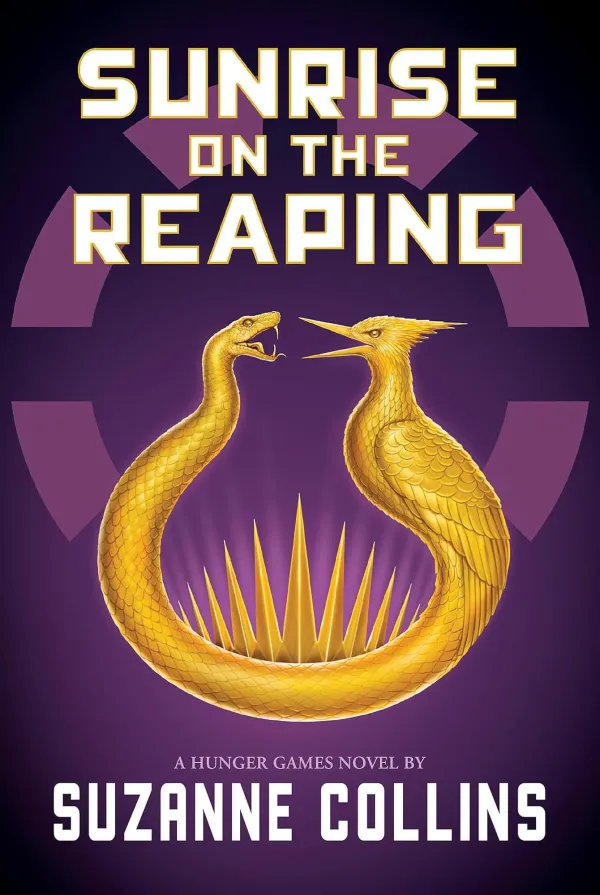
Sunrise on the Reaping – Suzanne Collins…need I really say more?

“Glider” – Japanese Breakfast

I promise I’ll stop blabbering about Japanese Breakfast soon, but the concert’s had me on such a kick of their music since the beginning of the month. I wasn’t familiar with any of Michelle Zauner’s soundtrack work before the concert, and I wasn’t familiar with the video game Sable at all. (I’m fairly video game illiterate, but it looks super cool, honestly—from what I can tell, you’re basically exploring the ruins of an ancient civilization on a desert planet, and the art was inspired by Moebius. You had me at Moebius!) This game was Zauner’s first foray into soundtracks.

At the Japanese Breakfast show, Zauner whipped this one out of nowhere solely because she’d heard somebody humming it before the show, which should tell you everything about how cool she is as a person. The instrumentation is fairly different than most of her work—it’s much more synth-based, but it works well with something like “Posing in Bondage.” It has a chiming, starry quality to it, just the kind of music I’d imagine hearing while wandering the desert on a sci-fi glider. Once her lyrics fade out of the recognizable and into the more abstract, pulled apart like putty by autotune and editing, it takes on an almost Cocteau Twins quality to it, but if they had been transposed into glaring sunlight and not the wintry sound palettes I usually associate with them. “Glider” is weightless, always looking skyward, yearning and hoping.

…AND A BOOK TO GO WITH IT:

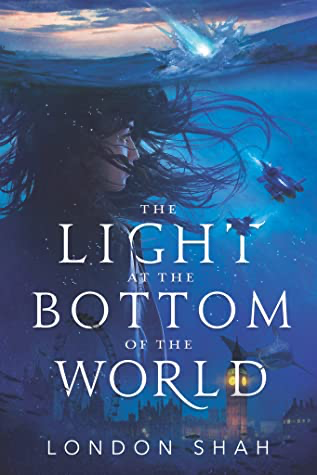
The Light at the Bottom of the World – London ShahI feel like “Glider” fits in a multitude of sci-fi settings, but somehow, it feels particularly at home in London Shah’s vision of a flooded England and submersible races.

“Better Than Monday” – Ginger Root

Opening bands are always a gamble, but somehow, I’ve had unusually good luck with them this year—Hana Vu, Tyler Ballgame, and Black Country, New Road are some of the standouts. I went to Japanese Breakfast with a dear friend of mine, and neither of us really knew Ginger Root, and the only person we knew who knew him was a mutual friend. We looked on his Spotify bio, where he described his music as “aggressive elevator soul.” So, in a word, our expectations were…lowered? But we were morbidly curious.

Honestly? I wouldn’t go back and listen to everything of Ginger Root’s, but at the end of the day, I can’t deny how creative of a guy Cameron Lew is. Not only does he have this very polished indie pop act going, he’s also got an entire short film, which he played excepts of during his show. He’s a talented musician, and his band is too, and god, he’s got his hyperspecific vibe down to a science, so I can’t fault him for that. It ventured from more soul-oriented songs to instrumentals that sounded like they should’ve been in the background of MarioKart, but dammit, the guy’s got a vibe going. Plus, anyone who puts absolutely everything into getting an action shot of a melodica solo has my approval…as much as I hate to admit it. “Better Than Monday” was my immediate standout—the bassline is just so propulsive and bouncy, and it’s just such a bright, sleek song. It’s one of those songs where you know from the get-go how much fun Lew and company had making it—the enthusiasm radiates from every note, and that was half of the fun of their opening set. Catchy songs are great on their own, but they’re even catchier when you know that every part of the process was a blast.

…AND A BOOK TO GO WITH IT:

Finna – Nino Cipriit feels odd to say that Ginger Root works perfectly for a book set in an inter-dimensional, legally-distinct IKEA, but life is full of surprises.

“Sunken Treasure” – Wilco

A song with the line “music is my savior” and a refrain repeating adages about rock n’ roll is bound to be a crowd favorite—hook, line, and sinker. Yet none of this song strikes me as cliched. Just because it rouses a crowd doesn’t mean there’s no truth to it. And who could be better than that than Jeff Tweedy?

That’s not even the real sunken treasure of “Sunken Treasure.” I’d only remembered this song when I saw Wilco play it live back in August, but it’s so jam-packed with showstopping lyrics that it made me astounded that I hadn’t listened to it more attentively when I’d heard it in my dad’s car…because I definitely had. It was an inevitability that I’d come back to this gem. Just…okay, it’s about to be a “just copying and pasting the lyrics” moment, because my god:

“There’s rows and rows of houses/With windows painted blue/With the light from a TV/Running parallel to you/But there is no sunken treasure/Rumored to be/Wrapped inside my ribs/In a sea, black with ink…”

The fact that I’m now picturing the Muppet talking houses notwithstanding, I am once again asking Jeff Tweedy to save some poetic talent for the rest of us. Come on. It’s one of those songs with such a near-universal theme—melancholy and relationships sputtering out—and painted it in a way no other artist has. To some extent, we all go through a handful of the same experiences in our lives, and yet nobody can retell it in the exact same way as the person next to them, despite sharing 99% of their DNA with them. “Sunken Treasure” makes me think of that, because I doubt anybody else would pair that feeling with “If I had a mountain/I’d try and roll it over.” Roiling in the background is a veritable red-hot pot of soup boiling over—it feels like a quieter precursor to “Via Chicago” with distorted, crumbling-brick guitars collapsing in the background, strings pulled to the limits. It’s the instrumental epitome of insisting that you’re fine and unbothered, but deep down…there’s no sunken treasure rumored to be wrapped inside your ribs, etc.

…AND A BOOK TO GO WITH IT:

The Seep – Chana Porter“But there is no sunken treasure/Rumored to be/Wrapped inside my ribs/In a sea, black with ink/I am so/Out of tune/With you…”

“midori” – mary in the junkyard

With the steady breadcrumb trail of singles that mary in the junkyard have been putting out since the end of last year, I can only hope that this mean that there’s an album on the way…or an EP, at the very least. Paired with “drains,” which came out this summer, they’re surely building up to something…something! But in the meantime, I’m just pleased to be getting new music from this burgeoning talent every few months. They’re like little spooky, rock treats.

That being said, “midori” feels slightly weaker than some of their other singles. It’s not bad by any stretch—the fact that this is weak for mary in the junkyard is a testament to how consistently good they are—but it feels like it could’ve been one of the songs from this old house – EP. It’s a double-edged sword: it could’ve been a great addition to last year’s EP, but I fear that at their worst, this song doesn’t stray as far from their older ones. On the other sides of their discography, “drains” took their sound to an extreme and “this is my california” took it in a softer, more introspective direction. Granted, they have an EP and a handful of singles to their name, so I hesitate to really call it a formula—only nine songs doesn’t really give anybody the full idea of their sound or what they have left in store.

And even if they’ve got a formula (which, again, very hesitant to say), it’s a damn good one. I say that as if I’m not eating up pretty much everything they do…mary in the junkyard are proving themselves to be masters of their atmospheric craft. Their electric guitars sound like they’ve been draped in a decaying bridal veil and left to get haunted for a century or so—everything echoes and brims with an untold history. “midori” was written entirely about plants coming out of concrete, and Clari Freeman-Taylor manages to transform the subject into the angstiest thing possible: “Could you help it?/With no god to bow down to/And no soil to grow down in/Could you help it?” Feeble sprouts become desperate, mewling spirits in her hands, and the echoing guitars and strings turn urban nature into a sweeping and creeping epic, shrouded in ivy with leaves wilting at the tips. It gives the air of something waiting to be free—you can just barely hear some squealing sounds in the background, the sound of something desperate to claw free—exactly the kind of fare mary in the junkyard expertly deals in.

…AND A BOOK TO GO WITH IT:

The Maid and the Crocodile – Jordan Ifueko“Though I am concrete-bound/I am fragrant/I get old and get out/I am fake and dead…”

Since this post consists entirely of songs, consider all of them to be today’s song.

That’s it for this week’s songs! Have a wonderful rest of your day, and take care of yourselves!