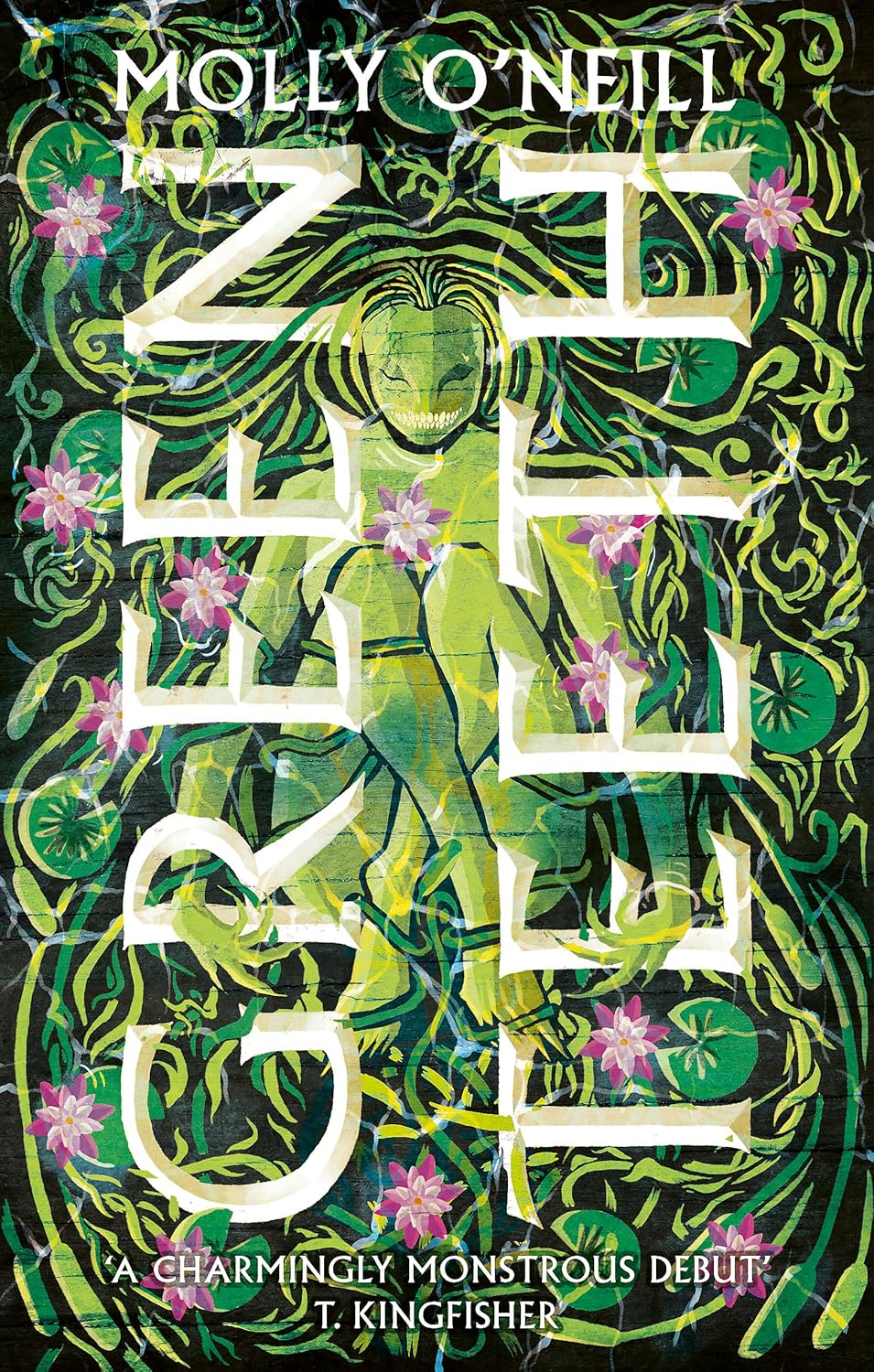
Posted in Book Review Tuesday

Sunday Songs: 1/4/25

Happy Sunday, bibliophiles, and Happy New Year! I hope this week has treated you well.

This week: double-dipping on St. Vincent to start 2026 off right. Plus: songs you can effectively wallow in during cold weather, or if that’s not your speed, songs to keep you warm.

Enjoy this week’s songs!

SUNDAY SONGS: 1/6/25

“Love Takes Miles” – Cameron Winter

As much as I’ve changed over the past decade, some things stay the same. When some pasty, mumbly white guy goes into alternative rock, I’M SEATED.

Other than a handful of songs, the Cameron Winter/Geese-mania seems to have passed me in fleeting glimpses. There’s nothing quite as wild as seeing some random band you saw open for Spoon in 2022 blow up all of the sudden. And good for them!! I’ve only heard “100 Horses” from the former, but it’s a solid art-rock song. No pun intended, but it’s honestly miles away from this song, but something about it snagged me immediately. Winter’s said white boy mumbling took a few minutes for me to a) get used to and b) decipher in the first place, but once it did, it put me in an undeniable chokehold.

The beautiful thing to me about “Love Takes Miles” is that it simultaneously sounds wise beyond its years, in the way that random encounters with old folks do, but so distinctly saturated with young love. I love a good yearner song, and this is prime yearning territory—even the strings sound like they’re also wistfully staring at the moon. “Love Takes Miles” is a breathless, lovestruck sprint, but one that’s ready to steady its pace into a marathon—after all, “Love takes miles/love takes years.” Young love as it is, Winter fully embraces the commitment that comes along with love, and wholeheartedly throws himself into it. It’s an ode to being so in love that you know what it is to get really, really into the weeds with someone, knowing that there will be all manner of forks in the road. As far as I can see, Winter’s at the wheel, and he’s ecstatic about every bump on the merit that he’s spending it with the people he loves most. AMEN! YOU BETTER START A-WALKIN’, BABE!!

Do I agree with the endless YouTube comments comparing Winter to [checks notes] Brian Wilson and Beethoven? Jesus Christ, no, I’ve only heard…what, three songs? Beethoven? Goddamn. And yet, what a tender pearl of a song. I’ve played it countless times now, and every time, it gives me the urge to have an impromptu kitchen dance party. Heck, it makes me misty if it catches me in the right mood. That string section, man. And that’s talent I can’t deny.

…AND A BOOK TO GO WITH IT:

The Galaxy, and the Ground Within (Wayfarers, #4) – Becky Chambers“Love will call/When you’ve got enough under your arms/Oh oh, mama/Love will call/Love will make you fit it all in the car…”

“Rosyln” – Bon Iver & St. Vincent

My brother was brave enough to endure all four movies of the Twilight Saga for the bit, and I can’t say that I’m that brave. For both the books and the movies, Twilight is something I’ve absorbed bits and pieces of through meme osmosis. But if there’s one thing that I’ll give these movies, it’s that they have some bangers on the soundtrack (see: “Supermassive Black Hole”). It made me so mad as an 11-year-old to see that this was always the most popular of St. Vincent’s songs on iTunes, but that was probably because I was conditioned to be a Twilight hater. But I’m enough of a St. Vincent fan to realize how excellent of a song this is. Even though I’m writing this in January, “Rosyln” is such a distinct, perfectly autumn sound: it’s like the fog and chill were baked into the mix itself. Bon Iver and St. Vincent are an eery match in this duet, both of their voices cloaked in enough reverb to make them sound like they’re singing in tandem from the bottom of a well. “Rosyln” had been incubating long before Twilight: New Moon came out (the lyrics have nothing to do with the story), but it’s no wonder that they picked it for the soundtrack—it’s so Pacific Northwest that you can feel the cold, damp earth beneath your boots and the dewy mist on your face.

…AND A BOOK TO GO WITH IT:

Mistwalker – Saundra Mitchell“Up with your turret/Aren’t we just terrified?/Shale, screen your worry/From what you won’t ever find…”

“Angeline” – Kishi Bashi

Intertwined with frequent listens to “Love Takes Miles” in the last hours of 2025 was Kishi Bashi. A ton of Kishi Bashi. You’ll be hearing more about him a lot more in the coming weeks (this is a threat). This song spurred it on, and it made me remember just how inventive he is—there’s just such an intricacy to his compositions. Going through any given Kishi Bashi song feels like being in the middle of a woodcut illustration, ducking my way through all manner of delicately carved plants and watching wooden birds nestle in the branches.

Compared to most of the work of his that I know, “Angeline” is more restrained, and for good reason—Omoiyari, the album where it comes from, deals primarily with the climate of the United States in the 1940’s, particularly the Japanese Internment Camps (see: “F Delano”); It’s a somber album, collecting vignettes of the decade that lean into both the sorrow and conflict, but also the flickers of hope. The album’s inspiration mainly stemmed from the internment camps, but the more that Kishi Bashi researched about America’s fraught history with mass incarceration of minorities, the album grew beyond the experiences of Japanese-Americans and into people of color as a whole (with sobering parallels to Trump’s first administration…and today. God.) “Angeline” collects both the former and the latter like fireflies in a jar. Amid gentle acoustic strums, he weaves a tale of a Black man who falls victim to the Jim Crow-era practice of convict leasing, arrested for a petty misdemeanor and sent to work in the mines, all the while pining for the titular Angeline. For me, it’s songs like these that can be the most impactful; even if “Angeline” is fictional, by putting the human souls into historical events that the education system treats as vestiges of the distant past make them all the more realer, even if the characters are rooted in fiction. Education, for me, fails when it fails to recognize that within every historical event or system, large or small, there were innumerable lives and souls within it, not simply statistics or numbers.

…AND A BOOK TO GO WITH IT:

We Are Not Free – Traci Cheethough “Angeline” isn’t specifically about the Japanese Internment Camps, this novel deals with the same subject matter, also concerned with its parallels in the present day.

“Wash the Day Away” – TV on the Radio

There are closing tracks, and then there are Closing Tracks. Plenty of closing tracks can be appreciated on their own, but sometimes, a great closing track works as its primary function and nothing but. If this were anywhere else on Return to Cookie Mountain, it would be a foolish placement. “Wash the Day Away,” with its “Intruder”-esque drum intro and its grinding swirl of rusty sound, feels like a dilapidated airplane gently being guided onto solid ground. Although I still haven’t listened to Return to Cookie Mountain in its entirety, “Wash the Day Away” makes me want to listen to it more, just to get the full effect of this track; but back to back with the moving “Tonight,” it creates a crashing, sparking end to the album that collapses in a flurry of embers and scrap metal. Paired with “Tonight”‘s lyrics, it’s a bittersweet sendoff, pairing destruction and loss of innocence with accidental beauty: “We did believe in magic, we did believe/We let our souls act as canaries/Our hearts gilded cages be/Watched a million dimming lanterns float out to sea/Lay your malady at the mouth of the death machine.” (And oh my god, another lyrical win for Tunde Adebimpe! Man, he can really conjure an image.) It’s an explosion in slow motion, but Adebimpe and co. let you languish in the aftermath—the last three minutes of this track’s 8-minute runtime are a slow fadeout from the barely-controlled cacophony, letting every bit of machinery run its course, guiding you gently out of the experience. Like I said: Closing Tracks.

…AND A BOOK TO GO WITH IT:

Katabasis – R.F. Kuang“We did believe in magic, we did believe/We let our souls act as canaries/Our hearts gilded cages be/Watched a million dimming lanterns float out to sea/Lay your malady at the mouth of the death machine…”

“Bring Me Your Loves” – St. Vincent

From 2015-2016, my laptop had three uses: schoolwork, Minecraft, and playing St. Vincent’s self-titled album and almost nothing else. I’ve talked extensively about how this album has permanently etched itself onto my consciousness, and 10 years after its release (as well as the release of the deluxe edition), it still holds up to me as such an out-of-the-box album, Annie Clark’s peak of creativity and jagged melodies. But back when I was in middle school, “Bring Me Your Loves” was my least favorite track on the album. On an album full to bursting with hit after hit, I still think that it’s the album’s weakest link. In contrast to the methodical process behind most of the album, it seems like all Clark herself has said about it was that it was “bananas. It’s just totally bananas.”

The more I listen to “Bring Me Your Loves,” the more it feels like foreshadowing for what was to come. It has a much more traditionally pop structure, and it’s less lyrically adept than the rest of the album, with a kind of baseline metaphor about feral and rabid love, leashes and dogs—it feels like an early incarnation of the kinkier stylings of MASSEDUCTION, all leathery and sweaty and breathless. But it hasn’t reached that point yet, and strangely, it feels like the most suited to the vague concept surrounding St. Vincent’s persona at the time as a “near-future cult leader.” It’s very seductive, dealing in patterns of pushing and pulling, domination and resistance. Clark’s vocals on the chorus soar, twisting and turning from master to servant with every vowel. As is the norm with this album, “Bring Me Your Loves” pushes Clark’s guitar to places that you would never expect a guitar to go, turning it from an instrument into a futuristic siren song that ensnares you with its angular, jagged spell. It’s proof that even the weakest points on this album are better than your average song.

…AND A BOOK TO GO WITH IT:

A Memory Called Empire – Arkady Martine“I, I took you off your leash/But I can’t, no, I can’t make you heel/Bring me your loves/Bring me your loves/We both have our rabid hearts/Feral from the very start start…”

BONUS: I couldn’t slip this in anywhere else, but speaking of St. Vincent and Twilight, here’s another song she contributed to the soundtrack of Twilight: Breaking Dawn, Part 2. Man, I wish it was a) on streaming, or b) available to buy without buying the whole album!! It’s another gem of that perfect, 2012-2015 era of St. Vincent trapped in amber. So, so delicious.

Since this post consists entirely of songs, consider all of them to be today’s song.

That’s it for this week’s Sunday Songs! Have a wonderful rest of your day, and take care of yourselves!

Posted in Book Review Tuesday

Book Review Tuesday (12/23/25) – Embassytown

Happy Tuesday, bibliophiles! Merry Christmas Eve (Eve)—in advance, I hope you all have a lovely, safe, and restful remainder of the year.

This book was recommended to me around two years ago by a good friend of mine, and I’ve been trying to find it ever since. Last Wednesday, we had a power outage (it lasted four days 😵‍💫) because of some scarily high winds. Without anything to read on my Kindle, which was rapidly losing battery, my mom and I decided to make a Barnes & Noble run on day 2, where I finally happened on a copy. Lo and behold, Embassytown blew me away with its experiments in language, alienness, and communication—thanks, said friend!

Enjoy this week’s review!

Embassytown – China Miéville

Avice Benner Cho is many things: an interplanetary traveler, a politician, a former resident of a colony filled with all manner of alien species. But the most important of these distinctions is that she is a living simile in the language of the Ariekei, an alien race with a language that is impossible for humans to speak. The only way of communicating with them is through genetically modified ambassadors. Having left the alien-populated Embassytown as a child, Avice has returned just as tensions between the humans and Ariekei. Developments in language and communication have made leaps and bounds, but their consequences could spell war between the two species.

TW/CW: substance abuse, violence, gore, blood, war themes, suicide, infidelity, sexual content

One of my first thoughts after finishing Embassytown was “man, no wonder Ursula K. Le Guin blurbed this.” Even having only read a handful of her books, I could see how faithfully this follows in Le Guin’s footsteps. Embassytown is an experiment in language, but more than that, it’s a meditation on individuality and autonomy that blew me away with its creativity.

While I was helping teach another science fiction course in the fall, my students inadvertently got into a discussion about the hypothetical consequences of a society that couldn’t lie. I couldn’t help but think about it when I reflected on Embassytown. Of course, the reverse happens here: an alien species who evolutionary cannot lie suddenly breaks down the constructs of their language, and once they are able to lie, all hell breaks loose. (I’m not exaggerating. It’s very grim. The hopeful ending was an exceptional relief.) Some novels just have the inherent feel that they came from a series of thought experiments (say, what if you made first contact with an alien species that you can’t speak the language of without changing yourself, and they also can’t lie?), and Embassytown is one of them. But Miéville used this opportunity to really break down the effects of language and turned it into a meditation on religious fanaticism, autonomy, but most of all, communication. More often than not, this novel’s a dense mouthful, and I still don’t think I’ve processed and/or comprehended 100% of it, but what I have been able to chew on was breathtaking.

Since this is The Bookish Mutant…it’s once again the Creature Design Hour! And my god, this is some top-tier creature design here! The Ariekei were such a well-thought-out species, and the amount of detail that went into everything from their language to their culture knocked me off my feet. My mental image of them was plain fun, first off: I’m a huge fan of these spider-horse-coral-beetle creatures. Now that’s what I call a critter. One of my minor pet peeves about the novel was that most of the other aliens (or “exots,” as they’re called), are only scarcely described, but I think that’s a consequence of everything being an afterthought in the face of how detailed the Ariekei culture was. (Please, China, give me all the creatures!!) Case in point: they have several stages to their lifespan, and one of them, evolutionarily, was that when they grow old, their bodies break down in such a way that’s meant to feed their young, like many insects and arachnids do in real life; nowadays the Ariekei consider it barbaric, but their society adapts to accommodate their aging population instead of eating them. Even with the amount of real-world, familiar descriptors that were used to describe them, I think Miéville was so successful at creating them because they felt alien.

What also blew me away was how thoroughly Miéville examined how First Contact affects humanity—and not just that, it fundamentally changes it. Humans physically can’t speak the language of the Ariekei because the Ariekei have two mouths, and beyond that, a language constructed entirely differently than ours, completely absent of metaphor and the ability to lie. Our solution is to create genetically modified Ambassadors, doppelgängers raised in labs just so that they can speak the language—even their names are just halved versions of normal names (EzRa, CalVin, MagDa, etc.). The ripple effects that creates, from the Ambassadors’ fractured sense of identity to their interactions with unmodified humans, was so thoroughly examined that I could imagine the Charlie Kelly-esque, intricate corkboard filled to the brim with every possible ramification for first contact. (On reflection, I feel like Eddie Robson’s Drunk on All Your Strange New Words feels like a toned-down version of some of the stuff in this novel.) One of the reasons that kept me from rating Embassytown the full 4.75-5 stars was that I didn’t particularly care for Avice, or any of the other characters (even though Scile was an insufferable—and later downright horrible—mansplainer, the weird cheating love triangle with CalVin icked me out); yet in this case, their individual reactions to interacting with aliens made it worthwhile, especially when it came to picking apart their personalities.

That alienness that I mentioned earlier accentuated what, for me, was the primary experiment of the novel. For me, Embassytown was all about the consequences of losing oneself—autonomy, individuality, the like, but also what it takes to empathize with somebody wildly different than yourself. Both the humans and the Ariekei fundamentally have to change themselves in order to communicate with the other species, be it through genetic modification or the dissolution of the structure of their language. Taken too far, and war breaks out, nearly decimating both species. But what saves them from the brink is maintaining individuality while still being peacefully working around those cultural hiccups in order to unify and solve problems. Neither of them lose their cultural identity, but they find ways around them that benefit both parties. That’s how true cooperation comes about: communication that serves both sides, but also does not deny the individuality and humanity of the other.

I never thought I’d get emotional at a sentence like “I don’t want to be a simile anymore…I want to be a metaphor,” but man, here we are. I am nothing if not an overly sensitive English major. The leap from being like something to being is a leap into autonomy and self-determination, which, after all the bloodshed and bigotry at the climax of Embassytown, is what saves the day. When both species are left to pick up the pieces, they do so through mutual recognition of autonomy without tearing themselves in two just to please the other party. Nothing short of beautiful.

All in all, a multilayered and multifaceted exploration of the rocky road of communication—unexpectedly emotional and utterly alien. 4.5 stars!

Embassytown is a standalone, but China Miéville is the author of several other novels, including the New Crobuzon trilogy (Perdido Street Station, The Scar, and Iron Council), The City & The City, Railsea, King Rat, Kraken, and many others.

Today’s song:

That’s it for this week’s Book Review Tuesday! Have a wonderful rest of your day, and take care of yourselves!

Posted in Book Review Tuesday

Book Review Tuesday (12/16/25) – Katabasis

Happy Tuesday, bibliophiles!

I’ve been a fan of R.F. Kuang’s work for years (though I’ve steered away from the Poppy War trilogy, given how many people I know have been emotionally eviscerated in its wake). As bored as I am with dark academia, if there’s anybody I trust with the genre, it’s Kuang—and for the most part, her latest venture into the bowels of academia (and Hell itself) was an adventurous success!

Enjoy this week’s review!

Katabasis – R.F. Kuang

Professor Grimes is going to Hell, and it’s all Alice Law’s fault.

After a backfired spell sends their advisor to an early grave, two rival Cambridge grad students find a way to enter Hell to bring back Professor Grimes. Braving all manner of demonic horrors beyond their wildest nightmares, Alice Law and Peter Murdoch have agreed to risk it all for their beloved professor. Yet the further they travel through Hell, they must come to grips with the man Professor Grimes was—and if the man they idolized was really worth going to Hell for.

TW/CW: violence, gore, loss of loved ones, sexual assault/harassment, suicidal ideation/suicide, ableism

There’s really nobody doing it like R.F. Kuang. She isn’t my favorite author of all time, but nonetheless, I don’t think I’ll ever find another fantasy book that has both spooky scary skeletons sending shivers up my spine AND a well-placed dig at Jacques Derrida. That’s how it’s done.

Right after it was released, Katabasis seems to have made a major splash in the book community (namely BookTok)—partly because Kuang’s next novel was bound to be highly anticipated, but partly because it sparked some debate about anti-intellectualism. But compared to something like Babel, which is practically footnotes upon footnotes, I feel like this…isn’t that bad? Sure, it’s very esoteric, but most everything is so easily searchable online? Or in the library? Granted, I understood a fair amount of this solely because I took a literary theory course for my English degree, but even then…just google what you don’t know! And maybe you’ll learn something fun! I don’t know how one would go into an R.F. Kuang book and not expect something academically-minded, but maybe this is just the people who were only used to the strictly realistic fiction of Yellowface? Who knows.

Either way, the academic aspect of Katabasis was such a fun element for me. Whether or not that’s because I’m so hopelessly English-majoring it out here, but I loved all of the subtle nods to world mythologies and literature. (The bit about postmodern and poststructuralist magic cracked me UP. Poststructuralism slander healed my soul. Thanks, literary theory.) But ultimately, I loved what Kuang said about academia; there’s the satirical part that it can be Hell, but also that it demands an inhumanity of you that is systemically supported and produces such spectacular burnout. Being the genius that people like Grimes wanted required students like Alice and Peter to relinquish their humanity in pursuit of knowledge and prestige, and that’s something that you shouldn’t have to sacrifice to get what you want. Given Kuang’s accolades and track record, I’m sure she’s experienced this firsthand, but it was a potent statement on the pressure that’s put on students, especially in the Ivy Leagues and other prestigious institutions, magical or not.

Katabasis had a wild version of Hell, and so much of the fun of the book was exploring it. Granted, it is rather all over the place, but I feel like it emphasizes Kuang’s initial rule of Hell: there are no rules in Hell. There’s the parts that are just Cambridge but in Hell, carnivorous hordes of Tim Burton-esque skeletons, deities from all kinds of mythologies, and one very lucky cat. (Shoutout to Archimedes, I’m glad he survived!) Entire sections of Hell are made out of M.C. Escher’s structures, there’s impossible shapes everywhere, and all of it serves to make Alice and Peter get as close to snapping as possible—exactly what you’d expect from Hell. Tonally, it was also kind of all over the place; some of it was genuinely horrific, while other parts bordered on Beetlejuice-esque camp. But all of these disparate elements made sense as a sort of archive of all possible Hells; it’s a very academic Hell, but beyond that, it seems like an exercise in writing that Kuang had tons of fun writing. That passion poured off every page!

Alice and Peter’s relationship formed the core of the novel, and I loved following them as characters. They made such an odd couple of rivals to friends to…something more, I’d imagine, and their personalities bounced so well off of each other. The perspectives that both of them brought to Kuang’s satire of academia—Alice’s struggles as a woman of color and Peter’s as a chronically ill person—really hammered the commentary home. My main criticism of Katabasis has to do with the 75% mark (more on that later), but I feel like part of why it felt so off-balance for me was that Peter wasn’t there. Alice was a compelling character on her own, but Katabasis leaned so much on their shared dynamic, the scholarly banter they bounced off of each other and the warring struggles that eventually coalesced as they realized their dual mistake in idolizing Grimes. They had such effortless chemistry both as rivals and friends, making them easy to root for.

Of course, when you’ve created a Hell this dizzyingly intricate and complex, you’re bound to get lost. Alice and Peter did, and so did Kuang herself. There’s a point at the 75% mark where the plot, along with the characters, gets hopelessly lost. By this point, we’ve moved on past “we’re here to get Grimes,” but it seems like none of the detours served the novel in any way. The real kicker is that this part of Hell isn’t even that new or interesting—it’s even more academic commentary, which, while I liked it at first, was just repetitive and regurgitated the same satire about academia that Kuang had already talked about in the first third of the book. I’m all for taking detours to explore an unknown realm, but this one didn’t even feel new at all. My edition of Katabasis is around 540 pages, mind you, so it’s not like cutting too much of this would’ve made it too short. I feel like not every little thing about a novel directly needs to serve the plot, but I feel like it should at least develop the characters or show us something new, and this part of Katabasis did none of those things. Thank goodness we were whisked out of Hell soon after that.

All in all, an inventive and satirical journey into the depths of Hell—which, as it turns out, looks an awful lot like Cambridge. 4 stars!

Katabasis is a standalone, but R.F. Kuang is the author of several other fantasy and fiction novels, including Yellowface, Babel, and the Poppy War trilogy (The Poppy War, The Dragon Republic, and The Burning God).

Today’s song:

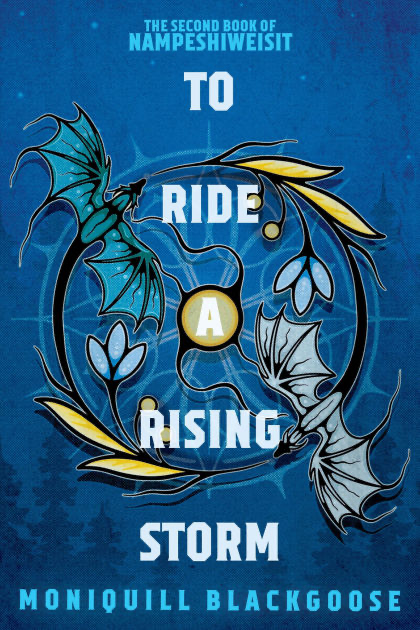
I just need everybody to know that this cover exists. That’s it.

That’s it for this week’s Book Review Tuesday! Have a wonderful rest of your day, and take care of yourselves!
Posted in Book Review Tuesday

Book Review Tuesday (12/9/25) – Planetfall

Happy Tuesday, bibliophiles! My finals are pretty much over, so it looks like I’ll be coming back.

Yeah, I thought I’d broken my “comes back from break, immediately writes a negative review” streak too. As always, I maintain that a balance is necessary.

For the most part, my quest to find more diverse sci-fi has been successful and has led me to find so many remarkable new books and authors. However, there are always some misses along the way, because as always, diversity isn’t a guarantee that a book will have a sound plot and characters. I’d seen Planetfall come up on several lists of science fiction with solid queer and disabled rep, so of course I snapped up a copy at the library when I had the chance. Unfortunately, Planetfall was lukewarm at best, and a jumble of unfulfilled promises at worst.

Enjoy this week’s review!

Planetfall (Planetfall, #1) – Emma Newman

22 years ago, escaping the brink of certain extinction, the last remains of humanity formed a colony deep in the cosmos, on a mysterious planet home to a strange alien structure. Leading them was Lee Suh-Mi, a godlike figure who has retreated in recent years to live inside of the alien structure. Renata “Ren” Ghali, an engineer, has spent her life toiling away to make this new haven habitable for humanity. But when a stranger arrives on their doorstep bearing an uncanny resemblance to Suh-Mi, Ren must question everything she knows about her new planet—and her supervisors.

TW/CW: panic attacks/mental illness (PTSD, anxiety) themes, ableism, grief, death, murder, descriptions of injury, death of a child, substance abuse (alcohol)

Once I got past the halfway mark of Planetfall, my recurring thought was “This is just Prometheus if it sucked.” Prometheus is already a divisive film (I’ll always have a soft spot for it, I don’t care), but this novel feels like what would happen if you separated Prometheus from the Alien franchise…and then surgically extracted everything that was interesting about it.

I will say, even though my overall experience with Planetfall wasn’t the best, there were some significant positives. Newman’s prose had moments of being very clever and poetic, though they were few and far between. I liked the inclusion of Renata’s mental illness, and the pushback of the narrative of disability/mental illness needing a cure, especially in sci-fi settings. The casual inclusion of lots of characters who were queer and/or people of color was also a plus.

Yet once you get beyond that, there isn’t much to like about Planetfall. One of the worst things to fall short on in genre fiction in general is the sense of place. If you’re in the real world, you can let go of descriptions on the basis that your reader exists in this world and knows how it functions; when you’re creating something entirely new—say, an alien planet—grounding the reader in the setting is almost always an absolute necessity. I was so excited to explore the alien colony that Newman set up, but hardly any of it was expounded upon. Other than a few throwaway descriptions of Ren hearing alien creatures’ mating calls (how do you not follow up on that?? Tell me about the creatures!) while trying to fall asleep at night, I have almost no clue about how this planet looks. I think there’s…some caves? Maybe? All I can say with certainty is that there’s an ominous alien structure. That’s about all I can tell you. That also extends to the interior of the colonists’ base—I’m lost as to even what that looks like, even though that’s where we spend most of the novel.

This novel’s biggest pitfall is that it sets up far too many things—both in terms of plot and theme—and there’s practically no payoff for any of it. Newman clearly wanted to say something about religious fanaticism, but her analysis didn’t get further than “religious fanaticism is bad,” which, while that’s obviously true, really merits going deeper than that. The plotline about Ren’s guilt and mental illness was the closest Planetfall had to having something tangible to say, but even that got lost amidst the tangled mess of half-baked threads. Given the prominence of guilt and religion in this novel, there could’ve been something compelling for Newman to explore, but those dots were barely connected, if at all. The same is true of the plot. The entire foundation of the colony is upended? Nah, we’re dealing with that later, I guess. There’s a whole thread where they find evidence of an alien language, and…nothing happens. I kid you not. They just drop that thread and leave it there. If you go into Planetfall thinking that any of the plot threads will be resolved, prepare yourself for disappointment. Reading this novel made me feel like Darla from Finding Nemo shaking Nemo in a plastic bag, desperately trying to get him to “wake up!” Spoiler alert: it never did.

Part of what accentuated that feeling of narrative unresolution was the fact that the characters weren’t developed nearly enough for me to even care what happened to them. Ren came the closest, but I suspect it was more because she was actively being horribly mistreated by some of the other characters. I’m not sure if I know a lot about her other than what happens to her, even though Planetfall happens entirely from her point of view. To Newman’s credit, her guilt was written quite evocatively, and that was where I felt the glut of my sympathy for her. She was less of a character and more of a chess piece for things to unceremoniously happen to. Had she been characterized beyond her crushing guilt, I might have been much more interested in the story—guilt is an emotion, not a character trait.

The same can be said for all of the other characters. All Mack really did was act badly enough for Newman to have an excuse to slide him in as the antagonist in the eleventh hour. Sung-Soo didn’t have any discernible traits other than the fact that he upends what the colonists had believed for decades. Speaking of other colonists…other than maybe four other named characters, where were they? With the lack of description, I fully would’ve believed you if you told me that there were only seven people tops on this planet. Planetfall was just so painfully bare-bones in most regards. All of the promises of a good story are here, from the themes to the plot, but it’s all promises and no deliverance. It’s the literary manifestation of doing the least to get your readers to believe that there’s a story going on.

All in all, a sci-fi novel that promised intrigue, mystery, and devastating secrets, and delivered on…none of those things. 2 stars.

Planetfall is the first book in the Planetfall series, followed by After Atlas, Before Mars, and Atlas Alone. Emma Newman is also the author of several other series, including The Split Worlds (Between Two Thorns, Any Other Name, All is Fair, A Little Knowledge, and All Good Things), the Industrial Magic duology (Brother’s Ruin and Weaver’s Lament), The Vengeance, and many others.

Today’s song:

That’s it for this week’s Book Review Tuesday! Have a wonderful rest of your day, and take care of yourselves!
Posted in Book Review Tuesday

Book Review Tuesday (11/25/25) – Mad Sisters of Esi

Happy Tuesday, bibliophiles!

Guess who’s back…for only a week, probably. We’ll see. My college is on this maddening schedule that only gives us one (1) week after Thanksgiving Break and then it’s straight into finals, so I’ve been grinding for most of November. But now I’m on break, thank goodness!

I found out about Mad Sisters of Esi while doing a research paper on the history of science fiction in India. It sounded intriguing—who doesn’t love an incomprehensibly large cosmic whale, after all? I’m not usually one for fantasy (citation needed) novels that are this dense and self-referential, but there was so much passion poured into every word that I couldn’t help but be dragged along for the bizarre ride.

Enjoy this week’s review!

Mad Sisters of Esi – Tashan Mehta

Myung and Laleh are inseparable sisters living inside the Whale of Babel, a whale the size of a galaxy, large enough to contain planets in the folds of its body. They have never known life outside of the Whale, save for the Great Wisa, their distant, unknown creator. Laleh is content to explore the endless lands inside the Whale’s body, but Myung yearns for something more. Her journey takes her to the far edges of the universe, but so far that she cannot find her way back to her only home. As Myung and Laleh attempt to find their way back to each other, they ponder the stories that got them to where they were, and if stories themselves can bring them back together.

TW/CW: loss of loved ones, grief, abandonment

If you’re wondering how I’ve been lately, I’m apparently saturating myself with “[]ad Sisters” media. Mad Sisters of Esi? Bad Sisters? What am I doing here? What’s going on with all these sisters?

I’m glad that this trend doesn’t have a name, but I love the trend of recent genre fiction coming to conclusion that “maybe [x] was the friends we made along the way” can actually be a very powerful message. Maybe storytelling was the friends we made along the way. God. What a book.

I was captivated by the premise of Mad Sisters of Esi, but I could have easily not been. It falls into those fantasy books that verge more on the literary side that are very self-serious about been multilayered, dense, and Deep with a capital D. Not that there’s anything wrong with it, but toeing the line between a story that’s actually meaningful and a book that’s 500+ pages of needlessly convoluted, pretentious nonsense that only serves as a monument for how supposedly complex of a plot the author could dish up. The latter are often all style and no substance, but the real frustrating part is that they’re so convinced of their substance that it deadens any meaning that it could’ve had. (See my review of The Spear Cuts Through Water. At least Simon Jimenez has other good books. Go read The Vanished Birds instead of that one.) It’s just a literary version of “look, Ma, no hands!” that rarely results in anything really substantive.

My main criticism of Mad Sisters of Esi is that it does stray into that territory sometimes. It never fully went over the edge for me, but there were moments were it got too convoluted for both my taste and the service of the narrative. Most of it was complex, but not needlessly so, but at a certain point, parts of it got dizzying. I definitely didn’t get everything about this book, and I feel like it’s almost the point. For me, what separates the two kinds of fantasy novel that I just described is…well, love. I could tell right away that Mehta didn’t write Mad Sisters of Esi to show off how complicated of a narrative that she could write—there’s a story, a tangible message, and a thrum of passion that spills through in every page. With every fictional academic article and magical town, I knew that Mehta’s world was born of love. Which, given the nature of this book’s themes, is exactly what it should have been. It’s a novel that’s all about love, storytelling, and the act of creation, and Mehta’s writing felt more than faithful to that premise.

Mad Sisters of Esi is full of meta commentary on the nature of storytelling. I’ll get more into that aspect later, but part of what sold those thematic elements was Mehta’s prose itself. Mehta is clearly someone who has studied her fair share of fairytales. Mad Sisters of Esi doesn’t just feel like a fairy tale in terms of the plot—Mehta’s prose has the same enchanting quality of a timeless fairy tale. The narrator bobs in and out, always with a cryptic lesson. The lush world is rendered in the most magical, wondrous detail. All of the descriptions surrounding Myung and Laleh make them sound like classic protagonists in an ancient tale. It was all very self-aware, but in a way that made the story feel fuller—and drew me in page by page. With Mehta’s strong hand, every location that Myung visited was bursting with bizarre, fantastical life—I was hooked on nearly every aspect.

If this novel has made me realize anything, it’s that we don’t have nearly enough cosmic whales in literature. We need more of them, frankly. Or maybe not—I’m torn on whether or not we should gatekeep them so they don’t get tired. I doubt they would, though. Either way, you can’t just promise a galaxy-sized whale full of planets and two sisters that live inside it and not deliver on that premise. Thankfully, Mehta did in spades. The world of Mad Sisters of Esi was a sight to behold. Every minute detail was somehow nonsensical and yet made perfect sense. It all felt very trippy and whimsical, and above all, so vibrant. I loved every quirk in every location that Myung visited in the vast universe; I’ve seen reviews compare it to The Phantom Tollbooth, and honestly, I have to agree—it has that same absurd, dreamlike quality more often than not. Beyond that, I love the integration of the academic articles and research papers about all of the bizarre events and people within this novel—it added such a fun layer of worldbuilding that made it all feel more grounded and real—as much as it could be, with all of the out-of-this-world (no pun intended) stuff that was going on.

With all of the emphasis on madness, I was really hoping there wasn’t going to be yet another story about art being all about suffering. From how incredible the first few chapters were, I was hopeful. But with everything about madness, madness, madness…doubt crept into my mind, for sure. I’m not confident that I fully got what Mehta intended, but I feel like this is what I took away from it. There is a little madness in every creation, even if you’re not actively suffering—how do you create a massive cosmic whale and not go a little crazy? Yet she emphasizes that even if you pour your all into your creation, that you run the risk of losing yourself, and that’s when your creation goes wrong. Mehta’s madness isn’t the suffering kind of madness—it’s about the passion. It’s about throwing all of your love into the act of creating, just so that the world is a little brighter and less boring than it was before, and to give your love a physical form. The reason that Myung is so lost out in the universe is that she strays from something that was created with nothing but love. That’s my two cents (is that expression even relevant anymore now that we don’t have pennies?), especially given how the novel concluded. That’s why the passion I felt from every page felt authentic—the passion is what it’s about, to love what you create and not destroy yourself in the process, because you too are made of love.

All in all, a dazzling and surreal space fantasy full of love, sisterhood, and whales. 4.5 stars!

Mad Sisters of Esi is a standalone, but Tashan Mehta is also the author of the novella The Liar’s Weave, and has contributed to several anthologies, including Magical Women, Solarpunk Creatures, and The Gollancz Book of South Asian Science Fiction, Vol. 2.

Today’s song:

That’s it for this week’s Book Review Tuesday! Have a wonderful rest of your day, and take care of yourselves!
Posted in Book Review Tuesday

Book Review Tuesday (10/28/25) – Red City

Happy Tuesday, bibliophiles!

It’s safe to say that I’ve grown up with Marie Lu in my formative years. Sure, her quality has wavered on occasion, but she’s been such a consistently talented writer and a consistent presence in my life since I was about 13 or 14. When I heard she was writing her first adult book, I was over the moon—and I’m glad to say that I devoured Red City just like I devoured her other books as a pre-teen.

Enjoy this week’s review!

Red City (The New Alchemists, #1) – Marie Lu

In Angel City, Alchemy is the backbone of the wealthy. Those who are knowledgeable in the art of alchemical transformation can perform acts once thought impossible, both through the study of magic and the consumption of sand, a drug that makes the user more perfect—at a deadly price. For Sam and Ari, childhood friends caught on the opposite sides of the criminal syndicates of Angel City, this price is one that will bring them everything that they ever wished for. But will the rift deepening between them ever be breached—and what is the price of the enmity they’ve sown between each other in their quests for power?

TW/CW: substance abuse (fantasy), torture, violence, sexual content, loss of loved ones, child abuse

Marie Lu slipping in a reference to Nannerl Mozart whenever it’s humanly possible:

I’ve been on the Marie Lu train beginning with Warcross all the way back when I was 13 or 14, and I’ve been hooked ever since. Has she had her lower points? Sure, but it’s overshadowed by her consistency overall. Even her weaker books have still been loads of fun. It feels like a wonderful, full circle moment to be reading her adult debut now, here in my twenties and nearly finished with college. Thankfully, it did not disappoint.

First off, I think Lu’s really onto something with this alchemy-based magic system…I’m fully invested in this world! A lot of what I know about alchemy (chiefly from my amazing dad, who’s taught whole classes about this—shoutout to him!) is all about transformation—not just with the kind of alchemy that was done in ancient times with physical objects and elements, but of self-transformation, whether to reach a lofty goal of immortality or of general spiritual betterment or being closer to the divine. In Red City, the premise hinges around this quality of alchemy being perverted; you can physically perform transformation-based magic of several types, but the alchemical transformation is aided by a drug called sand. Of course, in the hands of criminal syndicates around the world, it becomes a tool to become more “perfect.” Leave it to the mafia to ruin alchemy. (New elevator pitch for Red City just dropped?)

On that subject, I really like that use of alchemy as a way to critique our societal concept of perfection. Self-transformation can be an incredibly powerful thing, when you’re putting in the work to become a better, kinder, smarter, etc. person. But when the urge to become perfect consumes you to the point of becoming a shell of your former self, it eats you up from the inside. Sam and Ari both fall prey to this, and it destroys them both. Lu always has a knack for using her fantasy and sci-fi worlds to critique parts of society, whether it was the examination of otherness and marginalization in The Young Elites or the sidelining of women’s stories in The Kingdom of Back. Using the negative potentials of transformational, alchemy-based magic to critique our society’s tendency to glamorize a destructive kind of false perfection.

So of course, by virtue of this story being about wealthy people doing horrible things to stay perfect and powerful, of course it’s set in Los Angeles. (Cue “Los Ageless” by St. Vincent. There ya go, past Madeline.) Well, not really Los Angeles. This is an alternate world that Red City is set in, and the scene is set in Angel City. But Lu took such great pains to make the worldbuilding as airtight as possible, which I thoroughly enjoyed! I expected nothing less from her, honestly, given her track record. Peppered with everything from fictional textbooks to congressional testimonies to FDA announcements, Lu left no stone unturned when it came to finding out how alchemy magic would affect the world. Even with the real-world basis to go off of, it seemed effortless for her to integrate alchemy and have the world still feel so real. I was immersed from page one, and there wasn’t a hole to be found throughout.

Making the jump from YA to Adult is harder than a lot of authors make it seem, but Marie Lu did it with ease with Red City! I feel like a lot of authors make the switch not considering how different the characters’ voices and choices will be, even with an age difference of only 5-10 years from the teenagers were once writing. I’ve read quite a few adult books from normally YA authors where the protagonists still read like teenagers. Lu made it look easy. It’s much more mature for sure, but never strays into edgelord torturefest territory either just to seem more “adult”; the violence, complexity, and sexual content are dialed up, but in a way that felt realistic for the characters, their circumstances, and the stakes. (And for the record, the way she wrote sex scenes was effortless and never got cringy, thank goodness! If I remember correctly, The Midnight Star got pretty steamy in some places, so I’m not surprised, but it’s worth commending.)

As always, Marie Lu’s characters are the star of the show in Red City. Man, she can craft such compelling characters! She just keeps winning!! Sam and Ari were both unlikable in some capacity, but they felt like tragic heroes to me. They were both doomed from the start (and I’m assuming they’ll get even more doomed as the series goes on…yippee!), but Lu wove them both like tapestries, and their stories hooked me from the start. My only nitpick is that Sam seemed to get disproportionately more development than Ari, but I’m assuming that’s what the mysterious book 2 is setting up. What we have now is excellent—Sam and Ari were both such compelling, tragic protagonists, and the way that their quests for power, recognition, and perfection tore them apart was nothing short of breathtaking. MARIE LU HAS DONE IT AGAIN!

All in all, a dark and dazzling addition to Marie Lu’s expansive fantasy canon that you won’t want to miss. 4.25 stars!

Red City is the first novel in the New Alchemists series, though no information has been released about its sequels or how long the series will be. Lu is also the author of many series for young adults, including the Legend series (Legend, Prodigy, Champion, and Rebel), the Warcross duology (Warcross and Wildcard), the Young Elites trilogy (The Young Elites, The Rose Society, and The Midnight Star), the Skyhunter duology (Skyhunter and Steelstriker), the Stars & Smoke duology (Stars & Smoke and Icon & Inferno), the standalone novel The Kingdom of Back, and the DC Comics tie-in Batman: Nightwalker.

Today’s song:

That’s it for this week’s Book Review Tuesday! Have a wonderful rest of your day, and take care of yourselves!
Posted in Book Review Tuesday

Book Review Tuesday (10/21/25) – Failure to Communicate

Happy Tuesday, bibliophiles!

I found out about this book earlier this year while looking for more sci-fi with queer and/or disabled rep (as I always am). This book seemed to have nearly the perfect premise—I just can’t get over how genius it is to have an autistic protagonist who’s had to study human behavior her whole life study alien behavior as well in order to initiate First Contact. I ended up buying it for Bookshop.org’s recent Anti-Prime Sale, and I ate it up in a handful of days. Though not without its flaws, Failure to Communicate delivers almost completely on its remarkable premise, full of political intrigue, aliens, and heart.

Enjoy this week’s review!

Failure to Communicate (Xandri Corelel, #1) – Kaia Sønderby

Xandri Corelel has spent her life studying everyone around her, be they people or aliens. She’s been forced to, after centuries of eugenics has made her one of the few autistic humans left in the universe. She uses these skills as a Xeno-Liaison, negotiating with all sorts of aliens on behalf of the Starsystems Alliance. But when presented with a potentially hostile species possessing one of the most powerful weapons in the universe, Xandri faces the most difficult negotiation of her career—one that may chance the face of interspecies relations forever.

TW/CW: ableism, xenophobia (fictional), violence, blood, genocide themes, slavery, animal death

“Autistic person spends entire life trying to understand human behavior, doesn’t fully understand it, then spends her entire career understanding alien behavior instead” has to win the gold medal for the best sci-fi premise I’ve heard in years. (Also, felt.) And though not all of it delivered on said premise, Failure to Communicate is a hidden gem for sure.

Now, I’m reviewing a space opera book which features a whole host of alien species, which means it’s time for my obligatory creature design rant. The aliens in Failure to Communicate are…a complicated case, for sure. The majority of them are basically larger, intelligent versions of real-world animals (with some brief exceptions), but Sønderby is self-aware of the fact; for instance, the Psittacans (a name that Xandri gave the species and didn’t develop on its own, thankfully) basically look like giant parrots, but Xandri explains that in-universe, all of their parrot-like features aren’t anything like what we would call, say, feathers, but evolved in such a way that they looked exactly like Earth parrots independently of Earth. This same explanation is given to pretty much all of the other species in the book, which is a bit too convenient to apply to 90% of the aliens in the novel. As for the Anmerilli, though I’m not disparaging the cover artist in any way, I feel like the cover didn’t do justice to their more alien features—and man, was I relieved that these aliens weren’t just humans with extra steps. Well…if you boiled it down, they kind of were, but there were enough traits that they at least got to the level of a decently compelling Star Wars humanoid. (Also, Sønderby’s descriptions of the Zechak also made me picture them as genocidal Piglins, which was…uh, interesting, for sure.)

But what almost made up with that for me was the in-depth explanations of their respective cultures. In the end, Failure to Communicate wasn’t necessarily a book about biology—it was a book about politics, anthropology, culture, and communication. That, at least, was incredibly fleshed out and much more thoroughly thought-out—as it should’ve been. Dissecting some of the alien cultures was one of the best parts of the novel. These cultures and the conflicts between them formed the backbone of the novel. Though until the end, Failure to Communicate is somewhat light on action, Xandri’s experiences with navigating the intricacies of dozens of alien cultures was nothing short of compelling—Sønderby has the mind of an anthropologist, and there was truly no stone left unturned. I loved that she didn’t shy away from depicting the discomfort that comes with interacting with other cultures for the first time and having one’s own values brush up against theirs—it’s bound to happen with First Contact, and it’s bound to happen in a lot of novel, multicultural interactions. There were some places where I felt there needed to be more nuance (ex. the whole situation with the Zechak; yes, they’re genocidal, but it verged too close to “this entire species consists of genocidal, cold-blooded killers,” which Xandri tries to self-correct, but isn’t emphasized enough. I’d find that hard to believe), but overall, I loved Sønderby’s cultural explorations.

Sønderby’s commitment to not shying away from discomfort was one of the best parts of the novel, and that was made manifest in her main character, Xandri. There was a ton about her that I loved—her keen eye for cultural quirks, her inner monologues about the idiosyncrasies of the neurodivergent world, and her unflappable sense of justice. However, she was far from a perfect character—even being in a world populated with aliens, she harbored her own unconscious biases and prejudices, which she frequently had to come to terms with throughout her mission. She lashed out, she made rash decisions—she was imperfect. And though she was easy to root for, she had plenty of flaws, a balance that is difficult for any author to strike.

Failure to Communicate isn’t an action-heavy book, which I’m all for—waiter! More cozy sci-fi, please! However, I hesitate to call this novel “cozy,” especially considering the moment when shit hits the fan during the last third of it. Everything that happens then swiftly merits the “cozy” title being unceremoniously ripped off. Nonetheless, Sønderby takes some cues from cozy sci-fi’s best; I loved how she let the plot meander in the more interpersonal conflicts as opposed to the big and showy ones, and let the often messy character dynamics take the lead. The ending was also messy and bittersweet, but not in a way that lacks resolution—it is a resolution, just a very complicated one with quite a lot of uncomfortable implications for Xandri. Another example of Sønderby not shying away from making things complex. I do like that it ended on a very hopeful note, as much of a wreck as some things ended up being.

Being neurodivergent, the subject of disability was part of what drew me into Failure to Communicate. I’ve mentioned on here that I have SPD, which shares some similarities with autism, and I related to Xandri’s lifelong mission to study and understand the neurotypical people around her in order to try and piece together how their world worked. She deals with a hefty dose of ableism (both from well-intentioned and malicious people) throughout the book, which was quite rough, but I loved that she never compromised her pride in being autistic. Sønderby takes the trope of futuristic societies erasing disability as a sign of progress to task, which amplifies Xandri’s struggles as an autistic woman into the struggles of possibly being the only autistic person in the entire galaxy. Which…yeah. The ableism is inevitable at that point. The only disability aspect that I’m not so sure about was having the twist that Marco was also disabled (specifically, he has bipolar disorder); I do appreciate that Sønderby uses it as an opportunity to show that almost identical conditions can produce a hero as well as a villain and that the pressures of ableism drove him to betray the team, but I really don’t think the latter had enough nuance to it. Not that disabled characters can’t be evil, obviously, but it felt too much like making a mentally ill character automatically a villain simply because they’re mentally ill. I’m willing to give Sønderby the benefit of the doubt because she handled all of the other disability-related topics so wonderfully, but it still didn’t sit completely right with me.

Also, I just have to mention that this book is so, so queer. BLESS. First off, I loved that Xandri was bisexual, but I appreciated that she was polyamorous too—there’s hardly any depictions of polyamory out there that don’t make their characters the butt of a joke or a fetish, so this was a breath of fresh air, for sure.

All in all, a wholly unique space opera about communication, culture, and collision. 4 stars!

Failure to Communicate is the first novel in the Xandri Corelel series, followed by Tone of Voice and preceded by Testing Pandora, a prequel novella. Kaia Sønderby is also the author of the YA fantasy novel Damsel to the Rescue.

Today’s song:

That’s it for this week’s Book Review Tuesday! Have a wonderful rest of your day, and take care of yourselves!

Posted in Book Review Tuesday

Book Review Tuesday (10/14/25) – Scout’s Honor

Happy Tuesday, bibliophiles!

To close out Latine Heritage Month, here’s a novel from an author I haven’t read in years! I’d totally forgotten about Lily Anderson since high school. I remember liking Undead Girl Gang a lot when I was younger, so I figured I might give her (somewhat) newer novel a chance. Scout’s Honor is a novel that leans into both the adventurous and the sensitive, a tale of sisterhood, coming of age, and carnivorous interdimensional monsters.

Enjoy this week’s review!

Scout’s Honor – Lily Anderson

Prue wants nothing to do with her family legacy. A third-generation Ladybird Scout, she is part of an elite circle of women trained to hunt Mulligrubs, interdimensional beasts who feed off of the emotions of humans—and sometimes their flesh, when they get hungry enough. After her friend was killed in a deadly Mulligrub attack, Prue swore off the Ladybird Scouts for good. But when a new crisis pulls her back into the fray, Prue must decide if her legacy is worth preserving—or if she needs to go her own way.

TW/CW: PTSD themes, panic attacks, violence, gore, loss of a loved one

Maybe the real Root is the friends we made along the way, amirite?

Though I can’t speak to the accuracy of the representation (Prue has PTSD), Scout’s Honor had such a deeply sensitive depiction of trauma. If the acknowledgements are anything to go by, Anderson drew a hefty amount of it from personal experience, and that authenticity shone through emotionally on the page. Narratively, you’re only fed breadcrumbs of Prue’s trauma (until you aren’t), but I feel like it mirrored Prue’s difficulties with confronting her past. There’s a lot of detail afforded to how she experiences panic attacks and how her trauma has manifested in the three years since her trauma began. Beyond that, Prue had such a poignant arc, and so much of it revolved around her trauma; the entire reason she returns to the site of her trauma is to find a way to forget it (to physically remove her ability to See the Mulligrubs via a special tea), and yet it shows her that no matter what, she can never forget the past: the only way to truly heal is not to easily overcome it, but to face it. It was such a poignant take on trauma and healing, so kudos to Anderson for that!

I also loved how Scout’s Honor tackled its themes of sisterhood! In an organization like the Ladybird Scouts, where a value like sisterhood is prized above all else, it’s bound to be perverted; any value put on that high of a pedestal is bound to be used for ill intent, which it often is in this novel—case in point with Faithlynn. But I loved how Anderson talked about what sisterhood really is—uplifting difference yet embracing commonality, and truly helping each other when we’re down. There’s Faithlynn’s sisterhood, which is just a word she can toss around while putting down the other girls around her, and there’s Prue’s sisterhood, who accepts the less conventional Ladybird Scouts like Sasha and Avi into the fold and celebrates their individual strengths in order to solve the problems throughout the novel. It’s a heartwarming exploration of the topic and a lovely depiction of how it can so easily be twisted—and an indictment of any woman whose path to success is only built on putting other women down (and in the path of danger).

For the most part, the world of Scout’s Honor was a treat! Though the worldbuilding wasn’t anything groundbreaking, there was so much surrounding the lore and the structure of the Ladybird Scouts that I loved dissecting and exploring. Anderson really nailed all of the idiosyncrasies and minute rules of this organization, from their front in the real world to the work they did behind closed doors. Anderson truly nailed the feeling of being a part of a tight-knit, insular community sworn to secrecy—there were so many laws and bylaws that had to be dodged, almost as much as the Mulligrubs, throughout the novel. Although I enjoyed the classifications of all the different Mulligrubs, I would have liked some more explanation as to how they came to Earth in the first place, and exactly what kind of dimension we’re talking about when Anderson calls them “interdimensional,” but that’s more of a me thing—the novel doesn’t necessarily need it since the worldbuilding of the primary location is already well-established.

My main issue with Scout’s Honor, however, lay in the pacing. Despite most of the emotional sections of the novel landing appropriately, Anderson didn’t seem to know how much time to allocate to certain scenes, which ended up making the pacing quite lopsided. Until the climax, it also lessened the stakes quite a bit; even though the mulligrubs are a very real threat in this universe, almost all of the battle scenes were over in what felt like the blink of an eye. If not for Prue’s trauma surrounding them, I wouldn’t have felt the tangible threat of them at all—aside from the aftermath, the characters seemed to deal with the Mulligrubs, no matter the size or strength, like that. On the flip side, although I love some character building, there were long stretches when not a ton happened, and hardly any of it serviced the plot or character development—there were just long stretches of banter that didn’t show anything that hadn’t already been established. Anderson is a strong writer for the most part, but the pacing dragged Scout’s Honor down for sure. It was really the only thing keeping me from rating it the full 4 stars.

All in all, a novel brimming with heart and heinous monsters, let down by pacing but lifted up by its depictions of trauma and sisterhood. 3.75 stars, rounded up to 4!

Scout’s Honor is a standalone, but Lily Anderson is also the author of The Only Thing Worse Than Me is You series (The Only Thing Worse Than Me is You and Not Now, Not Ever), Undead Girl Gang, The Throwback List, Killer House Party, and several other novels for teens and adults. She has also contributed to the YA anthologies The (Other) F Word: A Celebration of the Fat and Fierce, That Way Madness Lies: 15 of Shakespeare’s Most Notable Works Reimagined and All Signs Point to Yes.

Today’s song:

been unhealthily obsessed w this for the past few days…

That’s it for this week’s Book Review Tuesday! Have a wonderful rest of your day, and take care of yourselves!
Posted in Book Review Tuesday

Book Review Tuesday (10/7/25) – The Volcano Daughters

Happy Tuesday, bibliophiles!

Continuing with Latine Heritage Month, here’s a novel that came on my radar last year when it was released. Literary fiction isn’t my go-to, but I do love some magical realism sprinkled in, so I was interested. What resulted was something deeply impacting. The Volcano Daughters pulls no punches, and yet cares so deeply for its protagonists—and for everyone whose voice is silenced.

Enjoy this week’s review!

The Volcano Daughters – Gina María Balibrera

Graciela grew up in El Salvador, among their family of Indigenous women. But when the cronies of a rising dictator steal her away to be his oracle, she’s torn away from everything she knows and loves. In the dictator’s palace, she meets Consuelo, her stolen sister who is also indentured in the palace, made to sit by as the government dabbles in faulty magic and formulates a plan to commit genocide on her Indigenous community. Now young women, Consuelo and Graciela free for their lives, both thinking the other dead.

Darting between America and France, Consuelo and Graciela fight to forge new lives for themselves. But can they ever leave the past behind—or each other?

TW/CW: rape, genocide, colonialism/imperialism themes, racism, misogyny, miscarriage, violence, murder, deportation/kidnapping

My main gripe with literary fiction at large is that it’s a breeding ground for novels that are unrealistically miserable in the thought that misery and depression automatically make it “deep.” I’ve read enough of said books and been in fiction workshops long enough that just the thought of sadness being equated to depth makes me want to throw up in my mouth. Is The Volcano Daughters a sad, literary novel? Yes. And yet the sadness is there to tell a powerful story, not just to sell. It’s the story of silenced women, but also a story of resilience and sisterhood and so much more. It’s what literary fiction should be.

After this novel, I’m sure I’ll read more from Gina María Balibrera, but…god, in the right headspace, for sure. The Volcano Daughters is a heavy novel, and for good reason. I didn’t put these trigger warnings there lightly. But Balibrera’s prose is seriously something to behold. Just as Consuelo and Graciela view the world through the lens of artists, so too does Balibrera. Every detail is truly luscious; the many places that The Volcano Daughters travels through are realized in such vivid detail that I swear I could almost smell the air. No stone is unturned, and no metaphor is treated lightly—Balibrera puts even the most minor details under a microscope and crafts them into the most lush language, almost bordering on poetry in the more metaphorical moments.

There’s something so special about the way that Balibrera treats Consuelo and Graciela as characters. I hesitate to call them fully tragic characters, but their lives are largely dictated by one tragedy after another. Yet no matter what happened to them, I always sensed that Balibrera would have something waiting for them at the end. It wasn’t an ending that was tied up with a nice bow, but it was a speckle of hope on the horizon. They were still suffering, but their justice was just out of reach, but still visible. Had she gone too far in one direction, it would’ve felt like needless plot armor, especially in the climate(s) that Consuelo and Graciela lived in; too far in the other, and it would’ve strayed into trauma porn territory. Balibrera treats her characters in the most realistic and yet the most caring way; though they have endured so much and have so much more to endure, she makes you cling to that sliver of hope, gives you glimpses of incremental lives that they might live in a few years’ time, because it is all that is left. As somber of a book as this is, I did appreciate that there was a very tangible inkling of better days to come.

What seems to hook most readers about The Volcano Daughters is the ghosts, which…yeah, that’s what hooked me too. But it’s one of the most original and compelling aspects of this book; in between the present narrative, the story has frequently interjections from four ghosts: Consuelo and Graciela’s other sisters who were murdered during the genocide. Like the other characters in this novel, they’re so vibrant and full of sass and wisdom in equal measure. Their role is often to come in and drag the reader back to the embarrassing reality when somebody’s inner monologue gets too self-absorbed or when someone’s telling the story wrong. (Nobody can quite agree what’s really right, and that’s what makes them so funny.) At times, the humor didn’t quite land (I found it hard to believe that a ghost who got killed in the ’30s would use “Boom!” as an exclamation like it’s the 2010’s), but they all had such distinct voices that I could almost let it slide. Yet they are also there to be incorporeal forces of justice, metaphysical representations of the voiceless, the forgotten of history who have been brushed aside. They are the deliverers of the justice they never got, and they form the emotional backbone of The Volcano Daughters.

The part that the ghosts emphasize for me is how Balibrera examines the theme of storytelling and whose stories are told—and the power structures that ensure that some stories are either untold or told incorrectly. Names are deeply important: every murdered Indigenous woman is given a specific name, whereas the dictator of El Salvador is only referred to as “El Gran Pendejo”; similarly, El Gran Pendejo’s entire regime operates on stories, ones that are told to reinforce a racist narrative. Graciela acts out stories about marginalized people in order to further the United States’ racist stereotypes of various groups. And yet here are the ghosts, who take the story into their own hands to deliver the complicated, messy, yet real narrative. The ghosts are there to be the voice of every marginalized person who has ever been deliberately erased from history, every marginalized person who has had to bear the pain of having their history warped and their country slandered. Both the ghosts and the central sisters are stars of the novel because they are precisely the kind of people that history forgets. The Volcano Daughters tells us that history surrounds us—and that there will always be someone to tell the truth.

Overall, a deeply moving and emotional novel of sisterhood and distance that serves as a righteous megaphone for those who have had their voices stolen. 4 stars!

The Volcano Daughters is a standalone and Gina María Balibrera’s debut novel.

Today’s song:

I loved her episode of What’s In My Bag? and I love this song!!

That’s it for this week’s Book Review Tuesday! Have a wonderful rest of your day, and take care of yourselves!
Posted in Book Review Tuesday

Book Review Tuesday (9/30/25) – Beasts of Carnaval

Happy Tuesday, bibliophiles!

Continuing with Latine Heritage Month, here’s a new release that caught my eye! The cover and premise seemed stunning, and I was intrigued by the inclusion of Taíno mythology. On almost all of those fronts, Beasts of Carnaval delivered instantly—I was hooked from page one!

Enjoy this week’s review!

Beasts of Carnaval – Rosália Rodrigo

Sofía has heard legends of Isla Bestia since she was a child. They say that enchanting performances and mysterious people populate the mysterious island, and those who come there are too entranced to ever return to the real world. Sofía is sensible enough to not believe the rumors. But when her twin brother goes missing, her trail leads to Isla Bestia. There, she’s drawn into a bizarre, luscious world of magic and shifting alliances. Caught up in a tangled web of intrigue, Sofía must keep her wits about her if she wants to find out which of her new allies are men—and which of them are monsters.

TW/CW: colonialism/imperialism themes, loss of loved ones (past), panic attacks, religious bigotry, blood, murder, racism/slavery themes, misogyny

Before I get into gushing about everything I adored about Beasts of Carnaval, I’ll get my one major pet peeve out of the way: fantasy worlds that are named so closely to reality that they basically are reality. Rodrigo’s world is essentially the Caribbean, except that the countries are named slightly differently—their colonizers are Hisperian, for instance. Real-word terms such as mestiza are used, so at that point…I dunno, it’s so close to historical reality, so why not just set it in the Caribbean of the past and just establish that there’s magic and some minor changes? Alternate history, anyone? I guess there’s a ton of fantasy novels that do that for European countries, but honestly, I’ve never liked it no matter the country that inspired the setting.

I dunno, the commentary would come across no matter the setting. Beasts of Carnaval isn’t the first book to have this, but for me, even though it peeved me, it didn’t take away from how lush the worldbuilding was; beyond the real-world hierarchies that were present, I loved the magic in this world, and it was integrated into the real world almost effortlessly. It’s a very fleshed out world rooted in historical themes and cultures, enlivened by vibrant and vivid magic inspired by Indigenous Taíno mythologies.

After reading Beasts of Carnaval, I’m absolutely going to be looking out for anything else that Rosália Rodrigo writes, because the prose of this novel was truly captivating! A Carnaval-inspired setting is bound to have some fun imagery, but Rodrigo wrung every ounce of magic out of it. With her prose, Isla Bestia wasn’t just abstractly a place that nobody wants to leave—she really makes you feel the seductive enchantment of the entire island! From the first description of the hummingbird dancer at the beginning, I was nothing short of captivated—I was hooked from start to finish, and I loved every minute of exploring the world that Rodrigo had crafted!

Compelling prose needs a compelling protagonist, and Sofía was just that! I adored her character, and she just seemed to leap off the page for me. From the start, I loved the many facets of her personality; she was strong-willed, determined, sensible, and sometimes practical to a fault, but I loved watching her adventures. Especially in contrast to the other characters around her, she was so focused on her mission of finding her missing brother that I got sucked in immediately. Hidden beneath her practical exterior, her deep caring for Sol made me root for her instantly, and I loved the way she fought back against the micro (and very much macro)aggressions that she experienced in daily life for being mixed-race. It’s rare that I love a character from the get-go, but Sofía captured my heart immediately!

A part of Sofía’s character that I also appreciated was the discussion of her mixed-race/mestiza identity! As a mixed-race person myself (though I’m very white-passing), I loved the nuanced discussions surrounding her conflicting feelings about her identity and how it positioned her in the highly stratified world around her. Rodrigo also had some excellent discussions about passing privilege and the treatment that Sofía got as this universe’s version of an Afro-Latina woman, especially with her being a former slave; Rodrigo did an excellent job of balancing her pride with the hurt she carries from enduring decades of racism from her peers and having to justify being a part of either of the communities she’s descended from. It was also especially poignant to have her arc revolving around discovering the magic of her Indigenous ancestors, inspired by Taíno mythology! It’s always so fulfilling to connect with one’s culture (speaking from experience), and to have that be physically manifested as healing magic was nothing short of emotional. I couldn’t get enough of it!

Overall, an enchanting and emotional novel that hooked me instantly. 4 stars!

Beasts of Carnaval is Rosália Rodrigo’s debut novel.

Today’s song:

MICHELANGELO DYING MY BELOVED

That’s it for this week’s Book Review Tuesday! Have a wonderful rest of your day, and take care of yourselves!