Posted in Book Review Tuesday

Book Review Tuesday (5/9/23) – Not Here to Be Liked

Happy Tuesday, bibliophiles!

I put this one on my TBR years ago, and I only fished it out of the void a few days ago, after looking for some books to read for AAPI heritage month. I’d read mixed reviews, so I went in with low expectations, but I came out with a fantastic and nuanced story of feminism in a high school setting!

Enjoy this week’s review!

Not Here to Be Liked – Michelle Quach

Eliza Quan knows that she’s qualified for the position of editor-in-chief at her high school newspaper. She’s been with them since the beginning of her high school career, and sure, she may not be the warmest person 24/7, but she has what it takes to bring the newspaper to new heights. The problem? Her classmates don’t seem to think so.

When she loses the editor-in-chief election to Len DiMartile, who only joined the newspaper after an injury prevented him from playing baseball and decided to run against her on a whim, she feels as though all of her hard work has come to nothing. And she knows she’s qualified—so why does this sexist activity keep running amok in her school? After pouring out her thoughts in a manifesto, Eliza thinks it’s all over. But after the manifesto is posted to the paper’s website without her permission, it causes a ripple effect of protest and accusations. Among the sides being taken, can Eliza transform this drama into genuine change at her school?

TW/CW: sexism/misogyny (external & internalized), racism, bullying, slut-shaming, substance abuse (alcohol)

Don’t you just love it when you’ve forgotten about a book existing, so you go in with low expectations, and you end up dazzled? Top 10 feelings, for sure.

I’ve read my fair share of feminist, realistic-fiction YA in my day, and sadly, it’s easy for them to miss the mark, whether it’s introducing diverse characters for the sake of intersectionality and doing nothing with them (Six Angry Girls) or having a protagonist who only focuses on very surface-level aspects of feminism without getting any more nuanced (half of Watch Us Rise). But Not Here to Be Liked delivered the nuance, heart, and punch that it was supposed to, making for a powerful story of systemic misogyny and leadership.

I think some of the reviews seemed to miss the point when talking about Eliza—she’s a great character, but she’s not intended to be entirely likable. It’s in the title, after all! Sure—she’s determined to make the school paper as good as possible, and sometimes, that comes off as abrasive or strict. But that’s the point—were she a man, these traits would be praised: she’s “too harsh,” but he’s “willing to take charge” or “a fearless leader.” See the double standard? That’s what this book was trying to say all along. And Quach did an excellent job of having a flawed but incredibly root-able protagonist: every position that she takes is a laudable one that’s backed up more often than not. Eliza was robbed of her position, simply because a man’s charisma meant more than a woman’s experience and talent.

Not Here to Be Liked also portrayed how we think of feminism so well! As soon as Eliza’s manifesto is leaked and both support and vitriol begin to flow towards her, many of her classmates stand behind her, but their support is often half-baked; it’s a great commentary on that shallow, hollow white feminism that’s so prevalent among people who aren’t willing to do anything politically uncomfortable: slapping an “I am a feminist” pin on your shirt, saying “smash the patriarchy!” a few times because it’s briefly profitable, and being done with it. This novel does an incredible job of dissecting the true nuance of feminism and teaching others that making genuine change isn’t simple or easy—there are always more layers than you think there are. It’s never just about gender—it’s about race, sexuality, class, and so many other facets of our national (and international) identity. And even though this book doesn’t necessarily cover every bit of it—it’s a big ask for a single book to cover every single component that falls under feminism—it didn’t need to: misogyny and racism were the main focuses, and they were dealt with in a nuanced way. Apart from a misunderstanding of the Bechdel test (the book seemed to interpret a lot of it as how much real women think about men, when Bechdel’s focus was more about how female characters are written, especially in male-dominated Hollywood), it’s a great view of feminism in a YA setting.

Plus, with all of my gripes, Not Here to Be Liked did something of an enemies-to-lovers romance pretty well! Going into this novel, that part was what I was most suspicious about, but Quach, unlike many romances with “enemies-to-lovers” slapped onto them as a buzzword, actually handled in a way that felt authentic. The stages of Eliza and Len’s relationship didn’t feel like it was cut into neat, digestible slices—they had their ups and downs, and the result wasn’t entirely black and white, either. That’s what love is. It’s not quantifiable by any of the labels we put on it, and that’s how it’s supposed to be. Personally, I didn’t think that they had a whole lot of chemistry together, but their relationship was well-written enough that I could push some of that to the side.

All in all, an incredible story of one young woman’s fight for justice in her high school that scores high on its protagonist and depictions of feminism. 4 stars!

Not Here to Be Liked is a standalone, but Michelle Quach is also the author of The Boy You Always Wanted, which is slated for release on August 1, 2023.

Today’s song:

almost finished with Kindred on FX, and I have mixed feelings about it, but for now, at least I got this eery Beatles cover out of it

That’s it for this week’s Book Review Tuesday! Have a wonderful rest of your day, and take care of yourselves!

Posted in Book Review Tuesday

Book Review Tuesday (5/2/23) – Star Splitter

Happy Tuesday, bibliophiles!

Honestly, it’s a wonder that I managed to get my hands on this book when I did. I heard about it from a few “out this week” blog posts from other book bloggers (thank you!!), and as of today, the book’s only a week old. I put it on hold on the Kindle library, and it came in surprisingly quick, to my relief! I was super excited by the sci-fi premise, and in most of the relevant aspects, it absolutely delivered!

Enjoy this week’s review!

Star Splitter – Matthew J. Kirby

The method of space travel that 17-year-old Jessica Mathers is familiar with isn’t the kind you’d expect. In for the process to work, teleportation is a crucial step—the body that you’re in on Earth isn’t the same one that goes to space. But either way, after six years of waiting to reunite with her scientist parents on a faraway exoplanet, Jessica is going to space.

But when she wakes up, she’s alone in the wreckage of the ship that was supposed to carry her and the crew, stranded on an alien planet. The walls of the wreck are covered in the evidence of something sinister, and her parents are nowhere in sight. And a teleported clone of herself may be the only person she can trust—and the only person for miles around on this planet.

TW/CW: sci-fi violence, blood, murder, body horror, loss of loved ones

tread lightly – this review contains some spoilers!

Sci-fi that references old(er) poetry is an incredibly niche demographic, but I’d be lying if I said I wasn’t squarely in the middle of it. You got me there.

This book kind of came out of the blue for me—I forgot that Matthew J. Kirby existed after reading a few of his books in middle school (sorry), so Star Splitter was more of a left-field pick for me. But despite its flaws, it was a fascinating and gripping read—certainly a better addition to the world of YA sci-fi!

Hard sci-fi is hard to nail down for a young adult book; astrophysics and quantum mechanics are hard for anybody to understand, but I can speak for myself as an (older) teenager and a longtime YA when I say that it might be even harder to understand for a younger-skewing audience. Not to insult anybody’s intelligence—I’m fully including myself in there, in all my new English major glory. But Kirby hit the near-perfect balance with explaining the mechanics of teleportation, and how it factored into space travel. It wasn’t explained like it was being explained to a child, but it didn’t dump all of the information in an unceremonious chunk of jargon, either. And it’s a super fascinating concept to boot—it adds a layer of suspense to an already suspenseful book, there’s significant ramifications for most everything about the world that Kirby sets up, and there’s an existential aspect too. It’s all great there.

The story itself held a lot of water for me as well! There was so much to pick apart in it‚ from Jessica’s existential conflict about interacting with her own clone (HUH) and her own body to the mystery of what happened to the DS Theseus and its inhabitants. (Also, loved that we had a spaceship called Theseus. I’m assuming it’s a nod to the Ship of Theseus, but it also works on another level when you consider what happened with the crew. I won’t spoil anything about that in particular.) Kirby’s writing consistently kept all of that afloat, juggling two different timelines with suspense unfolding in both of them. His descriptions of the landscape of Hades (Mr. Kirby really likes his Greek mythology, huh?) were also nothing short of lovely—I’m a sucker for any kind of alien planet exploration, and Star Splitter, for the most part, adequately scratched that itch.

I say “for the most part” because, as much as I loved it, there were so many parts that seemed too important that were just left out of the final conflict. The sideplot about the ruins of an alien city with a giant pile of ground sloth-looking skeletons???? Bioluminescence everywhere?? BEING PURSUED BY AN UNSEEN ALIEN IN THE SHADOWS??? That was my favorite part of the whole novel, but we really didn’t get any resolution to it. It felt like such a crime that we never got to see where that thread led, given how much it was foreshadowed and otherwise built up. I get that it wasn’t necessarily the main conflict, but Kirby gave it a similar amount of weight to the main conflict, so it felt like it was in need of a more satisfying conclusion than “Jessica got out of the city ruins somewhat unscathed.” I NEED MORE. GIVE THE PEOPLE (ME) WHAT THEY WANT.

I feel like this happened a lot with Star Splitter for me—aside from the main conflict, there were so many fascinating and inventive things going on with the world that felt so creative, but were just tossed aside as afterthoughts once they were explained. The fauna on Hades? Mt. Ida? QUANTUM GHOSTS? I was just taken aback by so many parts of the plot, only to have them scrapped in favor of the main conflict, which I…halfway understand. All this is to say that said main conflict was excellent, but I just wanted more. It wasn’t like Star Splitter was an exceedingly long novel either—320 pages leaves some room to explore at least a few other aspects of the world, I think. That’s why I’m *officially* putting my rating at 3.75 instead of the full 4 stars—there was so much creative stuff to chew on, but not enough of it was expanded upon. I’ll be needing a sequel, please and thank you. 🫶🏻

All in all, an inventive and fascinating sci-fi novel that presented a plethora of creative aspects to fill up the plot, but still left me wanting in some places. 3.75 stars, rounded up to 4!

As of now, it looks like Star Splitter is a standalone, but Matthew J. Kirby is the author of several other books for children and young adults, including the Dark Gravity Sequence (The Arctic Code, Island of the Sun, and The Rogue World), The Clockwork Three, A Taste for Monsters, and many others.

Today’s song:

getting caught up on Palehound before Eye on the Bat comes out…another great album!! this song reminds me so much of Wilco

That’s it for this week’s Book Review Tuesday! Have a wonderful rest of your day, and take care of yourselves!
Posted in Book Review Tuesday

Book Review Tuesday (4/25/23) – Social Queue

Happy Tuesday, bibliophiles!

Earlier this month, I was looking for some books with autism rep for Autism Acceptance Month. I stumbled upon this one on a Goodreads list, and it seemed like a fun read. And while I did have some problems with the writing style, it was a solid romance through the lens of a young Autistic woman!

Enjoy this week’s review!

Social Queue – Kay Kerr

18-year-old Zoe is determined to turn over a new leaf. After a string of bad experiences in high school, she lands an internship at an online media company, where she writes pieces about her dating experiences—or lack thereof. But when these pieces get noticed by some of her old high school classmates, Zoe must reassess her idea of romance—and if taking second chances is worth it at all.

TW/CW: ableism, police brutality, bullying, sensory overload, misogyny

I found this one mostly on a whim (the quest for good disability rep never ends) and figured that it would be a good read for Autism Acceptance Month this year. And…I’ve come out of it with mixed feelings. I did like it, and I’d say it was a solid read. But I just had such a hard time getting into the writing, and while I loved all of the discussions around autism and disabled identity in general, they often came out very forced.

Let’s start with the good stuff. Zoe was a great protagonist, and she was the perfect fit for this kind of story. Although I wished we could have seen some more personality from her, I loved the journey of self-love and acceptance that she goes on over the course of this book. She had great character development, and her interactions with the other characters felt authentic and genuine. I can’t speak to how accurately her autism was depicted, but as a neurodivergent person, a lot of it felt very authentic, what with the sensory overload and whatnot. Either way, it’s always incredibly refreshing to see disabled characters/stories actually being written by disabled authors, so Kay Kerr deserves a thank you just for that.

There were some great conversations about autism and about disability in general as well in Social Queue! Zoe’s experiences—especially with her well-intentioned but ultimately harmful coworker trying to write about disabled issues—were so important to have in a book, and Kerr handled all of them very well. I loved the emphasis on restructuring the language we use around disabled people, especially removing the context of disability automatically being synonymous with suffering and doing away with the narrative of “overcoming” one’s disability. Social Queue raises so many questions that are so often left out of conversations about disability (and in feminism in general), and even as a piece of fiction, it works as a good primer for somebody looking into disabled issues.

That being said, some of the situations which Kerr tried to implement said conversations about disability came off as forced to me. For instance, early on in the novel, Zoe witnesses an instance of police brutality directed at an Autistic man. While this is a great starting point for conversations about disability and police brutality, it felt…blatantly like a plot device, like this horrifying instance of police brutality was set up just so that these conversations could be had in the book. Even though said conversations stemming from it were worth having, the placement and writing of it just made such a horrifying thing into nothing more than a conversation starter. Didn’t leave the best taste in my mouth.

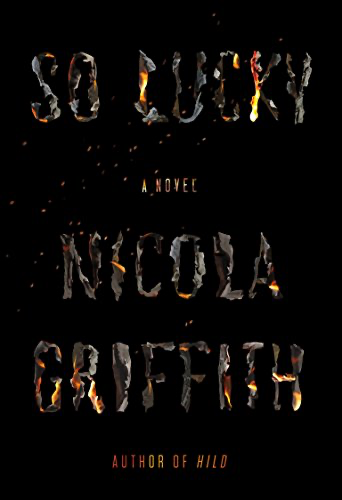
I think part of why that instance didn’t work was because of Kerr’s writing style. Just like the cover, which looks like it was made in 15 minutes on Canva, nothing about it felt very distinct; none of the characters had unique voices, and most of the descriptions of the plot were mostly concerned with going from point A to point B without much embellishment. I’m not saying that Kerr should’ve gone headfirst with the purple prose, but the writing felt so dry that it needed some kind of embellishment, anything to make it more interesting. Even though Zoe was a solid character, this writing made for a significant amount of disconnect between her and some of the other characters that we were supposed to sympathize with.

Additionally, the romance aspect was iffy for me. I loved the premise of Zoe reconnecting with people from her high school and exploring her sexuality, but since the writing was so bland, most of said love interests were interchangeable to me. The only distinguishing factor was a) one of them was a girl (we love to see characters questioning their sexualities, though!! good stuff), and b) that one of them was a creep. That was pretty much it. Also, the fact that Zoe ended up with Gabe after all that infuriated me. I get forgiving and forgetting, but if a guy makes a WHOLE CLASS PRESENTATION about how you’re “so inspiring” just because you’re disabled, I WOULDN’T EVEN CONSIDER GIVING HIM A SECOND CHANCE. WHY. Apologies aren’t even enough at that point. That’s just disgusting. And I’m glad that they did cover that, but…Zoe. Bestie. You can do so much better than him. There was a lot of “he was mean to you because he had a crush on you, so it’s fine” action in Social Queue as a whole too, which rubbed me the wrong way, but Gabe was the most offensive for me.

All in all, a romance novel that did a good job of representing disabled and Autistic issues, but was let down on several occasions by its bland writing. 3 stars.

Social Queue is a standalone, but Kay Kerr is also the author of Please Don’t Hug Me and Love & Autism.

Today’s song:

BABE WAKE UP NEW PALEHOUND JUST DROPPED

That’s it for this week’s Book Review Tuesday! Have a wonderful rest of your day, and take care of yourselves!
Posted in Book Review Tuesday

Book Review Tuesday (4/18/23) – The Spear Cuts Through Water

Happy Tuesday, bibliophiles!

I was in a fantasy mood recently, so I decided to pick up The Spear Cuts Through Water after hearing some rave reviews from other bloggers. The gorgeous cover only added to the sell. But in the end, this novel ended up being a major disappointment—a murky, 500+ page slog that was only enjoyable for fleeting moments. I really need to stop setting myself up for disappointment with all these overly long high fantasy books…

Enjoy this week’s review!

The Spear Cuts Through Water – Simon Jimenez

The Emperor of the Moon Throne has terrorized the land of the Strangled Throat for centuries, aided by his three reckless sons, aptly dubbed The Terrors. But like everything else that he has seized, the Emperor’s power comes from an age-old moon god who has been locked under the palace against her will. But a god is not meant to be kept in captivity.

So she escapes. Aided by Jun, a disgraced palace guard, and Keema, a warrior from a distant, mysterious land, she sets off on a journey to find her freedom. But the Moon Throne will not let go of her so easily…

TW/CW: ableism, cannibalism, child abuse, murder, body horror, substance abuse, mentions of sexual assault (off-page), torture, loss of loved ones

This is one of those instances where I feel like I’ve read a completely different book than all of the 5-star reviewers. I really wanted to like it—and there were a few things that I did like—but ultimately, it felt like a 20-minute prog-rock song in book form: well-written, but so unneccesarily convoluted and full of itself that it became insufferable.

Before I go on my tirade, I will acknowledge that there were some wonderful, very bold and skilled parts of this novel. Jimenez’s writing had moments of being both beautiful and insightful—there were a few anchors to pull me through the slog, and his prose had moments of being incredible. 2nd person is always a bold choice, but unlike other aspects of this novel, it was executed very well, succeeding at being both immersive and fresh without feeling like it was bold just for the sake of being so.

“Bold” is generally I word that I could ascribe to most of this book. A lot of it was written in a fresh, nontraditional way, and I appreciated its execution in some sections. But a lot of it just felt like showing off—having unconventional chapter breaks and an infuriating structure just for Jimenez to show that he was capable of doing so. Most of these ended up being to the novel’s detriment. The random “chapter” breaks (there really weren’t any chapters in this book?), which mostly just ended up being sized-up font that was, essentially, what should have just the first sentence of the paragraph. And since they were all just first sentences of the paragraph, there were 2-3 of these breaks per page. POVs got switched without warning and without explanation, making the reading experience overcomplicated where it could’ve been an easy fix. It just felt like it was biting itself in the foot in the name of art—it could have been a beautiful story, if it wasn’t so intent on showing off how “different” it was.

As a result, so much of this novel got lost. Even though I was fairly lost trying to discern whose POV is it this time, I did notice one thing while reading The Spear Cuts Through Water—where’d the worldbuilding go? Other than the vague notion of a fantasy world (gods and goddesses, some talking animals/spirits, etc.), I had no idea of the layout of the world, the regions of the world, any kind of cultural cues or conventions, any kind of magic system…it just wasn’t there. At all. The same goes for the characters—they were all but cardboard, moved around like pawns for seemingly no reason. (I get that they were under oath by the Moon God, but the point still stands. They didn’t need to be that stiff.) Other than the reveal about Keema, nothing compelled me about either of them, or any of the other passing side characters. This novel was just so intent on chasing itself in circles that it forgot the essential elements that a novel needs.

All in all, a fantasy with great potential, but that ended up losing itself under layers of attempts to be daring and new. 2 stars.

The Spear Cuts Through Water is a standalone, but Simon Jimenez is also the author of The Vanished Birds.

Today’s song:

LOVE this album, this feels like a perfect match for “There’s No Other Way”

That’s it for this week’s Book Review Tuesday! Have a wonderful rest of your day, and take care of yourselves!
Posted in Book Review Tuesday

Book Review Tuesday (4/4/23) – Strike the Zither

Happy Tuesday, bibliophiles!

Descendant of the Crane and The Ones We’re Meant to Find made me an instant fan of Joan He, and so I was immediately hooked when I found out that she was cooking up another piece of folkloric-feeling historical fiction! And now that I’ve finished this novel, I can safely say that Joan He has never once let me down. Fingers crossed that it’s consistent.

Enjoy this week’s review!

Strike the Zither (Kingdom of Three, #1) – Joan He

Zephyr has spent her whole life mapping survival out strategically. It was necessary after she was orphaned while she was still young, but as the strategist of the warlordess Xin Ren, she now holds the fate of a warring country in her hands. Three factions are fighting for dominance under a figurehead of an empress, and any sudden moves could mean that one faction takes over the entire Xin Dynasty.

When Zephyr is sent on a mission to infiltrate the ranks of the enemy to ensure the safekeeping of Xin Ren’s loyal followers, she collides with Crow, an enemy strategist with an agenda of his own. But the boiling point of all three factions is fast approaching, and Zephyr must do anything in order to make it out alive—even if it means exposing herself to the enemy.

TW/CW: death, blood, war themes, violence, torture, animal death, vomiting, abuse, body-shaming, xenophobia (fictional)

I’m not sure why I’m so hesitant to say that Joan He can do no wrong at this point. She’s never missed. Not with Descendant of the Crane, not with The Ones We’re Meant to Find, and certainly not with this novel. Her first two books were already works of art, and I’m glad to say that He is consistent in the quality of her writing, and consistent in her ability to put out so much unique media into the world of literature.

Each Joan He book is memorable in its own way, but what stood out to me about Strike the Zither was how wonderfully cinematic it was. It wasn’t frustratingly quippy or overtly self-serious; He knew just when to hit the balance, juxtaposing war with well-placed zither solos and political intrigue. He seems to do political intrigue especially well—there’s a way to make it genuinely interesting without having the entire focus be on court drama, which happens so often in YA, and with both this novel and Descendant of the Crane, she teases each development just enough to continually keep my attention. With the stylized art on the cover, I could honestly imagine this novel being adapted into a darker Laika Studios stop-motion film, but no matter the medium, Strike the Zither feels like it was born for the screen.

He also has an awareness of her characters that not many YA authors do—she knows that Zephyr and all of the other supporting characters are over the top, and she absolutely rolls with it. Again, Strike the Zither was a master class in balance; Zephyr neither fell into the all-too-common self-seriousness of YA, nor did she constantly break out into the dreaded Marvel Funny personality. She’s theatrical, but in a fun way that doesn’t mire itself in angst unnecessarily. Given this novel’s roots in Chinese classics and folklore, it’s the perfect way to write it; He mentions that the original epic of the Three Kingdoms had a tendency to put historical figures on a godlike pedestal, and this felt like a tongue-in-cheek response to that style.

The pacing of this novel also sealed the deal for me; although it was a little difficult to get into right out of the gate with how the world and its characters were so rapidly introduced, once it got going, the pace never faltered. Every action felt calculated, like the strategist that Zephyr is, and each choice elevated the plot to heights that I didn’t expect Strike the Zither to reach. The main twist was so deftly executed, and it had me grinning from ear to ear when I came across it, and my excitement never waned over the course of this novel. This one’s a must-read, trust me.

All in all, an impressive display of Joan He’s talent on all fronts. 4 stars! I can’t wait for the rest of the duology!

Strike the Zither is the first book in the Kingdom of Three duology; the sequel, Sound the Gong, is set for release in October of 2023 (!!!). Joan He is also the author of Descendant of the Crane and The Ones We’re Meant to Find, both of which are standalones.

Today’s song:

I’ve had this on repeat for the past few days :,) so lovely

That’s it for this week’s Book Review Tuesday! Have a wonderful rest of your day, and take care of yourselves!
Posted in Book Review Tuesday, Mini Reviews

Book Review Tuesday (3/28/23) – #TransRightsReadathon mini reviews

Happy Tuesday, bibliophiles!

As some of you may know, last week (March 20-27) was when the #TransRightsReadathon was hosted in response to a dangerous increase in anti-trans legislation across the U.S. Created by Simi Kern, the goal of the readathon was to give the spotlight to as many trans books and authors as possible to bring them awareness and support in light of the rampant transphobia across the country and beyond. It’s been frightening and heartbreaking to see what’s happening in other states, and I want to support my trans siblings in any way possible. So I’ve decided to include shorter reviews of all of the trans books I read this week—all of which were good!

PLACES TO DONATE (U.S.):

Enjoy this week’s mini reviews!

A Million Quiet Revolutions – Robin Gow

summary from Goodreads:

For as long as they can remember, Aaron and Oliver have only ever had each other. In a small town with few queer teenagers, let alone young trans men, they’ve shared milestones like coming out as trans, buying the right binders–and falling for each other.

But just as their relationship has started to blossom, Aaron moves away. Feeling adrift, separated from the one person who understands them, they seek solace in digging deep into the annals of America’s past. When they discover the story of two Revolutionary War soldiers who they believe to have been trans man in love, they’re inspired to pay tribute to these soldiers by adopting their names–Aaron and Oliver. As they learn, they delve further into unwritten queer stories, and they discover the transformative power of reclaiming one’s place in history.

TW/CW: transphobia, dysphoria, misgendering/deadnaming, homophobia, off-page sexual assault, religious bigotry

Novels in verse always get me when they’re done well, and A Million Quiet Revolutions was no exception. The story of Aaron and Oliver is one that was essential to be told, and it resulted in a beautifully poignant piece of verse!

The growing relationship between Oliver and Aaron felt so genuine, and the combination of pseudo-epistolary format (oh god, that sounded pretentious…) with verse emphasized the way that their relationship transcended barriers of both place and time. The interweaving of the past with the present gave me an insight into a queer part of history that I’m almost embarrassed that I didn’t consider until reading this—better late than never, I suppose. Their voices both leapt off the page, and the easy flow of Gow’s verse made the reading experience feel effortless, drifting like wind—good poetry, to me, doesn’t quite feel like poetry; the rhythm remains, but it doesn’t feel like going line by line in such a rote way.

Above all, the message of this novel in verse is one that’s so important, especially in a time where the narrative of LGBTQ+ people being trendy and new is being pushed so often—queer people have always been here, and we will always be here. Aaron and Oliver’s journey of researching their trans namesakes—cross-dressing soldiers in the Revolutionary War—was one that’s so necessary for understanding our own roots. The key to belonging is realizing that you have always been a part of history, no matter how many pains historians have taken to ignore or deliberately erase the queerness and transness that has always been there. For me, that’s why A Million Quiet Revolutions is such an important read.

Brimming with history and rich verse, A Million Quiet Revolutions is an ode to discovering your own roots, and finding solace in hidden histories. 4 stars!

💙💗🤍💗💙

The Many Half-Lived Lives of Sam Sylvester – Maya MacGregor

summary from Goodreads:

In this queer contemporary YA mystery, a nonbinary teen with autism realizes they must not only solve a 30-year-old mystery but also face the demons lurking in their past in order to live a satisfying life.

Sam Sylvester’s not overly optimistic about their recent move to the small town of Astoria, Oregon after a traumatic experience in their last home in the rural Midwest.

Yet Sam’s life seems to be on the upswing after meeting several new friends and a potential love interest in Shep, the pretty neighbor. However, Sam can’t seem to let go of what might have been, and is drawn to investigate the death of a teenage boy in 1980s Astoria. Sam’s convinced he was murdered–especially since Sam’s investigation seems to resurrect some ghosts in the town.

Threatening notes and figures hidden in shadows begin to disrupt Sam’s life. Yet Sam continues to search for the truth. When Sam discovers that they may be closer to a killer than previously known, Sam has a difficult decision to make. Would they risk their new life for a half-lived one?

TW/CW: transphobia, ableism, self-harm, homophobia, biphobia, misgendering, anaphylactic shock, hate crimes (past), murder

…why does Goodreads still list the title wrong 😭

My ultimate hope was that this book would be as well-crafted as its cover, and for the most part, it lived up to my expectations! The Many Half-Lived Lives of Sam Sylvester deftly toes the line between a coming-of-age story and a decades-old mystery, buoyed by a diverse and lovable cast.

Sam Sylvester has a batch some of the most diverse representation I’ve seen in a realistic fiction/mystery novel in a while—aside from having a nonbinary, asexual, and Autistic protagonist (more neurodivergent protagonists, please!!), there were so many different characters that were incredibly intersectional—queer, POC, and disabled characters all across the board, and not just the teen characters too! All of these identities were woven so well into the story, and I loved the journey of self-acceptance and reckoning that Sam experiences throughout the novel as they unravel the mystery of the boy who died in their room 30 years ago.

That being said, although I liked most every aspect of this novel, this really feels like a novel that’s going to date itself. I enjoyed a handful of the references (always extra points for David Bowie), but a lot of the more recent ones—the references to Tumblr, Gen Z slang, internet culture, and a Steven Universe gag every other page, read as very hackneyed and stilted. As authentic as the rest of Sam Sylvester was, those parts dragged down what would have otherwise been powerful and realistic dialogue. Most of the writing did its job and did it well, but the attempt to ground it in the present day only ended up making a novel that’s going to date itself far quicker than it was probably intended to.

Despite that, I’d say that Sam Sylvester is still a must-read—for the excellent representation, for the mystery, and for the coming-of-age story. 3.75 stars, rounded up to 4!

💙💗🤍💗💙

The Thirty Names of Night, Zeyn Joukhadar

summary from Goodreads:

The author of the “vivid and urgent…important and timely” (The New York Times BookReview) debut The Map of Salt and Stars returns with this remarkably moving and lyrical novel following three generations of Syrian Americans who are linked by a mysterious species of bird and the truths they carry close to their hearts.

Five years after a suspicious fire killed his ornithologist mother, a closeted Syrian American trans boy sheds his birth name and searches for a new one. He has been unable to paint since his mother’s ghost has begun to visit him each evening. As his grandmother’s sole caretaker, he spends his days cooped up in their apartment, avoiding his neighborhood masjid, his estranged sister, and even his best friend (who also happens to be his longtime crush). The only time he feels truly free is when he slips out at night to paint murals on buildings in the once-thriving Manhattan neighborhood known as Little Syria.

One night, he enters the abandoned community house and finds the tattered journal of a Syrian American artist named Laila Z, who dedicated her career to painting the birds of North America. She famously and mysteriously disappeared more than sixty years before, but her journal contains proof that both his mother and Laila Z encountered the same rare bird before their deaths. In fact, Laila Z’s past is intimately tied to his mother’s—and his grandmother’s—in ways he never could have expected. Even more surprising, Laila Z’s story reveals the histories of queer and transgender people within his own community that he never knew. Realizing that he isn’t and has never been alone, he has the courage to officially claim a new name: Nadir, an Arabic name meaning rare.

As unprecedented numbers of birds are mysteriously drawn to the New York City skies, Nadir enlists the help of his family and friends to unravel what happened to Laila Z and the rare bird his mother died trying to save. Following his mother’s ghost, he uncovers the silences kept in the name of survival by his own community, his own family, and within himself, and discovers the family that was there all along.

TW/CW: transphobia, xenophobia, racism, Islamophobia, miscarriage, grief, sexual assault, animal death, loss of a parent

I didn’t go into The Thirty Names of Night with any expectations, but I was stunned by the writing! This novel is one of the best magical realism novels I’ve read in recent years, with writing as rich as a tapestry and a story that’s just as well-woven.

Joukhadar’s writing style was the star of Thirty Names; this is the first of his novels that I’ve read, but he has such a unique talent for finding unlikely comparisons and weaving them into the richest, most obvious but out-of-sight metaphors imaginable. I would never have compared the gray sky on a foggy day to the color of a kitchen knife, and somehow, it was right in front of me. His talent for metaphor suited the emotional depth of this story, as well as the almost fantastical element of the birds in New York—I will never claim to be the expert on him, but if there was any story that was suited for Joukhadar to tell, it’s this one.

That writing also made the emotional core of this story possible. There’s so much to Thirty Names: gender identity, grief, heritage, family, and the body itself, but all of it was handled with such grace and aplomb that made the story feel really, truly real. I might’ve even passed the aspect of the birds by as something that could feasibly happen with how this story was written. Every part of this novel is deeply moving, raw and beautiful, and the prose flows as smoothly as air over a bird’s wings.

All in all, a beautiful, literary tale of connections—to family, to gender, and to the world around us at large. 4.25 stars!

💙💗🤍💗💙

The City in the Middle of the Night, Charlie Jane Anders

summary from Goodreads:

“If you control our sleep, then you can own our dreams…And from there, it’s easy to control our entire lives.”

From the brilliant mind of Charlie Jane Anders (“A master absurdist”—New York Times; “Virtuoso”—NPR) comes a new novel of Kafkaesque futurism. Set on a planet that has fully definitive, never-changing zones of day and night, with ensuing extreme climates of endless, frigid darkness and blinding, relentless light, humankind has somehow continued apace—though the perils outside the built cities are rife with danger as much as the streets below.

But in a world where time means only what the ruling government proclaims, and the levels of light available are artificially imposed to great consequence, lost souls and disappeared bodies are shadow-bound and savage, and as common as grains of sand. And one such pariah, sacrificed to the night, but borne up by time and a mysterious bond with an enigmatic beast, will rise to take on the entire planet–before it can crumble beneath the weight of human existence.

TW/CW: animal attack/animal death, police brutality, body horror

Alright, so the only explicitly stated Latinx characters, specifically of Mexican ancestry, are named…Carlos and Maria? So most everybody else gets semi-unique names, but not them? It’s like Cho Chang all over again…[LOUD INCORRECT BUZZER}

If I hadn’t read Victories Greater Than Death beforehand, I would’ve been more suspicious, but it seems like Anders has gotten a lot better with diversity on that front, but…still iffy. Just saying.

That aside, The City in the Middle of the Night was one of the more inventive dystopias that I’ve read recently, but it fell victim to very convoluted writing. It’s obvious from every page that Anders put so, so much work into creating a fleshed-out world with an equally fleshed-out history—that was a riotous success on her part. The premise of society being divided by a tidally-locked planet felt eerily feasible, and I absolutely ADORED all of the alien life forms on the night side of January—the Gelet were obviously my favorites, but I would’ve liked to have seen more creatures. ALWAYS MORE CREATURES.

However, Anders’ writing choices ended up making parts of The City in the Middle of the Night something of a struggle. The story itself ended up being rather convoluted and tangled, and I found myself getting lost and confused about wait, which side of the planet are we on again? Why are we here in the first place? The additions of a boatload of characters that ended up having very little consequence to the plot at large didn’t help either. This story had the potential to be incredible, but it ended up getting so lost in itself that it became an ordeal to figure out where I was.

All in all, an inventively-conceived dystopia that excelled in worldbuilding but floundered in its writing. 3.25 stars.

Tell me what you think! Did you participate in the #TransRightsReadathon, and if so, what books did you read? What do you think of these books? Let me know in the comments!

Today’s song:

That’s it for this week’s Book Review Tuesday! Have a wonderful rest of your day, and take care of yourselves!
Posted in Book Review Tuesday

Book Review Tuesday (3/21/23) – The Shape of Water (film novelization)

Happy Tuesday, bibliophiles!

The Shape of Water has been my all-time favorite movie for several years now—I’m looking over my shoulder at the poster above my bed as I’m writing this. I had the novelization on my TBR for a few years, but only got around to it recently, probably for fear of it not living up to the film. I had no idea that it was a dual release with the film, but after reading it, the novelization of The Shape of Water struggled to live up to the poetic poignance of the film.

Enjoy this week’s review!

The Shape of Water (novelization) – Guillermo del Toro and Daniel Kraus

Summary from Goodreads:

NOW A MAJOR MOTION PICTURE FROM FOX SEARCHLIGHT

Visionary storyteller Guillermo del Toro and celebrated author Daniel Kraus combine their estimable talent in this haunting, heartbreaking love story.

The Shape of Water is set in Cold War-era Baltimore at the Occam Aerospace Research Center, which has recently received its most sensitive asset ever: an amphibious man captured in the Amazon. What unfolds is a stirring romance between the asset and one of the janitors on staff, a mute woman who uses sign language to communicate with the creature. 

Developed from the ground up as a bold two-tiered release—one story interpreted by two artists in the independent mediums of literature and film — The Shape of Water weaves together fantasy, horror, and romance to create a tale that is equally gripping on the page and on the big screen.

TW/CW: racism, homophobia, xenophobia, ableism, misogyny, sexual harassment/assault, blood, gore, murder, animal death, loss of loved ones

The Shape of Water is a movie that’s touched my heart in a way that I doubt any other will. In summation, the film is a testament to the marginalized experience—any kind of marginalized or othered group—and self-love and acceptance. Guillermo del Toro is a storyteller without parallel, and maybe that’s why I was so hesitant to pick up the novelization for so long. I had no idea that it was a dual release with the film, but either way, my fears ended up being confirmed—Daniel Kraus’ novelization is faithful in the barest, structural way, but largely failed to capture the heart of the film’s message.

I’m not familiar with Daniel Kraus’ other novels, but even a quick scan on Goodreads tells me that he’s a frequent collaborator with Guillermo del Toro, which, after reading this, frankly surprises me. Del Toro’s storytelling, from this film to Pan’s Labyrinth and the most recent Pinnochio, has a consistently strong emotional core, something that anchors the fantastical elements to our most core human experiences. And somehow, Kraus chose to adapt this novel in the most flat, checklist-like way possible. Yes, all of the beats of the film were there, as well as some bonus content. But thanks to Kraus’ dry writing, the emotional core—what made the story so deeply impactful in the first place—apparently flew straight over his head.

Now, before I get into my major gripes, I will say this—the novelization picks up far more at the halfway point. The chapters that Kraus writes from the perspective of The Asset were an unmistakable highlight, charming, dreamlike, and refreshingly strange compared to most of the other perspectives. I almost find myself wishing that the scene with Bob Hoffstetler and The Asset made it to the film. And the very climactic events in the third act were dealt with the appropriate amount of weight, and the pace picked up significantly, unlike the steady pace of the movie. And as much as I love the dance scene, I completely get the decision to nix it from the novel—out of all of the scenes to translate from screen to page, that would be at the top of the page.

With that out of the way, I was bothered by how much emphasis Kraus places on the antagonist, Strickland. There were some fascinating scenes that never made it to the film of the process of him capturing The Asset in the South American rainforest; they were interesting additions, and although I liked them in general, it mostly ended up being Strickland being incredibly racist. It’s painfully on brand for his character, but beyond that, it seemed like his character got the most page time out of the whole cast. He is the main villain, sure, but given that this story is about the marginalized experience and he is the predatory antithesis to what the film stands for, the decision didn’t leave the best taste in my mouth.

My other main issue was how Kraus wrote the character of Elisa Esposito. For the most part, Kraus was somewhat faithful to her personality, but there were multiple instances where the descriptions of her were incredibly concerning. On several occasions, she is described as “childlike” and “[like] a kindergartener” in scenes where she is struggling to communicate her needs—for those of you who have not seen this film, Elisa is mute, and she uses ASL to communicate. It’s already offensive on the front that Elisa is such a treasured character to me, but Kraus seems to, once again, miss the message of the film by a mile, and ends up right smack in the middle of the all-too-common trope of infantilizing disabled people—especially disabled women. Elisa is in no way “childlike” for trying to communicate her needs—she is a grown woman, and she is frustrated by the struggle to communicate with her abled peers in a world that is not built for her. Let me say it again: Elisa Esposito is a grown woman. Even though Kraus was somewhat respectful in some of his other descriptions of her, but these instances all but negated everything else that he had established in the adaptation.

All in all, a structurally faithful, occasionally beautiful, but often frustrating adaptation of a film that will forever have the prime spot in my heart. 3 stars from a peeved Guillermo del Toro fan. Just watch the movie instead.

The Shape of Water is a standalone, as the film is, but Daniel Kraus has also collaborated with Guillermo del Toro on the novel Trollhunters. Kraus is also the author of The Life and Death of Zebulon Finch, The Teddies Saga, and several other books for all ages.

Today’s song:

saw these legends on Friday night—such a beautiful experience, and I’ve had this song on repeat ever since

That’s it for this week’s Book Review Tuesday! Have a wonderful rest of your day, and take care of yourselves!
Posted in Book Review Tuesday

Book Review Tuesday (3/14/23) – Nightwatch on the Hinterlands

Happy Tuesday, bibliophiles!

I was a huge fan of K. Eason’s Thorne Chronicles when I first read them, so you can imagine my excitement when I found out that she was starting a companion series set in the same universe! (I didn’t find out until a few weeks ago, but that’s beside the point.) I jumped on the chance to put it on hold at the library, and I finally got to read it recently; however, I found Nightwatch on the Hinterlands to be an entirely different type of story than Rory Thorne, which, in this case, was its downfall.

For my double review of How Rory Thorne Destroyed the Multiverse and How the Multiverse Got Its Revenge, click here!

Enjoy this week’s review!

Nightwatch on the Hinterlands – K. Eason

It’s been decades since any of the riev—battle-mechas designed for the war effort—have done any harm to civilians. For years, they’ve been decommissioned or redesigned for labor purposes. So when Lieutenant Iari arrives at the scene of a crime and realizes that a riev may have been the perpetrator, she knows that the mystery will lead down a trail that she never anticipated treading. Along with Gaer, an ambassador-turned-spy, Iari must play a dangerous game amongst her planet’s criminal underbelly, one that may lead to something greater than a simple murder.

TW/CW: murder, blood, descriptions of injury, xenophobia (fictional—cast is almost exclusively aliens)

I was a massive fan of the Thorne Chronicles, but after reading Nightwatch on the Hinterlands, I’m sorely disappointed in the direction that K. Eason decided to go with this series—my most common thought while reading this novel was why include this?

As a starting point: why these characters? I liked Iari well enough in How the Multiverse Got Its Revenge, and she does have the potential to have an interesting story, but I didn’t get enough information in Multiverse to really care about her. I didn’t remember much about Gaer either, and he was a well-written and likable character, at the very least, but there wasn’t much that carried over from the previous books to make me care enough about him. These characters were virtually all that carried over from the Thorne Chronicles into this new series (The Weep), and that was where my disinterest began.

In concept, I like Eason’s decision to set Nightwatch in the seedy, criminal underbelly of the world that was touched on in the Thorne Chronicles. It’s a classic sci-fi setting, and with how rich Eason’s established world already was, it would be easy to make something compelling out of it. However, the Thorne Chronicles were far more centered around the human characters, and the aliens were more of a sideplot, mostly just appearing in Multiverse. Nightwatch, however, was entirely centered around the alien characters; normally, this is something I’d be 100% on board with, but without the context that could’ve been given in either Multiverse or in…y’know, some part of this book, I was left in the dark for any of the conventions of this part of Eason’s established world. I somehow understand that not giving glimpses of the other characters (Rory, Messer Rupert, etc.) would’ve been easy fan service, but other than Iari, if I hadn’t known that this was a companion book, I wouldn’t have seen the connection at all.

And on the subject of context…we needed so much more of it. So much more. Even though 90% of these alien species weren’t even talked about in the Thorne Chronicles, Eason wrote Nightwatch in a way that automatically assumes that readers know every single cultural aspect of every single alien species (of which there are many), as well as the context of the various wars that have gone on before the events of Nightwatch, in a very short timespan. I’m all for science fiction novels that don’t dump every single bit of exposition and worldbuilding into the story in one, unceremonious pile at the beginning, but this felt like the other extreme—wanting to avoid that so much that the reader is left without a single clue of what’s going on. I understand the concern that this writing style grew out of, but there really could’ve been a much more comprehensible happy medium in terms of worldbuilding. Beyond that, it’s clear to see how much time Eason put into creating these alien races and cultures, and that’s something I’ll always admire, but the effect of that got dwarfed by the alienating (no pun intended) fashion that she (did not properly) integrated them.

Like the approach to worldbuilding, Eason’s writing style in this novel is a double-edged sword. It’s a wildly different style from the endearingly irreverent but simultaneously observant voice that she used in the Thorne Chronicles. In contrast, Nightwatch had the distant feel of a hardboiled noir in space, quick and to the point, except for when information was delivered. On the one hand, it’s proof that Eason can be very versatile in terms of voice across her novels. On the other, this didn’t feel quite as genuine as the Thorne Chronicles—it made sense for the story, but the characters less likable, and the plot felt rushed, like constant running in circles from A to B without much context as to why or how. It suited the style of Nightwatch to a point, but it ended up being a detriment to both the pacing and my general enjoyment.

While I was reading, I was debating whether or not I wanted to stick it out for the rest of the series; I really wanted to give K. Eason the benefit of the doubt after how much I adored the Thorne Chronicles, but I don’t think I’ll be continuing The Weep after how unpleasant my experience with Nightwatch was. Obvious points go to the extensive worldbuilding and the clear time and care put into crafting this aspect of the world, but most of the other elements—the writing style, the way we got (or didn’t get) pieces of worldbuilding, and not much to make me care for the characters—brought my enjoyment down immensely. 2 stars.

Nightwatch on the Hinterlands is the first book in the Weep series, succeeded by Nightwatch Over Windscar. This series is a companion to the Thorne Chronicles, which consists of How Rory Thorne Destroyed the Multiverse and How the Multiverse Got Its Revenge. K. Eason is also the author of several other novels, including the On the Bones of Gods series (Enemy, Outlaw, and Ally).

Today’s song:

BACK ON THE PETER GABRIEL TRAIN FELLAS CHOO CHOO

That’s it for this week’s Book Review Tuesday! Have a wonderful rest of your day, and take care of yourselves!
Posted in Book Review Tuesday

Book Review Tuesday (3/7/23) – The Fifth Season (The Broken Earth, #1)

Happy Tuesday, bibliophiles!

I forget what triggered it, but a few years back, I piled a bunch of N.K. Jemisin’s books onto my TBR. I just finished up the Great Cities duology recently and enjoyed it (though The World We Make I enjoyed less so), but I was still excited to read the Broken Earth series from all of the praise it’s been given. I’m usually wary of overly long fantasy books, but The Fifth Season defied all of my expectations and delivered one of the most well-crafted fantasies I’ve read in recent years.

Enjoy this week’s review!

The Fifth Season (The Broken Earth, #1) – N.K. Jemisin

In the land of the Stillness, natural disasters are an inevitable part of life. Every so often, the land goes through cycles of extreme weather, where the earth tears itself apart and the land is blanketed in ash and darkness.

This Fifth Season has arrived once more, and with it comes a world in chaos. Amidst the chaos is Essun, a woman on the run after witnessing her husband murder her young son. Her last hope is her daughter, whose whereabouts are unknown. But in a land filled with unknown disasters and people willing to turn on the orogenes—those with the power to control the earth—Essun must overcome unimaginable hurdles to find her daughter and bring her to safety.

TW/CW: murder, infanticide, abuse, mentions of genocide, slavery, implied rape (child), descriptions of injury/blood, sexual coercion, kidnapping, human experimentation

This is my own bias here, but as a principle, I’m automatically weary of overly long fantasy books; that length usually means something along the lines of either a) excessive, infodumped worldbuilding , b) long stretches of the story without much plot, or c) a combination of both. But The Fifth Season proved me SO wrong on that front—Jemisin dodged both of those traps effortlessly, resulting in one of the most inventive fantasy books I’ve read in years.

My first exposure to N.K. Jemisin was through the Great Cities duology, and I was surprised at how starkly different the writing styles were; The City We Became was witty, but rather ham-fisted more often than not, which somewhat suited the story she was telling. The writing of The Fifth Season was a much better fit for the story’s tone: it hit the balance of being to-the-point and fantastical, a style which, given some of the very dark themes that this novel explores, gives it the respect that it deserves. After finishing this novel, I’m more inclined to this style, but above all, reading the two is proof of her versatility of a writer—Jemisin can bridge the tonal gap and make it look ridiculously easy.

About the worldbuilding—The Fifth Season boasts some of the most detailed and compelling worldbuilding that I’ve seen in a fantasy series, but compelling is the part that I want to emphasize. It’s one thing to flesh out your world, but if the detail you give it is arbitrary and irrelevant to the story you’re trying to tell, it becomes redundant. But Jemisin gives the world of the Stillness a rich, believable history, and considers every consequence imaginable of the constraints in her world. Every ramification of the concepts in her world are considered, and they’re shown in organic ways, from the (gruesome) depictions of how the humans have systemically oppressed the orogenes (also a very sharp social commentary) to the biological consequences of a world constantly gripped by extreme natural disasters. Jemisin left no stones unturned, and it paid off in such an enjoyable way.

And if there’s one thing that N.K. Jemisin can do exceptionally well, it’s make me despise a character with every cell of my being. Her protagonists are compelling, but she’s so skilled at making characters that absolutely make your skin crawl. Both Schaffa and Alabaster were case studies in manipulation, and so many of their scenes, especially when they interacted with Damaya and Syenite, respectively, it was genuinely hard to read, but still so authentic to how authority figures often manipulate those below them, especially if they’re young women. Bottom line: they both sucked, but N.K. Jemisin did a disturbingly good job of making them suck so realistically.

I debated on whether or not to discuss this last part, but it’s really best to go in blind—even if I put a spoiler warning and discussed it, I don’t think I could get across how mind-blowingly well-crafted the main twist with the different POVs was. It’s…AGH. IT WAS JUST SO WELL-DONE. I CAN’T SPEAK COHERENTLY ABOUT IT. Again, even if the worldbuilding is confusing. GO INTO THIS BOOK BLIND. YOU WON’T REGRET IT. IT’S AMAZING. TRUST ME. And a sidetone—props to N.K. Jemisin for seamlessly pulling off a 2nd person POV, and, once again, making it look easy.

All in all, a fantasy novel that defied my expectations on nearly every front, resulting in one of the most enjoyable reads I’ve had all year. 4.25 stars!

The Fifth Season is the first book in the Broken Earth trilogy, followed by The Obelisk Gate (book 2) and The Stone Sky (book 3). Jemisin is also the author of The Great Cities series (The City We Became and The World We Make), the Far Sector series for DC Comics, and many other books.

Today’s song:

this song is delightful, and it’s also proof that the middle school boys who used axe body spray instead of showering have always existed in some form or another

That’s it for this week’s Book Review Tuesday! Have a wonderful rest of your day, and take care of yourselves!

Posted in Book Review Tuesday

Book Review Tuesday (2/28/23) – Nothing Burns as Bright as You

Happy Tuesday, bibliophiles! I refuse to believe that February is almost over…

I didn’t know that Ashley Woodfolk had come out with a new book until very recently, and I ended up picking it up more on a whim than anything. But Nothing Burns as Bright as You quickly became my favorite read of this month, and easily the best of Woodfolk’s work that I’ve read. Raw, visceral, and consistently powerful, Woodfolk’s prose is great, but her poetry is something else entirely.

Enjoy this week’s review!

Nothing Burns as Bright as You – Ashley Woodfolk

Written in verse, Nothing Burns follows two unnamed girls, best friends who slowly but surely realize that they’ve become something more. But when one’s actions begin to toe the line of their relationship, their love—and their lives—fall in jeopardy. The foundation that once sustained their relationship has begun to crumble, but whether it can be glued back together will be decided in the blink of an eye.

TW/CW: racism, homophobia (some religious homophobia), substance abuse, sexual harassment

I kind of love the feeling when a book you just picked up on a whim hits you harder than you ever could have anticipated. I just thought “oh, it’s Ashley Woodfolk, I liked her last book, what could go wrong,” and the next thing I know, I’m highlighting every other line on my Kindle. Nothing Burns as Bright as You is just that powerful, a poignant story of the complexities of a toxic relationship.

Woodfolk’s prose is already excellent, as evidenced in When You Were Everything and several of her short stories, but her poetry hits a note so resonant that I couldn’t stop thinking about it. Every line is nothing short of genius—clever and observant, but nothing short of raw and painful. Nothing Burns as Bright as You is a heart laid bare for all to see, unflinching in the complicated, nuanced realities it depicts.

It would be easy to romanticize the events of Nothing Burns as Bright as You, but Woodfolk knew exactly how to avoid it; it’s a story about falling so hard in love that you lose yourself, but it’s also about coming to terms with loving somebody who drags you through the mud, who breaks you down even when they promise to love you. Setting fire to a dumpster outside of a high school is the perfect set-up for a coming-of-age romance, but a coming-of-age romance this isn’t…and is. The emphasis should be on the coming-of-age part; it’s about learning to heal from somebody that you thought loved you, and grappling with the fact that love isn’t black and white, and like a fire, it can give you warmth, but also consume you to the point of no return.

Even when both of the protagonists went unnamed, their personalities and stories shone through in every page. Despite the fact that it made writing my summary here a little tricky, the character study is vibrant enough that you don’t need names to tell each character apart—their clashing personalities come through in every relentlessly beautiful line. It’s so important to tell more inclusive love stories, but the reality is that not everything is quite so neat and simple—sapphic love isn’t always sunshine and roses. We need our stories of queer Black girls falling in love, but we need our stories of queer Black girls growing from complicated, toxic relationships almost just as much.

All in all, a startlingly raw and beautiful story of the complexities of queer love and being with somebody to the point of danger. 4.5 stars!

Nothing Burns as Bright as You is a standalone, but Ashley Woodfolk is also the author of When You Were Everything and The Beauty That Remains, and has also contributed short stories to collections such as Blackout, A Phoenix Must First Burn, and several others.

Today’s song:

WAAAAAAAAAAAAAAAGH THIS IS SO GOOD I LIKE IT EVEN MORE THAN MOST OF CRACKER ISLAND????

That’s it for this week’s Book Review Tuesday! Have a wonderful rest of your day, and take care of yourselves!