Happy Tuesday, bibliophiles! I refuse to believe that February is almost over…
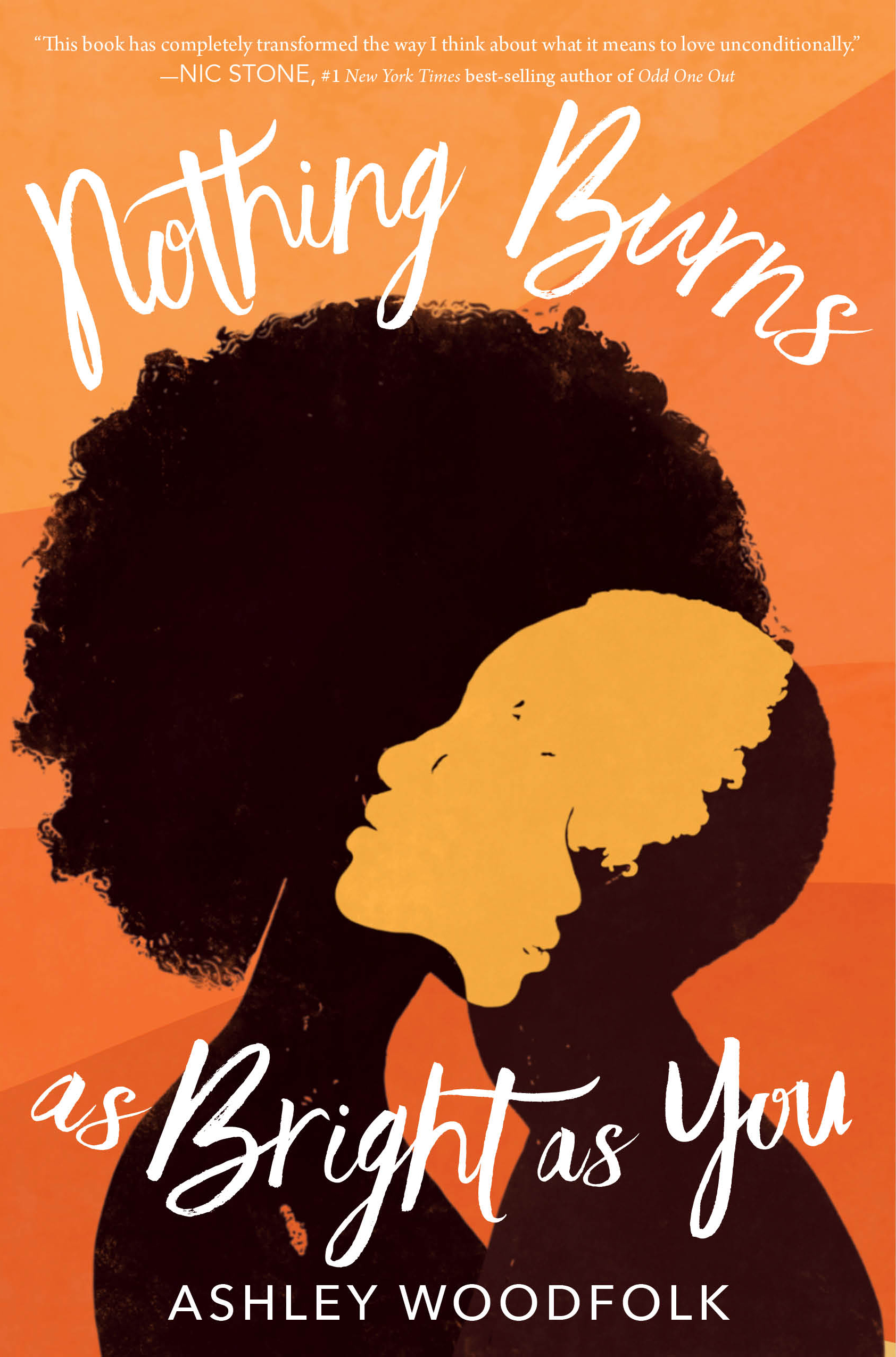
I didn’t know that Ashley Woodfolk had come out with a new book until very recently, and I ended up picking it up more on a whim than anything. But Nothing Burns as Bright as You quickly became my favorite read of this month, and easily the best of Woodfolk’s work that I’ve read. Raw, visceral, and consistently powerful, Woodfolk’s prose is great, but her poetry is something else entirely.
Written in verse, Nothing Burns follows two unnamed girls, best friends who slowly but surely realize that they’ve become something more. But when one’s actions begin to toe the line of their relationship, their love—and their lives—fall in jeopardy. The foundation that once sustained their relationship has begun to crumble, but whether it can be glued back together will be decided in the blink of an eye.
TW/CW: racism, homophobia (some religious homophobia), substance abuse, sexual harassment
I kind of love the feeling when a book you just picked up on a whim hits you harder than you ever could have anticipated. I just thought “oh, it’s Ashley Woodfolk, I liked her last book, what could go wrong,” and the next thing I know, I’m highlighting every other line on my Kindle. Nothing Burns as Bright as You is just that powerful, a poignant story of the complexities of a toxic relationship.
Woodfolk’s prose is already excellent, as evidenced in When You Were Everything and several of her short stories, but her poetry hits a note so resonant that I couldn’t stop thinking about it. Every line is nothing short of genius—clever and observant, but nothing short of raw and painful. Nothing Burns as Bright as You is a heart laid bare for all to see, unflinching in the complicated, nuanced realities it depicts.
It would be easy to romanticize the events of Nothing Burns as Bright as You, but Woodfolk knew exactly how to avoid it; it’s a story about falling so hard in love that you lose yourself, but it’s also about coming to terms with loving somebody who drags you through the mud, who breaks you down even when they promise to love you. Setting fire to a dumpster outside of a high school is the perfect set-up for a coming-of-age romance, but a coming-of-age romance this isn’t…and is. The emphasis should be on the coming-of-age part; it’s about learning to heal from somebody that you thought loved you, and grappling with the fact that love isn’t black and white, and like a fire, it can give you warmth, but also consume you to the point of no return.
Even when both of the protagonists went unnamed, their personalities and stories shone through in every page. Despite the fact that it made writing my summary here a little tricky, the character study is vibrant enough that you don’t need names to tell each character apart—their clashing personalities come through in every relentlessly beautiful line. It’s so important to tell more inclusive love stories, but the reality is that not everything is quite so neat and simple—sapphic love isn’t always sunshine and roses. We need our stories of queer Black girls falling in love, but we need our stories of queer Black girls growing from complicated, toxic relationships almost just as much.
All in all, a startlingly raw and beautiful story of the complexities of queer love and being with somebody to the point of danger. 4.5 stars!
Nothing Burns as Bright as You is a standalone, but Ashley Woodfolk is also the author of When You Were Everything and The Beauty That Remains, and has also contributed short stories to collections such as Blackout, A Phoenix Must First Burn, and several others.
Today’s song:
WAAAAAAAAAAAAAAAGH THIS IS SO GOOD I LIKE IT EVEN MORE THAN MOST OF CRACKER ISLAND????
That’s it for this week’s Book Review Tuesday! Have a wonderful rest of your day, and take care of yourselves!
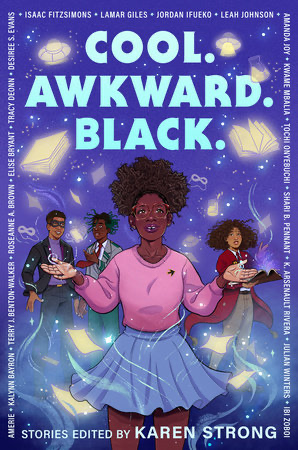
I’m always up for diverse anthologies, and the fact that this one focused on both sci-fi/fantasy stories and geek/nerd culture from a Black lens was an instant sell for me! There were a few authors that I was familiar with and liked in here—Jordan Ifueko, Roseanne A. Brown, and Leah Johnson, to name a few—so that helped its case too. But as with any anthology, there were hits and misses, but there were still a fair amount of gems within Cool. Awkward. Black.
A multi-genre YA anthology of bestselling, critically acclaimed Black authors challenging the concept of the geek, featuring contributions from Amerie, Kalynn Bayron, Terry J. Benton-Walker, Roseanne A. Brown, Elise Bryant, Tracy Deonn, Desiree S. Evans, Isaac Fitzsimons, Lamar Giles, Jordan Ifueko, Leah Johnson, Amanda Joy, Kwame Mbalia, Tochi Onyebuchi, Shari B. Pennant, K. Arsenault Rivera, Julian Winters, and Ibi Zoboi.
A girl who believes in UFOs; a boy who might have finally found his Prince Charming; a hopeful performer who dreams of being cast in her school’s production of The Sound of Music; a misunderstood magician of sorts with a power she doesn’t quite understand.
These plotlines and many more compose the eclectic stories found within the pages of this dynamic, exciting, and expansive collection featuring exclusively Black characters. From contemporary to historical, fantasy to sci-fi, magical to realistic, and with contributions from a powerhouse list of self-proclaimed geeks and bestselling, award-winning authors, this life-affirming anthology celebrates and redefines the many facets of Blackness and geekiness–both in the real world and those imagined.
TW/CW: racism, misogyny, religion-based bigotry
Cool. Awkward. Black. was hit or miss as a whole, but above all, there were a few fantastic stories in the bunch, and I loved the spotlight on Black sci/fi fantasy, as well as geek culture. With all Black protagonists, many of which are queer and/or disabled, it’s a breath of fresh air, even if not every story was a hit for me.
Since this is an anthology, I’ll do shorter reviews of each story in chronological order.
~
“Our Joy, Our Power” – Julian Winters (⭐️⭐️⭐️.5)
I was expecting to not be a fan of this one after not being a fan of Running With Lions, but this was a surprisingly sweet story! With a tender, queer romance at a comic con and some great commentary on the racism within cosplay culture, this was a great start to the anthology. I’m not sure if it’s enough for me to give Winters’ novels another chance, but I certainly enjoyed it.
“The Book Club” – Shari B. Pennant (⭐️⭐️.5)
I felt obligated to like this one as a former book club president, but this one was a letdown. The concept of this one was interesting enough—a girl finds a book that seems to speak to her when she picks it up, and is then invited to a secret society of magic wielders in the guise of a book club—but the prose veered onto the cheesy side more often than not. I wish we’d gotten a little bit more context around the Society (and…okay, maybe the name was vague on purpose, but I would’ve liked a name more interesting than just “The Society”) and more of what their magic entailed other than the Evil Magician™️ that Must Be Defeated.
“Nina Evans, In the Round” – Kalynn Bayron (⭐️⭐️⭐️⭐️)
This one was an unexpected highlight of the anthology! Again, my expectations were rather low after how much of a sore disappointment Cinderella is Dead was for me, but I loved this story of a Black girl determined to get the role of Maria in her high school’s production of The Sound of Music. Her story of determination was a powerful and timely one, and I loved the poignant themes of Nina breaking the mold and never surrendering.
“Earth is Ghetto” – Ibi Zoboi (⭐️⭐️⭐️⭐️)
Even without the fantastic title, “Earth is Ghetto” is undoubtedly one of the best stories in this anthology! It follows Ingrid, a Haitian immigrant, who witnesses First Contact, and upon speaking to the aliens and wishing to go to their planet, realizes that they harbor many of the same prejudices as humans back on Earth. It’s witty, it’s timely, and it’s unflinchingly questioning of the norms upon which both we and the aliens built our societies. I loved the hopeful ending as well; it’s hard to get this kind of ultimatum that Ingrid has to make across in such a short story, but Zoboi managed to do all that and subvert the usual tropes and endings that go along with it. Great stuff.
“Initiative Check” – K. Arsenault Rivera (⭐️⭐️⭐️)
This was the first time I’d ever heard of K. Arsenault Rivera, and this was a decent story, I’d say. The whole story comprises a group of friends and their Dungeons and Dragons campaign, and although I wasn’t as big of a fan of the campaign aspect of it, I loved the subtle, tender chemistry that Rivera created between her larger cast of characters. A nice, sweet story, but nothing that changed my life.
“Corner Booth” – Leah Johnson (⭐️⭐️⭐️⭐️)
Following in the footsteps of Johnson’s solid rom-coms, “Corner Booth” was the story of two teens meeting after competing with each other for years over a competitive, Scrabble-like spelling app. I loved the definitions scattered throughout, showing Rose’s knack for strategy and etymology, and I loved the buildup of the enemies/rivals-to-lovers romance blossoming between her and Wes. It’s an adorable addition to the anthology, and a standout without a doubt.
“Betty’s Best Craft” – Elise Bryant (⭐️⭐️⭐️.5)
Elise Bryant perfectly captures the chaos of a high school group project, but I find myself wishing that mine had the romance of this story. Another sweet enemies-to-friends/lovers, Bryant wonderfully weaves in the grudge that Betty’s had against Jhamir for years, and takes that buildup into a blossoming friendship—or maybe something more—on a final project for an African American History class. I’ve only read Bryant’s Happily Ever Afters, but “Betty’s Best Craft” felt the same way—a light, sweet, and artsy romance of second chances.
“The Panel Shows the Girl” – Amanda Joy (⭐️⭐️.5)
I really wanted to like this one, and there was one aspect that I really did like—the discussion around disability and accommodations. Amaya’s struggles with trying to get accommodations for her ADHD was one that I knew all too well, and I’m glad to see that perspective represented. That being said, the rest of the story felt clunky to me; the twist about the drawings coming to life felt shoehorned in and poorly executed, and most of the dialogue felt stilted and corny as well. Shame…
“Spirit-Filled” – Jordan Ifueko (⭐️⭐️⭐️⭐️)
I expected nothing less from the author of Raybearer, and “Spirit-Filled” delivered! I loved the discussions around Romilly questioning her faith and the role of women, as well as the suspense built by Romilly’s secret library book locked in the supply closet of her church. Like many of the other short stories in this story, I love how unapologetic it is about questioning authority and systems, and Romilly was a great vehicle for exploring misogyny in some parts of organized religion. Plus, the youth pastor character was appropriately cringey, so that was pretty funny.
“Cole’s Cruise Blues” – Isaac Fitzsimmons (⭐️⭐️⭐️.5)
Although I wasn’t as much of a fan of the writing in this one, it had a wonderful emotional core, and I loved that it featured a trans protagonist! Also, I definitely felt for poor Hailey…man, I feel that 10 year old feel of botching something in front of an audience 😭 I JUST WANNA GIVE THE POOR KID A HUG
“High Strangeness” – Desiree S. Evans (⭐️⭐️⭐️⭐️)
More than ever, this story made me yearn for the experience of stargazing in the middle of nowhere with a goth girlfriend…is that too much to ask?
…please?
“Catalyst Rising” – Tracy Deonn (⭐️⭐️.5)
Unlike some of the other stories, I went into this story with low expectations, and the low expectations were…met. I wasn’t as blown away by Legendborn as everybody else seemed to be, and this story was more of the same. It felt like a very cliched setup for a fantasy chosen one in the real world, and although I liked the inclusion of Petra’s anxiety, the story as a whole just felt so overdone and exaggerated.
“Requiem of Souls” – Terry J. Benton-Walker (⭐️⭐️⭐️.5)
I LOVED the concept of this one, especially the trio of unique ghosts that follow Rocko around, and Rocko using them to get back at those who have wronged him. The musical aspect was a lot of fun as well, and it added some very Tim Burton-like, campy fun to this story. Plus, although being Gen Z has given me a permanent Minecraft association to the word “creeper,” I loved this story’s monstrous Creeper as well.
“Honor Code” – Kwame Mbalia (⭐️⭐️)
The dialogue felt very stilted for me on this one, and beyond that, it felt more like a comprehensive guide to LARPing and not an actual story. If “Honor Code” leaned more on the present day and not so heavily on the multiple flashbacks, it would’ve held so much more water. This one might be my least favorite story in the collection.
“Drive Time” – Lamar Giles (⭐️⭐️⭐️)
Although it wasn’t the most well-written of the collection, I loved the multiple POVs and the nonstop action of “Drive Time.” The writing was more than a little cheesy, but unlike some of the other stories, it felt cheesy for the right reasons—this story is essentially if a botched driver’s test turned into something like Fast & Furious, after all. I appreciate the art of well-placed cheese.
“Wolf Tracks” – Roseanne A. Brown (⭐️⭐️⭐️⭐️)
Nothing beats werewolves tearing a racist troll to shreds (literally, in this sense), does it? I was super excited to read Brown’s addition to the story, and she delivers every bit of it with humor, heart, and grounding emotion that balances levity with more grounded themes.
“The Hero’s Journey” – Tochi Onyebuchi (⭐️⭐️⭐️.5)
I wasn’t expecting to like this one as much after how disappointing Beasts Made of Night was, but “The Hero’s Journey” perfectly captured writer’s block in a way that I’ve never seen in a short story—or any novel that I can think of. I didn’t expect to be called out with the [INSERT CHARACTER NAME IN BRACKETS], but here we are. Happens to the best of us.
“Abyss” – Amerie (⭐️⭐️⭐️⭐️)
I was super impressed by Amerie’s short story in A Phoenix Must First Burn, and her story here was a perfect sendoff for Cool. Awkward. Black. Her character work and descriptions are once again fantastic, and for once, she can make a lack of quotation marks in dialogue an understandable stylistic choice that still makes the story flow. The latter is something that usually gets on my nerves, but Amerie used it greatly to her advantage in “Abyss.”
I averaged out my ratings for each story, and they came out to about a 3.5! I’d say that’s accurate—it was a mixed bag, but there were unexpected gems from both authors that I love and authors that I didn’t like as much previously. Not every one shone, but there were enough fantastic ones in there to make this a wonderful experience. And my ratings aside, I loved the diversity of both the characters and the genres of each story—it’s a very unique collection. 3.5 stars!
Cool. Awkward. Black. is an anthology, and if you click this Goodreads link, you can see all of the previous works of the many authors featured in this collection.
Today’s song:
GAH this has been stuck in my head for a week straight it’s so good
That’s it for this week’s Book Review Tuesday! Have a wonderful rest of your day, and take care of yourselves!
Happy Tuesday, bibliophiles, and happy Valentine’s Day! I’ve got no plans other than eating cookies, but I’m all for spreading the love. 💗
Son of the Storm has been on my radar for…about 6 months? A year? I’m not sure, but either way, I’m glad I picked it up. Usually, long, epic fantasy books like this make me lose interest, but Suyi Davies Okungbowa has written a tale that had me hooked almost all the way through.
Danso is well on the way to becoming a renowned scholar, but despite the path set before him, he seeks more in life than what his university can teach him. He knows that the city of Bassa has sinister secrets woven into its history, walling itself away from the rest of the world and making every immigrant swear to secrecy. Danso’s bravado catches up with him when he discovers Lilong—and along with her, a type of magic that he never knew existed. A magic that bonds to him, and a magic that could determine his fate and the fates of Bassa itself.
These days, it’s rare for an epic fantasy over 500 pages to keep my attention; to pull it off, you have to not only have great worldbuilding, but you have to buoy it with some kind of action and character building, and more often than not, many will lean on one to propel the page count. I was hoping that Son of the Storm wouldn’t fall into that trap, but to my relief, it gave us all of those elements and more, making for a compelling fantasy that hooked me on the rest of the series!
It’s clear to me that so much care was put into the characters of Son of the Storm, but Danso stood out the most to me. He’s refreshingly fleshed out—he’s lovably cocky, he’s determined, and he can talk his way out of any situation. Beyond that, there was so much nuance to him that made the plot all the more compelling; the wrongs within Bassa had a personal connection to his own family history, and that drove him to discover more about the outside world. It’s a low bar, I know, but I’m so used to epic fantasy having issues that are only tangentially related to their protagonists, and giving Danso a more personal, tangible connection to the plot made the story all the more interesting to read.
And that’s in no small part thanks to Okungbowa’s fantastic writing! His prose hit the perfect balance of fantastical and grounded, making the human aspect of the story shine through. The moments of humor are balanced with moments of meditation on systemic issues and personal biases, and there wasn’t a moment that I thought that either were too much or too little. Although the plot did have brief moments of lulling, Okungbowa easily revived the suspense and action to keep the story moving in ways that made sense and were integral to the journeys of each character. In my experience, it’s difficult to keep up that pace for over 500 pages; usually, something gets lost in the worldbuilding or somewhere else, but Son of the Storm was, for the most part, consistently action-packed.
Back to the characters, however, is where my major problem came in: the multiple POV structure. Normally, I’m a sucker for multiple POVs when they’re done well, giving the reader a chance to see the story through the eyes of several, fleshed-out characters. It’s clear that Okungbowa loves his characters, but maybe he loved them…a little too much. During the last half of the book, we got the POVs of a few side characters that only had relevance in a certain section of the book, taking away the spotlight from the development of the main characters, such as Danso, Lilong, and Zaq. A lot of the time, these characters’ voices didn’t even come through, making the fact that the chapter is from their POV nearly pointless. Having the POVs consistently switch between Danso, Lilong, Zaq, and maybe Esheme would have made the story flow so much better, and it would have made sense to focus on their development rather than a passing side character.
All in all, an action-packed piece of fantasy with lovable characters and a plot that kept me guessing. 4 stars!
Son of the Storm is the first in the Nameless Republic series, followed by Warrior of the Wind, which is slated for release in November of this year. Suyi Davies Okungbowa is also the author of David Mogo Godhunter and several other short stories.
Today’s song:
listened to this album (Leisure) yesterday, and it was a lot of fun!! this one’s a standout
That’s it for this week’s Book Review Tuesday! Have a wonderful rest of your day, and take care of yourselves!
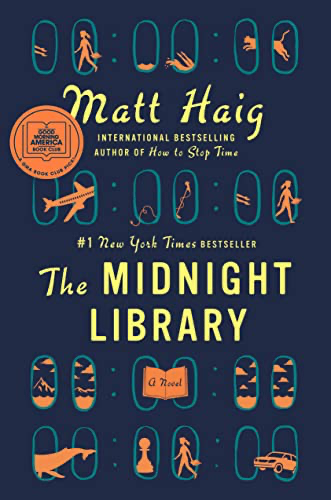
I’ve had this book on my radar for a few years now, but I wanted to read it after the ocean of hype died down. I forgot about it for a while, and I found a copy at my college’s library, and figured that it might be worth a try—I read The Humans, also by Matt Haig, and thought it was decent, so I decided to take a stab. I lowered my expectations to average from all of the hype, but The Midnight Library ended up being even worse than I thought—insultingly un-nuanced and a wholly frustrating read.
Nora Seed has reached what seems to be a dead end in her life. All of her childhood dreams never came to fruition, and now she’s stuck in her thirties with nowhere to go. But after she attempts to take her own life, Nora finds herself in the Midnight Library, where every book on the endless shelves contains an alternate life—lives where she pursued different dreams, different boyfriends, and every other imaginable outcome. As she travels through a multitude of alternate realities, Nora must come to terms with herself and how she wants to live her life—full of regrets, or full of hope?
TW/CW: suicide/suicidal ideations, animal attack, loss of a loved one, depression, panic attacks, animal death, substance abuse, cancer
A recurring thought that came to me while reading The Midnight Library was that it was like if you sucked every ounce of nuance and complexity out of Everything, Everywhere, All At Once. I know full well that Everything came out two years after this novel, but my point still stands. In the abstract, the message of The Midnight Library was good, but it had all the subtlety of a sledgehammer to the face, which made for an exceedingly unpleasant reading experience.
The Midnight Library is a case study in the effect of good or bad execution of a story idea. If you have a good idea but don’t execute it well, the idea itself gets bogged down in all of the structural flaws of the writing itself. The message that Matt Haig tried to get across was a good one—focusing on living your life, not getting bogged down with regrets, and giving yourself a chance to change—but it was so ham-handed in its delivery that all of the nuance (of which there was SO much potential) was erased entirely. It was so clear that The Midnight Library was trying to say something, but without any complexity, it ended up spitting out nothing that we haven’t heard before.
For instance, in one life, Nora Seed is a world-famous rockstar selling out arena shows all around the world. However, as Nora progresses through this alternate timeline, she realizes that this alternate self is feeling empty inside, and that fame has left her a barren shell of what she once was. That’s all well and good, and it’s a good message that fame does not automatically equal happiness. But at the end of the chapter, this message was digestibly packaged into a short platitude, right above Nora’s hypothetical follower count on social media. It was almost insulting how it was delivered—what was the point of that when Haig showed it through his writing just a page before? Even if you’re not a writer, if you’re ever taught about writing in school, “show, don’t tell” is one of the first principles that you’re taught. As a reader, it feels insulting to one’s intelligence: I got the message just fine, why be that redundant and blatantly obvious?
Furthermore, a lot of the potential lives, even though they were neatly and obviously packaged to the reader to teach them a lesson, ended up contributing nothing to the plot. When they did contribute, the message was reiterated by the all-knowing librarian, as if I’m watching a children’s show, each episode ending with an “and what did we learn today, kids?” kind of message. The Midnight Library isn’t all that long of a book, but a good quarter of the misadventures through Nora’s alternate lives didn’t serve any purpose, even though that was the obvious intent.
Lastly—Matt Haig isn’t at fault for this first part, but dear lord, do not let the synopsis fool you. This is not a feel-good book. The inciting incident for The Midnight Library is Nora attempting suicide, and that got glossed over so much in the marketing of the book. For the first part of the book, I feel like Nora’s mental health issues, although they aren’t explicitly named, were dealt with respectfully, but once it got to the end of the book, it took a turn for the worse. As if by magic, Nora’s depression is cured, and she now has the will to live again, after glimpsing all of her alternate lives. It really felt harmful—yes, this is a sci-fi/fantasy book, but depression and other mental health issues don’t magically disappear after a romp through alternate realities. Downplaying something as serious as depression and suicide really didn’t sit right with me, and it felt like the ending of the book erased something that should have been acknowledged far more in this book.
All in all, a disappointing book that decided to take its well-intentioned message and knock you over the head with it, thereby erasing all attempts at nuance and complexity. 2 stars.
The Midnight Library is a standalone, but Matt Haig is also the author of The Humans, How to Stop Time, The Radleys, and several other books.
Today’s song:
I like this one even more than Panopticom—I can’t wait to see what else this album brings!!
That’s it for this week’s Book Review Tuesday! Have a wonderful rest of your day, and take care of yourselves!
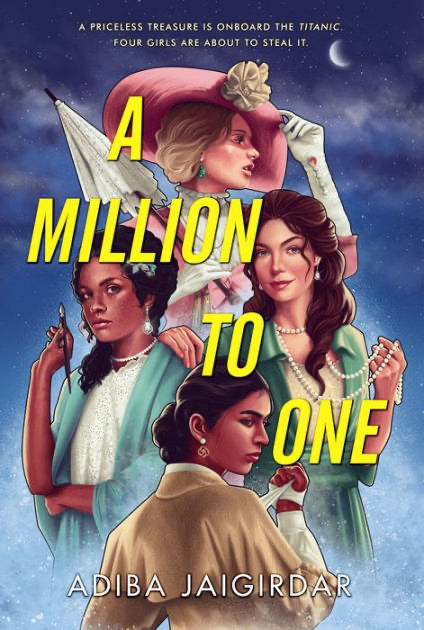
I hate to end the month on a negative note review-wise, but I just wasn’t a fan of this novel. I’ve been following Adiba Jaigidar’s books for a little while, and for the most part (still don’t see why Hani and Ishu still gets that much hype), she does well with writing diverse YA romances. I was excited to see her take on a different genre, but to my disappointment, A Million to One read as a half-baked, flimsy excuse for a heist.
For my review of Hani and Ishu’s Guide to Fake Dating, click here!
Josefa, Emilie, Hinnah, and Violeta: four girls from radically different backgrounds, thrown together on the RMS Titanic. Their mission: to steal a copy of the Rubaiyat, embedded with jewels and worth a fortune. With all of their skills combined, the girls are confident that they can swipe the priceless book once and for all. But the Titanic is filled with distractions, romance, and all sorts of obstacles, and the job may be easier said than done. Add in the recent revelation that the Titanic is sinking, and the four realize that they may be in over their heads…
TW/CW: drowning, mentions of parental abuse, loss of loved ones, abandonment
Yikes. I think I’m gonna have to break up with Adiba Jaigirdar after this one. I loved The Henna Wars,Hani and Ishu’s Guide to Fake Dating was decent but nothing earth-shattering, and now A Million to One was just plain disappointing. Her books have just gotten progressively worse for me? I really appreciate that she’s branching out from romance, but it really seems like she bit off more than she could chew.
Before I get to all my gripes, I will say that I loved, as with all of Jaigirdar’s novels, the amount of diversity. It’s historical fiction, but we have Black, Pakistani, and Croatian characters, a sapphic romance, and all but one of the main characters are immigrants, which is always fantastic to see. The thing about A Million to One was that everything came down to the execution, and the execution failed miserably.
If I had to sum up A Million to One in brief terms, it feels like Jaigirdar was watching your garden-variety heist movie, fell asleep half an hour in, and then tried to write a book from that memory as soon as she woke up. All of the beats of a typical heist were technically there, but they all but stood around and did nothing. Everything that should have been interesting about this novel—getting the gang together, the Titanic setting, carrying out the heist, the romance—was glossed over in favor of a good 100 pages of dithering in between each major plot point. It was the skeleton of a heist, lacking all of the meat and muscle that would have made it substantial.
For instance: the first few chapters of the novel. These were dedicated to Josefa assembling her crew, which is the kind of beat that I really enjoy in any kind of heist plot. However, all it consisted of was Josefa randomly going up to the rest of the characters with seemingly no explanation and offering them the job, and them either agreeing to it immediately (???), or, if we were lucky, having a paragraph of deliberation before agreeing to it. This could have been a perfect opportunity to develop the characters (especially since they weren’t developed much at all throughout the novel anyway) and introduce their personalities/roles in the heist, but we got absolutely none of that. It wasn’t like A Million to One was so long that this part of the plot needed to be cut down for time—it’s barely over 300 pages. There was no excuse for that.
And for the amount of opportunities that Jaigirdar had to develop these four characters, most of them were shockingly underdeveloped. Other than some insight on the motivations of Violeta and Emilie, all four characters had nearly indistinguishable voices, personalities, and no reason for being on the mission other than a vague role. We got a bit of a tragic backstory for Hinnah, at least, but a tragic backstory with nothing else to go off of does not a well-developed character make. In addition, we only got a vague idea of what the characters’ roles were—the actress, the thief, the acrobat, and the forger—often with no context. For instance: Violeta was supposed to be an actress, but we got no idea of her background, her training, and how she got to be so good. For a novel that seemed to market the diversity and individuality of the crew, it would’ve been leagues better if I had been able to tell who was who without the chapter titles.
The majority of the novel ended up being a bunch of meaningless dithering about on the Titanic, which was intended to…build up the suspense, I supposed, but it felt like far too many pages of The Gang running around the ship, chatting with a boy or two, trying to throw the guards off their trail, and making no progress whatsoever. There was supposed to be a romance somewhere hidden in there, but it ended up being my problem with Hani and Ishu, amplified: two characters just got thrown together with zero prior chemistry, insinuation, or anything that would suggest love. It got to the point where any movement in the novel was indistinguishable, and by the time I finally got around to the actual heist, any semblance of suspense or action had vanished. The only thing that managed to partially grab my attention was the fact that the Titanic had started to sink, but by then, the only aspect that somewhat grabbed my attention was that half of the main cast died. If major character deaths are the only thing that are keeping your reader interested, then something is very wrong with your plot.
All in all, a break from form for Adiba Jaigirdar, but one that ended in a half-baked, borderline boring disaster. 2 stars.
A Million to One is a standalone, but Adiba Jaigirdar is also the author of The Henna Wars, Hani and Ishu’s Guide to Fake Dating, and the forthcoming The Dos and Donuts of Love.
I’ve already posted once today, but have another song anyway:
such a lovely cover 😭
That’s it for this week’s Book Review Tuesday! Have a wonderful rest of your day, and take care of yourselves!
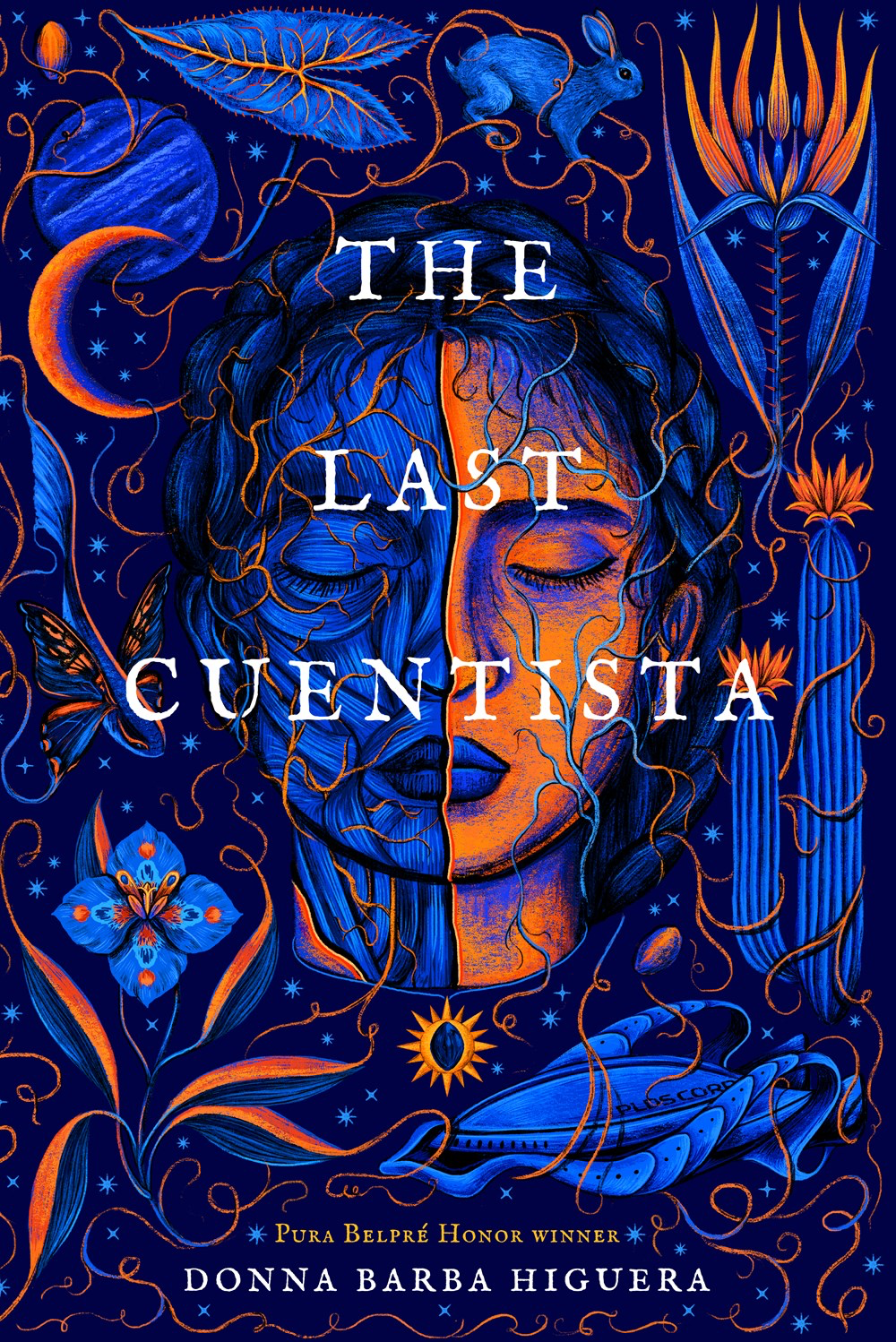
I’ve had The Last Cuentista on my TBR for a fair amount of time, but I’d forgotten about it until I saw a copy at my college’s library, so I ended up picking it up. I remembered almost nothing about the synopsis or why I wanted to pick it up in the first place, but what I found was a beautiful tale of the power of storytelling.
Petra Peña loves nothing more than listening to the stories of her abuelita, and dreams of someday being a storyteller like her. But when Earth is put in danger by a comet, she must abandon her abuelita and travel with her parents and younger brother to planet Sagan, where humanity can start over. But on the centuries-long journey, the ship is infiltrated by the Collective, a shady organization who aims to erase the crimes of humanity’s past by wiping the memories of all the passengers. When Petra wakes up, she realizes that she is the only one who remembers Earth—and the only one who can save what remains of the human species from forgetting itself altogether.
TW/CW: loss of loved ones, descriptions of injury, fear, descriptions of sleep paralysis
Good middle-grade sci-fi is hard to come by, but The Last Cuentista was nothing short of wonderful. With a story as beautiful as its cover, it’s a shining testament to the power of storytelling and a poignant reminder to never forget where you came from.
I know I opened with specifically saying that The Last Cuentista is middle-grade, but I’d say it toes the line right between middle grade and YA. Petra is 13 years old, and there’s certainly some more middle-grade aspects to how the themes are dealt with and some of the character interactions, but it borders on hardcore, nail-biting sci-fi in other places. Think of every piece of sci-fi media that deals with cryosleep for several centuries, and think of all of the potential, existential obstacles that come along with it: chances are, they do end up appearing in this book. It’s a weird place to navigate reading-wise when you’re that age (I certainly remember wishing that there was an in-between place for middle grade and YA), but The Last Cuentista retains a middle-grade sensibility without downplaying the integrity of its themes and world simply because it’s aimed at a younger audience.
One of the strongest aspects of The Last Cuentista was Donna Barba Higuera’s fantastic writing. She especially excels at sensory details; in a particularly nail-biting scene when Petra is still awake while her pod is preparing for cryosleep (AAAAAAAAAAAAAA), Higuera filled her prose with all kinds of sensory details that really sold the crushing fear of the moment. Her descriptions of the bizarre flora and fauna of Sagan are just as lush, painting a picture of an alien planet just as well as Petra’s abuelita paints stories. Higuera’s ability to create suspense and her ability to spin beautiful prose went hand in hand, making for a novel that had me invested the whole time.
The Last Cuentista also had some beautiful themes; Petra’s quest to keep the history of humanity alive through storytelling serves to remind us that we should never forget who we are, despite having a history wracked with war and darkness. The Collective was a perfect, sinister dystopia to set this theme against, and they also added to the suspense that Higuera consistently built throughout the novel. Petra’s journey to return humanity to its roots was poignantly written and so wonderfully timely, and I have no doubt that The Last Cuentista will be a book that stands the test of time. In the end, we are all united by the stories that bind us together. Never underestimate the power of a storyteller.
My only gripe with this novel were some of the characters. Other than Petra and her family, most of the side characters felt interchangeable. A few of them had a few base traits to go off of, but other than that, I often found myself getting them mixed up. The switch from the Greek letter/number designations to nicknames didn’t necessarily help, although it was clearly important thematically. I wish we’d gotten as much development out of at least some of them as we got with Petra and maybe Voxy—the story was powerful by itself, but it would have been more so if some of the other characters were more fleshed out.
All in all, a beautiful piece of sci-fi that reminds us that stories have the power to do anything—change us, teach us, and above all, unite us. 4 stars!
The Last Cuentista is a standalone, but Donna Barba Higuera is also the author of Lupe Wong Won’t Dance, as well as the picture books El Cucuy is Scared, Too! and the upcoming The Yellow Handkerchief.
Today’s song:
shuffle decided to hit me right in the 6th grade feels today, I see
That’s it for this week’s Book Review Tuesday! Have a wonderful rest of your day, and take care of yourselves!
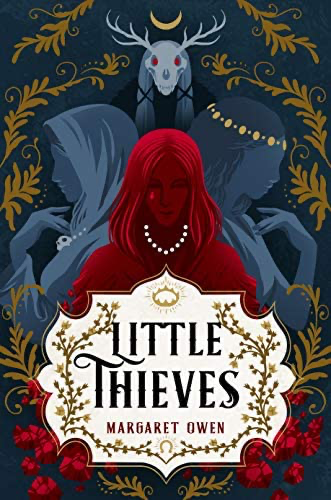
I forget exactly where I first heard about Little Thieves, but I think it may have been from seeing other people’s reviews here in the blogosphere. Now that I’ve read it, let me just say this: whoever’s review it was that inspired me to pick up this book, thank you so much. YA fantasy has started to become formulaic for me at worst, but Little Thieves was filled with charm, humor, and refreshing spins on the subgenre as a whole. Enjoy this week’s review!
Vanja Schmidt is the thirteenth daughter of a thirteenth daughter. Her mother knew how bad her luck would be, so when she was a child, she surrendered her daughter to be raised by the goddesses of Death and Fortune. But as Vanja grows older, she doesn’t seek to follow the paths of her surrogate parents and runs off on her own, making a living swindling and picking pockets. Vanja’s swindling gets as far as the royal palace, and with the theft of a charmed necklace of pearls, she assumes the identity of Princess Gisele.
But Vanja’s life of crime has attracted unwanted attention. When a Low God curses her body to turn to jewels at the full moon, Vanja must retrace her steps and right her past wrongs. Her trail of thievery will reach into the heart of a conspiracy that leads to Princess Gisele’s betrothed, and soon, Vanja realizes that she’s in for more than she bargained for.
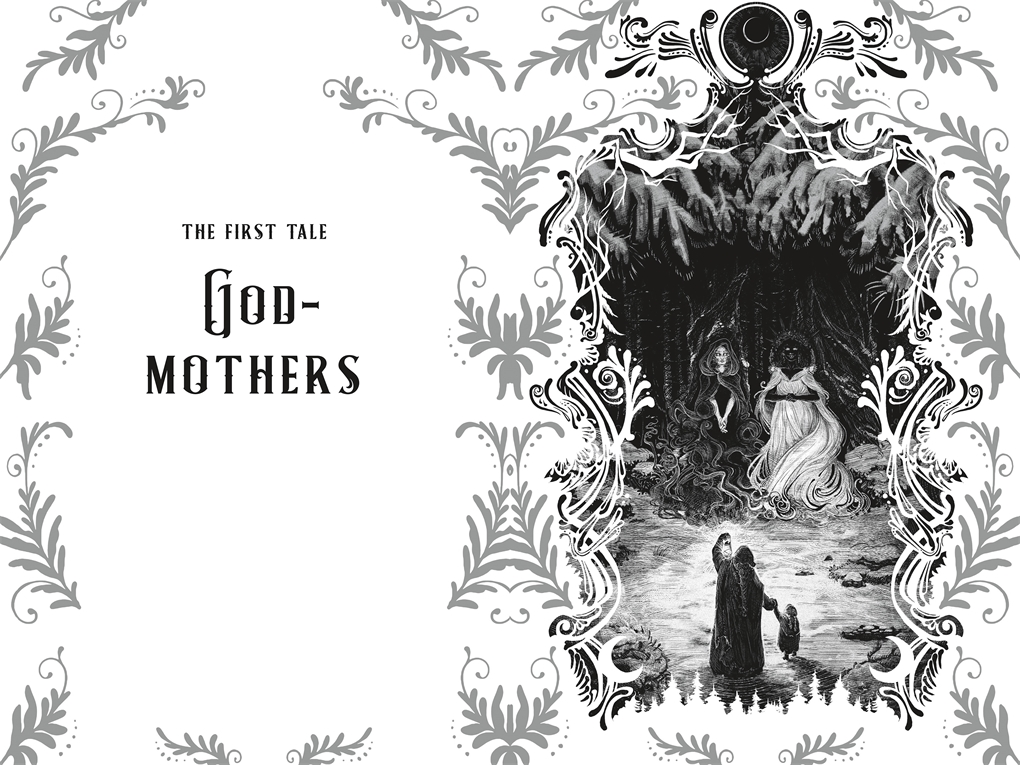
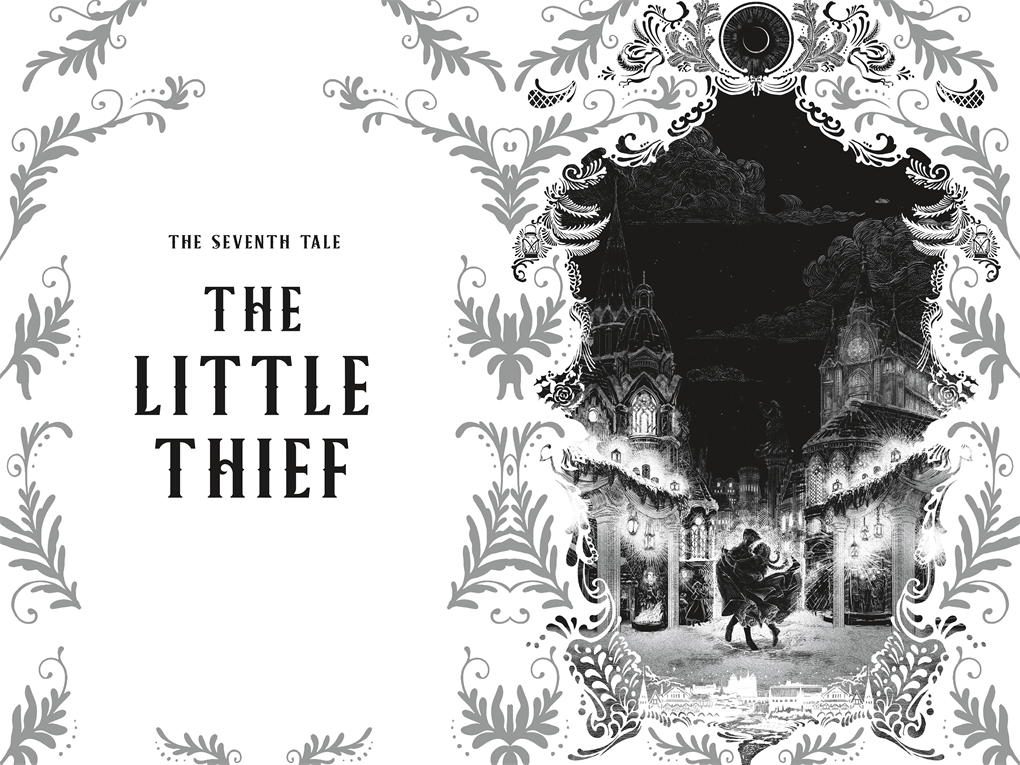
some of the beautiful illustrations from Little Thieves, done by Margaret Owen herself!
TW/CW: child abuse, animal death, blood, descriptions of injury, sexual harassment
Barely halfway through the first month of the year, and I’m already running into books this good? SUCH a relief after the brief slump I was just in…
YA fantasies—fairytale retellings in particular—are books that I’ve started to steer away from slightly; over the years, they’ve gotten blatantly formulaic for me, and it’s rare that any have an impact on me anymore. It feels sad saying that, but after a while, I just got sick of all the secret royalty and love triangles and the lack of good worldbuilding. But Little Thieves showed me that there’s still faith in a sputtering subgenre and treated me to an exceptionally fun time!
It’s been a while since I’ve read a fairytale retelling—after a while, there are only so many Cinderella and Beauty and the Beast retellings one can take. But Little Thieves retold a fairytale that I hadn’t even heard of before—The Goose Girl, written by the Brothers Grimm. It also puts a spin on the fairytale’s antagonist, making her the main character and giving her more nuance and motives. From the first page, Little Thieves felt like a breath of fresh air into a tired genre, and I am all the better for it.
Owen’s vibrant characters seemed to leap off the page, and each and every one of the main cast won my heart in record time. They were all so distinct: Vanja with her determination and sass, Emeric’s delightfully uptight and sensitive demeanor, and the absolute chaos that was Ragne; I got attached to most of the main cast fairly quickly, which is certainly a rare occurrence for me. Little Thieves is also one of the only YA books I can think of that actually gets a morally gray protagonist right. “Morally gray” characters have almost become a buzzword after the success of books like Six of Crows, but most of the time, they just end up being characters that Do Crimes™️ but they have a Tragic Backstory™️ so they’re a Complex Character™️. Vanja, however, actually felt morally gray—her way of life, however shady her dealings and actions were—was her way of survival and defiance. Maybe that’s what happens when you’re raised by two surrogate moms that also happen to be the goddesses of Death and Fortune, but either way, it was refreshingly well-executed.
For the most part, I was also a fan of the writing style! It reminded me a lot of Ashley Poston—it was very cheeky and filled with humor, which matched Vanja’s voice perfectly, but it was also capable of plenty of nuance and depth, resulting in some spectacular bits of prose. Some of the humor bordered on meme-y at times, which was more than a little jarring, but in comparison to the rest of the book, I can let it slide. It’s the kind of charming writing that made me laugh, smile, and swoon, and it suited Owens’ story wonderfully.
The worldbuilding was also excellent, and I loved exploring the pseudo-German, medieval setting! It’s clear that Owens spent lots of time and energy into not only making a fleshed-out world with the appropriate amount of history and constraints, but also trying to stay faithful to German folklore and the original Brothers Grimm tale. All of the gods, shapeshifters, and other creatures were a delight—another reason why I’m a little bored with most YA fantasy is because they often shy away from having lots of mythical creatures (in place of just slapping a magic system onto a vaguely European setting), so, like so many other aspects of Little Thieves, this was such a breath of fresh air. I know I sound like a broken record every time I say that, but that’s seriously how reading all 500+ pages of this book felt.
Going off of that, I loved the casual queerness in Little Thieves! With a lot of fantasy settings where queerness is present, homophobia is still present because there’s a misconception that an ancient/older setting automatically equals homophobia/transphobia. I get the purpose of that on some level if the book is trying to share a message or theme about homophobia or transphobia, but on the other hand, if you can have a complex magic system and dragons, the concept of homophobia not being a thing in your fantasy world isn’t that strenuous of a stretch to make. Owens once again bashes all of these fantasy tropes and integrates queerness into her worldbuilding as something normal, and it made my heart so happy. Although no labels are specifically used in the book, Vanja and Emeric are both implied to be somewhere on the demisexual/asexual spectrum, Gisele is implied to be a lesbian (and later is in a relationship with Ragne), and there are several nonbinary and gender nonconforming side characters! More queer fantasy like this, please! (Also, I just loved Emeric and Vanja together. Just Love Them So Much)
All in all, a rare YA fairytale retelling that subverts all of the tropes of the genre and dazzles with its nuance and charm. 4.5 stars!
Little Thieves is the first in the trilogy, followed by Painted Devils (slated for release later this year) and an untitled third book. Margaret Owens is also the author of the Merciful Crow series, which consists of The Merciful Crow and The Faithless Hawk.
Today’s song:
just listened to this whole album today, perfect for winter!! this one almost sounds like Kid A
That’s it for this week’s Book Review Tuesday! Have a wonderful rest of your day, and take care of yourselves!
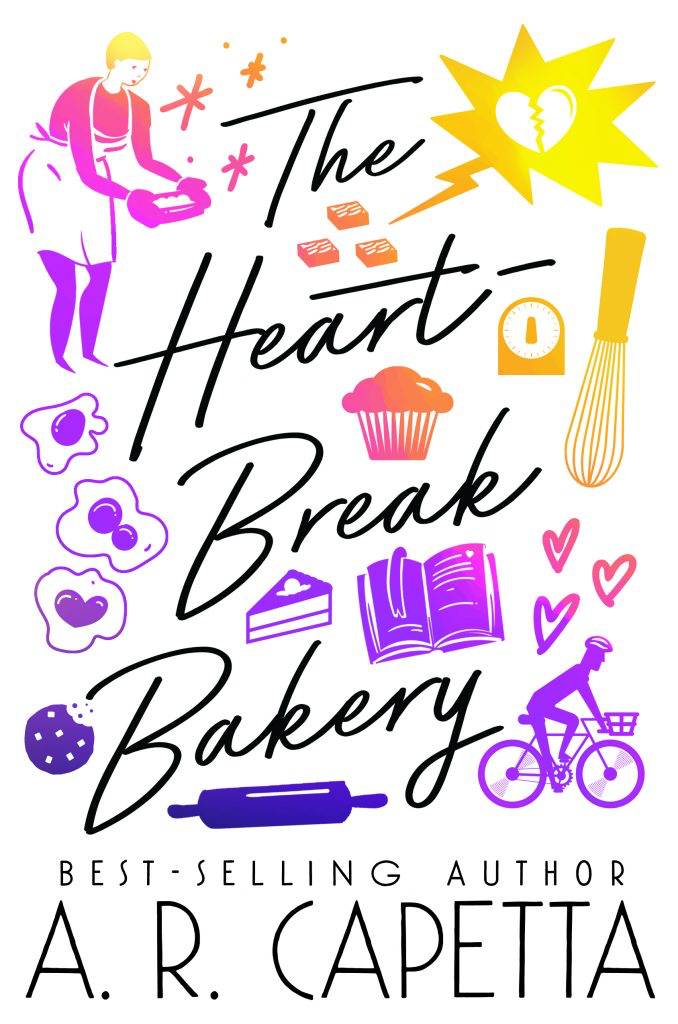
I’ve been a fan of A.R. Capetta ever since I read the Once & Future duology, and when I was looking for a sweet rom-com to read the other day, the opportunity presented itself in this book. I’m glad to say that this is proof that Capetta almost never misses—a tender and sweet (no pun. intended) celebration of queerness and baking!
Syd loves nothing more than baking—especially when it’s at the Proud Muffin, the queer-run bakery at the center of Austin’s queer community. After a nasty breakup, Syd deals with it in signature Syd fashion—by baking all the frustrations and bad feelings out into a batch of brownies. But when Syd’s frustrations works its way into the brownies and causes everyone that eats them to have relationship troubles, Syd has to fix the issue how it began—with baking. Throw in the cute delivery-person, and Syd has to avoid a recipe for disaster…
TW/CW: gender dysphoria
this book: has several jokes about the fact that it’s still possible to have a bad hair day even when you’ve shaved your head
me, having just shaved my head: [chuckles] “I’m in danger!”
I came into The Heartbreak Bakery just for a queer romance to tide me over, and I can now say with certainty that A.R. Capetta never misses! This piece of magical realism is a love letter to queer communities and spaces, and it made my heart so happy.
First off, this is easily one of the most diverse rom-coms that I’ve ever read! Syd is the first main character that I’ve read that’s agender, and the main relationship is between Syd and Harley, another nonbinary character! I think the entire cast is queer—a gay couple owns the Proud Muffin, there’s a polyamorous couple on the side, and there are queer characters of all identities as side characters, and many of them are POC as well! Capetta never shies away from unapologetic queerness, but it particularly shone in The Heartbreak Bakery.
The magical realism aspect was also fantastic, and it also culminated into a theme that I thought was incredibly important. I liked the ambiguity of where it came from, but the concept of putting tangible feelings into baking that have a visible ripple effect had me on board instantly. It served to show a great theme: the feelings that you put into anything, be it a project, a relationship, or a batch of brownies, is what you’re going to get out of it. If you pour all of your negativity into something, that’s exactly what’s going to come out of it. The Heartbreak Bakery takes the concept very literally—brownies that make couples break up, cakes that make you apologize, et cetera—but it was a great theme to explore. I do feel like some of the problems being almost immediately solved by the “apology cake” were a tad bit too easy for Syd to maneuver, but I’m glad Capetta made it more complicated—having Marisol eat the cake by accident, for example. (I wish I had a physical copy of the book on hand—some of those recipes looked good!)
My only major qualm with The Heartbreak Bakery was the pacing. I’m all for slower, gentler books, but it felt like the main points of conflict were unevenly spaced. For instance, the final climax of the bake-off felt far too rushed for me; given how much hinged on the outcome, it should’ve gotten a lot more page time than it did. Some of the interim scenes between the main points of conflict should’ve been shortened in favor of the more important, plot/character building scenes. It was a great novel to start with, but I could’ve done with a little tweaking with the pacing and the importance placed on certain scenes.
All in all, an incredibly sweet (no pun intended) magical-realism romance that reads as an ode to baking, queerness, community, and love itself. 3.75 stars, rounded up to 4!
The Heartbreak Bakery is a standalone, but A.R. Capetta is also the author of The Lost Coast, the Once & Future duology (co-authored with Cory McCarthy), Echo After Echo, and several other books.
Today’s song:
man I have so many memories of hearing this song when I was a kid
That’s it for this week’s Book Review Tuesday! Have a wonderful rest of your day, and take care of yourselves!
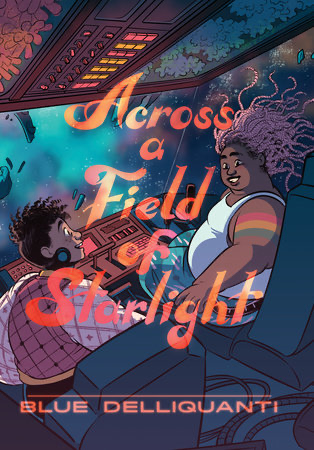
My first review of the year also happens to be the first book that I finished this year! I hadn’t heard anything about it before I came upon it while browsing the YA graphic novel section of Barnes & Noble. I’m always all in for queer sci-fi, and that, combined with the art style, was enough to convince me to buy it. I’m so glad to say that it was a wonderful graphic novel, full of heart, bright colors, and queerness aplenty.
Lu and Fassen have been friends since childhood, after a chance meeting when Fassen’s spaceship crashed onto Lu’s peaceful planet. Though they came from entirely different backgrounds, they kept in contact even as Fassen was forced back into their duty as a soldier. But when the tyrannical Ever-Blossoming Empire begins a siege on Fassen’s resistance front and endangers Lu’s planet, the two are reunited. Together for the first time in years, they must set aside their differences to escape the Empire’s clutches—and discover truths about each other.
TW/CW: sci-fi violence, depictions of injuries/blood, war themes, vehicle crash, loss of loved ones (off-page)
Across a Field of Starlight was the perfect book to start my year off with! With its beautiful art, tender story, and unapologetic queerness all the way through, this is a graphic novel that you won’t want to miss.
I’d be remiss if I didn’t acknowledge how wonderfully diverse Across a Field of Starlight is. I don’t think I’ve read anything—graphic novel or otherwise—quite this diverse in such a long time! Both of the protagonists are nonbinary and POC, Lu is plus-sized, and there is an array of POC and trans characters all throughout the story. I especially loved that Delliquanti didn’t shy away from giving their cast of characters a variety of different body types, and it made their world and story all the more rich.
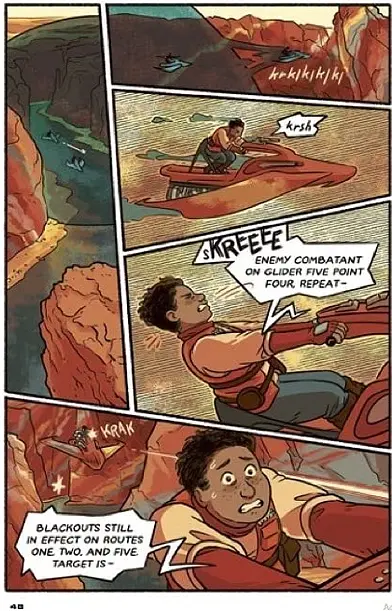
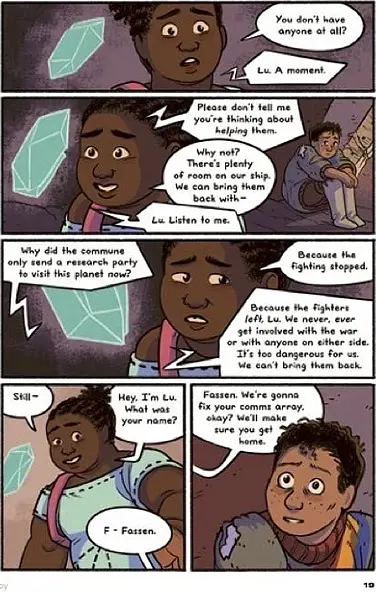
Delliquanti’s art style made Across a Field of Starlight shine as well. Although the book gets into some dark themes—war, colonization, etc.—the colors are vibrant all the way through, giving it a very fantastical feel. It especially suited Lu’s more peaceful, utopian planet and its welcoming nature, as well as Lu’s caring personality. Delliquanti’s depiction of outer space has a beautiful vibrance to it, making for an incredibly inviting story.
art by Blue Delliquantiart by Blue Delliquanti
The perspectives that Delliquanti chose gave the story a more compelling angle as well. Instead of most sci-fi/fantasy war stories, Across a Field of Starlight focuses on the Firebreak resistance front and a party completely outside the main conflict; most media (Star Wars comes to mind) focuses just on the tyrannical empire and the rebellion, but I liked that they largely left the Ever-Blossoming Empire as more of a looming threat. It also made the point that even though Firebreak was fighting to free the galaxy of colonization, they weren’t all pure and good either, and although the aim was good, the motives for some of the authority figures may have been less so. Never meet your heroes, kids.
That being said, I would’ve liked more context for the intergalactic conflict that this novel sets up. I did like that we were thrown right into the action, but I would’ve liked more historical context on how the Ever-Blossoming Empire and the Firebreak came to be, how long they’ve been at war, and the consequences for the rest of the galaxy. Across a Field of Starlight is great on its own, but with a world as expansive as the one Delliquanti has created, it’s begging for a few sequels or spin-offs, or at least some more background.
All in all, a highly enjoyable graphic novel filled with heart, diversity, and vibrant color. 4 stars!
Across a Field of Starlight is a standalone, but Blue Delliquanti is also the author of the comic series O Human Star, which currently has three volumes, and has contributed to several other comic collections.
Today’s song:
good mindset for this year, I think
That’s it for this week’s Book Review Tuesday! Have a wonderful rest of your day, and take care of yourselves!
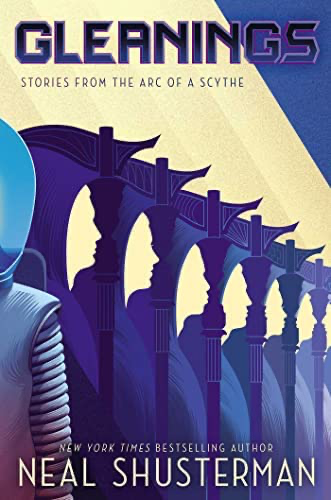
I only found out that Gleanings existed about a month ago, so naturally, it landed right on my Christmas list. More stories from one of the most creative and chilling YA dystopian worlds? SIGN ME UP. I got a copy for Christmas and immediately started reading, and while there were a few missteps, Gleanings was just the thing that I needed to get out of my reading slump.
There are still countless tales of the Scythedom to tell. Centuries passed between the Thunderhead cradling humanity and Scythe Goddard trying to turn it upside down. For years humans lived in a world without hunger, disease, or death with Scythes as the living instruments of population control.
Neal Shusterman—along with collaborators David Yoon, Jarrod Shusterman, Sofía Lapuente, Michael H. Payne, Michelle Knowlden, and Joelle Shusterman—returns to the world throughout the timeline of the Arc of a Scythe series. Discover secrets and histories of characters you’ve followed for three volumes and meet new heroes, new foes, and some figures in between.
TW/CW: death (central theme), descriptions of injury, suicide, past descriptions of mass death, attempted killing of an animal
What better book to get me out of my reading slump than a collection of short stories set in one of my favorite dystopian worlds? I’m so glad that Neal Shusterman made the decision to delve even further into the fantastic, multilayered world of the Arc of a Scythe, and even though the anthology had a few weak points, overall, it was a highly enjoyable glimpse into the unexplored corners of a trilogy I adore.
(For this review, I’ll be doing a mini-review for each short story.)
“The First Swing” – Joelle Shusterman – ⭐️⭐️⭐️
Having a poem as the first installment in the collection was an interesting decision, but I would’ve liked it more if the poem…had something more to it. It was…alright? There didn’t seem to be a whole lot to it, but it was at least an interesting direction to go with.
“Formidable” – Neal Shusterman – ⭐️⭐️⭐️⭐️
This was the first fantastic story in this collection—I loved seeing the early days of Scythe Curie before she became a fully-ordained Scythe, and I loved how Shusterman made her determined, fiery personality come off on every page. Reading stories like this make me wish that it wouldn’t take six coats of bleach to dye my darker hair silver.
“Never Work with Animals” – Neal Shusterman and Michael Payne – ⭐️⭐️
The weakest point in the whole anthology, without a doubt. It seriously baffled me that Shusterman had any part in this story—it was hokey, the writing was clunky as all get-out, and the story itself seemed to have no point. It was honestly just ridiculous, and I really don’t think it had any place in the anthology. Just…why? Why does it exist? However, I’d say this is just a fluke in a sea of mostly amazing stories, so the others successfully overshadow it. But still. Why.
“A Death of Many Colors” – Neal Shusterman – ⭐️⭐️⭐️.5
Not the best out of the collection, but I liked the stance that it took. I loved the framing of the mythos of Scythes against the backdrop of a futuristic misunderstanding of a Halloween party, as though Scythes had faded into the same category as any other Halloween monster many years in the future. Given how prominent the Scythes were in the original trilogy, it didn’t even cross my mind that there were some people that would think that Scythes were fake, so that was also an interesting angle to work from—especially from the perspective of teenagers trying to scare each other at a Halloween party.
“Unsavory Row” – Neal Shusterman – ⭐️⭐️⭐️.5
Again, not my favorite, but it was at least an interesting perspective to go with. Cheesy futuristic gang names aside (it’s the kind of cheese you kind of have to get used to with a Neal Shusterman dystopia—he sort of pulls it off), it gave us a glimpse into the criminal underworld of the Unsavories. Kila was the perfect example of an audience surrogate, and she worked excellently for the role.
“A Martian Minute” – Neal Shusterman – ⭐️⭐️⭐️⭐️⭐️
WOW. Without question, one of my absolute favorites of this collection! I’m already keen for a good villain origin story, but Shusterman executed the mind of a teenage Scythe Goddard so wonderfully. From the descriptions of Mars to young Goddard’s inner turmoils and how they translated to the very beginnings of megalomania, every part of this story shone. Also, I loved the foreshadowing with Xenocrates’ robes and The Pool Scene…yeeeeeeeeesh…
“The Mortal Canvas” – Neal Shusterman and David Yoon – ⭐️⭐️⭐️.5
What’s great about this anthology is that a lot of its stories use this world to talk about art, which, given the other themes of the books thus far, was an unexpected surprise. Although the writing in this story wasn’t quite as strong, I love the statements that it made about the connection between emotions and art, especially the rise of AI art. AI art may be a crowd-pleaser, but true art comes from stirring up complex emotions in the viewer—emotions that a human artist imbued into the canvas.
“Cirri” – Neal Shusterman – ⭐️⭐️⭐️⭐️.5
An unexpectedly emotional story about the Thunderhead’s AI “children” shepherding pockets of the human race out into the universe in search of new worlds. It makes a beautiful statement about humankind as a whole, and through the eyes of a conflicted Cirrus, emphasizes that despite our faults, we are worth saving, and that all hope isn’t lost.
“Anastasia’s Shadow” – Neal Shusterman – ⭐️⭐️⭐️⭐️
A fascinating look at the fate of Citra’s younger brother Ben, his failed training to be a Scythe, and the fraught romance he fosters during that time. It was interesting to see how Citra’s transition to Scythedom—and the trauma that it wrought—shaped Ben, and how it influenced his training and who he became now that he’s reached his sister’s age when she became a Scythe.
“The Persistence of Memory” – Neal Shusterman, Jarrod Shusterman, and Sofía Lapuente – ⭐️⭐️⭐️⭐️⭐️
Another favorite in this collection, and another wonderful statement about art and spectacle. There were so many elements that made this story as charming as it was, but I especially loved the concept of Penélope, our resident goth, being so obsessed with death that she hangs around a Scythe, who becomes her surrogate uncle. There’s so much tenderness and wit in this story, and it all culminated in a theme that, now that I think about it, is very similar to the theme of Jordan Peele’s “Nope”—the lengths that we will go to achieve a spectacle. Without spoiling anything, they also resolve themselves in…shall we say, very similar ways.
“Meet Cute and Die” – Neal Shusterman – ⭐️⭐️⭐️⭐️
This story easily could’ve fallen into the same fate as “Never Work with Animals,” but the dry gallows humor of this story made it so much more memorable and funny. As shrouded in death as this whole universe is, this story takes a lighter approach to it and makes an unexpected romance out of the absurdity of life itself.
“Perchance to Glean” – Neal Shusterman and Michelle Knowlden – ⭐️⭐️⭐️⭐️
Another story that explores uncharted territory—the Antarctic settlement of Ross Shelf, and the system of collective dreaming that the citizens undergo. Not only was the worldbuilding fascinating, I loved the main twist of the dreams. Again, without spoiling anything, we see just how scarily powerful the Scythes are, if that wasn’t already obvious.
“A Dark Curtain Rises” – Neal Shusterman – ⭐️⭐️⭐️⭐️
This works well as the last story of the collection—eerie and more than a little twisted, but still hopeful in its culmination. Combined with “Cirri,” this just makes me want to know more about this world post-Arc of a Scythe. (Mr. Shusterman PLEASE tell me you have some more plans for this universe PLEASE)
Averaged out, my ratings came out to just around 4 stars! A must-read for fans of the Arc of a Scythe, and a wonderful addition of vignettes in Neal Shusterman’s cleverly crafted, dystopian world.
Gleanings is technically #3.5 in the Arc of a Scythe trilogy, as it contains spoilers for the original trilogy. It is preceded by Scythe, Thunderhead, and The Toll. Shusterman is also the author of the UnWind dystology (UnWind, UnWholly, UnSoulled, and UnDivided), the Skinjacker trilogy (Everlost, Everwild, and Everfound), and many other books for middle grade and YA readers.
Today’s song:
That’s it for this week’s Book Review Tuesday! Have a wonderful rest of your day, and take care of yourselves!





 The Bookish Mutant