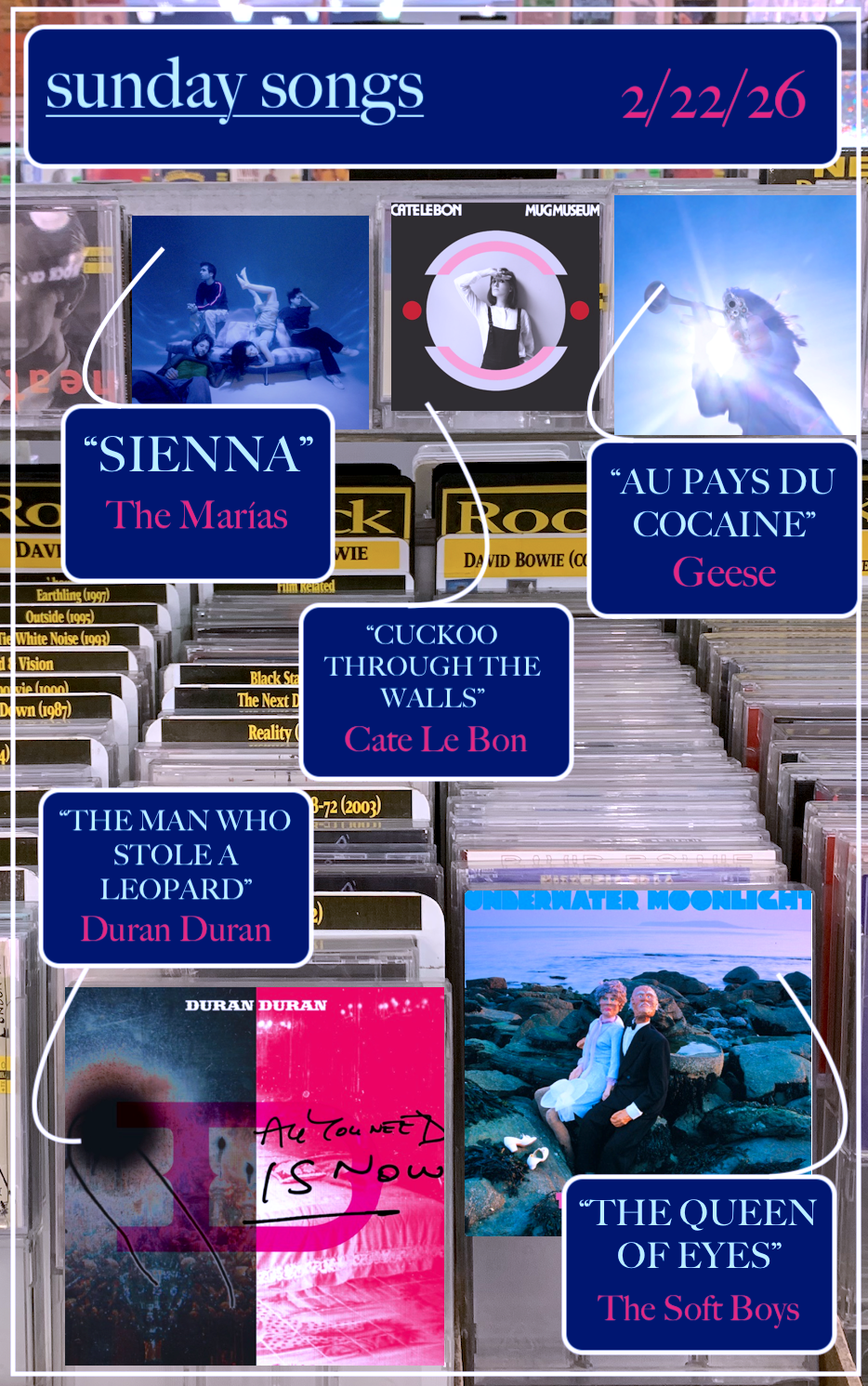
Posted in Sunday Songs

Sunday Songs: 1/25/26

Happy Sunday, bibliophiles! I hope this week has treated you well.

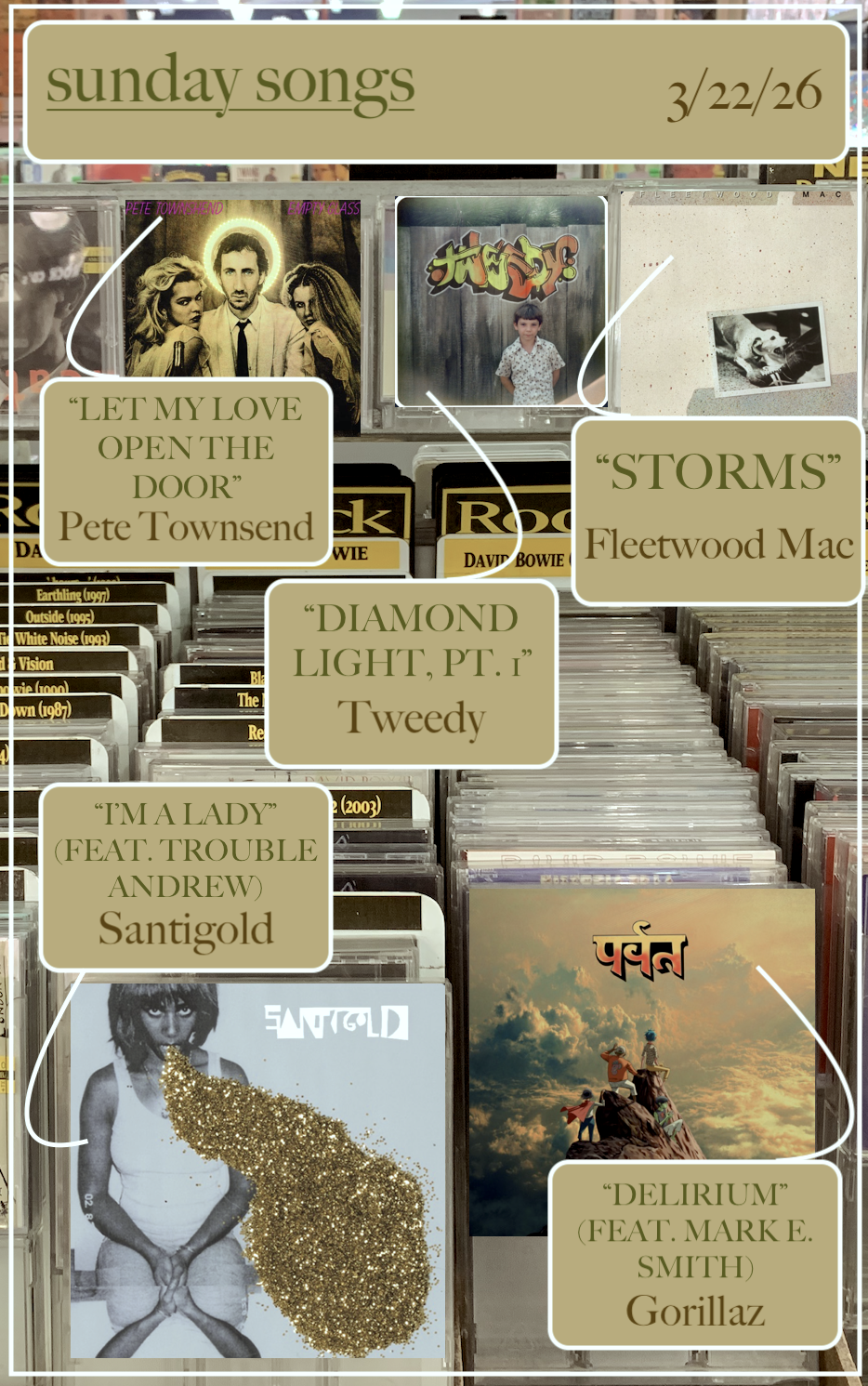
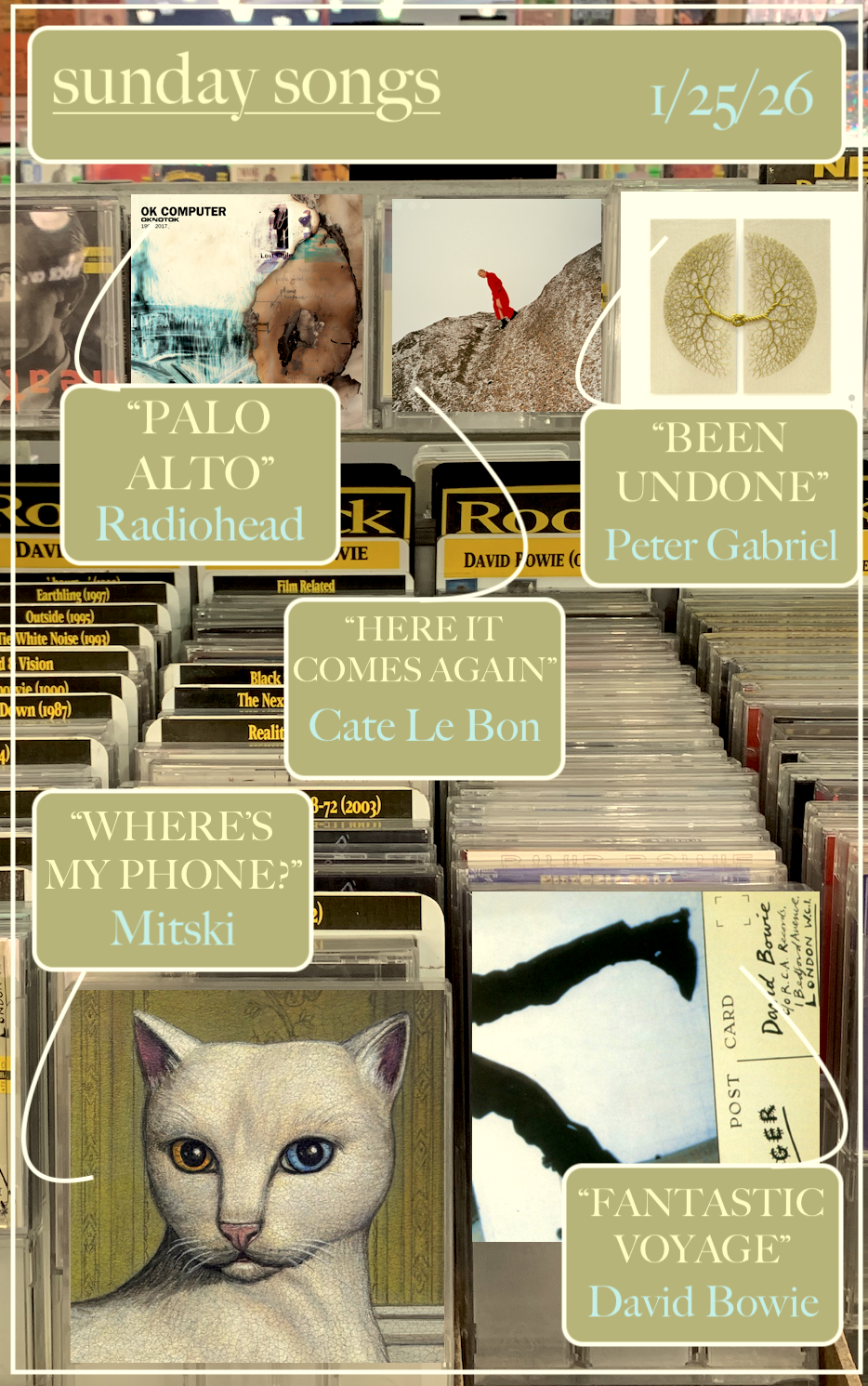
This week: Here it comes again; a fantastic voyage to Palo Alto to answer this essential question: where’s my phone? It’s been undone!

Enjoy this week’s songs!

SUNDAY SONGS: 1/25/26

“Where’s My Phone?” – Mitski

It’s finally come to that time of year when I start accumulating albums that I’m looking forward to. Nothing’s About to Happen to Me, which is set to release on February 27, is topping the list at the moment for sure! Mitski is back for her first album in two and a half years, and as usual, she’s set to put a pulse on the neuroses of the world; Nothing’s About to Happen to Me seems to be a concept album about a recluse who never leaves her cluttered house. With the aesthetics of cats and old wallpaper, this album has such a clear image—and an intriguing one. Mitski channels some of her heavier guitar work on “Where’s My Phone?”; it’s an exciting sonic callback, like she’s been dusting off the old Bury Me at Makeout Creek sounds (!!!). Adopting a falsely cheery tone, Mitski sings of this character desperately repressing every possible source of negativity, yearning to be “clear glass with nothing going on.” The sentiment of “I keep thinking surely somebody will save me/At every turn I learn that no one will” is pure Mitski all the way down, but it’s refreshing to see Mitski going headfirst into a new character; her introspection, fictional or nonfictional, is where her art shines. Plus, that music video, in which Mitski’s multigenerational home gets assailed by dozens of strangers, is nothing short of bonkers. Definitely somebody’s vivid anxiety dream, for sure.

For some reason, my mind got stuck on the classic censored beep sound on the “I would fuck the hole all night long” line. Sure, we are in the age of musicians proactively self-censoring, but of all musicians, Mitski seems like the last one to do that, especially with how she’s clawed to keep her individuality—and sanity—intact in the music industry. She’s not a Taylor Swift type, and she hasn’t shied away from profanity before. There’s no clean version of the song, and the music video has it too—and yet the official lyrics don’t censor it. So what’s the deal? Was it some sort of artistic touch for the album’s central character’s supposed shame and guilt? I still haven’t come to a conclusion myself, but I swear that it’s intentional. Whatever the case, “Where’s My Phone” buzzes with neurosis, crunching at the edges, an ember of anxiety.

…AND A BOOK TO GO WITH IT:

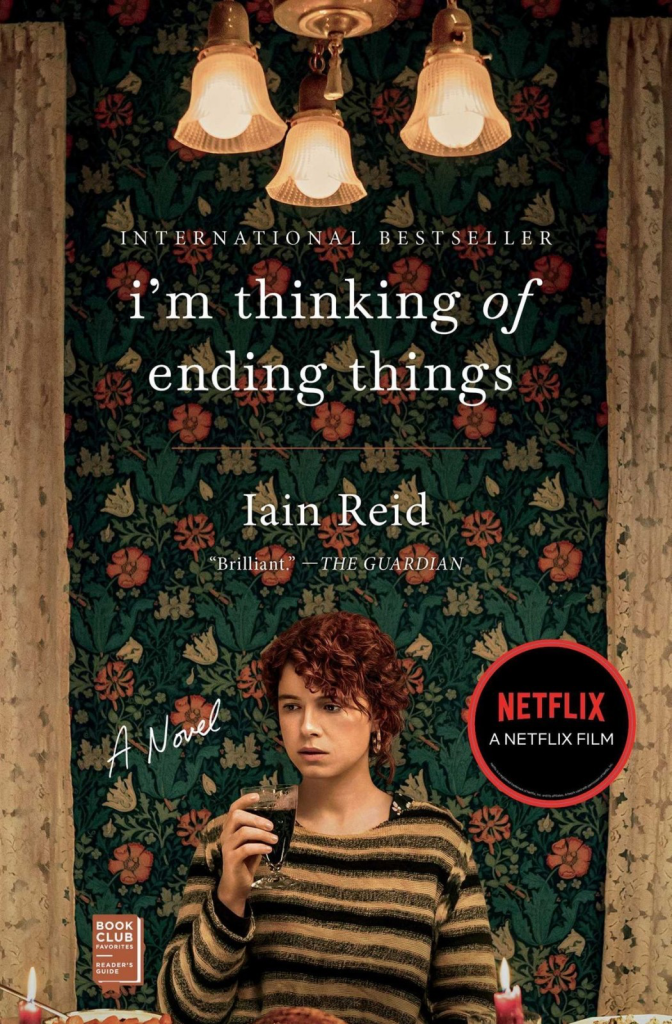
I’m Thinking of Ending Things – Iain Reid “I keep thinking surely somebody will save me/At every turn I learn that no one will/I just want my mind to be a clear glass/Clear glass with nothing instead…”

“Fantastic Voyage” – David Bowie

As calm of a song “Fantastic Voyage” is, it’s a certainly eerie start to Lodger. I finally got around to listening to the album in its entirety not long ago, while mourning 10 years since Bowie’s passing in 2016. Listening to Lodger not long after Taking Tiger Mountain By Strategy put me in an irreparable chokehold makes me realize the sheer impact of Eno on Bowie—his weirdness was all there, but after decades of being mainstream, it was Eno who resurrected the less palatable parts of weirdness. I’m sure it was less unexpected at the conclusion of the Berlin Trilogy, but expecting another “Starman” and getting…I dunno, “African Night Flight” must’ve been some unparalleled whiplash. And he’d keep the act going throughout his entire career. In a way, Lodger is a microcosm of what his career would later be. There’s no shortage of tricks up his sleeve, from the strange, often eerie left turns to the sneakier tricks; for one, “Fantastic Voyage” and “Boys Keep Swinging” have an almost identical chord progression, but their atmospheres are so radically different that I didn’t even notice. It’s a trickster kind of album, obstinate in its mission to not be boxed in.

After falling back to Earth, the Berlin Trilogy got much more worldly, and Lodger was its peak. The entire album reeks with the recollection that the world is rife with the unknown, be it in places unseen or the machinations of politics. “Fantastic Voyage” is the thesis of that song; it reads like a scrawled diary before the apocalypse, and it very well could have been, what with the threat of nuclear annihilation and the Cold War on Bowie’s mind. He pits the casual dehumanization of entire peoples against the plea for the dignity of all individuals. He looks skyward, pondering the missiles that could rain down on the population and end everything in an instant. But in the midst of all this turmoil, decades after 1979, the final verse rings truer than ever: “They wipe out an entire race and I’ve got to write it down/But I’m still getting educated/But I’ve got to write it down/And it won’t be forgotten.”

Oof. Certainly feels like a slap in the face, given that ICE has been snatching children off the streets and shoots unarmed civilians in Minneapolis, and I’m just holed up in my apartment trying to get my thesis done. Yet Bowie’s words feel like a guidebook. I’ve got to write it down—I interpret that both in the sense that we have to commit the crimes of these monsters to paper, lest the government conveniently paints them in a more pleasant light (as they already are), but also that in spite of everything, we have to keep on with our creativity. Sometimes, all we can do is write. Of course, that doesn’t make political action, however small, null and void, but sometimes it’s all you can do but journal everything around you to stay sane. All that matters, both for Bowie and for all of us, is to keep the pen moving—that keeps our minds sharp, it creates a record of the soul.

…AND A BOOK TO GO WITH IT:

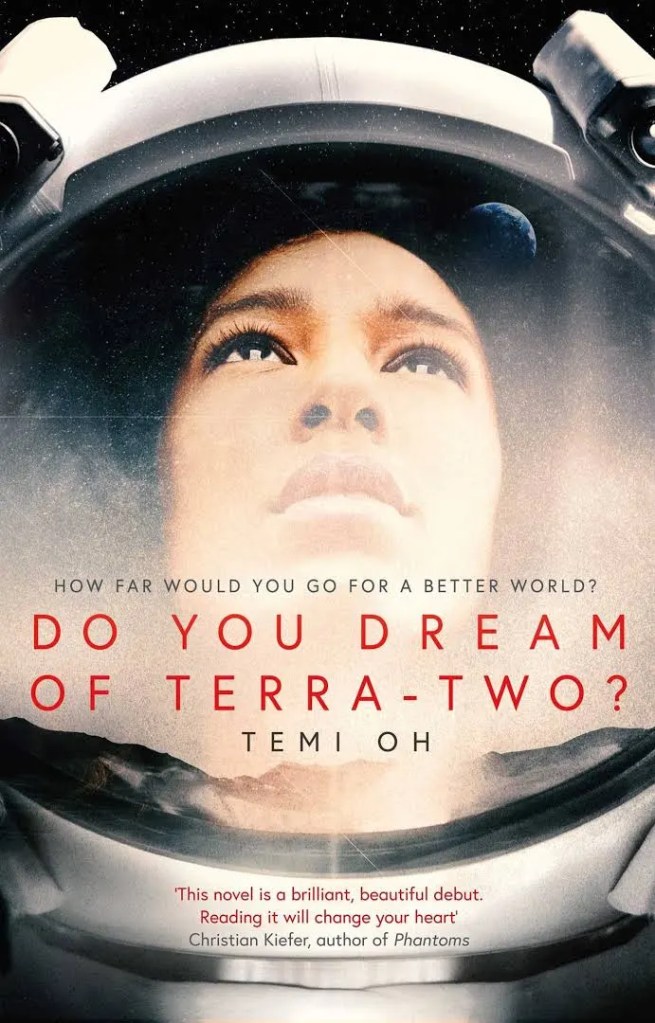
Do You Dream of Terra-Two? – Temi Oh“Remember it’s true/Dignity is valuable/But our lives are valuable too/We’re learning to live with somebody’s depression/And I don’t want to live with somebody’s depression/We’ll get by, I suppose…”

“Palo Alto” – Radiohead

In a move that’s probably stunned nobody, I’ve decided to become the insufferable neighbor and take up collecting vinyl; my parents were nice enough to gift me with a record player, as well as my two favorite albums: David Bowie’s Hunky Dory and Radiohead’s OK Computer. I can’t thank them enough. My neighbors, on the other hand, are probably rueing the day that they had to hear “Fitter Happier” through the walls without warning. Your honor, I plead “whoopsie daisies.”

OK Computer—specifically, the 2017 remaster with all of the b-sides, OKNOTOK—all but swallowed me whole in my freshman year of high school, and the version of me that got chewed up and spit out was irreparably, permanently changed. Whether it was for the best or the worst is up to interpretation, but either way, it’s given me a love of Radiohead that hasn’t waned to this day, more than seven years after I first listened to the album. However, at that age, I was still in the woeful process of immediately deleting whatever songs that didn’t hook me on the first few listens from my library. The destruction left in the wake was irreparable—and it also made me completely forget that this absolute gem existed. I can’t even put my finger on why it wasn’t a favorite at the time; the only reasonable explanation is that OK Computer is just so jam-packed full of songs that shattered my brain that brain-shattering became the standard. I was harsh back then.

Yet on my new record player, “Palo Alto” came out of left field. In the mindset of Thom Yorke, I can sort of see why this one got the axe back in the day—musically, it’s less adventurous than some of the other tracks. It’s very much of the same, more straightforward rock/Britpop crop of The Bends, despite the avalanche of fuzz and decorative beep-boops. Thematically, it’s on par with the anxiety of OK Computer, with the tiresome monotony of corporate life: “In a city of the future/It is difficult to concentrate/Meet the boss, meet the wife/Everybody’s happy, everyone is made for life.” Even if it’s not as compositionally inventive as some of the a-sides, even Radiohead’s more straightforward songs are a cut above the rest, and “Palo Alto” is proof. With the sudden, grinding assault of Jonny Greenwood and Ed O’Brien’s guitars against Thom Yorke’s exasperated delivery of regurgitated small talk, it encapsulates the exhaustion of being trapped in an endless cycle of work buttressed only with surface-level interactions.

…AND A BOOK TO GO WITH IT:

Embassytown – China Miéville“In a city of the future/It is difficult to find a space/I’m too busy to see you/You’re too busy to wait…”

“Here It Comes Again” – Cate Le Bon

I regret to inform you that I’ve been listening to way more Cate Le Bon again, but I can’t help it that it faintly fits the vibe of my honors thesis. Michelangelo Dying, Pompeii, and Reward all got revisited last week, and you will be hearing about it. This is, once again, a threat.

Among the many impressive things about Cate Le Bon is the myriad ways that she makes her music sound innately aquatic. I talked about how watery all of Reward feels when I first listened to it back in July, with “Miami” and its sounds of aquarium gravel and bubbles. Unlike a lot of her songs, “Here It Comes Again” feels more like water rhythmically; with an almost waltz-like rhythm, it feels like the motion of a plastic toy boat being carried out to sea. The melody continually repeats and lives by eating itself, a gently cyclical waltz across a flooded ballroom covered in algae. That precise quality of the melody is what enhances the lyrics. It’s implied in the title (and the chorus), but “Here It Comes Again” drowns in monotony, its sonic eyelids growing heavier with each repetition: “Man alive/This solitude/Is wrinkles in the dirt.” Very few artists make solitude and dreariness into such musical feasts like Cate Le Bon does—if it’s loneliness, she’s spun it into something as appealing as a bowl of candies with brightly-colored wrappers.

…AND A BOOK TO GO WITH IT:

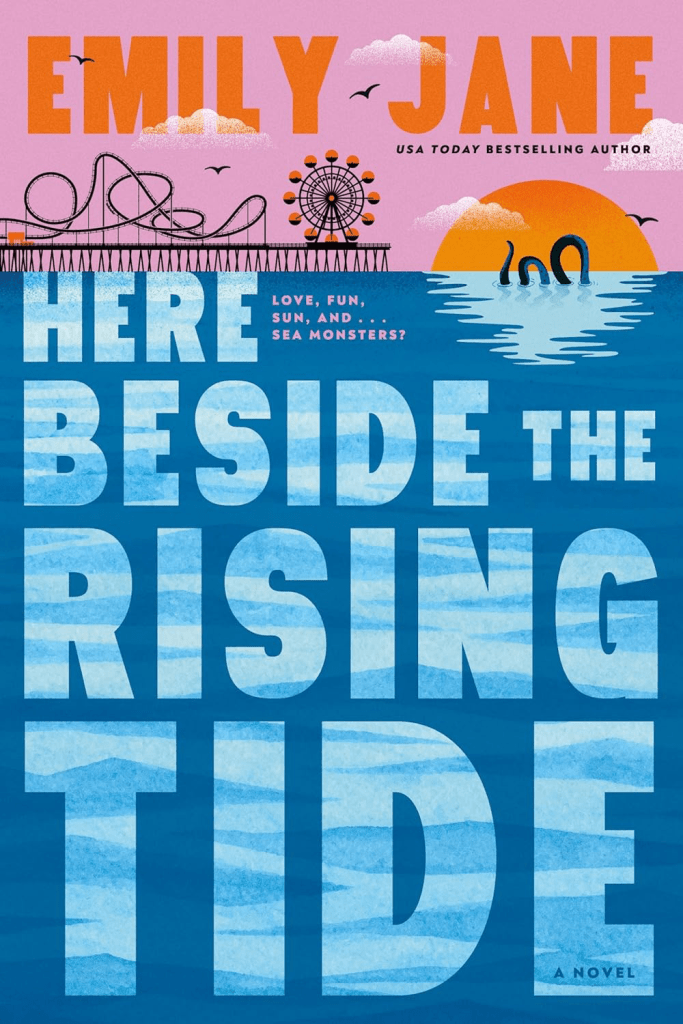
Here Beside the Rising Tide – Emily Jane“Man alive/This solitude/Is wrinkles in the dirt/I borrowed love from carnivals/Set it in a frame/Here it comes again…”

“Been Undone” – Peter Gabriel

HE’S BACK! PETER GABRIEL IS BACK TO SAVE 2026!

Once again culminating in an album coming out this December, o\i is being released in singles corresponding with each full moon of 2026. Three days into 2026, it gave me some hope—and a bittersweet full-circle moment for me. I spent the spring semester of my freshman year of college listening to i/o‘s singles, and I’ll be spending the spring semester of my senior year listening to its inverse. The songs comprise of both castoffs from the i/o sessions and from further back in his career; according to this video, the chord progression for “Been Undone” has been on the back burner for several decades. As the starting gun for the album, it’s an expression of some of what I love best about Gabriel: his boundless creativity and his grounded humility. “Been Undone” is all about learning moments—the ones that cause us pain or overwhelm us, but ultimately teach us something valuable: “By all the forms that you get from the Mandelbrot set/I’ve been undone/By the recursive slaves in the home of the brave/I’ve been undone.” I’m assuming the latter is in reference to the deeply broken U.S. prison system, but back to back with a mathematical concept that results in dizzying, fascinating patterns, it proves the song’s point: both great wonder and great pain can be the origin of learning. Musically, I thought it was going to be a more standard new-era Gabriel song, and it continues so for nearly 6 minutes; but at 5:59, he takes a left turn back into “The Tower That Ate People” territory, turning a pleasantly synthy tune into his personal brand of almost-industrial, proving that even at 74, he has no shortage of tricks up his sleeve.

Also, the bit where Gabriel was asked about the Bright/Dark-side mixes and if he allows the producers to play with the structure cracked me up—probably the clearest vocalization of “no <3” I’ve ever seen HAHA

…AND A BOOK TO GO WITH IT:

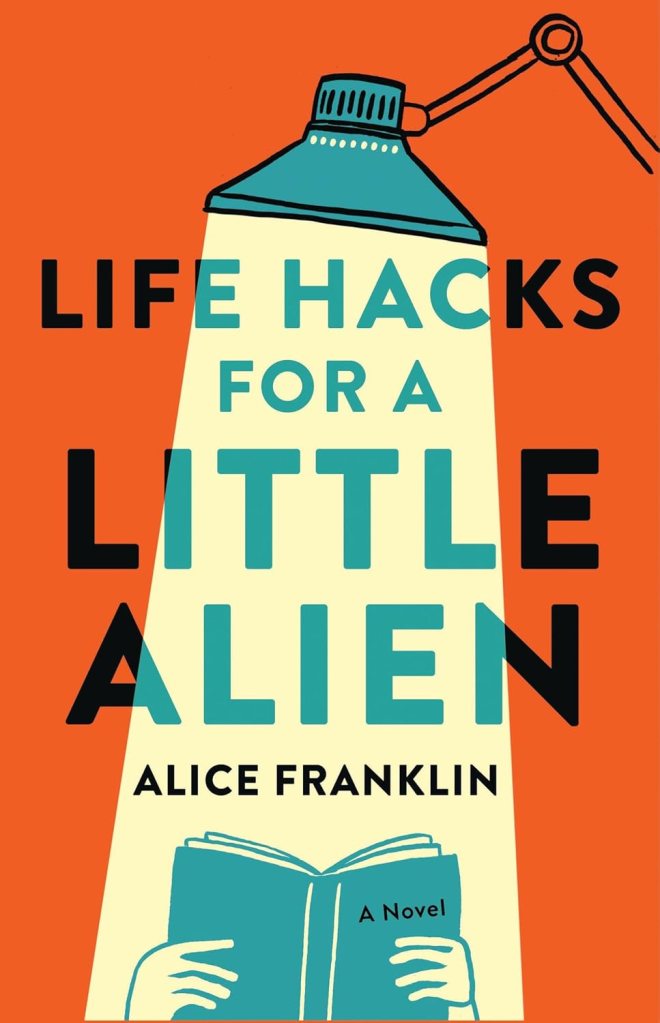
Life Hacks for a Little Alien – Alice Franklin“Though I want to observe, it keeps touching a nerve/And I’ve been undone/By the past that you trace, by a moment of grace/I have been undone…”

Since this post consists entirely of songs, consider all of them to be today’s song.

That’s it for this week’s Sunday Songs! Have a wonderful rest of your day, and take care of yourselves!

Posted in Sunday Songs

Sunday Songs: 1/18/26

Happy Sunday, bibliophiles! I hope this week has treated you well.

This week: two queens maximizing their joint slay, songs that get a little confusing in the discography next to each other, and unintentionally capitalizing (as if I earn any money from this blog) on gay hockey being the next big thing. Also, a shoutout is due to my mom, because I ended up getting 3/5 of these songs from a single car ride with her. Love you 🙂

Enjoy this week’s review!

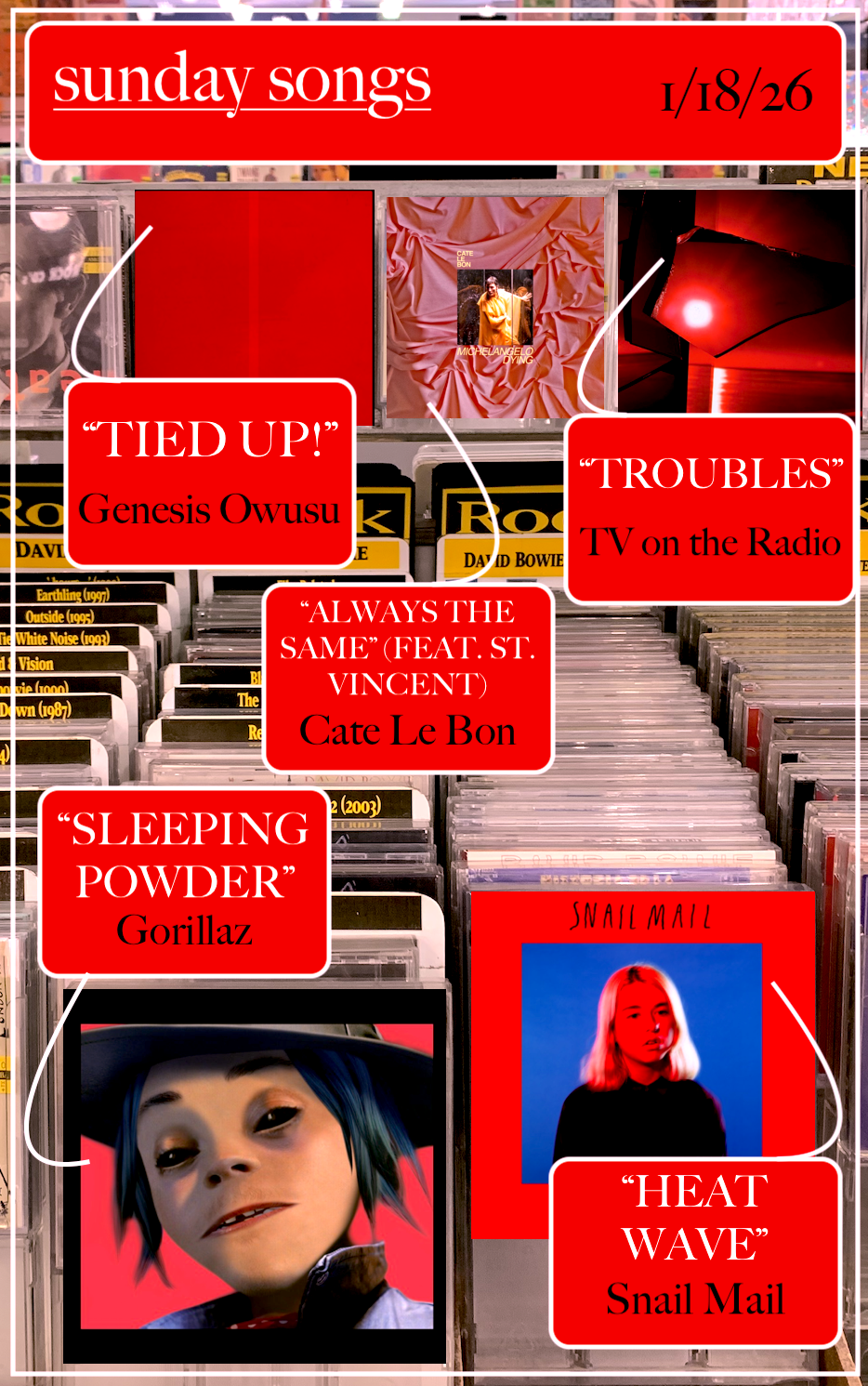
SUNDAY SONGS: 1/18/26

“Sleeping Powder” – Gorillaz

Here’s the thing about Gorillaz: I’ve talked extensively about how since 2018, they’ve become less Gorillaz and more about the collaborations, and it feels like they’ve lost themselves somewhere in the midst. The thing is that they’re fully still capable of returning to their roots and balancing the old with the new. Even though it sounds like it could’ve come from Plastic Beach, “Sleeping Powder” was released after Humanz came out in 2018. According to the official Gorillaz lore, 2D made this song behind the rest of the band’s back because he felt that he’d been excluded from the album (shhh, don’t tell Murdoc); the song is primarily about the character’s drug addiction, as evidenced by the music video, complete with the classic “this is your brain on drugs” sample and a 3D 2D (they said it couldn’t be done…) tripping balls and abusing his green screen privileges. It feels like a promise of what Gorillaz still could be; “Sleeping Powder” never feels like it could mesh with Blur or Damon Albarn’s solo work, as some of his more recent music does. It’s pure Gorillaz, channeling the urgency and grooves from their earlier eras but giving them a more modern flourish. Complete with a fusion of acoustic guitars and synths—and one of Albarn’s signature raspy howls—”Sleeping Powder” feels like a reminder that the core of Gorillaz exists—it’s just been buried, which, given how hit or miss their output has been since 2018, is a real shame.

…AND A BOOK TO GO WITH IT:

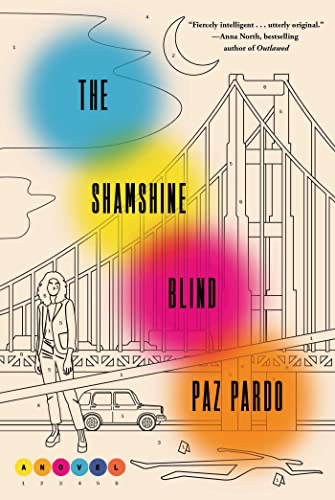
The Shamshine Blind – Paz Pardo“I get dropped from where I belong/I take my pills and I get in the mode/And I take five to get it to load in/Even in the place…”

“Heat Wave” – Snail Mail

Seems like this is a very advantageous time to write about this song, since a) the nearly 5-year Snail Mail drought is purportedly ending next Tuesday (!!!), and b) gay hockey is in. May I interest you in some lesbian hockey?

Hearing “Heat Wave” when I was 14 felt as though something in the world of music had cracked open like an eggshell, and the yolk of possibility had opened up for me. I’d just discovered Snail Mail on the cusp of her first album, Lush, and the first few singles instigated a seismic shift in me. Here was Lindsey Jordan, only 18 at the time, making such raw, fully-formed music with guitar at the forefront. She was openly gay, she wasn’t traditionally feminine, and she looked like somebody who I’d see in my brother’s high school class. But here she was, taking the indie world by storm.

It’s so oddly raw listening to “Heat Wave” now. I’m older than Jordan was in that video now. The lyrics are even more teenage now, but they hit almost as hard as they did when I was 14. At a show I saw her at when I was 16, Jordan admitted that she’d forgotten which song was about which girl; now, it hardly matters—she bottled that open-wound feeling of a fresh breakup and concentrated it so fully that its source is irrelevant. Concentrating that emotion so distinctly is a feat at any age, but at 18! 18! I was writing stories about weird spaceships with way too much purple prose at 18. Man. “Heat Wave” is so chock-full of emotion that it felt almost heady, like strong perfume, listening back to it after so many years; and yet, adorned with some seriously intricate and catchy guitar riffs (once again, AT 18, Jesus Christ), “Heat Wave” is such an indie gem, and Lush remains a testament to the sheer talent she’d worked so hard to cultivate.

Even if Valentine was weaker in retrospect, and even if this new single doesn’t turn out good, there’s still the Snail Mail I loved in 2018. She’s the main reason I picked up the guitar in the first place, and she gave me the courage to come out not long after I saw her at a tiny club in Denver. And I will always treasure that Snail Mail.

…AND A BOOK TO GO WITH IT:

Perfect on Paper – Sophie Gonzales“And I hope whoever it is/Holds their breath around you/Cause’ I know I did/And otherwise/If only sometimes/Would you give it up, green eyes?”

“Tied Up!” – Genesis Owusu

One word keeps popping up like a whack-a-mole every time I listen to “Tied Up!”, and that is “groovy.” Dear lord, this is such an expertly tight groove. There’s not really a genre I can definitively pin it to, and from the looks of it, the same is true for STRUGGLER, the critically-acclaimed album the it comes from. But either way, this song is neat as a pin—this is a groove, nothing more, nothing less.

Loosely centered around the character of The Roach, a struggler on the run from the manifestation of any antagonistic force you can think of, named God. (Sidenote: I love the bug-eyed sunglasses that Owusu wore when he toured for this album. Perfection.) Along with “Leaving the Light,” an adrenaline-fueled sprint away from God’s wrath (“I’m a beast I can feel them poaching/Stamp me down, but a roach keeps roaching”), “Tied Up!” embodies what feels like the mentality of this Roach character: no matter what God throws at him, roaches are famously unkillable, virtually impervious to apocalypse and mass extinction. Owusu declaring that he’s bleeding from his legs right on the heels of the most upbeat pop chorus is whiplash, but it embodies that feeling of taking pride in being unbeatable when you’re being beat down from all sides. Owusu chucks all manner of musical influences in the pot—hip-hop, pop, alt-rock—but they all come out feeling like something wholly new. Aside from a few weak lyrics here and there (“What other choice can I chose?” always trips me up), “Tied Up!” has no bumps in the road—it’s a slick groove all the way through.

…AND A BOOK TO GO WITH IT:

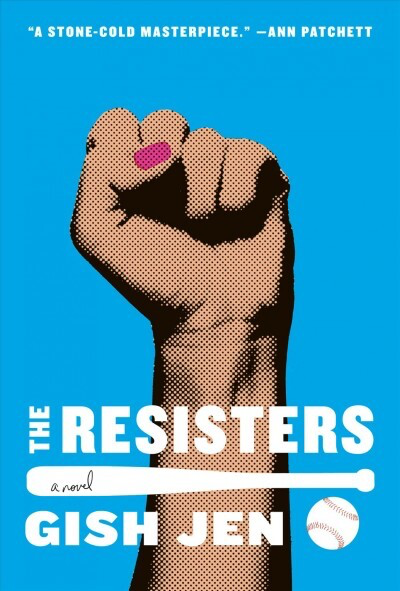
The Resisters – Gish Jen“I’m bleeding from my legs but it’s alright today/Better out here than the hell where I stay/I said my feelings start to wobble when I stare at the doves/I’m fighting through life, I have no boxing gloves…”

“Always The Same” (feat. St. Vincent) – Cate Le Bon

If there ever was an audio manifestation of “two queens coming together to maximize their joint slay,” then this is it. This is the only thing keeping the fabric of 2026 together. I can only hope that Cate Le Bon will follow in St. Vincent’s footsteps and retroactively announce a tour date near me.

Praise! We get a momentary extension of my favorite album of 2025, Michelangelo Dying! From the looks of it, there was a fruitful window where St. Vincent and Cate Le Bon were drawing from each other’s musical wells; back in 2024, Le Bon contributed backing vocals to “All Born Screaming.” Now, St. Vincent’s switched roles, providing a harmony for Le Bon on this track from the Michelangelo Dying sessions. “Always The Same” falls on the slower side of the album with songs like “Pieces of My Heart” or “Is It Worth It (Happy Birthday)?” and deals with the same heartbreak, although not in the heart-ripped-from-your ribcage way. What stands out to me about Michelangelo Dying is that it’s not a breakup album in the traditional sense—it’s not about the romance so much as it is about the gradual buildup leading to the break. There’s little rage or sorrow, but what there is in great amounts is exhaustion, repressed and built up in the chest until it makes you collapse. She’s not a fountain of blood in the shape of a girl so much as she is a river running dry.

“Always The Same” takes that same bleary-eyed exhaustion and draws it out; Le Bon describes her losing battle with her lover as “back and forth like a country/losing land to war,” shrinking herself until there’s nothing left of her at all. The background saxophones are almost unrecognizable as the instruments they are, made so ripply and strangely plastic by the production, expanding and contracting like a lung made of rubber. Both lyrically and instrumentally, it’s like watching a bundle of herbs dry out in the oven: something that was once green burns up and loses all its color. St. Vincent offers her higher harmonies to rise with Le Bon’s sonorous vocals, a devil on her shoulder to dismiss her pain, repeating: “she can bury it!”

…AND A BOOK TO GO WITH IT:

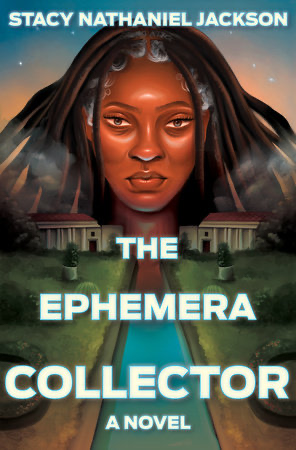
The Ephemera Collector – Stacy Nathaniel Jackson“I swallowed your memories/Like a morning prayer/I’m in your debt now/Almost there…”


“Troubles” – TV on the Radio

Nowadays, this song has to be a pain for TV on the Radio, since they put out a far more popular song called “Trouble” four years later. Oops. Hindsight is 20/20. At least “Troubles” is a bonus track, so it gets forgotten easily. Good for clarity, not good for a perfectly good song that deserves more attention. But if girlpool could make it work by having two completely different songs called “Pretty,” then TV on the Radio can too.

Either way, “Troubles” doesn’t deserve to get left in the dust; even if there are stronger tracks on Nine Types of Light, it’s a calm, steady track—the even-keeled instrumentals makes the chorus of “Despite all the heartbreak it brings/Our love is a surefire thing” feel just as anchored. With imagery of springtime fields and songbirds aplenty, it’s alight with flickers of hope amidst the plateau. It’s a vow to be the calm after somebody’s storm. Even if it’s more restrained than some of the more adventurous, intricate tracks on the album (see: “Killer Crane”), the vocal harmonies are as melodic and light as the songbirds they describe, and the flickers of horns and fluttering synths make for a song built like a dense greenhouse full of bright blooms.

…AND A BOOK TO GO WITH IT:

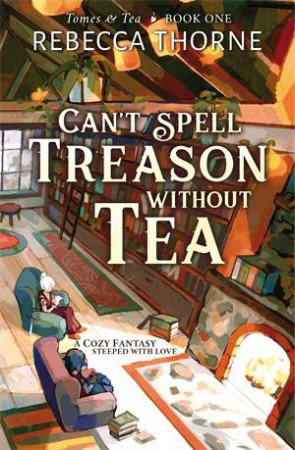
Can’t Spell Treason Without Tea – Rebecca Thorne relaxing and steady, with steadfast love and a pastoral, magical setting.

Since this post consists entirely of songs, consider all of them to be today’s song.

That’s it for this week’s Sunday Songs! Have a wonderful rest of your day, and take care of yourselves!

Posted in Sunday Songs

Sunday Songs: 1/11/26

Happy Sunday, bibliophiles! I hope this week has treated you well.

This week: ever stopped to wonder about the baby and its umbilical? Or about who’s pushing the pedals on the season cycle, by any chance? You’re in luck. I don’t have the answers, but Andy Partridge might.

Enjoy this week’s songs!

SUNDAY SONGS: 1/11/26

“The Ballad of Mr. Steak” – Kishi Bashi

I talked about Kishi Bashi and “Angeline” last week, but I failed to say what really snagged me about part of why I dove back into his music. Say what you want about the man, but Kishi Bashi is ardently committed to joyous whimsy. (see also: “Philosophize In It! Chemicalize With It!”, also from Lighght, and “Unicorns Die When You Leave”). It would’ve been inappropriate to talk about said joyous whimsy when talking about the very serious subject matter of Omoiyari, so I’ve made it separate. Buckle in, because I doubt that you’ll ever hear another song with the same staggering amount of steak/beef/cow related puns in your life. (Okay, maybe other than this. The point still stands.)

What stands out to me about “The Ballad of Mr. Steak” (and Kishi Bashi) is that yes, the lyrics are as goofy as all get-out, but it never feels like a joke song. This was never just a throwaway song for a bit—he puts the exact same amount of compositional effort and prowess into writing about heartbreak that he does into a song about eating some really, really good steak: “Did fate mistake us for a pair of star crossed lovers?/The savory ending wasn’t drowned in salt and pepper/And as we danced together, I cried a funny smile/As I felt you awake in the heat of feast/Now you’re gone forever now inside myself, here we go!” The synth riff starting at 1:03 never fails to jumpstart me into excitement, along with Bashi’s acrobatic violin playing—a staple of almost all of his songs, but it never gets old. And there’s just wordplay as far as the eye can see: “Grade A” sounds so much like “great, eh” that it almost seems normal. (It could also apply to “mistake” and “mis-steak.”) It’s just such a delightful song, one of my favorites of his as of late. Mr. Steak, you were Grade A!

…AND A BOOK TO GO WITH IT:

Screw it, just analyze this meme in whatever English major way you so choose: I give up. This one’s stumped me. Maybe I’m the bad guy for not knowing any books that are even tangentially related to beef, steak, or cows. Do what you will with this.

“Flower of Blood” – Big Thief

In their glowing review of Dragon New Warm Mountain I Believe In You, Pitchfork suggests that this album is Big Thief’s The White Album. Comparing anything to The White Album is a bold move, but this one doesn’t feel without merit to me. They’re both long albums, expansive in their subject matter and exploratory in their sound. I’d say The White Album is more cohesive than Dragon, but I don’t come to the former looking for crisp cohesion. I come looking for songs that are, by all accounts, kind of all over the place, but unified by the shared talent of The Beatles. Both albums ask “hey, what if we tried this?” and commit to whatever ideas the others dish up.

Dragon New Warm Mountain I Believe In You is less successful than The Beatles, but that’s because…this is The Beatles we’re talking about, for God’s sake. Hardly anybody’s going to measure up. But it’s such an adventurous album, even if the many, many forks in the road that Adrianne Lenker and co. explore aren’t always successful. By and large they are, but I just can’t get on board with the twangy forays into country (see: “Red Moon,” “Blue Lightning”), especially since the album closes out with one of them. Everything else, though? They’re bouncing off the walls in the best way possible, verging from slow, wailing sorrow to ecstatic romance and everything else that fits (or doesn’t fit) in between. There’s nothing that Big Thief won’t try, and that’s what made this album so fun to listen to—at a certain point, I gave up on trying to predict what would come next.

For instance: “Flower of Blood” is the closest I’ve heard Big Thief come to trying their hand at shoegaze. A lot of the sonic palette of the album is hazy and dreamy, but it feels like they tried to write a Slowdive song from memory, and then adorned it with clanging percussion and industrial whines. What starts out as one of their ordinarily folksy love songs ends with a clatter of reverbed squeals and creaks, all of the instruments blending together, like a spaceship cobbled together from bits of mossy stone and rusty scrap metal. (A lot of the songs on this album evoke scrap metal, honestly. It’s a vibe.) In a way, it’s a capsule of what Dragon New Warm Mountain I Believe In You is in a single song: where you begin is never where you end.

…AND A BOOK TO GO WITH IT:

Strange Bedfellows – Ariel Slamet Ries“Give me some time on Earth to know you/Help me unearth the map and show you/Thinking of her, thinking of him, want to?”

“Season Cycle” – XTC

Quirky whimsy with airtight composition seems to be the partial theme of this week, because we’re crashing headfirst right into it. Not just anybody can rhyme “um-bil-ical” and “cycle” and make it work, but dammit, Andy Partridge makes it sound like the words were always meant to rhyme in the first place. Lyrically, the man can do it all. Among the many, many squabbles that Partridge had with Todd Rundgren (who produced Skylarking), one of them was that Rundgren thought this rhyme was stupid. Not taking a dig at the guy, but really…how does it feel to be that wrong, Todd?

The loose concept behind Skylarking was experiencing an entire lifetime in the span of a day, weaving in imagery of nature and themes about seasons and weather along with this lifespan. In terms of the track listing, “Season Cycle” comes right in the middle, and just before the record “grows up”—most of the other songs afterwards are about religion (see: “Dear God”), marriage, and death. But in stark contrast, this song is a whimsical, pastoral bundle of curiosity. The lyrics are sunny ponderings about how the world works. Partridge’s character admits confusion, but appears cheery all the way as he wonders about why the weather is the way it is, and of course “about the baby and its um-bil-ical/Who’s pushing the pedals on the season cycle?” XTC have always been straight-up sixties, but I always associate them more with bands like The Monkees, but Partridge said this song was inspired in particular by The Beach Boys. Before I knew that, my shuffle gave me the glorious transition of “Season Cycle” back to back with “God Only Knows,” and it makes even more sense than it did before. Yet even with the sun-bleached, Brian Wilson-esque quality of the whole composition, it’s nothing but Andy Partridge; as world-weary he got early on in his career, they could never beat the whimsy and curiosity about the inner workings of the world out of him.

…AND A BOOK TO GO WITH IT:

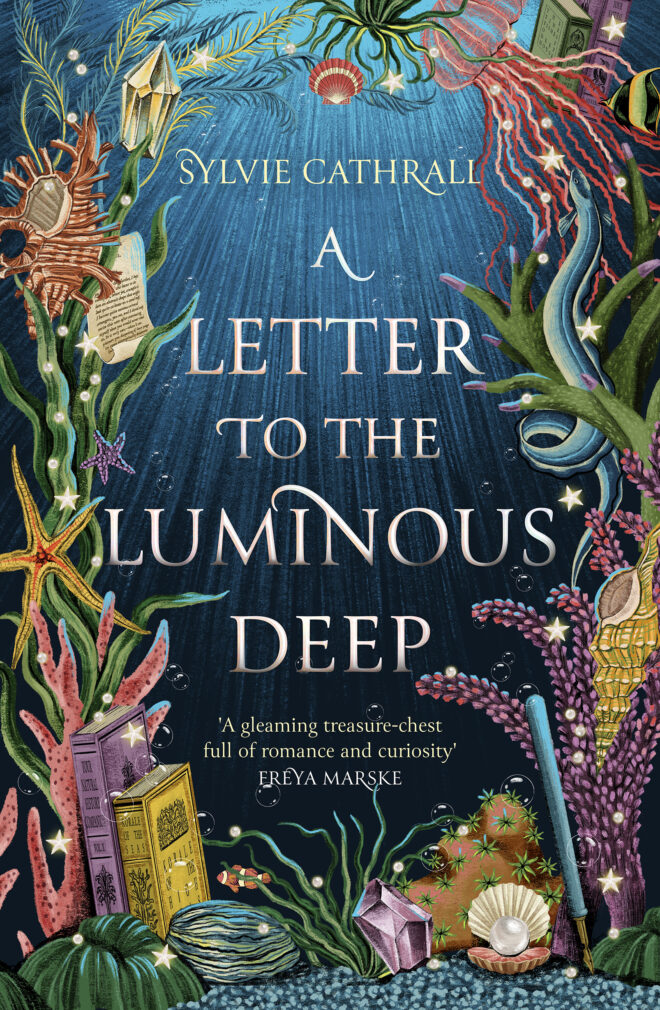
A Letter to the Luminous Deep – Sylvie Cathrall“Darling, don’t you ever sit and ponder/About the building of the hills a yonder?/Where we’re going in this verdant spiral/Who’s pushing the pedals on the season cycle?”

“Epitaph for My Heart” – The Magnetic Fields

I seriously don’t know how Stephin Merritt does it. It’s artists like him and Jeff Tweedy that absolutely baffle me: Jeff Tweedy in the sheer frequency of his records with his various bands and projects, and Merritt with the amount of consistently incredible songs that he can pack into an album. In this case, this is yet another fantastic track from 69 Love Songs—over three hours’ worth of Merritt’s stellar songwriting. The song’s intro is proof of how talented of a songwriter he is; against plunking keys, he puts the warning label from an electric keyboard to music, which turns itself into a miniature metaphor for a heart so busted and battered that it needs a qualified professional to put back together. The melancholy pop song that he launches into after is nothing but classic Magnetic Fields. Who else could casually include “anon” in a song that doesn’t sound purposefully antiquated? Then again, “on and on anon” sounds an awful lot like “on and on and on,” so that’s probably the only way. (Merritt switches it up into “on and dawn and dawn” later too. Layers, people!) Very clever nonetheless—whether it’s upfront or sneaky, Stephin Merritt is practically a songwriting magician with infinite tricks up his sleeve.

…AND A BOOK TO GO WITH IT:

So Lucky – Nicola Griffith“And life goes on and dawn and dawn/And death goes on, world without end/And you’re not my friend…”

“Here Be Monsters” – Ed Harcourt

I pride myself on being a fairly punctual person, so this is a bit embarrassing for me, but once again, like most of the rules I’ve imposed on myself, it’s completely arbitrary. I wanted to write about “Here Be Monsters” three years ago, but it went on the wayside for whatever reason (read: it didn’t match the color palette du jour). Another recommendation from my amazing older brother, it soundtracked a hefty part of the second semester of my freshman year of college, perfect for the late winter chill. Now it’s mid-winter in 2026, I’m nearly finished with my degree, and the weather is once again ripe for dreary songs about religious bigotry.

“Here Be Monsters” sounds cloaked in fog from the get-go—it’s a very wintry song, and it’s fitting for the subject matter. Amid the hollow strums of an acoustic guitar, wobbly whistling, and high-pitched backing vocals fit for one of Danny Elfman’s scores, Harcourt examines the hypocrisy of a certain kind of Christian, the kind that claims to follow Christ’s teachings of compassion and forgiveness, but in reality uses their faith to ostracize and isolate anybody who deviates. I’m sticking to book pairings for these posts, but I can’t help but think of the new Knives Out film, Wake Up Dead Man, and its examination of this kind of hypocritical Christianity and the mental repercussions of the people who are unwittingly caught in the crossfire. The offhand, distanced delivery of much of the lyrics are the embodiment of the “turn the other cheek” line—even in the face of tragedy, it doesn’t matter, because they didn’t follow the teachings of the Bible (or, at least, their often misinformed interpretations of it). With every disaffected repetition of “such a shame,” Harcourt brings to life the façade of compassion that these people often put on, caring on the surface, but harshly judgmental in private. Cloaked in echoes and mist, “Here Be Monsters” is a frigid song, both in lyricism and in instrumentation.

…AND A BOOK TO GO WITH IT:

Extasia – Claire Legrandreligious fanaticism and creeping dread.

Since this post consists entirely of songs, consider all of them to be today’s song.

That’s it for this week’s Sunday Songs! Have a wonderful rest of your day, and take care of yourselves!
Posted in Sunday Songs

Sunday Songs: 12/28/25

Happy Sunday, bibliophiles! I hope this week has treated you well.

This week: the last Sunday Songs of 2025 (good riddance), featuring one more song from Bad Sisters, early college memories, and Liz Fraser getting her money’s worth out of the letter ‘S.’

Enjoy this week’s songs!

SUNDAY SONGS: 12/28/25

“Hate It Here” – Wilco

You know me—I’m a sucker for songs that are sweet, sincere, a little too sappy on occasion. I love a good ballad here and there. But there is a hair-thin line between being sincere and wholesome and being overly earnest and corny in a way that sounds disingenuous the minute you step an inch beyond that line. Being genuine doesn’t mean squinting more than usual when you sing into the mic and switching your guitar from electric to acoustic—unless the feeling’s there, it’s not going to sound sincere. So it’s always an acrobatic feat to make a song that’s earnest and sincere but doesn’t sound fake. Sometimes you have to be a bit of a cornball to get it across, but sometimes, being a cornball is better than thinking that you’re automatically moving people to tears by singing slightly louder.

I wouldn’t say that of Jeff Tweedy though, even if Sky Blue Sky’s legacy is that it’s the origin of the term “dad rock,” a kind of Frankenstein’s monster from Pitchfork writer Rob Mitchum, who now regrets what he created. Tweedy’s just a uniquely sincere kind of poet, no matter the lens he uses. “Hate It Here” is a long time coming on Sunday Songs ever since I discovered it this summer, after it became a setlist staple for Wilco on their most recent tour. The best way to describe it is that it’s wholesome without saccharine—Jeff Tweedy just misses his wife when she’s not there!! He’s lonely!! He loves his wife!! It’s this in song form:

It veers towards the sappy, but it’s delivered with the kind of longing you only get from a happy, stable marriage and a genuine affection—it can’t come across as anything other than wholesome. And like the house that Tweedy’s idly pacing around, there are all manner of quirky musical furnishings—this isn’t in the studio version, but on tour, when Tweedy sings “I’ll check the phone,” Mikael Jorgensen does this little riff on the keyboard that sounds like a phone ringing. And let me tell you, it instantly made me go “OH MY GOD!! HE DID THE THING!! THE PHONE!! THE PHONE IS RINGING!!” It just goes to show the ounces of care that Wilco puts into every song, no matter if it’s about the depths of addiction, existential crises…or missing the wife. Because every song deserves the same love.

…AND A BOOK TO GO WITH IT:

“Cold Was the Ground” – The Limiñanas

I promise this’ll be the last of the music I’ve swiped from Bad Sisters for the foreseeable future. I can’t help it! Whoever was in charge of the music direction should’ve gotten a raise, both for the sheer volume of great songs included, but for the subtle focus on women, be it Melanie or Wet Leg, Nancy Sinatra or Bikini Kill.

If not for the fact that “Cold Was the Ground” plays in-scene while the Garvey sisters are listening to the radio, I fully would’ve thought that it was part of PJ Harvey’s score—those resonant, plucked strings at the beginning sound almost identical to the musical motifs she scattered throughout the series. It’s a song so perfect for the show’s atmosphere that the characters practically break the fourth wall and recognize it themselves—it plays on the radio while they’re disposing of a body, and they insist that Eva switch to another radio station and play something less blatantly topical. “Cold Was the Ground” is a sparse but cinematic song. If Fargo goes on for another season, this would fit perfectly in it; it has that same feel of an unsettling, Depression-era Americana standard, despite the Limiñanas being French. With Marie Limiñana’s breathy vocals, a husky whisper through the mist, you feel a kind of old-fashioned dread, evocative of a campfire story that you’re trying to pretend didn’t scare you, but becomes realer the more you look out into the dark night.

…AND A BOOK TO GO WITH IT:

Funeral Songs for Dying Girls – Cherie Dimaline“I was dreaming a note/In the cemetery/Shadows in my heart/And sadly/I still hear you cry…”

“Pre War Tension” (feat. Marta) – Lonely Guest

I just want to talk about the visual for the song here, because…why are we just zooming in on random parts of Joe Talbot’s face? Why is 1/3rd of this video just the camera slowly getting closer and closer to his hairline, and then zipping back down to his chin? I mean, zooming in on Marta’s eyes and smile during the “Saw it in your eyes/Sense it in your smile” line is a nice touch, but…everything else? Why does Joe Talbot’s picture look like a mugshot?? Why is Tricky’s picture so grainy compared to everybody else’s? No wonder those photos are so tiny on the Lonely Guest album cover…

Anyways. Lonely Guest is essentially just Tricky, but back in 2021, it was a collaborative side project under another name. I’ve only listened to a handful of songs from it, but it captures the modern incarnation of what Tricky’s music has bottled for me: agitation. He thrives on mining dread, anxiety, and all manner of creeping, looming feelings—Maxinquaye is a masterclass in taking that feeling and ballooning it up 10 times its normal size. Though “Pre War Tension” doesn’t musically give that feel—it’s more of a simple instrumental as far as Tricky goes—its guests do. Joe Talbot was the perfect mouthpiece for these lyrics, making the first verse sound like a less aggressive IDLES track; the opening lyrics (“There’s a Macy’s parade-sized pink elephant/In the room that renders me unintelligent”) sound straight off of Ultra Mono. But ultimately, it is still Tricky, and his signature rasp, spoken in an atonal whisper, articulates that tension of wanting to hunker down somewhere cold as the world around you slowly spirals towards ruination. Even Marta’s voice, the most even-keeled balance between Talbot and Tricky, has a kind of resignation to it despite its softness.

…AND A BOOK TO GO WITH IT:

Junker Seven – Olive J. Kelley“Life devours/Then it sours/You wanna go/But you really can’t stay/Your trouble and strife…”

“Aloysius” – Cocteau Twins

I doubt this is an applicable situation for anybody, but if you ever need to explain the definition of “sibilant” to someone (1. making or characterized by a hissing sound or 2. [of a speech sound] sounded with a hissing effect, for example s, sh), just use this song. This song was brought to you by the letter ‘S’: silly, saliva, sashimi, should’ve. Of course, I write down about half of those words without complete certainty that they’re in the lyrics, but either way, it’s a very sibilant song, silky and ethereal like the fabric draped over Treasure’s album cover. Due to that emphasis on ‘S,’ “Aloysius” is one of the more indecipherable Cocteau Twins songs for me—as used to their relative gibberish as I am, all of them blend together like watercolors with that consonant repetition. Frazer makes ‘S’ not even sound like a consonant anymore, with the airy treatment it gets, along with all of the vowels strung along with it. That’s the real talent of Frazer for me: words are malleable things in her hands, elevated beyond words and into strings of pearls.

…AND A BOOK TO GO WITH IT:

“Simulation Swarm” – Big Thief

I’ve manage to only double-dip on Sunday Songs sparingly through the years, but I’ve fallen for it again. To be fair, this one appeared before I was even writing about these and maybe 20 people saw them on my Instagram story, so we can pretend that this isn’t a repeat.

“Simulation Swarm” is so distinctly 2022 for me, and yes, I know, Dragon New Warm Mountain I Believe In You came out that year, but it’s a very specific part of 2022 for me. I remember listening to it while facing the lawn surrounding my freshman dorm in college, the sunlight on the fresh grass, the fear shaky in my legs as my headphones snaked over the worn strap on my purse. I was impressionable to my brother’s music taste then, and I still am now, but he and his girlfriend were guiding me through my first wobbly steps into college (god, THANK YOU GUYS), leaving Big Thief songs like crumbs along the way. I probably heard it at one of the coffee shops on campus too, but either way, if the local coffee shop run by college students isn’t playing Big Thief, what’s the point?

Cobbled together from a series of Lenker’s experiences—hospitalization, a childhood spent in a cult, and her separation from her brother—”Simulation Swarm” is so bursting with yearning that’s it’s difficult to pin down exactly how I feel about it on any given day. I’ve leaned towards an eagerness to escape myself, but it’s a tender little mood ring that burns a bit when you leave it on your finger for too long. Lenker’s lyrics are so poetic and surreal in nature that I can’t help but imagine a fantastical undercurrent to it; my heart always snags on the “last human teachers” bit, maybe just from the sci-fi image that it conjures up. Sure, the verse about “building an energy shield” in the backyard feels very much like kids playing pretend, but I can’t help but thinking of children on a faraway planet, scraping enough money together to make their energy shield out of scrap metal and hijack a spaceship and fly it far, far away, as far as they can get. That emotion, positive or negative, feels to me like the yearning for freedom—like the empty horses, it yearns to break free, and in the chorus, you get the feeling that something’s finally snapped, broken loose, and broken its chains: “I’d fly to you tomorrow/I’m not fighting in this war/I wanna drop my arms and take your arms/And walk you to the shore.”

…AND A BOOK TO GO WITH IT:

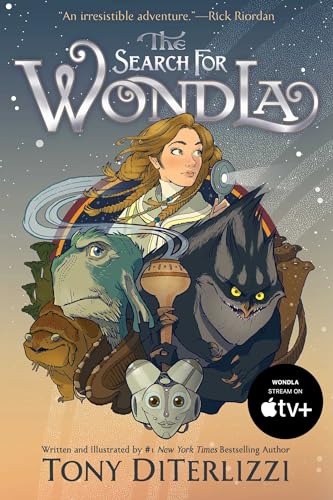
A Hero for WondLa (The Search for WondLa, #2) – Tony DiTerlizzi“I remember building an energy shield/In your room, like a temple/Swallows in the windless field/Very thin, with your mother/Tall as a pale green tree…”

Since this post consists entirely of songs, consider all of them to be today’s song.

That’s it for this week’s Sunday Songs! Have a wonderful rest of your day, and take care of yourselves!
Posted in Sunday Songs

Sunday Songs: 12/21/25

Happy Sunday, bibliophiles! I hope this week has treated you well. Happy Hanukkah, Happy Winter Solstice, and in advance, Merry (almost) Christmas!

This week: speaking of which, I rarely end up aligning my Sunday Songs graphics to actually include any holiday-specific songs, but it worked out just right this year…you decide if it’s a pre-Christmas miracle.

SUNDAY SONGS: 12/16/25

“Have Yourself a Merry Little Christmas” (cover) – St. Vincent

Yet another song I’ve swiped from a movie I have no interest in seeing…listen, I saw ads for this movie exclusively through Pinterest and I had no idea it existed until these songs came out. At least we’ve got several Christmas classics reimagined by indie greats, even if the movie is an afterthought for me (see: Jeff Tweedy’s cover of “Christmas Must Be Tonight”).

When I first played this song, I was afraid, with the key, that we’d fall into “St. Vincent goes too far out of her vocal range; things get awkward” territory (see: her cover of Toadies’ “Possum Kingdom”). As much as I love her, she…clearly has her limits. But she slipped into this cover of a Christmas classic with relaxed, comforting ease. Though I like covers to deviate some from the original, I feel like the rule can be broken for Christmas songs—they’re holiday standards, and they’re standards for a reason. The soft keyboards and synths generate a cozy, fireplace atmosphere, and Clark’s warm voice adds that special layer of Christmas cheer that makes me feel as though I’m under a warm blanket watching snowflakes gather outside my window. Even though it’s far from the place for her signature shredding (though I’m not sure any Christmas song merits that), I love that she lent her voice to this song.

…AND A BOOK TO GO WITH IT:

Fangirl – Rainbow RowellI feel like I rarely read Christmasy books, but this one’s got lots of Christmas cheer.

“Drive My Car” (The Beatles cover) – The Donnas

Speaking of covers that barely deviate from the original…

There’s an element of “if it ain’t broke, don’t fit it” at play, especially since this is none other than The Beatles—there’s no denying that “Drive My Car” is an impeccable pop song, and a very nostalgic one for me as well. The other cover I can think of, by the exclusively-covers side project of Supergrass, The Hotrats, follows the same formula—and I love it. So sure, although it’s a little unadventurous that nothing’s really changed about The Donnas’ version of “Drive My Car,” sometimes covers don’t need all that much change. Some songs came out of the womb (or, in this case, out of the brains of Lennon and McCartney) nearly perfect, and there’s no point in trying to change it. The opposite can be true as well—“Cry Baby Cry” comes off of my favorite Beatles album, and yet I almost love Throwing Muses’ dreamy take on the song better than the original. (Apologies for the potential Beatlemaniac heresy.) And The Donnas’ cover retains exactly what made the original so fun—it’s catchy, it’s punchy, and the harmonization is as sharp as anything. Brett Anderson (no, not the Suede one) has the exact kind of vocals that “Drive My Car” needs—upfront, with a smooth yet sharp tone that demands to be front and center. You have to be a special kind of vocalist to pull off the iconic “beep beep, beep beep, YEAH!”—and Anderson absolutely is.

…AND A BOOK TO GO WITH IT:

The Monstrous Misses Mai – Van Hoang“I told that girl I could start right away/When she said, ‘Listen, babe, I got something to say/I got no car and it’s breaking my heart/But I found a driver and that’s a start…'”

“(Nothing But) Flowers” – Talking Heads

Tiny Desk has had a score of heavy-hitters this year, and what better to…kind of cap the year off than David Byrne? With both new material from his latest album, Who is the Sky? and Talking Heads classics, it was truly just a shot of joy to the veins—just the thing I needed to loosen up after getting finals out of the way. For somebody so renowned for having a cagey stage presence, he seemed surprisingly loose. Maybe it’s just come with age or comfort level, but nonetheless, the joy was contagious.

I’ve slowly been picking up Talking Heads hits like ripe fruits on the side of the road. They’re one of those bands that I feel automatically a fan of, even though I only know 10 of their songs tops, just because I’ve become so attached to some of their songs. God knows I’ve got a score of fond memories attached to “Once in a Lifetime.” One of their latter-day hits, “(Nothing But) Flowers” is an upbeat yet almost cynical take on the post-apocalypse. Like many visions of the future, it imagines our polluted, industrial landscape returned to the vegetation, with Pizza Huts and Dairy Queens grown over and plowed away to make room for fields of wildflowers and wheat. Obvious references to the Garden of Eden, the world has become a pastoral haven—and yet, we cannot adjust to this sudden change, and even though our capitalist environment was pretty obviously worse, everybody yearns for that familiarity—”If this is paradise/I wish I had a lawnmower.”

It’s no wonder that Byrne chose this song for this Tiny Desk Concert, nearly 40 years after its initial release: the line “And as things fell apart/Nobody paid much attention” is a little too on the nose considering…everything. And that’s not even considering the overt political messaging in the music video. Even when we’re faced with a world full of broken, corrupt systems, we’ve become so used to living with the horrors that we might flounder when faced with something better. I hesitate to say that it’s fully cynical, since the vision Byrne and co. conjure is certainly akin to paradise, and yet the song ends with the cry of “I can’t get used to this lifestyle!” I suppose it’s less a condemnation of us and more of a condemnation of how capitalism has groomed us into thinking that it’s the Best Possible Lifestyle! while actively plowing us into the ground. It’s a testament to capitalist propaganda, for sure, to think that our hellscape of five McDonald’s in a two-mile radius and factories belching out chemicals into the air is better than idyllic fields of flowers and breathable air.

But it is, after all, propaganda: words, systems, all created by human hands. Human hands can dismantle it right over again and build something better. To quote Ursula K. Le Guin, “We live in capitalism. Its power seems inescapable. So did the divine right of kings. Any human power can be resisted and changed by human beings.” Like the flowers, I believe that we can overrun what was once Pizza Huts and factories and make do with what springs from the ashes.

…AND A BOOK TO GO WITH IT:

A Psalm for the Wild-Built – Becky Chambers“This used to be real estate/Now it’s only fields and trees/Where, where is the town?/Now, it’s nothing but flowers…”

“If I Was Ever Lonely” – Sharp Pins

The lingering feeling I get with this song is that it has to be indicative of something. Something’s catching on. It could just be limited to Kai Slater, but I swear it’s proof that either Elephant 6, Jim Noir, or just weirdo, offbeat, ’60s-inspired indie is on the rise again. Radio DDR was released earlier this year, but if you hadn’t told me that this was Sharp Pins, I would’ve been fooled if you’d told me that this was a leaked Olivia Tremor Control demo from 1998. Either way you hear it, “If I Was Ever Lonely” is cloaked in pure, jangle-pop fun—there’s a very Brian Wilson-esque swing to it that makes you nod your head instantly. With the lo-fi production and the literal dizziness in the lyrics, listening to “If I Was Ever Lonely” strangely feels like staring into the sun. It’s not out of any sense of pain, but more of a carefree feeling of being so head-over-heels that everything is sunny and blurry at the edges.

…AND A BOOK TO GO WITH IT:

Just Your Local Bisexual Disaster – Andrea Mosqueda“Watching from the back seat of your car/Wondering how far you can take it when I’m so lonely/Dancing in the ballroom hall/Seeing how far I can take it before I’m over you, girl…”

“One Evening” – Feist

So I’ve found the second-most popular Feist song beginning with the word “one,” it seems. (All thanks to a good friend, by the way—thank you!!) I’ve heard scattered Feist songs here and there—“1234” was a childhood staple, and I discovered “Undiscovered First” through Legion, one of many, many songs from Noah Hawley’s playlist that I desperately need to steal, or at least have a look at. The glimpses I’ve gotten are disparate, but from what I can tell, that means that Feist has range, or is at least fairly exploratory in her style. There’s the indie pop of “1234,” the anxious build of “Undiscovered First” or “A Commotion,” and “One Evening,” which has a softer, more loungey feel to it. The entire production is soft and sly in places, a song composed out of stolen glances from across the bar and accidental brushings of the hands of strangers. With soft-sung harmonies, it’s such a tightly-woven groove in such an unassuming song—beneath the softness, it boasts an airtight, deeply catchy composition.

…AND A BOOK TO GO WITH IT:

The Invisible Life of Addie LaRue – V.E. Schwab“When we started/Both brokenhearted/Not believing/It could begin and end in one evening…”

Since this post consists entirely of songs, consider all of them to be today’s song.

That’s it for this week’s Book Review Tuesday! Have a wonderful rest of your day, and take care of yourselves!

Posted in Sunday Songs

Sunday Songs: 12/14/25

Happy Sunday, bibliophiles! I hope this week has treated you well.

Since I had to hunker down for one more week for finals, here’s my graphic from that week:

12/7/25:

This week: Even more songs from Bad Sisters, circling back to Forever is a Feeling, and getting unexpectedly chucked back to November 2019.

Enjoy this week’s songs!

SUNDAY SONGS: 12/14/25

“Mother Whale Eyeless” – Brian Eno

Sorry, folks. It’s too early for me to draft my New Year’s Resolutions, but they probably won’t include “shut the fuck up about Brian Eno.” You’re in for a long few years.

Back in November, at the behest of my older brother, I finally got around to listening to Taking Tiger Mountain (By Strategy). Pardon the hyperbole, but to call it just an album feels like a disservice, mostly because there’s just so much crammed in there. It’s a whole stuffed Thanksgiving turkey of esoteric references and inspirations; the main defining threads are loosely centered around the Chinese Communist Revolution and general themes of warfare, but even that somehow doesn’t scratch the surface. Plane crashes, a Belgian town whose population is outnumbered by the patients in its local mental asylum, and a play dating back to the Chinese Communist Revolution (from which the album took its name) are just some of the scattered subjects that Eno covers in its 48-minute runtime. He verges from a campy satire of the military on “Back in Judy’s Jungle” to punk-precursor “Third Uncle” to the deeply moving “Taking Tiger Mountain,” a song that closes the album with the same huddled, melancholic yet triumphant feelingI always get listening to The Beach Boys’ cover of “Old Man River.” (Blame it on Fantastic Mr. Fox.) And yet, with all of those disparate images clanking about, it’s so cohesive. The thread, I think, is both Eno coming into his own as a solo artist, as well as his riotously creative imagination—it’s an album with such a distinctive style that could never be authentically replicated, no matter how hard somebody might try. There can never be another Eno, and there can never be another Tiger Mountain. It’s just so singular in its uniqueness.

Something that bubbled up in me while listening to Taking Tiger Mountain by Strategy was that although many of the lyrics are abjectly nonsensical, I found myself getting emotional out of nowhere. For “Taking Tiger Mountain,” I could pinpoint a more easily categorized reason—it’s got the feeling of relief, of victory at a steep cost, of the tearful end of a film. The other that got me misty on the first listen was “Mother Whale Eyeless.” Eschewed by the delightfully stream-of-consciousness lyrics, there’s something about a fundamental change—many have interpreted it as a relationship that can’t go on and the mounting fear of the inevitable implosion. Either way, something’s on the horizon, and it’s a shadow of dread—as in a “cloud containing the sea,” or the formidable shadow a whale might cast upon a school of passing fish. Yet what gets me about this song is that there’s some sort of near-euphoric feeling of ascent to it—you get the feeling like it’s piercing the very atmosphere like a rocket breaking the sound barrier; the only way it can go is higher, higher, higher still. There’s something anticipatory about it, yet there’s no explosive finale—you just break the sound barrier and are left with the fallout. The fallout is the euphoric journey that Eno takes you on, through winding turns buoyed by his Oblique Strategies (you’ll really get the meaning about his emphasis on repetition and/or lack thereof after listening to this song). Phil Manzanera’s guitar soars, aching of Low-era Bowie before it even existed, and Phil Collins’ pattering drums add jet fuel to the anticipatory nature of the track. (Also, I swear the electronic background noises in the very beginning sound a lot like the intro to St. Vincent’s “Big Time Nothing.” Just me?)

But the centerpiece for me is the refrain sung by Polly Eltes. This is where I got choked up out of nowhere. The entrance of Manzanera’s fuller guitar work allows for a breather and opens up the curtain for Eltes’ voice, in which she sings: “In my town, there is a raincoat under a tree/In the sky, there is a cloud containing the sea/In the sea, there is a whale without any eyes/In the whale, there is a man without his raincoat.” (I swear her voice reminds me a little of Régine Chassagne.**) There’s an uncanny feeling of poignant simplicity of it; it feels like a nursery rhyme, or a proudly recited line of an epic poem. To me, it almost feels like a declaration of purpose: an open defiance of interpretation, a thesis that even the most dreamlike and esoteric lyricism can be just as emotional as something that tackles a subject head-on. Either way, there is no denying the feeling that “Mother Whale Eyeless” gives me.

…AND A BOOK TO GO WITH IT:

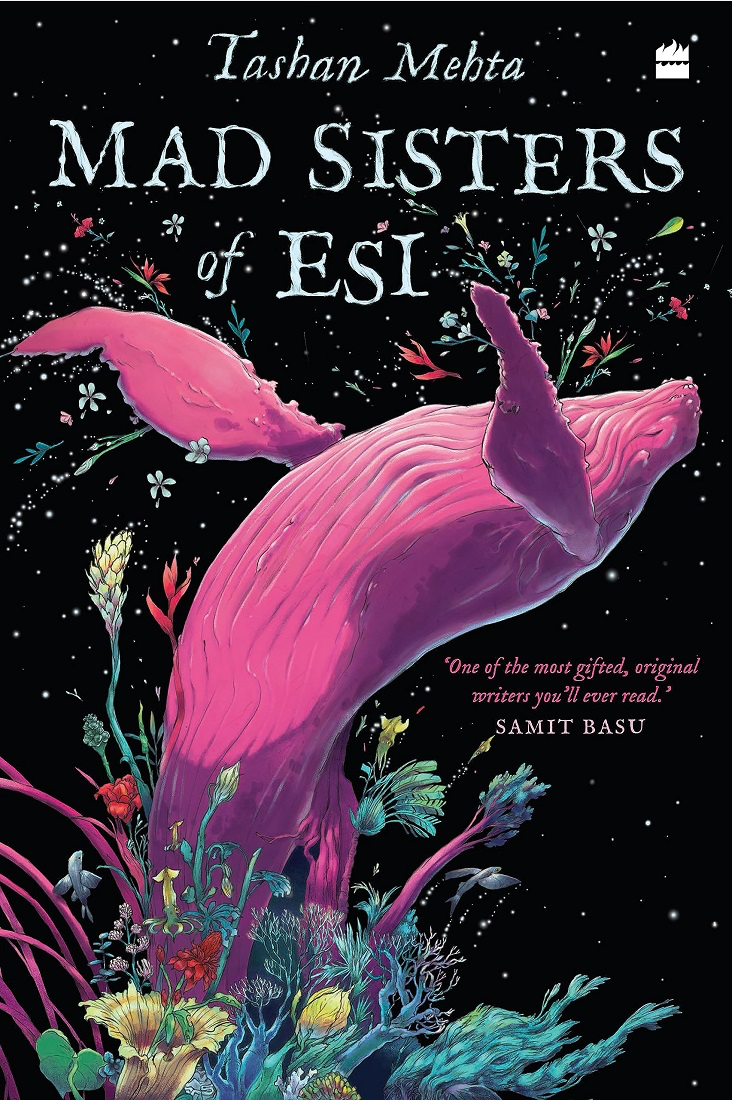
Mad Sisters of Esi – Tashan MehtaI promise I’m not putting this in here solely because of the whale…but I’m not saying they’re not connected. Either way, that surreal, imaginative quality of Eno pairs well with Mehta’s writing.

“Bullseye” (feat. Hozier) – Lucy Dacus

When Forever is a Feeling first came out, I felt like her having a Hozier feature added to the feeling that Lucy Dacus had begun to sell out. I suppose the overlap between their fanbases (read: gay people) was essentially a circle, so it probably was inevitable anyway. No disrespect to Hozier though—very talented guy, and I love his voice, but his music isn’t always my cup of tea.

To my surprise, “Bullseye” has become one of my most played songs from the album. There’s something so tender about it that reminds me of Dacus’ older work. I think what sets Dacus’ songwriting is that every emotion comes through in the most unexpected vignettes—the opening lines of “Next of Kin” (“Reading in the phone booth/Sucking on a ginger root”) come to mind. She has such a keen, observational eye that decorates her songs with the most unique setpieces, like some kind of musical bowerbird building a nest. While the ones in “Bullseye” stand out as more obviously romantic (carving locks into initials on bridges, reading annotations in your lover’s books), it’s so clear how much it shapes her songwriting. She admits it herself: “Found some of your stuff at my new house/Packed it on accident when I was movin’ out/Probably wrong to think of them as your gifts to me/More like victims of my sentimentality.” She’s a kind of museum curator of fleeting, stolen moments, which make up the core of “Bullseye.” And although Hozier isn’t normally my cup of tea, his voice with Dacus’ makes up such rich, heartstring-tugging harmonies that give the song an added layer of tender warmth.

Though I wasn’t able to catch her on this tour, the highlight has been seeing her perform this song, not just because of how lovely it is. She’s been making it her mission to duet with as many people as possible—David Bazan, Samia, Stuart Murdoch, and Jay Som, among others!

…AND A BOOK TO GO WITH IT:

Lakelore – Anna-Marie McLemore“You’re a bullseye, and I aimed right/I’m a straight shot, you’re a grand prize/It was young love, it was dumb luck/Holdin’ each other so tight, we got stuck…”

“People in the Front Row” – Melanie

For the next two songs, we enter what I’m calling the Bad Sisters section. If I had a nickel for every Melanie song I’ve ripped from a season finale of Bad Sisters, I’d have two nickels, etc., etc.

Like many of Melanie’s more iconic songs, “People in the Front Row” is an anthem for sticking to your guns, even in the face of critics. It’s much more literal than others, and although her voice falters in wobbly ways, given the belts she’s capable of, it’s full of the same impassioned fervor of hits like “Look What They’ve Done to My Song, Ma.” The odd laugh-singing aside, it’s such a poignant, determined ode to the people who support your art through thick and thin, no matter how much critics kick you down.

…AND A BOOK TO GO WITH IT:

You Should See Me in a Crown – Leah Johnson“You know I looked around for faces I’d know/I fell in love with the people in the front row/Oh, how my predicament grew/Now I got friends, and I think that my friends are you…”

“Billie Holiday” – Warpaint

Warpaint have historically been hit-or-miss for me; I’ve loved their cover of David Bowie’s “Ashes to Ashes” since middle school, but most of their music has been rather lukewarm for me. I have a specific memory of trying to listen to their self-titled album on a whim several years ago and being, disappointedly, quite bored. But every once in a while, they’ll snag me out of nowhere (see also, from this EP: “Burgundy”).

This one came out of the blue in a scene in season 2 of Bad Sisters, ironically placed, given the context; it matches the eerie, melancholic tone of the scene, in which Becka finds out that she’s unexpectedly pregnant and, instead of telling her boyfriend, does what any sensible person does and…cheats on him with the guy that she’s insisted she’s over with. Naturally. (What the hell, Becka?? She’s a hot mess, if you couldn’t already tell.) There’s a deep irony behind using this song, which repeats various platitudes about staying loyal: “Nothing you can buy could make me tell a lie to my guy/Nothing you could do could make me untrue to my guy/I gave my guy my word of honor to be faithful and I’m gonna/You best be believing, I won’t be deceiving my guy.” [Ron Howard voice] Becka did, in fact, deceive her guy.

Maybe there’s a layer of irony to that beyond Bad Sisters, as although the melody is entirely original, around half of the lyrics, including the ones above, are interpolated from Mary Wells’ “My Guy.” When that much of the song is interpolated, it almost feels like cheating, even if the proper credit was given to Wells (as well as Smokey Robinson, who wrote the song). Yet it’s an entirely different atmosphere that they’re placed in, like a zoo animal let loose in a completely foreign biome; as opposed to Wells’ cheery, Motown organs, “Billie Holiday” is draped in reverb, misty strings, and acoustic guitars. It’s like wandering through a thick fog, where Wells’ song is as bright and clear as day. I suppose it’s a similar deal to Spiritualized’s use of “Can’t Help Falling in Love,” but that, to me, felt much more transformative, and used only one verse (as opposed to the three verses of Wells’ that Warpaint used). Easy way out it may be, but at least the end product is appropriately distinct, and compellingly dreamy.

…AND A BOOK TO GO WITH IT:

Funeral Songs for Dying Girls – Cherie Dimaline“As I walk this line, I am bound by the other side/And it’s for my heart that I’ll live/’Cause you’ll never die…”

“One Wing” – Wilco

Do you ever have those moments where a song hits you out of the park with some deeply vivid place in time that you didn’t see coming? Leave it to Wilco to throw another unexpectedly emotional curveball right into my face out of nowhere. Instantly, I had this feeling of being cold, of being in a gray parking lot. My mind placed it in November of 2019, by some uncanny instinct. I can’t place why, but I only just remembered that I had a borderline religious experience at the front row of a Wilco concert…in November of 2019. Maybe that parking lot was in the chill of the Mission Ballroom at night. My brain, inexplicably, just knew to place it at this time, even if “One Wing” isn’t in the setlist.

The brain truly fascinates me sometimes. There’s a part of me that wants to know everything about why it remembers what it does, and why it innately attaches feelings and memories to music out of nowhere. But somehow, I feel like that would ruin the magic of these fleeting, unexpected moments. I love the way my brain plays with memory and image the way it does, the way even the faintest whiff of an old tube of lipgloss or the notes of Nels Cline’s guitar is instantly transportive. I think it would ruin everything if I knew the precise logic of why my brain shuffles the cards and comes up with these vivid, dreamlike images. Sometimes, I think we ought to bask in that mystery. Tip our hats to the strange phenomena, etc. What a lovely, strange organ we have.

Oh, wait, I’m talking about a song, right? Oops. And what a song it is—I don’t know how this one completely passed me by, but Wilco always has the most moving surprises up its sleeve. From what I’ve heard of Wilco: The Album (featuring “Wilco (The Song),” there’s a lot of conflicting themes—said band theme song, more songs about murder, and determined love songs; but for an album like that, it makes sense for the songs to run the gamut of the range of the band. Next to “I’ll Fight,” “One Wing” makes clear sense—I’m not sure if it’s directly about Tweedy’s relationships, but there’s a clear undercurrent of wanting to rekindle faltering love and repairing something broken. (I’ve also seen interpretations that the “wings” allude to the divisions in American politics—literally the left and right wings—and while the broken relationship makes more sense to me personally, it makes me see things in a new light. A precursor to “Cruel Country” and “Ten Dead,” maybe?) That late-fall chill feels deliberate in the face of the haunted longing in “One Wing”—as the chorus picks up steam, it feels like icy wind buffeting against your cheeks, plucking tears from your eyes as you cling to someone for comfort. Nels Cline’s guitar, with a soaring tone reminiscent of A Ghost is Born, is as plaintive as Jeff Tweedy’s lyricism, all channeled into a plea for forgiveness against the friction of the world: “One wing will never ever fly, dear/Neither yours nor mine/I fear we can only wave goodbye.” It digs at such a tender, weak part in my soul…ouch, Jeffie.

…AND A BOOK TO GO WITH IT:

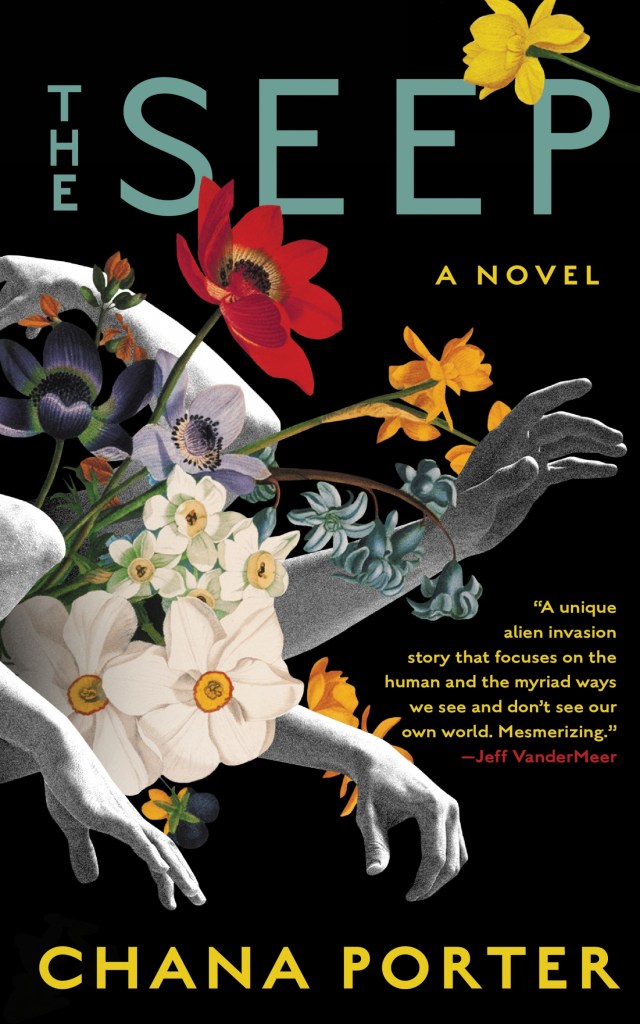
The Seep – Chana Porter“We once belonged to a bird/Who cast his shadow on this world/You were a blessing and I was a curse/I did my best not to make things worse for you…”

*”oh, haha, a goofy kid’s song!” without a shred of irony, this is an absolute banger. Somehow, it ended up being my most-listened to song for November, according to Apple Music. Never underestimate the power of They Might Be Giants writing about numbers.

**In other music news I haven’t gotten around to talking about…I try not to be in the active practice of hoping for people to get divorces, but I am so, so glad Régine Chassagne got out of there.

Since this post consists entirely of songs, consider all of them to be today’s song.

That’s it for this week’s Sunday Songs! Have a wonderful rest of your day, and take care of yourselves!
Posted in Sunday Songs

Sunday Songs: 11/30/25

Happy Sunday, bibliophiles! I hope this week has treated you well.

I’ve got at least one more post here before I inevitably have to crawl back into the finals burrow. Since I’ve been out of the office lately, here are my graphics from the past few weeks:

11/9/25:

11/16/25:

11/23/25:

This week: What half of Britpop’s Big Four frontmen are up to these days, peak goth drama, and I finally find out why Joe Talbot was hiding out in that Gorillaz exhibit like Where’s Waldo.

Enjoy this week’s songs!

SUNDAY SONGS: 11/30/25

“Something Changed” – Pulp

Pulp recently put on an absolutely showstopping performance at NPR’s Tiny Desk Concert. I still have only a handful of Pulp songs that I really know, but even as a budding fan that initially knew only 1/4 songs in their setlist (that one being “This Is Hardcore,” yet another shoutout to my amazing dad for showing me that one!), their performance was an absolute joy. Even in the confines of said Tiny Desk, Jarvis Cocker has the most enigmatic, fluid stage presence that defies being simply Britpop and has transformed into a timeless charm. And now I have three more Pulp songs on my rotation!

“Something Changed” hooked me more than the rest, and it reminded me that I really just need to get over myself and listen to Different Class already. Themes of social and sexual frustration aside (see: “Live Bed Show”), Pulp seemed to have an uncanny ability to create such pure, resonant anthems without making them cloying or insincere. I never got around to talking about “Disco 2000” last year, but that song feels like the platonic ideal of a pure, passionate love song—it’s a small wonder that nobody’s used it in the end credits of a rom-com yet. (Maybe that’s for the best? It’d need a really good rom-com.) “Something Changed” has that same quality in softer shades, with Cocker crooning about the nature of chance against a backdrop of swelling, sunlit strings: “Do you believe there’s someone up above/And does he have a timetable directing acts of love?” For someone with a sense of humor as sardonic and often cynical as Cocker, it’s a display of sincerity that feels anything but inauthentic—you can tell that, to some degree, there’s a genuine feeling of being wonderstruck by the chances that led him to this point in time—and this whirlwind romance.

“Something Changed” starts at 8:05. While you’re here, though, the 7+ minute rendition of “This Is Hardcore” stopped me dead in my tracks. One of the best Tiny Desk Concerts this year, for sure.

…AND A BOOK TO GO WITH IT:

Time and Time Again – Chatham Greenfield“Oh, I could have stayed at home and gone to bed/I could have gone to see a film instead/You might have changed your mind and seen your friend/Life could have been very different but then/Something changed…”

“Any Guy” – Melanie

I never find Melanie songs organically, I just leech them off of TV shows about once a year (see: “Look What They’ve Done to My Song, Ma” thanks to We Are Lady Parts). This one in particular came from the season 1 finale of Bad Sisters, and without spoiling anything, it rang out as a bitterly triumphant anthem for the culmination of a season’s worth of work to try and eliminate a man equivalent to Satan incarnate from the face of the earth. Season 1 has been out for a few years, but I’ll still refrain from spoilers.

But some needle drops get better and better the more that you think about them. Melanie fit along with the musical feel of Bad Sisters, primarily featuring needle drops from great women-fronted bands and musicians (Bikini Kill, Nancy Sinatra, Wet Leg, and of course, the theme song and score composed by the iconic PJ Harvey). Many of them feel more atmospheric other than a handful of very purposeful ones, but “Any Guy” relates so much to the character of Grace to me. A lot of Melanie’s earlier fame centered around how childish she looked—this was pre-“Brand New Key” and people derailing childhood innocence into Freudian nonsense, but there was a clear correlation between what people saw as an unassuming young woman and the talent that resided inside of her. That image remains after her death, but for me, Melanie’s her best when she lets loose—think of the righteous fury at the end of “Look What They’ve Done to My Song, Ma!” That final belt at the end! Reckoning! “Any Guy” has that same explosive moment at the end; beneath the veneer of placid strings, Melanie stews about getting involved with a two-timing guy and feeling disposable, until her waver breaks into an impassioned howl of “Is she as pretty as me, huh?” Nothing’s better than when Melanie snaps and lets the full force of her voice free, and what better song to soundtrack a similarly unassuming, underestimated woman finally breaking free. Even when she’s singing of breaking away, there’s a waver in her voice, and that’s more Grace than anything—and there’s no shame in having a waver in your voice when you’ve finally mustered the courage to speak your mind.

…AND A BOOK TO GO WITH IT:

The Heartbreak Bakery – A.R. Capettabreakups, miscommunication, and one very fateful batch of magic brownies…

“The God of Lying” (feat. IDLES) – Gorillaz

Guess who’s getting tickets to L.A. the minute that they announce when the House of Kong exhibit is coming?? Prepare for me to be INSUFFERABLE and IN CALIFORNIA

Back when they did the story on the London House of Kong exhibit over the summer, they showed the collage on the wall of all of Gorillaz’s collaborators over the years. There were tons of familiar faces: De La Soul, Yasiin Bey, Shaun Ryder, St. Vincent, et cetera…but I swore that I could see Joe Talbot peeking out from between the faces. And it got me thinking…had I missed something? Mind you, this was before The Mountain was announced, so I had no idea what was a head. But now that it’s here, I’m so excited for this pairing! As is the ritual with most modern Gorillaz rollouts, the singles are hit or miss. “The Happy Dictator” was loads of fun, but “The Manifesto” is somehow two different songs, and none of them are particularly good. And here we see the post-Humanz Gorillaz “where’s Damon?” problem—it’s all the collaborators and barely him.

Thankfully, “The God of Lying” fixed this issue swiftly, with Albarn trading off verses with Joe Talbot of IDLES. Gorillaz have been mining the state of dystopian discontent that we’re in for quite some time now, but if there’s anyone more fit for an antidote, it’s Talbot. As he coolly assesses the sorry state of the world (“Are you deafened by the headlines?/Or does your head not hear at all?/Are you pacified by passion/Are you armed to the teeth?”), Albarn’s distorted voice professes that we’ve all reached for some comfort beyond the bad news, but that it’s so overwhelming that we can’t even comprehend that hope is still possible; we’re actively “running to the exit” because we somehow fear the notion of hope existing even while trapped in an endless cycle of doomscrolling and horrific news. Albarn said this to BBC Radio 1: “I suppose I’ve kind of got in my head what happened a few days ago with Mamdani in New York. And one of the things he said that really kind of stuck out for me is that ‘Hope is alive’. And in this track, Joe and I are kind of we’ve been chased by hope. And I thought, Oh, that’s nice.” First off, since I was hunkered down doing homework when it happened…THAT’S MY MAYOR! (I’ve been to NYC a grand total of one time in my life…anyways.) Second, what a poetic assessment—we haven’t just abandoned hope, we’re being pushed away from it, pacifying the weight of carrying every bad thing in the world with fleeting pleasures and addiction. It’s a poignant statement for both Albarn and IDLES, enduring proof that love remains to be the fing.

…AND A BOOK TO GO WITH IT:

No Gods, No Monsters – Caldwell Turnbull“Are you pacified by passion?/Are you armed to the teeth?/Are you bubbling at the surface of what’s cooking underneath?/Are you dying for an answer for what they call good grief?”

“A Night Like This” – The Cure

Another album that I need to listen to: The Head on the Door, apparently! As the result of being brought up by gothy parents who went to high school in the ’80s, I’ve practically listened to the whole thing. The same can be said for a fair amount of their albums. (From The Head on the Door in particular, I have a specific memory of my parents showing me the “Close to Me” video and thinking that the puppets were really funny.)

How perfect it was that I remembered “A Night Like This” right after Halloween. Frankly, every season is The Cure season if you can get with the drama 24/7, but you can’t deny that it’s the ideal fall or winter soundtrack. This track in particular represents the peak of what I love about The Cure—oh my god, the drama. I mean that without any irony, because there’s such an art to throwing yourself into it fully without looking insincere. You have to make a bit of a fool of yourself to sell it, but Robert Smith never looked the part to me—it was so intentional, and so clearly from a place of love. Lyrically, that’s what sells the glut of the song for me, but musically, what pulled it back from my memory was that guitar tone—so incredibly rich and full, and yet cavernous in a way that it couldn’t be considered goth without. It’s the closest I feel a guitar can sound to a cello without Jonny Greenwooding it with an actual cello—there’s a depth to the sound that feels like it could only come from an instrument with a hollow body. It’s all an undeniable spectacle of romantic (capital R Romantic and the usual sense) passion.

…AND A BOOK TO GO WITH IT:

Red City – Marie Lu“It goes dark, it goes darker still/Please stay/But I watch you like I’m made of stone/As you walk away…”

“Where the Road Goes Down from Two Lanes to One” – Julie Doiron, Michael Feuerstack, Land of Talk, & Dany Placard

I just put Julie Doiron on the graphic since she’s the main artist on this song, but I wanted to credit the rest here. I just don’t think I could fit everybody else in the tiny text in that tiny little rectangle, and I’m not about to give anybody eyestrain.

I found out about this soothing song through Black Belt Eagle Scout, who played several shows with Julie Doiron earlier this month. (Happy to see that they’re well enough to play music again!!) Either way, I was immediately charmed by the nostalgic calmness of this song; it’s a six-minute, lazy stroll down memory lane, buoyed by a series of multilayered harmonies. As Doiron strings together a series of vignettes about crushes on boys and late-night driving, she gives them the feeling of blurry, sun-bleached photos with the edges curled up from wear. Towards the end, as all four of their voices fall artfully out of sync, repeating “Can you say it how I remember/Will you say it how I remember/Can you sing it how I remember/Will you sing it how I remember?”, it brings into sound the feeling of memories tangling together in your mind, timelines hazy and blurred, but just as pleasant as they were in the moment.

…AND A BOOK TO GO WITH IT:

Amelia, If Only – Becky Albertalli“Get in the van, we’re late for a show/Still got four more hours to go/Road maps, glovebox, no phone/I need to pull over, I wanna call home…”

Since this post consists entirely of songs, consider all of them to be today’s song.

That’s it for this week’s Sunday Songs! Have a wonderful rest of your day, and take care of yourselves!
Posted in Sunday Songs

Sunday Songs: 11/2/25

Happy Sunday, bibliophiles! I hope this week has treated you well.

This week: In which I study the sudden occurrence of British men writing diss tracks about God in 1987.

Enjoy this week’s review!

SUNDAY SONGS: 11/2/25

“Decora” – Yo La Tengo

My Yo La Tengo knowledge is limited, considering how they theoretically line up with quite a bit of my music taste. They definitely seem to fit into my indie music sensibilities, and I even share a name with one of their songs, though they pronounce it differently than my name. (You win some, you lose some.) I do, however, know drummer and vocalist Georgia Hubley from the infectiously catchy and delightful 6ths track “Movies in My Head.” It’s a song about dreaming up fantastical scenarios and real life never measuring up, and Hubley’s airy vocals really do give it the feel like she’s never quite looking at the camera and never quite there, at least not fully. (Surely I don’t relate to that at all. Nah…)

That same dreamy quality of Hubley’s vocals blooms here, but in nearly the opposite environment. It feels like an adaptable houseplant to me: plant it in wildly different-shaped pots, and it still blooms just the same, and just as bright and healthy. I suppose that’s what you’d call versatility, but bear with me, I’m an English major. Let me have a metaphor or two…either way, this is just about the opposite end of the spectrum as Stephin Merritt’s sparkling indie pop. “Decora” is far noisier and grungier in the background, laden with crunching, distorted guitars that sound like the squealing of rusted machinery. It’s all rough edges and pockmarks, much like the collaged album cover of Electr-O-Pura. Yet Hubley’s voice drifts like a pastel balloon above a junkyard, sailing effortlessly through the clouds amidst the grime and squealing of the instrumentals. It’s beyond a perfect pairing—such disparate sounds meld together so seamlessly, and that’s magical to me.

…AND A BOOK TO GO WITH IT:

Skyhunter – Marie Lu“It’s not the first time you’ll take a fall/Act like you’ve never seen double before/We tie deep into the past/Take this chance with me ’cause it’s the last…”

“Saint Julian” – Julian Cope

British men in 1987, for whatever reason: “I absolutely need to write a diss track about God RIGHT THIS SECOND” (see also: the more well known “Dear God”)

So. Saint Julian! Severely underrated album, right? It just reeks of this jangly, proto-Britpop sound that I can’t get enough of. I’d already listened to about half of the album by virtue of it being on heavy rotation in my dad’s car throughout my childhood, but the familiarity of it didn’t dull the sheen at all. It’s very much a pop album, but it’s a clever, horny, dramatic, literate, and downright catchy one—”Eve’s Volcano” has been on repeat for me since June.

Past the first half, the album takes a turn from literately horny to just literate, but the sound is just as consistent. Where he was just singing about how you need to hold onto his special feature (wink wink), he applies the same instrumentals to his personal beef with God. Which…entirely understandable, and given the rest of Cope’s discography, is actually much more common for him than the former, given his penchant for philosophy and the ideas of Jungian psychoanalysis. Amidst almost medieval-sounding woodwinds and an otherwise ’80s band, he characterizes God as deliberately smug, a God that all but slapped him in the face when he tried to seek him out for solace: “‘I’ve been looking around this world I created/It’s going so well!’/I looked, I stared, I said, ‘I think I’ve lost you!'” Cope’s got a lot of snark to spare, but it’s all leveled in such a sly, clever way—he feels almost like a kind of trickster deity with a smirk aimed at the camera knowing that he’s had God himself. And like a lot of tricksters, the narrative ends in Cope getting imprisoned by God for mouthing off, not knowing that he’s given him even more proof that God’s not all that: “Remind me not to pray to you!”

…AND A BOOK TO GO WITH IT:

Agnes at the End of the World – Kelly McWilliams“I stared into your face, the waves so deep and strong/Your fall from grace—a God so far gone/Remind me not to pray to you…”

“I Feel Free” (Cream cover) – David Bowie

Last week, I got into some David Bowie covers, so why not get into David Bowie covering other bands this week? A little switcheroo…

And talk about covers that sound eons away from the original! I didn’t even know it was a cover until a few days ago, but the original version by Cream from 1967 sounds worlds apart from Bowie’s interpretation in 1992. As Bowie tells it, in the early days of The Spiders from Mars, he and Mick Ronson would frequently cover this song—according to him, it didn’t sound very good, but I swear their ’70s sound would suit this cover perfectly. (It was also the final track that Bowie and Ronson recorded together before Ronson’s tragic, early death from cancer at age 46.) Instead of the peppy, very distinctly ’60s swagger of Cream, Bowie’s version of “I Feel Free” all but sounds like it was fast-tracked into the ’90s at startling speeds. It almost sounds more like the Pet Shop Boys than Bowie. It feels like his slicker, more commercial ’80s sound dialed up to a dizzying degree, complete with chrome-shininess abound, fluttering and frenetic saxophones, and soaring guitars, thanks to Ronson. And can we talk about his vocal range? Those low notes are just intoxicating.

There’s a very distinctly hippie flavor to Cream’s version, so it feels like a small wonder (or perhaps, a little wonder? Thank you, thank you, I’m here all night), and that feeling naturally lends itself to lyrics of carefree and ecstatic nature. Here, Bowie translates that feeling to something akin to cruising through the city in an expensive, silvery car, watching the city lights reflect off of the freshly-waxed doors, glimmering and luxurious. Just as easily as Bowie could shift personas and musical styles, he could also place that almost alchemical property onto any cover he touched, while still retaining the heart of the original—the core of the mouth percussion in the beginning remains fairly similar. But it just goes to show how deeply creative of a musician Bowie was, not just in interpreting his own work, but the work of others.

…AND A BOOK TO GO WITH IT:

How to Steal a Galaxy (Chaotic Orbits, #2) – Beth Revisthis would be right at home in a glitzy, high society gala…in the middle of space, of course!

“Harvest Moon” – Neil Young

Everybody seems to have this heartwarming, cinematic experience of listening to this song the first time. Me, on the other hand? Found it in an edit of Kermit and Miss Piggy…how could I not immediately download it after that?

https://www.instagram.com/reel/DMJcQu3yfFP/?utm_source=ig_web_button_share_sheet&igsh=MzRlODBiNWFlZA==

Unironically got misty watching this, which should probably tell you exactly the kind of person I am, but I’m not ashamed of it.

I really don’t know a ton of Neil Young (though “Cinnamon Girl” is an obvious classic), but sometimes…yeah, I can’t resist a good ballad sometimes. There was just this warmth to it the instant I heard it, the kind of warmth you only get when leaning next to the fireplace as you watch the sun fade into the clouds at night. Those sporadic, plucked notes on the dobro feel like they’re drifting skyward; who’s to say if they’re fireflies or embers from a campfire, but either way, they glow to me. And despite the slightly corny music video (the dude sweeping to the beat in front of the restaurant nearly ruined the vibe, I’m sorry), “Harvest Moon” has this autumnal comfort to me, tinged with the last colors of the sunset and the warm of somebody in your arms.

…AND A BOOK TO GO WITH IT:

You Sexy Thing – Cat Rambolook, I know the cover has the polar opposite vibe of this song, but stay with me here…

“You’re My Thrill” – Billie Holiday

This was one of those songs that was tucked into the absolute deepest, dustiest archives in my brain. I remember hearing it a lot in my parents’ cars when I was little—really little, there was always a big, bulky car seat in these hazy memories. I don’t know if I fabricated this memory, but I swear I remember hearing it as we passed down a run-down storefront somewhere along a highway in Denver. Maybe that strange, lingering feeling is why I can’t shake the feeling that “You’re My Thrill” has always come off a little bit eerie to me. I suppose it’s just the shifting standard of what’s considered the “right” way for a love song to sound and the more creeping tone of the song. With this instrumentation, Holiday’s crooning of “Where’s my will?” certainly feels a bit more like succumbing to something against her will than it does just being lovesick. And yet, still, still, it’s such a classic love song—it’s no wonder that Holiday’s legacy has become so solidly set in music history. Her voice is, without a doubt, one of the most captivating. It’s difficult for me to describe the exact cocktail of emotions that it evokes—enchantment, seduction, and in some cases, dread—but that’s the mark of an iconic vocalist.

…AND A BOOK TO GO WITH IT:

The Monsters We Defy – Leslye PenelopeI…whoops. The Venn diagram of when Billie Holiday had a career and the year this book is set is off by a few years, but I still feel like the jazz in this novel fits.

BONUS: it’s been a great week for indie rockers on late night TV. Here are some standouts:

Since this post consists entirely of songs, consider all of them to be today’s song.

That’s it for this week’s Sunday Songs! Have a wonderful rest of your day, and take care of yourselves!
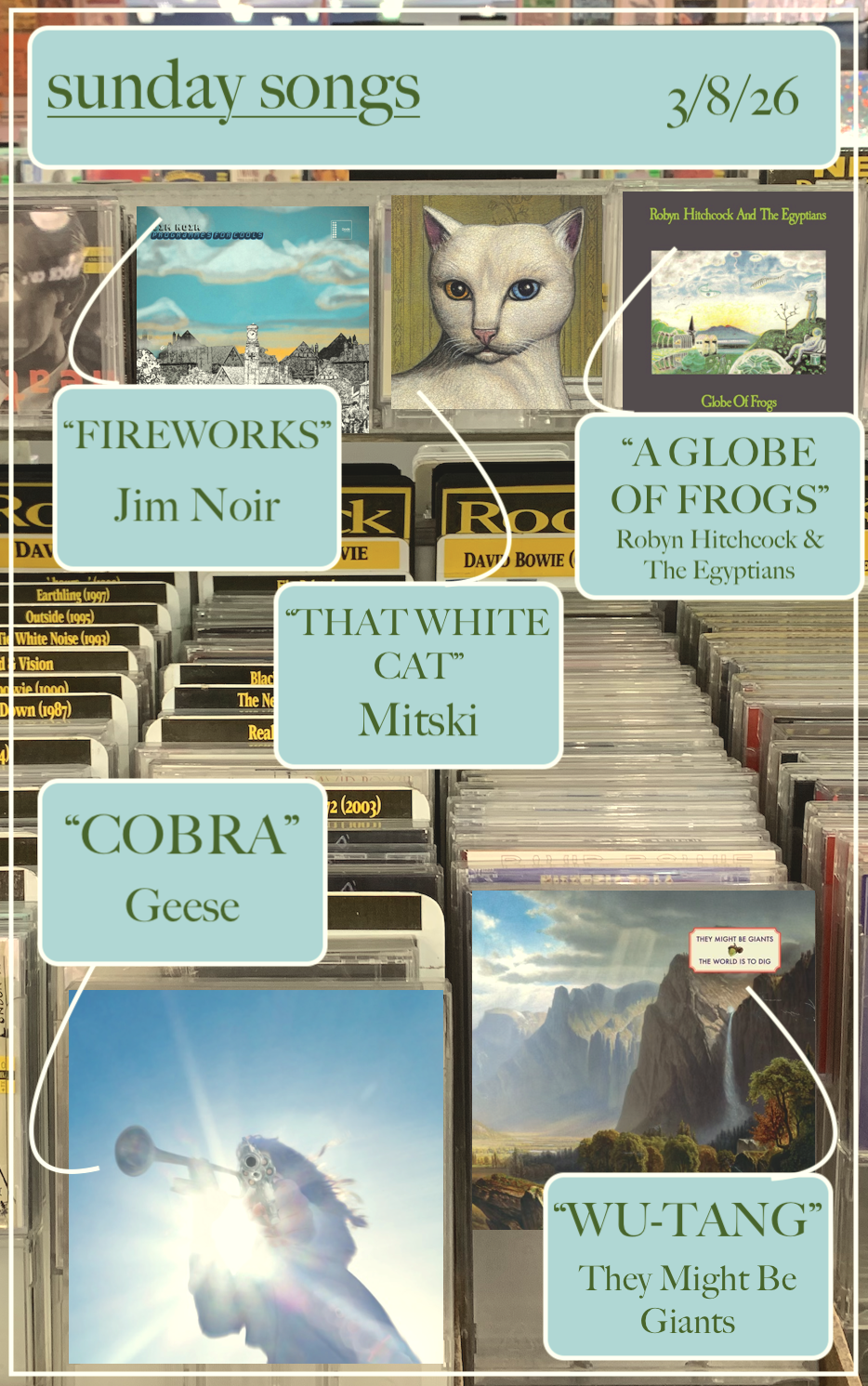
Posted in Sunday Songs

Sunday Songs: 10/26/25

Happy Sunday, bibliophiles! I hope this week has treated you well.

This week: I think you’ve all been getting too comfortable with the lack of Björk in the past month or so…WOE, BJÖRK BE UPON YE

Enjoy this week’s review!

SUNDAY SONGS: 10/26/25

“Anemone” – The Brian Jonestown Massacre

I love a song that just envelops me. “Anemone” is one of those tracks were there’s nothing in the lyrics remotely related to anemones (or even the sea), but it just happens to be the right title, just from the feel of it. The production and instrumentation sound like the lazy swirl of a temperate ocean around you, like footage of Planet Earth with a shot panning over gentle waves making anemones’ tentacles wave in the wind like branches on a tree. “You should be picking me up/Instead you’re dragging me down,” in that frame of mind, feels like being pulled under by a rogue wave and surrendering to the current.

Anton Newcombe’s voice feels like a backup instrument and not the lead vocal, somehow just as ethereal and misty as the faintly distorted rhythm guitar. That’s probably because the lead guitar, also played by Newcombe, is so distinct that it feels more like the voice of the song. From the beginning, it makes intricate loops and twists, like an animation of yarn curling in on itself—or the tendrils of an anemone slowly reaching out to you. It starts off almost uneasy, as if trying not to intrude on the melody, but once it expands, it takes the song from dewy cobwebs to a fully-defined spiderweb of dreamlike sound.

…AND A BOOK TO GO WITH IT:

The Two Lies of Faven Sythe – Megan E. O’Keefea twisty, surreal world of crystals and secrets—befitting of a dreamlike song like this.

“Fame” (David Bowie cover) – Eurhythmics

The other day, a good friend of mine (and one of the only people I know who’s just as obsessed with David Bowie as me, which is really saying something) and I were volleying back and forth about David Bowie covers. I wish I were as open-minded like them, but I think I was just burned by the aftermath of Bowie’s death when every single radio station decided that it was the right time to play nothing but the shittiest Bowie covers known to man. You can’t blame me for being a little suspicious at first. If you have that seismic of an impact on music, you’re bound to spawn a ton of bad covers. Plenty of good ones too, though! (For your perusal, and also the ones I sent said friend: Warpaint’s cover of “Ashes to Ashes,” TV on the Radio’s cover of “Heroes,” Lisa Hannigan’s cover of “Oh! You Pretty Things,” and Karen O and Willie Nelson’s cover of “Under Pressure.”)

But when they said that Eurhythmics had done a cover of “Fame” back in the early ’80s, I knew it was going to be good. (So thank you, said friend!) After all, Annie Lennox did take up the mantle of resident British, orange-haired, androgynous pop star from Bowie after Ziggy Stardust had been put to bed. I knew she was going to be cooking something. Bold, daring covers are few and far between, but if anyone can do it, it’s Eurhythmics. Lennox and Stewart transmuted Bowie’s plastic soul into a wholly different sound. It’s slicker than chrome, and so, so ’80s in the best way. Sped up and dominated by synths that sound like liquid mercury, Lennox’s vocal take on “Fame” turns the meditation into a song that feels like it belongs in a movie montage, walking through a crowded ballroom full of shallow, Hollywood types. Her mocking laugh echoes through the repetition of “Fame” in the chorus, hammering down Bowie’s original message of fame and the mercurial music industry wringing creative talents dry.

…AND A BOOK TO GO WITH IT:

The Monstrous Misses Mai – Van Hoang“Fame (fame)/What you like is in the limo/Fame (fame) what you get is no tomorrow/Fame (fame) what you need, you have to borrow…”

“The Sun Goes Down and the World Goes Dancing” – The Magnetic Fields

Dammit…I almost slipped into my usual “I need to set aside 3 hours to listen to 69 Love Songs in its entirety” intro for yet another song from 69 Love Songs. 3 hours? In this economy? With my Instagram-rotted goldfish attention span? Kidding, kidding…only partly. I need to shut up and just listen to the album.

In the meantime, I seem to have gathered a stash of assorted songs from 69 Love Songs like a squirrel gathering acorns for the winter and hiding them in the most random places. Yet I do not have the uncanny acorn memory of a squirrel, so I’m fully surprised every time the Magnetic Fields Instagram account soundtracks one of their posts from the 69 Love Songs 25th Anniversary Tour with one of these songs. “The Sun Goes Down and the World Goes Dancing” was a recent favorite from the start. I fully mean this as a compliment, but there’s something about the production that makes the song sound like it’s been played on toy instruments. You can’t tell me that those clacks in the background aren’t plastic. Given the absolute laundry list of instruments listed under Stephin Merrit’s name on the Wikipedia page for 69 Love Songs, it wouldn’t be out of the ordinary for him to have thrown some in for fun. Another fun fact: Daniel Handler, a.k.a. Lemony Snicket (yes, that Lemony Snicket) played several instruments on the album and arranged “Asleep and Dreaming.” I feel like it’d take an archaeologist to deconstruct the sheer amount of lore that this album has.

And yet that toylike quality makes the rusty charm of this song, from the thin mandolin strums and the hollow, clinking percussion. It’s uncharacteristically devoid of the usual lovelorn frustrations that Merritt usually displays—it’s nothing but breathless, dizzy joy. “The Sun Goes Down and the World Goes Dancing” is a snapshot in motion of rapidly twirling lovers careening across a dim dancefloor, relishing in the warm glow of the lights. It’s the faint smell of the night air as you squeeze someone’s clammy hand, a leap of faith into someone else’s arms. The beat seems to all but gallop like a trained pony with a collar adorned with jingle bells, brushed to perfection but nothing but happy about it.

…AND A BOOK TO GO WITH IT:

Heartstopper, vol. 1 – Alice Osemandon’t tell me that this song isn’t befitting of some little animated leaves and fireworks.

“Play Dead” – Björk

There’s something so singularly admirable about Björk that makes even her more commercial songs feel so uproariously her. Even a relatively sparse music video, not directed by her and interspersed with clips from the film it was from, The Young Americans, couldn’t tamp down the raw power of her voice. Even when given a formula, Björk played around with it in every way that she could—from all accounts, the opportunity was an experiment for her. On writing “Play Dead,” Björk said that writing the song was “fun because the character in the film was suffering and going through hardcore tough times and at the time I was at my happiest. It was quite liberating to sit down after writing a whole album to write from someone else’s point of view.”

Aided by David Arnold, who composed the film’s score, and Jah Wobble (of Public Image Ltd) contributing the (gloriously slick) bass, “Play Dead” reminds me, at best, of what I like so much about trip-hop. It’s so seductive and slick, and even with the lyrics aching with numbness, it’s so brimming with life. Sure, that’s in no small part due to the cinematic orchestral swells that punctuate the background, but Björk’s voice makes it from a song into a true performance on every listen—even the most melancholy lyrics from her are blood vessels full of life. Nothing could ever suck the energy out of her performances, much less this one.

…AND A BOOK TO GO WITH IT:

Red City – Marie Lu“I belong to here where/No one cares, and no one loves/No light, no air to live in/A place called hate/The city of fear…”

“Overkill” – Colin Hay

[BANGING FIST ON THE TABLE, IN TEARS]

HE JUST LIKE ME FR

…AND A BOOK TO GO WITH IT:

Forever is Now – Mariama J. Lockingtona poignant, honest depiction of a young Black girl dealing with chronic anxiety.

Since this post consists entirely of songs, consider all of them to be today’s song.

That’s it for this week’s Sunday Songs! Have a wonderful rest of your day, and take care of yourselves!
Posted in Sunday Songs

Sunday Songs: 10/19/25

Happy Sunday, bibliophiles! I hope this week has treated you well.
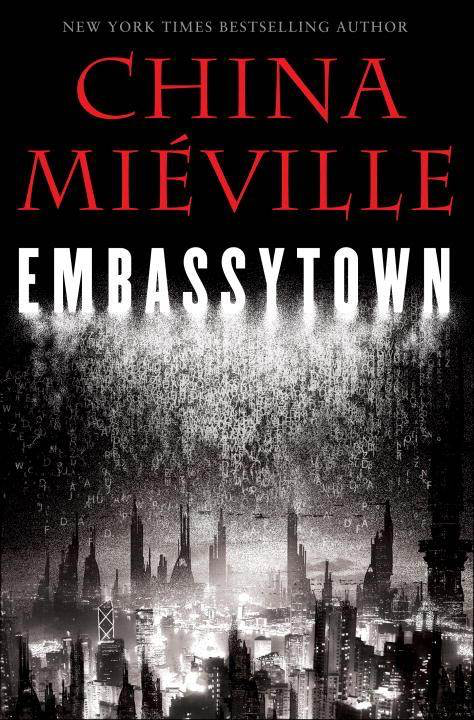
This week: the chances of being pursued by Brian Eno wielding chopsticks are low…but never zero.

Enjoy this week’s songs!
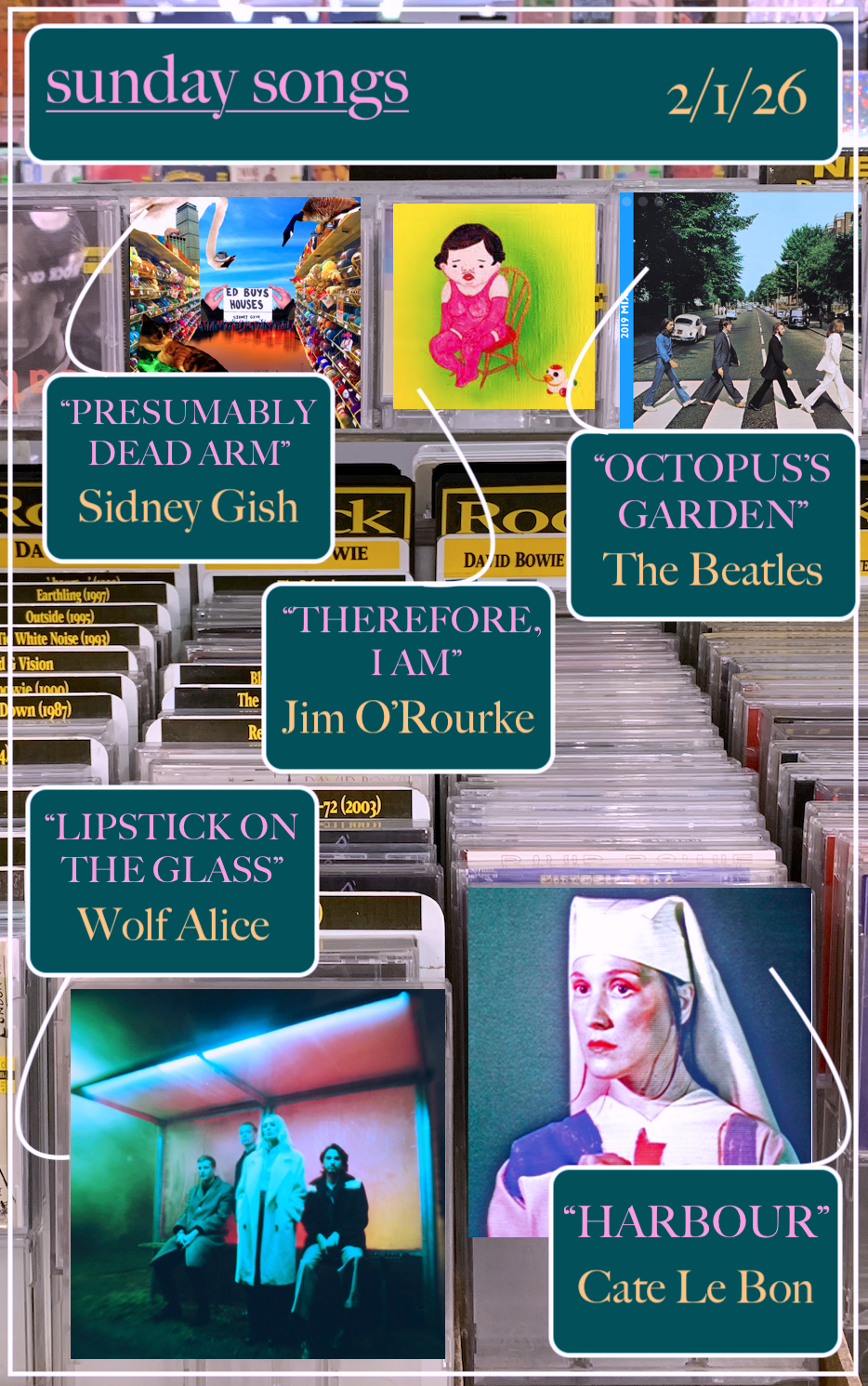
SUNDAY SONGS: 10/14/25

“Lay My Love” – Brian Eno & John Cale

While digging a bit about a song that I’m not even mentioning until next week, I stumbled upon something entirely different. All of those Pitchfork Best Songs of [insert decade] lists (this was from the ’90s one) are very subjective, but sometimes I appreciate looking at them simply by virtue of finding out about something new. Last week, it happened to be a collaboration between Brian Eno and John Cale from 1990, Wrong Way Up, and “Lay My Love” in particular. I was excited by the prospect of Brian Eno already, but man…I have been sucked in. I’ve listened to this one an unhealthy amount of time. It just swallows you whole in the best way possible!
By the ’80s, Brian Eno had built a decade’s worth of entirely ambient music, and there seemed to be no return for him to the more conventional (if you can call it that) rock of his earlier career, abandoning his own vocals almost entirely: in 1989, he told an interviewer that “I’m sure I could, if someone held a gun to my head, crank out a record of songs, but at this point in time I know it wouldn’t be any good.” And given the intensely argument-fraught recording of Wrong Way Up (Cale alleges that Eno once came at him wielding chopsticks, but Eno has insisted that Cale fabricated this), there’s a good chance that in another timeline, this album may not have seen the light of day after all. And yet there they were in 1990: Eno and Cale, frequent collaborators since the 1970’s, making an album consisting of just that.

You’d think that after abandoning singing for so long, Eno would appear rusty. In fact, he’s the exact opposite. “Lay My Love” feels like the distillation of the best qualities of his off-kilter vocals. Even though he’s known for his more removed, uptight vocal quality, this track presents him as warmer than he’s ever come across. It’s a song that makes you believe every word: as he sings “I am the yearning,” you can hear the pleading in his vocals, layered upon themselves ad infinitum. Cale’s rousing violins add an upbeat swing amongst the dizzyingly layered instrumentals. It’s an all-consuming slurry of glimmering sediment and flotsam, all warmed by the sun’s rays, equal parts hymn and experimental electronic music. Eno peppers in some of his most delightfully surreal, offbeat lyrics (“I am the termite of temptation”) with ones that make sense in some unarticulated part of your soul (“I am the wheel/I am the turning”). Above all, you really do feel as though this love is being laid around you like a blanket. It feels like the kind of song to soundtrack a quiet montage in a film of a house being built, or moss growing on a log: gradual, and yet hopeful in its certainty. You know that the love is coming around to you, and when it does, it will be as joyous as every note bursting from this track.

…AND A BOOK TO GO WITH IT:

A Psalm for the Wild-Built – Becky Chambersthis seems precisely the kind of song that would soundtrack Sibling Dex and Mosscap’s quiet adventures through the woods.

“New Generation” – The London Suede

As far as the Britpop Big Four goes, The London Suede (known as just Suede in the UK) is the last frontier for me to explore; I’ve heard some of their songs sporadically and loved them (see: “Metal Mickey”), but reading The Last Party: Britpop, Blair, and the Demise of English Rock sparked some more interest in them. Add that to Neko Case’s episode of What’s in My Bag? and I was instantly hooked on “New Generation.” Along with “Lay My Love,” this song’s up there with the songs that I’ve been listening to an unhealthy amount of times. Who am I to deny my Britpop girlie urges?

I really should be a huge fan of The London Suede, given how influenced they were by David Bowie, but then again, not everybody influenced by Bowie is automatically good, of course. Brett Anderson and company seemed to worship the ground he walked on, which resulted in their melodramatic style and soaring vocals. Dog Man Star, which I’ve heard is an excellent album, was said to be inspired by a lot of Bowie’s early ’70s material, which makes perfect sense—”New Generation” feels like fanfiction set in the Hunger City of Diamond Dogs, and I fully mean that as a compliment. If Anderson’s vocals and just-so placed swoop didn’t tip you off, “New Generation” is high on the drama, but that’s part of why it works so well—it’s a strangely dystopian song that’s fit for draping yourself dramatically across the bed, full of distance and yearning. Anderson’s really doing some vocal somersaults here—he said himself that it’s one of the most difficult songs for him to sing—and amidst sepia-toned lyrics of disaffection and substance abuse, his vocals are outstretched arms beckoning for someone to swoop in and extricate him from it all.

…AND A BOOK TO GO WITH IT:

The Shamshine Blind – Paz Pardo“‘Cause like all the boys in all the cities/I take the poison, take the pity/But she and I would soon discover/We take the pills to find each other…”

“Wreck” – Neko Case

Today on incredibly specific comparisons: “Wreck” by Neko Case sounds almost exactly like this meme to me:

Maybe I do need to listen to more Neko Case after all. I’m a fan of the New Pornographers, but I really haven’t dived into any of her solo work, save for the misfire that was her cover of “Madonna of the Wasps.” You win some, you lose some. But this song, off of her new album Neon Grey Midnight Green (that’s got to be one of the better album titles I’ve heard in a while, for sure), easily falls into the win category.

For a beat, the a cappella intro lulls you into a false sense of security before dropping you headfirst into a churning, breathless whirlpool of head-over-heels romance. I can’t deny a love song that feels like you’re gleefully sprinting through a verdant field at full speed—there’s a bit of Hounds of Love Kate Bush in there somewhere in the unabashed drama that Case peddles: “I’m a meteor shattering around you/And I’m sorry/I’ve become a solar system/Since I found you/I’m an eruption/A wreck of possibilities/A volatility of stars/My clothes can’t hold together.” (Another shoutout is due to “Do I look like the sun to you?/Do I blaze freckles onto your face?”) And right after this, she breathlessly cries “And I know I can’t burn this bright forever!”—right about there, I imagine her smile splitting with reckless glee, a princess dress ballooning into endless layers of silk and tulle, a cry of nothing but sheer joy. It’s an easily addictive ode to absolutely drowning in yearning, and desperately wanting the echo to have an answer.

…AND A BOOK TO GO WITH IT:

The Stars Too Fondly – Emily Hamilton“Do I look like the sun to you?/Do I blaze freckles onto your face/I bet I, bet I, bet I do/I’m a meteor shattering around you/And I’m sorry…”

“Alien Being” – The Magnetic Fields

There’s something truly beautiful about the fact that this song only has 10 likes on YouTube and a single comment that reads “being gay is awesome and you gotta try it!!!” Amen, brother.

The House of Tomorrow EP was released very early on in The Magnetic Fields’ career, and from 3/5 songs that I’ve listened to from it (this, “Either You Don’t Love Me Or I Don’t Love You” and “Love Goes Home to Paris in the Spring”), it’s clear that they’d all honed their talents very early. I suppose it helped that Stephin Merritt was in several bands before this, but it’s still very indicative of what a masterful songwriter he’s come to be. It’s also clear from the start that he’d started dissecting unhappy relationships very early on. The lyrics of “Alien Being” aren’t quite as laden with metaphor as they usually are, but they’re monotonous and repetitive—which feels like precisely the point. Almost all of them end with “nothing at all” (“You talk a lot about nothing at all/”Watch TV shows about nothing at all”), adding to the layered, grainy drone of the synths in the background. It’s a perfect encapsulation of being around someone who makes you feel like you’re talking to a wall—no feelings, no opinions, no independent thoughts, no nothing. Good thing Merritt has a lot of those things.

…AND A BOOK TO GO WITH IT:

Here Beside the Rising Tide – Emily Jane“You have no feelings/I think you are an alien being/You won’t let me in/I think you are an alien being…”

“Time in a Bottle” (Jim Croce cover) – Lucy Dacus

The X-Men fan in me and the Lucy Dacus fan in me were both screaming when I found out that this was a thing…I don’t even have any sentimental feelings towards the original, but I just saw the title and got activated like a sleeper agent. Say what you want about the later Fox X-Men movies, but there’s one thing that they did best, and that was make immaculate slo-mo Quicksilver sequences with great needle drops.

I maintain that Forever is a Feeling bordered on being a disappointment, but I’m softening to some of it—especially now that we’ve gotten an expanded edition: Forever is a Feeling: The Archives. It’s mainly demos and live versions, but it had the poignant track “Losing” (should’ve been in the album, that’s my two cents) and this Jim Croce cover. Dacus’ tender, delicate fingerpicking style was practically made for this cover, as was the overall aesthetic of the album, combining acoustic guitar with gently swelling strings. I just can’t get enough of how she treats the guitar as an instrument—the way she plays on “Time in a Bottle” makes it feel like it’s not simply an instrument but a waltz partner. Her rich voice is on full display with this cover, making every note ring out with the yearning I’ve come to love her for. It’s tender in its sparing instrumentation, but her voice fills out all the empty spaces, creating a cover steeped in love and longing, just like the best parts of Forever is a Feeling.

…AND A BOOK TO GO WITH IT:

When the Tides Held the Moon – Venessa Vida Kelleythe tender feeling of this cover would fit right in with this heartfelt, moonlit romance.

Since this post consists entirely of songs, consider all of them to be today’s song.

That’s it for this week’s Sunday Songs! Have a wonderful rest of your day, and take care of yourselves!