Posted in Sunday Songs

Sunday Songs: 5/19/24

Happy Sunday, bibliophiles! I hope this week has treated you well.

This week: in addition to my blue and black/white/gray periods, it’s become increasingly obvious that I also have a green period. On another note, food processors are great!

Enjoy this week’s songs!

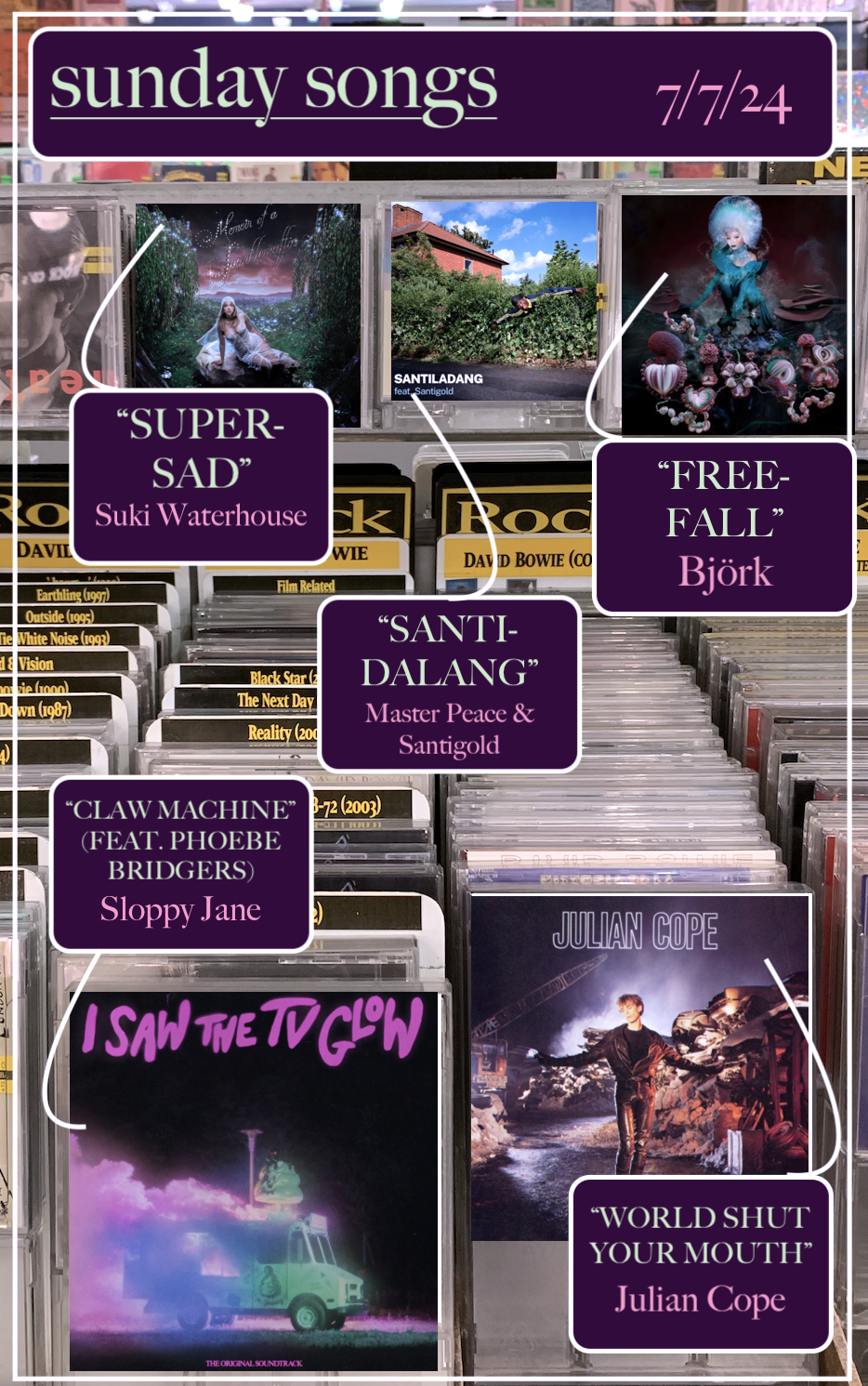
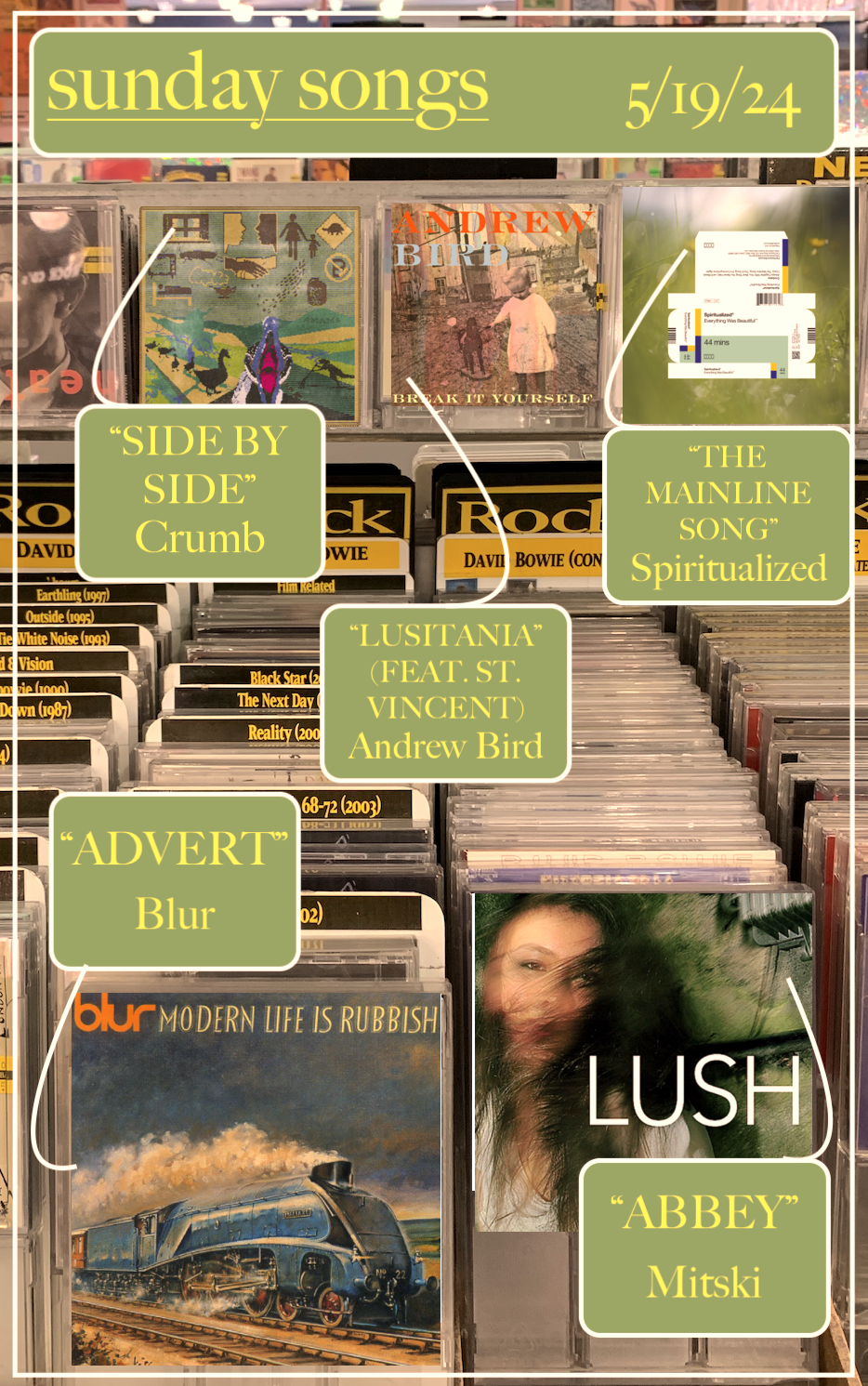
SUNDAY SONGS: 5/19/24

“Advert” – Blur

The restraint I displayed by not blowing through Blur’s entire discography back in the last half of 2021 is restraint that I have yet to parallel, so it’s only now, almost three years after the initial Blur Breakdown, that I’ve gotten around to Modern Life is Rubbish (if there was ever a more British title). I did sort of sully it with the experience of listening to it while crawling under my bed while trying to exorcise the last of the dust bunnies from my dorm (and getting caught on the rain), but that’s all me—this is the first Blur album where they started to feel like themselves.

I’d never thought of Modern Life is Rubbish, Parklife, and The Great Escape (the final Blur album to surmount) as a trilogy until Trash Theory described it as such—from my understanding, this is what cemented their reputation as the foremost clever spectators of British life in the ’90s, peering out of every windowsill with a snappy remark about the passersby. Modern Life feels like Parklife just before it morphed into the masterpiece it would later be—all of the pieces were there, and all that was needed was to make it larger than life. The melted shoegaze of Leisure was hanging on by a thread (it’s much more evident in the special edition—see: “Peach”), and they’d shifted from staring off into the distance, bleary-eyed and exhausted, into taking out that exhaustion on whatever they saw fit. Straight off of the heels of the triumphant “For Tomorrow,” “Advert” opens with a soundbite from the commercial you’ve just heard (“Food processors are great!”) before launching into what feels like the genesis of Graham Coxon’s signature assault of pounding guitars that practically demand every crowd to jump up and down. This relentless guitar work feels like witnessing the larval stage of “Jubilee,” crashing and bouncing with unending abandon. And this kind of guitar that threatens to consume the track is perfect for the endless consumerism that “Advert” comments on—commercials everywhere, a flood of inescapable offers leeching off of the dissatisfaction of the ordinary man: “You need a holiday somewhere in the sun/With all the people who are waiting/There never seems to be one.” This consumerism leads to even more dissatisfaction, which leads to more consumerism to quell said dissatisfaction, which leads to…ah, capitalism. What could possibly go wrong?

…AND A BOOK TO GO WITH IT:

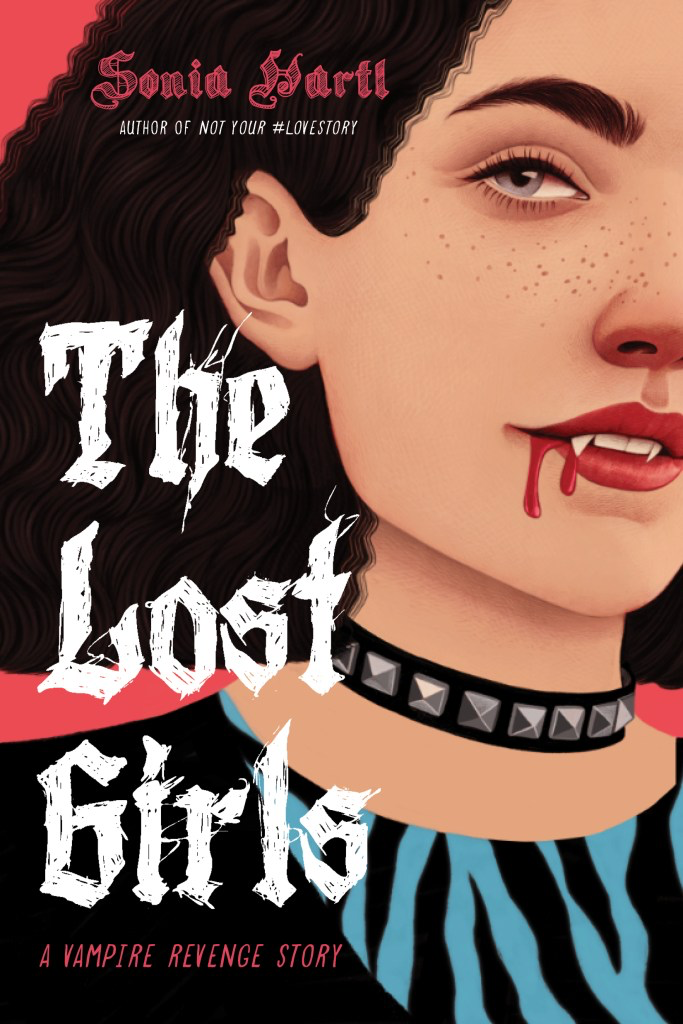
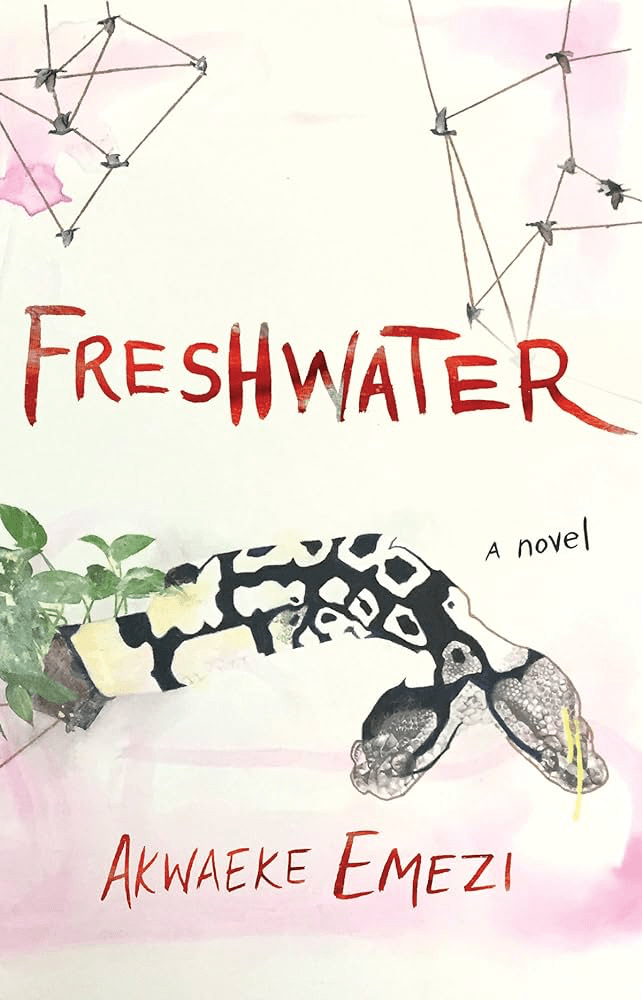
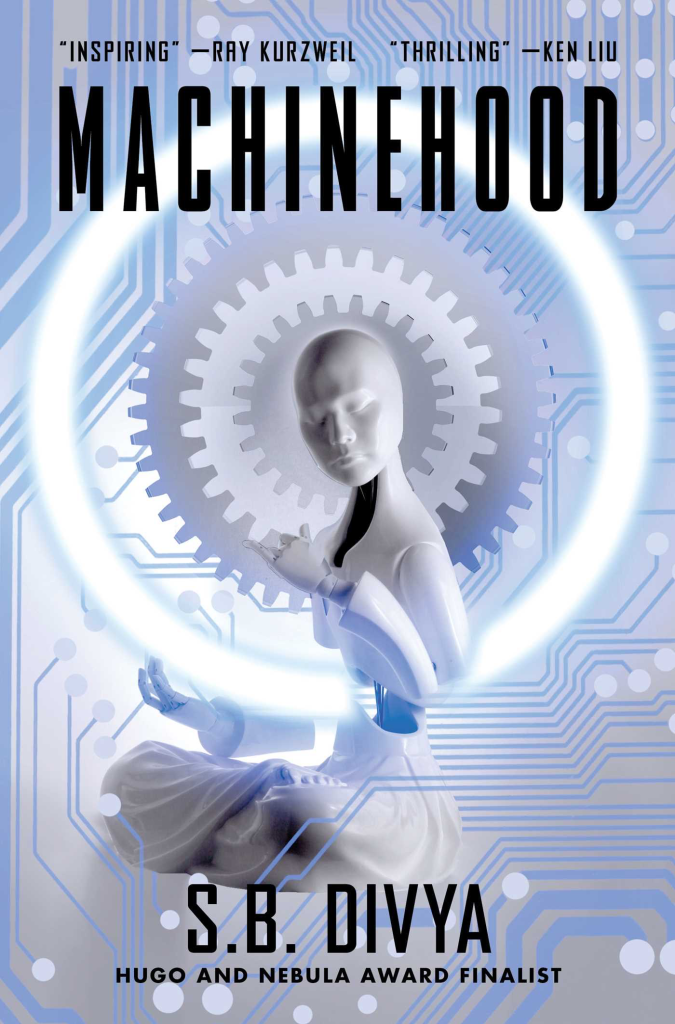
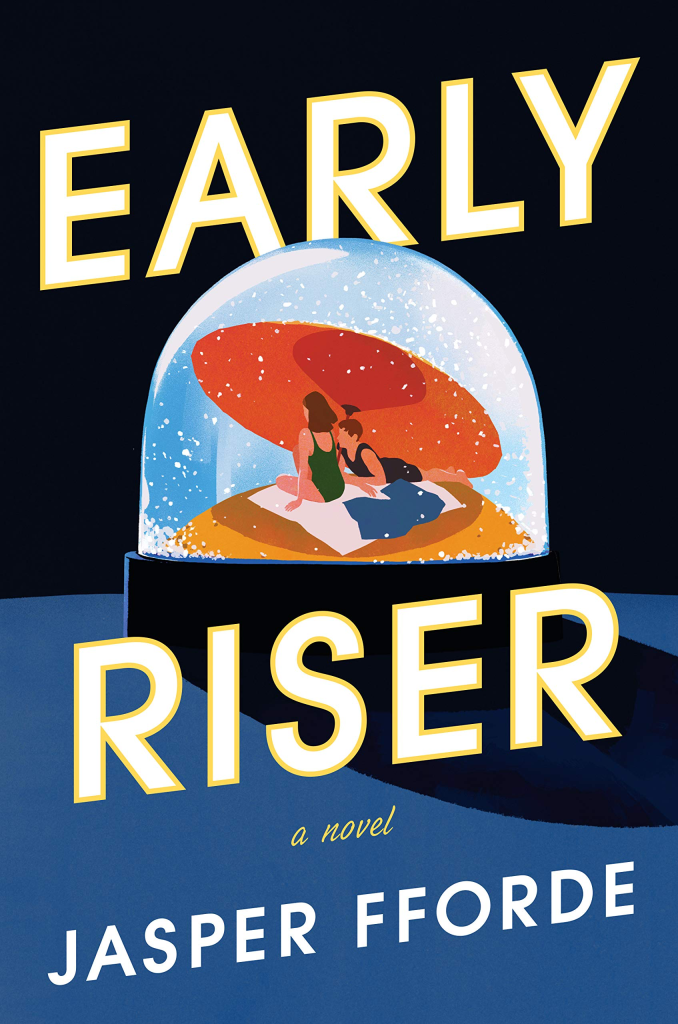
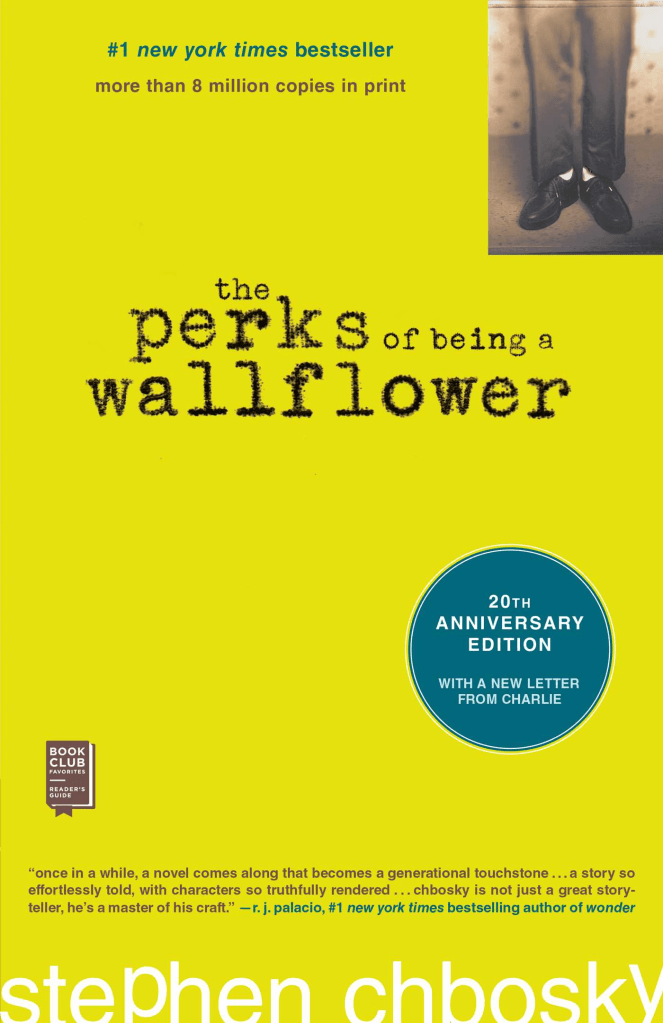
Early Riser – Jasper Ffordeconsumerism: the perfect diversion from an oppressive, unlivable winter!

“Abbey” – Mitski

LUSH, Mitski’s first album, was made for an end-of-year project when she was a junior in college; there’s an unverifiable TikTok rumor going around that she got a C on it, which, given the traction of the Mitski fandom, is just going to become an urban legend at this point. So it goes.

Either way, it’s both remarkable and understandable that she wrote all of these songs and had them produced while she was still in college. Remarkable, because just from “Abbey,” she clearly had the nascent talent for wringing emotion out like ice-cold water from a towel from a young age, and understandable, because sometimes being alone and sleepless in your dorm on the very first night of college brings out that flood of inner darkness. Leave it to TikTok to leave out the best part of the song for whatever trend it latched itself to; the slow, chanting a cappella that gained traction feels like a prayer to a void growing within your chest, a litany of acknowledgment to that which you want to reach, but cannot touch. As an instrument, Mitski’s voice, unaccompanied until halfway through the song, is a haunting, flitting machine, the slow peak and valley of a heart monitor. But once the digitized drums sweep through, it feels as though the sky has opened up. This prayer has transformed from a whisper into the confession box into a plea bellowed to the heavens. “Abbey” chronicles a search for the soul, a ravenous hunger that cannot be sated that lies just out of reach: “There is a light, I feel it in me/But only, it seems, when the dark surrounds me/There is a dream and it sleeps in me/To awake in the night, crying, ‘Set me free’/And I awake every night, crying, ‘Set me free.'” Hoowheee. God. Makes me want to travel back in time just to give her a hug, but it seems like she’s now far removed from that time in her life, emotionally: she described the version of herself that wrote the album as being “long gone,” so I can only hope that she’s been able to fill her heart, as much as the music industry has kept her from doing so.

…AND A BOOK TO GO WITH IT:

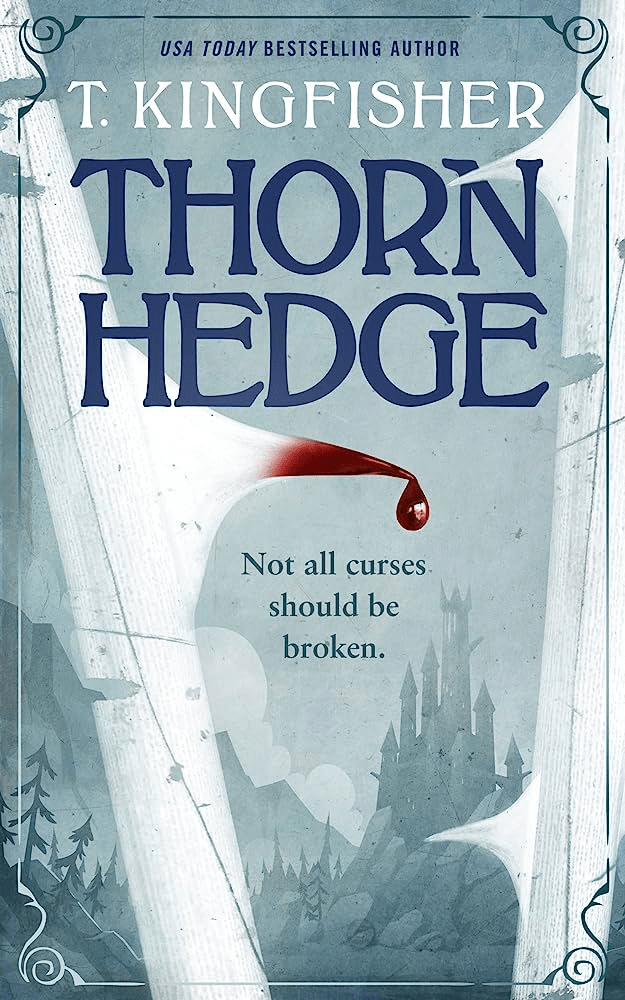
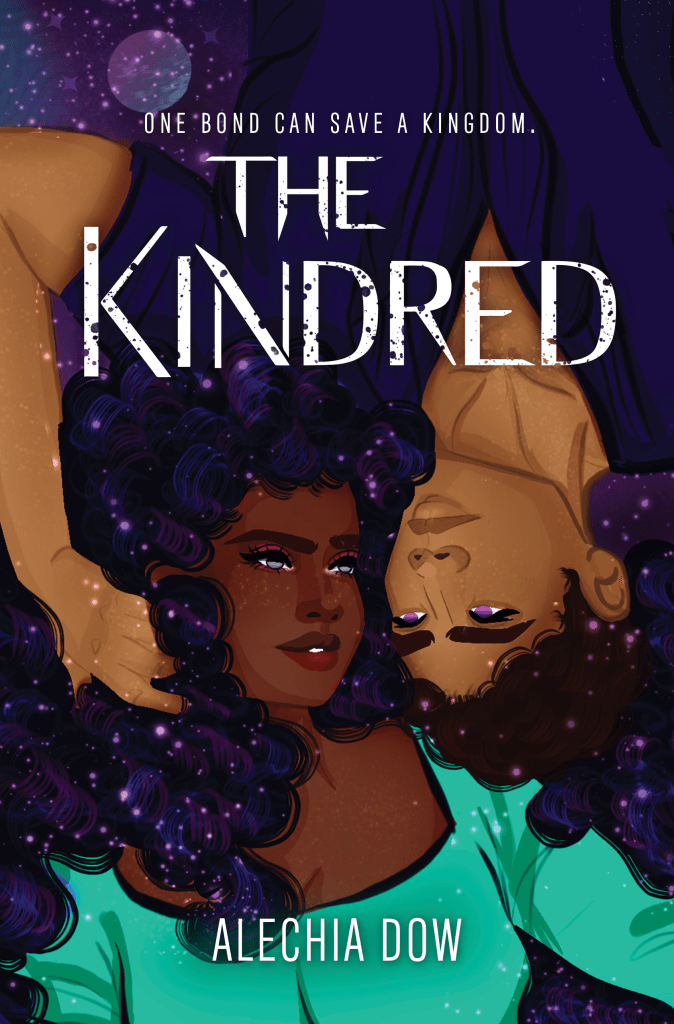
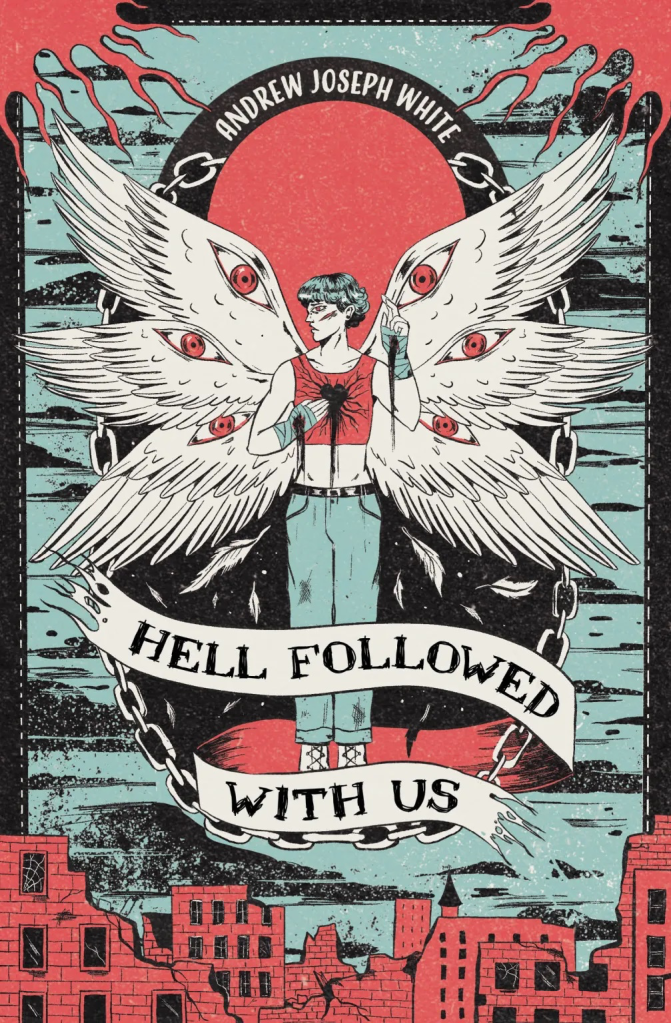
Hell Followed With Us – Andrew Joseph Whitea void within that only becomes hungrier the more it grows.

“Side By Side” – Crumb

AMAMA, which came out on the 17th, wasn’t at the top of my most anticipated albums of the year, but after only one listen, it’s cemented itself as one of the most exciting ones so far. It’s a side of Crumb that hasn’t been let loose until now, one that, instead of gently dribbling like age-old water from the precipice of a glacier, skitters around on the smallest legs, darting this way and that like a frightened millipede. The whole album feels like watching a bunch of beetles hopped up on sugar water run a race: their iridescent shells catch the light as they crawl about, scaling walls instead of the tiny racetrack and occasionally clambering over each other to get ahead. No wonder they named a whole song “The Bug”—I need the instrumentals of AMAMA just so that somebody can use them for a documentary about insects.

AMAMA‘s three openers—“From Outside A Window Sill,” this song, and “The Bug”—are its strongest links, and although the album never falters, these three shine the brightest. “Side By Side” ricochets with an energy that I never would have expected from the likes of Crumb; both the drum machine and the actual drummer are working overtime to create a scampering beat that frantically bounces like a honeybee trapped under a plastic cup. It’s a song that yearns to go, go, go, and go it does—the swirl of rapid-fire synth beats are unpredictable in their flight path, so much so that I feel a jittery, sugary rush just listening to it. For me, the most fascinating part of this change in speed for Crumb is how easily Lila Ramani’s voice adapts to the change; it’s not like I thought she couldn’t sing more quickly, but her voice only slightly seemed to change speed along with the music. Her voice is permanently trapped in a slurry of amber, unaffected by time or space—I feel like her vocals, no matter the speed, would mesh with any tempo. It retains that syrupy calm that made the rest of Crumb’s catalogue so soothing and laid-back—a quality that feels suspended in a space beyond time.

…AND A BOOK TO GO WITH IT:

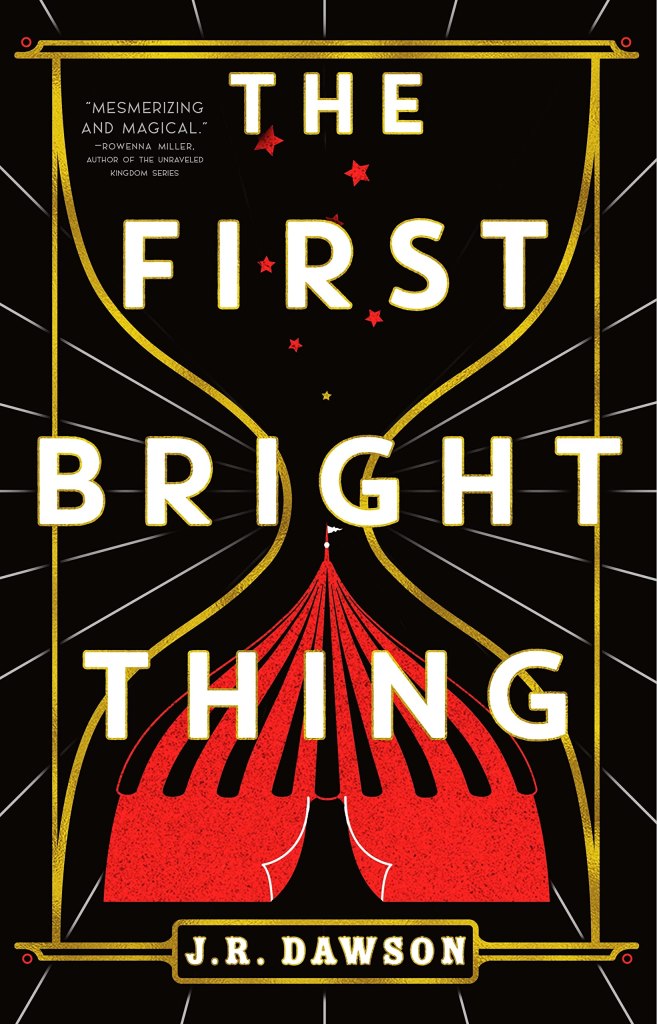
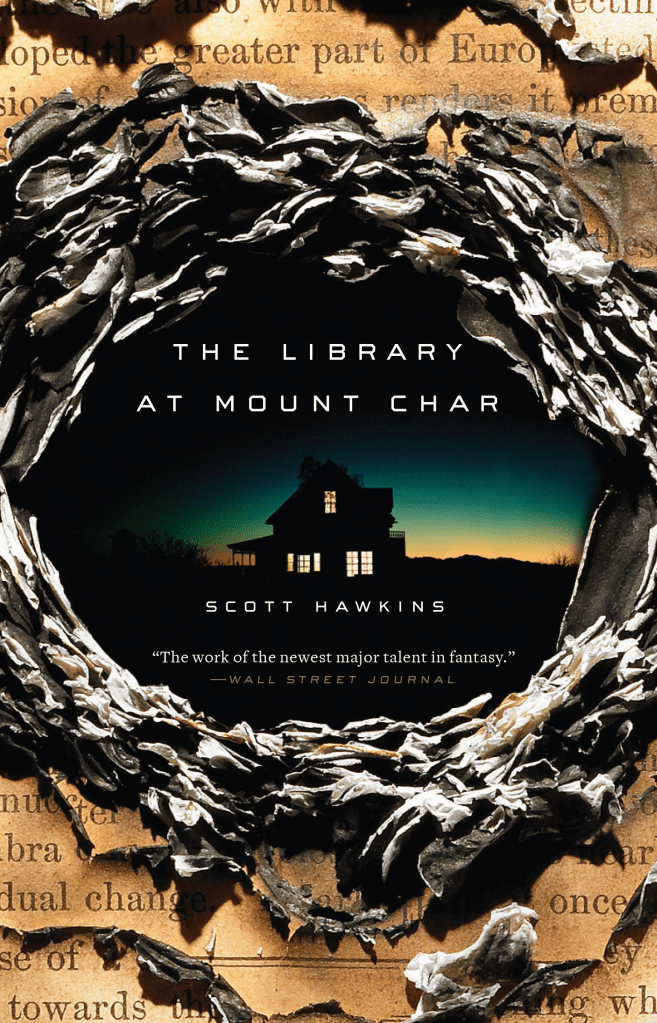
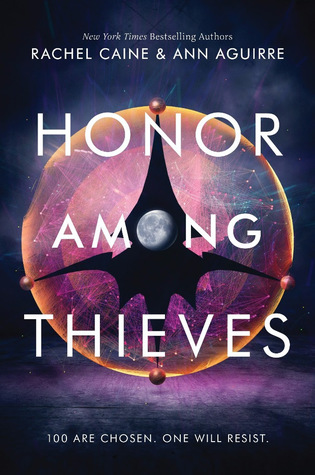
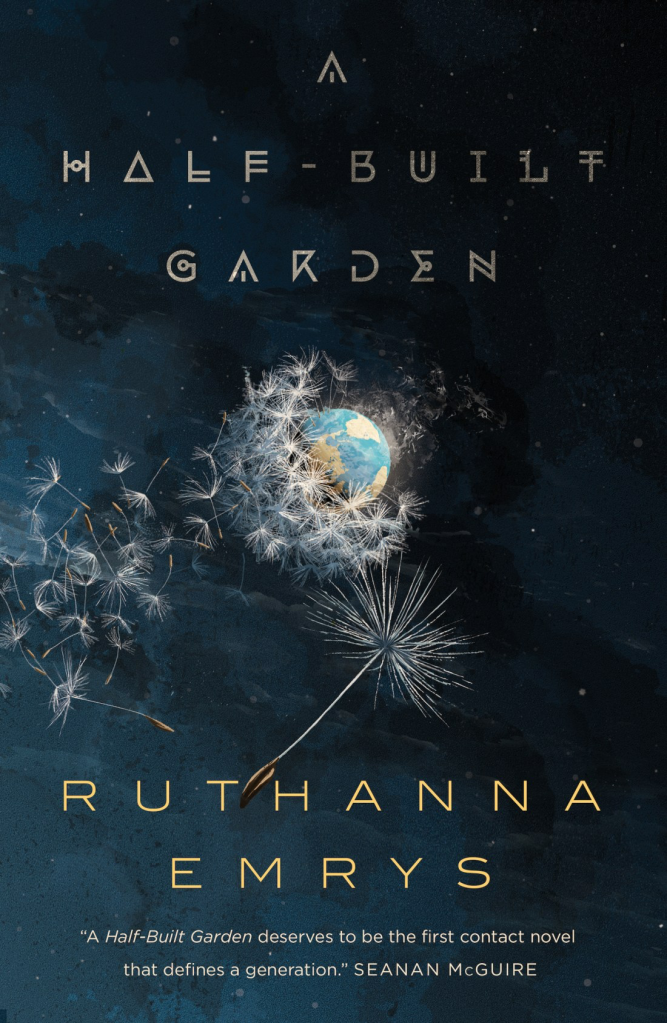
A Half-Built Garden – Ruthanna Emrysskittering with life and energy (and some insectoid and arachnid aliens).

“Lusitania” (feat. St. Vincent) – Andrew Bird

It took me how long to find out that Andrew Bird had recorded a song with St. Vincent? I’m surprised that 12-year-old me didn’t find this drifting around somewhere, but to be fair, St. Vincent’s name isn’t listed on the official track.

In 2024, Andrew Bird and St. Vincent do seem like an odd couple; since 2012, Clark’s style has morphed so many times that it’s difficult to imagine her stylistically even going near Bird’s songbird-whistling, violin-dominated alternative folk. It makes sense that this was probably recorded sometime in 2011—post-Strange Mercy, but before the last dregs of Actor and Marry Me were out of her system. She’s still never been fully folk, but the intersection of the Venn diagram of her early style and Bird’s is wider than I thought it would be. With her guitar playing mostly absent, what shines in “Lusitania” is her voice; you can tell in the first half that she’s been quieted in post-production or that she’s holding back on completely dominating the track. “Lusitania” makes me miss those artsier sensibilities of 2008-2010 St. Vincent, the delicate turns of phrase and the more feathery clarion calls her voice twisted into. Just like that, I’ve got another song in my hypothetical playlist of songs where artists sing certain phrases in a way that scratches all the itches in my brain: in this case, her singing of “there’s no shame” at 2:44. Her warble seems to chain-link with Bird’s in a way that produces its own chord, something more than a harmony that feels like a tuning fork struck at my heart.

But why don’t I talk about Andrew Bird, though, since…y’know, he’s the one who made the bulk of this song, anyway? Totally unlike me to go on about St. Vincent…completely uncharacteristic. (I have not changed a bit since middle school.) The instrumentation doesn’t stand out to me on this one as much, save for the rising cymbals that nearly swallow both Bird and Clark’s voices. But it’s clearly to make way for the lyrics—a clever string of World War I metaphors, presumably about a relationship where one party suffers volley after volley of abuse, while the other doesn’t even think to recognize that their behavior is harmful: “If your loose and libel lips/Keep sinking all my ships/Then you’re the one who sank my Lusitania/But somehow it don’t register as pain at all.” As far as ship metaphors go, the Titanic has likely been used one too many times, but the Lusitania feels especially potent on several fronts. The use of such a large passenger ship (and its sinking) drives home the metaphor of weathering emotional abuse until it drowns you. What’s more effective still about the Lusitania was its eventual role in the First World War; since a significant number of its passengers were Americans, the sinking of the Lusitania by a German U-Boat was part of what pushed public opinion towards entering the war on the side of the British in 1917. Just like the boiling public outrage of the American public, the Lusitania was the straw that broke the camel’s back, an event so explosive that there could be no other option than to break away, no matter how many casualties it cost. “You laid mines along the shore” feels like the last gasp of this deeply harmful relationship, the claws that scored scars down the narrators back as they squirmed free of their bloodied grasp.

I really should have seen this collaboration coming, not because of my middle school obsession, but also because it slipped my mind that it wasn’t the first time. Here they are in 2009 performing “What Me Worry?” (15:51) and “Black Rainbow” (21:09).

…AND A BOOK TO GO WITH IT:

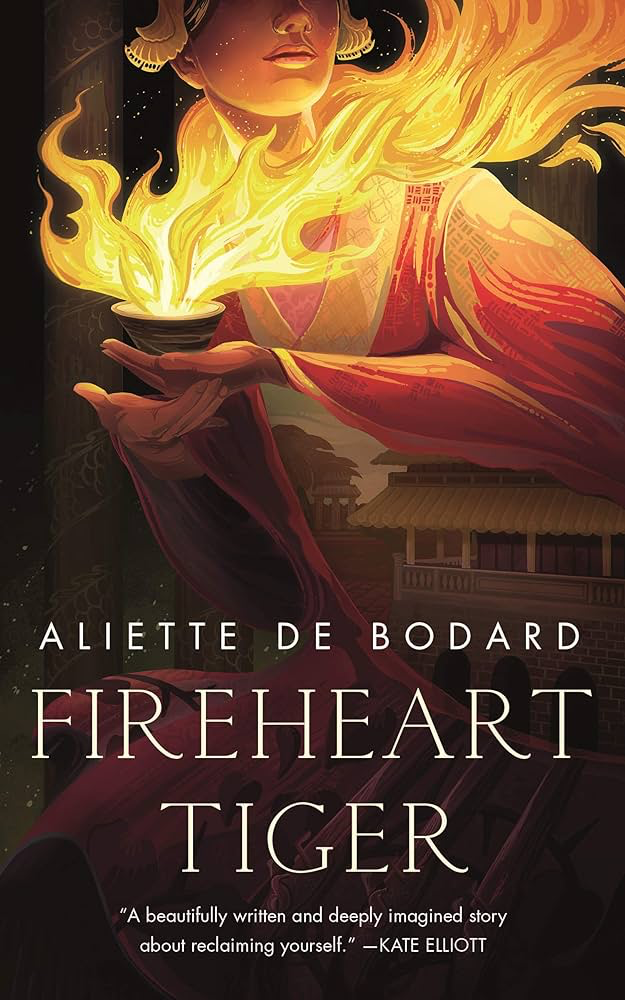
Fireheart Tiger – Aliette De Bodard“If your loose and libel lips/Keep sinking all my ships/Then you’re the one who sank my Lusitania/But somehow it don’t register as pain at all…”

“The Mainline Song” – Spiritualized

How I’ve never covered Spiritualized on Sunday Songs is genuinely beyond me. I did sort of discuss them when I talked about “Monster Love” last June, but that was more of a remix than anything. They’ve been in my top 5 artists of all time for at least 4 years now, but I suppose I blew through most of their catalogue before I started writing these posts. Mark my words, “Ladies And Gentlemen We Are Floating in Space” is always on in the background of everything else I’m listening to.

Everything Was Beautiful, which came out around two years ago, was some of J. Spaceman’s best work to date; at the time it came out, I remember describing it as Ladies And Gentlemen We Are Floating in Space but happy. Insane concept, I know…when was the last time you saw J. Spaceman and happiness in the same room together? Hardly ever, up until maybe 2017, right? Jesus. This poor man has to be the dictionary definition of “going through it.” Which is why the “happy Ladies And Gentlemen” hit me so deeply—all of the heroin, heartbreak, and near-death experiences have begun to fade away from his newer music, but the explosive, immersive creativity remains the same—you can really tell that these positive changes in his life have really begun to take root. And I am so glad. This man has been on the brink of death not once but twice. He doesn’t just deserve it: he needs it.

Like Ladies And Gentlemen, Everything Was Beautiful is always at the back of my mind, usually in the form of the uproariously celebratory “Always Together With You” and the nearly 10-minute long, haunting and cinematic closer “I’m Coming Home Again.” “The Mainline Song” lands on the side of euphoria, and thank god that it’s not heroin-induced this time (as much as “She Kissed Me (It Felt Like a Hit)” slaps). J. Spaceman’s immeasurable talent lies in how quickly he can not just create an atmosphere, but how he can create one that consumes so instantly. It’s not a building wave that darkens you with shadows before swallowing you whole: a more apt comparison would be falling into the core of a star, instant immersion with stardust sounds and white-hot flares roaring all around you. Every song is a universe contained in a spare amount of minutes. However, even if I did cast aside the part about there not being a build before the immersion, the buildup to “The Mainline Song” may just be its main draw. The build itself is part of the universe; J. Spaceman doesn’t even start singing until the halfway point, letting the song construct itself from fragments of stardust and train tracks as it swirls into being. It’s a song patched from the breeze of night, the kind you only find when sticking your head out of a car window, breathless and ecstatic. It’s a sprint through the streets as city lights blink like so many stars. It’s the wind parting your hair as you run to catch the bus, panting as you stumble inside with a fit of laughter. As many songs as there are about this kind of adventuring, none of them quite capture the hopeful feeling of “The Mainline Song.” No feeling necessitates J. Spaceman’s magical universe creation more—the swirl of horns, choir, and machinery bottle the feeling in all of its rapid euphoria, as blurry as the world passing by from the window of a train. Like nothing else, “The Mainline Song” captures the look you share with your friend as you reach a silent agreement to leave everything else and run. The destination isn’t what matters: it’s the breathless thrill of love.

…AND A BOOK TO GO WITH IT:

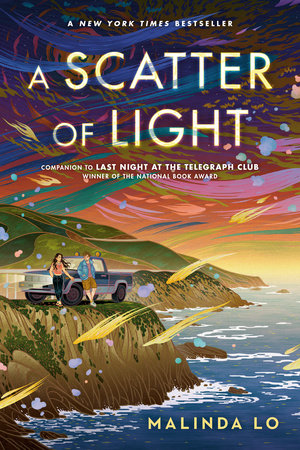
A Scatter of Light – Malinda Lowarmth, adventures in the city, and an unforgettable summer.

Since this post consists entirely of songs, consider all of them to be today’s song.

That’s it for this week’s Sunday Songs! Have a wonderful rest of your day, and take care of yourselves!

Posted in Sunday Songs

Sunday Songs: 5/12/24

Happy Sunday, bibliophiles, and more importantly, happy Mother’s Day to my wonderful mama, to whom I owe so much in this life. My gratitude for you will never waver—I don’t know where I’d be without you. Every day, I only grow prouder that I’m your daughter.

This week: there’s no doubt about it…this is pop.

But before that: since I was deep in the trenches of finals hell last Sunday, here’s my graphic from last week, complete with an appropriately dreary color palette:

SUNDAY SONGS: 5/5/24:

Now, back to our scheduled program…enjoy this week’s songs!

SUNDAY SONGS: 5/12/24

“This is Pop?” – XTC

I thought I had a healthy relationship with XTC. I thought my days of playing “The Ballad of Peter Pumpkinhead” on loop for an entire meal straight were behind me. But then this decides to slap me upside the head…damn you, Trash Theory.

Never has a song this indignant been so deliriously catchy…take away all the instruments, and it’s Andy Partridge yelling about how arbitrary categories are in music (reasonable thing to yell about, but please chill, dude, I can see a filling in your molar 😭). But it’s the most danceable indignant song I’ve ever heard—that aspect of it makes it uniquely pop, just as Partridge is content to shout in your face about. In a landscape where music critics threw terms at XTC to see if any of them would stick (punk, post-punk, etc.), they staunchly had their own brand of pop engineered with the genes of the likes of The Monkees, The Beatles, and The Beach Boys, and they had no other intention other than to make pop music, no matter which category the critics shoved them into. Even in the video, at about the 2:01 mark, Partridge has started to look like this recurring experience has pushed him to the verge of his own Joker arc. (“Ahahaha! Ahahaha, call us post-punk one more time, I dare you…”)

It’s a definition of pop that I’d like to think Jeff Tweedy would align with—when describing Wilco’s most recent (and very excellent) album Cousin, he called it pop (specifically art pop), but not in the way most would interpret the definition: “To me, pop music will always be the genre that people used to also refer to as “Bubblegum.” It’s sweet and seemingly meant for mindless consumption, but has a Trojan Horse-like power to transform minds and hearts.” Like them, XTC can crank out earwormy hooks for days, but there’s always something beneath it—Andy Partridge and Colin Moulding always had something poking out from the wooden slats of that Trojan horse, whether it’s skeleton liberation or [Jesus? JFK? Neither, actually]. And if pop was their mission, they had it down to a science—it’s got a stompy groove that’s virtually impossible to not at least try to sway around to. (Can confirm, as I had this playing on my laptop while sitting in bed the other day and the urge still overcame me.) Moulding’s bass constructs the slickest, shiniest jungle gym for the rest of the band to swing around in, and Barry Andrews’ lightning-fast keyboard work leads me to believe that he’d been possessed by the spirit of Rowlf from The Muppets. You can’t help shaking your hips—this is pop. This is also the perfect song for an impromptu, one-man dorm dance party. Methodically tested and proven by yours truly. Does wonders for your mood.

…AND A BOOK TO GO WITH IT:

The 7 1/2 Deaths of Evelyn Hardcastle – Stuart Turtonon the subject of Trojan horses of genre…man, do I have the book for you…

“Red Wine Supernova” – Chappell Roan

Apologies for missing Lesbian Visibility Week by [check notes] about two weeks, but this should suffice, right? Frankly, kinda lesbophobic that it coincided with finals week this year.

Remember what I said about mainstream pop not being my thing? I’m woman enough to admit when I love it. And have I listened to this an unhealthy amount of times? Absolutely. Another banger for dancing alone in your dorm to, only much gayer and raunchier. And honestly? I hope Chappell Roan gets huge. She deserves stardom—her songs are impeccably performed and produced (the amount of gleeful electronic hums and glistening tidbits woven in the background of this song should be proof of that), and she’s got a massive talent for commanding a crowd and coming up with the most deliciously camp outfits (and lyrics). But even if she doesn’t, I do have a testament to her fanbase: a friend of mine officially became an American citizen not long ago (!!!), but the day she went in to take the oath happened to be the same day that she’d gotten tickets to see Chappell Roan. When I jokingly asked her afterwards if it was worth missing Roan for, her answer was a vehement “NO,” and if that doesn’t sum up the loyalty of her fans, I don’t know what will.

…AND A BOOK TO GO WITH IT:

The Midnight Girls – Alicia Jasinskasomehow, I’ve never come across a book about lesbian magicians (somebody needs to write that), but lesbian monster-witches who eat human hearts are close enough, right?

“The Pretty Things Are Going to Hell” – David Bowie

’90s Bowie just could not stop cooking, huh?? On this track, at least. I’ve heard that hours… , which was cobbled from songs that were written for the video game Omikron: Nomad Soul, is less cohesive than some of his other ’90s output. hours… isn’t high on my Bowie priority, but dare I say that this song is pushing it higher? I might be setting myself up for disappointment here, but it can’t be any worse than…I don’t know, Tonight?

Or maybe Toy is a more apt comparison, the album that would have been released after hours… if not for it being shelved…then resurrected in 2021 as a largely mediocre cash grab. What struck me on a first listen of “The Pretty Things Are Going To Hell” is that it felt like a more chiseled, streamlined version of a Toy-era track. It has more focus—it’s got a target locked, and it speeds towards it with glammed-up efficiency and power. A collaboration with his longtime musical partner and Tin Machine bandmate Reeves Gabrels, it’s a clear callback to his glam days and some of his longtime collaborators during that era—the driving, Black Sabbath-like guitar notwithstanding, the title is a reference to both “Oh! You Pretty Things” and The Stooges’ “Your Pretty Face Is Going to Hell.” Bowie and Gabrels’ idea for the crunching guitar riff came from their desire to make “the simplest Neanderthal part possible,” which…well, to be fair, it is mostly one chord until the chorus hits, but I think it’s doing the power of said riff a disservice. It’s the bones and blood of the song, the meat anchoring down the swirl of percussion and electronics whirling around it like a blizzard.

“The Pretty Things Are Going to Hell” also had the potential for an iconic music video, but it was ultimately scrapped; directed by Dom and Nic, the team behind the iconic “I’m Afraid of Americans” music video, it would have seen Bowie performing live, but surrounded by giant puppets of four of his past personas: The Man Who Sold the World, Ziggy Stardust, The Thin White Duke, and the Pierrot from “Ashes to Ashes.” (The video linked above is the incomplete version of the video, containing only the footage of the real Bowie.) Said giant puppets were made by Jim Henson’s Creature Shop, but they were the reason that the video ended up being shelved: according to Bowie, “It was abandoned after we found that the puppets looked like puppets…it didn’t have the east European darkness that Dom and Nic had wanted to achieve.”

What’s that about a “lack of darkness?” I totally didn’t want to sleep tonight, thanks! But it’s a very poignant concept to go with for the music video. The fast-paced drive of “The Pretty Things Are Going to Hell” speaks to its lyrics, full of speed-of-light debauchery and living on the edge: “The pretty things are going to hell/They wore it out but they wore it well.” At first, I couldn’t help but almost be sad that that the pretty things of “Oh! You Pretty Things” all but ended up dead in a ditch, but I don’t think that was the end goal; the existence of these giant, hulking puppets of his past selves are proof. It almost seems like an indictment of his youth—not the optimism or boundless creativity, but the reckless, drug-addled, and often downright reprehensible (looking right at you, Thin White Duke) behaviors that he let slip. The choice of the personas for these puppets are key—you have The Man Who Sold the World at the very sprout of his fame, and by the end, you have the Pierrot, a visual symbol of him trying to break free of addiction through “Ashes to Ashes.” There’s no Jareth or Let’s Dance era Bowie in sight—as much as I rag on ’80s Bowie…at least he had a better outlook on life and a healthier lifestyle. At least he was feeling good. But the ’70s lingered with him for all of his life: “I am the blood at the corner of your eye/I found the secrets, I found gold/I find you out before you grow old.” I almost think that the puppets looking puppet-like would have worked if this haunting by his past recklessness was what he was going for—they’re all so gaunt that they look like specters, even if it wasn’t the “darkness” that he and Dom and Nic were going for. Cynical as it may be, “The Pretty Things Are Going to Hell” seems like Bowie reconciling with his past—it’s something he’s trapped in amber (or massive puppets), but they’re false memories now, a version of himself that undeniably left a mark on the world: larger than him in stature, but most certainly less alive than the person he was at the turn of the century.

This is a level of cursed I didn’t anticipate when I started writing this post

…AND A BOOK TO GO WITH IT:

Off With Their Heads – Zoe Hana Mikutaif not for the fact that they’re already in hell, said pretty things would be on the fast-track…

“You’re still breathing but you don’t know why/Life’s a bit and sometimes you die…”

“My Fun” – Suki Waterhouse

It’s one thing to release a catchy, feel-good single, but it’s another to do that around a week after giving birth. Damn. A huge congratulations to Suki Waterhouse & Robert Pattinson on their new baby!

I almost wish this single was pushed back at least two months—partially to give Waterhouse a bit of rest, but also because “My Fun” is the perfect summer song. Or maybe it’s a gracious move: she’s given everyone enough time to add it to their summer playlists before the weather gets consistently warm. Either way, it’s one of the most carefree songs that she’s released in ages. Most of Waterhouse’s songs have been so meticulous and slick in their production, from the smooth glide of “Good Looking” to the sweeping, dress-twirling grandeur of “To Love.” By contrast, “My Fun” feels pasted from the same images as the music video—a collage of bright, silly imagery, cut-out pictures dancing in circles around each other. There’s bits of that “Authentic™️” raw audio here and there, with no sign of the sheen and polish of most of her catalogue. Instead, we’ve got an image of her that’s much more willing to let loose, unafraid to stumble around the place, even if it is curated. I never thought I’d see the day where we’d hear a recorder (and not just for a bit—it sticks around) in a Suki Waterhouse song, but I can’t think of many songs beside this one that make me think, “hmm, this would unironically be enhanced by a plastic recorder peeping in the background.” I guess shittyflute beat us all to that revelation, but that’s…much more front and center, shall we say. But it matches the carefree, poolside atmosphere of “My Fun”—sunbaked ease, with no worries plaguing you, save for when to set out on the next unplanned adventure.

…AND A BOOK TO GO WITH IT:

Just Your Local Bisexual Disaster – Andrea Mosquedawarm, carefree, and full of confusing love in unexpected places.

“someone to” – Adrianne Lenker

i won’t let go of your hand – EP is available exclusively on bandcamp—all proceeds go to the Palestinian Children’s Relief Fund! Chip in what you can—the EP is pay what you want, so long as it’s $10 USD and up. Free Palestine.

I’m woefully behind on my Adrianne Lenker content—I’ve been so swallowed up in this year’s multitude of fantastic albums that I haven’t gotten around to listening to Bright Future, though I’ve loved most of the singles that came out of it (see 12/31 for my review of “Ruined”). It’s high time that I should—after all, the self-effacingly titled songs was my top album of 2023, according to Apple Music, so even if the data is screwy and that was just because I played “forwards beckon rebound” so many times in September, that ought to mean something. In the meantime, I bought i won’t let go of your hand – EP, since a) it’s Adrianne Lenker, c’mon, and b) any money sent to help Palestine is money well spent, in my book. The title is an apt one—the lo-fi acoustics make the whole EP sound like it’s being played from somewhere in a secluded cabin, which, given that this was the exact process that birthed most of the songs from songs, seems like a process she’d repeat. It’s a fruitful sound—and one suited for her personal lyrics. On the EP closer “someone to,” she speaks the lyrics as though she’s hiding inside of a cupboard, pressed against pots and pans as she rolls out her confessions: “Could you come forgive me? We get angry and hide/All of this lonely living, someone to walk beside.” Even if the instrumentals aren’t as intricate as I’ve come to know her work, the vulnerability remains front and center; “someone to” is a plea for forgiveness, peering through the dark to realize that all of the turmoil created from whatever relationship this song stemmed from has left her lonely. At around 2:21, she makes some percussive noises that, from what I can tell, came from thumping her fist on a counter or a similar surface—with the faint metal clangs, you can almost see cutlery and hanging pots rattling on their hooks, echoing through a cramped, wooden space. All of this adds to the log-cabin atmosphere that Lenker has mastered so beautifully—even if she didn’t return to the same cabin in Massachusetts that songs marinated in, she’s an expert at making the most of scarcity.

…AND A BOOK TO GO WITH IT:

The Infinite Noise – Lauren Shippen“Could you come forgive me? We get angry and hide/All of this lonely living, someone to walk beside…”

Since this post consists entirely of songs, consider all of them to be today’s song.

That’s it for this week’s Sunday Songs! Have a wonderful rest of your day, and take care of yourselves!

Posted in Sunday Songs

Sunday Songs: 4/28/24

Happy Sunday, bibliophiles! I hope this week has treated you well.

This week: holding back on my thoughts on my most anticipated album of the year and a movie that makes me angrier than I’d like to admit, but just for the sake of showcasing the songs I meant to showcase, I kept that short.

Enjoy this week’s songs!

SUNDAY SONGS

“Sweetest Fruit” – St. Vincent

Sometime when I’m out of the finals woods, mark my words: there will be a review of All Born Screaming, because, predictably, I have Thoughts. But, in the interest of not making myself sound like a broken record a few weeks in the future, I’ll keep it snappy. All Born Screaming is a great album, but…not in the way that I expected it to be. What it isn’t, however, is the hard rock album that it was advertised as. It’s much less cohesive than I’ve come to expect from St. Vincent, but for the most part, the individual songs that were thrown into this unexpected stew are good—we’ve got the world’s most perfect pairing for “Marrow” (Annie I am BEGGING you to play these two back to back live), “Five Years” 2: Electric Boogaloo, and tons of other elements that hit you from beyond left field. It’s a mess, but I’m starting to feel like that’s almost the point: All Born Screaming is the musical form of a mental breakdown, and it certainly sounds like it. I swear that’s a compliment. Mostly. Some of it’s dissonant in a way that doesn’t seem all the way intentional. But that’s a discussion for when I break down the whole album.

For now, I’m shifting the focus to my favorite of the new tracks. “Sweetest Fruit” is, like the title suggests, genuinely delicious to listen to. The main synth line that anchors it balloons and blossoms like polyps, or a sped-up version of said sweet fruit ripening on the branch. In a quieter, science fiction world, that sound feels like an alarm, a reminder—maybe that the laundry’s done, or that your spaceship is alerting you to the fact that you’re close to docking at the planet of your choice. But unlike MASSEDUCTION, where such synths were the stiff, Barbie pink foundation upon which all the tracks were built, it’s woven through with lightning strikes of her signature shredding, jaggedly slicing into the synth-pop frame just when you start to feel relaxed. Now, for my token mention of St. Vincent’s godly self-titled record: All Born Screaming is far less organized than it, but sonically, this is the closest it’s been in a decade; it’s not fully glossy pop like MASSEDUCTION, but there’s plenty of dystopian franticness undercutting what would otherwise be neat. And the synthy, shiny feel is the perfect medium for, at least, part of what “Sweetest Fruit” was meant to do: for Clark, it partially functioned as a tribute to the late SOPHIE, who Clark has said that she “admired from afar” for quite some time. Most of the mention of her is reserved to the first verse and doesn’t continue, but some took it as capitalizing on her death; if the whole song was about it, I could almost see it, but it’s simply a retelling of a too-soon death; in 2021, SOPHIE fell to her death while watching the moon on the roof. I don’t mean to rush to defend everything that she does (because the album cover hasn’t stopped being tone-deaf, and I’m incredibly disappointed that she didn’t at least acknowledge that), but this seems like a stretch. It isn’t like this is anything new for Clark—what was “The Melting of the Sun” if not an extended tribute to the women who she loved and who inspired her, dead and alive? I remember hearing, back when MASSEDUCTION was released, that she’d scrapped several songs that were tributes to David Bowie; I can see why that would have felt like capitalization as well, since MASSEDUCTION was released a year after his death, but there’s something to be said for connecting artists across music, whether the other hears it or not—we are all indebted to so many people for the styles we create, as much as they are our own. And if there were any track to eulogize SOPHIE, it would have to be “Sweetest Fruit,” coated with the same, shining gloss with which SOPHIE made a name for herself.

…AND A BOOK TO GO WITH IT:

Drunk on All Your Strange New Words – Eddie Robsonin terms of how I visualized both the look of the Logi and the sensation of hearing their language in your head, it aligns neatly with the globular, polyp-y synths throughout this song.

“The Dresses Song” – Lisa Germano

This song does in less than four minutes what Poor Things failed to do in two and a half hours. I’m not saying that I could do better than an award-winning director, but at this point…skill issue. Lisa Germano did all that without the gratuitous shots of Emma Stone’s feet as her character learns how to masturbate…at the mental age of a toddler.

Can you tell I had beef with Poor Things?

Now that I’ve got that off my chest, let’s shift the focus to a tale of feminine identity that’s actually worthy of praise. I haven’t listened to Lisa Germano’s debut, the ironically-titled Happiness, in full, but its clear from the start that she came here to make unsettling music, and that’s exactly what she made a career out of, as criminally underrated as she continues to be. Happiness, though steeped in solemn, eyes-averted confessions (see: the hauntingly beautiful “The Darkest Night Of All,” which I talked about back in October), hasn’t yet gone off the deep end in terms of said unsettling quality just yet—it would be another few years before we got into the “mom, come pick me up, I’m scared” atmosphere that came to dominate her sound. Yet “The Dresses Song” unsettles in its flatness and complacency. Not quite at the shivering, clenched waver that I’ve come to love in her voice, Germano instead sings much of “The Dresses Song” in a flat affect, dull and sucked dry of emotion. Amidst the bounce of tapestry-weaving bass, clinking tambourines, and the kind of folksy violins that would suggest somebody’s about to break out into a jig, Germano seems to sit cross-legged as everything happens around her, but never to her: “You make me think about nothing/It feels so good like that/You look at me so fragile.” Germano sings of the powerlessness of slipping into a loss of autonomy; like the doll’s head on the album cover, she sings as though she’s being dragged through the dirt by a child, dressed up and posed for tea parties at will, outwardly welcoming but inwardly dreading the surveillance of her body. Every repetition of “you make me wanna wear dresses” is uttered as a twist of the knife, convincing herself that oh, it’s not so bad, and yet her hollow, bird-bones voice strips the illusion bare—the illusion that, like in the music video, that’s she’s okay with being paraded around in costume like a child. “The Dresses Song” comes from a place of the darkest kind of complacency—the period where you’re stuck at the bottom of an empty well, but you’ve convinced yourself that the polluted water trickling down goes down just fine—at least it’s something to drink.

Isn’t it so lovely to grow up where every inch of your body is policed just because of your gender? Surely that won’t have mental repercussions further down the line. Surely, one Yorgos Lanthimos would at least somewhat understand that and realize that a) discovering one’s sexuality isn’t the be-all, end-all of what makes a liberated woman, and b) that said depiction of sexual exploitation was so constant and gratuitous that it became exploitative in and of itself. Surely.

…AND A BOOK TO GO WITH IT:

Womb City – Tlotlo Tsamaase“take me to your castle/it feels so good in there…”

“Some Time Alone, Alone” – Melody’s Echo Chamber

I’m honestly surprised that Noah Hawley hasn’t come across Melody’s Echo Chamber (that we know of), because…come on. This was made for Legion. It’s not even psychedelic inspiration anymore—it’s purely psychedelic in a way that’s not just trying to recreate a sound from the sixties.

Like Tame Impala, it just seems like the next generation of psych-rock. So it was not a surprise in the slightest when I found out that Melody’s Echo Chamber’s self titled record (pushes glasses up bridge of nose) was produced by Kevin Parker himself. (Did you know that Tame Impala was just one guy? It’s just one guy. Can you believe it? I bet you didn’t know that. It’s just one—[gets pulled offstage by a comically large cane]) “Some Time Alone, Alone” has distortion so thick that you practically have to wade through it with a hazmat suit—it’s hard to describe the atmosphere that Melody Prochet and Kevin Parker have created with any words other than thick. It’s like sticking your arm into rainforest greenery, endlessly pushing aside massive fronds just to find the pulse of light gleaming at the heart of the glen. Every riff and rhythm circles into each other like a diagram of an atom, forever orbiting the warm nucleus—Prochet’s voice, which has the feel of Nina Persson if she happened to stumble upon the blue drugs from Legion, suspended in the ether. It’s gone beyond sounding like the ’60s into something truly representative of how the genre has evolved: it sounds so modern, but never in a polished way. It’s a child nurtured by the ’60s, for sure, but there was no place it could have gestated other than a 21st-century test tube.

…AND A BOOK TO GO WITH IT:

The Shamshine Blind – Paz Pardolost in a tangled conspiracy—and the confines of your mind, brought on by artificially-induced emotions.

“Here Comes President Kill Again” – XTC

Nothing I could say could complicate this song or shed new light on it, really, and certainly not when we’re living it, and have been living it on and off at least since the ’80s. Probably further. XTC always seemed to be attuned to the needle of the social climate, and save for a handful of outdated political references here and there, they’ve stood steadfast against the battering of the waters of time. “Ain’t democracy wonderful?/Them Russians can’t win!/Ain’t democracy wonderful?/Lets us vote someone like that in.” Certainly feels like King Conscience and Queen Caring have been rolling in their graves for quite some time…ah, no, surely, we don’t need to put our heads together and solve pressing issues like gun violence, climate change, genocide, and a nation bent on killing its queer children, no way! We’ve got to call the national guard on the student protestors using their right to free speech to call attention to the horrific Palestinian genocide that our tax dollars have basically been funding! Ain’t democracy wonderful?

…AND A BOOK TO GO WITH IT:

1984 – George Orwellyou could really slot this one in with any given dystopia, but this novel was the blueprint—and the dirge-like feel of “Here Comes President Kill Again” certainly fits in.

“Strange Phenomena” – Kate Bush

If there’s anybody who’s intimately familiar with strange phenomena, in whichever meaning you take the phrase, it’s Kate Bush. How else does one write the most horrifying song about being turned into a kite against your will and make it so groovy?

Most of my enjoyment of The Kick Inside remains dominated by “Them Heavy People,” “Wuthering Heights,” and the aforementioned “Kite,” but ever so often, another track rises back from the ether, summoned by the erratic will of my shuffle. It’s easy to lump “Strange Phenomena” into that very specific breed of early Kate Bush where it’s all swinging-from-the-curtains theatre, and…yeah, rediscovery didn’t erase that quality (see: the video linked above), but it made me remember why Kate Bush (mostly) gets it right. Centered around the concept of what Bush described as “how coincidences cluster together,” it has the starry eyes of an ingenue as piano notes rise and fall propelled by wind from a fan, made to make her hair billow. (Apparently it’s not centered around getting your period, despite the opening: “Soon it will be the phase of the moon/When people tune in/Every girl knows about the punctual blues.” The only thing convincing me of anything else than the period reading of that line is the “punctual” part. Punctual my ass.) “We can all recall instances,” she said to Music Talk in 1978, “when we have been thinking about a particular person and then have met a mutual friend who—totally unprompted—will begin talking about that person.” It’s an unabashed celebration of whatever it is, that unknowable part of the brain or simply a truth of the unknowable universe, reveling in the love that we can glean from ordinary things. I can’t think of a much happier outlook to life that Bush’s declaration that “we are surrounded by strange phenomena,” whether or not you believe that something is pulling the strings to bring them together. For once, the theatre doesn’t come off as silly or overly self-important—it feels like a calculated response to the joyous puddles that we leap through as we move through this life.

…AND A BOOK TO GO WITH IT:

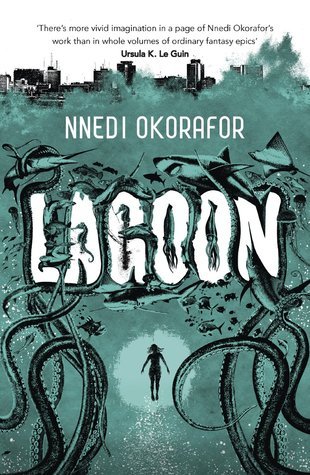
Shadow Speaker – Nnedi Okoraforstrange phenomena aplenty, whether it’s friends in unexpected places or the mutation of the Earth itself.

Since this post consists entirely of songs, consider all of them to be today’s song.

That’s it for this week’s Sunday Songs! Have a wonderful rest of your day, and take care of yourselves!

Posted in Sunday Songs

Sunday Songs: 4/21/24

Happy Sunday, bibliophiles! I hope this week has treated you well.

This week: bright green to match the verdant buds sprouting on the tre—oh, god, not again, WHY IS IT SNOWING…

Enjoy this week’s songs!

SUNDAY SONGS: 4/21/24

“Questions and Answers” – The Apples in Stereo

Note: this isn’t the official music video (there isn’t one), but it is in my eyes. Somebody just put this song in the background of videos of their cats in 2009. And they’re some friggin’ cute cats. I miss the days when YouTube used to be a simple, wholesome place…

I would have talked about this album…oh, a good three weeks ago, but I stubbornly made several color palettes that didn’t match Her Wallpaper Reverie at all, so I’ve regretfully withheld from it until now. Somehow, it was only the second Apples in Stereo album that I’ve listened to all the way through (the first was Travellers in Space and Time, but that was ages ago, so this felt like the first), and it’s just about the jangliest, summeriest (glad that’s actually a word) album I’ve heard in ages. By then, Robert Schneider and company had carefully chiseled their craft so that everything sounded like either a lost Beach Boys demo, some kind of space-age, robot dance break, or somewhere in between. (You’d be surprised at the commonalities between the two. They make it work.) You’ve got the cut-and-dry indie, almost Pavement-like “Benefits of Lying (With Your Friend)” on one end, and “Drifting Patterns,” a thicket-dense, borderline anxiety-inducing instrumental that sounds like it should be playing in the entry hallway to the space exhibit in the Denver Museum of Nature and Science on the other, but there’s no sense that either are out of place; strung together by a sprinkling of instrumental bites that clock in at less than a minute long, Her Wallpaper Reverie just feels like a showcase of the exact range that The Apples in Stereo are all about.

“Questions and Answers” stood out as a favorite for me—it’s squarely on the “we’re making the jangliest jangle-pop song known to man and we cannot be stopped” side of The Apples in Stereo, but you know me. I’m eating it up. It’s such a shame that Hilarie Sidney, their longtime drummer, left the band in the first place (but it’s understandable, given that she’d just recently divorced Schneider), but I find myself wishing that they’d lent her more opportunities for her to have lead vocals (see also: “Sunndal Song” and “Stay Gold”). She has a command of her voice in such a similar way to Schneider that they both could fit into any song he wrote; they both have a nasally quality that never grates—it just would feel weird for an Apples in Stereo song to not be nasally sung, somehow. But in this case, Sidney was the better choice to lead “Questions and Answers”; as much as I love Schneider, I can’t quite see him getting quite the same vocal sway and tightness that Sidney brings here. Maybe that’s because I’m having trouble envisioning him singing in the same key that Sidney is singing in, but I swear that “Questions and Answers” wouldn’t be the same without the way that she stretches the vowels in “moon” out like taffy in the hot sun or her unrelenting devotion to this song’s impressively airtight rhythm.

…AND A BOOK TO GO WITH IT:

The Long Way to a Small, Angry Planet – Becky Chambers the bounciness of “Questions and Answers,” plus all of the references to moons and star maps, would fit right into Chambers’ cozy galaxy.

“Yesterday’s World” – Circulatory System

Yup. Sorry. Get ready for some more Elephant 6-posting this week. Sometimes the urge just overcomes me.

Elephant 6, in terms of its bands, tended to cross-pollinate quite a bit: chances are, if you take any given band from there, at least three members of said band will have been in or formed other bands on their own, also in Elephant 6. Jeff Mangum of Neutral Milk Hotel fame was, for a time, in The Apples in Stereo, as was Bill Doss (rest easy), who was half of the brains behind The Olivia Tremor Control. It branches inwards infinitely. Circulatory System was an offshoot of The Olivia Tremor Control, fronted by Will Cullen Hart, and…I hesitate to outright call it Olivia Tremor Control 2: Electric Boogaloo (2 Tremor 2 Control), because that really isn’t a complaint on my part. We need more bands like The Olivia Tremor Control, and we need more of their sense of…well, fun. “Yesterday’s World” is glee cleverly disguised as a serious, psychedelic shredder. Yes, you’ve got the churning guitars, but woven in between them is a chorus of young kids (who faintly go off-script in the background), a quivering assembly of woodwinds, and marching band-like drums towards the end. With the lyrics factored in, I can’t help but think that these childlike elements were stirred in to nail in this desire: “Yesterday feels/Feels just so far away/From these days.” At the age that I’m at, I’ve been frequently grappling with the same thing; now, more than ever, I am both physically and chronologically distanced from the freedom of youth, but there’s also the growing “get a job/move out/etc.” pressure of age and capitalism. Such a fun age. Time moved too quickly for me to grasp that those days wouldn’t last forever. I’m glad I tried to train myself at 18 into knowing that age doesn’t mean that the joy gets sledgehammered out of you the minute you become an adult, but it’s an ongoing process, and I’d be lying if I said that I’d mastered it. For now, all I can do is the same of what Circulatory System are doing: integrate those moments of childhood and freedom into my newly adult life. They have their chorus of smiling, jumping kids within their music, and I’ve got the battered copies of my favorite book series from elementary school on my dorm bookshelf. Yesterday’s world isn’t always out of reach, even as we must live in the world of the present. Keep the kiddo alive.

…AND A BOOK TO GO WITH IT:

The Psychology of Time Travel – Kate Mascarenhasyesterday’s world has been reached…

“Jesus Came from Outta Space” – Supergrass

Seems that rock n’ roll, as a collective, has come to the conclusion that this is where Jesus has been chilling out all this time: as Robyn Hitchcock put it, “out on the rim of space.” Seems that Supergrass also came to the appropriate conclusion about how Jesus would feel if he were to see the state of the world as it is now: disappointed. (Remind me again of which part of the Bible told you to harass trans kids? Oh, you can’t find it? How strange…) At least, if anything, we can take this message with us, whether or not it’s delivered from Jesus or Gaz Coombes: “Love is all, love is tall, love is older than you/Love’ll talk, love’ll walk, love’ll speak up for you/Love’ll shake, love’ll wake, love’ll wake up with you.”

…AND A BOOK TO GO WITH IT:

The First Sister Linden A. LewisI raise you: Jesus in outta space? (Sort of?)

“Kill Me” – Indigo de Souza

Through only a handful of songs, it seems to me that Indigo De Souza has mastered the art of being really, truly, messy. It’s not just messy through a few sparing, self-deprecating lyrics about how far you’ve dug yourself into a sinkhole of misery. No—there’s some of that, but if there’s anything that her music does, it’s drag you right along with it, in all of its exhausted, cake-smushing glory. Riddled with aftershocks of a breakup, “Kill Me” crawls along the floor on its hands and knees, snuffling for scraps amongst the rubble, searching for something to hold onto. Oscillating between said “kill me” refrain in its handful of variations and a poisoned urge to crawl straight back to the person who caused all this strife, it’s a song, like “What Are We Gonna Do Now,” that feels like a frozen time capsule: minutes after the phone call that ended things, tear stained, dirty-clothed, and desperate—for answers, for comfort, and for reciprocation. It’s a raw-throated kind of desperation, but one that replicates the feeling of looking down at yourself in your grease-stained shirt and asking yourself what the hell happened to me? There’s a sardonic humor in the way that De Souza declares: “No one asked me/To feel this fucked up/But here I am, fucked up,” an exhausted chorus barking out the final “fucked up” along with her. “Kill Me” moves along like paint spilled on the floor, seeping into the floorboards no matter how much you try to scrape it out, muddying into an ugly mess of what used to be good colors into the woodgrain.

…AND A BOOK TO GO WITH IT:

Something Like Possible – Miel Morelandpost-breakup exhaustion and misery that leads to blossoming growth—and new love.

“I Miss You(r Dog)” – Addison Grace

Following on my unintentional train from Lisa Hannigan’s “What’ll I Do” last week, here’s another lighthearted breakup song. Unlike Hannigan, it’s not so much laughing through the pain, but this one laughs more at an aspect of breakups that not enough songs talk about—the pets that get dragged into it. It’s a fact of life: sometimes toxic people have really lovable pets. They’re innocent. They didn’t have to get into this mess, but here we are. Granted, it is slightly weird that Addison Grace basically treats said dog like it’s a child that he’s battling for custody over, but it adds to the humor. It’s just a silly song through and through, from the bait-and-switch parentheses in the title to the purposefully placed sound effects (“I’m sure you told all your friends that you think I’m a [dog bark]”…ba-dum tsssss). And for all of the breakup songs wallowing in self-pity, sometimes all you can do in that situation is laugh and fixate on the silly parts. Or, if you’re Addison Grace, get it through to said ex that their dog deserves a birthday befitting a king.

…AND A BOOK TO GO WITH IT:

Radio Silence – Alice Osemanthis one isn’t specific to this book, but more Oseman’s larger universe—given how much music seems to inform her creative process, this song is just begging to be included somewhere in it. Feels in line with her penchant for cheery but emotional indie pop.

Since this post consists entirely of songs, consider all of them to be today’s song.

That’s it for this week’s Sunday Songs! Have a wonderful rest of your day, and take care of yourselves!

Posted in Sunday Songs

Sunday Songs: 4/14/24

Happy Sunday, bibliophiles!

This week: only one question remains…can you dig it?

Enjoy this week’s songs!

SUNDAY SONGS: 4/14/24

“What’ll I Do” – Lisa Hannigan

A small but vibrant joy of life: songs coming back to you when you least expect them to. Not long ago, I just had a fleeting memory of the chorus, and so I went back through Passenger to try and find the exact song (because I was not about to google “Lisa Hannigan song that goes oh oh oh oh eh eh ah ah ah eh eh”). Luckily, it didn’t take much digging, and now I have this parcel of dancing happiness.

One of the top YouTube comments on the music video for “What’ll I Do” calls this song “the happiest sad song ever,” and there’s really no other way to describe it. Lisa Hannigan does have a penchant for belting out her melancholy, but this one somehow feels happy, even though it’s about a breakup; the lyrics are like watching an slapstick comedy where miserable event after comically miserable event starts crashing down on the protagonist (“What’ll I do now that you’re gone?/My boat won’t row, my bus doesn’t come/And I have the fingers, you’ve got the thumb”), but somehow, they’re smiling through the pain, and clicking their heels for the heck of it. “What’ll I Do” sits squarely at the point where so many bad things have happened to you that you just have to laugh—there’s no use in being miserable anymore, so why not just have a laugh at yourself and do a silly little dance? And Hannigan has juiced that emotion out in barrels, making this circus of bad luck into a full-on show, a folksy singalong that’s begging for a line of cheerful dancers. I wouldn’t complain about that for the music video, but the one that we do have is hilariously fitting as well—seemingly filmed from a phone, the whole video is Hannigan singing the song while on a rollercoaster; the camera shakes incessantly, and she has to break the lip sync at least twice just so she can grab her hat before it flies away. (I get it. We’ve all been there. Currently thinking about this Hello Kitty baseball cap that fell off while I went to Legoland that one time. I never forgot about you…) Like the lyrics, it’s a rollercoaster that’s already dragged you around and thrown you up in the air, making you want to puke, but there’s nothing left to do but have a laugh until the ordeal is over.

…AND A BOOK TO GO WITH IT:

Reggie and Delilah’s Year of Falling – Elise Bryantthe story of a distant crush told through holidays, all while reconciling with current relationships gone stale and grappling with changing feelings.

“Dust Bunny” – Crumb

Crumb? Making somewhat uptempo music? It’s more likely than you think.

…I actually mean that seriously, for once. Other than a handful of songs off of their last album, Ice Melt, Crumb has been known for their calm—gentle, electronic dream-pop melodies that drifted along like the bubbles in a can of soda, and tasted of that same sweetness. At least, that’s how I think of their music—in the past few years, they’ve been the band that my mom puts on when she needs to focus on her (incredible!) art, or just do some cleaning—any task that necessitates some calming of the brain. Crumb have recently announced the release of their third album, AMAMA, which is set to release just over a month from now (!!)—May 17. I initially missed “Dust Bunny” when it was released as a single last year, but now that I’ve listened to it alongside “AMAMA” and “Crushxd,” it seems like some sort of shift is on the way for the band…even if it is just the tempo. “Dust Bunny” has picked up the pace, letting the drums take the wheel as the frantic energy blossoms from the (always plentiful) synths. As evidenced by the underwater-sounding effects on both the instrumentation and Lila Ramani’s voice, they’ve never lost that wooziness that coated their earlier songs like syrup (see “Locket”), but the molasses has melted enough to allow for their constant wiggling to speed up. The lyrics, too, feel like a far cry from “I don’t have class/Got a lot of time on my hands/To sit, wait around…”; just as with the music, Ramani recalls a vignette of panic and guilt: “You’re seeing a ghost/Can’t undo what’s been done/Forever no more/Stacks of clothing fill your room, you/Can’t find one thing to return.” Despite the spaciness of the synths, there’s no doubt that it’s morphed from danceable upbeat to the kind of upbeat that’s only so because it soundtracks the search for your sprinting around the house to try and find your keys 5 minutes after you were supposed to leave for work; or, if we’re sticking to the metaphor, trying to get that one dust bunny out of your dorm before your RA comes to do a room inspection so that they don’t think you’ve been living in a pigsty this whole time. But that panic never overwhelms the music—being so cloaked in color-changing mist and melting shapes as it is, it’s still the same ol’ Crumb deep down.

…AND A BOOK TO GO WITH IT:

And Other Mistakes – Erika Turnerreconciling with the weight of your past actions and other people’s perceptions takes center stage in this novel.

“Can U Dig It?” – Pop Will Eat Itself

Yet another infectious earworm that I have my dad to thank for, and also, I can definitively say that I’ve found it: my favorite band name. I mean, come on. Pop Will Eat Itself? How true is that? And doesn’t it just sound so cool as a name?

If you’re expecting their songs to be a meditation on the nature of pop, as their band name is, I’m not entirely sure if you’d be satisfied. Granted, I’ve only heard two of their songs (including this one—check out “X, Y, & Zee” for more), and neither of them concern their lyrics with such things. What they’ve got is something far superior: four and a half minutes of listing off comics, movies, TV shows, and bands that they like—sorry, dig. And it’s a blast. Aside from the fact that I never anticipated Alan Moore ever being directly referenced in a song, it’s just a catchy, synthy, fandom-fest—I’m surprised that this hasn’t been accepted as some kind of comic con anthem. Plus, there’s the enhancement of the music video, in all of its terrible ’80s CGI glory—lots of old TV sets floating around in the ether and the band members superimposed over panels from Watchmen and The Killing Joke. It’s the nerdiest club banger I’ve ever heard. What else is there to say? It slaps. Glad we can formally acknowledge that Alan Moore knows the score.

…AND A BOOK TO GO WITH IT:

…well, pretty much anything that they mention in this song: The song is basically a reading list in and of itself, so…

“Poo Pants” – Cyriak

It’s a metaphor for capitalism.

…AND A BOOK TO GO WITH IT:

The YouTube description: Marx who?

“Somebody Up There Likes Me” – David Bowie

And that’s another Bowie album for the books! As…incapacitated as he was during that period, Young Americans feels like the first album of proof of how easily it came to Bowie to slither in and out of genres as easily as most people stroll through an open door. It oozes with slickness—somewhere in my mental periphery, this album exists solely in a smoky nightclub as midnight ticks by, clammy with warmth and blasting with saxophones. Personally, sometimes the sax went on a little too long for my liking (see “Win”), but for the most part, Bowie knew exactly how much to smear about—and make it sound deliciously raw and sultry.

But sultry isn’t all that the album boasts—Bowie always has something clever and meditative up his sleeve. Fresh off of Diamond Dogs, which was full of the proposed contents for a musical version of George Orwell’s 1984 which he never got to make, Bowie had Big Brother on the brain; the kind of theatricality that what I’ve listened to of Diamond Dogs suits a musical well, but as he turned his genre gaze to soul, it almost feels like he had that sultry quality in mind and turned it into deliberate deception. The subject of “Somebody Up There Likes Me” is the sleaziest of the sleazy—a politician who seems to float amongst his subjects without any fear of retribution: “He’s everybody’s token, on everybody’s wall/Blessing all the papers, thanking one and all/Hugging all the babies, kissing all the ladies/Knowing all that you think about from writing on the wall.” As the saxophone howls, Bowie’s fictional figure struts through the street, stopping once in a while to sweep a woman up into his arms and plant a kiss on her cheek. But every act of generosity is an empty one—this is someone grooming the public along with his own image, putting on a show of authenticity just to get them to cough up the spare change from their pockets. Bowie sums it up in the bridge: “Was a way when we were young, that/Any man was judged by what he’d done, but/Now you’ve pick them on the screen (What they look like).” Fresh off the heels of Nixon, I’m sure this was already closer to the political climate than most people wanted to admit, but I can’t help but think of how this has only been exacerbated—and not just in the 21st century. We got Reagan only a handful of years after Young Americans was released (there’s a “savage son of the TV tube” for you), and the cycle has only repeated itself in the years since. But for me, the genius in this song isn’t necessarily about the message, timely as it continues to be; this song could have been put in any of his albums, but having it on Young Americans makes the sleaze glow like neon. Setting this politician against the backdrop of a distinctly American sound, something that comes off so howling and genuine, encapsulates that political climate disturbingly well—a façade of a clean-cut, American man of the people with charm and sex appeal, but with all manner of evils stowed just out of reach of the cameras. The soundscape of Young Americans begs for some kind of old Hollywood love story, and Bowie knew it—and he took that atmosphere to its most perverse extreme just to make it ring true.

…AND A BOOK TO GO WITH IT:

Some Desperate Glory – Emily Teshskeevy politicians persist into the future…

Since this post consists entirely of songs, consider all of them to be today’s song.

That’s it for this week’s songs! Have a wonderful rest of your day, and take care of yourselves!
Posted in Sunday Songs

Sunday Songs: 4/7/24

Happy Sunday, bibliophiles! I hope this week has treated you well.

This week:

Choose the best answer: You can blow with:

a) This

b) That

c) Us

d) All of the above

Enjoy this week’s songs!

SUNDAY SONGS: 4/7/24

“Flea” – St. Vincent

Affirmation of the week: I have listened to this song a healthy amount of times. At least I didn’t pull the “listen but nothing but this song for almost four hours straight” stunt that I did with “Broken Man.” See? I’m better now. I’m savoring this one, and by “savoring,” I mean “listening to it slightly less, but still putting it on repeat for at least half an hour when it comes on shuffle.” What new St. Vincent does to an mf.

“Broken Man” is shining proof that All Born Screaming has a good chance of being my album of the year, but somehow, Annie Clark outdid herself even more with this latest single. I’m glad that “Broken Man” and “Flea” are tracks three and four on the album, respectively; even past the fact that they fit so slickly together, I like the idea that the title and closing tracks are a secret—she’s got something insane up her sleeve. I can just tell. After “Broken Man”‘s torrent of fury, vengeance, and Dave Grohl’s drumming, “Flea” makes the transition into the outright bloody—not bloody in the sense of the trail of destruction that “Broken Man” left, but in the sense of parasitism. Clark described the upcoming All Born Screaming as being bred in “That kind of isolation [that] breeds paranoia and loneliness…loneliness can breed violence.” Now I can see exactly where the whole “post-plague pop” label she stuck on it comes from. “Flea” slinks along on tiny, pointed legs, thrumming with a racing heartbeat and an insatiable thirst for blood; the repetition of “Once I’m in, you can’t get rid of me” is sung lower and raspier, a threat paired with a predatory lick of the lips. The kind of loneliness and violence Clark described seems to be exactly where this kind of sinister lust comes from—being isolated for so long could easily make love turn to lust, and lust consequently to hunger, so drained of human touch that what was once affection has become leeching for nutrients at the other person’s expense. And everything about “Flea” sounds frighteningly hungry, down to the parched-throat rasp with which Clark delivers the verses. When she ends verse two with a dried-out confession of “I look at you, and all I see is meat,” followed by a faint belch in the background, I suddenly got the feeling that I was being watched by something waiting to tear me limb from limb and suck me dry. It’s intense, but it’s the kind of intoxicating thrill ride that I’ve taken with Clark for nearly ten years. And the chorus finds the narrator covered in someone else’s blood, begging for just one more bite; the desperation sloughs off like a second skin, every blood-soaked belt starved and howling. It’s a kind of visceral musicianship that I haven’t seen from St. Vincent in years; although Daddy’s Home was certainly raw, it was the kind of raw you get from getting someone enough wine to spill about their childhood trauma and laugh it off. All Born Screaming is about as raw as flesh itself—it’s all the clearer that Clark has no intention of pulling punches, and that’s exactly what makes a St. Vincent song so iconic. “Rattlesnake” and “Severed Crossed Fingers” don’t illicit waves of emotion in me for nothing—they’re hearts laid bare in the street. In other words: Clark is at her best when she’s herself. Should be a given, but it’s more evident in some albums than others.

God, April 26th can’t come any sooner…

…AND A BOOK TO GO WITH IT:

Hell Followed With Us – Andrew Joseph Whitedepending on how All Born Screaming goes, I might preemptively merge this with “Hell Is Here”…

“Tonight” – TV on the Radio

Aaaaaaaaaand, that’s one more album on the Sisyphean Album Bucket List. Between the “Wolf Like Me” (the best song there is about werewolves after this), the deeply moving “Province” with its David Bowie feature (YOU HEARD ME!!), and this, I now know that Return to Cookie Mountain has to make its way into the rotation. I have Chelsea Wolfe to thank for this one; at her fantastic show at the Gothic Theater in March, she played this before the show—I wouldn’t be surprised if she was a fan before, but I suspect that it’s a kind of thank you to the fantastic Dave Sitek, who produced her truly fantastic new album, She Reaches Out To She Reaches Out To She. Also, with a title like Return to Cookie Mountain, I feel like I just have to listen.

What “Tonight” made me realize about TV on the Radio is how effectively—and quickly—they can craft an atmosphere. Some of the most layered ones I can think of are from their early career, namely the first version of “Staring at the Sun” that appeared on their debut EP, Young Liars. Instead of the shorter version that made the cut for Desperate Youth, Bloodthirsty Babes, this one has a thirty second intro (that feels longer, honestly) that consists of just the a cappella vocals of the band, interspersed with an excerpt from a Spanish-speaking radio station. Even though the chatter on the radio station seems cheerful and singsong, the drawn-out gives it a prolonged air of foreboding and sorrow to come, like the next thing we hear will be the somber announcement of someone’s death. Thankfully, that doesn’t happen, but the first lyrics we hear on the heels of that are “Cross the street from your storefront cemetery,” which, bam. That’s how you start a song. When it comes to both of those aspects, “Tonight” operates in a similar way, creating an atmosphere that’s haunting before the instruments even kick in. With the whine of a distant siren and the ever-so-slightly distorted collision of wind chimes, “Tonight” instantly transports you to a place of brown grass and barren vastness, pockmarked by dead trees strung with glass bottles and the faint sounds of the road in the distance. The music seems to lumber with every step, a beleaguered creature that lurches with every step, as if its limbs are tied down with the wind chimes you hear tinkling throughout the song. Hollow whistles harmonize with a moaning clarinet and Tunde Adebimpe’s clarion call of a voice, all at once ragged and brimming with vitality. A fair amount of the buzz surrounding TV on the Radio when they got their start were vocals comparisons of his to Peter Gabriel, and it’s an apt one—they have a similar quality of being roughly visceral, but booming with emotion. Dave Sitek is also credited with “magic” on this song, which I cannot find a musical definition for the life of me, but if there’s anything that you would credit the man for, it’s that. He has the touch.

I often get so caught up in the atmosphere that I only mine the lyrics later, but the lyrics in “Tonight” pop out so prominently on the first listen; as the wind chimes huddle for warmth, Tunde Adebimpe’s voice cuts through them like a steak knife through fabric—”My mind is like an orchard/Clustered in frozen portraits.” How does this man do it? Every single line in this song is a literary gem in and of itself, and it’s not just because of the repeated references to Edgar Allan Poe’s “The Telltale Heart”—like heartbeats rumbling through flimsy floorboards, the lyrics never fail to send chills up my spine: “Her rusty heart starts to whine/In its tell tale time.” My rusty heart sure does whine whenever those lyrics wash over me. And like the sparse nature of the atmosphere, the lyrics tell of a spare mental space, one so full of sorrow and unpleasant memories that, like the telltale heart, cannot be pushed from the mind. The song still haunts me in a largely melancholy way, but it has an uplifting sentiment at its heart. I can’t help but think of Soundgarden’s “The Day I Tried to Live” and its similar atmosphere of doom, but its lyrical heart being the fact that despite all of the horrible things crashing down around you, there will always be something left to live for, so all you can do is push through. Adebimpe’s sentiment feels like wading through a slurry of unpleasantness that never seems to end (“Blossoms that bloom so fine, just to drop from the vine/I’ve seen them all tonight), but he makes the light at the end of the tunnel shine as bright as it can: “The time that you’ve been afforded/May go unsolved, unrewarded/Some nameless you cannot know, may be coming to show you/Unbridled love and light.” No matter how much you have to push down and wade through, never doubt that good things are coming. It’s something I struggle to hold to heart, but I’ve added this song as an unexpected guiding light. I can never know the future. It scares me. But there is certainty in the love lingering beyond my current time. There is always love.

…AND A BOOK TO GO WITH IT:

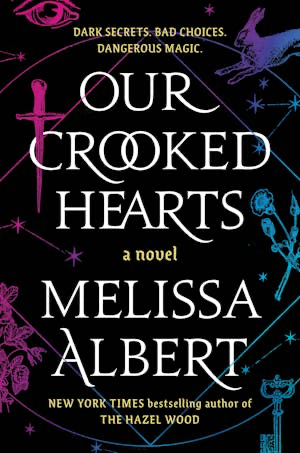
The Bad Ones – Melissa Alberta similarly haunting atmosphere woven from swirling memories.

“the rot” – Dean Blunt

Contrary to my graphic, this is not, in fact, that well-intentioned but ultimately regrettable black square everybody posted back in 2020. My text box accidentally cut out the 2 on Black Metal 2, the only thing distinguishing it from the cover of Black Metal, which is…also just a black square. Gotta admire Dean Blunt for committing to the bit.

I stumbled across this song thanks to Arlo Parks, who chose Black Metal 2 as one of her picks on her episode of Amoeba Records’ series What’s In My Bag?, where she also talks about my bloody valentine and happens to be wearing one of the coolest Radiohead shirts I’ve ever seen. The songs she discusses there—“VIGIL” and “the rot”—serve as bookends, the opener and closer of Black Metal 2, respectively. Both of them have the atmosphere of a massive curtain thrown over your eyes—you’re immediately thrown somewhere else in a space that Blunt has created; no time is wasted in transporting you into his world. While “VIGIL” has the tidal-wave mounting tension of strings to prop it up, “the rot” is the last, gentle minutes of a plane ride home. It’s a distinctly sunset song: you’re slumped back in your seat, golden light is spilling through the window, and you have the sense, more than ever, that a chapter is closing, but not necessarily in a negative way. You can tell that there’s a myriad of different instruments, but all of them are toned down to a faint crawl, strings gently winding, acoustic guitars drifting away like insects in the early evening. “the rot” in particular has such a gorgeous vocal contrast between Blunt and guest artist Joanne Robertson; like Phoebe Bridgers and Jeroen Vrijhoef on “Garden Song,” what grounds the song is the stark difference, although that of Blunt and Robertson feels much more natural and less jarring than the latter. Where Blunt has the warmth and thickness of the ocean lapping over a volcanic shore, Robertson’s words float like the breeze stirring the water. Both of them drift like motes of dust into the air, closing out Black Metal 2. Without even having listened to the whole album, I can tell how successful “the rot” is as a gentle closer.

…AND A BOOK TO GO WITH IT:

Echo North – Joanna Ruth Meyer – the frost, like the rot, lures you into the woods and makes you chase after old dreams.

“Weapon of Choice” – Fatboy Slim

Me when I walk without rhythm (I didn’t attract the worm):

…AND A BOOK TO GO WITH IT:

Dune – Frank Herbertas is written.

“Satellite of Love” – Lou Reed

Ugh, I’m so glad this song came back intro my regular rotation recently. The outro did wonders for amping me up for my astronomy midterm.

It’s been about four years since I’ve consciously started listening to this song, but I’m sure my dad played it in the car long before that. But I’ll always love this era of Lou Reed, and you know who I’ll also always love? David Bowie. And Bowie, along with Mick Ronson (Bowie’s guitarist in the Spiders from Mars) co-produced Transformer, which has spent a woefully long time on my album bucket list. It’s smack dab in that early-’70s sound that I just live for, and I’ve already heard a handful of the classics from the album already—“Walk On the Wild Side” and “Perfect Day,” to name a few. But “Satellite of Love” remains my favorite thus far, and it’s not just because I collect space-related songs like a bower bird collects shiny rocks and trinkets. As with…well, almost every Lou Reed song, “Satellite of Love” is tinged with melancholy; it tells of love watched from a distance, the aftermath of a breakup watched from below like a stargazer looking at a meteor shower. The offbeat admission of “I love to watch things on TV” feels like an admission of what Reed thought that the relationship had turned into—just something to pass the time and make the eyes go limp. I can’t help but think of Lisa Hannigan—I can’t be sure if this was her exact inspiration, but I wouldn’t be surprised if the chorus of “Passenger” came from a similar metaphor of distant love adrift in the sky—”Oh, my satellite/Oh, my passenger.” For once, Lou Reed is the one that doesn’t sound abjectly in mourning—wistful, sure, but there’s still some light shining in the corner of his eyes, even if it’s just the reflection of a star. For me, the outro is what pumps just the barest pulse of hope into “Satellite of Love”—the piano begins to gallop, clapping and snapping dominates the percussion, and Reed begins a harmony with a wailing, angel-voiced Bowie. Reed remains anchored to the ground, but Bowie, naturally, ascends skyward with every note. There’s something about it that feels like he’s extending a hand from somewhere in the night sky, inviting us to join in the chorus.

…AND A BOOK TO GO WITH IT:

All Systems Red (The Murderbot Diaries, #1) – Martha Wellsthe detached observation of love (and humanity in general) is much more humorous than wistful in nature here, but we can’t deny that Murderbot likes to watch things on TV.

Since this post consists entirely of songs, consider all of them to be today’s song.

That’s it for this week’s Sunday Songs! Have a wonderful rest of your day, and take care of yourselves!
Posted in Sunday Songs

Sunday Songs: 3/31/24

Happy Sunday, bibliophiles, Happy Trans Day of Visibility, and Happy Easter, for those celebrating! I hope this week has treated you well. 🐰🏳️‍⚧️

For once, I’ve got a color scheme that lines up with the festive colors. Enjoy it while it lasts….either way, this week: songs about love, songs that feel like being in a swimming pool, and songs about jelly.

Enjoy this week’s songs!

SUNDAY SONGS: 3/31/24

“Freedom of Speak (We Got Three Minutes)” – De La Soul

It’s been about a year since De La Soul’s music triumphantly returned to streaming after decades of legal battles, and about a year since my De La Soul awakening. Three Feet High and Rising is now permanently etched into my map of my freshman year of college; I spent a good two weeks with that delightfully creative and unabashedly silly album as my soundtrack, and it put a spring in my step even when the weather remained cold enough for those nasty piles of sludge and dirt leftover from at least three separate snowstorms to stay on the sidewalk. I listened to it in spring, but it’s undeniably a summer album, all bright colors and jumping joy.

Three Feet celebrated its 35-year anniversary earlier this month (3/3), and with it came a handful of demos that got left off of the extensive; it feels like a Kate Bush or self-titled St. Vincent situation (and no, I will not stop shoehorning the latter album into every conversation, this is just how it is talking to me) where they were just cooking so much and without any dilution of talent, so they just had to leave a few tracks on the back burner so as not to a) overstuff the album and b) blow our minds more than they already had. I haven’t had the chance to dig through the other demos and scrapped songs that they released, but it’s clear from “Freedom of Speak (We Got Three Minutes)” that it was a tough decision to leave them off Three Feet High and Rising. Never once was their joyous spirit dimmed, and this track is proof. After a conversation with my family, I concluded that part of what endeared me to De La Soul (and a lot of other hip-hop artists at the time) is that they lacked the machismo that defined the genre in the decades to come; not to get all “mOdERn mUSiC sUCks” with it, but I do find myself missing the early days when people like them or A Tribe Called Quest just released their collage hip-hop with subject matters that, most often, just ended up as anecdotes about their days and the snacks that they liked—or, in De La Soul’s case, a PSA about wearing deodorant that clocks in at less than a minute long. (“THAT’S RIGHT! YOU SMELL 🫵”) Who knows why that mentality got left in the dust; I bet it hasn’t gone away entirely, but I’m not well versed in hip-hop enough to know where it ended up. “Freedom of Speak” has a similarly stream-of-consciousness premise, with a good chunk of it being Posdnuos and Trugoy (rest easy) talking about their routines—taking a shower, cooking breakfast, shopping with girlfriends. But even with such a mundane subject matter, they managed to inject it with the same infectious joy that made the whole of Three Feet High and Risin so memorable—ordinary things feel like the smoothest, most cheerful events to grace the earth, and all of it is wrapped around a fake construct: being forced to cram all of their musings into three minutes. They got cut off at 2:51, unfortunately. Oops.

…AND A BOOK TO GO WITH IT:

The World of Edena – Jean Giraud Mœbiusokay, fine. You got me. I’m double-dipping again. But there’s something similar about the ways that Mœbius and De La Soul are creative—and delightfully technicolor.

“When” – Deau Eyes

Lucy Dacus brought me here; while I was doing some digging on “My Mother & I” a few weeks ago, I found a thread talking about the performance with her mom on backing vocals, and a user mentioned seeing her with Deau Eyes as the opener on at least one of her tours. They both hail from Virginia and seem to be on good terms with each other, and any friend of Lucy Dacus (minus T*ylor Sw*ft) is a friend of mine, so I figured I would give her a listen. And…I can’t get fully on board with most of her style— it ranges from somewhat experimental indie to pure twang, but most of it comes off quite forced. And the fact that a lot of the marketing around her weirdly centers around her being a gemini, of all things (?), is certainly odd, but…if that’s her worst sin, then I can let it pass. That one’s probably more on her marketing team than on her.

“When,” against some of the other Deau Eyes songs I listened to, sounds more like 2020’s Sleater-Kinney, which is a win I’ll certainly take. Even if my enjoyment of Deau Eyes extends mostly to this song, it’s a smoothly urgent indie shuffle, rattling along with Ali Thibodeau’s (ohhhhhhh, so that’s where the name came from) vocals, which hold the melody steadier than an anchor holds down a time-battered ship in the stormy sea. Delayed guitar riffs travel in neat circles around the centerpiece of Thibodeau’s voice, playing tricks on my ears as I try to pinpoint exactly where they’re coming from—a single center or hovering all around? It’s almost dizzying on headphones, but Thibodeau keeps it reserved enough to not overwhelm the song. In this case, it’s the lyrics that are the spotlight; in a world where we are told that we are naught but products to be sold, when our bodily wellness is the cost for being able to navigate through the world with any kind of arbitrary success, Thibodeau has a bridge that couldn’t be any more relevant: “Hey, I see you/You matter more than you think you do/Each and every move, it matters too/So set the mood.” Just like how Thibodeau’s vocals anchor the music, she anchors the space around her, encouraging us to follow suit; the lyrics are simple, but undeniably true. Maybe I’m not sold on every part of Deau Eyes’ catalogue, but good on her for spreading the good word of letting yourself take up space in a world that wants to make us small. It’s what you deserve.

…AND A BOOK TO GO WITH IT:

VenCo – Cherie Dimalinethe time has come to reclaim your space, and by “reclaim your space” I mean “exact feminist witchcraft justice upon the skeevy, corrupt white men who wanted to take that away.”

“Jelly Filled Coffin” – Hether

Sometimes, you have a long and sentimental reason for finding and subsequently liking a song. Sometimes Apple Music digs it up, slaps it on the abject depression “Chill” playlist, and you listen to it just because of the name. It’s like “Crocodile Tears and the Velvet Cosh”—if there is ever another song called “Jelly Filled Coffin,” they’ll be copying this guy.

I first talked about Hether (a.k.a. Paul Castelluzzo) a little over a year ago, and I didn’t expect to be talking about him again—”Shy” was sweetly catchy, but I didn’t find myself wanting to uncover more of his music. I guess I’m a lazy, no-good, Gen Z slave to That Damn Phone then, since Apple Music did the discovering for me, but…for once, the algorithm did something good, unlike the time that of Montreal’s nearly 10-minute-long suicidal ideation “No Conclusion” landed on, of all places, the “Get Up!” playlist. I can’t make this shit up. At least we can take comfort in the fact that no human mind could fuck a playlist up that badly. You have to take the wins when they aren’t blatantly the product of automation. Even though Play it Pretty was released only three years after Hether Who? – EP, there seems to have been a shift towards the meandering for Hether; “Jelly Filled Coffin” has the glassy eyes of the peak of summer, humid and delirious from staring too long in the sun. The first comparison that came to mind was a less psychedelic Ty Segall—they have a similar delivery, drifting like a lazy river in the public pool, but just as brightly chlorine-colored. Every line feels like it’s being dictated from somewhere in the depths of the same pool, rippling and unnaturally blue (or is that the jelly? Depends on the jelly we’re talking about). The concept of a jelly-filled coffin was such an oddball pairing that I almost didn’t think of how oddly tragic it could potentially be—presumably being lowered six feet under, but trapped in a substance slippery enough to give you the illusion of movement. That would explain the resignation with which most of the lyrics are delivered: “Rip it out from my chest/Keep the love and leave the rest/Tether me to a post/A parasite chose you, the host.” And yet, even with the exhaustion creeping through the ripples of distortion, it never feels truly sad—it’s more delirium than outright depression, sleepwalking on the borders between sadness and just being tired. My dad made the comparison of his lyrics to Robyn Hitchcock, and many of his songs have a similar quality; on anybody else, it might sound tragic, but here, it could just be as deep as words strung together that sounded unique.

…AND A BOOK TO GO WITH IT:

In the Watchful City – S. Qiouyi Lua meandering body-hop between the stories of strangers inhabiting a strange world.

“Nostalgia” – Alice Phoebe Lou

Like Hether, I never expected to be wandering back around to Alice Phoebe Lou. I think it was around two years ago that I found her through “Witches,” which came from an old high school friend after I posted one of those “send me a song that reminds me of you” question boxes on my Instagram story. I was glad to have a new song to spin around in my head, and I was gladder still that something as gently bubbly as “Witches” reminded them of me. It sneaks back into my shuffle every now and then, and I never complain when it does.

“Witches” and “Nostalgia” are only about a year apart in terms of release date, but both of them are broadly categorized under blues; the former doesn’t feel like blues at all—more sparkly indie pop than anything, but I have no purview to talk about how blues has evolved as a genre over the decades—but the latter certainly does. Fitting that this song is called “Nostalgia” in the first place, since all of it evokes a time capsule made of sea glass, harkening back to the slow, swaying melodies of the ’40s and ’50s, but with a distinctly modern touch. If there was one lyric that would properly encapsulate this song, it would be this: “It feels like swimming/Swimming with my eyes closed.” Indeed, the soft organs and Lou’s voice feel like they’re being projected from inside of an underwater cave, a rich gray until the light from a crack in the ceiling makes the water dance on the ripples in the rock. With every lyric, you travel further in the water in slow motion, the foam from your impact fanning out around you, bubbles swirling upwards as you close your eyes, letting the waves kiss your skin. And yet, it feels just as vividly like a ballroom slow dance, engulfed in golden light as the sunset fades into night and drinks clink all around you. Whichever effect Lou was going for—or neither of those at all—is suited to her voice; her voice dips from a quiet, bluesy coo to a musical exhale that echoes through the caverns with ethereal gentleness.

…AND A BOOK TO GO WITH IT:

Last Night at the Telegraph Club – Malinda Lolesbian love in the 1950’s, with a dash of butterflies and moonlight kisses.

“Charm You” – Samia

This is one of maybe…three or four Samia songs that I’ve listened to so far, and I wish I liked them all as much as I liked this one. Then again, there’s only a certain type of as-of-yet undiscovered musician that can cover The Magnetic Fields’ masterpiece “Born on a Train” (which I reviewed about a year ago!), and…I hate to say it, but Samia is not that kind of musician. But I’ll let it slide—Arcade Fire covered the same song ages ago, and they didn’t quite pull it off either; they have the extensive instrumentation to theoretically pull it off, but the only recordings I could find were ones where the sound quality isn’t great and Win Butler was singing like he had the world’s most painful case of strep throat, so…not exactly their proudest moment either. It’s hard to cover near-perfection. I feel like Peter Gabriel has been one of the only people I can think of to cover The Magnetic Fields well and not make it sound either more melodramatic than it ever needed to be or just plain bland (seems there’s no in-between), but also, that’s Peter Gabriel. I should also mention The Shins and their excellent cover of “Strange Powers”—that, at least, was perfectly suited to James Mercer’s penchant for bare emotion, and even though The Magnetic Fields have such a dense orchestration to a lot of their songs, making this one acoustic wasn’t as risky of a move as it seems—Mercer makes it work beautifully. (Childhood staple, too.) We aren’t worthy of The Magnetic Fields, and we are similarly not worthy of Peter Gabriel or The Shins. It’s a hard act to follow. So props to her for trying, at least. Chances are I’m just too attached to “Born on a Train,” but I feel like to cover it, you’ve got to back up all that emotion with the toy-train-on-plastic-tracks instrumentals and faded grandeur peeking out from behind the curtain.

That aside, Samia captured something truly rare in “Charm You”—there’s something about it that sets it apart from all the other songs of hers I’ve listened to. Some of her other songs feel like she’s stretching her voice too thin, but the warm wails of this track perfectly suit the mood she’s meticulously crafted—a love song, but not one of wanting to chase a lover down or get them to like her. I’ve unintentionally bunched together too many songs that inherently feel like swimming, but this song in particular is a dive into a hot tub, a slow, boiling love that seeks to bare its soft parts: all of the pretense of a crush is gone, and all that’s left is to fall in deep: “What if we could shut up for an hour or two/Quiet, memorizing what the people do/Wouldn’t have to try and find myself in you.” The style of songwriting that Samia has taken is an approach I’ve seen a lot of indie pop artists take—collaging a hodgepodge of vignettes together to form a cohesive story—often a love story. It’s a move right out of the Phoebe Bridgers/Arlo Parks/Lucy Dacus/[fill in the blank with your sadgirl of choice] playbook, but what makes them stand out from the others is the emotion that strings them together—it’s not random moments just to flash your songwriting chops. That’s a trap I’ve seen a lot of songwriters fall into, but for once, Samia seems to have the writing flair to pull it off; every lyric on “Charm You” sounds like a red-cheeked confession with a bashful smile, giggling at some charmingly awkward memory: “Baby, let me show you the synthetic pond/Couldn’t we believe it was the hand of God/Making water boogie to a Ke$ha song?” Maybe it’s the way that the word “boogie” feels so out of place that it fits in perfectly or the image that it creates (I can see the warm, blue-lit water rippling from here, wherever there even is), but Samia’s vignettes are ones that stick, and not ones that just toss in a fruit metaphor and talk about smoking on the porch, or something. Like the album cover of Honey, there’s a blue warmth about “Charm You” that instantly charms the heart.

…AND A BOOK TO GO WITH IT:

Margo Zimmerman Gets the Girl – Brianna R. Shrum and Sara Waxelbaumtrying to be someone you’re not—even if it’s the prevailing queer stereotype—isn’t the surefire way of making someone like you, but maybe tutoring and mutual pining will…

Since this post consists entirely of songs, consider all of them to be today’s song.

That’s it for this week’s Sunday Songs! Have a wonderful rest of your day, and take care of yourselves!
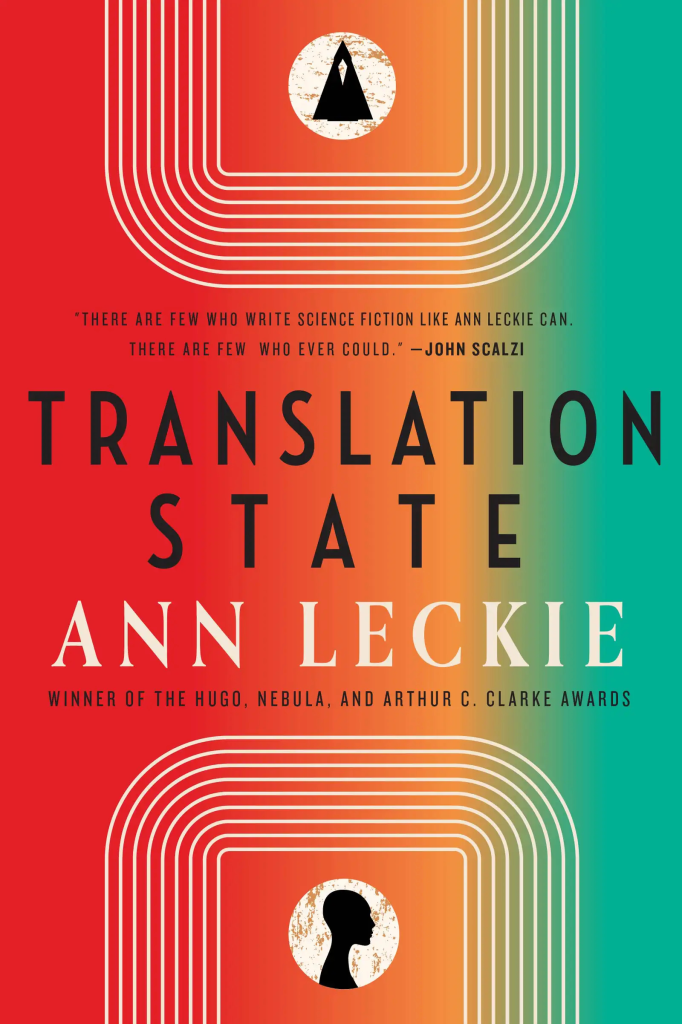
Posted in Sunday Songs

Sunday Songs: 3/24/24

Happy Sunday, bibliophiles! I hope this week has treated you well.

This week: sit down, kiddo. Soon you’ll be a mature adult, so your father and I have decided that you’re ready to learn about the (acid, lady) birds and the bee(tle)s.

…why are you leaving?

Enjoy this week’s songs!

SUNDAY SONGS: 3/24/24

“Dissolved Girl” – Massive Attack

Like Odelay, I’ve very much screwed myself over when it comes to this album; as my brother was showing this song to me in the car (thank you, by the way), I talked to him about the album, and after we talked about all of the songs I’ve heard off of Mezzanine, we concluded that I’ve…basically listened to the whole thing, save for some of the apparently duller songs and some instrumental breaks. Oops. My brother’s advice was to go through the album in its entirety anyway, so I’ll still take that advice. Eventually. The Sisyphean album bucket list persists.

I have a special soft spot for songs that sound like their album art. Most of the tracks on Mezzanine have a similarly creeping feel, but “Dissolved Girl,” to me, feels the most like Nick Knight’s photograph of a shiny, almost glistening stag beetle; the initial photo was taken by Knight at London’s Natural History Museum. Minus the pincers, it almost looks like the exoskeleton of a xenomorph—also a fitting image for the creeping feel of some of Mezzanine’s tracks. Much of the album retains that prickly feel of looking at the fine hairs adorning the beetle’s legs, but this song, especially the intro, captures it best. I can almost imagine that same beetle in captivity, scuttling around across a blank canvas in erratic patterns, like a shot from an old nature documentary. Its antennae twitch, it pauses in thought, then scuttles off into a corner again, only to emerge a few seconds later. Looking back, I’m ashamed that I completely missed that fact that this track was also featured in The Matrix. Granted, I was also so caught up in the glorious cheese of that movie that there wasn’t much else to focus on except for a) that one absolute monster of an H.R. Giger fever dream scene, and b) the fact that Keanu Reeves can barely act (sorry, dude, I’m sure you’re a nice guy). But like the stag beetle’s shell, that sleekness blends in with the landscape that the Wachowski Sisters crafted all those years before. I’ve tricked myself into thinking that there were raindrops or dewdrops on said beetle’s shell, but no—it was a trick of the light, and a trick of the music. “Dissolved Girl” runs over your skin like frigid water and catches all the colors of light like an oil spill, darkly alluring in the dapples patterned across it. Sarah Jay Hawley’s voice isn’t just sultry—it’s a puff of rasping steam from a rusty teakettle, blossoming into strange clouds as it’s swallowed by synths and guitars that were made for dramatic entrances and nothing more. It really is dissolving, but it seems to reform itself every passing second, an ouroboros of electronic deja vu.

…AND A BOOK TO GO WITH IT:

The Fifth Season – N.K. Jemisinthe lyrics don’t reflect the connection so much as the feeling of it does—uncertainty, circularity, and deja-vu abound.

“Acid Bird” – Robyn Hitchcock

Note to any aspiring songwriters who may come across this post: I accidentally typed “acid birthday” into YouTube while looking this song up, so there’s a good song title right there. It already sounds ten times ickier in subject matter already, but…it sure is a song title.

Robyn Hitchcock seems to have been planted in the rich, fertile soil of ’60s musical inspiration from the start. Listen to any of his songs from his solo works or from one of his many groups over the years, and that bright, whimsical jangle always pops out of the woodwork. But before I saw him back in January, I found out that he’d played several short shows where he only played sets of Syd Barrett covers, and the comparison clicked instantly. Personally, I’m glad that Hitchcock took the good parts from Barrett’s legacy and never went off the deep end, but if there was ever a perfect fit, the two’s musical and lyrical styles were practically made for each other. There’s no doubt that plenty of artists have found drugs to be an outlet for imagination, but it’s always temporary; I never mean to make light of addiction and the very real consequences it can have on a person and their loved ones, but every time I hear about any of these instances, it’s a short-lived outlet. We know where it tragically led Barrett (rest easy) and many other artists of his time, but often, these things have been discovered have always been dormant—maybe it was the drugs that exposed them, but that kind of creativity lingers in all of us. We all have different ways of finding it, and all we can do is learn to live with it carefully—the very things that we perceive as opening it can destroy it just as quickly. At least we can look to Hitchcock as an example—it seemed he knew early on that his wild creativity was at the wheel, and he’s managed to preserve it for decades.

That kind of easygoing, ’60s feel is etched all throughout his decades-long, insanely prolific career, but some of the earliest notes of it, to me, can be found in his first solo album, Black Snake Diamond Role, and in particular, “Acid Bird.” Aside from the unmistakably sixties jangle of it all, from the lazily swaying chords to the way that the guitar is almost made to sound like the limbo between a guitar and a sitar. And like the entirety of Hitchcock’s career, this song is full of oddball wordplay, entirely nonsensical, but somehow sensible, in the sense that, having seen him live, he had every intention of putting these words together in this exact order. It’s unmistakably late ’60s psychedelia—I can hear the lyricism of Pink Floyd’s “See Emily Play” and the instrumentation of…well, probably any late ’60s Beatles song you can think of, and yet, it couldn’t be anybody else but Robyn Hitchcock. Going even later, I’ve always thought of his wordplay as so much like Marc Bolan, like he has access to some bizarre fantasy world that can only be described to us mortals in words that don’t fully make sense when strung together in the order that they are. I’m just glad that Hitchcock has dedicated his career to mapping it in all of its hills, valleys, and acid birds.

…AND A BOOK TO GO WITH IT:

The Crane Husband – Kelly Barnhilla hazy, eery crawl between genres, steeped in slipshod tapestries and sinister birds.

“Barley” – Water From Your Eyes

If you laid out all of the elements of “Barley” bare, it would fit a pretty common definition for really pretentious music. You’ve got your discordant synths, you’ve got your avant-garde, nonsensical lyrics, you’ve got some off-kilter guitar riffs for good taste, and you’ve got disaffected vocals courtesy of Rachel Brown, who sounds for all the world like they did not want to be there. But this song feels more in the vein of play than construction—the minimalism and freeform feel of it all feel like just that: freeform. It feels like this song was conceived in 5 minutes tops, and I’ve grown to enjoy that quality about it. I keep bringing up Beck in this post for reasons unknown to me, but the technique of Water From Your Eyes (or, alternatively, what sigma male gymbros call tears) seems to be similar: stick a bunch of parts together with a bit of synths and Elmer’s glue, then create the most earwormy eyesore you’ve ever heard. I say “eyesore” only because it’s the best word that comes to mind—it doesn’t sound pleasant, and yet, it sounds good. Between Brown’s vocals, the hectic instrumentations, and the urgency of it all, “Barley” feels like the squirming child of Guerilla Toss and Wilco’s “Spiders (Kidsmoke)“—drolly sung, but full of lyrics that could be prophetic, and as jagged and crawling as all get-out. I’d never thought I’d compare those two, but that’s the beauty of this song—it’s a strange, stiff chimera of a song, and I love it and all of its jerky, weak-kneed beauty.

…AND A BOOK TO GO WITH IT:

Aug 9 – Fog – Kathryn Scanlana similar connection of loose bits and bobs, this time in the form of poetry made from what remained of a stranger’s diary that Scanlan found at an estate sale.

“Ladybird” – Jim Noir

HE’S BACK! Well, he never really left, and was doing some incredibly impressive things while he was “gone,” but he’s back to serving up EPs via Patreon (as always, support a fantastic independent artist if you’re financially able! It’s worth your while!).

Before the switch from monthly EPs to releasing the excellent record Rotate as half of Co-Pilot, a lot of the EPs he was putting out were starting to feel thinned out; even at the beginning of the project, many of the tracks were throwaways that he later polished up, but as time went on, some of the whimsical, lighthearted creativity that he’s known for seemed to have bled out somewhere down the line. The last few EPs felt a little hollow—the last thing I’d expect of Jim Noir, the same mind that could make a song about putting off going to the store to get tea (if there was ever a more British concern) into a sunny, ’60s-flavored synthfest. I wouldn’t be surprised if he was saving his musical time and energy for Co-Pilot during the weaker run of EPs (justifiably so, I mean, God, what a record), but I did miss the more creative tidbits. It seems that some time away has given him time to shake things up, and now we have Ladybird – EP, which I can happily say is a delight! I found myself particularly drawn to the title track; there’s still a hesitant restraint about it, but it has every hallmark of a catchy Jim Noir tune—cymbal heavy drumming, humming vocals, and of course, bleep-bloop aplenty. Gotta have that good bleep-bloop. The background is decorated with sounds that almost ring like a submarine’s radar, and the rest of it hums with buzzy energy, nervously scuttling about like the insect it’s named for. It’s hesitantly bouncy, with eyes that seem to dart about every few minutes before ducking behind the nearest door. I wouldn’t call it his masterpiece, but it gives me hope that this could be the start of the album that he’s been teasing for…almost two and a half years now, I think? If Rotate is all we get, then I’d certainly be happy, but I find myself wanting another win for Jim Noir. It’s what he deserves.

…AND A BOOK TO GO WITH IT:

Binti – Nnedi Okorafor“I’m surrounded by things I’ve never needed so much/I’d rather give it away instead of finding it’s not enough…” right there, huh?

“Spun” – Chelsea Wolfe

As I’m writing this, it’s been about a day since I saw Chelsea Wolfe a second time for the She Reaches Out To She Reaches Out To She tour. Insufferable crowd and headache-inducing opening band notwithstanding (2/3 times that I’ve seen shows at this venue, the crowd has been gross and disrespectful, so…hopefully not a curse), she and her band put on an incredible show; obviously, nothing’s going to compare to my first experience seeing her at the Stanley Hotel, which is about as goth as one can get even if Wolfe isn’t present, but what this show had going was the fact that one of her songs was performed whilst some kind of trick of the light made her look like she’s standing astride some kind of fiery, inter-dimensional portal. What I’m trying to say is that she absolutely brought down the house. As usual.

Somehow, I thought that “Spun” would be on the setlist, and I listened to it a handful of times before the show, but…I guess I remembered wrong? It wasn’t one of the songs I was sorely looking forward to seeing, but I do feel a little silly now that the song I’ve picked for this week is the one she didn’t play. Well, any excuse to talk about Chelsea Wolfe is a good excuse, so here we are. Seems I need to add Spun to the album bucket list, since almost everything off of it has been nothing short of arresting. “16 Psyche” was the first song from Spun I heard, back when my tender, 14-year-old brain was as impressionable and soaked up melodramatic lyrics like a sponge (listen, there’s nobody else who can deliver “my heart is a tomb/my heart is an empty room” but her); now that I’ve seen it live, it’s one of her most captivating tracks. But “Spun” is captivating in an entirely different way; where “16 Psyche” takes a nosedive into cloak-billowing wails and drama almost immediately, “Spun” has the pace and feel of mold crawling up the walls. Staunchly on the more metal side of Wolfe’s brand of goth-metal (I promise I’m not stringing buzzwords together, that’s just her brand), the industrial drums and guitars march like a legion of robots summoned from hell, armor cracked as they trudge through the flames. Fleeting moments of said drums speeding up provide a cliff for the instruments to dive off, then leap straight down into the lake of fire, a tenuous equilibrium shattered when you least expect it. “Spun” prowls with its hackles raised, poised to bolt from a history best left in the flames: “I lift my eyes, I slow my gait/And I never wanna see you again.” But the final breaths of “Spun” are exhales released from a clenched chest, fittingly whispered by Wolfe as though she’s speaking in tongues: “And all and everything or nothing.”

…AND A BOOK TO GO WITH IT:

The Genesis of Misery – Neon Yangthe title already sounds like something that Chelsea Wolfe would name an album, but even if that weren’t true, this novel is chock-full of fiery forges, prophetic madness, and the voices of angels (or are they?)

Since this post consists entirely of songs, consider all of them to be today’s song.

That’s it for this week’s Sunday Songs! Have a wonderful rest of your day, and take care of yourselves!
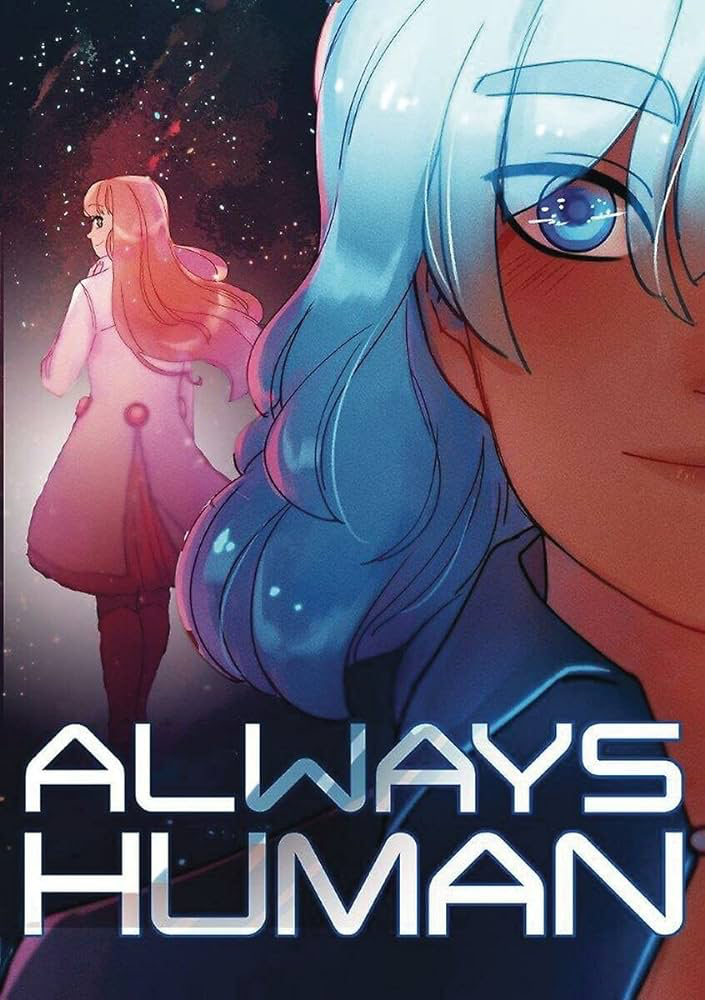
Posted in Sunday Songs, Uncategorized

Sunday Songs: 3/10/24

Happy Sunday, bibliophiles! I hope this week has treated you well.

Don’t let the black color scheme full you—we’ve got a mostly joyful bunch, and if not joyful, at least upbeat. This week: what happened when I listened to Apple Music’s “Love” station on a whim, things that are wholly good and pure, and reflecting on the things that made middle school survivable.

Enjoy this week’s songs!

SUNDAY SONGS: 3/10/24

“After Hours” – The Velvet Underground

The story of “After Hours” famously goes that Lou Reed wrote this song, but knew it was too pure and innocent for him to possibly sing, so he enlisted Mo Tucker, the Velvet Underground’s drummer, for the task. As much as I love Lou Reed, he did the world a great service by not singing this song—in his hands, there’s no doubt that it would’ve felt like some kind of melancholic “Perfect Day” prequel, but at least he was self-aware enough to realize it. And there’s nobody more fit to sing it than Tucker. Her voice is beautiful, but it’s the voice of someone who rarely sings, if at all, and sings softly when she does. But that’s exactly the kind of voice that “After Hours” calls for. It’s a bashful, rosy-cheeked song, the kind that shyly peers out from behind the curtain to watch the bustling city below. There’s an embarrassment to it, but not the kind that makes you wince—it’s a diary confession written as the last threads of light are fading from the sky, the last pure thoughts filtering out of your brain. It’s so simple, and yet that’s why it digs at such a unique place in my heart—it’s not quite universal, but it’s just the kind of special to nestle up against me like a drowsy cat. There’s practically no end to the influence that The Velvet Underground has had on rock music, but I feel like “After Hours” is overlooked in that aspect—without it, where would the glorious pantheon of wistful women and their acoustic guitars come from?

Bonus: because somewhere down the line we collectively recognized that this song is best performed by female drummers, here’s a performance by Meg White of the White Stripes:

…AND A BOOK TO GO WITH IT:

Heartstopper – Alice Osemananother pure, sweet morsel of tenderness.

“Broken Man” – St. Vincent

It’s happening. IT’S HAPPENING. IT’S HAPPENING!!!

All Born Screaming? Uh, yeah, I sure am. The squeal I let out at 7 A.M. when my mom shared this new single could probably be heard through my whole dorm. I’m just glad that my RA didn’t catch on. After a solid month of teasing, first with the ceremonial removal of the Daddy’s Home blonde wig, then with throwbacks to her performance of “Lithium” with the surviving members of Nirvana at the Rock and Roll Hall of Fame (to the people saying “oH, shE’s sO oFf-KeY” about this one: did you all just forget how Kurt Cobain sang, or what?) and her performance of “Krokodil” at Coachella in 2012, we finally have the St. Vincent rock album that we’ve always wanted. I’ve gone past the point of trying not to hype myself up for this one—somehow I feel like it’s not gonna be another MASSEDUCTION incident, because everything about this album— the aesthetic around it, and its collaborators (Dave Grohl on drums in this track, and Cate LeBon featuring on another)—feels like it’s going to rock. Annie Clark always seems to have a clever, cheeky album title up her sleeve, but All Born Screaming has to be one of the harder ones. And the album art…well, yeah. Let’s get the elephant out of the room—it’s great album art, but the timing was…not good, as it came just days after Aaron Bushnell self-immolated to call attention to the ongoing Palestinian genocide. (Rest in power. Chip in where you can.) But at the same time, there’s no way that Clark or her team could have predicted that kind of thing. I really don’t feel like she’s at fault here—it’s bad timing, sure, but none of us can be expected to foresee everything in the news.

Back to the song…I need to be stopped. Somebody needs to hold me back…or, at any rate, somebody should’ve held me back on the Thursday morning when “Broken Man” came out, because I listened to nothing but that song from approximately 7-11 A.M, and I had to go about three days before I could listen to it again. I’ve learned nothing. But now that I’ve ridden the initial high, I’m reveling in the new direction that St. Vincent has started to go towards with All Born Screaming. Most of the comparisons I’ve seen wind up somewhere in the neighborhood of Nine Inch Nails, P.J. Harvey, and Rage Against the Machine, and I can see all of those, especially with the former two—the industrial grind of Trent Reznor and the feral, growling vocals of P.J. Harvey are wound all over this track. Like the album art, it’s painted in the colors of ashes, still hot to the touch and rough between your fingertips. Clark has toed this line more often than not (see “Krokodil”), but we’ve gotten an album where she’s fully embraced her heavier side—one that she’s always had the capacity for, but somehow bottled up before throwing herself into All Born Screaming, the first album that she produced herself. It oscillates smoothly between hectic, metronome-ticking pop, uncomfortably sung from inside of a steel crate as she taunts the listener with her head peering out of the lid. It feels like a callback to the frenetic, pent-up energy of her self-titled record [slides Anthony Fantano glasses up the bridge of my nose], but with even more fury—every other lyric feels like a spit-laden taunt: “Who the hell do you think I am?/Like you’ve never seen a broken man?” With each verse that goes by, every word is spat with more intention, more vitriol, swerving between her silky, whisper-vocals to a full-on, sweat-drenched growl as the song closes. And this song’s breakdown is one of the most exciting of her songs in recent years; crashing in with Dave Grohl’s legendary drumming, you can’t describe this song with anything other than “fiery”: it’s a primal scream of a song, burning, biting fervor engulfed in flames. And I can’t help but get excited about the choreography in the music video—as flames dance across her neat, white button-up and slicked-back ponytail, her arms play a game of “the floor is lava” with her torso, jerkily twisting to avoid some point of contact. An eagle-eyed YouTube commenter compared it to her choreography for “Rattlesnake,” and…oh god, now I’m way too excited. Daddy’s Home is the best of her more recent work, if we’re going post-self-titled [slides glasses up even further] but…don’t do it. Don’t give me hope.

…AND A BOOK TO GO WITH IT:

Gearbreakers – Zoe Hana Mikuta – industrial landscapes abound and all-around badassery to spare.

“Red’s Ok” (from Hellboy II: The Golden Army) – Danny Elfman

Fast-forward to 8:20 for “Red’s Ok.”

Hi. Gonna try and be calm about this one. As calm as I can be when I feel the raw, untamed power of my middle school Hellboy hyperfixation coursing through my veins. The deluxe edition of the Hellboy II soundtrack showing up on my Apple Music suggestions on an unsuspecting Sunday morning was certainly a kick in the pants that sent me hurtling back to 2017 at alarming speeds, and I have yet to reach terminal velocity.

I don’t know what prompted the release—last year would’ve been fine, given that Hellboy II turned 15 that July. Who knows. Just up and popped out of nowhere. But man, I am so glad that it did. Having this expanded edition just goes to show how many gaps were left out of the original soundtrack, even if many of them (including this song) are under a minute long. I’m convinced that there was some kind of rush in putting together the original soundtrack, since now we know that the random tidbits that didn’t seem to come from anywhere that were tacked onto the end of “Finale” were, in fact, two alternate versions of songs that were almost used in the troll market scene. Again: who knows how that happened. But now, the score feels as whole as ever—those short-and-sweet tidbits fill in the crucial gaps, the silly, almost jazzy flourishes to plump up some moments of witty banter (of which there are many), fleshed out a soundtrack that’s cemented itself in the nostalgia catalogue of my mind. “Red’s Ok,” in particular, is the wonderful variation on the tasteful electric guitar motif, shown just as we see Hellboy emerging from the wreckage of a car he’s just landed on top of, wielding the Good Samaritan in the film’s most honest-to-god movie poster moment. And we get the full, 7-minute long cut of “Where Fairies Dwell.” I was born in the right generation. Born too late to see the rockstars I like, born too early to explore space…but born just in time to be able to listen to “Fuck-Used”. Bless.

My good feelings towards Elfman himself have started to fade after the allegations that came out last year, and this doesn’t change that, but I can’t deny the talent that went into this soundtrack, as well as the countless others he’s crafted over the years. Admittedly, his work has become so entangled in my life that, even though I’m all for theoretically separating the art from the artist, the truth is often far more complicated than putting the allegations in one box and their art in the other. I don’t necessarily know if it’s a personal flaw that I can’t detach from people that easily (lord knows I haven’t been able to listen to Arcade Fire as often as I used to without feeling a little moral revulsion). It’s not like J.K. Rowling’s transphobia and other prejudices manifested out of thin air directly after she wrote Harry Potter. And yet, I’d be the world’s worst liar if I denied how dear this film is to me. 13-year-old me saw this and saw an image of found family, of freaks who banded together in a world that was bent on destroying them, of freaks showing affection and forgiveness towards the world and each other, and it stuck. It did something to me. It showed me a possibility of a future that I could live out. At least it’s just the soundtrack in this case, and not the film itself. That’s all safe. I don’t even want to entertain the notion of Guillermo del Toro having any metaphorical skeletons in his closet, because given what the guy’s house looks like, he definitely has some plastic ones lying around. But it seems like he’s the type to keep it to that.

So I’ll be excited for the middle schooler in me. When this came out, I painted my nails and listened to this as they dried, remembering that there was a part of me back then that should be cherished—the one that didn’t care what anybody thought, and the one that watched this movie at least once a month.

…AND A BOOK TO GO WITH IT:

Hellboy II: The Art of the Movie – Guillermo del Toro yeah, this was the obvious pick, but what else was I gonna do? Put in the movie novelization? Imagine swapping out “Dr. Manning, suck my ectoplasmic schwanzstucker” for “Manning, you’re a jerk.” Unconscionable.

“POP POP POP” – IDLES

It’s been almost a month since TANGK was released, and I find myself drawn to it over and over again, simply because it’s so IDLES in a way that I haven’t seen from them. Like I said when I talked about “A Gospel” back when the album was released, it’s a beast that’s half old and half new, but brimming with the same ethos of kindness with a hard-edged sound. While “A Gospel” and “Grace” were the album’s pinnacles of vulnerability, “POP POP POP” just seems like the place where Nigel Godrich went nuts—it feels like IDLES trying to make a Radiohead song, but never once does it feel like a blatant imitation. It has an angular, jerky smoothness to it, with the combination of synths that buzz like a hive of insects with Joe Talbot’s voice—the lyrics aren’t screamed like he tends to do, but with a dry, disaffected drawl that signals irony, but knowing IDLES, it’s a sign of bare sincerity just as any other bellow he lets out. On the inside, the lyrics are similar to most of the material on this album—a shield of kindness against a wave of hatred: “Strong like bull/Vulnerable (vulnerable)/Keep my people up/That’s my tool.”

But there’s something resolute about the way that “POP POP POP” is delivered—it’s almost like he’s drawing not from a place of repeating himself, but convincing himself of his mission. I’ve seen a fair amount of people in internet music circles roll their eyes at IDLES for acting like their lyrics are more radical than they are, which…I halfway understand. A lot of their subject matter in their music isn’t exactly new in terms of political fodder to spin into music. But is there really anything new, political or otherwise, that you can write a song about? I find myself thinking of Audre Lorde and her essay “Poetry is Not a Luxury,” where she states that “…there are no new ideas. There are only new ways of making them felt, of examining what our ideas really mean on Sunday morning at 7 AM…[while] making war, giving birth.” I get why people are put off by IDLES seemingly acting like their ideas are new (I’ve never gotten that impression, but that’s just me), but personally, that was never what was radical about them—it’s their approach to kindness. It’s unclear whether this is the exact criticism that may have spawned “POP POP POP,” but the final verse, chanted like a prayer as the hive of synths descends into a buzzy, Kid-A maelstrom, feels like Talbot convincing himself of the message that he and the band have always pioneered: “Imposter, imposter, living in my head/Am I the spider in your bed?/A dead canary and a thief for a king/A cheerleader valiant/But I will sing about love, love…” And as his voice gets overlaid, the final chant that rings out is the tagline for the later track “Grace” and this album’s tour: “love is the fing.” It feels like reassurance in a sea of self-doubt, a reminder of a message to be held dear, a mission statement lost in the mist but found again when it came time to look back and remember why they created it in the first place. And as with the ending of this song, what persists is four essential words: “love is the fing.” You look back into all of the mess that your creativity has taken you, and what you find at the center is the love that motivated you to create in the first place.

…AND A BOOK TO GO WITH IT:

Kindling – Traci CheeI just reviewed this one, so it’s pretty fresh in my mind, but the last, more distorted lyrics made me think of these characters and their struggles to grow out of their trauma and persist—”Imposter, imposter, living in my head/Am I the spider in your bed?/A dead canary and a thief for a king/A cheerleader valiant/But I will sing about love, love…”

“Just One Look” – Doris Troy

The other day, I decided to listen to Apple Music’s Love station on a whim—I was drawing before bed, and I wanted something new to listen to. It ended up having mostly hits, some misses (one of the hits was “After Hours,” but I’m honestly concerned about the fact that there was…an Elliott Smith song on there? Not the weirdest Apple Music pick, but I don’t know if that screams “love”…), but it was the reason that I stumbled upon this song, which I am so grateful for. Scratch that—I’m grateful, but more than anything, I’m more surprised than anything that I’d never heard of her before then, given the company that she kept: she was first discovered by James Brown, and later collaborated with everybody from The Rolling Stones to Pink Floyd (she contributed backing vocals to Dark Side of the Moon, my god…). With all that, a musical based on her life, and a number one hit, you’d think we would be hearing more about her, but alas, nope. Whether or not that’s just another testament to how history treats Black women or the fact that she stepped away from the mainstream music industry after the ’70s is up in the air, but either way, I’m glad the Love station brought me to her.

I’ve always had a soft spot for that late ’50s-early ’60s soul. As much as I laud other artists for having intricately crafted lyrics, sometimes, it’s simplicity that wins out—and that was exactly what labels like Motown were the best at producing. Artists like The Temptations, the Ronettes, and others feel like they’ve distilled love—one of the most complex human emotions—down to its barest essentials. Every song becomes something so tender and universal that it feels like a warm blanket for the soul. Along with the rich vocals that often came with it, and you’ve got one of my favorite musical soft spots—I’ll take shreddy guitars any day, but sometimes, all I need is some wholesome love. That’s exactly how “Just One Look” feels—brimming with warmth, and the perfect tempo for slow-dancing in the kitchen. Only seconds into the song, and you can hear exactly why Troy’s fans gave her the nickname “Mama Soul”—soulful is the only adequate word to describe her rich, soaring voice. Combined with the air light touch on the piano keys, and I’ve got another comfort song in my collection—there’s something to be said for simplicity.

…AND A BOOK TO GO WITH IT:

DC: The New Frontier, vol. 1 – Darwyn Cookethe lyrics for this song are so universal that they could cover any kind of romance, so instead, I went for the time period; the late ’50s-early ’60s setting of The New Frontier is settled right in the same era.

Since this post consists entirely of songs, consider all of them to be today’s song.

That’s it for this week’s Sunday Songs! Have a wonderful rest of your day, and take care of yourselves!
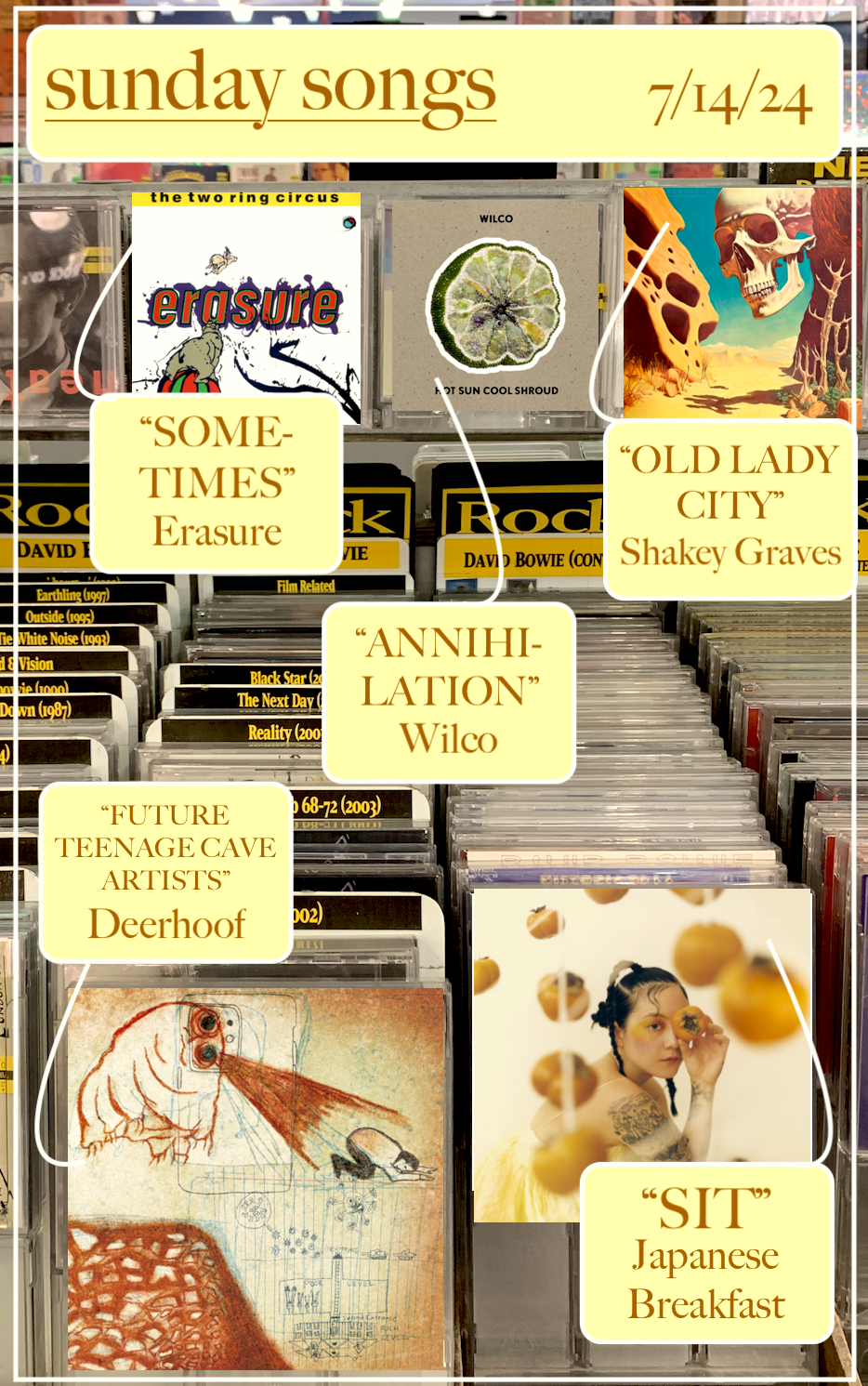
Posted in Sunday Songs

Sunday Songs: 3/3/24

Happy Sunday, bibliophiles! I hope this week has treated you well.
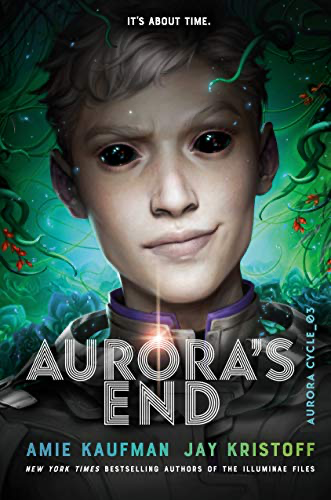
This week: spring green for March, old dogs, and the consequences of the fact that at least 90% of my friends are gay and their music tastes rub off on me.

Enjoy this week’s songs!
SUNDAY SONGS: 3/3/24

“What Are We Gonna Do Now” – Indigo De Souza

This just in: the sad girl kool-aid has never left my system, and it likely never will. Buckle up.

“What Are We Gonna Do Now” lives squarely in the liminal space of uncertainty, as the title implies. It feels like the tense opening to a film; I could just be stuck on this imagery of the line “and we’re still on call with the nurses,” but I can’t help but imagine an opening shot panning out from the slow spikes of a heart monitor, slowly letting out beeps as Indigo De Souza’s voice gently drips like an IV with that lingering, trailing question: “what are we gonna do now?” Almost everything is gradual about this song, as if the verses were frozen in time: a picture of a person standing on the street while snowflakes suspended in midair decorate the space around them. De Souza’s voice dips and dives into nooks and crannies that only a cat could fit into, army-crawling through the shadows as she describes the wear and tear of a relationship in the middle of turmoil—not necessarily on the verge of a fracture, but in the middle of the storm that they aim to push through together. Exhaustion and frustration tinges it (De Souza’s delivery of “and I’m never cooking up what you’re craving” remains one of my favorite parts of the whole song), but it’s never the kind so intense that would throw their love out the window—it’s the determination of trying to find out exactly how to fix things, and scrabbling around, searching for answers in desperation. Like the ebb and flow of love, the instrumentals swerve from a near standstill to a rousing, guitar-driven chorus and back to quiet again, but after the first verse, nothing is the same; it has the same kind of barely-contained chaos of songs like Wilco’s “Via Chicago” and Mitski’s “The Deal,” with a sense that the anxiety of making amends and grasping for solutions. As De Souza’s airy voice rises like she’s gasping for air after emerging from the ocean, trembling drums and tambourines slip in and out of time, ever so slightly off-kilter and teetering, like one sneeze would send them all into disarray. Unlike the former two songs, though, it never fully gives in, but the unraveling is always at the back of the song’s mind, like an overflow of fearful thoughts as they try to pick up the pieces, but a sense of deep-breathing control as De Souza picks themselves back up.

…AND A BOOK TO GO WITH IT:

If Tomorrow Doesn’t Come – Jen St. Judeone of the few apocalypse novels that really makes it a mission to focus on the human aspect.

“Lord Only Knows” – Beck

Full disclosure: I definitely ruined this album for myself. I knew it was going to be a good album, and it 100% is, but I’d already listened to about 3/4 of it, so there were no surprises left. All of the songs I remembered were already favorites, and the ones I hadn’t yet discovered weren’t as instantly classic as the others (sorry, “Derelict”). But that’s on me. Maybe on my parents for playing it so much in the car over the years, but mostly on me. Whoops.

That’s not to say that Odelay is a bad album at all—in fact, it’s quite the opposite. It makes me miss the old Beck, the one who didn’t scrub everything to an unnecessary polish, but instead made his music like a sculpture made from bits and bobs found in the junkyard—a bit of a tire here, an old, rusty car hood there, some nuts and bolts sprinkled on top for a finishing touch. It’s a collage, but not necessarily in the way that artists like De La Soul or The Beastie Boys make their collages: while their infinitely clever concoctions feel like they oil every sample into a unified organism of unlikely pieces, Beck’s method (for a while, at least) was to make every spare and found part stick out like sore thumbs, but so much so that all those sore thumbs eventually made a hand so absurd that it makes you think how does that even function as a hand? And yet it’s the perfect hand. There’s no other way that “Hotwax” would work without “I’m the enchanting wizard of rhythm.” In fact, the absurdity of all these samples make this mutant (no pun intended) record so memorable—nobody was doing it quite like Beck. Take this song, which starts out with a rasping scream, then descends into twangy and almost docile acoustic-guitar driven rock. It’s not the heat-waved calm that “Jack-Ass” (my favorite track on the album) exudes, but it’s got that same lazy drawl to it, every word curled at the edges like scraps of paper singed by a campfire. Odelay hadn’t yet reached critical mass of clever silliness that made ’90s-2000’s Beck so fun (that would be Midnite Vultures), but he had plenty of fun to spare—I always find myself laughing at the final lines that Beck sings as the track fades out like a car driving out of view, obscured by the wobbling lines of a heat wave: “Going back to Houston/Do the hot dog dance/Going back to Houston/To get me some pants.” You just can’t deliver the word “pants” with that much emphasis and have it not be funny. Them’s the rules. I apparently have the humor of a five-year-old, but evidently, so does Beck, and we’re all the better for it.

…AND A BOOK TO GO WITH IT:

Fortuna (Nova Vita Protocol, #1) – Kristyn Merbethall of the same lazy, summer-eyed charm, but make it space opera (as things usually are on this blog).

“New Slang” – The Shins

Whenever I go to write about The Shins, I always end up going straight for the purple prose. It’s like the way I get with Radiohead, except they invoke something akin to religious fervor in me. I’m too far gone. But there’s something about James Mercer and his perpetually rotating cast of characters that evokes the lyrical side of my writing. Perhaps it’s that part of me connecting to that part of him, because he’s certainly got songwriting chops for days.

“New Slang” has been lingering in my life for decades; I faintly associate it with a period sometime in elementary or middle school. I think it may have been at the end of a playlist I listened to frequently. The Shins are never all that far from my mind, but this was the perfect song to shuffle out of the blue, soft and smiling like an old dog with white patches threaded into the fur of its snout. And I ran right up to pet that dog—god, I missed this song. Hello, old friend. Mercer has long since mastered the art of the old heartstring-tugging acoustic song, and while its as hipstery as it gets, there’s a calmness to it, a serenity like no other. And yet, for all intents and purposes, it’s James Mercer’s equivalent of a pop-punk “I’m getting out of this town” song; the lyrics were inspired by his experiences separating from Albuquerque, New Mexico, where the first iterations of The Shins had tried to take root. Disillusioned by a scene that he described as “macho, really heavy, and aggressive,” Mercer and company branched outwards, where their lyrical folk could have more meaning. “New Slang” was Mercer’s way of “flipping off the whole city,” as he described it (“Gold teeth and a curse for this town”), but there’s something beautiful in how quietly this song shoots its bitter middle finger. It’s not the jerky angst of separation that pop-punk lends to the subject, but instead the moment of looking back into the sunset, knowing that everything you’ve left behind is in the dust with the approaching night. Perhaps that’s where that serenity I feel comes from—the serenity of knowing that what’s in the past is in the past, and that it has no control over your life anymore. It’s underfoot, only tire tracks in the dirt now. You can’t help but feel a wave of peace at the thought.

…AND A BOOK TO GO WITH IT:

Trouble Girls – Julia Lynn Rubinwhile Lux and Trixie’s reasons for ditching their town are more complicated, there’s no less of a feeling that they’re giving it the finger the whole way out.

“The Gold” (Manchester Orchestra cover) – Phoebe Bridgers

Full disclosure: I hate the original version of this song. Hate it. It stinks of that kind of that faux-earnest, country-leaning pop that forced itself down everyone’s throats in the mid-2010’s like a contagion. If this weren’t obviously a breakup song, I know my music teacher would have made my 5th grade class sing this. I hate to relentlessly dog on a song, but also…Christ. This made me throw up in my mouth a little.

Phoebe Bridgers, on the other hand? A godsend. Leave it to her to make the original lyrics, some of which were actually good sound good, and not like they were being shoved down through the godforsaken Mumford & Sons strainer. I will give Manchester Orchestra (posers, they’re not even from Manchester…) some credit: “you’ve become my ceiling” is genuinely a beautiful lyric. But I just wish it wasn’t being delivered with that smarmy, offensive excuse for authenticity. Again: Phoebe Bridgers is our savior. She grounds this song enough to make the turmoil within it feel real. Never once did this song need belting, stadium-rock grandeur: it needed clarity, a sense of calm amidst the chaos, and a steady hand on an acoustic guitar. It’s got slightly more effects than Bridgers usually allots to a song of this tempo, but it hits the balance of flourish and that acoustic sincerity that she’s come to be known for. It’s a breakup song, but although some of those call for grandiose declarations of sorrow, some of them need time to sit in silence and wallow it in, and that’s exactly the treatment that Bridgers gave “The Gold.” I’ll just go ahead and pretend that she wrote it. Yup. Manchester Orchestra? Who is she?

…AND A BOOK TO GO WITH IT:

Vinyl Moon – Mahogany L. Brownesimilarly, this novel in verse deals with the fallout of a relationship built on mistrust.

“Caesar on a TV Screen” – The Last Dinner Party

Before I listened to the full song, I distinctly remember seeing a snippet of this song advertised somewhere on Instagram and thinking something along the lines of “god, this is pretentious.” And I stand by that. It’s still pretentious. But in context, it’s a good listen.

I’ve heard a decent amount of buzz surrounding The Last Dinner Party, usually falling in one of two camps: that they’re out to save rock and roll and bring it back to its glory days, or that they’re just…okay? The former argument, while I like it in concept, reeks of the kind of mentality that “modern music isn’t good anymore” because it’s not all Pink Floyd, which…okay, cool if you like Pink Floyd, but also…creative rock didn’t die as soon as Y2K hit? You just have to look a little harder now that rock isn’t the reigning influence on popular music anymore. In the modern day, we treat rock music like we often treat women: as something to be saved, when all along, it’s been doing just fine, thank you. I doubt we’ll ever go back to those days, and maybe we shouldn’t—there’s no way you can completely replicate a movement in its full, temporal context, and maybe that’s okay. I’m all for bringing back glam rock, but chances are, anything you try to resurrect is going to feel displaced in our modern day context. You can take inspiration from them, but personally, it’s a hard thing to recreate in all of its flesh and blood.

Which…seems like a good deal of what The Last Dinner Party are going for. Frontwoman Abigail Morris has regularly emphasized how much she and the band enjoy being pretentious (if having their debut album titled Prelude to Ecstasy wasn’t enough of an indication), and if that’s what’s bringing them joy, then all power to them! They’re talented musicians, for sure. Weirdly, the other two songs of theirs that I listened to just sounded like…any old indie pop song, which I kind of hate to say, but if you’re all about “saving rock n roll” and just putting out that, then I feel like you have to keep your mission consistent. But you certainly get that feel from “Caesar on a TV Screen.” As far as the structure goes, it feels slightly disjointed, but the more I watch the music video, I get what they’re going for—a song with a distinct, three-act structure, emulating the epic, Shakespearean twists and turns that inspired it. There’s loads of drama to spare, from the rush of strings in the third act to Morris’ impassioned howl of “everyone will like me!” at the song’s exiting flourish, like she’s brandishing a prop sword with every word. It’s dripping with that kind of theatrical, ’70s and ’80s drama—there’s Queen written all over it, and I can’t help but think that some of that drama was informed by Kate Bush. And…yeah, Freddie Mercury, Kate Bush, and David Bowie, the latter of whom the band have repeatedly cited as one of their primary influences, are probably some of the most colossal shoes to fill in terms of musical artistry. But there’s no doubt that The Last Dinner Party are a skilled bunch in their own right—and god, they look like they’re having the time of their lives. It’s exactly the kind of excess, maximalism, and drama that their band name implies.
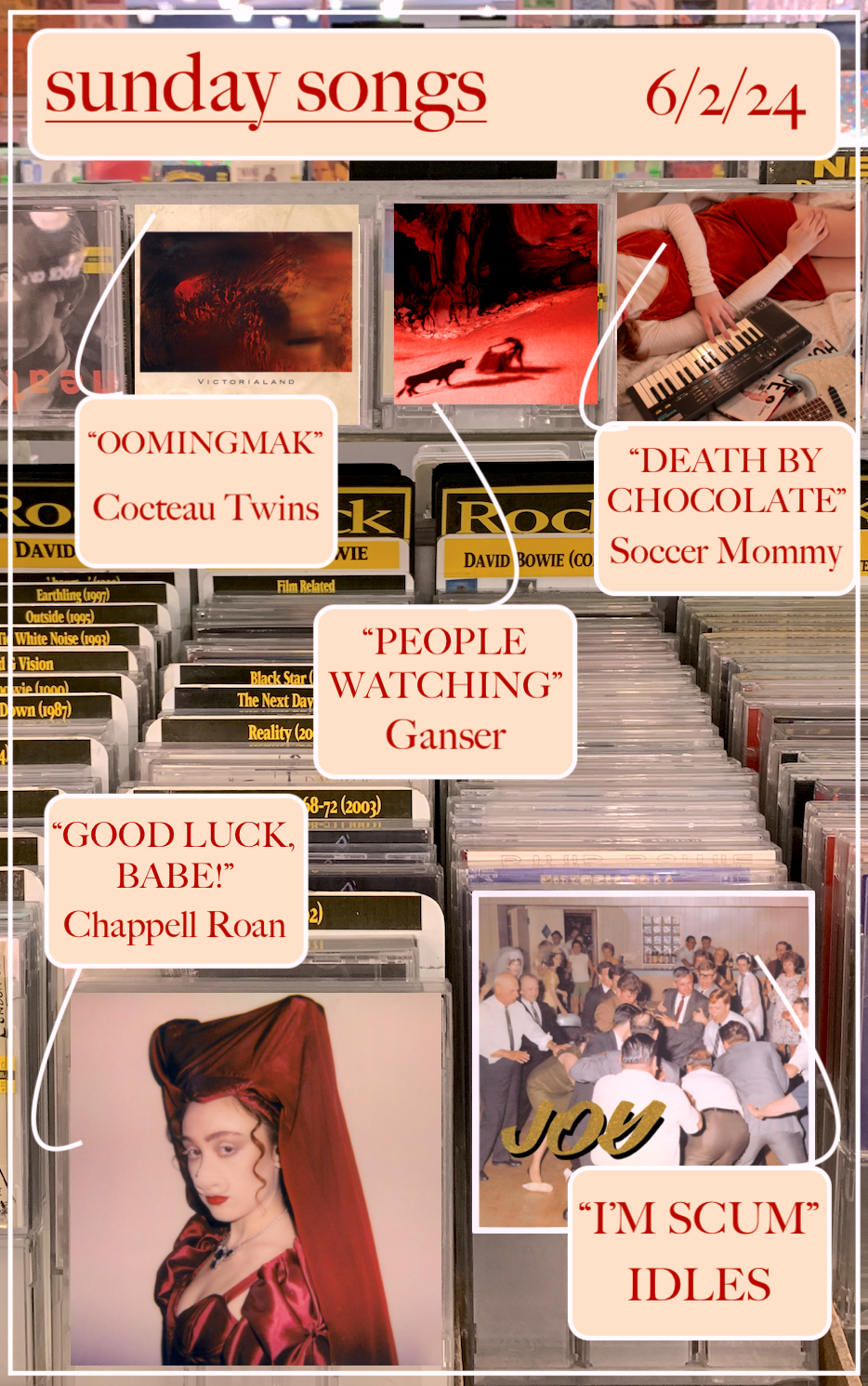
…AND A BOOK TO GO WITH IT:

Strike the Zither (Kingdom of Three, #1) – Joan He“When I was a child, I never felt like a child/I felt like an emperor with a city to burn” HMMM…

Since this post consists entirely of songs, consider all of them to be today’s song.

That’s it for this week’s songs! Have a wonderful rest of your day, and take care of yourselves!