I just finished my first week back to school, but after this, chances are I’ll be somewhat radio silent until I can get fully settled into my routine. The only reason that this post is seeing the light of day is that I start working on my wrap-up posts about a week in advance, so here we are.
Let’s begin, shall we?
GENERAL THOUGHTS:
Summer’s officially over, but the weather sure doesn’t seem to think so. Hopefully I won’t have to endure much more of my (long) walk to class in this 90+ degree heat.
That aside, I’ve had a good August, for the most part. My initial “yay, I’m going back to college!” got partially replaced by “oh god, I’m going back to college” closer to move-in, but I’m feeling better now. (The fact that I’m in a much nicer dorm than I was last year certainly helps. It doesn’t constantly reek of weed in here! Huzzah!) I had the opportunity to soak up the last dregs of summer beforehand, at least. I finished up my summer job at the library, bought a catnip toy for my cat for his sweet 16, completed another trip around the sun, and blew part of my paycheck on books to celebrate said trip around the sun. Worth it.
My blogging’s been a tad slower since I’ve been trying to get everything together before I moved in, but I feel like I’ve still been able to be productive. I’ve enjoyed reviewing all of my books this month and putting together graphics and going off about music. And I got in one book tag that WordPress screwed up and I had to recreate from scratch, but it was fun in the end. Once my schedule figures itself out, I’ll get back on the writing train, but for now, I’m mapping out the best route to my class in That One Building on the other side of campus.
Other than that, I’ve just been drawing, watching Only Murders in the Building (for the love of god, can we just stop pairing Mabel with people who have zero chemistry with her 😭). Good Omens (pain, suffering, even), Heartstopper (Lucy Dacus and Wolf Alice paying in the same episode >>>>>>>), and Taskmaster (“you’ve got no chutzpah”), and reveling in the fact that my new dorm has air conditioning. It’s the (not so) small things.
READING AND BLOGGING:
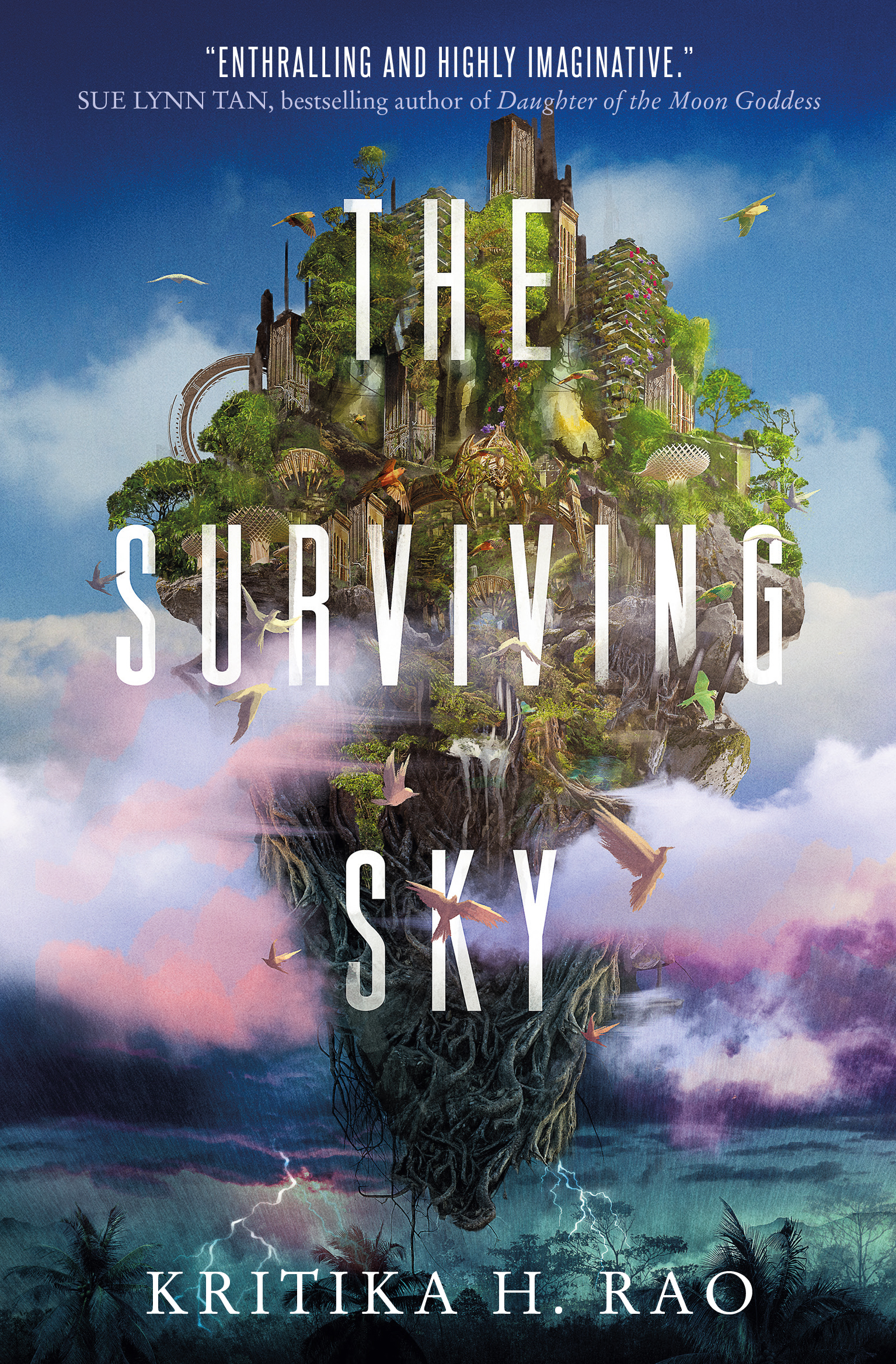
I read 17 books this month! Other than the one stinker in the batch (sorry, The Surviving Sky), it’s been a great reading month in terms of quality and in terms of quantity. Expect some kind of mini-review post for all of the books I bought for my birthday and the books I got as gifts, because they’ve all been fantastic so far.
Happy Sunday, bibliophiles! I hope this week has treated you well.
I just moved back to school a few days ago, so after this, chances are that I’ll be posting less for the next few weeks as my classes start and I start to settle in. At least my new dorm has air conditioning, so said settling in will be decidedly less sweaty than last year. But for today, here’s a warm, orange color scheme to wish for fall to come sooner. I’ll leave you with the following dilemma: are you decided, or are you a man of constant sorrow?
It’s around the one year anniversary of my Lisa Germano awakening, all thanks to my dad. And almost just in time for sad girl fall. But for now, we’re still at the end of hot girl summer, and by “hot” I mean “walking six miles in 90 degree heat just to find out where my classes are and sweating profusely.” Now that my birthday’s over, I’m about done with summer, thank you very much.
Sometimes, it’s a specific inflection of a singer that hooks me onto a song: Lou Reed’s rambling, melty pronunciations on “Sweet Jane,” or the rising, climbing-vine quality of Kevin Barnes’ high pitch on the chorus of “Gronlandic Edit.” Here, the first thing that grabbed me was the subtle, softening lilt in the way she sings “Yoko Ono.” The sharp ‘k’ in her name is smoothed down to whispered velvet, every pointed edge melted to softness like warm candle wax. I can almost imagine the tired, curious tilt of her head as she leaned into the microphone to record it in the studio, eyes averted, head bent. It’s not the only way that this song is immediately memorable: the devastating context of Yoko Ono being mentioned is in the opening lyrics: “You’re not my Yoko Ono/You said those words to me.” Yeesh. That’ll do it. I can’t stop listening to it, but sweet Jesus, even though Excerpts from a Love Circus came out about 27 years ago, I just wanna give her a hug. But as with every Lisa Germano song, there’s always a distinct touch to macabrely decorate her heartbreak: distortion on her violin that makes it sound like a frantically buzzing insect, and the sparse guitar loose enough to conjure the image of the strings holding on by a thread and a half-spoken prayer. And just like said image of guitar strings, Germano holds onto an abusive partner; Part of her desperately wants to hold onto them (“You stop me being mean”) but they mistreat her at every opportunity (“Is that why you hit me?”). All of that roiling memory and frantic, nervous energy culminates in a rasping, scraping scream of the chorus: one word, “Lovesick,” three times over. Every inch of it is haunting and hypnotic, culminating in the most hidden details.
The Dandy Warhols really were onto something with “Cool as Kim Deal,” huh? Even if it is about wanting somebody as cool as Kim Deal, I doubt any of us are ever going to be quite as cool as Kim Deal. And quite as prolific, for that matter. For most of her career, every band that Kim Deal has been in eventually spawns at least two more: she joins one (Pixies), they break up, she forms another band (The Breeders), they go on hiatus, The Amps are briefly born, and both of the aforementioned bands reunite and/or break up again. (It’s weird what my brain retains; I can’t remember what I need to study for on a math test, but I can somehow recall seeing the “Kim Deal Quits Pixies” headline left up on my mom’s office computer when I was younger. Apparently that was around 10 years ago. Huh.)
But through all of that, consistent is how Kim Deal’s projects have been. Consistently good, if that wasn’t obvious from how many deeply influential bands that she’s been a founding member of. Even if The Amps were the most short-lived of her projects, it doesn’t take away from the distinct urgency of any of their songs. “I Am Decided” is a punchy earworm that I’ve had stuck in my head on and off for years, and man, does it feel good to be listening to it on repeat. Even if the production makes Deal’s voice faintly fuzzy at the edges, it never loses its sheer power. Every shouted word is a call to arms, a declaration: the urgency of it all drips from every lyric as she sings of “I’d like to fly out/Fly away from here.” Crammed into only about two and a half minutes, that cagey, determined energy becomes the kind that you can feel in your chest, the kind that makes you want to slam on the gas pedal, roll down every window, and conquer the open road.
I rewatched O Brother, Where Art Thou? last weekend, but it might as well have been the first time. One of the many reasons why my freshman honors English teacher in high school was fantastic was the fact that, after he assigned the Odyssey to a bunch of confused 14-year-olds, he showed us this movie in class. I could barely hear it over the sound of this one girl asking if Pete really did turn into a toad (to my teacher’s great exasperation), but that’s just how school movies generally go. Regardless, shoutout to said honors English teacher for preaching the wondrousness of the Coen Brothers early on.
That is to say that I could actually hear what was going on this time around, which made my experience that much better. Also, this time around, I realized that John Tuturro was in this movie the whole time?? It’s a Coen Brothers movie, so he was bound to turn up, but I had no idea that he was Pete?? Either way, it’s just such a joy of a movie, even if you haven’t read the Odyssey and half of the references went over your head (read: me, having retained only fragments from that period of honors English 9). What else is there to say? HOT DAMN, IT’S THE SOGGY BOTTOM BOYS!
Remember how I said that there are some albums that are better than others for cleaning the bathroom? The Kick Inside is a good album, but it’s far more suited for a) dramatically draping a hand over your forehead as you lean out the window of a stone castle, or b) indiscriminate 70’s groovin’. Hard to do either of those things when you’re trying to mop the floor.
“Them Heavy People” remains the best track on the whole album, but “Kite” instantly stood out when I listened all the way through. It’s not every day that a song starts with a bouncy, Bowie-like groove, and immediately kicks off with the line “Beelzebub is aching in my belly-o.” Excuse me? It’s wild. This whole song is just wild. Kate Bush really just wrote a song about somebody getting turned into a kite against their will (??) fully knowing how much of a bizarre banger it was going to be. It’s basically cosmic horror, if you think about it, but it’s just so bouncy and happy? I’m just here sitting in my dorm, hips swaying while I’m in my swiveling chair, while she’s talking about “I got no limbs, I’m like a feather on the wind/I’m not sure if I want to be up here at all.” It’s got that same smooth, bopping, Hunky Dory flavor as “Them Heavy People,” but whereas that subject matter is far more endearing and logical for something David Bowie-inspired, but Bush just went full-force into the absolutely bonkers, horrifying concept of the song, and I can’t not applaud her for that. Go crazy.
Here’s another band that my dad pulled out of his sleeve that I had no idea existed. “The Besnard Lakes,” you say? That sounds like some kind of late 2000’s band of singer-songwriter dudes wearing flannel. Y’know, the kind that would be mentioned in the same breath as…I don’t know, The National? It’s just the vibe of the name. Don’t ask me to justify it.
However, the minute this song started playing, my previous assumptions were turned on their heads, and not because, in contrast to my comparison to The National, there’s a woman singing. There’s really no title more fitting for this song than “Devastation.” It’s a song that immediately lays waste to the senses, from the minute the tidal wave chorus of off-kilter choir and screeching violins hits you. From there, this devastation never ceases. Even as the first verse dips into a false sense of security, with Olga Goreas’ voice shrouded in static, the chorus absolutely roars every time it comes around. It’s not every day that any given song on an album seems to perfectly emulate the album cover, but even without knowing anything about the rest of The Besnard Lakes Are The Dark Horse (I kind of adore the whole The Besnard Lakes Are [blank] title format that they’ve mostly kept up), the song and the album art mesh so well; the crushing punch of the guitars and the urgency of it all, paired with the painting of a black horse being consumed by yellow flames, is the perfect match. And like those yellow flames, “Devastation” is a song that you can’t help but watch consume you. It’s the opposite of a song to zone out to—this song is commanding in its purest but most chaotic form.
Also, I love the music video. Again: all of the reds and blacks in the color scheme matches the energy of “Devastation” perfectly. It’s like watching an early Arcade Fire music video without feeling a rush moral revulsion the minute you remember how gross Win Butler is.
Since this post consists entirely of songs, consider all of them to be today’s song.
That’s it for this week’s Sunday Songs! Have a wonderful rest of your day, and take care of yourselves!
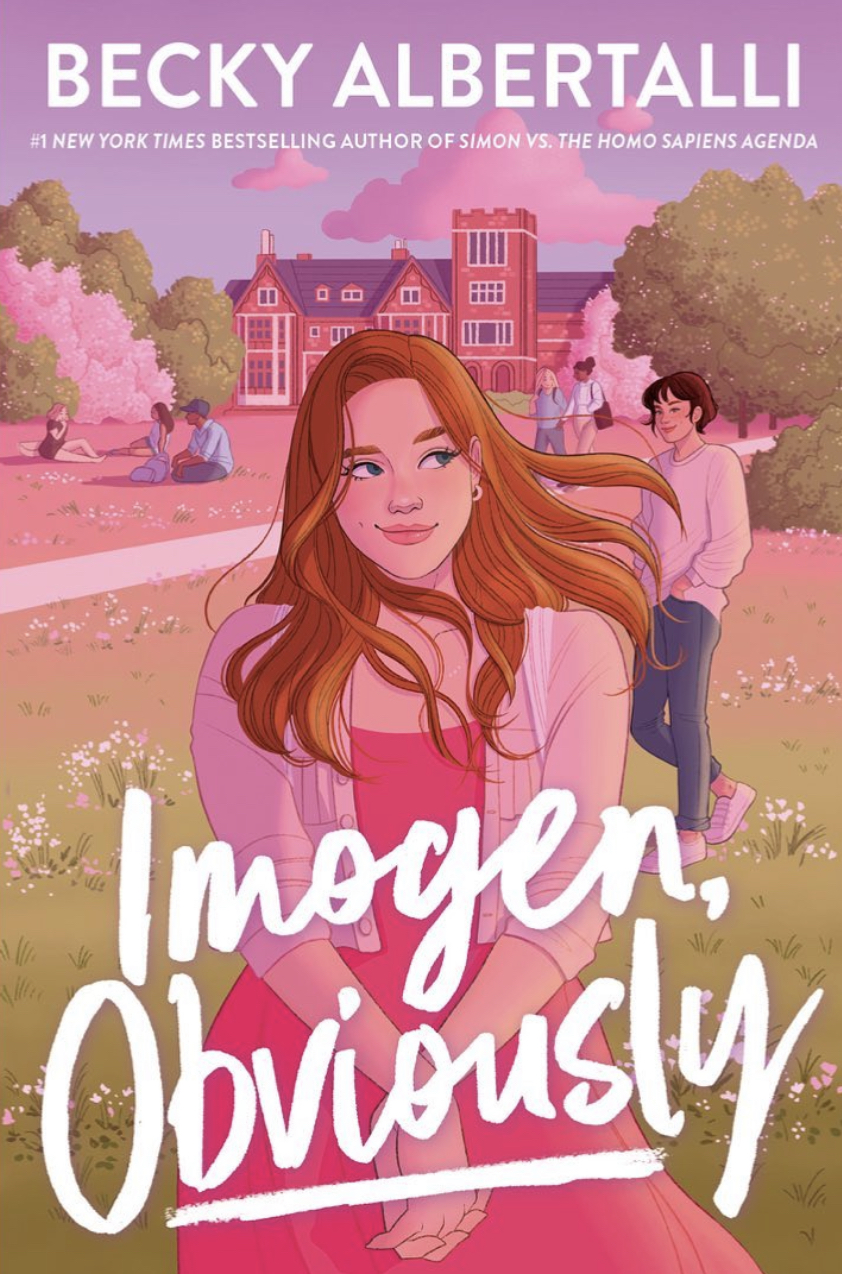
I’ve been reading Becky Albertalli’s YA books since middle school, and they’ve always had a special place in my heart. Although some of them have been hit-or-miss, I was looking forward to reading this one—it seemed so deeply personal to her, and I was so excited for the bisexual rep! And although it wasn’t perfect, it was such a deeply authentic depiction of the bisexual experience.
Imogen Scott knows her place—the token ally amongst her very queer friend group. She knows the nuances of queer culture and discourse in and out, but she’s confident in her heterosexuality. But all of that changes when she stays with her best friend Lili at her new dorm in college. Lili, who happened to tell everybody that Imogen was her ex in an ill-thought-out lie. Imogen is happy to keep up the ruse, but when she meets Tessa, one of Lili’s new (and very cute) friends, she begins to question whether or not it’s the role of “ally” that’s the lie after all.
From the start, I knew that Imogen, Obviously was going to be a deeply personal book for Becky Albertalli. That’s exactly what it was, and that’s exactly what it should have been. Even though it wasn’t without its flaws, Imogen, Obviously is an incredibly important book in that it shows us a narrative of bisexuality that isn’t portrayed as much, and that there is no one true narrative of how bisexuality is in the first place.
As a bisexual reader, Imogen’s story resonated so much with me, even if our coming-out journeys were different. And the fact that Imogen has a coming-out journey that deviates from a lot of the bisexual representation in media in general is a breath of fresh air; along her path of self-discovery, there’s some fantastic discussions about how we internalize stereotypes, the pressure to be “queer enough,” internalize biphobia and feeling like you don’t belong in queer spaces, and so much more. (And I’m glad that somebody’s talking about how random bisexual “traits” that float around social media…I once saw one that said “you may be bisexual if winter is your favorite season”…huh? What does that have to do with anything?) It’s a love letter to those who who feel like exceptions from the norm in a place that’s already populated by outsiders.
Adding onto that, what makes Imogen, Obviously such an important book to me is that it has such an important message about bisexuality, and about queerness in general: there is no one way to be bi, and that the entire queer experience doesn’t have to be entangled with suffering. We watch Imogen struggle with feelings of imposter syndrome in the queer community and repeatedly being put down by a “friend” who feels like she has the ultimate queer authority because she’s experienced quite a lot of homophobia, and it serves as an important reminder: we can’t exclude queer people from their own community just because they “aren’t queer enough” by some arbitrary measure. Again, it speaks to the personal element of this book, what with Albertalli’s own recent forced outing, but it’s a message that needs to be loud and clear.
Apart from the many wonderful messages that this book spreads, I loved watching the relationship between Imogen and Tessa develop! It really felt accurate to having your first queer crush in real time, with all of the stomach butterflies and shy conversations. They were a lovely match for each other, and although I was cheering for Imogen for every page, the two of them made my little bi heart so happy. Their romance really was a resonant and joyful one, something that Albertalli has nearly mastered writing.
All that being said, I had some issues with the writing that prevented me from giving Imogen, Obviously the full four-star treatment. I don’t remember enough about her other books to say how they were written (it’s been a while), but the way that she wrote these high school and college characters just felt so…off. She just peppered in all of the gen z slang into her dialogue whenever possible, and none of it felt natural or genuine. It felt like somebody observing gen z and/or TikTok from a distance, then trying to employ said slang from memory. It all felt so clunky, and at times, as much as I hate to say it, painful. I’m pretty sure that nobody says “discoursing” as a verb for discussing discourse. As fantastic as the rest of the book was, the cringy nature of the writing put me off from fully enjoying it.
All in all, a beautiful and necessary depiction of bisexuality that was hindered by its attempt to capture gen z speak, but excelled in every other department. 3.75 stars, rounded up to 4!
Imogen, Obviously is a standalone, but Becky Albertalli is also the author of the Simonverse (Simon vs. the Homo Sapiens Agenda, Leah on the Offbeat, and Love, Creekwood) and Kate in Waiting. she is also the co-author of What If It’s Us and Here’s to Us (with Adam Silvera) and Yes, No, Maybe So (with Aisha Saeed).
Today’s song:
That’s it for this week’s Book Review Tuesday! Have a wonderful rest of your day, and take care of yourselves!
Here we are near the end of August, and I’ve got a color scheme adjacent to the aesthetic of my 10th birthday party. It may not be my favorite color anymore, but I still hold that pink is an underrated color. And it’s fitting, since my actual birthday is coming in a few days from now! August is apparently the most common birthday month, so I guess I’m not that special, but I love August simply because of that. Now that I’ve gotten to the point in my life where my birthday doesn’t land a week into the school year anymore, it’s a lot nicer. And it’s not on my first day of college either, like it was last year, so it’s a nice change this year. So let’s all settle down, eat some cake, and come to grips with the fact that we are all Kenough.
Here we are, a month removed from Barbenheimer, and this song remains stuck in my head. Everybody’s saying it, but it’s true: Barbie really is a masterpiece. It summed up modern womanhood more than any other film that I can think of. It’s whimsical, it’s clever, it’s incredibly funny, and for a movie populated by plastic dolls, it’s deeply human. My mom and I cried together so many times during the movie. Ah, womanhood. And anybody who says that this movie is “anti-man” is delusional—it’s just as empowering for men as it is for women. What’s “anti-man” about Ken realizing that his self-worth doesn’t have to hinge on romantic pursuit or material possessions?
If there’s anything that men—and anybody—can take away from this movie, it’s as the song says: “I’m just Ken, and I’m enough/And I’m great at doing stuff.” Look within. You are Kenough. What else is there to say about this song? Ryan Gosling stole the show. Feel the Kenergy.
And here’s today’s report on “why yes, I did blow through season 2 of Heartstopper last week, why do you ask?”
Tegan and Sara have been names that have been on the very edges of my radar for years; they’ve popped up alongside other artists that I listened to for years, and recently, the great Tillie Walden (!!!) illustrated a graphic memoir about their childhoods. But the snippets I heard of their music faded away—until last week, when this song was featured at the end of the second episode of season 2 of Heartstopper. (Both seasons always have a few gems on their soundtracks—Lucy Dacus and Wolf Alice in the same episode? We are truly blessed…) And as the backdrop to queer teen angst, “You Wouldn’t Like Me” meshes perfectly. It’s the perfect acoustic earworm, all at once gentle and soaring. The harmonies of twin sisters Tegan and Sara Quin intertwine as seamlessly as you would think twin sisters would, blending into each other and branching out once more with smooth, warm ease. As the two Quins sing of “…a war inside of me/Do I cause new heartbreak to write/A new broken song?” their voices command a gentle acoustic strumming—again, I can’t think of a more perfect fit for Heartstopper. Again, I’m very new to Tegan and Sara, but this version feels like a vast gulf from the original, which takes a far more pop-rock direction. (Still Jealous, where this version is from, is an acoustic reworking of their album So Jealous.) I like the guitars on the original, but…how are their voices so nasally and grating there? It just feels so forced compared to how gorgeous their voices—and their story—sounds on this version. Needless to say, I’m far more partial to this acoustic version.
I never expected that a TV Girl song would ever end up on one of these posts, but life is nothing if not full of surprises. I’ve felt fairly lukewarm about most of their music that I’ve been exposed to; songs like “Blue Hair” and “Lover’s Rock” seem to have been everywhere after experiencing TikTok fame in the past few years, but they never really caught my eye. They were catchy, but not something that I would find myself listening to regularly.
Enter this song. I forger where I heard it first, but either way, it hooked me like no other song of theirs ever has. It all feels so carefree in its composition, and all of the sampling and the way it’s cobbled together is clear proof that somebody’s been taking some pages out of the De La Soul/Beastie Boys book. “Taking What’s Not Yours” gives it a more indie pop spin. The samples are just delightfully goofy, but so clever at the same time. The main sample comes from, of all things, a rap included in the video “Don’t Copy That Floppy.” (“That’s thieving/stealing, taking what’s not yours!”) I doubt it can get a whole lot sillier than that. And as Brad Petering talks about all of the things that he’s taken and left at various girlfriends’ places (sorry, “various apartments and domiciles”) over the years, what should get sampled but Richard Nixon’s infamous declaration of “I am not a crook” as the chorus starts over? It all seems so random, but the way all of these wild samples are tied back to the narrative is undeniably clever. I’m still not the biggest fan of the blasé, nasally drone of Petering’s voice, but it almost works as he rambles on about leftovers, jewelry and records left in the wake of his relationships. Fitting that the album that “Taking What’s Not Yours” is on is called Who Really Cares—it certainly fits Petering’s laid-back affect.
Here’s a pandemic memory that, for once, isn’t painful to recall! Thanks, Naked Giants. Weird name, but I’ll take it.
Naked Giants’ great album The Shadow also came out right around my birthday—it turns three years old tomorrow, as it happens! I was originally introduced to them when they opened for and performed with Car Seat Headrest, but they’re just as fantastic performing with them as they are solo, even if their brands of indie rock are more than a little different. (some of it definitely rubbed off on “Hollywood,” but I digress.) The Shadow, with propulsive tracks like “(God Damn) What I Am” and “Take a Chance” soundtracked that late August heat and cloudless skies, endlessly hooky and head-noddable. I can’t think of a single bad track on that album, but a few inevitably got a bit lost in the dust, as is what generally tends to happen when I love an album, but love a handful of songs just that much more. But that just means that it feels that much more joyous when you rediscover something else from that album. That’s where “Unpeeled” comes in. Although it’s slower and more droning than the previous tracks that I mentioned, the power it holds is unmistakable; with its hints of punk, psychedelia, and pure, guitar-driven rock all rolled into one, there’s never a moment where “Unpeeled” loses its touch. Like a great machine, it puffs along in a smoky, delirious haze, a different brand of their usually jangly 60’s influences. Even the harmonies on the chorus (“it’s unpeeling again”) sound off-kilter enough to sound like it belongs on the trippier side of Yellow Submarine. But nothing brings me more joy than the grinding, 13-era Graham Coxon-esque guitar chords that chug in at the 2:21 mark, cutting through the veil of smoke. It’s a truly hypnotic song in every way I can think of.
Another exciting song coming out of Movie of the Week, and with a great music video to match! Made me think of…I think it was a National Geographic Kids article about what they actually do to food in commercials to make it look appetizing. You can see a lot of it in the video, but that article was where I learned that glue is used as a substitute for milk for cereal in commercials so that the bits of cereal stick to the surface. The more you know.
True to form, all of what we see in the music video perfectly reflects the ethos of the song. As we see a man painstakingly pinning blueberries to the top of a stack of pancakes and painting a bowl of strawberries with red nail polish, Alejandro Rose-Garcia laments on “why I’ve gotta be somebody’s enemy/to be big in the world?” Something so curated and manufactured, like those nail-polished strawberries, is what Shakey Graves—or, at any rate, the protagonist of his imaginary movie—is musing on: the nature of how the media rewards drama instead of sincerity, only boosting fame if there’s a sensational story to be churned from it. In short: you’re only appetizing if you’re covered in shiny, fake crap. And even though that message comes through loud and clear, the musical drama of this song is what really sells it. Rose-Garcia’s rasping howl comes in at full force in the chorus, ringing out through almost Beatles-esque pianos and an ever-shifting atmosphere that really does feel like the fuzzy light edges around the multitude of screens on the album cover. It’s a lot more smoothly produced than most other Shakey Graves songs that I can think of off the top of my head, but it fits the feel of the direction that Movie of the Week seems to be going; it was conceived as the soundtrack to an imaginary film, and “Big In The World” has that cinematic touch in spades.
Since today’s post consists entirely of songs, consider all of them to be today’s song.
That’s it for this week’s Sunday Songs! Have a wonderful rest of your day, and take care of yourselves!
I’ve seen this novel around a fair bit ever since it came out, both in the blogosphere and from our queen Amie Kaufman, who co-hosted the podcast Pub Dates with Kate J. Armstrong. It seemed like a more unique YA fantasy concept, and the 20’s-inspired setting intrigued me, and…okay, who wasn’t looking at that gorgeous cover? Now that I’ve read it, I can say that I enjoyed it, but I came away with mixed feelings—Nightbirds was a well-crafted fantasy in terms of worldbuilding, but its characters and general fence-sitting about what it wanted to say slightly put me off.
In Simta, no one is more sought after than the Nightbirds. Long ago, these girls from the Great Houses were bestowed with the magic of witches, and with a kiss, they can grant that power to anyone who wishes to wield it. Matilde, Sayer, and Æsa are this season’s Nightbirds, but they have already learned that they will only ever be seen and treated as disposable. Yearning for something more to life, they stumble upon an underground networks of witches—witches whose powers come fro outside of the Great Houses, and are hidden from sight from the government. With the knowledge that their power will not be suppressed, the three Nightbirds set out to make things right.
TW/CW: misogyny, fantasy violence, murder, death, past mentions of torture, near-death situations
I came to this book mainly from the word of Amie Kaufman, who also happened to release a 1920’s-inspired YA fantasy this year. And while I did enjoy Nightbirds as a whole, the more I thought about it, the more drawbacks I found. If you’re torn between the two, stick with The Isles of the Gods.
Let’s start with the best part of the novel, though: the worldbuilding at the atmosphere! The Jazz Age inspiration was heavy, but it was executed incredibly; the worldbuilding, from the hidden magic to the forces trying to suppress it, was impeccably-crafted, with not a single stone unturned in terms of the intricacies of Simta and Armstrong’s world as a whole. It was a world that felt genuinely fun to be in—there was so much to explore along with the three main characters, and I enjoyed every minute of it.
All that wouldn’t have been possible with Armstrong’s atmospheric writing. There were other markers about Nightbirds that signaled it as a debut novel (more on that later), but for a first novel, the writing in this novel was fantastic! It’s the kind of writing that doesn’t just immerse you in the world, but dunks you headfirst into it with its vivid, vibrant imagery. Armstrong’s writing was so clear that I could visualize the world of Nightbirds almost cinematically, every scene played out like it already had a screen adaptation. The steady pacing added to that effect as well—it had a great balance of political intrigue, action, and down time to keep me intrigued for most of the novel.
However, the multiple POVs were an issue for me for most of the novel. The worst crimes that a multi-POV book can commit is not marking which POV the chapter is from, and switching POVs without warning in the middle of a chapter. Nightbirds was guilty of both. With these kinds of books, it’s often a struggle to pick out one character’s voice from another, but the third-person POV remedied that slightly. Even so, it was maddening trying to feel my way through the chapter and remember whose POV was being focused on. And speaking of the characters, they were in some serious need of being fleshed-out. Other than Matilde, whose personality was being entitled and stubborn, I could barely get a read on both Sayer and Æsa beyond what the synopsis said about them. Aside from Matilde, they had hardly any distinctive features, personalities, or traits, which made the whole multiple-POV mess all the more maddening. All of it could have been prevented with some chapter headers and giving the characters more life—it really wouldn’t have been all that hard of a fix.
And for a book that was advertised as being a feminist fantasy, Nightbirds really didn’t seem to know what it wanted to say. For a plot centered around an archaic system built on exploiting teenage girls, you would think that there would at least be some commentary on it. All we really got was a hollow, vague sense of taking back power, but there was no real call to action to do just that; aside from the revelation of the underground network of witches whose magic hasn’t been suppressed by the fantasy patriarchy, there’s hardly any real questioning of the system or realizing that there is a way to reform it and break away from it entirely. It’s like the book equivalent of thinking that you’re a feminist just because you post some instagram infographics on your story every once in a while and do nothing else. It’s saying “smash the patriarchy!” and then sitting comfortably and doing nothing. That’s basically what Matilde’s “character arc” ended up being, honestly. I know there’s probably better words to describe it, but the one that comes to mind is just…white woman-y. I guess I missed the queer rep (WHERE??? I saw no indication of any queerness 😭), but except for that and the conveniently described token side character of color, there was no hint of intersectionality. And no, I’m not saying that every book has to have an impeccably diverse cast, but for a book that billed itself as feminist and supposedly centered around tearing down oppressive systems, I feel like intersectionality should be taken far more into consideration. Nightbirds just came off as more white feminism than actual feminism.
All in all, a fantasy debut with stunning worldbuilding, but that was dragged down by its lack of fleshed-out characters and hardly any hint of the feminist messaging that it advertised. 3.5 stars.
Nightbirds is the first in the Nightbirds duology, which continues with the forthcoming sequel Fyrebirds. Nightbirds is Kate J. Armstrong’s debut novel.
Today’s song:
this is just such a GROOVE
That’s it for this week’s Book Review Tuesday! Have a wonderful rest of your day, and take care of yourselves!
Happy Sunday, bibliophiles! I hope this week has treated you well.
Since I’ve been making these Sunday Songs graphics for just over a year and writing about them for about half that time, I’ve noticed that there’s inevitably at least one light blue week per month. Different shades of blue, but there’s always at least one, and it’s always pale. Like this one. Or this one? Either way, here’s the court-ordered blue period for August. Bon appetit.
I listened to Everybody Works entirely on a whim, just to have something shorter to have as a soundtrack while I rearranged the bulletin board in my room. But I should’ve predicted that any given Jay Som record—much less this one—would be so much more than that. Perfect summer album, I have to say. Go listen to Everybody Works, guys.
Everybody Works is an album of many faces, from the chugging indie rock of “Take It” (which works way too perfectly with boygenius’ “Satanist“—can somebody with the ability to make mashups make this a reality?? please?? makes sense, seeing that she’s the bassist for boygenius’ touring band), the pop hooks of “The Bus Song” (BUT I LIKE THE BUS!), and the fever dream atmosphere of “(Bedhead).” But never once does it feel inconsistent or lacking cohesion—if I had to pick them from a crowd, all of these varied songs would still feel distinctly Jay Som. But amidst all of that, aside from the two tracks I already remembered from the album (“The Bus Song” and “Baybee”), “1 Billion Dogs” was an immediate standout. The title alone would have caught my eye on any other record, but strangely, even though it has nothing to do with dogs, much less billions of them, it has that feel to it. It fits. “1 Billion Dogs” is a song with an immediate urgency; even with Melina Duterte’s reserved voice almost melting into the instruments, it’s a song that grabs you by the shirt collar, then invites you to jump around and dance. But even the crashing rhythm guitars, steady bass, and just-so off-kilter riffs can’t take away from the electronic haze that never lifts from Duterte’s music. It’s a uniquely Jay Som flavor to me: dreamlike and fuzzy, like it’s cloaked in multicolored static.
September is shaping up to be a heavy hitter as far as albums go. I’ve already talked about tracks from Shakey Graves’ Movie of the Weekand Mitski’s The Land is Inhospitable and So Are We,but I haven’t yet talked about the new Wilco, with their new album Cousin coming out on September 29! And only about a year and a half removed from their last double album, Cruel Country…Jeff Tweedy is just cranking ’em out, huh?
Tweedy and co. have advertised the upcoming Cousin as their art-pop/rock album. Wilco has always had a penchant for the experimental, but I feel like when they’ve previously advertised their albums as a certain genre, it doesn’t always fit the label. Take Cruel Country—”country” was literally in the name, but it felt like more of a folkier side of Wilco than anything, which, given their roots, wasn’t much of a stretch. Rather, as Tweedy said in his Starship Casual newsletter, “Cruel Country was our idea of country music and a lot of people went, ‘Huh?! this doesn’t sound like Colt Steed!’ (or some other plausible sounding country mega-star name).” So I’ll have to go into this album knowing that it’s Wilco’s idea of art-pop—and that’s certainly promising. And maybe I was screwing myself over when I saw “art rock” and immediately went into this song thinking it was gonna be “Art of Almost” 2. It isn’t. Even as much as I love Wilco, I feel like even that would be hard to reproduce. That’s not to say that “Evicted” is a bad song in any way—if there’s anything that Wilco has been in the last 10 years or so, it’s consistent. Regardless of our personal definitions of where this song fits into, “Evicted” is proof that Wilco’s ability to feel relevant and rock-solid will likely never fade. With its timeless guitars and the gently ethereal backing vocals and Nels Cline’s quietly glittering riffs rising like plumes of dust in the background, it’s a deceptively simple song—much like the Trojan Horse that Tweedy compared his definition of bubblegum pop to. And if I’ve learned anything from Cruel Country, it’s that I can’t judge an album by its first single. I’d be lying if I said that “Evicted” wasn’t an earworm. Jeff tweedy is true to his word.
EMERGENCY WEATHER REPORT: we regret to inform you that sad girl fall is scheduled to arrive two months earlier than expected. Hunker down, everybody.
A song that begins with the line “You could say I feel this way/’Cause it’s the way I feel” doesn’t seem terribly memorable at first glance. But that’s the thing. You have to wait. Not even that long of a wait, really. Because it’s followed up with “Or you could say I’m making it up/I want it to be real.” See? Have a little faith in Lisa Germano, in all of her raw, dilapidated-house-with-rusty-nails-lying-everywhere craft.
My introduction to Lisa Germano goes to show, once again, how deeply and wonderfully my dad knows me. Here I was, almost a year ago, when my dad made his annual birthday playlist for me (yep, that’s how cool of a dad he is), and played me “Victoria’s Secret” in the car; Immediately, I was lost in the eerie, spare-and-found-parts, and 90’s (in the best way…I really do love the 90’s) universe of Lisa Germano. (Guys. C’mon. “Victoria’s Secret” has her cat purring in the outro. It’s so good.) I listened to Slide in its entirety a few months later, during what we can actually call sadgirl fall (read: November), and bits and pieces of that record have constantly drifted around me ever since: specters, all of them, but welcome ones. Somehow, though, as much as I played tracks like “Way Below the Radio” and “Reptile,” I forgot about “Crash” until it came on shuffle not long ago. And now that I’ve listened to it more and more (you know it went STRAIGHT to the library playlist), I’m almost ashamed that I let it slip through my fingers, if only temporarily. On further listens, it’s so clear to me that it’s one of the best tracks off the whole album. “Crash” is a song that purposefully droops and lumbers, only faintly held together with fraying twine and half-intended promises. As Germano creates her oft-expressed lyrical landscape of languishing in depression and a lack of motivation (“Wonder why it’s so easy/to be the way I hate”), the instruments sit on the verge of falling apart; they all play in time, but they teeter enough to get the sense that it would only take one sneeze for them to collapse. Germano’s silk-thin voice is a gentle hand that barely caresses you, cool and ghostly, but undeniably present. And it wouldn’t be a Lisa Germano without an uneasy, 40-second piano outro. If there’s anything that she can do, it’s create an atmosphere. Slide was the perfect album to listen to in November, in retrospect; there’s something about this song (and most of her other songs that I’ve heard) that capture the melancholy limbo of that snowless but undeniably wintry chill.
I’ve been conned. Again. And Damon Albarn is to blame. Twice this year, we’ve gotten albums from projects of his where the album as a whole has been disappointing, but then he comes back with the deluxe edition, and at least one song that would’ve made the original album SO MUCH better. Damon, you sly dog, you pulled a “Captain Chicken” on us AGAIN. (For reference: the other disappointing album happens to be Gorillaz’s Cracker Island.)
I wouldn’t call “The Rabbi” as good as “Captain Chicken,” but then again, it’s hard to replicate the chokehold that the latter had on me for at least 2 months after it came out. But amidst the decent but disappointingly flat expanse that was The Ballad of Darren, this new addition was a breath of fresh air and energy. Equipped with the jangly brightness that Blur has been the master of for 30+ years now, “The Rabbi” is an upbeat spark, and a welcome injection into the album. Graham Coxon’s guitar finally gets its time to shine outside of “St. Charles Square,” but where that recalled the grungy, disillusioned punch of their self-titled record, these joyful riffs feel more youthful, calling back to Parklife and even further back. Like “Barbaric,” the instrumentation of “The Rabbi” is nothing short of upbeat, but cleverly cloaks the underlying disillusionment and melancholy that permeates through the rest of The Ballad of Darren; as Coxon goes off with said jangly guitars, Damon Albarn drawls about how “‘Cause where’s the joy in this self-delusion?/We’re all practitioners of vague illusions/Hieroglyphics and pictures.” Even if I’ve come away from The Ballad slightly sore, at least I have one more song that I can actually nod my head along to and believe that it’s Blur. I refuse to shut up about “St. Charles Square,” though.
The family car.Some time in the early evening. MADELINE and her family are driving on the highway. Robert Plant’s cover of “Monkey” plays over the speakers.
MADELINE: Huh, this song sounds like it could be in Legion.
EITHER MY DAD OR MY BROTHER (I FORGET): That’s because it was in Legion.
The realization hits MADELINE. Cue vine boom.
~
There have been many such moments in my life. But for all the ones that my brain decides to loop in the odd hours of the morning, at least I got a song out of this one.
Unlike my brother, the world’s biggest Legion fan in the world, I haven’t gone back and rewatched any of it since it came out. I’d rank it as my second favorite TV show, right behind Fargo, but I haven’t gone back to any of it in years, save for the fantastic Superorganism musical number in season 3. I don’t think it would ever be ruined by further rewatches (simply impossible for any Noah Hawley project, the man can do no wrong…okay, Anthemwas a lot, but other than that), but it’s been like a beautiful, terrifying insect trapped in amber in my mind—it’s hard to replicate that feeling of sheer confusion, horror, and wonder when I had no idea what was going on with that show. But even with the mounting pile of shows and seasons that I need to catch up on, this song reminds me of Noah Hawley’s unmatched craft—and his unmatched music taste, along with the keen eye of Maggie Phillips, the show’s music supervisor. I can’t find the clip anywhere on the internet for the life of me, but this song is slipped into a chilling scene in season 1, episode 3, where a young David Haller chases after his wayward dog on Halloween night. It’s a scene that stressed me out, even if only for a few minutes’ rewatch—Cary did tell present David to “think of something stressful,” after all. And I can’t think of a better song to illustrate that pit-stomached sense of creeping dread than this. Low’s original version has that feeling of dread, but with an unmistakable urgency; Robert Plant’s version (and yes, it is that Robert Plant) swaps that urgency for a grinding, chugging sound that watches you from the darkest corner of the room. “It’s a suicide/Shut up and drive” would have been a blatantly chilling lyric in any other circumstance, but Plant’s strained, hollow whisper makes the chill up my spine all the more chilly. Patty Griffin’s backing vocals, somehow more audible than Plant’s, seem strangely sinister, even with the lightness of her voice. I can’t help but get a little anxious every time I listen to it—all the more reason that Hawley and Phillips were really onto something when they picked this one.
Since this post consists entirely of songs, consider all of them to be today’s song.
That’s it for this week’s Sunday Songs! Have a wonderful rest of your day, and take care of yourselves!
After I read Meru back in June, I immediately went through the rest of S.B. Divya’s full-length books and put them on my TBR. Even though sci-fi is my favorite genre, I don’t readily jump for sci-fi thrillers quite as often, but after loving Meru, I was willing to give this one a chance. And while it wasn’t without its flaws, Machinehood was an incredibly detailed and twisty novel!
2095. In Welga Ramirez’s world, humans and machines work in an uneasy symbiosis. Artificial intelligence has become so advanced that humans must take all manner of pills, not only for them to keep from getting sick, but to be strong enough to compete with the machine labor force. Welga has intentions to retire from being a bodyguard. But after a client is killed in front of her and a hybrid human-machine terrorist group called the Machinehood is to blame, she must track down her killer—and the members of the Machinehood that have threatened to attack every major pill funder until production comes to a standstill.
You ever finish a book that’s so detailed in its worldbuilding that not only can you imagine all of the described conventions and their ramifications, but the massive google doc that was probably behind it all? That’s how Machinehood felt to me—aside from the one other S.B. Divya book that I’ve read so far, Machinehood was one of the most thoughtfully-crafted books I’ve read in a long time.
At its best moments, Machinehood felt like a good Christopher Nolan movie. There was no shortage of suspense, and while it was difficult to keep up with at times, it was always an enjoyable read. I don’t gravitate towards sci-fi thrillers as much, even though sci-fi is my favorite genre, but this novel reminded me of what the really well-written ones are capable of doing; the suspense kept me guessing, the tension hardly ever let up, and there were twists aplenty to satisfy any sci-fi reader’s appetite. And of course, nothing makes a thriller like a main character about to retire, and then has to do that One Last Mission™️. When it’s not a part of a huge franchise, it works for me.
Machinehood is S.B. Divya’s first novel, and even then, it’s easy to see the threads from where they eventually branched off to Meru. The most prominent of those was, by a long shot, the worldbuilding. Like Meru, the dystopian, AI-dominated world of Machinehood is painstakingly detailed, down to the most minute consequence of any given sociopolitical ramification. I wouldn’t be surprised if Divya had some kind of Pepe Silvia-style conspiracy cork board to keep track of all the possibilities of this world that they created. There truly was no stone left unturned, and for the most part, it was a positive experience—between the moments of suspense, it was fascinating to see these possibilities unfold. From the myriad of pills that keep humans competing with the AI labor force to the ways that genetic and physical modification advanced, there was nothing that Divya didn’t think of, and that created one of the most fleshed-out sci-fi worlds that I’ve read recently.
Unfortunately, the downside of all of that excellent worldbuilding was its delivery.Having read Meru first, it’s easy to see how Divya improved on this delivery from Machinehood to there. Meru deftly toed the line between explaining its complex worldbuilding and dumping it all in one sitting. Machinehood, on the other hand, could have used some work in that department. As much as I enjoyed how richly layered the worldbuilding was, Divya had a frequent tendency to ramble on about said worldbuilding; even with all of the suspenseful plot points falling into place, this novel took frequent breaks to explain why [x] was a result of [y] and [z], which took away from the tension built up during the parts where the actual plot occurred. It’s a pitfall that I can almost excuse, given that a) Divya’s worldbuilding is obviously top-tier, and b) this was their debut novel, but it definitely took away from some of my enjoyment of the book as a whole. This novel probably would’ve gotten the full 4 stars from me if not for all of this.
All in all, a twisty and suspenseful debut with extensive worldbuilding that sometimes suffered from just as extensive rambling. 3.75 stars, rounded up to 4!
Machinehood is a standalone, and S.B. Divya’s first novel. Divya is also the author of the Alloy Era series (Meru, Loka, and an untitled third book) and Runtime, and has contributed to many short story collections.
Today’s song:
been listening to this song a bunch again, we’re levitating over here
That’s it for this week’s Book Review Tuesday! Have a wonderful rest of your day, and take care of yourselves!
This was supposed to be published earlier today, but WordPress was being weird, so I ended up having to reconstruct the whole thing from scratch. Oops. At least it’s here now.
I feel like I’ve prefaced almost every book tag I’ve done in the last year or so with this, but I feel like I always take too long between book tags, and…it’s been a while. They’re so much fun!! But, of course, a combination of work, NaNoWriMo, and prioritizing my book reviews and Sunday Songs has taken the forefront, so I haven’t been able to do quite as many. But I figured that I had some time today, and this one sounded like a super cute tag. I found the tag over at The Corner of Laura (she always finds the best tags! Go check out her blog!), and the tag was originally created by Kat @ Novels and Waffles. I love a good waffle, so of course I had to do this tag!! Very glad that there’s a waffle emoji for th
➽ Feel free to use any of the waffle graphics in this post, just make sure to credit Kat!
➽ Tag as many people as you want (or don’t want) to. No pressure here, folks! ♡
Let’s begin, shall we?
🧇THE WAFFLE BOOK TAG🧇
BELGIAN WAFFLES: A book that’s a total classic
I’ve read Slaughterhouse-Fivefor two separate classes for school in the past few years, and it never loses its punch. Such a unique book.
WHOLE WHEAT WAFFLES: A book that’s completely wholesome
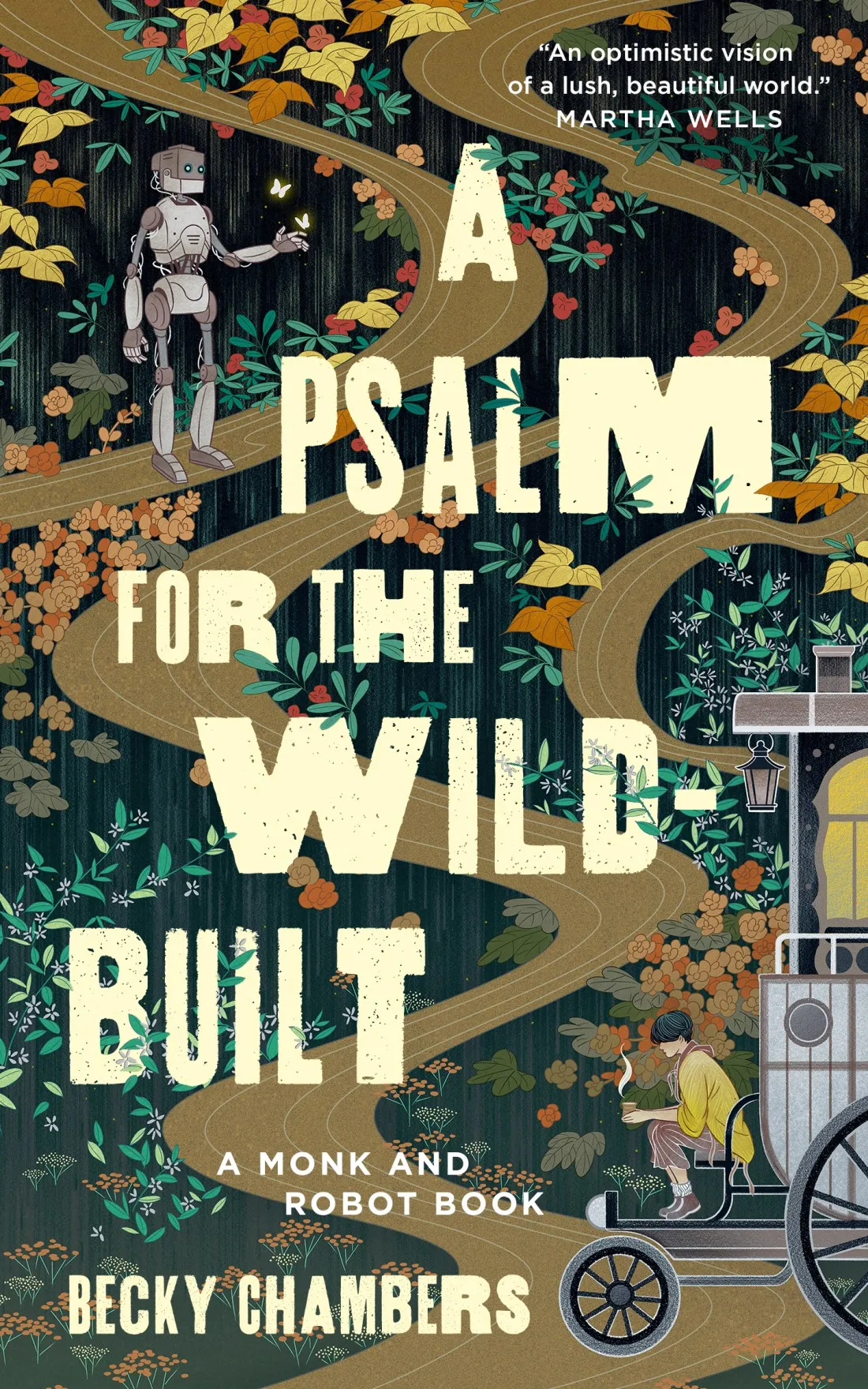
I always take care to put trigger warnings in my book reviews, but A Psalm for the Wild-Builtwas such a gentle, pure book that I couldn’t even think of any. Becky Chambers is so kind to us.
EGGO WAFFLES: A book that fills you with nostalgia
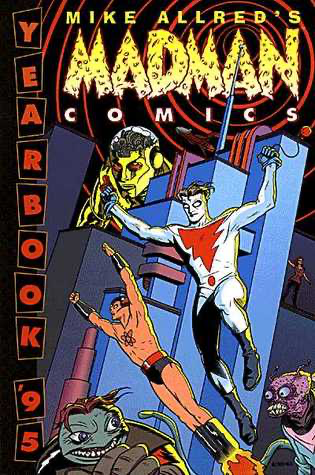
I’ll always look back fondly at when I first read Madman back in middle school; beyond the beautiful art and the David Bowie references that 13-year-old me immediately latched onto, there’s something so comforting and pure about these comics.
CHOCOLATE WAFFLES: A fictional character that’s sugary sweet
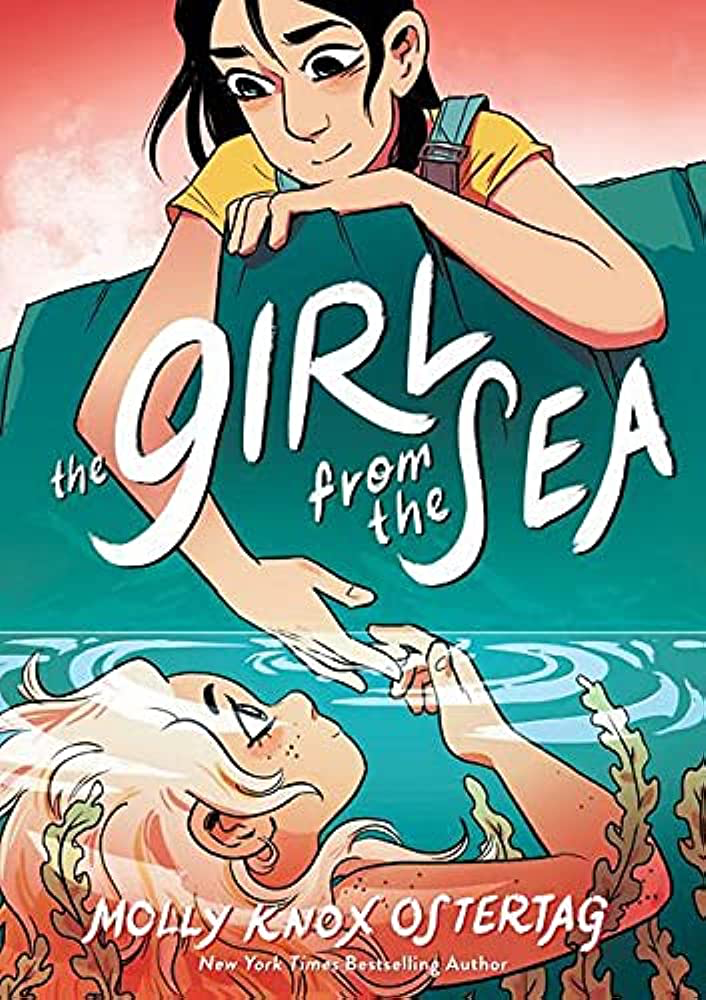
Even without her selkie puppy eyes, Keltie from The Girl from the Seawould still be so adorable.
BLUEBERRY WAFFLES: A book that made you feel blue
A House Between Earth and the Moonwas just such a dismal book all the way through. The premise had potential, but it ended up being a chore to read, in my experience.
WAFFLE CONE: A book that’s a bit different
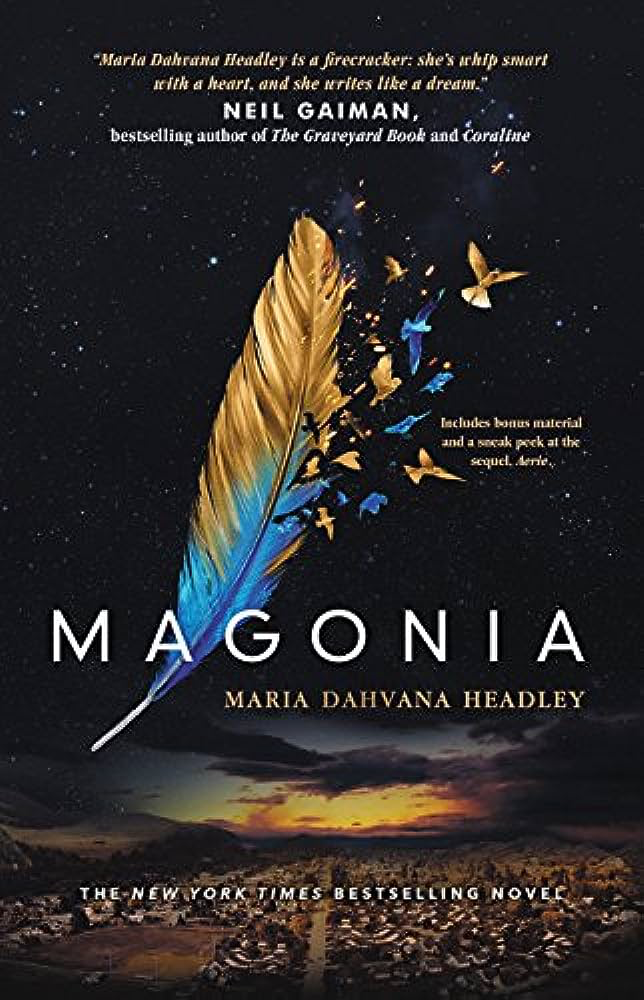
Considering that Magoniawas published in 2015, it was so refreshingly whimsical and weird for a YA book of that era.
MAPLE SYRUP: A series that you stuck with until the end
One of my best friends recommended The Aurelian Cycle to me, and it was fantastic all the way through!
WAFFLE IRON: Your favorite bookish accessory
My parents got me this super comfy Frankenstein shirt for my birthday last year! Out Of Print has the best bookish merchandise—got my Six of Crows and Little Prince socks from there too!
I TAGANYBODY WHO WANTS TO PARTICIPATE!
Today’s song:
listened to this album the other day, fantastic all the way through!
That’s it for this book tag! Have a wonderful rest of your day, and take care of yourselves!
Here we are in the heat of August, and I bring you a batch of songs with a Halloween color scheme. I say, it’s my birthday month and I get to choose to color scheme, and I say that every day is Halloween over here at the Bookish Mutant. It’s only fitting that we have the band who probably originated that phrase on here. Plus some vampires. A whole empire of them, as a matter of fact.
With almost every Big Thief song that I hear, I’m convinced more and more to go deeper into their discography. Plus, the sisterhood of queer women growing out buzzcuts has to stick together. 🫡
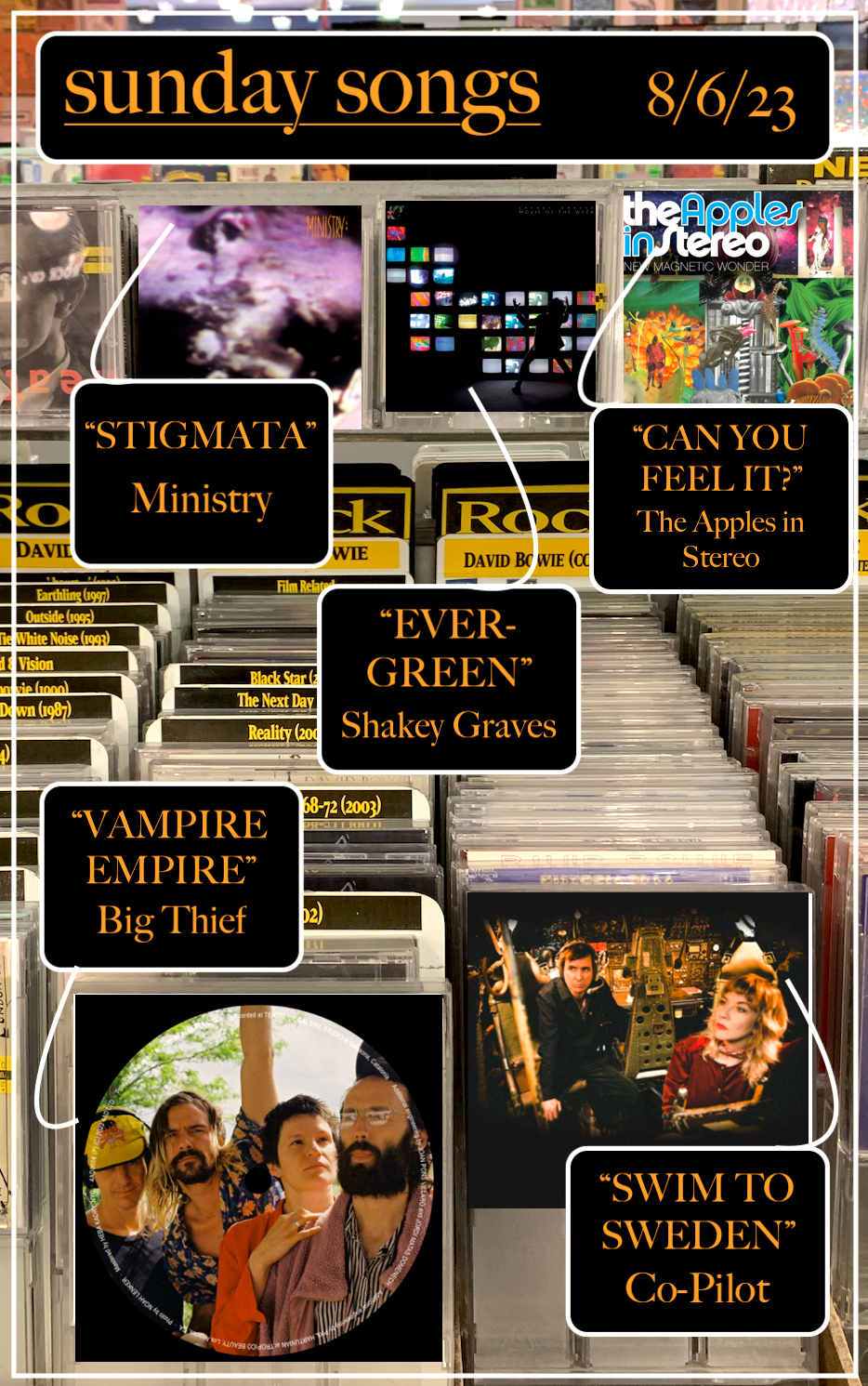
As I clumsily tried to explain to my dad with some tired, T-Rex arm moves before dinner the night that this song came out, “Vampire Empire” is a song that really feels like it’s pressing down on you. After the curtain lifts on the deceptively silent opening, the steadfastness of this song never lets up. With each drumbeat, I feel like I’ve been sucked into a water wheel, bobbing along with its machinery. Each punch of the impeccably rhythmic chorus feels like a spoke passing over me: “You give me chills/I’ve had it with the drills/I’m nothing, you are nothing, we are nothing with the pills.” And if there’s anything I love in a song, it’s that quality where everything feels like it’s teetering on the edge of collapse, but is reconstructed just as quickly. From the pots-and-pans banging sound of the percussion to the way that Adrianne Lenker’s voice strains, soars, then screams in the final verse: “You say you wanna be alone, and you want children/You wanna be with me, you wanna be with him.” Even if the now beloved version that they performed earlier this year on The Late Show with Stephen Colbert excelled in its indie tightness, the barely-contained fury of this version matches matches the lyrics so much more, with its unpredictable, pressing highs and lows. And as much as I loved the original “I’m a fish and she’s my gills” lyric, the way it was squashed right at the end of the chorus did feel like it was interrupting the flow of an otherwise impeccably rhythmic song.
Rotate has been getting great reviews ever since it came out about a week ago, and even before that—and I’m so happy. I don’t know as much of the context behind Leonore Wheatley, it makes me so happy to see Jim Noir FINALLY getting more of the recognition that he deserves! If there’s anybody who deserves to have their album called “the album of the summer,” it’s him and Leonore.
Co-Pilot (Leonore Wheatley and Jim Noir, a.k.a Alan Roberts) make the perfect music for getting things done; I normally put on an album when I clean out my bathroom, but there are some albums that are…shall we say, better than others for doing such things. (Cue an Arrested Development-style cutback to me crying into the sink to “Don’t Give Up”.) I don’t know much about Leonore Wheatley or her other projects, but Jim Noir always makes that perfect kind of music—it can tickle your brain in a pleasantly creative way, but it makes for the perfect soundtrack to washing down the bathroom mirror or shelving books at the library. So Rotate was bound to be just like that, and that’s exactly how it turned out to be. But as with anything by Jim Noir, it’s so much more than just quirky background music—it’s the sonic equivalent of a Russian doll, layered with oodles of hidden samples, sounds, and fun. “Swim to Sweden,” the Rotate’s second single and opening track, is the perfect display of that explosive, wondrous weirdness. It’s a whole sensory experience; all of the many, layered synths make sounds that crackle, writhe, and, as the title suggests, swim around in your head as the song plays. It’s like a stimulating massage for the brain: the music grows fingers that wiggle all around you, invoking images of bubbles and pulsating lights. I’d be remiss if I didn’t say anything about Wheatley’s contributions, even with my minimal context; I don’t know how much of the instrumentation was from her, but her voice was clearly the anchor that steadied the whole record, richly lilting and magically suited to everything surrounding it. Wheatley and Noir’s vocals weave effortlessly together, diving and darting through the current between the synth melodies like fish.
Bottom line: if you’re looking for something refreshing and perpetually exciting to listen to, go listen to Co-Pilot. Rotate is out now on all streaming platforms! I almost put “Move To It” as this week’s pick, but I’ll direct you to this one too—it samples the same keyboard track that C418 sampled for Minecraft’s “Chirp.” And while you’re at it, I’d once again encourage you all to support Jim Noir’s solo work via his Patreon, if you can.
With these Sunday Songs posts, I hope to give you all a glimpse into my shuffle. Some weeks, it’s fairly curated. On weeks like this, it really does feel like my shuffle. And by that, I mean four tangentially related songs that sort of fit together, and one of the two (2) Ministry songs in my library. Gotta keep you all on yours toes somehow.
I’ve never been the biggest fan of most metal or industrial music, but as I’ve gotten older and started to appreciate more of it, I’ve noticed a pattern. I doubt I’ll ever completely warm up to all of it (there’s only so much screaming in my ears that I can handle), but for a fair amount of those bands that I’ve been exposed to, there’s always 2 or 3 songs that I just inexplicably love. For Black Sabbath, it’s “N.I.B.” For Nine Inch Nails, it’s “Terrible Lie,”“Head Like a Hole” and “Reptile.” And for Ministry, who famously inspired the name of the latter, it’s “So What” and this song. (Don’t think I’ll quite warm up to Iron Maiden, though. I’ve tried. Apologies to my dad and brother. Bruce Dickinson is undeniably a king, though.)
I don’t really remember enough Ministry to see what separates this song from everything else I’ve heard and passed by. But “Stigmata” came back to me in one of those joyous moments where my shuffle decided to dredge something from the dusty depths of my iTunes library, to my surprise. And instantly, I remembered the rush it gave me in my sophomore year of high school, when I first remember hearing it and liking it. I know the word “feral” is tossed around more often than not these days, but…that’s exactly the way this song makes me feel. The instant the drums kick in, I just start grinning from the anticipation. Then comes one of Al Jourgensen’s many raspy shrieks (which he can keep up for a surprising amount of time), and then it all comes crashing into you. From there, it never lets up—it’s the very definition of abrasive, but the kind of theatrical abrasiveness that never holds back. You can just picture this guy maniacally grinning and wiggling his fingers as he draws out “I’m chewing on glass/And eating my fingers.” Again, who knows what line my mind drew between this and the rest of Ministry, but this song is just so fun. I’ve heard enough to know that metal probably won’t ever fully be my cup of tea, but my brain knows exactly what it likes, no matter the arbitrary, inexplicable distinctions it makes.
This song and “Vampire Empire” seem to be cousins in a lot of ways. Both of them were famed, unreleased songs that became live gems and staples for their respective bands, and, lo and behold, were released on the same day. Even though I’m far more familiar with Shakey Graves, Big Thief overshadowed my listening, out of the two—as you could probably tell, I couldn’t get enough of it. But “Evergreen” is just as uniquely wondrous, even if I’m admittedly overdue in appreciating it.
No matter how many times I listen to this song, I always fall into the trap of turning the volume up for the quiet acoustic plucking that makes up the beginning of the song. Then, of course, in true, modern Shakey Graves fashion, it’s all gone in a flash and a bang of static as the true beginning of the song kicks in. It’s exactly like the image on the album cover of the forthcoming new album Movie of the Week (!!!)—the silhouette of Alejandro Rose-Garcia, arms outstretched in ecstasy like the black and white monster movie version of Victor Frankenstein declaring “IT’S ALIVE!” The rest of the track continues in that unexpected trajectory. “Evergreen” is a sea of purple-hued fuzz and distortion, dreamy and explosive. Like the trees it’s named after, it’s a song that seems to lure you into the woods, tinged with dreams but hiding something faintly sinister: “Let me rest, yeah let me be/Overgrown and evergreen.” Guess we were all feeling that “I need to go off into the woods and let myself be covered in moss” feeling. It feels like the next natural progression from Can’t Wake Up, which saw Shakey Graves leaning more towards the alternative in alternative folk, with its array of spooky, adventurous tracks (see: “Aibohphobia,”“Dining Alone,”“Counting Sheep”). The folk part was never lost, and judging from Garcia’s penchant for cowboy hats, I doubt it ever will be, but either way, “Evergreen” is surely an exciting window into what’s to come.
Wilco, Shakey Graves, and Mitski this September? BUCKLE UP! And I’m seeing the first two live later this year, so that’s even more fun! (I doubt I could ever do a Mitski concert. I……yeah, I’ve seen so many articles linked to the fandom’s weirder-than-usual parasocial relationships with her and FAR too many “mommy” comments on posts about her. I couldn’t do it.)
Chances are, if you thought of a creatively-inclined person having a sudden change in their career to pursue their passion, it would go something like this: person gets stuck in an office job crunching numbers, person writes songs in their spare time, person quits job in order to pursue music. Happens all the time. But it’s hard to think that the opposite might be true. And that’s the case for Robert Schneider, frontman of The Apples in Stereo, Thee American Revolution, and one of the founders of the Elephant 6 Collective. As his indie rock music gained traction, his hobby and eventual passion was math; while on tour, his bandmates often recollected him scribbling his way through equations in his spare time. And now, he teaches math for a living: in a 2018 interview with Atlanta Magazine, he described the relationship between math and music as such: “Music, art, poetry, and mathematics—these have the feeling of mysticism and religion to me…It’s more than just something you do or something you’re good at. These are things that to me are fundamentally as important as something could possibly be.”
Looking back at The Apples in Stereo, a delightfully weird staple of my hipster childhood, with this context makes their entire sound make more sense. “Delightful” is always the word I end up reaching towards with their music, with their bubbly, electronic sounds and penchants for adding in backing vocals made to sound like a choir of robots. But even if they haven’t been as active in a little over a decade, every time I rediscover one of their songs, it’s simultaneously like reuniting with an old friend and unearthing something wholly new. Like “Stigmata,” “Can You Feel It?” got dragged in by my shuffle, bringing with it a whole slew of pure, joyous childhood memories. Many a car ride was soundtracked by this song, electronic happiness and the impressively swift maneuver of my dad turning down the volume down and back up again just in time for my brother and I to miss the word “bullshit.” And to this day, no matter how many times I listen to it, “Can You Feel It?” remains supercharged with that pure joy. Even if his passion turned out to be math, there’s no denying that Robert Schneider could write an excellent pop song—instantly hooking, it bubbles with infectious joy, calling on you to “drown out the static on the FM radio.” As the call to “turn up your stereo” fades to near-a cappella, something about said choir of robots keeps the excitement of the whole song at a fever pitch, waiting for the instrumentals to crash down once again. Whatever the case, I’d say that Robert Schneider and company found the equation for indie rock joy, and it’s never once lost its shine.
Since this post consists entirely of songs, consider all of them to be today’s song.
That’s it for this week’s Sunday Songs! Have a wonderful rest of your day, and take care of yourselves!
Happy Tuesday, bibliophiles, and happy August! I always look forward to my birthday month, but…I could do without everybody posting that one Taylor Swift song (sorry swifties my neighbors blasted it over and over when I was in school and I can’t take it any longer 😭)
This book has been on and off my TBR over the years; I feel like I put it on my list when I first got Goodreads, lost interest in it a few years later, then got it recommended to me by a friend who saw it on another list. The reviews don’t lie: Magonia really was a strange book, but despite some of its flaws, its strangeness was 100% its strength.
All of her life, Aza Ray Boyle has had a mysterious lung disease, incapable of being diagnosed by all kinds of doctors. She can barely breathe or speak without assistance, even with the copious medications prescribed to her. But recently, Aza has begun to see giant ships in the sky. Her parents chalk these visions up to her medication, but Aza knows that something in the sky is waiting for her—and it is. But after a freak accident leads her family to believe that she is dead, Aza is swept up into the world of Magonia, a world of skyfaring ships where she can finally breathe. But as she discovers her hidden Magonian heritage, she discovers that this idyllic world in the clouds is not as peaceful as she once thought—and that the world below may be in danger…
TW/CW: fantasy violence, death/funeral, themes of grief
To put it plainly, Magonia was a weird book. For a YA book that was published in 2015, it feels a lot more daringly weird than most YA books got back then and still do today. Magonia was Maria Dahvana Headley’s first YA novel, and it shows, but not necessarily in a bad way; despite its flaws, it was a refreshingly quirky addition to the pantheon of early to mid-2010’s YA.
I’ve seen this book shelved as having disability rep, and that’s part of why I decided to pick it up again. Aza has a lung disease, but it’s fictional; all of her life, doctors cannot seem to diagnose her, until it is discovered that the disease happens to be a whole bird growing in her chest that factors into the book about a third of the way through. And…I’m torn on whether or not to call it disability rep. On the one hand, the descriptions of Aza’s life before the bird revelation match a lot of other stories I’ve read about people and fictional characters with breathing-related illnesses and disabilities, what with being constantly in and out of hospitals and struggling to fit in with one’s peers. And on the other hand…it feels a little strange, as a disabled reader, to categorize having a fictional ailment of bird growing out of your chest as a disability, especially since the problem resolves itself almost immediately once Aza arrives in Magonia. My issue isn’t that this plotline exists—it’s the category of others labeling this as disability rep that feels questionable to me.
That aside, Magonia was a refreshing novel to read! Especially for a YA book published in 2015, when the industry was so mired in self-serious Hunger Games rip-offs, the unapologetic weirdness of this novel felt like a breath of fresh air, even almost a decade later. We need more whimsy like this in YA—it shouldn’t just be reserved for middle grade. The whimsy doesn’t just die when you hit the age of 13! (Or, at least, it shouldn’t.) I loved the world that Headley created, full of winged people, whales that swim through the sky and giant bats (CREATURES YEAAAAAAAH) and massive frigates that patrol the skies. Headley put so much love into this part of the worldbuilding, and it shone through in every page. It did not hold back in its magical fun, and I am so much better for it.
I’ve seen a lot of reviews saying that they didn’t like how Aza’s voice was written, and to a point, I can understand it. From the looks of it, most of Headley’s body of work is aimed at adults, so it makes sense that she felt as though she had to tone it down and write Aza in a certain, “teenagery” way. But for the most part, I feel like it worked—Aza really did read like she was really 15 going on 16: despite her circumstances, she was still an angsty teenager, but that wasn’t her whole personality. She reacted to her situation as a real teenager would, had her priorities set where a teenager would have them. Aza really was a teenager, and teenagers tend to over-exaggerate things sometimes. It wasn’t all over-exaggeration, though—it was just the right amount of drama and realistically being frightened by everything going on around her, because who wouldn’t be?
However, as engrossed I was with the whimsical fantasy worldbuilding, I found the ending to be quite messy. I get that it’s the first book in the series, but Magonia could have been wrapped up in a much neater and more cohesive way. Details that were only given in the last 50 pages suddenly had utmost importance to the plot, all of the loose ends got even looser, and everything felt generally rushed. Looking back on how much I enjoyed the worldbuilding, it feels like a case of paying too much attention to that and not enough to how the plot would actually play out. Everything felt crammed together and sped through in such an unceremonious way. It’s why I felt like I couldn’t quite give this novel a full 4 stars; the ending made the rest of the intricacies earlier into a rushed mess.
All in all, a refreshingly weird YA fantasy that excelled in its whimsical worldbuilding, but failed in the messy pacing of the ending. 3.75 stars, rounded up to 4!
Magonia is the first in the Magonia series, followed by Aerie. Maria Dahvana Headley is also the author of The Mere Wife, Queen of Kings, Some Gods of El Paso, and many other novels and short stories. Headley also translated a modern version of Beowulf in 2020.
Today’s song:
NEW WILCO JUST DROPPED?????
That’s it for this week’s Book Review Tuesday! Have a wonderful rest of your day, and take care of yourselves!







 The Bookish Mutant