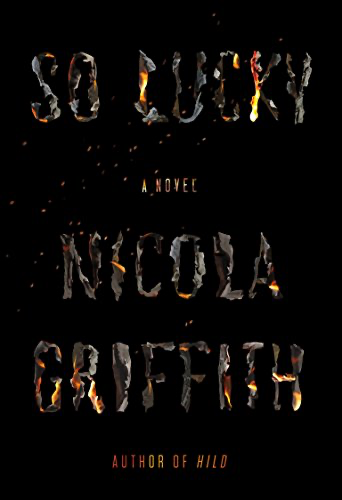
I came upon this book after poring through the “further reading” section of Alice Wong’s incredible Disability Visibility anthology (which you should also go read!!), and I put it on hold at the library soon after I heard about it. I was completely unfamiliar with Nicola Griffith before reading this novella, but she delivered so much power and resonance in the span of only 180 pages. We’re barely halfway through the year, but I know that I’ve got another favorite read of this year.
Mara Tagarelli has it all. Happily married and the head of a multimillion dollar AIDS foundation, she lives a life of contentment and security. But in the span of days, Mara is diagnosed with MS, and her wife leaves her soon after. Her colleagues now dismiss her needs, and she’s left without work, without the care she needs, and without any prospects for the future. But as she slowly begins to find a community, she realizes the power that she holds—to put those she values in danger, but to give them the justice that they deserve.
TW/CW: ableism, hate crimes, murder, medical mistreatment, misogyny
I finished this book several days ago, but I’m still positively reeling from the effect it had on me. I picked it up after seeing it included as a recommendation in the “further reading” section of Alice Wong’s Disability Visibility, thinking it would be something good to read during Disability Pride Month. What I found was something far more than just “something good to read”—it was wholly refreshing, resonant, and both heartbreaking and heartwarming. So Lucky wasn’t a novel that I expected to hit me so hard, but it did, and I am forever grateful for it.
I’ve never been more in love with such an angry character, to be honest. Griffith’s writing of Mara felt more than authentic, a character that climbed out of the page, demanding to have her voice heard. And although her anger is her primary character trait, it’s an anger that resonated with me like nothing has before; in a landscape where disabled women, both fictional and real, are expected to be demure and sadly accepting of their fate (but in a sexy way, of course, because they obviously only exist as objects of pleasure for men), having a character as fiery and determined as Mara very nearly made me cry. I don’t have MS, but I am a disabled reader, so watching Mara express her anger at her treatment, at her life, and at the world around her was more than I could have asked for. More disabled women who aren’t conventionally likable and are written authentically, please! Use this novella as a guide.
So Lucky is a hard read—it doesn’t pull any punches, and that’s exactly how it should have been. It displays a lot of some of the more harsh realities of being disabled, especially being physically disabled: dismissal by your colleagues, mistreatment at work (and eventually being fired because of said diagnosis), relationship turmoil, medical mistreatment, and disability-motivated hate crimes are all a part of the narrative that Griffith portrays. It’s visceral and heartbreaking, and it doesn’t hold back in the slightest. But never once did it feel amped up for tension, or unnecessarily exaggerated: this is the story of an angry woman, and the story of a system built on bringing her down, as well as others like her. It really represents a good portion of the spectrum of issues that disabled people, especially disabled women, face, and Nicola Griffith captured all of it with incredible aplomb.
Despite that, So Lucky never falls into hopelessness. Even though Mara faces hardships aplenty, it never portrays the disabled experience as defined solely by tragedy and suffering. In spite of it all, there is always hope: Mara finding an online community of other disabled people, taking care of her cat (shoutout to Rip), and coming to the realization that her anger was never from the MS itself: it was from the experience of living in a world that did not want her to succeed. At its heart, So Lucky is an incredibly raw story, but a fearlessly hopeful story, one where our protagonist knows that her anger doesn’t come from being disabled, but from existing in a world where disabled people are treated so poorly. And that anger only adds to her determination to continue to fight for a better, more accessible world. There is no disability to inspirationally overcome, only a system. I can’t think of much that’s more beautiful than that.
All in all, a short novella that packs a deeply impactful punch, and portrays disabled womanhood in a refreshing light. 5 stars!
So Lucky is a standalone, but Nicola Griffith is also the author of Ammonite, Hild, Cold Wind, Slow River, and many other books for adults spanning several genres.
Today’s song:
never in my life would I have anticipated liking a Weezer song THIS much, but you can blame Snail Mail for this one
That’s it for this week’s Book Review Tuesday! Have a wonderful rest of your day, and take care of yourselves!
Happy Sunday, bibliophiles! I hope this week has treated you well.
Sparklehorse also posthumously released “The Scull of Lucia” this week, and it would’ve fit the color scheme, but I just know that it’s gonna make me too sad to write about. Love you, Mark, but I’m trying to preserve my sanity.
I guess this week’s batch is starting out on a sour note, but I just have not stopped listening to bits and pieces of this album for weeks, so get Liz Phair’d. My advice, though: as we are in the peak of road trip season, this is the absolute worst song to put on a road trip playlist, as good as it is. Regardless of whether or not you’re in a romantic relationship on said road trip, I feel like it’s just a horrible omen either way.
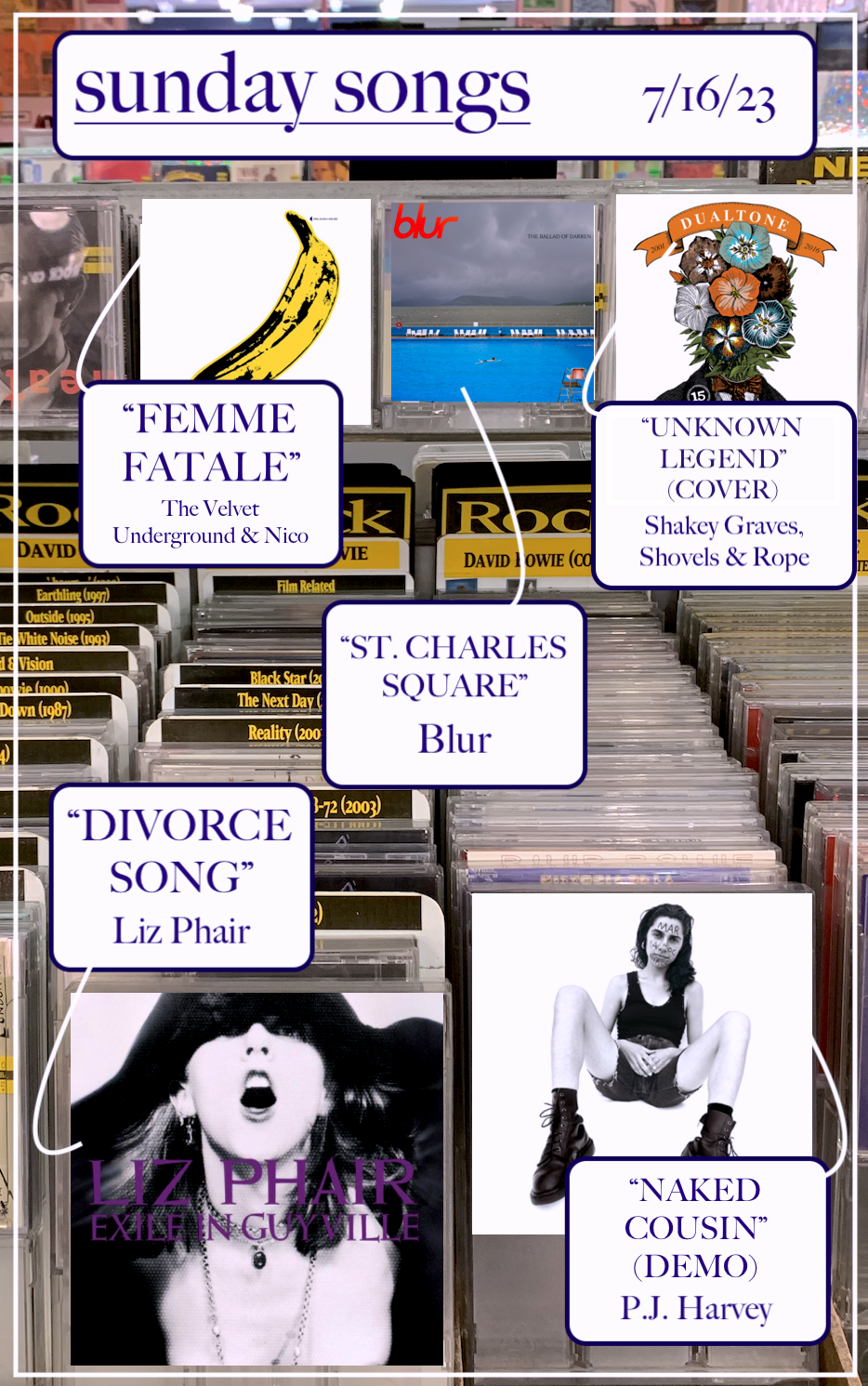
Speaking to Rolling Stone, Liz Phair said that she wasn’t surprised that this song became a fan favorite from Exile in Guyville: “…[‘Divorce Song’] has that deadpan delivery. It’s an ordinary person doing ordinary things…the song is really just about relating to another person. It feels like an action-packed song. You’ve done a lot…but really it’s just two personalities trying to be intimate and bumping up against each other on a road trip and that’s all that happens.” The concept of lyrical storytelling is, for some reason, always equated to having some grand, lofty narrative, as if stories about ordinary things somehow don’t make the cut. But that’s exactly what makes “Divorce Song” such a powerful song—it’s a linear narrative about a road trip gone south, and yet it packs the same punch of a narrative spanning multiple songs. You can tangibly feel the trapped heat of the inside of a car, the humid desolation of a cramped hotel room, and the sinking realization that “it’s harder to be friends than lovers/and you shouldn’t try to mix the two/’cause if you do it and you’re still unhappy/then you know that the problem is you.” Against the backdrop of Phair’s turmoil, small details create a painfully fleshed-out picture (“and it’s true that I stole your lighter/and it’s also true that I lost the map”), the images of this song feel as real as if I were watching them unfold on a movie screen; that really should be the bare minimum, but honestly, in the age of mass-produced, filtered music dominating the airwaves, this song feels like a breath of fresh air, even 30 years later. (Not too sound like a boomer there. I’ve just been inundated for the past few days because Taylor Swift was in town this weekend.) Contrary to Pitchfork contributor Scott Plagenhoef’s assertion that Exile would come off as dated to this generation because we’re so used to explicit sexual content in mainstream music…it’s not dated in that sense? At all?? Sure, we are exposed to more of it, but that doesn’t diminish the value of one of the first female artists to bring these kind of raw, unapologetic, and honest lyrics to the indie rock scene and owning it. It’s not like it’s impossible to see that empowerment shining through, whether it’s in the context of 1993 or 2023.
Seriously, Pitchfork…whose grand idea was it to have a man write a review of the 15th Anniversary Edition of Exile in Guyville? Not that men can’t write reviews of music by women and vice versa, but this one? The album that specifically came about to critique the boy’s club of indie rock? That’s just a war crime, if I’ve ever seen it. The review is from 2008, but…no, they had definitely had women on board at Pitchfork by then. There’s no excuse. Jesus Christ…
uhhhhhhh tommy shelby sigma male octillionaire grindset cillian murphy moment
No, I haven’t watched Peaky Blinders yet, but my parents recently going through the whole show (and getting close to finishing it) has me almost convinced to watch it?? If anything will convince me, though, it’s the absolutely loaded soundtrack: Radiohead? The White Stripes? The Kills? I mean, come on. Perfection. And this too!
And, it’s reminded me that I need to get into P.J. Harvey. Somehow, I always forget about her, but every time I hear a song of hers, it’s instantly gripping, whether it’s the grinding jumpscare of “Rid Of Me” or what is hands down the best cover of The Rolling Stones’ “(I Can’t Get No) Satisfaction” ever performed, along with our queen Björk:
If that doesn’t make you want to worship the ground that they both walk on, just for a moment, I’m not sure what possibly will. The sheer power they both wield.
Again, there’s no excuse for me not to get into more P.J. Harvey right this minute, except for my pileup of albums waiting to be listened to. But for now, I at least have this song—and it’s a demo? How is this a demo?? Lucy Dacus, on her episode of Amoeba Records’ YouTube series What’s In My Bag? picked an album of Harvey’s 4-track demos, and remarked about how she wished that her demos were “remotely shareable” in comparison. Either way, I’m so glad that this demo is out in the world. Even with my limited P.J. Harvey knowledge, raw power is what characterizes what I’ve heard of her music—raw-throat screaming, instrumentals that bear down on you like an onslaught. “Naked Cousin” is just that; the slightly grungier (not necessarily grungy in the Nirvana way, but in both the musical and non-musical sense of the word), grimier sound quality coming from the demo enhances its atmosphere. It’s an eerily sinister song, the dirtiness of the instrumentation matching the lyrical image of discomfort that Harvey weaves: “I hate his smell and/I hate his company, but/But most of all, I hate that he/He looks just, just like me.” It’s a deeply uncomfortable song—Harvey really enhances the tangible feel of someone lingering over you, the feeling of their hot, sour breath pressing against your skin. She can certainly create an atmosphere, even if it’s the last one you’d want to be surrounded by.
Since I’ve started working at the library, I’ve made a playlist for myself to listen to while I’m shelving books. It’s all soft, slow songs, both so I don’t get distracted and so it matches the atmosphere of the library. So there’s a lot of Phoebe Bridgers, Radiohead, Wilco, some older St. Vincent, et cetera. “Femme Fatale” went on there almost immediately, but not just because it fit those criteria: nothing makes you feel more like a character in an indie movie than listening to The Velvet Underground in a library.
Nico’s vocals take the lead on “Femme Fatale,” leaving Lou Reed to the backing vocals on the chorus. I already talked a little about the power of her voice back when I first listened to The Velvet Underground & Nico back in April with “All Tomorrow’s Parties,” but those two songs together are emblematic of her vocal range. Next to the looming, encroaching presence on the former (although it comes later in the album), “Femme Fatale” sees Nico dipping into a gentle whisper, her voice fading to an almost imperceptible hiss at the very end of each chorus as she says “hear the way she talks.” As massive of a presence as her famously low, resonant voice is, she slips into the quiet so easily (see also: “I’ll Be Your Mirror”), and yet retains the same cavernous quality—even as her voice drifts through the enchantingly gentle intro of guitar and tambourine, you can instantly feel it in your chest, making your bones vibrate. Or maybe the latter is just the mixing of this song—famously headphone-vibrating, if the YouTube comments are any indication. It’s the perfect fit for a film—the only movie I can seem to find with it is Bandslam, which I’ve never heard of, but Wes Anderson really needs to get on it. Past time that he used it for something, although maybe he filled his personal Nico quotient in The Royal Tenenbaums?
One Nico song seems like a small quotient, but who am I to judge Wes Anderson? He’s Wes Anderson, after all.
Gather ’round, my fellow Americans, let us all cry and watch videos of Blur performing in Wembley Stadium, and hope for the best that they’ll just get over themselves and announce a North American tour. Grab your tissues. Cry with me.
But this. THIS. This is the Blur that I’d been missing! “The Narcissist” was a solid song, but “St. Charles Square” is a much better showcase of their talents—and brimming with so much more creativity. Unlike the former single, which sounded as though it could be a solo Damon Albarn track, “St. Charles Square” finally feels like Albarn, Coxon, James, and Rowntree have reformed as a truly cohesive unit, their unique talents blending as seamlessly as they did in the 90’s. Whether or not Damon Albarn’s “OI!” at the beginning is a callback to “Parklife” (aaaaaaaaaall the people) or just him being British is up for debate, but even if it is nostalgia bait, you bet I’m biting it. You guys have no idea how many times my mom and I have car-danced to that song. I’ll gladly be a nostalgic shill for a bunch of white, middle-aged British guys. And finally, finally, Graham Coxon’s signature guitar playing has returned to the spotlight! His riffs are as power-laden and punchy as ever, and he’s adopted an echoing tone that calls back to David Bowie at the very beginning of the 80’s, rightas he released Scary Monsters (And Super Creeps).And this song is full of scary monsters and super creeps of its own—the delightfully eerie lyrics are rife with “ghosts come back to haunt me” and “something down here/And it’s living under the floorboards/Its grabbed me round the neck with its long and slender claws.” With all that to work with, it’s no wonder that Albarn’s flair for showmanship shines in this track: I’d be lying if I told you that his piercing, werewolf howl at 1:40 didn’t make me giddy on every single listen. It’s a spooky delight all the way through.
I didn’t know until I started looking into this song that it was a cover—Shakey Graves was the main draw, I only knew of Shovels & Rope because they always come up as similar artists when I search for Shakey Graves on Apple Music, and I can only remember one (1) Neil Young song off the top of my head. And normally, I wouldn’t be one for folk-country songs describing a blonde woman riding through the desert on a Harley-Davidson that rhymes “diner” with “finer” (in reference to said woman), but, again: Shakey Graves.
iTunes has this song labeled as Shakey Graves & Shovels & Rope (and my English major brain wants to separate them with a comma or “and,” not a second ampersand, for the love of god 😭), but I was surprised to see that YouTube lists it as Shovels & Rope feat. Shakey Graves; if anything, there’s far more Shakey than Shovels—Alejandro Rose-Garcia is clearly taking the lead on vocals here. (I guess that this song was also included on Shovels & Rope’s covers album, Busted Jukebox, vol. 1, so that’s probably why.) Either way, the harmonies on this rendition of Neil Young are my main draw. Rose-Garcia’s voice has this distinct, irreplaceable rasp to it, rough and raw-throated at the edges, but never losing its power. Combined with the husband and wife duo of Michael Trent and Cary Ann Hearst (is it bad to ask who’s the shovel and who’s the rope in this relationship?), their voices form a resonant group of harmonies, with Hearst’s high notes elevating the thrill of the music and Trent providing a steady wall for it to anchor itself against. Whether they’re hitting the highest of high notes or gently drifting away from the chorus with their whispered repetition of “the air she breathes.” Again: I’m not usually one for the folky covers with the obligatory harmonica solo at the end, but Shakey Graves will convince me.
Since this post consists entirely of songs, consider all of them to be today’s song.
That’s it for this week’s Sunday Songs! Have a wonderful rest of your day, and take care of yourselves!
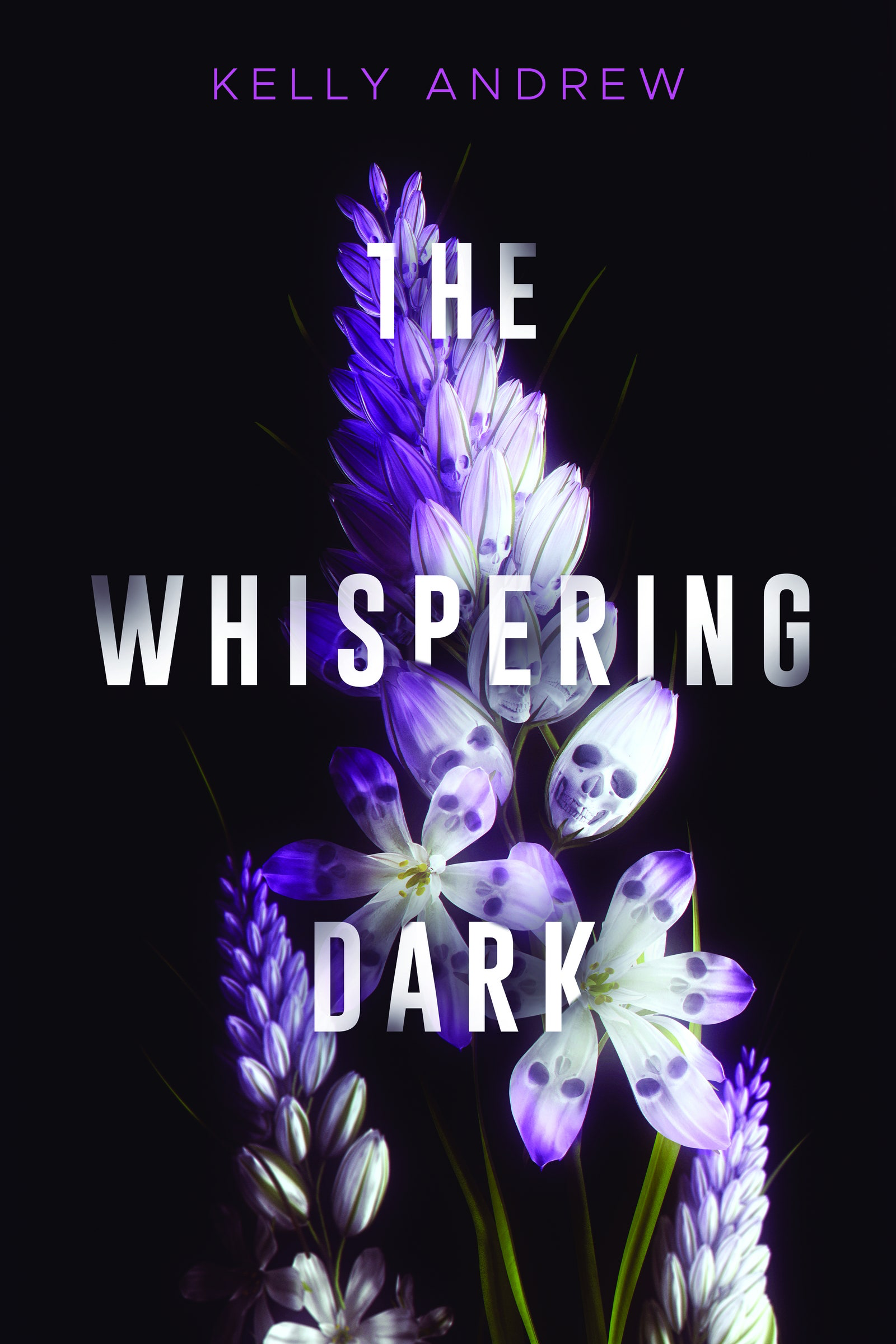
I’m willing to go out of my genre comfort zone when it comes to finding books with good disability rep, and that was the case for this book; dark academia usually puts me off (see my review of Victoria Lee’s A Lesson in Vengeance for the gist of my gripes about it), but I’m always here for books by disabled authors! In this case, it was worth it, but the experience wasn’t the one that I think the author intended—The Whispering Dark was a mess, but in kind of a fun way. For the most part.
Delaney Meyers-Petrov is determined to prove herself. All of her life, people have perceived her as fragile because of her Deafness, but when she’s accepted into the famed, rigorous Godbole University, she knows that this is the ultimate chance to show the world what she’s really made of. But Godbole isn’t an ordinary college—its students are trained to jump between parallel worlds, tapping into arcane magic in order to travel through alternate dimensions. As Delaney faces ableism from her peers and professors, a boy from her past, and the pressure to get good grades, the sinister side of Godbole begins to show its face. For months, boys have been going missing, and the answer to their disappearance may be right in front of her. Will she be able to get to the bottom of what’s killing Godbole’s student body—and work with this mysterious boy?
TW/CW: ableism, murder, blood, gore, past descriptions of death, near-death experiences
Look, you slip the phrase “unholy affliction” into a sentence, and you’ll automatically make me think of Soccer Mommy. And the more I think about it, the more it feels like the vibe of that song is what this book really, desperatelywanted to be, but…wasn’t. At all.
Normally, I steer clear of dark academia—the really bad stuff just feels like a bunch of Donna Tartt copycats writing about rich people being “morally gray” (read: smoking indoors, wearing turtlenecks and forming vague “secret societies”) and trying to capitalize off of a popular aesthetic. However, the fact that this one featured a disabled character written by a disabled author (!!!), convinced me to give The Whispering Dark a chance. Here’s the thing: the disability rep? It’s fantastic. Everything else? Not so much. The Whispering Dark was an absolute mess, but it got to the point where its utter ridiculousness was honestly kind of fun to read, so it wasn’t entirely a waste of time.
Let’s start off with the disability rep. Although I can’t speak to the accuracy of the specific rep (Delaney, the MC, is Deaf), it’s so refreshing to see disabled authors writing disabled characters—Kelly Andrew is also Deaf! And even without being Deaf, Andrew wrote some of the specificities of Delaney’s experience with her disability beautifully; I loved the details about how Delaney moved through life, from how the noises around her are described to subtle details like the change in sound when the battery runs out in her cochlear implant. Along with that, Andrew’s portrayal of being a disabled college student really resonated with me, from the nerves about personally confronting professors about accommodations to Delaney’s desire to prove herself.
Aside from that, it’s hard for me to find anything genuinely positive to say about The Whispering Dark. There are more positives in my eyes, to be fair, but they aren’t necessarily about how I think this novel was meant to be taken. In my experience, this book was SUPER campy, but the kind of campy that unintentionally resulted from taking itself so seriously that it becomes almost hilarious. I still can’t believe that all of this was played so straight—this book fell headfirst into every cheesy YA fantasy trope like a 5-year-old being pushed off of a diving board, and we were somehow expected to take it all seriously. You’ve got your edgy protagonist with her dyed hair and her edgy nickname, a mysterious, Ivy League school that teaches its students to jump between parallel worlds, students showing up dead, and a romance with a mysterious, dangerous older boy, who is compared by the MC to Patrick Bateman (I wish I was kidding), but still ends up being the one for whom the MC falls head-over-heels in love with. The way Andrew wrote it felt like she thought it was the most original idea in YA in the last decade, and honestly? I had to laugh. It felt like watching a terrible movie for the irony. Solid unintentional camp. I mean, look at how goofy that cover is.
And look—as campy as The Whispering Dark was, I at least expected there to be a little bit of worldbuilding. Here’s the thing: THERE WAS NONE. Interested in learning about Godbole University and how you can jump through parallel worlds with magic, according to Kelly Andrew? You’re outta luck. There aren’t any explanations for anything—you just get tossed around to parallel worlds without any explanation as to how. Want to know how the various types of magic factor into this world-hopping? Sorry, come back later. Want to know how the villain is using said world-hopping to kill unsuspecting students? Nope, looks like you’ve used up your three wishes. Again, it got to the point where it just felt so bad that it was funny—worldbuilding? Who is she? And it only proves my belief that dark academia, as a genre, suffers from “no plot, only vibes” syndrome time and time again.
All in all, a novel with great disability rep, but that took itself far too seriously for the campy train wreck that it was. We disabled readers deserve our mindless camp too. 3 stars.
The Whispering Dark is a standalone, and Kelly Andrew’s debut novel; her next novel, Your Blood, My Bones, is slated for release in 2024.
Today’s song:
That’s it for this week’s Book Review Tuesday! Have a wonderful rest of your day, and take care of yourselves!
Happy Sunday, bibliophiles! I hope this week has treated you well.
Today marks almost a year since I’ve been making these Sunday Songs graphics, and about six months since I’ve started writing about them on here. But if there’s on thing I’ve learned in this year of collaging album covers on Previews, it’s this: all roads lead back to David Bowie.
“Quicksand” has been an immensely special song to me, from the time I was young and my dad still had to speedily turn the car volume down in time for little me to miss the word “bullshit.” Even back when I didn’t even have the capacity to understand anything about what an ego is or the fact that it was capable of death (“knowledge comes with death’s release,” cue the “aah-aah-aah-aah” that always scoops my tender heart out of my ribcage), this song felt like the encircling warmth of a cosmic pair of arms, infinite in their reach and love, rocking me to sleep like a baby. The iconic lyric “I’m not a prophet or a stone-age man, just a mortal with the potential of a superman” has been my life’s mantra ever since I comprehended it. Learning it on guitar made me love the song down to its molecular structure—chances are, if you can rattle off any old chord off the top of your head, it’s in there somewhere. Even the painful, finger-twisting ones—especially the finger twisting ones. And yet David Bowie makes them all sound like they were all destined to be played together since the dawn of time—all of them. It’s the kind of song that was fully-formed from the very start, as Athena splitting out of the skull of Zeus, armed with a ragtag, motley crew of guitar chords. It feels like listening to the heartbeat of the cosmos itself.
So it’s so strange to think that it wasn’t always quite as fully-formed as I thought—in parts, at least. With the release of Divine Symmetry (a line fittingly taken from this song), a boxed set containing Hunky Dory in its entirety, plus the demos and live performances that eventually fused to form my favorite album of all time. Among them was this—a raw, stripped-down version of one of my favorite songs of all time. “Quicksand” was always destined for the epic grandeur of the album version, but there’s a different brand of poignant tenderness to this demo. With only David Bowie’s voice and the heartbeat-thrum of his acoustic guitar, you can hear the subtle differences—lyrics swapping places, Bowie straining to reach the high notes in the higher key he originally plays this song in. There’s an urgency to every strum, as though he knew this song had to see the light of day, but he had to put his heart into it, whichever way it came out. And that’s the power of this song: Bowie never took the easy way out. Every version is in tune with the resonant hum of the universe.
Never in my life would I have anticipated liking a xylophone solo this much. The words “xylophone” and “solo” make sense separately, but you rarely ever hear them together, right? And yet, against all odds, it’s so good. Imagine being at a Violent Femmes concert and the crowd going wild over a xylophone solo. That’s the dream.
A lot of what I’ve heard of the Violent Femmes works against all odds, from the infamous story of how the cover of their debut, self-titled album came to be to everything about their unique, abrasive sound. All you’ve got here is some guitar, bass, and a drum set that was originally part washbasin (plus said xylophone). The nicest you can necessarily say about the vocals is that they’re abrasive. It really is the essence of D.I.Y.—separately, there’s no way that it should work together and sound good, and yet it does. We all know “Blister in the Sun” nowadays, right? Whatever formula that Gordon Gano and company worked out in the early 80’s with this album, when everybody started turning to synths and capitalism, they nailed it. Every song I’ve heard off of this album feels timeless, but “Gone Daddy Gone” feels like it could’ve come from anywhere—a tiny, under-underground garage in the 70’s, somebody sick of all of said synths and capitalism in the 90’s—there’s something so ubiquitous about this song, from its frustrated, high school lyrics that Gano delivers with a sinister sneer, to the unexpected patchwork of sound. And of course, whoever’s idea it was to add a xylophone solo to this song deserves an award.
I’ve been overdue to talk about Here Come the Warm Jets and Brian Eno for a few weeks, but I am nothing if not pointlessly devoted to trying to create a nice color scheme. But yes, I finally got around to listening to it after putting it off for several months (blame it on the whiteboard…oh, I still need to post those, don’t I?), and I’m a fan! Even though nothing rivaled “Cindy Tells Me” (which is, for me, a hard thing to achieve—my absolute favorite Brian Eno song, now that I think about it), there wasn’t a single song I didn’t like. I’m a sucker for any album where each track bleeds into the next, giving the illusion of a continuous, long song—almost a symphony: some of my favorites albums do it, or at least do it partway (see: Hunky Dory, OK Computer), and in the case of Here Come the Warm Jets, it added a cohesive layer to an already meticulously weird album. There’s Brian Eno doing weird voices, there’s guitar freakouts, and there’s uptight-but-glam 70’s weirdness all over the place. It’s an album.
“Baby’s On Fire” stood out immediately—I remember hearing the name somewhere and looking it up a few years before I listened to this album in full, but I’d all but forgotten about it until a few weeks ago. It has a deliciously creeping, building feeling to it—with every thrumming piano chord and drumbeat, it feels like something is sneaking up on you, casting a long, thin shadow over your body before coming in to pounce. And pounce it does, with an extended, purely 70’s guitar freakout that, if you break the separate parts of it, easily takes up half to 2/3 of the song—as it absolutely should. It’s fantastic. I find myself vibrating in my seat every time I listen to it; Robert Fripp’s frenetic playing sounds like the auditory version of fabric being torn apart, all at once ragged and full of hypnotic color. Add that to Brian Eno’s distinctly nasally, theatrical vocals, and you’ve got something that feels like the shadow of a hand on the wall—a hand with long, glossy acrylics on the nails, the kind that look like claws. I suppose that’s what ‘s tearing through the fabric, but I doubt that would be very conducive to the kind of guitar insanity on this song. In this house, we love and cherish 70’s guitars.
I swear that my motive for downloading this song wasn’t just to create a playlist consisting of songs that have the same names as other songs. It’s twins with “Tin Man” by Shakey Graves, if you were interested. I named the playlist “Attack of the Clones.” Execute Order 66.
I’m very new to feeble little horse, but “off-kilter” was the one (hyphenated) word that immediately came to mind when I first listened to “Tin Man.” Every note just seems slightly tweaked from the next—almost pleasant sounding, but just enough to make you furrow your brow. Lydia Slocum’s dry, droll drawl creeps over the withered vines of notes, just as creaky and rusty as the the famous Tin Man himself before he got some oil in his joints. But unlike the Tin Man, this song doesn’t need any oiling or polishing; like the Violent Femmes, it exists in its own, uniquely abrasive space, not existing to please, but baring its prickly porcupine quills proudly. Like Lisa Germano, Sparklehorse, and others before them, feeble little horse is content to make their songs look and feel like a collection of rusty spare and found parts. But where the former two is the dread you feel upon finding said spare parts, “Tin Man” is the sudden prick of stepping on something sharp sticking out of the pile. It’s almost like Sid’s cobbled-together, mutant toys in Toy Story—despite all of its parts from other toys, it crawls along the carpet just fine. And maybe it’s an insult to compare this great song to that baby doll-spider monstrosity, but given the aesthetic of the music video, I don’t think Lydia Slocum and company would be too insulted.
I didn’t intend for this one to end on such a somber note, I promise. Just the way I thought the album covers went together. But I came upon this song on accident—as dear to my heart as Wilco is, I haven’t listened to Being There all the way, despite the claims of an unknown employee at Amoeba Records in San Francisco that it was “the best Wilco album.” BOOOOOO. DUDE. Not to rag on a complete stranger several states away that has no idea that I exist, but respectfully…Yankee Hotel Foxtrot exists? Summerteeth? My guy??
But I’m not here to rag on Being There, either. It’s the same record that gave us “Misunderstood,” after all, and proof that screaming like a death metal frontman is just one of the great Jeff Tweedy’s many talents. Every member of Wilco is proof that they’re really a jack-of-all-trades band; they’re primarily known for generally being on the stranger side of alt-country, but they can do it all, from Nels Cline’s famous, spidery guitar solo on “Impossible Germany” to the pseudo-Thom Yorke surprise of “Art of Almost.” The thing is, loving songs like those almost makes me forget that they’re just as apt at creating gently melancholy folk numbers: “Red-Eyed and Blue,” anyone? And as with every Wilco song that I can think of, Jeff Tweedy’s sharp, ever-clever songwriting is the clear star (no pun intended) on “Sun’s a Star.” What’s more Tweedy than taking a look at one’s own folky breakup tune and declaring “and there’s this song/in a minor key/hey, how could it be/such a cloudless tune?” I’m nothing if not a sucker for a sad, acoustic song, and leave it to Jeff Tweedy to scratch that itch. And there’s nobody else that could translate walking away into a single contraction—somehow, the name “Sun’s a Star” feels like an apathetic shrug of the shoulders. You’re not as special as I thought you were. Oh well. Sun’s a star.
Since this post consists entirely of songs, consider all of them to be today’s song.
That’s it for this week’s Sunday Songs! Have a wonderful rest of your day, and take care of yourselves!
Here in the U.S., July is Disability Pride Month! Although I’ve seen some more recognition for it in the past few years, I find myself saying this over and over—disability issues are left behind in intersectional feminism far too often. The larger representation in media of disabled people as otherwise white and cishet, the lack of accessibility at many pride events, and the hurdles that most disabled students have to go through in order to get accommodations at school is proof. And yet, around 27% of Americans have some sort of disability—myself included. As the literary world has slowly shown more stories with disabled characters, it’s more important than ever to uplift disabled voices.
Like some of my other themed lists this year, I’ve decided to expand it beyond YA, because I’d be remiss if I didn’t include some of the amazing Adult and MG reads with disabled rep over the years. I’ve separated all of these recs by age group, and included their genres, my rating, and the type of disability rep.
(SHOUTOUT TO NOT IF I CAN HELP IT, I FINALLY HAVE A MORSEL OF SPD REP)
for my lists from previous years, click here:
2022 (+ on having SPD and the lack of representation)
TELL ME WHAT YOU THINK! Have you read any of these books, and what did you think of them? What are your favorite books with disabled rep? Let me know in the comments!
Today’s song:
That’s it for this year’s Disability Pride recs! Have a wonderful rest of your day, and take care of yourselves!
Happy Tuesday, bibliophiles, and happy…Tuesday. The fact that the Fourth of July comes so close on the heels of the Supreme Court releasing the results of all of their major rulings has significantly soured most attempts I’ve tried to have at patriotism (especially since we have the incredibly unfortunate conservative majority controlling far more than they should), especially in our post-Roe era. None of that puts me in a particularly patriotic mood. But, as always, criticizing your country and pushing for change that will make it better is, to me, is the best kind of patriotism. And if nothing else, I get the day off work today. I’m not about to complain.
That aside, I’ve got an exciting review today! Ever since I devoured Little Thieves back in January, I’ve been itching to read the sequel, which came out this May. After a few failed attempts to get it on Libby, I finally got a physical copy from the library and ate it up as quickly as I did its predecessor. And although I liked it slightly less than book 1, Painted Devils retained its spirit—delightful from start to finish.
Now, tread lightly! This review may contain spoilers for book 1, Little Thieves, so if you haven’t read it and intend to do so, skip over this review.
Vanja Schmidt may have succeeded in breaking a godly curse and finding love with Emeric, but that doesn’t mean that her conniving days are behind her. In fact, they’re very much alive—and proved when she fabricates a god to get out of a slippery situation. Problem is, the townsfolk have now accepted Vanja’s Scarlet Maiden as their god, and started a cult in her name. And the Scarlet Maiden demands a sacrifice in blood—a sacrifice that Vanja can’t afford to make. While Emeric goes on a hunt to verify the Scarlet Maiden’s existence, Vanja must find a way out of the sacrifice before time runs out—and before her fraud is exposed.
TW/CW: abuse (physical and verbal), fantasy violence, blood, body image issues, abandonment, animal death, cult imagery
Seeing the phrases “we live in a society” and “scrimblo” within 100 pages of each other in a medieval-inspired fantasy book felt like being hit by a train, to say the least, but the fact that Margaret Owen very nearly pulled it off is nothing short of a miracle. I’m still reeling just thinkingabout it.
My months of waiting and searching are finally over—I managed to get Painted Devils in my hands, and I’m so happy for it! Although it wasn’t quite as cohesive as Little Thieves was, it was nevertheless a delight from start to finish—being back with Vanja on her chaotic adventures was nothing short of a joy in a sea of YA fantasy novels that take themselves a little too seriously, even though their protagonists are only 16.
I’ll quickly start off with my one major gripe—the reason that I docked it down from book 1’s 4.5 stars to 4.25. Painted Devils, as much as I adored it, definitely fell into the curse of book 2: all of the good elements were still there, but they lacked the cohesion that the first book had. It was all fun, but a good portion of the middle felt like the characters were running around for no reason, without much consequence to the plot. Some of it felt like filler, and for a book that was almost 500 pages long, it didn’t feel altogether necessary.
Other than that, it’s hard to find any nitpicks or problems with Painted Devils! Even though Vanja has always been the main character, this book really felt more about her—it was wholly her story, about what happens when your storied past catches up to you, and how to reckon with your past to become the person you are today. Even amidst the near-constant humor that these books have relied on, Owen manages to tackle so much of Vanja’s character with incredible aplomb, balancing her bouncing-off-the-walls personality with some genuinely heartbreaking and wholly important discussions about familial manipulation and abuse. For a series that’s often been defined by its levity, Vanja’s journey towards self-love and acceptance was unexpectedly heartfelt. It’s exceedingly difficult to balance those two aspects, but Owen made it look easy.
Beyond that, I loved seeing the relationship between Emeric and Vanja develop, both romantically and platonically! They continue to be perfect foils for each other—a physical representation of the grounded and humorous qualities of this novel, and how they complement each other. Their personalities have started to bleed into each other in the sweetest way—Emeric starting to loosen up, and Vanja reluctantly trying to do the opposite—and every moment they shared together was a delight to read. Plus, the discussions about consent are always welcome, and a refreshing break from the years of 500+ year old fantasy love interest that we’ve all had to slog through in the last decade or so.
Owen’s writing, of course, continues to be the star. It’s rare that an author can make a character whose main trait is being “chaotic/morally gray” into something that goes above and beyond the buzzwords—Vanja continues to be impressively fleshed-out, and my life is all the better for it. Some of the more meme-y humor, like the previous book, continues to be jarring in places, but Owen’s other points of humor makes for a wonderfully charming read. There’s really not much else in the world of YA fantasy that succeed like Little Thieves and Painted Devils do: bringing the joy back to a magical, fairytale-inspired world, and balancing it with the reality and darkness that every bad, gritty fairytale retelling missed by a mile. Even with the frustrating ending, I’m so eager to see where the conclusion takes Vanja, Emeric, and all the rest.
I really feel like the world needs a 2D animated adaptation of these books. Just saying.
All in all, a sequel that was a delight to read, even with its lessened cohesion. 4.25 stars!
Painted Devils is the second book in Margaret Owen’s Little Thieves trilogy, preceded by Little Thieves and concluded by an untitled book slated for release in January of 2024. She is also the author of the Merciful Crow duology (The Merciful Crow and The Faithless Hawk).
Today’s song:
XYLOPHONE SOLO
That’s it for this week’s Book Review Tuesday! Have a wonderful rest of your day, and take care of yourselves!
Happy July, and happy disability pride month! Here’s a nice, warm, tomato soup and grilled cheese color palette to prepare yourself for the upcoming, inevitable heat that’ll make us all feel like human puddles. I like summer, but…to a point, y’know? Anything above 80 degrees is pushing it for me. I’d like the warmth without the sunburn, thanks.
I had the incredible privilege of seeing Shakey Graves last week, and I’m not just saying that because it got us out of some apparently nasty hail back home. My brother and his girlfriend had seen him twice before, and they hyped it up perfectly—his solo guitar and suitcase kick drum endeavors were exactly as mind-blowing as promised. Dude’s got some undeniable talent.
One of the songs I’d been meaning to get around to was “Chinatown”—Roll the Bones X is on my Sisyphean album bucket list, I promise, but I’ve been cherry-picking songs in the meantime. The version that Alejandro Rose-Garcia played live was a much smoother, slicker, and faster version, and as good as the performance was, it didn’t seem quite right for such a tender soul-barer of a song. The defining quality of “Chinatown” is just how raw it is—even if it weren’t stripped down, as everything on Roll the Bonex X seems to be, how could these lyrics not gut you? “There will come a day/when the earth will cease to spin/You’ll hold me close and say/’My god where have you been?'” Sweet Jesus. I seriously get a hitch in my throat every time I come around to that part. I can’t listen to this song without getting chills. It seems like the other side of “Built to Roam”—despite being built for a life on the road and never being able to settle in one place, there’s an unwavering, almost apologetic devotion to whoever it is he loves and a regret for leaving them behind—”I still have sense enough to fear/that I’m not much without you near.” Lord. I’m getting choked up just writingthis. You gotta stop, Shakey…
And even though this was one of the first songs on disc 2 of Roll the Bones X, I feel like it would’ve been the perfect closer, that wistful final line of “I’ll see you soon” that fades into nothing. Sentimental, self-conscious (hypothetical) album closers, anyone?
Listen. LISTEN. Across the Spiderverse is already the best movie of 2023. I’m all for the BarbenHeimer double feature in a few weeks, but nothing is gonna touch this. Nothing. I can’t think of another movie that’s given me this much faith in…well, media in general. The innovative art that made Into the Spiderverse so memorable has been cranked up to eleven, and nothing beats seeing a mixed-race character in a storyline about breaking away from people’s expectations of what he should be and writing his own story. (WE LOVE YOU MILES) Plus, the emphasis on a narrative about how good storytelling and heroism isn’t automatically synonymous with suffering? MAGNIFIQUE. Add that to a) everything about Gwen and her dimension, b) Jason Schwartzman’s innate ability to play characters with short man syndrome finally translated into a full-blown villain, and c) Spider-Punk (need I say more?), it’s rocketed up to one my favorite movies of all time. Tears were shed.
And part of what made both Spiderverse movies feel so fully realized in their richly detailed atmospheres was Daniel Pemberton’s scores for each of them. Blending all sorts of genres and cooking them all in the most seamless, synthy, movie score soup in, dare I say it, cinema history, there’s no sense of trying to get a feel for the mood—it’s as though the scenes were made with the music in mind. Everything from Spiderman 2099’s memed-to-death-but-still-iconic theme to the opening titles in Gwen Stacy’s dimension feels like it was part of the movie from the start—the innovative artistry of the animation clearly bled over into the score for every track. It was almost impossible to pick just one, but “All Stations – Stop Spiderman” came back to me again and again. Set against the chaotic but beautifully meticulous chase scene in the Spider Society headquarters, the music sounds as eclectic as the many Spider-Variants and as exciting and tense as seeing them all converge onto Miles Morales. There’s no excitement quite like the quietly encroaching bass paired with frenetic drumbeats that sound of the onslaught of Spidermen. And normally, hearing heavy breathing is a major sensory trigger for me, but the brief bite of breathing into the microphone at the 0:30 makes the high-octane excitement all the more palpable. The subtle weaving of Miguel O’Hara’s theme? The perfectly-timed switch from spider-fight to spider-betrayal? Good god, there’s nothing bad to be said about this score. Or this movie.
…What are you still doing here, anyway? DROP EVERYTHING!!! GO WATCH IT!!
New Smile material is the best kind of present, no matter the song, but…does this mean we’re closer to getting “Read the Room” soon? Please? Please?
Don’t let that dissuade you, though—I’m still reeling from the former after hearing it live six months ago, but I’m just as excited that “Bending Heretic” has finally gotten to see the light of day. Rarely do I think of songs as truly hypnotic, but this one puts me under its hazy spell almost immediately with its gentle, murmuring guitars. Thom Yorke’s voice weaves through each gently plucked note like a lazy river with a cloak of mist. You really do feel the musical twisting and turning as Yorke sings about “coming to a bend now/skidding ’round the hairpin/a sheer drop down/an Italian mountainside/time is kind of frozen.” Time really does seem to freeze—the smooth limitlessness of this first quarter (or so) makes you forget that it’s 8 minutes long—the longest song that Thom Yorke has contributed to, not counting his remix of “Creep.” Every transition is liquid smooth—Tom Skinner’s drums kick in imperceptibly, as though they were always there, accompanied by strings. But just as you’re lulled back into a false sense of security, the strings coalesce into a shrill crescendo, morphing into sheer power as the guitars kick back in. The last quarter of “Bending Heretic” has the feel of being hit square in the face by a tidal wave—you can feel the raw power deep in your bones. It transported me back to how awe-inspiring their live presence was back when I saw them in December. Listening to them then was unforgettable, and hearing this song come to life for the first time on streaming was just as much so.
Now that it’s July, I’ve realized that we’re neck-deep in Liz Phair summer over here. Buckle up.
Ever since last week’s Liz Phair (re)awakening and my recent listen-through of Exile in Guyville, the jolly deep sea fisherman in my brain has been dredging up spare fragments of hers from some part of my mind that’s been somewhat dormant since 2017. All I could remember of this one until I looked it up was “Cinco de Mayo/uhhh something something denial,” and…for once, I was right? Sort of? Listening to this one again makes me see exactly why it wormed its way back into my brain. Phair’s dry witticisms are dialed up to their full capacity, paired with jangly guitars that bring to mind sitting on benches in the midst of dry, summer heat. Dry, summer heat is what this song really is—sitting by yourself, remembering how it felt to wince, pull off the bandaid, and quit thinking about your ex. (I didn’t realize until now that there’s two breakup songs in a row? Whoops…) And as much as I now adore Exile, it seems like that album has overshadowed everything else that Liz Phair has put out (as…divisiveas some of her more recent work seems to be). I’m just as motivated now to dig my teeth into Whip-Smart as I was to listen to her debut—I already adore this, the title track, and “Supernova,” so why not? Anybody who can rhyme “denial” with “Ohio” automatically has my respect. They’re already synonyms, so it was only a matter of time.
Every time I see a new Supreme Court decision, it cements it in my mind that this song is the only Independence Day I’ll be celebrating on Tuesday. I’m just celebrating that I’m getting a day off work, at this point.
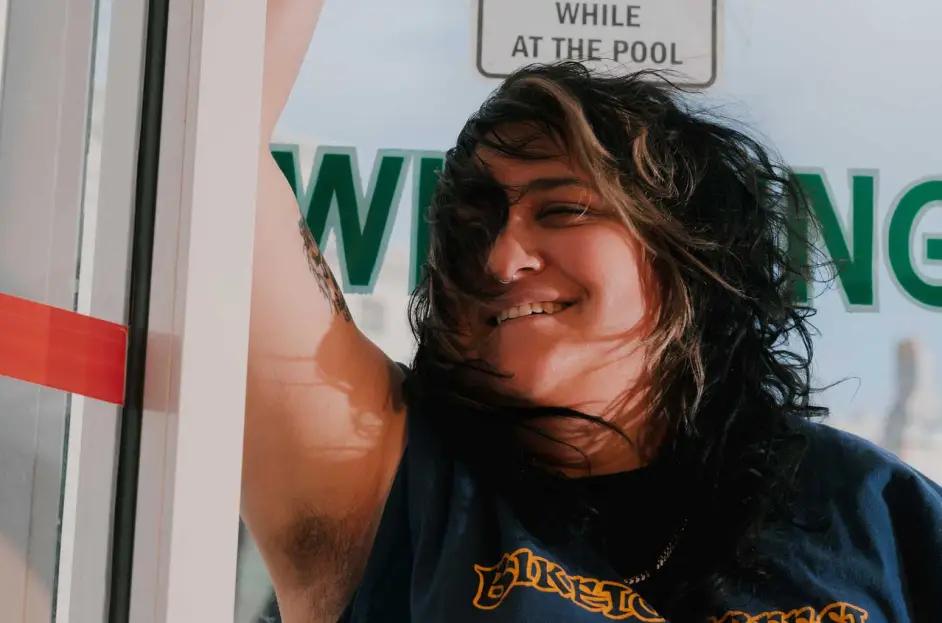
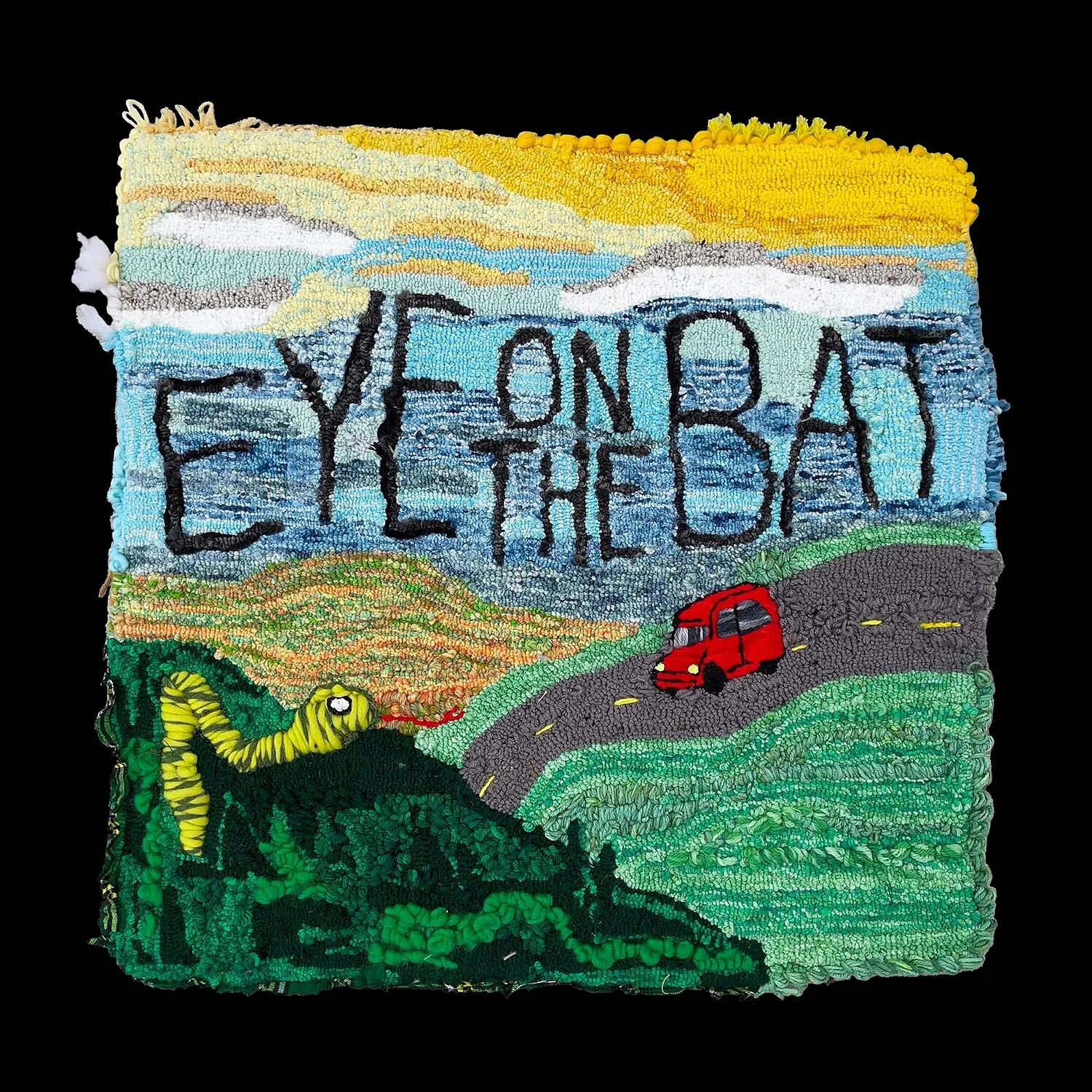
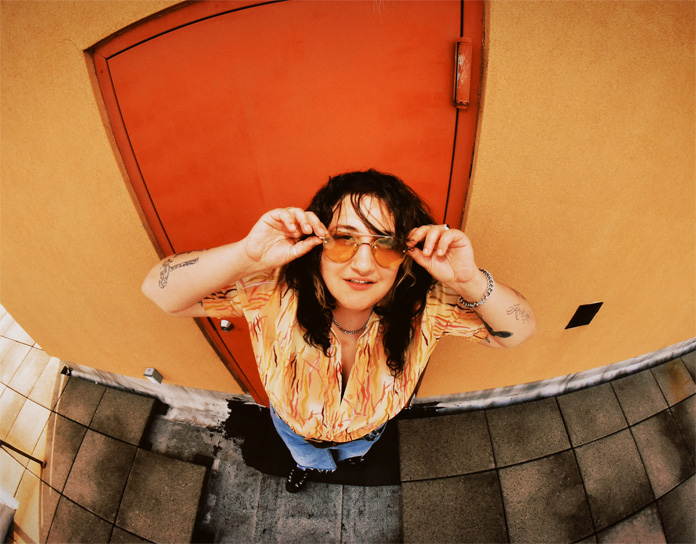
Even if the real Independence Day doesn’t have much of the same meaning anymore, at least Palehound can fill the void with a fantastic new track, self-described as a “gay breakup song for pride month.” Eye on the Bat’s first single, “The Clutch,” was hard to beat, but “Independence Day” easily slid to my second favorite single off the record so far. From the minute that El Kempner’s snappy finger-picking kicks in, every not3 is propulsive, with winding guitar melodies that crawl up the walls like ladybugs. It’s reached the level of Palehound Perfection™️ of some of their best songs—a catchy, three-and-a-half-minute long alt-rock hit that never loses its momentum. For a breakup song, it’s deceptively upbeat—it’s pure indie catharsis. It isn’t just heartbreak, plain and simple, but a series of pictures painted on tiny canvases. Each verse feels like a neatly-cut movie scene, from the “flashes of color on your face/the bass thumping, the chanting names/our cat running under the bed with his tail between his legs” as Kempner breaks it off with her partner on July 4th, to a near-death experience on the road that could have “dug us both a single grave,” but drove them apart rather than bringing them closer together. All of it is strung together by one of Kempner’s most memorable choruses: “I’m living life like writing a first draft/’cuz there is nothing to it if I can’t edit the past/and even if I could it, would kill me to look back/no I don’t wanna see the other path.” And for someone who constantly imagines alternate timelines, universes where I made different decisions, I can see how freeing it could be to know that the path that you’re on is the one you’re meant to be on—the ones still tied to their ex, for Kempner, aren’t worth dwelling on. Cheers to that.
Since this post consists entirely of songs, consider all of them to be today’s song.
That’s it for this week’s songs! Have a wonderful rest of your day, and take care of yourselves!
And just like that, we’re halfway through the year…I don’t want to jinx it, but I feel like it’s been a good one so far. Other than being sick for all of April, basically, but that’s in the past. Now the pollen allergies are kicking in!! Whee!!
Let’s begin, shall we?
GENERAL THOUGHTS:
June has been on the busier side, but in a good way, for the most part. I got my very first job as a page at my local library (!!!), and I’ll be working there part-time until school starts back up. As of today, I’ve just gotten my first paycheck!!
Right after that, I went on vacation in Olympic National Park! Washington is the prettiest—I loved seeing the rainforest and the ocean, and all of that nature really got my creative juices going.
I also went to my very first pride parade last weekend!! I only stayed for an hour to watch the parade itself (that’s on sensory issues), but it made me so incredibly happy to see my community gathered there and spreading so much joy. Unforgettable experience.
Now that I’m off school, I’ve tried to get back into my writing routine. I started on the first draft to the sequel of my main WIP. I’ve made some good progress so far, but I’m planning on taking it to Camp NaNoWriMo tomorrow! I’m shooting for the full 50,000 this time, so wish me luck!
Other than that, I’ve just been drawing, practicing guitar, seeing the Yeah Yeah Yeahs and Shakey Graves live (both of which were AMAZING GAAAH) binging even more Taskmaster (just finished season 6, looking forward to seeing how unreasonably angry James Acaster gets in season 7), watching Across the Spiderverse (can’t remember the last time a movie changed my brain chemistry THIS much, so beautiful) and Asteroid City (another win from Wes Anderson), and trying not to inhale every single mote of pollen in my room. Allergy season is a real Fun Time.
READING AND BLOGGING:
I read 16 books this month! June wasn’t off to a great start (see the DNF below), but I ended up reading a ton of fun books for pride month! You’d think that vacation would’ve given me more time to read, but I ended up buying three books on my Kindle, all of which were rather chunky, so…
Here’s some queer fantasy for my last review of Pride Month 2023. I’m so glad that cozy sci-fi/fantasy as a subgenre is slowly multiplying nowadays, and that’s exactly what drew me to Flowerheart. I borrowed it from the Kindle library and ate it up in a few hours flat—though it wasn’t without its flaws, it was a charming, sweet palate-cleanser with lots of flowers and queer rep!
Clara has a gift—she can summon flowers at will, making them grow in any space she focuses on. But she’s only 16, and her flower magic is uncontrollable—and sometimes dangerous. When she accidentally causes poisonous flowers to grow in her father’s chest, Clara is distraught—and in desperate need of someone to heal his ailment and help her hone her magic. But the best magician for the job just happens to be Xavier, her former best friend who she can’t quite hide her feelings for. With Xavier hiding secrets and Clara racing against the clock, can they heal her father—and rein in her wild magic?
I love the title of this book as much as the next person, but I’m not gonna pretend that it isn’t a valid Warrior Cats name. Just saying. I’ll bet you money that it was somebody’s OC from 2014.
Flowerheart has a 3.58/5 average rating on Goodreads at present. I have a thing where I’ll see ratings in the 3.5 range and think “oooh, this could be a disappointment,” and then I’ll finish the book and realize that it was just about right on the money. It makes sense. I can see why several people loved it, but a good amount of people felt lukewarm about it or disliked it. For me, I’m sort of in the middle—it was a charming, sweet palate-cleanser, but the holes in the story and some of the writing style prevented me from enjoying it all the way.
The main selling point for Flowerheart seemed to be its coziness—setting aside the annoying, clearly BookTok marketing tactic to put “cottagecore” in the actual description, Bakewell passed with flying colors in terms of this book’s coziness! Other than a brief moment of fantasy body horror (said Flowers growing from Clara’s dad’s Heart), there’s very little that’s stressful. The book also has a strong emphasis on embracing your emotions and learning to love them (as opposed to suppressing them), which is always a win in my book (no pun intended). The queer-normative world was also a delight alongside of that—Clara is bisexual and in a straight-passing relationship, and there are several trans and nonbinary side characters! I ate this book up fairly quickly, but it was a delightful world to stay in, however short the stay was.
That being said, I really wanted more from the world. There really isn’t much to chew on other than the fact that everybody has a unique type of magic, there’s a ruling council of magicians that keeps everybody in check, and that most of the names have a vaguely European root or origin. Other than that, there was almost nothing to hold up the worldbuilding—if it were a house on stilts, the stilts might as well have been popsicle sticks. Where does the magic come from? What is the technology level of this world? Why are they letting 16-year-olds onto this magician council that makes all of the important decisions? Where even were we in the first place? Was there even a name for the place that Flowerheart was set in??? Cozy sci-fi/fantasy and expansive worldbuilding can coexist (see: anything by Becky Chambers), so the subgenre isn’t the issue. I didn’t need a huge, elaborate picture of the world of Flowerheart, but it was sadly clear that Bakewell did the bare minimum in terms of worldbuilding. I really did want more.
Aside from that, my main issue (if you can call it that) was the writing style. On its own, I liked it a lot—it had the perfect, charmingly over-the-top kind of style to it, and it suited the story very well. I saw another review that compared it to Harry Potter, and it made a lot of sense—it did sound very distinctly British. But Harry Potter is mostly middle-grade, and Flowerheart tended to skew the same way in its voice; Clara’s voice read more as a 12-14 year old than a 16 year old. Again: it’s not the coziness and relatively low stakes that made it feel more middle-grade, but the way that the characters were written. Not much of an issue, but I really feel like this would’ve been more successful if Clara was a few years younger.
All in all, a cozy fantasy that was filled with quite a few holes, but still sweet enough to enjoy. 3 stars.
Flowerheart is a standalone, but Catherine Bakewell is also the author of the middle-grade novel We Are the Song.
Today’s song:
ughhhhhh this album is so good
That’s it for this week’s Book Review Tuesday! Have a wonderful rest of your day, and take care of yourselves!
This week’s batch originally included a cover of “The Wreck of the Edmund Fitzgerald,” but for several obvious reasons, I omitted it since I feel like that would be the absolute worst possible timing. Whoops.
quick trigger warning: there are mentions of suicide in part of this post, so if you don’t want to read that section, skip over “Evening Star Supercharger.”
Here I was thinking that “Come Talk to Me” and my 8th grade graduation were the only times that pipes of some kind (bagpipes and uilleann pipes, in this case) would ever make me feel anything…
This time, I wouldn’t say that said feeling evoked by “The Sensual World” isn’t the same kind of visceral, scoop-my-heart-right-out-of-my-ribcage of said Peter Gabriel song; this time, it’s more of a “how could she make that sound so incredibly cool” feeling. Normally, I wouldn’t be on board with these kind of fiddling, dressing up in medieval outfits kind of tunes, but I have to keep reminding myself: if anybody can do it, of course it’s Kate Bush. Of course. My favorite songs of hers make me feel like growing my shaved head all the way back out and running through the woods in a white dress (see: “Burning Bridge”), so I’m glad that she and Peter Richardson channeled that for the music video. And even without knowing much of anything about James Joyce’s Ulysses, I can’t think of a better way to adapt a monologue from a classic like that—this version is a mishmash of Molly Bloom’s monologue and Bush’s own lyrics, since Joyce’s estate didn’t grant her the rights to make the song all Joyce. (She later re-released it as “Flower of the Mountain” as a sung version of Molly Bloom’s monologue, once she was granted the rights.) I would’ve passed it off as Kate Bush and nothing but—the silky, airy cohesion throughout, the rush of joy once the fiddle and uilleann pipes kick in at the start of the chorus…everything. The chorus remained faintly in the background of my childhood memories, the title and the rest of the song lost up until a few years back, just like my favorite song was up until around two years ago. And while it’s hard to compete with my favorite song of all time at the moment, I’ve enjoyed every minute that I’ve spent with this unearthed song.
Complete coincidence—I had no idea that Exile in Guyville just turned 30 a few days ago! Perfect occasion to talk about this song, I suppose.
Most of my Liz Phair exposure prior to a few weeks ago came from two moments: seeing this album cover in passing on our iTunes library while my brother and I were trying to make a playlist for our dad ages ago, and two Whip-Smart tracks (“Supernova” and “Whip-Smart”) that defined a specific chunk of 8th grade. Listening to either of them instantly transports me back to a bus ride in the early hours of the morning, driving out to the middle of nowhere with my school to watch the total solar eclipse. And for years, I thought that that the Exile in Guyville cover was an illustration, and that the hood over her head was her actual hair. But the other day, my mom mentioned in passing, while we were listening to Palehound, how much it sounded like Liz Phair. I believed her, having a vague memory of said two songs.
And then my mom put on the first four tracks of Exile. Holy crap, dude.
I haven’t even gotten halfway through this album, but I haven’t fallen in love with an album this quickly in ages. This track is the one that keeps coming back to me—the minute the guitars kicked in, I was reeled all the way in. And even without the context of the last half of the album, this song seems to encapsulate its thesis perfectly—daring to have the courage to break into a male-dominated indie scene and make an irreplaceable mark on it. There’s the sly turning of the Rolling Stones’ lyrics back in their faces. And of course, there’s the references to height—”and I kept standing 6’1″/instead of 5’2″” isn’t just Phair keeping her head above the water after a nasty breakup, but a joking reference to her own height—she calls this song “the bravado that [she] manifest[s]” that seemed to confuse everybody once they saw how short she is. And…yeah, if I had a nickel for every person who’s said “I thought you’d be taller” to me, I could probably buy Amazon from Jeff Bezos. Liz Phair still has an inch on me, but…yep. The short king (queen?) experience.
So, to my mom, who talked about how cool it was that we were listening to the same knds of music at the same ages: I think it’s cool too. This one’s gonna be in heavy rotation once I listen to the whole thing. I love listening to music with you too.
Happy week-belated birthday to Sir Paul McCartney! Another song that ended up on here by coincidence, but I won’t argue against doing something for the occasion.
The White Album has something for everybody. Over the course of both sides, you have classic epics of songs (“While My Guitar Gently Weeps”), nursery rhyme-style political commentary (“Piggies”), eight and a half minutes of experimental discomfort (“Revolution 9”), and everything else under the sun (here comes the). It’s part of why this album is my favorite of the Beatles’ discography—there’s no shortage of songs that you can come back to, and each time, it feels like reuniting with an old friend. Yes, even “Wild Honey Pie.” I will defend that song with my dying breath. It’s hilarious.
But it’s some of Paul McCartney’s quieter, acoustic moments that have stayed with me the most whenever I revisit parts of this album. It has the pleasant simplicity of their earliest, poppiest songs, but with McCartney’s added experience, there’s a weight to it that would’ve been difficult to achieve in their very early youth. I just now realized that the bass part is just his gentle singing—there are so many moments of quiet brilliance on this album. I added this to my playlist when I went up to Washington, and every listen felt like a warm hug—and every subsequent listen still does. 1:45 of nothing but comfort. Paul McCartney just seems to have that effect.
I saw the Yeah Yeah Yeahs at the beginning of the month, and it was EXACTLY as phenomenal and soul-healing as I’d expected it to be. Karen O brought an infectiously joyous energy to every minute of the set, complete with her glittery, Elvis-but-cooler outfits and confetti cannons aplenty. It genuinely warmed my heart to see the giant smile on Brian Chase’s face every time the camera panned over to the drum kit—the whole band just felt so, so happy, and that made the show all the better. Even with how damp that night generally was, I enjoyed every second.
Of course, you can’t really live up to that as an opening act, but I enjoyed parts of Perfume Genius’ opening set, without question, even only knowing one song of his beforehand (“Queen,” which…apparently he does a whole strip tease to that one normally? I guess the weather only permitted him to make generally strip tease-like motions while dragging an itchy-looking gray sheet around…the spirit is willing, but the flesh is a bit too chilly?). Every song wasn’t a winner for me, but “Describe” certainly was. Both on streaming and live, Mike Hadreas (a.k.a. “Mike on the Mic,” according to Karen O.) seems content to let his voice take a more understated backseat, which suits the propulsive guitars that wall this track in. The combination of these driving, battering rams of guitars and Hadreas’ whispery voice form a unique sound—a song that simultaneously feels sharp and prickly like porcupine spines, but smoother than a silk sheet. Hadreas toes that line of juxtaposition exceedingly well on this song—the two contrasting sounds blend only at the edges, making for a song that never feels like it’s teetering one way or the other—it’s content to plant one leg on either side of the fence and keep them there. My only real complaint is the minute-odd ending of muttering, synth-y silence, but it’s short enough to skip, and not long enough to be a major qualm. It’s probably a transition between songs on Set My Heart On Fire Immediately, but I wouldn’t know.
I always struggle with posthumous album releases. At their worst, they’re blatant ways to capitalize off of an artist’s death and keep the nostalgia machine running, even if it’s just a collection of demos that were never meant to see the light of day. Even in David Bowie’s case—he’s my favorite singer, if I haven’t gone off about him for years on this blog, but even then, officially releasing his shelved 2001 album Toy felt weird—and it wasn’t his best work, either. I’m comforted by the fact that Bowie did actually want that album to see the light of day and seemed to be heartbroken by the fact that it got shelved, but I’m still dubious on whether or not that was Warner Music Group’s rationale for releasing it. I can say about the same for Prince’s Originals, even though I haven’t listened to it all the way through—especially with him and Bowie’s death being so close together, there’s definitely a 2016 pop-icon grief nostalgia machine running.
But Mark Linkous wasn’t necessarily a Bowie or a Prince. He wasn’t a worldwide superstar who changed the course of rock music—I can’t even think of anybody outside of my immediate family who might know about Sparklehorse. He’s gained significant renown in the indie community, but this feels different—given his history, it doesn’t seem like a cash grab at all. It seems like a genuine endeavor by Linkous’ siblings to revive some of his unreleased catalogue, not for reasons of greed or nostalgia. Toy felt somewhat off-putting; Bird Machine feels genuinely touching.
And the result of “Evening Star Supercharger” is purely Sparklehorse, without the touch of greed but still polished enough to sound smoother than a demo. It doesn’t feel far off from what I’ve heard off of Dreamt For Light Years in the Belly of a Mountain—the music has a polish of tinny glitter like a string of Christmas lights, but retains the unmistakable melancholy that ran through all of Linkous’ music. There’s an undeniable wish for stability and peace without the drugs and self-medication, but he still describes being wrenched through “the grinding metal gears/from a carnival of tears.” Knowing that he never achieved that kind of stability, leading him to take his own life in 2010, makes this unreleased material all the more heartbreaking; through the Christmas lights, it’s undeniably the sound of a damaged man. If anything, I hope Bird Machine allows us to celebrate the undeniably creative spirit that he had.