Posted in Book Review Tuesday

Book Review Tuesday (1/27/26) – A Swift and Sudden Exit

Happy Tuesday, bibliophiles!

First off, I figured I would share this resource with you all. My heart continues to break from seeing ICE violence wracking Minneapolis. If you’re financially available, here’s a post with a comprehensive list of places to donate to support the good people of Minneapolis. If you’re not financially able: continue to spread the word! When the government continues to propagate blatant lies, your words are the best weapon to use against them. Rest in power to Renee Nicole Good, Keith Porter, and Alex Pretti. ABOLISH ICE.

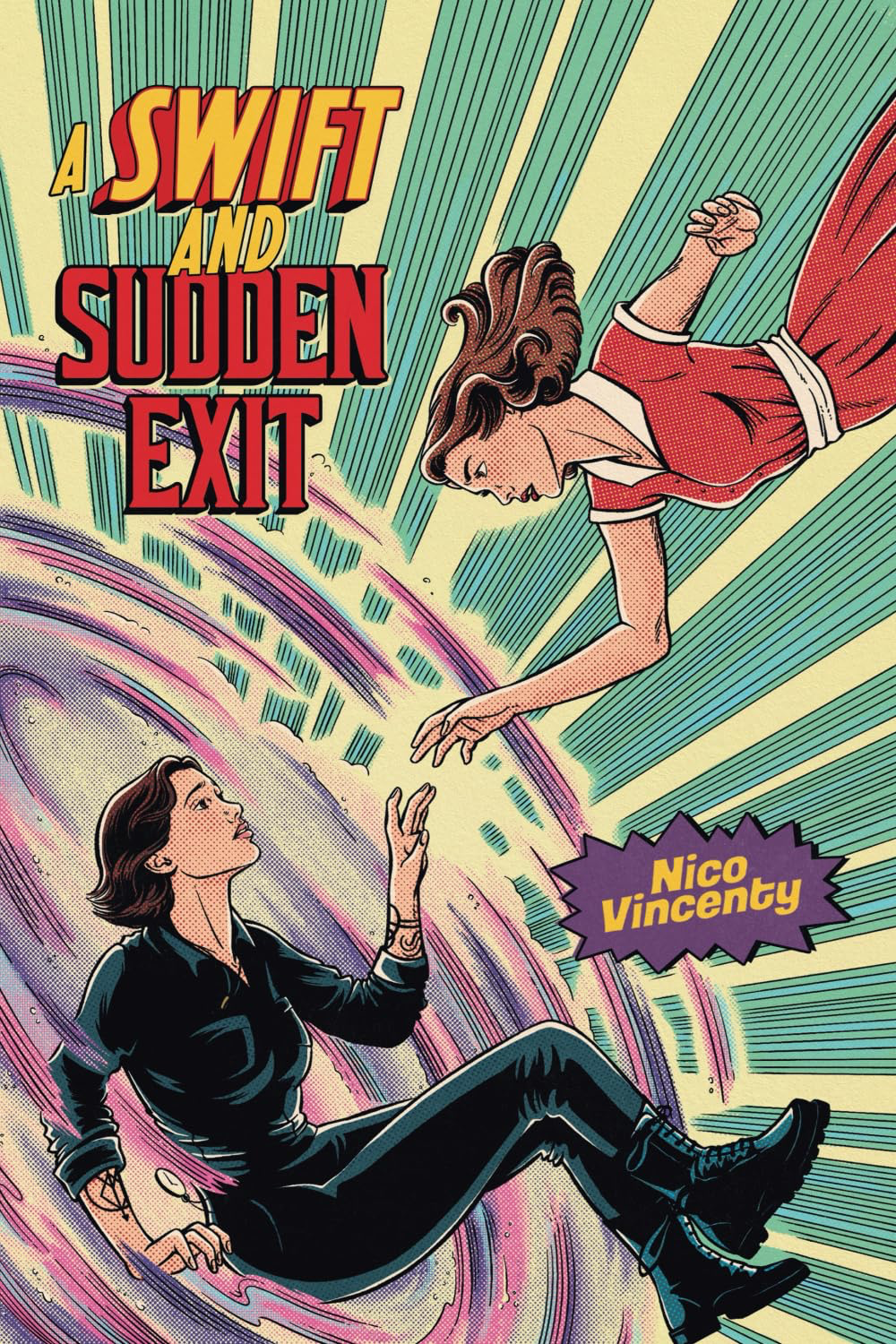
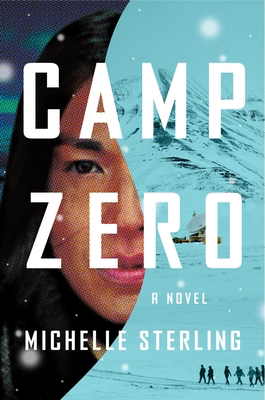
Here’s another book that I got with some gift card money for Christmas. I’m always on the hunt for more books with good bisexual rep, especially when it’s in genre fiction. This indie-published time travel romance between a time traveler from the post-apocalyptic 2050’s and an immortal caught my eye immediately, in no small part thanks to the wonderfully comic book-y cover. Though it wasn’t without its flaws, A Swift and Sudden Exit was an emotional and action-packed romp through time and space.

Enjoy this week’s review!

A Swift and Sudden Exit – Nico Vicenty

Zera lives in a post-apocalyptic 2058, where a geomagnetic storm nearly two decades ago plunged Earth into almost uninhabitable conditions. The remains of the military are scrambling to make things right, and the only way out of the wasteland is time travel. But when Zera travels back to 2040—the date of the geomagnetic storm that started it all—she sees a woman who claims to have known her, and may just be immortal. Zera follows this woman over centuries as she struggles to find the missing piece of the puzzle, but will this mysterious, immortal woman be more than just a means to reverse the apocalypse?

TW/CW: homophobia, violence, police brutality, vomit, abuse, suicidal ideation, stalking, blood, murder, loss of loved ones

Maybe the real geomagnetic storm was the bisexual romance we made along the way?

A lot of the reviews for A Swift and Sudden Exit that I’ve read have talked about how this novel couldn’t seem to make up its mind on whether it wanted to be sci-fi or romance. This problem never popped up for me, and I think that might be the novel’s hidden strength. It wasn’t afraid to put the sci-fi and romance elements at equal importance. Vincenty did an excellent job of developing these aspects in tandem, and it made for a very unique mix of genres. The worldbuilding was sound for the most part, but the same attention was paid to making Zera and Katherine’s romance into something that had a very real, slow-burn progression. I felt just as much tension with Zera trying to prevent the geomagnetic storm as I did with her will-they-won’t-they dynamic with Katherine. It’s such a fun premise to begin with—a romance between a time-traveler and an immortal—but Vincenty delivered on both aspects. A Swift and Sudden Exit succeeded for me in part because equal effort was put into the two most disparate parts of the novel, and the merging of the two felt seamless.

The most compelling parts for me were how Vincenty explored both the past and the future. The radiation-wracked future was appropriately bleak, and I loved the atmosphere she created with Zera and the others in their bunker. Just the same, I loved Zera and Katherine’s journey through time. My only critique was that I wanted to see more of the 1884 period—I feel like the whole failed Arctic expedition subplot was way too interesting to only get a single chapter. Come on. Yet beyond that, I loved seeing the different time periods across the United States. Vincenty had a great balance of having some fun, romantic notions of the time periods that Zera and Katherine visited, but also of the very real dangers they presented for queer women like them. Zera and Katherine both being bisexual made my heart so happy, but I appreciated Vincenty’s approach to writing them navigating more unsafe time periods; it didn’t shy away from queer-related issues (including police brutality and the AIDS crisis), but it never veered into full-on trauma porn territory. Vincenty’s strength in this novel is balance.

However, throughout A Swift and Sudden Exit, I found myself unable to fully suspend my disbelief. Although the worldbuilding was fairly solid—I’m honestly fine with the immortals bit not being explained fully—it was the stakes that made me suspicious of the story. Even though this is presumably an incredibly dire situation with world-ending stakes, the remains of the military seemed completely content to let Zera go on all manner of borderline frivolous missions that conveniently lined up with her meeting her sexy immortal girlfriend. Sure, you’ve got to let some plot conveniences go just to keep the story going, but given that Zera’s pretty low in the chain of command (and on Colonel Vylek’s nerves almost constantly), it didn’t make sense that she hadn’t been demoted or kicked off the mission at least halfway through the novel. Additionally, a lot of the problems got resolved far quicker than they should’ve—the funding getting cut for the time travel initiative comes to mind. Seems like a huge problem, and yet it got resolved in the span of maybe 1, 2 chapters tops? It didn’t make sense. I can chalk part of it up to the pacing—A Swift and Sudden Exit has very swift and sudden pacing, giving us little time to rest; it worked when it came to some of the more climactic scenes, but not when glossing over important plot points.

Additionally, I found Vincenty’s writing style to be a bit bare-bones. It was entertaining, but I never found myself thinking that it was great. She did an excellent job with describing the historical time periods and post-apocalyptic 2058, but I think there could’ve been a lot more done with the character writing. Zera and Katherine were developed well, but a lot of the other characters, even the more important ones, felt like window dressing at best. Until the last quarter, Kissi didn’t function as much else than a witty sidekick for Zera. Without spoiling anything, the twist about Byrd came out of nowhere, but I feel like that’s more of a consequence of his character rarely appearing and not getting much development other than quirky banter. Colonel Vylek was much more secondary, but even though I gather her presence was meant to feel like a threat, she never did; maybe that’s because all of the obstacles that she put in front of Zera got resolved so quickly. Had they been developed more, especially Byrd and Colonel Vylek, I think the stakes issue might have been partially resolved. They never felt like real antagonists (or even just roadblocks, in Vylek’s case). I’m not saying that they needed to be on the importance level of Zera and Katherine, but given the roles they had, they could’ve been more distinct and developed.

All in all, an ambitious debut that didn’t fulfill all of its promises, but provided an adventurous, sapphic journey through time nonetheless. 3.5 stars!

A Swift and Sudden Exit is a standalone, but Nico Vicenty is also the author of Bone Dresser and Death Between the Stars.

Today’s song:

love love love crab day!!

That’s it for this week’s Book Review Tuesday! Have a wonderful rest of your day, and take care of yourselves!

Posted in Sunday Songs

Sunday Songs: 1/25/26

Happy Sunday, bibliophiles! I hope this week has treated you well.

This week: Here it comes again; a fantastic voyage to Palo Alto to answer this essential question: where’s my phone? It’s been undone!

Enjoy this week’s songs!

SUNDAY SONGS: 1/25/26

“Where’s My Phone?” – Mitski

It’s finally come to that time of year when I start accumulating albums that I’m looking forward to. Nothing’s About to Happen to Me, which is set to release on February 27, is topping the list at the moment for sure! Mitski is back for her first album in two and a half years, and as usual, she’s set to put a pulse on the neuroses of the world; Nothing’s About to Happen to Me seems to be a concept album about a recluse who never leaves her cluttered house. With the aesthetics of cats and old wallpaper, this album has such a clear image—and an intriguing one. Mitski channels some of her heavier guitar work on “Where’s My Phone?”; it’s an exciting sonic callback, like she’s been dusting off the old Bury Me at Makeout Creek sounds (!!!). Adopting a falsely cheery tone, Mitski sings of this character desperately repressing every possible source of negativity, yearning to be “clear glass with nothing going on.” The sentiment of “I keep thinking surely somebody will save me/At every turn I learn that no one will” is pure Mitski all the way down, but it’s refreshing to see Mitski going headfirst into a new character; her introspection, fictional or nonfictional, is where her art shines. Plus, that music video, in which Mitski’s multigenerational home gets assailed by dozens of strangers, is nothing short of bonkers. Definitely somebody’s vivid anxiety dream, for sure.

For some reason, my mind got stuck on the classic censored beep sound on the “I would fuck the hole all night long” line. Sure, we are in the age of musicians proactively self-censoring, but of all musicians, Mitski seems like the last one to do that, especially with how she’s clawed to keep her individuality—and sanity—intact in the music industry. She’s not a Taylor Swift type, and she hasn’t shied away from profanity before. There’s no clean version of the song, and the music video has it too—and yet the official lyrics don’t censor it. So what’s the deal? Was it some sort of artistic touch for the album’s central character’s supposed shame and guilt? I still haven’t come to a conclusion myself, but I swear that it’s intentional. Whatever the case, “Where’s My Phone” buzzes with neurosis, crunching at the edges, an ember of anxiety.

…AND A BOOK TO GO WITH IT:

I’m Thinking of Ending Things – Iain Reid “I keep thinking surely somebody will save me/At every turn I learn that no one will/I just want my mind to be a clear glass/Clear glass with nothing instead…”

“Fantastic Voyage” – David Bowie

As calm of a song “Fantastic Voyage” is, it’s a certainly eerie start to Lodger. I finally got around to listening to the album in its entirety not long ago, while mourning 10 years since Bowie’s passing in 2016. Listening to Lodger not long after Taking Tiger Mountain By Strategy put me in an irreparable chokehold makes me realize the sheer impact of Eno on Bowie—his weirdness was all there, but after decades of being mainstream, it was Eno who resurrected the less palatable parts of weirdness. I’m sure it was less unexpected at the conclusion of the Berlin Trilogy, but expecting another “Starman” and getting…I dunno, “African Night Flight” must’ve been some unparalleled whiplash. And he’d keep the act going throughout his entire career. In a way, Lodger is a microcosm of what his career would later be. There’s no shortage of tricks up his sleeve, from the strange, often eerie left turns to the sneakier tricks; for one, “Fantastic Voyage” and “Boys Keep Swinging” have an almost identical chord progression, but their atmospheres are so radically different that I didn’t even notice. It’s a trickster kind of album, obstinate in its mission to not be boxed in.

After falling back to Earth, the Berlin Trilogy got much more worldly, and Lodger was its peak. The entire album reeks with the recollection that the world is rife with the unknown, be it in places unseen or the machinations of politics. “Fantastic Voyage” is the thesis of that song; it reads like a scrawled diary before the apocalypse, and it very well could have been, what with the threat of nuclear annihilation and the Cold War on Bowie’s mind. He pits the casual dehumanization of entire peoples against the plea for the dignity of all individuals. He looks skyward, pondering the missiles that could rain down on the population and end everything in an instant. But in the midst of all this turmoil, decades after 1979, the final verse rings truer than ever: “They wipe out an entire race and I’ve got to write it down/But I’m still getting educated/But I’ve got to write it down/And it won’t be forgotten.”

Oof. Certainly feels like a slap in the face, given that ICE has been snatching children off the streets and shoots unarmed civilians in Minneapolis, and I’m just holed up in my apartment trying to get my thesis done. Yet Bowie’s words feel like a guidebook. I’ve got to write it down—I interpret that both in the sense that we have to commit the crimes of these monsters to paper, lest the government conveniently paints them in a more pleasant light (as they already are), but also that in spite of everything, we have to keep on with our creativity. Sometimes, all we can do is write. Of course, that doesn’t make political action, however small, null and void, but sometimes it’s all you can do but journal everything around you to stay sane. All that matters, both for Bowie and for all of us, is to keep the pen moving—that keeps our minds sharp, it creates a record of the soul.

…AND A BOOK TO GO WITH IT:

Do You Dream of Terra-Two? – Temi Oh“Remember it’s true/Dignity is valuable/But our lives are valuable too/We’re learning to live with somebody’s depression/And I don’t want to live with somebody’s depression/We’ll get by, I suppose…”

“Palo Alto” – Radiohead

In a move that’s probably stunned nobody, I’ve decided to become the insufferable neighbor and take up collecting vinyl; my parents were nice enough to gift me with a record player, as well as my two favorite albums: David Bowie’s Hunky Dory and Radiohead’s OK Computer. I can’t thank them enough. My neighbors, on the other hand, are probably rueing the day that they had to hear “Fitter Happier” through the walls without warning. Your honor, I plead “whoopsie daisies.”

OK Computer—specifically, the 2017 remaster with all of the b-sides, OKNOTOK—all but swallowed me whole in my freshman year of high school, and the version of me that got chewed up and spit out was irreparably, permanently changed. Whether it was for the best or the worst is up to interpretation, but either way, it’s given me a love of Radiohead that hasn’t waned to this day, more than seven years after I first listened to the album. However, at that age, I was still in the woeful process of immediately deleting whatever songs that didn’t hook me on the first few listens from my library. The destruction left in the wake was irreparable—and it also made me completely forget that this absolute gem existed. I can’t even put my finger on why it wasn’t a favorite at the time; the only reasonable explanation is that OK Computer is just so jam-packed full of songs that shattered my brain that brain-shattering became the standard. I was harsh back then.

Yet on my new record player, “Palo Alto” came out of left field. In the mindset of Thom Yorke, I can sort of see why this one got the axe back in the day—musically, it’s less adventurous than some of the other tracks. It’s very much of the same, more straightforward rock/Britpop crop of The Bends, despite the avalanche of fuzz and decorative beep-boops. Thematically, it’s on par with the anxiety of OK Computer, with the tiresome monotony of corporate life: “In a city of the future/It is difficult to concentrate/Meet the boss, meet the wife/Everybody’s happy, everyone is made for life.” Even if it’s not as compositionally inventive as some of the a-sides, even Radiohead’s more straightforward songs are a cut above the rest, and “Palo Alto” is proof. With the sudden, grinding assault of Jonny Greenwood and Ed O’Brien’s guitars against Thom Yorke’s exasperated delivery of regurgitated small talk, it encapsulates the exhaustion of being trapped in an endless cycle of work buttressed only with surface-level interactions.

…AND A BOOK TO GO WITH IT:

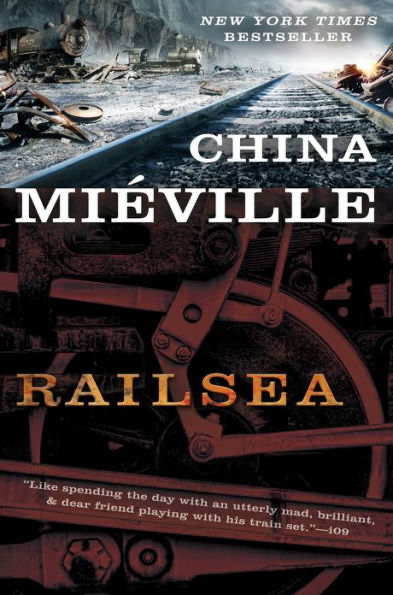
Embassytown – China Miéville“In a city of the future/It is difficult to find a space/I’m too busy to see you/You’re too busy to wait…”

“Here It Comes Again” – Cate Le Bon

I regret to inform you that I’ve been listening to way more Cate Le Bon again, but I can’t help it that it faintly fits the vibe of my honors thesis. Michelangelo Dying, Pompeii, and Reward all got revisited last week, and you will be hearing about it. This is, once again, a threat.

Among the many impressive things about Cate Le Bon is the myriad ways that she makes her music sound innately aquatic. I talked about how watery all of Reward feels when I first listened to it back in July, with “Miami” and its sounds of aquarium gravel and bubbles. Unlike a lot of her songs, “Here It Comes Again” feels more like water rhythmically; with an almost waltz-like rhythm, it feels like the motion of a plastic toy boat being carried out to sea. The melody continually repeats and lives by eating itself, a gently cyclical waltz across a flooded ballroom covered in algae. That precise quality of the melody is what enhances the lyrics. It’s implied in the title (and the chorus), but “Here It Comes Again” drowns in monotony, its sonic eyelids growing heavier with each repetition: “Man alive/This solitude/Is wrinkles in the dirt.” Very few artists make solitude and dreariness into such musical feasts like Cate Le Bon does—if it’s loneliness, she’s spun it into something as appealing as a bowl of candies with brightly-colored wrappers.

…AND A BOOK TO GO WITH IT:

Here Beside the Rising Tide – Emily Jane“Man alive/This solitude/Is wrinkles in the dirt/I borrowed love from carnivals/Set it in a frame/Here it comes again…”

“Been Undone” – Peter Gabriel

HE’S BACK! PETER GABRIEL IS BACK TO SAVE 2026!

Once again culminating in an album coming out this December, o\i is being released in singles corresponding with each full moon of 2026. Three days into 2026, it gave me some hope—and a bittersweet full-circle moment for me. I spent the spring semester of my freshman year of college listening to i/o‘s singles, and I’ll be spending the spring semester of my senior year listening to its inverse. The songs comprise of both castoffs from the i/o sessions and from further back in his career; according to this video, the chord progression for “Been Undone” has been on the back burner for several decades. As the starting gun for the album, it’s an expression of some of what I love best about Gabriel: his boundless creativity and his grounded humility. “Been Undone” is all about learning moments—the ones that cause us pain or overwhelm us, but ultimately teach us something valuable: “By all the forms that you get from the Mandelbrot set/I’ve been undone/By the recursive slaves in the home of the brave/I’ve been undone.” I’m assuming the latter is in reference to the deeply broken U.S. prison system, but back to back with a mathematical concept that results in dizzying, fascinating patterns, it proves the song’s point: both great wonder and great pain can be the origin of learning. Musically, I thought it was going to be a more standard new-era Gabriel song, and it continues so for nearly 6 minutes; but at 5:59, he takes a left turn back into “The Tower That Ate People” territory, turning a pleasantly synthy tune into his personal brand of almost-industrial, proving that even at 74, he has no shortage of tricks up his sleeve.

Also, the bit where Gabriel was asked about the Bright/Dark-side mixes and if he allows the producers to play with the structure cracked me up—probably the clearest vocalization of “no <3” I’ve ever seen HAHA

…AND A BOOK TO GO WITH IT:

Life Hacks for a Little Alien – Alice Franklin“Though I want to observe, it keeps touching a nerve/And I’ve been undone/By the past that you trace, by a moment of grace/I have been undone…”

Since this post consists entirely of songs, consider all of them to be today’s song.

That’s it for this week’s Sunday Songs! Have a wonderful rest of your day, and take care of yourselves!

Posted in Book Review Tuesday

Book Review Tuesday (1/20/26) – Ancestral Night

Happy Tuesday, bibliophiles!

I’d like to think that I’m a competent, capable adult, but a few months back, I picked up book three of this series without realizing that it was book three. Oops. All the same, I was motivated to read it, so I ended up getting a copy with some gift card money for Bookshop.org. Long haul as it was, I’m so glad I took the leap—Ancestral Night knocked me off my feet from the first few pages, and that momentum almost never stopped.

Enjoy this week’s review!

Ancestral Night (White Space, #1) – Elizabeth Bear

Haimey Dz and her small crew fly under the radar, making a living salvaging spaceships at the edge of the galaxy. But after a run-in with a gang of pirates and the discovery of a galaxy-changing revelation hidden inside a derelict spaceship, Haimey knows that she can’t let just anyone get ahold of this secret. Inside of the spaceship is illegal, ancient technology that could turn the tides for the worse if in the wrong hands—and judging from the spaceship, it was already in the wrong hands. Infected with a strange, ancient parasite and with pirates and the government hot on her heels, Haimey and her crew must get to the bottom of this mystery before this tech falls into the wrong hands.

TW/CW: descriptions of injury, violence, blood, emotional abuse, grief, suicide, mental health themes

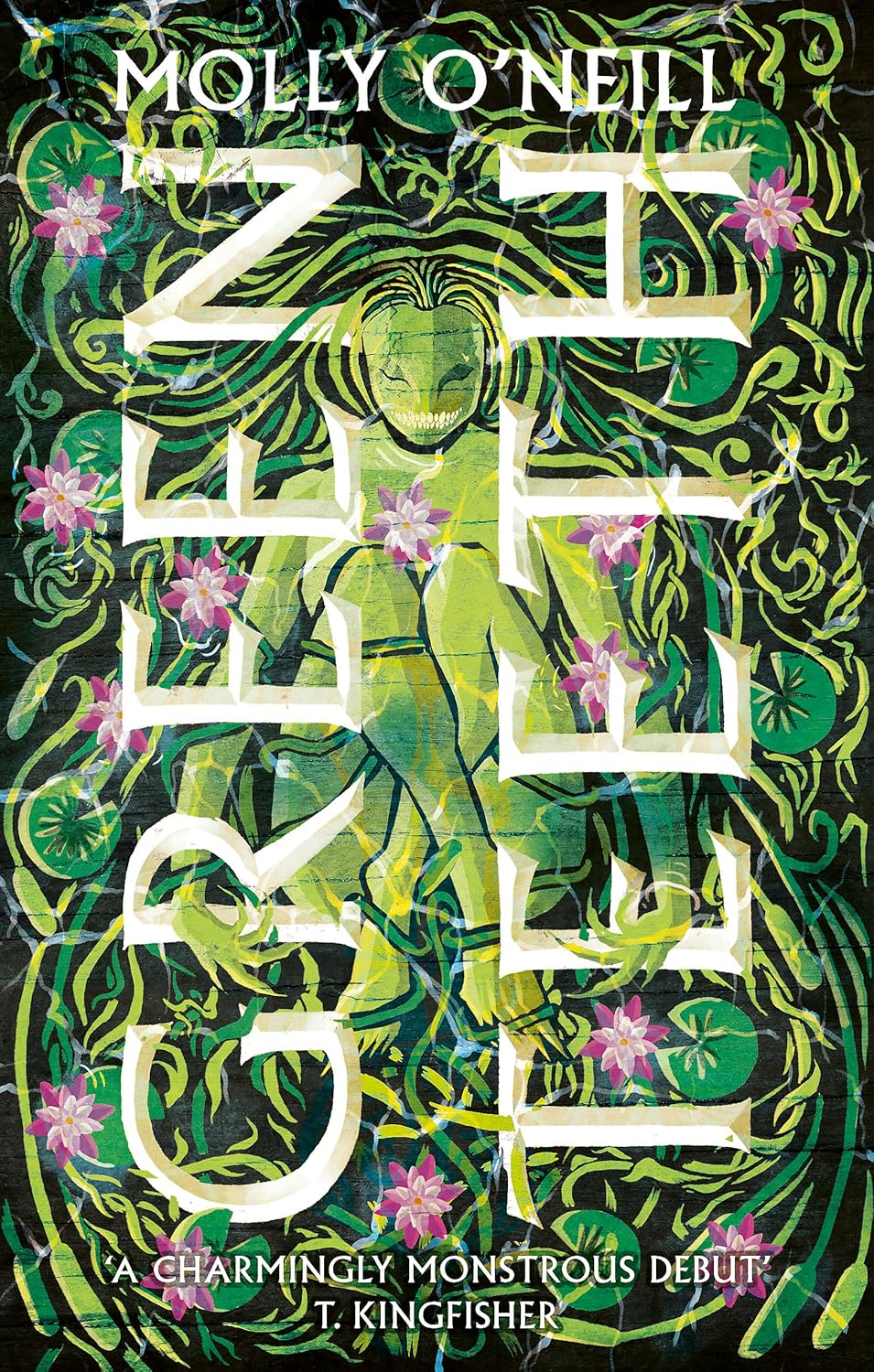
I really need to put together some kind of list of sci-fi with cats on spaceships. There’s enough out there that it’s a Thing, and though it’s not enough to be a full-on trope, it never fails to make me smile, both as a sci-fi fan and a cat lover. Jonesy from Alien set the precedent, but I think it’s just that through line of historically having cats on boats for good luck that makes it so wonderful. Bushyasta and Mephistopheles deserve a spot in the sci-fi cats pantheon.

The world of Ancestral Night is truly something to behold. From the get-go, I got lost in it so easily—Bear’s prose kept me hooked for all 500+ pages. Part of that was just how intriguing the world was. Everything you could want in a space opera is here—mysterious, derelict spaceships with dark secrets, all manner of very alien aliens, two naughty cats on a spaceship, and perhaps best of all, eldritch, centuries-old seahorse creatures that live in the vacuum of space. Who could ask for more, really? There’s a dormant part of my high school brain that was obsessed with Aurora Rising that got beyond amped about salvaging spaceships, so that was an automatic win. I loved the Atavikha an unreasonable amount, as well as the aliens, but that’s not news at all. But I love the care that Bear took to make this world feel familiar in the right places, but appropriately alien where it was necessary. It’s a world where you can read George Eliot in your free time, but also come face to face with a creature so alien you barely have any appropriate human analogues for it. Balance is key, and Bear balanced it well.

With sci-fi like this, there’s a tendency to forget that no matter how much time you spend on worldbuilding, your universe still may feel like it isn’t lived in; everything’s too sterile and sleek, and you never get the sense that these strange planets and moons and whatnot are places where people spend their lives. Bear circumvented that issue from the get-go—everything about Ancestral Night felt lived-in, from the humble spaceships to the crowded space stations that Haimey and her friends navigated. Her spaceship wasn’t just a way to get around: it was a place where Haimey lounged around and read old books and petted her cats. Every corner that the crew explored was full of not just lore, but memories—everything in Ancestral Night had a story, and that did almost as much work as the worldbuilding in making sure that Bear’s world felt real.

Another aspect that made Ancestral Night feel real was Haimey herself. I’m all for representing marginalized people beyond stereotypes, but there’s something to be said for queer characters who are unapologetically messy and make decidedly terrible decisions—and Haimey makes terrible decisions aplenty. (I finished Pluribus not long ago, and I thought the same about Carol. I guess they’re both lesbians who fall for highly questionable pirate ladies, in the end.) If Ancestral Night was a TV show, I fully would’ve thrown something at the TV when she kissed Zanya. HAVE YOU LEARNED NOTHING? That being said, she felt so staggeringly real in the amalgamation of all her hopes and flaws. Even in this far-flung sci-fi world, this woman who reads ancient classics onboard her spaceship and dotes after her cats and falls for the messiest, scariest pirate women was so refreshingly real, and in spite of those flaws, ultimately lovable.

Ancestral Night is a space opera without question, but the worldbuilding will certainly appeal to the more hard science fiction-leaning readers for sure. Care for the worldbuilding obviously isn’t exclusive to hard sci-fi, especially as a cozy sci-fi/space opera/soft sci-fi defender and enjoyer, but not every space opera you come across goes into this much detail about accretion disks. Bear doesn’t shy away from getting esoteric with the worldbuilding, whether it’s in terms of astrophysics or politics. The politics form the core of the novel for me. My one major problem with the novel was that it had a tendency to go into Haimey’s philosophical musings about the nature of governments and freedom to a point where it was difficult to suspend my disbelief that nothing bad had happened to her while this was all going on, given everything else that happens throughout. (How did she not get conked on the head by pirates mid-digression during half of those scenes?) However, the nature of these digressions fed into the thematic elements of Ancestral Night really well, and I loved how they formed the backbone of Haimey’s character.

Even though not all of the philosophical musing landed, the setup of it, as well as the worldbuilding of Ancestral Night, set such a wonderful stage for Haimey’s character development. She’s caught between two very opposite poles: the Clade where she grew up, where her existence was placid but assimilated, and the pirates, whose messy anarchy is hyperindividualistic to a fault. Set against the backdrop of a flawed yet somewhat well-intentioned government, Haimey’s realization that her true self comes not from sacrificing her individuality or her obligation to do good for others in her community was so poignant. All her life, the notion of who she really is has been forced upon her from both sides, and yet what’s in her heart is where the two ideologies meet: retaining her uniqueness, but not kicking everybody else aside in the process. Haimey’s true spirit comes from how she decides her life should be, but also from the positive relationships around her. It was such a heartfelt message, and Haimey’s arc gave Ancestral Night a powerful emotional core.

All in all, a captivating space opera with real, lovable protagonists, a lived-in universe, and mystery that had me on the edge of my seat. 4.5 stars!

Ancestral Night is the first novel in the White Space series, followed by Machine and The Folded Sky. Bear is also the author of several other award-winning novels, including the New Amsterdam series (New Amsterdam, Seven for a Secret, The White City, Ad Eternum, and Garrett Investigates), the Jacob’s Ladder trilogy (Dust, Sanction, and Grail) and many others.

Today’s song:

That’s it for this week’s Book Review Tuesday! Have a wonderful rest of your day, and take care of yourselves!
Posted in Sunday Songs

Sunday Songs: 1/18/26

Happy Sunday, bibliophiles! I hope this week has treated you well.

This week: two queens maximizing their joint slay, songs that get a little confusing in the discography next to each other, and unintentionally capitalizing (as if I earn any money from this blog) on gay hockey being the next big thing. Also, a shoutout is due to my mom, because I ended up getting 3/5 of these songs from a single car ride with her. Love you 🙂

Enjoy this week’s review!

SUNDAY SONGS: 1/18/26

“Sleeping Powder” – Gorillaz

Here’s the thing about Gorillaz: I’ve talked extensively about how since 2018, they’ve become less Gorillaz and more about the collaborations, and it feels like they’ve lost themselves somewhere in the midst. The thing is that they’re fully still capable of returning to their roots and balancing the old with the new. Even though it sounds like it could’ve come from Plastic Beach, “Sleeping Powder” was released after Humanz came out in 2018. According to the official Gorillaz lore, 2D made this song behind the rest of the band’s back because he felt that he’d been excluded from the album (shhh, don’t tell Murdoc); the song is primarily about the character’s drug addiction, as evidenced by the music video, complete with the classic “this is your brain on drugs” sample and a 3D 2D (they said it couldn’t be done…) tripping balls and abusing his green screen privileges. It feels like a promise of what Gorillaz still could be; “Sleeping Powder” never feels like it could mesh with Blur or Damon Albarn’s solo work, as some of his more recent music does. It’s pure Gorillaz, channeling the urgency and grooves from their earlier eras but giving them a more modern flourish. Complete with a fusion of acoustic guitars and synths—and one of Albarn’s signature raspy howls—”Sleeping Powder” feels like a reminder that the core of Gorillaz exists—it’s just been buried, which, given how hit or miss their output has been since 2018, is a real shame.

…AND A BOOK TO GO WITH IT:

The Shamshine Blind – Paz Pardo“I get dropped from where I belong/I take my pills and I get in the mode/And I take five to get it to load in/Even in the place…”

“Heat Wave” – Snail Mail

Seems like this is a very advantageous time to write about this song, since a) the nearly 5-year Snail Mail drought is purportedly ending next Tuesday (!!!), and b) gay hockey is in. May I interest you in some lesbian hockey?

Hearing “Heat Wave” when I was 14 felt as though something in the world of music had cracked open like an eggshell, and the yolk of possibility had opened up for me. I’d just discovered Snail Mail on the cusp of her first album, Lush, and the first few singles instigated a seismic shift in me. Here was Lindsey Jordan, only 18 at the time, making such raw, fully-formed music with guitar at the forefront. She was openly gay, she wasn’t traditionally feminine, and she looked like somebody who I’d see in my brother’s high school class. But here she was, taking the indie world by storm.

It’s so oddly raw listening to “Heat Wave” now. I’m older than Jordan was in that video now. The lyrics are even more teenage now, but they hit almost as hard as they did when I was 14. At a show I saw her at when I was 16, Jordan admitted that she’d forgotten which song was about which girl; now, it hardly matters—she bottled that open-wound feeling of a fresh breakup and concentrated it so fully that its source is irrelevant. Concentrating that emotion so distinctly is a feat at any age, but at 18! 18! I was writing stories about weird spaceships with way too much purple prose at 18. Man. “Heat Wave” is so chock-full of emotion that it felt almost heady, like strong perfume, listening back to it after so many years; and yet, adorned with some seriously intricate and catchy guitar riffs (once again, AT 18, Jesus Christ), “Heat Wave” is such an indie gem, and Lush remains a testament to the sheer talent she’d worked so hard to cultivate.

Even if Valentine was weaker in retrospect, and even if this new single doesn’t turn out good, there’s still the Snail Mail I loved in 2018. She’s the main reason I picked up the guitar in the first place, and she gave me the courage to come out not long after I saw her at a tiny club in Denver. And I will always treasure that Snail Mail.

…AND A BOOK TO GO WITH IT:

Perfect on Paper – Sophie Gonzales“And I hope whoever it is/Holds their breath around you/Cause’ I know I did/And otherwise/If only sometimes/Would you give it up, green eyes?”

“Tied Up!” – Genesis Owusu

One word keeps popping up like a whack-a-mole every time I listen to “Tied Up!”, and that is “groovy.” Dear lord, this is such an expertly tight groove. There’s not really a genre I can definitively pin it to, and from the looks of it, the same is true for STRUGGLER, the critically-acclaimed album the it comes from. But either way, this song is neat as a pin—this is a groove, nothing more, nothing less.

Loosely centered around the character of The Roach, a struggler on the run from the manifestation of any antagonistic force you can think of, named God. (Sidenote: I love the bug-eyed sunglasses that Owusu wore when he toured for this album. Perfection.) Along with “Leaving the Light,” an adrenaline-fueled sprint away from God’s wrath (“I’m a beast I can feel them poaching/Stamp me down, but a roach keeps roaching”), “Tied Up!” embodies what feels like the mentality of this Roach character: no matter what God throws at him, roaches are famously unkillable, virtually impervious to apocalypse and mass extinction. Owusu declaring that he’s bleeding from his legs right on the heels of the most upbeat pop chorus is whiplash, but it embodies that feeling of taking pride in being unbeatable when you’re being beat down from all sides. Owusu chucks all manner of musical influences in the pot—hip-hop, pop, alt-rock—but they all come out feeling like something wholly new. Aside from a few weak lyrics here and there (“What other choice can I chose?” always trips me up), “Tied Up!” has no bumps in the road—it’s a slick groove all the way through.

…AND A BOOK TO GO WITH IT:

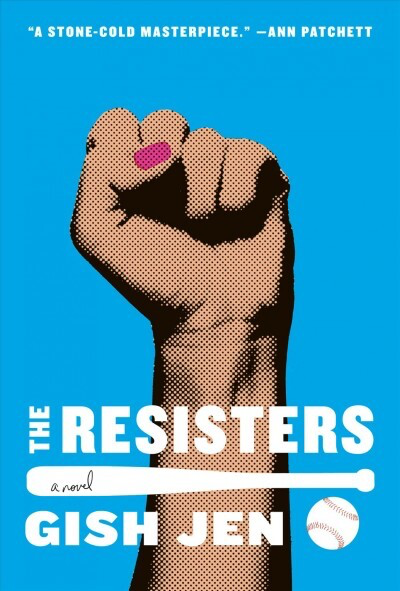
The Resisters – Gish Jen“I’m bleeding from my legs but it’s alright today/Better out here than the hell where I stay/I said my feelings start to wobble when I stare at the doves/I’m fighting through life, I have no boxing gloves…”

“Always The Same” (feat. St. Vincent) – Cate Le Bon

If there ever was an audio manifestation of “two queens coming together to maximize their joint slay,” then this is it. This is the only thing keeping the fabric of 2026 together. I can only hope that Cate Le Bon will follow in St. Vincent’s footsteps and retroactively announce a tour date near me.

Praise! We get a momentary extension of my favorite album of 2025, Michelangelo Dying! From the looks of it, there was a fruitful window where St. Vincent and Cate Le Bon were drawing from each other’s musical wells; back in 2024, Le Bon contributed backing vocals to “All Born Screaming.” Now, St. Vincent’s switched roles, providing a harmony for Le Bon on this track from the Michelangelo Dying sessions. “Always The Same” falls on the slower side of the album with songs like “Pieces of My Heart” or “Is It Worth It (Happy Birthday)?” and deals with the same heartbreak, although not in the heart-ripped-from-your ribcage way. What stands out to me about Michelangelo Dying is that it’s not a breakup album in the traditional sense—it’s not about the romance so much as it is about the gradual buildup leading to the break. There’s little rage or sorrow, but what there is in great amounts is exhaustion, repressed and built up in the chest until it makes you collapse. She’s not a fountain of blood in the shape of a girl so much as she is a river running dry.

“Always The Same” takes that same bleary-eyed exhaustion and draws it out; Le Bon describes her losing battle with her lover as “back and forth like a country/losing land to war,” shrinking herself until there’s nothing left of her at all. The background saxophones are almost unrecognizable as the instruments they are, made so ripply and strangely plastic by the production, expanding and contracting like a lung made of rubber. Both lyrically and instrumentally, it’s like watching a bundle of herbs dry out in the oven: something that was once green burns up and loses all its color. St. Vincent offers her higher harmonies to rise with Le Bon’s sonorous vocals, a devil on her shoulder to dismiss her pain, repeating: “she can bury it!”

…AND A BOOK TO GO WITH IT:

The Ephemera Collector – Stacy Nathaniel Jackson“I swallowed your memories/Like a morning prayer/I’m in your debt now/Almost there…”


“Troubles” – TV on the Radio

Nowadays, this song has to be a pain for TV on the Radio, since they put out a far more popular song called “Trouble” four years later. Oops. Hindsight is 20/20. At least “Troubles” is a bonus track, so it gets forgotten easily. Good for clarity, not good for a perfectly good song that deserves more attention. But if girlpool could make it work by having two completely different songs called “Pretty,” then TV on the Radio can too.

Either way, “Troubles” doesn’t deserve to get left in the dust; even if there are stronger tracks on Nine Types of Light, it’s a calm, steady track—the even-keeled instrumentals makes the chorus of “Despite all the heartbreak it brings/Our love is a surefire thing” feel just as anchored. With imagery of springtime fields and songbirds aplenty, it’s alight with flickers of hope amidst the plateau. It’s a vow to be the calm after somebody’s storm. Even if it’s more restrained than some of the more adventurous, intricate tracks on the album (see: “Killer Crane”), the vocal harmonies are as melodic and light as the songbirds they describe, and the flickers of horns and fluttering synths make for a song built like a dense greenhouse full of bright blooms.

…AND A BOOK TO GO WITH IT:

Can’t Spell Treason Without Tea – Rebecca Thorne relaxing and steady, with steadfast love and a pastoral, magical setting.

Since this post consists entirely of songs, consider all of them to be today’s song.

That’s it for this week’s Sunday Songs! Have a wonderful rest of your day, and take care of yourselves!

Posted in Book Review Tuesday

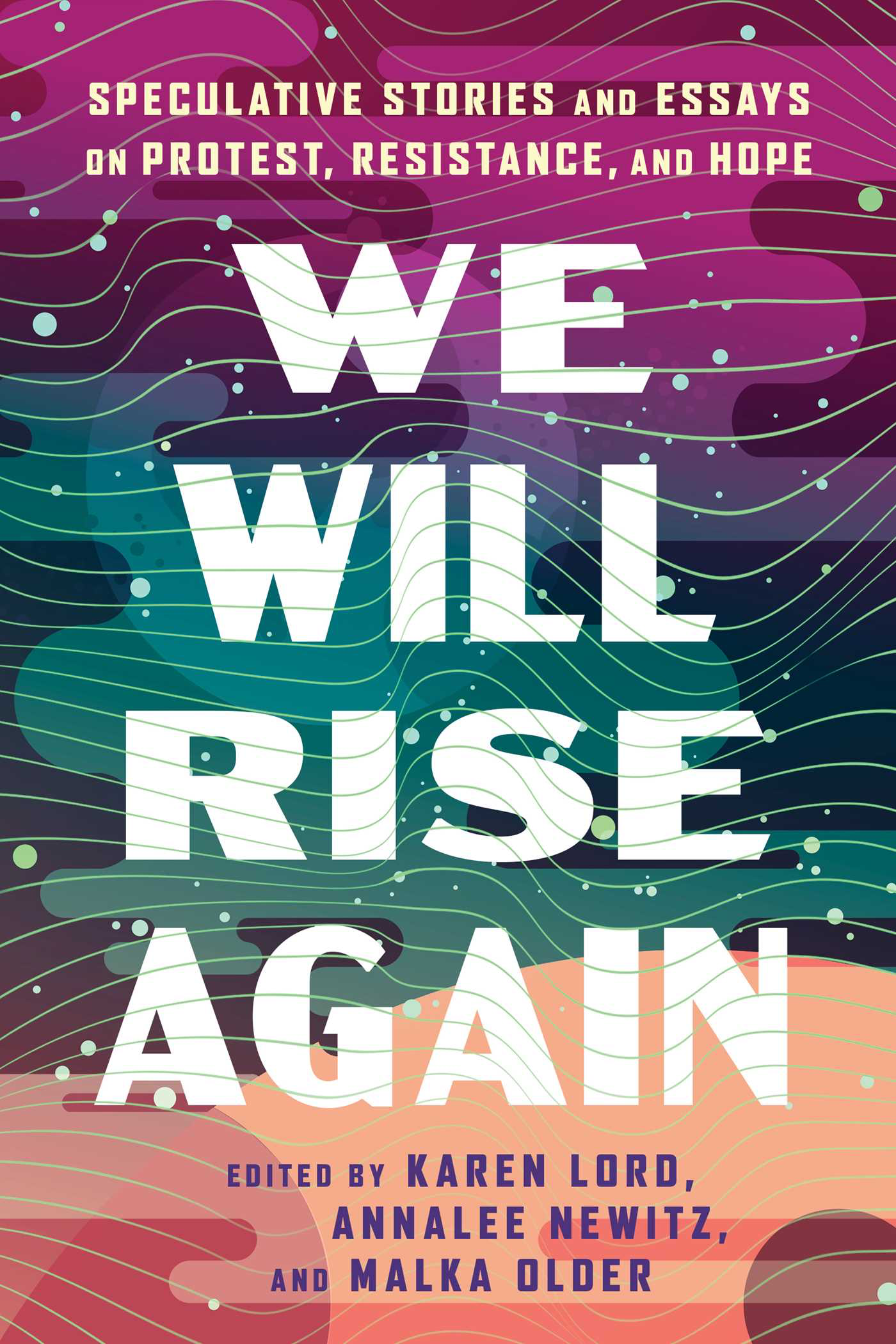
Book Review Tuesday (1/13/26) – We Will Rise Again: Speculative Stories and Essays on Protest, Resistance, and Hope

Happy Tuesday, bibliophiles, and from the bottom of my heart, fuck ICE. Rest in power, Renee Nicole Good. My heart goes out to everybody in Minneapolis right now. ❤️‍🩹

Whoo, look at me! Actually reviewing a book not long after it came out!!

I found out about We Will Rise Again soon after it came out, and it immediately caught my eye—in fact, it seemed almost specifically engineered for me. I mean, speculative fiction based on social justice? Come on. And while the stories and essays within it varied in quality, this anthology was a worthy endeavor and a much-needed collaboration.

Enjoy this week’s review!

We Will Rise Again: Speculative Stories and Essays on Protest, Resistance, and Hope – edited by Karen Lord, Annalee Newitz, and Malka Older

(description from The Storygraph:)

From genre luminaries, esteemed organizers, and exciting new voices in fiction, an anthology of stories, essays, and interviews that offer transformative visions of the future, fantastical alternate worlds, and inspiration for the social justice movements of tomorrow.

In this collection, editors Karen Lord, Annalee Newitz, and Malka Older champion realistic, progressive social change using the speculative stories of writers across the world. Exploring topics ranging from disability justice and environmental activism to community care and collective worldbuilding, these imaginative pieces from writers such as NK Jemisin, Charlie Jane Anders, Alejandro Heredia, Sam J. Miller, Nisi Shawl, and Sabrina Vourvoulias center solidarity, empathy, hope, joy, and creativity.

Each story is grounded within a broader sociopolitical framework using essays and interviews from movement leaders, including adrienne maree brown and Walidah Imarisha, charting the future history of protest, revolutions, and resistance with the same zeal for accuracy that speculative writers normally bring to science and technology. Using the vehicle of ambitious storytelling, We Will Rise Again offers effective tools for organizing, an unflinching interrogation of the status quo, and a blueprint for prefiguring a different world.

TW/CW: violence, transphobia, themes of oppression/marginalization, ableism, murder

Somehow, it’s so on brand that Ursula Vernon would be that hardcore about gardening. I always vaguely got that vibe from her work, but her essay was not a surprise in the slightest.

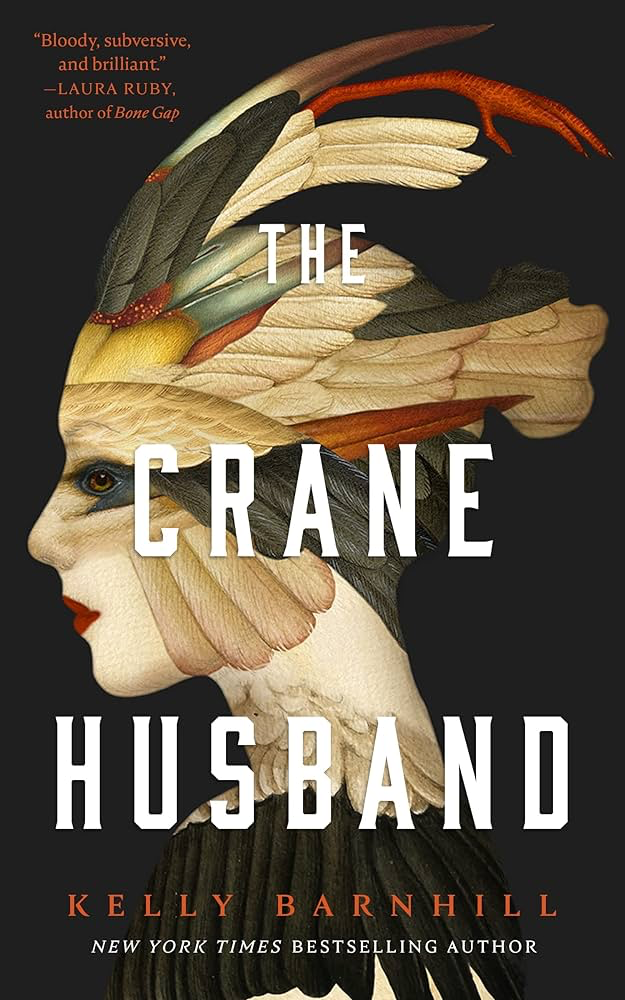
There were all kinds of speculative fiction authors featured in We Will Rise Again: familiar authors I’ve liked, familiar authors I haven’t been a fan of, and unfamiliar authors entirely; in fact, all three of the authors who edited the anthology (Karen Lord, Annalee Newitz, and Malka Older) are all hit-or-miss authors for me, but I stuck to this anthology because the concept was so compelling to me. Sure enough, not only were their stories fascinating, so were everyone else’s. Some of my favorites were Charlie Jane Anders’s “Realer Than Real,” a meditation on being transgender in the U.S. and poking fun at gender roles, Abdulla Moaswes’s “Kifaah and the Gospel,” a potent commentary about Palestinian resistance and the inherent absurdity of colonialism, and Malka Older’s “Aversion,” an excellent commentary about how to get people to pay attention and care about issues without having to expose them to a barrage of triggering, disturbing imagery. (The latter isn’t deeply relevant at all, no way! No way…) Whether in sci-fi, fantasy, or loosely speculative formats, all of them came together in a vibrant quilt of different perspectives and ideas.

The nonfiction in We Will Rise Again was, for the most part, equally potent. I was so excited to see Nicola Griffith featured in here, and her essay “Rewriting the Old Disability Script” was as timely as ever; even though disability representation in media at large, not to mention literature, has gradually gotten better, this was a potent reminder of the staggering lack of representation of disability of any kind in mainstream media. I’d already read N.K. Jemisin’s “How Long ‘Til Black Future Month? The Toxins of Speculative Fiction, and the Antidote That Is Janelle Monae,” but it fit perfectly in this anthology and was well worth a re-read. The very core of We Will Rise Again was that the fiction stories had tangible input from activists with real-world experience; without this, I still would’ve liked these stories, but with this added layer, they strangely gave me more hope. The faith of real-world activists embedded in fiction emphasizes what this anthology was really about, for me: educated, grounded hope for a better future.

However, with an anthology that cast such a wide net idea-wise, there’s bound to be some misses. I think the biggest issue with We Will Rise Again was that it verged on being too broad. Naturally, when you’re talking about social justice, there are so many things that you can talk about, and this anthology discusses the whole gamut of them in both fiction and nonfiction, from community care to transphobia to disability rights. For the most part, I could see the common thread through all of them easily. Some of them, however, bordered on being very loosely strung together; for instance, although I loved Vernon’s essay “The Quiet Heroics of Gardening,” the connection between it and the other stories was very, very loose. I think the issue was that not all of the fiction stories had nonfiction paired with them—the format they had with most of these stories could’ve cohesively been applied to all of them and given the anthology a better, more reasonable structure.

Overall, there weren’t any stories that I didn’t like, which is a rare thing in any given collaborate short story anthology. However, I did have a structural issue with some of them. Speculative fiction is a notoriously broad term, and I think some of the stories in this collection took that a little too seriously. While some of them were clearly sci-fi, fantasy, or at least had some speculation and change to the world, some of them barely felt speculative. For instance, if you took away the fleeting fantastical element of Vida James’s “Chupacabras,” I would’ve thought that it was only set a few years after the present—there wasn’t a ton that was new about it, and said fantastical element felt like an afterthought. (I had a similar issue with Sabrina Vourvoulias’s “Persefoni in the City.”) Even with some of the “this is only meant to be a few years from now” stories, I got that what was speculative was the politics (ex. with Izzy Wasserstein’s “The Rise and Fall of Storm Bluff, Kansas”), but with the ones I mentioned, hardly anything had changed. While I get that the focus wasn’t necessarily on the worldbuilding, with the anthology’s whole point being on genre/speculative fiction as a way of collective imagination and imagining better worlds, stories like those felt at odds with the intended message. “Speculative” was a bit generous of a term for some of those stories.

All in all, a diverse and hopeful anthology, both in terms of its contributors and its subject matter, all coming together to make powerful statements about how to survive in this landscape and dream of something better. 3.75 stars!

We Will Rise Again is a standalone anthology; Karen Lord is also the author of the Cygnus Beta series (The Best of All Possible Worlds, The Galaxy Game, and The Blue and Beautiful World). Annalee Newitz is also the author of The Terraformers, Autonomous, Automatic Noodle, and The Future of Another Timeline. Malka Older is also the author of The Investigations of Mossa and Pleiti series (The Mimicking of Known Successes, The Imposition of Unnecessary Obstacles, and The Potency of Ungovernable Impulses) and the Centenal Cycle (Infomocracy, Null States, and State Tectonics).

Today’s song:

LODGER 🙌

That’s it for this week’s Book Review Tuesday! Have a wonderful rest of your day, and take care of yourselves!
Posted in Sunday Songs

Sunday Songs: 1/11/26

Happy Sunday, bibliophiles! I hope this week has treated you well.

This week: ever stopped to wonder about the baby and its umbilical? Or about who’s pushing the pedals on the season cycle, by any chance? You’re in luck. I don’t have the answers, but Andy Partridge might.

Enjoy this week’s songs!

SUNDAY SONGS: 1/11/26

“The Ballad of Mr. Steak” – Kishi Bashi

I talked about Kishi Bashi and “Angeline” last week, but I failed to say what really snagged me about part of why I dove back into his music. Say what you want about the man, but Kishi Bashi is ardently committed to joyous whimsy. (see also: “Philosophize In It! Chemicalize With It!”, also from Lighght, and “Unicorns Die When You Leave”). It would’ve been inappropriate to talk about said joyous whimsy when talking about the very serious subject matter of Omoiyari, so I’ve made it separate. Buckle in, because I doubt that you’ll ever hear another song with the same staggering amount of steak/beef/cow related puns in your life. (Okay, maybe other than this. The point still stands.)

What stands out to me about “The Ballad of Mr. Steak” (and Kishi Bashi) is that yes, the lyrics are as goofy as all get-out, but it never feels like a joke song. This was never just a throwaway song for a bit—he puts the exact same amount of compositional effort and prowess into writing about heartbreak that he does into a song about eating some really, really good steak: “Did fate mistake us for a pair of star crossed lovers?/The savory ending wasn’t drowned in salt and pepper/And as we danced together, I cried a funny smile/As I felt you awake in the heat of feast/Now you’re gone forever now inside myself, here we go!” The synth riff starting at 1:03 never fails to jumpstart me into excitement, along with Bashi’s acrobatic violin playing—a staple of almost all of his songs, but it never gets old. And there’s just wordplay as far as the eye can see: “Grade A” sounds so much like “great, eh” that it almost seems normal. (It could also apply to “mistake” and “mis-steak.”) It’s just such a delightful song, one of my favorites of his as of late. Mr. Steak, you were Grade A!

…AND A BOOK TO GO WITH IT:

Screw it, just analyze this meme in whatever English major way you so choose: I give up. This one’s stumped me. Maybe I’m the bad guy for not knowing any books that are even tangentially related to beef, steak, or cows. Do what you will with this.

“Flower of Blood” – Big Thief

In their glowing review of Dragon New Warm Mountain I Believe In You, Pitchfork suggests that this album is Big Thief’s The White Album. Comparing anything to The White Album is a bold move, but this one doesn’t feel without merit to me. They’re both long albums, expansive in their subject matter and exploratory in their sound. I’d say The White Album is more cohesive than Dragon, but I don’t come to the former looking for crisp cohesion. I come looking for songs that are, by all accounts, kind of all over the place, but unified by the shared talent of The Beatles. Both albums ask “hey, what if we tried this?” and commit to whatever ideas the others dish up.

Dragon New Warm Mountain I Believe In You is less successful than The Beatles, but that’s because…this is The Beatles we’re talking about, for God’s sake. Hardly anybody’s going to measure up. But it’s such an adventurous album, even if the many, many forks in the road that Adrianne Lenker and co. explore aren’t always successful. By and large they are, but I just can’t get on board with the twangy forays into country (see: “Red Moon,” “Blue Lightning”), especially since the album closes out with one of them. Everything else, though? They’re bouncing off the walls in the best way possible, verging from slow, wailing sorrow to ecstatic romance and everything else that fits (or doesn’t fit) in between. There’s nothing that Big Thief won’t try, and that’s what made this album so fun to listen to—at a certain point, I gave up on trying to predict what would come next.

For instance: “Flower of Blood” is the closest I’ve heard Big Thief come to trying their hand at shoegaze. A lot of the sonic palette of the album is hazy and dreamy, but it feels like they tried to write a Slowdive song from memory, and then adorned it with clanging percussion and industrial whines. What starts out as one of their ordinarily folksy love songs ends with a clatter of reverbed squeals and creaks, all of the instruments blending together, like a spaceship cobbled together from bits of mossy stone and rusty scrap metal. (A lot of the songs on this album evoke scrap metal, honestly. It’s a vibe.) In a way, it’s a capsule of what Dragon New Warm Mountain I Believe In You is in a single song: where you begin is never where you end.

…AND A BOOK TO GO WITH IT:

Strange Bedfellows – Ariel Slamet Ries“Give me some time on Earth to know you/Help me unearth the map and show you/Thinking of her, thinking of him, want to?”

“Season Cycle” – XTC

Quirky whimsy with airtight composition seems to be the partial theme of this week, because we’re crashing headfirst right into it. Not just anybody can rhyme “um-bil-ical” and “cycle” and make it work, but dammit, Andy Partridge makes it sound like the words were always meant to rhyme in the first place. Lyrically, the man can do it all. Among the many, many squabbles that Partridge had with Todd Rundgren (who produced Skylarking), one of them was that Rundgren thought this rhyme was stupid. Not taking a dig at the guy, but really…how does it feel to be that wrong, Todd?

The loose concept behind Skylarking was experiencing an entire lifetime in the span of a day, weaving in imagery of nature and themes about seasons and weather along with this lifespan. In terms of the track listing, “Season Cycle” comes right in the middle, and just before the record “grows up”—most of the other songs afterwards are about religion (see: “Dear God”), marriage, and death. But in stark contrast, this song is a whimsical, pastoral bundle of curiosity. The lyrics are sunny ponderings about how the world works. Partridge’s character admits confusion, but appears cheery all the way as he wonders about why the weather is the way it is, and of course “about the baby and its um-bil-ical/Who’s pushing the pedals on the season cycle?” XTC have always been straight-up sixties, but I always associate them more with bands like The Monkees, but Partridge said this song was inspired in particular by The Beach Boys. Before I knew that, my shuffle gave me the glorious transition of “Season Cycle” back to back with “God Only Knows,” and it makes even more sense than it did before. Yet even with the sun-bleached, Brian Wilson-esque quality of the whole composition, it’s nothing but Andy Partridge; as world-weary he got early on in his career, they could never beat the whimsy and curiosity about the inner workings of the world out of him.

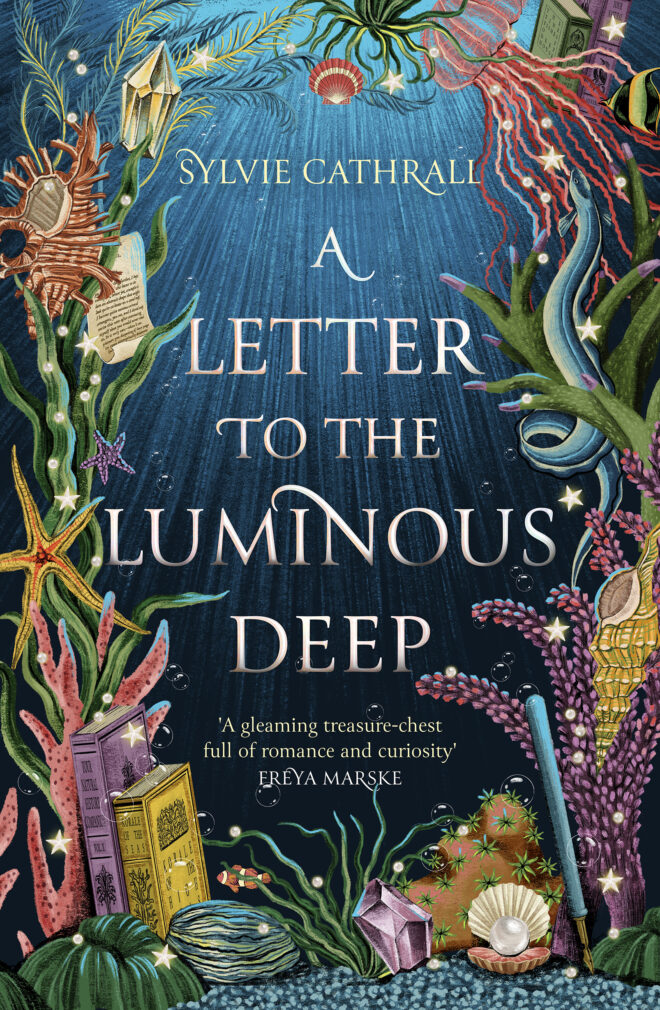
…AND A BOOK TO GO WITH IT:

A Letter to the Luminous Deep – Sylvie Cathrall“Darling, don’t you ever sit and ponder/About the building of the hills a yonder?/Where we’re going in this verdant spiral/Who’s pushing the pedals on the season cycle?”

“Epitaph for My Heart” – The Magnetic Fields

I seriously don’t know how Stephin Merritt does it. It’s artists like him and Jeff Tweedy that absolutely baffle me: Jeff Tweedy in the sheer frequency of his records with his various bands and projects, and Merritt with the amount of consistently incredible songs that he can pack into an album. In this case, this is yet another fantastic track from 69 Love Songs—over three hours’ worth of Merritt’s stellar songwriting. The song’s intro is proof of how talented of a songwriter he is; against plunking keys, he puts the warning label from an electric keyboard to music, which turns itself into a miniature metaphor for a heart so busted and battered that it needs a qualified professional to put back together. The melancholy pop song that he launches into after is nothing but classic Magnetic Fields. Who else could casually include “anon” in a song that doesn’t sound purposefully antiquated? Then again, “on and on anon” sounds an awful lot like “on and on and on,” so that’s probably the only way. (Merritt switches it up into “on and dawn and dawn” later too. Layers, people!) Very clever nonetheless—whether it’s upfront or sneaky, Stephin Merritt is practically a songwriting magician with infinite tricks up his sleeve.

…AND A BOOK TO GO WITH IT:

So Lucky – Nicola Griffith“And life goes on and dawn and dawn/And death goes on, world without end/And you’re not my friend…”

“Here Be Monsters” – Ed Harcourt

I pride myself on being a fairly punctual person, so this is a bit embarrassing for me, but once again, like most of the rules I’ve imposed on myself, it’s completely arbitrary. I wanted to write about “Here Be Monsters” three years ago, but it went on the wayside for whatever reason (read: it didn’t match the color palette du jour). Another recommendation from my amazing older brother, it soundtracked a hefty part of the second semester of my freshman year of college, perfect for the late winter chill. Now it’s mid-winter in 2026, I’m nearly finished with my degree, and the weather is once again ripe for dreary songs about religious bigotry.

“Here Be Monsters” sounds cloaked in fog from the get-go—it’s a very wintry song, and it’s fitting for the subject matter. Amid the hollow strums of an acoustic guitar, wobbly whistling, and high-pitched backing vocals fit for one of Danny Elfman’s scores, Harcourt examines the hypocrisy of a certain kind of Christian, the kind that claims to follow Christ’s teachings of compassion and forgiveness, but in reality uses their faith to ostracize and isolate anybody who deviates. I’m sticking to book pairings for these posts, but I can’t help but think of the new Knives Out film, Wake Up Dead Man, and its examination of this kind of hypocritical Christianity and the mental repercussions of the people who are unwittingly caught in the crossfire. The offhand, distanced delivery of much of the lyrics are the embodiment of the “turn the other cheek” line—even in the face of tragedy, it doesn’t matter, because they didn’t follow the teachings of the Bible (or, at least, their often misinformed interpretations of it). With every disaffected repetition of “such a shame,” Harcourt brings to life the façade of compassion that these people often put on, caring on the surface, but harshly judgmental in private. Cloaked in echoes and mist, “Here Be Monsters” is a frigid song, both in lyricism and in instrumentation.

…AND A BOOK TO GO WITH IT:

Extasia – Claire Legrandreligious fanaticism and creeping dread.

Since this post consists entirely of songs, consider all of them to be today’s song.

That’s it for this week’s Sunday Songs! Have a wonderful rest of your day, and take care of yourselves!
Posted in Book Review Tuesday

Book Review Tuesday (1/6/26) – The Broposal

Happy Tuesday, bibliophiles!

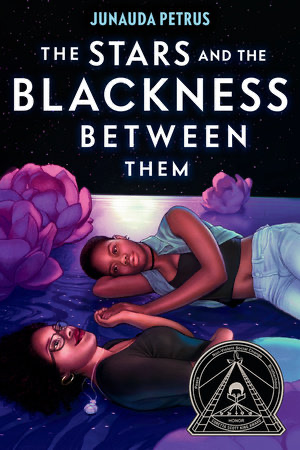
I’ve been a fan of Sonora Reyes’s YA novels ever since The Lesbiana’s Guide to Catholic School came out back in 2022. So when I found out that they’d written their adult debut last year, I was excited to see if their keen eye for emotional resonance still rang true. Unfortunately, this may be Reyes’s first miss—maybe they’ll be able to write a better adult novel in the future, but The Broposal proved that the transition from age groups was far from smooth.

Enjoy this week’s review!

The Broposal – Sonora Reyes

Alejandro and Kenny are roommates—nothing more, as far as they’re concerned. But Alejandro is in a tight spot: as an undocumented immigrant, the easiest way for him to get a green card is to get married to an American citizen, and Kenny may be the perfect candidate. Their plan is foolproof—get married, get Alejandro’s green card, and their families will be none the wiser that they aren’t actually in love. Feelings won’t be a problem, because they don’t have any for each other, right? But as they get deeper into their plan, Alejandro and Kenny realize that this proposal is more than fake—and that they’re certainly more than bros.

TW/CW: racism, racial profiling/threat of deportation/ICE, sexual content, homophobia, biphobia, abortion, abuse, loss of loved ones

With a heavy heart, I’ll have to declare The Broposal Sonora Reyes’s first real miss. They’ve had such an excellent run of YA novels, it’s such a shame! I’m not sure if it’s just the transition from YA to Adult that got them, but after The Broposal, I feel like they might be better off just sticking to YA. With a skewed perception of what “adult” entails and a romance I couldn’t fully buy, The Broposal stumbled considerably on its way to making a convincing love story.

Although my overall experience with The Broposal was a disappointment, there were a handful of aspects about it that I liked. I loved that both of the leads were Latine, and Reyes did an excellent job of handling the subject of being undocumented and the fear and racial profiling that comes along with it. I haven’t read a ton of novels that talk about being undocumented and the fear of deportation, and Reyes handled this very sensitively. The queer and neurodivergent representation was also excellent, and the depiction of bisexuality and biphobia felt very close to home. The character writing was decent as well, though not as strong as some of their other novels—Jackie in particular was exceptionally hateable, even if she was comically so.

Some authors are easily able to make the leap from writing for teens to writing for adults, but unfortunately, Sonora Reyes does not seem to be one of them. The most common issue I see in authors who fail to bridge the gap is that they overcompensate; Now that it’s an Adult™️ novel, they dial the swearing and sexual content up to 100, when most adult novels don’t even reach that threshold. While I’m glad that The Broposal was so open about sexual content and exploring kink, it was so dramatic that it felt like it was included just so that the “adult” label could be slapped on. Take that away, and all of the characters were just teenagers in adult bodies. Their dialogue was childish, as were some of their romantic conflicts; increasing the swearing and not the maturity doesn’t automatically make for an adult character. I had a difficult time believing that these characters were adults with jobs—they read more like hormonal high schoolers.

The main obstacle in the way of Han and Kenny was that they didn’t actually have feelings for each other, even though they were faking a marriage proposal. However, throughout The Broposal, I could never buy that all the way. Of course, the whole novel hinges on them eventually falling in love, but even then, it seemed like they had romantic feelings for each other from the start. They already acted like they were in love, even when they weren’t. Aside from the sexual aspect and a handful of unsaid things, Han and Kenny’s behaviors towards each other hardly changed at all, which killed all of the appeal of their slow-burn romance for me. After a certain point, the only thing that changed was the sex and labeling themselves as “in love.”

Yet what may have hampered The Broposal the most was that everything—and I mean everything—was piled into the third act. It was so clear that Reyes didn’t know how to create conflict beyond what was already present, so they just threw every possible kind of conflict at the wall. As if the threat of Han being deported and Jackie being pregnant with Kenny’s baby wasn’t enough, we get all of the following: Jackie threatens to call ICE on Han, Han’s mom dies, Han gets fired, and Kenny almost gets fired too. It all happened in such quick succession that it became clear as day how shoehorned in it all was. The real kicker was that almost all of it got solved in an instant: Jackie gets an abortion, they get their boss fired for discrimination, and Han wasn’t even that close with his mom anyway and is able to grieve for a conveniently short amount of page time. It reeks of what I’m now calling Hacks syndrome: they set up conflict that feels like it’ll dramatically alter the outcome of the novel, but it all gets solved within a few pages. With so much unnecessary conflict that was solved so easily, I found myself losing interest in The Broposal by virtue of knowing that everything would be solved so quickly.

All in all, a romance novel that excelled in representation and character writing, but added too many unnecessary aspects into the third act—a rare miss from Sonora Reyes. 2 stars.

The Broposal is a standalone and Sonora Reyes’s first adult novel. They are also the author of The Lesbiana’s Guide to Catholic School, The Golden Boy’s Guide to Bipolar, and The Luis Ortega Survival Club.

Today’s song:

PETER GABRIEL IS BACK TO SAVE 2026!! REJOICE

That’s it for this week’s Book Review Tuesday! Have a wonderful rest of your day, and take care of yourselves!
Posted in Book Review Tuesday

Sunday Songs: 1/4/25

Happy Sunday, bibliophiles, and Happy New Year! I hope this week has treated you well.

This week: double-dipping on St. Vincent to start 2026 off right. Plus: songs you can effectively wallow in during cold weather, or if that’s not your speed, songs to keep you warm.

Enjoy this week’s songs!
SUNDAY SONGS: 1/6/25

“Love Takes Miles” – Cameron Winter

As much as I’ve changed over the past decade, some things stay the same. When some pasty, mumbly white guy goes into alternative rock, I’M SEATED.

Other than a handful of songs, the Cameron Winter/Geese-mania seems to have passed me in fleeting glimpses. There’s nothing quite as wild as seeing some random band you saw open for Spoon in 2022 blow up all of the sudden. And good for them!! I’ve only heard “100 Horses” from the former, but it’s a solid art-rock song. No pun intended, but it’s honestly miles away from this song, but something about it snagged me immediately. Winter’s said white boy mumbling took a few minutes for me to a) get used to and b) decipher in the first place, but once it did, it put me in an undeniable chokehold.
The beautiful thing to me about “Love Takes Miles” is that it simultaneously sounds wise beyond its years, in the way that random encounters with old folks do, but so distinctly saturated with young love. I love a good yearner song, and this is prime yearning territory—even the strings sound like they’re also wistfully staring at the moon. “Love Takes Miles” is a breathless, lovestruck sprint, but one that’s ready to steady its pace into a marathon—after all, “Love takes miles/love takes years.” Young love as it is, Winter fully embraces the commitment that comes along with love, and wholeheartedly throws himself into it. It’s an ode to being so in love that you know what it is to get really, really into the weeds with someone, knowing that there will be all manner of forks in the road. As far as I can see, Winter’s at the wheel, and he’s ecstatic about every bump on the merit that he’s spending it with the people he loves most. AMEN! YOU BETTER START A-WALKIN’, BABE!!

Do I agree with the endless YouTube comments comparing Winter to [checks notes] Brian Wilson and Beethoven? Jesus Christ, no, I’ve only heard…what, three songs? Beethoven? Goddamn. And yet, what a tender pearl of a song. I’ve played it countless times now, and every time, it gives me the urge to have an impromptu kitchen dance party. Heck, it makes me misty if it catches me in the right mood. That string section, man. And that’s talent I can’t deny.

…AND A BOOK TO GO WITH IT:

The Galaxy, and the Ground Within (Wayfarers, #4) – Becky Chambers“Love will call/When you’ve got enough under your arms/Oh oh, mama/Love will call/Love will make you fit it all in the car…”

“Rosyln” – Bon Iver & St. Vincent

My brother was brave enough to endure all four movies of the Twilight Saga for the bit, and I can’t say that I’m that brave. For both the books and the movies, Twilight is something I’ve absorbed bits and pieces of through meme osmosis. But if there’s one thing that I’ll give these movies, it’s that they have some bangers on the soundtrack (see: “Supermassive Black Hole”). It made me so mad as an 11-year-old to see that this was always the most popular of St. Vincent’s songs on iTunes, but that was probably because I was conditioned to be a Twilight hater. But I’m enough of a St. Vincent fan to realize how excellent of a song this is. Even though I’m writing this in January, “Rosyln” is such a distinct, perfectly autumn sound: it’s like the fog and chill were baked into the mix itself. Bon Iver and St. Vincent are an eery match in this duet, both of their voices cloaked in enough reverb to make them sound like they’re singing in tandem from the bottom of a well. “Rosyln” had been incubating long before Twilight: New Moon came out (the lyrics have nothing to do with the story), but it’s no wonder that they picked it for the soundtrack—it’s so Pacific Northwest that you can feel the cold, damp earth beneath your boots and the dewy mist on your face.

…AND A BOOK TO GO WITH IT:

Mistwalker – Saundra Mitchell“Up with your turret/Aren’t we just terrified?/Shale, screen your worry/From what you won’t ever find…”

“Angeline” – Kishi Bashi

Intertwined with frequent listens to “Love Takes Miles” in the last hours of 2025 was Kishi Bashi. A ton of Kishi Bashi. You’ll be hearing more about him a lot more in the coming weeks (this is a threat). This song spurred it on, and it made me remember just how inventive he is—there’s just such an intricacy to his compositions. Going through any given Kishi Bashi song feels like being in the middle of a woodcut illustration, ducking my way through all manner of delicately carved plants and watching wooden birds nestle in the branches.

Compared to most of the work of his that I know, “Angeline” is more restrained, and for good reason—Omoiyari, the album where it comes from, deals primarily with the climate of the United States in the 1940’s, particularly the Japanese Internment Camps (see: “F Delano”); It’s a somber album, collecting vignettes of the decade that lean into both the sorrow and conflict, but also the flickers of hope. The album’s inspiration mainly stemmed from the internment camps, but the more that Kishi Bashi researched about America’s fraught history with mass incarceration of minorities, the album grew beyond the experiences of Japanese-Americans and into people of color as a whole (with sobering parallels to Trump’s first administration…and today. God.) “Angeline” collects both the former and the latter like fireflies in a jar. Amid gentle acoustic strums, he weaves a tale of a Black man who falls victim to the Jim Crow-era practice of convict leasing, arrested for a petty misdemeanor and sent to work in the mines, all the while pining for the titular Angeline. For me, it’s songs like these that can be the most impactful; even if “Angeline” is fictional, by putting the human souls into historical events that the education system treats as vestiges of the distant past make them all the more realer, even if the characters are rooted in fiction. Education, for me, fails when it fails to recognize that within every historical event or system, large or small, there were innumerable lives and souls within it, not simply statistics or numbers.

…AND A BOOK TO GO WITH IT:

We Are Not Free – Traci Cheethough “Angeline” isn’t specifically about the Japanese Internment Camps, this novel deals with the same subject matter, also concerned with its parallels in the present day.

“Wash the Day Away” – TV on the Radio

There are closing tracks, and then there are Closing Tracks. Plenty of closing tracks can be appreciated on their own, but sometimes, a great closing track works as its primary function and nothing but. If this were anywhere else on Return to Cookie Mountain, it would be a foolish placement. “Wash the Day Away,” with its “Intruder”-esque drum intro and its grinding swirl of rusty sound, feels like a dilapidated airplane gently being guided onto solid ground. Although I still haven’t listened to Return to Cookie Mountain in its entirety, “Wash the Day Away” makes me want to listen to it more, just to get the full effect of this track; but back to back with the moving “Tonight,” it creates a crashing, sparking end to the album that collapses in a flurry of embers and scrap metal. Paired with “Tonight”‘s lyrics, it’s a bittersweet sendoff, pairing destruction and loss of innocence with accidental beauty: “We did believe in magic, we did believe/We let our souls act as canaries/Our hearts gilded cages be/Watched a million dimming lanterns float out to sea/Lay your malady at the mouth of the death machine.” (And oh my god, another lyrical win for Tunde Adebimpe! Man, he can really conjure an image.) It’s an explosion in slow motion, but Adebimpe and co. let you languish in the aftermath—the last three minutes of this track’s 8-minute runtime are a slow fadeout from the barely-controlled cacophony, letting every bit of machinery run its course, guiding you gently out of the experience. Like I said: Closing Tracks.

…AND A BOOK TO GO WITH IT:

Katabasis – R.F. Kuang“We did believe in magic, we did believe/We let our souls act as canaries/Our hearts gilded cages be/Watched a million dimming lanterns float out to sea/Lay your malady at the mouth of the death machine…”

“Bring Me Your Loves” – St. Vincent

From 2015-2016, my laptop had three uses: schoolwork, Minecraft, and playing St. Vincent’s self-titled album and almost nothing else. I’ve talked extensively about how this album has permanently etched itself onto my consciousness, and 10 years after its release (as well as the release of the deluxe edition), it still holds up to me as such an out-of-the-box album, Annie Clark’s peak of creativity and jagged melodies. But back when I was in middle school, “Bring Me Your Loves” was my least favorite track on the album. On an album full to bursting with hit after hit, I still think that it’s the album’s weakest link. In contrast to the methodical process behind most of the album, it seems like all Clark herself has said about it was that it was “bananas. It’s just totally bananas.”

The more I listen to “Bring Me Your Loves,” the more it feels like foreshadowing for what was to come. It has a much more traditionally pop structure, and it’s less lyrically adept than the rest of the album, with a kind of baseline metaphor about feral and rabid love, leashes and dogs—it feels like an early incarnation of the kinkier stylings of MASSEDUCTION, all leathery and sweaty and breathless. But it hasn’t reached that point yet, and strangely, it feels like the most suited to the vague concept surrounding St. Vincent’s persona at the time as a “near-future cult leader.” It’s very seductive, dealing in patterns of pushing and pulling, domination and resistance. Clark’s vocals on the chorus soar, twisting and turning from master to servant with every vowel. As is the norm with this album, “Bring Me Your Loves” pushes Clark’s guitar to places that you would never expect a guitar to go, turning it from an instrument into a futuristic siren song that ensnares you with its angular, jagged spell. It’s proof that even the weakest points on this album are better than your average song.

…AND A BOOK TO GO WITH IT:

A Memory Called Empire – Arkady Martine“I, I took you off your leash/But I can’t, no, I can’t make you heel/Bring me your loves/Bring me your loves/We both have our rabid hearts/Feral from the very start start…”

BONUS: I couldn’t slip this in anywhere else, but speaking of St. Vincent and Twilight, here’s another song she contributed to the soundtrack of Twilight: Breaking Dawn, Part 2. Man, I wish it was a) on streaming, or b) available to buy without buying the whole album!! It’s another gem of that perfect, 2012-2015 era of St. Vincent trapped in amber. So, so delicious.

Since this post consists entirely of songs, consider all of them to be today’s song.

That’s it for this week’s Sunday Songs! Have a wonderful rest of your day, and take care of yourselves!