Posted in Book Review Tuesday

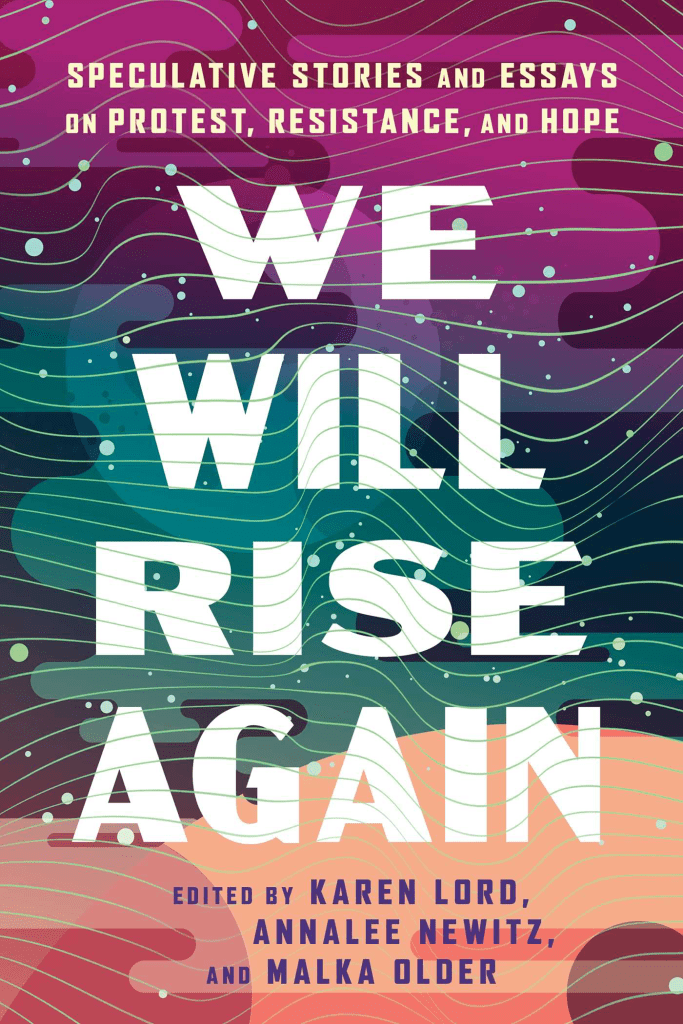
Book Review Tuesday (1/13/26) – We Will Rise Again: Speculative Stories and Essays on Protest, Resistance, and Hope

Happy Tuesday, bibliophiles, and from the bottom of my heart, fuck ICE. Rest in power, Renee Nicole Good. My heart goes out to everybody in Minneapolis right now. ❤️‍🩹

Whoo, look at me! Actually reviewing a book not long after it came out!!

I found out about We Will Rise Again soon after it came out, and it immediately caught my eye—in fact, it seemed almost specifically engineered for me. I mean, speculative fiction based on social justice? Come on. And while the stories and essays within it varied in quality, this anthology was a worthy endeavor and a much-needed collaboration.

Enjoy this week’s review!

We Will Rise Again: Speculative Stories and Essays on Protest, Resistance, and Hope – edited by Karen Lord, Annalee Newitz, and Malka Older

(description from The Storygraph:)

From genre luminaries, esteemed organizers, and exciting new voices in fiction, an anthology of stories, essays, and interviews that offer transformative visions of the future, fantastical alternate worlds, and inspiration for the social justice movements of tomorrow.

In this collection, editors Karen Lord, Annalee Newitz, and Malka Older champion realistic, progressive social change using the speculative stories of writers across the world. Exploring topics ranging from disability justice and environmental activism to community care and collective worldbuilding, these imaginative pieces from writers such as NK Jemisin, Charlie Jane Anders, Alejandro Heredia, Sam J. Miller, Nisi Shawl, and Sabrina Vourvoulias center solidarity, empathy, hope, joy, and creativity.

Each story is grounded within a broader sociopolitical framework using essays and interviews from movement leaders, including adrienne maree brown and Walidah Imarisha, charting the future history of protest, revolutions, and resistance with the same zeal for accuracy that speculative writers normally bring to science and technology. Using the vehicle of ambitious storytelling, We Will Rise Again offers effective tools for organizing, an unflinching interrogation of the status quo, and a blueprint for prefiguring a different world.

TW/CW: violence, transphobia, themes of oppression/marginalization, ableism, murder

Somehow, it’s so on brand that Ursula Vernon would be that hardcore about gardening. I always vaguely got that vibe from her work, but her essay was not a surprise in the slightest.

There were all kinds of speculative fiction authors featured in We Will Rise Again: familiar authors I’ve liked, familiar authors I haven’t been a fan of, and unfamiliar authors entirely; in fact, all three of the authors who edited the anthology (Karen Lord, Annalee Newitz, and Malka Older) are all hit-or-miss authors for me, but I stuck to this anthology because the concept was so compelling to me. Sure enough, not only were their stories fascinating, so were everyone else’s. Some of my favorites were Charlie Jane Anders’s “Realer Than Real,” a meditation on being transgender in the U.S. and poking fun at gender roles, Abdulla Moaswes’s “Kifaah and the Gospel,” a potent commentary about Palestinian resistance and the inherent absurdity of colonialism, and Malka Older’s “Aversion,” an excellent commentary about how to get people to pay attention and care about issues without having to expose them to a barrage of triggering, disturbing imagery. (The latter isn’t deeply relevant at all, no way! No way…) Whether in sci-fi, fantasy, or loosely speculative formats, all of them came together in a vibrant quilt of different perspectives and ideas.

The nonfiction in We Will Rise Again was, for the most part, equally potent. I was so excited to see Nicola Griffith featured in here, and her essay “Rewriting the Old Disability Script” was as timely as ever; even though disability representation in media at large, not to mention literature, has gradually gotten better, this was a potent reminder of the staggering lack of representation of disability of any kind in mainstream media. I’d already read N.K. Jemisin’s “How Long ‘Til Black Future Month? The Toxins of Speculative Fiction, and the Antidote That Is Janelle Monae,” but it fit perfectly in this anthology and was well worth a re-read. The very core of We Will Rise Again was that the fiction stories had tangible input from activists with real-world experience; without this, I still would’ve liked these stories, but with this added layer, they strangely gave me more hope. The faith of real-world activists embedded in fiction emphasizes what this anthology was really about, for me: educated, grounded hope for a better future.

However, with an anthology that cast such a wide net idea-wise, there’s bound to be some misses. I think the biggest issue with We Will Rise Again was that it verged on being too broad. Naturally, when you’re talking about social justice, there are so many things that you can talk about, and this anthology discusses the whole gamut of them in both fiction and nonfiction, from community care to transphobia to disability rights. For the most part, I could see the common thread through all of them easily. Some of them, however, bordered on being very loosely strung together; for instance, although I loved Vernon’s essay “The Quiet Heroics of Gardening,” the connection between it and the other stories was very, very loose. I think the issue was that not all of the fiction stories had nonfiction paired with them—the format they had with most of these stories could’ve cohesively been applied to all of them and given the anthology a better, more reasonable structure.

Overall, there weren’t any stories that I didn’t like, which is a rare thing in any given collaborate short story anthology. However, I did have a structural issue with some of them. Speculative fiction is a notoriously broad term, and I think some of the stories in this collection took that a little too seriously. While some of them were clearly sci-fi, fantasy, or at least had some speculation and change to the world, some of them barely felt speculative. For instance, if you took away the fleeting fantastical element of Vida James’s “Chupacabras,” I would’ve thought that it was only set a few years after the present—there wasn’t a ton that was new about it, and said fantastical element felt like an afterthought. (I had a similar issue with Sabrina Vourvoulias’s “Persefoni in the City.”) Even with some of the “this is only meant to be a few years from now” stories, I got that what was speculative was the politics (ex. with Izzy Wasserstein’s “The Rise and Fall of Storm Bluff, Kansas”), but with the ones I mentioned, hardly anything had changed. While I get that the focus wasn’t necessarily on the worldbuilding, with the anthology’s whole point being on genre/speculative fiction as a way of collective imagination and imagining better worlds, stories like those felt at odds with the intended message. “Speculative” was a bit generous of a term for some of those stories.

All in all, a diverse and hopeful anthology, both in terms of its contributors and its subject matter, all coming together to make powerful statements about how to survive in this landscape and dream of something better. 3.75 stars!

We Will Rise Again is a standalone anthology; Karen Lord is also the author of the Cygnus Beta series (The Best of All Possible Worlds, The Galaxy Game, and The Blue and Beautiful World). Annalee Newitz is also the author of The Terraformers, Autonomous, Automatic Noodle, and The Future of Another Timeline. Malka Older is also the author of The Investigations of Mossa and Pleiti series (The Mimicking of Known Successes, The Imposition of Unnecessary Obstacles, and The Potency of Ungovernable Impulses) and the Centenal Cycle (Infomocracy, Null States, and State Tectonics).

Today’s song:

LODGER 🙌

That’s it for this week’s Book Review Tuesday! Have a wonderful rest of your day, and take care of yourselves!

Posted in Sunday Songs

Sunday Songs: 1/11/26

Happy Sunday, bibliophiles! I hope this week has treated you well.

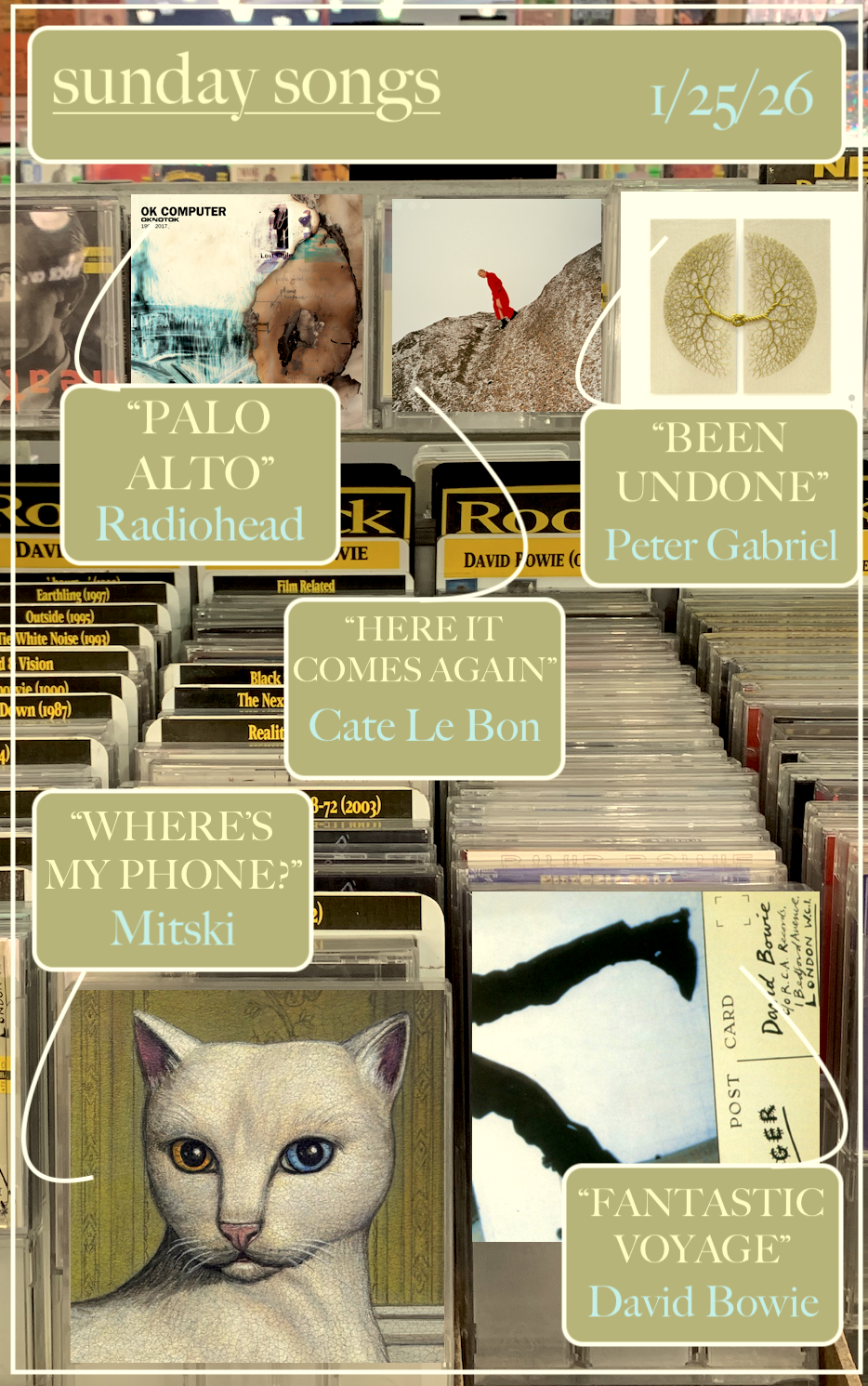
This week: ever stopped to wonder about the baby and its umbilical? Or about who’s pushing the pedals on the season cycle, by any chance? You’re in luck. I don’t have the answers, but Andy Partridge might.

Enjoy this week’s songs!

SUNDAY SONGS: 1/11/26

“The Ballad of Mr. Steak” – Kishi Bashi

I talked about Kishi Bashi and “Angeline” last week, but I failed to say what really snagged me about part of why I dove back into his music. Say what you want about the man, but Kishi Bashi is ardently committed to joyous whimsy. (see also: “Philosophize In It! Chemicalize With It!”, also from Lighght, and “Unicorns Die When You Leave”). It would’ve been inappropriate to talk about said joyous whimsy when talking about the very serious subject matter of Omoiyari, so I’ve made it separate. Buckle in, because I doubt that you’ll ever hear another song with the same staggering amount of steak/beef/cow related puns in your life. (Okay, maybe other than this. The point still stands.)

What stands out to me about “The Ballad of Mr. Steak” (and Kishi Bashi) is that yes, the lyrics are as goofy as all get-out, but it never feels like a joke song. This was never just a throwaway song for a bit—he puts the exact same amount of compositional effort and prowess into writing about heartbreak that he does into a song about eating some really, really good steak: “Did fate mistake us for a pair of star crossed lovers?/The savory ending wasn’t drowned in salt and pepper/And as we danced together, I cried a funny smile/As I felt you awake in the heat of feast/Now you’re gone forever now inside myself, here we go!” The synth riff starting at 1:03 never fails to jumpstart me into excitement, along with Bashi’s acrobatic violin playing—a staple of almost all of his songs, but it never gets old. And there’s just wordplay as far as the eye can see: “Grade A” sounds so much like “great, eh” that it almost seems normal. (It could also apply to “mistake” and “mis-steak.”) It’s just such a delightful song, one of my favorites of his as of late. Mr. Steak, you were Grade A!

…AND A BOOK TO GO WITH IT:

Screw it, just analyze this meme in whatever English major way you so choose: I give up. This one’s stumped me. Maybe I’m the bad guy for not knowing any books that are even tangentially related to beef, steak, or cows. Do what you will with this.

“Flower of Blood” – Big Thief

In their glowing review of Dragon New Warm Mountain I Believe In You, Pitchfork suggests that this album is Big Thief’s The White Album. Comparing anything to The White Album is a bold move, but this one doesn’t feel without merit to me. They’re both long albums, expansive in their subject matter and exploratory in their sound. I’d say The White Album is more cohesive than Dragon, but I don’t come to the former looking for crisp cohesion. I come looking for songs that are, by all accounts, kind of all over the place, but unified by the shared talent of The Beatles. Both albums ask “hey, what if we tried this?” and commit to whatever ideas the others dish up.

Dragon New Warm Mountain I Believe In You is less successful than The Beatles, but that’s because…this is The Beatles we’re talking about, for God’s sake. Hardly anybody’s going to measure up. But it’s such an adventurous album, even if the many, many forks in the road that Adrianne Lenker and co. explore aren’t always successful. By and large they are, but I just can’t get on board with the twangy forays into country (see: “Red Moon,” “Blue Lightning”), especially since the album closes out with one of them. Everything else, though? They’re bouncing off the walls in the best way possible, verging from slow, wailing sorrow to ecstatic romance and everything else that fits (or doesn’t fit) in between. There’s nothing that Big Thief won’t try, and that’s what made this album so fun to listen to—at a certain point, I gave up on trying to predict what would come next.

For instance: “Flower of Blood” is the closest I’ve heard Big Thief come to trying their hand at shoegaze. A lot of the sonic palette of the album is hazy and dreamy, but it feels like they tried to write a Slowdive song from memory, and then adorned it with clanging percussion and industrial whines. What starts out as one of their ordinarily folksy love songs ends with a clatter of reverbed squeals and creaks, all of the instruments blending together, like a spaceship cobbled together from bits of mossy stone and rusty scrap metal. (A lot of the songs on this album evoke scrap metal, honestly. It’s a vibe.) In a way, it’s a capsule of what Dragon New Warm Mountain I Believe In You is in a single song: where you begin is never where you end.

…AND A BOOK TO GO WITH IT:

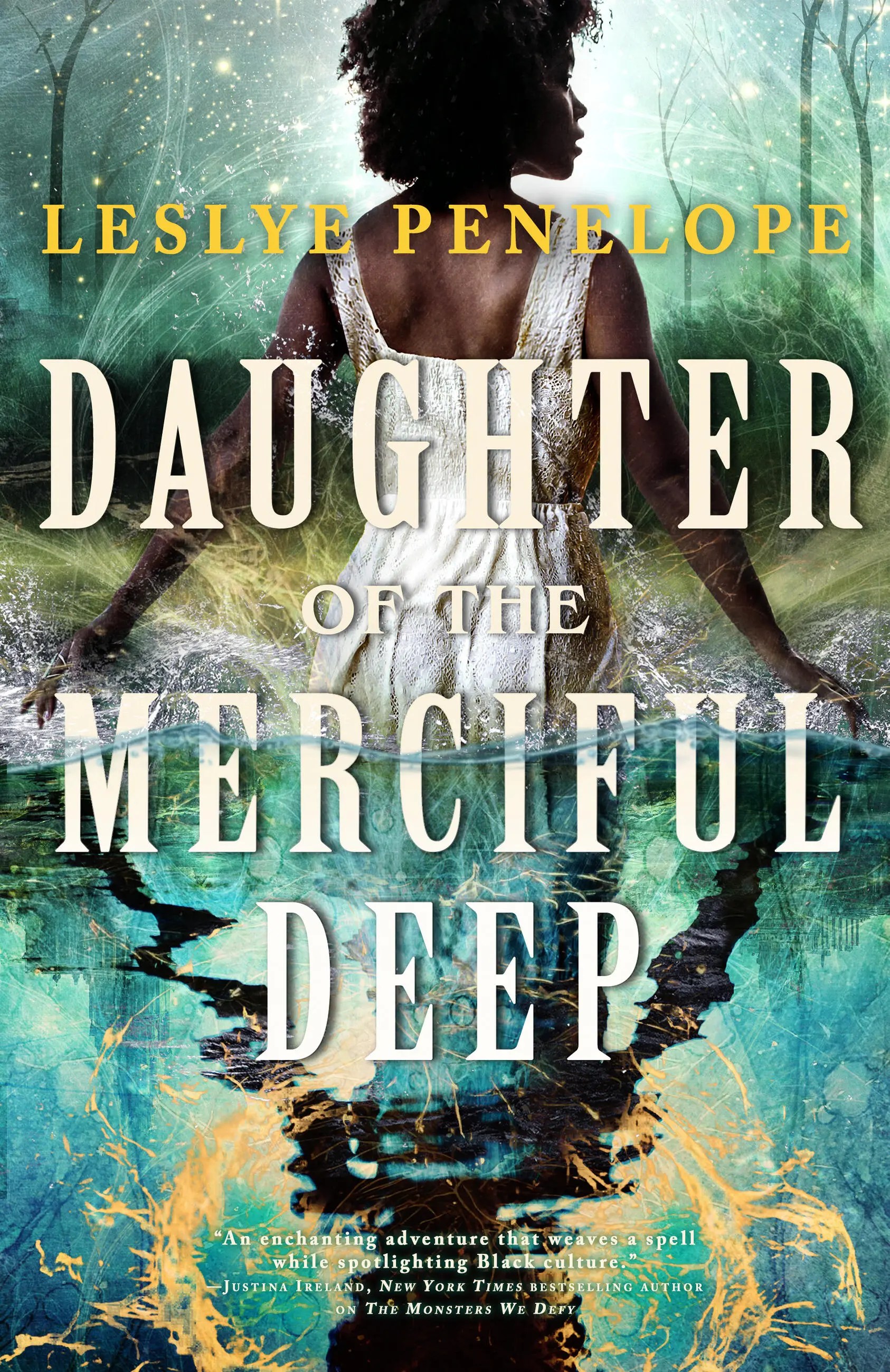
Strange Bedfellows – Ariel Slamet Ries“Give me some time on Earth to know you/Help me unearth the map and show you/Thinking of her, thinking of him, want to?”

“Season Cycle” – XTC

Quirky whimsy with airtight composition seems to be the partial theme of this week, because we’re crashing headfirst right into it. Not just anybody can rhyme “um-bil-ical” and “cycle” and make it work, but dammit, Andy Partridge makes it sound like the words were always meant to rhyme in the first place. Lyrically, the man can do it all. Among the many, many squabbles that Partridge had with Todd Rundgren (who produced Skylarking), one of them was that Rundgren thought this rhyme was stupid. Not taking a dig at the guy, but really…how does it feel to be that wrong, Todd?

The loose concept behind Skylarking was experiencing an entire lifetime in the span of a day, weaving in imagery of nature and themes about seasons and weather along with this lifespan. In terms of the track listing, “Season Cycle” comes right in the middle, and just before the record “grows up”—most of the other songs afterwards are about religion (see: “Dear God”), marriage, and death. But in stark contrast, this song is a whimsical, pastoral bundle of curiosity. The lyrics are sunny ponderings about how the world works. Partridge’s character admits confusion, but appears cheery all the way as he wonders about why the weather is the way it is, and of course “about the baby and its um-bil-ical/Who’s pushing the pedals on the season cycle?” XTC have always been straight-up sixties, but I always associate them more with bands like The Monkees, but Partridge said this song was inspired in particular by The Beach Boys. Before I knew that, my shuffle gave me the glorious transition of “Season Cycle” back to back with “God Only Knows,” and it makes even more sense than it did before. Yet even with the sun-bleached, Brian Wilson-esque quality of the whole composition, it’s nothing but Andy Partridge; as world-weary he got early on in his career, they could never beat the whimsy and curiosity about the inner workings of the world out of him.

…AND A BOOK TO GO WITH IT:

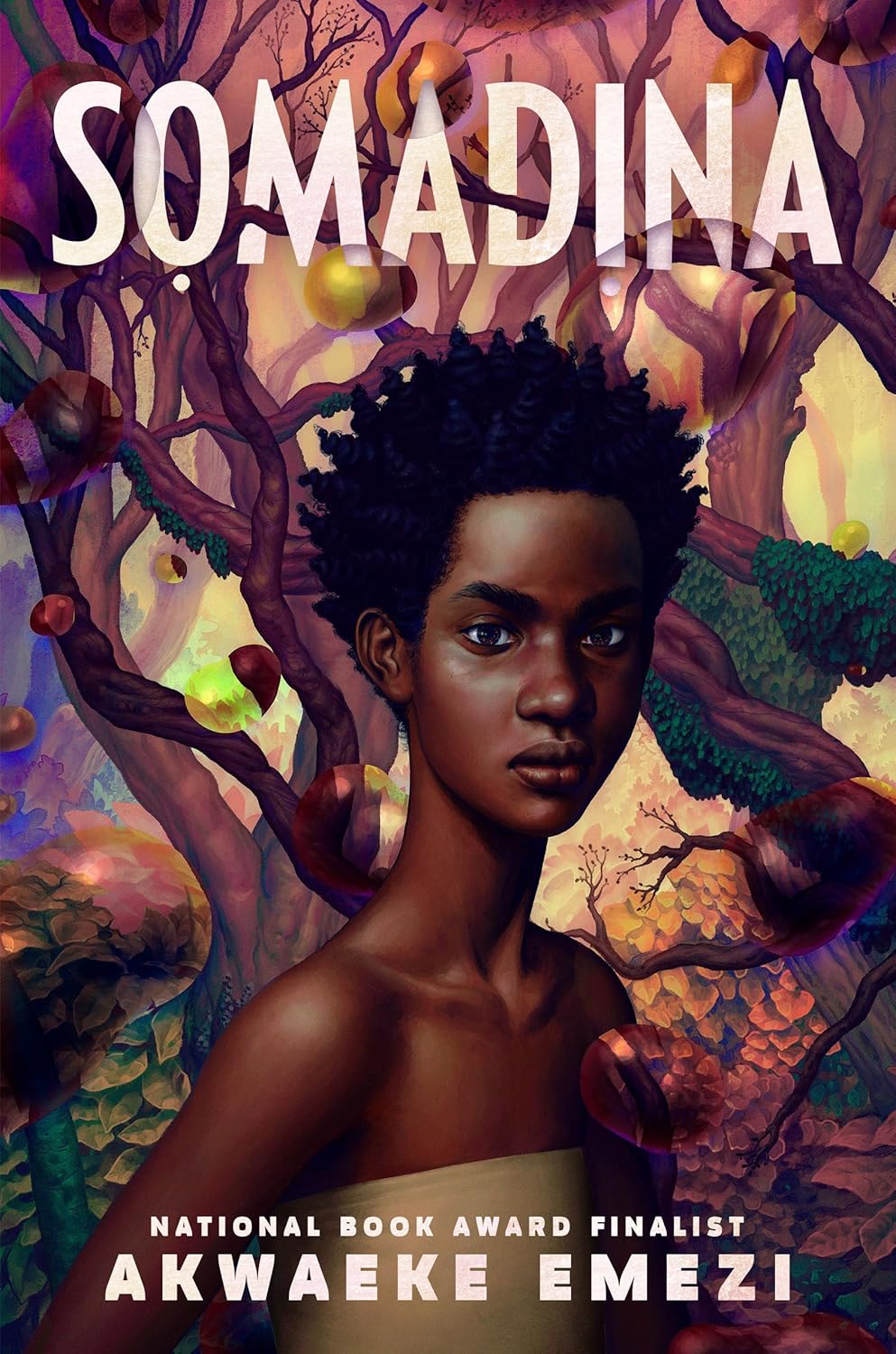
A Letter to the Luminous Deep – Sylvie Cathrall“Darling, don’t you ever sit and ponder/About the building of the hills a yonder?/Where we’re going in this verdant spiral/Who’s pushing the pedals on the season cycle?”

“Epitaph for My Heart” – The Magnetic Fields

I seriously don’t know how Stephin Merritt does it. It’s artists like him and Jeff Tweedy that absolutely baffle me: Jeff Tweedy in the sheer frequency of his records with his various bands and projects, and Merritt with the amount of consistently incredible songs that he can pack into an album. In this case, this is yet another fantastic track from 69 Love Songs—over three hours’ worth of Merritt’s stellar songwriting. The song’s intro is proof of how talented of a songwriter he is; against plunking keys, he puts the warning label from an electric keyboard to music, which turns itself into a miniature metaphor for a heart so busted and battered that it needs a qualified professional to put back together. The melancholy pop song that he launches into after is nothing but classic Magnetic Fields. Who else could casually include “anon” in a song that doesn’t sound purposefully antiquated? Then again, “on and on anon” sounds an awful lot like “on and on and on,” so that’s probably the only way. (Merritt switches it up into “on and dawn and dawn” later too. Layers, people!) Very clever nonetheless—whether it’s upfront or sneaky, Stephin Merritt is practically a songwriting magician with infinite tricks up his sleeve.

…AND A BOOK TO GO WITH IT:

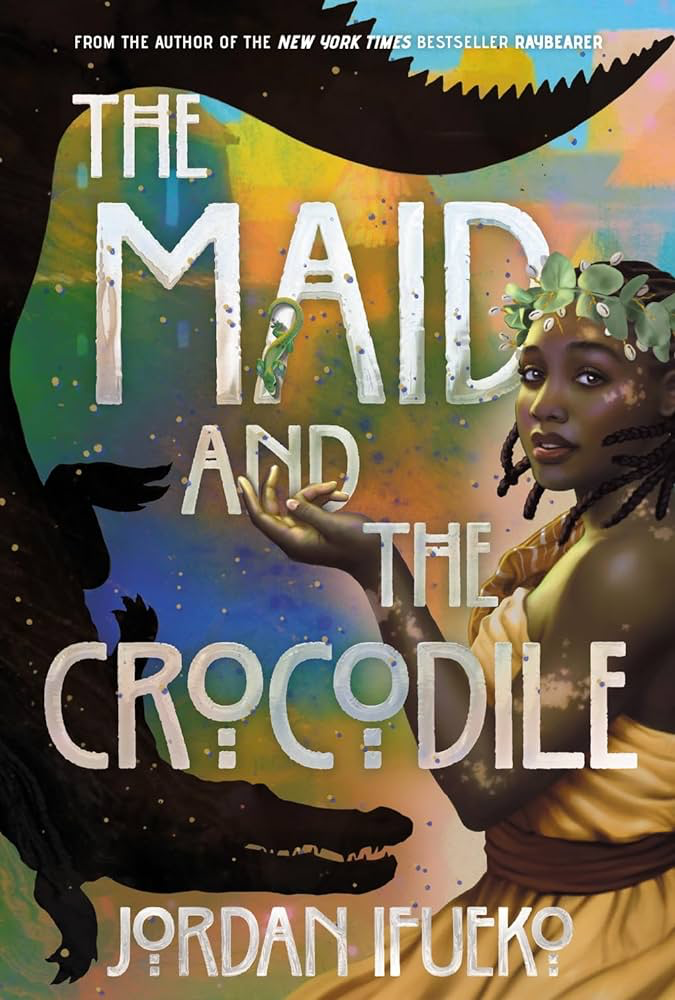
So Lucky – Nicola Griffith“And life goes on and dawn and dawn/And death goes on, world without end/And you’re not my friend…”

“Here Be Monsters” – Ed Harcourt

I pride myself on being a fairly punctual person, so this is a bit embarrassing for me, but once again, like most of the rules I’ve imposed on myself, it’s completely arbitrary. I wanted to write about “Here Be Monsters” three years ago, but it went on the wayside for whatever reason (read: it didn’t match the color palette du jour). Another recommendation from my amazing older brother, it soundtracked a hefty part of the second semester of my freshman year of college, perfect for the late winter chill. Now it’s mid-winter in 2026, I’m nearly finished with my degree, and the weather is once again ripe for dreary songs about religious bigotry.

“Here Be Monsters” sounds cloaked in fog from the get-go—it’s a very wintry song, and it’s fitting for the subject matter. Amid the hollow strums of an acoustic guitar, wobbly whistling, and high-pitched backing vocals fit for one of Danny Elfman’s scores, Harcourt examines the hypocrisy of a certain kind of Christian, the kind that claims to follow Christ’s teachings of compassion and forgiveness, but in reality uses their faith to ostracize and isolate anybody who deviates. I’m sticking to book pairings for these posts, but I can’t help but think of the new Knives Out film, Wake Up Dead Man, and its examination of this kind of hypocritical Christianity and the mental repercussions of the people who are unwittingly caught in the crossfire. The offhand, distanced delivery of much of the lyrics are the embodiment of the “turn the other cheek” line—even in the face of tragedy, it doesn’t matter, because they didn’t follow the teachings of the Bible (or, at least, their often misinformed interpretations of it). With every disaffected repetition of “such a shame,” Harcourt brings to life the façade of compassion that these people often put on, caring on the surface, but harshly judgmental in private. Cloaked in echoes and mist, “Here Be Monsters” is a frigid song, both in lyricism and in instrumentation.

…AND A BOOK TO GO WITH IT:

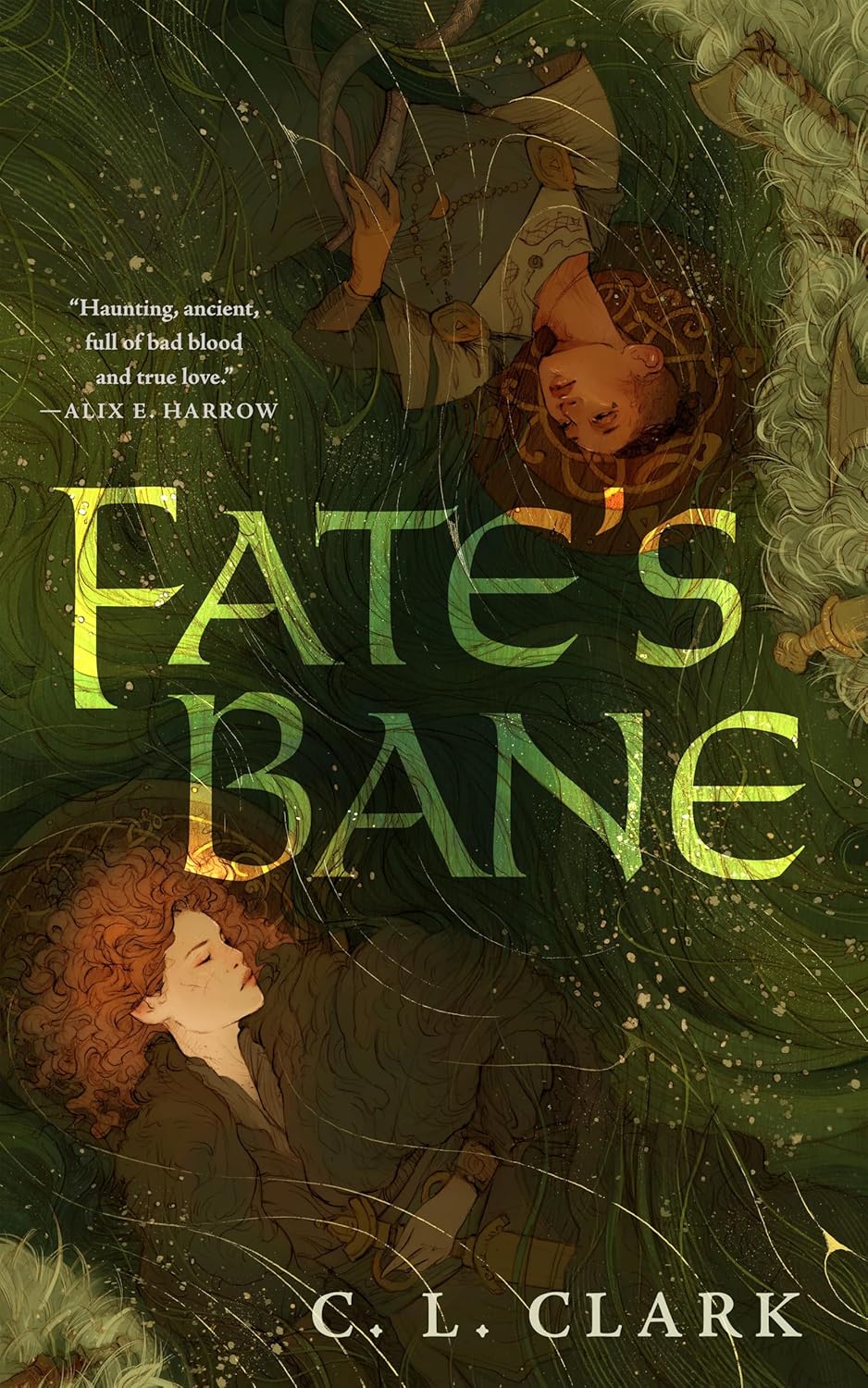
Extasia – Claire Legrandreligious fanaticism and creeping dread.

Since this post consists entirely of songs, consider all of them to be today’s song.

That’s it for this week’s Sunday Songs! Have a wonderful rest of your day, and take care of yourselves!

Posted in Book Review Tuesday

Book Review Tuesday (1/6/26) – The Broposal

Happy Tuesday, bibliophiles!

I’ve been a fan of Sonora Reyes’s YA novels ever since The Lesbiana’s Guide to Catholic School came out back in 2022. So when I found out that they’d written their adult debut last year, I was excited to see if their keen eye for emotional resonance still rang true. Unfortunately, this may be Reyes’s first miss—maybe they’ll be able to write a better adult novel in the future, but The Broposal proved that the transition from age groups was far from smooth.

Enjoy this week’s review!

The Broposal – Sonora Reyes

Alejandro and Kenny are roommates—nothing more, as far as they’re concerned. But Alejandro is in a tight spot: as an undocumented immigrant, the easiest way for him to get a green card is to get married to an American citizen, and Kenny may be the perfect candidate. Their plan is foolproof—get married, get Alejandro’s green card, and their families will be none the wiser that they aren’t actually in love. Feelings won’t be a problem, because they don’t have any for each other, right? But as they get deeper into their plan, Alejandro and Kenny realize that this proposal is more than fake—and that they’re certainly more than bros.

TW/CW: racism, racial profiling/threat of deportation/ICE, sexual content, homophobia, biphobia, abortion, abuse, loss of loved ones

With a heavy heart, I’ll have to declare The Broposal Sonora Reyes’s first real miss. They’ve had such an excellent run of YA novels, it’s such a shame! I’m not sure if it’s just the transition from YA to Adult that got them, but after The Broposal, I feel like they might be better off just sticking to YA. With a skewed perception of what “adult” entails and a romance I couldn’t fully buy, The Broposal stumbled considerably on its way to making a convincing love story.

Although my overall experience with The Broposal was a disappointment, there were a handful of aspects about it that I liked. I loved that both of the leads were Latine, and Reyes did an excellent job of handling the subject of being undocumented and the fear and racial profiling that comes along with it. I haven’t read a ton of novels that talk about being undocumented and the fear of deportation, and Reyes handled this very sensitively. The queer and neurodivergent representation was also excellent, and the depiction of bisexuality and biphobia felt very close to home. The character writing was decent as well, though not as strong as some of their other novels—Jackie in particular was exceptionally hateable, even if she was comically so.

Some authors are easily able to make the leap from writing for teens to writing for adults, but unfortunately, Sonora Reyes does not seem to be one of them. The most common issue I see in authors who fail to bridge the gap is that they overcompensate; Now that it’s an Adult™️ novel, they dial the swearing and sexual content up to 100, when most adult novels don’t even reach that threshold. While I’m glad that The Broposal was so open about sexual content and exploring kink, it was so dramatic that it felt like it was included just so that the “adult” label could be slapped on. Take that away, and all of the characters were just teenagers in adult bodies. Their dialogue was childish, as were some of their romantic conflicts; increasing the swearing and not the maturity doesn’t automatically make for an adult character. I had a difficult time believing that these characters were adults with jobs—they read more like hormonal high schoolers.

The main obstacle in the way of Han and Kenny was that they didn’t actually have feelings for each other, even though they were faking a marriage proposal. However, throughout The Broposal, I could never buy that all the way. Of course, the whole novel hinges on them eventually falling in love, but even then, it seemed like they had romantic feelings for each other from the start. They already acted like they were in love, even when they weren’t. Aside from the sexual aspect and a handful of unsaid things, Han and Kenny’s behaviors towards each other hardly changed at all, which killed all of the appeal of their slow-burn romance for me. After a certain point, the only thing that changed was the sex and labeling themselves as “in love.”

Yet what may have hampered The Broposal the most was that everything—and I mean everything—was piled into the third act. It was so clear that Reyes didn’t know how to create conflict beyond what was already present, so they just threw every possible kind of conflict at the wall. As if the threat of Han being deported and Jackie being pregnant with Kenny’s baby wasn’t enough, we get all of the following: Jackie threatens to call ICE on Han, Han’s mom dies, Han gets fired, and Kenny almost gets fired too. It all happened in such quick succession that it became clear as day how shoehorned in it all was. The real kicker was that almost all of it got solved in an instant: Jackie gets an abortion, they get their boss fired for discrimination, and Han wasn’t even that close with his mom anyway and is able to grieve for a conveniently short amount of page time. It reeks of what I’m now calling Hacks syndrome: they set up conflict that feels like it’ll dramatically alter the outcome of the novel, but it all gets solved within a few pages. With so much unnecessary conflict that was solved so easily, I found myself losing interest in The Broposal by virtue of knowing that everything would be solved so quickly.

All in all, a romance novel that excelled in representation and character writing, but added too many unnecessary aspects into the third act—a rare miss from Sonora Reyes. 2 stars.

The Broposal is a standalone and Sonora Reyes’s first adult novel. They are also the author of The Lesbiana’s Guide to Catholic School, The Golden Boy’s Guide to Bipolar, and The Luis Ortega Survival Club.

Today’s song:

PETER GABRIEL IS BACK TO SAVE 2026!! REJOICE

That’s it for this week’s Book Review Tuesday! Have a wonderful rest of your day, and take care of yourselves!
Posted in Book Review Tuesday

Sunday Songs: 1/4/25

Happy Sunday, bibliophiles, and Happy New Year! I hope this week has treated you well.

This week: double-dipping on St. Vincent to start 2026 off right. Plus: songs you can effectively wallow in during cold weather, or if that’s not your speed, songs to keep you warm.

Enjoy this week’s songs!
SUNDAY SONGS: 1/6/25

“Love Takes Miles” – Cameron Winter

As much as I’ve changed over the past decade, some things stay the same. When some pasty, mumbly white guy goes into alternative rock, I’M SEATED.

Other than a handful of songs, the Cameron Winter/Geese-mania seems to have passed me in fleeting glimpses. There’s nothing quite as wild as seeing some random band you saw open for Spoon in 2022 blow up all of the sudden. And good for them!! I’ve only heard “100 Horses” from the former, but it’s a solid art-rock song. No pun intended, but it’s honestly miles away from this song, but something about it snagged me immediately. Winter’s said white boy mumbling took a few minutes for me to a) get used to and b) decipher in the first place, but once it did, it put me in an undeniable chokehold.
The beautiful thing to me about “Love Takes Miles” is that it simultaneously sounds wise beyond its years, in the way that random encounters with old folks do, but so distinctly saturated with young love. I love a good yearner song, and this is prime yearning territory—even the strings sound like they’re also wistfully staring at the moon. “Love Takes Miles” is a breathless, lovestruck sprint, but one that’s ready to steady its pace into a marathon—after all, “Love takes miles/love takes years.” Young love as it is, Winter fully embraces the commitment that comes along with love, and wholeheartedly throws himself into it. It’s an ode to being so in love that you know what it is to get really, really into the weeds with someone, knowing that there will be all manner of forks in the road. As far as I can see, Winter’s at the wheel, and he’s ecstatic about every bump on the merit that he’s spending it with the people he loves most. AMEN! YOU BETTER START A-WALKIN’, BABE!!

Do I agree with the endless YouTube comments comparing Winter to [checks notes] Brian Wilson and Beethoven? Jesus Christ, no, I’ve only heard…what, three songs? Beethoven? Goddamn. And yet, what a tender pearl of a song. I’ve played it countless times now, and every time, it gives me the urge to have an impromptu kitchen dance party. Heck, it makes me misty if it catches me in the right mood. That string section, man. And that’s talent I can’t deny.

…AND A BOOK TO GO WITH IT:

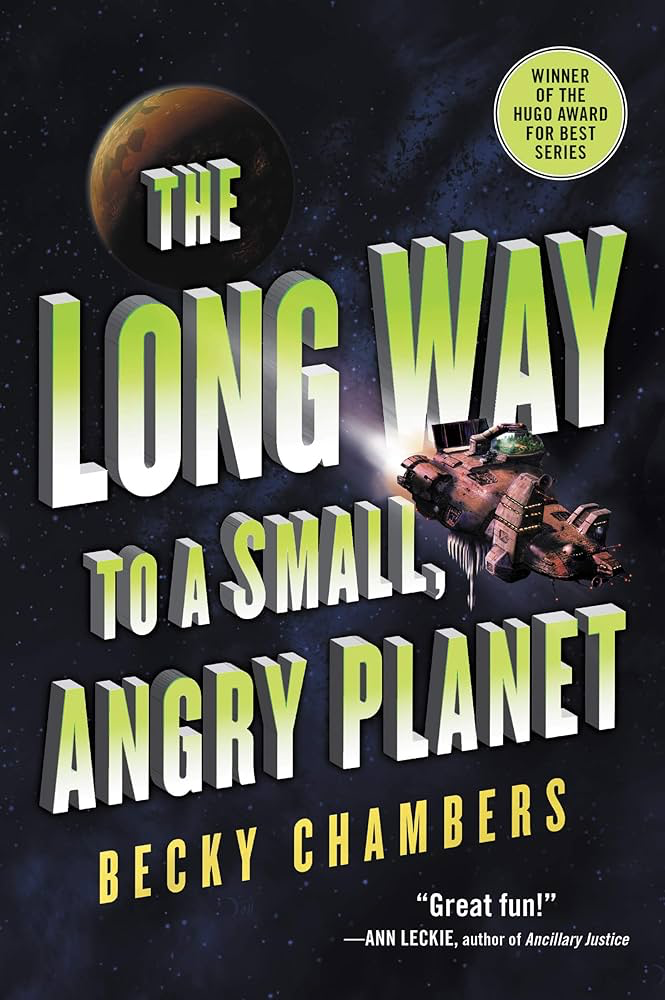
The Galaxy, and the Ground Within (Wayfarers, #4) – Becky Chambers“Love will call/When you’ve got enough under your arms/Oh oh, mama/Love will call/Love will make you fit it all in the car…”

“Rosyln” – Bon Iver & St. Vincent

My brother was brave enough to endure all four movies of the Twilight Saga for the bit, and I can’t say that I’m that brave. For both the books and the movies, Twilight is something I’ve absorbed bits and pieces of through meme osmosis. But if there’s one thing that I’ll give these movies, it’s that they have some bangers on the soundtrack (see: “Supermassive Black Hole”). It made me so mad as an 11-year-old to see that this was always the most popular of St. Vincent’s songs on iTunes, but that was probably because I was conditioned to be a Twilight hater. But I’m enough of a St. Vincent fan to realize how excellent of a song this is. Even though I’m writing this in January, “Rosyln” is such a distinct, perfectly autumn sound: it’s like the fog and chill were baked into the mix itself. Bon Iver and St. Vincent are an eery match in this duet, both of their voices cloaked in enough reverb to make them sound like they’re singing in tandem from the bottom of a well. “Rosyln” had been incubating long before Twilight: New Moon came out (the lyrics have nothing to do with the story), but it’s no wonder that they picked it for the soundtrack—it’s so Pacific Northwest that you can feel the cold, damp earth beneath your boots and the dewy mist on your face.

…AND A BOOK TO GO WITH IT:

Mistwalker – Saundra Mitchell“Up with your turret/Aren’t we just terrified?/Shale, screen your worry/From what you won’t ever find…”

“Angeline” – Kishi Bashi

Intertwined with frequent listens to “Love Takes Miles” in the last hours of 2025 was Kishi Bashi. A ton of Kishi Bashi. You’ll be hearing more about him a lot more in the coming weeks (this is a threat). This song spurred it on, and it made me remember just how inventive he is—there’s just such an intricacy to his compositions. Going through any given Kishi Bashi song feels like being in the middle of a woodcut illustration, ducking my way through all manner of delicately carved plants and watching wooden birds nestle in the branches.

Compared to most of the work of his that I know, “Angeline” is more restrained, and for good reason—Omoiyari, the album where it comes from, deals primarily with the climate of the United States in the 1940’s, particularly the Japanese Internment Camps (see: “F Delano”); It’s a somber album, collecting vignettes of the decade that lean into both the sorrow and conflict, but also the flickers of hope. The album’s inspiration mainly stemmed from the internment camps, but the more that Kishi Bashi researched about America’s fraught history with mass incarceration of minorities, the album grew beyond the experiences of Japanese-Americans and into people of color as a whole (with sobering parallels to Trump’s first administration…and today. God.) “Angeline” collects both the former and the latter like fireflies in a jar. Amid gentle acoustic strums, he weaves a tale of a Black man who falls victim to the Jim Crow-era practice of convict leasing, arrested for a petty misdemeanor and sent to work in the mines, all the while pining for the titular Angeline. For me, it’s songs like these that can be the most impactful; even if “Angeline” is fictional, by putting the human souls into historical events that the education system treats as vestiges of the distant past make them all the more realer, even if the characters are rooted in fiction. Education, for me, fails when it fails to recognize that within every historical event or system, large or small, there were innumerable lives and souls within it, not simply statistics or numbers.

…AND A BOOK TO GO WITH IT:

We Are Not Free – Traci Cheethough “Angeline” isn’t specifically about the Japanese Internment Camps, this novel deals with the same subject matter, also concerned with its parallels in the present day.

“Wash the Day Away” – TV on the Radio

There are closing tracks, and then there are Closing Tracks. Plenty of closing tracks can be appreciated on their own, but sometimes, a great closing track works as its primary function and nothing but. If this were anywhere else on Return to Cookie Mountain, it would be a foolish placement. “Wash the Day Away,” with its “Intruder”-esque drum intro and its grinding swirl of rusty sound, feels like a dilapidated airplane gently being guided onto solid ground. Although I still haven’t listened to Return to Cookie Mountain in its entirety, “Wash the Day Away” makes me want to listen to it more, just to get the full effect of this track; but back to back with the moving “Tonight,” it creates a crashing, sparking end to the album that collapses in a flurry of embers and scrap metal. Paired with “Tonight”‘s lyrics, it’s a bittersweet sendoff, pairing destruction and loss of innocence with accidental beauty: “We did believe in magic, we did believe/We let our souls act as canaries/Our hearts gilded cages be/Watched a million dimming lanterns float out to sea/Lay your malady at the mouth of the death machine.” (And oh my god, another lyrical win for Tunde Adebimpe! Man, he can really conjure an image.) It’s an explosion in slow motion, but Adebimpe and co. let you languish in the aftermath—the last three minutes of this track’s 8-minute runtime are a slow fadeout from the barely-controlled cacophony, letting every bit of machinery run its course, guiding you gently out of the experience. Like I said: Closing Tracks.

…AND A BOOK TO GO WITH IT:

Katabasis – R.F. Kuang“We did believe in magic, we did believe/We let our souls act as canaries/Our hearts gilded cages be/Watched a million dimming lanterns float out to sea/Lay your malady at the mouth of the death machine…”

“Bring Me Your Loves” – St. Vincent

From 2015-2016, my laptop had three uses: schoolwork, Minecraft, and playing St. Vincent’s self-titled album and almost nothing else. I’ve talked extensively about how this album has permanently etched itself onto my consciousness, and 10 years after its release (as well as the release of the deluxe edition), it still holds up to me as such an out-of-the-box album, Annie Clark’s peak of creativity and jagged melodies. But back when I was in middle school, “Bring Me Your Loves” was my least favorite track on the album. On an album full to bursting with hit after hit, I still think that it’s the album’s weakest link. In contrast to the methodical process behind most of the album, it seems like all Clark herself has said about it was that it was “bananas. It’s just totally bananas.”

The more I listen to “Bring Me Your Loves,” the more it feels like foreshadowing for what was to come. It has a much more traditionally pop structure, and it’s less lyrically adept than the rest of the album, with a kind of baseline metaphor about feral and rabid love, leashes and dogs—it feels like an early incarnation of the kinkier stylings of MASSEDUCTION, all leathery and sweaty and breathless. But it hasn’t reached that point yet, and strangely, it feels like the most suited to the vague concept surrounding St. Vincent’s persona at the time as a “near-future cult leader.” It’s very seductive, dealing in patterns of pushing and pulling, domination and resistance. Clark’s vocals on the chorus soar, twisting and turning from master to servant with every vowel. As is the norm with this album, “Bring Me Your Loves” pushes Clark’s guitar to places that you would never expect a guitar to go, turning it from an instrument into a futuristic siren song that ensnares you with its angular, jagged spell. It’s proof that even the weakest points on this album are better than your average song.

…AND A BOOK TO GO WITH IT:

A Memory Called Empire – Arkady Martine“I, I took you off your leash/But I can’t, no, I can’t make you heel/Bring me your loves/Bring me your loves/We both have our rabid hearts/Feral from the very start start…”

BONUS: I couldn’t slip this in anywhere else, but speaking of St. Vincent and Twilight, here’s another song she contributed to the soundtrack of Twilight: Breaking Dawn, Part 2. Man, I wish it was a) on streaming, or b) available to buy without buying the whole album!! It’s another gem of that perfect, 2012-2015 era of St. Vincent trapped in amber. So, so delicious.

Since this post consists entirely of songs, consider all of them to be today’s song.

That’s it for this week’s Sunday Songs! Have a wonderful rest of your day, and take care of yourselves!