Posted in Book Review Tuesday

Book Review Tuesday (8/1/23) – Magonia

Happy Tuesday, bibliophiles, and happy August! I always look forward to my birthday month, but…I could do without everybody posting that one Taylor Swift song (sorry swifties my neighbors blasted it over and over when I was in school and I can’t take it any longer 😭)

This book has been on and off my TBR over the years; I feel like I put it on my list when I first got Goodreads, lost interest in it a few years later, then got it recommended to me by a friend who saw it on another list. The reviews don’t lie: Magonia really was a strange book, but despite some of its flaws, its strangeness was 100% its strength.

Enjoy this week’s review!

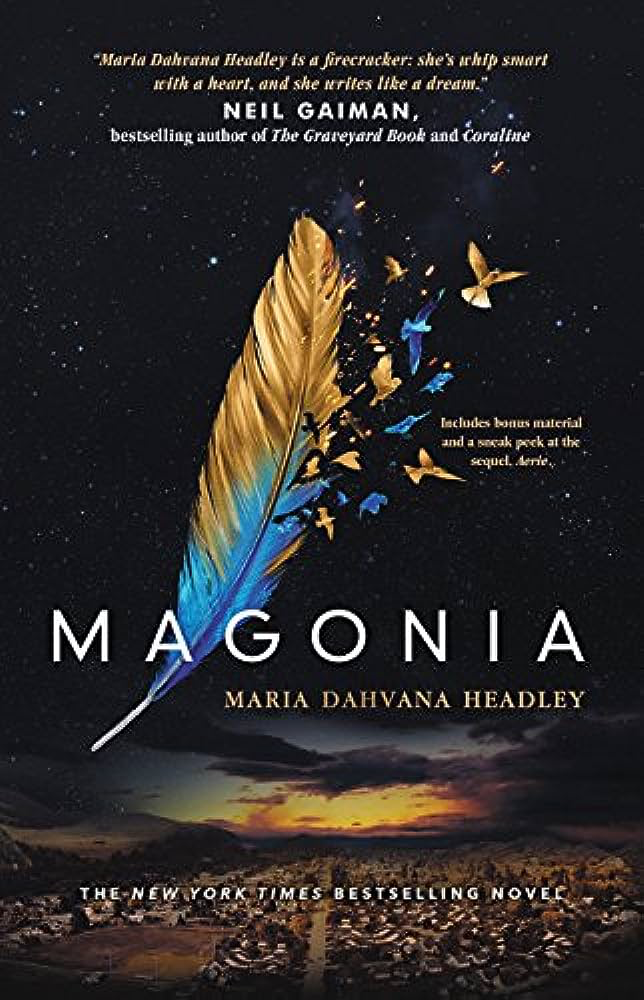
Magonia (Magonia, #1) – Maria Dahvana Headley

All of her life, Aza Ray Boyle has had a mysterious lung disease, incapable of being diagnosed by all kinds of doctors. She can barely breathe or speak without assistance, even with the copious medications prescribed to her. But recently, Aza has begun to see giant ships in the sky. Her parents chalk these visions up to her medication, but Aza knows that something in the sky is waiting for her—and it is. But after a freak accident leads her family to believe that she is dead, Aza is swept up into the world of Magonia, a world of skyfaring ships where she can finally breathe. But as she discovers her hidden Magonian heritage, she discovers that this idyllic world in the clouds is not as peaceful as she once thought—and that the world below may be in danger…

TW/CW: fantasy violence, death/funeral, themes of grief

To put it plainly, Magonia was a weird book. For a YA book that was published in 2015, it feels a lot more daringly weird than most YA books got back then and still do today. Magonia was Maria Dahvana Headley’s first YA novel, and it shows, but not necessarily in a bad way; despite its flaws, it was a refreshingly quirky addition to the pantheon of early to mid-2010’s YA.

I’ve seen this book shelved as having disability rep, and that’s part of why I decided to pick it up again. Aza has a lung disease, but it’s fictional; all of her life, doctors cannot seem to diagnose her, until it is discovered that the disease happens to be a whole bird growing in her chest that factors into the book about a third of the way through. And…I’m torn on whether or not to call it disability rep. On the one hand, the descriptions of Aza’s life before the bird revelation match a lot of other stories I’ve read about people and fictional characters with breathing-related illnesses and disabilities, what with being constantly in and out of hospitals and struggling to fit in with one’s peers. And on the other hand…it feels a little strange, as a disabled reader, to categorize having a fictional ailment of bird growing out of your chest as a disability, especially since the problem resolves itself almost immediately once Aza arrives in Magonia. My issue isn’t that this plotline exists—it’s the category of others labeling this as disability rep that feels questionable to me.

That aside, Magonia was a refreshing novel to read! Especially for a YA book published in 2015, when the industry was so mired in self-serious Hunger Games rip-offs, the unapologetic weirdness of this novel felt like a breath of fresh air, even almost a decade later. We need more whimsy like this in YA—it shouldn’t just be reserved for middle grade. The whimsy doesn’t just die when you hit the age of 13! (Or, at least, it shouldn’t.) I loved the world that Headley created, full of winged people, whales that swim through the sky and giant bats (CREATURES YEAAAAAAAH) and massive frigates that patrol the skies. Headley put so much love into this part of the worldbuilding, and it shone through in every page. It did not hold back in its magical fun, and I am so much better for it.

I’ve seen a lot of reviews saying that they didn’t like how Aza’s voice was written, and to a point, I can understand it. From the looks of it, most of Headley’s body of work is aimed at adults, so it makes sense that she felt as though she had to tone it down and write Aza in a certain, “teenagery” way. But for the most part, I feel like it worked—Aza really did read like she was really 15 going on 16: despite her circumstances, she was still an angsty teenager, but that wasn’t her whole personality. She reacted to her situation as a real teenager would, had her priorities set where a teenager would have them. Aza really was a teenager, and teenagers tend to over-exaggerate things sometimes. It wasn’t all over-exaggeration, though—it was just the right amount of drama and realistically being frightened by everything going on around her, because who wouldn’t be?

However, as engrossed I was with the whimsical fantasy worldbuilding, I found the ending to be quite messy. I get that it’s the first book in the series, but Magonia could have been wrapped up in a much neater and more cohesive way. Details that were only given in the last 50 pages suddenly had utmost importance to the plot, all of the loose ends got even looser, and everything felt generally rushed. Looking back on how much I enjoyed the worldbuilding, it feels like a case of paying too much attention to that and not enough to how the plot would actually play out. Everything felt crammed together and sped through in such an unceremonious way. It’s why I felt like I couldn’t quite give this novel a full 4 stars; the ending made the rest of the intricacies earlier into a rushed mess.

All in all, a refreshingly weird YA fantasy that excelled in its whimsical worldbuilding, but failed in the messy pacing of the ending. 3.75 stars, rounded up to 4!

Magonia is the first in the Magonia series, followed by Aerie. Maria Dahvana Headley is also the author of The Mere Wife, Queen of Kings, Some Gods of El Paso, and many other novels and short stories. Headley also translated a modern version of Beowulf in 2020.

Today’s song:

NEW WILCO JUST DROPPED?????

That’s it for this week’s Book Review Tuesday! Have a wonderful rest of your day, and take care of yourselves!

Posted in Uncategorized

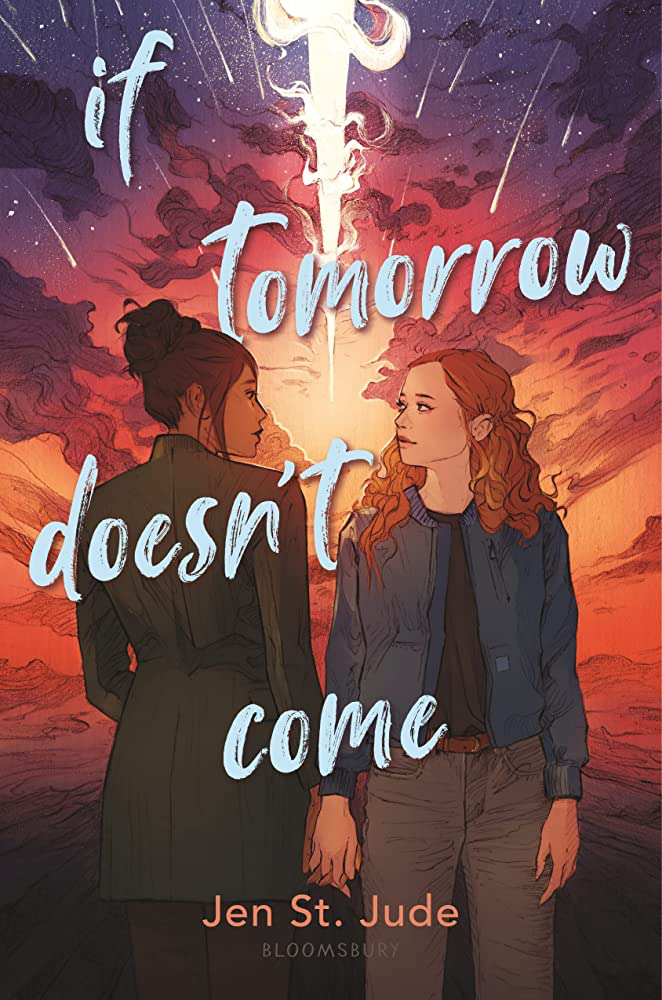
Book Review Tuesday (6/6/23) – If Tomorrow Doesn’t Come

Happy Tuesday, bibliophiles!

This book came out around a month ago, and I figured it would be a great read to start off pride month (after a very disappointing biography of Josephine Baker). If Tomorrow Doesn’t Come was my first exposure to Jen St. Jude (it’s her debut, after all), but after this, I’m ready to watch for anything else she writes.

Enjoy this week’s review!

If Tomorrow Doesn’t Come – Jen St. Jude

The news has just broken that an asteroid capable of wiping out the population is headed towards Earth in nine days. Avery Byrne had planned to drown herself on her college campus that day—being closeted from her religious parents, the mounting pressure of college, and undiagnosed depression had become too much to bear. But now, she’s forced to flee her college and face her family. Among them is Cass, her best friend and longtime crush, who she’s been hiding the truth from for years. With nine days until the end of the world, Avery must come face to face with everything that she wanted to run from, but must also realize the hope at the end of the world—maybe she finally has time to make things right.

TW/CW: suicide, suicide attempt(s), suicidal ideations, homophobia, religious bigotry, mental health issues (depression), natural disasters/end of the world scenarios (impending asteroid impact)

This is a heavy one. That can’t be understated enough—I always put trigger warnings before my reviews now, but these ones are really important to keep in mind. If Tomorrow Never Comes is a devastating novel—but a deeply important one, as long as you’re in the mental headspace for it.

That being said, one of the best parts about this novel is how Jen St. Jude handles such topics. It would’ve been easy to romanticize or otherwise dramatize Avery’s very real struggles with mental health and queer identity, but everything was handled with such care and grace. It’s clearly a very personal novel; nothing is glossed over, but nothing is overblown to amp up the tension needlessly. We’re very slowly coming out of the post-13 Reasons Why romanticization of suicide and mental health issues, so it’s very important that books like these exist to counteract that—presenting these subjects exactly as they are.

All of the relationships were also done so well in this novel! Each character was crafted with so much care, and the interactions that each one had with the other really made them stand out. The forced reunion of Avery, her friends, and her extended family in the event of the asteroid created so many moments that felt refreshingly human—messy and hard to read at times (part of the ending made me cry, full disclosure), but authentic and genuine. Again—in the face of an onslaught of very dramatic apocalypse-oriented YA in the past, it’s so nice to see one that’s full of emotion, but more in the way of real, interpersonal relationships and not 2012 love triangles in the face of impending doom.

That being said, I did have one major problem with this novel. I liked the format that St. Jude had where the novel was split into Avery’s past and present, but the flashback chapters felt somewhat stilted compared to the present day chapters. They leaned a lot more on telling—giving us information about Avery’s life, friends, and family in a very rote way, as opposed to letting all that bloom naturally. It’s even stranger considering that the present chapters didn’t have this problem at all—maybe it was just some kinks to work out when writing in Avery’s past tense. With all of the heart that this novel had, it just left me wishing for something as fluid as the other chapters.

I’ve seen some people complaining about the ending, but I feel like this novel couldn’t have ended any other way. This novel was always going to be about relationships during the apocalypse, and the mechanics of the apocalypse weren’t meant to be the star of the show. I will admit that I had to turn back to check that yes, this really was the end, it felt like the quiet, tender ending that this novel deserved.

All in all, an emotional and deeply personal story of love at the end of the world. 3.75 stars, rounded up to 4!

If Tomorrow Doesn’t Come is a standalone, and it is Jen St. Jude’s debut novel.

Today’s song:

SAW THE YEAH YEAH YEAHS LIVE LAST NIGHT IT WAS MAGICAL

That’s it for this week’s Book Review Tuesday! Have a wonderful rest of your day, and take care of yourselves!
Posted in Book Review Tuesday

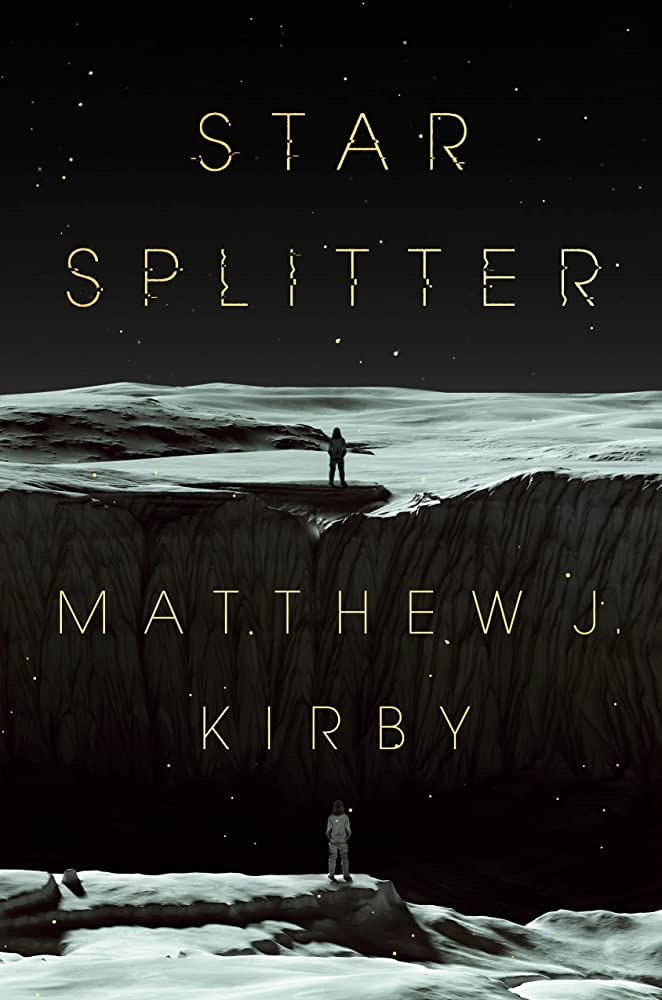
Book Review Tuesday (5/2/23) – Star Splitter

Happy Tuesday, bibliophiles!

Honestly, it’s a wonder that I managed to get my hands on this book when I did. I heard about it from a few “out this week” blog posts from other book bloggers (thank you!!), and as of today, the book’s only a week old. I put it on hold on the Kindle library, and it came in surprisingly quick, to my relief! I was super excited by the sci-fi premise, and in most of the relevant aspects, it absolutely delivered!

Enjoy this week’s review!

Star Splitter – Matthew J. Kirby

The method of space travel that 17-year-old Jessica Mathers is familiar with isn’t the kind you’d expect. In for the process to work, teleportation is a crucial step—the body that you’re in on Earth isn’t the same one that goes to space. But either way, after six years of waiting to reunite with her scientist parents on a faraway exoplanet, Jessica is going to space.

But when she wakes up, she’s alone in the wreckage of the ship that was supposed to carry her and the crew, stranded on an alien planet. The walls of the wreck are covered in the evidence of something sinister, and her parents are nowhere in sight. And a teleported clone of herself may be the only person she can trust—and the only person for miles around on this planet.

TW/CW: sci-fi violence, blood, murder, body horror, loss of loved ones

tread lightly – this review contains some spoilers!

Sci-fi that references old(er) poetry is an incredibly niche demographic, but I’d be lying if I said I wasn’t squarely in the middle of it. You got me there.

This book kind of came out of the blue for me—I forgot that Matthew J. Kirby existed after reading a few of his books in middle school (sorry), so Star Splitter was more of a left-field pick for me. But despite its flaws, it was a fascinating and gripping read—certainly a better addition to the world of YA sci-fi!

Hard sci-fi is hard to nail down for a young adult book; astrophysics and quantum mechanics are hard for anybody to understand, but I can speak for myself as an (older) teenager and a longtime YA when I say that it might be even harder to understand for a younger-skewing audience. Not to insult anybody’s intelligence—I’m fully including myself in there, in all my new English major glory. But Kirby hit the near-perfect balance with explaining the mechanics of teleportation, and how it factored into space travel. It wasn’t explained like it was being explained to a child, but it didn’t dump all of the information in an unceremonious chunk of jargon, either. And it’s a super fascinating concept to boot—it adds a layer of suspense to an already suspenseful book, there’s significant ramifications for most everything about the world that Kirby sets up, and there’s an existential aspect too. It’s all great there.

The story itself held a lot of water for me as well! There was so much to pick apart in it‚ from Jessica’s existential conflict about interacting with her own clone (HUH) and her own body to the mystery of what happened to the DS Theseus and its inhabitants. (Also, loved that we had a spaceship called Theseus. I’m assuming it’s a nod to the Ship of Theseus, but it also works on another level when you consider what happened with the crew. I won’t spoil anything about that in particular.) Kirby’s writing consistently kept all of that afloat, juggling two different timelines with suspense unfolding in both of them. His descriptions of the landscape of Hades (Mr. Kirby really likes his Greek mythology, huh?) were also nothing short of lovely—I’m a sucker for any kind of alien planet exploration, and Star Splitter, for the most part, adequately scratched that itch.

I say “for the most part” because, as much as I loved it, there were so many parts that seemed too important that were just left out of the final conflict. The sideplot about the ruins of an alien city with a giant pile of ground sloth-looking skeletons???? Bioluminescence everywhere?? BEING PURSUED BY AN UNSEEN ALIEN IN THE SHADOWS??? That was my favorite part of the whole novel, but we really didn’t get any resolution to it. It felt like such a crime that we never got to see where that thread led, given how much it was foreshadowed and otherwise built up. I get that it wasn’t necessarily the main conflict, but Kirby gave it a similar amount of weight to the main conflict, so it felt like it was in need of a more satisfying conclusion than “Jessica got out of the city ruins somewhat unscathed.” I NEED MORE. GIVE THE PEOPLE (ME) WHAT THEY WANT.

I feel like this happened a lot with Star Splitter for me—aside from the main conflict, there were so many fascinating and inventive things going on with the world that felt so creative, but were just tossed aside as afterthoughts once they were explained. The fauna on Hades? Mt. Ida? QUANTUM GHOSTS? I was just taken aback by so many parts of the plot, only to have them scrapped in favor of the main conflict, which I…halfway understand. All this is to say that said main conflict was excellent, but I just wanted more. It wasn’t like Star Splitter was an exceedingly long novel either—320 pages leaves some room to explore at least a few other aspects of the world, I think. That’s why I’m *officially* putting my rating at 3.75 instead of the full 4 stars—there was so much creative stuff to chew on, but not enough of it was expanded upon. I’ll be needing a sequel, please and thank you. 🫶🏻

All in all, an inventive and fascinating sci-fi novel that presented a plethora of creative aspects to fill up the plot, but still left me wanting in some places. 3.75 stars, rounded up to 4!

As of now, it looks like Star Splitter is a standalone, but Matthew J. Kirby is the author of several other books for children and young adults, including the Dark Gravity Sequence (The Arctic Code, Island of the Sun, and The Rogue World), The Clockwork Three, A Taste for Monsters, and many others.

Today’s song:

getting caught up on Palehound before Eye on the Bat comes out…another great album!! this song reminds me so much of Wilco

That’s it for this week’s Book Review Tuesday! Have a wonderful rest of your day, and take care of yourselves!
Posted in Book Review Tuesday

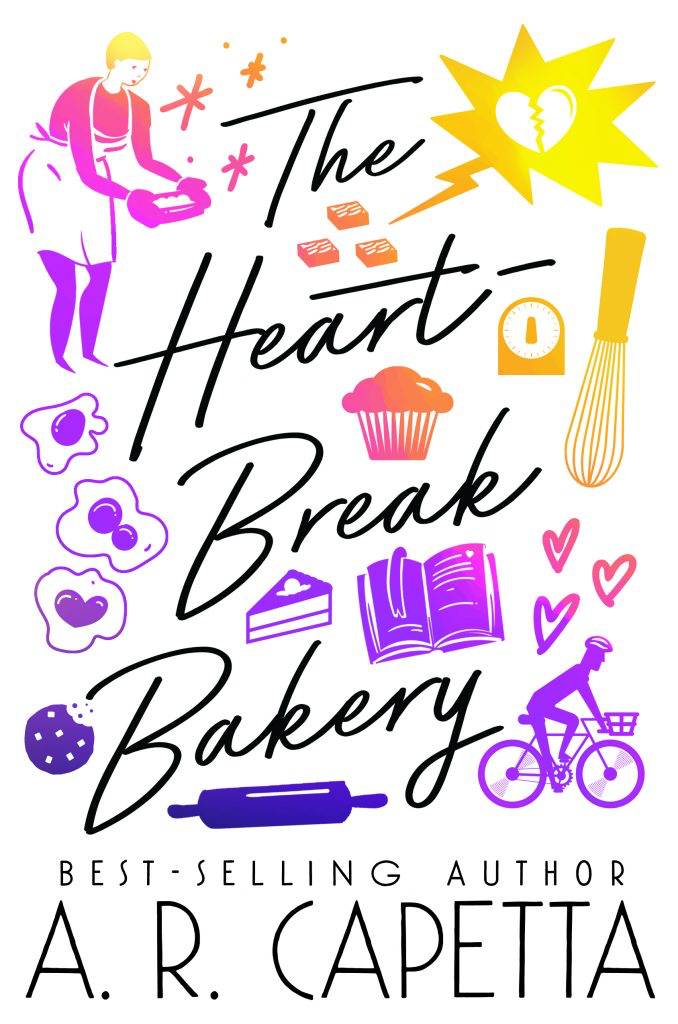
Book Review Tuesday (1/10/23) – The Heartbreak Bakery

Happy Tuesday, bibliophiles!

I’ve been a fan of A.R. Capetta ever since I read the Once & Future duology, and when I was looking for a sweet rom-com to read the other day, the opportunity presented itself in this book. I’m glad to say that this is proof that Capetta almost never misses—a tender and sweet (no pun. intended) celebration of queerness and baking!

Enjoy this week’s review!

The Heartbreak Bakery – A.R. Capetta

Syd loves nothing more than baking—especially when it’s at the Proud Muffin, the queer-run bakery at the center of Austin’s queer community. After a nasty breakup, Syd deals with it in signature Syd fashion—by baking all the frustrations and bad feelings out into a batch of brownies. But when Syd’s frustrations works its way into the brownies and causes everyone that eats them to have relationship troubles, Syd has to fix the issue how it began—with baking. Throw in the cute delivery-person, and Syd has to avoid a recipe for disaster…

TW/CW: gender dysphoria

this book: has several jokes about the fact that it’s still possible to have a bad hair day even when you’ve shaved your head

me, having just shaved my head: [chuckles] “I’m in danger!”

I came into The Heartbreak Bakery just for a queer romance to tide me over, and I can now say with certainty that A.R. Capetta never misses! This piece of magical realism is a love letter to queer communities and spaces, and it made my heart so happy.

First off, this is easily one of the most diverse rom-coms that I’ve ever read! Syd is the first main character that I’ve read that’s agender, and the main relationship is between Syd and Harley, another nonbinary character! I think the entire cast is queer—a gay couple owns the Proud Muffin, there’s a polyamorous couple on the side, and there are queer characters of all identities as side characters, and many of them are POC as well! Capetta never shies away from unapologetic queerness, but it particularly shone in The Heartbreak Bakery.

The magical realism aspect was also fantastic, and it also culminated into a theme that I thought was incredibly important. I liked the ambiguity of where it came from, but the concept of putting tangible feelings into baking that have a visible ripple effect had me on board instantly. It served to show a great theme: the feelings that you put into anything, be it a project, a relationship, or a batch of brownies, is what you’re going to get out of it. If you pour all of your negativity into something, that’s exactly what’s going to come out of it. The Heartbreak Bakery takes the concept very literally—brownies that make couples break up, cakes that make you apologize, et cetera—but it was a great theme to explore. I do feel like some of the problems being almost immediately solved by the “apology cake” were a tad bit too easy for Syd to maneuver, but I’m glad Capetta made it more complicated—having Marisol eat the cake by accident, for example. (I wish I had a physical copy of the book on hand—some of those recipes looked good!)

My only major qualm with The Heartbreak Bakery was the pacing. I’m all for slower, gentler books, but it felt like the main points of conflict were unevenly spaced. For instance, the final climax of the bake-off felt far too rushed for me; given how much hinged on the outcome, it should’ve gotten a lot more page time than it did. Some of the interim scenes between the main points of conflict should’ve been shortened in favor of the more important, plot/character building scenes. It was a great novel to start with, but I could’ve done with a little tweaking with the pacing and the importance placed on certain scenes.

All in all, an incredibly sweet (no pun intended) magical-realism romance that reads as an ode to baking, queerness, community, and love itself. 3.75 stars, rounded up to 4!

The Heartbreak Bakery is a standalone, but A.R. Capetta is also the author of The Lost Coast, the Once & Future duology (co-authored with Cory McCarthy), Echo After Echo, and several other books.

Today’s song:

man I have so many memories of hearing this song when I was a kid

That’s it for this week’s Book Review Tuesday! Have a wonderful rest of your day, and take care of yourselves!
Posted in Book Review Tuesday

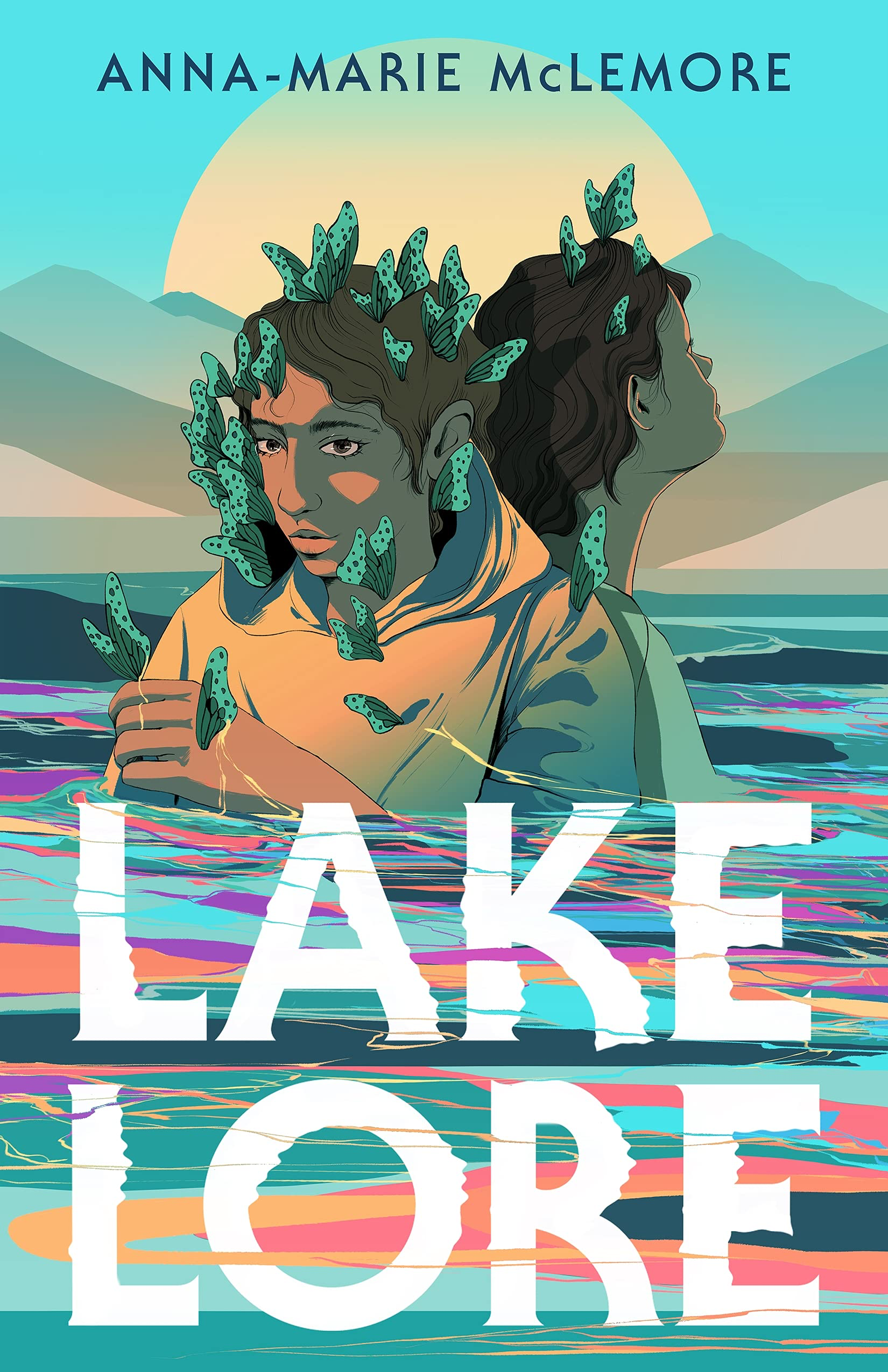
Book Review Tuesday (6/28/22) – Lakelore

Happy Tuesday, bibliophiles!

I’ve been a huge fan of Anna-Marie McLemore’s books for ages; their prose is always immersive and lush, and their stories never fail to pull at the heartstrings. So I was over-the-moon excited to find out that they had a new book out! I put Lakelore on hold as soon as I could, and I finally got to read it last week. While it wasn’t their best work, Lakelore is still a beautiful tale of the trans experience.

Enjoy this week’s review!

Lakelore – Anna-Marie McLemore

The town where Bastián and Lore live has a secret: under the lake is a strange, unknown world. But they are the only ones who have ventured down into this secret world, and they know something that the other townsfolk don’t know: the world under the lake is blending with the real world. The only way to put the two worlds back in their places is for Bastián and Lore to reunite, but the secrets between them may tear them apart before they reach their goal.

TW/CW: ableism, bullying, racism, transphobia, dysphoria

I loved Lakelore, but it lacked the very thing that makes McLemore’s other books so unique—the magical realism aspect. It was there, sure, but it felt so sidelined when the synopsis emphasized it so much. That being said, Lakelore was still excellent, and it’s sure to resonate with so many nonbinary readers!

The representation in Lakelore was truly fantastic! Both Bastián and Lore are Latinx and nonbinary; Bastián also has ADHD and Lore has dyslexia! This kind of intersectional representation is what I live for, and McLemore wrote it all so gracefully! Each aspect of their identities was so wonderfully written, from Bastián’s journey starting testosterone to Lore’s therapy sessions to cope with school having dyslexia. The whole book is a beautiful testament to being the other in some way, and the way that McLemore explores it with Bastián and Lore was fantastic.

And I’d be remiss if I didn’t mention Anna-Marie McLemore’s unforgettable prose! Their writing is as strong as ever in Lakelore, and the way their signature, magical writing style told Bastián and Lore’s stories made it all the more engaging, emotional, and tender. It’s the kind of writing that feels like looking at pure, unadulterated magic, instantly transporting the reader to the small town and the mysterious lake at its heart.

That being said, I was a little disappointed with the magical realism aspect of Lakelore. At best, it was underdeveloped; we got glimpses of the world beneath the lake, but it was never quite expanded upon. We saw that this underwater realm gave Bastián’s alebrijes (which I also loved—great metaphor for healthy coping mechanisms!) the ability to move, but other than that, it was very vague, save for the urban legend aspect of it. I guess it’s on me for thinking that Lakelore was gonna be some kind of nonbinary Abe Sapien kind of deal, but even so, I wanted so much more from that aspect after how strong McLemore’s magical realism/fantasy game usually is.

All in all, a fantastic addition to Anna-Marie McLemore’s pantheon that lacked slightly in the magical realism department, but made up for it with the beautiful depiction of a Latinx, nonbinary, and neurodivergent experience. 3.75 stars, rounded up to 4!

Lakelore is a standalone, but Anna-Marie McLemore is also the author of The Mirror Season, Wild Beauty, When the Moon Was Ours, Dark and Deepest Red, Blanca & Roja, The Weight of Feathers, and the forthcoming Great Gatsby remix Self-Made Boys.

Today’s song:

That’s it for this week’s Book Review Tuesday! Have a wonderful rest of your day, and take care of yourselves!
Posted in Book Review Tuesday

Book Review Tuesday (5/24/22) – A Magic Steeped in Poison

Happy Tuesday, bibliophiles!

I saw A Magic Steeped in Poison pop up on several blogs I follow whenever it first came out, and I figured I’d give it a go; I’ve become slightly jaded with a lot of YA fantasy by this point, but I was intrigued by the unique concept of tea magic that this novel promised. I bought it the other day, and I just recently finished it—lush and immersive, with a world that I loved getting lost in.

Enjoy this week’s review!

A Magic Steeped in Poison (The Book of Tea, #1) – Judy I. Lin

In Ning’s world, tea is everything. The shennong-shi—masters of the art of tea-making—are revered in her society, known for conjuring magic and omens through their tea.

After an incident with poisoned tea kills Ning’s mother and incapacitates her sister, she turns to the only option to save her family. In the imperial city, there is a competition to find the most worthy shennong-shi in the kingdom; the winner earns the favor of the princess. Knowing that it may be the only way to save her sister, Ning ventures into the city, but what waits for her there may be more than she bargained for.

TW/CW: poisoning, loss of loved ones, violence, murder, animal cruelty

my brain can’t decide between “Tea” by Jim Noir or “Have a Cuppa Tea” by The Kinks as my internal soundtrack for this…a little help here?

As a reader, I’ve started to grow tired of some many of the beats that most YA fantasies follow—chosen ones, love triangles, and not much “fantasy” other than a basic magic system. I’m glad to say that A Magic Steeped in Poison was a breath of fresh air in that department, filled with lush prose and steeped (no pun intended) in Chinese culture and mythology!

First off, can we all take a moment to appreciate how beautiful this cover is? WOW. Seriously still in awe of how gorgeous it is. DANG. That is ART right there.

now, back to our scheduled program…

What immediately stands out about A Magic Steeped in Poison is Judy I. Lin’s prose. Like the brewing tea that shows up in so much of the book, it’s lush and immersive, filled with all sorts of sensory details that make the world feel all the more fleshed out. Lin’s writing makes it easy to picture the world that she’s created, from Ning’s rural home province to the luxury of the Imperial City. I could smell the tea, feel rain on my skin, and sense the tension that hung in the air during the shennong-shi competition.

I didn’t get overly attached to any of the characters, but Ning worked as the perfect kind of protagonist for A Magic Steeped in Poison; her determination, her hard-working spirit, and her devotion to her craft and family made her just the kind of protagonist to root for. For me, most of the other secondary characters weren’t as fleshed out, but I did like Lian as a secondary character, and the budding romance between Ning and Kang was totally sweet 🥺 (more of that!!! please!!!) I wanted more from these characters, but as a baseline, they were still good to work with.

However, I will say that the plot felt disorganized at worst. Amidst the main plot of the shennong-shi competition, there were a lot of secondary threads that only lasted a few chapters. Their resolutions were often very rushed, and I found myself wondering whether or not they were really relevant to the plot in the end. It felt a bit like an unfinished tapestry; the main picture was all there, but all of the loose, fraying threads at the edges made it almost look sloppy.

All in all, a refreshing fantasy that engaged all of my senses with ease. 3.75 stars, rounded up to 4!

A Magic Steeped in Poison is Judy I. Lin’s debut, and the first book in the Book of Tea duology. Its sequel, A Venom Dark and Sweet, is slated for release this August.

Today’s song:

GOOD GOD this is SUCH A FANTASTIC ALBUM UGH

That’s it for this week’s Book Review Tuesday! Have a wonderful rest of your day, and take care of yourselves!

Posted in Book Review Tuesday

Book Review Tuesday (4/26/22) – One for All

Happy Tuesday, bibliophiles!

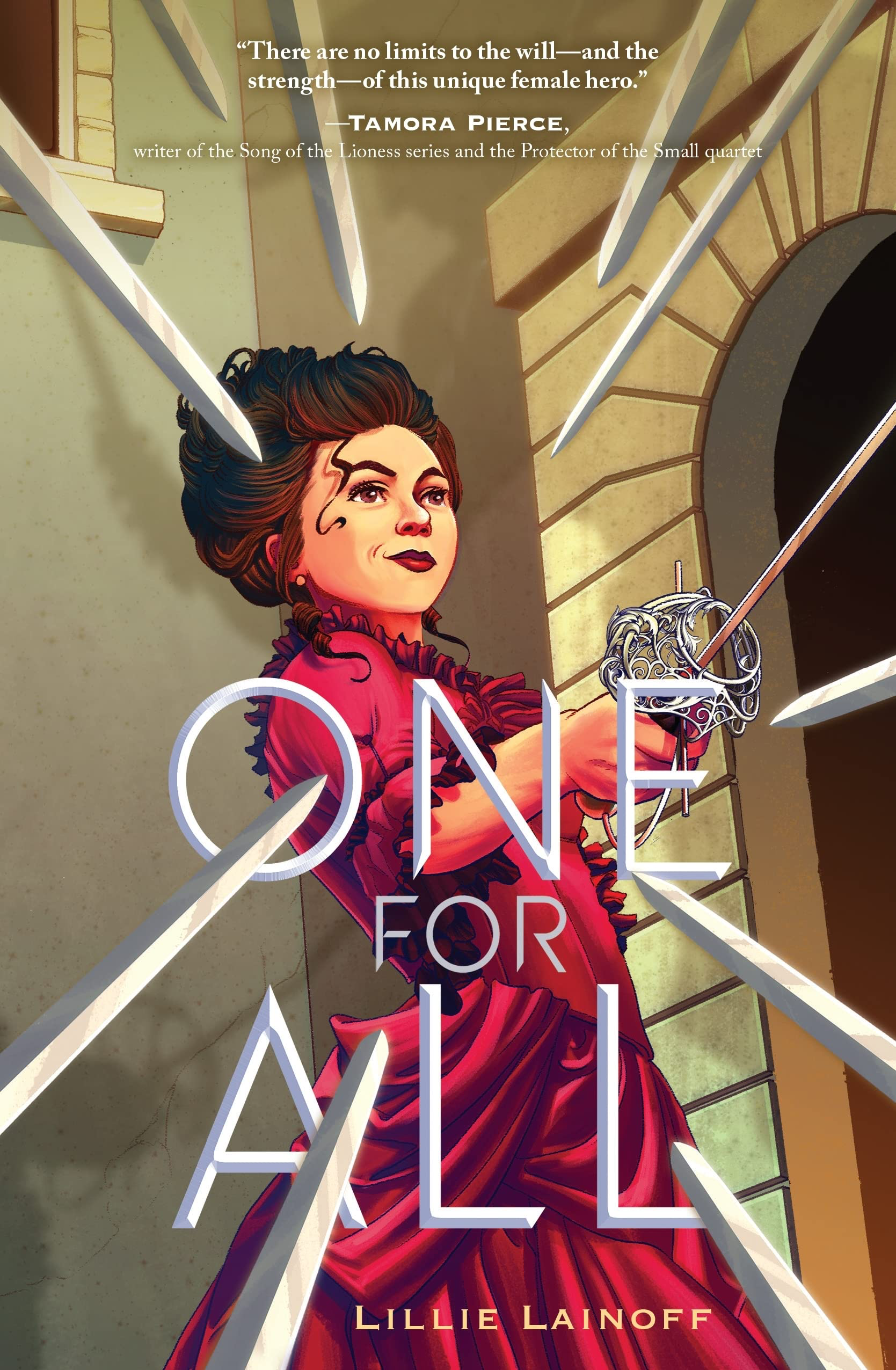
Disability representation—especially in YA—is few and far between, and even when I do find it, a lot of disability rep is still written by abled authors. (That isn’t always necessarily a bad thing, but it’s easy to fall into harmful tropes and misrepresent disability that way.) So when I heard about One for All, I was so excited—a feminist, historical fiction novel about a girl with a chronic illness! And beyond that—a girl with a chronic illness WHO SWORDFIGHTS. Doesn’t get much better than that, am I right? My copy finally came from the library last week, and although it wasn’t the perfect book, I enjoyed a lot of it!

Enjoy this week’s review!

One for All – Lillie Lainoff

Tania de Batz is determined for the world to see her as more than just a “sick girl.” As the daughter of a former musketeer, her passion is swordfighting, and with the help of her father, she’s become a skilled fighter. But when her father is brutally murdered, she discovers his dying request to send her to a finishing school.

But what she finds at L’Academie des Marieés is no finishing school—it’s a secretive school that trains young women as musketeers. Tania is soon swept into a world of swords and secrecy, and soon, she and her fellow students have an assassination plot to uncover. The only clue to the plot—and maybe even her father’s murder—lies in a boy named Étienne, but his charms may be Tania’s undoing.

TW/CW: ableism, blood, murder, loss of a loved one, past mention of sexual assault

Good disability representation—especially in YA—seems to only happen once in a blue moon. So I was so happy to find this book—a feminist historical fiction book written by a disabled author, no less! And while I did have a few problems with the story overall, One for All was no doubt a fantastic debut!

First things first—disability rep! While I can’t speak to the accuracy, Lillie Lainoff (the author) has the same chronic illness as Tania—Postural Orthostatic Tachycardia Syndrome (POTS)! Disabled representation from disabled voices always makes my heart so happy! For me, it’s even better that One for All is a historical fiction piece; most books with disabled characters only exist in contemporary/realistic fiction books, and I adamantly believe that disability rep in genres like historical fiction, fantasy, and science fiction is just as important, if not more important; it’s crucial for disabled readers to know that they don’t only exist in modern realistic fiction realities—they have always existed in history, and they can exist in fantasy and sci-fi worlds as well. One for All did a fantastic job at detailing all the aspects of Tania’s POTS and how it affected her daily life, from her routine to her social interactions and childhood. So many chronically ill readers will be able to see themselves in Tania, and that, to me, is immensely impactful.

Beyond that, One for All is fiercely feminist! It’s set in France in the 1600’s, and the themes of empowerment and sisterhood ran deeply through it. Throughout most of the book, Tania struggles with her place in the world as a disabled woman in a time where both are frowned upon, but her journey for self-empowerment is one that is sure to resonate with so many readers. Although some of the other students don’t treat Tania with the respect she deserves at first, there are themes of recognizing and correcting your previous ableism. The friendship that Tania eventually shares with the rest of the fellow L’Academie des Marieés students is wonderfully tender and strong, and it makes for an incredibly empowering novel overall.

As much as I loved the aforementioned aspects, however, there were a few aspects of One for All that I didn’t like as much. For the most part, I liked the writing style well enough; Lainoff’s prose flowed well and was appropriately descriptive when the time called for it. However, Lainoff’s style tended to fall towards the over-the-top side of the spectrum. I could let it slide in most instances—it fit with the mood and tone of the book in general—but in some cases, it felt overly purple and theatrical. It had a dramatic feel to it, and while it fit the classic retelling tone at times, it felt superfluous in other cases.

Additionally, I wasn’t quite as invested in the assassination part of the plot as I was in the rest of the book. Seeing as that (after Tania’s father’s murder) was the main driving force to the plot, it didn’t come through all the way; it was overshadowed by more mundane character interactions (which I did like), and as a result, felt rushed and oversimplified. For something that was supposed to be the primary inciting incident of the second half of the book or so, it felt more like a subplot than anything. As a result, I felt my mind wandering a bit during these parts, but it didn’t take me out of the book entirely.

All in all, a feminist retelling with a disabled heroine who all readers will want to cheer on. 3.75 stars, rounded up to 4!

One for All is a standalone and Lillie Lainoff’s debut novel.

Today’s song:

That’s it for this week’s Book Review Tuesday! Have a wonderful rest of your day, and take care of yourselves!
Posted in Book Review Tuesday

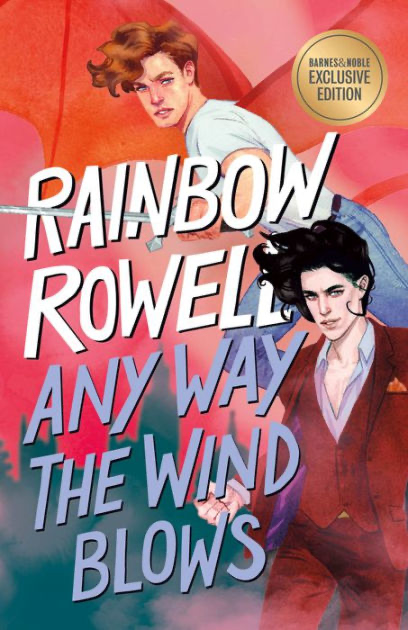
Book Review Tuesday (4/19/22) – Any Way the Wind Blows (Simon Snow, #3)

Happy Tuesday, bibliophiles!

Carry On has been a favorite book of mine for years. Ever since book 3 came out back in July, I’ve been trying to find it in the bookstore and buy it. I went to Barnes & Noble recently and finally got my hands on it (the exclusive edition!! with the beautiful endpapers!! 😭), and although it wasn’t as strong as book 1 was, Rainbow Rowell’s endearing writing and characters continue to please.

Now, TREAD LIGHTLY! This review may contain spoilers for the first two books, Carry On and Wayward Son. If you haven’t read either and intend on doing so, read at your own risk!

Enjoy this week’s review!

Any Way the Wind Blows (Simon Snow, #3) – Rainbow Rowell

After their trip to America, Simon, Baz, and Penny are called back to Watford. A new threat has arisen that threatens to upend the World of Mages, and despite his hesitance to be magickal, Simon is once again pulled into the fray. All the while, Simon still has personal questions left unanswered—if he leaves the World of Mages, what will happen to his relationship with Baz?

Simon’s friends are no better off; Penny has smuggled Shephard into England, and now must grapple with a demonic curse to save his life, and Baz’s family has drawn him back into the vampiric fray. Was America the last time that they were together, or will they remain the tight-knit group that they once were?

TW/CW: blood, animal death, cults/emotional manipulation, surgery, sexual content

I’m now reminded of why I had a crush on Baz when I was 14—how can you resist a sexy vampire who plays Kishi Bashi on his violin and sings Beatles songs to his two-year-old brother to help him go to sleep? Specifically THE WHITE ALBUM Beatles songs?? I’m getting all sappy at the thought of him singing “While My Guitar Gently Weeps”… 😭

I’ve been a fan of Rainbow Rowell for years, and Carry On is easily my favorite of her books. Wayward Son was fun, but it felt sloppy, and I hoped Any Way the Wind Blows would pick up the mess it made. However, this book had the weakest plot of the three; that being said, that doesn’t mean I didn’t enjoy it—it’s Rainbow Rowell, so no matter the plot, it’s guaranteed that I’ll still adore the writing and characters.

Let me get my major complaint out of the way first—the plot. As much as I love Carry On, I stand by the argument that it should’ve been a standalone from the start. Wayward Son, even though I enjoyed it, was still unnecessary at worst, and it feels like Any Way the Wind Blows exists almost solely to tie up all the loose ends from the former. The concept of the whole Chosen One cult with Smith was an interesting premise, but it wasn’t nearly enough to carry over 600 pages. There are several plots going on in the book, but all of them felt like sideplots; maybe it’s the fact that all of the POV characters were separated to some degree, but all of them—even the main plot—came off like borderline afterthoughts.

As weak as the plot was, though, I will always love Rainbow Rowell’s writing! She has such a way with words that not many other authors have; every emotion feels genuine, her worlds are fleshed out, and her prose never fails to be endearing and poignant. It wasn’t enough to completely stitch up the plot problem, but I always enjoy reading her books.

Going off of that, part of what makes her writing so special is her characters. I already adored all of the gang™️ from this series, and they were just as delightful as they were in the previous books. Simon, Baz, and Penny are all so dear to me (Baz most of all), and everything that I loved about them from the previous books shone through just as much in Any Way the Wind Blows. These books have always explored how complicated relationships can be through the eyes of Simon and Baz, but I loved how Rowell didn’t hesitate to explore some of the messier sides of love; their relationship is far from perfect, but through it all, it felt messy in a refreshingly genuine way. The conflict felt realistic and wasn’t neatly wrapped in a bow, but through it all, Simon and Baz came through it. As abrupt as the ending was, I’m glad that their relationship got mended in the end. Gotta love my Snowbaz 🥹

All in all, the weakest addition to the Simon Snow trilogy, but still a sweet ending for the characters I love. 3.75 stars, rounded up to 4!

Any Way the Wind Blows is the third and final book in the Simon Snow trilogy, preceded by Carry On (book 1) and Wayward Son (book 2). Rainbow Rowell is also the author of Eleanor & Park, Fangirl, Pumpkinheads, and several other books for young adults and teens. She also wrote the 2017 run on Marvel’s Runaways.

Today’s song:

That’s it for this week’s Book Review Tuesday! Have a wonderful rest of your day, and take care of yourselves!

Posted in Book Review Tuesday

Book Review Tuesday (2/8/22) – Noor

Happy Tuesday, bibliophiles!

I’ve realized that Nnedi Okorafor is an author that I end up coming back to frequently—I’ve piled a whole lot of her books on my TBR over the years, and I’m almost never disappointed by what I read, whether it’s Remote Control or Lagoon. She’s an incredible sci-fi and Afrofuturism author, so I jumped at the chance to read Noor. I picked it up last week, and although it had some flaws, it was an endearing and immersive novel!

Enjoy this week’s review!

Amazon.com: Noor: 9780756416096: Okorafor, Nnedi: Books

Noor – Nnedi Okorafor

Originally, AO’s name stood for Anwuli Okwudili. But she prefers the name Artificial Organism; over the years, she has gained several prosthetics and synthetic organs due to a birth defect and a car crash in her teenage years. AO is proud of the person she is, but the rest of the world is not so kind—especially when she’s caught in the middle of a violent conflict. While on the run, she meets DNA, a herdsman and a fugitive who is willing to aid in her escape. But the desert is full of dangers—the biggest of all the infamous Red Eye, said to swallow all who enter it.

jupiter's red spot great red spot gif | WiffleGif

TW/CW: murder, violence, ableism (internalized & treatment of protagonist), catcalling

[looks at this cover] why did I ever question that I like girls

Since I started on the Akata Witch series way back in middle school, Nnedi Okorafor has always been an author that I come back to. Her worlds are consistently filled with rich detail and endearing characters, and Noor was no exception. Okorafor’s newest novel is filled with cutting commentary, immersive worldbuilding, and no shortage of unique characters!

Nnedi Okorafor has a writing style that I adore; her worldbuilding and characters are stellar as they are, but she has such a way with words that everything that I mentioned practically jumps off the page. Her metaphors are often humorous and highly specific, and in Noor‘s case, they served to flesh out the characters and world even more so. Her writing never fails to impress, and Noor is another testament to the fact.

Okorafor’s characters are always endearing, but the protagonists of Noor especially shone! AO was such a unique and complex character; her backstory was more in-depth than a lot of protagonists that I can think of, and the intricacies of her history and personality were delved into without steering towards info-dumps. She and DNA had great chemistry along their journey; they bounced well off of each other both in terms of banter and personality. Even the side characters were given so much care, from the Oz-like Baba Sola to DNA’s cows.

As much as I loved all of these elements, there were a few facets that brought Noor down in some places. I have mixed feelings about how AO’s disability was portrayed; while it was clearly depicted that AO is proud of being disabled (and it’s so cool to see a Black disabled character!), there’s a lot of internalized ableism that goes unaddressed. In particular, the way that AO describes herself as “broken” and “crippled” rubbed me the wrong way. I may not have a physical disability, but the latter of the two has been known as outdated language for quite some time, and beyond that, it seems a little contrary to the part of the blurb about AO embracing herself. It’s…a good start, but it’s got some holes.

In addition, Noor had a lot to say, but it suffered from trying to cram commentary on so many different topics in a relatively short span—only 224 pages for my hardcover copy. All of the commentary was fantastic—corporate greed, environmentalism, the Western world’s misguided belief that all of Africa is “poor” and “diseased,” and how society treats disabled people are just a few of them. Problem is, while all of these are mentioned, there is so little room in the plot for them that they ended up being underdeveloped snippets. 224 pages was enough to sustain the plot, but the commentary, which was clearly meant to be the forefront, was forgotten in the dust, for the most part.

But all in all, a highly creative work from a sci-fi author who never misses. 3.75 stars, rounded up to 4!

Desert GIF - Night Canyon Timelapse - Discover & Share GIFs

Noor is a standalone, but Nnedi Okorafor is also the author of Remote Control, Lagoon, the Nsibidi Scripts (Akata Witch, Akata Warrior, and Akata Woman), the Binti trilogy (Binti, Home, and The Night Masquerade), and several other books for teens and adults.

Today’s song:

That’s it for this week’s Book Review Tuesday! Have a wonderful rest of your day, and take care of yourselves!

Posted in Book Review Tuesday

Book Review Tuesday (1/25/22) – Railhead

Happy Tuesday, bibliophiles!

As of last week, it had been ages since I’ve read anything by Philip Reeve. I’d gotten through the whole Larklight trilogy in middle school and loved it, and I read Fever Crumb as well and wasn’t as much of a fan. I forgot about him for a while, until I got a recommendation from Sabrina (thank you!) about another series of his—the Railhead series. I decided to pick it up, and I ended up liking it—after reading this, I definitely want to see how the rest of the story goes!

Enjoy this week’s review!

Amazon.com: Railhead: 9781630790486: Reeve, Philip: Books

Railhead (Railhead, #1) – Philip Reeve

In the distant future, it isn’t spaceships that transport humanity across the stars—it’s a massive network of trains. The Great Network spans across the entire galaxy, and one line can take you anywhere that you so choose. It’s the perfect place for Zen Starling, a young thief who makes a living from the goods he steals from passenger cars. But when he attracts the attention of the mysterious Raven, Zen finds himself entrenched in a royal conspiracy. Soon, his own identity as a nobody from the streets is called into question, and his success on Raven’s mission may determine the rest of his career.

Star Wars Prequel - Planet Coruscant | Star wars, Film inspiration, Gif

TW/CW: violence (fairly mild), descriptions of killing animals/dead animals, fire, fear

It’s been about 5 years since I’ve read anything by Philip Reeve; I loved the Larklight trilogy but didn’t have the same luck with Fever Crumb, so he was generally hit-or-miss for me. But ultimately, I’m glad I picked Railhead up! It was the perfect antidote after reading something as heavy as Anthem; fun, light-hearted, and fast-paced. (Thanks again for the rec, Sabrina!)

The worldbuilding of Railhead made the whole book. It’s the kind of intricate worldbuilding that I aspire to have in my own writing; no stone is left unturned in terms of the little details that make the Great Network so genuine-feeling and fleshed out. Best of all, none of it is delivered in info-dumps; pieces of information are spaced out and don’t distract from the overall story. There was so much love put into every little nook and cranny of Reeve’s world, from the trains to the android history to the graffiti on the walls. I especially loved the Hive Monks—the concept behind them was so inventive! I wished we’d seen more of Uncle Bugs and the others.

As far as characters go, I didn’t get attached to many of them, but they were at least decently flushed out. Zen himself didn’t have many traits that would distinguish him from the average middle grade/YA protagonist, and having him get saddled with this trilogy’s equivalent of the chosen one trope didn’t exactly help his case. He was simply…alright for me. I felt the same way towards most of the other characters; they were distinct enough to not be trope-y, but not distinct enough to be rememberable. I did like Nova, though. She was my favorite out of the main cast—I liked her backstory a lot, and her being an android (or a “moto,” as is the lingo in Zen Starling’s world) added a unique layer to her story.

The plot itself was a little lacking for me, but its fast pace saved it. At its worst, the plot seemed to [Robert Plant voice] ramble on without any clear direction, but at its best, it was loads of fun. You do get the sense that you’re clinging to the top of a speeding train, the way the events move—it’s very fast-paced, and given both the setting and the premise, it’s perfect!

I wasn’t as invested in the main plot, but I tended to gravitate more towards the side plots, the short anecdotes that fleshed out Railhead’s world even more. The fact that I got more excited about seeing giant manta ray creatures and looking at the insides of futuristic trains than the actual should probably say something about the book itself, but those parts gave me joy, and that’s that. Again—it’s the tiny details that made Railhead as entertaining as it was.

All in all, a romp through a futuristic world at breakneck speed that shone in its detailed worldbuilding. I’m on board with continuing the rest of the series! 3.75 stars, rounded up to 4!

Padawanlost — ✩ star wars gif meme ✩ [¾] planets: Coruscant...

Railhead is the first book in the Railhead trilogy, and it is followed by Black Light Express (#2) and Station Zero (#3). Philip Reeve is also the author of the Larklight trilogy (Larklight, Starcross, and Mothstorm), the Mortal Engines quartet (Mortal Engines, Predator’s Gold, Infernal Devices, and A Darkling Plain), the Fever Crumb series (Fever Crumb, A Web of Air, and Scrivener’s Moon), and several other series for young adults and children.

Today’s song:

That’s it for this week’s Book Review Tuesday! Have a wonderful rest of your day, and take care of yourselves!