Posted in Book Review Tuesday

Book Review Tuesday (10/28/25) – Red City

Happy Tuesday, bibliophiles!

It’s safe to say that I’ve grown up with Marie Lu in my formative years. Sure, her quality has wavered on occasion, but she’s been such a consistently talented writer and a consistent presence in my life since I was about 13 or 14. When I heard she was writing her first adult book, I was over the moon—and I’m glad to say that I devoured Red City just like I devoured her other books as a pre-teen.

Enjoy this week’s review!
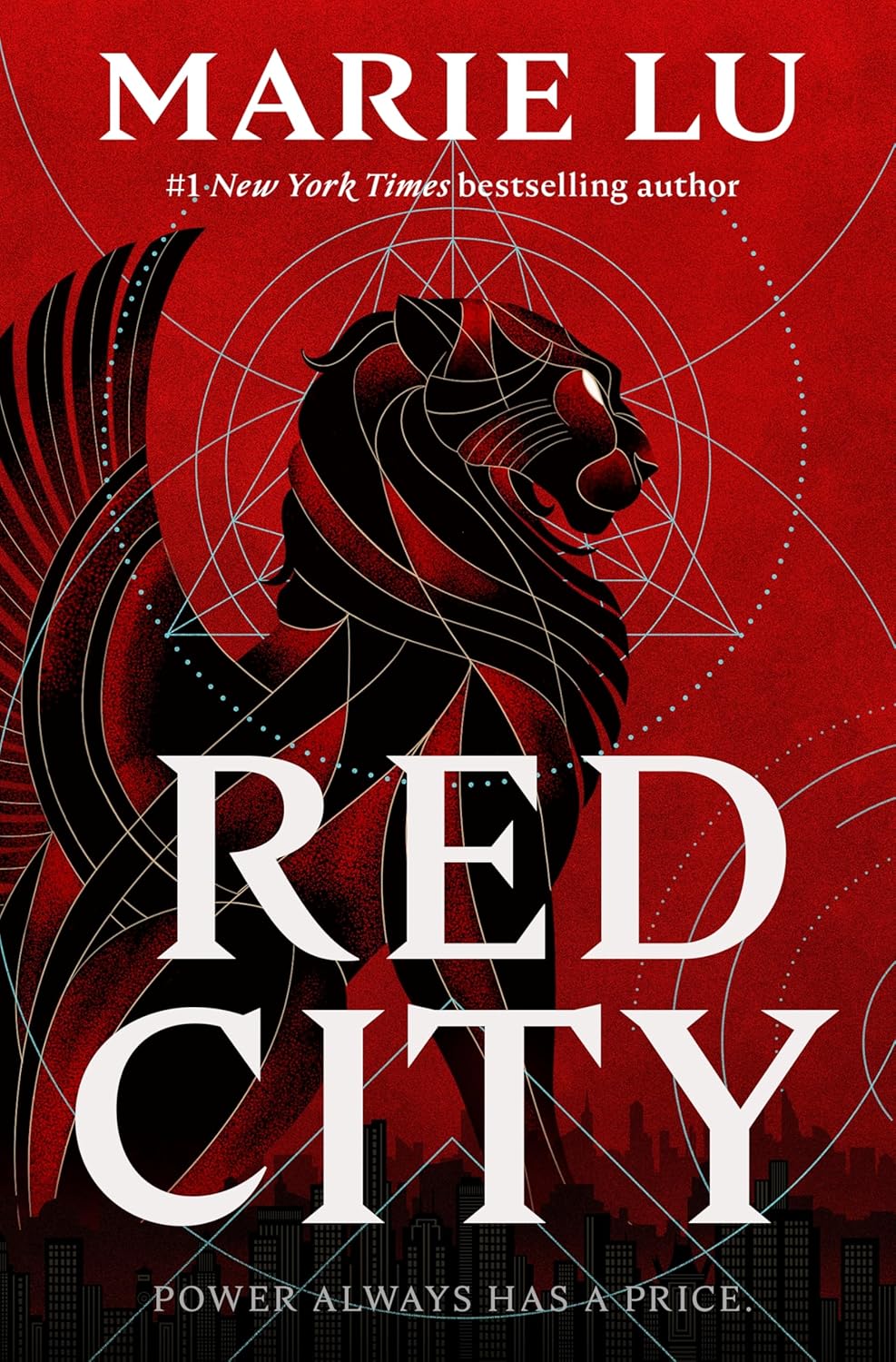
Red City (The New Alchemists, #1) – Marie Lu

In Angel City, Alchemy is the backbone of the wealthy. Those who are knowledgeable in the art of alchemical transformation can perform acts once thought impossible, both through the study of magic and the consumption of sand, a drug that makes the user more perfect—at a deadly price. For Sam and Ari, childhood friends caught on the opposite sides of the criminal syndicates of Angel City, this price is one that will bring them everything that they ever wished for. But will the rift deepening between them ever be breached—and what is the price of the enmity they’ve sown between each other in their quests for power?

TW/CW: substance abuse (fantasy), torture, violence, sexual content, loss of loved ones, child abuse

Marie Lu slipping in a reference to Nannerl Mozart whenever it’s humanly possible:

I’ve been on the Marie Lu train beginning with Warcross all the way back when I was 13 or 14, and I’ve been hooked ever since. Has she had her lower points? Sure, but it’s overshadowed by her consistency overall. Even her weaker books have still been loads of fun. It feels like a wonderful, full circle moment to be reading her adult debut now, here in my twenties and nearly finished with college. Thankfully, it did not disappoint.

First off, I think Lu’s really onto something with this alchemy-based magic system…I’m fully invested in this world! A lot of what I know about alchemy (chiefly from my amazing dad, who’s taught whole classes about this—shoutout to him!) is all about transformation—not just with the kind of alchemy that was done in ancient times with physical objects and elements, but of self-transformation, whether to reach a lofty goal of immortality or of general spiritual betterment or being closer to the divine. In Red City, the premise hinges around this quality of alchemy being perverted; you can physically perform transformation-based magic of several types, but the alchemical transformation is aided by a drug called sand. Of course, in the hands of criminal syndicates around the world, it becomes a tool to become more “perfect.” Leave it to the mafia to ruin alchemy. (New elevator pitch for Red City just dropped?)

On that subject, I really like that use of alchemy as a way to critique our societal concept of perfection. Self-transformation can be an incredibly powerful thing, when you’re putting in the work to become a better, kinder, smarter, etc. person. But when the urge to become perfect consumes you to the point of becoming a shell of your former self, it eats you up from the inside. Sam and Ari both fall prey to this, and it destroys them both. Lu always has a knack for using her fantasy and sci-fi worlds to critique parts of society, whether it was the examination of otherness and marginalization in The Young Elites or the sidelining of women’s stories in The Kingdom of Back. Using the negative potentials of transformational, alchemy-based magic to critique our society’s tendency to glamorize a destructive kind of false perfection.

So of course, by virtue of this story being about wealthy people doing horrible things to stay perfect and powerful, of course it’s set in Los Angeles. (Cue “Los Ageless” by St. Vincent. There ya go, past Madeline.) Well, not really Los Angeles. This is an alternate world that Red City is set in, and the scene is set in Angel City. But Lu took such great pains to make the worldbuilding as airtight as possible, which I thoroughly enjoyed! I expected nothing less from her, honestly, given her track record. Peppered with everything from fictional textbooks to congressional testimonies to FDA announcements, Lu left no stone unturned when it came to finding out how alchemy magic would affect the world. Even with the real-world basis to go off of, it seemed effortless for her to integrate alchemy and have the world still feel so real. I was immersed from page one, and there wasn’t a hole to be found throughout.

Making the jump from YA to Adult is harder than a lot of authors make it seem, but Marie Lu did it with ease with Red City! I feel like a lot of authors make the switch not considering how different the characters’ voices and choices will be, even with an age difference of only 5-10 years from the teenagers were once writing. I’ve read quite a few adult books from normally YA authors where the protagonists still read like teenagers. Lu made it look easy. It’s much more mature for sure, but never strays into edgelord torturefest territory either just to seem more “adult”; the violence, complexity, and sexual content are dialed up, but in a way that felt realistic for the characters, their circumstances, and the stakes. (And for the record, the way she wrote sex scenes was effortless and never got cringy, thank goodness! If I remember correctly, The Midnight Star got pretty steamy in some places, so I’m not surprised, but it’s worth commending.)

As always, Marie Lu’s characters are the star of the show in Red City. Man, she can craft such compelling characters! She just keeps winning!! Sam and Ari were both unlikable in some capacity, but they felt like tragic heroes to me. They were both doomed from the start (and I’m assuming they’ll get even more doomed as the series goes on…yippee!), but Lu wove them both like tapestries, and their stories hooked me from the start. My only nitpick is that Sam seemed to get disproportionately more development than Ari, but I’m assuming that’s what the mysterious book 2 is setting up. What we have now is excellent—Sam and Ari were both such compelling, tragic protagonists, and the way that their quests for power, recognition, and perfection tore them apart was nothing short of breathtaking. MARIE LU HAS DONE IT AGAIN!

All in all, a dark and dazzling addition to Marie Lu’s expansive fantasy canon that you won’t want to miss. 4.25 stars!

Red City is the first novel in the New Alchemists series, though no information has been released about its sequels or how long the series will be. Lu is also the author of many series for young adults, including the Legend series (Legend, Prodigy, Champion, and Rebel), the Warcross duology (Warcross and Wildcard), the Young Elites trilogy (The Young Elites, The Rose Society, and The Midnight Star), the Skyhunter duology (Skyhunter and Steelstriker), the Stars & Smoke duology (Stars & Smoke and Icon & Inferno), the standalone novel The Kingdom of Back, and the DC Comics tie-in Batman: Nightwalker.

Today’s song:

That’s it for this week’s Book Review Tuesday! Have a wonderful rest of your day, and take care of yourselves!

Posted in Book Review Tuesday

Book Review Tuesday (4/1/25) – Sunrise on the Reaping (The Hunger Games, #0.5)

Happy Tuesday, bibliophiles!

Now, for a book I absolutely LOATHED…

…gotcha. Get Fool’d. 🫵

Here we are in April, and I’ve turned a hard left from reviewing cozy (to varying degrees) fantasy for two weeks straight to one of the most brutal novels I’ve read all year. Ladies, gentlemen, and others: Suzanne Collins. Sunrise on the Reaping did exactly what it was supposed to: it pulled no punches, and yet it also had a message that’s critical to how we move through these times.

Enjoy this week’s review!

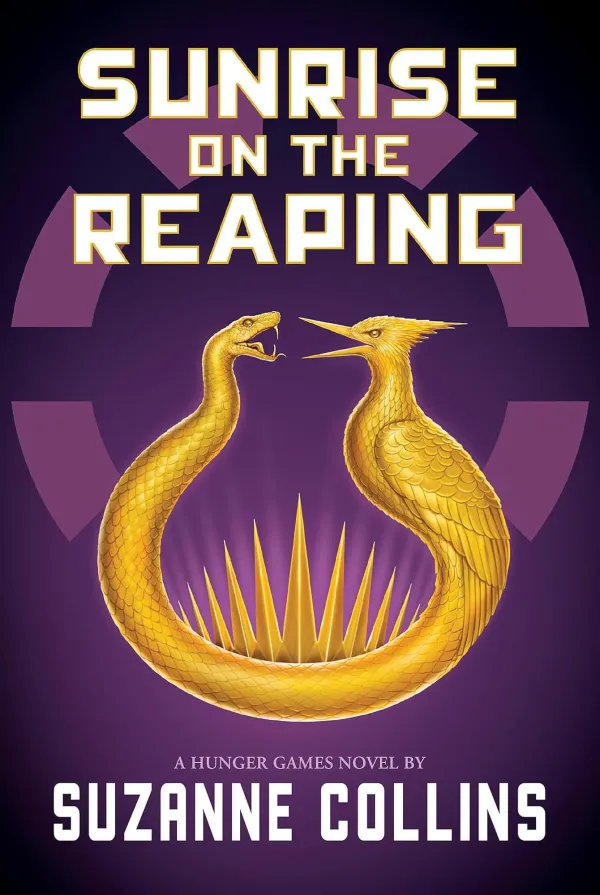
Sunrise on the Reaping (The Hunger Games. #0.5) – Suzanne Collins

Haymitch Abernathy knows his fate is sealed the minute he’s reaped for the 50th Hunger Games, the second Quarter Quell where twice as many tributes are chosen to pay the price for losing a bygone rebellion. All Haymitch ever wanted was a quiet life, tucked away in District 12 with his family and Lenore Dove, the girl he loves. As he’s carted off to the Capitol, he knows that he has the chance to end the cruelty that the Capitol has gotten away with for decades. With a handful of unlikely allies, Haymitch plans to end the Hunger Games once and for all. But has he estimated just how far the Capitol will go to secure its grip on Panem—or have they underestimated his tenacity?

TW/CW: graphic violence/blood, murder, gore, descriptions of injury, poisoning, animal attack/death, loss of loved ones, death of children, fire

WARNING: this review contains some spoilers! If you haven’t yet read Sunrise on the Reaping, tread lightly.

Sunrise on the Reaping was precisely as brutal as it should have been. Suzanne Collins did not hold back. I had to sit in silence after finishing it…the only shred of levity I could find was remembering that Philip Seymour Hoffman played Plutarch Heavensbee in the movies and imagining his character from The Big Lebowski in his place. [uncomfortable laughter] “That’s marvelous…”

24 years before The Hunger Games, the Capitol that we were introduced to rules with a similarly iron fist. One of the most chilling aspects of Sunrise on the Reaping was how Collins showed even more of the sinister inner workings of what the Capitol was doing to keep the Districts in line. The manipulation of both Louella and her brainwashed body double was one of the most chilling—I knew both of them were doomed from the start, and it made the reach of the Capitol all the more frightening. But perhaps the most horrifying was the Capitol reaping Beetee’s barely teenage son as punishment. What stands out about Collins’ worldbuilding is how much she focuses on the human cost; aside from the obvious, she’s adept at showing the lack of regard the Capitol has for marginalized lives, and that dehumanization forms the core of what makes the Capitol so oppressive: profiting and dealing in death.

In particular, I loved how Suzanne Collins portrayed a middle-aged President Snow. He’s as chilling as he is in the original trilogy—ruthless, heartless, but above all, laser-focused on having everything under his control, whether it’s the citizens of the Capitol or the many tributes stepping out of line. His brief interaction with Haymitch revealed so much about his character. Sure, the whole reference to the “Snow lands on top” motto from The Ballad of Songbirds and Snakes did feel like Collins blatantly going wink-wink, nudge-nudge, you can clap now to the reader, but the rest of his character revealed just how far he’ll go to dictate the entirety of his environment. It was honestly so funny how incel-y he was in regards to projecting all of his relationship woes from 40 years ago onto Haymitch’s girlfriend (all while he’s recovering from being poisoned, gotta admire the dedication), but it just goes to show that even in his weakest moments, Snow will always rue the things that slipped through his fingers—and do anything in his power to prevent it from happening again.

This aspect is something that’s fairly present in the first two Hunger Games novels, but I like that the Hunger Games themselves never take up much of the book. Collins knows that if she were to make every book solely about the Hunger Games, they would be feeding into the very same spectacle that she’s commenting on. It’s never about the spectacle—it’s the senseless brutality becoming the spectacle. (Also, it all comes back to the people in the fandom who go “now I want to see every single Hunger Games” and don’t realize…) In the case of Sunrise on the Reaping, it gives the effect of how quickly Haymitch has to process everything (and the fact that he can’t process it), but also that the pressure is constricting him more than it ever has, which heightens so much of the emotion. The main draw of the book, for many people, becomes not the focal point, but the point where Haymitch is put to the test—not the entire plot.

That’s not to say that Sunrise on the Reaping was flawless. As much sympathy as I had for Haymitch, his narrative voice got on my nerves for the first half of the novel. Collins played up that sort of overly earnest, country bumpkin style of speaking, making him more of a caricature than a person for a good third of the novel. I supposed it functioned more to show how easily innocence and ignorance can be destroyed in the face of revelations about how the world works, but it didn’t work for me because Haymitch knew about the cruelty of the Capitol firsthand. On principle, it was a shaky way to build his character. He almost seemed too good, even though he was so willing to break the rules and spit in the face of the Capitol. Again, the contrast between him both post-Quarter Quell and his older self is appropriately drastic, but I think I could’ve done without the setup. Plus, it just got so annoying hearing call everyone “sweetheart” and give candy to smiling children constantly. We get it…salt of the earth, etc., etc. I just couldn’t believe that Haymitch was truly pure. Collins never shied away from Katniss not being as such—why not Haymitch?

I already knew how Sunrise on the Reaping was going to end. I’d remembered the few details that Collins had alluded to and had gotten transferred to a fan wiki. It’s a given going into a Hunger Games novel that you operate on the prospect that everyone’s doomed. It would have been so easy for Collins to let that speak for itself, to not put any effort in and rely solely on the inevitability that the fans were going to be devastated anyway. But Collins, as always, gives such a depth to every character, making every slight the Capitol makes that much crueler. You know that Haymitch’s life is upended after he wins the Hunger Games, but Collins gave him a drive, a life, and stakes beyond what we see in the original trilogy, that makes his losses so much more painful. One of Suzanne Collins’ best qualities as a writer is that she toes the line between giving characters unexpected nuance and sympathy, but never outright excusing their actions. She’s a cartographer of personality, however rocky.

I saw the message of Sunrise on the Reaping coming a mile away, and to be honest, I didn’t even care. I knew how Haymitch’s games ended. From the moment he started plotting to destroy the arena and end the Hunger Games for good, I knew his mission would end in failure. But as with every successive Hunger Games novel that Collins writes, there’s a critical message to be found, and this one rings true in these times more than ever. We know that Haymitch fails, but because the rest of the trilogy exists, we know that his dream takes flight—just not when he wanted it to. Resistance and rebellion, even when they fail at first, are always worth fighting for, no matter how difficult the path towards peace is. No matter how much Haymitch failed, he was critical in exposing the cracks in the Capitol’s system—and he helped bring it down in the end, even though he failed in his first try. No matter how long it takes, resistance is always worth it, even if you don’t get to see its immediate effects.

Overall, a raw, brutal, and deeply emotional installation in the Hunger Games universe. 4.25 stars!

Sunrise on the Reaping is one of two prequels set in the Hunger Games universe, preceded by The Ballad of Songbirds and Snakes. The main trilogy is comprised of The Hunger Games, Catching Fire, and Mockingjay. Collins is also the author of many other books for children, including the Underland Chronicles, Year of the Jungle, and When Charlie McButton Lost Power.

Today’s song:

Forever is a Feeling was a slight disappointment, to be honest, but this song ROCKS

That’s it for this week’s Book Review Tuesday! Have a wonderful rest of your day, and take care of yourselves!
Posted in Book Review Tuesday

Book Review Tuesday (1/30/24) – Yellowface

Happy Tuesday, bibliophiles!

I’ve had several books by R.F. Kuang on my TBR for a year or two, and I’d forgotten about this one until it happened to come up as one of those “skip the line” checkouts on Libby. I decided to take the opportunity (as the holds line is usually nuts for this book), and I found myself adoring it so much more than I thought it would—a biting and timely satire of the publishing industry.

Enjoy this week’s review!

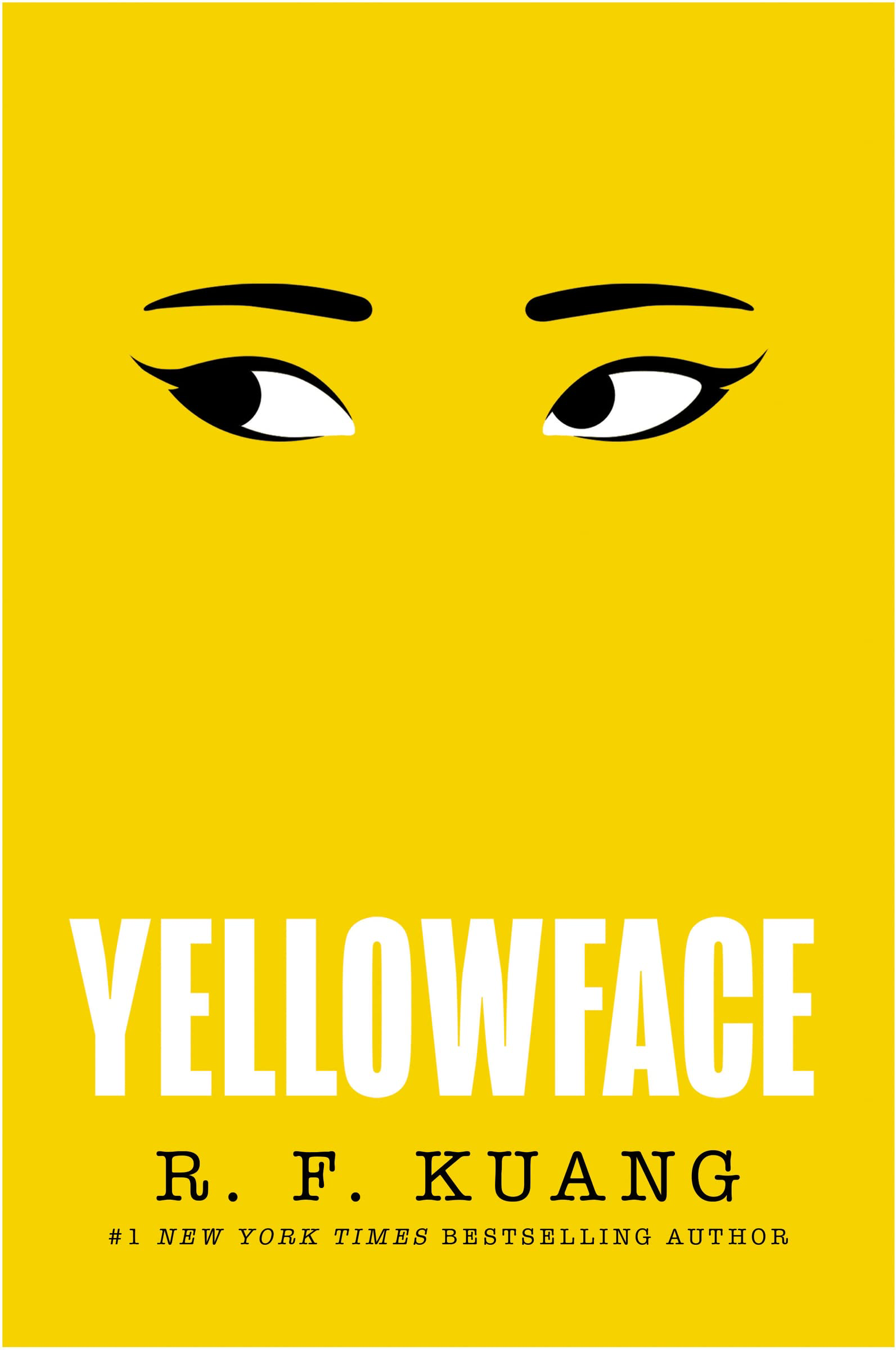
Yellowface – R.F. Kuang

June Hayward and Athena Liu have been friends since attending Yale together, working through writing projects and slowly finding themselves publishing their own works. But while Athena is enjoying success, six-figure book deals, and Netflix adaptations, June has barely been able to get a third printing of her only book. So when Athena dies in an unexpected accident, June sees the perfect opportunity: steal her unfinished manuscript, pass it off as hers, and profit. Armed with a new pseudonym and a racially ambiguous author photo, June Hayward becomes Juniper Song, and her book, The Last Front, becomes the toast of the literary scene. But evidence is beginning to pile up against her, and June will do anything to keep her newfound fame.

TW/CW: racism, death by choking, vomiting, substance abuse (alcohol), harassment, gaslighting, suicidal ideation

I’m glad I had my expectations at an average level for Yellowface, because this is one of the best satirical novels I’ve read in ages! This novel truly felt like it was attuned to the beating pulse of the dark side of the publishing industry, and it’s an exploration of diversity and publishing that’s incredibly necessary in this day and age.

I don’t think I’ve ever witnessed a novel that’s felt so true to today’s publishing scene in a long time—or ever, really, but to be fair, I haven’t read a lot of realistic fiction books in this vein. Yellowface is a biting, unflinching callout to how publishers view diversity; June’s story, though fictional, is testament to how the publishing industry views diversity and marginalization as profit to be made, not stories and identities to be uplifted, and how once they’ve checked one person of a certain demographic off a checklist, they think they’re set for “diversity.” Beyond that, it’s proof of how willingly publishers will silence marginalized voices in favor of white voices telling the stories of the marginalized, and how far they’re willing to go to keep up the façade. Truth be told, this novel did make me slightly spiral about the state of publishing as an aspiring author, but I suppose that means that R.F. Kuang did her job.

I’ve seen several reviews of Yellowface complaining that at least one of the main characters were self-inserts, but other than the whistleblower character (who only has a minor role until the end), the two main characters were dreadfully unlikable. To be fair, I’m not as familiar with Kuang’s work, but I don’t take her to be the kind of person to be so self-deprecating that she makes her self-insert into a disgusting mess of a character. In fact, Kuang excelled at making them incredibly unlikable—and hilarious in the process. I liked that, although Athena didn’t deserve what she got, that both her and June were depicted as despicable people in their own ways, but June was still portrayed to be disgustingly in the wrong—nobody’s angelic in this situation, and everybody has their flaws, but some people’s flaws pile up until they fester and collapse on top of them (June). Everything written in her voice was so cringey it was hysterical—watching her, for instance, editing the manuscript to make the British soldiers “more sympathetic” cracked me up, and Kuang clearly knew just the kind of circumstances that a white author would twist a marginalized story into—it felt painfully real, and painfully funny at the same time.

Typically, I’m not habitual thriller reader, but I’m a sucker for a story about a character digging their own grave, and god, Yellowface was the perfect scratch for that itch. June’s story of jealousy, temptation, and clinging towards fame that fall like dominoes toward her until culminating in the climax was painful but exhilarating to watch—for me, there’s nothing like watching a character’s downfall right before our eyes. June just kept digging herself further and further into eventual ruin, and with each push closer to the edge of being exposed for her (MANY) wrongdoings, Kuang perfectly amped up the tension. I was definitely white-knuckling my Kindle for a significant portion of the book just because of the sheer audacity of June thinking that none of her actions would amount to anything. It has the same feel as many of the self-destructive arcs in Fargo—the same kind of eventual tension that builds, and all the while, you know exactly how it ends, but what keeps you reading is wanting to discover how everything collapses onto them.

Without spoiling anything, I’ll say something brief about the ending. At first, it seemed a bit rushed and anticlimactic—I still hold that it was slightly rushed, but it’s a way-homer kind of ending. It wasn’t just a continuation of June feeding her own delusion—it’s terrifying proof that the system still works in favor of white authors clearly in the wrong. She may have hit the breaking point, but this controversy, just like the others, will only continue to drive up her sales. The system has not changed. As long as the publishing industry stays the way it is, she’ll still be rewarded. And that was the kind of scary reality that Kuang has proven with this novel.

All in all, a darkly witty thriller that brought a timely conversation about the publishing industry to the table—and executed it stellarly. 4.25 stars!

Yellowface is a standalone, but R.F. Kuang is also the author of the Poppy War trilogy (The Poppy War, The Dragon Republic, and The Burning God) and Babel.

Today’s song:

really and truly OBSESSED with this album

That’s it for this week’s Book Review Tuesday! Have a wonderful rest of your day, and take care of yourselves!
Posted in Book Review Tuesday

Book Review Tuesday (7/4/23) – Painted Devils (Little Thieves, #2)

Happy Tuesday, bibliophiles, and happy…Tuesday. The fact that the Fourth of July comes so close on the heels of the Supreme Court releasing the results of all of their major rulings has significantly soured most attempts I’ve tried to have at patriotism (especially since we have the incredibly unfortunate conservative majority controlling far more than they should), especially in our post-Roe era. None of that puts me in a particularly patriotic mood. But, as always, criticizing your country and pushing for change that will make it better is, to me, is the best kind of patriotism. And if nothing else, I get the day off work today. I’m not about to complain.

That aside, I’ve got an exciting review today! Ever since I devoured Little Thieves back in January, I’ve been itching to read the sequel, which came out this May. After a few failed attempts to get it on Libby, I finally got a physical copy from the library and ate it up as quickly as I did its predecessor. And although I liked it slightly less than book 1, Painted Devils retained its spirit—delightful from start to finish.

Now, tread lightly! This review may contain spoilers for book 1, Little Thieves, so if you haven’t read it and intend to do so, skip over this review.

For my review of Little Thieves, click here!

Enjoy this week’s review!

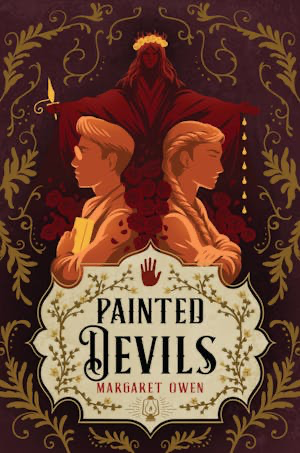
Painted Devils (Little Thieves, #2) – Margaret Owen

Vanja Schmidt may have succeeded in breaking a godly curse and finding love with Emeric, but that doesn’t mean that her conniving days are behind her. In fact, they’re very much alive—and proved when she fabricates a god to get out of a slippery situation. Problem is, the townsfolk have now accepted Vanja’s Scarlet Maiden as their god, and started a cult in her name. And the Scarlet Maiden demands a sacrifice in blood—a sacrifice that Vanja can’t afford to make. While Emeric goes on a hunt to verify the Scarlet Maiden’s existence, Vanja must find a way out of the sacrifice before time runs out—and before her fraud is exposed.

TW/CW: abuse (physical and verbal), fantasy violence, blood, body image issues, abandonment, animal death, cult imagery

Seeing the phrases “we live in a society” and “scrimblo” within 100 pages of each other in a medieval-inspired fantasy book felt like being hit by a train, to say the least, but the fact that Margaret Owen very nearly pulled it off is nothing short of a miracle. I’m still reeling just thinking about it.

My months of waiting and searching are finally over—I managed to get Painted Devils in my hands, and I’m so happy for it! Although it wasn’t quite as cohesive as Little Thieves was, it was nevertheless a delight from start to finish—being back with Vanja on her chaotic adventures was nothing short of a joy in a sea of YA fantasy novels that take themselves a little too seriously, even though their protagonists are only 16.

I’ll quickly start off with my one major gripe—the reason that I docked it down from book 1’s 4.5 stars to 4.25. Painted Devils, as much as I adored it, definitely fell into the curse of book 2: all of the good elements were still there, but they lacked the cohesion that the first book had. It was all fun, but a good portion of the middle felt like the characters were running around for no reason, without much consequence to the plot. Some of it felt like filler, and for a book that was almost 500 pages long, it didn’t feel altogether necessary.

Other than that, it’s hard to find any nitpicks or problems with Painted Devils! Even though Vanja has always been the main character, this book really felt more about her—it was wholly her story, about what happens when your storied past catches up to you, and how to reckon with your past to become the person you are today. Even amidst the near-constant humor that these books have relied on, Owen manages to tackle so much of Vanja’s character with incredible aplomb, balancing her bouncing-off-the-walls personality with some genuinely heartbreaking and wholly important discussions about familial manipulation and abuse. For a series that’s often been defined by its levity, Vanja’s journey towards self-love and acceptance was unexpectedly heartfelt. It’s exceedingly difficult to balance those two aspects, but Owen made it look easy.

Beyond that, I loved seeing the relationship between Emeric and Vanja develop, both romantically and platonically! They continue to be perfect foils for each other—a physical representation of the grounded and humorous qualities of this novel, and how they complement each other. Their personalities have started to bleed into each other in the sweetest way—Emeric starting to loosen up, and Vanja reluctantly trying to do the opposite—and every moment they shared together was a delight to read. Plus, the discussions about consent are always welcome, and a refreshing break from the years of 500+ year old fantasy love interest that we’ve all had to slog through in the last decade or so.

Owen’s writing, of course, continues to be the star. It’s rare that an author can make a character whose main trait is being “chaotic/morally gray” into something that goes above and beyond the buzzwords—Vanja continues to be impressively fleshed-out, and my life is all the better for it. Some of the more meme-y humor, like the previous book, continues to be jarring in places, but Owen’s other points of humor makes for a wonderfully charming read. There’s really not much else in the world of YA fantasy that succeed like Little Thieves and Painted Devils do: bringing the joy back to a magical, fairytale-inspired world, and balancing it with the reality and darkness that every bad, gritty fairytale retelling missed by a mile. Even with the frustrating ending, I’m so eager to see where the conclusion takes Vanja, Emeric, and all the rest.

I really feel like the world needs a 2D animated adaptation of these books. Just saying.

All in all, a sequel that was a delight to read, even with its lessened cohesion. 4.25 stars!

Painted Devils is the second book in Margaret Owen’s Little Thieves trilogy, preceded by Little Thieves and concluded by an untitled book slated for release in January of 2024. She is also the author of the Merciful Crow duology (The Merciful Crow and The Faithless Hawk).

Today’s song:

XYLOPHONE SOLO

That’s it for this week’s Book Review Tuesday! Have a wonderful rest of your day, and take care of yourselves!
Posted in Book Review Tuesday

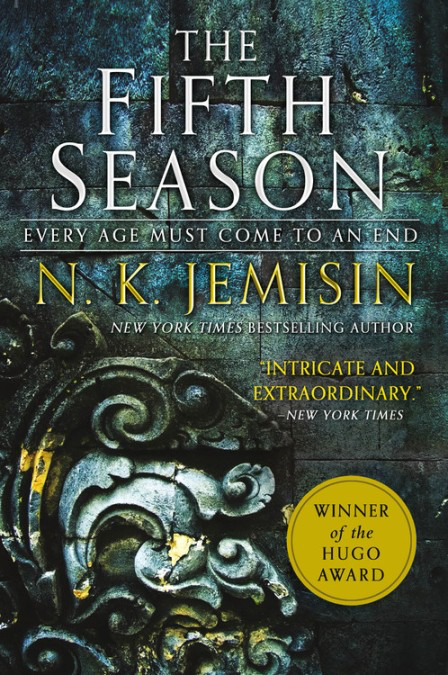
Book Review Tuesday (3/7/23) – The Fifth Season (The Broken Earth, #1)

Happy Tuesday, bibliophiles!

I forget what triggered it, but a few years back, I piled a bunch of N.K. Jemisin’s books onto my TBR. I just finished up the Great Cities duology recently and enjoyed it (though The World We Make I enjoyed less so), but I was still excited to read the Broken Earth series from all of the praise it’s been given. I’m usually wary of overly long fantasy books, but The Fifth Season defied all of my expectations and delivered one of the most well-crafted fantasies I’ve read in recent years.

Enjoy this week’s review!

The Fifth Season (The Broken Earth, #1) – N.K. Jemisin

In the land of the Stillness, natural disasters are an inevitable part of life. Every so often, the land goes through cycles of extreme weather, where the earth tears itself apart and the land is blanketed in ash and darkness.

This Fifth Season has arrived once more, and with it comes a world in chaos. Amidst the chaos is Essun, a woman on the run after witnessing her husband murder her young son. Her last hope is her daughter, whose whereabouts are unknown. But in a land filled with unknown disasters and people willing to turn on the orogenes—those with the power to control the earth—Essun must overcome unimaginable hurdles to find her daughter and bring her to safety.

TW/CW: murder, infanticide, abuse, mentions of genocide, slavery, implied rape (child), descriptions of injury/blood, sexual coercion, kidnapping, human experimentation

This is my own bias here, but as a principle, I’m automatically weary of overly long fantasy books; that length usually means something along the lines of either a) excessive, infodumped worldbuilding , b) long stretches of the story without much plot, or c) a combination of both. But The Fifth Season proved me SO wrong on that front—Jemisin dodged both of those traps effortlessly, resulting in one of the most inventive fantasy books I’ve read in years.

My first exposure to N.K. Jemisin was through the Great Cities duology, and I was surprised at how starkly different the writing styles were; The City We Became was witty, but rather ham-fisted more often than not, which somewhat suited the story she was telling. The writing of The Fifth Season was a much better fit for the story’s tone: it hit the balance of being to-the-point and fantastical, a style which, given some of the very dark themes that this novel explores, gives it the respect that it deserves. After finishing this novel, I’m more inclined to this style, but above all, reading the two is proof of her versatility of a writer—Jemisin can bridge the tonal gap and make it look ridiculously easy.

About the worldbuilding—The Fifth Season boasts some of the most detailed and compelling worldbuilding that I’ve seen in a fantasy series, but compelling is the part that I want to emphasize. It’s one thing to flesh out your world, but if the detail you give it is arbitrary and irrelevant to the story you’re trying to tell, it becomes redundant. But Jemisin gives the world of the Stillness a rich, believable history, and considers every consequence imaginable of the constraints in her world. Every ramification of the concepts in her world are considered, and they’re shown in organic ways, from the (gruesome) depictions of how the humans have systemically oppressed the orogenes (also a very sharp social commentary) to the biological consequences of a world constantly gripped by extreme natural disasters. Jemisin left no stones unturned, and it paid off in such an enjoyable way.

And if there’s one thing that N.K. Jemisin can do exceptionally well, it’s make me despise a character with every cell of my being. Her protagonists are compelling, but she’s so skilled at making characters that absolutely make your skin crawl. Both Schaffa and Alabaster were case studies in manipulation, and so many of their scenes, especially when they interacted with Damaya and Syenite, respectively, it was genuinely hard to read, but still so authentic to how authority figures often manipulate those below them, especially if they’re young women. Bottom line: they both sucked, but N.K. Jemisin did a disturbingly good job of making them suck so realistically.

I debated on whether or not to discuss this last part, but it’s really best to go in blind—even if I put a spoiler warning and discussed it, I don’t think I could get across how mind-blowingly well-crafted the main twist with the different POVs was. It’s…AGH. IT WAS JUST SO WELL-DONE. I CAN’T SPEAK COHERENTLY ABOUT IT. Again, even if the worldbuilding is confusing. GO INTO THIS BOOK BLIND. YOU WON’T REGRET IT. IT’S AMAZING. TRUST ME. And a sidetone—props to N.K. Jemisin for seamlessly pulling off a 2nd person POV, and, once again, making it look easy.

All in all, a fantasy novel that defied my expectations on nearly every front, resulting in one of the most enjoyable reads I’ve had all year. 4.25 stars!

The Fifth Season is the first book in the Broken Earth trilogy, followed by The Obelisk Gate (book 2) and The Stone Sky (book 3). Jemisin is also the author of The Great Cities series (The City We Became and The World We Make), the Far Sector series for DC Comics, and many other books.

Today’s song:

this song is delightful, and it’s also proof that the middle school boys who used axe body spray instead of showering have always existed in some form or another

That’s it for this week’s Book Review Tuesday! Have a wonderful rest of your day, and take care of yourselves!
Posted in Book Review Tuesday

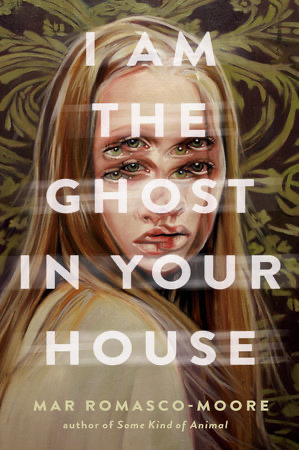
Book Review Tuesday (11/1/22) – I Am the Ghost in Your House

Happy Tuesday, bibliophiles! I hope you all had a safe and spooky Halloween!! I went to class (and took a stats test) dressed up as Columbia from The Rocky Horror Picture Show (in the pajamas and the Mickey Mouse ears), so that was a lot of fun, even though I didn’t see a bunch of other people dressed up. I guess most of the Halloween festivities happened over the weekend. Oh well.

I picked this book up on a whim while scrolling through the books on my Libby wishlist to see what was available. The cover was already eye-catching (no pun intended), but I didn’t expect for I Am the Ghost in Your House to hit as hard as it did—stunning prose and a poignant, strange story to match.

Enjoy this week’s review!

I Am the Ghost in Your House – Mar Romasco Moore

Pie and her mother have been on the run for their entire lives. They are both invisible—Pie born and her mother turned as a teenager—and have been living in other people’s houses all across America. Their lives are constantly transient, and although Pie has lived in many places, she doesn’t have a place to call home.

When her mother disappears, possibly dead, Pie is left alone. Sheltering in Pittsburgh with a group of art students, she goes in search of her missing mother and a girl she once loved. But if the girl Pie loves can never see her, how can they be together?

TW/CW: kidnapping, off-page sexual assault (past), substance abuse, absent father

For a book I picked up almost purely on a whim, this was such an emotional hard-hitter. From this alone, I’m absolutely going to seek out Moore’s other books—I haven’t read such fantastic, immersive prose in ages, and through Pie, Moore has created a truly unique protagonist and a strange world paired with her.

Moore’s prose is what stood out the most to me about I Am the Ghost in Your House. Magical realism is a hard genre to get right, and writing prose that fits with it can be half the battle, and it’s a battle that Moore absolutely won; their weaving of delicate metaphors into Pie’s voice created such a distinct atmosphere around the whole book, as though we too were nestled in lonely train cars, unable to be seen by anyone but our own kin. I read this on my Kindle, and I highlighted so many passages—Moore’s prose rarely faltered, and it was the perfect vehicle to carry this story.

The worldbuilding behind invisibility in I Am the Ghost in Your House was incredibly thought out as well! With magical realism novels like these, it’s sometimes okay to have changes to a world with little to no explanation—it adds some ambiguity to the story, and if it’s done well, it can add a charm and mystery to the world. Moore, however, has done the opposite. Without infodumping or rambling excessively, they define so much about invisibility, its origins, and more importantly, its limits, in terms that make something so fantastical seem so authentic. It feels like the kind of story that stemmed from a conversation—what would you do if you were invisible? Where would you live? What would you get away with, knowing that nobody’s watching?

Pie herself, however, was what made this novel so emotional and poignant. There’s an intense loneliness to her; after her mother disappears, she has nobody, since her father left her before she was born. Moore’s prose shapes a character with seemingly ordinary struggles—unrequited love and general uncertainty, among other things—into someone so deeply isolated, someone fighting alone, since only a handful of people can even see her in the first place. But as she develops, meeting other people and coming to terms with truths about her family, she finds closure in solace in knowing that she’s never been alone, being able to communicate with visible people and knowing that there are others out there like her.

My only problem was the paranormal investigator subplot. In contrast to how smoothly and deliberately most of the book moved, this spot near the end felt rushed and unfinished, thrown in at the last minute to add conflict where there didn’t need to be. Since it was crammed in the last 20% of the book or so, it didn’t feel like it had any place, other than providing a little more worldbuilding details on invisibility. Given what happens to Pie, the suddenness almost feels genuine, but it seemed to come more from a place of rushed writing than actual feeling.

All in all, a bittersweet and atmospheric piece of magical realism that never falters in its deeply emotional core. 4.25 stars!

I Am the Ghost in Your House is a standalone, but Mar Romasco Moore is also the author of Some Kind of Animal and the anthology Ghostographs: An Album.

Today’s song:

this song just emanates sheer power—there’s truly nothing quite like it

That’s it for this week’s Book Review Tuesday! Have a wonderful rest of your day, and take care of yourselves!
Posted in Books

Feminist YA Books for Women’s History Month (2022 Edition)

Happy Thursday, bibliophiles!

Women’s History Month is here again in the U.S., and I figured I’d gather some more books to celebrate! Literature has always been an act of resistance, and it’s so important for readers—especially young girls—to see characters and narratives like their own to inspire change in our world. And as always, these books aren’t just for March—they’re for all year round; feminism doesn’t start and stop in March. My goal here is to uplift marginalized voices, and now is the perfect time to uplift those of women.

If you’d like to see my list from last year, click here!

Let’s begin, shall we?

FEMINIST YA BOOKS FOR WOMEN’S HISTORY MONTH

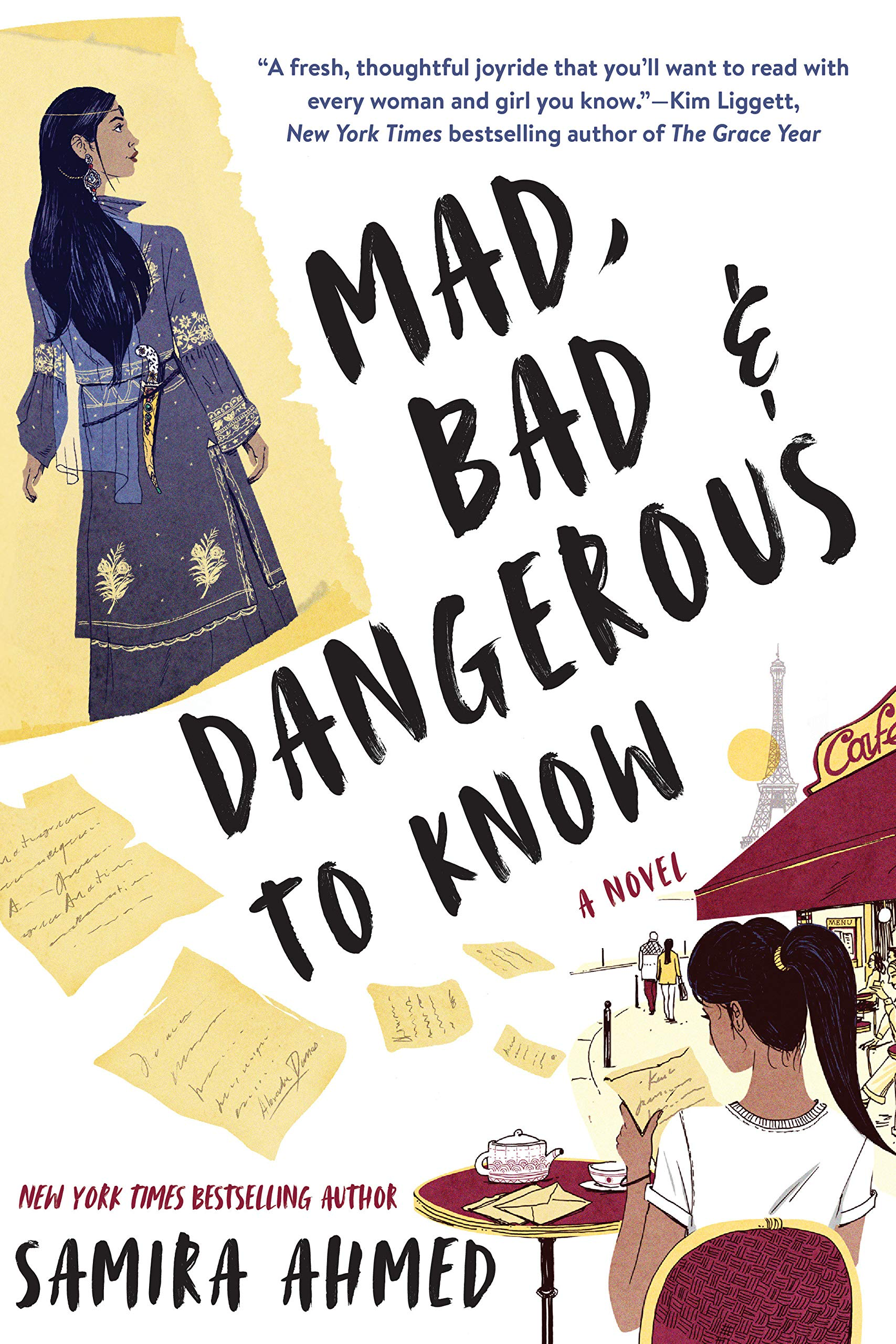
Mad, Bad & Dangerous to Know, Samira Ahmed

GENRES: contemporary, historical fiction, romance

MY RATING: ⭐️⭐️⭐️⭐️.25

Told in intersecting timelines between the present day and 19th-century. Paris, Mad, Bad & Dangerous to Know is a love letter to all the women whose stories have been overshadowed and lost to history. Samira Ahmed is such a wonderful author!

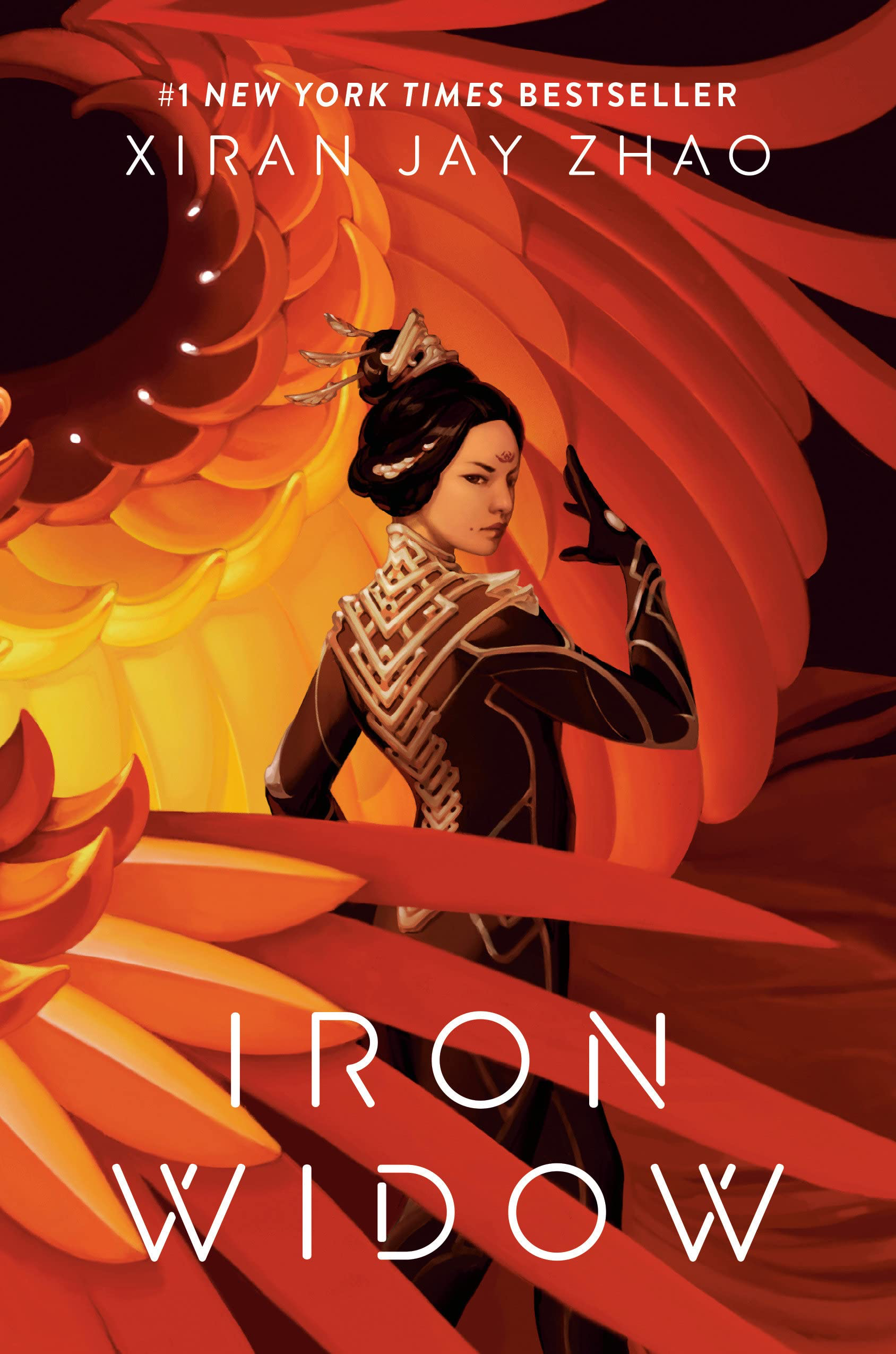
Iron Widow, Xiran Jay Zhao

GENRES: sci-fi, dystopia, romance, LGBTQ+, retellings

MY RATING: ⭐️⭐️⭐️⭐️

Iron Widow is a fierce, fast-paced sci-fi tale that deftly explores themes of rape culture, institutionalized misogyny, and society’s treatment of women through the eyes of a spitfire pilot determined to tear down an empire. (DESTROY THE PATRIARCHY WITH ROBOTS! I said what I said.)

Squad, Maggie Tokuda-Hall and Lisa Sterle

GENRES: graphic novels, contemporary, paranormal, LGBTQ+, romance

MY RATING: ⭐️⭐️⭐️⭐️.25

Squad presents a timely theme—when holding rapists accountable, where is the line between accountability and pure vengeance?—and puts a paranormal spin on it. If the premise of werewolf girls hunting down rapists doesn’t entice you, I don’t know what will.

Slay, Brittney Morris

GENRES: contemporary, fiction

MY RATING: ⭐️⭐️⭐️.5

Though this isn’t my favorite of Brittney Morris’ books that I’ve read (that title would go to The Cost of Knowing as of now), Slay was a wonderfully proud and feminist novel about gaming and Black pride.

The Mirror Season, Anna-Marie McLemore

GENRES: magical realism, fantasy, fiction, LGBTQ+, retellings, romance

MY RATING: ⭐️⭐️⭐️⭐️.25

Anna-Marie McLemore never misses a beat with their books, and The Mirror Season was no exception! All at once raw and beautiful, it presents a searing tale of love after trauma and the fight to hold rapists accountable.

The Good Luck Girls, Charlotte Nicole Davis

GENRES: alternate history, fantasy, paranormal, dystopia, LGBTQ+

MY RATING: ⭐️⭐️⭐️⭐️

Through a blend of several different genres, Charlotte Nicole Davis presents the stories of five girls, bonded through sisterhood and trauma, who take control of their own fates and fight their fair share of patriarchy—and demons.

Juliet Takes a Breath – Gabby Rivera

GENRES: fiction, contemporary, LGBTQ+, historical fiction

MY RATING: ⭐️⭐️⭐️⭐️

Juliet Takes a Breath is a fantastic, queer coming-of-age novel about sexuality, self-discovery, identity, and being a feminist. There’s an especially important discussion of the harm of “white feminism,” which, for a YA novel, is crucial to discuss.

A Phoenix Must First Burn, Patrice Caldwell et. al. (anthology)

GENRES: short stories/anthologies, fantasy, contemporary, paranormal, science fiction, LGBTQ+, romance, historical fiction

MY RATING: ⭐️⭐️⭐️⭐️

There’s not a single bad short story in A Phoenix Must First Burn! Through several different genres, all of these stories center around the experience of growing up as a Black woman, and include everything from aliens to sorcery to the American west.

TELL ME WHAT YOU THINK! What are your favorite feminist YA books? Have you read any of these books, and if you have, what did you think of them? What have you been reading for Women’s History Month? Tell me in the comments!

Today’s song:

NEW SOCCER MOMMY IN JUNE?? I’m convinced that 2022 is the year of being blessed by the music gods

That’s it for this list! Have a wonderful rest of your day, and take care of yourselves!

Posted in Books

In Which I Re-Read the Smoke Thieves trilogy (Chaotic Thoughts)

Happy Thursday, bibliophiles, and happy St. Patrick’s Day! 🍀 We got dumped with snow over here last night, and we got a snow day today! So I’m sitting here in my pajamas, watching the snow slowly die down.

In last week’s Weekly Update, I mentioned that I’d be re-reading the Smoke Thieves trilogy, and I’ve kept my promise. It’s one of my favorite fantasy series, and I’ve been meaning to go back through it ever since I finally got a copy of The Demon World. (Perks of being involved with the library—getting books that go out of circulation!) So since I’ve already done full reviews of all three books, I thought I’d just compile some thoughts I had while reading each book.

Fair warning: this post will be crawling with spoilers. Sorry.

Let’s begin, shall we?

THE BOOKISH MUTANT’S THOUGHTS WHILE RE-READING THE SMOKE THIEVES TRILOGY

BOOK 1: THE SMOKE THIEVES

  • Right off the bat…I remember these books being dark, but WHOA. One of the first scenes is somebody being forced to watch a brutal execution, and…yeah, it only gets worse from there. Yeesh.
  • Also I forgot how angry March was??? It’s understandable, honestly, but this man is just THROBBING with rage
March, constantly
  • Tash!!! My demon-hunter child!!
  • And Catherine!! I liked her already, but going back and reading this books again makes me love her even more. She’s so wonderfully independent.
  • Headcanon: Catherine is bi. She’s gotta be. I know the whole joke about Tash was just that, but I just know she’s gotta be bi. Call it gaydar.
  • Also, I want to wear Catherine’s wedding dress. HHHHHGH
  • Ambrose was my least favorite character of the main five when I first read these books, and…I still stand by that. His only personality trait is that he’s got the hots for Catherine and knows he can’t have her, and it just gets tiring after a while. Meh. But nonetheless, he deserves better. Green does explore some of his grief after Tarquin gets killed (in the worst possible way…agh, brutal…), but I wish we got a more in-depth exploration of it.
  • @ SALLY GREEN CAN YOU PLEASE GIVE MARCH A BREAK P L E A S E

Overall, I had so much fun getting back into Sally Green’s detailed world! 100% holds up after about two and a half years. Same rating: 4.25 stars.

BOOK 2: THE DEMON WORLD

  • Can we appreciate how creative the concept of the Pitorian army is in terms of the hair dye allegiance concept? Gotta love it
  • “Hey there demons, it’s me, ya boy” – Tash
  • What if 😳😳😳 we slept together next to a demon’s corpse to keep warm 😳😳😳 (and we were both boys) 😳😳😳
  • The whole time I was reading the scene where Edyon, March, and Geratan are trying to jump into the demon world, all I could think of was this:
  • The whole demon world itself was super inventive!! I especially love the concept of how everybody had to communicate through touch-based telepathy—that was very creative.
  • Gonna need more of the Tash and Geratan friendship, please and thank you
  • HAHAAAAA THE FIST BUMP AFTER THEY BOTH GOT OUT OF THE DEMON WORLD
  • I completely blocked out the trial scene from my memory, but honestly, it…did drag a little. I liked seeing Catherine as the judge, but it still went on for too long, in my opinion.
  • Also, I didn’t remember Edyon being so forceful about his and March’s relationship? He gets better about it, but in the beginning, it was almost hard to read. Hey…Edyon…uh…why don’t you try…letting people make up their own minds about relationships and not…forcing them into anything…
  • Catherine wearing a suit of armor is everything
  • AGH I FORGOT ABOUT THAT CLIFFHANGER! I remembered there being a cliffhanger, but the March/Edyon situation and Tash getting trapped in the demon world ONE AFTER THE OTHER WHEW

The Demon World was originally a 5 star read for me, but I don’t feel quite the same way now. That doesn’t mean I didn’t enjoy it immensely—I did, but parts of it just didn’t do it for me the second time around (The beginning stages of Edyon and March’s relationship, the trial scene, etc.). Bumping my rating from 5 stars down to 4.5 stars, because it was still great stuff, but not quite a 5-star book anymore.

BOOK 3: THE BURNING KINGDOMS

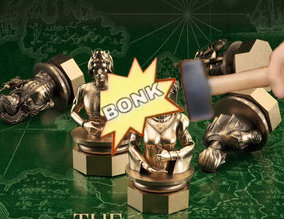
  • Alright. Let’s talk about the cover. The fact that 3/5 of the figures are knocked over stressed me out when I first saw it, but at the same time…WHY DOES IT LOOK SO FUNNY IT JUST LOOKS LIKE SOMEONE DID THIS
  • OKAY THE PAIN WHENEVER EDYON AND MARCH THINK ABOUT EACH OTHER WHEN THEY’RE SEPARATED 😭 P A I N
  • Geratan ripping off his hat to reveal his new hair color is absolutely iconic. The right way to do it. Wish I’d thought of that freshman year when a) my hair was also dyed red (very different red though), b) my hair was short enough to cover with a hat, and c) I HAD a hat that I could’ve done it with
  • Sally Green understands the power of hundreds of brainwashed, adolescent boys. Everything with Harold and the Bull Brigade is appropriately disturbing.
  • Can we talk about Catherine’s almost-corruption arc? Sally Green executed it so well; she’s tasting power (and demon smoke) and realizing the extent of both, and it nearly makes her the same as her father—the one she vowed to not be like in the first place. For me, Catherine’s the most well-developed character in the series.
  • Forgot to mention him in the Demon World section, but Twist!! What a guy
  • Took Ambrose three whole books to realize that he and Catherine weren’t meant to be…yowch
  • I forgot how brutal and…just horrifying the battle with Harold and the boy army at Calidor was…I feel like I was tensed up for the whole scene. I have to hand it to Sally Green for making some of the most tense battle scenes I’ve ever read in any series. Right up there with the last 100 pages of Aurora’s End. At least Harold got his comeuppance.
  • THE FIRST PART OF THE EPILOGUE?? WHERE MARCH AND EDYON ARE FINALLY BACK TOGETHER AGAIN AND THEIR SYMBOLS ARE JOINED ON THE TITLE PAGE???? GAAAAAAAH
  • AND I COMPLETELY FORGOT ABOUT THE LAST SCENE WHERE TASH AND GERATAN GO FISHING BAHAHA!! In all seriousness, it’s so sweet how he became a father figure over the course of the last few books—as much as Gravell protected Tash, Geratan was far more of a positive role model for her. Again, love their friendship.
  • Also, can we just imagine Tash wearing this?

Now that I’ve read the whole series in one sitting, I can say with certainty that The Burning Kingdoms was a fantastic end to the trilogy—and maybe even my favorite book in the series! Although the ending felt a bit rushed, it was still a satisfying way to wrap up the series. Bonus points for showing that everything doesn’t wrap up neatly after a costly war. I’m remembering now what makes The Smoke Thieves so special to me—there’s so much love put into every ounce of it, from the worldbuilding to the characters to their relationships. Reading it all at once is like looking at a giant tapestry, thousands of interconnected threads coming together to make a beautiful and cohesive image. Needless to say, I had such a fun time re-reading this series. You’re doing yourself a disservice if you haven’t picked up these books—highly recommended! Keeping my rating at 4.5 stars for this one.

TELL ME WHAT YOU THINK! Have you read The Smoke Thieves trilogy, and what did you think of them? Let me know in the comments!

Today’s song:

I haven’t been able to stop listening to this album all week…wondrous

That’s it for this post! Have a wonderful rest of your day, and take care of yourselves!

Posted in Book Review Tuesday

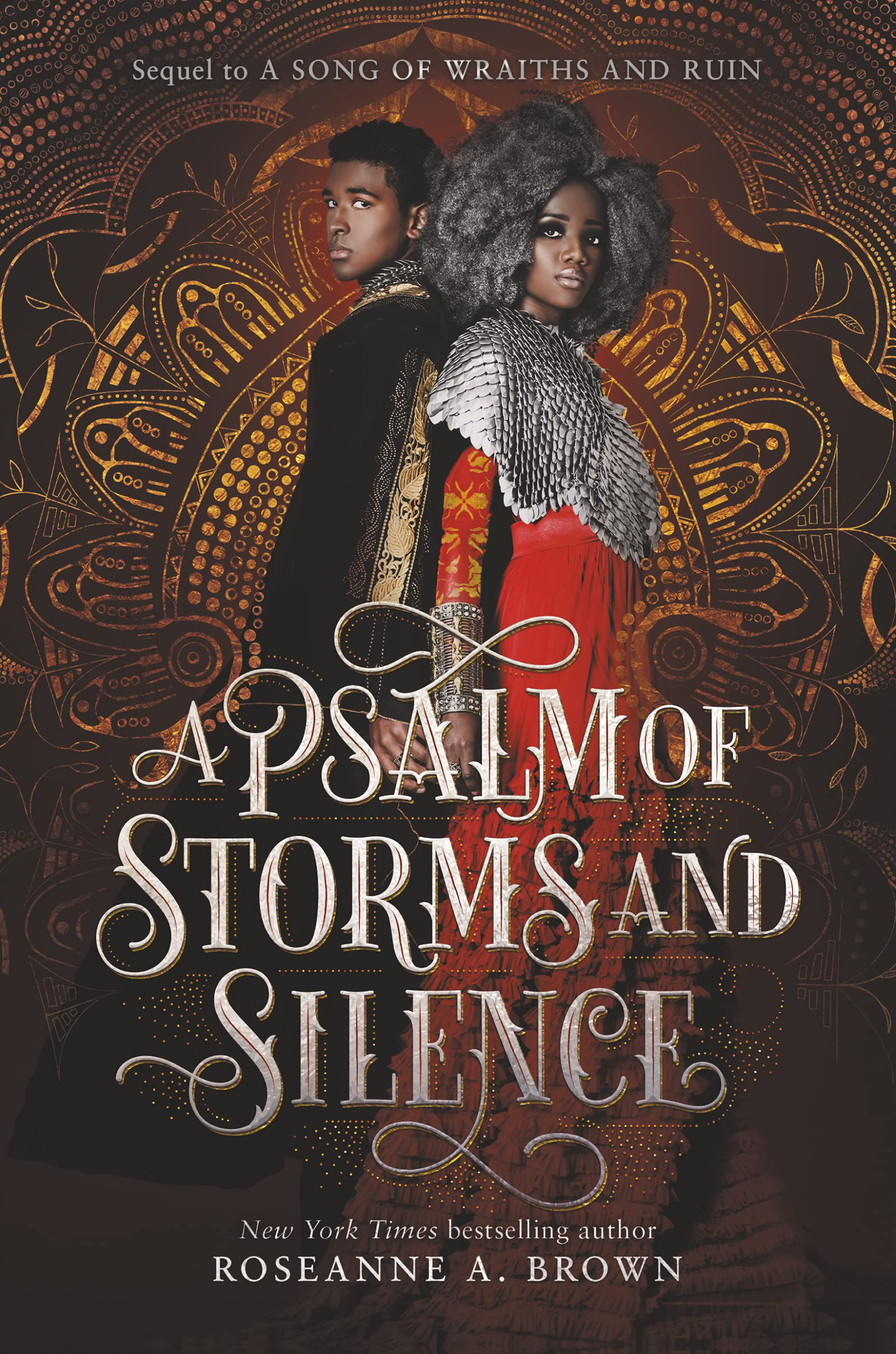
Book Review Tuesday (3/8/22) – A Psalm of Storms and Silence (A Song of Wraiths and Ruin, #2)

Happy Tuesday, bibliophiles, and happy International Women’s Day!

My, two sequel reviews in a row…hmm

I got hooked on the Song of Wraiths and Ruin duology last year after buying book 1 with some of my Christmas money—the cinematic writing style and fast pace made me want so much more in this universe! I wasn’t able to get my hands on a copy from the library until recently, but I’m so glad I did—a breakneck-paced ending to a spectacular fantasy series!

Now, tread lightly! This review may contain spoilers for book 1, A Song of Wraiths and Ruin, so if you intend on reading it and haven’t yet, proceed with caution.

For my review of A Song of Wraiths and Ruin, click here!

Enjoy this week’s review!

A Psalm of Storms and Silence (A Song of Wraiths and Ruin, #2) – Roseanne A. Brown

After Karina’s resurrection of her sister plunges Sonande into chaos, she and Malik must work to pick up the pieces—all while mending the cracks in their relationships.

Disowned by the royal family, Karina sets out to mend the barrier between the mortal and godly after her resurrection ritual. What she finds may mean the difference between complete harmony and absolute anarchy—and an end to Sonande as she knows it. Malik lives in the chaos that Karina’s actions have sown, and his mission is to restore the kingdom to what it once was. But his path is all too similar to Karina’s, and when he discovers that Karina may be the catalyst to prevent total destruction, he must reckon with his feelings for the person he once tried to kill—and now loves.

TW/CW (from Roseanne A. Brown): issues of self-harm, fantasy violence, emotional and physical abuse, anxiety and panic attacks, grooming, and suicidal ideation

I don’t think I’ve been this invested in a fantasy series since Smoke Thieves! It’s a shame that A Psalm of Storms and Silence is the last we’ll see of this universe (for now?), but it was a beautiful end to the series.

It’s not easy to make a fantasy world, but it’s even harder to make a world where you can convincingly narrate it from the perspective of a storyteller narrating the events that unfold before you. Just like Wraiths, Brown’s writing has a uniquely cinematic writing style that makes the world she’s created all the more engaging and compelling. It’s twisty, it’s intricate, it’s multifaceted, and best of all, it’s just plain fun. This was a book that I looked forward to reading every time I had to put it down, and for giving me that much joy, I owe so much to Roseanne A. Brown.

For me, Storms was even better than book 1, although they’re close! What set book 2 apart was how it expanded on the world that was already set forth without info-dumping. We’re introduced to new parts of the story and mythos through the eyes of Karina and Malik, and it made Brown’s already wondrous world feel all the more believable and fascinating to explore.

The new side characters also shone in Storms! There were all sorts of amazing characters introduced throughout the story, and I loved them just as much as Karina, Malik, and the others. All of the god/goddess characters were so creepy and imaginative (think…uh, centipede…centaur?), and I loved having Caracal and Ife tag along on Karina’s journey (both of them are absolute icons). Even though none of the characters I mentioned took the center stage, they felt just as fleshed out as some of the more prominent characters. Also, bonus points for the casual mlm/nonbinary rep!

As a whole, Storms also succeeded in making a sequel that raised the stakes high enough to sustain the rest of the plot but also bring it down so that (most) everything was wrapped up by the time the book ended. It’s a long book, sure, but it hit the perfect balance of creating tension without having to rush everything all in the last few pages. That being said, I did feel the ending was abrupt and a bit rushed, but by the end, everything had concluded in a satisfying way. It was more the timing of the ending than the content of the ending that was the problem.

All in all, a beautiful conclusion to one of my favorite fantasy series in the past few years. 4.25 stars!

A Psalm of Storms and Silence is the final book in the A Song of Wraiths and Ruin duology, preceded by A Song of Wraiths and Ruin. Roseanne A. Brown is also the author of the forthcoming Serwa Boateng’s Guide to Vampire Hunting, slated for release in September of this year.

Today’s song:

That’s it for this week’s Book Review Tuesday! Have a wonderful rest of your day, and take care of yourselves!
Posted in Book Review Tuesday

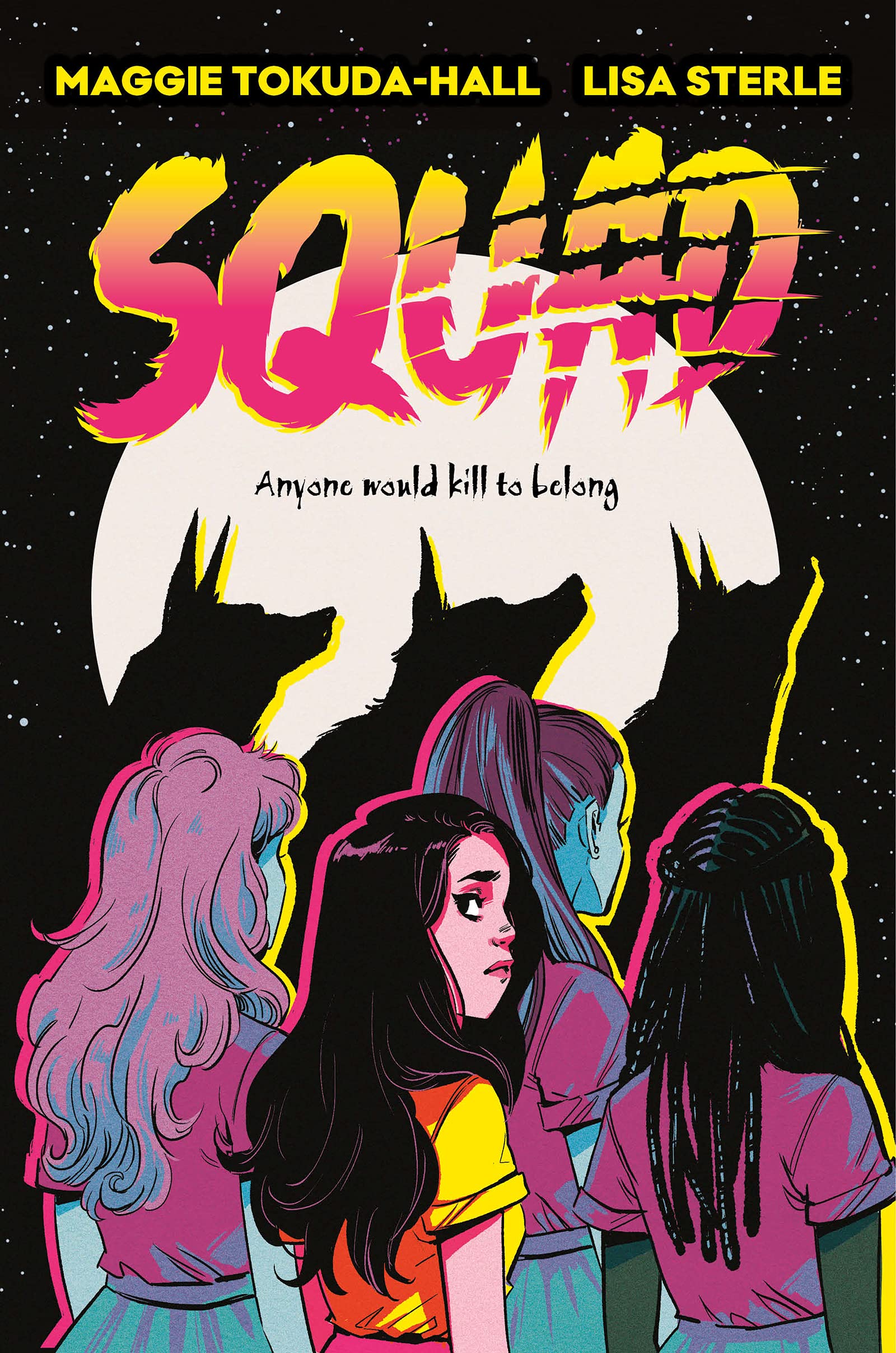
Book Review Tuesday (12/28/21) – Squad

Happy Tuesday, bibliophiles!

After finishing and loving The Mermaid, the Witch, and the Sea, Squad immediately came on my radar—with the details of the Mermaid sequel being hazy at best, I needed more of Maggie Tokuda-Hall’s writing in my life. I found it in Squad, a punchy and timely graphic novel with bright colors and inner darkness.

Enjoy this week’s review!

Amazon.com: Squad: 9780062943149: Tokuda-Hall, Maggie, Sterle, Lisa: Books

Squad – Maggie Tokuda-Hall and Lisa Sterle

In her junior year, Becca moves to a new high school, thinking that she’ll have to settle with not fitting in. To her surprise, she’s taken under the wings of the three most popular girls in school, and soon, she is swept up into a world of new clothes and rowdy parties. But these three girls have a secret—they’re werewolves, and their prey are the predatory boys they find at their parties. But as the police investigate their most recent killing, Becca must decide if she still wants to be a part of their werewolf Squad.

Squad : Tokuda-Hall, Maggie, Sterle, Lisa: Amazon.ca: Books
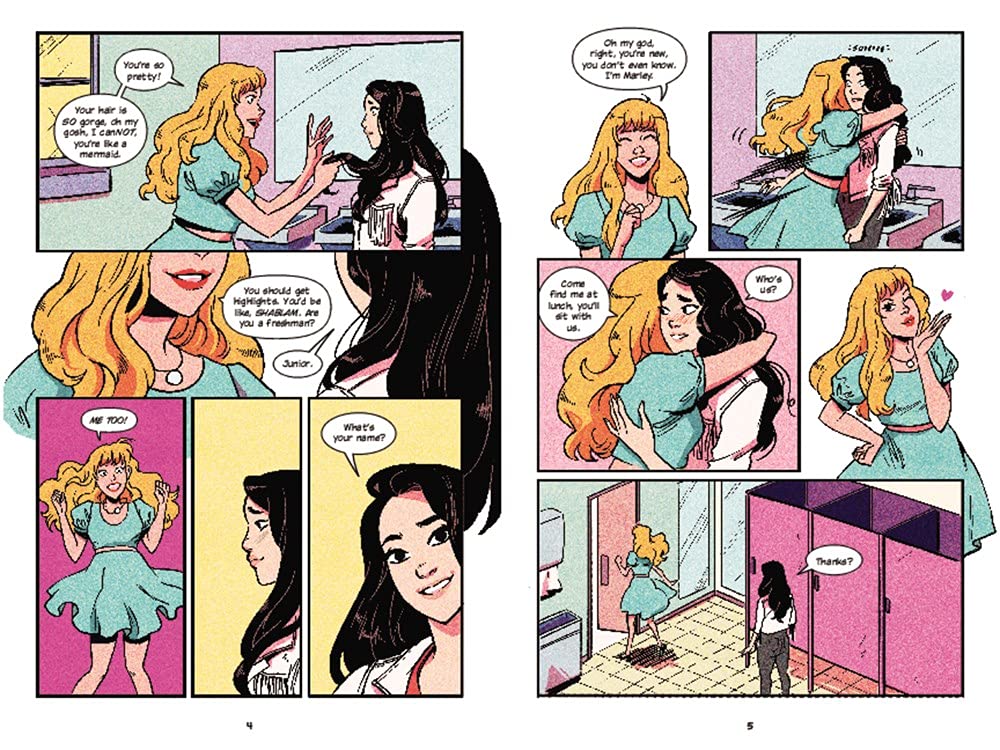
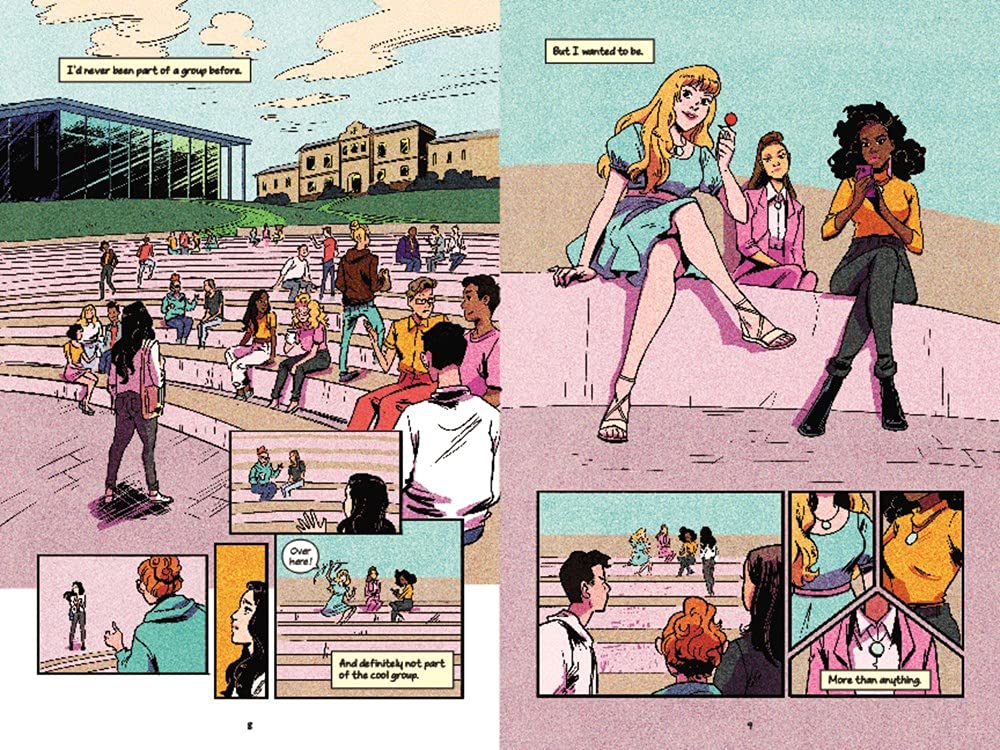
art by Lisa Sterle

TW/CW: attempted rape, misogyny, racism, graphic violence, gore/blood

With its juxtaposition of a bright color palette and the darkness of werewolves out for blood, Squad is the perfect graphic novel for this day and age, and presents a timely theme—when does justice become purely revenge?

I’ve been a fan of Tokuda-Hall’s since The Mermaid, the Witch, and the Sea, but I hadn’t seen anything of Lisa Sterle’s before this. Now, I can definitively say that they make a fantastic graphic novel team! The combination of Tokuda-Hall’s dark and witty writing and Sterle’s bright colors and distinctive faces (both human and wolf) meshed so well together, making the storytelling all the more cohesive. Sterle’s art style is one that I really liked, and it’s the perfect style for this story. I’d like to see something else from this team—their respective writing and art styles were perfect for the aesthetic of Squad!

Right off the bat, I loved the concept of this novel and the implications it had. The idea of a clique of werewolves preying on rapists at parties already had my attention, and this part was executed so well! But beyond this, Squad asks us the question that’s become so prevalent with #MeToo and the growing movement to hold rapists accountable: when does getting back at the perpetrator become pure revenge and not accountability? Seeing all of this through the eyes of Becca—the newest in what we find out is a long line of werewolves—is a perfect way to show these themes from the perspective of a newcomer.

Becca’s perspective also serves as a wonderful way to show how dangerous trying to fit in can be. Over the course of Squad, a rift begins to form between these four girls, especially with Arianna, who has begun to break all the rules set by their previous “alpha,” and Amanda, who seems to be the only one willing to stick to their original plans. All of this threatens to tear Becca apart, even when her own mother pushes her to continue climbing the social ladder. It presents a great dilemma for Becca—is it worth it to go against what she feels is right for a chance at power?

However, there were a few things that I didn’t quite like about Squad. First off, the ending felt very abrupt and unresolved. It went from point A to point B with no real correlation, and it simply…ended. From reading two of her works now, I’d say that endings aren’t Tokuda-Hall’s strong suit; I didn’t mind the ending of The Mermaid, the Witch, and the Sea as much as I did this one (although my friends in book club would probably say otherwise lol), but it still felt rushed. Squad’s ending was still sweet, but it lacked a cohesive resolution.

In addition, while I loved the idea of a sapphic werewolf romance, the relationship between Becca and Marley was very rushed. Like the ending, I loved what little I saw of it (especially that last scene!), but it felt crammed into the last third of the story and bordered on insta-love. Plus, I have mixed feelings about Becca being paired with Marley; it made sense in concept, since they were both caught up in the conflict of the rest of the squad, but given some of the offhand comments that Marley makes about Becca in the beginning, it didn’t make sense that Becca would immediately tolerate all that and fall in love. Maybe if we’d seen if Marley had a change of heart or at least apologized about some of those comments, it might have made sense. But the romance ended up being sweet, but sloppily done. Almost an afterthought.

All in all, a biting (no pun intended) and important tale of the line between accountability and revenge. 4.25 stars!

Squad : Tokuda-Hall, Maggie, Sterle, Lisa: Amazon.ca: Books

Squad is a standalone, but Maggie Tokuda-Hall is also the author of The Mermaid, the Witch, and the Sea. Lisa Sterle is also the illustrator of Witchblood and the creator of the Modern Witch Tarot Deck.

Today’s song:

That’s it for this week’s Book Review Tuesday, and the last Book Review Tuesday of 2021! Have a wonderful rest of your day, and take care of yourselves!