Posted in Sunday Songs

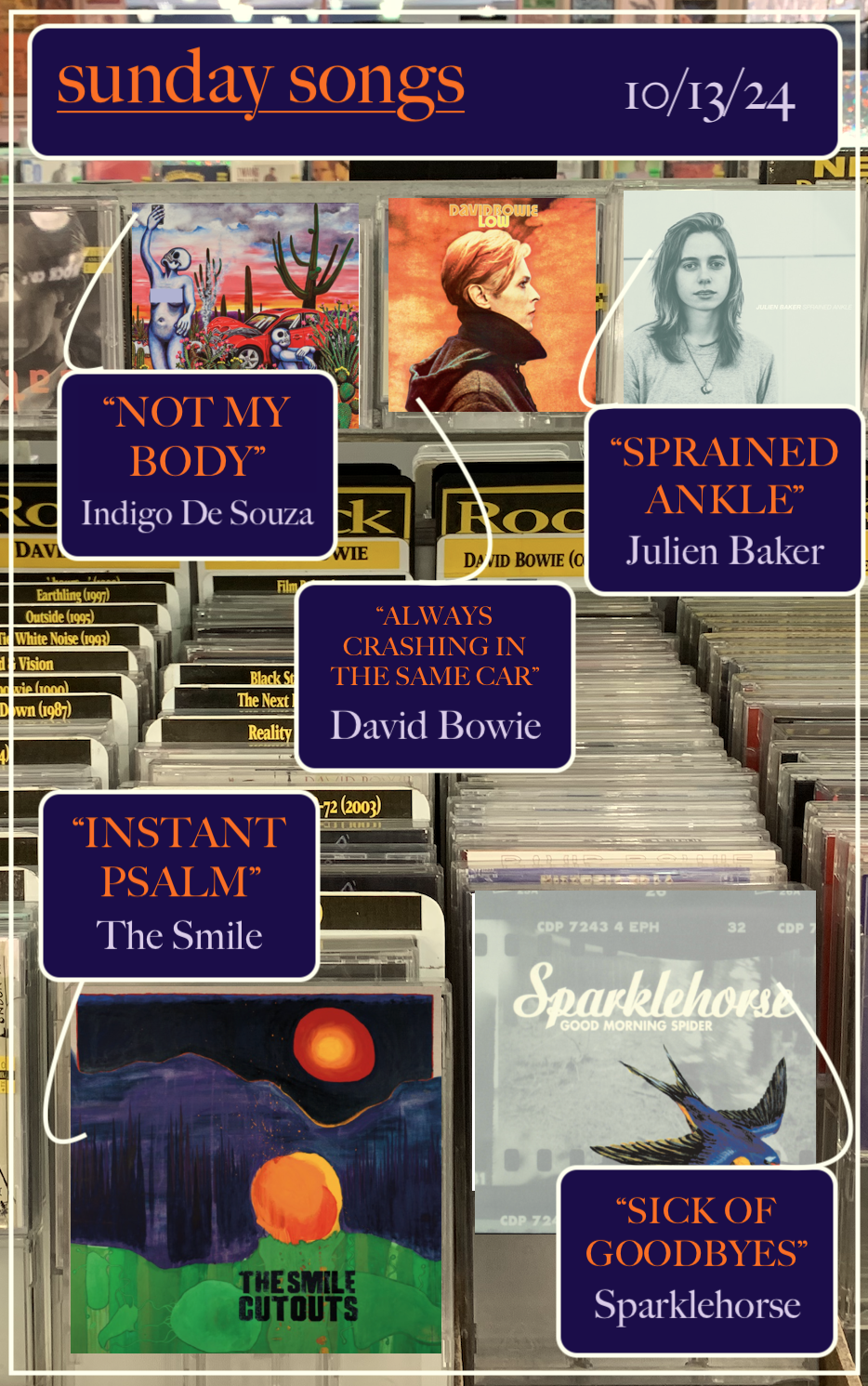
Sunday Songs: 10/13/24

Happy Sunday, bibliophiles! I hope this week has treated you well.

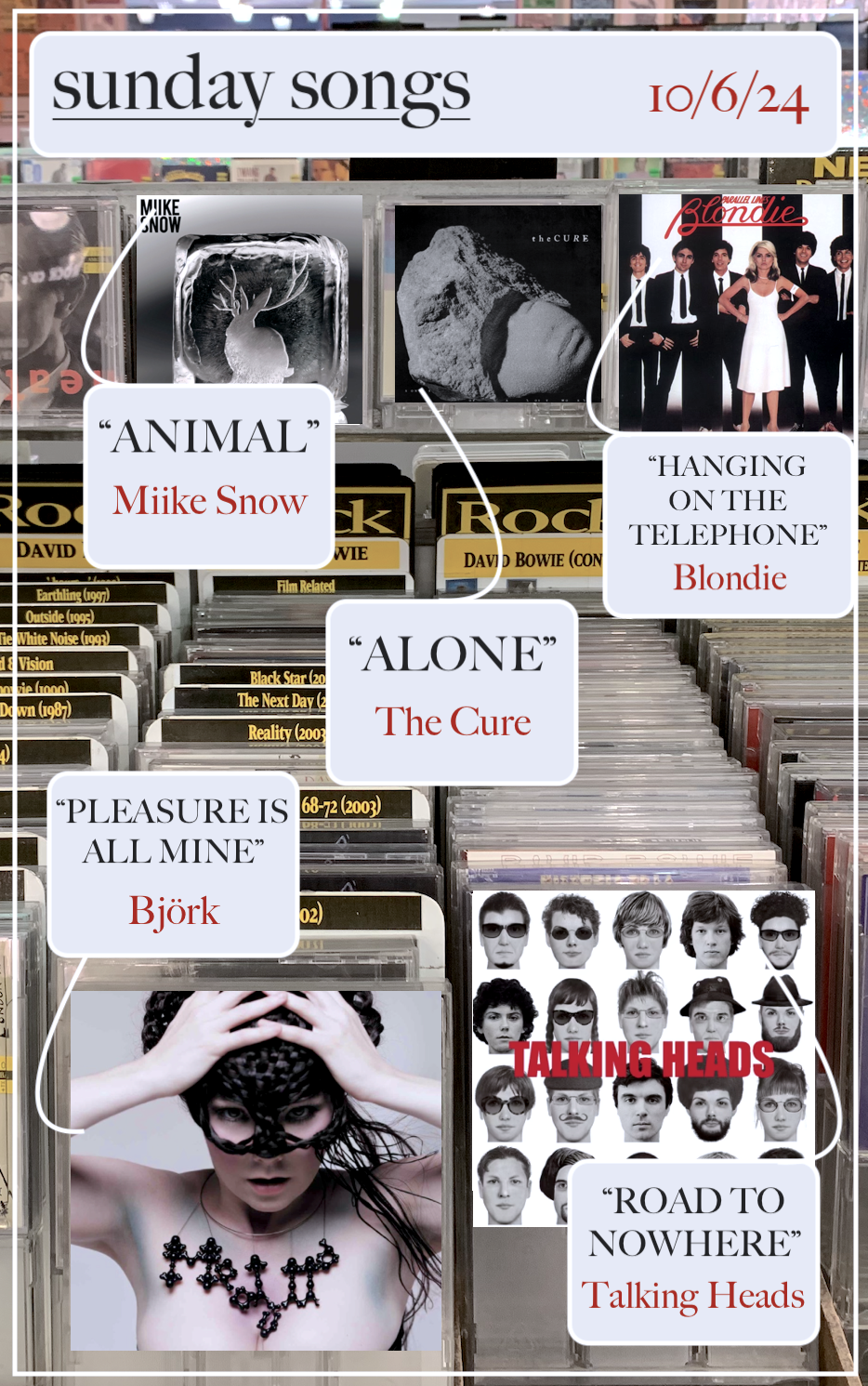
Apologies for the lack of a Sunday Songs last week and a Book Review last week—midterms are one helluva drug. Either way, I have been able to read some fantastic books, so expect a fun review next week. For now, here’s my graphic from last week:

10/6/24:

This week: MOM!!! MOM, MADELINE’S GOING AFTER THIN WHITE DUKE APOLOGISTS AGAIN!

Enjoy this week’s songs!

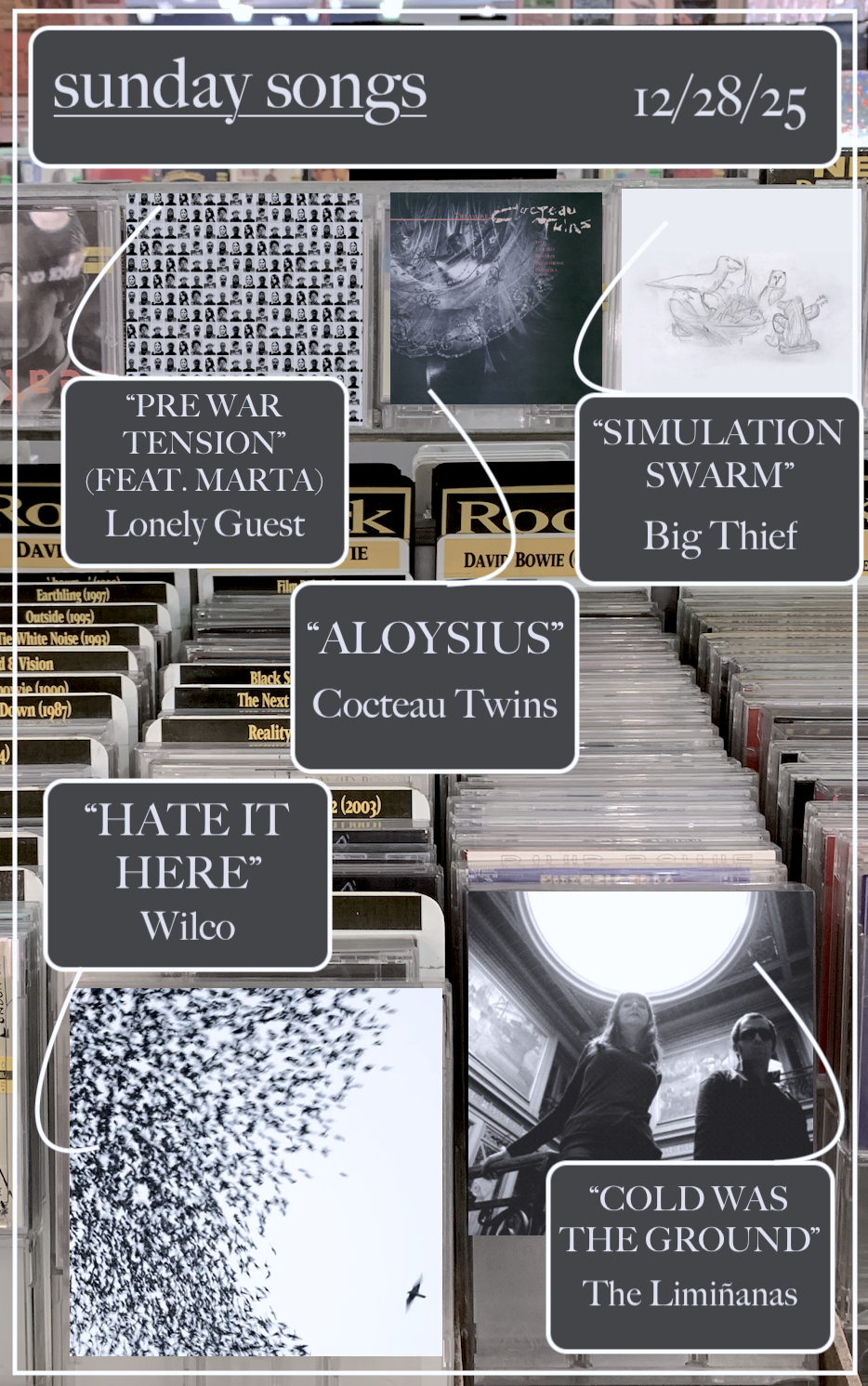
SUNDAY SONGS: 10/13/24

“Instant Psalm” – The Smile

Unprecedented opinion by me: Cutouts, the second album from The Smile in 2024, was…a slight disappointment. Are all of the songs good? Absolutely—this is The Smile we’re talking about, remember? And yet, even though the talent is all there, well-crafted songs don’t make up for an album lacking in cohesion. If they knowingly named the album Cutouts for this reason, it might make sense, but it really does live up to the name; these are the scraps, but for a band as artfully skilled as The Smile, the scraps will be treasures. Even if Cutouts meanders this way and that without the direction of A Light for Attracting Attention, the moving parts are spectacular.

Take “Instant Psalm.” I love when I just have the gut feeling of knowing that a song will rearrange my molecules after only listening to a 30-second snippet of it. From the minute the strings sunburst into existence, you feel that light blooming in the back of your mind. To say that this song only starts would do it a critical injustice: it awakens in the same way a flower does, the same way a cloud of spores puffs from a stomped mushroom, all of its glistening tendrils erupting in slow motion after the joyous moment of birth. “Instant Psalm” lyrically contains about the same existential dread as any other The Smile track, but I’d place it somewhere near “You Know Me!” in terms of siblings; these glistening tendrils have heralded the manipulation that the former track ushered in, and now, all is left is a kind of mental automation where your mind knows that what it’s doing is wrong, but cannot let go of what’s coiled around it: “yes is not a real yes.” It’s so calm in its submission, and that “Instant Psalm” feels like sparkling dust blown into the eyes, the kind that clogs them up enough that they no longer see reality. If there’s anything highly specific that The Smile has excelled in, it’s making songs about submitting to corrupted, outside forces sound so soothing and sleepy. Again: precisely the point.

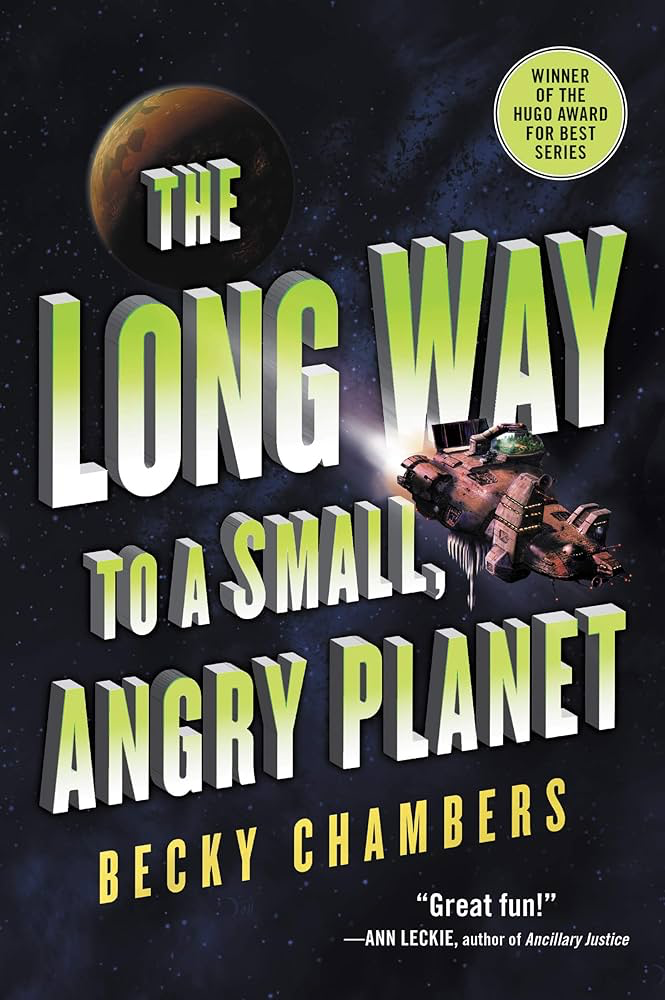
…AND A BOOK TO GO WITH IT:

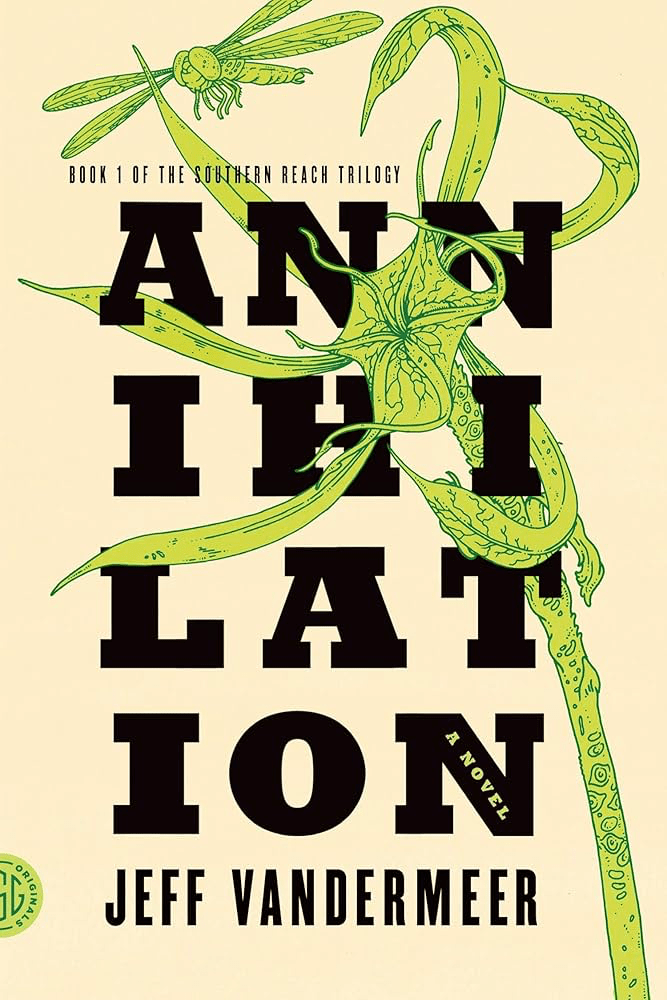
Annihilation (Southern Reach, #1) – Jeff VanderMeer“We can slide through this narrow gap/The narrow gap that you leave us in/And we feel you near/But so close that you disappear…”

“Sick of Goodbyes” – Sparklehorse

Listening to It’s a Wonderful Life prompted me to return to one of my many depressing high school lovers: Good Morning Spider, the album that preceded the former. I thought “Sick of Goodbyes” was okay back then, and given how much I suckled on that album like a baby bottle, “okay” is harsh. Compared to the irresistible draw of the melancholy of “Sunshine” and the adrenaline-blooded screech of “Pig,” this one stuck out like a sore thumb. Why is it so twangy? And my God, is it actually…upbeat?

To be fair, it really does stick out oddly in Sparklehorse’s catalogue, and for how odd Sparklehorse sounds, that really is saying something. It somehow lies at the crossroads of alt-country and punk, where scratchy guitars meet the place where Mark Linkous hefts his Southern twang into the spotlight. It’s got a vigor that few other songs on Good Morning Spider have (save for “Pig”), but the emotion behind it is no less of a punch to the face than the rest. Linkous’ specialty has always been stirring the surreal into his lyrics like a witch tossing strange objects into a cauldron, and “Sick of Goodbyes” has what I think may be one of his best weird one-liners: “no one sees you on a vampire planet.” No beating that, right?

But beating between lyrics like that is one of the sparer sentiments, but there’s no making it flowery: “I’m so sick of goodbyes.” It is sad in the way that a Sparklehorse song typically is, but the fury behind it makes it seem almost intent on healing. It’s a recognition of wanting to free yourself from the wallowing that you’ve been doing, and saving up all of the energy to declare as such. It’s not lost on me that the final belt of the chorus cuts off at “I’m so sick,” but I can’t not see the momentum. There may be no motion yet, but all of that energy has formed legs that are willing to stand, legs that are willing to rise from the muck and power forwards. “I’m so sick of goodbyes” feels like that spark of energy after you’ve gone through the first, ugly period of your grieving and realizing that you’ve spent so much energy on the dead that you have forgotten to go on living.

…AND A BOOK TO GO WITH IT:

The Many Half-Lived Lives of Sam Sylvester Maya MacGregor“If I could just keep my stupid mind together/Then my thoughts would cross the land for you to see/No one sees you on a vampire planet/No one sees you like I do…”

“Not My Body” – Indigo De Souza

“Not My Body,” with De Souza’s intro, starts at 8:02.

While I ping-pong on whether or not I should listen to Any Shape You Take or All Of This Will End in my ongoing Indigo De Souza journey, I watched their Tiny Desk Concert, taken from the period of the latter. When introducing “Not My Body,” she said this about the song: “I think that when I die…what I want is to be composted and to become soil, and for that soil to be used to plant a tree, and I want that tree to be so big and strong. I don’t know what kind of tree yet—still thinking on it—A tree that people can visit and be like, ‘This is Indigo!'” Thus, she joins Peter Gabriel and his oak tree in what I imagine is a growing forest of reincarnation. It’s a soothing thought, to be reborn in the cells of something so sturdy.

Do you ever get those moments where you stop and have this realization that out of the billions of people on this Earth, that you are you, and by some roll of the dice, this is your life, this is your body, and this is who you are? It’s been a recurring thought lately. Those memes about gaining consciousness at age 4 in the middle of a Chuck-E-Cheese honestly hit the nail right on the head. For whatever reason, it’s been a recurring thought as of late. Not ideal for when I’m supposed to be listening to lectures, but it is a humbling reminder. As disembodying as those moments are, they remind me that yes, I do have the reins on this body. De Souza describes “Not My Body” as an ode to nature, and it taps into that feeling of being so conscious of your existence yet, for a moment, a spectator of it: “I’m not my body although you see me/Making moves and walking freely.” Nature, for me, is the missing key in this equation; the redwood tree that De Souza wants to be is the ultimate symbol of groundedness and connectivity—it is rooted in the earth, but its roots connect to all points in the wide world above and below it. There’s a happy medium between awareness and not feeling like you’re adrift in space, and nature has figured it out. And what better way to end such a sentiment than the last third of “Not My Body?” The way De Souza fashions their voice like a theremin, those echoing electronics that almost sound like dolphin calls, the gentle collapse of all the instruments into a single, coalescing being?

…AND A BOOK TO GO WITH IT:

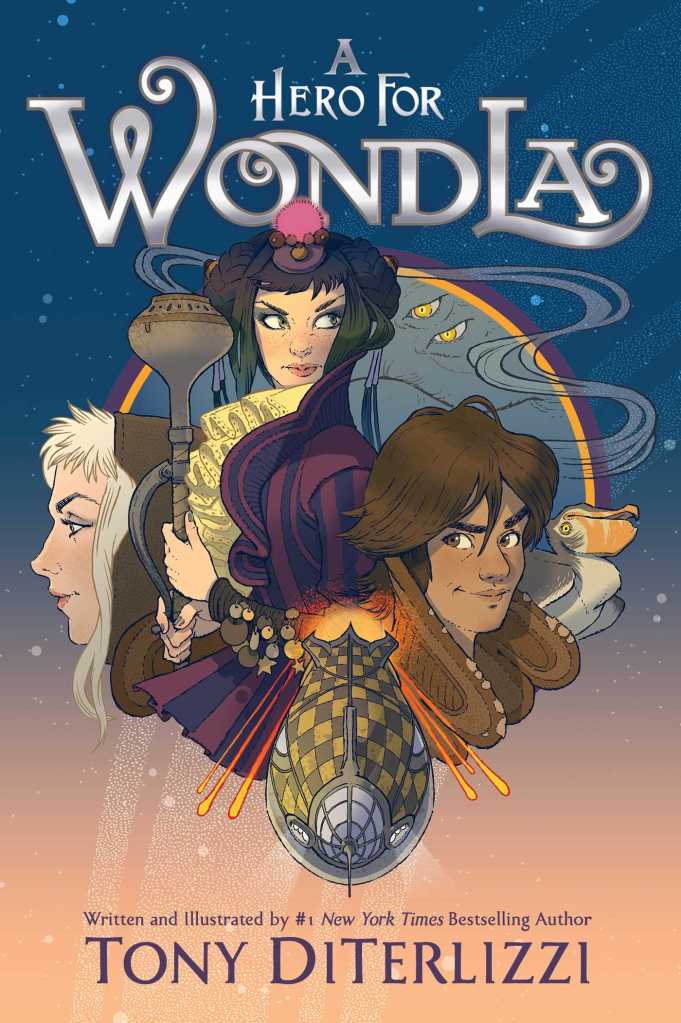
A Hero for WondLa (The Search for WondLa, #2) – Tony DiTerlizziwithout spoiling anything…Eva Eight arc, perhaps?

“Always Crashing in the Same Car” – David Bowie

If you mistook the title of this song for a commonplace idiom, I wouldn’t blame you. Frankly, it should be one. It’s memorable, it’s effective, and it’s a Bowie reference.

Low came at a deeply fraught time in David Bowie’s life. His Berlin trilogy of albums came on the heels of his darkest period, one where he committed actions that he disavowed until his dying day. Hence why I’m always suspicious and disdainful of Bowie fans who think that the Thin White Duke is somehow the “deepest” of his personas. Oh, okay, do you think you’re cool because you like the Bowie who was taking so much cocaine that it addled his brain enough to the point that he had a brush with Nazism? This is the period that Bowie spent the rest of his life thereafter vehemently swearing off (see: “Under the God“), and every clip from that era shows that he was clearly not of sound mind and body. Taking a critical look at the period is one thing, but being so uncritical about a period that Bowie so clearly wanted to forget takes a certain kind of thickheaded edgelord, in my humble opinion. It took him years to return to reality, and the Berlin trilogy chronicles his long and rocky journey towards healing, not to mention getting clean.

The circumstances surrounding “Always Crashing In the Same Car” are a fragment of Bowie’s period of addiction, an instance where, high out of his mind, he rammed his car into the car of his drug dealer. Yet there’s such a calm to this track, both warm and cold. It’s as though Bowie is watching his own life as a spectator, watching the car spiraling out of control from high above the clouds. His voice is placid, restrained, as he resigns himself to the song’s title, doomed to make the same mistakes. Apart from the crooning towards the conclusion, his voice never leaps—what does is the soaring guitar riff that seems to unfold Bowie’s ladder into the sky, from which he can watch his life from a safe distance.

Even if I haven’t gotten to such extreme lows in my life (please hold an intervention if I somehow do, good god), that kind of distance what makes the message of the song land. Breaking out of cycles and unhealthy habits is one of the hardest things a person can do, in my opinion. The effort it takes to change is outweighed by the ease of staying stagnant. You know you’re crashing in the same car, and yet your hands grip the wheel anyway. A few months, I made a commitment at the beginning of the month to stop being consumed by trivial thoughts, and I found myself trapped in an even worse cycle of anxiety just days later. The internal work I did that month was some of the most mentally strenuous that I’ve had in a while—it was far too easy to fall back on ineffective, harmful coping mechanisms than to put in the work to claw myself out of that pit of misery. I’m still working on it. But I’ve put in work. It’s taken a lot of clawing, but I’m growing the armor. Listening back to “Always Crashing in the Same Car” after all that mess gives it a whole new meaning—maybe the triumph I feel from that truly glorious guitar solo is symbolic of how it feels to climb through the sunroof, out of the wreckage, and into the light, knowing that the hard work of breaking these patterns is done.

…AND A BOOK TO GO WITH IT:

Beautyland – Marie-Helene Bertinothe narration of this novel feels the same as Bowie’s singing here: a kind of cool, matter-of-fact distance through which the world is observed, but not without some warmth.

“Sprained Ankle” – Julien Baker

From all accounts, it seems like Julien Baker has something new cooking up post-boygenius, and…hoo, boy. Am I ready? Nope. Nevertheless: I will listen. I will cry. (I already love “Middle Children” and “High in the Basement,” what can I say?) It seems simultaneously like ancient history and the blink of an eye away from when I first discovered Julien Baker, when, halfway through junior year during COVID, I listened to Sprained Ankle while I was a miserable puddle of grief and burnout. Whether or not that’s the only state you can properly listen to Julien Baker without curling up in a ball and crying is debatable, but…the only way out is through. Dramatic expression for weathering an album, I know, but there’s something gratifying in knowing that I’m a happier, stronger, and more healed person than the person I was when Little Oblivions came out in 2021. To my mom: consider this a formal apology for making you sit through almost a-capella Julien Baker depression while driving to school while it was barely even light out.

In the barest sense, Baker was working with what she had. She didn’t have any backup instrumentalists and recorded this in college at age 20, so there wouldn’t be any accompaniment other than what she played herself until Little Oblivions, alternating between guitar and piano. Yet there is no other way that “Sprained Ankle”—or any of the songs on Sprained Ankle—could have been made. It’s a lonely, self-deprecating, and wound-stingingly raw album, and outside of the lyrics, it sounds lonely. Like the bare, unadorned background of the album cover, many of the tracks feel like being in a cramped room with only the sound of your negative thoughts to keep you company. I realize how awful of an endorsement of Baker that is, but in that dreary state of 17, that was just what I needed. (To be fair, it can get to be too much—“Go Home” was exceedingly hard to listen to even back then, which is really saying something.) In the sparse, Baker creates a kind of confessional solace. Confessions are how “Sprained Ankle” starts off, after all: “I wish I could write songs about anything other than death.” There’s a self-awareness to the sadness, but like “Always Crashing In the Same Car,” the engine is running on borrowed fuel, and the marathon runner is sprinting on sprained ankles. Beyond the metaphor, Baker’s voice is meant to be the loudest thing on this record—like the cramped room, it echoes off the walls it’s given, an oral manifestation of the feeling of knowing that all you’ve got is your body. It would take a few years for it to reach the soaring heights of “Claws In Your Back,” but from the start, Baker always knew she had an anchor in her music—the instrument of her wobbling yet lighthouse-beacon piercing voice.

Now that I’ve mentioned “Claws In Your Back,” I can’t not link this dazzling performance from Baker with the National Symphony Orchestra…dare I say I haven’t felt goosebumps quite like this in years?

…AND A BOOK TO GO WITH IT:

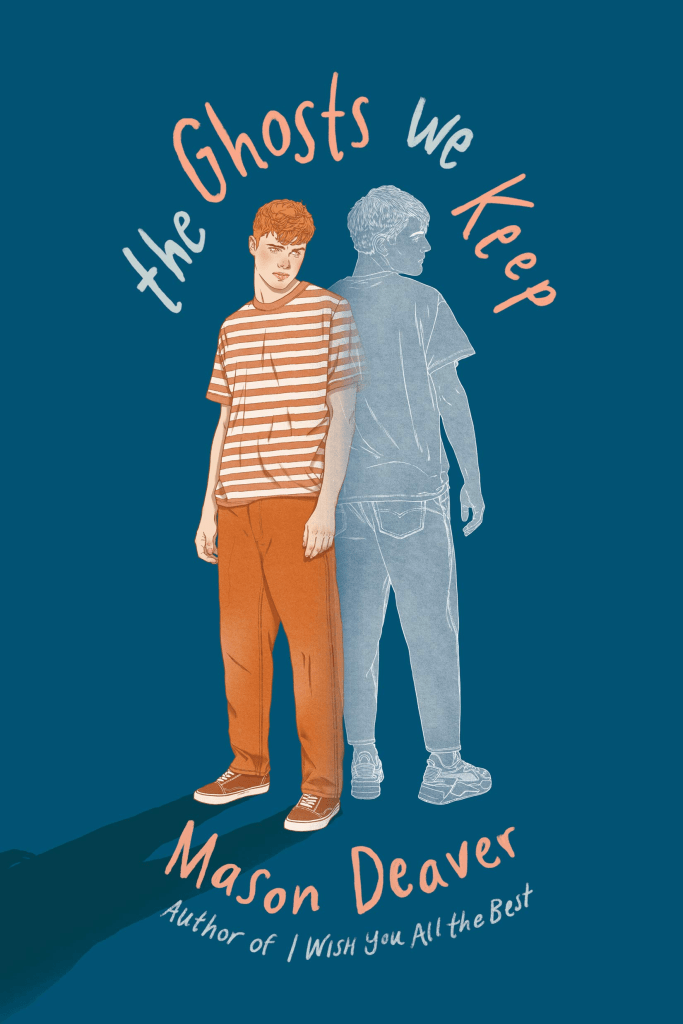
The Ghosts We Keep – Mason Deaver“I wish I could write songs about anything other than death…”

Since this post consists entirely of songs, consider all of them to be today’s song.

That’s it for this week’s Sunday Songs! Have a wonderful rest of your day, and take care of yourselves!

Posted in TV

WondLa (Apple TV+) – Series review

Happy Thursday, bibliophiles!

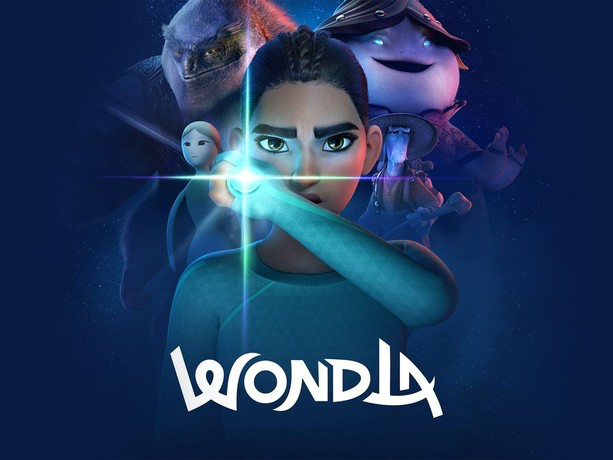
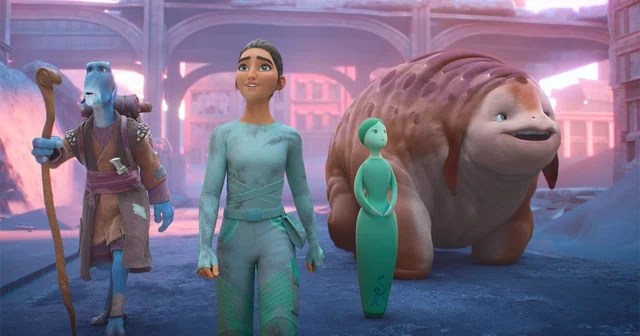
It’s been a while since I’ve done any sort of movie or TV review, but this is as good an occasion as any. In 2021, it was announced that Skydance Animation would be adapting Tony DiTerlizzi’s WondLa trilogy; in April, after years of delays, we got our first look. From the get-go, it looked startlingly different from the original novel’s aesthetic language and illustration style. As it turns out, that wasn’t the only change that they made to these books.

After such a disappointing prospect, I vowed to tell myself that WondLa was a piece of media entirely separate from DiTerlizzi’s magical sci-fi world. Now that I’ve watched the show, keeping that mentality was easier than I thought—WondLa barely resembles its source material, but none of the changes made any logical sense. It’s all but left behind what made the original trilogy so memorable, and the result is a Disney mimic with hardly any heart or soul.

Enjoy this TV review!

WONDLA – TV REVIEW

Streaming on: Apple TV+

Release date: June 28, 2024 (all episodes available)

WARNING: This review contains major spoilers for both the TV adaptation and the book series, so tread lightly!

Before I get into my disappointment vomit, I will say that there are a handful of aspects about WondLa that I genuinely enjoyed. The 3D, Disney-style animation isn’t my cup of tea, but it’s objectively good animation, and it shows most vibrantly though the backgrounds; although Orbona isn’t as alien as it could have been, the tiny fibers and leaves of each wandering tree and the architectural details of the buildings in Lacus and Solas were rendered beautifully. Joy Ngiaw’s score, although a bit generic in places, had moments of sounding appropriately epic and adventurous—very clearly John Williams-inspired in places. I’ll get to the squishy curse later, but there were a handful of alien species that were translated well from book to screen; Besteel is almost exactly how he looks in the book, and although some of their costumes left…something to be desired, the Arsians (Zin, Loroc, and Darius) were faithfully animated as well. I suppose the latter wasn’t much of a hurdle for Skydance, who seems to favor soft, squishy designs, but given how many other designs they bungled, it’s worth noting. It’s something that clearly took a lot of hard work and dedication to produce, and I’d be at fault if I didn’t acknowledge the labor that went into producing this show. At no point here do I want to disparage the hard work of the animators or the voice cast—this is just the opinion of one person, after all!

Now.

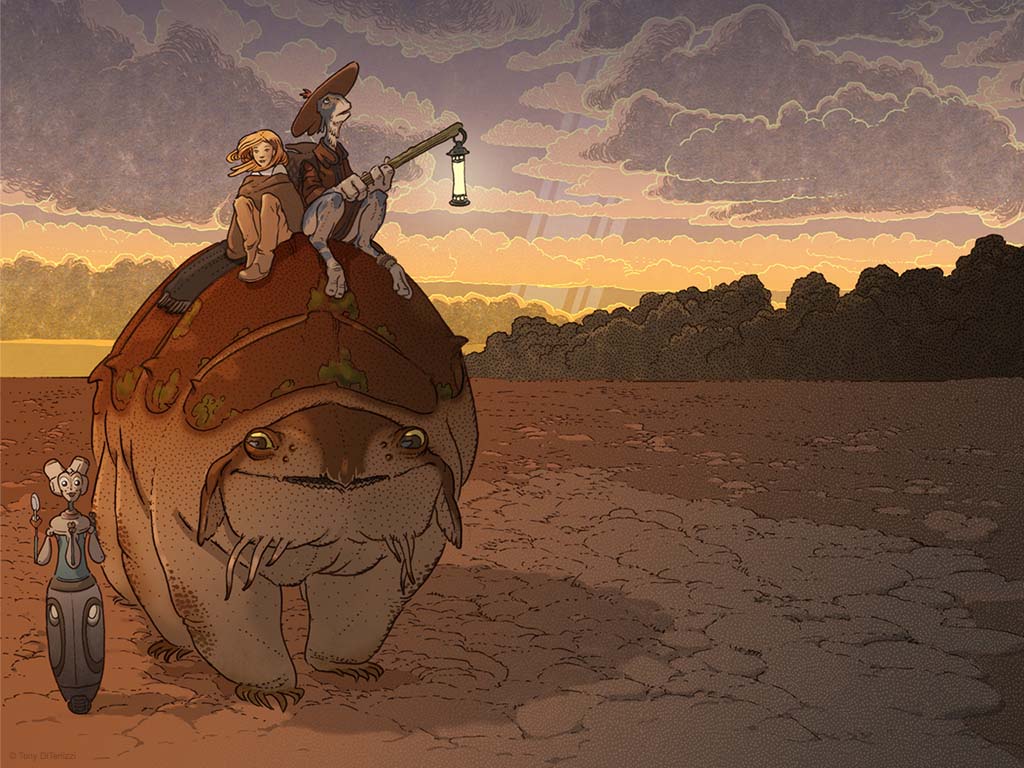
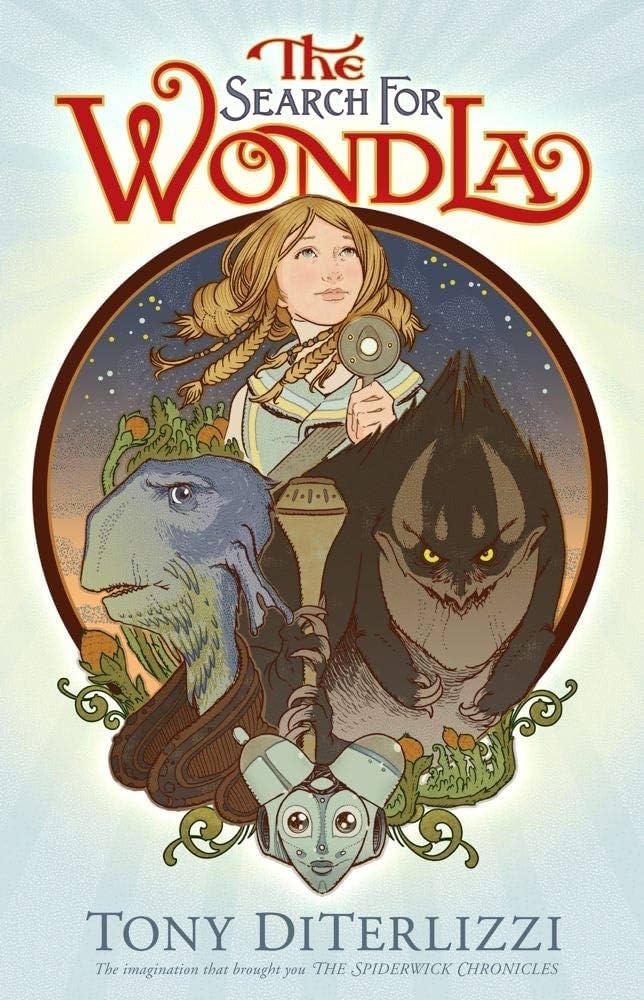
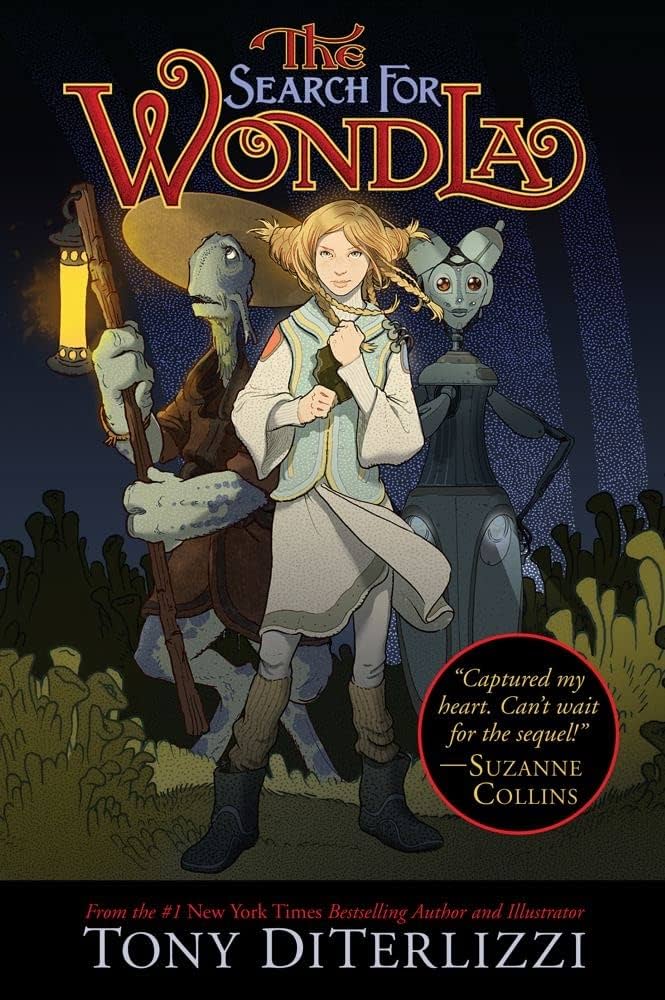
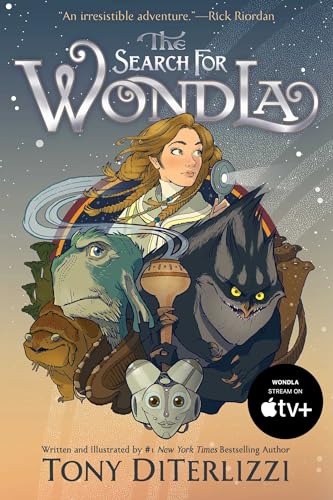
To give you an idea of what my fundamental issue with WondLa is, take a look at this side-by-side comparison of Tony DiTerlizzi’s original artwork with Skydance’s animated adaptation:

I’m still in physical pain when I look at the two next to each other. For the rest of this review, go ahead and call me Kurt Cobain, because hey! Wait! I’ve got a new complaint! Buckle up.

The main issue with Apple TV+’s WondLa is that it fundamentally denies the weirdness of the original books. Not only does everything look smooth, clean, and approachable, it’s Disneyfied in such a way that it loses sight of the core of the story—navigating an alien world, and forming bonds with beings that first frightened you. Even in the supposedly alien Orbona, everything is bright, cheery, and the kind of squishy that’s only useful for marketable plushies; the aliens only look alien insofar as they’re bluish and feathery. Even the Halcyonus couldn’t escape the curse of Disney hyper-masculinity and -femininity, where the women are skinny as rakes and have massive eyes, while the men are built like refrigerators and have tiny eyes. All of the futuristic human elements have lost their retro charm—Sanctuary 573 is now what would happen if you translated white room syndrome into an entire building. (Perfect conditions to raise a child, amirite?) Nowhere does this journey feel strange—you’re just hammered over the head with how Eva is supposed to think that it’s strange, time and time again.

Having The Search for WondLa 3D animated in this style was a fundamental mistake in adapting it. A lot of the more unique elements required a much larger budget to bring to life, and as a result, none of the original designs retain the vibrance that they had in the books. I love that they made Eva Nine mixed-race (WOOOO) and the reasoning behind it is in line with DiTerlizzi’s original vision for the story, but just because she’s a woman of color doesn’t mean that her design has to be sad and boring! Young girls of color deserve role models that haven’t had all of their defining traits stripped away for budget reasons! The budget was why her signature braids were lost, but even then, they could have added the bright colors in her utilitunic. Muthr now looks like a Playmobil figure with exceedingly rudimentary facial expressions (and having her fatal injury be nothing but a massive dent destroyed any of the emotional impact of her death), and Otto…looks nothing like the water bear that he supposedly evolved from. (Why is he furry? Why is his tail so bulbous?? Why is Otto?) Rovender looks…decent, compared to them, but the front-facing predator eyes still ick me out. It’s just not right. My gripes with the Halcyonus have already been stated, the one Mirthian we see looks like a weasel (and not the slightest bit smiley), and Queen Ojo now has gravity-defying lashes, very faint versions of her signature makeup, and a generic, human-looking tiara…for some reason.

Apparently the show experienced budget cuts and changes in leadership during its production, but that’s the only excuse I can think of for how rushed this storyline felt. Even from an objective stance, fitting almost 500 pages’ worth of material into a 7-episode show with less than half an hour’s runtime per episode is just mind-boggling. Predictably, everything gets the juice squeezed out of it as a result, rendering any kind of character development rushed and inorganic. The first episode alone is just an excruciatingly long training montage, complete with the entire theme song for Beeboo and Company—excuse me, Meego and Friends—instead of…y’know, exposition that wasn’t dump-trucked down the viewer’s throat. I can almost give it slack for being a children’s show, but the book never had that problem, despite being for the same target audience. All of the explanations of Eva’s childhood that took up almost an entire episode only took a handful of chapters in The Search for WondLa. The fact that it was geared towards a younger audience makes Eva Nine’s Percy Jackson-style aging up from 12 to 16 even more illogical—if it’s so clearly for children, why make her a teenager?

Which brings me to what I felt was the most offensive aspect of WondLa: the handling of the characters. Such a compressed time frame left zero room for not just character development, but expanding any of the characters beyond a single base trait.

This show turned Eva Nine (Jeanine Mason) into an adorkable Disney princess. Gone is the inquisitive, sensitive 12-year-old she once was, and in her place is the exact same character I’ve seen in at least 10 different Disney movies—clumsy, socially inept (and not even in a way that makes sense for the “raised in a bunker by a robot” plot), and teenage in ways that speak more to stereotypes about teenagers rather than the truths of girlhood that the books touched on. She’s so quirky! Look at her, she can talk to animals, but has no idea how to talk to humans! Teehee! Admittedly, one change that I did genuinely find funny was that one of the first thing she does upon realizing that she can telepathically communicate with animals is get into an animal’s mind to rig this universe’s equivalent of a horse race. That, at least, felt like something the Eva Nine I know would do at age 12.

Rovender Kitt (Gary Anthony Williams), everybody’s favorite blue father figure, got boiled down to a single character trait—and not even one that defines him in the novels. He’s gruff, he’s got a dry sense of humor, and in the beginning, he’s prickly—as you would be, if you were suddenly in charge of a feral twelve-year-old who confidently tells you that she can talk to animals. But WondLa just made him downright mean—again, a consequence of the terrible pacing, but he stays surly and outright hostile to Eva and Muthr for the glut of the series, until we’re lead to believe that absence has made the heart grow fonder, and he automatically does a 180 and becomes a part of their family. Rovender, who becomes a role model to Eva, was all but reduced to someone who would gladly sell her and Muthr off for parts…until he magically isn’t, to advance the plot. Muthr (Teri Hatcher) had a similar treatment; at least the overprotectiveness that they reduced her too wasn’t necessarily a mischaracterization like Rovender, but never once do we see her internal struggles with obeying her programming versus obeying the foreign laws of the natural world—and coming to love them. Another victim of this god-awful pacing…almost all of said scenes where she experiences these changes were cut from the book. However, it is a sweet, full-circle moment that Hatcher gets to voice Muthr here after being the voice of all three audiobooks. She’s got lots of experience with voicing mothers as well, what with being both the real mother and Other Mother in Coraline. (“Don’t you DARE disobey me, Eva Nine!”)

Besteel (Chiké Okonkwo), at least, was faithful in both design and personality; his design looked appropriately menacing, as was his vocal presence. He appropriately felt like a bully, but one with the hunger for power and strength to bring whomever he wanted to their knees. On the other hand, Otto (Brad Garrett)…where do I begin? His design already looks unbelievably cursed (to quote an Instagram commenter, “they done JJ the Jet Plane’d Otto”), but the way they adapted his telepathic communication made me want to throw my laptop across the room. In the novels, Eva Nine only hears his voice in one to two word sentence fragments, like how you’d imagine your pet speaking to you. It’s cute, but never oversaturated with attempts to be cutesy. This version of Otto has been butchered into the corniest, Secret Life of Pets, cutesy mess—he speaks in full sentences now, but they all sound like “sorry, I ate the yummy fish!” or “you better get us out of here before dinner-stick man gets here!” (Also…my guy’s an herbivore, why would he concern himself with yummy fish anyway?)

Such inconsistencies also translated to the side characters as well. Loroc (Navid Negahban) could have been perfect casting—Loroc does eventually look like the alien version of The Devil With the Yellow Eyes from Legion, after all—but the script makes his lines painfully corny and his design equally laughable. Zin (Maz Jobrani) was merged with his sniveling taxidermist, and all of his scientific wisdom and curiosity was flattened into a pushover who just wanted to dissect Eva and be done with it. Queen Ojo (Sarah Hollis) had a character change that was almost understandable; having her bond with Eva and indicate early on the pressure she’s facing as a young royal could have been charming, if not for, again, how corny the script was. Cadmus Pryde (Alan Tudyk) was a notable cameo, but his lines sounded rushed, even when he comes in at the big reveal at the end of the final episode. (Plus…why does he look like the Chris Pine character in Wish?) Again: I’d say none of the voice actors are at fault, but the terrible script most certainly is.

WondLa experienced a multitude of changes to the storyline as well as the designs; sometimes, tweaking the plot or characters in an adaptation can lead to a more meaningful version of the original (see: Fantastic Mr. Fox and How to Train Your Dragon). Tony DiTerlizzi’s apparent willingness for the writers to interpret WondLa as they see fit is almost refreshing—we writers cling tightly to our stories, so I suppose that it’s good for him to be so open-minded about this adaptation, and easier for the show runners to work with. That being said, almost all of the changes I could think of made no sense.

A multitude of characters or topics are renamed (ex. Beeboo and Company to Meego and Friends, Dynastes Corporation to Dynasty Corporation) for reasons that don’t even advance the plot. Darius, who was notably dead in the first book, replaces the role of Arius, only for her to prove a momentary obstacle and not deliver the prophecy to Eva that’s so integral to the plot later on. (I guess that explains the flattening of Zin’s character—if there’s no mark on Eva’s wrist for him to see, then why would he be sympathetic?) Loroc, who does not make an appearance until the second book, has already waltzed into the narrative, albeit in a similar role. And at the end of the show, it’s not Hailey in his battered Bijou who comes to find Eva, but…Cadmus? Why?? But along the way, it seemed like the writers were trying to signal that yes, this is the book you know and love, don’t worry! Here’s a spiderfish! You remember those guys, right? [Points at something that looks like a salamander] What struck me wasn’t necessarily that the plot had changed—that was inevitable—but that none of the changes made any narrative sense—characters and events were just thrown around with no sense of how their roles shape the series. (Also, gotta love the wholly unsubtle shoehorning of references to Skydance’s most recent and very mediocre-looking movie Luck...it felt like a commercial…)

However, I will say, among the many switches and swaps that were made, the role of Caruncle (John Ratzenberger) made sense. His voice (which I recognized without knowing his name…seems like he’s been in every Pixar movie since the dawn of time?) fit with Caruncle’s sleazy character, and although he’s embodying the version of Caruncle that we don’t see until book three, it made sense to have him here to bait Eva. At his core, he’s still slimy, deceptive, and not knowledgeable at all about what he’s selling, so it made sense.

Also, because I couldn’t let this slide: there’s a whole sequence where Eva is being playfully interrogated by two alien children, who ask if she really has ten toes…which results in a sequence where they focus on a teenage girl’s feet for an…uncomfortably long time. Just…why? Was Quentin Tarantino involved in this script? Jesus Christ…

But one change made me realize just how little the writers seemed to understand about the heart of the story, and it sums up how warped of an adaptation WondLa really is. In a climactic moment where Eva finds a replica of her WondLa—a corroded copy of The Wonderful Wizard of Oz—in the ruins of the New York Public Library, she lines it up with an untarnished copy. Here she is, having found her guiding vision of family and wholeness, and this is her response:

“It’s just a book?”

Nothing is sacred, is it?

My only comfort comes from my dear friend, who is an avid Percy Jackson fan: someday, a decade or so down the line, maybe we’ll have a more faithful adaptation. One can only hope. You might be asking me, Madeline, why are you so concerned about pacing and writing and all that? It’s a kid’s show! Here’s my answer: just because a piece of media is for a younger audience doesn’t mean that it shouldn’t be high quality and well-written. It can be done, and has been done many times! In book form, that was what The Search for WondLa was! Remember when I mentioned Fantastic Mr. Fox and How to Train Your Dragon! You can drastically change a children’s story and stay true to its message and emotional core! It’s not like these things aren’t possible.

For the fundamental understanding of what made the WondLa trilogy so impactful and unique—and the emotional duress it put me through—1 star.

Today’s song:

That’s it for this TV review! Have a wonderful rest of your day, and take care of yourselves!
Posted in Book Review Tuesday

Book Review Tuesday (7/2/24) – The WondLa Trilogy: A Re-Read Retrospective

Happy Tuesday, bibliophiles!

This is going to be different from my normal Book Review Tuesdays, as I’m reviewing an entire trilogy. Normally, that would be a tall order for a single post, but this trilogy is different. It’s a series that I read so often in middle school that even the teachers started to recognize the cover when I brought it in. It’s a series that has woven itself into the fabric of my life, just as Arius’ metaphor of time as a braided rope. It’s a series that inspired me to pursue writing—specifically writing science fiction.

In light of the new (and deeply disappointing) Apple TV+ series, I decided to re-read the series for the first time in six and a half years. Some novels you loved when you were younger don’t age well, but after I devoured all three books in the span of a day each, I can say that Tony DiTerlizzi’s WondLa trilogy has stood the test of time.

Enjoy this week’s reviews!

The Search for WondLa (The Search for WondLa, #1) – Tony DiTerlizzi

Summary from Goodreads:

When a marauder destroys the underground sanctuary that Eva Nine was raised in by the robot Muthr, the twelve-year-old girl is forced to flee aboveground. Eva Nine is searching for anyone else like her: She knows that other humans exist because of an item she treasures—a scrap of cardboard on which is depicted a young girl, an adult, and a robot, with the strange word, “WondLa.”

There definitely wasn’t an ulterior motive to me re-reading this series…totally not just to replace my reviews on Goodreads from 2016 (“OMG BEST BOOK EVER SQUEEEEEEEEEEEE but BIG FEELS”). Yeah.

The Search for WondLa is the reason why I decided that I wanted to write science fiction. It introduced me to a vast world of sci-fi literature that would become my favorite genre. It showed me a rich world full of bizarre, wonderful creatures and told me that I, too, had the power to foster such weirdness in my heart and bring it into the world. When I say that I don’t know where I would be without the WondLa trilogy, I’m not exaggerating in the slightest. Tony DiTerlizzi truly has, like Arius, given gifts to the world in the form of these novels.

The Search for WondLa coexists as a startlingly original piece of worldbuilding while also paying homage to a number of novels and stories—The Wonderful Wizard of Oz, of course, but also the older sci-fi that has inspired DiTerlizzi throughout his career, from Dune to Star Wars and others. There’s Jim Henson lurking in his fanciful creatures, Hiyao Miyazaki in his alien landscapes, and Ray Bradbury in his matter-of-fact, bombastic dialogue. On the subject of both Miyazaki and dialogue, what always cracks me up about this series (affectionately) is the various names DiTerlizzi gives to his characters and places. When I watched Nausicaä of the Valley of the Wind for the first time, my brother and I agreed that the long chunks of expository dialogue were all part of the hokey charm of the movie—it’s distinctly old sci-fi, and it’s so silly that it becomes charming. The same can be said for DiTerlizzi’s naming process…which is so unsubtle that it’s hilarious. Besteel? Surely he’s not a beast-like, predatory character. A fishing village by a lake? Can’t be anything but Lacus, right? Cæruleans? You’re not gonna believe what color these aliens are…but it’s WondLa’s charm. Intentional or not, these names might be one of the most faithful homages to the sci-fi genre.

Even if The Search for WondLa was the only book in the series, some of the character arcs are so expertly resolved within the span of a single book that it would be a satisfying standalone. Muthr’s may be the most clear-cut, but it’s nonetheless deeply impactful; her journey of battling with her own programming and beliefs and embracing the perilous, unknowable beauty of the natural world forms a key piece of the novel’s emotional anchor. She’s clearly the Tin Man, and although she can never fully adapt, by the end of her story, she has most definitely grown a heart. I think Rovender Kitt is the reason why I love the trope of gruff, older characters who reluctantly end up taking children under their wing on a fantastical journey. His development oscillates between heartbreaking and heartwarming in equal measure; Eva helped him remember to have empathy, and he, in turn, became the father figure that she never had. He never stops being gruff and sarcastic, but he rediscovers his caring core. The last few chapters of the novel are brutal for clear reasons, but Rovender’s breakdown, wracked with grief and survivor’s guilt, guts me every time. It’s a drastic shift from the Rovender we see at the beginning of the novel, but almost 500 pages is enough time for him to become the series’ epicenter of guidance and wisdom.

Part of my motivation to re-read the series was because of the Apple TV+ series (spoiler alert: it’s awful. They turned Eva into an adorkable Disney princess. Skip it.), but watching and reading them closely together made me realize what the show fundamentally gets wrong about the series: it’s weird, and it’s unafraid of being weird. All of the aliens have unique, truly otherworldly designs, with no punches held just because the target audience skews younger. Eva Nine is so far from perfect, even by the standards of young girls: her hair’s a mess, she doesn’t have a clue about surviving in the outside world, and yet confidently asserts that she can talk to animals, something that most would have left behind by the time they turn 12. But it’s all true! She’s unafraid of being weird, but that’s where her loneliness arises: she’s not just looking for humans, she’s looking for someone who understands the circumstances that molded her into the confidently strange person that she is…

Somebody hold me. No wonder I read this book to death when I was 12…

For its undeniable role in shaping the course of my life, 5 stars.

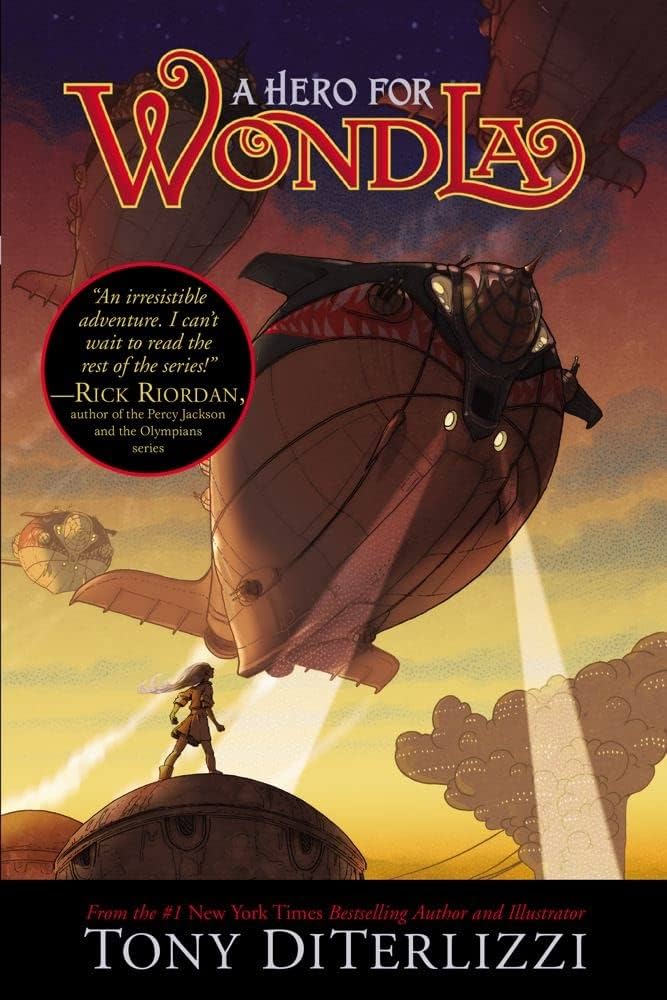
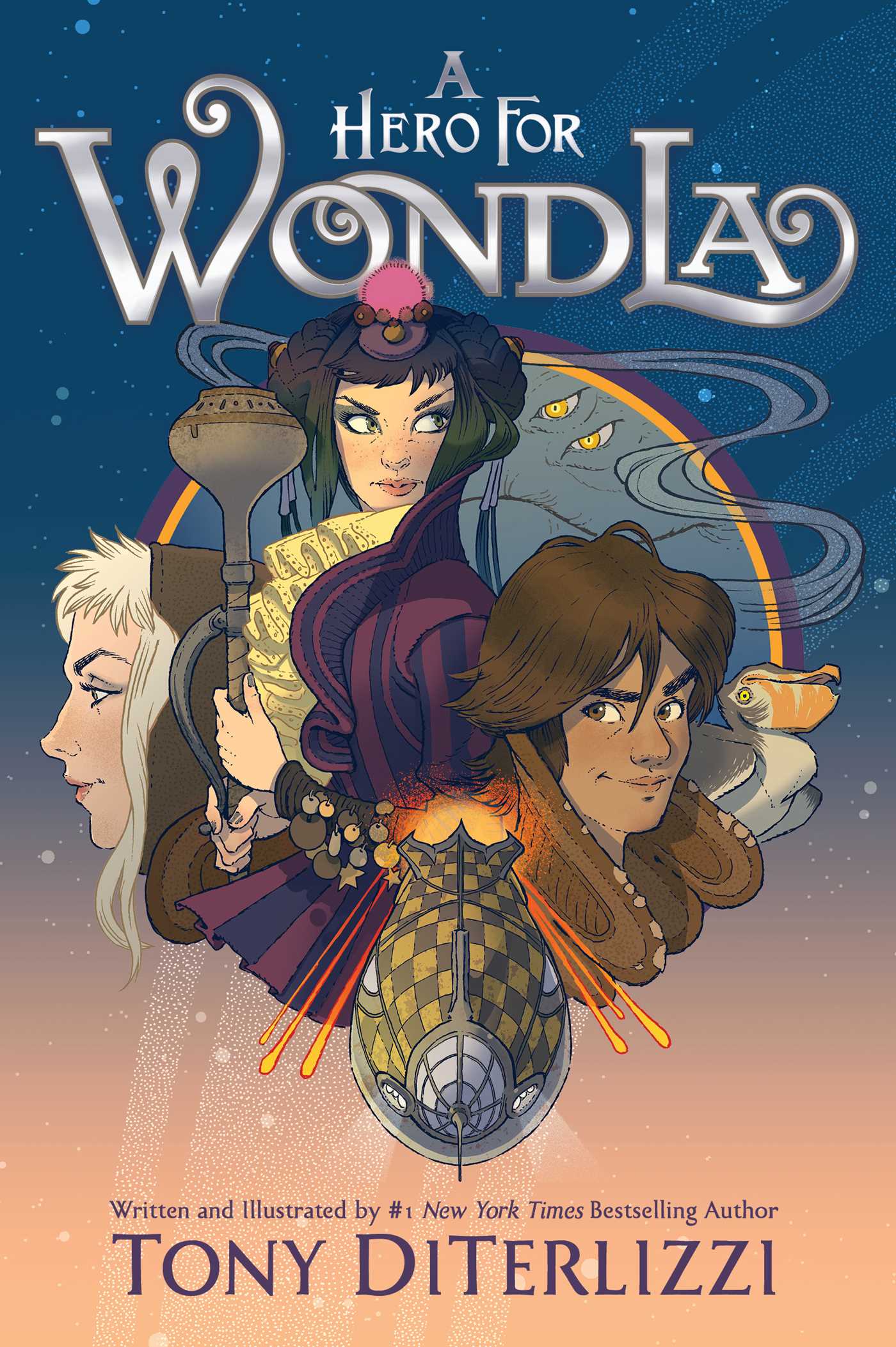
A Hero for WondLa (The Search for WondLa, #2) – Tony DiTerlizzi

Summary from Goodreads:

Before the end of The Search for WondLa , Eva Nine had never seen another human, but after a human boy named Hailey rescues her along with her companions, she couldn’t be happier. Eva thinks she has everything she’s ever dreamed of, especially when Hailey brings her and her friends to the colony of New Attica, where humans of all shapes and sizes live in apparent peace and harmony.

But all is not idyllic in New Attica, and Eva Nine soon realizes that something sinister is going on—and if she doesn’t stop it, it could mean the end of everything and everyone on planet Orbona.

A Hero for WondLa is a truly worthy predecessor to book 1 for so many reasons, but what struck me the most upon re-reading it is how painfully accurate—and beautiful—Tony DiTerlizzi’s depiction of weird middle school girlhood is. I had to stop and remember that yes, this is a middle-aged man writing this, and yes, he has a daughter, but she was still a toddler when he wrote this…and yet he nails it. Right down to the smallest details.

A Hero for WondLa follows Eva Nine’s journey after she’s discovered that she’s not the only human. She visits New Attica, the pristine, final stronghold of the human race, where technology rules all. Eva’s first instinct is to fit in; she’s taken under the wing of Gen Pryde and her Mean Girls 2049 posse of identical, plastic friends, who are intent on making her fit in—they giggle at her sanctuary-born eccentricities, and she’s only praised when they mold her to look just like them. Even after that, they’re laughing behind their hands. She flees their false promise of friendship and into the arms of Eva Eight, her long-lost sister who has waited 100 years for her arrival. Eight hates New Attica and all of its lies, and promises Eva that she’s just like her. And yet, despite this insistence, Eva fails to find solace in her, either. It’s only when she becomes one with the Spirit of the Forest that she becomes her truest self—putting that which gives her power front and center. Like The Wizard of Oz, the (emerald) city she has spent her whole journey looking for is nothing but a sham, and in the end, there’s no place like “home”—the person that she is most comfortable being.

Oh, god. I need a minute. Ow. No other book I can think of captures the limbo of being 13 and not knowing who your real friends were lodged so deeply into my heart. Eva, like me, was so desperate for friendship and human connection that both attempts ended in complications, but through it all, everything came back to the found family she has built—the outcasts, the prisoners, the exiled. The ones who had her back. The ones who were just as confused as she was, but joined her journey after realizing the error in their ways.

The aesthetic language of A Hero for WondLa is drastically different than book one, with its pristine, plastic city of humans living in a bubble. Even the clean walls of Sanctuary 573 had a retro feel to them—likely centuries outdated from New Attica’s tech—but all of this is so blindingly new. None of the robots and automatons have the same old-fashioned friendliness as Muthr, trading approachability for sleekness and monstrous amounts of wires and tentacles. But along with it is a sinister aspect that DiTerlizzi doesn’t shy away from; I’d forgotten that, although the discussion is brief, that it’s implies that among all of the mind-control and executions that Cadmus Pryde is carrying out eugenics is casually a part of his long list of crimes against the last of humanity. The WondLa trilogy isn’t one to shy away from darkness (part of why it’s stood the test of time for me), but that aspect stood out, especially since this is science fiction we’re talking about, a genre that has a long history of portraying the eradication of disabilities as a sign of progress. I’d remembered that there are a handful of disabled characters, but having that as a clear signifier of evil in a middle-grade novel is something I can’t praise enough.

The Search for WondLa is a very self-contained story; although book sequels surpass it, in my opinion, the conclusion that it ended on (minus the epilogue) was hopeful and wrapped-up enough that it could have been a reasonable end to Eva Nine and Rovender’s journey. But this novel does such an excellent job of intensifying the stakes in so many ways. As Eva learns of a conflict that could soon entrench the whole planet in war, we get so many of the real time costs. Foreshadowed details, hinted at from the start of the series, metamorphose into sinister threats. Interpersonal relationships become tangled in this vast, interspecies conflict—nobody knows the truth. Side characters (although all but one do end up surviving in the end) often die mere chapters after they’re introduced. It’s a very tense book in and of itself, but as the setup to the massive conflict in the final book, it’s a masterclass in building up both physical and emotional stakes.

And…good god, all of Rovender’s emotional moments always kill me the most. Without going too in-depth, the scene of his complicated reunion with Antiquus destroyed me when I was younger, and it might have destroyed me even more…

It reminds me of another song that similarly destroys me:

“There will come a day/When the Earth will cease to spin/You’ll hold me close and say: ‘my God, where have you been?'” (Shakey Graves, “Chinatown”)

For the deeply emotional journey, then and now, 5 stars.

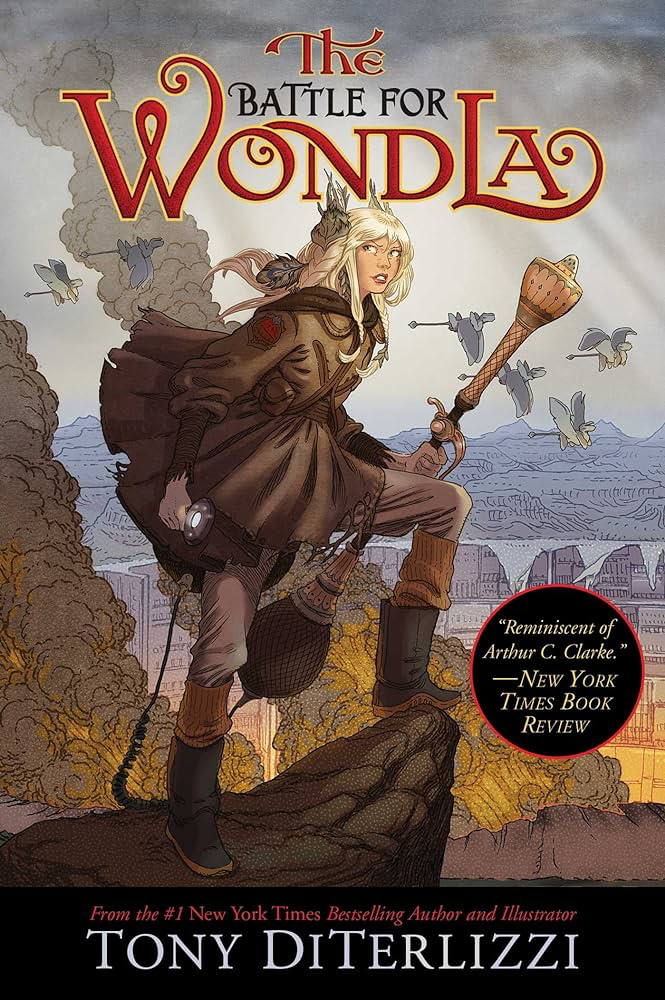
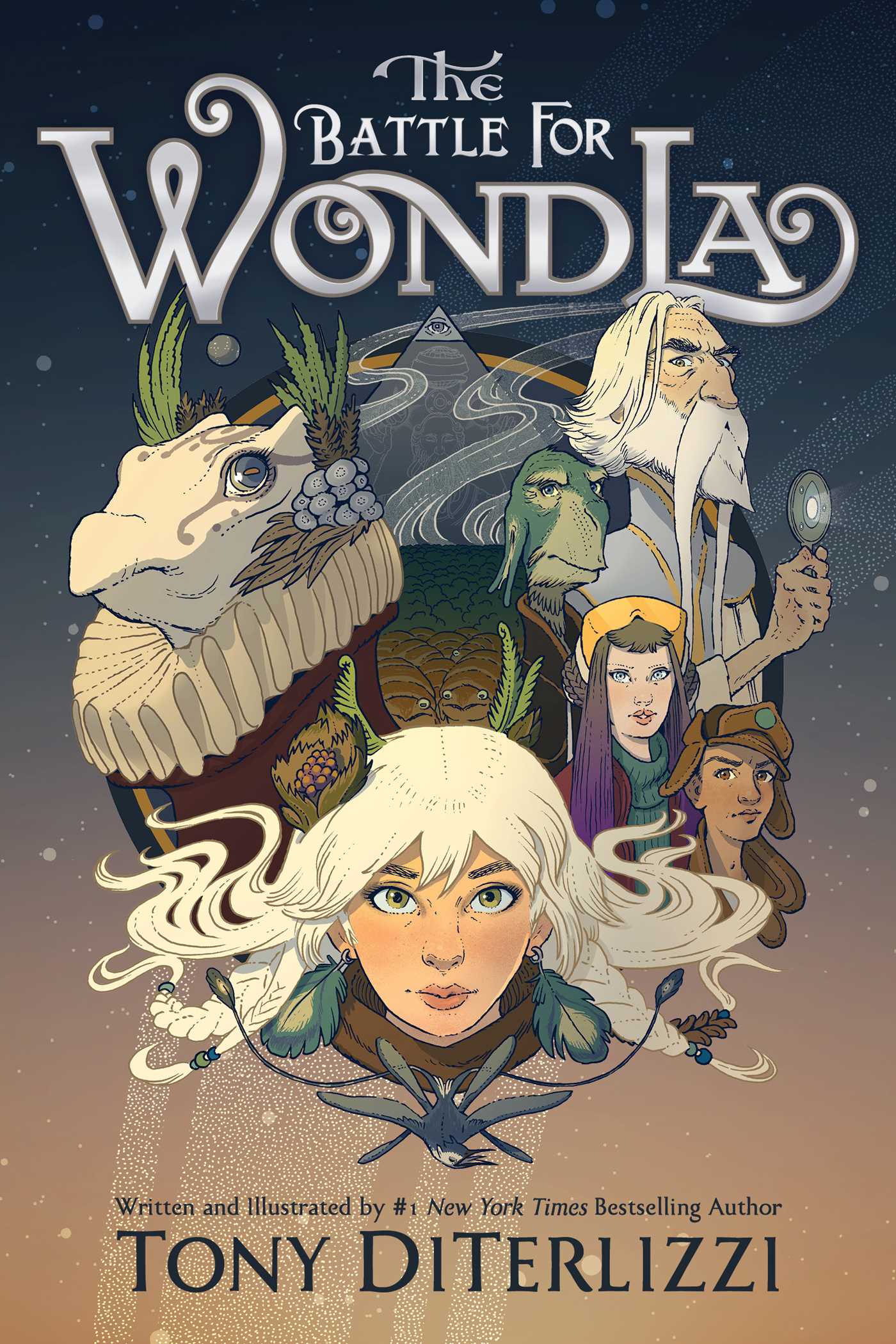
The Battle for WondLa (The Search for WondLa, #3) – Tony DiTerlizzi

Summary from Goodreads:

All hope for a peaceful coexistence between humankind and aliens seems lost in the third installment of the WondLa trilogy. Eva Nine has gone into hiding for fear of luring the wicked Loroc to her companions. However, news of the city Solas being captured by the human leader, Cadmus Pryde, forces Eva into action once again. With help from an unlikely ally, Eva tries to thwart Loroc’s ultimate plan for both mankind and the alien life on Orbona.

The Battle for WondLa was my favorite book of the trilogy when I first read it, and I find myself agreeing with the sentiment almost a decade later. Was this influenced by the fact that, in retrospect, the original book cover almost certainly contributed to my bisexual awakening at age 12? Maaaaaaybe. In all seriousness, it’s such a brutal, beautiful, and downright exhilarating conclusion to a series like no other.

This incarnation of Eva Nine, as matured as we see her in the trilogy, has always been my favorite. After she embraces her powers and connection to the natural world, she’s such a fascinating hero to follow, partly because she never fully gives up her younger traits. In fact, her powers lie in what made her a target in the first novel—her sensitivity and empathy. Now that she can communicate with all of the creatures of Orbona, she uses her sensitivity to find it within herself to accept the machinations of the natural world and show mercy for even the most frightening of beasts. Sensitivity is her superpower, and that is such an important lesson for younger readers—especially young girls. It’s overwhelming to feel everything all of the time, especially when you’re Eva’s age, but having a heroine who wrestles with that and learns to fine tune her all-seeing empathy and use it to her advantage is so, so crucial. I’m likely among a majority when I say that my sensitivity was often treated as a weakness growing up, so having a heroine whose sensitivity saves the world is just about the best role model you could write for a young girl.

As the title suggests, The Battle for WondLa boasts some of the best battle scenes in the whole trilogy. I’m not talking about the massacre of New Attica, although that remains truly brutal, but the ones that display Tony DiTerlizzi’s talent the most is the scenes where Eva uses the sheer might of the forest to win her battles. Now that I’m older, I’ll inevitably associate WondLa with Björk for a number of reasons, but Eva Nine goes from that precocious, earlier “Human Behaviour” Björk straight into “Nattúra” as her development goes on—unflinching femininity channeling the incomprehensible power of nature. Does it get any better than that, folks? Actually, it does—watching Eva Nine take down a squadron of Warbots with the help of a herd of giant water bears. “My herd…help me.” COME ON. Eva getting injured and then being carried back into battle by the mother sand-sniper that she freed from the menagerie? GIVE IT TO ME!! A highlight of the novel, without a doubt.

What stands out to me about Battle is this novel’s willingness to make complicated characters. Whether they’re the culmination of arcs of characters who have been in the series for multiple books or side characters that only show up in the latter half of the novel, there’s something to be said for how unflinchingly complex everyone is, and how that further complicates Eva’s quest to unite humans and aliens on Orbona. Hailey, with whom Eva is still (justifiably) bitter over her treatment in New Attica, sheds his tough, cocky exterior to reveal a loyal, humble friend by the end of the novel. Zin’s scientific distance becomes a detriment to him in the wake of the death of his family—and the threat exerted by his power-hungry brother, making him realize the error in his lack of emotional intelligence. Redimus, who unintentionally caused nearly all the dominoes for the entire series to play out against Eva, is never written as fully black or white; Eva can never fully bring herself to forgive him, but she learns to accept his attempt to, in his own words, “rectify his past actions,” and to accept that everyone is a web of decisions and consequences that never fully align with each other. And that’s what makes her journey feel so much more earned.

At the heart of The Battle for WondLa is connectivity—it’s all very “I/O” to me. Loroc’s ultimate goal is to unite Orbona, but unity in the form of everyone, human and alien, being either enslaved or consumed by him. He tricks his allies with promises of harmony, only for them to realize that harmony ends up being the harmony of being together…inside of his stomach. Eva wins by championing the fact that it’s the uplifting of everyone’s unique strengths that makes a community strong, whether it’s the unity of the aliens or the interconnectedness of all of the plants and animals of Orbona. We are each an integral part of a community, whether it’s a food web or a village, and it is those unlikely connections that make us stronger. As with today, the greatest mistake that any civilization can make is thinking that we are separate from nature. To once again quote Peter Gabriel, “I’m just a part of everything,” and that is where strength—and love—come from.

All in all, an unforgettable finale for a series that changed the trajectory of my life overwhelmingly for the better. 5 stars.

Tony DiTerlizzi is the author of several books for both early readers (Adventure of Meno, Ted, Jimmy Zangwow’s Out-of-This-World Moonpie Adventure, G is for One Gzonk!) and middle grade (Kenny and the Dragon and The Spiderwick Chronicles, co-authored with Holly Black). All seven episodes of WondLa are now streaming on Apple TV+*.

*I could only make it through 5/7 episodes before I had to quit. Only watch it out of morbid curiosity or if you have intentions to read the books and see how you got robbed.

Today’s song:

thank you to my brother for turning me on to this one!!

That’s it for this week’s Book Review Tuesday! Have a wonderful rest of your day, and take care of yourselves!
Posted in Monthly Wrap-Ups

June 2024 Wrap-Up 🐻

Happy Sunday, bibliophiles!

Halfway through 2024…no! No we aren’t 😀😀😀😀😀😀😀😀😀😀😀😀😀😀😀😀

Let’s begin, shall we?

GENERAL THOUGHTS:

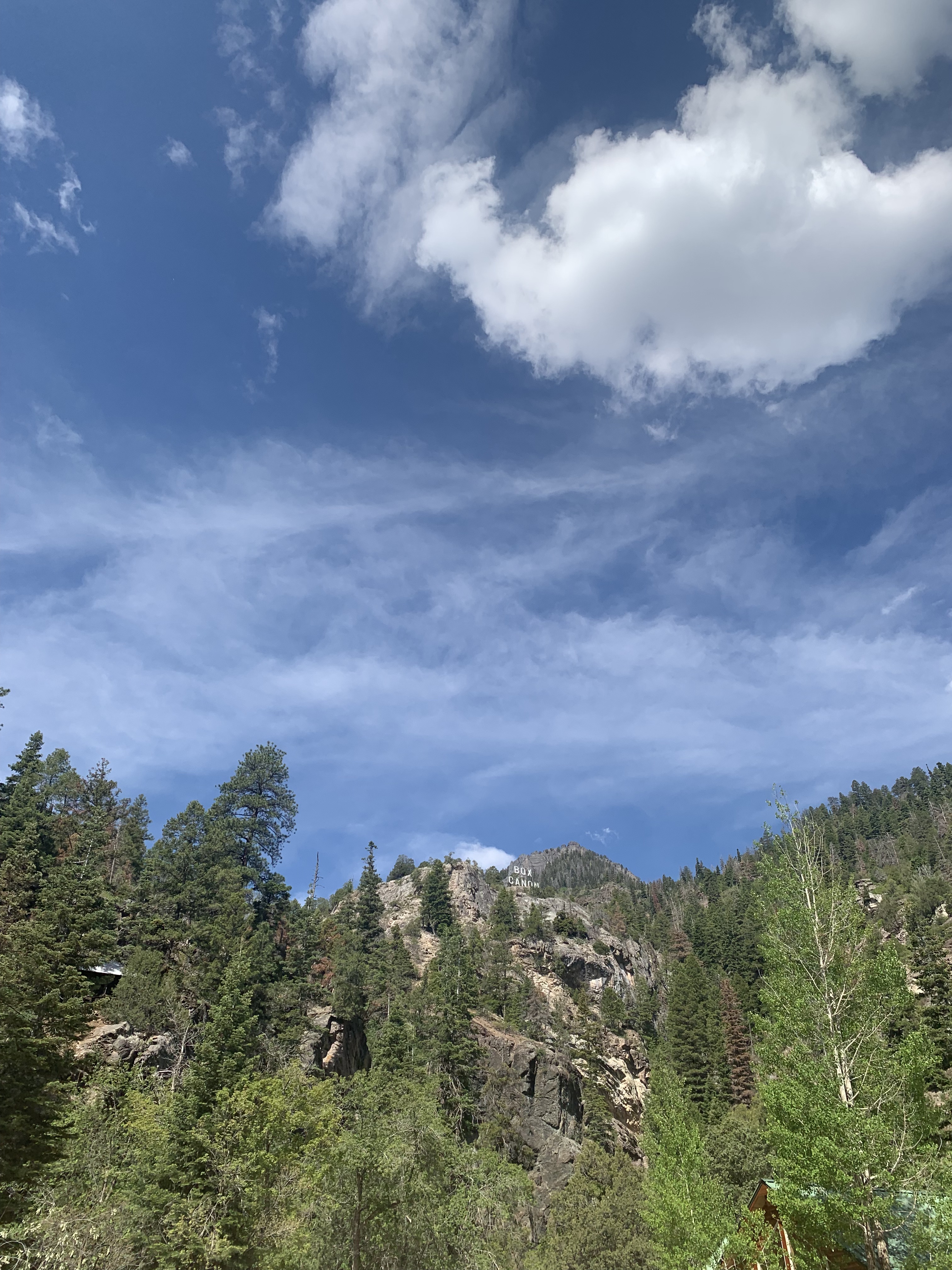
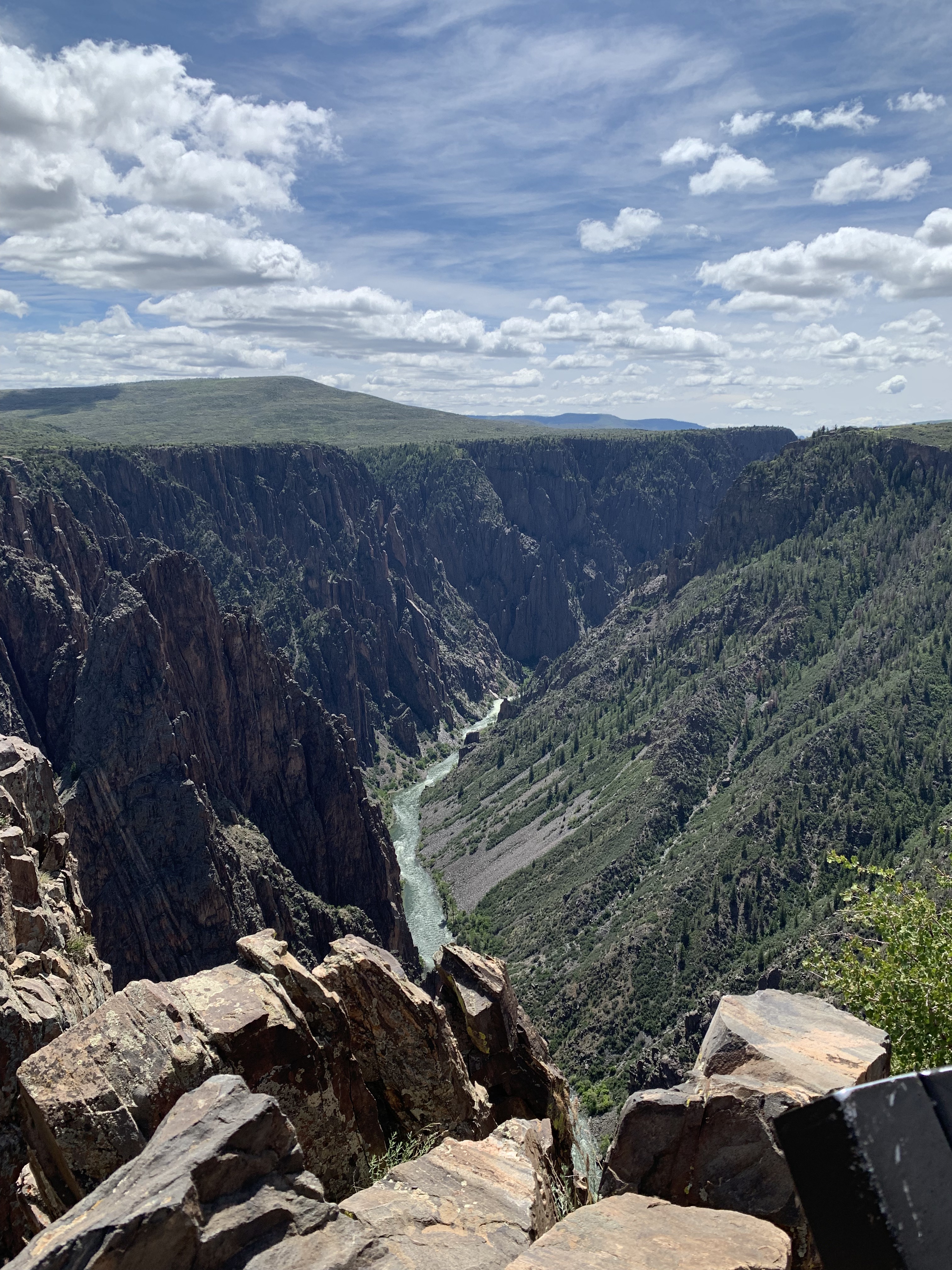
After how busy and hectic my sophomore year of college was, June has been a time to recharge in more ways than one. I went on a quiet vacation at the beginning of the month (Ouray and Black Canyon of the Gunnison—the latter is a very underrated national park, I highly recommend it!), and I’ve taken the rest of the month to…well, rest. I’ve tried to be on social media less and focus on art, writing, and generally nourishing my creativity. In preparation for Camp NaNoWriMo (I only ever do the July camp these days because November and April are both abysmally busy times for me now that I’m in college), I’ve decided to round out my sci-fi trilogy and write the first draft of book three; at this point, I’ve beefed up the outline like a grizzly bear before hibernation, so at least I’ll have some sense of direction…wish me luck!

My reading month started out slower, and it’s had some dips, as always, but I ended up reading loads of fantastic queer books for pride month! Predictably, one of my vacation souvenirs wasn’t something related to where we went…no, I bought a copy of The Familiar at a local bookstore (support ’em!) knowing that it would take eons for my hold to arrive at the library. Worth it. I also figured it was as good a time as any to re-read my favorite series from when I was a kid—the WondLa trilogy. My verdict? It healed my soul and reinvigorated my creativity. Some kid’s books don’t age well, but WondLa never gets old.

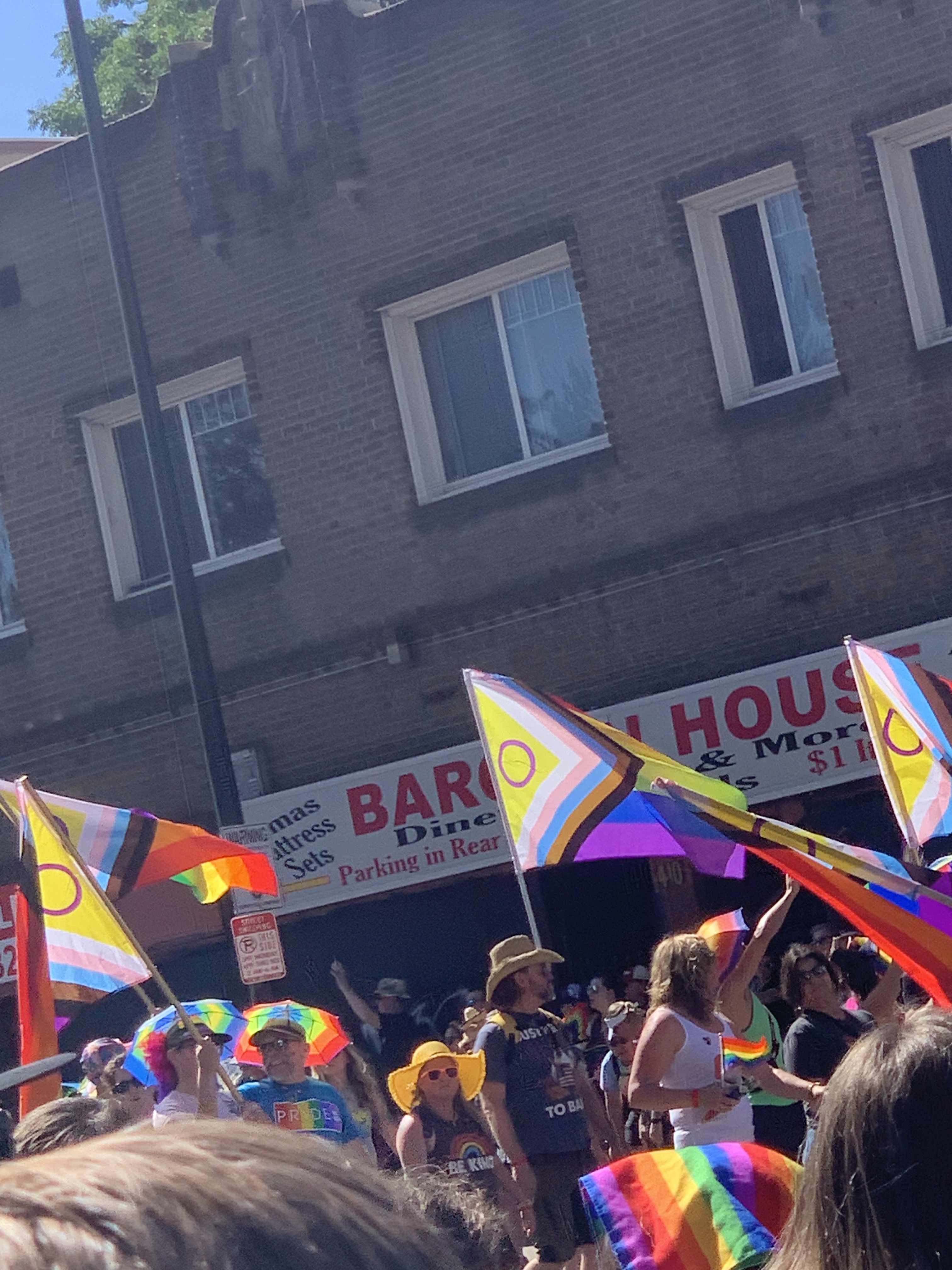
Other than that, I’ve just been making art, playing guitar, going to pride (so much fun!), watching Hacks, Succession (nearly finished with season 1, and all it’s done is made me fear business majors even more than I already do), and…morbidly, Apple TV+’s new show that they decided to call WondLa. I’m three episodes in, and it’s like watching a train wreck. Expect a retrospective on the WondLa trilogy and possibly a review of…whatever that show is that definitely isn’t WondLa.

On a lighter note, photos from my vacation and pride:

(The bear on the title of the post is in honor of a bear we saw crossing the road in Black Canyon. Could also represent bears in general? Happy pride.)

READING AND BLOGGING:

I read 18 books this month! It’s been another relaxed reading month, and although I had a slump towards the end of the month, I read several incredible books for pride month!

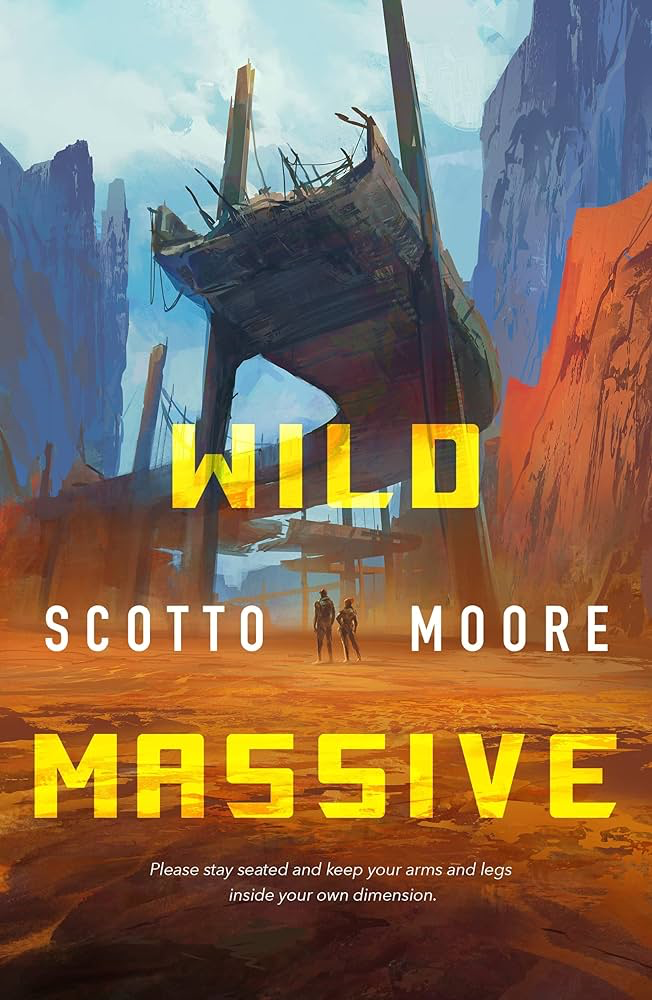
1 – 1.75 stars:

Wild Massive

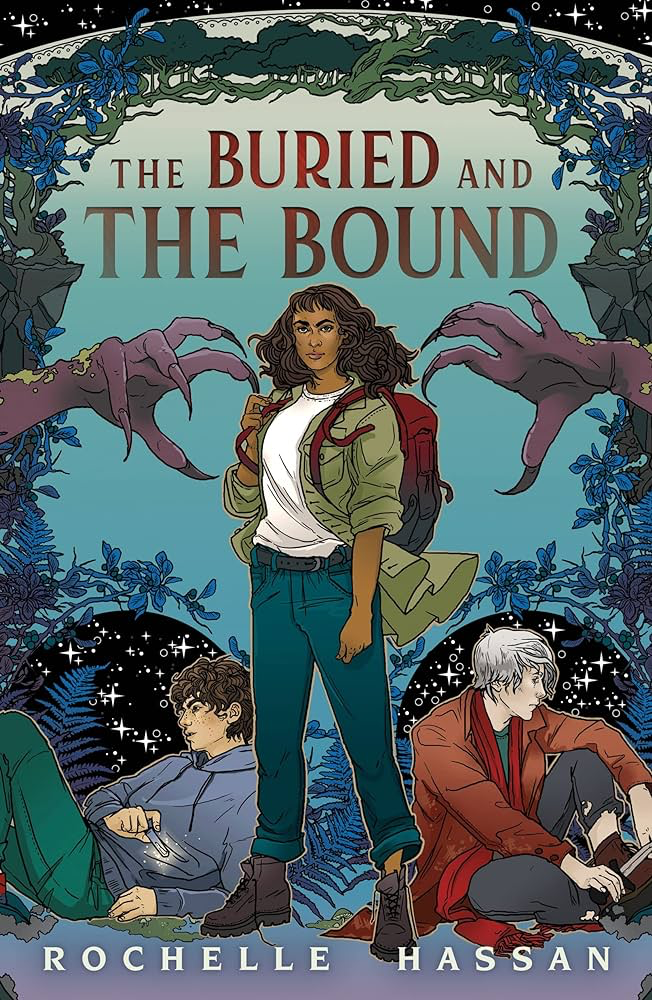
2 – 2.75 stars:

The Buried and the Bound

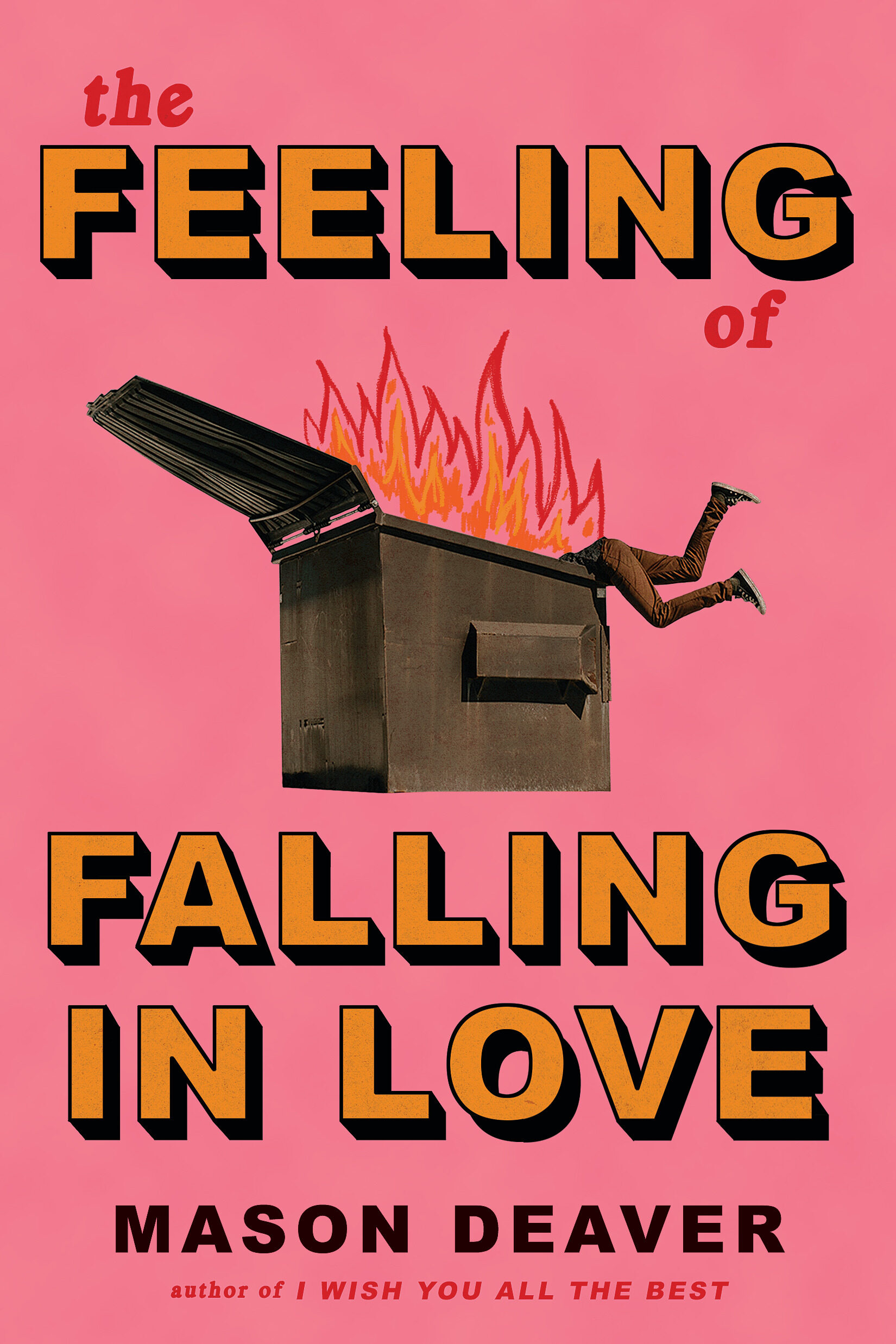
3 – 3.75 stars:

The Feeling of Falling in Love

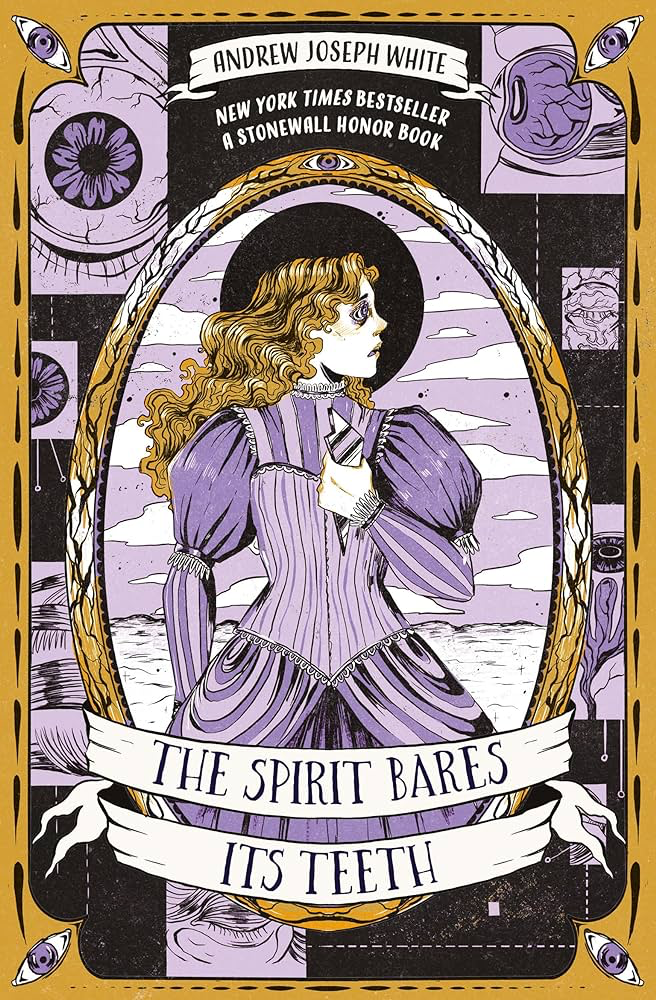
4 – 4.75 stars:

The Spirit Bares Its Teeth

5 stars:

The Battle for WondLa

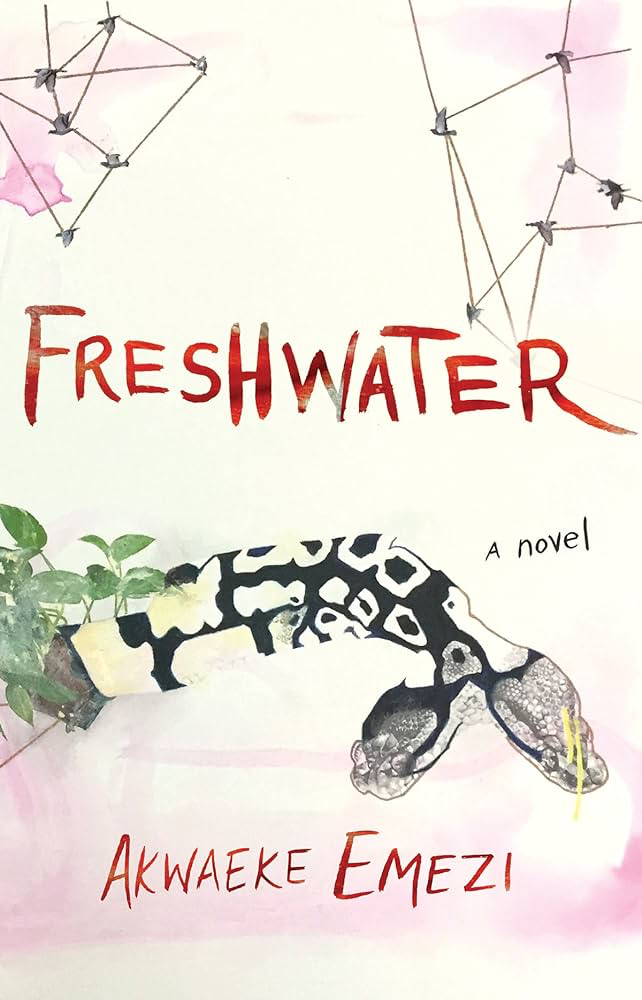
FAVORITE BOOK OF THE MONTH (NOT COUNTING RE-READS) – Freshwater – 4.5 stars

Freshwater

POSTS I’M PROUD OF:

POSTS FROM OTHER WONDERFUL PEOPLE THAT I ENJOYED:

SONGS/ALBUMS I’VE BEEN ENJOYING:

ADORE THIS ALBUM.
this song cracks me up…happy pride
forgot about this song for ages…thank you to my dad for resurrecting this one for me!
on a cocteau twins kick again…
LIVE LAUGH LISA GERMANO
great album!! with all the buzz it got when it came out, I’m surprised that I never heard anything about this one…
HOT WILCO SUMMER!!

Today’s song:

living for the Galaga noises at 0:26

That’s it for this month in blogging! Have a wonderful rest of your day, and take care of yourselves!