

Happy Sunday, bibliophiles! I hope this week has treated you well.
This week: I’m going off about a) how it feels to be a woman, and b) late-career Gorillaz, but really, what’s new?
Enjoy this week’s songs!
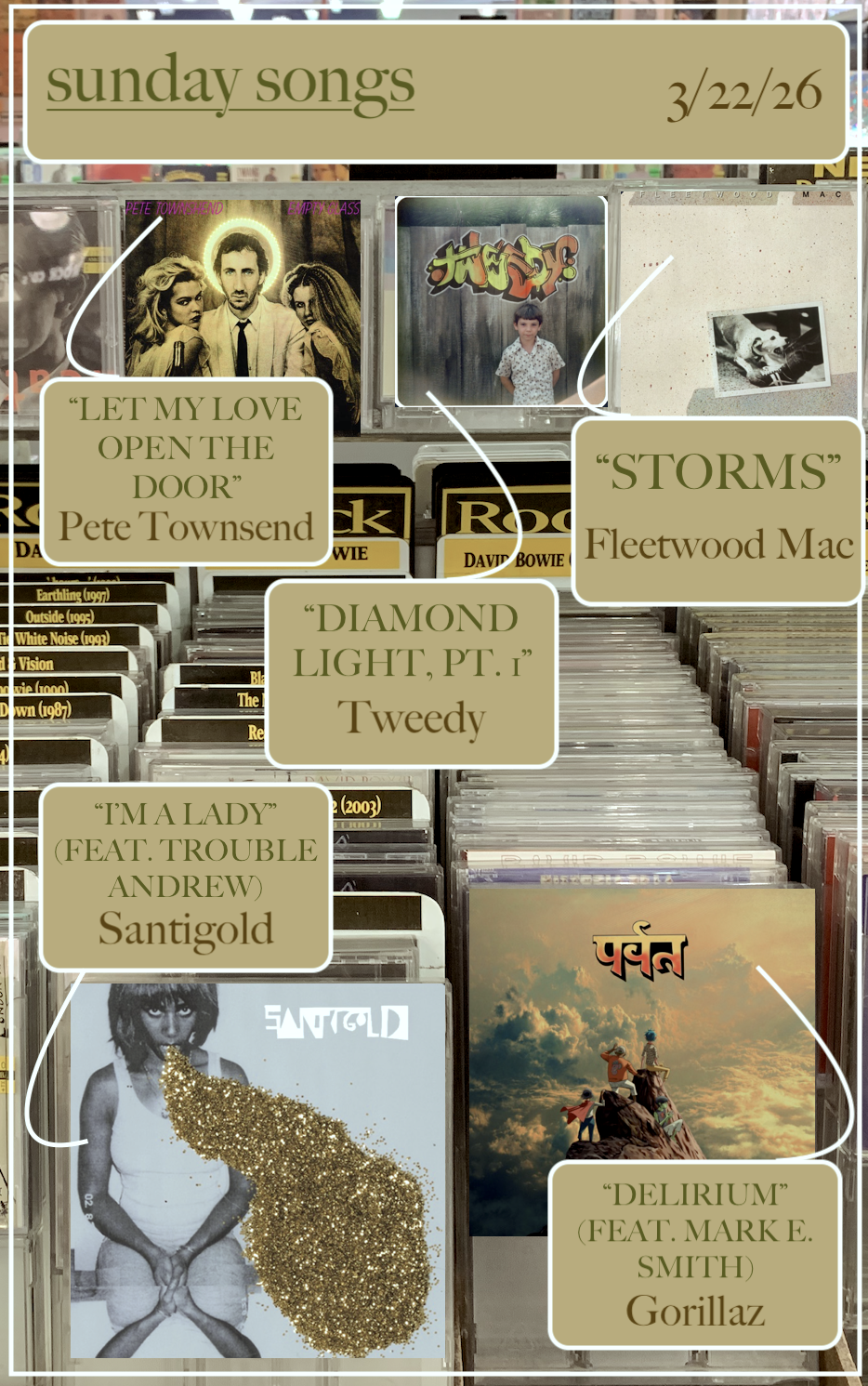
SUNDAY SONGS: 3/22/26
“I’m a Lady” (feat. Trouble Andrew) – Santigold
“I’m a Lady” begins at 8:55.
God. Santigold, man. I don’t know if there’s ever been a song that accurately distills the experience of being a woman down into less than four minutes (or if there will ever be), but this sure comes close. I’m glad I found it during Women’s History Month, because if there was ever a torch to bear, especially in these beyond-troubling times, it’s this one. I’d be hard-pressed to find a Santigold song that isn’t upbeat—that’s just her style—but the bright backdrop of this song juxtaposed with the repetition of “I know someday they’ll make a martyr out of me” in the first verse gives me goosebumps every time. That line, that knowledge in every woman’s bones that there could always be the possibility of infliction of violence based on our gender. It’s made even more potent by having a Black woman sing it, with the dual oppressions of gender and racial violence. Of course, the martyring might not necessarily be literal, but even without that context, there’s still the undercurrent of being made an example: step out of line from the heteropatriarchal standards of womanhood, and you’ll be kicked to the curb.
And yet, “I’m a Lady” continues to be upbeat. In spite of it all, “I’m a Lady” continues at the pace of a sunlit skip in the park. It continues with the conviction that despite the horrors that come along with womanhood, that being proud of your identity is the best way to be. And it’s true—when the world is bent on degrading you and your ilk, very little is more powerful than declaring that you love the parts of yourself that they despise. Being in women and gender studies, I’ve been exposed to a lot of theory about how womanhood can be boiled down to suffering, and that negativity is what defines womanhood, to which I say…what? There’s no doubt that it’s a part of womanhood, but claiming that it’s the whole would be like slapping a hand over your left eye and claiming that the limited view that your right eye has is all there is. Womanhood is fear and joy, heartache and pride. It’s especially relevant for Santigold; after this album, she’s spent years in the music industry trying to push against people who want to prevent her from being herself…and yet here she stands, undeniably herself, still making unique music and spreading joy. She embodies the last half of the chorus perfectly: “I know I spend magic reel it out/Try to hold a light to me/I’m a lady.” Every limp, hollow girlboss anthem of the past 10 years needs to step aside, because this destroys any corporately packaged notion of womanhood. Nobody balances the pain and joy quite like Santigold, and all in an indie pop package—not to fulfill some kind of quota, but to express what so many women of all walks of life have felt all our lives.
…AND A BOOK TO GO WITH IT:
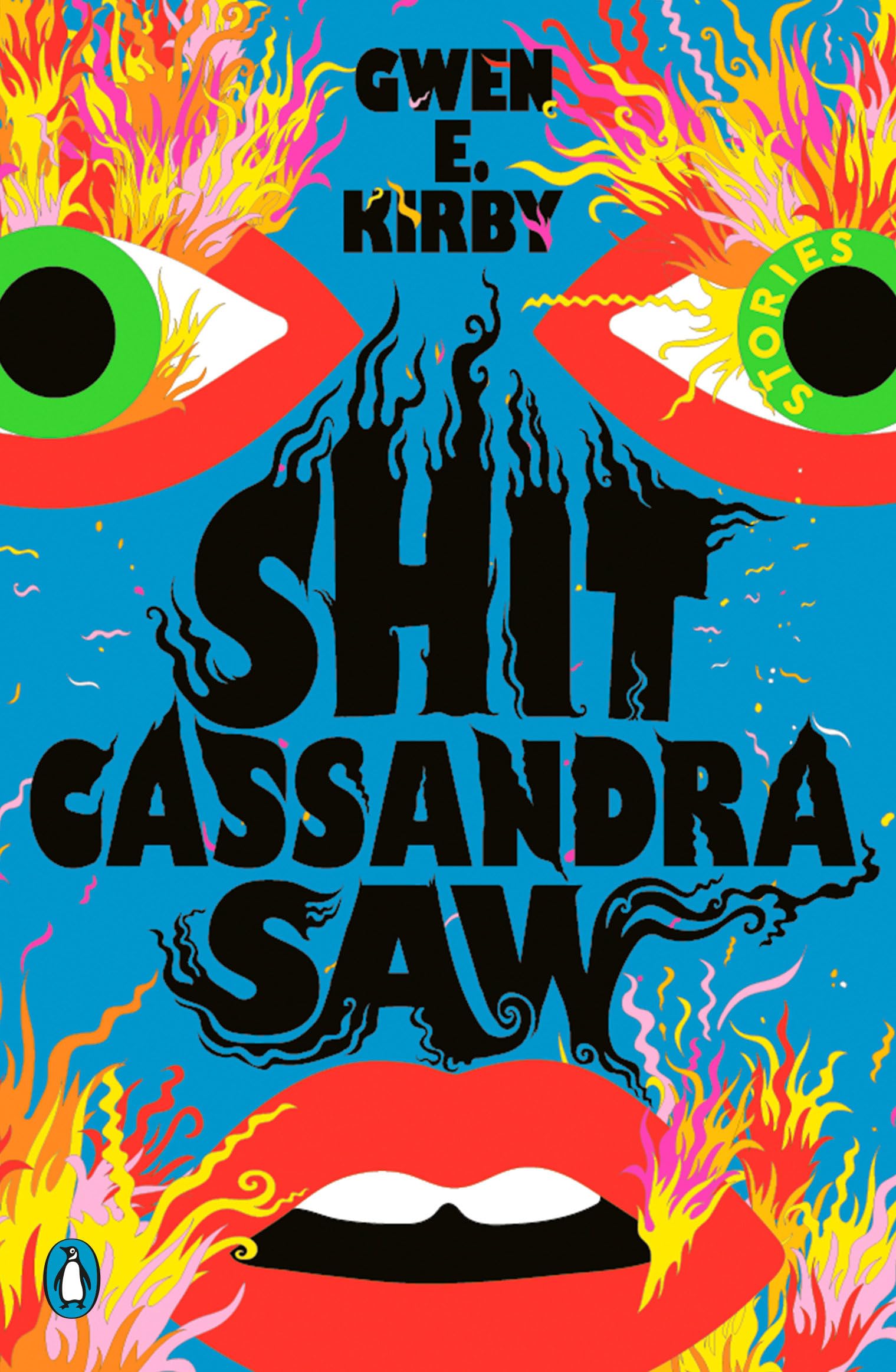
Shit Cassandra Saw – Gwen E. Kirby – “I got some money I was saving/Got some hearts that I’ll be breakin/Know someday they’ll make a martyr out of me/I know someday they’ll make a martyr out of me…”
“Delirium” (feat. Mark E. Smith) – Gorillaz
So…The Mountain. It’s a step up from Cracker Island, but that’s a low bar. At best, it has some of Gorillaz’s most introspective and meditatively poignant grooves of the 2020’s, and at worst, it just becomes another late-career Gorillaz album bloated with so many collaborators that you could easily forget that Damon Albarn is even in the band. Yet given the context behind it—Albarn and Jamie Hewlett’s formative trip to India after the deaths of both their fathers in rapid succession—makes me respect it more. You can tell that they respect the grit in the industry of art in an age where convenience has overtaken the desire to put some blood, sweat and tears into making good art that hasn’t been shit out by ChatGPT. Even if the album itself isn’t my favorite, I have utmost respect for what Gorillaz has become: an international, intergenerational bastion of hope, justice, and worldly party music. I maintain that Gorillaz has and always will be The People’s Band.
Death looms over The Mountain, and that’s due in no small part to Albarn sifting through the archives of unreleased demos for this album; three of the collaborators have previously worked on Gorillaz albums, but passed away before this album’s release—Dennis Hopper (Demon Days), Tony Allen (Song Machine, as well as other Damon Albarn projects), and Mark E. Smith (Plastic Beach). Smith, who died in 2018, features heavily on “Delirium,” one of the most distinctive tracks on this album. Like on his Plastic Beach collaboration (“Glitter Freeze”), he looms as a kind of town crier of the end times, speak-shouting out the song’s chorus amidst some of the most infectious grooves on the entirety of The Mountain. His rattling cackle can’t compete with Maseo’s iconic laugh from “Feel Good Inc.,” but it’s a great entry in the growing collection of Gorillaz Laughs—and it always gets me so amped up to hear the thrumming bass of the chorus. If nothing else, “Delirium” is proof that no matter how their sound changes, Gorillaz will always be the prime purveyors of some of the most existential party songs out there.
BONUS: as a personal crusade against convenience usurping hard work in art (in life and in general), Jamie Hewlett made an accompanying animation for The Mountain, hand-drawn with cel animation. Even if you’re not familiar with the band, I’d highly recommend giving it a watch—it’s a gorgeous work of classic 2D (no pun intended) animation.
…AND A BOOK TO GO WITH IT:
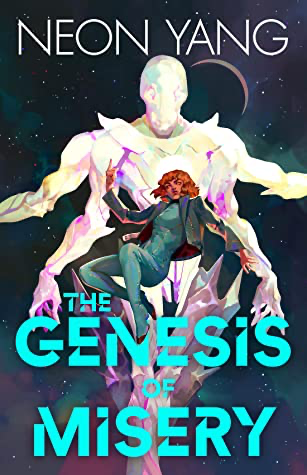
The Genesis of Misery – Neon Yang – “There is panic on the mountain/Coz a new God’s come/He doesn’t recognise himself/Or what he’s done/But if you don’t embrace him then it’s time to run…”
“Let My Love Open the Door” – Pete Townshend
I’ve retained a few qualities from being five years old: craving a good cheese pizza, liking aquariums and zoos, appreciating a well-placed pink accessory…and really liking this song. There was a strong phase when I was 5 or 6 where “Let My Love Open the Door” was one of my favorite songs, which really isn’t doing wonders for beating the insufferable hipster allegations, but who can deny how intricately crafted of a pop song this is? It’s not just catchy—it really never lets you go until it’s done with you. That looping ouroboros of a synth intro and that first crack of the drums is a fuse being lit, and the glossy, ’80s firecracker that resulted is timeless. It’s no wonder that if you throw a stone at any given selection of rom com movies, you’ll probably hit one that’s featured this song—it’s not without reason. And listen—is it a bold move to give yourself a whole halo on an album cover? Absolutely. It’s…a choice. But I’d be lying if I said that at least an inch of it wasn’t deserved, at least for this song, because it never fails to fill my chest with tingling, joyous nostalgia every time.
…AND A BOOK TO GO WITH IT:
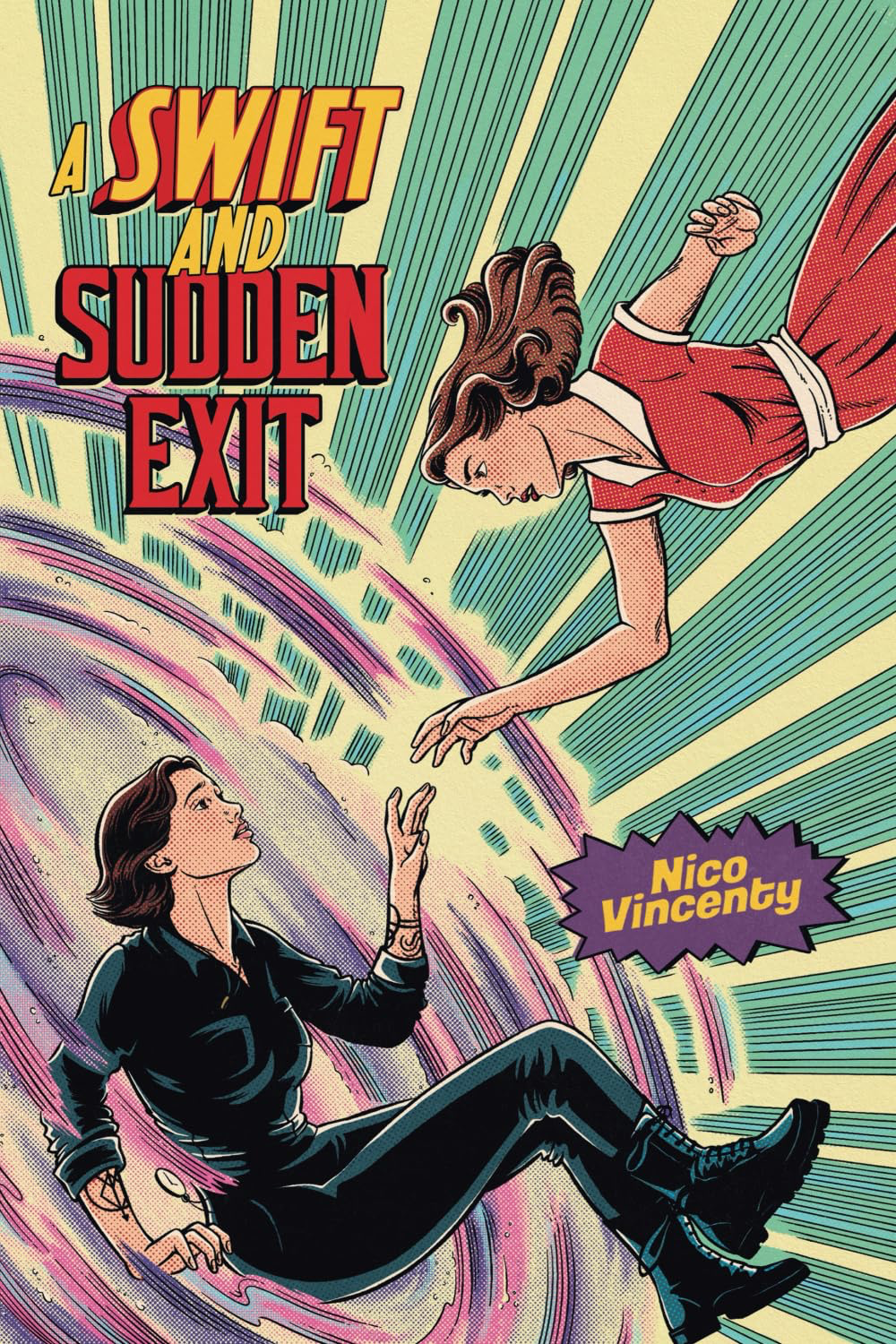
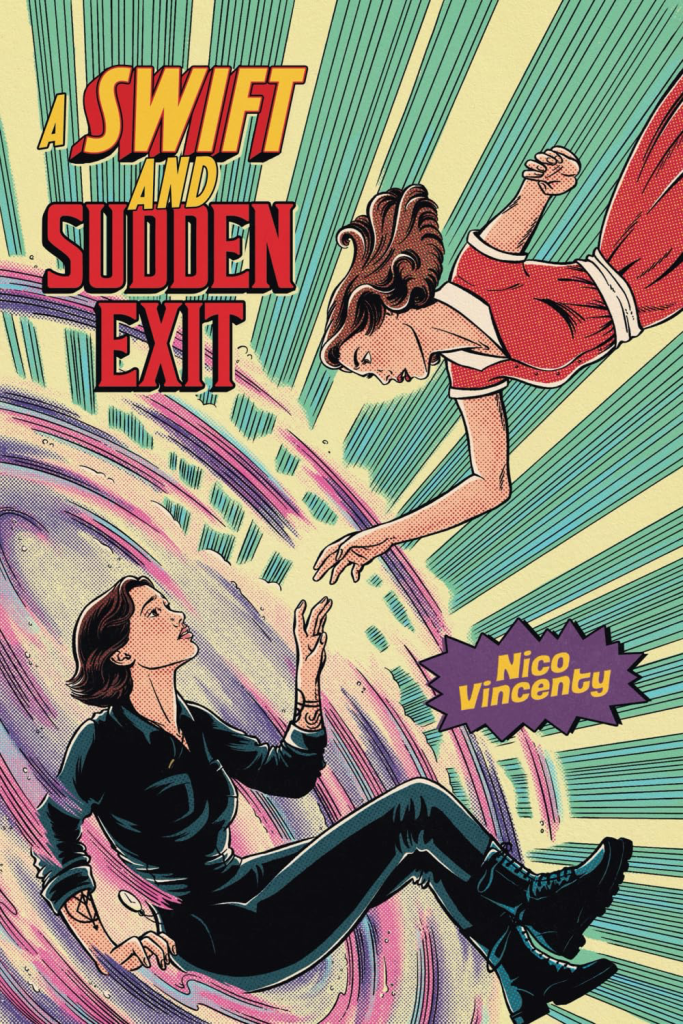
A Swift and Sudden Exit – Nico Vicenty – “I have the only key to your heart/I can stop you fallin’ apart/Try today, you’ll find this way/Come on and give me a chance to say
Let my love open the door, it’s all I’m livin’ for…”
“Diamond Light, pt. 1” – Tweedy
It’s been 12 years, Tweedy, the people need to know…where the hell is “Diamond Light, pt. 2”?
I’m saying that because somehow, it took me until my dad sent me this days before we saw Jeff Tweedy for me to recognize this song, and yet it’s easily the best Tweedy song I’ve heard. “Diamond Light, pt. 1” is one of those songs that I can’t imagine cutting any of the runtime, because it takes its time with layering in every possible ounce of creativity, but gingerly, like gently folding dry ingredients into cake batter so as not to overwhelm the integrity of the whole. In my mind, this is a sister or at least a cousin to Death Cab for Cutie’s “I Will Possess Your Heart,” another song that soaks up every note in order to make the buildup pay off. This track spreads every ounce of Jeff Tweedy’s most potently surreal lyricism into so few lines; “Rolling rivers of diamond light/Dash and heave/Each ache to the sky” is an image so nebulous, yet you can only see it in blurry strokes, but feel it, right in the ribs, in the precise rhythm of how the words “dash” and “heave” fit together like bone into muscle.
And when those lyrics haven’t taken center stage, “Diamond Light, pt. 1” boasts a breakdown reminiscent of A Ghost is Born, scarcely reined-in chaos that folds in on itself, expanding and shrinking, all within the bounds of Spencer Tweedy’s hypnotic drumming. The sounds in the background of the last minute or so feel like hearing a spaceship’s engines fizzling out from miles away, dissipating into echoing, radar-like pulses—that, for sure, feels like foreshadowing for “Infinite Surprise” nine years later. Before or after Tweedy, it’s clear that the potential for this song was always incubating.
…AND A BOOK TO GO WITH IT:
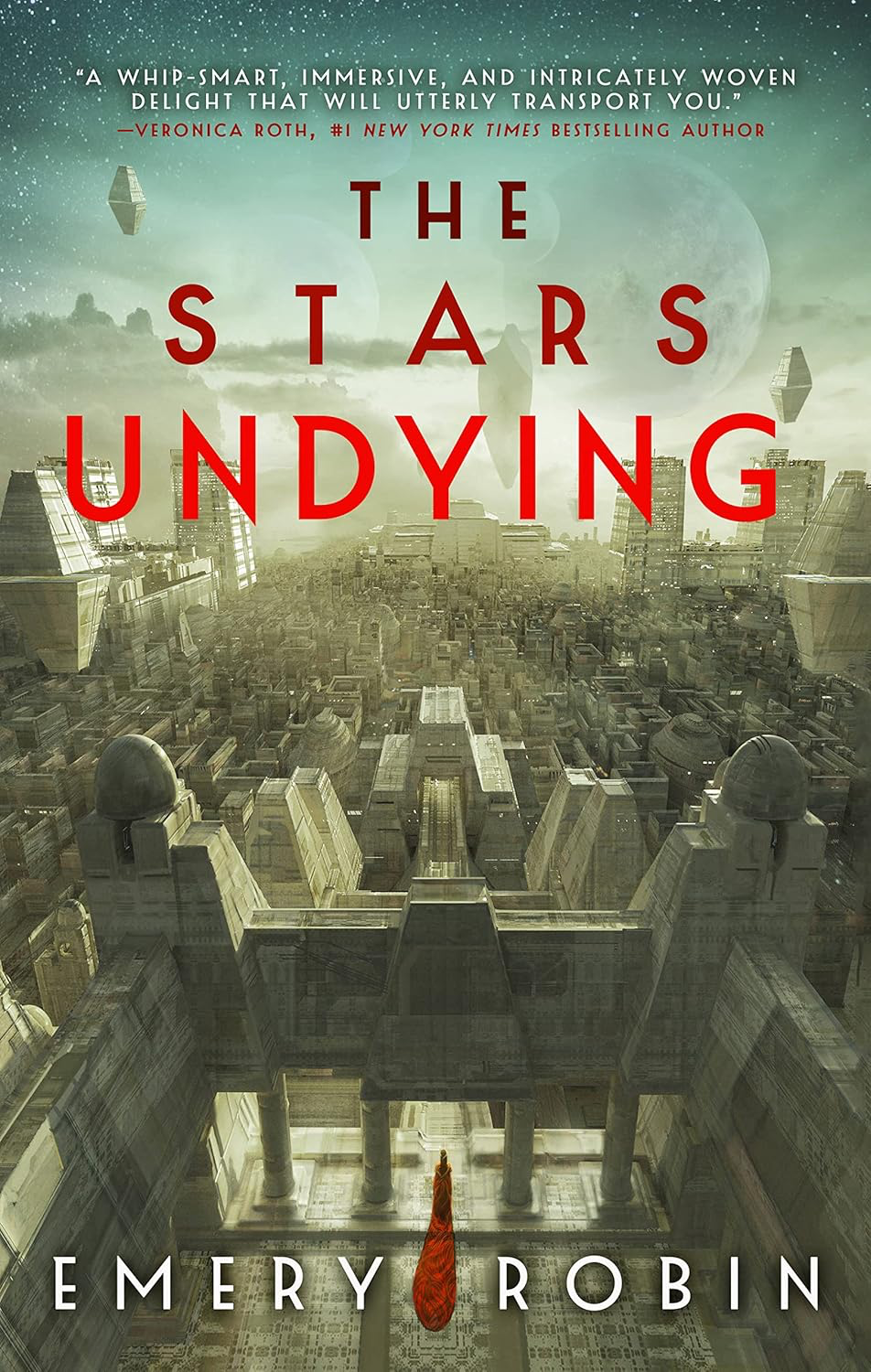
The Stars Undying – Emery Robin – “Why don’t we pick one script/And read it/Where the milk has dried/On the throne…”
I’m not even that big of a Fleetwood Mac fan, but I can’t deny how hard this song hits me every time I listen to it. (Shoutout to Jeff Tweedy & co. for playing this before their show last week!) And yes, I’ve listened to and love “Landslide,” I’m not some kind of soulless ghoul, but something about “Storms” strikes a frequency in me that I haven’t felt with any of their other songs. Something about that melody—which, on an unrelated note, reminds me a ton of Harmonia & Eno ’76’s “Welcome”—is so innately captivating. Stevie Nicks has an undeniably magnetic vocal presence, but something about her harmonies with Christine McVie massages the folds of my brain so perfectly, and the wavers in McVie’s voice do so much for the pure devastation this track lays onto you. You know me. I’ll take the bait for any sad girl song, but the way Nicks mines such an innate, visceral sorrow into such a somber song is undeniably unique. For so many, she was clearly the blueprint. “Storms” made me really get it.
…AND A BOOK TO GO WITH IT:
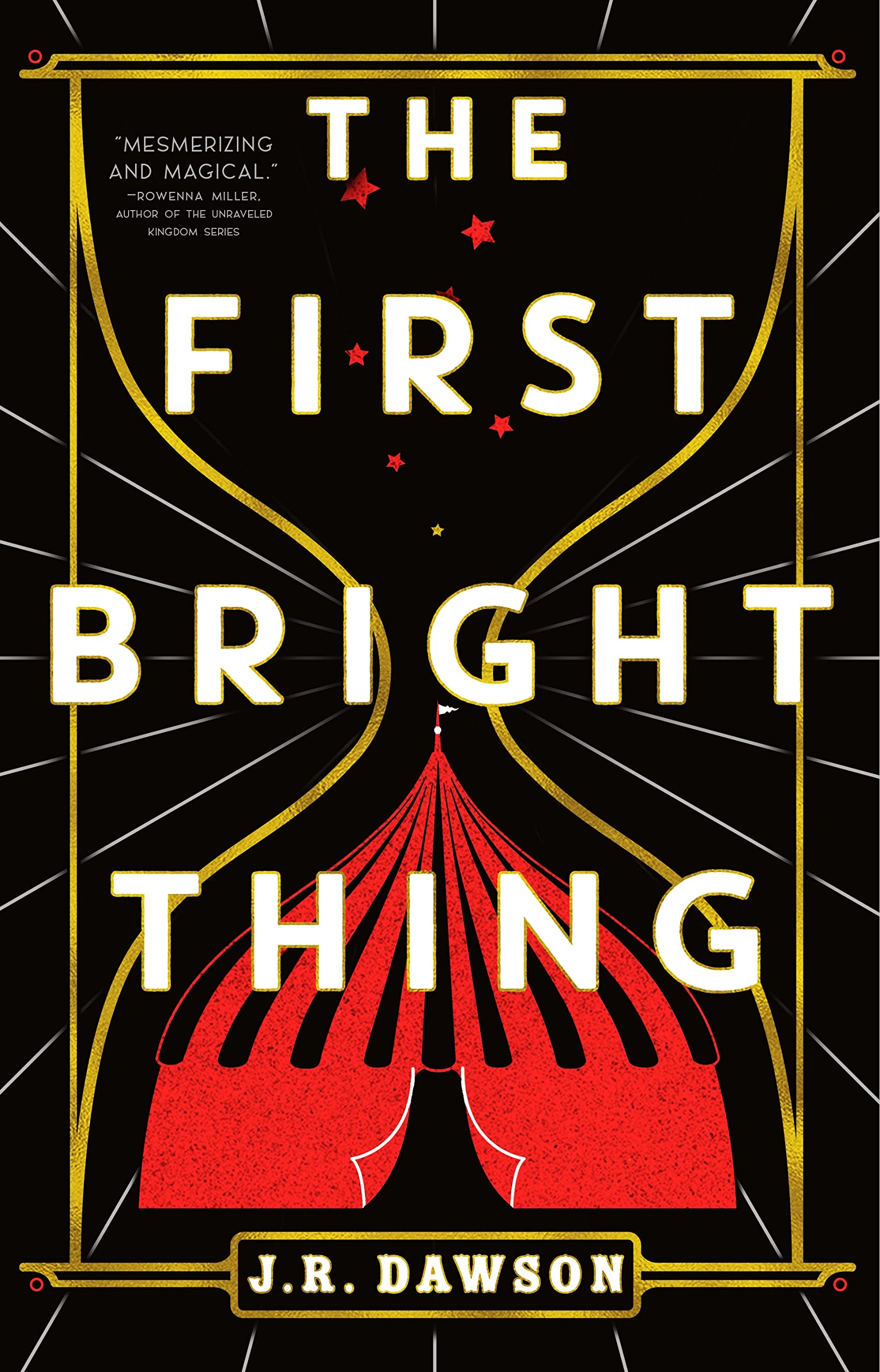
The First Bright Thing – J.R. Dawson – “Every hour of fear I spend/My body tries to cry/Living through each empty night/A deadly call inside…”
Since this post consists entirely of songs, consider all of them to be today’s song.
That’s it for this week’s songs! Have a wonderful rest of your day, and take care of yourselves!


 The Bookish Mutant