Posted in Book Review Tuesday

Book Review Tuesday (7/22/25) – The Ephemera Collector

Happy Tuesday, bibliophiles!

Continuing with Disability Pride Month, here’s a fascinating 2025 debut! I love books about libraries and archives, both for personal reasons and because of the possibilities that they hold. Add in the queer, science fiction aspect of it, and I was instantly hooked. The Ephemera Collector turned out to be one of the more unique books I’ve read recently, both in its mixed-media approach and the sprawling nature of its vision.

Enjoy this week’s review!

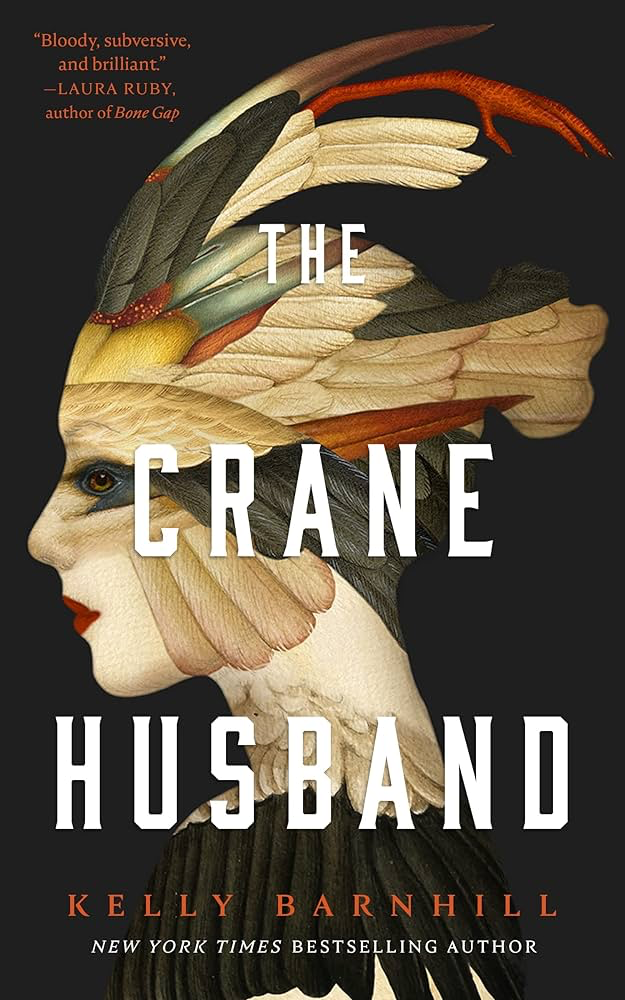
The Ephemera Collector – Stacy Nathaniel Jackson

2035. In a divided, polluted Los Angeles, Xandria Brown pours her passion into her work as an archivist. Collecting ephemera from prominent Black authors, artists, and activists, she fights to preserve her work as the threat of corporate encroachment in her library looms. After the death of her wife, only her health bots, which monitor her symptoms of long COVID, keep her company. But when the library goes into lockdown for undisclosed reasons, Xandria and her health bots must get to the bottom of the mystery—and make sure that her collections are unscathed.

TW/CW: ableism, eugenics, racism, violence, medical content

Though not without its flaws, this is one of those novels where you can really feel how much of a labor of love it was for the author. The Ephemera Collector is Stacy Nathaniel Jackson’s debut novel, which he published in his 60’s (!!!). It’s a mix of prose, poetry, and visual media, and I honestly wish I’d read a physical copy instead of an ebook in this case, because I feel like my Kindle couldn’t grasp the formatting fully. Nevertheless, The Ephemera Collector is a unique novel in all senses: a unique dystopia, a unique Afrofuturist novel, and a startlingly original piece of sci-fi.

Stacy Nathaniel Jackson’s vision of the United States 10 years from now was certainly bleak, but his worldbuilding was what made The Ephemera Collector stand out so much to me. No stone was left unturned in terms of what happens to America in the next 10 years, from the threat of corporate oversight on Xandria’s archives of Black history to the COVID-34 pandemic that occurs a year before the novel is set. It was bleak to me, but not necessarily cynical to me; yeah, us going into a second global pandemic only 14 years after “getting through” the first one seems a bit cynical, but given how this country absolutely bungled how we handled COVID-19, it feels somewhat realistic. Yet the weirder and further you get from the center of what makes Jackson’s dystopia a dystopia, the more imaginative the worldbuilding gets. Xandria is followed around by health bots that all have distinct personalities. There’s a whole Atlantis 2: Electric Boogaloo situation with a group of POC separatists who settle underwater off the coast of California. The weirder Jackson gets with it, the better the worldbuilding becomes; those unique touches are what stuck with me the most.

Yet even though Jackson’s vision of the future is full of polluted air and government corruption (not too far off…oof), it never fully felt like completely gloom and doom. In the end, I feel like this novel was about the importance of preserving history, and the main character’s fight is to keep corporations out of her exhibition of Black history, namely a collection of ephemera about Octavia Butler. Our protagonist is a queer, disabled Black woman who comes from a line of disabled Black ancestors, and she is standing her ground when it comes to preserving their history as a fundamental thread in the fabric of our country. Xandria putting up this fight, for me, was what kept The Ephemera Collector from being fully cynical. To imagine a darker vision of the future is one thing, but to have a character fight it, win, and outlast said corruption and hatred (somehow, she lives to be 300 years old? I assumed it was the gene editing, but it’s never fully explained) was what gave me hope in the end. Xandria, a battered woman who faced threats to her archives, non-consensual gene editing and eugenicist practices, and the death of her wife, comes out the victor in the end, triumphant over everything she fought to defeat. She is alive to preserve the history of her ancestors, but she is also proof that even the groups that America is most determined to erase will survive no matter what this country throws at them—and outlive them by centuries.

Going into The Ephemera Collector, I knew it wouldn’t be the easiest book to digest. The reviews warned me of a novel that frequently went on tangents that didn’t relate to the main storyline, and a novel that was disorganized in general. Having that in mind, I went in with low expectations. While I do think this novel was a bit disorganized at worst, I think it was partially the point. This is a book about an archivist poring through artifacts in a massive library. Jackson’s style is very stream-of-consciousness, and I feel like it uniquely reflects what Xandria’s mindset would accurately be if she spent most of her waking hours as an archivist. It reminded me vaguely of The Library of Broken Worlds, a very different book from this one, but still a sprawling, magnificent at best, deeply convoluted at worst novel set in a vast library. Maybe that’s just what you’re in for if you write imaginative books about sci-fi/fantasy libraries. There were some sections that strayed too far from the main plot for my taste (more on that later), but overall, I enjoyed the breaks in form, whether it was the switches from prose to poetry to the anecdotes about Xandria’s ancestry. It really put me in mind of an archivist, and that seems exactly what Jackson set out to do. For me, it also tied back into the theme of preserving history—all of what we see is the history that Xandria fought so hard to keep alive and non-sanitized by corporations.

Here’s the thing, though. I was fine with the earlier tangents because I could see the thread that connected them to the rest of the novel. But around 60% of the way through, The Ephemera Collector quite literally loses the plot. Without warning, it switches to an entirely new story that’s barely connected to the main story—and that’s being generous. The only possible connection I could find was that one of the characters was a relative of Xandria, but that’s it. There’s no connection to her or the library. My dilemma is that although it was very distant from the rest of the novel, it was still a compellingly written storyline. It dealt with one of the more fascinating parts of the worldbuilding: the separatist community who created an underwater settlement, and later became pseudo-climate refugees when it became untenable to live underwater for any longer. It was so strange and lovely to pick apart, but it didn’t connect to the main narrative until the very last minute. Even in the context of Xandria looking through the archives, there wasn’t a clear thread. I’m tempted to give this less than 4 stars, because although this frustrated me, the writing was just that good. In my more arbitrary system, I guess it would be more in the 3.8-3.9 range, if we’re getting really specific, but I like it more than a 3.75. It’s a weird dilemma, but so is the whole novel, really.

All in all, a deeply imaginative Afrofuturist novel that pushed the boundaries of what a dystopia can be. 4 stars!

The Ephemera Collector is a standalone and Stacy Nathaniel Jackson’s debut.

Today’s song:

NEW GUERILLA TOSS, WOOOO

That’s it for this week’s Book Review Tuesday! Have a wonderful rest of your day, and take care of yourselves!

Posted in Book Review Tuesday

Book Review Tuesday (11/14/23) – The Crane Husband

Happy Tuesday, bibliophiles!

Brief rant: don’t you love it when Goodreads posts the nominees for the “YA Fantasy & Science Fiction” category and…there’s no science fiction books on the list? Not a single one? Thank you Goodreads 🥰

It’s been years since I’ve read anything by Kelly Barnhill; I read a fair amount of her middle-grade novels when I was younger, and there were hits (The Girl Who Drank the Moon) and misses (Iron-Hearted Violet). But either way, the road has taken me back to her adult novella, a chilling retelling of “The Crane Wife” that I thoroughly enjoyed.

Enjoy this week’s book review!

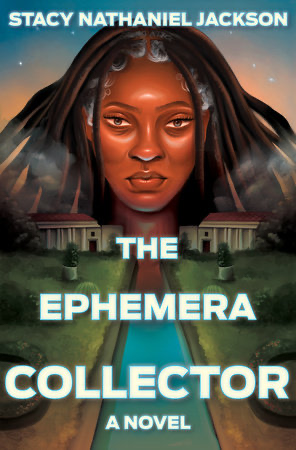
The Crane Husband – Kelly Barnhill

In a distant future, a fifteen-year-old girl lives on one of the few remaining farms in the United States, growing cloned crops in order to make a living. Her father passed away when she was young, and now she manages the farm with her mother and takes care of her six-year-old brother, Michael. But when her mother brings home a new suitor, the girl is appalled to find that the suitor happens to be a giant crane—a crane intent on working her mother to the bone in order to produce tapestries to sell. As her mother succumbs to the wills of the crane and her family grows poorer, the girl knows that the only way out is to rid the house of the crane—and she’ll do anything to make sure the bird is out of the farm.

TW/CW: death of a parent, blood, abuse, animal death, child endangerment

It’s been at least seven or eight years since I’ve read anything by Kelly Barnhill, and I was pleasantly surprised to find that when faced with the (quite large) jump from stylistic choices between age groups, she does so with eery grace! The Crane Husband was a disturbing treat, quick but chilling.

I only had a vague notion of the original Japanese folktale of the Crane Wife that this book subverts, but even without that background, Barnhill weaves a haunting, dystopian fairytale like no other. It’s that lovely kind of book that falls into science fiction, but has just enough trappings of other genres to pass as something else. The magical realism element is heavier than the rest, and it rules the book—rightfully so, given the subject matter. But like a good fairytale, Barnhill’s ability to suspend disbelief made The Crane Husband all the scarier—scenes that would have otherwise seemed charmingly quirky or absurd were downright horrifying under her lens.

Barnhill’s writing was what sold how horrific the events of The Crane Husband truly were. The way she captured the voice of the unnamed, fifteen-year-old protagonist as she had to take her livelihood into her own hands in the face of the invading crane husband had such a tangible desperation, making the conflict feel real as all get out. Tension crept out from every word, and I found myself keeping my Kindle in a vice grip as I read. And that tension never wanes—in only 118 pages, Barnhill built up monumental tension that books three times the length have failed to uphold. The Crane Husband really was nail-bitingly eerie, and it was worth it all the way.

The way that Barnhill used this tangibly uncomfortable atmosphere to drive the point of this folktale’s subversion home was also masterful. The main twist in this iteration is, hence the title, that the protagonist’s mother brings home a giant crane who she takes as her husband. And instead of the crane wife wasting away to produce beautiful tapestries, it’s the human mother being forced by the crane husband to churn out tapestries like a machine. Abusive relationships were the main theme of the novella, and Barnhill’s depiction of abuse through this lens felt as authentic as it could be, from the strained, forced silence of the women of the family and the lack of support that the protagonist finds when she tries to seek help. Beyond that, The Crane Husband’s message about suffering for art was equally powerful and important; the emphasis on how the protagonist’s mother works to the point of near-death in order to create something that people will think of as “transformative” was commentary that I wasn’t expecting from the novel, but enjoyed wholeheartedly. Needs to be said.

That being said, my only major problem with this novella was that it directly referenced the original folktale that it’s retelling. Though it was in a flashback scene, it felt tacky and unnecessarily meta to hand it to you right there—and not only that, but basically delivering the twist right at your doorstep. I will admit that I loved the line about cranes making other creatures do the work for them, but at that point, it isn’t even foreshadowing anymore—it’s just whacking you over the head with the twist that it’s supposed to be hiding from you. It made me more than a little mad, but the rest of the novella was so good that I could almost let it slide. Almost.

All in all, a timely and truly disturbing retelling that packed a stinging punch with an impressively short page count. 4 stars!

The Crane Husband is a standalone; Kelly Barnhill is also the author of many books for children, including The Witch’s Boy, The Girl Who Drank the Moon, and Iron-Hearted Violet. She is also the author of When Women Were Dragons, her first full-length novel for adults.

Today’s song:

NEW SMILE ALBUM IN JANUARY EVERYBODY STAY CALM

That’s it for this week’s Book Review Tuesday! Have a wonderful rest of your day, and take care of yourselves!
Posted in Book Review Tuesday

Book Review Tuesday (5/30/23) – The Memory Police

Happy Tuesday, bibliophiles!

I forget how exactly I came across this novel, but it was one of the first books that I put on my Libby wish list way back in March 2020, when I lived off of Kindle books. At the time it was always on hold for weeks when I tried to check it out, and so gradually, it faded to the bottom of the list. But after years of forgetting about it, I rediscovered this novel—and it was finally available! Usually, literary science fiction doesn’t always do it for me, but The Memory Police was a strangely quiet dystopia with a powerful undercurrent.

Enjoy this week’s review!

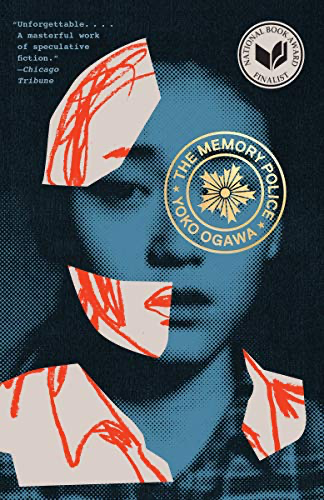
The Memory Police – Yōko Ogawa (translated by Stephen Snyder)

A young writer leads a quiet life on a distant, unnamed island, grieving a multitude of losses. Her parents passed away many years ago, but it isn’t just people that are disappearing—it’s objects, animals, and ideas as well: hats, birds, ribbons, and all manner of things. Once they disappear, nobody on the island has any recollection of their existence—they simply fade from public memory. And to enforce this, the island is under the iron fist of the Memory Police, who are there to make sure that these forgotten things stay that way. But she seems to be one of the only people who still clings to the memory of what’s been lost.

When the writer’s editor falls under suspicion from the Memory Police, she hatches a plan to hide him under her floorboards, silently completing her novel as they evade capture. And as more and more objects begin to fade into obscurity, her writing may be the only thing left to cling to.

TW/CW: loss of loved ones (past), kidnapping, police brutality

The Memory Police has been compared time and time again to 1984, and the comparison is clear, but it seemed to take a more literary approach. And while the “literary” part initially made me suspicious, this was one of the most creative and wholly human dystopian novels that I’ve read in a long time!

What sets The Memory Police apart from most other dystopias that you can think of is its perspective. We aren’t given an extensive history as to how the unnamed island came to be under such totalitarian rule, and how everything began disappearing and why. Nor do any of the characters—save for the main character’s editor, referred to only as ‘R’ in this translation—have names, save for their roles or jobs (the protagonist’s parents) or their physical appearance (the old man). All this book seeks to do is give you an ordinary person’s view into something haunting—the protagonist is just as confused as you are, and she is moving through this world in the only way that she can. Naturally, I was curious about the main plot points (how and why everything was disappearing, and how the Memory Police came to be), but I got that the point wasn’t to explain such things, but to see it happening firsthand through somebody else’s eyes, when they may know about as much as we do. I assumed the Memory Police were in control of what disappeared and they had some degree of immunity, which I was curious about, but the decision to omit these details at least made sense as a stylistic choice.

Make no mistake—The Memory Police is certainly haunting, but there’s a quietness to it that makes it stand out from the rest. In this state-surveilled, isolated island environment, this novel is the closest thing that you can get to a slice-of-life story. Other than some chilling instances involving break-ins by the Memory Police, it’s the story of one woman flying under the radar and trying to write her novel as the world is crumbling around her. There’s a constant fear surrounding everything, but in between, she finds time to craft a novel, share secret memories about her parents’ world and what they loved, and hold parties from an elderly man who helps keep her editor hidden. Sometimes, frightening change doesn’t come in the form of something obvious—it’s often slow and goes unnoticed, and it is the small things that keep us going through it.

Literary science fiction like this often comes off like it’s trying to be better than “regular” science fiction, like it boasts some lofty message that your common novel can’t possible get across. I’m glad to say that The Memory Police does none of that—some of the writing does fit that style, but nothing about it comes across as belittling or haughty. In fact, it has an incredibly powerful message. With all of the plot centering around the loss of memory and holding on to the last remnants of a past world, the ending made an incredibly powerful statement: as long as there is somebody around to keep a memory of something alive, memories never really die—they always stay with us. It’s a beautiful message on loss, and about resistance in general—maybe the most powerful thing we can do in the face of tyranny is to know that there is a way to change things, and hold memories of what our forebears did in the face of similar situations. This book is proof that dystopias don’t have to be flashy and overtly gritty to get their themes across—quietness can be just as powerful.

All in all, a nontraditional dystopia that made an incredible impact from reveling in its quiet moments. 4 stars!

The Memory Police is a standalone, but Yōko Ogawa is the author of many other novels that have been translated into several different languages, including Revenge, The Housekeeper and the Professor, Hotel Iris, and more.

Today’s song:

Peter Gabriel Summer 2 is upon us

That’s it for this week’s Book Review Tuesday! Have a wonderful rest of your day, and take care of yourselves!