Posted in Book Review Tuesday

Book Review Tuesday (10/7/25) – The Volcano Daughters

Happy Tuesday, bibliophiles!

Continuing with Latine Heritage Month, here’s a novel that came on my radar last year when it was released. Literary fiction isn’t my go-to, but I do love some magical realism sprinkled in, so I was interested. What resulted was something deeply impacting. The Volcano Daughters pulls no punches, and yet cares so deeply for its protagonists—and for everyone whose voice is silenced.

Enjoy this week’s review!

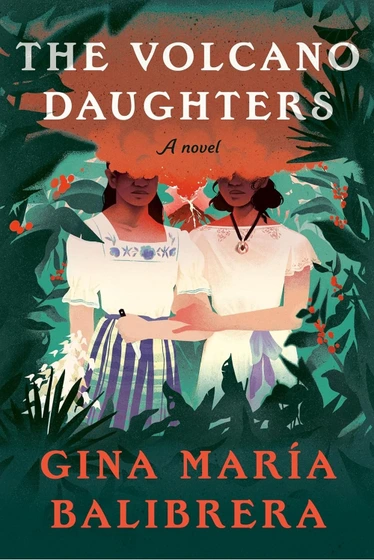
The Volcano Daughters – Gina María Balibrera

Graciela grew up in El Salvador, among their family of Indigenous women. But when the cronies of a rising dictator steal her away to be his oracle, she’s torn away from everything she knows and loves. In the dictator’s palace, she meets Consuelo, her stolen sister who is also indentured in the palace, made to sit by as the government dabbles in faulty magic and formulates a plan to commit genocide on her Indigenous community. Now young women, Consuelo and Graciela free for their lives, both thinking the other dead.

Darting between America and France, Consuelo and Graciela fight to forge new lives for themselves. But can they ever leave the past behind—or each other?

TW/CW: rape, genocide, colonialism/imperialism themes, racism, misogyny, miscarriage, violence, murder, deportation/kidnapping

My main gripe with literary fiction at large is that it’s a breeding ground for novels that are unrealistically miserable in the thought that misery and depression automatically make it “deep.” I’ve read enough of said books and been in fiction workshops long enough that just the thought of sadness being equated to depth makes me want to throw up in my mouth. Is The Volcano Daughters a sad, literary novel? Yes. And yet the sadness is there to tell a powerful story, not just to sell. It’s the story of silenced women, but also a story of resilience and sisterhood and so much more. It’s what literary fiction should be.

After this novel, I’m sure I’ll read more from Gina María Balibrera, but…god, in the right headspace, for sure. The Volcano Daughters is a heavy novel, and for good reason. I didn’t put these trigger warnings there lightly. But Balibrera’s prose is seriously something to behold. Just as Consuelo and Graciela view the world through the lens of artists, so too does Balibrera. Every detail is truly luscious; the many places that The Volcano Daughters travels through are realized in such vivid detail that I swear I could almost smell the air. No stone is unturned, and no metaphor is treated lightly—Balibrera puts even the most minor details under a microscope and crafts them into the most lush language, almost bordering on poetry in the more metaphorical moments.

There’s something so special about the way that Balibrera treats Consuelo and Graciela as characters. I hesitate to call them fully tragic characters, but their lives are largely dictated by one tragedy after another. Yet no matter what happened to them, I always sensed that Balibrera would have something waiting for them at the end. It wasn’t an ending that was tied up with a nice bow, but it was a speckle of hope on the horizon. They were still suffering, but their justice was just out of reach, but still visible. Had she gone too far in one direction, it would’ve felt like needless plot armor, especially in the climate(s) that Consuelo and Graciela lived in; too far in the other, and it would’ve strayed into trauma porn territory. Balibrera treats her characters in the most realistic and yet the most caring way; though they have endured so much and have so much more to endure, she makes you cling to that sliver of hope, gives you glimpses of incremental lives that they might live in a few years’ time, because it is all that is left. As somber of a book as this is, I did appreciate that there was a very tangible inkling of better days to come.

What seems to hook most readers about The Volcano Daughters is the ghosts, which…yeah, that’s what hooked me too. But it’s one of the most original and compelling aspects of this book; in between the present narrative, the story has frequently interjections from four ghosts: Consuelo and Graciela’s other sisters who were murdered during the genocide. Like the other characters in this novel, they’re so vibrant and full of sass and wisdom in equal measure. Their role is often to come in and drag the reader back to the embarrassing reality when somebody’s inner monologue gets too self-absorbed or when someone’s telling the story wrong. (Nobody can quite agree what’s really right, and that’s what makes them so funny.) At times, the humor didn’t quite land (I found it hard to believe that a ghost who got killed in the ’30s would use “Boom!” as an exclamation like it’s the 2010’s), but they all had such distinct voices that I could almost let it slide. Yet they are also there to be incorporeal forces of justice, metaphysical representations of the voiceless, the forgotten of history who have been brushed aside. They are the deliverers of the justice they never got, and they form the emotional backbone of The Volcano Daughters.

The part that the ghosts emphasize for me is how Balibrera examines the theme of storytelling and whose stories are told—and the power structures that ensure that some stories are either untold or told incorrectly. Names are deeply important: every murdered Indigenous woman is given a specific name, whereas the dictator of El Salvador is only referred to as “El Gran Pendejo”; similarly, El Gran Pendejo’s entire regime operates on stories, ones that are told to reinforce a racist narrative. Graciela acts out stories about marginalized people in order to further the United States’ racist stereotypes of various groups. And yet here are the ghosts, who take the story into their own hands to deliver the complicated, messy, yet real narrative. The ghosts are there to be the voice of every marginalized person who has ever been deliberately erased from history, every marginalized person who has had to bear the pain of having their history warped and their country slandered. Both the ghosts and the central sisters are stars of the novel because they are precisely the kind of people that history forgets. The Volcano Daughters tells us that history surrounds us—and that there will always be someone to tell the truth.

Overall, a deeply moving and emotional novel of sisterhood and distance that serves as a righteous megaphone for those who have had their voices stolen. 4 stars!

The Volcano Daughters is a standalone and Gina María Balibrera’s debut novel.

Today’s song:

I loved her episode of What’s In My Bag? and I love this song!!

That’s it for this week’s Book Review Tuesday! Have a wonderful rest of your day, and take care of yourselves!

Posted in Book Review Tuesday

Book Review Tuesday (9/30/25) – Beasts of Carnaval

Happy Tuesday, bibliophiles!

Continuing with Latine Heritage Month, here’s a new release that caught my eye! The cover and premise seemed stunning, and I was intrigued by the inclusion of Taíno mythology. On almost all of those fronts, Beasts of Carnaval delivered instantly—I was hooked from page one!

Enjoy this week’s review!

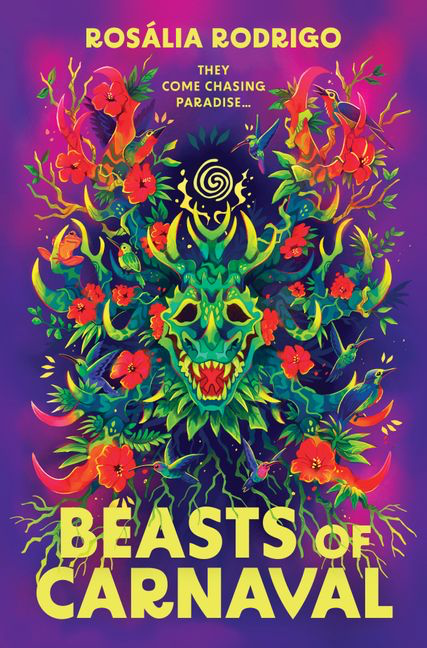
Beasts of Carnaval – Rosália Rodrigo

Sofía has heard legends of Isla Bestia since she was a child. They say that enchanting performances and mysterious people populate the mysterious island, and those who come there are too entranced to ever return to the real world. Sofía is sensible enough to not believe the rumors. But when her twin brother goes missing, her trail leads to Isla Bestia. There, she’s drawn into a bizarre, luscious world of magic and shifting alliances. Caught up in a tangled web of intrigue, Sofía must keep her wits about her if she wants to find out which of her new allies are men—and which of them are monsters.

TW/CW: colonialism/imperialism themes, loss of loved ones (past), panic attacks, religious bigotry, blood, murder, racism/slavery themes, misogyny

Before I get into gushing about everything I adored about Beasts of Carnaval, I’ll get my one major pet peeve out of the way: fantasy worlds that are named so closely to reality that they basically are reality. Rodrigo’s world is essentially the Caribbean, except that the countries are named slightly differently—their colonizers are Hisperian, for instance. Real-word terms such as mestiza are used, so at that point…I dunno, it’s so close to historical reality, so why not just set it in the Caribbean of the past and just establish that there’s magic and some minor changes? Alternate history, anyone? I guess there’s a ton of fantasy novels that do that for European countries, but honestly, I’ve never liked it no matter the country that inspired the setting.

I dunno, the commentary would come across no matter the setting. Beasts of Carnaval isn’t the first book to have this, but for me, even though it peeved me, it didn’t take away from how lush the worldbuilding was; beyond the real-world hierarchies that were present, I loved the magic in this world, and it was integrated into the real world almost effortlessly. It’s a very fleshed out world rooted in historical themes and cultures, enlivened by vibrant and vivid magic inspired by Indigenous Taíno mythologies.

After reading Beasts of Carnaval, I’m absolutely going to be looking out for anything else that Rosália Rodrigo writes, because the prose of this novel was truly captivating! A Carnaval-inspired setting is bound to have some fun imagery, but Rodrigo wrung every ounce of magic out of it. With her prose, Isla Bestia wasn’t just abstractly a place that nobody wants to leave—she really makes you feel the seductive enchantment of the entire island! From the first description of the hummingbird dancer at the beginning, I was nothing short of captivated—I was hooked from start to finish, and I loved every minute of exploring the world that Rodrigo had crafted!

Compelling prose needs a compelling protagonist, and Sofía was just that! I adored her character, and she just seemed to leap off the page for me. From the start, I loved the many facets of her personality; she was strong-willed, determined, sensible, and sometimes practical to a fault, but I loved watching her adventures. Especially in contrast to the other characters around her, she was so focused on her mission of finding her missing brother that I got sucked in immediately. Hidden beneath her practical exterior, her deep caring for Sol made me root for her instantly, and I loved the way she fought back against the micro (and very much macro)aggressions that she experienced in daily life for being mixed-race. It’s rare that I love a character from the get-go, but Sofía captured my heart immediately!

A part of Sofía’s character that I also appreciated was the discussion of her mixed-race/mestiza identity! As a mixed-race person myself (though I’m very white-passing), I loved the nuanced discussions surrounding her conflicting feelings about her identity and how it positioned her in the highly stratified world around her. Rodrigo also had some excellent discussions about passing privilege and the treatment that Sofía got as this universe’s version of an Afro-Latina woman, especially with her being a former slave; Rodrigo did an excellent job of balancing her pride with the hurt she carries from enduring decades of racism from her peers and having to justify being a part of either of the communities she’s descended from. It was also especially poignant to have her arc revolving around discovering the magic of her Indigenous ancestors, inspired by Taíno mythology! It’s always so fulfilling to connect with one’s culture (speaking from experience), and to have that be physically manifested as healing magic was nothing short of emotional. I couldn’t get enough of it!

Overall, an enchanting and emotional novel that hooked me instantly. 4 stars!

Beasts of Carnaval is Rosália Rodrigo’s debut novel.

Today’s song:

MICHELANGELO DYING MY BELOVED

That’s it for this week’s Book Review Tuesday! Have a wonderful rest of your day, and take care of yourselves!
Posted in Book Review Tuesday

Book Review Tuesday (6/10/25) – When the Tides Held the Moon

Happy Tuesday, bibliophiles!

I found this novel in an Instagram post about upcoming queer releases in 2025, and this one immediately caught my eye. You put a comparison to The Shape of Water in the tagline, and you bet I’m in. (If anything, it’s right between The Shape of Water and Nightmare Alley, given the setting.) Venessa Vida Kelley has delivered a vibrant and sensitive story of queer love and solidarity amongst weirdos.

Enjoy this week’s review!

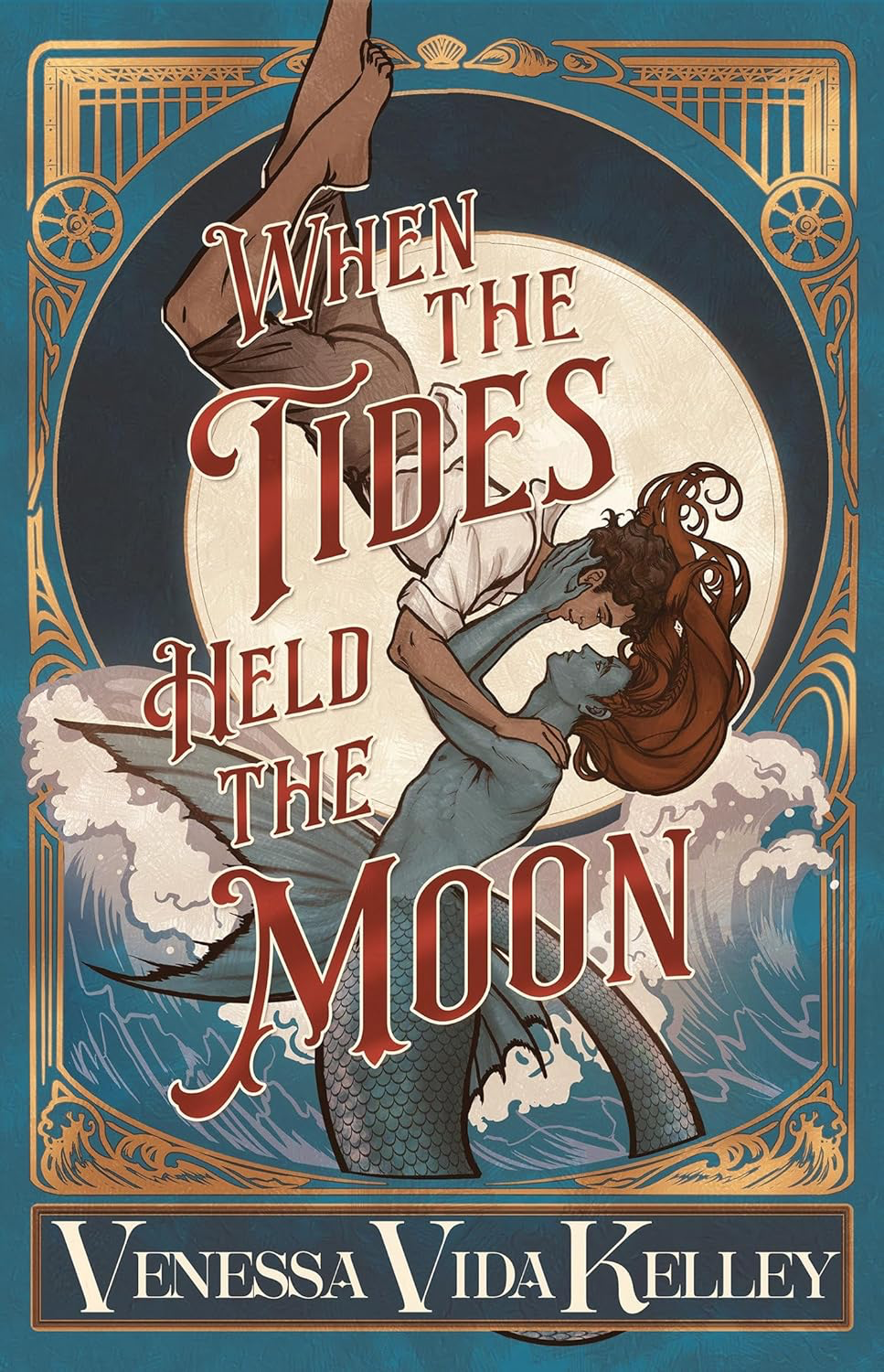
When the Tides Held the Moon – Venessa Vida Kelley

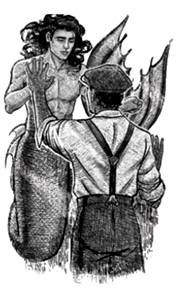
Orphaned and far from his homeland of Puerto Rico, Benny Caldera makes a living as an ironworker in 1910’s New York City, barely scraping together enough to stay afloat and out of reach of the taunts of his white coworkers. But when Sam Morgan, the owner of a sideshow, notices his handiwork, he commissions a strange project for him: a tank whose contents are unknown to him. Benny takes the opportunity for a new job, and finds an unexpected family in the sideshow’s performers. He soon finds out that the tank holds an impossible marvel: a captured merman. As Benny gains the merman’s trust, he finds himself drawn to him—and the merman to him. But when Morgan’s abuse to the merman turns deadly and the sideshow begins to crumble, it’s up to Benny to hatch a plan to save them all.

TW/CW: racism, homophobia, abuse (emotional and physical), violence, blood, ableism, xenophobia, mentions of sexual assault (off-page)

art by Venessa Vida Kelley

I may be a somewhat critical consumer, but listen…you dangle a comparison to The Shape of Water in front of me like a carrot, and goddamnit, I’m eating it right up. God forbid that a weird girlie such as myself consume even more media about found family, fish people, and the nature of marginalization!! That being said, nothing comes close to The Shape of Water, but that’s not the book’s fault. When the Tides Held the Moon is a beautiful novel in all of its parts.

When the Tides Held the Moon boasts a vibrant cast of characters, and it really felt like a feat for Kelley to balance all of them and still give them unique and complementary personalities. Besides Benny and Río, the cast is mostly rounded out by the fellow performers in the sideshow, of which there are many. Yet out of the nine (I think?) primary side characters, none of them ever felt like an afterthought. Each of them were not only rounded out, but had such thoughtfully planned interactions with all of the other characters—sometimes clashing, and sometimes meshing perfectly. There were individual romances and special friendships between the nine of them, but they were a shining example of found family done well. Despite their individual differences, their solidarity and kinship shone through on the page, making for a narrative that had no shortage of tenderness and heart.

The romance between Benny and Río shone in When the Tides Held the Moon. There was such a tenderness to both of them that gave the novel so much of its heart. I’m always a sucker for narratives about two outsiders falling in love, but I love the ways that their separate senses of outsiderness intertwined; they shared music, stories, and tales of their respective homelands. The slow burn romance was paced well, and never felt rushed. I do feel like the ending was a tad bit too close to The Shape of Water, without spoiling anything, but I think their individual way of solidifying their romantic relationship at the end of the novel separated itself enough in the end, making for a resonant, vibrant end to the novel and to their respective arcs. It was all just so wonderfully sweet, but never in a way that felt insincere or cloying—I just loved them!

When the Tides Held the Moon is an incredibly diverse novel, which was exactly how it should’ve been; even without nearly as much knowledge as Kelley has (this was a very well-researched novel and it shows), it would’ve been a disservice to show either New York City or the culture of sideshows as places that don’t have a history of diversity. Immigrants from many different countries (Puerto Rico, Ireland, India, and Russia to name a few) are at the forefront, as well as lots of queer people, disabled people, people of color, and people who overlap within these intersections. However, some novels have a tendency to have a very 21st century view of all of these things. When the Tides Held the Moon felt very historically sensitive in terms of the language it used around these characters, but not in a way that was sanitized. In fact, it didn’t hold back from depicting the kinds of horrific oppression that these characters faced. Yet it wasn’t straight-up trauma porn either—it was honest about the struggles marginalized people faced during this time period, but never in a way that felt like their trauma was being exploited for emotion. That emotion shone through naturally in the interactions that the characters had and the solidarity they fostered in the face of mutual oppression.

That being said, the major thing keeping When the Tides Held the Moon was some of the writing, particularly the dialogue writing. Even from someone with a fairly high tolerance for bombastic, dramatic dialogue (I love Ray Bradbury and the Claremont run of X-Men for similar reasons, if that gives you a good idea of where I’m at), Kelley’s dialogue often bordered on too much. As sensitive and nuanced as everything else about this novel was, the dialogue trended towards excessively cheesy and overdramatic more often than not. Though I adored Río as a character, his voice very much fell into that overly verbose, “wise”-sounding dialogue that you could slap on any fantasy character. Benny in particular had some of that pathetic “aw, gee, mister, gimme a break, why don’tcha” kind of overwritten voice that was in-character at best but almost grating at worst. The side characters had varying degrees of this affliction, but none of them necessarily jump out at me save for the very stereotypically New York mobsters (“he’ll be sleepin’ with the fishes,” etc…wait, there was SUCH a missed opportunity them to say that). The only exception I can think of was Matthias since it was established that it was his genuine personality and not a consequence of the writing. If this were any other novel, I would’ve tolerated this much less, but Kelley’s story had so much heart that I could partially let it slide…but not all the way.

All in all, a beautiful, sensitive novel about love and marginalization with a big heart. 4 stars!

When the Tides Held the Moon is a standalone and Kelley’s debut novel. She is also the author of the forthcoming graphic novel Manu Faces the Music, which is set to be released in 2026.

Today’s song:

That’s it for this week’s Book Review Tuesday! Have a wonderful rest of your day, and take care of yourselves!
Posted in Book Review Tuesday

Book Review Tuesday (3/19/24) – The Monstrous Misses Mai

Happy Tuesday, bibliophiles!

Technically, this review is an early review, but I didn’t get it as an ARC—I got it through the Amazon First Readers program. Usually, the books they offer aren’t my cup of tea, but The Monstrous Misses Mai seemed intriguing, and I never say no to free Kindle books. I love a good story about witches, and though it was predictable at times, The Monstrous Misses Mai was an entertaining addition to the wide subgenre!

Enjoy this week’s review!

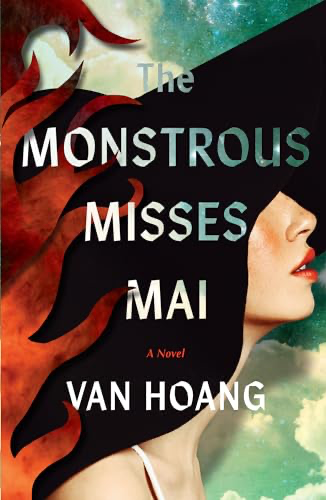
The Monstrous Misses Mai – Van Hoang

Los Angeles, the early ’50s. Cordelia Mai Yin is down on her luck. Disowned by her parents and out of work, she’s been finding it difficult to find a place to stay. The apartment she eventually finds is cramped and occupied with three other roommates, but they have more in common than just their middle names. They all have unfulfilled dreams—and they all need a way to pay the rent. Callum, a mysterious friend of their landlord, knows it too. He offers them the deal of a lifetime, in exchange for a small sacrifice. Now, Cordi has a stable income and the job of her dreams, but the spells binding her reality are quickly beginning to fade, and the girls are running out of sacrifices to appease them…

TW/CW: body horror (mild), murder, loss of loved ones, manipulation

WARNING: this review contains some spoilers!

I received a free copy of this book as part of the Amazon First Reads program!

In the grand scheme of things, I don’t blame these characters—mostly Cordi—for turning to witchcraft to find a way to pay the rent. You gotta do what you gotta do in this economy. And in the economy of L.A. in the ’50s too, I guess.

The Monstrous Misses Mai was such an entertaining novel! I love a good book about witches, but I would say that it’s slightly different than your typical witch novel in that none of the main characters know what they’re doing with their magic. They’re all but sucked into a magical pyramid scheme that requires greater and greater sacrifices as it drains them little by little. Magic always comes at a cost: we all know that from the get-go, and this novel is no exception. But not knowing what exactly would happen to the women of the Mai residence was what kept the tension up for this novel for me. Although I wanted more out of the eventual climax (more on that later), it was a great narrative tactic to keep the reader guessing—not necessarily about where the plot would go, but about how things would go wrong for the characters.

Van Hoang has excellent prose, and it especially served this novel when it came to describing both L.A. in the ’50s. Her descriptions are so vivid and colorful—there wasn’t a single image in this novel that I couldn’t visualize in almost cinematic detail. The way that Hoang described both the cramped loft that the Mai women share and the glitz and glamor of the fashion world that Cordi finds herself entangled in made the world feel so much more tangible, and the divide between the double lives that the characters lived felt so much more fleshed out and tense as a result. Having such a stark contrast made the creeping feeling of dread for the characters even more palpable—with the magic that they were dabbling, the glamorous lives that they were leading would no doubt catch up to them.

The Monstrous Misses Mai focuses on four women (Cordi, Tessa, Silly, and Audrey), but we’re reading entirely from Cordi’s perspective. Cordi was a compelling enough character, and her struggles—both financial and magical—fueled the plot and pacing in a steady way. However, I wish I could say the same for the other characters. Tessa was next in terms of the most fleshed-out character, but for most of the novel, she only felt like Cordi’s confidante, and not the magical accomplice that she was supposed to be. Silly and Audrey were barely characterized at all—Silly was only seen in sparing glimpses, and what we got of Audrey was entirely one-dimensional; Audrey was the token no-nonsense, “guys, maybe it’s a bad idea to be messing around with forbidden magic” character, and all the resolution gave her was an “I told you so” [strikes pose with hand on hip] moment and no development whatsoever. I feel like this novel could have worked better as a multi-POV novel; if we got into the heads of all four of the Mai women, we could have gotten individual ideas for their specific stakes, risks, and transformations.

Remember what I said about not knowing about the magic? It worked for most of the novel, but when it came to the ending, I found myself wanting more. The resolution felt so predictable—they’re finally too many spells deep to reverse their magic, leaving them in a worse situation than they were before. For a little while, I almost thought it was going to resolve in some kind of tired “oh, women and their vanity hahaha, you know how chicks are” ending, but luckily, it’s 2024, so not to worry about that; I do appreciate that the blame was placed squarely on Callum for being the one who instigated a magical pyramid scheme and nearly stole their souls. However, I feel like there wasn’t a whole lot that was original about Hoang’s take on this kind of story. I expected there to be something strange about what the magic cost them or how their transformations occurred, but all we get is their (very mild) bodily deterioration and some lost fingernails/hair loss. Which, yeah, the fingernails were pretty gross, but I found myself wanting a kind of unique magical toll that it took—something otherworldly that would ultimately expose them. It wasn’t bad, per se, but it wasn’t the most memorable take on this kind of story.

All in all, a story of witchcraft and deception with memorable prose but not-so memorable twists. 3.5 stars!

The Monstrous Misses Mai is a standalone, and Van Hoang’s adult debut. Hang is also the author of the Girl Giant and the Monkey King series (Girl Giant and the Monkey King and Girl Giant and the Jade War) and the forthcoming middle grade novel Hidden Tails.

Today’s song:

That’s it for this week’s Book Review Tuesday! Have a wonderful rest of your day, and take care of yourselves!
Posted in Books

The Bookish Mutant’s Books for Black History Month (2024 Edition)

Happy Tuesday, bibliophiles!

Apologies for the lack of a Book Review Tuesday this week; like with Sunday Songs, I’ve just had a busy few days, and I wasn’t able to put anything together in time, but I was creating this post in advance, so I figured today would be a good day to post it.

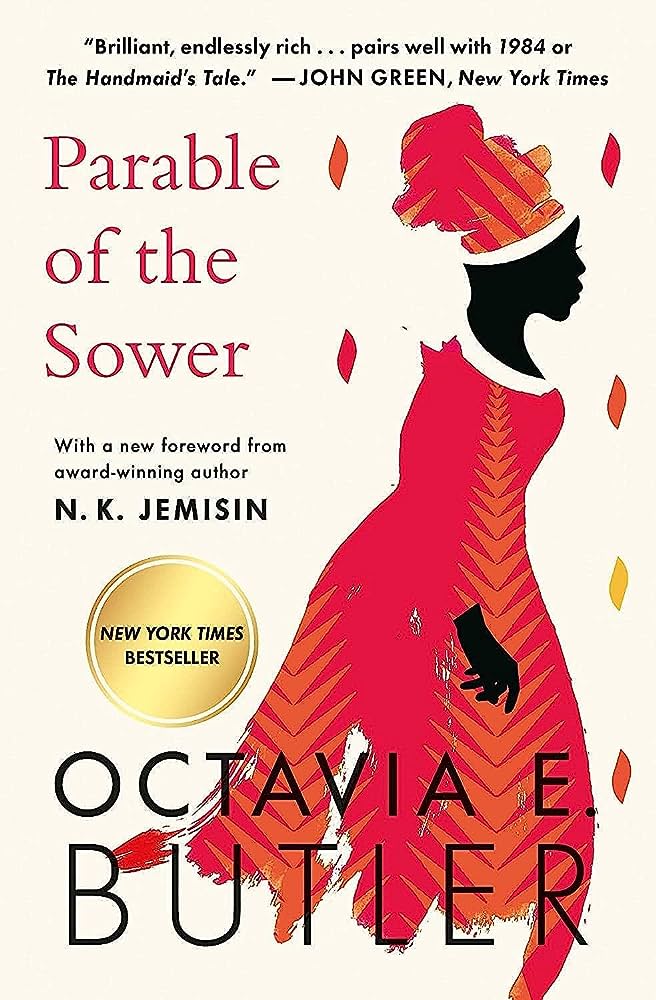
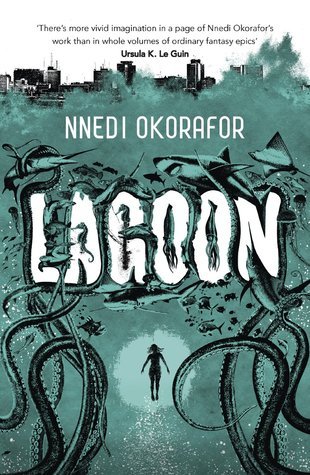
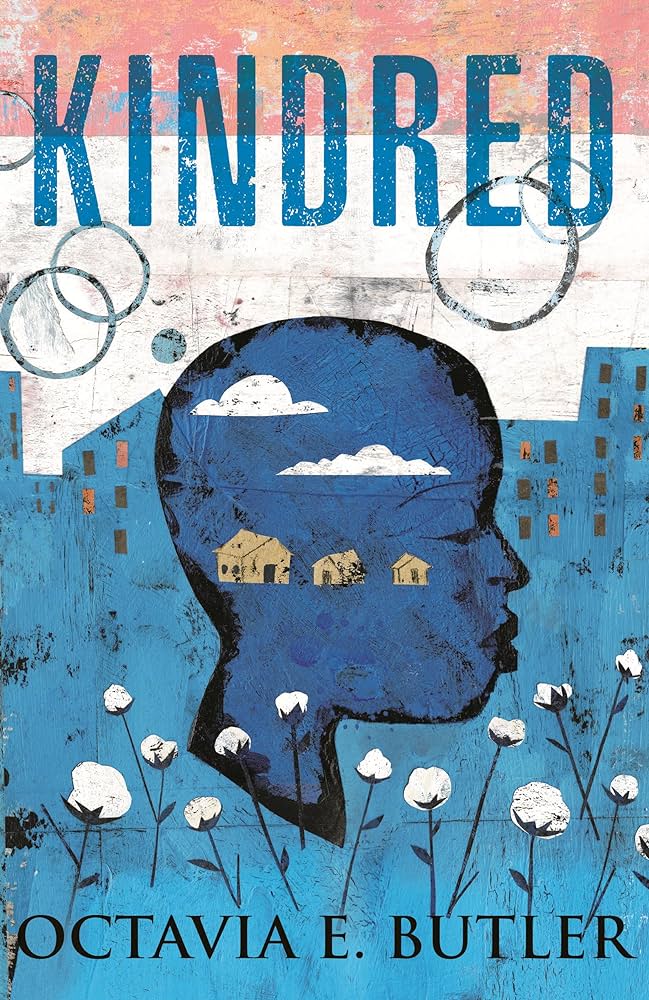
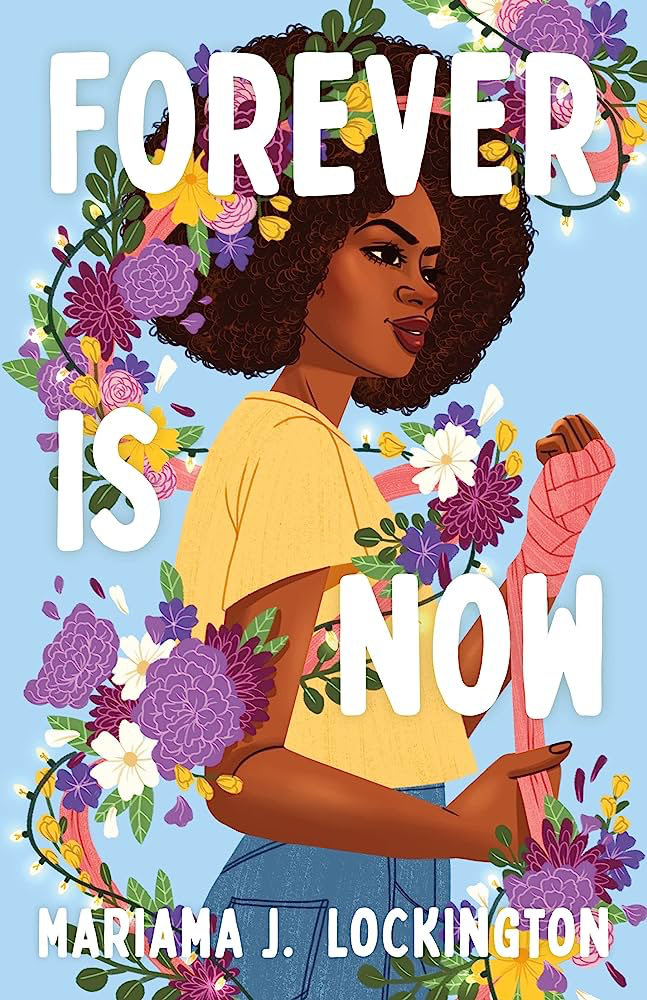
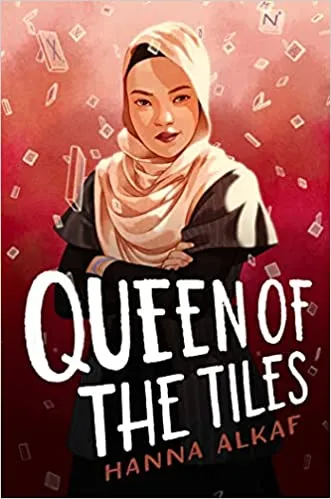
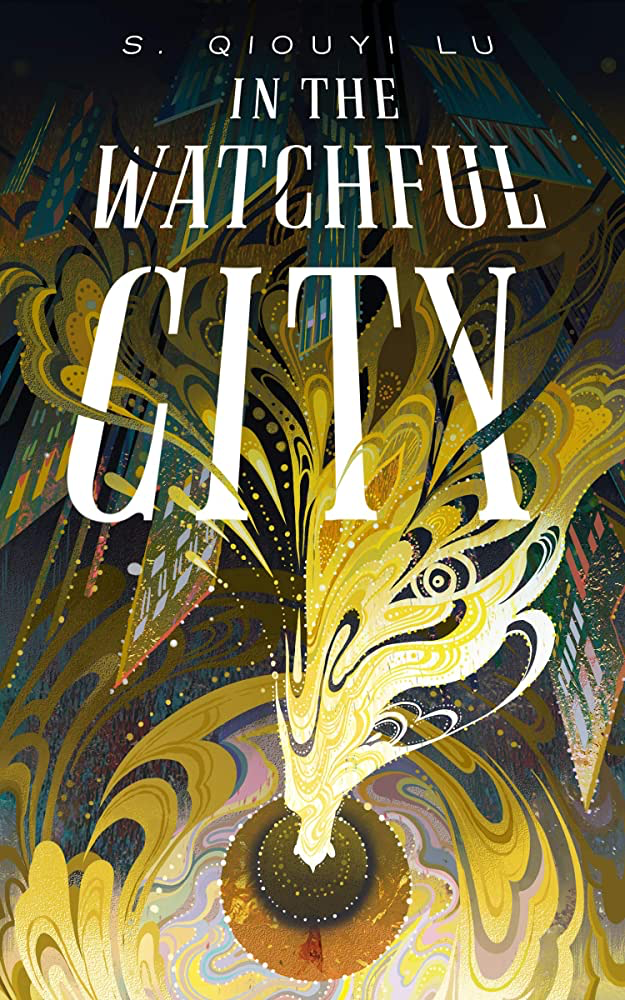
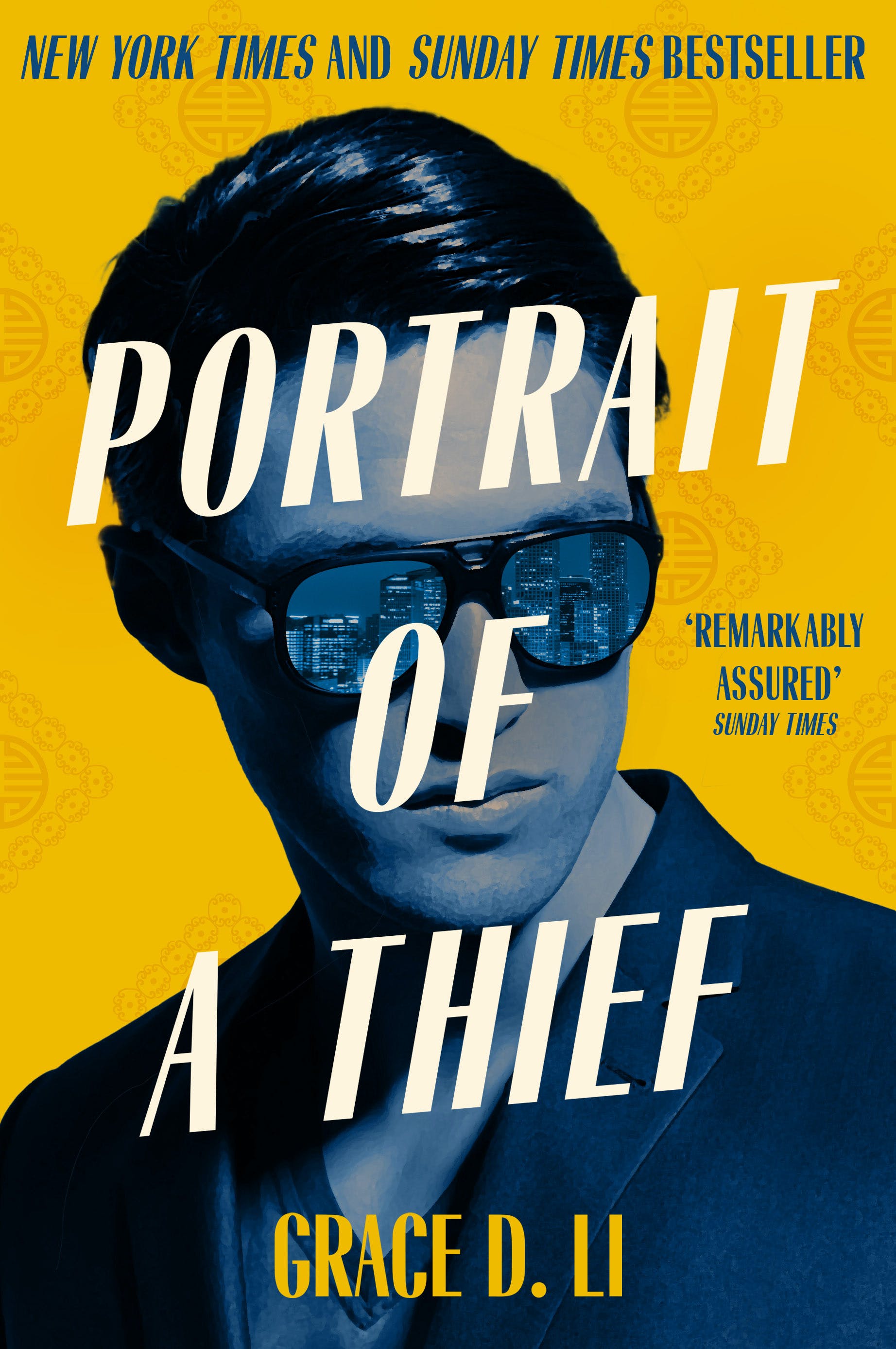
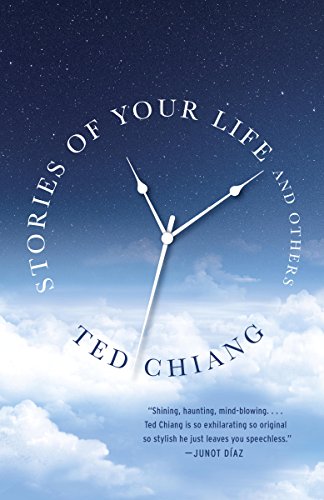
Here in the U.S., February is Black History Month! Since I’ve started making these recommendation lists back in 2021 (and focusing on reading more diversely in general), I’ve discovered so many incredible authors, and now that I’m reading YA and adult novels in almost equal measure, my scope has broadened so much more. (Note: I’m still frugal about my media space on WordPress, but this list, like last year’s, contains both YA and adult novels, even though the header image just says YA.) But as with every single year, it’s more crucial than ever to uplift Black voices—not just to amplify them and other marginalized groups in the fields of literature and publishing (especially when the industry sees diversity as nothing but a box to be checked off, more often than not), but especially since we’re living in a climate here in the states (and elsewhere) that is intent on erasing both our systemic racism (past and present) and silencing Black voices. And one of the most accessible ways to fight this poisonous rhetoric is to read—to open your eyes, to learn for yourself, and to share what you have learned with others. In a landscape where anything other than the white, cishet, abled majority wants to ban any voice that isn’t theirs, reading is an act of resistance.

For my lists from previous years, click below:

Let’s begin, shall we?

THE BOOKISH MUTANT’S BOOKS FOR BLACK HISTORY MONTH

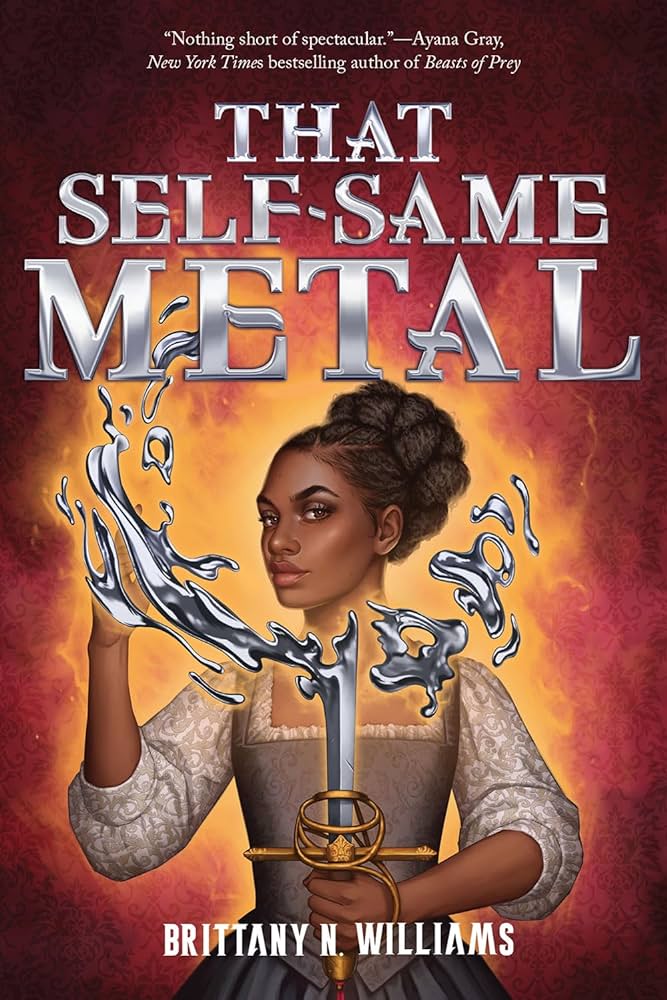
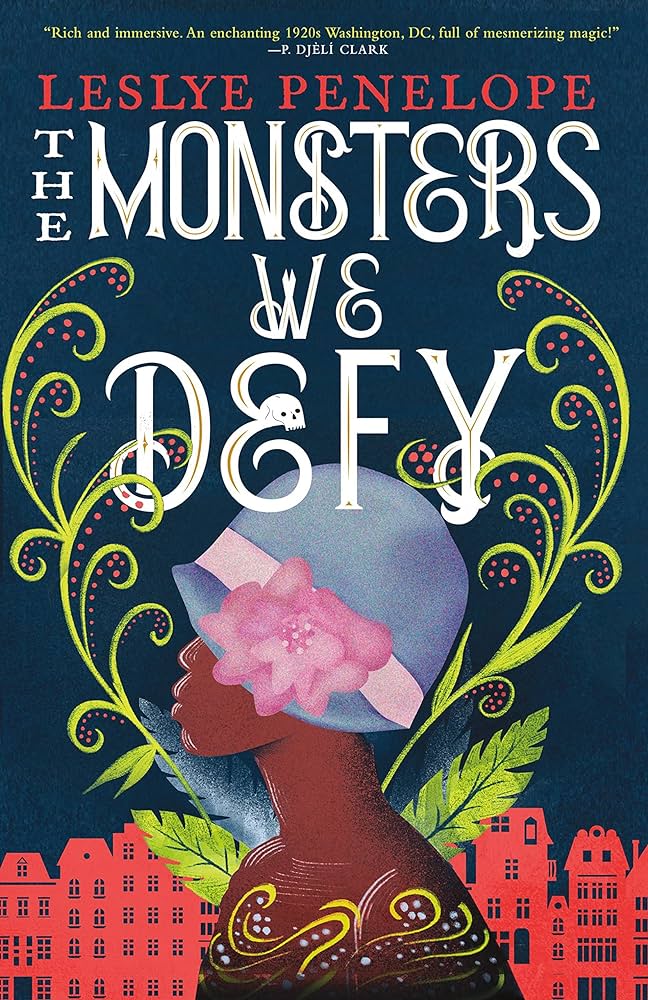
FANTASY:

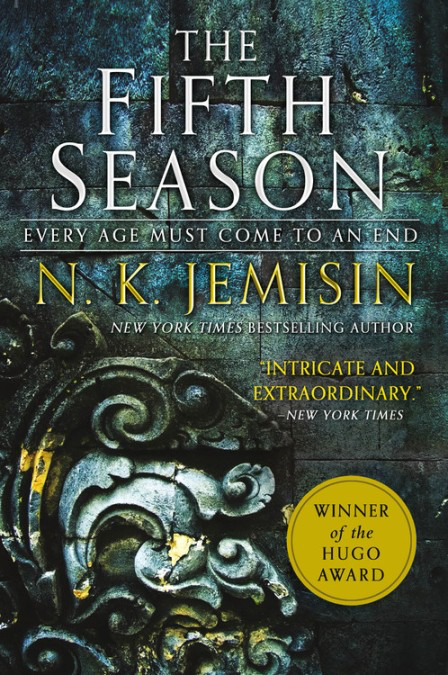
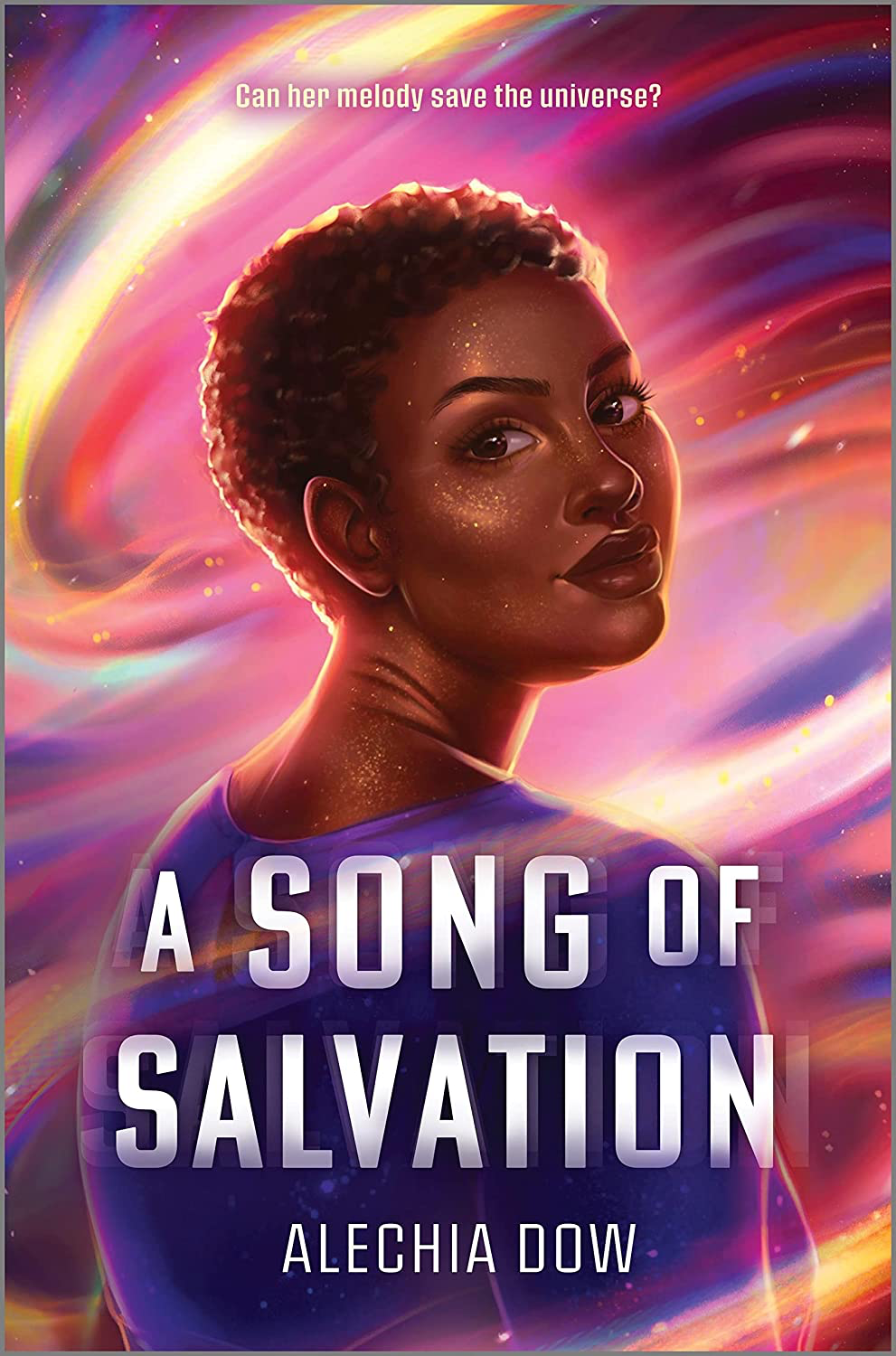
SCIENCE FICTION:

REALISTIC FICTION:

TELL ME WHAT YOU THINK! Have you read any of these books, and if so, did you enjoy them? What are some of your favorite books by Black authors that you’ve read recently? Let me know in the comments!

Today’s song:

thanks again to my brother for exposing me to this one!

That’s it for this recommendation list! Have a wonderful rest of your day, and take care of yourselves!

Posted in Books

The Bookish Mutant’s Books for Native American Heritage Month

Happy Thursday, bibliophiles!

Here in the U.S., November is Native American Heritage Month! I’m surprised that I haven’t compiled a list for the occasion yet, but to be fair, November tends to be a busy month for me. But now that I’m a few days away from break, I figured I would use that time to make this list.

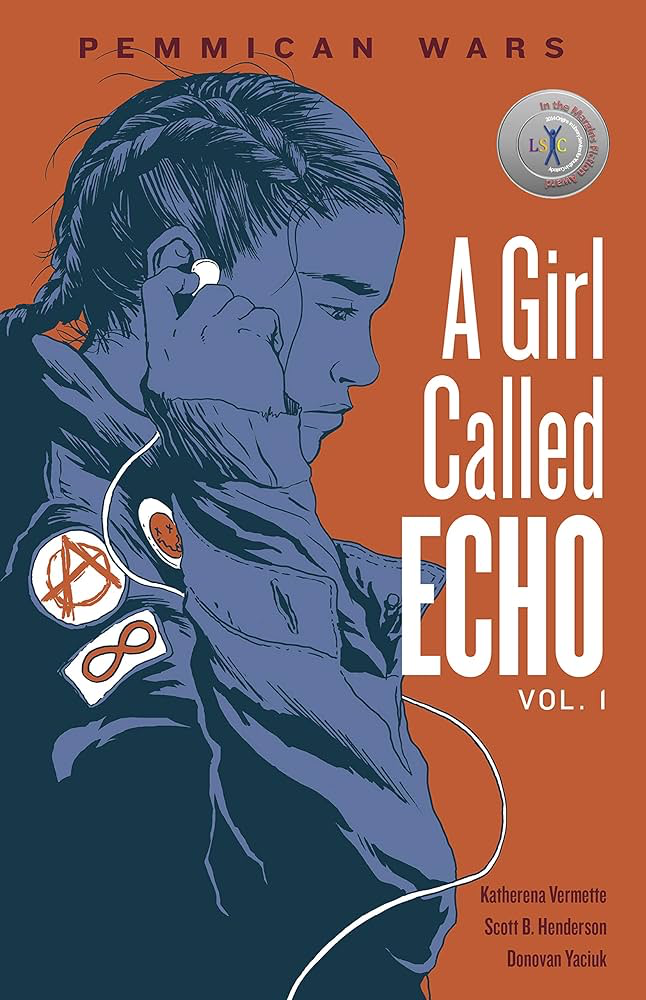
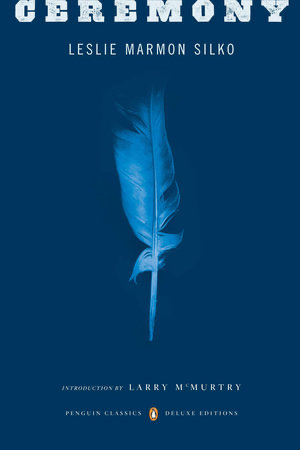
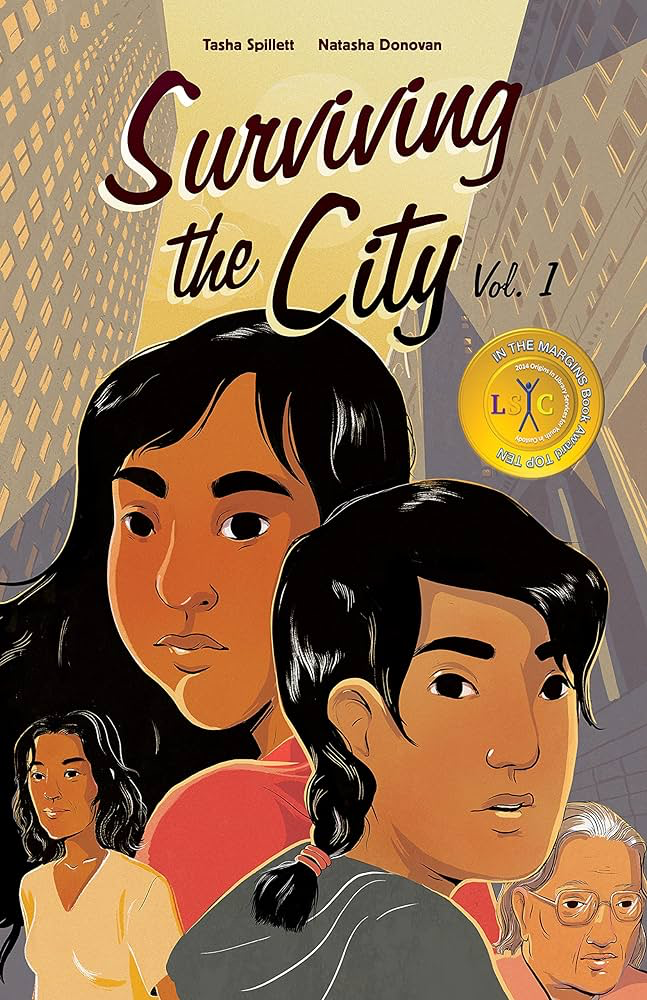
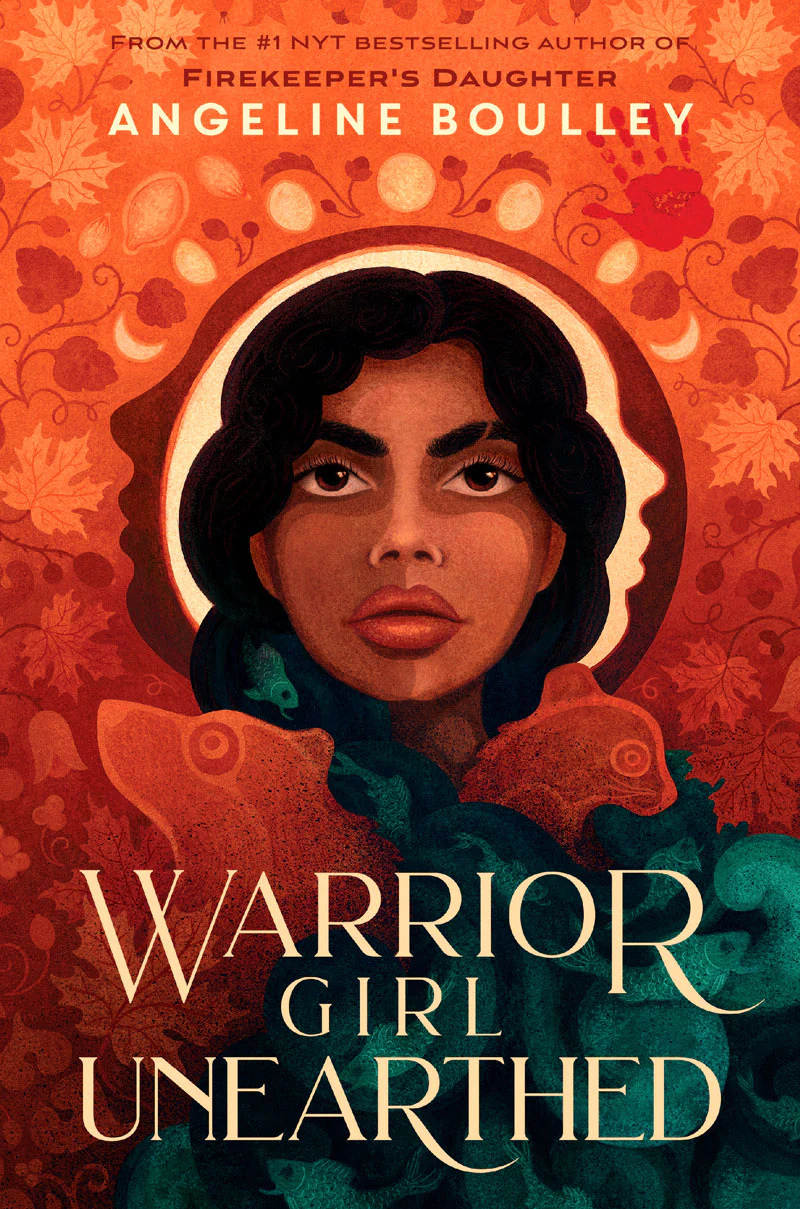
Despite the wonderful boost in diversity in YA and adult literature in the past decade or so, I’ve seen very little of that diversity focused on Indigenous characters and stories. It could be just me, from an outsider perspective, but diversity means boosting all voices—not just the few that you can think of off the top of your head when you think of the word “diversity.” And as an American, I know full well that we are and always have been living on stolen land, so it’s important to read outside of what our history books teach us. So I’ve compiled some of my favorite books by Native American, Indigenous, and First Nations authors for the occasion.

Let’s begin, shall we?

THE BOOKISH MUTANT’S BOOKS FOR NATIVE AMERICAN HERITAGE MONTH

FANTASY:

REALISTIC FICTION & HISTORICAL FICTION:

TELL ME WHAT YOU THINK! Have you read any of these books, and if so, what did you think of them? What are your favorite books by Indigenous authors? Let me know in the comments!

Today’s song:

That’s it for this recommendations post! Have a wonderful rest of your day, and take care of yourselves!

Posted in Book Review Tuesday

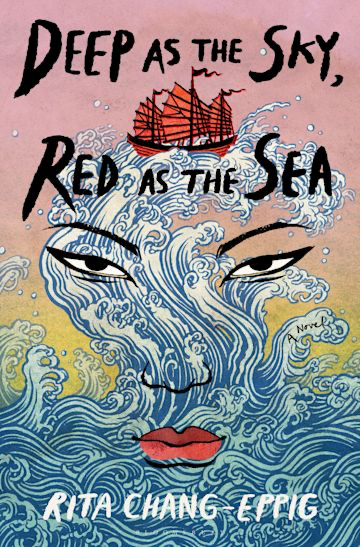
Book Review Tuesday (9/26/23) – Deep as the Sky, Red as the Sea

Happy Tuesday, bibliophiles!

Fingers crossed, I should be able to keep up with at least these reviews and my Sunday Songs now. Plus, I’ve read some good books lately, and I’m itching to write a full-length review! Especially about this one. I’ve seen it here and there on the blogosphere, and it’s getting average reviews on Goodreads as of now; I don’t usually gravitate towards historical fiction, but Deep as the Sky, Red as the Sea was such an engrossing read!

Enjoy this week’s review!

Deep as the Sky, Red as the Sea – Rita Chang-Eppig

The pirate Shek-Yeung has a reputation that precedes her. After her husband is murdered by a Portuguese sailor, she takes it upon herself to do everything in her power to take his fleet for her own, starting with marrying her husband’s second in command and having his son. With the ship under her iron rule, she becomes just as feared as her husband once was. But as the Emperor of China begins a crackdown on piracy and her crew begins to turn against her, Shek-Yeung must grapple with the power that is slipping through her fingers—and taking care of her new son.

TW/CW: blood, gore, near-death situations, descriptions of illness, loss of loved ones, misogyny

I love a good swashbuckling pirate book, so I never considered that a more grounded pirate story could possibly exist. And it does—its name is Deep as the Sky, Red as the Sea, and it has just as much of a punch and importance, even if it lacks the conventional adventuring that typically comes along with pirate stories.

I’m not usually much for historical fiction; it’s not a genre that I typically gravitate towards, but if I pick it up, it’s usually because it’s intertwined with another genre (fantasy, etc.). Literary historical fiction, even less so—that usually brings to mind the thousands of WWII novels with the exact same font that I always have to reshelve at the library. But Deep as the Sky, Red as the Sea occupies a very unique niche. It has all of the diligent research and worldbuilding of any good historical fiction, with a fair dose of drama and an emotional core that sets it apart from the often distant literary fiction novels that I can think of. Even though I know next to nothing about the time period in which its set (listen, I took AP World History online, you can understand my situation), Chang-Eppig clearly put so much time into fleshing out Shek-Yeung’s world—and all of it paid off.

On that note, I’ve seen a lot of complaints about this book having dry writing. At times, the worldbuilding and negotiations did trail in the slightest, but to me, this novel was just the right amount of captivating. Even with all of said drama and heavy plot points, the writing felt cinematic—I don’t mean that in the way of a blockbuster, but of that special kind of Oscar-winner that you actually watched and enjoyed. It knew when to hold its breath and let the silence fill the page, and it knew when to make your emotions swell. I wouldn’t call it perfect, but it’s impressive enough that I’m wowed by the fact that this is Chang-Eppig’s debut novel. I’d gladly watch a movie adaptation of this book.

The characterization in Deep as the Sky, Red as the Sea was just as stellar as the other aspects! Shek-Yeung was such an expertly written protagonist in almost every way that I can think of. Chang-Eppig captured every aspect of her personality effortlessly; she lives at that intersection of aging and legacy where she isn’t as physically strong as she was in her youth, but she’s just as fearsome and skilled as she was back then. She’s been beaten down by the trials of womanhood and the shadows of her past trailing her, but is slowly learning to love again. Every part of her was nothing short of captivating, and she was the perfect emotional core for the story, even if she was reluctant to show her own. The side characters were just as wonderful as well, and the perfect foils to Shek-Yeung. Yan-Yan was my absolute favorite. She was just the sweetest…my girl needs a hug

That being said, I feel like more could have been done with Shek-Yeung’s character development at the end of the novel—and the ending of the novel in general. Throughout the novel, Shek-Yeung basically had that mentality of “we’re all just meat sacks on a floating rock and we’re all just animals that don’t care about each other” (it’d be insufferable on any other character, but…she’s a middle-aged pirate in the Qing Dynasty who’s just witnessed the brutal murder of her husband, I can at least kind of see it in her case). But most of the smaller arcs with her seemed to be leading up to her learning how to heal and love again, what with her son and with the rest of her crew (esp. the more optimistic Yan-Yan). But even after the climactic events of the last part of the novel, she hardly seemed to change. It just didn’t make sense for her, who’d been so well-written up until this point, to suddenly go static. Most of the ending felt rushed in general—it felt ambiguously but not necessarily in a literary way, but more in an “I don’t know how to end this book, so I’m going to write a few more sentences and call it a day” kind of way. It just felt like such a disservice to what was an otherwise stellar novel.

All in all, a beautiful historical drama with some of the most well-written characters I’ve read in a while. 4 stars!

Deep as the Sky, Red as the Sea is a standalone; it is also Rita Chang-Eppig’s debut novel.

Today’s song:

favorite song from this album!!

That’s it for this week’s Book Review Tuesday! Have a wonderful rest of your day, and take care of yourselves!
Posted in Books

The Bookish Mutant’s Books for AAPI Heritage Month (2023 Edition)

Happy Wednesday, bibliophiles! I wrote most of this post in advance, but as of now, I’m about to move out of my dorm!! I HAVE SUCCESSFULLY FINISHED MY FIRST YEAR OF COLLEGE!!

Here in the U.S., May is Asian American and Pacific Islander Heritage Month, and I’ve compiled another list of book recommendations for the occasion! Diverse reading shouldn’t be restricted to a single month, but it’s so important to amplify marginalized—in this case, AAPI—voices during this month. My lists serve as guides to read during not just their respective months, but any time you’d like.

However, this year is a little different. Even though I’m too lazy to change the header image (sometimes you’ve gotta be a bit stingy with your media space), I’ve decided to put both YA and adult books on this list. I’ve started to read more adult books in the past few years, and I’d be remiss if I didn’t include some of these books on this list. So it’s a slightly wider pool to choose from this year—read at your leisure!

If you’d like to see my past lists, click below:

Enjoy these recommendations!

THE BOOKISH MUTANT’S BOOKS FOR AAPI HERITAGE MONTH

YA:

ADULT:

TELL ME WHAT YOU THINK! Have you read any of these books, and what did you think of them? What are some of your favorite books by AAPI authors? Let me know in the comments!

Today’s song:

I FEEL LIKE I’VE ASCENDED TO ANOTHER PLANE OF EXISTENCE HELP

That’s it for this list of recommendations! HAve a wonderful rest of your day, and take care of yourselves!
Posted in Book Review Tuesday

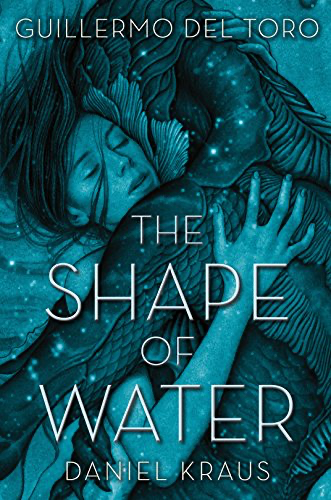
Book Review Tuesday (3/21/23) – The Shape of Water (film novelization)

Happy Tuesday, bibliophiles!

The Shape of Water has been my all-time favorite movie for several years now—I’m looking over my shoulder at the poster above my bed as I’m writing this. I had the novelization on my TBR for a few years, but only got around to it recently, probably for fear of it not living up to the film. I had no idea that it was a dual release with the film, but after reading it, the novelization of The Shape of Water struggled to live up to the poetic poignance of the film.

Enjoy this week’s review!
The Shape of Water (novelization) – Guillermo del Toro and Daniel Kraus

Summary from Goodreads:

NOW A MAJOR MOTION PICTURE FROM FOX SEARCHLIGHT

Visionary storyteller Guillermo del Toro and celebrated author Daniel Kraus combine their estimable talent in this haunting, heartbreaking love story.

The Shape of Water is set in Cold War-era Baltimore at the Occam Aerospace Research Center, which has recently received its most sensitive asset ever: an amphibious man captured in the Amazon. What unfolds is a stirring romance between the asset and one of the janitors on staff, a mute woman who uses sign language to communicate with the creature. 

Developed from the ground up as a bold two-tiered release—one story interpreted by two artists in the independent mediums of literature and film — The Shape of Water weaves together fantasy, horror, and romance to create a tale that is equally gripping on the page and on the big screen.

TW/CW: racism, homophobia, xenophobia, ableism, misogyny, sexual harassment/assault, blood, gore, murder, animal death, loss of loved ones

The Shape of Water is a movie that’s touched my heart in a way that I doubt any other will. In summation, the film is a testament to the marginalized experience—any kind of marginalized or othered group—and self-love and acceptance. Guillermo del Toro is a storyteller without parallel, and maybe that’s why I was so hesitant to pick up the novelization for so long. I had no idea that it was a dual release with the film, but either way, my fears ended up being confirmed—Daniel Kraus’ novelization is faithful in the barest, structural way, but largely failed to capture the heart of the film’s message.

I’m not familiar with Daniel Kraus’ other novels, but even a quick scan on Goodreads tells me that he’s a frequent collaborator with Guillermo del Toro, which, after reading this, frankly surprises me. Del Toro’s storytelling, from this film to Pan’s Labyrinth and the most recent Pinnochio, has a consistently strong emotional core, something that anchors the fantastical elements to our most core human experiences. And somehow, Kraus chose to adapt this novel in the most flat, checklist-like way possible. Yes, all of the beats of the film were there, as well as some bonus content. But thanks to Kraus’ dry writing, the emotional core—what made the story so deeply impactful in the first place—apparently flew straight over his head.

Now, before I get into my major gripes, I will say this—the novelization picks up far more at the halfway point. The chapters that Kraus writes from the perspective of The Asset were an unmistakable highlight, charming, dreamlike, and refreshingly strange compared to most of the other perspectives. I almost find myself wishing that the scene with Bob Hoffstetler and The Asset made it to the film. And the very climactic events in the third act were dealt with the appropriate amount of weight, and the pace picked up significantly, unlike the steady pace of the movie. And as much as I love the dance scene, I completely get the decision to nix it from the novel—out of all of the scenes to translate from screen to page, that would be at the top of the page.

With that out of the way, I was bothered by how much emphasis Kraus places on the antagonist, Strickland. There were some fascinating scenes that never made it to the film of the process of him capturing The Asset in the South American rainforest; they were interesting additions, and although I liked them in general, it mostly ended up being Strickland being incredibly racist. It’s painfully on brand for his character, but beyond that, it seemed like his character got the most page time out of the whole cast. He is the main villain, sure, but given that this story is about the marginalized experience and he is the predatory antithesis to what the film stands for, the decision didn’t leave the best taste in my mouth.

My other main issue was how Kraus wrote the character of Elisa Esposito. For the most part, Kraus was somewhat faithful to her personality, but there were multiple instances where the descriptions of her were incredibly concerning. On several occasions, she is described as “childlike” and “[like] a kindergartener” in scenes where she is struggling to communicate her needs—for those of you who have not seen this film, Elisa is mute, and she uses ASL to communicate. It’s already offensive on the front that Elisa is such a treasured character to me, but Kraus seems to, once again, miss the message of the film by a mile, and ends up right smack in the middle of the all-too-common trope of infantilizing disabled people—especially disabled women. Elisa is in no way “childlike” for trying to communicate her needs—she is a grown woman, and she is frustrated by the struggle to communicate with her abled peers in a world that is not built for her. Let me say it again: Elisa Esposito is a grown woman. Even though Kraus was somewhat respectful in some of his other descriptions of her, but these instances all but negated everything else that he had established in the adaptation.

All in all, a structurally faithful, occasionally beautiful, but often frustrating adaptation of a film that will forever have the prime spot in my heart. 3 stars from a peeved Guillermo del Toro fan. Just watch the movie instead.

The Shape of Water is a standalone, as the film is, but Daniel Kraus has also collaborated with Guillermo del Toro on the novel Trollhunters. Kraus is also the author of The Life and Death of Zebulon Finch, The Teddies Saga, and several other books for all ages.

Today’s song:

saw these legends on Friday night—such a beautiful experience, and I’ve had this song on repeat ever since

That’s it for this week’s Book Review Tuesday! Have a wonderful rest of your day, and take care of yourselves!