Posted in Book Review Tuesday

Book Review Tuesday (11/25/25) – Mad Sisters of Esi

Happy Tuesday, bibliophiles!

Guess who’s back…for only a week, probably. We’ll see. My college is on this maddening schedule that only gives us one (1) week after Thanksgiving Break and then it’s straight into finals, so I’ve been grinding for most of November. But now I’m on break, thank goodness!

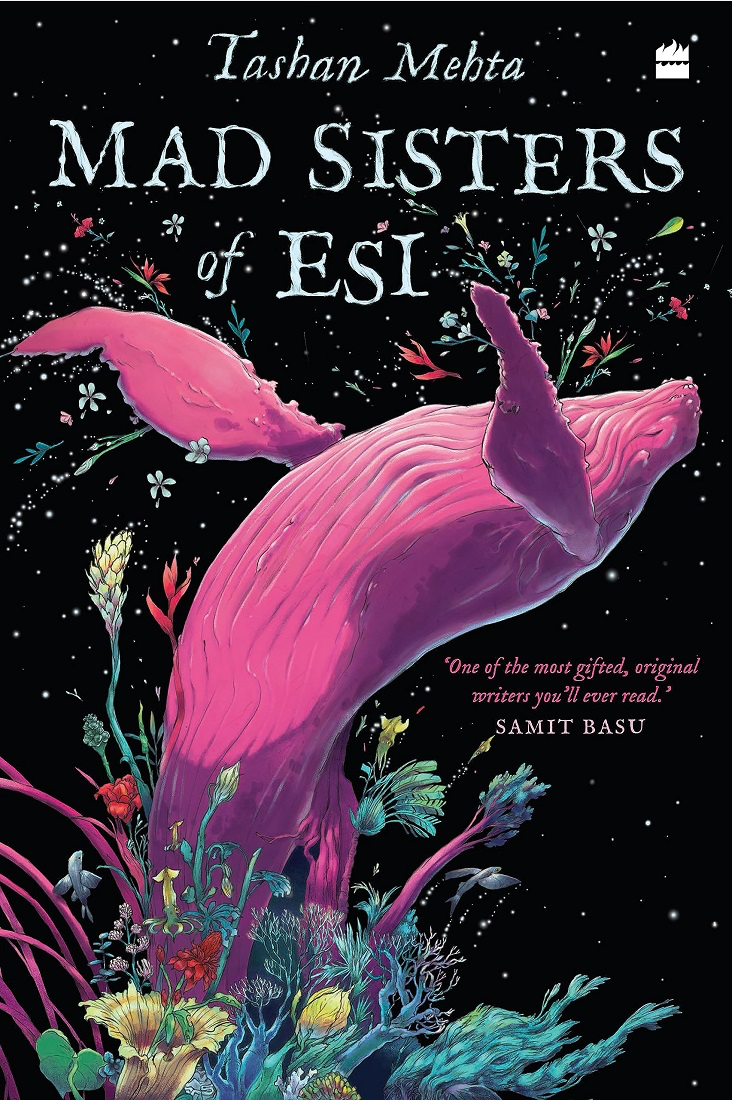
I found out about Mad Sisters of Esi while doing a research paper on the history of science fiction in India. It sounded intriguing—who doesn’t love an incomprehensibly large cosmic whale, after all? I’m not usually one for fantasy (citation needed) novels that are this dense and self-referential, but there was so much passion poured into every word that I couldn’t help but be dragged along for the bizarre ride.

Enjoy this week’s review!

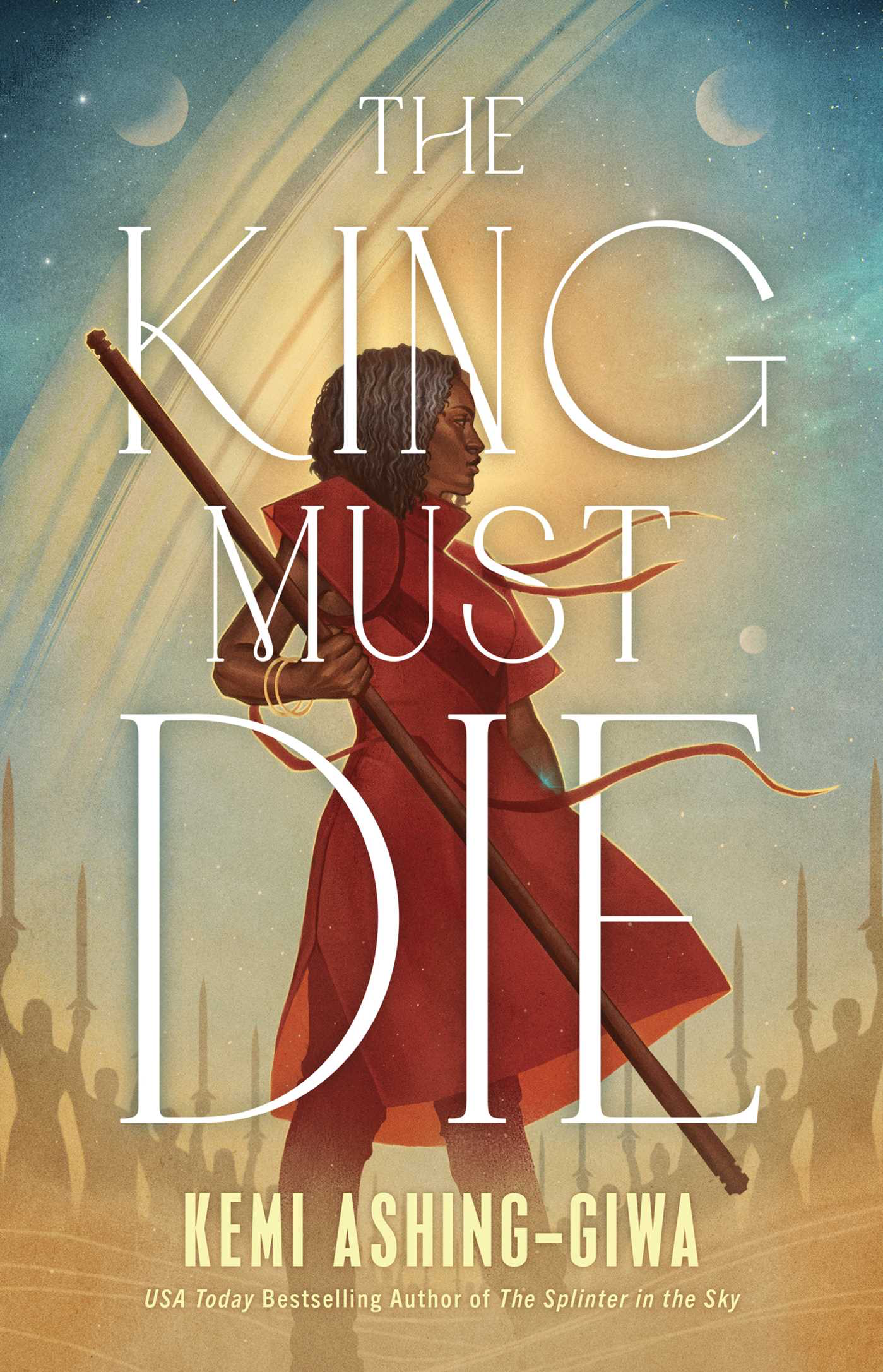
Mad Sisters of Esi – Tashan Mehta

Myung and Laleh are inseparable sisters living inside the Whale of Babel, a whale the size of a galaxy, large enough to contain planets in the folds of its body. They have never known life outside of the Whale, save for the Great Wisa, their distant, unknown creator. Laleh is content to explore the endless lands inside the Whale’s body, but Myung yearns for something more. Her journey takes her to the far edges of the universe, but so far that she cannot find her way back to her only home. As Myung and Laleh attempt to find their way back to each other, they ponder the stories that got them to where they were, and if stories themselves can bring them back together.

TW/CW: loss of loved ones, grief, abandonment

If you’re wondering how I’ve been lately, I’m apparently saturating myself with “[]ad Sisters” media. Mad Sisters of Esi? Bad Sisters? What am I doing here? What’s going on with all these sisters?

I’m glad that this trend doesn’t have a name, but I love the trend of recent genre fiction coming to conclusion that “maybe [x] was the friends we made along the way” can actually be a very powerful message. Maybe storytelling was the friends we made along the way. God. What a book.

I was captivated by the premise of Mad Sisters of Esi, but I could have easily not been. It falls into those fantasy books that verge more on the literary side that are very self-serious about been multilayered, dense, and Deep with a capital D. Not that there’s anything wrong with it, but toeing the line between a story that’s actually meaningful and a book that’s 500+ pages of needlessly convoluted, pretentious nonsense that only serves as a monument for how supposedly complex of a plot the author could dish up. The latter are often all style and no substance, but the real frustrating part is that they’re so convinced of their substance that it deadens any meaning that it could’ve had. (See my review of The Spear Cuts Through Water. At least Simon Jimenez has other good books. Go read The Vanished Birds instead of that one.) It’s just a literary version of “look, Ma, no hands!” that rarely results in anything really substantive.

My main criticism of Mad Sisters of Esi is that it does stray into that territory sometimes. It never fully went over the edge for me, but there were moments were it got too convoluted for both my taste and the service of the narrative. Most of it was complex, but not needlessly so, but at a certain point, parts of it got dizzying. I definitely didn’t get everything about this book, and I feel like it’s almost the point. For me, what separates the two kinds of fantasy novel that I just described is…well, love. I could tell right away that Mehta didn’t write Mad Sisters of Esi to show off how complicated of a narrative that she could write—there’s a story, a tangible message, and a thrum of passion that spills through in every page. With every fictional academic article and magical town, I knew that Mehta’s world was born of love. Which, given the nature of this book’s themes, is exactly what it should have been. It’s a novel that’s all about love, storytelling, and the act of creation, and Mehta’s writing felt more than faithful to that premise.

Mad Sisters of Esi is full of meta commentary on the nature of storytelling. I’ll get more into that aspect later, but part of what sold those thematic elements was Mehta’s prose itself. Mehta is clearly someone who has studied her fair share of fairytales. Mad Sisters of Esi doesn’t just feel like a fairy tale in terms of the plot—Mehta’s prose has the same enchanting quality of a timeless fairy tale. The narrator bobs in and out, always with a cryptic lesson. The lush world is rendered in the most magical, wondrous detail. All of the descriptions surrounding Myung and Laleh make them sound like classic protagonists in an ancient tale. It was all very self-aware, but in a way that made the story feel fuller—and drew me in page by page. With Mehta’s strong hand, every location that Myung visited was bursting with bizarre, fantastical life—I was hooked on nearly every aspect.

If this novel has made me realize anything, it’s that we don’t have nearly enough cosmic whales in literature. We need more of them, frankly. Or maybe not—I’m torn on whether or not we should gatekeep them so they don’t get tired. I doubt they would, though. Either way, you can’t just promise a galaxy-sized whale full of planets and two sisters that live inside it and not deliver on that premise. Thankfully, Mehta did in spades. The world of Mad Sisters of Esi was a sight to behold. Every minute detail was somehow nonsensical and yet made perfect sense. It all felt very trippy and whimsical, and above all, so vibrant. I loved every quirk in every location that Myung visited in the vast universe; I’ve seen reviews compare it to The Phantom Tollbooth, and honestly, I have to agree—it has that same absurd, dreamlike quality more often than not. Beyond that, I love the integration of the academic articles and research papers about all of the bizarre events and people within this novel—it added such a fun layer of worldbuilding that made it all feel more grounded and real—as much as it could be, with all of the out-of-this-world (no pun intended) stuff that was going on.

With all of the emphasis on madness, I was really hoping there wasn’t going to be yet another story about art being all about suffering. From how incredible the first few chapters were, I was hopeful. But with everything about madness, madness, madness…doubt crept into my mind, for sure. I’m not confident that I fully got what Mehta intended, but I feel like this is what I took away from it. There is a little madness in every creation, even if you’re not actively suffering—how do you create a massive cosmic whale and not go a little crazy? Yet she emphasizes that even if you pour your all into your creation, that you run the risk of losing yourself, and that’s when your creation goes wrong. Mehta’s madness isn’t the suffering kind of madness—it’s about the passion. It’s about throwing all of your love into the act of creating, just so that the world is a little brighter and less boring than it was before, and to give your love a physical form. The reason that Myung is so lost out in the universe is that she strays from something that was created with nothing but love. That’s my two cents (is that expression even relevant anymore now that we don’t have pennies?), especially given how the novel concluded. That’s why the passion I felt from every page felt authentic—the passion is what it’s about, to love what you create and not destroy yourself in the process, because you too are made of love.

All in all, a dazzling and surreal space fantasy full of love, sisterhood, and whales. 4.5 stars!

Mad Sisters of Esi is a standalone, but Tashan Mehta is also the author of the novella The Liar’s Weave, and has contributed to several anthologies, including Magical Women, Solarpunk Creatures, and The Gollancz Book of South Asian Science Fiction, Vol. 2.

Today’s song:

That’s it for this week’s Book Review Tuesday! Have a wonderful rest of your day, and take care of yourselves!

Posted in Book Review Tuesday

Book Review Tuesday (8/5/25) – On Earth As It Is on Television

Happy Tuesday, bibliophiles!

On Earth As It Is on Television has been on my TBR for at least a few years, and I’ve nearly bought it at least twice at my local Barnes & Noble before settling on it last week. It seemed quirky and interesting, but this novel ended up blowing me away with how inventive, heartfelt, and downright funny it was. The best 5-star reads come out of nowhere, and On Earth As It Is on Television is one of them.

Enjoy this week’s review!

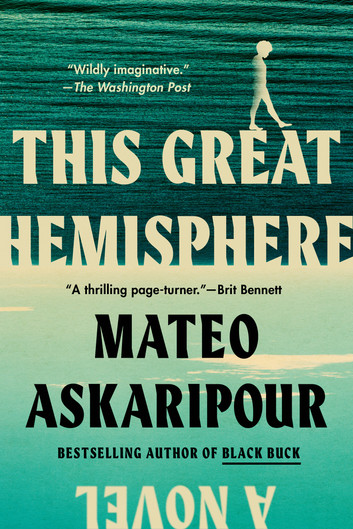
On Earth As It Is on Television – Emily Jane

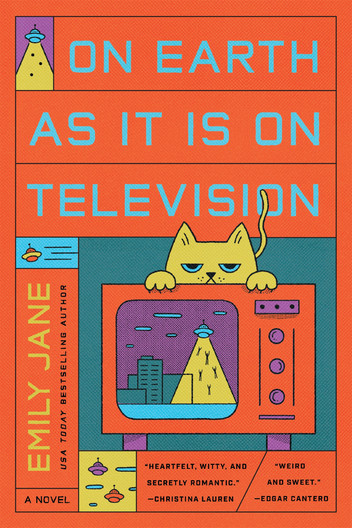
Aliens have finally come to Earth. Without warning, dozens of spaceships appear over Earth, causing a worldwide panic. Days later, they leave without a word. As the world falls into chaos, the lives of three people intersect as the world struggles to reckon with this occurrence. Blaine struggles to wrangle his TV-addicted children, now convinced that they need to skin people to find the aliens within, and go along with the mercurial plans of his wife, Anne. Catatonic for 30 years, Oliver suddenly regains consciousness, only to be whisked away on a strange journey by a stray cat. Heather, always the outsider among her stepfamily, ponders if the aliens could finally mark the start in the next chapter of her mundane life. All of their journeys converge as the world reckons with their place in the universe—and what could be next for the human race.

TW/CW: car accident, death, imprisonment, suicidal ideation, substance abuse

I did not expect a book with such a massive volume of millennial cat meme-isms to nearly make me cry multiple times. One minute they’re going on about Mr. Meow-Mitts and “himb peets” or something, and 20 pages later I’m a puddle on the floor. What a book.

There’s not a ton I can compare to in terms of On Earth As It Is on Television, but if anything, it’s quite like No One Is Talking About This, a book that also deals with the chaos of 21st century life; there’s a lot of meme-speak, there’s a lot of mindless media consumption, and there’s a whole lot of absurdity. A lot of the humor takes cues from the oversaturation of memes in the 2010’s (cats, bacon, etc.), but it’s a lot funnier than that entails—it’s more about the ridiculousness of that microcosm than it is about the actual humor; for me, it fed into the whole side of the story that was about the ridiculousness of modern life, as we are oversaturated with…well, everything. Plastic, fatty foods, cat memes. (If you have minimal tolerance for phrases like “heckin chonker” and “floofy boi,” this might not be the book for you. It’s a lot, but stay with it, trust me.) Surprisingly, this ends up being very poignant by the end of the novel, but it was both an astute observation on our 21st century state of being in a perpetual deluge of mindless information and content. Jane cranks the absurdity up to its absolute maximum without it feeling overwhelming—it’s totally goofy at times, but it’s great satire as well.

Both of the sci-fi books that I’ve rated in the 4.75-5 star range this year have involved cats in some way. Coincidence? I think not. (Shoutout to The Last Gifts of the Universe and Pumpkin the cat.) The way that On Earth As It Is on Television uses cats was one of the funnier parts of the novel, setting aside the pervasion of cat meme-speak. As well as causing worldwide panic, the alien ships have an unexplained effect on the world’s cat population—they all come back telepathic, and the results are hilarious. It’s clear that Jane is a cat lover, and it came through in every page. It added another wonderful layer of silliness to an already absurd novel, and I thoroughly enjoyed it. And honestly, it seemed completely plausible for cats to be the ones to pick up on alien frequencies, out of all the creatures on Earth.

Usually for a 5-star novel, I get super attached to at least a few characters. On Earth As It Is on Television might honestly be an exception, but that’s not a slight against it in the least. I didn’t like all of the characters—in fact, I doubt it was the point for them to be likable—but they all felt real. Blaine didn’t have a distinct personality for the beginnings of the novel, but you come to realize that he’s been so swallowed up by trying to juggle everyone else that it’s become his personality. Avril and Jas are the most insufferable children you could ever dream up, but they feel like the terrible kids you’re stuck sitting next to at the DMV or on the plane. Heather came off dramatic and whiny more often than not, but I could easily see how much her life felt out of her control. All of this is to say that though they were not all likable in the traditional sense, they felt real, and that was what felt refreshing. For a novel that tracked the trajectories of ordinary people, they felt especially authentic. It’s a mass reckoning with the absurdity of life, and Jane makes every detour worth it.

If anything, it was the characters’ journeys that were the most compelling part of the novel. All of the interconnected characters throughout On Earth As It Is on Television were thrown into circumstances outside of their control, both physical and mental, and nowhere that any of them went ended up being predictable. The concrete trajectories ranged from the ordinary (Heather feeling forgotten amongst her stepfamily) to the outright bizarre (a catatonic man regaining consciousness after 20 years and going on the world’s weirdest road trip with a telepathic cat), but all of them presented such rich character development. They crisscrossed all over the country, at times laugh-out-loud funny and other times more grounded and solemn. Wacky as it was, Jane used them all to wring out so much emotional development from a worldwide crisis that affects everyone differently; grappling with the fallout of feeling important in the universe, but then being forgotten just as quickly.

I’m a sucker for fun alien designs, and I didn’t expect On Earth As It Is on Television to deliver as much as it did. The Malorts aren’t peak creature design, but with their three-handed meerkat-like appearances and affinities for plastic crap, they hammered home the themes of the novel excellently. I wasn’t looking for any kind of realism in this novel, which is why I’m so glad that Jane went so bonkers with the design and culture of the Malorts, from their dietary preferences to their fascination with cats. They were a perfect vehicle for the absurdity that this novel emphasizes, and they provided as many laughs as the humans. There was a moment where there was so much plastic involved in the novel that I thought that the wry commentary on consumerism was going to fall flat, but the Malorts ended up turning it into a solution for climate change in-universe: why not give the Great Pacific Garbage Patch to a bunch of aliens who really like plastic for some reason? It was totally wonderful and goofy, but it segued nicely into the novel’s themes of finding joy in unlikely and mundane places and things.

More on that…any book that makes observations of shiny, plastic souvenirs and children repeating meme-isms into something genuinely poignant and moving deserves some kind of praise. But by the end, I loved what it had to say about the nature of life, however absurd it may be: everything is messy and out of your control, but that’s okay. Life is worth living for all of the strange detours and tiny miracles that you can find in every day life—cats, children singing, good food, silly television, and unexpected forks in the road. No matter our place in the universe or what the government does, we can always look to the ordinary to find solace. And beyond that, we can look to each other—our family, our friends, and strangers—to anchor us in the face of upheaval. On Earth As It Is on Television is a novel about many things (cats, TV, road trips, aliens), but above all, it’s about the small miracles that make life worth living—and what better way to end such a strange, beautiful novel? When we are inundated with mindless consumption, what better resistance is there than to notice life’s small, organic miracles? Finding and reading this novel felt exactly how it was intended to be read—on a whim, and being unexpectedly moved by it in so many places.

All in all, a clever, quirky, and unexpectedly moving novel about the biggest and smallest things in our human—and alien—experiences. 4.75 stars, rounded up to 5!

On Earth As It Is on Television is a standalone, but Emily Jane is also the author of Here Beside the Rising Tide and the forthcoming American Werewolves.

Today’s song:

BIOPHILIA ‼️

That’s it for this week’s Book Review Tuesday! Have a wonderful rest of your day, and take care of yourselves!
Posted in Book Review Tuesday

Book Review Tuesday (7/29/25) – Redsight

Happy Tuesday, bibliophiles!

As Disability Pride Month comes to a close, here’s one last book to finish off the month. This one has been on my TBR for at least a year, and it’s evaded me in the library thus far—thankfully, Barnes & Noble finally brought my chase to an end. Even though I’m growing a little weary of every new sci-fi that hinges on the promise of “incomprehensible space religion, woooooo,” Redsight provided a fascinating twist in the subgenre.

Enjoy this week’s review!

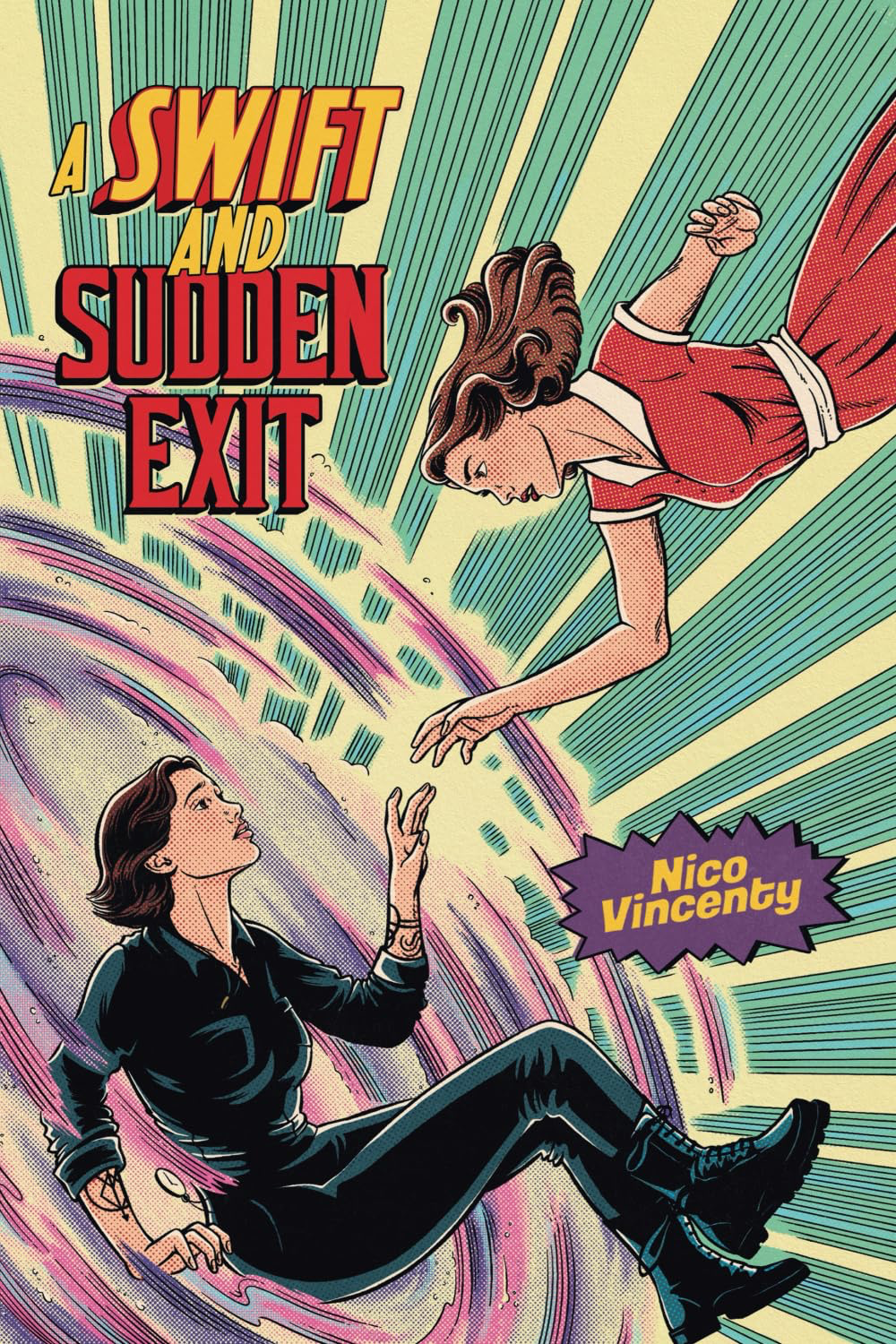
Redsight – Meredith Mooring

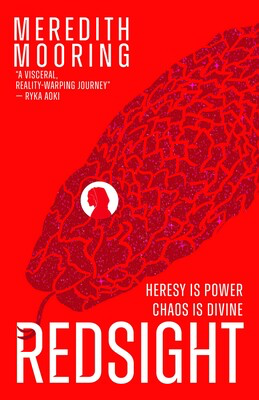
Korinna knows that she is doomed to a life of obscurity. Even though her being a Redseer gives her the power to manipulate space-time itself, she is the weakest of her order, and little mercy is shown to the weak. Resigning herself to a position navigating a warship for the treacherous Imperium, Korinna is at war with herself. But when the warship is boarded by strange pirates, Korinna learns that she has power beyond comprehension—all deliberately hidden. With her newfound abilities and a desire to uncover the secrets of the Goddesses that once ruled the galaxy, Korinna searches for answers, but what she finds may be more dangerous than she could have ever bargained for.

TW/CW: violence, gore, blood, death of children (off-page)

In the last six or seven years, I’ve seen a major trend in science fiction where the plot centers around an ancient, ominous Space Religion™️ (see: Gideon the Ninth, The First Sister, The Genesis of Misery). It’s a Thing. The usual suspects include an AI/vague cosmic entity deity, some form of cult, vague to overt references to Catholicism, and repression. I’m honestly fine with all of these things—in fact, having a cultish religion on an intergalactic scale is often a fascinating way to set up a story, and can be used to many ends, whether it’s deepening worldbuilding or critiquing organized religion in the real world, as it often does. My problem was that it’s everywhere. I feel like every other space opera I find is some kind of retelling of Joan of Arc or “what if God was real and it was a robot and the robot wanted to kill you?” Again, interesting once or twice, but after a point, they all start to blend together. On a personal level, I guess it’s partly because I don’t often connect as deeply to stories about religion/religious trauma, but I swear every other adult sci-fi book out there is like this.

Redsight is one of those books. However, it had enough different aspects that it was separated from the rest for me. It honestly veers into space fantasy at times, toeing the line between that and space opera expertly. Even though the redseers and all of the other witches in the universe had a slightly similar structure to some other books I’d read (spooky magic, incomprehensible goddesses trapped in tombs for thousands of years, etc.), it was Mooring’s exploration of how this insular cult of witches affected the outside world that stood out to me. The space-time manipulation is awesome, first off, but there’s also a host of space pirates, sprawling libraries, and transformative magic that goes…wrong. Snakes are involved. Also, Korinna and the others don’t exist in a vacuum—they’re a small part of a massive galaxy and are entangled in all manner of messy, manipulative politics throughout the universe. (There’s a strong Bene Gesserit vibe going on…I guess Dune might be to blame for the big spooky space religion trend?) They are outwardly very strange to others, and they don’t feel self-contained, as some other similar books are—they felt like a small part of a much more expansive world, which is what set it apart. Plus, I loved how it served as a critique of both that can come from organized religion AND the corruption that spreads into imperial politics—it’s all a great examination of systemic corruption, which I enjoyed thoroughly.

One of the more unique aspects of Redsight was how disability was handled. Up until we leave the Navitas, where all of the redseers are trained, pretty much all of the characters you meet are blind. All of the priests and priestesses of Vermicula are blind, and the way that Mooring shows us how it’s accommodated in the universe is fascinating. Through the power of redsight, they can sense most everything they need to sense through…well, manipulating the fabric of time and space, which is pretty badass in and of itself. But beyond that, I love how many intricacies to Korinna’s life are detailed. We see how she senses space around her with her blindness, how the Order of Vermicula produces special tactile books so that everyone can read the holy texts, and how she navigates the universe without being accommodated like she was within the Order. Knowing that Mooring herself is blind, I’m sure that she thought of everything when it came to how Korinna would navigate the universe, accommodations or not, and it showed through in her writing.

If you’re looking for a twisty book, then Redsight is the book for you! Even though I feel like I’m iffy when it comes to predicting twists, the ones in this novel had me constantly guessing. Mooring nails a critical combination of a very slow-burn first third of the novel, gradually building tension, while also throwing out a red herring where you think you know what the big mid-book reveal is, but…oh boy, I did not. (Red herrings, Redsight, red witches…lots of red in this book! Say, what’s that pooling on the floor?) In all seriousness, Mooring did an excellent job of creating tension and putting up all manner of red flags and misleading clues, and they came up organically: they were both the result of Korinna not knowing any better and the propaganda and narrative control that both the Order of Vermicula and the Imperium had over the knowledge that was passed onto her. It deepened the worldbuilding and the pacing of Redsight…for the most part.

All that being said, the ending was quite rushed. With as much buildup as this novel had, it was kind of bound to happen. All things considered, Redsight is Mooring’s debut novel, so I can let some of it go, because I enjoyed the majority of it. But there was just far too much crammed into the last 100 or so pages of the novel. Even with the theme of undoing systemic corruption, the speed at which it happened was truly just bonkers. For the truly mind-boggling, cosmic scale that everything in Redsight happened in, it seemed illogical that everything that happened in the novel would’ve been able to happen so quickly. After all of that, it was wrapped up strangely tightly—the loose ends were tied up basically because…the Goddesses can just do whatever, and it’s fine. I guess if you’re dealing with universe-creating Goddesses, by that logic, they can also clean up messy endings? It felt cheap. For the amount of time spent just on the buildup in the first third of the novel, everything was resolved far too quickly than seemed plausible, even with my suspension of disbelief.

All in all, a gripping and captivating—if a little messy—story of corruption and history, all set within the bounds of a boundless, magic-filled universe. 4 stars!

Redsight is a standalone, and Meredith Mooring’s debut novel.

Today’s song:

That’s it for this week’s Book Review Tuesday! Have a wonderful rest of your day, and take care of yourselves!
Posted in Book Review Tuesday

Book Review Tuesday (7/22/25) – The Ephemera Collector

Happy Tuesday, bibliophiles!

Continuing with Disability Pride Month, here’s a fascinating 2025 debut! I love books about libraries and archives, both for personal reasons and because of the possibilities that they hold. Add in the queer, science fiction aspect of it, and I was instantly hooked. The Ephemera Collector turned out to be one of the more unique books I’ve read recently, both in its mixed-media approach and the sprawling nature of its vision.

Enjoy this week’s review!

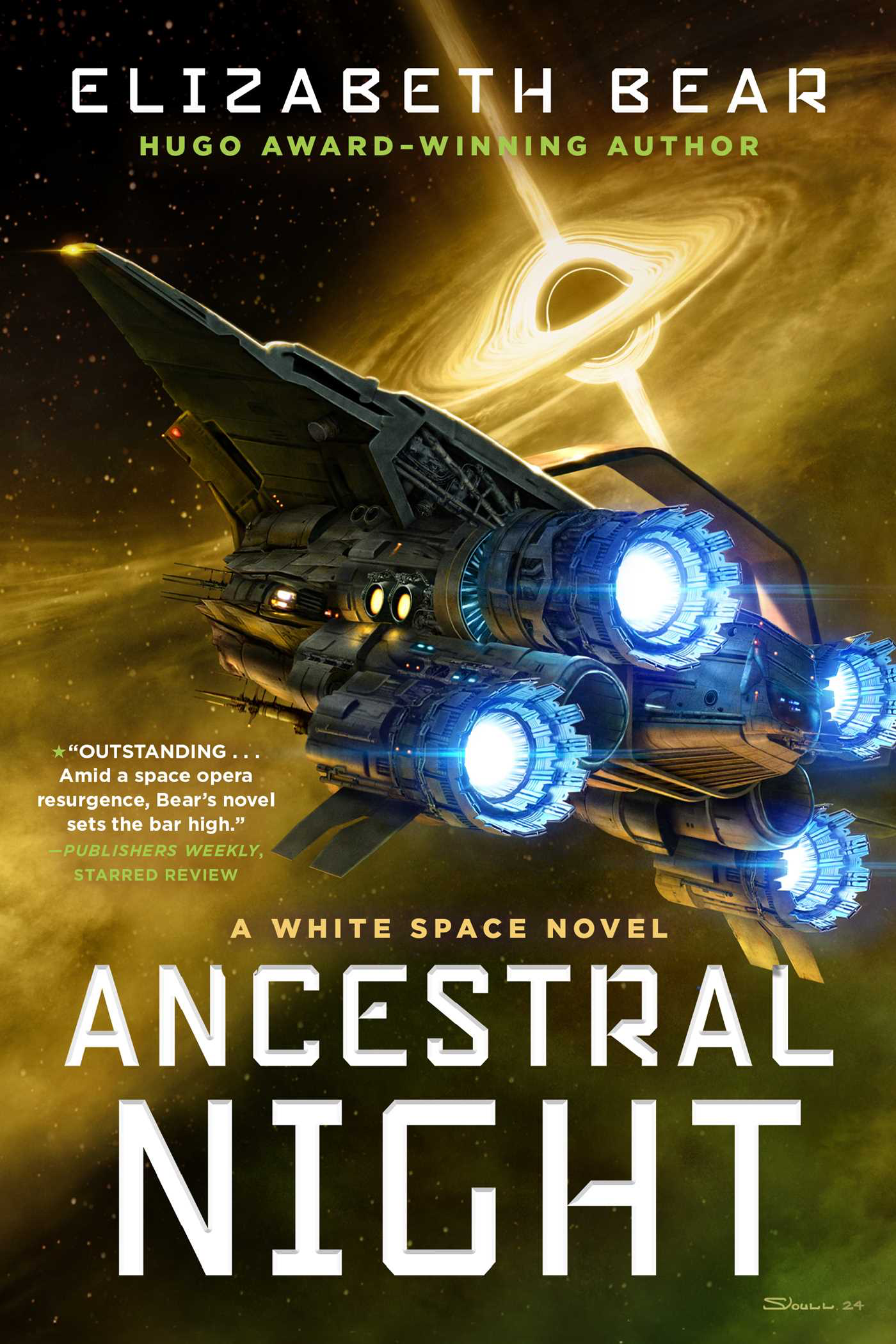
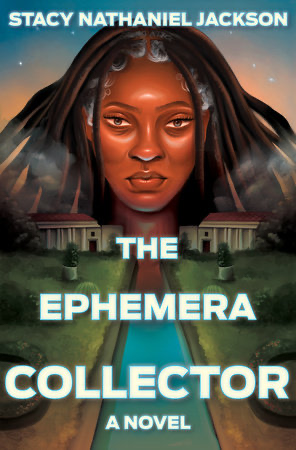
The Ephemera Collector – Stacy Nathaniel Jackson

2035. In a divided, polluted Los Angeles, Xandria Brown pours her passion into her work as an archivist. Collecting ephemera from prominent Black authors, artists, and activists, she fights to preserve her work as the threat of corporate encroachment in her library looms. After the death of her wife, only her health bots, which monitor her symptoms of long COVID, keep her company. But when the library goes into lockdown for undisclosed reasons, Xandria and her health bots must get to the bottom of the mystery—and make sure that her collections are unscathed.

TW/CW: ableism, eugenics, racism, violence, medical content

Though not without its flaws, this is one of those novels where you can really feel how much of a labor of love it was for the author. The Ephemera Collector is Stacy Nathaniel Jackson’s debut novel, which he published in his 60’s (!!!). It’s a mix of prose, poetry, and visual media, and I honestly wish I’d read a physical copy instead of an ebook in this case, because I feel like my Kindle couldn’t grasp the formatting fully. Nevertheless, The Ephemera Collector is a unique novel in all senses: a unique dystopia, a unique Afrofuturist novel, and a startlingly original piece of sci-fi.

Stacy Nathaniel Jackson’s vision of the United States 10 years from now was certainly bleak, but his worldbuilding was what made The Ephemera Collector stand out so much to me. No stone was left unturned in terms of what happens to America in the next 10 years, from the threat of corporate oversight on Xandria’s archives of Black history to the COVID-34 pandemic that occurs a year before the novel is set. It was bleak to me, but not necessarily cynical to me; yeah, us going into a second global pandemic only 14 years after “getting through” the first one seems a bit cynical, but given how this country absolutely bungled how we handled COVID-19, it feels somewhat realistic. Yet the weirder and further you get from the center of what makes Jackson’s dystopia a dystopia, the more imaginative the worldbuilding gets. Xandria is followed around by health bots that all have distinct personalities. There’s a whole Atlantis 2: Electric Boogaloo situation with a group of POC separatists who settle underwater off the coast of California. The weirder Jackson gets with it, the better the worldbuilding becomes; those unique touches are what stuck with me the most.

Yet even though Jackson’s vision of the future is full of polluted air and government corruption (not too far off…oof), it never fully felt like completely gloom and doom. In the end, I feel like this novel was about the importance of preserving history, and the main character’s fight is to keep corporations out of her exhibition of Black history, namely a collection of ephemera about Octavia Butler. Our protagonist is a queer, disabled Black woman who comes from a line of disabled Black ancestors, and she is standing her ground when it comes to preserving their history as a fundamental thread in the fabric of our country. Xandria putting up this fight, for me, was what kept The Ephemera Collector from being fully cynical. To imagine a darker vision of the future is one thing, but to have a character fight it, win, and outlast said corruption and hatred (somehow, she lives to be 300 years old? I assumed it was the gene editing, but it’s never fully explained) was what gave me hope in the end. Xandria, a battered woman who faced threats to her archives, non-consensual gene editing and eugenicist practices, and the death of her wife, comes out the victor in the end, triumphant over everything she fought to defeat. She is alive to preserve the history of her ancestors, but she is also proof that even the groups that America is most determined to erase will survive no matter what this country throws at them—and outlive them by centuries.

Going into The Ephemera Collector, I knew it wouldn’t be the easiest book to digest. The reviews warned me of a novel that frequently went on tangents that didn’t relate to the main storyline, and a novel that was disorganized in general. Having that in mind, I went in with low expectations. While I do think this novel was a bit disorganized at worst, I think it was partially the point. This is a book about an archivist poring through artifacts in a massive library. Jackson’s style is very stream-of-consciousness, and I feel like it uniquely reflects what Xandria’s mindset would accurately be if she spent most of her waking hours as an archivist. It reminded me vaguely of The Library of Broken Worlds, a very different book from this one, but still a sprawling, magnificent at best, deeply convoluted at worst novel set in a vast library. Maybe that’s just what you’re in for if you write imaginative books about sci-fi/fantasy libraries. There were some sections that strayed too far from the main plot for my taste (more on that later), but overall, I enjoyed the breaks in form, whether it was the switches from prose to poetry to the anecdotes about Xandria’s ancestry. It really put me in mind of an archivist, and that seems exactly what Jackson set out to do. For me, it also tied back into the theme of preserving history—all of what we see is the history that Xandria fought so hard to keep alive and non-sanitized by corporations.

Here’s the thing, though. I was fine with the earlier tangents because I could see the thread that connected them to the rest of the novel. But around 60% of the way through, The Ephemera Collector quite literally loses the plot. Without warning, it switches to an entirely new story that’s barely connected to the main story—and that’s being generous. The only possible connection I could find was that one of the characters was a relative of Xandria, but that’s it. There’s no connection to her or the library. My dilemma is that although it was very distant from the rest of the novel, it was still a compellingly written storyline. It dealt with one of the more fascinating parts of the worldbuilding: the separatist community who created an underwater settlement, and later became pseudo-climate refugees when it became untenable to live underwater for any longer. It was so strange and lovely to pick apart, but it didn’t connect to the main narrative until the very last minute. Even in the context of Xandria looking through the archives, there wasn’t a clear thread. I’m tempted to give this less than 4 stars, because although this frustrated me, the writing was just that good. In my more arbitrary system, I guess it would be more in the 3.8-3.9 range, if we’re getting really specific, but I like it more than a 3.75. It’s a weird dilemma, but so is the whole novel, really.

All in all, a deeply imaginative Afrofuturist novel that pushed the boundaries of what a dystopia can be. 4 stars!

The Ephemera Collector is a standalone and Stacy Nathaniel Jackson’s debut.

Today’s song:

NEW GUERILLA TOSS, WOOOO

That’s it for this week’s Book Review Tuesday! Have a wonderful rest of your day, and take care of yourselves!
Posted in Book Review Tuesday

Book Review Tuesday (6/3/25) – The Death I Gave Him

Happy Tuesday, bibliophiles!

Here’s a continuation of my recent sci-fi mood…I’ve been looking to add more sci-fi to my TBR, because I seem to exhaust my supply faster than I can keep up. The premise of The Death I Gave Him being a queer, sci-fi/thriller retelling of Hamlet enticed me, but sadly, this novel didn’t deliver—not on the retelling front, and not entirely on the thriller part either.

Enjoy this week’s review!

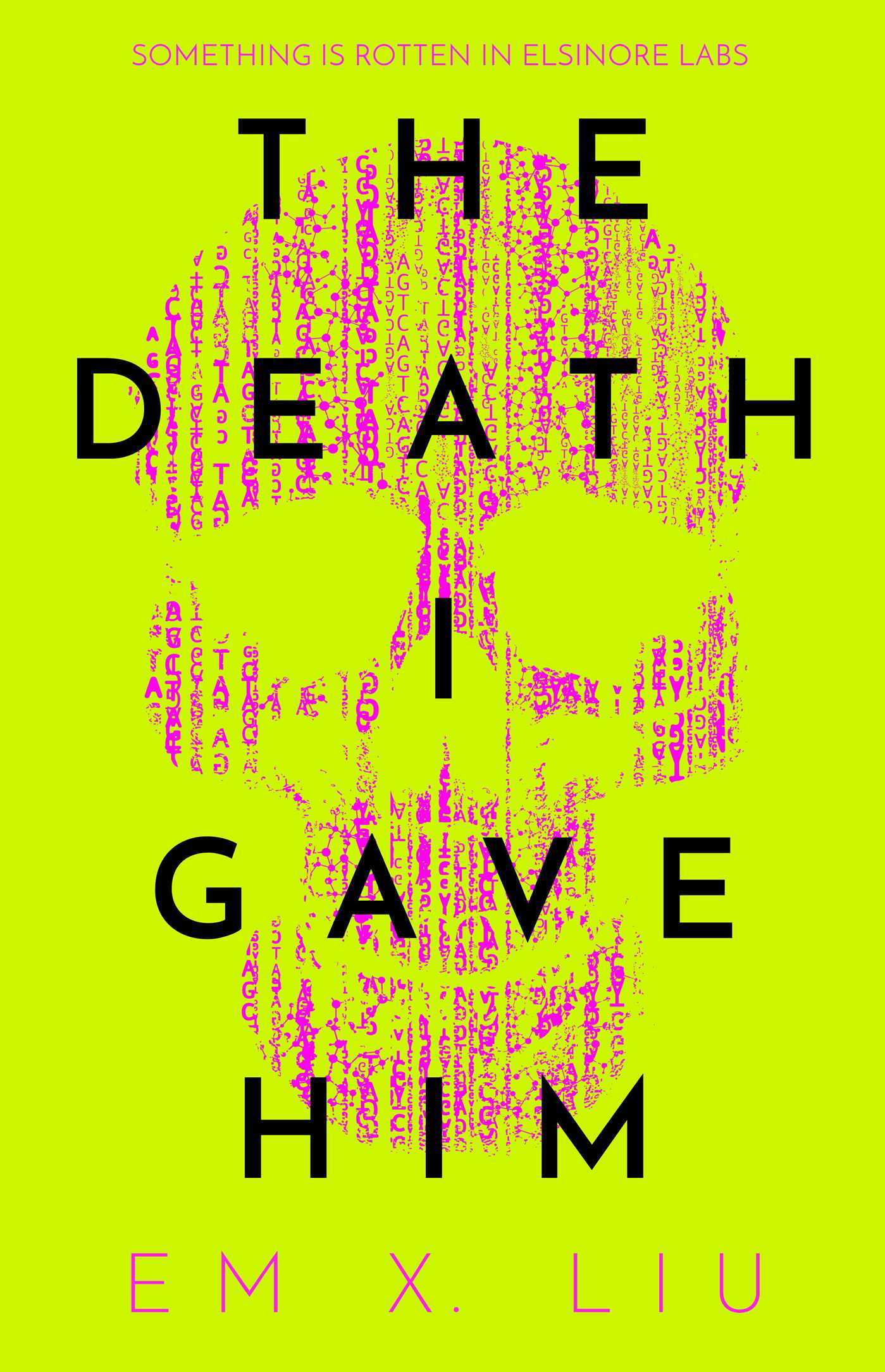
The Death I Gave Him – Em X. Liu

Hayden Lichfield is intent on carrying out the mission that his father is pioneering—the Sisyphus Formula, a substance that could one day reverse death itself. Enticed by immortality and down on his luck, Hayden throws himself into his work. But when his father is found murdered in Elsinore Labs, Hayden has no idea who to turn to—and who wanted to murder the man who wanted to beat death. Trapped in his room with only his AI, Horatio, to trust, Hayden scrambles for answers, and everyone around him is a suspect. But is it not just Hayden’s friends, but his father that have been lying to him all along?

TW/CW: murder, blood, descriptions of injury, suicidal ideation, grief, death of a parent

Trying to describe whether or not The Death I Gave Him qualifies as a retelling feels like the Ship of Theseus. If all of your characters’ names allude to Hamlet and you set your story in Denmark, but not much else relates to Hamlet, is it still a Hamlet retelling? How much Hamlet does one need to remove for it to still feel like a retelling? Sadly, Em X. Liu is proof that there is a limit to how much you can remove before it stops feeling like a retelling. It’s Hamlet in name only.

Having read Hamlet less than a year ago, I went into The Death I Gave Him with a fairly fresh memory. However, if not for the more obvious name changes (Hamlet becomes Hayden, Polonius becomes Paul, etc.) and the fact that it’s set in Denmark, I really wouldn’t have thought that this was a Hamlet retelling. I’m fine with loose retellings, but I don’t think it should’ve been billed as such. The whole Denmark setting definitely felt like very a “see? This is Hamlet, I promise!” move and wasn’t relevant to the plot whatsoever. I’m fine with loose retellings, but I feel like the similarities end with what I just described above. I’m not sure if this even qualifies as a retelling so much as people named after characters in Hamlet. Also, none of these people were nearly crazy enough to be in a Hamlet retelling. You’ve got to have someone go at least a little insane to have a proper Hamlet retelling. Hayden got a wee bit depressed and existential towards the end, but there wasn’t nearly enough “something is rotten in the state of Denmark” insanity to make it feel like a true tribute to Shakespeare. It just felt like a rather emotionally stunted novel even though it’s based off of something so dramatic. Some tonal liberties are inevitable for any given adaptation, but these ones just didn’t feel true to Hamlet, which made the more obvious Hamlet references feel more like preventative measures to make sure that people remembered that this was a Hamlet retelling.

Having mixed formats (interview excerpts, security camera footage, etc.) can be a great tool to add some additional context—and a unique flavor—to a novel, and I think it works especially well with thrillers, which The Death I Gave Him partially was. However, I don’t think Liu properly executed this format. Granted, it’s difficult to pull off, but when it’s executed well, it adds another layer of mystery to what is hopefully another layer of mystery. The problem Liu seemed to have is that, with the exception of the security camera footage, all of the other perspectives sounded exactly the same. All of the interviews, document excerpts, and “fictional” interludes by Horatio were in the same tense and the same POV, which basically rendered the format useless. Beyond that, these interviews and whatnot were from multiple people, but they all had virtually the same narrative voice. By the end of the novel, it didn’t even matter where the excerpts were coming from—they all sounded the same. If you’re going to pull off this kind of format, you have to make each component sound unique—if everything sounds the same, what’s the point in specifying which chapter is an interview and which one is a fictional account?

Also, none of the characters seemed to have much of a purpose outside of being props, aside from Hayden, Horatio, and maybe Felicia if I’ve being generous. Even though we get a significant portion of the novel through her interviews and written segments, I never even got a specific read on her voice since it was so similar to every other character’s. Paul, Rasmussen, and Charles were just there until they conveniently weren’t. The timeless fun of Hamlet comes from seeing everybody scheming against each other and different motives clashing against each other, but everybody was just rendered into very similar characters with too similar motives to each other for the mystery to really be worth it.

The same was true of the plot. I was committed to The Death I Gave Him because I was excited by the premise and wanted to see how the plot unfolded. I will say that Liu did a great job of setting the scene and cramming us in said locked room of this locked-room mystery. However, very little happened in said locked room—other than a handful of scattered moments, the place was quite slow, and the ratio of information that was revealed to the amount of pages it correlated to was way off—it felt like we only got significant revelations every 100 pages, and The Death I Gave Him is a little over 300 pages. There needed to be much more intrigue and complicating factors and clashing motives for this novel to work as a mystery; what we had was quite lackluster.

All in all, a sci-fi retelling of Hamlet that missed the mark on its source material and its new plot. 2 stars.

The Death I Gave Him is a standalone, but Em X. Liu is also the author of the novella If Found, Return to Hell and several short stories in various anthologies and magazines.

Today’s song:

That’s it for this week’s Book Review Tuesday! Have a wonderful rest of your day, and take care of yourselves!
Posted in Book Review Tuesday

Book Review Tuesday (5/27/25) – Light Years from Home

Happy Tuesday, bibliophiles!

I’ve had several of Mike Chen’s novels floating around my TBR for quite some time. I’d forgotten that I’d read a short story of his in From a Certain Point of View: The Empire Strikes Back, and I figured I’d give his novel-length writing a try. Plus, I was just in a sci-fi mood (as I always am). Despite the flaws that dragged down the premise, Light Years from Home was an ambitious novel that blended genres and didn’t shy away from being messy. Whether it successfully cleaned up its messes, however, is up for debate.

Enjoy this week’s review!

Light Years from Home – Mike Chen

15 years ago, the Shao family was thrown into disarray. Jakob, the only son, and their father disappeared. Their father later returned, dazed, disoriented, and convinced that he and Jakob were abducted by aliens. He died soon after.

Jakob has been missing for over a decade now. Sisters Evie and Kass haven’t spoken since the incident, with Evie diving into alien conspiracy theories and Kass throws herself into her work and caring for their aging mother. But when Jakob returns, parroting their late father’s theories about alien abduction, the sisters have no choice to bury the hatchet and reunite. As Jakob’s story grows wilder and the rift between the sisters widens, they must contend with the possibility that all of this may be true—but can Jakob be trusted? And if his story is true, what does it mean for the fate of Earth?

TW/CW: death of a parent, grief, dementia themes, substance abuse (smoking, drinking)

In the acknowledgments, Mike Chen says that this story was initially inspired by “Red” by Belly, and I’m tempted to give it another half a star just because I’ve never heard anyone outside of my immediate family or Pitchfork talk about them. The title also makes me think of The Rolling Stones’ “2000 Light Years from Home,” but that’s a vague enough title that it could be a reference to a lot of things. Although Belly didn’t save every flaw, Light Years from Home is a solid meld of science fiction and realistic fiction.

Light Years from Home has one of the most compelling beginnings of a book that I’ve read recently. You’re thrown right into the action aboard a Seven Bells spaceship in a classic space opera setting. Jakob cradles his alien comrade in his arms as they die, and thus begins his perilous quest back to Earth. But the reader and Jakob are the only people who know about this—the only other character who did (their dad) is notably dead. It would’ve been easy to just have the characters not believe him, but Jakob is already established as an unreliable person—his real life experience sounds suspiciously like an outrageous lie he would’ve told in his college days, which gives the characters both more obstacles to overcome, but more of their messy family dynamic to dissect. In terms of plot, Light Years from Home was a great study in not taking the easy way out—everything was messy and tangled, making for a book that had lots of drama and hurdles to pick apart.

Every single member of the Shao member was on the obnoxious, insufferable side (save for maybe Evie), but Chen did a great job of capturing the complicated family dynamic in the novel. Fifteen years after Jakob’s abduction, the wounds remain raw, and not a single member of the family has recovered from the fallout. Although I wasn’t satisfied at all with the character development of…well, any of the family (I’ll get to that later), Chen did an excellent job of weaving together all of the contrasting beliefs, motivations, and traumas that each family member had. All of them dealt with Jakob and their dad’s disappearance and death, respectively, in wildly different ways, and their coping mechanisms butted heads over the course of the novel. Even though this was ultimately handled poorly at the end, I did also appreciate the sensitive depiction of their mom’s dementia; Chen did a very respectful job of depicting the emotional impact of her memory loss and not being able to recognize her own children.

For all of the focus on the messy Shao family, the promised character development that their dynamic hinged on was not delivered on. There should’ve been plenty of conflict with Jakob reckoning with the man he was on Earth versus the man he was while serving in space with the Seven Bells, yet none of that happened. All of his character development happened off-page, resulting in a character that came off more flatly than I think was intended. Likewise, Kass and Evie were set up for significant development, but nothing happened with them either. Evie’s beliefs were reinforced and she and stayed static throughout the novel, not giving up her fantasies of aliens for the sake of the family. The closest Kass got, if you could call “okay, I guess aliens do exist” character development, was a brief revelation that even though she’s a therapist, that she doesn’t know everything about herself or her family, and that she shouldn’t pretend to know everything. That last half of my sentence amounted to about a paragraph around 50 pages before the novel ended, and it felt like entirely too little too soon. In the end, the character development was a jumble of unfulfilled promises—we got the shells of what could’ve been nuanced characters, but despite the bizarre journey they went on, they came out the exact same as they were before.

Also…I’m sorry, what the hell was that ending? Somehow, it was one of the most anticlimactic parts of the whole novel, and weird in ways that didn’t make sense. Jakob returns to the Seven Bells, but there’s hardly any fanfare or even extended moments of grief from the sisters, even though their brother has just decided to spend the rest of his life in space and never see them again. There wasn’t nearly enough emotion to it, and nor was there page time—this moment only gets around 4-6 pages tops. Instead of an emotional resolution with her daughters, the mom somehow un-dementias herself and remembers everything, and is also eerily content with her only son’s decision to spend the rest of his life in space. It all just felt so rushed and emotionally stunted compared to the rest of the novel, and not nearly as detailed as it needed to be. Weird is the only way to adequately describe it. I felt lost, but also robbed of what could’ve been something so bittersweet. I feel like it’s partially a side effect of none of the characters having any character development, but it felt like such a lack of a resolution. It was practically a non-ending.

All in all, a sci-fi/realistic fiction blend that embraced messiness in both plot and character, but had significant trouble with cleaning it up. 3.5 stars!

Light Years from Home is a standalone, but Mike Chen is the author of several novels. He has contributed short stories to From a Certain Point of View: The Empire Strikes Back and Return of the Jedi, and the full-length novel Brotherhood to the Star Wars universe. He is also the author of We Could Be Heroes, Vampire Weekend, Here and Now and Then, A Quantum Love Story, and many more novels for adults.

Today’s song:

NEW MARY IN THE JUNKYARD WOOOOOOOOOOO

That’s it for this week’s Book Review Tuesday! Have a wonderful rest of your day, and take care of yourselves!
Posted in Book Review Tuesday

Book Review Tuesday (11/26/24) – Countess

Happy Tuesday, bibliophiles!

I try not to let my lizard brain take over when it comes to my TBR these days (that’s how it got to almost 1,100 books back to high school…that took some serious pruning). That being said, at this point, I’ve accepted that the phrases “space opera,” “queer,” and “anti-colonial” strung together activate me like some kind of sleeper agent. Thus, Countess found its way onto my TBR and swiftly onto my Kindle. It excited me even more that Countess was Caribbean-inspired and that the author is Trinidadian-Canadian (!!!!), so my expectations were high. Though it wasn’t perfect, Countess was a raw and brutal novella—hardly a page was wasted.

Enjoy this week’s review!

Countess – Suzan Palumbo

Centuries after the British colonized islands in the Caribbean, an evolution of their iron fist remains in space. Under the harsh rule of the Æcerbot Empire, planets and moons are stripped of their resources and their inhabitants left with the paltry choice to enter an immigration lottery to find work or make a meager on their exploited homeworlds.

Virika Sameroo has sworn her life to the empire, loyal to their army for years. But just as she attempts to ascend to a higher position, her captain mysteriously dies—and the imperial authorities frame him for his death. Imprisoned and alienated from the empire that brainwashed her, Virika becomes an unlikely figure for a galaxy-wide revolution—but will she survive long enough to see the Æcerbot empire fall to its knees?

TW/CW: colonization/imperialism themes, torture, murder, descriptions of corpses, blood, self-harm, attempted suicide, sexual assault

how it feels to enjoy a retelling when a bunch of the reviews say that it doesn’t follow the source material (I’ve never read The Count of Monte Cristo):

Of course, regardless of whether or not I’ve actually read The Count of Monte Cristo, I think it’s worth saying that a retelling doesn’t have to stick to every plot line to a T. I get going into a retelling and being disappointed on that front, but even if the setting is wildly different (as Countess is), I don’t think it’s a crime to tweak many of the plot points. In this case, having a vastly different setting kind of necessitates the plot being different, but from what I can gather, Countess is more inspired by The Count of Monte Cristo than it is a direct retelling. That’s fine, in my book. No pun intended.

As a whole, Countess was a fantastic read, but its one weak point was the writing. In a way, the writing style, even if I disliked some of it, worked for the story—and the character—that Palumbo was telling. It picks up at the halfway point, once the plot rockets into a breakneck pace in terms of both action and stakes, but for the first half, the prose felt very bare-bones. Even in this new, expansive empire in the stars full of political intrigue, there wasn’t much to embellish the prose—it was all very quick and to the point, with language that took the quickest routes to explain how we got from point A to point B. This is my first experience with Palumbo’s writing, so I’m not sure if it’s just her style, but either way, it works in connection to Virika; she’s been groomed to be a perfect, obedient soldier, so I doubt she’d be one to mince words or get into excessively flowery prose. For some of the scenes where Virika is in prison and a decade blurs by in only a handful of pages, it makes complete sense. Yet I needed some more descriptive prose to get me immersed in the setting—and in the other characters outside of Virika.

I’m all for having gentler books about resistance, but that doesn’t mean that narratives centered around brutal realities have no place. In fact, in stories like that of Countess, I’d argue that they’re necessary. This is a novella about the horrors of imperialism, down to the most minute aspects. For me, it didn’t go full grimdark, but it was because there was realism to it; grimdark is, for the most part nothing but suffering and pain with no real basis, but the events of Countess, horrendous as they are, were logical byproducts of the crushing weight of a colonialist empire with the galaxy under its colossal thumb. Palumbo pulled no punches with the depictions of what Virika goes through (especially the sequences in prison…please pay attention to the trigger warnings); some of it bordered on gratuitous, but this is a slim novella, and all of it was in service of the theme that the crimes under imperialism are many, varied, and real.

As I’ve said so many times, I see the phrases “queer,” “space opera,” and “anti-colonial” and I’ll run towards the book like I’m a bull that’s just seen the tiniest sliver of red in my peripheral vision. What grabbed me about Countess in particular was that it was Caribbean-inspired—particularly Trinidadian. My grandparents on my mom’s side are from Trinidad, and I’ve seen hardly any literature—much less speculative fiction—that incorporates these cultures. Admittedly, I’m more than a little distanced from that part of my heritage, but I’ve been learning thanks to the tireless research of my amazing artist mom, who is in the process of making a Caribbean oracle deck of her own! It’s thanks to her that I caught a lot of the Trini and generally Caribbean references (the fact that there’s a rebel ship called the Pomerac was gold), and there are plenty scattered throughout the novella—I’m sure I didn’t catch all of them, but what I recognized, I loved. I’ve loved witnessing the shift towards marginalized voices in speculative fiction, but one of the reasons it feels particularly beautiful to me is because for so long, our communities have been denied a place in the collective imagination, a place in a distant future among the stars. So thank you to Suzan Palumbo for this novella, and thank you to my wonderful mom for being the reason that I got these references.

In these kinds of stories (and in life in general), I always try to look for a glimmer of hope, even if it’s foolish of me. Make no mistake: Countess is a tragedy, one of the many (forthcoming) ones that Palumbo has written, according to her Goodreads bio. This novella is a very realistic depiction of how revolutions often make martyrs of their figureheads, and that was Virika’s fate from the start. Palumbo does make you feel the wasted potential of her life as she falls, but I couldn’t help but see the swell of revolution that she ushered in as the ultimate form of revenge—and an assurance of a better tomorrow, at least for a short time.

All in all, a brutal and bold—if not rote in periods—novel of revolutionary change and one woman’s struggle to break free of imperialism. 4 stars!

Countess is a standalone novella, but Suzan Palumbo is also the author of the anthology Skin Thief: Stories and several short stories in various magazines.

Today’s song:

finally got around to listening to Songs Of A Lost World!! this was my favorite—the whole album tended to be repetitive, but it was great nonetheless.

That’s it for this week’s Book Review Tuesday! Have a wonderful rest of your day, and take care of yourselves!
Posted in Book Review Tuesday

Book Review Tuesday (11/19/24) – Loka (The Alloy Era, #2)

Happy Tuesday, everyone!

…so. Elephant in the room here, quite literally. I’ll venture to say that last Tuesday was one of the worst Tuesdays in American history. Hence, no activity. (Also, I had a whole cocktail of midterms to study for and papers and annotated bibliographies to write.) I needed the time to grieve. Let me tell you the truth: I’m so scared. I’m betrayed. Being in my formative years under a president who systematically mocked the identities of everyone who isn’t him—not just the ones that comprise my family—forced me to confront the fact that America had no regard for me. If there was change to be made, I had to do it myself, and with the help of the communities around me. So I started writing. I started educating myself. The process is never over, and will continue until my dying day; even with the sort of beef that I have with Sara Ahmed (yeah, killjoy etc. etc. etc., I’m on board with 50% of it, but can’t feminism be gleeful sometimes?), I look back to her words: “To become a feminist is to stay a student.” I am always learning. I am far from perfect, but I am trying. The key here is motion: we can’t afford to stay static, not in our ideas or in our actions. Resistance comes in many forms (and don’t let anybody tell you that there’s one right way to fight), but the key is that we must always keep moving. Donate. Protest. Pay someone a compliment. Make art. Write with hope in your heart. Trump and his ilk win when we’re too far into the quicksand of hopelessness.

Never lose hope and never lose love, because that is what the Trump administration lacks. Grieve, and grieve on your terms. I certainly did. The last thing I wanted was a repeat of that November morning when, at the age of 13, I woke up to my dad hanging his head over the kitchen counter as he made lunches for my brother and I. I remember clinging to him tighter than I ever had, frightened of every horrid possibility. Some of them came true. Some of them didn’t. I called both of my parents. I cried the same tears to them that I cried when I was young. Cry the same tears, but remember that they are the same tears. I’m frightened. But if we can resist Trump once, we can do it again. We can fight the same good fight. I love you.

All this is to say that, even though my output has been lessened lately (college!), this won’t change a thing. I’ll still be reviewing queer books aplenty, and no election will change that. Gather ’round.

After a solid two weeks of reading nothing but fluff to keep my mind off of everything, I remembered that Meru, one of the more innovative new sci-fi novels I read last year, had a sequel that was finally out! I was eager to re-immerse myself into S.B. Divya’s endlessly creative futuristic landscape, and Loka found itself on my Kindle in no time. Loka turned out to be contrary to my expectations and a very different book to Meru—it was a mixed bag at first, but by the final third, I’m happy to say that it stuck the landing in a deeply moving way.

Now, TREAD LIGHTLY! This review contains spoilers for Meru, book one in The Alloy Era series. If you haven’t read Meru and intend to do so, read at your own risk!

For my review of book one, Meru, click here!

Enjoy this week’s review!

Loka (The Alloy Era, #2) – S.B. Divya

Akshana is a child that defies all existence. Her mother is human, and her maker is an Alloy—a post-human being with godlike powers. The ruling Alloy government condemns her very existence. For years, she has lived a sheltered existence on the planet Meru, raised by her human mother. But once Akshana turns 16, she heeds the call of Earth, the ancient homeworld of humankind. With the help of her friends, she takes up the rigorous Anthro Challenge: a trek to circumnavigate the habitable zone of Earth. As she navigates foreign terrain, Akshana comes to terms with how she was born and created—and where her destiny lies.

TW/CW: near-death situations, medical emergencies (related to sickle-cell anemia), xenophobia/discrimination (fictional), life-threatening storms

I thought that Meru had scared off all of the people who thought that S.B. Divya invented neopronouns, but apparently people are still complaining about it in the reviews for Loka? Did you just…miss book one in its entirety, or what?

I’ll get my main gripe about Loka out of the way first. The more I think about it, the more that I realize that my issue with Loka is that to some extent, it has the exact same stakes as Meru: a young girl/woman has to take a daring trek onto a foreign landscape, all the while facing prejudice from the outside world and alien, terrestrial dangers from the ground beneath her feet. S.B. Divya remains an excellent writer and crafter of worlds, but in terms of plot, in this case, lightning couldn’t strike twice. Aside from Akshana’s differing personality and the novelty of Earth 1,000 years in the future, there wasn’t as much to distinguish the two plots once I broke them down.

I wasn’t crazy about the main plot of the Anthro Challenge. In the future landscape of Loka, this challenge is designed for humans and Alloys to circumnavigate the landscape of Earth as humans did millennia ago. Only a few strips of Earth remain habitable (forming ringed borders around the world), but the brave adventurer must cross swaths of the Southern hemisphere and the Atlantic and Pacific Oceans in order to complete the challenge. In concept, it’s a great bit of worldbuilding, but it didn’t make for a very compelling of a plot. For the first half of the novel, it felt like the same regurgitation of 1) reach new landscape, 2) inter or intra-personal conflict within the friend group, and 3) make a harrowing trek to the next stop on the Challenge. This was rinsed and repeated with less change than I wanted; even with the new landscapes, none of the side characters had much time to develop, and they seemed to encounter almost the exact same problems for a solid 100 pages. It bordered on feeling cheap, given how innovative Meru was.

That being said, even though the plot faltered, Divya’s writing never did. You’ve just got to trust in her abilities at this point, because she can write some fantastic sci-fi, even if the foundation of the plot is flimsy. Her voice for Akshana perfectly captured that teenage urge to explore beyond your parents’ backyard and prove everyone wrong. Divya’s descriptions of future Earth, from the raging seas to the lush greenery to the plains of a futuristic America, immersed me instantly in a vibrantly crafted vision of the future. I’ll get to the specifics of the emotional core of Loka later, but that was perhaps the best part of the novel—S.B. Divya’s brand of space opera borders on hard sci-fi for me, but it keeps the emotional center that so many other hard sci-fi novels forget to consider.

The subject of disability was one of the more compelling aspects of Meru; in a genre rife with eugenic practices that get dismissed as signs of a “progressive” society, Divya changed the game by creating Jayanthi, who, in a future when most disabilities were edited out of the gene pool, was specifically engineered to have sickle-cell anemia. More than that, her sickle-cell anemia was advantageous for surviving the landscape of Meru. Fast-forward 16 years, and Akshana is experiencing, as I said before, the same plot, but her sickle-cell anemia presents unique challenges on Earth, leading to many a close scrape when she exhausts herself to near-fatal levels. She has thoughts of resentment towards her mother, who made a conscious decision to pass this gene down to her. S.B. Divya said that Loka was inspired by their experience being a disabled parent, and that shone through in Loka; eugenicists would have you believe that this would constitute cruelty on the highest level, but Akshana comes to reconcile with—and understand—her mother’s logic. By erasing this gene and others from the gene pool, the Alloys past erased entire cultures, as well as the ways in which they moved about in the world. Being disabled is challenging, to say the least, and in my experience, bothersome and at times taxing to deal with on a daily basis. Yet it has shaped my life in ways that I will never regret. Akshana comes to realize that her mother, even though the road to this decision was rocky, merely wanted her to know that individuality, adversity, and culture cannot be erased by a purging of the gene pool.

Which brings me to the ending. The buildup of Loka concerns the mounting pressure and prejudice surrounding daring Akshana and her friends as they complete the challenge and return to a world that wants to erase their bravery and ban the Anthro Challenge altogether. Not only has she come to terms with her disability, she has come to reckon with her status as a half-human, half-Alloy being in a galaxy where neither party wants her to exist. Yes, there was the physical challenge, but the real Anthro Challenge is the identity crisis you have along the way, amirite? All jokes aside, that was the real hurdle to overcome. I know how corny I sound, but the real journey was Akshana’s journey to self-acceptance in all of the facets of her identity. At the end of the treacherous paved with prejudice and hatred, Akshana learns that the only way to survive is to be yourself, unapologetically so. As she says, in Loka’s stunning final lines:

“Our bodies don’t have a true end. Subatomic particles bounced between skin and air continually. So what did that make me, or any person? If I coexisted with everything and everyone, then part of me was also part of them, and vice versa. To some people, I would never be human enough. To others, I would always be too human. In the end, I had no choice by to be myself.”

And if anything could save Loka from being a letdown, it would be this, and the character arc it coincides with. Excuse me for a moment…no, I’m not crying, it’s just raining on my face.

All in all, a sequel with a plot that nearly dragged the novel down, but just like Akshana completing the Anthro Challenge, beautifully stuck the landing after a rocky journey. 4 stars!

Loka is the second book in The Alloy Era series, preceded by Meru. S.B. Divya is also the author of Machinehood, Runtime, and several other science fiction short stories.

Today’s song:

NEW HORSEGIRL IN FEBRUARY? ON VALENTINE’S DAY? PRODUCED BY CATE LE BON? today is a GOOD day

That’s it for this week’s Book Review Tuesday! Have a wonderful rest of your day, and take care of yourselves!
Posted in Book Review Tuesday

Book Review Tuesday (8/13/24) – Beautyland

Happy Tuesday, bibliophiles!

As far as science fiction goes, I’m not usually for the literary side of it—that goes for most literary novels of any genre, to be honest. I’ve often found that the sci-fi part is dulled in favor of mass appeal. But the premise of Beautyland fascinated me, not just as a science fiction reader, but as someone who’s grown up feeling like an alien. Surprise, surprise—I cried.

Enjoy this week’s review!

Beautyland – Marie-Helene Bertino

Philadelphia, 1977. Humanity has given the gift of Voyager 1, along with its landmark Golden Record, to space. Unbeknownst to us, a power hidden deep in the cosmos has given humanity a gift in exchange. At the same time as the launch of Voyager 1, a baby is born to an unknowing mother, not human but alien. Her mother names her Adina, and as Adina grows older, she learns how to communicate with her kinfolk in space, reporting the oddities of human life and culture through an old fax machine. As Adina pretends to be human, she experiences the joy and terror of human existence, but longs for closure—will she ever be able to return to her homeworld?

TW/CW: cancer, sexual harassment, loss of loved ones, pet death, bullying, grief, 9/11 themes (brief)

One of the best feelings is when you pick up a book that you’re interested in, but not expecting anything marvelous from, and then getting absolutely pied in the face out of nowhere with the feeling that this book gets me. Setting aside my reservations for literary sci-fi, Beautyland digs into the heart of my experience growing up—of feeling alien, but of cataloguing all of the nonsensical facets of American culture and the feeling of not belonging. I cried. I laughed. I had an echoing pang in my chest for a while. Like life, all of it was worth reading and living.

Observations about the human condition formed the heart of Beautyland. Through Adina’s messages on a fax machine, she reports to her alien superiors on everything from the oddities of American culture (“When it was time to decide the official food of movie-watching, human beings did not go for Fig Newtons or caramel, foods that are silent, but popcorn, the loudest sound on earth”) to the painful and uneasy truths of human existence (“The ego of the human male is by far the most dangerous aspect of human society”). Bertino’s writing shone the most when chronicling Adina’s observations. She adopted a blunt, matter-of-fact tone of a distanced journalist, someone watching our species from the sidelines, yet always managed to wring the emotion from it, be it humor or sorrow. The wonder of Adina when she visited her superiors at night, in a vast room inside of her mind, was just as palpable, capturing her childlike curiosity. You felt every joy of Adina reporting back on the eccentricities of humanity, and every sorrow once Adina matures and realizes the dark side of our nature. The eventual abandonment of her superiors as she grew older drove the point home even more—at a certain point, nobody can answer these questions for you, and you realize that you don’t have the answers, and neither does anyone else. All that’s left to do is live your life, and observe.

Though it wasn’t outright said or diagnosed, the neurodivergent themes of Beautyland were what stuck with me the most. (I have sensory processing disorder, and, among other things, I felt Adina’s growing discomfort with sensations as simple as hearing people breathe and chew.) Whether or not you believe that Adina is actually an alien, the experience of being on the fringes and unable to understand not just other people but their actions deeply resonated with me. As Adina moves through middle and high school and is ostracized by her more popular peers and tries to scientifically observe them, she’s confronted with a frequent feeling of questioning why it has to be this way: why are these girls looking at me like I’m gum on the bottom of their shoes? Why is not wanting sex such an affront to men? Why don’t they like me? That feeling of knowing something’s missing, but being unable to find it, put into words a feeling I struggled with through my adolescence, a sense that everybody else knew something I didn’t, and that was what made me so strange to them.

I read Beautyland as both science fiction and historical fiction; some people have put it up in the air as to whether or not Adina actually is an alien, but I think the answer is…yes. Both can be true. I’ve grown up in a similar way to Adina, feeling so on the outside of everything that I’ve attached myself to science fiction and alienness in general. Like Adina, it’s informed by some neurodivergence and general outsiderness, but there’s something to be said for all of the questions presented being true. Yes, she may be an alien sent from an advanced race beyond the solar system, and yes, she has some neurodivergent tendencies as well. The two can coexist. And Beautyland’s embrace of how these qualities can intersect was what made it so impactful; this experience fundamentally makes us human, even if it makes us feel alien. I often see criticism of alien or robot characters who are characterized as “inhuman,” but what makes them inhuman boils down to them just having the traits of neurodivergent people (“lack” of emotion, misunderstanding of how humans work) and those on the asexual/aromantic spectrum (no desire for romance or sex, that which “makes us human”), and I think it’s a valid criticism to apply to characters who are written thoughtlessly. But who’s to say that an alien character like this can’t also be neurodivergent and asexual? Again: the two can coexist. Bertino wrote Adina as a character with a deep understanding of human culture, and that, to me, does not skew the reading of her as asexual and neurodivergent.

Somehow, one of the most emotional parts of Beautyland for me was how Bertino wrote about Carl Sagan. As I mentioned before, the novel is written in fragments, not always linearly, but taking frequent detours outside of Adina’s immediate life and into moments of relevant pop culture at the time—the popularity of Carl Sagan being one of them. With her connection to the Golden Record and the absence of her own father, Adina looks up to Sagan as a surrogate father, someone who can teach her more about the cosmos from which she was born from. Even having never met him in person, the way that Adina processed Sagan’s death was where I lost it; this is one of her first experiences of loss, and it’s the loss of someone who has unknowingly guided her through her alien life, teaching her about the universe, and by proxy, given her a roadmap of the human condition. Fleeting as it was, Bertino wrote this instance—and the connection to Sagan in general—with the kind of love of someone you feel like you’ve known all your life, but have never even met.

All in all, a deeply human exploration of what it means to be alien. 5 stars!

Beautyland is a standalone, but Marie-Helene Bertino is also the author of Parakeet, 2 A.M. at The Cat’s Pajamas, and the short story collection Safe as Houses.

Today’s song:

new Smile!! not my favorite, and I can see why they left it off the album, but a solid track nonetheless.

That’s it for this week’s Book Review Tuesday! Have a wonderful rest of your day, and take care of yourselves!
Posted in Book Review Tuesday

Book Review Tuesday (7/23/24) – Finna

Happy Tuesday, bibliophiles!

Finna has been on my radar since it came out back in 2020; it had a funny and clever concept, but it just kept being pushed back on my TBR for whatever reason. I ended up picking it up after hearing praise from one of my creative writing classmates, and although it wasn’t perfect, it delivered on its inventive premise.

Now, tread lightly! This week’s book review contains spoilers for the novella, so if you intend to read Finna, skim at your own risk.

Enjoy this week’s review!

Finna (LitenVerse, #1) – Nino Cipri

Ava and Jules barely make a living working minimum wage at LitenVarld, a Swedish furniture supply giant. Ever since they broke up, they’ve been trying to avoid each other, and with the labyrinthine structure of the store, it’s easy. But the two are thrown together when an old woman goes missing and the manager tells them that LitenVarld is no ordinary store—it’s prone to opening wormholes that lead to alternate dimensions. Ava and Jules must search across the universes to return the old woman to safety at any cost, but their superiors appear less and less like they have their needs in mind…

TW/CW: blood, violence, grief, mental health themes (anxiety and depression), misgendering

My main concern with Finna was that it would only have the premise to hold it up. It’s a fantastic premise! And although it wasn’t a perfect novella, it went far beyond the expectations for its ideas, delivering an anti-capitalist spin on the monstrous multiverse.

Making Finna a novella was, without a doubt, a wise move. It’s got an inviting premise—a not-IKEA store that’s home to a multitude of portals to strange and hellish dimensions—but it’s one that could have easily been stretched out. It partly works because…well, if you’ve ever been inside IKEA, that’s where your mind naturally goes, but Finna mainly succeeded because Cipri knew the limits of the idea. If it had been a full-length novel, I’m sure it would have been interesting to see the other dimensions hidden within the interdimensional labyrinth of LitenVarld, but the plot couldn’t have sustained itself beyond 100 pages. I’ve seen too many novels where the story has been stretched far too thin, so to have an author know the limits of their story—and have an inventive novella to show for it—was incredibly refreshing.

Finna is the perfect story for right now not just because it has a fun concept, but because it truly nails the kind of corporate neglect that runs rampant in workplaces in this day and age. Even against the threat of a multiverse full of monstrous obstacles (including but not limited to man-eating furniture), Ava and Jules are having to tackle threats leagues beyond their pay grade, and their only compensation is gift cards for a pasta restaurant. Their managers openly tell them that they don’t actually care about the old woman who’s gotten lost in the multiverse—they just want Ava and Jules to find an alternate universe replacement for her so that they can keep up appearances. It’s all so blatantly uncaring and corporate—and it’s all realistic. If some massive chain of stores discovered a wormhole in one of their locations, they would absolutely cover it up until it was no longer possible to do so, especially at the expense of the minimum wage employees. I will say that, although you got hit over the head with this even though the commentary was right there already, Finna’s setup made it perfect for the anticapitalist commentary that Cipri explored—corporations only make it look like they care about you when it looks good for them, and even then, the worker is always dispensable. The execution of this corporate setting was, in the end, what made Finna so successful in that regard—it seems like a real, capitalist response to a fictional problem.

That being said, even though Finna works best as a novella, it did fall victim to some of the pitfalls of novella writing. It’s difficult to develop characters in just over 100 pages, and this worked to the detriment of its protagonists, Ava and Jules. We only knew them from the lens of their situations and their breakup; after finishing the novella, all I knew about Ava was that she a) had a failed relationship with Jules, b) had anxiety and depression, and c) hated her job—nothing much about her personality. This is about as deep as we get with her, and for Jules, we get even less, other than the fact that they’re more reckless and cocky, and for that reason, Ava doesn’t like working with them. The plot was compelling and well-executed enough for me to continue reading the story, but it was so plot and theme-driven that the characters were left in the dust.

Such underdeveloped first drafts of characters meant that the emotional impact of Finna was all but deadened. I got the feeling that I was supposed to feel something when Jules sacrificed themself so that Ava could return to her home dimension, but since I knew so little about them, I never felt much. What Jules needed, perhaps more than a handful of base personality traits, was some kind of motivation; it could also be down to how quickly the second half moves, but their quest through the other dimensions gave us no indication of why they would go from reckless to selfless. It could just be the constraints of the novella format, but I’ve read plenty of novellas longer and shorter than Finna that have been able to establish well-rounded characters with believable motivations, so I’m not sure if there’s much of an excuse for this.

All in all, a novella with a funny, inventive premise and sharp anti-capitalist commentary that was dragged down by its underdeveloped characters. 3.5 stars!

Finna is the first novella in the LitenVerse series, followed by Defekt. Nino Cipri is also the author of the short story collection Homesick: Stories and the forthcoming YA novel Dead Girls Don’t Dream. They have also contributed stories to Nonbinary: Memoirs of Gender and Identity, Transcendent: The Year’s Best Transgender Speculative Fiction, and several other anthologies.

Today’s song:

forgot about this song for ages…

That’s it for this week’s Book Review Tuesday! Have a wonderful rest of your day, and take care of yourselves!