Posted in Book Review Tuesday

Book Review Tuesday (12/16/25) – Katabasis

Happy Tuesday, bibliophiles!

I’ve been a fan of R.F. Kuang’s work for years (though I’ve steered away from the Poppy War trilogy, given how many people I know have been emotionally eviscerated in its wake). As bored as I am with dark academia, if there’s anybody I trust with the genre, it’s Kuang—and for the most part, her latest venture into the bowels of academia (and Hell itself) was an adventurous success!

Enjoy this week’s review!
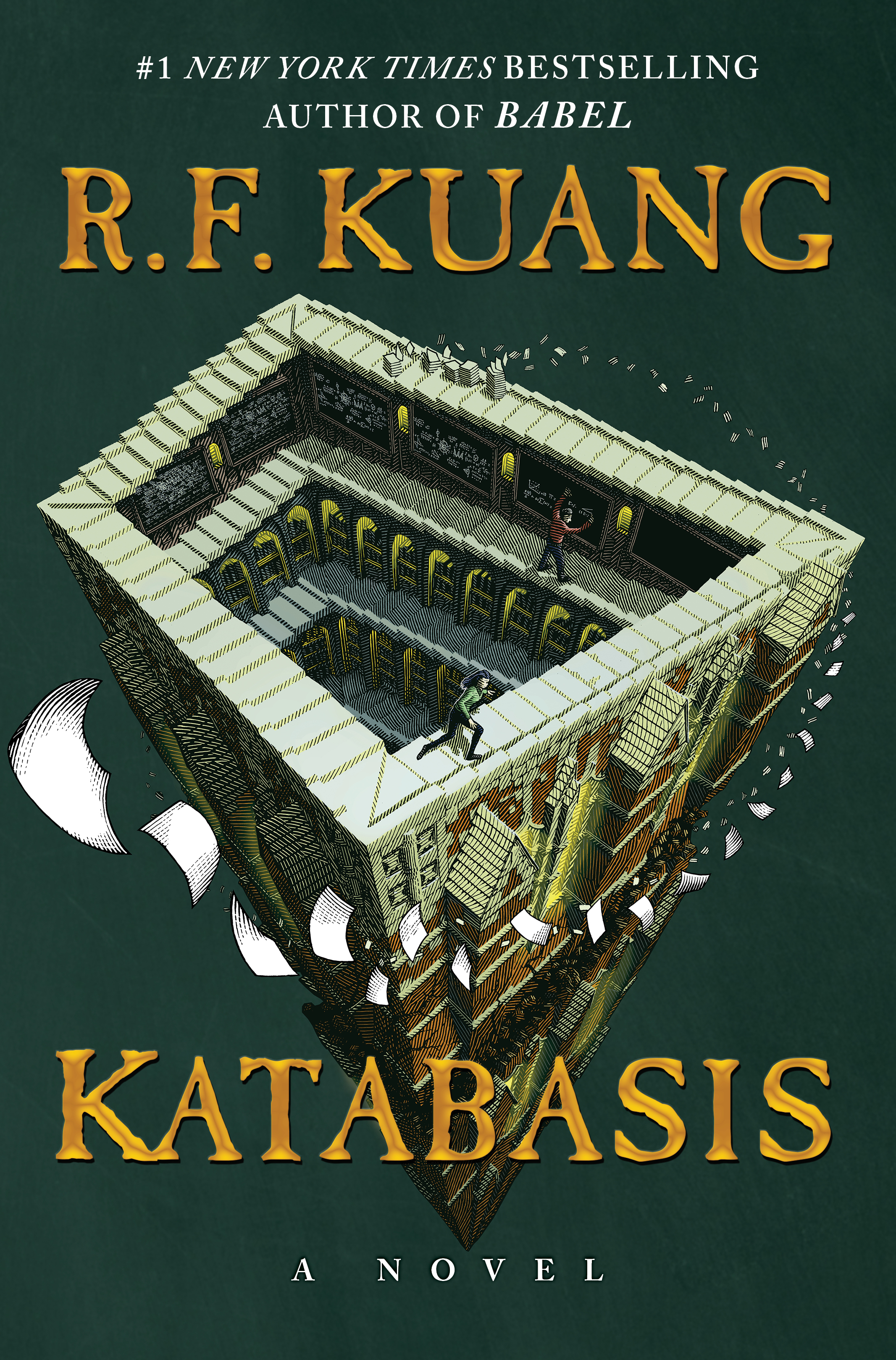
Katabasis – R.F. Kuang

Professor Grimes is going to Hell, and it’s all Alice Law’s fault.

After a backfired spell sends their advisor to an early grave, two rival Cambridge grad students find a way to enter Hell to bring back Professor Grimes. Braving all manner of demonic horrors beyond their wildest nightmares, Alice Law and Peter Murdoch have agreed to risk it all for their beloved professor. Yet the further they travel through Hell, they must come to grips with the man Professor Grimes was—and if the man they idolized was really worth going to Hell for.

TW/CW: violence, gore, loss of loved ones, sexual assault/harassment, suicidal ideation/suicide, ableism

There’s really nobody doing it like R.F. Kuang. She isn’t my favorite author of all time, but nonetheless, I don’t think I’ll ever find another fantasy book that has both spooky scary skeletons sending shivers up my spine AND a well-placed dig at Jacques Derrida. That’s how it’s done.

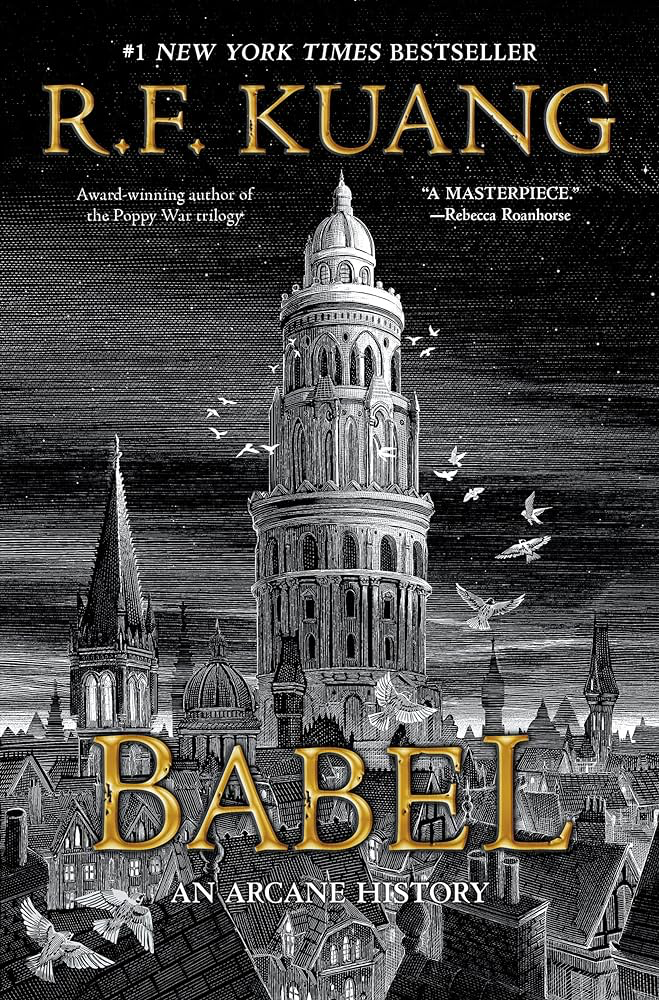
Right after it was released, Katabasis seems to have made a major splash in the book community (namely BookTok)—partly because Kuang’s next novel was bound to be highly anticipated, but partly because it sparked some debate about anti-intellectualism. But compared to something like Babel, which is practically footnotes upon footnotes, I feel like this…isn’t that bad? Sure, it’s very esoteric, but most everything is so easily searchable online? Or in the library? Granted, I understood a fair amount of this solely because I took a literary theory course for my English degree, but even then…just google what you don’t know! And maybe you’ll learn something fun! I don’t know how one would go into an R.F. Kuang book and not expect something academically-minded, but maybe this is just the people who were only used to the strictly realistic fiction of Yellowface? Who knows.

Either way, the academic aspect of Katabasis was such a fun element for me. Whether or not that’s because I’m so hopelessly English-majoring it out here, but I loved all of the subtle nods to world mythologies and literature. (The bit about postmodern and poststructuralist magic cracked me UP. Poststructuralism slander healed my soul. Thanks, literary theory.) But ultimately, I loved what Kuang said about academia; there’s the satirical part that it can be Hell, but also that it demands an inhumanity of you that is systemically supported and produces such spectacular burnout. Being the genius that people like Grimes wanted required students like Alice and Peter to relinquish their humanity in pursuit of knowledge and prestige, and that’s something that you shouldn’t have to sacrifice to get what you want. Given Kuang’s accolades and track record, I’m sure she’s experienced this firsthand, but it was a potent statement on the pressure that’s put on students, especially in the Ivy Leagues and other prestigious institutions, magical or not.

Katabasis had a wild version of Hell, and so much of the fun of the book was exploring it. Granted, it is rather all over the place, but I feel like it emphasizes Kuang’s initial rule of Hell: there are no rules in Hell. There’s the parts that are just Cambridge but in Hell, carnivorous hordes of Tim Burton-esque skeletons, deities from all kinds of mythologies, and one very lucky cat. (Shoutout to Archimedes, I’m glad he survived!) Entire sections of Hell are made out of M.C. Escher’s structures, there’s impossible shapes everywhere, and all of it serves to make Alice and Peter get as close to snapping as possible—exactly what you’d expect from Hell. Tonally, it was also kind of all over the place; some of it was genuinely horrific, while other parts bordered on Beetlejuice-esque camp. But all of these disparate elements made sense as a sort of archive of all possible Hells; it’s a very academic Hell, but beyond that, it seems like an exercise in writing that Kuang had tons of fun writing. That passion poured off every page!

Alice and Peter’s relationship formed the core of the novel, and I loved following them as characters. They made such an odd couple of rivals to friends to…something more, I’d imagine, and their personalities bounced so well off of each other. The perspectives that both of them brought to Kuang’s satire of academia—Alice’s struggles as a woman of color and Peter’s as a chronically ill person—really hammered the commentary home. My main criticism of Katabasis has to do with the 75% mark (more on that later), but I feel like part of why it felt so off-balance for me was that Peter wasn’t there. Alice was a compelling character on her own, but Katabasis leaned so much on their shared dynamic, the scholarly banter they bounced off of each other and the warring struggles that eventually coalesced as they realized their dual mistake in idolizing Grimes. They had such effortless chemistry both as rivals and friends, making them easy to root for.

Of course, when you’ve created a Hell this dizzyingly intricate and complex, you’re bound to get lost. Alice and Peter did, and so did Kuang herself. There’s a point at the 75% mark where the plot, along with the characters, gets hopelessly lost. By this point, we’ve moved on past “we’re here to get Grimes,” but it seems like none of the detours served the novel in any way. The real kicker is that this part of Hell isn’t even that new or interesting—it’s even more academic commentary, which, while I liked it at first, was just repetitive and regurgitated the same satire about academia that Kuang had already talked about in the first third of the book. I’m all for taking detours to explore an unknown realm, but this one didn’t even feel new at all. My edition of Katabasis is around 540 pages, mind you, so it’s not like cutting too much of this would’ve made it too short. I feel like not every little thing about a novel directly needs to serve the plot, but I feel like it should at least develop the characters or show us something new, and this part of Katabasis did none of those things. Thank goodness we were whisked out of Hell soon after that.

All in all, an inventive and satirical journey into the depths of Hell—which, as it turns out, looks an awful lot like Cambridge. 4 stars!

Katabasis is a standalone, but R.F. Kuang is the author of several other fantasy and fiction novels, including Yellowface, Babel, and the Poppy War trilogy (The Poppy War, The Dragon Republic, and The Burning God).

Today’s song:

I just need everybody to know that this cover exists. That’s it.

That’s it for this week’s Book Review Tuesday! Have a wonderful rest of your day, and take care of yourselves!


Posted in Books

The Bookish Mutant’s Books for AAPI Heritage Month (2024 Edition)

Happy Monday, bibliophiles!

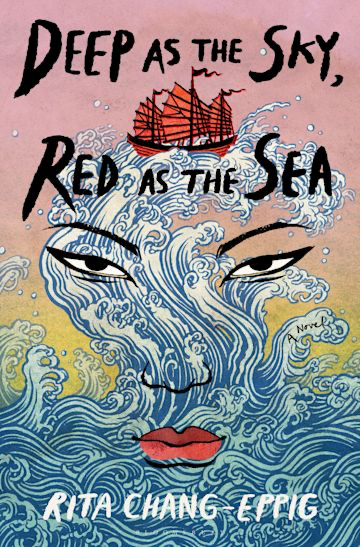
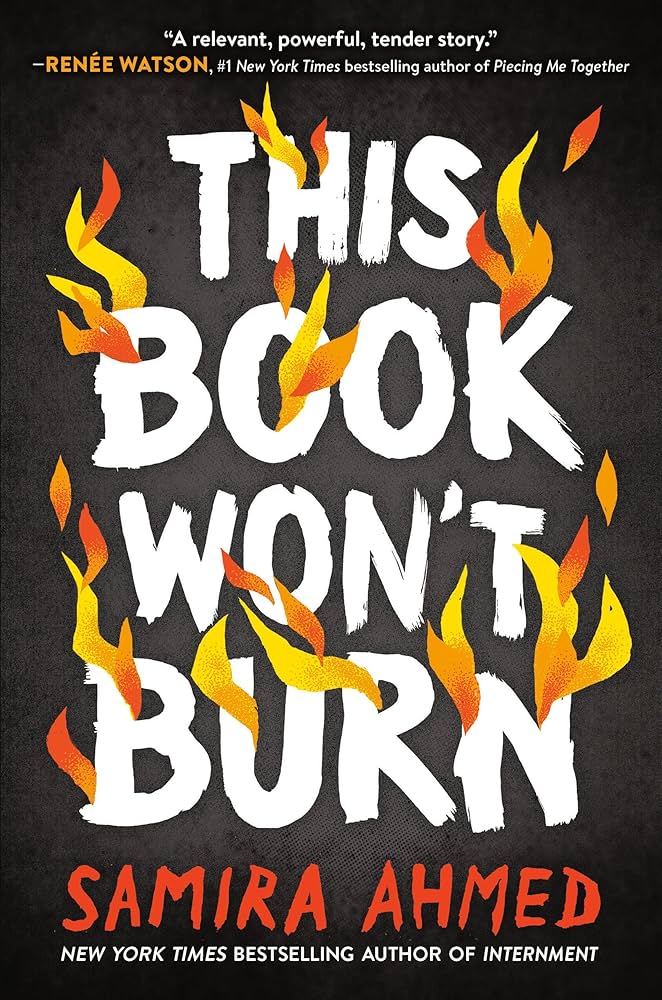
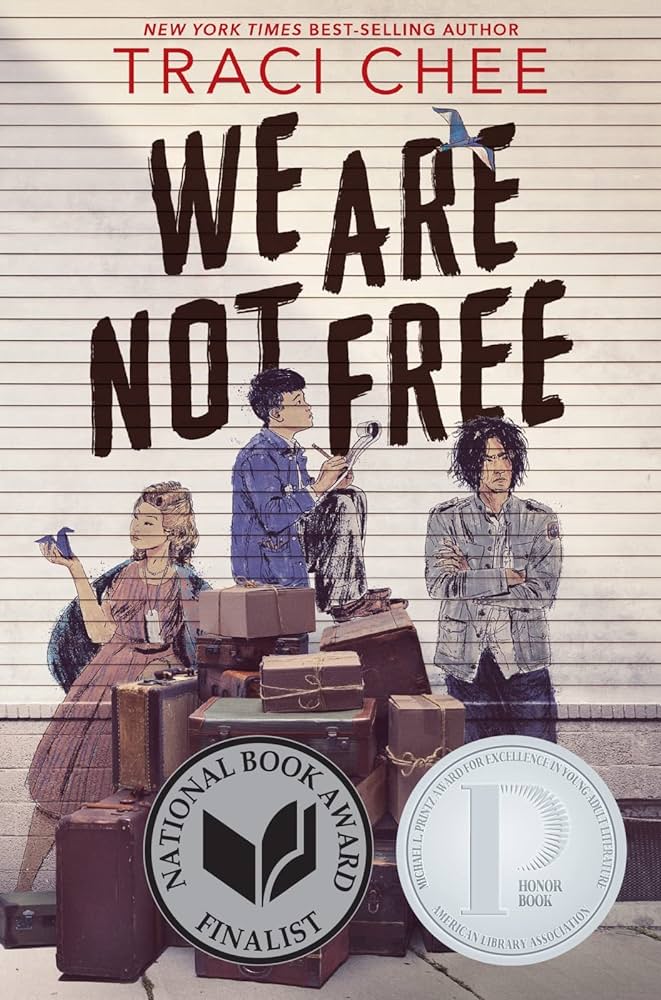
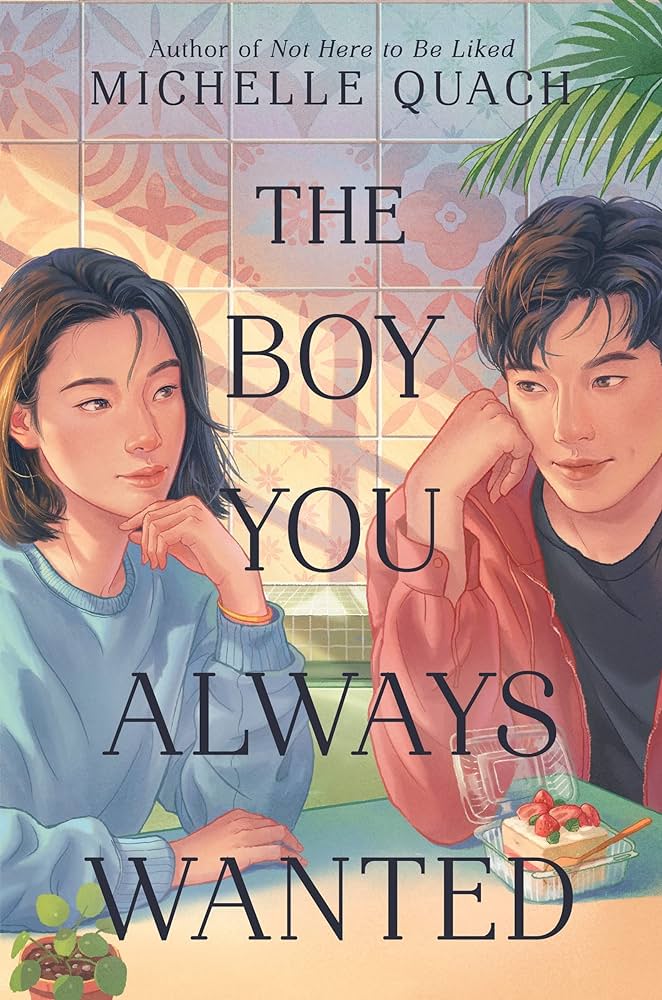
Here in the U.S., May is Asian American and Pacific Islander Heritage Month! This is my fourth year making this particular list, and I’ve found and read so many incredible books since then. As always, diverse reading shouldn’t be restricted to one month only, but here at The Bookish Mutant, I try to take any opportunity I can to shift the focus to marginalized voices—and to recommend fantastic books. It feels especially important to make these lists in the past few years, what with the book bans that are not-so-subtly targeting almost exclusively POC and queer voices—read between the lines. Freedom to read is freedom to resist.

As with last year’s list (see below), I’ve now expanded them to included both YA and Adult titles, organized by genre.

For my past lists, click below:

Let’s begin, shall we?

THE BOOKISH MUTANT’S BOOKS FOR AAPI HERITAGE MONTH (2024 EDITION)

FANTASY:

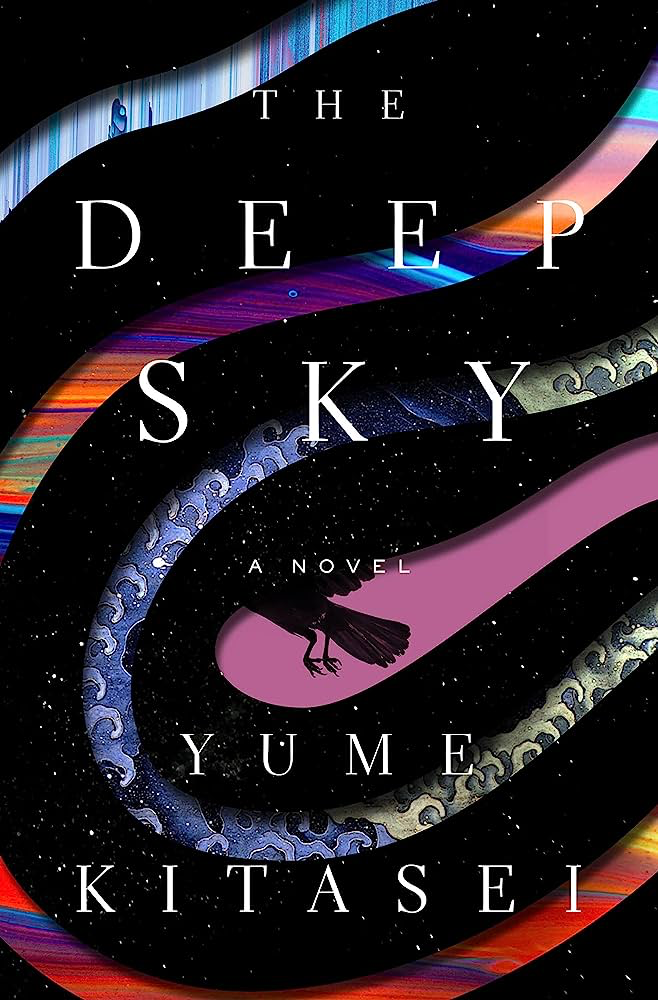
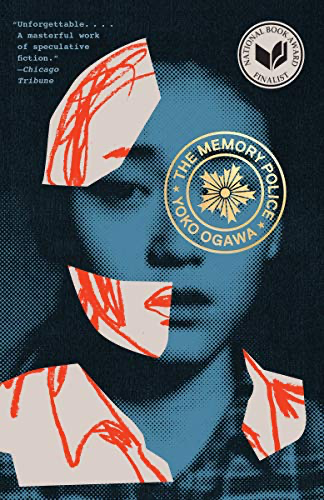
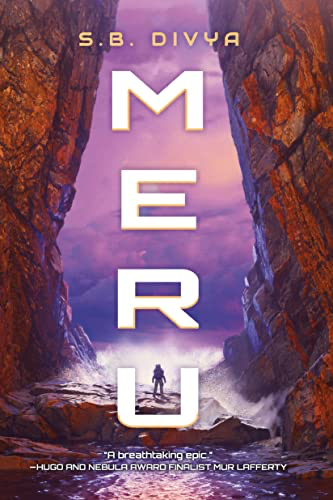
SCIENCE FICTION

REALISTIC AND HISTORICAL FICTION:

TELL ME WHAT YOU THINK! Have you read any of these books, and if so, did you enjoy them? What are your favorite books by AAPI authors? Let me know in the comments!

Today’s song:

NEW BEABADOOBEE????? I’m seated—

That’s it for this recommendations post! Have a wonderful rest of your day, and take care of yourselves!
Posted in Monthly Wrap-Ups

February 2024 Wrap-Up 🫀

Happy Thursday, bibliophiles! Happy Leap Day too, I suppose.

Already the end of February, huh? Good riddance honestly. Not that I had a bad month, but I’m just ready for all this gross, slushy weather to be over with.

Let’s begin, shall we?

GENERAL THOUGHTS:

February’s definitely still been busy, but now that I’m more used to my schedule and able to keep myself on track, it’s all good. Things are getting into gear with my classes, I’ve been able to make time to write and make art and hang out with friends, and the weather is starting to warm up. Key word is starting. We’ve had snow almost every Friday or weekend without fail for…probably a month or two? Colorado. The meteorological indecision never ends. But luckily, other than that first week, I’ve been able to blog somewhat steadily.

Reading has been similarly good—sadly, most of the books I’ve read for school so far haven’t been my favorites (apologies in advance to all the Jane Austen fans here), but other than that, there have been very few misses! I also shifted my focus to books by Black authors this month for Black History Month, and I’ve read both familiar and new-to-me authors and had tons of fun. I also ended up having two five-star reads in a month, so I’d call it good! I’m glad that I’ve been able to keep up my reading schedule, because there’s so many books I’m excited to read soon! A whole bunch of holds from Libby have been pouring in, all of which I’ve been eagerly anticipating…

Other than that, I’ve just been cranking out tons of writing, drawing here and there, watching Abbott Elementary, BEEF (absolutely SHAKESPEAREAN lemme tell you), The Bear (ngl I’m mostly just in it for the needle drops), and Constellation (WHAT IS GOING ON 😀), and being in a near-constant state of being on my toes since I never know when we’re gonna get dumped with snow.

Oh, and I think we have the best possible end to a month that I’ve had in several months…BABE. WAKE UP. NEW ST. VINCENT JUST DROPPED. WE’RE GETTING THE ALBUM, TODAY’S THE DAAAAAAAAAAAY

APRIL 29TH CANNOT COME SOON ENOUGH.

READING AND BLOGGING:

I read 17 books this month! Definitely more than I expected to read, but I’m about at the point in the year where I’m familiar enough with my schedule that I can squeeze in more time for reading. There were definitely a few stinkers in the mix, but I had not one but two five star reads this month, which was pretty incredible! My eternal thanks to Audre Lorde and R.F. Kuang.

2 – 2.75 stars:

Harlem Shuffle

3 – 3.75 stars:

Your Plantation Prom Is Not Okay

4 – 4.75 stars:

We Are the Crisis

5 stars:

Babel

FAVORITE BOOK OF THE MONTH: Sister Outsider5 stars

POSTS I’M PROUD OF:

POSTS FROM OTHER WONDERFUL PEOPLE THAT I ENJOYED:

SONGS/ALBUMS I’VE BEEN ENJOYING:

I’ve listened to this an unhealthy amount of times
NEW CHELSEA WOLFE WOOOOOOO
it always comes back to Bowie
AND NEW IDLES we are truly blessed
obsessed now
fantastic album

Today’s song:

“All born screaming” YEAH I CERTAINLY AM. MY GOOOOOOOOODDDDDDDDDDD THE QUEEN HAS RETURNED

That’s it for this month in blogging! Have a wonderful rest of your day, and take care of yourselves!
Posted in Book Review Tuesday

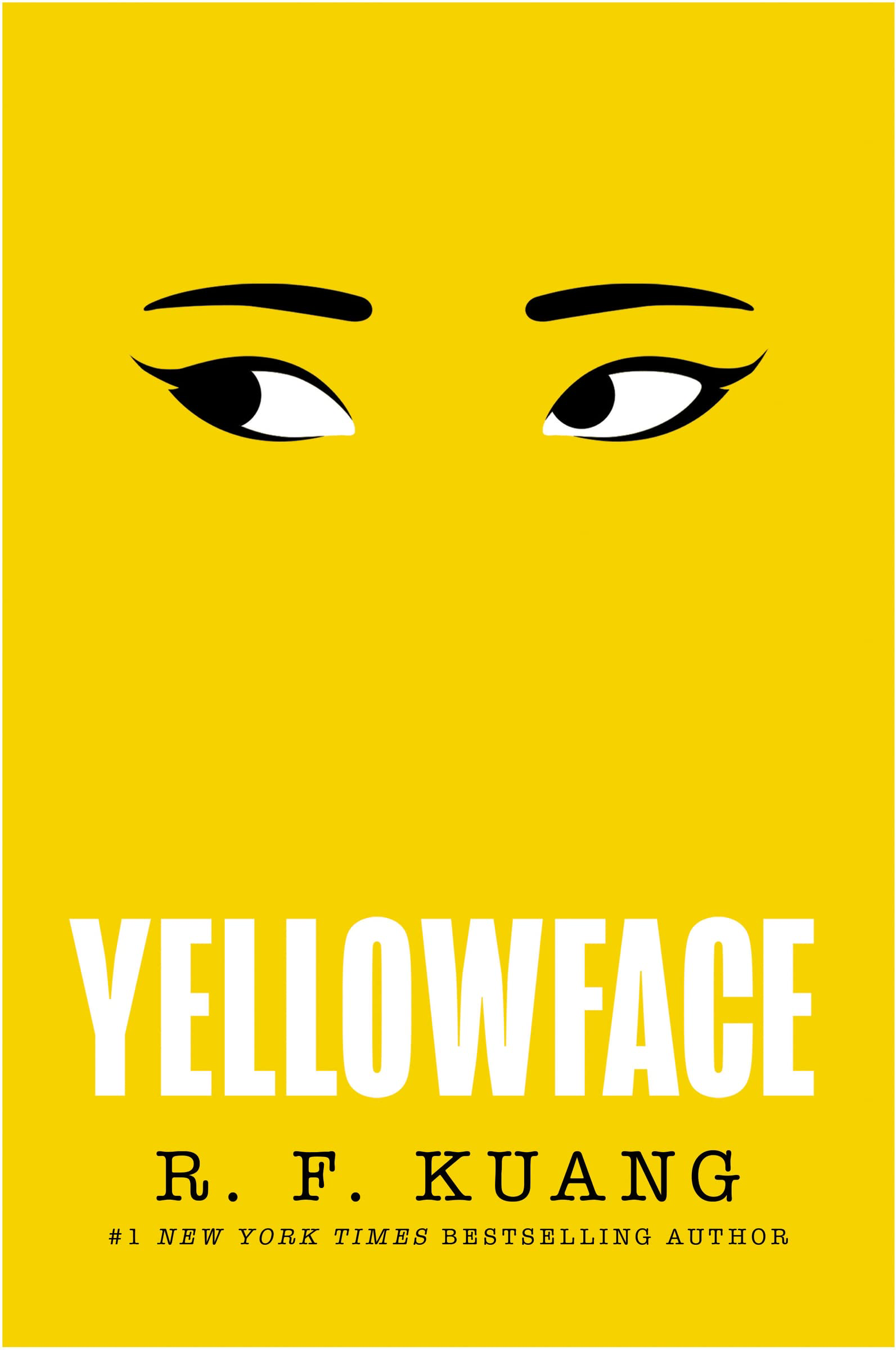
Book Review Tuesday (1/30/24) – Yellowface

Happy Tuesday, bibliophiles!

I’ve had several books by R.F. Kuang on my TBR for a year or two, and I’d forgotten about this one until it happened to come up as one of those “skip the line” checkouts on Libby. I decided to take the opportunity (as the holds line is usually nuts for this book), and I found myself adoring it so much more than I thought it would—a biting and timely satire of the publishing industry.

Enjoy this week’s review!

Yellowface – R.F. Kuang

June Hayward and Athena Liu have been friends since attending Yale together, working through writing projects and slowly finding themselves publishing their own works. But while Athena is enjoying success, six-figure book deals, and Netflix adaptations, June has barely been able to get a third printing of her only book. So when Athena dies in an unexpected accident, June sees the perfect opportunity: steal her unfinished manuscript, pass it off as hers, and profit. Armed with a new pseudonym and a racially ambiguous author photo, June Hayward becomes Juniper Song, and her book, The Last Front, becomes the toast of the literary scene. But evidence is beginning to pile up against her, and June will do anything to keep her newfound fame.

TW/CW: racism, death by choking, vomiting, substance abuse (alcohol), harassment, gaslighting, suicidal ideation

I’m glad I had my expectations at an average level for Yellowface, because this is one of the best satirical novels I’ve read in ages! This novel truly felt like it was attuned to the beating pulse of the dark side of the publishing industry, and it’s an exploration of diversity and publishing that’s incredibly necessary in this day and age.

I don’t think I’ve ever witnessed a novel that’s felt so true to today’s publishing scene in a long time—or ever, really, but to be fair, I haven’t read a lot of realistic fiction books in this vein. Yellowface is a biting, unflinching callout to how publishers view diversity; June’s story, though fictional, is testament to how the publishing industry views diversity and marginalization as profit to be made, not stories and identities to be uplifted, and how once they’ve checked one person of a certain demographic off a checklist, they think they’re set for “diversity.” Beyond that, it’s proof of how willingly publishers will silence marginalized voices in favor of white voices telling the stories of the marginalized, and how far they’re willing to go to keep up the façade. Truth be told, this novel did make me slightly spiral about the state of publishing as an aspiring author, but I suppose that means that R.F. Kuang did her job.

I’ve seen several reviews of Yellowface complaining that at least one of the main characters were self-inserts, but other than the whistleblower character (who only has a minor role until the end), the two main characters were dreadfully unlikable. To be fair, I’m not as familiar with Kuang’s work, but I don’t take her to be the kind of person to be so self-deprecating that she makes her self-insert into a disgusting mess of a character. In fact, Kuang excelled at making them incredibly unlikable—and hilarious in the process. I liked that, although Athena didn’t deserve what she got, that both her and June were depicted as despicable people in their own ways, but June was still portrayed to be disgustingly in the wrong—nobody’s angelic in this situation, and everybody has their flaws, but some people’s flaws pile up until they fester and collapse on top of them (June). Everything written in her voice was so cringey it was hysterical—watching her, for instance, editing the manuscript to make the British soldiers “more sympathetic” cracked me up, and Kuang clearly knew just the kind of circumstances that a white author would twist a marginalized story into—it felt painfully real, and painfully funny at the same time.

Typically, I’m not habitual thriller reader, but I’m a sucker for a story about a character digging their own grave, and god, Yellowface was the perfect scratch for that itch. June’s story of jealousy, temptation, and clinging towards fame that fall like dominoes toward her until culminating in the climax was painful but exhilarating to watch—for me, there’s nothing like watching a character’s downfall right before our eyes. June just kept digging herself further and further into eventual ruin, and with each push closer to the edge of being exposed for her (MANY) wrongdoings, Kuang perfectly amped up the tension. I was definitely white-knuckling my Kindle for a significant portion of the book just because of the sheer audacity of June thinking that none of her actions would amount to anything. It has the same feel as many of the self-destructive arcs in Fargo—the same kind of eventual tension that builds, and all the while, you know exactly how it ends, but what keeps you reading is wanting to discover how everything collapses onto them.

Without spoiling anything, I’ll say something brief about the ending. At first, it seemed a bit rushed and anticlimactic—I still hold that it was slightly rushed, but it’s a way-homer kind of ending. It wasn’t just a continuation of June feeding her own delusion—it’s terrifying proof that the system still works in favor of white authors clearly in the wrong. She may have hit the breaking point, but this controversy, just like the others, will only continue to drive up her sales. The system has not changed. As long as the publishing industry stays the way it is, she’ll still be rewarded. And that was the kind of scary reality that Kuang has proven with this novel.

All in all, a darkly witty thriller that brought a timely conversation about the publishing industry to the table—and executed it stellarly. 4.25 stars!

Yellowface is a standalone, but R.F. Kuang is also the author of the Poppy War trilogy (The Poppy War, The Dragon Republic, and The Burning God) and Babel.

Today’s song:

really and truly OBSESSED with this album

That’s it for this week’s Book Review Tuesday! Have a wonderful rest of your day, and take care of yourselves!