
Happy Sunday, bibliophiles! I hope this week has treated you well.
This week: Here it comes again; a fantastic voyage to Palo Alto to answer this essential question: where’s my phone? It’s been undone!
Enjoy this week’s songs!
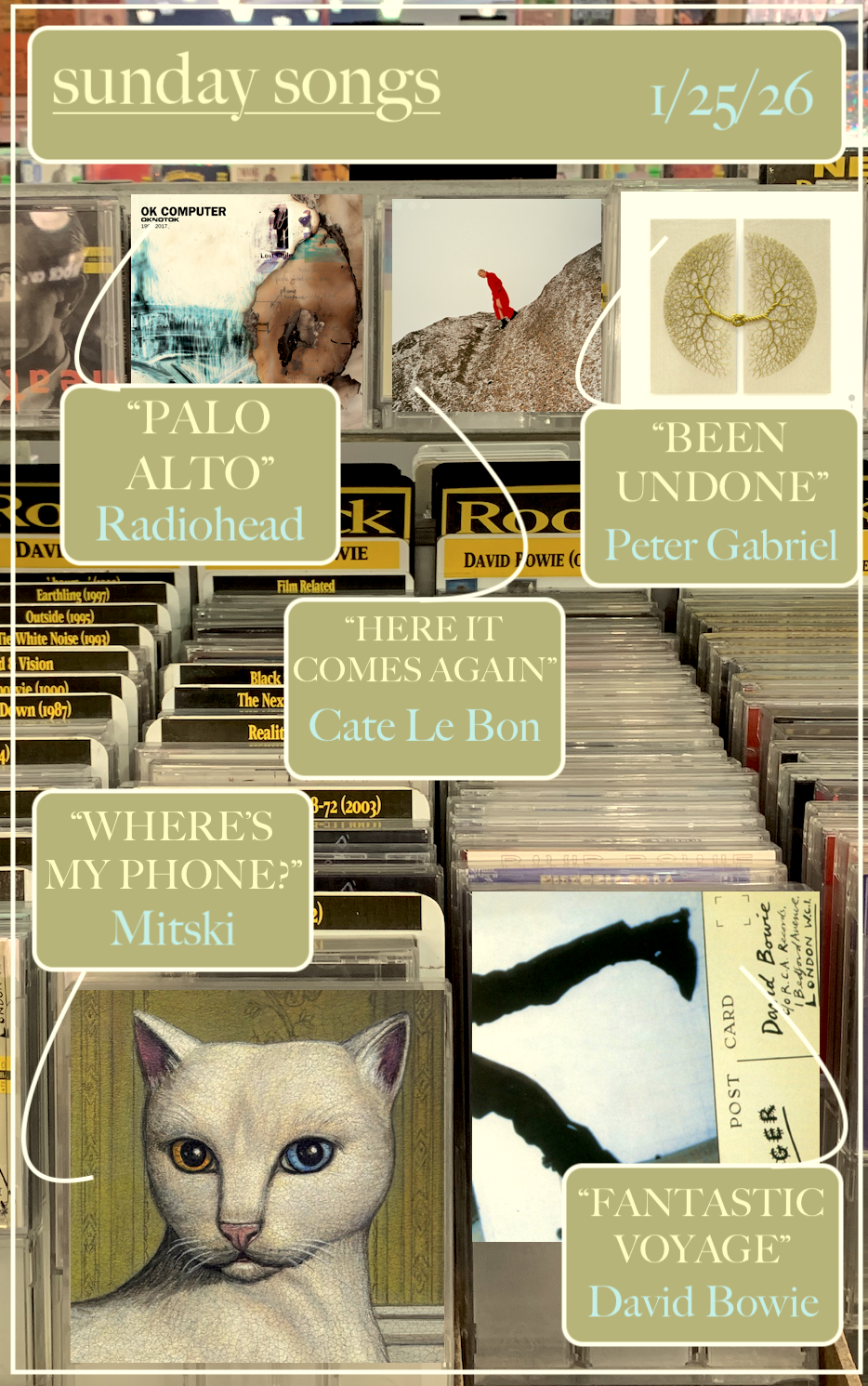
SUNDAY SONGS: 1/25/26
It’s finally come to that time of year when I start accumulating albums that I’m looking forward to. Nothing’s About to Happen to Me, which is set to release on February 27, is topping the list at the moment for sure! Mitski is back for her first album in two and a half years, and as usual, she’s set to put a pulse on the neuroses of the world; Nothing’s About to Happen to Me seems to be a concept album about a recluse who never leaves her cluttered house. With the aesthetics of cats and old wallpaper, this album has such a clear image—and an intriguing one. Mitski channels some of her heavier guitar work on “Where’s My Phone?”; it’s an exciting sonic callback, like she’s been dusting off the old Bury Me at Makeout Creek sounds (!!!). Adopting a falsely cheery tone, Mitski sings of this character desperately repressing every possible source of negativity, yearning to be “clear glass with nothing going on.” The sentiment of “I keep thinking surely somebody will save me/At every turn I learn that no one will” is pure Mitski all the way down, but it’s refreshing to see Mitski going headfirst into a new character; her introspection, fictional or nonfictional, is where her art shines. Plus, that music video, in which Mitski’s multigenerational home gets assailed by dozens of strangers, is nothing short of bonkers. Definitely somebody’s vivid anxiety dream, for sure.
For some reason, my mind got stuck on the classic censored beep sound on the “I would fuck the hole all night long” line. Sure, we are in the age of musicians proactively self-censoring, but of all musicians, Mitski seems like the last one to do that, especially with how she’s clawed to keep her individuality—and sanity—intact in the music industry. She’s not a Taylor Swift type, and she hasn’t shied away from profanity before. There’s no clean version of the song, and the music video has it too—and yet the official lyrics don’t censor it. So what’s the deal? Was it some sort of artistic touch for the album’s central character’s supposed shame and guilt? I still haven’t come to a conclusion myself, but I swear that it’s intentional. Whatever the case, “Where’s My Phone” buzzes with neurosis, crunching at the edges, an ember of anxiety.
…AND A BOOK TO GO WITH IT:
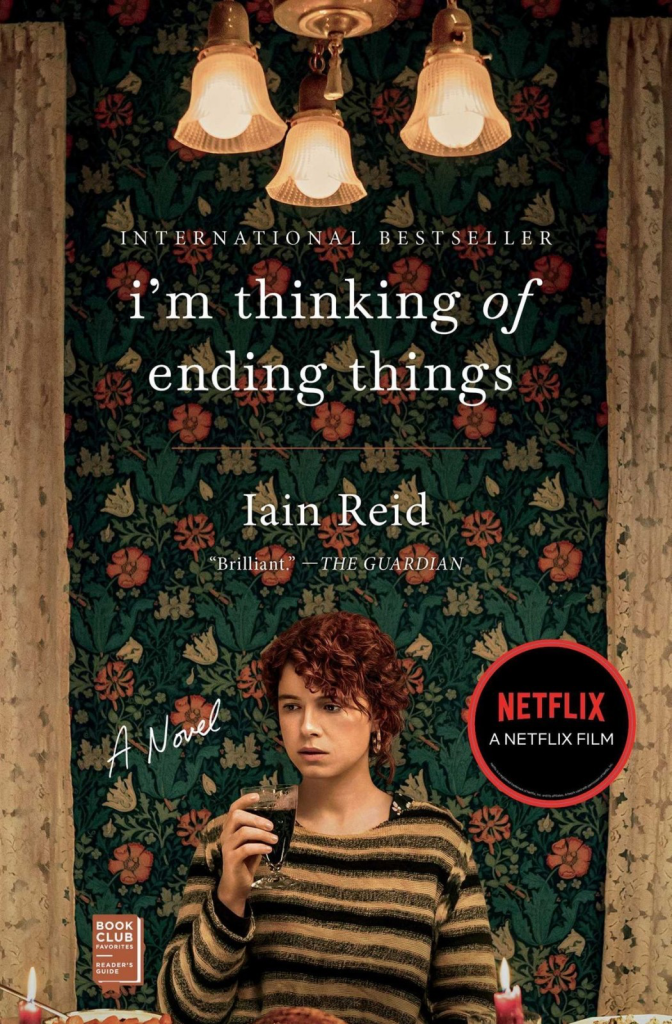
I’m Thinking of Ending Things – Iain Reid – “I keep thinking surely somebody will save me/At every turn I learn that no one will/I just want my mind to be a clear glass/Clear glass with nothing instead…”
“Fantastic Voyage” – David Bowie
As calm of a song “Fantastic Voyage” is, it’s a certainly eerie start to Lodger. I finally got around to listening to the album in its entirety not long ago, while mourning 10 years since Bowie’s passing in 2016. Listening to Lodger not long after Taking Tiger Mountain By Strategy put me in an irreparable chokehold makes me realize the sheer impact of Eno on Bowie—his weirdness was all there, but after decades of being mainstream, it was Eno who resurrected the less palatable parts of weirdness. I’m sure it was less unexpected at the conclusion of the Berlin Trilogy, but expecting another “Starman” and getting…I dunno, “African Night Flight” must’ve been some unparalleled whiplash. And he’d keep the act going throughout his entire career. In a way, Lodger is a microcosm of what his career would later be. There’s no shortage of tricks up his sleeve, from the strange, often eerie left turns to the sneakier tricks; for one, “Fantastic Voyage” and “Boys Keep Swinging” have an almost identical chord progression, but their atmospheres are so radically different that I didn’t even notice. It’s a trickster kind of album, obstinate in its mission to not be boxed in.
After falling back to Earth, the Berlin Trilogy got much more worldly, and Lodger was its peak. The entire album reeks with the recollection that the world is rife with the unknown, be it in places unseen or the machinations of politics. “Fantastic Voyage” is the thesis of that song; it reads like a scrawled diary before the apocalypse, and it very well could have been, what with the threat of nuclear annihilation and the Cold War on Bowie’s mind. He pits the casual dehumanization of entire peoples against the plea for the dignity of all individuals. He looks skyward, pondering the missiles that could rain down on the population and end everything in an instant. But in the midst of all this turmoil, decades after 1979, the final verse rings truer than ever: “They wipe out an entire race and I’ve got to write it down/But I’m still getting educated/But I’ve got to write it down/And it won’t be forgotten.”
Oof. Certainly feels like a slap in the face, given that ICE has been snatching children off the streets and shoots unarmed civilians in Minneapolis, and I’m just holed up in my apartment trying to get my thesis done. Yet Bowie’s words feel like a guidebook. I’ve got to write it down—I interpret that both in the sense that we have to commit the crimes of these monsters to paper, lest the government conveniently paints them in a more pleasant light (as they already are), but also that in spite of everything, we have to keep on with our creativity. Sometimes, all we can do is write. Of course, that doesn’t make political action, however small, null and void, but sometimes it’s all you can do but journal everything around you to stay sane. All that matters, both for Bowie and for all of us, is to keep the pen moving—that keeps our minds sharp, it creates a record of the soul.
…AND A BOOK TO GO WITH IT:
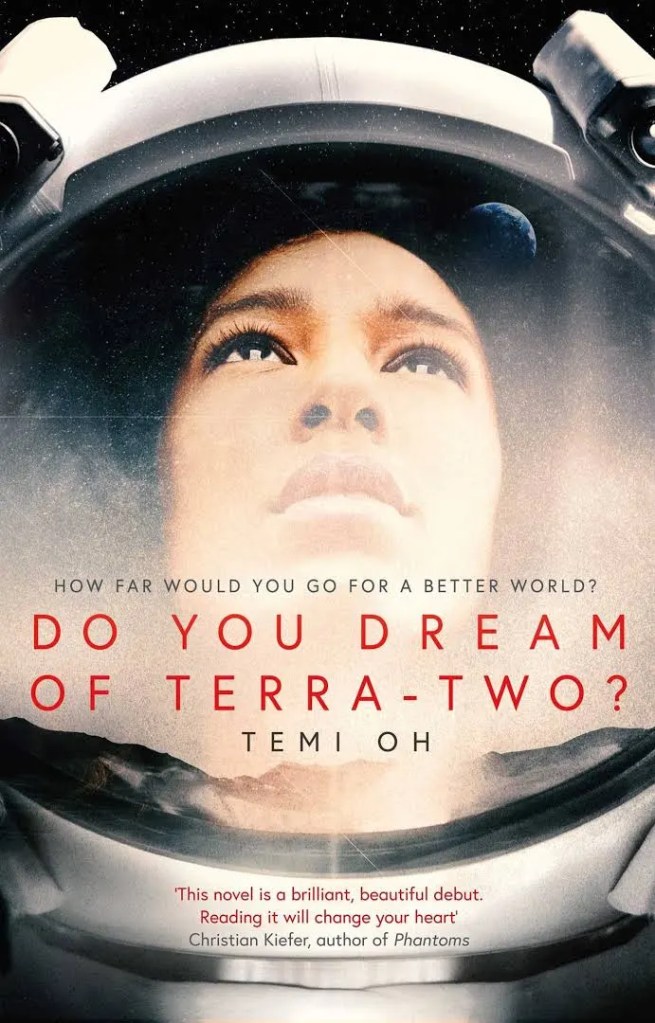
Do You Dream of Terra-Two? – Temi Oh – “Remember it’s true/Dignity is valuable/But our lives are valuable too/We’re learning to live with somebody’s depression/And I don’t want to live with somebody’s depression/We’ll get by, I suppose…”
In a move that’s probably stunned nobody, I’ve decided to become the insufferable neighbor and take up collecting vinyl; my parents were nice enough to gift me with a record player, as well as my two favorite albums: David Bowie’s Hunky Dory and Radiohead’s OK Computer. I can’t thank them enough. My neighbors, on the other hand, are probably rueing the day that they had to hear “Fitter Happier” through the walls without warning. Your honor, I plead “whoopsie daisies.”
OK Computer—specifically, the 2017 remaster with all of the b-sides, OKNOTOK—all but swallowed me whole in my freshman year of high school, and the version of me that got chewed up and spit out was irreparably, permanently changed. Whether it was for the best or the worst is up to interpretation, but either way, it’s given me a love of Radiohead that hasn’t waned to this day, more than seven years after I first listened to the album. However, at that age, I was still in the woeful process of immediately deleting whatever songs that didn’t hook me on the first few listens from my library. The destruction left in the wake was irreparable—and it also made me completely forget that this absolute gem existed. I can’t even put my finger on why it wasn’t a favorite at the time; the only reasonable explanation is that OK Computer is just so jam-packed full of songs that shattered my brain that brain-shattering became the standard. I was harsh back then.
Yet on my new record player, “Palo Alto” came out of left field. In the mindset of Thom Yorke, I can sort of see why this one got the axe back in the day—musically, it’s less adventurous than some of the other tracks. It’s very much of the same, more straightforward rock/Britpop crop of The Bends, despite the avalanche of fuzz and decorative beep-boops. Thematically, it’s on par with the anxiety of OK Computer, with the tiresome monotony of corporate life: “In a city of the future/It is difficult to concentrate/Meet the boss, meet the wife/Everybody’s happy, everyone is made for life.” Even if it’s not as compositionally inventive as some of the a-sides, even Radiohead’s more straightforward songs are a cut above the rest, and “Palo Alto” is proof. With the sudden, grinding assault of Jonny Greenwood and Ed O’Brien’s guitars against Thom Yorke’s exasperated delivery of regurgitated small talk, it encapsulates the exhaustion of being trapped in an endless cycle of work buttressed only with surface-level interactions.
…AND A BOOK TO GO WITH IT:
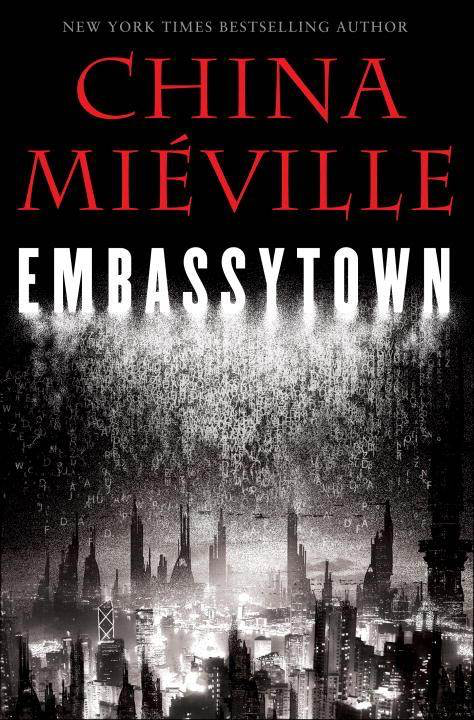
Embassytown – China Miéville – “In a city of the future/It is difficult to find a space/I’m too busy to see you/You’re too busy to wait…”
“Here It Comes Again” – Cate Le Bon
I regret to inform you that I’ve been listening to way more Cate Le Bon again, but I can’t help it that it faintly fits the vibe of my honors thesis. Michelangelo Dying, Pompeii, and Reward all got revisited last week, and you will be hearing about it. This is, once again, a threat.
Among the many impressive things about Cate Le Bon is the myriad ways that she makes her music sound innately aquatic. I talked about how watery all of Reward feels when I first listened to it back in July, with “Miami” and its sounds of aquarium gravel and bubbles. Unlike a lot of her songs, “Here It Comes Again” feels more like water rhythmically; with an almost waltz-like rhythm, it feels like the motion of a plastic toy boat being carried out to sea. The melody continually repeats and lives by eating itself, a gently cyclical waltz across a flooded ballroom covered in algae. That precise quality of the melody is what enhances the lyrics. It’s implied in the title (and the chorus), but “Here It Comes Again” drowns in monotony, its sonic eyelids growing heavier with each repetition: “Man alive/This solitude/Is wrinkles in the dirt.” Very few artists make solitude and dreariness into such musical feasts like Cate Le Bon does—if it’s loneliness, she’s spun it into something as appealing as a bowl of candies with brightly-colored wrappers.
…AND A BOOK TO GO WITH IT:
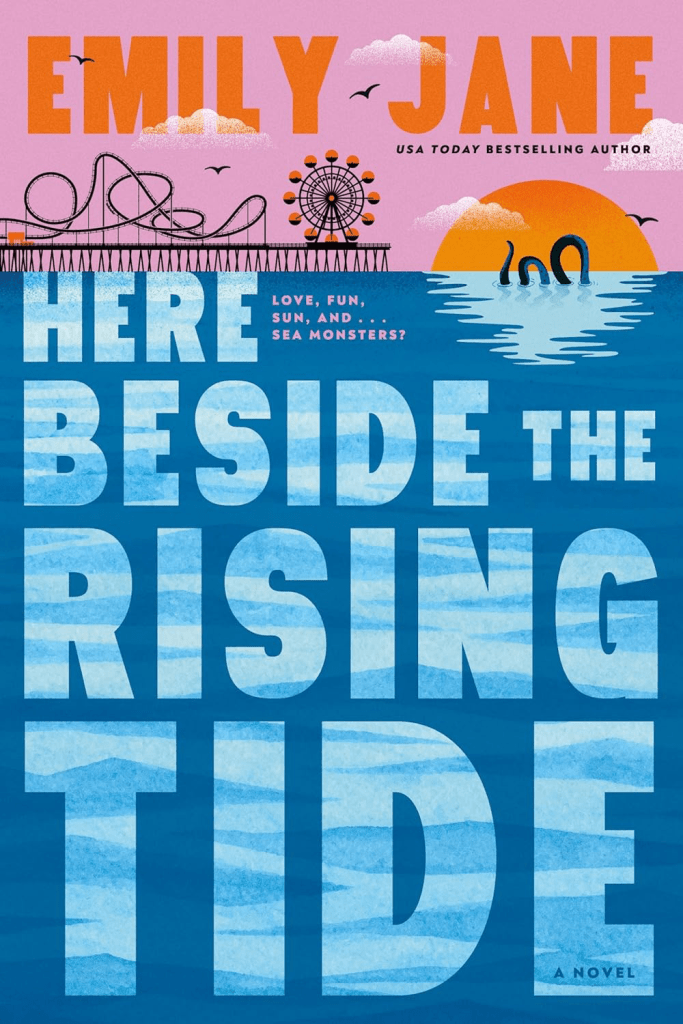
Here Beside the Rising Tide – Emily Jane – “Man alive/This solitude/Is wrinkles in the dirt/I borrowed love from carnivals/Set it in a frame/Here it comes again…”
HE’S BACK! PETER GABRIEL IS BACK TO SAVE 2026!
Once again culminating in an album coming out this December, o\i is being released in singles corresponding with each full moon of 2026. Three days into 2026, it gave me some hope—and a bittersweet full-circle moment for me. I spent the spring semester of my freshman year of college listening to i/o‘s singles, and I’ll be spending the spring semester of my senior year listening to its inverse. The songs comprise of both castoffs from the i/o sessions and from further back in his career; according to this video, the chord progression for “Been Undone” has been on the back burner for several decades. As the starting gun for the album, it’s an expression of some of what I love best about Gabriel: his boundless creativity and his grounded humility. “Been Undone” is all about learning moments—the ones that cause us pain or overwhelm us, but ultimately teach us something valuable: “By all the forms that you get from the Mandelbrot set/I’ve been undone/By the recursive slaves in the home of the brave/I’ve been undone.” I’m assuming the latter is in reference to the deeply broken U.S. prison system, but back to back with a mathematical concept that results in dizzying, fascinating patterns, it proves the song’s point: both great wonder and great pain can be the origin of learning. Musically, I thought it was going to be a more standard new-era Gabriel song, and it continues so for nearly 6 minutes; but at 5:59, he takes a left turn back into “The Tower That Ate People” territory, turning a pleasantly synthy tune into his personal brand of almost-industrial, proving that even at 74, he has no shortage of tricks up his sleeve.
Also, the bit where Gabriel was asked about the Bright/Dark-side mixes and if he allows the producers to play with the structure cracked me up—probably the clearest vocalization of “no <3” I’ve ever seen HAHA
…AND A BOOK TO GO WITH IT:
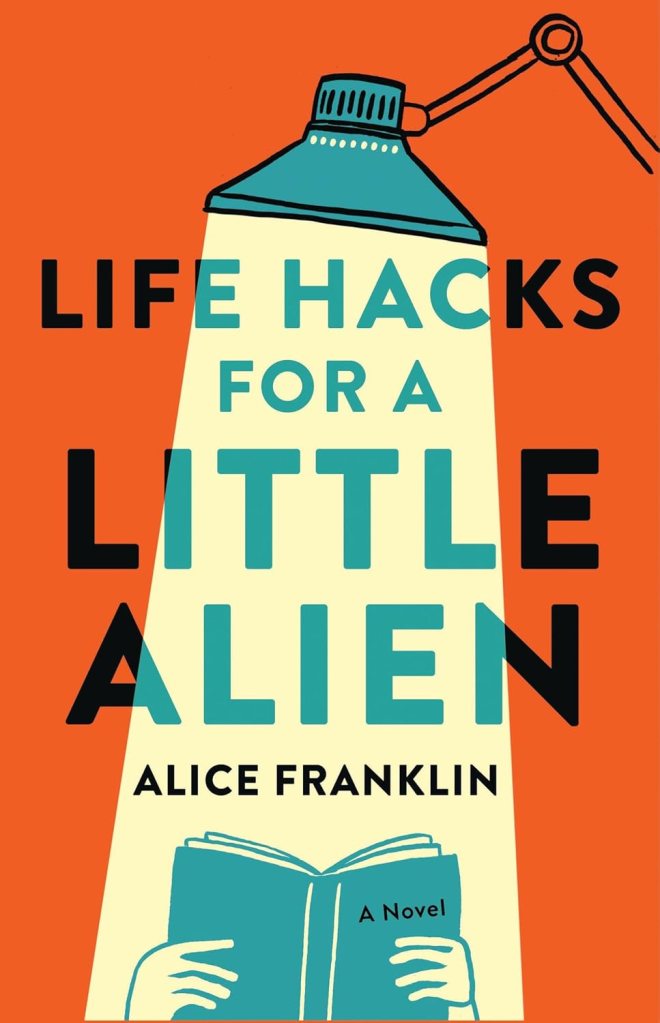
Life Hacks for a Little Alien – Alice Franklin – “Though I want to observe, it keeps touching a nerve/And I’ve been undone/By the past that you trace, by a moment of grace/I have been undone…”
Since this post consists entirely of songs, consider all of them to be today’s song.
That’s it for this week’s Sunday Songs! Have a wonderful rest of your day, and take care of yourselves!


 The Bookish Mutant