

Happy Sunday, bibliophiles! I hope this week has treated you well.
This week: ever stopped to wonder about the baby and its umbilical? Or about who’s pushing the pedals on the season cycle, by any chance? You’re in luck. I don’t have the answers, but Andy Partridge might.
Enjoy this week’s songs!
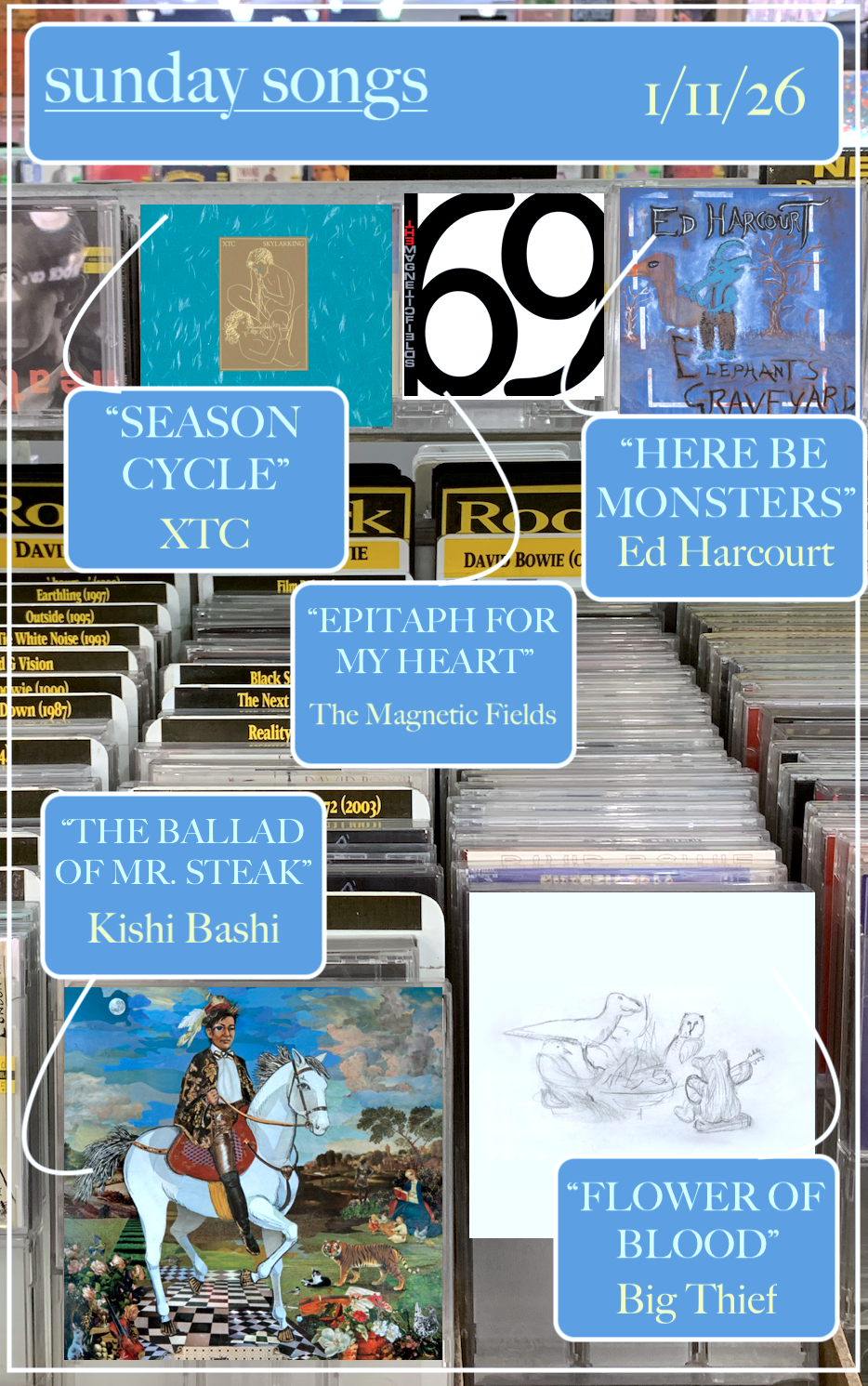
SUNDAY SONGS: 1/11/26
“The Ballad of Mr. Steak” – Kishi Bashi
I talked about Kishi Bashi and “Angeline” last week, but I failed to say what really snagged me about part of why I dove back into his music. Say what you want about the man, but Kishi Bashi is ardently committed to joyous whimsy. (see also: “Philosophize In It! Chemicalize With It!”, also from Lighght, and “Unicorns Die When You Leave”). It would’ve been inappropriate to talk about said joyous whimsy when talking about the very serious subject matter of Omoiyari, so I’ve made it separate. Buckle in, because I doubt that you’ll ever hear another song with the same staggering amount of steak/beef/cow related puns in your life. (Okay, maybe other than this. The point still stands.)
What stands out to me about “The Ballad of Mr. Steak” (and Kishi Bashi) is that yes, the lyrics are as goofy as all get-out, but it never feels like a joke song. This was never just a throwaway song for a bit—he puts the exact same amount of compositional effort and prowess into writing about heartbreak that he does into a song about eating some really, really good steak: “Did fate mistake us for a pair of star crossed lovers?/The savory ending wasn’t drowned in salt and pepper/And as we danced together, I cried a funny smile/As I felt you awake in the heat of feast/Now you’re gone forever now inside myself, here we go!” The synth riff starting at 1:03 never fails to jumpstart me into excitement, along with Bashi’s acrobatic violin playing—a staple of almost all of his songs, but it never gets old. And there’s just wordplay as far as the eye can see: “Grade A” sounds so much like “great, eh” that it almost seems normal. (It could also apply to “mistake” and “mis-steak.”) It’s just such a delightful song, one of my favorites of his as of late. Mr. Steak, you were Grade A!
…AND A BOOK TO GO WITH IT:

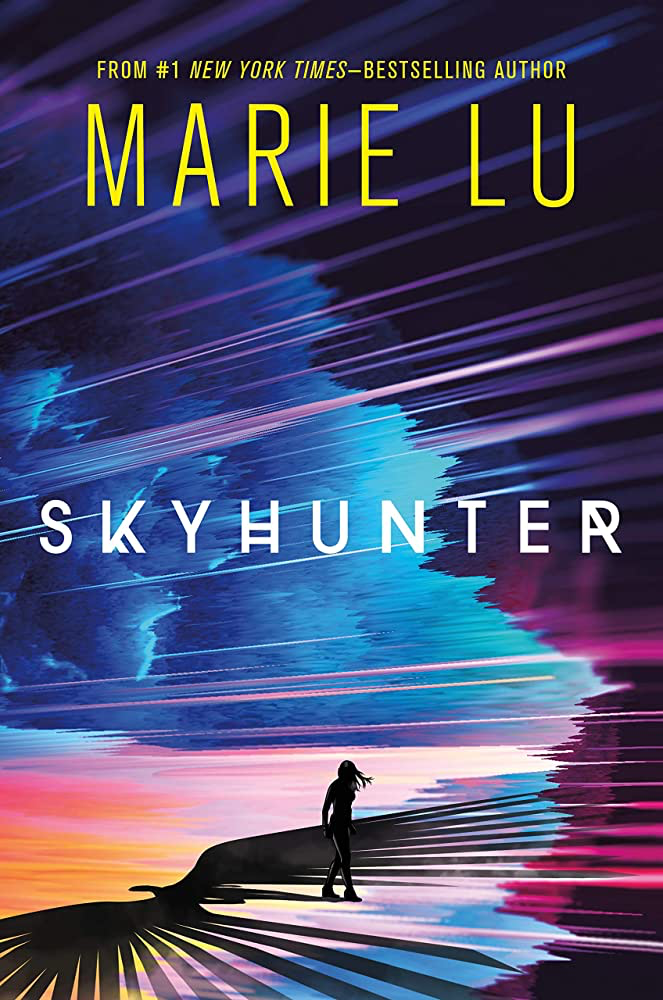
Screw it, just analyze this meme in whatever English major way you so choose: I give up. This one’s stumped me. Maybe I’m the bad guy for not knowing any books that are even tangentially related to beef, steak, or cows. Do what you will with this.
In their glowing review of Dragon New Warm Mountain I Believe In You, Pitchfork suggests that this album is Big Thief’s The White Album. Comparing anything to The White Album is a bold move, but this one doesn’t feel without merit to me. They’re both long albums, expansive in their subject matter and exploratory in their sound. I’d say The White Album is more cohesive than Dragon, but I don’t come to the former looking for crisp cohesion. I come looking for songs that are, by all accounts, kind of all over the place, but unified by the shared talent of The Beatles. Both albums ask “hey, what if we tried this?” and commit to whatever ideas the others dish up.
Dragon New Warm Mountain I Believe In You is less successful than The Beatles, but that’s because…this is The Beatles we’re talking about, for God’s sake. Hardly anybody’s going to measure up. But it’s such an adventurous album, even if the many, many forks in the road that Adrianne Lenker and co. explore aren’t always successful. By and large they are, but I just can’t get on board with the twangy forays into country (see: “Red Moon,” “Blue Lightning”), especially since the album closes out with one of them. Everything else, though? They’re bouncing off the walls in the best way possible, verging from slow, wailing sorrow to ecstatic romance and everything else that fits (or doesn’t fit) in between. There’s nothing that Big Thief won’t try, and that’s what made this album so fun to listen to—at a certain point, I gave up on trying to predict what would come next.
For instance: “Flower of Blood” is the closest I’ve heard Big Thief come to trying their hand at shoegaze. A lot of the sonic palette of the album is hazy and dreamy, but it feels like they tried to write a Slowdive song from memory, and then adorned it with clanging percussion and industrial whines. What starts out as one of their ordinarily folksy love songs ends with a clatter of reverbed squeals and creaks, all of the instruments blending together, like a spaceship cobbled together from bits of mossy stone and rusty scrap metal. (A lot of the songs on this album evoke scrap metal, honestly. It’s a vibe.) In a way, it’s a capsule of what Dragon New Warm Mountain I Believe In You is in a single song: where you begin is never where you end.
…AND A BOOK TO GO WITH IT:
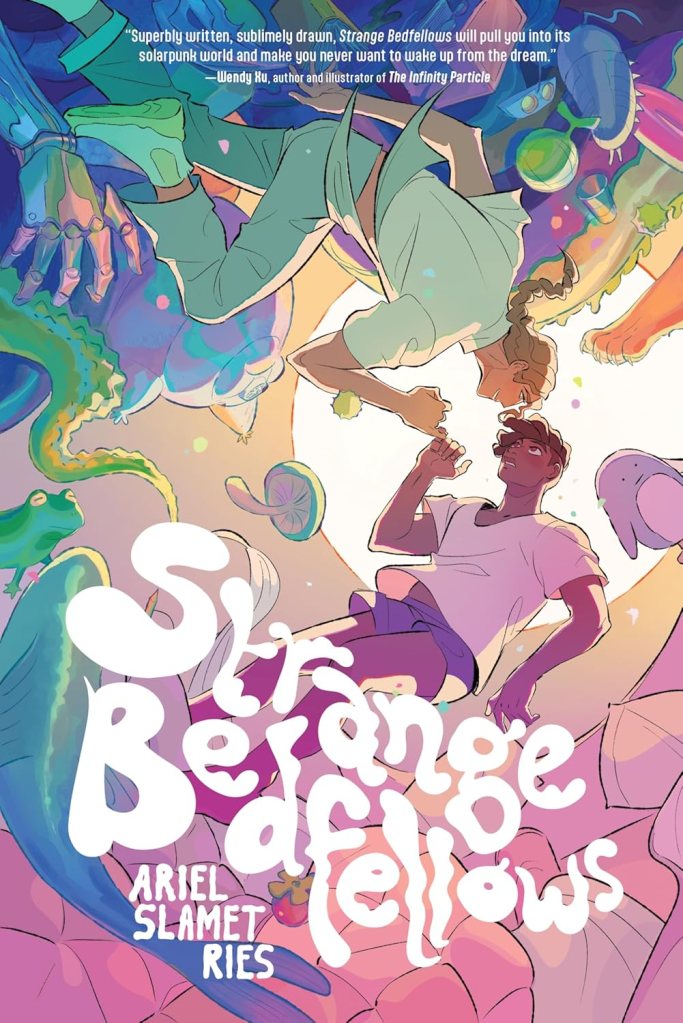
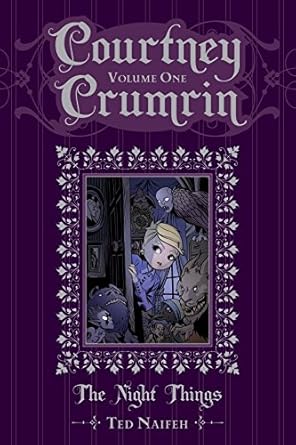
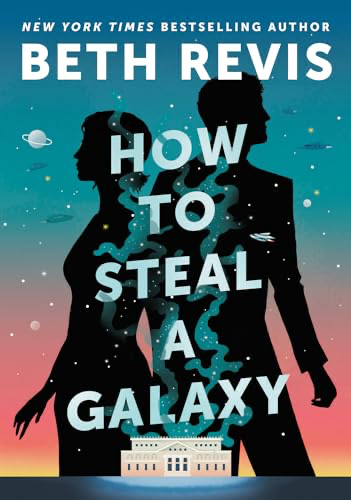
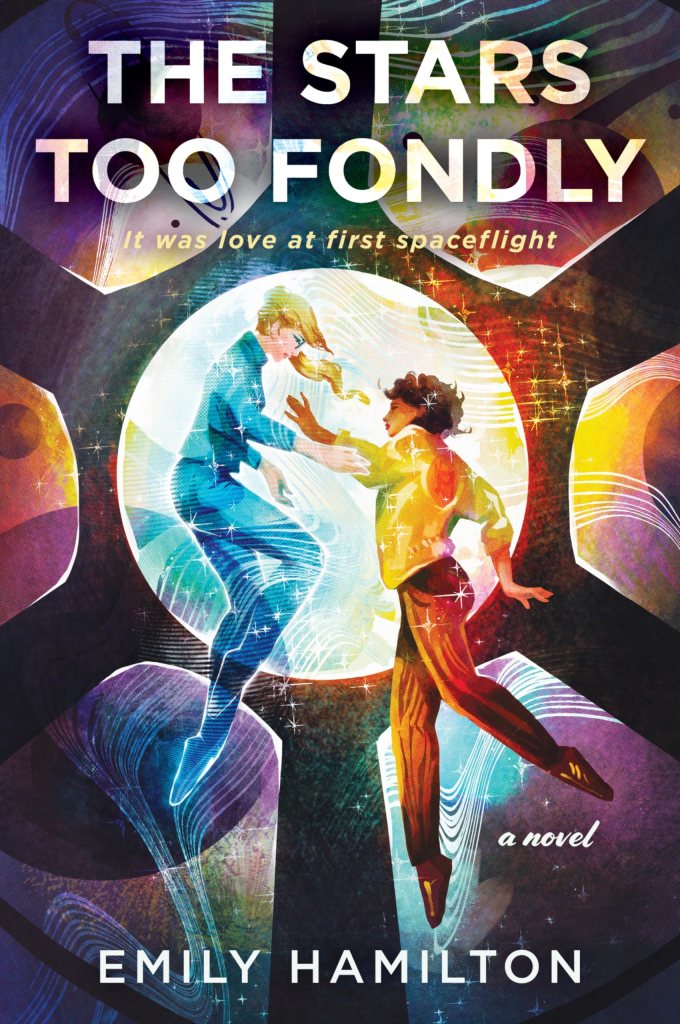
Strange Bedfellows – Ariel Slamet Ries – “Give me some time on Earth to know you/Help me unearth the map and show you/Thinking of her, thinking of him, want to?”
Quirky whimsy with airtight composition seems to be the partial theme of this week, because we’re crashing headfirst right into it. Not just anybody can rhyme “um-bil-ical” and “cycle” and make it work, but dammit, Andy Partridge makes it sound like the words were always meant to rhyme in the first place. Lyrically, the man can do it all. Among the many, many squabbles that Partridge had with Todd Rundgren (who produced Skylarking), one of them was that Rundgren thought this rhyme was stupid. Not taking a dig at the guy, but really…how does it feel to be that wrong, Todd?
The loose concept behind Skylarking was experiencing an entire lifetime in the span of a day, weaving in imagery of nature and themes about seasons and weather along with this lifespan. In terms of the track listing, “Season Cycle” comes right in the middle, and just before the record “grows up”—most of the other songs afterwards are about religion (see: “Dear God”), marriage, and death. But in stark contrast, this song is a whimsical, pastoral bundle of curiosity. The lyrics are sunny ponderings about how the world works. Partridge’s character admits confusion, but appears cheery all the way as he wonders about why the weather is the way it is, and of course “about the baby and its um-bil-ical/Who’s pushing the pedals on the season cycle?” XTC have always been straight-up sixties, but I always associate them more with bands like The Monkees, but Partridge said this song was inspired in particular by The Beach Boys. Before I knew that, my shuffle gave me the glorious transition of “Season Cycle” back to back with “God Only Knows,” and it makes even more sense than it did before. Yet even with the sun-bleached, Brian Wilson-esque quality of the whole composition, it’s nothing but Andy Partridge; as world-weary he got early on in his career, they could never beat the whimsy and curiosity about the inner workings of the world out of him.
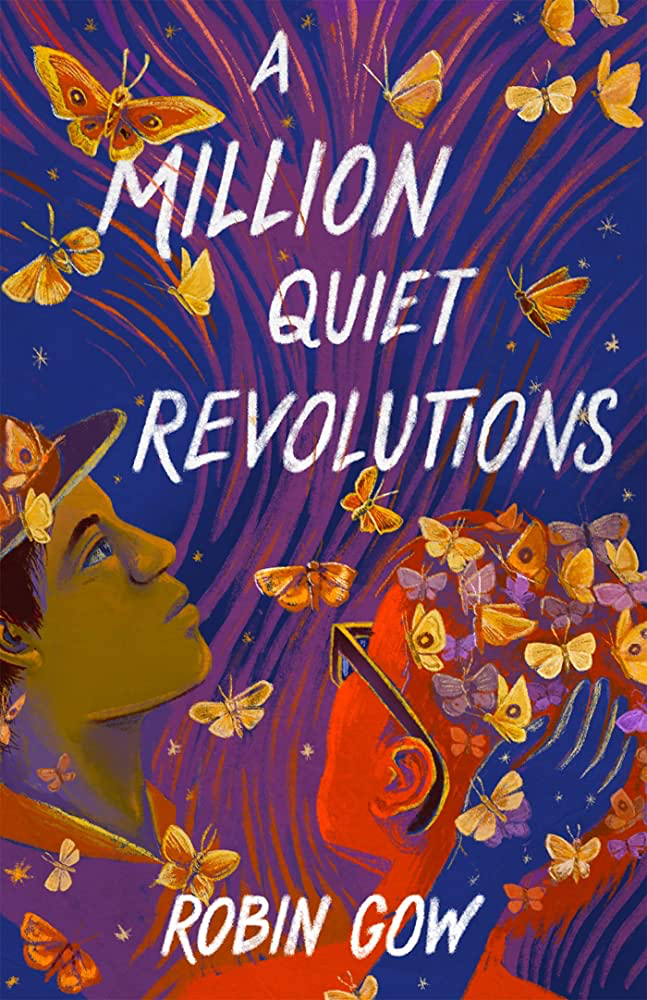
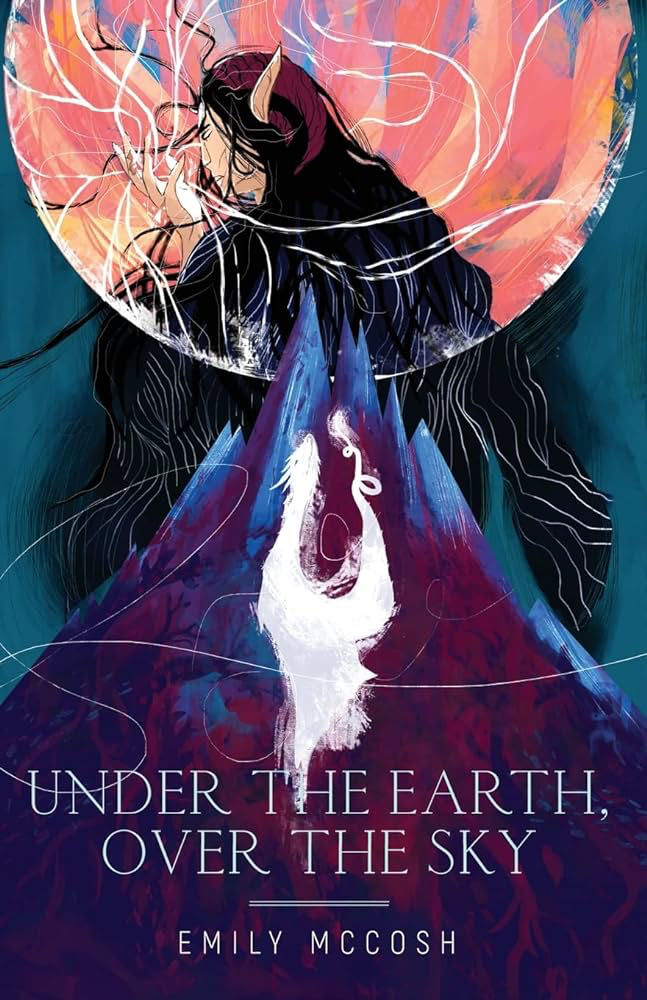
…AND A BOOK TO GO WITH IT:
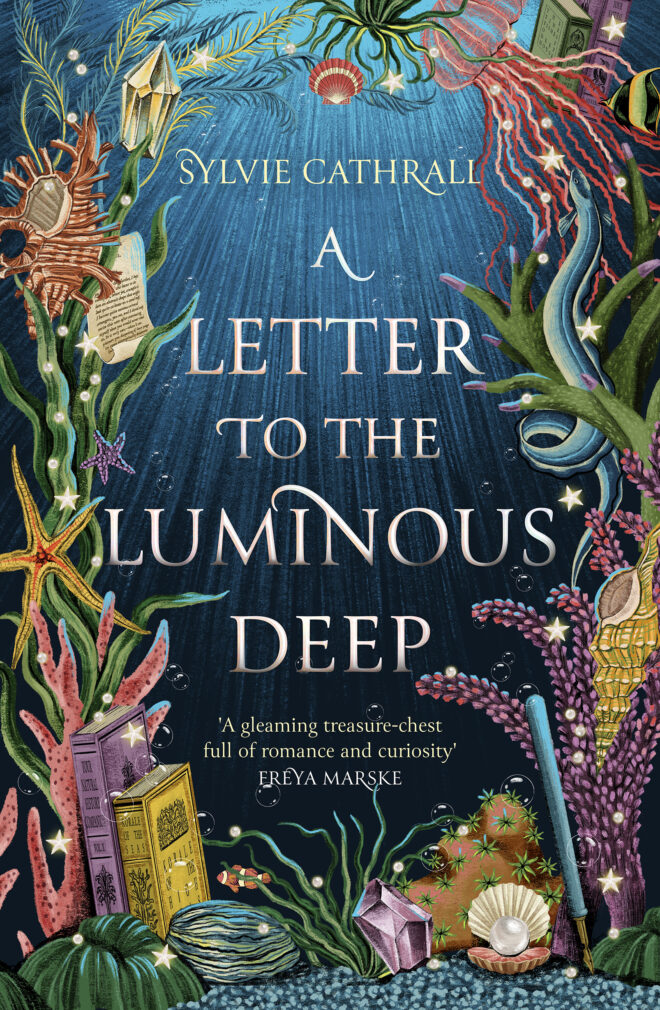
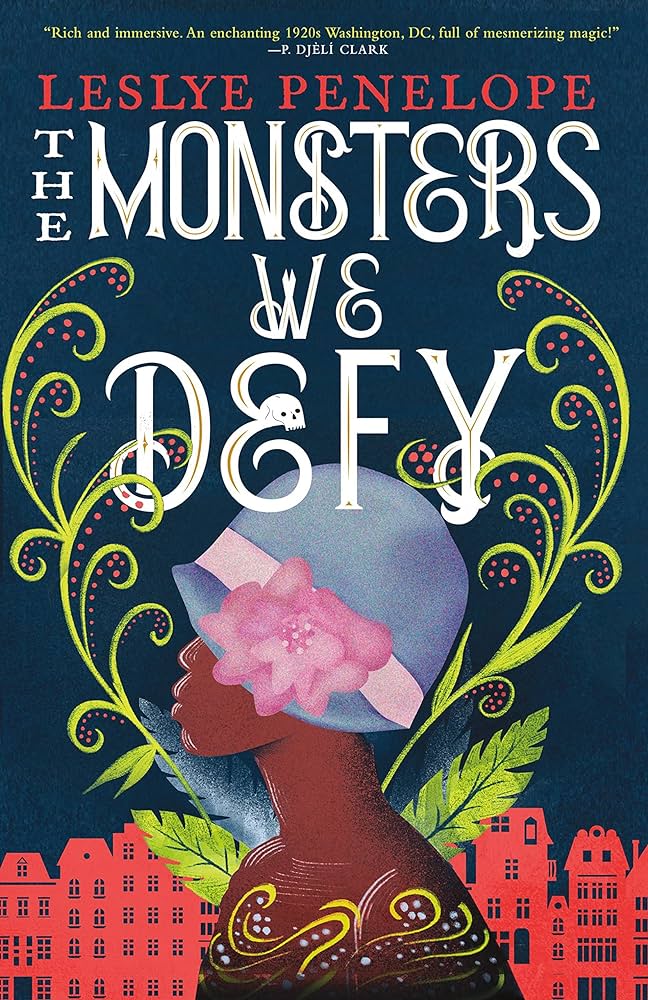
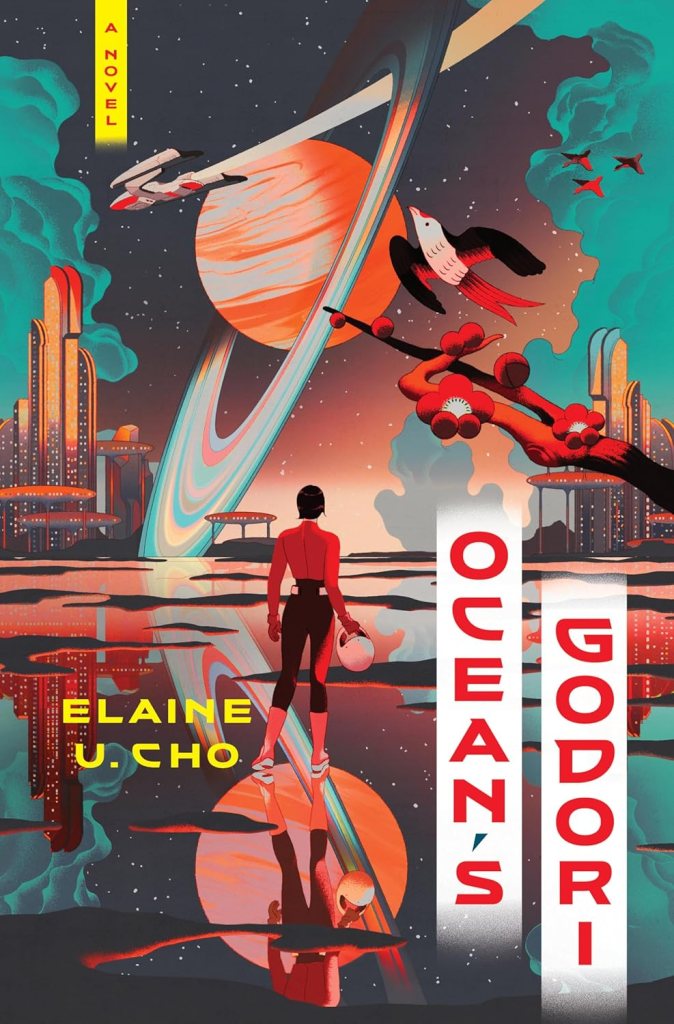
A Letter to the Luminous Deep – Sylvie Cathrall – “Darling, don’t you ever sit and ponder/About the building of the hills a yonder?/Where we’re going in this verdant spiral/Who’s pushing the pedals on the season cycle?”
“Epitaph for My Heart” – The Magnetic Fields
I seriously don’t know how Stephin Merritt does it. It’s artists like him and Jeff Tweedy that absolutely baffle me: Jeff Tweedy in the sheer frequency of his records with his various bands and projects, and Merritt with the amount of consistently incredible songs that he can pack into an album. In this case, this is yet another fantastic track from 69 Love Songs—over three hours’ worth of Merritt’s stellar songwriting. The song’s intro is proof of how talented of a songwriter he is; against plunking keys, he puts the warning label from an electric keyboard to music, which turns itself into a miniature metaphor for a heart so busted and battered that it needs a qualified professional to put back together. The melancholy pop song that he launches into after is nothing but classic Magnetic Fields. Who else could casually include “anon” in a song that doesn’t sound purposefully antiquated? Then again, “on and on anon” sounds an awful lot like “on and on and on,” so that’s probably the only way. (Merritt switches it up into “on and dawn and dawn” later too. Layers, people!) Very clever nonetheless—whether it’s upfront or sneaky, Stephin Merritt is practically a songwriting magician with infinite tricks up his sleeve.
…AND A BOOK TO GO WITH IT:
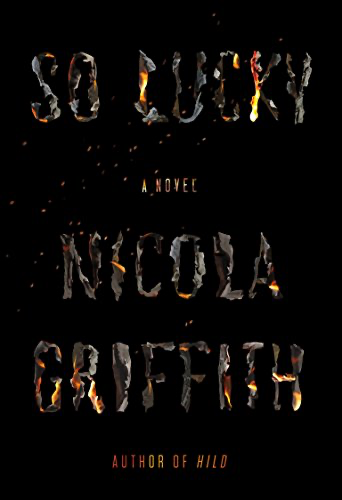
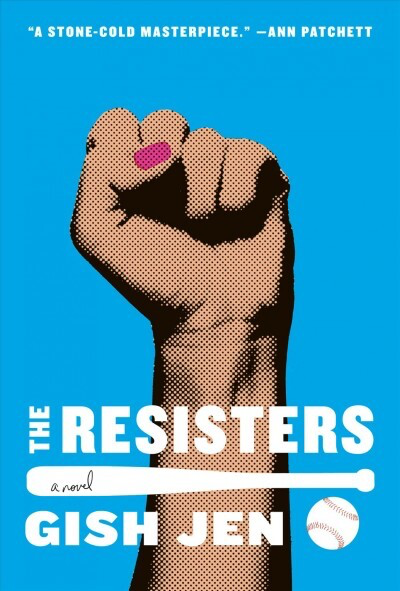
So Lucky – Nicola Griffith – “And life goes on and dawn and dawn/And death goes on, world without end/And you’re not my friend…”
“Here Be Monsters” – Ed Harcourt
I pride myself on being a fairly punctual person, so this is a bit embarrassing for me, but once again, like most of the rules I’ve imposed on myself, it’s completely arbitrary. I wanted to write about “Here Be Monsters” three years ago, but it went on the wayside for whatever reason (read: it didn’t match the color palette du jour). Another recommendation from my amazing older brother, it soundtracked a hefty part of the second semester of my freshman year of college, perfect for the late winter chill. Now it’s mid-winter in 2026, I’m nearly finished with my degree, and the weather is once again ripe for dreary songs about religious bigotry.
“Here Be Monsters” sounds cloaked in fog from the get-go—it’s a very wintry song, and it’s fitting for the subject matter. Amid the hollow strums of an acoustic guitar, wobbly whistling, and high-pitched backing vocals fit for one of Danny Elfman’s scores, Harcourt examines the hypocrisy of a certain kind of Christian, the kind that claims to follow Christ’s teachings of compassion and forgiveness, but in reality uses their faith to ostracize and isolate anybody who deviates. I’m sticking to book pairings for these posts, but I can’t help but think of the new Knives Out film, Wake Up Dead Man, and its examination of this kind of hypocritical Christianity and the mental repercussions of the people who are unwittingly caught in the crossfire. The offhand, distanced delivery of much of the lyrics are the embodiment of the “turn the other cheek” line—even in the face of tragedy, it doesn’t matter, because they didn’t follow the teachings of the Bible (or, at least, their often misinformed interpretations of it). With every disaffected repetition of “such a shame,” Harcourt brings to life the façade of compassion that these people often put on, caring on the surface, but harshly judgmental in private. Cloaked in echoes and mist, “Here Be Monsters” is a frigid song, both in lyricism and in instrumentation.
…AND A BOOK TO GO WITH IT:

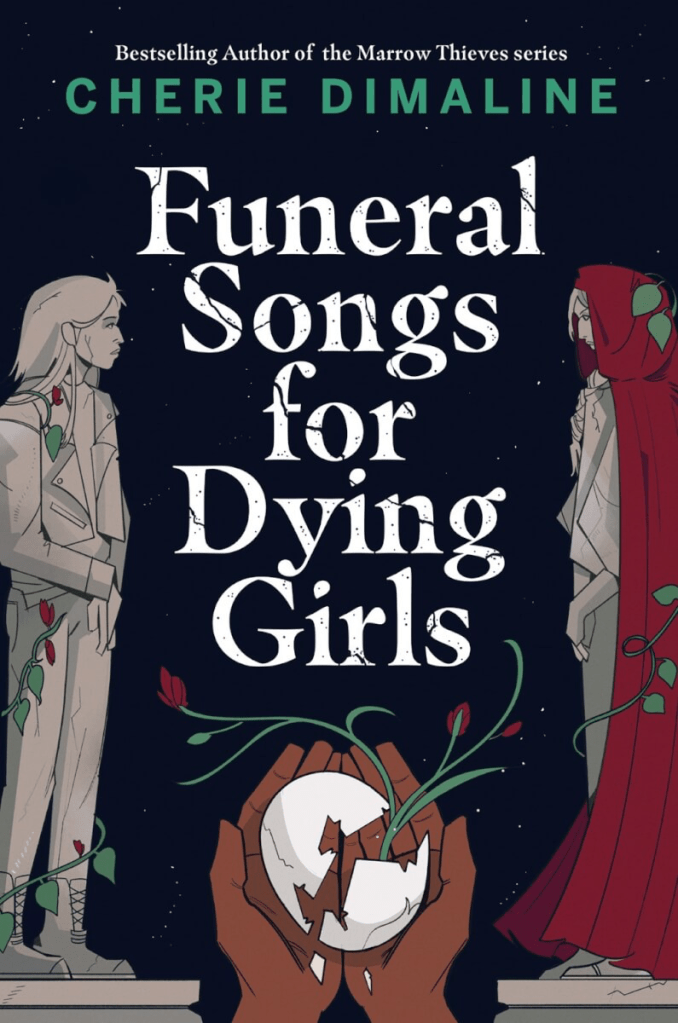
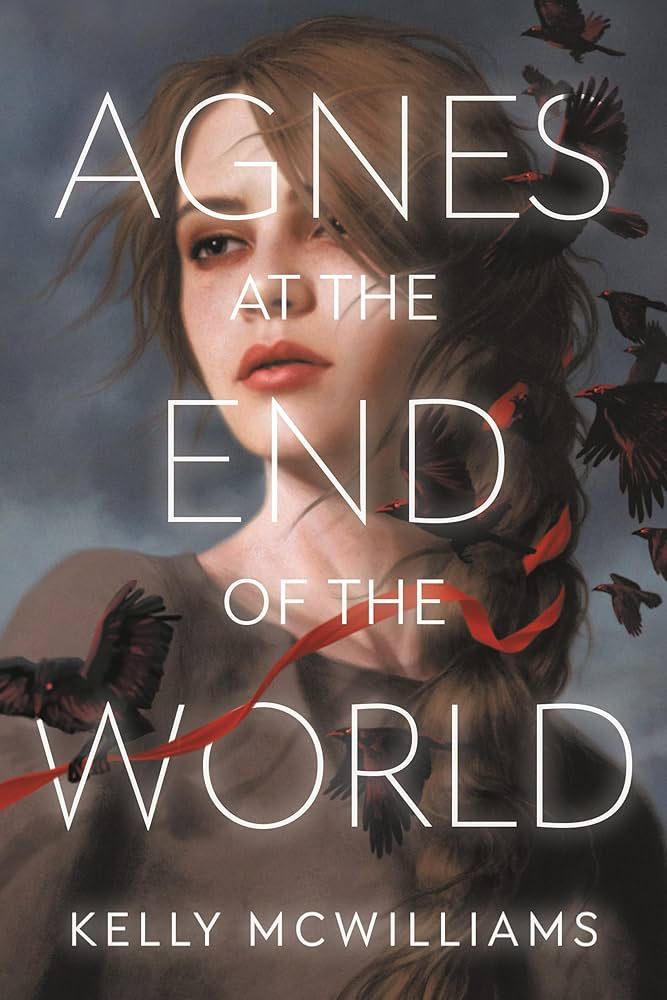
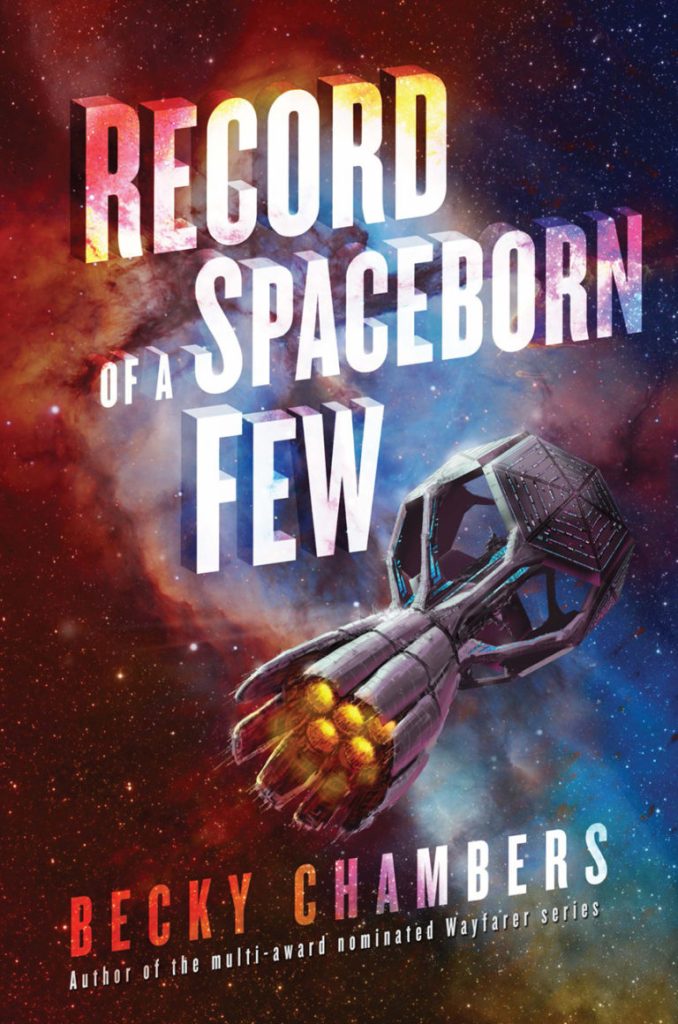
Extasia – Claire Legrand – religious fanaticism and creeping dread.
Since this post consists entirely of songs, consider all of them to be today’s song.
That’s it for this week’s Sunday Songs! Have a wonderful rest of your day, and take care of yourselves!




















 The Bookish Mutant