Posted in Sunday Songs

Sunday Songs: 9/13/26

Happy Sunday, bibliophiles! I hope this week has treated you well.

This week: at this rate, I could probably condense material from several previous posts to just have a whole album review of Pompeii. Plus, Bill Callahan gets existential, Lisa Germano gets sarcastic, and The Ladybug Transistor gets…very Elephant 6.

Enjoy this week’s songs!
SUNDAY SONGS: 9/13/26

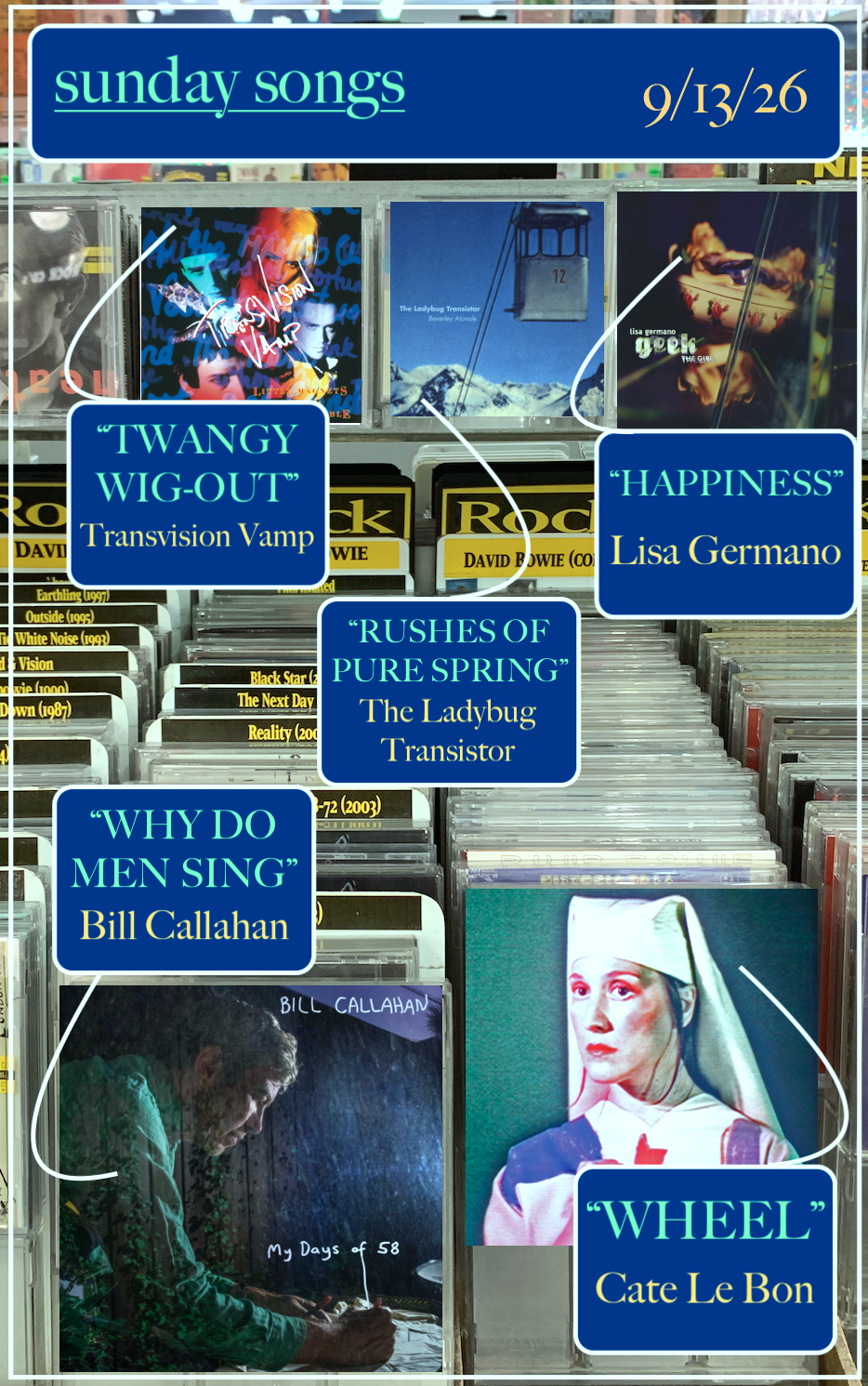
“Why Do Men Sing” – Bill Callahan

Last week, I was concerned about Bill Callahan going through it back during the era of Red Apple Falls. That sense of isolation thankfully seems to be behind him, but these days, it seems like he’s having a different kind of existential crisis. His newest album, My Days of 58, came out in February of this year, and it seems he had a mission to pick apart all of the questions that seem to emerge in the midst of a midlife crisis. “Why Do Men Sing,” the album’s opener, gets right to the meat of it: why is he still attached to this craft in the first place? I love the slowly-building meander of it, the acoustic strummings that are gradually strung with horns, harmonies, and electric guitars—it’s a song that languishes in all seven of its minutes, giving a weight to its stream-of-consciousness stylings. Callahan doesn’t necessarily answer his central question—it’s repeated over and over in the chorus, but he leaves the answer in the realm of ambiguity. But if there’s ever a sign that you’re artistically on the right track, it’s the visitation from Lou Reed beyond the veil that Callahan describes. (He even adopts a bit of Reed’s New York affect in several places in the song, which is a lot of fun.) His advice? “It’s cool, baby. Just got to let it ride.” First off, that sounds exactly like something he’d say, but I think that’s where the not-answer lies. There’s no one, concrete answer to the question Callahan poses. Creativity’s meaning is unique to you, but more importantly, the many meanings come from the winding journey you’re on. Let it ride, baby.

…AND A BOOK TO GO WITH IT:
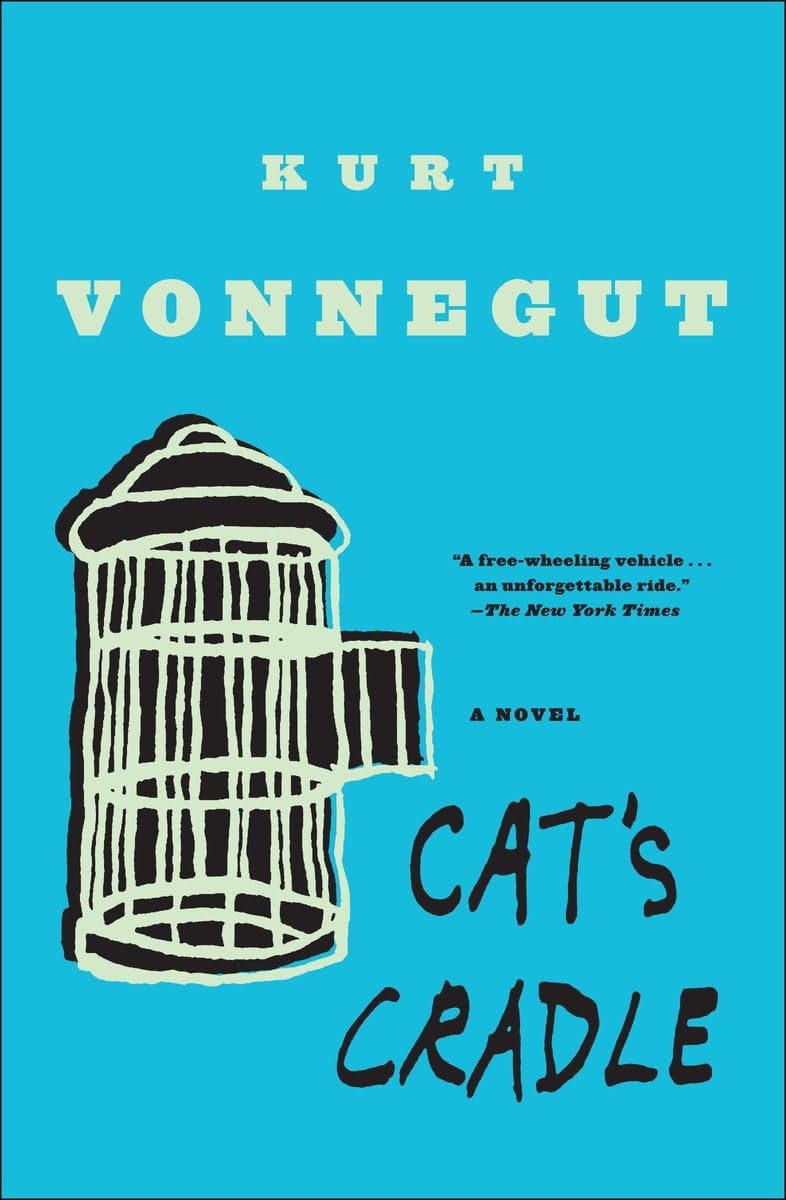
Cat’s Cradle – Kurt Vonnegut – the existential absurdity of this track feels very Vonnegut, in spirit if nothing else.

“Wheel” – Cate Le Bon

Shit, I’ve probably talked about at least half of Pompeii at this point. I’ve run the whole gamut of emotions about it; at first, it was more just “this is a great album, but the second half lags a bit” to “wait, that second half really doesn’t lag” to now, where I’m certain that it’s at least a top 10 album for me. The more I dissect everything about it—the origins, the lyrics, the aesthetic, the Cate Le Bon of it all—the more I adore it as an exercise in processing loneliness and isolation.

From the start, I loved “Wheel” as a closing track. Like its namesake, the blasts of distorted saxophone feel like the melody is eating itself, being born, dying, and being reborn in the space of a few beats. The synthy sway of it reminds me of St. Vincent at her weirdest. Its echoing lament made the track feel like it was ushering the end of the narrative into the fog, as ephemeral as the glow of a lighthouse. But it took me years to get why this album—and this song—got me. I think it was because I found it during a time when I was mired in some woefully self-imposed self-isolation, and something about that sensation planted a beacon in me, one that slowly but surely helped clear the fog. I loved the music, then I loved the aesthetic charm, and then wham: here comes “I do not think that you love yourself/I’d take you back to school/And teach you right/How to want a life/But it takes morе time than you’d tender.” FUCK.

Le Bon told Apple Music that this track was “more direct than the rest of the record. I was struggling to call people over the pandemic. What do you say?…I missed him, but couldn’t pick up the phone.” The circular feel of the melody now gives the image of somebody stumbling time after time over the same, self-imposed hurdle, like feeling your mouth clamming up before you can say what you desperately need to say. And it lodged itself in me deeply—even outside of said self-isolation, I relate painfully to that feeling of knowing that you want to connect more deeply with people, but agonizing so much over what to say, what to do, that it comes too late. Somehow, it feels more digital—especially given the pandemic context—it’s a feeling I experience way more when connecting with people over texts. I feel the urge spill over, desperate to say everything that you want to say, but then that mental barrier clogs your repository of words, anxiety freezing your hands. That previous lyric I referenced (beginning with “I do not think that you love yourself”) perfectly encapsulates that feeling of having an armful of things to say and do, but feeling inadequate when the time comes to condense them into something comprehensible, even if it’s just “hey man, do you want to hang out on Thursday?” Back to “I do not think that you love yourself”—I feel like it’s both Le Bon addressing these friends, but also herself, in a way: seeing yourself suspended in your current state, but frozen in the moment, you’re just observing yourself pacing in circles.

In this light, the outro of “no prisoner, no peace” feels like a call to arms. I’m still chewing on it. The prisoner is, to my understanding, herself, locked in these patterns: from there, “no peace” is the resulting state from being the prisoner of your own patterns. Le Bon repeats it like a storm warning, letting it crash against the waves: you’ll have no peace while you’re still a prisoner of these unsaid thoughts. And to end Pompeii, a study of being stir-crazy and vulnerably self-reflective in Le Bon’s childhood home during the pandemic, feels like the solution to claw through the dirt and see the light of day again. No prisoner, no peace indeed.

…AND A BOOK TO GO WITH IT:
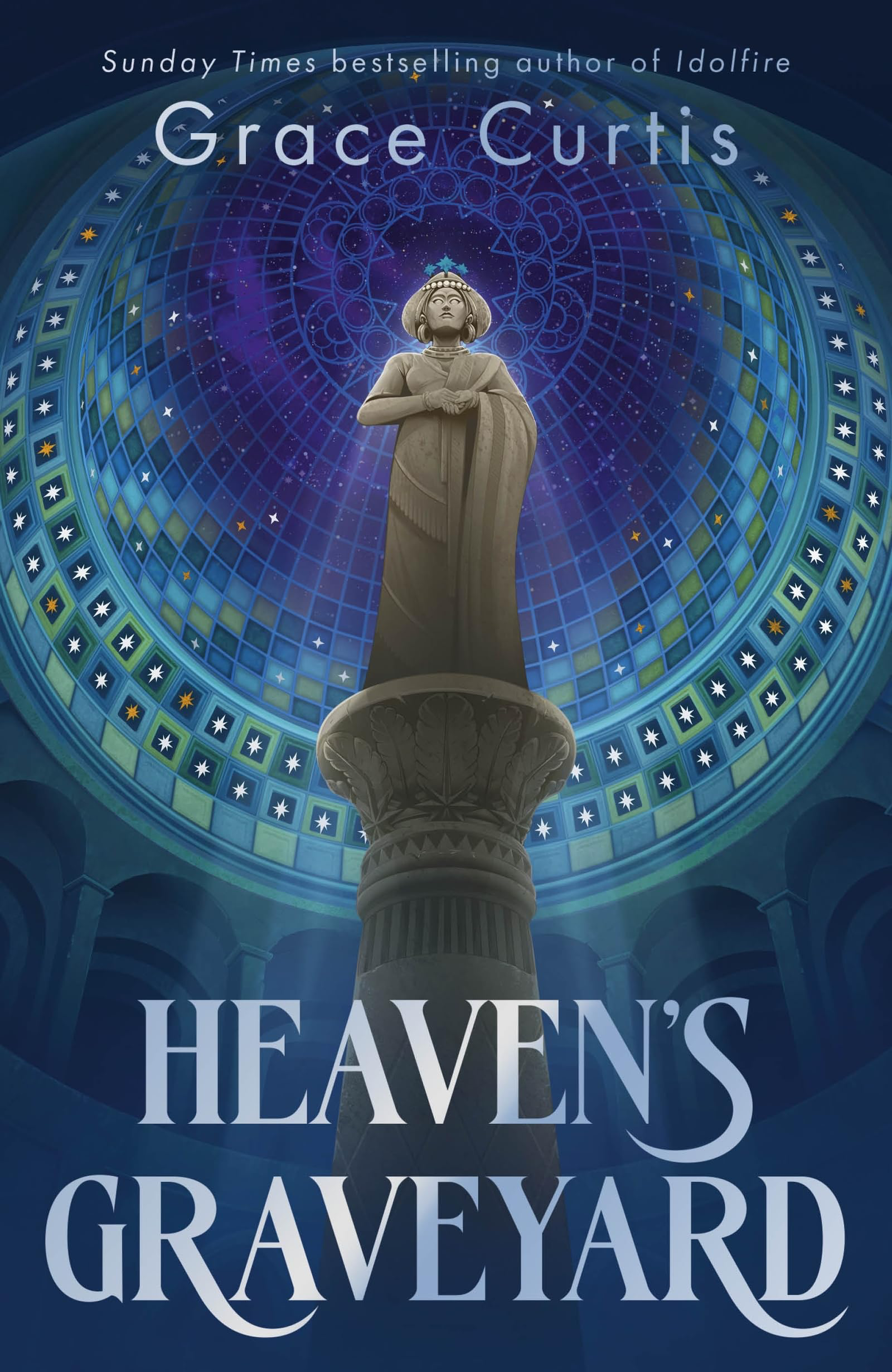
Heaven’s Graveyard – Grace Curtis – “It’s been a mild winter here/And I’ve buckled like a wheel/Sucked the life from god’s routine/Broke the royal we…”

“Twangy Wig-Out” – Transvision Vamp

I’d only heard of Transvision Vamp from songs off of their final album, Little Magnets Versus the Bubble of Babble, so it came as a surprise to discover that this album was their critically panned finale after several years of UK Number One singles in the ’80s. Of course, it’s reportedly pretty different from a lot of their earlier work, hence why it was initially barred from release in the UK by their record label. There’s nothing here that would suggest that Wendy James and co. were pop stars—I could see them being underground neo-psychedelia legends only going off of this. But it seems like that’s exactly what they wanted to do, after years of smearing by the UK music press (often at James’s expense, with many a misogynist insult hurled in her direction). “Twangy Wig-Out” has some pop genealogy, but it’s pure, British psychedelia—you can’t get much trippier than this. Its dreamlike prediction makes you feel like you’re stumbling through somebody else’s movie-montage drug trip, complete with lyrics that are the exact kind of thing you could only find deep if you got really, really stoned. (“‘Art is the mind set free’/She says, I don’t know any real artists?’ Shiiiiit, dude, that’s deep…[cough] pass the blunt…”) On its own, it’s a real fun track, but as a stylistic rebellion against a label (and a country) that wanted to kick them to the curb, it’s even more enjoyable.

…AND A BOOK TO GO WITH IT:

The Three Stigmata of Palmer Eldritch – Philip K. Dick – admittedly, I didn’t particularly like this novel, but you can’t get much druggier than this.

“Rushes of Pure Spring” – The Ladybug Transistor

Right off the bat: The Ladybug Transistor is an awesome band name. It also sounds like the kind of name you’d make up for a fake band to sound more pretentious than you are at a party. Oh, you haven’t heard of The Ladybug Transistor? Name three songs, poser. Their song and album titles only accentuate the vibe. Oh, you clearly haven’t heard of their critically acclaimed album Beverley Atonale and the lead single “Your Wagging Tail (Single Space).” Pitchfork gave it an 8.6, you know. Well, they actually didn’t, and that wasn’t the lead single, but you get what I mean. Apparently, they’re so niche that Beverley Atonale didn’t even get reviewed by Pitchfork. Who’s the poser now?

To me, that’s the mark of a fantastic band name/general aesthetic, because it’s a sign that they’re doing nothing but them. The Ladybug Transistor is another member of Elephant 6, and the influence is clear: like many of the other bands in their company, they were producing charming, ’60s-flavored indie pop. From my limited experience, they seem gentler and more slow-paced than some of their peers, but I love the atmosphere that “Rushes of Pure Spring” creates. Unlike a lot of other Elephant 6 bands, the ’60s comparison doesn’t jump out at me, but what does is another band from the ’90s—that being Luna. Aside from the fact that Gary Olson and Dean Wareham’s vocal styles are similar, it has that same gentle, observant quality to it; both the lyrics and the misty instrumentals sound like the results of a steady hour of journaling while staring out a window during a spring rain shower. My only complaint is that I found out about this song after I started taking the bus to school regularly, because this is prime bus commute music. There’s always tomorrow.

…AND A BOOK TO GO WITH IT:
Monk and Robot – Becky Chambers – “Beverly Road brings/Rushes of pure spring/I hear the day sing/It’s alright…”

“Happiness” – Lisa Germano

If you’re coming into a Lisa Germano song called “Happiness” and expecting it to reflect any semblance of happiness…strap yourself in. Don’t say I told you so.

A lot of Lisa Germano’s songs have a childlike quality to them. It’s not in the sense of purity, but more in the sense of feeling like a nine-year-old hearing their parents fighting through the walls, learning some choice words, then misspelling them in their diary. There’s an almost-innocence to it, but it reflects a twisted mirror of childhood, a theme that recurs in a lot of her songs. (It’s especially evident in songs like “My Secret Reason,” whose plain lyrics paint images of rot through simplistic language: “But I know this/As dumb as I am/When I was young/And it was winter/In our yard/There used to be snow there.”) It’s a kind of reversion to lost childhood in adulthood, since that childhood wasn’t properly provided. A lot to unpack, to say the least.

“Happiness” has that same eerie simplicity to it. Germano intones the lyrics like she’s unenthusiastically regurgitating advice from a therapist: “Happiness/Is like TV/On or off/It’s up to me.” The subsequent ones are darkly childlike, with the sarcastic bent of a children’s songwriter with an acoustic guitar gathering everybody for a singalong: “Mom and dad/Are like my head/I won’t listen to them/Until they’re dead/Or I’m dead.” There’s a deliberate bit of gallows humor, a smirk evident when she sings “C’mon, everybody—sing!” and the next verse begins with “Pain and sadness/Are real to me.” (“Everybody!”) I wouldn’t go so far to say that “Happiness” is a funny song, but there’s a rotten sarcasm to it that only became more refined with time in Germano’s catalog. The chorus’s repetition of “Inconsiderate bitch, inconsiderate bitch,” sung in a similar singsong quality, is deeply wry and eerie, reflecting both the hollow platitudes people tend to give to suffering people (especially women) and the consequences of questioning them. Oh, you’re not just deciding to be happy? You’re not depressed! You’re just a selfish, inconsiderate bitch. Just turn on the happiness and be a docile, obedient woman, why don’tcha?

…AND A BOOK TO GO WITH IT:
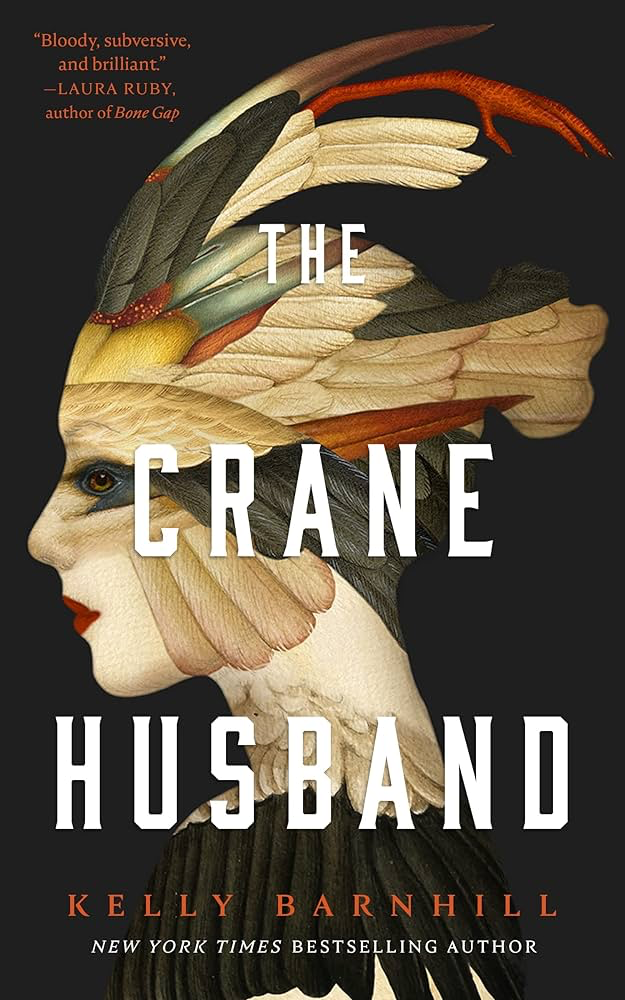
The Crane Husband – Kelly Barnhill – “Relationships
Are like a cow/Growing strong/Just for now/Poor little cow…”

Since this post consists entirely of songs, consider all of them to be today’s song.

That’s it for this week’s Sunday Songs! Have a wonderful rest of your day, and take care of yourselves!

Posted in Sunday Songs

Sunday Songs: 9/6/26

Happy Sunday, bibliophiles! I hope this week has treated you well.

This week: these grooves are out of fashion, these beats are…ancient? So is nature.

Enjoy this week’s songs!

SUNDAY SONGS: 9/6/26

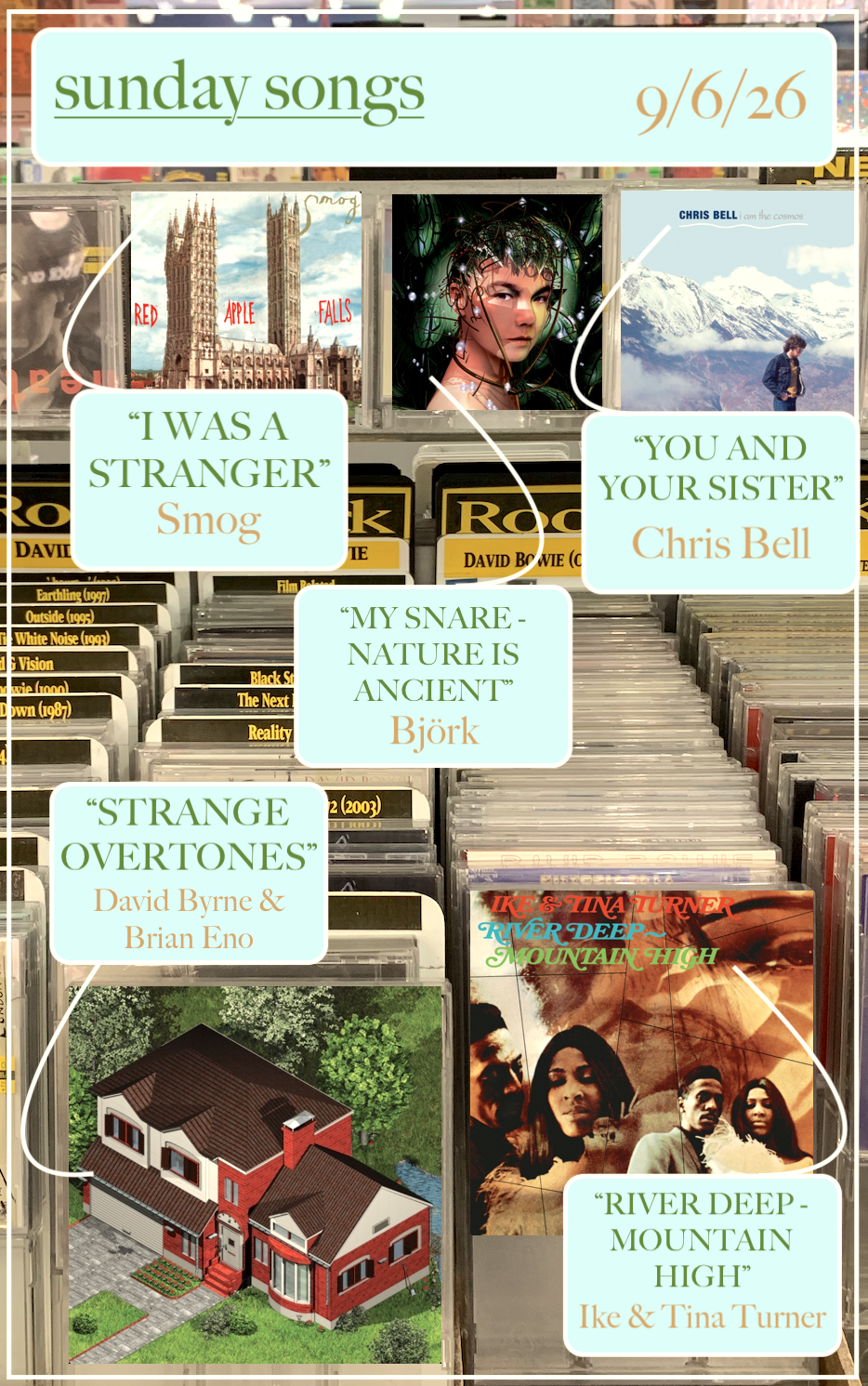
“Strange Overtones” – David Byrne & Brian Eno

You thought it was over? Surprise, bitch, I still won’t shut up about Brian Eno. David Byrne’s just joined the party. We’re still Eno-maxxing over here.

There are special songs that come once in a blue moon that touch you without you even knowing why. You just know it’s one of your songs, something that clicks itself into the ever-changing jigsaw of your soul. I mean, again. It’s Brian Eno, so it was bound to do that in some capacity. But I’ve now spent several mornings with my headphones on, dancing to “Strange Overtones” on repeat while making my tea. There’s a kind of easy optimism to it, like sprouts stretching out their leaves and waking up, ready to soak up the newborn sunlight. Something in David Byrne’s voice urges you on, gently ushering you like a parent with a child at the top of a waterslide. It’ll be fine, the water’s warm at the bottom, it seems to say. Take the plunge.

That quality of “Strange Overtones” endeared me from the start. But it was the specificity of the plunge that made this track thousands of times more meaningful. Eno described “Strange Overtones” as “a song about writing a song,” and that’s as evident as ever, as the narrator paces around an apartment, cherrypicking ordinary but wondrous vignettes from around their surroundings: the cold weather, a neighbor singing, small gestures of kindness between strangers. As a whole, Eno described this collaborative album as “a picture of the human trying to survive in an increasingly digital world.” Ah, there we are. That’s why it resonated so much with me. No wonder!

Everything That Happens Will Happen Today was released in 2008, but nearly 20 years later, it’s more immediate than ever. Artificial intelligence is encroaching on our sense of creativity, encouraging us to give up the slow, laborious things that give us life in favor of convenience and enshittification, touting itself as the inescapable, inevitable future (by techbros that have sunk all their money into it). But “Strange Overtones” is a celebration of that slow, contemplative life and the frustrating but worthwhile endeavor of creativity. As the narrator struggles to string their song together, words of encouragement steer them towards new paths: a change of key, a new chorus, 20-year-old beats. The end of the chorus doesn’t necessarily seem all that encouraging at the first glance (“It is strong and you are tough/But a heart is not enough”), but I think it speaks to the inherent labor of creativity, of sticking with it even when you’re mired in writer’s block, or whatever else. Your heart is not enough, and you have to put in the work—but the work is the fun of it. Byrne and Eno described “Strange Overtones” as a kind of gospel song, and it makes sense: it worships the act of creativity, and the rocky yet rewarding journey of sticking with an idea.

BONUS: as if this song couldn’t get any better, here’s David Byrne performing it with St. Vincent, featuring the latter attempting a casual lean on the saxophone player, for some reason:

…AND A BOOK TO GO WITH IT:

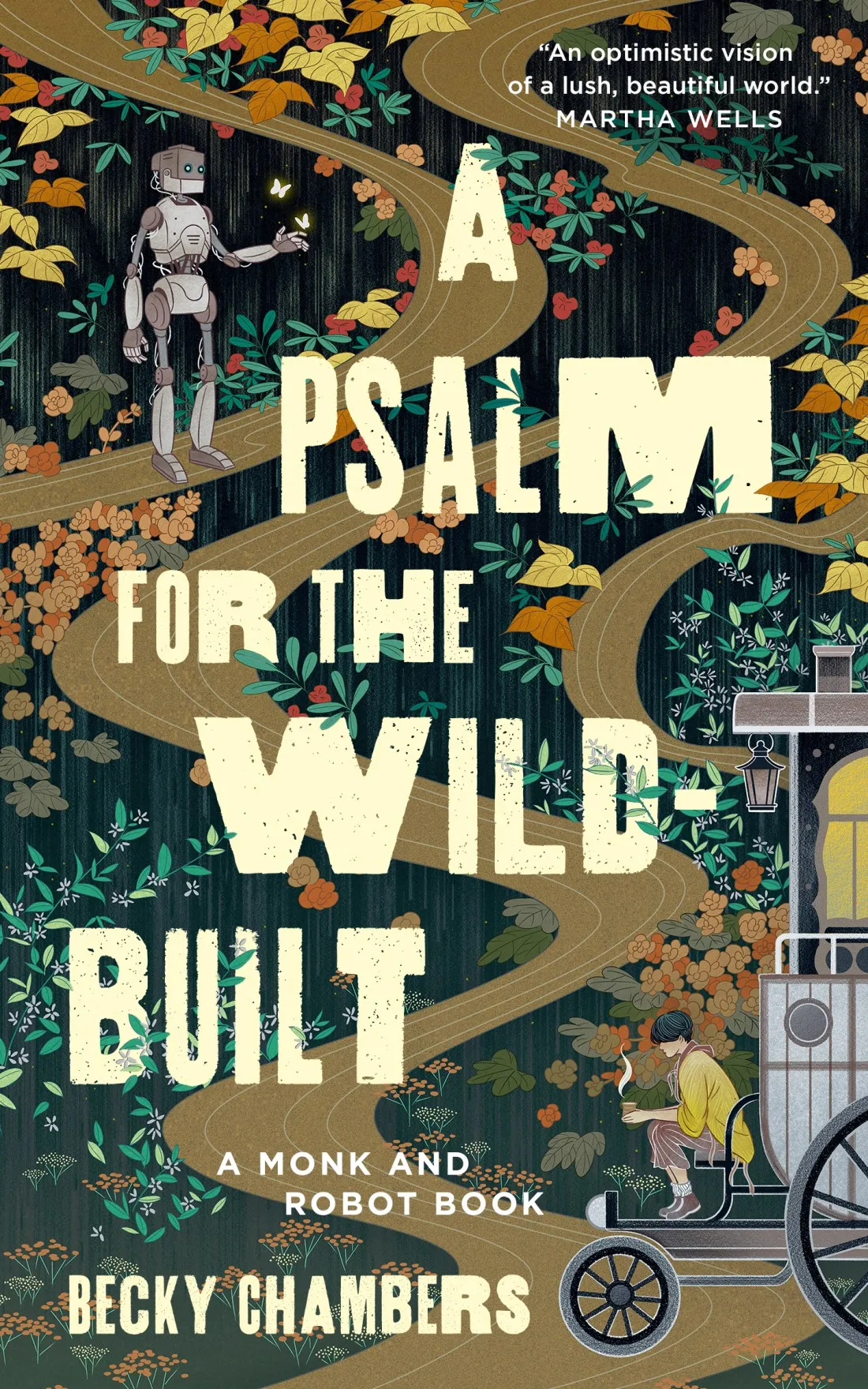
A Psalm for the Wild-Built (Monk & Robot, #1) – Becky Chambers – “Strange overtones in the music you are playing/I’ll harmonize/It is strong and you are tough/But a heart is not enough…”

“River Deep – Mountain High” – Ike & Tina Turner

Here’s a music history fact that blew me away when I first heard this song: apparently, it underperformed and barely charted when it was released in 1966. There’s probably more eloquent ways to say this, but when confronted with a song like “River Deep – Mountain High,” all you can really say is “what the fuck?” There’s no accounting for taste.

I talked about Erasure’s cover last week, and how, as fantastic of a cover as it is, it doesn’t quite capture how infectiously joyful the original is. There are few songs that are quite this convincing about just how deeply, hopelessly in love Tina Turner is. It’s just so exuberant, but you believe every single note of it—Turner’s breathless, using every metaphor for loyalty in the toolbox, and she convinces you of every single one: like a robin loves to sing, like a schoolboy loves his bag, you bet that she will love you. Unfortunately, as with…well, an unfortunate amount of songs at the time, “River Deep – Mountain High” has the misfortune of being attached to some of popular music’s most notorious scumbags at the time (that being Ike Turner and Phil Spector), especially since the latter forced Tina Turner to do a frankly inhumane number of vocal takes for this track, to the point that she was “drenched with sweat. I had to take my shirt off and stand there in my bra to sing.” I really don’t want to credit them with anything, but even from a more objective standpoint, it really is Tina Turner that makes “River Deep – Mountain High” this monumental and timeless. With the sheer power of her voice, she manages to overtake Spector’s signature Wall of Sound, and I think that’s exactly why this song is so spectacular. You just feel it rising, rising, with an unstoppable momentum, deep in your chest, and you feel the lyrics, like a flooding river about to break free of its banks.

…AND A BOOK TO GO WITH IT:

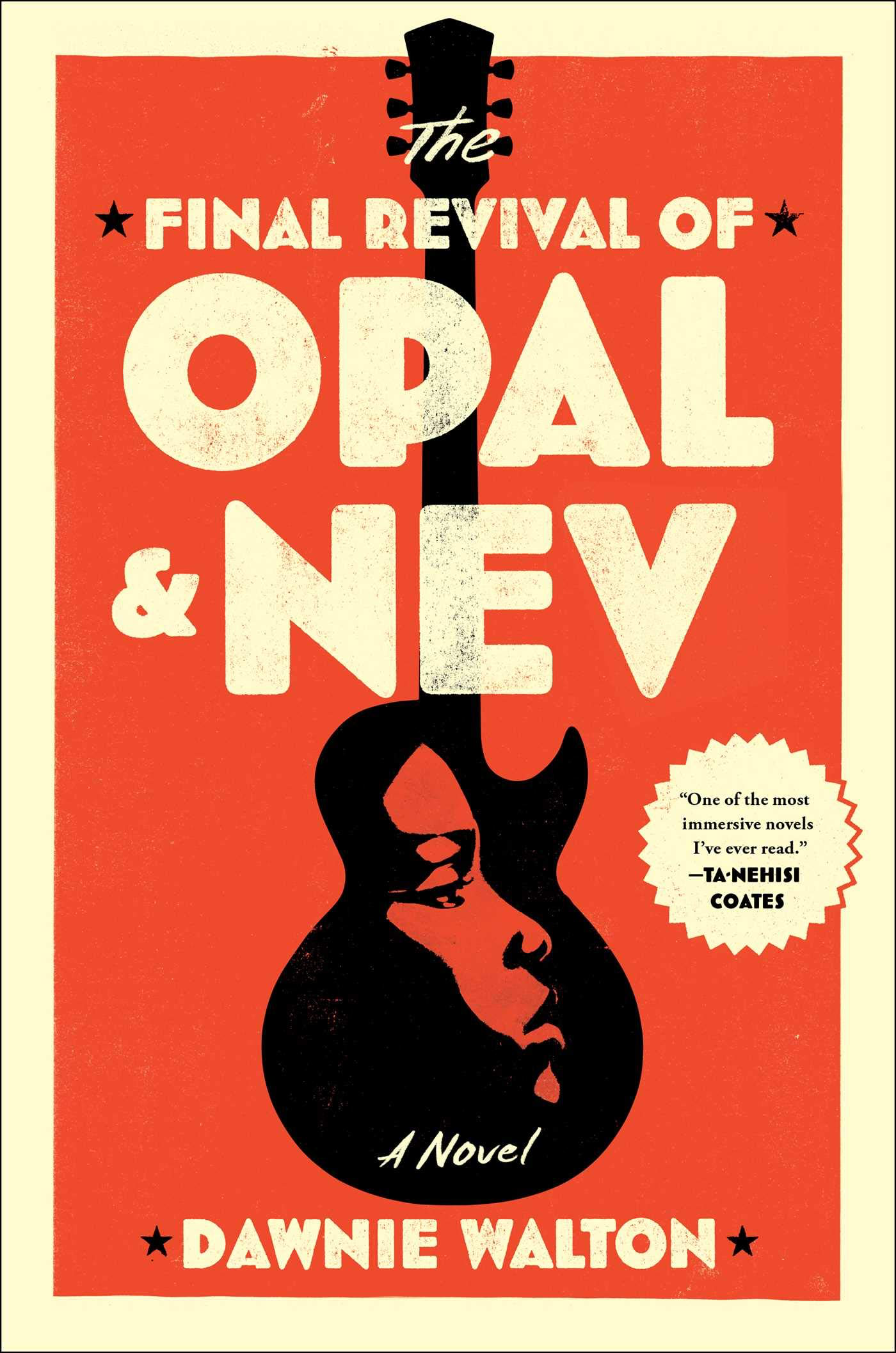
The Final Revival of Opal & Nev – Dawnie Walton – the music history threaded throughout this book calls back to the climate of the ’60s and ’70s—it definitely reminds me of songs like this, at least in the early bits of this book.

“I Was a Stranger” – Smog

Jesus. Between this and “Ex-Con,” Bill Callahan really must’ve been going through it while recording Red Apple Falls. “Ex-Con” was at least upbeat, even though it belied a deep-seated sense of alienation. “I Was a Stranger” mines just as deep into the feeling, but makes its costuming more desolate, much more somber. That thread of isolation carries into an obscured tale playing on tropes of old Westerns and cowboy stories: Bill Callahan is now the stranger kicking open the saloon doors and casting a long shadow. Normally, I’d cue the whistling and the tumbleweeds, but there’s no air of mystery here, just a man desperate to be left behind but mystified that these new people are willing to embrace him, despite all that he’s done: “Why did you believe/All every word I said/Why did you believe/Believe a stranger?” The tinges of country instrumentation add an innate sort of melancholy to this track, barely filling in the spaces left by Callahan’s profound isolation, one that separates you from yourself, but convinces you that you don’t deserve to be believed—or embraced in any sort of way. All these touches really do make you feel utterly alone, staring at an empty horizon as the sun goes down.

…AND A BOOK TO GO WITH IT:

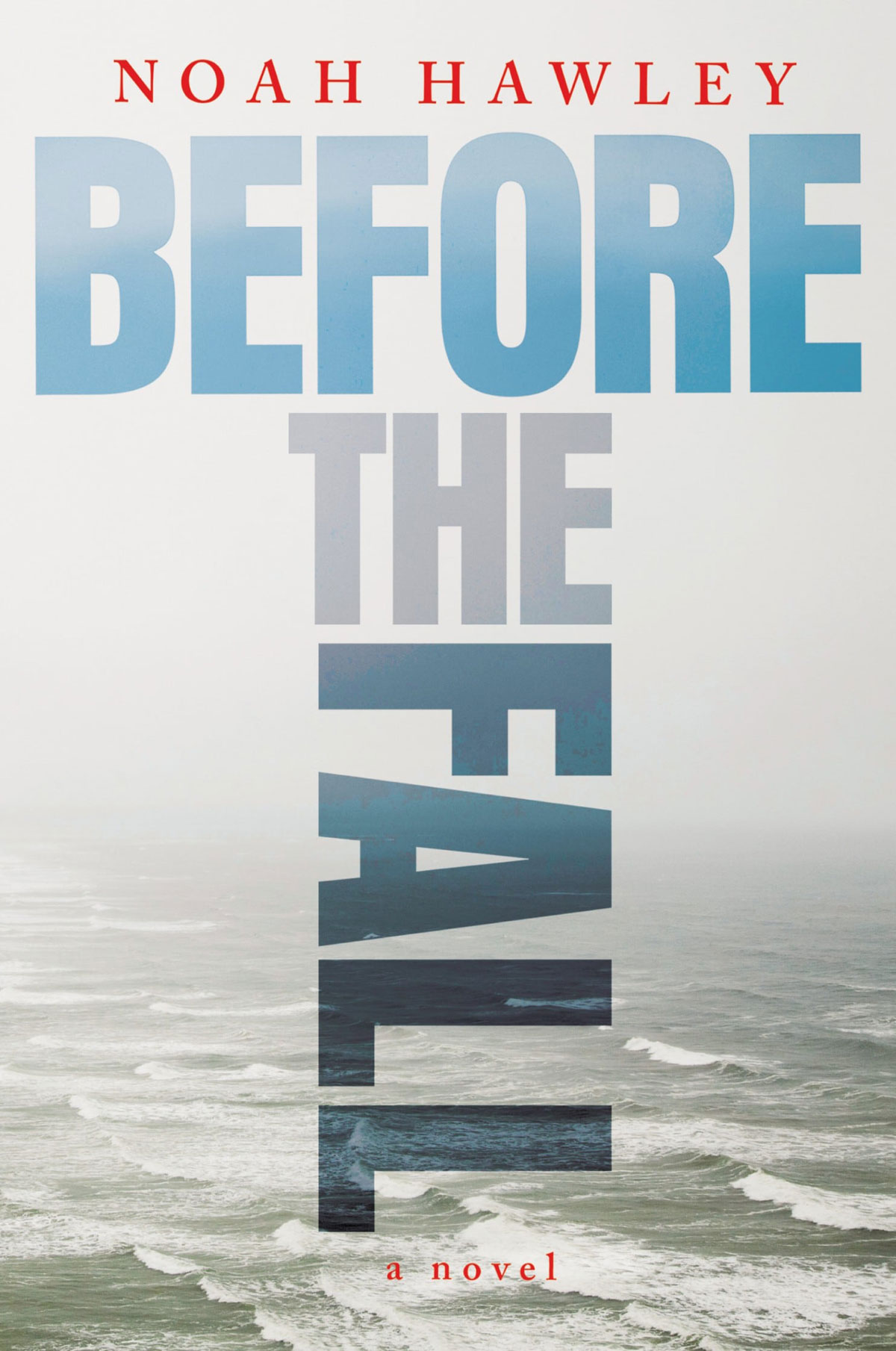
Before the Fall – Noah Hawley – “In the last town/You should have seen what I was/If I was a stranger/I was worse than a stranger/I was well-known…”

“My Snare – Nature is Ancient” – Björk

Take my hand, we’re getting out of the sad Smog times. Let’s go frolic in the woods, yippee!

Behind every incredible album is a bunch of singles that inexplicably didn’t make the cut. “Nature is Ancient” (later renamed “My Snare”) was recorded during the sessions for Homogenic, and sonically, it has that same slick futurism, imbued with hope, that made that album so iconic. But I can’t help but think that “Nature Is Ancient” feels like a Post track dressed in Homogenic‘s clothes. Its awestruck, upbeat descriptions of the nature of the natural world (no pun intended) feels like a sister to “The Modern Things” or “Isobel”—no matter the robotic dressing of the album, Björk will forever be a woman gleefully skipping through the woods and stopping to look at every flower and toadstool.

“Nature Is Ancient” is very primordial to me. The wet pulsations of the synths feel like the closest thing I can imagine to how it sounds when cells divide. I can imagine this track soundtracking the earliest evolution of life itself, watching single-celled organisms consume each other and evolving into multicellular life, wiggling around and developing eyes and feelers. With mischievous glee, Björk delivers the lyrics like she’s some sort of alien sprite giving a lesson to a lost traveler: “It’s wet in the middle/With a shell around it/It’s called ‘life’/It goes wherever it wants to/Don’t try to predict it/Then you’d offend it/It’s meant to surprise.” In spirit, it feels like the common ancestor of later, more naturalistic albums like Biophilia or Medúlla, but that reverence for nature and its mercurial qualities have been part of Björk’s DNA from the beginning.

…AND A BOOK TO GO WITH IT:

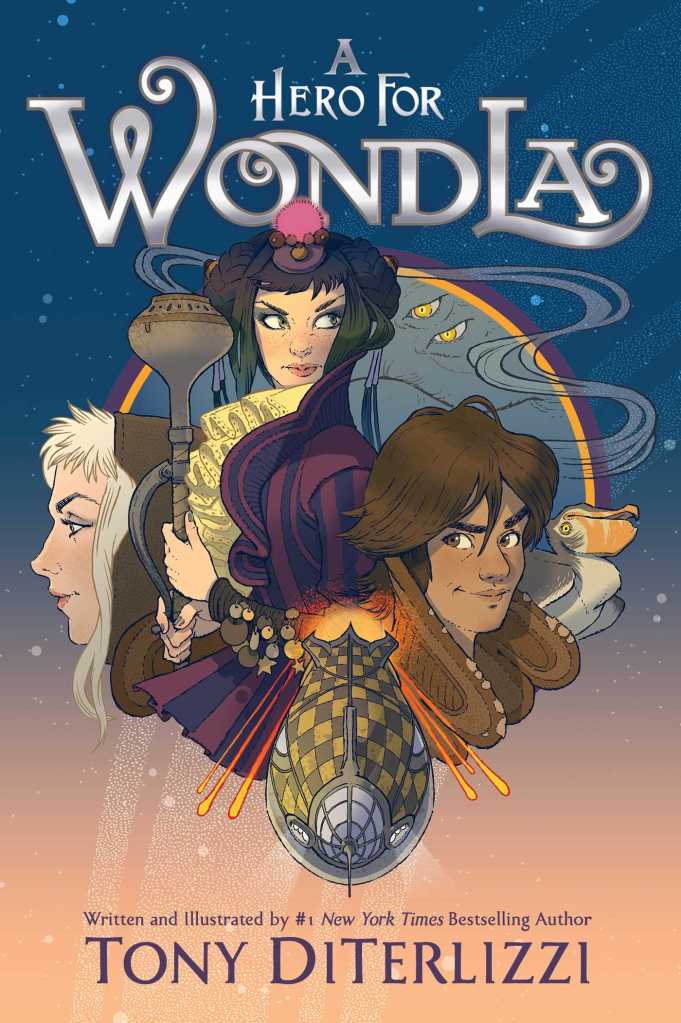
A Hero for WondLa (The Search for WondLa, #2) – Tony DiTerlizzi – tell me this isn’t what it sounds like inside of the Heart of the Forest with the Vitae Virus Generator…

“You and Your Sister” – Chris Bell

First things first: absolutely nothing against Chris Bell, but Kim Deal’s version with This Mortal Coil is better than the original. Here’s the thing: “You and Your Sister” is approaching perfect song territory, but you know what will instantly push a song even further in that direction? Kim Deal. You just can’t compete with Kim Deal. That’s just a fact.

That’s not to say that Chris Bell’s version wasn’t stunning on its own, though. I listened to the This Mortal Coil cover to death when I was in middle school, and I remember looking up the original, and being real put off by Bell’s voice. Sure, it’s not exactly conventional on this song—there are times when his rasp works better with more upbeat, louder songs with Big Star. But 10 years later, having been reintroduced to this song by surprise by my dad (as usual), something stuck me right in the ribs. I’m still not 100% warmed up to Bell’s voice, but half the time I hear “You and Your Sister,” I start getting misty. It’s just…pure. It’s been stripped down to the bone, leaving only the most essential, warm feelings of the romantic experience. The composition is, again, very simple, but everything is so impeccably placed: a swell of strings here, harmonies with Big Star bandmate Alex Chilton here, the flutter of a flute there. It’s innocent, but it doesn’t make an effort to be innocent: it just is. Between the ragged cracks in Bell’s voice and the stripped-down production, it feels as sincere as a love song can get: unafraid to sound unfinished to some, but wholly genuine as the sum of its unassuming parts. It’s just beautiful—there’s no two ways about it.

…AND A BOOK TO GO WITH IT:

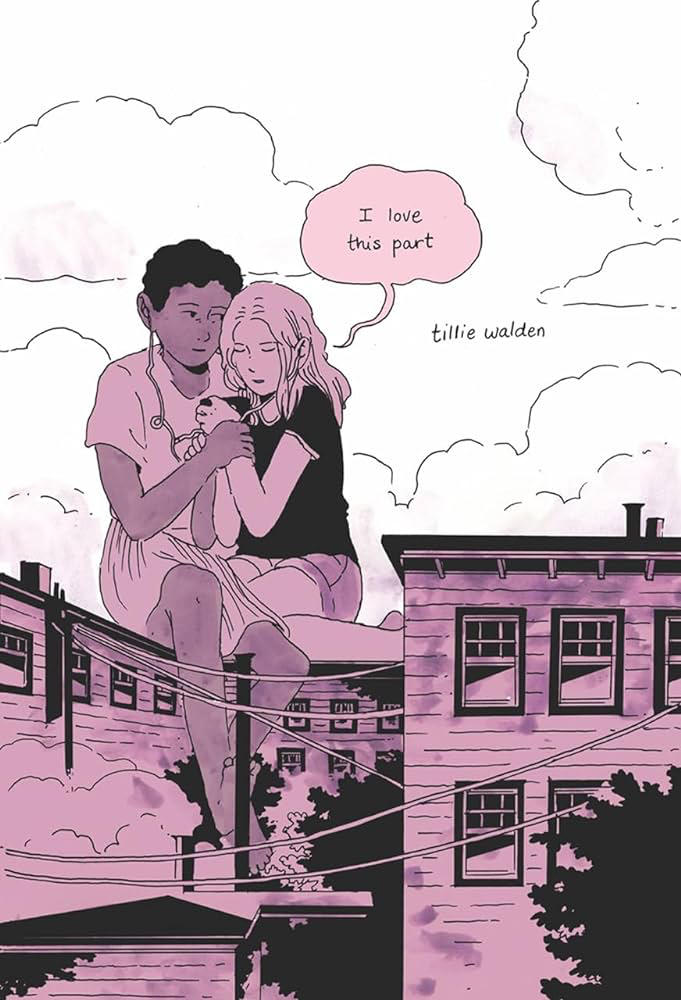
I Love This Part – Tillie Walden – similarly, a portrait of blossoming love that finds quiet profundity in the simple and mundane.

Since this post consists entirely of songs, consider all of them to be today’s song.

That’s it for this week’s Sunday Songs! Have a wonderful rest of your day, and take care of yourselves!
Posted in Sunday Songs

Sunday Songs: 6/21/26

Happy Sunday, bibliophiles, and Happy Father’s Day! At least half of the music that gets into these posts is from my dad, and sharing music with him is one of my favorite things, so thank you 🩵

This week: does anybody remember that Instagram account that was just toilets with threatening auras? Introducing my million-dollar idea, “Brian Eno songs with threatening auras,” which totally isn’t niche and would gain so much traction.

Enjoy this week’s songs!

SUNDAY SONGS: 6/21/26

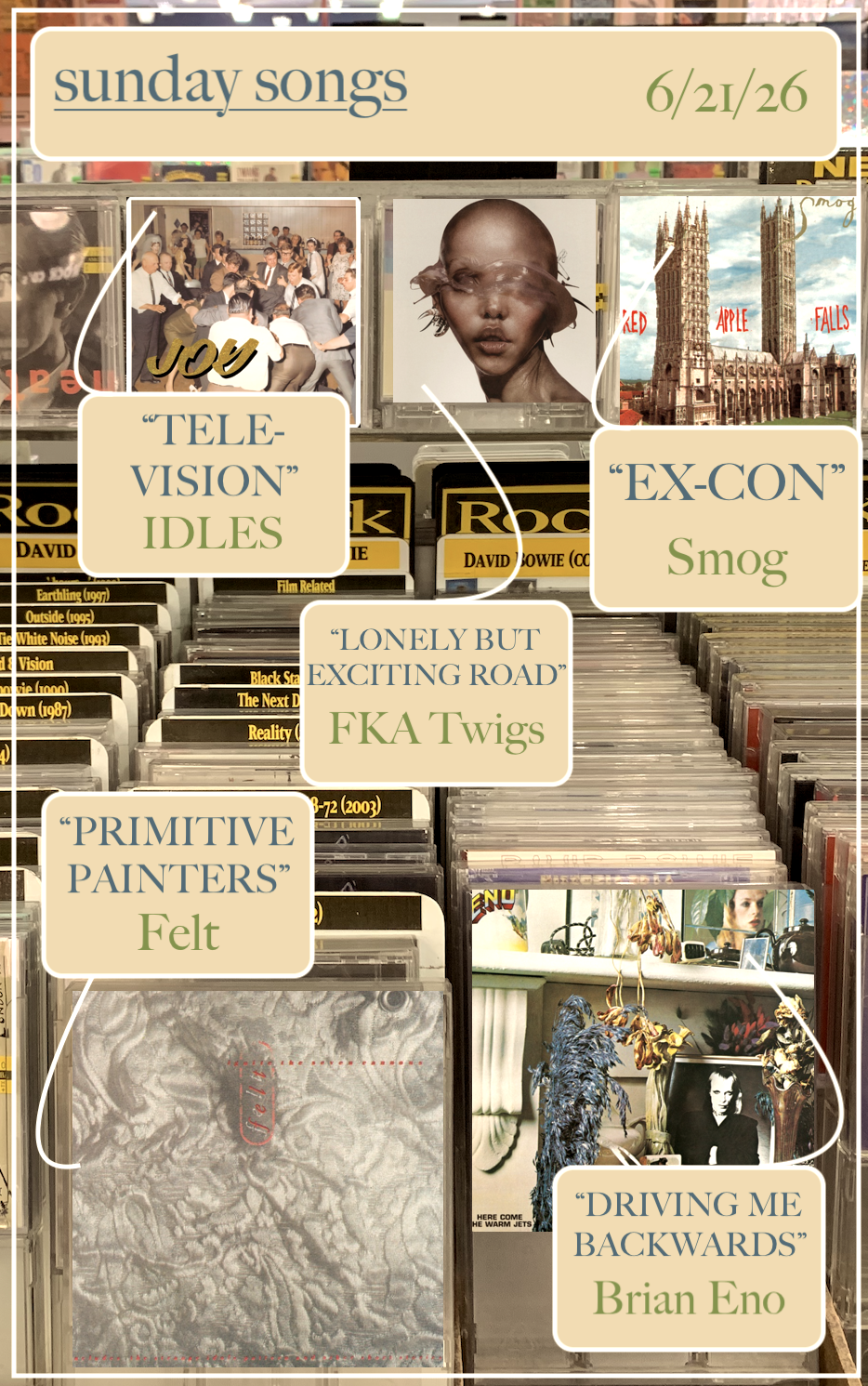
“Primitive Painters” – Felt

This one was a way-homer for me. I think it took me at least until a few months ago to really appreciate this song. When I was a kid, I remember my dad playing this in the car, and I think it just had that fatal combination of having droning vocals (Lawrence’s voice still isn’t particularly my cup of tea) and being over six minutes long. Perfect recipe for me zoning out and daydreaming about being in some fantasy world until it ended. Strangely, even when I’d just graduated from high school and my Cocteau Twins awakening had freshly happened, “Primitive Painters” still didn’t click for me.

Again, still not 100% on board with Lawrence—his voice has a very droning quality, and apparently he and Felt took a lot of influence from Television and Tom Verlaine, somebody else whose voice I also can’t bring myself to like. Everything about “Primitive Painters” is objectively so gorgeous that it’s easy to forgive. That guitar tone in the intro is so crystalline that it sounds less like a guitar and more of what I imagine how things would sound inside of a cracked geode. The dreamlike lyrics, according to Lawrence, spoke to “wanting to be in a select group…imagine groups of really cool kids hanging out in galleries, not pubs. That was my sort of conception,” which I never would’ve gathered; his visions of fire-breathing dragons and ships on empty seas would’ve lead me elsewhere. But it makes the defiant chorus of “you should see my trail of disgrace” even more defiant, becoming a confident flagpole planted in the dirt declaring allegiance to your own individuality. That brings us to what I think is the best part of the track—Elizabeth Fraser makes everything better, and her enchanting voice elevates “Primitive Painters” skyward.

…AND A BOOK TO GO WITH IT:

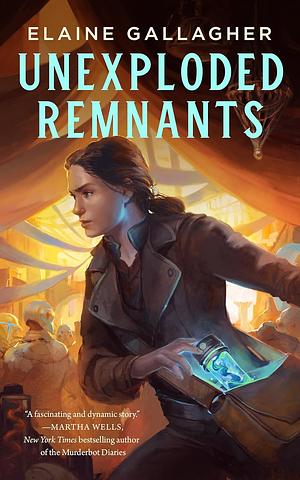
Unexploded Remnants – Elaine Gallagher – “I just wish my life could be strange as a conspiracy/I hold out hope but there’s no way of being what I want to be/The dragons blow fire, angels fly, spirits wither in the air/I’m just me I can’t deny, I’m neither here, there nor anywhere…”

“Driving Me Backwards” – Brian Eno

The other day, I was talking to my brother, who had finally listened to Here Come the Warm Jets on a plane ride. He didn’t like it as much as Taking Tiger Mountain by Strategy, which baffled me, until I remembered that he was listening to songs like this. This song could feasibly make me go apeshit if I was 30,000 feet in the air.

Terrible way to sell “Driving Me Backwards,” I know. I used to skip around it whenever I first listened to Here Come the Warm Jets too. But it came on shuffle recently, and it was flat-out hypnotic. From such a simple skeleton—Brian Eno built this song on “only three chords, each different from the other by only one note”—blooms what might be his most densely-packed and foreboding tracks. It really does feel downright menacing, what with said three chords played like a dirge on an out-of-tune piano. Robert Fripp’s guitar zips like blips of radar, but on the steady rhythm of the repetitive piano, it feels like you’re being marched to the edge of a cliff. None of the lyrics on this album have a ton of structure, and yet combined with the atmosphere of the song, I get this image of the most dreaded possible scenario of meeting the parents: in my head, it’s this ’50s-style nuclear family (“Meet my relations/All of them grinning like facepacks”) and the girlfriend they’re giving you permission to date traps them too (“Now I’ve found a sweetheart/Treats me good, just like an armchair.”) That repetition, something Eno used to all sorts of effects later on in his career, makes “Driving Me Backwards” feel like you’re being pinned to the wall, but agonizingly slowly—whoever’s doing it is making every second of anticipation sink it.

…AND A BOOK TO GO WITH IT:

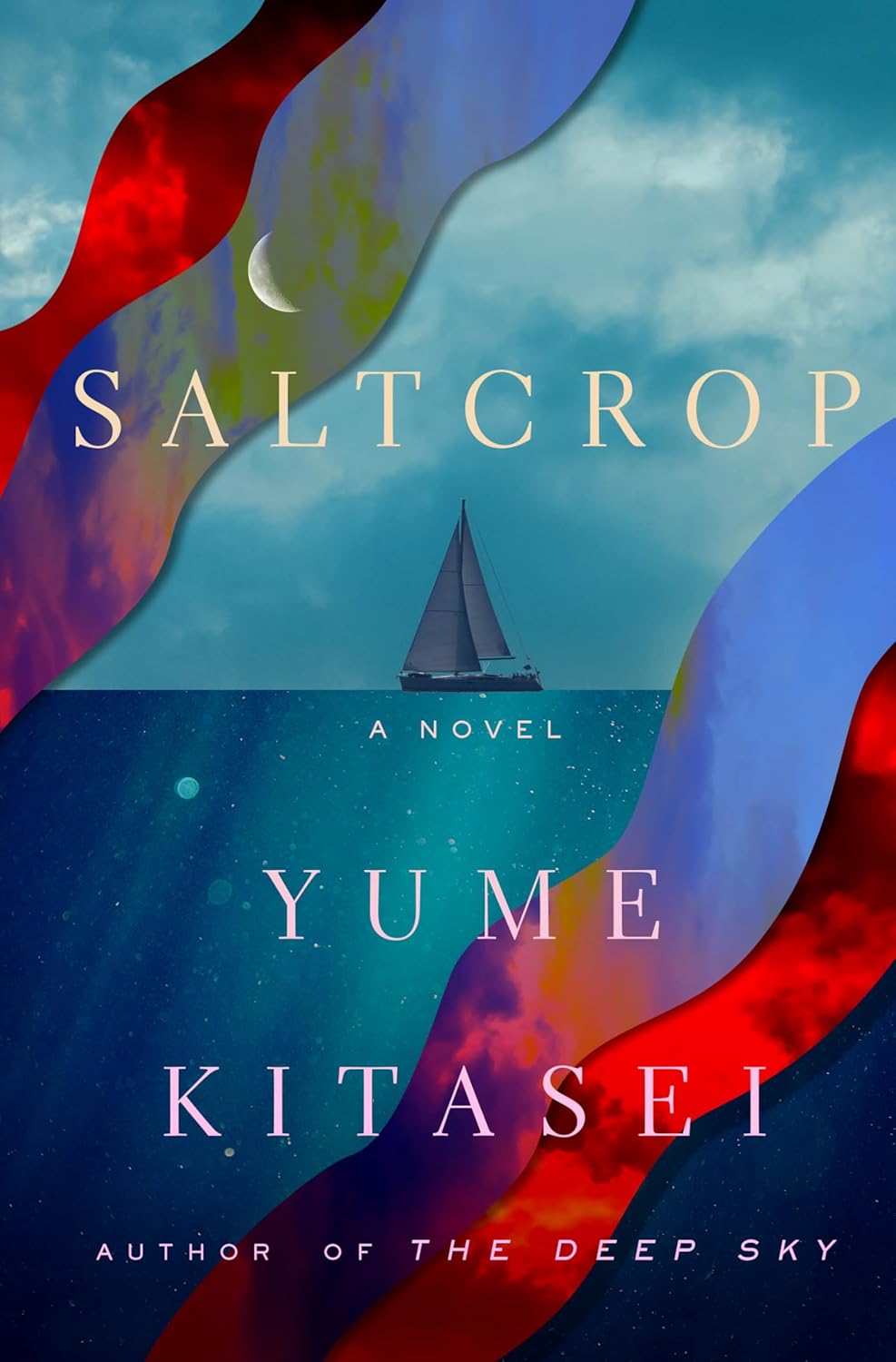
Saltcrop – Yume Kitasei – “I try to think about nothing/Difficult, I’m most temperamental/I gave up my good living…”

“Television” – IDLES

I still adore IDLES, and I feel like only something drastic will change it. But “Television” makes me sort of see where people are coming from with the criticism, because it’s basically the punk equivalent of this. And you know what? I’m completely on board. I think it’s so wonderful that IDLES has made a name off of having an aggressive, angry sound and image for the band, but making it into a Trojan horse for some of the most genuine and uplifting music out there. Self-love is very punk, after all, if you consider that, like Joe Talbot details in this song, that it’s tied to capitalism—companies want to make a profit off of you feeling inadequate and not looking like whichever models are in at the moment, and to reject that consumerism is very punk. It’s all worth it just to hear Talbot yell “LOVE YOURSELF!” in a tone usually reserved for wrestling announcers.

…AND A BOOK TO GO WITH IT:

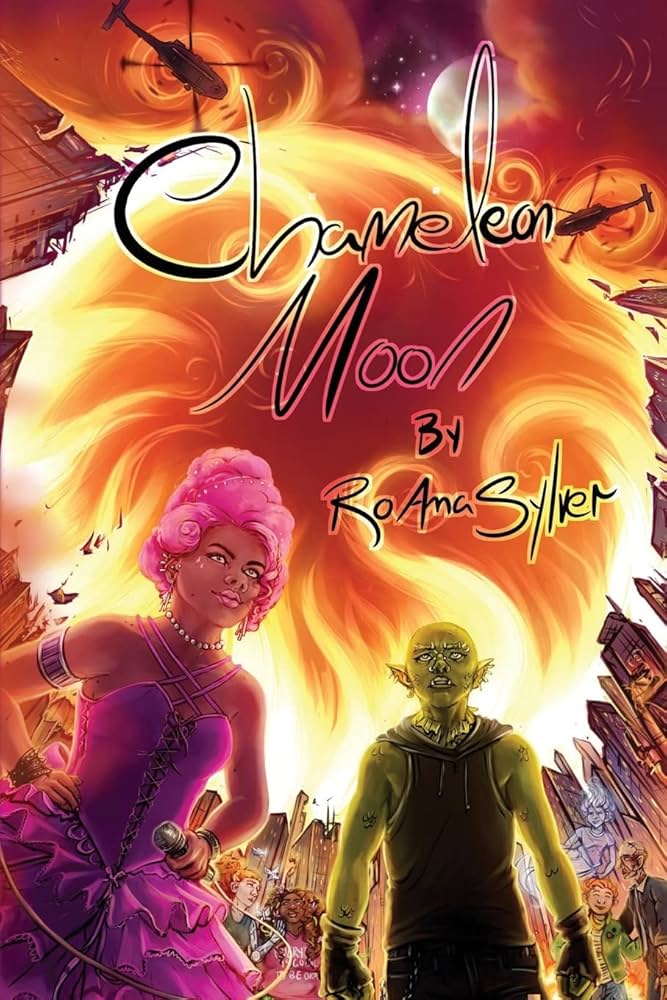
Chameleon Moon – RoAnna Sylver – “If someone talked to you/The way you do to you/I’d put their teeth through/Love yourself!”

“Lonely But Exciting Road” – FKA Twigs

I love a closing track that’s so clearly a Closing Track. Sure, a lot of the effort in it feels like it was put into being capital-A Anthemic, but for the most part, it works exactly as it should. Though I’m really not familiar with FKA Twigs and her work, she’s often lumped in with a lot of the weird women musicians that I admire—namely Björk, which makes sense, given that they’re both making boundary-pushing music that trends towards electronic. And nobody could be as weird as Björk, but like her, FKA Twigs is pushing through the embrace of exploring the adventure of being an individual and a trailblazer: “It might be heaven that’s coming my way/It’s gonna be a lonely but exciting road/And I’ll be finding myself on the way/It’s gonna be a lonеly but exciting road.” It’s such a beautiful sentiment, and the soaring, wordless section after the chorus reminded me of Kate Bush, another woman who paved the same path—it’s definitely got some “Cloudbusting” DNA in there. But for anyone, it’s such a hopeful sentiment, one that I’ve been trying to embody in the past few years, knowing that the path I’m taking with my life is unconventional, but wholly right for me. It’s so exciting that you forget about the lonely sometimes.

…AND A BOOK TO GO WITH IT:

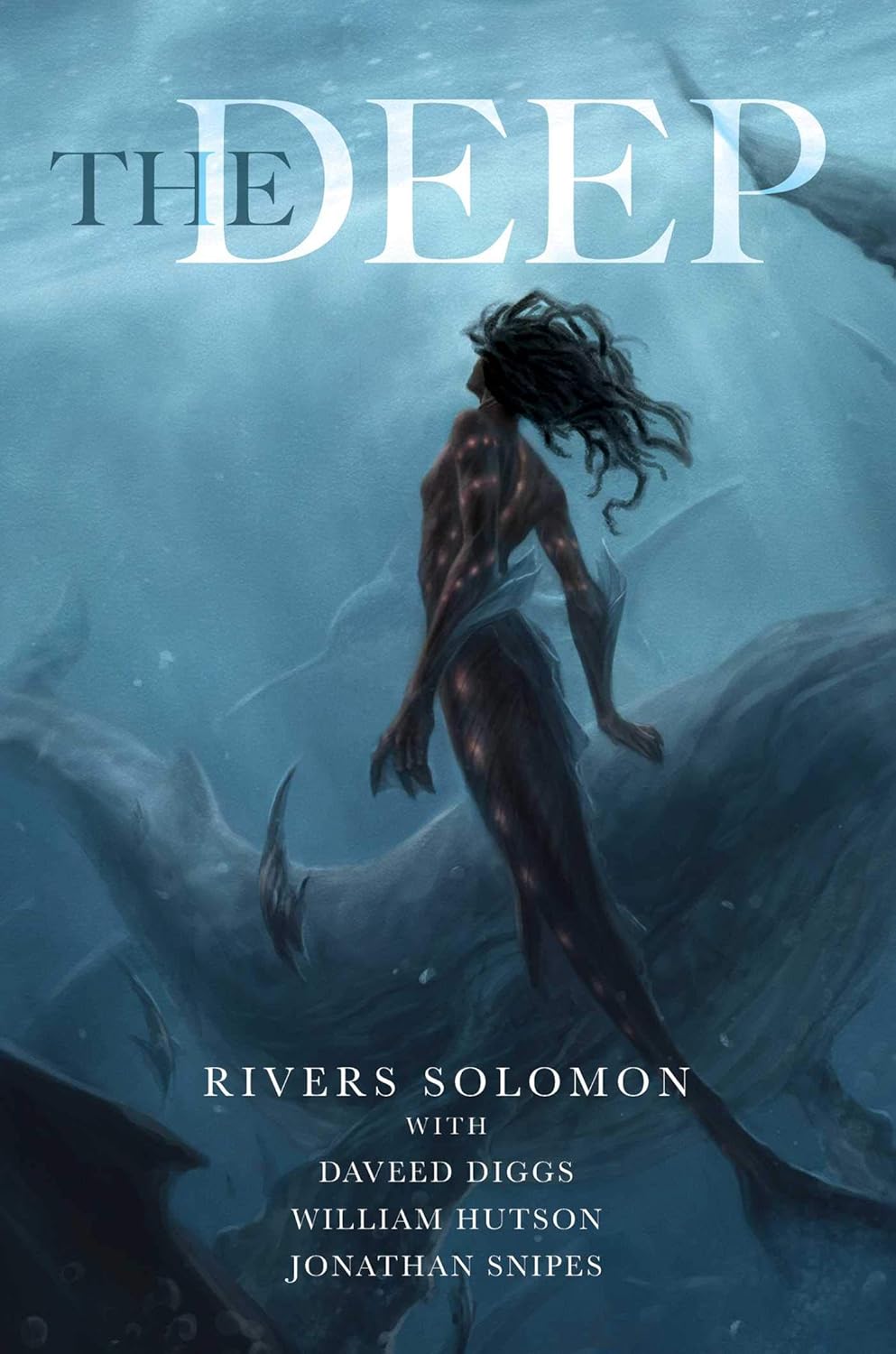
The Deep – Rivers Solomon – “So you make it up/In the hope that you’ll be something more than before/Be more than my mother was, no/Be more than her mother and her mother was/’Cause they say/’We gotta give to our children what we never was…'”

“Ex-Con” – Smog

At the worst of times, socializing feels like wearing a human suit; I’m hyper-aware of what I should say, what’s normal to say and what’s unacceptable, and the sheer effort of all that deflates me by the end of the day. (Being neurodivergent isn’t what it’s cracked up to be by people on TikTok, kids. I feel like neurotypicals are treating neurodivergence the way people threw around “anxiety” and “depression” in the 2010’s. Free me from this prison.) Bill Callahan seems to understand: “Whenever I get dressed up/I feel like an ex-con trying to make good.” “Ex-Con” is an upbeat track that belies a somber undercurrent of alienation beneath it—the paradox of feeling most at home alone in your room, but feeling the most out of place in the company of other people. The repeated final line about feeling “like a robot by the river/Looking for a drink” jumped out at me from the first listen, but it might be one of Callahan’s cleverest lyrics; to me, it speaks to the desire to be a normal, functioning, conformed person, but knowing that it would probably eat you up from the inside out. The water would probably short-circuit this robot if it were to drink it. The drink of water is just out of reach. “Ex-Con” is so poignant in that way—it’s such a gentle song, but it lays bare how the worst of isolation feels.

…AND A BOOK TO GO WITH IT:

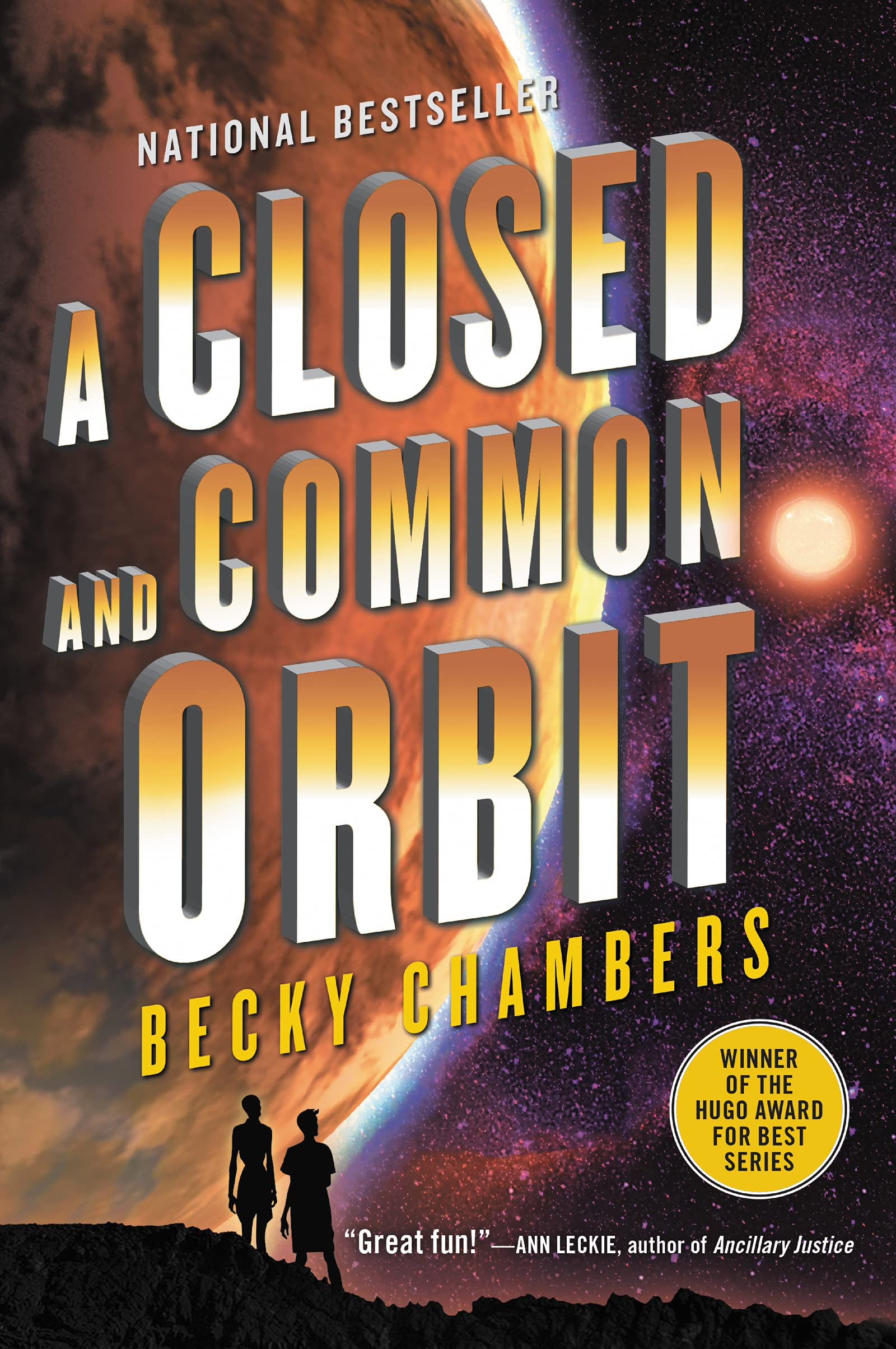
A Closed and Common Orbit (Wayfarers, #2) – Becky Chambers – “Alone in my room/I feel such a warmth for the community/Oh, but out on the streets/Out on the streets/I feel like a robot by the river/Looking for a drink…”

Since this post consists entirely of songs, consider all of them to be today’s song.

That’s it for this week’s songs! Have a wonderful rest of your day, and take care of yourselves!