Posted in Sunday Songs

Sunday Songs: 2/15/26

Happy Sunday, bibliophiles! I hope this week has treated you well.

This week: some of my favorite women in music getting unabashedly weird with it, the pioneering bisexuals of Britpop, and…crabs.

Enjoy this week’s songs!
SUNDAY SONGS: 2/15/26

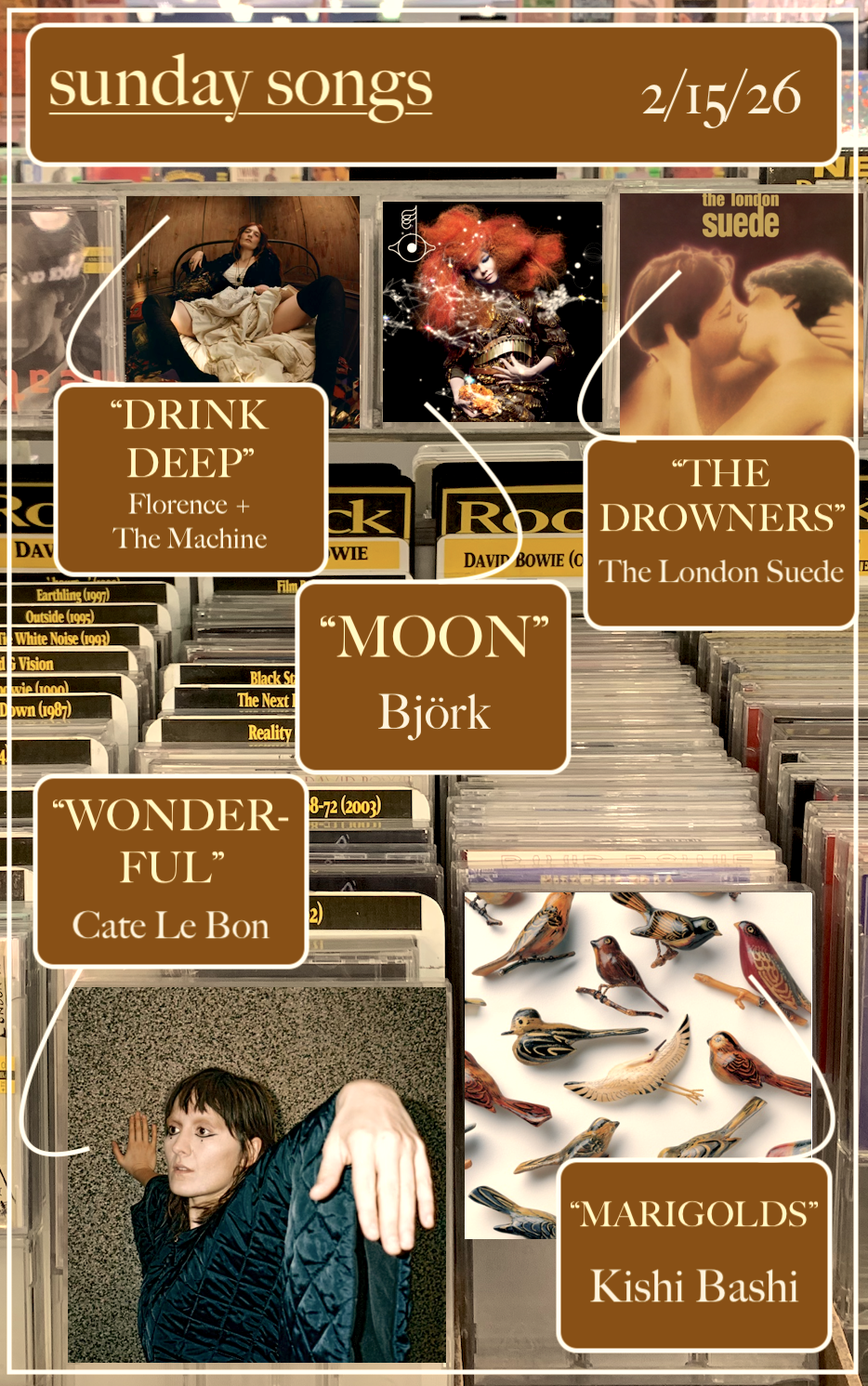
“Wonderful” – Cate Le Bon

In her review of Crab Day for Pitchfork, Laura Snapes said this about the album’s inspiration (Cate Le Bon’s young niece replacing the mean-spirited pranks of April Fool’s Day for Crab Day, where you celebrate by drawing crabs): “nonsense is often the best response to nonsense, that the constructs we use to prop up our lives are often totally arbitrary.” Le Bon has had a deep sense of absurdity, but Crab Day as an album is built all about taking ordinary things in our life to task, but also about being faced with the fact that half of the things in our lives are arbitrary, flimsy constructs. Some of it’s done gleefully, as in the creation of Crab Day, but for others, it’s more emotional—“I Was Born on the Wrong Day” came out of Le Bon’s mother digging up her birth certificate and admitting that they’d had her birthday wrong for decades. Crab Day, both lyrically and musically, explores the pain that comes from realizing that our world is built on the flimsiest stilts imaginable, but also the glee that comes with spitting in the face of them and embracing life’s absurdity.

There’s always been quirkiness surrounding Le Bon’s music, but Crab Day feels like the moment that the eggshell split open and she fully embraced offbeat, unconstrained creativity. That’s not to say that any of her earlier work isn’t creative—quite the opposite, having just listened to Mug Museum—but this album is where her current sound began to coalesce in earnest. It’s much more guitar-oriented than her more recent works, but it’s got all of the hallmarks of what’s become her signature style: artful blares of saxophone, offbeat lyrics, and slanted melodies and rhythms that read like the audio version of a picture frame hanging at a crooked angle. “Wonderful” exemplifies that crookedness, easily the most unfettered moment of weirdness on the album. The guitars scream Lodger-era David Bowie, and the lyrics of mid-’70s Brian Eno. But the fact that seemingly every commenter in the YouTube comments section has an entirely different band comparison as to what it sounds like proves how original Le Bon’s unique arrangement of elements is. With everything from the xylophones to Le Bon’s vocals at a breakneck pace, it’s an ode to being constantly in motion: “I wanna be your motion-picture film, oh yeah/I wanna be your ten-pin ball, ball, ball.” In the context of the album’s crusade to expose life’s absurdity, it feels like a concentration of her spirit throughout this album, but also her career at large: to be adventurous in all sorts of ways, and to be constantly be searching for a new way of setting creativity and weirdness in motion.

…AND A BOOK TO GO WITH IT:

Floating Hotel – Grace Curtisit’s difficult to match a song as singular as this to a book, since it’s so distinct; but if anything, this would match the bustle of a Wes Anderson-esque hotel in space.

“Marigolds” – Kishi Bashi

Realizing that Kishi Bashi had written a song named after my favorite flower was already an exciting revelation, but finding out how engrossing of a song it is made that discovery all the better. Tinged with both joy and melancholy, “Marigolds” surrounds cross-generational experiences, and bridging the gap of realizing that everybody around you has a complex inner life, separated by time, but united in the here and now: “It’s the realization that another person’s perception of the world is just as real to them as yours is to you, and that this humility is the first step in living in harmony on a planet that is ultimately made up of 8 billion parallel universes.” With that emotional core to the track, the field of marigolds couldn’t be a more perfect metaphor—each bloom appearing similar on the outside, but each one having a unique, complex makeup that can’t be seen from the outside. His usual lush string arrangements are layered in a glimmering swarm evoking the delicateness of flower petals and the ephemeral wingbeats of songbirds. Paired with a gorgeously animated music video by Geoff Hopkinson, featuring marigolds that turn into fantastical, jellyfish-like beings, “Marigolds” is an utterly transportive track, scented with pollen and wistful longing.

…AND A BOOK TO GO WITH IT:
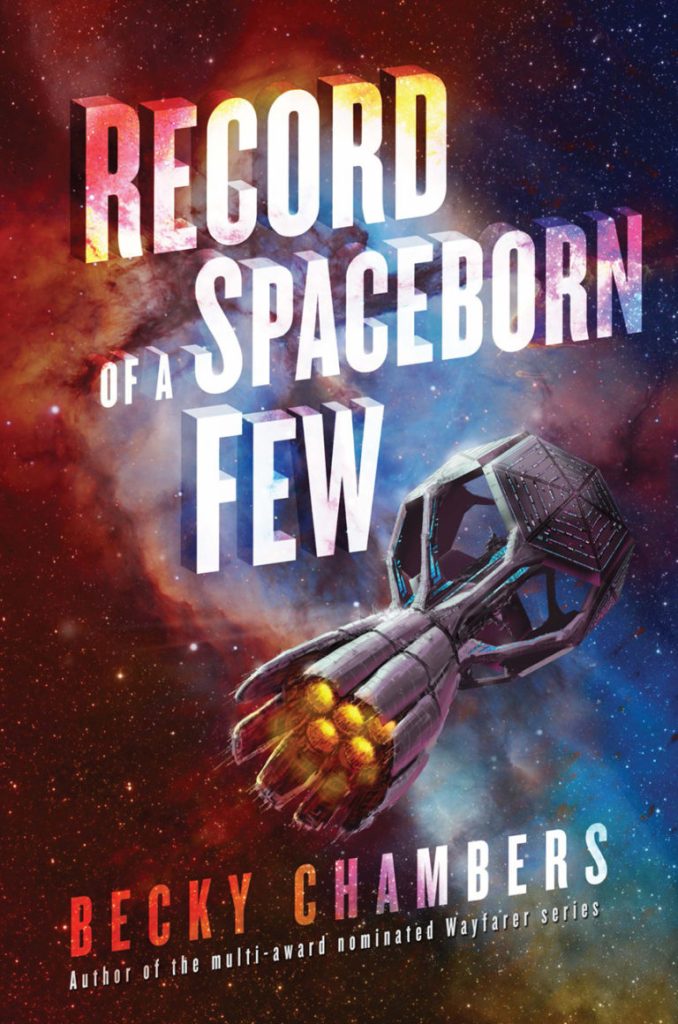
Record of a Spaceborn Few – Becky Chambers“I wish that I could grow up with you/I wanna see the world the way you do/I want to fall off the edge with you/I want to have fun with you…”

“Drink Deep” – Florence + The Machine

You guys, I’m sorry. Every time I hear a Florence + The Machine song, it’s described as some masterpiece that leaves permanent claw marks on your heart, and then I listen and I come back feeling…perfectly alright? I’m sure there’s something I’m missing, but some things just aren’t everybody’s cup of tea all the way. Objectively, Florence Welch has great vocal range, and I’ve never hated any song of hers, but I’ve also never thought to myself, “I need to listen to more Florence + The Machine.” Maybe part of it’s just that she’s been unfairly associated with the TikTokification of female rage (or, “female rage is when a woman sings loud and man is bad”) and “divine feminine” becoming a buzzword, but that’s not her fault at all. However, as I follow a lot of music publications online, I saw that Mark Bowen of IDLES was one of the producers on her latest album, Everybody Scream, so I was at least intrigued.

One of my dearest friends has been trying to convert me for quite some time (once again, SORRY), but I heard a snippet of this one, and I was hooked out of nowhere. It sounds almost nothing like any of her other songs I’ve heard. Again, Welch has a great voice, but I feel like a lot of her songs seem to rely on the strength of her voice in order to amp up the emotion, and the rest of the music doesn’t always follow. “Drink Deep” is more contemplative, but also, a lot eerier than I gave her credit for. Here, Welch translates her experience with her life passing her by as she’s touring (while everybody else moves about normally in their lives) as akin to being prisoner to the fae, trapped and ageless in their realm for hundreds of years while everyone else ages naturally: “What I thought was a night was a thousand years/What I thought was a sip was a thousand tears/But still, they said/Drink deep.” It devolves into a kind of Celtic-inspired folk horror where what Welch ends up essentially cannibalizing herself at the will of the fae—an apt metaphor for what the music industry puts its performers (especially women) through. The atmosphere of “Drink Deep,” with an ominous, thundering drumbeat, chimes, and a warbling choir reminiscent of Kate Bush’s “Rocket’s Tail,” evokes the passage into another, darker realm, a descent into an unbreakable deal made in blood.

…AND A BOOK TO GO WITH IT:
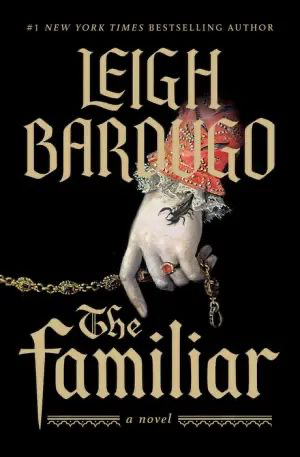
The Familiar – Leigh Bardugo“They gave me gowns and riches/Cut gold thread with their teeth/Every night I went to see them/No, I did not sleep/And every cup they brought to me/Oh, you know I did/Drink deep…”

“Moon” – Björk

Every time I mention Biophilia, it’s inevitable that I go on and on about the app—which is appropriate, since it is the backbone of the album. But I feel like you’re missing an entire chunk of the album if you don’t talk about the delicately constructed visual language of it—for me, you’re missing half the story if you don’t see the elaborate costumes and the artistry of the visuals. All of the music videos for Biophilia are showstopping, and the music video for “Moon” feels like the best introduction to the album’s aesthetic. Literally, it’s a moving version of the album cover, but the superposition of the moon phases over Björk’s body visually convey the lyrics and the concepts behind them. I love the jagged, glowing constellation-shapes surrounding her, both a map of the app and of a galaxy itself; and I cannot get enough of Björk’s costumes for this album cycle. That combination of her rusty, Mars-orange wig and the metallic shades all throughout her bronzy dress and the playable harp corset, against the stark black of the backdrop, are just such a memorable, cosmic color combination to me. The blue ringing her face and eyes brings out the contrast spectacularly. This is the epitome of a wholly realized creative vision brought to life. Granted, this is much later in her career, but it gives me some hope that maybe, in some ideal timeline, some of the projects that I’m envisioning can someday can get as much of my creative freedom inside of them as possible.

The best way that I can describe “Moon” is that I feel as though I’m listening to a perfect circle. Set in 17/8 sign to mimic the phases of the moon, the chorus of harps seem to circle each other, an elaborate, delicate Ouroboros that encircles itself forevermore. It takes a. rare genius to make a song sound like a shape, but that’s exactly the kind of musician that Björk is. Her mind!! Her MIND!! Having a lighter, more celestial tone for a song about the moon, a subject that often invokes more ominous, sweeping majesty or loneliness (see: Radiohead’s “Sail to the Moon,” Bachelor’s “Moon”) makes it stand out from its many, many peers; the instrumentation is so pearly and dewy, and her line about “adrenaline pearls” makes me think of “Cocoon” in the sweetest way. And more poignant still is how she relates these lunar phases to the phases we cycle through in life—”Best way to start anew/Is to fail miserably/Fail at loving/And fail at giving/Fail at creating a flow/Then realign the whole.”

…AND A BOOK TO GO WITH IT:

Activation Degradation – Marina J. Lostetter“As the lukewarm/Hands of the gods/Came down and gently/Picked my adrenalin pearls/They placed them in their mouths/And rinsed all the fear out…”

“The Drowners” – The London Suede

I think I just like 90% of Britpop. The only band in the genre that I’ve never liked is Oasis, and I’ve heard some argue that they’re not stylistically Britpop, but were just lumped into the genre because they blew up at the same time as bands like Blur and Pulp. I’m not sure if I can agree in good conscience just because I despise Oasis, but given what I’ve heard of them…it makes sense. Other than them, I’ve loved everything I’ve heard from the rest of the Big Four—and “The Drowners” is really convincing me that I need to listen to more of The London Suede.

At the forefront of every other explosive new subgenre, you will find a bisexual. The London Suede were one of the first bands to be called Britpop in earnest, and contributed a significant amount to its sound, although they were focused less on British social commentary and more on a dramatic, glam rock resurgence that recalled David Bowie’s storytelling and subversive sexuality and Morrissey’s literary-minded lyrics (and half-unbuttoned shirts). In their earlier days, they very much banked on the profitability and controversy of the queer imagery and lyrics in their band, as Bowie did back in the ’70s, from the lesbian couple on their self-titled album cover to Anderson’s obliquely queer lyrics and androgynous presentation. If he wasn’t bisexual, I’d honestly feel like it bordered on queerbaiting, relying on the shock value of subversive sexuality to make more money. But it’s not his fault, necessarily—God knows there’s legions of glam rock/metal artists from the ’70s and ’80s who glommed onto the queer aesthetics for the money it made them, and later disavowed queerness entirely. (Lookin’ at you, Alice Cooper.) Ultimately, The London Suede feel more like they’re indebted to English literary tradition to me—often queer, often subversive, and dramatically indulging in themes of class division and excess. That’s what Anderson and co. feels like to me, and “The Drowners,” with its cult of ambiguous sexuality, glamor, and wealth, feels like a worthy tribute.

…AND A BOOK TO GO WITH IT:
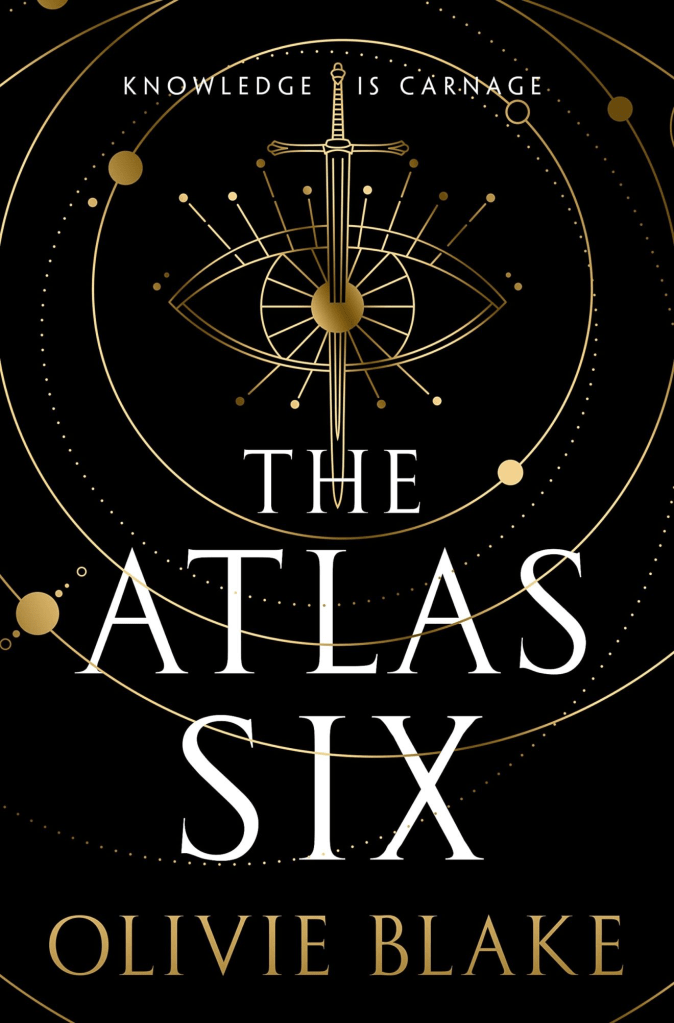
The Atlas Six – Olivie Blakethis brand of Britpop being big and dark academia being a major literary trend missing each other temporally is either a major blessing or a curse—they fit a little too well with each other.

Since this post consists entirely of songs, consider all of them to be today’s song.

That’s it for this week’s Sunday Songs! Have a wonderful rest of your day, and take care of yourselves!

Posted in Sunday Songs

Sunday Songs: 8/17/25

Happy Sunday, bibliophiles! I hope this week has treated you well.

This week: this semblance of a color scheme is hanging on for dear life, but I needed to talk about Biophilia IMMEDIATELY you must understand…

Enjoy this week’s songs!

SUNDAY SONGS: 8/17/25

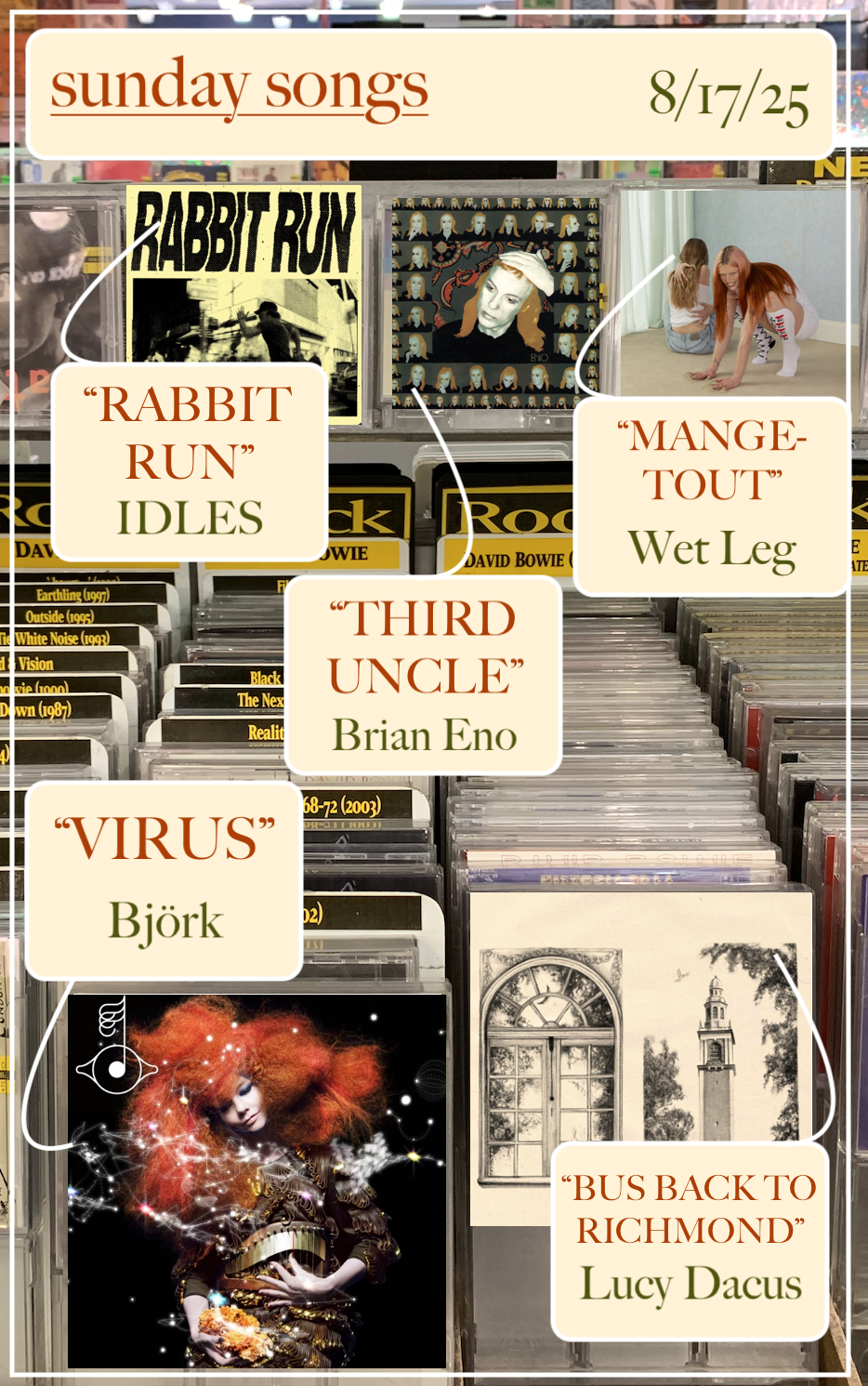
“Virus” – Björk

Another Björk album down! I was highly anticipating listening to Biophilia from the sheer conceptual layers of it; though the original app is now defunct, it still exists as a glittering piece of music and science education, reuniting our understanding of the sciences with the emotion that was always inherent to it. Whether it’s the structure of our genes (“Hollow”) to the phases of the moon (“Moon”), the ability Björk has to weave personal narratives of the rocky parts of healing with the natural processes of the world never ceases to astound me. Admittedly, Biophilia took me another listen around to fully get with it, but that’s mostly because being stuffy and lethargic from a nasty cold whilst the Amen break comes hurtling at you at 90 mph isn’t ideal. The artistry of…well, every single music video of the album never ceases to astound me. It would be easy for the concept to supersede the actual contents of Biophilia, but Björk never fails to pull the rug out from under me every single time. GOD.

“Virus” was one of the most delightful tracks from the album, so gentle, yet carrying a sinister undertone. Wreathed in tinkling chimes and gameleste, it uses a virus as a metaphor for a parasitic, one-sided relationship: “Like a virus needs a body/As soft tissue feeds on blood/Someday I’ll find you.” The virus motif sings sweetly, with Björk’s vocals as delicate and crystalline (no pun intended) as the icy instrumentals surrounding her, reminiscent of Vespertine. It makes itself indispensable (“Like a flame that seeks explosives/Like gunpowder needs a war”) as it sucks the life from its host, but never betrays its true intentions. Everything is hidden under the sweetness—as things tend to be in parasitic, codependent relationships, if we’re taking the more literal route with it. Even when she takes on the persona of a virus slowly killing a host, Björk’s vocals have never sounded more emotive and warm, only getting richer with age, something that time has proven since 2011. Though she uses that same voice to portray much more genuine and non-parasitic feelings throughout Biophilia, the beauty of her voice never ceases to entrance me, no matter the narrative delivery and what it’s hiding—which is exactly the point. It’s intoxicatingly sinister.

…AND A BOOK TO GO WITH IT:

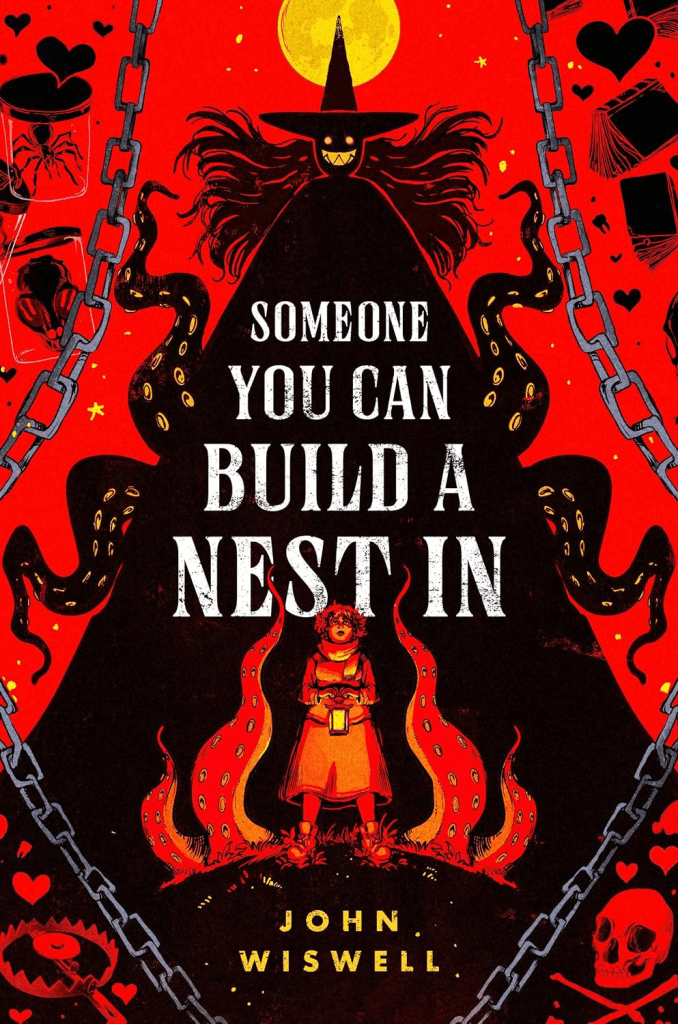
Someone You Can Build a Nest In – John Wiswell“Like a mushroom on a tree trunk/As the protein transmutates/I knock on your skin/And I am in…”

“Bus Back to Richmond” – Lucy Dacus

Nearly five months after Forever Is a Feeling came out (and about a month after Lucy Dacus got a license to start marrying people onstage…what a queen), I’ve cooled down slightly from the initial disappointment, even if only a few degrees. I still hold that it’s her weakest and most commercial album, but at the end of the day, it’s a Lucy Dacus album, and knock on wood, I’ve never encountered a bad Lucy Dacus album. I’ve warmed up much more to “Bullseye,” but most of the other tracks I wasn’t a fan of on the first listen have remained the same for me.

But not long ago, Dacus released two extra tracks that were meant for Forever Is a Feeling but were ultimately cut from the album. REJOICE!! She said that “Bus Back to Richmond” didn’t fit with the rest of the album, but to me, replace some of the weaker tracks with this one, and the album would’ve been more memorable. Though it falls instrumentally into the more introspective, acoustic side of her discography, “Bus Back to Richmond” is a soft, wintry ramble through missed opportunities and sparkling promises of the future. Dacus’ poetically observational lyrics shine in this one, from her descriptions of the “watercolor fireworks” bursting on New Year’s Eve and “eight of us left to the floor and the bed/and the futon that sunk in the middle.” In Christmas light-dappled vignettes, she paints with startling tenderness the coalescing of a future romance, the moments that slowly merged together to form something gleaming in the not-too-distant distance. Even in the heat of August, it feels like a woolen blanket wrapped around you as you stare at the embers of a crackling fire—the perfect winter song for summer.

…AND A BOOK TO GO WITH IT:

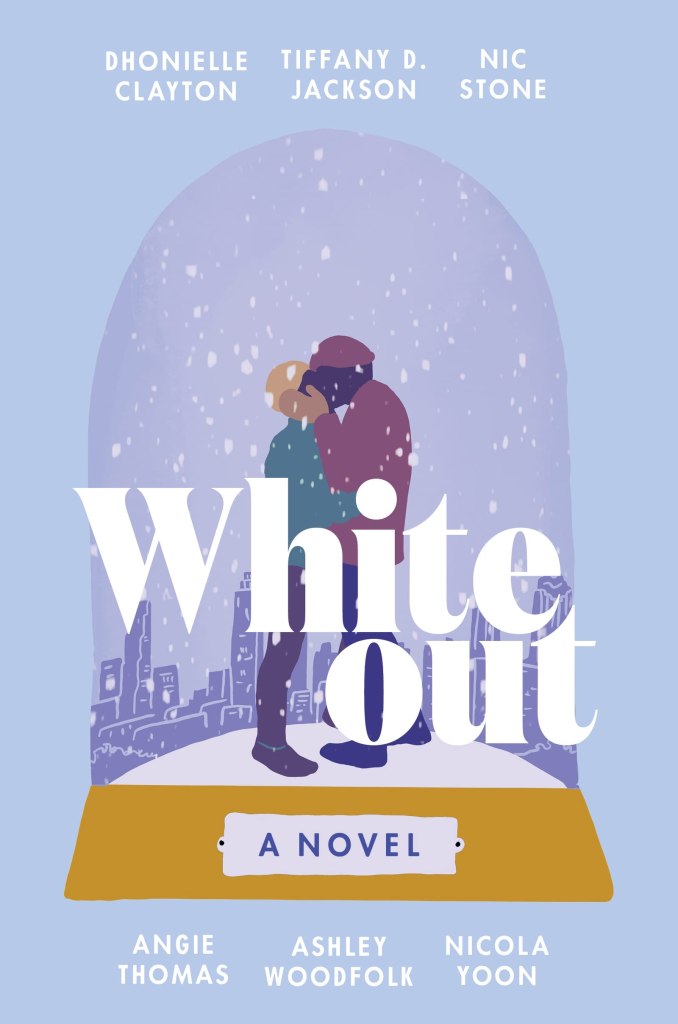
Whiteout – anthologyintertwining love stories that all converge in a record-breaking blizzard.

“Rabbit Run” – IDLES

New music from IDLES is always a welcome thing, but granted, it was quite disappointing that it was from the soundtrack for, of all things, Caught Stealing. I saw the trailer before seeing Superman (which was as wonderful as everybody has been saying it is. HOPE IS PUNK ROCK! I think Superman would love IDLES), and it basically just looked like a vague “punk rock” pastiche involving a slightly terrifying looking Matt Smith and a vague plot involving Austin Butler battling a bunch of ethnic stereotypes for…uh, reasons, I guess. Regrettably, the punk aesthetic fits with IDLES’ sound, and I hate to see them involved with something that looks so downright stupid, but…they do kind of fit the vibe.

“Rabbit Run” is one of four songs that will eventually appear on the soundtrack of Caught Stealing. Though it doesn’t seem to fall into the Arcane curse of “movie/TV soundtrack songs whose lyrics blatantly regurgitate whatever plot points they’re paired with,” it still feels restrained for IDLES; despite how cagey the lyrics are, it feels relatively free-flowing until the chorus kicks in. But the layers of Nigel Godrich-sounding production give it the perfect middle ground between slick and gritty, as do Joe Talbot’s vocals. The lyrics are certainly weaker than the typical IDLES far (“Beat you slow like your padre/Got you running like a jailbreak”), but when “Rabbit Run” hits the spot, it feels like the perfect score for high-octane chase scene, and a worthy display of Talbot’s vocal range.

…AND A BOOK TO GO WITH IT:

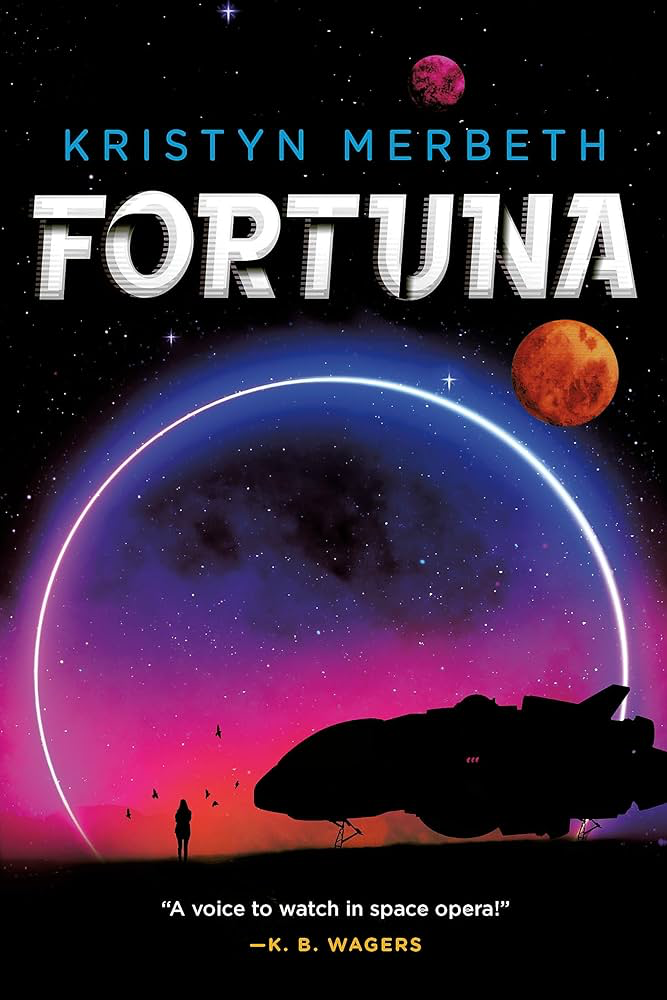
Fortuna – Kristyn Merbeth“Make way for collateral damage when I’m bored/Pick the scab on the arm of the beast til it’s ravaged when I’m bored/Oh so many things to do or not do when I’m bored…”

“Third Uncle” – Brian Eno

Today on “Madeline won’t shut the fuck up about Brian Eno,” we’re going back to the glammier days of the early ’70s. But in the case of this song, “glammier” feels like a misnomer, even though it’s placed both directly in the heyday of glam rock and Eno’s own heyday of his brand of glam rock. If it’s glam, it’s the zenith of uptight glam—it has the texture of touching guitar strings that are one wrong move away from snapping in half. It’s been wound up so severely that for all of nearly five minutes, it remains in the liminal space milliseconds before the tension breaks. With a thrumming bassline from Brian Turrington being the most freeform part of the song, every other part of “Third Uncle” is the music equivalent of squishing as many objects as possible into a box that will barely fit all of them—everything’s under the lid, but the seams are bulging. In the right mood, it’s energizing, and in the wrong mood, it’s borderline anxiety-inducing. To me, though, that’s proof that Eno’s rock experiment worked exactly as he calculated it: it’s an exercise in tension without release, only hints of freedom once the guitar swerves in one direction or the other. Even Eno’s nonsensical lyrics—a laundry list of items, some of which are burned—are uttered with the urgency of someone passing a secret code along through a burner phone.

Through this song, it’s easy to see just how much Eno’s influence spread. We mostly hear of Eno’s pioneering influence in the fields of glam rock, post-punk, and ambient music, but “Third Uncle” practically had a shockwave effect when it came to the early goth bands of the ’80s, starting in earnest after Bauhaus covered the track in 1982. It feels looser and less claustrophobic than the original, but it contains all of the trademark roughness around the edges carried over from Eno and into the grimier catacombs of what had just become goth. They achieve a balance of being hurriedly frantic (weirdly, I can hear the urgency of “It’s The End of the World As We Know It [And I Feel Fine]” in Peter Murphy’s vocal delivery) and yet mistier than looser than their forefather (or fore-uncle?), resulting in a rare cover that reinterprets the original way that somehow feels true to its original spirit.

…AND A BOOK TO GO WITH IT:

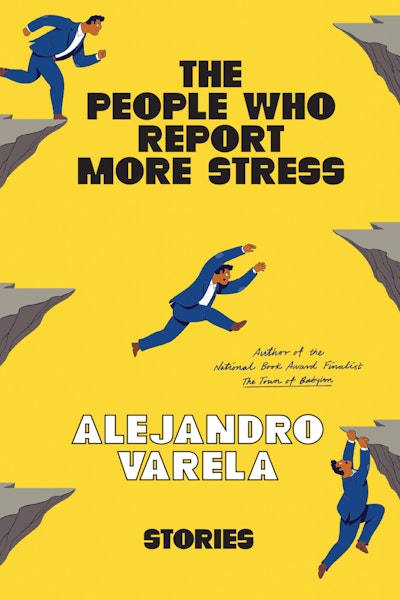
The People Who Report More Stress – Alejandro Varelaa series of interconnected stories who are as tightly-wound as the instrumentals of this song.

“mangetout” – Wet Leg

“mangetout” starts at about 3:59 in this video, but the whole Tiny Desk Concert is worth a watch!

I’m late to writing about moisturizer in whole by about a month; for me, it’s not making my hypothetical 2025 best-of list, but god, it’s such a fun album! Wet Leg have gotten even more energetic with their sound, never quite pushing the boundaries of their previous musical landscape outwards all the way, but introducing enough novelty to it that it feels fresh. It’s a perfect summer album with its glistening production and shouted lyrics. And honestly, anyone who shoves Oasis out of the #1 spot on the charts has an immediate seal of approval from me. Somebody had to humble those clowns.

Even though I’d already had a preview of “mangetout” from their Tiny Desk Concert, released days before moisturizer came out, for me, it represents the melding of where Wet Leg once was and where they are today. The lyrics could’ve come straight out of their self-titled debut, and though, admittedly, they’ve written this song in some variation at least four times, they always manage to keep it fun, whether it’s with the gleefully shouted end of the song that snaps away just before devolving into chaos, or the blatantly obvious but still hilariously random inclusive of the name “Trevor” just to rhyme with “clever.” (It’s a dirty job, but someone’s got to do it.) Of course, I know maybe…ten words tops in French, so I fully just thought they’d mashed together “man get out” into a single word, but as one of the comments says on this Tiny Desk, “there was always going to be someone to be first on the moon, and there was always going to be someone to be first to realize that the French word for sugar peas was spelled ‘man, get out.'” If anyone was to be trusted to deliver this knowledge accordingly, it’s Wet Leg.

…AND A BOOK TO GO WITH IT:

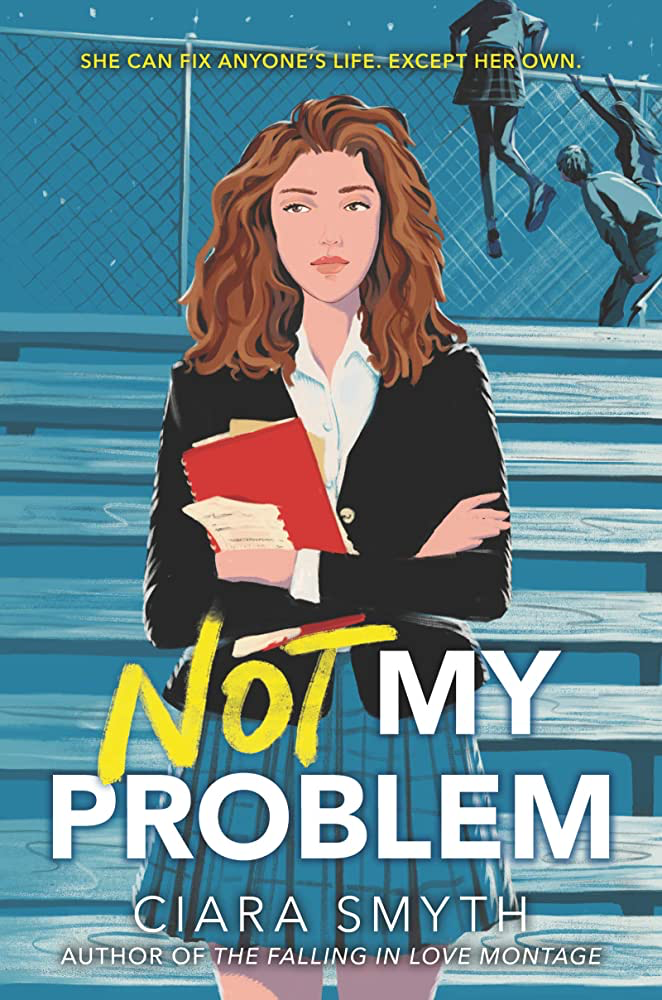
Not My Problem – Ciara Smyth“You think I’m pretty cruel/You say I scare you?/I know, most people do/This is the real world, honey…”

Since this post consists entirely of songs, consider all of them to be today’s song.

That’s it for this week’s Sunday Songs! Have a wonderful rest of your day, and take care of yourselves!
Posted in Sunday Songs

Sunday Songs: 4/13/25

Happy Sunday, bibliophiles! I hope this week has treated you well.

This week: your yearly dose of “Madeline blubbering about the unknowable beauty of the universe and also Björk (in no particular order.”

Enjoy this week’s songs!

SUNDAY SONGS: 4/13/25

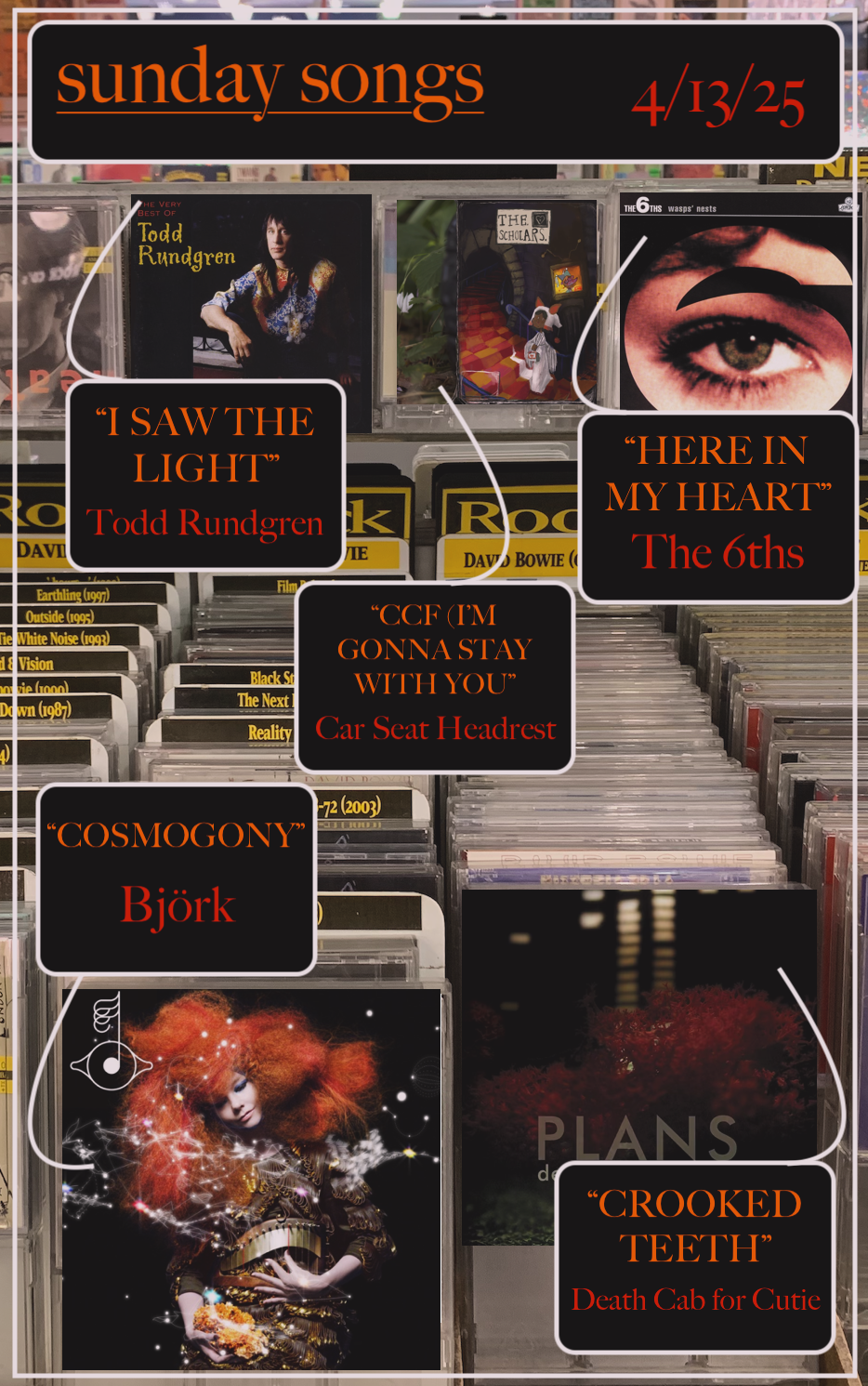
“Cosmogony” – Björk

Not to be dramatic or anything, but I am currently writing this through tears. Every time I pull up the live version of this from the Biophilia concert film, I start crying. Damn you, Björk, could you not carve out the softest, tenderest bits of my soul with a melon baller for once?

Maybe I am the soft, snowflake humanities major that Trump wants to extract from higher education, but I find I understand science best when you bring out its inherently human qualities. We went wrong when we perpetuated the stereotype of the sciences, and scientists by extension, as cold and removed from emotion, because to separate the two is to deny the connectivity of nature, of the universe, and of the particles that quite literally make up all of us. (Which is why SciAll is doing incredible work to humanize the field, and even better that my awesome brother is making content for them!! Shameless Todd family plug, now back to your scheduled program.) Sure, I do believe the stereotype whenever I pass by the absolute brutalist hellscape that is my college’s engineering building, but that isn’t representative of all of STEM. I’ve never gotten physics. I’ve never fully understood it, only bits and pieces. But the other day, I read a great book called Uncommon Measure, a memoir about time and music, which likened quantum entanglement—the way that particles just know how others around them will move—to falling in love with her husband while they learned to dance Argentinian tango in college, and trusting her body to remember the steps and the movements of her partner. Do I understand quantum entanglement any more? Slightly, but I’d still fail a course on it. But I’m on my way, because of that emotion. The moment we lose that connection between ourselves and the very makeup of our universe, we forget ourselves. Quite literally, ourselves.

Now that I’ve finished Sonic Symbolism, my Sunday Songs have admittedly become months of Björk worship in a trenchcoat, but getting this nuanced view on her music-making process has seriously invigorated me. I’ve yet to fully listen to Biophilia, but it’s high on my list. The album was conceived along with an app that aimed to teach children about music through concepts of science; for instance, chords and learning which chords work best with each other is demonstrated by a visualization of tectonic plates. And if that’s not enough, David Attenborough, THE MAN HIMSELF, recorded an intro for the app, which was also featured on the Biophilia tour. Though the app is sadly defunct, it remains a critical piece of Björk’s creative legacy, as well as a tool that was specifically shown to benefit neurodivergent children in learning these concepts. In the grand scheme of things, “Cosmogony” was the menu that held the rest of the app together, a screen where you could navigate to different parts of Björk’s simulated universe. (And even if that didn’t exist, the aesthetic language of the album, with Björk’s voluminous wig that’s the color of oxidizing copper.)

That fusion of the arts and sciences, as well as the inherent humanism that Björk brings to her craft, is what makes “Cosmogony” so special; the song details three creation myths from around the world (Miwok Native American, Sanskrit, and Aboriginal Australian), and she adds the Big Bang theory, which she jokingly referred to as “a creation myth that is 100 years old,” but pointed out that “all creation myths at the time of their making were science.” The song begins with a kind of transcendental choir that rises in pitch, mimicking the motion of eyes searching the stars. It’s the only music that has ever captured the feeling I often felt while taking an astronomy class last year. As I stared up at the planetarium, watching as simulations of the known universe expanded outward ad infinitum, I had this bizarre, incomparable cocktail of emotions—fear, wonder, and somehow, comfort. It’s impossible to feel a single emotion at the revelation that our universe is infinitely large and full of places we cannot even begin to reach or imagine, is it? Space is a cold, unwelcome vacuum, but it is fertile with endless possibility. And that’s where Björk punches me in the gut every time, dredging out the wonder, comfort, and ecstasy of being surrounded by billions upon trillions of stars and planets: “Heaven, heaven’s bodies/Whirl around me/Dance eternal.” I’d say somebody hold me, but I am being held. All of us are, by the arms of the universe.

…AND A BOOK TO GO WITH IT:

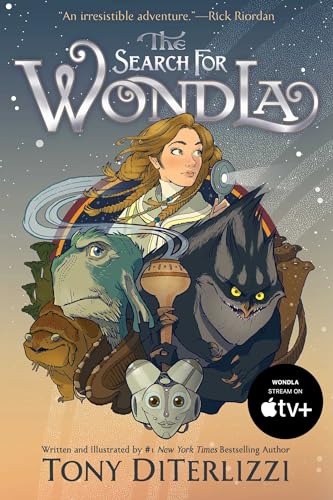
The Search for WondLa – Tony DiTerlizziI can easily imagine this as Eva Nine sees the Rings of Orbona for the first time, coming to terms with her own clashing creation myths.

“Crooked Teeth” – Death Cab for Cutie

Bring back those stop-motion, collaged indie rock music videos from the 2000’s! We lost something when that trend went away. They’re all so inventive and fun, and they all have that token darkly funny moment before going right back to silly little cutouts of floating astronauts and whatnot. (See also: “Can You Feel It?”)

Song lyric of the week, unofficially: “You’re so cute when you’re slurring your speech/But they’re closing the bar and they want us to leave.” This song is an absolute indie hit, and it deserves that status: a three and a half minute-long pocket of sad white boys, clever lyrics, and lovely harmonies. That’s probably why I found myself occasionally remembering the chorus of “‘Cause you can’t find nothing at all” every few years and forgetting the rest of the song. Shame that I forgot the rest, really, because that’s not even the catchiest bit. Admittedly, I find the “I’m a war between head versus heart” bridge rather corny compared to some of the more poetic bits of this song, but that’s because of how descriptive every line is. Ben Gibbard really knows how to make every line count, from the lyricism down to the precise inflection of each word. The way his voice creeps through the notes makes the expression “turn of phrase” make sense—every sentences seems to twist like vines. All of it becomes “the home in my heart” built with rotten wood that leads into the first chorus; much like the collection of landmarks that Gibbard describes, it’s a blurred, drunken stumble through a mutually destructive relationship that keeps losing its water, no matter how many strips of tape you put over the holes in the kiddie pool. Yet all of it is irresistible, as is the last dregs of romance that have drained out of whatever hot mess Gibbard is chronicling.

…AND A BOOK TO GO WITH IT:

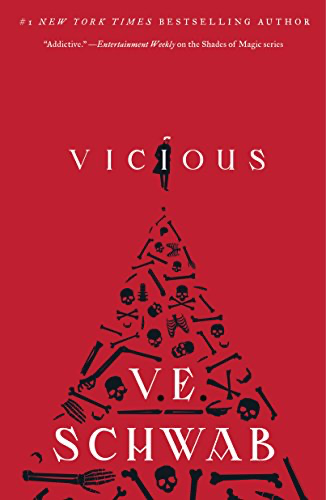
Vicious – V.E. Schwab“‘Cause I built you a home in my heart/With rotten wood, and it decayed from the start/’Cause you can’t find nothing at all/If there was nothing there all along…”

“I Saw the Light” – Todd Rundgren

There’s a sliding scale of what degree of early ’70s that I enjoy. On the one end, you’ve got glam rock: your Bowies, Bolans, Brian (Eno)s, etc. It all depends on that warm guitar tone. By the time you get here, you’ve got the guitar tone, but then you’ve inched into the same breath as Steely Dan, and…okay, that might be where I draw the line. (Admittedly, “Peg” is better than it should be.) That’s about when you get into that yacht-rock kind of cheese that I can’t quite stand. This one Todd Rundgren song, however…safe. Can’t deny how catchy it is, god! Another delightful tidbit of the ’70s I tend to enjoy is the pianos—I’m not sure if it’s the specific kind of piano or just the sound quality, but there’s something so charming about that tinny kind of piano that’s punctuates the background. Each bend Rundgren hits on the guitar strings feels like a sway of the hip, a twist of the leg striding across the dancefloor. Sure, he specifically meant for it to be a hit and not much else (and apparently cranked it out in 20 minutes while addicted to Ritalin), but it works perfectly as such. “I Saw the Light” has a joyful groove that’s been undeniable for 50+ decades, but exists in amber as nothing but 1972: smooth, romantic, and oh so bright in that guitar tone.

…AND A BOOK TO GO WITH IT:

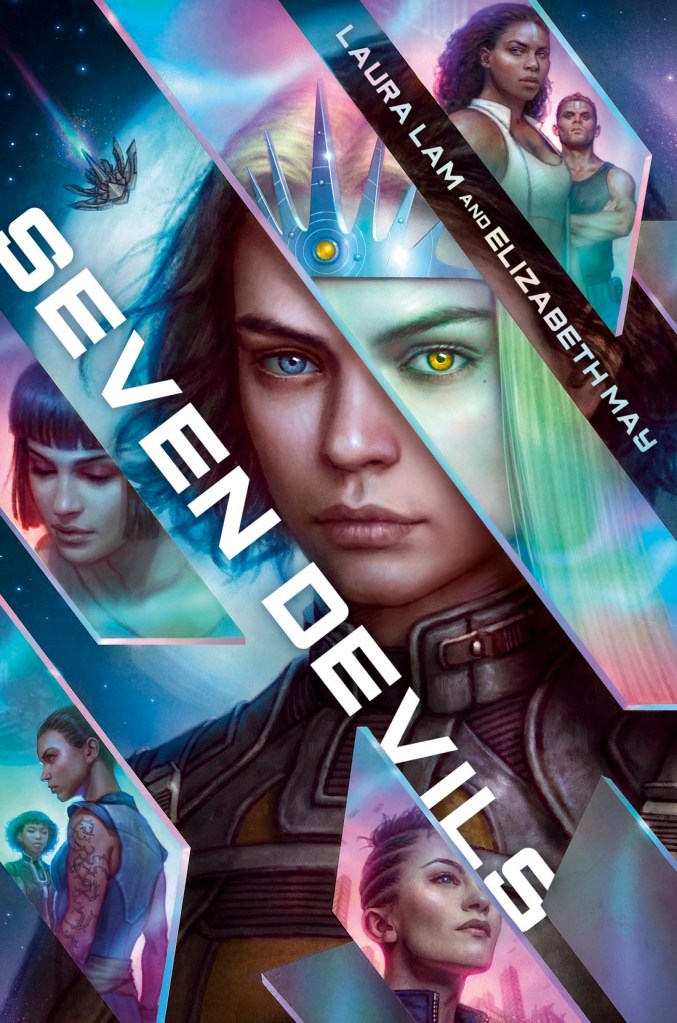
Seven Devils – Laura Lam and Elizabeth Maysongs with lyrics that are on the…more generic side (sorry, Todd) don’t give me as much rope, so it’s mood I’m going off of for this one, a messy, romantic space opera.

“CCF (I’m Gonna Stay With You)” – Car Seat Headrest

Car Seat Headrest is back, and they’re making obscenely long songs again!! Nature is healing!! (And apparently, these aren’t even the longest? The second to last track is purportedly 19 MINUTES LONG? “Famous Prophets (Stars)” has some competition…) So is Will Toledo, evidently—I’m so glad he and the band are taking it slowly on this tour (which I am SO elated to have tickets for), but I’m glad that he’s gotten to a place with his long COVID that he can make some more angsty masterpieces.

It really does seem like The Scholars will be some of Car Seat Headrest’s boldest work to date. Toledo conceived of this album as a rock opera, inspired by the likes of Tommy and The Rise and Fall of Ziggy Stardust and the Spiders from Mars, centered around the fictional Parnassus University. Each song centers around a student; the excellent, nearly 11-minute long epic of a single, “Gethsemane,” for instance, follows Rosa, a medical student who dabbles in necromancy and discovers that she can absorb the pain of others. Aside from said Gethsemane, Toledo also said that he was inspired by his own journey into Buddhist practices while he dealt with long COVID and his lifelong, conflicting feelings surrounding his spirituality. It’s an incredibly ambitious cocktail of ideas and about as spacious as a university campus, but it seems like the pent-up work of five years of not releasing any new material and the flood of ideas that I’m sure came along with it.

If there’s one thing that Car Seat Headrest has perfected the art of, it’s making album intros. They’re all about giving you that antici……pation, but the payoff is even more rewarding than the almost cinematic buildup. Even on weaker albums such as 2020’s Making a Door Less Open, “Weightlifters” had a kind of thesis about the album’s musical motifs, and on the iconic Teens of Denial, “Fill in the Blank” sets the upbeat, angsty tone with ease. “CCF (I’m Gonna Stay With You)” reminded me immediately of “Vincent” and its echoing intro, but what follows is an explosive display of the band’s collective talent. Toledo, Ethan Ives, Seth Dalby, and Andrew Katz’s synchronicity creates a soundscape deserving of a sprawling rock opera, and Toledo’s poetic lyricism is befitting of Beolco, the playwright character this song is written from the perspective of. Long COVID couldn’t beat the healing salve that is Will Toledo’s voice, which simultaneously retains notes of his youth but has undeniably steadied and matured. “CCF (I’m Gonna Stay With You)” has threads of Teens of Denial all over the place (aforementioned “Vincent” similarities, and the horns reminded me of “Cosmic Hero”), but something about it has an inherently spacious vision beyond the storytelling—this is a whole universe that they’ve created, and I, for one, am elated to discover it. MY BODY IS READY.

…AND A BOOK TO GO WITH IT:

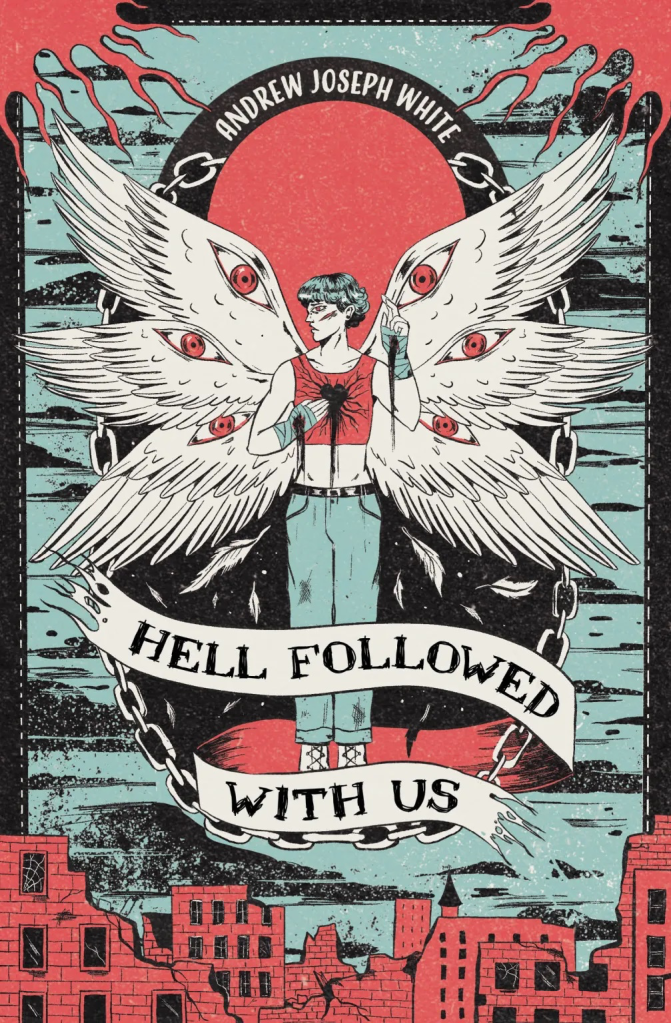
Hell Followed With Us – Andrew Joseph White – “When I come down off this cross of mine/A hairsbreadth apart and as far as the sky/Then back on my spine, there was a line that my idols crossed that I could not cross/On the other side is love, and right here is loss…”

“Here In My Heart” – The 6ths

Another addition to artists who cannot stop cooking: Stephin Merritt. Not only does he have some impressive vocal range and an excellent body of work with The Magnetic Fields, he’s a part of several other side projects—one of which, The 6ths, where he barely even sang, but just did arrangements and lyrics, and had a whole host of amazing indie artists sing for him. Dean Wareham (“Falling Out of Love [With You]”), Chris Knox (“When I’m Out of Town”), Mary Timony (“All Dressed Up in Dreams”), and Mark Robinson (“Puerto Rico Way”) are just a handful of the guests on this album, Wasp’s Nests. (However, he did sing himself on the also fantastic “Aging Spinsters.”) All of them are folded into the lovelorn synth tapestry that Merritt has woven, and though the voices vary, all of it is so distinctly him. The love (or love-related) songs he pens are usually of the lost love variety, but “Here In My Heart” is about as pure as they get; even if the love in question is far away, the yearning spills out of the chorus like thousands of butterflies. Every electronic twinkle glows warmly with love, the kind that makes your chest light up like in Fantastic Mr. Fox, but the glow never feels fake—it’s an ecstatic, crush outpouring that never loses its sheen. Anna Domino’s voice, as twinkling and delicate as the synths, blends in as a shimmering blot of light in the constellation of this starry-eyed love song.

…AND A BOOK TO GO WITH IT:

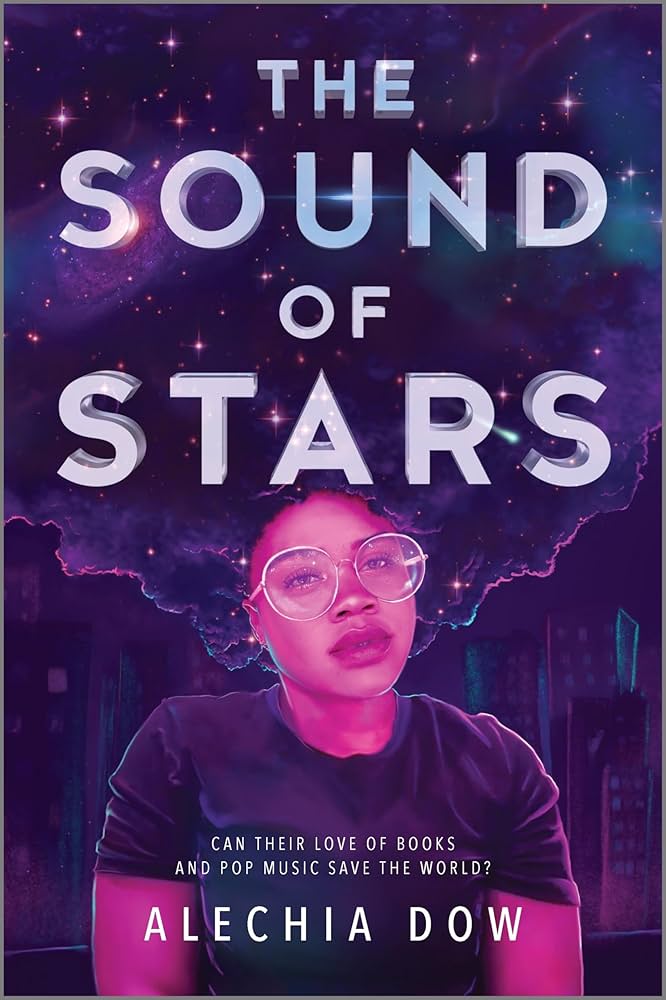
The Sound of Stars – Alechia DowThe lovesickness and synth textures fit with the hopeful joy of this novel.

Since this post consists entirely of songs, consider all of them to be today’s song.

That’s it for this week’s Sunday Songs! Have a wonderful rest of your day, and take care of yourselves!