Posted in Book Review Tuesday

Book Review Tuesday (3/18/25) – The Teller of Small Fortunes

Happy Tuesday, bibliophiles!

You know it. You know I’m all for cozy literature. I wasn’t particularly in a moment where I needed cozy fantasy, but these days, I love to space them into my regular reading rotation to keep things lighter, if need be. I’m usually more for sci-fi than fantasy, but I love a good fantasy every once in a while. The Teller of Small Fortunes wasn’t the best cozy fantasy I’ve read, but like a mug of tea, it was great for a momentary hug of warmth and love.

Enjoy this week’s review!

The Teller of Small Fortunes – Julie Leong

Tao is an immigrant from Shinara, making a living far to the west in Eshtera. She makes a living off of fortune-telling, but hers are not like the grand tales that people expect from those with Shinn heritage. But Tao’s fortunes have a catch: they are small fortunes, minor events that seemingly have no consequence, but will add up towards a life of crucial choices. She cannot stay for long in one place, lest these fortunes pile up and her customers start to expect more complex predictions. But when she crosses paths with an ex-mercenary and a thief-turned-poet on the road, Tao has to keep a promise to the fortune she gave them: they’re looking for a missing girl, and Tao knows that she’ll be reunited with them. What’s unknown, however, is how it’ll happen…

TW/CW (from Julie Leong): political conflict, death of a parent, parental neglect, racism, grief, alcohol

While The Teller of Small Fortunes wasn’t the best cozy fantasy I’ve ever read, if you’re looking for something sweet to tide you over, look no further! In the mood for found family, cats, spells, and wonky pastries? I’ve got just the book for you.

Given the crowds that I hang around with, it might surprise you that I’ve never actually played DnD. I’ve always been adjacent to people who are into it and frequently play it, but I’ve never played myself. By osmosis, I know enough about it to discern that anyone who loves DnD will absolutely eat up The Teller of Small Fortunes! Somebody with more DnD knowledge could probably sort each character into a class, but I’m illiterate in that department; yet even still, I can tell that it came about in the way that many DnD campaigns seem to: out of love and out of friendship. Leong’s cozy fantasy has the perfect balance of wholesomeness, levity, and more serious themes, and overall, it’s an ode to the friends we find in unexpected places. The contrasting personalities of Tao, Mash, Silt, and Kina made for a delightful found family with goals that often got in the way of each other, but twisted to form a journey across a fantastical land that taught them lessons about identity, friendship, and individuality. It’s just so sweet. Admittedly, it did border on a bit cloying at times (even for me, both with my cozy fiction proclivities and my merciless sweet tooth), but overall, cozy fantasy fans will be more than satisfied. Plus, there’s a cat. Automatic win in my book.

Tao’s character arc and the themes around it were the heart of The Teller of Small Fortunes. This novel focuses heavily on her immigrant identity, but it explored something that I haven’t often seen with these narratives. In order to make a living outside of her home country, Tao has to perform a stereotype—in her case, being a seer. She relies on this preconceived notion of her people all being able to see the future, and knows that she’ll be able to make money off of it, yet she tries so hard to make it define her. On the other side of the coin, there’s the Guild of Mages, who physically want to use her as a pawn, fitting her into their similarly superficial stereotype of what a magic-user should be. Yes, The Teller of Small Fortunes is very much a “be yourself” narrative (I will always hate Disney for making people trivialize this kind of message), but it’s one that’s complicated by the nuance of the aspects of Tao’s identity. For her, being herself is a lifelong fight, held up by several systemic forces of oppression. Her journey is a mental one just as much as it is physical, and it required the same labor, with a satisfying conclusion: the conscious effort by her to not let other people box her in.

However, the writing sometimes got on my nerves. For me, cozy fantasy can sometimes fall into the trap of being almost condescending in its writing style; it veers to strongly into the “and what did we learn today, kids?” kind of storytelling, even if it’s often aimed at adults. There is a marked difference between having a low-stakes plot and dumbing down the language for your audience. The Teller of Small Fortunes didn’t completely fall into making the language overly digestible, but every plot point and side quest (of which there are many) tended to have a very clear, obviously stated lesson that accompanied the ending. Even if said plot points were well-executed—which they often were, especially the scene with the phoenix egg—their impact was often lessened by the regurgitating of what the scene was meant to mean for the characters and the message, as if we couldn’t figure it out. I honestly didn’t mind that these plot points, especially the ending, were wrapped up in notably kind, easier ways—that’s almost a staple of cozy fiction, at this point—but we didn’t have to get their message shoved in our faces on a neon sign. Additionally, as a character, Kina also erred on this side of saccharine—she was sweet in the way that some cozy fiction characters are, but like the pastries she made, it got a little too sweet in a grating way.

I also found the worldbuilding to be quite generic. The Teller of Small Fortunes was one of those fantasy novels that took existing countries, copied and pasted them into the narrative, and added magic and mythical creatures; Shinara was clearly an analogue for China, which, while it was great for the themes of anti-immigrant sentiment and xenophobia, didn’t make for worldbuilding that was interesting or novel in any way. The same can be said for most of the other places that Tao and the gang pass through—most of them fell under the “vaguely European, I will not elaborate” curse that plagues high fantasy, and the only things that distinguished them, if any, were some of the exports/trades that they had. I will say that I loved the system of the Guild of Mages, and they served as great commentary for tokenization and a distant but tangible source of corruption in the world, but they didn’t have enough of a presence for them to have an effect on the world for me. It all felt very lackluster to me in contrast to the care that was put into the characters. I also would’ve liked more clarification on the regional magic. It’s implied through some of Tao’s background that magic is often associated with/endemic to particular regions (hence the stereotypes of Shinn people being seers/fortune tellers and whatnot), but we don’t get a clarification of whether or not the rule also applies to the surrounding regions.

Overall, a cozy fantasy that had lovely, poignant characters and themes, but was less fortunate in the worldbuilding department. 3.5 stars!

The Teller of Small Fortunes is a standalone and Julie Leong’s debut. Her next novel, The Keeper of Magical Things, is a companion novel set in the same universe as The Teller of Small Fortunes, and is slated for release in October 2025.

Today’s song:

That’s it for this week’s Book Review Tuesday! Have a wonderful rest of your day, and take care of yourselves!

Posted in Sunday Songs

Sunday Songs: 3/2/25

Happy Sunday, bibliophiles! I hope this week has treated you well.

This week: were it not for me yapping about Horsegirl earlier this week, this post would be unfathomably long…sorry. Stick around for my rambling hitting concerning levels the minute I have more free time.

Enjoy this week’s songs!

SUNDAY SONGS: 3/2/25

“Less Than You Think” – Wilco

Since A Ghost Is Born got its anniversary reissue a few weeks back, I took the time to listen to the album in its entirety for the first time…surprising, I know! That being said, I’d basically listened to all but two tracks on the album, but I hadn’t gotten to listen to it all the way through in the right order. After a childhood being fed Wilco by my dad about as much as I was fed milk as a baby (both were nourishing and necessary for my development), only two tracks remained: “Wishful Thinking” and this track. It’s songs like “Less Than You Think” that make me remember how much of a poet Jeff Tweedy is. I don’t say that about every singer; in the abstract, music is poetry set to song, but it doesn’t often feel that way. In this case, it’s understandable that the poetry of “Less Than You Think” gets lost in the other masterpieces in Wilco’s catalogue. But it’s not just a case of an underrated track—there’s a reason this one gets lost in the fray so often. For three minutes, it’s any normal Wilco song—one of their sadder ballads, but standard Wilco fare…

…and then you realize that there’s 12 minutes left.

That 12 minutes is entirely composed of a shrill, grating stretch of electronic droning and background noise from the studio. To say that it’s excruciating to listen to, especially with the volume up after listening to the actual song part, is almost an understatement. It’s unpleasant in every sense of the word. Yet that’s precisely the point. Not to be the “🤓☝️ erm ackshually, this nigh-unlistenable 12 minutes of noise has a deep meaning that’s essential to the understanding of the song,” but…it does. It’s unlistenable because it’s meant to be unlistenable—Tweedy and the rest of the band used this song to recreate the experience of having chronic migraines, a condition Tweedy has had all his life, but was exacerbated by his painkiller addiction: “I don’t know why anyone would need to have that expressed to them musically. But it was all I had.” Tweedy put “Less Than You Think” out anyway, knowing that it’d be “the track everyone will hate,” saying that “I know ninety-nine percent of our fans won’t like that song, they’ll say its a ridiculous indulgence. Even I don’t want to listen to it every time I play through the album. But the times I do calm myself down and pay attention to it, I think it’s valuable and moving and cathartic. I wouldn’t have put it on the record if I didn’t think it was great.” And he’s right. Being so experimental with this catharsis brings us so much closer to the experience than words ever could, as much as a master wordsmith as Tweedy is. Catharsis for a pain as profound as this doesn’t have to be listenable or tolerable to be worth putting out into the world—it’s catharsis, after all. Sure, I’ve skipped it every time I’ve listened to it since, but once again…that’s the point. We’re meant to sympathize with Tweedy’s pain, but even he admits that it’s not exactly easy listening. (Some absolutely diabolical individual in the YouTube comments called it “the best song to tee up on the bar jukebox right before you leave…” Satan, is that you?)

But that glorious, incandescent three minutes before you get the worst headache you’ve ever experienced? Deeply moving, in an entirely different way. They got me. They got me good with the sad bastard music. The piano is played with such a heaviness that you can only imagine it being played with lead weights strapped to each finger. Delicate taps of the dulcimer climb up an invisible ladder, each strike coinciding with Tweedy’s repetition of “Lightly tapping/a high-pitched drum.” And for a song that Tweedy knew would be an instant skip for most of his listener, he packed it with some of A Ghost is Born‘s most downright poetic lyrics:

“As your spine starts to shine
You shiver at your soul
A fist so clear and climbing
Punches a hole in the sky
So you can see
For yourself
If you don’t believe me
There’s so much less
To this than you think…”

Yeah, I pulled a Lisa Hannigan again. I’m tempted to just copy and paste all of the lyrics. Punches a hole in the sky? More like punches a hole in my soul, ow. Though the lyrics toy with the chaos of the universe and the clarity of realizing that maybe everything hasn’t been choreographed by a higher power, I can’t help but connect it with Tweedy’s migraines—all the talk of shivering and “Your mind’s a machine” sounds an awful lot how I imagine living with both migraines and addiction must feel: a cycle of dullness and excruciating pain, exposing how much of the brain has been devoted to going through the motions. As for the solemn resignation to atheism, it connects to that experience—it seems pain that immeasurable makes you either seek out or entirely swear off of religion without a happy medium. With or without words, Tweedy conjures a pain he had to exorcise from his person, yet is able to resonate if you’re willing to dig through the earth to find it. Sometimes you have to make art from agony in order to make the burden lighter, whether or not you give it to the world. In any case, Jeff Tweedy makes the pain worth weathering.

…AND A BOOK TO GO WITH IT:

Two Girls Staring at the Ceiling – Lucy Franktold in sparse verse, these two characters go through a similar pain as they work through chronic pain diagnoses in the same hospital.

“Big Time Sensuality” – Björk

Today, on: Madeline listens to Björk’s discography wildly out of order…we’ve come to Debut. It’s another one of those albums that I’d listened to about half of already, but it was just track after track of honed energy and happiness…seriously, this album couldn’t have come at a better time in my life. I think listening to Post about this time last year and Debut now feel aligned with my life in some way. A lot of Björk’s experience at the time was drawn from moving from Iceland to the UK in her late twenties, and being adventurous, putting out her feelers, and embracing the newness of it all, taking everything in (see: “Enjoy”). In some ways, I feel a connection to that kind of exploration. Now that I’ve shed most of the apprehension of freshman year (though definitely not all), I feel like I’m slowly beginning to grow into a new place, a new home, a new environment. I know I’m a little dramatic about that…I’m going to a college that’s less than an hour away from my hometown, so I can’t quite compare. But there came a time when I realized I was living in a whole new place, and I’d barely scratched the surface of everything in it. After the initial crisis, I’ve begun dragging my friends to whatever new place that I can find. Baby steps, but I’m slowly cataloguing new restaurants that I’ve tried. New routes to class. New coffee places on campus, now that Starbucks jumped on the DEI-stripping bandwagon. I’m not throwing myself headfirst into a new city, immersing myself in the early ’90s rave nightlife like Björk did, but I can’t help but connect to that apprehension, that excitement of really knowing you’re somewhere new, physically and emotionally. I’d do well to take it to heart the more I grow up.

“Big Time Sensuality” embodies Björk’s absorption of ’90s house music while in London, and even though it’s far from the weirdest part of her catalogue, you can’t take the weird out of Björk. Even amidst the house beats behind her, you can’t erase the skyrocketing highs and growls that, even for her firs solo effort, were already staples of her vocal style. Despite what the title would have you believe, there’s nothing necessarily sexual about it, yet it retains the ecstasy you’d think it would have. This ecstasy, however, comes from a common theme on Debut: reaching out and taking risks to soak the fullest out of life: “I don’t know my future after this weekend/And I don’t want to.” Its heart is imbued with the rush of friendship, throwing your passion into your music, and independence in a few environment: Björk told David Hemingway that the song’s inspiration came from “[Creating] pretty deep, full-on love relationships with friends…I can be a coward a lot of the time and there comes a moment when I write a song when I get quite brave.” “Big Time Sensuality” throws itself face first into uncharted waters, all with a dimple-stretching grin. Björk’s already diverse vocal range embodies the chorus of “It takes courage to enjoy it/The hardcore and the gentle.” And the music video, directed by Stéphane Sednaoui, embodies that daring joy, with Björk dancing on the back of a truck bed driving through New York City, baring her grin for all to see.

…AND A BOOK TO GO WITH IT:

A Closed and Common Orbit (Wayfarers, #2) – Becky ChambersLovelace’s journey of having a body, separating herself from her old identity, and being a part of the sapient world mirrors much of the eager excitement of Debut.

“I Am The Fly” – Wire

All the cool people like Wire. I’m not saying that to assert that I’m [snaps fingers] hip (that alone proves that I’m really not). It’s more that if you rattle off any creative, clever band from the past three to four decades, they all name Wire as an influence–Sonic Youth, R.E.M., and Soundgarden are just a handful of people touched by their music, and you can hear their genealogy in grunge, hardcore punk, and even Britpop. (Heavy on the Britpop. See Elastica’s “Line Up,” one of several songs that Wire took Elastica to court over claims of plagiarism.) Want proof? How about Wire playing with Jon Spencer and St. Vincent back in 2015? See what I mean? They’re the great uniters. All the cool people like Wire.

For all intents and purposes, Wire left their more punk sound behind with Pink Flag (see “12XU”), trading it for a minimalist, synth-dominated sound on Chairs Missing. To my ear, it sounds like the musical equivalent of brutalism; to the touch, every texture is rough as concrete, but every edge is sanded down to absolute straightness. Graham Lewis’ thick bass dominates the sound, rippled through with guitars, handclaps, and a wall of synth so dense that it becomes more percussion than the actual drums. I can’t help but hear some leftover punk not in the sound, but in the lyrics. Houseflies don’t sound particularly punk at first glance (nor does Graham Lewis’ apparent thing for writing about winged insects on this album)—they’re more for being stepped on by a pair of massive docs than the subject of a song. But yet, this simple animal becomes so deeply punk: “I am the fly in the ointment/I can spread more disease than the fleas/Which nibble away at your window display.” At its core, punk is has always been about disruption, whether that’s in the abrasive quality of the music or grating against the establishment. A fly is a fundamental nuisance, a tiny speck of a creature that, as the song says, spreads disease so easily, ripping up the threads in the fabric of something pristine and perfect. No matter how many swings you take at them with a flyswatter, they always come out, reproducing rapidly…just like disease, and just like resistance. Even with the dry intonation of the lyrics, it reads to me as a deeply proud song, a finger crossed behind the back and a smirk on the face as the time bomb counts down its last second. It’s a promise, and it’s a declaration of purpose: disturbance.

…AND A BOOK TO GO WITH IT:

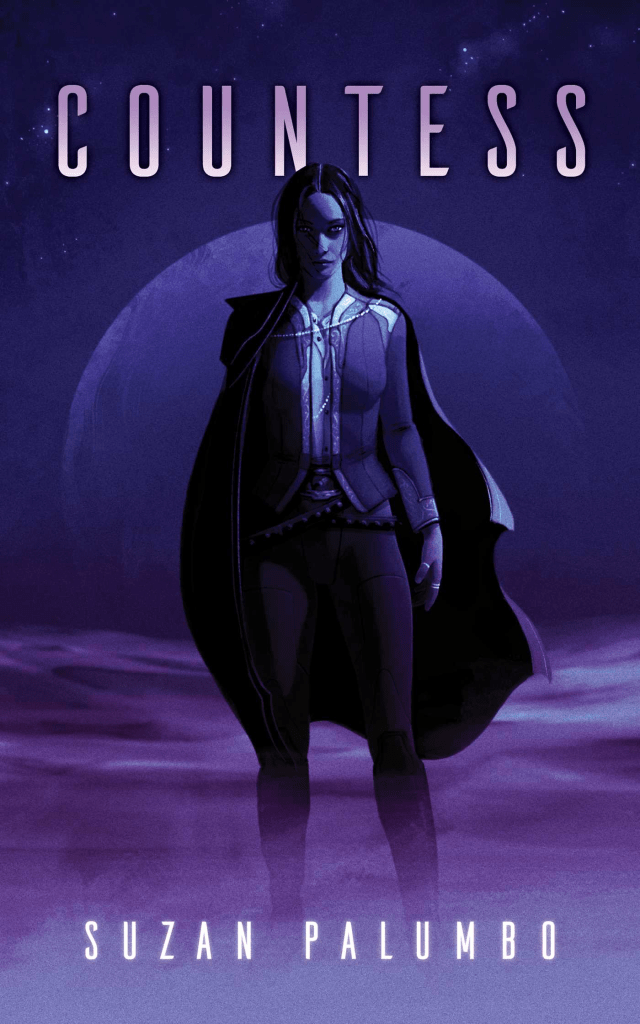
Countess – Suzan Palumbo“But there’s an air-pellet hole/I can crawl through to you/I am the fly in the ointment/I can spread more disease than the fleas/Which nibble away at your window display…”

“Frontrunner” – Horsegirl

See my review of Horsegirl’s new album, Phonetics On and On; bottom line, I LOVE HORSEGIRL. WE ARE BETTER FOR THEIR EXISTENCE.

…AND A BOOK TO GO WITH IT:

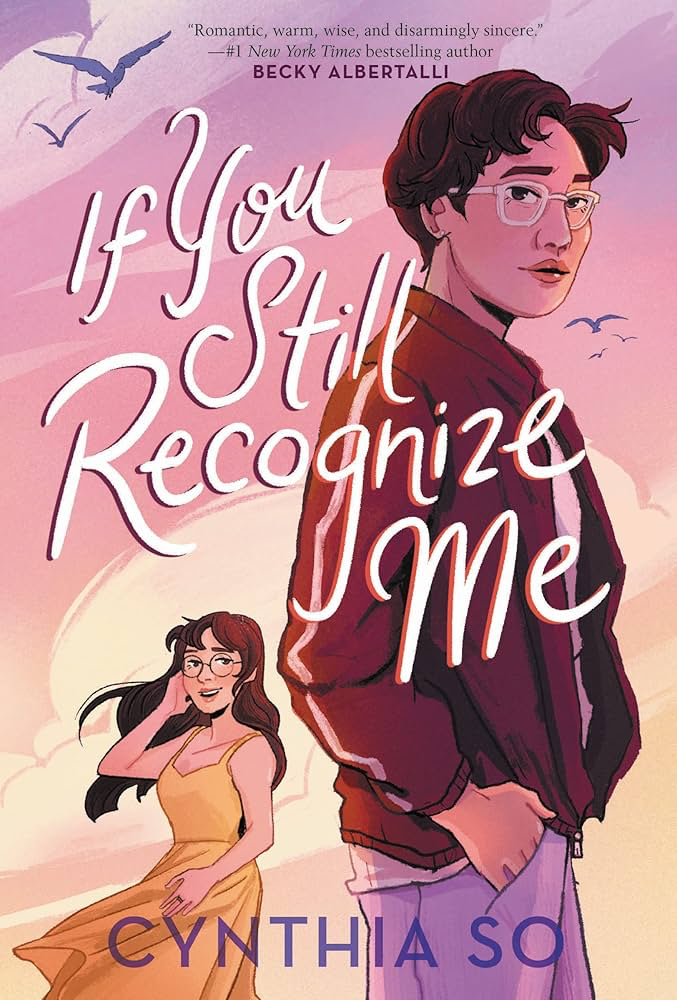
If You Still Recognize Me – Cynthia So“In the morning, when you’re sleeping/I can’t wait and I can’t wait to compromise…”

“Amelia” – Cocteau Twins

How does it feel? How does it feel for those of you with the right names to share a name with a Cocteau Twins track? For all of the Loreleis, Amelias, Beatrixes, Ivos, Carolyns, etc…do you realize how lucky you are?

Out of all of the Cocteau Twins songs I’ve heard, “Amelia” is one that embodies their general qualities the most, taken almost to an extreme. Regardless of whether or not I could hear the lyrics even if they weren’t nonsensical, they’re sunken so deep into the production that they become a kind of fog-like mist. The unmoored, bass-less flow of the track reminds me of something off of Victorialand, a record where bassist Simon Raymonde was notably missing. Liz Fraser’s vocals are as textural as ever, uttering a whole menagerie throat-fluttering bird calls amidst a barrage of gated reverb that descends upon you like the patter of heavy rain on a windshield. Next to some of their other tracks, it feels slightly less cohesive—the intensity of the gated reverb, reverb’d into high heaven as it is, doesn’t completely mesh with the airiness of the vocals or the other instrumentation. Somehow, it’s almost comforting—the Cocteau Twins stand out to me as a band who truly found their niche and stuck to it, digging in their heels to make that niche as unique and them as possible in the most artistic and adventurous way. Weirdly, it comforts me that it took them time to get their rhythm down, and even then, their earlier steps still blow me away. “Amelia” certainly does—the sheer variety of vocal styles that Fraser layers over one another is proof that even on a record that the band famously hated, their nascent talent couldn’t help but shine in its own way.

…AND A BOOK TO GO WITH IT:

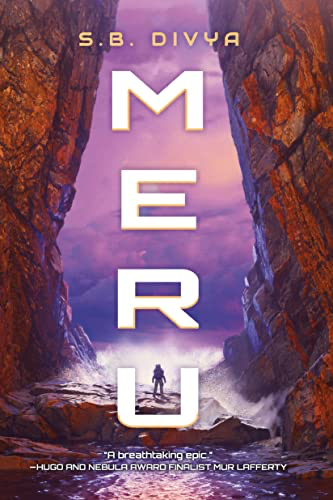
Meru – S.B. DivyaI can only imagine that the experience of being a god-like Alloy and floating in space sounds something like the Cocteau Twins.

Since this post consists entirely of songs, consider all of them to be today’s song.

That’s it for this week’s Sunday Songs! Have a wonderful rest of your day, and take care of yourselves!

Posted in Monthly Wrap-Ups

January/February Wrap-Up 🚍

Happy Friday, bibliophiles!

Man, time to do wrap-ups? Barely, but I have some time on my hands and there’s nothing I love more than organizing my reading stats into bulleted lists, so why not? (The only reason I’ve been able to make this many posts this week is because most of them were started several weeks prior, but I digress.)

The past few months have been strangely calm, if you set aside…well, everything that’s been going on lately. I don’t think I have to explain. I’ve been working really hard to try and be as levelheaded as I can in the face of all of these crises. Levelheaded and hopeful. Neither of these mean ignorant bliss to me—I’m continuing to speak up when I can, read what they don’t want us to read, and put my money into places that respect my existence. (wink wink, nudge nudge…hope everybody who was financially able participated in the economic boycott today! 😉) Miraculously, this semester has given me the space to work at practicing that—I’ve had a lot more free time (almost an alien concept after last semester), so I’ve been working at putting my energy into what counts, mainly being creative and feeding my soul. I finished the first draft of book 3 in the sci-fi trilogy I’ve been working at since I was 16 (!!!!!!!!!!). I’ve tried to take up knitting. (Unsuccessful so far, but I’m trying to keep at it), and I’ve tried to draw and read when I’ve got the time. That, and getting on the mining grind in Minecraft and being paralyzed as Severance consumes every waking thought I have. GOD, what a show. All this is to say that this isn’t a straight journey—I’m by no means a master at being levelheaded and balancing work with creativity, but I’m trying to learn from my mistakes. All you can do is try.

JANUARY READING WRAP-UP

I read 15 books in January! In the gap between winter break and the start of the spring semester, I read some fantastic books, from whimsical graphic novels to classic sci-fi hijinks.

2 – 2.75 stars:

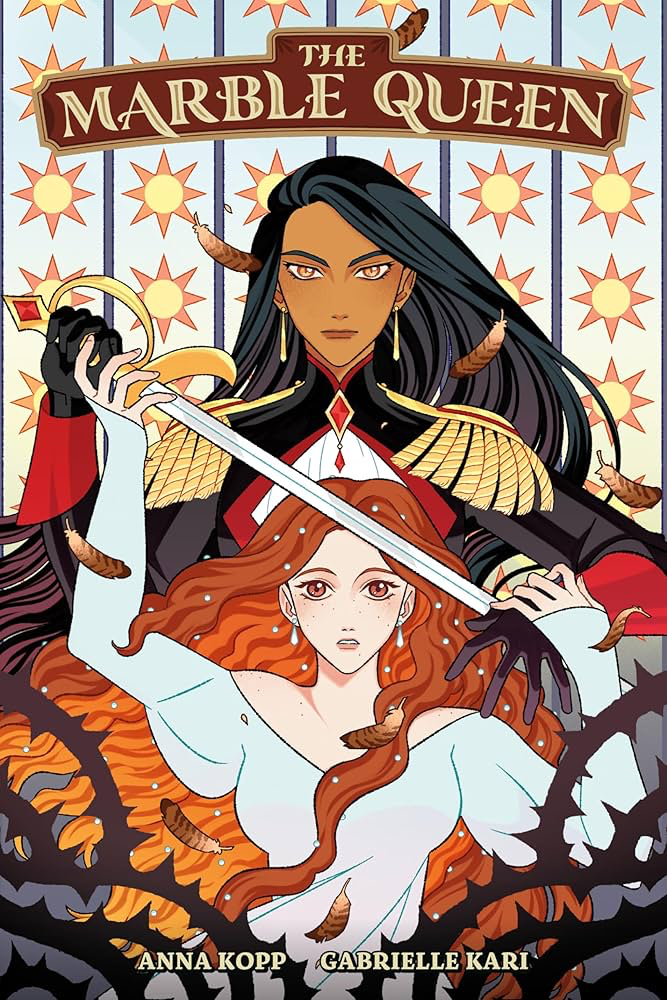
The Marble Queen

3 – 3.75 stars:

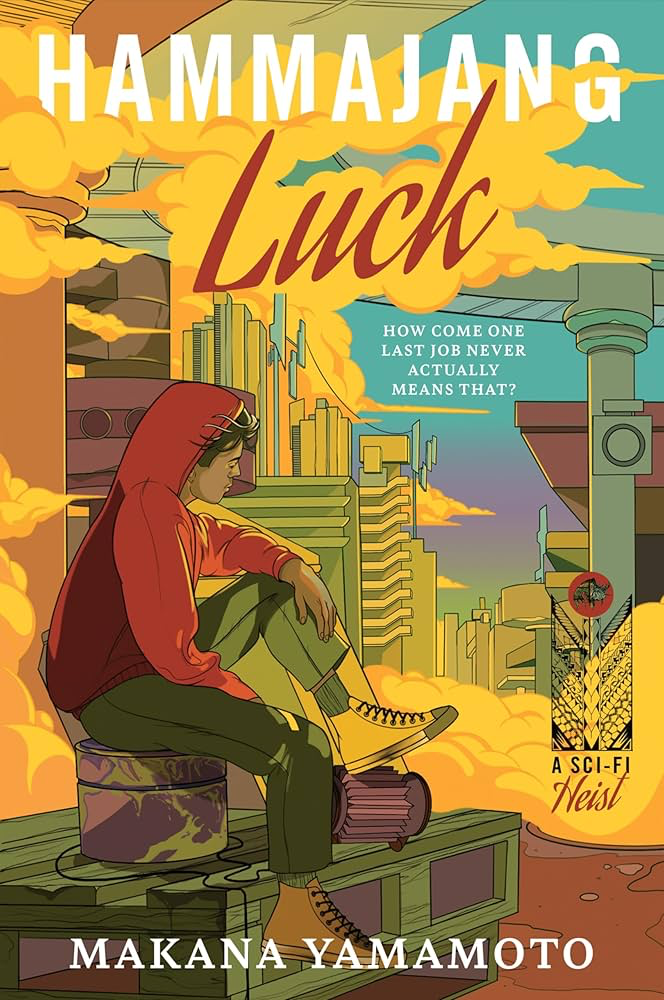
Hammajang Luck

4 – 4.75 stars:

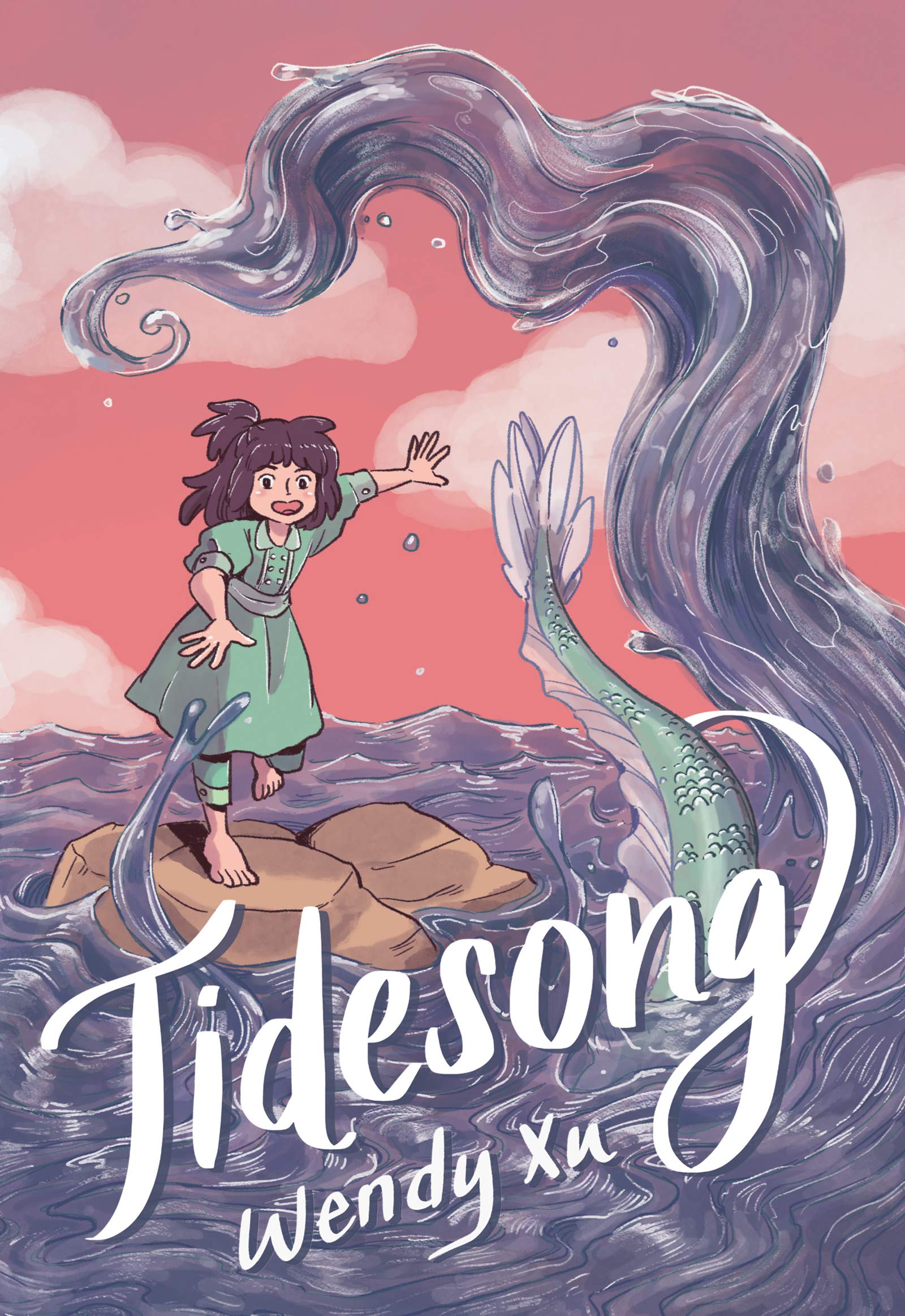
Tidesong

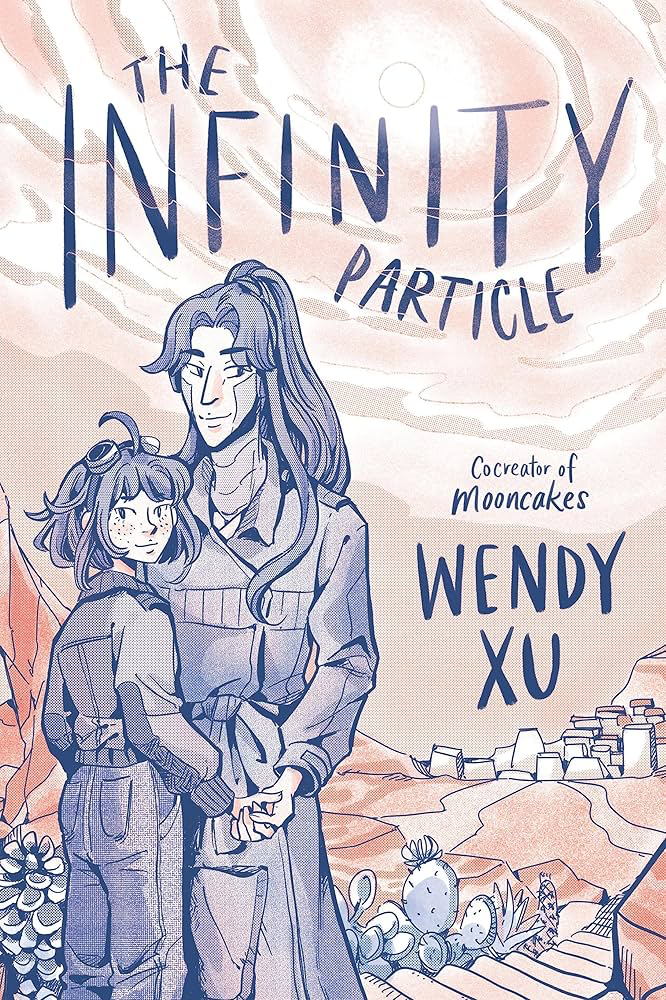
FAVORITE BOOK OF THE MONTH: The Infinity Particle – 4.5 stars

The Infinity Particle

REVIEWS:

BONUS:

SUNDAY SONGS:

FEBRUARY READING WRAP-UP

I read 13 books in February! This month was slightly slower (and shorter, obviously) than January, but I was able to read several books that I’ve been excited to get around to for months! As I usually do, I focused more on Black authors for Black History Month, and discovered some great books and authors as a result.

2 – 2.75 stars:

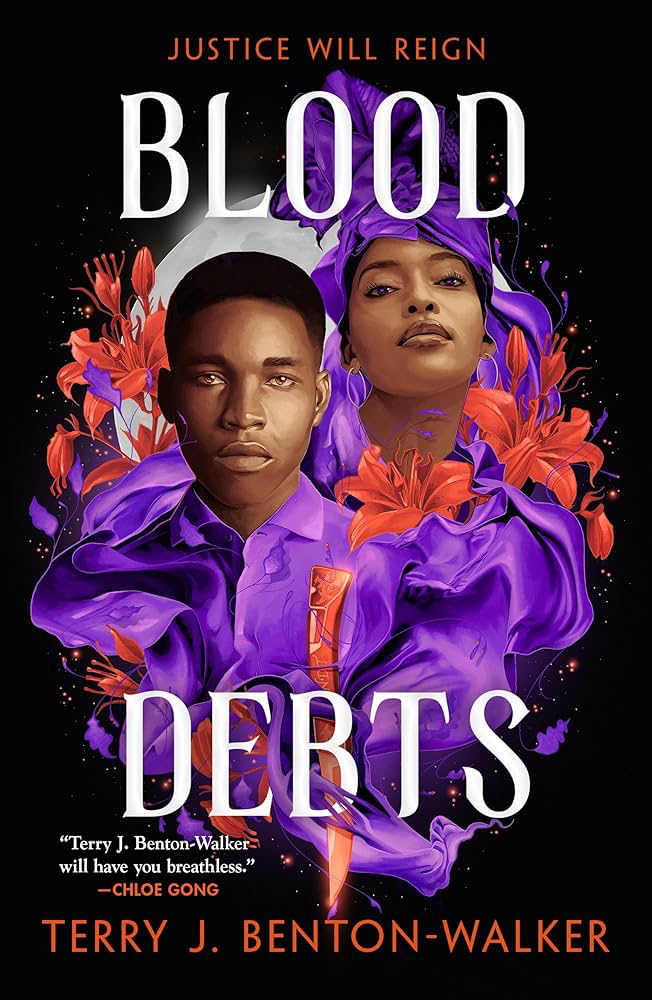
Blood Debts

3 – 3.75 stars:

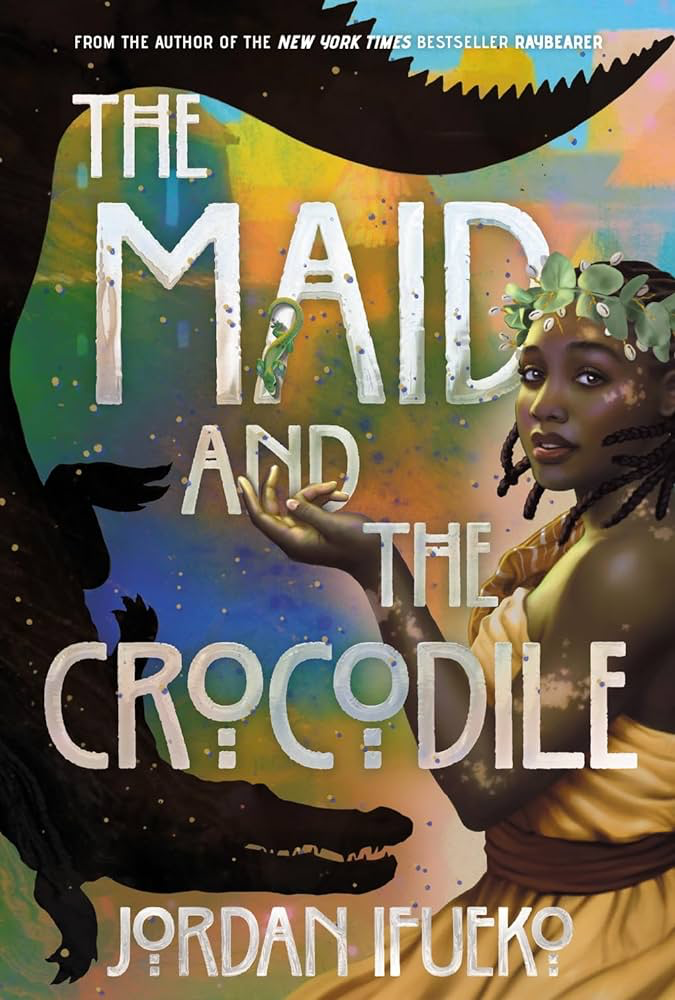
The Maid and the Crocodile

4 – 4.75 stars:

How to Be an Antiracist

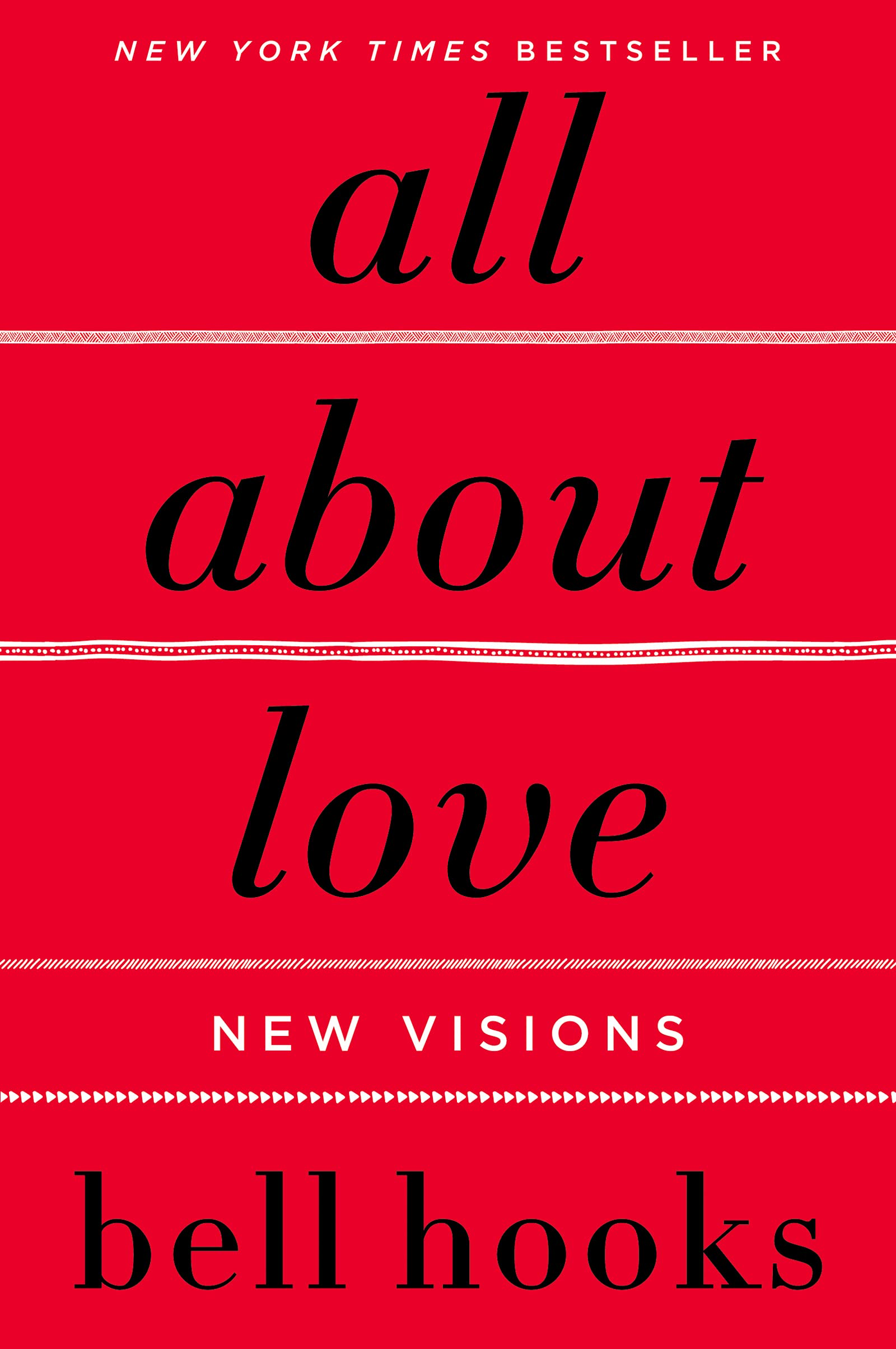
FAVORITE BOOK OF THE MONTH: All About Love4 stars

All About Love

REVIEWS:

BONUS:

SUNDAY SONGS (+ more music stuff)

BONUS:

Today’s song:

DEBUT AAAAAAAUGH DEBUUUUUUUT

That’s it for my wrap-up of January and February! Have a wonderful rest of your day, and take care of yourselves!

Posted in Book Review Tuesday

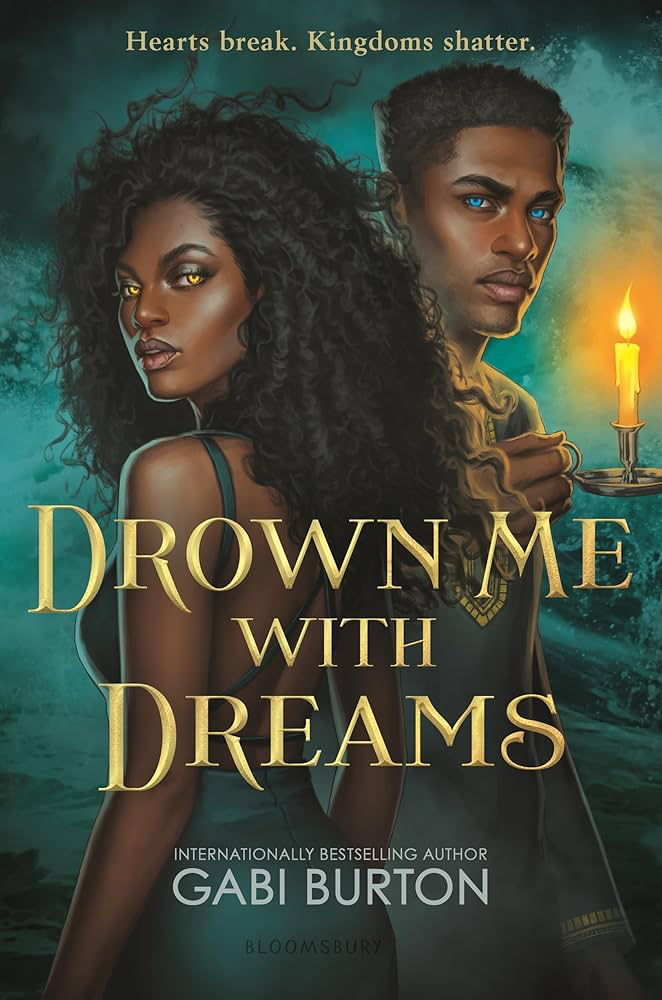
Book Review Tuesday (2/18/25) – Drown Me with Dreams (Sing Me to Sleep, #2)

Happy Tuesday, bibliophiles!

QUICK ANNOUNCEMENT: because I’m trying to divorce myself from Amazon as much as I can, I’m finally moving over from Goodreads to The Storygraph. From now on, my reviews will be available there @thebookishmutant.

I started the Sing Me to Sleep duology last year, and now that book 2 is out, I figured I would pick it up for Black History Month, but also so I could finally get some resolution! And I sure got a resolution…one that wasn’t as enjoyable as the first book, but nonetheless a twisty, romantic ending to a fantasy duology that balanced fun and social commentary.

Now, tread lightly! This review may contain spoilers for book one, Sing Me to Sleep. For my review of Sing Me to Sleep, click here!

Enjoy this week’s review!

Drown Me with Dreams (Sing Me to Sleep, #2) – Gabi Burton

Saoirse is on the run. Now that her siren identity has been exposed, she must flee to the other side of the wall that divides Keirdre from the rest of the world. Taking sanctuary with the budding Resistance, Saoirse discovers a world full of different species that Keirdre drove out of its kingdom, all waiting for the day that they can take back what is rightfully theirs. But tensions are brewing, and war is imminent. On the other side of the wall, King Hayes, her secret love, awaits, but do his loyalties remain with Saoirse? And will Saoirse be able to fend off the rising tides of war?

TW/CW (from Gabi Burton): murder, graphic violence, discrimination/segregation (fantasy), genocide themes, blood, descriptions of injury, imprisonment

You would think that a book that’s over 400 pages would have plenty of time to work out all of the wrinkles in the plot and the worldbuilding…apparently not. In a perfect world, Drown Me with Dreams would be a great second book in a trilogy, but in this world, it was a duology concluder that tried to do far too much. That doesn’t mean that it was bad by any stretch of the imagination, but it was certainly a step below Sing Me to Sleep.

Oops. I end up stumbling into books with startling relevance to the current climate, and oh my god, am I sick of using that phrase. But. Drown Me with Dreams does an excellent job of expanding on its themes of resistance, racism, and misinformation! Saoirse has now figured out that there’s a wide world beyond the walls of Keirdre that has been obscured by the racist regime in her home kingdom; now that she knows the truth, she’s exposed to a myriad of perspectives and has to do the work herself to deconstruct the lies she’s been fed all of her life. She meets dozens of new mythical species that have been respectively discriminated against by Keirdre, and finds out firsthand how many falsehoods that the ruling powers have upheld for decades. The simultaneous revelations and discomfort of Saoirse discovering the truth is such a wonderful thing for a YA fantasy book like this to explore—in the end, it’s up to us, in our varying experiences in the real world, to discover the truth about how our governments can shape (and mis-shape) the narratives we grow up on. I also love the themes of solidarity present—fantasy or not, I love that the kind of feminism that Drown Me with Dreams champions is the kind that holds celebrating individual experience and solidarity under shared oppressions in equal regard. It’s the kind of unity that I believe will push feminism forward, and it made for a powerful statement in Drown Me with Dreams.

Even though Saoirse and King Hayes were kept apart for the first half of the novel, Drown Me with Dreams had a great resolution to their romance! Was it classic, YA fantasy romance cheese? Yes. Was it good cheese? Absolutely. To paraphrase one of my high school English teachers, there’s a difference between gourmet cheese and “American cheese-food.” I’ve been a YA reader for quite some time now, and there’s a difference between cringeworthy cheese and high-quality cheese. Drown Me with Dreams falls into the latter category, 100%. There’s angsty angry-kissing aplenty, but it’s written believably. If anyone is looking to do slow-burn, enemies-to-lovers romance right, look no further. Saoirse and Hayes weren’t just given enough time to have their romance develop—the stakes of their forbidden love were built up for the whole series, and their chemistry together made for some high quality smoldering. It’s not trying to be enemies-to-lovers in the way that most BookTok fantasy books try and fail to do—Burton’s given us a well-developed romance you can root for, and it made Drown Me with Dreams a standout read in that department.

In my review for Sing Me to Sleep, I mentioned that the book’s main flaw was that it was juggling far too many characters. In that same review, I commended Burton’s ability to craft a rich, layered fantasy world. Both of those aspects collided in Drown Me with Dreams with disappointing results. In Drown Me with Dreams, we finally see the world beyond Keirdre, and it’s full of all of the creatures that Keirdre drove out—dryads, goblins, sprites, you name it. On the surface, I was so excited to see this aspect of the world, but two main issues arose. The first was that we were introduced to a truckload of characters, almost 80% of which had barely anything memorable about them other than the fact that they were from a “new” species. Some of them were slightly consequential, but only just. I had so much trouble keeping track of all of them, which definitely muddied my reading experience. The second problem was that all of this worldbuilding was crammed into a single book—with a kingdom and world this expansive, it needed at least another book to develop fully, which hindered how fleshed out the world ended up being, after all of these promises of it being fascinating and new. (Also, I get the point about racist narratives being made with the goblins, but…what was the reason for making goblins into glorified elves? Why did they need to be conventionally attractive?)

Which brings me to my second major gripe: this series should not have been a duology. Not only are we introduced to a staggering amount of worldbuilding that only amounts to a single book, the same goes for the plot. A full resistance movement, the tensions within said resistance movement, the looming threat of war from multiple sides, and the fallout from said monumental war are crammed into 424 pages…should be enough, right? Most of what I described only happens in the last 2/3rds of the book, and nothing gets nearly the attention it deserves. We get dragged along with a pointless red herring of a love triangle (only for Saoirse to end up with her main romantic interest and for the other guy to just DIE GRUESOMELY? I didn’t really care about the guy, but pour one out for Carrik), and all of the interpersonal conflict rarely lasts, only providing detours on what should’ve been a rich plot on its own. As with the worldbuilding. Drown Me with Dreams should have had at least one more book to expand on everything. It’s a case of Burton biting off far more than she could chew, to unfulfilling results.

All in all, a duology-concluder that didn’t deliver on its epic worldbuilding promises and rushed its climax to a dizzying degree, but delivered on its past themes and promised romance. 3.5 stars!

Drown Me with Dreams is the second and final book in the Sing Me to Sleep duology, which begins with Sing Me to Sleep.

Today’s song:

so uh guess who’s obsessed with the apple tv+ björk concert film

That’s it for this week’s Book Review Tuesday! Have a wonderful rest of your day, and take care of yourselves!

Posted in Sunday Songs

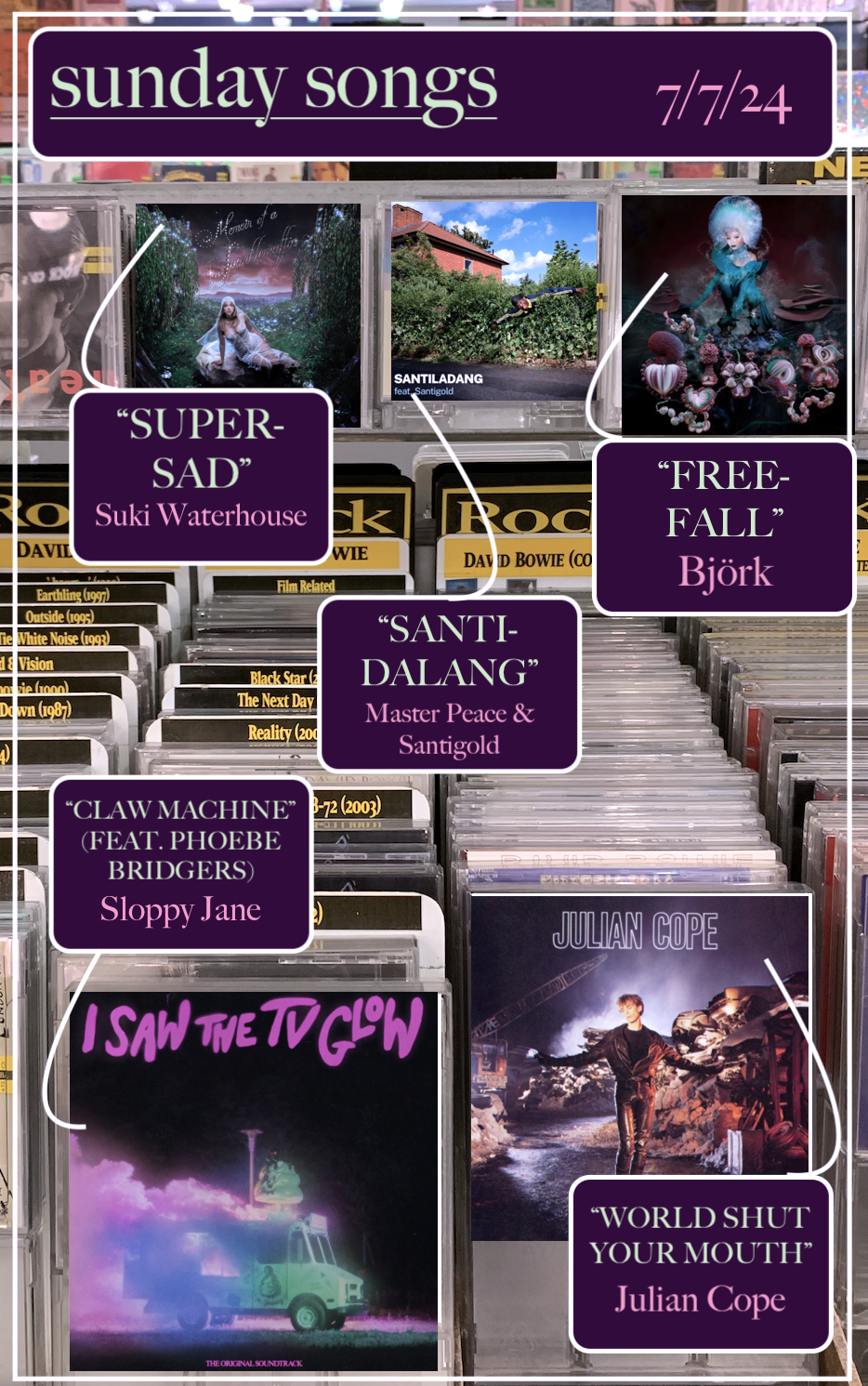
Sunday Songs: 7/7/24

Happy Sunday, bibliophiles! I hope this week has treated you well.

This week: it’ll be two years of making these Sunday Songs graphics in a few days (!!), but I haven’t had many purple color schemes in all that time…enjoy the purple while it lasts. Also, I talk about movies that I haven’t seen and albums that I haven’t quite seen.

Enjoy this week’s songs!

SUNDAY SONGS: 7/7/24

“Claw Machine” (feat. Phoebe Bridgers) – Sloppy Jane

Here I am, an absolute poser, posting this without having seen I Saw the TV Glow. I’m a simple woman. I saw Phoebe Bridgers and Jay Som on the soundtrack and immediately downloaded both songs without knowing any of the context apart from Lindsey Jordan being in her first acting role (I’m lovingly suspicious of her acting abilities, but that shot of her with an axe in the trailer is top-tier), and that “Claw Machine” plays in the opening.

The opening? Is Jane Schoenbrun trying to eviscerate us before the movie even begins? For everyone who’s soldiering through the boygenius hiatus: fear not! Phoebe Bridgers, along with Haley Dahl (aka Sloppy Jane, who Bridgers formerly played bass for) have come to emotionally derail your summer. “I think I was born bored/I think I was born blue/I think I was born wanting more/I think I was born already missing you.” Oh! Good to know that I won’t survive 10 minutes of this movie if I eventually watch it! Yippee!

…AND A BOOK TO GO WITH IT:

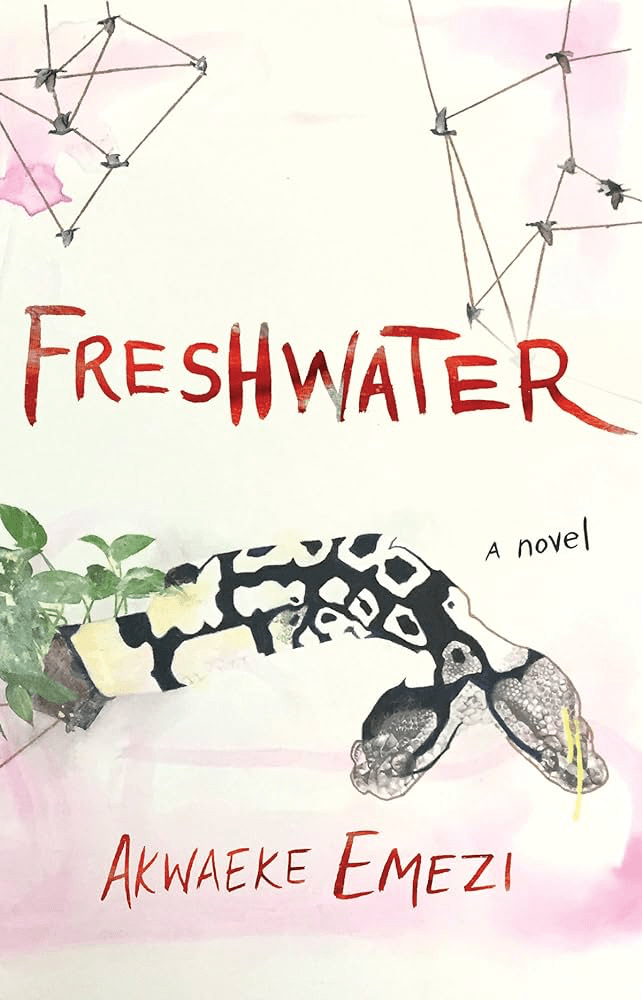
Freshwater – Akwaeke Emezi“Your heart is like a claw machine/Its only function is to reach/It can’t hold onto anything…”

“World Shut Your Mouth” – Julian Cope

It takes a certain kind of person to have the guts to name their album Saint Julian, but thankfully, it’s not entirely Julian Cope’s fault. Before this album’s release, his record label was intent on Cleaning Up His Act™️ and making him into their idea of a rockstar, thus: the leather, the haircut, and constantly looking like there should be a vine boom whenever the camera lands on his face. It was the ’80s. Comfortingly, the song “Saint Julian” is about his frustrations with god, but to be fair, anybody who can cover Roky Erikson’s “I Have Always Been Here Before” so heartwrenchingly deserves the saint title.

The ’80s never gave Cope the praise he deserved, save for some alternative hits. Crazy, given the fact that after Saint Julian came around, he’d basically become the unacknowledged father of Britpop. Everybody mentions The Kinks (obviously) and The Smiths as some of the progenitors of the genre, but where’s the love for Julian, who basically molded Parklife’s guitar-heavy confidence seven years prior with “Shot Down”? The clean, punchy guitars? The tongue-in-cheek lyricism? Even the look, even if it was more on the part of the record label than Cope himself—there’s no denying Damon Albarn and Jarvis Cocker took plentiful notes, chiseled cheekbones and all. Regardless of whether people will remember that, at least they’ll remember that he could pen a perfect pop song. Oiled and sleek as a new car, it oozes confidence more than Cope’s fabricated persona ever could. He didn’t need to get his hair did to have the gravitas to belt “World, shut your mouth/Shut your mouth/Put your head back in the clouds and shut your mouth,” just like the song’s unnamed protagonist who “[flies] in the face of fashion.” Complete with a mic stand that Cope could climb up and spin around on, it’s the side of the ’80s that I wish lingered—the slickness combined with clever turns of phrase thanks to the likes of Cope. Even if Cope resented the attempts to make him into a pop star (understandably so), there’s no denying that, at the height of his powers, he could write a perfect pop song. Good for him, though. Presently, he’s out living his best life and writing about Stonehenge and rock history. Go off, king.

I suppose all this means is that I selfishly get to gatekeep Julian Cope while cursed with the knowledge that he may get the praise that he deserves. I’ll Cope. I’ll Julian Cope—[gets dragged off stage by a comically large cane]

…AND A BOOK TO GO WITH IT:

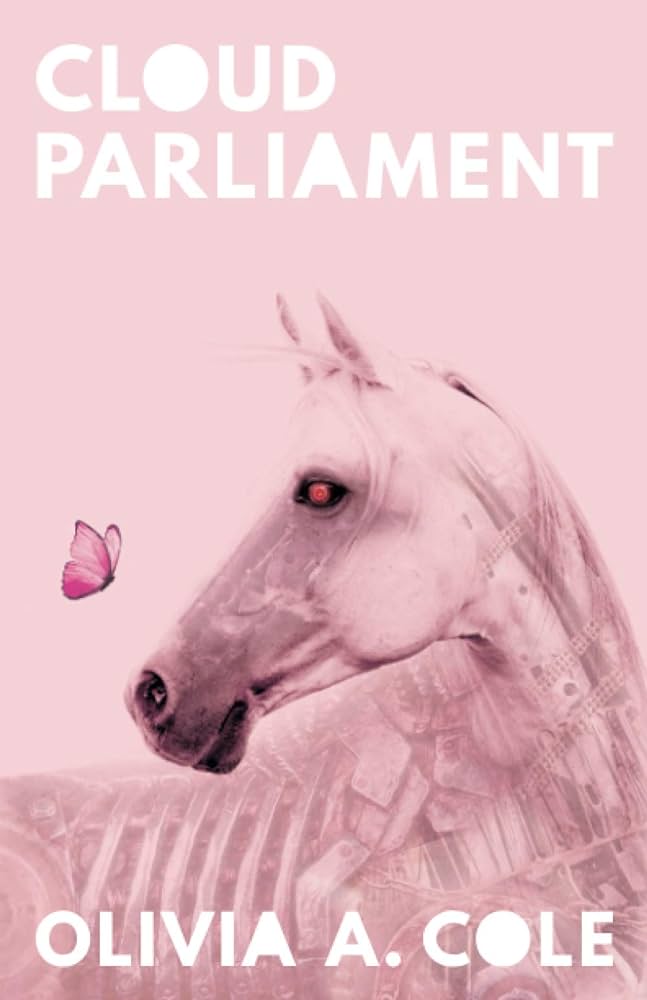
Cloud Parliament – Olivia A. ColeBold confidence abound—the kind strong enough to avenge the dead and bring entire industries to their knees.

“Supersad” – Suki Waterhouse

After a string of recent singles, Suki Waterhouse has announced her new album, Memoirs of a Sparklemuffin, out this September. I have to say…oh, god, that’s a painful album title. It sounds like the kind of thing you’d come up with at age 10 when asked for the title of your hypothetical autobiography. It feels like something that would be printed on a Justice shirt with kittens wearing sunglasses and enough glitter to blind a person at short range. Yeesh. But there is a method to the memoir; Waterhouse named the album after a species of Peacock spider from Australia (I wonder if the scientist who nicknamed it “sparklemuffin” regrets it…at least it’s just a nickname): “I came across the Sparklemuffin—which is wildly colored, does this razzle-dazzle dance, and its mate will cannibalize it if she doesn’t approve of the dance. It’s a metaphor for the dance of life we’re all in. The title felt hilarious, ridiculous, and wonderful to me,” she said to Rolling Stone. My verdict? Still a yikes album title, but at least there was thought behind it…?

The newest single, however? A joyous summer bop, to say the least! For Waterhouse, this has a slight rock edge, but undeniably remains the indie pop that she’s begun to polish. Strung together with “My Fun,” it’s clear that Memoirs of a Sparklemuffin centers rediscovering joy and healing at the forefront; “Supersad” is an anthem to hauling yourself out of bed, letting go of what you can’t control, and embracing fun in all of its forms: “Could be the worst time I ever had/Lose my mind, always get it back/There’s no point in being supersad.” Stagnation and sadness aren’t just detrimental to your health—at the end of the day, it always feels so boring to me, even if, in the moment, I can’t do anything to do it. And there’s a multitude of things that are way out of your control! No matter how long it takes to get yourself out of the funk, it’s temporary—and there’s no point in being supersad. Life is short.

…AND A BOOK TO GO WITH IT:

The Many Half-Lived Lives of Sam Sylvester – Maya McGregorLeaving old ghosts behind to turn over a new leaf—and find love.

“Santidalang” – Master Peace & Santigold

My mom and I are very similar people in a number of ways, but one of the ways that we hadn’t acknowledged until now is that we’ll see a song with Santigold on it and immediately hit download. It’s Santigold!! Who wouldn’t?

Named “Santidalang” in acknowledgment of the aforementioned legend, this track is a slight reworking of Master Peace (ba-dum tssssss)’s “Shangaladang” from his debut album, How to Make a Master Peace (ba-dum tsssssssssss). For someone who frequently cites LCD Soundsystem as one of his primary influences, what I’ve heard of his music is far from the uptight rhythms that I associate with James Murphy. What he’s taken from him, along with several other indie and dance acts from the 2000’s, is a neat rhythm—it’s a box, when you look at it from afar, but one that’s large enough to allow Master Peace a spacious environment to dance. Even amidst the pressing issues of the lyrics, “Santidalang” never stops being carefree; the opening is delivered with a defiant “ha-ha,” and lines like “The police wanna arrest me and my mates/I’m just wanna get myself some good grades/My mom told that she’s gonna send me away” with the goofy ring of a flexatone in the background and a smile that you can hear through the music. Like Santigold, it’s a grinning middle finger to those who would put him in a box and an assertion of joy in spite of it all. That’s why it’s so perfect that Santigold is featured on this finger after championing a similar mentality of joy and self-love in spite of societal expectations. Santigold bursts into an already vibrant track with her signature confidence, immediately claiming the space as hers. Like Master Peace, her smile and persistence cuts through the track like rays of sunshine: “Try to hold me down/I fight the power with my fist up.”

It’s easy to imagine that both Master Peace and Santigold had an absolute blast recording “Santidalang,” but it seems this picture only confirms it:

…AND A BOOK TO GO WITH IT:

A Song of Salvation – Alechia Dow – Defiant love and joy in the face of a universe that wants our heroes dead.

“Freefall” – Björk

Once I hit a valley in my Sisyphean Album Bucket List, I’m due for revisiting Fossora. When it was released almost two years ago, I liked it, but I felt like I didn’t fully get it. Björk is about as out there as out there can get, but even for me, it felt impenetrably so, like she’d ascended to a higher plane of being that us mere mortals couldn’t dream of reaching. Is that still true? It’s Björk, of course it is. But the more I listen, the more the ice melts—it’s not that I never liked Fossora, but for me, its merits become more evident the more time you spend with it. A way-homer, if you will.

I’d forgotten all about “Freefall” in the dust, and in retrospect, the fact that I listened to Fossora while I was figuring out how college works didn’t do wonders for remembering this album—or interpreting it. In Björk’s quest to become the all-knowing fungus queen, she remains as attuned to the surreal thrill of love as she was on Vespertine. Even in the wake of the tumultuous divorce with Matthew Barney (cheating is reprehensible on its own, but IMAGINE CHEATING ON BJÖRK, MY GOD), she has still found time to reminisce about the coalescence that the best relationships produce: “I let myself freefall into your arms/Into the shape of the love we created/Our emotional hammock/Safe inside the fabric of our love-woven membrane.” Of course she refers to it as a membrane, but it’s one of my favorite lyrics; saying that she’s attuned to nature and her body is an understatement—even in such a yearning song, she feels more whole than ever. Love as a fleshy, beating membrane, something to curl up inside like a vital organ (or a cocoon, even), evokes what most songs could not touch with multiple verses. Even if Björk drinking the water of life and willingly being consumed by the fungus has made her music more esoteric than it already was, what strikes me about “Freefall” is that she has such a human understanding of love; not necessarily in the sense of the soul, but in the sense of the sensation of warmth and the bodily joy of watching your heart tie itself to another and merge.

…AND A BOOK TO GO WITH IT:

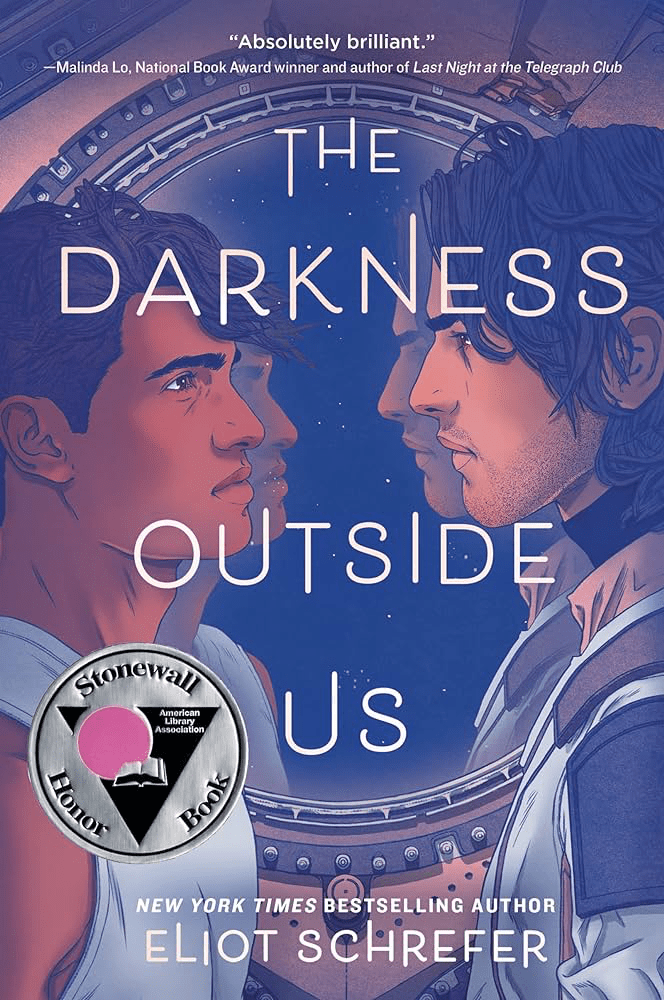
The Darkness Outside Us – Eliot Schrefer“Our joined presence gains form/Our affections captured in a structure/Visceral sculpting of our love into space…”

Since this post consists entirely of songs, consider all of them to be today’s song.

That’s it for this week’s Sunday Songs! Have a wonderful rest of your day, and take care of yourselves!
Posted in Book Review Tuesday

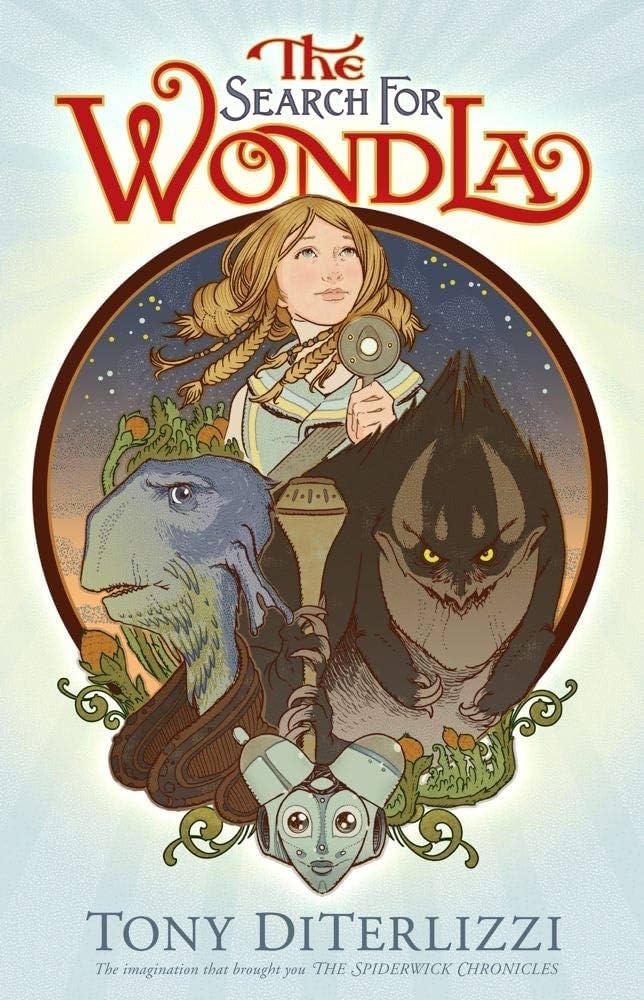
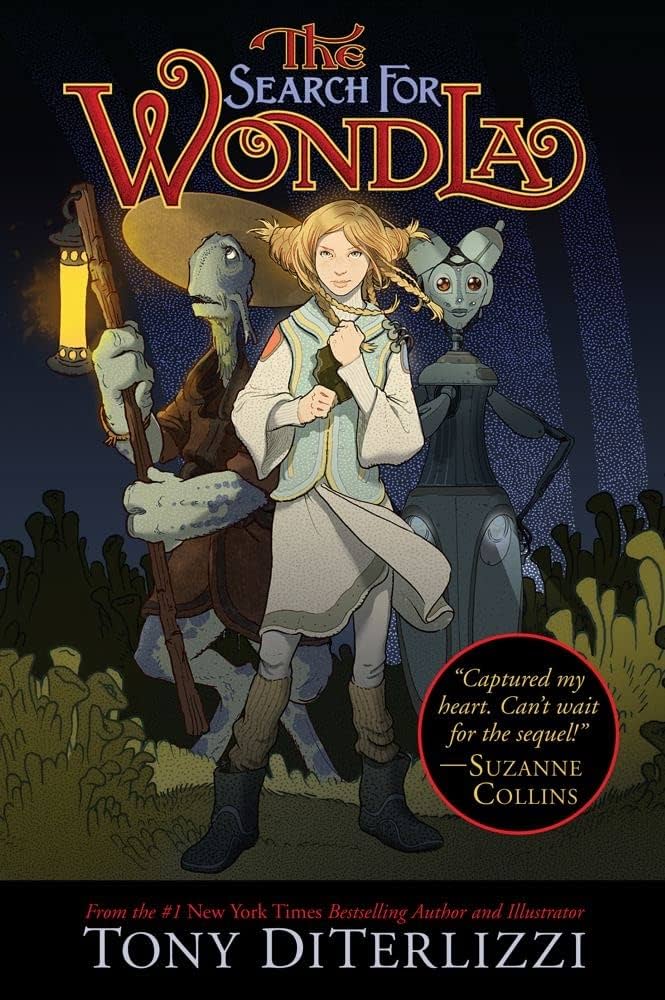
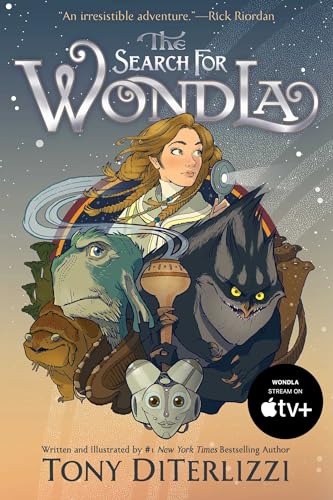
Book Review Tuesday (7/2/24) – The WondLa Trilogy: A Re-Read Retrospective

Happy Tuesday, bibliophiles!

This is going to be different from my normal Book Review Tuesdays, as I’m reviewing an entire trilogy. Normally, that would be a tall order for a single post, but this trilogy is different. It’s a series that I read so often in middle school that even the teachers started to recognize the cover when I brought it in. It’s a series that has woven itself into the fabric of my life, just as Arius’ metaphor of time as a braided rope. It’s a series that inspired me to pursue writing—specifically writing science fiction.

In light of the new (and deeply disappointing) Apple TV+ series, I decided to re-read the series for the first time in six and a half years. Some novels you loved when you were younger don’t age well, but after I devoured all three books in the span of a day each, I can say that Tony DiTerlizzi’s WondLa trilogy has stood the test of time.

Enjoy this week’s reviews!

The Search for WondLa (The Search for WondLa, #1) – Tony DiTerlizzi

Summary from Goodreads:

When a marauder destroys the underground sanctuary that Eva Nine was raised in by the robot Muthr, the twelve-year-old girl is forced to flee aboveground. Eva Nine is searching for anyone else like her: She knows that other humans exist because of an item she treasures—a scrap of cardboard on which is depicted a young girl, an adult, and a robot, with the strange word, “WondLa.”

There definitely wasn’t an ulterior motive to me re-reading this series…totally not just to replace my reviews on Goodreads from 2016 (“OMG BEST BOOK EVER SQUEEEEEEEEEEEE but BIG FEELS”). Yeah.

The Search for WondLa is the reason why I decided that I wanted to write science fiction. It introduced me to a vast world of sci-fi literature that would become my favorite genre. It showed me a rich world full of bizarre, wonderful creatures and told me that I, too, had the power to foster such weirdness in my heart and bring it into the world. When I say that I don’t know where I would be without the WondLa trilogy, I’m not exaggerating in the slightest. Tony DiTerlizzi truly has, like Arius, given gifts to the world in the form of these novels.

The Search for WondLa coexists as a startlingly original piece of worldbuilding while also paying homage to a number of novels and stories—The Wonderful Wizard of Oz, of course, but also the older sci-fi that has inspired DiTerlizzi throughout his career, from Dune to Star Wars and others. There’s Jim Henson lurking in his fanciful creatures, Hiyao Miyazaki in his alien landscapes, and Ray Bradbury in his matter-of-fact, bombastic dialogue. On the subject of both Miyazaki and dialogue, what always cracks me up about this series (affectionately) is the various names DiTerlizzi gives to his characters and places. When I watched Nausicaä of the Valley of the Wind for the first time, my brother and I agreed that the long chunks of expository dialogue were all part of the hokey charm of the movie—it’s distinctly old sci-fi, and it’s so silly that it becomes charming. The same can be said for DiTerlizzi’s naming process…which is so unsubtle that it’s hilarious. Besteel? Surely he’s not a beast-like, predatory character. A fishing village by a lake? Can’t be anything but Lacus, right? Cæruleans? You’re not gonna believe what color these aliens are…but it’s WondLa’s charm. Intentional or not, these names might be one of the most faithful homages to the sci-fi genre.

Even if The Search for WondLa was the only book in the series, some of the character arcs are so expertly resolved within the span of a single book that it would be a satisfying standalone. Muthr’s may be the most clear-cut, but it’s nonetheless deeply impactful; her journey of battling with her own programming and beliefs and embracing the perilous, unknowable beauty of the natural world forms a key piece of the novel’s emotional anchor. She’s clearly the Tin Man, and although she can never fully adapt, by the end of her story, she has most definitely grown a heart. I think Rovender Kitt is the reason why I love the trope of gruff, older characters who reluctantly end up taking children under their wing on a fantastical journey. His development oscillates between heartbreaking and heartwarming in equal measure; Eva helped him remember to have empathy, and he, in turn, became the father figure that she never had. He never stops being gruff and sarcastic, but he rediscovers his caring core. The last few chapters of the novel are brutal for clear reasons, but Rovender’s breakdown, wracked with grief and survivor’s guilt, guts me every time. It’s a drastic shift from the Rovender we see at the beginning of the novel, but almost 500 pages is enough time for him to become the series’ epicenter of guidance and wisdom.

Part of my motivation to re-read the series was because of the Apple TV+ series (spoiler alert: it’s awful. They turned Eva into an adorkable Disney princess. Skip it.), but watching and reading them closely together made me realize what the show fundamentally gets wrong about the series: it’s weird, and it’s unafraid of being weird. All of the aliens have unique, truly otherworldly designs, with no punches held just because the target audience skews younger. Eva Nine is so far from perfect, even by the standards of young girls: her hair’s a mess, she doesn’t have a clue about surviving in the outside world, and yet confidently asserts that she can talk to animals, something that most would have left behind by the time they turn 12. But it’s all true! She’s unafraid of being weird, but that’s where her loneliness arises: she’s not just looking for humans, she’s looking for someone who understands the circumstances that molded her into the confidently strange person that she is…

Somebody hold me. No wonder I read this book to death when I was 12…

For its undeniable role in shaping the course of my life, 5 stars.

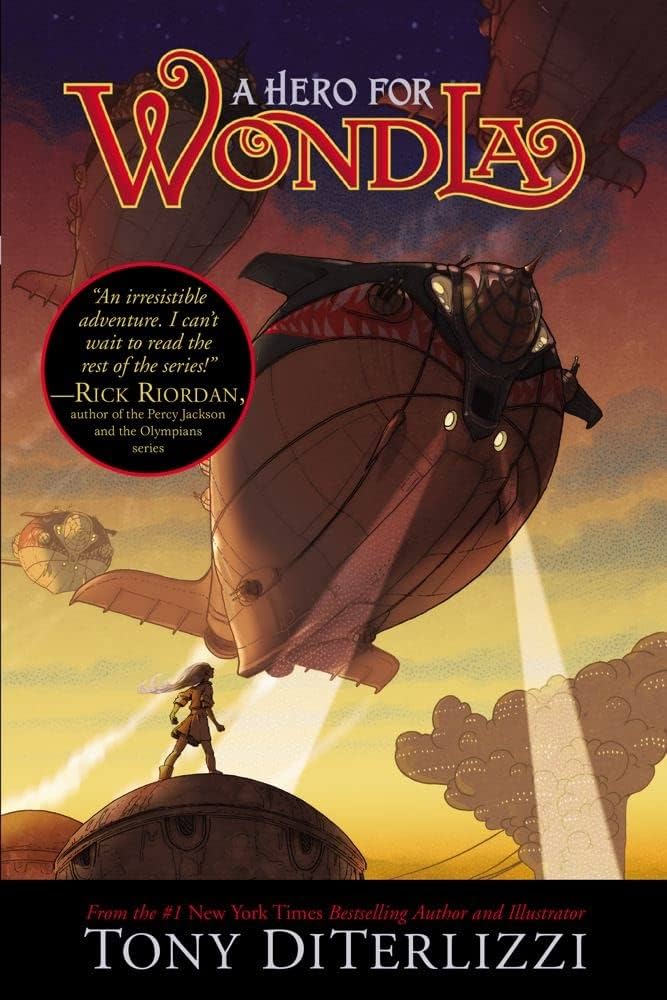
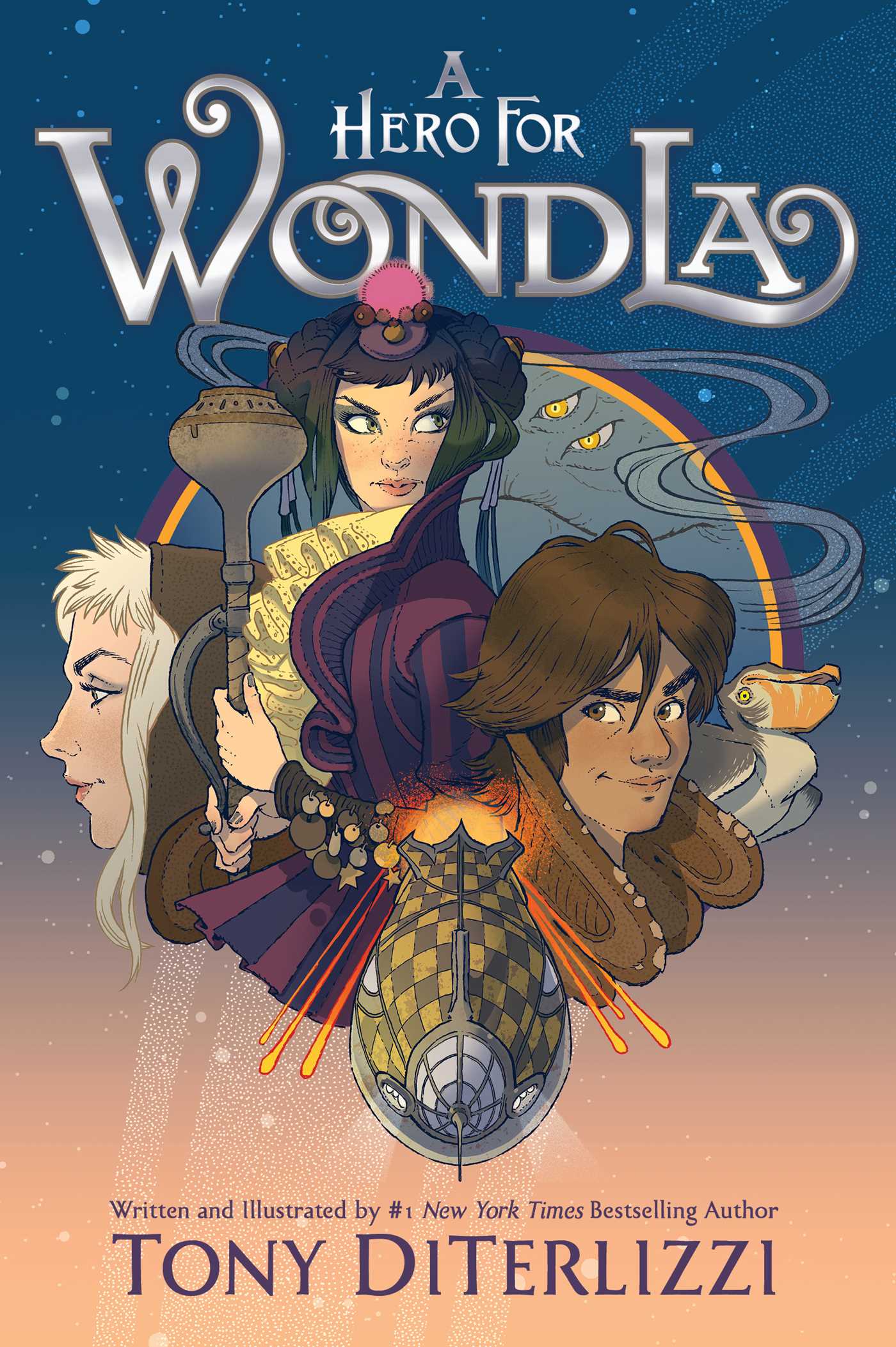
A Hero for WondLa (The Search for WondLa, #2) – Tony DiTerlizzi

Summary from Goodreads:

Before the end of The Search for WondLa , Eva Nine had never seen another human, but after a human boy named Hailey rescues her along with her companions, she couldn’t be happier. Eva thinks she has everything she’s ever dreamed of, especially when Hailey brings her and her friends to the colony of New Attica, where humans of all shapes and sizes live in apparent peace and harmony.

But all is not idyllic in New Attica, and Eva Nine soon realizes that something sinister is going on—and if she doesn’t stop it, it could mean the end of everything and everyone on planet Orbona.

A Hero for WondLa is a truly worthy predecessor to book 1 for so many reasons, but what struck me the most upon re-reading it is how painfully accurate—and beautiful—Tony DiTerlizzi’s depiction of weird middle school girlhood is. I had to stop and remember that yes, this is a middle-aged man writing this, and yes, he has a daughter, but she was still a toddler when he wrote this…and yet he nails it. Right down to the smallest details.

A Hero for WondLa follows Eva Nine’s journey after she’s discovered that she’s not the only human. She visits New Attica, the pristine, final stronghold of the human race, where technology rules all. Eva’s first instinct is to fit in; she’s taken under the wing of Gen Pryde and her Mean Girls 2049 posse of identical, plastic friends, who are intent on making her fit in—they giggle at her sanctuary-born eccentricities, and she’s only praised when they mold her to look just like them. Even after that, they’re laughing behind their hands. She flees their false promise of friendship and into the arms of Eva Eight, her long-lost sister who has waited 100 years for her arrival. Eight hates New Attica and all of its lies, and promises Eva that she’s just like her. And yet, despite this insistence, Eva fails to find solace in her, either. It’s only when she becomes one with the Spirit of the Forest that she becomes her truest self—putting that which gives her power front and center. Like The Wizard of Oz, the (emerald) city she has spent her whole journey looking for is nothing but a sham, and in the end, there’s no place like “home”—the person that she is most comfortable being.

Oh, god. I need a minute. Ow. No other book I can think of captures the limbo of being 13 and not knowing who your real friends were lodged so deeply into my heart. Eva, like me, was so desperate for friendship and human connection that both attempts ended in complications, but through it all, everything came back to the found family she has built—the outcasts, the prisoners, the exiled. The ones who had her back. The ones who were just as confused as she was, but joined her journey after realizing the error in their ways.

The aesthetic language of A Hero for WondLa is drastically different than book one, with its pristine, plastic city of humans living in a bubble. Even the clean walls of Sanctuary 573 had a retro feel to them—likely centuries outdated from New Attica’s tech—but all of this is so blindingly new. None of the robots and automatons have the same old-fashioned friendliness as Muthr, trading approachability for sleekness and monstrous amounts of wires and tentacles. But along with it is a sinister aspect that DiTerlizzi doesn’t shy away from; I’d forgotten that, although the discussion is brief, that it’s implies that among all of the mind-control and executions that Cadmus Pryde is carrying out eugenics is casually a part of his long list of crimes against the last of humanity. The WondLa trilogy isn’t one to shy away from darkness (part of why it’s stood the test of time for me), but that aspect stood out, especially since this is science fiction we’re talking about, a genre that has a long history of portraying the eradication of disabilities as a sign of progress. I’d remembered that there are a handful of disabled characters, but having that as a clear signifier of evil in a middle-grade novel is something I can’t praise enough.

The Search for WondLa is a very self-contained story; although book sequels surpass it, in my opinion, the conclusion that it ended on (minus the epilogue) was hopeful and wrapped-up enough that it could have been a reasonable end to Eva Nine and Rovender’s journey. But this novel does such an excellent job of intensifying the stakes in so many ways. As Eva learns of a conflict that could soon entrench the whole planet in war, we get so many of the real time costs. Foreshadowed details, hinted at from the start of the series, metamorphose into sinister threats. Interpersonal relationships become tangled in this vast, interspecies conflict—nobody knows the truth. Side characters (although all but one do end up surviving in the end) often die mere chapters after they’re introduced. It’s a very tense book in and of itself, but as the setup to the massive conflict in the final book, it’s a masterclass in building up both physical and emotional stakes.

And…good god, all of Rovender’s emotional moments always kill me the most. Without going too in-depth, the scene of his complicated reunion with Antiquus destroyed me when I was younger, and it might have destroyed me even more…

It reminds me of another song that similarly destroys me:

“There will come a day/When the Earth will cease to spin/You’ll hold me close and say: ‘my God, where have you been?'” (Shakey Graves, “Chinatown”)

For the deeply emotional journey, then and now, 5 stars.

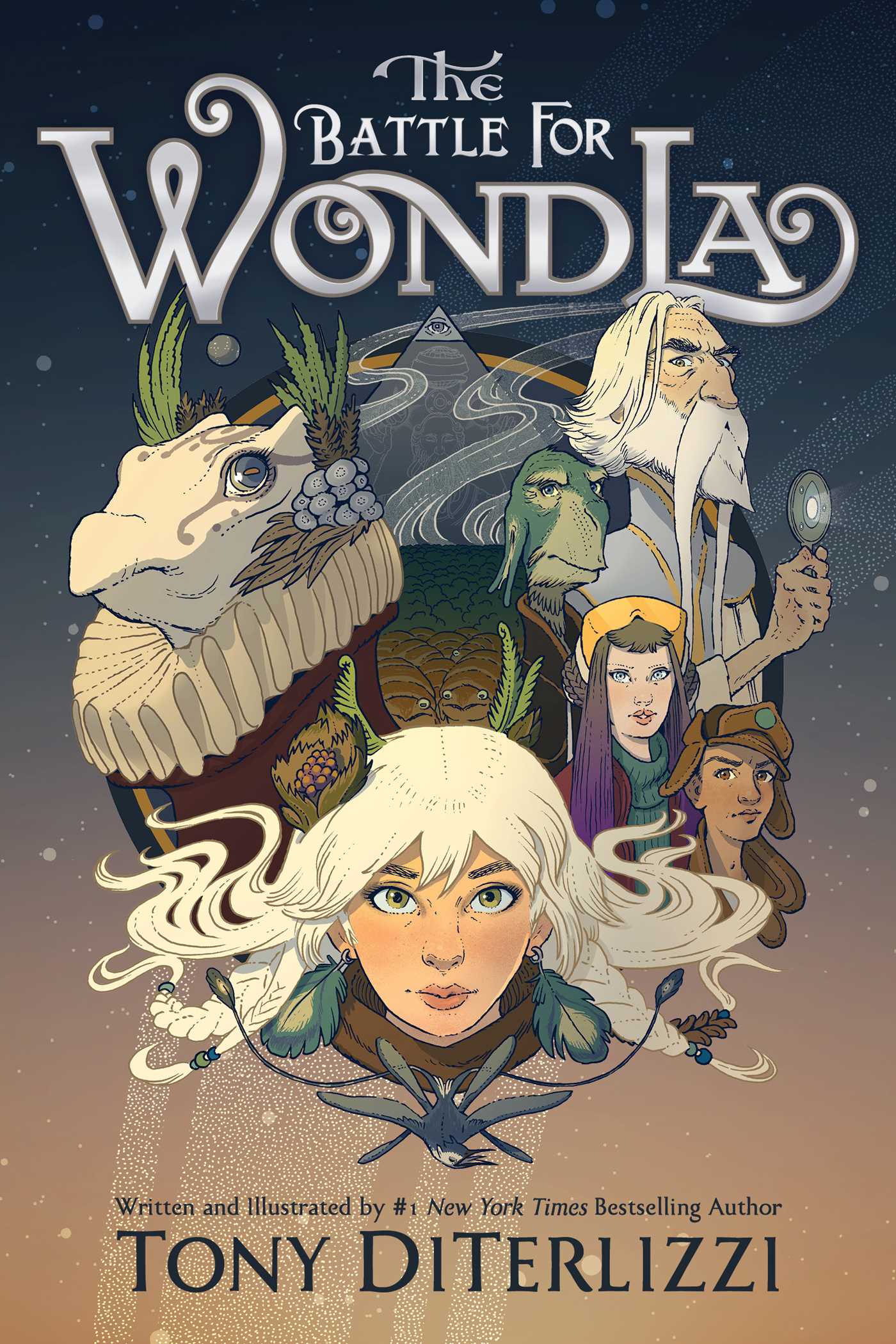
The Battle for WondLa (The Search for WondLa, #3) – Tony DiTerlizzi

Summary from Goodreads:

All hope for a peaceful coexistence between humankind and aliens seems lost in the third installment of the WondLa trilogy. Eva Nine has gone into hiding for fear of luring the wicked Loroc to her companions. However, news of the city Solas being captured by the human leader, Cadmus Pryde, forces Eva into action once again. With help from an unlikely ally, Eva tries to thwart Loroc’s ultimate plan for both mankind and the alien life on Orbona.

The Battle for WondLa was my favorite book of the trilogy when I first read it, and I find myself agreeing with the sentiment almost a decade later. Was this influenced by the fact that, in retrospect, the original book cover almost certainly contributed to my bisexual awakening at age 12? Maaaaaaybe. In all seriousness, it’s such a brutal, beautiful, and downright exhilarating conclusion to a series like no other.

This incarnation of Eva Nine, as matured as we see her in the trilogy, has always been my favorite. After she embraces her powers and connection to the natural world, she’s such a fascinating hero to follow, partly because she never fully gives up her younger traits. In fact, her powers lie in what made her a target in the first novel—her sensitivity and empathy. Now that she can communicate with all of the creatures of Orbona, she uses her sensitivity to find it within herself to accept the machinations of the natural world and show mercy for even the most frightening of beasts. Sensitivity is her superpower, and that is such an important lesson for younger readers—especially young girls. It’s overwhelming to feel everything all of the time, especially when you’re Eva’s age, but having a heroine who wrestles with that and learns to fine tune her all-seeing empathy and use it to her advantage is so, so crucial. I’m likely among a majority when I say that my sensitivity was often treated as a weakness growing up, so having a heroine whose sensitivity saves the world is just about the best role model you could write for a young girl.

As the title suggests, The Battle for WondLa boasts some of the best battle scenes in the whole trilogy. I’m not talking about the massacre of New Attica, although that remains truly brutal, but the ones that display Tony DiTerlizzi’s talent the most is the scenes where Eva uses the sheer might of the forest to win her battles. Now that I’m older, I’ll inevitably associate WondLa with Björk for a number of reasons, but Eva Nine goes from that precocious, earlier “Human Behaviour” Björk straight into “Nattúra” as her development goes on—unflinching femininity channeling the incomprehensible power of nature. Does it get any better than that, folks? Actually, it does—watching Eva Nine take down a squadron of Warbots with the help of a herd of giant water bears. “My herd…help me.” COME ON. Eva getting injured and then being carried back into battle by the mother sand-sniper that she freed from the menagerie? GIVE IT TO ME!! A highlight of the novel, without a doubt.

What stands out to me about Battle is this novel’s willingness to make complicated characters. Whether they’re the culmination of arcs of characters who have been in the series for multiple books or side characters that only show up in the latter half of the novel, there’s something to be said for how unflinchingly complex everyone is, and how that further complicates Eva’s quest to unite humans and aliens on Orbona. Hailey, with whom Eva is still (justifiably) bitter over her treatment in New Attica, sheds his tough, cocky exterior to reveal a loyal, humble friend by the end of the novel. Zin’s scientific distance becomes a detriment to him in the wake of the death of his family—and the threat exerted by his power-hungry brother, making him realize the error in his lack of emotional intelligence. Redimus, who unintentionally caused nearly all the dominoes for the entire series to play out against Eva, is never written as fully black or white; Eva can never fully bring herself to forgive him, but she learns to accept his attempt to, in his own words, “rectify his past actions,” and to accept that everyone is a web of decisions and consequences that never fully align with each other. And that’s what makes her journey feel so much more earned.

At the heart of The Battle for WondLa is connectivity—it’s all very “I/O” to me. Loroc’s ultimate goal is to unite Orbona, but unity in the form of everyone, human and alien, being either enslaved or consumed by him. He tricks his allies with promises of harmony, only for them to realize that harmony ends up being the harmony of being together…inside of his stomach. Eva wins by championing the fact that it’s the uplifting of everyone’s unique strengths that makes a community strong, whether it’s the unity of the aliens or the interconnectedness of all of the plants and animals of Orbona. We are each an integral part of a community, whether it’s a food web or a village, and it is those unlikely connections that make us stronger. As with today, the greatest mistake that any civilization can make is thinking that we are separate from nature. To once again quote Peter Gabriel, “I’m just a part of everything,” and that is where strength—and love—come from.

All in all, an unforgettable finale for a series that changed the trajectory of my life overwhelmingly for the better. 5 stars.

Tony DiTerlizzi is the author of several books for both early readers (Adventure of Meno, Ted, Jimmy Zangwow’s Out-of-This-World Moonpie Adventure, G is for One Gzonk!) and middle grade (Kenny and the Dragon and The Spiderwick Chronicles, co-authored with Holly Black). All seven episodes of WondLa are now streaming on Apple TV+*.

*I could only make it through 5/7 episodes before I had to quit. Only watch it out of morbid curiosity or if you have intentions to read the books and see how you got robbed.

Today’s song:

thank you to my brother for turning me on to this one!!

That’s it for this week’s Book Review Tuesday! Have a wonderful rest of your day, and take care of yourselves!

Posted in Music

All Born Screaming – album review

Happy Friday, bibliophiles!

2024 has proven to be momentous for my inner middle schooler. A new St. Vincent album, and the Apple TV+ adaptation of The Search for WondLa…exists. I may revert to my middle school self if everything else about the show is as terrible as the “reimagined” character designs. But that’s not what I’m reviewing today.

Those of you who have stuck around on this blog may remember me enthusiastically reviewing Daddy’s Home on the heels of surviving the hell that was junior year during COVID. Those who have stuck around longer still remember my middle-school rant about MASSEDUCTION. (I’d rather you…not remember the specifics of the latter, but I still count that album as her lowest point.) Her self-titled record was as much of a friend as an album can be when I was 12, struggling to reconcile being unapologetically myself and wanting the acceptance of my peers. Marry Me was the first album I ever bought with my own money, and Actor, Strange Mercy, and Love This Giant all saw me through high school. All that is to say that St. Vincent has been there for me in the best of times and the worst of times. So naturally, I did scream when I found out about All Born Screaming—not just a new album, but a supposed return to her harder sensibilities—was coming out this year. And while it wasn’t fully the rock album that was marketed—or as musically cohesive as she tends to be—All Born Screaming is, without a doubt, some of her best work in years.

As I’ve been excited about this album for months—and writing more about music than I have in past years—I’ve already reviewed 3/10 of the tracks from All Born Screaming, so I’ll link to each separate installment of Sunday Songs that I reviewed them in, so as not to sound like a feral, sobbing, broken record.

Let’s begin, shall we?

ALL BORN SCREAMING – ST. VINCENT

Release date: April 26, 2024 (Total Pleasure)

TRACK 1: “Hell Is Near” – 8/10

St. Vincent tying the aesthetic and merch in with images of marigolds is pure evil. Diabolical. Diabolical of them to pair one of my favorite artists of all time with my favorite flower…holding out until she announces a date near me until I buy that one marigold shirt, because it’s an inevitability. It’s only a matter of time.

“Hell Is Near” is an opener that creeps through the shadows on feet that you can barely see coming. With a thumping bass that thrums like a heartbeat witnessing horrors in the dark, it feels like the slithering transition between eras and personas, especially with the allusion to “The Nowhere Inn” (“Snubbed out smoke in a pack from the Nowhere Inn”). I can almost see Clark crawling out of some kind of giant shadow box as the song progresses, the heartbeat bass echoing off of every wall as her hands emerge from the darkness. I can’t help but think of the chord progression of “Prince Johnny”—this album is the most similar to the self-titled record since the record itself, and it’s clear that she’s cobbling this current aesthetic upon shadowier corners of that era, with guitar riffs that seem to interlock like strands of DNA. It’s a slow trickle of an opener, and as it dissolves into a flurry of high piano notes and fluttering synth, it leaves you guessing—where could she possibly be taking us to next?

TRACK 2: “Reckless” – 8.5/10

“Reckless” almost feels more like an opener than “Hell Is Near” does, even though the latter does a fantastic job of being an opener. After “Hell Is Near” dissolves, we return to sparse wasteland that the first track set up, but with a significantly darker tone—both speak of leaving the past behind, but “Reckless” turns “Hell Is Near”‘s willingness to move on to dwelling on it.

If there’s one thing about new music that I always live for, it’s those moments where you hear a lyric for the first time and physically have to stop in your tracks just to process how beautiful it is. Last year, I had that moment with Wilco’s stunning “Sunlight Ends”—”you dance/like the dust in the light” made all time stop around me. Jeff Tweedy just does that. And so does Annie Clark—it’s hard to think of a line on All Born Screaming more hard-hitting than this: “I’ve been mourning you since the day I met you.” Even if it precedes “Flea” and its tale of a love so predatory that it becomes parasitic, this feels like the fallout; it feels like a reconciliation, or just a realization of a feeling of destroying everything you touch, knowing that your actions will eventually drive away everyone that you will ever love. Whatever the narrator did has become so thoughtless and violent that it’s left them with nothing but “the smell of your hair on the curtains, babe,” and all that is left of them is a memory that they cling to with all that they can, knowing that what they did was enough to send them running for good. The sparkling synths that burst like faulty wiring at 2:38, around 2/3 of the way through, feel like the memory of the outburst that left them isolated, longing for something more, as Clark stares out the window like a widow remembering how her lover was slain in the war. This, unlike “Hell Is Near,” felt like a more certain sign of things to come—the wires have been cut, the dishes are shattered on the floor, and your heels are burnt and bleeding from stepping on them both.

TRACK 3: “Broken Man” – 10/10

Reviewed on 3/10—I haven’t stopped foaming at the mouth, thank you very much

TRACK 4: “Flea” – 10/10

Reviewed on 4/7—no, I still haven’t recovered from “I look at you and all I see is meat,” why do you ask?

TRACK 5: “Big Time Nothing” – 8.5/10

This is what MASSEDUCTION should have been.

All Born Screaming was what Clark called “post-plague pop,” and nothing exemplifies the “pop” aspect more than this song. Like the spandex she wore on the MASSEDUCTION tour, the skittering synths clamp the beat down enough so that it hardly even has room to squirm. There’s threads of Björk’s electronic catwalk-strutters and the obvious (to me, at least) nod to Peter Gabriel with the last utterance of “big time nothing” being cut off to a chorus of “big time”; a very fitting nod, since these two Big Times deal with the same Big Time in question: the allure—and detriment—of being under the magnifying glass of fame. Gabriel’s “Big Time” was his view on what fame turned people into—and what he feared that, as his own fame grew, he might become. (Of course he wasn’t going to, though. He’s too humble of a guy.) And even though Daddy’s Home was the first album post-MASSEDUCTION to deal with the litany of events Clark experienced, this one seems to address the scrutiny she felt under the microscope of paparazzi while she dated Cara Delevigne; she was already renowned in indie circles, but she’d never been exposed to that kind of relentless tabloid predation before, and, understandably, it’s done a number on her mental health.

Each lyric is a rapid-fire command, as though being dictated to a model while she’s spinning around for the camera: “Don’t blink, don’t wait/Don’t walk, you’re late/Don’t fall from grace, behave/Don’t trip, sashay.” Every misstep is tabloid fodder, and every move she makes is under heavy surveillance. The dead-eyed delivery of each spit lyric cements the soullessness of it all, other than an occasional vocal dip (“Don’t feel so sick”) where it turns from dead to sinister, a pseudo-coo that seems to come with a promise through red lips and an emotionless pat on the shoulder. It’s pop, but the kind of pop that’s delivered with Clark’s keen (and weary) observations on being in the celebrity spotlight—this is the natural evolution of “Los Ageless,” especially my favorite lyric from it: “girls in cages playing their guitars.” You can entertain, but you can’t move.

TRACK 6: “Violent Times” – 8.5/10

When the starts the All Born Screaming tour, she just has to transition this with “Marrow.” Or any track from Actor, come to think of it. “Violent Times” feels like a version of Actor that leans more into the boldness than the flighty, hiding-under-the-bed sensibilities. With a brass section powerful enough to flatten a forest, the dial is turned from observational pop back to the in-your-face force of “Broken Man,” but instead of the latter’s formal urges, it’s a leather jacket-clad beckoning back to a lover, sunglasses tilted down the nose and not a smear of lipstick out of place. As the brass blasts and the papery drumbeat thrums, Clark sultrily sings of the never-ending glow of kindness in the darkest hour—”I forgot people be so kind in these violent times.” Even though it’s made for Clark’s signature, birdlike dance moves, slick and smoky, it touches at some of the album’s tenderest moments. In the chaos of the modern world, it becomes more difficult day by day to remember that there’s still good left in it. But as Clark reminds us, what’s preserved from history’s great tragedies is always the innate, human quality of love: “When in the ashes of Pompeii/Lovers discovered in an embrace/For all eternity.” The subject matter and the musical atmosphere seem eons away, but in Clark’s hands, they’re all but twins, molded from the same warm clay into one of the most iconic tracks of the year.

TRACK 7: “The Power’s Out” – 9/10

Speaking of nods to other artists…

This one is the most obvious out of the many tributes to her musical inspirations, but for me, it’s the most emotional and poignant. “The Power’s Out” is, in essence, a four and a half minute long tribute to the iconic opener from David Bowie’s The Rise and Fall of Ziggy Stardust and the Spiders from Mars, “Five Years”—in my opinion, one of the greatest album openers of all time, given the artistry, fly-on-the-wall observations, and the overwhelm of emotion. The nods are practically everywhere. My brother pointed out how the drumbeat is almost identical, albeit with one beat more and significantly digitized. The parallels are everywhere:

“Came the message on the station/’The power’s out across the nation/And, Ladies and gentleman, it seems we got a problem’/The man on my screen said, just as somebody shot him.” (Clark)

“News guy wept and told us/Earth was really dying/Cried so much his face was wet/Then I knew he was not lying.” (Bowie)

“It was pouring like a movie/Every stranger looked like they knew me.” (Clark)

“And it was cold and it rained, so I felt like an actor.” (Bowie)

“And ‘Ladies and gentleman, do remember me smiling’/The queer on the train said as she jumped off the platform/And some blind folks held the police, crying/I swear to you I would not lie.” (Clark)

“A cop knelt and kissed the feet of a priest/And a queer threw up at the sight of that.” (Bowie)

I’ve got a whole Charlie Kelly conspiracy cork board laid out in my head. It’s all blatantly intentional, and it’s beautiful to me, coming from someone who has said that “there’s nobody who I would put above Bowie.” But what separates “Five Years” and “The Power’s Out” for me is the grounding. “Five Years” was the grand sweep of the beginning of his famous concept album, where Ziggy Stardust comes to Earth in its final five years to teach humanity the power of love and music before their time is expired. It’s more emotional than “The Power’s Out” for me (because, like Clark, there’s nobody I would put above Bowie…but she’s very close), but even with the barrage of anguish that Bowie pours out at the song’s climactic, chaotic flurry of an ending, you still know it’s part of something fictional. With “The Power’s Out,” there’s no pretense of total annihilation or alien saviors—it’s the horror of reality, the horror of contending with modern life. The world isn’t ending, but the disarray of the city and the fear being grown and harvested in barrels makes every day seem like a catastrophe. We’re assaulted with hate and fear from all corners of the world, now more than ever, and no one is exempt. With all of the horrific events flooding us, all we can do is try to move through it as best we can, yet still be expected to return to it and live through it all over again; all of the chaos, fear, and violence Clark describes is wrapped up in a whispery confession in the final line, as though to a partner: “That’s why I never came home.” It’s a beautiful conversation with Bowie, one that grounds its inspiration in the maelstrom of dystopian chaos that is 21st century living.

TRACK 8: “Sweetest Fruit” – 9/10

Reviewed on 4/28—good LORD, this is phenomenal

TRACK 9: “So Many Planets” – 6/10

Why does the thumbnail for this video look like I’m at a parent-teacher conference and St. Vincent’s about to pull up my math grade and tell me that my test scores have been slipping 😭

There have been various moments on this album that have made me go “huh?”—unexpected musical turns left and right. It’s an album that, if nothing else, has kept me on my toes. But this was the first on the album that was not a good “huh.” Most of the early reviews of the album called it the emotional centerpiece, so I was expecting something in line with “I Prefer Your Love,” “Live In The Dream,” or even “Slow Disco”—St. Vincent knows how to bring things down to Earth from the grandeur that she paints. But “So Many Planets” is just a jumble of confusing decisions. Here’s the thing: the lyrics are vulnerably beautiful, but the tonal dissonance between said lyrics and the music makes the aftertaste one that I don’t like all the way. It’s got this odd, synthy, bounce, and her delivery is oddly stiff and angular. Usually, Clark is one to mesh two oddly contrasting elements and make them work (see: “Violent Times”), but here, it just feels so tonally distant that it falls flat. Separately, these aspects are commendable, but they weren’t meant to be together. This is the low point of the album, without a doubt, but in the grand scheme of things, if this is the worst song, then it’s a fantastic album.

TRACK 10: “All Born Screaming” (fear. Cate Le Bon) – 7/10

All Born Screaming, as wonderful as it is, doesn’t stick the landing so well…until it does. Combined with “So Many Planets,” “All Born Screaming” is another tonally dissonant, pseudo-reggae ball of confusion that sits strangely in my mouth. It seems like the kind of thing to be paired with the kind of perky dance that Clark often did with her backup dancers on the Daddy’s Home tour, and for a song that’s meant to be the album’s closing thesis and its title track, it…doesn’t work. Most of my thoughts on this song parallel my thoughts on “So Many Planets.”

But.

About halfway through, the freakout starts. Distorted voices bubble through the wire, guitars whine and screech, and an accelerated, anxious heartbeat propels “All Born Screaming” into its final form. Joined by the cavernous voice of Cate Le Bon, Clark turns the album’s title into a clarion call, howling out to the masses: an affirmation that despite it all, we are still here. We were all born screaming, and we will continue to scream until our last breath. We are here, and we won’t go away. We went into the woods that Clark spoke of, scarred by brambles and wild animals, but in one piece, stronger for having pushed through the journey. In the background, the electronics accelerate like sleek cars down a racetrack, setting off sparks. This takes up half of “All Born Screaming”‘s nearly 7-minute length, but even if the first part had been cut away, it would still be one of the most poignant moments on the entire album. I almost get choked up at the sudden drop-off of the electronics and the shift to just the chorus of Clark and Le Bon. It gets to you. Gets you right through the ribs…I just wish the whole song got the memo.

It’s an ode to growth in all of its ugliness, knowing that whatever you have survived, you can and will survive it again.

going insane trying to choose just one photo from this photoshoot to use bc THEY’RE ALL SO GOOOOOOOOOOD

I averaged out the ratings for each track, and it came out at an 8.5! All Born Screaming, even if it does lean in a musically scatterbrained direction, is some of St. Vincent’s most vulnerable work to date. Self-produced and deeply personal, it seems to map her heart in ways that haven’t been done in her previous albums. All of that shows—it’s a bold, furious, and boundlessly creative ode to surviving—of crawling free of the darkness and finding your way home to the guiding light of love. The journey may turn you feral, but once you’re free of all of the vile parts, you’re free—to scream. And there is no one’s primal scream I’d rather hear more than that of Annie Clark.

Since this post consists entirely of songs, consider all of them to be today’s song.

That’s it for this album review! Have a wonderful rest of your day, and take care of yourselves!

Posted in Sunday Songs

Sunday Songs: 5/12/24

Happy Sunday, bibliophiles, and more importantly, happy Mother’s Day to my wonderful mama, to whom I owe so much in this life. My gratitude for you will never waver—I don’t know where I’d be without you. Every day, I only grow prouder that I’m your daughter.

This week: there’s no doubt about it…this is pop.

But before that: since I was deep in the trenches of finals hell last Sunday, here’s my graphic from last week, complete with an appropriately dreary color palette:

SUNDAY SONGS: 5/5/24:

Now, back to our scheduled program…enjoy this week’s songs!

SUNDAY SONGS: 5/12/24

“This is Pop?” – XTC

I thought I had a healthy relationship with XTC. I thought my days of playing “The Ballad of Peter Pumpkinhead” on loop for an entire meal straight were behind me. But then this decides to slap me upside the head…damn you, Trash Theory.

Never has a song this indignant been so deliriously catchy…take away all the instruments, and it’s Andy Partridge yelling about how arbitrary categories are in music (reasonable thing to yell about, but please chill, dude, I can see a filling in your molar 😭). But it’s the most danceable indignant song I’ve ever heard—that aspect of it makes it uniquely pop, just as Partridge is content to shout in your face about. In a landscape where music critics threw terms at XTC to see if any of them would stick (punk, post-punk, etc.), they staunchly had their own brand of pop engineered with the genes of the likes of The Monkees, The Beatles, and The Beach Boys, and they had no other intention other than to make pop music, no matter which category the critics shoved them into. Even in the video, at about the 2:01 mark, Partridge has started to look like this recurring experience has pushed him to the verge of his own Joker arc. (“Ahahaha! Ahahaha, call us post-punk one more time, I dare you…”)

It’s a definition of pop that I’d like to think Jeff Tweedy would align with—when describing Wilco’s most recent (and very excellent) album Cousin, he called it pop (specifically art pop), but not in the way most would interpret the definition: “To me, pop music will always be the genre that people used to also refer to as “Bubblegum.” It’s sweet and seemingly meant for mindless consumption, but has a Trojan Horse-like power to transform minds and hearts.” Like them, XTC can crank out earwormy hooks for days, but there’s always something beneath it—Andy Partridge and Colin Moulding always had something poking out from the wooden slats of that Trojan horse, whether it’s skeleton liberation or [Jesus? JFK? Neither, actually]. And if pop was their mission, they had it down to a science—it’s got a stompy groove that’s virtually impossible to not at least try to sway around to. (Can confirm, as I had this playing on my laptop while sitting in bed the other day and the urge still overcame me.) Moulding’s bass constructs the slickest, shiniest jungle gym for the rest of the band to swing around in, and Barry Andrews’ lightning-fast keyboard work leads me to believe that he’d been possessed by the spirit of Rowlf from The Muppets. You can’t help shaking your hips—this is pop. This is also the perfect song for an impromptu, one-man dorm dance party. Methodically tested and proven by yours truly. Does wonders for your mood.

…AND A BOOK TO GO WITH IT:

The 7 1/2 Deaths of Evelyn Hardcastle – Stuart Turtonon the subject of Trojan horses of genre…man, do I have the book for you…

“Red Wine Supernova” – Chappell Roan

Apologies for missing Lesbian Visibility Week by [check notes] about two weeks, but this should suffice, right? Frankly, kinda lesbophobic that it coincided with finals week this year.

Remember what I said about mainstream pop not being my thing? I’m woman enough to admit when I love it. And have I listened to this an unhealthy amount of times? Absolutely. Another banger for dancing alone in your dorm to, only much gayer and raunchier. And honestly? I hope Chappell Roan gets huge. She deserves stardom—her songs are impeccably performed and produced (the amount of gleeful electronic hums and glistening tidbits woven in the background of this song should be proof of that), and she’s got a massive talent for commanding a crowd and coming up with the most deliciously camp outfits (and lyrics). But even if she doesn’t, I do have a testament to her fanbase: a friend of mine officially became an American citizen not long ago (!!!), but the day she went in to take the oath happened to be the same day that she’d gotten tickets to see Chappell Roan. When I jokingly asked her afterwards if it was worth missing Roan for, her answer was a vehement “NO,” and if that doesn’t sum up the loyalty of her fans, I don’t know what will.

…AND A BOOK TO GO WITH IT:

The Midnight Girls – Alicia Jasinskasomehow, I’ve never come across a book about lesbian magicians (somebody needs to write that), but lesbian monster-witches who eat human hearts are close enough, right?

“The Pretty Things Are Going to Hell” – David Bowie

’90s Bowie just could not stop cooking, huh?? On this track, at least. I’ve heard that hours… , which was cobbled from songs that were written for the video game Omikron: Nomad Soul, is less cohesive than some of his other ’90s output. hours… isn’t high on my Bowie priority, but dare I say that this song is pushing it higher? I might be setting myself up for disappointment here, but it can’t be any worse than…I don’t know, Tonight?

Or maybe Toy is a more apt comparison, the album that would have been released after hours… if not for it being shelved…then resurrected in 2021 as a largely mediocre cash grab. What struck me on a first listen of “The Pretty Things Are Going To Hell” is that it felt like a more chiseled, streamlined version of a Toy-era track. It has more focus—it’s got a target locked, and it speeds towards it with glammed-up efficiency and power. A collaboration with his longtime musical partner and Tin Machine bandmate Reeves Gabrels, it’s a clear callback to his glam days and some of his longtime collaborators during that era—the driving, Black Sabbath-like guitar notwithstanding, the title is a reference to both “Oh! You Pretty Things” and The Stooges’ “Your Pretty Face Is Going to Hell.” Bowie and Gabrels’ idea for the crunching guitar riff came from their desire to make “the simplest Neanderthal part possible,” which…well, to be fair, it is mostly one chord until the chorus hits, but I think it’s doing the power of said riff a disservice. It’s the bones and blood of the song, the meat anchoring down the swirl of percussion and electronics whirling around it like a blizzard.

“The Pretty Things Are Going to Hell” also had the potential for an iconic music video, but it was ultimately scrapped; directed by Dom and Nic, the team behind the iconic “I’m Afraid of Americans” music video, it would have seen Bowie performing live, but surrounded by giant puppets of four of his past personas: The Man Who Sold the World, Ziggy Stardust, The Thin White Duke, and the Pierrot from “Ashes to Ashes.” (The video linked above is the incomplete version of the video, containing only the footage of the real Bowie.) Said giant puppets were made by Jim Henson’s Creature Shop, but they were the reason that the video ended up being shelved: according to Bowie, “It was abandoned after we found that the puppets looked like puppets…it didn’t have the east European darkness that Dom and Nic had wanted to achieve.”

What’s that about a “lack of darkness?” I totally didn’t want to sleep tonight, thanks! But it’s a very poignant concept to go with for the music video. The fast-paced drive of “The Pretty Things Are Going to Hell” speaks to its lyrics, full of speed-of-light debauchery and living on the edge: “The pretty things are going to hell/They wore it out but they wore it well.” At first, I couldn’t help but almost be sad that that the pretty things of “Oh! You Pretty Things” all but ended up dead in a ditch, but I don’t think that was the end goal; the existence of these giant, hulking puppets of his past selves are proof. It almost seems like an indictment of his youth—not the optimism or boundless creativity, but the reckless, drug-addled, and often downright reprehensible (looking right at you, Thin White Duke) behaviors that he let slip. The choice of the personas for these puppets are key—you have The Man Who Sold the World at the very sprout of his fame, and by the end, you have the Pierrot, a visual symbol of him trying to break free of addiction through “Ashes to Ashes.” There’s no Jareth or Let’s Dance era Bowie in sight—as much as I rag on ’80s Bowie…at least he had a better outlook on life and a healthier lifestyle. At least he was feeling good. But the ’70s lingered with him for all of his life: “I am the blood at the corner of your eye/I found the secrets, I found gold/I find you out before you grow old.” I almost think that the puppets looking puppet-like would have worked if this haunting by his past recklessness was what he was going for—they’re all so gaunt that they look like specters, even if it wasn’t the “darkness” that he and Dom and Nic were going for. Cynical as it may be, “The Pretty Things Are Going to Hell” seems like Bowie reconciling with his past—it’s something he’s trapped in amber (or massive puppets), but they’re false memories now, a version of himself that undeniably left a mark on the world: larger than him in stature, but most certainly less alive than the person he was at the turn of the century.

This is a level of cursed I didn’t anticipate when I started writing this post

…AND A BOOK TO GO WITH IT:

Off With Their Heads – Zoe Hana Mikutaif not for the fact that they’re already in hell, said pretty things would be on the fast-track…

“You’re still breathing but you don’t know why/Life’s a bit and sometimes you die…”

“My Fun” – Suki Waterhouse

It’s one thing to release a catchy, feel-good single, but it’s another to do that around a week after giving birth. Damn. A huge congratulations to Suki Waterhouse & Robert Pattinson on their new baby!

I almost wish this single was pushed back at least two months—partially to give Waterhouse a bit of rest, but also because “My Fun” is the perfect summer song. Or maybe it’s a gracious move: she’s given everyone enough time to add it to their summer playlists before the weather gets consistently warm. Either way, it’s one of the most carefree songs that she’s released in ages. Most of Waterhouse’s songs have been so meticulous and slick in their production, from the smooth glide of “Good Looking” to the sweeping, dress-twirling grandeur of “To Love.” By contrast, “My Fun” feels pasted from the same images as the music video—a collage of bright, silly imagery, cut-out pictures dancing in circles around each other. There’s bits of that “Authentic™️” raw audio here and there, with no sign of the sheen and polish of most of her catalogue. Instead, we’ve got an image of her that’s much more willing to let loose, unafraid to stumble around the place, even if it is curated. I never thought I’d see the day where we’d hear a recorder (and not just for a bit—it sticks around) in a Suki Waterhouse song, but I can’t think of many songs beside this one that make me think, “hmm, this would unironically be enhanced by a plastic recorder peeping in the background.” I guess shittyflute beat us all to that revelation, but that’s…much more front and center, shall we say. But it matches the carefree, poolside atmosphere of “My Fun”—sunbaked ease, with no worries plaguing you, save for when to set out on the next unplanned adventure.

…AND A BOOK TO GO WITH IT:

Just Your Local Bisexual Disaster – Andrea Mosquedawarm, carefree, and full of confusing love in unexpected places.

“someone to” – Adrianne Lenker

i won’t let go of your hand – EP is available exclusively on bandcamp—all proceeds go to the Palestinian Children’s Relief Fund! Chip in what you can—the EP is pay what you want, so long as it’s $10 USD and up. Free Palestine.

I’m woefully behind on my Adrianne Lenker content—I’ve been so swallowed up in this year’s multitude of fantastic albums that I haven’t gotten around to listening to Bright Future, though I’ve loved most of the singles that came out of it (see 12/31 for my review of “Ruined”). It’s high time that I should—after all, the self-effacingly titled songs was my top album of 2023, according to Apple Music, so even if the data is screwy and that was just because I played “forwards beckon rebound” so many times in September, that ought to mean something. In the meantime, I bought i won’t let go of your hand – EP, since a) it’s Adrianne Lenker, c’mon, and b) any money sent to help Palestine is money well spent, in my book. The title is an apt one—the lo-fi acoustics make the whole EP sound like it’s being played from somewhere in a secluded cabin, which, given that this was the exact process that birthed most of the songs from songs, seems like a process she’d repeat. It’s a fruitful sound—and one suited for her personal lyrics. On the EP closer “someone to,” she speaks the lyrics as though she’s hiding inside of a cupboard, pressed against pots and pans as she rolls out her confessions: “Could you come forgive me? We get angry and hide/All of this lonely living, someone to walk beside.” Even if the instrumentals aren’t as intricate as I’ve come to know her work, the vulnerability remains front and center; “someone to” is a plea for forgiveness, peering through the dark to realize that all of the turmoil created from whatever relationship this song stemmed from has left her lonely. At around 2:21, she makes some percussive noises that, from what I can tell, came from thumping her fist on a counter or a similar surface—with the faint metal clangs, you can almost see cutlery and hanging pots rattling on their hooks, echoing through a cramped, wooden space. All of this adds to the log-cabin atmosphere that Lenker has mastered so beautifully—even if she didn’t return to the same cabin in Massachusetts that songs marinated in, she’s an expert at making the most of scarcity.

…AND A BOOK TO GO WITH IT:

The Infinite Noise – Lauren Shippen“Could you come forgive me? We get angry and hide/All of this lonely living, someone to walk beside…”

Since this post consists entirely of songs, consider all of them to be today’s song.

That’s it for this week’s Sunday Songs! Have a wonderful rest of your day, and take care of yourselves!
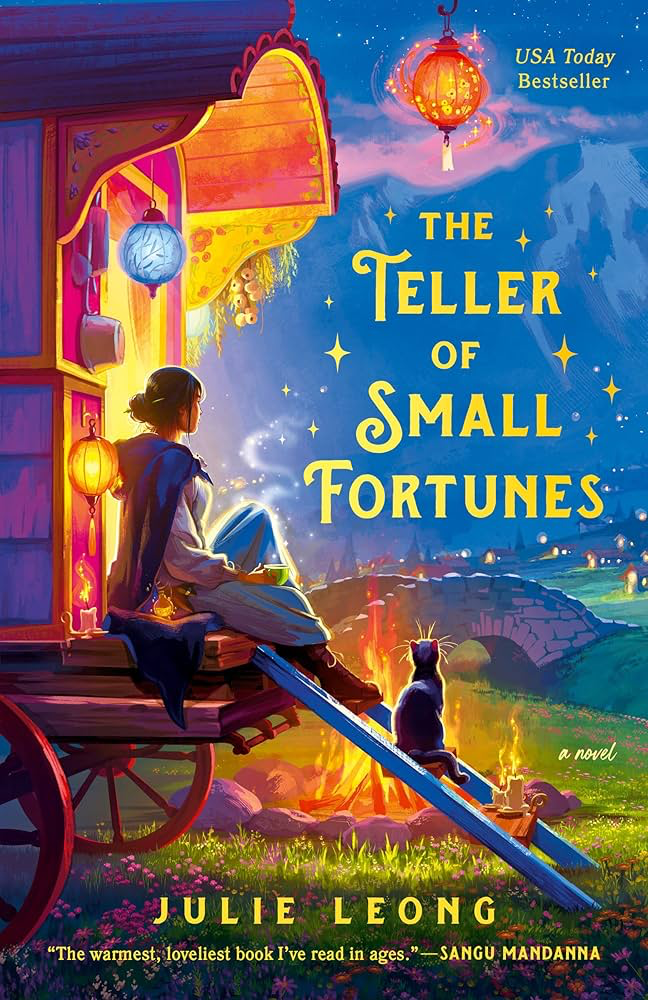
Posted in Monthly Wrap-Ups

April 2024 Wrap-Up 🌂

Happy Tuesday, bibliophiles!

Unfortunately, I probably won’t be able to write up a book review or a Sunday Songs post this week, as I’m days away from finals. I started this post in advance, as I do with all of my wrap-ups, so that’s why I managed to put it out today. But from today on, I’ll be (mostly) radio silent for the next week or so. Wish me luck…

Let’s begin, shall we?

GENERAL THOUGHTS:

April’s been its fair share of crazy, what with job interviews, preparing for finals, and wrapping up my sophomore year of college. (How’d that happen??) It’s definitely taken a toll on my reading and blogging, but I’ve still had some free time in between. Said free time has been surprisingly fruitful this month—I finished up the 20,000 word novella that I had to write for one of my classes, and I had a solid weekend where I was able to brainstorm quite a bit for my main sci-fi trilogy. I’d still be doing said brainstorming if not for…y’know, studying for an astronomy final, but once I’m free of that, I’ll be back to making my outline even more excessively long. I’m almost there…

As I said, I had less time to read than I have in the past few months, but strangely, as far as ratings go, it’s been my most positive month. I say “strangely” because I felt like I was in a stint of good, but not great books for at least the first third of April. However, it picked up significantly, partially aided from a particularly lucky haul from Barnes & Noble with a dear friend of mine.

Other than that, I’ve just been watching The Bear, Taskmaster, and Ripley (how and why is Andrew Scott so good at being SO devious), writing when I can, and preparing for the end of the semester.

Oh, and remember how (hesitantly) excited I was about the fact that The Search for WondLa was being adapted into a TV show? We’ve just gotten the first look, and…

…not to be dramatic, but this is my villain origin story. This is my Joker arc. I’m beyond livid. They drained it. They drained it of the artistry and creativity. And the love. They made Muthr into one of those Playmobil people. Why is Otto furry and squishy? Why does Rovender have those front-facing predator eyes? Where are Eva Nine’s signature braids? Where’s the soul?

Yeah! I’m fine. They just turned my childhood into a sad, lifeless husk of a 3D animated TV show…

READING AND BLOGGING:

I read 15 books this month! Somehow, I feel like I was in a slump of good but not remarkable books for at least a third of the month, but somehow, I got through a whole month with no 2 or 1 star reads? That’s a new one for me.

3 – 3.75 stars:

A Tempest of Tea

4 – 4.75 stars:

The Tusks of Extinction

FAVORITE BOOK OF THE MONTH: Activation Degradation4.5 stars

POSTS I’M PROUD OF:

POSTS FROM OTHER WONDERFUL PEOPLE THAT I ENJOYED:

Unfortunately, I haven’t been able to blog-hop much because of finals, but here are some highlights:

SONGS/ALBUMS I’VE BEEN ENJOYING:

top 10 nerdiest club bangers
god, I missed this song…
the bowiemaxxing continues
no thoughts only all born screaming
imagine making Poor Things (2023) and failing to get across in two and a half hours what this song does in just under four minutes………couldn’t be me
xtc my beloved
as much as we praise Björk, I feel like she doesn’t get enough credit for how deeply romantic she can be…good god I feel so sappy and squishy listening to this song, it feels so good
david bowie make a song from the ’90s that isn’t criminally underrated challenge (impossible)

Today’s song:

hey, if we’re talking about keeping my inner middle schooler happy, at least this album was fantastic

That’s it for this month in blogging! Have a wonderful rest of your day, and take care of yourselves!
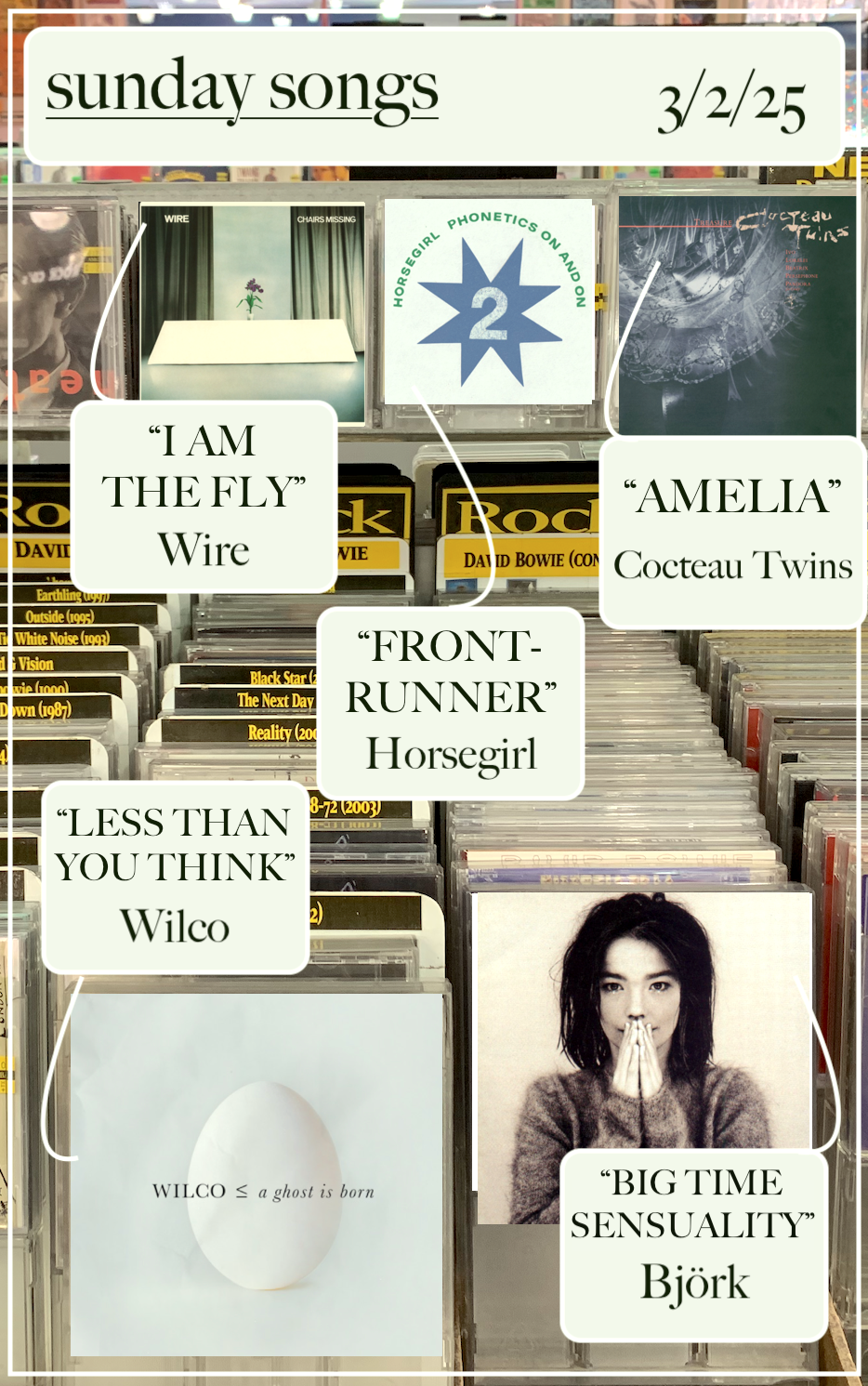
Posted in Sunday Songs

Sunday Songs: 2/11/24

Happy Sunday, bibliophiles!

Huzzah! No more black and white color palettes! Color has returned! And somehow, I’ve managed to cram way too many songs that I’ve had on repeat into a single post, so get ready for some rambly paragraphs. Also: music that changed the game (several games, in fact), people who really liked the ’60s, and me freaking out over an Instagram post that’s already over a week old.
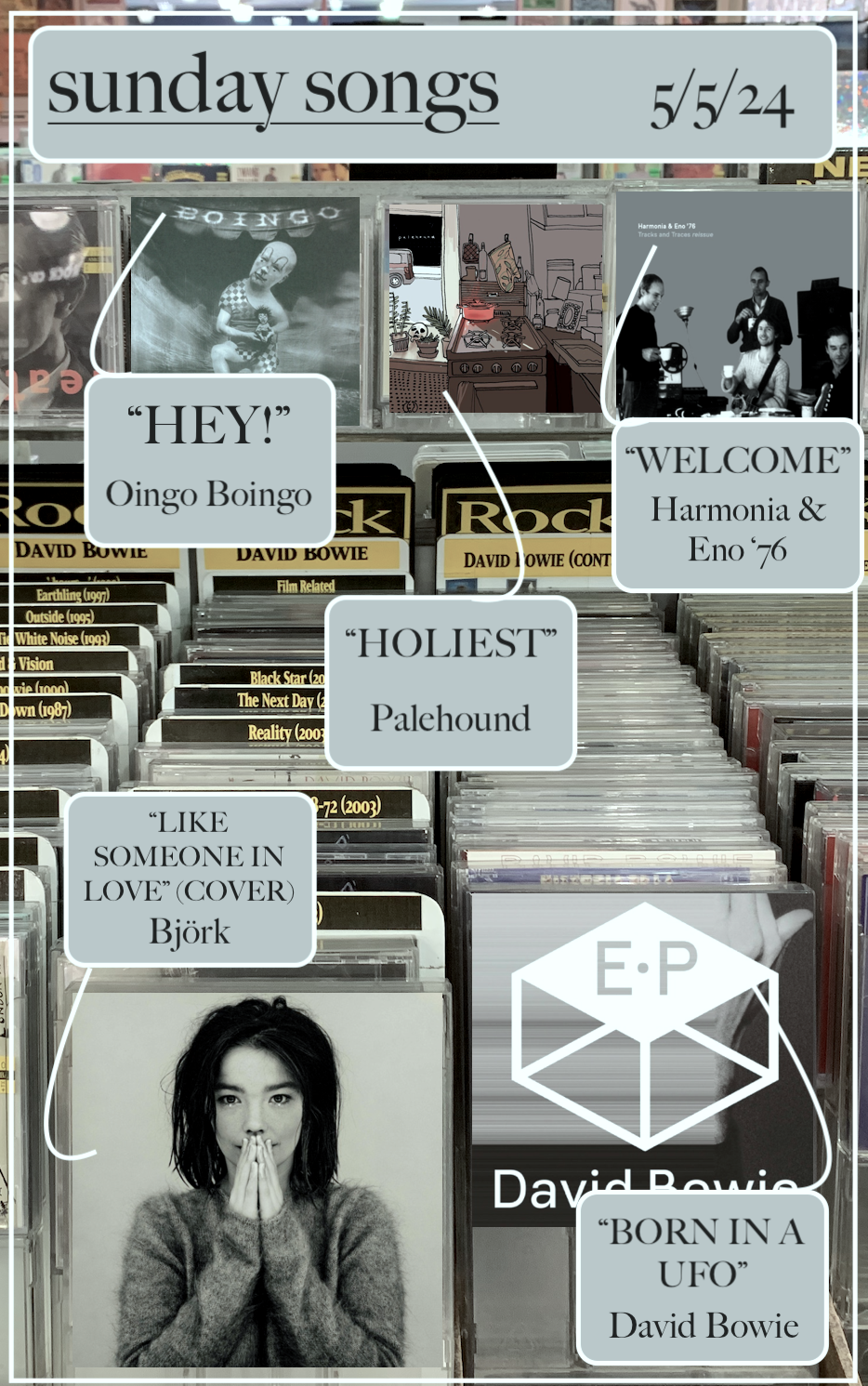
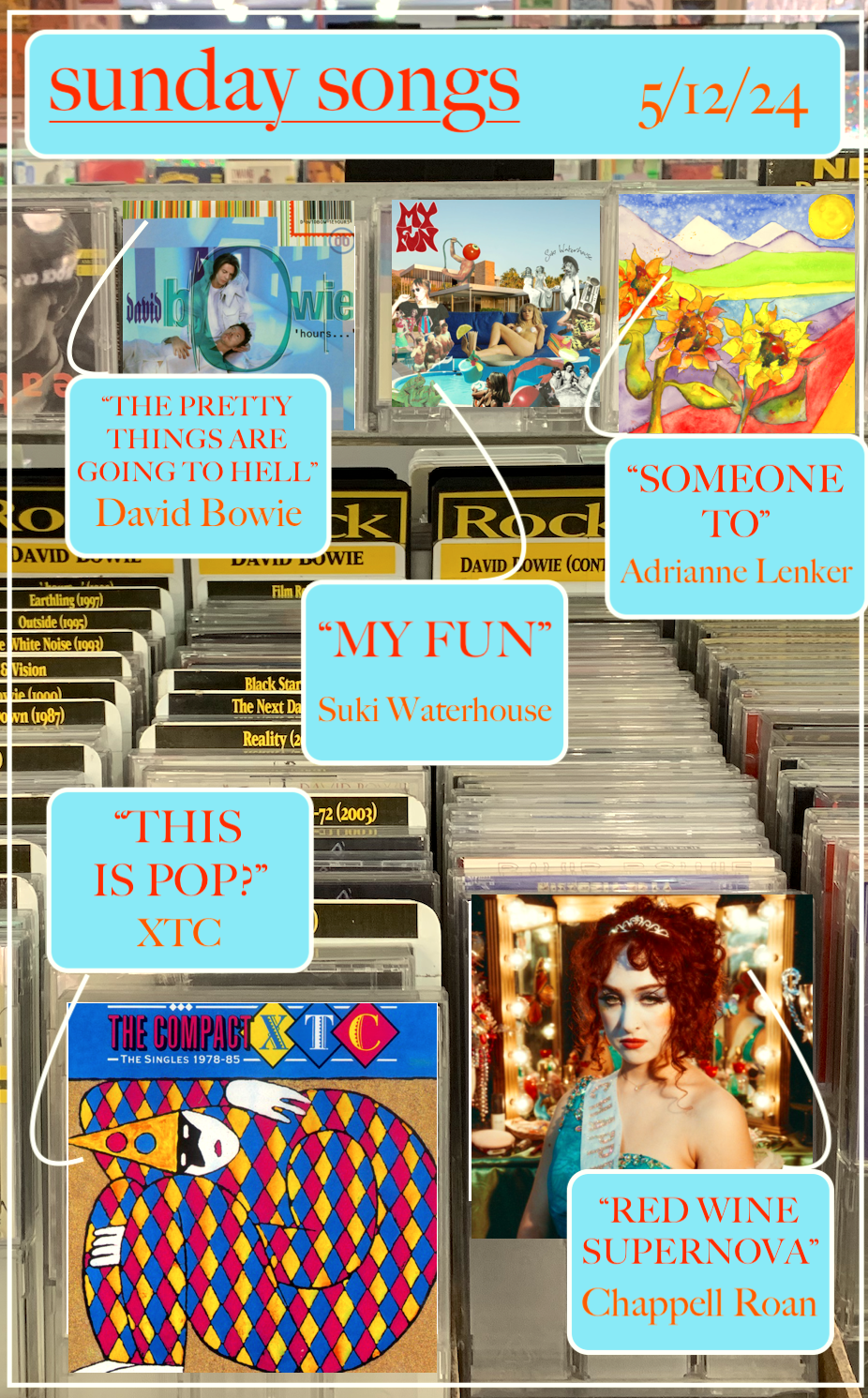
Before we get into that, here are last week’s songs:

2/4/24:

Now, enjoy (oops) this week’s songs!

SUNDAY SONGS: 2/11/24

“Read the Room” – The Smile

I already rambled about this song plenty on my review of Wall of Eyes from last week, but if you haven’t read that, take my word for it. “Read the Room” was half the reason I was excited for the whole album in the first place just because of how arresting it was to hear it live for the first time without knowing they’d been cooking it up. From that, I thought I was going to destroy my hopes for this song because I’d hyped it up so much, but no. It’s still hypnotic in every way possible. Just listen, okay?

…AND A BOOK TO GO WITH IT:

To Shape a Dragon’s Breath – Moniquill Blackgoosemassive egos and magic rainbows aplenty, but this time in the form of gaslighting and colonial pressures surrounding Anequs, an Indigenous woman fighting to make her voice heard.

“Enjoy” – Björk

Finally. I’ve finally gotten around to listening to Post, and with every song I come back to, I keep hitting myself for not listening to it sooner. Not just because some of my favorite Björk songs (and no shortage of childhood nostalgia, courtesy of my parents and their wonderfully indie taste) were on it, but just because I’ve seen it held on so high of a pedestal for so long. Normally, that’s not a primary motivator for listening to an album unless I’ve had it recommended by someone I trust, but if it’s Björk, talent of talents, that’s being held on said pedestal, then why shouldn’t I? Now that I’ve listened to it, I’m struck by the feeling that Post sounds simultaneously like nothing I’ve ever heard and everything I’ve ever heard. Every song sounds so unique, and yet screams of everything that’s come after it, whether you’re looking at the world of rock, trip-hop, or electronic—a route that Björk took on this album when she felt that rock music held little opportunity for the experimentation brewing inside of her. And that experimentation was truly wild—wild in the naturalistic sense, in the sense that she’s always meant when she’s said that she isn’t necessarily inspired by the music of her native Iceland, but of the volcanic landscape of Iceland itself. There’s musical eco-brutalism rife in this album, a full-frontal fusion of the natural and the industrial that grinds together into something that feels both alien and familiar, but wholly captivating. Maybe eco-brutalism isn’t quite the right word—I’m sure there is a word for this, but the “brutalism” part, although it is distinctly industrial in some places, feels sleeker and more technological. Post feels like that picture of a bunch of bright green plants crawling out of the dirt, but they’re planted inside of the headlight of a car; both images are strikingly different from each other, but they were always meant to be distinctly harmonious without bleeding into each other.

“Enjoy” was one of the songs that I hadn’t heard previously, and now, I’m practically waiting on its every beck and call. I just cannot stop listening to it. With something so simple as a walking, looping synth to provide its chrome backbone, “Enjoy” becomes a kind of cyberpunk catwalk, a confident strut through metal and neon lights. It’s no surprise that Tricky (who Björk had a short-lived relationship with at the time) had a hand in this track; it’s got trip-hop written all over it, but even that couldn’t place it as anything but purely Björk. With brass blasts punctuating the spiraling web of synths thickening every note, it feels like the formula that she’s molded like clay for her whole career—taking two distinct things that would sound horribly out of place in the hands of any other artist, but in her hands, sound like they were made to mesh together, a cyborg chimera of spare and found parts. And through it all, Björk’s signature, growling belt rings like a cry of confidence, a declaration (of independence?) as she struts the cyberpunk catwalk, hungry for tactile sensation, branching her feelers out for anything they can grasp. Björk described it as “[being] greedy, to be eager to consume a city,” and “Enjoy” feels like nothing but riotous consumption, something swallowing whole continents in its wake in a search for something to feel.

…AND A BOOK TO GO WITH IT:

Translation State – Ann Leckie – this novel features an alien character with a deep desire to experience the same sensations of other intelligent life that have been excluded from them; the overwhelming urge to seek out the tactile of “Enjoy” radiates through here as well.

“Chapter 8: ‘Seashore and Horizon'” – Cornelius

I’m a warm-weather creature at heart. I can’t get too warm, but I tend to come back alive once the sun comes out. I’m practically a reptile in that regard—I take any crumb of warmth that I can get, then I soak it up for the rest of the day like stolen nectar. Similarly, I find myself gravitating to sunnier, more summery music in these chillier, gloomier months. Here I am, looking out my window: all the trees are bare as can be, there’s half-melted snow sliding off the neighboring rooftops, and the ground beneath my feet is a mess of slush, dirt, and who knows what else. If you squint, there’s a tiny pocket of blue between the clouds, but it’s gray as far as the eye can see. But in these times, I turn to musical sunshine for my fix. I’m thinking back to last year, and that’s around the time when I was playing Fishbone’s “Everyday Sunshine” more often than not. Now, we’ve got some sparkly sunshine in the form of a trip to the beach.

Up until now, I only knew two Cornelius songs (“Mic Check” and “Smoke”), both collages of synth, samples, and brightly-colored, digitized sparkle. What I’ve taken away from looking into his background is that Cornelius (a.k.a. Keigo Oyamada), is, if nothing else, a student of The Beach Boys, to the point where he put a picture of himself dressed as Brian Wilson in the liner notes of Fantasma, the album where we get “Chapter 8.” Somehow, it never once dawned on me while listening to this song, but it’s like a sledgehammer in the face of Pet Sounds influence once you realize. This is literally just The Beach Boys if they had a few more synths and discovered sampling. And like what made Wilson and co. famous, “Chapter 8” feels like if warm sunshine over an endless, golden beach were channeled into just under three and a half minutes of music. Combined with the equally peppy powers of Robert Schneider and Hilarie Sidney of The Apples in Stereo, there’s no adequate words to describe this song other than carefree. You can almost see Schneider and Sidney nodding their heads in time as one strums an acoustic guitar, with animated sea creatures dancing around them. But what elevates the joy of this song is the way their high-pitched harmonies dance together, feather-light.

What a joyous, whimsical song! Sure would be a shame if…oh, for fuck’s sake, Cornelius did WHAT? Jesus Christ…at least The Apples in Stereo are good people…

…AND A BOOK TO GO WITH IT:

Sea Sirens (A Trot & Cap’n Bill Adventure) – Amy Chu and Janet K. Leea brightly-colored trip into a fantastical world under the sea.

“The Ballad of Peter Pumpkinhead” – XTC

Everybody’s weekly Apple Music replays should be generating soon, if memory serves, and I’m just waiting to see which spot out of the top 5 that this song has occupied, because it’s kind of a given that it’s going to be somewhere in there. It’s an inevitability at this point. As evidenced by this post, there’s no space left in my brain for important stuff to occupy, because it’s all been clogged with Björk, The Smile, and this for 2 weeks straight.

For XTC, it’s easy to see why. Andy Partridge always had aspirations of being a pop star, weaned on ’60s groups like The Monkees, whose style inspired his quirky musical career. And although he never got the Monkees-level fame that he’d always dreamed of (maybe that’s for the best? Who would want to have a fake show centered around you and then have to own up to not playing any of the instruments on live TV? Maybe that’s just me…), his pop craft is unmistakable. Their hits were more on the side of…well, ADHD, valium withdrawal, and poking sticks at God than “Daydream Believer,” but, as he frequently insisted, the music he and the other members of XTC was pop—it was just confined to the fringes, for the most part. “The Ballad of Peter Pumpkinhead” feels like it could have been the crowd pleaser at sold-out stadiums in some alternate universe where fawning girls had posters of Andy Partridge and Colin Moulding in mop haircuts on their walls. It’s a tragic and biting song, but it’s got the command of a song made for people to wave their hands along, raised in prayer in a mass mourning for Peter Pumpkinhead. The song did, in fact, start out as a smaller version of that kind of pity; the Peter Pumpkinhead character was inspired by a jack-o-lantern that Partridge had proudly carved, then slowly watched rot day by day, which led him to not only pity the poor thing, but toy with the concept of a person who was purely good, and therefore, according to Partridge, “I thought, ‘god, they’d make so many enemies!'” And it’s easy to see—not to be cynical with it, but most governments despise the idea of Peter Pumpkinhead-like people simply because he’s everything they’re not—charitable, kind, and just purely good, and capable of letting every criticism bounce off of them (“plots and sex scandals failed outright/Peter merely said ‘any kind of love is alright!'”). The music video, which was later heavily edited for us Americans, didn’t just expand on the allusions to Jesus in the song’s final verse (“Peter Pumpkinhead was too good/Had him nailed to a chunk of wood”), but straight up recreates the JFK assassination. Not just a few references or anything, no. It’s literally just JFK’s assassination, complete with a Marilyn Monroe lookalike, a flashing image of Cuba superimposed onto a picture of a pig, and a weeping Jackie Kennedy sprawled out of the back of the car. Certainly a ballsy move, but not even the ballsiest move they made when it came to American audiences. If being memorable was the aim, then they succeeded. But even without it, “Peter Pumpkinhead” has pathos in spades, the kind that brings people to their knees.

Hooray for Peter Pumpkinhead, indeed. He’s got my vote, but I feel like we already established that he’s not the kind of guy to run for public office, so I’d just shake his hand.

…AND A BOOK TO GO WITH IT:

The Last Human – Zack Jordanbeing the last human in the galaxy tends to make you too many enemies, even if you don’t deserve it. Also tends to happen when you’re a teenage girl.

“The Party” – St. Vincent

Oh god. God. Help me. St. Vincent wiped her entire instagram and posted a video setting aside the blonde wig from the Daddy’s Home tour H-E-L-P. HELP ME. I AM NOT OKAY.

Through my unceasing hyperventilation, I’ve come back to some of her older genius through a scattered few songs from her (slides on hipster glasses) sophomore album, Actor, and its timeless gateway into the singer and guitarist that she’s become. It’s uplifted the quirky art-pop of Marry Me into something sharper, at times more sinister (“Marrow”), and at times more heartfelt (“Laughing With a Mouth of Blood”). Only two years into her solo career, and she’s already got a full brass section at her back, but even that couldn’t stop her as a singular, meteoric force; Actor proved that she had the plentiful talent to command a room and supercharge it with artfully jagged energy, always lingering on the edge of ecstasy and fear. Compared to some of the other tracks, “The Party” isn’t necessarily the captivating explosion of some of the other tracks, but it’s still an explosion in its own right. Like “Laughing,” it’s more downtempo both in instrumentation and lyricism; for the glut of the song, Annie Clark is only joined by spare drums and specks of tasteful piano chords as she wistfully recalls tired companionship with someone as a party winds down. There’s a kind of delirious drunkenness to it as Clark watches her subject fade through her fingers in the form of scant memory: “I licked the ice cube from your empty glass/Oh, we stayed much too late/’Til they’re cleaning the ashtrays.” Lines like “oh, that’s the trouble/of ticking and talking” are straight out of the cheeky, red-lipstick mannerisms of Marry Me, but as the song unfurls like a creature hatching from an egg, it’s a concentrated specimen of her growth in the years since. As her voice fades out of lyrics and into chorus, joined by a choir rising like fog, it feels like she has her finger lingering over the button to unleash chaos, a nuclear release of creativity. Drums skip beats and fade out of line, synths blip and crackle like they’re struggling to hang on, and Clark and her chorus rise from the waves like Aphrodite rising from the sea. For a section that occupies such a small space in the song, it crams so much dare I say cosmic fervor into only a minute and a half. If “Marrow” and “Actor Out of Work” are explosions, “The Party” is an explosion in slow motion, the kind you watch from afar as debris arcs over your head and flames balloon outwards into oblivion. It’s even more evident watching it unfold in Pitchfork’s Cemetery Gates series (why did they ever stop doing those, by the way?)—there’s no other way to hear the meticulous chaos, especially in its extended form, than in an old church, where surely, Clark’s talent reverberated through the walls like the aftershocks of an earthquake.

What I’m trying to say is that there is a right way to close out an album, and this is how.

…AND A BOOK TO GO WITH IT:

The Gilded Wolves – Roshani Chokshithe image of a dying party and the faint, tender moments shared between the narrator and the unnamed character remind me of Séverin and Laila sharing a tense (but romantic) moment amidst magical glamour.

Since this post consists entirely of songs, consider all of them to be today’s song.

That’s it for this week’s Sunday Songs! Have a wonderful rest of your day, and take care of yourselves!