Posted in Sunday Songs

Sunday Songs: 6/15/25

Happy Sunday, bibliophiles, and more importantly, Happy Father’s Day!! I always end up writing one of these posts on Father’s Day, what with it landing on a Sunday and all, but it’s fitting, given that my amazing dad is the one who not only is responsible for a lot of my music taste, but was also the one to encourage me to write these posts and wanted to hear my thoughts. So thank you to him, for all of the gifts he’s given to me, and to my family. I love you. 🩵

This week: before I go radio silent for a week for a road trip, how about a random kick in the pants from 2019? Plus, new Cate Le Bon, old(ish) Shins, and others.

Enjoy this week’s songs!
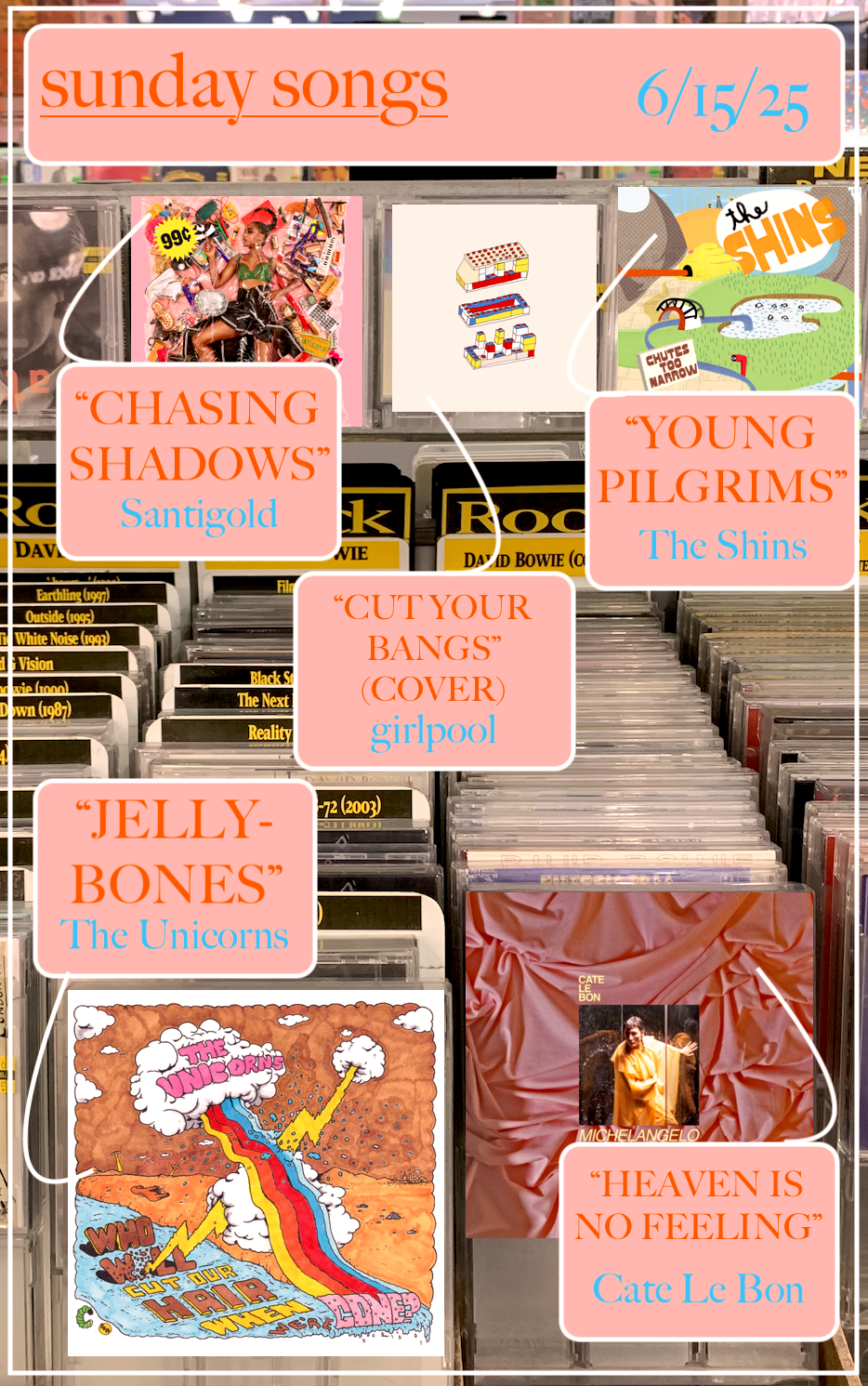
SUNDAY SONGS: 6/15/25

“Jellybones” – The Unicorns

Chances are, given my proclivities for Car Seat Headrest and other like lo-fi, awkward white boys, I probably would’ve stumbled upon The Unicorns eventually. It was an inevitability. Either way, I was introduced to it via Black Country, New Road’s episode of What’s In My Bag?, and I can’t call it much else other than a delight in the many times that I’ve listened to it since. “Jellybones” is a whimsical title as it is, but the rest of the song stays true to that silliness, complete with bone-related puns (“Drove up in my bone-ca-marrow,” ba-dum tsss); the entire song revolves around jellybones (an obscure sort of expression for nervousness) being a genuine malady worthy of going to the hospital and getting limbs amputated for. Everything has a juddering, garagey sound to it, from the engine-like startup to the guitars to the keyboards, which the intro warps into the sounds I feel like I’d hear aboard a clunky, malfunctioning spaceship on the cover of a ’50’s pulp magazine. 2:43 feels simultaneously too short and the perfect length for “Jellybones”—I need more, and yet this song could only ever be a sputtering little firecracker, spurting out sparks and then gently slipping out of existence.

…AND A BOOK TO GO WITH IT:
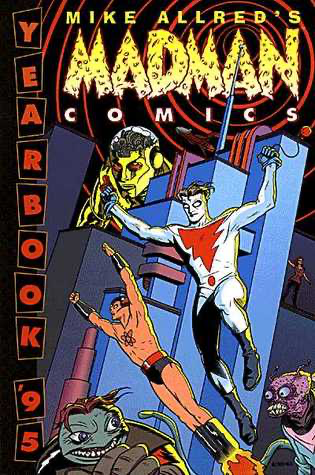
Madman Comics Yearbook ’95 – Mike AllredJellybones definitely seems like it could be a genuine illness in the Madman universe. (Least wacky Dr. Boiffard subplot, maybe?) Either way, the lyrics definitely fit with the kind of silliness in these comics.

“Heaven Is No Feeling” – Cate Le Bon

Getting the one-two punch (positive) of new Big Thief (to be discussed) and Cate Le Bon on the same day was almost too much…and just when I thought that we were finished with all of my most anticipated albums of the year! Cate Le Bon’s new album, Michelangelo Dying, comes out this September, and suffice to say, if it’s anything like this song, I’m all ears.

Taking cues from the synth-heavy sound of Pompeii, “Heaven Is No Feeling” opens with an intro too good for a track that’s right in the middle of the album: a murmur of “What does she want?” before launching into a flurry of rippling, watery synths and guitars slathered in enough effects to make them camouflage with the synths. In line with her very ’80s sound, there’s plenty of saxophone, but not enough that it overpowers any of the rest of the song. Gently groovy and keenly observational, Le Bon takes the position of a wallflower: there is a kind of emotional distance to it as she watches the subjects as they move like pawns across a chessboard: “I see you watch yourself/Walk the room/Stroking the air/Like this paint won’t dry.” As she observes the distant fallout of a failed love, the song feels like she’s watching someone through security camera footage, pretending to be distanced when she hasn’t fully gotten over the wreckage—much like the music video, where a buzzcutted Le Bon watches herself on an old TV. Every repetition of “I see you watch me” feels like a degree of separation from the body and from her feelings (surely that’ll end well…), and “heaven is no feeling” becomes a kind of blissful removal from one’s own emotions.

…AND A BOOK TO GO WITH IT:
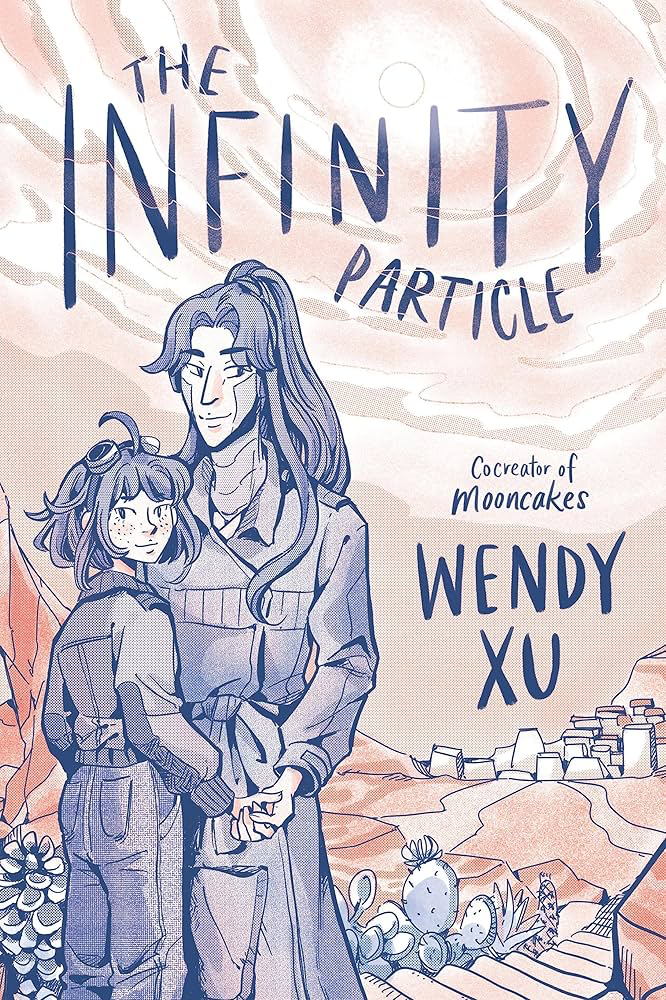
The Infinity Particle – Wendy Xu“I see you watch me watch you/Watch me move away/You occupy the space/Like a ribbon untied…”

“Chasing Shadows” – Santigold

Santigold, man. Nobody’s doing it like her. I often think of 99 Cents as being one of the only happy albums of 2016, but next to Blackstar, A Moon-Shaped Pool, and Teens of Denial, anything looks happy. But what makes me keep coming back to songs from 99 Cents is how she used the veneer of happy, bubblegum pop songs to further her message—they remain peppy pop songs, but they’re all armed with critiques about consumerism and the music industry. Santigold has often talked about her negative experiences in the music industry, whether it’s how unaccommodating the industry is to mothers, especially where touring is concerned, or how her music did not qualify to some critics as “Black music.” Despite how candid she’s been about the physical and mental toll it’s taken on her, Santigold has only used that to become even more herself than ever. Her last album, Spirituals, went fully into Afrofuturism and current politics, and she’s expanded her creativity into a podcast, Noble Champions, where she brings guests to talk about everything from said nebulous category of “Black music” to social media addiction. (From the episodes I’ve intermittently listened to, she’s also had a whole host of amazing guests, including Yasiin Bey, Questlove, Tunde Adebimpe, Mary Annaïse Heglar, and so many more. The only problem is that there’s not more Santigold, frankly.) I saw her perform live last August, and it’s one of the only concerts I can think of where a singer has been truly kind and candid with her audience; decades in the industry didn’t stop her from signing people’s records in between songs.

Like the album cover, where Santigold is shrink-wrapped and slapped with a price tag along with all manner of plastic junk, “Chasing Shadows” reckons with the human toll of commodifying artists. Contrary to Pitchfork’s assessment that the song “basically plods along inoffensively until it ends” (I’m sorry, the fuck?), it’s one of the more steadfast songs on the album, still fast-paced but providing a cooldown between some of the more in-your-face pop songs. Rostam Batmanglij (formerly of Vampire Weekend) produced the track, and knowing that, I can hear him all over the beat—I say this affectionately, but it’s the most 2016 pairing ever. I love it. Through rapidly-uttered lyrics, Santigold reflects on how quickly the industry moves on so quickly from artists once they’re out of fashion, summarized by one of the finals the second verse: “Why they eating they idols up now/Why they eating they idols up, dammit?” Reflecting on seemingly being left behind, her solution, as always, is to defy the standard, continuing to do what she’s doing. The video mirrors this back: she asserts herself in multiple places inside various houses: at the head of a table at a decadent Christmas feast, standing upright and fully clothed in a bathtub, and towering over a child-sized table with a child-sized tea set. No matter the location, she stands firm, defiantly staring the camera, returning the gaze—of the music industry who tried to put her in a box, to racist and misogynist detractors, or to anyone who has ever doubted her. No matter what, she’s looking directly at you, as though to cement her irreplaceable space of individuality that she’s created for herself.

…AND A BOOK TO GO WITH IT:

Victories Greater Than Death – Charlie Jane Anders“One thing about time, it waits for nobody, you told me, isn’t that what they say/Been batting ‘gainst it and getting nowhere, just racin’ got nothing to say to nobody…”

“Cut Your Bangs” (Radiator Hospital cover) – girlpool

What in the 2019 did my shuffle just pull? I hadn’t even thought of this song in years, and boom, suddenly I’m back in high school art class, diligently obeying the “only one earbud in if you want to listen to music” rule while drawing X-Men fanart because I blew through whatever I was actually assigned. God.

High school…and my first introduction to girlpool through Apple Music. Sure, I’m fully on board with the fact that streaming has harmed musicians more than it has helped them, but for a lot of people, myself included, it opened the floodgates for discovering so many musicians back when I was in high school. girlpool was one of the big ones, prominently soundtracking my sophomore year of high school, from their earlier work on Before the World Was Big (which turns 10 this year, Jesus) to their more current (at the time) What Chaos is Imaginary. Almost six years after I discovered them, girlpool since released one final (disappointing) album, Forgiveness, broken up shortly after, and then…Avery Tucker’s come back with a good solo single, but Harmony Tividad seems to have pulled a Gwen Stefani and now makes pop songs with the most chronically online lyrics you’ve ever heard. How the times have changed. But good for her, I guess? You do you…

Even though girlpool had moved past this inception of their music by the time I got into them, they fit too perfectly into the sad, acoustic indie that comprised most of my music taste, and still kinda does today. “Cut Your Bangs” is a cover, but to this day, it remains one of the best parts of this inception of girlpool. In contrast to the faster, more rock sound of the original by Radiator Hospital, girlpool take the chorus’ ending of “the small stuff” literally, slowing it to a crawl in order to wring the most out of the quietly introspective lyrics. I remember not liking the original when I first heard it, and on reflection, I don’t hate it, but I still think it’s a situation where girlpool knew exactly what to do with it. All of the lyrics need a gentler space to breathe, and the twin harmonies of Tividad and Tucker make them stand out. To this day, the way their voices know exactly which lyrics need a plaintive murmur and which ones need a higher-pitched belt feels almost telepathic—at their best, what made girlpool so successful is that they had such an instantaneous communication that allowed them to switch from gentle to jagged in the blink of an eye, but never once lose their synchronicity.

…AND A BOOK TO GO WITH IT:
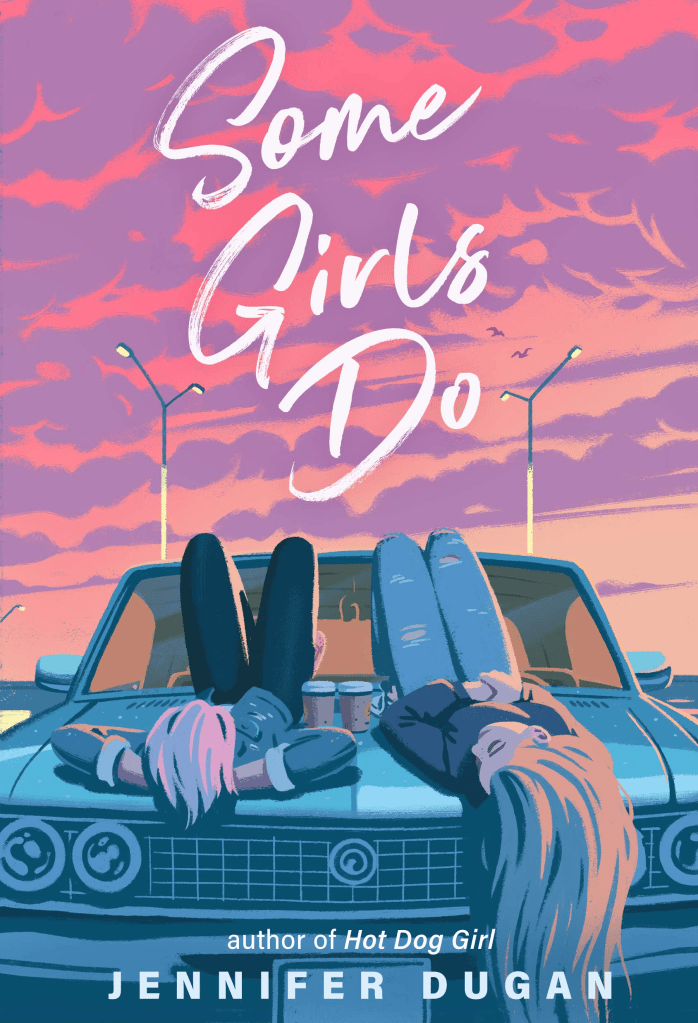
Some Girls Do – Jennifer Dugan“You say you’ll cut your bangs, I’m calling your bluff/When you lie to me, it’s in the small stuff…”

“Young Pilgrims” – The Shins

James Mercer just has such a unique way with words. As music history (and my personal music library) proves, there’s practically a million ways to say a sentiment along the lines of “I’m dissatisfied with my life and it’s cold and wet outside and I’m also depressed.” Mercer saw that and gave us these iconic lines:

“A cold and wet November dawn/And there are no barking sparrows/Just emptiness to dwell upon/I fell into a winter slide/And ended up the kind of kid who goes down chutes too narrow…” HE SAID THE LINE! GUYS, HE SAID THE LINE! CHUTES TOO NARROW!

Said barking sparrows came back to me completely at random, in the way that especially sharp lyrics or melodies do. Although Mercer’s narrator envies the “eloquent young pilgrims” passing by him, I struggle to find words other than eloquent to describe how he articulates such a near-universal feeling, a mess of regret and stagnation and the emptiness that comes with control slipping through your fingers and wanting to regain it. In a simple duet of acoustic and electric guitars, Mercer wrings some absolute poetry out of such a stagnant state, drawing every possible image from ice melting on a train window and the desire to “grab the yoke from the pilot and just/fly the whole mess into the sea.” I love a good literary-minded songwriter, which I guess it’s no surprise that I latched onto The Shins from such a young age. But with age, I appreciate the lyrics even more—James Mercer is one of those songwriters who prove that, at its best, music is eloquent poetry set to music. It doesn’t need to be (and rarely is), but when it hits that spot, I can’t help but relish it.

…AND A BOOK TO GO WITH IT:
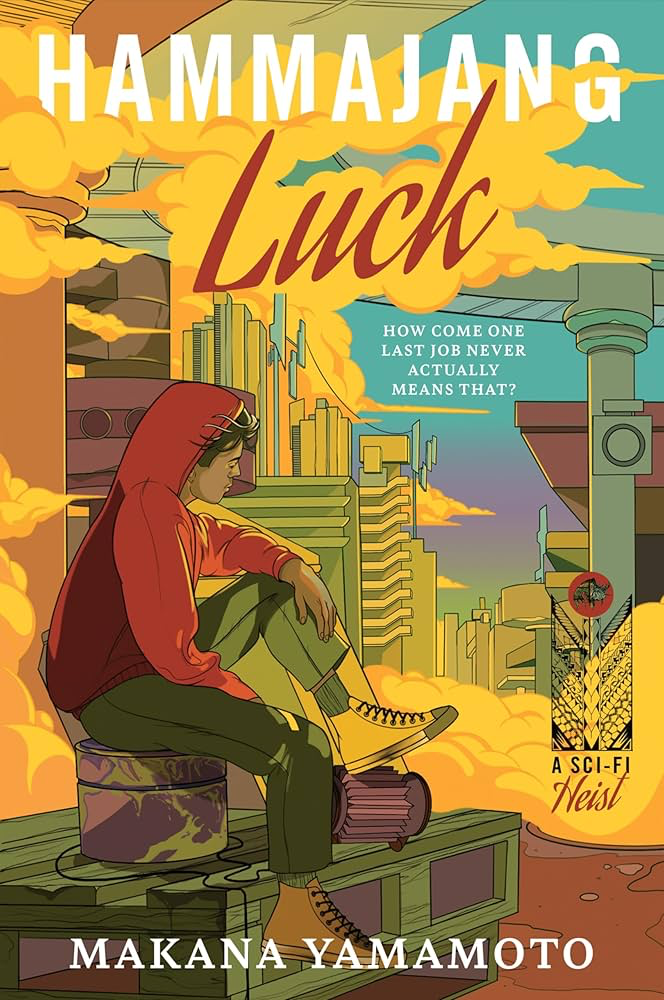
Hammajang Luck – Makana Yamamoto“But I learned fast how to keep my head up, ’cause I/Know there is this side of me that/Wants to grab the yoke from the pilot, and just/Fly the whole mess into the sea…”

Since this post consists entirely of songs, consider all of them to be today’s song.

That’s it for this week’s Sunday Songs! Have a wonderful rest of your day, and take care of yourselves!

Posted in Sunday Songs

Sunday Songs: 6/1/25

Happy Sunday, bibliophiles, and more importantly, HAPPY PRIDE!! I’ll have more specifically pride-related posts coming soon, but for now: remember that no president or legislation can unmake your queerness. No one has that power over you. You are loved. You are cherished just the way you are. 🌈 I hope this week has treated you well.

This week: PLEASE NO NO NO I’M SORRY I KNOW PRETTY MUCH REPEATED THE SAME COLOR SCHEME WITHIN THE SPAN OF TWO WEEKS I’M SORRY PLEEEEEASE…does it help that I’ve double-dipped on St. Vincent for pride?

Enjoy this week’s songs!

SUNDAY SONGS: 6/1/25

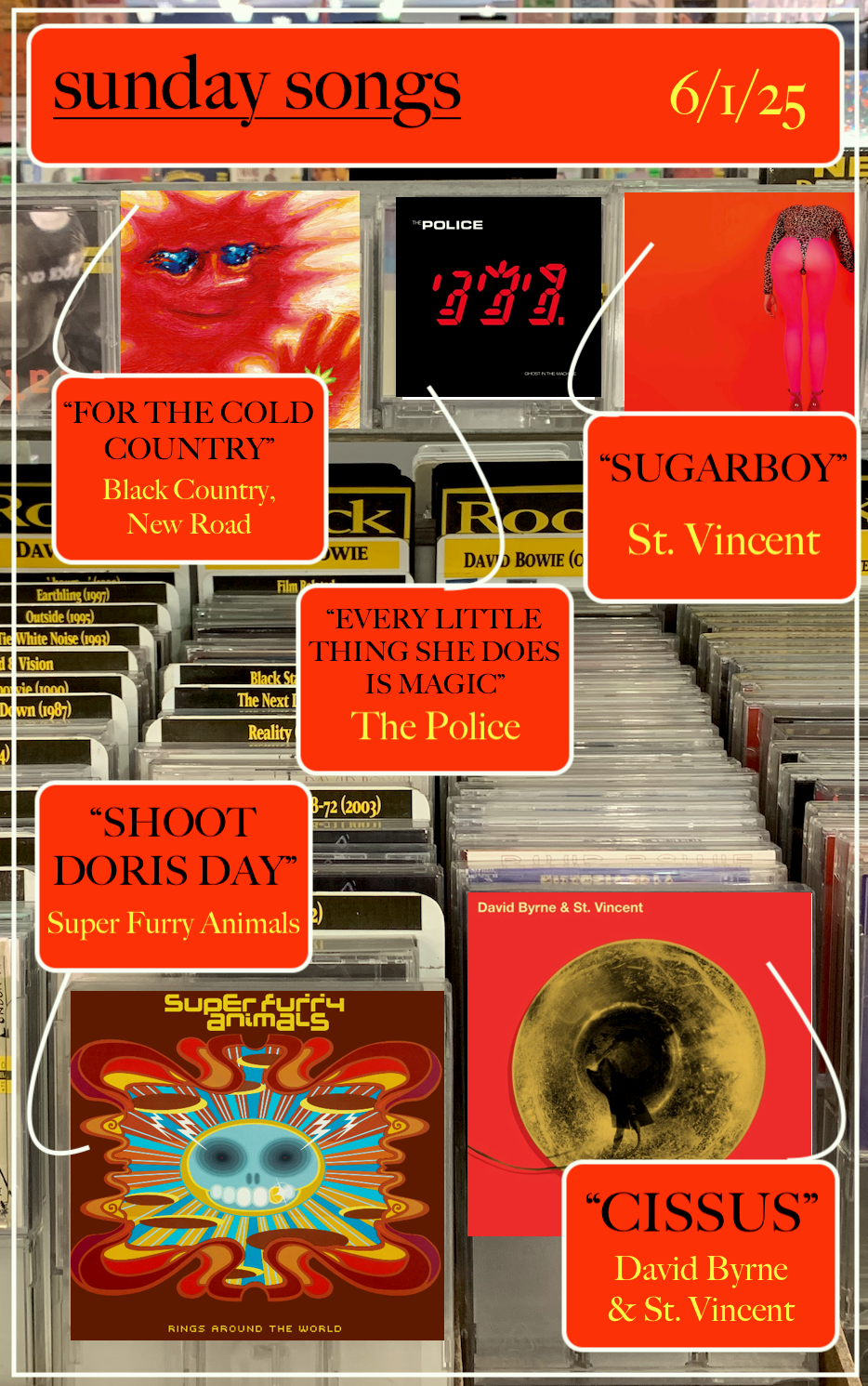
“Shoot Doris Day” – Super Furry Animals

Three years after listening to it, I’d still put Rings Around the World as one of my favorite albums of all time. Still around #9, though I think things have shifted slightly in my lineup. I can’t make any promises, but I might revisit this post one of these days. Back then, I described the sound of the album as fully-formed, “like Athena bursting out of the skull of Zeus.” Admittedly, I do go crazy with the flowery language, but for once, I actually stand by it. Rings Around the World is one of those albums that makes you think it just sprung out of nowhere. It’s a living, breathing being of an album, so cohesive yet so readily embracing of every possibility. Like turning a Doobie Brothers-like melody into full on EDM in the course of seven minutes. Super Furry Animals are seriously something special. Just when you’ve thought they’ve got a pattern going, Gruff Rhys and company pop out new twists like whack-a-moles, ready with another kick to the senses.

“Shoot Doris Day” is one of those tracks, and no, Gruff Rhys isn’t out for blood (though Doris Day was alive and well when Rings Around the World came out)—it’s the camera form of shooting, thankfully. And like the high-drama cinema that inspired some of the lyrics (Rhys said he simply added them in to match the cinematic nature of the intro), the intro speeds out of nowhere, bursting into a swell of strings and clattering pianos, yet it fades away to acoustic guitars in mere seconds. The best quality of Super Furry Animals, to me, is their uncanny ability to keep their listeners on their toes. “Shoot Doris Day” is a song that repeatedly gives the listener a false sense of security, then pulls the rug out from them several times over. Rugs upon rugs upon rugs…until the disparate elements are reunited at the 2:07 mark, a swirl that meshes naturally as the song finally allows you to let your guard down, in time for an anthemic sway with equally anthemic lyrics: “I’ve some feelings that I can’t get through/I’ll just binge on crack and tiramisu.”

…as one does.

…AND A BOOK TO GO WITH IT:

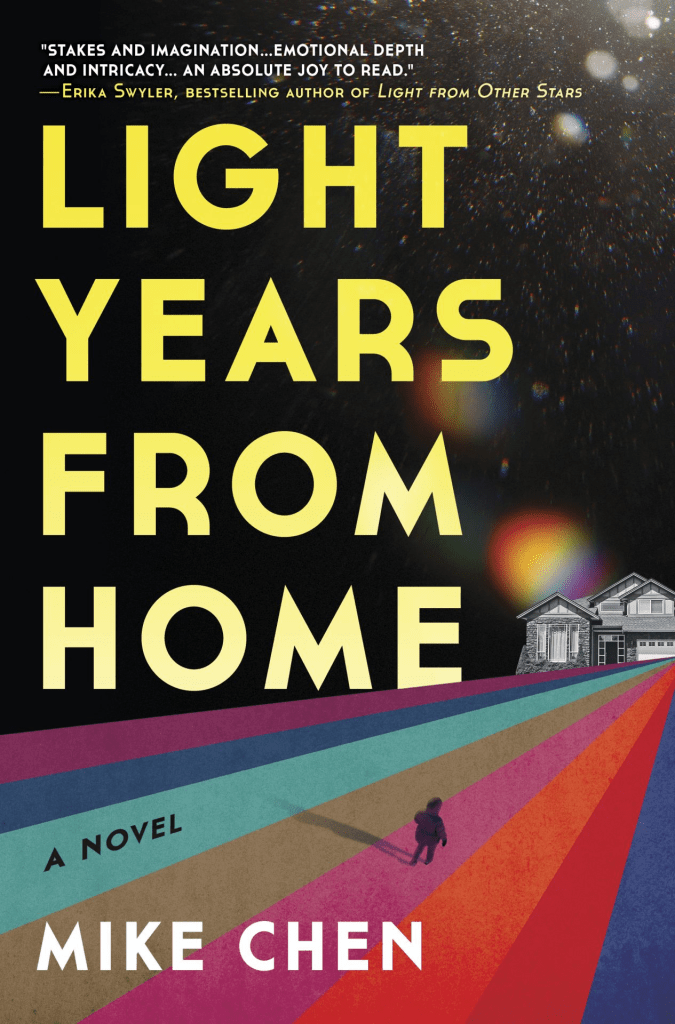
Light Years from Home – Mike Chena book with two distinctly different genres that clash in surprising ways.

“Cissus” – David Byrne & St. Vincent

Another St. Vincent song that she…did not play live when I saw her, and probably won’t again unless she teams up with David Byrne again. Five years after Love this Giant soundtracked the early days of lockdown, I discovered Brass Tactics, an EP of remixes and live performances from the tour, as well as this outtake. With the same brassy march, David Byrne and Annie Clark take their keen teamwork to an unassuming image. I fully thought that, given the imagery of the album, there would be some strange turmoil at the heart of the song. But no, the cissus in question is a kind of vine, and one that Byrne and Clark chronicle as it grows and crawls over a stone wall. Their lyrics have the feel of Victorian poetry as they describe its journey: “Cissus, you keeper of the shadows/Scaling my stone, terrace aswarm in summer.” In their shared language, the gradual crawling and blooming of the cissus vine becomes a kind of heroic march worthy of a flag-bearing procession. And it absolutely is—there’s nothing I like more than when artists turn something as mundane as vines crawling up a wall into a brass-helmed display of utmost grandeur.

…AND A BOOK TO GO WITH IT:

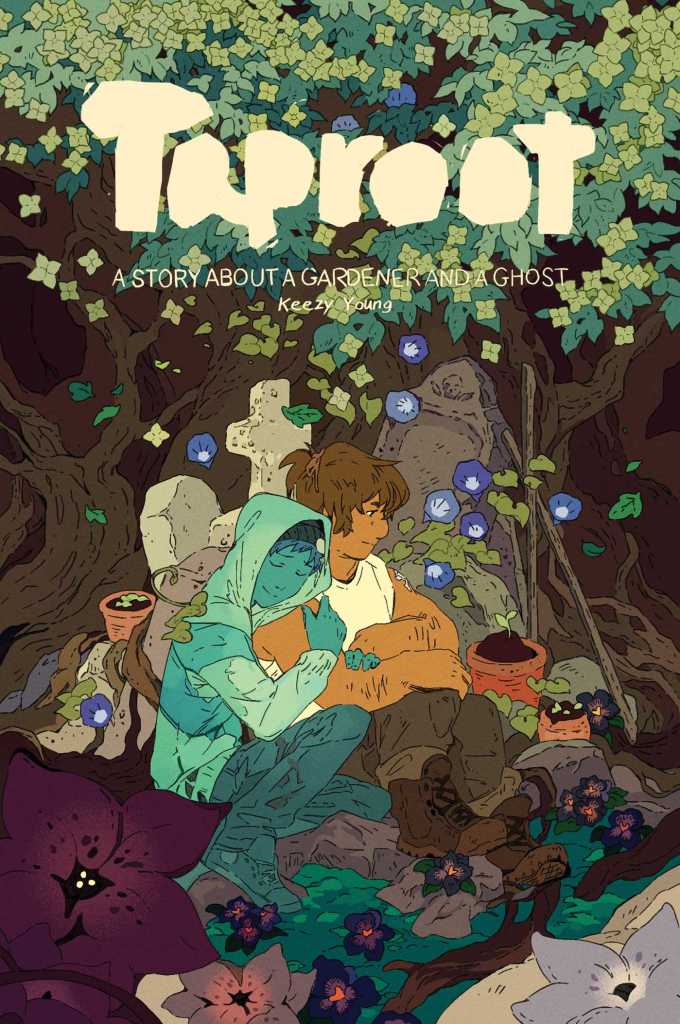
Taproot – Keezy Youngas the subtitle says, this graphic novel is “a story of a gardener and a ghost,” and there are vines aplenty.

“For the Cold Country” – Black Country, New Road

I’ve had a surprisingly good streak of opening bands at concerts this year. Now joining the ranks of Hana Vu (for Soccer Mommy) and Tyler Ballgame (for Shakey Graves) are Black Country, New Road. They’d been floating on the edge of my periphery from years of pretentious music memes on my instagram explore page, but I never showed an interest in them. I was at least intrigued when they came onstage…with a lute, a saxophone, a keyboard tuned to sound like a harpsichord, and enough recorders to imitate a 5th grade recital. I fully thought that there was about to be some Arcade Fire funny business afoot, but boy, was I wrong. Mostly. I could not get on board with the recorders. But I can’t deny that Black Country, New Road are a talented bunch. At worst, they veer towards the proggy, “Dibbles the Dormouse Has Lost His Lucky Handkerchief (Movements I-IV)” for me, but at their best, they’re a truly inventive, adventurous group of musicians.

A comparison that sprung to mind after hearing all of the harpsichord tomfoolery was, of all bands, XTC. Sonically they’re fairly different, but Black Country, New Road take the same approach of modernizing a distinctly British, pastoral flavor into their music. Modern subjects rub shoulders with medieval ones, and it all has the misty feeling of drifting over the English countryside in the melting stages of late winter. Forever Howlong, has its ups and downs (one down namely being the recorder ensemble on the title track), but “For the Cold Country,” both live and in the studio, feels like the summation of the best of the band. Beginning with an “Abbey”-like chorus of vocalists Georgia Ellery, Tyler Hyde, and May Kershaw, the track meanders as it tells the acoustic, fog-touched tale of a wandering knight laying down his arms and wandering across the countryside. As the track progresses, it becomes a more orchestral march, the vocals galloping like the patter of horse hooves. But what made “For the Cold Country” my favorite of their songs is the cinematic sweep that comes in at the 2/3rds mark—as the knight confronts the ghost of his past self among frigid waters. The acoustic guitar creeps back in, only to give way to an explosive swell of instrumentals that seem to shake the dirt beneath the foundation that the song built, accompanying an unexpected storm and flashes of lightning. Live, it really felt like something had possessed the audience, all bathed in warm light as all of the instruments howled, but what pulls it all together is the feeling of being on a journey—pretentious as it is, I can’t deny the chills when it was all over, feeling as though I’d just been on a trek through freezing rain and snow. Forever Howlong is a solid album if you’d like to give it a go—again, even if it’s not fully for me, it’s a delightfully inventive and fun entry into 2025’s musical history.

…AND A BOOK TO GO WITH IT:

Godkiller – Hannah Kanerall of the characters in Godkiller certainly join up in a similar arc to this song, but I thought particularly of Elo, a knight who gives up his former mantle.

“Every Little Thing She Does is Magic” – The Police

I’m struggling to write anything terribly flowery or excessively pick apart the lyrics, because some songs just defy analysis. It’s not that “Every Little Thing She Does Is Magic” is some overcomplicated epic—it’s the exact opposite, and yet it’s just a perfect song. It’s a hit that deserved every minute of airplay it got in the ’80s and in my dad’s car when I was a little kid. As with what I’ve heard of…well, every Police song back in the day, this song went through more lives than your average cat, and the studio probably looked like one of those cartoon fights where there’s a squiggly ball of dust with several hands sticking out (and Stewart Copeland’s drumsticks) when they were recording it. Yet what came out is, fully acknowledging the cliche, absolutely magic. Some songs just instantly capture a kind of unbridled joy and innocence, and you can’t help but be taken along for the ride, no matter what state you’re in. Everything about it is so bright—the tone of the steel drums in the chorus, Sting’s ecstatic vocals, Copeland’s pattering drumming, the guitar tone…I’m not even a Police superfan, but I might go so far as to say that this is one of the more pure love songs of the ’80s. The lyrics are so timelessly starry-eyed—it never feels cloyingly sweet, but how can “Do I have to tell the story/Of a thousand rainy days since we first met?/It’s a big enough umbrella/But it’s always me that ends up getting wet” not charm you? It’s given me a warm, fuzzy feeling since childhood, and time has never dulled that magic.

…AND A BOOK TO GO WITH IT:

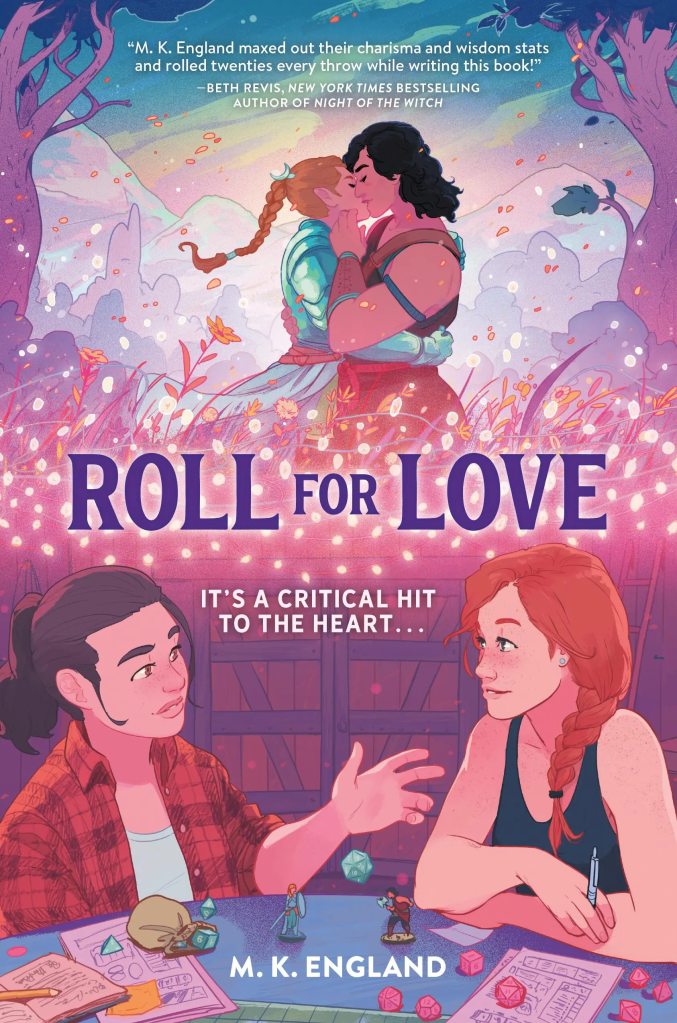
Roll for Love – M.K. Englanda pure, sweet love story with both romantic and fictional magic (in the form of DnD).

“Sugarboy” – St. Vincent

Two weeks of these posts since I actually saw St. Vincent, and now I actually have a song that she played to show for it.

I kind of hated MASSEDUCTION when it came out. To this day, I’m still firm in the belief that it’s St. Vincent’s worst album. Half the fandom might want to put my head on a pike for that, but for a singer with an established trend of matching albums to personas, there wasn’t much that was her about the album. The more I think about it, I can’t help but correlate that with the alienation and lack of personhood she felt at the time, what with being in a multitude of ill-fated relationships, namely with Cara Delevigne, the latter of whom caused British paparazzi to scout out the Clark family home in Texas to find out who she was and why she was dating a famous model. That disregard for her privacy and mental health resulted in an album that musically feels like it lacks a self. Peel back the latex and heels, and Annie Clark was hardly there—she was a shell of herself, clearly. Don’t get me wrong—there are some tracks on MASSEDUCTION that I frequently revisit to this day (see: “Hang On Me,” “Pills”) and even though 14-year-old me thought that this album was the letdown of the century, I still have a fair deal of nostalgia attached to the songs I liked.

“Sugarboy” was not one of those songs. For a while, I vaguely remembered it as one of the worst of the bunch, and it faded into mental obscurity. However, seeing it live has completely reoriented the song for me. Even though the MASSEDUCTION era was in the dust for both times I saw it live, “Sugarboy” transcended the ’70s setpieces of Daddy’s Home and was practically made for the rabid anger and fear of All Born Screaming. On the former, the backup singers lifted the lights off of the set pieces and waved them around like giant glowsticks as the song devolved into chaos. This tour didn’t see as many theatrics, but it was one of the most energetic songs of the setlist, which, given All Born Screaming, is really saying something. Upon reflection, this might be one of the best songs on MASSEDUCTION. The narrative of the album clearly has a through line, starting with a flicker of hopeful romance (“Hang On Me”), then immediately going into debauchery, drugs, sex, and materialism (“Masseduction“-“Los Ageless”), and then into the drawn-out crash and burn that ends with the harrowing “Smoking Section.” As the climax of the overindulgence, “Sugarboy” embodies the whirlwind of all of it, a kind of manic chaos as she both uses others and is in turn, used herself. The breakneck pace of the music, along with the shrieking, autotuned chorus behind her, feels like a fast-forwarded shot through a trashed ballroom—everything is in disarray, and the red smeared on people’s faces makes it impossible to tell blood from lipstick. The desperate cries of “I am a lot like you!/I am alone like you!” in the chorus are needles through the mindlessness, cries for help amidst the all-consuming sea of overindulgence. Even the studio version feels like being dragged along at inhuman speeds, ricocheting off the walls as the synths thrum through your ribcage. Like the lyrics say, she’s “hangin’ on from the balcony” (a reference to show antics that she frequently used to do), but her fingers are barely holding on from the adrenaline.

…AND A BOOK TO GO WITH IT:

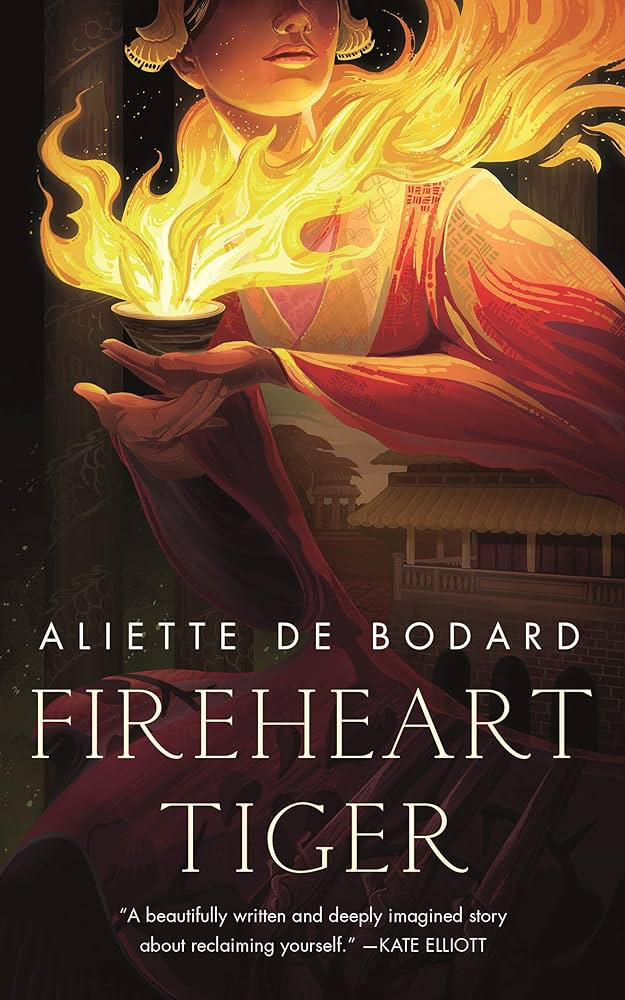
Fireheart Tiger – Aliette de Bodard“Oh, here I go/A casualty/Hangin’ on from the balcony/Oh, here I go/Makin’ a scene/Oh here I am, your pain machine…”

Since this post consists entirely of songs, consider all of them to be today’s song.

That’s it for this week’s Sunday Songs! Have a wonderful rest of your day, and take care of yourselves!
Posted in Book Review Tuesday

Book Review Tuesday (5/20/25) – Rebel Skies

Happy Tuesday, bibliophiles!

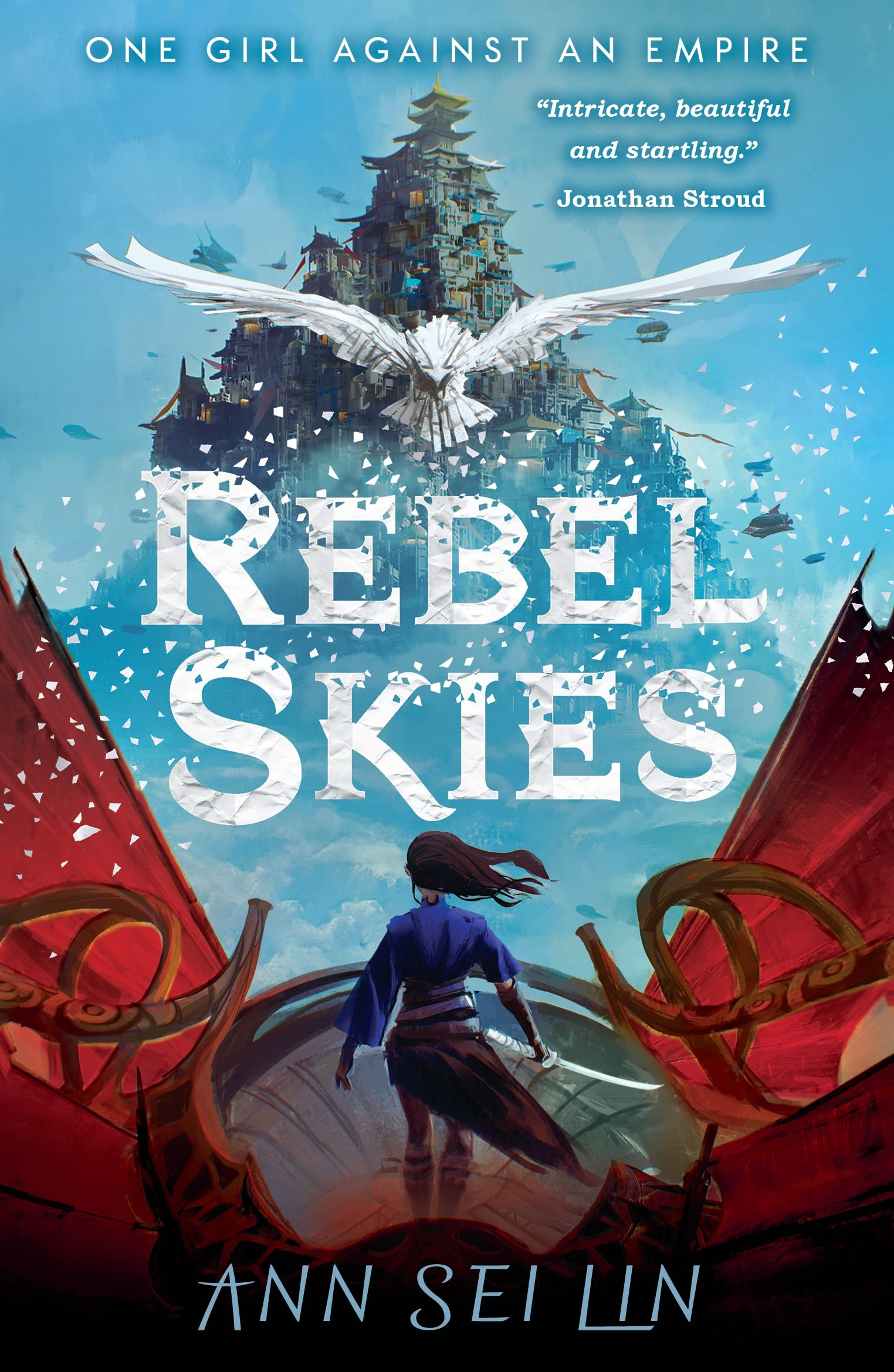
Update: I do have something nice to say, so I’ll say something. Beyond the heinous Studio Ghibli AI trend (and if anybody here thought that was “cute,” even when the White House twitter did it, get thee away from this blog), people tend to narrow Studio Ghibli down to a very shallow, cutesy aesthetic that discounts the heart of Hayao Miyazaki’s incredible visions. Rebel Skies was one of the few pieces of media inspired by Miyazaki that clearly gets him—rich worldbuilding with whimsy and darkness in equal measure. Yet even if you take that comparison away, Rebel Skies is a YA book to be reckoned with, full of heart, spirit, and skyships.

Enjoy this week’s review!

Rebel Skies (Rebel Skies, #1) – Ann Sei Lin

In the Sky Cities, no one is more revered—and feared—more than Crafters: those who possess the power to draw magic from paper and make creatures come to life. Kurara, a young servant aboard a flying ship, has barely honed her powers, only using them for party tricks. But when her best friend, Haru, is revealed to be a Shinigami—a creature made of paper—and grievously injured, Kurara flees to a skyship in order to find answers. There, she hones her Crafting with Himura, an ornery Crafter with secrets of her own. As she gets to know the motley crew of her ship, Kurara discovers that Haru’s identity isn’t the only secret that’s been kept from her—and that there are enough to bring down the Empire.

TW/CW: fire, animal death, torture, death, descriptions of injury

Ann Sei Lin seems to know as well as anyone that we need a bit more whimsy in YA fantasy. The edgelord stuff has gotten boring. It’s fantasy, come on now! I get that if magic was the norm, people might not be impressed by it, but there has to be some wonder in your life, right?

First off, the worldbuilding was tons of fun! Though the Studio Ghibli-inspired elements are plentiful, if I had to summarize the world of Rebel Skies, it wouldn’t be with that. If anything, it’s more of a steampunk version of Kubo and the Two Strings. You’ve got Nausicaä-esque airships and floating cities (which both felt very Philip Reeve as well) combined with paper-based magic, and all of the possibilities you can think of along with it—paper animals, paper people, and monstrous paper beasts. (Oh, and the paper animals can talk. Gotta toss some talking animals in there.) I’m not usually one for steampunk, but this isn’t your garden-variety “slap gears and tiny hats on everything in Victorian England and call it a day” steampunk—not only is the world inspired by Asian cultures (mainly Japan), the blend of magic and machinery married easily, and often whimsically. Though the colors I imagined trended towards rusty and earth-toned, Lin couldn’t have made her world more vibrant—and multilayered; not only were there base-level divisions between the people who lived on the ground and the people who lived in the sky, there were all sorts of customs, stereotypes, and quirks that were given to each, which in turn influenced how all the mismatched patchwork of characters interacted with each other.

For me, it doesn’t get much better than the worldbuilding informing the themes of the book. Not only did I love all of the intricacies of the paper magic in Rebel Skies, I love how Lin used it to explore the theme of autonomy, and especially the lack of it. Kurara herself has been ordered around as a servant, and she sees the same thing being done to the magical beings around her; she sees how Himura treats Akane, his shikigami fox, and questions whether or not he’s really so content to devote his entire existence to serving Himura. Add that to the visceral trauma of discovering that her best friend is made of paper and has been seemingly puppeteered from afar, and the reigning empire is performing cruel experiments on its shikigami, and Kurara’s ultimate motive to both her personal journey and her journey to wrong the rights of her world lies in autonomy, and having a reciprocal, ethical relationship to her magic. It’s an excellent metaphor and an excellent addition of nuance to the worldbuilding—if the world relies on unbalanced relationships, how can I shift them so as not to do to others what others have done to me?

You all know by now how much of a sucker I am for a good found family story, and while Rebel Skies didn’t completely fulfill that promise, I love the group dynamic between all of the characters. Even though the subplot of Sayo and Kurara warming up to each other felt a bit rote, I liked the progression that their characters had. Kurara and the rest of the pirates were lots of fun, and they gave the skyship a lively, lived-in feel. I’m also a sucker for the trope of older, gruff characters taking excitable younger characters under their wing; Himura was a solid addition to the canon, but I feel like he’s hiding too much to truly be a mentor to Kurara. I’m interested to see where it goes in Rebel Fire, but my gut says that it’s going to be some kind of subversion. We’ll see. Either way, Rebel Skies’ motley crew lived up to its description, making the setting all the more lively and adventurous.

As someone who read voraciously in my childhood and longed for some kind of bridge between middle grade and the too-broad age range of YA (12 to 18 is so arbitrary and baffling, you’ll not hear the end of it from me), Rebel Skies automatically won me over. It’s categorized as YA, but it feels right in the middle of MG whimsy and adventure and more YA stakes and themes. Kurara, even as a teenager, has a childlike sense of wonder, and although some of her interactions came off as slightly more childish than her age, it hits a charming balance of innocence and discovery that feels like the ideal bridge between the age jump between the two categories. As a longtime YA reader, it hits a natural sweet spot, but in its balance of darker, more YA elements with the same kind of voice as older MG, Lin has written a book that could serve as both a younger YA reader’s introduction to the genre and an easy pleaser for the YA reader.

That being said, the one major flaw in Rebel Skies is that I didn’t see why Himura’s POV was necessary. He was a solid character, but this novel was clearly Kurara’s story. I enjoyed hearing his voice and Lin wrote it well, but I don’t think his input to the story served a purpose other than giving his side of events…that we’d already been shown through Kurara’s POV. We get that Kurara’s been slow in her training, and then Himura repeats it as such. We do get plot information that we wouldn’t have otherwise gotten from Kurara, but if that’s the only reason that Himura gets his own chapters, then what’s the point? There could be multiple interesting ways for Kurara to get this information that could deepen or complicate the relationship she has with Himura—she could overhear a conversation or sneak a look at some of his documents, for instance, and he could catch her in the act, adding more conflict to the plot. Again, he was a perfectly fine character, but aside from the interludes, Rebel Skies wasn’t meant to be a dual-POV novel. It’s the Kurara show, c’mon!

Overall, a memorable fantasy book with lush worldbuilding, a lively cast of characters, and a unique voice that balances middle grade adventurousness with the more matured nuance of YA. 4 stars!

Rebel Skies is the first book in the Rebel Skies trilogy, followed by Rebel Fire and Rebel Dawn. Rebel Skies is Ann Sei Lin’s debut novel.

Today’s song:

I’m totally new to BCNR, but I saw them open for St. Vincent the other night, and they were great performers!! this was probably my favorite of theirs.

That’s it for this week’s Book Review Tuesday! Have a wonderful rest of your day, and take care of yourselves!