Posted in Uncategorized

Book Review Tuesday (6/20/23) – Meru

Happy Tuesday, bibliophiles!

I’ve been eyeing this book for a while—I remember it being heavily advertised on Goodreads when it was first released, and normally, I don’t pay much attention to Goodreads ads or sponsored books, but all you had to say was “space opera” and I was hooked. I’m a woman of simple tastes. It was cheap on the Kindle library, so I bought it to read on vacation. To my excitement, it ended up being my favorite book that I read on vacation—so detailed and gripping!

Enjoy this week’s review!
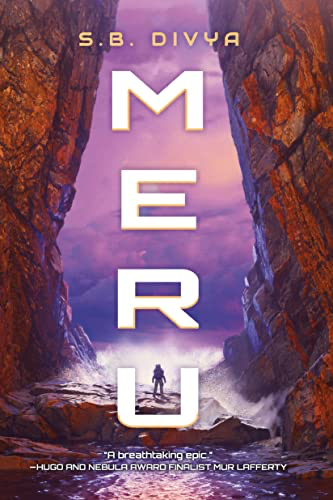
Meru (The Alloy Era, #1) – S.B. Divya

Jayanthi, like all other humans in her day and age, are confined to Earth. Kept there by the Alloys, evolved human descendants with advanced capabilities, she has been raised by Alloy parents on her homeworld, but has always dreamed of seeing the wider galaxy. But when an opportunity arises for Jayanthi to explore the newly discovered planet Meru with the aid of an Alloy pilot, she jumps at the chance—what better way to show the galaxy that humans are more than their violent past?

With the help of Vaya, her Alloy pilot, Jayanthi touches down on Meru. Soon, they find themselves embroiled in a human-alloy conflict, seemingly engineered to separate the two of them. Will Jayanthi and Vaya beat the odds—and restore faith in the human race?

TW/CW: ableism, xenophobia (fictional), sexual content/pregnancy, descriptions of injury, sci-fi violence

I got carsick while reading this book, but I don’t hold it against it at all. That was on me and my hubris of thinking that I wouldn’t get nauseous on a long car trip just this once. Whoops.

Reading some of the lower-rated reviews of Meru is kind of cracking me up…listen. I get that zie/zir pronouns (and neopronouns in general) are somewhat obscure, but of all the absolutely wild, dense, and out-there concepts that this book throws at you, that’s what makes you jump ship? Not the exceedingly complicated…well, everything else?

That being said, Meru lived up to the hype I’ve seen it getting for the past few months! It hit a sweet spot for me that a lot of sci-fi and fantasy books rarely do—creating a complex and multilayered universe, but very delicately balancing when and where to deliver all of this information. Divya came very close to going over the edge, but she navigated the worldbuilding delivery with aplomb.

So, about said worldbuilding. I’d say that Meru isn’t for the faint of heart, even for longtime sci-fi fans—as I mentioned in the beginning of the review, there’s a lot to take in, from the post-human history of the Alloys to all of the machinations surrounding new genetic modification laws in the future. But even though we do get some of this information in larger chunks, Divya excels at navigating which information is actually relevant to the scene it’s informing, and not sledgehammering you with extra information that only becomes relevant elsewhere in the book. It also helps that every inch of said worldbuilding is truly fascinating—it’s clear to see how much care was put into the creation of this universe.

If you’re talking about disability in sci-fi, you’re generally bound to open a particularly dicey can of worms. There’s quite a lot of eugenics narratives that a lot of readers have let slide for years, and the narrative of curing all disabilities is seen as positive, when a lot of the disabilities being described never needed curing in the first place. For the sake of this review, I’ll keep it short, but the bottom line is that it’s gross. But Meru takes a refreshing perspective on disability in sci-fi—not only was Jayanthi, the protagonist, specifically engineered to have sickle-cell anemia (now THAT’S a subversion I like), her disability is depicted in a far more advantageous and positive light. Anyone who’s ever touched a high school biology textbook probably remembers this example: despite its drawbacks, those with sickle-cell also have increased resistance to many tropical diseases. That’s exactly the case for Jayanthi, whose sickle-cell anemia makes her more suited to the environment of the planet Meru than those without it. Positive disability rep is good enough, but having it specifically depicted as something that gives the character the edge is something special. That, along with the wonderful discussions around disability and bodily autonomy (both allegorical and literal), made Meru a wonderful experience for me as a disabled reader.

In addition, Divya has created such a vibrant cast of characters in Meru! Jayanthi was such an endearing and powerful protagonist, and her relationship with the equally endearing Vaha was full of tenderness, despite its ups and downs. Almost all of the cast added to the book’s masterful suspense and tension, making you feel deeply for all of the relevant characters before things got (very) hairy. Plus, the integration of Sanskrit, several Indian-coded (and other POC characters), and loads of casual queerness was a breath of fresh air from all of the white, male, cishet sci-fi that still dominates the market. We need more books like Meru.

All in all, an intricately-crafted sci-fi novel that dazzled with its detailed worldbuilding, diversity, and refreshing discussions around disability. 4 stars!

Meru is the first book in S.B. Divya’s Alloy Era series, continued by the forthcoming Loka, slated for release in July of 2024. Divya is also the author of Machinehood and Run Time, as well as a contributor to several short story collections.

Today’s song:

NEW SMILE IT’S SO GOOOOOOOOOOOOOOOD (does this mean that we’re closer to hearing “Read the Room” too?????

That’s it for this week’s Book Review Tuesday! Have a wonderful rest of your day, and take care of yourselves!

Posted in Uncategorized

Book Review Tuesday (6/6/23) – If Tomorrow Doesn’t Come

Happy Tuesday, bibliophiles!

This book came out around a month ago, and I figured it would be a great read to start off pride month (after a very disappointing biography of Josephine Baker). If Tomorrow Doesn’t Come was my first exposure to Jen St. Jude (it’s her debut, after all), but after this, I’m ready to watch for anything else she writes.

Enjoy this week’s review!

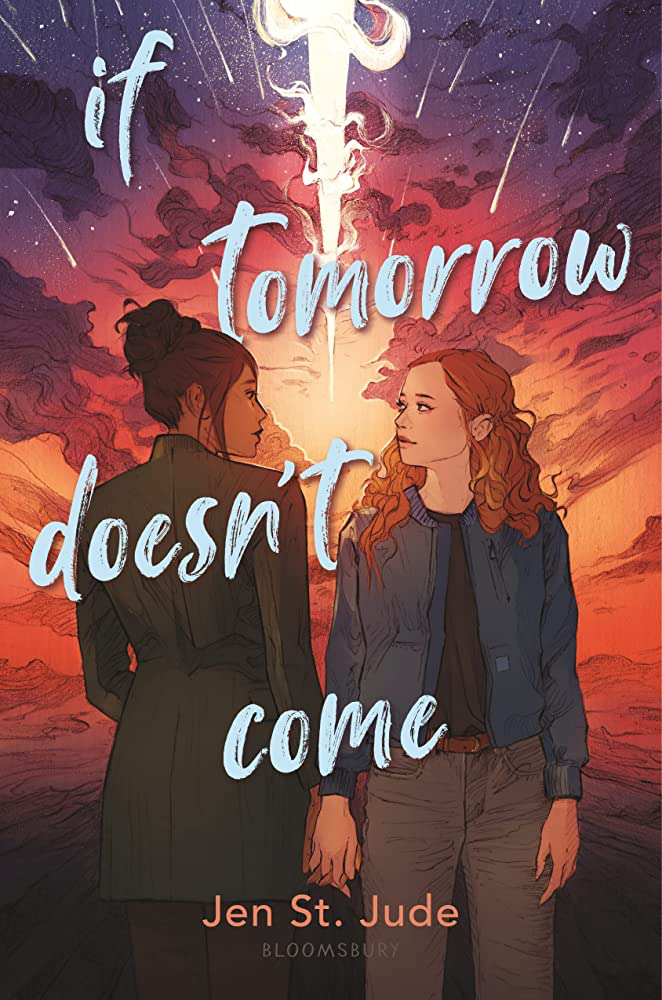
If Tomorrow Doesn’t Come – Jen St. Jude

The news has just broken that an asteroid capable of wiping out the population is headed towards Earth in nine days. Avery Byrne had planned to drown herself on her college campus that day—being closeted from her religious parents, the mounting pressure of college, and undiagnosed depression had become too much to bear. But now, she’s forced to flee her college and face her family. Among them is Cass, her best friend and longtime crush, who she’s been hiding the truth from for years. With nine days until the end of the world, Avery must come face to face with everything that she wanted to run from, but must also realize the hope at the end of the world—maybe she finally has time to make things right.

TW/CW: suicide, suicide attempt(s), suicidal ideations, homophobia, religious bigotry, mental health issues (depression), natural disasters/end of the world scenarios (impending asteroid impact)

This is a heavy one. That can’t be understated enough—I always put trigger warnings before my reviews now, but these ones are really important to keep in mind. If Tomorrow Never Comes is a devastating novel—but a deeply important one, as long as you’re in the mental headspace for it.

That being said, one of the best parts about this novel is how Jen St. Jude handles such topics. It would’ve been easy to romanticize or otherwise dramatize Avery’s very real struggles with mental health and queer identity, but everything was handled with such care and grace. It’s clearly a very personal novel; nothing is glossed over, but nothing is overblown to amp up the tension needlessly. We’re very slowly coming out of the post-13 Reasons Why romanticization of suicide and mental health issues, so it’s very important that books like these exist to counteract that—presenting these subjects exactly as they are.

All of the relationships were also done so well in this novel! Each character was crafted with so much care, and the interactions that each one had with the other really made them stand out. The forced reunion of Avery, her friends, and her extended family in the event of the asteroid created so many moments that felt refreshingly human—messy and hard to read at times (part of the ending made me cry, full disclosure), but authentic and genuine. Again—in the face of an onslaught of very dramatic apocalypse-oriented YA in the past, it’s so nice to see one that’s full of emotion, but more in the way of real, interpersonal relationships and not 2012 love triangles in the face of impending doom.

That being said, I did have one major problem with this novel. I liked the format that St. Jude had where the novel was split into Avery’s past and present, but the flashback chapters felt somewhat stilted compared to the present day chapters. They leaned a lot more on telling—giving us information about Avery’s life, friends, and family in a very rote way, as opposed to letting all that bloom naturally. It’s even stranger considering that the present chapters didn’t have this problem at all—maybe it was just some kinks to work out when writing in Avery’s past tense. With all of the heart that this novel had, it just left me wishing for something as fluid as the other chapters.

I’ve seen some people complaining about the ending, but I feel like this novel couldn’t have ended any other way. This novel was always going to be about relationships during the apocalypse, and the mechanics of the apocalypse weren’t meant to be the star of the show. I will admit that I had to turn back to check that yes, this really was the end, it felt like the quiet, tender ending that this novel deserved.

All in all, an emotional and deeply personal story of love at the end of the world. 3.75 stars, rounded up to 4!

If Tomorrow Doesn’t Come is a standalone, and it is Jen St. Jude’s debut novel.

Today’s song:

SAW THE YEAH YEAH YEAHS LIVE LAST NIGHT IT WAS MAGICAL

That’s it for this week’s Book Review Tuesday! Have a wonderful rest of your day, and take care of yourselves!
Posted in Book Review Tuesday

Book Review Tuesday (5/30/23) – The Memory Police

Happy Tuesday, bibliophiles!

I forget how exactly I came across this novel, but it was one of the first books that I put on my Libby wish list way back in March 2020, when I lived off of Kindle books. At the time it was always on hold for weeks when I tried to check it out, and so gradually, it faded to the bottom of the list. But after years of forgetting about it, I rediscovered this novel—and it was finally available! Usually, literary science fiction doesn’t always do it for me, but The Memory Police was a strangely quiet dystopia with a powerful undercurrent.

Enjoy this week’s review!

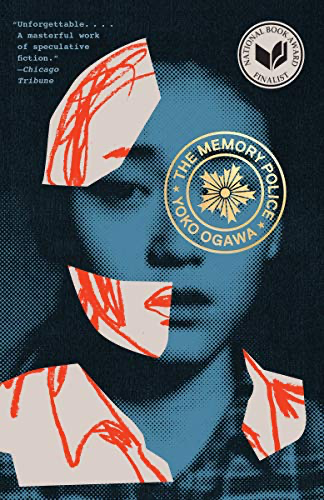
The Memory Police – Yōko Ogawa (translated by Stephen Snyder)

A young writer leads a quiet life on a distant, unnamed island, grieving a multitude of losses. Her parents passed away many years ago, but it isn’t just people that are disappearing—it’s objects, animals, and ideas as well: hats, birds, ribbons, and all manner of things. Once they disappear, nobody on the island has any recollection of their existence—they simply fade from public memory. And to enforce this, the island is under the iron fist of the Memory Police, who are there to make sure that these forgotten things stay that way. But she seems to be one of the only people who still clings to the memory of what’s been lost.

When the writer’s editor falls under suspicion from the Memory Police, she hatches a plan to hide him under her floorboards, silently completing her novel as they evade capture. And as more and more objects begin to fade into obscurity, her writing may be the only thing left to cling to.

TW/CW: loss of loved ones (past), kidnapping, police brutality

The Memory Police has been compared time and time again to 1984, and the comparison is clear, but it seemed to take a more literary approach. And while the “literary” part initially made me suspicious, this was one of the most creative and wholly human dystopian novels that I’ve read in a long time!

What sets The Memory Police apart from most other dystopias that you can think of is its perspective. We aren’t given an extensive history as to how the unnamed island came to be under such totalitarian rule, and how everything began disappearing and why. Nor do any of the characters—save for the main character’s editor, referred to only as ‘R’ in this translation—have names, save for their roles or jobs (the protagonist’s parents) or their physical appearance (the old man). All this book seeks to do is give you an ordinary person’s view into something haunting—the protagonist is just as confused as you are, and she is moving through this world in the only way that she can. Naturally, I was curious about the main plot points (how and why everything was disappearing, and how the Memory Police came to be), but I got that the point wasn’t to explain such things, but to see it happening firsthand through somebody else’s eyes, when they may know about as much as we do. I assumed the Memory Police were in control of what disappeared and they had some degree of immunity, which I was curious about, but the decision to omit these details at least made sense as a stylistic choice.

Make no mistake—The Memory Police is certainly haunting, but there’s a quietness to it that makes it stand out from the rest. In this state-surveilled, isolated island environment, this novel is the closest thing that you can get to a slice-of-life story. Other than some chilling instances involving break-ins by the Memory Police, it’s the story of one woman flying under the radar and trying to write her novel as the world is crumbling around her. There’s a constant fear surrounding everything, but in between, she finds time to craft a novel, share secret memories about her parents’ world and what they loved, and hold parties from an elderly man who helps keep her editor hidden. Sometimes, frightening change doesn’t come in the form of something obvious—it’s often slow and goes unnoticed, and it is the small things that keep us going through it.

Literary science fiction like this often comes off like it’s trying to be better than “regular” science fiction, like it boasts some lofty message that your common novel can’t possible get across. I’m glad to say that The Memory Police does none of that—some of the writing does fit that style, but nothing about it comes across as belittling or haughty. In fact, it has an incredibly powerful message. With all of the plot centering around the loss of memory and holding on to the last remnants of a past world, the ending made an incredibly powerful statement: as long as there is somebody around to keep a memory of something alive, memories never really die—they always stay with us. It’s a beautiful message on loss, and about resistance in general—maybe the most powerful thing we can do in the face of tyranny is to know that there is a way to change things, and hold memories of what our forebears did in the face of similar situations. This book is proof that dystopias don’t have to be flashy and overtly gritty to get their themes across—quietness can be just as powerful.

All in all, a nontraditional dystopia that made an incredible impact from reveling in its quiet moments. 4 stars!

The Memory Police is a standalone, but Yōko Ogawa is the author of many other novels that have been translated into several different languages, including Revenge, The Housekeeper and the Professor, Hotel Iris, and more.

Today’s song:

Peter Gabriel Summer 2 is upon us

That’s it for this week’s Book Review Tuesday! Have a wonderful rest of your day, and take care of yourselves!
Posted in Book Review Tuesday

Book Review Tuesday (5/23/23) – Only a Monster

Happy Tuesday, bibliophiles!

This book has been on my radar for quite some time—I’m always up for a good urban fantasy every once in a while, and the V.E. Schwab comparison had me hesitantly optimistic. I figured it would be a good read for AAPI Heritage Month, but…alas, it was such a mess, and ultimately not worth my time.

Enjoy this week’s review!

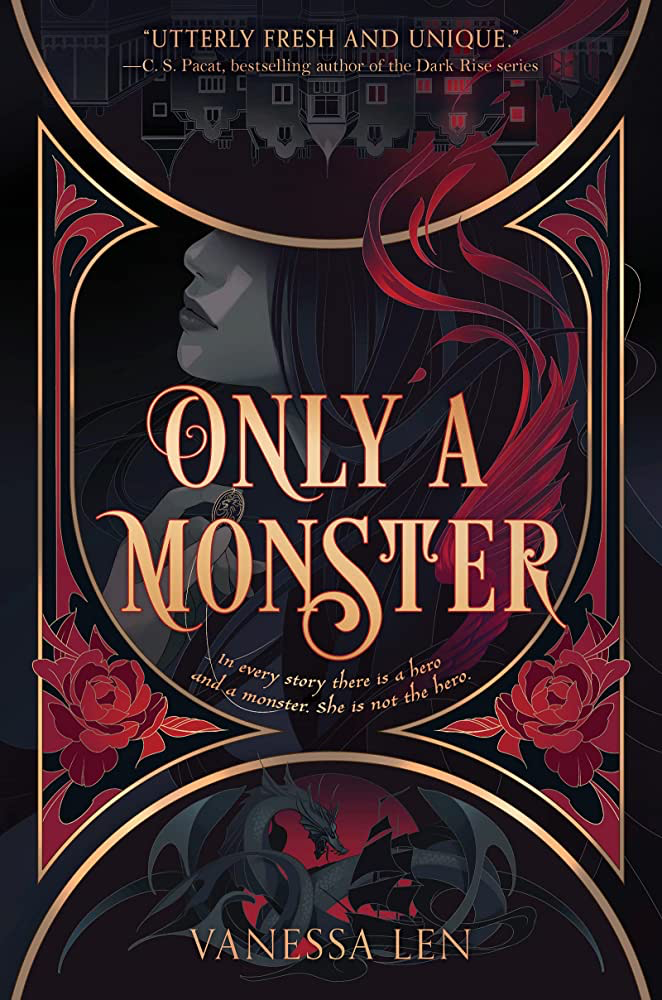
Only a Monster (Monsters, #1) – Vanessa Len

Joan is set to have the perfect summer. She’s staying in London with her late mother’s side of the family, amidst historical buildings, a steady job (with a handsome co-worker, Nick), and the smell of magic in the air. But when a disaster leaves most of her family dead, Joan is confronted with an ugly truth—she comes from a long line of time-stealing monsters. Worse still, the handsome Nick comes from a long line of monster hunters. Can Joan hone her powers before the monster hunters track her down?

TW/CW (from Vanessa Len): murder, violence, blood, loss of loved ones (on & off-page), substance abuse, xenophobia (fantasy), racism, interrogation, brainwashing, weapon use

DNF at 27%.

Before I get into my rant: I’ll always appreciate how much time and love it takes to write a book and put it out there. Any kind of creative output like this is highly admirable, and I can give this novel a certain degree of slack knowing that it’s Vanessa Len’s debut novel. That being said, Only a Monster really wasn’t it for me, and sometimes 1-star rants can be good for the soul as long as they aren’t actively hurting anybody. Gotta air it all out sometimes.

I went into Only a Monster expecting for it to be a nice break from some of the denser books I’d just read—something fun, something charmingly over-the-top. And…well, the over-the-top element was very much present, but not in a good way at all. From what I read of this novel, it was really just a mess that lacked any sort of nuance whatsoever.

We had the setup right from the start—a monsters versus monster-hunters conflict, “Joan is not the hero of this story,” et cetera, et cetera. Before reading this, I figured a lot of that language was just going to be for the sake of putting a nice hook on the front cover and other marketing purposes; I assumed that the book was going to get into some of the morally gray (as much of a buzzword that’s become with books these days) aspects of that conflict, but…no. From the get-go, we’re hit over the head with a comically large sledgehammer that JOAN IS NOT THE HERO OF THE STORY!!! and that BEING A MONSTER IS BAD BAD BAD!! and that MONSTERS AND HEROES!!!! DO NOT MIX!!! EVER!!! It’s not so much a theme so much as it is a metal pipe that gets painfully shoved down your throat. It got to the point where I felt like it was insulting my intelligence—I didn’t need to be told all this over and over. I really didn’t. Jeez. It could’ve been developed somewhat compellingly, but….no.

Beyond that, I didn’t know going in to Only a Monster that there was going to be a dreaded love triangle, which…[EXTREMELY LOUD INCORRECT BUZZER]

If there’s anything that can instantly ruin a book, it’s that. THERE’S NO NEED. And the setup wasn’t even anything that hasn’t been done before—each love interest is on one side of the conflict (monster and monster-hunter), and while I didn’t care to stick around to find out how it was resolved, I had a feeling that it would end up as a trash fire. What I did manage to get, however, was the description of Nick as “stupidly good-looking.” Can we please, as a society, get rid of this? Please? It’s starting to become just like “she let out a breath she didn’t know she was holding” at this point. Again: zero nuance.

All in all, a bitter disappointment of a book that lacked the creativity and nuance that the blurb and reviews promised. 1 star.

Only a Monster is the first in Vanessa Len’s Monsters trilogy, which will continue with Never a Hero (slated for release this August) and an untitled third book.

Today’s song:

WE LOVE THE MAGNETIC FIELDS IN THIS HOUSE

That’s it for this week’s Book Review Tuesday! Have a wonderful rest of your day, and take care of yourselves!
Posted in Book Review Tuesday

Book Review Tuesday (5/16/23) – The Isles of the Gods

Happy Tuesday, bibliophiles!

If my constant blabbing about Aurora Rising from the past four years should bring you to any conclusion, it’s probably that I’m a massive Amie Kaufman fan. So when I heard that she was making her solo YA debut this year, I was BEYOND excited!! I immediately preordered, and it came right when I’d just finished up my first year of college—the perfect present! And even though I’ll always pick sci-fi over fantasy, if anybody can make a fantasy that I’ll give 5 stars, it’s Amie Kaufman.

Enjoy this week’s review!

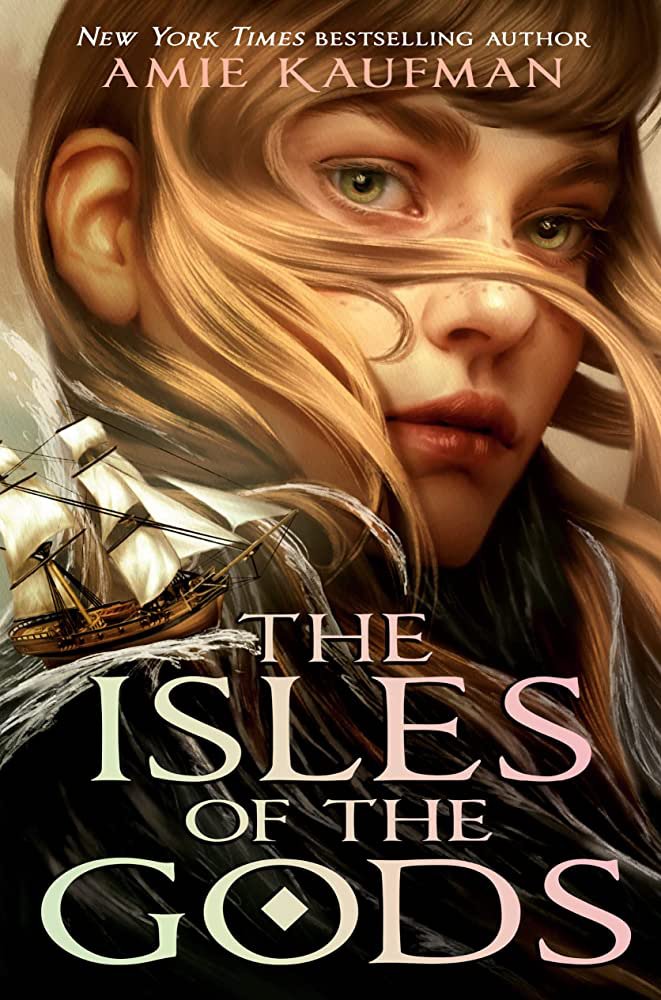
The Isles of the Gods (The Isles of the Gods, #1) – Amie Kaufman

Selly has the ocean in her blood.

She’s been tagging along with her father on the high seas since she was a baby, but now, he’s left Selly to her own devices in the port town of Kirkpool. Intent on tracking him down, she tries to set sail, only for her plans to go awry at the hands of Prince Leander, who wants to hitch a ride for his own gain—to seek out the storied Isles of the Gods, where the ruling deities of her world are fabled to be laying in a restless, dormant sleep. But when a disastrous assassination attempt leaves Selly and her crew stranded, she has no choice to trust Leander—and make it to the Isles no matter the cost.

isles ft. some rainy trees

TW/CW: murder, graphic violence, abandonment, assassination, fatal vehicle explosion

From what I can tell, The Isles of the Gods is a book around a decade in the making, a passion project that Amie Kaufman had been crafting relentlessly in between releasing some of her other collaborative novels. So there’s automatically 10 years of love in this novel—and boy, it really did show.

I’ve preferred sci-fi to fantasy for years, but leave it to Amie Kaufman to craft a fresh setting that kept me turning the page for hours! I’m already a sucker for pirates in fantasy, and that aspect was executed with just the right balance of campy fun and nail-biting stakes. And after parsing through all of the rich facets of the world that Kaufman created, it’s left me with one question: what’s keeping authors from creating more industrial/advanced fantasy settings? Consider me done with fantasies with automatically medieval settings, can we do more 1920’s-inspired fantasies that don’t just focus on the jazz age stuff? I didn’t know I could possibly yearn for the melding of magicians and old-timey cars quite this much, but I’ll say it once and I’ll say it again: if anybody can do it, IT’S AMIE KAUFMAN.

Kaufman’s writing, as it always is, was the real star of the show in The Isles of the Gods. There’s something instantly transporting about her prose—from the first sentence, I felt dunked headfirst into this lush, rich world, from the gripping prologue to the delightfully suspenseful final sequence. Maybe this is just a consequence of me being so attached to her writing style, but she has such a way of drawing you into the story in record time. Every book is a little world in and of itself, but hers never cease to feel tangible. Reading fantasies with sea settings are always fun for me, being about as landlocked as you can get here in the U.S., but reading this reminded me of a passage from Neil Gaiman’s The Ocean at the End of the Lane, about the protagonist imagining that the rain pattering against his window at night was waves on the hull of a ship. Good thing it was pouring rain when I was reading this book.

And speaking of Kaufman’s writing—now that I’ve seen her solo and collaborative works, I can say with certainty how clever of a writer she is. She sets up common conflicts that threaten to drag down the book, but whips them into cunningly-subverted left turns that kept me guessing all through the novel. A whole bunch of characters that you *can’t* quite tell apart, but are still personally relevant to the protagonist? Oh look, a botched assassination attempt that gets rid of them! Have a lovable but borderline one-note character who hasn’t had the chance to prove themself? Put that sorry little man in a Situation!™️ It may be diabolical, but it made my enjoyment of the book increase that much more—nothing like trope subversion and avoidance left and right to keep you on your toes.

As for the characters, I’m not quite as attached to them as I was with the squad of the Aurora Cycle, for example, but that’s way too high a bar, even if it’s still Amie Kaufman, but I did adore a lot of them! There was clearly so much love and care put into Selly, and it showed—she had a beautiful arc, and she was such a determined and lovable character to root for. Leander’s type of character—the charming, spoiled prince that the protagonist can’t help but fall for—has been done since time immemorial, but Kaufman’s take on the trope resulted in some lovely laughs and a slow-burn romance done right!

And…yes, I felt a little too called out by Keegan. The “bookworm who hasn’t seen the light of day in way too long” was already there, but…dude. I just shaved my head in January. DUDE. AMIE KAUFMAN, STOP PEEKING INTO MY BRAIN LIKE THAT. YOU COME INTO MY HOUSE, AND YOU MAKE A GENDER-SWAPPED CHARACTER OF ME?

Jude and Laskia (especially the former) didn’t get quite as much page time, but they were incredibly intriguing as not-quite-antagonists, but puppeteering each other and subsequently being puppets to political forces beyond their control. I kept getting hints that Laskia was going to turn to Selly/Leander/Keegan’s side, but now that we’ve seen ✨the cliffhanger,✨ the future is uncertain…hmm. I didn’t quite get the promised “squad” vibe that the blurb promised, but I have a feeling that the two camps are going to merge sooner than later…

Also, we love an absolutely Indiana Jones final sequence. NAILED the fantasy brand of campy.

One sidenote—Amie Kaufman said several times that Isles was going to have LGBTQ+ rep, and all we really got was the lesbian couple that appeared for a total of…maybe three pages? Which, yeah, that’s all well and good, but the question that many readers had about said rep was if any of the protagonists were going to be queer, and…so far, nothing? As much as I loved this book, I can’t help but be a little disappointed on that front.

All in all, a gripping, cinematic, and utterly lovable solo venture from one of my favorite authors. 4.75 stars, rounded up to 5!

bonus Hobbes content

The Isles of the Gods is the first in a planned duology, concluding with an unnamed final book slated for release in 2024. Amie Kaufman is also the co-author of the Illuminae Files, the Aurora Cycle (with Jay Kristoff), the Starbound trilogy, and the Other Side of the Sky duology (with Meagan Spooner). On her own, she is the author of the middle grade Elementals trilogy.

Today’s song:

loving this album hnnnnngh

That’s it for this week’s Book Review Tuesday! Have a wonderful rest of your day, and take care of yourselves!

Posted in Book Review Tuesday

Book Review Tuesday (5/9/23) – Not Here to Be Liked

Happy Tuesday, bibliophiles!

I put this one on my TBR years ago, and I only fished it out of the void a few days ago, after looking for some books to read for AAPI heritage month. I’d read mixed reviews, so I went in with low expectations, but I came out with a fantastic and nuanced story of feminism in a high school setting!

Enjoy this week’s review!

Not Here to Be Liked – Michelle Quach

Eliza Quan knows that she’s qualified for the position of editor-in-chief at her high school newspaper. She’s been with them since the beginning of her high school career, and sure, she may not be the warmest person 24/7, but she has what it takes to bring the newspaper to new heights. The problem? Her classmates don’t seem to think so.

When she loses the editor-in-chief election to Len DiMartile, who only joined the newspaper after an injury prevented him from playing baseball and decided to run against her on a whim, she feels as though all of her hard work has come to nothing. And she knows she’s qualified—so why does this sexist activity keep running amok in her school? After pouring out her thoughts in a manifesto, Eliza thinks it’s all over. But after the manifesto is posted to the paper’s website without her permission, it causes a ripple effect of protest and accusations. Among the sides being taken, can Eliza transform this drama into genuine change at her school?

TW/CW: sexism/misogyny (external & internalized), racism, bullying, slut-shaming, substance abuse (alcohol)

Don’t you just love it when you’ve forgotten about a book existing, so you go in with low expectations, and you end up dazzled? Top 10 feelings, for sure.

I’ve read my fair share of feminist, realistic-fiction YA in my day, and sadly, it’s easy for them to miss the mark, whether it’s introducing diverse characters for the sake of intersectionality and doing nothing with them (Six Angry Girls) or having a protagonist who only focuses on very surface-level aspects of feminism without getting any more nuanced (half of Watch Us Rise). But Not Here to Be Liked delivered the nuance, heart, and punch that it was supposed to, making for a powerful story of systemic misogyny and leadership.

I think some of the reviews seemed to miss the point when talking about Eliza—she’s a great character, but she’s not intended to be entirely likable. It’s in the title, after all! Sure—she’s determined to make the school paper as good as possible, and sometimes, that comes off as abrasive or strict. But that’s the point—were she a man, these traits would be praised: she’s “too harsh,” but he’s “willing to take charge” or “a fearless leader.” See the double standard? That’s what this book was trying to say all along. And Quach did an excellent job of having a flawed but incredibly root-able protagonist: every position that she takes is a laudable one that’s backed up more often than not. Eliza was robbed of her position, simply because a man’s charisma meant more than a woman’s experience and talent.

Not Here to Be Liked also portrayed how we think of feminism so well! As soon as Eliza’s manifesto is leaked and both support and vitriol begin to flow towards her, many of her classmates stand behind her, but their support is often half-baked; it’s a great commentary on that shallow, hollow white feminism that’s so prevalent among people who aren’t willing to do anything politically uncomfortable: slapping an “I am a feminist” pin on your shirt, saying “smash the patriarchy!” a few times because it’s briefly profitable, and being done with it. This novel does an incredible job of dissecting the true nuance of feminism and teaching others that making genuine change isn’t simple or easy—there are always more layers than you think there are. It’s never just about gender—it’s about race, sexuality, class, and so many other facets of our national (and international) identity. And even though this book doesn’t necessarily cover every bit of it—it’s a big ask for a single book to cover every single component that falls under feminism—it didn’t need to: misogyny and racism were the main focuses, and they were dealt with in a nuanced way. Apart from a misunderstanding of the Bechdel test (the book seemed to interpret a lot of it as how much real women think about men, when Bechdel’s focus was more about how female characters are written, especially in male-dominated Hollywood), it’s a great view of feminism in a YA setting.

Plus, with all of my gripes, Not Here to Be Liked did something of an enemies-to-lovers romance pretty well! Going into this novel, that part was what I was most suspicious about, but Quach, unlike many romances with “enemies-to-lovers” slapped onto them as a buzzword, actually handled in a way that felt authentic. The stages of Eliza and Len’s relationship didn’t feel like it was cut into neat, digestible slices—they had their ups and downs, and the result wasn’t entirely black and white, either. That’s what love is. It’s not quantifiable by any of the labels we put on it, and that’s how it’s supposed to be. Personally, I didn’t think that they had a whole lot of chemistry together, but their relationship was well-written enough that I could push some of that to the side.

All in all, an incredible story of one young woman’s fight for justice in her high school that scores high on its protagonist and depictions of feminism. 4 stars!

Not Here to Be Liked is a standalone, but Michelle Quach is also the author of The Boy You Always Wanted, which is slated for release on August 1, 2023.

Today’s song:

almost finished with Kindred on FX, and I have mixed feelings about it, but for now, at least I got this eery Beatles cover out of it

That’s it for this week’s Book Review Tuesday! Have a wonderful rest of your day, and take care of yourselves!

Posted in Book Review Tuesday

Book Review Tuesday (5/2/23) – Star Splitter

Happy Tuesday, bibliophiles!

Honestly, it’s a wonder that I managed to get my hands on this book when I did. I heard about it from a few “out this week” blog posts from other book bloggers (thank you!!), and as of today, the book’s only a week old. I put it on hold on the Kindle library, and it came in surprisingly quick, to my relief! I was super excited by the sci-fi premise, and in most of the relevant aspects, it absolutely delivered!

Enjoy this week’s review!

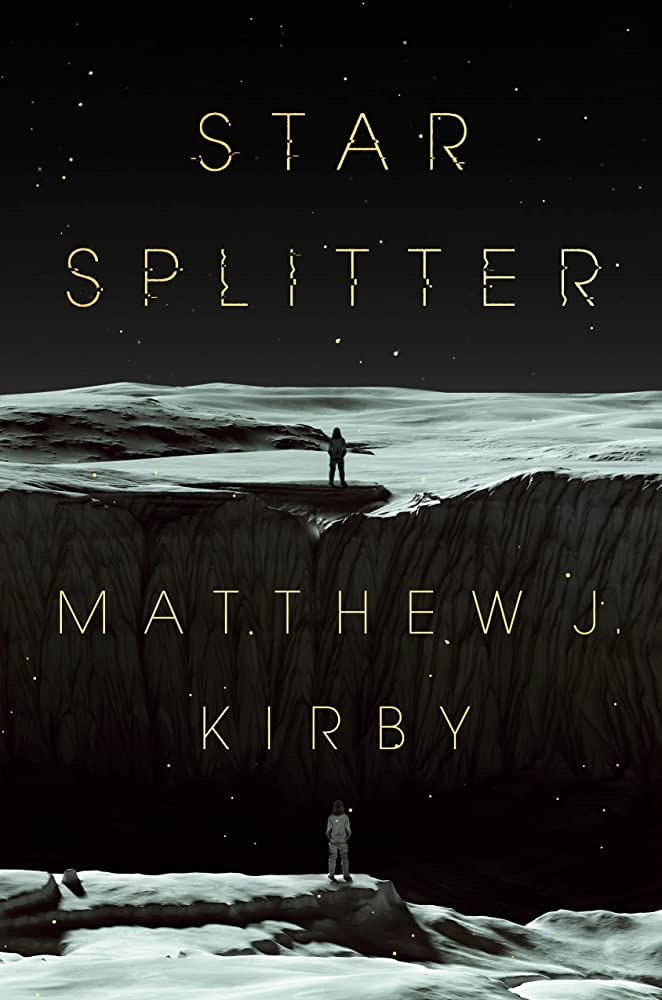
Star Splitter – Matthew J. Kirby

The method of space travel that 17-year-old Jessica Mathers is familiar with isn’t the kind you’d expect. In for the process to work, teleportation is a crucial step—the body that you’re in on Earth isn’t the same one that goes to space. But either way, after six years of waiting to reunite with her scientist parents on a faraway exoplanet, Jessica is going to space.

But when she wakes up, she’s alone in the wreckage of the ship that was supposed to carry her and the crew, stranded on an alien planet. The walls of the wreck are covered in the evidence of something sinister, and her parents are nowhere in sight. And a teleported clone of herself may be the only person she can trust—and the only person for miles around on this planet.

TW/CW: sci-fi violence, blood, murder, body horror, loss of loved ones

tread lightly – this review contains some spoilers!

Sci-fi that references old(er) poetry is an incredibly niche demographic, but I’d be lying if I said I wasn’t squarely in the middle of it. You got me there.

This book kind of came out of the blue for me—I forgot that Matthew J. Kirby existed after reading a few of his books in middle school (sorry), so Star Splitter was more of a left-field pick for me. But despite its flaws, it was a fascinating and gripping read—certainly a better addition to the world of YA sci-fi!

Hard sci-fi is hard to nail down for a young adult book; astrophysics and quantum mechanics are hard for anybody to understand, but I can speak for myself as an (older) teenager and a longtime YA when I say that it might be even harder to understand for a younger-skewing audience. Not to insult anybody’s intelligence—I’m fully including myself in there, in all my new English major glory. But Kirby hit the near-perfect balance with explaining the mechanics of teleportation, and how it factored into space travel. It wasn’t explained like it was being explained to a child, but it didn’t dump all of the information in an unceremonious chunk of jargon, either. And it’s a super fascinating concept to boot—it adds a layer of suspense to an already suspenseful book, there’s significant ramifications for most everything about the world that Kirby sets up, and there’s an existential aspect too. It’s all great there.

The story itself held a lot of water for me as well! There was so much to pick apart in it‚ from Jessica’s existential conflict about interacting with her own clone (HUH) and her own body to the mystery of what happened to the DS Theseus and its inhabitants. (Also, loved that we had a spaceship called Theseus. I’m assuming it’s a nod to the Ship of Theseus, but it also works on another level when you consider what happened with the crew. I won’t spoil anything about that in particular.) Kirby’s writing consistently kept all of that afloat, juggling two different timelines with suspense unfolding in both of them. His descriptions of the landscape of Hades (Mr. Kirby really likes his Greek mythology, huh?) were also nothing short of lovely—I’m a sucker for any kind of alien planet exploration, and Star Splitter, for the most part, adequately scratched that itch.

I say “for the most part” because, as much as I loved it, there were so many parts that seemed too important that were just left out of the final conflict. The sideplot about the ruins of an alien city with a giant pile of ground sloth-looking skeletons???? Bioluminescence everywhere?? BEING PURSUED BY AN UNSEEN ALIEN IN THE SHADOWS??? That was my favorite part of the whole novel, but we really didn’t get any resolution to it. It felt like such a crime that we never got to see where that thread led, given how much it was foreshadowed and otherwise built up. I get that it wasn’t necessarily the main conflict, but Kirby gave it a similar amount of weight to the main conflict, so it felt like it was in need of a more satisfying conclusion than “Jessica got out of the city ruins somewhat unscathed.” I NEED MORE. GIVE THE PEOPLE (ME) WHAT THEY WANT.

I feel like this happened a lot with Star Splitter for me—aside from the main conflict, there were so many fascinating and inventive things going on with the world that felt so creative, but were just tossed aside as afterthoughts once they were explained. The fauna on Hades? Mt. Ida? QUANTUM GHOSTS? I was just taken aback by so many parts of the plot, only to have them scrapped in favor of the main conflict, which I…halfway understand. All this is to say that said main conflict was excellent, but I just wanted more. It wasn’t like Star Splitter was an exceedingly long novel either—320 pages leaves some room to explore at least a few other aspects of the world, I think. That’s why I’m *officially* putting my rating at 3.75 instead of the full 4 stars—there was so much creative stuff to chew on, but not enough of it was expanded upon. I’ll be needing a sequel, please and thank you. 🫶🏻

All in all, an inventive and fascinating sci-fi novel that presented a plethora of creative aspects to fill up the plot, but still left me wanting in some places. 3.75 stars, rounded up to 4!

As of now, it looks like Star Splitter is a standalone, but Matthew J. Kirby is the author of several other books for children and young adults, including the Dark Gravity Sequence (The Arctic Code, Island of the Sun, and The Rogue World), The Clockwork Three, A Taste for Monsters, and many others.

Today’s song:

getting caught up on Palehound before Eye on the Bat comes out…another great album!! this song reminds me so much of Wilco

That’s it for this week’s Book Review Tuesday! Have a wonderful rest of your day, and take care of yourselves!

Posted in Book Review Tuesday

Book Review Tuesday (4/25/23) – Social Queue

Happy Tuesday, bibliophiles!

Earlier this month, I was looking for some books with autism rep for Autism Acceptance Month. I stumbled upon this one on a Goodreads list, and it seemed like a fun read. And while I did have some problems with the writing style, it was a solid romance through the lens of a young Autistic woman!

Enjoy this week’s review!

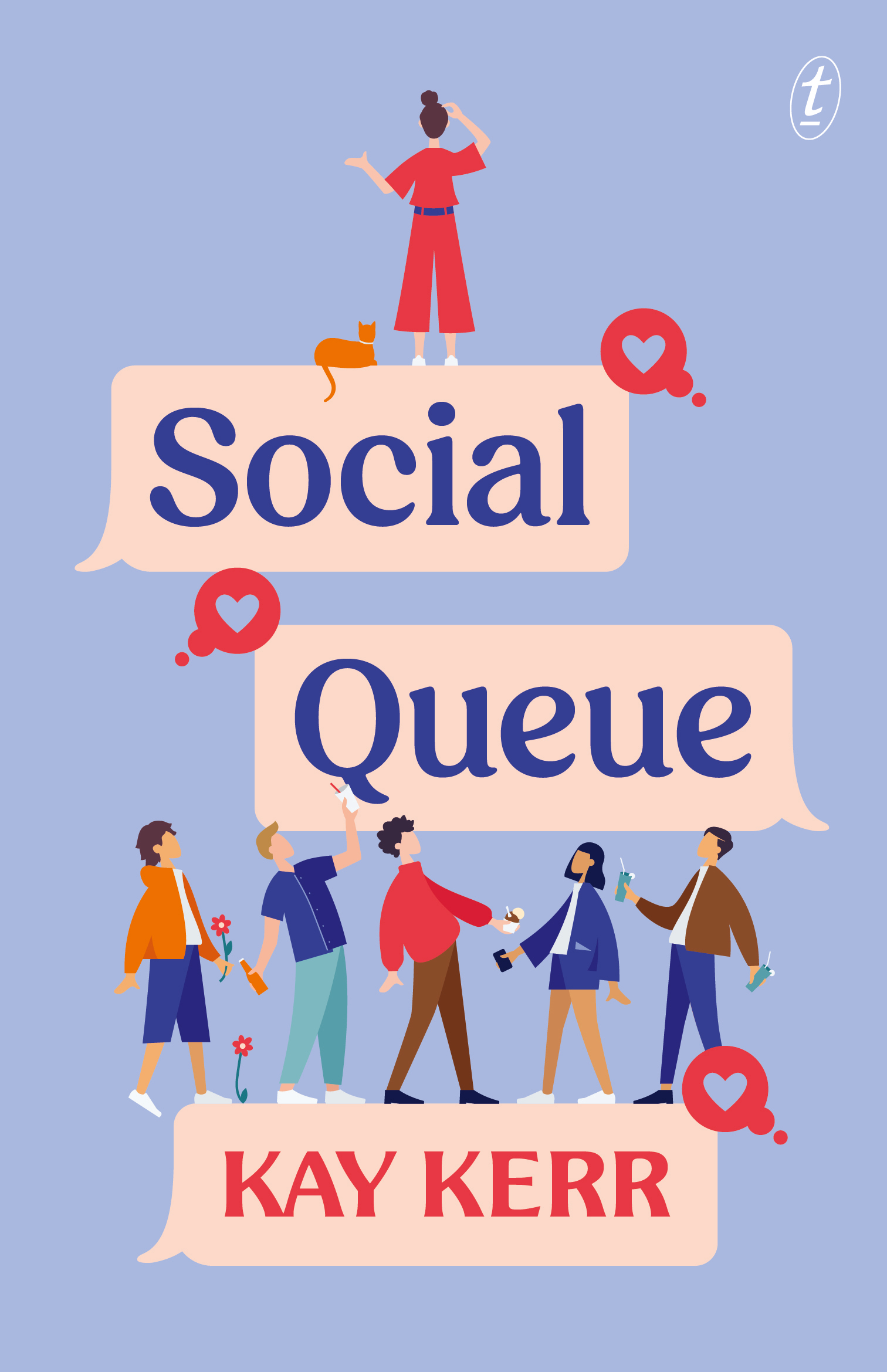
Social Queue – Kay Kerr

18-year-old Zoe is determined to turn over a new leaf. After a string of bad experiences in high school, she lands an internship at an online media company, where she writes pieces about her dating experiences—or lack thereof. But when these pieces get noticed by some of her old high school classmates, Zoe must reassess her idea of romance—and if taking second chances is worth it at all.

TW/CW: ableism, police brutality, bullying, sensory overload, misogyny

I found this one mostly on a whim (the quest for good disability rep never ends) and figured that it would be a good read for Autism Acceptance Month this year. And…I’ve come out of it with mixed feelings. I did like it, and I’d say it was a solid read. But I just had such a hard time getting into the writing, and while I loved all of the discussions around autism and disabled identity in general, they often came out very forced.

Let’s start with the good stuff. Zoe was a great protagonist, and she was the perfect fit for this kind of story. Although I wished we could have seen some more personality from her, I loved the journey of self-love and acceptance that she goes on over the course of this book. She had great character development, and her interactions with the other characters felt authentic and genuine. I can’t speak to how accurately her autism was depicted, but as a neurodivergent person, a lot of it felt very authentic, what with the sensory overload and whatnot. Either way, it’s always incredibly refreshing to see disabled characters/stories actually being written by disabled authors, so Kay Kerr deserves a thank you just for that.

There were some great conversations about autism and about disability in general as well in Social Queue! Zoe’s experiences—especially with her well-intentioned but ultimately harmful coworker trying to write about disabled issues—were so important to have in a book, and Kerr handled all of them very well. I loved the emphasis on restructuring the language we use around disabled people, especially removing the context of disability automatically being synonymous with suffering and doing away with the narrative of “overcoming” one’s disability. Social Queue raises so many questions that are so often left out of conversations about disability (and in feminism in general), and even as a piece of fiction, it works as a good primer for somebody looking into disabled issues.

That being said, some of the situations which Kerr tried to implement said conversations about disability came off as forced to me. For instance, early on in the novel, Zoe witnesses an instance of police brutality directed at an Autistic man. While this is a great starting point for conversations about disability and police brutality, it felt…blatantly like a plot device, like this horrifying instance of police brutality was set up just so that these conversations could be had in the book. Even though said conversations stemming from it were worth having, the placement and writing of it just made such a horrifying thing into nothing more than a conversation starter. Didn’t leave the best taste in my mouth.

I think part of why that instance didn’t work was because of Kerr’s writing style. Just like the cover, which looks like it was made in 15 minutes on Canva, nothing about it felt very distinct; none of the characters had unique voices, and most of the descriptions of the plot were mostly concerned with going from point A to point B without much embellishment. I’m not saying that Kerr should’ve gone headfirst with the purple prose, but the writing felt so dry that it needed some kind of embellishment, anything to make it more interesting. Even though Zoe was a solid character, this writing made for a significant amount of disconnect between her and some of the other characters that we were supposed to sympathize with.

Additionally, the romance aspect was iffy for me. I loved the premise of Zoe reconnecting with people from her high school and exploring her sexuality, but since the writing was so bland, most of said love interests were interchangeable to me. The only distinguishing factor was a) one of them was a girl (we love to see characters questioning their sexualities, though!! good stuff), and b) that one of them was a creep. That was pretty much it. Also, the fact that Zoe ended up with Gabe after all that infuriated me. I get forgiving and forgetting, but if a guy makes a WHOLE CLASS PRESENTATION about how you’re “so inspiring” just because you’re disabled, I WOULDN’T EVEN CONSIDER GIVING HIM A SECOND CHANCE. WHY. Apologies aren’t even enough at that point. That’s just disgusting. And I’m glad that they did cover that, but…Zoe. Bestie. You can do so much better than him. There was a lot of “he was mean to you because he had a crush on you, so it’s fine” action in Social Queue as a whole too, which rubbed me the wrong way, but Gabe was the most offensive for me.

All in all, a romance novel that did a good job of representing disabled and Autistic issues, but was let down on several occasions by its bland writing. 3 stars.

Social Queue is a standalone, but Kay Kerr is also the author of Please Don’t Hug Me and Love & Autism.

Today’s song:

BABE WAKE UP NEW PALEHOUND JUST DROPPED

That’s it for this week’s Book Review Tuesday! Have a wonderful rest of your day, and take care of yourselves!
Posted in Book Review Tuesday

Book Review Tuesday (4/18/23) – The Spear Cuts Through Water

Happy Tuesday, bibliophiles!

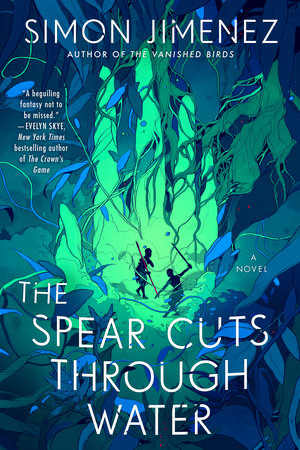
I was in a fantasy mood recently, so I decided to pick up The Spear Cuts Through Water after hearing some rave reviews from other bloggers. The gorgeous cover only added to the sell. But in the end, this novel ended up being a major disappointment—a murky, 500+ page slog that was only enjoyable for fleeting moments. I really need to stop setting myself up for disappointment with all these overly long high fantasy books…

Enjoy this week’s review!

The Spear Cuts Through Water – Simon Jimenez

The Emperor of the Moon Throne has terrorized the land of the Strangled Throat for centuries, aided by his three reckless sons, aptly dubbed The Terrors. But like everything else that he has seized, the Emperor’s power comes from an age-old moon god who has been locked under the palace against her will. But a god is not meant to be kept in captivity.

So she escapes. Aided by Jun, a disgraced palace guard, and Keema, a warrior from a distant, mysterious land, she sets off on a journey to find her freedom. But the Moon Throne will not let go of her so easily…

TW/CW: ableism, cannibalism, child abuse, murder, body horror, substance abuse, mentions of sexual assault (off-page), torture, loss of loved ones

This is one of those instances where I feel like I’ve read a completely different book than all of the 5-star reviewers. I really wanted to like it—and there were a few things that I did like—but ultimately, it felt like a 20-minute prog-rock song in book form: well-written, but so unneccesarily convoluted and full of itself that it became insufferable.

Before I go on my tirade, I will acknowledge that there were some wonderful, very bold and skilled parts of this novel. Jimenez’s writing had moments of being both beautiful and insightful—there were a few anchors to pull me through the slog, and his prose had moments of being incredible. 2nd person is always a bold choice, but unlike other aspects of this novel, it was executed very well, succeeding at being both immersive and fresh without feeling like it was bold just for the sake of being so.

“Bold” is generally I word that I could ascribe to most of this book. A lot of it was written in a fresh, nontraditional way, and I appreciated its execution in some sections. But a lot of it just felt like showing off—having unconventional chapter breaks and an infuriating structure just for Jimenez to show that he was capable of doing so. Most of these ended up being to the novel’s detriment. The random “chapter” breaks (there really weren’t any chapters in this book?), which mostly just ended up being sized-up font that was, essentially, what should have just the first sentence of the paragraph. And since they were all just first sentences of the paragraph, there were 2-3 of these breaks per page. POVs got switched without warning and without explanation, making the reading experience overcomplicated where it could’ve been an easy fix. It just felt like it was biting itself in the foot in the name of art—it could have been a beautiful story, if it wasn’t so intent on showing off how “different” it was.

As a result, so much of this novel got lost. Even though I was fairly lost trying to discern whose POV is it this time, I did notice one thing while reading The Spear Cuts Through Water—where’d the worldbuilding go? Other than the vague notion of a fantasy world (gods and goddesses, some talking animals/spirits, etc.), I had no idea of the layout of the world, the regions of the world, any kind of cultural cues or conventions, any kind of magic system…it just wasn’t there. At all. The same goes for the characters—they were all but cardboard, moved around like pawns for seemingly no reason. (I get that they were under oath by the Moon God, but the point still stands. They didn’t need to be that stiff.) Other than the reveal about Keema, nothing compelled me about either of them, or any of the other passing side characters. This novel was just so intent on chasing itself in circles that it forgot the essential elements that a novel needs.

All in all, a fantasy with great potential, but that ended up losing itself under layers of attempts to be daring and new. 2 stars.

The Spear Cuts Through Water is a standalone, but Simon Jimenez is also the author of The Vanished Birds.

Today’s song:

LOVE this album, this feels like a perfect match for “There’s No Other Way”

That’s it for this week’s Book Review Tuesday! Have a wonderful rest of your day, and take care of yourselves!
Posted in Uncategorized

Book Review Tuesday (4/11/23) – Stars & Smoke

Happy Tuesday, bibliophiles!

Here’s the thing—I’m not sure if I would read this book if it weren’t for Marie Lu. It’s not the kind of story that I would normally pick up, but if I’ve learned one thing as a longtime fan, it’s that she’s deft at writing for a variety of different genres. After finishing Stars and Smoke, it proved my point—I probably wouldn’t have read it otherwise, but it was still a fun read.

Enjoy this week’s review!

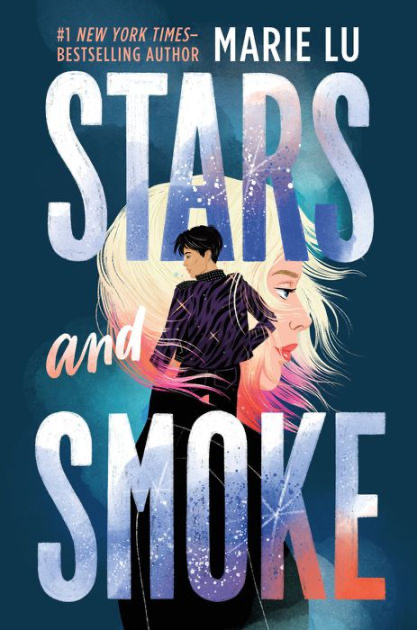
Stars and Smoke (Stars and Smoke, #1) – Marie Lu

Winter Young is on top of the world. The former backup dancer has had a meteoric rise to fame with his solo career, with sold-out tours and chart-topping albums every year. But his talents are wanted elsewhere—as a spy.

For Sydney Cosette, Winter is the key to taking down Eli Morrison, a prominent crime boss. After Morrison’s daughter, Penelope, requests a private concert for her birthday, Sydney and her colleagues recruit him for the Panacea Group, a spy organization willing to do the dirty work that most won’t do. Winter is the perfect opportunity to infiltrate Eli Morrison’s rank—and take him down for good. But sparks are flying between Winter and Sydney—sparks that could compromise the mission itself…

TW/CW: poisoning, murder, loss of loved ones

I’ve been a fan of Marie Lu since middle school, and she’s become an autobuy author for me, no matter the story—in my experience, she’s shown herself to be incredibly versatile when it comes to hopping genres. When I saw the description for this book, I knew one thing: I probably wouldn’t have read this book had her name been on it. It didn’t seem like my type of story. And although that’s still true, Marie Lu gave it her best shot at that magic touch that she applies to every novel she writes.

Lu said that in the acknowledgements that after the pandemic and all of the chaos and awful things that have happened as of late, this book was meant to be a piece of light escapism to distract from it all. Given how dark some of her works have gotten, I really respect creating a book just for that purpose—some days you can’t swallow a whole, literary masterpiece full of emotional turmoil. And as with every other novel she’s written, Lu achieves that goal perfectly. Stars and Smoke is pure fun—it’s the YA version of an action-packed blockbuster, filled with fun and romance. Lu keeps the plot and pace going steadily, and I never found myself getting bored.

However, even though most of the book hinged on the premise of said romance, it barely felt fleshed out. In the last 2-3 years, I’ve seen the “enemies to lovers” trope being slapped on advertisements and blurbs for books as a selling point from its popularity from both fan fiction and BookTok. Listen—I adore the dynamic when it’s done well, but the trope has become such a buzzword that a lot of authors seem to have forgotten what it’s really about. All too often, the stretch between “enemies” and “lovers” is virtually nonexistent, making for a half-baked romance that ends up feeling like it has no chemistry—going to complete disgust to head-over-heels in love in no time at all.

Stars and Smoke, unfortunately, fell into this trap as well, which is frankly surprising, since Marie Lu has done enemies-to-lovers (and romance in general) well before. Winter and Sydney seemed to have hardly any chemistry at all—they seemed to go from “eh, I really don’t want to work with [x]” (and vice versa) to “excuse me while I write a chart-topping love confession for [x]” in a very short span of time. The “enemies” part was very understated too—not that I’m complaining, but if anything, it was more “mild annoyance to sorta lovers, I guess” than anything. Again: enemies to lovers has become a complete buzzword. Trope terms are helpful, but love is often more complicated than that, and the key to getting them right is to recognize the nuance beyond the basic premise of the trope.

All in all, a light, fun novel that lacked in the romance department, but delivered in the pure escapism that it promised. 3.5 stars!

Stars and Smoke is the first in a planned duology, concluding with an as-of-yet unnamed sequel set to be released sometime in 2024. Marie Lu is also the author of the Legend series (Legend, Prodigy, Champion, and Rebel), the Young Elites trilogy (The Young Elites, The Rose Society, and The Midnight Star), the Warcross duology (Warcross and Wildcard), the standalone Kingdom of Back, the Skyhunter duology (Skyhunter and Steelstriker), and many other books for children and young adults.

Today’s song:

criminally short

That’s it for this week’s Book Review Tuesday! Have a wonderful rest of your day, and take care of yourselves!