Posted in Book Review Tuesday

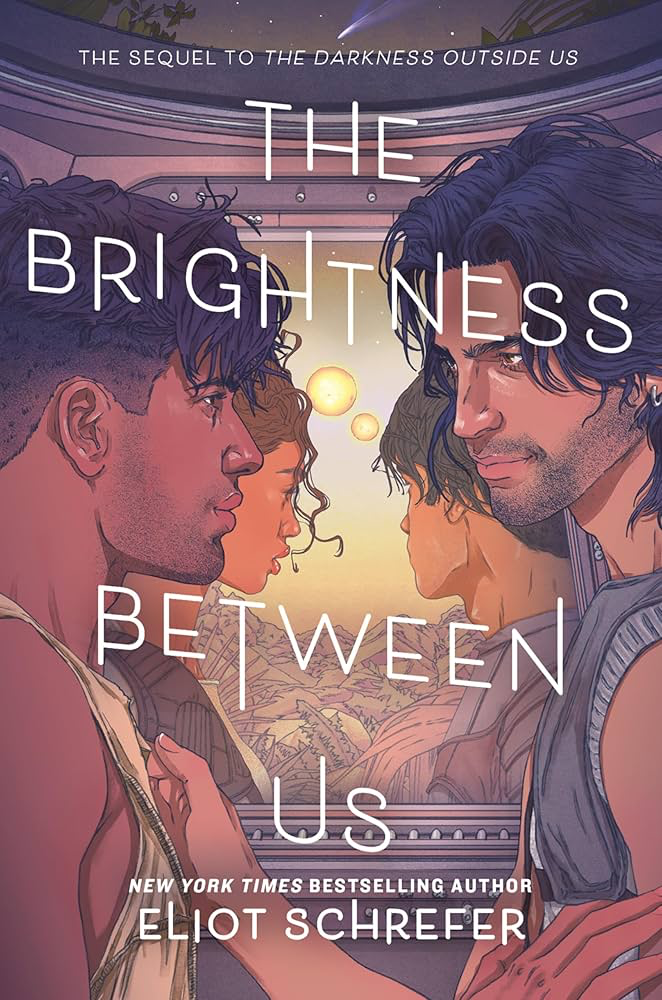
Book Review Tuesday (10/22/24) – The Brightness Between Us (The Darkness Outside Us, #2)

Happy Tuesday, bibliophiles!

We’re keeping up my sequel streak for the time being, so it seems. The difference between this and The Heart of the World is that I had no idea that The Darkness Outside Us, one of my favorite books of 2021, was even getting a sequel in the first place. That novel rocked my world—it really enraptured me in a way that not a whole lot of books ever have. But it was beautiful as a standalone—it had about as satisfying of an ending as you could ask for. So I was teetering towards hesitantly optimistic when I heard about The Brightness Outside Us, but in the end, I’m so glad I took the gamble; this novel is a different kind of twisty than its predecessor, but it’s worth taking the leap.

Enjoy this week’s review!

Now, tread lightly! This review contains spoilers for book one, The Darkness Outside Us. If you haven’t read it and intend on doing so, read at your own risk!

For my review of book one, The Darkness Outside Us, click here!

The Brightness Between Us (The Darkness Outside Us, #2)

In the 24th century, Ambrose Cusk is on the cusp of the greatest space mission mankind has ever embarked on. After losing his sister Minerva in a troubled gambit outside of the solar system, Ambrose is set to cross the universe itself in order to save her. But when he discovers that he won’t be on the ship—only clones of himself—he is determined to get to the bottom of what his true mission is—and what really happened to Minerva.

30,000 years in the future, the final clones of Ambrose and Kodiak have grown from the teenage clones they once were into fathers of two children. Owl and Yarrow live a peaceful but sheltered existence on the surface of Minerva. Owl yearns to learn what the rest of the planet holds, but her parents are keen on keeping her safe. But when her brother Yarrow begins acting strangely, the family suspects that a stranger thousands of years in the past may have sabotaged their mission.

TW/CW: violence, war, past mentions of child death, animal death, terrorism, intrusive thoughts

It didn’t even cross my mind that The Darkness Outside Us would have a sequel. I went into this novel with trepidation—how do you follow up a novel as twisty, complex, and heartwrenchingly beautiful as The Darkness Outside Us? By splitting the novel in two, as it turns out. I didn’t think that The Darkness Outside Us needed a sequel, but nonetheless, I’m glad I stuck around to see the result—of course Eliot Schrefer would have something fascinating up his sleeve.

The Brightness Between Us reminds me of how much I love a good “space colony gone wrong” story. As I said, I didn’t even think about The Darkness Outside Us getting a sequel, but this novel has the perfect setup for precisely this kind of plot. I should have trusted Schrefer from the start, given how masterful book one was, but wow, the Minerva plot amazed me! There was so much solid, hard sci-fi put into the terrain, climate, and wildlife of Minerva, and Schrefer did an excellent job of keeping the reader in the dark just enough to make everything suspenseful, even when the mysterious bones that Owl digs up in her exoplanet yard only turn out to be from a duck. From the research behind the wildlife, the weather, and the atmosphere, no stone was left unturned, each one its own Chekhov’s gun waiting to fire.

Although Owl wasn’t my favorite protagonist, she fits perfectly for the environment she’s in. Every “space colony gone wrong” needs a character who questions everything; there is always some part of the planet that has been unexplored, and someone needs to be curious and daring enough to want to discover what’s on the other side of the world. It can be even more effective when that character is a child; children are naturally curious, making it more than simply questioning authority—the authority is often their parental figures, and the excuses of them hiding things “for their safety” feel more tangible. Fifteen-year-old Owl was naturally curious, but also paired with her more obedient (at first) brother, Yarrow, giving her more resentment towards her parents. She wasn’t as likeable as Ambrose or Kodiak (I loved seeing them become parents), but they had the home field advantage of book one. But I can recognize when a character is perfect for the plot they’re in, and Owl was the perfect match for the plot of The Brightness Between Us.

After the pummeling of gut-wrenching twists that we call The Darkness Outside Us, the sequel was going to have to pull off a miracle to follow it up in terms of plot. The main twist was so earth-shattering that I thought it would be impossible to come up with anything better. I remain correct—I don’t think anyone, much less Schrefer, could come up with a twist that could top book one. But the main twist that we do have was excellent enough to propel me to finish the book in one sitting—just like The Darkness Outside Us! (The difference is that it was at a reasonable hour this time. I’ve matured since 2021, I promise.) Not only is this duology a love story 30,000 years in the making—it’s a conspiracy 30,000 years in the making! I loved the twist that Devon manipulated the frozen fetuses to develop violently aggressive traits as they grew—it gave even more stakes to an already gripping plot, and it made the days of present future half of the novel gripping as well. It gave the “space colony gone wrong” side of The Brightness Outside Us a truly unique twist—sabotage from 30,000 years in the past, and two versions of the main characters communicating across time to thwart it.

All this talk about the Minerva plot, and I haven’t even touched on the “present-day” Ambrose and Kodiak…oops. I don’t have a favorite child, I swear. The worldbuilding in this half of The Brightness Outside Us was my favorite part; getting a glimpse into the forgotten world that we only knew about in whispers in book one was fascinating. Schrefer’s vision of a world divided into a corporate hellscape of excess and a corporate hellscape of rigidity was one that was mapped out just as vividly as the alien world of Minerva. You really do see how it is that Ambrose and Kodiak got to be how they were at the start of book one. In terms of character development, it did tend to feel like listening to a broken record after book one, but that’s my only minor nitpick—Schrefer made sure that they had startlingly different—and almost as emotional—arcs as their clone counterparts in The Darkness Outside Us. Devon was a fascinating, slippery antagonist, and his sabotage was one of my favorite parts of the novel to witness unfolding.

All in all, a sequel that had a Herculean task to live up to its predecessor, but delivered a miracle in spite of the odds—just like Ambrose and Kodiak. 5 stars!

The Brightness Between Us is the second book in The Darkness Outside Us series, preceded by The Darkness Outside Us. Eliot Schrefer has also written several other books for children and young adults, including the Ape Quartet (Endangered, Threatened, Rescued, and Orphaned), The Lost Rainforest series (Mez’s Magic, Gogi’s Gambit, and Rumi’s Riddle), Queer Ducks (And Other Animals): The Natural World of Animal Sexuality, and many others.

Today’s song:

EVERGREEN COMES OUT THIS FRIDAY, ARE WE READY?

That’s it for this week’s Book Review Tuesday! Have a wonderful rest of your day, and take care of yourselves!

Posted in Book Review Tuesday

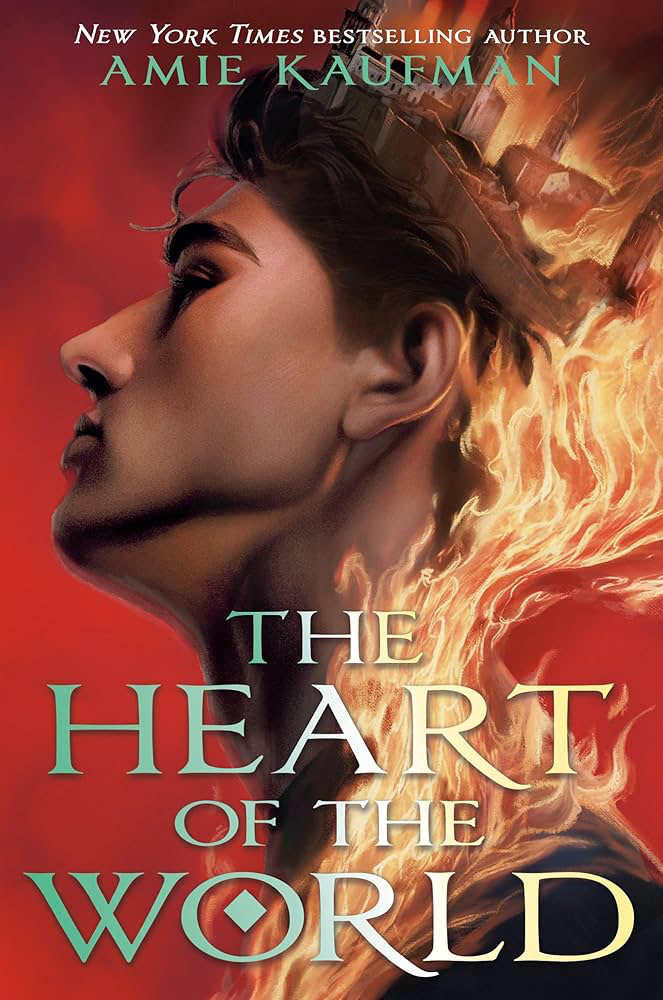
Book Review Tuesday (10/15/24) – The Heart of the World (The Isles of the Gods, #2)

Happy Tuesday, bibliophiles!

The day has finally come…the Isles of the Gods duology has concluded. The end of a (short) era. I’m all over anything that Amie Kaufman writes, and even though fantasy isn’t my top genre, she made me fall in love with her brand of it. Naturally, The Heart of the World was one of my most anticipated releases of the year, and while it fell barely short of book 1, it stuck the landing to become a fulfilling conclusion to a duology full of heart.

Now, tread lightly! This review contains spoilers for book one, The Isles of the Gods. If you haven’t read it and intend to do so, read this review at your own risk!

For my review of The Isles of the Gods, click here!

Enjoy this week’s review!

The Heart of the World (The Isles of the Gods, #2) – Amie Kaufman

Selly Walker has failed.

When she, Leander, and Keegan tried in vain to seal away the gods from the mortal world, they created a conflict much worse than they could have ever imagined. Now, Leander is the mortal messenger of Barrica, goddess of war. Possessed by power beyond human comprehension and puppeteered by a being of unearthly sway, he knows that war is brewing—and that allowing Barrica into the mortal realm would kill him in the process. Selly, now deeply in love, will risk anything to make sure that Leander is unscathed, but little to they know that the rival god Macean has his own Messenger—and that he’s hungry for war.

TW/CW: violence, blood, murder, loss of loved ones, neglectful parent

Man, Amie Kaufman just can’t resist writing relationship dynamics where one becomes all-powerful and the other is Just Some Guy, huh? Not to call Selly just some (gal), but…Aurora Cycle fans, we see it, right?

It’s not like me to rate a solo Amie Kaufman book in the 4-star range. Well, sort of. The Isles of the Gods was a 4.75 for me, but that was easily rounded up to 5. I expected The Heart of the World to be more of the same, and it almost was. Almost. Its fatal flaw was that it took so long to get back on its feet after the chaos and craziness that was the ending of book 1. That was so campy (in an Indiana Jones way) and explosive that it must have been so hard to ground the beginning afterwards. An additional problem is that this book is 400 pages long, which meant that, for the first fifth to a quarter of the novel, it bordered on dragging. Kaufman’s writing didn’t suffer, and neither did the characters, but The Heart of the World took so long to regain its sea legs that it never fully recovered.

From there, however…I have no notes. Even if that first fifth (or thereabouts) dragged in terms of plot, it excelled in terms of character development. Leander’s arc was among the most well-developed of the novel—as it should have been, given that he’s on the cover and all. As I said before, unceremoniously foisting godlike power onto ordinary people and watching them try and grapple with the consequences is Amie Kaufman’s bread and butter. Leander’s internal struggle of being both a puppet of Barrica and being tossed around by the royal family—his family—and being treated like an overpowered chess piece made for some enticing internal struggles. I hesitate to say that his relationship with Selly was a genderbent carbon copy of Kal and Auri, but…the similarities were there. However, what sets them apart is the differences in Leander and Selly’s characters. Unlike Auri, Leander was slick and confident before he he was forced to embody Barrica’s power—thinking he had sway and power was nothing compared to having a taste of uncontrollable, immortal power, and it fundamentally rearranged who he was as a person. Selly, on the other hand, was already out of her depth and new to the relationship, but clung to the glimpse of the real Leander, and knew that she couldn’t risk losing him—or their shared home. I trust Amie Kaufman enough to know that she wouldn’t copy and paste a relationship dynamic, and the more I think about it, the less it feels like a rehash—Selly and Leander were so sweet together, and this wrench in their romance was one that created an intricate rift to explore.

Speaking of Selly being out of her depth…good god, I just want to give her a hug. Lord. Kaufman already gave her a great obstacle in trying to find her way through the palace life and feeling like a fish out of water while trying to navigate impending war. Then she had to resolve the arc about Selly looking up to her dad…who, as was faintly hinted at in The Isles of the Gods, turned out to be using her for her magic, then abandoned her. My poor girlie…either way, it was written so sensitively. After the smoke screen of her dad pushing her to foster her magic fell away, Selly realizes that he’s just been using her as a tool to bolster the family name, and Kaufman was able to hammer in just how crushing that was for her. All her life, she’s been in his service, and all of these years she’s waited for him to return, and you just knew that he only came back to her because Barrica had him and the rest of his crew under her spell. Their reunion was hollow, just like the remainder of their relationship. Once she began to come too grips with it, however, it was beautiful to see Selly assert that she would no longer be somebody else’s pawn—just like Leander. Waiter! Waiter, more parallels, please!

In my review of The Isles of the Gods, I said that I was miffed at the book being tagged LGBTQ+ when all we got was a background lesbian couple that was about the equivalent of that one scene in The Rise of Skywalker. (You know the one.) I couldn’t help but be disappointed. Let me say on the record that I stand corrected! The additional queer queen and consort aside (diversity win! This warmongering queen likes women!), we’ve also got some wonderful queer representation in Jude. Another minor complaint that I had about The Isles of the Gods was that Jude didn’t have an awful lot to do, even though he was one of five of the POV characters. Not only does he have a beautiful, tearjerking character arc, HE’S QUEER! AND HE’S HAS A WONDERFUL BOYFRIEND! After all that this poor guy has been through, I’d say that’s the ultimate reward. I had a feeling that something had to be queerer about The Isles of the Gods, but I’m so glad that Jude finally got his due diligence in terms of character development and focus—and queerness. We love a battle-scarred guy with a secret stash of fantasy books.

Another character arc I loved seeing resolved…Laskia! Along with Leander and Selly, she’s part of the unofficial “spent their lives being moved around like chess pieces” trio, and seeing her come into her power—without the help of Macean—was a beautiful redemption arc. Laskia was driven to villainy by a desire to be loved, constantly shoved in the shadow of her sister Ruby, and like Leander and Selly, she let herself believe that she was in control. For her, the ultimate act of heroism was to become her own person—to steer her own course in life. Looking back, that’s what the whole Isles of the Gods duology feels like it’s been about. The ultimate form of magic is to know your power, to know that you have control of your life, and that despite the pressures telling you to sail one way or another, you’re the captain of your own ship. 🫡

In the end, if there’s anything that Amie Kaufman can write like nobody’s business, it’s a final battle. It was so tightly paced and action-packed that it nearly made me forgive how slow of a start The Heart of the World had. An aspect that The Heart of the World introduces is how the gods and goddesses factor in (Kaufman’s descriptions of which were arresting, as was expected), but it gave stakes to the battle that truly made it feel like thousands of lives hung in the balance. And to conclude it all in an assertion that spending your life grieving will never make any new love grow? And how that grief can feel so desolate that nothing else can grow there? And that remembering the connections that you have in the here and now is how you can move forward? And…and…and…dammit, Amie Kaufman, you did it again. You can only hide behind so many cheery “hi my friends!” before the jig is up. YOU HAVE TO STOP RUNNING A STEAMROLLER THROUGH MY FEELINGS LIKE THIS.

All in all, a duology concluder that faltered slightly in its early stages, but stuck the landing with buckets of action—and many a resonant message to spare. 4.5 stars!

The Heart of the World is the final book in the Isles of the Gods duology, preceded by The Isles of the Gods. Amie Kaufman is the author and co-author of several series for children and young adults, including the Elementals trilogy (Ice Wolves, Scorch Dragons, and Battle Born), the Illuminae Files (co-authored with Jay Kristoff – Illuminae, Gemina, and Obsidio), the Aurora Cycle (co-authored with Jay Kristoff – Aurora Rising, Aurora Burning, and Aurora’s End), the Other Side of the Sky duology (with Meagan Spooner – The Other Side of the Sky and Beyond the End of the World), and many others.

Today’s song:

We Are Lady Parts brought me here…

That’s it for this week’s Book Review Tuesday! Have a wonderful rest of your day, and take care of yourselves!
Posted in Book Review Tuesday

Book Review Tuesday (10/1/24) – Death’s Country

Happy Tuesday, bibliophiles, and happy October!

Since today is both in the middle of Latinx Heritage Month and the start of spooky season proper, I figured I would deliver on both fronts. I’d heard a lot of buzz about this one, especially the fact that it had polyamorous representation—something I rarely see in literature, much less in YA. Genre fiction written in verse is also uncommon, so I had to pick up this book since it combined both of them. The result was something that was inventive at every turn.

Enjoy this week’s review!

Death’s Country – R.M. Romero

Andres Santos is ready for a new start. After moving to Miami from São Paulo, he’s keen on leaving his past behind—especially his brush with mortality after nearly drowning and seeing the face of Death itself. He barely escaped by making a deal with Death for a second chance at life. Now, he’s a part of a happy, poly triad, deeply in love with spunky photographer Renee and joyous dancer Liora. But when a car crash puts Liora in a coma, Andres and Renee know that the only option is to confront Andres’ past—by returning to the Underworld where he once bargained for his very life.

TW/CW: car crash/coma, emotional abuse, suicide, self harm, eating disorders, fantasy violence

The minute that David Bowie was mentioned, I tried so hard not to go headfirst into liking this novel. My expectations were average, and I wanted to be surprised. And then “Space Oddity” became a recurring motif. You know me, I ate that up.

For the most part, I’ve rarely seen genre fiction and novels in verse mix. The latter is usually reserved for telling realistic fiction stories and occasional historical fiction, though I’ve only seen one or two examples of the latter. But using this method outside of fiction is something that, now that I’ve read Death’s Country, I feel should be utilized more often. Poetic language lends itself to describe the dark, fantastical setting of this novel and fantastical settings in general, and Romero’s is no exception; even if it doesn’t fill up the entire page, the flowing language renders the setting in luscious detail. Given that romance is also at the beating heart of this novel, Romero’s decision of putting it in verse made the romance feel all the more like the center of the narrative. Once more, her language didn’t just put the spotlight on it—the sparsity of the amount of words on the page truly made it feel like the center of the universe.

Even with the leaps and bounds that literature, mainly YA, has made in terms of queer representation, I’ve seen hardly any with polyamorous representation. (The only other one that I can remember is Iron Widow, which I also recommend!) What I liked about how Death’s Country handled it was that it was a polyamorous story, but that it wasn’t necessarily about polyamory; those stories have a place, but sometimes, the most powerful representation comes from seeing yourself in fantastical stories usually reserved for white, cishet, etc. protagonists. There are great discussions about the stigmas surrounding polyamory (cheating, slut-shaming, etc.), but they were only a part of the story, not the whole. The more that I think about it, a poly triad makes this story work in a way that it might not have with a couple; having two people, not just one, braving the Underworld for their girlfriend in a coma, presented a unique twist on a story that’s been retold countless times, and presented an opportunity to explore multiple perspectives of love under duress.

I went into Death’s Country expecting a meditation on death (obviously), but what I didn’t expect was such an insightful metaphor about how we idealize those we love in death. The Underworld in Death’s Country is almost a vehicle for reproducing what people deem most memorable about them: not just how they die, but how they were seen in death. Liora, who was adored unconditionally by both Andres and Renee, has been molded into a romanticized version of herself that, upon closer inspection, barely resembles the real Liora. Most of that is thanks to the manipulation of The Prince, but we later find out that even he is a reflection of the dark side of Andres’ love—that kind of unquestioning idealization that strips a real person into a glowing facsimile of who they once were. This provided an insight into these kinds of retellings (Death’s Country is a loose retelling of the myth of Orpheus and Eurydice) that they don’t normally touch on; death changes the people you love physically, but also mentally—in the perceptions of others that come to define them once their physical body is gone.

However, I feel like Death’s Country could have used a dual POV to execute the emotion to its absolute fullest. The only perspective we get is Andres, while we never get into the headspace of Renee, who is journeying with him through the underworld alongside him for the entire book. I wasn’t as big of a fan of Andres as a protagonist (I found him to be on the abrasive side at worst), but Romero’s writing of him was never sloppy or badly-executed in a technical sense. I just had the strongest sense that Renee had just as much of a story to tell as him! I get that Andres was specifically the one who made a deal with Death for another shot at life, but Liora isn’t just his girlfriend—she’s Renee’s girlfriend too. She needed more backstory, but I have a strong feeling that Death’s Country would have been enhanced if she’d also had more of a voice.

All in all, an inventive, fantastical novel-in-verse with plenty of fresh twists on otherwise well-trodden literary ground. 4 stars!

Death’s Country is a standalone, but R.M. Romero is also the author of The Dollmaker of Krakow, The Ghosts of Rose Hill, A Warning About Swans, and the forthcoming novel Tale of the Flying Forest.

Today’s song:

A NEW CURE ALBUM?? what a time to be alive

That’s it for this week’s Book Review Tuesday! Have a wonderful rest of your day, and take care of yourselves!

Posted in Book Review Tuesday

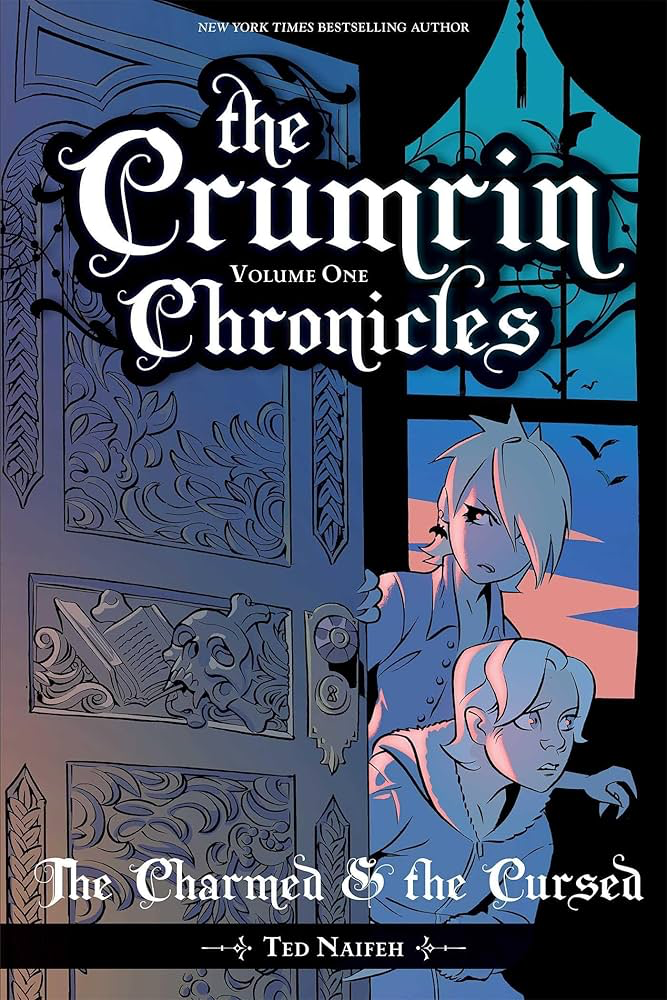
Book Review Tuesday (9/17/24) – The Crumrin Chronicles, vol. 1: The Charmed and the Cursed

Happy Tuesday, bibliophiles!

2024 really is the year of healing my inner middle schooler…I can feel the Courtney Crumrin obsession jolting back into my body…

I’ve been a fan of Courtney Crumrin from a young age—maybe a little too young, considering how quickly the subject matter gets dark, for better or worse. You know what? Definitely better. It was one of my favorite comics growing up, and Naifeh’s talent in both the writing and illustrating department has had a permanent impression on me, and spurred on my love of paranormal comics even before my Hellboy obsession was kicked into high gear. This continuation of Courtney’s story was one that I’d nearly forgotten about, but delighted in as a longtime fan—a worthy continuation of the story of the most dangerous witch in Hillsborough.

Enjoy this week’s review!

The Crumrin Chronicles, vol. 1 – The Charmed & The Cursed

Wilberforce Crumrin was trapped in the faerie realm for a century, while his older brother Aloysius got to live out a full life in the mortal world. Now rescued from his curse of never aging, Will finds himself under the wing of his adoptive older sister, a feared witch by the name of Courtney Crumrin. To help her little brother adjust to the mortal world, Courtney gifts Will with a charmed locket that will make everybody who encounters him go to great lengths to be his friend. But the love he receives from his classmates is hollow, and soon, Will must learn to discern who his real friends are.

TW/CW: fantasy violence, bullying, anaphylactic shock, loss of loved ones

When I say “I support women’s rights and women’s wrongs,” I mean Courtney Crumrin. Let a middle school girl with an ungodly amount of magical powers rain righteous fury down on a bunch of corrupt older men if she wants to.

I’m so glad that my mom reminded me that The Crumrin Chronicles existed, because it was high time that my middle school Courtney Crumrin obsession got reanimated. These new installments of the story prove that Ted Naifeh’s still got it, whether you’re talking about the stellar, eerie writing or his distinctively angular art style. In every way, it’s a treat for any longtime Courtney Crumrin fan!

Several years after the events of The Final Spell, Will has been rescued from the faerie realm, and now has to acclimate to the mortal world—which has progressed over a century from when he last saw it. The shift in the series’ name reflects the shift in the protagonist—it will always be about Courtney, but it’s clear that this is Will’s story through and through. I’m loving the ways that Naifeh has begun to develop Will’s character; apart from his delightfully old-fashioned mannerisms (ex. calling everybody “chaps,” constant exclamations of “jolly good” and whatnot), you truly get the sense that he’s a fish out of water in every way—he knows nothing about this new world that he’s in, and on top of that, he constantly has to pretend that he’s in the loop with everyone else.

In the shift from Courtney to Will as the protagonist, Courtney has also filled the role of Uncle Aloysius in the original series. What with their parents remaining as bafflingly clueless as they always were, Courtney is the only person Will can turn to for advice and comfort—she’s the only person in his life who knows the truth about his origins. Courtney, now with several years of maturity (and honing her powers) behind her, has grown more reclusive, but no less of a formidable force, both for fury and for love. Her being in a more secondary role doesn’t dull the truly awesome impact of the magic-wielding moments she gets; age has only focused and sharpened the reach of her wrath, and she uses it to its full extent when it comes to protecting the ones she loves—especially her little brother.

Protecting said little brother is what drives the central conflict of The Charmed & The Cursed; the inciting incident is brought on by a charm that Courtney places on Will that will make all of his classmates love him, thereby making his transition to modern school easier…in theory. Even if it does go awry, it teaches Will a valuable lesson about true friendship—and gives him a few real friends along the way. But the gesture alone felt so true to Courtney; she knew firsthand what it was like to be the new kid and not have anybody to show her the ropes, both socially and magically. What she and Will both learn by the end is that, in terms of the horrors of middle school, nobody can protect you from that. It’s a fact of life that puberty and making friends are rough, but sometimes, it’s up to you to decide who your real friends are.

Side characters usually aren’t a strength of Courtney Crumrin—by nature, Courtney really doesn’t have friends, save for her crotchety, geriatric warlock uncle, some talking cats, and a handful of fantastical creatures who come and go (and often either turn on her or die horribly. Fun times. Guess who hasn’t gotten over Skarrow…), but the ones that Naifeh introduces in The Charmed & The Cursed have a lot of promise! I immediately saw a bit of my younger self in Tucker, and as a kind of foil to Will, she works wonderfully; in contrast to Will, who wants to understand the real world he’s now trapped in, all she wants to do is escape it. Both of them show each other a version of reality—Tucker shows Will how his “friends” really see him, while Will shows Tucker that maybe the real world does have something in it for her. Putting a goth girl in this universe was an obvious choice, but I love Cinnamon too—and her burgeoning romantic relationship with Tucker!

The magical conflict (a CEO who happens to be a vampire, and this time, not in the metaphorical sense) was very much just a setup to stoke the flames for the rest of the series, but that doesn’t mean it wasn’t a fantastic ride. Between the callbacks to Courtney Crumrin’s Monstrous Holiday to Courtney getting to unleash the full extent of her magic, I was grinning to ear the entire time! The callbacks didn’t feel shoehorned into the narrative either—the element that does return does so for a logical reason, and there are enough new solutions to the vampire problem at hand that it doesn’t feel like a straight-up rehash. It’s loads of fun—and it provided a fascinating setup for what seems to be the main conflict of The Crumrin Chronicles.

All in all, a return to a comic I remember fondly that was clearly created with nothing but love. 5 stars!

The Crumrin Chronicles: The Charmed & The Cursed is the first volume in the Crumrin Chronicles series, followed by The Crumrin Chronicles: The Lost & The Lonely, and The Crumrin Chronicles: The Wild & The Innocent, which will be released on October 1, 2024. This series is a sequel to the Courtney Crumrin series, which consists of The Night Things, The Coven of Mystics, The Twilight Kingdom, Courtney Crumrin’s Monstrous Holiday, The Witch Next Door, The Final Spell, and the prequel Tales of a Warlock, which tells the story of Uncle Aloysius. Ted Naifeh is also the author and illustrator of several other comic books, including The Good Neighbors (written by Holly Black), Polly and the Pirates, Princess Ugg, and many more.

Today’s song:

FINALLY listened to all of It’s a Wonderful Life yesterday!! Sparklehorse and P.J. Harvey was a combination I never knew I needed so badly…

That’s it for this week’s Book Review Tuesday! Have a wonderful rest of your day, and take care of yourselves!
Posted in Book Review Tuesday

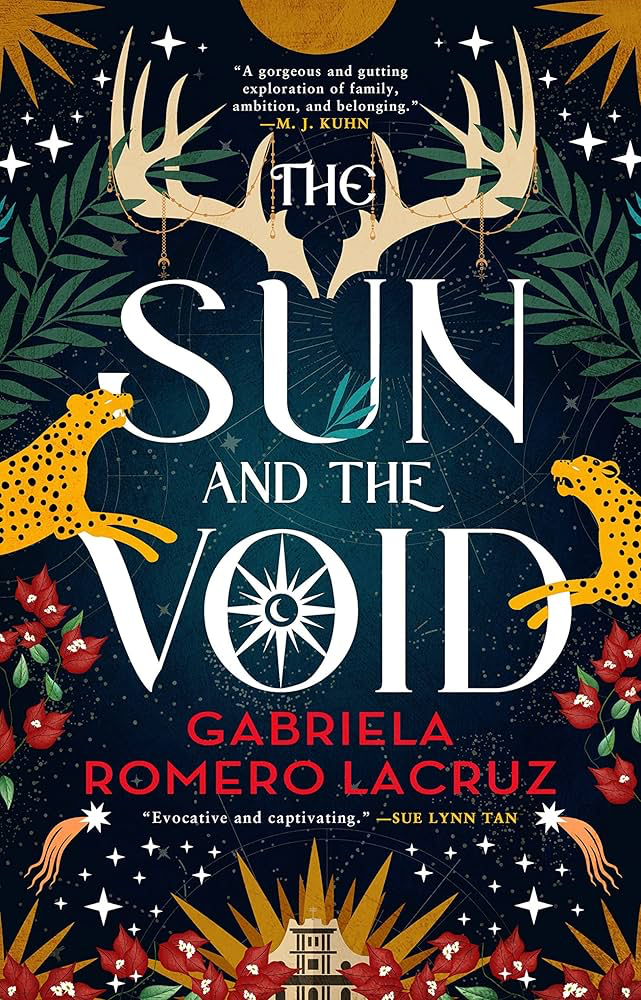
Book Review Tuesday (9/10/24) – The Sun and the Void

Happy Tuesday, bibliophiles!

Looks like I’m back! I’ve returned to college, and, as it always does, it has taken me some time to settle in. My ducks aren’t fully in a row, but they’re straightened enough that I’ve figured out when and where I’ll have times to squeeze in some writing. Key word is some: chances are I’ll stick to the two posts a week for a while now that I’ve got lots of schoolwork on my hands.

For this week’s Book Review Tuesday, I have a book that it’s almost miraculous that I liked as much as I did; at their worst, overly long epic fantasy novels are the bane of my existence. The Sun and the Void clocks in at nearly 600 pages, and I expected at least some of it to be a slog. Lo and behold, this novel held so much more in store—vibrant characters, Venezuelan-inspired mythology, and a daring quest across an inhospitable land.

Enjoy this week’s review!

The Sun and the Void (The Warring Gods, #1) – Gabriela Romero Lacruz

Reina has lived her life on the outskirts of society. Though her kind, the nozariels, have won their freedom, her tail and features mark her as an outcast. Reina returns to her estranged grandmother in dire need of healing—and answers. Now kept alive by means of dark, unpredictable magic, she is now the owner of a terrible secret: her grandmother is in league with a demon-god hungry for sacrifices, and one such sacrifice may be someone that she holds dear.

On the other side of the kingdom, Eva struggles to hide her true self. Her mixed heritage—part human, part valco—makes her a target. Soon after she is set to be married off to a man she barely knows, she falls in with a revolutionary. But this charming, volatile man has a darker side, a hunger for power that will not spare her if she stands in the way.

The paths of these women intersect as the clock ticks, and the fate of both of their worlds may hang in the balance…

TW/CW (from the author): alcohol, assault, blood, child death, childbirth, death, demons, emotional abuse, gore, infertility, kidnapping, pregnancy, racism, religion, sexually explicit scenes, mentions of slavery, violence

Ever since my tastes started drifting more into adult novels, I’ve had a history of getting a hundreds or so pages into an epic fantasy novel, losing my way, and coming out with only the vaguest sense of plot and one character. There’s some of it that’s on me, but it’s often a case of rambling; I’ve found many such novels to be more wordy than necessary and convoluted in their delivery of the worldbuilding. I lowered my expectations for The Sun and the Void for this very reason, though I clung onto it because of the promise of the Venezuelan and Colombian-inspired setting and anticolonial storyline (!!!!!!!!!!!!). Beyond being sick of generic, catch-all European settings in fantasy, my half-Colombian Spidey sense was tingling…and for good reason! The Sun and the Void is an overlooked gem of epic fantasy, with magic and action abound.

The vibrant setting that Romero Lacruz crafts was the clear star of The Sun and the Void. Her South American-inspired landscape was a breath of fresh air in a sea of vaguely European epic fantasies, breathing some much-needed life and diversity into the genre. Logistically, this region of South America—Venezuela and Colombia—also provides a variety of biomes to play with: we get flashes of deserts, forests, and glittering, tropical beaches, all with a fantastical dash of demons and monsters. That alone would have already put it a step above your average epic fantasy, but it was this series’ unique fantasy races that truly shone! As metaphors for oppression and who the dominant power in society deems “acceptable,” the nozariels and valcos were effective on that front. Their designs, however, were what made them so fun, making for memorable characters in looks and culture as well as personality.

In my experience, there are certain brands of epic fantasy that are allergic to accessible writing. When I say accessible, I don’t mean simple; accessible doesn’t mean the absence of artful prose or clever metaphor. For me, accessible prose is inventive, but not so caught up in making itself sound clever that it becomes a chore to read. Romero Lacruz’s writing is a fantastic case study in how to hit the balance between artful and digestible. Every action scene, political machination, and argument is rendered in ways that do feel like how people talk, and yet she never forgets to season her prose with unique metaphors and descriptors of the characters and their surroundings that keep you hooked—or, in my case, vigorously highlighting on my Kindle. At no point did the writing feel pompous or overly convinced of its own talent—it’s writing for writing’s taste, which is what writing should be.

Power dynamics were at the forefront of The Sun and the Void, and the explorations of them were some of the most impactful parts of the novel. Through the side characters, Romero Lacruz portrays the different way that power manifests itself in people; no matter how “noble” their causes, characters like Doña Ursulina and Javier became so obsessed with achieving their goals that it subtly began to eclipse all else. What was unique about The Sun and the Void, however, was how it was framed: through the eyes of vulnerable, sensitive women that get pulled under their spells. Such abusive dynamics meant that Reina and Eva were respectively drawn into the web of these other characters. At no point were they helpless—they were victim to people that promised them healing or freedom, and became so entangled in the schemes of others that they had to fight tooth and claw to find their way back to the light.

That being said, the weakest links in The Sun and the Void lay in the worldbuilding. Even though this novel is one of the few lengthy epic fantasies that I’ve read that miraculously doesn’t get overly convoluted, the price it paid was that some of the worldbuilding was left messy and sloppy once I took a closer look. The glossary was helpful, but it took quite a while to get used to some of the intricacies of the magic system. Terms are thrown around in a very slipshod way, and instead of the dreaded page-long block of worldbuilding exposition, we get…a few sentences, at most, before said facet of the magic system is barely mentioned for the rest of the novel. It’s an issue with followthrough—once something was mentioned, it often took 300 pages for it to make a brief appearance, only to poof back into the unexplained ether. It’s clear that there was a lot of thought behind the worldbuilding, but the issue was more of following the time-honored rule of Chekhov’s gun—Chekhov’s magic system, in this case. The gun did go off in the end, but it took so long to get to that moment that I completely forgot the significance of it being there in the first place.

All in all, an epic fantasy that defied the conventions of the genre—setting, writing style, and more—in all of the best ways. 4 stars!

The Sun and the Void is the first novel in the Warring Gods series, followed by The River and the Star, which is slated for release in 2025. The Sun and the Void is Romero Lacruz’s debut novel.

Today’s song:

BLESSED WITH ANOTHER NEW SOCCER MOMMY TRACK AND A NORTH AMERICAN TOUR NEXT YEAR!!!!!

That’s it for this week’s Book Review Tuesday! Have a wonderful rest of your day, and take care of yourselves!
Posted in Book Review Tuesday

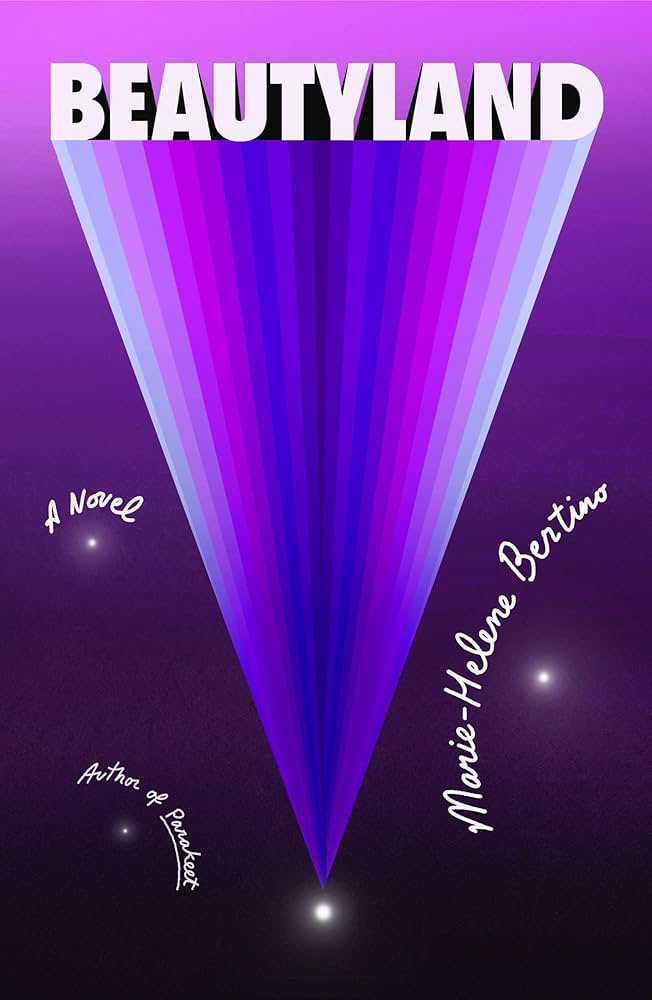
Book Review Tuesday (8/13/24) – Beautyland

Happy Tuesday, bibliophiles!

As far as science fiction goes, I’m not usually for the literary side of it—that goes for most literary novels of any genre, to be honest. I’ve often found that the sci-fi part is dulled in favor of mass appeal. But the premise of Beautyland fascinated me, not just as a science fiction reader, but as someone who’s grown up feeling like an alien. Surprise, surprise—I cried.

Enjoy this week’s review!

Beautyland – Marie-Helene Bertino

Philadelphia, 1977. Humanity has given the gift of Voyager 1, along with its landmark Golden Record, to space. Unbeknownst to us, a power hidden deep in the cosmos has given humanity a gift in exchange. At the same time as the launch of Voyager 1, a baby is born to an unknowing mother, not human but alien. Her mother names her Adina, and as Adina grows older, she learns how to communicate with her kinfolk in space, reporting the oddities of human life and culture through an old fax machine. As Adina pretends to be human, she experiences the joy and terror of human existence, but longs for closure—will she ever be able to return to her homeworld?

TW/CW: cancer, sexual harassment, loss of loved ones, pet death, bullying, grief, 9/11 themes (brief)

One of the best feelings is when you pick up a book that you’re interested in, but not expecting anything marvelous from, and then getting absolutely pied in the face out of nowhere with the feeling that this book gets me. Setting aside my reservations for literary sci-fi, Beautyland digs into the heart of my experience growing up—of feeling alien, but of cataloguing all of the nonsensical facets of American culture and the feeling of not belonging. I cried. I laughed. I had an echoing pang in my chest for a while. Like life, all of it was worth reading and living.

Observations about the human condition formed the heart of Beautyland. Through Adina’s messages on a fax machine, she reports to her alien superiors on everything from the oddities of American culture (“When it was time to decide the official food of movie-watching, human beings did not go for Fig Newtons or caramel, foods that are silent, but popcorn, the loudest sound on earth”) to the painful and uneasy truths of human existence (“The ego of the human male is by far the most dangerous aspect of human society”). Bertino’s writing shone the most when chronicling Adina’s observations. She adopted a blunt, matter-of-fact tone of a distanced journalist, someone watching our species from the sidelines, yet always managed to wring the emotion from it, be it humor or sorrow. The wonder of Adina when she visited her superiors at night, in a vast room inside of her mind, was just as palpable, capturing her childlike curiosity. You felt every joy of Adina reporting back on the eccentricities of humanity, and every sorrow once Adina matures and realizes the dark side of our nature. The eventual abandonment of her superiors as she grew older drove the point home even more—at a certain point, nobody can answer these questions for you, and you realize that you don’t have the answers, and neither does anyone else. All that’s left to do is live your life, and observe.

Though it wasn’t outright said or diagnosed, the neurodivergent themes of Beautyland were what stuck with me the most. (I have sensory processing disorder, and, among other things, I felt Adina’s growing discomfort with sensations as simple as hearing people breathe and chew.) Whether or not you believe that Adina is actually an alien, the experience of being on the fringes and unable to understand not just other people but their actions deeply resonated with me. As Adina moves through middle and high school and is ostracized by her more popular peers and tries to scientifically observe them, she’s confronted with a frequent feeling of questioning why it has to be this way: why are these girls looking at me like I’m gum on the bottom of their shoes? Why is not wanting sex such an affront to men? Why don’t they like me? That feeling of knowing something’s missing, but being unable to find it, put into words a feeling I struggled with through my adolescence, a sense that everybody else knew something I didn’t, and that was what made me so strange to them.

I read Beautyland as both science fiction and historical fiction; some people have put it up in the air as to whether or not Adina actually is an alien, but I think the answer is…yes. Both can be true. I’ve grown up in a similar way to Adina, feeling so on the outside of everything that I’ve attached myself to science fiction and alienness in general. Like Adina, it’s informed by some neurodivergence and general outsiderness, but there’s something to be said for all of the questions presented being true. Yes, she may be an alien sent from an advanced race beyond the solar system, and yes, she has some neurodivergent tendencies as well. The two can coexist. And Beautyland’s embrace of how these qualities can intersect was what made it so impactful; this experience fundamentally makes us human, even if it makes us feel alien. I often see criticism of alien or robot characters who are characterized as “inhuman,” but what makes them inhuman boils down to them just having the traits of neurodivergent people (“lack” of emotion, misunderstanding of how humans work) and those on the asexual/aromantic spectrum (no desire for romance or sex, that which “makes us human”), and I think it’s a valid criticism to apply to characters who are written thoughtlessly. But who’s to say that an alien character like this can’t also be neurodivergent and asexual? Again: the two can coexist. Bertino wrote Adina as a character with a deep understanding of human culture, and that, to me, does not skew the reading of her as asexual and neurodivergent.

Somehow, one of the most emotional parts of Beautyland for me was how Bertino wrote about Carl Sagan. As I mentioned before, the novel is written in fragments, not always linearly, but taking frequent detours outside of Adina’s immediate life and into moments of relevant pop culture at the time—the popularity of Carl Sagan being one of them. With her connection to the Golden Record and the absence of her own father, Adina looks up to Sagan as a surrogate father, someone who can teach her more about the cosmos from which she was born from. Even having never met him in person, the way that Adina processed Sagan’s death was where I lost it; this is one of her first experiences of loss, and it’s the loss of someone who has unknowingly guided her through her alien life, teaching her about the universe, and by proxy, given her a roadmap of the human condition. Fleeting as it was, Bertino wrote this instance—and the connection to Sagan in general—with the kind of love of someone you feel like you’ve known all your life, but have never even met.

All in all, a deeply human exploration of what it means to be alien. 5 stars!

Beautyland is a standalone, but Marie-Helene Bertino is also the author of Parakeet, 2 A.M. at The Cat’s Pajamas, and the short story collection Safe as Houses.

Today’s song:

new Smile!! not my favorite, and I can see why they left it off the album, but a solid track nonetheless.

That’s it for this week’s Book Review Tuesday! Have a wonderful rest of your day, and take care of yourselves!
Posted in Book Review Tuesday

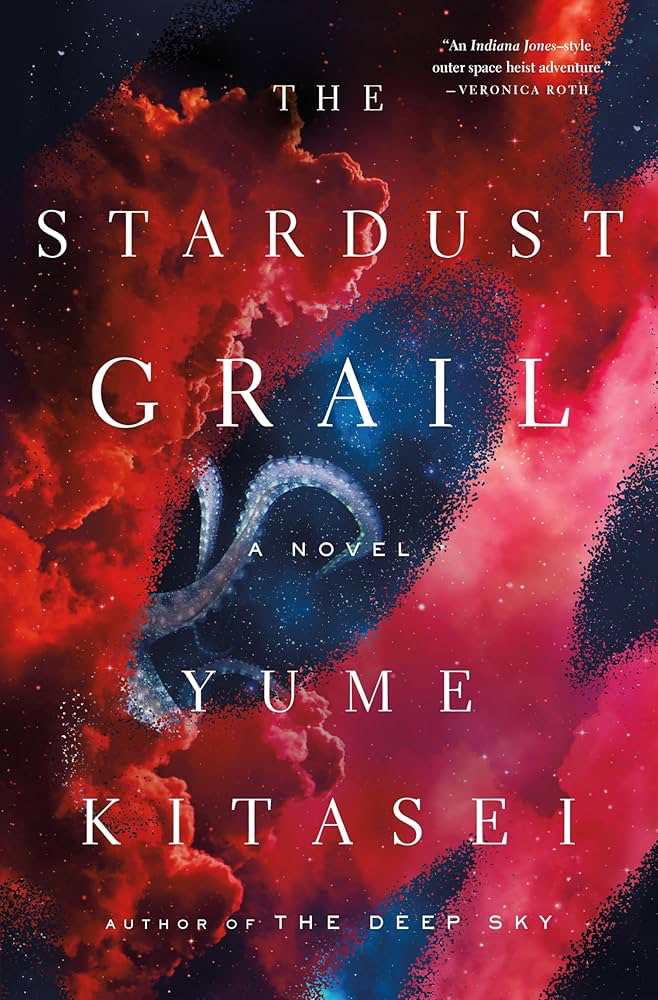
Book Review Tuesday (8/6/24) – The Stardust Grail

Happy Tuesday, bibliophiles!

Here I was thinking that I hadn’t had a 5-star read in so long, and bam…two in a row! I was expecting to enjoy The Stardust Grail because I loved The Deep Sky, Yume Kitasei’s debut. To my delight, it turned in a much more space opera direction, but not only that—it had one of the most heartwarming sci-fi universes that I’ve had the privilege of experiencing!

Enjoy this week’s review!

The Stardust Grail – Yume Kitasei

Maya Hoshimoto is a grad student, pouring her life into her studies on an Earth university far from her colony home. But what her university doesn’t know is that her extensive background in alien cultures comes from a history of art theft, stealing alien artifacts and returning them to their rightful owners. When a friend from her past offers her one last job, Maya is ready to refuse—until she learns that the artifact in question could mean that her friend’s species could be brought back from the brink of extinction. Plunged back into her old life, Maya now faces her hardest job yet—putting an entire alien species on the line.

TW/CW (from Yume Kitasei): themes of colonialism/imperialism, genocide, chronic illness (migraines), torture, suicidal ideation (brief), violence/gore, torture/confinement, war themes, pandemic

I loved The Deep Sky, but it was more literary than my usual tastes in sci-fi. I went into The Stardust Grail expecting more of the same, knowing I’d enjoy it, but I did not anticipate it being the perfect book for my constant space opera hankering! Heartwarming friendships, intergalactic hijinks, and excellent creature design—I’m ecstatic to report that The Stardust Grail has it all!

You all knew I was going to go after the creature design first. THE CREATURE DESIGN!! THIS IS THE ABSOLUTE CREAM OF THE CROP HERE!! My only issue is that we didn’t get to see all of the alien species that Kitasei set up, but to be fair, with a story jam-packed with rival parties and factions, it would’ve been a chore to have to incorporate every single one of them. (Maybe what we need is a companion novel in this universe? WE NEED TO MAKE IT HAPPEN!) Back to my point—even in sci-fi, it’s a difficult task to make aliens feel truly alien, not just in looks, but in culture, lifespans, and general quirks. The Frenro, and Auncle in particular, felt bizarre in the best possible way. I love a good cephalopod-like creature, but Kitasei did an excellent job of portraying not just xer mannerisms and what made xem unique as a species, but having those in contact with Maya’s more human sensibilities—there’s a ton of cultural confusion, even though they’ve been friends for at least a decade, but both Kitasei and the characters themselves handle it with a humorous grace. I also loved the design of the Belzoar—again, arachnid-like aliens are also tons of fun, but like the Frenro, they had enough distinguishing qualities to separate them from just being giant spiders.

I could go on and on about how much I adored these characters! Even if I didn’t have a soft spot for alien characters in the first place (being marginalized and generally an outcast will do that), Auncle would be my favorite by far—xe was just so delightful in their joyous dialogue and relentless optimism, but xer deep history of tragedy, both personal and in the context of xer species, was handled with all of the respect that it deserved—xe was joyous in spite of it all, because joy is all you’ve got in some cases. (AMEN!!) Maya was a fantastic protagonist—like Auncle, Kitasei did an excellent job of giving the reader the full breadth of her motivations and past that led her to the place where she is now. Her devotion to a fair galaxy and to help the Frenro made for a beautiful quest, and her feeling of outsiderness amongst both humans and aliens resonated deeply with me. (Given the themes of mixed-race identity in The Deep Sky, I wouldn’t be surprised if that was another analog. YES!!!) Wil and Medix were charming and lovable as side characters, and all of the colorful denizens of the galaxy were equally so—not a single character felt flat or out of place.

In her personal review of the novel on Goodreads, Yume Kitasei cites Star Wars—A New Hope in particular—as her primary inspiration for writing The Stardust Grail and much of her other science fiction. The Deep Sky was much more on the literary side of sci-fi, and while I loved it, I’m hoping that Kitasei keeps in this direction for her next few books. (I’ll read anything she writes at this point, but my statement still stands.) As a fellow space opera girlie and an avid Star Wars fan, the passion of both Kitasei’s personal life and her love for those movies shines through in The Stardust Grail. Kitasei took all of the right lessons from George Lucas and company. Not only do we have a vibrant galaxy full of characters who are just as vibrant, this novel hits the right balance of emotional weight and campy, truly fun action. Speaking of George Lucas…another obvious inspiration in the latter third of the novel was the Indiana Jones franchise, and those action scenes were the best kind of fun amidst an otherwise deeply grounded and emotional novel. Never at any point do the emotion and serious themes contradict the aforementioned action, nor the other way around—all of it is earned, and all of it feels like a worthy tribute both Star Wars and other such space opera works.

Speaking of said serious and emotional themes…as I said earlier, The Stardust Grail has such grace in the way that it handles the myriad of themes that it explores. From Maya’s lasting effects of an alien illness that linger into her life to her experience as an outsider, being raised on a colony isolated from Earth, every topic is treated with the weight it deserves. Imperialism and the ownership of art is the primary theme of the novel, and it’s unabashedly anti-colonial, which I adored. However, it didn’t just say “colonialism bad” and leave it at that—just as in the real world, nothing in The Stardust Grail is without nuance. With dozens of alien species and factions amongst said species, everything is gray, even in the case of their main mission. Would it have been fine if all there was to The Stardust Grail is “colonialism bad?” Sure, I agree. But the fact that Kitasei chose to explore all of the layers to the various conflicts and perspectives made it so much more worthwhile.

All in all, a deeply emotional and heartwarming tale of resistance, friendship across cultural barriers, and retaining joy in spite of it all. 5 stars!

The Stardust Grail is a standalone, but Yume Kitasei is also the author of The Deep Sky.

Today’s song:

That’s it for this week’s Book Review Tuesday! Have a wonderful rest of your day, and take care of yourselves!
Posted in Book Review Tuesday

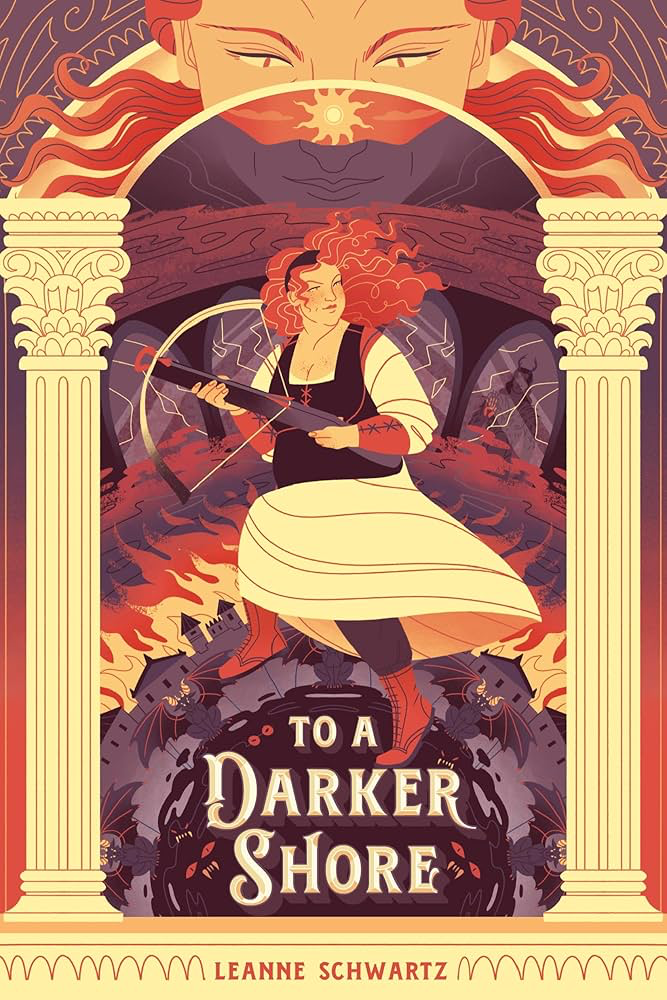
Book Review Tuesday (7/30/24) – To a Darker Shore

Happy Tuesday, bibliophiles!

I was first exposed to Leanne Schwartz through A Prayer for Vengeance, and enjoyed her YA fantasies that centered autistic and plus-size protagonists. I’d forgotten that she’d written another book featuring an autistic protagonist, and I figured it would be perfect for Disability Pride Month. While it didn’t blow me away, To a Darker Shore had a lovely setting with immersive writing and the journey of a courageous girl who would quite literally walk through hell to save her best friend.

Enjoy this week’s review!

To a Darker Shore – Leanne Schwartz

If there’s one thing that Alesta has known her whole life, it’s that she knows that she has something to prove. Poor, autistic, and plus-size, she means nothing to the townsfolk, save for what she can provide as a sacrifice to their hungry god, Hektorus. So she throws herself into intricate inventions, hoping they can earn her favor with the king. But when a test flight of one of her flying machines goes awry at an exhibition, Alesta knows she’s bound for hell. Yet it’s Kyrian, who helped her test the machine, that takes the fall, now condemned to hell instead of her. Alesta will do anything to bring Kyrian back…even if it means venturing into the treacherous depths of Hell itself.

TW/CW: loss of loved ones, misogyny, fatphobia, ableism, violence, blood/gore, claustrophobia, panic attacks, grief, homophobia

Why does WordPress keep trying to autocorrect “Alesta” to “Alert?” I can only imagine how it was while Schwartz was writing the book in the first place…

Even though Leanne Schwartz isn’t my favorite author, I love her apparent goal of putting out YA fantasy novels with plus-size, queer, and neurodivergent characters at the forefront. A Prayer for Vengeance didn’t blow me away, but it was an enjoyable read nonetheless; to an extent, I feel a similar way about To a Darker Shore, but it’s clear that her writing has improved greatly in the span of two books!

Schwartz’s lovely prose was clearly the star of To a Darker Shore. Throughout the novel, there’s a stark contrast between the fantasy, Renaissance Italy-inspired whimsy and the monstrous realms of hell, but Schwartz handled each of them with the appropriate weight they deserved. The first part of the novel did a wonderful job of immersing me in Alesta’s kingdom, and with every description of the coastline surroundings and the bustling cities, I was instantly transported. Schwartz’s balance of humor and weighty subjects (ableism, fatphobia, and purity culture, to name a few) was handled with aplomb—the strength of all of these aspects is how balanced they were. Additionally, To a Darker Shore’s writing felt like the perfect transition between Middle Grade and YA; apart from some violence and strong language, the accessible writing style and the narrative voice of Alesta could be a great bridge for younger YA readers to start in the genre.

Alesta was also a fantastic protagonist to propel the reader through this treacherous journey into hell! Schwartz did an excellent job of relying on showing to build up to the suspense of losing her best friend; by the time Alesta’s quest through hell begins, you truly do understand her relentless devotion to rescuing her friend, even if when they reunite, hell has permanently altered him. She stopped at nothing to make sure Kyrian made it out of hell alive, and you believed every part of her friendship and steadfast adherence to her mission. Her relentless spirit not only gave the story stakes (I certainly got the sense both she and Kyrian would fall apart without the other), but a reason to follow her along—at its best, there were times when I was invested in the story just because Alesta cared so deeply for succeeding in her impossible mission. Although I liked A Prayer for Vengeance, Leanne Schwartz’s way of writing her protagonists has improved since then, and Alesta is living proof.

I came away from To a Darker Shore with mixed feelings about the worldbuilding. On the one hand, I enjoyed the Renaissance Italy-inspired setting; Alesta is compared to Leonardo Da Vinci in the synopsis, and I loved the aesthetic of her wooden flying machines and the various magical contraptions that she constructed. The worldbuilding surrounding the religion that concerns most of the novel was also well-executed. Schwartz did an excellent job of setting up exposition in a variety of ways, ranging from stories that Alesta had grown up with to descriptions of religious festivals that served to explain some of the mythology. However, even with the obviously Christian inspiration that this religion was based in…why call it Heaven and Hell if it’s an entirely different religion? I get the comparisons here, but it kind of took me out of it to have a whole fantasy religion and then have the exact same names of Christian concepts in it. Considering how detailed most other aspects of this religion were, it comes off a bit lazy—either make it a more direct analog to Christianity, or give Heaven and Hell different (and more creative) names, in my opinion.

Additionally, there were quite a few side characters that surrounded Alesta that didn’t seem like they had anything to do. Along with the dreaded time skip that came out of nowhere [hisses like a vampire with holy water chucked on it], we were just as abruptly introduced to some of Alesta’s other friends. It wouldn’t have been a problem if they had any role in the novel other than to tell the reader that Alesta has made friends after Kyrian’s sacrifice. They were pushed aside as soon as Alesta ventured into hell (a section that takes up about a third of the novel), and therefore had no room to have distinct personalities or roles other than being Alesta’s friends. Since To a Darker Shore is centered so prominently around the unbreakable friendship between Alesta and Kyrian, it would have been better to scrap them entirely—or at least not give them a role that Schwartz seemed to place disproportionate importance on.

All in all, a YA fantasy that took some shortcuts with its side characters and worldbuilding, but was nonetheless a satisfying story of friendships strong enough to survive hell itself. 3.5 stars!

To a Darker Shore is a standalone, but Leanne Schwartz is also the author of A Prayer for Vengeance.

Today’s song:

no idea how I forgot about this one, but I’m so glad I did!! a nostalgic childhood staple, for sure.

That’s it for this week’s Book Review Tuesday! Have a wonderful rest of your day, and take care of yourselves!
Posted in Book Review Tuesday

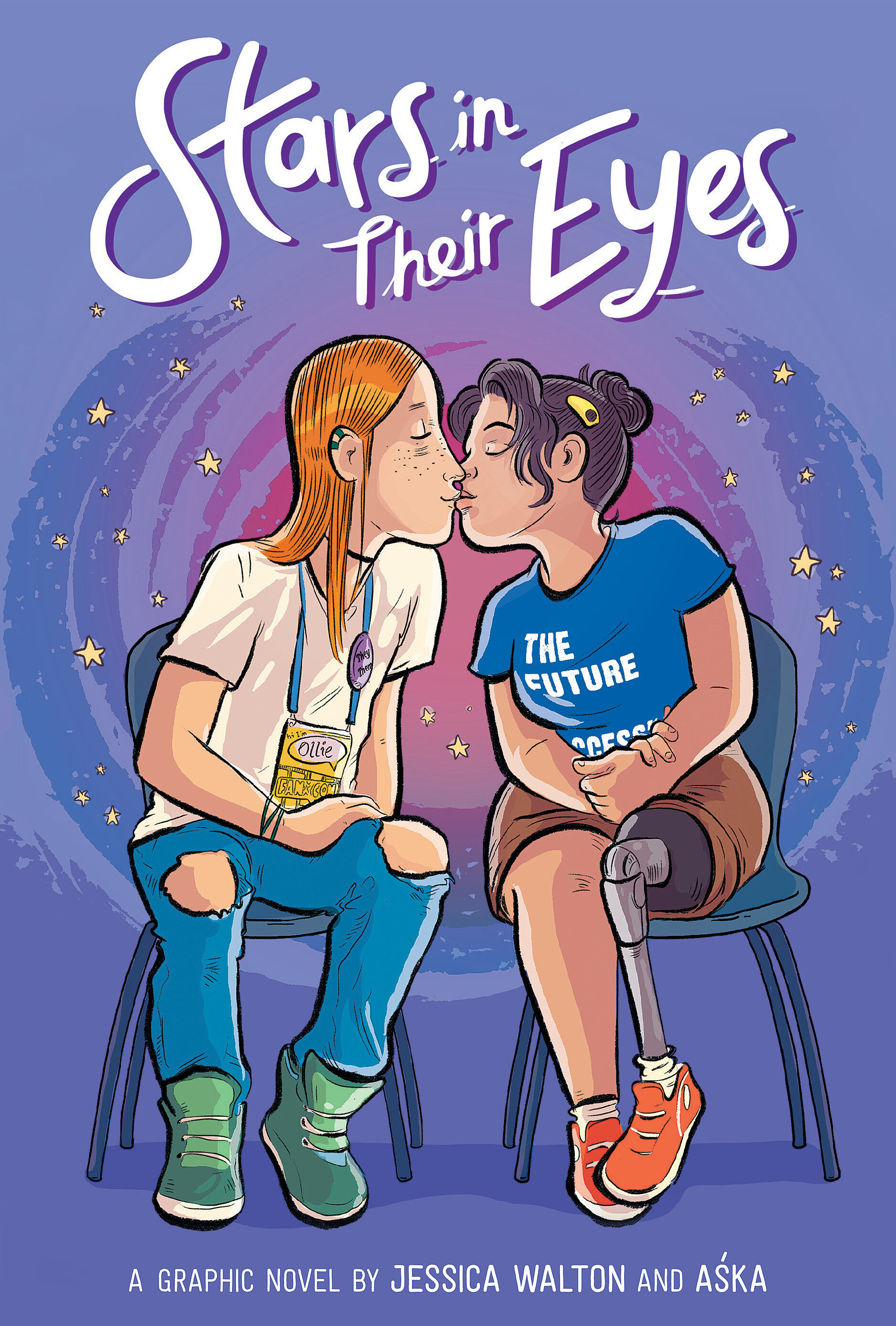
Book Review Tuesday (7/9/24) – Stars in Their Eyes

Happy Tuesday, bibliophiles!

I’m always on the hunt for books with disability and bisexual rep, and I’ll always go for a graphic novel, so Stars in Their Eyes was a natural pick for me! With a charming story and graceful handling of social issues, this graphic novel was an adorable, light read that’s perfect for readers in transition between middle grade and YA.

Enjoy this week’s review!

Stars in Their Eyes – Jessica Walton and Aśka

Maisie has saved up to go to her first FanCon, and now she’s finally on her way! She’s excited to meet her idol Kara Bufano, an action star who’s an amputee just like her. On arrival, FanCon isn’t everything that Maisie thought it would be—it’s loud, confusing, and it’s making her chronic pain act up. But when she meets Ollie, one of the young FanCon volunteers, it’s love at first sight. Maisie feels comfortable talking about her disability and queerness with them, but how will they manage when FanCon is over and they have to go home?

TW/CW: panic attacks, descriptions of cancer (past)

I’m firm in the belief that there should be some kind of smaller, transitory genre between middle grade and YA; the gulf between kid’s books and books meant for teens, especially in terms of maturity, is larger than most realize. But Stars in Their Eyes hits the perfect sweet spot between the two. With younger protagonists but a more nuanced view of social issues—and love at first sight—this graphic novel is a light, comforting read!

Even though I can’t speak to the accuracy of the specific disability rep (Maisie has a lower-leg amputation as a result of childhood cancer), it was so refreshing to see a disabled character written by a disabled author! It’s kind of painful to say that, but…the bar is so low, after so many middle grade and YA books that misrepresent disability. Nevertheless, the discussions surrounding Maisie’s disability were not only important to represent, but well-executed as well! There were plenty of natural segues that were used in Walton’s writing to get into topics such as overexertion and the importance of positive representation (!!!!), and it’s wonderful to see a pointed criticism of the narrative that disabled people exist to inspire non-disabled people. Stars in Their Eyes is bound to be so meaningful to so many young disabled readers, and it warmed my heart.

Stars in Their Eyes is also bound to be crucial for young queer people as well! Maisie is bisexual. and Ollie, the love interest, is nonbinary, but beyond that, there was an emphasis on being young and discovering your identity that I’m so glad is being represented. At 14, Maisie has only come out to a handful of people, and is nervous about being in queer spaces and going to queer events; it’s an issue that I rarely see in queer media, but it’s so important for young queer people know that it’s okay to be nervous about these things! There’s a first time for everything and everyone, and it’s natural to be shy or scared about showcasing your identity or belonging in queer spaces for the first time.

The comic con setting of Stars in Their Eyes was spot-on! I went to comic cons frequently when I was Maisie and Ollie’s age, and it’s a wondrous, nerdy experience—and it’s also an overwhelming one. It’s been several years since I’ve been to one, but I’m glad that this fictional one had a quiet-down room—I hope that soon becomes part of the institution, because what a lot of people don’t talk about with comic cons is that they’re a lot. (Man, I wish my comic con had one of those back in the day…) There’s so much to take in, from all of the booths and celebrities and cosplayers (and all of them crowded in one building), but all of that amounts to a ton of crowds and sensory overload. It’s the first comic con story I’ve seen tackle this aspect, and it’s a refreshing angle to see discussed. I have sensory issues, so that’s mainly why I got overwhelmed so easily at comic con, but it’s great to show younger readers that even though comic con is a wonderful place, it’s natural to be overwhelmed, sensory issues or not.

However, even though pop culture and comic cons were the focus of Stars in Their Eyes, a key part of it was mishandled and hindered some of my enjoyment of this graphic novel. Aside from two fictional TV shows that Maisie and Ollie bond over, almost everything is a fake reference—Barb from Stranger Things is now Bard from Danger Things, Star Wars is now Sci-fi Wars (??) and the Dark Side is the Far Side (????), and any Doctor Who-related media is referred to as “Time Doctors.” I get making faux-pop culture references to dodge copyright or establish a fictional world, but the sheer amount of them and how obviously they were referencing other very popular pieces of media just got so tiring and eye roll-inducing after a while. If it’s that obvious that you’re referencing a piece of media, it defeats the purpose of having a fake piece of media. It got so concentrated that I ended up bumping my rating down from the full 4 stars.

All in all, a lighthearted graphic novel about first love, geekdom, and the being confident in your queer and disabled identities. 3.75 stars, rounded up to 4!

Stars in Their Eyes is a standalone; Jessica Walton is also the author of Introducing Teddy, and has also contributed to the anthologies Growing Up Disabled in Australia, The (Other) F Word: A Celebration of the Fat & Fierce, and Meet Me at the Intersection.

Today’s song:

decided to give cate le bon a try after hearing her work with wilco & st. vincent…pompeii did NOT disappoint!!

That’s it for this week’s Book Review Tuesday! Have a wonderful rest of your day, and take care of yourselves!
Posted in Book Review Tuesday

Book Review Tuesday (7/2/24) – The WondLa Trilogy: A Re-Read Retrospective

Happy Tuesday, bibliophiles!

This is going to be different from my normal Book Review Tuesdays, as I’m reviewing an entire trilogy. Normally, that would be a tall order for a single post, but this trilogy is different. It’s a series that I read so often in middle school that even the teachers started to recognize the cover when I brought it in. It’s a series that has woven itself into the fabric of my life, just as Arius’ metaphor of time as a braided rope. It’s a series that inspired me to pursue writing—specifically writing science fiction.

In light of the new (and deeply disappointing) Apple TV+ series, I decided to re-read the series for the first time in six and a half years. Some novels you loved when you were younger don’t age well, but after I devoured all three books in the span of a day each, I can say that Tony DiTerlizzi’s WondLa trilogy has stood the test of time.

Enjoy this week’s reviews!

The Search for WondLa (The Search for WondLa, #1) – Tony DiTerlizzi

Summary from Goodreads:

When a marauder destroys the underground sanctuary that Eva Nine was raised in by the robot Muthr, the twelve-year-old girl is forced to flee aboveground. Eva Nine is searching for anyone else like her: She knows that other humans exist because of an item she treasures—a scrap of cardboard on which is depicted a young girl, an adult, and a robot, with the strange word, “WondLa.”

There definitely wasn’t an ulterior motive to me re-reading this series…totally not just to replace my reviews on Goodreads from 2016 (“OMG BEST BOOK EVER SQUEEEEEEEEEEEE but BIG FEELS”). Yeah.

The Search for WondLa is the reason why I decided that I wanted to write science fiction. It introduced me to a vast world of sci-fi literature that would become my favorite genre. It showed me a rich world full of bizarre, wonderful creatures and told me that I, too, had the power to foster such weirdness in my heart and bring it into the world. When I say that I don’t know where I would be without the WondLa trilogy, I’m not exaggerating in the slightest. Tony DiTerlizzi truly has, like Arius, given gifts to the world in the form of these novels.

The Search for WondLa coexists as a startlingly original piece of worldbuilding while also paying homage to a number of novels and stories—The Wonderful Wizard of Oz, of course, but also the older sci-fi that has inspired DiTerlizzi throughout his career, from Dune to Star Wars and others. There’s Jim Henson lurking in his fanciful creatures, Hiyao Miyazaki in his alien landscapes, and Ray Bradbury in his matter-of-fact, bombastic dialogue. On the subject of both Miyazaki and dialogue, what always cracks me up about this series (affectionately) is the various names DiTerlizzi gives to his characters and places. When I watched Nausicaä of the Valley of the Wind for the first time, my brother and I agreed that the long chunks of expository dialogue were all part of the hokey charm of the movie—it’s distinctly old sci-fi, and it’s so silly that it becomes charming. The same can be said for DiTerlizzi’s naming process…which is so unsubtle that it’s hilarious. Besteel? Surely he’s not a beast-like, predatory character. A fishing village by a lake? Can’t be anything but Lacus, right? Cæruleans? You’re not gonna believe what color these aliens are…but it’s WondLa’s charm. Intentional or not, these names might be one of the most faithful homages to the sci-fi genre.

Even if The Search for WondLa was the only book in the series, some of the character arcs are so expertly resolved within the span of a single book that it would be a satisfying standalone. Muthr’s may be the most clear-cut, but it’s nonetheless deeply impactful; her journey of battling with her own programming and beliefs and embracing the perilous, unknowable beauty of the natural world forms a key piece of the novel’s emotional anchor. She’s clearly the Tin Man, and although she can never fully adapt, by the end of her story, she has most definitely grown a heart. I think Rovender Kitt is the reason why I love the trope of gruff, older characters who reluctantly end up taking children under their wing on a fantastical journey. His development oscillates between heartbreaking and heartwarming in equal measure; Eva helped him remember to have empathy, and he, in turn, became the father figure that she never had. He never stops being gruff and sarcastic, but he rediscovers his caring core. The last few chapters of the novel are brutal for clear reasons, but Rovender’s breakdown, wracked with grief and survivor’s guilt, guts me every time. It’s a drastic shift from the Rovender we see at the beginning of the novel, but almost 500 pages is enough time for him to become the series’ epicenter of guidance and wisdom.

Part of my motivation to re-read the series was because of the Apple TV+ series (spoiler alert: it’s awful. They turned Eva into an adorkable Disney princess. Skip it.), but watching and reading them closely together made me realize what the show fundamentally gets wrong about the series: it’s weird, and it’s unafraid of being weird. All of the aliens have unique, truly otherworldly designs, with no punches held just because the target audience skews younger. Eva Nine is so far from perfect, even by the standards of young girls: her hair’s a mess, she doesn’t have a clue about surviving in the outside world, and yet confidently asserts that she can talk to animals, something that most would have left behind by the time they turn 12. But it’s all true! She’s unafraid of being weird, but that’s where her loneliness arises: she’s not just looking for humans, she’s looking for someone who understands the circumstances that molded her into the confidently strange person that she is…

Somebody hold me. No wonder I read this book to death when I was 12…

For its undeniable role in shaping the course of my life, 5 stars.

A Hero for WondLa (The Search for WondLa, #2) – Tony DiTerlizzi

Summary from Goodreads:

Before the end of The Search for WondLa , Eva Nine had never seen another human, but after a human boy named Hailey rescues her along with her companions, she couldn’t be happier. Eva thinks she has everything she’s ever dreamed of, especially when Hailey brings her and her friends to the colony of New Attica, where humans of all shapes and sizes live in apparent peace and harmony.

But all is not idyllic in New Attica, and Eva Nine soon realizes that something sinister is going on—and if she doesn’t stop it, it could mean the end of everything and everyone on planet Orbona.

A Hero for WondLa is a truly worthy predecessor to book 1 for so many reasons, but what struck me the most upon re-reading it is how painfully accurate—and beautiful—Tony DiTerlizzi’s depiction of weird middle school girlhood is. I had to stop and remember that yes, this is a middle-aged man writing this, and yes, he has a daughter, but she was still a toddler when he wrote this…and yet he nails it. Right down to the smallest details.

A Hero for WondLa follows Eva Nine’s journey after she’s discovered that she’s not the only human. She visits New Attica, the pristine, final stronghold of the human race, where technology rules all. Eva’s first instinct is to fit in; she’s taken under the wing of Gen Pryde and her Mean Girls 2049 posse of identical, plastic friends, who are intent on making her fit in—they giggle at her sanctuary-born eccentricities, and she’s only praised when they mold her to look just like them. Even after that, they’re laughing behind their hands. She flees their false promise of friendship and into the arms of Eva Eight, her long-lost sister who has waited 100 years for her arrival. Eight hates New Attica and all of its lies, and promises Eva that she’s just like her. And yet, despite this insistence, Eva fails to find solace in her, either. It’s only when she becomes one with the Spirit of the Forest that she becomes her truest self—putting that which gives her power front and center. Like The Wizard of Oz, the (emerald) city she has spent her whole journey looking for is nothing but a sham, and in the end, there’s no place like “home”—the person that she is most comfortable being.

Oh, god. I need a minute. Ow. No other book I can think of captures the limbo of being 13 and not knowing who your real friends were lodged so deeply into my heart. Eva, like me, was so desperate for friendship and human connection that both attempts ended in complications, but through it all, everything came back to the found family she has built—the outcasts, the prisoners, the exiled. The ones who had her back. The ones who were just as confused as she was, but joined her journey after realizing the error in their ways.

The aesthetic language of A Hero for WondLa is drastically different than book one, with its pristine, plastic city of humans living in a bubble. Even the clean walls of Sanctuary 573 had a retro feel to them—likely centuries outdated from New Attica’s tech—but all of this is so blindingly new. None of the robots and automatons have the same old-fashioned friendliness as Muthr, trading approachability for sleekness and monstrous amounts of wires and tentacles. But along with it is a sinister aspect that DiTerlizzi doesn’t shy away from; I’d forgotten that, although the discussion is brief, that it’s implies that among all of the mind-control and executions that Cadmus Pryde is carrying out eugenics is casually a part of his long list of crimes against the last of humanity. The WondLa trilogy isn’t one to shy away from darkness (part of why it’s stood the test of time for me), but that aspect stood out, especially since this is science fiction we’re talking about, a genre that has a long history of portraying the eradication of disabilities as a sign of progress. I’d remembered that there are a handful of disabled characters, but having that as a clear signifier of evil in a middle-grade novel is something I can’t praise enough.

The Search for WondLa is a very self-contained story; although book sequels surpass it, in my opinion, the conclusion that it ended on (minus the epilogue) was hopeful and wrapped-up enough that it could have been a reasonable end to Eva Nine and Rovender’s journey. But this novel does such an excellent job of intensifying the stakes in so many ways. As Eva learns of a conflict that could soon entrench the whole planet in war, we get so many of the real time costs. Foreshadowed details, hinted at from the start of the series, metamorphose into sinister threats. Interpersonal relationships become tangled in this vast, interspecies conflict—nobody knows the truth. Side characters (although all but one do end up surviving in the end) often die mere chapters after they’re introduced. It’s a very tense book in and of itself, but as the setup to the massive conflict in the final book, it’s a masterclass in building up both physical and emotional stakes.

And…good god, all of Rovender’s emotional moments always kill me the most. Without going too in-depth, the scene of his complicated reunion with Antiquus destroyed me when I was younger, and it might have destroyed me even more…

It reminds me of another song that similarly destroys me:

“There will come a day/When the Earth will cease to spin/You’ll hold me close and say: ‘my God, where have you been?'” (Shakey Graves, “Chinatown”)

For the deeply emotional journey, then and now, 5 stars.

The Battle for WondLa (The Search for WondLa, #3) – Tony DiTerlizzi

Summary from Goodreads:

All hope for a peaceful coexistence between humankind and aliens seems lost in the third installment of the WondLa trilogy. Eva Nine has gone into hiding for fear of luring the wicked Loroc to her companions. However, news of the city Solas being captured by the human leader, Cadmus Pryde, forces Eva into action once again. With help from an unlikely ally, Eva tries to thwart Loroc’s ultimate plan for both mankind and the alien life on Orbona.

The Battle for WondLa was my favorite book of the trilogy when I first read it, and I find myself agreeing with the sentiment almost a decade later. Was this influenced by the fact that, in retrospect, the original book cover almost certainly contributed to my bisexual awakening at age 12? Maaaaaaybe. In all seriousness, it’s such a brutal, beautiful, and downright exhilarating conclusion to a series like no other.

This incarnation of Eva Nine, as matured as we see her in the trilogy, has always been my favorite. After she embraces her powers and connection to the natural world, she’s such a fascinating hero to follow, partly because she never fully gives up her younger traits. In fact, her powers lie in what made her a target in the first novel—her sensitivity and empathy. Now that she can communicate with all of the creatures of Orbona, she uses her sensitivity to find it within herself to accept the machinations of the natural world and show mercy for even the most frightening of beasts. Sensitivity is her superpower, and that is such an important lesson for younger readers—especially young girls. It’s overwhelming to feel everything all of the time, especially when you’re Eva’s age, but having a heroine who wrestles with that and learns to fine tune her all-seeing empathy and use it to her advantage is so, so crucial. I’m likely among a majority when I say that my sensitivity was often treated as a weakness growing up, so having a heroine whose sensitivity saves the world is just about the best role model you could write for a young girl.

As the title suggests, The Battle for WondLa boasts some of the best battle scenes in the whole trilogy. I’m not talking about the massacre of New Attica, although that remains truly brutal, but the ones that display Tony DiTerlizzi’s talent the most is the scenes where Eva uses the sheer might of the forest to win her battles. Now that I’m older, I’ll inevitably associate WondLa with Björk for a number of reasons, but Eva Nine goes from that precocious, earlier “Human Behaviour” Björk straight into “Nattúra” as her development goes on—unflinching femininity channeling the incomprehensible power of nature. Does it get any better than that, folks? Actually, it does—watching Eva Nine take down a squadron of Warbots with the help of a herd of giant water bears. “My herd…help me.” COME ON. Eva getting injured and then being carried back into battle by the mother sand-sniper that she freed from the menagerie? GIVE IT TO ME!! A highlight of the novel, without a doubt.

What stands out to me about Battle is this novel’s willingness to make complicated characters. Whether they’re the culmination of arcs of characters who have been in the series for multiple books or side characters that only show up in the latter half of the novel, there’s something to be said for how unflinchingly complex everyone is, and how that further complicates Eva’s quest to unite humans and aliens on Orbona. Hailey, with whom Eva is still (justifiably) bitter over her treatment in New Attica, sheds his tough, cocky exterior to reveal a loyal, humble friend by the end of the novel. Zin’s scientific distance becomes a detriment to him in the wake of the death of his family—and the threat exerted by his power-hungry brother, making him realize the error in his lack of emotional intelligence. Redimus, who unintentionally caused nearly all the dominoes for the entire series to play out against Eva, is never written as fully black or white; Eva can never fully bring herself to forgive him, but she learns to accept his attempt to, in his own words, “rectify his past actions,” and to accept that everyone is a web of decisions and consequences that never fully align with each other. And that’s what makes her journey feel so much more earned.

At the heart of The Battle for WondLa is connectivity—it’s all very “I/O” to me. Loroc’s ultimate goal is to unite Orbona, but unity in the form of everyone, human and alien, being either enslaved or consumed by him. He tricks his allies with promises of harmony, only for them to realize that harmony ends up being the harmony of being together…inside of his stomach. Eva wins by championing the fact that it’s the uplifting of everyone’s unique strengths that makes a community strong, whether it’s the unity of the aliens or the interconnectedness of all of the plants and animals of Orbona. We are each an integral part of a community, whether it’s a food web or a village, and it is those unlikely connections that make us stronger. As with today, the greatest mistake that any civilization can make is thinking that we are separate from nature. To once again quote Peter Gabriel, “I’m just a part of everything,” and that is where strength—and love—come from.

All in all, an unforgettable finale for a series that changed the trajectory of my life overwhelmingly for the better. 5 stars.

Tony DiTerlizzi is the author of several books for both early readers (Adventure of Meno, Ted, Jimmy Zangwow’s Out-of-This-World Moonpie Adventure, G is for One Gzonk!) and middle grade (Kenny and the Dragon and The Spiderwick Chronicles, co-authored with Holly Black). All seven episodes of WondLa are now streaming on Apple TV+*.

*I could only make it through 5/7 episodes before I had to quit. Only watch it out of morbid curiosity or if you have intentions to read the books and see how you got robbed.

Today’s song:

thank you to my brother for turning me on to this one!!

That’s it for this week’s Book Review Tuesday! Have a wonderful rest of your day, and take care of yourselves!