

Happy Sunday, bibliophiles! I hope this week has treated you well.
This week: this semblance of a color scheme is hanging on for dear life, but I needed to talk about Biophilia IMMEDIATELY you must understand…
Enjoy this week’s songs!

SUNDAY SONGS: 8/17/25
Another Björk album down! I was highly anticipating listening to Biophilia from the sheer conceptual layers of it; though the original app is now defunct, it still exists as a glittering piece of music and science education, reuniting our understanding of the sciences with the emotion that was always inherent to it. Whether it’s the structure of our genes (“Hollow”) to the phases of the moon (“Moon”), the ability Björk has to weave personal narratives of the rocky parts of healing with the natural processes of the world never ceases to astound me. Admittedly, Biophilia took me another listen around to fully get with it, but that’s mostly because being stuffy and lethargic from a nasty cold whilst the Amen break comes hurtling at you at 90 mph isn’t ideal. The artistry of…well, every single music video of the album never ceases to astound me. It would be easy for the concept to supersede the actual contents of Biophilia, but Björk never fails to pull the rug out from under me every single time. GOD.
“Virus” was one of the most delightful tracks from the album, so gentle, yet carrying a sinister undertone. Wreathed in tinkling chimes and gameleste, it uses a virus as a metaphor for a parasitic, one-sided relationship: “Like a virus needs a body/As soft tissue feeds on blood/Someday I’ll find you.” The virus motif sings sweetly, with Björk’s vocals as delicate and crystalline (no pun intended) as the icy instrumentals surrounding her, reminiscent of Vespertine. It makes itself indispensable (“Like a flame that seeks explosives/Like gunpowder needs a war”) as it sucks the life from its host, but never betrays its true intentions. Everything is hidden under the sweetness—as things tend to be in parasitic, codependent relationships, if we’re taking the more literal route with it. Even when she takes on the persona of a virus slowly killing a host, Björk’s vocals have never sounded more emotive and warm, only getting richer with age, something that time has proven since 2011. Though she uses that same voice to portray much more genuine and non-parasitic feelings throughout Biophilia, the beauty of her voice never ceases to entrance me, no matter the narrative delivery and what it’s hiding—which is exactly the point. It’s intoxicatingly sinister.
…AND A BOOK TO GO WITH IT:

Someone You Can Build a Nest In – John Wiswell – “Like a mushroom on a tree trunk/As the protein transmutates/I knock on your skin/And I am in…”
“Bus Back to Richmond” – Lucy Dacus
Nearly five months after Forever Is a Feeling came out (and about a month after Lucy Dacus got a license to start marrying people onstage…what a queen), I’ve cooled down slightly from the initial disappointment, even if only a few degrees. I still hold that it’s her weakest and most commercial album, but at the end of the day, it’s a Lucy Dacus album, and knock on wood, I’ve never encountered a bad Lucy Dacus album. I’ve warmed up much more to “Bullseye,” but most of the other tracks I wasn’t a fan of on the first listen have remained the same for me.
But not long ago, Dacus released two extra tracks that were meant for Forever Is a Feeling but were ultimately cut from the album. REJOICE!! She said that “Bus Back to Richmond” didn’t fit with the rest of the album, but to me, replace some of the weaker tracks with this one, and the album would’ve been more memorable. Though it falls instrumentally into the more introspective, acoustic side of her discography, “Bus Back to Richmond” is a soft, wintry ramble through missed opportunities and sparkling promises of the future. Dacus’ poetically observational lyrics shine in this one, from her descriptions of the “watercolor fireworks” bursting on New Year’s Eve and “eight of us left to the floor and the bed/and the futon that sunk in the middle.” In Christmas light-dappled vignettes, she paints with startling tenderness the coalescing of a future romance, the moments that slowly merged together to form something gleaming in the not-too-distant distance. Even in the heat of August, it feels like a woolen blanket wrapped around you as you stare at the embers of a crackling fire—the perfect winter song for summer.
…AND A BOOK TO GO WITH IT:

Whiteout – anthology – intertwining love stories that all converge in a record-breaking blizzard.
New music from IDLES is always a welcome thing, but granted, it was quite disappointing that it was from the soundtrack for, of all things, Caught Stealing. I saw the trailer before seeing Superman (which was as wonderful as everybody has been saying it is. HOPE IS PUNK ROCK! I think Superman would love IDLES), and it basically just looked like a vague “punk rock” pastiche involving a slightly terrifying looking Matt Smith and a vague plot involving Austin Butler battling a bunch of ethnic stereotypes for…uh, reasons, I guess. Regrettably, the punk aesthetic fits with IDLES’ sound, and I hate to see them involved with something that looks so downright stupid, but…they do kind of fit the vibe.
“Rabbit Run” is one of four songs that will eventually appear on the soundtrack of Caught Stealing. Though it doesn’t seem to fall into the Arcane curse of “movie/TV soundtrack songs whose lyrics blatantly regurgitate whatever plot points they’re paired with,” it still feels restrained for IDLES; despite how cagey the lyrics are, it feels relatively free-flowing until the chorus kicks in. But the layers of Nigel Godrich-sounding production give it the perfect middle ground between slick and gritty, as do Joe Talbot’s vocals. The lyrics are certainly weaker than the typical IDLES far (“Beat you slow like your padre/Got you running like a jailbreak”), but when “Rabbit Run” hits the spot, it feels like the perfect score for high-octane chase scene, and a worthy display of Talbot’s vocal range.
…AND A BOOK TO GO WITH IT:
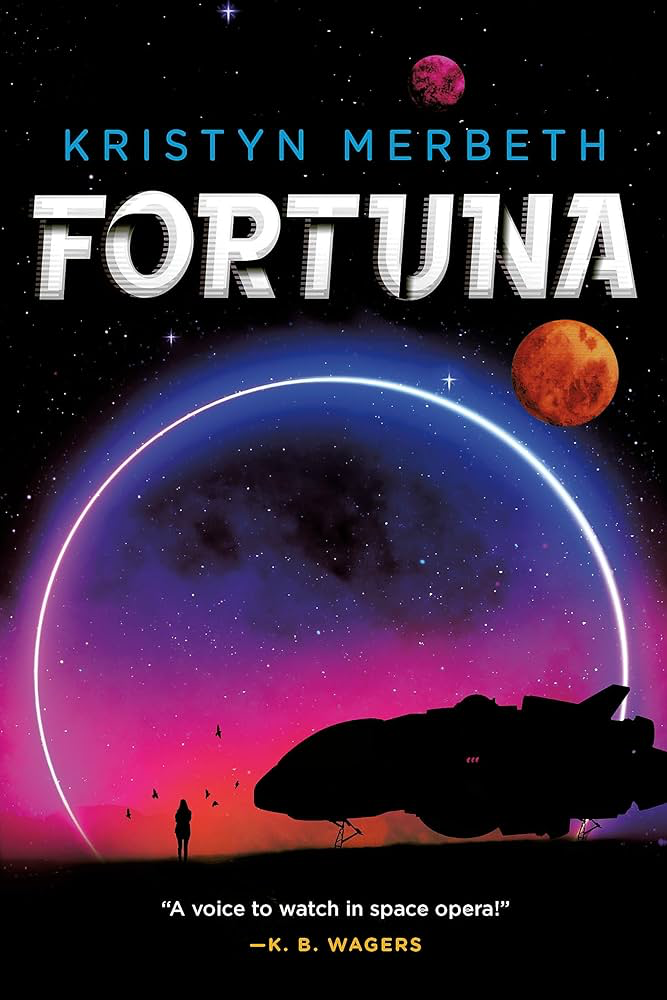
Fortuna – Kristyn Merbeth – “Make way for collateral damage when I’m bored/Pick the scab on the arm of the beast til it’s ravaged when I’m bored/Oh so many things to do or not do when I’m bored…”
Today on “Madeline won’t shut the fuck up about Brian Eno,” we’re going back to the glammier days of the early ’70s. But in the case of this song, “glammier” feels like a misnomer, even though it’s placed both directly in the heyday of glam rock and Eno’s own heyday of his brand of glam rock. If it’s glam, it’s the zenith of uptight glam—it has the texture of touching guitar strings that are one wrong move away from snapping in half. It’s been wound up so severely that for all of nearly five minutes, it remains in the liminal space milliseconds before the tension breaks. With a thrumming bassline from Brian Turrington being the most freeform part of the song, every other part of “Third Uncle” is the music equivalent of squishing as many objects as possible into a box that will barely fit all of them—everything’s under the lid, but the seams are bulging. In the right mood, it’s energizing, and in the wrong mood, it’s borderline anxiety-inducing. To me, though, that’s proof that Eno’s rock experiment worked exactly as he calculated it: it’s an exercise in tension without release, only hints of freedom once the guitar swerves in one direction or the other. Even Eno’s nonsensical lyrics—a laundry list of items, some of which are burned—are uttered with the urgency of someone passing a secret code along through a burner phone.
Through this song, it’s easy to see just how much Eno’s influence spread. We mostly hear of Eno’s pioneering influence in the fields of glam rock, post-punk, and ambient music, but “Third Uncle” practically had a shockwave effect when it came to the early goth bands of the ’80s, starting in earnest after Bauhaus covered the track in 1982. It feels looser and less claustrophobic than the original, but it contains all of the trademark roughness around the edges carried over from Eno and into the grimier catacombs of what had just become goth. They achieve a balance of being hurriedly frantic (weirdly, I can hear the urgency of “It’s The End of the World As We Know It [And I Feel Fine]” in Peter Murphy’s vocal delivery) and yet mistier than looser than their forefather (or fore-uncle?), resulting in a rare cover that reinterprets the original way that somehow feels true to its original spirit.
…AND A BOOK TO GO WITH IT:
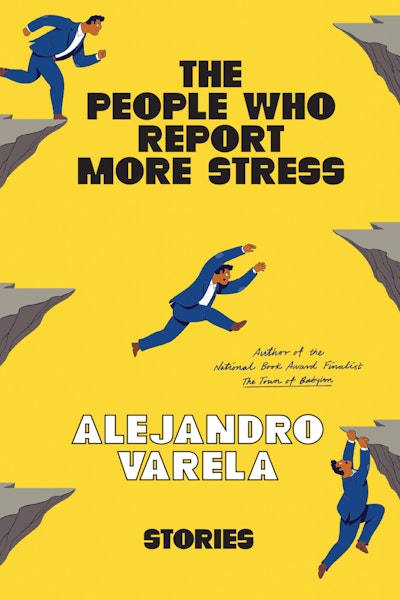
The People Who Report More Stress – Alejandro Varela – a series of interconnected stories who are as tightly-wound as the instrumentals of this song.
“mangetout” starts at about 3:59 in this video, but the whole Tiny Desk Concert is worth a watch!
I’m late to writing about moisturizer in whole by about a month; for me, it’s not making my hypothetical 2025 best-of list, but god, it’s such a fun album! Wet Leg have gotten even more energetic with their sound, never quite pushing the boundaries of their previous musical landscape outwards all the way, but introducing enough novelty to it that it feels fresh. It’s a perfect summer album with its glistening production and shouted lyrics. And honestly, anyone who shoves Oasis out of the #1 spot on the charts has an immediate seal of approval from me. Somebody had to humble those clowns.
Even though I’d already had a preview of “mangetout” from their Tiny Desk Concert, released days before moisturizer came out, for me, it represents the melding of where Wet Leg once was and where they are today. The lyrics could’ve come straight out of their self-titled debut, and though, admittedly, they’ve written this song in some variation at least four times, they always manage to keep it fun, whether it’s with the gleefully shouted end of the song that snaps away just before devolving into chaos, or the blatantly obvious but still hilariously random inclusive of the name “Trevor” just to rhyme with “clever.” (It’s a dirty job, but someone’s got to do it.) Of course, I know maybe…ten words tops in French, so I fully just thought they’d mashed together “man get out” into a single word, but as one of the comments says on this Tiny Desk, “there was always going to be someone to be first on the moon, and there was always going to be someone to be first to realize that the French word for sugar peas was spelled ‘man, get out.'” If anyone was to be trusted to deliver this knowledge accordingly, it’s Wet Leg.
…AND A BOOK TO GO WITH IT:
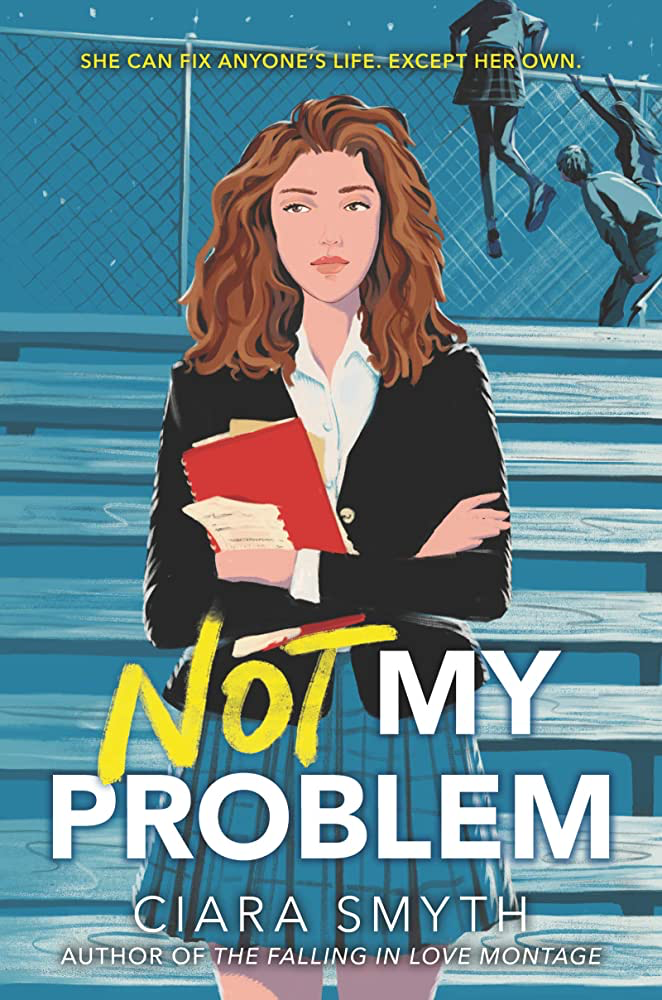
Not My Problem – Ciara Smyth – “You think I’m pretty cruel/You say I scare you?/I know, most people do/This is the real world, honey…”
Since this post consists entirely of songs, consider all of them to be today’s song.
That’s it for this week’s Sunday Songs! Have a wonderful rest of your day, and take care of yourselves!



 The Bookish Mutant