Happy Sunday, bibliophiles! I hope this week has treated you well.
This week: inventive covers, timeless anthems, and some classic quirked-up white boy music.
Enjoy this week’s review!
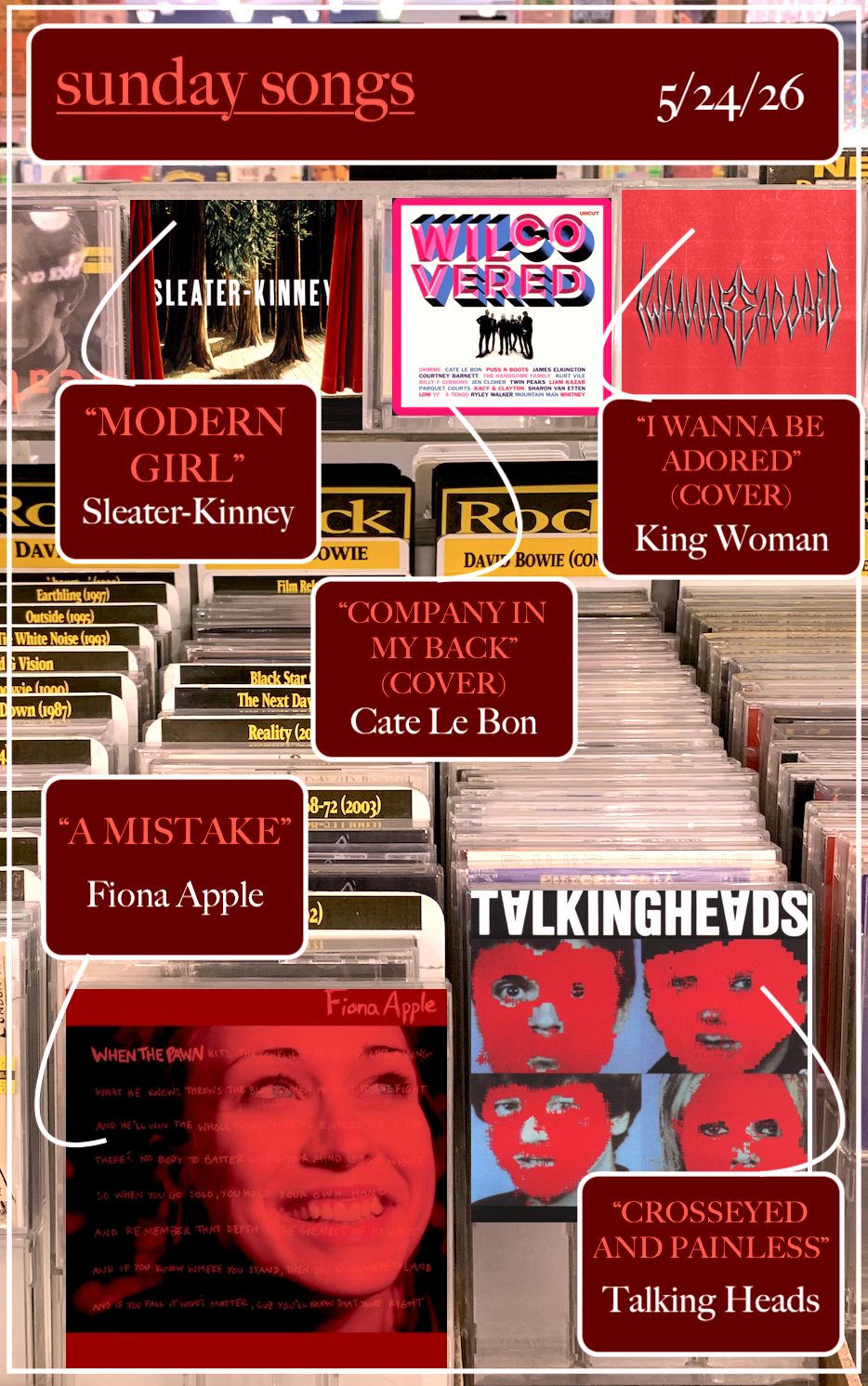
SUNDAY SONGS: 5/24/26
If we live long enough under the patriarchy, most of us women have the urge to permanently destroy something at least once in their lives. Once is generous, honestly…have you read the news lately? For Fiona Apple, who had been heavily scrutinized under the public eye and lambasted by music critics in the years leading up to When the Pawn…, the urge must’ve been constant. That’s why “A Mistake” feels so genuine. It’s a slinky, trip-hoppy track about breaking free of society’s expectation of a “good girl” and deliberately wrecking things, fully cognizant of the consequences but not caring in the slightest: “And when the day is done and I look back/And the fact is I had fun/Fumbling around/All the advice I shunned, and I ran/Where they told me not to run/But I sure had fun.” No matter if you act on it, Apple taps into that universal urge to raise hell after being boxed in and stymied by expectations of femininity (“I wanna make a mistake/Why can’t I make a mistake?”), societal control, and an urge to just rebel, even if you don’t know what against. And then there’s the element of deliberately going against good advice—Apple’s trail of destruction, by her own admission, isn’t entirely justified, but there’s that constant, biting urge to defy well-meaning advice anyway. After all, “And if you wanna make sense/Whatcha lookin’ at me for?/I’m no good at math.” It’s all wrapped up in a complex package, not always thoughtful, but from a messy, nonsensical place of rage with nowhere to go. Screeching guitars that give the effect of buzzing insects and a luscious synth loop to back it all up, creating a fully-fledged ode to giving into your most reckless urges.
…AND A BOOK TO GO WITH IT:
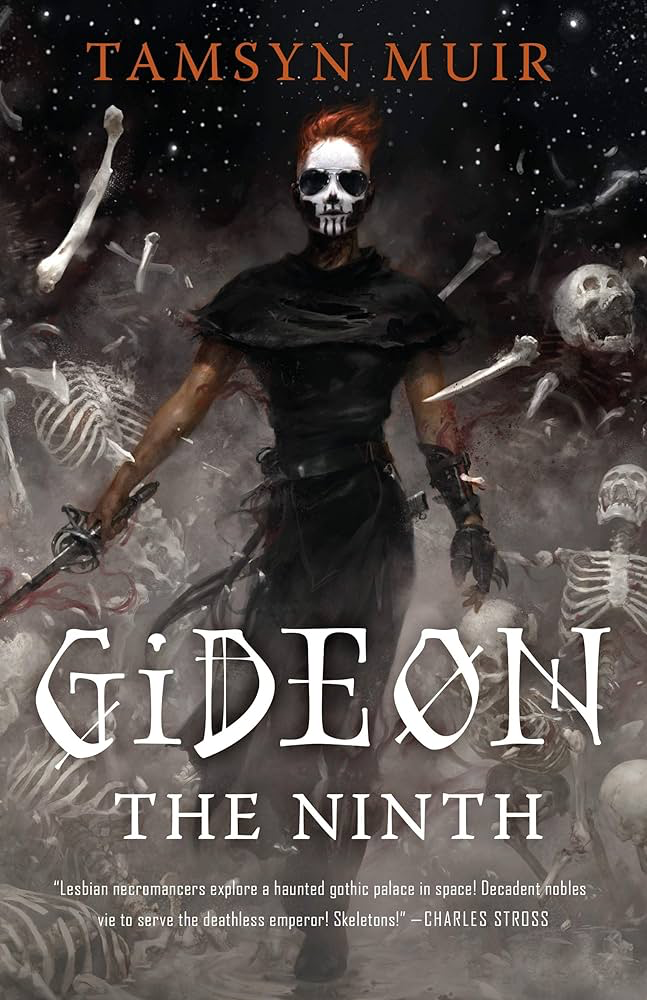
Gideon the Ninth – Tamsyn Muir – “So I’m gonna fuck it up again/I’m gonna do another detour/Unpave my path/And if you wanna make sense/Whatcha lookin’ at me for?/I’m no good at math…”
“Crosseyed and Painless” – Talking Heads
This might be the moment where I finally, finally get into Talking Heads. My brother recently listened to Remain In Light and introduced me to a handful of songs from it; apparently, he’d also fully Mandela-effected the idea that I owned a Remain In Light t-shirt, so maybe I should just listen to it. So much has been said about the album: the fusion of rock, funk, and early hip-hop, the influence of Afrobeats, the early electronic instrumentals. And all of that’s there. But you know what strikes me immediately?
Brian Eno. This just reeks of Eno. I mean, he obviously produced this album, but his rhythmic influence is so clear. “No One Receiving,” one of my favorite songs of his, is very Talking Heads, and he’d worked with the band on several albums at that point. But the frantic, anxious rhythms of “Crosseyed and Painless” and the chirping electronics are so Brian Eno. (He also provides backing vocals on the chorus, and Byrne’s certainly got some “King’s Lead Hat” in the delivery.) Maybe I just love it because of the Eno by proxy. But I feel like that would be a disservice to David Byrne and co., whose unique touch seems to have made Remain In Light so iconic. First off—oh my God, Tina Weymouth’s bass playing is nothing short of phenomenal. Once she finds the groove, she grabs ahold and never lets go. I think Byrne is what separates this from Eno in the end—though they share the same kind of angular energy, Byrne’s seamless shifts between desperate crooning in the chorus to frantic, anxious proto-rapping in the bridge: “Facts all come with points of view/Facts don’t do what I want them to/Facts just twist the truth around/Facts are living with their insides out.” That’s just nothing but David Byrne, as is this song’s spirit, in the end. Eno bolstered it, but the sweaty-palmed sprint through a state of alienation is nothing but Talking Heads.
…AND A BOOK TO GO WITH IT:
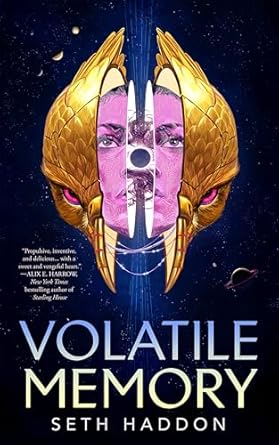
Volatile Memory – Seth Haddon – “Nothing there/No information left of any kind/Lifting my head/Looking for the danger signs…”
“Modern Girl” – Sleater-Kinney
I hate to say it, but the strongest memory I have of hearing “Modern Girl” was hearing Sleater-Kinney play it live while co-headlining with Wilco about five years back. They did the classic “this is our big song, sing it with us!” thing and tried to get the crowd to sing the chorus…and only a handful of people did. Yeesh. Probably some of the largest-scale secondhand embarrassment I’ve ever felt. But they’re plenty successful, well-known, and presumably happy with their lives, so I can’t imagine that one (1) crowd in Colorado not singing along with them made much of a dent on their egos.
Nonetheless, “Modern Girl” is one of the songs I took away from that setlist all the way back in 2021. Despite the painful mix on the version I have (once it gets loud, it gets crunchier than a bass-boosted meme from 2018…somebody remaster this already, Jesus 😭), it has the same staying power. It’s an anthemic, gradually building story of mounting emptiness; every verse, happily sung until bitterly screamed, scrambles for meaning in a world of artifice. There’s a void (a donut hole, if you will) at the heart of “Modern Girl” that fruitlessly gets filled by consumerism, mass media, and hollow love. It’s a sort of universal story of filling the hole in your life with all the plastic that TV advertises, only to find that “My whole life/Looks like a picture of a sunny day”—beautiful on the surface, but really just a flimsy piece of film in the end. Where you end up is sprawled out, floundering in the drowning tide of distortion that gradually swallows Carrie Brownstein and Corin Tucker’s riffs and harmonicas. Sometimes, all you can do when faced with the emptiness at the heart of your life is shout at it—and shout Sleater-Kinney does.
…AND A BOOK TO GO WITH IT:
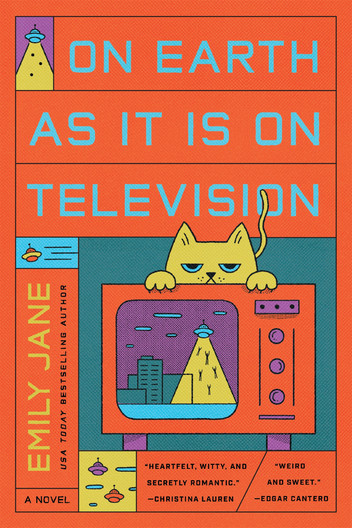
On Earth As It Is on Television – Emily Jane – “My baby loves me/I’m so angry/Anger makes me a modern girl/Took my money/I couldn’t buy nothin’/I’m sick of this brave new world…”
“Company In My Back” (Wilco cover) – Cate Le Bon
Somehow, while spreading the gospel of Cate Le Bon to my family, I completely missed this cover, which my brother thankfully found. Wilco Covered, a limited-edition album only available on CD (and another big thank you to my dad for digging it up on eBay), was a real mixed bag, but this cover is a staggeringly good fit for both Le Bon and Wilco. “Company In My Back” comes from A Ghost Is Born, and Jeff Tweedy’s signature lyricism was already at some of its delightfully weirdest; “I attack with love/Pure bug beauty/Curl my lips and crawl up to you” is still one of the more memorable Wilco openings if we’re going by lyrics alone. Add in the wording of the chorus (“Holy shit/There’s a company in my back”) and some dulcimer, and you’ve got one of the more left field early Wilco songs out there. The original’s clattering percussion, like bug’s legs against tile, are equally so. It’s natural that Le Bon covered it, given her weirdo proclivities. Her moody lilt and agitated instrumentals fit in so naturally in her interpretation of this song. (I especially love the way she sings “They are hissing radiator tunes.” Pure magic.) This was recorded in 2019, and Reward has its footprints all over it, with blasts of saxophone to replace the acoustic guitars of the guitar. It’s such an excellent tribute, turning “Company In My Back” almost inside out while lovingly preserving the offbeat-ness of the original without sacrificing her own artistry.
…AND A BOOK TO GO WITH IT:
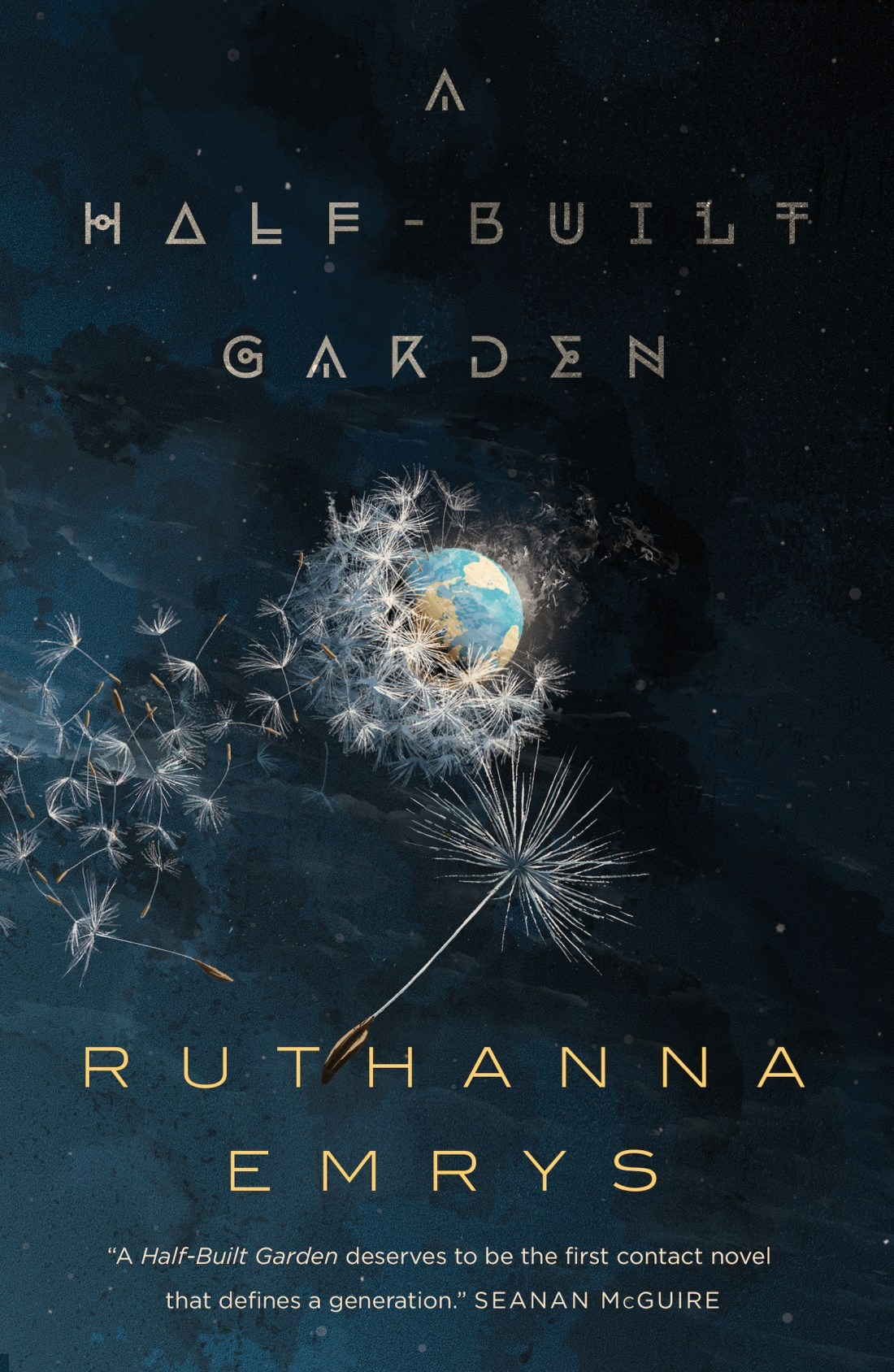
A Half-Built Garden – Ruthanna Emrys – “You learn so slow, old radiant beauty/I’ll curve my flight…”
“I Wanna Be Adored” (Stone Roses cover) – King Woman
What makes a cover good to me is when it captures the song’s spirit; like I just talked about with Cate Le Bon’s take on “Company In My Back,” it messes around with the instrumentals but retains Jeff Tweedy’s soul beneath it. Though King Woman’s take on “I Wanna Be Adored” doesn’t reach those heights (and how could it, with the original basically defining a good portion of the alternative/indie rock sound of the ’90s?), I think it succeeds in the same way. While the Stone Roses’ original dips into a dreamy haze, King Woman’s cover basically sounds like Stone Roses by way of Chelsea Wolfe. It’s longer and more drawn-out, with sludgy guitars and a thick, foggy echo clouding everything. Kristina Esfandiari shouts the iconic chorus as though into the mouth of a canyon, pleading into a cold void, a stark contrast to the speed at which it’s sung in the original. It’s an exciting take on this song—one that clearly melds King Woman’s style into the original’s beating heart.
…AND A BOOK TO GO WITH IT:
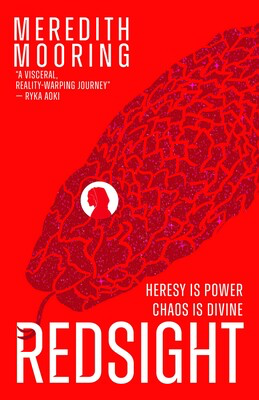
Redsight – Meredith Mooring – the sludgy, doomy atmosphere of this cover absolutely fits with this tale of dark magic in space.
BONUS: In addition to Programmes for Cools, Jim Noir has just released The DLC Tapes exclusively on Patreon—or you can buy it on his KoFi! It’s another album of polished releases from previous EPs and outtakes. Here’s the reworking of “Scene 2”:
Since this post consists entirely of songs, consider all of them to be today’s song.
That’s it for this week’s Sunday Songs! Have a wonderful rest of your day, and take care of yourselves!