
Posted in Book Review Tuesday

Book Review Tuesday (4/7/26) – She and Her Cat

Happy Tuesday, bibliophiles!

I heard about this novel on Bookstagram a few months ago, and I was immediately hooked by the premise. I’ve been trying to read more translated literature when I can, and I’ve found…enough Japanese books about cats that it seems to be a certified Thing. (Nothing compares to The Traveling Cat Chronicles, though. That’s the peak, as far as I’m concerned.) And I’m not complaining. Short and sweet, She and Her Cat was a heartwarming examination of loneliness, womanhood, and the love we have for our cats.

Enjoy this week’s review!
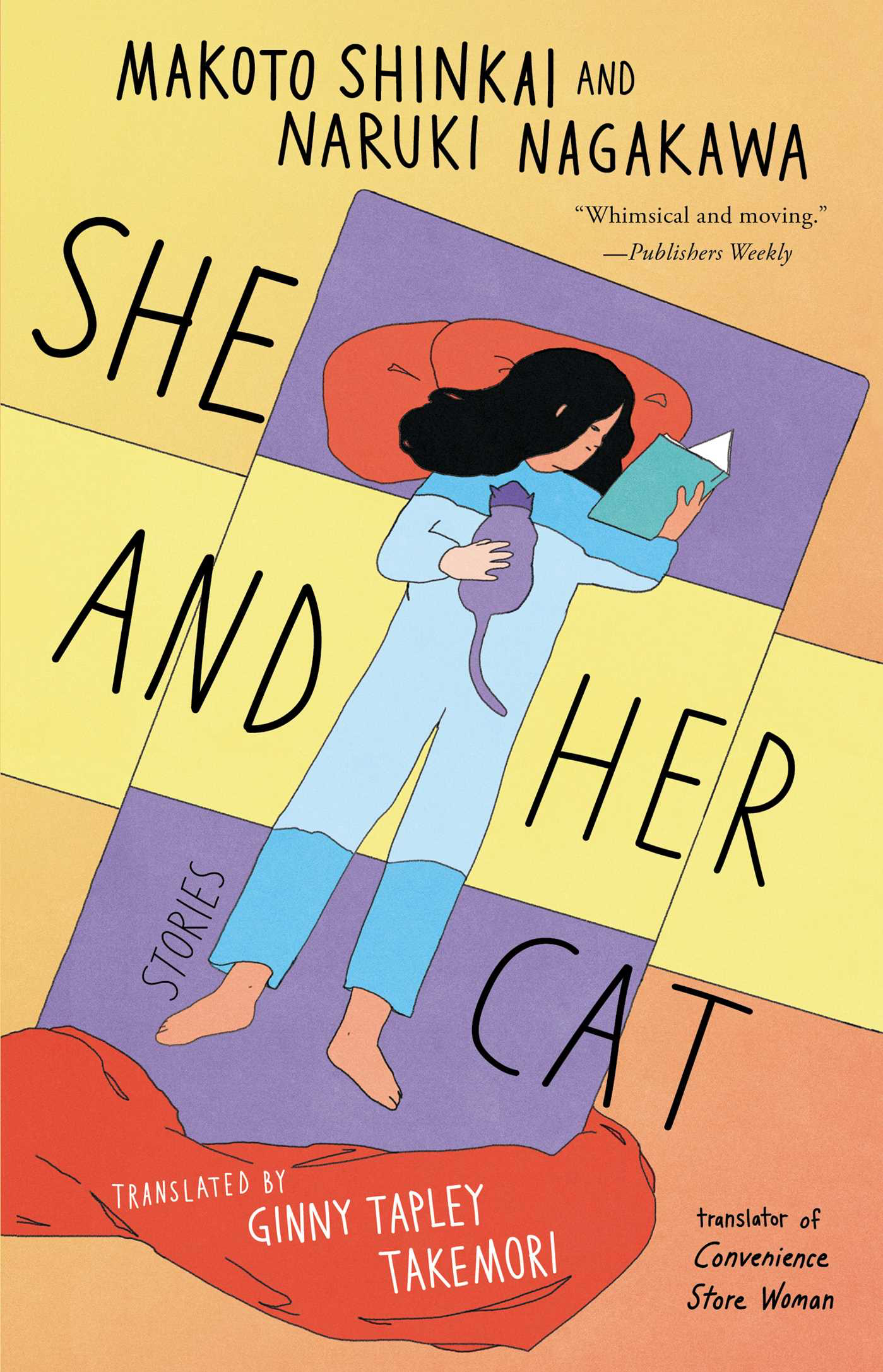
She and Her Cat – Makoto Shinkai & Naruki Nagakawa (translated by Ginny Tapley Takemori)

In four interconnected short stories, four women face hardships as they learn to grapple with adulthood. Dealing with isolation, misogyny, and troubles with love, these women have no one to turn to…save for their feline companions, who are there to help them along the way. But it turns out that the lives of our cats are more complex than we could ever know…

TW/CW: sexual harassment, cheating, death/grief themes, mental illness themes

Strangely, in my ongoing search for novels in translation to read, I always end up coming back to Japanese novels about cats. (To be fair, they’ve had varying premises—and degrees of quality.) However, I think this one is unique in its approach—it focuses on the cats and the humans in equal measure, which was an interesting move. I feel like the voice of the cats (who were anthropomorphized) was properly distinguished from the humans, and their perspective on how the humans lived was wry and cute. I will say, I feel like they were almost too human and understood too much about the human world, but I can give it somewhat of a pass since it was fairly cute. Similarly, I loved the women in the novel, and how refreshingly ordinary they felt. These characters felt like an antidote to every female character that the author describes as “plain” but is actually somehow the height of conventional attractiveness and can do everything; She and Her Cat’s human characters, however, felt like ordinary strangers people with relatable issues that they processed with the help of their feline companions.

She and Her Cat hit an excellent balance of coziness for me. There’s a line that cozy fiction/magical realism of this brand often crosses, where the “coziness” transforms from a more lighthearted, low-stakes story about more positive themes to something that becomes preachy in said themes, without any regard for the reader’s intelligence. (Fluff is fluff, but I maintain that I get irked every time an adult novel still has a “and what did we learn today, kids?” moment.) But although She and Her Cat could’ve walked straight into that trap, it avoided this pitfall with ease. The short stories within this novel were simply quiet tales of isolation, perseverance, womanhood, and the bond that we have with our cats, which is exactly the kind of stakes that a cozy novel should have—all that, and every theme isn’t spelled out for you. (Yes, I know, the bar is low, but you’d be surprised at how many times I’ve run into this…with Japanese cozy books about cats, specifically. If I had a nickel, etc., etc.)

That being said, even though this was magical realism, I didn’t quite feel that magic through the writing. I’m once again returning to the problem of “are my issues with the writing the author’s or the translator’s fault?” that I’ll never solve because…well, I’m not fluent in Japanese. Though I liked the narrative voice, the prose itself was pretty bare-bones, only describing the events as they happened in a way that was rather rote. And this is a story where you get to glimpse the world through the eyes of cats, animals that have an entirely different perception on life than we do! Additionally, I didn’t get as much of a view into the setting and the characters as I wanted to, since the writing went from point A to point B more often than not. Since She and Her Cat is a short novel (under 200 pages), there was definitely room for some more vibrant prose that would’ve made the setting and characters feel more alive. I think part of that might have been a consequence of the fact that She and Her Cat was adapted from a manga, but I feel like filling in the gaps that the art left should’ve been one of the main concerns of the team adapting this novel. If this was the result, it almost feels like they only adapted the script, and not the rest of the manga.

Additionally, although this is a short story, a lot of the events felt quite rushed. I think I would’ve gotten more out of She and Her Cat emotionally if I had more time to spend with each cat and character. Although we have the through lines between the story, they were shoved in so haphazardly that any previous development didn’t mean anything for the next story, even though we had characters that could’ve potentially undergone the slightest bit more development. Like the prose, this novel had the pacing both in-story and between stories go from Point A and Point B very quickly. The appearances of characters from previous stories were so rushed that they felt like MCU post-credits scenes: oh, hey, you know this person, right? Alright, anyway, onto the next thing…

But in the end, She and Her Cat is a somewhat lighthearted and short book, so I get it that fully fleshed-out narratives weren’t exactly the goal.

All in all, a sweet anthology that excelled in creating an emotional atmosphere with its stories, but faltered in places with its prose and pacing. 3.5 stars!

She and Her Cat is a standalone, and was adapted from the Manga by Makoto Shinkai. Makoto Shinkai is also the author of several manga series, including the your name. series, Weathering With You, The Garden of Words, and many more. Naruki Nagawa is also the author of Prince of Stride.

Today’s song:

That’s it for this week’s Book Review Tuesday! Have a wonderful rest of your day, and take care of yourselves!

Posted in Book Review Tuesday

Book Review Tuesday (8/12/25) – The Full Moon Coffee Shop

Happy Tuesday, bibliophiles! Apparently today marks ten whole years since I started with this blog…granted, it was a pretty far cry from what it is today, but it’s a marvel that I’ve kept it going for this long. Thanks for tagging along, everyone! 🫡

In my ongoing quest to read more translated books, I’ve stumbled upon a lot more Japanese books about cats than I anticipated. Granted, they’ve varied greatly, but it’s a pattern. Not that I’m complaining—I’ll read most anything involving cats! Which is partly why I decided to read The Full Moon Coffee Shop. It sounded downright whimsical, and to some degree it was, but ultimately, that quality was dulled by the formulaic nature of…well, pretty much everything else.

Enjoy this week’s review!

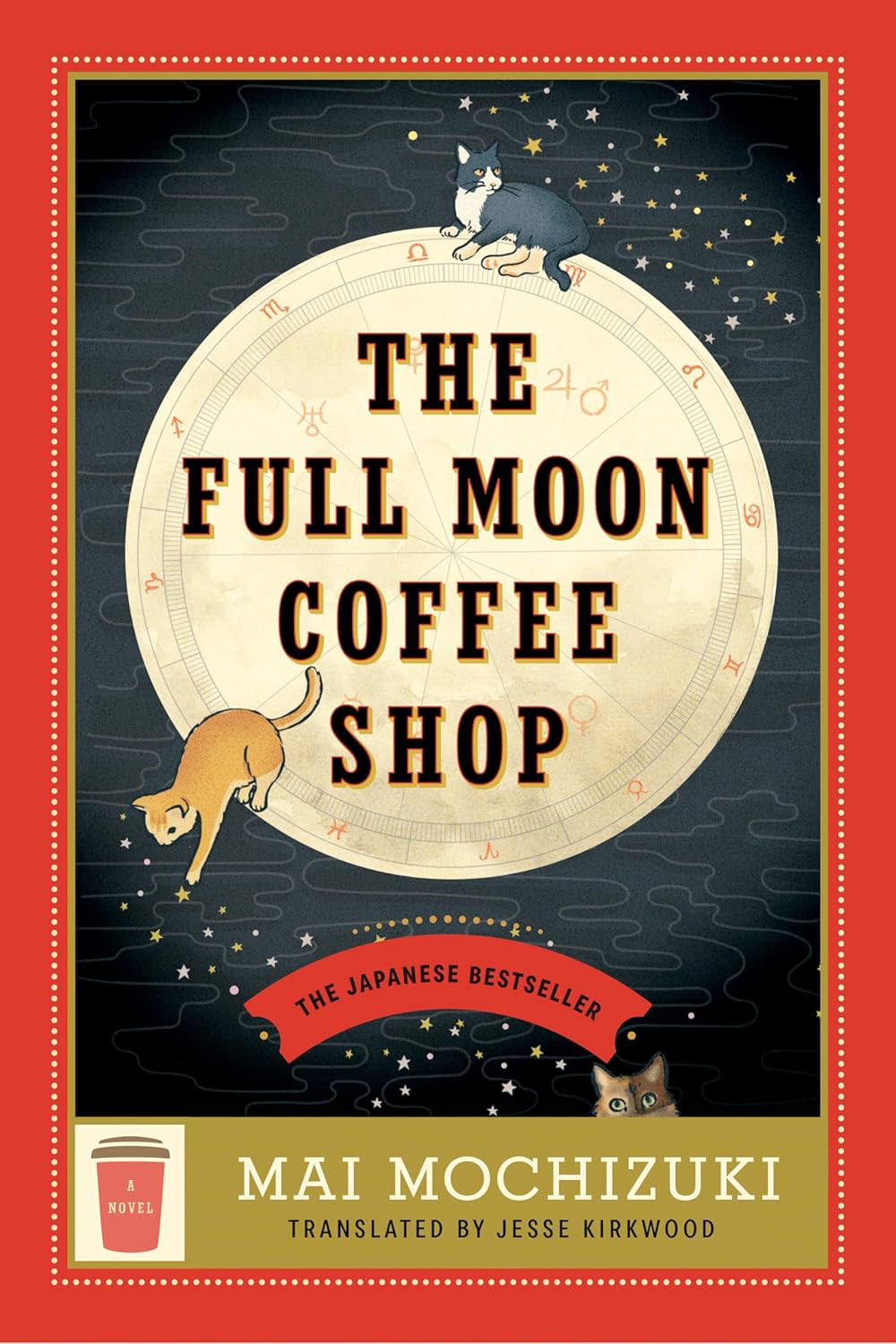
The Full Moon Coffee Shop – Mai Mochizuki (translated by Jesse Kirkwood)

The Full Moon Coffee Shop is no ordinary cafĂŠ. It only appears during the night of the full moon. Its waitstaff are talking cats, and you can never order what you want—they only serve you what you need. And if you find yourself in the Full Moon Coffee Shop, you’re in need of direction in life. Weaving together the interconnected stories of five unlikely strangers, the Full Moon Coffee Shop may be the answer to their burning questions—and the healing they desperately need.

TW/CW: cheating/affairs, sexism, grief

One of the biggest letdowns in reading: finding a book that seems super cute and whimsical, and then said whimsy is there in name only. You can’t just give us an incorporeal coffee shop manned by talking astrologer cats and then be so unconvinced by your own whimsy! God.

The worst thing that a cozy book can be is preachy. Having a low-stakes novel centered around life lessons, healing, and character growth doesn’t mean that you have to have a Learning Moment™️ worded like a PSA every few chapters. It’s a pitfall that’s easy to fall into with cozy fiction, but it’s one that takes away the magic for me. For novels that are meant to be about taking quiet moments that are often taken for granted and giving them more weight and value to the narrative, having everything explained to you seems so contrary to what “cozy” means to me. I just resent books that try to show character development decently, and then ruin it all by assuming that the reader doesn’t have the capacity to figure out what just happened and regurgitating it word-for-word. This was the main problem with this novel—it assumed so little of the reader and spelled everything out in the least subtle way. Every chapter of The Full Moon Coffee Shop pulled a “And what did we learn today, kids?” moment at the end without fail, and it just got so tedious so quickly. It just felt so preachily worded and repetitive, dulling any emotional impact this story could’ve had.

I feel so conflicted when talking about the writing of The Full Moon Coffee Shop. I read it in translation, so I really don’t know who’s to blame for the quality of the writing. I don’t know if Mai Mochizuki’s original text was dryly written to begin with or if Jesse Kirkwood’s English translation somehow dulled some of Mochizuki’s writing style and rendered it blander than before! I have no clue! Gaaaaaaaah! In any case, The Full Moon Coffee Shop was written so stiffly for a book that billed itself as so whimsical. The characters’ inner monologues all feel very rote and one-note and there’s hardly any sensory descriptions to immerse the reader in the setting. The writing let me down the most when we were introduced to the coffee shop itself, the most unique part of the novel; while I enjoyed the concepts of everything, from the celestial-themed desserts to the talking cat waitstaff, it was all described with the sparsest possible detail, the bare minimum word count to get the reader to visualize a new image. The Full Moon Coffee Shop is a slim novel, so it’s not like more detailed descriptions would’ve made it overly long—I was barely immersed in both the real-world and magical settings. The same can be said for the characters, who were barely developed beyond a problem they needed solving. The writing just felt like the bare minimum of describing…well, everything.

For me, one of the main issues with The Full Moon Coffee Shop was just how formulaic everything was. I had the same issue with What You Are Looking For is In the Library, a similarly cozy book about finding direction in life, but in that case, the stories were so repetitive and short and seemed to be saying the exact same thing, so my patience ran thin much earlier than with this novel. Once again, cozy doesn’t necessarily mean predictable—it should mean something that’s low-stakes, not repetitive. The Full Moon Coffee Shop felt like hearing the same story three times over; character is dissatisfied with life, character discovers coffee shop, character gets their natal chart read, character has a revelation and magically figures out how to fix their life. Rinse and repeat for 200 pages. You can see how tired that got. I appreciated that Mochizuki at least attempted to switch things up for the last story, but it didn’t do much to my interest in the story. All that changes is that it’s framed through the characters thinking that the coffee shop experience is a dream. Sadly, that amounted to little more than a perspective change and a switch to a handwritten font. It just got so repetitive and boring after a while, and even though the stories focused on different problems, Mochizuki rarely had anything new to say.

I hadn’t read a ton of reviews of The Full Moon Coffee Shop going in, but it seems a lot of people had problems with the heavy emphasis on astrology. The presence of astrology in and of itself wasn’t an issue for me, but it was more how said astrology was woven into the novel that got on my nerves. “Woven” is a generous word—even as someone who’s at least sort of into astrology, I felt absolutely sledgehammered over the head with every minute detail of it. After a certain point, The Full Moon Coffee Shop just became Astrology for Dummies. You know that meme of the kid pretending to read the Bible, but there’s a Minecraft book peeking out of the Bible? That’s what it felt like. It’s less of a novel and more somebody talking at you about the natal charts of complete strangers for 200 pages. I guess it might be beneficial to assume that your reader doesn’t know much about astrology, but Mochizuki got so bogged down in explaining every minute detail of every character’s astrology that the real meat of the story got lost. For me, it took away from the heart of the story, which should’ve been getting insights into the characters and their healing journeys. I feel like astrology easily could’ve been a fascinating aspect of the novel if not for how unsubtly it was shoehorned in—there could’ve been a chance to give it some narrative significance rather than spending 50 pages explaining astrology to the reader like they’re 5 years old.

Despite the formula of The Full Moon Coffee Shop getting on my nerves, I at least appreciated some of the messaging that the cats gave to the characters on how to fix their lives, particularly in the second chapter. However, the advice that the cats gave Mizuki seemed downright weird. I get that she’s not having success in her career, but the cats telling her to get with the times and not write what she loves just seemed so odd to me. There could’ve been something so poignant about success not being everything and her failures only being a small part of her career, but the cats were just talking to her like they were corporate executives telling her to be hip with the kids! Not only did that rub me the wrong way, the story itself seemed to refute the cats’ advice as well. Mizuki ends up finding success when she injects her signature style into a project that she was only doing for the money, thereby finding success in being herself and putting her own personal spin on things! Crazy concept! So why even have the cats tell her that in the first place, if that’s not even the lesson that the novel leads us to believe that Mizuki takes away from it?

All in all, a cozy novel that billed itself as tender and sweet, but ended up being unsubtle, preachy, and unconvinced of its own lessons. 2 stars.

The Full Moon Coffee Shop is the first in the Full Moon Coffee Shop series, followed by Best Wishes from The Full Moon Coffee Shop. Mai Mochizuki is also the author of the Holmes of Kyoto series.

Today’s song:

That’s it for this week’s Book Review Tuesday! Have a wonderful rest of your day, and take care of yourselves!