Posted in Sunday Songs

Sunday Songs: 6/29/25

Happy Sunday, bibliophiles!

This week: Becky Chambers double-dipping, offloading my gripes about the train wreck that was season 4 of Hacks, and…oh, whoops, I think this post was supposed to be about music. My bad.

Enjoy this week’s review!
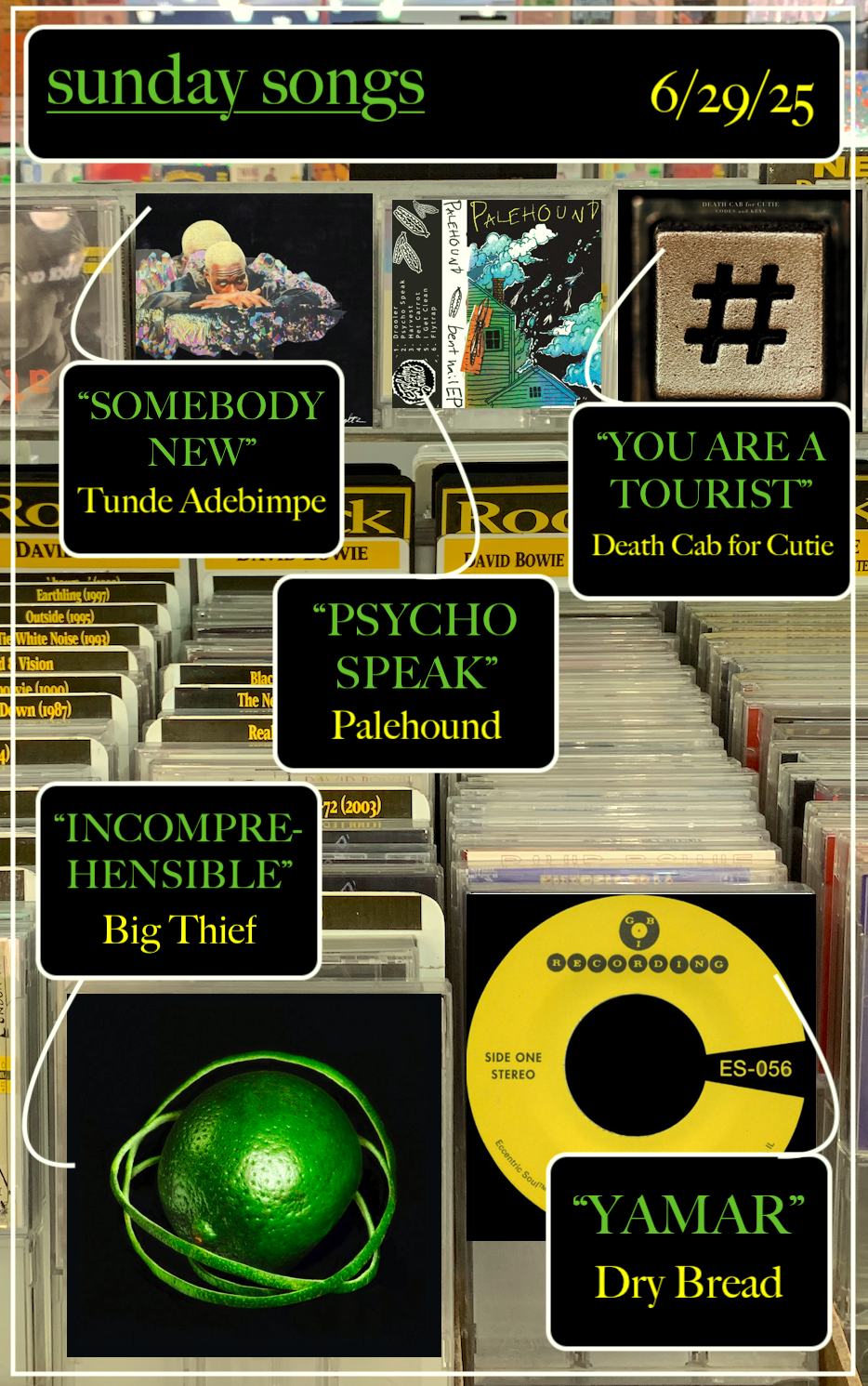
SUNDAY SONGS: 6/29/25

“Incomprehensible” – Big Thief

“They’re back!” I say, having not even listened to a full Big Thief album. This kind of thing sure does happen a lot, huh?

Regardless of whether or not I’ll listen to Double Infinity when it comes out this September or after I’ve finally gotten around to Dragon New Warm Mountain I Believe In You, “Incomprehensible” is a treasure in the here and now. The production is an absolute treat. It’s a far cry from some of their older, more folkier material, but never once does it feel removed from their emotional core. It glistens like dew, icy and starry yet tender and inviting, encircling, even. Guitars glitter and bubble next to the papery percussion. Adrianne Lenker’s voice drifts gently in their fabricated ether, but never once does it distract from the true star of the show: the lyrics, man, these lyrics! Lenker has truly honed her talent for poetic lyricism, and her beautiful messaging and penchant for lush turns of phrase are on full display here. Here’s a snippet:

“In two days, it’s my birthday/And I’ll be 33/That doesn’t really matter next to eternity/But I like a double number, and I like an odd one too/And everything I see from now on will be something new.”

What’s the music equivalent of that “absolute cinema” meme of Martin Scorsese? This deserves it, I think, if not just for that verse. “Incomprehensible” is a heartfelt ode to being free—not just driving down an endless road, as North American highways are wont to make you feel, but being free from societal pressures. I might be ascribing my love to it because it came to me at a time like this, where I am putting all of my energy in being free of expectations and embracing being as weird as possible, but in any other time, “Incomprehensible” would be a pleasure. Intertwined with imagery of nature—rolling clouds, birds, lupine flowers, and the glittering scales of fish—this freedom to just be is fully realized as a natural state: flowers grow and clouds form without any pressure that we have man-made, save for natural ones necessarily for survival. They don’t have the expectations on women to make them dread aging or conform to a certain look, to mourn every hair as it turns gray. The further we are from nature, the closer we get to these false ideals that we’ve fabricated for ourselves. I could go on about the myriad ways about how we could learn from nature, but the lesson in “Incomprehensible” is one of many: if we pay attention more to nature, we realize that all of these societal pressures are just that, constructs; to be more natural is to live free of expectations of what should be and to simply be.

…AND A BOOK TO GO WITH IT:
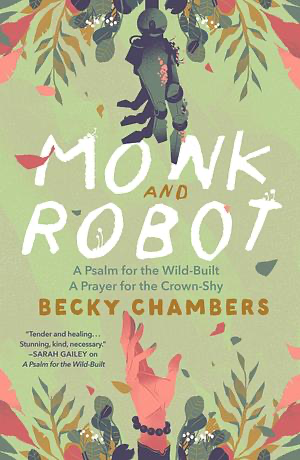
Monk and Robot – Becky Chambers“And as silver as the rainbow scales that shimmer purple blue/How can beauty that is living be anything but true?”

“Yamar” – Dry Bread

I’m not like other girls…I didn’t even know the main reason that most people know this song is because Phish frequently covers it. Oof. I did discover it, as I tend to discover random, obscure ’60s and ’70s songs, through Hacks.

Can we talk about Hacks, by the way? Specifically, how gloriously they fucked up what was one of the longest consistent runs of a good comedy show? They had such a wonderful thing going—the sharp humor, the chemistry between Hannah Einbender and Jean Smart, and the excellent bisexual representation. Season 4 really just threw every single one of those things out the window. I’m still so mad. They were so sensitive and respectful about depicting bisexuality and biphobia, then boom…they proceed to throw the laziest possible stereotype about bisexuality at Ava. She goes from having heartfelt conversations about her identity with Deborah to being thrown into a threesome for reasons that neither furthered the plot nor said anything new about her as a character. At least the resolution was that the other two in the threesome were a chill polyamorous couple who didn’t want to be used for sex, which I appreciated (what with there being hardly any respectful depictions of polyamory anywhere), BUT WHY THE HELL WAS THAT NECESSARY? WHY DID THEY HAVE TO THROW IN THE “I’m in a threesome…supa bi!” LINE??? WHAT POSSESSED THE SHOWRUNNERS TO DO A COMPLETE 1-80 FROM THOUGHTFUL, AUTHENTIC DEPICTIONS OF BISEXUALITY TO WHATEVER STEREOTYPES THEY COULD HIT FIRST ON A DARTBOARD????
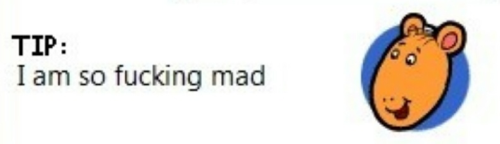
Sorry. Had to get that off my chest. Moving on…

As much as I love Hacks, they tend to have an issue with their needle-drops. In most cases, it’s a 30 second snippet from the song in question, and it’s usually shown over an aerial shot of whatever city they’re driving into—usually Las Vegas or Los Angeles. A few times is fine, but…yeah, it’s a little old. Given the absolute gold that was both the scene and the needle drop of “I Won’t Tell” in season 3, I knew they were at least capable of something more. In the case of “Yamar,” it’s in between the two; played at the intro of season 4, episode 6, it’s a small snippet that plays over a shot of Ava wrangling a comically large bundle of birthday balloons.

Though the editing was smooth, “Yamar” was all but hacked (no pun intended) to pieces—they only have about three lines from the verse before they get to the chorus. Which is really a disservice, because this is such a relentlessly catchy gem from the ’70s! My music taste is…well, yeah, it’s very much on the Western side. So I’m always glad when I find a piece of non-Western music that absolutely grabs me. I think the common denominator is the ’70s, regardless of the region it’s from. Even though the lyrics belie a somber reminiscence of looking for the unspoken point of leaving childhood behind and getting older, “Yamar” has an unfailing gallop that signals nothing but joy. That grainy, ’70s production strangely does everything in this song a service, giving the pianos a warm sheen and softening the rapid percussion, like the sun-bleaching of an old photo. It’s hard for me to feel anything but joy from this song, and maybe that could somehow be the point: dancing in defiance of having to grow older.

…AND A BOOK TO GO WITH IT:
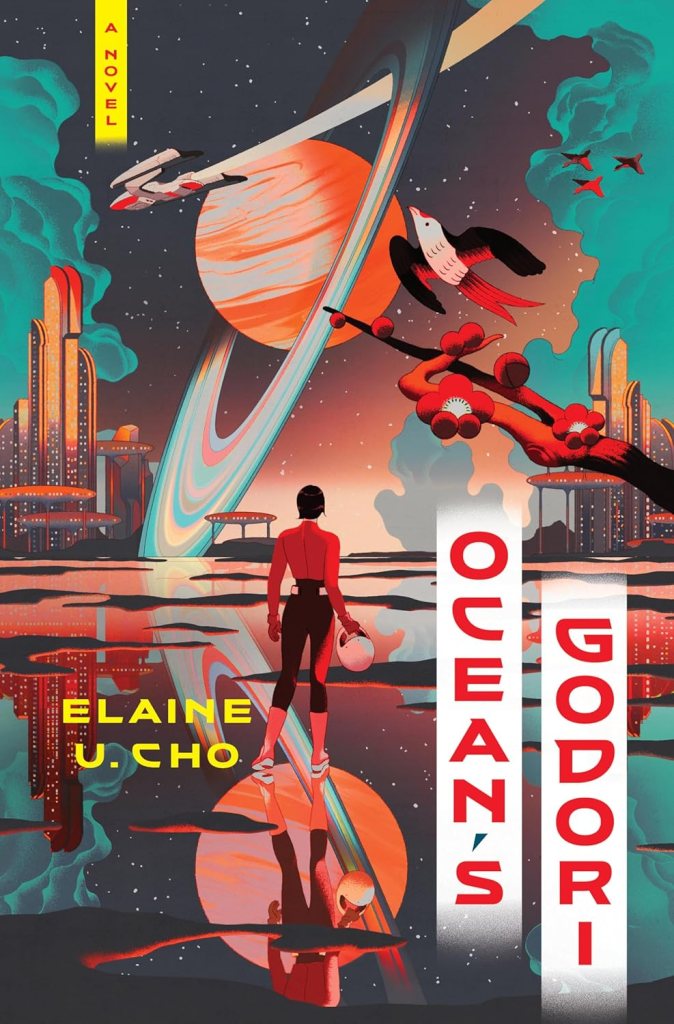
Ocean’s Godori – Elaine U. ChoReconciling with childhood and a skewed sense of identity, but all with a dose of hope and joy.

“Somebody New” – Tunde Adebimpe

It’s once again Tunde Time here on the Bookish Mutant.

I haven’t necessarily come back to a lot of Thee Black Boltz, even though I retain that it’s a great album. Somewhat regrettably, it’s the singles that I’ve mainly been returning to, but at least they were well-picked singles, I suppose? I’d say that “Ate the Moon” and “The Most” were great surprises, but singles like this, “Magnetic,” and “God Knows” are the reigning highlights. Yet “Somebody New” still surprises me in how much I actually like it—even for Tunde Adebimpe. Autotune and a more directly pop direction aren’t directions that typically work for indie rockers like him, but it works. The autotune doesn’t make his voice shinier or more polished—it just distorts it, adding another layer of synth to the synth-pop that this song is soaked in. There’s plenty of ’80s throwback in the sound, from the video production to the synths, but never does it feel like a song meant to vomit up nostalgia—it’s just another in the long line of foolproof methods that Adebimpe has employed that make a song instantly danceable. Along with the delightful music video, in which Adebimpe has a Lego Batman moment with a Yo Gabba Gabba creature, “Somebody New” is one of the best examples of when somebody outside of the pop sphere takes a stab at a pop song—and knocks it out of the park.

BONUS: Here’s his recent performance on the Tonight Show:

…AND A BOOK TO GO WITH IT:
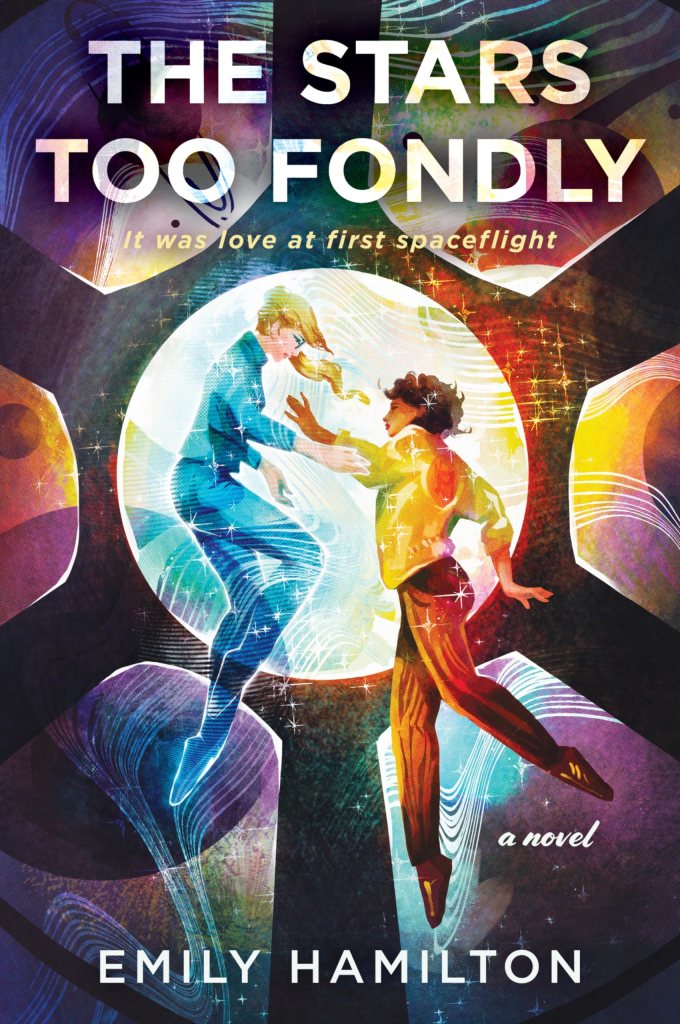
The Stars Too Fondly – Emily Hamilton“I just wanna be somebody new/Is there nothing in the world that we can say about this/Heavenly vibration coming through?/How can we feed this love?”

“Psycho Speak” – Palehound

It’s been about two and a half years since the Palehound Panic that shook the world this blog (alive and well) and my beat-up headphones (rest in peace). Although El Kempner isn’t dominating my Apple Music replay anymore, they’re always a delight to come back to, no matter the era. “Psycho Speak” returned unexpectedly, a cut from their debut EP, Bent Nail. Scrappy encapsulates so much of this barely three-minute-long song: the more indie production of their early days, the verging on out-of-breath delivery of the lyrics, and the cymbal-dominated percussion. Like the EP’s title and album cover, “Psycho Speak” evokes worn-down houses and dirty sidewalks, baseball bats dragged through the dirt. Kempner wasn’t quite at the level of precision that they have on their later songs, but “Psycho Speak” is a song that begs to be a little rough around the edges, fragmented like the end of the song: the final lyric of “I went downstairs and curled up with the cat” feels like a sentence fragment, leaving something unsaid. In fact, this track is built entirely off of things unsaid, in this tale of dating a rich man who leaves intermittently and for long periods, but who takes comfort in the company of his pets. Or maybe it’s that simple of a tale—the tiniest peephole into a story.

…AND A BOOK TO GO WITH IT:
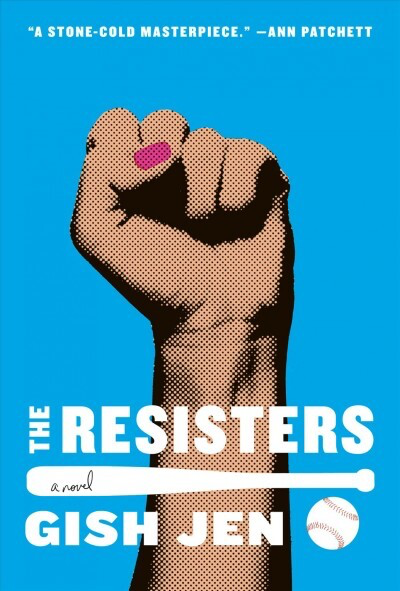
The Resisters – Gish Jenthe atmosphere of this novel, though much bleaker, has a very similar scrappy attitude and feel to it, especially where the younger characters are concerned.

“You Are A Tourist” – Death Cab for Cutie

The buzz around “You Are A Tourist” probably eclipses the song itself; its music video, a Meow Wolf-esque spectacle of kaleidoscopic lights, dancers outfitted in feathers, and geometric backdrops, was the first scripted music video in history to be shot in a single take. Given the impeccably elaborate choreography of it all, it’s honestly astounding. But even before I knew anything about the video or the fact that this song was one of their more popular ones, “You Are A Tourist” captivated me. The melody and arrangement feel so cyclical for me—from the loop at the beginning to the way that the instruments seem to circle each other, as though they were layered in concentric train tracks. And though it’s adjacent to the “I’m in my ’20s and angsty and need to get out of this town” format, as always, Ben Gibbard’s lyricism are what separates it from the rest. Of course, the “And if you feel just like a tourist/In the city you were born” instantly grabs me, but it feels less like a statement of purpose and more of a guidebook for those looking to start over and strike out on their own, a soothing, steady hand on your shoulder in the face of turbulent emotions, a kind of prayer against stagnation.

…AND A BOOK TO GO WITH IT:
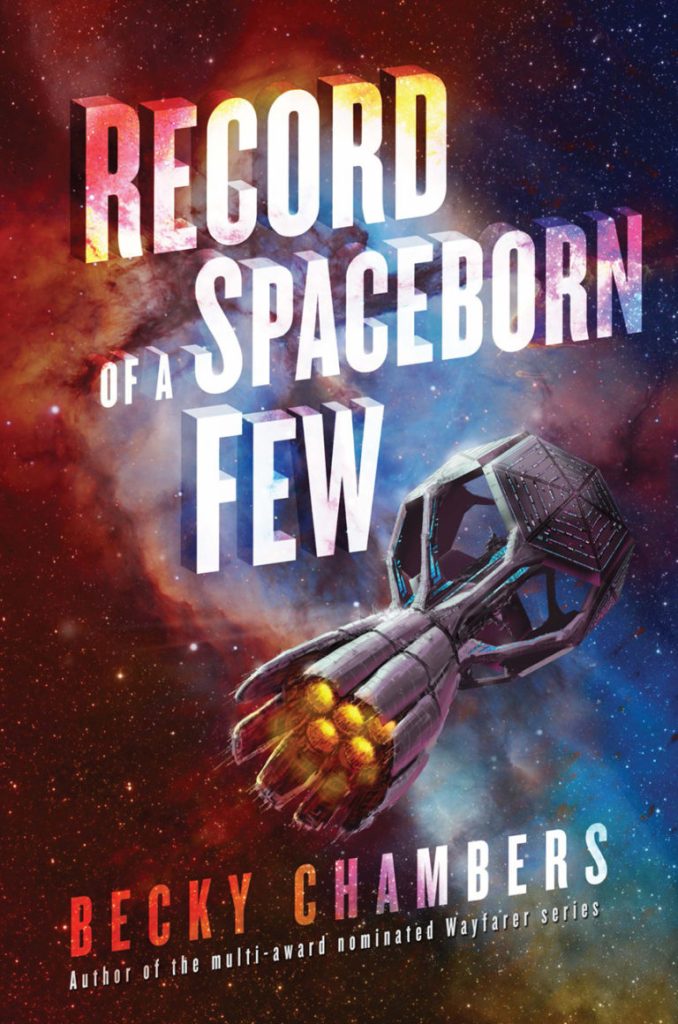
Record of a Spaceborn Few (Wayfarers, #3) – Becky Chambers“And if you feel just like a tourist in the city you were born/Then it’s time to go and define your destination/There’s so many different places to call home…”

Since this post consists entirely of songs, consider all of them to be today’s song.

That’s it for this week’s Sunday Songs! Have a wonderful rest of your day, and take care of yourselves!

Posted in Sunday Songs

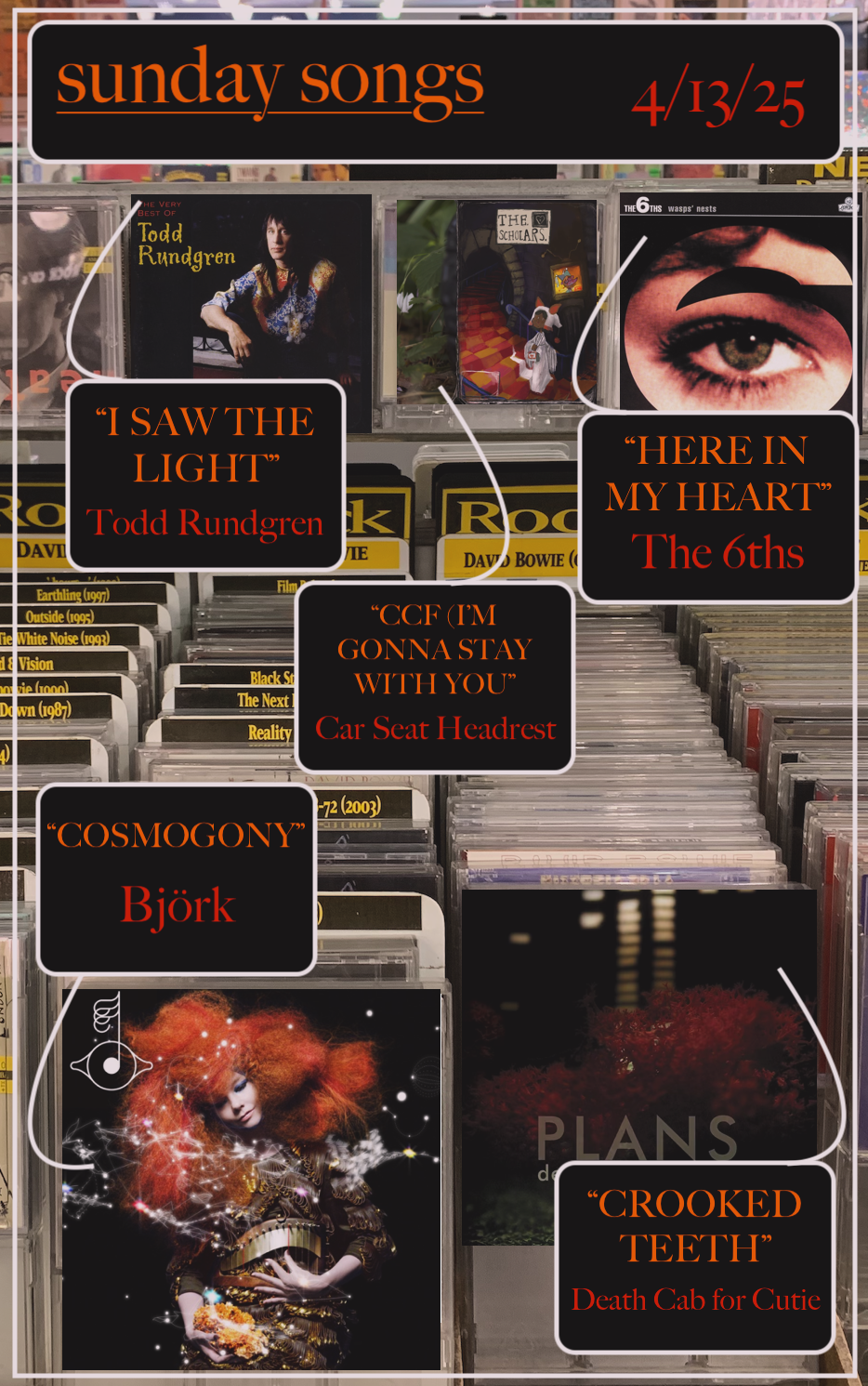
Sunday Songs: 4/13/25

Happy Sunday, bibliophiles! I hope this week has treated you well.

This week: your yearly dose of “Madeline blubbering about the unknowable beauty of the universe and also Björk (in no particular order.”

Enjoy this week’s songs!

SUNDAY SONGS: 4/13/25

“Cosmogony” – Björk

Not to be dramatic or anything, but I am currently writing this through tears. Every time I pull up the live version of this from the Biophilia concert film, I start crying. Damn you, Björk, could you not carve out the softest, tenderest bits of my soul with a melon baller for once?

Maybe I am the soft, snowflake humanities major that Trump wants to extract from higher education, but I find I understand science best when you bring out its inherently human qualities. We went wrong when we perpetuated the stereotype of the sciences, and scientists by extension, as cold and removed from emotion, because to separate the two is to deny the connectivity of nature, of the universe, and of the particles that quite literally make up all of us. (Which is why SciAll is doing incredible work to humanize the field, and even better that my awesome brother is making content for them!! Shameless Todd family plug, now back to your scheduled program.) Sure, I do believe the stereotype whenever I pass by the absolute brutalist hellscape that is my college’s engineering building, but that isn’t representative of all of STEM. I’ve never gotten physics. I’ve never fully understood it, only bits and pieces. But the other day, I read a great book called Uncommon Measure, a memoir about time and music, which likened quantum entanglement—the way that particles just know how others around them will move—to falling in love with her husband while they learned to dance Argentinian tango in college, and trusting her body to remember the steps and the movements of her partner. Do I understand quantum entanglement any more? Slightly, but I’d still fail a course on it. But I’m on my way, because of that emotion. The moment we lose that connection between ourselves and the very makeup of our universe, we forget ourselves. Quite literally, ourselves.

Now that I’ve finished Sonic Symbolism, my Sunday Songs have admittedly become months of Björk worship in a trenchcoat, but getting this nuanced view on her music-making process has seriously invigorated me. I’ve yet to fully listen to Biophilia, but it’s high on my list. The album was conceived along with an app that aimed to teach children about music through concepts of science; for instance, chords and learning which chords work best with each other is demonstrated by a visualization of tectonic plates. And if that’s not enough, David Attenborough, THE MAN HIMSELF, recorded an intro for the app, which was also featured on the Biophilia tour. Though the app is sadly defunct, it remains a critical piece of Björk’s creative legacy, as well as a tool that was specifically shown to benefit neurodivergent children in learning these concepts. In the grand scheme of things, “Cosmogony” was the menu that held the rest of the app together, a screen where you could navigate to different parts of Björk’s simulated universe. (And even if that didn’t exist, the aesthetic language of the album, with Björk’s voluminous wig that’s the color of oxidizing copper.)

That fusion of the arts and sciences, as well as the inherent humanism that Björk brings to her craft, is what makes “Cosmogony” so special; the song details three creation myths from around the world (Miwok Native American, Sanskrit, and Aboriginal Australian), and she adds the Big Bang theory, which she jokingly referred to as “a creation myth that is 100 years old,” but pointed out that “all creation myths at the time of their making were science.” The song begins with a kind of transcendental choir that rises in pitch, mimicking the motion of eyes searching the stars. It’s the only music that has ever captured the feeling I often felt while taking an astronomy class last year. As I stared up at the planetarium, watching as simulations of the known universe expanded outward ad infinitum, I had this bizarre, incomparable cocktail of emotions—fear, wonder, and somehow, comfort. It’s impossible to feel a single emotion at the revelation that our universe is infinitely large and full of places we cannot even begin to reach or imagine, is it? Space is a cold, unwelcome vacuum, but it is fertile with endless possibility. And that’s where Björk punches me in the gut every time, dredging out the wonder, comfort, and ecstasy of being surrounded by billions upon trillions of stars and planets: “Heaven, heaven’s bodies/Whirl around me/Dance eternal.” I’d say somebody hold me, but I am being held. All of us are, by the arms of the universe.

…AND A BOOK TO GO WITH IT:

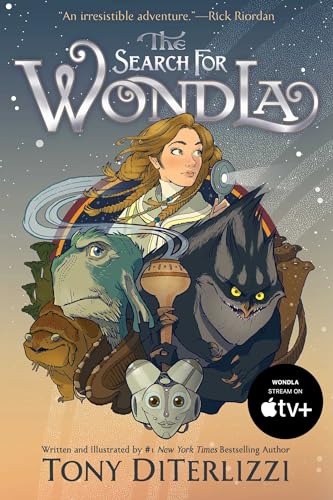
The Search for WondLa – Tony DiTerlizziI can easily imagine this as Eva Nine sees the Rings of Orbona for the first time, coming to terms with her own clashing creation myths.

“Crooked Teeth” – Death Cab for Cutie

Bring back those stop-motion, collaged indie rock music videos from the 2000’s! We lost something when that trend went away. They’re all so inventive and fun, and they all have that token darkly funny moment before going right back to silly little cutouts of floating astronauts and whatnot. (See also: “Can You Feel It?”)

Song lyric of the week, unofficially: “You’re so cute when you’re slurring your speech/But they’re closing the bar and they want us to leave.” This song is an absolute indie hit, and it deserves that status: a three and a half minute-long pocket of sad white boys, clever lyrics, and lovely harmonies. That’s probably why I found myself occasionally remembering the chorus of “‘Cause you can’t find nothing at all” every few years and forgetting the rest of the song. Shame that I forgot the rest, really, because that’s not even the catchiest bit. Admittedly, I find the “I’m a war between head versus heart” bridge rather corny compared to some of the more poetic bits of this song, but that’s because of how descriptive every line is. Ben Gibbard really knows how to make every line count, from the lyricism down to the precise inflection of each word. The way his voice creeps through the notes makes the expression “turn of phrase” make sense—every sentences seems to twist like vines. All of it becomes “the home in my heart” built with rotten wood that leads into the first chorus; much like the collection of landmarks that Gibbard describes, it’s a blurred, drunken stumble through a mutually destructive relationship that keeps losing its water, no matter how many strips of tape you put over the holes in the kiddie pool. Yet all of it is irresistible, as is the last dregs of romance that have drained out of whatever hot mess Gibbard is chronicling.

…AND A BOOK TO GO WITH IT:

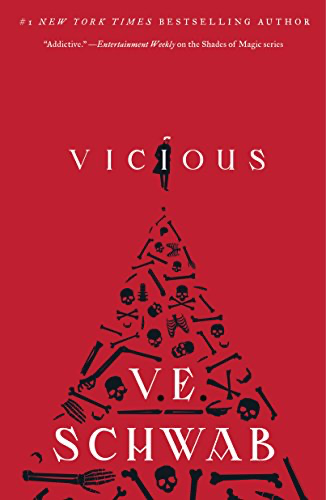
Vicious – V.E. Schwab“‘Cause I built you a home in my heart/With rotten wood, and it decayed from the start/’Cause you can’t find nothing at all/If there was nothing there all along…”

“I Saw the Light” – Todd Rundgren

There’s a sliding scale of what degree of early ’70s that I enjoy. On the one end, you’ve got glam rock: your Bowies, Bolans, Brian (Eno)s, etc. It all depends on that warm guitar tone. By the time you get here, you’ve got the guitar tone, but then you’ve inched into the same breath as Steely Dan, and…okay, that might be where I draw the line. (Admittedly, “Peg” is better than it should be.) That’s about when you get into that yacht-rock kind of cheese that I can’t quite stand. This one Todd Rundgren song, however…safe. Can’t deny how catchy it is, god! Another delightful tidbit of the ’70s I tend to enjoy is the pianos—I’m not sure if it’s the specific kind of piano or just the sound quality, but there’s something so charming about that tinny kind of piano that’s punctuates the background. Each bend Rundgren hits on the guitar strings feels like a sway of the hip, a twist of the leg striding across the dancefloor. Sure, he specifically meant for it to be a hit and not much else (and apparently cranked it out in 20 minutes while addicted to Ritalin), but it works perfectly as such. “I Saw the Light” has a joyful groove that’s been undeniable for 50+ decades, but exists in amber as nothing but 1972: smooth, romantic, and oh so bright in that guitar tone.

…AND A BOOK TO GO WITH IT:

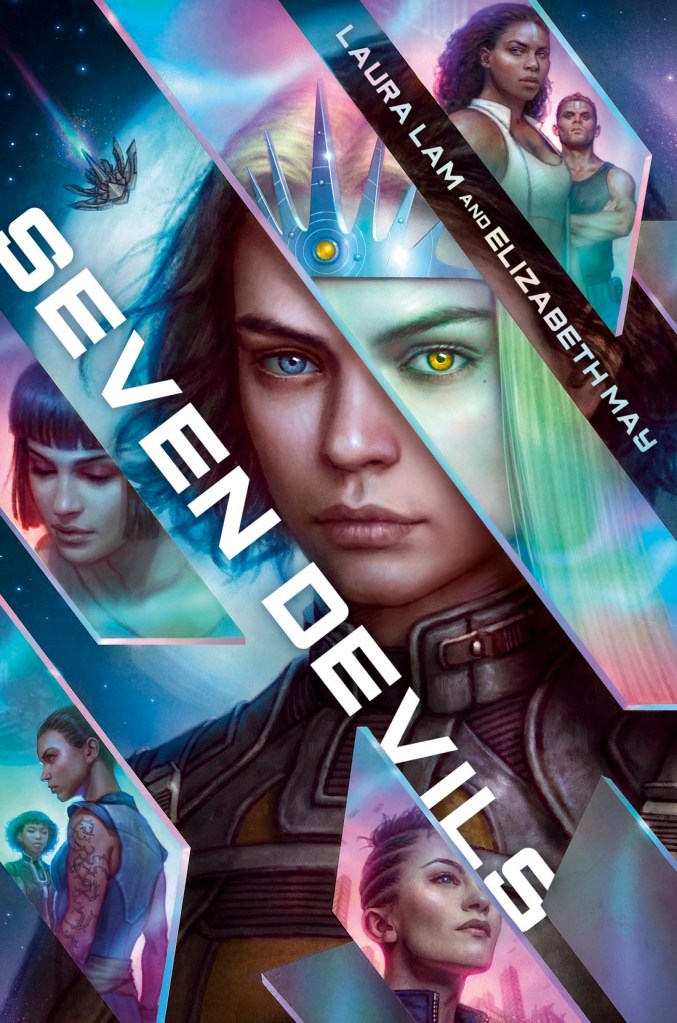
Seven Devils – Laura Lam and Elizabeth Maysongs with lyrics that are on the…more generic side (sorry, Todd) don’t give me as much rope, so it’s mood I’m going off of for this one, a messy, romantic space opera.

“CCF (I’m Gonna Stay With You)” – Car Seat Headrest

Car Seat Headrest is back, and they’re making obscenely long songs again!! Nature is healing!! (And apparently, these aren’t even the longest? The second to last track is purportedly 19 MINUTES LONG? “Famous Prophets (Stars)” has some competition…) So is Will Toledo, evidently—I’m so glad he and the band are taking it slowly on this tour (which I am SO elated to have tickets for), but I’m glad that he’s gotten to a place with his long COVID that he can make some more angsty masterpieces.

It really does seem like The Scholars will be some of Car Seat Headrest’s boldest work to date. Toledo conceived of this album as a rock opera, inspired by the likes of Tommy and The Rise and Fall of Ziggy Stardust and the Spiders from Mars, centered around the fictional Parnassus University. Each song centers around a student; the excellent, nearly 11-minute long epic of a single, “Gethsemane,” for instance, follows Rosa, a medical student who dabbles in necromancy and discovers that she can absorb the pain of others. Aside from said Gethsemane, Toledo also said that he was inspired by his own journey into Buddhist practices while he dealt with long COVID and his lifelong, conflicting feelings surrounding his spirituality. It’s an incredibly ambitious cocktail of ideas and about as spacious as a university campus, but it seems like the pent-up work of five years of not releasing any new material and the flood of ideas that I’m sure came along with it.

If there’s one thing that Car Seat Headrest has perfected the art of, it’s making album intros. They’re all about giving you that antici……pation, but the payoff is even more rewarding than the almost cinematic buildup. Even on weaker albums such as 2020’s Making a Door Less Open, “Weightlifters” had a kind of thesis about the album’s musical motifs, and on the iconic Teens of Denial, “Fill in the Blank” sets the upbeat, angsty tone with ease. “CCF (I’m Gonna Stay With You)” reminded me immediately of “Vincent” and its echoing intro, but what follows is an explosive display of the band’s collective talent. Toledo, Ethan Ives, Seth Dalby, and Andrew Katz’s synchronicity creates a soundscape deserving of a sprawling rock opera, and Toledo’s poetic lyricism is befitting of Beolco, the playwright character this song is written from the perspective of. Long COVID couldn’t beat the healing salve that is Will Toledo’s voice, which simultaneously retains notes of his youth but has undeniably steadied and matured. “CCF (I’m Gonna Stay With You)” has threads of Teens of Denial all over the place (aforementioned “Vincent” similarities, and the horns reminded me of “Cosmic Hero”), but something about it has an inherently spacious vision beyond the storytelling—this is a whole universe that they’ve created, and I, for one, am elated to discover it. MY BODY IS READY.

…AND A BOOK TO GO WITH IT:

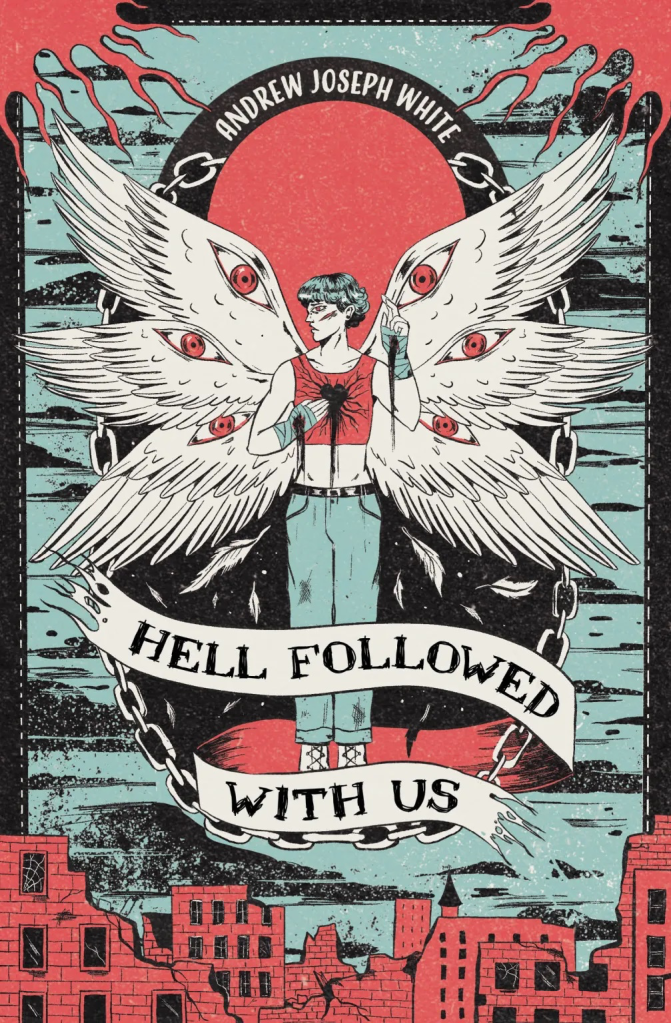
Hell Followed With Us – Andrew Joseph White – “When I come down off this cross of mine/A hairsbreadth apart and as far as the sky/Then back on my spine, there was a line that my idols crossed that I could not cross/On the other side is love, and right here is loss…”

“Here In My Heart” – The 6ths

Another addition to artists who cannot stop cooking: Stephin Merritt. Not only does he have some impressive vocal range and an excellent body of work with The Magnetic Fields, he’s a part of several other side projects—one of which, The 6ths, where he barely even sang, but just did arrangements and lyrics, and had a whole host of amazing indie artists sing for him. Dean Wareham (“Falling Out of Love [With You]”), Chris Knox (“When I’m Out of Town”), Mary Timony (“All Dressed Up in Dreams”), and Mark Robinson (“Puerto Rico Way”) are just a handful of the guests on this album, Wasp’s Nests. (However, he did sing himself on the also fantastic “Aging Spinsters.”) All of them are folded into the lovelorn synth tapestry that Merritt has woven, and though the voices vary, all of it is so distinctly him. The love (or love-related) songs he pens are usually of the lost love variety, but “Here In My Heart” is about as pure as they get; even if the love in question is far away, the yearning spills out of the chorus like thousands of butterflies. Every electronic twinkle glows warmly with love, the kind that makes your chest light up like in Fantastic Mr. Fox, but the glow never feels fake—it’s an ecstatic, crush outpouring that never loses its sheen. Anna Domino’s voice, as twinkling and delicate as the synths, blends in as a shimmering blot of light in the constellation of this starry-eyed love song.

…AND A BOOK TO GO WITH IT:

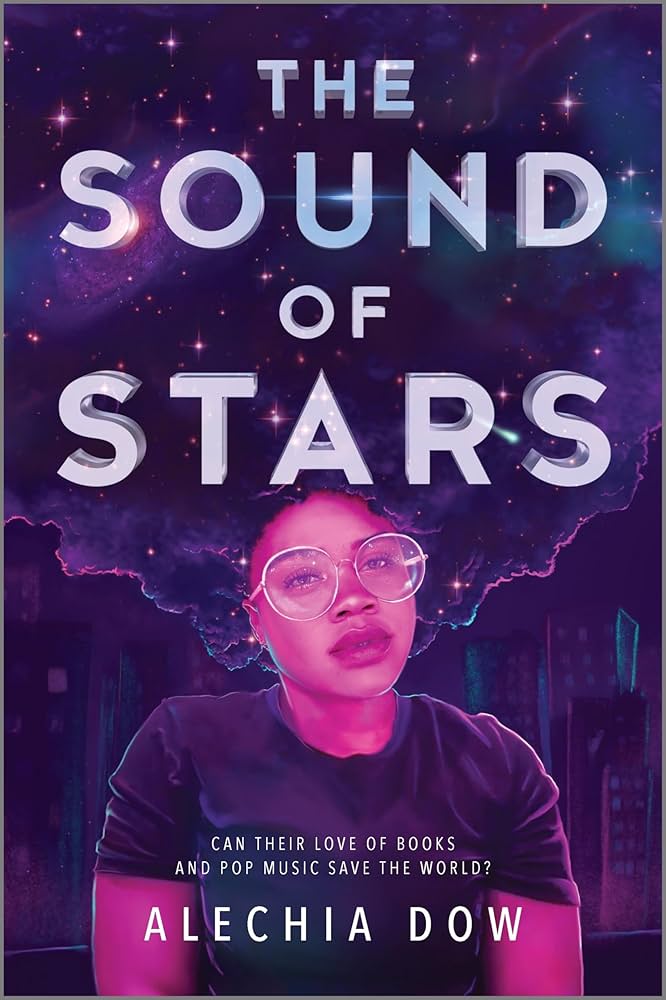
The Sound of Stars – Alechia DowThe lovesickness and synth textures fit with the hopeful joy of this novel.

Since this post consists entirely of songs, consider all of them to be today’s song.

That’s it for this week’s Sunday Songs! Have a wonderful rest of your day, and take care of yourselves!
Posted in Sunday Songs

Sunday Songs: 6/16/24

Happy Sunday, bibliophiles!

First off: happy Father’s Day to my incredible dad! Not only are you such a wonderful role model for being a genuinely kind, accepting, and truly empathetic person, you’ve given me the gift of sharing music—what these posts are all about. To be able to share music with you back brings me all the joy in the world. I love you.

This week: 🚨SOCCER MOMMY HAS COME TO SAVE THE SECOND HALF OF 2024, THIS IS NOT A DRILL🚨

Enjoy this week’s songs!

SUNDAY SONGS: 6/16/24

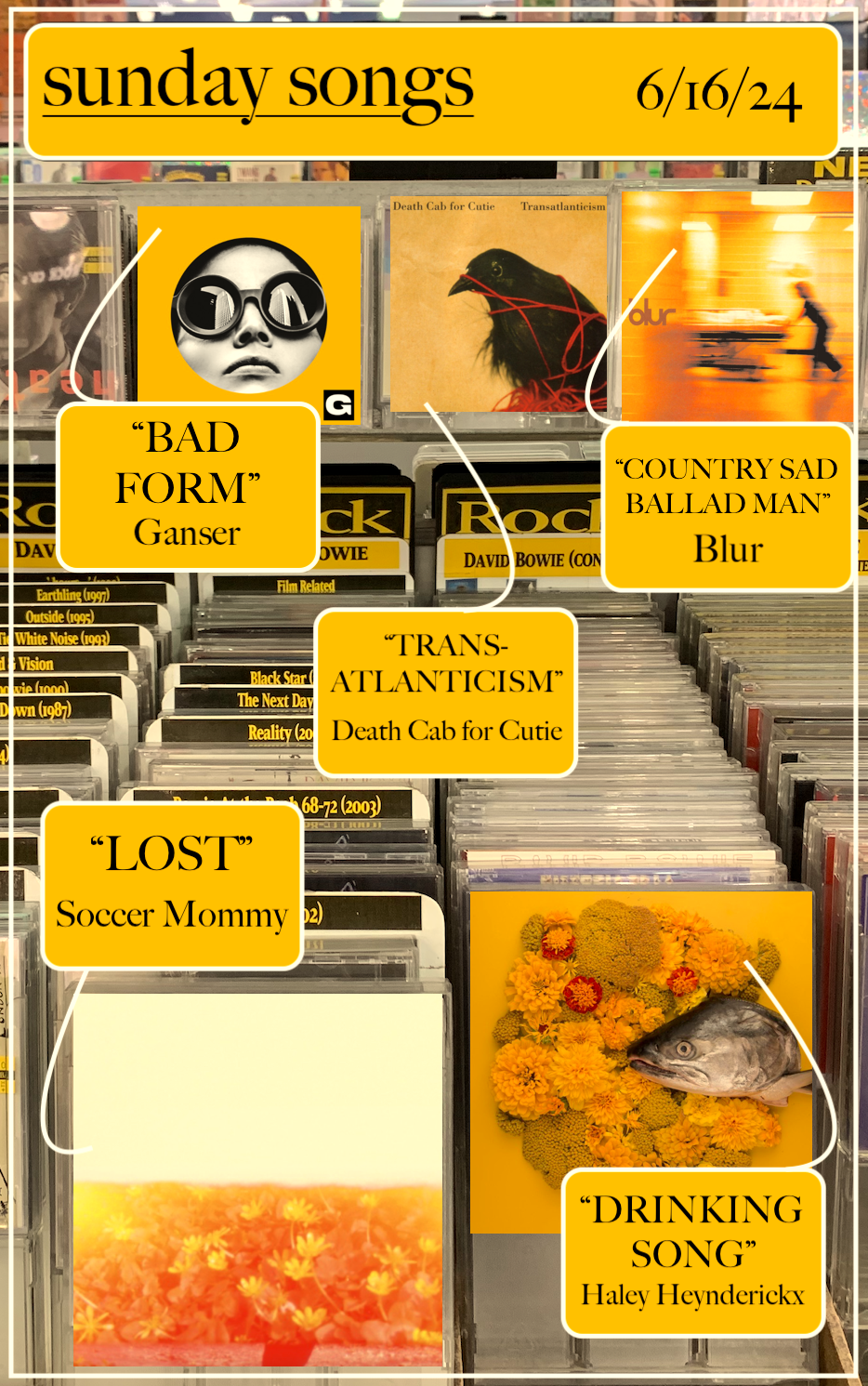
“Lost” – Soccer Mommy

SOCCER MOMMY RETURNS!!! Given the short tour (that’s nowhere near me……..no, I’m totally not mad, no way) that she’s currently embarking on to support some of this new material, there’s a fourth album (sixth, counting the self-released albums) on the horizon, and hopefully on a happier date. Poor thing. I still haven’t gotten over the fact that her last album, Sometimes, Forever, was unintentionally released on the day that Roe v. Wade was overturned. Jesus.

Something that I’ve admired over the years about Soccer Mommy is her willingness to experiment with her production. At their core, her songs have never changed their essence: honest, tender confessions of the trials of heartbreak, grief, and mental health. But the dressing is never the same twice, from color theory’s color-coded tonal shifts and synth-dusted melodies to the darker, more distorted soundscape of Sometimes, Forever. With the latter, Chelsea Wolfe wasn’t somebody that I’d readily compare to Soccer Mommy, but then she comes along with “Unholy Affliction,” and the comparison, at least on that track, is as clear as day. Just when you think she’s playing it safe, she comes out of nowhere with instrumentation that you’d never imagine attributed to her name—and almost every time, it still feels like nothing but Sophie Allison. There’s a boldness to her that’s rare in the genre; there is an expectation of sameness in the kind of indie circles she’s in, an expectation to box yourself into the image that the record label deems as “authentic” in order to stay in their good graces—and the good graces of fans who cling to their raw lyrics. Julien Baker, although her first two albums adhered to that, took a similar leap with Little Oblivions, and that, for me, was her best album to date.

But Soccer Mommy can’t help but be herself. “Lost” strays nearer to some of her sparer, more traditionally indie roots, but with production that feels spun from silk; inside of the glowing cocoon where Allison resides, threads of synth, birdsong, and yearning strings coalesce in what can only be described as the musical form of a grainy polaroid, a sunset tinged with ink, film, and bygone memories. Bygone memories, like much of her other material, is at the core of “Lost,” specifically bygone memories of those bygone. Given the trajectory of “yellow is the color of her eyes,” some have speculated that “Lost” is about her mother’s death, although Allison has chosen to not disclose the subject. whatever the case, I’m glad that Soccer Mommy doesn’t have the kind of rabid Swiftie fanbase that would relentlessly strip away at the press and at Allison herself to get to the bottom of who she’s mourning, because…that’s her own business, dammit. I’m glad us…whatever Soccer Mommy fans are called (does this fanbase have a name?) have the heart to give a human being space to breathe, because, judging from the lyrics (and all of color theory, frankly), Allison needs it. “Lost” distills grief in the truths of the cliche that every movie seems to repeat about grief: “I wish I’d had more time.” Most media leans on that universal kernel to hold the weight of such a complex, unmappable sensation, but Allison scratches at its heart; her grief rests not just in tangible objects, but in the reminders of the time never spent: “I’ve got a way/Of keeping her with me where I go/But how she feels, I’ll never know/It’s lost to me.” The pain of this track is in the insurmountable truth of never being able to fully know a person; of course you can never fully, truly know a person beyond yourself, but grief exacerbates that unsurmountable summit—even if you tell yourself that you could be a cartographer of a brain outside your own, that chance has all but slipped through your fingers. Grief has unrealistic expectations of you; in its throes, it tells you that you could have made up for all of the missed regrets in your lifetime, and that’s half of the knife in your gut. Half of the pain isn’t what didn’t happen, but what can’t happen, even in the alternate reality it presents. When she repeats “If I had another chance/I’d ask her then,” it doesn’t feel like a throwaway from a stale funeral in the MCU—it feels like the testimony of something still putting down the compass and fountain pen, knowing that this expedition was doomed from the start.

So, what, you ask, might us sad girls do while we wait for Soccer Mommy’s fourth LP, which will inevitably destroy us? Watch Allison and fellow storied sad girl Phoebe Bridgers unite to cover Elliott Smith:

…AND A BOOK TO GO WITH IT:

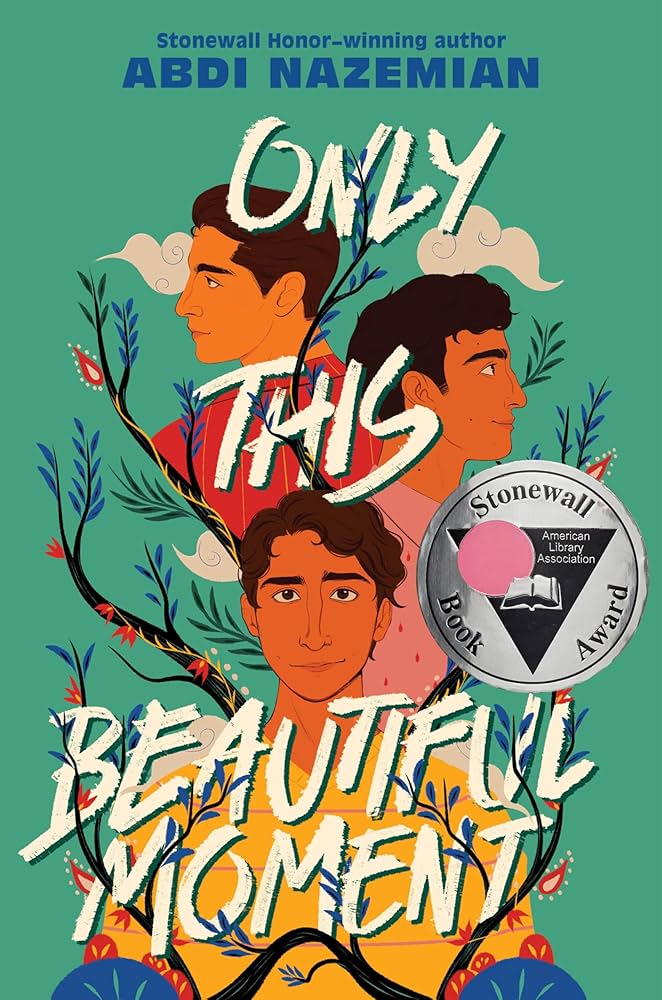
Only This Beautiful Moment – Abdi Nazemianbreaching generational lines to form an understanding of heritage, sexuality, and family.

“Drinking Song” – Haley Heynderickx

Contrary to the song title, Haley Heynderickx is (probably) not responsible for the kind of song that old men will sing in a pub while drunk for generations to come. I mean, that could be a possibility in some alternate universe. I’d like to see that. It’d make for an odd movie scene—nothing about this universe has changed, but instead of old Irish ballads, there’s a pub full of swaying people singing late-2010’s indie rock.

With a title like “Drinking Song,” I fully expected this song to be the prequel to “Oom Sha La La,” a telling of the period where “The milk [was] sour/I’ve barely been to college/And I’ve been doubtful/Of all that I have dreamed of.” Contrary to that, “Drinking Song” is a soft-spoken but resolute declaration of hope, delivered out a summer window while the crickets sing. Any darkness is the shroud of night, and all of the stars seem to bear witness to a constitution of better days to come: “And the edge of the world makes it seem/That everyone gone is still singing the same song/And I can believe in these things/That everyone’s singing along/The good and the bad and the gone.” There’s a kind of childlike optimism to the openness of Heynderickx’s declaration, but one with roots strong enough to hold it; with each repetition of “there’s a light at the end that I know,” that glow, like The Great Gatsby’s green light, pulses with more intensity with each incantation, until it becomes a portal to better times. It’s the opposite of negative overthinking; this song overflows with future vignettes of new cities to explore and new lovers to embrace, all held within the space of the back of your mind. “Drinking Song” is a snow globe containing every good future—all is too small to comprehend in the here and now, but with a little luck, you can hold them in your hands and watch them unfold before you.

…AND A BOOK TO GO WITH IT:

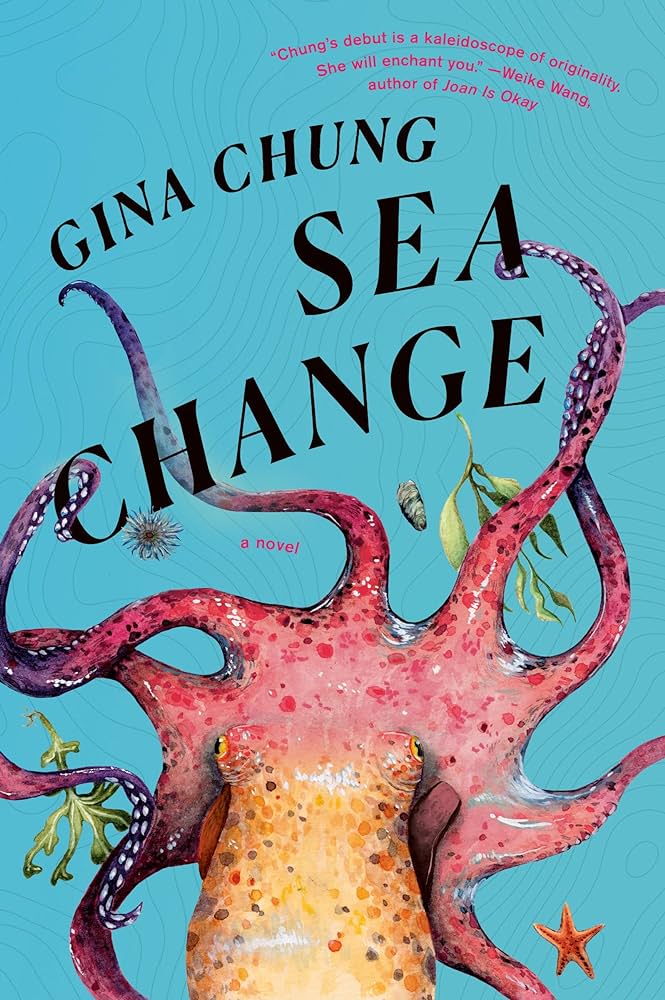
Sea Change – Gina Chungholding onto hope in a time of lovelessness and isolation.

“Bad Form” – Ganser

I like plenty of bands and artists whose catalogue consists of one or two songs tops (see: Wet Leg, Suki Waterhouse, etc.). What distinguishes said bands, for me, is that they’ve made a career out of making those two songs worth your time—they may only be two songs, but they play them well. Sure, “I Just Threw Out the Love of My Dreams” may be one of Weezer’s one, maybe two songs (and even that’s generous), but it’s such a bright and shining piece of machinery that you can’t help but gaze at said one song and know that, yeah, it may be the same song they’ve been peddling since 1994, but it’s one fantastic song.

The more I listen to Ganser, the more I realize that they fall into that camp. I hate to say that every time, but like I said, it’s not always an insult. Although they do have a good amount of deviation here and there, most of Just Look At That Sky, as much as I enjoyed it, is the same three off-kilter, drawled post-punk songs about being numb, exhausted, and angry, or some combination of the three. They’ve got a brand. Ganser, for me, stands out in that their three songs sound different enough from any given song that you can excuse them for relative lack of variety. None of their chords ever align pleasantly—it’s abrasive, grating, and honestly? Fun. As with “People Watching” (which I reviewed at the beginning of the month), Ganser makes the kind of punk that’s aware of how punk it sounds, and they lean into every inch of theatricality with their bleary-eyed drawls and itchy, buzz-saw guitar riffs, fuzzy and stinging like staring straight at the sun—just as like the climax of “Bad Form.” Ganser is a band that’s not afraid to make music that scratches your skin like un-filed, bitten nails, and if that’s their three songs, then three cheers for making three songs that are bold enough to sound unappealing.

…AND A BOOK TO GO WITH IT:

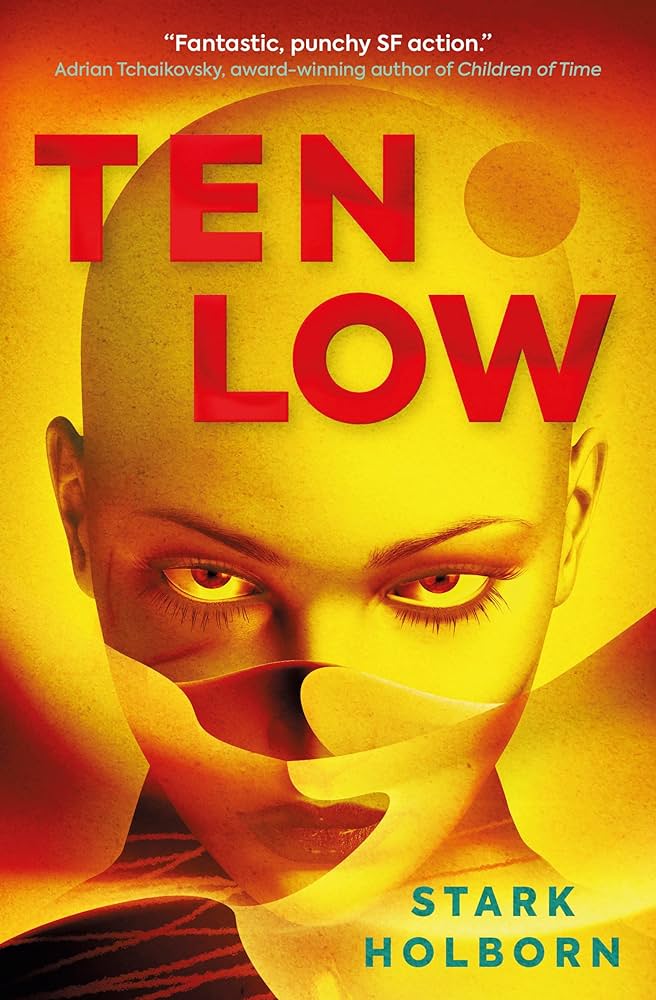
Ten Low (The Facts Sequence, #1) – Stark Holborn“I’m the other man/I’ll take the medicine/The room spins like a feather/Folding over and over…”

“Transatlanticism” – Death Cab for Cutie

I was first introduced to “Transatlanticism” when I was about 12 or 13. A few months after the first listen (and being irreparably entranced), I had an internship at a local flower shop, where the owner had Sirius XMU playing. This song came on at some point, and I’ll never forget the deeply concerned look she gave me when I told her, in the most 13-year-old way possible, how much I “loooooooooooved” this song. She was entirely justified.

Another thing that music criticism does that I’ve never understood: categorizing Death Cab for Cutie as emo. If I suspend my disbelief enough, I can see the basis being in the whine in Ben Gibbard’s voice, especially when he performs live, and the dramatic emotion is there, but…in what world does Death Cab for Cutie belong in the same breath as My Chemical Romance? Really? I could almost see them being the middle ground between emo and indie, with some of the lingering whine and drama, but the key with selling drama is what has always lost me with most emo music: it actually feels authentic. Never once does Gibbard sound like a suburban teenage boy who’s just discovered heartbreak and black eyeliner in one fell swoop. The whine, although it can fit into some of said teenage boy sensibilities (see: “We Looked Like Giants”), just seems more of a product of Gibbard’s natural range than it does a forced vehicle for airbrushed angst.

In theory, “Transatlanticism” fails my test of withstanding a long song; most of the time, in order for a long song to hold enough water past around the six minute mark, there has to be at least some sort of shift, whether that’s tonal, lyrical, or instrumental; it’s why “Cop Shoot Cop” by Spiritualized really feels like it’s over 17 minutes long, with its largely extended sleepwalk of monotony, whereas Nina Simone’s ten minute epic “Sinnerman” has the fervor and gusto, as well as an act structure similar to classical pieces, is a nail-biting journey that never lets go of your shirt collar. (To be fair to J. Spaceman, my guess is that the tedium is the intended effect, seeing as it’s about how his heroin addiction all but made him into a dead man walking. Knowing him, it’s fully intentional.) However, there’s songs like Blur’s “Tender”—nearly eight minutes long and without much change—that have the pure, undiluted heart to keep its sails billowing. You feel everything—it’s an IV drip straight through to the sparest, most instinctual emotions, heart-wrenching in its delicately-crafted simplicity. “Transatlanticism” takes a trick out of that same book; until the last third, all that accompanies Gibbard’s thinning, tender lament is about four piano chords, played over and over with a purposeful negative space between them. Come to think of it, negative space is exactly why “Transatlanticism” works so well. Transatlanticism as a whole is a concept album about long-distance relationships, and even without the lyrics, crushing as they are, you can sense the abyssal gulf cutting down the middle of this song. At the four-minute mark, after Gibbard has finished with the first repetition of “I need you so much closer,” a full minute passes of a single, instrumental strain: those same four chords, a spare guitar lick, and tiny tendrils of synth that faintly moan and rattle like dying machinery, as if trying to conceal their death rattles without bothering anyone. Transatlancism was aided with Brian Eno’s Oblique Strategies cards, and I wouldn’t be surprised if they drew the same cards that produced Bowie’s “Sense of Doubt”—”emphasize difference” and “try to make everything as similar as possible.”

The difference, in this case, is a shift in lyrical style; It’s all but silent compared to the lyrics in the first half, but that silence conveys the feeling of separation, of having a strand of your soul stretched across an ocean and not being able to see who’s on the other shore, just as heartbreakingly as words do. After Gibbard’s lament (“The rhythm of my footsteps crossing flatlands to your door/Have been silenced forevermore/The distance is quite simply much too far for me to row/It seems farther than ever before”), the exhaustion of sorrow leaves you with no strength to do anything but stare into the canyon wrought by distance, too far to even touch fingertips over. Simplicity is what kills me about this song; after that instrumental break, Gibbard repeats the “I need you so much closer” refrain, only to transform it to “I need you so much closer…so come on.” When all of the poetry’s drained, sometimes the most sparing lyricism destroys me. The ocean has spread its impossible distance before you, and all you can do is stare as far as you can, towards the bottom, with only the most baseline instincts of longing to keep you company. It’s such an artful buildup and approach to portraying such deep yearning—you feel that negative space as a tangible barrier. See what I mean about Death Cab for Cutie making their angst authentic? “Transatlanticism” hits me like a goddamn steam train every time without fail. Ow, dude, who kidnapped me and abandoned me in the onion-cutting factory?

…AND A BOOK TO GO WITH IT:

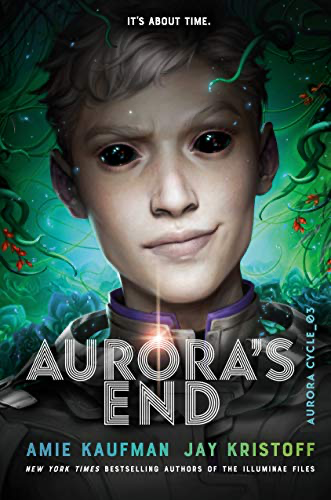
Aurora’s End (The Aurora Cycle, #3) – Amie Kaufman & Jay Kristoffow oof ow ouchie ow ow ow somebody hold me

“Country Sad Ballad Man” – Blur

And now, “Song 3.”

Blur’s self-titled album [slides Anthony Fantano glasses up bridge of nose] is an exercise in becoming the very thing you swore to destroy. After years of being right smack in the middle of the spotlight, participating in a manufactured battle of the bands, and pushing their mutual abuse of multiple substances to the edge, the band collectively decided that a change needed to be made. They packed their bags, temporarily relocated to Iceland, and hammered out a new album. The result was Blur, which had a much dingier, edgier, and altogether harder sound, with a lead single that famously parodied grunge, but then…circled around to being a smash success and an enduring stadium classic. That’s another story. (I’ll give you a hint: wooooooooohoo!) Yet, as much as they poked fun at American grunge, in all of its nihilistic, self-deprecating time in the sun, they slipped straight into the lifestyle, shedding their Britpop gloss for aggressive, alternative guitar, stubble, and, to the detriment of the whole band, excessive abuse of alcohol and heroin (see: “Beetlebum”).

Though the drug use is lamentable (to say the least), as all of the band members now agree, it was their mutual exhaustion and anger at being put through the British media meat grinder that allowed for such a hard—and delicious—left turn. On the verge of snapping, the band decided to put Parklife behind them and get grungy. It was bound to happen eventually, what with Graham Coxon’s adoration for the American alternative scene and the guitar sounds they were producing (should’ve listened to him earlier on that one…). Blur is all but absent of a bad track, crashing with the equivalent of a drum set tossed through a window one minute (“Chinese Bombs”) and slipping into acoustic melancholia in the next (“You’re So Great”). But “Country Sad Ballad Man,” for me, is a highlight I find myself sniffing out every six months or so. With one of the drier and more self-explanatory titles, this track feels like food left to rot out in a heatwave, festering and twangy. Every other lyric finds Damon Albarn stretching his voice into a creaky, scratching highs, as though mocking his own state of lying squarely at rock-bottom: “I haven’t felt my legs/Since the summer/And I don’t call my friends/Forgot their numbers.” The strings on Alex James’ upright bass come loose and unsteady, as though a few more takes of this song would’ve seen them snap off and collapse on the floor. Graham Coxon relishes in the alternative aggression that Britpop never fully allowed for, twisting riffs that seem to languish like drooping eyelids, dripping sweat and numbness. But the real freakout, one that must have been canned and compressed for ages, explodes in a vomit of wobbly distortion and screeching falsetto. It’s a vertigo-inducing outro that caves in like the mold-rotted roof of a wooden house, shattering in a hail of splinters and nails. In all of its spring-plucking chaos, there’s really no other lyric that fits it than Albarn’s self-aggrandizing, high-pitched screech of “I’ve done and fucked it!” yelled straight up from the well of rock bottom.

…AND A BOOK TO GO WITH IT:

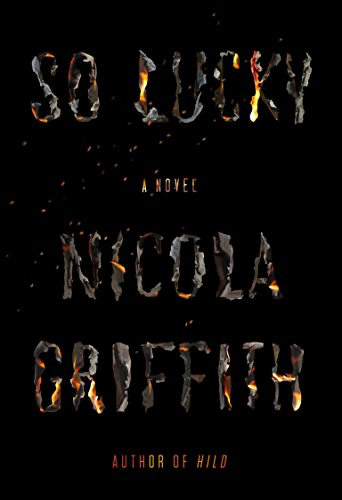
So Lucky – Nicola Griffith“Yeah, I found nowhere/It got to know me…”

Since this post consists entirely of songs, consider all of them to be today’s song.

That’s it for this week’s Sunday Songs! Have a wonderful rest of your day, and take care of yourselves!
Posted in Sunday Songs

Sunday Songs – 11/5/23

Happy Sunday, bibliophiles! I hope this week has treated you well.

Did somebody order a monthly blue period double-dipped with Peter Gabriel? Because you guys are not gonna believe what showed up on my doorstep this morning…

Enjoy this week’s songs!

SUNDAY SONGS: 11/5/23

“The Tower That Ate People” – Peter Gabriel

COME AND GET IT! TWO FOR ONE PETER GABRIEL DEAL! TWO FOR THE PRICE OF ONE!

If there’s a vaguely overarching theme for this week’s songs that I can throw together, it’s that Peter Gabriel gets so much weirder than people give him credit for. I suppose that’s the curse of any musician whose earlier hits get the spotlight while the later, more experimental parts of their career go on the wayside in terms of engagement, but are as full of life and creativity as anything else they’ve produced (see also: David Bowie, Kate Bush). To be fair, we’re so used to aging artists that continue to pump out more of the same in hopes of keeping the fire of fame going (say, what’s going on with The Rolling Stones lately?), but equating aging to a decline in musical artistry is shallow either way. Again: I just saw Peter Gabriel a few weeks back, and here he is at 73 delivering some of the most spectacular performances—both visual and musical—that I’ve seen from any musician on stage.

The album, 2000’s OVO, is technically his soundtrack work, and was conceived for a multimedia show that ran in the Millennium Dome for 999 shows in that same year. Gabriel’s work on it interfered with his next album, the criminally underrated Up, which ended up coming out in 2002, a year after it was set to be released. The through lines between the two are clear; “The Tower That Ate People” (good god, what a title) has an industrial, almost Massive Attack-like crawl to it, propelled by a looped guitar riff. Gabriel’s voice comes out as a shrouded growl, making it all the more convincing when he opens the song with “There’s a bump in the basement/there’s a knocking on the wall.” The electronic grinding as he sings of “the pumping of the pistons” makes the music swell. It’s a clanging machine, but it never loses an ounce of that cinematic, Peter Gabriel touch—especially not the prolonged silence after he declares “We’re building up/Until we touch the sky,” letting everything fade to lumbering, echoing footsteps. I can only imagine what the stage show was like. I’m jealous that I wasn’t one of the lucky few who got to see this live on the i/o tour, because can you imagine the feeling of this reverberating straight through your ribs?

“We Looked Like Giants” (Death Cab for Cutie cover) – Car Seat Headrest

THEY’RE BACK!! THEY’RE BACK!!!! So what if it’s a cover—it’s a perfect fit.

Even without as much Death Cab for Cutie knowledge (much less about the album that they’re commemorating—before this, all I knew was the title track. Owie.), it’s easy to see that pairing them with Car Seat Headrest was a fit as perfect as puzzle pieces sliding together. Despite “We Looked Like Giants” being a cover, it feels like the whole song is harkening back to the Teens of Denial glory days, with its crashing guitar breakdowns and angst so dense you could squeeze it out of a dish towel. The lyrics feel even more like it was made for them—”When every Thursday/I’d brave the mountain passes/And you’d skip your early classes/And we learned how our bodies worked.” Certainly makes…every single song from Twin Fantasy make more sense. Even without the slam of an intro that the original version boasts, the tension and momentum that Will Toledo and company bring to this song fills it with the nervous energy that has defined the band for so long—it’s a song teetering on its tiptoes, balancing out both arms as it contemplates the edge. Toledo’s signature, honeyed wail takes the song to dizzying heights, making the collision course back to Earth as the final seconds plunge into silence all the more riveting. I always get all sappy about Teens of Denial and all of the memories of listening to it the summer before I started high school, and this song brings all of the good parts of that back—slip this before “Fill In the Blank,” and I wouldn’t even blink. Leave it to Car Seat Headrest to toe the line between an unchanged cover and one that makes the cover all their own.

“The Family and the Fishing Net” – Peter Gabriel

I’ve done it. I’ve finally surmounted the task of going through all of Peter Gabriel’s albums (minus his soundtrack work). Peter Gabriel summer has come to an end. Peter Gabriel 4: Security was the last one for entirely arbitrary reasons, but it’s fantastic—and a lot creepier than most people give it credit for.

Take this song. Immediately, it sonically calls back to “Intruder,” with its ominously creeping instrumentals, off-kilter chanting and an unsettling chorus of flutes that open the song. Slowly, you start to process the lyrics, and the chill starts creeping down your spine. “Icing on the warm flesh cake?” Yep. Mom, come pick me up, I’m scared. But if you take just a quick look through, you can see the true genius of this song—I was super curious about the meaning, and I was floored by the concept behind it.

“Vows of sacrifice (vows of sacrifice)/Headless chickens (headless chickens)/Dance in circles (dance in circles)”. It sounds like the makings of a cult. But Peter Gabriel specifically created “The Family and the Fishing Net” as a wedding song. Vows of sacrifice? For richer, for poorer, in sickness and in health. Headless chickens? Could just as well be serving a roast dinner at the ceremony. Dance in circles? We’ve all done that at a wedding or two, haven’t we? That’s where the lyrical genius comes in—it’s not just that he’s subverting Western wedding imagery and making it sound like a cult ritual, there’s a level of exoticization that he brings to it that makes it clever in a conscious way that lines up with his worldly sensibilities. It feels like a response to every song that’s ever demonized and exoticized ordinary (and often sacred) rituals of indigenous people around the world. And given that much of this album has that worldly ethos (see also: “San Jacinto,” “Wallflower”), it’s a perfect addition. As much as I tend to rag on old white guys, Peter Gabriel should be one of the paragon examples in writing songs—and any kind of writing—outside our worldviews, just for the simple fact that he cares to listen about people’s lived experiences. It’s not just writing about some strange, foreign goings-on that he witnessed in his travels—Gabriel took the time to make sure that he understood and uplifted the people and cultures that he encountered. That’s what makes this song feel so important—he recognized the detriment in writing songs from an ignorant distance, and used that aspect of the history of Western music to create one of the creepiest—and most clever—songs in his catalogue.

Also, to the anonymous YouTube commenter who said that she wanted to have this play when she walked down the aisle: I salute you. I’d pay to see that.

“She Plays Bass” – beabadoobee

So it turns out that the she who plays bass is beabadoobee’s actual bassist, and…yeah. They’re aren’t romantically involved, but that still has to be bizarre to be playing bass on a song about yourself. At least all parties seem to be okay with it? Knock on wood that beabadoobee’s backing band doesn’t get into any kind of Fleetwood Mac funny business.

That aside, here’s another entry into my thesis that beabadoobee makes the perfect music for teen rom-coms. From her 90’s-inspired Space Cadet EP (hmm, wonder why there’s a song called “I Wish I Was Stephen Malkmus”…), it’s an ode to yearning, longing, and bright, shiny guitars. Bea Kristi described the song as “a Cure rip-off,” a description that she admitted to Robert Smith himself when they met at the BRIT awards back in 2020. Either way you want to describe it, there’s no denying the brightness of it—despite the black and white cover of the single, “She Plays Bass” is rife with neon colors and cartoon stars. I halfway get the Cure bit—definitely more like “Friday I’m in Love” or “Let’s Go to Bed” than their other music—but what I do get is delightfully guitar-driven indie longing, sparkling and starry-eyed. If “Glue Song” plays in the end-credits of said rom-com, maybe this plays as the intimidatingly cool love interest is introduced. Just a thought.

“Black Hole” – boygenius

What? You thought I was gonna shut up about the rest after talking about “Powers”? You fools…

“Black Hole” is an easy song to have on loop—it’s part of the 3/4 of this EP where every song is freakishly hypnotic, but they’re all around two and a half minutes long, so they just suck you down with them forever, like water sucked down the sink drain. Or…maybe, something else? Mayhaps…a black hole? But the black hole in this song is a more recent revelation—”You can see the stars, the ones/The headlines said this morning were being spat out/By what we thought was just/Destroying everything for good.” The black hole in question is a fascinating one: caught by the Hubble telescope in early April of this year, NASA observed that this supermassive black hole was leaving a trail of stars in its destructive wake that stretched over 200,000 light years long. It’s the perfect, beautiful moment to write a song about. Hopefully this bodes well for me because I’m taking an astronomy class next year: I’ve always struggled with astronomy in school previously, but it makes me tear up that we live in a universe that we will never fully know everything about. That there will always be new things to discover about the vastness of space and the world around us and beyond us until the day I die.

Back to the song: it’s poetry. More specifically, it’s two separate poems. Julien Baker takes the reins in the first poem, with her musings about looking at the stars. The gently clattering electronic instrumentals sound appropriately starry, with the hum of synths leading into Baker’s voice, then transitioning into a tinny, ascending scale on a keyboard just before everything shifts. This is the second poem. It feels like the camera has whipped around as the drums and synths intensify, panning around to Lucy Dacus as Phoebe Bridgers lingers just out of the frame, opaque camera shots flickering at high speed over them as the camera zooms in on their faces. Hearing Dacus take the high notes and Bridgers taking the low, the opposite of their normal range, is an odd treat—it makes Bridgers’ voice seem like a ghost, barely there unless you really pay attention, while Dacus acts as the piercing lighthouse beacon cutting through the fog. All of their lines are enchantingly neat, spaced apart like they’re all collected in separate bins. Apart from the initial confusion (and fleeting clunkiness) of the first two lines (“White teeth/black light/White tee/brown eyes”—”teeth” and “tee” sound way too similar, especially when preceded by the same adjective), I’ve been eating up the emotionally-charged precision of it all. As each line is cut off the chopping block, the drum machine thrums on, just as meticulous as the delivery of each lyric. And I am nothing if not a sucker for songs on an album (or an EP, in this case) that transition into the other as though they’re the same song. Especially with this and “Afraid of Heights” being so short, it feels all the more like a single song. Pure artistry.

Since this post consists entirely of songs, consider all of them to be today’s song.

That’s it for this week’s Sunday Songs! Have a wonderful rest of your day, and take care of yourselves!