Here in the U.S., July is Disability Pride Month! This July, we find ourselves in a situation that’s far from celebratory. Both the U.S. and the U.K. are on the verge of passing legislation that would make cuts to the healthcare programs and benefits that many disabled people rely on. It’s clearer than ever that the people in power see disabled people as disposable and not deserving of respect. In the years since I’ve started making these posts, visibility for disabled people (and this pride month) has seen a small increase (in my experience) yet continues to be left behind in feminism. And I’m still on the hunt for any kind of media that accurately represents my own disability (sensory processing disorder), and I know many disabled people have had similar experiences. But that’s no reason to give up. It’s no reason to stop writing, to stop reading, and to stop listening to the lived experiences of disabled people. We cannot be erased with legislation—we will always be here, and we’re sticking around no matter what.
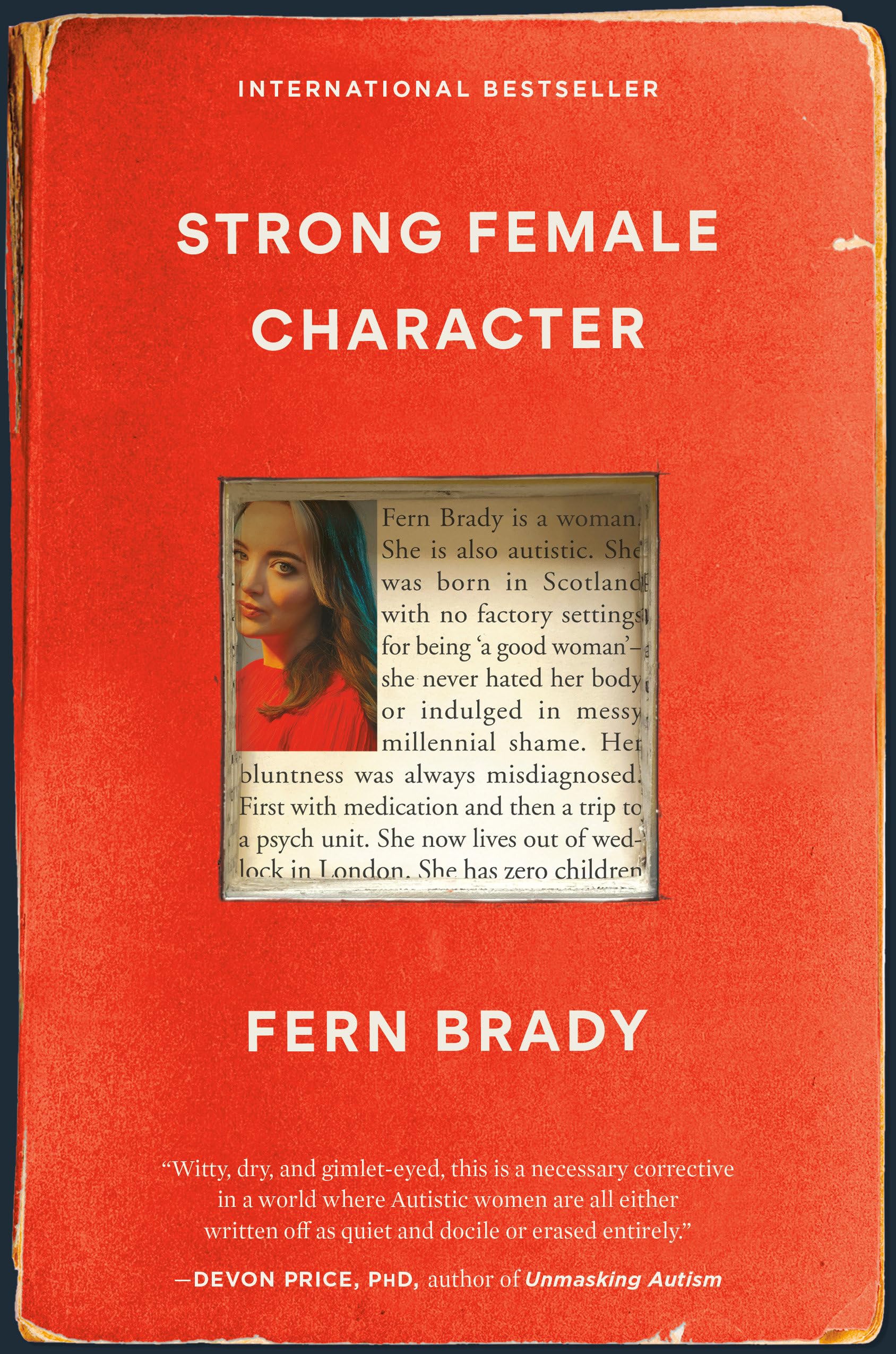
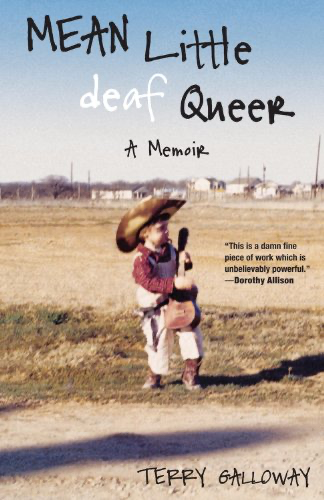
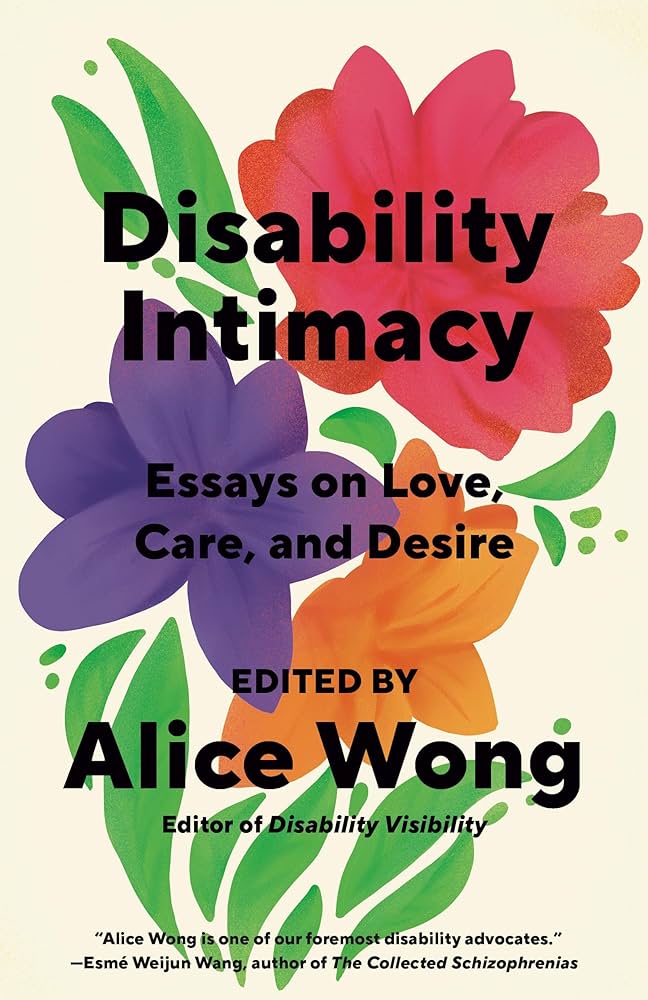
So here is another list of some of the best books with disabled representation that I’ve read in the past year! I’ve included books from all age ranges (middle grade to adult) and genres that represent a multitude of disabilities.
NOTE: my memory (and the internet) is imperfect, so if I’ve misrepresented/mislabeled any of the specific rep in these books, don’t hesitate to let me know!
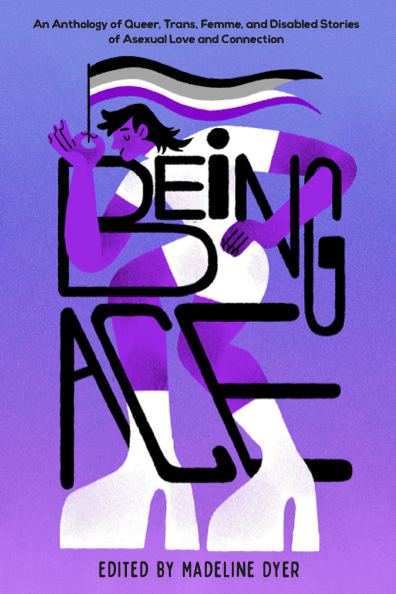
*I’ve arbitrarily included Being Ace in the science fiction section, but it includes several genres, many of which fall under sci-fi/fantasy. It could theoretically go in all three fiction categories in this post.
TELL ME WHAT YOU THINK! Have you read any of these books, and if so, did you enjoy them? What are some of your favorite books with disability rep? Let me know in the comments!
Today’s song:
That’s it for this recommendations list! Have a wonderful rest of your day, and take care of yourselves!
Happy Sunday, bibliophiles! I hope this week has treated you well.
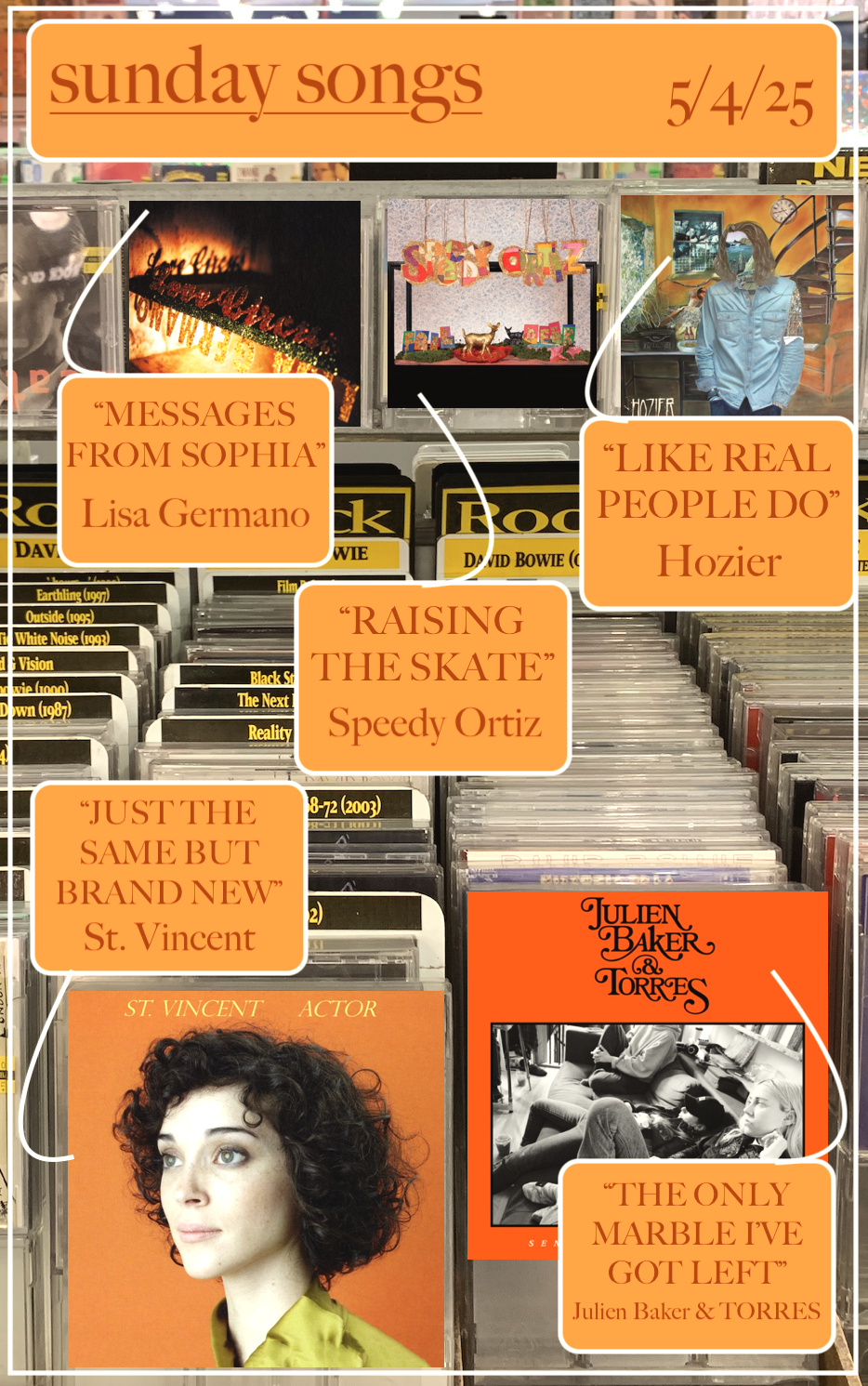
This week: it’s all a trick question. I saw St. Vincent last week, but did she play the song I’m writing about this week? No. Did she play the David Bowie song I’m writing about this week, though?
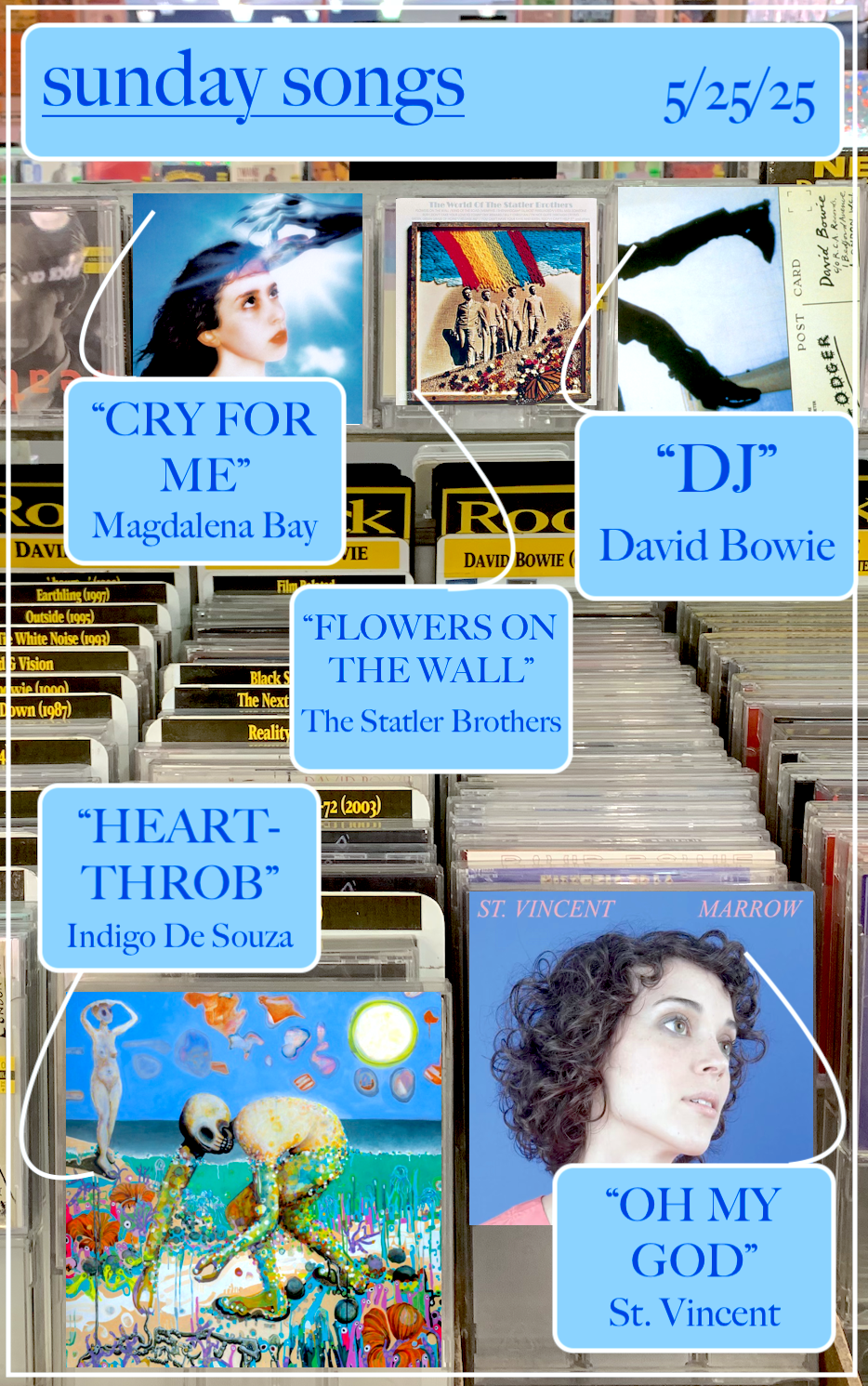
Two years on the heels of All of This Will End (I say that like I’ve listened to it…I’ve listened to about half? Good stuff, though), Indigo De Souza is back with a new album out this summer, Precipice. I don’t know if I’m committed enough to listen immediately (I might go for Any Shape You Take first). To be honest, after briefly hearing whatever the hell that disastrous, autotuned misfire that was WHOLESOME EVIL FANTASY, I was hesitant to see what De Souza had done next. Thankfully, it was far from that. The album cover’s gorgeous, too—the naked skull creature is having its beach episode!
As cheesy as the music video is, “Heartthrob” seems for all the world to be a moment of healing for De Souza, and I’m so happy for her. The chorus of “I really put my back into it” describes the throttle of this track, a more pop-rock offering with trembling vocals but no shortage of determination. The pre-chorus describing De Souza’s experiences of abuse are jarring against the otherwise sunny, bubbly feel of the track, and yet that’s the point; De Souza said that they wrote the song about “process[ing] something that is often hard to talk about—the harmful ways I’ve been taken advantage of in my physical memory. ‘Heartthrob’ is about harnessing anger, and turning it into something powerful and embodied. It’s about taking back my body and my experience. It’s a big fuck you to the abusers of the world.” That passion radiates through every inch of the track through wavering warble and cheerleader-like shout, which De Souza delivers in equal measure. More than anything, “Heartthrob” feels like a release, an outpouring of joy, anger, and passion, a bubbling bottle uncorked. I can’t help but love the rallying cry of “I really put my back into it”—maybe it’s not my favorite song in the world, but for all of the unoriginality plaguing our landscape, it’s refreshing to see people like them pouring it all into their art.
I had the absolute privilege of seeing St. Vincent for a second time last week. I know I’m obsessed, but it was seriously breathtaking—the setlist was incredible, her stage presence was so captivating, and her guitar playing always knocks me off my feet. I was right near the third row, and I nearly had a heart attack when she started crowdsurfing during “New York”…never thought I’d find myself getting choked up by that song (it’s nowhere near my favorite), but to be so close to her and in the presence of so much love and togetherness began to heal a part of me, if only for a night. Sure, the loungy rendition of “Candy Darling” she did at the end was a bit of a misfire, but if that was the worst part of the night, then it was a concert I’ll never forget.
So without further ado, here’s a song that…she didn’t play, and I suspect that she probably won’t revive unless she willingly goes into her deep cuts. A bonus track from Actor that was also released along with the “Marrow” single (which she did play that night and absolutely annihilated), its deceptively quiet intro hides a suppressed, roiling storm. Like much of Actor, it hides dread and unpleasantness beneath a veneer of delicate woodwinds and finger-picking, but conceals a spreading rot beneath it. The dread veers into focus with Annie Clark’s chorus of “‘Cause when the drink goes in/The devil comes out” after detailing all of the dishes gone without washing and the bathwater gone cold while she’s still in it. A faintly “Via Chicago”-like drum fill patters as the chorus grows in intensity, a chanting of “Oh my god” that never loses its delicacy but turns more from an indifferent remark to a quietly horrified exclamation, as though she sees the landscape of dying houseplants and unmade beds before her. Given that this was a bonus track, it seems that even then, this was a time that Clark wasn’t keen on returning to, but I do find some comfort in the fact that presumably, given that there’s around 16 years behind it, this is something that Clark has deliberately put in the past; MASSEDUCTION saw her dealing with substance abuse and other issues more upfront, but even that’s an era that seems behind her, even if All Born Screaming found her in a darker but seemingly different headspace. I’m glad that she was able to exorcise “Oh My God”—sometimes, you have to extricate those things from your life, but hiding the track in plain sight seems a strategic way to not return to a time you’re not keen on revisiting.
…AND A BOOK TO GO WITH IT:
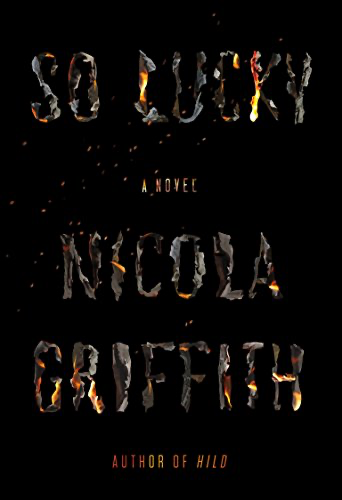
So Lucky – Nicola Griffith – “Oh My God” matches the dread of the protagonist, Mara, picking the pieces of her life after losing everything, as well as the lingering feeling that her life is in danger—from herself and from outside forces.
I was floundering for comparisons for “Cry for Me” at first, but then it hit me. Imagine if the Cardigans had access to 21st century technology in the ’90s, and then imagine them taking that and making some kind of weird disco. They’ve got their uber-’70s violin piano flourishes and bass lines paired with the most modern-sounding, cinematic synths. What’s cooked up is bizarrely good—the at first disparate contrast of Mica Tennenbaum’s air-light voice and the oily chrome of the synths makes for something that works together in surprising harmony. The disco bit sometimes veers into too much for me, but I can’t deny how deliciously catchy “Cry for Me” is—the song’s title is uttered like a seductive plea to cross into a world where everything is glittering and perfect, but once you bite into the fruits, the venom starts pumping through your veins. The crunching, bubbling shift in synths at the 2:00 mark make you feel like you’ve turned a corner on some kind of theme park ride—into what, you’re not sure. For the rowers keep on rowing, and they’re certainly not showing any signs that they are slowing…
BONUS: who the fuck let a keytar in the—oh, okay. Just this once. I’ll allow it. Maaaaaaybe. Magdalena Bay recently covered “Ashes to Ashes” on Triple J, and even though it’s up there with my favorite Bowie tracks, they clearly get how weird of a song it is:
Sometimes you remember certain songs at times that are too perfect for words.
“Last night, I dressed in tails pretending I was on the town/As long as I can dream, it’s hard to slow this swinger down/So please don’t give a thought to me, I’m really doing fine/You can always find me here and having quite a time…”
Depression, self-isolation, and making up scenarios transcends time, but getting this song absolutely hooked in my head while I was about a month into lockdown had to be divine intervention. Or something. Minus the more ’60s language, this could’ve been the contents of a long-distance FaceTime call right smack in the middle of 2020. I have a specific memory, give or take five years to the day (I’m just glad I can put some distance from it) of hearing nothing but this song in my head while I was supposed to be recalling something or other about U.S. History for the APUSH exam…a single essay question that I did on my laptop in my bedroom. (Don’t worry, I got a 4. I wasn’t really in dire straits.) Yes, feelings aren’t inherently attached to history, but “Flowers On the Wall” bottled something so succinctly and charmingly. Once it invited itself into my shuffle after years of not thinking about it, that feeling never went away—in a good way. Despite being so pandemic-feeling it never got sullied by it. I’ve never been one for this almost hokier country sound, but it fits the kind of exaggerated state that the narrator’s in—it’s exactly how I’d expect the inner voice of someone who spends their days playing solitaire and dressing up in a tux, never once leaving the house. It’s the catchiest song about extensively denying that you need to touch grass. Truly timeless.
…AND A BOOK TO GO WITH IT:
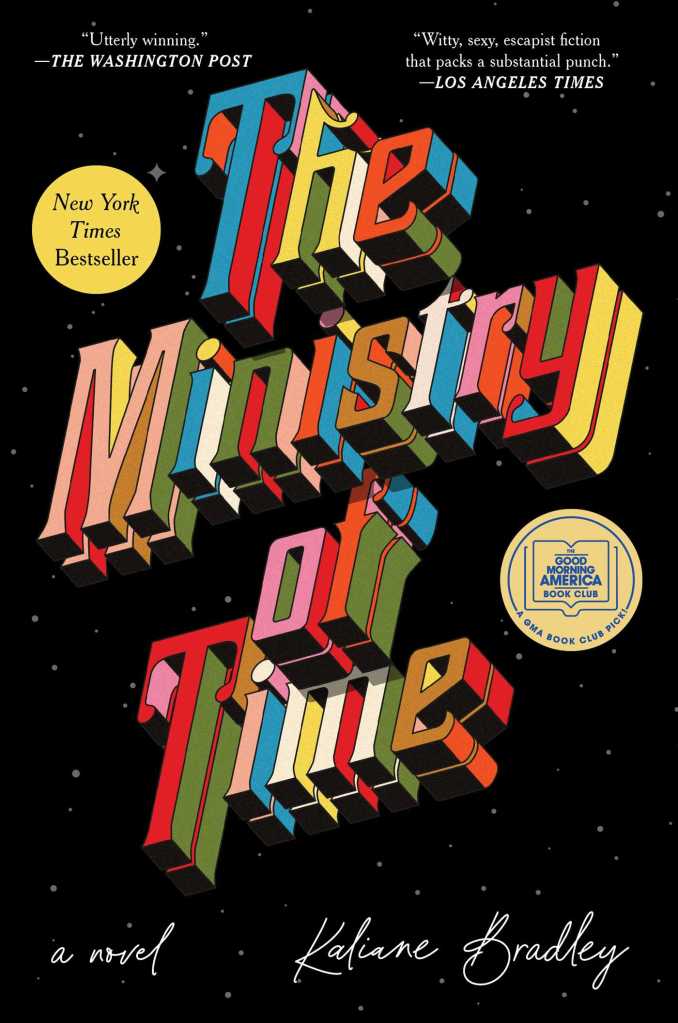
The Ministry of Time – Kailene Bradley – what else is there to do when you’re [checks notes] a time-displaced polar explorer from the 1840’s who really shouldn’t leave the (21st century) house?
Diversity win! Bowie is breaking his and her heart!
“DJ” has been on the brain because, back to St. Vincent, they played this song not once but twice before she came onstage. Taste, especially from someone who has said that there’s no one she’d put above Bowie.
From Lodger, “DJ” retains some of the theatricality of his glam days, but well past the Ziggy Stardust days. He’s long shed that persona, as well as the abysmal leanings and drugs of the Thin White Duke, closing out the Berlin Trilogy with a slicker flourish that led into the ’80s (see: “Boys Keep Swinging”). It’s got a critical, sardonic eye that he retained from his earlier ’70s songwriting, magnifying the role of a DJ who becomes so swallowed in his career that he becomes it: “I am the DJ/I am what I play/I’ve got believers/Believing me.” According to Bowie, it was his take on the disco culture that had overtaken the ’70s: speaking to Melody Maker, he said, “The DJ is the one who is having ulcers now, not the executives, because if you do the unthinkable thing of putting a record on in a disco not in time, that’s it. If you have thirty seconds silence, your whole career is over.” Yet it’s so easy to see the through line back to himself—persona or not, you don’t have to chip away at much to find the one true Bowie within.
Even if “DJ” didn’t also spell out David Jones’ initials, this fear of becoming inextricable from his music and celebrity was a constant fear of his in the 1970s. 1979 saw Bowie recovering from his devastating cocaine addiction, and that almost-separation from it makes “DJ” feel like a less fatalistic version of “Cracked Actor,” in which he saw his future self as a washed-out, middle-aged actor relying on his past fame to pay the bills.”DJ” sees him inching away from “Forget that I’m 50/’Cause I just got paid” territory, but no less critical—and almost fearful—of being on the precipice of losing his career thanks to one less hit and being seen only as a vessel for the music. In the music video, he’s passed around by fans in the middle of the street; some hug him and seem to make genuine conversation, while others simply try to give him a kiss on the cheek (BRO?? not to get all gen z with it, but did he WANT that??). It’s all at once tenderly human and a little eery watching him weave through the crowd, some seeing a human, others seeing a celebrity. No matter the disaffected sarcasm in his words and lyricism, Bowie’s always there.
As for the music video…I don’t think there’s really any bad Bowie videos I can think of, and even the really bad ones are at least hilarious. But this one seems to fall on the wayside, and I don’t see why! The way that Bowie drapes himself down the blue shutters, the demolishing of the DJ equipment, the proto-Trait pink boiler suit/gas mask combination…he could work anything. Well…okay, definitely not this. Almost anything.
…AND A BOOK TO GO WITH IT:
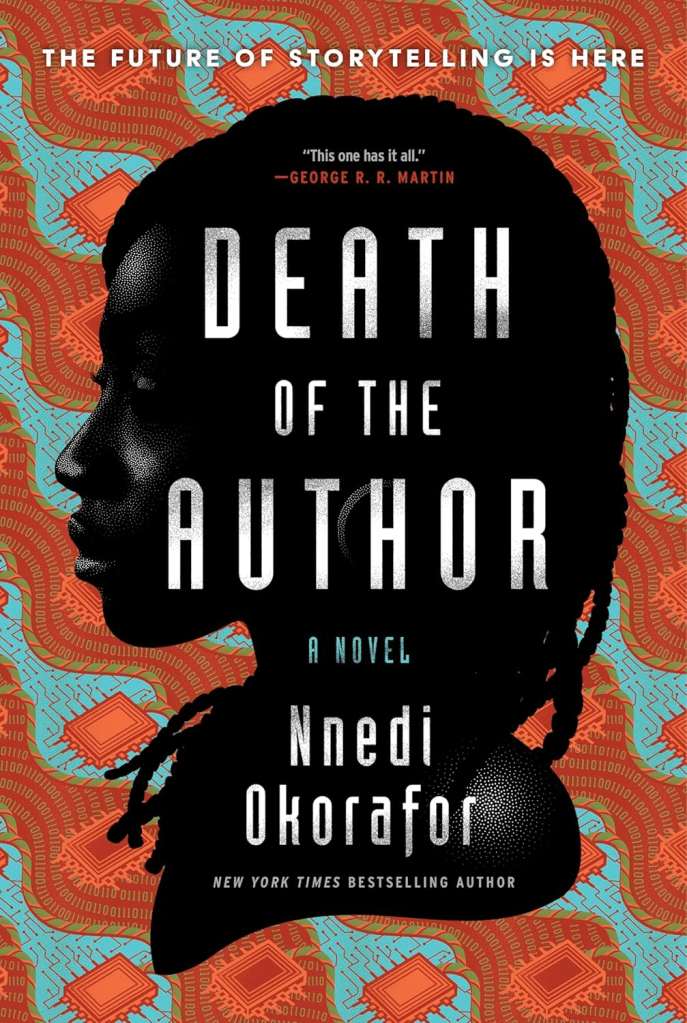
Death of the Author – Nnedi Okorafor – another work about the line between the author, their work, and how the two are interconnected, no matter the perceived separations (and the complications that arise from it).
Since this post consists entirely of songs, consider all of them to be today’s song.
That’s it for this week’s Sunday Songs! Have a wonderful rest of your day, and take care of yourselves!
Happy Sunday, bibliophiles! First off, a very happy Mother’s Day to my wonderful mom. She inspires me to be a better and more creative person every day, and I don’t think I’d be putting pen to paper (in the drawing and writing sense) nearly as much without her guidance and creative inspiration. So thank you for all your support, hard work, and love. I am so, so lucky. 🩵
School’s out, and it should be back to our scheduled programming soon enough. Of course, every time I take a break, I end up rambling tenfold to make up for the absence…apologies in advance. This is what happens when you let me get ahold of a new Car Seat Headrest album.
Since I’ve been in the finals doldrums for a bit, here are my graphics from the past few weeks:
The more I think about The Scholars, the more I realize that this is the extreme of Car Seat Headrest’s qualities. Will Toledo has always been a scholar, and a deeply self-indulgent one. I don’t mean that derogatorily at all—his songs are just packed to the gills with references: often Biblical and also encompassing musical and literary greats. Although his life is still interwoven within the narrative (“Is it you or the sickness that’s talking?” on “The Catastrophe [Good Luck With That, Man]”), The Scholars is a veritable library in and of itself.
Not only are the usual suspects of Biblical references and allusions to music and literature, and Toledo’s past work are there, but The Scholars is Car Seat Headrest’s furry rock opera, an omniscient epic taking place at the fictional Parnassus University. There’s a full summary of it in a libretto that’s only available if you buy the vinyl, but thanks to the saints at Genius who, I’ve been able to piece together some of the narrative; it consists of vibrant characters coming out of the closet to their parents, participating in various subcultures around the college, a rival clown college, and a band of punk troubadours. All this culminates in [checks notes] the Dean of Parnassus University getting poisoned after the students from the rival clown college invade. It’s a trip…but I wish it was more readily available! When I say that The Scholars is self-indulgent, I love it in the sense that Will Toledo has created such an inventive, sprawling world between the notes of this album, and that he’s let his ambition run wild, in terms of the scale of the story and the prog sensibilities of the album. He clearly appreciates the value of letting people solve riddles and puzzles, but he’s left hardly any clues to piece together the narrative if we don’t have the libretto. I’d just like it to be more accessible—not in the sense of being more “listener friendly,” but in the sense that I want to actually be able to access the story. There’s clearly so many layers to The Scholars, and I’m dying to know more of the nuance.
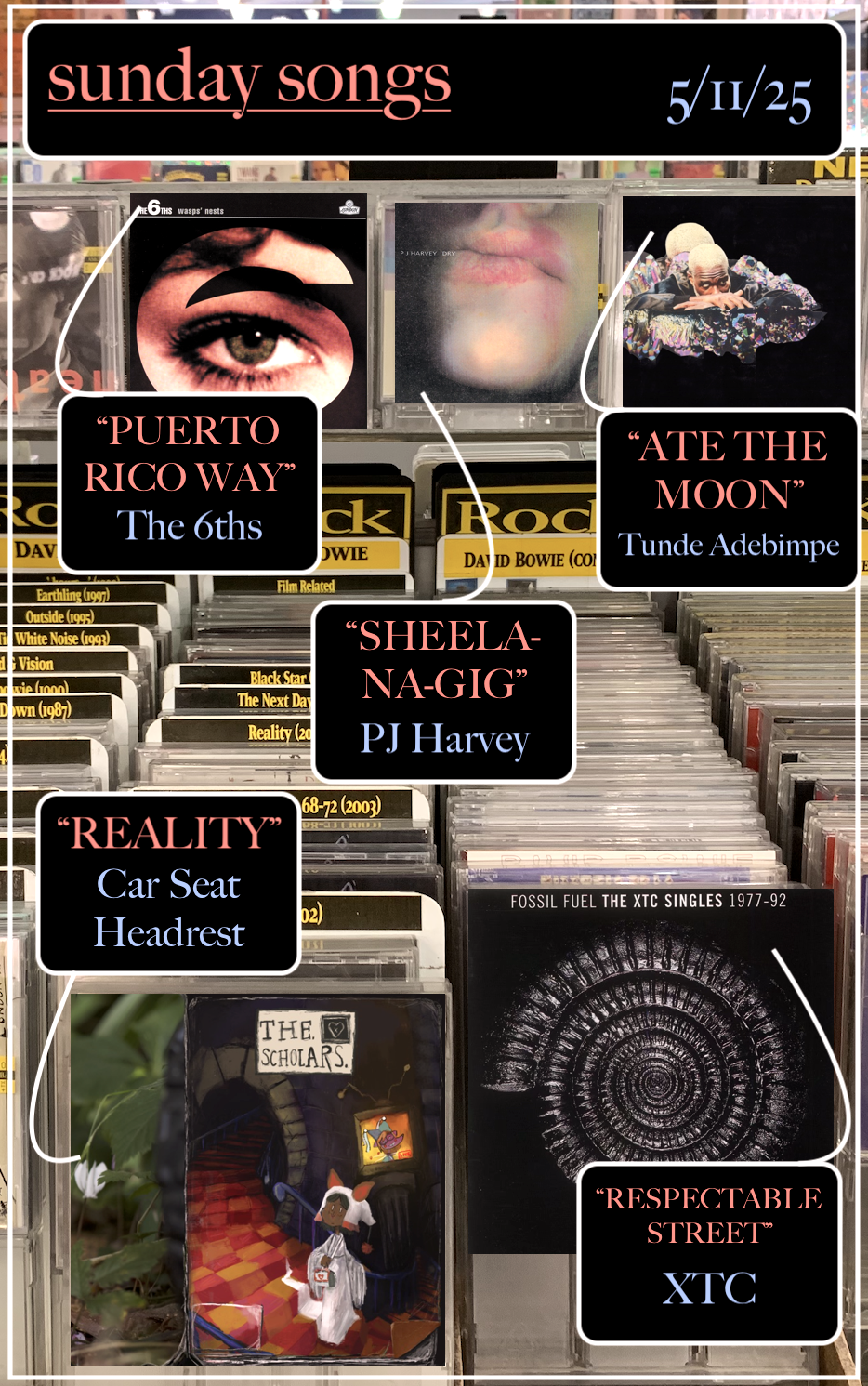
That being said, even if you don’t know the story of the Rise and Fall of CCF and the Clowns from Parnassus University, The Scholars is a treat. For the first half, I was almost duped into thinking that the band had almost dipped back into Teens of Denial territory, which was twofold. On the one hand, Teens of Denial has a deeply special place in my heart, a staple of my fourteen-year-old girlhood and one of my favorite albums of all time. After the missteps of Making a Door Less Open, The Scholars is a return to form in some ways. As good as the first half was, I was afraid that it was too much so—even with the rock opera behind it, songs like “Equals” did rather feel like the same stories of drugs and regret that populating Teens of Denial. Yet after “Gethsemane,” “Reality” takes a turn into the more sprawling—and always fascinating. Trading off vocals between Toledo and Ethan Ives, it plunges into pure, 21st-century rock opera, complete with the avalanche of drama and pounding guitars that comes in at around the five-minute mark. I swear that some of the chord progressions remind me of “Cosmic Hero,” another one of my favorite epics from the band, but it’s painted into an unending landscape. Through all eleven minutes, I get the feeling of the culmination of all of the story’s events before the climax—it’s a drawn-out feeling, but one of certainty: they can’t escape what they’ve made, and they must move forward with acceptance of their fate; the whispered utterance of “no stage left” feels like an admittance that they can’t see what they’ve done, but there’s no escape from the consequences: they can’t see the audience. I’m circling back to self-indulgence, but the term sounds so negative: this just feels like Toledo unleashing the multitude of narratives within him. Is it easy to sit down and listen to songs that are nearly 20 minutes long? No, even for me. Yet as esoteric as it is, “Reality,” and this album, is worth your while, if you’ve got the time to set aside. Bottom line: be self-indulgent with your art. It doesn’t matter if there’s a small audience or no audience—you create what you think the world is missing, and the right people will find it.
…AND A BOOK TO GO WITH IT:
The Scholars 28-page libretto, only available when you purchase the vinyl – not trying to be snarky about it, genuinely. But heck, it’s pretty much a play in and of itself, complete with stage directions in the liner notes.
It’s long been accepted that XTC helped mold the Britpop movement as we know it—in fact, he almost had a direct hand in it, as he was Blur’s first choice to produce Modern Life is Rubbish; he produced a handful of the original mixes before departing from the project. But XTC made Britpop 12 years earlier. As much as I adore Blur’s sound and lyrical style from Modern Life up until about The Great Escape, hearing “Respectable Street” makes me realize exactly where they were coming in. I wouldn’t go so far to call some of it a rip-off…well, I almost would. I love Blur too much for that. Blur did develop their own style within this method, but at first, their claim to fame was largely due to songs like these. Not only does this song take a microscope to the arbitrary hypocrisies littering an uptight, quintessentially British neighborhood, but Andy Partridge has the vocal swagger to carry it all. Damon Albarn had the looks, but the line delivery is all Partridge, full of snark and with a cheeky wink as he lays out all of the double standards and not-so-well-kept secrets: “Sunday church and they look fetching/Saturday night saw him retching over our fence.” Of course, almost half of the jabs got butchered by the radio edit (“Now they talk about abortion” was replaced with “absorption,” which makes no sense, but…not a whole lot sounds like abortion, I guess?), but no amount of censorship would dull Partridge’s signature, acerbic style. Piled on with in-your-face production and the quick strikes of guitars, and you’ve got a song that inspired a generation—and hasn’t gotten the least bit old.
Also, about the promo above: I just know that set sounded heinous…I’m gonna go out on a limb and say, however talented all these guys are, that most of them did not know how to play cellos or violins. Definitely the point. Still, it must’ve sounded like middle school band practice in there…
Stephin Merritt’s writing continues to be something to behold. Even though Mark Robinson (of Unrest fame) is at the vocal helm here, this is one of the 6th’s songs that’s most indicative of Merritt’s ability to not just set a scene, but make something so objectively seedy and nasty-sounding into the most cheerful, sun-bleached indie pop you’ve ever heard. Take the first few lines:
“The sun pissing in the streets/Of some hungover place/Dances with two left feet upon her face/But soft! She is fast asleep/Beneath her mosquitoes/You would never want to know what she knows…”
First off, the imagery of the sun “pissing in the street” is a stroke of genius, evoking the lazy way that sunlight bends and dapples along the subject’s face—something so objectively beautiful turned wayward and gross, an effect that’s stacked once the drunkenness is emphasized by it “dancing with two left feet.” The environment in “Puerto Rico Way” is so bloated with alcohol and oppressive heat, but it carries itself like all of Merritt’s indie pop songs—with more confidence than it should have, given the disappointing, warmed-over love he often writes about. On the track list, it rides the high of “Here in My Heart,” which could add to the cheeriness, but this track carves out a slice of hope, even if Martina doesn’t accept the narrator’s dance, in this “hungover place.” (The drunk, free-spirited, redheaded Martina does read like a manic pixie dream girl, so maybe it wasn’t meant to be after all. Martina’s so crazzzzzzzy! Love her!!!) The admission that “Oh love, it would’ve been ideal” implies that no, she didn’t, but that indie pop-timism (I’ll see myself out) creates a wrapped towel of sunburnt nostalgia, a photograph bleached in the sun, of a fleeting dance and a fleeting girl.
It’s always fascinating to look at songs that seem ostensibly quite feminist, but had none of that intention behind them. Take “Army of Me,” a song that I’ve always interpreted as being about feminine resistance, but was more about Björk trying to get her lazy brother to get up and do something with his life. The lyrics are quite self-empowered, easily interpreted as women breaking free from male-ordered subservience. The feminist leanings are there, but it’s only a sliver of the truth. Do I still feel empowered when I listen to it? Of course. But it’s not the whole story.
The same is true of “Sheela-Na-Gig.” The title references a type of Celtic fertility figure, an image of a laughing woman posing with her genitalia bared outwards. As such, the narrator goes through a sort of comedy of errors as she gets rejected over and over after flaunting her sexual qualities to no avail (“Look at these/my childbearing hips”). It’s easy to take it as a kind of internalizing what men want in women, exhibiting it, and then being turned away when it’s not to their standards; there’s an element of slut-shaming in the male figures not wanting the narrator because she’s “unclean.” The chorus of “Gonna wash that man right outta my hair” (interpolated from South Pacific) is empowered, especially after being kicked to the curb so many times by judgmental men. But PJ Harvey never intended it to be feminist song: as she told Melody Maker in 1992, “I wanted that sense of humour in the song…being able to laugh at yourself in relationships. There’s some anger there but, for me, it’s a funny song. I wasn’t intending it to be a feminist song or anything. I wanted it to have several sides.” And there is something funny about that—if you’ve been rejected with all of the repetition and swiftness of Wile E. Coyote falling off a cliff, all you can do is look back and laugh.
It is a sort of death of the author situation; “Sheela-Na-Gig” hasn’t necessarily been lauded as some feminist anthem (and Harvey said in the same interview above that she didn’t want to be “lumped in” with more forwardly feminist bands), but even a quick glance at any reviews of the song shows that’s how many people tend to take it. In the context of PJ Harvey’s other songs, which are incontestably about misogyny and her struggles as a woman in a male-dominated industry (and world) (see: “50ft Queenie”), “Sheela-Na-Gig” seems to fit into that puzzle. I don’t want to wave that over people’s heads like they interpreted it incorrectly, either—it’s not like I got the aspect on my first listen. (I credit that to Trash Theory.) Personally, I didn’t think all of it was necessarily funny at first, although being as Gen Z as I am, I’ve only heard the phrase “childbearing hips” used sarcastically, so I took that as such. After going through literary theory, I’ve definitely been on the fence-sitting side as far as whether or not to go full death-of-the-author on any given song; the reader’s interpretation does shape the work, but I find it foolish to take it without considering the author’s intent. With “Sheela-Na-Gig,” I think there’s a lot that can be empowering, but what may be most empowering to me is finding the humor in being a woman. The semi-autobiographical narrator swings and misses repeatedly, but doesn’t let any judgement get under her skin. All of the ferocious power chords signal that she’s ready to dust herself off and try again. In the present moment, the narrator hasn’t yet learned, but the fact that PJ Harvey has looked back and learned herself seems more the point to me: having the self-awareness to feel bad for your past self, but be able to laugh at their mistakes. There’s power in being able to look back and laugh instead of wallow in sorrow—when you’re a woman, it’s all you can do sometimes. It may not necessarily be feminist, but it sure is a part of life.
It’s been almost a month since Thee Black Boltz came out, and the question remains: is this enough to sate us through the dreaded TV on the Radio drought? For the most part, I’d say yes—but it’s a separate, branching effort. Though it proves that Tunde Adebimpe was the beating heart of the band, he’s more than formidable on his own, minus Dave Sitek’s production and piled on with more synths. Though it’s not without its misses, Thee Black Boltz feels like Adebimpe stretching his fingers out in all different directions, but never stretching them beyond what makes me come back to TV on the Radio so often.
With a central theme of overwhelm during times of crisis and searching for light—creativity—amidst the choking smog, Adebimpe turns to synths and more danceable beats (see: “Somebody New,” a bolder, dancier gamble that mostly paid off in spite of the autotune) in order to pull through. “Ate the Moon” is about that overwhelm, if the title doesn’t already clue you in. Swallowed by anxious spiraling and visions of horror, the narrator scrambles for answers, but finds only regret: an echoing, childlike voice proclaims after the “the man who ate the moon” chorus that “and he choked, of course, because he bit off more than he could chew. Such a dummy!” “Dummy” echoes and is pitched down as it fades out, distorted into a trickster baring a triumphant, toothy grin as it disappears into the darkness like the Cheshire Cat. “Ate the Moon” certainly has some of what I think the albums pitfalls are: the lyricism is on the simpler, more obvious side. Not inherently a drawback, but after something as rawly and artfully written as “Tonight,” it feels cheap for him to rhyme “fire” and “desire” for the millionth time. It’s like Jeff Tweedy using someone being “cool enough to be ice cream” as a metaphor after being such an unparalleled poet otherwise. But like “Ice Cream,” it’s easy to love “Ate the Moon.” With the instant hit of Adebimpe’s boxing gloved punch of a voice and the synths and guitars that have been sewn into an electronic gestalt, it’s one of the most unique songs on the album, an adrenaline-pumped trip into the downward spiral of autonomy-less fear.
…AND A BOOK TO GO WITH IT:
Death of the Author – Nnedi Okorafor – “Seems I was iII-prepared/For the fall that finds me here/Sad extremes running through my head/Knocked my blues into the red…”
Since this post consists entirely of songs, consider all of them to be today’s song.
Man, time to do wrap-ups? Barely, but I have some time on my hands and there’s nothing I love more than organizing my reading stats into bulleted lists, so why not? (The only reason I’ve been able to make this many posts this week is because most of them were started several weeks prior, but I digress.)
The past few months have been strangely calm, if you set aside…well, everything that’s been going on lately. I don’t think I have to explain. I’ve been working really hard to try and be as levelheaded as I can in the face of all of these crises. Levelheaded and hopeful. Neither of these mean ignorant bliss to me—I’m continuing to speak up when I can, read what they don’t want us to read, and put my money into places that respect my existence. (wink wink, nudge nudge…hope everybody who was financially able participated in the economic boycott today! 😉) Miraculously, this semester has given me the space to work at practicing that—I’ve had a lot more free time (almost an alien concept after last semester), so I’ve been working at putting my energy into what counts, mainly being creative and feeding my soul. I finished the first draft of book 3 in the sci-fi trilogy I’ve been working at since I was 16 (!!!!!!!!!!). I’ve tried to take up knitting. (Unsuccessful so far, but I’m trying to keep at it), and I’ve tried to draw and read when I’ve got the time. That, and getting on the mining grind in Minecraft and being paralyzed as Severance consumes every waking thought I have. GOD, what a show. All this is to say that this isn’t a straight journey—I’m by no means a master at being levelheaded and balancing work with creativity, but I’m trying to learn from my mistakes. All you can do is try.
JANUARY READING WRAP-UP
I read 15 books in January! In the gap between winter break and the start of the spring semester, I read some fantastic books, from whimsical graphic novels to classic sci-fi hijinks.
I read 13 books in February! This month was slightly slower (and shorter, obviously) than January, but I was able to read several books that I’ve been excited to get around to for months! As I usually do, I focused more on Black authors for Black History Month, and discovered some great books and authors as a result.
Here in the U.S., February is Black History Month! I normally begin by talking about how critical it is in these times to uplift marginalized voices (in this case, Black voices) with the attacks on so-called “critical race theory” in elementary schools and the attempts in both the classroom and the government to whitewash our fraught, racist past. However, I find these posts becoming more relevant as the Trump administration strikes down D.E.I. initiatives and has started shutting down “identity months” among many federal agencies. As Trump and his cronies push us into an age (certainly not a golden one) that strips away the celebration and acknowledgment of the wonderful difference that makes up this country, it’s more valuable than ever to celebrate those who have historically been downtrodden. Especially since Trump has purported himself as a friend to Black Americans (then turned around and committed unspeakably racists acts during both terms already), we need to emphasize the truth: Black people are and will always be vital to this country, and their history and contributions are an irreplaceable part of American history. No policy, removal, or dismissal can change that.
As with all of the related lists I make each year, this is not an exhaustive list; I encourage you to always look further and discover books and authors of your own during Black History Month (and during the rest of the year).
TELL ME WHAT YOU THINK! Have you read any of the books on this list, and if so, what did you think of them? What are some of your favorite books by Black authors that you’ve read recently? Let me know in the comments!
Today’s song:
That’s it for this year’s Black History Month list! Have a wonderful rest of your day, and take care of yourselves!
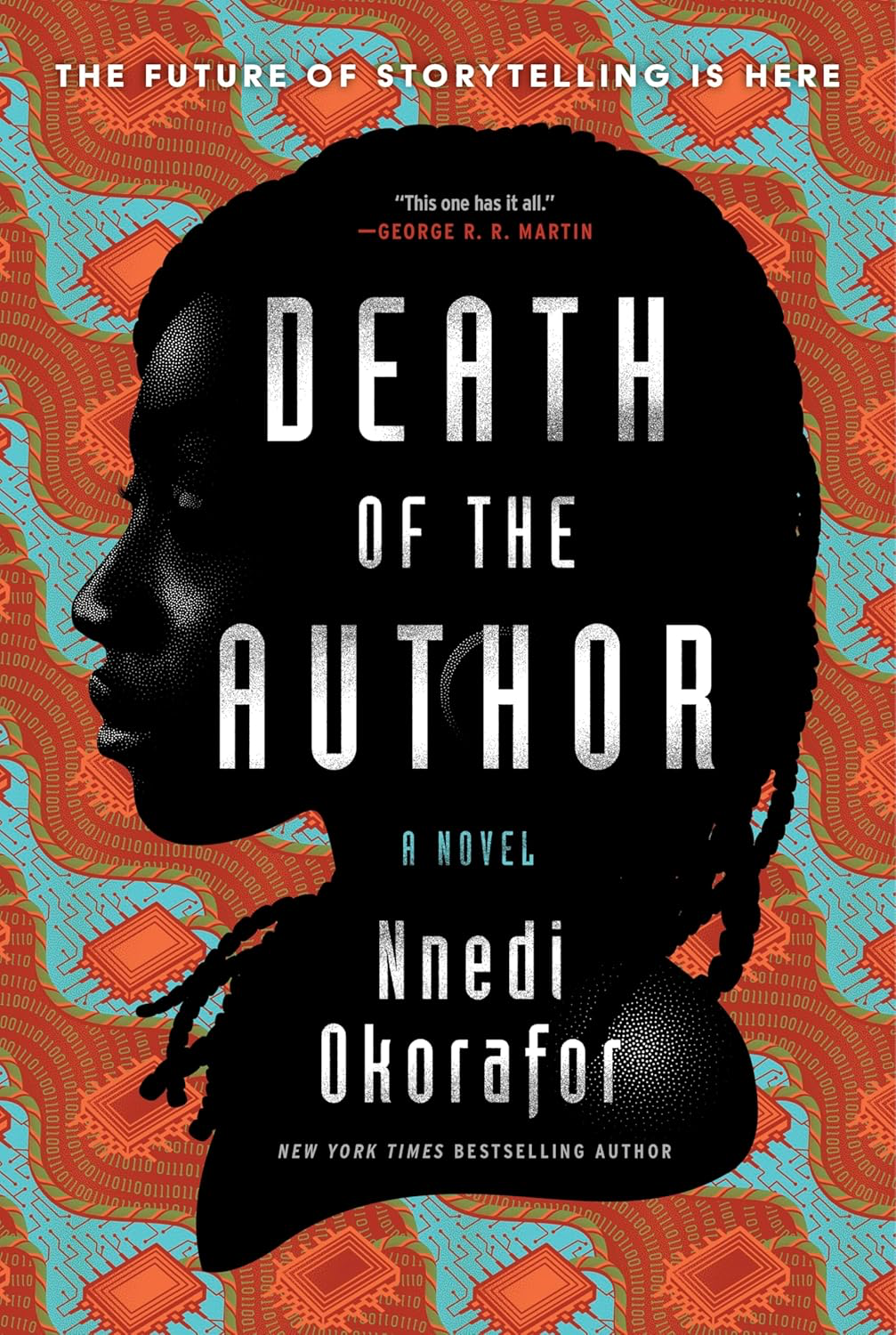
I’ve been a longtime fan of Nnedi Okorafor, albeit on and off—I picked up Akata Witch back when I was in middle school, and then discovered her adult books when I was in high school. Since then, I’ve been a fan of her quirky brand of Africanfuturism. You can imagine my surprise when I found out that Death of the Author was not an addendum to her long sci-fi fantasy canon, but instead literary fiction—albeit, with a dash of sci-fi. Either way, the switch from genre to genre is as smooth as I’d expect from Nnedi Okorafor.
Zelu is on the verge of giving up her dream to be a writer. After a pile of rejected manuscripts and a botched job as a professor, she moves back in with her overbearing, judgmental family as she attempts to get back on her feet. But when a spark suddenly comes to her, she has a bestseller on her hands: Rusted Robots. As she grapples with the price of fame and the mobility—and simultaneous lack thereof—Zelu must come to terms with her own identity as she explores the fabrication of it that the public has created for her.
TW/CW: substance abuse, ableism (external & internalized), loss of a parent, near-death situations, kidnapping
Of all people, I didn’t expect Nnedi Okorafor to take the leap into literary fiction, and after I found out the switch in genre, I didn’t expect to enjoy Death of the Author as much as I did. Thankfully, it’s only really literary in the sense that it’s contemporary, realistic fiction…mostly. The woven tapestry of Zelu’s real life and her creation, Rusted Robots, turned out to be a powerful meditation on the nature of art and identity.
Once again, make no mistake: this is fiction, but it’s not entirely just fiction. The assumption is that it’s a handful of years in the future; Zelu has fairly futuristic, adaptive prosthetics that are still in beta testing, and she tests out an automated cab service that’s been newly introduced to the streets of Chicago. Yet Okorafor takes the same skilled hand that she uses to craft intricate, far-future worlds and translates it into the idiosyncrasies of modern life, from the gauntlet of social media fame (and harassment) to being in the confines of a chaotic, judgmental family. For every character that was introduced, Okorafor matched them with an unforgettable personality, even if they only appeared for a few pages. All of the complex, rapidly fluctuated emotions were depicted with sensitivity, from the highest joys to the deepest pits of anguish and the plentiful uncertainty in between. Even without her talent for worldbuilding, Okorafor is a force to be reckoned with, and Death of the Author is proof.
I was hesitantly optimistic that Okorafor was writing a disabled main character again; Noor was a great novel, but from my memory, there was quite a bit of internalized ableism in the main character that went unaddressed. (However, somehow I didn’t know that Okorafor has experience with disability and was herself temporarily paralyzed, so my bad.) The setting couldn’t be more different for Death of the Author, but Okorafor has certainly stepped up her game as far as writing disabled characters—and part of it is that Zelu is unlikable. More often than not, you can at least sympathize with her, but at times, you can see her for the insufferable, argumentative, reckless stoner that her family sometimes sees her as. Of course, not every disabled character has to be likeable, but her relative un-likeability made some of the novel’s most powerful commentary shine even more. As she grapples with her meteoric rise to literary fame, Zelu’s fans place the burden of her being a “role model” for a number of communities: Black, woman, Nigerian-American, disabled. Being a role model can be powerful, but as soon as people saw Zelu as more of a role model than a person, it disregarded her humanity in an entirely different way. She became an example, not an autonomous being—something that is intimately tied to what many disabled people experience. In that way, Zelu represents a leap in how Okorafor writes her disabled protagonists—not just independent, but human.
I don’t have a ton of experience with meta-fiction—it’s not a matter of me not liking it, I just hardly get around to reading much of it—but Death of the Author pulls it off with ease. If you’re still not convinced that Okorafor’s literary fiction isn’t for you, you’ll at least be tided over by her signature brand of Africanfuturism, complete with the landscape of a futuristic Nigeria, robots, and appearances from Udide. It’s somehow a delightful vision of the future, where types of robots have proliferated across the face of the Earth in the face of the extinction of the human race. It’s threaded into Zelu’s life, yet it’s also a clever distillation of the novel’s themes; Ankara’s struggle with coexisting with Ijele inside of his head, as well as the changing world around him, spoke to the themes of embracing collaboration and the blurry relationship between creator and reader.
Which brings me to the whole “death of the author” part. I’ll admit, the Roland Barthes quote from the (original) “Death of the Author”gave me literary theory flashbacks. But as a grounding concept for the book, I love how Okorafor’s Death of the Author playfully pokes fun at the concept. Here, it’s as though the concept has been subsumed by the publishing industry; instead of taking Zelu’s novel as tied to her heritage and her disabled identity, the world swallows it and regurgitates a whitewashed, Americanized movie adaptation that the public eats up. (“Look what they’ve done to my song, Ma…”) Yet at the same time, Zelu is confronted by readers who insistently pester her, insisting that everything in the novel is fully tied to her identity and selfhood. Death of the Author’s strength is the clarity it finds in the balance. Zelu’s work is intimately tied to her identity, but just as intimately tied to her imagination. Her being marginalized meant that people saw her work as surely being solely about her identity, but that wasn’t the whole story either. (The note in the acknowledgements about Okorafor talking to her daughter about worrying that readers would think that Zelu is her makes the point all the more clear.) In this case, fence-sitting is the most reasonable position I can think of—to consider reader interpretation first and foremost can have fruitful results, but to deny the lived experience veers into foolishness, and vice versa; Okorafor’s embrace of the area in the middle is what made the message so clear. Reading and world-creation is a twin act, created both by ourselves and those who receive our work—it’s not a simple question of one or the other.
All in all, a surprising novel that at first seemed like a left turn, but turned out to be another testament to Nnedi Okorafor’s enduring talent. 4 stars!
Death of the Author is a standalone, but Nnedi Okorafor is also the author of several books for adults, teens, and children, including the Binti trilogy (Binti, Home, and The Night Masquerade) the Nsibidi Scripts series (Akata Witch, Akata Warrior, and Akata Woman), Lagoon, Noor, the Desert Magician’s Duology (Shadow Speaker and Like Thunder), and many more.
Today’s song:
ADORE this album
That’s it for this week’s Book Review Tuesday! Have a wonderful rest of your day, and take care of yourselves!







 The Bookish Mutant