Posted in Book Review Tuesday

Book Review Tuesday (7/21/26) – Field Guide for the Formerly Villainous

Happy Tuesday, bibliophiles!

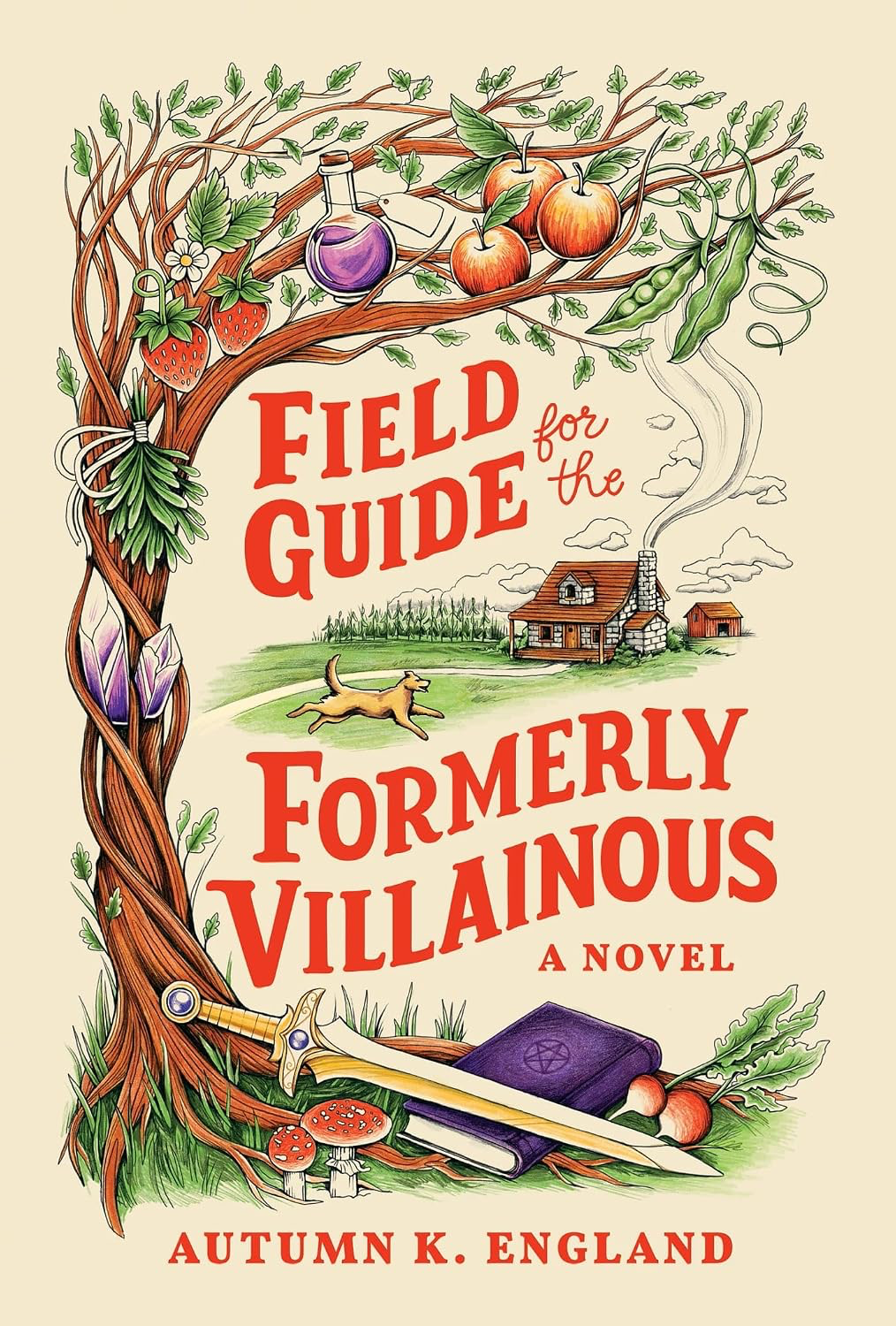
I hate to say it, but while Amie Kaufman has never let me down with her books, her book recommendations are less reliable. That’s how I found out about Field Guide for the Formerly Villainous, but to be fair, I’ve been reading and enjoying Autumn K. England/M.K. England’s books since I was in high school. They’ve never been a favorite or auto-buy author for me, but their books have been consistently solid and enjoyable in a pinch. Unfortunately, their cozy adult debut is their weakest novel to date.

Enjoy this week’s review!

Field Guide for the Formerly Villainous – Autumn K. England

Oaklin Nettlewood is turning over a new leaf. After narrowly escaping from a magical cult, Oaklin has fled to the small town of Mossley’s Rest. In a fit of desperation, they buy a farm, not knowing that its former occupant was a beloved staple in the town before her death. Her ghost lingers in the barn, and she’s bent on helping Oaklin revive the farm in earnest. But between painful flashbacks, suspicious townsfolk, and Oaklin’s self-imposed barriers, will they ever be able to start over?

TW/CW: panic attacks, mental illness themes, past descriptions of murder/violence, substance abuse

I wasn’t a massive fan of England’s books before, but they were consistently entertaining, which is why I’ve kept reading them. This might be where I break up with them. I should’ve seen the red flags when this was compared to Can’t Spell Treason Without Tea, which I rated too generously in retrospect. Field Guide for the Formerly Villainous was largely bland, and when it wasn’t bland, it was grating; there are so many ways to make cozy genre fiction compelling, and England used none of them.

Field Guide for the Formerly Villainous did have a prominently good aspect; it’s not just a matter of “the main character is disabled/mentally ill and that’s cool,” but England’s depiction of Oaklin’s PTSD was so empathetic. England did an excellent job of writing all of the facets of Oaklin’s trauma and mental illness. No punches were pulled with the depictions of their violent flashbacks, and their frequent panic attacks and harshly critical inner monologue were treated with the appropriate balance of sympathy and authenticity—unlike some other parts of the book, none of it felt sanitized, which I appreciated. It didn’t just feel like representation for representation’s sake—it felt like a genuine attempt to humanize a mental illness that’s quite stigmatized.

I’m not sure if I was just able to pass over the flaws in England’s novels in high school because I wasn’t super discerning or if Field Guide for the Formerly Villainous is just their worst novel. Whatever the case, one of the biggest weaknesses of this novel was just how downright bland it is. I hate to say this, but I genuinely can’t think of a single unique quality that England’s writing has. There were a few nicely flowery metaphors here and there, but it just felt devoid of any individuality. The bucolic setting was described at the barest minimum, as were the relationships between Oaklin and the others. I wasn’t expecting a worldbuilding marvel, or anything, but any sense of the world beyond the absolute bare minimum was missing. England’s writing style was just exceedingly nothing. This was certainly a book. With words in it.

I was hoping that England’s characters and dialogue would pick up the slack that the boring writing left off. Unfortunately, that was not the case. Apart from Oaklin, who was decently written, and Granny (whose main distinguishing factors were that she was a ghost and had the mannerisms of an old lady), the supporting characters were lazy copy and pastes of each other. Looking back, the only thing that distinguished Lior from the others was that she was [checks notes] an attractive woman who had a different job from the others. Ryn and Jules were the exact same character. (I think one of them plays guitar? That’s all that distinguishes them.) But what really exacerbated this issue was that all of their dialogue sounded the same. To make matters worse, they all had these very modern, gratingly “quirky” mannerisms that felt like some insufferable person’s DnD campaign. For all the effort that England put into making the people of Mossley’s Rest seem like the kind of small town folk that you’d be comfortable being neighbors with, I just wanted to leave as soon as possible.

An extension of this character issue came in the form of the romance. I liked the setup of Oaklin and Lior’s relationship, but none of it felt earned. From the start, I knew that they would end up together. That in and of itself wasn’t the problem; the problem was that their romantic progression felt so fast and unearned. So much of how their relationship developed fell into the many timeskips throughout the novel, leaving what we had on the page insufficient. It just lacked tension. In cozy genre fiction of any kind, romance is a great way to introduce an element of low-stakes tension without making the novel overly tense. Here, it was just insta-love, and wholly unearned. The only real barriers were Oaklin’s past identity and their conflicting professions, both of which got smoothed over pretty quickly. I do like that Lior was able to accept Oaklin in spite of their past, but it just felt like it robbed the book of some fluffier tension that it very much needed.

That being said, I will say that, in spite of not enjoying myself throughout most of Field Guide for the Formerly Villainous, I did love the ending. It’s messier than a lot of cozy fantasies like it are willing to get, and the biggest takeaway is that Oaklin is fundamentally deserving of love in spite of their past, which they had no control over. Yes, it was a little sappy, but I always appreciate narratives about the harsh criticism that characters have about themselves being proven wrong. England stuck the landing, but it wasn’t enough to save the whole novel.

All in all, a cozy fantasy that was forgettable in all senses of the word. 2.25 stars.

Field Guide for the Formerly Villainous is the first novel in the Everyday Magic series, but no sequels have been announced yet. Autumn K. England (also writing as M.K. England) is also the author of several other books for teens and adults, including The Disasters, Spellhacker, Roll for Love, All Fired Up, and many others.

Today’s song:

NEW CHELSEA WOLFE ALBUM IN AUGUST, THIS IS NOT A DRILL!!

That’s it for this week’s Book Review Tuesday! Have a wonderful rest of your day, and take care of yourselves!

Posted in Book Review Tuesday

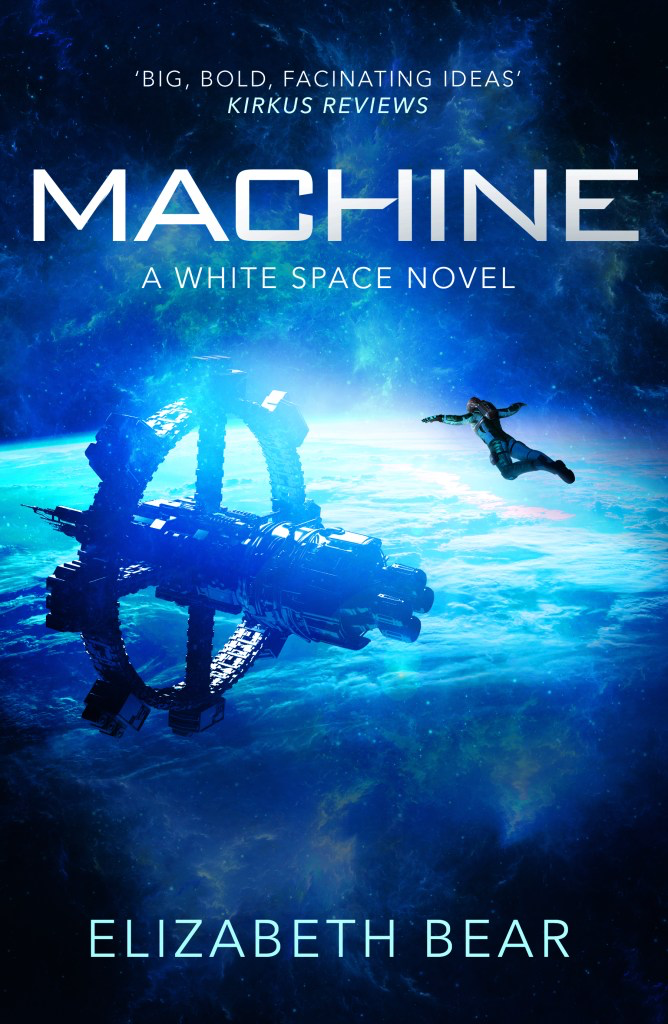
Book Review Tuesday (7/14/26) – Machine (White Space, #2)

Happy Tuesday, bibliophiles!

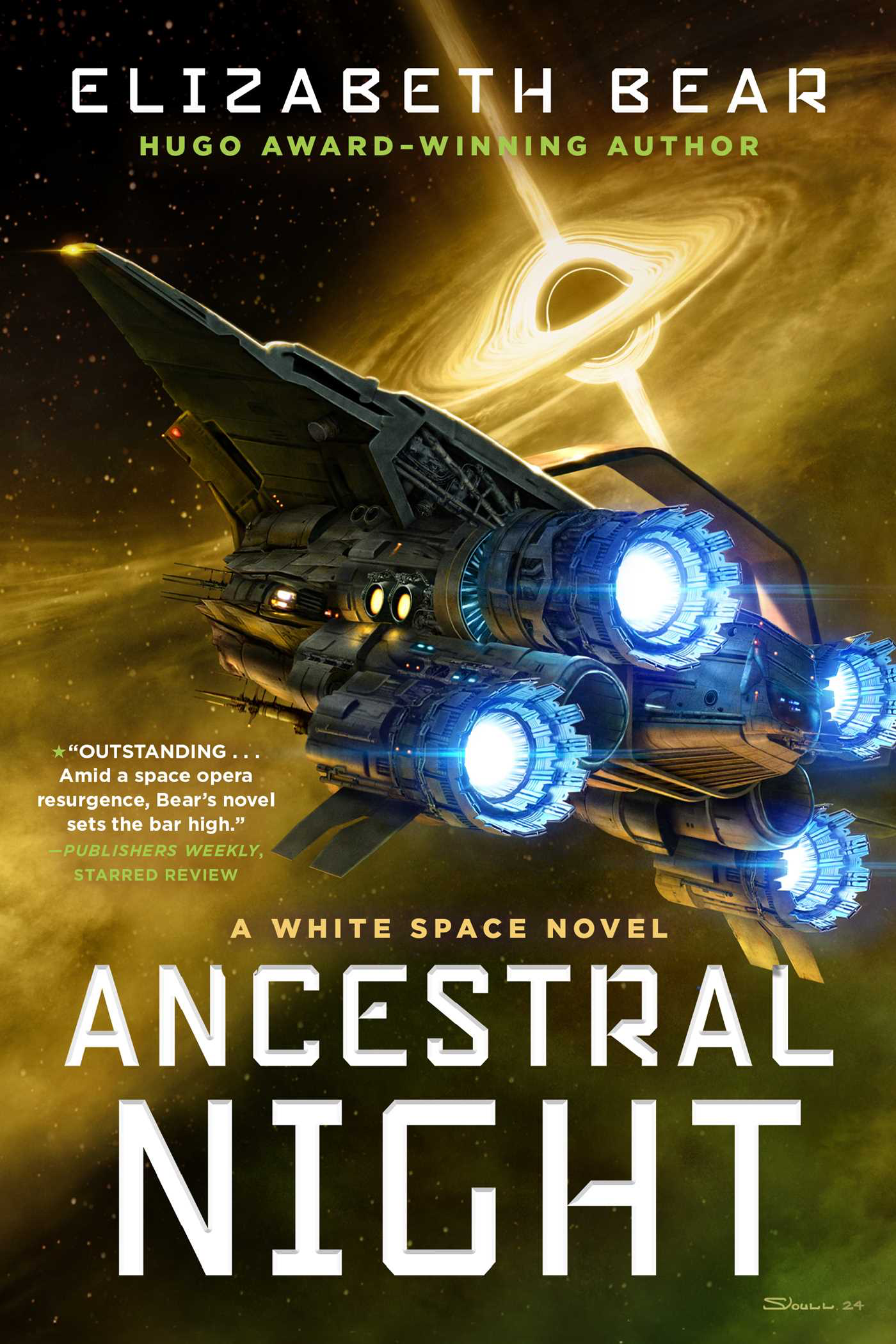
Thankfully, after last week’s disappointment, we’ve got something to save the track record for Disability Pride Month. I started Elizabeth Bear’s White Space trilogy earlier this year, and I knew I wanted a physical copy of book 2. It’s one of the great joys in life when a sequel is better than the first book—and Ancestral Night was already a 4.5-star read for me, so this was huge! Machine was a fantastic step up for a series that’s already a cut above the rest.

Enjoy this week’s review!

Machine (White Space, #2) – Elizabeth Bear

Dr. Brookllyn Jens is a special kind of doctor. Her patients are usually aliens, and her status as an emergency specialist means that her job description tends to involve having to jump out of spaceships. It’s already a job that keeps her on the edge. But when Dr. Jens and her crew discover two ships that have been abandoned for thousands of years, they uncover a mystery with layers upon layers of disastrous implications. With a strange, antiquated AI, an entire human crew in cryosleep, and a potential conspiracy on their hands, Dr. Jens and her crew must race against the clock to make sure that everybody makes it out alive.

TW/CW: ableism, misogyny, medical content, xenophobia, violence, murder

Genuinely, my sole problem with this novel is the title. Elizabeth Bear thought out this intricate and complex space opera world full of thousands of aliens and unique space travel, and couldn’t think of a more memorable title than Machine? I mean, yeah. There sure are Machines. Lots of ’em. But come on, really.

As much as I enjoyed Haimey’s story in Ancestral Night, I really think that making the White Space series several collected companion novels was the right move. It expands the intricate world that Elizabeth Bear has crafted in so many exciting ways that were only possible through the eyes of a different cast of characters. I loved the ways that the Synarche and all of the different species within it were fleshed out. Bear’s writing is as sharp as ever—her voice is so witty and hilarious, but she also knows just how to stick the landing when it comes to the more climactic or serious moments. The pacing was top-notch, especially considering that Machine is nearly 500 pages long—I blew through hundreds of pages at a time, and Bear never lost me.

I absolutely adored Dr. Jens as a protagonist, and Bear’s willingness to let her protagonists be messy yet lovable people made her shine. Dr. Jens has such a dry sense of humor, and her wry observations about the world around her made Machine such an entertaining read. But beyond that, I loved her continuous self-reflection—about the ideas she’s constructed about herself, but also about her work and the world around her. The supporting cast was so vibrant and lovable—it was a treat to see Cheerilaq again, first off, but all of the characters were so delightful and added a real human (and syster) authenticity to Core General’s staff. Sometimes your coworker gets on your nerves for no discernible reason, and they’re also a massive cetacean-like being getting wheeled around in a massive tank. On that subject, I loved all of the new Systers that Bear introduces. My creature design brain predictably became that meme of the dog with the propeller beanie and the giant lollipop seeing all of the truly alien aliens that populated the Synarche. But Bear went beyond good creature design and into crafting memorable, multilayered characters, which is what makes her space opera stand out in the end.

In particular, the expansion of the AI and robots in the Synarche was one of the most intriguing aspects of the world that Bear discusses in Machine. The whole plotline with Helen Alloy was one of the most well-executed. I love how Bear interrogates the objectification of women and how sci-fi has historically translated this into female-presenting robots. The visceral discomfort that Dr. Jens has that Helen was specifically created to have a hypersexualized, feminine form felt was like seeing the sun peer through the clouds after decades of weird men writing all kinds of messed-up sex-bots. It’s treated with the appropriate level of disgust—both on Helen and Dr. Jens’s part. Helen’s manipulation also ends up being vital to the later twist, and her entire arc of deconstructing the lies that she was programmed with was handled with such tenderness. Beyond the robots, I think that thread of treating people who have been brought up with hateful ideologies and not immediately dismissing those with different opinions was one of the best aspects of Machine; Bear’s insistence that people—human, alien, or AI—are not inherently bad, only victims of harmful ideas, was so necessary.

Bear’s take on disability in a sci-fi context was also such a respectful and well-researched one! She listed off several sensitivity readers in the acknowledgements, and their work paid off—for someone who seems to be non-disabled, by all accounts, this might be one of the most caring representations of a disabled person and their struggles in sci-fi I’ve seen by a non-disabled author. Dr. Jens has a chronic pain disorder, and she has a special exo-suit that manages some of her pain, but not all of it—sci-fi tech still has limitations in the far, far future. She still aches and gets physically taxed from her daring missions. Granted, I’m not chronically ill, but it felt like Bear paid so much attention to how Dr. Jens’s symptoms would present and how her high-stakes profession would affect it. Additionally, there’s a lot of talk about how disability is handled in the future; there was lots of discussion of “rightminding,” a process that, among other things, mitigates the effects of some mental illnesses. It would’ve been so easy to just slap it on as a cure-all technology, but Bear’s approach was one that I rarely see in sci-fi. It’s not necessarily “disability isn’t cured,” but it’s handled on a case-by-case basis, there’s an understanding that different kinds of disabled people have different needs and opinions about how they want to live with their disabilities with the technology available. This rejection of the one-size-fits-all approach to disability was a breath of fresh air, and wasn’t afraid to get into the nuance of how disabled people live their lives.

Disability wasn’t the only issue that gets dealt with in a refreshing amount of nuance. Bear was not afraid to get into the weeds with this novel, and it made my reading experience so much better. Machine, more so than its predecessor, gets into how a utopia and utopian ideas can be twisted into something sinister. It all feels very Ursula K. LeGuin—the Synarche is without a doubt an ambiguous utopia like The Dispossessed. (First off, I liked that Bear interrogates the ethics of “rightminding” targeting potentially “dangerous ideologies,” and how that ends up being decidedly non-utopian.) I appreciated that Bear discusses how well-intentioned utopias can be co-opted into vehicles for hatred, but also how that revelation wracks the people who genuinely believed in this utopia—people like Dr. Jens. Her arc in having faith in her hospital and the Synarche was so human—her entire reality and faith in the organization she devoted her life to is messily upended. But the realization that she comes to—that you can take the good work you wanted to do and the faith in your fellow people outside of corrupt organizations and do your own work—was one that feels so vital. I also loved the thematic potential of the infectious meme—not unlike the spread of a hateful ideology—that is treated as an infection that has to be weaned out with attention and care. Bear’s depictions of that crushing realization and how Dr. Jens and her coworkers pick up the pieces was so heartfelt, and a very potent message in this day and age.

All in all, a spectacular companion to Ancestral Night that expanded Elizabeth Bear’s masterfully crafted space opera universe with pulse-pounding action and heart. 5 stars!

Machine is the second book in the White Space trilogy, a series of companion novels set in the same universe; it is also includes Ancestral Night (book 1) and Folded Sky (book 3). Elizabeth Bear is also the author of several other series, including the New Amsterdam series (New Amsterdam, Seven for a Secret, The White City, Ad Eternum, and Garrett Investigates), the Jacob’s Ladder trilogy (Dust, Sanction, and Grail) and many others

Today’s song:

still going through my mom’s records from the ’80s. this remains peak.

That’s it for this week’s Book Review Tuesday! Have a wonderful rest of your day, and take care of yourselves!

Posted in Book Review Tuesday

Book Review Tuesday (7/7/26) – Climate of Chaos

Happy Tuesday, bibliophiles!

I wanted to kick off Disability Pride Month with something positive, but unfortunately, I don’t think that it’ll be the case. Whoops. They can’t all be bangers. I was intrigued by the concept of Climate of Chaos, and excited by the premise of a disabled main character navigating a dystopian world. Unfortunately, Climate of Chaos was not the Hunger Games successor that it purported itself to be.

Enjoy this week’s review!

Climate of Chaos – Cassandra Newbould

Fox LaRosa lives in the climate-ravaged wilderness of what was once Seattle. While the rich get to live in luxurious, climate-proof domes made by the infamous Aegis Corp, people like Fox and her sister Rabbit live on the edge of death—made worse by the mounting medical debt that Fox has been carrying ever since she became disabled. To make matters worse, a strange new virus is creeping its way up north, and if it hits Fox and her commune, it could spell disaster. But when Rabbit is kidnapped on a routine heist for medical supplies, Fox must fight her way into the rotten heart of Aegis Corp in order to find her sister—and figure out what Aegis wants with her.

TW/CW: medical trauma, violence, pandemic/epidemic, ableism, loss of loved ones, police brutality, loss of loved ones

The other day, I was watching BookLeo’s retrospective on the YA dystopian craze of the late 2000’s-early 2010’s, and she mentioned that one the most common plot elements throughout the books is that the inciting incident is that the protagonist has to find their missing sibling. I never even considered that, but it’s everywhere. If anything, Climate of Chaos is proof that the trope is alive and kicking today. It’s a foolproof inciting incident. Pour one out for all of the missing brothers and sisters that get put through the wringer for the plot in YA dystopias.

As a whole, I was disappointed by Climate of Chaos, but I’d like to acknowledge the positives, because there were some great aspects of this novel. We’re at least a decade out from the huge wave of Hunger Games copycats, but the issue that a lot of people had with them was that their dystopian worlds tended to be removed from real forms of oppression and didn’t make sense. Climate of Chaos, however, grounds its dystopia in two very real-world issues: climate change and medical debt. Newbould did an excellent job of going into all manner of ways that climate change could negatively impact our world in the future, from the more obvious weather changes to the spread of new diseases, the latter of which becomes very relevant to the plot. The discussions around medical debt and the poor treatment of disabled people under our healthcare system were very timely, and it pointed out that conditions for many disabled people are as dystopian today as they are in this fictional, far-flung future. And while I had my issues with Fox as a character, it’s so wonderful to see a disabled girl kicking butt in a YA book like this. Her cane being able to extend out of her belt and fold back into itself was indisputably badass, as was the fact that the cane had an extendable blade at the end.

Aside from those points, Climate of Chaos was unfortunately weak. There was some serious work that needed to be done with the characters. I hate to say it, but I think the only reason that Fox stands out from other teen dystopian protagonists is the fact that she’s disabled. Her entire personality is that unnecessarily gritty, edgy persona that you get when you’re trying to make a character sound “hardened,” to the point that it was overexaggerated. Half of her dialogue sounded straight out of Zack Snyder’s DC movies. It got old quickly. Apart from that, most of the characters were hardly characterized beyond a few base traits, and some—even the main characters—were only distinguished by the fact that Fox is friends with them. Cely at least had a distinct personality, but Asher and Eamon, despite being some of the central characters, didn’t get much beyond “boys who are friends with Fox.” Towards the end, there was also a faint indication that Asher and Fox had some sort of romantic chemistry, which felt forced, but more importantly, completely unearned—their relationship is a complete plateau from the beginning to the end of the book, and there was nothing that convinced me that there was any sort of romance brewing between them. It was all just the absolute bare minimum of character work.

The worldbuilding was largely hit or miss. I think Newbould did a decent job of establishing how the world (particularly Seattle) got to where it is in Climate of Chaos, and the structure of the different rungs of society made sense. The themes of inequality between disabled people and poor people were the only things keeping Aegis Corp from falling into the “the government is bad, but we’re not going to tell you anything except for that it’s bad” trap, but it was pretty close. Without spoiling, I think the reveal about Aegis Corp and the Vi (yes, that’s what they call the virus 🫩 peak YA dystopian cornball terminology lives, folks) was the most nonsensical part of the plot; with the established plot about the Harvest House, I feel like that erased all of the rationale for why Aegis Corp used the Vi in the way they did. At a certain point, there’s things that don’t even make sense for a comically mustache-twirling fictional government to do, just because the stuff that they’re doing would be such an unnecessary and unjustifiable drain on their resources.

Ultimately, I think the biggest issue with Climate of Chaos was that I never once felt like Fox or any of the other main characters were truly in danger. Despite them undergoing the notoriously dangerous Storm Runner trials with a ridiculously slim survival rate, all of the main characters came out without a scratch. Seriously! The main characters had a laughable amount of plot armor, and after about the halfway point, I just gave up on caring about any of them—Fox, Asher, Eamon, Cely, Trew, and all of the other main characters are completely fine, even though they’ve been exposed to a deadly virus, been in danger of being killed by their bloodthirsty teammates, and were almost gunned down by their Storm Runner superiors. Eamon is inside a factory that nearly explodes, and he comes out unscathed…give me a break. It just reeked of Newbould liking them too much and refusing to let any of them even get the smallest scrape on their knees. I didn’t even care that Fox had been taken to the Harvest House, because I knew by then that she’d come out the other side completely fine—and guess what? SHE DID. Along with the worldbuilding, this is what made me lose faith that any of the characters were actually in danger in this supposedly dystopian world.

A related sidenote: I don’t have chronic pain, so take this with a grain of salt, but other than Fox having to use her cane in a few situations, wouldn’t she be in excruciating pain during something as taxing as the Storm Runner trials? It’d be exhausting even for a nondisabled person. Granted, I remember an instance of her sneaking painkillers, but I feel like even that wouldn’t erase the pain of having to fight a bunch of other teenagers to the death day-in and day-out.

All in all, a YA dystopia that had its heart in the right place, but failed to make its dystopian world fully believable. 2.5 stars.

Climate of Chaos is a standalone, but Cassandra Newbould is also the author of Things I’ll Never Say and the editor of the anthology Every Body Shines: Sixteen Stories about Living Fabulously Fat.

Today’s song:

That’s it for this week’s Book Review Tuesday! Have a wonderful rest of your day, and take care of yourselves!
Posted in Books

♿️ The Bookish Mutant’s Books for Disability Pride Month (2026 Edition) ♿️

Happy Monday, bibliophiles!

Here in the U.S., July is Disability Pride Month! It seems like every year, representation—and all-around recognition—for disabled people only progresses by millimeters. Time and time again, it’s left on the back burner by so-called intersectional activists, continually ignored from unaccommodating public education to inaccessible infrastructure in the biggest cities and the smallest towns. It’s gotten bleaker still with the damaging rhetoric spread by R.F.K. Junior and by the Trump administration at large. And we’ve somehow let the r-word insidiously creep back into common use. I feel like it’s relevant that when I was in high school, I frequently heard people call their phones “autistic” when they were broken or not working—2019 wasn’t as long as ago as people would like to think. Dehumanizing disabled people has always been baked deep into the roots of our language and slang—and yet it’s so easy to just switch words around.

In short, the world hasn’t exactly gotten kinder to any of us in the disabled community. But recently my best friend sent me this hilarious (and wonderful) reel, and it reminded me of the endurance of our community:

Yes, this is totally goofy. But it’s true. Despite all of the rampant campaigns to dehumanize and outright eradicate disabled people in all aspects of life, we are still here. The disabled community is as diverse as our struggles, but we have weathered all of them. There are countless issues that we have to face, in the highest forms of government and even in the simple ways we interact with friends and strangers. But if there’s one thing that the disabled community has done, it is endure—and endurance is nothing without community. The strength of our community is what has allowed us to create a more accessible world, little by little, and it is the key for making the world a kinder and more accessible place to be.

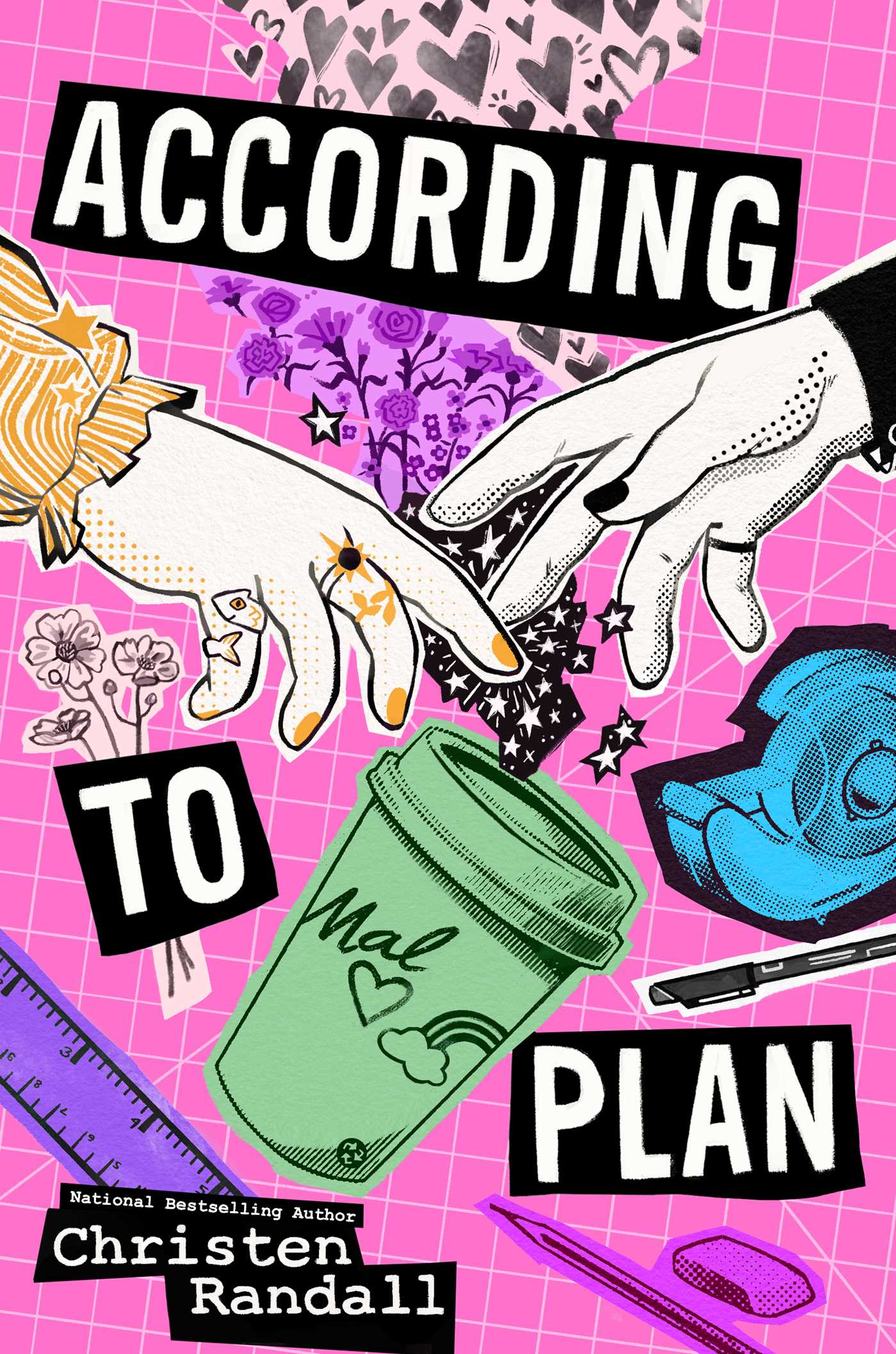
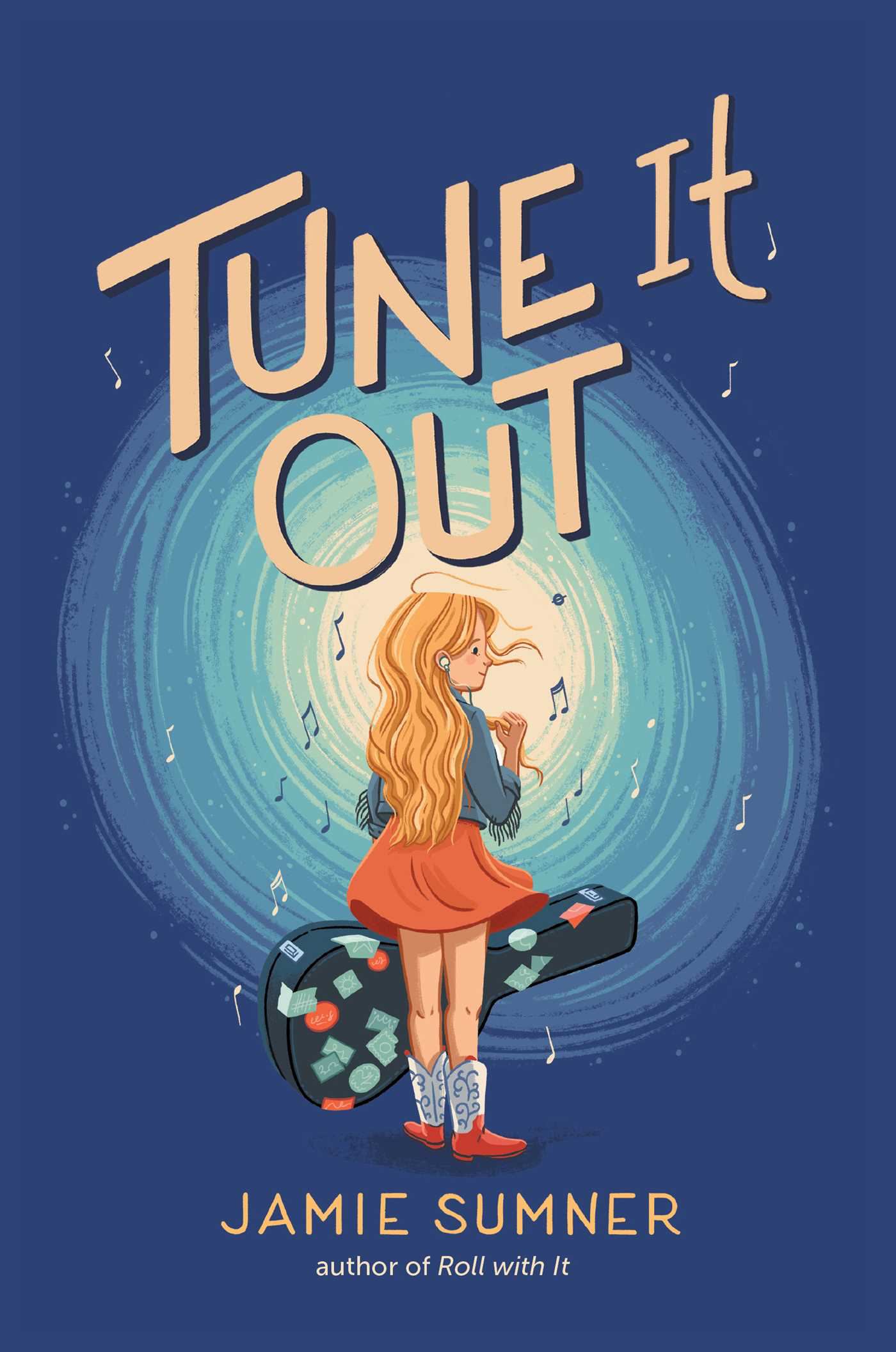
Also, four years out from my installation of this post where I talked about the absolute dearth of SPD representation out there (see 2022 in the “previous lists” section below), I’ve finally read one more book with a main character with SPD. Halfway through 2026, and it was one of the best books I’ve read this year by a long shot. Thank you, Jamie Sumner. Representation matters. 🩵

NOTE: my memory (and the internet) is imperfect, so if I’ve misrepresented/mislabeled any of the specific rep in these books, don’t hesitate to let me know!

KEY FOR TERMS IN THIS POST:

  • MC: Main character
  • LI: Love interest
  • SC: Side character

For my previous lists, click below: 

Let’s begin, shall we?

♿️ THE BOOKISH MUTANT’S BOOKS FOR DISABILITY PRIDE MONTH (2026 EDITION) ♿️

FANTASY:

SCIENCE FICTION:

REALISTIC/HISTORICAL FICTION:

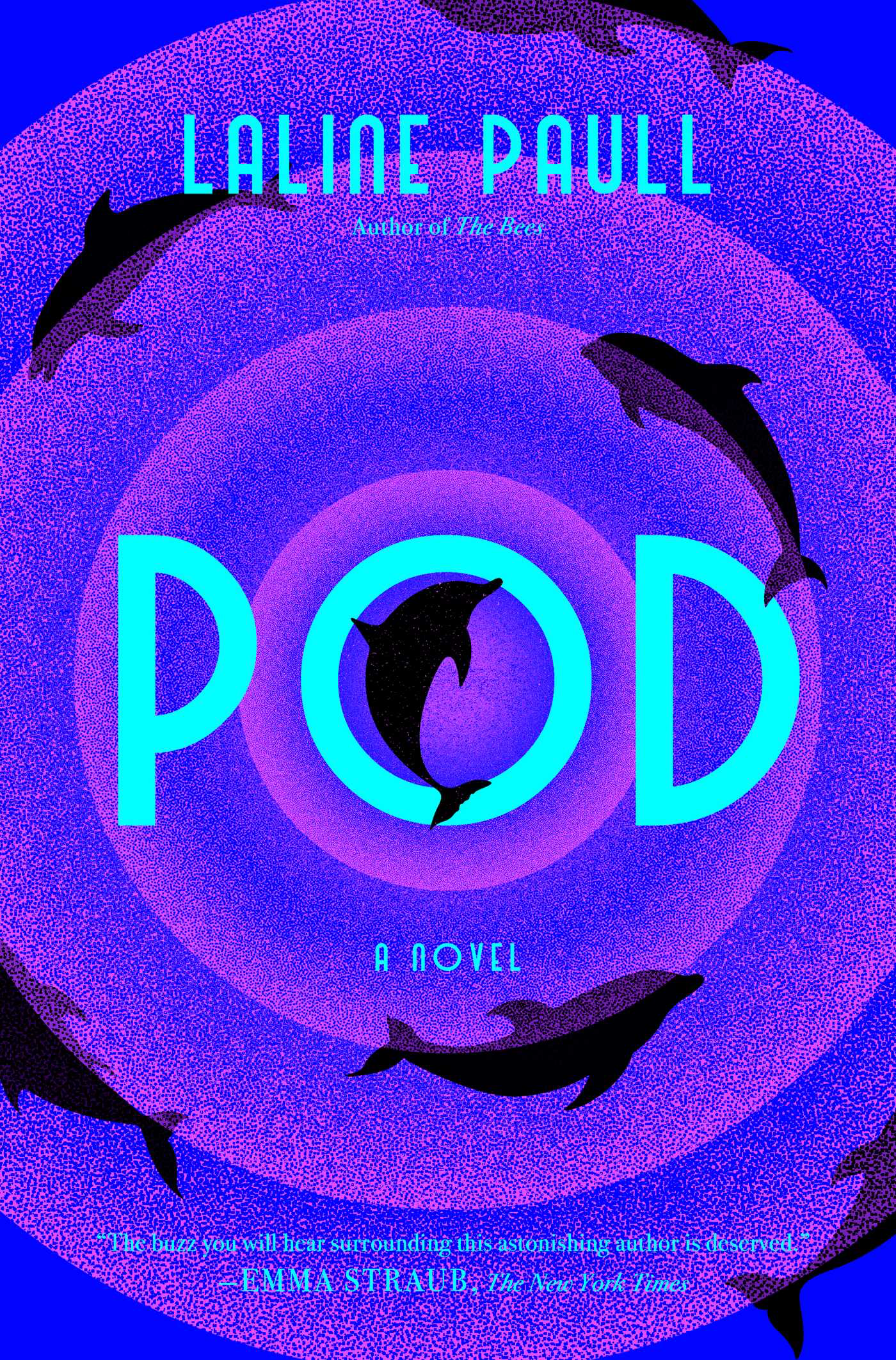
*the POV character in Pod is a dolphin, but I feel that the representation still counts.

NONFICTION:

TELL ME WHAT YOU THINK! Have you read any of the books on this list? What are your favorite books with disability rep? Let me know in the comments!

Today’s song:

THIS JUST IN, ROLE MODEL HERMIT IS A BANGER

That’s it for this post! Have a wonderful rest of your day, and take care of yourselves!
Posted in Monthly Wrap-Ups

July/August 2025 Wrap-Up 🧁

Happy Monday, bibliophiles!

Once again, I dropped off without warning, so apologies for that. But I just started school and moved into a new apartment, so I haven’t had much time to squeeze in some blogging. (Never mind the fact that I also have a short story due tomorrow and it’s only about 3 weeks into the semester. Whee!) This post has been written in advance, so that’s why you’re seeing it here. Chances are, I’ll probably be radio silent for a little while longer as I get my stuff fully together. But for now, here’s a recap of the latter half of my summer!

Let’s begin, shall we?

GENERAL THOUGHTS:

I’m one of those people who, even in the face of an expanse of free time (summer), easily gets restless and anxious. The solution was there all along…employment. I helped out with some online summer classes, which was a wonderful way to give some structure to my summer and provide something to break up the routine. And when the class ended, I’m proud of myself for committing to not slipping back into my anxiety before school started. When I look back at the person I was a year ago…well, I want to give her a hug, first off, but I’m so proud of the progress I’ve made since then. Anxiety really had taken ahold of me, and little by little, with the support of my wonderful family and friends (thank yous are due) and the work I’ve put in, I’ve been learning to take the reins back. There’s no feeling quite like seeing measurable progress in yourself. It’s worth it to try, is all I’m saying.

My obligatory temperature check on American politics might be pointless at this point, as the thermometer reached its hottest point long ago and the glass has all but shattered. I’d prefer not to dwell on it much. As a birthday treat, I stayed off the news for the whole week, and I’m continuing the streak. Some days the spirals get me, but I’m fighting like hell to make sure that they don’t take my sanity away and make me vulnerable to complete, utter helplessness. All I can say is for everyone to take care of yourselves. I love you. My heart goes out to everyone, but especially those in Washington D.C., Minneapolis, and Chicago.

And oh my god…I guess when I’m doing these 2-month wrap-ups, I forget that so much can happen in 2 months! Crazy, right? Superman? A massive ray of light in a dreary landscape of gritty superhero movies. Hope is punk rock. Saving squirrels is punk rock. (If anything, see it just to see Nicholas Hoult seething after Superman saves some kids.) Fantastic Four: First Steps? The first MCU movie I’ve enjoyed—genuinely enjoyed—in years. The world needed all that Silver Age goofiness (and Cousin Thing). I had the immense privilege of seeing Wilco twice, and both nights were spectacular! And Car Seat Headrest…I’ve already rambled enough about it. I crode. (See my accounts below scattered amongst the various July Sunday Songs posts.) I dyed my hair another crazy color. I finished knitting a whole scarf yesterday. I played guitar, I drew, I read, I wrote…I’m trying everything to keep the art in my life, even if only a smidge every day.

And I took another trip around the sun. I feel so grateful to be closing another chapter and starting a new one. I don’t want to jinx it, but I have a feeling that my senior year of college (how the HELL did that happen?? 😭) will be a good one. I’ll try to approach it in the same way that I’ve approached decorating my new place: putting in the work to making a space that I love. If anything, I ended August celebrating my birthday, laughing and eating cake, surrounded by people who I cherish. I have to remind myself, always, that even if I don’t see it, that I’m surrounded by love.

JULY READING WRAP-UP:

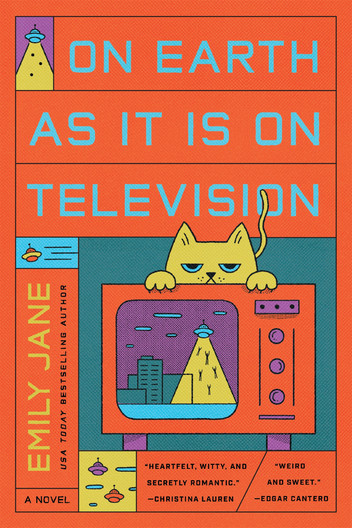
I read 16 books in July! Though there were a handful of misses, I read a ton of fantastic books for Disability Pride Month. The last book I read this month (On Earth As It Is on Television) unexpectedly blew me out of the water.

2 – 2.75 stars:

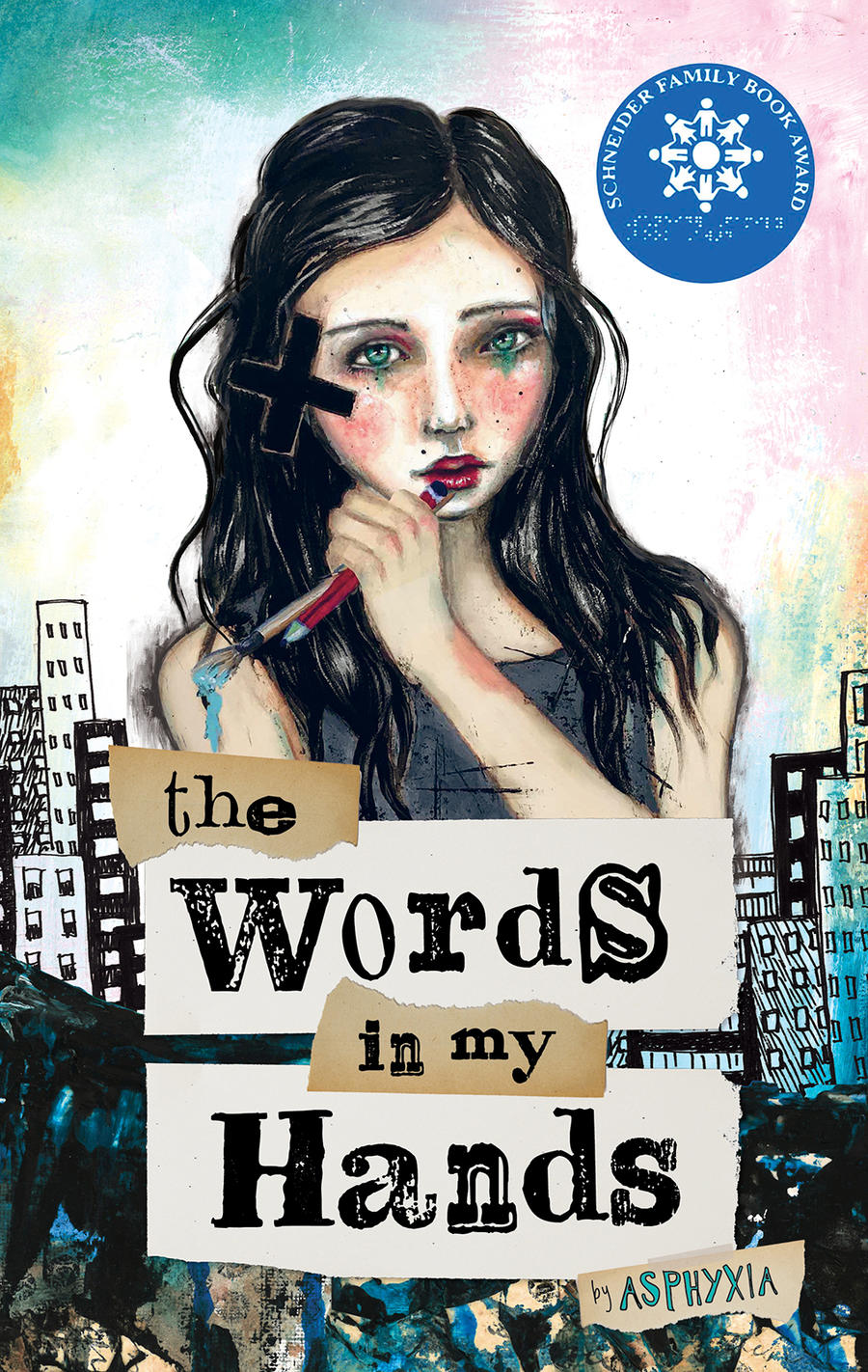
The Words in My Hands

3 – 3.75 stars:

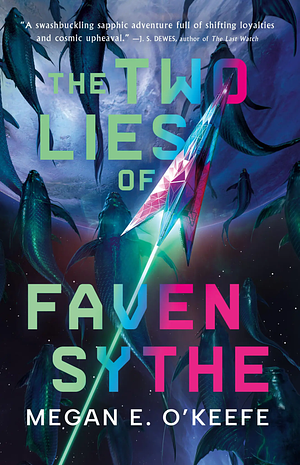
The Two Lies of Faven Sythe

4 – 4.75 stars:

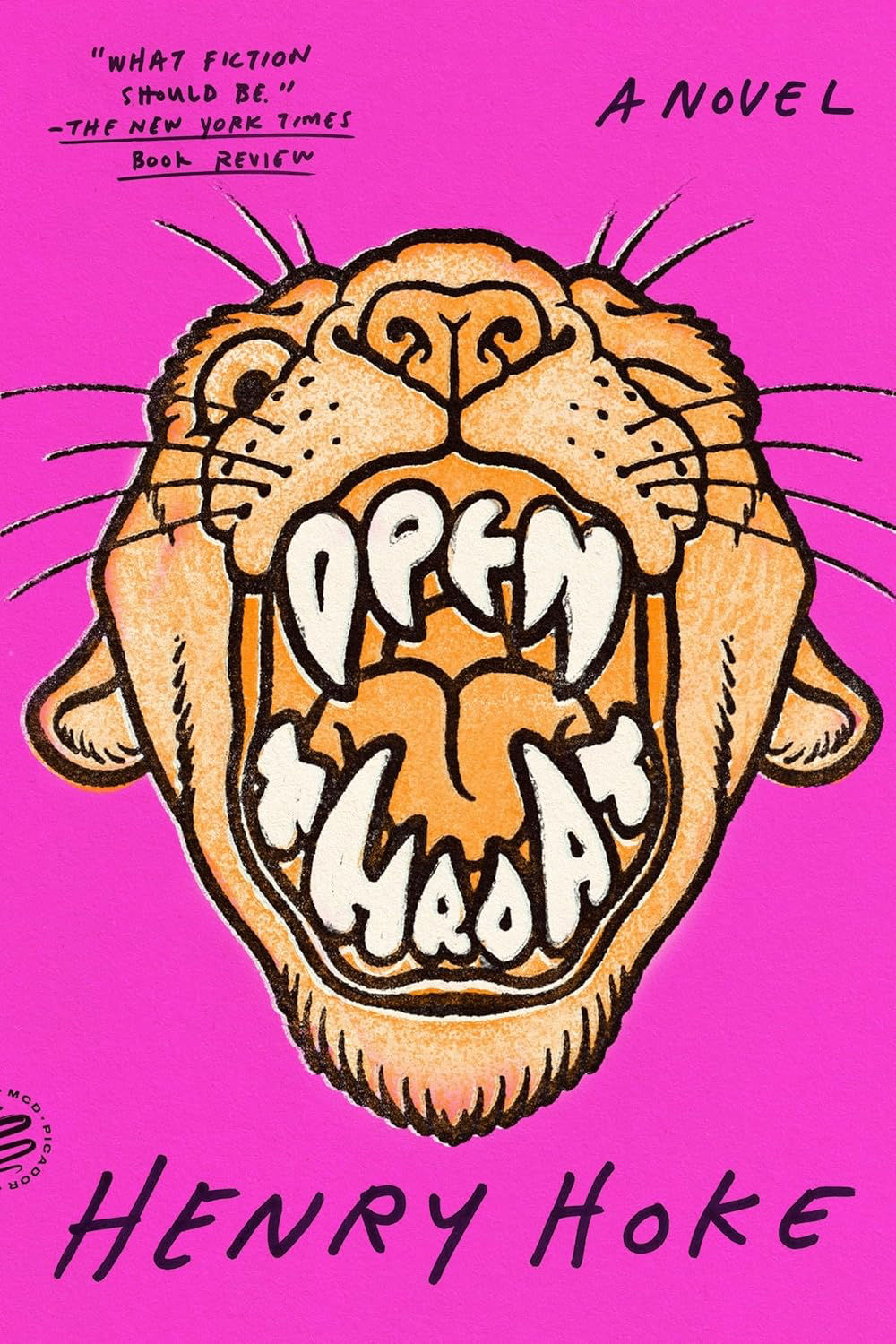
Open Throat

FAVORITE BOOK OF THE MONTH: On Earth As It Is on Television4.75 stars

On Earth As It Is on Television

REVIEWS:

SUNDAY SONGS:

BONUS:

AUGUST READING WRAP-UP:

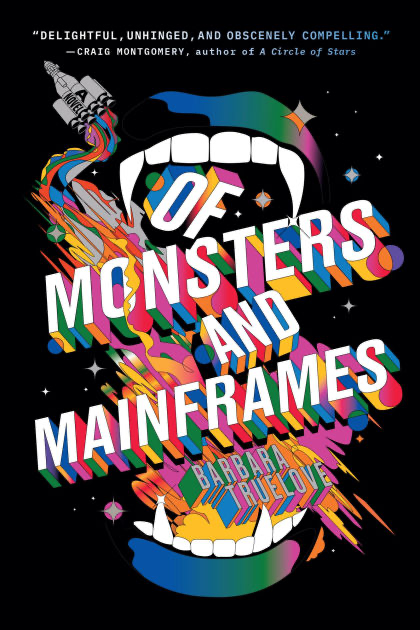
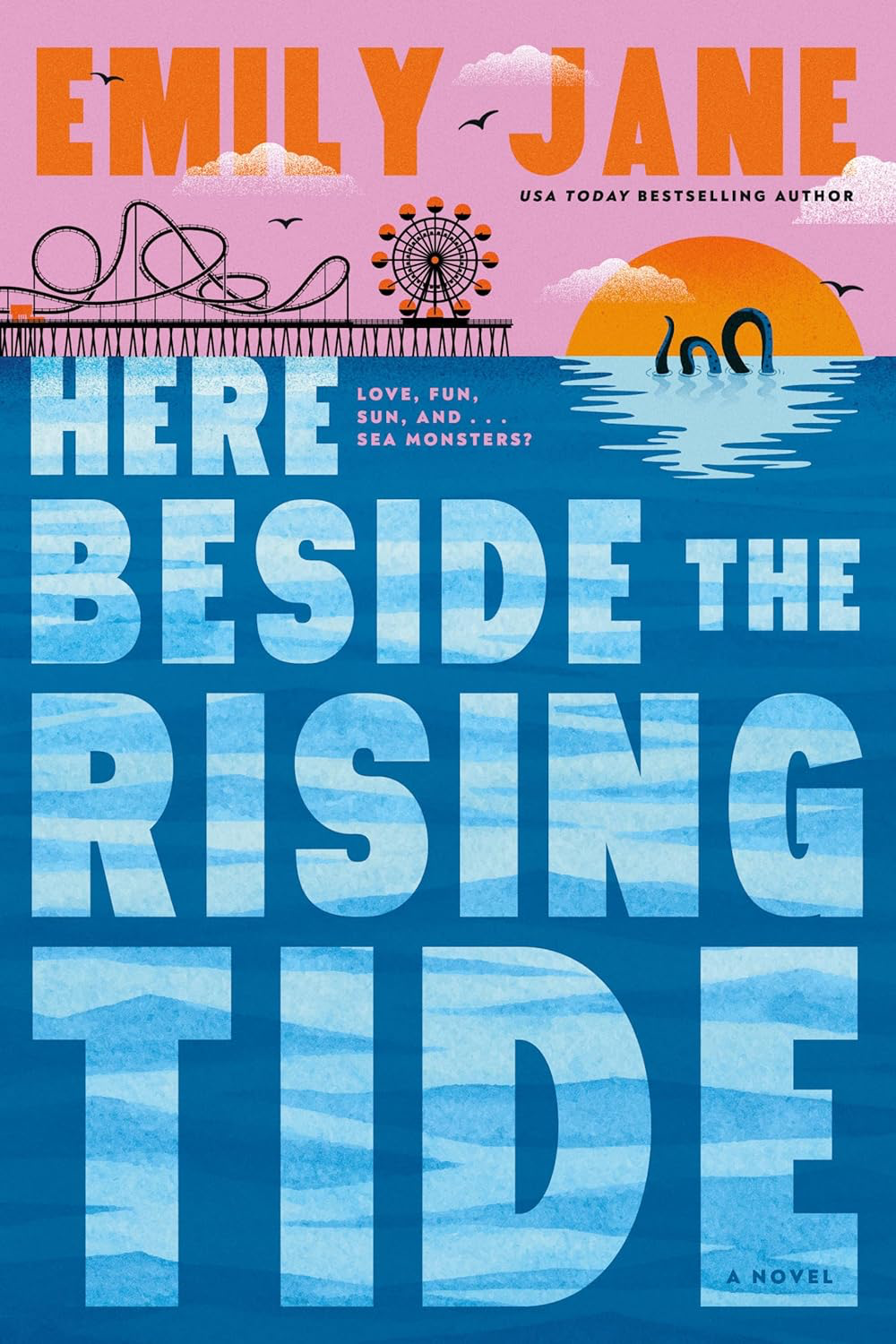
I read 14 books in August! Thankfully, I only read two books that I really didn’t care for, and there were tons of wins throughout the month: monsters in space, a surprisingly emotional story about sea monsters and Pokémon-obsessed children, and the great Brian Eno.

2 – 2.75 stars:

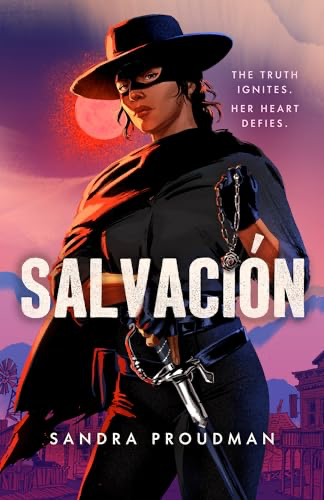
Salvación

3 – 3.75 stars:

Of Monsters and Mainframes

4 – 4.75 stars:

Here Beside the Rising Tide

5 stars:

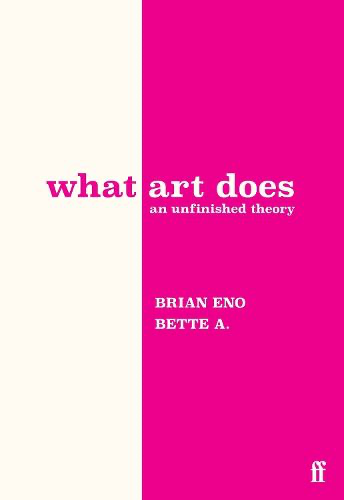
What Art Does: An Unfinished Theory

FAVORITE BOOK OF THE MONTH: What Art Does: An Unfinished Theory5 stars

REVIEWS:

SUNDAY SONGS:

Today’s song:

CANNOT stop listening to this!!

That’s it for this wrap-up! Have a wonderful rest of your day, and take care of yourselves!

Posted in Book Review Tuesday

Book Review Tuesday (7/29/25) – Redsight

Happy Tuesday, bibliophiles!

As Disability Pride Month comes to a close, here’s one last book to finish off the month. This one has been on my TBR for at least a year, and it’s evaded me in the library thus far—thankfully, Barnes & Noble finally brought my chase to an end. Even though I’m growing a little weary of every new sci-fi that hinges on the promise of “incomprehensible space religion, woooooo,” Redsight provided a fascinating twist in the subgenre.

Enjoy this week’s review!

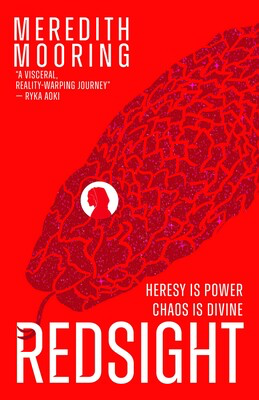
Redsight – Meredith Mooring

Korinna knows that she is doomed to a life of obscurity. Even though her being a Redseer gives her the power to manipulate space-time itself, she is the weakest of her order, and little mercy is shown to the weak. Resigning herself to a position navigating a warship for the treacherous Imperium, Korinna is at war with herself. But when the warship is boarded by strange pirates, Korinna learns that she has power beyond comprehension—all deliberately hidden. With her newfound abilities and a desire to uncover the secrets of the Goddesses that once ruled the galaxy, Korinna searches for answers, but what she finds may be more dangerous than she could have ever bargained for.

TW/CW: violence, gore, blood, death of children (off-page)

In the last six or seven years, I’ve seen a major trend in science fiction where the plot centers around an ancient, ominous Space Religion™️ (see: Gideon the Ninth, The First Sister, The Genesis of Misery). It’s a Thing. The usual suspects include an AI/vague cosmic entity deity, some form of cult, vague to overt references to Catholicism, and repression. I’m honestly fine with all of these things—in fact, having a cultish religion on an intergalactic scale is often a fascinating way to set up a story, and can be used to many ends, whether it’s deepening worldbuilding or critiquing organized religion in the real world, as it often does. My problem was that it’s everywhere. I feel like every other space opera I find is some kind of retelling of Joan of Arc or “what if God was real and it was a robot and the robot wanted to kill you?” Again, interesting once or twice, but after a point, they all start to blend together. On a personal level, I guess it’s partly because I don’t often connect as deeply to stories about religion/religious trauma, but I swear every other adult sci-fi book out there is like this.

Redsight is one of those books. However, it had enough different aspects that it was separated from the rest for me. It honestly veers into space fantasy at times, toeing the line between that and space opera expertly. Even though the redseers and all of the other witches in the universe had a slightly similar structure to some other books I’d read (spooky magic, incomprehensible goddesses trapped in tombs for thousands of years, etc.), it was Mooring’s exploration of how this insular cult of witches affected the outside world that stood out to me. The space-time manipulation is awesome, first off, but there’s also a host of space pirates, sprawling libraries, and transformative magic that goes…wrong. Snakes are involved. Also, Korinna and the others don’t exist in a vacuum—they’re a small part of a massive galaxy and are entangled in all manner of messy, manipulative politics throughout the universe. (There’s a strong Bene Gesserit vibe going on…I guess Dune might be to blame for the big spooky space religion trend?) They are outwardly very strange to others, and they don’t feel self-contained, as some other similar books are—they felt like a small part of a much more expansive world, which is what set it apart. Plus, I loved how it served as a critique of both that can come from organized religion AND the corruption that spreads into imperial politics—it’s all a great examination of systemic corruption, which I enjoyed thoroughly.

One of the more unique aspects of Redsight was how disability was handled. Up until we leave the Navitas, where all of the redseers are trained, pretty much all of the characters you meet are blind. All of the priests and priestesses of Vermicula are blind, and the way that Mooring shows us how it’s accommodated in the universe is fascinating. Through the power of redsight, they can sense most everything they need to sense through…well, manipulating the fabric of time and space, which is pretty badass in and of itself. But beyond that, I love how many intricacies to Korinna’s life are detailed. We see how she senses space around her with her blindness, how the Order of Vermicula produces special tactile books so that everyone can read the holy texts, and how she navigates the universe without being accommodated like she was within the Order. Knowing that Mooring herself is blind, I’m sure that she thought of everything when it came to how Korinna would navigate the universe, accommodations or not, and it showed through in her writing.

If you’re looking for a twisty book, then Redsight is the book for you! Even though I feel like I’m iffy when it comes to predicting twists, the ones in this novel had me constantly guessing. Mooring nails a critical combination of a very slow-burn first third of the novel, gradually building tension, while also throwing out a red herring where you think you know what the big mid-book reveal is, but…oh boy, I did not. (Red herrings, Redsight, red witches…lots of red in this book! Say, what’s that pooling on the floor?) In all seriousness, Mooring did an excellent job of creating tension and putting up all manner of red flags and misleading clues, and they came up organically: they were both the result of Korinna not knowing any better and the propaganda and narrative control that both the Order of Vermicula and the Imperium had over the knowledge that was passed onto her. It deepened the worldbuilding and the pacing of Redsight…for the most part.

All that being said, the ending was quite rushed. With as much buildup as this novel had, it was kind of bound to happen. All things considered, Redsight is Mooring’s debut novel, so I can let some of it go, because I enjoyed the majority of it. But there was just far too much crammed into the last 100 or so pages of the novel. Even with the theme of undoing systemic corruption, the speed at which it happened was truly just bonkers. For the truly mind-boggling, cosmic scale that everything in Redsight happened in, it seemed illogical that everything that happened in the novel would’ve been able to happen so quickly. After all of that, it was wrapped up strangely tightly—the loose ends were tied up basically because…the Goddesses can just do whatever, and it’s fine. I guess if you’re dealing with universe-creating Goddesses, by that logic, they can also clean up messy endings? It felt cheap. For the amount of time spent just on the buildup in the first third of the novel, everything was resolved far too quickly than seemed plausible, even with my suspension of disbelief.

All in all, a gripping and captivating—if a little messy—story of corruption and history, all set within the bounds of a boundless, magic-filled universe. 4 stars!

Redsight is a standalone, and Meredith Mooring’s debut novel.

Today’s song:

That’s it for this week’s Book Review Tuesday! Have a wonderful rest of your day, and take care of yourselves!
Posted in Book Review Tuesday

Book Review Tuesday (7/22/25) – The Ephemera Collector

Happy Tuesday, bibliophiles!

Continuing with Disability Pride Month, here’s a fascinating 2025 debut! I love books about libraries and archives, both for personal reasons and because of the possibilities that they hold. Add in the queer, science fiction aspect of it, and I was instantly hooked. The Ephemera Collector turned out to be one of the more unique books I’ve read recently, both in its mixed-media approach and the sprawling nature of its vision.

Enjoy this week’s review!

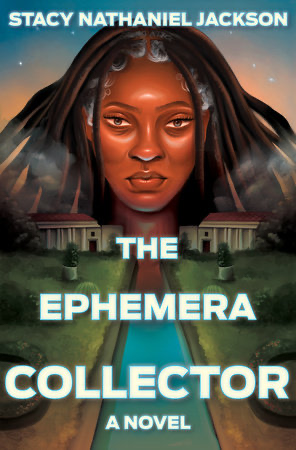
The Ephemera Collector – Stacy Nathaniel Jackson

2035. In a divided, polluted Los Angeles, Xandria Brown pours her passion into her work as an archivist. Collecting ephemera from prominent Black authors, artists, and activists, she fights to preserve her work as the threat of corporate encroachment in her library looms. After the death of her wife, only her health bots, which monitor her symptoms of long COVID, keep her company. But when the library goes into lockdown for undisclosed reasons, Xandria and her health bots must get to the bottom of the mystery—and make sure that her collections are unscathed.

TW/CW: ableism, eugenics, racism, violence, medical content

Though not without its flaws, this is one of those novels where you can really feel how much of a labor of love it was for the author. The Ephemera Collector is Stacy Nathaniel Jackson’s debut novel, which he published in his 60’s (!!!). It’s a mix of prose, poetry, and visual media, and I honestly wish I’d read a physical copy instead of an ebook in this case, because I feel like my Kindle couldn’t grasp the formatting fully. Nevertheless, The Ephemera Collector is a unique novel in all senses: a unique dystopia, a unique Afrofuturist novel, and a startlingly original piece of sci-fi.

Stacy Nathaniel Jackson’s vision of the United States 10 years from now was certainly bleak, but his worldbuilding was what made The Ephemera Collector stand out so much to me. No stone was left unturned in terms of what happens to America in the next 10 years, from the threat of corporate oversight on Xandria’s archives of Black history to the COVID-34 pandemic that occurs a year before the novel is set. It was bleak to me, but not necessarily cynical to me; yeah, us going into a second global pandemic only 14 years after “getting through” the first one seems a bit cynical, but given how this country absolutely bungled how we handled COVID-19, it feels somewhat realistic. Yet the weirder and further you get from the center of what makes Jackson’s dystopia a dystopia, the more imaginative the worldbuilding gets. Xandria is followed around by health bots that all have distinct personalities. There’s a whole Atlantis 2: Electric Boogaloo situation with a group of POC separatists who settle underwater off the coast of California. The weirder Jackson gets with it, the better the worldbuilding becomes; those unique touches are what stuck with me the most.

Yet even though Jackson’s vision of the future is full of polluted air and government corruption (not too far off…oof), it never fully felt like completely gloom and doom. In the end, I feel like this novel was about the importance of preserving history, and the main character’s fight is to keep corporations out of her exhibition of Black history, namely a collection of ephemera about Octavia Butler. Our protagonist is a queer, disabled Black woman who comes from a line of disabled Black ancestors, and she is standing her ground when it comes to preserving their history as a fundamental thread in the fabric of our country. Xandria putting up this fight, for me, was what kept The Ephemera Collector from being fully cynical. To imagine a darker vision of the future is one thing, but to have a character fight it, win, and outlast said corruption and hatred (somehow, she lives to be 300 years old? I assumed it was the gene editing, but it’s never fully explained) was what gave me hope in the end. Xandria, a battered woman who faced threats to her archives, non-consensual gene editing and eugenicist practices, and the death of her wife, comes out the victor in the end, triumphant over everything she fought to defeat. She is alive to preserve the history of her ancestors, but she is also proof that even the groups that America is most determined to erase will survive no matter what this country throws at them—and outlive them by centuries.

Going into The Ephemera Collector, I knew it wouldn’t be the easiest book to digest. The reviews warned me of a novel that frequently went on tangents that didn’t relate to the main storyline, and a novel that was disorganized in general. Having that in mind, I went in with low expectations. While I do think this novel was a bit disorganized at worst, I think it was partially the point. This is a book about an archivist poring through artifacts in a massive library. Jackson’s style is very stream-of-consciousness, and I feel like it uniquely reflects what Xandria’s mindset would accurately be if she spent most of her waking hours as an archivist. It reminded me vaguely of The Library of Broken Worlds, a very different book from this one, but still a sprawling, magnificent at best, deeply convoluted at worst novel set in a vast library. Maybe that’s just what you’re in for if you write imaginative books about sci-fi/fantasy libraries. There were some sections that strayed too far from the main plot for my taste (more on that later), but overall, I enjoyed the breaks in form, whether it was the switches from prose to poetry to the anecdotes about Xandria’s ancestry. It really put me in mind of an archivist, and that seems exactly what Jackson set out to do. For me, it also tied back into the theme of preserving history—all of what we see is the history that Xandria fought so hard to keep alive and non-sanitized by corporations.

Here’s the thing, though. I was fine with the earlier tangents because I could see the thread that connected them to the rest of the novel. But around 60% of the way through, The Ephemera Collector quite literally loses the plot. Without warning, it switches to an entirely new story that’s barely connected to the main story—and that’s being generous. The only possible connection I could find was that one of the characters was a relative of Xandria, but that’s it. There’s no connection to her or the library. My dilemma is that although it was very distant from the rest of the novel, it was still a compellingly written storyline. It dealt with one of the more fascinating parts of the worldbuilding: the separatist community who created an underwater settlement, and later became pseudo-climate refugees when it became untenable to live underwater for any longer. It was so strange and lovely to pick apart, but it didn’t connect to the main narrative until the very last minute. Even in the context of Xandria looking through the archives, there wasn’t a clear thread. I’m tempted to give this less than 4 stars, because although this frustrated me, the writing was just that good. In my more arbitrary system, I guess it would be more in the 3.8-3.9 range, if we’re getting really specific, but I like it more than a 3.75. It’s a weird dilemma, but so is the whole novel, really.

All in all, a deeply imaginative Afrofuturist novel that pushed the boundaries of what a dystopia can be. 4 stars!

The Ephemera Collector is a standalone and Stacy Nathaniel Jackson’s debut.

Today’s song:

NEW GUERILLA TOSS, WOOOO

That’s it for this week’s Book Review Tuesday! Have a wonderful rest of your day, and take care of yourselves!
Posted in Uncategorized

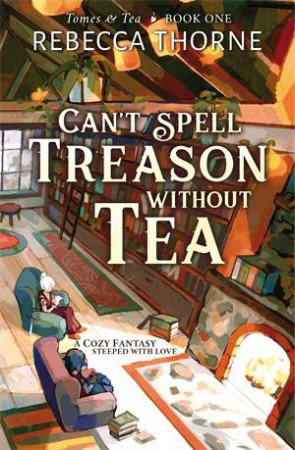
Book Review Tuesday (7/12/25) – Can’t Spell Treason Without Tea

Happy Tuesday, bibliophiles!

Continuing with my reviews for Disability Pride Month, here’s a sweet cozy fantasy with queer, disabled leads! Of course, those three factors are what drew me in, and I was in the mood for something more low-stakes. Though it wasn’t the best cozy fantasy out there, Can’t Spell Treason Without Tea was a sweet diversion.

Enjoy this week’s review!

Can’t Spell Treason Without Tea (Tomes & Tea, #1) – Rebecca Thorne

All Reyna and Kianthe want to do is escape. Kianthe is tethered to her job as the most powerful mage in the Queendom, and Reyna works as one of the Queen’s most esteemed bodyguards. But against all odds, they run away together to live out their shared dream: opening a bookshop that serves tea. As their dream falls into place, they discover that it’s not as easy as they thought to abandon their lives and run away, from the guards searching for Reyna and the complications of Kianthe’s magic. But they’re determined to make their dreams come true, and they’ll stop at nothing to have a moment of peace.

TW/CW: fire, injury, loss of loved ones, murder, violence, panic attacks

If you can get past the initially corny title, there’s some comfort to be had here, just like a good cup of relaxing tea. Am I committed to sticking around for the even punnier titles in the rest of the series? Not really, if I’m being honest. That said, if you’re looking for something fluffy, romantic, and sweet, Can’t Spell Treason Without Tea is the perfect diversion for you.

As far as coziness goes, Can’t Spell Treason Without Tea was a solid entry into the genre! Although it’s more action-oriented than a typical cozy fantasy novel, the pacing works in such a way that it takes a backseat to the more quiet, gentle parts of the novel. Thorne’s way of describing the mountainous landscape and the interior of the bookshop was relaxing and cozy; if it hadn’t been July when I read this, it would’ve been the perfect book to read while swaddled in blankets during the winter. It’s hard to get a reader invested in a relationship that’s already been going strong for at least a few years, but those quiet moments were perfect to get acquainted with Reyna and Kianthe. There’s plentiful soft, tender moments between the couple, both when they’re enjoying spending time together and when they’re trying to work out issues—often related to hurdles with getting the bookshop to work, but usually with something more interpersonal at its heart. If you can already get past the corny title, chances are, you’ll get past some of the more corny book and tea-related puns—for the most part, it’s a very silly, fluffy book, and it 100% fulfills its purpose as such. And damn, I needed a fluffy book.

Though this isn’t the best cozy genre fiction I’ve ever read, I think Thorne’s writing style lends itself perfectly to the subgenre. She had a very soothing way of describing the world and the characters—every description felt very bucolic and gentle, making even the world seem comforting alongside the storyline. With this style, she was able to render the quiet, tender moments of relationship development between Reyna and Kianthe beautifully, whether it was working out disagreements in their visions of the bookshop or helping the other work through panic attacks. Her writing just has a calming quality that not many writers do—an essential tool when you’re writing cozy fiction. Thorne’s passion for her characters and world truly shone through in every word, and it was clear that they took great care in making their writing as true to the intended mood as possible.

A rotating cast of characters is going to be a staple if your novel centers around a bookshop that serves tea, but that isn’t even where this novel’s character problem arises: it’s how they’re introduced. The issue with having Can’t Spell Treason Without Tea being placed smack dab in the middle of an established relationship is that many of the other characters are established as being involved with them, but you’re barely offered an explanation as to why. It seems like there’s quite a lot of short stories and one-shots and whatnot surrounding the novel, but without that context, it was rather disorienting juggling all of the characters when the protagonists had established relationships with them and their roles were hardly ever fully explained. Combine that with the fact that there were so many of these characters, and you’ve got a bit of a mess as far as getting the reader to care about anyone besides the protagonists.

Now, about the worldbuilding…or, “go, girl, give us nothing!” The worldbuilding wasn’t the main draw for me when I picked up Can’t Spell Treason Without Tea, but even then, it was rather underwhelming. Generically European and vaguely medieval high fantasy setting strikes again…free me from this prison!! I get that the romance and the characterization was the more central aspect to the book, but I still think that Thorne could’ve done much more with her worldbuilding. Try as I might, there wasn’t anything new offered about the setting. Though the descriptions of said setting were soothingly written, I struggled to find anything that stood out about the world—not even the magic system or the creatures. The monarchy and mythical creatures (griffins, dragons, etc.) were standard fare, but even those didn’t have any small quirks that would distinguish them from any other fantasy novel. If I think of what drew me in to this book, my mind goes to it being cozy and having queer/disabled leads; though I loved these aspects and think they were done wonderfully, they don’t strike me as necessarily unique—I’ve read other books with these exact qualities that had original worldbuilding to back them up. I’m not saying that this book had to have some insanely convoluted worldbuilding or anything, but at least give us something!

All in all, a cozy fantasy that was sweet enough to tide me over, but could’ve done with something more to distinguish it from all the rest. 3.5 stars!

Can’t Spell Treason Without Tea is the first novel in the Tomes & Tea series, which continues with A Pirate’s Life for Tea, Tea You at the Altar, and the final book, Alchemy and a Cup of Tea, which is slated for release in August of 2025. Rebecca Thorne is also the author of This Gilded Abyss and The Day Death Stopped.

Today’s song:

saw car seat headrest on saturday night…you will most DEFINITELY be hearing about that soon!!

That’s it for this week’s Book Review Tuesday! Have a wonderful rest of your day, and take care of yourselves!
Posted in Book Review Tuesday

Book Review Tuesday (7/8/25) – Something More

Happy Tuesday, bibliophiles!
I’ve been looking around for books to read for Disability Pride Month, and in general, trying to find some books by Palestinian/Palestinian diaspora authors. Something More fit both of those, so I figured I would give it a go! Though it wasn’t a perfect novel, it had all of the qualities of a classic YA romance novel—angsty, romantic, and heartfelt writing.

Enjoy this week’s review!

Something More – Jackie Khalilieh

Jessie is determined to turn over a new leaf. On the precipice of starting high school, she wants to show the world that she isn’t the girl who she was in middle school—lonely, awkward, and more importantly, autistic. Keeping her diagnosis a secret, Jessie quickly makes new friends—and new crushes—at Holy Trinity High. But when her friendships begin to unravel and her relationships start to crumble, Jessie questions whether it’s worth it to keep her authentic truth a secret after all.

TW/CW: ableism (external & internalized), xenophobia, racism, substance abuse, bullying

Dude. Jessie and I would’ve been best friends in high school. I would’ve gladly welcomed another neurodivergent Radiohead girlie to go sneak off to the library with during my lunch period.

Though I can’t speak to the accuracy of the representation, I loved how Something More explored Jessie’s identity! It’s something that I assume has a lot of personal importance to the author, and Khalilieh’s explored all of the facets of Jessie’s identity with such sensitivity and love. I’m not autistic, but I am neurodivergent (I have SPD), and I deeply resonated with a lot of her struggles with fitting in and adjusting to high school while being neurodivergent. I loved the arc of Jessie realizing that there’s no reason to hide her autism from her friends, and I also appreciated that a lot of her friends, despite their flaws, were respectful and accepting of her identity. The same goes with her Palestinian-Canadian identity—again, I can’t speak to the representation, but Something More had such a lovely exploration of Jessie’s experience growing up in an immigrant household and feeling like an outsider because of her Palestinian roots. It’s a deeply refreshing intersection of representation in YA literature that I adored!

I normally don’t advocate for things becoming Netflix movies, but I swear that Something More has the perfect recipe for becoming that kind of YA classic that gets a cute streaming movie. I can already see the Clueless-esque ’90s soundtrack from here, tailored towards Jessie’s special interest and the music integrated in the novel. From Jessie’s diary full of friend and boy-related (and getting her parents to get her a phone-related) goals to Jessie’s unique spark as a protagonist, it’s got the classic tropes down to a science, yet never makes them feel tired. She injects the right amounts of both the sass and the vulnerability that comes with a lovable YA rom-com protagonist. Khalilieh perfectly captures the awkwardness of entering high school and the rocky path to fitting in and finding your place. Jessie has so much great development, from realizing her self-worth in the face of her crush being dismissive of her, to realizing that she needs to stand up to her toxic “friends.” Jackie Khalilieh has clearly done her homework on YA, and with a little refinement, is well on her way to making a classic.

Despite what I loved about it, Something More suffered from a few key flaws. The most glaring of them was that…oh my god, there were so many wild, random subplots and side tangents that didn’t contribute much to the plot. Jessie’s grandma, who was almost never mentioned, randomly dies towards the end of the book, one of her friends gets involved with a creepy older man and gets dumped in a parking lot, and the rest of the friend group continuously gets tossed between several skeevy guys, seemingly with no resolution. Yeah, high school is weird, but by the end of the novel, the relationship/ex statuses between Jessie and her friend group looked like that one panel in Diary of a Wimpy Kid with the massive relationship diagram. And that’s just her friend group of FOUR PEOPLE. It was wild. Other than the gross Mel subplot, which…at the very least, I guess it gave some depth to Jessie and Levi’s relationship, none of them added to the plot, and nor did they have any ripple effects throughout the novel. I guess there was only so much time for Jessie to reflect on her grandmother dying, but if they were as close as we were blatantly told in a handful of sentences, why did it barely have an effect on Jessie? Wouldn’t she be…y’know, experiencing some form of grief? It all just felt rushed and took away page time that could’ve been used to develop the more central relationships in the novel.

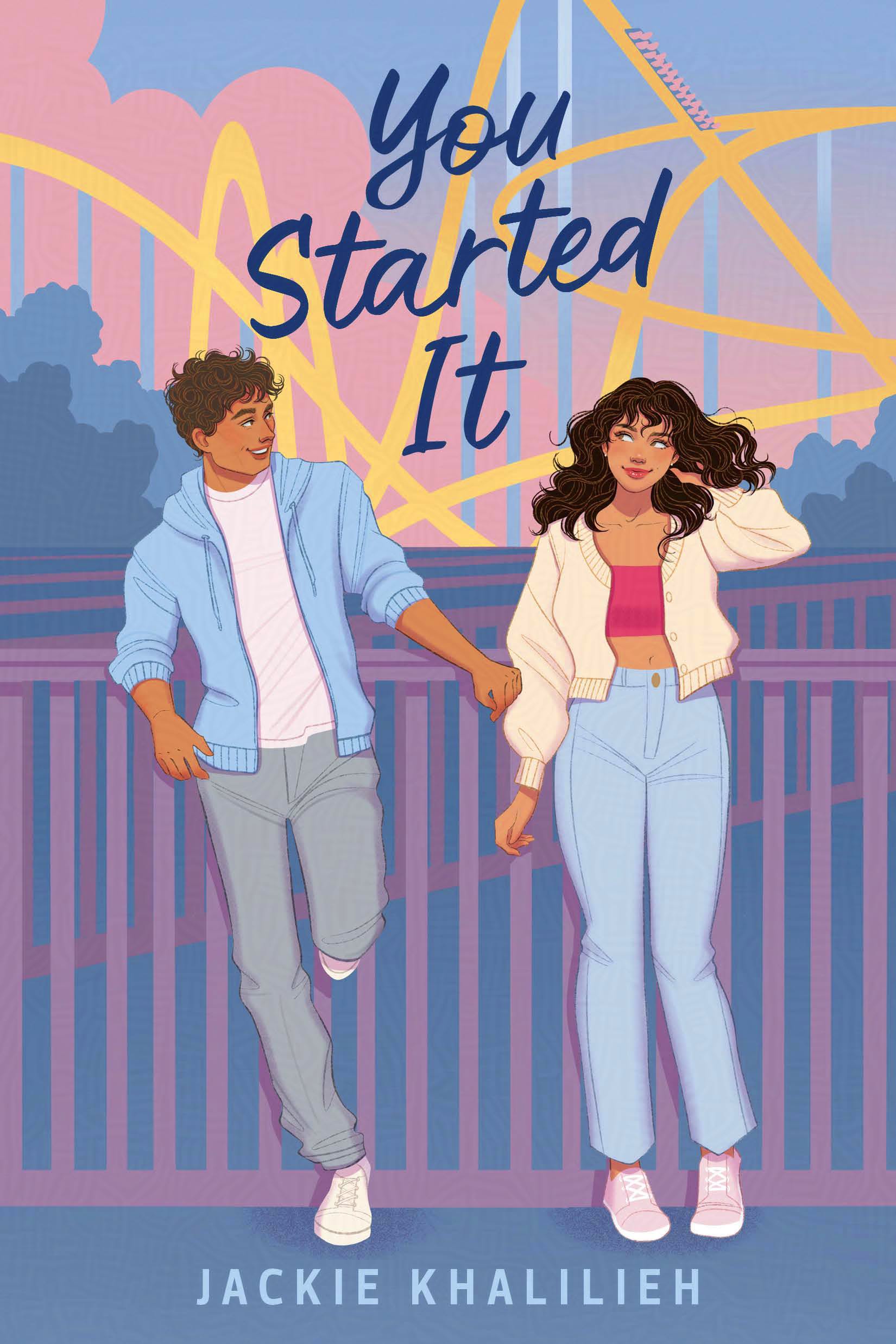
Speaking of relationships…thankfully, as the cover might lead you to believe, there really isn’t much of a love triangle. (Cue a sigh of relief.) I guess you could technically make an argument for it, but honestly, up until the 80% mark, I fully thought that things between Jessie and Griffin were going to stay completely platonic. Yet even then, Levi would’ve been the worse choice…LEVI. What a piece of work! I know that Jessie had to learn, BUT GIRL! YOU CAN DO BETTER THAN HIM! Just because he’s vaguely nice and looks like Kurt Cobain doesn’t mean that he’s not a flaky, disrespectful asshole! I get that Jessie had to learn both her lesson and her self-worth when it comes to falling head-over-heels for guys, but I feel like the writing of their relationship needed some work. I feel like the time between them meeting and having their first kiss was way too fast, even if Jessie was infatuated; their dynamic over the rest of the novel felt repetitive, and it didn’t serve much to the novel save for building the case for Levi being insufferable. As for Griffin, I did like their relationship, but I honestly think it could’ve worked romantically or platonically—I did like them getting together at the end, but I also would’ve appreciated him being part of Jessie’s (abandoned) goal of getting a guy friend and having a healthy depiction of friendships of the opposite gender.

Overall, a diverse YA romance that nails all of the factors for a classic formula, but faltered in its overabundance of subplots and awkwardly-paced relationships. 3.5 stars!
Something More is a standalone and Jackie Khalilieh’s debut novel. Khalilieh is also the author of You Started It and the forthcoming Everything Comes Back to You, which is set for release in 2026.

Today’s song:

I love this song, it sounds like being in a goldfish bowl…

That’s it for this week’s Book Review Tuesday! Have a wonderful rest of your day, and take care of yourself!
Posted in Books

♿️ The Bookish Mutant’s Books for Disability Pride Month (2025 Edition) ♿️

Happy Wednesday, bibliophiles!

Here in the U.S., July is Disability Pride Month! This July, we find ourselves in a situation that’s far from celebratory. Both the U.S. and the U.K. are on the verge of passing legislation that would make cuts to the healthcare programs and benefits that many disabled people rely on. It’s clearer than ever that the people in power see disabled people as disposable and not deserving of respect. In the years since I’ve started making these posts, visibility for disabled people (and this pride month) has seen a small increase (in my experience) yet continues to be left behind in feminism. And I’m still on the hunt for any kind of media that accurately represents my own disability (sensory processing disorder), and I know many disabled people have had similar experiences. But that’s no reason to give up. It’s no reason to stop writing, to stop reading, and to stop listening to the lived experiences of disabled people. We cannot be erased with legislation—we will always be here, and we’re sticking around no matter what.

So here is another list of some of the best books with disabled representation that I’ve read in the past year! I’ve included books from all age ranges (middle grade to adult) and genres that represent a multitude of disabilities.

NOTE: my memory (and the internet) is imperfect, so if I’ve misrepresented/mislabeled any of the specific rep in these books, don’t hesitate to let me know!

KEY FOR TERMS IN THIS POST:

  • MC: Main character
  • LI: Love interest
  • SC: Side character

For my previous lists, click below: 

Let’s begin, shall we?

♿️THE BOOKISH MUTANT’S BOOKS FOR DISABILITY PRIDE MONTH (2024 EDITION)♿️

FANTASY:

SCIENCE FICTION:

*I’ve arbitrarily included Being Ace in the science fiction section, but it includes several genres, many of which fall under sci-fi/fantasy. It could theoretically go in all three fiction categories in this post.

REALISTIC FICTION:

NONFICTION (or “Oops! All Alice Wong”):

TELL ME WHAT YOU THINK! Have you read any of these books, and if so, did you enjoy them? What are some of your favorite books with disability rep? Let me know in the comments!

Today’s song:

That’s it for this recommendations list! Have a wonderful rest of your day, and take care of yourselves!