Posted in Sunday Songs

Sunday Songs: 7/6/25

Happy Sunday, bibliophiles!

This week: (Almost) three years of making Sunday Songs graphics! As for right now, baby’s on fire, better throw her in…la mer?

Enjoy this week’s review!

SUNDAY SONGS: 7/6/25

“Baby’s On Fire” – Brian Eno

I…oh, shit. It took me until I published this post to realize that I’ve talked about this song twice now on this blog. Welp…

Music hot take of the week: this song needs to be, like, 8 minutes long. At least. I love an album that has songs that smoothly transition into one another (as is the transition from “The Paw Paw [Redacted] Blowtorch”* to this track), but oh my god, it needs more time!! The way that the song builds up is so monumental—it’s a whole fizzing, crackling Rube Goldberg machine of compounding suspense. The intro needs to be at least a minute long to stretch it out, just to give the first lyrics the punch they need. It’s a glam rock/art rock masterpiece, but it feels like a study in buildup and release more than anything. The percussion stays steady throughout the entire song, giving way for every other instrument—most of which were apparently woefully out of tune when they recorded it—to spiral outwards into a tidal wave that doesn’t crash until three minutes in—it just looms for so long. Most of me wants that to be extended, but Eno is a master of creating such a layered atmosphere.

What most people rightfully remember “Baby’s On Fire” for, however, is that truly insane Robert Fripp solo. The Genius annotation on the lyrics where it denotes the solo simply says “holy fucking shit,” which I think sums it up better than most music critics have. It’s the moment that the tidal wave that Eno has built up fully crashes, sending a kaleidoscope of chaotic spray down on the listener. As the story goes, Fripp had the flu while recording this marvel of a solo…I can only imagine the kind of tricks he was able to pull off when his health was stable, because GOD. It really is chaos personified—you can never predict which direction it’s striking next, and the stark contrast between it and the consistent, steady build of Eno’s background instrumentals make it feel like modern art. I get the same feeling of listening to “Baby’s On Fire” as I do looking at abstract, geometric paintings. It’s a masterclass in contrast.

Eno’s lyrics, especially in this era, are rarely serious, mostly just surreal word-play. Dehumanization is at the heart of the story, with a figure actively ablaze whose suffering is being exploited for photos. Here’s where I feel like Eno’s genius working with glam rock really comes in. He’s got this disaffected, theatrical tone, but what he’s saying is so deeply sarcastic that I can’t help but read it as critique of how the fictional subject is being exploited while she’s actively suffering; “Photographers snip-snap/Take your time, she’s only burning” reads to me as the photographers seeing her pain as tabloid fodder, a spectacle to make money off of. His nasally, sarcastic tone feels like a cue to laugh at the clowns who would ignore her plight just to make an extra buck. But whether in the fictional realm or in reality, I’ve always admired that Brian Eno has always been committing to condemning dehumanization of all kinds, from the 1970’s right up until today. It’s always comforting when the best musicians have consciences to match.

*It’s more an outdated term than anything, and I really don’t think Eno used it with any disrespectful intent—it was normal for the time. However, it feels uncomfortable for me personally to type it here, so see for yourself.

…AND A BOOK TO GO WITH IT:
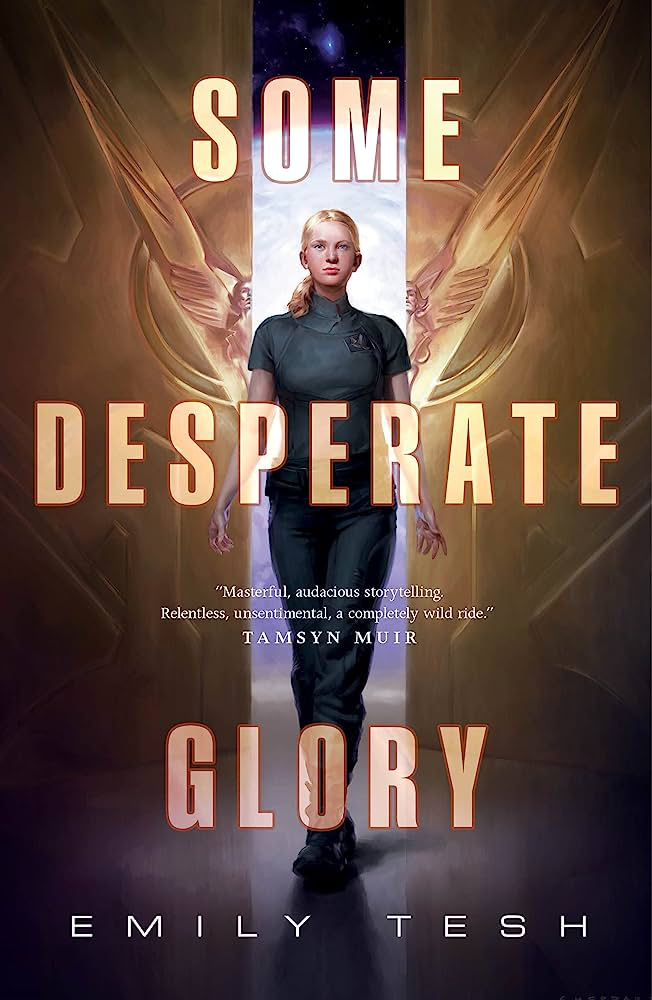
Some Desperate Glory – Emily Tesha fantastic sci-fi book that interrogates our casual comfort with dehumanization of others.

“davina mccall” – Wet Leg

BREAKING: Wet Leg actually has another song? I’m doing my best to not sound like a broken record whenever I talk about them, but I swear this feels like the most growth I’ve seen them have as far as songwriting range. It’s not a wild left turn for them, but it feels fresh.

Snuggled in between the ’90s and the 2010’s, somewhere between The Cardigans and early Wolf Alice, “davina mccall” stands out partly because it’s probably their first love song—and maybe their most sincere song. However fun they make their music, a lot of it is mostly the more maddening sides of modern life, whether it’s being bounced between stupid men or being apathetic and numb about the world. It’s never come across as abjectly doomery or irony-poisoned, mostly because they have a sense of humor about it. Yet they have kind of run themselves dry with the subject matter. I know that love songs are pretty much the most common kind of song you’ll hear these days, but for Wet Leg, it feels like a more vulnerable step. When your entire body of work is about being relatable and vulnerable about how silly and artificial modern life is, it feels significant for them to embrace the idea that vulnerability is not all phone addictions and bad sex. I might be getting too deep with it, but strip it all away, and “davina mccall” is just a lovely, summery love song, content to linger in the ordinary, quiet moments of romance.

Also, I can’t not talk about how delightful this music video is! Directed by Chris Hopewell—who I forgot I knew from the glorious stop-motion music video for Radiohead’s “There There,”—it reminds me of Fantastic Mr. Fox in the best possible ways. Luckily, none of them go the way of Thom Yorke in this video—the song’s too happy for that kind of thing. The members of Wet Leg are all rendered in claymation, and they all look an awful lot like Petey and the rest of his gang (at least it’s not weak songwriting this time). Wet Leg’s task force for bird-related crimes is nothing short of hilarious—and surprisingly sweet at the end.

…AND A BOOK TO GO WITH IT:
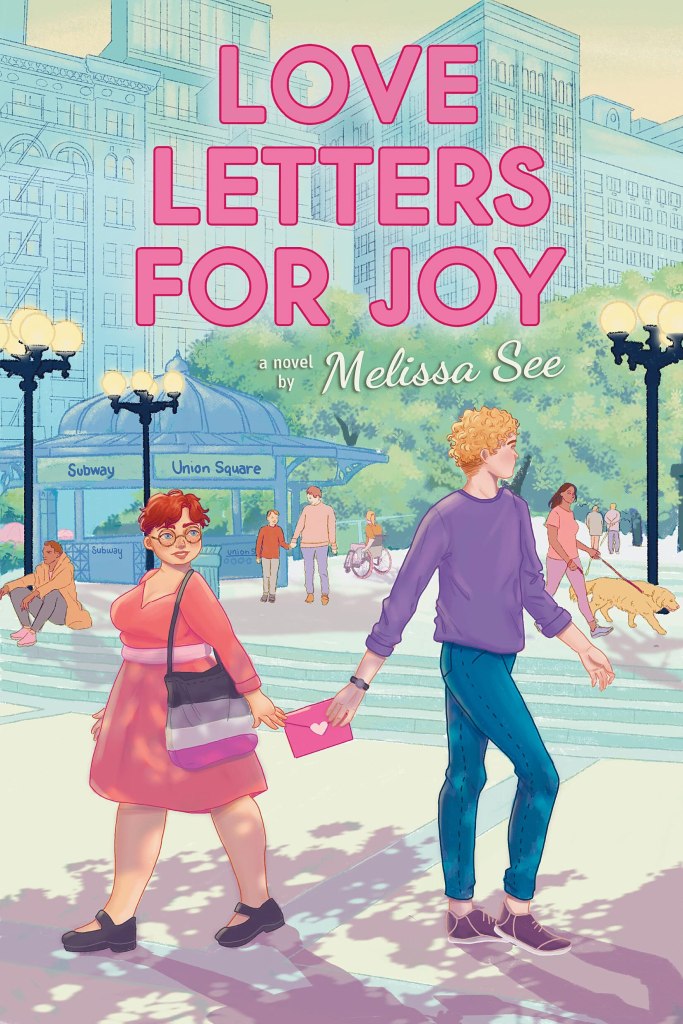
Love Letters for Joy – Melissa See“You know that I would/Do anything for you/It’s like a dream come true/Every day is spent trying to say something to make you smile…”

“Mer” – Chelsea Wolfe

I don’t talk about Chelsea Wolfe nearly as much as I should, even though, by my count, she’s featured on one of these posts/graphics…four times? Only four? Granted, she fell into that curse where every time I’d put one of her singles on a graphic, I’d be too busy to write about it. Shame, really, given that She Reaches Out to She Reaches Out to She was one of the best albums of 2024. Go listen to it—the album didn’t get nearly enough love as it deserved!!

As penance, let’s take a look back at one of her older tracks, 2011’s “Mer” from her album Apokalypsis, which has to have one of the most wondrously goth album covers ever (though her entire discography puts in a lot of great contenders). “Mer,” named for the French word for the sea, embodies its title, but not in the way you’d expect. The mer that Wolfe is channeling here isn’t the gentleness of waves lapping against the shore in July—it’s more the dread of looking out onto a roiling ocean as storm clouds gather over jagged, rocky cliffs. It’s a landscape that calls something along the lines of “Annabel Lee” for me. Even though I do play music, I’ve never been super keen about deciphering time signatures and the like, but I swear there’s something going on with “Mer”‘s timing—I swear there’s some syncopation going on with the percussion and the other instruments, but it all feels like each instrument is keeling ever so slightly to the side of the others, a sinking ship pulled in all directions. It all feels so off-kilter in Wolfe’s classic, sinister way. Even without the barely decipherable noises in the background, which for all the world sound like wailing Tim Burton-like spirits trapped in glass bottles, “Mer” would remain fundamentally eerie.

…AND A BOOK TO GO WITH IT:
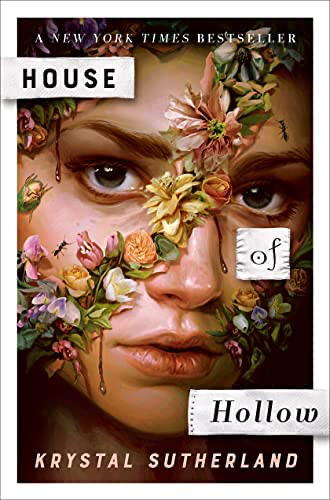
House of Hollow – Krystal Sutherlandthough the sea doesn’t factor as much into this novel, the general eerie, misty atmosphere very much carries over.

“Big Drops” – Avery Tucker

I only found out that Avery Tucker was finally going solo when I was writing about girlpool back in June. Compared to the more pop direction that Harmony Tividad has embraced now, Tucker’s single reminds me more of mid-career, more guitar-driven girlpool—something close to Powerplant or the first half of What Chaos is Imaginary. As far as new directions go, the more electronic turn that girlpool took in their later years was hit or miss—when they hit it (see: “Like I’m Winning It”), they made fantastic, sultry, synthy indie-pop; when they missed (see: …uh, pretty much 75% of Forgiveness), it almost smothered their candid lyrics and how well they worked together as a duo. It felt plastic.

So I can’t help but be relieved that Tucker’s returned to the band’s roots. Even though he’s…well, he’s playing a tele during some of the acoustic parts of the song in the music video, which is admittedly a little silly, seeing Tucker back in his element makes the music feel more natural. Though some of his delivery and lyrics veer on being too earnest, “Big Drops” shines a light on some of the more candid, bare songwriting that made girlpool so memorable. Solely in his hands, he crafts a narrative from intimacy, late-night talking, and musing about unexpected events and the regrets that come from them. With the (mostly) acoustic guitar, it gives the song a tender, warm spaciousness that evokes the exact imagery he conjures—sitting on pool chairs, looking at the sky, and spouting off about your life.

…AND A BOOK TO GO WITH IT:
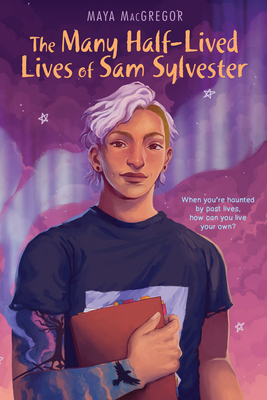
The Many Half-Lived Lives of Sam Sylvester – Maya MacGregor“Last night we talked about big drops/Big drop on the boardwalk ride/Big drop thinking about her life/Should we visit the two of them?/Or did the town get too violent?”

“My Baby (Got Nothing At All)” – Japanese Breakfast

In keeping with last year’s Sunday Songs anniversary, I am once again reviewing a song from a new movie that I haven’t even seen. (Update: I still haven’t seen I Saw the TV Glow. Someday…) Materialists doesn’t seem like my thing, but Japanese Breakfast certainly is. Ever since the trailer for the movie came out, I was enchanted by the way Michelle Zauner breathily sang “my baby.” I was fooled into thinking that this song was going to be on For Melancholy Brunettes (& sad women), so you can imagine my disappointment, as fantastic as that album was.

Regardless of whether or not you’ve seen Materialists, the swoony, rom-com feel comes away in waves on “My Baby (Got Nothing At All).” The more delicate range of Zauner’s voice shines through in this environment, accompanied by the gentle strum of acoustic guitars and swelling strings. As Zauner (and the protagonist of the movie, presumably?) affectionately admits that her lover is broke (but he gives it all to her anyway), she sings with the relaxed, daydreaming posture of someone leaning over a fire escape, watching the glow of the city lights below and the cool wind tossing her hair. As her voice climbs on the bridge (“You’re in love/There’s no doubt about it/There’s no use in messing up”), it cements the song as one of the more perfect rom-com songs—it’s not cloying or earnest, but it sounds appropriately like a lovelorn hand draped over a sighing forehead.

…AND A BOOK TO GO WITH IT:
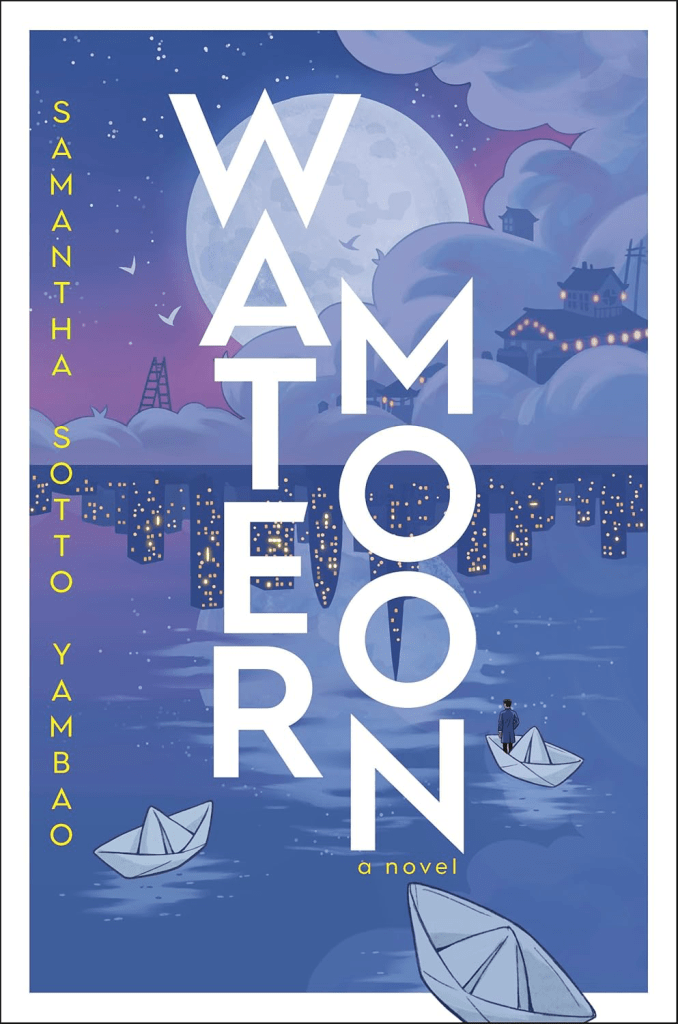
Water Moon – Samantha Soto Yambaothe best parts of this novel have the same dreamy, swoony feel of watching the lights of a glittering city and falling in love.

Since this post consists entirely of songs, consider all of them to be today’s song.

That’s it for this week’s Sunday Songs! Have a wonderful rest of your day, and take care of yourselves!

Posted in Sunday Songs

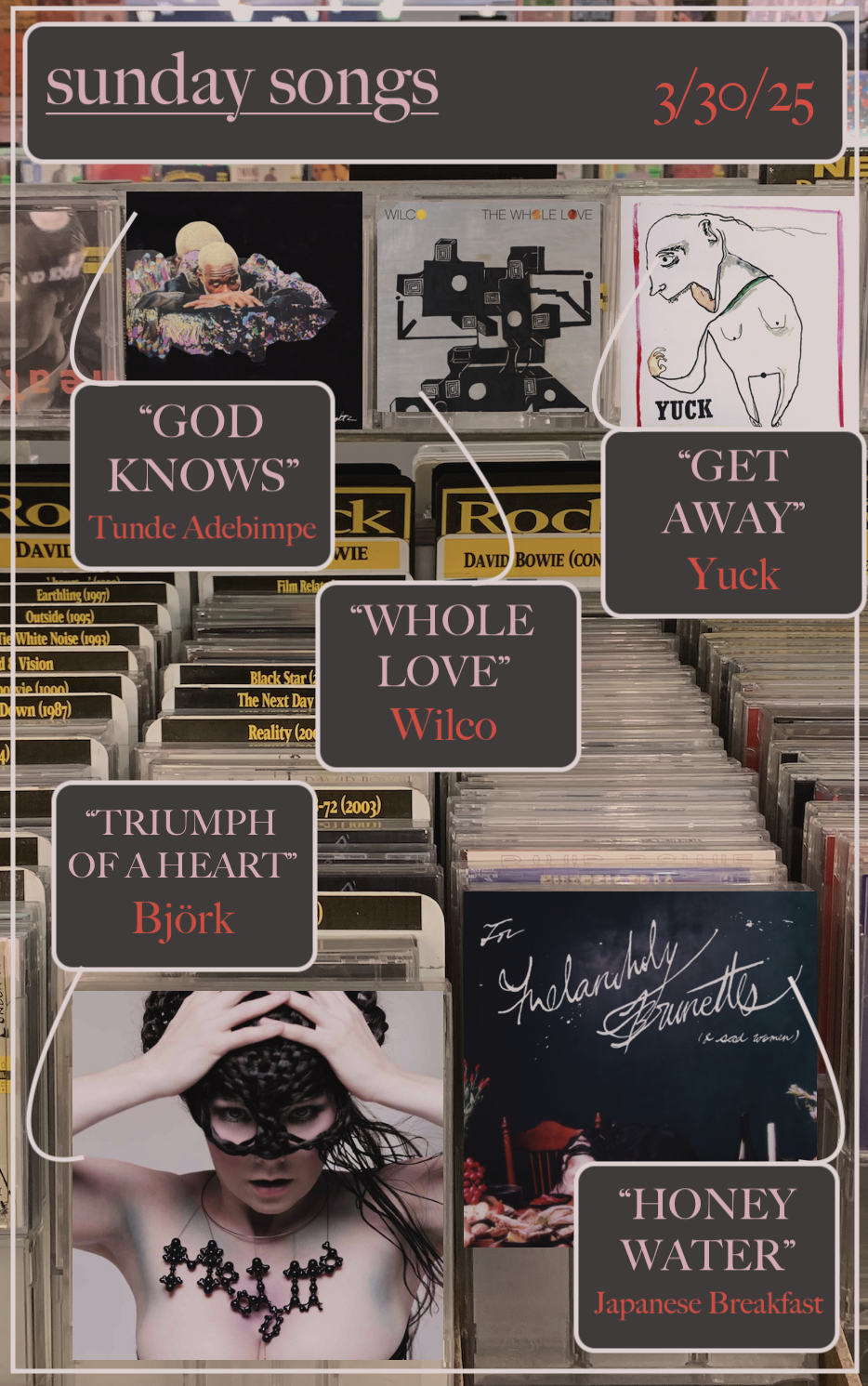
Sunday Songs: 3/30/25

Happy Sunday, bibliophiles! I hope this week has treated you well.

This week: new music from 2025—both released this year and overheard before a Soccer Mommy show.

Enjoy this week’s songs!

SUNDAY SONGS: 3/30/25

“Triumph of a Heart” – Björk

I’ve finished the Sonic Symbolism podcast, and all it’s left me with is a rabid desire to do a deep dive of the rest of Björk’s albums. Medúlla is enticing as it’s the next one chronologically (even though I’ve given up on listening to her albums chronologically), but also because of the uniting concept behind it. Inspired by primal, prehistoric imagery of motherhood, family, and storytelling around campfires, Medúlla was constructed almost entirely from the human voice. Aside from some synths and piano, it’s almost all a-capella, but not in the way that you’d think. Each voice becomes percussion, scattered onomatopoeia, and rising tidal forces that lift something primal from your soul. And every possible voice ends up featuring on this album—Tanya Tagaq (throat singing), Rahzel, Dokaka (beatboxing), and Mike Patton (deep backing vocals that Pitchfork described as “demonic”) all feature in the varied vocal tapestry. I ended up being too busy to write about “Pleasure Is All Mine,” but that song, in its simultaneous feminist ode and playful toying with women’s capacity to be selfless, really does succeed in digging into something innate, almost instinctual within me.

In concept, “Triumph of a Heart” is almost as ridiculous as the music video. (Fun fact: Björk’s cat husband in this video spawned the “I should buy a boat” meme from way back when.) Forming the percussion of the song, alongside Dokaka’s melodic beatboxing, is what can only be described as restrained raspberry noises and sounds that are almost akin to somebody who’s only heard a cat once trying to make cat sounds. Yet it all works in such a familiar yet alien synchronicity that comes together in a way that only Björk can make it. The track is an ode to how music can make you feel and the joy of dancing, a pleasure shared since early humans were able to whack sticks together and harmonize around the fire; maybe it’s an obvious choice for this album, but using only bodily instrumentation is the perfect medium to explore the visceral nature of music and dance, the way that it sometimes vibrates your soul: “The nerves are sending shimmering signals/All through my fingers/The veins support/Blood that gushes impulsively towards/The triumph of a heart.” I always see such sentiments of people undervaluing the arts, even as they consume it by the truckload and think nothing of it; it’s not a viable, useful profession, more fodder for AI and mindless listening. It’s so easy for us to forget that art in all its forms, the same as the need for medicine and food, is innate to us, and has been since we were gathered in the shelter of the first fires.

As a bonus: here’s some behind the scenes footage of the recording of “Pleasure Is All Mine”:

…AND A BOOK TO GO WITH IT:

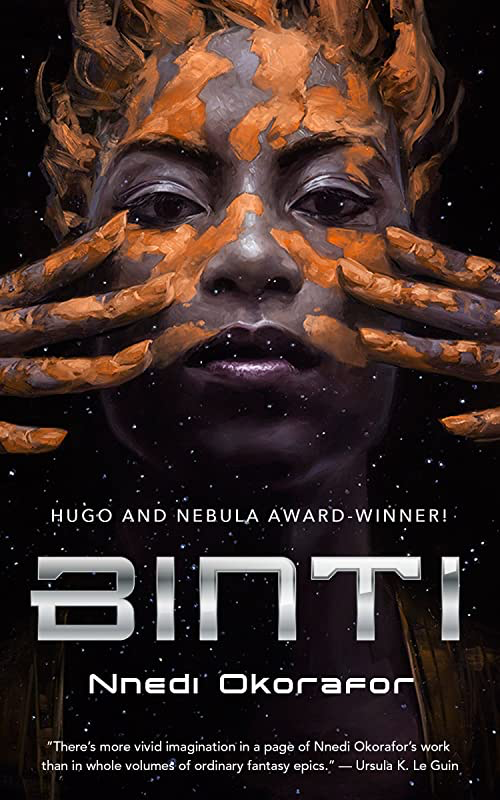
Binti – Nnedi Okoraforthis novella also falls into that merging of preserving cultures that have survived for thousands of years and alien technology, and it blends into a bizarre, delightful trilogy.

“Honey Water” – Japanese Breafkast

For Melancholy Brunettes (& sad women) sadly fell under the She Reaches Out to She Reaches Out to She curse on this blog, which roughly translates to “I wanted to write about at least 2-3 of the singles, but they all ended up landing on weeks where I didn’t have time to write.” Shame, really, because “Orlando in Love” and “Mega Circuit” were silk-drapingly romantic and creepily artful, respectively. Now that I’ve listened to the whole album, at its best, it embodies those qualities, oscillating from semi-autobiographical, tragic stories to some of the more fictional songwriting that Michelle Zauner drew on for Jubilee. She simultaneously leans into the notion of the “sad girl” while critiquing the fact that women are so often pigeonholed into this description (see the title), embroidering her own dramatic melancholy with orchestral arrangements and references to Greek mythology. Though it wasn’t always successful and the end dragged (see: “Men in Bars,” an faux-earnest, ballad-y duet with…Jeff Bridges? Huh?), For Melancholy Brunettes was, for the most part, an artistic leap that was a good 75%-80% successful in its feats of daring. It acknowledges its place amongst the traditionally emotional role of female musicians, but also acknowledges the light that peers in through the cracks (see: “Here Is Someone”—for maximum enjoyment, transition it with “Frosti” by Björk).

“Honey Water” was one of the standout tracks. I never thought of Japanese Breakfast as someone who could necessarily conjure up eeriness. Sure, she’s written plenty about all manner of unpleasant feelings, but I’ve never gotten dread as one of the most prominently featured ones. Zauner’s signature, breathy whisper takes on the feeling of a carnivorous plant laden with dew, ready to ensnare all manner of insects. Yet she’s not the one doing the ensnaring in this song—the narrative, toeing the line between fiction and reality, as her songs often do, speaks of an unfaithful lover repeatedly leaving her for someone else: “The lure of honey water draws you from my arms so needy/You follow in colonies to sip it from the bank/In rapturous sweet temptation, you wade in past the edge and sink in/Insatiable for a nectar, drinking ’til your heart expires.” The dread that Zauner dredges up is more a kind of stagnation, the sinking feeling of seeing the inevitable unfold around you, and yet somehow feeling powerless to move—or leave. The closing refrain, as the guitars rise in a crashing, insectoid drone, echoes Slaughterhouse-Five’s famous tidbit: “So it goes/I don’t mind”; the narrator convinces herself that all of her partner’s unfaithful transgressions are a fact of life. That tired powerlessness is what makes the dread so palpable, the music swallowing her as she mutters the last repetition of her exhausted mantra.

…AND A BOOK TO GO WITH IT:

The Familiar – Leigh Bardugo“In rapturous sweet temptation, you wade in past the edge and sink in/Insatiable for a nectar, drinking ’til your heart expires…”

“God Knows” – Tunde Adebimpe

Remember how I was halfway chiding myself for hoping that Thee Black Boltz was just going to be TV on the Radio 2: Electric Boogaloo? Now that “God Knows” is out, I think that might honestly just be what the album is like regardless of expectations. “Magnetic” introduced us to a familiar, nostalgic sound full of energy, “Drop” was the point where Adebimpe seems to diverge, and now we’ve got “God Knows,” which sounds straight off of Nine Types of Light or even Dear Science. It’s giving me some perspective on how much Adebimpe made TV on the Radio—Dave Sitek constructed the scaffolding, but Adebimpe was the heart of it all, without a doubt. Balancing sharp acoustic strumming with synths that ripple and bubble, this track adds to “Drop” in the sense that both songs feel like they’re floating. It fits with the album cover for me—as Adebimpe clings to his geode island in the middle of an undefined void, he’s buoyed through it, like an ocean, propelled by nothing but the endlessly catchy hooks he’s been producing of late. “God Knows” stands out to me as the strongest of the three offerings so far—like “Magnetic,” it’s been sharpened to its tightest point to make indie rock tracks that wouldn’t be out of place 10 or even 20 years ago. Tunde is timeless.

…AND A BOOK TO GO WITH IT:

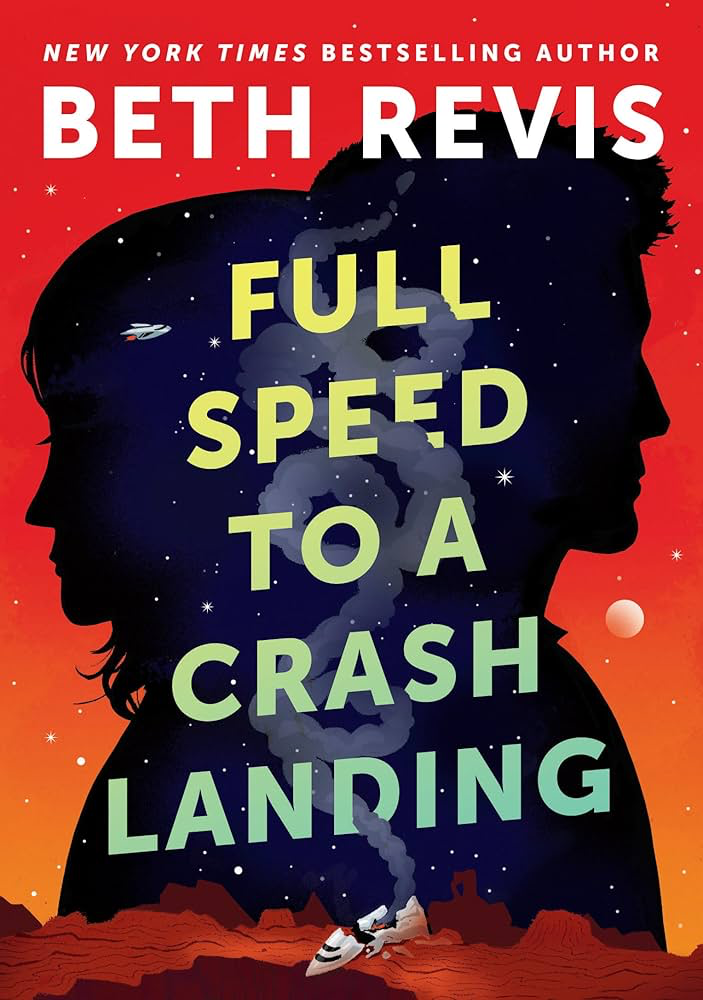
Full Speed to a Crash Landing – Beth Revis“God knows you’re the worst thing I’ve ever loved/And you’re bad news/But we still got to have our fun…”

“Whole Love” – Wilco

Man, YouTube comments are so funny sometimes. I hope the Latina woman who posted “I love this white song, don’t tell my homegirls I listen to this” is doing okay and still listening to Wilco happily. Wilco really is the great unifier.

Here’s an album that I’ve probably listened to in full, but only remember about half of. The Whole Love soundtracked many a car ride to school or piano lessons and whatnot back in 2011. I even remember popping my dad’s borrowed CD into my old Hello Kitty CD player while I was playing with my Build-A-Bears in my room. That should give you a picture of the kind of hipster child I was, but I digress. The resulting tour was also the first time I saw Wilco—and my very first concert, at Red Rocks at the age of eight. So even if I haven’t mapped it out fully, The Whole Love was integral to my childhood, whether it was watching the music video for “Born Alone” on my dad’s old laptop (I distinctly remember saying that it “made my head spin”) or sitting on my dad’s shoulders on that summer night. Really, it boils down to my dad. Raising me on all that Wilco made me turn out alright, I think.

Back to “Whole Love” in particular. The song already carries a metric ton of nostalgia for me, but it never gets old with any successive playing. As far as The Whole Love goes, it feels like one of the more accessible tracks—it’s classic Wilco, but with the artsy twist that the album presents. There’s a passage in Steven Hyden’s This Isn’t Happening: Radiohead’s ‘Kid A’ and the Beginning of the 21st Century that talks about the significance of album openers setting the tone for the album as a whole. Hyden points to “Art of Almost” as an example—with all of the Thom Yorke-esque synth weirdness, it signals to the listener that this is gonna be the weird Wilco album. That experimental nature leeches into the most “accessible” sounding tracks—like this one. Even as Jeff Tweedy brings his gentle, acoustic sway into fruition, the background can only be described as fluttering—they jitter and judder like the freshly-dried wings of just-hatched butterflies, creating tiny fractals in the background. Yet even if you stripped that weirdness away, “Whole Love” would still be a classic—whether it’s craft or my nostalgia talking, there’s something so innately comforting about the layered harmonies, folded on top of one another like layers of fine fabric.

…AND A BOOK TO GO WITH IT:

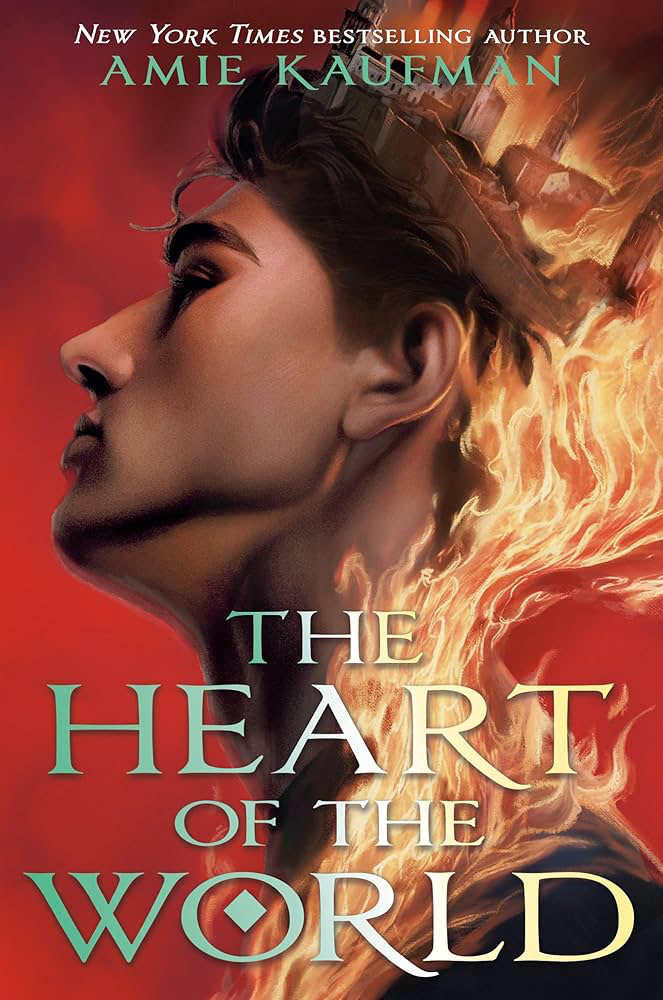
The Heart of the World (The Isles of the Gods, #2) – Amie Kaufman“And I know that I won’t be/The easiest to set free/And I know that I won’t be the last/Cold captain tied to the mast…”

“Get Away” – Yuck

This song played before Soccer Mommy came on when I saw her a few weeks back, and for a split second, I confused it for some Apples in Stereo song that I somehow hadn’t heard in my childhood. Turns out, there’s probably no Apples in Stereo song that I missed when I was a kid, hence why I didn’t recognize it. (Cut me some slack, it was loud in there…) Yuck doesn’t have the same electronically-oriented whimsy as the Apples in Stereo, but they seemed to branch off of the indie sound of the early 2010’s, with their synth-like guitars, ’90s distortion, and the nasally vocals of Daniel Blumberg. Those guitars were what made me nearly mistake them for the Apples in Stereo, but they’re clearly more students of, say, Sonic Youth or Dinosaur Jr. But they had that sun-soaked, 2010’s indie aesthetic down to a science; even without the yellow filter on their music video, “Get Away” just oozes the sensation of a dream of being on a road with no speed limits while the sun beats down through the windshield. Even as Blumberg laments that he can’t get away, wrestling with negative thoughts, the track speeds along with a carefree freedom, kicking up gravel as it forges its own path. Certainly fits right in with Soccer Mommy’s sound too—she’s got an eye for good indie, that’s for sure….

…and so does the Academy, apparently? You’re telling me that this guy just won an Oscar for his original score for The Brutalist? That’s a connection I didn’t expect to make in this post…good for you, Daniel Blumberg!

…AND A BOOK TO GO WITH IT:

The Many Half-Lived Lives of Sam Sylvester – Maya MacGregor“Summer sun says get out more/I need you, I want you/But I can’t get this feeling off my mind/I want you, I need you…”

Since this post consists entirely of songs, consider all of them to be today’s song.

That’s it for this week’s Sunday Songs! Have a wonderful rest of your day, and take care of yourselves!