Posted in Sunday Songs

Sunday Songs: 7/13/25

Happy Sunday, bibliophiles! I hope this week has treated you well.

This week: it’s always the theme of this blog, but I feel like this roundup is a celebration of weirdos who are unafraid to express themselves in wild, creative ways. (Why yes, I am talking about Björk again, how did you guess?)

Enjoy this week’s review!
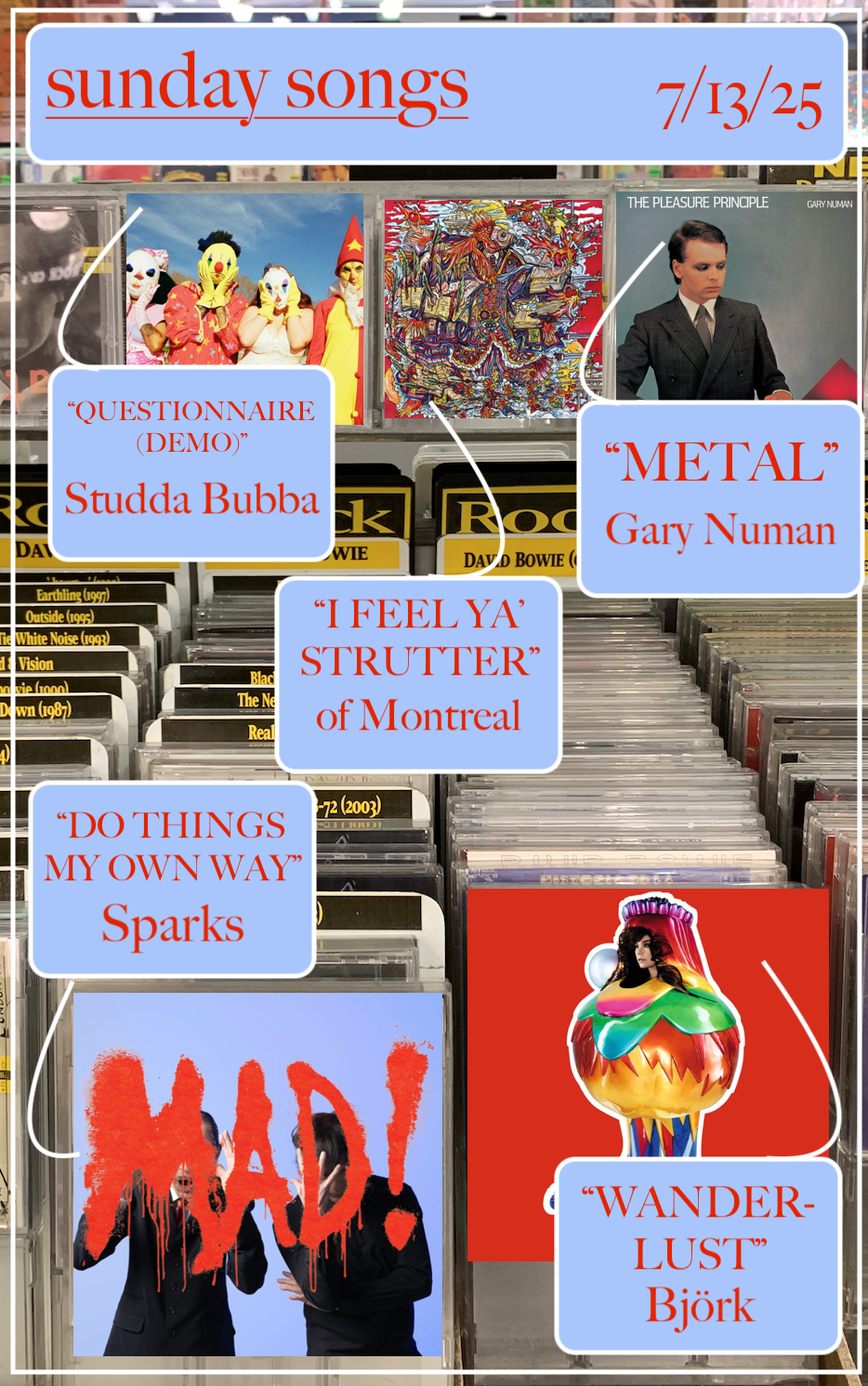
SUNDAY SONGS: 7/13/25

“Do Things My Own Way” – Sparks

I aspire to be like Sparks. I’m not even a die-hard fan or anything, but they just seem so aspirational in what they’ve done with their long, creative career. They’ve recently come out with their 26th (!!!) album at ages 79 (Ron) and 76 (Russell), and by all accounts, they’ve continued on their decades-long streak of doing nothing but their own thing. They haven’t achieved super mainstream fame, but the brothers have been producing their own brand of creativity, drawing from what seems to be their own never-ending well and the well of the present. Just look at their episode of What’s In My Bag? I seriously haven’t seen an episode of these with such a wide and diverse range of music, from K-Pop to John Coltrane to Kate Bush. They don’t seem to be stuck in the past—their personal brand of weirdness has just evolved over the decades.

At this point in their career, “Do Things My Own Way” feels like a statement of purpose from them, a propulsive anthem of confidence and being authentically yourself. Standing firm in its defiance, the track strides forward without a care for anyone or anything—nothing will shake the Mael brothers in their creativity. Anyone who’s in the way of them doing their thing is getting pushed out of the way—they’re not answering to anyone anymore. But even in that confidence, they acknowledge the rocky road that staying committed to yourself brings: “My advice, no advice/Gonna do things my own way/Roll the dice, roll the dice/Gonna do things my own way.” It’s always a gamble—there will always be people who look down at art like this as commercially inviable or not worth making. But as Sparks’ career has shown, it’s a risk worth taking. “Anywhere, anytime/Gonna do things my own way/I don’t care, I don’t care/Gonna do things my own way.” Another fantastic weirdo anthem for the books—thank you, Ron and Russell.

…AND A BOOK TO GO WITH IT:
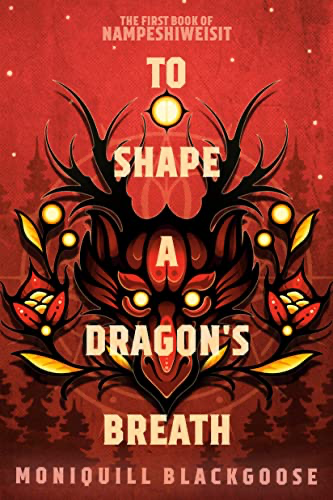
To Shape a Dragon’s Breath – Moniquill Blackgoose“My advice, no advice/Gonna do things my own way/Roll the dice, roll the dice/Gonna do things my own way…”

“Wanderlust” – Björk

The Björk deep dive continues…although this is about two weeks after I actually listened to the album, owing to the color palette rules I’ve imposed on myself. Both Volta and Medulla seem to spar in the Björk fandom for one of her least-liked albums, and every time I remember that, I’m baffled. I guess Timbaland’s more pop-sounding production isn’t for everyone, but if this is pop (yeah yeah), then this is the most bizarre pop I’ve ever listened to. Recorded during Björk’s time spent on a houseboat with her family, there’s a stark juxtaposition of the natural with the mechanical. It works both as a sonic tool and as political statement, given this album’s threads of anti-war (“Earth Intruders”) and anti-imperialism (“Declare Independence”) sentiments. It’s so delicious to me as a musical statement; even though she’s spent her whole career melding electronic music with nature, she’s turned it into a strong statement that war and colonialism are invasive and fundamentally against nature. God, I love Björk. I can’t believe I’m the kind of person who would unironically say “erm, ackshually, the foghorn noises contribute immensely to the album’s narrative,” BUT THEY DO. THEY’RE LIVE RECORDINGS OF WHEN SHE WAS ON THE HOUSEBOAT!! GUYS!!

Björk has called “Wanderlust” the heart of Volta, and it’s easy to see why. In a fairytale kind of way, it streamlines her statement of purpose, both in her personal life and in her musical career. Even though “Earth Intruders” is the first track on the album, “Wanderlust” tells its story: “I am leaving this harbor, giving urban a farewell/Its habitants seem too keen on god, I cannot stomach their rights and wrongs/I have lost my origin and I don’t want to find it again/Whether sailing into nature’s laws and be held by ocean’s paws.” I don’t blame her, especially since the move was prompted by living in New York with her family during the Bush administration. But after she breaks free, she revels in exploration and cliff-diving into the unknown, relishing in the act of discovery and intrepid daring. It’s an unabashed ode to not just stepping, but full-on leaping out of your comfort zone and being unafraid to dive headlong into the new and strange.

I originally saw the music video back in May during the Alamo Drafthouse’s Birth, Movies, Death for The Legend of Ochi (a very underrated fairy-tale/finding a creature film with lots of top tier critters, setpieces, and Willem Dafoe deftly proving that masculinity is a very silly construct). Isaiah Saxon co-directed it, and it might be one of my favorite of Björk’s music videos. Dressed in a Studio Ghibli-looking costume, Björk races down the river on the back of a herd of musk oxen, with fantastical scenery that accompanies her as a fabric-like torrent of water pushes her ever-forward into the unknown. After seeing The Legend of Ochi, I can say that yeah, it’s very Isaiah Saxon, but more than that, it’s so Björk. I can’t think of a better pairing for the spirit of the song.

…AND A BOOK TO GO WITH IT:
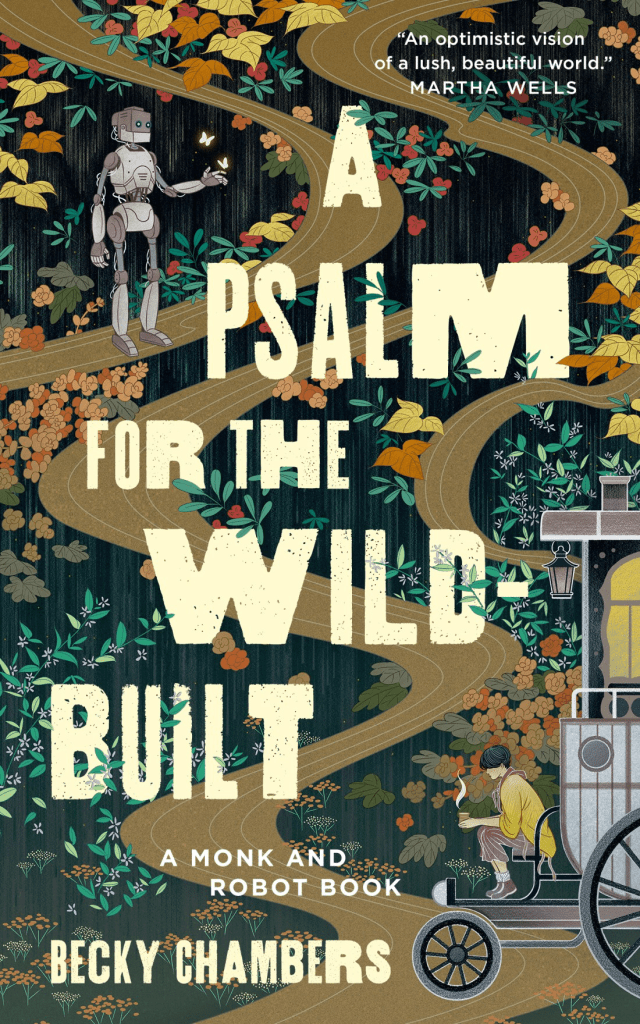
A Psalm for the Wild-Built – Becky Chambers“I am leaving this harbor, giving urban a farewell/Its habitants seem too keen on god/I cannot stomach their rights and wrongs/I have lost my origin and I don’t want to find it again/Whether sailing into nature’s laws and be held by ocean’s paws…”

“Questionnaire (Demo)” – Studda Bubba

No, this isn’t Instagram Reels music, although in the most abstract sense…I did find it on the Instagram explore page. But listen, if my Instagram is recommending me quirky little folk songs made by a group of Indigenous, trans clowns, then shit, maybe I am giving off the right vibe to the algorithm after all. Amidst the hellscape that is social media, at least sometimes I can find spots of humor and creativity. For once, I found someone with the whimsy in their soul to center the chorus a folk song around the concept of opening up a hyper-capitalist factory and paying workers with the meager stipend of a single NFT. It’s a tender balance between their soft harmonies and the abject silliness of their lyrics (they managed to slip “you wouldn’t download a car” in), but maybe that whimsy is part of what holds the glue of whatever good is left in the rotting, festering wound that is social media. Anything to get us through all this.

…AND A BOOK TO GO WITH IT:
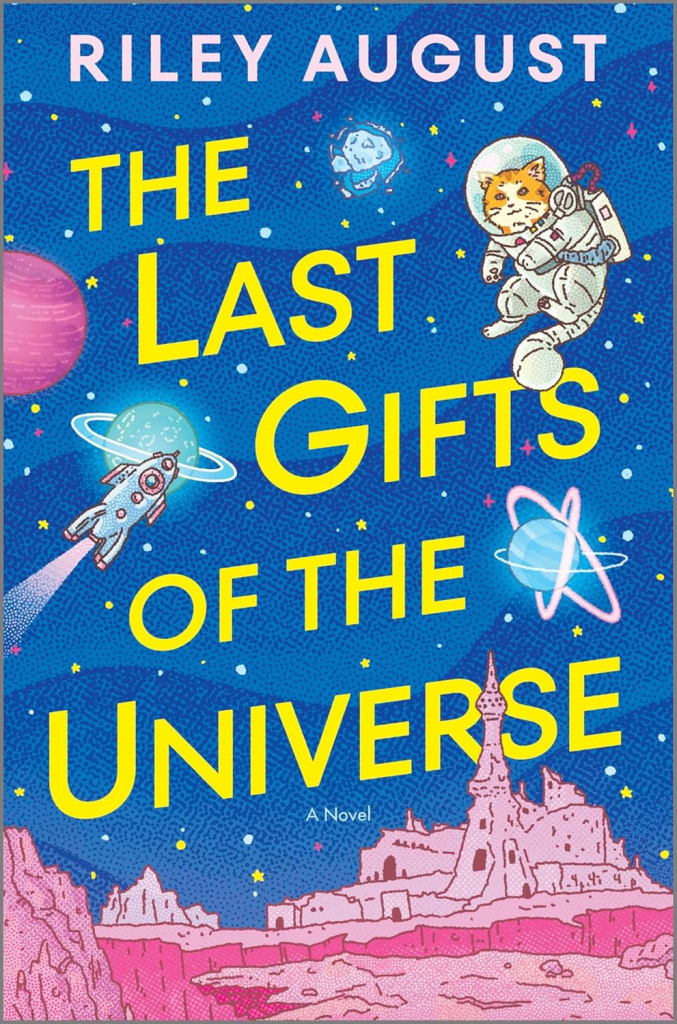
The Last Gifts of the Universe – Riley Augustsoft and tender, the kind of music I’d imagine playing in the quiet scenes with Scout and Kieran on their ship.

“I Feel Ya’ Strutter” – of Montreal

A late pride month addition, but every month is pride month…especially on this blog. And there’s not a whole lot that’s gayer than a) an of Montreal song, and b) an of Montreal song that absolutely reeks of the ’80s output of both David Bowie and Prince. This is easily one of the grooviest of Montreal tracks that I’ve heard—it doesn’t have the quaint, plinking synth soundscape of something off of Hissing Fauna, Are You the Destroyer?, but instead boasts more of a slinky, guitar-driven sound. However, nothing can keep Kevin Barnes from having the most delightfully convoluted lyrics. During the verses, her rapid-fire delivery of the lyrics is almost dizzying, as though she crammed in as much as she possibly could: “I know there ain’t no one person that/Everybody else in the world hates or wants to die/Sometimes I do think it’s me/Like, I’m in a flight simulator/And I am crushing the birth of any potential memory, hey.” Like whew, take a breather! You deserve it! But it works once he pivots to the smoother tones of the chorus, where his Prince-like howl is on full display—and he works it. It’s an infectiously catchy tune that never feels to get me on my feet. Never in a million years would I think that the lyrics “We spoke of frontal lobe regression/This is not one of those” would make me shiver with antici…pation before such a wonderful breakdown. That’s the power of Kevin Barnes, right there.

…AND A BOOK TO GO WITH IT:
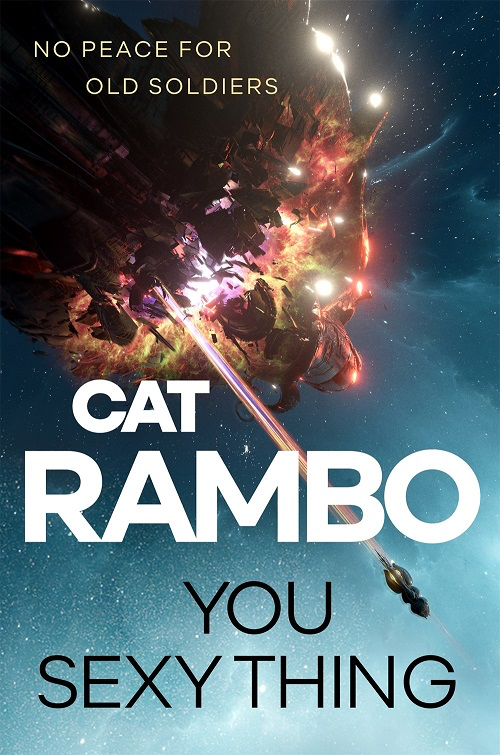
You Sexy Thing – Cat Rambo’70s/’80s music homage, passion, queerness…all in space.

“Metal” – Gary Numan

Happy Disability Pride Month, and remember, kids: you wouldn’t have synth pop as we know it without autism.

It’s often a negative trope to view certain autistic people as like robots; the comparison has long been used to dehumanize those who simply have trouble interacting with neurotypical society, equating a flat affect or a lack of outward emotion to being outright heartless. But if there’s anyone in pop culture who’s turned this on its head and embraced it, it’s Gary Numan. A key figure in new wave music and one of the pioneers of what we now know as synth-pop, Numan often used metaphors of machinery, robots, and androids to relate to his own experience growing up autistic. My sci-fi brain immediately latches onto the lyrics—it’s all a very classic, Do Androids Dream of Electric Sheep? story of a robot being created in a strange factory by ominous “liquid engineers” who tries to assimilate to human life, but is painfully conscious of the fact that “Here inside, I like metal/Don’t you?” It’s a very abjectly dystopian world, complete with the protagonist explaining that “I need my treatment, it’s tomorrow that they send me/Singing ‘I am an American’/Do you?”

But it’s the framing of the lyrics—all questions—that stand out to me in the context of neurodivergence, and of outsiderness in general. Almost all of them end in either a question (“do you?/did you?”) or an assumption of normalcy (“like you”). The protagonist has lived its life thinking that everything that has happened to it (being grown in a factory and having a heart made of batteries) is normal, and once it interacts with the human world, it slowly realizes that its experience is not a normal human experience, fundamentally out of sync with everyone else. And yeah, they’re robots, but if this isn’t a picture-perfect summation of what it feels like to be neurodivergent, I don’t know what is. I haven’t had this experience to the extent that Numan seems to have, but it’s always such an alienating feeling to realize that the way you interact with the world is fundamentally counter to most of the other people around you. It’s taken a long time for me to realize that I’m just operating on a different code, if you will, but there’s always the lingering feeling, enforced by so many people around you, that the way you interact with the world isn’t correct. Numan’s utterance of “I could learn to be a man/Like you” feeds into that desperation that somehow there’s a way to figure out how to operate neurotypically, what the secret is that they’ve all got down and you were never told. But here Numan is today, still touring in his sixties, gaining all kinds of accolades, and embracing his own autism. Here, he’s turned the outside view of him being inhuman into a way of understanding himself and the world around him, and made an iconic brand out of it—a brand no one could replace.

…AND A BOOK TO GO WITH IT:
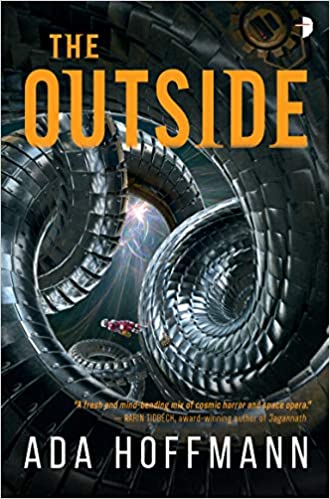
The Outside – Ada Hoffmanthough I suppose Yasira is less robot and more liquid engineer, this is a similar story of an autistic woman and her quest to put the universe to rights.

Since this posts consists entirely of songs, consider all of them to be today’s song.

That’s it for this week’s Sunday Songs! Have a wonderful rest of your day, and take care of yourselves!

Posted in Book Review Tuesday

Book Review Tuesday (7/1/25) – The Library of Broken Worlds

Happy Tuesday, bibliophiles, and happy Disability Pride Month! I’ll have something up for the occasion later this week, but for now, here’s the first book review of the month.

I’ve had this novel on my TBR for a few years. I read Alaya Dawn Johnson’s Trouble the Saints several years ago and remembered it being on the denser side, so I was hesitant going into this novel, especially with the low ratings on both Goodreads and Storygraph. I understand those ratings now—this book is not for the faint of heart, but it was also victim to some serious mismarketing, in my opinion. It’s a sprawling novel that hops between worlds and genres, and despite its flaws, it’s one of the most ambitious novels I’ve read in a while.

Enjoy this week’s review!

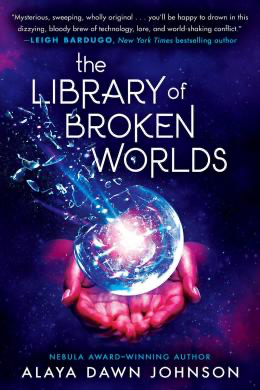
The Library of Broken Worlds – Alaya Dawn Johnson

Centuries ago, tesseract technology made travel and connection across the stars. Now, in the Library, where all of the tesseracts are held and all of the political machinations go on, Freida spends her childhood wandering amongst all kinds of strange magic and technology. She was artificially created by the Library, and has access to all of its texts. But as she grows older, she begins to understand the corruption deep within the Library. Her friends face persecution from all sides, both from mortal people and the gods beyond their reach. To save them, she must dig deeper than she’s ever ventured into the Library—and what she finds there could change her life.

TW/CW: genocide, loss of loved ones, sexual assault, colonialism/imperialism, violence

Right off the bat, let me just say: this is truly a weird book. For the most part, I mean that affectionately. It’s weirder than most YA I’ve read, and even weirder than some adult books. It’s also one of the more ambitious books I’ve read in quite some time. Straddling the line between hard sci-fi and full-blown fantasy, The Library of Broken Worlds is an ambitious—if not incredibly messy—novel.

I’ll start off by saying this: The Library of Broken Worlds really shouldn’t have been YA. Even though Freida is about 17 here, all of the concepts jammed in here really don’t feel like they should be for the 12-18 crowd. That might just be another consequence of 12-18 being a ridiculous jump in maturity for a single age range, but I digress. There are a lot of aspects that feel more well-suited for the more adult crowd. You sit in on a lot of court hearings, the politics get both deeply philosophical and intricate, and you’re dunked into the worldbuilding like one might be dunked face-first into a bucket of ice water. I think you can still work with a teenage character in an adult story (see: The Fifth Season), so I feel like it wouldn’t be much of an adjustment. As voracious of a reader as I was when I was in the peak market for YA books, I feel like I would’ve DNF’d this book in my teens. But that’s not to say that I didn’t love The Library of Broken Worlds. Had it been adjusted for an older audience, I think it might have been more successful—if not in marketing than anything else.

The case of the worldbuilding in The Library of Broken Worlds is a complicated one. It’s both the biggest strength and the biggest weakness of the novel. The worldbuilding itself is marvelous—what I could get of it. This novel is such a unique blend of sci-fi and fantasy. You have a Library as the central hub to travel to other parts of the galaxy, and the main characters is an artificially-created being created by the will of the Library itself. There’s lots of intergalactic folktales, extinct alien civilizations, a triad of nature gods that preside over the universe and form the basic divisions between its people, and a ton of worms and grubs. Gotta love the grubs. There’s a lot of ’em. The world is also refreshingly queernormative, with a variety of characters with different neopronouns and a young sapphic couple at the forefront of the story. In the acknowledgements, Johnson said that Studio Ghibli and Hayao Miyazaki were the biggest inspirations for the book. The comparison didn’t fully make sense to me, but in a way, I can see that the blend of sci-fi and fantasy, along with some of the more imagery, could feel like a darker, more convoluted version of Miyazaki. It’s such a lovingly created and multilayered world—I just wish we could’ve explored more of it.

Now, let’s go back to that word, convoluted, because it applies to…well, everything. I often talk about how writers often have the issue of vomiting all of their worldbuilding in chunks that distract from the story. This book has the exact opposite problem. From the start, you’re thrown headfirst into an exceedingly complex and convoluted world, expecting to know all of the terms and political divisions as they’re thrown about every which way. It felt like the scene from The Big Lebowski where The Dude is repeatedly getting his head dunked into the toilet (“WHERE’S THE MONEY, LEBOWSKI?”), but each time, you get a face full of completely wild fantasy terms that only get the most barebones explanations. By the time you’re sort of acclimated to the world and you think you’re getting a break, somebody’s pissing on your rug that really pulled the room together (more unexplained worldbuilding out of nowhere that overcomplicates things further). I still don’t fully know what a “broonie” is, and at this point I’m too afraid to ask. This book was in desperate need of a glossary, Jesus Christ. And a lot more exposition, as well as less convoluted and all-over-the-place explanations for what little was explained beyond the basics.

The characters in The Library of Broken Worlds were also a treat to explore! I wish we got more of some of the side characters, since there were so many, but it was Frieda’s story first and foremost. Though some parts of her were underdeveloped, Frieda was a solid protagonist; although she almost falls into a very typical mold of the YA protagonist whose life is out of her control and is different from the others (and is understandably angsty about it), these things are for reasons that are fully fleshed-out—the weight on her shoulder never feels manufactured, and the way that Johnson writes her trauma, from various sources, was very sensitive. I don’t think we got enough of Joshua (he’s almost forgotten about halfway through and only comes back in the last few bits of the climax), but I did like Nergüi’s coldness and eventual insightfulness as a counter to Frieda’s passion and hunger for knowledge.

There are some fascinating themes, political and otherwise, at play in The Library of Broken Worlds. In an attempt to be more utopian, the main government has built its government and legal system on the basis of freedom from and freedom to, and the discussion surrounding that, especially where those definitions get dangerously misused (justifying planetwide colonialism and genocide). Johnson didn’t shy away from getting into a ton of moral dilemmas. However, aside from that theme, I loved how The Library of Broken Worlds handles cycles. Simply by existing counter to her original purpose, Freida is breaking a cycle of her sisters being created for a specific purpose, and embracing empathy and love. But by doing that, she is also breaking a multitude of other cycles—the personal cycles of being traumatized and taking it out on others, and the vast, historical cycles of injustice and mass cruelty. The tesseracts also felt a bit like the interconnectedness of actions as well as events throughout history, and Freida exists at the confluence of it, making her able to fully see how she is able to reshape both her destiny and the unjust system that she lives under. As rocky and convoluted of a road Johnson takes us to get there, I appreciate that it was taken in the first place, because the payoff was mostly worth it in the end.

For most of what I just detailed, I nearly gave The Library of Broken Worlds the full 4 stars. But given the state of the book, I just…couldn’t. For all of its boundless creativity, timely themes, and observant insights, this novel was just a mess. I think this could’ve been the second-to-last draft before sending it off to the publisher, because as good as it was, the writing was all over the place. You’re unceremoniously thrust into the worldbuilding, and the only reason that I ended up acclimating (and even that’s a stretch) to everything was that this novel is nearly 450 pages long. It desperately needed more exposition, as well as clearer explanations of the key terms that come into play throughout the novel. The pacing was off—though I enjoyed the explorations of politics that Johnson employed throughout, I think we could’ve spent more time getting to know the world and less time sitting in space congressional hearings. There were a multitude of loose ends that didn’t fully get tied up. I guess that’s a consequence of such an expansive world, but The Library of Broken Worlds needed some serious refinement. I don’t normally find myself saying this, but give this book 50 more pages and a glossary, and I think some of these issues could be fixed.

All in all, an expansive piece of sci-fi/fantasy with highly commendable worldbuilding and themes, but which needed more page time and another round of edits to fully achieve its purpose. 3.75 stars!

The Library of Broken Worlds is a standalone novel, but Alaya Dawn Johnson is also the author of several novels for teens and adults, including Trouble the Saints, Love is the Drug, Moonshine, Racing the Dark, and The Summer Prince.

Today’s song:

That’s it for this week’s Book Review Tuesday! Have a wonderful rest of your day, and take care of yourselves!
Posted in Sunday Songs

Sunday Songs: 4/20/25

Happy Sunday, bibliophiles, and happy Easter for those celebrating! 🐣 I hope this week has treated you well.

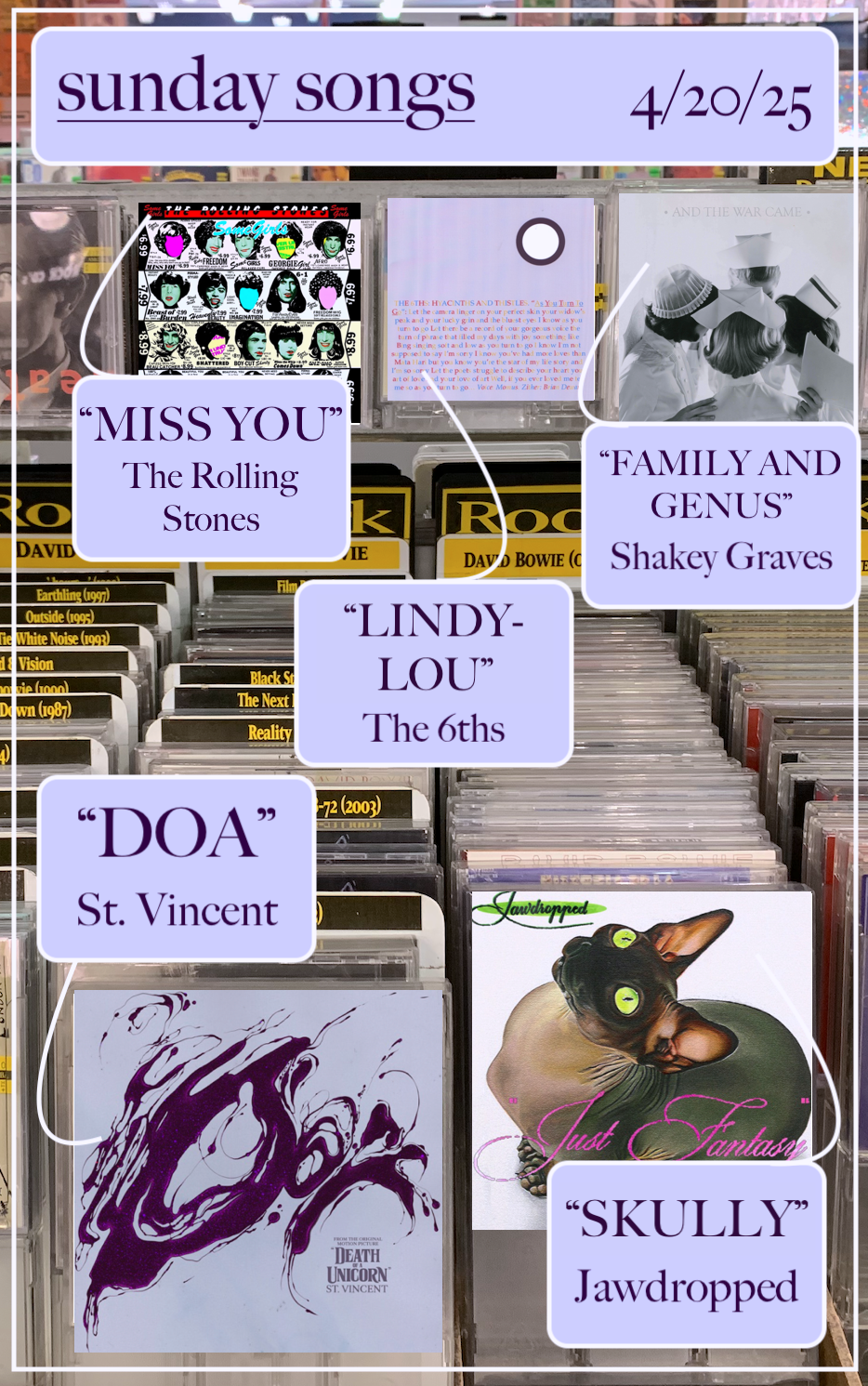
This week: stories from concerts, songs I heard before concerts, and songs that enticed me because of a cat on the album cover.

Enjoy this week’s songs!

SUNDAY SONGS: 4/20/25

“DOA” – St. Vincent

I’ve got a confession to make. As die-hard of a St. Vincent fan as I am, it took me some time to warm up to this song. I never hated it, but it wasn’t an instant favorite. I haven’t seen Death of a Unicorn yet (though the trailer intrigued me…), but something that always bothers me about songs made for movies and TV is when they obliquely reference either the plot points of the movie or how the characters are feeling. Hot take, but it’s part of why I didn’t care for the original soundtrack of Arcane—it basically did that for most of the character’s conflicts and arcs. (That, and it’s a matter of my music taste. Don’t let that deter you from watching Arcane though, it’s a breathtaking show! Having Im*gine Dr*gons do the theme song was just the worst possible decision they could’ve made. Just skip the intro.) You can make a song subtly extrapolating on a movie’s themes and have it fit naturally! (See: “Strange Love,” “Sticks & Stones”) Hell, she’s done it before with the original songs for her concert-film-turned-thriller The Nowhere Inn! Granted, I haven’t seen the movie, but opening the song with “Right as I had stopped believing in miracles/In comes a unicorn right in front of me” is…right there. So is the unicorn, I guess.

From then on out, “DOA” easily saves itself. It’s an absolute ’80s freakout from start to finish. The synths are so dense and bubbly that St. Vincent’s voice easily drowns in them—it’s like they’re the main vocal, and that kind of chaos, especially towards the latter half, is what makes the song so rich. “DOA” leads me to believe that somewhere, there’s a better, kinder alternate universe where MASSEDUCTION sounded more like this. It strikes the balance that album never got, with lightning-quick synth palpitations duel with Annie Clark’s classic, punchy guitar breakdowns. Piercing yelps cut through the dense, purple fog shrouding the song—again, I haven’t seen Death of a Unicorn, but it certainly brings to mind what I might feel if I was being pursued through the woods by a dubiously carnivorous unicorn. Given the film’s purported balance of campy concepts and dark execution, “DOA” is the perfect merging of the two aesthetics.

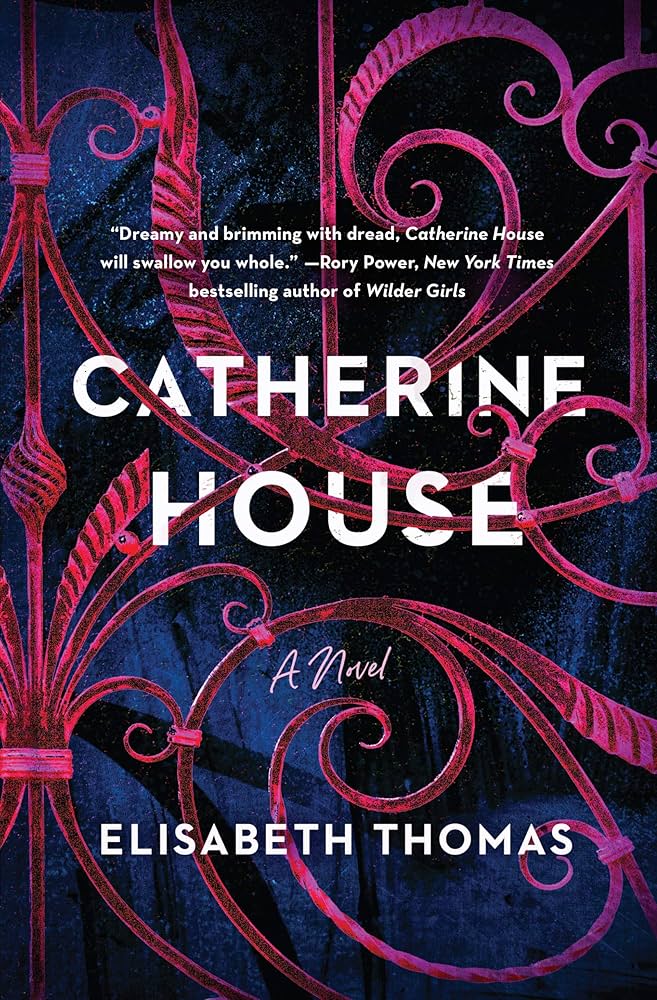
…AND A BOOK TO GO WITH IT:

Catherine House – Elisabeth Thomasa similarly out-of-time feel, as well as dabbling with strange, magical substances.

“Skully” – Jawdropped

No way, I’d never listen to a band just because I saw a picture of them where one member had a Ladies and Gentlemen We Are Floating in Space shirt. Me? Nah, never. I’m a woman of taste…it was the album cover and the shirt that convinced me to at least listen.

I heard of Jawdropped by way of Stereogum; they reviewed the first singles off of their forthcoming debut (!!) EP, Just Fantasy, and I figured I might as well give it a go. Thankfully, they’ve got more to them than just a cute sphinx on their album cover and one guy with a Spiritualized shirt! I keep coming back to “Skully,” the opening track, which is about as propulsive as an opening track can get. It’s truly one of those songs where they’ve mastered how to make guitars cascade down like an avalanche on the first go, which is something not every band can say for themselves—especially not on a debut EP. Between the instrumental chaos of the chorus, they ease the verse into calm, a beast of burden tugged out of a sprint, in order to let the harmonies of Roman Zangari and Kyra Morling take the spotlight. But it’s that colossal cascade that makes “Skully” so excited; they don’t strike me as particularly similar to Spiritualized (this may be a bit too loud for shoegaze), but Jawdropped has a similar quality of encasing the listener in a fizzling, crackling bubble of sound. For all of 2:48, you’re cocooned on a moment’s notice—and it’s a cocoon worth revisiting time after time.

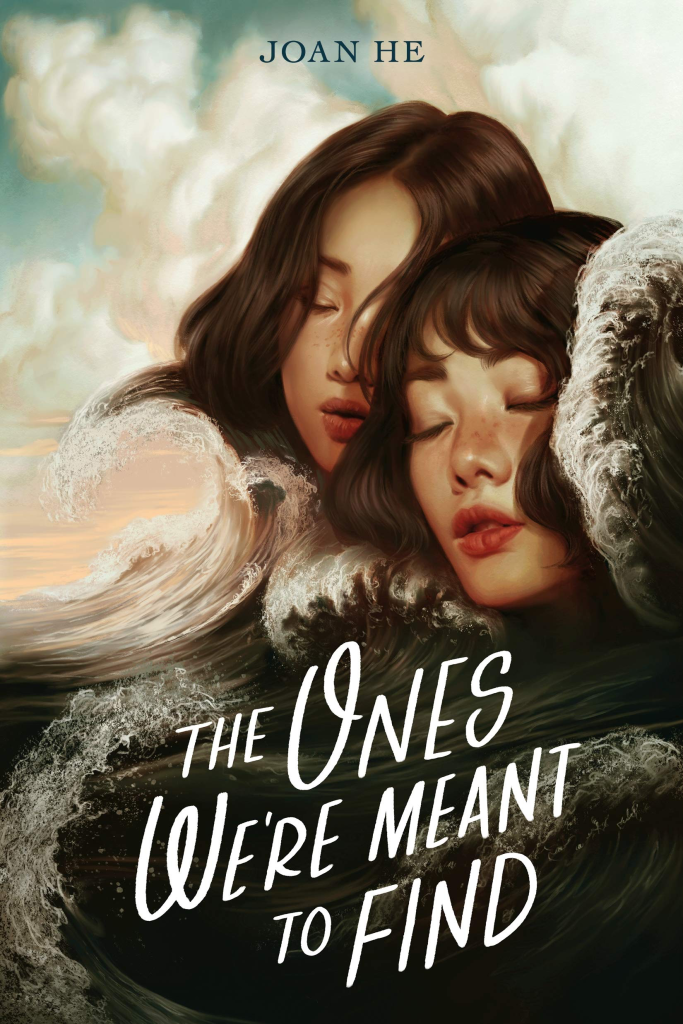
…AND A BOOK TO GO WITH IT:

The Ones We’re Meant to Find – Joan He“I wait for you like a dog/Anxiously pacing/But you’re here when things fall apart/It’s just your nature/ We’re always stuck at the start…”

“Miss You” – The Rolling Stones

If I just put this song on in the background, I can ignore the cringy, “hip” lyric videos that The Rolling Stones started putting out after their newest album. I can’t stand that soulless, faux-graffiti/DIY aesthetic…I just can’t separate them from how painfully hard they’re trying to stay relevant to The Kids™️…

Anyways. We’ll pretend it’s 1978 and Official Lyric Videos For the Youth won’t be a thing for many decades to come. Like “Crooked Teeth,” “Miss You” was one of those songs where I’d have that opening riff (not the lyrics, this time) ping-ponging around in my head. It lingered in the fog of my childhood, but too far to discern anything clear. So thank you to the instagram for The Laughing Goat (and Rita) for making me remember it after however many years it was! And then, mere days afterwards, they played this song, amongst several other seventies rockers (see: “I Saw the Light”). “Miss You” was going to reach me either way. Some Girls seems to have come at the time when the Stones had cemented that sleaze was part of their brand, and subsequently became said sleaze. Despite “I guess I’m lying to myself/It’s just you and no one else,” it’s a song that lies squarely in the kind of horniness that defined them throughout the late ’60s and the ’70s. Even if he’s denying them, the way he croons the line about the “Puerto Rican girls that’s dying to meetchoo” betrays the partying and sex that later became as much a part of him as the press originally made them out to be when pinning them against the goody-two-shoes (citation needed) Beatles. There’s a Lou Reed-like drawl to the way he turns to a half-whisper as he speaks of stalking Central Park in the dead of night like some kind of werewolf, yet it couldn’t be more Jagger; the bluesy, “hoo hoo hoo-ooh hoo-ooh ooh” refrain almost becomes an abated, wolfish howl against this backdrop, roiling with angst.

…AND A BOOK TO GO WITH IT:

The Final Revival of Opal & Nev – Dawnie WaltonI try to refrain from talking about this book whenever I mention something from the ’70s, but this kind of bluesy rock fits in with the scene that it describes.

“Lindy-Lou” – The 6ths

Back to The 6ths after last week, I’m dipping my toes into Hyacinths and Thistles, Stephin Merritt’s 2000 follow-up to Wasp’s Nests, and slightly less of a tongue twister, if you say it slowly enough. (Maybe?) In contrast, there’s still some of the same synth-pop love songs, other than…the last track being nearly a half-hour long? Not sure if I know what’s going on there, and as much as I love Merritt, I’m not sure I want to know. In contrast to the ’90s indie-rock guest list, we’ve got everybody from Melanie (sadly, kind of a miss) to Gary Numan (wild pick, but great)—Merritt had his feelers out everywhere, to varying degrees of success. From the few songs I’ve sampled, “Lindy-Lou” was one of the undoubted hits, sung by Miho Hatori, one of the founding members of Cibo Matto, but best known to me as the original voice of Noodle from Gorillaz. As with Anna Domino and Mary Timony for you, she lends her tender vocals to a song gleaming with dreamy-eyed innocence. Accompanied only by keyboard, this seems to stare wistfully from a balcony as the wind toys with its hair, Amelie-style. It’s never cloying in its sweetness, but it’s so soft and intimate, the musical equivalent of a sweatered shoulder to lean on.

BONUS: somehow, I had no idea this existed beforehand, which is crazy, considering how much Car Seat Headrest has been a part of my life…back in 2013, in the car seat headrest-recording days, Will Toledo covered this song!

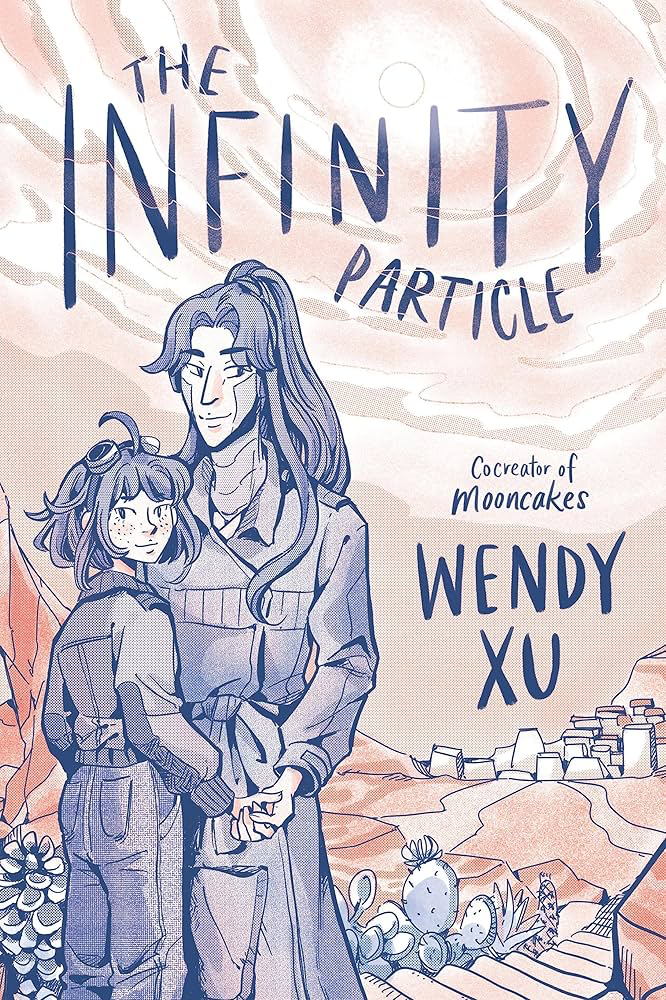
…AND A BOOK TO GO WITH IT:

The Infinity Particle – Wendy Xuquiet, tender love between a student and a lonely android.

“Family and Genus” – Shakey Graves

I’ve now seen Shakey Graves…2.5 times. I don’t fully count the second time, as it was at a crowded festival and I had no way of seeing him, so my mom and I listened to him at a safe distance behind the wall of drunk people. I amended it this time by shouldering my way up to the front row for round 3, as Shakey Graves is touring for the tenth anniversary of And the War Came! Other than the two drunk people who tried to get me to give up my seat (one even offered me $100), this show fully made up for not being able to see him last time. Shakey Graves, seen unobstructed for the first time since 2023!

What struck me at this show in particular was how genuine he is as a songwriter. So many artists in the folk and country-adjacent genre put on this kind of persona of being a wanderer with no permanent home, forever married to the road and dismissive of being bound to any one location. Alejandro Rose-Garcia has fully leaned into this persona (see: “Built to Roam”). Yet he’s the only one I’ve seen who makes it genuine. He’s roamed his fair share, but he’s never dismissive of the journey or the people who helped him along the way. Throughout the show, he paid tribute to friends and enemies throughout his life, his wife and newborn daughter, and for “Family and Genus,” raised a toast to family and friends that make the roaming easier—and more interesting. He’s a troubadour storyteller, but he never tells a lie. I keep coming back to how genius “Family and Genus” is—even as one of his most popular songs (I’m sure the Elementary TV spot helped), the craft is so intricate and lovingly stitched—just as the relationships he penned this as an ode to. Where the studio version’s “ohs” on the chorus sound like a choir of trickster ghosts, he imbues every raw ounce of love into them, turning it into a raucous crowd-pleaser that makes you feel that family, the sinew and atoms binding us together. And his rapid-fire fingerpicking on his guitar never ceases to amaze me—the fact that Rose-Garcia has barely gotten his flowers as the masterful guitarist that he is remains a disservice to his ingenuity. Hearing the echo of hundreds of voices around me, a handful I have the treasure and pleasure of calling family (minus said obnoxious drunk people), and countless others that I’ve never seen again after that night, solidified his statement of purpose.

…AND A BOOK TO GO WITH IT:

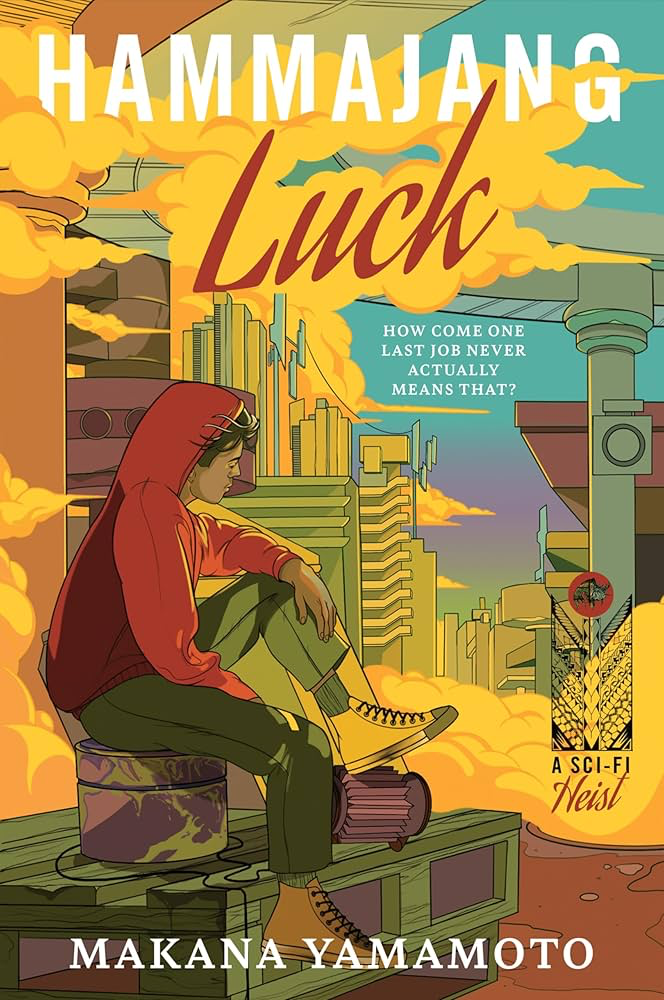
Hammajang Luck – Makana Yamamoto“If I ever wander on by/Could, could you/Flag me down and beg me to/Drop what I’m doing and sit beside you?”

Since this post consists entirely of songs, consider all of them to be today’s song.

That’s it for this week’s Sunday Songs! Have a wonderful rest of your day, and take care of yourselves!