

Happy Sunday, bibliophiles!
This week: unfortunately, the pink theme couldn’t be scheduled for the week of Valentine’s Day, so enjoy your pink disentangled from the holiday. Also, Madeline being pretentious from the age of 5, a whole lot of beep-boop-beep, and Kathleen Hanna’s answer to these trying times.
Enjoy this week’s songs!

SUNDAY SONGS: 2/8/26
All rise for the anti-ragebait national anthem! The litany against ragebait, if you will.
I’m sure there’s some activism/politically-involved situation that Kathleen Hanna hasn’t written about, but you have to give it to her—in that sphere, she’s got a song for almost anything. Since 2024, every new Le Tigre song that I discover has hit hard in this political context, whether it’s the perennially relevant reminder to “Get Off The Internet” (destroy the right wing!) or the rallying cry of “Keep On Livin’.” Even in 2008, the internet already had shown the ugly side of not just enabling faceless trolls to spread misinformation, but for anger-inducing content to get the most engagement; it’s been a disaster for everything, really, but especially activism. Pair that with social media’s penchant to push the most shocking angles on news stories that are already shocking (and the sheer volume of said shocking, disheartening news), and you’ve got a recipe for disaster for anybody who wants to doggedly keep hope. It’s ground so many would-be activists into the ground, turning them into despairing doomers convinced that there’s no hope for the future.
“This Island” isn’t exactly the uplifting chant of “Keep On Livin'”, but it doesn’t necessarily need to be. Its target is that kind of person who’s so hopelessly entrenched in internet-peddled doom that they need a bucket of ice water to the face to snap them out of it. It’s tough love (part of the chorus is just a repetition of “You’re a mess!”), but it’s vital if you want to carry on. The brutal 3.3/10-rated (3.3? Did Le Tigre kick your puppy?) Pitchfork review of This Island lamented that the album sacrificed its normal political bite in favor of making it more watered down and commercially accessible. Yet although the instrumentals are smoother and the beats poppier, no major label production could ever defang Hanna and co.; “This Island” rings as an unflinching slap upside the head and a call to remember all of the good things happening in the world; the backdrop of the album was the War on Terror, but now, in…well, a new iteration of just that, this last verse hits harder than ever:
“The horizon’s like a ship in flames tonight/You say you just don’t know/If you can take this city, cause the/Rent’s high, and the war’s on/And it’s last call/Even your friends look worried/My friends all think you’re smart/We think you’re super-fine/But it’s high time/I mean it’s high tide…”
I’m not above doomscrolling. Goodness knows that I’ve needed said splash of cold water in my face more often than not. It’s not our fault—social media has been deliberately manufactured to keep you hooked as long as possible; in just the same way, the ruling class wants to keep you hopeless and constantly posting so that you only make money for their corporations and don’t rise up. What matters most is what you are—and what you do—outside of the internet. What matters is that you have the strength of your friends and community beside you. Even when it seems like all hope is lost, we can take this city. Le Tigre took this city in 2004—who’s to say that we can’t do it in 2026?
…AND A BOOK TO GO WITH IT:
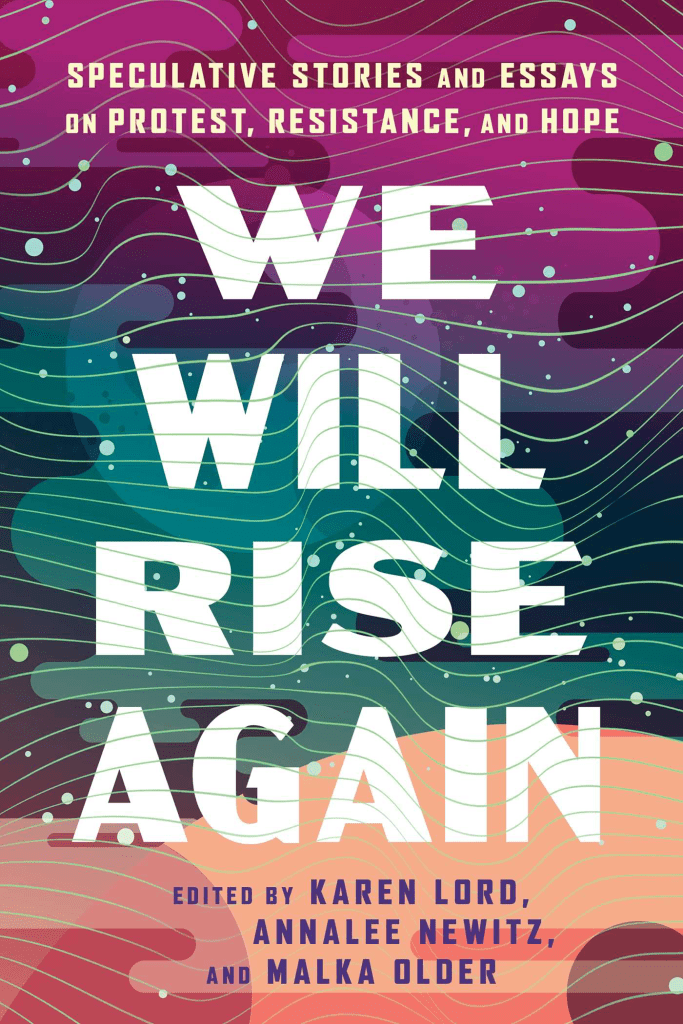
We Will Rise Again: Speculative Stories and Essays on Protest, Resistance, and Hope – edited by Karen Lord, Annalee Newitz, and Malka Older – several of the stories in here have a similar aim that Le Tigre did back in the day: to merge political awareness with art.
“Always On My Mind/In My House” (cover) – Pet Shop Boys
Separately, the elements of this song should not work. If you just said, without context, that this was an ’80s synth pop cover of an Elvis song (which was, as with most Elvis songs, a cover in and of itself) that devolves into acid house halfway through and stretches to nearly 10 minutes long, I’d probably be put off, to say the least. It’s like the musical version of “I hate gay halloween, what do you meanyou’re dressed as [insert combination of niche references]?” Things that were only possible in the late ’80s, folks. But against all odds, this is incredible. A few weeks back, I was listening to this on repeat while making a digital drawing, and I got into a flow state so queer that the drawing practically flew from my fingertips. Originally conceived to commemorate the 10th anniversary of Elvis Presley’s death, this, “Always On My Mind” later morphed into the 9-plus-minute remix and combination with “In My House.” Retrospectively, most of the writing on this song talks about how, by all accounts, this shouldn’t have worked. And yet Neil Tennant and Chris Lowe make it look like the combination of Elvis, house, rap, and random firework samples was always meant to be. It’s a case study in lulling a listener into a false sense of security before letting the floor drop out from under them. Every beat drop and twist works seamlessly—the switch from house back into the Elvis cover at 5:26 knocks me off my feet every time. You already need a boatload of talent for a song to sound effortless, but to be able to unite so many disparate elements and make it into a chart-topper—this was the #1 Christmas single in the U.K. in 1987.—takes a special kind of band.
…AND A BOOK TO GO WITH IT:
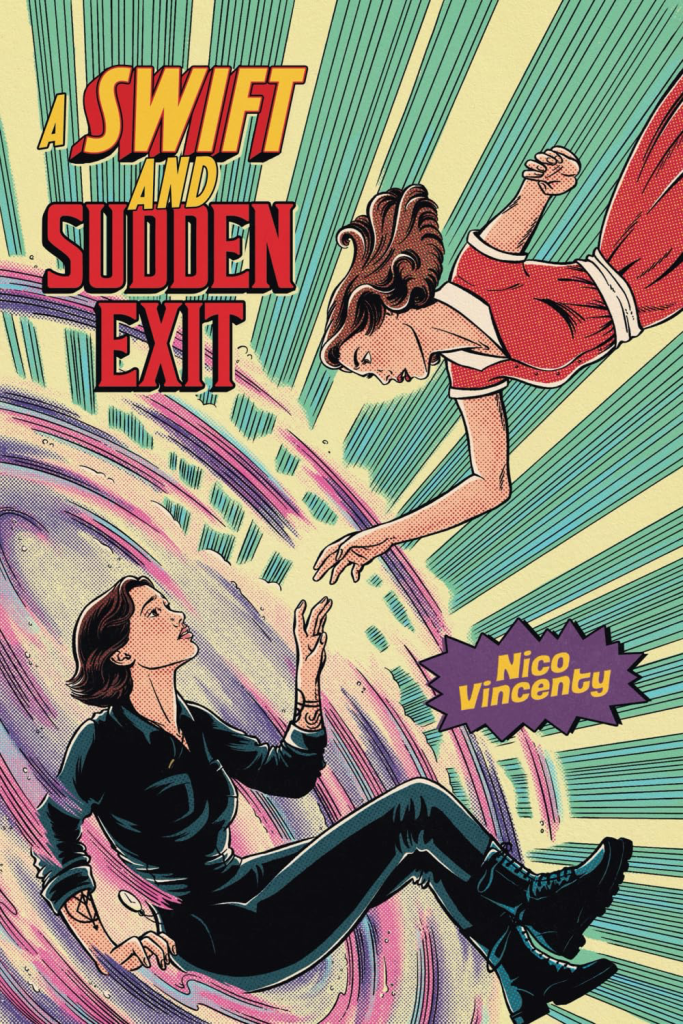
A Swift and Sudden Exit – Nico Vicenty – thematically, it fits nicely with this book, but this had to have been hidden somewhere in the ’80s scenes (or the ’90s ones, for that matter).
I always come back to Post. To me, it’s one of her most experimental albums, but not in the sense of musical genre—it’s one of her more accessible ones, right after Debut. But it’s much more experimental in its mindset. She sends her feelers out in every possible direction, and the joy of the album comes from the sheer range of emotions and genres she explored, from grimy, electronic tracks to an attempt to channel Chris Isaak’s “Wicked Game” (in the way that only Björk could). The adventurous spirit that she first fostered on Debut, playing the role of ingenue in both her life and music, practically explodes out here. You can hear it more clearly on the louder songs, whether it’s the bevy of strange instrumentals pulsating outwards or Björk herself actually screaming—another staple of her music that’s carried on 30 years post-Post.
“Cover Me,” the penultimate track on the album, is often forgotten in the deluge of other masterpieces stacked on top of each other on Post. But to me, it represents, both lyrically and musically, a key part of where Björk would go later on in her career. It’s a prickly yet twinkly song—the main body of the instrumental consists of hammered dulcimer, which is played in such a way that it feels cautious, like any sudden movement or snap of branches could trigger a trapdoor; the feeling is accentuated by the humid, jungle-like atmosphere, with all sorts of rattling noises that disappear just as quickly as they appear. Without a doubt, it’s one of the less accessible tracks on the album. Every time I listen to “Cover Me,” I feel like I’ve stepped into Henri Rousseau’s painting “Tiger in a Tropical Storm (Surprised!),” pushing aside the woodcut-looking leaves and treading lightly so as not to alert the snarling tiger inches away from me; it’s fearful, but the fear is outweighed by the ecstasy of proving that “the impossible really exists.” Her lyricism feels fairytale-like, as though she’s mapping out an entirely new land, looking over her shoulder to guide you with her commentary; With a sly smirk, she declares, “I’m going hunting for mysteries.” Taking another step forward, she whispers back to you, almost afraid to admit: “This is really dangerous/But worth the effort.”
According to Björk, she wrote “Cover Me” to poke fun at herself for making the process of making the album so pointedly different, and purportedly, difficult. And yet, as the black sheep even in an album swarming with oddball anthems, it’s paved the way for exactly the kind of career that Björk has made for herself. Every part of her life has been about pushing music to its limits, whether it’s bridging together music, science, and technology to make a stunning album and an educational app or creating entirely new instruments for her tours. Björk has never shied away from what’s dangerous, and her willingness to bend, stretch, and outright break boundaries, musically and societally. Though she’s known by more iconic lyrics, this one might just be the best to describe her career so far: “I’m going to prove the impossible really exists.” And if there’s anything to be learned from her endeavors, is that all of that danger was well worth the effort.
…AND A BOOK TO GO WITH IT:
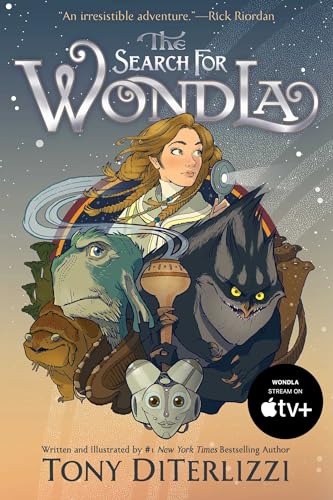
The Search for Wondla (The Search for WondLa, #1) – Tony DiTerlizzi – “While I crawl into the unknown/Cover me/I’m going hunting for mysteries/Cover me/I’m going to prove the impossible really exists…”
“Circuit” – Apples in Stereo & Marbles
Tragically, this song (and the album, Expo) aren’t even on YouTube. Criminal, if you ask me! But I think it should tell you how concerningly niche my music taste was, even as a child—”Circuit” was my favorite song when I was about 5. Less of a brag and more of a grim foreshadowing of me becoming an insufferably pretentious adult. Back in the day, I had this great little Hello Kitty CD player; I’ve got a specific memory of having this song on a playlist and having to press down on those thick, 2000’s buttons just so I could hear this song over and over, ad nauseam. I stand by 5-year-old Madeline—it never gets old.
Though it’s labeled under The Apples in Stereo, Marbles is the solo project of Robert Schneider, the Apples’s frontman; if you thought that you can’t possibly get any more beep-boop-beep than The Apples in Stereo…buckle up. Chiefly consisting of synths, Expo is nothing but electro-pop—emphasis on the electro. Every song I’ve heard from the album sounds like the kind of music that could only be made by squeaky robots from some ’50s pulp sci-fi movie. Little me specifically imagined Plex from Yo Gabba Gabba! singing it. It’s a self-contained sci-fi universe, complete with its alluring protagonist, some sort of robot or cyborg woman who “perceives circuitries/Inside everything she sees.” Lo and behold, this is the work of a man, not a machine. But with the precision applied to every single part of this track, “Circuit” truly is a well-oiled machine. Like the intricate, fragile fragments of a circuit board, every flourish of processed orchestral samples and every bubbly synth chord all work as cogs in a machine with so many moving parts, yet with effortless cohesion that so many artists can only dream of reaching. This is how you make a pop song. Embrace the beep-boop.
…AND A BOOK TO GO WITH IT:
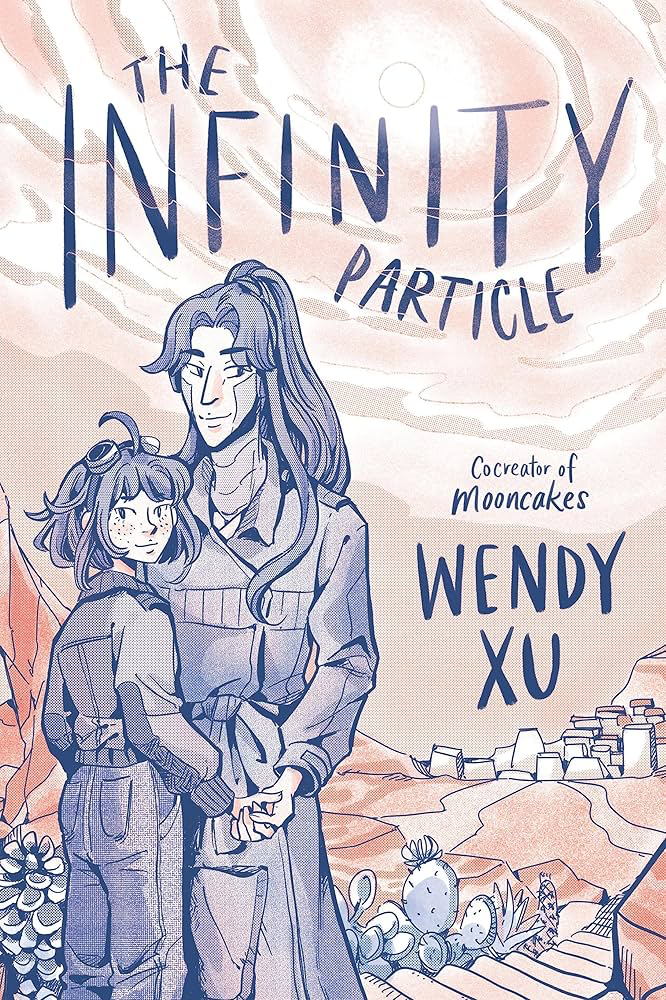
The Infinity Particle – Wendy Xu – The robot is gender-swapped here, but he sure does see electricity.
“Typical Love” was cut from the Pompeii sessions, but according to Cate Le Bon, was “disassembled and reassembled it many times but it always felt like a second cousin to the other tracks so was put aside for a rainy day.” It’s in limbo between the production of Pompeii but with the kind of lyrics I would’ve expected on Michelangelo Dying, cataloguing the quiet, suffocating mundanity of a relationship gone stale. If it had any closer cousin on Pompeii, it would probably be “French Boys”; it has the same kind of wry comedy of Le Bon putting on airs—she might as well be muttering “Typical love, typical love” before taking a drag from one of those long, old-fashioned cigarette holders. But as with most of her tracks, “Typical Love” is anything but typical, with percussive bursts of her own breath, saxophone blares that bleed out like oversaturated watercolors soaking through thin paper, and an Eno-like taste for taking repetition to its logical limit, stretching melodies and words until they no longer feel like their original forms. It’s all at once angular and circular, like an abstract painting, woven from brightly-colored, dancing shapes.
…AND A BOOK TO GO WITH IT:
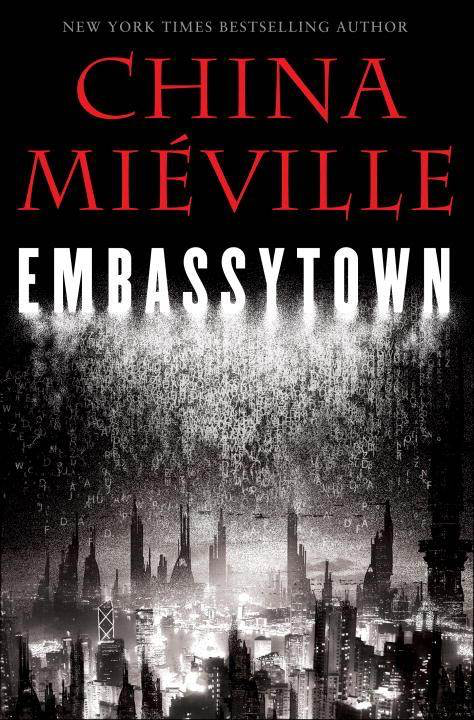
Embassytown – China Miéville – “Nothing ever changed in your corridor eyes/Rely on me, baby/Rely on air/Only a shadow again/Typical love…”
Since this post consists entirely of songs, consider all of them to be today’s song.
That’s it for this week’s Sunday Songs! Have a wonderful rest of your day, and take care of yourselves!

 The Bookish Mutant