First book review of 2025, and so far, the best book I’ve read this month! Granted, we’re only a week into the month, but it still counts for something, right? loved Mooncakes, which Wendy Xu illustrated, but I had no idea until recently that she had published a solo graphic novel—and a sci-fi one! What resulted was an incredibly emotional read to start the year off with: robot romance and explorations of how relationships make the universe work.
Clementine Chang is headed for Mars. In the distant future, it’s a place of peace and industry, and it’s precisely the place that Clem wants to start her new life. A clever inventor, Clem has a knack for working with AI. She hopes to continue her education under Dr. Marcella Lin, a legendary AI engineer who inspired her work. But Dr. Lin is not what she seems—and she’s hiding a secret from the scientific world: a lifelike, humanoid AI that she refers to as her son. His name is Kye, and he yearns for a life outside of the one that Dr. Lin programmed for him. As Clem gets acquainted with him, she discovers that Dr. Lin’s intentions in making him were not as noble as she once thought—and that she may be falling in love with her former hero’s creation.
art by Wendy Xu(p. 150)
TW/CW: emotional abuse (past/present)
You know me. I’m a sucker for a good Frankenstein story. Oh, so you brought a conscious being into existence, expected it to be completely obedient to you and your whims, and didn’t expect anything to go wrong? Surely this will not have a domino effect of consequences…
That being said, The Infinity Particle isn’t just a Frankenstein story. We’ve been inundated with stories about AI and the ethics of giving robots human-like consciousnesses since day one of sci-fi’s conception (back to Frankenstein), but The Infinity Particle does what many of those stories try and fail to do: make the story human. It weaves both engineering and the complicated legacies of familial trauma into a story that is ultimately about relationships: that of parents and children, but also of young lovers. It’s a story of breaking cycles and of forging something newer and better out of their ashes. All of it is worth your time.
Wendy Xu’s vision of Mars in the distant future is one that I want to live in, which isn’t something I often say about sci-fi novels. The world of The Infinity Particle is a cozy, comforting one. In spite of the more emotional moments of the story, Xu’s setting is one you can get lost in. Rendered in a pastel color palette that’s easy on the eyes, it’s a world full of greenhouses, cafés, and cobblestone paths. Here, Mars is the perfect place for a museum date—except here, the museum features all manner of robots from bygone centuries. Although there are ethical conflicts with some of the AIs (this forms the central conflict of the novel), none of Xu’s AIs are malicious creatures—they’re all in the form of cuddly cats or owls, and in the case of Clem’s custom companion, a cat-moth hybrid. (SENA!! WE LOVE SENA!!) It’s a world I was eager to escape to, and one that I could dwell in forever.
Clem’s motivations were part of what made this story stand out. As she begins to dig deeper into Dr. Lin’s true motives for creating Kye, the way her former hero treats her AI creation begins to mirror how she was treated as a child; the emotional abuse from her mother is very similar to the emotional abuse by Dr. Lin to Kye. The Infinity Particle is a fantastic example of how very far-fetched, sci-fi concept can be used as incredibly emotional metaphors. We have Clem, who is a clone of her mother and was raised to live out the dreams that her mother could not, and Kye, an AI made to replace Dr. Lin’s son and live out her fantasies. Admittedly, the clone part was very on the nose, but the way that Xu delivered with care, giving The Infinity Particle an undeniable heart. In part, The Infinity Particle is a story of how trauma always echoes into the present, and how it can create ripples that both tear apart and rebuild relationships with others.
That shared trauma is part of what made the romance between Clem and Kye one that I was rooting for from page 1. Not only were they the most adorable couple (museum dates! Philosophical conversations in greenhouses!), their shared connection allowed them to help each other in ways that made the relationship blossom. Clem had experience with having to escape from the same kind of emotional abuse that Kye was undergoing, and as they realized that connection, their relationship deepened. However, it wasn’t just that aspect that made their relationship so lovable. Their chemistry was some of the best I’ve read in a YA novel in a long time—they were both such curious and sensitive people, and that combined curiosity not only drove the plot, but the course of their romance. Every shared moment was sweet, but never saccharine—TheInfinity Particle was just a warm hug (and a kiss on the cheek) in so many ways, this being one of the most prominent.
However, even though Dr. Lin was objectively in the wrong, I appreciated the way that The Infinity Particle humanized her; never once were her actions condoned, but in the end, she wasn’t a purely evil person—she was a person who slipped so far into grief that she failed to realize how she was treating those around her. She did horrible things that could not be undone, but she was also capable of healing. It’s an incredibly difficult line to toe between acknowledging a character’s humanity and acknowledging that their actions were inexcusable; most media gets it wrong (I am looking directly at Encanto), but in the short time that was given to this plot, Xu did a graceful job of hitting that balance. Dr. Lin did some unspeakably terrible things, but deep down, she is still human. My one (minor) complaint is that this was squeezed into the end and didn’t have as much time to develop as some other parts of the novel, but it was executed thoughtfully nonetheless.
And the epilogue…hnnnnnnnngh do I love a good “the fabric of the universe is made up of love” story AUUUUUUUUGH
All in all, a heartwarming, sensitive, and thoughtful story of love, robots, and what it means to have—and to want—a mind and a life of your own. 4.5 stars!
The Infinity Particle is a standalone, but Wendy Xu is also the co-creator of Mooncakes and the creator of Tidesong.
Today’s song:
I feel like I remember this song about every 5 years and realize how much I’ve missed it…
That’s it for this week’s Book Review Tuesday! Have a wonderful rest of your day, and take care of yourselves!
First post and the first Sunday Songs of 2025! No pressure. This week: new verses on new songs, new(ish) takes on old(er) songs, and…oh, god, Eric, please put your shirt back on—
Dread it…run from it…TANGK always arrives. One of the best albums of 2024, hands down. I already talked about “POP POP POP” back in March, but at the end of the year, IDLES added one more flourish to an already excellent track—a guest feature by Danny Brown. Of course, I say that knowing next to nothing about Danny Brown up until this point, but the spin he and IDLES put on one of the most prominent highlights of TANGK is an interesting one—and catchy, too. In places, the beat has been treated like an accordion, stretched out in some areas and compressed in others—the final, spoken-word monologue has been sped up, while the first five seconds are jumpstarted, recreating the static of plugging a guitar amp in. Meanwhile, Brown’s guest verse hurtles at breakneck speed; For me, there are some lines that come across rather corny (“On the surface/Looks like a circus/All these clowns around, pull the curtain”). However, at the very end, Brown’s lyrics align with the ethos of “POP POP POP” in the first place: an assertion of purpose, that purpose being staying true to yourself, spreading love, and being a source of protection for others. The final line sums it up nicely: “Took a couple wrong turns/Don’t know right from left/But found my way to the home that I strayed/And now I say everything is okay.” Can “POP POP POP” ever be improved? I highly doubt it, but I also doubt that this was meant to be an improvement—it’s more the kicking around with a preexisting idea with other collaborators, and in that experimentation, it creates an exciting take on one of the 2024’s best songs.
…AND A BOOK TO GO WITH IT:
Forever Is Now – Mariama J. Lockington – “Searching for something you cannot hide/Looked in the wrong place, but should search inside/Relied on things that just let me down But now I see what its really ’bout…”
Personally, I’ve never quite gotten on board with the queer cowboy aesthetic, but I can respect how queer people have been taking it back. In the first place, I think any kind of cowboy mythos attracts the kind of people who want to forge their own trails and make their own way without the constraints of society, a Venn diagram that seems to attract, strangely enough, both conservative people wanting to go back to “traditional values” and queer people who see an out from heteronormative culture. Growing up in the mountains, my association with much of it came from the former, even in our fairly liberal town (I say fairly liberal because there was the odd confederate flag or “if you’re reading this, you’re in range” sign on someone’s house). But I don’t mind seeing a bedazzled cowboy hat or a boygenius photoshoot out in the desert every now and then. Evidently, I’m too much of a city slicker.
The reclamation of country by queer people has gone in much the same way, and I’ve never been one for country in the first place (same association as above), but what I will give a try 8 or 9 times out of 10 is anything that Julien Baker is involved in. Now here’s an example of queer cowboy/country reclamation done right: nothing better than two lesbians making a song with a title referring to slang for an effeminate man and turning it into something positive and sensual. Musically, there’s twang aplenty, but at least for me, Baker’s talent screams at you like a neon sign—she’s whipped out the banjo once more, and it contrasts with the hazy overdrive that TORRES has applied to her excellent guitar work. The boygenius fan is me is more partial to how Baker’s harmonies fit with Phoebe Bridgers and Lucy Dacus, but it’s clear that she’s well-matched with TORRES, musically and vocally. I’m not 100% on board with the more country direction—it’s more on the alt-country side, but very much country-sounding—but I’ll give it a chance for Baker.
I remembered this track after getting into “Bill Murray” a few weeks ago; as wonderful an album as Gorillaz is, I often find myself forgetting about some of the songs sandwiched in the middle; this one has the job of following up “Clint Eastwood,” and with how many tidal waves that classic made in the early 2000’s, any track following that up, like “Bill Murray” and “Feel Good, Inc.,” has an exceedingly hard act to follow. But in much the same way as “Bill Murray” brings down the tempo but keeps the creativity, “Man Research (Clapper)” provides a bridge between some of the more energetic heavy-hitters—“Punk” comes up right after it. Buoyed by a sample from Raymond Scott’s instrumental piece “In The Hall of the Mountain Queen” (delightful, honestly—feels like the title screen music for an ’80s video game and not in a cheesy way), it’s dominated by the rasping repetitions of Damon Albarn pushing his higher vocals to their limits—maybe there’s the excuse for why I forgot about it. A good portion is just him going “yeah yeah yeah yeah yeah yeah,” but that’s the mark of a great musician—sure, he’s just going “yeah yeah yeah” in front of a sample and some record scratches, but I eat it up every time. There’s a smooth cohesion to his craft that makes every separate element seem as though this song is their final form, their ultimate destiny to be brought together.
…AND A BOOK TO GO WITH IT:
Chameleon Moon – RoAnna Sylver – I picked this one more for the atmosphere than the lyrics—a similar kind of hazy and raspy energy, but with an undercurrent of vitality.
Some covers prove that the singer understands some part of the song more than the original creators. Not to front on Chris Knox, incredibly talented and oddball songwriters as he is, but Shayne Carter’s cover gets to the heart of what Knox and co. were going for as far as the tone and the emotion of the lyrics.
Tall Dwarfs aren’t going to be anything but jangly, and their original version of “The Slide” is no exception. It’s got a psychedelic, ’60s sway to it, faintly sunny…and then you get to the lyrics. And then you get the whiplash from hearing those upbeat guitars against the lyrics: “The doctors should kill/She’s terminally ill.” I’m sorry, WHAT? I’m not saying that songs can’t have lyrics that don’t match the mood of their music, but in this case, Shayne Carter’s interpretation does the song more justice. In contrast to Knox’s upbeat instrumentals, Carter employs solemn pianos, muted strums of an acoustic guitar, and an electronic drone that begins to circle around you at the 1:58 mark as you listen like vultures circling carrion. The acoustics sound like they were recorded at 3 a.m. in an abandoned gym with walls covered in mold. That atmosphere captures how disturbing the lyrics are—sparsely told, it recounts the experience of an 80-year-old, terminally ill woman wasting away in an institution. That cold, chilling echo gives the song a much more tangible setting and emotional depth; the spareness of it all makes the setting so much more unforgivable, with its featureless walls and constant chill in the air. That Radiohead-like, droning dread comes about as close as I would imagine to capturing that imprisoned, monotonous feeling of your mind slip away and being powerless to do anything about it, all the while surrounded by nurses who barely want to be there. It’s a tragedy of a song—it was written in the 1990’s, and while I’m sure conditions have somewhat improved for patients, these situations are a reality for so many people, whether or not they have control of their minds. The pen that Chris Knox and co. put to paper was a respectful and sympathetic one, but Shayne Carter deserves so much praise for how much his musical interpretation brought out the original sentiment—and made it even more emotional.
Sadly, it’s a story that partially came true for Chris Knox; he suffered a stroke in 2009, and has had a limited vocabulary ever since. He’s made a handful of public appearances and performances in the last decade or so, but he’s largely off the radar these days. However, “The Slide,” alongside many more of his covers from both his solo work and of Tall Dwarfs, were compiled on Stroke: Songs for Chris Knox in order to initially help his family pay the medical bills. I hoped that he hadn’t accidentally predicted his own fate with “The Slide,” but it seems that his family has been going to great lengths to make sure he’s taken care of. Even amidst the horrors he described, there are bright spots worth celebrating—namely, the love of family and friends during unpredictable situations such as his.
…okay! Going into this, I didn’t expect to be that well-acquainted with Eric Johnson’s chest hair while he stared longingly into my eyes, but here we are? 😀 Don’t think I needed all that…thank you Eric, very cool
Either way, it’s all part of the ’80s-parodying cheese of the music video, complete with mullets, long pearl necklaces, everyone’s hair being artfully blown by an invisible fan, and even a keytar. The best part is that every single band member is fully leaning into the cheese, with every band member hamming it up whenever the camera is on them. If I can erase the strategic view of said chest hair via Johnson’s unbuttoned shirt, “You’re Too Weird” is a great little indie track; Johnson has one of the more distinctive voices in indie music that I can think of, and he takes it to some of its extremes, hitting higher notes than I’d expect even from him. Like the ’80s music and videos that “You’re Too Weird” takes cues from, it’s an endlessly catchy love song, peppered by a tasteful guitar solo and tambourine here and there. I’ll have to bring this back once the weather gets warmer—it’s the perfect song for staring out the car window on a summer evening.
…AND A BOOK TO GO WITH IT:
If You Still Recognize Me – Cynthia So – “They say that I’m not supposed to be in love with you/They say that you’re too weird for me/And you’ll leave eventually/But then I’m the only one who ever believed in you…”
Since this post consists entirely of songs, consider all of them to be today’s song.
That’s it for the first Sunday Songs of the year! Have a wonderful rest of your day, and take care of yourselves!
Happy Wednesday, bibliophiles! I hope this month has treated you well.
First month of the year is over, whew! I don’t wanna jinx it, but I think the rest of the year will be good.
Let’s begin with the first wrap-up of 2024, shall we?
GENERAL THOUGHTS:
January’s been a good start to the year so far, I’d say. The first half was wonderfully relaxing, what with the joys of how long winter break is in college, so I was able to recharge, catch up on reading, and get some sleep in before school started back up again. As for school, I think it’s shaping up to be a great semester! I’m finally taking some classes for my newly declared women and gender studies minor, and I’ve been enjoying those, along with the amazing English classes I’m taking for my major. It was disgustingly cold for a solid week, but at least my school had the sense to call a delay (would’ve preferred a snow day, but beggars can’t be choosers, I guess), but now it’s…unusually warm? It’s nice to be able to wear a t-shirt in the afternoons, if you ignore climate change.
As I said, January has given me the chance to get back on my old reading and blogging schedule. I still didn’t blog as much outside of my regular schedule (these scholarships I’m applying for aren’t gonna write themselves), but it was much nicer not having to do that outside of schoolwork. Fingers crossed, my workload is reasonable at the moment, so I’m soaking up all the time in the honeymoon period of the semester that I can. The reading batch I had was fantastic, for the most part! I had a streak of no books that I really didn’t like for a solid three weeks, and even after that, it’s mostly been 3-5 star reads all around! Anticipated reads, books I’ve been meaning to read for a while, and re-reads—it’s been a good bunch this month. I put my reading goal at 150 books this month, which my middle school self would probably declare something along the lines of “cowardly,” but to her I’d say to wait until college.
Other than that, I’ve just been catching up on sleep (for the first half of the month, anyway), drawing, watching Abbott Elementary (so comforting and delightful!), seeing Robyn Hitchcock live (dude’s a complete weirdo, but an insanely talented weirdo), and stocking up on hot chocolate and tea in equal measure in preparations for the permanently indecisive Colorado weather. Somebody’s gotta keep us on our toes.
READING AND BLOGGING:
I read 18 books this month! Winter break gave me a good head start for the first half of the month, but I’ve been able to keep up some of the momentum through the end. And it’s been a great batch too—I’ve only read one book this month that I really didn’t enjoy, and I re-read a favorite that got even better on the second go-around!
I’ve had several books by R.F. Kuang on my TBR for a year or two, and I’d forgotten about this one until it happened to come up as one of those “skip the line” checkouts on Libby. I decided to take the opportunity (as the holds line is usually nuts for this book), and I found myself adoring it so much more than I thought it would—a biting and timely satire of the publishing industry.
June Hayward and Athena Liu have been friends since attending Yale together, working through writing projects and slowly finding themselves publishing their own works. But while Athena is enjoying success, six-figure book deals, and Netflix adaptations, June has barely been able to get a third printing of her only book. So when Athena dies in an unexpected accident, June sees the perfect opportunity: steal her unfinished manuscript, pass it off as hers, and profit. Armed with a new pseudonym and a racially ambiguous author photo, June Hayward becomes Juniper Song, and her book, The Last Front, becomes the toast of the literary scene. But evidence is beginning to pile up against her, and June will do anything to keep her newfound fame.
TW/CW: racism, death by choking, vomiting, substance abuse (alcohol), harassment, gaslighting, suicidal ideation
I’m glad I had my expectations at an average level for Yellowface, because this is one of the best satirical novels I’ve read in ages! This novel truly felt like it was attuned to the beating pulse of the dark side of the publishing industry, and it’s an exploration of diversity and publishing that’s incredibly necessary in this day and age.
I don’t think I’ve ever witnessed a novel that’s felt so true to today’s publishing scene in a long time—or ever, really, but to be fair, I haven’t read a lot of realistic fiction books in this vein. Yellowface is a biting, unflinching callout to how publishers view diversity; June’s story, though fictional, is testament to how the publishing industry views diversity and marginalization as profit to be made, not stories and identities to be uplifted, and how once they’ve checked one person of a certain demographic off a checklist, they think they’re set for “diversity.” Beyond that, it’s proof of how willingly publishers will silence marginalized voices in favor of white voices telling the stories of the marginalized, and how far they’re willing to go to keep up the façade. Truth be told, this novel did make me slightly spiral about the state of publishing as an aspiring author, but I suppose that means that R.F. Kuang did her job.
I’ve seen several reviews of Yellowface complaining that at least one of the main characters were self-inserts, but other than the whistleblower character (who only has a minor role until the end), the two main characters were dreadfully unlikable. To be fair, I’m not as familiar with Kuang’s work, but I don’t take her to be the kind of person to be so self-deprecating that she makes her self-insert into a disgusting mess of a character. In fact, Kuang excelled at making them incredibly unlikable—and hilarious in the process. I liked that, although Athena didn’t deserve what she got, that both her and June were depicted as despicable people in their own ways, but June was still portrayed to be disgustingly in the wrong—nobody’s angelic in this situation, and everybody has their flaws, but some people’s flaws pile up until they fester and collapse on top of them (June). Everything written in her voice was so cringey it was hysterical—watching her, for instance, editing the manuscript to make the British soldiers “more sympathetic” cracked me up, and Kuang clearly knew just the kind of circumstances that a white author would twist a marginalized story into—it felt painfully real, and painfully funny at the same time.
Typically, I’m not habitual thriller reader, but I’m a sucker for a story about a character digging their own grave, and god, Yellowface was the perfect scratch for that itch. June’s story of jealousy, temptation, and clinging towards fame that fall like dominoes toward her until culminating in the climax was painful but exhilarating to watch—for me, there’s nothing like watching a character’s downfall right before our eyes. June just kept digging herself further and further into eventual ruin, and with each push closer to the edge of being exposed for her (MANY) wrongdoings, Kuang perfectly amped up the tension. I was definitely white-knuckling my Kindle for a significant portion of the book just because of the sheer audacity of June thinking that none of her actions would amount to anything. It has the same feel as many of the self-destructive arcs in Fargo—the same kind of eventual tension that builds, and all the while, you know exactly how it ends, but what keeps you reading is wanting to discover how everything collapses onto them.
Without spoiling anything, I’ll say something brief about the ending. At first, it seemed a bit rushed and anticlimactic—I still hold that it was slightly rushed, but it’s a way-homer kind of ending. It wasn’t just a continuation of June feeding her own delusion—it’s terrifying proof that the system still works in favor of white authors clearly in the wrong. She may have hit the breaking point, but this controversy, just like the others, will only continue to drive up her sales. The system has not changed. As long as the publishing industry stays the way it is, she’ll still be rewarded. And that was the kind of scary reality that Kuang has proven with this novel.
All in all, a darkly witty thriller that brought a timely conversation about the publishing industry to the table—and executed it stellarly. 4.25 stars!
Yellowface is a standalone, but R.F. Kuang is also the author of the Poppy War trilogy (The Poppy War, The Dragon Republic, and The Burning God) and Babel.
Today’s song:
really and truly OBSESSED with this album
That’s it for this week’s Book Review Tuesday! Have a wonderful rest of your day, and take care of yourselves!
Happy Sunday, bibliophiles! I hope this week has treated you well.
Last Sunday Songs of the month, and…yep, more dreary colors. At least the actual weather is marginally less dreary. There’s still those gross piles of snow and dirt next to the sidewalk that just refuse to melt, but at least I can feel my hands now. Most of the songs aren’t nearly as dreary, I promise. Mostly upbeat, with some ominous instrumentals thrown in. Gotta keep y’all on your toes.
I’ve given up on listening to David Bowie’s discography in any semblance of order, since I’ve been listening to as much as I can on-and-off since I was about 12. But with every album I hear, I’m still staggered by the places that his experimentation took him, all the way up until his death. His creative juices truly runneth over, to put it lightly.
But, of course, in order to generate said creative juices, one must stimulate creativity and poke at your comfort zone. That’s how many of the tracks off of “Heroes” were born, with help from Brian Eno and his “Oblique Strategies” cards, which he designed as a way to provide musicians and artists with challenges on creative projects. The two each selected a card as they were making this track—Bowie drew “emphasize differences,” while Eno drew “try to make everything as similar as possible.” Seems like a frustratingly clashing set of cards, but I suppose that’s exactly why Eno made the deck and the first place. And, of course, if anybody could make these two concepts mesh…of course. It’s David Bowie, what can’t the man do? The result is “Sense of Doubt,” which feels like it was made to soundtrack the classic “dark and stormy night”—I can practically see bolts of lightning crackling behind the pointed spires of a looming castle as clouds bulge and darken in the distance, bellies full of thunder. Even with the chunky, brighter synth chords that punctuate this soundscape, nothing can make this song sound anything other than ominous; the piano chords feel like something out of a classic horror soundtrack, there’s a faint buzzing overhead that almost sounds like planes in the distance, as though war is imminent, and there’s a squeaky-door creaking that was first just the sound of a pick being dragged across guitar strings, but was later imitated by Bowie with his own voice. Somehow, the mime performance (see above) that Bowie performed to this song brings an entirely different sense of foreboding (never thought I’d say that about mime)—he repeats a gesture of moving his hand, gently rubbing his fingers, like something’s slipping away from them—sifting through the ashes of destruction wrought by his hand; what was sown has been reaped. “Sense of Doubt” echoes like a slick cavern, leaving you to wonder exactly what’s lingering in the darkness, because somethingis definitely waiting to strike.
…AND A BOOK TO GO WITH IT:
Flowers for the Sea – Zin E. Rocklyn – the rain-soaked creeping dread of “Sense of Doubt” would fit right in with this brand of cramped, uncertain horror on a boat full of people you don’t fully trust (including your unborn baby).
It’s been about a year since I first listened to Vespertine, and I’ll continue to die on the hill that it’s a perfect winter album. Every song has the texture of newly fallen snow, and even amidst the frigid temperatures (the kind I’m sure she’s very familiar with, what with being from Iceland and all), it makes you see the glimmer in the gray sky and the diamond sparkle of snow when the moon shines on it. It’s cold, but not in an unwelcoming way.
Next to some of the other tracks on the album, “Heirloom” doesn’t stand out as a major highlight (but to be fair, it’s hard when your competition is “Cocoon”), but it’s so oddly sticky that you I couldn’t help but let it loop when it came on the other day. It doesn’t have the same immediate power as some of its sisters—in fact, even though I will always praise Björk and her endless fount of oddball creativity, but my first thought upon re-listening to this one was that the plinking drum machine and the single, off-kilter synth chord sounded like the times I was fooling around with random buttons on my keyboard when I was seven. Even for her, it’s discordant in a borderline sloppy way, but of course, it doesn’t take her long to turn the car around and craft another successful track. Once the full forest of synths and low, reverberating hums tangle everything together, it feels like the cohesively strange Björk I’ve come to know. Her lyrics are always arcane poetry (or…pagan poetry, even), but even though this one isn’t as dense of a story, there’s still a fairytale-like lilt to the way she rambles about “a recurring dream”; like the album’s undercurrent of body heat amidst winter’s cold, the warmth radiates from hazy dream-images—”I swallow little glowing lights/my mother and son baked for me/During the nights/They do a trapeze walk/Until they’re in the sky.” I almost get a Studio Ghibli-like image of the glowing lights, as if they’d have little pinprick eyes and smiling faces like the warawara from The Boy and the Heron.
…AND A BOOK TO GO WITH IT:
The Wide Starlight – Nicole Lesperance – this time, a mother’s “trapeze walk into the sky” is no dream, and it leads Eli to freezing and unexpected places.
I had the incredible privilege of seeing Robyn Hitchcock on Friday night, and I’m now convinced that he’s some kind of cryptid prophet. Between most of the songs, he’d go on for a while about CDs and salami or vampires or whether or not there was a goldfish in his glass of water or his belief that the population of Britain consists of ghosts (“that’s how Brexit happened”), and that was honestly half the fun of the show—never once did I know what was coming, and it was hilarious. The other half of the fun was how immensely talented Hitchcock is as a musician—you don’t get the sense from much of his recordings, but there’s no doubt that he’s under-recognized as an incredibly skilled guitarist. My dad had been saying it over and over, and I believed him, but it was cemented when we saw Hitchcock with just an acoustic guitar strumming out whimsical hit after whimsical hit. Some of his playing bordered on the speed that I’ve only seen with Flamenco players. He’s hardcore.
In retrospect, this probably wasn’t the best song to pick since he didn’t even play it on the setlist, but I’m trying to be honest about what I’m listening to (and also trying to fit this color scheme), and it’s still a lovely song. Structurally, it’s very simple—only about three chords top, and it hardly ever changes, but it has the quality of rolling hills, a comforting curve that stays soft under your feet; each strum is an anchor, a signpost on a flat, endless road. But as with every Robyn Hitchcock song, his whimsical lyrics always steal the show. This one calls to mind graying, autumnal images—after all, “All of the colors ran out/’Round mid-November-o.” I’ve certainly got…a multitude of questions after the “I remember your locks/And your virginity” (wh…why is that what you’re fixating on, my guy), but…[ahem] that aside, every graying vignette plucked from the depths of memory fills this song up like a gothic scrapbook, full of dancing dresses and dead leaves.
…AND A BOOK TO GO WITH IT:
The Lost Girls – Sonia Hartl – “This is the month of the dead/Leaves on your Ouija board” already conjures up some images similar to this book, but this one also has the kind of romance that cements itself in Holly’s mind—vampirism does that to a gal.
I watched part of this year’s Rock n’ Roll Hall of Fame performances for two reasons, and two reasons only: Kate Bush (filled in for by St. Vincent) and Missy Elliott. Neither of them disappointed, especially with the absolutely showstopping, infectiously joyful, and meticulously arranged medley of songs that Missy Elliott and her backup dances performed. The video here doesn’t show it, but the official recording (you can stream it on Hulu) has a moment where the camera cuts to Annie Clark just completely slack-jawed at the whole spectacle, which is the only appropriate response, frankly. It’s glorious. And it’s because of this performance that I remembered that “Lose Control” existed. Setting aside that it’s an impeccably crafted and performed hip-hop song, I forgot that I even knew it in the first place because…well, I didn’t know that I knew it. The very secondit started, the realization hit me like a freight train.
It’s the triangle song. It’s the dancing triangle song from those memes from early 2020.
MUSIC MAKE YOU LOSE CONTROL! MUSIC MAKE YOU LOSE CONTROL!
…AND A BOOK TO GO WITH IT:
A Song of Salvation – Alechia Dow – I feel like this kind of infectious dancing is just kind of asking to be associated with a fun space opera centered around rescuing a space DJ.
Now that I’ve gotten more into some of the history of the band, it…seems like a minor miracle that The Black Crowes have reunited, what with the band having been something of a ship of Theseus with members coming and going for decades, as well as the multitude of hiatus periods and the most recent breakup, many of which resulted from various feuds by brothers Chris and Rich Robinson. Either way, it was recently announced that the two seem to have buried the hatchet (for now) and have started making new music!
Like several bands I’ve come to love now, it took me a while to warm up to The Black Crowes; they were fairly ever-present in the speakers of my family car when I was a kid, but I remember being put off by the Southern rock twang (though I was far from being able to use those words at age six) when I first heard them. And even though I’m still not a twang aficionado, I can appreciate more country-leaning music (not fully country though, I’m not sure if I’ll ever dip my toes that far into the pool), and I know a foot-stomping earworm when I hear it. It seems like these years apart have not dulled the classic Black Crowes formula; other than the subtle, aging of Chris Robinson’s voice, “Wanting and Waiting” could have been plucked straight from the mid-’90s. Time has served them well—they’ve only sharpened their ability to craft a catchy rock song that’s full to bursting—there’s no shortage of instrumental flurries working in this machine, from the very country organ flourish at the beginning to the choir chanting “blood on fire” as the song triumphantly stomps to a close. This one’s a crowd-pleaser in the making; I’m not sure if I’m a big enough fan to want to listen to the rest of Happiness Bastards in full once it comes out, but if the rest of it is anything like this song, it’ll be a hit.
…AND A BOOK TO GO WITH IT:
Hunger Makes the Wolf – Alex Wells – I feel like a fair amount of Black Crowes songs would fit with the Western-inspired aesthetic of the novel—it has that same scrappy, confident vibe to it that makes you want to stomp your feet.
Since this post consists entirely of songs, consider all of them to be today’s song.
That’s it for this week’s Sunday Songs! Have a wonderful rest of your day, and take care of yourselves!
I’ve been wanting to do a book tag for a few days now, but I’ve been having to figure out my routine again what with school starting back up. I’ve gotten to a point where I’ve been productive enough that I’ve got some free time, so I figured I’d do this one now. I found this one over at The Corner of Laura, and the tag was originally created by Literary Gladiators on YouTube. This one’s super specific, but I’d be lying if I told you that I didn’t like apples from time to time—and it’s fun for a tag! Also, I learned about a few apple varieties that I had no idea existed.
Let’s begin, shall we?
🍎APPLE BOOK TAG🍏
GRANNY SMITH: An overbearingly sweet book or character
Although I wasn’t the biggest fan of Always Human, it’s a good palate-cleanser if you need something light and candy-colored to read.
FUJI: A book about a mountain
It took me a while to think of a book for this prompt, but I’m glad I remembered this one! Even the Darkest Starscenters around a trek up a foreboding and deadly mountain, and it was an incredibly engrossing read.
RED DELICIOUS: A book that would be perfect if it was only judged by its cover
The Spear Cuts Through Water has a gorgeous cover full of some of my favorite colors, but unfortunately, the book was too convoluted and full of itself for my liking. I did enjoy The Vanished Birdsthough (by the same author), so at least there’s that.
MCINTOSH: A writer that has influenced or would influence your writing
I’ve probably said this over and over in tags over the years, but I’ll always cite Tony DiTerlizzi and The Search for WondLaas the whole reason that I wanted to make a career out of writing, especially science fiction. These books never get old.
HONEYCRISP: A book you have read that is in great demand
At the time I read The Thursday Murder Club, it took forever for me to find a copy—I think it was around the time that book four in the series came out, so it was on hold in almost every place imaginable! I’m glad that I got around to reading it, though—it wasn’t a surprise that Richard Osman’s writing was just as clever as he was on Taskmaster!
BALDWIN: A writer you feel needs recognition
I can’t speak for her picture books since I haven’t read any of them, but Maggie Tokuda-Hall deserves all the praise in the world for her YA novels! She writes with such an unflinching approach to issues that many authors skirt around, and her characters are truly vibrant and full of life. I hope she writes so much more in the YA genre in the future—especially fantasy!
The Crane Husbandis magical realism, dystopia, and so much more all rolled into one.
AMBROSIA: A long book that was easy to follow
For an epic fantasy book that’s over 500 pages, The Stardust Thief was refreshingly easy to follow and free of unnecessary, convoluting elements! I can’t wait for The Ashfire King to come out.
JAZZ: A book written in or after 2010 that demonstrates freshness and originality
Even though Echo Northis an amalgamation of several fairytales retold (namely Beauty and the Beast), Joanna Ruth Meyer imbued this novel with no shortage of unique elements that made it truly stick with me.
MUTSU: A big book that you indulged in
Duneis probably one of the longest books that I’ve ever read. I’m a fast reader—it generally takes me about 2-3 days to finish a book, but this one took me over a week. Worth, it though. Fear is the mind killer.
WHAT IS YOUR FAVORITE APPLE?
Gotta go with honeycrisp. I never get sick of how pleasantly sweet they are!
APPLE TREE: WHO DO YOU TAG?
I tag anyone who wants to participate!
Today’s song:
That’s it for this book tag! Have a wonderful rest of your day, and take care of yourselves!
Happy Tuesday, bibliophiles! Here we are on the first satisfying day of the year (to me, at least)—January 23rd, 2024. 1 + 23 = 24. It’s the little things.
After I thoroughly enjoyed Into the Heartless Wood, I went looking for every other Joanna Ruth Meyer book that I could get my hands on. I’m still more sci-fi than fantasy at heart, but god, I’m a sucker for a good fairytale, and Echo North scratched that itch in the most heartstring-tugging way possible.
When she was seven years old, Echo Alkaev was attacked by a white wolf caught in a trap, leaving her face permanently scarred. For years, she lived under the protection of her father’s love, despite the taunting and abuse she suffered at the hands of her peers because of her appearance. But one winter night, her father leaves for the city and doesn’t return. Echo sets off into the woods to find him once more, only to come face to face with the same white wolf who attacked her all those years ago. Desperate to find her father, she agrees to a deal with the creature: if she lives with him for one year, he will bring her father back. But the wolf’s home is a strange realm full of rooms to be sewn together like fabric, and Echo is unsure if she’s in over her head…
I am nothing if not a sucker for a high-quality modern fairytale. Joanna Ruth Meyer captured my heart the minute I finished Into the Heartless Wood, and I’m overjoyed to say that Echo North is just as masterful of a modern fairytale, clever and emotional in equal measure.
January was really the perfect time to read this novel—everything about Echo North was so deeply wintry in a truly delicious way. Fitting that it was in the negatives and snowy when I was reading this last week. All this is to say is that Meyer’s prose was truly atmospheric—for me, one of the markers of a good fairytale is being immersed in whatever strange and sinister world that the author has penned. Echo North juggles various settings, and all of them are rendered in exquisite detail. All of the descriptions, from the humble village that Echo calls home the Wolf Queen’s frozen kingdom, are so full of life that I could practically smell the crispness of the snow and feel the prickling touch of snowflakes on my cheeks. It’s already a hefty task to write just a single, central setting so vividly, but Meyer’s prose made every single place brim with life.
Speaking of settings…the wolf’s library was one of my favorite settings that I’ve read in…oh, years, I think? Aside from being an incredibly inventive twist on the typical Beaty and the Beast retellings, it’s so richly detailed and full of twists—I never grew tired of spending time in it. The mirror-books were delightful, and I loved how they became tangible pocket dimensions of sorts in Meyer’s hands; after all, books tend to have that quality, and I loved how this book basically made it more physical to be able to visit the place and characters within the books. Additionally, the rooms of the library slowly unwinding and having to actually sew them back up with a giant spool of magical thread so that they don’t fall apart was just fascinating—and it lent itself to some pretty tense stakes early on in the novel. Truly unique stuff.
I also love how disability was handled in Echo North! Echo has facial scars (as a result of a wolf attack in her childhood…that ends up circling back to a prominent part of the novel), and her journey of self-acceptance was truly heartwarming. It’s not the first novel to have a journey of self-acceptance like this, nor will it be the last; the notable difference was where the pity came in. Meyer specifically wrote it so that we pitied Echo not because of her scars, but because of how her family and peers treat her because of the scars. She grows to hate her scars in her early childhood, but the more independent she gets, the more accepting she is of herself—and uncaring of the opinions of others, and having to encounter so many different figures over the course of the novel only amplifies her sense of self-empowerment. I was hinging on this novel having a romantic subplot (which was excellent, by the way), but I loved that Echo’s scars neutrally factored into it—they were simply a part of her, and Hal loved all of her, as she loved all of him.
And…oh god. The old magic. The old magic got me. I don’t care how many people call stories about the power of love corny, but Echo North did it gorgeously. There are so many different kinds of love, both positive and negative, familial and romantic, that this novel explores, but it’s true: unconditional love has the power to move mountains. And love did tear down mountains—it’s the kind of love that makes no excuses and has room for everyone so long as they return it. This, in concert with the themes about Echo’s scars, made it all the more poignant—the ones who matter most are the ones who love all the parts of you. Having that as the crux of the climax got me a little emotional, I’ll admit. Love. LOVE. Love is the old magic!!! Love is the fing!!! :,)
All in all, a deeply emotional and lusciously written fairytale full of blizzards, wolves, and love in unexpected places. 4.5 stars!
Echo North is the first novel in the Echo North duology, followed by the companion novel Wind Daughter. Joanna Ruth Meyer is also the author of the Beneath the Haunting Sea series (Beneaththe Haunting Sea and Beneath the Shadowed Earth) and Into the Heartless Wood.
Today’s song:
schooling myself before I see Robyn Hitchcock on Friday night!!
That’s it for this week’s Book Review Tuesday! Have a wonderful rest of your day, and take care of yourselves!
Happy Sunday, bibliophiles! I hope this week has treated you well.
The fact that all of January’s color schemes have been somewhat dreary is a complete coincidence, but it fits with all the dead foliage, snow, and misery outside. One of the suckiest months, without a doubt. But this week is more fun, at least: throwbacks of all kinds, British Invasion remnants, and my 6th grade hyperfixations coming back to haunt me.
Last week, I was overcome by the urge to re-listen to several of my favorite albums. The urge was mostly just me going through Hunky Dory and part of Aladdin Sane on David Bowie’s birthday (happy 77th, wherever you are on Mars), but I decided to put off the first new-to-me album until I got back to school. (More on that next week.) So, for the first time since…oh, probably middle school, I listened to St. Vincent’s self-titled album in full—my third favorite album of all time, only beaten out by OK Computer and Hunky Dory in my book. I have no doubt that I’d give it the same praise had it not been this way, but St. Vincent is just one of those albums that’s been such an unmistakable part of my life that it’s practically embedded in my genetic material. I played this album into oblivion back in middle school, and it’s impossible to pull out a single memory I have tied to it, since it’s painted the landscape of the time when I was 11 to when I was about 13 so distinctly. Car rides, plane trips, afternoons clutching my iPod—Annie Clark was always there. Somehow, I also used to be able to listen to music while playing minecraft, and that album (along with Hunky Dory) was the soundtrack to many a sloppy house dug into the side of a hill. But now, after so many years of growth, this album remains as truly glorious as my younger self thought it was. Not a single hair out of place, and not a single note that isn’t pumped with energy and fervor. Every soaring, jerking guitar solo still sends me into the stratosphere, and every bloody-lipped turn of phrase never fails to light up my brain. There’s just a sheer power that shakes the earth with every song; even in the quieter moments, you can’t help but be hypnotized by the chrome world that Clark created. The robed, silver-haired persona that Clark took on during this era was self-described as a “near-future cult leader,” and I’ve always liked that aspect, but I can’t help but fully understand now. I usually think I’m a levelheaded person, but I’d join that cult, no questions asked. This brand of exhilarating power puts me under a spell every single time. It’s still crazy to me that there were a whopping five bonus tracks beyond the initial 11. They must’ve had to physically restrain her from creating the most masterful pieces of music and throwing them all on the album on the first go. We weren’t ready.
Way back in 2014, “Rattlesnake” was the first song off of this album that captured me. (“Birth in Reverse” came soon after, and for some reason, it took me longer to grow on “Digital Witness,” but now I adore it to death as much as the others.) At this point, I’d gone all the way into clinging onto St. Vincent’s music like a leech. For this song in particular, it was in no small part due to the fact that it clicked into my middle school WondLa hyperfixation perfectly (see below), and at age 12, there was no higher praise that I could give a song, however abysmally I misinterpreted it. There have been many such songs over the years, but for once, my analysis of this one wasn’t all bad—the comparison still works. “Rattlesnake,” like its namesake, is prickly all over; from the opening synths to the burning, angular guitar riff towards the end, which was apparently so intense that she sliced her finger while recording it in the studio. It’s jagged like lightning—if you could touch this song, it would snap back at you with a jolt of electricity. And as Annie Clark recounts an autobiographical experience of a “commune with nature” in the middle of the desert, her breathless verses brim with beads of sweat and uncertainty as she turns tail: “Running, running, running, rattle behind me/Running, running, running, no one will find me.” In between the heatstroked repetitions, Clark hides one of the many golden lines on this album: “I see the snake holes dotted in the sand/As if Seurat painted the Rio Grande.” God, if that isn’t a stellar image. Like a feral cat, “Rattlesnake” brims with fear and flexing claws, skittish and ready to bolt at the slightest wrong move. It’s a song that palpably crackles with unbridled energy, unleashed from desperation and the desert heat.
…AND A BOOK TO GO WITH IT:
The Search for WondLa – Tony DiTerlizzi – low-hanging fruit here (for me, at least), but for once, 6th grade me was onto something. It’s hard to find a song that fits this book better than the progression from “Am I the only one/In the only world?” to “I’m not the only one/In the only world.” (Ah ah ah ah ah ah ah, ah.) Healing my inner middle schooler.
I’ve always wondered what the Help! album cover is supposed to mean—if I squinted, I thought they were spelling out the letters to “help” (Paul’s pose does look a bit like an L, but none of the others look like the right letters…); as it turns out, Robert Freeman, the photographer for the album cover, originally intended for them make the positions for spelling out “H-E-L-P” in flag semaphore, but he scrapped the idea since he thought that the Fab Four were distinctive enough no matter what pose they were striking, so he just had them…spell out gibberish in flag semaphore. The more you know.
Everything written about the versatility of the Beatles can’t be understated, but the more I listen to some of their earlier music, it’s clear that the kind of wild creativity that defined them was already gestating before they started getting into their more experimental period. Even if this is more of a tribute to Bob Dylan’s highly influential style than anything, they’ve still managed to make it so unmistakable Beatles. It’s one thing to be able to create a nice, downtempo folk tune with some scattered flutes and tambourine here and there, but even in such early days, the rhythm of “You’ve Got To Hide Your Love Away” is so salient that you can’t help but be bobbed by it like a bottle floating over the sea. The whole song has the sway of a flimsy wooden boat on the ocean, gently pitched up and down by the waves with every strum of the guitar. John Lennon’s wavering, raspy inflections are jutting and precise in all the strangest places, but that’s part of what makes this so memorable—it’d be easy to record a cover of this with a flat voice inflected with enough melancholy to sell it, but there’s an enchanting storyteller’s waver in every word. It’s the kind of song that could draw a crowd through the woods—added with the image of the four Beatles standing shoulder, I imagine a slowly expanding crowd circling around them as Lennon sings “Gather ’round, all you clowns/Let me hear you say/Hey! You’ve got to hide your love away…”
…AND A BOOK TO GO WITH IT:
Into the Heartless Wood – Joanna Ruth Meyer – “you’ve got to hide your love away” takes it pretty literally, but the both the melancholy folk sway and the uncertain, forbidden romance match this gorgeous modern fairytale.
We regret to inform you that I’m still riding the Elephant 6 high, even though I haven’t even seen the documentary yet. I’ll get to it eventually.
Unlike bands like the Apples in Stereo and the Olivia Tremor Control, Elf Power’s music usually doesn’t grab me instantaneously; there’s no denying their creativity, but it doesn’t often click with me the way that the other Elephant 6 bands do. Typically, I’ll just like the song, listen to it two or three times, and forget about it. Next to the raucous energy and whimsy of their compatriots, they seem more reserved. Reserved isn’t always a bad thing for me, but with the company they’re in, it seemed like they would have had something brighter to offer. “Come Lie Down With Me (And Sing My Song)” is similarly reserved, but it has an atmosphere that most of the other Elf Power songs I’ve listened to lack. Even if there wasn’t a mention of “rain on the sea,” this song is one of the rainier songs I’ve ever heard, practically the distorted gray of a windowpane streaked with falling rain. The acoustic, folksier approach is steeped in a strange, distant melancholy; the lyrics feel innocent enough—invitations of love in hidden spaces—but I can’t help but feel a sense of unease lurking in the background. It has the same eery air that a lot of age-old folk standards have, like something passed along during the Great Depression and whispered on the biting wind. It gives me the same lingering unease of a Syd Barrett song, like it wanted to be whimsical and innocent, but couldn’t deny some hidden darkness. And even if I’m not fully on the Elf Power bandwagon, there’s no denying that this feeling is a difficult one to replicate and successfully pull off.
It’s always fascinating to see the exact ways that a talented singer’s voice changes as they age. The inevitable deepening, and often thickening, that comes for everybody, but just like how each of our voices are unique, each voice changes uniquely. There’s David Bowie’s voice expanding its horizons, deepening like an incomprehensible chasm until it began to quiver at the edges, the soft, sonorous rumble that’s slowly crept into Damon Albarn’s voice as he’s reached middle age, and the whispering rasp that laces the edge of Kate Bush’s voice in her most recent recordings.
For Kim Deal, it’s like some sort of invisible bottom has opened up, making her voice thicken like firm cake batter after a good round of stirring with a spatula. It feels strangely compressed, like most of the airiness has been squeezed out, leaving the back of the throat emotion to clamber through the crawlspace that’s been left behind. But what age never left behind for any of the Breeders was the youthful, reckless spirit that seems to have defined them. This could’ve easily been written back in the ’90s and been an alternative hit, but it works just as well as it worked six years ago. Age has not dulled the spitfire sensibilities of their songwriting—”All Nerve,” as both the title and the album suggest, is just as sparking and feral as much of their other catalogue. The stripped down instrumentation, mostly just bass, sparingly plucked guitar, and faint drums that linger at the corners of your eardrums, make the lust and desperation all the more lusty and desperate. The bare-bones feel of it all, for the first minute or so, at least, add to the feeling of gathering up all you have left—be it physical belongings or strength—to race across whatever wasteland lies ahead to see “you/Especially you.” And it’s just like the Breeders to add the song’s repeated sucker-punch of “I won’t stop” just as the guitars come crashing down like rocks on the highway.
…AND A BOOK TO GO WITH IT:
Skyhunter – Marie Lu – desperate love in wartime, the feral kind with bloodied steel wings.
Not to bring it back to Britpop, but I’m bringing it back to Britpop. The oft-quoted difference between Blur and Oasis was that Oasis aimed to be the next Beatles (which…even if their music was any good, that would still be presumptuous), but Blur was more interested in delving into the quirkier side of the British Invasion era, namely the Kinks. And even though I’ve been hearing The Kinks in the car from a young age, the more I listen to them, the more I realize just how much Blur gleaned from their lyrical style. The minute I heard “Sunny Afternoon,” I just realized that this was “Country House” before “Country House” was a thing. Chronologically, I guess it’d be the “Country House” sequel after the character’s dissatisfaction blows up and he loses everything. Also fits with “Charmless Man” quite well.
Setting aside my recent habit of listening to music with even the briefest mention of sunshine to get myself through the January doldrums, there’s such a unique texture to “Sunny Afternoon” that pervades in so many of the artists that they influenced, Blur included. There’s a lingering taste of the hottest days of the year, squinting your eyes through the sunlight as the warmth bakes your skin. Maybe a lingering taste of lemonade, something sweet…I guess an ice cold beer, in this case, but overshadowing the summer sweetness is the knowledge that this is all that the narrator has left, now that “The taxman’s taken all my dough/and left me in my stately home.” It’s not full melancholy, but a sarcastic imitation of it that’s only there to humor the narrator—enough to hammer in the point that…yeah, whoever this dude is, he probably had it coming, even if he did lose everything. Yeah, “All I’ve got’s this sunny afternoon,” but I suspect that whatever your (ex) girlfriend told her parents about that “drunkenness and cruelty” wasn’t entirely baseless. The whole song is just “awww, you poor baby, you can’t sail your yacht? Go cry about it.” “Sunny Afternoon” has a sly sort of playfulness, the kind that makes you imagine the narrator imagined as a cartoon character, moping onscreen as you pass The Kinks themselves. (The camera would pan over to Ray Davies, who’d do some kind of silly, exaggerated frown as this rich dude slips on a banana peel, or something.) And amidst all this, you’ve got some of the prettiest harmonies I’ve heard on a Kinks song in the chorus—”Lazing on a sunny afternoon” sounds like it’s misting away like droplets of water coming out of a sprinkler, gently dissolving in the heat.
…AND A BOOK TO GO WITH IT:
The Chosen and the Beautiful – Nghi Vo – usually, most of the books here are ones that I’ve enjoyed, but sometimes, there’s no denying the way a book and a song pair, even if you didn’t enjoy the book. This one wasn’t my favorite, but it’s a retelling of The Great Gatsby, so you can see where the “dissatisfied rich people losing everything” thread comes in.
Since this post consists entirely of songs, consider all of them to be today’s song.
That’s it for this week’s Sunday Songs! Have a wonderful rest of your day, and take care of yourselves!
Godkiller has been out for almost a year now, and it’s been on my radar since last December. Fantasy is second to sci-fi for me, especially where high fantasy like this is concerned, but the compelling characters and the lush, queer-normative world drew me in. Sure would be a shame if the second book wasn’t out yet…oh.
In the kingdom of Middren, the worship or belief in gods of any kind is strictly forbidden. The gods of Middren grow bigger and stronger with every human that believes in them, but after a devastating war between the gods and humankind, Middren has deemed them too dangerous to continue living. In the aftermath, the last gods are hunted down by Godkillers. Kissen is a Godkiller; after her family was slaughtered by a fire god, she has taken up the mantle to ensure that what happened to her family never happens to anyone again. But when she stumbles upon Inara, a noble-born child with a minor god bonded to her, she knows that the only way to break the bond without killing her is to go to Blenraden, the last stronghold of the wild gods. The road ahead will be filled with unexpected allies and strange turns, but Kissen and Inara are weary. For a war is brewing once more, and they may be caught in the middle…
TW/CW: loss of loved ones (on- and off-page), fire, blood, violence, animal death, child death, sacrifice (human/animal), war themes, PTSD
It’s incredibly rare that I enjoy any kind of high fantasy these days, especially with the vaguely European setting and medieval technology level. But Hannah Kaner has managed to elevate all of those elements and create something truly special—a queer-normative high fantasy with no trouble being itself in a sea of carbon copies. I thoroughly enjoyed this one!
I’m all for a good trope subversion, and this presents an especially delicious one that even I’m aspiring to add into my own writing. I’ve seen a ton of posts/general discourse about how a lot of creators have shied away from making female characters that match common archetypes, but since many of the archetype’s traits are seen as more masculine, it’s almost entirely male characters that end up making up the demographic. In this case, you have the hardened warrior-type who reluctantly ends up taking a child under their wing who eventually melts their cold heart. It’s a trope I’ve always loved, but I’ve rarely seen it done with female characters. Along comes Kissen, and I’m reminded of how excellent the trope can be when it’s done exceptionally well. She has the classic personality of the archetype, but done in a way that makes her character feel fleshed out—she isn’t just hardened for the heck of it, and you get to see exactly how and why she became that way. Her interactions with Inara, from the initial reluctance (which, again, is developed more than “I don’t need a child around”) to her motherly role towards the end, felt tenderly genuine, and watching their relationship develop was one of the highlights of the book.
You know me. I’m all for queer-normative and disability-friendly sci-fi and fantasy worlds, but Godkiller feels so special precisely because of how high fantasy has historically treated both of those things. For disabled characters in particular, it’s practically an expectation that they have to be bitter and constantly in a state of suffering because being in a medieval setting where their disability is minimally understood automatically makes them a weakling. But Godkiller flips that entirely on its head—not only is the main character disabled (facial scars and a prosthetic leg), but it isn’t a main part of the plot; never do we see Kissen suffering for the plot because she’s disabled, and her disability is seen as something neutral, and something to be cared for accordingly. (There is some discussion about the discrimination that Kissen faces because of her scars, but it’s more on the front of being marked by a curse and not necessarily the scars themselves.) One of the side characters is also Deaf, and not only was she one of my favorite side characters, her scenes were explicitly shown so that the reader could see how happy she was with her wife! The fictional sign language was also treated in a similarly neutral/positive way—there’s even a bit of worldbuilding where Kaner explains that sign language isn’t just used by Deaf or mute people in Middren, but it’s used by pirates on the high seas to communicate when the roar of the ocean drowns out speech. 10/10 worldbuilding. 10/10 disabled representation, and 10/10 disabled people in happy relationships.
The god-killing premise was also one of the main draws for me about Godkiller, hence the name. It could have been easy for a book like this to ride on the premise being interesting and then proceed to do hardly anything out of the ordinary to it, but Kaner’s worldbuilding surrounding the gods of Middren was excellent! Every kind of god is explained, and I loved the wide variety of gods that we saw throughout the novel, from the more formidable ones that caused the war to minor gods like Skediceth, who were just little creatures with surprisingly formidable powers. I also loved the concept of gods tangibly feeding off of belief—the more shrines there are, the more powerful a god continues to be. Not only did this flesh out the worldbuilding, but it made a lot of elements that would have otherwise been forgettable contribute to the overall stakes of the novel.
My only major complaint about Godkiller was the ending. The pacing was solid for most of the novel, but the ending felt so much more rushed compared to the rest of it. The stakes got milder for a significant stretch, but it only felt like they were amped up in the last 5-10 pages just so that Kaner could tie in a thread to the sequel and remind the reader that Godkiller wasn’t a standalone. It was one of those endings that had me turning back to the last page and then back to the acknowledgements and wondering “wait, that it was it? that was the ending?” For how cleverly most of the novel was constructed, it just felt so sudden and sloppy compared to the rest of it.
All in all, one of the better high fantasy novels I’ve read in a while, with lovable characters, a refreshingly disability-friendly world, and neat, fascinating worldbuilding. 4 stars!
Godkiller is the first novel in the Fallen Gods series, followed by Sunbringer, which is slated for release this March. Godkiller is Hannah Kaner’s debut novel.
Today’s song:
That’s it for this week’s Book Review Tuesday! Have a wonderful rest of your day, and take care of yourselves!
Happy Sunday, bibliophiles! I hope this week has treated you well.
I…whoops, well, I forgot to mention this last week, but I’ve been writing Sunday Songs for a year now! This experience has given me a ton of room to learn about both myself and how I write about music (lesson #1: I should not write these posts in a single day), but I hope you all have enjoyed it as much as I have been. And I think the book pairings make it more fun, so I hope you’re all getting something out of them as well.
TRIGGER WARNING: one of these songs addresses abortion, so if you find this triggering, skip through the section on “Bellyache.”
To begin this post: shoutout to a) musician parents who create the most beautiful pieces of music in honor of their children (David Bowie set an unattainable precedent for that kind of thing, as he regularly did, but it doesn’t negate everything else), and b) parents who wholeheartedly support their neurodivergent children. The latter is a low bar, but you’d be surprised at how many people don’t reach it. So thank you firstly to my wonderful parents, and also thank you to Gaz Coombes.
I’m in the opinion that Gaz Coombes is severely under-appreciated; I’m guessing a lot of people mostly remember him from Supergrass, and what they remember of Supergrass is “Alright,” which, of course. It’s a fantastic song. (Also proof that the Clueless soundtrack was nothing but bangers.) But there was so much creativity and joy that was branded into the rest of Supergrass’ career, and that extended far beyond to Coombes’ more recent solo career. I’m still newish to it, but even from a handful of songs heard over the course of a decade or so, it’s clear that he just cannot stop making incredible songs, whether it’s a one-off covers album with fellow Supergrass bandmate Danny Goffey (maybe all that creativity was reserved for the music, because…man, there’s something weirdly uncomfortable about naming your band the Hotrats…) or the solo albums he’s steadily been putting out since the early 2010’s. They aren’t all hits, but when Coombes hits it just right, it feels like a call to arms, even if it’s lyrically different. There’s always a chugging, purely rock rush, an instantly swelling gravitas he brings to his best works, whether its the echoing call of “Long Live the Strange” or the instantly palpable urgency of “Detroit.”
“The Girl Who Fell to Earth” captured in my heart like the latter two songs, but not necessarily in the same way. There’s no assault of rushing guitars and choir on this one, and that’s not what it needs. It’s much quieter, and deeply tender that hit a note that I wasn’t expecting it to hit when I saw the title and my lizard brain went “oooooh ehehehehe space” and clicked on it on a whim. It scratches a highly specific, primal itch that not a lot of songs manage well. It’s one thing to make a song about being an outsider and making a song that caters to outsiders—I eat those up regularly, mark my words. But songs about loving an outsider—giving them care and appreciating them in spite of what others see as flaws—claw into my heart more deeply that I’d care to admit. No, it’s fine. I’ll admit it. I am not only deeply weird and proud of it, but also deeply sentimental. I walked into this song like Wile E. Coyote walking straight off a cliff, hovering in midair, and then dropping to the unfathomable, unforgiving depths below, only to come up with a comically large bruise on my head. (“Oh, look! There’s a large triangle of Swiss cheese in the vicinity! Surely there will be no strings attached…wait, where’d the sun go—”) There’s a reason I played “Beautiful Freak” by Eels into oblivion when I was in middle school. I wasn’t subtle. (Neither was my habit of watching Hellboy II: The Golden Army about once a month.) As much as later middle school me tried to fashion myself as somebody who wasn’t reliant on anybody (it was easier to do that when I had mostly shitty friends), I feel like a fundamental part of being an outsider is wanting to see yourself elsewhere—enough that it doesn’t become mainstream again, but enough to know that you’re not alone in this incomprehensible mess of a world that wasn’t made for us. I was a softie at heart, and that has never changed. It doesn’t matter what kind of love it is—we do want to be loved, in the end, somehow. And it’s made even more precious when you grow up and think that the world will never love you back. Every kind of love can be applied to this song, similarly to “Beautiful Freak”—it’s a universal arm around the shoulder to anyone who has ever felt othered, a clarion of warm acceptance towards the complexities of being on the fringes. (This song was apparently featured in a show called Modern Love, so they seem to have taken it the romantic way.) But knowing that Gaz Coombes wrote this about his autistic daughter makes the tenderness in my heart balloon even more than the initial emotion of that first listen. It gives me hope, to say the least, that there are people out there who are wholeheartedly accepting neurodivergent children in a world that still highly stigmatizes autism, among other conditions. Not that I ever thought that Gaz Coombes was horrible before this, but I respect him so much more not just because “The Girl Who Fell To Earth” exists, but also that he’s giving his daughter the childhood she deserves.
To all the girls who fell to Earth: you’re not alone.
…AND A BOOK TO GO WITH IT:
Heart of Iron (Heart of Iron, #1) – Ashley Poston– off topic, but it’s crazy to see how much Ashley Poston has taken off in the past few years! This will always be my favorite book of hers, but I’m so glad to see that she’s finally getting the acclaim she deserves.
Some sort of sci-fi romance was always going to be the pairing for this song, but the minute I heard “warrior child”…yup. Step right up.
If you told me to guess the artist of a song that’s unexpectedly emotionally soul-vibrating but was literally just inspired by a cat, I’d immediately guess that Kate Bush had made it. She doesn’t always hit it for me, but when she does, I just about collapse. Of course she just saw her cat being a silly little creature and decided to squeeze the most primal emotion out of it. Just for kicks and giggles, y’know?
Just like she made the grooviest song about getting transformed into a kite against your will (at age 19, no less), she somehow got one of the only (mostly) a capella songs that makes me really feel things from “I’ve got a cat named Rocket and he’s cute lol,” basically. Like most of her songs, what’s on the surface isn’t necessarily what matters; it would have been 100% on brand for her to intentionally write a song about strapping a canister of gunpowder to your back and becoming one with the rocket, but what Rocket the cat apparently inspired her was the fleeting joy in spontaneity—to her, ”there’s nothing wrong with being right here at this moment, and just enjoying this moment to its absolute fullest, and if that’s it, that’s ok, you know. And it’s kind of using the idea of a rocket that’s so exciting for maybe 3 seconds and then it’s gone.” That alone would have made for an excellent song, but there’s nothing like the chorus that opens the song—the harrowing, wavering harmonies of Trio Bulgaria, for whom Kate Bush partially wrote the song to showcase their voices, transport me back to some early, Pleistocene state. I feel like I’ve been summoned to hoist up my spear and join my clan to take down a mammoth, or something. Bush just generates that effect with many of her harmonies—the songs that I love most of hers are the ones that tap into the urge to drop everything, grow my hair long, and sprint through the woods in a flowing, white dress. (see: not to be That Pretentious Music Person, but my favorite song of hers, the B-Side “Burning Bridge.”) The harmonies she concocts, whether or not it’s her singing, are incredibly effective on that front. I would’ve bought into all of this song if it was all that it was, but of course, Kate Bush, being Kate Bush, knew that the only thing better than “Rocket’s Tail” was “Rocket’s Tail” with the most glorious guitar solo kicking in right at the moment the rocket launches. Performed by Dave Gilmour, no less. That’s how you make a song.
…AND A BOOK TO GO WITH IT:
The Deep Sky – Yume Kitasei – the pure, emotional resonance of “Rocket’s Tail” lends itself to this song—can’t you imagine this song playing between vignettes of Asuka’s crisis on Earth and the launch into space?
Ever since my Blur Breakdown™️ back in mid-2021, I’ve been grasping at all of the Britpop I can get my hands on. (Well…not all the Britpop. Not to be That Blur Fan™️, but every Oasis song I’ve hear just make me seethingly angry. Also, I can’t shake the gut feeling that both Noel and Liam Gallagher look like they’d call me every applicable slur without hesitation.) Granted, Blur has mostly dominated my extended Britpop Breakdown™️, but I’ve dabbled in a fair bit of Pulp (probably concerning how many times I listened to “TV Movie” back in 2022) and Suede, and I’ve been neck-deep in Supergrass and Super Furry Animals since I was old enough to comprehend music as a concept. Part of what most agree defined the genre was social commentary—specifically on British life, as the name suggests, but for at least until it became more of a tabloid battle of the bands mess, that was the foundation that albums like Parklife (AAAAAAAAAAAALL THE PEOPLE) and songs like “Common People” (I haven’t seen Saltburn yet but I’ve heard about the Pulp joke…genius) were built upon. But even though said commentary was appropriately potent and often as clever as can be, there’s only so much you can do with it in a genre that was fronted by mostly white men. I’ve yet to get into the more women-fronted faces of Britpop (Elastica and Sleeper and such), but Echobelly caught my eye not just because it was women-fronted; again, in a sea of mostly white men, here was a band fronted by Indian-born Sonya Madan, and featuring Debbie Smith—a Black woman—as one of the band’s guitarists.
And even from the sparse handful of songs I’ve sampled from them, it’s already clear that Madan succeeded in her mission to highlight the areas of social commentary and topics that not just Britpop, but much of mainstream music in general, rarely shed light on. Not only that, but many of them weren’t just lyrically clever, but clever enough that they’re not immediately evident on the first listen. A first go-around at “Bellyache” seems like something about a relationship gone sour—the chorus’ repetition of “What do I care/what do I care now that it’s over” could easily point in that direction. Much of the instrumentation points to that kind of embittered bite—the clean guitars are undeniable, but all cloaked in a layer of scratchiness and grime that makes it feel as grainy and obscured as the background of Everyone’s Got One (an album title that was partially created to make the acronym “E.G.O.”). But Madan specifically wrote this song about a friend getting an abortion—the lyrics hit me right in the face the minute that I found that out, but it speaks to Madan’s songwriting ability; not only was this a pretty taboo subject to address at the time, especially as one of EGO‘s lead singles, but it transformed such a deeply traumatic experience into something that could fly under the radar when needed, but still retained the emotional weight needed to address it. Just because it’s not immediately evident doesn’t mean that it doesn’t portray the trauma of both Madan and her anonymous friend. It’s obvious that there’s no easy way to write about this subject, but personally, Madan’s method is as tactful a way that I can think of.
…ANDA BOOK TO GO WITH IT:
I’m Thinking of Ending Things – Iain Reid – although the trauma itself is different from the song, this novel crafts a similar sense of unease and discomfort—and addresses trauma in a similarly clever way.
This is the last song I’d pick for a coming of age movie, but I just have such a vivid memory attached to it from when I was in middle school. I was with all the girls in my class at a friend’s house before the graduation dance, at the end of 7th grade. We were all having snacks in her backyard. It was probably mid-May, warm with the promise of summer. And I was on her swing set, swinging as high as I could, and all that was going through my head was this song. Not a firecracker summer yet, but pretty close. The manicured grass was damp and glowing with the light of the afternoon fading into evening. Middle school as it was, everything felt greener.
Even though “Beehive” has been coming back to me in waves since that moment when I was 13, I’d never seen the music video until then. I almost wish I hadn’t seen it, since the image that I have in my head of it is so clear; it feels like there should be gray walls in a dilapidated house, blinds being rattled in the wind from freezing wind, household objects flying like a tornado around a crouching, shadowed figure, and speakers crackling with lightning, like the song says. Basically like this scene fromLegion. But the trailer park vampire couple fits in their own way. Let’s hope that they get back home before the sun comes up. Stay safe, y’all.
Somehow, I’ve mostly appreciated Mark Lanegan through his solo work—I distantly know about his work with the Screaming Trees and Queens of the Stone Age, but most of what I hold closest is from more recent albums like this. I always think of how strange it is that I felt the sadness that I did when he passed back in 2022—in the grand scheme of things, I really only know a handful of his songs, and yet the ones I do know have etched themselves so distinctly in the musical map of my lifetime, even in the most fleeting of memories (see also: “Carnival”). They weren’t necessarily the kind that helped me through dark times or lifted me up in the bright ones, but they were just so clear that they were uniquely there, like the kind of painting you see at an art museum that hangs itself up in your brain the minute you lay eyes on it. (It was also late February when I heard the news, freezing and slushy, and we were driving home from the airport, so part of the miserable air can probably be attributed to February™️ and the sensory hell of the Denver Airport. Neither are pleasant.) “Beehive” just has such a specific atmosphere to it that I can’t attach to any other song. Even if the background of the minimalist Gargoyle album art wasn’t that shade of light gray, it would instantly call to mind that roiling, warmish shade of gray of the sky brewing up a storm above a beach with churning waves carving fingerprints onto the shore. I remember it like I remember being in Boca Grande some years back, watching storm clouds churn into themselves above the graying ocean through the window of a hotel room. Lanegan’s gravelly, raw-throated rasp buzzes just like the bee’s nest in his head, making the imagery of “lightning coming out of the speaker” and “press[ing] my body against the window/In an electric storm” uncommonly vivid in my head. It’s a song worth dragging your chair up to listen to, no matter your experience with Mark Lanegan.
…AND A BOOK TO GO WITH IT:
The Ones We’re Meant to Find – Joan He – not a lot of songs have the combination of sounding like a summer storm and crackling electricity at the same time. Not a lot of books pull off both either, but this one does.
I sit at my laptop, pasting the link to this song into this post. I change into a tennis skirt, docs, and a striped top. You suddenly see the world with a slightly grainy filter. You can’t place the color, but something has shifted. Only two words come to mind: “Tumblr”and “aesthetic.”

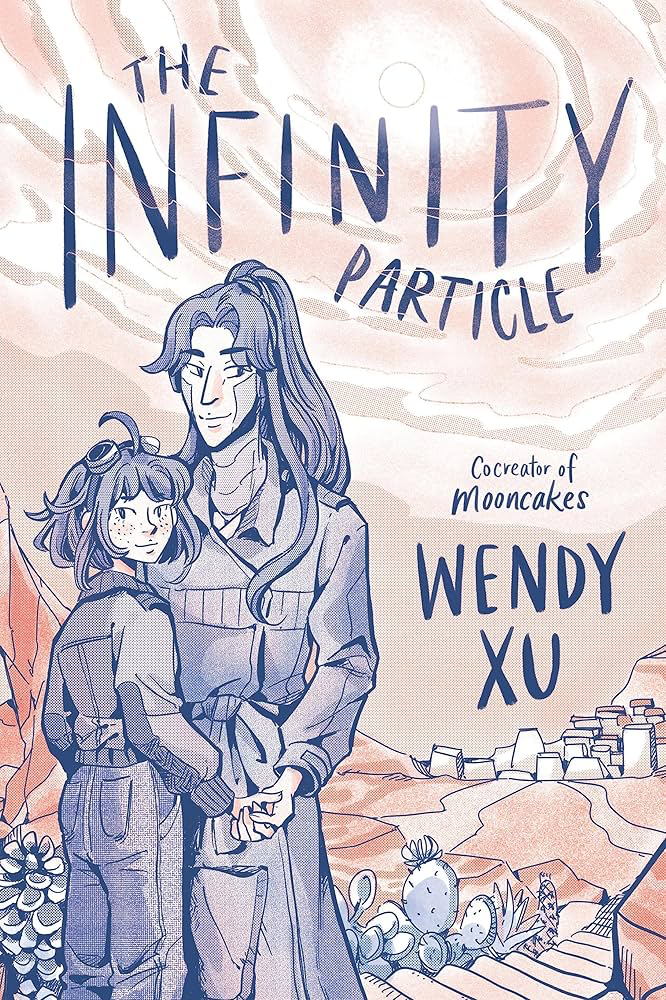
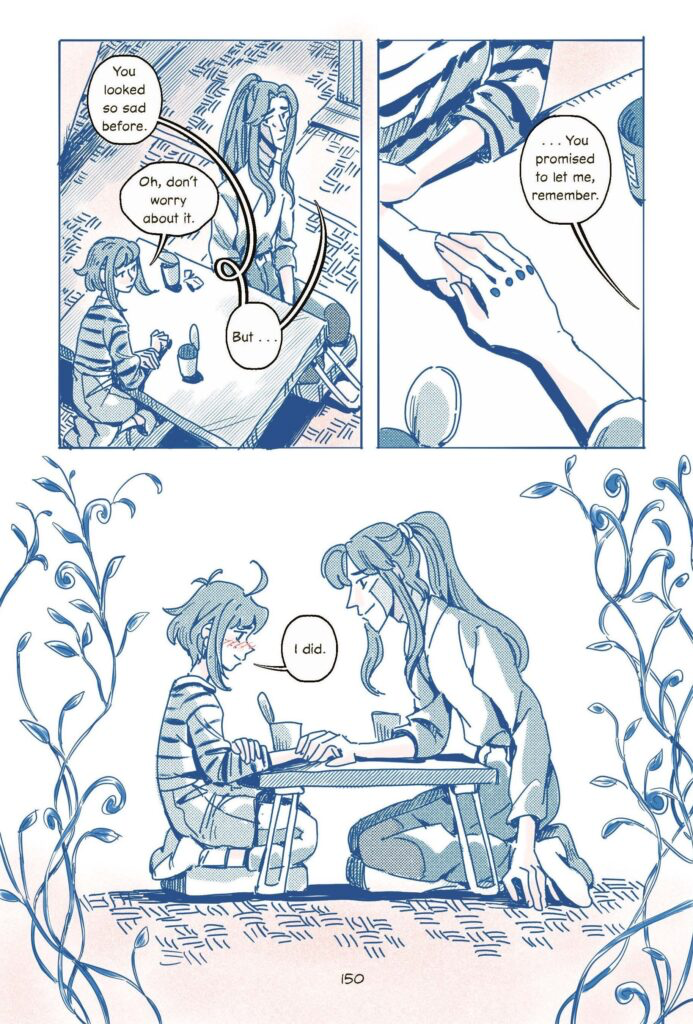


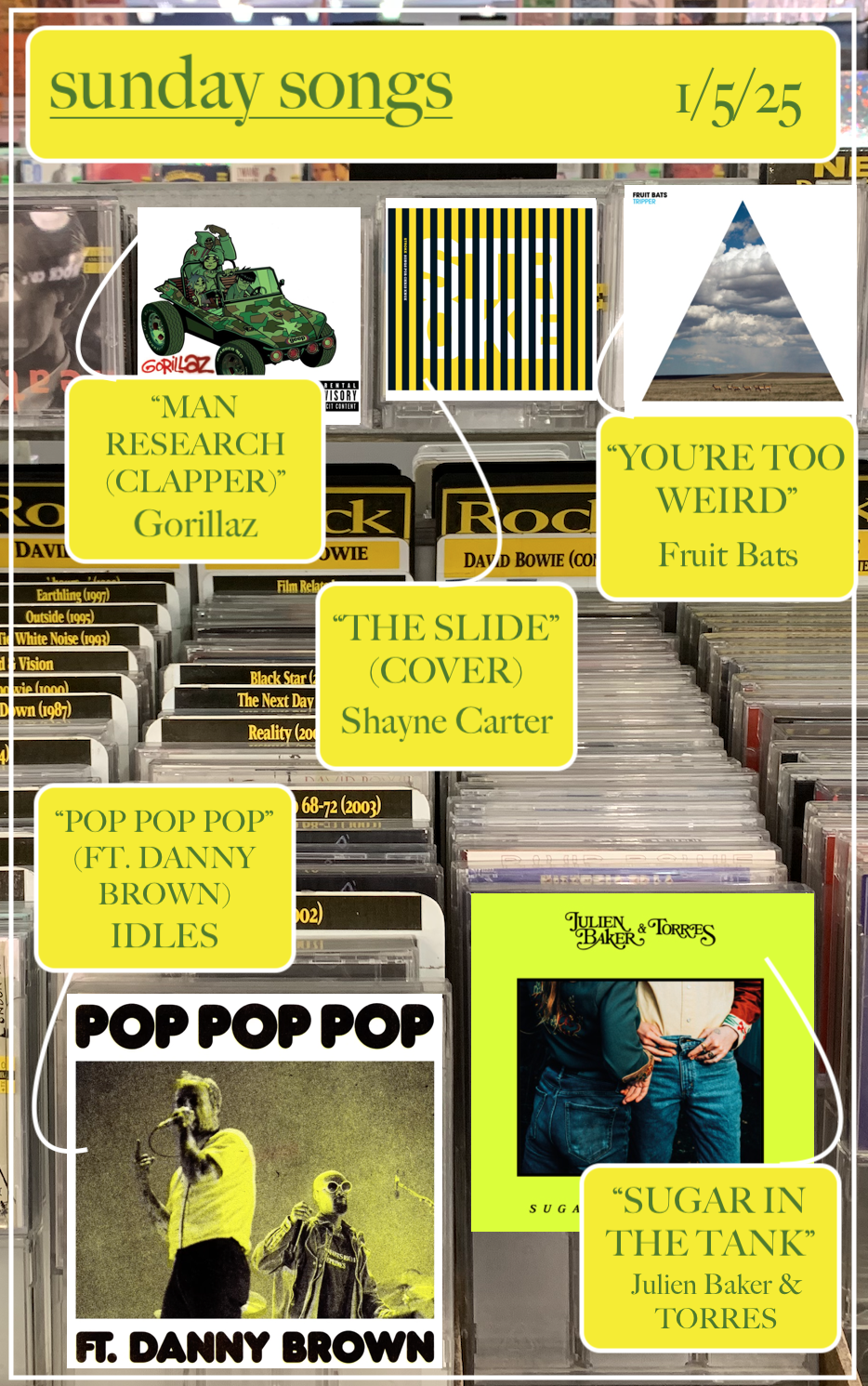
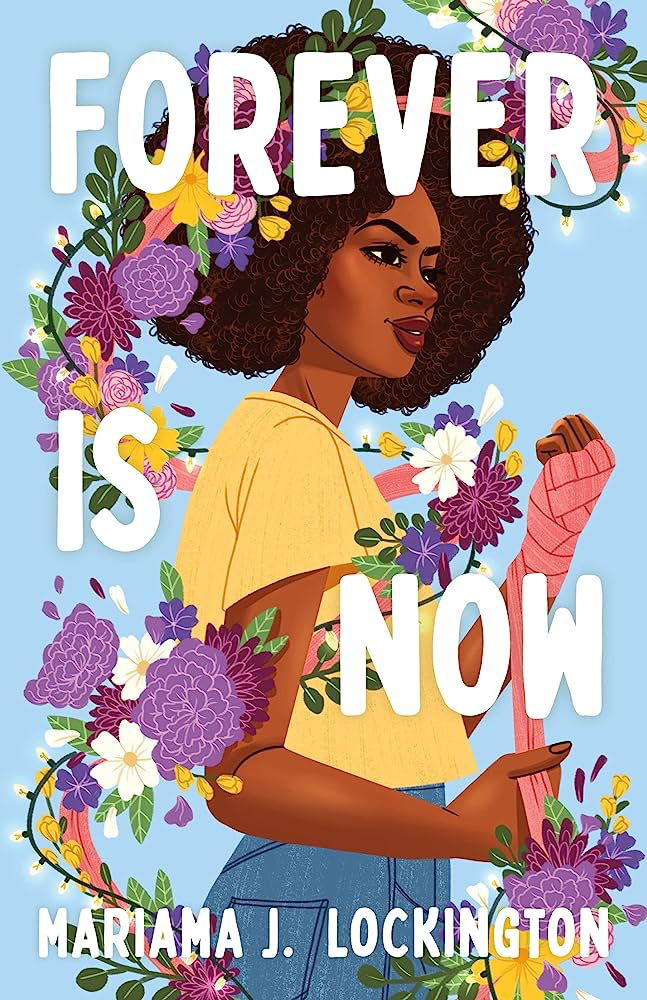

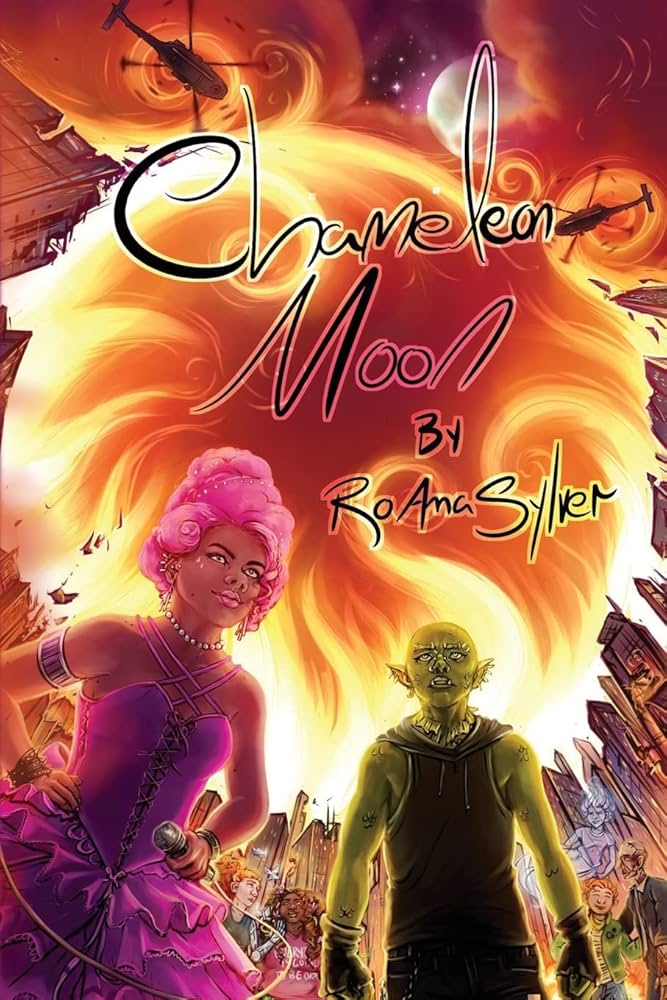
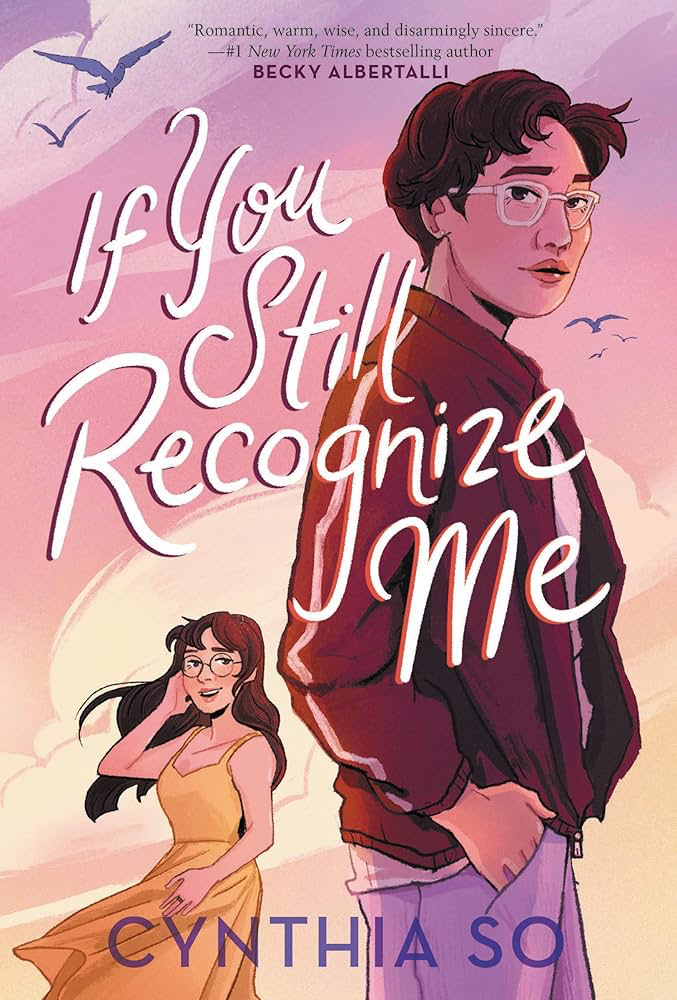
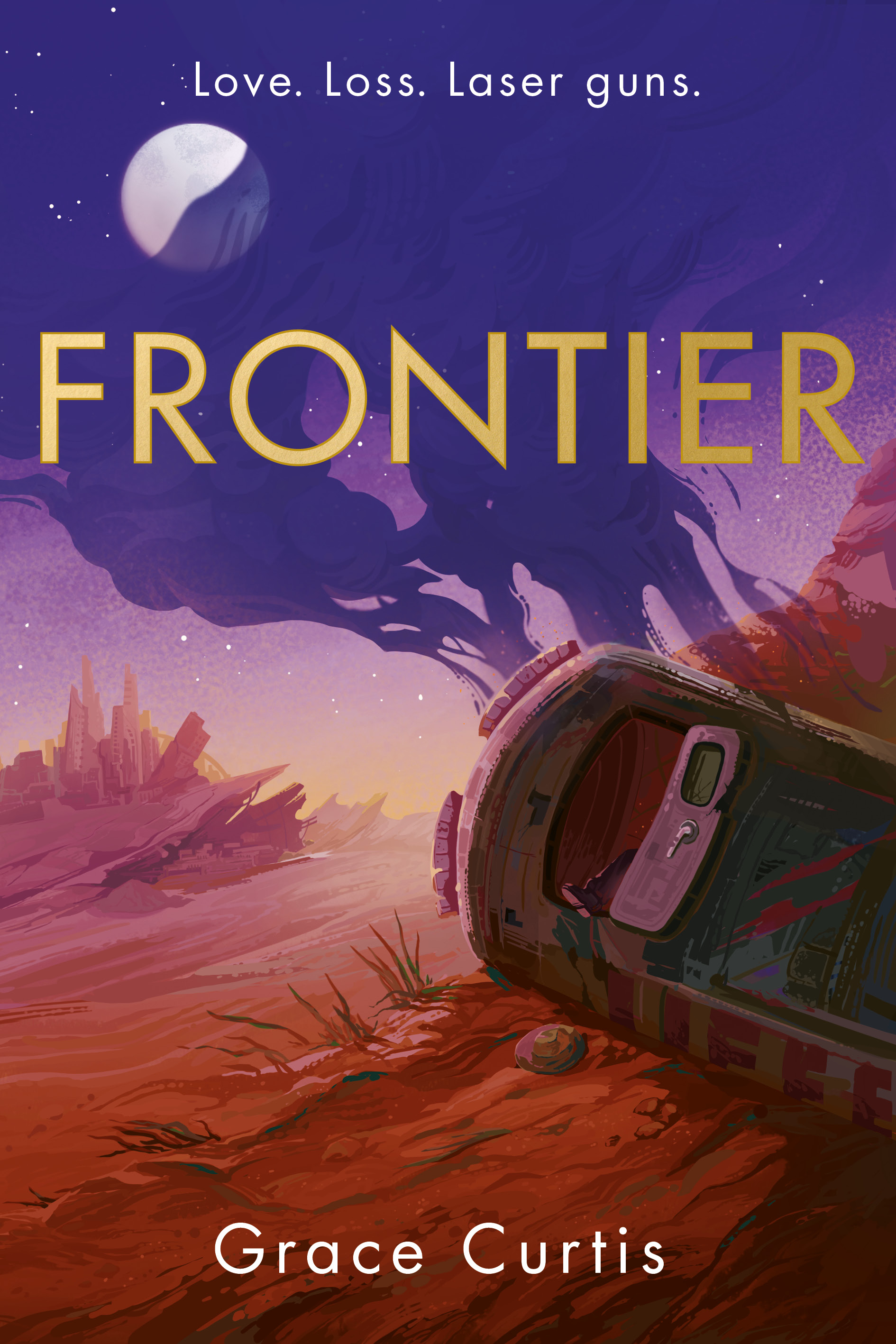
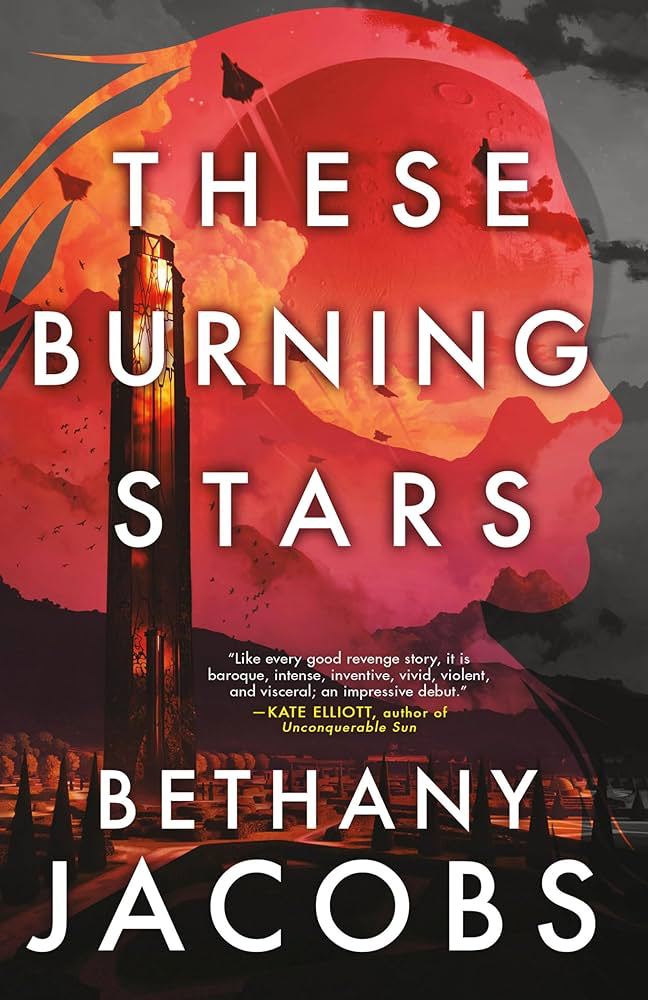
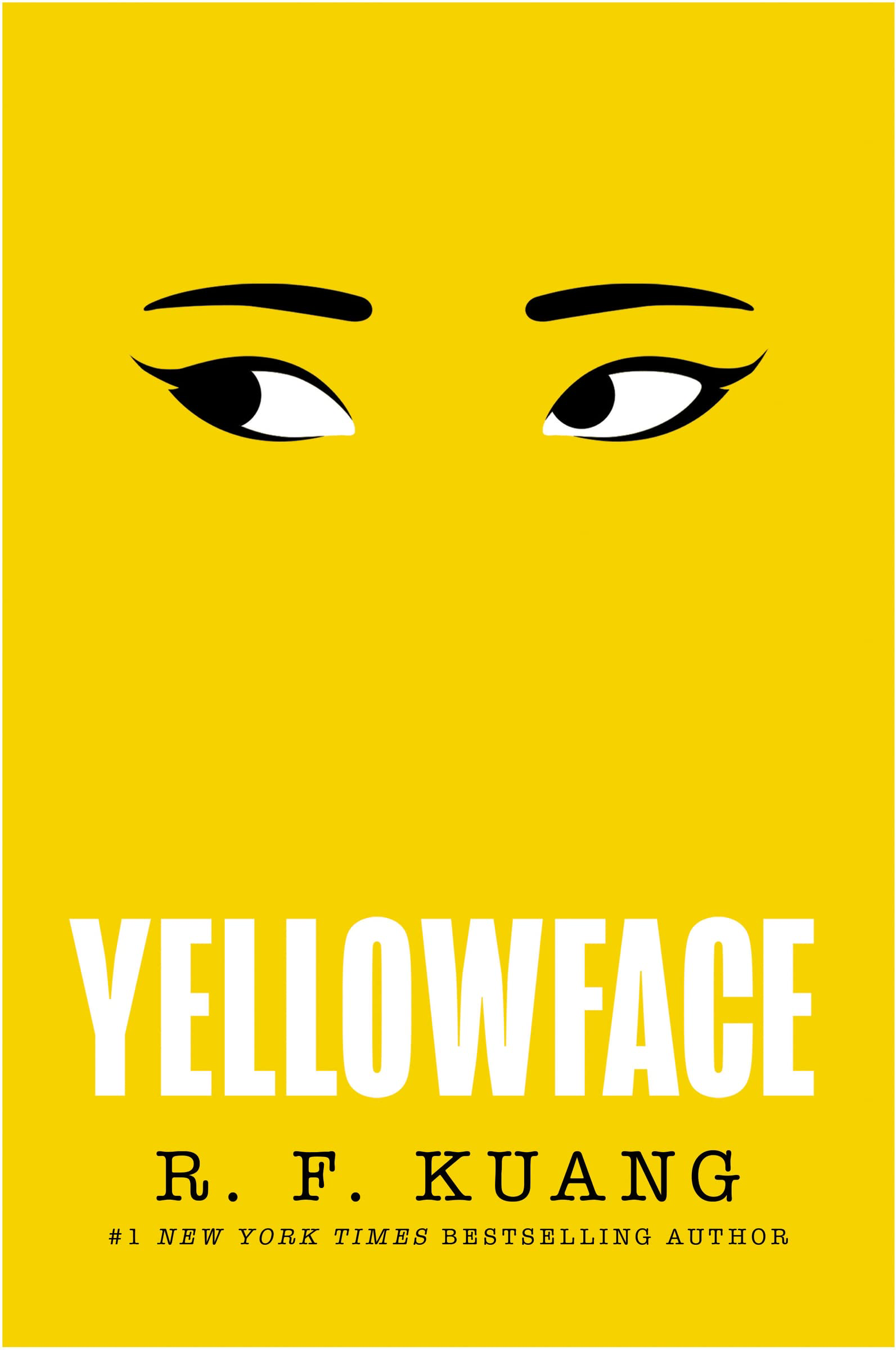
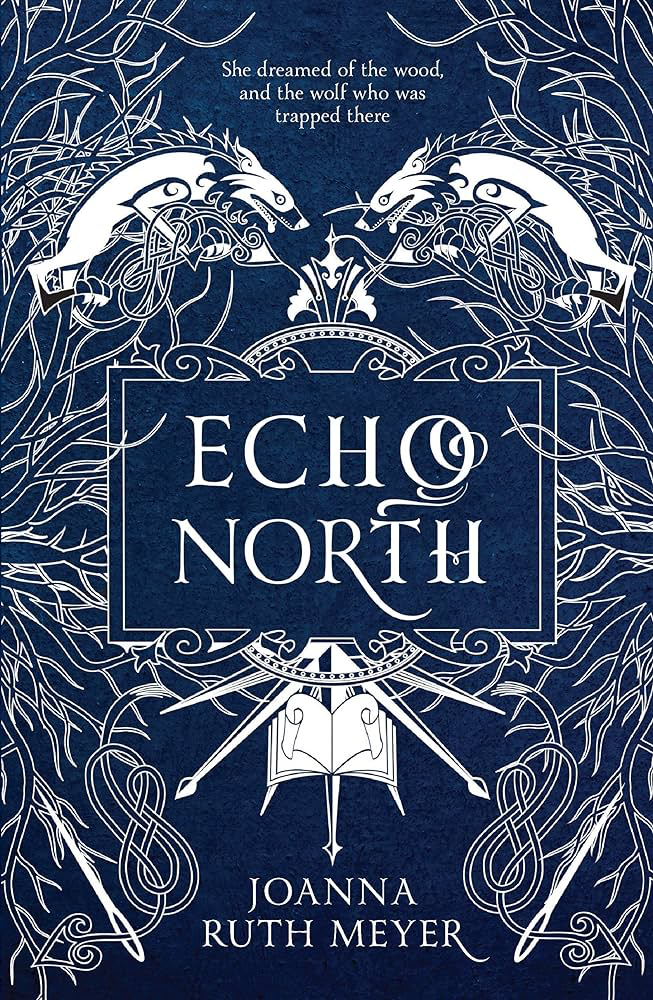


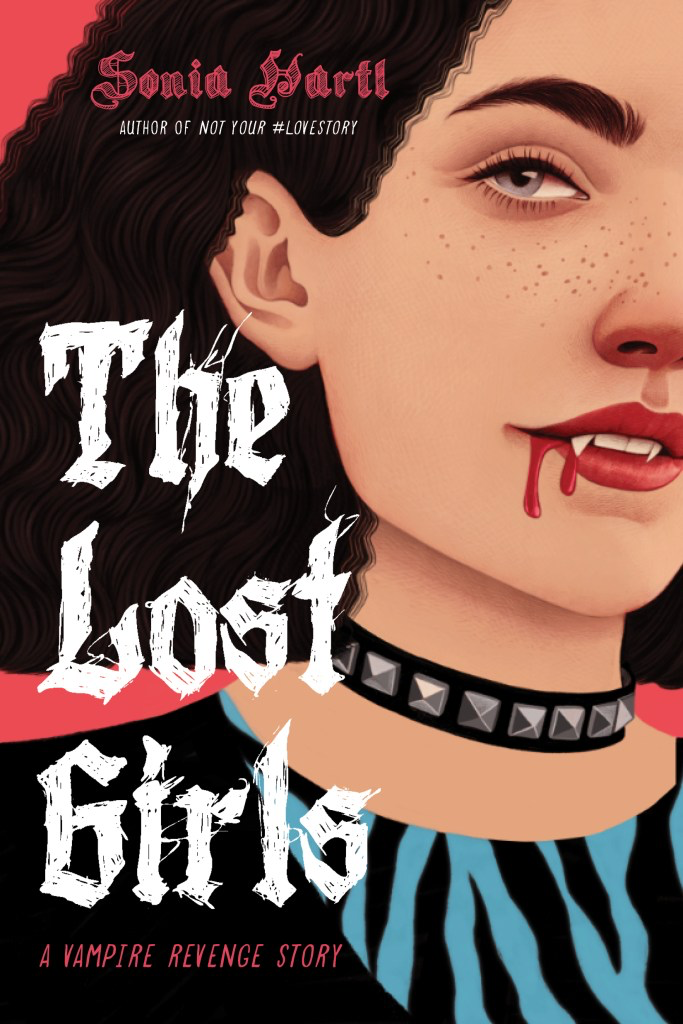


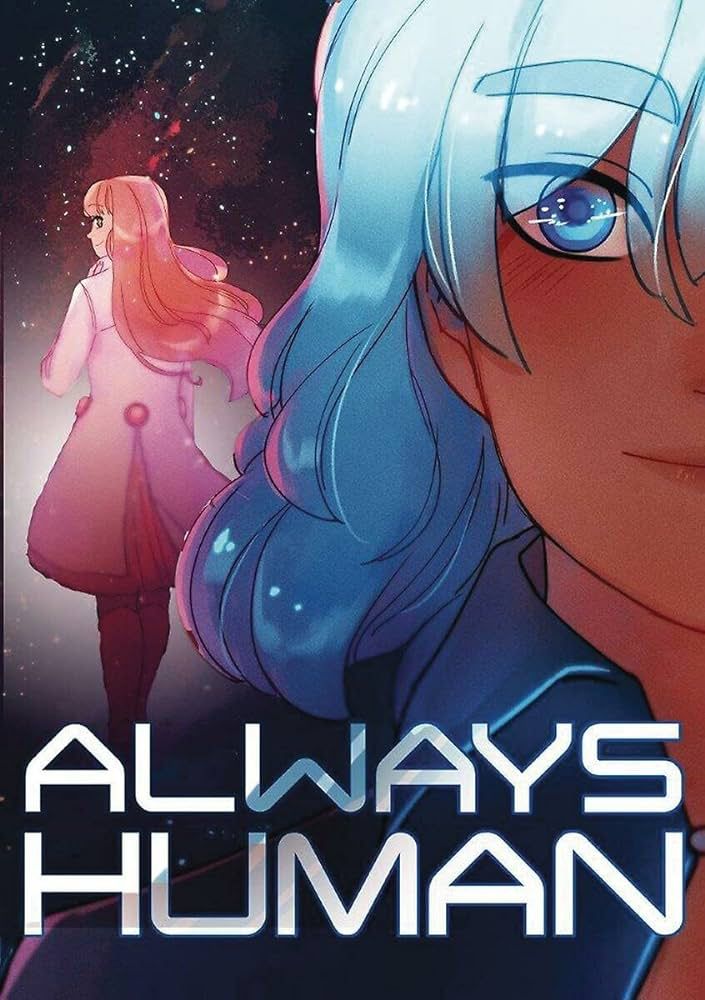

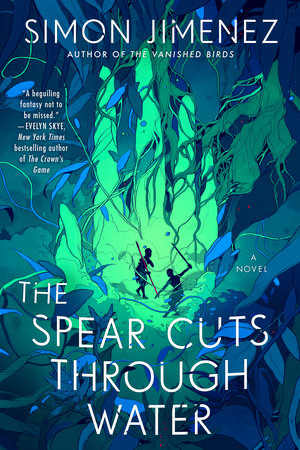



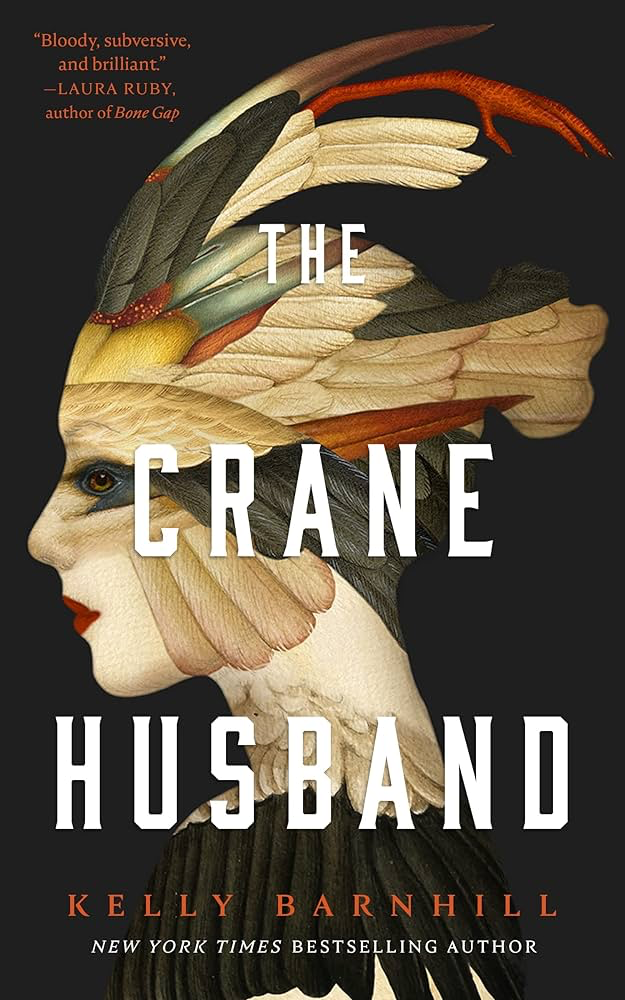


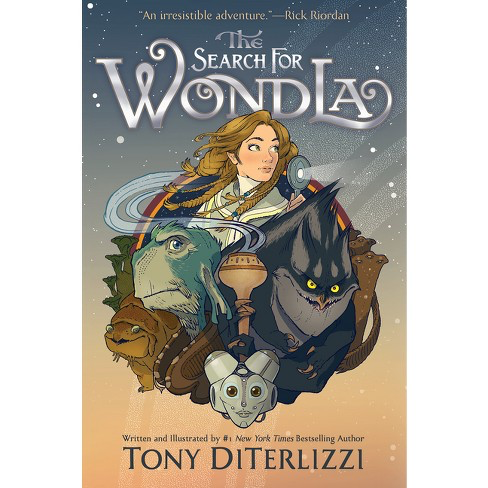
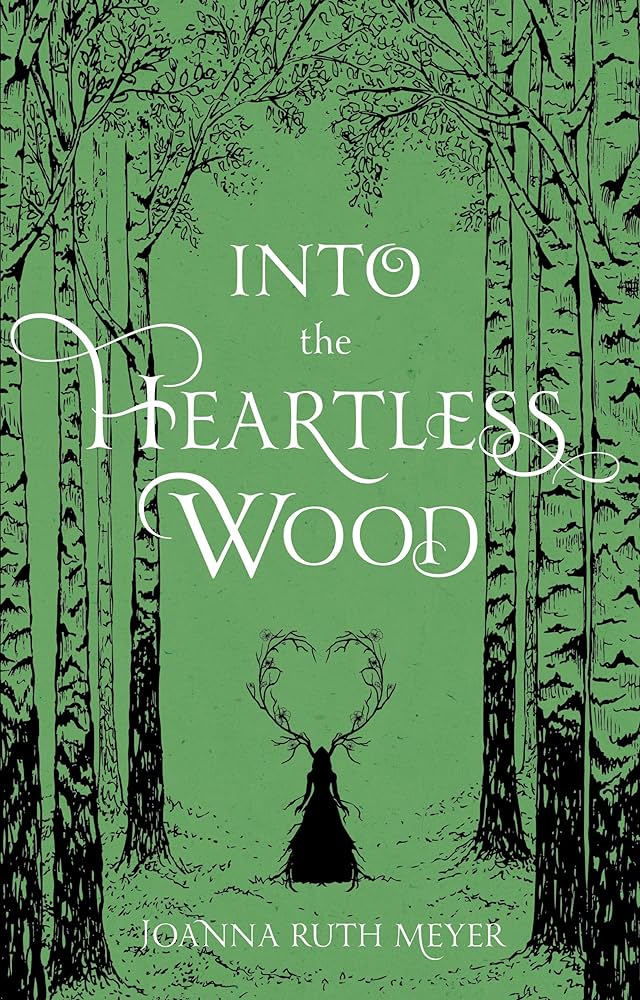
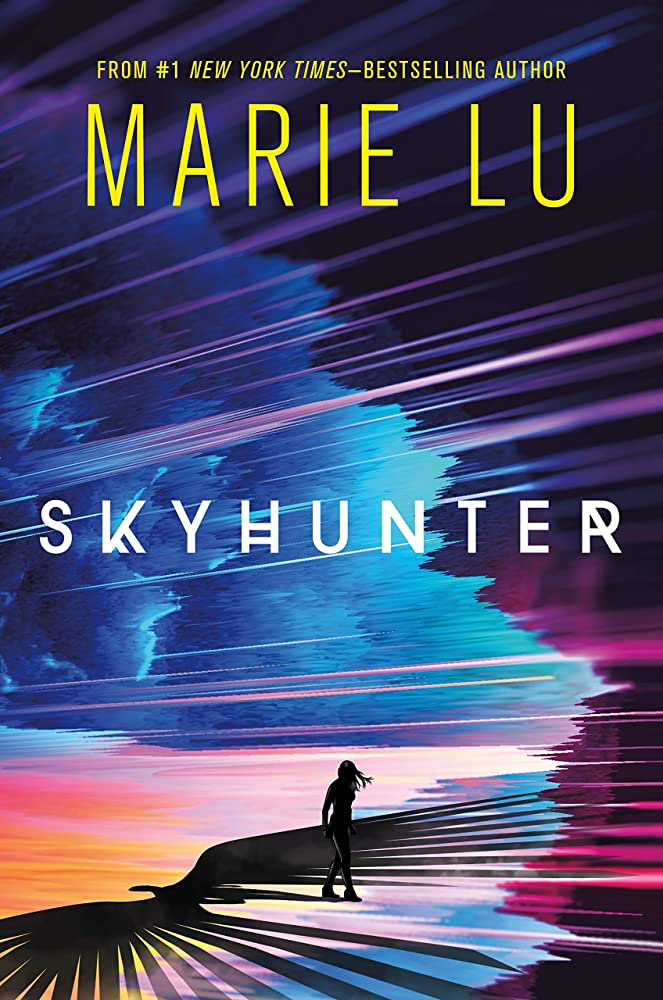


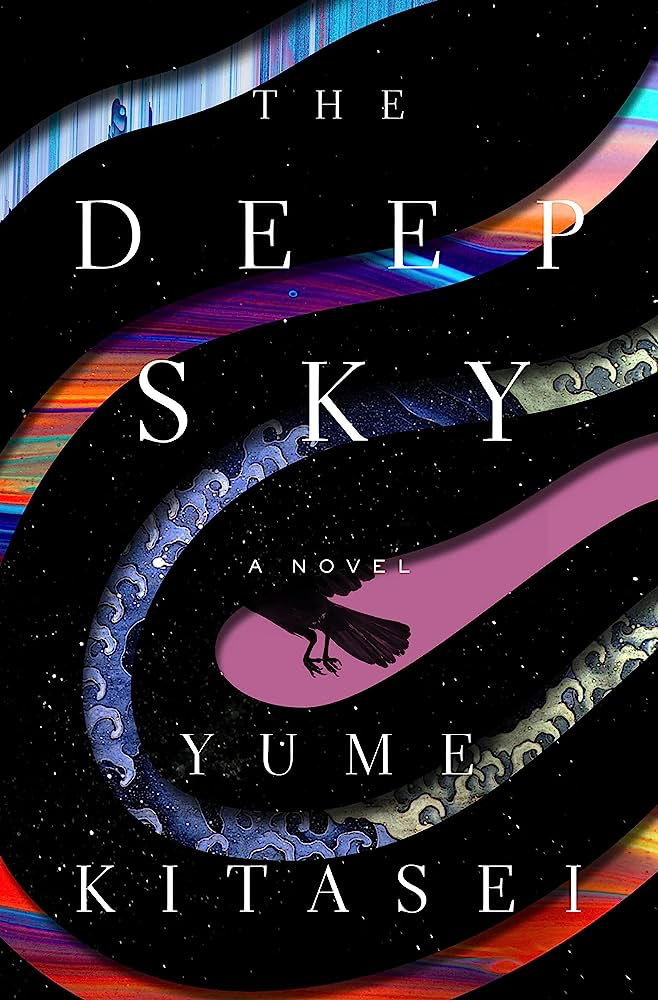
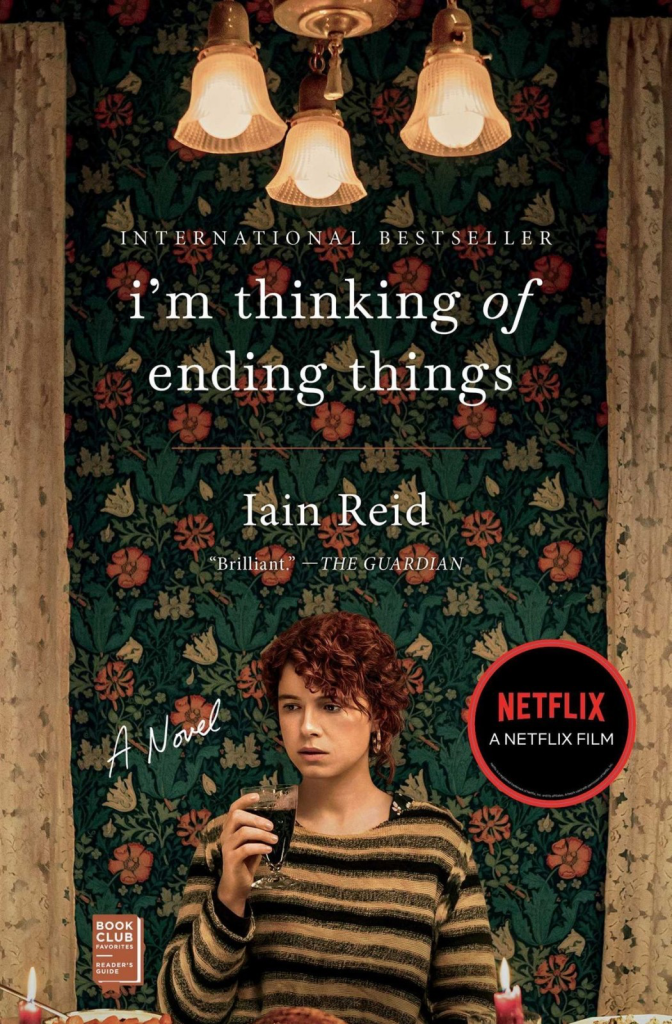


 The Bookish Mutant