Posted in Book Review Tuesday

Sunday Songs: 7/20/25

Happy Sunday, bibliophiles! I hope this week has treated you well.

This week: I get more heated than I ever expected to be about Edvard Grieg, my middle school sad bastard music comes out of its cave, and, uh…what’s that? LOVE SHACK, BABY! More at 6.

Enjoy this week’s songs!

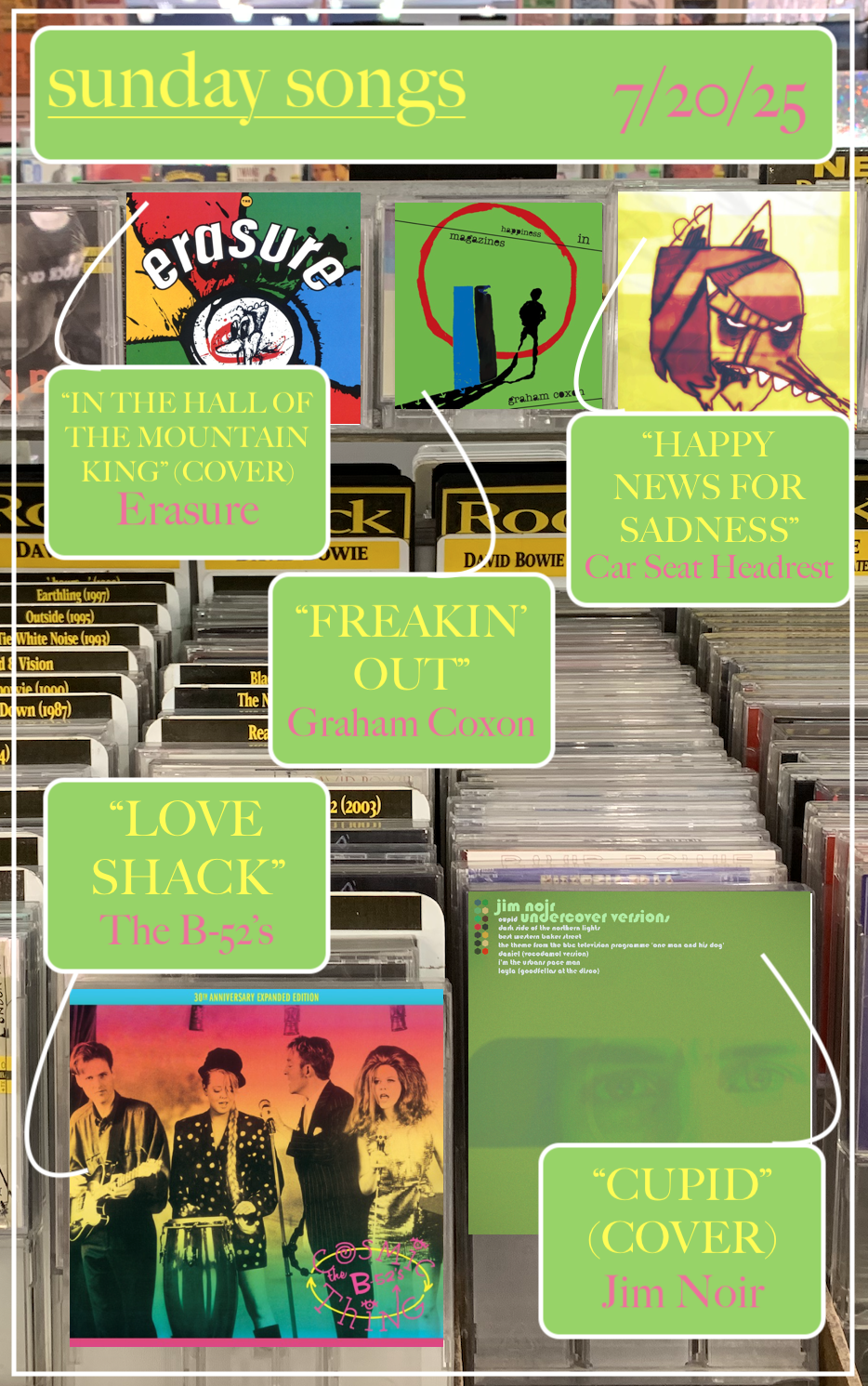
SUNDAY SONGS: 7/20/25

“Love Shack” – The B-52’s

This one came late because of, once again, my insistence on sticking to these (loose) color palettes. But god, I was having a blast listening to this on repeat during Pride Month. I couldn’t go to any pride parades or anything because of a) preexisting plans and b) it was, quite literally, as hot as an oven. But the amount of times I listened to “Love Shack” honestly made up for it.

Sure, this isn’t nearly as weird as some of The B-52s’ other songs—in fact, it’s probably their most accessible song—but it really is fitting as one of their signature songs. The pop joy isn’t just a product of them being upbeat for airplay—it really was a triumphant moment for them, their comeback after tragedy struck the band in 1985 after the death of Ricky Wilson from AIDS-related complications. It was them coming back from the brink and declaring that in spite of tragedy, they would stick to their mission of bringing gleefully weird pop music to the world. It’s a catchy pop song, sure, but it was also a commitment to celebrate togetherness in spite of the greatest hardship a band could possibly endure. And for a song that’s mainly just remembered as the product of a particularly weird party band, that’s such a beautiful legacy to leave. But beyond that…oh my god, it’s just so camp. It’s just so fun! How can you not grin constantly when you hear this song? Fred Schneider’s just being Fred Schneider, Kate Pierson and Cindy Wilson are producing some of the best harmonies in pop music, and the whole “bang, bang, bang, on the door, baby” bridge? Who ISN’T shivering with antici……..pation at that? (And yes, that is RuPaul right there at 2:03 in the music video, as if this song couldn’t get any queerer.) I’m tempted to dismiss my instincts to get all women and gender studies with it about “Love Shack,” but if this isn’t queer joy—coming together in the face of a widespread tragedy that affected the LGBTQ+ community so fundamentally—then what is? LOVE SHACK, BABY!

…AND A BOOK TO GO WITH IT:

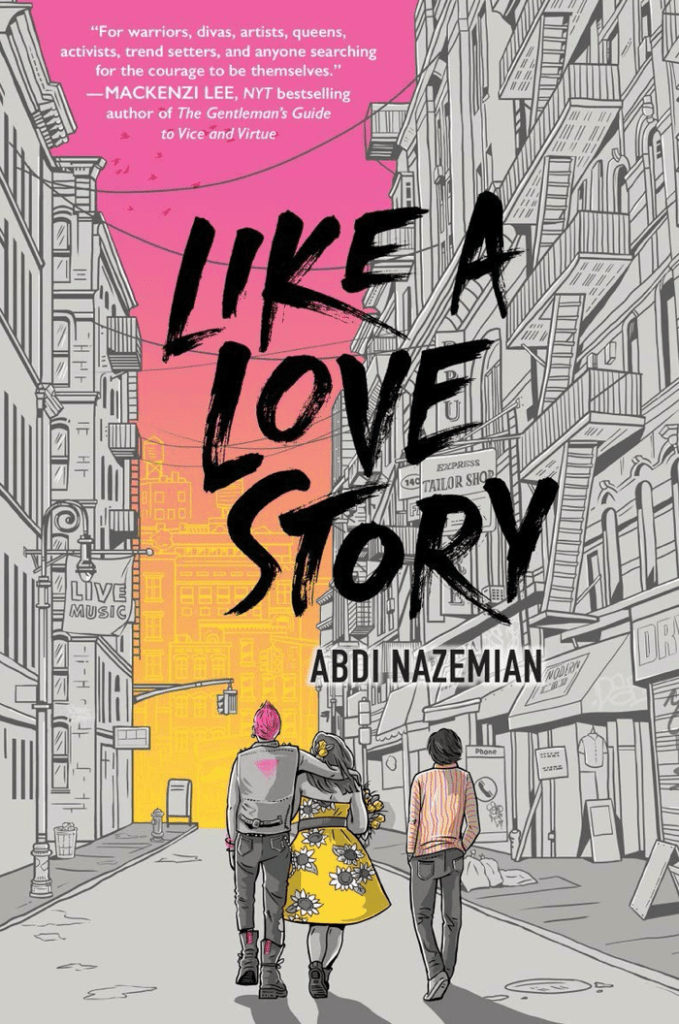
Like a Love Story – Abdi NazemianThe B-52’s aren’t the focus of this book (Madonna is, though), but this novel is set in 1989—the same year “Love Shack” was released—and centers around similar themes of queer identity and togetherness in the face of tragedy.

“Cupid” (Sam Cooke cover) – Jim Noir

While we all wait for Jimmy’s Show 2 to come out, Jim Noir has released an EP of covers, available on his Patreon! (It also includes a mashup of Pink Floyd’s “Breathe” and Super Furry Animals’ “Northern Lites,” which is pretty amazing.) He posted this cover of Sam Cooke’s “Cupid” several months before hand, and I lamented that he hadn’t made it available for release, because unexpectedly, it was perfectly suited for him. Jim Noir’s music is full of ’60s influences, but until now, I mostly thought it was reserved for bands like The Beatles or the Beach Boys, which more readily come through in his sunnier, twinklier melodies. I should’ve known how easily that would translate to another part of the ’60s—Sam Cooke’s classic love song. It’s hard to touch any of his songs for me, not necessarily because they hold a particularly special place in my heart, but because they’re so ubiquitously him—Cooke’s songs have a quality about them that make them feel fully-formed, able to be made by nobody but him. The key to Jim Noir’s success with the cover is that he doesn’t overdo it—he’s just Jim Noir, not Sam Cooke. It’s an understated cover, but that quality makes it more intimate and calming to me—there’s a soothing quality about it, from his harmonies to the soft background strings. That’s what makes it such a genius cover—Jim’s not being anyone but him, but staying true to the spirit of the original.

…AND A BOOK TO GO WITH IT:

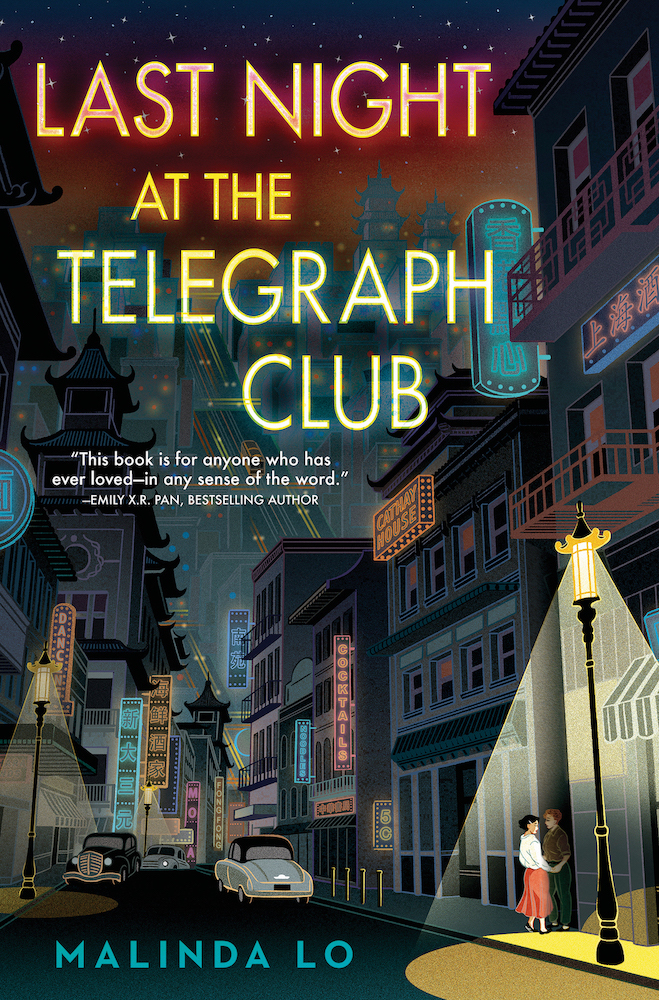
Last Night at the Telegraph Club – Malinda LoI’m a few years off as far as the dates go, but give it a few years, and this would fit right in with the more tender, quiet moments of this novel.

“In The Hall of the Mountain King” (Edvard Grieg cover) – Erasure

I had no idea that this existed until a few days ago, and y’know what? It’s an absolutely wild pairing as far as covers go, but trust me, it sounds exactly how you’d picture it sounding. It’s just “In The Hall of the Mountain King” done entirely with synths. I do enjoy it, but I feel like it betrays the original song in a key way. The thing that most people remember about “In The Hall of the Mountain King” is that point (you know the one) where it goes absolutely, truly, off-the-wall bonkers, like they crammed chaos incarnate into whatever concert hall it was performed in. It’s about the gradual buildup!! The payoff!! It feels like a whole pack of firecrackers going off and ricocheting off the walls!! And Erasure…barely sped up the tempo? Which is a crazy move to pull when covering this…like, how does one cover “In The Hall of the Mountain King” and not go fucking nuts with it? You do you, Erasure, I guess, but…man, you already pulled the move of putting an Edvard Grieg cover as a bonus track, might as well go crazy with it!!

…AND A BOOK TO GO WITH IT:

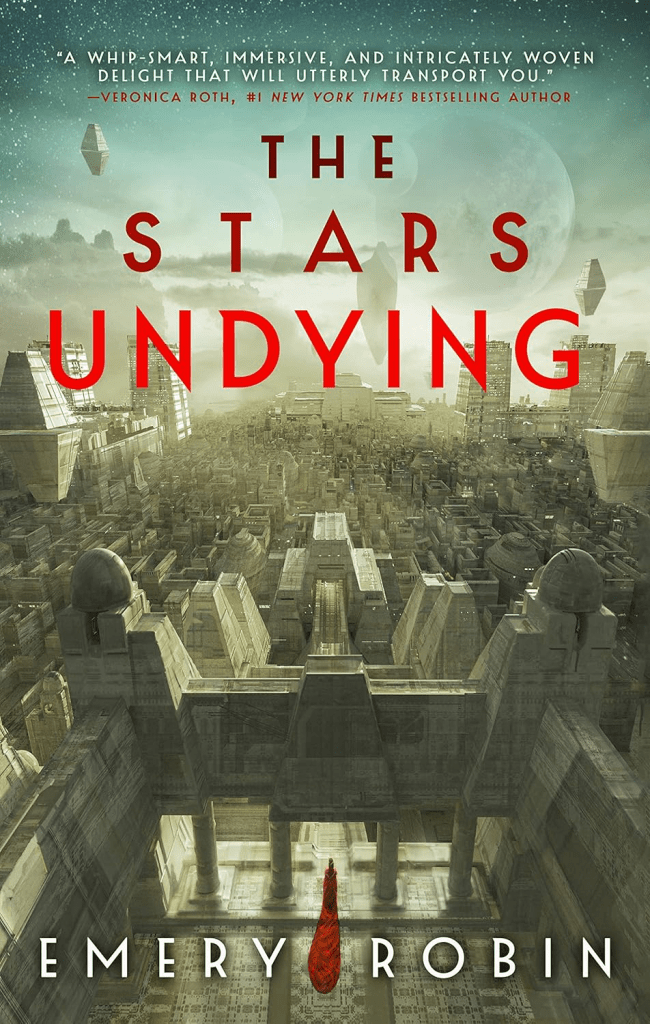
The Stars Undying – Emery Robin…kinda hard to recommend a book to pair with a synth cover of classical music, but, uh…how about a sci-fi retelling based on the stories of Cleopatra and Julius Caesar? Will that suffice? Help me out here…

“Freakin’ Out” – Graham Coxon

So here’s what Graham Coxon was doing all that time when Blur was making Think Tank, which was…doing exactly what was barely on Think Tank: guitar freakouts (no pun intended). While his former bandmates were reveling in some of the more experimental sides of their musical taste and abilities, Coxon was sticking to what he loved and did best. Part of why I got so attached to Blur was his propulsive guitar playing, whether it was his bright, chugging melodies on Parklife or the darker, grungier sounds of their self-titled album or 13. “Freakin’ Out” isn’t his lyrically strongest song, but it’s got this driving, punk-inspired beat that never lets you go. Of course, in true Graham Coxon, he’s in a suit and glasses while playing all this—Weezer who? If there’s anything that Graham Coxon has committed to in the last few decades, after spending time with Blur during the height of Britpop and being pressured to conform to pop music standards, it’s being nothing but himself. We’re all better for him being a quiet, introspective person playing loud, upfront music.

…AND A BOOK TO GO WITH IT:

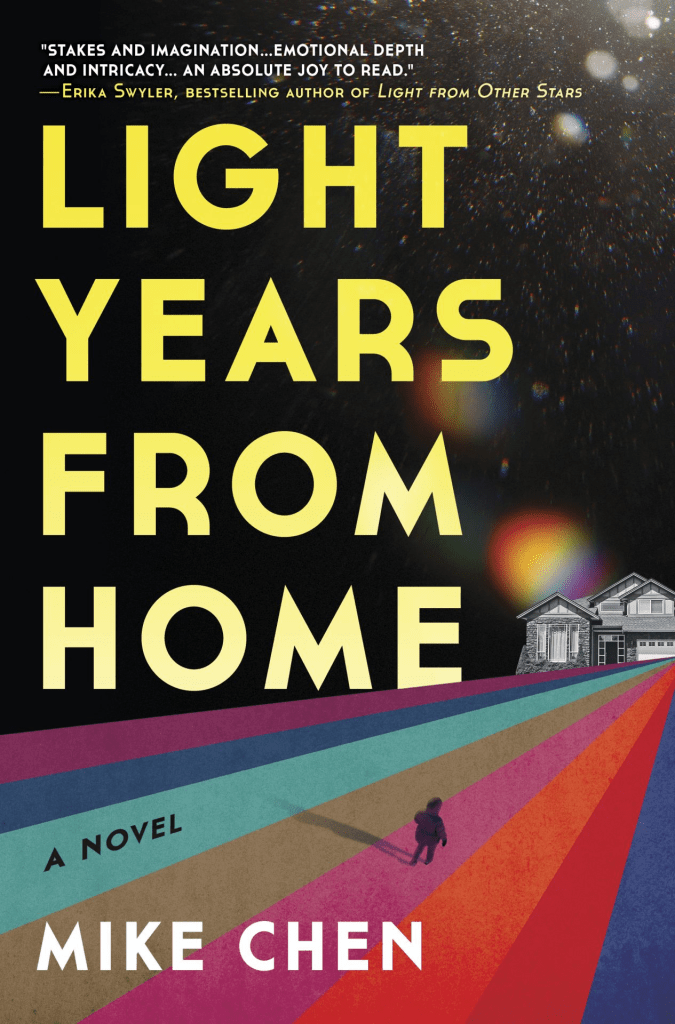
Light Years from Home – Mike Chen“Nothing to be, nothing to fear/Nothing to prove, nothing to say/Nothing to lose, nothing to gain/Nothing to feel, nothing to hate/Nothing is real, it’s all too late…”

“Happy News for Sadness” – Car Seat Headrest

The Car Seat Headrest I saw when I was 14 was a very different Car Seat Headrest than the one I saw last week. At one point in the show, Will Toledo opened up about how he didn’t like playing some of his older material, particularly that from Teens of Denial, because he was, as he said, “an angry young man of 23.” It struck me as so humble that he’s willing to admit that he’d moved on from that anger and strife and that he was committed to being in a stabler, happier place in his life. Teens of Denial remains one of my favorite albums of all time, an album that was at my side at my most lost and confused moments when I was a young teenager. Sure, I would’ve loved to hear “Cosmic Hero” (if not just to replace my video from 2018 where my off-key screeching drowned out the actual song) or something, but I’m happy that Will Toledo’s happy. And all of this was the preface for “Drunk Drivers/Killer Whales,” which he played to a crowd that knew all the words. Myself included. It was one of those nights where I could feel my younger self peering out from my chest, wiping the smudge away from her glasses, and dancing. I felt her dancing with me. I danced as hard as I could that night. It’s one of those times where a concert has felt, more than anything, like a warm hug, a reassurance across time to that little girl that she would be okay.

Car Seat Headrest has a notoriously rabid fanbase, small but mighty, the kind of people who’d unironically go up to you and say something like “Oh, you haven’t listened to the absolutely crusty-sounding old recordings he put out on Bandcamp and labeled ‘just awful shit?’ Fuckin’ poser!” And…yeah, with the kind of discography that Will Toledo has, it does lend itself to the kind of Charlie Kelly conspiracy theory board types. But the other side of that coin is that you get people who will ardently do the wave to a song that’s only available on Patreon. And that’s what made the show so riotously fun—the fervor of the fans for songs old and new, whether it was the stirring intro of “CCF (I’m Gonna Stay With You)” or the extended medley of older songs. (I’ll admit to being awakened like a sleeper agent when they started playing “Something Soon.”)

“Happy News for Sadness” was one of the excerpts from medley of older songs that they did for the encore, one that somehow escaped my unending curiosity when I was in middle school. I’d already found “No Passion” and “Sunburned Shirts,” so who knows how this slipped through my fingers. I feel like it might’ve been for the best, because I have a feeling that earsplitting, lower-than-lo-fi “BWEEEEEEEEEEEEEEEEEEEARGH” at 1:52 would’ve killed my headphones. “Happy News For Sadness” is as clear a glimpse into the sadder, angrier young man that defined much of Will Toledo’s career—the central chorus of “You can never tell the truth/But you can tell something that sounds like it” speaks to a lingering depression that’s been ever-present throughout his catalogue. Meandering through malaise and expired food doesn’t seem like something Toledo would revisit, given the speech he gave about Teens of Denial, but the fact that he’s able to reconcile with different eras of his own art in different ways feels like a mode of communication with the past. His songwriting was his way of telling the truth, and that truth resonated with so many people. To bridge that connection, to be able to look back and sing altered versions of the same song, is likely his way of making peace with it. Healing that younger part of yourself is different with each angle you tackle it from, but committing to that seems to be Toledo’s ongoing mission. I’m just lucky to be able to heal along with him and alongside hundreds of people.

…AND A BOOK TO GO WITH IT:

The Bad Ones – Melissa Albert“Nobody cares about/(But I’m still ugly on the inside)/Your life and the people in it/(But I’m still ugly on the inside)/So you can stop telling me it gets better…”

Since this post consists entirely of songs, consider all of them to be today’s song.

That’s it for this week’s Sunday Songs! Have a wonderful rest of your day, and take care of yourselves!

Posted in Book Review Tuesday

Book Review Tuesday (4/8/25) – You Sexy Thing

Happy Tuesday, bibliophiles!

I’ll skip the prologue about how predictable it is that I picked up another queer space opera, and one with a ’70s music reference in the title at that. (SING IT WITH ME!! 🎶I BE-LIEVE IN MIRACLES—🎶) Nonetheless, I kept my expectations low, and I’m glad I did. Hilarious, heartbreaking, and heartwarming all at once, You Sexy Thing is the start of a true joy of a space opera trilogy!

Enjoy this week’s review!

You Sexy Thing – Cat Rambo

It’s been decades since Niko Larson and her fellow soldiers were able to break free of the Grand Military of the Hive Mind, where they were voiceless pawns in a never-ending war. Now, they run the Last Chance, a humble restaurant at the edge of TwiceFar Station, serving customers from all over the galaxy and from all walks of life. But when a mysterious, sentient ship destroys their livelihood before giving them a mysterious mission that they can’t refuse, Niko and her fellow chefs and restaurateurs must return to the fray they tried so desperately to escape—all with the heir to the Paxian Empire in tow.

TW/CW: sexual content, violence, blood, torture, kidnapping/imprisonment, war themes, abuse, genocide themes, death

The entire time I was reading this book, I’d click on the Kindle cover and I’d immediately start hearing “You Sexy Thing.” It just kept coming back, like I was trapped in a sitcom gag with a signature musical cue. Probably the intended effect. Not complaining, though. Absolute banger.

What an excellent space opera this was! You Sexy Thing scratched so many of my favorite sci-fi itches, and one of the biggest ones was the aliens and creatures! CREATURES! CREATURES! I’d place You Sexy Thing as bordering on space fantasy, though I won’t go into a whole digression on what counts/doesn’t count as sci-fi or SF; that was mainly because of the ghosts, some magic use, and were-creatures. However, Rambo did an excellent job with all of the alien denizens of this galaxy! There was a fantastic balance of humanoid and more unfamiliar creatures, all of whom were delightful. Skidoo was a personal favorite, as I’m particularly fond of any kind of cephalopod-inspired aliens, but Petalia, even if their name was rather on-the-nose (in line with a lot of the humor of the book), had some fascinating details about their culture and plant-based physiology. Also, there’s a chimp. Gotta have a chimp to round out the crew, amirite? Thankfully, this one doesn’t go the way of Nope, and Gio is a perfectly reasonable individual. There’s also lots of casual queerness abound, which is always a plus.

Another thing I love in space opera is a good motley crew, and You Sexy Thing had a stellar one! Rambo’s choice (apparently a challenge from fellow sci-fi author Ann Leckie, if the epigraph is anything to go by) to have You Sexy Thing in an omniscient, third-person POV was a great solution for covering the thoughts of all of the characters, discarding the need for separate chapters for everyone. All of them had distinct and lovable (mostly) personalities that made them butt heads with some characters and mesh with others, while still retaining a sense of familial bonding. Even outside of the restaurant setting, they retained a hilarious rapport that was a joy to read. Dabry’s musings on cooking were a delight, Atlanta’s trouble fitting in with the crew made for some lovely interactions, and Niko’s continuous struggles to face her past made for some of the novel’s most emotional points. You Sexy Thing balanced levity with emotional weight to great effect, and had a fantastic cast of characters to split the difference.

Amidst all of the humor, You Sexy Thing explores some quite complex, nuanced emotion, which I appreciated. I don’t think Rambo fully explored the implications of everything that had been done to Petalia, and how returning to Niko’s company affected them, but what we got was appropriately complicated, messy, and painful to read—exactly how it should have been, given the circumstances. This story never strays away from the cross-cultural complications of relationships, grief, and more, which added to how fleshed-out and unique all of the characters felt. By the end, all of the betrayals were appropriately punches to the gut, but ones that were cushioned by the found family dynamic that had been built up by the end.

Like the characters, the worldbuilding was an absolute treat! I will say, some of it was rather scattershot—we frequently get references to alien species and places that don’t even show up after they’re mentioned, but since this is a trilogy, I might be able to get past that, assuming that they come up later. I’m mostly accepting it, knowing that a) this is a huge galaxy, and b) that the world will presumably be expanded upon. It only really peeved me when they failed to explain much about what said alien races looked like. Other than that, Rambo’s worldbuilding was fascinating to pick apart! Sometimes, individual concepts are more interesting than the whole, and that aspect was made manifest by many of Rambo’s concepts, from married couples (or friends) being able to meld into a single being to the biotechnology that made You Sexy Thing (the sentient ship) possible. Through it all, I got the sense that Rambo’s galaxy was a distinctly lived-in one, which made my reading experience all the better.

My only real complaint, if any, was Tubal Last. You Sexy Thing had moments of being purposely cheesy, from the in-your-face ’70s music references to the on-the-nose character names; the latter felt like a nice, tongue-in-cheek reference to some of the characteristics of older sci-fi. That quality extended to the villain, who was cartoonishly evil. I don’t necessarily mind a comically evil villain every now and then, but in contrast to the complexity and nuance of many of the characters, Tubal Last felt out of place, just another obstacle (a formidable one, but a very one-note one) for the crew to overcome. He was over-the-top, but not in a way that necessarily served the story, other than some slightly unique motivations.

Overall, You Sexy Thing was a blast from start to finish, with a lively, energetic galaxy and a cast of lovable characters and daring hijinks to fill it with. 4.5 stars!

You Sexy Thing is the first book in Cat Rambo’s Disco Space Opera series, followed by Devil’s Gun and Rumor Has It. They are also the author of Neither Here Nor There, the Tabat Quartet (Beasts of Tabat, Hearts of Tabat, and Exiles of Tabat), And the Last Trump Shall Sound (with Harry Turtledove and James Morrow), and many other full-length works and short stories. Rambo is also the former president of the Science Fiction and Fantasy Writers of America (SFWA).

Today’s song:

it’s taken me this long to finally listen to Jimmy’s Show all the way through…preparing for Jimmy’s Show 2? either way, it’s an absolute delight.

That’s it for this week’s Book Review Tuesday! Have a wonderful rest of your day, and take care of yourselves!

Posted in Sunday Songs

Sunday Songs: 10/20/24

Happy Sunday, bibliophiles! I hope this week has treated you well.

This week: we regret to inform you that the All Born Screaming brainrot has persisted for 6 months. It may be terminal. Please stand by.

Enjoy this week’s songs!

SUNDAY SONGS: 10/20/24

“Reckless” – St. Vincent

So. Almost 6 months later, and All Born Screaming remains etched onto the folds of my brain. I already talked about how the climax of this song hit me like a train in my review of the album back in May, but rest assured that time has not dulled its potency. 2024 has been a spectacular year for album intros (see: “IDEA 01,” “Wall of Eyes,” and, I’ll preemptively say it, “Lost”), and All Born Screaming’s “Hell Is Near” rightfully claims its crown in those ranks. But “Reckless” feels like the rightful evolution of it—I’d even to as far to say that it would be stunning as a whole track. Imagine that, combined into about 8:06 of a suspenseful, cinematic build. That’s perhaps the only thing that could make the sonic lightning strike at 2:38 even more explosive. Like a well-shot film, suspense is what drives “Reckless” to its pinnacle of art—every lyric is a footstep down a pitch-black hallway, constantly wary of the faulty wiring in the ceiling that’s ready to burst. Knowing that Clark has opened every setlist for this tour with “Reckless” makes the salt in the wound that SHE DIDN’T COME TO COLORADO ON THIS TOUR even saltier. WHY HAVE YOU FORSAKEN US, ANNIE? YOU WENT TO IDAHO, FOR GOD’S SAKES!

…AND A BOOK TO GO WITH IT:

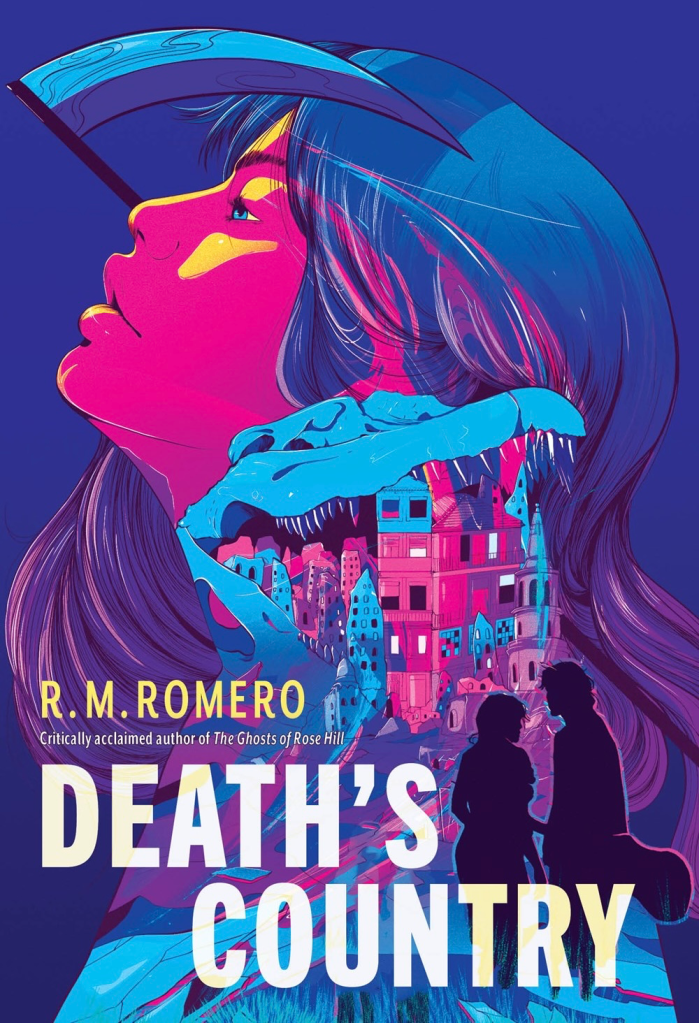
Death’s Country – R.M. Romero“If your love was an anchor/And I am lost at sea/I hear the riders calling/They’re calling for me…”

“Look What They’ve Done To My Song, Ma” – Melanie

I came here from the wonderful show We Are Lady Parts (highly recommended if you need a laugh and also want to see some Muslim punks being badass and very vulnerable on TV); it’s a fitting soundtrack for the bitter disappointment of the band at the end of the first episode of season 2 as they watch their hit song being covered by newcomers, only for said newcomers to get the bulk of the praise and applause from the crowd.

Given this song’s partial legacy of being butchered for commercial jingles (confirmation that corporate executives never listen to lyrics), there’s something predictably depressing about “Look What They’ve Done To My Song, Ma” becoming exactly what the lyrics talk about. In an slow lament that slants towards an older Broadway standard, Melanie sings of how her music has been dragged through the mud: “Look, look what they’ve done to my song/You know, they tied it up in a plastic bag/And then turned it upside down, oh Mama/Look at what they’ve done to my song.” That kind of Broadway feel is the ideal form for this song—it begs for a spotlight on a sordid character with mascara running down her cheeks as she belts her sorrow into a rapt crowd. The more I think about it, I feel like it’s one of the premier victims of the ’60s-’90s fadeout in music—why, why, why would you start turning the volume down right when she hits the most impassioned belt of the whole song? Melanie specifically wrote it about how her producer (who also happened to be her husband) would often halt her creative process in the studio, diverting her from her vision when he saw what he wanted to be a hit.

“Look What They’ve Done To My Song, Ma” has been covered a slew of times over the years, most notably by greats such as Ray Charles and Nina Simone (!!). Sometimes, with a song that covered, it’s simply a matter of fame, but it taps into what might be one of the most universal fears of anyone in the arts: trying to put yourself out there, but then getting your vision sanitized and reshaped for mass appeal. It’s always at the back of my mind. Being unreceptive towards any criticism is one thing, but I’m always afraid of what I put out there being somehow not right for what publishers want. Whatever finished products I eventually publish will have to be rigorously edited, of course, but it would kill me if there were key parts of my stories I had to dilute just so I could sell more copies. Of course, careers in the arts are often…not the most well paying, to say the least, and I almost fear having to succumb to diluting my vision just because of money more than I fear the dilution itself. Would I be able to live with myself? We’ll cross that bridge when we get to it. No, if. I’ve gotta have a little faith. If this song—released in 1970—was able to break through the constraints of producers and the music industry at large, maybe it isn’t all as bleak. Melanie did get the last laugh, from what I can tell, eventually gaining more creative control and outliving her husband. Sadly, she passed away this January, but her legacy precedes her. I’ve only been familiar with Melanie for a woefully short time, but I hope she’s resting easy.

…AND A BOOK TO GO WITH IT:

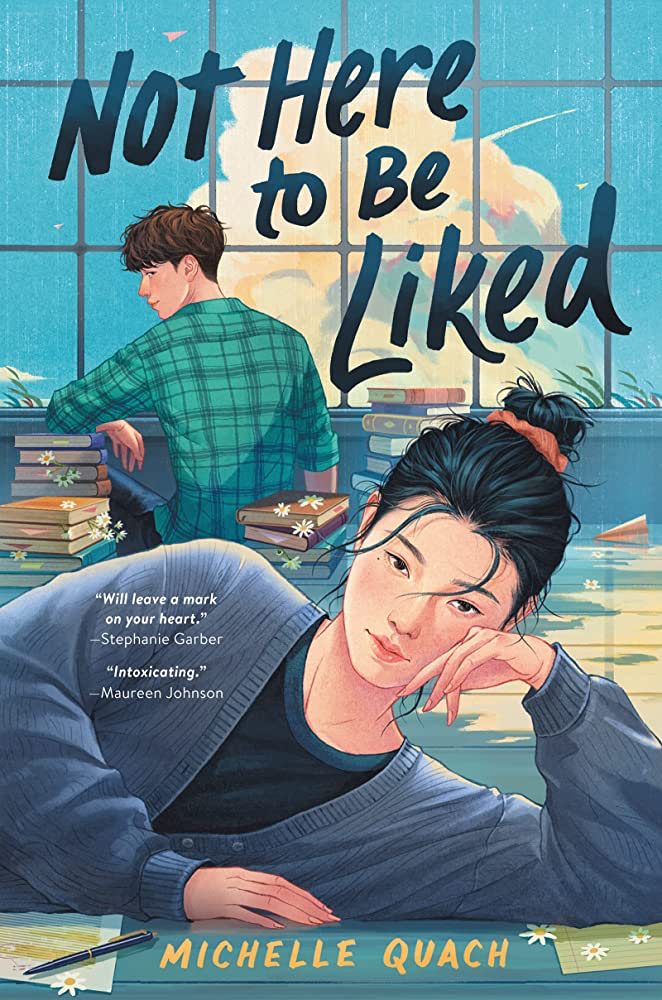
Not Here to be Liked – Michelle Quach“Look at what they’ve done to my brain/Well, they picked it like a chicken bone/And I think that I’m half insane, ma…”

“Final Fantasy” – TV on the Radio

Picture this. You open up Instagram. TV on the Radio has posted an ominous picture of their logo on their page. They’ve been on hiatus for almost a decade. When the world needed them most, TV on the Radio returned…

…just to play a few shows in New York, LA, and London.

They’re at least reissuing Desperate Youth, Bloodthirsty Babes for its 20th anniversary and we got “Final Fantasy” out of it. Hopefully the slow creep of the bass and the ominous, razor-sharp lyrics are enough to distract from the fact that we’ve been sidelined…again. I’m just telling myself that they’re cooking up something new, just so I can sleep at night. You can’t just rise from the dead like that only to play…what, nine shows in only 3 locations? Come ON.

…AND A BOOK TO GO WITH IT:

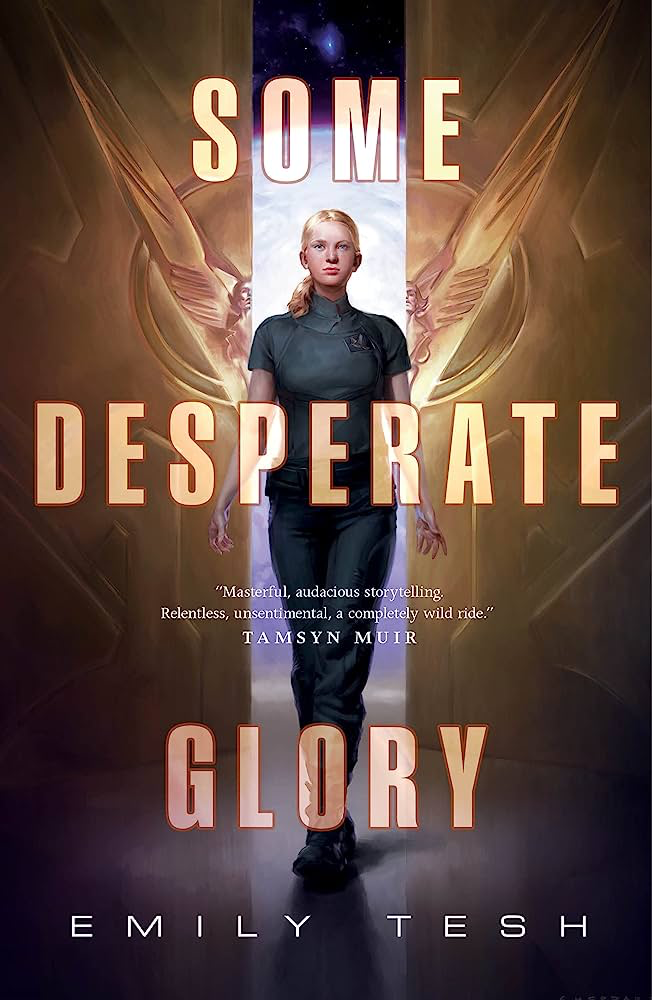
Some Desperate Glory – Emily Tesh “You’ve made a family/Now kill ’em dead/Oh it’s not me Ma/It’s what the TV said…”

“Like Humans Do” – David Byrne

When I heard this in the background of a post on Instagram earlier in the week, I got hooked through the screen—you ever just hear a 10-second snippet of a song and are immediately impelled to download it? It’s so delightfully hooky. No wonder Microsoft chose this song as one of the samples of music for their Windows XP Media Player. It’s now widely accepted as the unofficial “Windows XP Anthem”—the radio edit, that is; Microsoft used the radio edit, which cut out the following line: “I never watch TV except when I’m stoned.” (They replaced the line with “We’re eating off plates and we kiss with our tongues.”) Either way, even though I never got to experience “Like Humans Do” in that context, thank you to whoever decided that David Byrne’s music would be the flagship of Windows XP.

Byrne wrote the song as an imagined perspective of a Martian watching humans interact; the lyrics have a simplistic, domestic calm to them, placidly and warmly recounting the everyday normalities of human life that we take for granted: “For millions of years, in millions of homes/A man loved a woman, a child it was born/It learned how to hurt and it learned how to cry/Like humans do.” With its clanging, light percussion and that classically funky, Talking Heads groove, it’s a jangle that really does embody one of its more delightful lyrics: “Wiggle while you work.” You bet I was IMMEDIATELY wiggling when I first heard this song…and on every subsequent listen. And it feels exactly like the kind of song Byrne would write. It’s in that same vein of Björk’s “Human Behaviour,” but with more of a calm appreciation rather than baffled curiosity on the subject. Relating it back to Byrne’s autism diagnosis later in life doesn’t explain everything, but as with Björk, who said that she “may be semi-autistic” in an interview in 2011, it does make sense for Father Autism himself to take on this kind of subject matter. Of course, you can zoom this lens out to apply this observational mentality to anyone on the fringes of normality, but it does feel like a role I’ve embodied as a neurodivergent person myself. You watch others to learn how to act, and sometimes, you feel like you’re another species collecting enough information to try and blend in. Of course, the freedom comes when you realize that there’s no point in blending in, but for me, at least, there was never a shunning of neurotypical behavior—simply a realization that I would never fully be able to imitate it, and I’d found enough people who understood and words to explain why I am the way I am. “Like Humans Do” feels like the calm epiphany of discovering difference once neurodivergent acceptance becomes reality.

…AND A BOOK TO GO WITH IT:

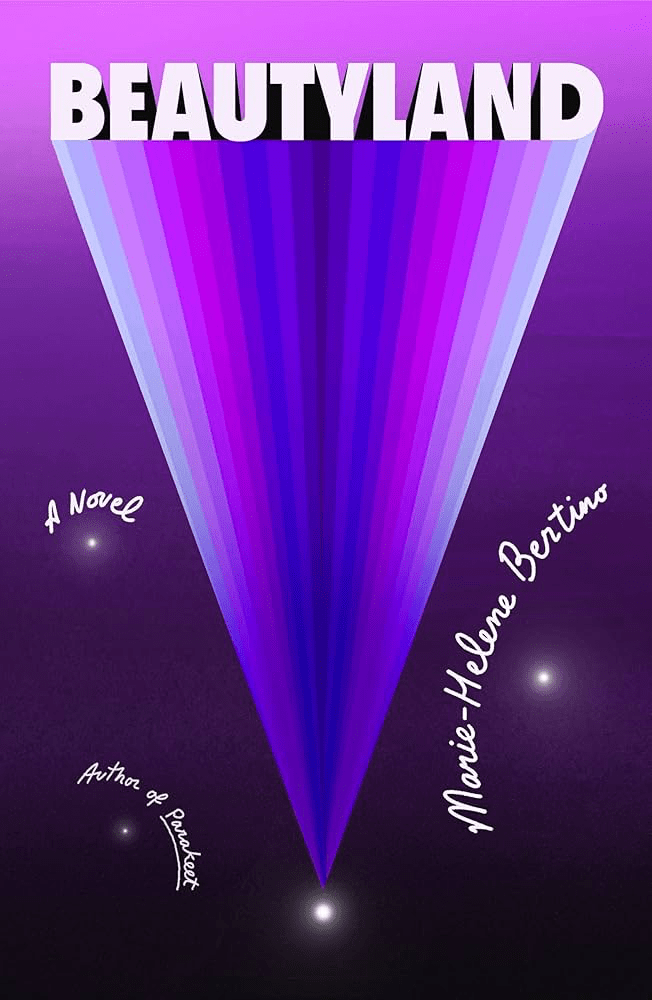
Beautyland – Marie-Helene Bertinolisten, I try not to double-dip on book pairings, especially since I paired this book with “Always Crashing in the Same Car” last week. But…the alien observing humans connection is right there!

“Breaking the Split Screen Barrier” – The Amps

Normally, I take a liking to any given Kim Deal-related song fairly quickly. But “Breaking the Split Screen Barrier” wasn’t so instantaneous for me. The beginning sounds like a series of false starts layered on top of each other. The prolonged space between each chord doesn’t just feel like a ruse: they pile up on top of each other so much that you feel like you’re being served three courses of red herrings. And I hate to say that about The Amps! I don’t think I’m that impatient of a listener, but I’m used to them getting straight to the point (see: “I Am Decided”).

After a few listens, however, you realize how much that slow build pays off. Every instrument has more crunch and crackle than a wadded-up ball of tin foil. In between the gravel and abrasion, Kim Deal murmurs her borderline surreal lyrics into a void curtained by echoing near-abrasion. Maybe I am guilty of being one of those damn gen z-ers with an attention span shorter than that of a minnow, but I think I can be patient—especially when Kim Deal is concerned. It paid off for “Breaking the Split Screen Barrier.”

…AND A BOOK TO GO WITH IT:

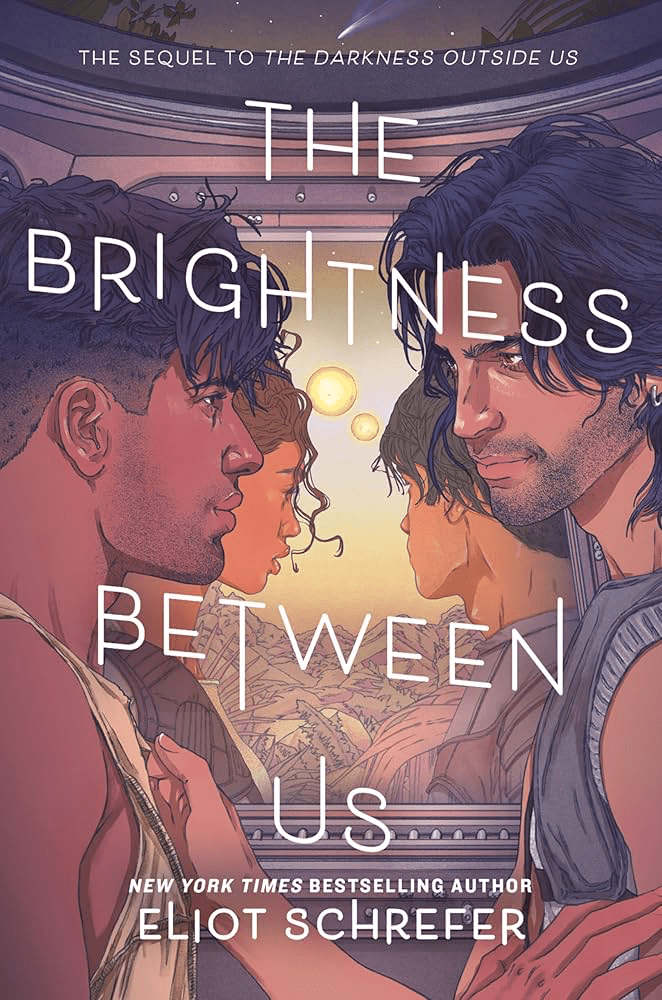
The Brightness Between Us (The Darkness Outside Us, #2) – Eliot Schrefer“I know you’re not sane anymore/That doesn’t mean you’re fine…”

BONUS: the great Jim Noir has a new album Jimmy’s Show 2, out on November 5th! He released a music video to accompany the lead single, “Out Of Sight,” this week:

Since this post consists entirely of songs, consider all of them to be today’s song.

That’s it for this week’s Sunday Songs! Have a wonderful rest of your day, and take care of yourselves!
Posted in Sunday Songs

Sunday Songs: 3/24/24

Happy Sunday, bibliophiles! I hope this week has treated you well.

This week: sit down, kiddo. Soon you’ll be a mature adult, so your father and I have decided that you’re ready to learn about the (acid, lady) birds and the bee(tle)s.

…why are you leaving?

Enjoy this week’s songs!

SUNDAY SONGS: 3/24/24

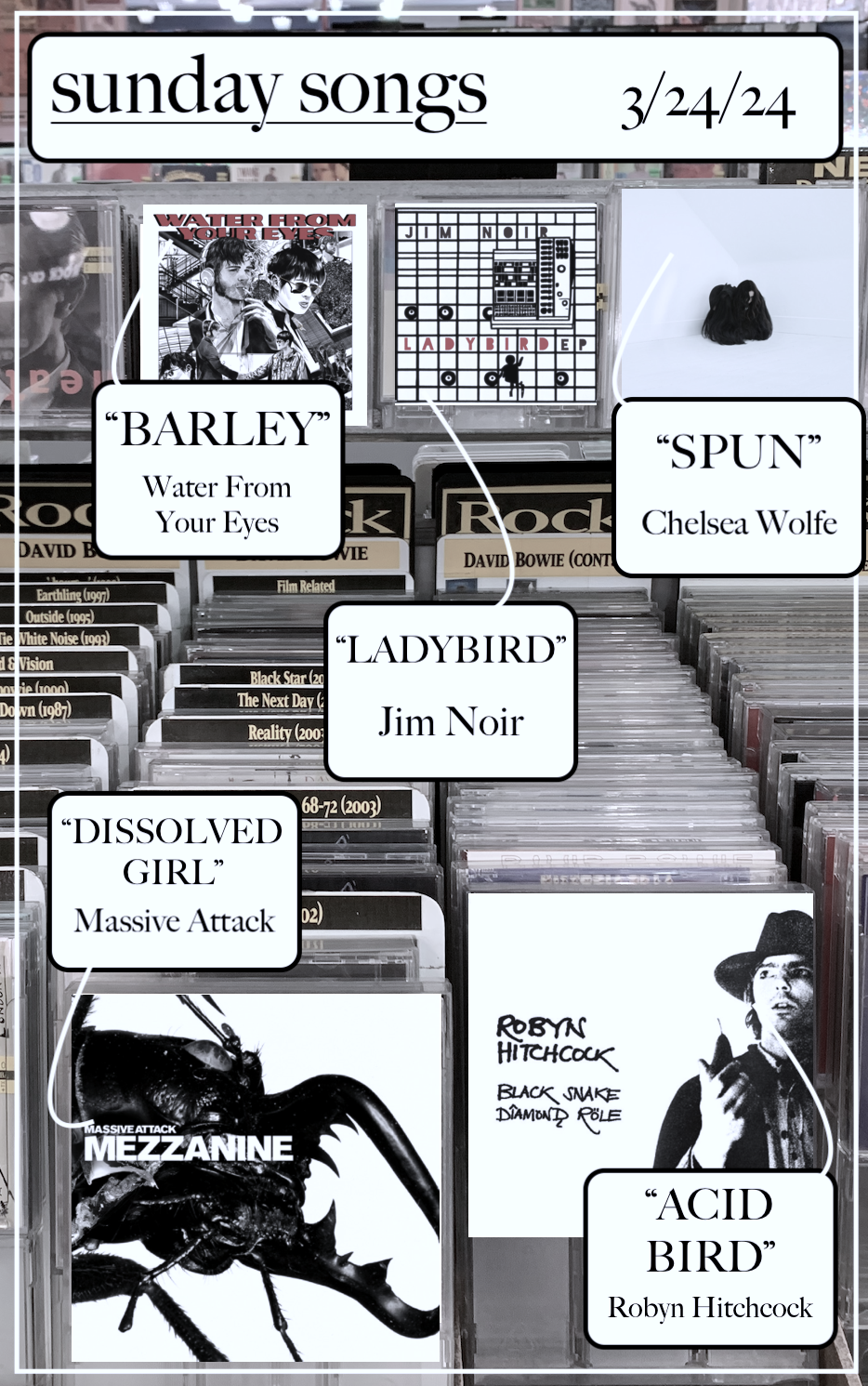
“Dissolved Girl” – Massive Attack

Like Odelay, I’ve very much screwed myself over when it comes to this album; as my brother was showing this song to me in the car (thank you, by the way), I talked to him about the album, and after we talked about all of the songs I’ve heard off of Mezzanine, we concluded that I’ve…basically listened to the whole thing, save for some of the apparently duller songs and some instrumental breaks. Oops. My brother’s advice was to go through the album in its entirety anyway, so I’ll still take that advice. Eventually. The Sisyphean album bucket list persists.

I have a special soft spot for songs that sound like their album art. Most of the tracks on Mezzanine have a similarly creeping feel, but “Dissolved Girl,” to me, feels the most like Nick Knight’s photograph of a shiny, almost glistening stag beetle; the initial photo was taken by Knight at London’s Natural History Museum. Minus the pincers, it almost looks like the exoskeleton of a xenomorph—also a fitting image for the creeping feel of some of Mezzanine’s tracks. Much of the album retains that prickly feel of looking at the fine hairs adorning the beetle’s legs, but this song, especially the intro, captures it best. I can almost imagine that same beetle in captivity, scuttling around across a blank canvas in erratic patterns, like a shot from an old nature documentary. Its antennae twitch, it pauses in thought, then scuttles off into a corner again, only to emerge a few seconds later. Looking back, I’m ashamed that I completely missed that fact that this track was also featured in The Matrix. Granted, I was also so caught up in the glorious cheese of that movie that there wasn’t much else to focus on except for a) that one absolute monster of an H.R. Giger fever dream scene, and b) the fact that Keanu Reeves can barely act (sorry, dude, I’m sure you’re a nice guy). But like the stag beetle’s shell, that sleekness blends in with the landscape that the Wachowski Sisters crafted all those years before. I’ve tricked myself into thinking that there were raindrops or dewdrops on said beetle’s shell, but no—it was a trick of the light, and a trick of the music. “Dissolved Girl” runs over your skin like frigid water and catches all the colors of light like an oil spill, darkly alluring in the dapples patterned across it. Sarah Jay Hawley’s voice isn’t just sultry—it’s a puff of rasping steam from a rusty teakettle, blossoming into strange clouds as it’s swallowed by synths and guitars that were made for dramatic entrances and nothing more. It really is dissolving, but it seems to reform itself every passing second, an ouroboros of electronic deja vu.

…AND A BOOK TO GO WITH IT:

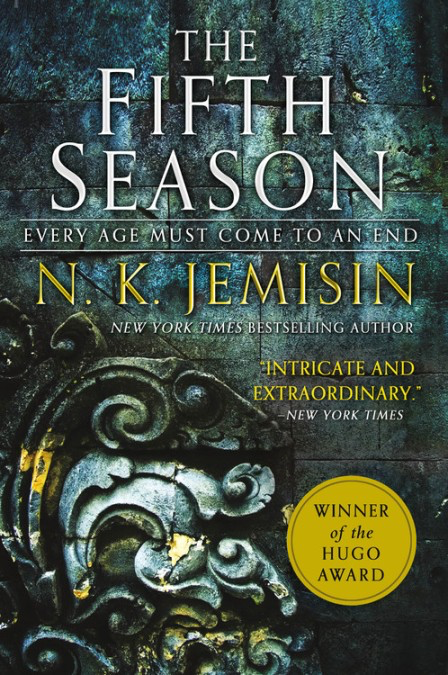
The Fifth Season – N.K. Jemisinthe lyrics don’t reflect the connection so much as the feeling of it does—uncertainty, circularity, and deja-vu abound.

“Acid Bird” – Robyn Hitchcock

Note to any aspiring songwriters who may come across this post: I accidentally typed “acid birthday” into YouTube while looking this song up, so there’s a good song title right there. It already sounds ten times ickier in subject matter already, but…it sure is a song title.

Robyn Hitchcock seems to have been planted in the rich, fertile soil of ’60s musical inspiration from the start. Listen to any of his songs from his solo works or from one of his many groups over the years, and that bright, whimsical jangle always pops out of the woodwork. But before I saw him back in January, I found out that he’d played several short shows where he only played sets of Syd Barrett covers, and the comparison clicked instantly. Personally, I’m glad that Hitchcock took the good parts from Barrett’s legacy and never went off the deep end, but if there was ever a perfect fit, the two’s musical and lyrical styles were practically made for each other. There’s no doubt that plenty of artists have found drugs to be an outlet for imagination, but it’s always temporary; I never mean to make light of addiction and the very real consequences it can have on a person and their loved ones, but every time I hear about any of these instances, it’s a short-lived outlet. We know where it tragically led Barrett (rest easy) and many other artists of his time, but often, these things have been discovered have always been dormant—maybe it was the drugs that exposed them, but that kind of creativity lingers in all of us. We all have different ways of finding it, and all we can do is learn to live with it carefully—the very things that we perceive as opening it can destroy it just as quickly. At least we can look to Hitchcock as an example—it seemed he knew early on that his wild creativity was at the wheel, and he’s managed to preserve it for decades.

That kind of easygoing, ’60s feel is etched all throughout his decades-long, insanely prolific career, but some of the earliest notes of it, to me, can be found in his first solo album, Black Snake Diamond Role, and in particular, “Acid Bird.” Aside from the unmistakably sixties jangle of it all, from the lazily swaying chords to the way that the guitar is almost made to sound like the limbo between a guitar and a sitar. And like the entirety of Hitchcock’s career, this song is full of oddball wordplay, entirely nonsensical, but somehow sensible, in the sense that, having seen him live, he had every intention of putting these words together in this exact order. It’s unmistakably late ’60s psychedelia—I can hear the lyricism of Pink Floyd’s “See Emily Play” and the instrumentation of…well, probably any late ’60s Beatles song you can think of, and yet, it couldn’t be anybody else but Robyn Hitchcock. Going even later, I’ve always thought of his wordplay as so much like Marc Bolan, like he has access to some bizarre fantasy world that can only be described to us mortals in words that don’t fully make sense when strung together in the order that they are. I’m just glad that Hitchcock has dedicated his career to mapping it in all of its hills, valleys, and acid birds.

…AND A BOOK TO GO WITH IT:

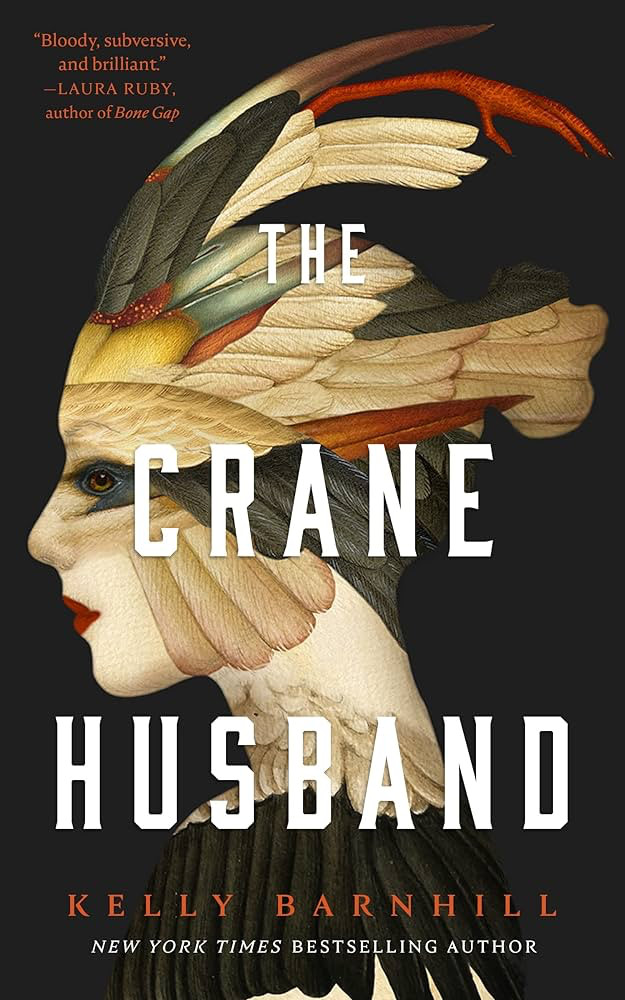
The Crane Husband – Kelly Barnhilla hazy, eery crawl between genres, steeped in slipshod tapestries and sinister birds.

“Barley” – Water From Your Eyes

If you laid out all of the elements of “Barley” bare, it would fit a pretty common definition for really pretentious music. You’ve got your discordant synths, you’ve got your avant-garde, nonsensical lyrics, you’ve got some off-kilter guitar riffs for good taste, and you’ve got disaffected vocals courtesy of Rachel Brown, who sounds for all the world like they did not want to be there. But this song feels more in the vein of play than construction—the minimalism and freeform feel of it all feel like just that: freeform. It feels like this song was conceived in 5 minutes tops, and I’ve grown to enjoy that quality about it. I keep bringing up Beck in this post for reasons unknown to me, but the technique of Water From Your Eyes (or, alternatively, what sigma male gymbros call tears) seems to be similar: stick a bunch of parts together with a bit of synths and Elmer’s glue, then create the most earwormy eyesore you’ve ever heard. I say “eyesore” only because it’s the best word that comes to mind—it doesn’t sound pleasant, and yet, it sounds good. Between Brown’s vocals, the hectic instrumentations, and the urgency of it all, “Barley” feels like the squirming child of Guerilla Toss and Wilco’s “Spiders (Kidsmoke)“—drolly sung, but full of lyrics that could be prophetic, and as jagged and crawling as all get-out. I’d never thought I’d compare those two, but that’s the beauty of this song—it’s a strange, stiff chimera of a song, and I love it and all of its jerky, weak-kneed beauty.

…AND A BOOK TO GO WITH IT:

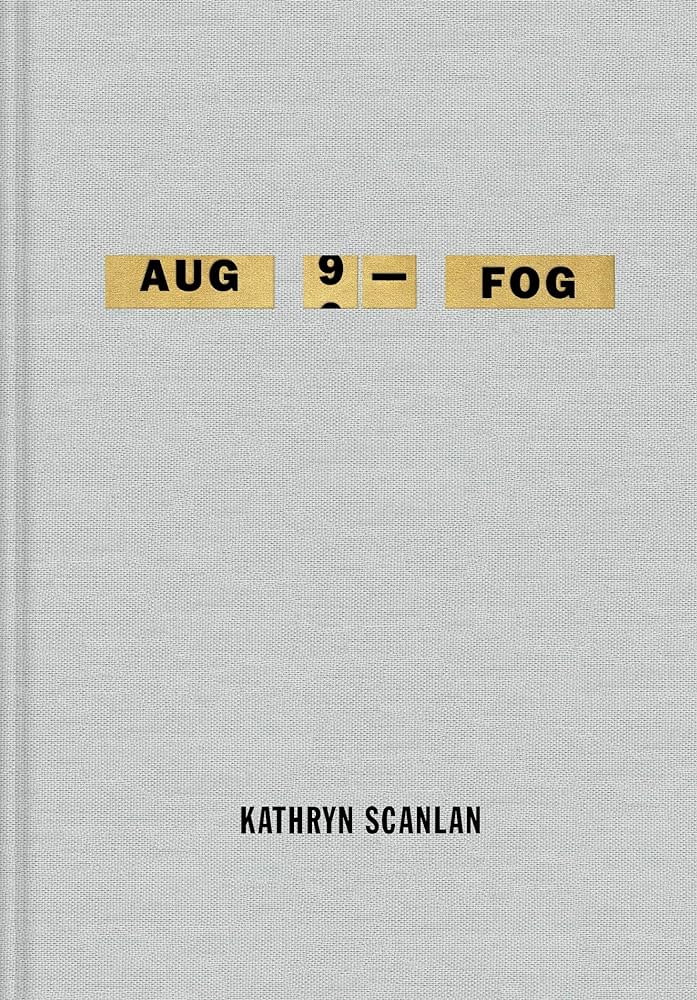
Aug 9 – Fog – Kathryn Scanlana similar connection of loose bits and bobs, this time in the form of poetry made from what remained of a stranger’s diary that Scanlan found at an estate sale.

“Ladybird” – Jim Noir

HE’S BACK! Well, he never really left, and was doing some incredibly impressive things while he was “gone,” but he’s back to serving up EPs via Patreon (as always, support a fantastic independent artist if you’re financially able! It’s worth your while!).

Before the switch from monthly EPs to releasing the excellent record Rotate as half of Co-Pilot, a lot of the EPs he was putting out were starting to feel thinned out; even at the beginning of the project, many of the tracks were throwaways that he later polished up, but as time went on, some of the whimsical, lighthearted creativity that he’s known for seemed to have bled out somewhere down the line. The last few EPs felt a little hollow—the last thing I’d expect of Jim Noir, the same mind that could make a song about putting off going to the store to get tea (if there was ever a more British concern) into a sunny, ’60s-flavored synthfest. I wouldn’t be surprised if he was saving his musical time and energy for Co-Pilot during the weaker run of EPs (justifiably so, I mean, God, what a record), but I did miss the more creative tidbits. It seems that some time away has given him time to shake things up, and now we have Ladybird – EP, which I can happily say is a delight! I found myself particularly drawn to the title track; there’s still a hesitant restraint about it, but it has every hallmark of a catchy Jim Noir tune—cymbal heavy drumming, humming vocals, and of course, bleep-bloop aplenty. Gotta have that good bleep-bloop. The background is decorated with sounds that almost ring like a submarine’s radar, and the rest of it hums with buzzy energy, nervously scuttling about like the insect it’s named for. It’s hesitantly bouncy, with eyes that seem to dart about every few minutes before ducking behind the nearest door. I wouldn’t call it his masterpiece, but it gives me hope that this could be the start of the album that he’s been teasing for…almost two and a half years now, I think? If Rotate is all we get, then I’d certainly be happy, but I find myself wanting another win for Jim Noir. It’s what he deserves.

…AND A BOOK TO GO WITH IT:

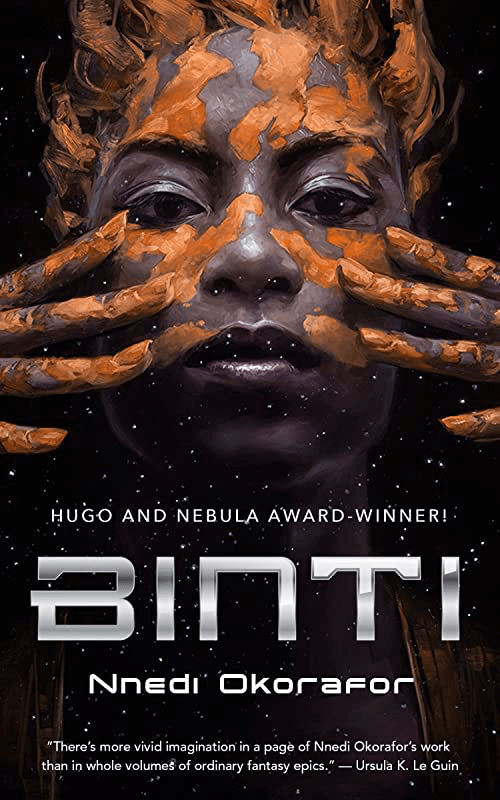
Binti – Nnedi Okorafor“I’m surrounded by things I’ve never needed so much/I’d rather give it away instead of finding it’s not enough…” right there, huh?

“Spun” – Chelsea Wolfe

As I’m writing this, it’s been about a day since I saw Chelsea Wolfe a second time for the She Reaches Out To She Reaches Out To She tour. Insufferable crowd and headache-inducing opening band notwithstanding (2/3 times that I’ve seen shows at this venue, the crowd has been gross and disrespectful, so…hopefully not a curse), she and her band put on an incredible show; obviously, nothing’s going to compare to my first experience seeing her at the Stanley Hotel, which is about as goth as one can get even if Wolfe isn’t present, but what this show had going was the fact that one of her songs was performed whilst some kind of trick of the light made her look like she’s standing astride some kind of fiery, inter-dimensional portal. What I’m trying to say is that she absolutely brought down the house. As usual.

Somehow, I thought that “Spun” would be on the setlist, and I listened to it a handful of times before the show, but…I guess I remembered wrong? It wasn’t one of the songs I was sorely looking forward to seeing, but I do feel a little silly now that the song I’ve picked for this week is the one she didn’t play. Well, any excuse to talk about Chelsea Wolfe is a good excuse, so here we are. Seems I need to add Spun to the album bucket list, since almost everything off of it has been nothing short of arresting. “16 Psyche” was the first song from Spun I heard, back when my tender, 14-year-old brain was as impressionable and soaked up melodramatic lyrics like a sponge (listen, there’s nobody else who can deliver “my heart is a tomb/my heart is an empty room” but her); now that I’ve seen it live, it’s one of her most captivating tracks. But “Spun” is captivating in an entirely different way; where “16 Psyche” takes a nosedive into cloak-billowing wails and drama almost immediately, “Spun” has the pace and feel of mold crawling up the walls. Staunchly on the more metal side of Wolfe’s brand of goth-metal (I promise I’m not stringing buzzwords together, that’s just her brand), the industrial drums and guitars march like a legion of robots summoned from hell, armor cracked as they trudge through the flames. Fleeting moments of said drums speeding up provide a cliff for the instruments to dive off, then leap straight down into the lake of fire, a tenuous equilibrium shattered when you least expect it. “Spun” prowls with its hackles raised, poised to bolt from a history best left in the flames: “I lift my eyes, I slow my gait/And I never wanna see you again.” But the final breaths of “Spun” are exhales released from a clenched chest, fittingly whispered by Wolfe as though she’s speaking in tongues: “And all and everything or nothing.”

…AND A BOOK TO GO WITH IT:

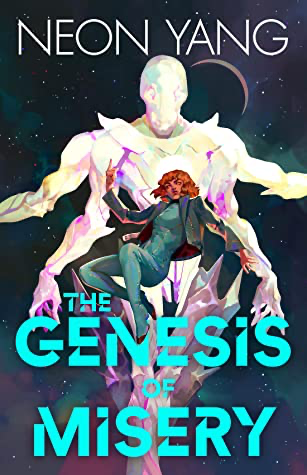
The Genesis of Misery – Neon Yangthe title already sounds like something that Chelsea Wolfe would name an album, but even if that weren’t true, this novel is chock-full of fiery forges, prophetic madness, and the voices of angels (or are they?)

Since this post consists entirely of songs, consider all of them to be today’s song.

That’s it for this week’s Sunday Songs! Have a wonderful rest of your day, and take care of yourselves!
Posted in Sunday Songs

Sunday Songs: 10/8/23

Happy Sunday, bibliophiles! I hope this week has treated you well.

Last week was unintentionally heavy on the sad girl fall music, but fear not! I’ve got more than a little room for joyous whimsy and glorious poetry this week. The color palette borders on my contractually obligated, monthly blue period, but I’d say it’s more periwinkle than blue. Periwinkle. I’ve always loved that word. It’s just such a delightful wonder of the English language. Plus, it reminds me of the cat from Blues Clues, which is always a plus.

Anyways, here’s Wonderwall.

Enjoy this week’s songs!

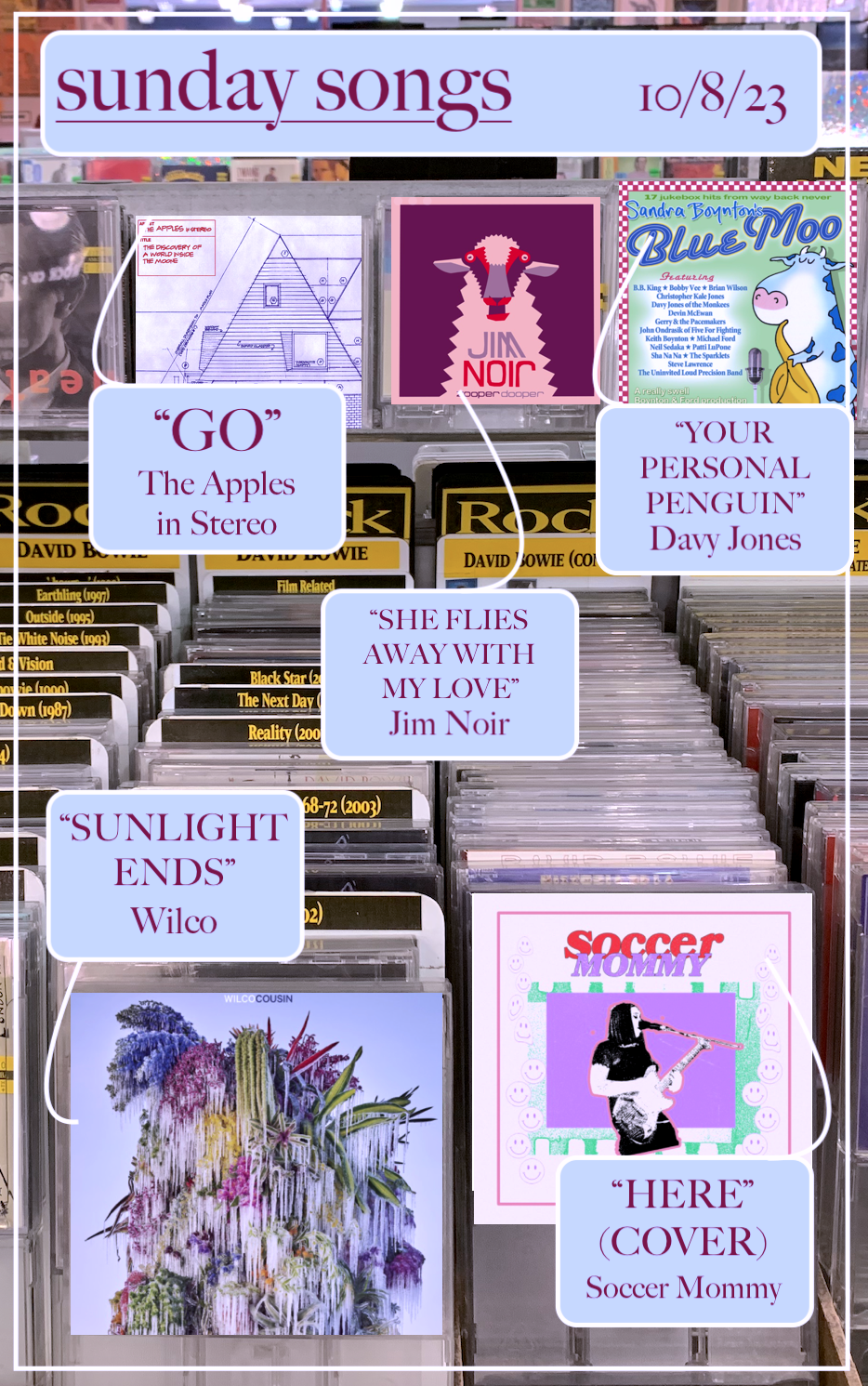
SUNDAY SONGS: 10/8/23

“Sunlight Ends” – Wilco

The time has come! Wilco’s newest album Cousin came out last Friday, and honestly? It’s such a treat. I wouldn’t expect anything less from one of my most-loved bands, but this one has some of my favorite songs that they’ve produced in the past 5 years or so. It really was a struggle to try and pick just one song to think about—there’s the ear-popping chaos of opener “Infinite Surprise” that truly lives up to its name, and the swirling explosion of color that is “Pittsburgh,” to name a few. But this one keeps coming back to me like a cat nuzzling against my leg, and who am I to deny it?

Whoever hired Traceloops for the visuals for the lyrics videos for Cousin needs a raise. The feel is so spot-on—especially for this one. The hazy, gently pulsating pops of color perfectly capture the tactile feel of the whole album. The sound production really does feel tactile in places, thick enough to pull apart and wring in your hands like a clump of wool. “Sunlight Ends” lives up to its name; from the first opening notes, lazy and tumbling over each other, it creates a hypnotic atmosphere like no other. The melody opens with all of the delicateness of a flower bud gently cracking open, shedding off bits of frost and morning dew as it awakens. (The frost from all those frozen flowers on the album cover, maybe?) It has all the sparkling haziness of seeing stars at the edges of your vision. And as with any given Wilco song, you bet that they have the poetic chops to match the song’s atmosphere in spaces. Saying that songs are just poems set to music is common enough, but it takes a lot to distinguish a songwriter as a poet. Jeff Tweedy, however, is an easy pick for a poet. There’s usually enough lines to spotlight, but…I might as well just paste in the entire song. Not only is it so well married to the music, every line is nothing short of a masterpiece. The way that the bass dips down as Tweedy sings “You dance/Like the dust in the light/And I’m following/Until the sunlight ends”? “You’re the kind of flashing sign/That only gets you lost”? The way that the carefully-crafted atmosphere subtly tears apart at the seams as Tweedy sings “And I’m lost”? It’s nothing short of gorgeous. And if it’s anything to any of you, the lyrics stood out to me so much that I nearly stopped in my tracks on my walk to the dining hall. That’ll do it.

“Here” (Pavement cover) – Soccer Mommy

Speaking of bands who’ve been cranking out fantastic music prolifically for the past few years…

My wife Soccer Mommy has had a productive few years! Barely a year after her incredible third album, Sometimes, Forever, she’s got a wonderful covers EP called Karaoke Night. It’s a lovely set of covers. Everybody from R.E.M. to Slowdive to Sheryl Crow meshes with her signature style, and she’s even managed to dupe me into liking a Taylor Swift cover. Rest assured, this is the only time I will willingly listen to Taylor Swift. (it’s a great cover, though. Sophie Allison can do it all.)

Anyone who knows Soccer Mommy well knows that the 90’s are visible everywhere on her. Even if almost all the covers of Karaoke Night weren’t from that decade, it would be easy to see the threads of many an alt-rock band from that decade rubbing off on her. And even though I’m not as familiar with Pavement, this cover was the perfect match—Allison said in a recent Instagram post that this song was her first exposure to the band, and remains one of her personal favorites of theirs. Stephen Malkmus’ laid back singing style was an easy translation for Allison, who sells every somber, quiet note. Her voice really is nothing short of luscious, and it fits with the vibrant but restrained guitars like two puzzle pieces. The whole cover has such an enchanting atmosphere for a song so full of 90’s indifference and ennui. And once the heavier guitars kick in, Allison’s voice rings stronger than ever, displaying everything that I’ve ever loved about her—the angsty soul she breathes into every note, the glow it seems to emanate, and the endearing way that she pronounces her W’s as softened V’s whenever she gets really into the lyrics. I’m glad that I’m living in this period of prolific output from Soccer Mommy, original or covers. Her music is always a gift.

“Go” – The Apples in Stereo

In the back of my mind, I always thought that this song had an exclamation point in the title. “Go!” It just seemed to be genetically embedded in the music. They do scream “GO!” like that in the chorus, anyhow. I don’t know. Just a suggestion. About 15 years too late to send my suggestions to Robert Schneider and co., but better late than never, I guess?

Exclamation point or no exclamation point, the infectious catchiness of “Go” is undeniable. From the first cry of “Go!” as the horn section kicks in, there’s nothing that can stop the runaway energy (no pun intended) of this song. It’s a song that’s just clawed its way out of a cardboard box, and will do anything to stay wild and free. Ever since I remember hearing it, most frequently in the car when I was in elementary school, it’s never failed to nudge at least one little shoulder sway out of me. It really is infectious. And the lyrics have that same air of anxious freedom—the subject is confronted with all sorts of trials (“When you go into the shop/Lady watches like a cop”) and tribulations (“She don’t like the way you look/So she treats you like a crook”), but all of them are met with a riotous burst of horns and Schneider’s rallying cry of “You know you wanna go (go, baby!)”. It’s impossible not to feel the rush of freedom from the end of the chorus: “You’re such a/Pretty, pretty, pretty little girl/Let’s blow this/Ugly, ugly, ugly little world!” And nothing beats the true chaos of the breakdown from 1:46-2:28—for a band characterized by tight, mathematical precision in every beat, they make the squealing, crunching mess of guitars, drums, and screeching flutes work just as well as anyone.

“She Flies Away With My Love” – Jim Noir

I don’t necessarily think about musical coherence whenever I put these posts together. It’s mostly just what I’ve been listening to lately, and whether or not the album covers at least somewhat fit together. But jeez..this song fits so well with The Apples in Stereo. Almost too welel. I feel like any given Apples song would fit spectacuarly with any given Jim Noir song. Like bread and butter. Peanut butter and jelly. Aziraphale and Crowley, but not before the last episode of season 2. (I’m still in pain.) Me on a Friday night and an episode of The Great British Bake-Off.

I was compelled to go back and listen to Jim Noir’s delightful Zooper Dooper EP the other day while I holed up in my dorm while a football game went on. Not that I expected anything less, but as always, it’s a pure burst of spacey, Britpop delight, served up with a side of absolute whimsy. Like half of my album/EP experiences, songs like the hopeful favorite “Map” and the oddball story of “Car” overshadowed this one, so much so that I forgot that it existed altogether. But now I’m embarrassed that I even thought of turning the other cheek away from this song—”She Flies Away With My Love” is a pure delight. Really. Again, this is your PSA to check out Jim Noir’s catalogue in general, because if you’re in gen z, chances are that he’s appeared more times in your childhood than you think. This song in particular feels sanded to smooth perfection, hitting a euphoric, whimsical balance between sharp, driving drums and bass and deliriously bubbly synths. The two parts feel like they’re in rooms right next door to each other, working in tandem but being exceedingly distinct from each other in the process. The opened-soda-can fizzing of the electronics and the pitched-up backing vocals sound miles away from the heavy punch of the drums once the verse kicks in, but they work in such harmony that could ultimately be crafted by mastermind like Jim Noir.

“Your Personal Penguin” – Davy Jones

Compared to last week, this week’s selection of songs ended up being a lot more light-hearted and bubbly, at least in terms of sound. The color scheme screams less of the decay of fall and more of fresh-washed sheets and flowers. But I’d be remiss if I didn’t end this ensemble with the epitome of comfort.

Sure. Kid’s songs are generally meant to be silly and joyous, and they generally don’t deviate from that. But there’s a certain subset of kid’s songs that go past that and remain bastions of comfort for the rest of your life. “Your Personal Penguin” crossed that threshold long ago— I mean, here I am, now in my twenties (how’d that happen, huh?), still nodding along to this sweet little tune. Say what you want about Gen Z and nostalgia, and yada yada yada (as if every generation hasn’t had some kind of romanticization of the past, and we’re only pointing the finger at Gen Z because the Internet has exacerbated how widespread the phenomenon actually is, etc.), but going back to these kinds of songs is like reuniting with an old friend. And this song really has been everywhere in my life. It soundtracked many a car ride to school when I was young, and on my 10th birthday, when I got my brand-new iPod nano (which is still kicking, somehow…thanks, Apple), I listened to this song while huddled under my grandma’s bathrobe while a thunderstorm rumbled outside. I had a Minecraft world on the family iPad where I built a house in the snowy mountains, and I tried to fit some of the lyrics of this song on a sign in front of it—the part about how “lots of other penguins seem to do fine/In the universe of nothing but ice.” (Suffice to say, it was too long to fit the whole thing on there. Pressing problems for a 10-year-old.) And yet, it took me until about a year ago to figure out that this song was based on a book—in fact, all of the songs on Sandra Boynton’s Blue Moo are. I’m surprised that I missed out on that part, but it really says something that this song gives me such warmth without the addition of the delightful penguin illustrations. Davy Jones just has that special quality about his voice—it borders on nasally, but it’s filled with such a playful, contagious joy that sets it apart—the silly smile this song wears can’t help but spread to you. The rollicking pianos and almost comically deep backing vocals make for an earnestly hug-delivering song.

And, for more joy to add to your life, here’s the song paired with the illustrations from Sandra Boynton’s original picture book:

Since this post consists entirely of songs, consider all of them to be today’s song.

That’s it for this week’s Sunday Songs! Have a wonderful rest of your day, and take care of yourselves!
Posted in Sunday Songs

Sunday Songs: 8/6/23

Happy Sunday, bibliophiles!

Here we are in the heat of August, and I bring you a batch of songs with a Halloween color scheme. I say, it’s my birthday month and I get to choose to color scheme, and I say that every day is Halloween over here at the Bookish Mutant. It’s only fitting that we have the band who probably originated that phrase on here. Plus some vampires. A whole empire of them, as a matter of fact.

Enjoy this week’s songs!

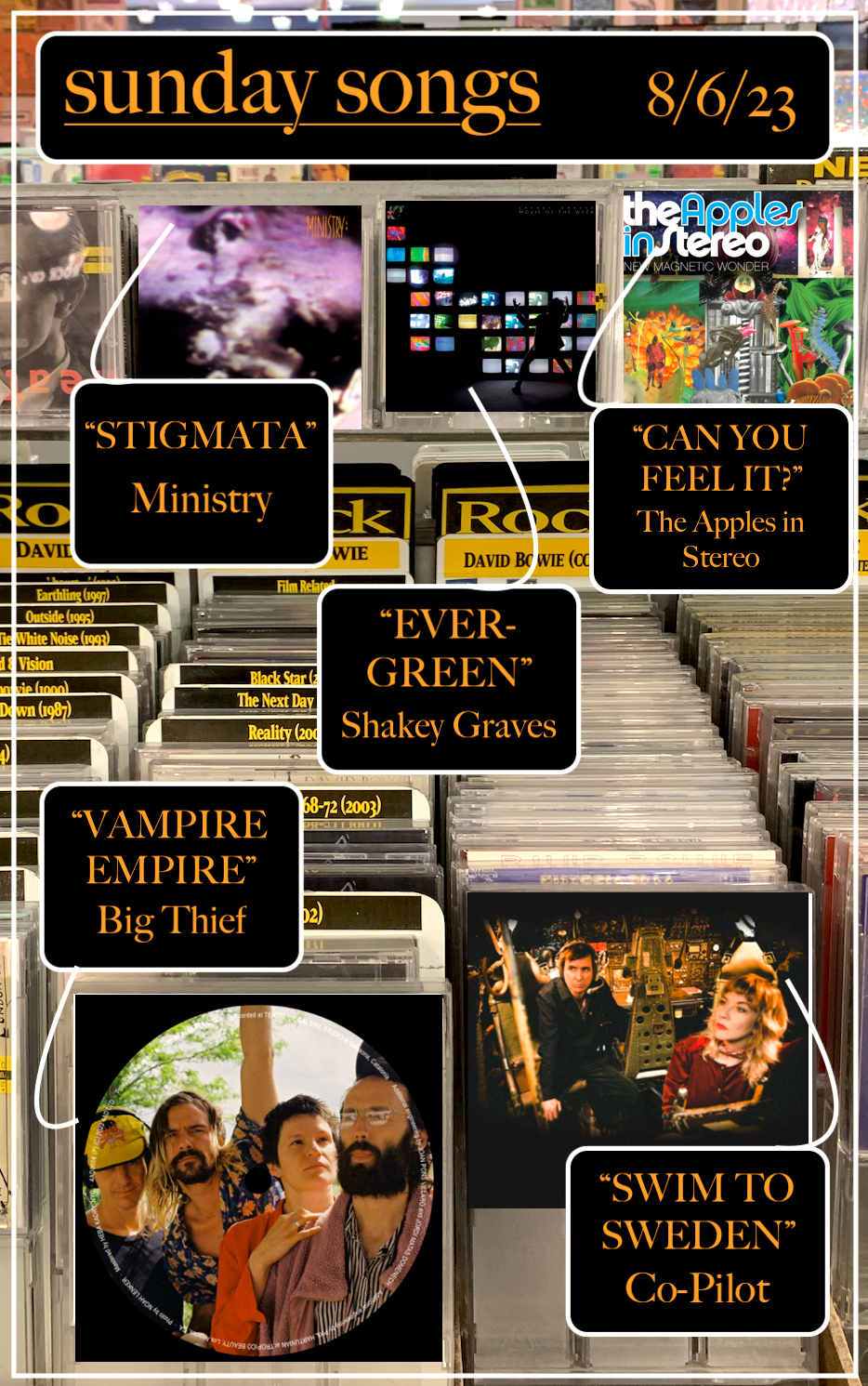
SUNDAY SONGS: 8/6/23

“Vampire Empire” – Big Thief

With almost every Big Thief song that I hear, I’m convinced more and more to go deeper into their discography. Plus, the sisterhood of queer women growing out buzzcuts has to stick together. 🫡

As I clumsily tried to explain to my dad with some tired, T-Rex arm moves before dinner the night that this song came out, “Vampire Empire” is a song that really feels like it’s pressing down on you. After the curtain lifts on the deceptively silent opening, the steadfastness of this song never lets up. With each drumbeat, I feel like I’ve been sucked into a water wheel, bobbing along with its machinery. Each punch of the impeccably rhythmic chorus feels like a spoke passing over me: “You give me chills/I’ve had it with the drills/I’m nothing, you are nothing, we are nothing with the pills.” And if there’s anything I love in a song, it’s that quality where everything feels like it’s teetering on the edge of collapse, but is reconstructed just as quickly. From the pots-and-pans banging sound of the percussion to the way that Adrianne Lenker’s voice strains, soars, then screams in the final verse: “You say you wanna be alone, and you want children/You wanna be with me, you wanna be with him.” Even if the now beloved version that they performed earlier this year on The Late Show with Stephen Colbert excelled in its indie tightness, the barely-contained fury of this version matches matches the lyrics so much more, with its unpredictable, pressing highs and lows. And as much as I loved the original “I’m a fish and she’s my gills” lyric, the way it was squashed right at the end of the chorus did feel like it was interrupting the flow of an otherwise impeccably rhythmic song.

“Swim to Sweden” – Co-Pilot

Rotate has been getting great reviews ever since it came out about a week ago, and even before that—and I’m so happy. I don’t know as much of the context behind Leonore Wheatley, it makes me so happy to see Jim Noir FINALLY getting more of the recognition that he deserves! If there’s anybody who deserves to have their album called “the album of the summer,” it’s him and Leonore.

Co-Pilot (Leonore Wheatley and Jim Noir, a.k.a Alan Roberts) make the perfect music for getting things done; I normally put on an album when I clean out my bathroom, but there are some albums that are…shall we say, better than others for doing such things. (Cue an Arrested Development-style cutback to me crying into the sink to “Don’t Give Up”.) I don’t know much about Leonore Wheatley or her other projects, but Jim Noir always makes that perfect kind of music—it can tickle your brain in a pleasantly creative way, but it makes for the perfect soundtrack to washing down the bathroom mirror or shelving books at the library. So Rotate was bound to be just like that, and that’s exactly how it turned out to be. But as with anything by Jim Noir, it’s so much more than just quirky background music—it’s the sonic equivalent of a Russian doll, layered with oodles of hidden samples, sounds, and fun. “Swim to Sweden,” the Rotate’s second single and opening track, is the perfect display of that explosive, wondrous weirdness. It’s a whole sensory experience; all of the many, layered synths make sounds that crackle, writhe, and, as the title suggests, swim around in your head as the song plays. It’s like a stimulating massage for the brain: the music grows fingers that wiggle all around you, invoking images of bubbles and pulsating lights. I’d be remiss if I didn’t say anything about Wheatley’s contributions, even with my minimal context; I don’t know how much of the instrumentation was from her, but her voice was clearly the anchor that steadied the whole record, richly lilting and magically suited to everything surrounding it. Wheatley and Noir’s vocals weave effortlessly together, diving and darting through the current between the synth melodies like fish.

Bottom line: if you’re looking for something refreshing and perpetually exciting to listen to, go listen to Co-Pilot. Rotate is out now on all streaming platforms! I almost put “Move To It” as this week’s pick, but I’ll direct you to this one too—it samples the same keyboard track that C418 sampled for Minecraft’s “Chirp.” And while you’re at it, I’d once again encourage you all to support Jim Noir’s solo work via his Patreon, if you can.

“Stigmata” – Ministry

With these Sunday Songs posts, I hope to give you all a glimpse into my shuffle. Some weeks, it’s fairly curated. On weeks like this, it really does feel like my shuffle. And by that, I mean four tangentially related songs that sort of fit together, and one of the two (2) Ministry songs in my library. Gotta keep you all on yours toes somehow.

I’ve never been the biggest fan of most metal or industrial music, but as I’ve gotten older and started to appreciate more of it, I’ve noticed a pattern. I doubt I’ll ever completely warm up to all of it (there’s only so much screaming in my ears that I can handle), but for a fair amount of those bands that I’ve been exposed to, there’s always 2 or 3 songs that I just inexplicably love. For Black Sabbath, it’s “N.I.B.” For Nine Inch Nails, it’s “Terrible Lie,” “Head Like a Hole” and “Reptile.” And for Ministry, who famously inspired the name of the latter, it’s “So What” and this song. (Don’t think I’ll quite warm up to Iron Maiden, though. I’ve tried. Apologies to my dad and brother. Bruce Dickinson is undeniably a king, though.)

I don’t really remember enough Ministry to see what separates this song from everything else I’ve heard and passed by. But “Stigmata” came back to me in one of those joyous moments where my shuffle decided to dredge something from the dusty depths of my iTunes library, to my surprise. And instantly, I remembered the rush it gave me in my sophomore year of high school, when I first remember hearing it and liking it. I know the word “feral” is tossed around more often than not these days, but…that’s exactly the way this song makes me feel. The instant the drums kick in, I just start grinning from the anticipation. Then comes one of Al Jourgensen’s many raspy shrieks (which he can keep up for a surprising amount of time), and then it all comes crashing into you. From there, it never lets up—it’s the very definition of abrasive, but the kind of theatrical abrasiveness that never holds back. You can just picture this guy maniacally grinning and wiggling his fingers as he draws out “I’m chewing on glass/And eating my fingers.” Again, who knows what line my mind drew between this and the rest of Ministry, but this song is just so fun. I’ve heard enough to know that metal probably won’t ever fully be my cup of tea, but my brain knows exactly what it likes, no matter the arbitrary, inexplicable distinctions it makes.

“Evergreen” – Shakey Graves

This song and “Vampire Empire” seem to be cousins in a lot of ways. Both of them were famed, unreleased songs that became live gems and staples for their respective bands, and, lo and behold, were released on the same day. Even though I’m far more familiar with Shakey Graves, Big Thief overshadowed my listening, out of the two—as you could probably tell, I couldn’t get enough of it. But “Evergreen” is just as uniquely wondrous, even if I’m admittedly overdue in appreciating it.

No matter how many times I listen to this song, I always fall into the trap of turning the volume up for the quiet acoustic plucking that makes up the beginning of the song. Then, of course, in true, modern Shakey Graves fashion, it’s all gone in a flash and a bang of static as the true beginning of the song kicks in. It’s exactly like the image on the album cover of the forthcoming new album Movie of the Week (!!!)—the silhouette of Alejandro Rose-Garcia, arms outstretched in ecstasy like the black and white monster movie version of Victor Frankenstein declaring “IT’S ALIVE!” The rest of the track continues in that unexpected trajectory. “Evergreen” is a sea of purple-hued fuzz and distortion, dreamy and explosive. Like the trees it’s named after, it’s a song that seems to lure you into the woods, tinged with dreams but hiding something faintly sinister: “Let me rest, yeah let me be/Overgrown and evergreen.” Guess we were all feeling that “I need to go off into the woods and let myself be covered in moss” feeling. It feels like the next natural progression from Can’t Wake Up, which saw Shakey Graves leaning more towards the alternative in alternative folk, with its array of spooky, adventurous tracks (see: “Aibohphobia,” “Dining Alone,” “Counting Sheep”). The folk part was never lost, and judging from Garcia’s penchant for cowboy hats, I doubt it ever will be, but either way, “Evergreen” is surely an exciting window into what’s to come.

Wilco, Shakey Graves, and Mitski this September? BUCKLE UP! And I’m seeing the first two live later this year, so that’s even more fun! (I doubt I could ever do a Mitski concert. I……yeah, I’ve seen so many articles linked to the fandom’s weirder-than-usual parasocial relationships with her and FAR too many “mommy” comments on posts about her. I couldn’t do it.)

(more on Wilco next week…)

“Can You Feel It?” – The Apples in Stereo

Chances are, if you thought of a creatively-inclined person having a sudden change in their career to pursue their passion, it would go something like this: person gets stuck in an office job crunching numbers, person writes songs in their spare time, person quits job in order to pursue music. Happens all the time. But it’s hard to think that the opposite might be true. And that’s the case for Robert Schneider, frontman of The Apples in Stereo, Thee American Revolution, and one of the founders of the Elephant 6 Collective. As his indie rock music gained traction, his hobby and eventual passion was math; while on tour, his bandmates often recollected him scribbling his way through equations in his spare time. And now, he teaches math for a living: in a 2018 interview with Atlanta Magazine, he described the relationship between math and music as such: “Music, art, poetry, and mathematics—these have the feeling of mysticism and religion to me…It’s more than just something you do or something you’re good at. These are things that to me are fundamentally as important as something could possibly be.”

Looking back at The Apples in Stereo, a delightfully weird staple of my hipster childhood, with this context makes their entire sound make more sense. “Delightful” is always the word I end up reaching towards with their music, with their bubbly, electronic sounds and penchants for adding in backing vocals made to sound like a choir of robots. But even if they haven’t been as active in a little over a decade, every time I rediscover one of their songs, it’s simultaneously like reuniting with an old friend and unearthing something wholly new. Like “Stigmata,” “Can You Feel It?” got dragged in by my shuffle, bringing with it a whole slew of pure, joyous childhood memories. Many a car ride was soundtracked by this song, electronic happiness and the impressively swift maneuver of my dad turning down the volume down and back up again just in time for my brother and I to miss the word “bullshit.” And to this day, no matter how many times I listen to it, “Can You Feel It?” remains supercharged with that pure joy. Even if his passion turned out to be math, there’s no denying that Robert Schneider could write an excellent pop song—instantly hooking, it bubbles with infectious joy, calling on you to “drown out the static on the FM radio.” As the call to “turn up your stereo” fades to near-a cappella, something about said choir of robots keeps the excitement of the whole song at a fever pitch, waiting for the instrumentals to crash down once again. Whatever the case, I’d say that Robert Schneider and company found the equation for indie rock joy, and it’s never once lost its shine.

Since this post consists entirely of songs, consider all of them to be today’s song.

That’s it for this week’s Sunday Songs! Have a wonderful rest of your day, and take care of yourselves!
Posted in Sunday Songs

Sunday Songs: 5/21/23

Happy Sunday, bibliophiles! I hope this week has treated you well.

This post was brought to you by the never-ending Dark brainrot (it consumes), my disappointment in Kindred’s TV show adaptation, and the continued Palehound Panic™️. But this is all merely the calm before the storm, because now we’ve got the news that Blur is coming out with a new album in July…BRACE YOURSELVES

Enjoy this week’s songs!

SUNDAY SONGS: 5/21/23

“What a Wonderful World” (Louis Armstrong cover) – Soap&Skin

Somehow, it was this song, and not the original, that made me realize that the line was actually “the dark, sacred night” and not “the dark, say goodnight.” Whilst I was crying my eyes out at the Dark finale. Whatever it takes.

It’s been about two weeks now since I finished Dark and got through that gut-wrencher of a finale, and I can say with absolute certainty that I doubt I’ll ever emotionally recover from…well, anything about that show. I’ll spare you any spoilers, other than the fact that this song is present. But hopefully that part shouldn’t be a surprise, at least, with how the show-runners have now tripledipped with the Soap&Skin needle drops, including the theme song itself. I may be an atheist, but the atmospheric covers of Soap&Skin and the eerie, dew-covered-forest, small-town-murder-mystery-that-turns-into-something-way-worse aesthetic of Dark together is a match made in heaven. There’s something that she brings to this near-untouchable song (except for a third grade singing program that I did? I think), that no one else could have—it’s got all of the makings for the same haunting instrumentals of her cover of Robert Johnson’s “Me and the Devil,” but it’s impossible to take any of the love or hope out of this song. The synths make it sound like something that would’ve been in the running for a Golden Record candidate (or at least the backing track to a shot of a satellite in space), and Anja Plaschg’s rich, cavernous voice create a shadowy atmosphere, but one illuminated by an undeniable light at the end of the tunnel. It’s impossible to make this song sound anything but hopeful, but there’s different ways that hope can sing—and this was a perfect fit for the tearful, bittersweet ending to a series that’s taken up a welcome amount of space in this brain.

But while I’m here, I will offer the following…this was a great song to send off Dark with, but consider: “Blood of Eden?” Again, no spoilers, but…it’s all right there.

“Tomorrow Never Knows” (Beatles cover) – Junior Parker

Except this time, one show is a time-travel masterpiece, and the other is FX’s adaptation of Kindred. Octavia Butler deserves better than THAT. (@ the showrunners: Kevin being a somewhat static character in the book was NOT a sign to make him into a total dudebro. The X-Ray Spex shirt isn’t fooling anyone.)

However, as generally peeved as I was with that show, if there was one great thing I got out of it, I’d point to this deliciously eerie Beatles cover. I’ve since given up the whole “don’t cover the Beatles” mindset, even if we are living in an uncharted sea of awful “Here Comes the Sun” covers, because with how influential they were on…well, almost every aspect of rock music that you can think of, there’s infinitely many things that can be done with these songs, classics as they are. Take picking this song to cover—the original song is nothing short of experimental, psychedelic insanity, deliriously noisy and filled with rubber duck noises at random intervals, as one does. It’s glorious. It’s a childhood staple of mine. But Junior Parker’s taken all of the trimmings off of it, slimming it down like a tree stripped of its bark. When the dust settles, all we’re left with is bass, soft drums, scattered keyboard chords, and Parker’s sonorous, bluesy voice. The bare-bones construction of this cover makes “Turn off your mind/Relax, and float downstream” feel like a chilling whisper of coercion, not a famous allusion to psychedelics. I never thought that this song could get quite this ominous—and, despite my general beef with the Kindred show, it was a perfect fit for the show’s atmosphere—definitely the best needle drop of the show, right at the end of episode 2. It wasn’t all bad, I guess.

“Night Time is the Right Time” – Ray Charles

Listen. I only know the basics of studio recording technology, but somehow, it’s “Night Time is the Right Time” that makes me appreciate what they were trying to do in the 50’s—not necessarily what it could do, but what it caught. The version I have on my iTunes library is plenty scratchy, cloaking almost everything in that signature fuzz you get from most recorded music up to the 60’s or the 70’s. It’s charming—it’s the sound of the era. But here’s the thing—the key word is almost. In almost every recording that I’ve listened to, no matter when it was mixed, Ray Charles’ voice sounds as clear as day. You could probably chalk that up to the main goal of said recording technologies being to record his voice first and foremost, but I can’t help but romanticize that in my head, Charles’ resonant voice soaring through any technology and defying any attempts at being aged. But no matter how fuzzy or remastered any recordings get, it’s always a beacon, the foggy gleam of a lighthouse across the sea.

And on the other side of the coin, there’s Margie Hendrix’s iconic voice—not spared the fuzz, but with what I’d argue is an almost equal amount of power. She put everything into that first call of “BABY!” and never slowed down. Her voice did fall victim to the scratchy fuzz, but her declarative growl of a voice almost fits with it; there’s a rough edge to Hendrix’s voice, the kind that makes my throat raw just thinking about belting out those notes. Knowing she was in her early twenties when she sang that makes it all the more impressive. It’s a voice that instantly conjures an image—screwed-up eyes, mouth open wide, putting every ounce of lung power into the verse that you have. The song is a testament to both of their talents, what little that I know about either of them—but either way, there’s a reason that they called Charles “The Genius,” and just as much of a reason for the influx of YouTube comments declaring their love for that iconic shout of “BABY!”

“See a Light” – Palehound

Another find on my quest to absorb as much of Palehound as I can before Eye on the Bat comes out, here’s a single that El Kempner released about a month before it all went wrong. February 27, 2020, to be exact. Yeesh. Simpler times.

I noticed a pattern after listening to both Dry Food and A Place I’ll Always Go—indie-rock lightness and guitar fun are the main priorities, but Kempner always has a few melancholy, slower tracks to balance everything out, nudged just past the middle (“Dixie”) or nestled at the end (“Feeling Fruit”) of any given album. “See a Light” allows this breed of Palehound to stand on its own. It’s the perfect vessel for Kempner’s whispery voice to flourish, drifting along like fog amidst the homegrown, shoegaze-y, bedroom production. It gently crawls along to a slow drum machine and glossy guitar notes, settling in your lap like a kitten. Distortion creeps in at perfectly calculated moments, fuzzing up the edges of the instrumentals and Kempner’s voice. Beyond all of that, it’s one of the best instances of album covers (or single covers, in this case) perfectly matching the feel of the song(s) itself—the combination of the handwritten typeface and the basketball hoop taken over by bright green vibes, set against a cloudy, gray sky, matches all of the bits that make me go back and listen to this song.

“Cubist Castle – Part 1” – Alan Peter Roberts (a.k.a Jim Noir) and Steve Wareing

📢YOUR REMINDER TO SUPPORT JIM NOIR ON PATREON (link above) IF YOU CAN HE’S AMAZING📢

Ever since Jim Noir has started said Patreon, we’ve gotten a handful of his older catalogue in between the new EPs. One such offering is this—a collaboration from 2000, between himself and a longtime friend, now remastered from the original ten tracks and expanded to 30 (!). (For reference, the tracks are grouped into four chunks on the Patreon link.) It’s not the first time that Jim Noir, under whichever name, has offered up his experience with making ambient music (see Omission Sound, also available on Patreon). I’m not as well versed in ambient music in general, but I’ve gotten tastes of it from him over the years; usually, I’m ambivalent about it—for me, his ambient music functions mostly as background music, plus the odd sample with a nice layer of distortion thrown in. But “Cubist Castle – Part 1” feels different than Omission Sound’s Solutions—there’s something cheerier about it that sets it apart. Including an early version of “Everytime” (a bright soundtrack to many a painful hour studying during the pandemic), “Cubist Castle – Part 1” has calm woven into it. Although some of the later parts get plenty ominous, there’s something so gentle about this first chunk—the tinny, bubbly synths, samples of birdsong and beach sounds…it’s just nice, simply. Nice. Nice is often such an inadequate word, but given the background-music nature of this album, it fits. It’s like the auditory version of a baby sensory video. I’m just glad that all of the essay writing that I did to the tune of “Cubist Castle” didn’t ruin it.

Since this post consists entirely of songs, consider all of them to be today’s song.

That’s it for this week’s Sunday Songs! Have a wonderful rest of your day, and take care of yourselves!

Posted in Music, Sunday Songs

Sunday Songs: 2/19/23

Happy Sunday, bibliophiles!

Another week, another snow, and another wish for just a little bit warmer weather. Just because I’m used to it doesn’t mean I’m a fan of snow until May…but I think these songs are more fit for spring or summer. At least the colors are.

Enjoy this week’s songs!

SUNDAY SONGS: 2/19/23

“Fancy Dance” – Black Belt Eagle Scout

I talked about The Land, The Water, The Sky more in depth in my album review a few days ago, but out of the newest songs, “Fancy Dance” was an immediate standout. As short as it was—one of the shortest tracks on the album, in fact—it immediately snagged my by the shirt collar on the first listen, so much so that I didn’t notice that my water bottle that I’d been filling had started to overflow. This song is what I’ve been wanting from Black Belt Eagle Scout for so long—Katherine Paul letting loose, unleashing a bite-sized package of driving, alternative rock joy. Paul’s air-light voice juxtaposes with their lightly-fuzzed guitars, making for a summery, upbeat, and carefree hit that instantly makes me want to get up on my feet. The whole album was fantastic, but this was one of the best songs I’ve seen her do in recent years.

“Meet the Parents” – Jim Noir

Back with another lovely, upbeat tune, here’s one from an artist who I’ll never stop describing as criminally underrated. “Meet the Parents” comes from Jim Noir’s debut EP, A Bird Sings in Wool, and man, all I can think is that if I publish something as good as this right off the bat, I could honestly die happy. The whole EP is nothing short of brilliant, but this song always pops back out at me. “Delightful” really is the best word to describe it—as I hear the lines “If I had to meet your parents/I would probably lose my head/And my legs would fall off/And my eyes would fall out,” “delightful” isn’t exactly the word I’d use right off the bat, but the whimsical, Britpop delivery of it gives me a more cartoonish image of little googly eyes tumbling out of flat, 2-D sockets and bouncing around like rubber balls. There’s a consistently lighthearted feel to it all; A Bird Sings in Wool is the musical equivalent of a light spring rain—not the kind that ruins your day and makes you gloomy, but the kind that makes you want to run out on the lawn and spin around in the dewy grass.

+ if you have the means, I’d highly recommend supporting the wonderful Jim Noir on Patreon! He’s been putting out several EPs over the past few months which will eventually grow into an album, so if you want to hear new music from him firsthand, look no further!

“Sing” – Blur

The fates (read: that list randomizer website) picked Blur’s debut album, Leisure, for my listen this week, and for the most part, it was a good album; I wouldn’t say that there are any bad songs on it, but it did tend to err on the side of repetitiveness (they even had a song called “Repetition,” funnily enough). It’s the clear product of a monumental band first trying to find their feet and create a signature sound, but only dipping their toes in the pool water where the album cover’s swim cap lady is resting beside. I’d only heard “She’s So High” and “There’s No Other Way” before listening, and now I can add “Bang” and “Wear Me Down” to some of my album favorites, but musically, “Sing” is the most unique of them all. Clocking in at just over six minutes long, “Sing” is like drifting through a haze, windmilling your arms around as you try and fan away the fog. Over the droning melodies, the harmonies of Damon Albarn and Graham Coxon create a dizzying, proto-shoegaze atmosphere that envelops you until the final grinding of the last 10 seconds. It’s so radically different than anything else on the album, and even here, at the very start of their career, you can already hear the forebears of some of the more experimental tracks on Blur, 13, or even Think Tank, a magnifying-glass glimpse into what Blur would eventually become. It’s comforting to know that they were always a little weird from the start.

“Shy” – Hether

A chance encounter on an old friend’s Instagram story led me to this bright and summery song, and it’s been on repeat ever since. It has all of the sweet simplicity of a 50’s love song, translated into modern terms with punctuated record scratches and woozy vocals. Everything about “Shy” seems bright—the tones of the barely-faded electric guitars, the hazy cloud of electronic background noise, and the acoustic guitar strums—the clearest thing to come through in this song, like a lighthouse beacon in the middle of a misty sea. The bright, lime green of the cover of the Hether Who? EP only increases the feeling of carefree summertime that this song emanates in waves. Right down to the last distorted notes, it’s a perfect example of the persistence of a simple, 3-minute pop song, just barely translated into indie. It’s a time-tested formula. If it ain’t broke, don’t fix it.

“Fate Is…” – Wednesday

After hearing about Wednesday on NPR and listening to “Cody’s Only,” I ended up snagging a few other songs of theirs from Apple Music on a whim. “Fate Is…” immediately stood out, coming in strong like a punch in the face with a tidal wave of grungy guitars and percussion and Karly Hartzman’s relentless, persistent voice. It’s a song that grabs you by the shirt collar and never lets go, especially when Hartzman’s voice rises past the point of cracking along with the edges of the instrumentation. Even when the momentum dips down in the chorus, it’s brought back up screaming, never letting go until every instrument seems to vanish into thin air in the last seconds in the song, winking out of existence in a smoky cloud, leaving only remnants of the fuzz behind. This is only one of my first few Wednesday songs, but I hope they don’t lose their guitar-heavy sound. Maybe I need to give I Was Trying to Describe You to Someone a listen too.

Since this post consists entirely of songs, consider all of them to be today’s song.

That’s it for this week’s Sunday Songs! Have a wonderful rest of your day, and take care of yourselves!

Posted in Book Review Tuesday

Book Review Tuesday (5/24/22) – A Magic Steeped in Poison

Happy Tuesday, bibliophiles!

I saw A Magic Steeped in Poison pop up on several blogs I follow whenever it first came out, and I figured I’d give it a go; I’ve become slightly jaded with a lot of YA fantasy by this point, but I was intrigued by the unique concept of tea magic that this novel promised. I bought it the other day, and I just recently finished it—lush and immersive, with a world that I loved getting lost in.

Enjoy this week’s review!

A Magic Steeped in Poison (The Book of Tea, #1) – Judy I. Lin

In Ning’s world, tea is everything. The shennong-shi—masters of the art of tea-making—are revered in her society, known for conjuring magic and omens through their tea.

After an incident with poisoned tea kills Ning’s mother and incapacitates her sister, she turns to the only option to save her family. In the imperial city, there is a competition to find the most worthy shennong-shi in the kingdom; the winner earns the favor of the princess. Knowing that it may be the only way to save her sister, Ning ventures into the city, but what waits for her there may be more than she bargained for.

TW/CW: poisoning, loss of loved ones, violence, murder, animal cruelty

my brain can’t decide between “Tea” by Jim Noir or “Have a Cuppa Tea” by The Kinks as my internal soundtrack for this…a little help here?

As a reader, I’ve started to grow tired of some many of the beats that most YA fantasies follow—chosen ones, love triangles, and not much “fantasy” other than a basic magic system. I’m glad to say that A Magic Steeped in Poison was a breath of fresh air in that department, filled with lush prose and steeped (no pun intended) in Chinese culture and mythology!

First off, can we all take a moment to appreciate how beautiful this cover is? WOW. Seriously still in awe of how gorgeous it is. DANG. That is ART right there.

now, back to our scheduled program…

What immediately stands out about A Magic Steeped in Poison is Judy I. Lin’s prose. Like the brewing tea that shows up in so much of the book, it’s lush and immersive, filled with all sorts of sensory details that make the world feel all the more fleshed out. Lin’s writing makes it easy to picture the world that she’s created, from Ning’s rural home province to the luxury of the Imperial City. I could smell the tea, feel rain on my skin, and sense the tension that hung in the air during the shennong-shi competition.

I didn’t get overly attached to any of the characters, but Ning worked as the perfect kind of protagonist for A Magic Steeped in Poison; her determination, her hard-working spirit, and her devotion to her craft and family made her just the kind of protagonist to root for. For me, most of the other secondary characters weren’t as fleshed out, but I did like Lian as a secondary character, and the budding romance between Ning and Kang was totally sweet 🥺 (more of that!!! please!!!) I wanted more from these characters, but as a baseline, they were still good to work with.

However, I will say that the plot felt disorganized at worst. Amidst the main plot of the shennong-shi competition, there were a lot of secondary threads that only lasted a few chapters. Their resolutions were often very rushed, and I found myself wondering whether or not they were really relevant to the plot in the end. It felt a bit like an unfinished tapestry; the main picture was all there, but all of the loose, fraying threads at the edges made it almost look sloppy.

All in all, a refreshing fantasy that engaged all of my senses with ease. 3.75 stars, rounded up to 4!

A Magic Steeped in Poison is Judy I. Lin’s debut, and the first book in the Book of Tea duology. Its sequel, A Venom Dark and Sweet, is slated for release this August.

Today’s song:

GOOD GOD this is SUCH A FANTASTIC ALBUM UGH

That’s it for this week’s Book Review Tuesday! Have a wonderful rest of your day, and take care of yourselves!
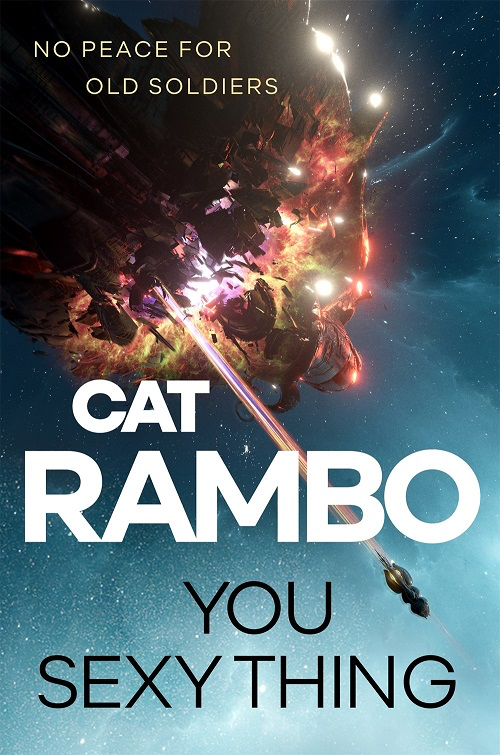
Posted in Book Review Tuesday

Book Review Tuesday (4/26/22) – One for All

Happy Tuesday, bibliophiles!

Disability representation—especially in YA—is few and far between, and even when I do find it, a lot of disability rep is still written by abled authors. (That isn’t always necessarily a bad thing, but it’s easy to fall into harmful tropes and misrepresent disability that way.) So when I heard about One for All, I was so excited—a feminist, historical fiction novel about a girl with a chronic illness! And beyond that—a girl with a chronic illness WHO SWORDFIGHTS. Doesn’t get much better than that, am I right? My copy finally came from the library last week, and although it wasn’t the perfect book, I enjoyed a lot of it!

Enjoy this week’s review!

One for All – Lillie Lainoff

Tania de Batz is determined for the world to see her as more than just a “sick girl.” As the daughter of a former musketeer, her passion is swordfighting, and with the help of her father, she’s become a skilled fighter. But when her father is brutally murdered, she discovers his dying request to send her to a finishing school.

But what she finds at L’Academie des Marieés is no finishing school—it’s a secretive school that trains young women as musketeers. Tania is soon swept into a world of swords and secrecy, and soon, she and her fellow students have an assassination plot to uncover. The only clue to the plot—and maybe even her father’s murder—lies in a boy named Étienne, but his charms may be Tania’s undoing.

TW/CW: ableism, blood, murder, loss of a loved one, past mention of sexual assault

Good disability representation—especially in YA—seems to only happen once in a blue moon. So I was so happy to find this book—a feminist historical fiction book written by a disabled author, no less! And while I did have a few problems with the story overall, One for All was no doubt a fantastic debut!

First things first—disability rep! While I can’t speak to the accuracy, Lillie Lainoff (the author) has the same chronic illness as Tania—Postural Orthostatic Tachycardia Syndrome (POTS)! Disabled representation from disabled voices always makes my heart so happy! For me, it’s even better that One for All is a historical fiction piece; most books with disabled characters only exist in contemporary/realistic fiction books, and I adamantly believe that disability rep in genres like historical fiction, fantasy, and science fiction is just as important, if not more important; it’s crucial for disabled readers to know that they don’t only exist in modern realistic fiction realities—they have always existed in history, and they can exist in fantasy and sci-fi worlds as well. One for All did a fantastic job at detailing all the aspects of Tania’s POTS and how it affected her daily life, from her routine to her social interactions and childhood. So many chronically ill readers will be able to see themselves in Tania, and that, to me, is immensely impactful.

Beyond that, One for All is fiercely feminist! It’s set in France in the 1600’s, and the themes of empowerment and sisterhood ran deeply through it. Throughout most of the book, Tania struggles with her place in the world as a disabled woman in a time where both are frowned upon, but her journey for self-empowerment is one that is sure to resonate with so many readers. Although some of the other students don’t treat Tania with the respect she deserves at first, there are themes of recognizing and correcting your previous ableism. The friendship that Tania eventually shares with the rest of the fellow L’Academie des Marieés students is wonderfully tender and strong, and it makes for an incredibly empowering novel overall.

As much as I loved the aforementioned aspects, however, there were a few aspects of One for All that I didn’t like as much. For the most part, I liked the writing style well enough; Lainoff’s prose flowed well and was appropriately descriptive when the time called for it. However, Lainoff’s style tended to fall towards the over-the-top side of the spectrum. I could let it slide in most instances—it fit with the mood and tone of the book in general—but in some cases, it felt overly purple and theatrical. It had a dramatic feel to it, and while it fit the classic retelling tone at times, it felt superfluous in other cases.

Additionally, I wasn’t quite as invested in the assassination part of the plot as I was in the rest of the book. Seeing as that (after Tania’s father’s murder) was the main driving force to the plot, it didn’t come through all the way; it was overshadowed by more mundane character interactions (which I did like), and as a result, felt rushed and oversimplified. For something that was supposed to be the primary inciting incident of the second half of the book or so, it felt more like a subplot than anything. As a result, I felt my mind wandering a bit during these parts, but it didn’t take me out of the book entirely.

All in all, a feminist retelling with a disabled heroine who all readers will want to cheer on. 3.75 stars, rounded up to 4!

One for All is a standalone and Lillie Lainoff’s debut novel.

Today’s song:

That’s it for this week’s Book Review Tuesday! Have a wonderful rest of your day, and take care of yourselves!