Posted in Sunday Songs

Sunday Songs: 2/1/26

Happy Sunday, bibliophiles! I hope this week has treated you well.

This week: who would win in a fight: righteous haterism or unfettered whimsy? Neither, actually. They’re both more powerful when they’ve joined forces.

Enjoy this week’s songs!
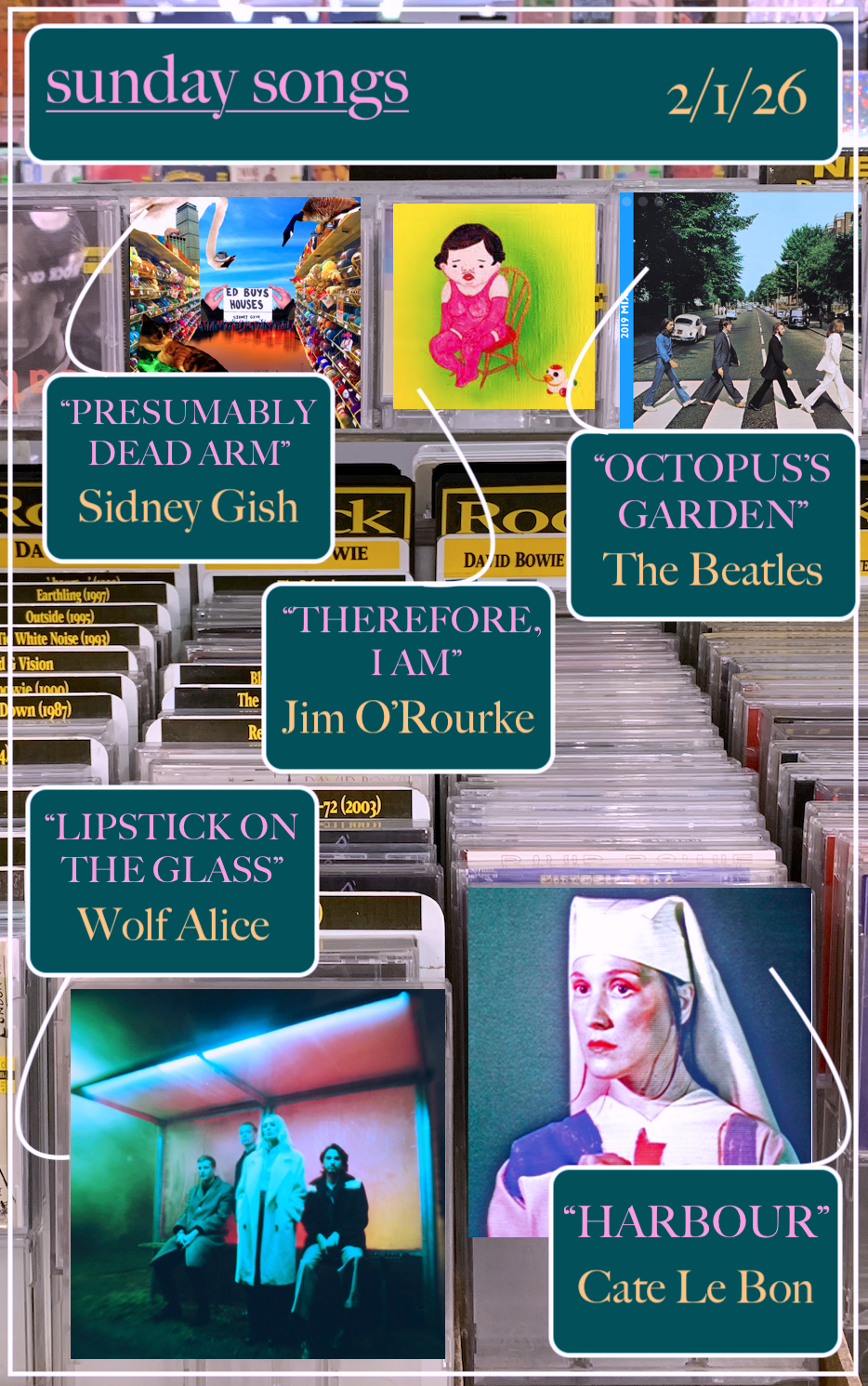
SUNDAY SONGS: 2/1/26

“Lipstick on the Glass” – Wolf Alice

It feels redundant to say that this is a very 2010’s song for it coming out of the 2020’s—”Lipstick On The Glass” only came out in 2021, and Wolf Alice were active all throughout the 2010’s anyway. And yet, I can’t shake how much they’ve crystallized that 2010’s indie sound. This song feels like a cousin of Eisley’s “Currents,” a favorite of mine in middle school, which came out in 2013. Both of them feel very cloudy and foggy, but adorned with clear, angular sparks that stick out of the mist like fragments of crystal. Even through the almost Cocteau Twins-kaleidoscope in the chorus, Wolf Alice have set up a system of lighthouses: the sharp percussion, and Ellie Roswell’s vocals, that range from a husky whisper to a diving bird of prey cutting through the sky. Free-floating and without much of an anchor, “Lipstick On The Glass” ha such a sense of urgency despite the deliberate blending of most of its musical shapes and textures into each other, making for an exciting, cinematic blend—especially when the chorus first kicks in. That beat drop is even more gratifying paired with Roswell’s lyrics, succumbing to the siren song of an old lover. But even after that beat drop, “Lipstick On The Glass” is beguiling all the way through.

…AND A BOOK TO GO WITH IT:
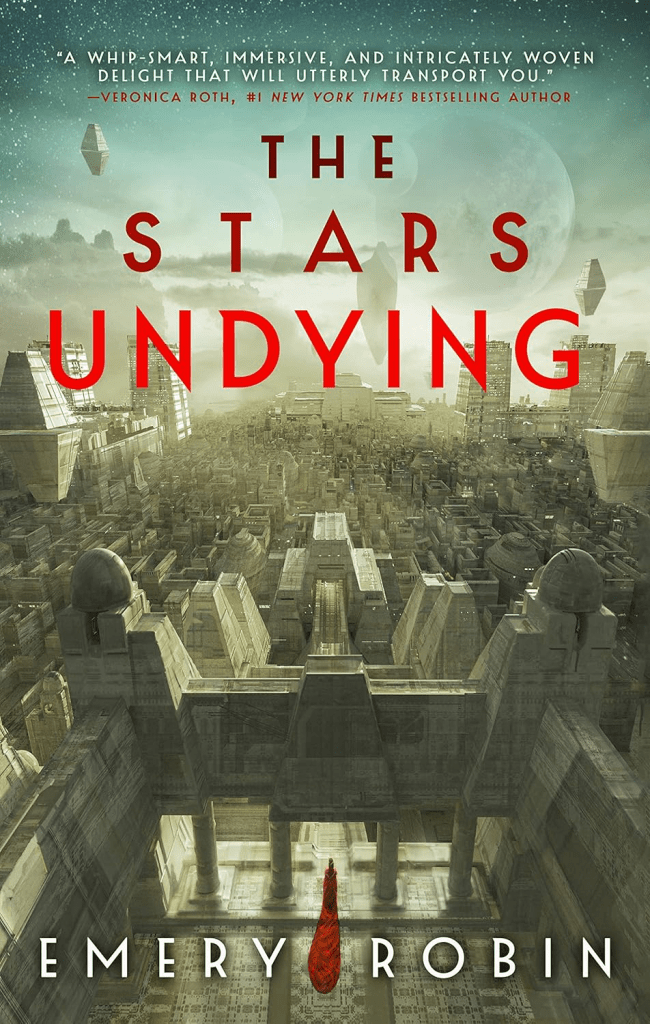
The Stars Undying – Emery Robin“Oh, my body does deceive me/Just as did yours/Though we’re fighting different wars/In our ways…”

“Harbour” – Cate Le Bon

Straightforward for Cate Le Bon usually means that it’s still delightfully strange. When I first listened to Pompeii, “Harbour” was actually one of my least favorites—I never disliked it, but it wasn’t as in-your-face inventive as some of the others on the first listen. It’s a case of every song on the album being excellent, so the benchmark is extra high from the get-go, making songs like this get lost in the dust. To be fair, after experiencing “Dirt on the Bed” for the first time tends to overshadow all else when you listen to Pompeii, but that’s no excuse for leaving a song like this to languish. I maintain that it’s one of the weaker songs on the album, but at this point, a weak Cate Le Bon would be a career highlight in your average artist’s hands.

Pompeii as a whole has a pretty even, calm pace, as adorned with all kinds of weirdness as it is. “Harbour” got lost for me because it didn’t have the same strangeness on the surface, but the more I listen, the more layers I find hidden within it. That’s the joy of Cate Le Bon for me—even her more radio-friendly songs conceal everything from watery, pre-Michelangelo Dying synths to spurts of saxophone that sound like the happier cousin of the brass blasts at the end of “Dirt on the Bed.” Pompeii as a whole is quite ’80s, but not in the way of shoving neon synths down your throat—it’s just a more subtle exploration of the sound rather than a way to farm nostalgia; even so, the specific use of saxophones in “Harbour” veered too close to the latter territory on my first listen. Once again, the bar just breached the stratosphere, given how seamlessly Le Bon has been able to integrate saxophones (and brass in general) into her music without it being full on “Careless Whisper” cheese. Now, though she’s used it in better ways, it’s still a cut above the rest. That goes for “Harbour” as a whole—she’s a master at manipulating seemingly ordinary elements and twisting them just far enough to the left to make you do a double-take. She’s full of surprises.

…AND A BOOK TO GO WITH IT:
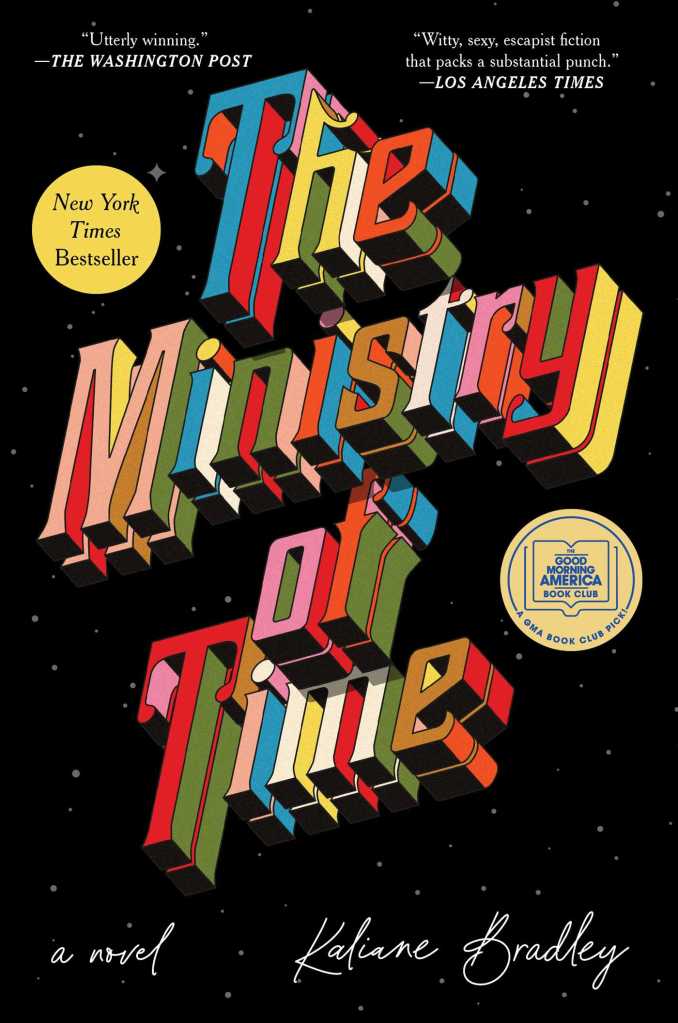
The Ministry of Time – Kaliane Bradley“What you said was nice/When you said my face turned a memory/What you said was nice/When you said my heart broke a century…”

“Presumably Dead Arm” – Sidney Gish

I’m back with another unexpected kick back into late 2019 from my shuffle…OOF. This one came during the period where I discovered some the fruitful harvest of offbeat indie rock after I got Apple Music. The floodgates were open, allowing me to listen to way too much girlpool…and this.

The thing that stands out to me about Sidney Gish is that I think she’s a key part of a newer aesthetic that will probably be defined more in retrospect. She’s the spitting image of a certain brand of Gen Z, internet-bred musician who records their music on their laptops and cut their teeth with covers on YouTube. (Gish, for the record, has a very sweet cover of The Magnetic Fields’s “All My Little Words” that she recorded in her shower that stars her pet rabbit. That should give you an idea of her general vibe.) They’ve all got purposely poorly photoshopped album art and quirky, vaguely surreal lyrics. For Gish, I think she’s at least an inch above the rest because her lyricism is, for the most part, very distinctly her and not necessarily just there to service a meme-y aesthetic. Yet I’m almost certain that it’ll date her music instantly, given a decade or so. Ed Buys Houses is still a solid, unique album, but there’s no doubt that it’ll be more and more distinctly 2016 as time passes.

I think “Presumably Dead Arm” was the first song of Gish’s that I ever listened to, and to this day, the charm of it mostly holds up. The sound is so distinctly late-2010’s, complete with the fuzz you get from recording music off of an aging laptop speaker. Now that it’s 2026, I can’t see the title without hearing it in the same cadence as this, yet even so, it’s just such a softly charming little tune. It has a very late teenage kind of wistful melancholy to it, but with the added through line of finding said presumably dead arm in a graveyard (and taking it to prom). Between laments about isolation and drunk and high friends, Gish’s distinct flavor of lyricism shines through: “I’d rather let the poor kid sleep/But he’s tripping balls, he’s tripping testes/LSD, post-wisdom teeth/He got lost in the shower/And he barely knows the hour.” But what hits me now, seven years after I initially found this song, is the genuine fear hidden behind some of the lyrics, the kind you can only get when you’re approaching your 20’s and don’t have a clue what you’re going to do about growing up: “And all these pretend spouses are a happy storybook/That’ll turn to stark non-fiction in the time it took/For me to notice that I’m old, which means I’ll be thirty and happy/Likely married to personified business-casual khakis.” As silly as some of those lines are, they’re delivered with such an urgency that for a fleeting moment, I feel them like a skipped heartbeat in my ribcage. It’s uncanny, how quickly Gish can switch from abject silliness to existentialism. But that’s very Gen Z—and very Sidney Gish, in the end.

…AND A BOOK TO GO WITH IT:
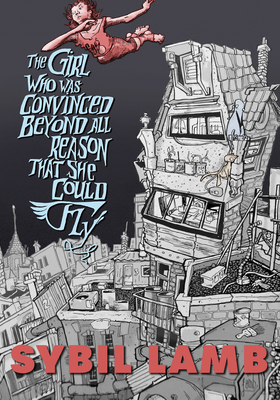
The Girl Who Was Convinced Beyond All Reason That She Could Fly – Sybil Lamban underrated oddball of the book world, as Sidney Gish is to indie rock.

“Therefore, I Am” – Jim O’Rourke

I’m all for having compassion and empathy in your heart, but there’s a special, beautiful place in this world for songs that innately feel like a massive middle finger. Sometimes it’s healthy to indulge the spite and blast your fuck-you song. And if you’re looking for a good fuck-you song, then boy, do I have the song for you.

I mainly knew Jim O’Rourke from his far calmer, instrumental world and his role as the longtime producer for much of Wilco’s discography. I knew that he had a solo career, but I honestly thought that it was more along the “Bad Timing” side than this. Apparently he’d been so steeped in his more experimental musical roots for so long and decided to try his hand at a more straightforward indie rock album, and came out the other side with Insignificance. It’s a shame that he doesn’t tap into lyric-oriented music and sing more—he’s got a great voice. And I’m not saying the stuff about the lyrics because they’re some poetic, soul-searching kernel of wisdom. They just happen to be some of the most artfully vitriolic disses I’ve heard put to song. Take this one:

“We are on a sinking ship/But I’d like to stay on board and shoot the cannons at you.”

DAMN. DEDICATION. On my first listen, I just kept hearing this over and over with each successive lyric:

I would not want to be on the receiving end of that. I pity whoever Jim O’Rourke was beefing with circa 2000. “As you can see/I’m a happy guy”—are you sure, Jim? For a song sung so calmly, every line is a gleeful slap in the face—it’s not just a fuck-you to whoever it may concern, but an open brag about how much his life has improved ever since they ended things. The instrumentals have a very Brian Eno, repetition-oriented feel to them (with a guitar tone that scratches every good itch in my musical brain, I might add), and yet even without any screaming or hammering guitars to pieces on stage, it manages to be so cleverly bitter under such an unassuming guise. Perfect cure-all for any and all breakups, toxic friendships, or just thinking about the excess of scummy authority figures all around. I need some Riot Grrl bands to cover this. God, it’s so fun.

…AND A BOOK TO GO WITH IT:
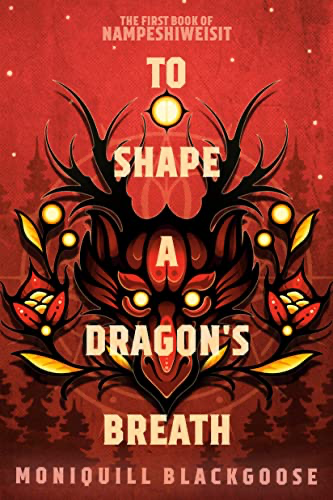
To Shape a Dragon’s Breath – Moniquill Blackgoose“Why do you hide behind somebody else?/There’s one too many in this room/And I think it’s you…”

“Octopus’s Garden” – The Beatles

I know the whole situation of 3/4 of the Beatles being at each other’s necks during the Abbey Road/Let It Be sessions while Ringo Starr just made a song about an octopus has been memed to death. But really? We should all aspire to be like Ringo in that scenario. Observe the chaos around you and defy it openly with silliness and childlike wonder. Being labelled as the goofy Beatle must’ve had its perks, because I doubt anybody would’ve expected “Octopus’s Garden” to have as lasting of an impact as it did. It’s a classic, both in the Beatles sense and in the sense of most every child since 1970 having fond memories of it. And it’s a classic for a reason. Unlike some of the other more obliquely “joke” Beatles songs (see: “Wild Honey Pie,” which, I’m gonna say it: a thing of sheer beauty), the production is staggeringly good. It came on shuffle the other day, and when I just expected to have a little laugh with Ringo, I got blown away at just how tight of a composition it is—the piano arrangement? George Harrison’s guitar riffs? The harmonies? EVERYTHING? For a song that often gets dismissed as one of the more shallow songs in their catalogue, “Octopus’s Garden” has all manner of hidden layers to it, like bits of seashells hiding just beneath the surface of the waves.

…AND A BOOK TO GO WITH IT:
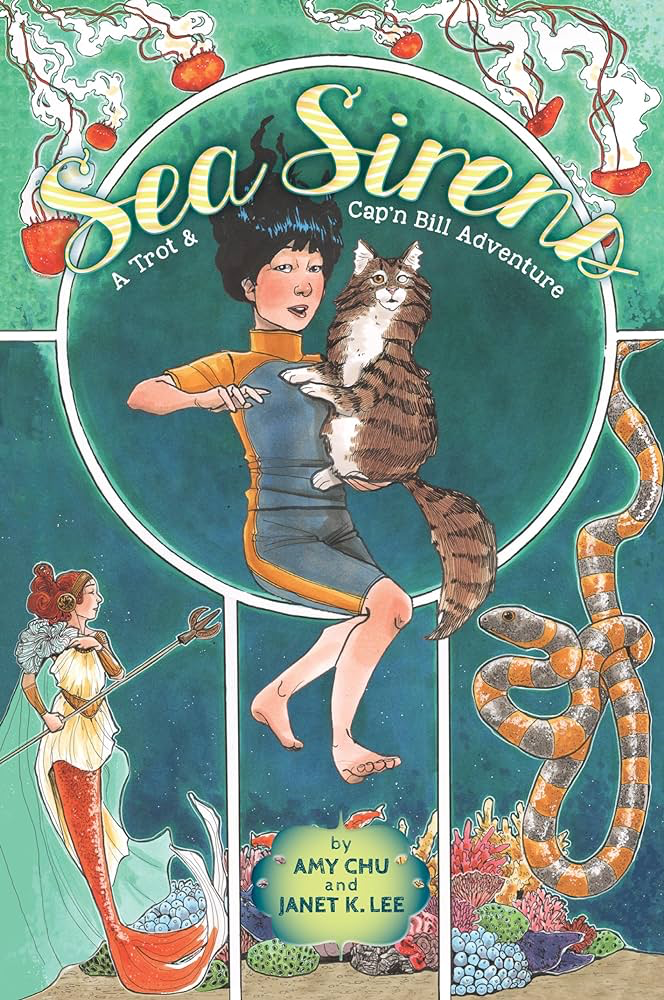
Sea Sirens – Amy Chu and Janet K. LeeI’m convinced that this book is set exactly where Ringo Starr set “Octopus’s Garden.” We found it, gang. We found the Octopus’s Garden…

Since this post consists entirely of songs, consider all of them to be today’s song.

That’s it for this week’s Sunday Songs! Have a wonderful rest of your day, and take care of yourselves!

Posted in Book Review Tuesday

Book Review Tuesday (1/20/26) – Ancestral Night

Happy Tuesday, bibliophiles!

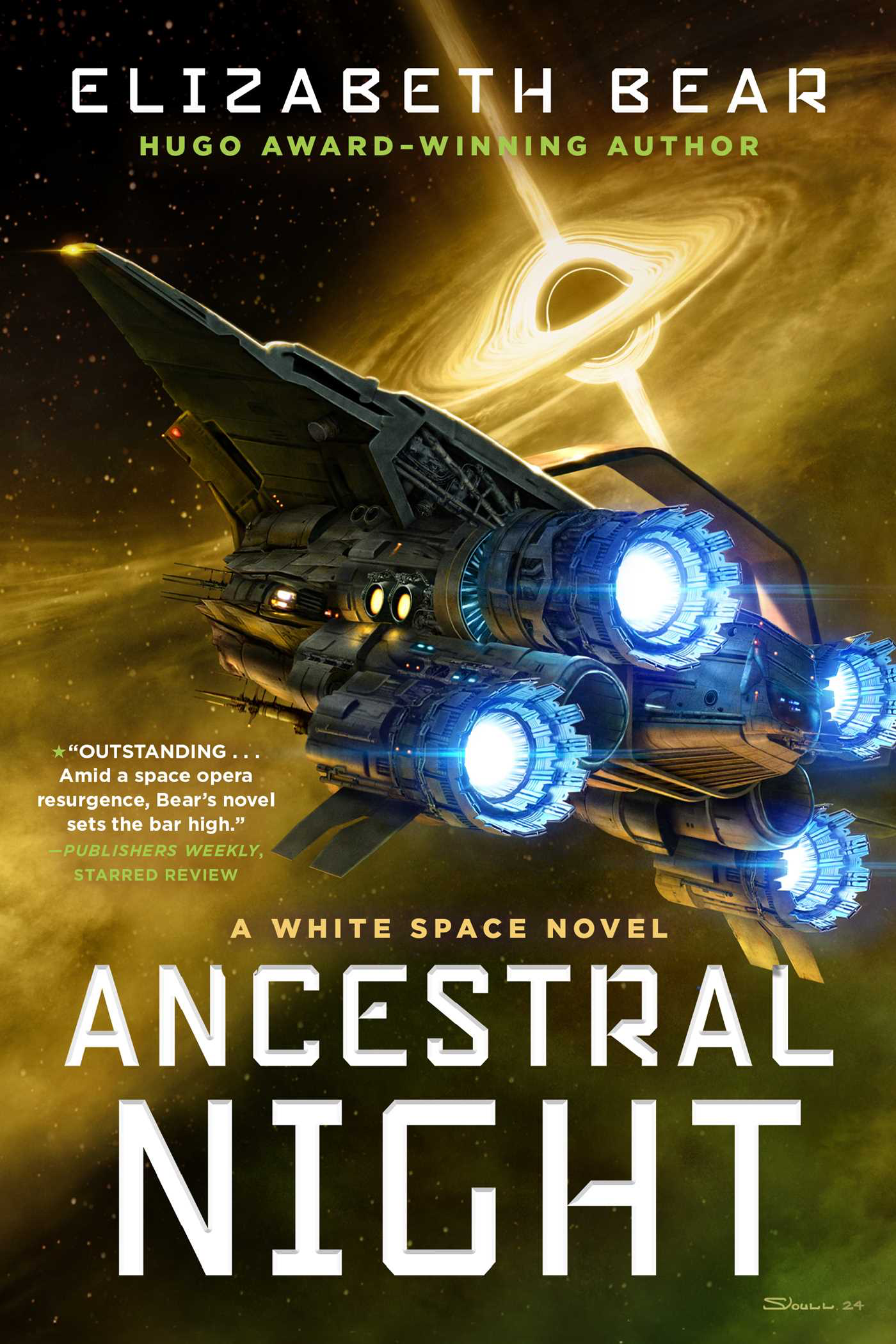
I’d like to think that I’m a competent, capable adult, but a few months back, I picked up book three of this series without realizing that it was book three. Oops. All the same, I was motivated to read it, so I ended up getting a copy with some gift card money for Bookshop.org. Long haul as it was, I’m so glad I took the leap—Ancestral Night knocked me off my feet from the first few pages, and that momentum almost never stopped.

Enjoy this week’s review!

Ancestral Night (White Space, #1) – Elizabeth Bear

Haimey Dz and her small crew fly under the radar, making a living salvaging spaceships at the edge of the galaxy. But after a run-in with a gang of pirates and the discovery of a galaxy-changing revelation hidden inside a derelict spaceship, Haimey knows that she can’t let just anyone get ahold of this secret. Inside of the spaceship is illegal, ancient technology that could turn the tides for the worse if in the wrong hands—and judging from the spaceship, it was already in the wrong hands. Infected with a strange, ancient parasite and with pirates and the government hot on her heels, Haimey and her crew must get to the bottom of this mystery before this tech falls into the wrong hands.

TW/CW: descriptions of injury, violence, blood, emotional abuse, grief, suicide, mental health themes

I really need to put together some kind of list of sci-fi with cats on spaceships. There’s enough out there that it’s a Thing, and though it’s not enough to be a full-on trope, it never fails to make me smile, both as a sci-fi fan and a cat lover. Jonesy from Alien set the precedent, but I think it’s just that through line of historically having cats on boats for good luck that makes it so wonderful. Bushyasta and Mephistopheles deserve a spot in the sci-fi cats pantheon.

The world of Ancestral Night is truly something to behold. From the get-go, I got lost in it so easily—Bear’s prose kept me hooked for all 500+ pages. Part of that was just how intriguing the world was. Everything you could want in a space opera is here—mysterious, derelict spaceships with dark secrets, all manner of very alien aliens, two naughty cats on a spaceship, and perhaps best of all, eldritch, centuries-old seahorse creatures that live in the vacuum of space. Who could ask for more, really? There’s a dormant part of my high school brain that was obsessed with Aurora Rising that got beyond amped about salvaging spaceships, so that was an automatic win. I loved the Atavikha an unreasonable amount, as well as the aliens, but that’s not news at all. But I love the care that Bear took to make this world feel familiar in the right places, but appropriately alien where it was necessary. It’s a world where you can read George Eliot in your free time, but also come face to face with a creature so alien you barely have any appropriate human analogues for it. Balance is key, and Bear balanced it well.

With sci-fi like this, there’s a tendency to forget that no matter how much time you spend on worldbuilding, your universe still may feel like it isn’t lived in; everything’s too sterile and sleek, and you never get the sense that these strange planets and moons and whatnot are places where people spend their lives. Bear circumvented that issue from the get-go—everything about Ancestral Night felt lived-in, from the humble spaceships to the crowded space stations that Haimey and her friends navigated. Her spaceship wasn’t just a way to get around: it was a place where Haimey lounged around and read old books and petted her cats. Every corner that the crew explored was full of not just lore, but memories—everything in Ancestral Night had a story, and that did almost as much work as the worldbuilding in making sure that Bear’s world felt real.

Another aspect that made Ancestral Night feel real was Haimey herself. I’m all for representing marginalized people beyond stereotypes, but there’s something to be said for queer characters who are unapologetically messy and make decidedly terrible decisions—and Haimey makes terrible decisions aplenty. (I finished Pluribus not long ago, and I thought the same about Carol. I guess they’re both lesbians who fall for highly questionable pirate ladies, in the end.) If Ancestral Night was a TV show, I fully would’ve thrown something at the TV when she kissed Zanya. HAVE YOU LEARNED NOTHING? That being said, she felt so staggeringly real in the amalgamation of all her hopes and flaws. Even in this far-flung sci-fi world, this woman who reads ancient classics onboard her spaceship and dotes after her cats and falls for the messiest, scariest pirate women was so refreshingly real, and in spite of those flaws, ultimately lovable.

Ancestral Night is a space opera without question, but the worldbuilding will certainly appeal to the more hard science fiction-leaning readers for sure. Care for the worldbuilding obviously isn’t exclusive to hard sci-fi, especially as a cozy sci-fi/space opera/soft sci-fi defender and enjoyer, but not every space opera you come across goes into this much detail about accretion disks. Bear doesn’t shy away from getting esoteric with the worldbuilding, whether it’s in terms of astrophysics or politics. The politics form the core of the novel for me. My one major problem with the novel was that it had a tendency to go into Haimey’s philosophical musings about the nature of governments and freedom to a point where it was difficult to suspend my disbelief that nothing bad had happened to her while this was all going on, given everything else that happens throughout. (How did she not get conked on the head by pirates mid-digression during half of those scenes?) However, the nature of these digressions fed into the thematic elements of Ancestral Night really well, and I loved how they formed the backbone of Haimey’s character.

Even though not all of the philosophical musing landed, the setup of it, as well as the worldbuilding of Ancestral Night, set such a wonderful stage for Haimey’s character development. She’s caught between two very opposite poles: the Clade where she grew up, where her existence was placid but assimilated, and the pirates, whose messy anarchy is hyperindividualistic to a fault. Set against the backdrop of a flawed yet somewhat well-intentioned government, Haimey’s realization that her true self comes not from sacrificing her individuality or her obligation to do good for others in her community was so poignant. All her life, the notion of who she really is has been forced upon her from both sides, and yet what’s in her heart is where the two ideologies meet: retaining her uniqueness, but not kicking everybody else aside in the process. Haimey’s true spirit comes from how she decides her life should be, but also from the positive relationships around her. It was such a heartfelt message, and Haimey’s arc gave Ancestral Night a powerful emotional core.

All in all, a captivating space opera with real, lovable protagonists, a lived-in universe, and mystery that had me on the edge of my seat. 4.5 stars!

Ancestral Night is the first novel in the White Space series, followed by Machine and The Folded Sky. Bear is also the author of several other award-winning novels, including the New Amsterdam series (New Amsterdam, Seven for a Secret, The White City, Ad Eternum, and Garrett Investigates), the Jacob’s Ladder trilogy (Dust, Sanction, and Grail) and many others.

Today’s song:

That’s it for this week’s Book Review Tuesday! Have a wonderful rest of your day, and take care of yourselves!
Posted in Sunday Songs

Sunday Songs: 3/23/25

Happy Sunday, bibliophiles!

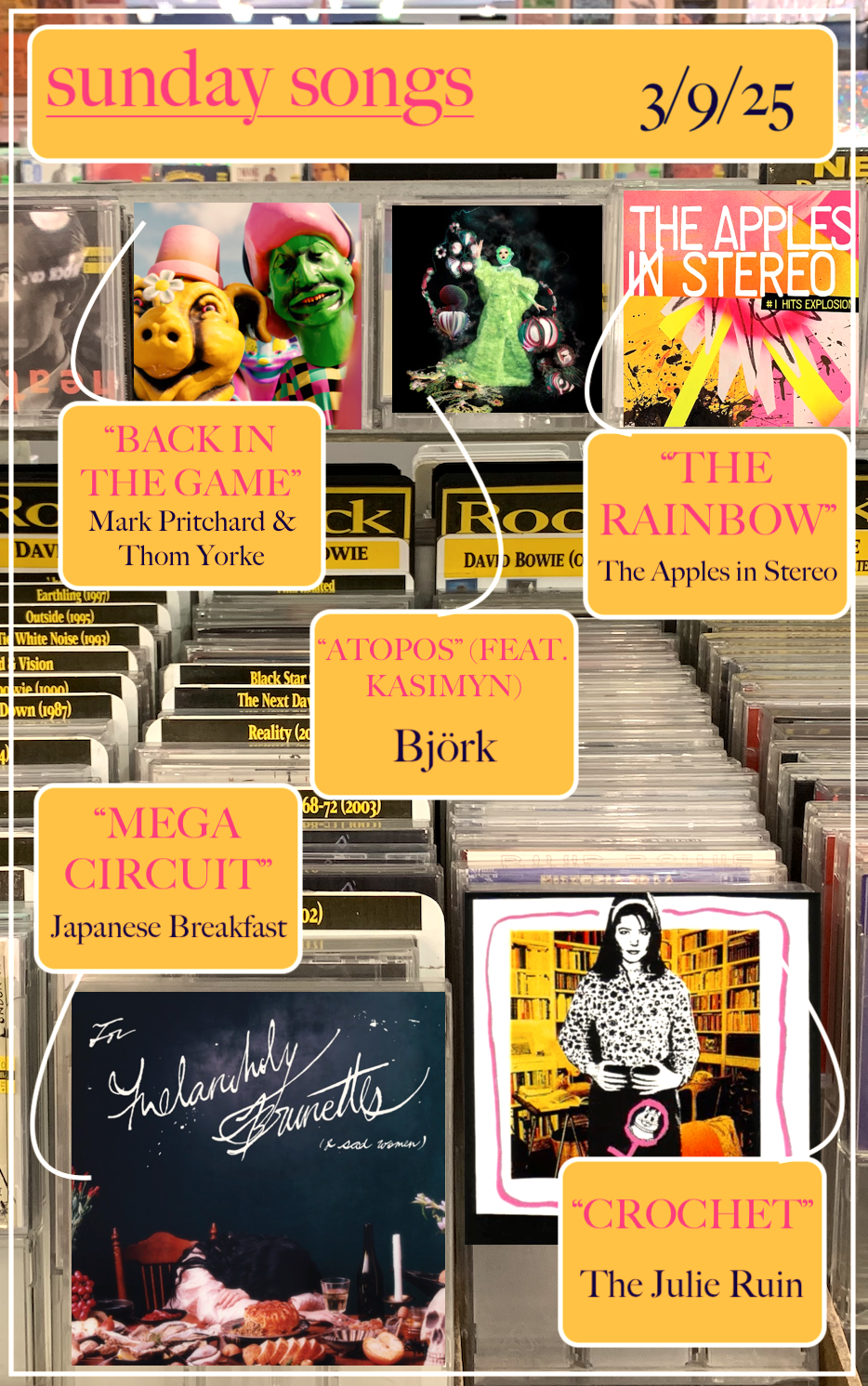
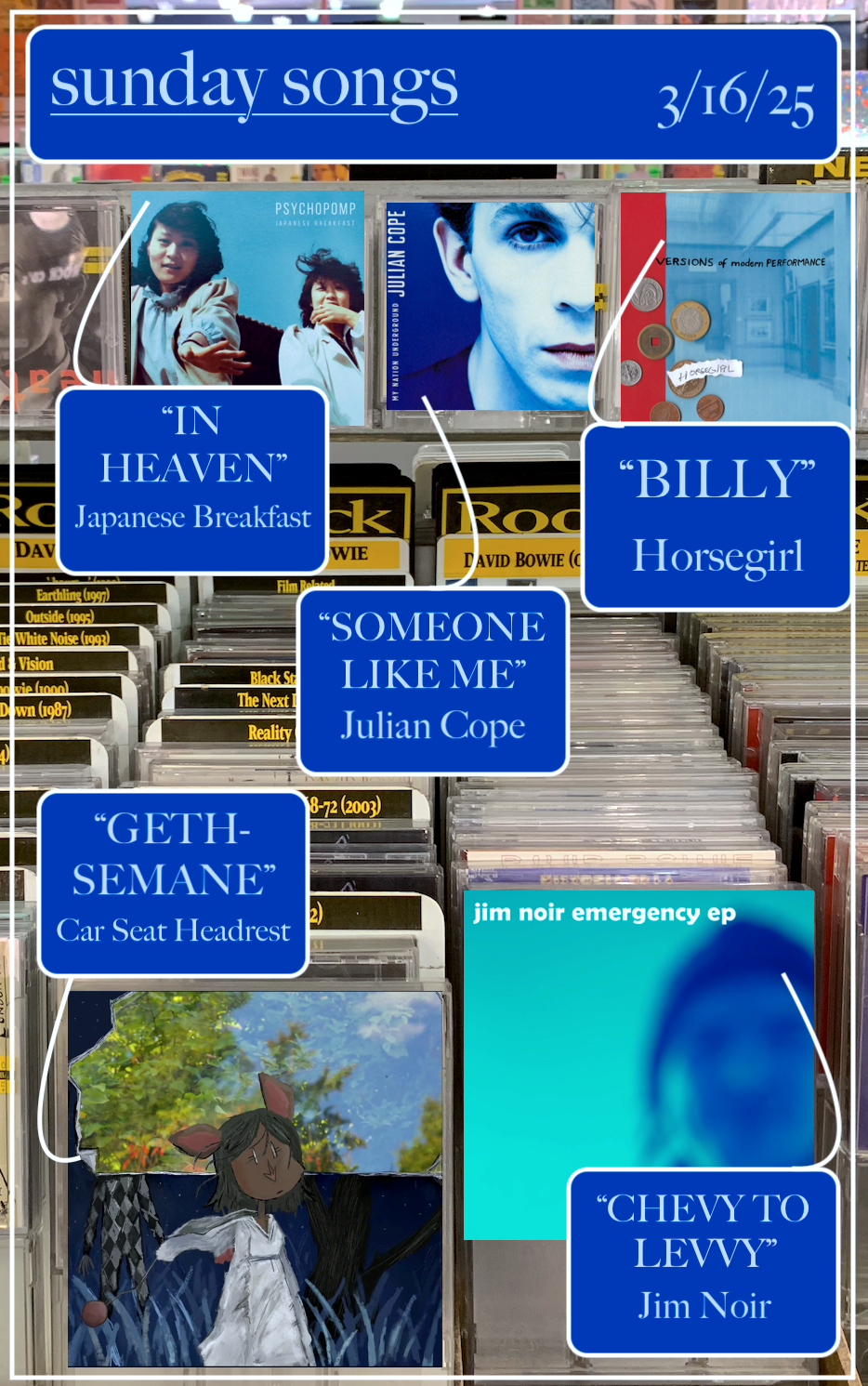
Since I haven’t been able to post in a few weeks, here are the Sunday Songs graphics from that time:

3/9/25:

3/16/25 (or, NEW CAR SEAT HEADREST IN MAY, WE ARE SO BACK):

This week: you thought this would be a quick post after I haven’t been able to write regularly for two weeks? WOE, TEN MINUTE SONG BE UPON YE!

Enjoy this week’s songs!

SUNDAY SONGS: 3/23/25

“Love” – Hana Vu

One of the best surprises a concert can have in store is a good opener. There are infinite jokes about bad openers, half of which…well, might be dogging on perfectly fine artists trying to get their foot in the door, and half of them are true. I really do try to at least go into openers with an open (no pun intended) mind, because everybody has to start somewhere, no matter how big of an artist they’re opening for. But sometimes it’s just up to your taste. Even with some cringy performances, you can at least tell that they’re trying.

I saw Soccer Mommy about two weeks ago (stellar performance!!!! as always!! and the crowd had basic human decency this time, unlike the parasitic frat bros that populated her crowd last time) with Hana Vu as the opener. I kept my expectations low. I expected to just nod along and twiddle my thumbs, but I think I may have found an excellent artist! She came off quite shy, mumbling to the audience and asking us what we had for dinner, but once she started performing, it was clear that Soccer Mommy had a worthy match to her sound. However, if I had to compare Vu to anyone, it would be to Lucy Dacus—they have a similar brand of indie rock, both bearing warm, rich vocals and guitar-driven angst with no shortage of heart. Nothing can come close to “Night Shift,” but Vu clearly studied how that song goes supernova at the end. The closer to her most recent album, Romanticism, “Love,” like Vu’s performance before Soccer Mommy, starts out unassumingly, but quickly becomes a dramatic landslide aided with thundering drumbeats, strings, and Hana Vu bellowing as though into a cavern. The lyrics, as sparse as they are, come sung clutching a bleeding heart in both hands, staining everything within arm’s reach. It truly lives up to the drama of the album cover, with Vu draped in robes and with a sword pressed to her neck, modeled after Artemisia Gentileschi’s “Judith Slaying Holofernes.” Either way, Hana Vu has earned a tally in favor of the good opening bands I’ve seen—and a place in my more regular rotation of artists. A big thank you to Soccer Mommy for giving a platform to Vu’s talent, and thank you to Vu for the fantastic opening act!

…AND A BOOK TO GO WITH IT:

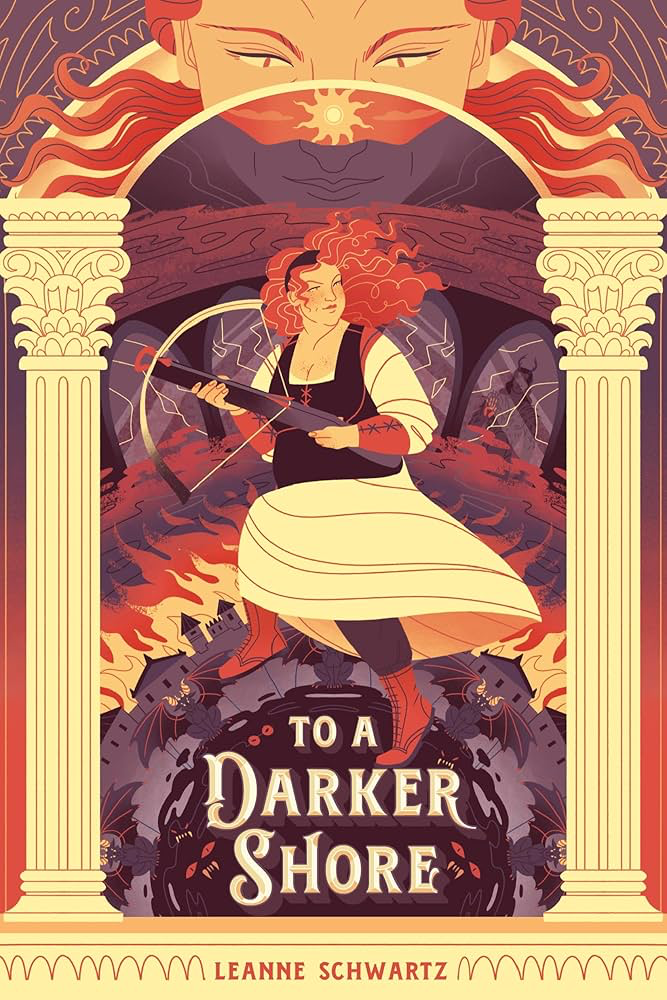
To a Darker Shore – Leanne Schwartz“I just want you to stay/You know I hate giving up/And oh, Well I guess it’s just me/Please don’t leave me alone/You know I can’t let you be…”

“Bad Timing” – Jim O’Rourke

Once my dad sent me this song, it was immediately relegated to my quiet instrumental study playlist. I shouldn’t say “relegated,” really. It’s a great song to peacefully study along with, but it keeps you on your toes. Ten minutes long and dense doesn’t make it sound appealing, but “Bad Timing” sounds like how those slow motion videos of flowers unfurling after the frost melts from their buds look. “Bad Timing” also proves my long song theory right with flying colors—the best ones have enough changes to keep you interested for ten minutes. This track in particular feels like two songs in one. The first is a homely, acoustic ditty, which peacefully bows out at the 2:50 mark, giving way to a chorus of plucked strings and, of all instruments that should sound shimmery, an accordion would be my last guess. Yet Jim O’Rourke pulls it off, making it shudder and glimmer along with the synths. You’re lured into a soft, ambient sense of security, but like rot climbing up the roots of a plant, O’Rourke tears away at the music, fiber by fiber, until the remnants are ablaze in distortion and ascending mayhem by the time you reach the eight and a half minute mark. It’s clear to me the magic O’Rourke made with producing almost all of Wilco’s albums—he has such a talent for taking a simple melody, stretching it out and contorting it as easily as a chef kneads dough. He put something entirely unassuming into the oven, and something wholly unexpected came out the other side once the experimental yeast rose.

On another note: I can’t for the life of me find who made the album art for Bad Timing, but it’s just so charming to me.

…AND A BOOK TO GO WITH IT:

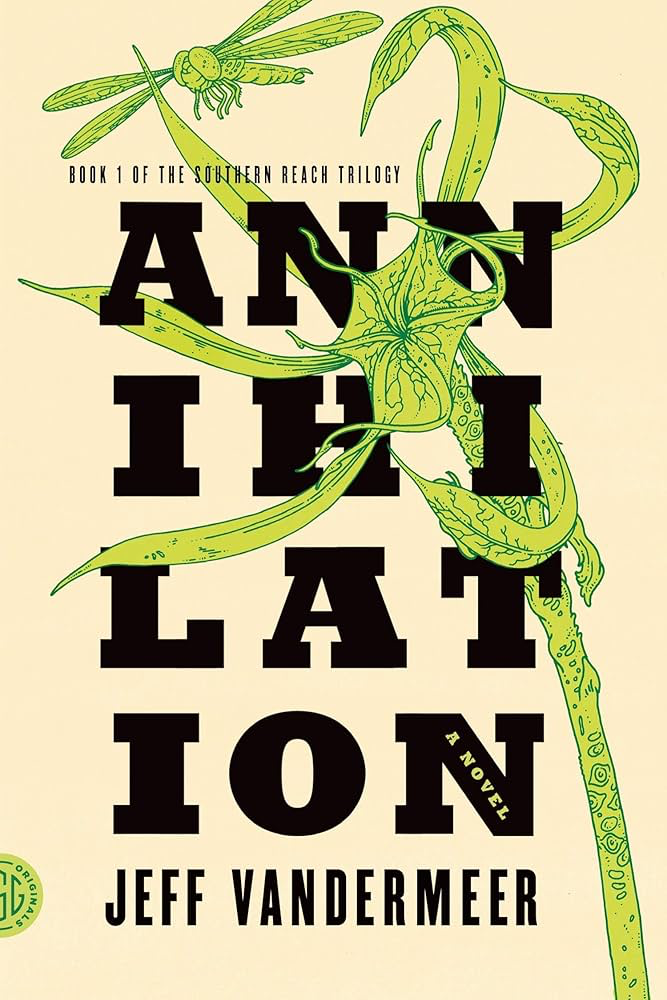
Annihilation – Jeff Vandermeereverything becomes slowly, gradually unrecognizable and strange, just like the progression of “Bad Timing”

“Ends Meet” – Panda Bear

Brian Wilson is alive and well, but what I’ve listened to of Sinister Grift feels like a glimpse into an alternate universe where Brian Wilson got temporally airlifted from the ’60s into the 2020s and had to find his way around. That, and if he’d been given nothing but a knapsack full of various synths and electronic knickknacks to carry with him on his time-out-of-time journey. “Ends Meet” is the definition of psychedelic, constantly fading in and out of focus like ripples over sunlit water. Noah Lennox’s voice also feels piped in from beneath the shallows of a reef—released this February as it was, everything I’ve heard of Panda has been carefully crafted to be specifically summery and aquatic, at least in sound (see: “Comfy in Nautica,” “Ferry Lady”*).

The existential lyricism feels at odds with the music at first glance: Lennox is confronting what we all have to confront at some point in our lives: we’re all gonna die, so what else is there to do? His answer is as simple and as difficult as any: appreciate everything in it, bad and good: “And when it is my time/Dig it all.” It’s a lesson I’ve been chipping away at for the better part of last year, what with my difficulty in staying present and not projecting myself into possible futures (not the time traveling Brian Wilson ones, unfortunately), but the way that Panda Bear takes it musically seems different than most. Sonically, “Ends Meets” feels so daydreamy and almost dissociative—its head isn’t in the clouds, it practically is the clouds. Even the face on the album cover of Sinister Grift looks like their mind is somewhere else entirely. But that in and of itself is putting that sentiment of being un-anchored into music and into words. It’s a jarring pairing in concept, tackling this subject matter with such an acid-tinged, vacation-like musical landscape, but to me, it’s the feeling of letting go of that burden, of knowing that all you can do in life is appreciate every facet of it.

*the “Ferry Lady” music video is about as trippy as you’d expect, so if you’re sensitive to flashing images or eye strain, you’ve been warned.

…AND A BOOK TO GO WITH IT:

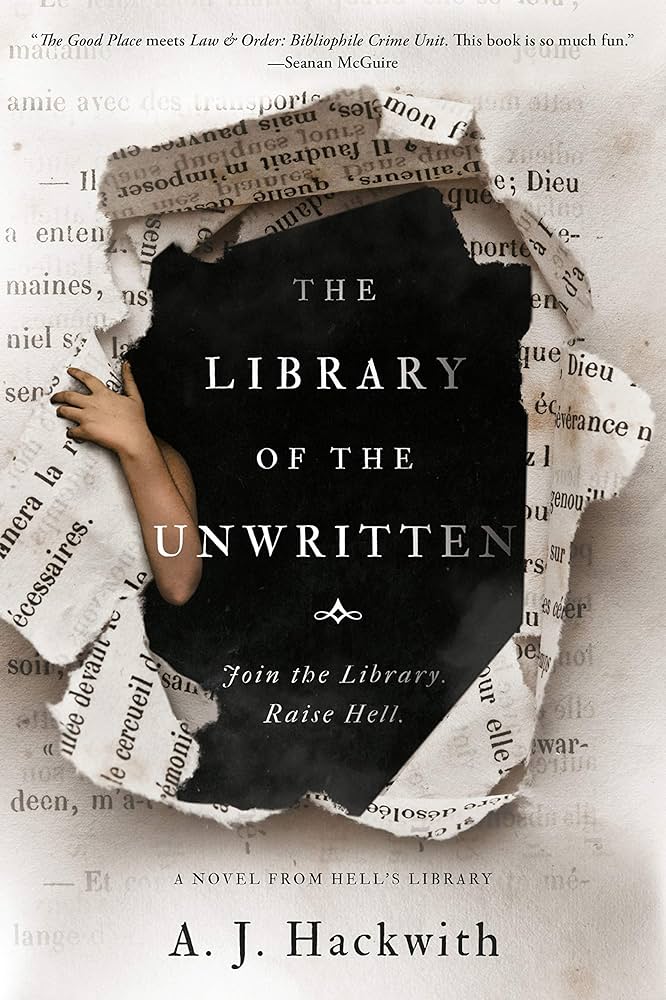
The Library of the Unwritten – A.J. Hackwith“They got a spot to bury you/It’s not news, you’re tremblin’ for what?/Just keep it in the groovе (Don’t let up)/But keep the doorways shut…”

“La Vie en Rose” (Édith Piaf cover) – Louis Armstrong & His Orchestra

I was never much of a Disney kid, but Wall-E, one of the first movies I saw in theaters as a kid, will always unlock a particularly special place in my heart. Star Wars was my true introduction to sci-fi, but the more I think about it, Wall-E was right up there in conditioning me to fall headfirst into the genre. Even now, in my twenties and watching Wall-E for a grade to analyze the gender dynamics for a class on Disney and gender…it broke me. I knew it would. Sure, Mark Fisher cites it by name in Capitalist Realism when he talks about how Hollywood has subsumed anti-capitalist resistance and yada yada yada, but…god, how could even the most shriveled soul not be moved by an almost newborn race of humankind returning to the same earth, babies treading over barren ground as the giddy captain gleefully lists off all the plants that can be grown in it? And you’re already crying? And then they hit you with “Down to Earth?” Diabolical.

Part of my class’s discussion on the gender dynamics of Wall-E, beyond how we’re socialized to see Wall-E and Eve as boy and girl even though they’re…intelligent machines with no gender to speak of, was how the viewer is socialized to show their relationship as romantic (and traditionally heterosexual) from the markedly older, “classic” media surrounding them. Notable songs and clips from Hello, Dolly! do the heavy lifting there, but in the barest sense, Louis Armstrong’s cover of “La Vie En Rose,” one of the more ubiquitously recognized love songs of this century, which plays when Wall-E first becomes romantically interested in Eve, adds to this effect. And while I see the argument, as women and gender studies/queer theory-pilled as I am, I really don’t think Wall-E is nearly as guilty as a whole cadre of other Disney movies who have improperly shaped particularly women and young girls’ views on how gender and romance should be. For me, “La Vie En Rose” feels as pure as Wall-E and Eve, in all of their innocent, nonsexual romance. Even as a little kid, only knowing Louis Armstrong from “What A Wonderful World” (and thinking that Grover from Sesame Street was behind the vocals), something about those piano flourishes unfurled a kind of petal inside of me. It’s one of the first examples I can name of a melody really scratching an itch in my brain. I’m next to illiterate when it comes to jazz, but Armstrong was clearly one of those rare people who could give his trumpet such an individual voice—by the end of the song, you could call it just as much of a vocalist as he is. Paired with the cinematography of Wall-E’s tire treads tracing neat lines in the trash-laden dirt, something about it felt so neat, so meant to be, a puzzle piece shifting into place. Both of them are clean, and yet not sanitized—they’re sweet, earnest, pure. A part of childhood me is warmed every time I hear this song, obviously, but even outside of that context, the soothing spell of this rendition is undeniable. As is Wall-E.

…AND A BOOK TO GO WITH IT:

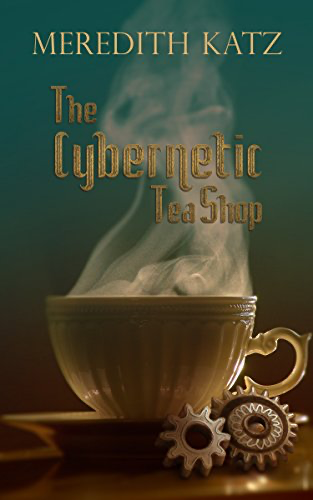
The Cybernetic Tea Shop – Meredith KatzLouis Armstrong’s take on “La Vie En Rose” is obvious coffee/tea shop music, but combined with my Wall-E association, why not return to this cozy, tender tea shop in a distant future?

“Here Comes Your Man” – Pixies

The music video for “Here Comes Your Man” has to be one of the more uncomfortable music video experiences I can think of, not because of any particular content, but more because you get the overwhelming feeling that nobody wants to be there. Every time they pan to Frank Black or Kim Deal (or Joey Santiago, honestly), they look like they’re trying to telepathically kill the cameramen, Professor X style. They don’t want to be there, the camera crew doesn’t want to be there, and they don’t want you there either…oh, my bad, sorry for the intrusion. I’ll see myself out. For good reason, though—they were averse to making music videos, and when their label pressured them to do so, they famously decided to stick it to the man and gape their mouths open like fish while the lyrics were playing. Given…well, everything I’ve heard about Frank Black, it could easily just be them being petty, but for an underground band who were achieving success they didn’t seem to want, it’s understandable.

I always feel a kind of odd shame when I like That One Song/Album That Got Popular with a certain band that the band openly hates with a passion. If I’d had the time to write a post last week, I would’ve said the same thing for Julian Cope and “Someone Like Me”My Nation Underground is one of his poppier albums, and one that he wasn’t satisfied with. (See also: “Me Myself & I,” a song I love, but that De La Soul inserts “we hate this song” into live performances of the lyrics…yeah, you get the picture.) For Pixies, they weren’t satisfied with this pop song to the point where they almost never performed it live. But…it’s so good. Sure, it’s simpler and more accessible than some of their work, but they knew how to make one of the most iconic alternative pop songs. Most alternative rock fans would probably be able to recognize that bassline immediately, all thanks to the timeless talent of Kim Deal. There’s layers to the genius of it—the harmonies of Deal and Black, the vague, surrealist lyrics about homeless people boarding a train before an earthquake, the faint comfort and hope in spite of that. The chorus of “here comes your man” was a last minute addition, but it’s always given a kind of solace for me, ever since I was a kid, before I understood the lyrics of the verse. Even with the bleak nature of the verse, it’s always implied a kind of salvation or relief to me. Bottom line: sometimes, even if That Song got popular, it’s obviously popular for a reason, but how talented a band’s craft is can often shine through in the charts.

Sometimes. We don’t talk about “Creep.”

…AND A BOOK TO GO WITH IT:

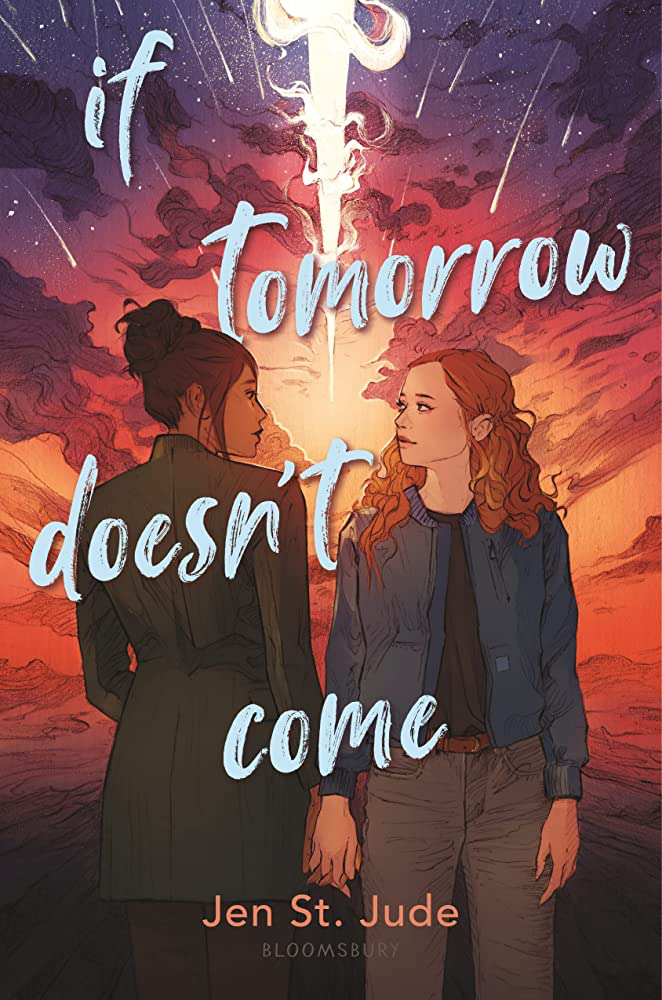
If Tomorrow Doesn’t Come – Jen St. Judea similar kind of disaster-oriented scenario to the song, of people scrambling to safety in the wake of a planet-destroying asteroid.

Since this post consists entirely of songs, consider all of them to be today’s song.

That’s it for this week’s Sunday Songs! Have a wonderful rest of your day, and take care of yourselves!