Posted in Music

Phonetics On and On – album review

Happy Thursday, bibliophiles! Finally had time to do an album review…unprecedented…

I first fell in love with Horsegirl in my senior year of high school. Back then, they were afloat on a handful of singles and on the cusp of a debut album. By the time Versions of Modern Performance came out, it was the soundtrack to the summer before I went to college. Their clever, endlessly creative style, informed by the ’70s and the ’90s in equal measure, enchanted me—it felt like almost nothing like what many other musicians of their generation were putting out. Along came 2024, and the promise of something somehow even better was on the horizon: a new Horsegirl album, produced by Cate Le Bon and recorded in The Loft, the famous (at least to me) Chicago studio owned by Wilco. What could go wrong? Almost nothing, as it turns out—Phonetics On and On is proof that the playful, inventive spirit of Horsegirl lives on, and that it’s beginning to mature into something spectacular.

Enjoy this album review!
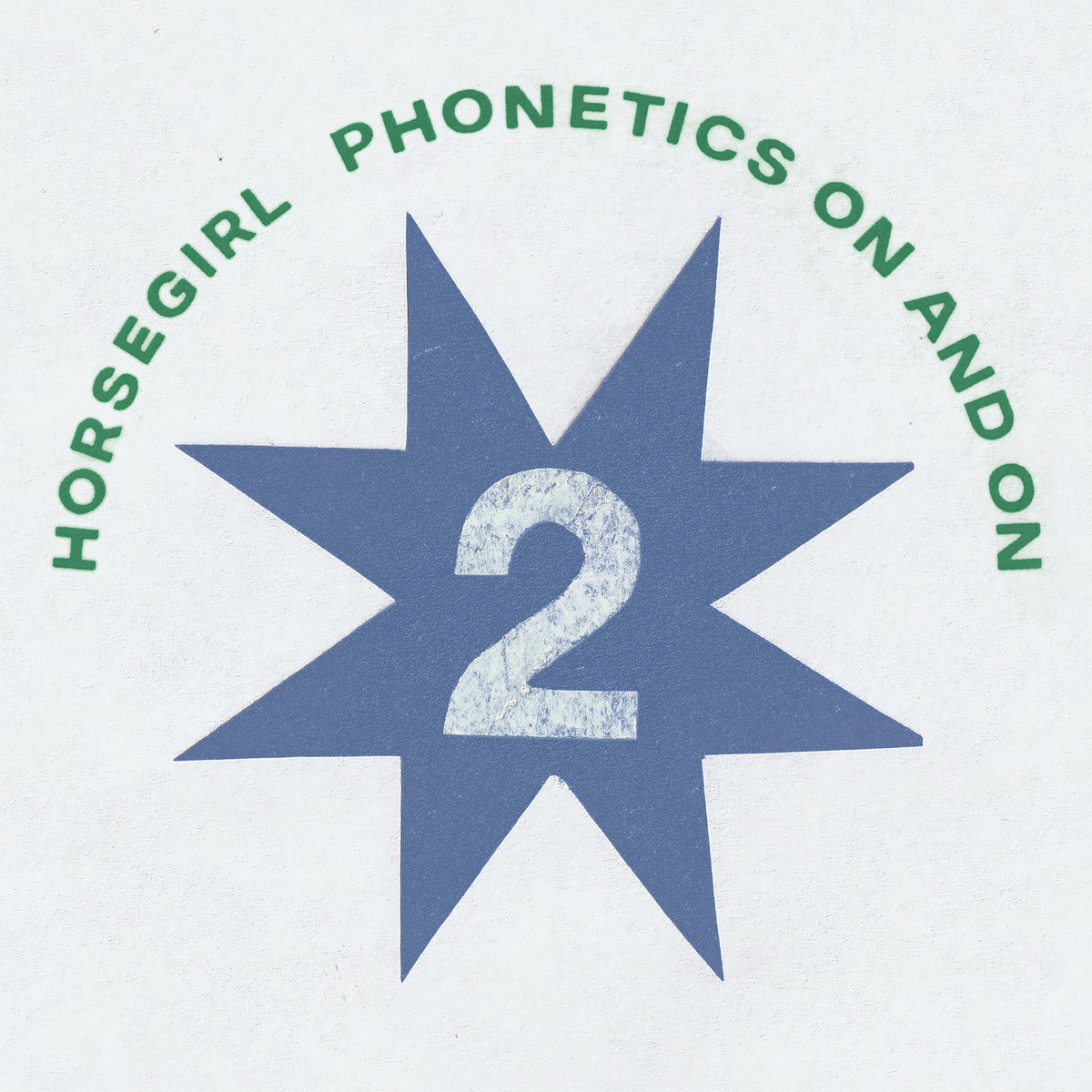
PHONETICS ON AND ON – HORSEGIRL

Release date: February 14, 2025 (Matador Records)

TRACK 1: “Where’d You Go?” – 8/10

Just shy of two minutes long, “Where’d You Go?” is a song that lives up to the band name—the propulsive beat has the urgency of a racehorse speeding down a track. Drenched in tight, Feelies-esque (crazy) rhythms, it kickstarts the album with a jolt of sparking energy. Gigi Reece’s drumming has the lightning-fast patter of rabbit’s feet against the dirt, while the dueling voices of Nora Cheng and Penelope Lowenstein tug the track in two directions, a short leash that snaps to allow for a crayon’s scribble of a guitar riff to burst in at the 1:12 mark. The frenetic energy is a remarkable bridge from their work on Versions of Modern Performance to this album—vestiges of their earlier compositions, but the beginnings of a divergence into musical maturity. That’s how you start an album.

TRACK 2: “Rock City” – 7.5/10

Reining in the freewheeling energy of “Where’d You Go?”, “Rock City” mellows the album into the pace that much of the rest of Phonetics On and On settles into. It’s odd to have a more transitional track by only track two, but that feels like the function of “Rock City” is to me—it’s one of the weaker songs on the album, but nonetheless great; it serves to weave together the fluctuations in energy from track one to many of the others. That being said, it’s not a bad song by any stretch of the imagination. With its pastoral imagery and catchy, upbeat stillness, it’s the perfect track to relax the unbridled momentum of the opener. Cheng’s lighter vocals give it a gentle levity, while the sudden jumpstart in structure at 3:16 ensures a recurring theme on the album—you can’t be lulled into a false sense of security, because Horsegirl always has something up their sleeves.

TRACK 3: “In Twos” – 8/10

Initially, “In Twos” wasn’t a standout track for me. The slow pace didn’t bother me, but it didn’t grab me like many of the other tracks did. Yet the more I listen to the lyrics, the better it gets. Horsegirl are masters of crafting emotion from simplicity; much of Phonetics On and On was inspired by their collective experience of uprooting from Chicago to New York City to go to school at NYU, and the isolation of coming of age and moving to a new city. You can feel that understated alienation all over “In Twos,” a slow, wistful recollection of how “every car that passes by drives to you” and “your footprints on the street, they walk in twos.” It’s almost resentment, but feels to me more like a familiar feeling: watching people live normal lives as an outsider. The Rolling Stones-like repetition of “and I try” reminds me of that aching, to want to be accepted and feel normal and live a traditional life, but knowing that you’ll never fully mesh with them, and that life has a different destiny for you, no matter how hard you try to fight it.

Oof. Definitely got me there. Horsegirl lures you in with the “dadadadadada”s and then boom. ALIENATION! Seriously, this is starting to become one of the more impactful tracks on the album.

TRACK 4: “2468” – 8/10

Reviewed on Sunday Songs, 12/1/24 – a fascinating first taste of the album—Feelies worship, weird violins, Wes Anderson quirks, and above all, weird talent.

TRACK 5: “Well I Know You’re Shy” – 8/10

Picking up the pace that “2468” jumpstarted, “Well I Know You’re Shy” is just about the most Velvet Underground love song I’ve heard since Lou Reed tapped Moe Tucker to sing “After Hours.” I realize it’s hyperbole, but I can’t help but see the DNA woven between the two. Composed of old-timey phone cords and shyly open windows, it presents a love song that could only happen between two sharply-dressed Wes Anderson characters. Punctuated by Nora Cheng’s clean guitar riffs, it talks of a romantic looking out their window wishing to “sing for you/I wanna sing like I do/out your window,” continually rueing the fact that “what happened out there/I wish it was me.” There’s no tormented confessions of love or on-your-knees begging for a kiss, but a precocious, simple wish: “What happened out there/Well I know you’re shy/If you’ll listen to me/You’ll know I want to say hi.” I hesitate to call it childlike, but it has a doe-eyed purity to it that makes it so charming.

TRACK 6: “Julie” – 8.5/10

Reviewed on Sunday Songs, 12/29/24 – a glimpse into Horsegirl’s emerging introspective side, proof of their untapped ability to tap into tender emotion.

TRACK 7: “Switch Over” – 9.5/10

Reviewed on Sunday Songs, 2/2/25 – still the brightest, catchiest, and really the best song on the whole album.

TRACK 8: “Information Content” – 8/10

This is one of the brightest songs on Phonetics On and On, and I don’t mean that in intelligence—listen and you’ll understand. “Information Content” glows with the blinking spirit of a glass lightbulb. The brightness comes in no small part from how jangly they go with the guitars on this one—in between Reece’s soft drumming and egg shakers, Cheng’s voice is allowed to be so cheerful and airy, even when the lyrics might as well be crossing items off a grocery list or striking a day from the calendar. That’s the power of Horsegirl to me (Horsepower?)—they dredge so much playful joy from the mundane and ordinary, making a trip to the kitchen into a spring-stepped skip. There’s something about “Information Content” that feels distinctly Wilco to me as well—it seems that the influence of The Loft rubbed off on them. (How could it not?) At 2:58, the guitar solo kicks in, but gets crumpled into tinfoil chaos just as quickly; it’s so prickly and collapses in the blink of an eye, and I can’t help but be reminded of Nels Cline’s improvisations and swift-fingered touch to his guitar playing, or even the way that Glenn Koche’s drumming descends into madness during “Via Chicago.” Of course, nobody can come close to that level of masterful insanity (especially on their second album), but I can hear the influence loud and clear—and I love it.

TRACK 9: “Frontrunner” – 8.5/10

The last single to be released before the entire album came out, “Frontrunner” lies in the same vein as “Julie”—a slow-paced, more instrospective side to Horsegirl that’s unafraid to strip down to more raw, spare elements. On the composition, the band said that this gentler track was born after “[I] had just had a really terrible, emotional day…and Nora and I were like, ‘OK, we should just play guitar today, you need to do something.’ And we wrote that song together.” It’s so simple, yet so heartwarming to me that such a tender song came out of ordinary moments that we’ve all shared with friends; Even before I knew the context behind it, “Frontrunner” rang proudly as such a distinctly friendship song to me, and I loved it for just that. For me, it embodies another kind of college feeling, the post-freshman feeling of realizing “oh my god, I’ve got friends?” and that realization powering you through the day that you have so many new, wonderful people to share your life with who are only an arm’s length away. The repetition of “I can’t wait/And I can’t wait/And I can’t wait” is filled with a wistful, anticipatory glee despite the slower tempo of the track, but the happiness on the horizon is what made it such a winner for me. A frontrunner, if you—[gets dragged off the stage by a comically large cane]

TRACK 10: “Sport Meets Sound” – 7/10

Horsegirl claimed that they’re mostly finished with the “joke titles” that composed most of Versions of Modern Performance (“Rock City” is allegedly the last of its kind), but…if this isn’t the most Versions of Modern Performance title I’ve ever laid eyes on…

Taking cues from the more laid-back tone of “Frontrunner,” “Sport Meets Sound,” contrary to the speed that the title implies, eases the album close to hitting the brakes. With a steady, marching band-like drumbeat from Reece and strings of “dadadadadada’s” aplenty, it doesn’t do a whole lot to distinguish itself from the other tracks, in the grand scheme of Phonetics On and On; like “In Twos” and “2468,” it’s lyrically twins with “Rock City” (see the “Young man sickened by the sight” refrain), but unlike those two, it doesn’t stand out as much as the former two do. But if that’s a weaker Horsegirl song…man, I’m so impressed with their output, because even at their weakest, they can make a truly catchy indie rock song, and that’s just what “Sport Meets Sound” is. It’s a transitional song to the end, and it works perfectly as such.

TRACK 11: “I Can’t Stand To See You” – 8/10

Sliding in to give Phonetics On and On a final spark of momentum, this track lifts the smile of the album at large, a peppy victory lap that unites all of the best aspects of the album at large. The jangle-o-meter has been calibrated so much that it’s broken, the spring in their metaphorical step is even springier, the “da-da-da-da-da’s” unfurl out before you like a promising scroll. The lyrics become playfully self-aware both of the song’s status as an album closer: “Do you want to go home now?/The night’s almost through.” Yet with a sly wink, they promise that they’ve got more up their sleeve: “Just another walk around the block now.” It feels more like a closing theme to a children’s TV show than a closing track to an album; It declares that there’s one more bout of carefree fun to have before Horsegirl has to say goodbye. In a way, it’s a thesis of the album’s spirit: so aware of itself that it becomes a blast, and so carefully constructed that the joy is an integral part of the process.
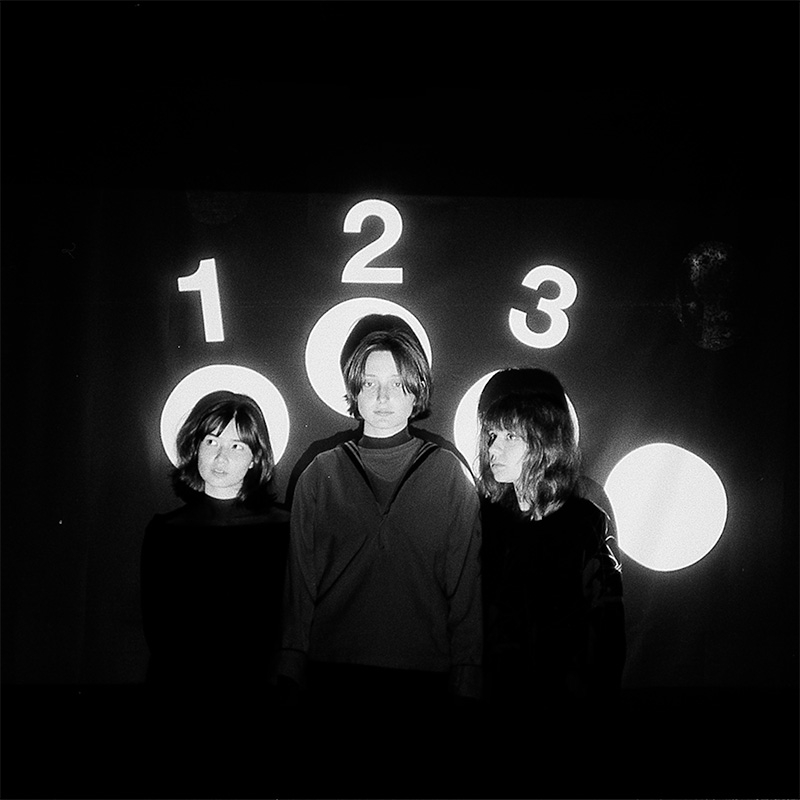
I averaged out all of the ratings for each track, and it came out to an 8.1! Without a doubt, Phonetics On and On is set to become one of my favorite albums of the year…and it’s only February. Horsegirl bring a welcome, much-needed dose of free-spirited yet tightly-constructed craft into their art and to the world, piling catchy melody after catchy melody for a record that sees them maturing into fledgling artists, yet never denies the play that is central to their ethos. I’d go so far as to say that we’re all better for the joy they bring to their music. I know I am.

Since this post consists entirely of songs, consider all of Phonetics On and On to be today’s song.

That’s it for this album review! Have a wonderful rest of your day, and take care of yourselves!

Posted in Sunday Songs

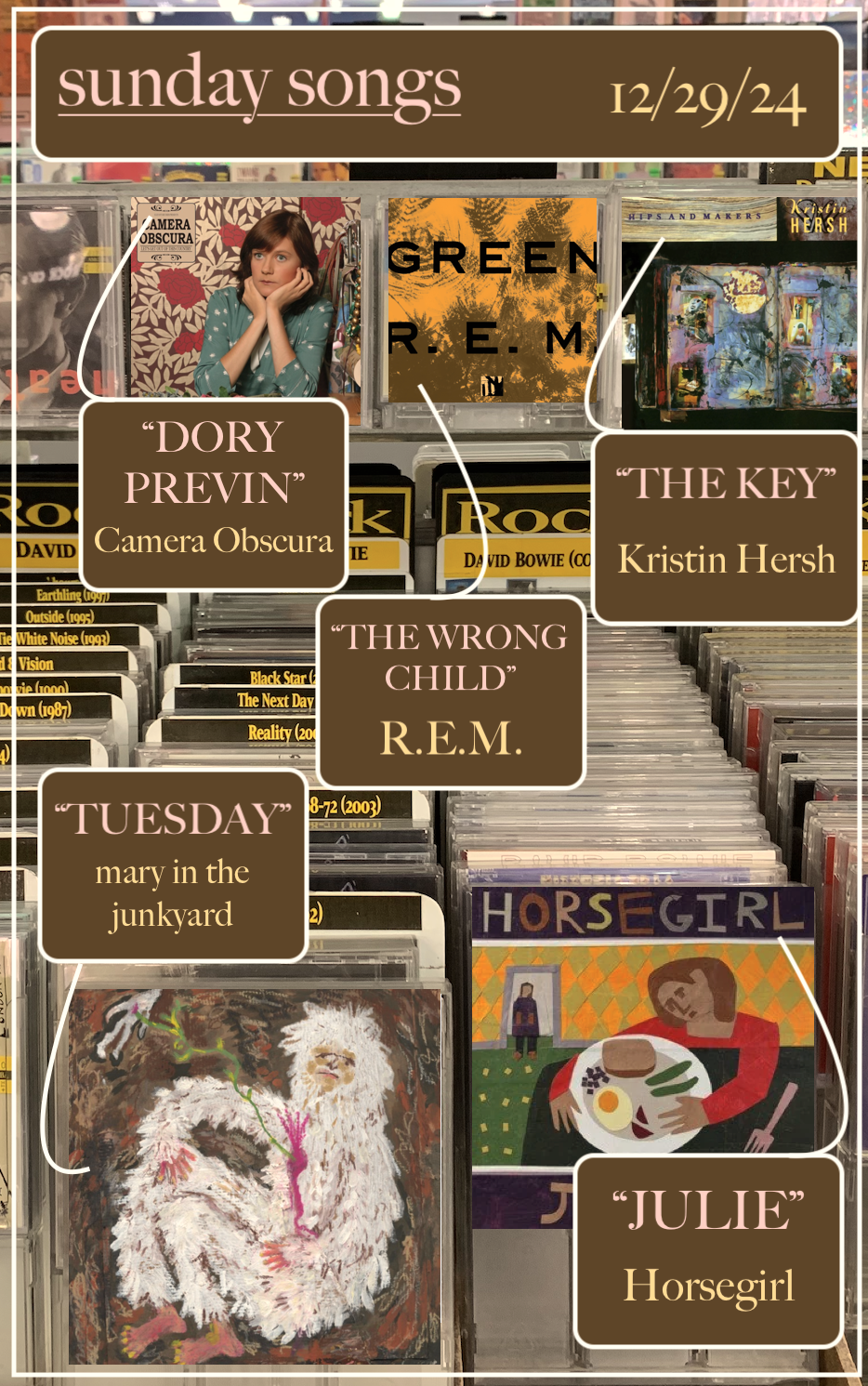
Sunday Songs: 12/29/24

Happy Sunday, bibliophiles! I hope this week has treated you well.

This week: Patchwork songs, and a few too many lyrics that hit me like a train. It’s the final Sunday Songs of the year…I might as well ramble.

Enjoy the final Sunday Songs of 2024!

SUNDAY SONGS: 12/29/24

“Tuesday” – mary in the junkyard

“this is my california” was my introduction to mary in the junkyard, but “Tuesday” was what convinced me to like them. [slides glasses up bridge of nose] Having listened to their entire discography now (read: a four-song EP and three singles), I gather that, whenever it comes time for them to release an album, I’ll be happy with the product, but I really, really hope that “Tuesday” is more the direction that they go in.

“Tuesday” might as well be three songs Frankensteined together into a neat five minutes, but in its shambling, stitched-up form, it packs an unexpected punch. Imagine: three figures hunched over a cauldron. One adds something adjacent to your typical sadgirl indie, one adds the juiciest bass-line you’ve ever heard, and another adds a skittering tribute to Radiohead’s “2+2=5.” Pieces of the patchwork monster reveal themselves in the light in the form of Clari Freeman-Taylor’s lyrics—a favorite of mine is “I feel like an alien here/Breathing from a separate hole.” As…gross an image that potentially conjures (no, not that hole, GET YOUR MIND OUT OF THE GUTTER), it’s apt for the jerkily combined spare and found parts of this song. It’s an urgent sprint through a foreign landscape, furtive as it darts into alleys and backroads as it tries to find its way around. The disheveled yeti in the music video seems more whimsical than the lyrics imply, but it’s nonetheless a story of a creature out of its element.

Freeman-Taylor, when interviewed for The Line of Best Fit, explained that “Tuesday” was written about living in the city for the first time: “[I] was feeling very small…I wanted to write about my yearning for chaos and realness—we all have wildness within us that we might be suppressing and we shouldn’t feel like aliens because of it.” Wildness and chaos are what stands out to me—”Tuesday” scampers with the speed of a frantic prey animal, cornered as it finds a new burrow to dart into. Cities and nature have a very different kind of chaos to them—a city’s chaos feels bred by the bustle of machinery and productivity, and it becomes so compressed and rushed that order births chaos; nature’s chaos comes only from the cycle of itself. That clash of opposite breeds of chaos is where “Tuesday” finds its not-so-happy, alien(ated) medium, the space between the shards of flint where the embers crack away.

…AND A BOOK TO GO WITH IT:

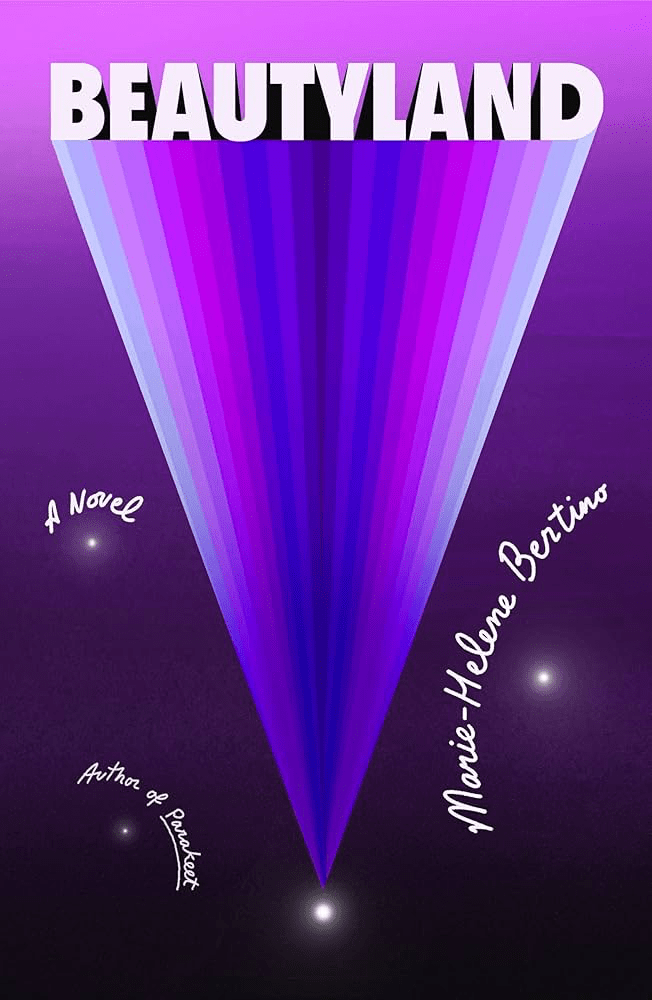
Beautyland – Marie-Helene Bertino – isolation, alienation, and surviving both from suburbs to big cities.

“Julie” – Horsegirl

First off: in concert with an excellent song, I have to praise this incredible music video by Daphna Awadish Golan! Her style melds so well with the collaged aesthetic of Horsegirl’s album covers and sound; the music video consists entirely of black and white footage of cities, animals, and people colored in with pastels that jump away from the grainy shades of gray.

As for “Julie” itself, the song makes me even more excited for Phonetics On & On just because I entirely can’t pinpoint the direction that Horsegirl are going in—and that excites me so much. Sure, albums have their more energetic points and their slower points, but this track is only one song away from “2468” and lands just past the halfway mark of the album. Their first album, Versions of Modern Performance, was fairly cohesive in its tempo and the invitations of different sounds and lyrical styles; aside from the instrumental interludes, there were never any slowdowns unless it was to watch a song crumble (“The Fall of Horsegirl”), but even that was crunched out and artsied-up to the extreme.

That’s not to say that “Julie” isn’t artsy, but it touches a more introspective side that the band have rarely reached thus far. The skeleton, aside from the slower tempo, is as Horsegirl as ever: guitar slides that dart around like frightened koi in a pond, buzzing synths, and a healthy dose of “da-da-da-da”s integrated throughout. (Is it really Horsegirl if there’s no da-da-da-da?) Yet the lyrics deviate from their usual style of sticking nonsense phrases together. Whether or not there’s a real Julie behind it, they extend reflection and comfort towards a figure: “Well, there’s something on your plate/You wish it was morе than you could take/We have so many mistakеs to make/What do you want from them?” It feels like an encouragement to break from monotony and form; the colored-over footage of subways in the music video emphasize that impression, but the mistakes to make feels to me like an encouragement to be human, to break free of a routine or lifestyle that isn’t necessarily crushing, but nonetheless doesn’t serve you either. With the way that the Horsegirl gang has with weird words, it doesn’t surprise me that they have something more emotional in them, but either way, it’s a promising glimpse of Phonetics On & On.

…AND A BOOK TO GO WITH IT:

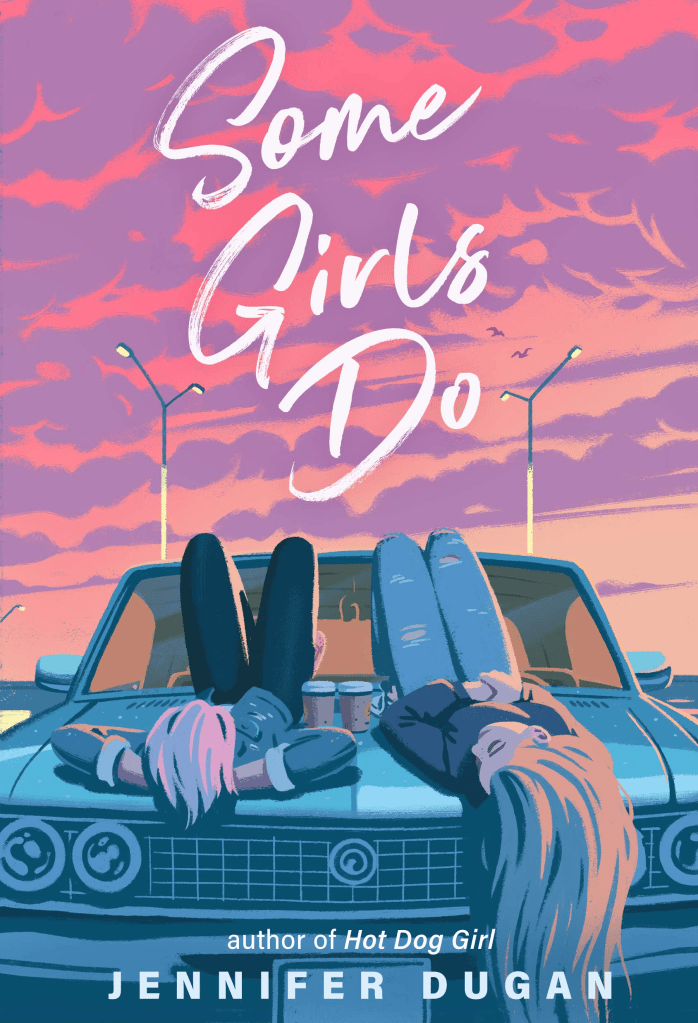
Some Girls Do – Jennifer Dugan“To have the same dream three times a week/Favors too big for you to keep/I have so many mistakes to make/Mistakes to make with you/You know I want them too…”

“Dory Previn” – Camera Obscura

The two-week gap between it doesn’t do it justice, but I’m reaping the benefits from Suki Waterhouse’s episode of “What’s In My Bag?” She’s got taste.

What is it with Scotland and cranking out soft-sounding indie pop bands in the late 90’s and early 2000’s? Does the weather necessitate that kind of tempo? No complaints of course, knowing that they produced this and Belle and Sebastian, who Camera Obscura were heavily influenced by. Even from all the way across the pond, “Dory Previn” has a nearly country twang, but it’s distinctly indie-pop, with its ever-stargazing, wistful delivery of Tracyanne Campbell’s lyrics or the muted instrumentals. The album title, Let’s Get Out of This Country, suggest more urgency, but “Dory Previn” implies that the sentiment is more out of quiet resignation; it’s a song at the crossroads, not ready to give up a lover, but at the same time “Sick of the sight of my old lover/Went under sheets and covers to get away from him.” Simultaneously wrapped up in the waning colors of the sunset and right smack in the emotional middle of 2 a.m., it feels like the exhausted yet determined position right after you’ve cried your eyes out; you’re embarrassed it took this long to decide, but you’re making a change—for Campbell, it’s the mantra-like repetition of “I think it’s time/I put him out of my mind.”

…AND A BOOK TO GO WITH IT:

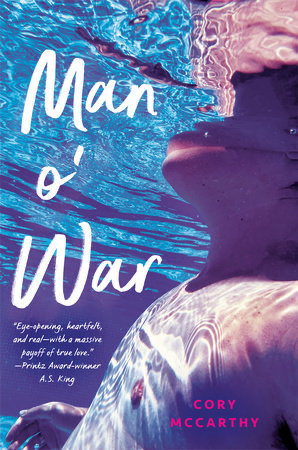
Man o’ War – Cory McCarthy“So I took a glimpse of Montana/Now nothing else matters/I’ll heal eventually…”

“The Wrong Child” – R.E.M.

Can we talk about Green? Genuinely, I think the only thing wrong with the album is that the album cover isn’t green. Probably a joke between the band members and the album artist, but the burnt shade of yellow on the cover does somehow fit how the album feels—sunny, but in a humid, Southern way. Sometimes it’s the eager yellow of energy and intent (“Get Up,” “Stand”), and other times it’s the fading yellow of a sunset over memories curling up and going sepia (“I Remember California”).

I’ve loved this album since late high school, but “The Wrong Child” was one that I was so used to skipping when it came on shuffle that it became lost. To be fair, the beginning is one of the less listener-friendly ones of the album, immediately opening with the out-of-sync clash of the mandolins and the key that Michael Stipe is singing in. (Can we talk about those mandolins? If anything else, Green will make you appreciate what a mandolin can do.) Once you stay with it—and I’m so glad I did on that fateful night in early December—it contains some of Stipe’s most evocative poetry on the whole album. The first verse should be in masterclasses about the ability of music to set a scene:

I’ve watched the children come and go/A late long march into spring/I sit and watch those children/Jump in the tall grass/Leap the sprinkler/Walk in the ground/Bicycle clothespin spokes/The sound the smell of swingset hands…”

The smell of swingset hands! It’s so specific, but I can smell exactly what Stipe is describing, the medley of the sweaty scent of skin with the tang of metal smeared all over it. There’s some gravel mixed in if I dig deep enough. I can feel the tickle of every blade of grass, each ray of sunlight. But more than that, I can feel the deep-seated aching of this song. Over the years, there have been a variety of interpretations of the song, everything from a burn victim reintegrating into society to a young gay boy’s experience of homophobia. In 2008, Stipe admitted that he’s “fine with any and all interpretations that aren’t manifested in real life as harmful, hateful or violent,” but that it was loosely centered around “a kid who is physically handicapped, and left it purposely undefined.” It is distinctly othered song. I can’t relate to the severity of what the subject experiences, but even some of it rings true for me; I did feel isolated from my peers for quite some time, in part due to my SPD, among the varied things that made me different. There was never that outright bullying, but I could see it all in the periphery, the kids that laughed behind their hands whenever I had what they saw as an overreaction to an unexpected sound—some of that “Hey those kids are looking at me/I told my friend myself/Those kids are looking at me” certainly put a bit of a knife in my gut. But this subject has become so removed from society for whatever reason that they yearn for the outside world, even if its occupants do nothing but torment them. They attempt to self-soothe, but in the end, they try to mold themself to the outside world instead of the other way around, repeating the chorus like a mantra: “I’m not supposed to be like this/But it’s okay.” And god, Stipe’s delivery of “it’s okay,” the bleeding rawness of it…oh, god. Yeah. It gets me every time. It delivers that sense that the subject is trying so hard to justify their existence and their right to play with the other kids that they’ve convinced themself that they are inherently wrong. They try and try, but never reach the happiness the other kids have, and the only way they know to try to reach it is to convince themself that they’re the problem, not the prejudice and taunting of the others. That is what any kind of prejudice does to you: it convinces you that, even if you were born in the same way as humans have been reproducing for millions of years, that you’re wrong, and not the fabricated idea of rightness taught from a young age. In the end, I’m glad that Stipe kept the subject undefined, because it does provide a kind of sanctuary, a reassurance that none of us are alone in this experience, whichever lyric rings true.

…AND A BOOK TO GO WITH IT:

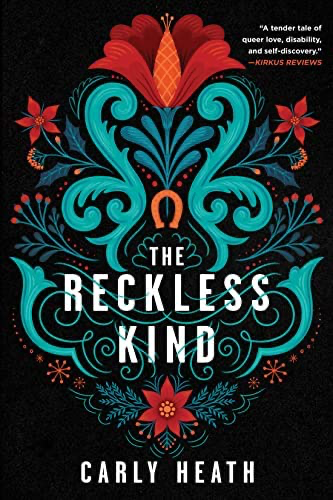
The Reckless Kind – Carly Heath“Hey those kids are looking at me/I told my friend myself/Those kids are looking at me/They’re laughing and they’re running over here/They’re laughing and they’re running over here/What do I do?”

“The Key” – Kristin Hersh

“You don’t inspire a metric ton of trust/’Cause I’m on fire, and so is all my stuff.”

There. I could just leave it at that, and it would explain the whimsical cleverness of this song, kind of like “Little Bird,” which I talked about back in July. Once again, that wouldn’t work, simply because there are just too many good lyrics here. Leave some for the rest of us, Kristin! God. So selfish. Can’t we get some of whatever creativity inspired “If I lived in a pumpkin shell/I’d have the key/And if I had a daughter/She’d look a lot like me?”

I may use the word “whimsy” quite liberally, but there’s a kind of ethereal whimsy to “The Key” that I can only describe in images. This song was a frequent visitor in my dad’s car when I was young; I associate it the most with nights spent on the car ride back from dinner or road trips. As the sky darkened, so did the images in my mind—not in emotion, just in the amount of light that was let in. Kristin Hersh felt candlelit, the kind of music meant to soundtrack a child’s nursery in the early hours of night. The lyrics nearly call to mind Lewis Carroll—save for the absence of made-up words, I wouldn’t bat an eye if you attributed “Copper and snow/Make a dusky blue boy” to one of his poems, if he’d condensed them more. Less British, of course. (Maybe that’s for the best.) We’re not getting too “Walrus and the Carpenter” with it, but we sure are close. “The Key” is inherently soft; in that children’s bedroom, dated maybe 100 years ago, with flowery, peeling wallpaper and lacy curtains, I can see a pink, plush blanket over a bed tucked in the corner, yellowed by a lantern on the dresser. Hersh’s fingerpicking has a comforting repetition to it, chords blending into each other as gently as freshly-washed hair splays out across a pillow. In between all of these images, there’s a ballerina in a music box that squeaks as it spins in a circle. Sometimes it’s the one I had as a kid, sometimes there are subtle tweaks—longer hair, different painted eyes. Like that music box, the repetition is soothing in a way that few songs are—the song’s outro of “and we’d dance all night” is a promise, and one filled with golden-lit joy to come. As Hersh’s guitar fades out, I see that mother and daughter, dancing in circles. I didn’t quite get it when I was younger, but that repetition, that security, swaddled me up like a blanket.

…AND A BOOK TO GO WITH IT:

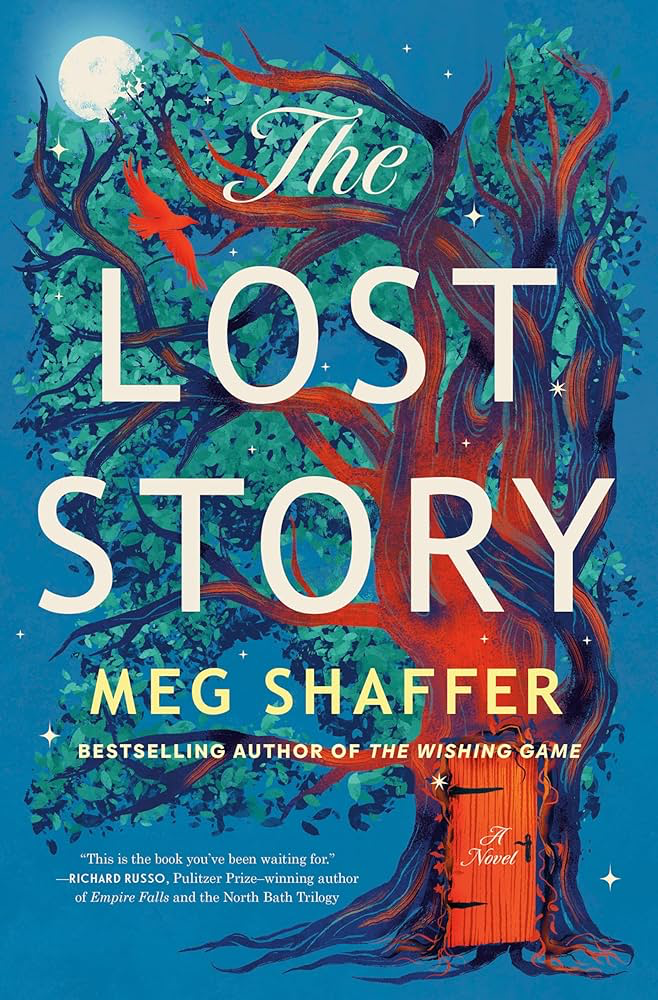
The Lost Story – Meg Shaffer“If I lived in a pumpkin shell/I’d have the key/And if I had a daughter/She’d look a lot like me…”

Since this post consists entirely of songs, consider all of them to be today’s song.

That’s it for the last Sunday Songs of 2024! Have a wonderful rest of your day, and take care of yourselves!