Posted in Monthly Wrap-Ups

July/August 2025 Wrap-Up 🧁

Happy Monday, bibliophiles!

Once again, I dropped off without warning, so apologies for that. But I just started school and moved into a new apartment, so I haven’t had much time to squeeze in some blogging. (Never mind the fact that I also have a short story due tomorrow and it’s only about 3 weeks into the semester. Whee!) This post has been written in advance, so that’s why you’re seeing it here. Chances are, I’ll probably be radio silent for a little while longer as I get my stuff fully together. But for now, here’s a recap of the latter half of my summer!

Let’s begin, shall we?

GENERAL THOUGHTS:

I’m one of those people who, even in the face of an expanse of free time (summer), easily gets restless and anxious. The solution was there all along…employment. I helped out with some online summer classes, which was a wonderful way to give some structure to my summer and provide something to break up the routine. And when the class ended, I’m proud of myself for committing to not slipping back into my anxiety before school started. When I look back at the person I was a year ago…well, I want to give her a hug, first off, but I’m so proud of the progress I’ve made since then. Anxiety really had taken ahold of me, and little by little, with the support of my wonderful family and friends (thank yous are due) and the work I’ve put in, I’ve been learning to take the reins back. There’s no feeling quite like seeing measurable progress in yourself. It’s worth it to try, is all I’m saying.

My obligatory temperature check on American politics might be pointless at this point, as the thermometer reached its hottest point long ago and the glass has all but shattered. I’d prefer not to dwell on it much. As a birthday treat, I stayed off the news for the whole week, and I’m continuing the streak. Some days the spirals get me, but I’m fighting like hell to make sure that they don’t take my sanity away and make me vulnerable to complete, utter helplessness. All I can say is for everyone to take care of yourselves. I love you. My heart goes out to everyone, but especially those in Washington D.C., Minneapolis, and Chicago.

And oh my god…I guess when I’m doing these 2-month wrap-ups, I forget that so much can happen in 2 months! Crazy, right? Superman? A massive ray of light in a dreary landscape of gritty superhero movies. Hope is punk rock. Saving squirrels is punk rock. (If anything, see it just to see Nicholas Hoult seething after Superman saves some kids.) Fantastic Four: First Steps? The first MCU movie I’ve enjoyed—genuinely enjoyed—in years. The world needed all that Silver Age goofiness (and Cousin Thing). I had the immense privilege of seeing Wilco twice, and both nights were spectacular! And Car Seat Headrest…I’ve already rambled enough about it. I crode. (See my accounts below scattered amongst the various July Sunday Songs posts.) I dyed my hair another crazy color. I finished knitting a whole scarf yesterday. I played guitar, I drew, I read, I wrote…I’m trying everything to keep the art in my life, even if only a smidge every day.

And I took another trip around the sun. I feel so grateful to be closing another chapter and starting a new one. I don’t want to jinx it, but I have a feeling that my senior year of college (how the HELL did that happen?? 😭) will be a good one. I’ll try to approach it in the same way that I’ve approached decorating my new place: putting in the work to making a space that I love. If anything, I ended August celebrating my birthday, laughing and eating cake, surrounded by people who I cherish. I have to remind myself, always, that even if I don’t see it, that I’m surrounded by love.

JULY READING WRAP-UP:

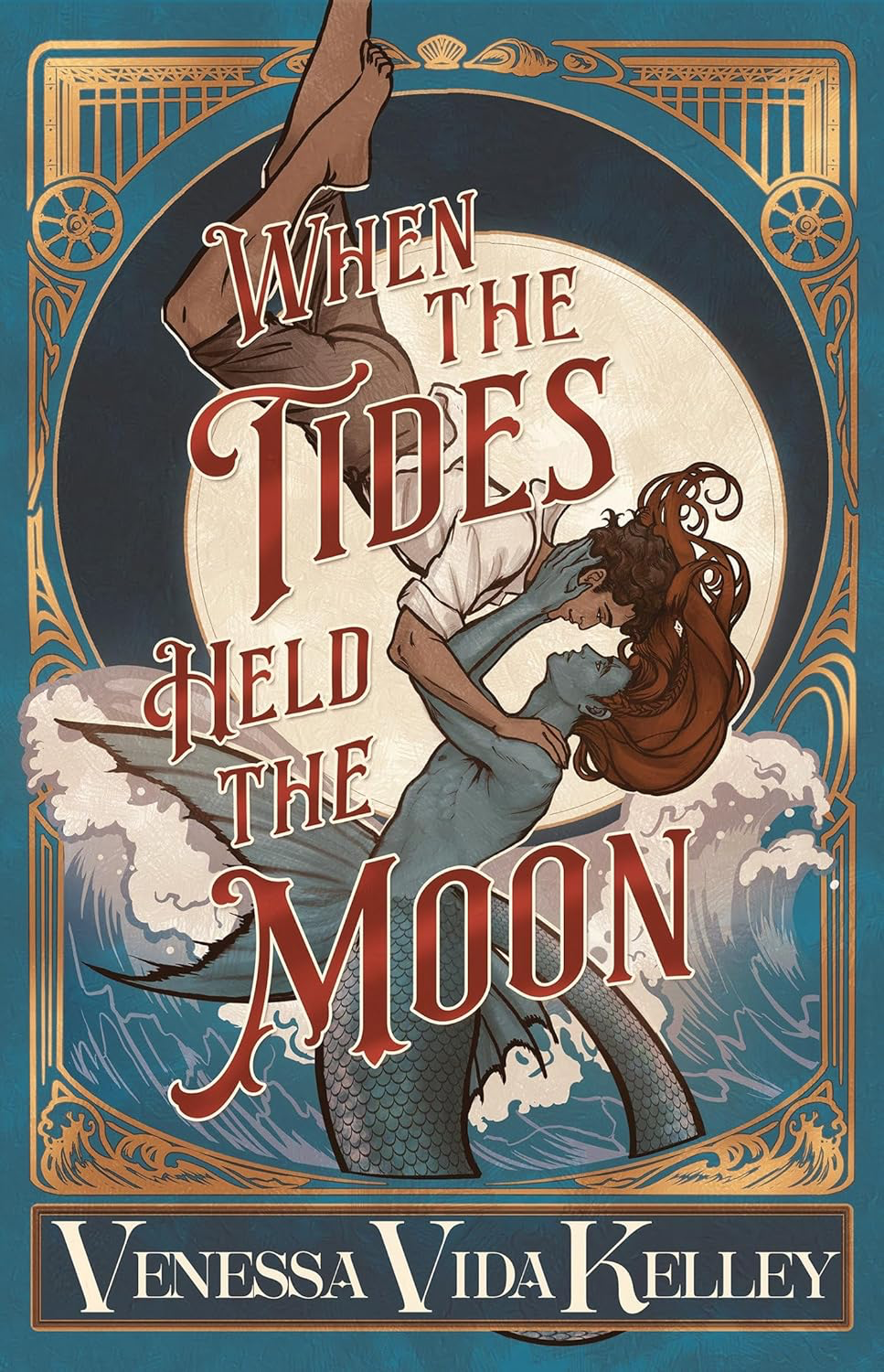
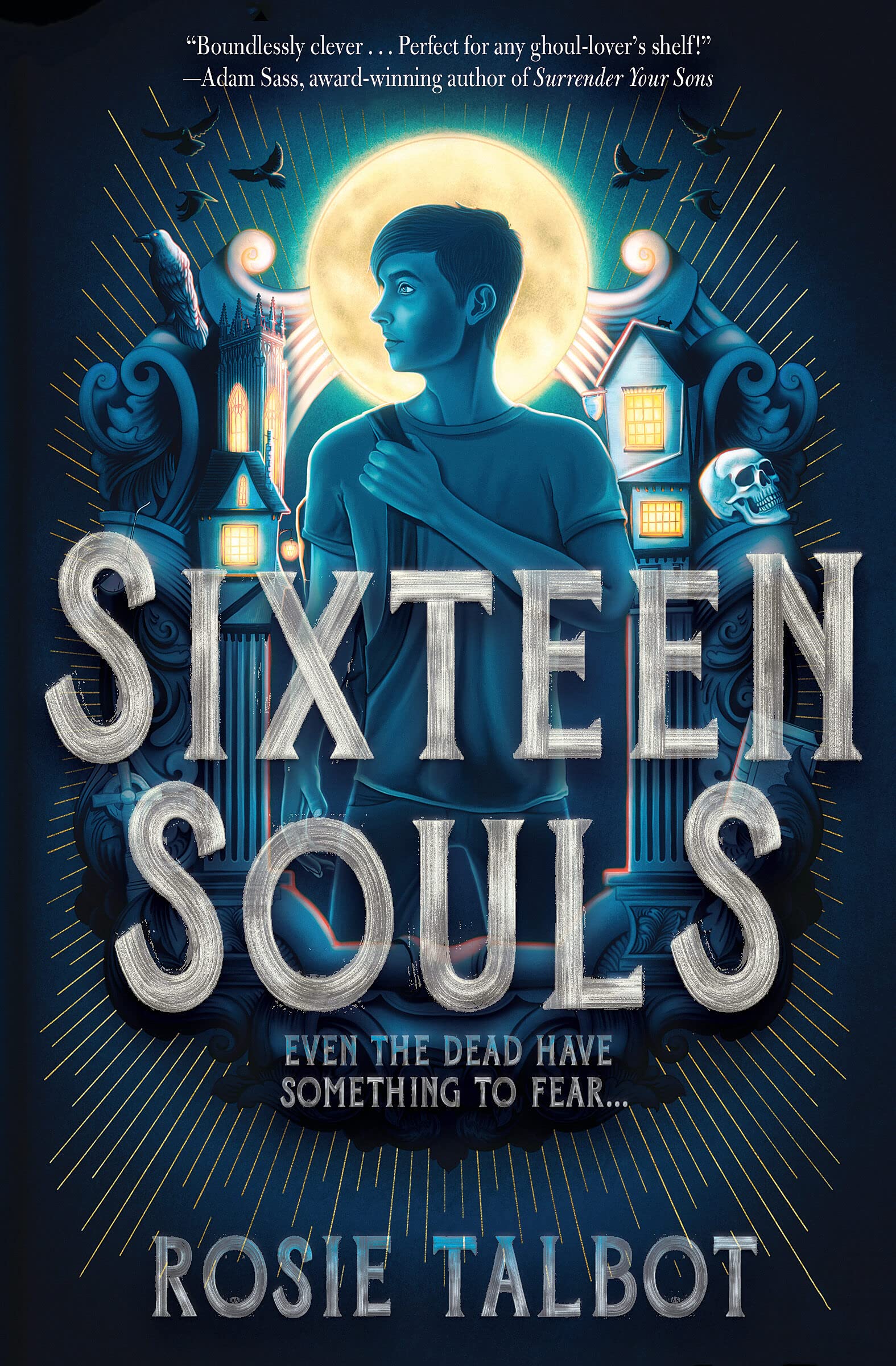
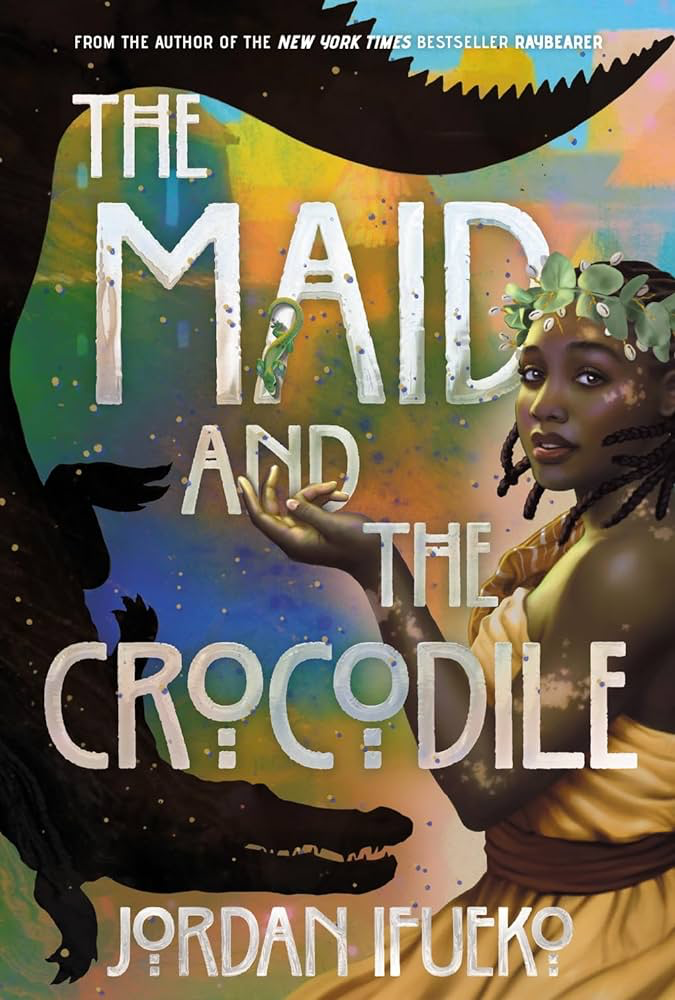
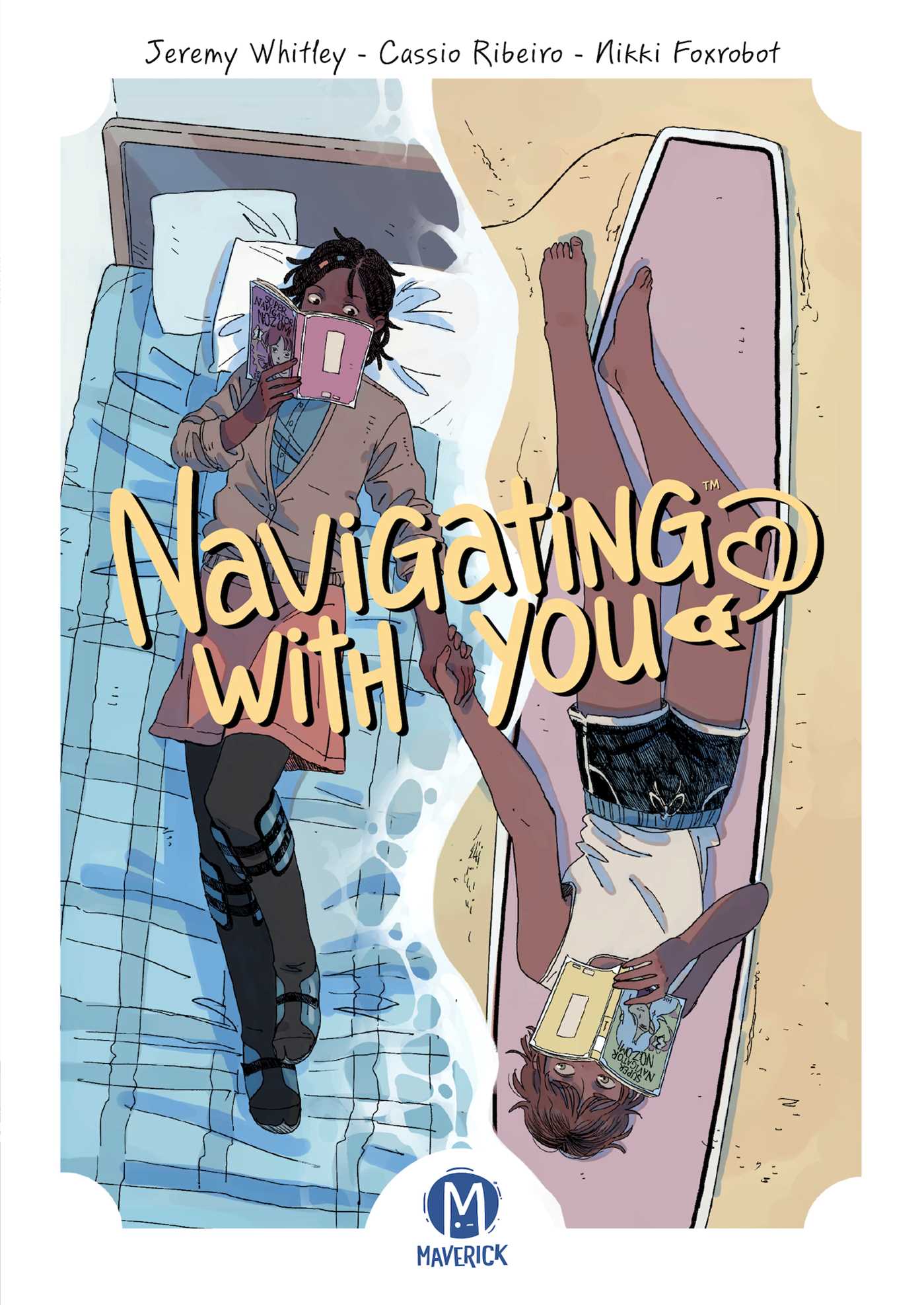
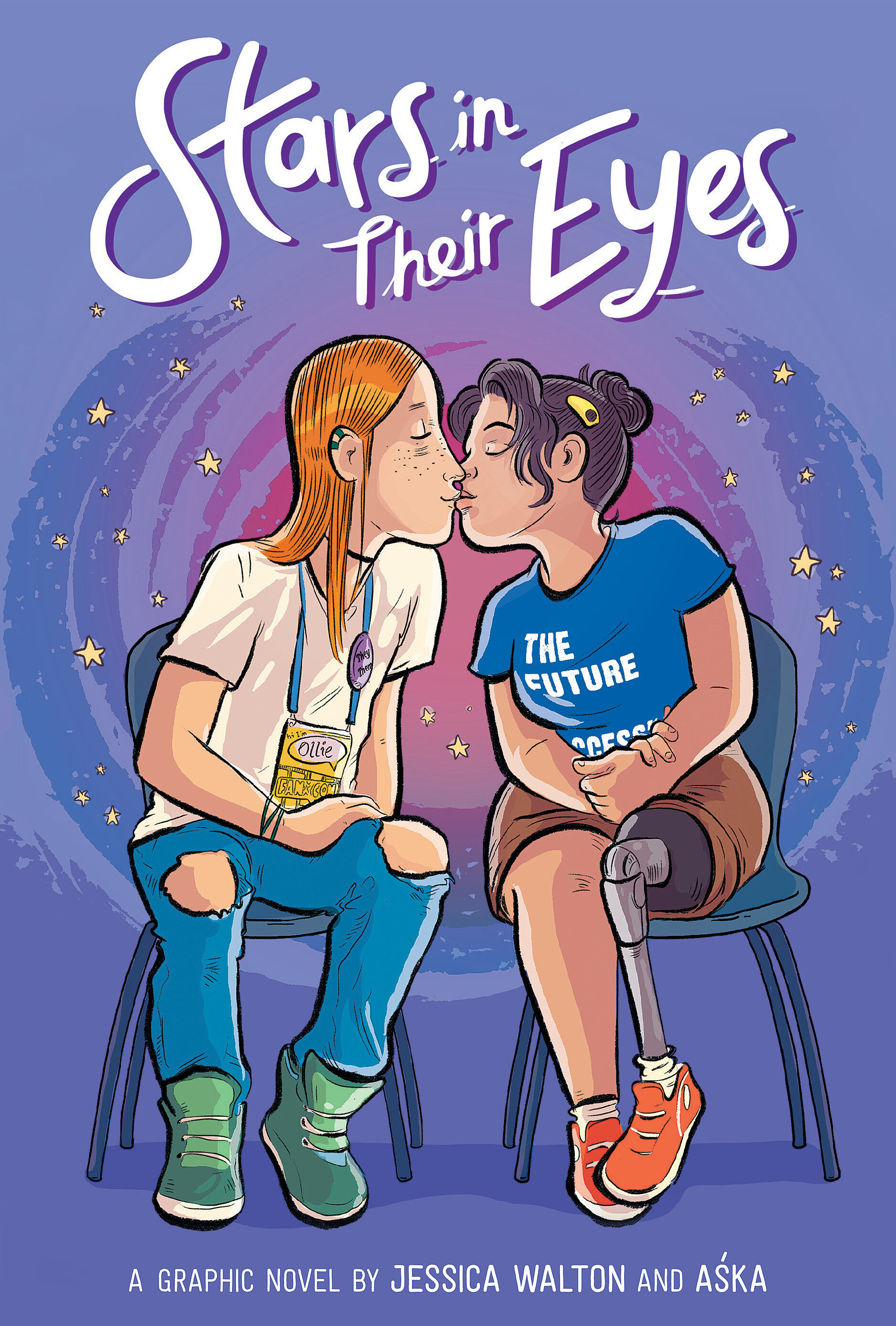
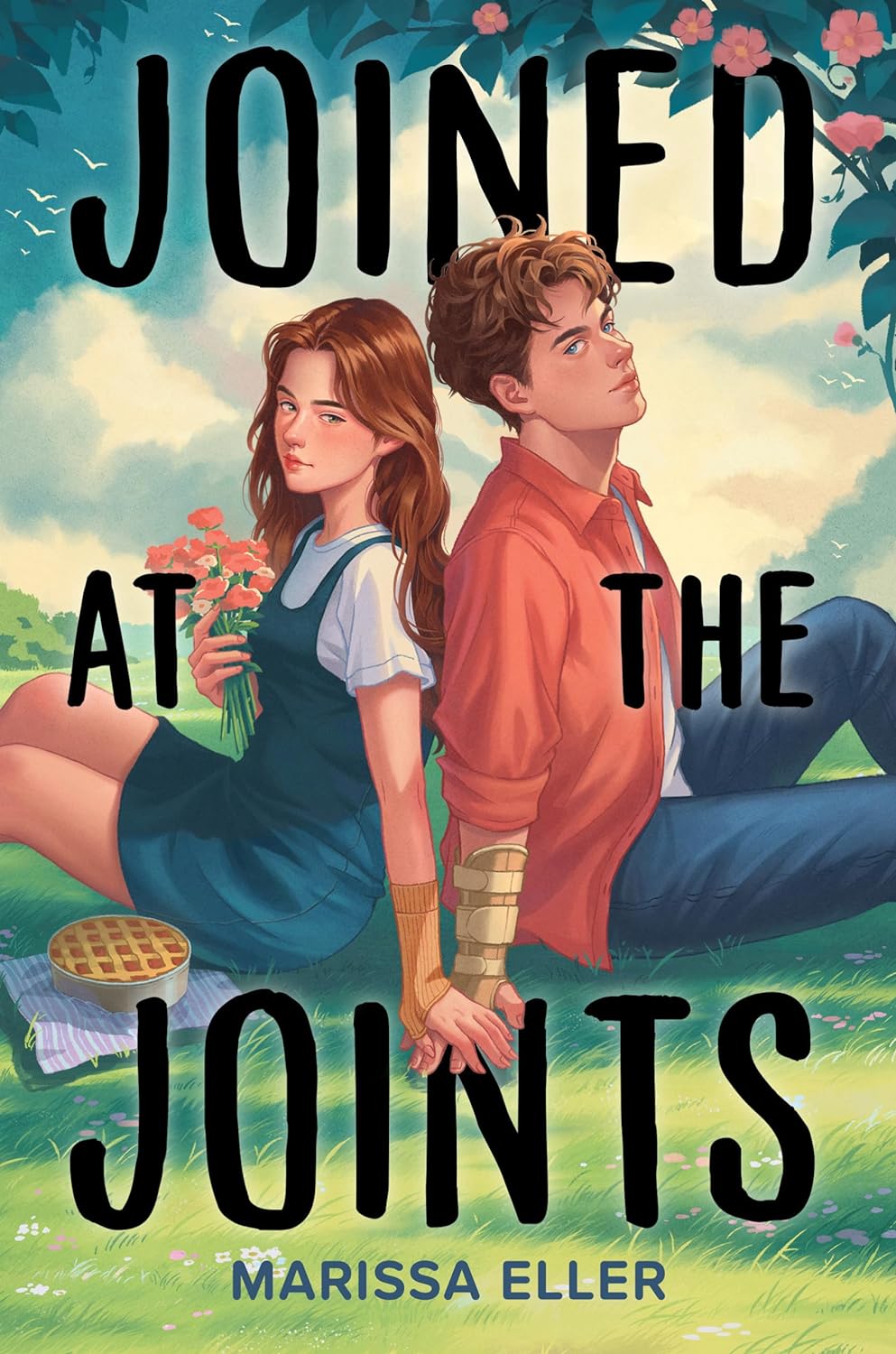
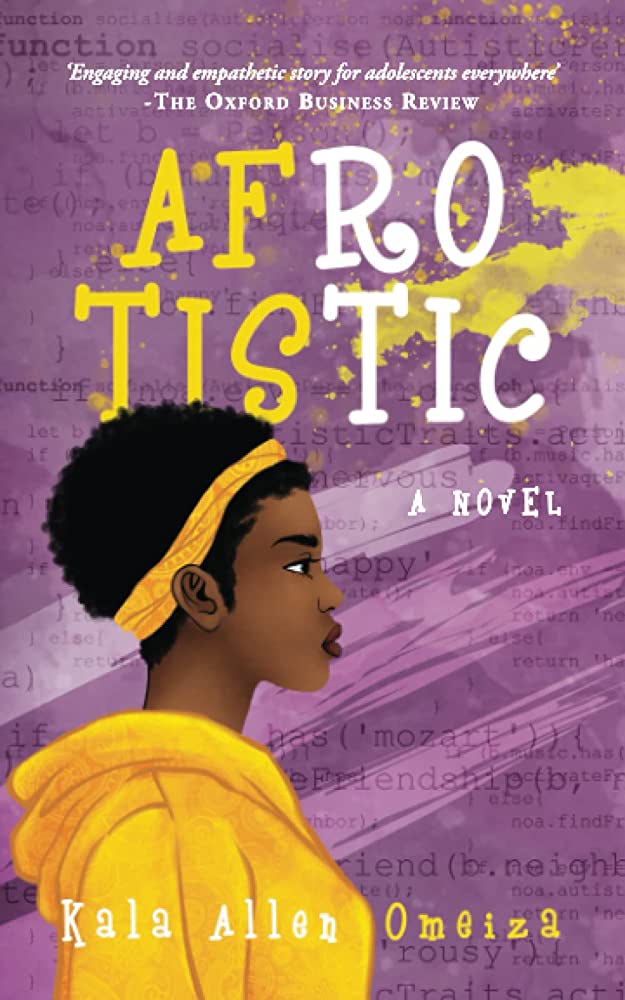
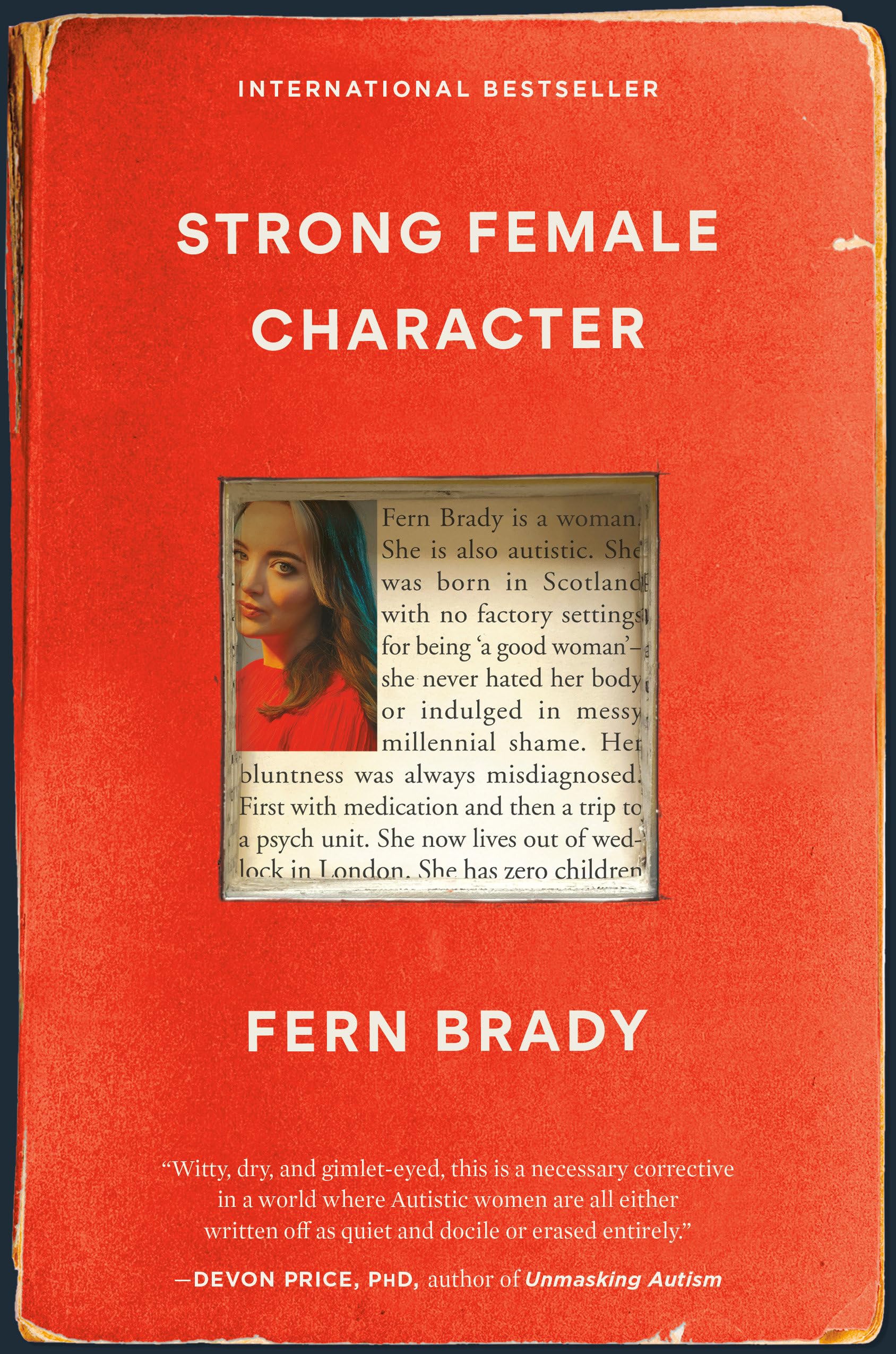
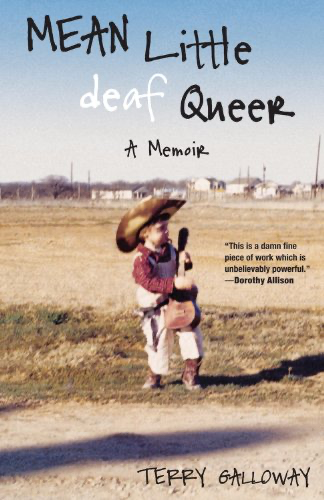
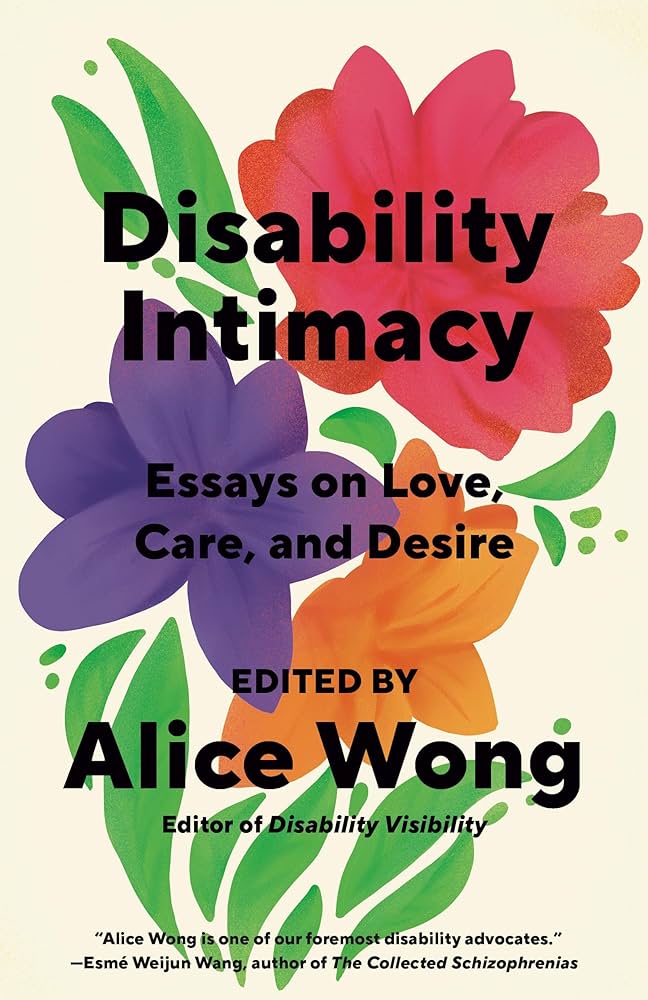
I read 16 books in July! Though there were a handful of misses, I read a ton of fantastic books for Disability Pride Month. The last book I read this month (On Earth As It Is on Television) unexpectedly blew me out of the water.

2 – 2.75 stars:
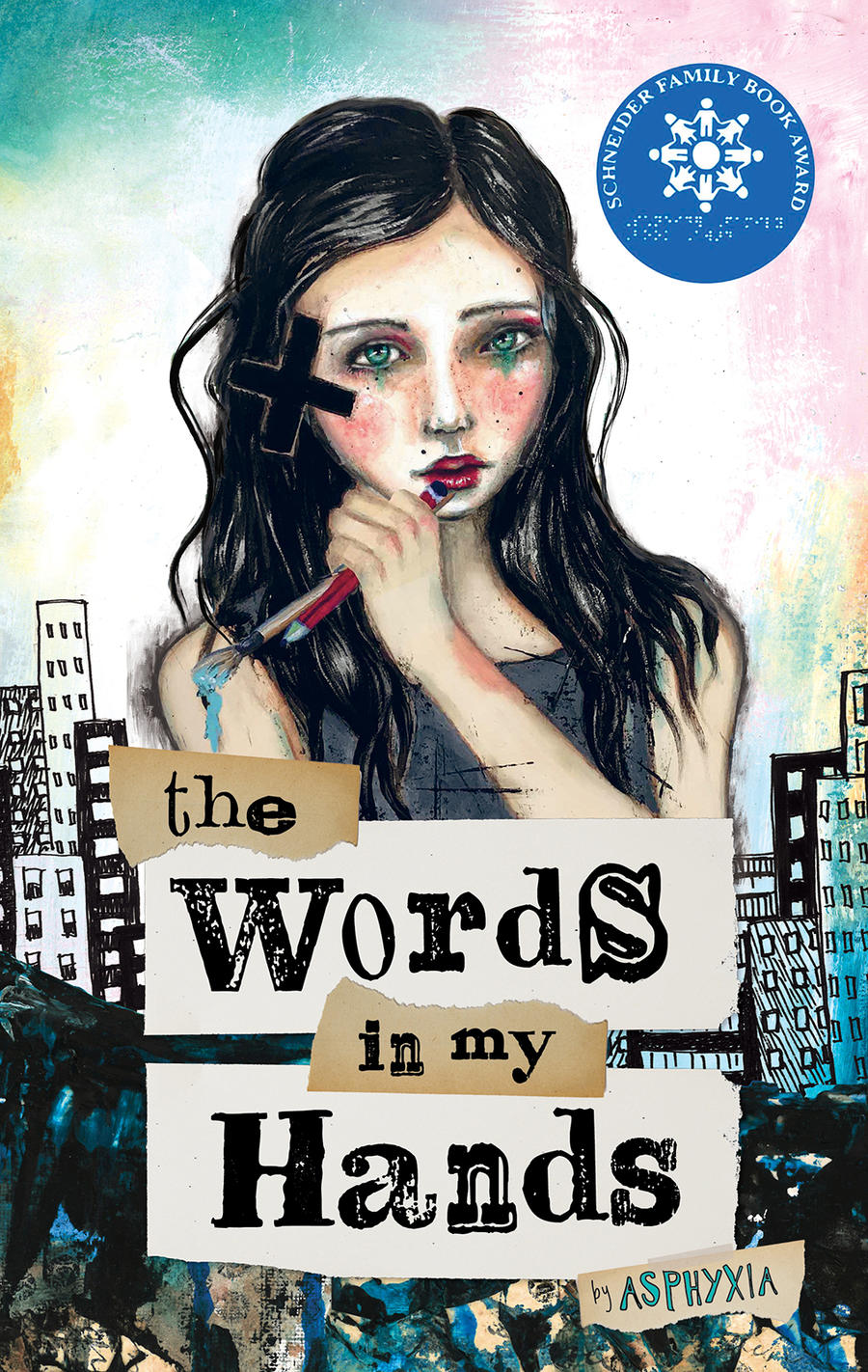
The Words in My Hands

3 – 3.75 stars:

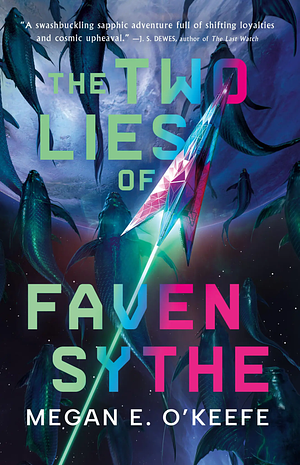
The Two Lies of Faven Sythe

4 – 4.75 stars:

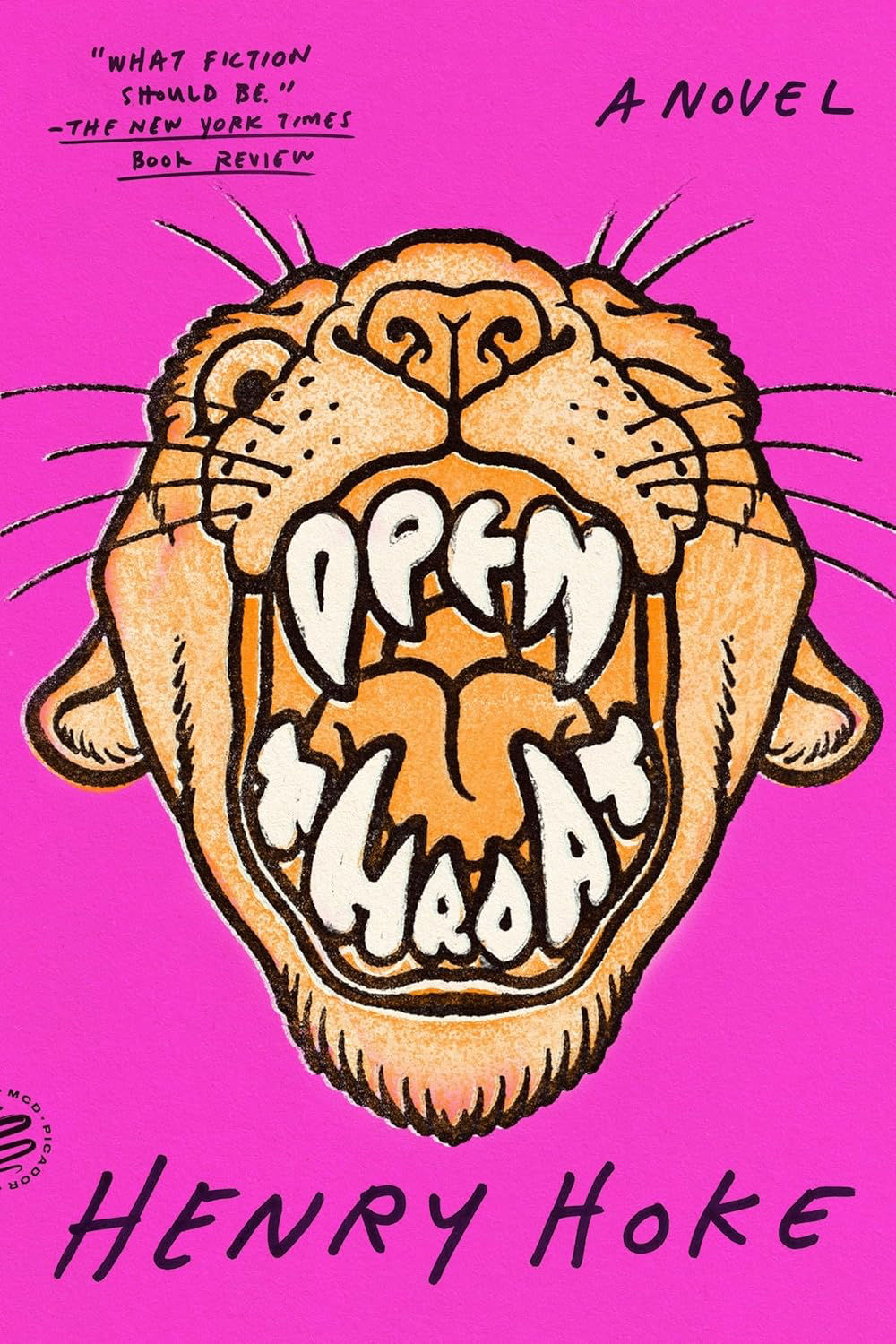
Open Throat

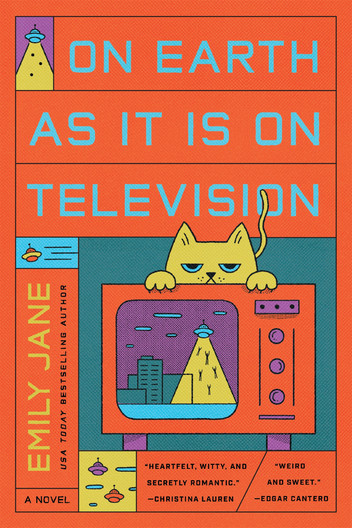
FAVORITE BOOK OF THE MONTH: On Earth As It Is on Television4.75 stars

On Earth As It Is on Television

REVIEWS:

SUNDAY SONGS:

BONUS:

AUGUST READING WRAP-UP:

I read 14 books in August! Thankfully, I only read two books that I really didn’t care for, and there were tons of wins throughout the month: monsters in space, a surprisingly emotional story about sea monsters and Pokémon-obsessed children, and the great Brian Eno.

2 – 2.75 stars:
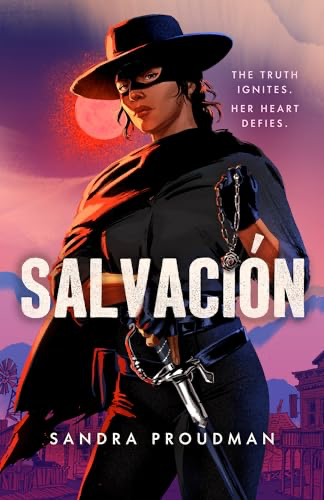
Salvación

3 – 3.75 stars:

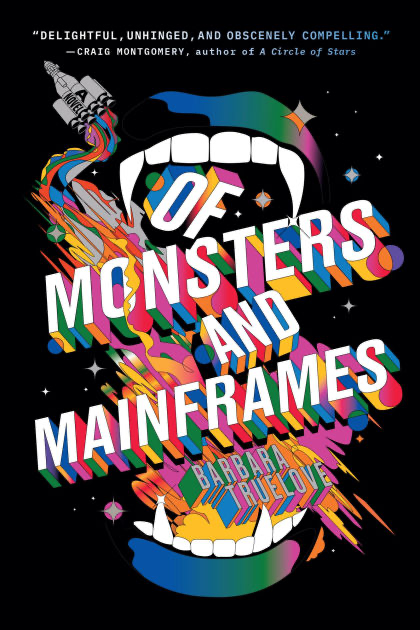
Of Monsters and Mainframes

4 – 4.75 stars:

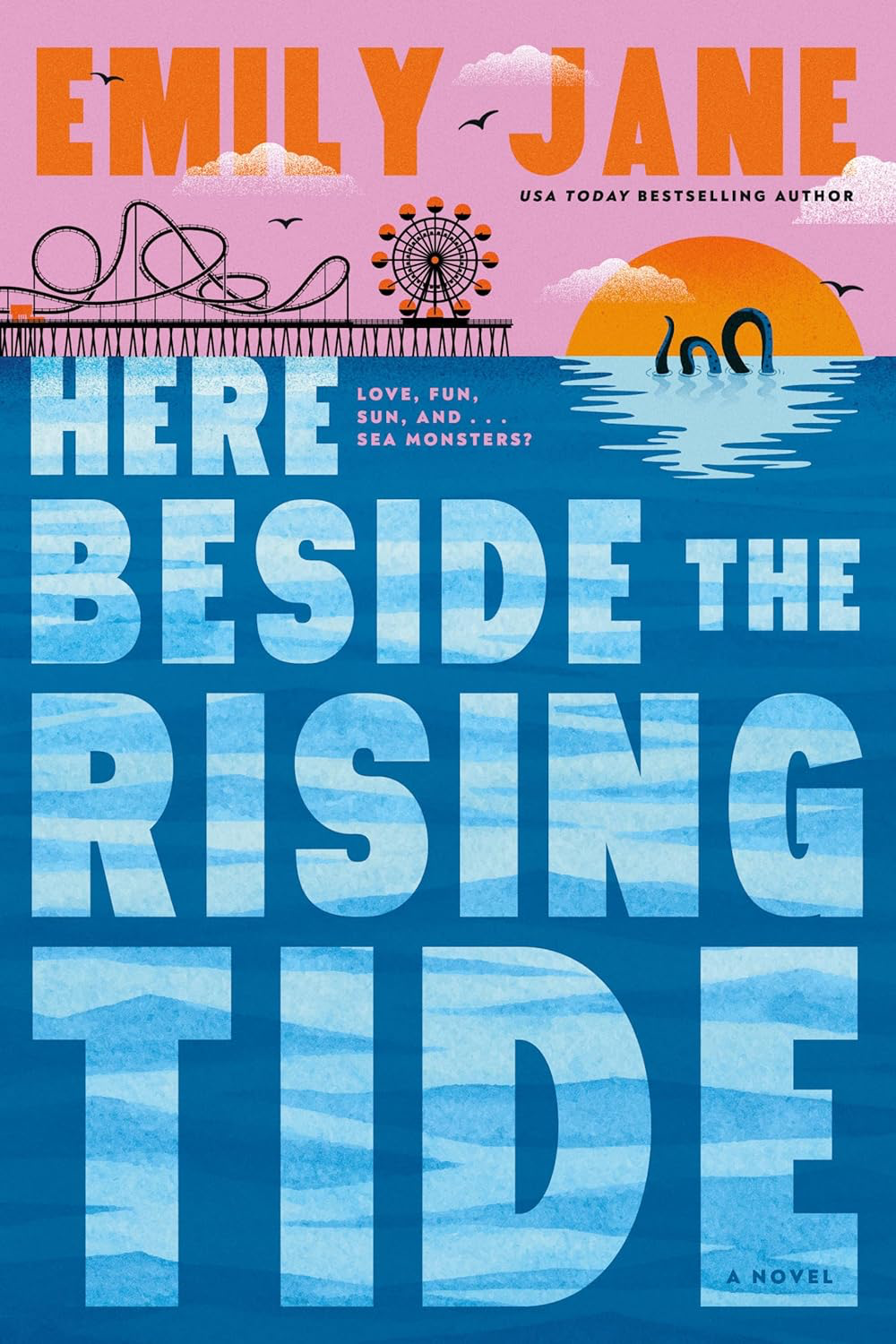
Here Beside the Rising Tide

5 stars:

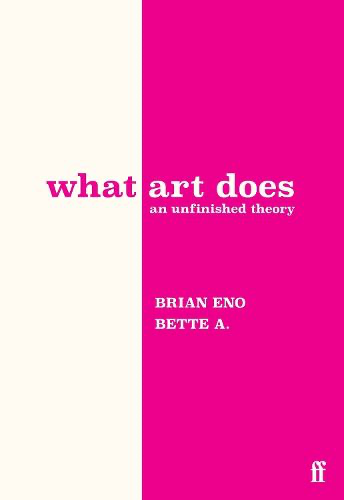
What Art Does: An Unfinished Theory

FAVORITE BOOK OF THE MONTH: What Art Does: An Unfinished Theory5 stars

REVIEWS:

SUNDAY SONGS:

Today’s song:

CANNOT stop listening to this!!

That’s it for this wrap-up! Have a wonderful rest of your day, and take care of yourselves!

Posted in Book Review Tuesday

Book Review Tuesday (7/29/25) – Redsight

Happy Tuesday, bibliophiles!

As Disability Pride Month comes to a close, here’s one last book to finish off the month. This one has been on my TBR for at least a year, and it’s evaded me in the library thus far—thankfully, Barnes & Noble finally brought my chase to an end. Even though I’m growing a little weary of every new sci-fi that hinges on the promise of “incomprehensible space religion, woooooo,” Redsight provided a fascinating twist in the subgenre.

Enjoy this week’s review!

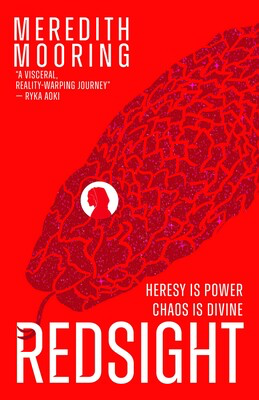
Redsight – Meredith Mooring

Korinna knows that she is doomed to a life of obscurity. Even though her being a Redseer gives her the power to manipulate space-time itself, she is the weakest of her order, and little mercy is shown to the weak. Resigning herself to a position navigating a warship for the treacherous Imperium, Korinna is at war with herself. But when the warship is boarded by strange pirates, Korinna learns that she has power beyond comprehension—all deliberately hidden. With her newfound abilities and a desire to uncover the secrets of the Goddesses that once ruled the galaxy, Korinna searches for answers, but what she finds may be more dangerous than she could have ever bargained for.

TW/CW: violence, gore, blood, death of children (off-page)

In the last six or seven years, I’ve seen a major trend in science fiction where the plot centers around an ancient, ominous Space Religion™️ (see: Gideon the Ninth, The First Sister, The Genesis of Misery). It’s a Thing. The usual suspects include an AI/vague cosmic entity deity, some form of cult, vague to overt references to Catholicism, and repression. I’m honestly fine with all of these things—in fact, having a cultish religion on an intergalactic scale is often a fascinating way to set up a story, and can be used to many ends, whether it’s deepening worldbuilding or critiquing organized religion in the real world, as it often does. My problem was that it’s everywhere. I feel like every other space opera I find is some kind of retelling of Joan of Arc or “what if God was real and it was a robot and the robot wanted to kill you?” Again, interesting once or twice, but after a point, they all start to blend together. On a personal level, I guess it’s partly because I don’t often connect as deeply to stories about religion/religious trauma, but I swear every other adult sci-fi book out there is like this.

Redsight is one of those books. However, it had enough different aspects that it was separated from the rest for me. It honestly veers into space fantasy at times, toeing the line between that and space opera expertly. Even though the redseers and all of the other witches in the universe had a slightly similar structure to some other books I’d read (spooky magic, incomprehensible goddesses trapped in tombs for thousands of years, etc.), it was Mooring’s exploration of how this insular cult of witches affected the outside world that stood out to me. The space-time manipulation is awesome, first off, but there’s also a host of space pirates, sprawling libraries, and transformative magic that goes…wrong. Snakes are involved. Also, Korinna and the others don’t exist in a vacuum—they’re a small part of a massive galaxy and are entangled in all manner of messy, manipulative politics throughout the universe. (There’s a strong Bene Gesserit vibe going on…I guess Dune might be to blame for the big spooky space religion trend?) They are outwardly very strange to others, and they don’t feel self-contained, as some other similar books are—they felt like a small part of a much more expansive world, which is what set it apart. Plus, I loved how it served as a critique of both that can come from organized religion AND the corruption that spreads into imperial politics—it’s all a great examination of systemic corruption, which I enjoyed thoroughly.

One of the more unique aspects of Redsight was how disability was handled. Up until we leave the Navitas, where all of the redseers are trained, pretty much all of the characters you meet are blind. All of the priests and priestesses of Vermicula are blind, and the way that Mooring shows us how it’s accommodated in the universe is fascinating. Through the power of redsight, they can sense most everything they need to sense through…well, manipulating the fabric of time and space, which is pretty badass in and of itself. But beyond that, I love how many intricacies to Korinna’s life are detailed. We see how she senses space around her with her blindness, how the Order of Vermicula produces special tactile books so that everyone can read the holy texts, and how she navigates the universe without being accommodated like she was within the Order. Knowing that Mooring herself is blind, I’m sure that she thought of everything when it came to how Korinna would navigate the universe, accommodations or not, and it showed through in her writing.

If you’re looking for a twisty book, then Redsight is the book for you! Even though I feel like I’m iffy when it comes to predicting twists, the ones in this novel had me constantly guessing. Mooring nails a critical combination of a very slow-burn first third of the novel, gradually building tension, while also throwing out a red herring where you think you know what the big mid-book reveal is, but…oh boy, I did not. (Red herrings, Redsight, red witches…lots of red in this book! Say, what’s that pooling on the floor?) In all seriousness, Mooring did an excellent job of creating tension and putting up all manner of red flags and misleading clues, and they came up organically: they were both the result of Korinna not knowing any better and the propaganda and narrative control that both the Order of Vermicula and the Imperium had over the knowledge that was passed onto her. It deepened the worldbuilding and the pacing of Redsight…for the most part.

All that being said, the ending was quite rushed. With as much buildup as this novel had, it was kind of bound to happen. All things considered, Redsight is Mooring’s debut novel, so I can let some of it go, because I enjoyed the majority of it. But there was just far too much crammed into the last 100 or so pages of the novel. Even with the theme of undoing systemic corruption, the speed at which it happened was truly just bonkers. For the truly mind-boggling, cosmic scale that everything in Redsight happened in, it seemed illogical that everything that happened in the novel would’ve been able to happen so quickly. After all of that, it was wrapped up strangely tightly—the loose ends were tied up basically because…the Goddesses can just do whatever, and it’s fine. I guess if you’re dealing with universe-creating Goddesses, by that logic, they can also clean up messy endings? It felt cheap. For the amount of time spent just on the buildup in the first third of the novel, everything was resolved far too quickly than seemed plausible, even with my suspension of disbelief.

All in all, a gripping and captivating—if a little messy—story of corruption and history, all set within the bounds of a boundless, magic-filled universe. 4 stars!

Redsight is a standalone, and Meredith Mooring’s debut novel.

Today’s song:

That’s it for this week’s Book Review Tuesday! Have a wonderful rest of your day, and take care of yourselves!

Posted in Sunday Songs

Sunday Songs: 7/27/25

Happy Sunday, bibliophiles! I hope this week has treated you well.

This week: Aquarium gravel music, driving-in-the-summer music, and music that I would’ve made a badly-animated Warriors AMV for in elementary school, if I had the capabilities.

Enjoy this week’s songs!

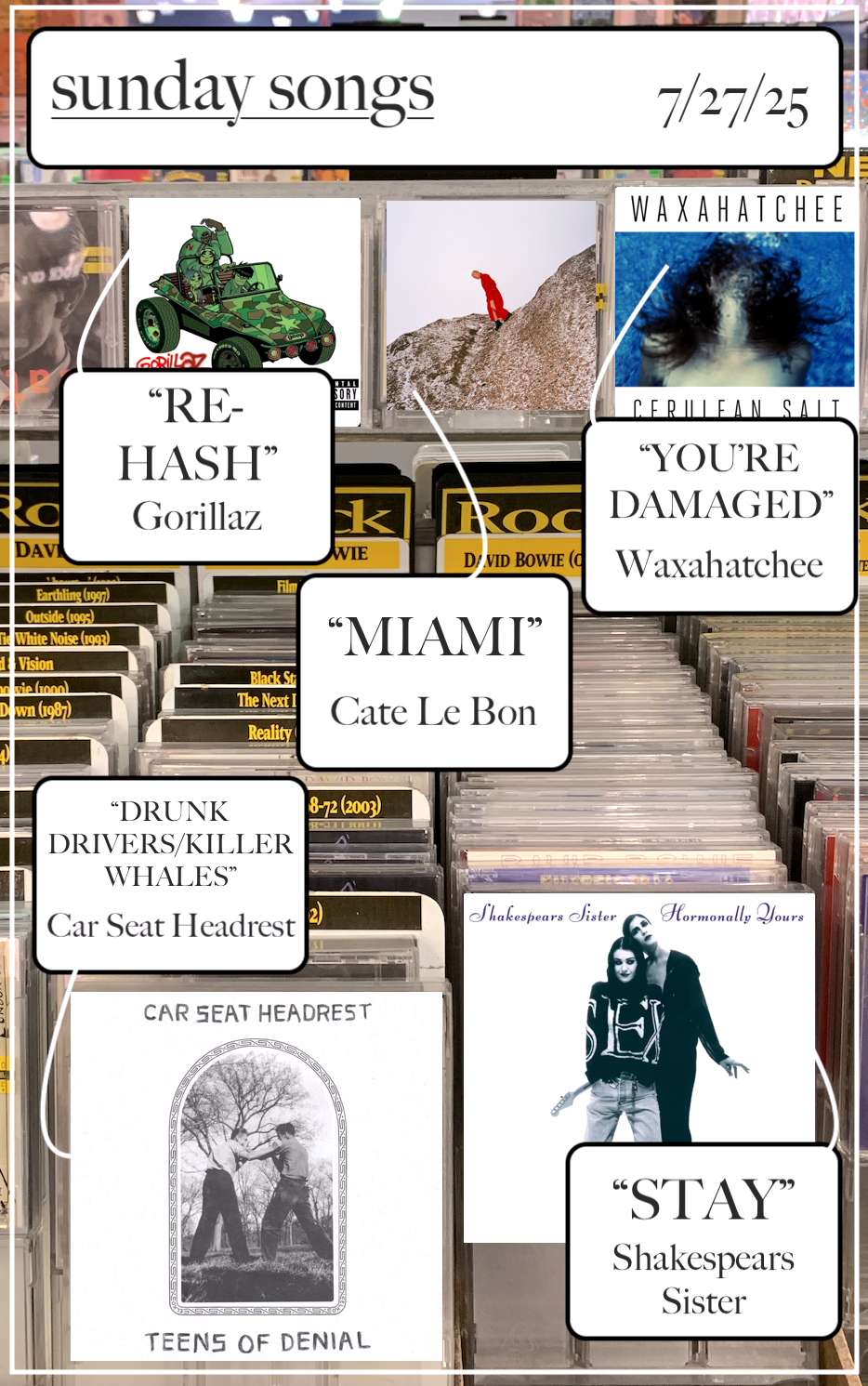
SUNDAY SONGS: 7/27/25

“Drunk Drivers/Killer Whales” – Car Seat Headrest

Yeah, yeah. I will not shut up about the Car Seat Headrest show two weeks ago. This is a threat. Consider this me gripping the sides of your head and forcing you to look at this screen and listen to a painfully awkward gay man’s earth-shattering voice cracks. You WILL listen.

After talking about how he doesn’t play much of his old music anymore, namely that of Teens of Denial, Will Toledo said that this song was one of the more optimistic songs he’d written during that period, where he described himself as an “angry young man.” This is going to sound incredibly corny, but stay with me. I knew all the words to “Drunk Drivers/Killer Whales” for years, but it wasn’t until then that it really hit me. That’s when I knew them. Granted, I was 13 and focused more on the enigmatic wails of Will Toledo and the raw wave of emotion that swept me up in the undertow, but I never quite considered that, in the midst of an album steeped in substance abuse, self-hatred, and depression, that this is a much more optimistic outlook on it all. (Speaking of said substance abuse, I really think that listening to Teens of Denial so much when I was younger was unironically very good drug prevention for me. Sure, a good 50-75% of their songs up to 2016 are about drinking and drugs, but they’re all about just how deeply miserable Toledo was while drinking and doing drugs. They need to implement this album in schools instead of D.A.R.E.) I wouldn’t be surprised if “Drunk Drivers/Killer Whales” was the last song of the album written; it takes a more retrospective look at the cycle of self-hatred and bad decisions that color Teens of Denial as a whole, and it offers a knowing look, a hug, and a rallying cry: “It doesn’t have to be like this.” From the outside looking in, Toledo looks at the wreckage of everything he’s done up to this point, and professes this to his own anxieties:

“Here’s that voice in your head/Giving you shit again/But you know he loves you/And he doesn’t mean to cause you pain/Please listen to him/It’s not too late/Turn off the engine/Get out of the car/And start to walk.”

GOD. OW. That’s another way homer. I suppose it’s taken years for it to hit me like it was likely intended to, but that’s probably for the best. I think of recent times, when I was so wrapped up in my own anxiety that I didn’t even realize that I could make the choice to work with it, to create a life for myself that would result in me being a happier, healthier person. I’m still on that road. Every day, it’s a little more effort. But it’s all worth it, brick by brick. As Toledo says, “But if we learn how to live like this/Maybe we can learn how to start again/Like a child who’s never done wrong/Who hasn’t taken that first step.” The power is always in your hands, whether you realize it or not. You can’t make every negative thing in your life disappear into thin air, but you can make those choices, take control of the wheel and start to steer your life in a better direction. It takes a monumental, gradual effort, but IT DOESN’T HAVE TO BE LIKE THIS. It never does. Looking back to a year ago, I can’t be more proud of myself for taking that leap, of leaning into my support system to try little by little to end the cycle of anxiety that I was falling into. This song couldn’t have come back to me at a better time. You can always learn to start again.

…AND A BOOK TO GO WITH IT:

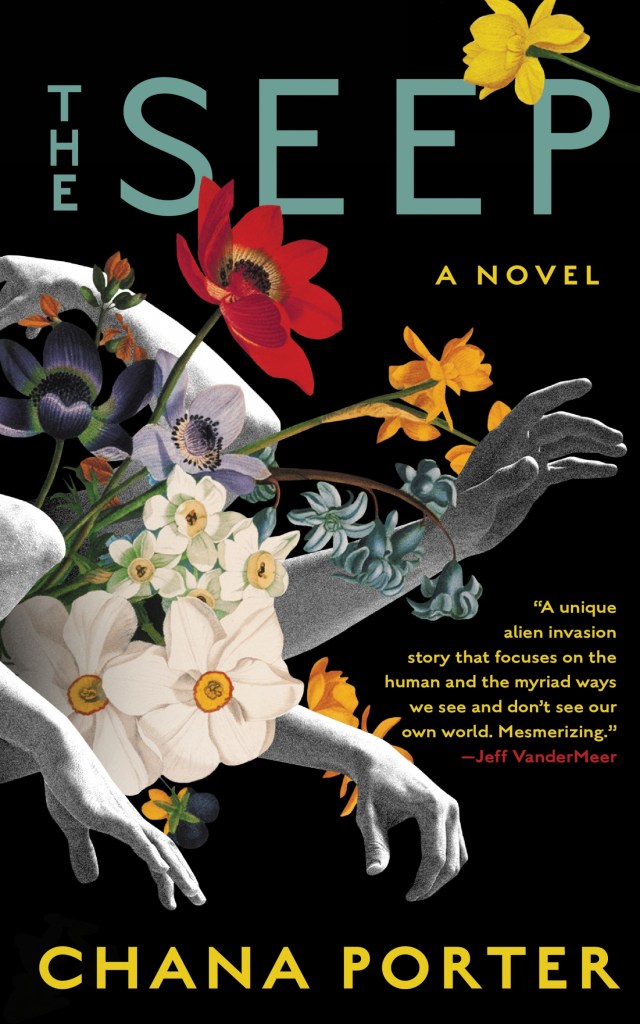
The Seep – Chana Porterlearning to break free of a state of societal complacency in disguise as betterment, and learning to live with grief, love, and every other complicated emotion.

“Stay” – Shakespears Sister

There’s a brief window in every decade where the signature sounds haven’t yet been cemented. It’s a limbo that allows for the final bastions of the last decade’s sound to grab ahold. This song comes to mind, because this is quite possibly the most ’80s song of the ’90s.

My mom knew exactly what she was doing when she played this for me. I feel like I was around 8 or 9 when she first played it for me. I wished I remembered more of the specifics, because I definitely had some kind of elaborate Warrior Cats AMV planned in my head set to this, but I remember just being so enraptured. It was one of those songs that instantly marked its place in my memory: I was in the backseat of the car, at a gas station, and the sky was overcast, and I’d just had a revelation. My mom and I are definitely interlinked at critical points in my music history, and the more I think about it, “Stay” was absolutely one of them. Like…how did I not know that the album was called Hormonally Yours? I mean, what else is there to say other than fuck yea, that’s an album title??

“Stay” is pure drama, and as over-the-top and gloriously camp as it is, in the right amount, that’s my absolute catnip. Funny that I should mention catnip, because despite the ubiquitous lyrics, it was meant to be part of a concept album, all based around [checks notes] this ’50s sci-fi movie called Cat-Women of the Moon. (Hence this song.) “Stay” was intended to be about the love story between one of said Cat-Women and one of the human male crew members of the ship to the moon, with Marcella Detroit being the Cat-Woman in love and Siobhan Fahey taking the part of, one of the other Cat-Women who shuns their romance. Despite Shakespear’s Sister not being able to execute the concept album as they wanted to, “Stay” retains the high drama and yearning present in the original idea. Over-the-top as it is, I can’t help but be enraptured by it, the same way that I was when I was a little kid. The dueling voices of Detroit and Fahey craft a story of operatic proportions, cranking the yearning up to 11.

Even though the Cat-Women of the Moon never saw the light of day, what did survive is glorious—namely the music video for “Stay.” Instead, we’ve got a vague sci-fi setting, where Detroit is doting over a comatose man, and Fahey is Death tempting the man to come to the other side, complete with a star crown and some absolute Harley Quinn crazy eyes. It’s so camp. God, I love it.

Jenny Joyce could never.

…AND A BOOK TO GO WITH IT:

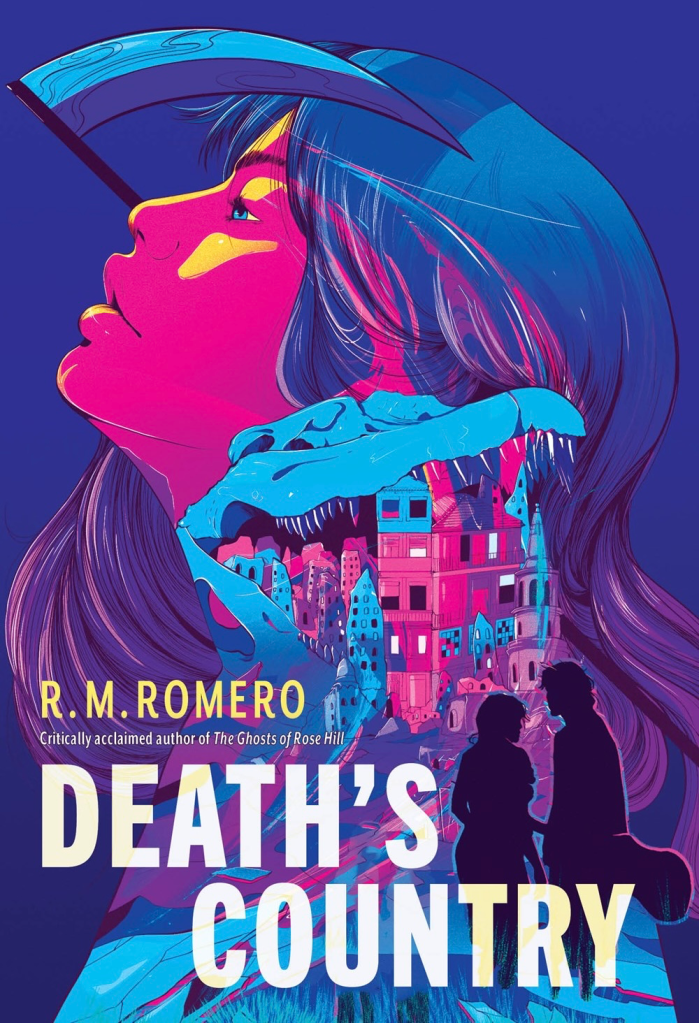
Death’s Country – R.M. RomeroI’m aligning more with the music video interpretation here, but what’s more high drama than going into the underworld to save your girlfriend from the brink of death?

“Re-Hash” – Gorillaz

Nothing like a great pop song about how much pop music sucks.

Gorillaz, at least in the early days, was a study in artificiality. The project famously came about because Damon Albarn and Jamie Hewlett had been watching a lot of reality TV and hearing the much more manufactured aspect of pop music at the time (“It’s the sweet sensation over the dub/A one-off situation that don’t wanna stop”), and wondered if they could take it to the extreme: an entirely artificial band. In a way, “Re-Hash” was them slyly taking a shot at what Albarn viewed to be the state of pop music at the time, before blowing it out of the water and making the most artful indie-pop music possible. That first album is almost a no-skip album, and there’s no shortage of tracks that I constantly revisit. I hadn’t listened to “Re-Hash” in quite some time, and I’d forgotten just how incredible of an opener it is. Admittedly, my association with their self-titled album will always be of summer, since I’m pretty sure I first listened to it in July or August back in high school, but everything about “Re-Hash” is soaked in sunshine, with a combination of acoustic guitars mixed with drum machines that begs for a rolled down window. That Ba-ba-ba-ba-ba-aaaaah repetition towards the last third of the song is just infectious—without a doubt, a very recent holdover the more playful side of Blur’s discography. What a propulsive start to such an iconic album.

…AND A BOOK TO GO WITH IT:

Hammajang Luck – Makana Yamamoto – I’m going more off of vibes and atmosphere than lyrics, but this would fit right in with the more lighthearted sides of Yamamoto’s sci-fi world.

“Miami” – Cate Le Bon

Oh my god, CATE LE BON!! Reward is an excellent album as a whole—I’d say that it’s just about equal to Pompeii as far as consistency, creativity, and the uniqueness of the soundscape. Although she’d begun to transition into the more synth-dominated part of her sound here, Reward has a more naturalistic feel to it. Even if the album cover didn’t have her bent over, walking over the contours of a time-worn cliff against an overcast sky, it has this inherent aura to it that feels like having the wind toss your hair as you walk along a pebbly beach as a storm brewing in the distance. The comparison that jumped out immediately to me was Damon Albarn’s The Nearer the Fountain, the More Pure the Stream Flows, an album with similarly rocky shore imagery on the album cover and throughout the lyrics. I wouldn’t expect such a feeling to brew in me from an album dominated by artsy brass and woodwinds and synth in equal measure (lots of great clarinet and saxophone action here, similar to Albarn).

In my exploration into her music, I’ve found a constant in Cate Le Bon’s more recent work: she’s damn good at making an opening track (see also: “Dirt on the Bed”). “Miami” sounds like being in a goldfish bowl. The bright, percussive synths in the background bubble like an aquarium filter, while others sound like water sliding against glass. Some of the more recognizable percussion hushes like aquarium gravel crunching in the palm of your hand. It’s all so strangely aquatic, even with the steady blast of saxophones in the background. It honestly feels far more appealing than the actual Miami, but then again, my only experience of Miami was a grotty hotel, so maybe that’s my overall Florida bias. But I’d be hard-pressed to think of a song on Reward that’s better suited to open up Le Bon’s peacefully avant-garde soundscape than this one. It lulls you into a state of calm while enticing you forward with breadcrumbs of her signature, off-kilter charm. The lilt of her voice is as much an element of the ecosystem as the brass or the synths; if anything, it’s the goldfish in this metaphor, her voice like the smooth, effortless flap of fins underwater.

…AND A BOOK TO GO WITH IT:

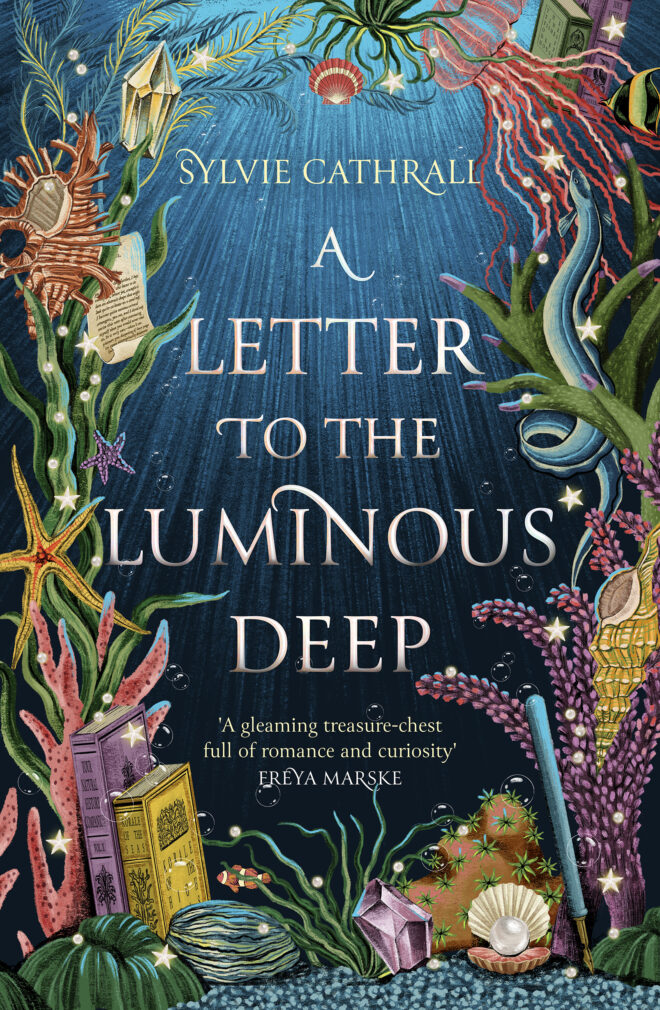
A Letter to the Luminous Deep – Sylvie Cathralla gentle and tender dispatch from a submerged world.

“You’re Damaged” – Waxahatchee

For all intents and purposes, I really should be into Waxahatchee. Stylistically, she’s often grouped in the company of Snail Mail, Adrianne Lenker, and Soccer Mommy, which should be a massive red cape to my sad indie rock bull. (In fact, my reigning association with her is this one tweet that reads “I would personally be afraid of snail mail because she’s friends with waxahatchee and waxahatchee looks like she open carries”) But the main thing that keeps me from enjoying her most of the time is her voice. It’s fully just personal preference, and I’m sure she’s very talented, but Waxahatchee feels like proof that singing in cursive isn’t exclusive to pop music. Please!! Sing without over-enunciating everything!! My god!!

Thankfully, there are exceptions to the rule. “You’re Damaged” fits snugly into the indie rock that I usually love, with Katie Crutchfield’s sparse, bare vocals. Here, her voice soars, free of expectations, dipping deftly from hard to soft as she runs circles around memories of a broken relationship: “And no I can not see into the future/No I cannot breathe underwater/Bit your last word, I call out to you/This place is vile, and I’m vile too.” It mirrors the album cover of Cerulean Salt, where Crutchfield is blurry and submerged underwater, her face obscured by her own hair and the ripples of the water; rambling through the misty glass shards of memory, she struggles to break away from an unhealthy relationship when she’s just as unhealthy as the other part, wanting them when everything around her screams for her to do the opposite. It’s the kind of song that only a raw voice and an acoustic guitar can capture, and it does so hauntingly.

…AND A BOOK TO GO WITH IT:

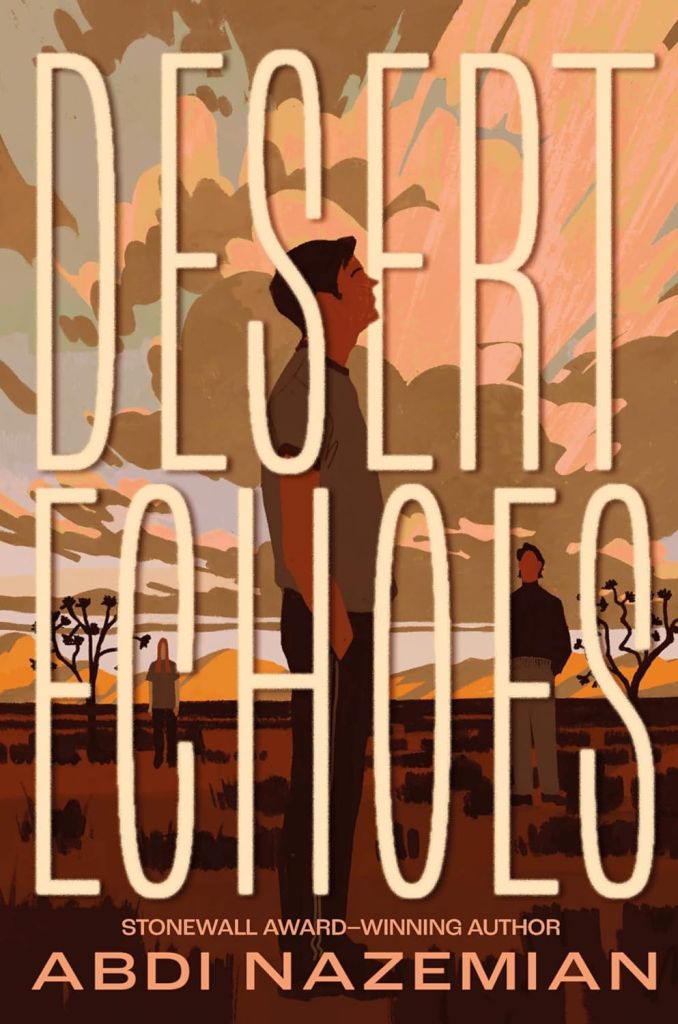
Desert Echoes – Abdi Nazemian – “And no I can not see into the future/No I cannot breathe underwater/Bit your last word, I Call out to you/This place is vile, and I’m vile too…”

Since this post consists entirely of songs, consider all of them to be today’s song.

That’s it for this week’s Sunday Songs! Have a wonderful rest of your day, and take care of yourselves!
Posted in Book Review Tuesday

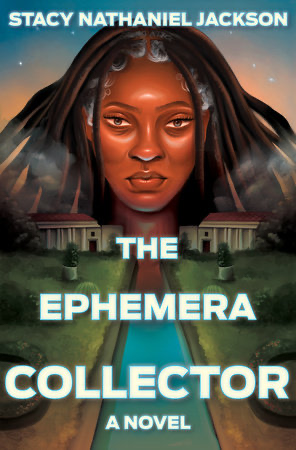
Book Review Tuesday (7/22/25) – The Ephemera Collector

Happy Tuesday, bibliophiles!

Continuing with Disability Pride Month, here’s a fascinating 2025 debut! I love books about libraries and archives, both for personal reasons and because of the possibilities that they hold. Add in the queer, science fiction aspect of it, and I was instantly hooked. The Ephemera Collector turned out to be one of the more unique books I’ve read recently, both in its mixed-media approach and the sprawling nature of its vision.

Enjoy this week’s review!

The Ephemera Collector – Stacy Nathaniel Jackson

2035. In a divided, polluted Los Angeles, Xandria Brown pours her passion into her work as an archivist. Collecting ephemera from prominent Black authors, artists, and activists, she fights to preserve her work as the threat of corporate encroachment in her library looms. After the death of her wife, only her health bots, which monitor her symptoms of long COVID, keep her company. But when the library goes into lockdown for undisclosed reasons, Xandria and her health bots must get to the bottom of the mystery—and make sure that her collections are unscathed.

TW/CW: ableism, eugenics, racism, violence, medical content

Though not without its flaws, this is one of those novels where you can really feel how much of a labor of love it was for the author. The Ephemera Collector is Stacy Nathaniel Jackson’s debut novel, which he published in his 60’s (!!!). It’s a mix of prose, poetry, and visual media, and I honestly wish I’d read a physical copy instead of an ebook in this case, because I feel like my Kindle couldn’t grasp the formatting fully. Nevertheless, The Ephemera Collector is a unique novel in all senses: a unique dystopia, a unique Afrofuturist novel, and a startlingly original piece of sci-fi.

Stacy Nathaniel Jackson’s vision of the United States 10 years from now was certainly bleak, but his worldbuilding was what made The Ephemera Collector stand out so much to me. No stone was left unturned in terms of what happens to America in the next 10 years, from the threat of corporate oversight on Xandria’s archives of Black history to the COVID-34 pandemic that occurs a year before the novel is set. It was bleak to me, but not necessarily cynical to me; yeah, us going into a second global pandemic only 14 years after “getting through” the first one seems a bit cynical, but given how this country absolutely bungled how we handled COVID-19, it feels somewhat realistic. Yet the weirder and further you get from the center of what makes Jackson’s dystopia a dystopia, the more imaginative the worldbuilding gets. Xandria is followed around by health bots that all have distinct personalities. There’s a whole Atlantis 2: Electric Boogaloo situation with a group of POC separatists who settle underwater off the coast of California. The weirder Jackson gets with it, the better the worldbuilding becomes; those unique touches are what stuck with me the most.

Yet even though Jackson’s vision of the future is full of polluted air and government corruption (not too far off…oof), it never fully felt like completely gloom and doom. In the end, I feel like this novel was about the importance of preserving history, and the main character’s fight is to keep corporations out of her exhibition of Black history, namely a collection of ephemera about Octavia Butler. Our protagonist is a queer, disabled Black woman who comes from a line of disabled Black ancestors, and she is standing her ground when it comes to preserving their history as a fundamental thread in the fabric of our country. Xandria putting up this fight, for me, was what kept The Ephemera Collector from being fully cynical. To imagine a darker vision of the future is one thing, but to have a character fight it, win, and outlast said corruption and hatred (somehow, she lives to be 300 years old? I assumed it was the gene editing, but it’s never fully explained) was what gave me hope in the end. Xandria, a battered woman who faced threats to her archives, non-consensual gene editing and eugenicist practices, and the death of her wife, comes out the victor in the end, triumphant over everything she fought to defeat. She is alive to preserve the history of her ancestors, but she is also proof that even the groups that America is most determined to erase will survive no matter what this country throws at them—and outlive them by centuries.

Going into The Ephemera Collector, I knew it wouldn’t be the easiest book to digest. The reviews warned me of a novel that frequently went on tangents that didn’t relate to the main storyline, and a novel that was disorganized in general. Having that in mind, I went in with low expectations. While I do think this novel was a bit disorganized at worst, I think it was partially the point. This is a book about an archivist poring through artifacts in a massive library. Jackson’s style is very stream-of-consciousness, and I feel like it uniquely reflects what Xandria’s mindset would accurately be if she spent most of her waking hours as an archivist. It reminded me vaguely of The Library of Broken Worlds, a very different book from this one, but still a sprawling, magnificent at best, deeply convoluted at worst novel set in a vast library. Maybe that’s just what you’re in for if you write imaginative books about sci-fi/fantasy libraries. There were some sections that strayed too far from the main plot for my taste (more on that later), but overall, I enjoyed the breaks in form, whether it was the switches from prose to poetry to the anecdotes about Xandria’s ancestry. It really put me in mind of an archivist, and that seems exactly what Jackson set out to do. For me, it also tied back into the theme of preserving history—all of what we see is the history that Xandria fought so hard to keep alive and non-sanitized by corporations.

Here’s the thing, though. I was fine with the earlier tangents because I could see the thread that connected them to the rest of the novel. But around 60% of the way through, The Ephemera Collector quite literally loses the plot. Without warning, it switches to an entirely new story that’s barely connected to the main story—and that’s being generous. The only possible connection I could find was that one of the characters was a relative of Xandria, but that’s it. There’s no connection to her or the library. My dilemma is that although it was very distant from the rest of the novel, it was still a compellingly written storyline. It dealt with one of the more fascinating parts of the worldbuilding: the separatist community who created an underwater settlement, and later became pseudo-climate refugees when it became untenable to live underwater for any longer. It was so strange and lovely to pick apart, but it didn’t connect to the main narrative until the very last minute. Even in the context of Xandria looking through the archives, there wasn’t a clear thread. I’m tempted to give this less than 4 stars, because although this frustrated me, the writing was just that good. In my more arbitrary system, I guess it would be more in the 3.8-3.9 range, if we’re getting really specific, but I like it more than a 3.75. It’s a weird dilemma, but so is the whole novel, really.

All in all, a deeply imaginative Afrofuturist novel that pushed the boundaries of what a dystopia can be. 4 stars!

The Ephemera Collector is a standalone and Stacy Nathaniel Jackson’s debut.

Today’s song:

NEW GUERILLA TOSS, WOOOO

That’s it for this week’s Book Review Tuesday! Have a wonderful rest of your day, and take care of yourselves!

Posted in Book Review Tuesday

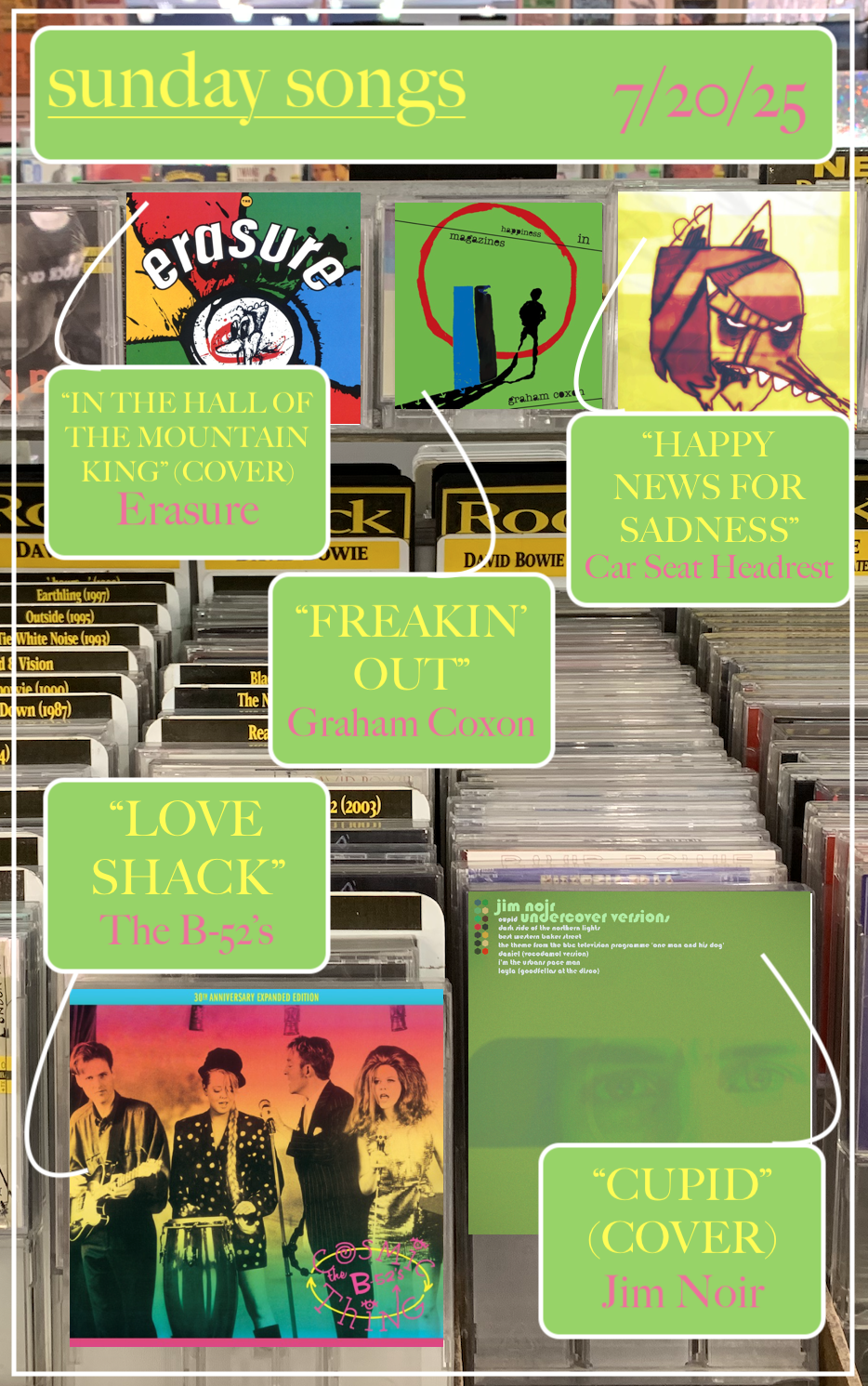
Sunday Songs: 7/20/25

Happy Sunday, bibliophiles! I hope this week has treated you well.

This week: I get more heated than I ever expected to be about Edvard Grieg, my middle school sad bastard music comes out of its cave, and, uh…what’s that? LOVE SHACK, BABY! More at 6.

Enjoy this week’s songs!

SUNDAY SONGS: 7/20/25

“Love Shack” – The B-52’s

This one came late because of, once again, my insistence on sticking to these (loose) color palettes. But god, I was having a blast listening to this on repeat during Pride Month. I couldn’t go to any pride parades or anything because of a) preexisting plans and b) it was, quite literally, as hot as an oven. But the amount of times I listened to “Love Shack” honestly made up for it.

Sure, this isn’t nearly as weird as some of The B-52s’ other songs—in fact, it’s probably their most accessible song—but it really is fitting as one of their signature songs. The pop joy isn’t just a product of them being upbeat for airplay—it really was a triumphant moment for them, their comeback after tragedy struck the band in 1985 after the death of Ricky Wilson from AIDS-related complications. It was them coming back from the brink and declaring that in spite of tragedy, they would stick to their mission of bringing gleefully weird pop music to the world. It’s a catchy pop song, sure, but it was also a commitment to celebrate togetherness in spite of the greatest hardship a band could possibly endure. And for a song that’s mainly just remembered as the product of a particularly weird party band, that’s such a beautiful legacy to leave. But beyond that…oh my god, it’s just so camp. It’s just so fun! How can you not grin constantly when you hear this song? Fred Schneider’s just being Fred Schneider, Kate Pierson and Cindy Wilson are producing some of the best harmonies in pop music, and the whole “bang, bang, bang, on the door, baby” bridge? Who ISN’T shivering with antici……..pation at that? (And yes, that is RuPaul right there at 2:03 in the music video, as if this song couldn’t get any queerer.) I’m tempted to dismiss my instincts to get all women and gender studies with it about “Love Shack,” but if this isn’t queer joy—coming together in the face of a widespread tragedy that affected the LGBTQ+ community so fundamentally—then what is? LOVE SHACK, BABY!

…AND A BOOK TO GO WITH IT:

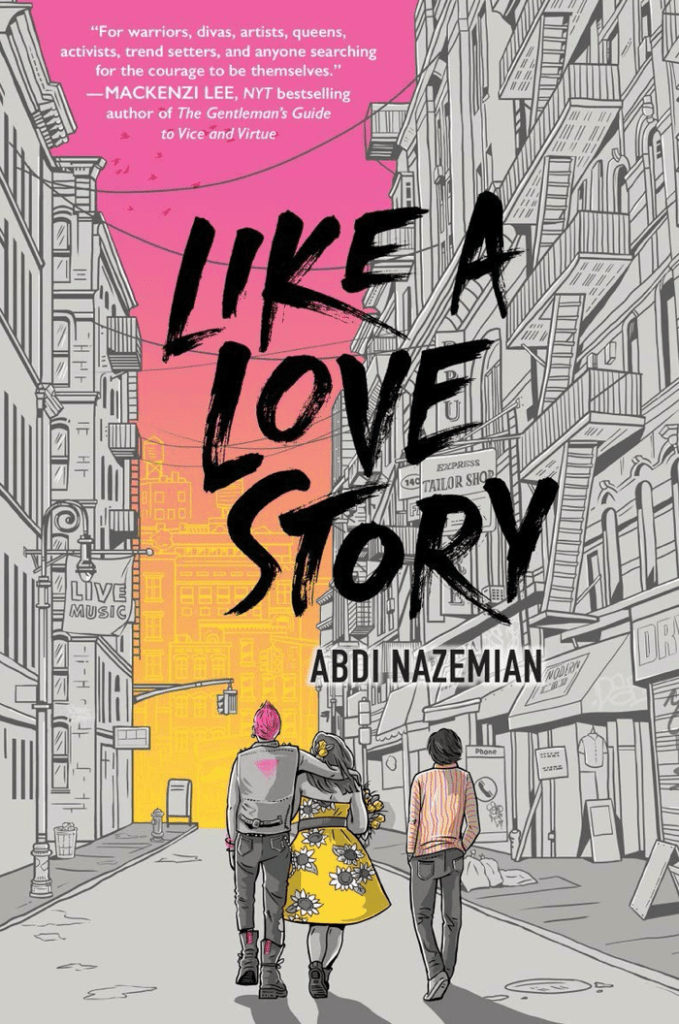
Like a Love Story – Abdi NazemianThe B-52’s aren’t the focus of this book (Madonna is, though), but this novel is set in 1989—the same year “Love Shack” was released—and centers around similar themes of queer identity and togetherness in the face of tragedy.

“Cupid” (Sam Cooke cover) – Jim Noir

While we all wait for Jimmy’s Show 2 to come out, Jim Noir has released an EP of covers, available on his Patreon! (It also includes a mashup of Pink Floyd’s “Breathe” and Super Furry Animals’ “Northern Lites,” which is pretty amazing.) He posted this cover of Sam Cooke’s “Cupid” several months before hand, and I lamented that he hadn’t made it available for release, because unexpectedly, it was perfectly suited for him. Jim Noir’s music is full of ’60s influences, but until now, I mostly thought it was reserved for bands like The Beatles or the Beach Boys, which more readily come through in his sunnier, twinklier melodies. I should’ve known how easily that would translate to another part of the ’60s—Sam Cooke’s classic love song. It’s hard to touch any of his songs for me, not necessarily because they hold a particularly special place in my heart, but because they’re so ubiquitously him—Cooke’s songs have a quality about them that make them feel fully-formed, able to be made by nobody but him. The key to Jim Noir’s success with the cover is that he doesn’t overdo it—he’s just Jim Noir, not Sam Cooke. It’s an understated cover, but that quality makes it more intimate and calming to me—there’s a soothing quality about it, from his harmonies to the soft background strings. That’s what makes it such a genius cover—Jim’s not being anyone but him, but staying true to the spirit of the original.

…AND A BOOK TO GO WITH IT:

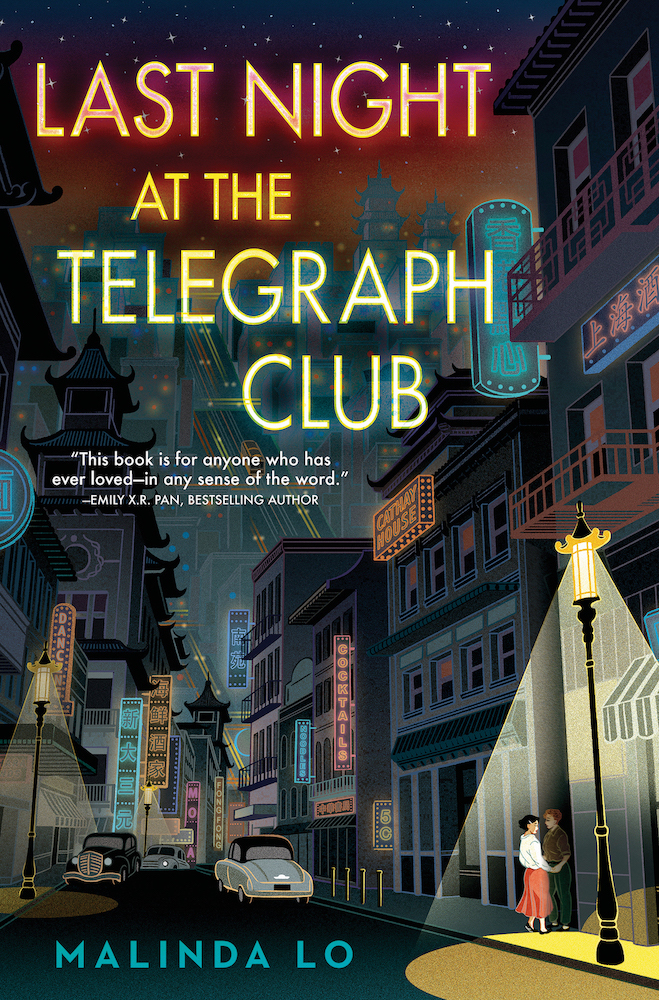
Last Night at the Telegraph Club – Malinda LoI’m a few years off as far as the dates go, but give it a few years, and this would fit right in with the more tender, quiet moments of this novel.

“In The Hall of the Mountain King” (Edvard Grieg cover) – Erasure

I had no idea that this existed until a few days ago, and y’know what? It’s an absolutely wild pairing as far as covers go, but trust me, it sounds exactly how you’d picture it sounding. It’s just “In The Hall of the Mountain King” done entirely with synths. I do enjoy it, but I feel like it betrays the original song in a key way. The thing that most people remember about “In The Hall of the Mountain King” is that point (you know the one) where it goes absolutely, truly, off-the-wall bonkers, like they crammed chaos incarnate into whatever concert hall it was performed in. It’s about the gradual buildup!! The payoff!! It feels like a whole pack of firecrackers going off and ricocheting off the walls!! And Erasure…barely sped up the tempo? Which is a crazy move to pull when covering this…like, how does one cover “In The Hall of the Mountain King” and not go fucking nuts with it? You do you, Erasure, I guess, but…man, you already pulled the move of putting an Edvard Grieg cover as a bonus track, might as well go crazy with it!!

…AND A BOOK TO GO WITH IT:

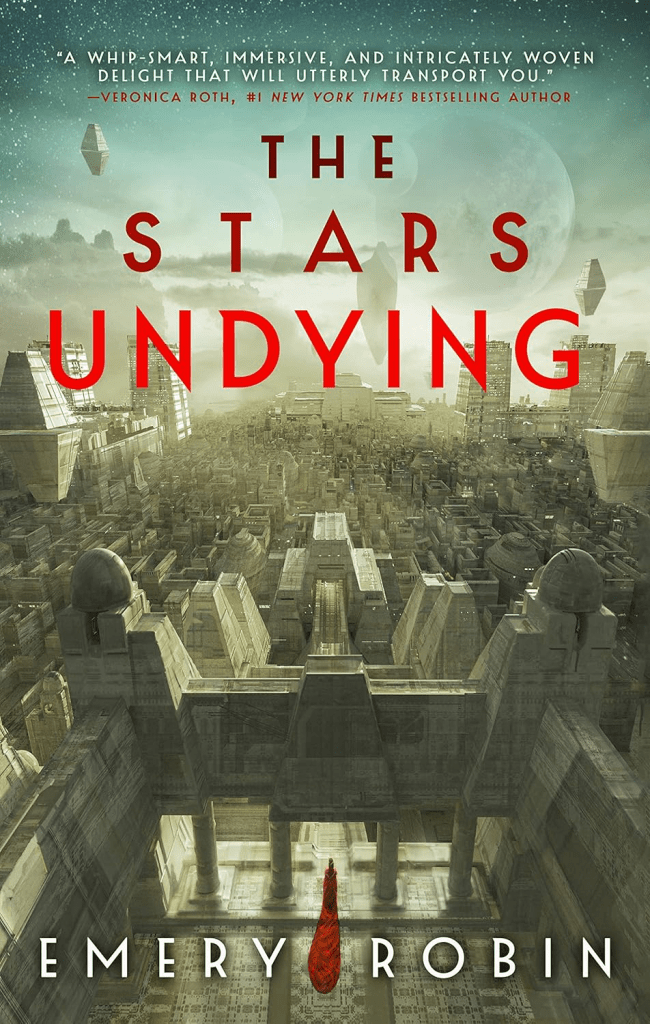
The Stars Undying – Emery Robin…kinda hard to recommend a book to pair with a synth cover of classical music, but, uh…how about a sci-fi retelling based on the stories of Cleopatra and Julius Caesar? Will that suffice? Help me out here…

“Freakin’ Out” – Graham Coxon

So here’s what Graham Coxon was doing all that time when Blur was making Think Tank, which was…doing exactly what was barely on Think Tank: guitar freakouts (no pun intended). While his former bandmates were reveling in some of the more experimental sides of their musical taste and abilities, Coxon was sticking to what he loved and did best. Part of why I got so attached to Blur was his propulsive guitar playing, whether it was his bright, chugging melodies on Parklife or the darker, grungier sounds of their self-titled album or 13. “Freakin’ Out” isn’t his lyrically strongest song, but it’s got this driving, punk-inspired beat that never lets you go. Of course, in true Graham Coxon, he’s in a suit and glasses while playing all this—Weezer who? If there’s anything that Graham Coxon has committed to in the last few decades, after spending time with Blur during the height of Britpop and being pressured to conform to pop music standards, it’s being nothing but himself. We’re all better for him being a quiet, introspective person playing loud, upfront music.

…AND A BOOK TO GO WITH IT:

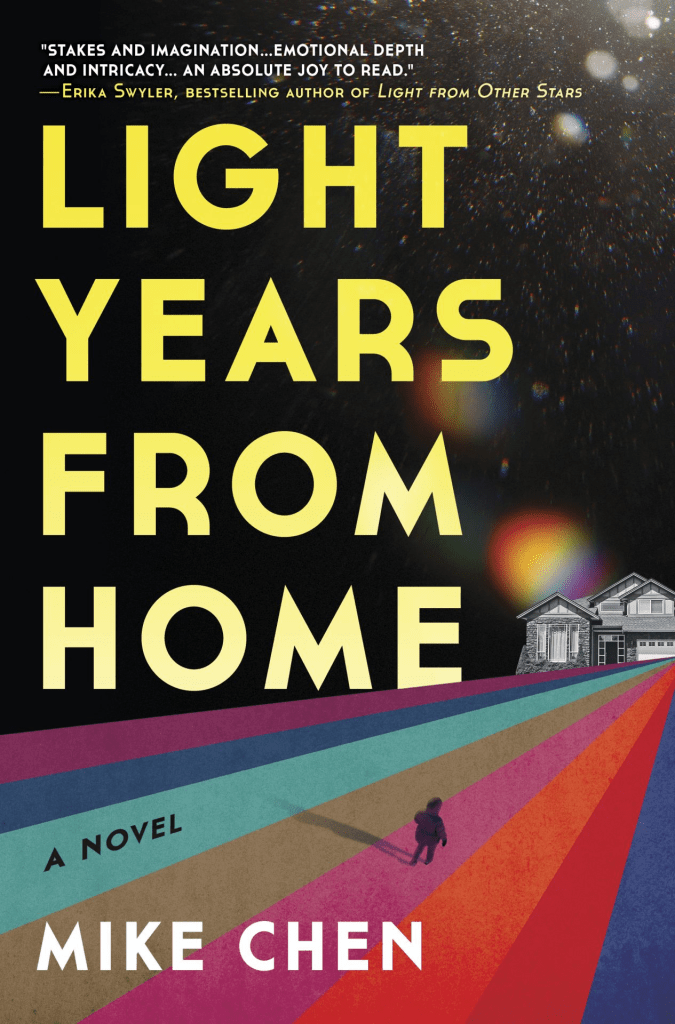
Light Years from Home – Mike Chen“Nothing to be, nothing to fear/Nothing to prove, nothing to say/Nothing to lose, nothing to gain/Nothing to feel, nothing to hate/Nothing is real, it’s all too late…”

“Happy News for Sadness” – Car Seat Headrest

The Car Seat Headrest I saw when I was 14 was a very different Car Seat Headrest than the one I saw last week. At one point in the show, Will Toledo opened up about how he didn’t like playing some of his older material, particularly that from Teens of Denial, because he was, as he said, “an angry young man of 23.” It struck me as so humble that he’s willing to admit that he’d moved on from that anger and strife and that he was committed to being in a stabler, happier place in his life. Teens of Denial remains one of my favorite albums of all time, an album that was at my side at my most lost and confused moments when I was a young teenager. Sure, I would’ve loved to hear “Cosmic Hero” (if not just to replace my video from 2018 where my off-key screeching drowned out the actual song) or something, but I’m happy that Will Toledo’s happy. And all of this was the preface for “Drunk Drivers/Killer Whales,” which he played to a crowd that knew all the words. Myself included. It was one of those nights where I could feel my younger self peering out from my chest, wiping the smudge away from her glasses, and dancing. I felt her dancing with me. I danced as hard as I could that night. It’s one of those times where a concert has felt, more than anything, like a warm hug, a reassurance across time to that little girl that she would be okay.

Car Seat Headrest has a notoriously rabid fanbase, small but mighty, the kind of people who’d unironically go up to you and say something like “Oh, you haven’t listened to the absolutely crusty-sounding old recordings he put out on Bandcamp and labeled ‘just awful shit?’ Fuckin’ poser!” And…yeah, with the kind of discography that Will Toledo has, it does lend itself to the kind of Charlie Kelly conspiracy theory board types. But the other side of that coin is that you get people who will ardently do the wave to a song that’s only available on Patreon. And that’s what made the show so riotously fun—the fervor of the fans for songs old and new, whether it was the stirring intro of “CCF (I’m Gonna Stay With You)” or the extended medley of older songs. (I’ll admit to being awakened like a sleeper agent when they started playing “Something Soon.”)

“Happy News for Sadness” was one of the excerpts from medley of older songs that they did for the encore, one that somehow escaped my unending curiosity when I was in middle school. I’d already found “No Passion” and “Sunburned Shirts,” so who knows how this slipped through my fingers. I feel like it might’ve been for the best, because I have a feeling that earsplitting, lower-than-lo-fi “BWEEEEEEEEEEEEEEEEEEEARGH” at 1:52 would’ve killed my headphones. “Happy News For Sadness” is as clear a glimpse into the sadder, angrier young man that defined much of Will Toledo’s career—the central chorus of “You can never tell the truth/But you can tell something that sounds like it” speaks to a lingering depression that’s been ever-present throughout his catalogue. Meandering through malaise and expired food doesn’t seem like something Toledo would revisit, given the speech he gave about Teens of Denial, but the fact that he’s able to reconcile with different eras of his own art in different ways feels like a mode of communication with the past. His songwriting was his way of telling the truth, and that truth resonated with so many people. To bridge that connection, to be able to look back and sing altered versions of the same song, is likely his way of making peace with it. Healing that younger part of yourself is different with each angle you tackle it from, but committing to that seems to be Toledo’s ongoing mission. I’m just lucky to be able to heal along with him and alongside hundreds of people.

…AND A BOOK TO GO WITH IT:

The Bad Ones – Melissa Albert“Nobody cares about/(But I’m still ugly on the inside)/Your life and the people in it/(But I’m still ugly on the inside)/So you can stop telling me it gets better…”

Since this post consists entirely of songs, consider all of them to be today’s song.

That’s it for this week’s Sunday Songs! Have a wonderful rest of your day, and take care of yourselves!
Posted in Uncategorized

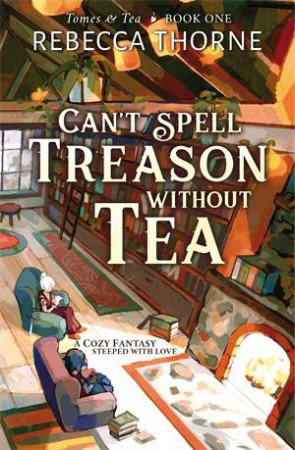
Book Review Tuesday (7/12/25) – Can’t Spell Treason Without Tea

Happy Tuesday, bibliophiles!

Continuing with my reviews for Disability Pride Month, here’s a sweet cozy fantasy with queer, disabled leads! Of course, those three factors are what drew me in, and I was in the mood for something more low-stakes. Though it wasn’t the best cozy fantasy out there, Can’t Spell Treason Without Tea was a sweet diversion.

Enjoy this week’s review!

Can’t Spell Treason Without Tea (Tomes & Tea, #1) – Rebecca Thorne

All Reyna and Kianthe want to do is escape. Kianthe is tethered to her job as the most powerful mage in the Queendom, and Reyna works as one of the Queen’s most esteemed bodyguards. But against all odds, they run away together to live out their shared dream: opening a bookshop that serves tea. As their dream falls into place, they discover that it’s not as easy as they thought to abandon their lives and run away, from the guards searching for Reyna and the complications of Kianthe’s magic. But they’re determined to make their dreams come true, and they’ll stop at nothing to have a moment of peace.

TW/CW: fire, injury, loss of loved ones, murder, violence, panic attacks

If you can get past the initially corny title, there’s some comfort to be had here, just like a good cup of relaxing tea. Am I committed to sticking around for the even punnier titles in the rest of the series? Not really, if I’m being honest. That said, if you’re looking for something fluffy, romantic, and sweet, Can’t Spell Treason Without Tea is the perfect diversion for you.

As far as coziness goes, Can’t Spell Treason Without Tea was a solid entry into the genre! Although it’s more action-oriented than a typical cozy fantasy novel, the pacing works in such a way that it takes a backseat to the more quiet, gentle parts of the novel. Thorne’s way of describing the mountainous landscape and the interior of the bookshop was relaxing and cozy; if it hadn’t been July when I read this, it would’ve been the perfect book to read while swaddled in blankets during the winter. It’s hard to get a reader invested in a relationship that’s already been going strong for at least a few years, but those quiet moments were perfect to get acquainted with Reyna and Kianthe. There’s plentiful soft, tender moments between the couple, both when they’re enjoying spending time together and when they’re trying to work out issues—often related to hurdles with getting the bookshop to work, but usually with something more interpersonal at its heart. If you can already get past the corny title, chances are, you’ll get past some of the more corny book and tea-related puns—for the most part, it’s a very silly, fluffy book, and it 100% fulfills its purpose as such. And damn, I needed a fluffy book.

Though this isn’t the best cozy genre fiction I’ve ever read, I think Thorne’s writing style lends itself perfectly to the subgenre. She had a very soothing way of describing the world and the characters—every description felt very bucolic and gentle, making even the world seem comforting alongside the storyline. With this style, she was able to render the quiet, tender moments of relationship development between Reyna and Kianthe beautifully, whether it was working out disagreements in their visions of the bookshop or helping the other work through panic attacks. Her writing just has a calming quality that not many writers do—an essential tool when you’re writing cozy fiction. Thorne’s passion for her characters and world truly shone through in every word, and it was clear that they took great care in making their writing as true to the intended mood as possible.

A rotating cast of characters is going to be a staple if your novel centers around a bookshop that serves tea, but that isn’t even where this novel’s character problem arises: it’s how they’re introduced. The issue with having Can’t Spell Treason Without Tea being placed smack dab in the middle of an established relationship is that many of the other characters are established as being involved with them, but you’re barely offered an explanation as to why. It seems like there’s quite a lot of short stories and one-shots and whatnot surrounding the novel, but without that context, it was rather disorienting juggling all of the characters when the protagonists had established relationships with them and their roles were hardly ever fully explained. Combine that with the fact that there were so many of these characters, and you’ve got a bit of a mess as far as getting the reader to care about anyone besides the protagonists.

Now, about the worldbuilding…or, “go, girl, give us nothing!” The worldbuilding wasn’t the main draw for me when I picked up Can’t Spell Treason Without Tea, but even then, it was rather underwhelming. Generically European and vaguely medieval high fantasy setting strikes again…free me from this prison!! I get that the romance and the characterization was the more central aspect to the book, but I still think that Thorne could’ve done much more with her worldbuilding. Try as I might, there wasn’t anything new offered about the setting. Though the descriptions of said setting were soothingly written, I struggled to find anything that stood out about the world—not even the magic system or the creatures. The monarchy and mythical creatures (griffins, dragons, etc.) were standard fare, but even those didn’t have any small quirks that would distinguish them from any other fantasy novel. If I think of what drew me in to this book, my mind goes to it being cozy and having queer/disabled leads; though I loved these aspects and think they were done wonderfully, they don’t strike me as necessarily unique—I’ve read other books with these exact qualities that had original worldbuilding to back them up. I’m not saying that this book had to have some insanely convoluted worldbuilding or anything, but at least give us something!

All in all, a cozy fantasy that was sweet enough to tide me over, but could’ve done with something more to distinguish it from all the rest. 3.5 stars!

Can’t Spell Treason Without Tea is the first novel in the Tomes & Tea series, which continues with A Pirate’s Life for Tea, Tea You at the Altar, and the final book, Alchemy and a Cup of Tea, which is slated for release in August of 2025. Rebecca Thorne is also the author of This Gilded Abyss and The Day Death Stopped.

Today’s song:

saw car seat headrest on saturday night…you will most DEFINITELY be hearing about that soon!!

That’s it for this week’s Book Review Tuesday! Have a wonderful rest of your day, and take care of yourselves!
Posted in Sunday Songs

Sunday Songs: 7/13/25

Happy Sunday, bibliophiles! I hope this week has treated you well.

This week: it’s always the theme of this blog, but I feel like this roundup is a celebration of weirdos who are unafraid to express themselves in wild, creative ways. (Why yes, I am talking about Björk again, how did you guess?)

Enjoy this week’s review!

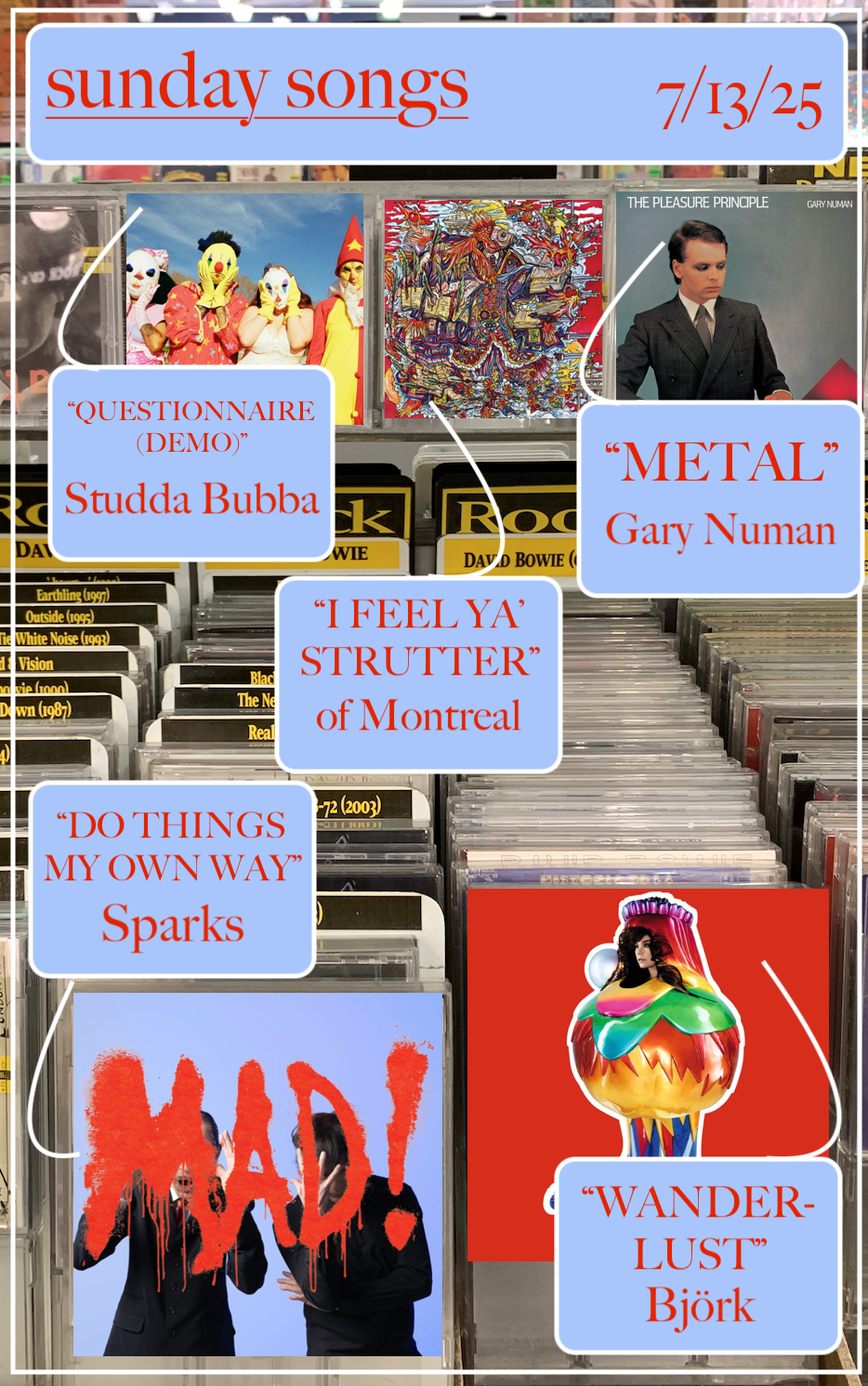
SUNDAY SONGS: 7/13/25

“Do Things My Own Way” – Sparks

I aspire to be like Sparks. I’m not even a die-hard fan or anything, but they just seem so aspirational in what they’ve done with their long, creative career. They’ve recently come out with their 26th (!!!) album at ages 79 (Ron) and 76 (Russell), and by all accounts, they’ve continued on their decades-long streak of doing nothing but their own thing. They haven’t achieved super mainstream fame, but the brothers have been producing their own brand of creativity, drawing from what seems to be their own never-ending well and the well of the present. Just look at their episode of What’s In My Bag? I seriously haven’t seen an episode of these with such a wide and diverse range of music, from K-Pop to John Coltrane to Kate Bush. They don’t seem to be stuck in the past—their personal brand of weirdness has just evolved over the decades.

At this point in their career, “Do Things My Own Way” feels like a statement of purpose from them, a propulsive anthem of confidence and being authentically yourself. Standing firm in its defiance, the track strides forward without a care for anyone or anything—nothing will shake the Mael brothers in their creativity. Anyone who’s in the way of them doing their thing is getting pushed out of the way—they’re not answering to anyone anymore. But even in that confidence, they acknowledge the rocky road that staying committed to yourself brings: “My advice, no advice/Gonna do things my own way/Roll the dice, roll the dice/Gonna do things my own way.” It’s always a gamble—there will always be people who look down at art like this as commercially inviable or not worth making. But as Sparks’ career has shown, it’s a risk worth taking. “Anywhere, anytime/Gonna do things my own way/I don’t care, I don’t care/Gonna do things my own way.” Another fantastic weirdo anthem for the books—thank you, Ron and Russell.

…AND A BOOK TO GO WITH IT:

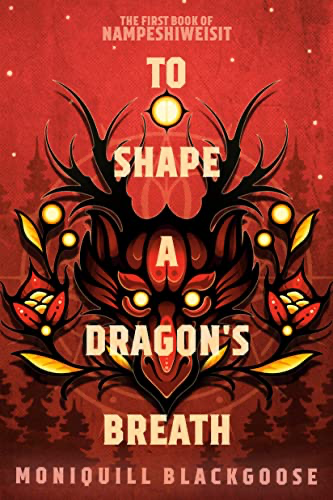
To Shape a Dragon’s Breath – Moniquill Blackgoose“My advice, no advice/Gonna do things my own way/Roll the dice, roll the dice/Gonna do things my own way…”

“Wanderlust” – Björk

The Björk deep dive continues…although this is about two weeks after I actually listened to the album, owing to the color palette rules I’ve imposed on myself. Both Volta and Medulla seem to spar in the Björk fandom for one of her least-liked albums, and every time I remember that, I’m baffled. I guess Timbaland’s more pop-sounding production isn’t for everyone, but if this is pop (yeah yeah), then this is the most bizarre pop I’ve ever listened to. Recorded during Björk’s time spent on a houseboat with her family, there’s a stark juxtaposition of the natural with the mechanical. It works both as a sonic tool and as political statement, given this album’s threads of anti-war (“Earth Intruders”) and anti-imperialism (“Declare Independence”) sentiments. It’s so delicious to me as a musical statement; even though she’s spent her whole career melding electronic music with nature, she’s turned it into a strong statement that war and colonialism are invasive and fundamentally against nature. God, I love Björk. I can’t believe I’m the kind of person who would unironically say “erm, ackshually, the foghorn noises contribute immensely to the album’s narrative,” BUT THEY DO. THEY’RE LIVE RECORDINGS OF WHEN SHE WAS ON THE HOUSEBOAT!! GUYS!!

Björk has called “Wanderlust” the heart of Volta, and it’s easy to see why. In a fairytale kind of way, it streamlines her statement of purpose, both in her personal life and in her musical career. Even though “Earth Intruders” is the first track on the album, “Wanderlust” tells its story: “I am leaving this harbor, giving urban a farewell/Its habitants seem too keen on god, I cannot stomach their rights and wrongs/I have lost my origin and I don’t want to find it again/Whether sailing into nature’s laws and be held by ocean’s paws.” I don’t blame her, especially since the move was prompted by living in New York with her family during the Bush administration. But after she breaks free, she revels in exploration and cliff-diving into the unknown, relishing in the act of discovery and intrepid daring. It’s an unabashed ode to not just stepping, but full-on leaping out of your comfort zone and being unafraid to dive headlong into the new and strange.

I originally saw the music video back in May during the Alamo Drafthouse’s Birth, Movies, Death for The Legend of Ochi (a very underrated fairy-tale/finding a creature film with lots of top tier critters, setpieces, and Willem Dafoe deftly proving that masculinity is a very silly construct). Isaiah Saxon co-directed it, and it might be one of my favorite of Björk’s music videos. Dressed in a Studio Ghibli-looking costume, Björk races down the river on the back of a herd of musk oxen, with fantastical scenery that accompanies her as a fabric-like torrent of water pushes her ever-forward into the unknown. After seeing The Legend of Ochi, I can say that yeah, it’s very Isaiah Saxon, but more than that, it’s so Björk. I can’t think of a better pairing for the spirit of the song.

…AND A BOOK TO GO WITH IT:

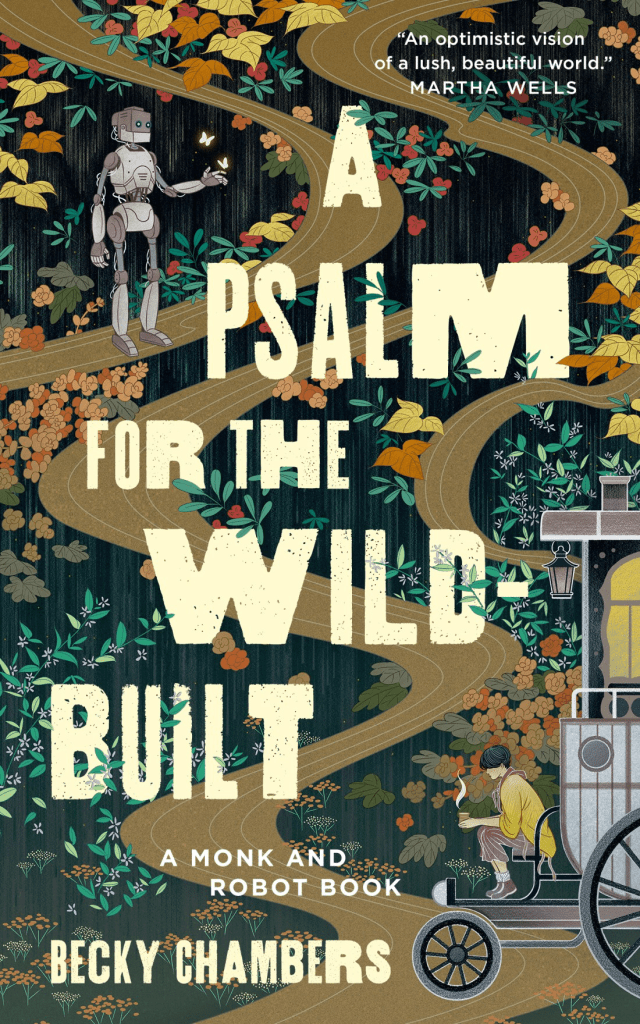
A Psalm for the Wild-Built – Becky Chambers“I am leaving this harbor, giving urban a farewell/Its habitants seem too keen on god/I cannot stomach their rights and wrongs/I have lost my origin and I don’t want to find it again/Whether sailing into nature’s laws and be held by ocean’s paws…”

“Questionnaire (Demo)” – Studda Bubba

No, this isn’t Instagram Reels music, although in the most abstract sense…I did find it on the Instagram explore page. But listen, if my Instagram is recommending me quirky little folk songs made by a group of Indigenous, trans clowns, then shit, maybe I am giving off the right vibe to the algorithm after all. Amidst the hellscape that is social media, at least sometimes I can find spots of humor and creativity. For once, I found someone with the whimsy in their soul to center the chorus a folk song around the concept of opening up a hyper-capitalist factory and paying workers with the meager stipend of a single NFT. It’s a tender balance between their soft harmonies and the abject silliness of their lyrics (they managed to slip “you wouldn’t download a car” in), but maybe that whimsy is part of what holds the glue of whatever good is left in the rotting, festering wound that is social media. Anything to get us through all this.

…AND A BOOK TO GO WITH IT:

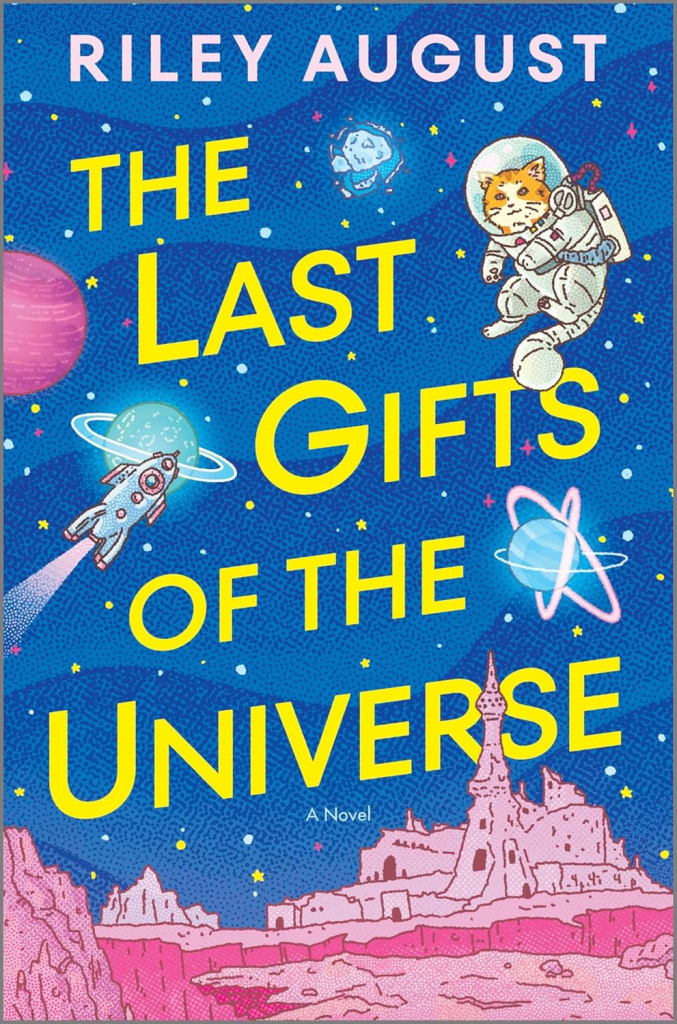
The Last Gifts of the Universe – Riley Augustsoft and tender, the kind of music I’d imagine playing in the quiet scenes with Scout and Kieran on their ship.

“I Feel Ya’ Strutter” – of Montreal

A late pride month addition, but every month is pride month…especially on this blog. And there’s not a whole lot that’s gayer than a) an of Montreal song, and b) an of Montreal song that absolutely reeks of the ’80s output of both David Bowie and Prince. This is easily one of the grooviest of Montreal tracks that I’ve heard—it doesn’t have the quaint, plinking synth soundscape of something off of Hissing Fauna, Are You the Destroyer?, but instead boasts more of a slinky, guitar-driven sound. However, nothing can keep Kevin Barnes from having the most delightfully convoluted lyrics. During the verses, her rapid-fire delivery of the lyrics is almost dizzying, as though she crammed in as much as she possibly could: “I know there ain’t no one person that/Everybody else in the world hates or wants to die/Sometimes I do think it’s me/Like, I’m in a flight simulator/And I am crushing the birth of any potential memory, hey.” Like whew, take a breather! You deserve it! But it works once he pivots to the smoother tones of the chorus, where his Prince-like howl is on full display—and he works it. It’s an infectiously catchy tune that never feels to get me on my feet. Never in a million years would I think that the lyrics “We spoke of frontal lobe regression/This is not one of those” would make me shiver with antici…pation before such a wonderful breakdown. That’s the power of Kevin Barnes, right there.

…AND A BOOK TO GO WITH IT:

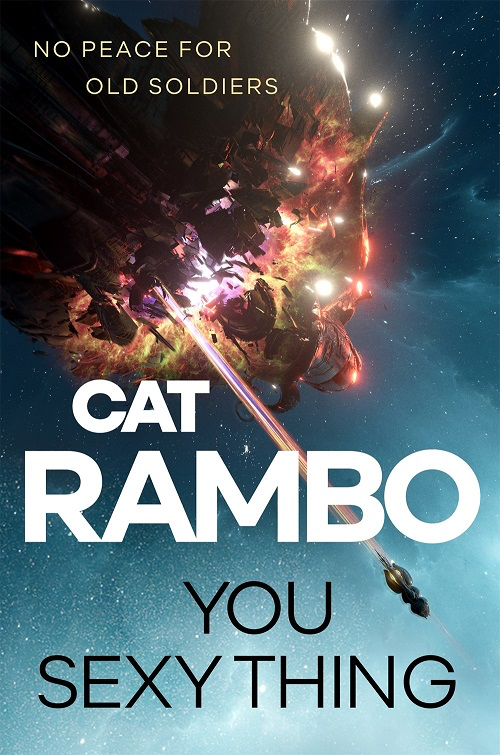
You Sexy Thing – Cat Rambo’70s/’80s music homage, passion, queerness…all in space.

“Metal” – Gary Numan

Happy Disability Pride Month, and remember, kids: you wouldn’t have synth pop as we know it without autism.

It’s often a negative trope to view certain autistic people as like robots; the comparison has long been used to dehumanize those who simply have trouble interacting with neurotypical society, equating a flat affect or a lack of outward emotion to being outright heartless. But if there’s anyone in pop culture who’s turned this on its head and embraced it, it’s Gary Numan. A key figure in new wave music and one of the pioneers of what we now know as synth-pop, Numan often used metaphors of machinery, robots, and androids to relate to his own experience growing up autistic. My sci-fi brain immediately latches onto the lyrics—it’s all a very classic, Do Androids Dream of Electric Sheep? story of a robot being created in a strange factory by ominous “liquid engineers” who tries to assimilate to human life, but is painfully conscious of the fact that “Here inside, I like metal/Don’t you?” It’s a very abjectly dystopian world, complete with the protagonist explaining that “I need my treatment, it’s tomorrow that they send me/Singing ‘I am an American’/Do you?”

But it’s the framing of the lyrics—all questions—that stand out to me in the context of neurodivergence, and of outsiderness in general. Almost all of them end in either a question (“do you?/did you?”) or an assumption of normalcy (“like you”). The protagonist has lived its life thinking that everything that has happened to it (being grown in a factory and having a heart made of batteries) is normal, and once it interacts with the human world, it slowly realizes that its experience is not a normal human experience, fundamentally out of sync with everyone else. And yeah, they’re robots, but if this isn’t a picture-perfect summation of what it feels like to be neurodivergent, I don’t know what is. I haven’t had this experience to the extent that Numan seems to have, but it’s always such an alienating feeling to realize that the way you interact with the world is fundamentally counter to most of the other people around you. It’s taken a long time for me to realize that I’m just operating on a different code, if you will, but there’s always the lingering feeling, enforced by so many people around you, that the way you interact with the world isn’t correct. Numan’s utterance of “I could learn to be a man/Like you” feeds into that desperation that somehow there’s a way to figure out how to operate neurotypically, what the secret is that they’ve all got down and you were never told. But here Numan is today, still touring in his sixties, gaining all kinds of accolades, and embracing his own autism. Here, he’s turned the outside view of him being inhuman into a way of understanding himself and the world around him, and made an iconic brand out of it—a brand no one could replace.

…AND A BOOK TO GO WITH IT:

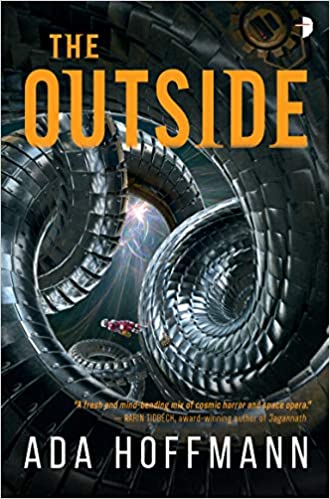
The Outside – Ada Hoffmanthough I suppose Yasira is less robot and more liquid engineer, this is a similar story of an autistic woman and her quest to put the universe to rights.

Since this posts consists entirely of songs, consider all of them to be today’s song.

That’s it for this week’s Sunday Songs! Have a wonderful rest of your day, and take care of yourselves!
Posted in Book Review Tuesday

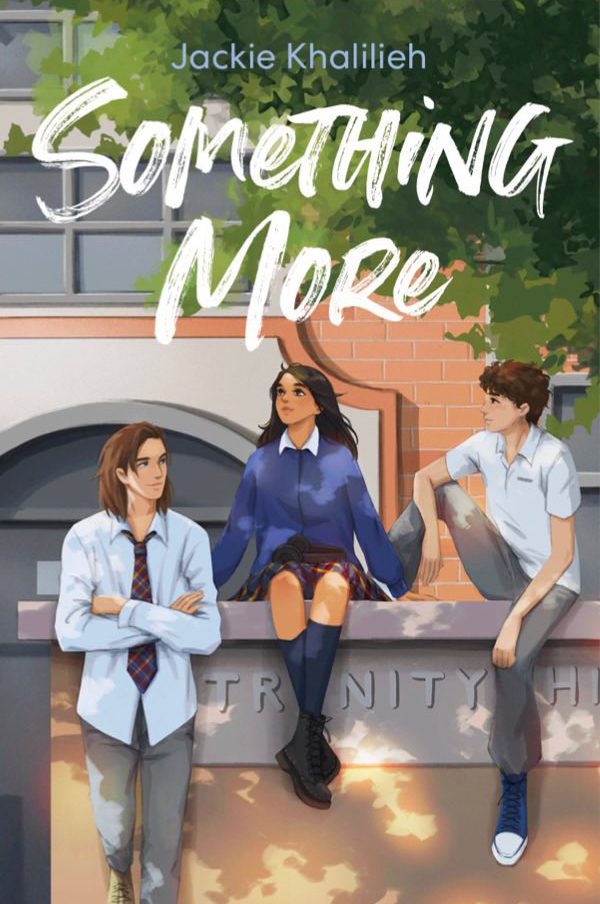
Book Review Tuesday (7/8/25) – Something More

Happy Tuesday, bibliophiles!

I’ve been looking around for books to read for Disability Pride Month, and in general, trying to find some books by Palestinian/Palestinian diaspora authors. Something More fit both of those, so I figured I would give it a go! Though it wasn’t a perfect novel, it had all of the qualities of a classic YA romance novel—angsty, romantic, and heartfelt writing.

Enjoy this week’s review!

Something More – Jackie Khalilieh

Jessie is determined to turn over a new leaf. On the precipice of starting high school, she wants to show the world that she isn’t the girl who she was in middle school—lonely, awkward, and more importantly, autistic. Keeping her diagnosis a secret, Jessie quickly makes new friends—and new crushes—at Holy Trinity High. But when her friendships begin to unravel and her relationships start to crumble, Jessie questions whether it’s worth it to keep her authentic truth a secret after all.

TW/CW: ableism (external & internalized), xenophobia, racism, substance abuse, bullying

Dude. Jessie and I would’ve been best friends in high school. I would’ve gladly welcomed another neurodivergent Radiohead girlie to go sneak off to the library with during my lunch period.

Though I can’t speak to the accuracy of the representation, I loved how Something More explored Jessie’s identity! It’s something that I assume has a lot of personal importance to the author, and Khalilieh’s explored all of the facets of Jessie’s identity with such sensitivity and love. I’m not autistic, but I am neurodivergent (I have SPD), and I deeply resonated with a lot of her struggles with fitting in and adjusting to high school while being neurodivergent. I loved the arc of Jessie realizing that there’s no reason to hide her autism from her friends, and I also appreciated that a lot of her friends, despite their flaws, were respectful and accepting of her identity. The same goes with her Palestinian-Canadian identity—again, I can’t speak to the representation, but Something More had such a lovely exploration of Jessie’s experience growing up in an immigrant household and feeling like an outsider because of her Palestinian roots. It’s a deeply refreshing intersection of representation in YA literature that I adored!

I normally don’t advocate for things becoming Netflix movies, but I swear that Something More has the perfect recipe for becoming that kind of YA classic that gets a cute streaming movie. I can already see the Clueless-esque ’90s soundtrack from here, tailored towards Jessie’s special interest and the music integrated in the novel. From Jessie’s diary full of friend and boy-related (and getting her parents to get her a phone-related) goals to Jessie’s unique spark as a protagonist, it’s got the classic tropes down to a science, yet never makes them feel tired. She injects the right amounts of both the sass and the vulnerability that comes with a lovable YA rom-com protagonist. Khalilieh perfectly captures the awkwardness of entering high school and the rocky path to fitting in and finding your place. Jessie has so much great development, from realizing her self-worth in the face of her crush being dismissive of her, to realizing that she needs to stand up to her toxic “friends.” Jackie Khalilieh has clearly done her homework on YA, and with a little refinement, is well on her way to making a classic.

Despite what I loved about it, Something More suffered from a few key flaws. The most glaring of them was that…oh my god, there were so many wild, random subplots and side tangents that didn’t contribute much to the plot. Jessie’s grandma, who was almost never mentioned, randomly dies towards the end of the book, one of her friends gets involved with a creepy older man and gets dumped in a parking lot, and the rest of the friend group continuously gets tossed between several skeevy guys, seemingly with no resolution. Yeah, high school is weird, but by the end of the novel, the relationship/ex statuses between Jessie and her friend group looked like that one panel in Diary of a Wimpy Kid with the massive relationship diagram. And that’s just her friend group of FOUR PEOPLE. It was wild. Other than the gross Mel subplot, which…at the very least, I guess it gave some depth to Jessie and Levi’s relationship, none of them added to the plot, and nor did they have any ripple effects throughout the novel. I guess there was only so much time for Jessie to reflect on her grandmother dying, but if they were as close as we were blatantly told in a handful of sentences, why did it barely have an effect on Jessie? Wouldn’t she be…y’know, experiencing some form of grief? It all just felt rushed and took away page time that could’ve been used to develop the more central relationships in the novel.

Speaking of relationships…thankfully, as the cover might lead you to believe, there really isn’t much of a love triangle. (Cue a sigh of relief.) I guess you could technically make an argument for it, but honestly, up until the 80% mark, I fully thought that things between Jessie and Griffin were going to stay completely platonic. Yet even then, Levi would’ve been the worse choice…LEVI. What a piece of work! I know that Jessie had to learn, BUT GIRL! YOU CAN DO BETTER THAN HIM! Just because he’s vaguely nice and looks like Kurt Cobain doesn’t mean that he’s not a flaky, disrespectful asshole! I get that Jessie had to learn both her lesson and her self-worth when it comes to falling head-over-heels for guys, but I feel like the writing of their relationship needed some work. I feel like the time between them meeting and having their first kiss was way too fast, even if Jessie was infatuated; their dynamic over the rest of the novel felt repetitive, and it didn’t serve much to the novel save for building the case for Levi being insufferable. As for Griffin, I did like their relationship, but I honestly think it could’ve worked romantically or platonically—I did like them getting together at the end, but I also would’ve appreciated him being part of Jessie’s (abandoned) goal of getting a guy friend and having a healthy depiction of friendships of the opposite gender.

Overall, a diverse YA romance that nails all of the factors for a classic formula, but faltered in its overabundance of subplots and awkwardly-paced relationships. 3.5 stars!

Something More is a standalone and Jackie Khalilieh’s debut novel. Khalilieh is also the author of You Started It and the forthcoming Everything Comes Back to You, which is set for release in 2026.

Today’s song:

I love this song, it sounds like being in a goldfish bowl…

That’s it for this week’s Book Review Tuesday! Have a wonderful rest of your day, and take care of yourself!

Posted in Sunday Songs

Sunday Songs: 7/6/25

Happy Sunday, bibliophiles!

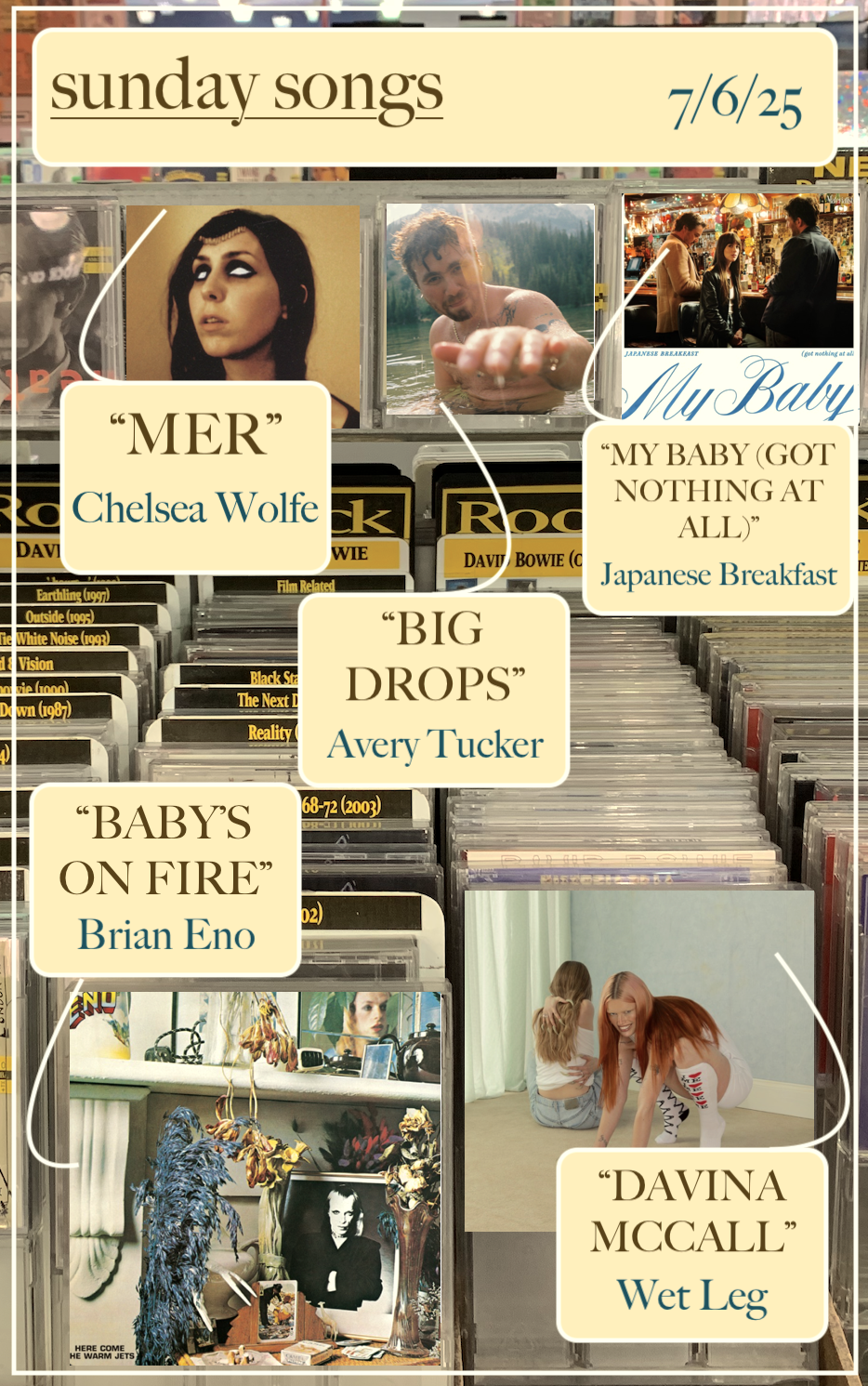
This week: (Almost) three years of making Sunday Songs graphics! As for right now, baby’s on fire, better throw her in…la mer?

Enjoy this week’s review!

SUNDAY SONGS: 7/6/25

“Baby’s On Fire” – Brian Eno

I…oh, shit. It took me until I published this post to realize that I’ve talked about this song twice now on this blog. Welp…

Music hot take of the week: this song needs to be, like, 8 minutes long. At least. I love an album that has songs that smoothly transition into one another (as is the transition from “The Paw Paw [Redacted] Blowtorch”* to this track), but oh my god, it needs more time!! The way that the song builds up is so monumental—it’s a whole fizzing, crackling Rube Goldberg machine of compounding suspense. The intro needs to be at least a minute long to stretch it out, just to give the first lyrics the punch they need. It’s a glam rock/art rock masterpiece, but it feels like a study in buildup and release more than anything. The percussion stays steady throughout the entire song, giving way for every other instrument—most of which were apparently woefully out of tune when they recorded it—to spiral outwards into a tidal wave that doesn’t crash until three minutes in—it just looms for so long. Most of me wants that to be extended, but Eno is a master of creating such a layered atmosphere.

What most people rightfully remember “Baby’s On Fire” for, however, is that truly insane Robert Fripp solo. The Genius annotation on the lyrics where it denotes the solo simply says “holy fucking shit,” which I think sums it up better than most music critics have. It’s the moment that the tidal wave that Eno has built up fully crashes, sending a kaleidoscope of chaotic spray down on the listener. As the story goes, Fripp had the flu while recording this marvel of a solo…I can only imagine the kind of tricks he was able to pull off when his health was stable, because GOD. It really is chaos personified—you can never predict which direction it’s striking next, and the stark contrast between it and the consistent, steady build of Eno’s background instrumentals make it feel like modern art. I get the same feeling of listening to “Baby’s On Fire” as I do looking at abstract, geometric paintings. It’s a masterclass in contrast.

Eno’s lyrics, especially in this era, are rarely serious, mostly just surreal word-play. Dehumanization is at the heart of the story, with a figure actively ablaze whose suffering is being exploited for photos. Here’s where I feel like Eno’s genius working with glam rock really comes in. He’s got this disaffected, theatrical tone, but what he’s saying is so deeply sarcastic that I can’t help but read it as critique of how the fictional subject is being exploited while she’s actively suffering; “Photographers snip-snap/Take your time, she’s only burning” reads to me as the photographers seeing her pain as tabloid fodder, a spectacle to make money off of. His nasally, sarcastic tone feels like a cue to laugh at the clowns who would ignore her plight just to make an extra buck. But whether in the fictional realm or in reality, I’ve always admired that Brian Eno has always been committing to condemning dehumanization of all kinds, from the 1970’s right up until today. It’s always comforting when the best musicians have consciences to match.

*It’s more an outdated term than anything, and I really don’t think Eno used it with any disrespectful intent—it was normal for the time. However, it feels uncomfortable for me personally to type it here, so see for yourself.

…AND A BOOK TO GO WITH IT:

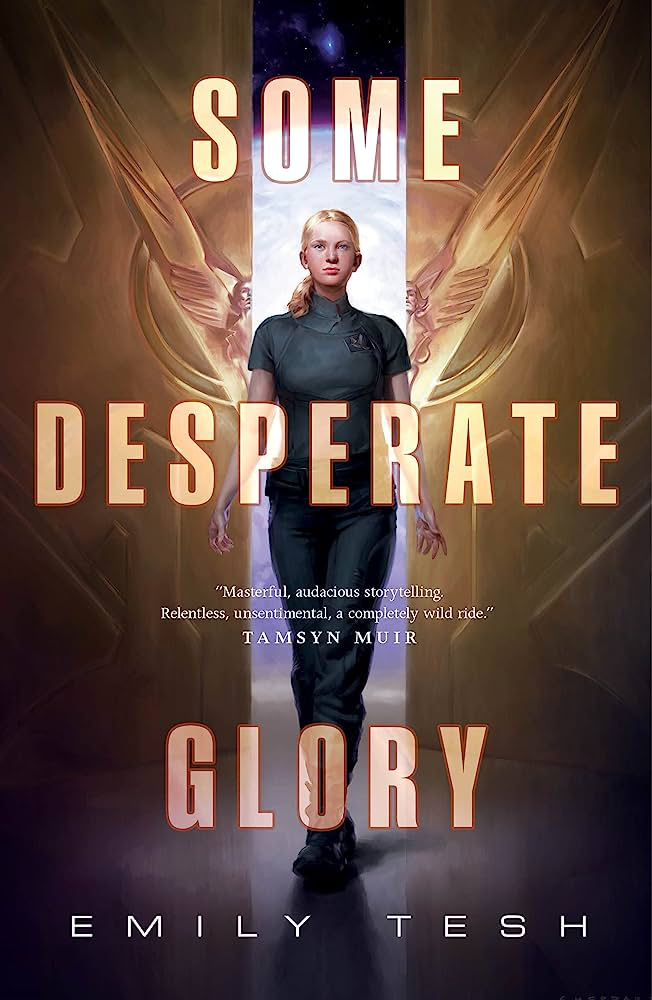
Some Desperate Glory – Emily Tesha fantastic sci-fi book that interrogates our casual comfort with dehumanization of others.

“davina mccall” – Wet Leg

BREAKING: Wet Leg actually has another song? I’m doing my best to not sound like a broken record whenever I talk about them, but I swear this feels like the most growth I’ve seen them have as far as songwriting range. It’s not a wild left turn for them, but it feels fresh.

Snuggled in between the ’90s and the 2010’s, somewhere between The Cardigans and early Wolf Alice, “davina mccall” stands out partly because it’s probably their first love song—and maybe their most sincere song. However fun they make their music, a lot of it is mostly the more maddening sides of modern life, whether it’s being bounced between stupid men or being apathetic and numb about the world. It’s never come across as abjectly doomery or irony-poisoned, mostly because they have a sense of humor about it. Yet they have kind of run themselves dry with the subject matter. I know that love songs are pretty much the most common kind of song you’ll hear these days, but for Wet Leg, it feels like a more vulnerable step. When your entire body of work is about being relatable and vulnerable about how silly and artificial modern life is, it feels significant for them to embrace the idea that vulnerability is not all phone addictions and bad sex. I might be getting too deep with it, but strip it all away, and “davina mccall” is just a lovely, summery love song, content to linger in the ordinary, quiet moments of romance.

Also, I can’t not talk about how delightful this music video is! Directed by Chris Hopewell—who I forgot I knew from the glorious stop-motion music video for Radiohead’s “There There,”—it reminds me of Fantastic Mr. Fox in the best possible ways. Luckily, none of them go the way of Thom Yorke in this video—the song’s too happy for that kind of thing. The members of Wet Leg are all rendered in claymation, and they all look an awful lot like Petey and the rest of his gang (at least it’s not weak songwriting this time). Wet Leg’s task force for bird-related crimes is nothing short of hilarious—and surprisingly sweet at the end.

…AND A BOOK TO GO WITH IT:

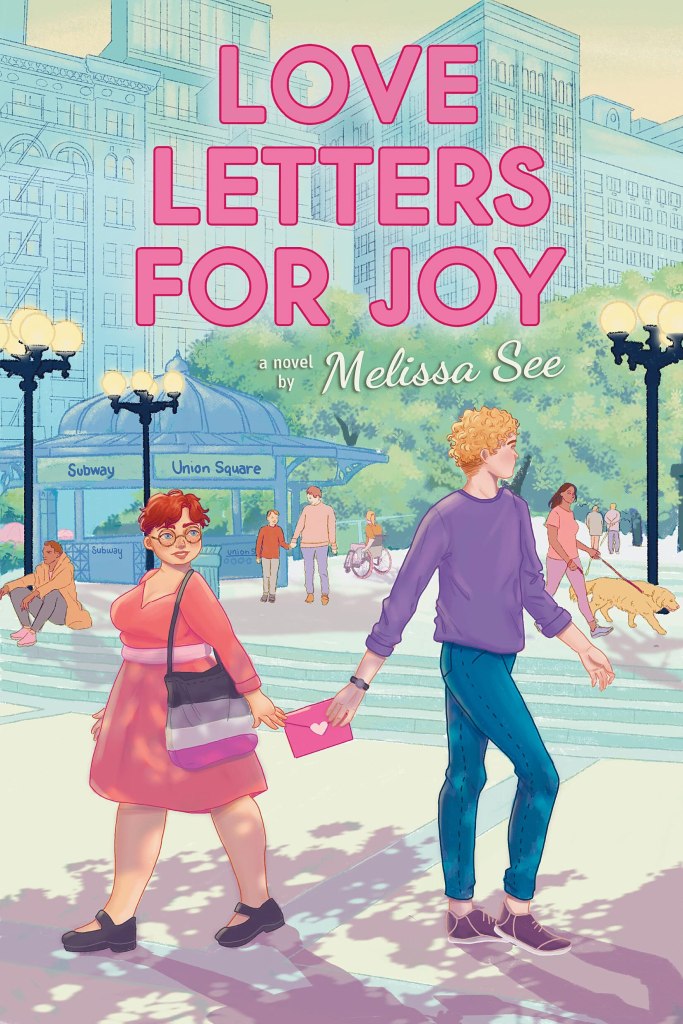
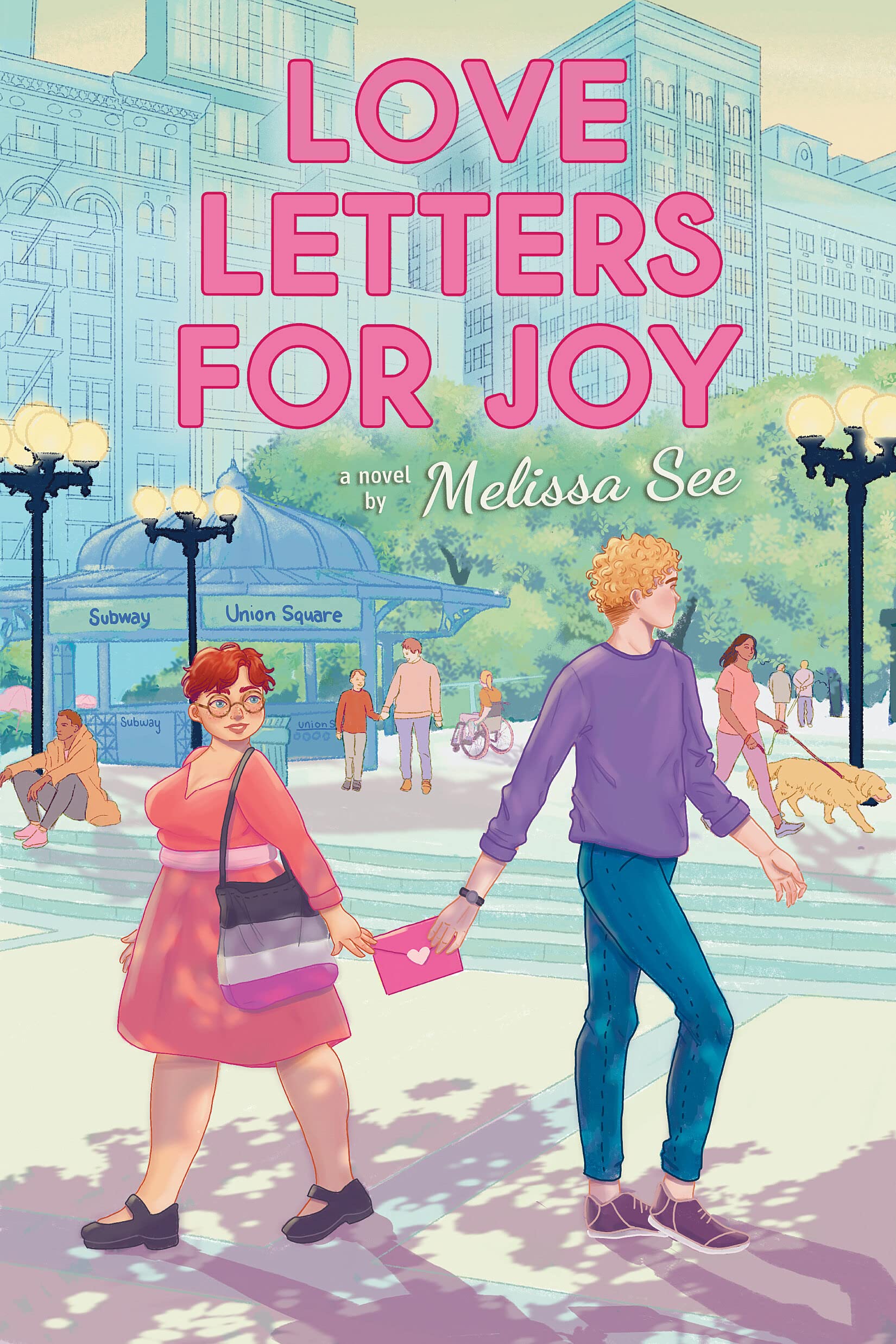
Love Letters for Joy – Melissa See“You know that I would/Do anything for you/It’s like a dream come true/Every day is spent trying to say something to make you smile…”

“Mer” – Chelsea Wolfe

I don’t talk about Chelsea Wolfe nearly as much as I should, even though, by my count, she’s featured on one of these posts/graphics…four times? Only four? Granted, she fell into that curse where every time I’d put one of her singles on a graphic, I’d be too busy to write about it. Shame, really, given that She Reaches Out to She Reaches Out to She was one of the best albums of 2024. Go listen to it—the album didn’t get nearly enough love as it deserved!!

As penance, let’s take a look back at one of her older tracks, 2011’s “Mer” from her album Apokalypsis, which has to have one of the most wondrously goth album covers ever (though her entire discography puts in a lot of great contenders). “Mer,” named for the French word for the sea, embodies its title, but not in the way you’d expect. The mer that Wolfe is channeling here isn’t the gentleness of waves lapping against the shore in July—it’s more the dread of looking out onto a roiling ocean as storm clouds gather over jagged, rocky cliffs. It’s a landscape that calls something along the lines of “Annabel Lee” for me. Even though I do play music, I’ve never been super keen about deciphering time signatures and the like, but I swear there’s something going on with “Mer”‘s timing—I swear there’s some syncopation going on with the percussion and the other instruments, but it all feels like each instrument is keeling ever so slightly to the side of the others, a sinking ship pulled in all directions. It all feels so off-kilter in Wolfe’s classic, sinister way. Even without the barely decipherable noises in the background, which for all the world sound like wailing Tim Burton-like spirits trapped in glass bottles, “Mer” would remain fundamentally eerie.

…AND A BOOK TO GO WITH IT:

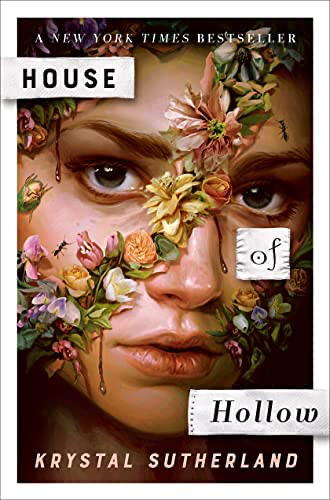
House of Hollow – Krystal Sutherlandthough the sea doesn’t factor as much into this novel, the general eerie, misty atmosphere very much carries over.

“Big Drops” – Avery Tucker

I only found out that Avery Tucker was finally going solo when I was writing about girlpool back in June. Compared to the more pop direction that Harmony Tividad has embraced now, Tucker’s single reminds me more of mid-career, more guitar-driven girlpool—something close to Powerplant or the first half of What Chaos is Imaginary. As far as new directions go, the more electronic turn that girlpool took in their later years was hit or miss—when they hit it (see: “Like I’m Winning It”), they made fantastic, sultry, synthy indie-pop; when they missed (see: …uh, pretty much 75% of Forgiveness), it almost smothered their candid lyrics and how well they worked together as a duo. It felt plastic.

So I can’t help but be relieved that Tucker’s returned to the band’s roots. Even though he’s…well, he’s playing a tele during some of the acoustic parts of the song in the music video, which is admittedly a little silly, seeing Tucker back in his element makes the music feel more natural. Though some of his delivery and lyrics veer on being too earnest, “Big Drops” shines a light on some of the more candid, bare songwriting that made girlpool so memorable. Solely in his hands, he crafts a narrative from intimacy, late-night talking, and musing about unexpected events and the regrets that come from them. With the (mostly) acoustic guitar, it gives the song a tender, warm spaciousness that evokes the exact imagery he conjures—sitting on pool chairs, looking at the sky, and spouting off about your life.

…AND A BOOK TO GO WITH IT:

The Many Half-Lived Lives of Sam Sylvester – Maya MacGregor“Last night we talked about big drops/Big drop on the boardwalk ride/Big drop thinking about her life/Should we visit the two of them?/Or did the town get too violent?”

“My Baby (Got Nothing At All)” – Japanese Breakfast

In keeping with last year’s Sunday Songs anniversary, I am once again reviewing a song from a new movie that I haven’t even seen. (Update: I still haven’t seen I Saw the TV Glow. Someday…) Materialists doesn’t seem like my thing, but Japanese Breakfast certainly is. Ever since the trailer for the movie came out, I was enchanted by the way Michelle Zauner breathily sang “my baby.” I was fooled into thinking that this song was going to be on For Melancholy Brunettes (& sad women), so you can imagine my disappointment, as fantastic as that album was.

Regardless of whether or not you’ve seen Materialists, the swoony, rom-com feel comes away in waves on “My Baby (Got Nothing At All).” The more delicate range of Zauner’s voice shines through in this environment, accompanied by the gentle strum of acoustic guitars and swelling strings. As Zauner (and the protagonist of the movie, presumably?) affectionately admits that her lover is broke (but he gives it all to her anyway), she sings with the relaxed, daydreaming posture of someone leaning over a fire escape, watching the glow of the city lights below and the cool wind tossing her hair. As her voice climbs on the bridge (“You’re in love/There’s no doubt about it/There’s no use in messing up”), it cements the song as one of the more perfect rom-com songs—it’s not cloying or earnest, but it sounds appropriately like a lovelorn hand draped over a sighing forehead.

…AND A BOOK TO GO WITH IT:

Water Moon – Samantha Soto Yambaothe best parts of this novel have the same dreamy, swoony feel of watching the lights of a glittering city and falling in love.

Since this post consists entirely of songs, consider all of them to be today’s song.

That’s it for this week’s Sunday Songs! Have a wonderful rest of your day, and take care of yourselves!
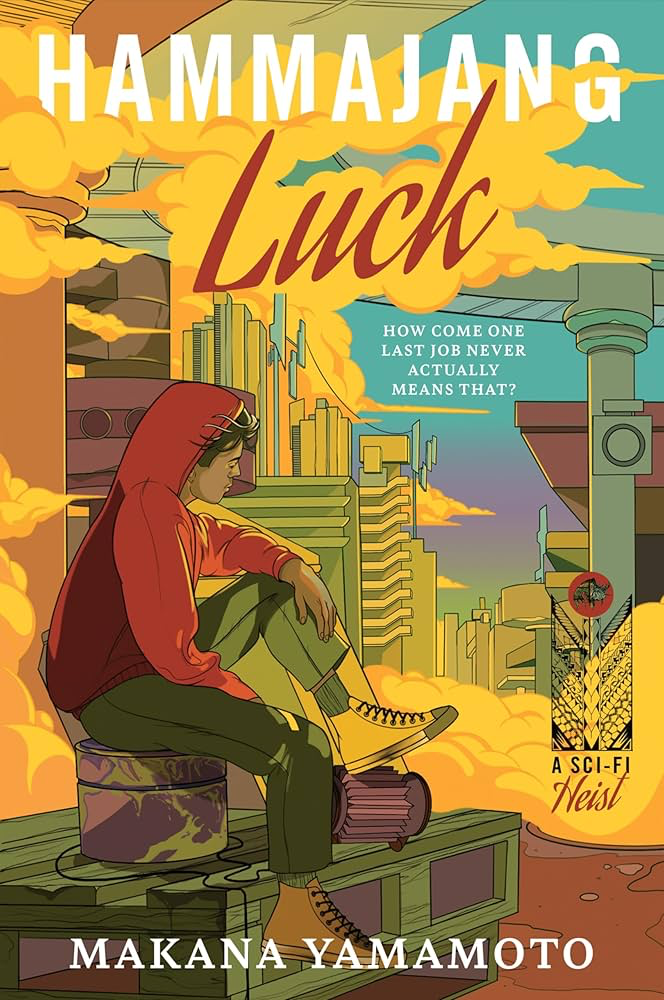
Posted in Books

♿️ The Bookish Mutant’s Books for Disability Pride Month (2025 Edition) ♿️

Happy Wednesday, bibliophiles!
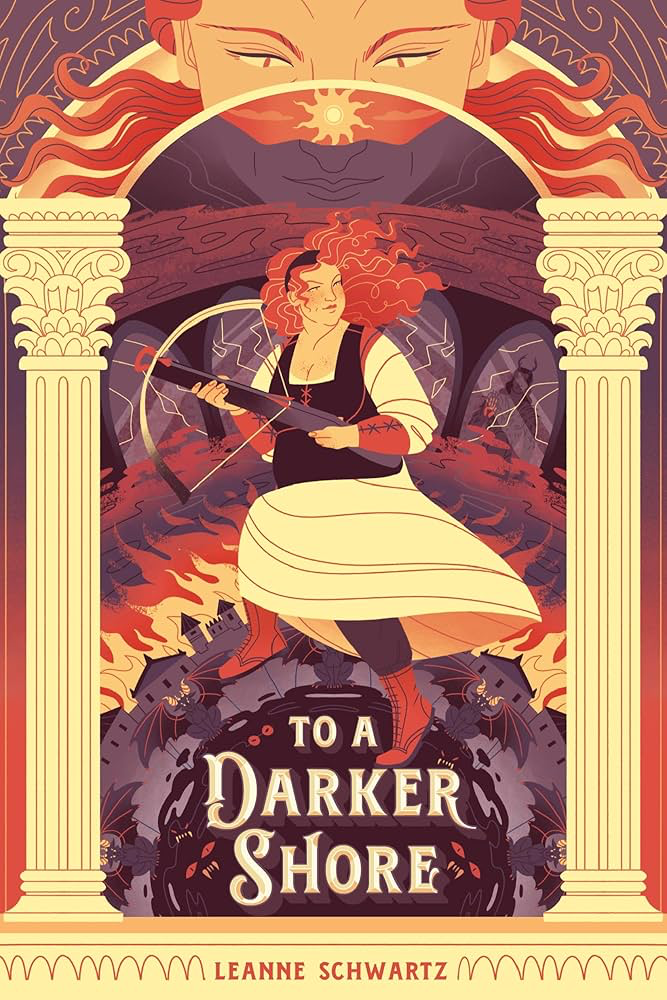
Here in the U.S., July is Disability Pride Month! This July, we find ourselves in a situation that’s far from celebratory. Both the U.S. and the U.K. are on the verge of passing legislation that would make cuts to the healthcare programs and benefits that many disabled people rely on. It’s clearer than ever that the people in power see disabled people as disposable and not deserving of respect. In the years since I’ve started making these posts, visibility for disabled people (and this pride month) has seen a small increase (in my experience) yet continues to be left behind in feminism. And I’m still on the hunt for any kind of media that accurately represents my own disability (sensory processing disorder), and I know many disabled people have had similar experiences. But that’s no reason to give up. It’s no reason to stop writing, to stop reading, and to stop listening to the lived experiences of disabled people. We cannot be erased with legislation—we will always be here, and we’re sticking around no matter what.

So here is another list of some of the best books with disabled representation that I’ve read in the past year! I’ve included books from all age ranges (middle grade to adult) and genres that represent a multitude of disabilities.

NOTE: my memory (and the internet) is imperfect, so if I’ve misrepresented/mislabeled any of the specific rep in these books, don’t hesitate to let me know!

KEY FOR TERMS IN THIS POST:

  • MC: Main character
  • LI: Love interest
  • SC: Side character

For my previous lists, click below: 

Let’s begin, shall we?

♿️THE BOOKISH MUTANT’S BOOKS FOR DISABILITY PRIDE MONTH (2024 EDITION)♿️

FANTASY:

SCIENCE FICTION:

*I’ve arbitrarily included Being Ace in the science fiction section, but it includes several genres, many of which fall under sci-fi/fantasy. It could theoretically go in all three fiction categories in this post.

REALISTIC FICTION:

NONFICTION (or “Oops! All Alice Wong”):
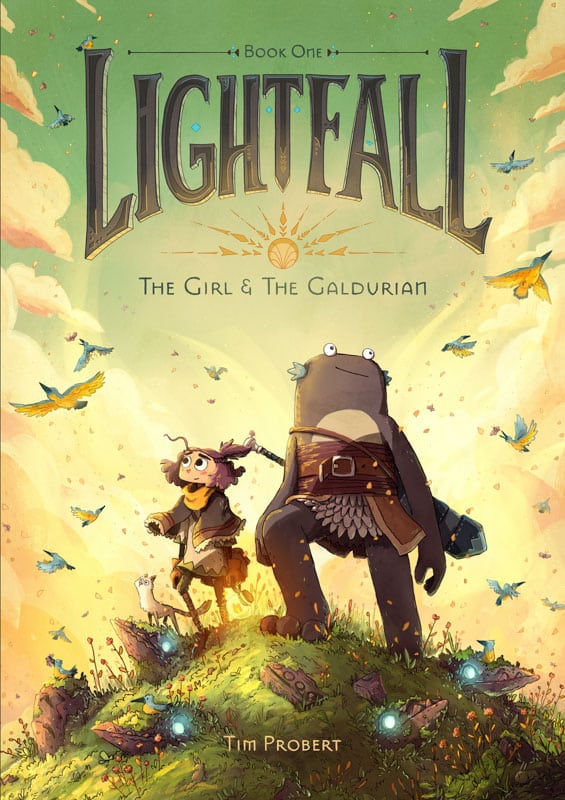
TELL ME WHAT YOU THINK! Have you read any of these books, and if so, did you enjoy them? What are some of your favorite books with disability rep? Let me know in the comments!
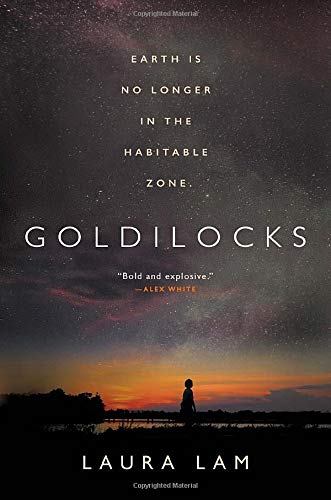
Today’s song:

That’s it for this recommendations list! Have a wonderful rest of your day, and take care of yourselves!