

Happy Sunday, bibliophiles!
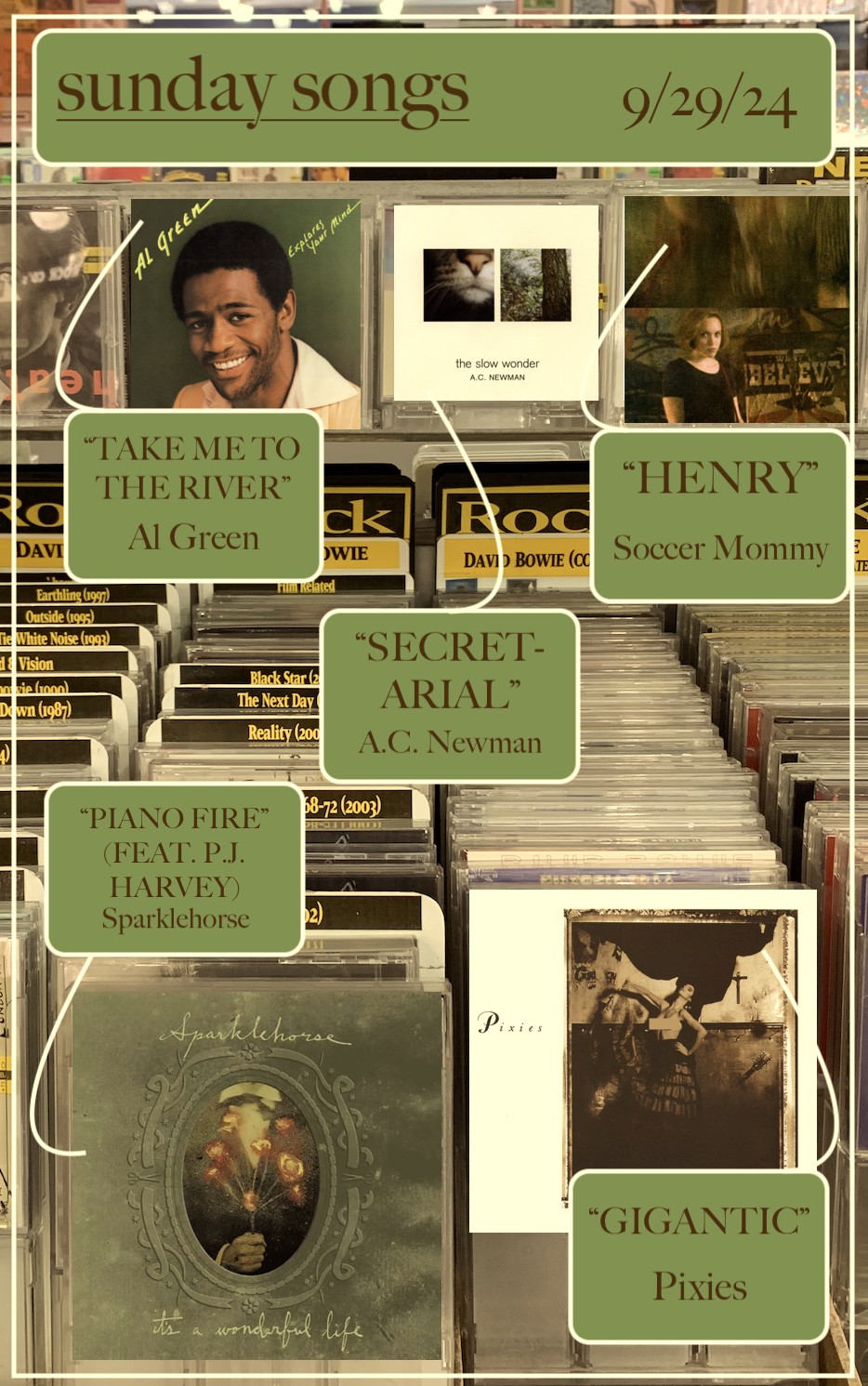
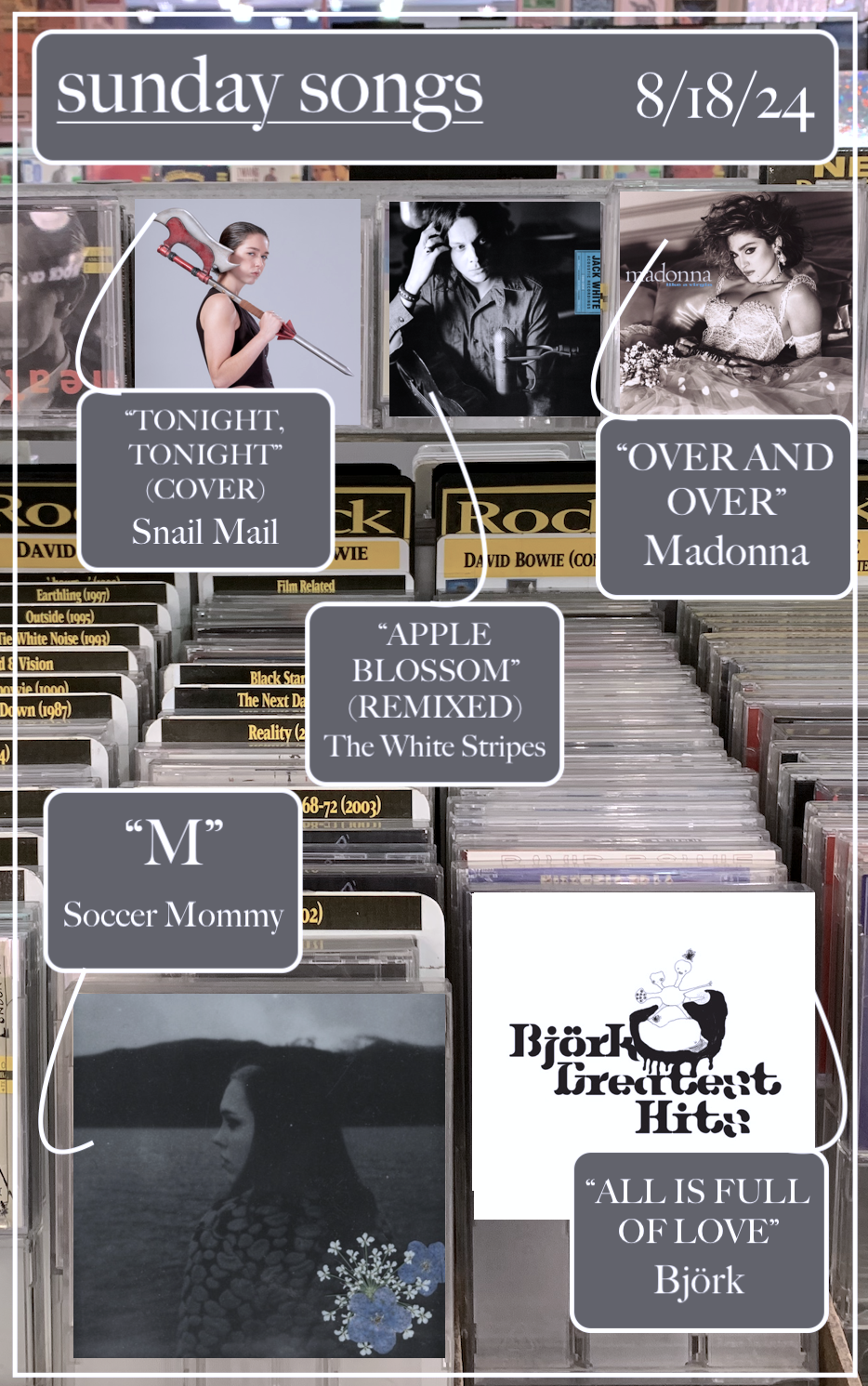
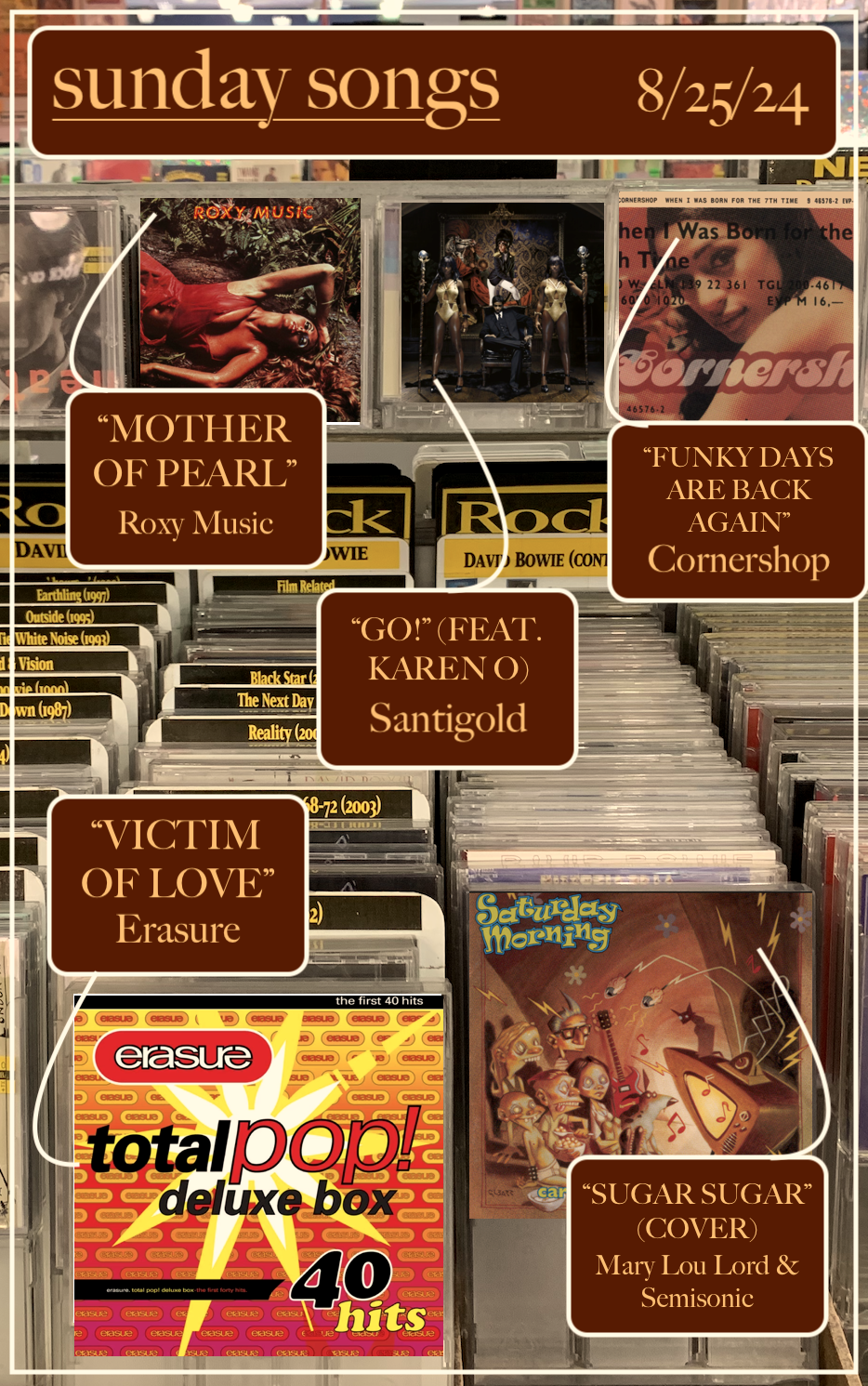
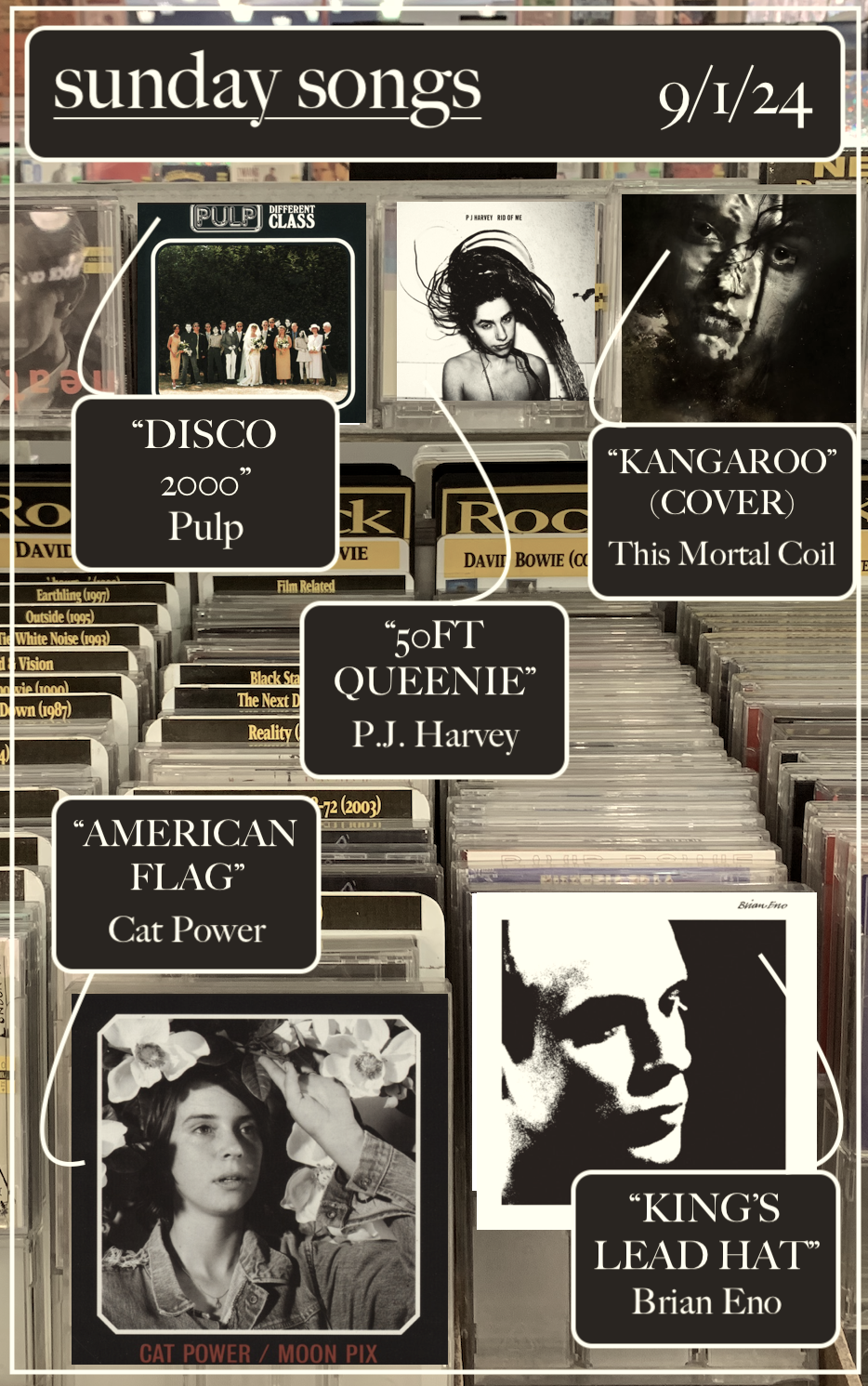
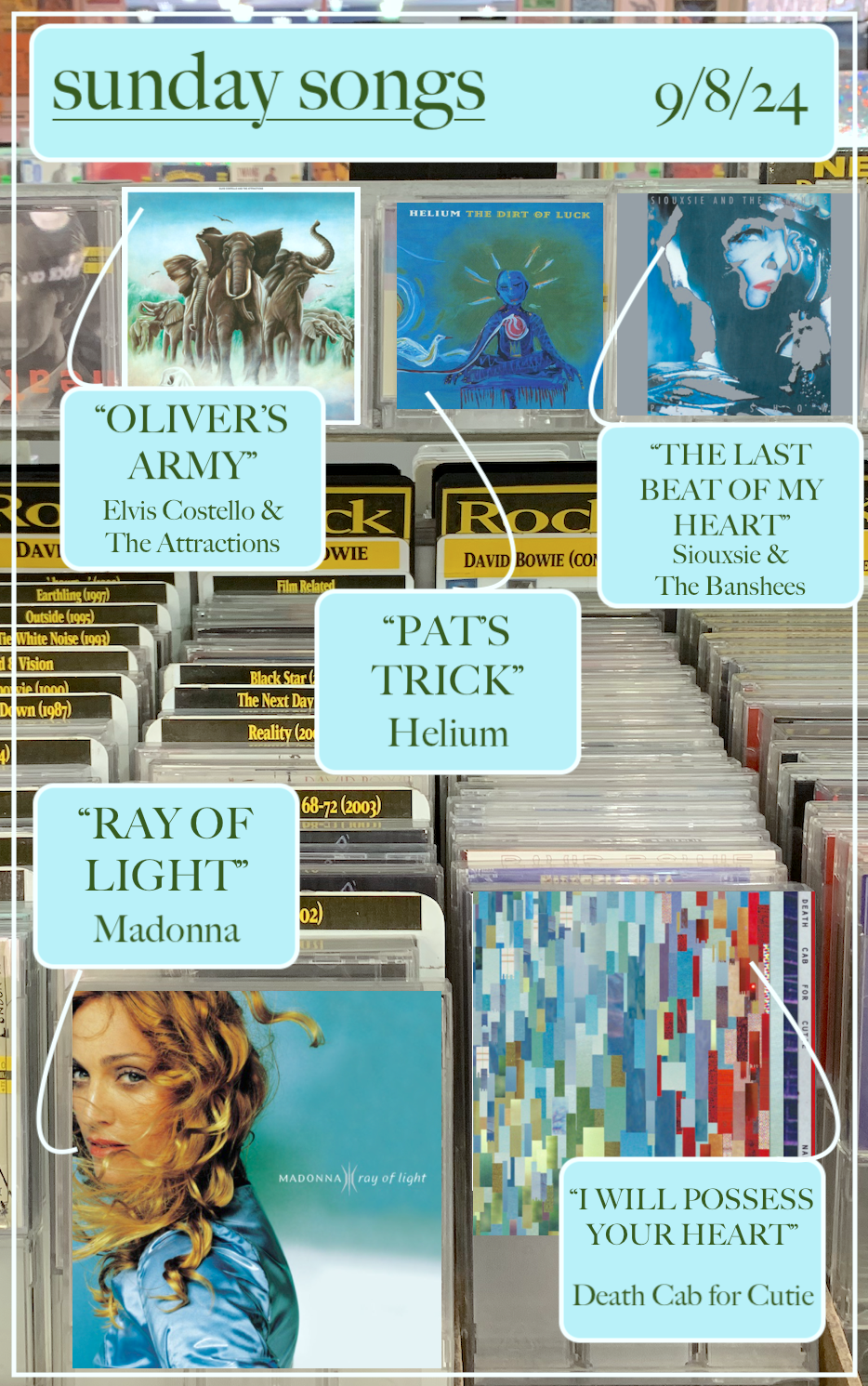
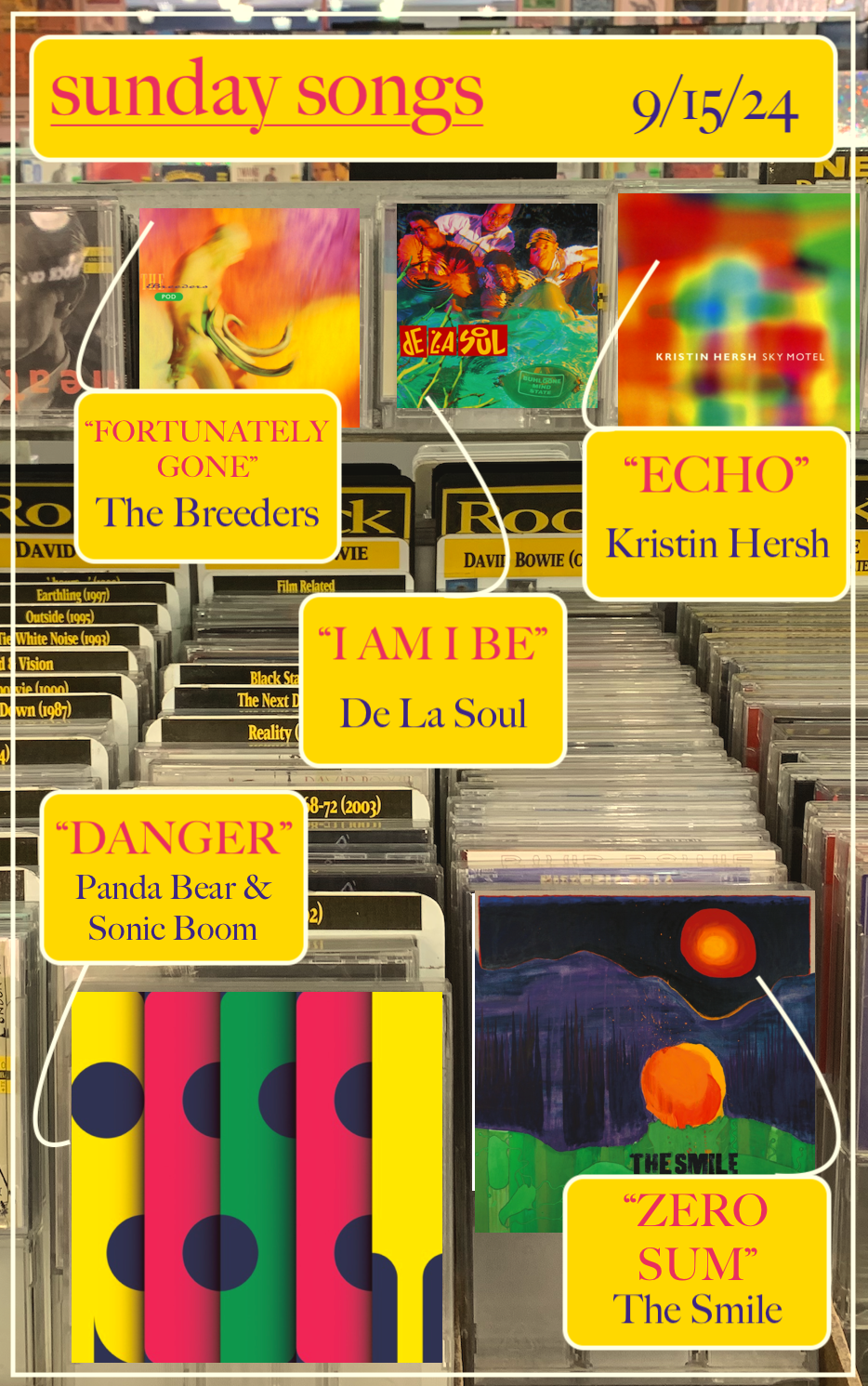
Since I haven’t been able to post in a few weeks, here are the Sunday Songs graphics from that time:
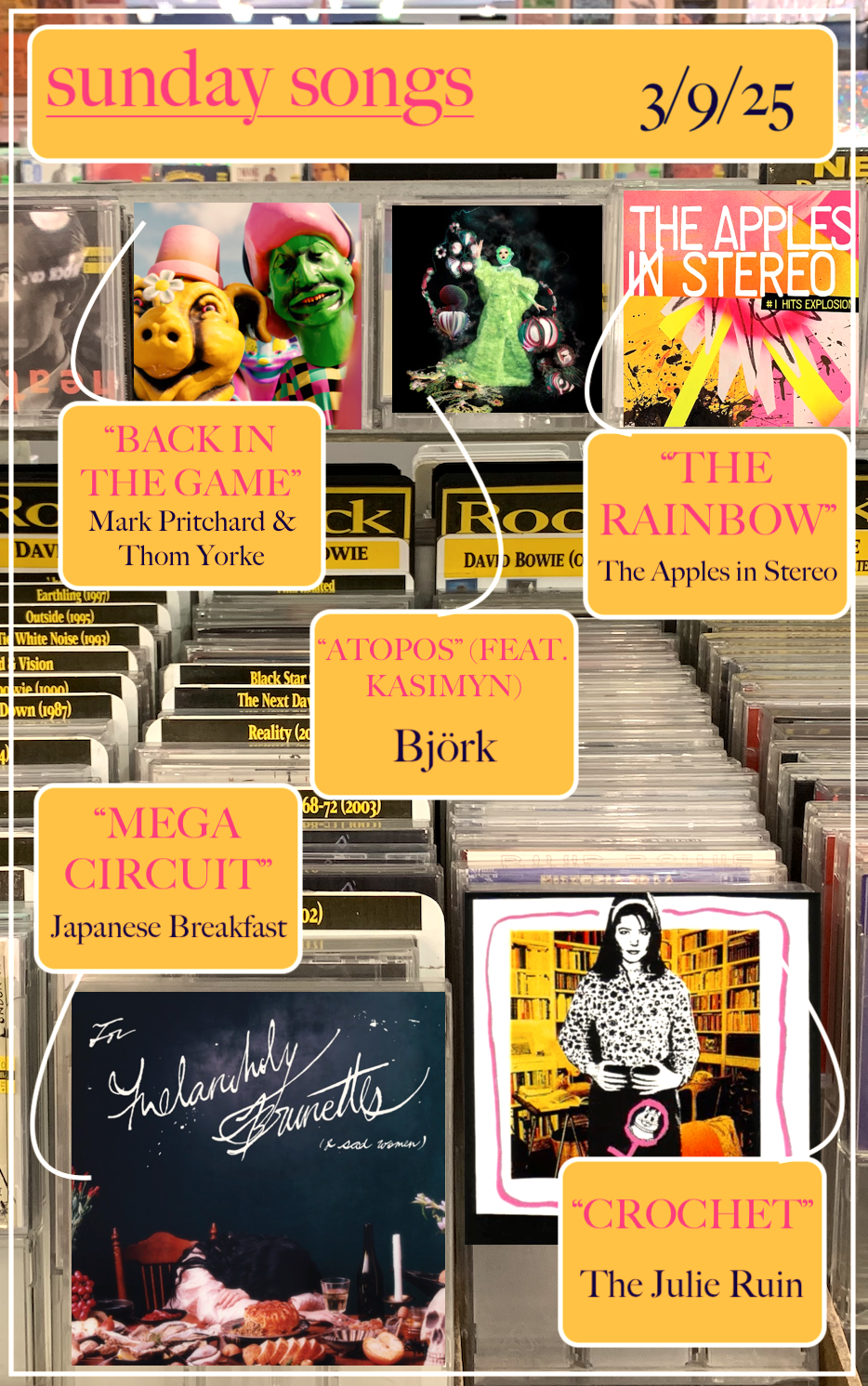
3/9/25:
- “Mega Circuit” – Japanese Breakfast
- “Crochet” – The Julie Ruin
- “Back in the Game” – Mark Pritchard & Thom Yorke
- “Atopos” (feat. Kasimyn) – Björk
- “The Rainbow” – The Apples in Stereo
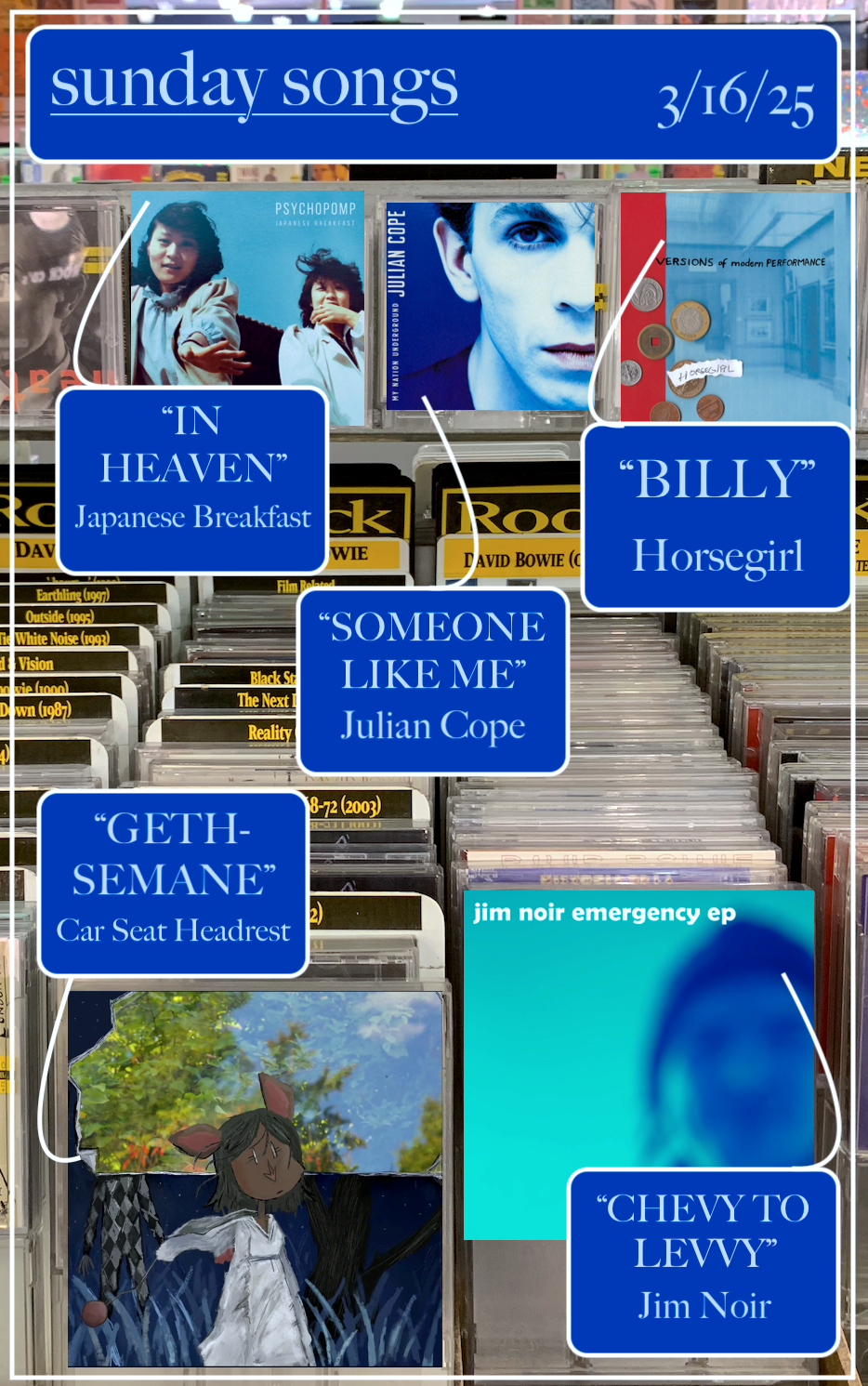
3/16/25 (or, NEW CAR SEAT HEADREST IN MAY, WE ARE SO BACK):
- “Gethsemane” – Car Seat Headrest
- “Chevy to Levvy” – Jim Noir
- “In Heaven” – Japanese Breakfast
- “Someone Like Me” – Julian Cope
- “Billy” – Horsegirl
This week: you thought this would be a quick post after I haven’t been able to write regularly for two weeks? WOE, TEN MINUTE SONG BE UPON YE!
Enjoy this week’s songs!
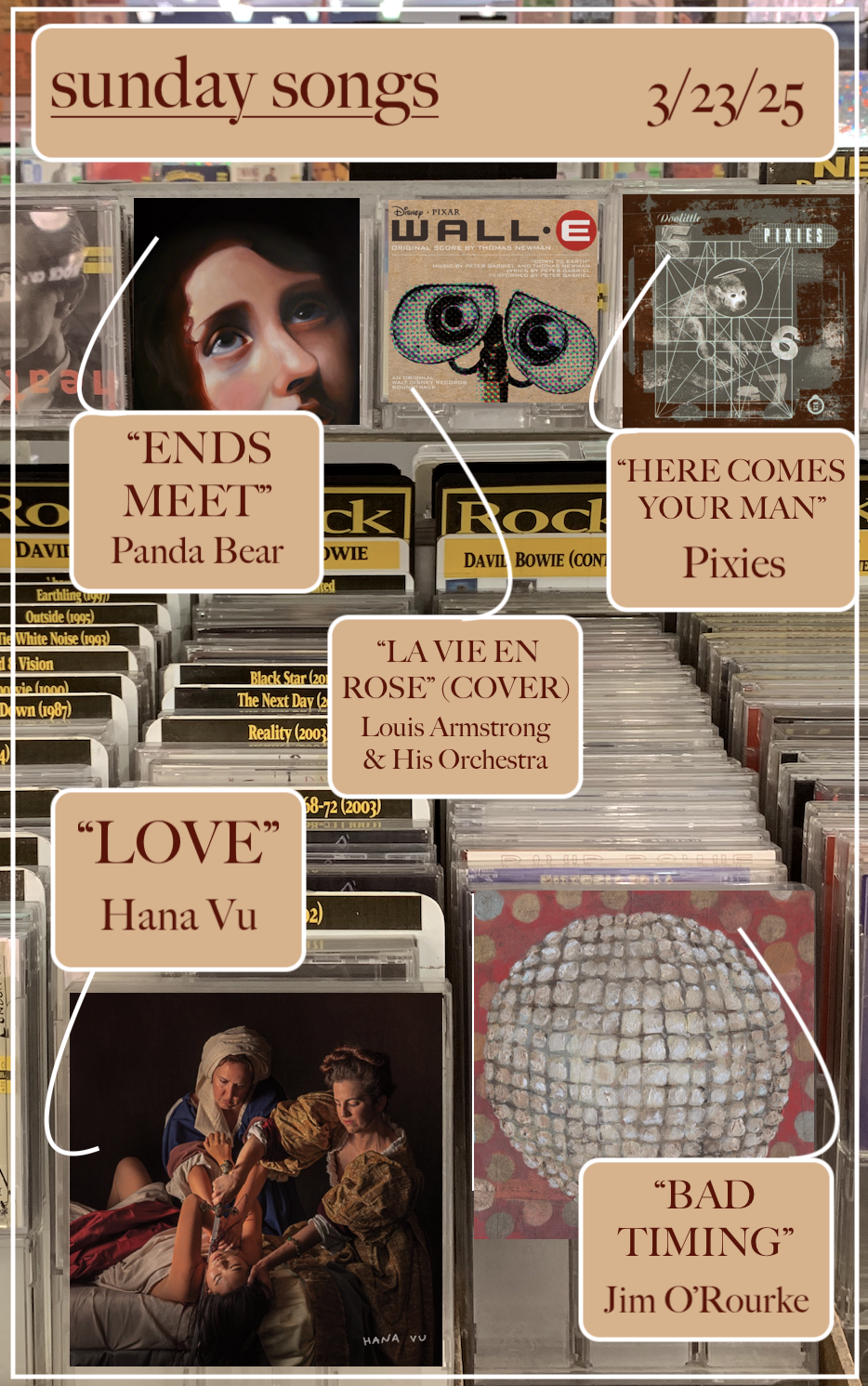
SUNDAY SONGS: 3/23/25
One of the best surprises a concert can have in store is a good opener. There are infinite jokes about bad openers, half of which…well, might be dogging on perfectly fine artists trying to get their foot in the door, and half of them are true. I really do try to at least go into openers with an open (no pun intended) mind, because everybody has to start somewhere, no matter how big of an artist they’re opening for. But sometimes it’s just up to your taste. Even with some cringy performances, you can at least tell that they’re trying.
I saw Soccer Mommy about two weeks ago (stellar performance!!!! as always!! and the crowd had basic human decency this time, unlike the parasitic frat bros that populated her crowd last time) with Hana Vu as the opener. I kept my expectations low. I expected to just nod along and twiddle my thumbs, but I think I may have found an excellent artist! She came off quite shy, mumbling to the audience and asking us what we had for dinner, but once she started performing, it was clear that Soccer Mommy had a worthy match to her sound. However, if I had to compare Vu to anyone, it would be to Lucy Dacus—they have a similar brand of indie rock, both bearing warm, rich vocals and guitar-driven angst with no shortage of heart. Nothing can come close to “Night Shift,” but Vu clearly studied how that song goes supernova at the end. The closer to her most recent album, Romanticism, “Love,” like Vu’s performance before Soccer Mommy, starts out unassumingly, but quickly becomes a dramatic landslide aided with thundering drumbeats, strings, and Hana Vu bellowing as though into a cavern. The lyrics, as sparse as they are, come sung clutching a bleeding heart in both hands, staining everything within arm’s reach. It truly lives up to the drama of the album cover, with Vu draped in robes and with a sword pressed to her neck, modeled after Artemisia Gentileschi’s “Judith Slaying Holofernes.” Either way, Hana Vu has earned a tally in favor of the good opening bands I’ve seen—and a place in my more regular rotation of artists. A big thank you to Soccer Mommy for giving a platform to Vu’s talent, and thank you to Vu for the fantastic opening act!
…AND A BOOK TO GO WITH IT:
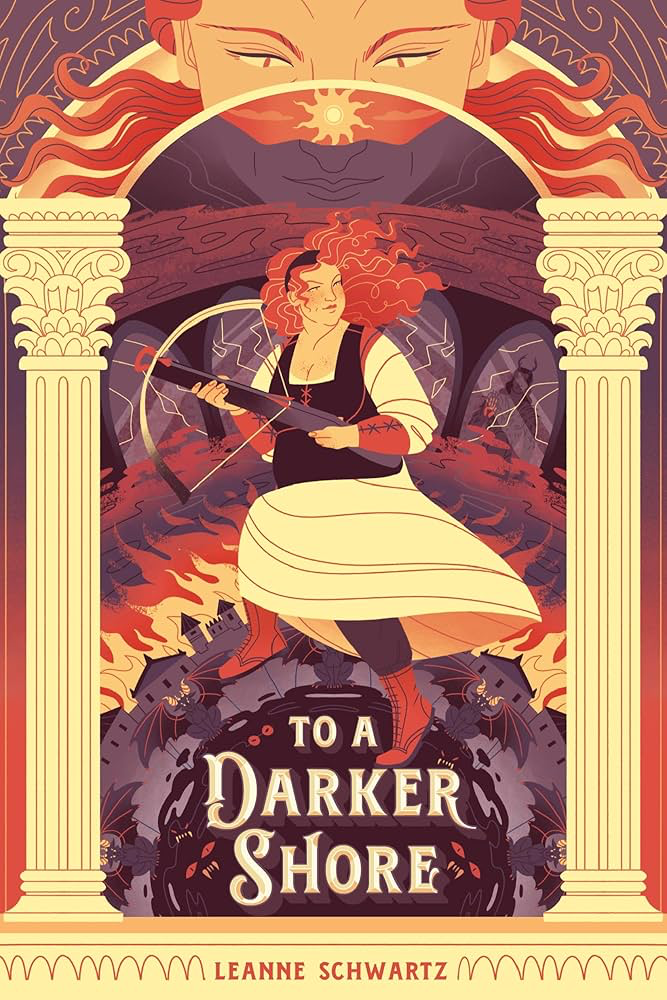
To a Darker Shore – Leanne Schwartz – “I just want you to stay/You know I hate giving up/And oh, Well I guess it’s just me/Please don’t leave me alone/You know I can’t let you be…”
Once my dad sent me this song, it was immediately relegated to my quiet instrumental study playlist. I shouldn’t say “relegated,” really. It’s a great song to peacefully study along with, but it keeps you on your toes. Ten minutes long and dense doesn’t make it sound appealing, but “Bad Timing” sounds like how those slow motion videos of flowers unfurling after the frost melts from their buds look. “Bad Timing” also proves my long song theory right with flying colors—the best ones have enough changes to keep you interested for ten minutes. This track in particular feels like two songs in one. The first is a homely, acoustic ditty, which peacefully bows out at the 2:50 mark, giving way to a chorus of plucked strings and, of all instruments that should sound shimmery, an accordion would be my last guess. Yet Jim O’Rourke pulls it off, making it shudder and glimmer along with the synths. You’re lured into a soft, ambient sense of security, but like rot climbing up the roots of a plant, O’Rourke tears away at the music, fiber by fiber, until the remnants are ablaze in distortion and ascending mayhem by the time you reach the eight and a half minute mark. It’s clear to me the magic O’Rourke made with producing almost all of Wilco’s albums—he has such a talent for taking a simple melody, stretching it out and contorting it as easily as a chef kneads dough. He put something entirely unassuming into the oven, and something wholly unexpected came out the other side once the experimental yeast rose.
On another note: I can’t for the life of me find who made the album art for Bad Timing, but it’s just so charming to me.
…AND A BOOK TO GO WITH IT:
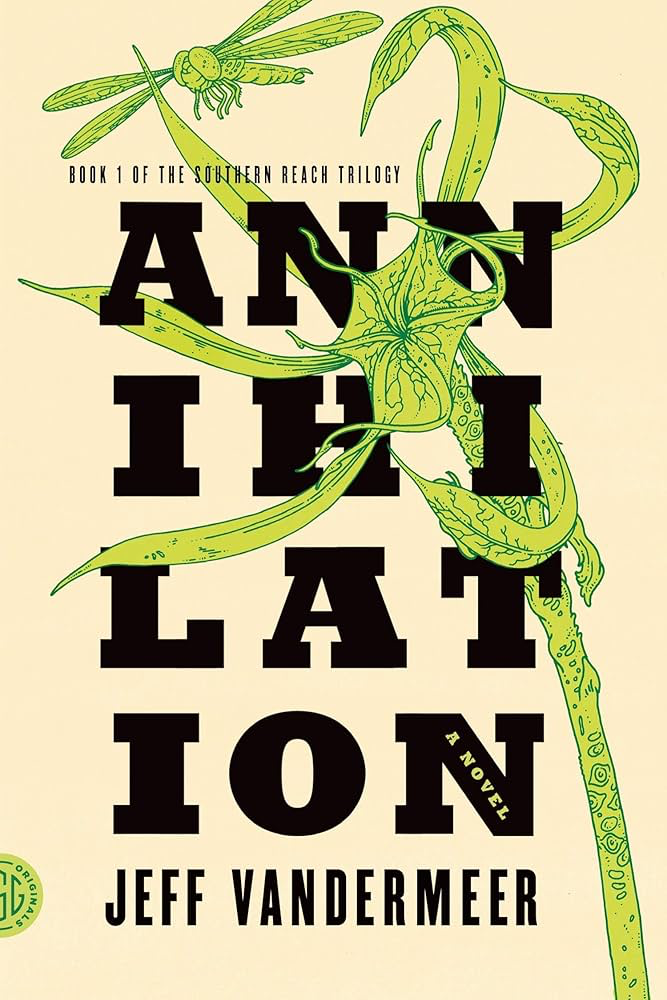
Annihilation – Jeff Vandermeer – everything becomes slowly, gradually unrecognizable and strange, just like the progression of “Bad Timing”
Brian Wilson is alive and well, but what I’ve listened to of Sinister Grift feels like a glimpse into an alternate universe where Brian Wilson got temporally airlifted from the ’60s into the 2020s and had to find his way around. That, and if he’d been given nothing but a knapsack full of various synths and electronic knickknacks to carry with him on his time-out-of-time journey. “Ends Meet” is the definition of psychedelic, constantly fading in and out of focus like ripples over sunlit water. Noah Lennox’s voice also feels piped in from beneath the shallows of a reef—released this February as it was, everything I’ve heard of Panda has been carefully crafted to be specifically summery and aquatic, at least in sound (see: “Comfy in Nautica,” “Ferry Lady”*).
The existential lyricism feels at odds with the music at first glance: Lennox is confronting what we all have to confront at some point in our lives: we’re all gonna die, so what else is there to do? His answer is as simple and as difficult as any: appreciate everything in it, bad and good: “And when it is my time/Dig it all.” It’s a lesson I’ve been chipping away at for the better part of last year, what with my difficulty in staying present and not projecting myself into possible futures (not the time traveling Brian Wilson ones, unfortunately), but the way that Panda Bear takes it musically seems different than most. Sonically, “Ends Meets” feels so daydreamy and almost dissociative—its head isn’t in the clouds, it practically is the clouds. Even the face on the album cover of Sinister Grift looks like their mind is somewhere else entirely. But that in and of itself is putting that sentiment of being un-anchored into music and into words. It’s a jarring pairing in concept, tackling this subject matter with such an acid-tinged, vacation-like musical landscape, but to me, it’s the feeling of letting go of that burden, of knowing that all you can do in life is appreciate every facet of it.
*the “Ferry Lady” music video is about as trippy as you’d expect, so if you’re sensitive to flashing images or eye strain, you’ve been warned.
…AND A BOOK TO GO WITH IT:
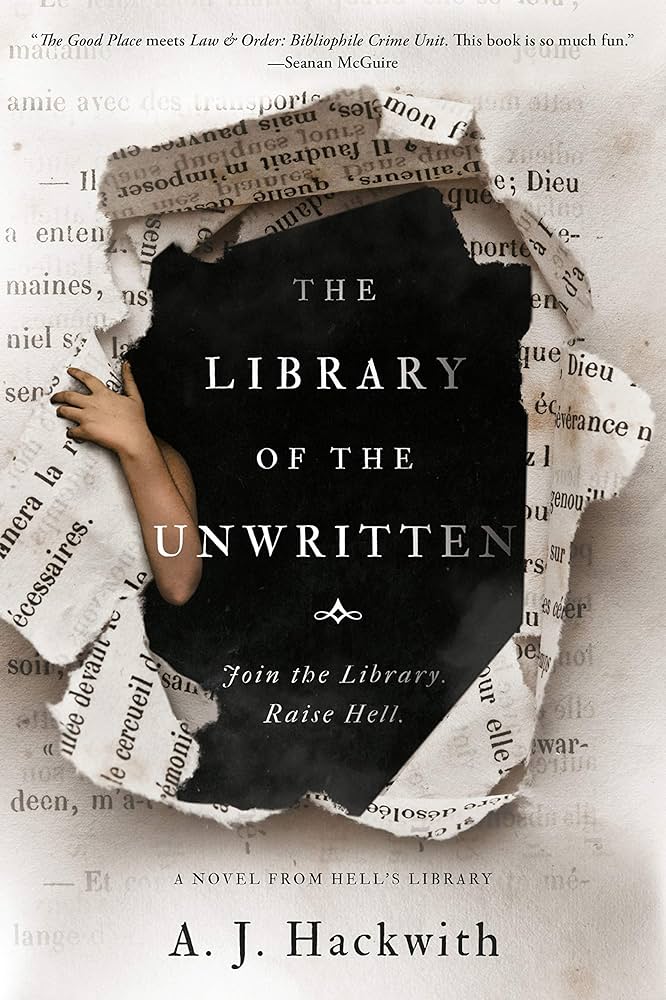
The Library of the Unwritten – A.J. Hackwith – “They got a spot to bury you/It’s not news, you’re tremblin’ for what?/Just keep it in the groovе (Don’t let up)/But keep the doorways shut…”
“La Vie en Rose” (Édith Piaf cover) – Louis Armstrong & His Orchestra
I was never much of a Disney kid, but Wall-E, one of the first movies I saw in theaters as a kid, will always unlock a particularly special place in my heart. Star Wars was my true introduction to sci-fi, but the more I think about it, Wall-E was right up there in conditioning me to fall headfirst into the genre. Even now, in my twenties and watching Wall-E for a grade to analyze the gender dynamics for a class on Disney and gender…it broke me. I knew it would. Sure, Mark Fisher cites it by name in Capitalist Realism when he talks about how Hollywood has subsumed anti-capitalist resistance and yada yada yada, but…god, how could even the most shriveled soul not be moved by an almost newborn race of humankind returning to the same earth, babies treading over barren ground as the giddy captain gleefully lists off all the plants that can be grown in it? And you’re already crying? And then they hit you with “Down to Earth?” Diabolical.
Part of my class’s discussion on the gender dynamics of Wall-E, beyond how we’re socialized to see Wall-E and Eve as boy and girl even though they’re…intelligent machines with no gender to speak of, was how the viewer is socialized to show their relationship as romantic (and traditionally heterosexual) from the markedly older, “classic” media surrounding them. Notable songs and clips from Hello, Dolly! do the heavy lifting there, but in the barest sense, Louis Armstrong’s cover of “La Vie En Rose,” one of the more ubiquitously recognized love songs of this century, which plays when Wall-E first becomes romantically interested in Eve, adds to this effect. And while I see the argument, as women and gender studies/queer theory-pilled as I am, I really don’t think Wall-E is nearly as guilty as a whole cadre of other Disney movies who have improperly shaped particularly women and young girls’ views on how gender and romance should be. For me, “La Vie En Rose” feels as pure as Wall-E and Eve, in all of their innocent, nonsexual romance. Even as a little kid, only knowing Louis Armstrong from “What A Wonderful World” (and thinking that Grover from Sesame Street was behind the vocals), something about those piano flourishes unfurled a kind of petal inside of me. It’s one of the first examples I can name of a melody really scratching an itch in my brain. I’m next to illiterate when it comes to jazz, but Armstrong was clearly one of those rare people who could give his trumpet such an individual voice—by the end of the song, you could call it just as much of a vocalist as he is. Paired with the cinematography of Wall-E’s tire treads tracing neat lines in the trash-laden dirt, something about it felt so neat, so meant to be, a puzzle piece shifting into place. Both of them are clean, and yet not sanitized—they’re sweet, earnest, pure. A part of childhood me is warmed every time I hear this song, obviously, but even outside of that context, the soothing spell of this rendition is undeniable. As is Wall-E.
…AND A BOOK TO GO WITH IT:

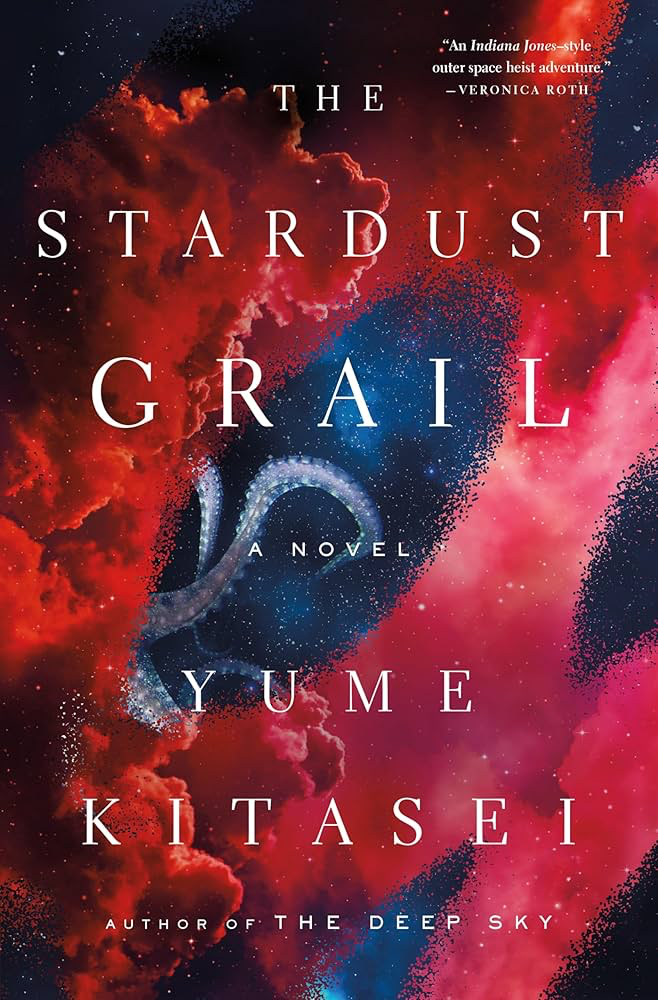
The Cybernetic Tea Shop – Meredith Katz – Louis Armstrong’s take on “La Vie En Rose” is obvious coffee/tea shop music, but combined with my Wall-E association, why not return to this cozy, tender tea shop in a distant future?
“Here Comes Your Man” – Pixies
The music video for “Here Comes Your Man” has to be one of the more uncomfortable music video experiences I can think of, not because of any particular content, but more because you get the overwhelming feeling that nobody wants to be there. Every time they pan to Frank Black or Kim Deal (or Joey Santiago, honestly), they look like they’re trying to telepathically kill the cameramen, Professor X style. They don’t want to be there, the camera crew doesn’t want to be there, and they don’t want you there either…oh, my bad, sorry for the intrusion. I’ll see myself out. For good reason, though—they were averse to making music videos, and when their label pressured them to do so, they famously decided to stick it to the man and gape their mouths open like fish while the lyrics were playing. Given…well, everything I’ve heard about Frank Black, it could easily just be them being petty, but for an underground band who were achieving success they didn’t seem to want, it’s understandable.
I always feel a kind of odd shame when I like That One Song/Album That Got Popular with a certain band that the band openly hates with a passion. If I’d had the time to write a post last week, I would’ve said the same thing for Julian Cope and “Someone Like Me”—My Nation Underground is one of his poppier albums, and one that he wasn’t satisfied with. (See also: “Me Myself & I,” a song I love, but that De La Soul inserts “we hate this song” into live performances of the lyrics…yeah, you get the picture.) For Pixies, they weren’t satisfied with this pop song to the point where they almost never performed it live. But…it’s so good. Sure, it’s simpler and more accessible than some of their work, but they knew how to make one of the most iconic alternative pop songs. Most alternative rock fans would probably be able to recognize that bassline immediately, all thanks to the timeless talent of Kim Deal. There’s layers to the genius of it—the harmonies of Deal and Black, the vague, surrealist lyrics about homeless people boarding a train before an earthquake, the faint comfort and hope in spite of that. The chorus of “here comes your man” was a last minute addition, but it’s always given a kind of solace for me, ever since I was a kid, before I understood the lyrics of the verse. Even with the bleak nature of the verse, it’s always implied a kind of salvation or relief to me. Bottom line: sometimes, even if That Song got popular, it’s obviously popular for a reason, but how talented a band’s craft is can often shine through in the charts.
Sometimes. We don’t talk about “Creep.”
…AND A BOOK TO GO WITH IT:
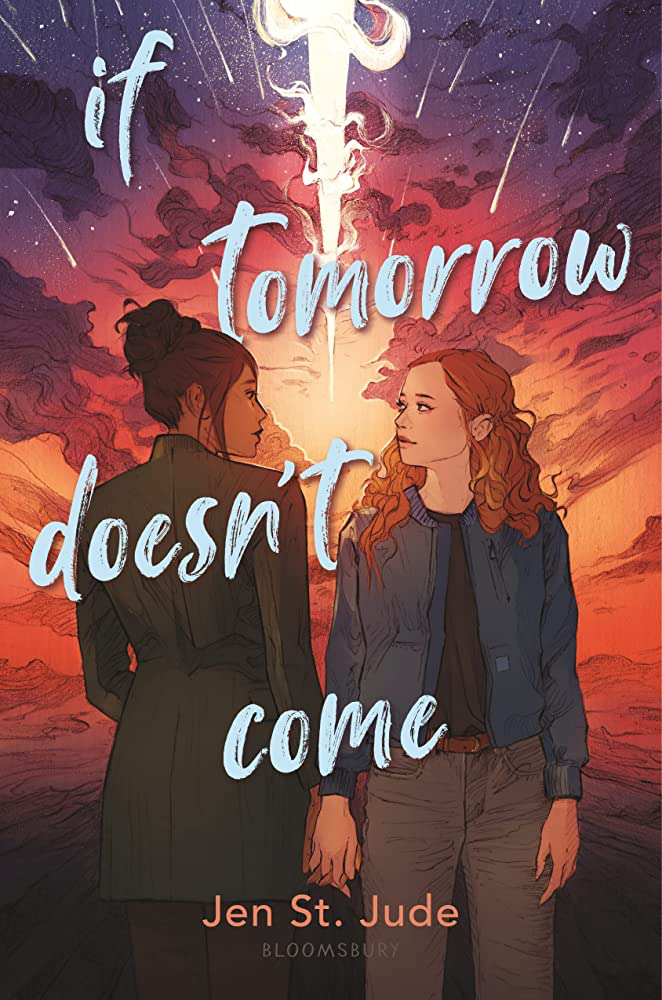
If Tomorrow Doesn’t Come – Jen St. Jude – a similar kind of disaster-oriented scenario to the song, of people scrambling to safety in the wake of a planet-destroying asteroid.
Since this post consists entirely of songs, consider all of them to be today’s song.
That’s it for this week’s Sunday Songs! Have a wonderful rest of your day, and take care of yourselves!


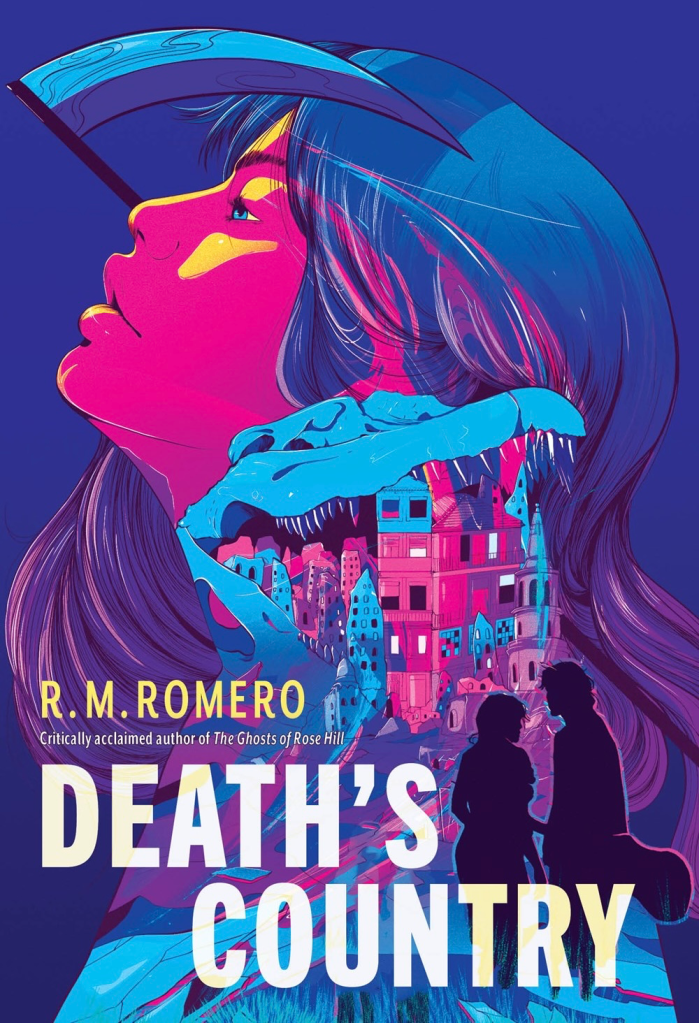








 The Bookish Mutant