Posted in Sunday Songs

Sunday Songs: 2/23/25

Happy Sunday, bibliophiles! I hope this week has treated you well.

This week: British women dominating rock music for decades, American women giving the gays what they want, and Thom Yorke’s seeming inability to make a bad song since 1995.

Enjoy this week’s songs!
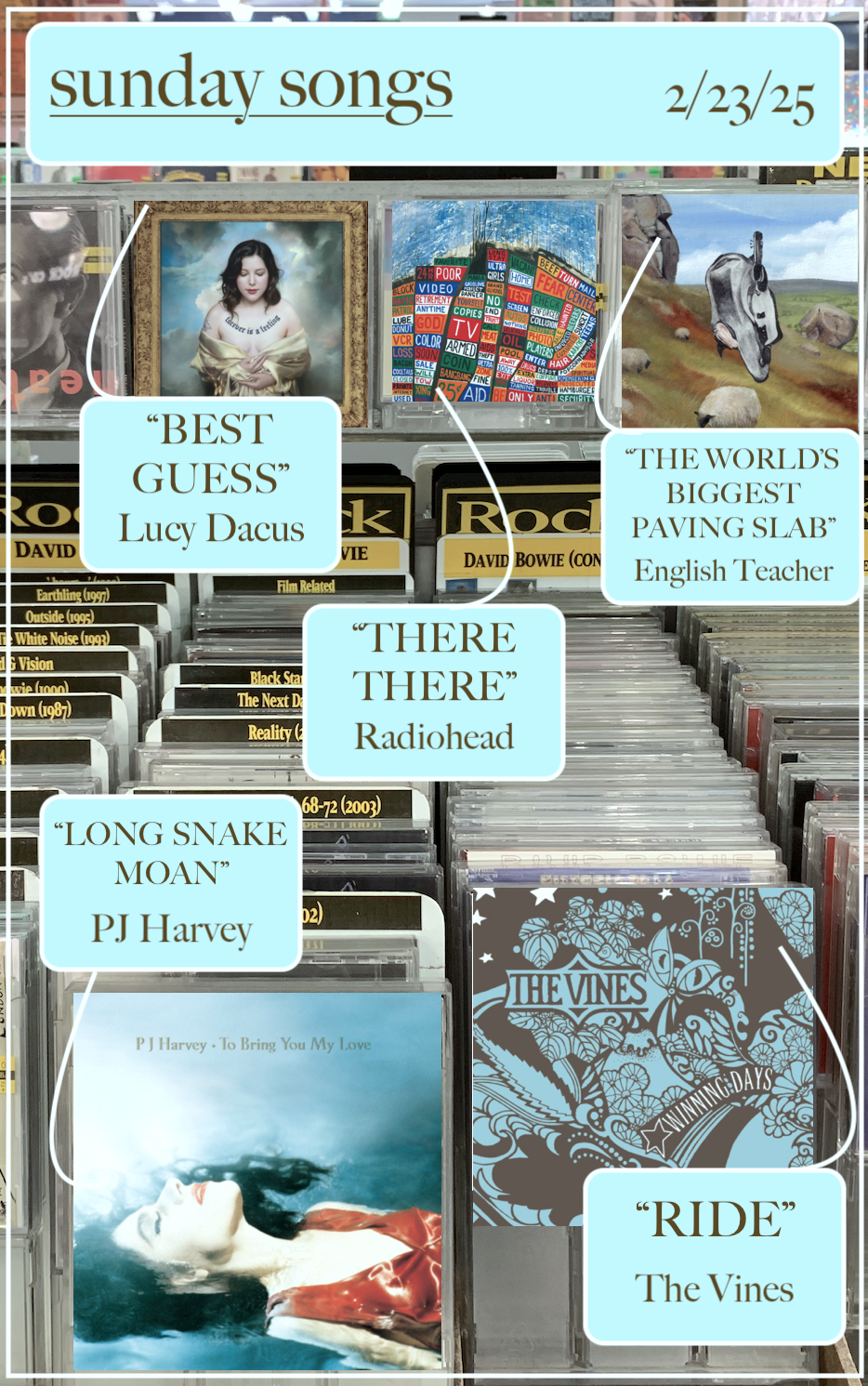
SUNDAY SONGS: 2/23/25

“Long Snake Moan” – PJ Harvey

Finally, finally, I’ve listened to a full PJ Harvey album! Took me long enough. Me and my arbitrary rules for listening to albums that I break half the time. Anyway. To Bring You My Love? I know this is the most vague descriptor you could give for an album, but it truly ROCKS. So many of these tracks embody the raw power that rock n’ roll can have. Not just that, but it feels like a love letter to the rich ancestry of the blues in rock n’ roll. Even without as much background knowledge of the blues, you can just feel the grimy, grungy crawling with threads of DNA in the history of blues in every growl that Harvey lets out. The desperation and wayward storytelling of “To Bring You My Love” and “Teclo” could’ve been fragments lost in the American south from decades before Harvey released the album. It feels to me like an example of the enduring power of any kind of music—here we have a white British woman in the mid-’90s taking inspiration from music from the ’20s-’40s made primarily by Black people all the way across the ocean, here in the States. Who would’ve thought.

One caveat with me saying that the album rocks: it’s got a relatively slow tempo, and we don’t get into the real guitars-going-crazy rock for a few songs. “Long Snake Moan” is one such song, and it knows it—Harvey’s sly “mmm-hmm” before the guitars slam into you like the brunt force of an avalanche is more proof of a smirk than a visual could ever be. She knows she’s about to absolutely wallop her listeners. And “Long Snake Moan” is one of the most enduring songs on the album. The title is a nod to Blind Lemon Jefferson’s “Black Snake Moan,” and though the sound differs, the desire of it is what fuels both; Harvey recalls a lust so all-consuming that “You’ll be drowning/Hell’s below, God above/All drunk on my love.” With every impassioned bellow, you can feel the ragged passion sloughing off every note, desperate yet distinctly conscious of its towering presence and power.

…AND A BOOK TO GO WITH IT:
The Familiar – Leigh Bardugo“In my dreaming/You’ll be drowning/Hell’s low, God above/All drunk on my love…”

“Ride” – The Vines

I was this close to calling The Vines Britpop, but as it turns out, they’re technically nothing of the sort. Not because of the sound, which very edges closer to the rockier side of Britpop, but because they’re Australian. I don’t want to risk the wrath of any Australians, so consider myself checked before I’ve gotten hypothetically wrecked. Oops.

Regardless of whether or not they wanted to hop on the bandwagon, “Ride” feels firmly between Blur’s grunge-parody-that-became-kinda-grunge self-titled album and Supergrass. (Craig Nicholls also kinda has that Britpop, bad-boy frontman look on lock. The bangs, the smolder…) And “Ride” is such an adrenaline rush of a rocker. Guitar tone? Heavy and clean in perfect balance. Vocals? Though Nicholls’ voice doesn’t stand out to me, that distorted scream in between the chorus reminds of the best of 2000’s rock. The art of the rock scream is a sacred one—a well-placed scream can make or break a song, and Nicholls’ is simultaneously put in the spotlight and tucked into the crashing rhythms of the chorus, a grungy accent that drives up the fuel-burning energy of the track. It’s got a rasp that’s perfect for just what it is—a headbangable, garage-y rock track begging for a flimsy stereo speaker to be blasted from.

…AND A BOOK TO GO WITH IT:

Victories Greater Than Death (Unstoppable, #1) – Charlie Jane Andersthe adrenaline-rushed, breakneck pace of this novel matches the reckless, rocking urgency of this track.

“Best Guess” – Lucy Dacus

This video is so cute and gay that I can almost ignore how annoying Cara Delevingne is…oh, no, wait, she’s caressing Lucy Dacus and hamming it up for the camera. Of course.

Either way, 2025 is shaping up to be an excellent year for music about tender love between queer women, between Send a Prayer My Way and everything that Lucy Dacus is putting out (aside from “Limerence”…oof). As much as Dacus’ emotional hard-hitters have a soft spot in my heart (was my 18-year-old brain permanently altered by the “Night Shift” belt? Perhaps), she makes tender, gentle love songs look easy. It rings similarly to her pair of Carole King covers (“Home Again” and “It’s Too Late”) from 2022, with the same slow rhythm and inner warmth; even with the fleeting mentions of over-the-moon obsession (“Tracing your tan lines/Making you mind/If this doesn’t work out/I’ll lose my mind”), it’s a very grounded, worldly kind of love song, in typical Dacus fashion. The first verse of the song centers around caressing the more physical aspects of her lover’s body, but it almost immediately professes that “I love your body/I love your mind/They will change/So will I.” So simply stated, but immediately after that, Dacus professes her undying love. That to me, feels like real love—appreciating your partner for everything that they are, impermanent as it may be. It shouldn’t be groundbreaking lyrical ground, and I don’t think it is, but it’s always refreshing when it comes up, with so many love songs focusing on youth and impermanent, surface-level qualities of people. Plus, “Best Guess” is just such a lovely, catchy song. That guitar riff at the end? Absolutely SUCCULENT. Waiter, more Lucy Dacus guitar work, please! Best-of lists are inevitably subjective, but you didn’t get named the 213th best guitarist of all time by Rolling Stone for nothing, queen! Plus, again…it’s gay. More music videos full of queer people AND queer people being happy, please!!

…AND A BOOK TO GO WITH IT:
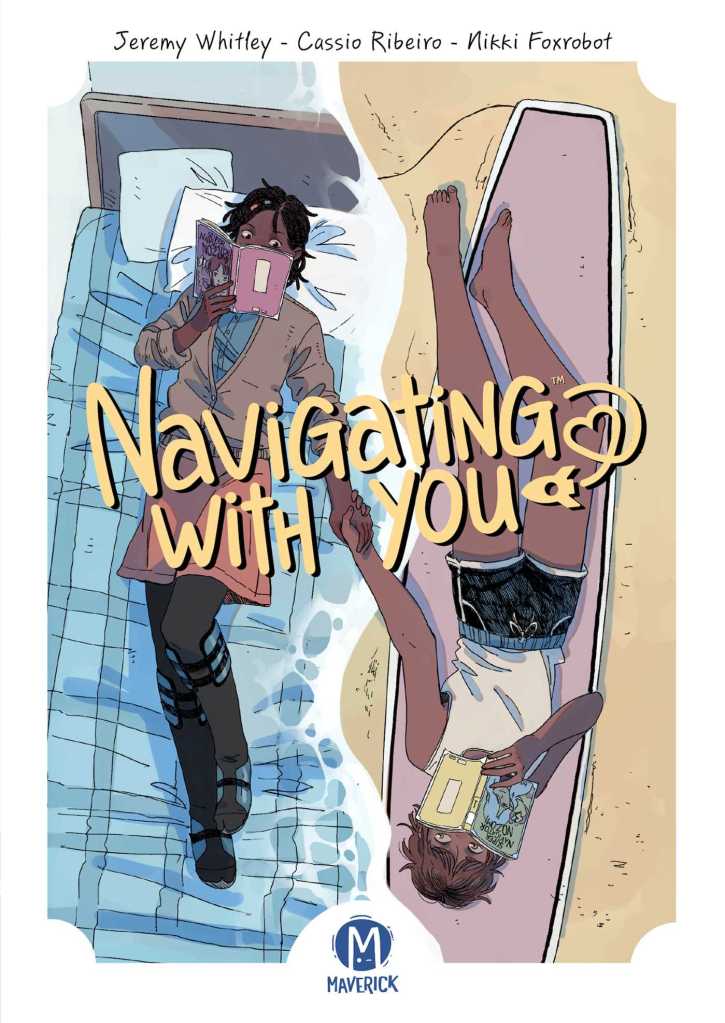
Navigating With You – Jeremy Whitley and Cassio Ribeirosoft, tender, sapphic love…and bonding over manga.

“There, There” – Radiohead

It always comes back to Radiohead. I don’t talk about music videos as extensively as much as I do the songs themselves, but “There, There” has to be one of my favorite Radiohead music videos of all time. Maybe my favorite? Not sure. Directed by Chris Hopewell, it shows Thom Yorke, his movements edited to give the appearance that he’s a stop-motion puppet, wandering into a Beatrix Potter storybook; after peering into miniature houses hollowed into trees, he finds squirrels smoking pipes, a weasel riding a Penny-farthing, all manner of rodents having a feast, and a cat couple’s wedding ceremony officiated by a crow. Of course, Thom Yorke breaks the first rule of the Brothers Grimm (from which he and Hopewell drew inspiration for the video), that being “don’t steal the shiny clothes off of that ominous-looking tree.” You can imagine how well that goes for him. It goes contrary to the largely technological, dystopian aesthetic that has endured throughout Radiohead’s discography, despite their many changes in sound. Up until The King of Limbs, their music was rarely associated with such naturalistic imagery, but that kind of fairytale darkness, paired with the lyrics, makes for a different kind of eeriness than what they usually brew. It all makes the song’s alternate title, “The Boney King of Nowhere,” all the more fitting.

Now, the lyrics…”We are accidents waiting to happen?” WHEW. I always forget about that one…for a band that seems to churn out unforgettable lyrics at a concerning rate, even this feels like one of the most masterful lines they’ve ever come up with. Like the gleaming coat and boots that Yorke finds in the forest, “There, There” is a song of being tugged in a myriad of directions—likely all the wrong ones. In typical Radiohead fandom fashion, most people seem to be divided about what kind of temptation it’s specifically talking about—general religious, personal relationships, you get the picture. The emphasis on the personal pronouns—”I go walking in your landscape,” “We are accidents waiting to happen”—lead me to believe closer to the latter, though I and We can easily be other concepts. There’s an intoxication to “There, There,” a painfully magnetic urge to enter into something dangerous, something that will by all accounts destroy you, but the irresistible temptation remains: “There’s always a siren/Singing you to shipwreck/Steer away from these rocks/We’d be a walking disaster.” One part of you cries “Heaven sent you to me,” the other cries “We’d be a walking disaster.” The chorus of “Just ’cause you feel it/Doesn’t mean its there” is the perfect embodiment of keeping up the façade of devotion—or any kind of emotion that has such a sway that you’re convinced of its reality, even when it has no roots. The whole band makes this spectacle of temptation feel like a trek deep into the mouth of a cave; Phil Selway leans on the thumping of the tom-toms, creating a truly cavernous shell for the song, while the reverb on Jonny Greenwood’s and Ed O’Brien’s guitars echo as though confined by the same dappled walls.

I get so hyperbolic with Radiohead. God, I know I do. I swear that past a certain point (1995?), a good 75% of their songs are tiny masterclasses in how to be creative—how to craft an atmosphere, how to write a gut-punching lyric, how to make music that sticks.

…AND A BOOK TO GO WITH IT:
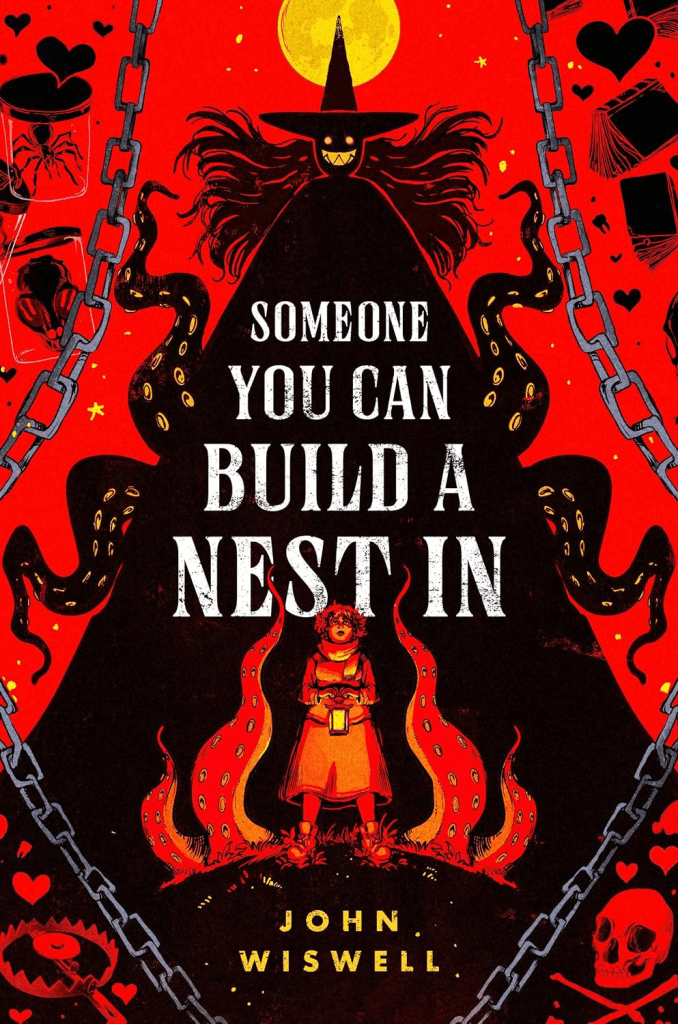
Someone You Can Build a Nest In – John Wiswell“Why so green and lonely?/Heaven sent you to me/We are accidents waiting to happen…”

“The World’s Biggest Paving Slab” – English Teacher

So listen. I haven’t seen Frank. The one with Michael Fassbender, right? I’ve been meaning to watch it for years, but I haven’t gotten around to it. Should this music video give me enough of an idea?

My entirely arbitrary album listening system Destiny has not yet decided whether or not English Teacher will end up being a band I actually get into, or if I’ll resign myself to going “oh, this song is GREAT” and put off listening to them for another three to five business years. They’ve only got one album, This Could Be Texas, so I really don’t have an excuse. It’s on the list, though. And that one album won last year’s Mercury Prize, so it has to be worth it—not necessarily by virtue of being award-winning, but beating out Beth Gibbons and Charli XCX isn’t exactly an easy feat, even for an award that seems to cater more to alternative artists. Either way, “The World’s Biggest Paving Slab” is proof that no matter what, some part of me will always be attracted to any kind of alt/indie rock coming out of the UK. Something must be in the water there. Or maybe I inherited the gene from my dad, who spent his high school days listening to Julian Cope. Probably both.

Even just from this glimpse, I can already see how much of an avant-garde sensibility that Lily Fontaine and company have; their chord progressions seem to slant ever so angularly, prickly and particular, until the chorus lets them dissipate like fog. The lyrics are a collage of people and curios from Fontaine’s hometown of Colne; being at university for four years gave her the space to look back on it: “witnessing the social, economic and political issues that exist around there in juxtaposition with the beauty of the landscape and the characters that live within in it.” “The World’s Biggest Paving Slab” evokes everything from banks to remnants of the witch trials and a far-right terrorist—a complex history within what, as far as I can tell, is an unassuming, rural place on the surface. Through Fontaine, Colne itself announces its presence as something to be “Walk[ed] all over,” yet also as something containing multitudes beneath the time-weathered stone, for those who care to notice. Fontaine’s vocals switch from airy in the chorus to spoken-word in the blink of an eye, but both ring equally as cries of complicated pride: “I am the world’s biggest paving slab/And the world’s smallest celebrity.”

…AND A BOOK TO GO WITH IT:
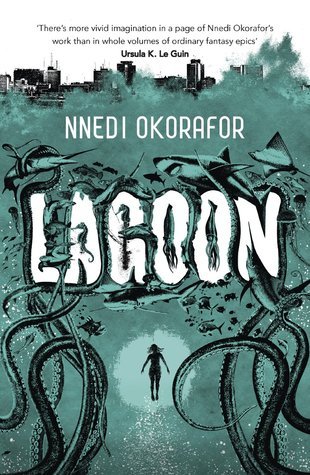
Lagoon – Nnedi Okoraforthe place couldn’t be further away, but it’s a similar concept united around the soul of a place—in this case, Lagos, Nigeria.

Since this post consists entirely of songs, consider all of them to be today’s song.

That’s it for this week’s Sunday Songs! Have a wonderful rest of your day, and take care of yourselves!

Posted in Book Review Tuesday

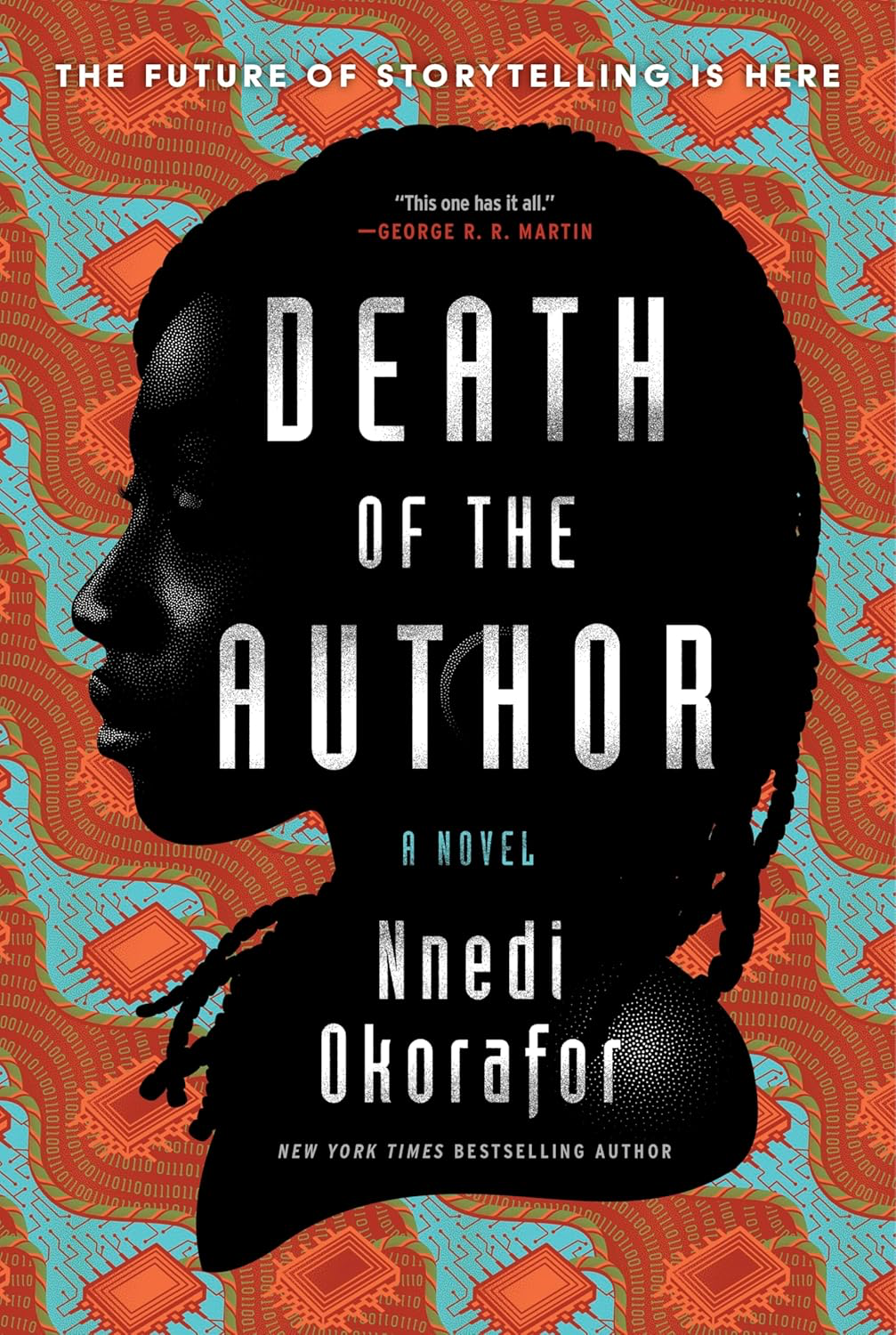
Book Review Tuesday (2/4/25) – Death of the Author

Happy Tuesday, bibliophiles!

I’ve been a longtime fan of Nnedi Okorafor, albeit on and off—I picked up Akata Witch back when I was in middle school, and then discovered her adult books when I was in high school. Since then, I’ve been a fan of her quirky brand of Africanfuturism. You can imagine my surprise when I found out that Death of the Author was not an addendum to her long sci-fi fantasy canon, but instead literary fiction—albeit, with a dash of sci-fi. Either way, the switch from genre to genre is as smooth as I’d expect from Nnedi Okorafor.

Enjoy this week’s review!

Death of the Author – Nnedi Okorafor

Zelu is on the verge of giving up her dream to be a writer. After a pile of rejected manuscripts and a botched job as a professor, she moves back in with her overbearing, judgmental family as she attempts to get back on her feet. But when a spark suddenly comes to her, she has a bestseller on her hands: Rusted Robots. As she grapples with the price of fame and the mobility—and simultaneous lack thereof—Zelu must come to terms with her own identity as she explores the fabrication of it that the public has created for her.

TW/CW: substance abuse, ableism (external & internalized), loss of a parent, near-death situations, kidnapping

Of all people, I didn’t expect Nnedi Okorafor to take the leap into literary fiction, and after I found out the switch in genre, I didn’t expect to enjoy Death of the Author as much as I did. Thankfully, it’s only really literary in the sense that it’s contemporary, realistic fiction…mostly. The woven tapestry of Zelu’s real life and her creation, Rusted Robots, turned out to be a powerful meditation on the nature of art and identity.

Once again, make no mistake: this is fiction, but it’s not entirely just fiction. The assumption is that it’s a handful of years in the future; Zelu has fairly futuristic, adaptive prosthetics that are still in beta testing, and she tests out an automated cab service that’s been newly introduced to the streets of Chicago. Yet Okorafor takes the same skilled hand that she uses to craft intricate, far-future worlds and translates it into the idiosyncrasies of modern life, from the gauntlet of social media fame (and harassment) to being in the confines of a chaotic, judgmental family. For every character that was introduced, Okorafor matched them with an unforgettable personality, even if they only appeared for a few pages. All of the complex, rapidly fluctuated emotions were depicted with sensitivity, from the highest joys to the deepest pits of anguish and the plentiful uncertainty in between. Even without her talent for worldbuilding, Okorafor is a force to be reckoned with, and Death of the Author is proof.

I was hesitantly optimistic that Okorafor was writing a disabled main character again; Noor was a great novel, but from my memory, there was quite a bit of internalized ableism in the main character that went unaddressed. (However, somehow I didn’t know that Okorafor has experience with disability and was herself temporarily paralyzed, so my bad.) The setting couldn’t be more different for Death of the Author, but Okorafor has certainly stepped up her game as far as writing disabled characters—and part of it is that Zelu is unlikable. More often than not, you can at least sympathize with her, but at times, you can see her for the insufferable, argumentative, reckless stoner that her family sometimes sees her as. Of course, not every disabled character has to be likeable, but her relative un-likeability made some of the novel’s most powerful commentary shine even more. As she grapples with her meteoric rise to literary fame, Zelu’s fans place the burden of her being a “role model” for a number of communities: Black, woman, Nigerian-American, disabled. Being a role model can be powerful, but as soon as people saw Zelu as more of a role model than a person, it disregarded her humanity in an entirely different way. She became an example, not an autonomous being—something that is intimately tied to what many disabled people experience. In that way, Zelu represents a leap in how Okorafor writes her disabled protagonists—not just independent, but human.

I don’t have a ton of experience with meta-fiction—it’s not a matter of me not liking it, I just hardly get around to reading much of it—but Death of the Author pulls it off with ease. If you’re still not convinced that Okorafor’s literary fiction isn’t for you, you’ll at least be tided over by her signature brand of Africanfuturism, complete with the landscape of a futuristic Nigeria, robots, and appearances from Udide. It’s somehow a delightful vision of the future, where types of robots have proliferated across the face of the Earth in the face of the extinction of the human race. It’s threaded into Zelu’s life, yet it’s also a clever distillation of the novel’s themes; Ankara’s struggle with coexisting with Ijele inside of his head, as well as the changing world around him, spoke to the themes of embracing collaboration and the blurry relationship between creator and reader.

Which brings me to the whole “death of the author” part. I’ll admit, the Roland Barthes quote from the (original) “Death of the Author” gave me literary theory flashbacks. But as a grounding concept for the book, I love how Okorafor’s Death of the Author playfully pokes fun at the concept. Here, it’s as though the concept has been subsumed by the publishing industry; instead of taking Zelu’s novel as tied to her heritage and her disabled identity, the world swallows it and regurgitates a whitewashed, Americanized movie adaptation that the public eats up. (“Look what they’ve done to my song, Ma…”) Yet at the same time, Zelu is confronted by readers who insistently pester her, insisting that everything in the novel is fully tied to her identity and selfhood. Death of the Author’s strength is the clarity it finds in the balance. Zelu’s work is intimately tied to her identity, but just as intimately tied to her imagination. Her being marginalized meant that people saw her work as surely being solely about her identity, but that wasn’t the whole story either. (The note in the acknowledgements about Okorafor talking to her daughter about worrying that readers would think that Zelu is her makes the point all the more clear.) In this case, fence-sitting is the most reasonable position I can think of—to consider reader interpretation first and foremost can have fruitful results, but to deny the lived experience veers into foolishness, and vice versa; Okorafor’s embrace of the area in the middle is what made the message so clear. Reading and world-creation is a twin act, created both by ourselves and those who receive our work—it’s not a simple question of one or the other.

All in all, a surprising novel that at first seemed like a left turn, but turned out to be another testament to Nnedi Okorafor’s enduring talent. 4 stars!

Death of the Author is a standalone, but Nnedi Okorafor is also the author of several books for adults, teens, and children, including the Binti trilogy (Binti, Home, and The Night Masquerade) the Nsibidi Scripts series (Akata Witch, Akata Warrior, and Akata Woman), Lagoon, Noor, the Desert Magician’s Duology (Shadow Speaker and Like Thunder), and many more.

Today’s song:

ADORE this album

That’s it for this week’s Book Review Tuesday! Have a wonderful rest of your day, and take care of yourselves!

Posted in Sunday Songs

Sunday Songs: 9/29/24

Happy Sunday, bibliophiles! I hope this week has treated you well.

This week: high school throwbacks, off-kilter oddities, and a few too many people trying to explore each other’s minds than I’m comfortable with. Cool it, Charles Xavier…

Enjoy this week’s songs!

SUNDAY SONGS: 9/29/24:

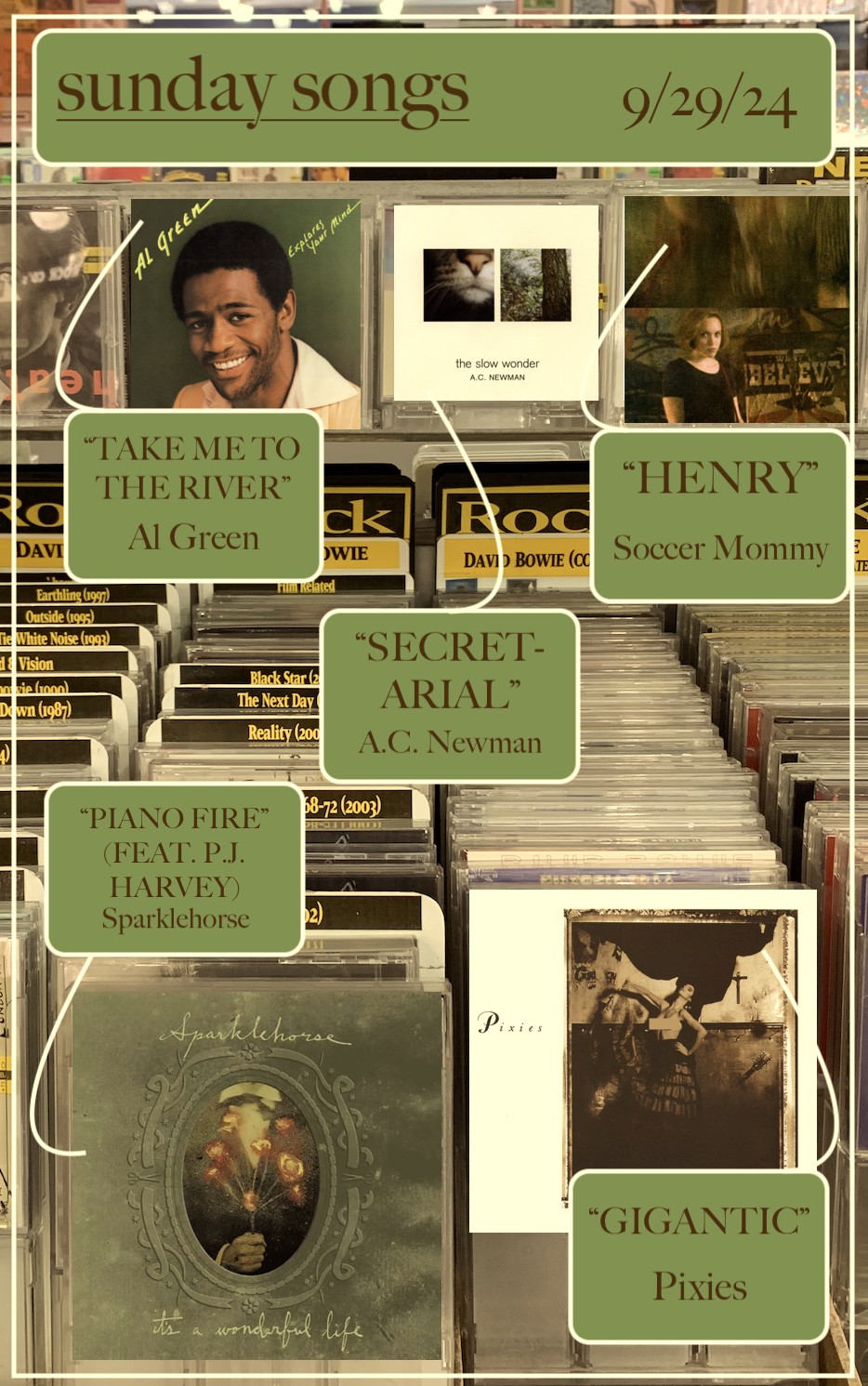
“Piano Fire” (feat. P.J. Harvey) – Sparklehorse

It’s a Wonderful Life is one of those albums that took me a bafflingly long time to listen to. I know, I know, I did it to myself, but the fact that I didn’t pick it up when I was 15 and irreparably mired in Good Morning Spider astonishes me. It’s probably owed to the fact that I was also even more irreparably mired in OK Computer, which tends to overshadow things a tad bit. Looking back, maybe it was for the best that I wasn’t on an all-Sparklehorse diet at that age. I already looked pathetic scuffing my snow boots through the hall while blasting “Maria’s Little Elbows” through my earbuds between classes. I was 15, guys. It was 100% that serious, trust me.

What I can say is that I think I would have felt the same way about It’s a Wonderful Life at 15 as I do now—it’s a triumph of an album. Scattering through surreal urgency and subdued melancholy, it has every kind of Sparklehorse you’d like—along with a smattering of collaborators. It’s almost funny how different said collaborators are (take Nina Persson’s delicate backing vocals on “Gold Day” and then Tom Waits growling like a hulking ogre on “Dog Door”), but the power of Sparklehorse has always lain in the disparate elements Mark Linkous cobbles together. Like some kind of American Gepetto, he constructs all of his songs into tiny figures made of warped wood and bird bones, and what totters to life creaks with every step. They’re quaint creatures with acorns for heads and cigarettes and toothpicks for legs, but there’s no other way to love them save for exactly as they are.

Those he chooses to collaborate with feel much the same way. P.J. Harvey, of all people, was a left-field choice when I first heard about her featuring on “Piano Fire.” The only Sparklehorse song I could conceive being able to contain the kind of raw fury she exudes was “Pig,” and that had already come and gone by the time It’s a Wonderful Life came out. “Piano Fire,” however, is one of the most upbeat tracks on the album; you feel a racing urgency to it, immediately sprinting down an overcast beach the minute the first guitar chords kick in. Or maybe it’s the searing heat of airport tarmac that you’re sprinting across the minute you hear the opening line: “I got sunburnt waiting for the jets to land.” Sunburnt describes “Piano Fire” surprisingly well; it has the texture of an old photograph left out in the sun too long, all of the colors now bleached to unnatural, pale shades. Linkous almost takes a backseat on his own song, never raising his voice when he dishes out surreal vignettes of “Fiery pianos wash up on a foggy coast/Squeaky old organs have given up the ghost/Fire them up and kill the piano birds.” But that urgency is why P.J. Harvey is so perfect for this song; once the chorus kicks in, her soaring voice provides the jet fuel for this creaky old jet to careen off the runway and into a sky littered with the strangest birds you’ve ever seen.

…AND A BOOK TO GO WITH IT:

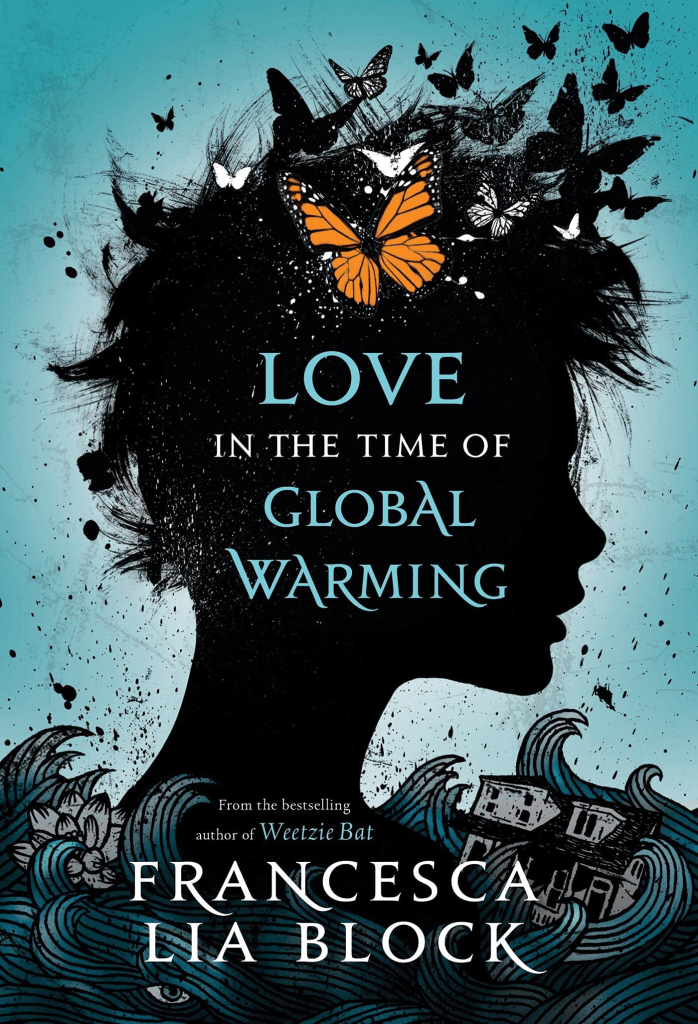
Love in the Time of Global Warming – Francesca Lia BlockBlock’s bizarre, dreamlike prose certainly fits with the surreal imagery that Linkous employs in this song—and the majority of his catalogue.

“Gigantic” – Pixies

In almost two and a half years of making these Sunday Songs graphics…this is the first time I’ve double-dipped. It was bound to happen eventually, not just because my music taste is finite, but because this song has lingered with me from a young age. I faintly remember being around five or six and hearing this song in my dad’s old car, driving in fading light down the road back to my house, and hearing the iconic chorus: “Gigantic, gigantic/Gigantic, a big big love.”

I’ve often talked about how simplicity in lyrics can convey more than the most complex songs in some cases, and if you need further proof, look no further than “Gigantic.” Most of that work is done by the immense, never-fading talent of Kim Deal, who sells every metric ounce of explosive love in this song; with every cry of “A big big love,” you get it—there’s no other words that can adequately describe the kind of secretive, all-consuming romance that swirls through every pluck of the bass. That opening bass riff is the shy, cracking open of a bedroom window when the parents are asleep, an invitation with a blushing, anticipatory smile. What follows never fails to knock me off my feet. I say “knock” and not sweep or lift me off my feet precisely because that’s what it feels like, as though the ground has opened up beneath you, and you’re falling headfirst into the unknown—contained in a kiss that consumes every cell of your body.

…AND A BOOK TO GO WITH IT:

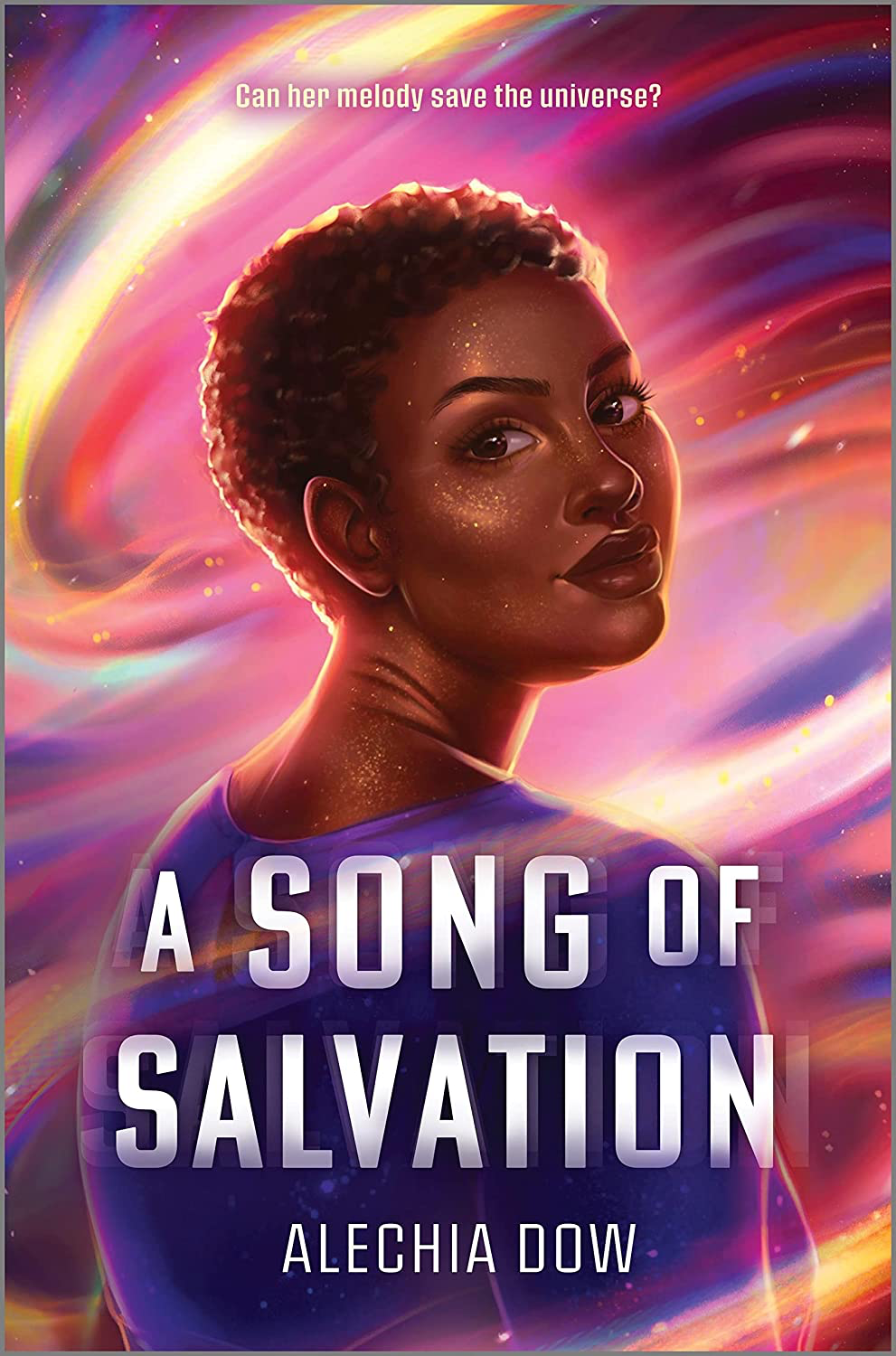
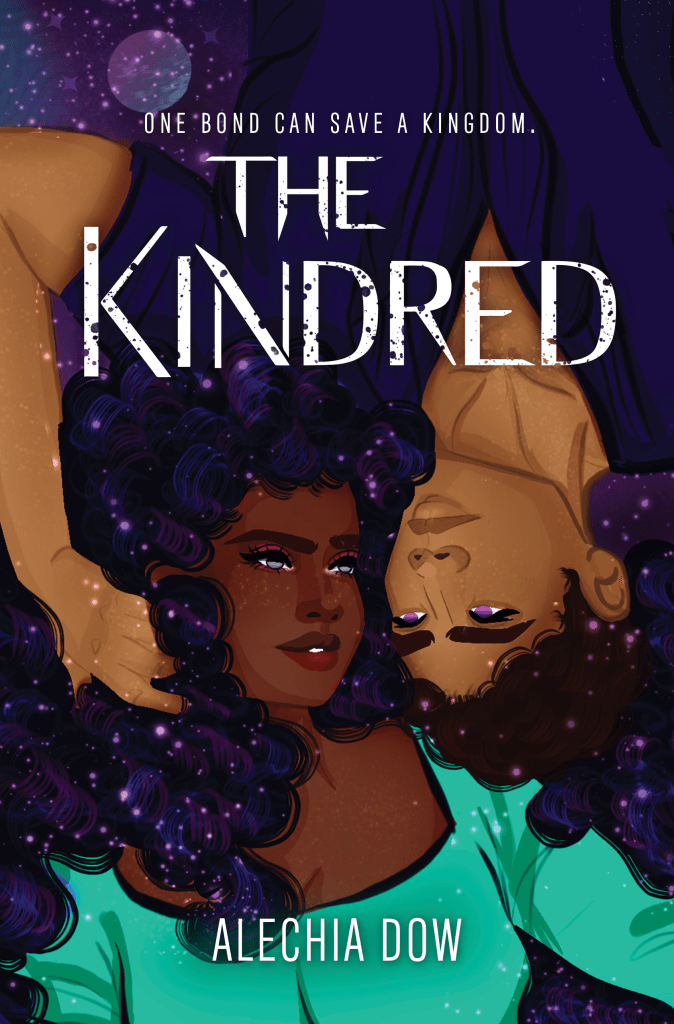
The Kindred – Alechia Dowall-consuming, explosive, and intergalactic love.

“Take Me To The River” – Al Green

I’m sure Al Green is a perfectly nice guy, but…that album cover and title is not it, man…”Al Green Explores Your Mind?” Can he…can he not?

The fact that they were just naming albums anything back in the day aside…how did I not know about this song for so long? I’ve loved the Talking Heads cover for years, but somehow, it never dawned on me to look it up and discover that it was a cover. There’s something to be said for the phenomenon of white artists’ covers of songs by Black artists overshadowing the originals, but this isn’t quite the case—from the looks of it, between the amount of times that this song has been covered (most recently by Lorde for a Talking Heads tribute album, oddly enough) and the royalties from [checks notes] those animatronic wall fish, it’s cemented itself as an enduring classic of soul. I’m sure Al Green isn’t complaining about the latter though, given that he’s gotten the most royalties from the fish cover. Yet no matter the strange journey that “Take Me To The River” has taken, none of it has overshadowed how deliciously groovy it is. It’s endured for five decades in counting precisely because it wastes no time in getting straight into its slinky, infectious funk. Green’s voice flies from slick to howling in seconds and recovers in record time, all in time with the blasts of an impeccable horn section. 50 years, and you can’t not bop your head. I’m still not jazzed about Al Green exploring my mind, but I can’t deny that he worked some undeniable, immortal magic with this one.

…AND A BOOK TO GO WITH IT:

The Final Revival of Opal & Nev – Dawnie Waltonthough the musical genres differ, the atmosphere and climate of the ’70s runs through both.

“Secretarial” – A.C. Newman

I’ve had a turnaround. I’ll be honest—even though I’ve liked several New Pornographers songs since I was young, “Secretarial” has always bugged me for some reason. I never hated it, but it was always one of those songs where, over the years, I developed a reflex of just skipping it whenever it came on shuffle. I didn’t question it for a while. Many years have passed, and for once, I didn’t skip…and here we are.

A.C. Newman—and most of The New Pornographers’ catalogue, by extension—has this songwriting style that’s just so distinctive in a way that I can’t put my finger on. Even if you separated his or Neko Case’s voice from the lyrics, I could hear a line like “So come on, let the sun in/We’ve been gunning for promotion/Postering the slogans on the roadsigns.” and immediately go “yup, A.C. Newman wrote that.” What makes it so distinct has bugged me for years, and to this day, I can’t fully put my finger on it. The closest I can say is that their specific diction has an inherently off-kilter quality to it. Newman is never overly verbose, but the way he arranges words is always slightly askew. His lyrics dwell in the thin limbo between obtuse poetry and sense, situated in a place where you can decently get the metaphor he’s going for, but instinctually, you know that those syllables just don’t go together neatly. “Secretarial,” like another other Newman product, might as well be a puzzle, in that sense, but one that was put together wrong with the pieces that only look like they should fit together, but stick and slide against each other. I’ve never been great with time signatures, but this one is angular enough to match the slanted lyrics. Even if you don’t know the guy, you can’t deny that it takes some serious talent to not just think of but pull off “Lady, it’s secretarial” as a hook.

…AND A BOOK TO GO WITH IT:

Lagoon – Nnedi OkoraforI’ve used this book more than once, but it was right there…

“One day you blew across the water/After racing through the countdown/Spewing ancient wisdom like your friend/The revelation had come and they were looking for me…”

“Henry” – Soccer Mommy

Oh, early Soccer Mommy…oh, “Henry.” This one sure soundtracked many a one-earbud-in free draw in art class my sophomore year. I think it was in the fall that I found this song as well; it carries a distinct smell of wet leaves and wood chips in the pumpkin patch. Cheesy as the title of this album, the self-released For Young Hearts, is, it’s not like it’s a lie. Here’s to many more high schoolers listening to this in art class.

It seems that “Driver” has put a pin in this tradition, but “Henry” is part of a long lineage of Soccer Mommy songs about the seduction of Bad Boys™️ (see also: “Death By Chocolate”). Of course, the natural conclusion was that the ultimate bad boy was to be conquered in “lucy,” that being…the devil himself. (God, I need to stop. I sound like a youth pastor.) But here in 2016, “Henry” chronicled the kind of guy who hung out behind the high school, smoking cigarettes in a leather jacket, and giving you a wicked smile as you passed. Sophie Allison’s younger voice, along with the plucky instrumentation (cannot get enough of that bass), makes you feel like you’re following a mischievous wood sprite through sunlit woods. Light and lovesick, it captures that heady, teenage love drug that makes every step stumble: “‘Cause Henry has a laugh like fire/And it’s spreading through the streets and burning on telephone wires/I don’t know just what it is/But he’s driving all the good girls bad with that evil smile of his.” Soccer Mommy’s had that golden, indie touch all along—”Henry” remains a classic to me.

…AND A BOOK TO GO WITH IT:

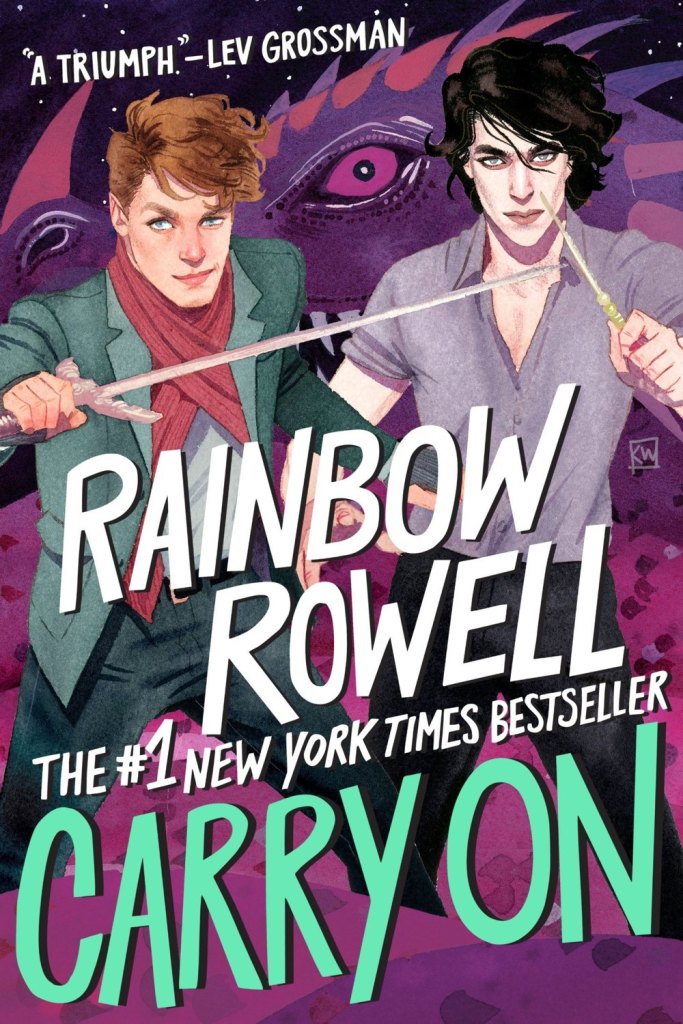
Carry On (Simon Snow, #1) – Rainbow Rowell“I don’t know/Just what it is/But he’s driving all the good girls bad with that evil smile of his…”

Since this song consists entirely of songs, consider all of them to be today’s song.

That’s it for this week’s Sunday Songs! Have a wonderful rest of your day, and take care of yourselves!
Posted in Sunday Songs

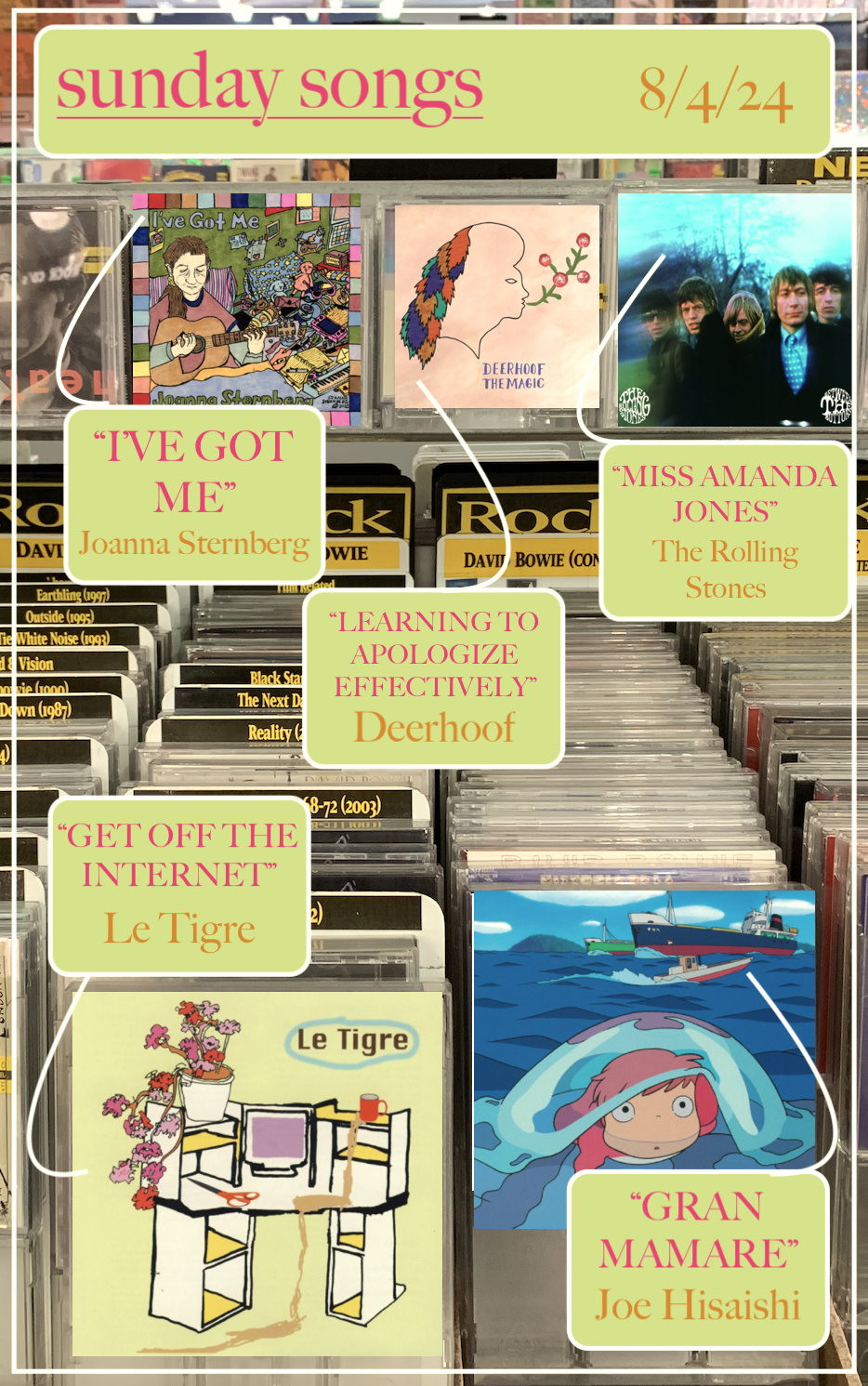
Sunday Songs: 8/4/24

Happy Sunday, bibliophiles!

This week: I fully see the irony of putting a song called “Get Off the Internet” on a blog post……….decidedly on the internet, but you get it, right? Right?

Enjoy this week’s songs!

SUNDAY SONGS: 8/4/24

“Get Off the Internet” – Le Tigre

I miss when people could get along despite their politics, but…have you seen Project 2025 lately? Were you not paying attention to Trump’s entire presidency? I wouldn’t be saying this if, y’know, they weren’t trying to take all of our rights away, but…

GET OFF THE INTERNET!! DESTROY THE RIGHT WING!!!!

…AND A BOOK TO GO WITH IT:

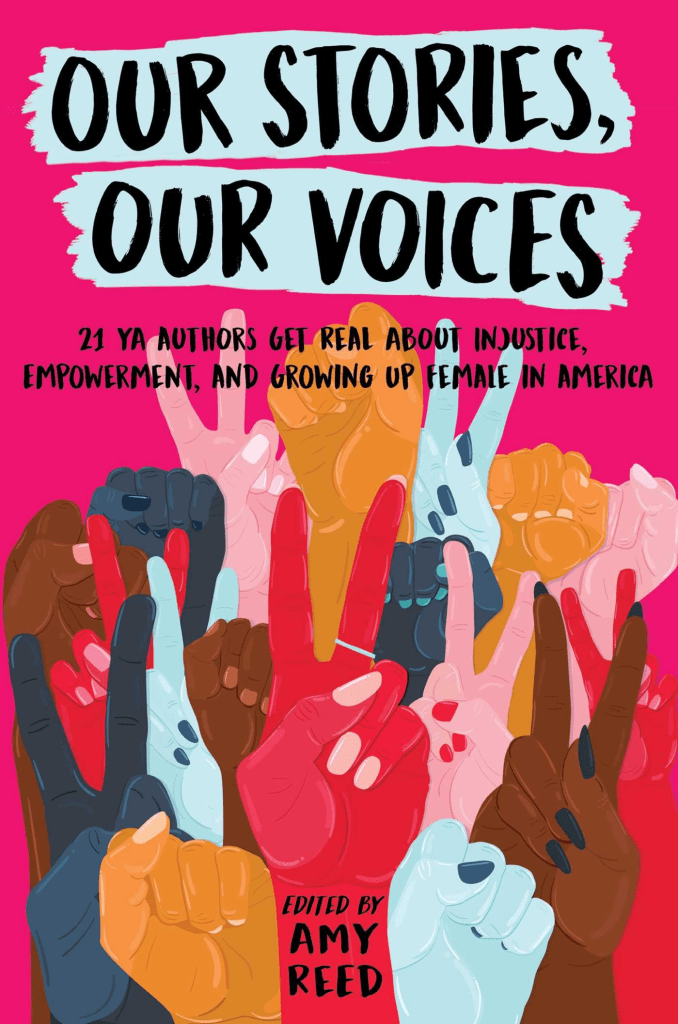
Our Stories, Our Voices: 21 YA Authors Get Real About Injustice, Empowerment, and Growing Up Female in America – edited by Amy Reedmodern accounts of femininity and feminism from a collection of incredible authors.

“Gran Mamare” (from Ponyo) – Joe Hisaishi

Watching Ponyo as an adult felt like watching it for the first time. Technically, my recent rewatch was my second time seeing it in over a decade. Every time I’ve thought about it before then, it felt like a fever dream…probably because my first viewing was something along those lines. I was about 5 or 6, and I’m almost positive that I was home sick from school. Either way, I was in my parents’ bed. All I could remember were faint glimpses of Ponyo underwater, the man, the myth, the legend, Fujimoto (close enough, welcome back David Bowie)…and Granmamare.

If there’s any gorgeously-crafted scene (of which there are many) to take away from that movie, it’s any scene with her. No wonder my five-year-old brain retained an image of such beauty, even when it was (probably) sick. Her first appearance isn’t necessarily emotional—all she’s doing is talking to Fujimoto about what to do with Ponyo—but all of the sudden, I found myself overcome with tears. All those years ago, and it took my breath away. (And who better to voice such a goddess of such beauty than Cate Blanchett? It had to be Cate Blanchett.) Maybe I was just in an emotional state, but something in the sheer beauty of that scene stirred up something hidden and beautiful in me. Joe Hisaishi’s sweeping score gives it an appropriately sparkling, John Williams-like grandeur, befitting of a character so powerful that she illuminates the whole ocean with her radiance.

Either way, I’m so glad that I rewatched it. Ponyo want ham.

…AND A BOOK TO GO WITH IT:

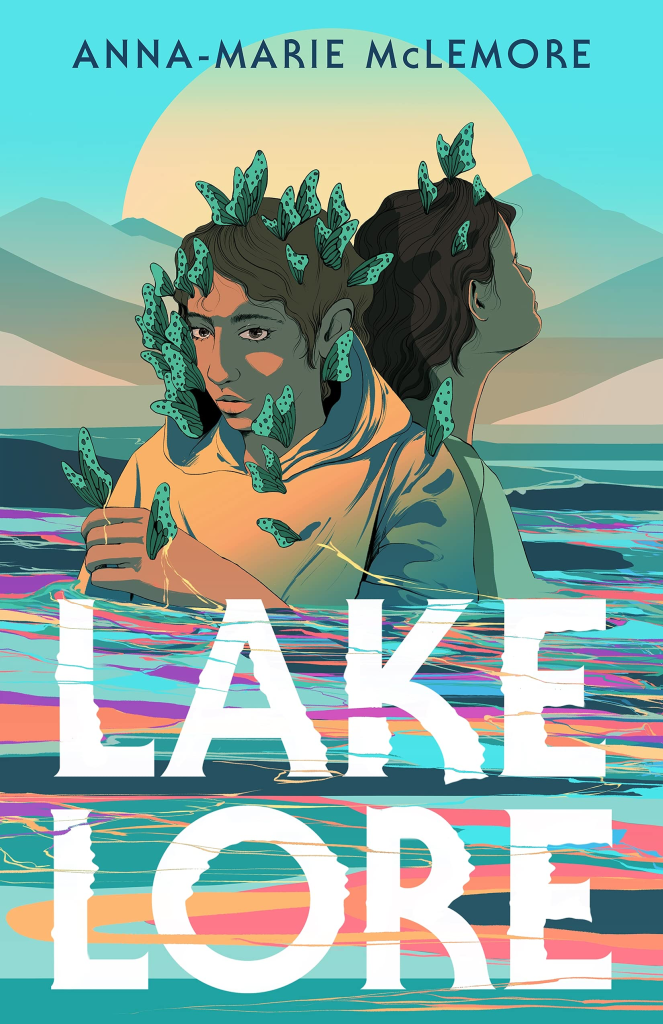
Lakelore – Anna-Marie McLemore – mysterious and magical underwater realms, anyone? (Admittedly, Ponyo delivers much more on that aspect, but you can’t beat Miyazaki.)

“I’ve Got Me” – Joanna Sternberg

The name of the video is a bit of a misnomer, in my opinion—yes, technically it is a lyric video, but the lyrics are accompanied by a full-color comic drawn by Sternberg, which makes it feel like a fully-fledged music video. It’s so worth a watch—they have such a charming art style.

When I say this, I say it with all of the affection in my soul, but it’s remarkable that at only 32, Joanna Sternberg sounds just like a kind, elderly music teacher. Again: nothing but affection. Their voice just emanates that comfort that I associate with the kind of person who teaches preschoolers how to use maracas and such. The album art, as well as the associated art only add to the vibe—the scratchy inking and pastel backgrounds only add to the feeling that I would find this CD in said music teacher’s collection. Heck, I can almost imagine having to sing “I’ve Got Me” in a preschool program, if not for lines like “between self-hatred and self-awareness is a very small, thin line.”

Nonetheless, all of this is to say that “I’ve Got Me” has a purity to it. It’s got the sing-songy sway of a children’s song, but in its touching vulnerability, brushes over a sentiment I’ve battled with for much of my life: “why is it so hard to be kind and gentle to myself?” (Boy, do I relate to the panel at 0:46 with a sullen-faced Sternberg wearing thick-framed glasses captioned “me looking through the file cabinet in my brain that stores all of my bad memories”—even better, it’s alphabetized.) Armed with nothing more than their acoustic guitar and a stand-up bass, they produce a solution that gives this even more of a children’s music feel: “Take the box of self-deprecation/Lock it and put it on the shelf/Then wait five days, take that box/And throw it in the fire.” Through said self-deprecation gathering dust and anxiety on the shelf, Sternberg retains an understated but resilient hope—”I’ve Got Me” as a title feels like an assertion that, no matter if you think you’re alone, you are all you’ve got. You have but one body and one mind, in all of its flaws, and you may not be able to control some of the inevitable bouts of self-deprecation, but it’s still you, in the end.

…AND A BOOK TO GO WITH IT:

Someone You Can Build a Nest In – John Wiswellin both a literal and figurative sense, learning self-love after viewing yourself as monstrous.

“Learning to Apologize Effectively” – Deerhoof

Being a newcomer to Deerhoof is a unique experience because I can never seem to find a consensus about what they sound like—or what other people think they sound like, at any rate. One reviewer says this is a return to form, another critic says it’s some kind of new venture, like nothing they’ve ever done before. The only consensus I can seem to draw is that they’re bent on being weird—and I have nothing but admiration for that, especially after seeing the craft to their weirdness. (Learning “Future Teenage Cave Artists” on guitar and having to puzzle through not one but four odd time signatures with my guitar teacher sure was something.)

Either way, I’m almost ashamed to say that the YouTube algorithm spat this one up before me, but I’m not one to complain. I’m done being ashamed with how I found out about songs—so long as I have the song in my hands and I enjoy listening to it, what’s the issue, really? “Learning To Apologize Effectively” is much more rock-oriented (as its album, The Magic, seems to be in its entirety), with crashing. classic rock-recalling guitars. Yet even if their inspirations for this track lie more in mainstream rock, there’s that undeniable weirdness that seems to ooze from their music no matter what. Like with “Future Teenage Cave Artists,” Satomi Matsuzaki’s vocals have an uncanny quality to them, not necessarily in the sound of her voice, but in the ever so off-kilter timing of it—I can’t pin down a time signature, but in her “the song is waiting for another song” intro, each pause makes a deliberate form of obscurity, darting into an unexpected corner when you expect it to go down the well-lit hallway right in front of it. It feels like an imitation of rock from a band used to making the most deliberately strange music for most of their career—an imitation that feels almost authentic.

…AND A BOOK TO GO WITH IT:

Lagoon – Nnedi Okorafor“And when we saw what we were doing wrong/We found the cause underwater, long/And then we saw what we were doing wrong…”

“Miss Amanda Jones” – The Rolling Stones

For a fleeting moment, I can pretend that this song exists in a vacuum, and that Mick Jagger hasn’t been acting like it’s 1967 for the past five decades or so. The fact that he (and Keith Richards) have actually survived long enough to act like they’re 20 for so long is almost impressive, but…yikes, dude.

As much as I rag on Jagger and company, I can’t deny that for at least a decade or so, he and the rest of the Stones could concoct some truly legendary songs. Of course they could, they’re the Rolling Stones! Yet somehow, I rarely see this one among the greatest hits—maybe it’s the rose-colored glasses shielding everything once more, but I feel like if it was good enough to name a whole character after it in Some Kind of Wonderful, that has to give it some street cred, right? (So real of them to name a character after a song just so that they could play said song in the movie. I feel like I’m gonna wind up doing that someday.) Aside from being a staple of car rides in my early childhood, it’s just so unbelievably tightly-wound. Not a single cog is winding out of sync, from the twin talents of Brian Jones’ rhythm guitar and Keith Richards’ spiky riffs—in 1966, we already had the precursor to my favorite, early-’70s guitar sound, warm and thick as a fresh pot of soup. It’s a bit too rough around the edges (for the ’60s, anyway) to really be truly jangly, but it’s got the swagger and sway that makes the rock of the ’60s so delightful to listen to.

…AND A BOOK TO GO WITH IT:

Little Thieves – Margaret Owen“Just watch her as she grow/Don’t want to say it very obviously /But she’s losing her nobility, Miss Amanda Jones …”

Since this post consists entirely of songs, consider all of them to be today’s song.

That’s it for this week’s Sunday Songs! Have a wonderful rest of your day, and take care of yourselves!
Posted in Sunday Songs

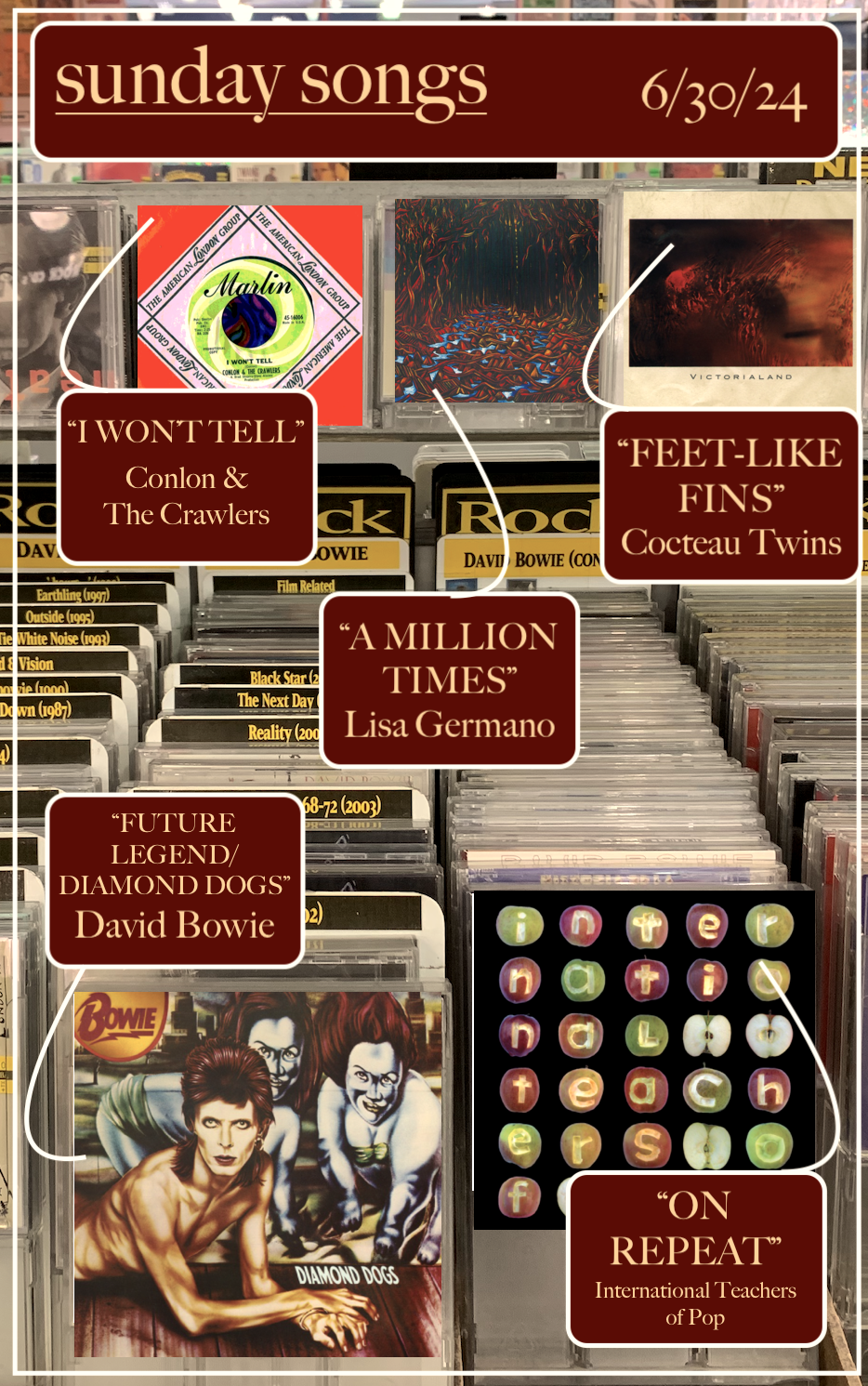
Sunday Songs: 6/30/24

Happy Sunday, bibliophiles! I hope this week has treated you well.

This week: this ain’t rock n’ roll…

Enjoy this week’s songs!

SUNDAY SONGS: 6/30/24

“Future Legend/Diamond Dogs” – David Bowie

Another victim of me trying stubbornly to fit this into a color scheme, and also a victim of me trying to align my albums with what I draw on the whiteboard of my dorm. Listen, if the original sleeve was banned in the U.S., that generally means it’s a cool album cover, but probably not a good idea to be displayed for the world and my RA to see. And I was not about to draw David Bowie’s anatomically accurate canine lower half. Nah.

A time-proven rule: nobody does it like Bowie. You can put on all of the theater and spooky voices that you like, but nobody will ever replicate the sheer goosebumps that the intro to this album induces. The same can be said for many songs on this album (see: “Sweet Thing/Candidate/Sweet Thing [reprise]”), but I put “Future Legend” and “Diamond Dogs” together because the most enriching way to experience them is to experience them as a single song, and that single song is one of my favorite album intros of all time. Diamond Dogs is glam rock covered in flies—the lovelorn hope of Ziggy Stardust remains, but stinking of a world left in tatters, a hunk of rotting meat left for the mutant vultures in the searing desert heat. Cobbled from shreds of William S. Burroughs and Bowie’s failed attempt at a musical adaption of 1984, this album is a dystopia full of lust and peril. As a prologue, “Future Legend” is the height of Bowie’s theatricality. On anybody else, a dog’s howl, distorted as though bellowed through a plastic tube would feel like a feeble attempt to set a scene. Bowie, of course, makes it into the most bone-chilling alarm bell signaling the beginning of the end. It’s not the kind of sound any normal dog makes— it immediately triggers a sense of uncanny valley, a hair’s breadth away from being distinctly, evolutionarily wrong. His staticky narration is accompanied by synthy moans and high-pitched, delirious singsong beasts echoing “love me, love me!” as he tells of an alien landscape where all that remains of the 20th century is the excess it produced, the last monoliths that the mutant survivors of some horrific extinction now cling to. Panting dogs and drooling bloodsuckers lick their lips in the distance as Bowie lifts the curtain to declare this an era beyond the collapsed remnants of our sense of time. No month, no four-digit number to designate this hellscape: it is the year of the Diamond Dogs.

And “Diamond Dogs?” Hearing it for the first time while freshly 13 rearranged my molecular structure. In that moment, nobody had ever done anything as cool as that. It’s still true.

Because there will never be another album intro like this:

And in the death, as the last few corpses lay rotting on the slimy thoroughfare,
The shutters lifted in inches in Temperance Building, high on Poacher’s Hill
And red, mutant eyes gaze down on Hunger City.
No more big wheels.

Fleas the size of rats sucked on rats the size of cats,
And ten thousand peoploids split into small tribes,
Coveting the highest of the sterile skyscrapers like packs of dogs assaulting the glass fronts of Love Me Avenue,
Ripping and rewrapping mink and shiny silver fox, now legwarmers.
Family badge of sapphire and cracked emerald.
Any day now…
The Year of the Diamond Dogs!

…AND A BOOK TO GO WITH IT:

1984 – George Orwellneed I really explain this?

“On Repeat” – International Teachers of Pop

In terms of Co-Pilot, I end up focusing. more on Jim Noir, which…well, he has played a very prominent part in my musical life, but Leonore Wheatley’s musical ventures rarely get the praise they deserve. Wheatley’s talents extend to The Soundcarriers (big thank you to my brother for introducing me to them!), Co-Pilot (who released their incredible album Rotate almost a year ago!! Make some noise!!), and International Teachers of Pop, where she provides vocals alongside Katie Mason.

I’ve heard far too many bands who desperately want to market themselves as a second-coming of a certain era of music (We haven’t recovered from what Stranger Things did to shove the ’80s in everybody’s faces…I want out), but only end up sounding like plastic imitations. The key, which this school board of musicians has figured out, is not to set out to imitate. This sounds like a product that emerged from a desire to have fun and make catchy dance-pop and not try and sound like somebody more famous. Fun should be the prime motivation to make music, especially in a side project like this, but the bar’s low in such a hit-churning industry. You can hear Erasure and the Pet Shop Boys in every synthy buzz and flourish, but not because they set out to sound like them—it’s an homage, never an imitation. Mason and Wheatley’s harmonies center this pulsating track, built for booming bass and bouncing feet. (It really was a shame to see how lukewarm the crowd was in the video above—why are they barely dancing??) With lyrics swimming between existential dread and a desire for oblivious joy, “On Repeat” is the product an extensive pop study. Maybe the name is a touch presumptuous, but they’ve got the talent to back up their assertion, tongue-in-cheek or not.

…AND A BOOK TO GO WITH IT:

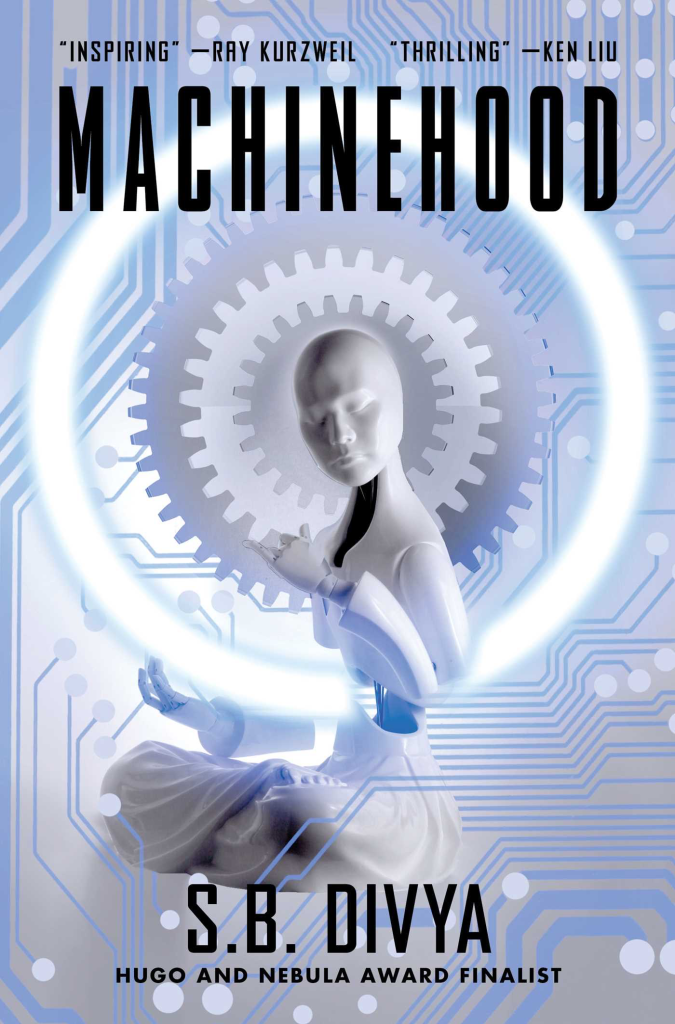
Machinehood – S.B. Divyaooh! aah! capitalism! woo! woo! yeah! this economy cannot sustain human life! get funky!

“I Won’t Tell” – Conlon & The Crawlers

Listen, I am BEGGING the Hacks fandom to do their stuff, because I can’t keep looping this song over and over on YouTube, and I don’t have a record player and therefore have no reason to snag the copies lingering on eBay…PLEASE. WE NEED TO GET THIS ON STREAMING. WHATEVER IT TAKES. DO YOUR STUFF!!!!!

“I Won’t Tell” was one of two one-off singles (the other being “You’re Comin’ On”) by Conlon & The Crawlers, an offshoot of The Nightcrawlers (top 10 band names that I totally want to steal for reasons that are totally not X-Men-related). From the looks of it, neither song went anywhere, and now the only remnants are floating around on eBay, and, thanks to some digging, a few eagle-eyed people on YouTube. All of this begs the question: how were they able to get this on Hacks? Somebody’s got a great record collection…unfortunately, the scene isn’t on YouTube, but it appears in Season 3, Episode 6, and briefly soundtracks a hilarious slo-mo of Ava and Deborah on a golf course, with Ava confidently strutting beside Deborah with her caddy vest on backwards.

The minute I heard it, I knew I had to hunt it down—it encapsulates a very distinct sound of the late-’60s that I just adore. It’s just deliciously jangly, from the opening riff (a reworked and arguably improved version of the opening to The Nightcrawlers’ “Little Black Egg”) to the almost banjo-like strum that builds the track’s backbone. Chuck Conlon’s butter-and-sugar voice spins the strings of “Little Black Egg” into a precocious, peculiar masterpiece—who would forget a song that opens with “A teaspoon holds more than a fork does/A long snail eats more than a short one?” This vibrant, jangly oddball is practically asking to be used for a tightly-shot Wes Anderson montage. Surely it’s obscure enough for him…

…AND A BOOK TO GO WITH IT:

Floating Hotel – Grace Curtislighthearted, jaunty, and equally matched on the Wes Anderson vibes front.

“A Million Times” – Lisa Germano

I’m not sure which direction I should go for next in terms of Lisa Germano’s discography. She has nine studio albums, two of which I’ve already listened to (Excerpts from a Love Circus and Slide). I know I’ll feel like a kicked puppy lying on a dirt road in the middle of nowhere after I listen to any given album, so chances are, it probably doesn’t matter where I start. Either way, on a whim, I dipped my toes into a handful of songs from her 2009 album Magic Neighbor. Many of the reviews have categorized it as having a childlike innocence juxtaposing the veil of darkness that never lifts from her discography, and there’s tangible strings of it stretched throughout. Even if you’ve dictionary-definition Been Through It like Germano has, I feel like you’d still have to have at least the tiniest mote of innocent glee—or humor—left in your soul to name a song “Kitty Train,” even if it’s a short instrumental break.

“A Million Times” has a childish glint to it, but childish here translates to complacency and toxicity; it feels like the emotional progression of “Small Heads,” musically twelve years down the line, but personally, only a handful. (At least…I hope so. I can only hope that the abusive bastard who inspired her to write any of the songs from Love Circus is just one guy, and that he got his comeuppance.) “Small Heads” acknowledges how unhappy she is in said relationship, but wryly admits that it’s not all the other party’s fault: “How convenient to forget/All the lies that you say/When you’re really really drunk…like me.” It’s a mutual kind of tangling, with both people ouroboros-ing themselves into their own minds so deeply that they’ve ceased to think of each other (“Did I ever think of you?/Did you ever think of me?/Probably not, with our heads in the clouds”), or, as Bowie might put it, “making love to [their] egos.” It’s all just fun and games, right? Whee! “What a lonely life!” she sings to the cheer of the crowd and dainty recorders.

Such fun and games echo through “A Million Times.” Said recorder has made a comeback, and all of the egg shakers and brushes in the background sound like remnants of rusty toys being disassembled. Just as childlike, Germano tosses the relationship across the room like a discarded doll, letting its limbs crumple now that she’s had her fun: “We fell in love and we were caught/Inside this game we call together/And it felt good until we found/We had more fun when we were strangers.” Every motion they go through is described in the same way that Ken tells Barbie “we’re girlfriend boyfriend,” smashing doll heads together to simulate kissing. Such kisses and games are a distraction from the inevitable implosion of their excuse for love—they’re so caught up in performing love that both of them have retreated into their own heads, convincing themselves, over and over, that they’re not sick of playing. It’s self-aware in the way that an arsonist is self-aware: they know that they’ve just burned down a building, but they’ll continue to set as many fires as they like. Germano seems to regress as she drags out her cry of “You can’t leave me/No, not really/We are happy with this misery/So we’ll start it all again/A million times, a million times.” Never before have I heard an accordion that sounds so distinctly ominous—the bellow of it as Germano’s lyrics get progressively poisonous might as well be the siren in a bomb shelter, a low, distant warning of disaster to come. “You can’t leave me” is simultaneously the rug of innocence being pulled out and the dread of pulling apart from someone who you know will collapse without you to parasitically cling to. Platonically, I’ve been the host/discarded toy in such situations, so for my sake and hers, I hope Germano’s since quit playing with her dollies. I’m willing to give her some leeway, since if she’s played up the eerie overtones in this song, she recognizes these patterns for the toxic mess they are.

…AND A BOOK TO GO WITH IT:

The Emperor and the Endless Palace – Justinian Huang“We fell in love and we were caught/Inside this game we call together/And it felt good until we found/We had more fun when we were strangers…”

“Feet-like Fins” – Cocteau Twins

Rounding out the month with yet another Cocteau Twins song…sorry, everybody. Get Victorialand‘ed, I guess. The only thing keeping me from swallowing this album in one gulp like some kind of deep-sea abomination of god is knowing that this is the perfect album for winter, what with the Artic and Antarctic inspiration.

Situated near the end of the album, “Feet-like Fins” is a dewy spiderweb of reverb that glitters in waning sunlight through gray clouds. Crested by soft cymbal crescendos, you can never pick out a note from the track that isn’t vibrating like raindrops on a speaker. Even the bongos that gently steady the melody never truly feel percussive, nothing but droplets sending ripples out into the frigid water. Like “Aikea-Guinea,” “Feet-like Fins” is distinctly watery, but where the former feels like being tossed through the waters of time, this track is a gradual descent into the ocean, watching the last threads of silky light disappear into the shallows as you’re pulled downwards. Judging from the “Frozen World,” Living Planet-inspired patchwork of the album, the feet-like fins likely belonged to the various seals that appear throughout the episode: crab-eater seals, fur seals, and elephant seals; Indeed, the sleek movements of this track mirror their bubble-trailing paths through the water as they hunt for prey.

…AND A BOOK TO GO WITH IT:

Lagoon – Nnedi Okorafora mysterious, alien lifeform stretches its feelers and emerges from the ocean…

Since this post consists entirely of songs, consider all of them to be today’s song.

That’s it for this week’s Sunday Songs! Have a wonderful rest of your day, and take care of yourselves!
Posted in Books

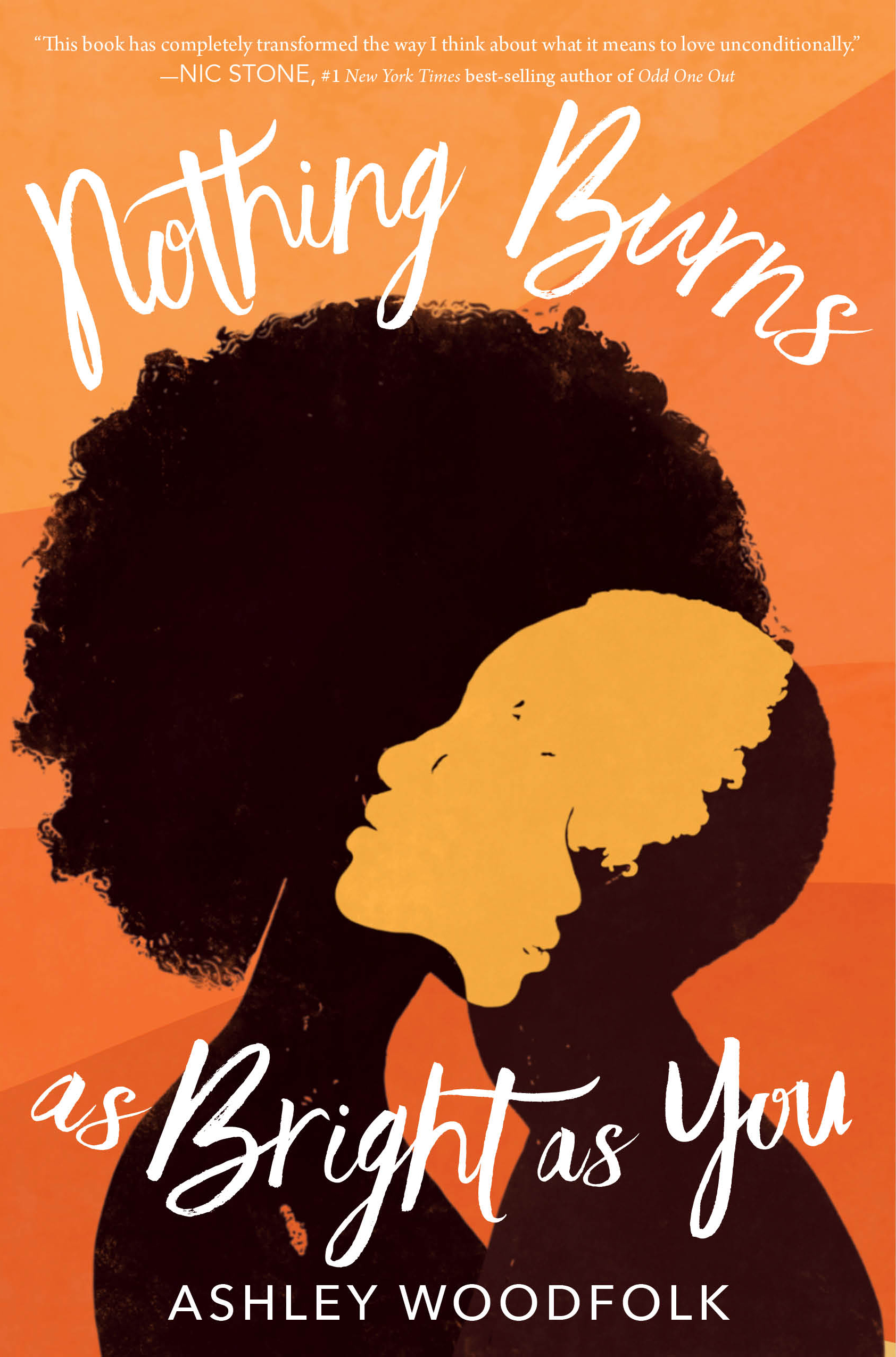
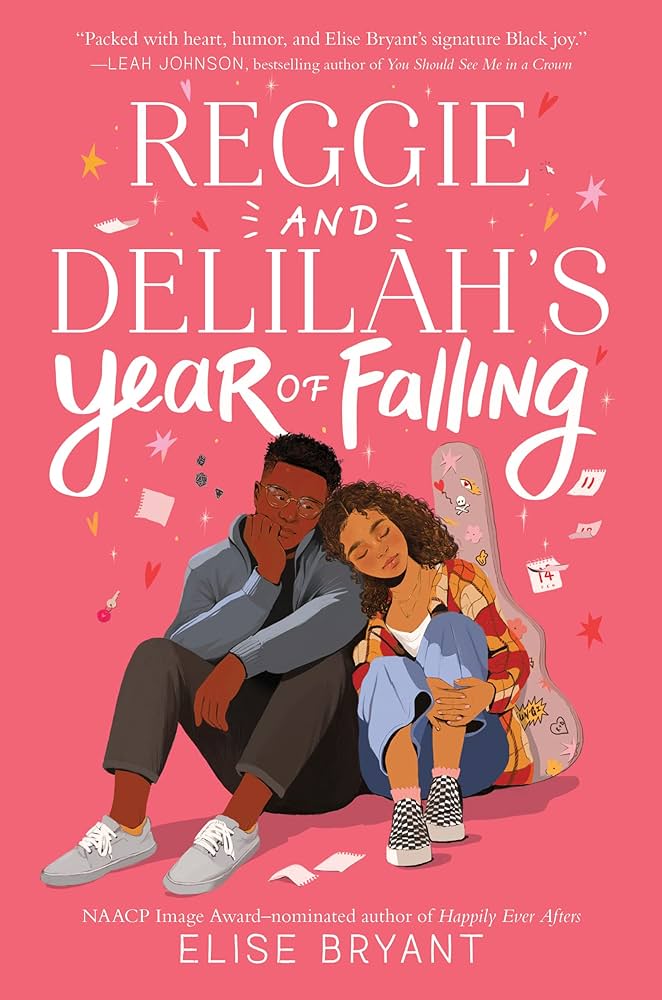
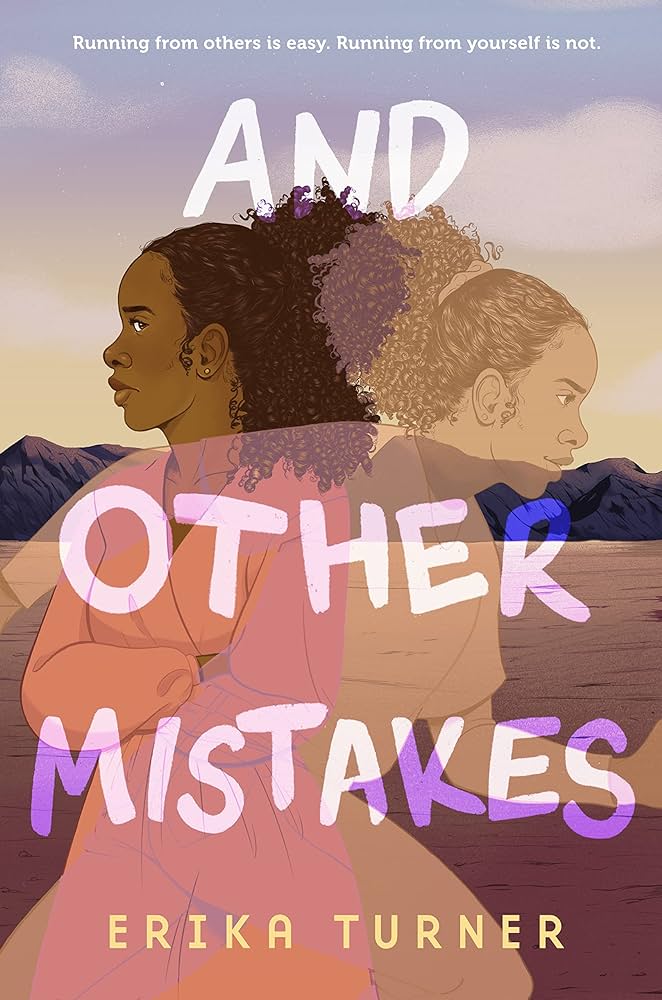
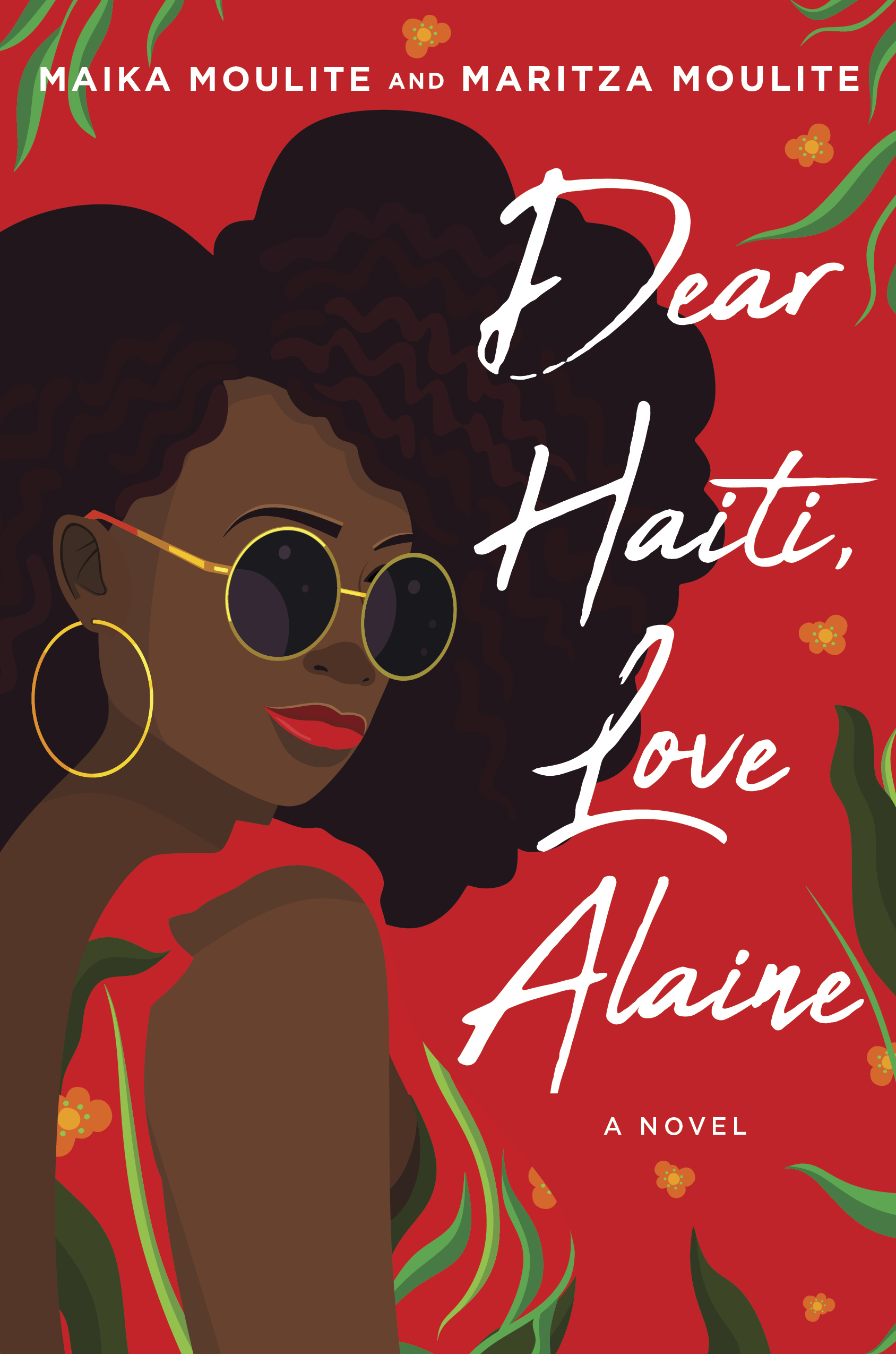
The Bookish Mutant’s Books for Black History Month (2024 Edition)

Happy Tuesday, bibliophiles!

Apologies for the lack of a Book Review Tuesday this week; like with Sunday Songs, I’ve just had a busy few days, and I wasn’t able to put anything together in time, but I was creating this post in advance, so I figured today would be a good day to post it.

Here in the U.S., February is Black History Month! Since I’ve started making these recommendation lists back in 2021 (and focusing on reading more diversely in general), I’ve discovered so many incredible authors, and now that I’m reading YA and adult novels in almost equal measure, my scope has broadened so much more. (Note: I’m still frugal about my media space on WordPress, but this list, like last year’s, contains both YA and adult novels, even though the header image just says YA.) But as with every single year, it’s more crucial than ever to uplift Black voices—not just to amplify them and other marginalized groups in the fields of literature and publishing (especially when the industry sees diversity as nothing but a box to be checked off, more often than not), but especially since we’re living in a climate here in the states (and elsewhere) that is intent on erasing both our systemic racism (past and present) and silencing Black voices. And one of the most accessible ways to fight this poisonous rhetoric is to read—to open your eyes, to learn for yourself, and to share what you have learned with others. In a landscape where anything other than the white, cishet, abled majority wants to ban any voice that isn’t theirs, reading is an act of resistance.

For my lists from previous years, click below:

Let’s begin, shall we?

THE BOOKISH MUTANT’S BOOKS FOR BLACK HISTORY MONTH

FANTASY:

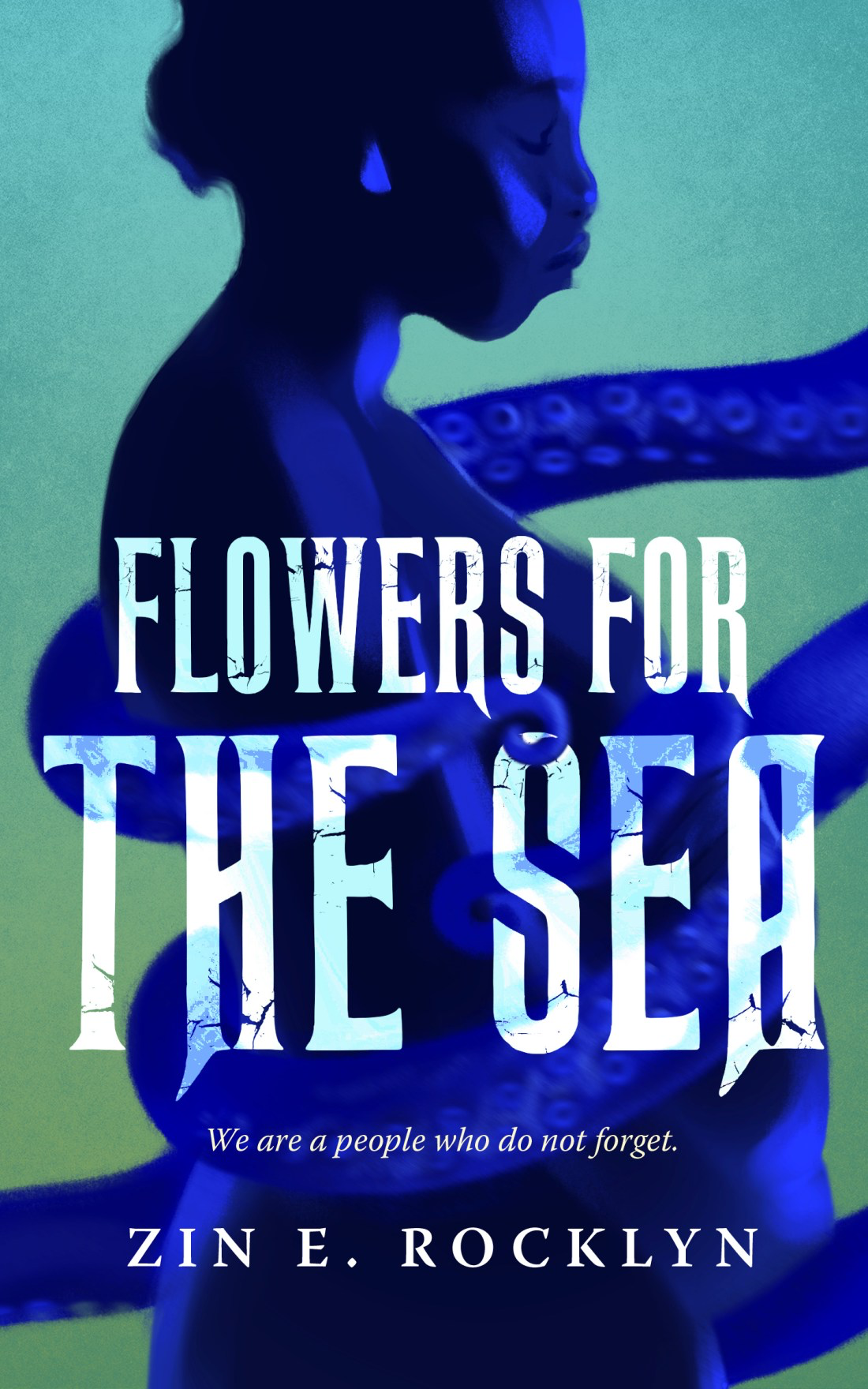
SCIENCE FICTION:

REALISTIC FICTION:

TELL ME WHAT YOU THINK! Have you read any of these books, and if so, did you enjoy them? What are some of your favorite books by Black authors that you’ve read recently? Let me know in the comments!

Today’s song:

thanks again to my brother for exposing me to this one!

That’s it for this recommendation list! Have a wonderful rest of your day, and take care of yourselves!
Posted in Book Review Tuesday

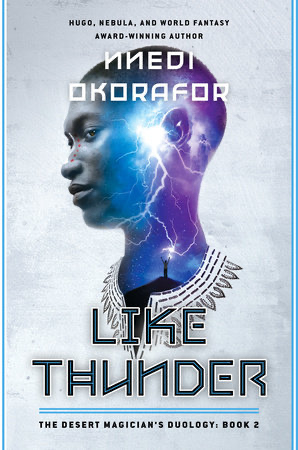
Book Review Tuesday (1/9/24) – Like Thunder (The Desert Magician’s Duology, #2)

Happy Tuesday, bibliophiles!

After I finished Shadow Speaker back in December, I was eager to see what the newly published sequel, Like Thunder, had in store. It was finally available at the library recently, and it was one of my first reads of this year. And though it retained some of the issues that Shadow Speaker had, it was still a worthy sequel and end to the duology.

TREAD LIGHTLY! This review may contain spoilers for book one, Shadow Speaker. If you haven’t read it and intend to, read at your own risk.

For my review of Shadow Speaker, click here!

Enjoy this week’s review!

Like Thunder (The Desert Magician’s Duology, #2) – Nnedi Okorafor

2077. Three years after Ejii and Dikéogu saved Earth from the threat of Chief Ette and forced him to sign the truce to bring no harm to the Changed, Dikéogu has realized that the fight is not over. Estranged from his parents and living on his own, he knows that the truce is due to expire, and that the humans are growing more hostile to the Changed by the day. After disaster strikes and puts those that he love in danger, he sets off to find the one person he knows that can help save the day: Ejii. But when they reunite, saving the world—for the second time—is more difficult that either of them bargained for.

TW/CW: genocide, slavery, ableism, murder, death, loss of loved ones

In general, I was still a fan of this book, but strangely, even though a lot of my minor gripes with Shadow Speaker were resolved, they were often filled in with elements that ended up bringing down the narrative. That’s not to say that Like Thunder wasn’t a worthy sequel—it absolutely was, and it was a fitting way to finally end the Desert Magician’s Duology, all these years after Shadow Speaker was initially published.

The worldbuilding was, without a doubt, the strongest aspect of Shadow Speaker, and Like Thunder expanded on it in all the ways that it should have! Through Dikéogu’s eyes, we get to see parts of the Desert Magician world that Shadow Speaker left behind, and they greatly enhanced the ongoing narrative of change and prejudice. Not only do we get an expansion of the effect of what kind of powers possessed by the Changed, we also see the direct effects that being Changed has on people apart from the main characters that we saw in book one. Time was clearly on Nnedi Okorafor’s side here, since she presumably had so many years apart from Shadow Speaker to craft all of the world’s eccentricities, but even if there wasn’t such a large gap between now and then, I have faith that her worlds would have been fleshed out anyway—if there’s one thing that Okorafor has excelled at over the years, it’s crafting a detailed world.

A lot of this worldbuilding contributed to the themes that Like Thunder built up, and it serves as an incredibly powerful narrative about genocide. Now that the three-year treaty between Chief Ette and the Changed has expired, he doesn’t hide the hostility that he’s been waiting to unleash since then. No matter what perspective that it’s written from, genocide is always a difficult and delicate subject to write about, and Okorafor took great care in depicting it unapologetically—it’s brutal, authentic, and horrifying, just as it should have been. In general, I preferred Ejii’s perspective to Dikéogu’s (more on that later), but Dikéogu’s voice was well-suited to handling this kind of subject matter; he had the anger that the subject warrants, and his rage not only fueled his journey, but the emotion behind this depiction.

That being said, I wasn’t the biggest fan of Dikéogu being the main POV character in Like Thunder. Although seeing the effects of the treaty dissolving through his eyes was enlightening and his anger fueled much of the novel (and for good reason), in much of the down time of the novel, I found him to be borderline obnoxious. Most of it manifested in his treatment of a lot of the female characters in the novel—once he reunited with Ejii, he had this attitude that he was still owed her after all these years, and it got on my nerves to no end. I wouldn’t have minded a romantic subplot between the two of them, but Dikéogu’s insistence on being incredibly possessive of her soured the whole thing for me. His perspective was needed to a point, but I felt like he worked better as a side character.

Going off of that, there were a lot of cheap elements in Like Thunder that sullied the narrative for me. When I think of Nnedi Okorafor, I think a lot about subversion—subversion of genre conventions, subversion of tropes, etc. But throughout the novel, there were just so many elements that felt pointless and served no purpose—and were so common that it almost seemed beneath Okorafor to add them in the first place. We get the age-old “killing the main man’s girlfriend for the plot” trope; I think it was meant to convey some of the horrors of the genocide going on, but it was already pretty evident that Dikéogu’s life was significantly changed and he already knew the horrors of genocide firsthand, so there was no point in having that subplot at all, especially since it was blatantly shoved in there to try and advance Dikéogu’s narrative arc. And the love triangle…why? Why? Once we got to that part, combined with Dikéogu’s possessiveness of Ejii, it just felt like filler drama—it didn’t advance the plot at all, and it seemed like a cheap way to generate drama as well. It just seemed like a disservice to Okorafor’s inexhaustible creativity.

All in all, a satisfying conclusion to a solid sci-fi/fantasy duology that excelled in its worldbuilding, but suffered in its use of overused and stale tropes. 3.5 stars!

Like Thunder is the second and final installment in the Desert Magician’s Duology, preceded by Shadow Speaker. Nnedi Okorafor is also the author of Lagoon, the Binti series (Binti, Home, and The Night Masquerade), Noor, Remote Control, and several other books for teens and adults.

Today’s song:

NEW SMILE WOOOOOOOOOOOOOOOO

That’s it for this week’s Book Review Tuesday! Have a wonderful rest of your day, and take care of yourselves!

Posted in Book Review Tuesday

Book Review Tuesday (12/12/23) – Shadow Speaker

Happy Tuesday, bibliophiles!

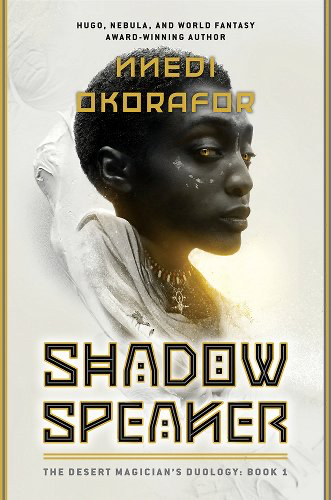
I’ve been a fan of Nnedi Okorafor for several years now, but it wasn’t until about a month ago that I found out that one of her first novels, which originally went out of print, was being reissued with new content and a new cover! (Gorgeous cover, by the way.) I ended up buying it, and though it wasn’t her best (what else would you expect from one of her very first books), but it’s not just a fun ride—it’s a glimpse into an incredibly talented author coming into her own.

Enjoy this week’s review!

Shadow Speaker (The Desert Magician’s Duology, #1) – Nnedi Okorafor

Niger, 2074. In the wake of a nuclear disaster, both humanity and the natural world have developed powers far beyond their imaginations. These Shadow Speakers have been given strange abilities by the aftershocks of nuclear war. Born into this world is 15-year-old Ejii, gifted the abilities of advanced sight and hearing the thoughts of animals. When she was young, her father, a corrupt politician, was assassinated. All these years later, Ejii decides that, regardless of the horrific legacy her father left behind, she must journey out into the Sahara Desert to search for his killer.

TW/CW: murder, beheading, fatphobia

Being a (somewhat) longtime fan of an author and reading their debut or earlier works further down the line is always an eye-opening experience. I was expecting something along those lines when I bought Shadow Speaker the other day, but…man, I really had no idea what I was in for. Shadow Speaker was honestly kind of bonkers, but in the best possible way. Quite plainly, it’s one of the boldest debut novels that I can think of.

Shadow Speaker was Nnedi Okorafor’s first novel (published all the way back in 2008), and it really does feel like a debut. I said eye-opening before because you can see the through lines where Okorafor hadn’t yet hit her stride in terms of writing; in contrast to the tight organization of most of her other novels, we still get chunks of worldbuilding delivered paragraph by paragraph. Her prose has the same bold brightness and whimsical spirit that really stands out as her signature, but it hasn’t been refined as much. And with the re-release this November, despite apparent rounds of editing, there’s still a few things that haven’t aged well from 15 years ago (ex. the villain’s evilness explicitly being tied to him being fat…mmmm, yikes…). All debuts are bound to have flaws, but the latter ones could have probably been edited out. But unlike that, I feel like it’s worth keeping some of the writing as it is—reading this novel was a time capsule into the mind of a younger writer.

And yet, Shadow Speaker is still one of the boldest books I’ve read in a long time, debut or not. Everything about is really and truly nuts, and that was the best part about reading it. Once you get the exposition of Ejii’s post-apocalyptic, magical world out of the way, at no point did I know where this novel was going, and at a certain point, I ceased to even care. There’s the spread of X-Men-like powers caused by a nuclear disaster, a talking camel (also because of the nuclear disaster, how did you guess?), gods and goddesses roaming across the land…you get the idea. Actually, no. You don’t get the idea. And that’s the point of this book, from what I can tell—Ejii and her ragtag band of nuclear magicians don’t know where they’re going either, and that’s where the fun of Shadow Speaker lies.

Over the years, Nnedi Okorafor has proven herself to be an absolute master of Afrofuturism (more specifically Africanfuturism and Africanjujuism, in her words), and the latter (a term that she coined to describe a subgenre of fantasy that is specifically Afrocentric and is inspired by the mythologies of Africa) really describes this novel to a T; although the inciting incident and the introduction of powers has a distinctly sci-fi feel, Shadow Speaker is so clearly fantasy. It’s hard to do that kind of genre-bending so effortlessly in a debut, but already, Okorafor make it look easy. Every element, whatever genres you want to ascribe them to, is blended seamlessly into the world of the Desert Magician Duology as smoothly as stirring together the ingredients of a cake. It’s an impressively distinct world, and despite its flaws, I’m glad this book was brought back into print.

Part of the reason for re-releasing Shadow Speaker is that Nnedi Okorafor just published its intended sequel, Like Thunder, this November. Hopefully I can get my hands on it soon, but it’ll certainly be interesting to see the leap in writing style between the two, given how much time has passed…

All in all, a bold and wild debut from one of science fiction’s most original writers active today. 3.5 stars!

Shadow Speaker is the first book in the Desert Magician’s Duology, followed by the new sequel, Like Thunder, which came out this November. Nnedi Okorafor is also the author of many books for adults, teens, and children, including Lagoon, the Binti series (Binti, Home, and The Night Masquerade), Noor, Remote Control, and many others.

Today’s song:

this song makes me ridiculously happy

That’s it for this Book Review Tuesday! Have a wonderful rest of your day, and take care of yourselves!
Posted in Monthly Wrap-Ups

October 2023 Wrap-Up 🧛🏼‍♀️

Happy Tuesday, bibliophiles, and more importantly, happy Halloween!

I really should be used to this by now, but getting this much snow two days before Halloween always feels so wrong. I like snow this time of year generally, but not when I have a costume to wear.

Let’s begin, shall we?

GENERAL THOUGHTS:

Usually a month this busy would dampen my overall feeling of it, but for once, it really hasn’t! That’s the magic of the Halloween season, I suppose. I’ve had a ton more stuff to do on the heels of midterm season, and even though I’m still somewhat busy (hence the scant amount of posts I’ve been able to make this month), I’m still enjoying myself.

However, even though most of the month has been favorable for me, my reading…hasn’t been as much so. Since the beginning of the month, I’ve been in a slump that I’ve only just been able to get out of in the last week or so. After the first few days, I just fell into a bad spell of especially mediocre books—for a solid two weeks, I didn’t run into much that I ended up rating higher than 3.5 stars. But I’ve slowly gotten out of the dry spell, and the end of the month has been filled with some fantastic reads!

I’ve also tried to get back into the rhythm of fiction writing, since I’ve fallen off the wagon for that since school started. Although I haven’t been able to adhere to the schedule to a T, I’ve allotted a good time of night towards writing at least 1,000 words a day, and that got me to the end of my first draft of the second book in my main sci-fi project! This one ended up being almost 82,000 words! Pretty proud of myself. Sadly, as I’m getting older, November has become a worse and worse year to try and crank out 50,000 words, so I’m not doing NaNoWriMo this year. The July Camp is a much more reliable time for me. In the meantime, I’m hoping to polish up some of my short stories to send off for publication…

Aside from that, though, there have been SO many fantastic things going on. First off, Sir Patrick Stewart (!!!!!) stopped by my school for his book tour, and it was incredible! I wish I had more pictures to show for it (we weren’t allowed to take any), but he just had the kindest, warmest presence, and it was such an honor to hear him speak about his life. What an incredible man.

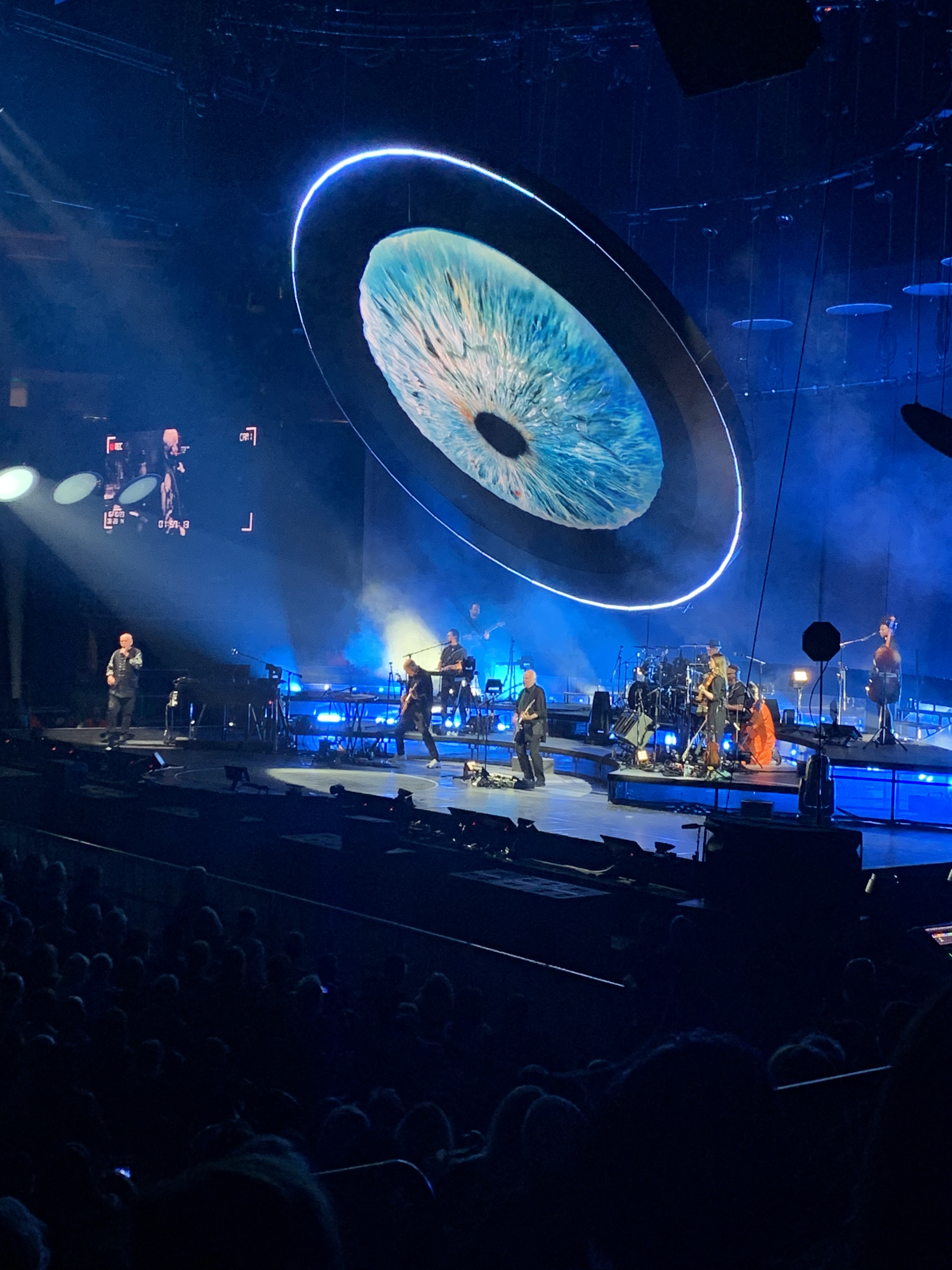
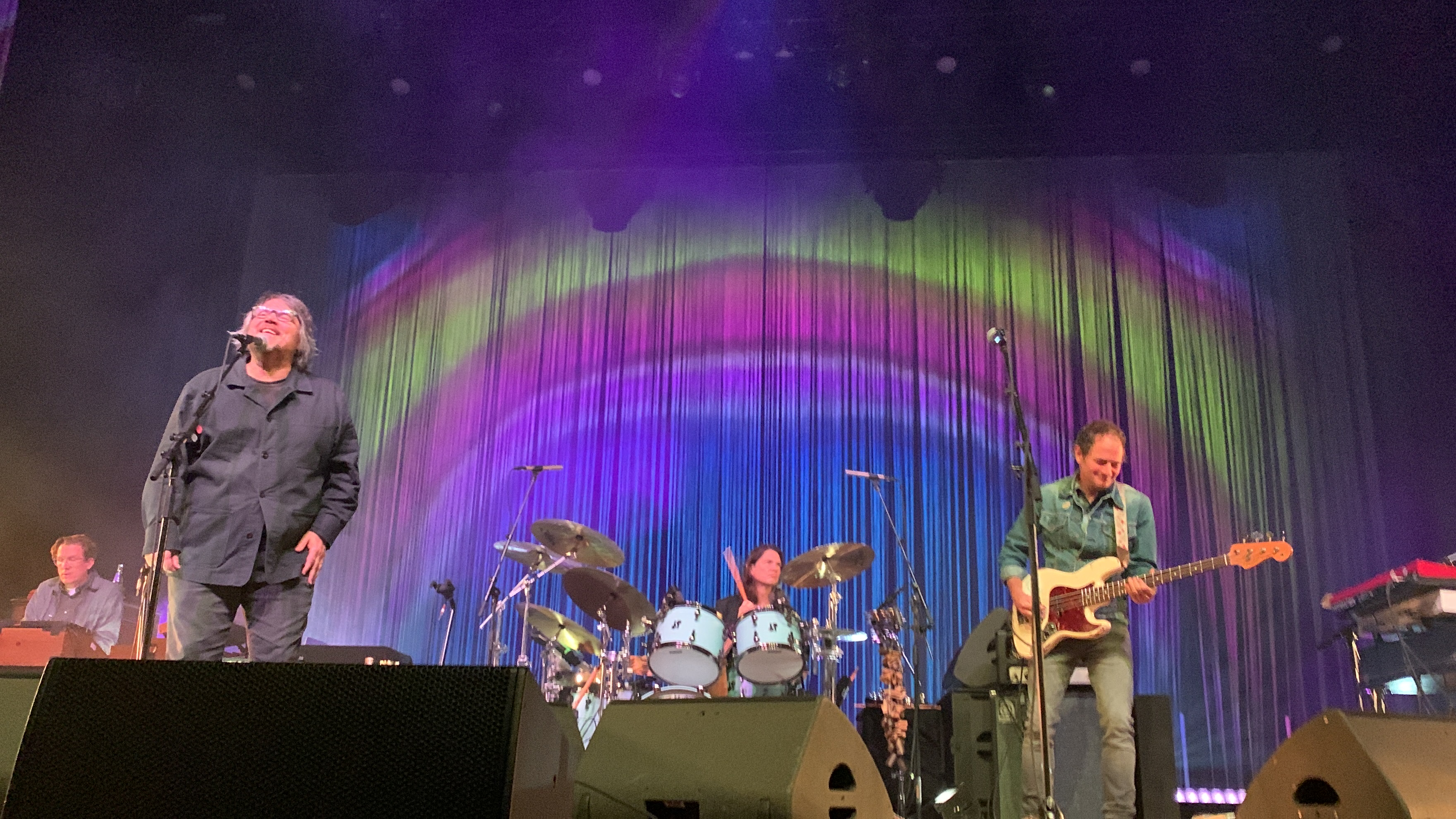
After that, I had the amazing luck of being able to see Peter Gabriel and Wilco in the same week! Both were such phenomenal shows in their own ways—seeing Peter Gabriel when I thought I’d never even see him tour was the most transformative, beautiful experience, and seeing one of my favorite bands perform their best setlist yet (and seeing them from the front row!!) was just as wonderful.

Peter Gabriel at the Ball Arena
Wilco at the Mission Ballroom

Other than that, I’ve just been getting back in the rhythm of drawing, playing some guitar now and then, taking far too many pictures of the pretty leaves on campus, drinking my fill of apple cider, watching Taskmaster (FINALLY GOT THROUGH SEASON 15! THE BINGING HAS CEASED!) and catching up on Only Murders in the Building (please stop pairing Mabel up w randos, she deserves so much better), and soaking up the fall weather. At least I was until we got snow 2 days before Halloween. Oops.

READING AND BLOGGING:

I read 16 books this month! This month was slow going, and I ended up in a somewhat extended reading slump, but there were bright spots here and there.

2 – 2.75 stars:

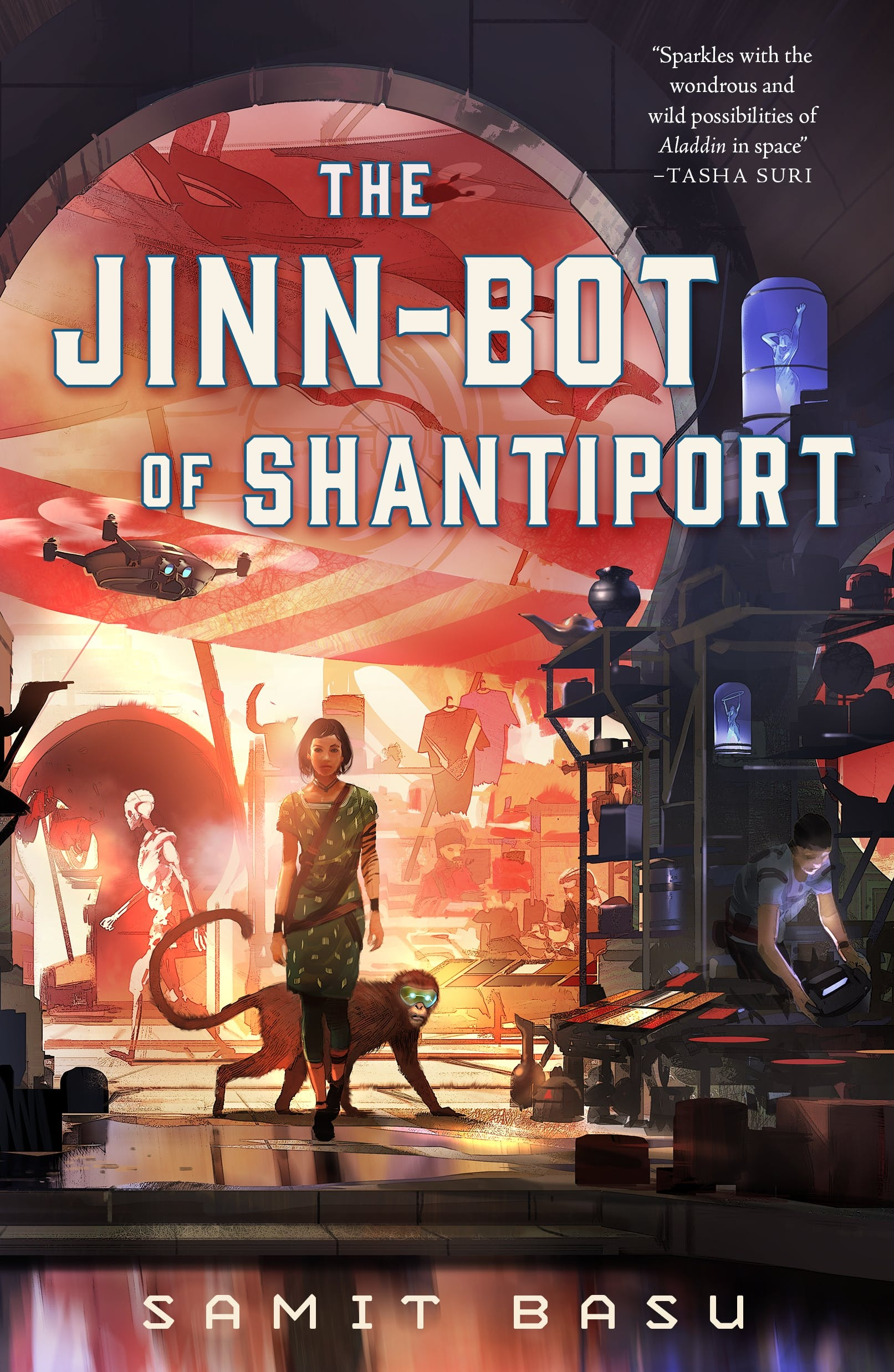
The Jinn-Bot of Shantiport

3 – 3.75 stars:

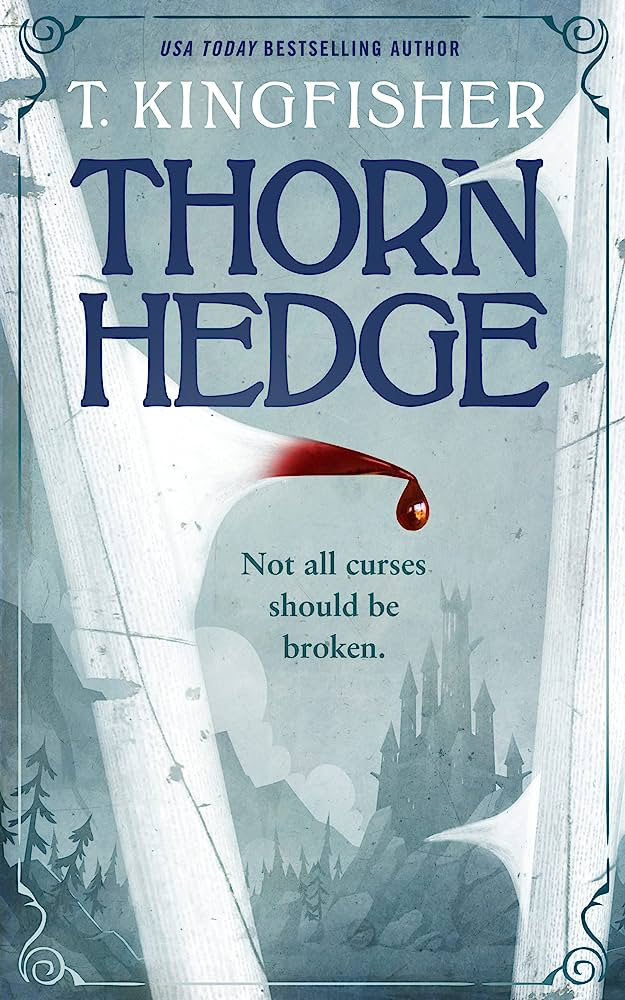
Thornhedge

4 – 4.75 stars:

The Thursday Murder Club

FAVORITE BOOK OF THE MONTH: Under the Earth, Over the Sky4 stars

POSTS I’M PROUD OF:

[cough] not a whole lot here, but:

POSTS FROM OTHER WONDERFUL PEOPLE THAT I’VE BEEN ENJOYING:

Again, I haven’t had as much time to blog-hop, but:

SONGS/ALBUMS I’VE BEEN ENJOYING:

LOVING the new Wilco
this song makes my soul leave my body
this album was just as wonderful (and uncomfortable) as I thought it would be
WAAAAAAAAAAAAAAAAAAAA
yeah I love OK Computer with every cell of my being, but there’s something to be said for the good ol’ Bends-era Radiohead
seeing Peter Gabriel live was truly magical :,)

Today’s song:

HAPPY HALLOWEEN EVERYBODY

That’s it for this month in blogging! Have a wonderful rest of your day, and take care of yourselves!
Posted in Book Review Tuesday

Book Review Tuesday (2/8/22) – Noor

Happy Tuesday, bibliophiles!
I’ve realized that Nnedi Okorafor is an author that I end up coming back to frequently—I’ve piled a whole lot of her books on my TBR over the years, and I’m almost never disappointed by what I read, whether it’s Remote Control or Lagoon. She’s an incredible sci-fi and Afrofuturism author, so I jumped at the chance to read Noor. I picked it up last week, and although it had some flaws, it was an endearing and immersive novel!

Enjoy this week’s review!

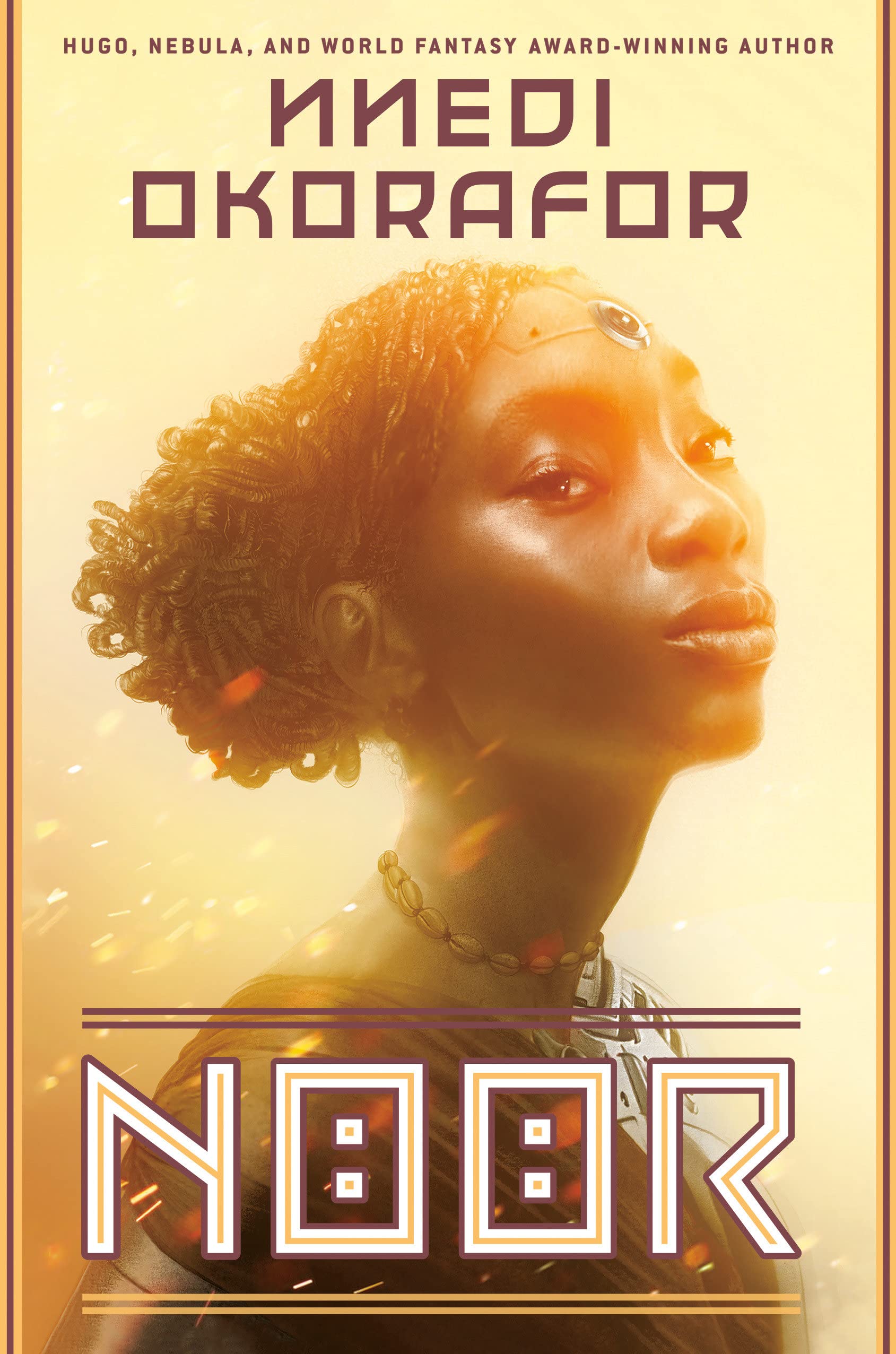
Amazon.com: Noor: 9780756416096: Okorafor, Nnedi: Books

Noor – Nnedi Okorafor

Originally, AO’s name stood for Anwuli Okwudili. But she prefers the name Artificial Organism; over the years, she has gained several prosthetics and synthetic organs due to a birth defect and a car crash in her teenage years. AO is proud of the person she is, but the rest of the world is not so kind—especially when she’s caught in the middle of a violent conflict. While on the run, she meets DNA, a herdsman and a fugitive who is willing to aid in her escape. But the desert is full of dangers—the biggest of all the infamous Red Eye, said to swallow all who enter it.

jupiter's red spot great red spot gif | WiffleGif

TW/CW: murder, violence, ableism (internalized & treatment of protagonist), catcalling

[looks at this cover] why did I ever question that I like girls

Since I started on the Akata Witch series way back in middle school, Nnedi Okorafor has always been an author that I come back to. Her worlds are consistently filled with rich detail and endearing characters, and Noor was no exception. Okorafor’s newest novel is filled with cutting commentary, immersive worldbuilding, and no shortage of unique characters!
Nnedi Okorafor has a writing style that I adore; her worldbuilding and characters are stellar as they are, but she has such a way with words that everything that I mentioned practically jumps off the page. Her metaphors are often humorous and highly specific, and in Noor‘s case, they served to flesh out the characters and world even more so. Her writing never fails to impress, and Noor is another testament to the fact.

Okorafor’s characters are always endearing, but the protagonists of Noor especially shone! AO was such a unique and complex character; her backstory was more in-depth than a lot of protagonists that I can think of, and the intricacies of her history and personality were delved into without steering towards info-dumps. She and DNA had great chemistry along their journey; they bounced well off of each other both in terms of banter and personality. Even the side characters were given so much care, from the Oz-like Baba Sola to DNA’s cows.
As much as I loved all of these elements, there were a few facets that brought Noor down in some places. I have mixed feelings about how AO’s disability was portrayed; while it was clearly depicted that AO is proud of being disabled (and it’s so cool to see a Black disabled character!), there’s a lot of internalized ableism that goes unaddressed. In particular, the way that AO describes herself as “broken” and “crippled” rubbed me the wrong way. I may not have a physical disability, but the latter of the two has been known as outdated language for quite some time, and beyond that, it seems a little contrary to the part of the blurb about AO embracing herself. It’s…a good start, but it’s got some holes.

In addition, Noor had a lot to say, but it suffered from trying to cram commentary on so many different topics in a relatively short span—only 224 pages for my hardcover copy. All of the commentary was fantastic—corporate greed, environmentalism, the Western world’s misguided belief that all of Africa is “poor” and “diseased,” and how society treats disabled people are just a few of them. Problem is, while all of these are mentioned, there is so little room in the plot for them that they ended up being underdeveloped snippets. 224 pages was enough to sustain the plot, but the commentary, which was clearly meant to be the forefront, was forgotten in the dust, for the most part.

But all in all, a highly creative work from a sci-fi author who never misses. 3.75 stars, rounded up to 4!

Desert GIF - Night Canyon Timelapse - Discover & Share GIFs

Noor is a standalone, but Nnedi Okorafor is also the author of Remote Control, Lagoon, the Nsibidi Scripts (Akata Witch, Akata Warrior, and Akata Woman), the Binti trilogy (Binti, Home, and The Night Masquerade), and several other books for teens and adults.

Today’s song:

That’s it for this week’s Book Review Tuesday! Have a wonderful rest of your day, and take care of yourselves!