Posted in Book Review Tuesday

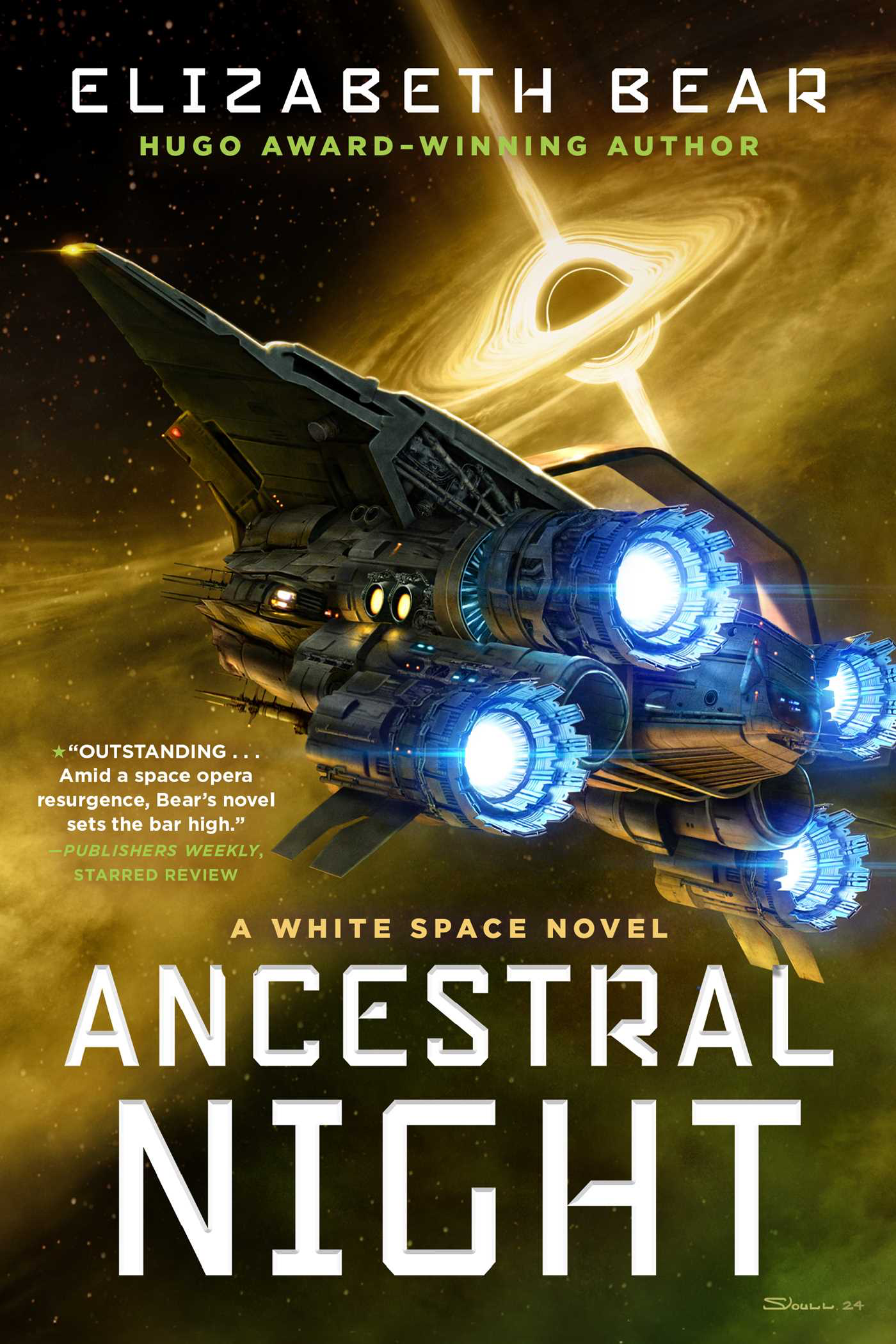
Book Review Tuesday (12/9/25) – Planetfall

Happy Tuesday, bibliophiles! My finals are pretty much over, so it looks like I’ll be coming back.

Yeah, I thought I’d broken my “comes back from break, immediately writes a negative review” streak too. As always, I maintain that a balance is necessary.

For the most part, my quest to find more diverse sci-fi has been successful and has led me to find so many remarkable new books and authors. However, there are always some misses along the way, because as always, diversity isn’t a guarantee that a book will have a sound plot and characters. I’d seen Planetfall come up on several lists of science fiction with solid queer and disabled rep, so of course I snapped up a copy at the library when I had the chance. Unfortunately, Planetfall was lukewarm at best, and a jumble of unfulfilled promises at worst.

Enjoy this week’s review!

Planetfall (Planetfall, #1) – Emma Newman

22 years ago, escaping the brink of certain extinction, the last remains of humanity formed a colony deep in the cosmos, on a mysterious planet home to a strange alien structure. Leading them was Lee Suh-Mi, a godlike figure who has retreated in recent years to live inside of the alien structure. Renata “Ren” Ghali, an engineer, has spent her life toiling away to make this new haven habitable for humanity. But when a stranger arrives on their doorstep bearing an uncanny resemblance to Suh-Mi, Ren must question everything she knows about her new planet—and her supervisors.

TW/CW: panic attacks/mental illness (PTSD, anxiety) themes, ableism, grief, death, murder, descriptions of injury, death of a child, substance abuse (alcohol)

Once I got past the halfway mark of Planetfall, my recurring thought was “This is just Prometheus if it sucked.” Prometheus is already a divisive film (I’ll always have a soft spot for it, I don’t care), but this novel feels like what would happen if you separated Prometheus from the Alien franchise…and then surgically extracted everything that was interesting about it.

I will say, even though my overall experience with Planetfall wasn’t the best, there were some significant positives. Newman’s prose had moments of being very clever and poetic, though they were few and far between. I liked the inclusion of Renata’s mental illness, and the pushback of the narrative of disability/mental illness needing a cure, especially in sci-fi settings. The casual inclusion of lots of characters who were queer and/or people of color was also a plus.

Yet once you get beyond that, there isn’t much to like about Planetfall. One of the worst things to fall short on in genre fiction in general is the sense of place. If you’re in the real world, you can let go of descriptions on the basis that your reader exists in this world and knows how it functions; when you’re creating something entirely new—say, an alien planet—grounding the reader in the setting is almost always an absolute necessity. I was so excited to explore the alien colony that Newman set up, but hardly any of it was expounded upon. Other than a few throwaway descriptions of Ren hearing alien creatures’ mating calls (how do you not follow up on that?? Tell me about the creatures!) while trying to fall asleep at night, I have almost no clue about how this planet looks. I think there’s…some caves? Maybe? All I can say with certainty is that there’s an ominous alien structure. That’s about all I can tell you. That also extends to the interior of the colonists’ base—I’m lost as to even what that looks like, even though that’s where we spend most of the novel.

This novel’s biggest pitfall is that it sets up far too many things—both in terms of plot and theme—and there’s practically no payoff for any of it. Newman clearly wanted to say something about religious fanaticism, but her analysis didn’t get further than “religious fanaticism is bad,” which, while that’s obviously true, really merits going deeper than that. The plotline about Ren’s guilt and mental illness was the closest Planetfall had to having something tangible to say, but even that got lost amidst the tangled mess of half-baked threads. Given the prominence of guilt and religion in this novel, there could’ve been something compelling for Newman to explore, but those dots were barely connected, if at all. The same is true of the plot. The entire foundation of the colony is upended? Nah, we’re dealing with that later, I guess. There’s a whole thread where they find evidence of an alien language, and…nothing happens. I kid you not. They just drop that thread and leave it there. If you go into Planetfall thinking that any of the plot threads will be resolved, prepare yourself for disappointment. Reading this novel made me feel like Darla from Finding Nemo shaking Nemo in a plastic bag, desperately trying to get him to “wake up!” Spoiler alert: it never did.

Part of what accentuated that feeling of narrative unresolution was the fact that the characters weren’t developed nearly enough for me to even care what happened to them. Ren came the closest, but I suspect it was more because she was actively being horribly mistreated by some of the other characters. I’m not sure if I know a lot about her other than what happens to her, even though Planetfall happens entirely from her point of view. To Newman’s credit, her guilt was written quite evocatively, and that was where I felt the glut of my sympathy for her. She was less of a character and more of a chess piece for things to unceremoniously happen to. Had she been characterized beyond her crushing guilt, I might have been much more interested in the story—guilt is an emotion, not a character trait.

The same can be said for all of the other characters. All Mack really did was act badly enough for Newman to have an excuse to slide him in as the antagonist in the eleventh hour. Sung-Soo didn’t have any discernible traits other than the fact that he upends what the colonists had believed for decades. Speaking of other colonists…other than maybe four other named characters, where were they? With the lack of description, I fully would’ve believed you if you told me that there were only seven people tops on this planet. Planetfall was just so painfully bare-bones in most regards. All of the promises of a good story are here, from the themes to the plot, but it’s all promises and no deliverance. It’s the literary manifestation of doing the least to get your readers to believe that there’s a story going on.

All in all, a sci-fi novel that promised intrigue, mystery, and devastating secrets, and delivered on…none of those things. 2 stars.

Planetfall is the first book in the Planetfall series, followed by After Atlas, Before Mars, and Atlas Alone. Emma Newman is also the author of several other series, including The Split Worlds (Between Two Thorns, Any Other Name, All is Fair, A Little Knowledge, and All Good Things), the Industrial Magic duology (Brother’s Ruin and Weaver’s Lament), The Vengeance, and many others.

Today’s song:

That’s it for this week’s Book Review Tuesday! Have a wonderful rest of your day, and take care of yourselves!

Posted in Uncategorized

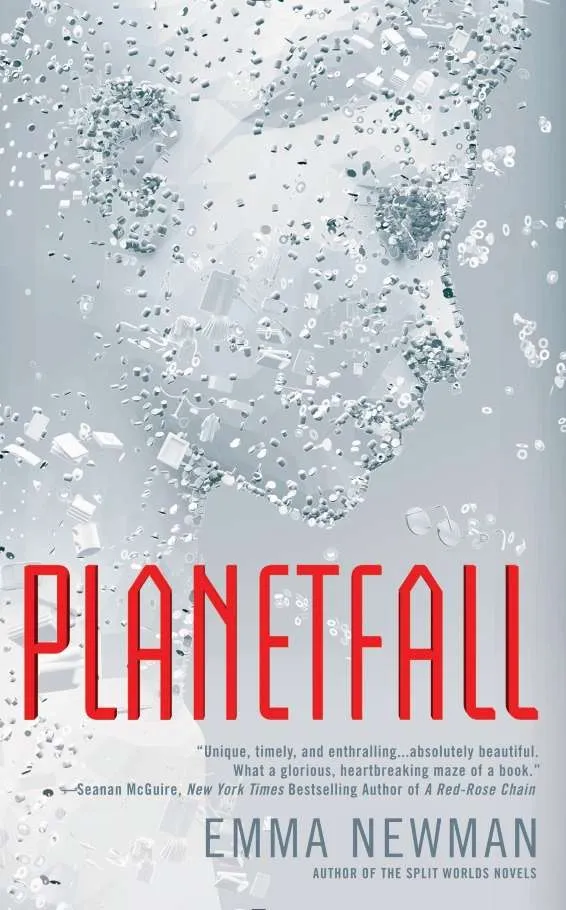
Book Review Tuesday (7/12/25) – Can’t Spell Treason Without Tea

Happy Tuesday, bibliophiles!

Continuing with my reviews for Disability Pride Month, here’s a sweet cozy fantasy with queer, disabled leads! Of course, those three factors are what drew me in, and I was in the mood for something more low-stakes. Though it wasn’t the best cozy fantasy out there, Can’t Spell Treason Without Tea was a sweet diversion.

Enjoy this week’s review!

Can’t Spell Treason Without Tea (Tomes & Tea, #1) – Rebecca Thorne

All Reyna and Kianthe want to do is escape. Kianthe is tethered to her job as the most powerful mage in the Queendom, and Reyna works as one of the Queen’s most esteemed bodyguards. But against all odds, they run away together to live out their shared dream: opening a bookshop that serves tea. As their dream falls into place, they discover that it’s not as easy as they thought to abandon their lives and run away, from the guards searching for Reyna and the complications of Kianthe’s magic. But they’re determined to make their dreams come true, and they’ll stop at nothing to have a moment of peace.

TW/CW: fire, injury, loss of loved ones, murder, violence, panic attacks

If you can get past the initially corny title, there’s some comfort to be had here, just like a good cup of relaxing tea. Am I committed to sticking around for the even punnier titles in the rest of the series? Not really, if I’m being honest. That said, if you’re looking for something fluffy, romantic, and sweet, Can’t Spell Treason Without Tea is the perfect diversion for you.

As far as coziness goes, Can’t Spell Treason Without Tea was a solid entry into the genre! Although it’s more action-oriented than a typical cozy fantasy novel, the pacing works in such a way that it takes a backseat to the more quiet, gentle parts of the novel. Thorne’s way of describing the mountainous landscape and the interior of the bookshop was relaxing and cozy; if it hadn’t been July when I read this, it would’ve been the perfect book to read while swaddled in blankets during the winter. It’s hard to get a reader invested in a relationship that’s already been going strong for at least a few years, but those quiet moments were perfect to get acquainted with Reyna and Kianthe. There’s plentiful soft, tender moments between the couple, both when they’re enjoying spending time together and when they’re trying to work out issues—often related to hurdles with getting the bookshop to work, but usually with something more interpersonal at its heart. If you can already get past the corny title, chances are, you’ll get past some of the more corny book and tea-related puns—for the most part, it’s a very silly, fluffy book, and it 100% fulfills its purpose as such. And damn, I needed a fluffy book.

Though this isn’t the best cozy genre fiction I’ve ever read, I think Thorne’s writing style lends itself perfectly to the subgenre. She had a very soothing way of describing the world and the characters—every description felt very bucolic and gentle, making even the world seem comforting alongside the storyline. With this style, she was able to render the quiet, tender moments of relationship development between Reyna and Kianthe beautifully, whether it was working out disagreements in their visions of the bookshop or helping the other work through panic attacks. Her writing just has a calming quality that not many writers do—an essential tool when you’re writing cozy fiction. Thorne’s passion for her characters and world truly shone through in every word, and it was clear that they took great care in making their writing as true to the intended mood as possible.

A rotating cast of characters is going to be a staple if your novel centers around a bookshop that serves tea, but that isn’t even where this novel’s character problem arises: it’s how they’re introduced. The issue with having Can’t Spell Treason Without Tea being placed smack dab in the middle of an established relationship is that many of the other characters are established as being involved with them, but you’re barely offered an explanation as to why. It seems like there’s quite a lot of short stories and one-shots and whatnot surrounding the novel, but without that context, it was rather disorienting juggling all of the characters when the protagonists had established relationships with them and their roles were hardly ever fully explained. Combine that with the fact that there were so many of these characters, and you’ve got a bit of a mess as far as getting the reader to care about anyone besides the protagonists.

Now, about the worldbuilding…or, “go, girl, give us nothing!” The worldbuilding wasn’t the main draw for me when I picked up Can’t Spell Treason Without Tea, but even then, it was rather underwhelming. Generically European and vaguely medieval high fantasy setting strikes again…free me from this prison!! I get that the romance and the characterization was the more central aspect to the book, but I still think that Thorne could’ve done much more with her worldbuilding. Try as I might, there wasn’t anything new offered about the setting. Though the descriptions of said setting were soothingly written, I struggled to find anything that stood out about the world—not even the magic system or the creatures. The monarchy and mythical creatures (griffins, dragons, etc.) were standard fare, but even those didn’t have any small quirks that would distinguish them from any other fantasy novel. If I think of what drew me in to this book, my mind goes to it being cozy and having queer/disabled leads; though I loved these aspects and think they were done wonderfully, they don’t strike me as necessarily unique—I’ve read other books with these exact qualities that had original worldbuilding to back them up. I’m not saying that this book had to have some insanely convoluted worldbuilding or anything, but at least give us something!

All in all, a cozy fantasy that was sweet enough to tide me over, but could’ve done with something more to distinguish it from all the rest. 3.5 stars!

Can’t Spell Treason Without Tea is the first novel in the Tomes & Tea series, which continues with A Pirate’s Life for Tea, Tea You at the Altar, and the final book, Alchemy and a Cup of Tea, which is slated for release in August of 2025. Rebecca Thorne is also the author of This Gilded Abyss and The Day Death Stopped.

Today’s song:

saw car seat headrest on saturday night…you will most DEFINITELY be hearing about that soon!!

That’s it for this week’s Book Review Tuesday! Have a wonderful rest of your day, and take care of yourselves!
Posted in Books

🏳️‍⚧️🏳️‍🌈The Bookish Mutant’s Books for Pride Month (2025 Edition)🏳️‍🌈🏳️‍⚧️

Happy Monday, bibliophiles!

Here in the U.S., June is Pride Month! I usually start off these posts with something about how the world is slowly getting kinder to queer people, but that, as always, the shadows of homophobia and transphobia loom large. Well…Christ, it sure is looming larger than ever. Misinformed voters have decided that they’re perfectly content to return us to an administration that has already required passports to revert to the carrier’s assigned gender at birth and has been emboldened to toy with the idea of repealing the right to same-sex marriage. Of course, here I am sitting on my comfy couch in my comfy blue state of Colorado that thankfully has a) a gay governor (shoutout to Jared Polis), and b) enshrined the right to same-sex marriage in the constitution, but that doesn’t mean that my heart doesn’t constantly ache. All of us in the queer community are deeply interconnected. What hurts one of us hurts all of us.

Book banning across the country has disproportionately targeted queer books, deeming the presence of such subjects in children’s, middle grade, and YA literature as pornography and grooming. And god forbid that a drag queen commits the incredibly sexual and predatory act of…[checks notes] reading picture books to kids at libraries. Republicans have their priorities twisted. That’s old, old news by now. Books and libraries were never meant to be war zones, but fascists have made it their mission, then and now, to declare the right to information and new ideas as the most dangerous threat to their power. This goes for books both queer and non-queer. But the power of queer books can’t be overstated. Even I, who grew up in an incredibly supportive, accepting environment (biggest thank you imaginable to my wonderful family for being that way), was enlightened and comforted when, in the short period when I was closeted, I found bisexual characters in books that reflected my story and my feelings. Queer literature is revelatory, and it saves lives. For queer people, it gives them the comfort that they aren’t alone. For others, it gives them a glimpse into perspectives that they might not have otherwise considered, and compels them to empathize with people who are different than them.

So this pride month, and all year round (as always), when you think of what you can do to support the LGBTQ+ community, consider picking up a book. Support queer authors. Buy from queer-owned bookstores, because they tend to be pretty cool places. Support your local library (because they need it now more than ever)—checking out queer books shows them that they’re in demand, and that encourages librarians to keep on shelving them. For us book bloggers and other social media-oriented folks: keep on reviewing and shouting out books. And for all of us: no president, no government, and no legislation can take away your queerness. No one has that power but you. Your queerness is revolutionary and beautiful. Keep on being queer.

So here is my annual list of great LGBTQ+ reads from all sorts of genres, backgrounds, and identities. If I’ve mistakenly identified something about a book’s representation, please let me know! I’ve mixed YA and Adult books here, and I’ve also added a nonfiction section for the first time, as I’ve done with my other recommendation lists.

A refresher on my key:

MC: Main character

LI: Love interest

SC: Side character(s)

For my posts from previous years, click below:

Let’s begin, shall we?

🌈THE BOOKISH MUTANT’S BOOKS FOR PRIDE MONTH (2025 EDITION)🌈

FANTASY:

Includes paranormal, magical realism, horror, and genre fusion(s)

SCIENCE FICTION:

Includes dystopia, speculative fiction, & genre fusion(s)

REALISTIC FICTION

NONFICTION:

TELL ME WHAT YOU THINK! Have you read any of these books, and if so, what did you think of them? What are some of your favorite queer books that you’ve read recently? Let me know in the comments!

Today’s song:

lindsey…please tell me this is a sign that you’re cooking something…

That’s it for this year’s pride recommendations! Have a wonderful rest of your day, and take care of yourselves!

Posted in Book Review Tuesday

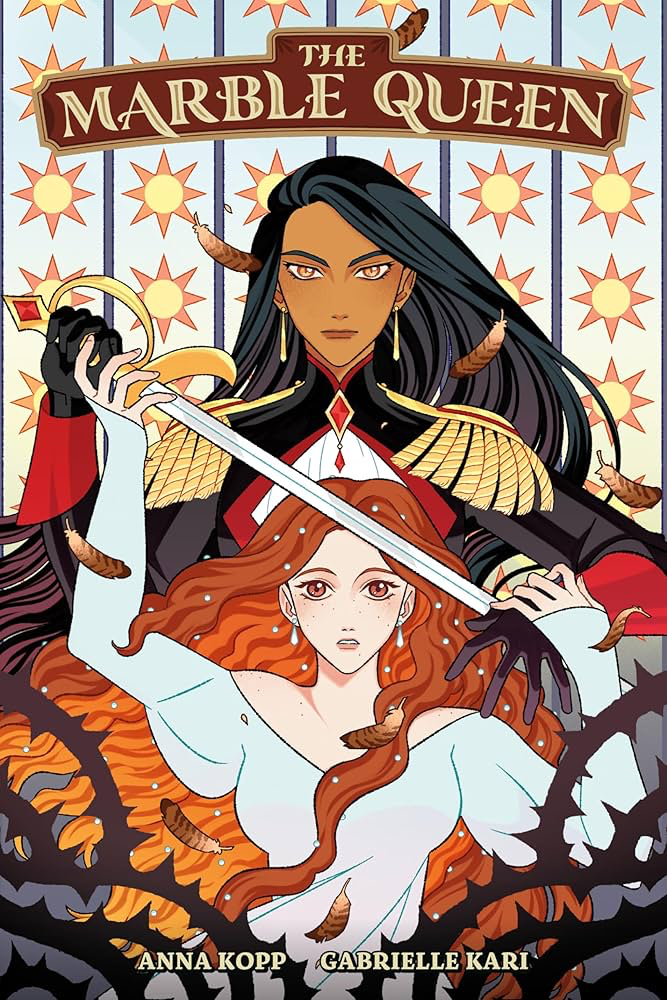
Book Review Tuesday (1/28/25) – The Marble Queen

Happy Tuesday, bibliophiles!

Graphic novels haven’t been all I’ve been reading this month, but I’ve certainly been on a kick of reviewing them. Unfortunately, this one wasn’t nearly as good as The Infinity Particle, but it’s apples and oranges to compare them. I really need to stop putting everything with “sapphic” and “fantasy” in the description on my TBR, because while I love those two things together, they aren’t automatically the recipe for a good book. Sadly, The Marble Queen is proof of that.

Enjoy this week’s review!

The Marble Queen – Anna Kopp and Gabrielle Kari

Princess Amelia lives in a kingdom in turmoil. Accosted on all sides by pirates and on the brink of war between its neighboring nations, Marion is on the verge of collapse. Only a miracle can save it—and that miracle may be to marry Amelia off to the prince of the neighboring kingdom of Iliad. But soon, she finds out that there was a mistake—it was not the prince she is being married off to, but the new queen, the stunning Salira. Stuck in a foreign kingdom with no control over her destiny, Amelia searches for answers. But with political forces from all sides conspiring against them, she must ally with Salira in order to save both of their kingdoms from ruin.

art by Gabrielle Kari

TW/CW: blood, violence, loss of loved ones, anxiety, poisoning (attempted)

I went into this graphic novel thinking I’d get a sapphic fantasy. The sapphics? They’re here. The fantasy? Not so much. The writing and artwork? The latter picked up some of the slack left by the rushed writing, but not enough. Given more page time and refinement, The Marble Queen could have been something promising, but it was clearly a case of too many plot ideas in a shell that could not hold all of them.

If you’re looking for fantasy, The Marble Queen will likely disappoint. If you’re looking for something more along the lines of a regency romance with political intrigue thrown in, you might be more satisfied. The Marble Queen has plenty of ballroom dancing, flowy dresses, court intrigue, and pirates, but nothing that would necessarily separate it from something in our history. There was a vague, throwaway sequence about some crystals beneath Iliad that supposedly had magical powers, but it ended up having zero consequence to the plot—it felt like Kopp threw it in just so that she could say “See? See? This is fantasy, we promise!” Also, so many of the place names felt so randomly plucked and too close to real world things—kingdoms called Marion (not necessarily a common name, but similar enough to Marianne/Maryanne that it loses the fantastical feel) and Iliad (I don’t think I have to explain that one) made the worldbuilding feel even lazier. The Marble Queen’s artwork also had a lack of immersion—other than the glimpses we got of the palace and the outside world, many of the characters were shown on flat, monochrome backgrounds, making it difficult to get a full picture of the world. Had this been historical fiction with a loose basis in some of our cultures, it might have been more effective.

Additionally, The Marble Queen was all over the place in terms of plot. I got the impression that Kopp and Kari had a plethora of ideas for what to do with the story, but not nearly enough time to execute them. As a result, every subplot felt smushed together like sardines in a tin can—so many of them were there, and yet almost none of them had room for proper mobility. I was particularly intrigued by Amelia’s anxiety and her feelings of isolation in Iliad. Her fear and alienation, although given a fair amount of space in the first half of the novel, had the potential to be poignant, but since it was shoved in unceremoniously against at least six other subplots, it had to room to grow into a compelling, sensitive story. The same went for the political intrigue—I liked it in concept, but the plot with Stefan had so little room to develop that by the time the reveal came, I’d guessed it about 30 pages earlier. In between all this, we get rapid-fire scenes of training montages, poisoning attempts, emotional backstory with not nearly enough grace given to the grief they should have held, said random bit about magical crystals that doesn’t end up being relevant at all, and a pirate that was clearly supposed to be a “fan favorite” character, but only got about 5 pages of character interactions tops. Given more polishing, The Marble Queen could have been a successful story, but it had no sense of direction, which made me struggle to keep my interest in the characters.

Said plot, more overstuffed than a Thanksgiving turkey, is why I think the romance didn’t work for me either. I did get that the arrangement was meant to be rushed, but when so many extraneous plot events were happening around Amelia and Salira, I never bought the chemistry that Kopp so badly wanted to convince the reader that existed between them. We’re supposed to believe that Amelia and Salira are slowly falling in love, but there’s hardly any indication in the dialogue that a connection is being made, save for a heavy dose of panels of Amelia with sparkly eyes and anime blushing. We’re supposed to sympathize with Salira because of the untimely death of her first girlfriend, but we hardly get an indication that she’s uncomfortable during the wedding, and after the explanation to Amelia, she comforts her, and then they make out in front of a painting of her ex-girlfriend and move on. Again, this was a victim of The Marble Queen‘s full-to-bursting plot—a romance that could have been compelling was ruined by a plot that moved too fast and contained too much of the wrong things.

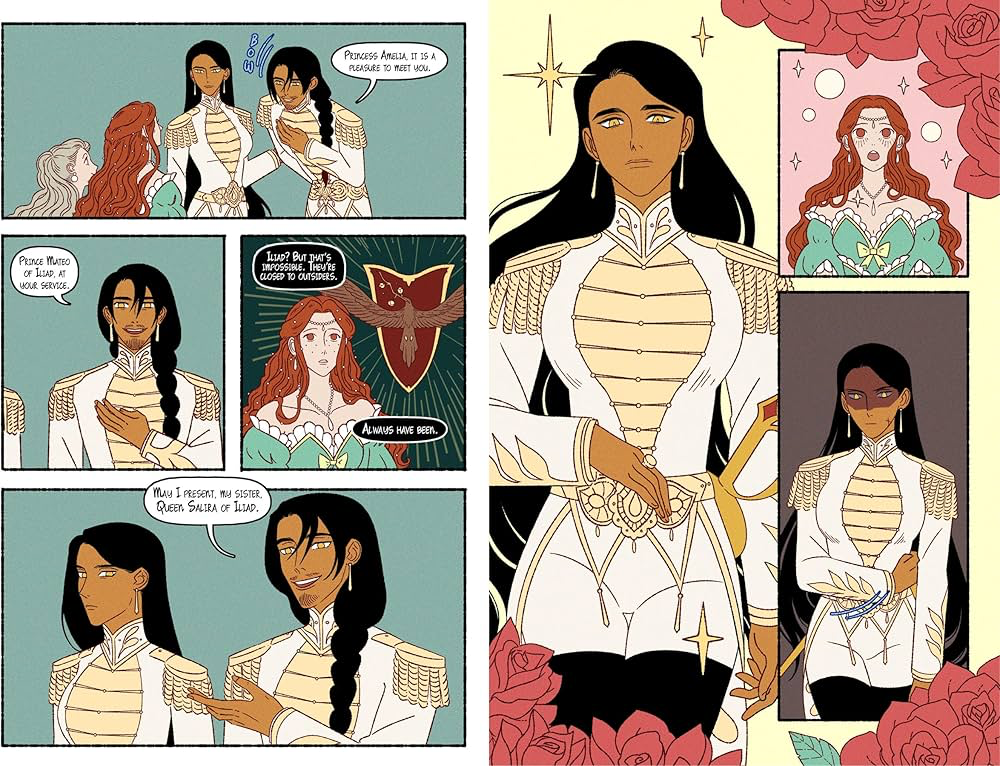
The art was…alright, I suppose. That gorgeous cover set my expectations too high. I could get on board with the almost-Manga art style, and I did enjoy some of the expressions that the characters made. Although the color palette was warm and pleasant, it was largely flat—there was a significant lack of shading and depth, which can sometimes work, but in a story and world this fantastical, some of it was necessary. Additionally, Kari had a tendency to overexplain some of the gestures of the characters. Instead of having some creative (and sometimes silly) depictions of sound effects, there were direct writings of, say, “rise,” “kneel,” or “stab” when characters stood up, knelt or got stabbed, or repetitions of “beautiful” when Amelia first sees Salira. In moderation, some of this could have worked, but in such large amounts (and in places where these things could have easily been inferred by…well, just looking at the artwork), they grated on me.

That being said, I loved Gabrielle Kari’s character designs! She did an excellent job of making the characters expressive and distinctive in their respective looks. Anime blushing aside (I could let it slide after a while), all of the characters had wonderful stylistic quirks and tells, making them fun to follow around their kingdom, even when the writing itself slacked off. The design language wasn’t just clear, but enjoyable to see between the kingdoms; I loved the contrast of Amelia’s flowing, flouncy dresses in contrast to the tighter, more soldierly attire of the royals of Iliad. It added what some of the writing failed to add with the themes of her alienation and isolation—she was clearly an outsider, in both her foreign mannerisms and personality and the way she stuck out in the crowd.

All in all, a fantasy (?) graphic novel with the potential for epic drama, but got dragged down by an overstuffed plot that squeezed the life out of the characters. 2 stars.

The Marble Queen is a standalone, but Anna Kopp is also the author of Lifeblood, as well as many Minecraft novels for younger readers. Gabrielle Kari is also the illustrator of No Holds Bard, written by Eric Gladstone.

Today’s song:

NEW TUNDE ADEBIMPE IN APRIL, LET’S GOOOOOOOOOO

That’s it for this week’s Book Review Tuesday! Have a wonderful rest of your day, and take care of yourselves!
Posted in Book Review Tuesday

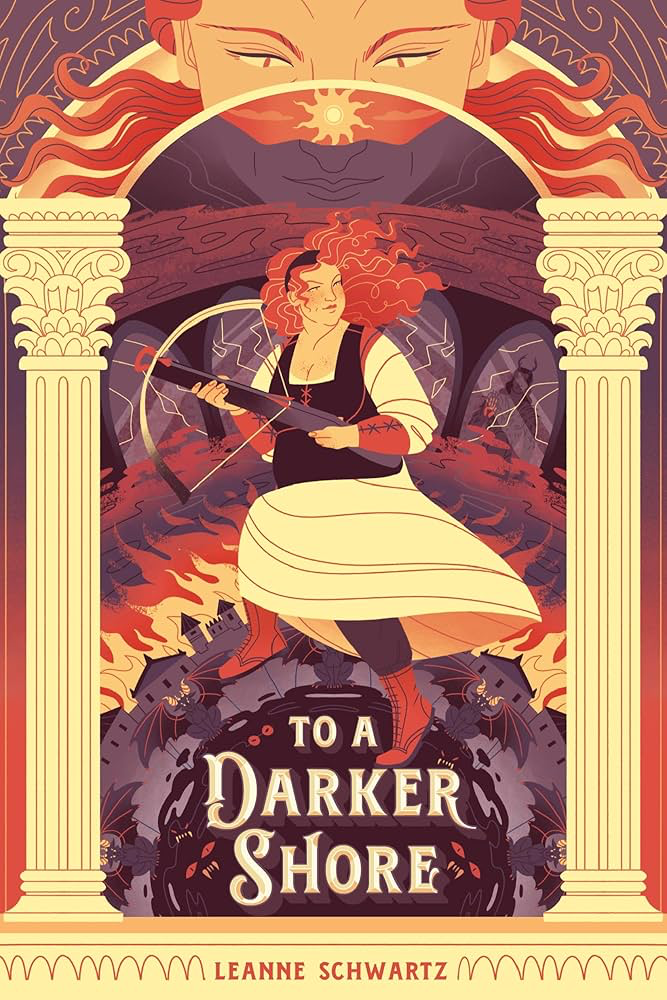
Book Review Tuesday (7/30/24) – To a Darker Shore

Happy Tuesday, bibliophiles!

I was first exposed to Leanne Schwartz through A Prayer for Vengeance, and enjoyed her YA fantasies that centered autistic and plus-size protagonists. I’d forgotten that she’d written another book featuring an autistic protagonist, and I figured it would be perfect for Disability Pride Month. While it didn’t blow me away, To a Darker Shore had a lovely setting with immersive writing and the journey of a courageous girl who would quite literally walk through hell to save her best friend.

Enjoy this week’s review!

To a Darker Shore – Leanne Schwartz

If there’s one thing that Alesta has known her whole life, it’s that she knows that she has something to prove. Poor, autistic, and plus-size, she means nothing to the townsfolk, save for what she can provide as a sacrifice to their hungry god, Hektorus. So she throws herself into intricate inventions, hoping they can earn her favor with the king. But when a test flight of one of her flying machines goes awry at an exhibition, Alesta knows she’s bound for hell. Yet it’s Kyrian, who helped her test the machine, that takes the fall, now condemned to hell instead of her. Alesta will do anything to bring Kyrian back…even if it means venturing into the treacherous depths of Hell itself.

TW/CW: loss of loved ones, misogyny, fatphobia, ableism, violence, blood/gore, claustrophobia, panic attacks, grief, homophobia

Why does WordPress keep trying to autocorrect “Alesta” to “Alert?” I can only imagine how it was while Schwartz was writing the book in the first place…

Even though Leanne Schwartz isn’t my favorite author, I love her apparent goal of putting out YA fantasy novels with plus-size, queer, and neurodivergent characters at the forefront. A Prayer for Vengeance didn’t blow me away, but it was an enjoyable read nonetheless; to an extent, I feel a similar way about To a Darker Shore, but it’s clear that her writing has improved greatly in the span of two books!

Schwartz’s lovely prose was clearly the star of To a Darker Shore. Throughout the novel, there’s a stark contrast between the fantasy, Renaissance Italy-inspired whimsy and the monstrous realms of hell, but Schwartz handled each of them with the appropriate weight they deserved. The first part of the novel did a wonderful job of immersing me in Alesta’s kingdom, and with every description of the coastline surroundings and the bustling cities, I was instantly transported. Schwartz’s balance of humor and weighty subjects (ableism, fatphobia, and purity culture, to name a few) was handled with aplomb—the strength of all of these aspects is how balanced they were. Additionally, To a Darker Shore’s writing felt like the perfect transition between Middle Grade and YA; apart from some violence and strong language, the accessible writing style and the narrative voice of Alesta could be a great bridge for younger YA readers to start in the genre.

Alesta was also a fantastic protagonist to propel the reader through this treacherous journey into hell! Schwartz did an excellent job of relying on showing to build up to the suspense of losing her best friend; by the time Alesta’s quest through hell begins, you truly do understand her relentless devotion to rescuing her friend, even if when they reunite, hell has permanently altered him. She stopped at nothing to make sure Kyrian made it out of hell alive, and you believed every part of her friendship and steadfast adherence to her mission. Her relentless spirit not only gave the story stakes (I certainly got the sense both she and Kyrian would fall apart without the other), but a reason to follow her along—at its best, there were times when I was invested in the story just because Alesta cared so deeply for succeeding in her impossible mission. Although I liked A Prayer for Vengeance, Leanne Schwartz’s way of writing her protagonists has improved since then, and Alesta is living proof.

I came away from To a Darker Shore with mixed feelings about the worldbuilding. On the one hand, I enjoyed the Renaissance Italy-inspired setting; Alesta is compared to Leonardo Da Vinci in the synopsis, and I loved the aesthetic of her wooden flying machines and the various magical contraptions that she constructed. The worldbuilding surrounding the religion that concerns most of the novel was also well-executed. Schwartz did an excellent job of setting up exposition in a variety of ways, ranging from stories that Alesta had grown up with to descriptions of religious festivals that served to explain some of the mythology. However, even with the obviously Christian inspiration that this religion was based in…why call it Heaven and Hell if it’s an entirely different religion? I get the comparisons here, but it kind of took me out of it to have a whole fantasy religion and then have the exact same names of Christian concepts in it. Considering how detailed most other aspects of this religion were, it comes off a bit lazy—either make it a more direct analog to Christianity, or give Heaven and Hell different (and more creative) names, in my opinion.

Additionally, there were quite a few side characters that surrounded Alesta that didn’t seem like they had anything to do. Along with the dreaded time skip that came out of nowhere [hisses like a vampire with holy water chucked on it], we were just as abruptly introduced to some of Alesta’s other friends. It wouldn’t have been a problem if they had any role in the novel other than to tell the reader that Alesta has made friends after Kyrian’s sacrifice. They were pushed aside as soon as Alesta ventured into hell (a section that takes up about a third of the novel), and therefore had no room to have distinct personalities or roles other than being Alesta’s friends. Since To a Darker Shore is centered so prominently around the unbreakable friendship between Alesta and Kyrian, it would have been better to scrap them entirely—or at least not give them a role that Schwartz seemed to place disproportionate importance on.

All in all, a YA fantasy that took some shortcuts with its side characters and worldbuilding, but was nonetheless a satisfying story of friendships strong enough to survive hell itself. 3.5 stars!

To a Darker Shore is a standalone, but Leanne Schwartz is also the author of A Prayer for Vengeance.

Today’s song:

no idea how I forgot about this one, but I’m so glad I did!! a nostalgic childhood staple, for sure.

That’s it for this week’s Book Review Tuesday! Have a wonderful rest of your day, and take care of yourselves!
Posted in Books

🏳️‍🌈🏳️‍⚧️The Bookish Mutant’s Books for Pride Month (2024 Edition) 🏳️‍⚧️🏳️‍🌈

Happy Wednesday, bibliophiles!

Here in the U.S., June is Pride Month! And every month, I find myself having a downer of an introduction, just because the world only gets kinder to queer people in the smallest increments, it seems. The vocal minority in this country are still bent on erasing all evidence that queer people exist in the first place, like an offending stain on a white tablecloth. (A note to homophobes: has it ever occurred to you that you don’t have to look at pride flags or queer couples? You can just look away and not make it anybody else’s problem…life is so short, man.) But our community is one characterized by resilience: no amount of book bans, culture wars, or bigotry will wipe us off the map. We are are here, we have always been here, and we will always be here. Nothing you do will make us disappear. Don’t let the vocal minority distract you from the beauty created and progress made by our community.

So once again, here’s a list of YA and Adult books with queer characters and themes, curated by your local bisexual. I also added the specific representation of each book.

Just a refresher on my key:

MC: Main character

LI: Love interest

SC: Side character(s)

For my previous lists, see below:

Enjoy these book recs!

🌈THE BOOKISH MUTANT’S BOOKS FOR PRIDE MONTH (2024 EDITION)🌈

FANTASY

SCIENCE FICTION

REALISTIC FICTION:

TELL ME WHAT YOU THINK! Have you read any of these books, and if so, did you enjoy them? What are some of your favorite queer books that you’ve read in the last year? Let me know in the comments!

Today’s song:

That’s it for this year’s pride recommendations! Have a wonderful rest of your day, and take care of yourselves!

Posted in Book Review Tuesday

Book Review Tuesday (6/11/24) – Junker Seven

Happy Tuesday, bibliophiles! I’m back from vacation, and I’m feeling rested—and ready to review one of the books I read on my trip.

Junker Seven hung around on my TBR for about a year, and I ended up buying it on Kindle for my trip; as I’ve said ad nauseam, queer sci-fi is the stuff of life for me, so I’ll always lap it up when given the chance. Although I wish the worldbuilding (and the politics) were more creative, it was a solid tale of of love and the joy in reminding yourself that your existence is an act of resistance.

Enjoy this week’s review!

Junker Seven (Twin Suns duology, #1) – Olive J. Kelley

Castor Quasar makes a solitary but dangerous living as a junker, ferrying scrap—and fugitives—across the galaxy. They prefer to stay out of the business of others, whether that’s the widespread political unrest throughout the galaxy or simply making friends. But when Castor is offered a job with an exorbitant amount of money, they can’t help but be suspicious, even though the offer would mean valuable repairs for their ship—and an easier living. Their cargo is Juno Marcus, a trans activist with a target on her back and an urgent need to escape before the Intergalactic Peace Force finds her. Castor reluctantly agrees, but they soon find themself in over their head—and head over heels in love…

TW/CW: murder, loss of loved ones, transphobia, deadnaming, misgendering, ableism, police brutality

Junker Seven was by no means without its flaws, but if you’re looking for a love letter to trans love and identity, a slow-burn romance, and resistance in space, then you’ve come to the right place! Not my favorite, but this was a good book to start off pride month—unabashedly queer and political.

Structurally, there were a lot of odd worldbuilding choices (I’ll get to that later), but despite that, the world of Junker Seven felt wonderfully lived-in. The quiet moments where Castor was alone on their ship were what convinced me of this world being tangible; not everything is sleek, clean, and untouched. You never get the sense that the ship is cramped just because it was made so, but because of all of the choices that led Castor to the place they are today. It’s not just a plot device vehicle—it’s got special nooks and crannies that have been shifted over the years, and there’s a goldfish that’s been there through it all, Castor’s only constant companion. Details like this, as well as some of the pockets of resistance that Castor and Juno find throughout their journey, added a real human element to the story. Even with only two characters for most of the novel, Kelley did an excellent job of making the galaxy seem like a tangible place where humans have settled—and brought their unique ways into a new, far-future world.

If you’re looking for representation, especially trans representation, then you’re in the right place—Junker Seven has diversity in spades! Both the main character and the love interest are trans, as well as several side characters, and Castor is also disabled—they have burn scars, a prosthetic leg, and autism! The key part of said representation is that it never felt like a checklist; if the acknowledgements are any indication, Kelley’s goal was to create a resonant story of trans joy, love, and resistance, and though I’m not trans (disabled and queer, though), that love shone through; Junker Seven felt like a love letter to trans resistance all the way through, from Castor and Juno’s slowburn romance to Castor’s gradual radicalization. I love how the disability representation was handled as well! All of the details about Castor’s autism affects their job felt authentic as a neurodivergent person; no stone was left unturned, whether it was how wearing their prosthetic affected their sensory issues to how it affected their relationships. It’s clear from every page that the diversity in this novel wasn’t borne out of a need to tick off every possible marginalization—it was borne of a need to put authentic queer, trans, and disabled stories out into the world.

That being said, the worldbuilding of Junker Seven gets stranger the more I think about it. There are enough pockets that could convince you that, yes, this could be hard sci-fi that had some thought put into it, but the actual worldbuilding ends at the descriptions of the climates of the planets that Castor and Juno are hopping to and from. Other than that, the politics are the main focus, but given how political this book is, I was surprised at how unoriginal it was in terms of the evolution of politics and queer resistance. Junker Seven is set several hundred years from now, and yet the politics are all but copied and pasted from the U.S. politics of today—no changes whatsoever, save for being stricter when it comes to the treatment of trans people in particular. Yes, history does tend to repeat itself in terms of treatment of the marginalized, but it’s never in the exact same way twice; technology changes, rhetoric changes, leadership changes. None of that is reflected in Junker Seven; honestly, it was familiar to such a degree that it would have worked more if it were set in a less futuristic dystopia set on Earth. This story is set so far in the future that minimal changes in language and policy just makes no sense. It would have been so much more potent—and creative, frankly—to see how the adapted technology of the future actually factored into how trans people in this universe were being oppressed. There were a few throwaway mentions of more advanced technology that was being used to surveil trans people, but that was about the extent that anything changed. It all boiled down to unused potential—there were so many opportunities to explore how (possible) aspects like advancing technology, increased policing, and advancements in genetic modification could affect the status of trans people throughout the galaxy. And yet, Kelley chose to change almost nothing about our current political climate and paste it into space—to the detriment of my suspension of disbelief. Oppression of marginalized groups remains the same in its goals, but not necessarily in its methods—those change with the times.

What also suspended my disbelief was how little we knew about Marwood save for that he was horrible. Save for being a Trump stand-in, we knew almost nothing about him, save for that a) he’s evil (Trump), b) there’s a widespread news network that’s basically his mouthpiece that he uses to demonize trans people (Fox News), and c) did I mention? He’s evil. I will give Kelley some credit for at least establishing the Zephyr News aspect and the fact that his nepotistic predecessor both ended presidential term limits and instated Marwood in a corrupt, illegitimate election so that his fascist, ultra-conservative values would live on. That, at least, felt like a reasonable enough start for a villainous character, but that was it. The key word here is start. I wouldn’t say it completely falls into the dystopian trope of “we’re not going to say anything about the government, but you have to understand. They’re BAD, guys. BAD,” but it comes rather close. This circles back to my overarching issue of unoriginal worldbuilding, but I wanted to know what separated Marwood from any other run-of-the-mill fascist—did he come from a celebrity background and had no real political experience, like Reagan or Trump, or was he a more cold and calculating type with political prowess who knows exactly how to undo any kind of progress and twist the laws in order to abuse his power? A successful, frightening villain needs to be more than an evil cardboard standup that lurks in the shadows, and we never got more than fragments to show that Marwood was more than a stand-in fascist to move the plot along. (Also, did the entire galaxy, after blending into an almost universal accent after several hundred years, universally adopt a vaguely American two-party system and government? It’s…yeah, I have trouble believing that too.)

Although the disability representation is excellent, as I said before, I did find it odd that it wasn’t a part of Castor’s radicalization; being disabled in the 21st century is already a cyberpunk dystopia as it is, so I’m surprised that there wasn’t much discussion of not just Castor’s experience with being disabled, but how it affected their work or their perception of politics. Save for a throwaway line about an autistic person being driven to a life of crime because of how poorly said autism was treated and handled, there wasn’t much rumination on it other than that. I get that the main focus of Junker Seven was trans resistance specifically, I do wish we at least got more of it than what we got. Come to think of it…as diverse as Junker Seven was, there wasn’t a whole lot of intersectionality in terms of politics. I think there was…maybe one line about race and police brutality, and that was about it? I wouldn’t say that this is inherently a flaw of the book itself, but, once again, given how unabashedly political it was, I did find it odd that there wasn’t at least a small mention of the intersection of queer/trans issues with aspects like race, class, and disability.

All in all, a solid piece of queer sci-fi which suffered from unoriginal and nonsensical worldbuilding, but was nonetheless a shining ode to queer resistance. 3.5 stars!

Junker Seven is the first of the Twin Suns duology, followed by the forthcoming sequel Rebel Rising, which is slated for release in September. Kelley has also released D3F3CT: A Twin Suns Novella, set in the same universe as Junker Seven, as well as the novellas As the Light Goes Out and A Very Lighthouse Christmas. They have also contributed to Spectrum: An Autistic Horror Anthology and the forthcoming Dead Cowpokes Don’t Wrangle: A Weird West Anthology.

Today’s song:

why, why, WHY DID I PUT OFF LISTENING TO THIS ALBUM FOR SO LONG??

That’s it for this week’s Book Review Tuesday! Have a wonderful rest of your day, and take care of yourselves!
Posted in Book Review Tuesday

Book Review Tuesday (5/7/24) – Off With Their Heads

Happy Tuesday, bibliophiles! I’ve returned from finals hell!

I’ve been a massive fan of Zoe Hana Mikuta ever since I fell in love with her Gearbreakers duology a few years back. Off With Her Heads is her most recent novel, having just come out in late April, and even though I would’ve read it no matter what genre it was in, the idea of her writing a novel loosely based on Alice in Wonderland intrigued me—and it did not disappoint.

Enjoy this week’s review!

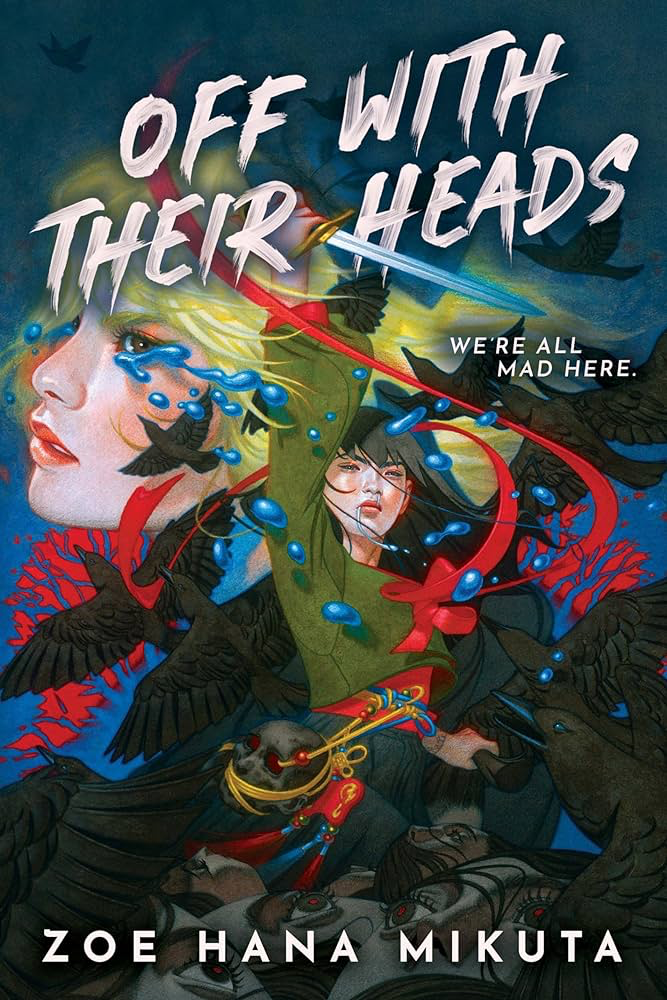
Off With Their Heads – Zoe Hana Mikuta

Wonderland is full of monsters.

After a deadly plague ravaged the land, most of the remaining witches and magic-users have transformed into monstrous Saints: bloated, bloodthirsty beasts that scour the land looking for fresh meat. Carousel Rabbit and Iccadora Alice Sickle were brought up in a world of predators and plague, orphaned at a young age and eventually escaping their decrepit orphanage together, madly in love with each other. But their obsession tore them apart, and their paths diverged.

Now, Caro has become the Red Queen’s royal butcher, killing Saints and watching as the Queen stitches together Saints of her own through dark, flesh-binding magic. Alice has been on her own for years, slaughtering Saints to get by. With every Saint that she kills, she treads closer and closer to the Red Queen’s throne—and to Caro, who Alice will stop at nothing to bring down to size. But what she finds in the Red Queen’s palace may be even greater of a threat than the love that once tore her to shreds…

TW/CW: loss of loved ones (past), murder, graphic violence, body horror, disease, blood, gore

Dark fairytale (or fairytale-adjacent) books used to be everywhere on the YA landscape. It’s the kind of stuff I ate up from about ages 12 to 16, to various degrees of quality. What they had in common, however, were universally horrible covers. God. They’ve circled back around to being hilarious now, but you could just snag any book off of the YA fantasy shelf at Barnes & Noble, and it would have a cover with an airbrushed white girl with flowy hair and an equally flowy gown either spinning gracefully or fixing your stare with a photoshopped smolder. And the gown was usually melting into…I don’t know, feathers or blood or some shit. It was all very emo. Since then, this subgenre has slowly begun to die down in popularity (or maybe not? My tastes have probably just shifted). Whether or not Off With Their Heads is the slow beginning of that subgenre’s resurgence in YA remains to be seen, but either way, I’m glad that we’ve got much prettier covers for the next generation of budding YA readers. It’s what they deserve. (Give it up for Tran Nguyen’s gorgeous cover art!)

After the Gearbreakers duology, I figured that I would read just about anything that Zoe Hana Mikuta writes. Even if Godslayers was a bit of a lackluster series concluder, it was still a fun read. Even if it isn’t her best work, you’re going to have a good time reading it regardless. Gearbreakers got a fair bit grim, as dystopias are wont to do, but Off With Their Heads is the darkest that Mikuta has ever gone (so much so that it almost borders on new adult and not YA), and she writes it with a unique talent. Whether or not the urge was pent-up, this novel revels in the “dark” of the “dark fairytale retelling,” drenching Alice in Wonderland in bloodlust, obsession, and backstabbing. However, what a lot of the dark fairytales of yesteryear interpreted darkness as was just being edgy; most everything was for shock value and appealing to the “what if this fairytale was………BAD and EVIL” urge that ropes in all the 13-year-olds and it didn’t go far beyond that. But this genuinely feels like horror, and not being an edgelord for edginess’ sake. It’s gory, it’s grim, and it’s bloody, but more in the interest of horror than shock—these characters are surviving a truly horrific world, and it turns them into horrific people for understandable reasons. There’s a distinction to be made there, and Mikuta certainly recognized it. (Also, it’s worth noting that Off With Their Heads is unflinchingly queer, which, given that most of said older fairytale retellings only added in queerness when it was a side character that would inevitably die, is a vast improvement. The bar is low, but it’s noteworthy that it’s being exceeded nonetheless. Let’s go, lesbians!)

I’ve seen a lot of reviews call Caro and Alice “morally gray,” and…I have some thoughts. I almost see it. Almost. But if they were gray, it would be an incredibly dark gray, if anything. Maybe they were morally gray at the beginning, but by the time we get to the present timeline, they’ve both become such awful people that they’re nearly indistinguishable from the one evil person that they’re respectively allured by (Caro) and disgusted by (Alice)—the Red Queen. To paraphrase Obi-Wan Kenobi (hey, I missed my chance on May 4th), they’ve both become the very thing they swore to destroy. They’re both just despicable people, but their differences are written in such a way that their different breeds of horridness play off of each other fascinatingly; Caro’s become this world’s version of a class traitor and idolizes the pinnacle of evil, while Alice has become so consumed with revenge that she’ll justify just about anything. Add in the fact that the root of their personal vendettas lie in their past romantic relationship, and you’ve got a dynamic that was delicious to pick apart for all 400+ pages of the novel. Again, it all makes sense for the truly cutthroat circumstances they were brought up in—they’re products of their surroundings, in the worst possible way.

Even as someone who doesn’t engage with a ton of horror media in general, I know that the key to executing it is making the suspense feel real, especially if the threats in your world are entirely fictional and alien to the audience. Mikuta had a multitude of ways that kept the suspense palpable, and all of them hooked me over the course of the novel. I’m not sure why it is that the “There are [x] remaining Saints” count excited me so much at the beginning of each chapter, but it was a failsafe way to keep track of both the danger and the kill count of the various characters—the tangible effects of the butchering they’re described as doing. Having those numbers up front also provided a sense of scale; in the present timeline, the Saints numbered in the thousands, giving an idea of just how dangerous being in Wonderland truly is—you can’t go for a walk in the woods without encountering a bloated, bloodthirsty, and quite possibly engineered monstrosity on the prowl for flesh. It’s a constant danger—and Mikuta make it feel much more dangerous just by having a chapter subheading.

However, what brought down some of my suspension of disbelief was the worldbuilding. Clearly, there was attention to detail, but only in the ways that Mikuta saw fit. There were tidbits here and there that I wished were expanded on—I loved the concept of the original Alice dreaming being this world’s creation myth, but we never got anything more out of that past the prologue. Outside of things like the Saints and the royal lineage, the worldbuilding was rather messy. I get that Off Their Heads is a very loose retelling at best—just using Alice and Wonderland and its characters as a jumping-off point for the setting—but there were so many convoluted and contradictory bits that I wasn’t completely invested. It’s mentioned that there’s a Jabberwocky court amongst the gentry of Wonderland who are described as humanoid, and yet the girls find a Jabberwocky in the woods described monstrously that has clear intention to kill them. Either that was a poorly-described Saint, or there’s some inconsistencies that need to be addressed. The reworking of Alice in Wonderland-related names into the characters were also a bit sloppy and corny; I get that there’s got to be some signal to the source material, but they were often so obvious, and barely related to the original character that they just made me cringe. I expected more from Mikuta on this front—slapping on character names just to remind the reader that, yes, this is a retelling, doesn’t seem like her style. I almost think it would have worked better if all of the Alice in Wonderland pretense was stripped away and made into a dystopian fantasy world.

Overall, an unflinchingly horrific retelling that displays Mikuta’s love and talent for suspense and obsessive sapphics—but her pitfalls in worldbuilding. 3.75 stars, rounded up to 4!

Off With Their Heads is a standalone, but Zoe Hana Mikuta is also the author of the Gearbreakers duology (Gearbreakers and Godslayers), and an untitled novel slated for release in 2025.

Today’s song:

That’s it for this week’s Book Review Tuesday! Have a wonderful rest of your day, and take care of yourselves!
Posted in Book Review Tuesday

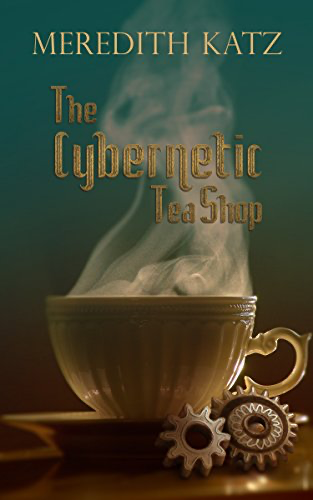
Book Review Tuesday (3/26/24) – The Cybernetic Tea Shop

Happy Tuesday, bibliophiles!

There’s a special place in my heart dedicated to cozy sci-fi, but the sad thing about it is that hardly anybody does it well save for Becky Chambers. I guess it’s hard to reach the bar when it’s been set astronomically high (no pun intended), but I will still read any cozy sci-fi that comes my way, despite the amount of times that the blurb “for fans of Becky Chambers!” has severely led me astray. However, in the midst of my reading slump, The Cybernetic Tea Shop was the perfect novella to tide me over and lift my spirits.

Enjoy this week’s review!

The Cybernetic Tea Shop – Meredith Katz

After the death of her master, Sal, an autonomous robot operating outside of the laws of a futuristic America, runs the tea shop that her master founded. For hundreds of years, she has run it like a well-oiled machine, but something in her program seeks something more. When Clara, an AI technician struggling to make ends meet, walks into Sal’s tea shop by chance, they have an instant spark of friendship—and perhaps even something more. Is Clara what Sal needed all along, and is Sal the key to the similarly vacant space in Clara’s heart?

TW/CW: loss of loved ones (past)/discussions of grief, hate crimes/discrimination (sci-fi)

Since about 2021, I’ve lost count of the amount of times that the tagline “for fans of Becky Chambers!” has let me down. Nobody does cozy sci-fi like her; all of the times I’ve read books with that promise, you get some semblance of found family (which comes off rather forced, in the worst instances), but it often lacks the quiet, tender moments that put the cozy prefix in. However, in that respect, I’m glad to say that The Cybernetic Tea Shop wasn’t a letdown—not without its flaws, for sure, but more than enough to scratch my never-ending cozy sci-fi itch.

I’ve been in a very novella-centered headspace for months, given that I’m trying to write one for class and I’ve been studying how they work for said class as well. One of the foremost concerns we’ve been talking about is how much worldbuilding you can fit into such a small space—often 100 pages or less. The key, I’ve learned, is, after giving your reader the necessary context to make the world feel real, is to only expand on the parts that are essential to understanding the circumstances of your characters. Katz did an excellent job of establishing this kind of worldbuilding, and it speaks to what a novella can achieve in such a small page count! Inevitably, I found myself wanting more of the futuristic American setting that Katz built, but the context we get is only what we need to understand Sal: the creation of intelligent robots, the outlawing of said robots because of ethical complications with intelligence, and the discrimination and illegality of robots in the centuries since. It’s the perfect foundation to set up not just the world, but the conflicts that these characters encounter.

Cozy sci-fi, by nature, often keeps things small; a handful of characters, a singular setting, and all else happening in the background. Novellas, also by nature, typically scale it down as well. The Cybernetic Tea Shop only centers around two characters, but that’s all it really needs; this novella is small in every aspect, and that’s why it largely succeeded. By narrowing down two characters (and their budding romance) and a single, unique setting, Katz confined her world to reasonable limits to explore in a novella; nothing ever felt too convoluted or too large to fit into just over 100 pages, but it didn’t feel too sparse, either. Similarly, aside from the character-driven focus (also the backbone of cozy sci-fi), there’s hardly any plot points, and that was actually a strength of The Cybernetic Tea Shop—in terms of structure, it was practically a Goldilocks of novellas.

However, although the general craft of the novella was commendable, the writing left a lot to be desired. For such a fascinating world and two characters moving through it in a unique way, I wanted so much more from the writing. The prose was rather bare-bones, doing the bare minimum to describe a setting or situation. I wanted so many more descriptions—and genuinely interesting descriptions— of Sal’s tea shop; you can do so many fun things with a tea shop, but I hardly got a sense for what it looked like, what it smelled like, or any other kind of sensory details. Similarly, the dialogue, although it had moments of being sweet, was often bland and stiff, and felt transactional in terms of the prose—just a way to get from point A to point B. Given that the romance between Clara and Sal was what eventually drove the novella, transactional dialogue is the exact opposite of what The Cybernetic Tea Shop needed; the kind of romance that Katz was shooting for wanted to be anything but transactional, but ended up falling flat.

In addition, I found myself wanting more from the characters. Again: cozy sci-fi is a heavily character-driven subgenre, and the evolving relationships between the characters are what make the plot go forward, and not necessarily outside conflict. I did like that Katz only zoomed in on Clara and Sal, but I almost wish that the novella had been all from Sal’s perspective. We get a very detailed and nuanced vision of Sal’s character, from her grieving her long-dead master to her insecurities and fears about being in hiding as an autonomous robot. Clara, on the other hand, was given very little of the same treatment; I would have liked to have seen her have some kind of romantic hurdle to overcome—commitment issues, hesitance, or something along those lines—that would make her something more than just a tool to instigate romance. We did get some of her background, but it didn’t add to much about her in terms of personality—the only part of her character that paired her with Sal was that she’s an AI technician, and therefore in a place to help Sal. With the focus on two characters, it would do Katz a favor to give both of them the fleshing-out that they deserve.

That being said, although Clara’s characterization left a lot to be desired, I did like the more romantic aspect of the plot towards the end of the novella. Even beyond the super sweet asexual/wlw representation (both Sal and Clara are asexual and sapphic!), there was a lot about the romance that worked; the setup of Clara fixing Sal’s programming evolving into cuddling was such an adorable and genius setup, and the resolution that came from it was similarly heartwarming. It did feel slightly rushed, but aside from that, Katz left it in a place where I didn’t quite want more, but was satisfied in knowing that their relationship was bound to blossom. I wanted something cute, and I got something cute, so Katz 100% succeeded on that front!

All in all, a tender, cozy novella with sweet romance and tight structure, but bland prose and half-baked characterizations. 3.5 stars!

The Cybernetic Tea Shop is a standalone, but Meredith Katz is the author of several other novels for adults, including the Pandemonium series (The Cobbler’s Soleless Son, Behind Bars, Heir to the Throne, and Barred Souls), the Sixth Sense Investigations series (Empty Vessels and If Wishes Were Fishes), and many more.

Today’s song:

shoutout to chelsea wolfe for playing this before her show. hauntingly beautiful.

That’s it for this week’s Book Review Tuesday! Have a wonderful rest of your day, and take care of yourselves!
Posted in Mini Reviews

MINI REVIEWS | Birthday Books (Gifts + What I Blew my Paycheck On)

Happy Tuesday, bibliophiles!
It might still be a week or so before I completely return to some semblance of my normal schedule, but I’m starting to get to the point where I know where I’m going and what I’m doing. And as much as I hate the constant home football games we’ve been having, at least it means that my already quiet floor is even quieter, so I can get my homework done in a serene environment—and write these reviews as well!

Since my birthday last month, I’ve taken all of the books I got—ones that I bought on my birthday and gifts from family—back to my dorm, where I slowly (yes, slowly, settling into college is weird) devoured them over the course of several weeks. I’m happy to say that it was a fantastic batch—not every one was the best book I’ve ever read, but it’s chiefly in the 4-star range. I got a 5-star book out of these as well! And now they sit proudly on my little dorm bookshelf, ready to be reviewed.

Let’s begin, shall we?

THE BOOKISH MUTANT’S BIRTHDAY MINI REVIEWS

Verse, Chorus, Monster! – Graham Coxon

from Goodreads:

Verse, Chorus, Monster! is the memoir of iconic British musician and Blur co-founder Graham Coxon, charting a life of music, fame, addiction and art. Before the noise and clamour of the Britpop era, Coxon was a shy Army kid tempering his anxiety through painting and a growing love of music. As he honed his artistic skill at school, his band with school friend Damon Albarn, fellow student Alex James, and a drummer called Dave Rowntree began to get noticed. But there are things they don’t tell you before you get famous. There are monsters out there. And some may even be lurking inside yourself.

TW/CW: substance abuse/addiction, themes of mental health issues

I’ve been trying to branch out into more nonfiction over the past few years, but even if I wasn’t, I would have picked this up eventually either way. My Blur awakening back in 2021 made sure of that. So of course I was excited to see that Graham Coxon was coming out with a memoir—he’s always struck me as such a sensitive, creative person, and Verse, Chorus, Monster! fortunately cemented that, for the most part!

I always have a lingering fear that celebrity memoirs will somehow ruin my image of them, but with this one, I still hold that Graham Coxon seems like such a deeply insightful and sensitive soul. This glimpse into his mind was all at once raw and touching; the frequent sections about his struggles with anxiety and alcoholism were difficult to read, but I’m so glad to have verbal confirmation that he’s been getting better as of late, and that he’s starting to work on himself in that respect. Beyond that, there’s just so much about this memoir that was immediately endearing. The insight into one of the main creative forces behind one of my favorite bands (and a fantastic solo artist in his own right) was fascinating to hear from the front lines, and I loved the pieces we got of his creative process—opening the book with the spark of inspiration that lead to the hook of my favorite song (“Tender”) was the quickest possible way to win me over. And it’s easy for memoirs to have a sense of humility that’s manufactured, but Coxon’s personality really did come off as genuinely humble.

All in all, an excellent memoir by a truly admirable creative force—and a refreshingly humble one. 4 stars!
This is How You Lose the Time War – Amal El-Mohtar and Max Gladstone

from Goodreads:

In the ashes of a dying world, Red finds a letter marked “Burn before reading.”

So begins an unlikely correspondence between two rival agents in a war that stretches through the vast reaches of time and space.

Red belongs to the Agency, a post-singularity technotopia. Blue belongs to Garden, a single vast consciousness embedded in all organic matter. Their pasts are bloody and their futures mutually exclusive. They have nothing in common—save that they’re the best, and they’re alone.

Now what began as a battlefield boast grows into a dangerous game, one both Red and Blue are determined to win. Because winning’s that you do in war. Isn’t it?

A tour de force collaboration from two powerhouse writers that spans the whole of time and space.

TW/CW: blood, violence, murder, self-harm, descriptions of bodies/corpses, torture, poisoning, war

Hoowhee, brother. This one was good.

Time War had floated on the edges of my radar for years ever since it came out, but I ultimately decided to pick it up on the recommendations of one of my professors and one of my best friends. And their high praise—and the high praise of so many others—was more than well-deserved.

For such a short novella, Time War packs a truly unforgettable gut punch, vibrant and rich with emotion. Who knew that these two characters identified only by colors would consume so much of my days when I read this? I can’t praise this book enough. The prose is beyond rich, truly enchanting and expansive, fitting for the cosmic scale that this story is set in. It has an almost gothic sensibility to it, even with the firmly sci-fi trappings—what’s more romantic, dramatic, and emotional than two lovers reaching for each other across the vastness of space and time itself? But even with this grand scale, This is How You Lose the Time War is one of the most deeply human stories that I’ve read in ages. It taps into that innate desire to love and be loved, or even to just have someone to talk to as the world around you is collapsing. In spite of the grand, cosmic conflict and multiple universes colliding, nothing can come in the way of our desire for love and connection. It’s one of those stories where plot details—names and how this time-spanning war started—mean nothing in the face of the deep resonance of the characters.

Hold me. I need a minute…

What else is there to say? Go read this, what are you even doing? 5 stars!
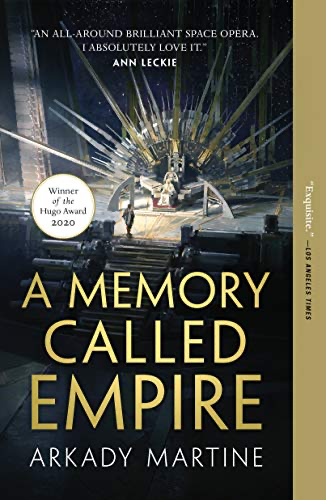
A Memory Called Empire – Arkady Martine

from Goodreads:

Ambassador Mahit Dzmare arrives in the center of the multi-system Teixcalaanli Empire only to discover that her predecessor, the previous ambassador from their small but fiercely independent mining Station, has died. But no one will admit that his death wasn’t an accident—or that Mahit might be next to die, during a time of political instability in the highest echelons of the imperial court.

Now, Mahit must discover who is behind the murder, rescue herself, and save her Station from Teixcalaan’s unceasing expansion—all while navigating an alien culture that is all too seductive, engaging in intrigues of her own, and hiding a deadly technological secret—one that might spell the end of her Station and her way of life—or rescue it from annihilation.

TW/CW: themes of colonialism/imperialism, murder/attempted murder, violence

College isn’t all sunshine and rainbows, but man, it’s fun sometimes. I got an A on a literary theory assignment where I compared this book to an essay we read in class. I love being an English major.

If the fact that I used A Memory Called Empire for a literary theory assignment doesn’t make you think that there’s a ton of great stuff to chew on in this book, I’m not sure how else to convince you. It’s fantastic space opera, but it errs more on the side of a political thriller—a common enough combination these days, but one that was so well-executed in this case. Reckoning with the history of colonialism in science fiction has been on the rise—and for a very good reason—but A Memory Called Empire had such an interesting take on it. This is the first of these kinds of novels that I’ve seen tackle the seduction of colonialism; along with the actual murder mystery afoot, Mahit Dzmare is also being pulled—both physically and mentally—into the clutches of the reigning Teixcalaanli Empire, and is being groomed into the ruling culture as she tries to stay afloat and protect her space station from imminent colonization. The character work is nothing short of excellent, the worldbuilding is top-notch, and the suspense is palpable from start to finish. It’s all a treat.

This book has gotten quite a lot of hype over the years, but it really is all that—alluring, suspenseful, and nothing short of insightful. 4 stars!

The World of Edena – Mœbius

from Goodreads:

Stel and Atan are interstellar investigators trying to find a lost space station and its crew. When they discover the mythical paradise planet Edena, their lives are changed forever. The long out-of-print Edena Cycle from Moebius gets a deluxe hardcover treatment! Moebius’s World of Edena story arc comprises five chapters–Upon a Star, Gardens of Edena, The Goddess, Stel, and Sra–which are all collected here.

TW/CW: nudity, mild sci-fi action

I’ve been meaning to get into Mœbius for years now; ever since I reactivated my pinterest and went on a deep dive of sci-fi art, I’ve been drawn to the enigmatic, meticulous, and downright wondrous quality of his art. (I feel like it would’ve happened eventually—turns out that he was a major influence on Tony DiTerlizzi, and especially his inking style in the Search for WondLa trilogy, which has shaped me beyond repair.) I started here with Edena, and I put it on my birthday list.

I still hold that he may be one of my favorite artists. His style is so ethereally captivating, and I found many a piece that I’ve used for my desktop wallpaper in the past few years inside Edena. His landscapes are instantly transporting, and there’s not a single character design lacking in whimsical charm. The story itself…slightly less so? It’s like a sci-fi Yellow Submarine, but if the script was due in an hour and he’d forgotten all about it until then. Given the circumstances, it’s understandable; Edena apparently started out as a car ad (???), and then it took on a life of its own, completely unplanned. There’s inconsistencies aplenty with both the story and the art, but for the most part, it was just so wild that I enjoyed the ride. If it gives you some idea of what happens, Mœbius pulls the classic “IT WAS ALL A DREAM” move that ends up resolving (if you can call it that) the whole mess. It’s nuts. But there were so many pockets that I wished we could have explored more. There were some super interesting gender themes going on—I wish we got to know why Stel and Atan were on their gender-neutral hormone supplements, for a lack of a better word, but the resulting transformation into their Adam and Eve roles (hence the name) was so fascinating, especially since this only came out in the late eighties or so. (Of course, Atan/Atana effectively becomes a damsel in distress post-transformation, but that’s a whole other can of worms. Ouch.)

In short, The World of Edena was beautiful, if not a bit of a mess. Luckily, the mess was endearing, for the most part, or at least fun. 3.75 stars, rounded up to 4!

Firekeeper’s Daughter – Angeline Boulley

from Goodreads:

As a biracial, unenrolled tribal member and the product of a scandal, Daunis Fontaine has never quite fit in—both in her hometown and on the nearby Ojibwe reservation. When her family is struck by tragedy, Daunis puts her dreams on hold to care for her fragile mother. The only bright spot is meeting Jamie, the charming new recruit on her brother’s hockey team.

After Daunis witnesses a shocking murder that thrusts her into a criminal investigation, she agrees to go undercover. But the deceptions—and deaths—keep piling up and soon the threat strikes too close to home. How far will she go to protect her community if it means tearing apart the only world she’s ever known?

TW/CW: racism, murder, sexual harassment and assault, misogyny, rape, death, gun violence, descriptions of injury, substance abuse

Originally, I put off reading this book because a) I’m not usually much of a YA mystery/thriller person, and b) the mountain of hype was certainly intimidating. I ended up reading Warrior Girl Unearthed because the plot fascinated me more from the start, and I loved it so much that I ended up buying Firekeeper’s Daughter after all. And, once again, I’ve been struck with the luck of hyped books being all worth the hype.

Every part of Firekeeper’s Daughter is excellent, from the effortless way that Angeline Boulley weaves a scene and setting together to the never-ending suspense that kept me guessing for page after page, twist after twist. Making a setting as tangible and populated as hers was is no easy feat—and it suited every other aspect of this book in every conceivable way. You can’t have a corrupt, hidden history of a town without the town itself. The sense of community—and the rifts driven into it—were some of the best I’ve seen in YA fiction in quite a while. Part of that wouldn’t have been possible without Boulley’s equally excellent character work; Just like their community, every character feels nothing short of authentic and multilayered. This all made the twists so much more effective—with such layered characters, I learned to expect the unexpected. And even with the ongoing expansion of diversity in YA as a whole, I feel like I haven’t seen as many novels centering Native American or Indigenous characters and stories, so I’m glad that this book exists in that sense as well. (Shoutout to Darcie Little Badger and Moniquill Blackgoose as well!) And Daunis is mixed-race as well! Yay!!!

If you’re questioning whether or not Firekeeper’s Daughter is worth the never-ending hype: trust me, it’s worth a read. 4 stars!

Ammonite – Nicola Griffith

from Goodreads:

Change or die. These are the only options available on the planet Jeep. Centuries earlier, a deadly virus shattered the original colony, killing the men and forever altering the few surviving women. Now, generations after the colony has lost touch with the rest of humanity, a company arrives to exploit Jeep–and its forces find themselves fighting for their lives. Terrified of spreading the virus, the company abandons its employees, leaving them afraid and isolated from the natives. In the face of this crisis, anthropologist Marghe Taishan arrives to test a new vaccine. As she risks death to uncover the women’s biological secret, she finds that she, too, is changing–and realizes that not only has she found a home on Jeep, but that she alone carries the seeds of its destruction. . .

TW/CW: death, violence, animal death, gore

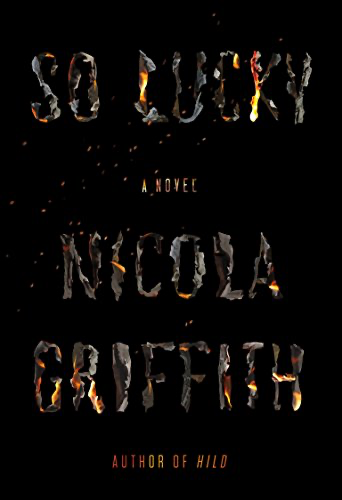
I picked this one up after how much I loved So Lucky, also by Griffith. Thing is, I had no idea that a) this book was written almost 30 years before So Lucky (although this cover should’ve tipped me off to that), and b) that, even with the genre difference, that this would be a very different kind of book. At this point, nothing tops So Lucky for me, but Ammonite was still a fascinating book in its own right.

If you’re going into this book expecting what most would consider traditional science fiction, you’ll be sorely disappointed. Most of it follows Marghe, who is tasked with delivering a vaccine to an isolated colony of women whose community was decimated by a mysterious illness that wiped out all of the men. At its heart, Ammonite is firmly a survival story; it’s a story of the wilderness, of venturing into the unknown, and adapting to the world around you. There are moments of suspense, moments of tenderness, and moments of absolute fear. Another reviewer described it as “Dune but gay,” and other than the more traditionally sci-fi elements of the former, the comparison was spot-on. Ammonite also has the fact that it’s much slimmer than Dune going for it, but given how long Dune is, that’s not saying much. But I think what has seemed to make this book so groundbreaking is its take on gender dynamics. The cast is entirely women, but when all of the men are taken by the illness, the remaining women don’t automatically form a pacifist, hippie commune; there are flawed women, there are good-hearted women, there are warlike women, and everything in between. This banishing of broad generalizations about gender, I think, is what makes Ammonite feel so ahead of its time.

Sidenote: this was written in the nineties, so Nicola Griffith had to have known about goth people…right? Just saying, calling the barely-described alien megafauna “goths” made me envision a giant, towering version of Robert Smith, not, y’know, whatever she wanted us to picture.

All in all, a very unique take on sci-fi and survival with some groundbreaking gender dynamics that have held up for the past 30 years. 3.5 stars!

Abe Sapien, vol. 4: The Shape of Things to Come – Mike Mignola

from Goodreads:

A mutated Abe Sapien fights carnivorous monsters crawling out of the desert sand, a fortified militia that’s walled Phoenix off from the rest of the world, and a vicious zombie swarm, while a mad necromancer rises over the monster-infested ruins of Seattle. Collects issues #6-#7 and #9-#11 of the series.

TW/CW: gore, blood, violence, racism, body horror

I haven’t caught up on the actual Abe Sapien series since…[checks notes], eight grade, I think. Jesus. I just remembered flying to New York when I was about 14 and reading the first volume. But even then, I think I subconsciously chose a good place to pick up with it, since there’s a pretty clear gulf between the first three and vol. 4—before and after Abe gets mutated, shot, and quits the B.P.R.D. Just another day at the office for the guy, y’know?

Suffice to say, I was somewhat disappointed by this volume. It was still enjoyable, and even though I was never the biggest fan of Fiumara’s art, the more stylized look suits Abe’s stretched-out, mutated form. Other than that, there wasn’t a whole lot here that I found terribly memorable. Abe goes through the exact same arc as Hellboy upon leaving the B.P.R.D., but it never seems to culminate in much development on his end. Plot-wise, it’s the same ol’, I’m afraid—Abe goes into a random, apocalypse-ravaged town in the middle of nowhere, and, surprise surprise, it’s time to fight some zombies and witness a copious amount of fungus-related body horror. Somehow, the latter works better when it’s the whole B.P.R.D. trying to deal with it—the group dynamic is what makes B.P.R.D. consistently shine, and as much as I love Abe, I’m not sure if he could carry a story like that when it’s the same format they’ve been using on and off for several years. Abe is one of my favorite Mignolaverse characters, and it’s such a shame that he’s never gotten to shine as much in his solo comics. And judging from the reviews on the later volumes, it seems like the quality tanked until we got the band back together for The Devil You Know. Shame.

All in all, an entetraining trade, but one that ultimately did a disservice to one of the Mignolaverse’s most beloved characters. 3.25 stars.

Today’s song:

I swear, this has to be some of Mitski’s best work in YEARS

That’s it for this batch of mini reviews! Have a wonderful rest of your day, and take care of yourselves!