Posted in Book Review Tuesday

Book Review Tuesday (7/9/24) – Stars in Their Eyes

Happy Tuesday, bibliophiles!

I’m always on the hunt for books with disability and bisexual rep, and I’ll always go for a graphic novel, so Stars in Their Eyes was a natural pick for me! With a charming story and graceful handling of social issues, this graphic novel was an adorable, light read that’s perfect for readers in transition between middle grade and YA.

Enjoy this week’s review!

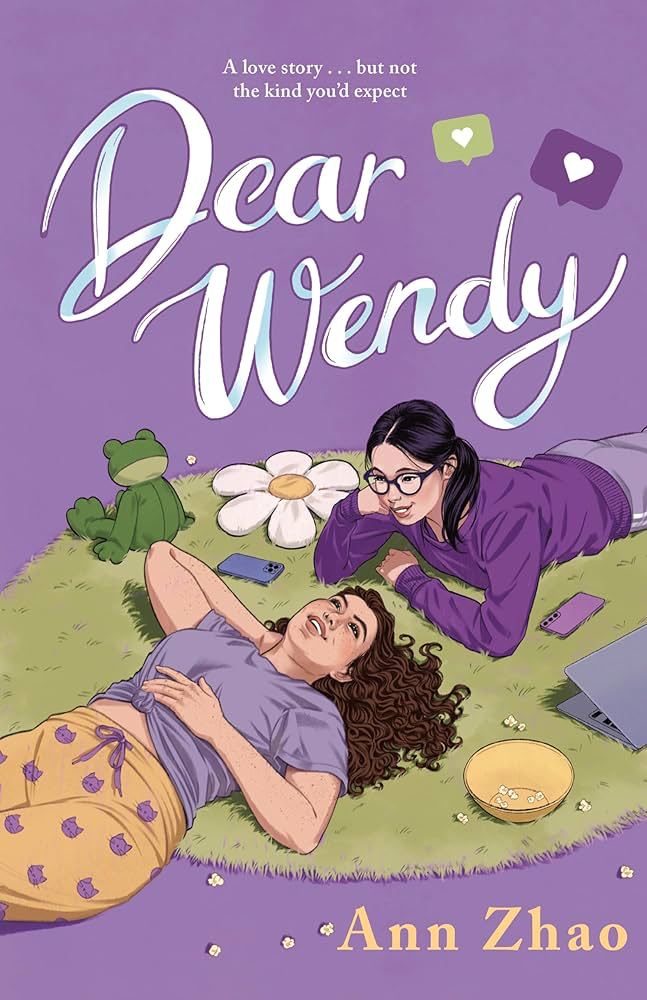
Stars in Their Eyes – Jessica Walton and Aśka

Maisie has saved up to go to her first FanCon, and now she’s finally on her way! She’s excited to meet her idol Kara Bufano, an action star who’s an amputee just like her. On arrival, FanCon isn’t everything that Maisie thought it would be—it’s loud, confusing, and it’s making her chronic pain act up. But when she meets Ollie, one of the young FanCon volunteers, it’s love at first sight. Maisie feels comfortable talking about her disability and queerness with them, but how will they manage when FanCon is over and they have to go home?

TW/CW: panic attacks, descriptions of cancer (past)

I’m firm in the belief that there should be some kind of smaller, transitory genre between middle grade and YA; the gulf between kid’s books and books meant for teens, especially in terms of maturity, is larger than most realize. But Stars in Their Eyes hits the perfect sweet spot between the two. With younger protagonists but a more nuanced view of social issues—and love at first sight—this graphic novel is a light, comforting read!

Even though I can’t speak to the accuracy of the specific disability rep (Maisie has a lower-leg amputation as a result of childhood cancer), it was so refreshing to see a disabled character written by a disabled author! It’s kind of painful to say that, but…the bar is so low, after so many middle grade and YA books that misrepresent disability. Nevertheless, the discussions surrounding Maisie’s disability were not only important to represent, but well-executed as well! There were plenty of natural segues that were used in Walton’s writing to get into topics such as overexertion and the importance of positive representation (!!!!), and it’s wonderful to see a pointed criticism of the narrative that disabled people exist to inspire non-disabled people. Stars in Their Eyes is bound to be so meaningful to so many young disabled readers, and it warmed my heart.

Stars in Their Eyes is also bound to be crucial for young queer people as well! Maisie is bisexual. and Ollie, the love interest, is nonbinary, but beyond that, there was an emphasis on being young and discovering your identity that I’m so glad is being represented. At 14, Maisie has only come out to a handful of people, and is nervous about being in queer spaces and going to queer events; it’s an issue that I rarely see in queer media, but it’s so important for young queer people know that it’s okay to be nervous about these things! There’s a first time for everything and everyone, and it’s natural to be shy or scared about showcasing your identity or belonging in queer spaces for the first time.

The comic con setting of Stars in Their Eyes was spot-on! I went to comic cons frequently when I was Maisie and Ollie’s age, and it’s a wondrous, nerdy experience—and it’s also an overwhelming one. It’s been several years since I’ve been to one, but I’m glad that this fictional one had a quiet-down room—I hope that soon becomes part of the institution, because what a lot of people don’t talk about with comic cons is that they’re a lot. (Man, I wish my comic con had one of those back in the day…) There’s so much to take in, from all of the booths and celebrities and cosplayers (and all of them crowded in one building), but all of that amounts to a ton of crowds and sensory overload. It’s the first comic con story I’ve seen tackle this aspect, and it’s a refreshing angle to see discussed. I have sensory issues, so that’s mainly why I got overwhelmed so easily at comic con, but it’s great to show younger readers that even though comic con is a wonderful place, it’s natural to be overwhelmed, sensory issues or not.

However, even though pop culture and comic cons were the focus of Stars in Their Eyes, a key part of it was mishandled and hindered some of my enjoyment of this graphic novel. Aside from two fictional TV shows that Maisie and Ollie bond over, almost everything is a fake reference—Barb from Stranger Things is now Bard from Danger Things, Star Wars is now Sci-fi Wars (??) and the Dark Side is the Far Side (????), and any Doctor Who-related media is referred to as “Time Doctors.” I get making faux-pop culture references to dodge copyright or establish a fictional world, but the sheer amount of them and how obviously they were referencing other very popular pieces of media just got so tiring and eye roll-inducing after a while. If it’s that obvious that you’re referencing a piece of media, it defeats the purpose of having a fake piece of media. It got so concentrated that I ended up bumping my rating down from the full 4 stars.

All in all, a lighthearted graphic novel about first love, geekdom, and the being confident in your queer and disabled identities. 3.75 stars, rounded up to 4!

Stars in Their Eyes is a standalone; Jessica Walton is also the author of Introducing Teddy, and has also contributed to the anthologies Growing Up Disabled in Australia, The (Other) F Word: A Celebration of the Fat & Fierce, and Meet Me at the Intersection.

Today’s song:

decided to give cate le bon a try after hearing her work with wilco & st. vincent…pompeii did NOT disappoint!!

That’s it for this week’s Book Review Tuesday! Have a wonderful rest of your day, and take care of yourselves!

Posted in Book Review Tuesday

Book Review Tuesday (6/25/24) – Flawless Girls

Happy Tuesday, bibliophiles!

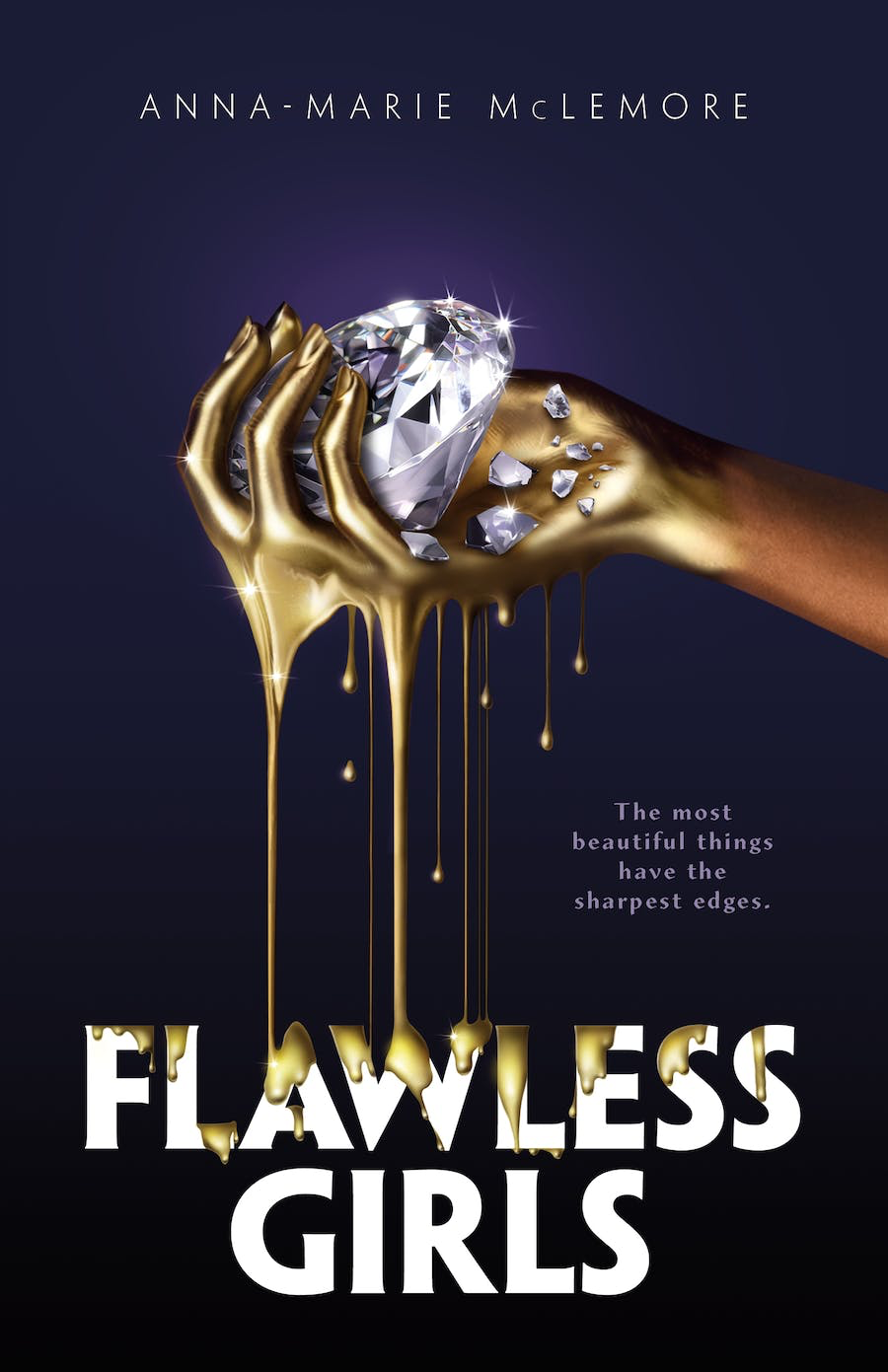
I’ve been a fan of Anna-Marie McLemore since high school, but over the past two years or so, I’ve seen a decline in quality in their books; for their last two releases, I chalked it up to co-authoring (Venom & Vow) and being constrained by what they had to work with, although that could be a stretch (Self-Made Boys: A Great Gatsby Remix). With their latest release, Flawless Girls, having a concerningly low average rating (3.30 at present), I expected the worst, but still wanted to believe that they could come back with something better. And…Flawless Girls was better, but only by a slim margin.

Enjoy this week’s review!

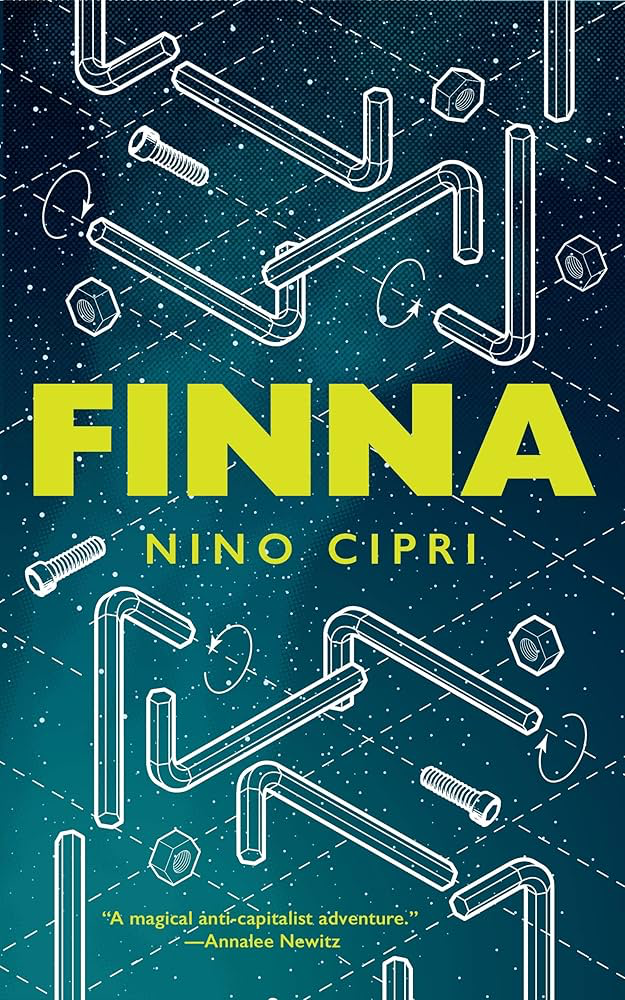
Flawless Girls – Anna-Marie McLemore

The Soler sisters—Isla and Renata—are famously wild, raised to be rebellious and questioning of their restrictive society from a young age. But their grandmother knows that society will frown upon such disobedient girls, and there is one last resort to keep them in line: the prestigious Alarie House, a finishing school famous for the assembly line of polite, high-society women that it churns out. After Renata returns from the Alarie House plagued by madness, Isla decides to dig into the dark corners of the school to see just what made her sister crumble. But what she finds in the corrupted heart of the Alarie House may put all of the girls in jeopardy…

TW/CW: prejudice against an intersex person, fire, body horror, misogyny, dysphoria, descriptions of injury, violence

For the past two years or so, I’ve seen a decline in Anna-Marie McLemore’s novels, which is something that I’ve dreaded saying. I didn’t want to force such words upon the same lyrical talent who wrote When the Moon Was Ours and Wild Beauty, but alas…maybe it wasn’t meant to last. Although it wasn’t as disappointing as Venom & Vow or Self-Made Boys, Flawless Girls was thoroughly messy, even if there were some bright spots in it.

What I want to emphasize the most about Flawless Girls is that, for all of its flaws (no pun intended), it had promise—it was just severely underdeveloped. If McLemore didn’t want to flesh out the concept of the novel, I think it would have worked spectacularly as a novella or even a short story. McLemore’s narration, even it wasn’t as lushly descriptive as I’ve come to know them for, had the feel of a cautionary fable, which was a perfect fit for this story. Even if it did feel like we were being sledgehammered in the face with the main metaphor, it nonetheless had the feeling of a dark fairytale or a fable. To be honest, Flawless Girls could work even better if it were aimed at younger YA audiences just coming into the genre, and I don’t mean that as a slight to the novel at all. It’s not subtle, but as a transitory book between middle grade and YA, it could work. With some significant polishing, of course.

Said main metaphor is femininity—more specifically the performance of it. The institution of the Alarie House served as a pointed commentary about the artificiality of our expectations for women and girls, and how unattainable and manicured these expectations are. It was especially poignant with Isla, a Latina and intersex protagonist struggling with performing femininity with a nonconforming body. Isla’s story felt incredibly personal—I had no idea that McLemore was also intersex, and it’s clear from every page that this is the story of their heart. There’s so little intersex representation out there, but that’s not the only reason why Flawless Girls, with a little polish, could be so important—it’s a fable of the madness that befalls women and feminine-presenting people crumbling under the weight of beauty and behavioral standards. Could it have been more subtle? Without a doubt. Was it impactful nonetheless? Absolutely.

That being said…a recurring thought I had while reading Flawless Girls was that it felt like a front for as many gemstone facts as possible. Next to the metaphor about femininity and performance, gemstones were right up there with the most striking motifs of the novel, but they were everywhere. Once you get past the 30% mark, characters will just ramble on about any kind of gemstone fact that they can shove in the span of two pages. At that point, a motif that bloats so much of the narrative just isn’t a motif anymore—it’s just swallowing everything else in its path. It did play a key role in the ending, but if McLemore wanted to make said ending more impactful, slimming down the endless character interactions where they just talk about gemstones for five pages would have been the right move. Like with jewelry, placement is key—you can’t just drown the narrative in a single motif and call it pretty.

Also, the worldbuilding is a mess. A complete mess. In the synopsis and the beginning of the novel, it’s stated that the reason that Isla and Renata are sent off to the Alarie House is that they’ve been raised to be rebellious and questioning of authority, and as they are Latina girls, it’s safer to teach them to keep quiet so that they don’t garner any unwanted attention. That would have been a very timely theme…if there was any indication of what society that Flawless Girls was set in! I assumed that it was a vaguely historical setting (and the author’s note didn’t clarify much else other than it being “historical”), but we get no sense of where we are in time, save for pre-21st century. Flawless Girls could equally work as being in a fantasy world or historical fiction with a touch of magical realism…but we have no idea which McLemore was going for, because outside of the Alarie House, nothing about the world is explained. No explanation of how and why the finishing schools came to be, no explanation of the technology level, no explanation of the (presumably) patriarchal powers pulling the strings and squeezing women into these molds. No worldbuilding, only gemstones!

All in all, a disappointing and messy effort from a longtime favorite that felt half-baked at best, but still shone in places. 3.25 stars.

Flawless Girls is a standalone, but Anna-Marie McLemore is also the author of Wild Beauty, When the Moon Was Ours, The Weight of Feathers, Lakelore, Dark and Deepest Red, Blanca & Roja, and Self-Made Boys: A Great Gatsby Remix. They also co-authored Venom & Vow (with Elliott McLeMore) and Miss Meteor (with Tehlor Kay Mejia), and have contributed short stories to several anthologies, including All Out: The No-Longer-Secret Stories of Queer Teens throughout the Ages, Eternally Yours, Color Outside the Lines, and many others.

Today’s song:

one of my favorite songs from this album!!

That’s it for this week’s Book Review Tuesday! Have a wonderful rest of your day, and take care of yourselves!
Posted in Book Review Tuesday

Book Review Tuesday (6/17/24) – Floating Hotel

Happy Tuesday, bibliophiles!

Old news: I’m desperate for good cozy sci-fi, and most of that desperation comes from the fact that nobody does it like Becky Chambers, but publishers will slap “perfect for Becky Chambers fans!” on literally any sci-fi book with a hint of several people crammed on a ship. It has to stop. Floating Hotel looked like it might actually live up to those expectations, but I was hesitant because I didn’t enjoy Grace Curtis’ debut, Frontier. But I’m glad I gave Floating Hotel a chance, because it was just what I needed!

Enjoy this week’s review!

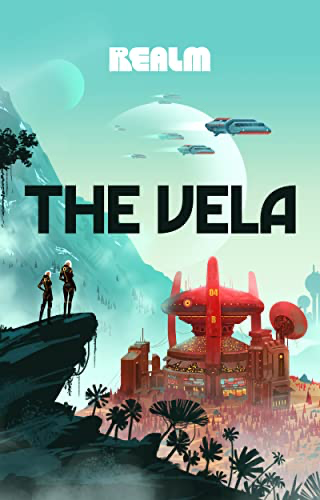
Floating Hotel – Grace Curtis

The Grand Abeona Hotel knows no borders, no political affiliations, and no galaxy or planet to call home. But for many, the Grand Abeona is their home away from home—a safe haven where nobody cares who you are and why you’re here. Run by Carl, the aging manager who first came to the hotel as a stowaway, the Grand Abeona is home to a vibrant cast of characters, all of whom will have paths that will unexpectedly intersect. And as small mysteries begin piling up in the far corners of the Grand Abeona, Carl and the hotel’s misfit staff must pull the pieces together before the hotel itself is put in harm’s way.

TW/CW: death, torture (both offscreen), verbal abuse

In retrospect, there’s really no better book that I could have read on my Kindle, which has the Grand Budapest Hotel on the case. Some things were just meant to be.

I doubt anyone will ever top Becky Chambers in terms of cozy sci-fi, but Grace Curtis comes close—and that’s exactly why I’m so glad that I gave her another chance. Though it’s not without its mystery and relatively high-stakes subplots, Floating Hotel is a cup of tea for the soul: quiet, observant, and downright warm and charming.

My main issue with Frontier was that it promised action, but delivered next to nothing; it’s not that I don’t like books without action, but when your book’s tagline is “love, loss, and laser guns,” you kind of…have to deliver there, no? After reading Floating Hotel, it’s clear that quieter, cozy sci-fi is what Curtis was meant to write; aside from the rebellion subplot, which was relatively under-the-radar and wasn’t a major issue until the last 20% of the novel, this novel had comfortably low stakes. Although there was a fair amount of turmoil in the empire established in the world of Floating Hotel, you really do feel like the Grand Abeona is a safe haven from all of the ills of the galaxy. There, nobody cares who you are, so long as you have a story to tell.

Another issue with Frontier was that, with all of the characters and subplots it juggled, a lot of the plot points blended together, giving the reader little time to connect with anybody. If my leap from Frontier’s 2-star rating to my 4-star rating of Floating Hotel wasn’t indication enough, Curtis has significantly improved on that aspect of her writing in the space between the two novels! This novel similarly juggles a multitude of characters—many of whom only get one chapter in the vast sea of POVs—but all of them have a unique place in the story. None of the backstories or motivations felt forced, and all of them connected back to how the Grand Abeona has healed them as people; through all of their eyes, whether it’s a waitress, a piano player, or a professor visiting for a conference, you can see just how important of the Grand Abeona is as a safe haven. Floating Hotel is one of the few books with more than 10 (I think?) POVs that has truly worked for me, and it’s a combination of really being able to connect each one to the hotel and its story, and it incorporates other characters organically before we even get their POVs—the interconnectedness was so smooth that I didn’t mind the massive amount of voices displayed.

Curtis clearly understands the cozy part of cozy sci-fi that so many people who market books as “cozy” never seem to get—the near absence of stakes. For the majority of the novel, it’s a very down-to-earth, slice-of-life kind of plot where all of the mysteries are more humorous than troubling; I mean, one of the main subplots of the first half of the novel is trying to find the culprit of an anonymous admirer leaving love letters in the lobby index. And I ate it up. It’s just so gentle!! Is the fate of the galaxy at stake? Absolutely not! The hotel staff is just getting together once a week to watch terrible movies for nostalgia’s sake!! Peak cozy sci-fi right here, folks!! There are queer and disabled characters abound (WOOHOO!!), but neither homophobia nor ableism are plot points at all! They’re just going about their lives!! This is the stuff!!

What both Curtis and Becky Chambers get right about cozy sci-fi as well is that cozy doesn’t necessarily equal apolitical. In the background, there’s plenty of discussions of imperialism with the tyrannical empire crawling with shady cloning and nepotism (take a guess at how those two things tie together…). Curtis isn’t afraid to take stabs at capitalism, environmental destruction, xenophobia (I love the subplot about the empire banning media about aliens because it would compromise the perceived superiority of the human race), and so much more over the course of the novel, and it elevates it exponentially. It emphasizes another truth (for me, at least) about cozy sci-fi, and being a gentle person in general—cozy or quiet does not equal docile or unwilling to speak out about injustice. To quote IDLES, another bastion of kindness: “Ain’t no doormats here/It doesn’t mean you have to bow, or say “Your Highness”/Just kill ’em with kindness.”

All in all, a gentle and masterful piece of cozy sci-fi, and a marked improvement from Grace Curtis’ debut. Consider my faith in her writing restored! 4 stars!

Floating Hotel is a standalone, but Grace Curtis is also the author of Frontier.

Today’s song:

am I ashamed of listening to this on repeat while writing the third book in my sci-fi trilogy? absolutely not.

That’s it for this week’s Book Review Tuesday! Have a wonderful rest of your day, and take care of yourselves!
Posted in Book Tags

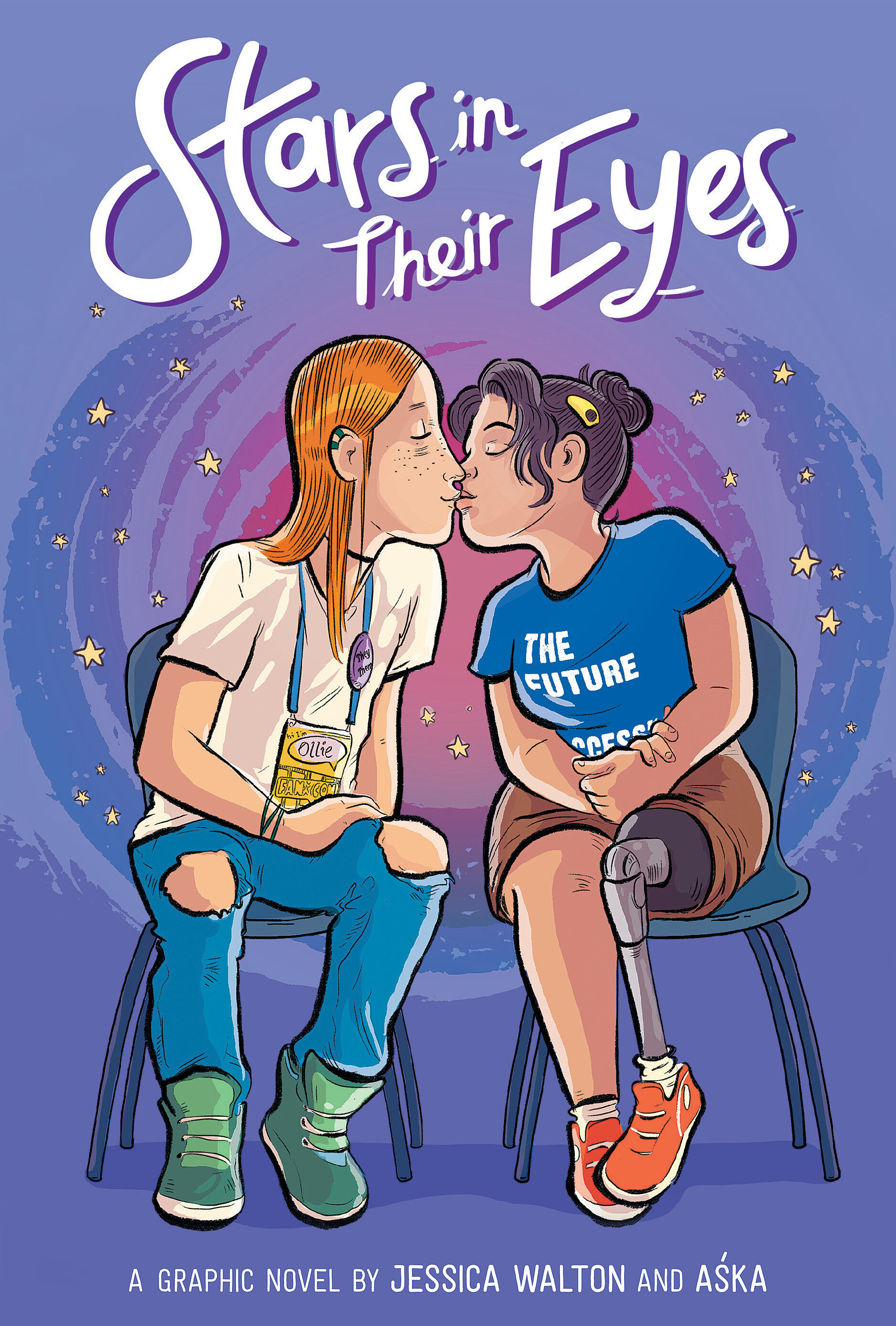
Read the Rainbow Book Tag 🏳️‍🌈🏳️‍⚧️

Happy Monday, bibliophiles!

I’m always up for a pride-themed book tag, so when I saw The Corner of Laura’s take on this one, I knew I had to give it a try! The tag was originally created by Isabelle @ Nine Tale Vixen.

RULES:

  • Link back to the person who tagged you
  • Credit & link back to the creator: Isabelle @ Nine Tale Vixen
  • Each book you pick should have an LGBTQIA+ main character and/or an LGBTQIA+ author. Try to include diverse books: different romantic/sexual/gender orientations, different ethnicities, etc.

Let’s begin, shall we?

🌈READ THE RAINBOW BOOK TAG🌈

RED: A book that gives you courage or is about courage

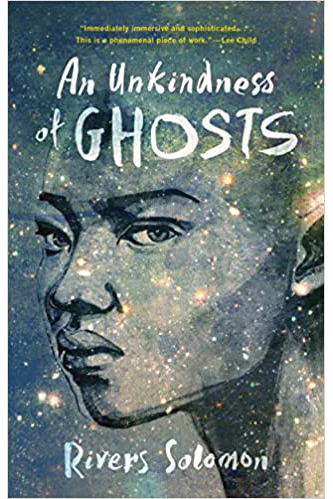
An Unkindness of Ghosts is a story of courage and resistance in circumstances that have all but walled you in—a generation ship that oppresses its lower-class passengers of color much like the antebellum South. Rivers Solomon never misses!

ORANGE: A book with a passionate/fierce protagonist

Jin-Lu from Road to Ruin is as tough as they come, but will do anything to protect the ones she loves. This novel was the perfect blend of post-apocalyptic sci-fi and fantasy!

YELLOW: A book that celebrates friendship

All of Alechia Dow’s books sparkle with themes of connection, but A Song of Salvation centers around the friendship (and eventual romance) between its three unlikely leads! Not her best, but still a sweet book.

GREEN: A Middle Grade book and/or a book featuring kids

It’s been ages since I’ve read (or even thought about) Star-Crossed, but I’m glad I remembered it—such a sweet coming-of-age story about a bisexual girl playing a genderbent Romeo in her class production of Romeo & Juliet!

BLUE: A book which includes a wedding or an already-established LGBTQIA+ couple

I seriously think that The Heartbreak Bakery has the most LGBTQ+ rep I’ve ever seen in a single book—several established queer couples, and characters spanning tons of sexualities, gender identities, and ethnicities!

PURPLE: A book featuring love at first sight

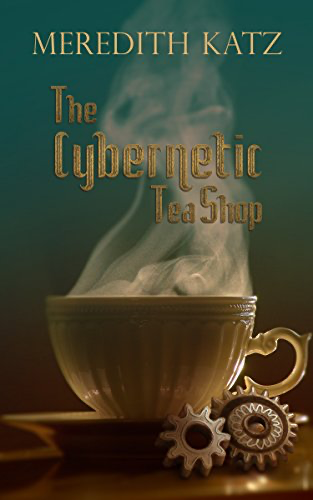
The Cybernetic Tea Shop is a sweet, cozy sci-fi novella about a robot who runs a tea shop and the romance that blooms between her and a technician!

BLACK: A book centered on an antihero or villain

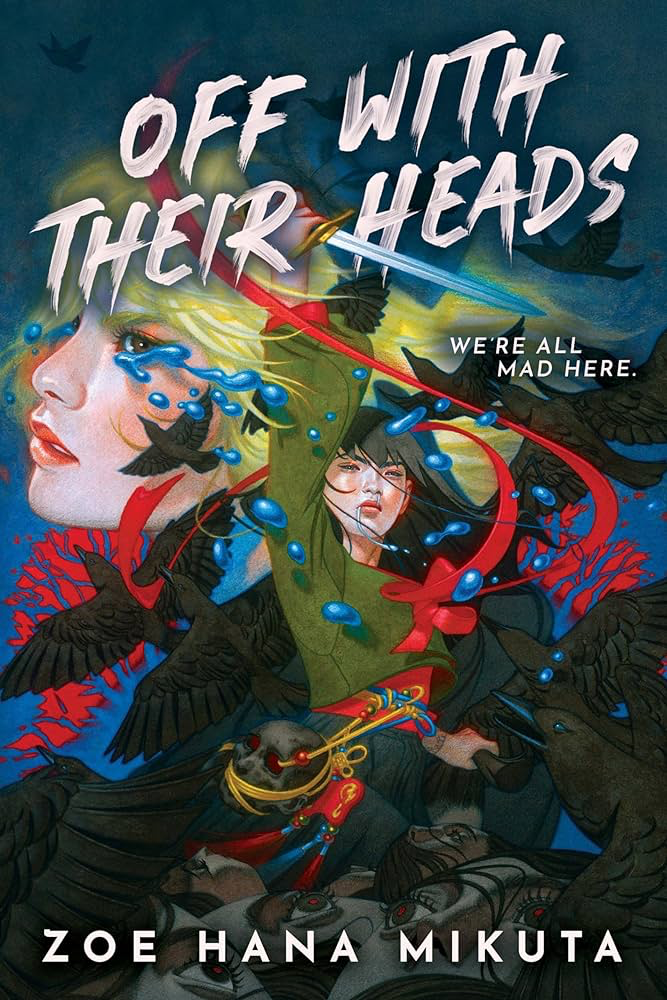
Off With Their Heads centers around two cunning, bloodthirsty, and vengeful characters, in an equally bloodthirsty and vengeful world loosely based on Alice in Wonderland.

BROWN: A book that celebrates family, chosen or given

Don’t let the gritty-looking title and cover fool you—Activation Degradation is one of the most emotional celebrations of found family that I’ve read all year! Highly recommend it.

LIGHT BLUE: A book about star-crossed lovers

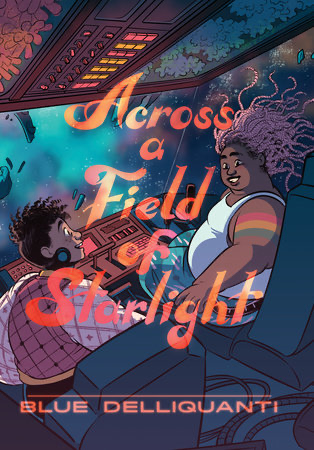
Across a Field of Starlight features a nonbinary romance that stretches across solar systems, war, and ideology.

PINK: A book as sweet as cotton candy

Just Your Local Bisexual Disaster is a lighthearted, sweet romance about a bisexual girl scrambling to find a date for her sister’s quinceañera—and sort out her messy romantic history.

WHITE: A book that isn’t focused on romance

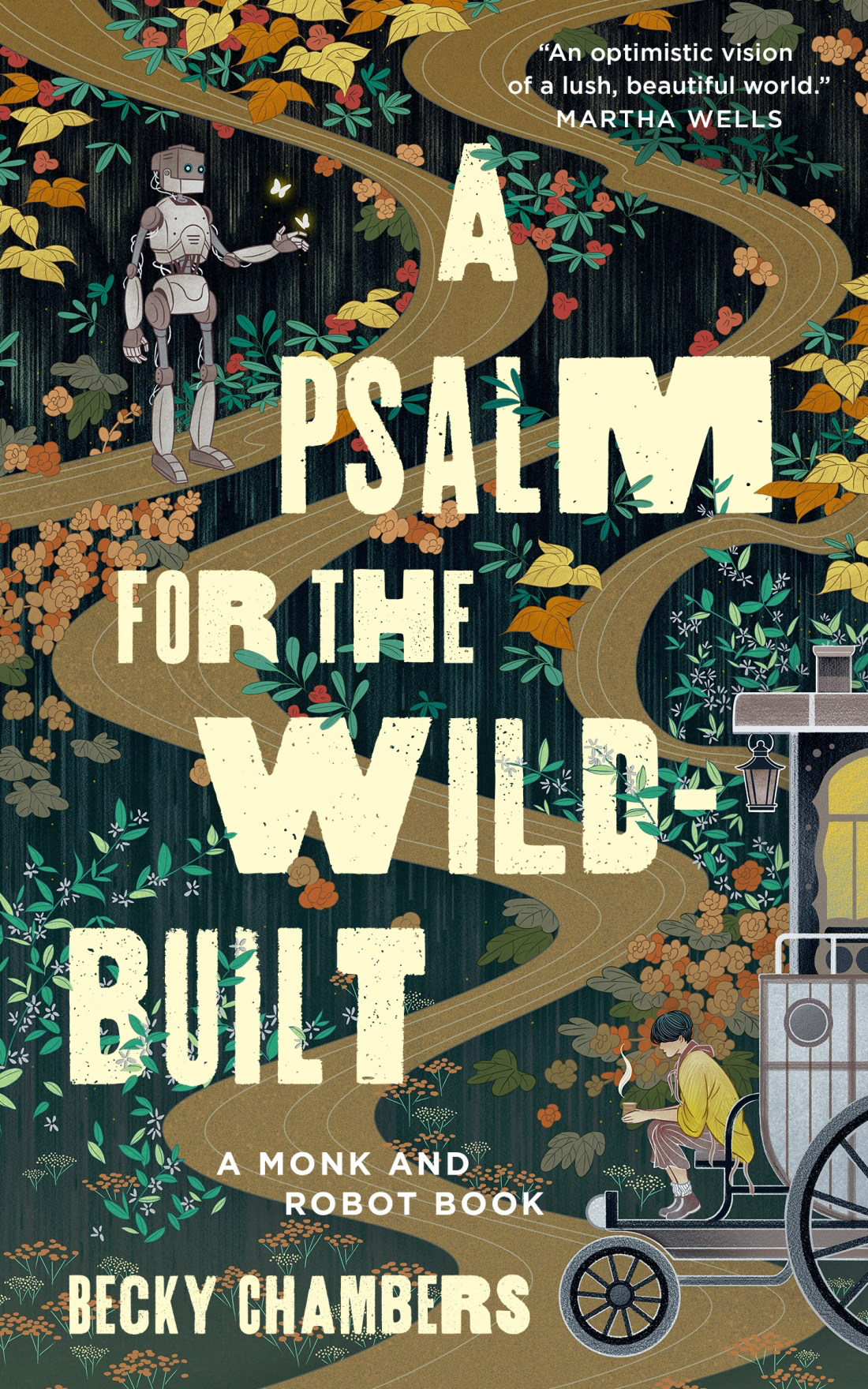
Another piece of lovely cozy sci-fi (from the cozy sci-fi queen herself), A Psalm for the Wild-Built has no romance, and focuses on self-discovery and friendship!

PURPLE CIRCLE: A standalone book that is perfect and complete on its own

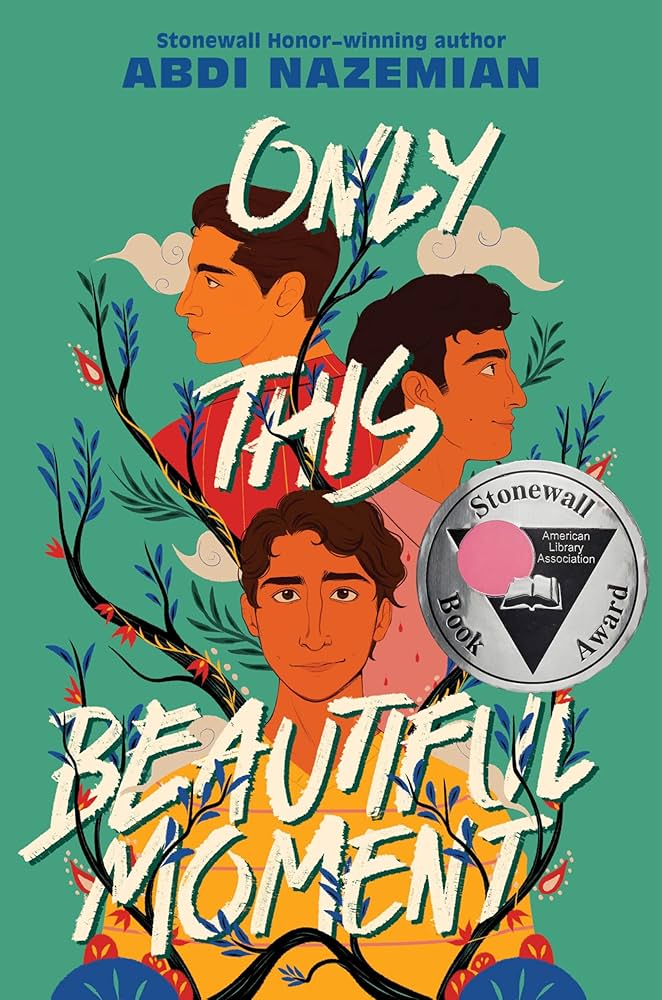
Only This Beautiful Moment is the story of three generations of men in an Iranian family, and the interwoven threads of sexuality, trauma, and love.

RAINBOW: Free choice! Recommend any LGBTQIA+ book that you love

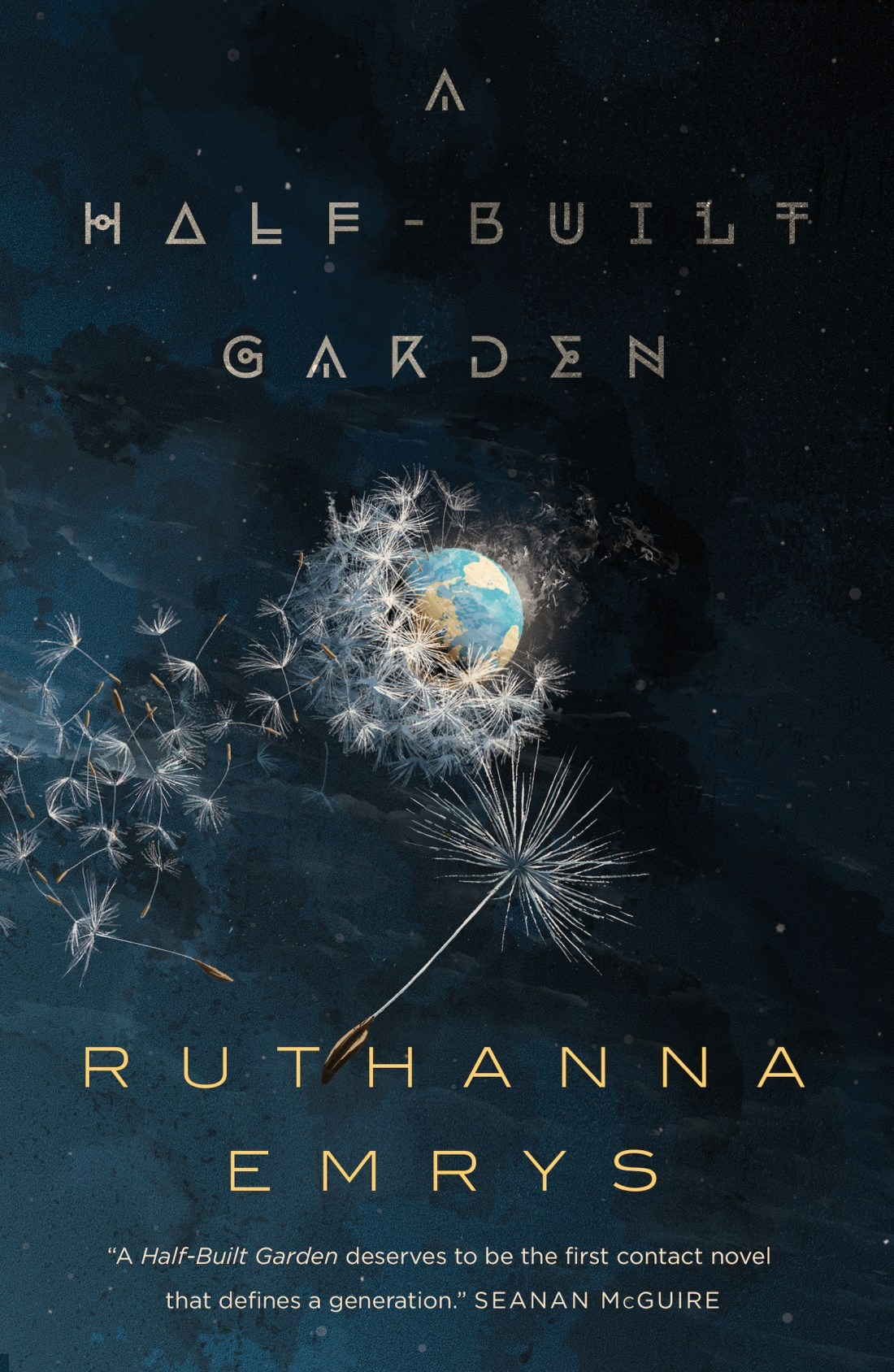
A Half-Built Garden was one of the best pieces of sci-fi that I read last year—a wonderfully nuanced and human vision of first contact, featuring a whole host of cleverly designed aliens!

I TAG ANYONE WHO WANTS TO PARTICIPATE!

Today’s song:

:,,,,,,,,,,)

That’s it for this book tag! Have a wonderful rest of your day, and take care of yourselves!

Posted in Books

🏳️‍🌈🏳️‍⚧️The Bookish Mutant’s Books for Pride Month (2024 Edition) 🏳️‍⚧️🏳️‍🌈

Happy Wednesday, bibliophiles!

Here in the U.S., June is Pride Month! And every month, I find myself having a downer of an introduction, just because the world only gets kinder to queer people in the smallest increments, it seems. The vocal minority in this country are still bent on erasing all evidence that queer people exist in the first place, like an offending stain on a white tablecloth. (A note to homophobes: has it ever occurred to you that you don’t have to look at pride flags or queer couples? You can just look away and not make it anybody else’s problem…life is so short, man.) But our community is one characterized by resilience: no amount of book bans, culture wars, or bigotry will wipe us off the map. We are are here, we have always been here, and we will always be here. Nothing you do will make us disappear. Don’t let the vocal minority distract you from the beauty created and progress made by our community.

So once again, here’s a list of YA and Adult books with queer characters and themes, curated by your local bisexual. I also added the specific representation of each book.

Just a refresher on my key:

MC: Main character

LI: Love interest

SC: Side character(s)

For my previous lists, see below:

Enjoy these book recs!

🌈THE BOOKISH MUTANT’S BOOKS FOR PRIDE MONTH (2024 EDITION)🌈

FANTASY

SCIENCE FICTION

REALISTIC FICTION:

TELL ME WHAT YOU THINK! Have you read any of these books, and if so, did you enjoy them? What are some of your favorite queer books that you’ve read in the last year? Let me know in the comments!

Today’s song:

That’s it for this year’s pride recommendations! Have a wonderful rest of your day, and take care of yourselves!

Posted in Book Review Tuesday

Book Review Tuesday (6/11/24) – Junker Seven

Happy Tuesday, bibliophiles! I’m back from vacation, and I’m feeling rested—and ready to review one of the books I read on my trip.

Junker Seven hung around on my TBR for about a year, and I ended up buying it on Kindle for my trip; as I’ve said ad nauseam, queer sci-fi is the stuff of life for me, so I’ll always lap it up when given the chance. Although I wish the worldbuilding (and the politics) were more creative, it was a solid tale of of love and the joy in reminding yourself that your existence is an act of resistance.

Enjoy this week’s review!

Junker Seven (Twin Suns duology, #1) – Olive J. Kelley

Castor Quasar makes a solitary but dangerous living as a junker, ferrying scrap—and fugitives—across the galaxy. They prefer to stay out of the business of others, whether that’s the widespread political unrest throughout the galaxy or simply making friends. But when Castor is offered a job with an exorbitant amount of money, they can’t help but be suspicious, even though the offer would mean valuable repairs for their ship—and an easier living. Their cargo is Juno Marcus, a trans activist with a target on her back and an urgent need to escape before the Intergalactic Peace Force finds her. Castor reluctantly agrees, but they soon find themself in over their head—and head over heels in love…

TW/CW: murder, loss of loved ones, transphobia, deadnaming, misgendering, ableism, police brutality

Junker Seven was by no means without its flaws, but if you’re looking for a love letter to trans love and identity, a slow-burn romance, and resistance in space, then you’ve come to the right place! Not my favorite, but this was a good book to start off pride month—unabashedly queer and political.

Structurally, there were a lot of odd worldbuilding choices (I’ll get to that later), but despite that, the world of Junker Seven felt wonderfully lived-in. The quiet moments where Castor was alone on their ship were what convinced me of this world being tangible; not everything is sleek, clean, and untouched. You never get the sense that the ship is cramped just because it was made so, but because of all of the choices that led Castor to the place they are today. It’s not just a plot device vehicle—it’s got special nooks and crannies that have been shifted over the years, and there’s a goldfish that’s been there through it all, Castor’s only constant companion. Details like this, as well as some of the pockets of resistance that Castor and Juno find throughout their journey, added a real human element to the story. Even with only two characters for most of the novel, Kelley did an excellent job of making the galaxy seem like a tangible place where humans have settled—and brought their unique ways into a new, far-future world.

If you’re looking for representation, especially trans representation, then you’re in the right place—Junker Seven has diversity in spades! Both the main character and the love interest are trans, as well as several side characters, and Castor is also disabled—they have burn scars, a prosthetic leg, and autism! The key part of said representation is that it never felt like a checklist; if the acknowledgements are any indication, Kelley’s goal was to create a resonant story of trans joy, love, and resistance, and though I’m not trans (disabled and queer, though), that love shone through; Junker Seven felt like a love letter to trans resistance all the way through, from Castor and Juno’s slowburn romance to Castor’s gradual radicalization. I love how the disability representation was handled as well! All of the details about Castor’s autism affects their job felt authentic as a neurodivergent person; no stone was left unturned, whether it was how wearing their prosthetic affected their sensory issues to how it affected their relationships. It’s clear from every page that the diversity in this novel wasn’t borne out of a need to tick off every possible marginalization—it was borne of a need to put authentic queer, trans, and disabled stories out into the world.

That being said, the worldbuilding of Junker Seven gets stranger the more I think about it. There are enough pockets that could convince you that, yes, this could be hard sci-fi that had some thought put into it, but the actual worldbuilding ends at the descriptions of the climates of the planets that Castor and Juno are hopping to and from. Other than that, the politics are the main focus, but given how political this book is, I was surprised at how unoriginal it was in terms of the evolution of politics and queer resistance. Junker Seven is set several hundred years from now, and yet the politics are all but copied and pasted from the U.S. politics of today—no changes whatsoever, save for being stricter when it comes to the treatment of trans people in particular. Yes, history does tend to repeat itself in terms of treatment of the marginalized, but it’s never in the exact same way twice; technology changes, rhetoric changes, leadership changes. None of that is reflected in Junker Seven; honestly, it was familiar to such a degree that it would have worked more if it were set in a less futuristic dystopia set on Earth. This story is set so far in the future that minimal changes in language and policy just makes no sense. It would have been so much more potent—and creative, frankly—to see how the adapted technology of the future actually factored into how trans people in this universe were being oppressed. There were a few throwaway mentions of more advanced technology that was being used to surveil trans people, but that was about the extent that anything changed. It all boiled down to unused potential—there were so many opportunities to explore how (possible) aspects like advancing technology, increased policing, and advancements in genetic modification could affect the status of trans people throughout the galaxy. And yet, Kelley chose to change almost nothing about our current political climate and paste it into space—to the detriment of my suspension of disbelief. Oppression of marginalized groups remains the same in its goals, but not necessarily in its methods—those change with the times.

What also suspended my disbelief was how little we knew about Marwood save for that he was horrible. Save for being a Trump stand-in, we knew almost nothing about him, save for that a) he’s evil (Trump), b) there’s a widespread news network that’s basically his mouthpiece that he uses to demonize trans people (Fox News), and c) did I mention? He’s evil. I will give Kelley some credit for at least establishing the Zephyr News aspect and the fact that his nepotistic predecessor both ended presidential term limits and instated Marwood in a corrupt, illegitimate election so that his fascist, ultra-conservative values would live on. That, at least, felt like a reasonable enough start for a villainous character, but that was it. The key word here is start. I wouldn’t say it completely falls into the dystopian trope of “we’re not going to say anything about the government, but you have to understand. They’re BAD, guys. BAD,” but it comes rather close. This circles back to my overarching issue of unoriginal worldbuilding, but I wanted to know what separated Marwood from any other run-of-the-mill fascist—did he come from a celebrity background and had no real political experience, like Reagan or Trump, or was he a more cold and calculating type with political prowess who knows exactly how to undo any kind of progress and twist the laws in order to abuse his power? A successful, frightening villain needs to be more than an evil cardboard standup that lurks in the shadows, and we never got more than fragments to show that Marwood was more than a stand-in fascist to move the plot along. (Also, did the entire galaxy, after blending into an almost universal accent after several hundred years, universally adopt a vaguely American two-party system and government? It’s…yeah, I have trouble believing that too.)

Although the disability representation is excellent, as I said before, I did find it odd that it wasn’t a part of Castor’s radicalization; being disabled in the 21st century is already a cyberpunk dystopia as it is, so I’m surprised that there wasn’t much discussion of not just Castor’s experience with being disabled, but how it affected their work or their perception of politics. Save for a throwaway line about an autistic person being driven to a life of crime because of how poorly said autism was treated and handled, there wasn’t much rumination on it other than that. I get that the main focus of Junker Seven was trans resistance specifically, I do wish we at least got more of it than what we got. Come to think of it…as diverse as Junker Seven was, there wasn’t a whole lot of intersectionality in terms of politics. I think there was…maybe one line about race and police brutality, and that was about it? I wouldn’t say that this is inherently a flaw of the book itself, but, once again, given how unabashedly political it was, I did find it odd that there wasn’t at least a small mention of the intersection of queer/trans issues with aspects like race, class, and disability.

All in all, a solid piece of queer sci-fi which suffered from unoriginal and nonsensical worldbuilding, but was nonetheless a shining ode to queer resistance. 3.5 stars!

Junker Seven is the first of the Twin Suns duology, followed by the forthcoming sequel Rebel Rising, which is slated for release in September. Kelley has also released D3F3CT: A Twin Suns Novella, set in the same universe as Junker Seven, as well as the novellas As the Light Goes Out and A Very Lighthouse Christmas. They have also contributed to Spectrum: An Autistic Horror Anthology and the forthcoming Dead Cowpokes Don’t Wrangle: A Weird West Anthology.

Today’s song:

why, why, WHY DID I PUT OFF LISTENING TO THIS ALBUM FOR SO LONG??

That’s it for this week’s Book Review Tuesday! Have a wonderful rest of your day, and take care of yourselves!
Posted in Book Review Tuesday

Book Review Tuesday (5/14/24) – Dear Wendy

Happy Tuesday, bibliophiles!

Hooooooooooooo-whee…rant incoming…they’re good for the soul. Sometimes. I hate to do this so soon after I posted this year’s AAPI Heritage Month recommendations, but I just had to get this review off my chest. I highly recommend all of those books over this one.

God. I really wanted to like this one. Older YA where the characters are in college are few and far-between, and what’s even fewer and further-between is aromantic/asexual representation, much less POC aro-ace representation. I almost DNF’d this one, but I really wanted to stick it out and see if it turned out any better…and tragically, it didn’t. I hate to say it, but Dear Wendy was one of the most stiffly-written books I’ve read in quite a while.

Enjoy this week’s review!

Dear Wendy – Ann Zhao

Sophie Chi and Jo Ephron are both second-semester freshmen at Wellesley College, and they don’t know that they know each other. Sophie runs Dear Wendy, an Instagram account that gives love advice to Wellesley’s student body, and Jo runs Dear Wanda, a much more unhinged parody of the former with joke advice to contrast Wendy’s more serious online persona. The two meet in real life and immediately hit it off—they’re both aroace, and have never met many people, even in the queer community, who have experienced the same things as them. But as their online feud as Wendy and Wanda gets heated, Sophie and Jo must decide if they want to divulge their mutual secret—and risk their real friendship.

TW/CW: aphobia, anxiety, bullying, discussions of coming out/non-accepting parents (brief)

Ooof. Even from an outside perspective (as a non-ace person, but still queer), there’s a noticeable dearth of asexual-/aromantic- spectrum stories, even in YA, which is usually several steps ahead of the game as far as being progressive. So in concept, I’m glad that Dear Wendy exists, and I’m sure it will help a ton of a-spec people find their voices and feel seen. But good lord, this was easily one of the most poorly-written novels I’ve read all year. I’m genuinely baffled that I read the same book as all of the other people who left such glowing reviews. Baffled. Again, speaking from an outside perspective, but I think the a-spec community deserves better than this…

I usually preface my negative reviews with this, but I’ll say it again, because it always applies: I’m willing to give a certain amount of slack to Ann Zhao since Dear Wendy is her debut novel. It’s so hard to put pen to paper, and harder still to get it published, and that in and of itself is an intense labor of love. And I’m so glad that this book exists for some people for its discussions of AAPI, aroace, and gender non-conforming identity. I’m sure it’ll be a book that will mean a great deal to a great deal of people.

But. But.

All that doesn’t fully excuse how painfully stiff Zhao’s writing was. Dear Wendy would have been a DNF for me had I not stubbornly tried to stick it out, just because I was convinced that the rest of the book wouldn’t be a disappointment. I wanted to give it a chance, with the combination of the premise and the fact that it’s Zhao’s debut. I had faith that it would get better, but it never did. For a novel that purported itself to be charming and emotional, the writing felt more like a textbook or a brochure than fiction—never once did any of the characters feel like real people talking. The novel was full of writing choices that just felt downright odd; at some point, we hear one of the main characters eavesdropping on two other characters (about the Social Media Drama™️), and after each of these side characters speak, we get their first and last names—and then never hear from them again. Characters list out song titles like they’re being read aloud by Siri, and all of the attempts at humor are just the characters doing word-for-word reenactments of jokes from Tumblr and TikTok without any attempts to hide the evidence. And for two characters that are supposed to have opposing personalities, their voices blended together in an indistinguishable, bland mess—the only way we can “tell” is through the differences in their fabricated social media personalities. If I wanted to be hit over the head with something that unsubtly, I would’ve stood under the ice dispenser in the dining hall. But through it all, I was just struck by how none of the people acted like people—they acted like social media fabrications of queer people, and the world was similarly dictated through an artificial lens.

Dear Wendy is full of a myriad of relevant topics: aroace identity and acceptance, the suffocation of allosexual culture and the unrelenting pressure to find “the one,” and immigrant parents who don’t fully accept your queerness, to name a few. I’ll say again how glad I am that these subjects are being discussed in literature, because it’s true—we do need to talk about these things! But their delivery, more than not, zigzagged around one of the most time-worn rules of writing: show, don’t tell. Although this is realistic fiction, I feel like it falls into the same kind of mistakes that some sci-fi or fantasy novels make when they deliver information that is new to the reader: they deliver it in unpalatable blocks, making time all but stop in the narrative just so the author can explain The Important Thing™️. This was how most of the discussions felt in Dear Wendy; instead of a new worldbuilding point, it was just the character’s inner monologue, uninterrupted, for at least two pages at the longest. I get that it’s crucial to weave in these points, but there’s a way to do it without harming the flow of the story—once or twice is fine, when there’s a reason for the character to be so deep inside their head, but given that this story was supposed to center around Sophie and Jo’s relationship, there could have been so many more bonding scenes where they talked about this organically! That’s not to say that those scenes weren’t there, but since we were already stuck in inner monologue limbo 50 pages ago, none of the information was new, and therefore, none of the bonding felt like new ground.

In the author’s note, Ann Zhao calls this a love letter to Wellesley College, and that although her experience there wasn’t all good, she wanted to highlight the good in Dear Wendy. Remember what I said about the stiff writing? It applied to the surroundings, too. If her writing style contained…any sort of soul, then that mission statement would have come across. Instead, I felt like I was reading a college website for some parts of the novel. I got so far in to Zhao’s descriptions of the campus and the features of the dining hall that I had to blink and question whether or not she’d been paid to write all this by the college. Look—I’m sure Wellesley is a great place (historically women’s colleges are fantastic!) and I don’t want to negate the love that Zhao had for her time there, but there were so many places where the descriptions didn’t feel, again, like people experiencing their environment—it was just being dictated through a lens so devoid of personality that I felt like I was on a college tour, forced to hear a long-winded monologue about a bunch of landmarks that I’d never see again.

Usually, I’m in favor of a little pop culture referencing once in a while. I’ve never understood the argument that pop culture references in YA fiction take them out of the story. What, is fiction supposed to exist in some kind of culture-less vacuum? God forbid your characters engage with the same media as you do…god forbid you pay homage to the creators that inspired you to put pen to paper, apparently? If there’s anything that actually takes me out of the story, it’s the fake celebrities/artists/social media apps. (I get that a lot of that is dodging copyright, but the point still stands.) The argument has never made sense to me. Sure, dumping them all in a barrage is obviously a no-no, but there’s an art to a well-placed reference, and it’s an art that I appreciate. I have a completely arbitrary Goodreads shelf for books with good music references. (This one almost went on it just for an off-hand mention of Mitski.) But reading Dear Wendy made me understand where the anti-pop culture reference people are coming from. The whole book felt like a front to shove in as many references as humanly possible. Dear Wendy is over 360 pages—it wouldn’t have killed Zhao to cut out the chapter entirely consisting of Jo and Sophie talking about Harry Styles. The only places where the music references in particular felt relevant where when Jo was DJ-ing at the college station, and even then, when she was talking to Sophie about her upcoming song choices, it felt like they were being queued up and read aloud by Siri. Mind you, this wasn’t when Jo was actually DJ-ing—this was when she was talking to her friend. It only would have been worse if she’d said “Remastered version” in verbal parentheses.

And…god. If another book tries to smother me with this many Taylor Swift references, I’m going to chew my kindle in half. It’s already bad enough that even the dining hall TV was showing me news clips about whatever mediocre thing she’s doing…please, I thought literature was supposed to be an escape…

All in all, a platonic love story with all the ingredients for something meaningful and sweet that substituted personality and charm for stiffness and irrelevant references. 1.5 stars.

Dear Wendy is a standalone and Ann Zhao’s debut.

Today’s song:

That’s it for this week’s Book Review Tuesday! Have a wonderful rest of your day, and take care of yourselves!

Posted in Book Review Tuesday

Book Review Tuesday (5/7/24) – Off With Their Heads

Happy Tuesday, bibliophiles! I’ve returned from finals hell!

I’ve been a massive fan of Zoe Hana Mikuta ever since I fell in love with her Gearbreakers duology a few years back. Off With Her Heads is her most recent novel, having just come out in late April, and even though I would’ve read it no matter what genre it was in, the idea of her writing a novel loosely based on Alice in Wonderland intrigued me—and it did not disappoint.

Enjoy this week’s review!

Off With Their Heads – Zoe Hana Mikuta

Wonderland is full of monsters.

After a deadly plague ravaged the land, most of the remaining witches and magic-users have transformed into monstrous Saints: bloated, bloodthirsty beasts that scour the land looking for fresh meat. Carousel Rabbit and Iccadora Alice Sickle were brought up in a world of predators and plague, orphaned at a young age and eventually escaping their decrepit orphanage together, madly in love with each other. But their obsession tore them apart, and their paths diverged.

Now, Caro has become the Red Queen’s royal butcher, killing Saints and watching as the Queen stitches together Saints of her own through dark, flesh-binding magic. Alice has been on her own for years, slaughtering Saints to get by. With every Saint that she kills, she treads closer and closer to the Red Queen’s throne—and to Caro, who Alice will stop at nothing to bring down to size. But what she finds in the Red Queen’s palace may be even greater of a threat than the love that once tore her to shreds…

TW/CW: loss of loved ones (past), murder, graphic violence, body horror, disease, blood, gore

Dark fairytale (or fairytale-adjacent) books used to be everywhere on the YA landscape. It’s the kind of stuff I ate up from about ages 12 to 16, to various degrees of quality. What they had in common, however, were universally horrible covers. God. They’ve circled back around to being hilarious now, but you could just snag any book off of the YA fantasy shelf at Barnes & Noble, and it would have a cover with an airbrushed white girl with flowy hair and an equally flowy gown either spinning gracefully or fixing your stare with a photoshopped smolder. And the gown was usually melting into…I don’t know, feathers or blood or some shit. It was all very emo. Since then, this subgenre has slowly begun to die down in popularity (or maybe not? My tastes have probably just shifted). Whether or not Off With Their Heads is the slow beginning of that subgenre’s resurgence in YA remains to be seen, but either way, I’m glad that we’ve got much prettier covers for the next generation of budding YA readers. It’s what they deserve. (Give it up for Tran Nguyen’s gorgeous cover art!)

After the Gearbreakers duology, I figured that I would read just about anything that Zoe Hana Mikuta writes. Even if Godslayers was a bit of a lackluster series concluder, it was still a fun read. Even if it isn’t her best work, you’re going to have a good time reading it regardless. Gearbreakers got a fair bit grim, as dystopias are wont to do, but Off With Their Heads is the darkest that Mikuta has ever gone (so much so that it almost borders on new adult and not YA), and she writes it with a unique talent. Whether or not the urge was pent-up, this novel revels in the “dark” of the “dark fairytale retelling,” drenching Alice in Wonderland in bloodlust, obsession, and backstabbing. However, what a lot of the dark fairytales of yesteryear interpreted darkness as was just being edgy; most everything was for shock value and appealing to the “what if this fairytale was………BAD and EVIL” urge that ropes in all the 13-year-olds and it didn’t go far beyond that. But this genuinely feels like horror, and not being an edgelord for edginess’ sake. It’s gory, it’s grim, and it’s bloody, but more in the interest of horror than shock—these characters are surviving a truly horrific world, and it turns them into horrific people for understandable reasons. There’s a distinction to be made there, and Mikuta certainly recognized it. (Also, it’s worth noting that Off With Their Heads is unflinchingly queer, which, given that most of said older fairytale retellings only added in queerness when it was a side character that would inevitably die, is a vast improvement. The bar is low, but it’s noteworthy that it’s being exceeded nonetheless. Let’s go, lesbians!)

I’ve seen a lot of reviews call Caro and Alice “morally gray,” and…I have some thoughts. I almost see it. Almost. But if they were gray, it would be an incredibly dark gray, if anything. Maybe they were morally gray at the beginning, but by the time we get to the present timeline, they’ve both become such awful people that they’re nearly indistinguishable from the one evil person that they’re respectively allured by (Caro) and disgusted by (Alice)—the Red Queen. To paraphrase Obi-Wan Kenobi (hey, I missed my chance on May 4th), they’ve both become the very thing they swore to destroy. They’re both just despicable people, but their differences are written in such a way that their different breeds of horridness play off of each other fascinatingly; Caro’s become this world’s version of a class traitor and idolizes the pinnacle of evil, while Alice has become so consumed with revenge that she’ll justify just about anything. Add in the fact that the root of their personal vendettas lie in their past romantic relationship, and you’ve got a dynamic that was delicious to pick apart for all 400+ pages of the novel. Again, it all makes sense for the truly cutthroat circumstances they were brought up in—they’re products of their surroundings, in the worst possible way.

Even as someone who doesn’t engage with a ton of horror media in general, I know that the key to executing it is making the suspense feel real, especially if the threats in your world are entirely fictional and alien to the audience. Mikuta had a multitude of ways that kept the suspense palpable, and all of them hooked me over the course of the novel. I’m not sure why it is that the “There are [x] remaining Saints” count excited me so much at the beginning of each chapter, but it was a failsafe way to keep track of both the danger and the kill count of the various characters—the tangible effects of the butchering they’re described as doing. Having those numbers up front also provided a sense of scale; in the present timeline, the Saints numbered in the thousands, giving an idea of just how dangerous being in Wonderland truly is—you can’t go for a walk in the woods without encountering a bloated, bloodthirsty, and quite possibly engineered monstrosity on the prowl for flesh. It’s a constant danger—and Mikuta make it feel much more dangerous just by having a chapter subheading.

However, what brought down some of my suspension of disbelief was the worldbuilding. Clearly, there was attention to detail, but only in the ways that Mikuta saw fit. There were tidbits here and there that I wished were expanded on—I loved the concept of the original Alice dreaming being this world’s creation myth, but we never got anything more out of that past the prologue. Outside of things like the Saints and the royal lineage, the worldbuilding was rather messy. I get that Off Their Heads is a very loose retelling at best—just using Alice and Wonderland and its characters as a jumping-off point for the setting—but there were so many convoluted and contradictory bits that I wasn’t completely invested. It’s mentioned that there’s a Jabberwocky court amongst the gentry of Wonderland who are described as humanoid, and yet the girls find a Jabberwocky in the woods described monstrously that has clear intention to kill them. Either that was a poorly-described Saint, or there’s some inconsistencies that need to be addressed. The reworking of Alice in Wonderland-related names into the characters were also a bit sloppy and corny; I get that there’s got to be some signal to the source material, but they were often so obvious, and barely related to the original character that they just made me cringe. I expected more from Mikuta on this front—slapping on character names just to remind the reader that, yes, this is a retelling, doesn’t seem like her style. I almost think it would have worked better if all of the Alice in Wonderland pretense was stripped away and made into a dystopian fantasy world.

Overall, an unflinchingly horrific retelling that displays Mikuta’s love and talent for suspense and obsessive sapphics—but her pitfalls in worldbuilding. 3.75 stars, rounded up to 4!

Off With Their Heads is a standalone, but Zoe Hana Mikuta is also the author of the Gearbreakers duology (Gearbreakers and Godslayers), and an untitled novel slated for release in 2025.

Today’s song:

That’s it for this week’s Book Review Tuesday! Have a wonderful rest of your day, and take care of yourselves!
Posted in Book Review Tuesday

Book Review Tuesday (3/26/24) – The Cybernetic Tea Shop

Happy Tuesday, bibliophiles!

There’s a special place in my heart dedicated to cozy sci-fi, but the sad thing about it is that hardly anybody does it well save for Becky Chambers. I guess it’s hard to reach the bar when it’s been set astronomically high (no pun intended), but I will still read any cozy sci-fi that comes my way, despite the amount of times that the blurb “for fans of Becky Chambers!” has severely led me astray. However, in the midst of my reading slump, The Cybernetic Tea Shop was the perfect novella to tide me over and lift my spirits.

Enjoy this week’s review!

The Cybernetic Tea Shop – Meredith Katz

After the death of her master, Sal, an autonomous robot operating outside of the laws of a futuristic America, runs the tea shop that her master founded. For hundreds of years, she has run it like a well-oiled machine, but something in her program seeks something more. When Clara, an AI technician struggling to make ends meet, walks into Sal’s tea shop by chance, they have an instant spark of friendship—and perhaps even something more. Is Clara what Sal needed all along, and is Sal the key to the similarly vacant space in Clara’s heart?

TW/CW: loss of loved ones (past)/discussions of grief, hate crimes/discrimination (sci-fi)

Since about 2021, I’ve lost count of the amount of times that the tagline “for fans of Becky Chambers!” has let me down. Nobody does cozy sci-fi like her; all of the times I’ve read books with that promise, you get some semblance of found family (which comes off rather forced, in the worst instances), but it often lacks the quiet, tender moments that put the cozy prefix in. However, in that respect, I’m glad to say that The Cybernetic Tea Shop wasn’t a letdown—not without its flaws, for sure, but more than enough to scratch my never-ending cozy sci-fi itch.

I’ve been in a very novella-centered headspace for months, given that I’m trying to write one for class and I’ve been studying how they work for said class as well. One of the foremost concerns we’ve been talking about is how much worldbuilding you can fit into such a small space—often 100 pages or less. The key, I’ve learned, is, after giving your reader the necessary context to make the world feel real, is to only expand on the parts that are essential to understanding the circumstances of your characters. Katz did an excellent job of establishing this kind of worldbuilding, and it speaks to what a novella can achieve in such a small page count! Inevitably, I found myself wanting more of the futuristic American setting that Katz built, but the context we get is only what we need to understand Sal: the creation of intelligent robots, the outlawing of said robots because of ethical complications with intelligence, and the discrimination and illegality of robots in the centuries since. It’s the perfect foundation to set up not just the world, but the conflicts that these characters encounter.

Cozy sci-fi, by nature, often keeps things small; a handful of characters, a singular setting, and all else happening in the background. Novellas, also by nature, typically scale it down as well. The Cybernetic Tea Shop only centers around two characters, but that’s all it really needs; this novella is small in every aspect, and that’s why it largely succeeded. By narrowing down two characters (and their budding romance) and a single, unique setting, Katz confined her world to reasonable limits to explore in a novella; nothing ever felt too convoluted or too large to fit into just over 100 pages, but it didn’t feel too sparse, either. Similarly, aside from the character-driven focus (also the backbone of cozy sci-fi), there’s hardly any plot points, and that was actually a strength of The Cybernetic Tea Shop—in terms of structure, it was practically a Goldilocks of novellas.

However, although the general craft of the novella was commendable, the writing left a lot to be desired. For such a fascinating world and two characters moving through it in a unique way, I wanted so much more from the writing. The prose was rather bare-bones, doing the bare minimum to describe a setting or situation. I wanted so many more descriptions—and genuinely interesting descriptions— of Sal’s tea shop; you can do so many fun things with a tea shop, but I hardly got a sense for what it looked like, what it smelled like, or any other kind of sensory details. Similarly, the dialogue, although it had moments of being sweet, was often bland and stiff, and felt transactional in terms of the prose—just a way to get from point A to point B. Given that the romance between Clara and Sal was what eventually drove the novella, transactional dialogue is the exact opposite of what The Cybernetic Tea Shop needed; the kind of romance that Katz was shooting for wanted to be anything but transactional, but ended up falling flat.

In addition, I found myself wanting more from the characters. Again: cozy sci-fi is a heavily character-driven subgenre, and the evolving relationships between the characters are what make the plot go forward, and not necessarily outside conflict. I did like that Katz only zoomed in on Clara and Sal, but I almost wish that the novella had been all from Sal’s perspective. We get a very detailed and nuanced vision of Sal’s character, from her grieving her long-dead master to her insecurities and fears about being in hiding as an autonomous robot. Clara, on the other hand, was given very little of the same treatment; I would have liked to have seen her have some kind of romantic hurdle to overcome—commitment issues, hesitance, or something along those lines—that would make her something more than just a tool to instigate romance. We did get some of her background, but it didn’t add to much about her in terms of personality—the only part of her character that paired her with Sal was that she’s an AI technician, and therefore in a place to help Sal. With the focus on two characters, it would do Katz a favor to give both of them the fleshing-out that they deserve.

That being said, although Clara’s characterization left a lot to be desired, I did like the more romantic aspect of the plot towards the end of the novella. Even beyond the super sweet asexual/wlw representation (both Sal and Clara are asexual and sapphic!), there was a lot about the romance that worked; the setup of Clara fixing Sal’s programming evolving into cuddling was such an adorable and genius setup, and the resolution that came from it was similarly heartwarming. It did feel slightly rushed, but aside from that, Katz left it in a place where I didn’t quite want more, but was satisfied in knowing that their relationship was bound to blossom. I wanted something cute, and I got something cute, so Katz 100% succeeded on that front!

All in all, a tender, cozy novella with sweet romance and tight structure, but bland prose and half-baked characterizations. 3.5 stars!

The Cybernetic Tea Shop is a standalone, but Meredith Katz is the author of several other novels for adults, including the Pandemonium series (The Cobbler’s Soleless Son, Behind Bars, Heir to the Throne, and Barred Souls), the Sixth Sense Investigations series (Empty Vessels and If Wishes Were Fishes), and many more.

Today’s song:

shoutout to chelsea wolfe for playing this before her show. hauntingly beautiful.

That’s it for this week’s Book Review Tuesday! Have a wonderful rest of your day, and take care of yourselves!
Posted in ARC Reviews

ARC Review: Kindling – Traci Chee

Happy Tuesday, bibliophiles!
And you may ask yourself…me? Doing ARC reviews again? Kind of. I did stop doing them in late high school because my schedule was getting too busy to stay on top of them, and now, I’m even busier than I was back then, so I doubt I’ll go back to Edelweiss. But I entered myself into a Goodreads giveaway for Kindling, and I was lucky enough to receive a physical ARC! I’m glad to say that Traci Chee’s latest fantasy novel doesn’t disappoint—innovative and heartbreaking in equal measure.

Enjoy this ARC review!

Kindling – Traci Chee

The war is over, but in the wreckage are kindlings. They are child soldiers, pawns imbued with unimaginable powers who fought and died on the front lines, all for a war effort they could not comprehend. Now, there is peace, but it is uneasy—the violence has not ceased, and those who were left stranded by the war have nowhere left to go. From the ashes, seven former kindlings have come out of the woodwork, ready to fight one last battle to ensure the safety of their country—and their futures.

I received this copy in a Goodreads giveaway. Thank you to HarperCollins publishing and Goodreads for this ARC!

TW/CW: graphic violence, child soldiers, blood, war themes, PTSD, loss of loved ones

Without a doubt, this is Traci Chee’s most experimental—and most tragic—book to date. It’s a book that manages to execute so many feats of acrobatics and lands every single one of them; in every way, Kindling is a success!
First off: the element that probably grabbed everyone straightaway. Not only does Kindling have seven POVs, all of them are written in second person. Both of those tricks are already a hefty load to take on, but to execute them both at the same time? That’s just madness. And yet Traci Chee pulls it off with flying colors. A lot of second-person fiction that I’ve read uses it as a way to draw the reader in, but after that, there’s nothing innovative about the story beyond a difficult POV to the story. But Chee utilizes it in such a unique way—it’s not just a clever trick, but a way to make us feel closer to these characters. You are the one witnessing these atrocities, war ravaging the land. You are the one watching your friends die. There’s an instant connection. And for the most part (with some exceptions), Chee manages to make all of the characters feel distinct while pulling off second person. Now that’s impressive.

I always love novels that explore the aftermath of war, or at least some kind of conflict; in a sea of both fantasy and sci-fi novels that have neat, happy endings in the wake of devastating wars, Chee really seems to understand the messiness of picking up the pieces after such a tragedy has ripped the world of Kindling apart. Everything happens after the war that changed the characters’ lives, and everything is still in chaos and turmoil. Aside from the “one last fight” trope, used as an homage to the inspirations for this novel (Seven Samurai and The Magnificent Seven), it gave a ripe opportunity to explore trauma—not just the inherent trauma that comes with being a child soldier, but the trauma of grappling with PTSD at a very young age, and the trauma of being deified by the war effort, in Amity’s case. Never at any point is Kindling an easy read—and that’s exactly the way it should be.

Kindling is squarely a found family novel, but Chee explores an aspect of it that is often overlooked—found families formed through trauma. Each of the characters, most of which are appropriately fleshed out, are given the individuality and arcs that they deserve, but all of them are informed by the war, and their status as ex-Kindlings is what binds them—and motivates them. They’re sticking together for survival, but the friendships that they form in the heart of hardship are what makes the core of this novel so emotional. There are so many tender moments shared between the characters, and they made the stakes of this novel so much more palpable—you felt, more than ever, that they really were children, and that they would never be the same after being used as pawns of war.

SPOILERS AHEAD

Tragically, Traci Chee also demonstrates in this novel the two most crushing ways of writing fictional deaths. Particularly with Emara and Amity, Chee is skilled at timing them just right to make the most impact on both the reader and the characters. Emara’s death was the most sudden, and it having it happen so quickly after building up that she might have been safe was a way to not just shake the characters, but up the stakes—if Emara wasn’t safe, then neither were the rest of them. Amity, on the other hand, was set up from the beginning to die from Kindling burnout (the result of overuse of her magical powers), but you got to know her so deeply and intimately that, even though you knew from the beginning that she was doomed, her death felt just as tragic as it would have been if it was completely unexpected, like Emara. What I’m trying to say is that this book destroyed me. Traci Chee knows how to do it a little too well.

All in all, a novel that balanced tenderness and tragedy in equal amounts, making for a poignant novel about war and the bonds that bind us. 4 stars!
Release date: February 27, 2024

Kindling is a standalone, but Traci Chee is also the author of the Sea of Ink and Gold trilogy (The Reader, The Speaker, and The Storyteller), We Are Not Free, and A Thousand Steps Into Night.

Today’s song:

That’s it for this week’s book review! Have a wonderful rest of your day, and take care of yourselves!