Halfway through 2024…no! No we aren’t 😀😀😀😀😀😀😀😀😀😀😀😀😀😀😀😀
Let’s begin, shall we?
GENERAL THOUGHTS:
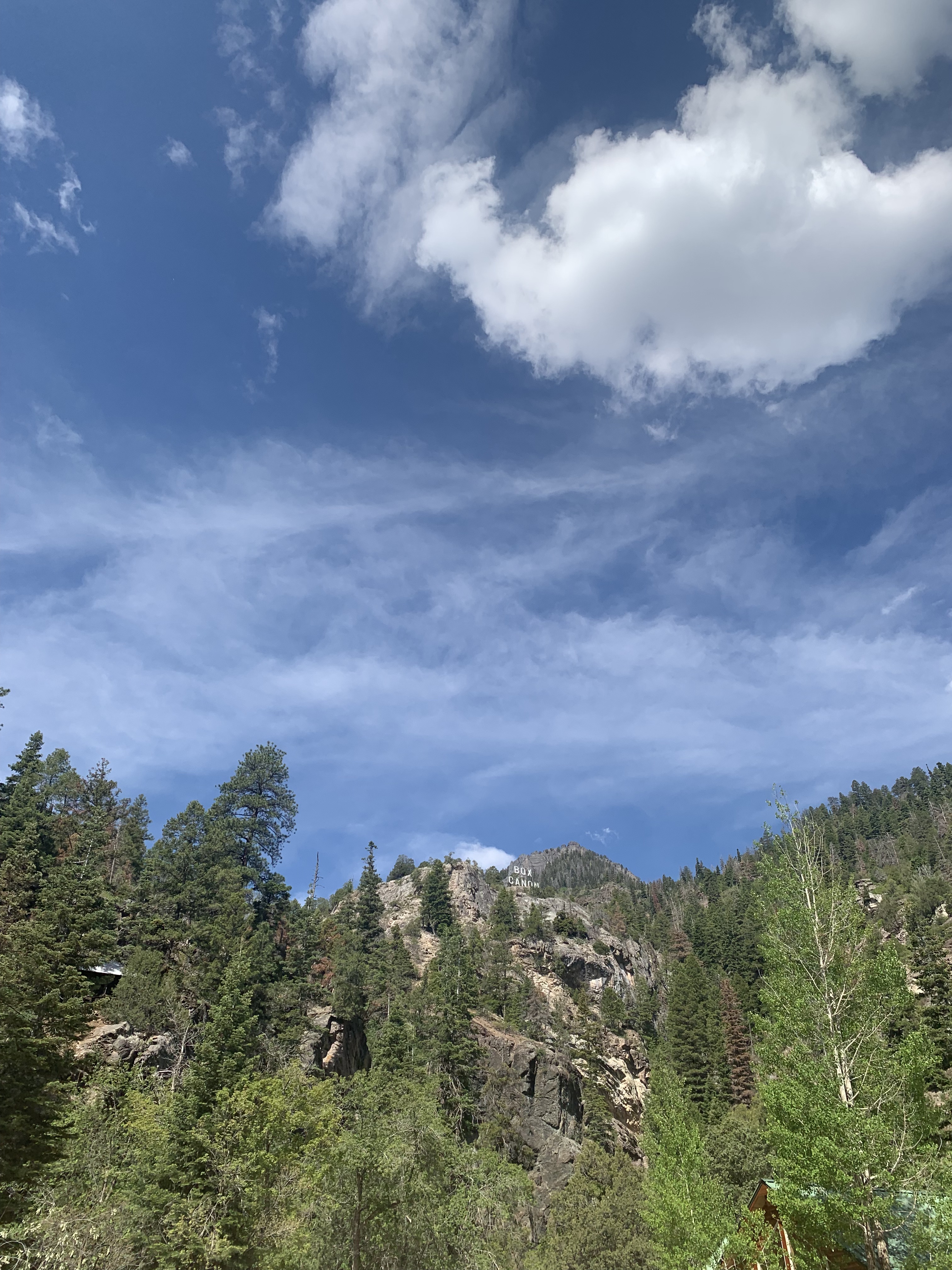
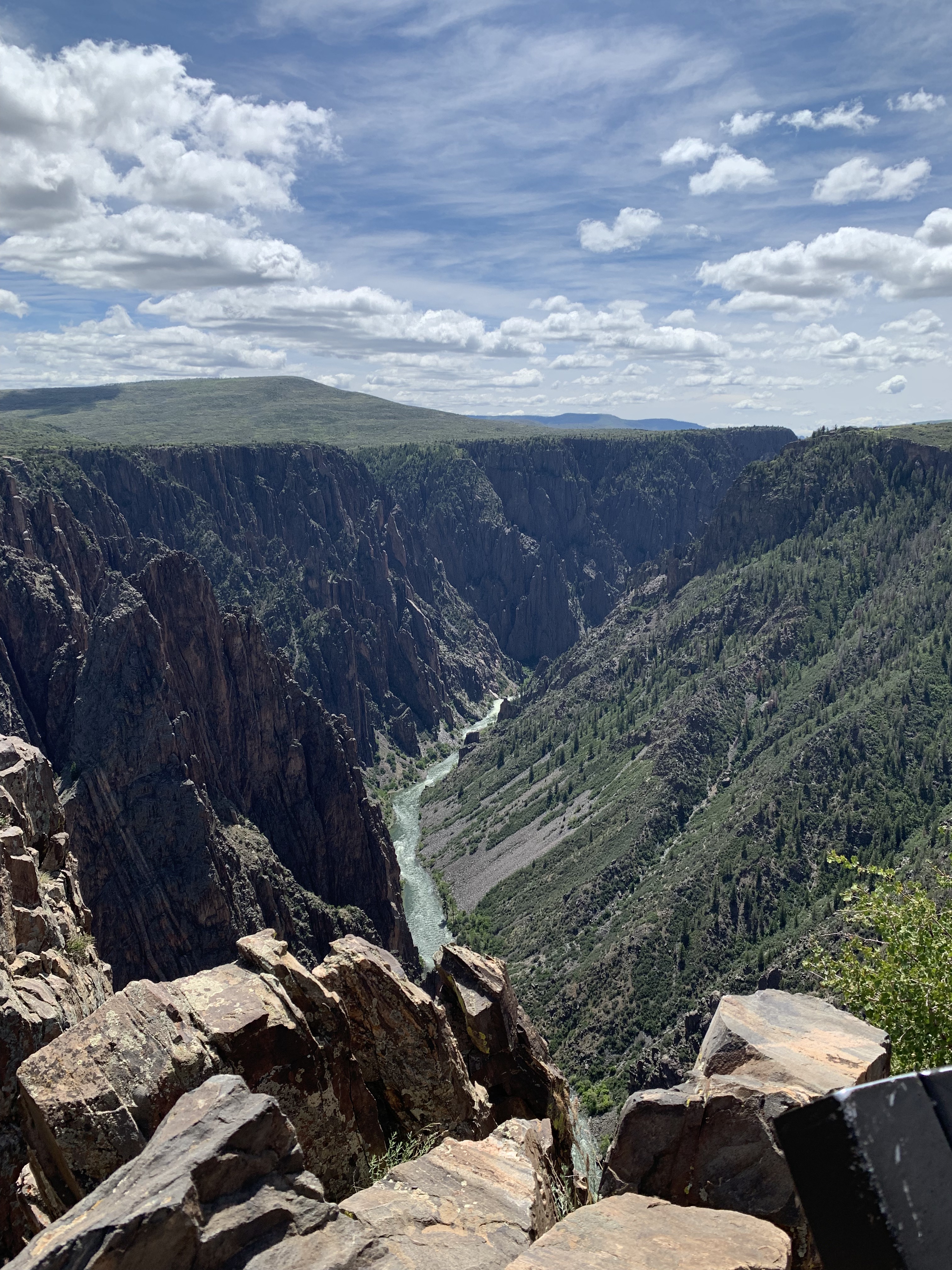
After how busy and hectic my sophomore year of college was, June has been a time to recharge in more ways than one. I went on a quiet vacation at the beginning of the month (Ouray and Black Canyon of the Gunnison—the latter is a very underrated national park, I highly recommend it!), and I’ve taken the rest of the month to…well, rest. I’ve tried to be on social media less and focus on art, writing, and generally nourishing my creativity. In preparation for Camp NaNoWriMo (I only ever do the July camp these days because November and April are both abysmally busy times for me now that I’m in college), I’ve decided to round out my sci-fi trilogy and write the first draft of book three; at this point, I’ve beefed up the outline like a grizzly bear before hibernation, so at least I’ll have some sense of direction…wish me luck!
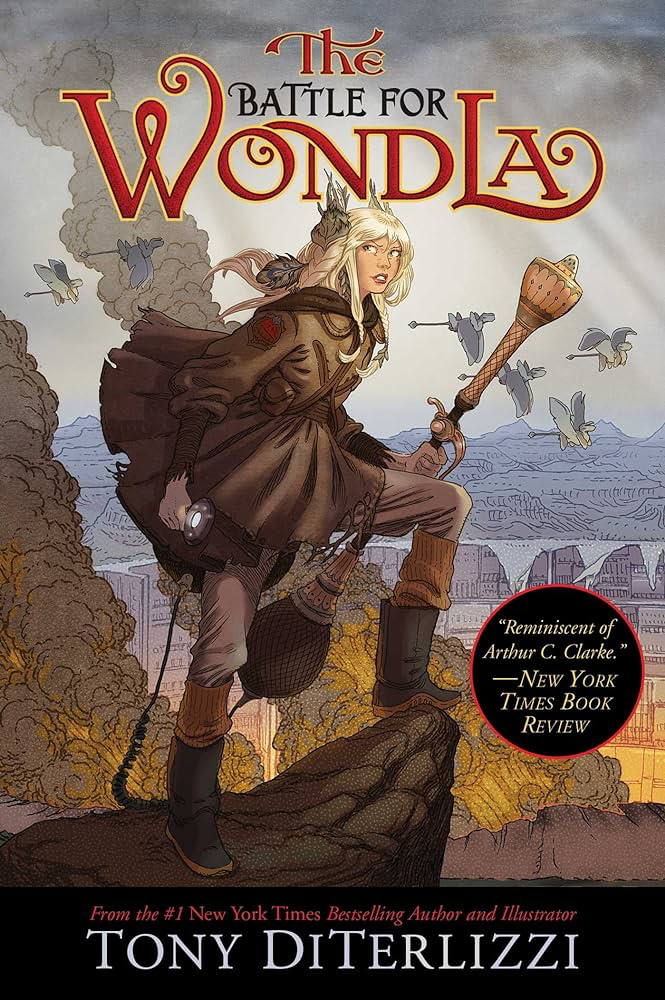
My reading month started out slower, and it’s had some dips, as always, but I ended up reading loads of fantastic queer books for pride month! Predictably, one of my vacation souvenirs wasn’t something related to where we went…no, I bought a copy of The Familiar at a local bookstore (support ’em!) knowing that it would take eons for my hold to arrive at the library. Worth it. I also figured it was as good a time as any to re-read my favorite series from when I was a kid—the WondLa trilogy. My verdict? It healed my soul and reinvigorated my creativity. Some kid’s books don’t age well, but WondLa never gets old.
Other than that, I’ve just been making art, playing guitar, going to pride (so much fun!), watching Hacks, Succession (nearly finished with season 1, and all it’s done is made me fear business majors even more than I already do), and…morbidly, Apple TV+’s new show that they decided to call WondLa. I’m three episodes in, and it’s like watching a train wreck. Expect a retrospective on the WondLa trilogy and possibly a review of…whatever that show is that definitely isn’t WondLa.
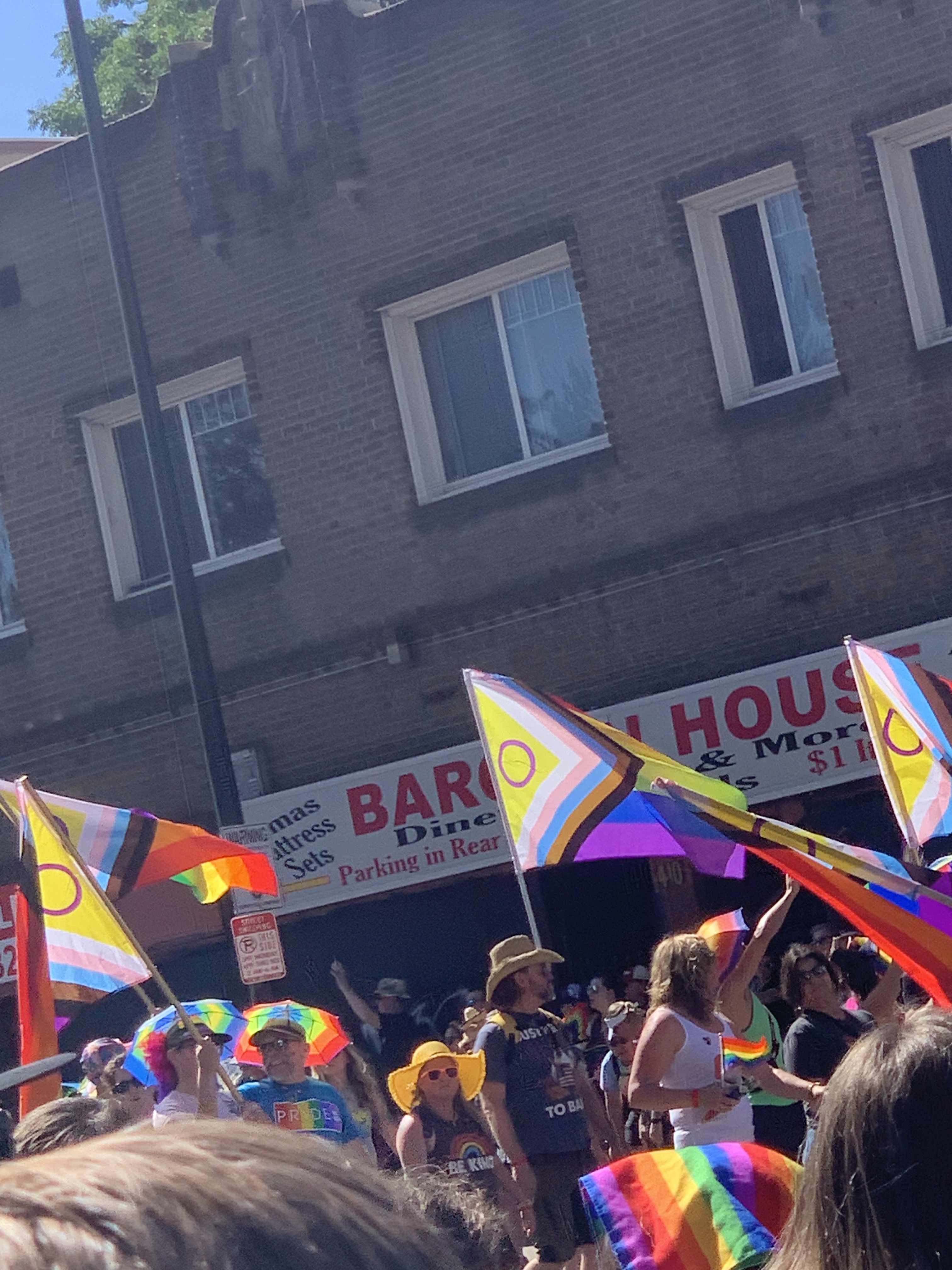
On a lighter note, photos from my vacation and pride:
OurayBlack Canyon of the Gunnison50th anniversary of Denver Pride!
(The bear on the title of the post is in honor of a bear we saw crossing the road in Black Canyon. Could also represent bears in general? Happy pride.)
READING AND BLOGGING:
I read 18 books this month! It’s been another relaxed reading month, and although I had a slump towards the end of the month, I read several incredible books for pride month!
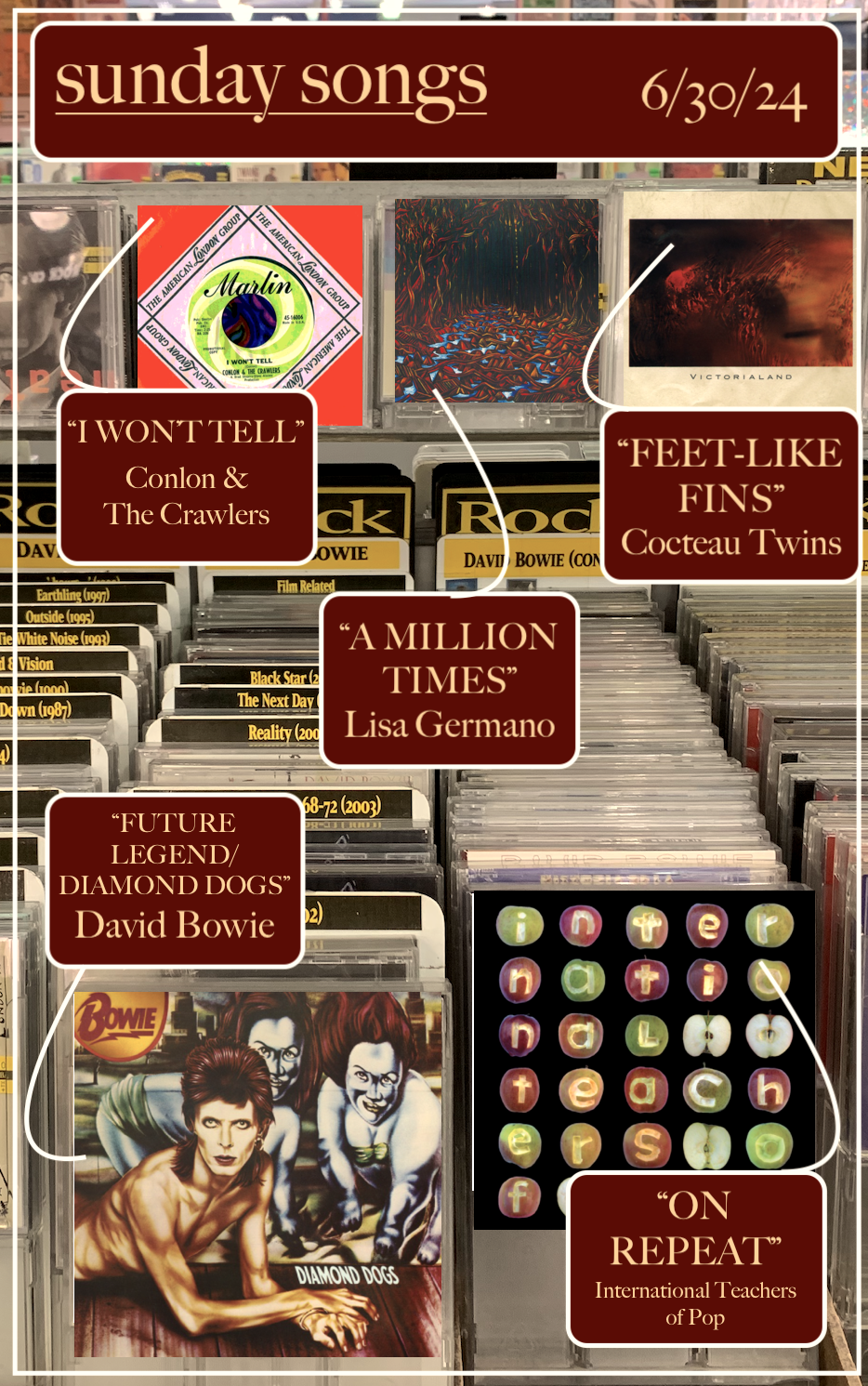
Another victim of me trying stubbornly to fit this into a color scheme, and also a victim of me trying to align my albums with what I draw on the whiteboard of my dorm. Listen, if the original sleeve was banned in the U.S., that generally means it’s a cool album cover, but probably not a good idea to be displayed for the world and my RA to see. And I was not about to draw David Bowie’s anatomically accurate canine lower half. Nah.
A time-proven rule: nobody does it like Bowie. You can put on all of the theater and spooky voices that you like, but nobody will ever replicate the sheer goosebumps that the intro to this album induces. The same can be said for many songs on this album (see: “Sweet Thing/Candidate/Sweet Thing [reprise]”), but I put “Future Legend” and “Diamond Dogs” together because the most enriching way to experience them is to experience them as a single song, and that single song is one of my favorite album intros of all time. Diamond Dogs is glam rock covered in flies—the lovelorn hope of Ziggy Stardust remains, but stinking of a world left in tatters, a hunk of rotting meat left for the mutant vultures in the searing desert heat. Cobbled from shreds of William S. Burroughs and Bowie’s failed attempt at a musical adaption of 1984, this album is a dystopia full of lust and peril. As a prologue, “Future Legend” is the height of Bowie’s theatricality. On anybody else, a dog’s howl, distorted as though bellowed through a plastic tube would feel like a feeble attempt to set a scene. Bowie, of course, makes it into the most bone-chilling alarm bell signaling the beginning of the end. It’s not the kind of sound any normal dog makes— it immediately triggers a sense of uncanny valley, a hair’s breadth away from being distinctly, evolutionarily wrong. His staticky narration is accompanied by synthy moans and high-pitched, delirious singsong beasts echoing “love me, love me!” as he tells of an alien landscape where all that remains of the 20th century is the excess it produced, the last monoliths that the mutant survivors of some horrific extinction now cling to. Panting dogs and drooling bloodsuckers lick their lips in the distance as Bowie lifts the curtain to declare this an era beyond the collapsed remnants of our sense of time. No month, no four-digit number to designate this hellscape: it is the year of the Diamond Dogs.
And “Diamond Dogs?” Hearing it for the first time while freshly 13 rearranged my molecular structure. In that moment, nobody had ever done anything as cool as that. It’s still true.
Because there will never be another album intro like this:
And in the death, as the last few corpses lay rotting on the slimy thoroughfare, The shutters lifted in inches in Temperance Building, high on Poacher’s Hill And red, mutant eyes gaze down on Hunger City. No more big wheels.
Fleas the size of rats sucked on rats the size of cats, And ten thousand peoploids split into small tribes, Coveting the highest of the sterile skyscrapers like packs of dogs assaulting the glass fronts of Love Me Avenue, Ripping and rewrapping mink and shiny silver fox, now legwarmers. Family badge of sapphire and cracked emerald. Any day now… The Year of the Diamond Dogs!
In terms of Co-Pilot, I end up focusing. more on Jim Noir, which…well, he has played a very prominent part in my musical life, but Leonore Wheatley’s musical ventures rarely get the praise they deserve. Wheatley’s talents extend to The Soundcarriers (big thank you to my brother for introducing me to them!), Co-Pilot (who released their incredible album Rotate almost a year ago!! Make some noise!!), and International Teachers of Pop, where she provides vocals alongside Katie Mason.
I’ve heard far too many bands who desperately want to market themselves as a second-coming of a certain era of music (We haven’t recovered from what Stranger Things did to shove the ’80s in everybody’s faces…I want out), but only end up sounding like plastic imitations. The key, which this school board of musicians has figured out, is not to set out to imitate. This sounds like a product that emerged from a desire to have fun and make catchy dance-pop and not try and sound like somebody more famous. Fun should be the prime motivation to make music, especially in a side project like this, but the bar’s low in such a hit-churning industry. You can hear Erasure and the Pet Shop Boys in every synthy buzz and flourish, but not because they set outto sound like them—it’s an homage, never an imitation. Mason and Wheatley’s harmonies center this pulsating track, built for booming bass and bouncing feet. (It really was a shame to see how lukewarm the crowd was in the video above—why are they barely dancing??) With lyrics swimming between existential dread and a desire for oblivious joy, “On Repeat” is the product an extensive pop study. Maybe the name is a touch presumptuous, but they’ve got the talent to back up their assertion, tongue-in-cheek or not.
…AND A BOOK TO GO WITH IT:
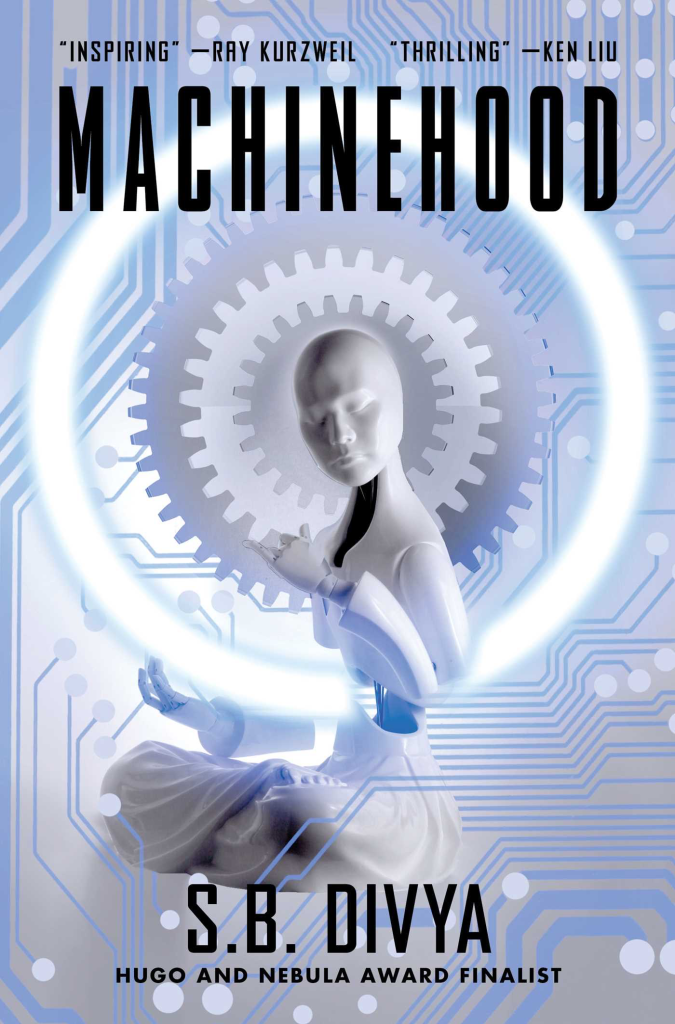
Machinehood – S.B. Divya – ooh! aah! capitalism! woo! woo! yeah! this economy cannot sustain human life! get funky!
Listen, I am BEGGING the Hacks fandom to do their stuff, because I can’t keep looping this song over and over on YouTube, and I don’t have a record player and therefore have no reason to snag the copies lingering on eBay…PLEASE. WE NEED TO GET THIS ON STREAMING. WHATEVER IT TAKES. DO YOUR STUFF!!!!!
“I Won’t Tell” was one of two one-off singles (the other being “You’re Comin’ On”) by Conlon & The Crawlers, an offshoot of The Nightcrawlers (top 10 band names that I totally want to steal for reasons that are totally not X-Men-related). From the looks of it, neither song went anywhere, and now the only remnants are floating around on eBay, and, thanks to some digging, a few eagle-eyed people on YouTube. All of this begs the question: how were they able to get this on Hacks? Somebody’s got a great record collection…unfortunately, the scene isn’t on YouTube, but it appears in Season 3, Episode 6, and briefly soundtracks a hilarious slo-mo of Ava and Deborah on a golf course, with Ava confidently strutting beside Deborah with her caddy vest on backwards.
The minute I heard it, I knew I had to hunt it down—it encapsulates a very distinct sound of the late-’60s that I just adore. It’s just deliciously jangly, from the opening riff (a reworked and arguably improved version of the opening to The Nightcrawlers’ “Little Black Egg”) to the almost banjo-like strum that builds the track’s backbone. Chuck Conlon’s butter-and-sugar voice spins the strings of “Little Black Egg” into a precocious, peculiar masterpiece—who would forget a song that opens with “A teaspoon holds more than a fork does/A long snail eats more than a short one?” This vibrant, jangly oddball is practically asking to be used for a tightly-shot Wes Anderson montage. Surely it’s obscure enough for him…
I’m not sure which direction I should go for next in terms of Lisa Germano’s discography. She has nine studio albums, two of which I’ve already listened to (Excerpts from a Love Circus and Slide). I know I’ll feel like a kicked puppy lying on a dirt road in the middle of nowhere after I listen to any given album, so chances are, it probably doesn’t matter where I start. Either way, on a whim, I dipped my toes into a handful of songs from her 2009 album Magic Neighbor. Many of the reviews have categorized it as having a childlike innocence juxtaposing the veil of darkness that never lifts from her discography, and there’s tangible strings of it stretched throughout. Even if you’ve dictionary-definition Been Through It like Germano has, I feel like you’d still have to have at least the tiniest mote of innocent glee—or humor—left in your soul to name a song “Kitty Train,” even if it’s a short instrumental break.
“A Million Times” has a childish glint to it, but childish here translates to complacency and toxicity; it feels like the emotional progression of “Small Heads,” musically twelve years down the line, but personally, only a handful. (At least…I hope so. I can only hope that the abusive bastard who inspired her to write any of the songs from Love Circus is just one guy, and that he got his comeuppance.) “Small Heads” acknowledges how unhappy she is in said relationship, but wryly admits that it’s not all the other party’s fault: “How convenient to forget/All the lies that you say/When you’re really really drunk…like me.” It’s a mutual kind of tangling, with both people ouroboros-ing themselves into their own minds so deeply that they’ve ceased to think of each other (“Did I ever think of you?/Did you ever think of me?/Probably not, with our heads in the clouds”), or, as Bowie might put it, “making love to [their] egos.” It’s all just fun and games, right? Whee! “What a lonely life!” she sings to the cheer of the crowd and dainty recorders.
Such fun and games echo through “A Million Times.” Said recorder has made a comeback, and all of the egg shakers and brushes in the background sound like remnants of rusty toys being disassembled. Just as childlike, Germano tosses the relationship across the room like a discarded doll, letting its limbs crumple now that she’s had her fun: “We fell in love and we were caught/Inside this game we call together/And it felt good until we found/We had more fun when we were strangers.” Every motion they go through is described in the same way that Ken tells Barbie “we’re girlfriend boyfriend,” smashing doll heads together to simulate kissing. Such kisses and games are a distraction from the inevitable implosion of their excuse for love—they’re so caught up in performing love that both of them have retreated into their own heads, convincing themselves, over and over, that they’re not sick of playing. It’s self-aware in the way that an arsonist is self-aware: they know that they’ve just burned down a building, but they’ll continue to set as many fires as they like. Germano seems to regress as she drags out her cry of “You can’t leave me/No, not really/We are happy with this misery/So we’ll start it all again/A million times, a million times.” Never before have I heard an accordion that sounds so distinctly ominous—the bellow of it as Germano’s lyrics get progressively poisonous might as well be the siren in a bomb shelter, a low, distant warning of disaster to come. “You can’t leave me” is simultaneously the rug of innocence being pulled out and the dread of pulling apart from someone who you know will collapse without you to parasitically cling to. Platonically, I’ve been the host/discarded toy in such situations, so for my sake and hers, I hope Germano’s since quit playing with her dollies. I’m willing to give her some leeway, since if she’s played up the eerie overtones in this song, she recognizes these patterns for the toxic mess they are.
Rounding out the month with yet another Cocteau Twins song…sorry, everybody. Get Victorialand‘ed, I guess. The only thing keeping me from swallowing this album in one gulp like some kind of deep-sea abomination of god is knowing that this is the perfect album for winter, what with the Artic and Antarctic inspiration.
Situated near the end of the album, “Feet-like Fins” is a dewy spiderweb of reverb that glitters in waning sunlight through gray clouds. Crested by soft cymbal crescendos, you can never pick out a note from the track that isn’t vibrating like raindrops on a speaker. Even the bongos that gently steady the melody never truly feel percussive, nothing but droplets sending ripples out into the frigid water. Like “Aikea-Guinea,” “Feet-like Fins” is distinctly watery, but where the former feels like being tossed through the waters of time, this track is a gradual descent into the ocean, watching the last threads of silky light disappear into the shallows as you’re pulled downwards. Judging from the “Frozen World,”Living Planet-inspired patchwork of the album, the feet-like fins likely belonged to the various seals that appear throughout the episode: crab-eater seals, fur seals, and elephant seals; Indeed, the sleek movements of this track mirror their bubble-trailing paths through the water as they hunt for prey.
…AND A BOOK TO GO WITH IT:
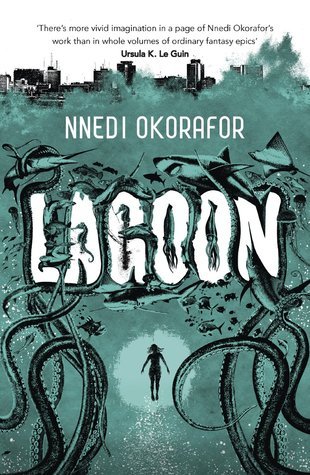
Lagoon – Nnedi Okorafor – a mysterious, alien lifeform stretches its feelers and emerges from the ocean…
Since this post consists entirely of songs, consider all of them to be today’s song.
That’s it for this week’s Sunday Songs! Have a wonderful rest of your day, and take care of yourselves!
I’ve been trying to find and read more translated books, but in my hunt, I’d completely forgotten that I’d put The Traveling Cat Chronicles on my TBR over four years ago. Any story about a cat is right up my alley (yes, I was a Warriors kid back in the day, why do you ask?), but now that I’ve read this one, I’ve concluded that it’s an essential read for all cat lovers—and anyone who’s ever experienced the unbreakable bond of having a special pet.
Ever since Satoru rescued a stray cat, from the brink of death, they have been inseparable from day one as cat and owner. Nana, named for his crooked tail that looks like the number seven, loves to spend time with Satoru. But due to circumstances that Nana has yet to comprehend, Satoru can no longer take care of his beloved cat. In an attempt to find an adequate home for Nana, human and cat go on a roadtrip in a van across Japan, visiting childhood friends in order to find a suitable candidate. On this trip of a lifetime, Nana will discover things beyond his comprehension—and a love for his owner that will only grow deeper.
TW/CW: illness, animal injury, loss of loved ones (past)
Goodness…this was the sweetest book I’ve read in a long time. It’s essential reading for anybody who’s ever owned and loved a cat, but also for anyone who has ever felt the sacred connection of a good pet. It’s full of laughs, but tugs at the heartstrings in a perfect balance—it’s a wholly human book, but a wholly feline one as well.
Having a good cat voice in a novel aimed mainly at adults is not an easy task. Especially since this book was first published in 2012, it would have been far too easy to go down the “I can haz cheezburger, hooman?” route and just derail the emotional core of the narrative. But Nana’s voice was hysterical, and not in a forced way at all. It’s clearly the voice of a cat from a longtime cat owner; Nana is very particular about everything, doesn’t like change, doesn’t like being petted the wrong way, and is very picky about his food. When Satoru makes an assumption about his habits, he openly derails the flow of the story just so he can clear the air and admit that no, he does not, in fact, like those mouse toys. What made it so funny was how believable it is—no matter the temperament of the cats you may have owned, you’ve 100% owned a cat like Nana. I found myself thinking of my sweet girl Hobbes, who has a similarly no-nonsense attitude about where and when she’s petted and likes to go after small birds but doesn’t kill them, leaving them to fly around the house and shed feathers everywhere She’s an angel, obviously.
Even though parts of the narrative switch to the perspectives of the human characters, Nana’s perspective was what made the heart of The Traveling Cat Chronicles. Throughout their trip through Japan, I loved seeing all of these new sights through Nana’s feline eyes, whether it was seeing the ocean (very bad) and Mt. Fuji (very good) for the first time or meeting Satoru’s many childhood friends. Perceiving all of this novelty through the narration of a cat wasn’t necessarily new to me, given my reading habits from ages 7-12, but for an adult novel, I loved seeing this perspective with more maturity, but the same amount of humor. Hearing Nana describe things as simple as the music coming from Satoru’s car radio (how does this cat come up with such eloquent metaphors?) to the chatter of the dogs on the boat towards the end of the novel in ways that felt so new, but wholly feline—and for that, I have to give so much praise to Hiro Arikawa; some of it was humorous, but some of these observations felt heartwarming in that they felt real, just the passing thoughts of a smaller animal in a big, big world.
However, Nana’s voice isn’t the entire novel—The Traveling Cat Chronicles also sees the backstories of not just its main character, Satoru, but of the childhood friends and family members that he visits. Nana was the star of the show, but some of these flashback sequences served to deepen the emotional core of the novel, especially in the case of Satoru; from his troubled childhood to his adolescence, we see Satoru’s life through other people’s eyes. Even beyond Nana’s narration, we only ever get glimpses Satoru, one of the novel’s two protagonists, entirely through lenses other than his own. Another strength was that these flashbacks were spaced apart perfectly: frequently enough that we could get fragments of Satoru’s backstory and understand it in concert with the current timeline, but far enough apart that they didn’t strangle the story. And each flashback was emotional in its own right, no matter how momentous or insignificant each vignette was. Each one felt authentic in its focus—in our minds, something as fleeting as sneaking off on a field trip weighs as much as a death in the family, and that was exactly how Arikawa told these stories.
I’ll refrain from spoiling the ending (although you can easily predict it from a few hints scattered throughout the novel), but it doesn’t make it any less heartbreaking—and beautiful. The cat’s-eye view on the events unfolding before Nana make them all the more harrowing, simply because you can’t quite explain these things to a cat, even if they understand in the abstract that something’s wrong. For cats, we are seemingly immortal monoliths until we aren’t—and it’s confusing for a creature that can understand our language, but just barely misses what makes us what we are. But beyond that, it reminds us of the inseparable connections between us and our pets. Our lives are short, but the lives of our cats, dogs, and other animals are even shorter; yet still, the mark that they leave on our lives, just like our friends, is a mark that cannot be replicated or replaced.
As I read the end of The Traveling Cat Chronicles, I was reminded of my Anakin, who passed about two months ago. He’d been in my life since I was a little kid, and by the time he peacefully passed at the ripe old age of 17, I was almost finished with my sophomore year of college. There will never be another cat quite like him, in all of his crusty, screamy, and truly lovable glory. His absence has been harder for me to take than some of my other childhood pets that have passed; when his lifelong companion Padmé died, I grieved heavily, but I had Anakin there to console me. When I came back home for the first time after he passed, I expected to see him in the guest room. Two months later, and I still peer over at the sofa, expecting him to be curled up between the cushions, fitfully sleeping in a pile of his own shedded fur. But that is the mark that he’s left on my life—impermanent, but unlike any other creature. Just as we must look to the small pleasures of life, we, like Satoru and Nana, must appreciate the impact of the smallest lifetimes on our hearts.
All in all, a cat-lover’s dream book which balances humor and heart in equal measure. 5 stars!
The Traveling Cat Chronicles is not part of a series, but Hiro Arikawa has also written a companion book of short stories, The Goodbye Cat. She is also the author of several other novels that have been translated into multiple languages.
Today’s song:
yeah this has a chokehold on me yet again 🕺
That’s it for this week’s Book Review Tuesday! Have a wonderful rest of your day, and take care of yourselves!
Unfortunately, I probably won’t be able to write up a book review or a Sunday Songs post this week, as I’m days away from finals. I started this post in advance, as I do with all of my wrap-ups, so that’s why I managed to put it out today. But from today on, I’ll be (mostly) radio silent for the next week or so. Wish me luck…
Let’s begin, shall we?
GENERAL THOUGHTS:
April’s been its fair share of crazy, what with job interviews, preparing for finals, and wrapping up my sophomore year of college. (How’d that happen??) It’s definitely taken a toll on my reading and blogging, but I’ve still had some free time in between. Said free time has been surprisingly fruitful this month—I finished up the 20,000 word novella that I had to write for one of my classes, and I had a solid weekend where I was able to brainstorm quite a bit for my main sci-fi trilogy. I’d still be doing said brainstorming if not for…y’know, studying for an astronomy final, but once I’m free of that, I’ll be back to making my outline even more excessively long. I’m almost there…
As I said, I had less time to read than I have in the past few months, but strangely, as far as ratings go, it’s been my most positive month. I say “strangely” because I felt like I was in a stint of good, but not great books for at least the first third of April. However, it picked up significantly, partially aided from a particularly lucky haul from Barnes & Noble with a dear friend of mine.
Other than that, I’ve just been watching The Bear, Taskmaster, and Ripley (how and why is Andrew Scott so good at being SO devious), writing when I can, and preparing for the end of the semester.
Oh, and remember how (hesitantly) excited I was about the fact that The Search for WondLa was being adapted into a TV show? We’ve just gotten the first look, and…
…not to be dramatic, but this is my villain origin story. This is my Joker arc. I’m beyond livid. They drained it. They drained it of the artistry and creativity. And the love. They made Muthr into one of those Playmobil people. Why is Otto furry and squishy? Why does Rovender have those front-facing predator eyes? Where are Eva Nine’s signature braids? Where’s the soul?
Yeah! I’m fine. They just turned my childhood into a sad, lifeless husk of a 3D animated TV show…
READING AND BLOGGING:
I read 15 books this month! Somehow, I feel like I was in a slump of good but not remarkable books for at least a third of the month, but somehow, I got through a whole month with no 2 or 1 star reads? That’s a new one for me.
imagine making Poor Things (2023) and failing to get across in two and a half hours what this song does in just under four minutes………couldn’t be me
xtc my beloved
as much as we praise Björk, I feel like she doesn’t get enough credit for how deeply romantic she can be…good god I feel so sappy and squishy listening to this song, it feels so good
david bowie make a song from the ’90s that isn’t criminally underrated challenge (impossible)
Today’s song:
hey, if we’re talking about keeping my inner middle schooler happy, at least this album was fantastic
That’s it for this month in blogging! Have a wonderful rest of your day, and take care of yourselves!
Happy Sunday, bibliophiles! I hope this week has treated you well.
This week: holding back on my thoughts on my most anticipated album of the year and a movie that makes me angrier than I’d like to admit, but just for the sake of showcasing the songs I meant to showcase, I kept that short.
Sometime when I’m out of the finals woods, mark my words: there will be a review of All Born Screaming, because, predictably, I have Thoughts. But, in the interest of not making myself sound like a broken record a few weeks in the future, I’ll keep it snappy. All Born Screaming is a great album, but…not in the way that I expected it to be. What it isn’t, however, is the hard rock album that it was advertised as. It’s much less cohesive than I’ve come to expect from St. Vincent, but for the most part, the individual songs that were thrown into this unexpected stew are good—we’ve got the world’s most perfect pairing for “Marrow” (Annie I am BEGGING you to play these two back to back live), “Five Years” 2: Electric Boogaloo, and tons of other elements that hit you from beyond left field. It’s a mess, but I’m starting to feel like that’s almost the point: All Born Screaming is the musical form of a mental breakdown, and it certainly sounds like it. I swear that’s a compliment. Mostly. Some of it’s dissonant in a way that doesn’t seem all the way intentional. But that’s a discussion for when I break down the whole album.
For now, I’m shifting the focus to my favorite of the new tracks. “Sweetest Fruit” is, like the title suggests, genuinely delicious to listen to. The main synth line that anchors it balloons and blossoms like polyps, or a sped-up version of said sweet fruit ripening on the branch. In a quieter, science fiction world, that sound feels like an alarm, a reminder—maybe that the laundry’s done, or that your spaceship is alerting you to the fact that you’re close to docking at the planet of your choice. But unlike MASSEDUCTION, where such synths were the stiff, Barbie pink foundation upon which all the tracks were built, it’s woven through with lightning strikes of her signature shredding, jaggedly slicing into the synth-pop frame just when you start to feel relaxed. Now, for my token mention of St. Vincent’s godly self-titled record: All Born Screaming is far less organized than it, but sonically, this is the closest it’s been in a decade; it’s not fully glossy pop like MASSEDUCTION, but there’s plenty of dystopian franticness undercutting what would otherwise be neat. And the synthy, shiny feel is the perfect medium for, at least, part of what “Sweetest Fruit” was meant to do: for Clark, it partially functioned as a tribute to the late SOPHIE, who Clark has said that she “admired from afar” for quite some time. Most of the mention of her is reserved to the first verse and doesn’t continue, but some took it as capitalizing on her death; if the whole song was about it, I could almost see it, but it’s simply a retelling of a too-soon death; in 2021, SOPHIE fell to her death while watching the moon on the roof. I don’t mean to rush to defend everything that she does (because the album cover hasn’t stopped being tone-deaf, and I’m incredibly disappointed that she didn’t at least acknowledge that), but this seems like a stretch. It isn’t like this is anything new for Clark—what was “The Melting of the Sun” if not an extended tribute to the women who she loved and who inspired her, dead and alive? I remember hearing, back when MASSEDUCTION was released, that she’d scrapped several songs that were tributes to David Bowie; I can see why that would have felt like capitalization as well, since MASSEDUCTION was released a year after his death, but there’s something to be said for connecting artists across music, whether the other hears it or not—we are all indebted to so many people for the styles we create, as much as they are our own. And if there were any track to eulogize SOPHIE, it would have to be “Sweetest Fruit,” coated with the same, shining gloss with which SOPHIE made a name for herself.
…AND A BOOK TO GO WITH IT:
Drunk on All Your Strange New Words – Eddie Robson – in terms of how I visualized both the look of the Logi and the sensation of hearing their language in your head, it aligns neatly with the globular, polyp-y synths throughout this song.
This song does in less than four minutes what Poor Things failed to do in two and a half hours. I’m not saying that I could do better than an award-winning director, but at this point…skill issue. Lisa Germano did all that without the gratuitous shots of Emma Stone’s feet as her character learns how to masturbate…at the mental age of a toddler.
Can you tell I had beef with Poor Things?
Now that I’ve got that off my chest, let’s shift the focus to a tale of feminine identity that’s actually worthy of praise. I haven’t listened to Lisa Germano’s debut, the ironically-titled Happiness, in full, but its clear from the start that she came here to make unsettling music, and that’s exactly what she made a career out of, as criminally underrated as she continues to be. Happiness, though steeped in solemn, eyes-averted confessions (see: the hauntingly beautiful “The Darkest Night Of All,”which I talked about back in October), hasn’t yet gone off the deep end in terms of said unsettling quality just yet—it would be another few years before we got into the “mom, come pick me up, I’m scared” atmosphere that came to dominate her sound. Yet “The Dresses Song” unsettles in its flatness and complacency. Not quite at the shivering, clenched waver that I’ve come to love in her voice, Germano instead sings much of “The Dresses Song” in a flat affect, dull and sucked dry of emotion. Amidst the bounce of tapestry-weaving bass, clinking tambourines, and the kind of folksy violins that would suggest somebody’s about to break out into a jig, Germano seems to sit cross-legged as everything happens around her, but never to her: “You make me think about nothing/It feels so good like that/You look at me so fragile.” Germano sings of the powerlessness of slipping into a loss of autonomy; like the doll’s head on the album cover, she sings as though she’s being dragged through the dirt by a child, dressed up and posed for tea parties at will, outwardly welcoming but inwardly dreading the surveillance of her body. Every repetition of “you make me wanna wear dresses” is uttered as a twist of the knife, convincing herself that oh, it’s not so bad, and yet her hollow, bird-bones voice strips the illusion bare—the illusion that, like in the music video, that’s she’s okay with being paraded around in costume like a child. “The Dresses Song” comes from a place of the darkest kind of complacency—the period where you’re stuck at the bottom of an empty well, but you’ve convinced yourself that the polluted water trickling down goes down just fine—at least it’s something to drink.
Isn’t it so lovely to grow up where every inch of your body is policed just because of your gender? Surely that won’t have mental repercussions further down the line. Surely, one Yorgos Lanthimos would at least somewhat understand that and realize that a) discovering one’s sexuality isn’t the be-all, end-all of what makes a liberated woman, and b) that said depiction of sexual exploitation was so constant and gratuitous that it became exploitative in and of itself. Surely.
I’m honestly surprised that Noah Hawley hasn’t come across Melody’s Echo Chamber (that we know of), because…come on. This was made for Legion. It’s not even psychedelic inspiration anymore—it’s purely psychedelic in a way that’s not just trying to recreate a sound from the sixties.
Like Tame Impala, it just seems like the next generation of psych-rock. So it was not a surprise in the slightest when I found out that Melody’s Echo Chamber’s self titled record (pushes glasses up bridge of nose) was produced by Kevin Parker himself. (Did you know that Tame Impala was just one guy? It’s just one guy. Can you believe it? I bet you didn’t know that. It’s just one—[gets pulled offstage by a comically large cane]) “Some Time Alone, Alone” has distortion so thick that you practically have to wade through it with a hazmat suit—it’s hard to describe the atmosphere that Melody Prochet and Kevin Parker have created with any words other than thick. It’s like sticking your arm into rainforest greenery, endlessly pushing aside massive fronds just to find the pulse of light gleaming at the heart of the glen. Every riff and rhythm circles into each other like a diagram of an atom, forever orbiting the warm nucleus—Prochet’s voice, which has the feel of Nina Persson if she happened to stumble upon the blue drugs from Legion, suspended in the ether. It’s gone beyond sounding like the ’60s into something truly representative of how the genre has evolved: it sounds so modern, but never in a polished way. It’s a child nurtured by the ’60s, for sure, but there was no place it could have gestated other than a 21st-century test tube.
…AND A BOOK TO GO WITH IT:
The Shamshine Blind – Paz Pardo – lost in a tangled conspiracy—and the confines of your mind, brought on by artificially-induced emotions.
Nothing I could say could complicate this song or shed new light on it, really, and certainly not when we’re living it, and have been living it on and off at least since the ’80s. Probably further. XTC always seemed to be attuned to the needle of the social climate, and save for a handful of outdated political references here and there, they’ve stood steadfast against the battering of the waters of time. “Ain’t democracy wonderful?/Them Russians can’t win!/Ain’t democracy wonderful?/Lets us vote someone like that in.” Certainly feels like King Conscience and Queen Caring have been rolling in their graves for quite some time…ah, no, surely, we don’t need to put our heads together and solve pressing issues like gun violence, climate change, genocide, and a nation bent on killing its queer children, no way! We’ve got to call the national guard on the student protestors using their right to free speech to call attention to the horrific Palestinian genocide that our tax dollars have basically been funding! Ain’t democracy wonderful?
…AND A BOOK TO GO WITH IT:
1984 – George Orwell – you could really slot this one in with any given dystopia, but this novel was the blueprint—and the dirge-like feel of “Here Comes President Kill Again” certainly fits in.
If there’s anybody who’s intimately familiar with strange phenomena, in whichever meaning you take the phrase, it’s Kate Bush. How else does one write the most horrifying song about being turned into a kite against your will and make it so groovy?
Most of my enjoyment of The Kick Inside remains dominated by “Them Heavy People,”“Wuthering Heights,” and the aforementioned “Kite,” but ever so often, another track rises back from the ether, summoned by the erratic will of my shuffle. It’s easy to lump “Strange Phenomena” into that very specific breed of early Kate Bush where it’s all swinging-from-the-curtains theatre, and…yeah, rediscovery didn’t erase that quality (see: the video linked above), but it made me remember why Kate Bush (mostly) gets it right. Centered around the concept of what Bush described as “how coincidences cluster together,” it has the starry eyes of an ingenue as piano notes rise and fall propelled by wind from a fan, made to make her hair billow. (Apparently it’s not centered around getting your period, despite the opening: “Soon it will be the phase of the moon/When people tune in/Every girl knows about the punctual blues.” The only thing convincing me of anything else than the period reading of that line is the “punctual” part. Punctual my ass.) “We can all recall instances,” she said to Music Talk in 1978, “when we have been thinking about a particular person and then have met a mutual friend who—totally unprompted—will begin talking about that person.” It’s an unabashed celebration of whatever it is, that unknowable part of the brain or simply a truth of the unknowable universe, reveling in the love that we can glean from ordinary things. I can’t think of a much happier outlook to life that Bush’s declaration that “we are surrounded by strange phenomena,” whether or not you believe that something is pulling the strings to bring them together. For once, the theatre doesn’t come off as silly or overly self-important—it feels like a calculated response to the joyous puddles that we leap through as we move through this life.
…AND A BOOK TO GO WITH IT:
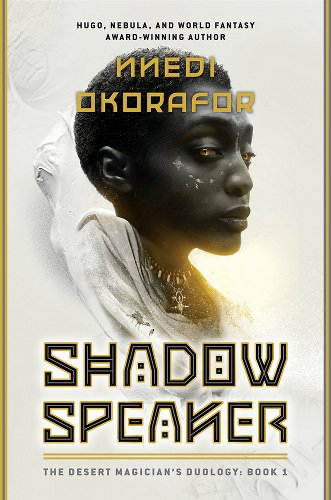
Shadow Speaker – Nnedi Okorafor – strange phenomena aplenty, whether it’s friends in unexpected places or the mutation of the Earth itself.
Since this post consists entirely of songs, consider all of them to be today’s song.
That’s it for this week’s Sunday Songs! Have a wonderful rest of your day, and take care of yourselves!
I enjoyed Hafsah Faizal’s Sands of Arawiya duology when it came out, but when I heard that she was doing a fantasy heist novel with vampires and tea involved…yep. I’m in. No questions asked. And like her previous books, A Tempest of Tea was full of heart, humor, and more than a little blood.
Arthie Casimir runs a tight ship. By day, she runs a tearoom, but as soon as night falls, it’s a hub for vampires. It’s her only livelihood, and the one thing keeping her off the streets. But her secret is slowly spilling out—and the only way to keep it under wraps—and running in the first place—is to make a deal with some of the most dangerous vampires in the city. And infiltrating their inner circles isn’t a job for just one person. With a ragtag crew at her back, Arthie finally has an in—but will they be able to get out in one piece?
TW/CW: loss of loved ones (past), blood, gore, violence, themes of colonialism, racism, human trafficking/kidnapping (past), fire
Everybody, say it with me: every YA fantasy novel with an ensemble cast and a heist plot isn’t ripping off Six of Crows! Every YA fantasy novel with an ensemble cast and a heist plot isn’t ripping off Six of Crows!
Sure, the inspiration is there (it’s hard not to be inspired by Leigh Bardugo, after all), but like The Gilded Wolves or Into the Crooked Place, the similarities end with a fantasy heist plot with multiple POVs. (The same cannot be said for Among Thieves. BOOOOOO.) I already had high hopes that Hafsah Faizal had the skill to pull off a fantasy heist of her own, and she more than delivered—A Tempest of Tea was nothing short of a delight from start to finish.
Hafsah Faizal has a knack for creating lovable characters, the kind that easily bounce off one another and produce no shortage of genuinely clever banter. I’m glad to say that this quality carried over tenfold into A Tempest of Tea! Arthie was such a compelling protagonist to follow; her wit and determination made her the perfect mastermind for the Athereum heist, and her charm made every line of dialogue a treat. Her relationship with the equally charming Jin made for a pair with instant chemistry—they were similar enough that they meshed with each other excellently, but different enough to make them unique assets to the team that they were building. Flick, though the least developed of the three, was just as compelling—I find myself wanting so much more of her backstory! I imagine we’ll get more of that in book 2, but having that part of her somewhat hidden gave her so much more appeal, especially given that she was instrumental to the heist.
The setting was equally lovable in all of its lush descriptions! Already, it’s just pure fun to begin with—a historical, London-like setting with vampires embedded in the culture—what’s not to like? There’s really not a whole lot of magic, but just by introducing vampires and having them affect Arthie’s world in the ways that they did made A Tempest of Tea so much fun to pick apart. A lot of those shifts were evident in the changes Arthie made to her teahouse (and bloodhouse) when night fell—subtle hints like those made the world feel so much more real—and under a very palpable strain. The vampires themselves weren’t the most original take on vampires I’ve ever seen (not really much to distinguish them from any other vampire), but Faizal’s way of writing them is what made them stand out—they were often alluring, but in a way where the predatory side of them was transparent, but their influence of the characters was as well.
Part of why I was so excited for Faizal to do a heist novel was that her style seems like it was made for that all along. She has such a cinematic, action-packed writing style that made the Sands of Arawiya books such an adventure. It seems like more years of writing experience under her belt have benefitted her greatly—all that time honing her writing made A Tempest of Tea a finely crafted heist novel! All of the beats were there, and though they were familiar, Faizal’s writing practically jumps off the page, making the atmosphere seep through the ink and drag you right along with Arthie and her band of outcasts and criminals. There’s tons of well-choreographed action, but just the right amount that it didn’t overwhelm the narrative. Up until the ending (more on that later), the pacing was similarly excellent—the balance of character development/backstory, worldbuilding, and delicately constructing the plot made for a book that I had to force myself to not read in one sitting.
However, my only major issue—and the only thing keeping me from giving it the full four stars—is how the culmination of the heist was executed. We got all of the tension of sneaking into the Athereum and some of the confrontation, but the execution of it felt incredibly rushed. I could almost stretch my suspense of disbelief enough to side with Faizal and say that it was supposed to feel like a blur, but that’s reaching, even for me. There were far too many twists and turns crammed into a single scene, and for all of the somewhat quiet scenes that went on earlier in the novel, I could have used some more page space to spread all of these events out. It was discombobulating, but not in a way that felt stylistic or intentional in any way. It also dampened the emotional impact of the ending—we’d been going so fast that I barely registered that the book had actually ended when it did.
All in all, an action-packed heist fantasy that faltered in some execution at the end, but flourished in its cinematic writing and characters. 3.75 stars, rounded up to 4!
A Tempest of Tea is the first book in the Blood and Tea duology, with an untitled sequel tentatively slated for release in 2025. Hafsah Faizal is also the author of the Sands of Arawiya duology (We Hunt the Flame and We Free the Stars), and has contributed short stories to the anthologies Eternally Yours and The Grimoire of Grave Fates.
Today’s song:
That’s it for this week’s Book Review Tuesday! Have a wonderful rest of your day, and take care of yourselves!
Apologies for the lack of Sunday Songs last week; the only reason I was able to get the other two posts I made last week was because they were both at least 95% pre-written—otherwise, they would have been gone, reduced to atoms, by the absolute chaos hell week of pre-finals. (Why is the period right before finals always the worst? No, it’s…no, that’s just coming back from break and having to Do Things. Yeah.) Either way, that time has given me some space to think about a change that I’ve been kicking around for a bit—adding some more to my Sunday Songs. Although these posts were originally inspired by my brother, it’s really been a fruitful experience to write about music more—The Bookish Mutant is still a book blog, but I’d be remiss if I denied that part of me. And yet…the books always come back. It’s in my nature. So now, you get your songs with a book paired to each—similarities in plot, similarities in vibes, or just similarities that bounced around my head for no reason other than free association. Bon appetit!
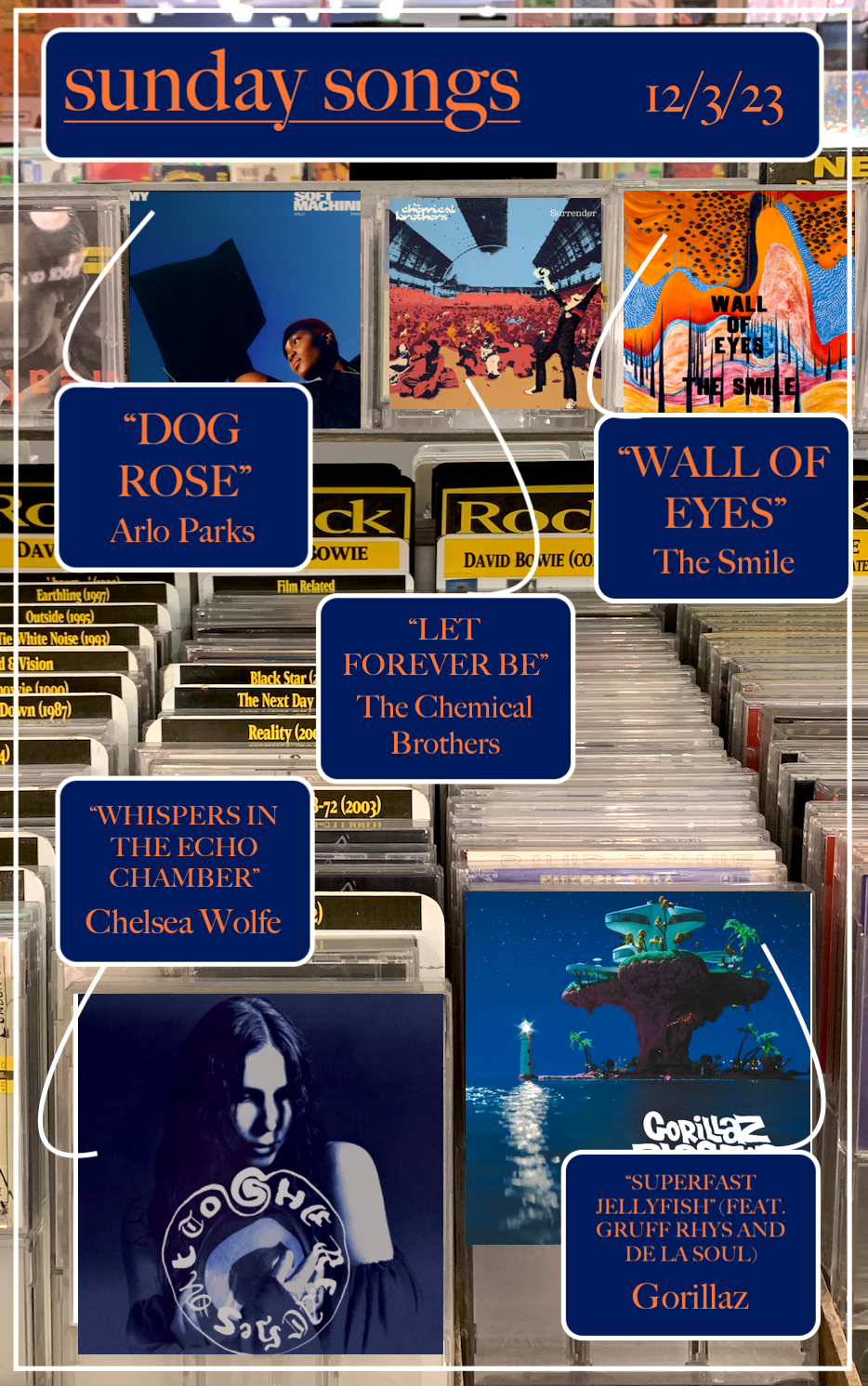
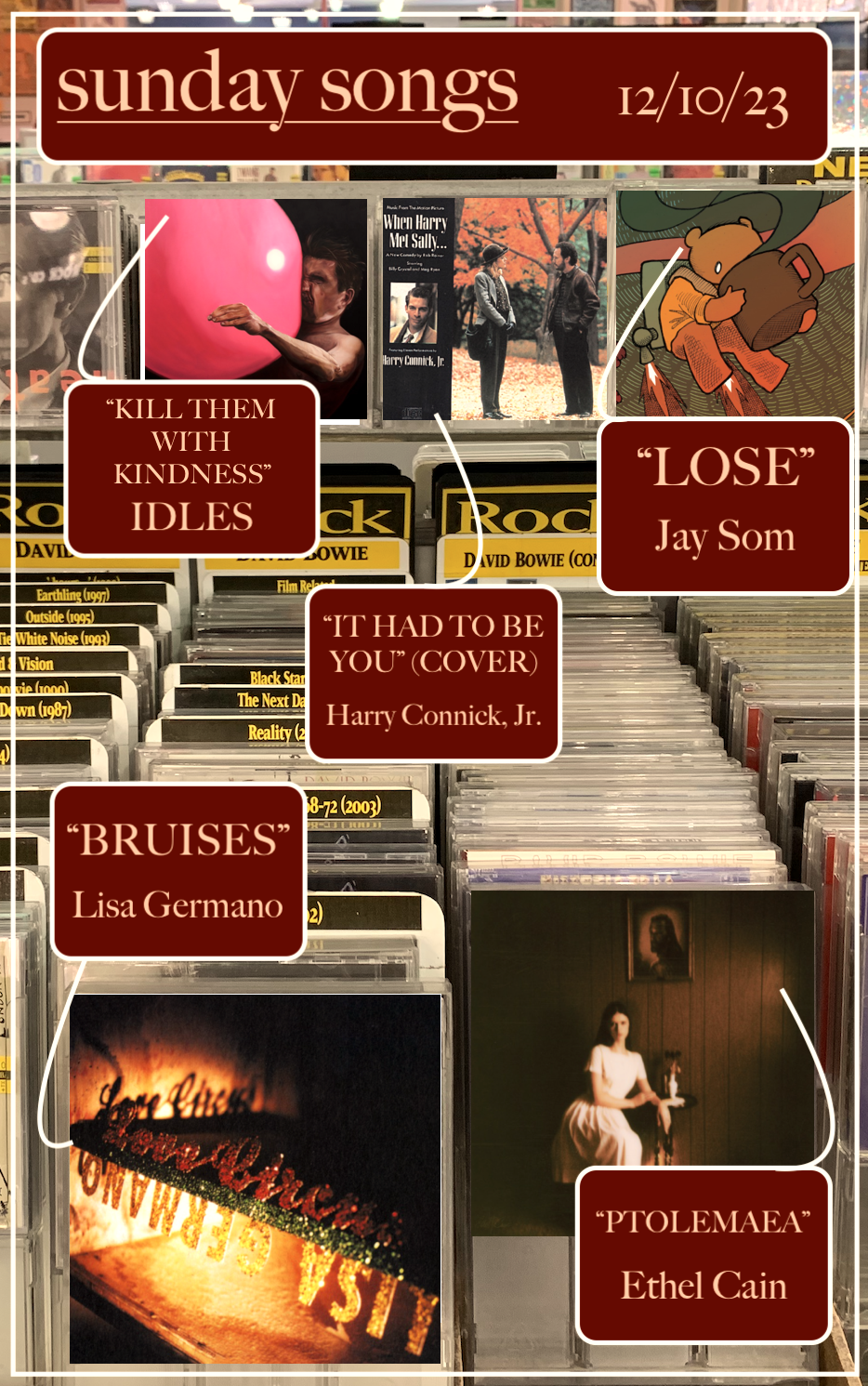
I so wanted to talk about last week’s songs, but as I said, last week was chaos, so I never got the time to write anything about them. But because they’re still fantastic songs, have them + last week’s graphic:
I’ve only listened to two full Lisa Germano albums (Excerpts from a Love Circus, where this song is from, and its follow-up, Slide), and I’ve discovered a method to listening to them; if you don’t want to feel the milieu of misery seep into you like mold, give it only one or two listens all the way through. Let it sit, then the individual songs (and their genius) return to you in smaller bites. That’s what’s tugged me back to the parts of Excerpts for the past month and a half since I listened to the full album for the first time—said misery notwithstanding, there’s something undeniably intoxicating about almost every track.
While it’s just as rust-smelling and heavy as most other Lisa Germano song you can pull out of a hat, what makes “Bruises” stand out is the folksy, almost Celtic sway that surrounds it. After the interlude of plaintive mewling, courtesy of her cat Dorothy (originally meant to bookend “A Beautiful Schizophrenic (‘Where’s Miamo-Tutti?’ by Dorothy)”, arguably the album’s most “mom, come pick me up, I’m scared” track), the first thing that jumps out at you is the dipping lilt of the violins; they passionately bay and lurch like dancers against the steadiness of the acoustic guitars and humming, cavernous synths, the same that frame another favorite of mine from the album, “Baby On The Plane.” And Germano’s voice, mainly defined by its wispiness in many of her songs, rises to meet the violins, her high notes ringing out in strained, rasping harmony as she cries out the chorus of “bruises, bruises, bruises, bruises,” dragging out the last repetition as easily as guiding the strings of a marionette. Her harmonies twist together like ghosts rising out from the cracks of the underworld, weaving through the violin strings. “Bruises” has the creaking sway of a rocking chair, but not in the way of being curled into grandmother’s lap while she reads a story; like “Crash,” the looping, ouroboros rhythm seeps into Germano’s words of repetition and depression, mindlessly going through the motions; the exhausted delivery of “make it better, alright” hammers in her struggle to wake from the stupor, sleepwalking through life as she struggles to even get out of bed in the first place. It has the rhythm of a slow dance, but all of the dancers are stumbling over their own feet, heads hanging, hands slipping apart and missing cues and steps.
…AND A BOOK TO GO WITH IT:Summer Bird Blue – Akemi Dawn Bowman – even though this novel deals specifically with grief, the combination of Bowman’s very real, very heavy depiction of the lows of Rumi’s mental health and the way the melody seems to bob up and down like the waves of the ocean make this a solid fit in my eyes.
I’ve only come up with more recent songs as examples for this, but there’s something about adding animal sounds near the end of songs to add to the eeriness—sounds that wouldn’t normally be dread-inducing, but amp up the dread of the song. The most prominent example I can think of is the dogs barking at the end of Mitski’s “I’m Your Man”—the dog/hounds theme of the song notwithstanding, as soon as you start to hear them desperately baying in the background, interwoven with crickets and other nighttime sounds, you instantly get the feeling that something is very, very wrong. Fun way to end an album, huh?
The animals used in “Ptolemaea” are much more plainly sinister from the start—with the moaning, creeping dread that immediately swallows you only seconds into the song, the swarm of buzzing flies that trickle into your ears like a slow drip of poison shortly after is an immediate alarm bell. When I heard the flies, I heard them circling around something rotten. Something putrid is not too far away, and the flies have come to land on your skin feed on you next. Uncomfortably landing on your skin is something that “Ptolemaea” instantly does—it’s a truly astounding piece of art, but it’s astoundingly icky for all of its six plus minutes. And yet there’s something instantly, drowningly consuming about it—the instrumentation in the last half has a hard rock, almost goth tidal wave that wants to bring you down with it into the cold, unforgiving depths. And like a dog-eared, pocket Bible with a battered cover and flaking pages, the sonic layers seem infinite, from the chilling, low incantations of perverse, religious verses, to the blood-curdling cry of “STOP!” that marks the song’s halfway point. I can’t help but be in absolute shock at this song—I seem to remember being openmouthed with giddy surprise when That Part kicked in while driving with my brother. I can’t listen to this song too often, lest I get consumed by the creeping dread, and I also feel guilty having those giddy feelings about the second half of this song, when it’s so clearly alluding to some form of abuse and/or sexual assault. But from what I know about the whole Ethel Cain project, it was born out of a desire to explore a history of religious trauma, abuse, and queerness, and that is, at its best, is one of the best qualities of art—to weave all these things into something new to reach out to others; in Cain’s case, the results are unfathomably harrowing, but undoubtedly masterful.
…AND A BOOK TO GO WITH IT:Extasia – Claire Legrand – would you like your creeping dread and explorations of queer girlhood and religious trauma with a side of towering entities in the woods?
Don’t you love doing mundane, peaceful things and listening to albums that are the exact opposite of mundane and peaceful? Nothing like cleaning up the bathroom and quietly rearranging my bulletin board while Joe Talbot is screaming in my ears.
I finally, finally got around to listening to Ultra Mono over break, and for the most part, it was sheer fun all the way through. Apparently, it’s regarded a little lower in the ranks for some IDLES fans; in contrast to some of their other albums, this seems to be where they went full in on the aggressively positive theme, and for a lot of people, it seemed to come off as corny. And…yeah, I don’t buy it. I understand the gripes about “War,” the album’s first track—the onomatopoeia is fun, but it doesn’t make sense at all. And as much as I enjoy it, I see where a lot of the criticism comes for “Ne Touche Pas Moi“—Riot Grrl did aggressive songs about consent first, and IDLES seems to have respected that history, but there’s something to be said for a bunch of aggressive, sweaty British men who look like they could beat you to a pulp singing about “Your body is your body/And it belongs to nobody but you.” (Plus, at least they had a woman—Jehnny Beth—shout the rallying cry of “ne touche pas moi.”) I’d feel safe walking home at night with these dudes. But either way, this is how I see it: we have a sea of songs this aggressive, but that are all about how edgy you are and how much everything sucks, so as far as I’m concerned, IDLES are a breath of fresh air. The screamy edgelords and their corresponding emotions have their place (sometimes), but they’ve had their moment in the sun. KINDNESS!
As the title suggests, this song pretty much sums up the entire IDLES ethos—aggressive positivity. If you isolated the lyrics from the song, you’d probably get some accusations along the lines of “you dirty hippie(s),” but that’s what makes it so memorable—it’s earnest, it’s loud, and it’s relentlessly optimistic. But this killing with kindness isn’t the kind you associate with smiling, doing nothing, and letting yourself be stagnant or stepped on—as Talbot declares, “Ain’t no doormats here/It doesn’t mean you have to bow, or say “Your Highness”/Just kill ’em with kindness/If you wanna beat the machine, keep your teeth clean.” And what better to cement that than circles of dancing, anthropomorphic flowers and a grinning, rubberhose-style Joe Talbot spoon-feeding some kind of kindness serum to a scowling beefcake who was beating up a bunch of other guys just a few minutes earlier? It’s nothing short of delightful. IDLES are a blessing.
…and I’m seeing them in May!! WOO!!
…AND A BOOK TO GO WITH IT: Chameleon Moon – RoAnna Sylver – it’s not in the title, but it’s in the subgenre. What better word to describe both this and IDLES but hopepunk?
I’m 100% admitting to my status as a poser with regards to this song, because I haven’t even seen When Harry Met Sally, the movie where this version of “It Had to Be You” originally comes from. That being said, “baby fish mouth” has been permanently ingrained into my psyche thanks to my parents.
A fact that I always forget whenever I listen to this song: not only has Harry Connick, Jr. had a flourishing jazz career that starts as far back as recording in the studio for the first time at age 10, he’s also…
…yeah, oh my god. Dean has insane pipes.
…AND A BOOK TO GO WITH IT:The Spare Man – Mary Robinette Kowal – I was 100% grasping at straws for this one, but The Iron Giantwould have objectively been cheating (and for once, the movie is objectively better than the book in every conceivable way). To be fair, I don’t read a whole lot of historical fiction, particularly the kind that would lend itself to this kind of big band drama, but with the lighthearted, noir feel (in space!) of this book makes me convinced that this song could’ve been in playing in the background of the bar on the opulent space liner where The Spare Man is set.
In terms of Jay Som’s catalogue, it seems that this song is one teeter away from disappearing into the ether—it was part of the Polyvinyl 4-Track Singles series (which has included artists such as Kishi Bashi, The Dodos, and of Montreal over the years) back in 2017, but as of now, the official audio on YouTube has only 10 likes (including mine, teehee) and nothing comes up when you google the lyrics. Well, nothing relevant. The top result is for the lyrics of “The Bus Song” (always fantastic), but by the time you start scrolling through several other Jay Som songs that aren’t “Lose”, it turns into…Jay Z and Coldplay, for some reason? Oof. Kinda rough. And although I’m all for being a petty hater and being bitter about songs I like getting popular and/or songs I like starting to be liked by popular people, there is no need for this song to keep going under the radar. It’s too delicately wonderful for such under-appreciation, dammit!
In my mind, the ascending notes that make up “Lose” fall somewhere between Wilco and the Beatles. It’s got that meticulous, stair-step climb in both the rhythm and the main riff that could have made up the framework for something off of Star Wars or Revolver just as easily. It’s a progression that immediately crawls into your brain, and I’d be lying if I didn’t enjoy every minute that it took up the space inside of mine. Jay Som’s signature dreamy haze of grainy lo-fi makes it sound like you can hear the gentle pitter-patter of rain trickling against the windows of wherever the song was recorded—regardless of whether or not it actually was raining, the flickering warmth that permeates through all of her songs shows its face here. Somehow, it’s the perfect soundtrack for being under a blanket forth while it rains outside. You’ve got a flashlight propped up in the corner, and it makes everything look gently orange and yellow as you uncomfortably squeeze yourself against the side of the couch you propped your blankets up against. There’s a bag of snacks somewhere, and now, your pillow feels just right.
…AND A BOOK TO GO WITH IT:A City Inside – Tillie Walden – more in vibes than anything, but Walden’s art style, with its muted, flat hues and beautiful simplicity, lends itself to this drifting air of most of Jay Som’s music, even if this single didn’t have the album art that it has.
Since this post consists entirely of songs, consider all of them to be today’s song.
That’s it for this week’s Sunday Songs! Have a wonderful rest of your day, and take care of yourselves!
Happy Tuesday, bibliophiles, and more importantly, happy Halloween!
I really should be used to this by now, but getting this much snow two days before Halloween always feels so wrong. I like snow this time of year generally, but not when I have a costume to wear.
Let’s begin, shall we?
GENERAL THOUGHTS:
Usually a month this busy would dampen my overall feeling of it, but for once, it really hasn’t! That’s the magic of the Halloween season, I suppose. I’ve had a ton more stuff to do on the heels of midterm season, and even though I’m still somewhat busy (hence the scant amount of posts I’ve been able to make this month), I’m still enjoying myself.
However, even though most of the month has been favorable for me, my reading…hasn’t been as much so. Since the beginning of the month, I’ve been in a slump that I’ve only just been able to get out of in the last week or so. After the first few days, I just fell into a bad spell of especially mediocre books—for a solid two weeks, I didn’t run into much that I ended up rating higher than 3.5 stars. But I’ve slowly gotten out of the dry spell, and the end of the month has been filled with some fantastic reads!
I’ve also tried to get back into the rhythm of fiction writing, since I’ve fallen off the wagon for that since school started. Although I haven’t been able to adhere to the schedule to a T, I’ve allotted a good time of night towards writing at least 1,000 words a day, and that got me to the end of my first draft of the second book in my main sci-fi project! This one ended up being almost 82,000 words! Pretty proud of myself. Sadly, as I’m getting older, November has become a worse and worse year to try and crank out 50,000 words, so I’m not doing NaNoWriMo this year. The July Camp is a much more reliable time for me. In the meantime, I’m hoping to polish up some of my short stories to send off for publication…
Aside from that, though, there have been SO many fantastic things going on. First off, Sir Patrick Stewart (!!!!!) stopped by my school for his book tour, and it was incredible! I wish I had more pictures to show for it (we weren’t allowed to take any), but he just had the kindest, warmest presence, and it was such an honor to hear him speak about his life. What an incredible man.
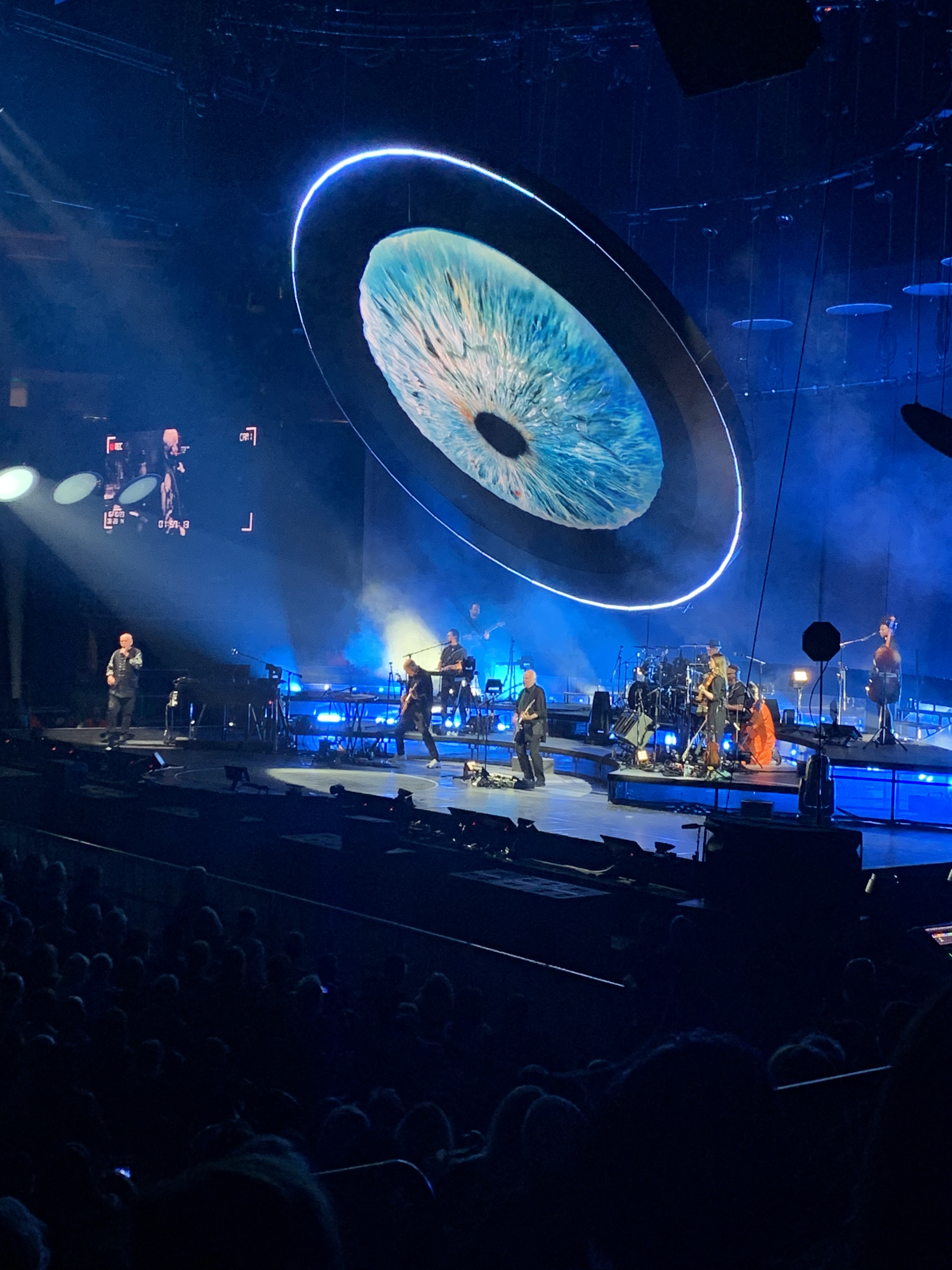
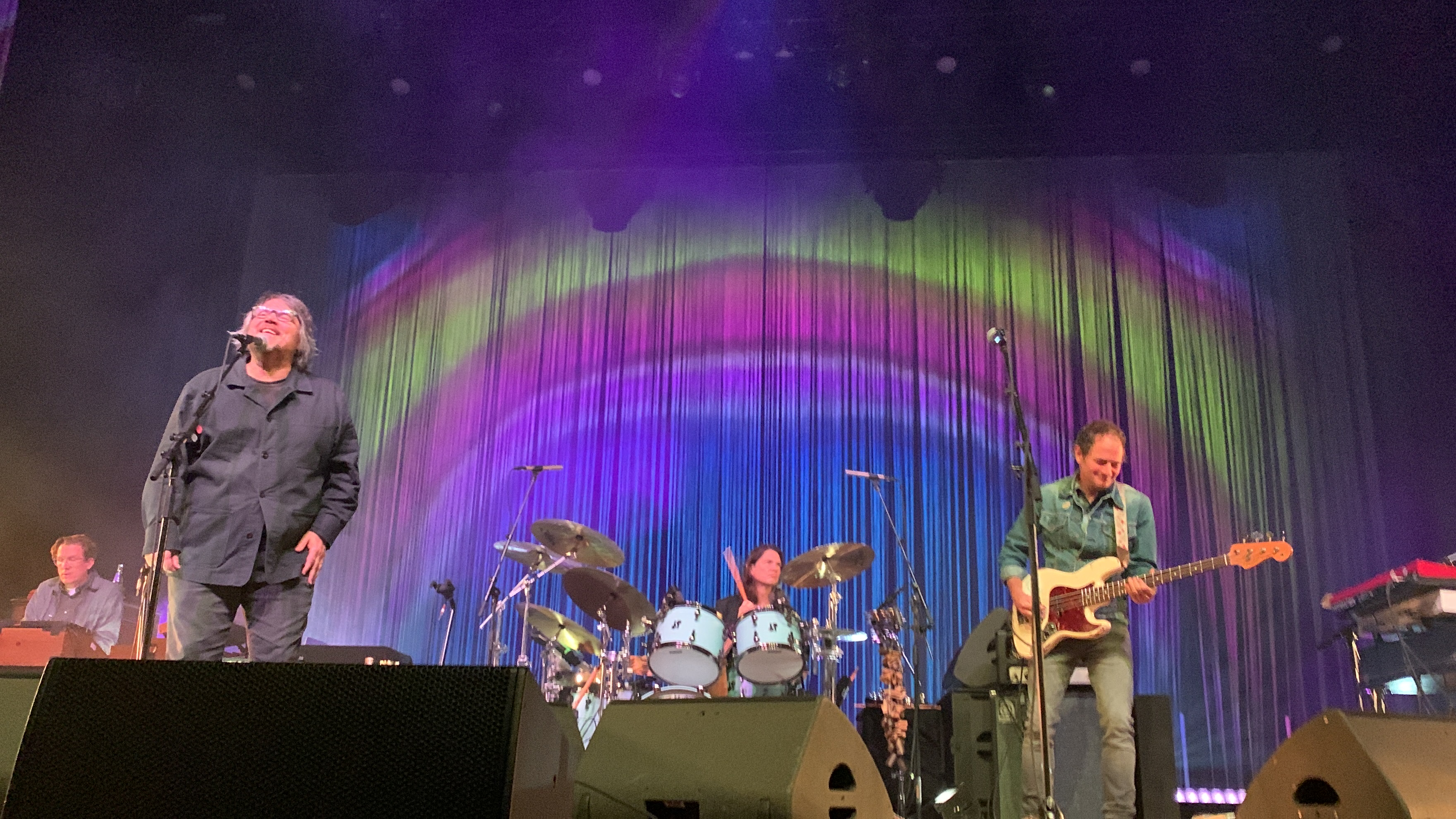
After that, I had the amazing luck of being able to see Peter Gabriel and Wilco in the same week! Both were such phenomenal shows in their own ways—seeing Peter Gabriel when I thought I’d never even see him tour was the most transformative, beautiful experience, and seeing one of my favorite bands perform their best setlist yet (and seeing them from the front row!!) was just as wonderful.
Peter Gabriel at the Ball ArenaWilco at the Mission Ballroom
Other than that, I’ve just been getting back in the rhythm of drawing, playing some guitar now and then, taking far too many pictures of the pretty leaves on campus, drinking my fill of apple cider, watching Taskmaster (FINALLY GOT THROUGH SEASON 15! THE BINGING HAS CEASED!) and catching up on Only Murders in the Building (please stop pairing Mabel up w randos, she deserves so much better), and soaking up the fall weather. At least I was until we got snow 2 days before Halloween. Oops.
READING AND BLOGGING:
I read 16 books this month! This month was slow going, and I ended up in a somewhat extended reading slump, but there were bright spots here and there.
Happy Sunday, bibliophiles! I hope this week has treated you well.
Here we are, almost at Halloween, the most wonderful time of the year! And to celebrate, I’ve brewed up a very special post for you, complete with…
…a Christmas color palette.
Hear me out. I didn’t intend to schedule the Christmas colors this week. It just happened. And it’s currently snowing where I am. Please. Please hear me out guys
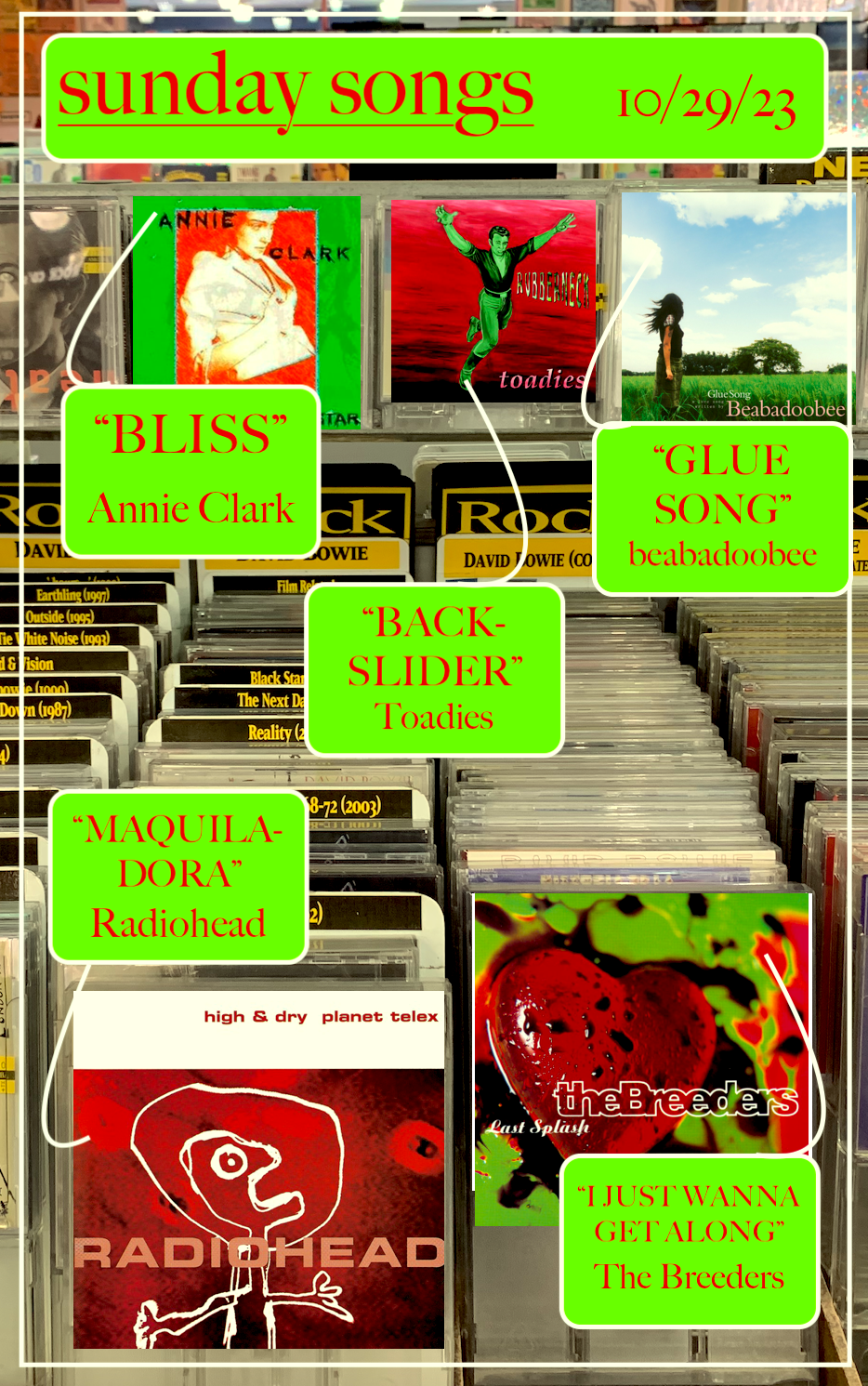
Will last week’s Sunday Songs graphic cheer you up, then? It’s nice and autumnal…(and it’s got some nice songs, if I do say so myself. Would’ve written about them, but I was exhausted.)
I’ve long since accepted my status as a die-hard Radiohead fan, but I’ve noticed that most diehard Radioheads fans tend to put The Bends in time out in the corner in favor of Kid A and OK Computer. It’s understandable to a certain point—OK Computer is my second favorite album of all time, and Kid A is one of the most important records in modern rock history. But I’ll always have a soft spot for most everything that came out of the Bends era. Yes, it’s far more of a conventional rock record and there’s little of the experimentation that Radiohead became known for, but it’s consistently emotional and chock-full of some beautiful, punchy guitar work. Who can deny the grandeur of “Fake Plastic Trees?” Who can deny that “Planet Telex” is one of the coolest rock album openers of the 90’s, if not of all time? Come on now.
But there were a host of EPs (that I need to explore) that came out shortly before the full album released, with sprinklings of songs that would later appear on it (in this case, the iconic “High & Dry” and “Planet Telex”). Besides having some fantastic cover art (I think I had a dream in early high school where I had it on a shirt), this EP really has something of a hidden gem. The minute the distorted guitars kick in, my first thought was similar to hearing “Burning Bridge” by Kate Bush for the first time—how the hell was this a B-side? How was this not on the album and something like…I don’t know, “Bones” didn’t get relegated to throwaway EP status? It’s incredible. It has to be, since it’s in such legendary company, but “Maquiladora” is worthy of it. The grinding, tidal wave texture of the combined guitars of Thom Yorke, Johnny Greenwood, and Ed O’Brien is always a Radiohead trademark, but it really screams out on this track—the minute they kick it, it’s like watching yourself being buried in rubble, but with a smile on your face. Thom Yorke hasn’t quite wrestled the squeaky cracks out of his voice, but somehow, it sells the crunching angst of the sound ten times more. Everything cascades down around you as you watch it crumble, and the result is an explosion of sound that makes The Bends such a staple of the 90’s. It’s hard, it’s crunchy, and even the softer, twinkling moments screech along like a car past the speed limit, leaving trails of exhaust in its wake. Again: how this track wasn’t on the album is beyond me. Good god. It could’ve been perfectly sandwiched between “High & Dry” and “Fake Plastic Trees.” I’m just saying.
Speaking of punchy, early-to-mid 90’s rock…do I smell a coincidentally great transition? (It’s all gonna fizzle out by the time we get to the next song, don’t worry…)
My god, I love the 90’s. I love the 90’s. I really need to listen more of The Breeders, because this hits an especially sweet spot for me. It toes the line between abrasive and absolute tightness; it’s got a punk sensibility to it, but with a sanded edge that smooths it into something truly meticulous in how much it rocks. For a song that’s only a minute and 44 seconds long, it has such a punch to it that could only be so self-contained; it’s rare that I like a song and don’t want to extend it if it’s so short. Some songs were meant to be a smack in the face and then fade away like a sparkler fizzling out. And this song has just the same bite as a sparkler—the double guitar act of twins Kim and Kelley Deal, combined with the thrumming bass of Josephine Wiggs, makes for a deliciously spiky, driving sound. Kim Deal’s deadpan vocals only elevate it—the dry delivery of the line “if you’re so special/why aren’t you dead?” feels like spitting a wad of chewed-up gum in the trash in the most gloriously 90’s way. Deal delivers the song’s title in the same way; it’s not a chant so much as it is a rolled eye and a shrug as you reapply red lipstick in the mirror. There’s a sharply stamped period at the end of each repetition: “I just wanna get along. I just wanna get along.” It oozes confidence, but not in an arrogant way: it’s the kind of confidence of pulling yourself onto a motorcycle without a word and leaving everyone else in the dust.
I’ve done it. I’ve reached peak obscurity in one of these posts. Streaming? No can do. Available to purchase? Doubtful. All we’ve got is a few YouTube videos where the “full” version is still missing a song (or two?), complete with some crusty pixelation on the album art. Mwah.
I am become annoyingly into St. Vincent, scroller of wikipedia rabbit holes. Even though I first heard about this EP during my initial St. Vincent superfan period in about sixth grade, I hadn’t gotten around to listening to it until now. Ratsliveonnoevilstar is St. Vincent before she was St. Vincent; she released the EP in early 2003, when she was a student at the Berklee College of Music. Most of the only copies that exist are floating somewhere around Berklee and possibly on eBay. What remains accessible is three to four songs—Wikipedia only lists three, but “Good Morning” (the first song in the above video) is only on this YouTube version, and “Breathing” seems lost to the ether. And from what Clark herself has said about the EP, it’s likely to stay that way:
“It was horrible. I did that my sophomore year or something. I haven’t listened to that in a really long time. I would say I should have put a little more Bill Callahan and a little less Herbie Hancock in it.”
And upon listening to it, I’m glad I listened to it then and not in middle school, because I sincerely doubt that I would’ve lasted more than 2 minutes at age 12. Now, I can say this affectionately, as someone who is around the age Clark was when she made this EP: this is the most college student thing I’ve ever listened to. She’s made her voice theatrically lower than how her voice sounds as a grown woman, and most of the EP is a very particular brand of over-the-top avant-garde, jazzy-sounding circularity. Most of it’s pleasant to listen to, but it still has an air of “look at me, College Student, producing High Art™️.” But it’s not all bad. Songs like “Bliss” are still full of the meticulous threads that led to the wonderfully clever art-pop of Marry Me five years later. It’s a portrait of a very artsy young musician, one who hadn’t hit her stride yet, but was brimming with inspiration and determination. Clark had a very specific sound in mind, and she was well on her way to nailing it. It’s certainly not your ordinary acoustic college student EP—I guess that’s bound to happen if you’re going somewhere like Berklee, but either way, there’s something endearing about this effort; it’s far from perfect, but it’s the seedling that would go on to sprout one of the most iconic musical careers of the 21st century. #26 on Rolling Stone’s 250 Greatest Guitarists of All Time list? Those lists may be exceedingly subjective, but come on. More than deserved.
I love the sound of old men foaming at the mouth in the Rolling Stone comments section in the morning.
There’s no bond like the bond between a high school girl and a simple but spectacular song that she learned how to play by herself on guitar. It’s a perfect warm-up song; part of why I’ve loved playing guitar more than piano is that I’ve feel more connected with the material that I can use for keeping my fingers dextrous. And when I was first learning this and slowing the song down on YouTube, it doesn’t sound silly like a bunch of other songs do (play “Drive My Car” on 0.5x speed, I dare you)—this just sounded so perfectly bluesy.
I suppose this could be the closest to Halloweeny that this week’s songs come to, but I really should’ve gone with something like “Possum Kingdom” if we wanted some real Halloween. Alas, “Backslider” was on the brain more. But that’s not a complaint—I’ve been coming back to this, the aforementioned vampire song, and “I Come From the Water” since 8th grade, and I have nothing but fond memories of them. That chugging, grinding guitar never fails to hook me just like it did when I was 14; there’s a dark grime clinging to every Toadies song I’ve ever heard, muddy and hazily dark, like the humidity that clings to your forehead at night in the South. (A feeling that they probably knew well, what with the band hailing from Texas.) The flies lingering around the band in the video really tie it all together. It’s a sludgy, eery texture that pairs with everything I’ve heard of theirs, but especially with this, a series of vignettes of Todd Lewis’ Southern, Christian upbringing and the creeping dread ever-present within it. All crammed in just over two and a half minutes, all of that grime and dread is as tight as ever—not polished, but sculpted into something fully-formed.
Since I first posted about beabadoobee way back in July, I’m veeeery slowly sprinkling some of her songs into my rotation. And although not everything’s my speed, I’m not regretting this mini deep-dive into her music! Again, if anyone has any starting points as far as album goes, be my guest! Onto the Sisyphean album bucket list…
An open letter to anybody looking to make a high quality teen rom-com: please, this needs to go at the very end. Imagine that: you see the two protagonists look into each other’s eyes, their hands slowly slip into each others, they smile. The opening strings kick in, camera cuts back to them looking into each other’s eyes. Roll credits as beabadoobee’s voice hits. Perfection, right? I’m starting to see why so much of her catalogue is made up of love songs—from what I can tell, that kind of sweetness has been her trademark for years. “Glue Song” is one of her newest efforts, and it’s easy to see that she’s known for that kind of love song craft. She has the perfect voice for these kind of tenderhearted, smiley ballads—gently high-pitched, feathery, and glimmeringly sweet like honey. As soon as she declares that “I’ve never known someone like you,” I can’t help but believe it. And just like the orchestral arrangements in the background of “the way things go,” the strings and horns trilling in the background elevate “Glue Song” into the perfect bite of cheek-blushingly, dress-twirlingly lovey-dovey declarations. It would be easy to make something like this incredibly sappy, but Bea Kristi’s light voice is light enough to feel like she isn’t trying to pack a ton of unneeded sugar into every note—she knows the balance, and she keeps it simple, gentle. It’s just the right amount of sweetness—enough to melt on your tongue, but not so much that it rots your teeth.
Bonus: she also released a version of “Glue Song” as a duet with Clairo—it’s just as lovely!
Since this post consists entirely of songs, consider all of them to be today’s song.
That’s it for this week’s Sunday Songs! Have a wonderful rest of your day, and take care of yourselves!
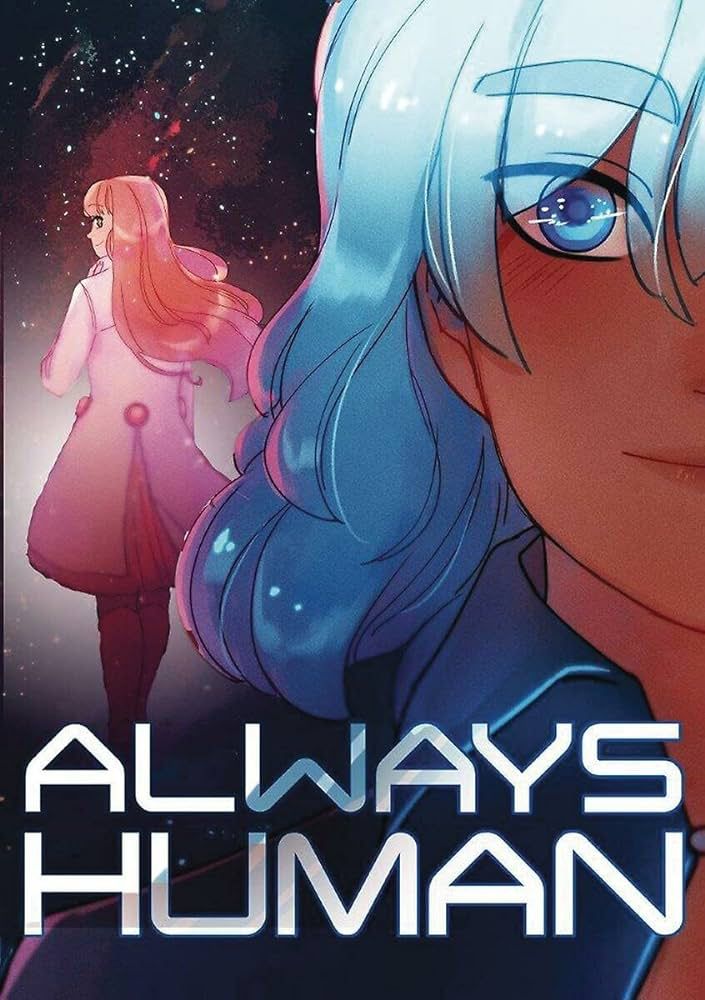
Always Human came onto my radar around three years ago—probably from my fellow bloggers—but I’d forgotten about it until I came across it at my college’s library. I’m always a sucker for cozy sci-fi, and I never say no to a graphic novel, so of course I picked this book up. But while it was sweet and had some great commentary on disability, it didn’t quite scratch my sci-fi itch in all the right ways.
Sunati lives in a world of body modification. With simple, easy-to-use technology, she can change any part of her appearance that she wishes—even enhancing her memory so that she won’t have to study for tests. But not everybody has it as easy as Sunati. Austen has Egan’s syndrome, which means that her immune system rejects any kind of body modification. When the two meet by chance, it’s love at first sight. And although they are different in all kinds of ways, it won’t take long before they realize that they were made for each other.
Art by Ari North
TW/CW: nothing that I can find—Always Human is very gentle, and I’d be hard-pressed to find anything triggering about it. Enjoy!
Always Human is sweet. It was a soft, tender palate-cleanser, but I didn’t find myself getting very attached to any of it. It’s cute, and I’d say it’s worth a read, but it lacked the emotional weight to fully immerse myself in the characters or the world.
Let’s start out with the positives. It’s rare that fictional, sci-fi disabilities actually mirror the experience of disabled people, but Always Human did an excellent job of portraying Austen’s disability. Austen has Egan’s syndrome, a fictional autoimmune disorder where her body rejects any kind of body modification, which is central in the futuristic world where Always Human is set. Throughout Sunati and Austen’s developing romance, this novel makes the very important case that disabled people do not exist to inspire you, and that going through life as a disabled person isn’t some grand feat. It’s something that Sunati has to contend with when talking about Austen, and watching her learn made at least some of the romance work.
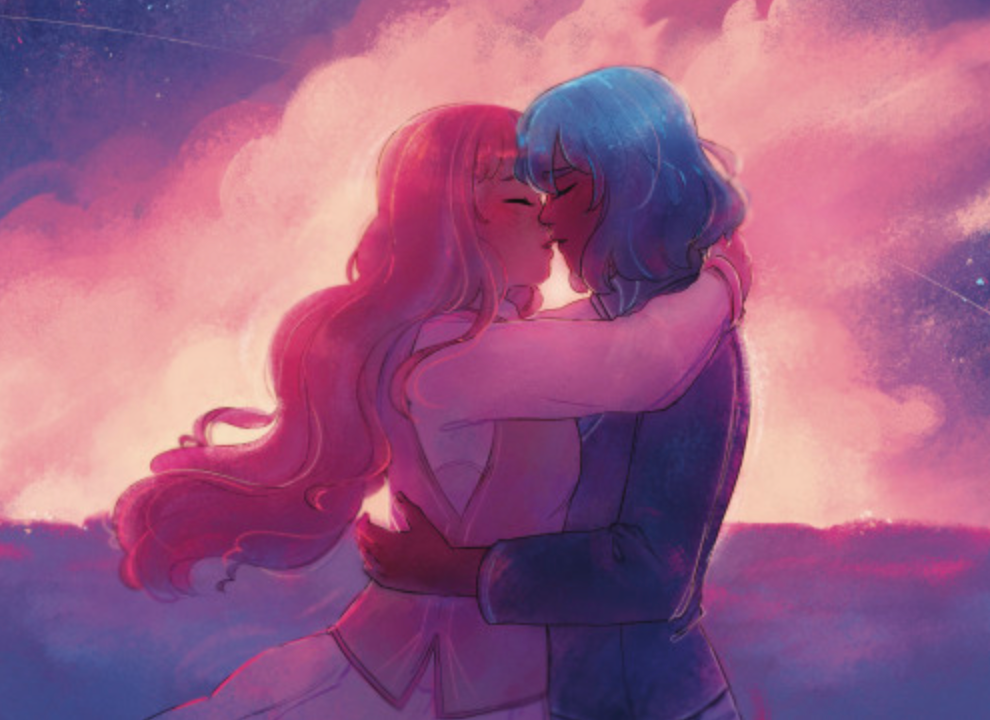
Additionally, I loved how vibrant the art style was! I’m not usually one for the quasi-manga style that North draws in, but every panel really did pop. The vibrant pinks and blues truly shone, which simultaneously sold the joyous glow of young love and the bright, technology-centric world that Sunati and Austen inhabit. Just like the story itself, there are no hard edges: everything is soft and cloudy, calling sunsets, cotton candy, and hope to mind. It suited the story exceptionally well—Ari North absolutely looked like she knew what she was doing.
However, there was one part of the art that didn’t sit as pleasantly with me. Although the colors consistently popped, the character movements…did not. Their poses looked so consistently stiff. And listen. I’m an artist. I get it. Drawing dynamic poses is so hard. Game recognizes game. But the characters’ movements looked so wooden, no matter what pose they were drawn in. These static poses failed to immerse me fully in the story—if they don’t look like they’re really moving, how can I believe that anything else is? I’m saying this to myself as well as Ari North: maybe a few more of those nice references on Pinterest would have livened up the art.
Always Human made the jump from WebToon to print after seemingly wild success on the former, but I’m not sure if the plot format survived the leap. The broken-up chapters would theoretically work if I were getting them, say, once a week, but all together, they didn’t feel quite as coherent. I’m all for cozy sci-fi and slice-of-life stories, but what makes the ones I like work is that there’s still some kind of end goal, however low-stakes it may be, that the characters are heading towards. Always Human felt rather meandering in that sense. It really felt like the plot was being made up as North went along, and the result was quite lukewarm. Even the romance, which the plot clearly hinged on, was set up and happened so quickly that the rest of the story didn’t hold much water. If the romance had been slowly developed over the course of the graphic novel, I would have felt much more engaged. Thus, I never really felt the emotion that North was trying so hard to get across—it all felt rushed and half-baked. Insta-love is never the answer, kids.
All in all, a light and fluffy sci-fi comic that boasted vibrant color and cogent points about disability, but felt rather stiff in both the art and the plot. 3 stars.
Always Human is the first volume in the Always Human series; the series concludes with Love and Gravity.
Today’s song:
adore this album, but also, I can’t listen to it too many times in a row, y’know?
That’s it for this week’s Book Review Tuesday! Have a wonderful rest of your day, and take care of yourselves!










 The Bookish Mutant